Worthless, but Full of Worth
Worthless plans that build valuable companies

Worthless plans that build valuable companies
I wrote this with no particular audience in mind. Just a desire to give form to a thought that surfaced a few weeks ago, shaped by more than two decades in banking, building businesses and life itself.
Over the years, I’ve learned that worth isn’t always measured in numbers, and value isn’t always found on a balance sheet. What makes something truly worthwhile is the meaning we attach to it - the intention, integrity, and courage behind it.
These thoughts have been carefully curated and shared with the intention to inspire reflection, courage, and action.
May the examples and insights offered here encourage you on your own path forward.
Ethan Schaerer
A reminder that even the smallest, most uncertain plans can set great things in motion.
In the past 20 years, I have not seen a single business plan that even remotely matched its long-term projections. That does not mean that the companies were unsuccessful – quite the opposite. Many have proven that while the original plan was worthless, the process behind it was immensely valuable.
I had the opportunity to work alongside Jeff McDermott, former Co-Head of UBS Investment Bank and later Head of Nomura Investment Bank, to build a leading Investment Bank in the field of 'Technology and Sustainable Infrastructure.' Through this experience, I learned repeatedly that numbers and models are tidy abstractions, but reality writes its own stories.
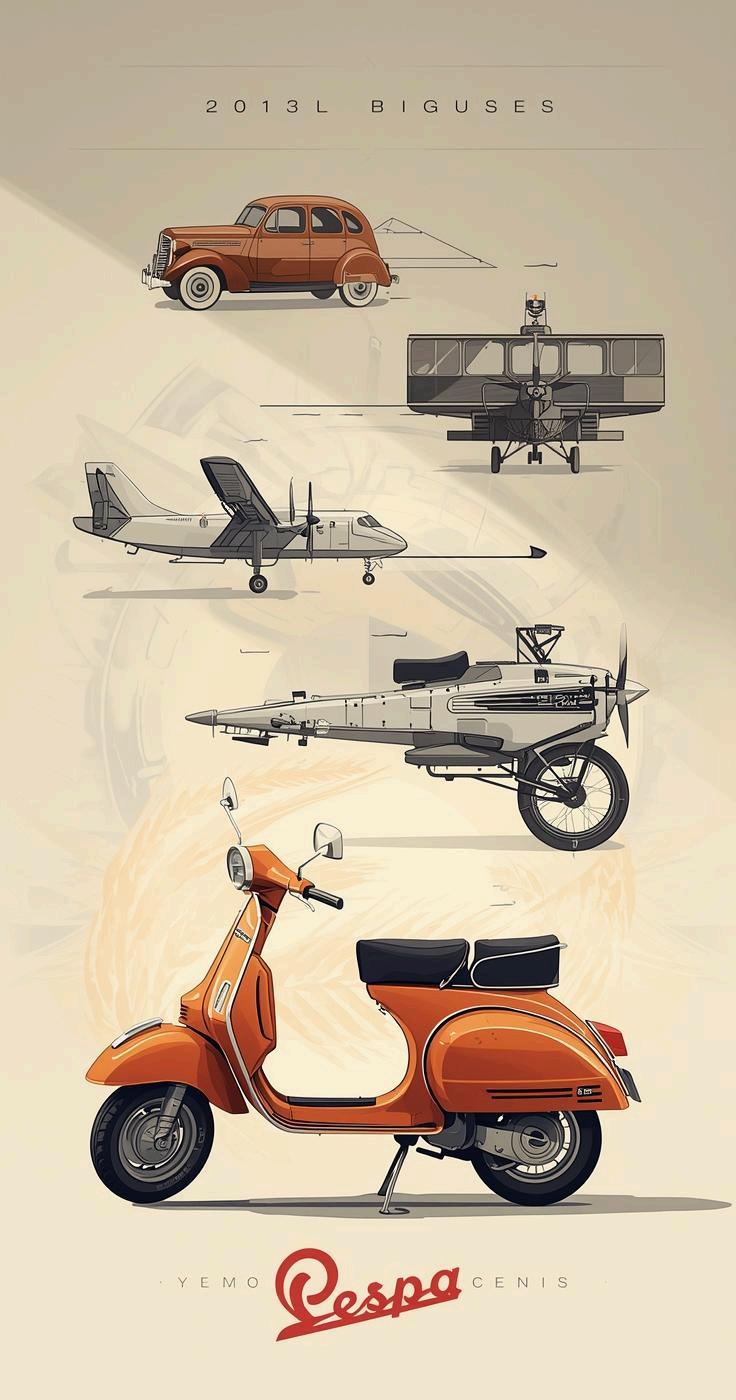
Founded in 1884, Piaggio began as a manufacturer of wheat-processing machines, railway carriages, and furniture for the maritime industry. Yet, the company quickly demonstrated an extraordinary ability to reinvent itself. During the 1910s and 1930s, supported by a strategic acquisition, Piaggio shifted its focus to aviation, developing aircraft and helicopters that would play a key role in Italy’s technological progress.
After the Second World War, Piaggio, like many industrial companies, was left with almost nothing. But instead of clinging to its old business model, the company recognized the urgent need for affordable mobility. Drawing on its talented workforce and existing production facilities, Piaggio created a motorized scooter that would become an enduring symbol of freedom, optimism, and urban life: the Vespa.
UNKNOWN

From humble beginnings to global platform

VRBO was founded in 1995 by my good friend Dave Clouse in Colorado, to allow homeowners to rent out their vacation properties directly to travelers. It began as a way for Dave to rent out his own condo in Breckenridge Ski Resort and evolved into a global platform. Since 2016, VRBO has been part of the Expedia Group.
From internal tool to $28B powerhouse Slack was originally designed to be an online game. The game failed - but the internal chat tool the team used to coordinate became the real product. From this 'failure' emerged one of the world’s most successful collaboration tools.

The first business plan of Airbnb envisioned a platform to offer affordable accommodation during conferences. A side project by two designers who couldn’t pay their rent.
Today, Airbnb is one of the most recognized brands in the worldborn from a plan that was, in its original sense, completely worthless.
Airbnb shows how an unexpected idea can evolve into a global leader in the hospitality industry.

YouTube’s unexpected transformation
Originally conceived as a dating service, where users could present themselves via video. Nobody used it that way. Instead, users began uploading other videos. The rest is history.
YouTube transformed into the leading video-sharing platform due to user adaptability and innovative thinking, highlighting the power of flexibility in business.

“The measure of intelligence is the ability to change”
- ALBERT EINSTEIN
Schuchter Boats
TURNING A DREAM INTO AN AWARD-WINNING SAILBOAT COMPANY

Celebrating Swiss Innovation and Resilience
Victorinox SHARPENED THROUGH TIME
Läderach BOLD MOVES, SWEET REWARDS
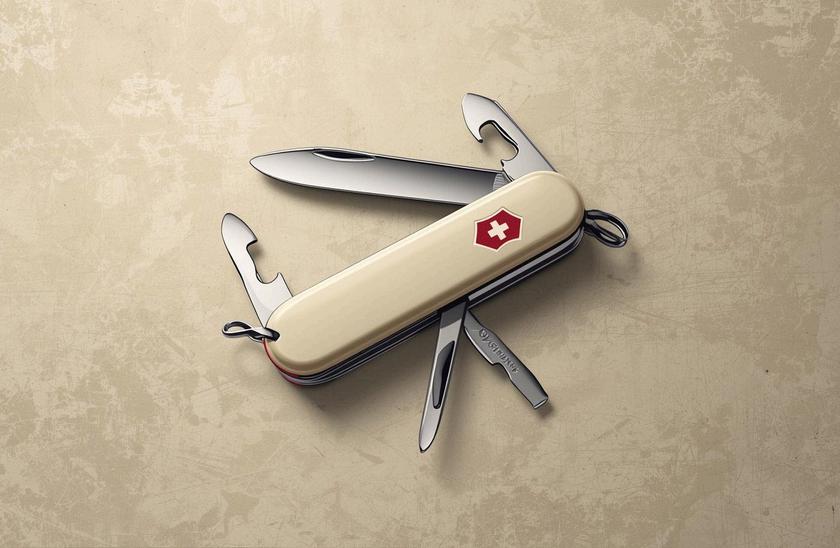

Schuchter Sportboats, Victorinox, and Läderach showcase adaptability and creativity in challenging times, leading to remarkable success.
Schuchter Sportboats: Swiss craftsmanship meets Italian elegance Switzerland also offers examples of courage and vision beyond the traditional business plan. In a conversation with Josef Schuchter, founder of Schuchter Sportboot, he told me how, during economically difficult times, he seized the opportunity to develop a dream sailboat together with a renowned Italian designer. No Excel sheet could have shown that this step would pay off - but vision, craftsmanship, and passion did. Today, the company has built over 300 boats, won multiple international awards, and counts among its clients some high-profile owners and racing teams who value precision, performance and timeless design. Recently, leadership passed on to his sons - a striking example that true entrepreneurs don’t just read their plan; they live it and pass it on.
Victorinox
Over the years, I’ve had the privilege of getting to know Carl Elsener, the CEO of Victorinox. What stayed with me most was his calm strength and unwavering sense of purpose - qualities that seem to define not only his leadership, but the brand itself.
After the September 11, 2001 attacks, Victorinox lost its most important market overnight: pocket knives were banned from carry-on luggage. Many would have seen this as a death sentence. Victorinox saw an opportunity instead. The company diversified, launching watches, luggage, and perfumes, while staying true to its identity.
Today, Victorinox faces new challenges: U.S. tariffs that push total duties to 44% and a 12% depreciation of the dollar against the Swiss franc since the start of the year. Yet, as in its 141-year history, the company continues to pursue its adaptation strategy with precision and resilience, including a potential partial relocation to the U.S. and other targeted measures. While manufacturing will firmly remain in Switzerland, certain process steps are being reviewed and potentially adjusted abroad to effectively deal with external factors beyond the company’s control.
Läderach
Based on a conversation with its CEO, I was struck by Läderach’s quiet confidence and down-to-earth attitude - a rare blend of humility and conviction that mirrors the company’s journey.
Läderach began in 1962 as a small confectionery in the Glarus region of Switzerland. For decades, the company remained uncompromising in its approach: no mass production, but beautiful craftsmanship and quality. Global expansion pressures repeatedly confronted Läderach with decisions where quick profits would have been tempting. Instead, the family chose the harder path: opening their own stores, establishing sustainable supply chains, and adhering to clear values. Remarkably, Läderach acted countercyclically, especially during crises - expanding its visitor center during the Covid crisis, investing in new production capacities, and building a strategically targeted international presence. While other companies relied on cost-cutting measures, Läderach invested in proximity, experience, and quality.
Although Läderach has also been affected by newly imposed U.S. tariffs, the company is well-established in the U.S. Since a large share of its value creation - with 500 employees, investments, and marketing - occurs directly in the United States, Läderach can absorb part of this burden. Sometimes, the harder path proves most rewarding. Läderach exemplifies this lesson at every level.
A business plan that promised growth, scalability, and 'New-Age vibes' - but was built on sand. Billions flowed in before it became clear: huge losses and a vision without a solid foundation rarely lead to profitability.
A prime example of how wishful thinking and perfect presentation can overshadow reality. The projections were spectacular, the technology, unfortunately, non-existent or flawed.

I like a good plan. It structures the work and creates accountability. But a plan is a tool, not a truth. Plan but don’t fall in love with your plan. Use it as a tool, not a truth. Build teams that learn, adapt, and react quickly. Mistakes are not a flaw - they are tuition fees. Remember, freedom begins where people pleasing ends. Great companies are not built by those who try to please everyone, but by those who stay true to a clear vision and adapt without losing their core purpose.
Don’t demand perfection, demand transparency. Founders who admit 'I don’t know (yet)' are often more credible than those who claim to know everything. Evaluate not only Excel models but also character, learning ability, and humility to correct oneself.
The pressure to model a J-curve is often expected - and seductive. But growth on paper cannot replace substance in reality. As Warren Buffett demonstrates: sometimes the 'boring' bet is the best one. His original $1.3 billion investment in Coca-Cola in 1988 is now worth over $28 billion and pays more than $2 million in dividends every day. No J-curve, no hype. Just substance, patience, and a plan that outlived its projections but still fulfilled its purpose.
Successful entrepreneurs have the courage to embrace gaps and seize opportunities. With today’s methods such as “Agile Development” and “Rapid Prototyping”, pilots or prototypes can be built within 24-48 hours to test the market. This provides valuable insights into customer needs - even if the results are not yet market-ready.
Remember, such efforts are not failures but confirmations. They require a company culture that allows for mistakes and embraces intelligent failure - recognizing that doing business is inherently risky. Risk is part of the game; often, doing nothing is riskier than trying something new, or failing to grasp the painful truth that opportunities have a finite shelf-life. Don’t seek perfection or get lost in “analysis paralysis”. The more you practice your 3P’s, the better you become at identifying and refining what works.
Momentum matters more than flawless execution.
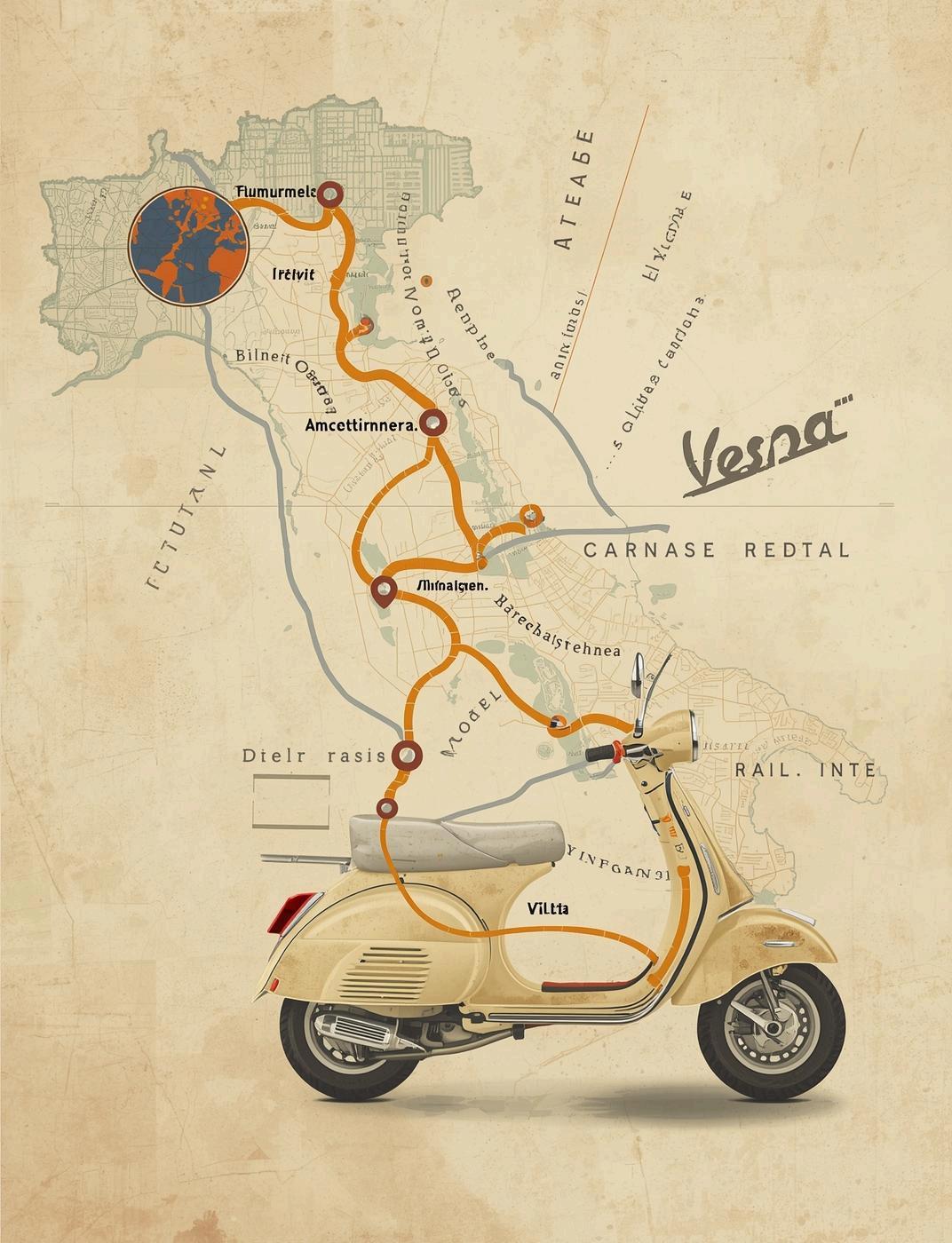
Business plans are maps; adaptability is essential for success.
Business plans show a direction but rarely the actual path. A good plan is not a promise but an invitation to embark on a journey together and be ready and prepared when reality takes an unexpected turn.
“Failures are fingerposts on the road to achievement”
C.S. LEWIS
The plan isn’t the price - the process is. The messy, frustrating, the exhilarating process of turning assumptions into valuable experiments, of testing what breaks, what bends, and what excels. That’s where resilience is built and that’s what separates the survivors from the stories we never hear about again. Every spreadsheet is a fiction. The plan may be worthless but the process is priceless. Remember, your job isn’t to defend the model. It’s to attack the assumptions and gives shape to your early thinking. It forces you to see the blind spots, and prepares you for the inevitable rewrite. Because the rewrite will come - either forced by massive external shocks, sparked by accidental internal discoveries, or by intentional design. The winners are the ones who listen when reality speaks.
The irony is that your most valuable asset isn’t precision; it’s adaptability and momentum. Not the perfect plan but the courage to evolve when the plan falls apart. So, as you look at your current strategy, ask yourself one simple question: Which assumptions would destroy this plan if it turned out to be wrong?
That’s the crack in the foundation you need to test. That’s where your next Vespa is hiding. Piaggio did not plan for the Vespa; it became the Vespa through necessity and imagination. AirBnB, Slack, VRBO, each found success not by following the plan, but by following the hidden signal hidden in failure and the opportunity to evolve beyond their original design. Stop defending the plan and start walking the terrain.
Pursue purpose and know your “Why”.
Go win with your foot on the pedal.
Win by chasing significance rather than success.
Crawl, walk, run, and repeat - momentum matters more than flawless execution.
Focus on testing and adapting strategies while learning from failures to build a resilient and successful business model.
We are called to build, create, and “pay-forward”.
The journey can be though, embrace it - it builds character.
Point positive, and remember to stay humble.

These thoughts have been carefully curated and shared with the intention to inspire reflection, courage, and action. May the examples and insights offered here encourage you on your own path forward.
In business, as in life, things break, markets shift, and plans unravel. Redirection is not failure; it’s part of the creative process and our own unique journey - not a verdict on our worth, but an invitation to grow.
We can rebuild and create something new - better, stronger, and more beautiful - not because we never fail, but because of the resiliency and courage to get up just one more time each time we fall.

“When you treat failure as information, not shame, you turn every loss into a stepping stone.”
I would also like to thank my good friend, Gareth Knott, who carries deep roots in both South Africa and Switzerland, for helping me articulate some of these thoughts more clearly. I continue to be inspired by how much wisdom one person can express in a single thought.
ethan _schaerer@hotmail.com and LinkedIn