Deloitte Swiss Stock Exchange Analysis
An
An
On 30 June 2009 the SPI closed on 4662.6 points, which represents an increase of 525.3 points or 12.7% since the end of the first quarter in 2009. This was the first quarterly increase in the SPI since June 2007. Although it is probably still too early to say the current economic downturn appears to be coming to an end, the overall increase in the SPI since 9 March 2009, when the index was at its lowpoint for the year, has been 28.7%.
The SPI has not been alone in recording significant gains during the second quarter of 2009 as shown below.
After several months of continued downward pressures, other leading stock markets have also recorded significant gains in their share indices during the second quarter of 2009.
Notwithstanding these positive signs of increased confidence, the global economy is still under considerable pressure, despite the broad policy interventions implemented by many governments around the world.
As a small and open economy, Switzerland will continue to be negatively impacted by the global economic slowdown. As a consequence, on 9 June 2009 the KOF Swiss Economic Institute further decreased its estimate of Switzerland’s GDP growth rate for 2009 from -2.4% to -3.3%. Notwithstanding historically low interest rates, investment in equipment and machinery is expected to shrink by 6.8% in 2009, which may place further pressure on unemployment levels. By the end of 2010, a peak in the Swiss unemployment rate of 6% is forecast by the Swiss Economic Institute.
Despite the mixed economic outlook, during the second quarter it was the financial services sector that led the way in terms of market cap growth. The financial services companies showing the greatest increase in their share price in the first quarter include: Swiss Re (+92.8%), Julius Bär (+50.6%), Credit Suisse (+43.1%) and UBS (+24.2%)
Historically low interest rates coupled with increased governmental incentives for energy efficiency are driving economic activity, particularly in the building renovation sub-sector. The markets reflected this: the Holcim share price increased by 59.6% and Arbonia-Forster, the integrated construction industry supplier, saw its share price rise by 146.1% when compared to the previous quarter’s closing prices.
The industrials sector was also positive for the second quarter of 2009, which was consistent with other major industrial indices.
However, the Swiss industrials sector, which contributed 19.3% to the Swiss gross domestic product in 2007, is continuing to face challenging times. The figures for the industrials sector published by the Federal Statistical Office in June 2009 relating to the first quarter of 2009 show an average decline of 9.2% and 19.6% for turnover and order backlog respectively compared to the prior quarter.
According to the same source, Swiss industrial production declined by 9.5% in the March 2009 quarter compared to the same quarter in 2008.
In this issue of the Deloitte Swiss Stock Exchange Analysis, we have focussed specifically on the industrials sector. In this regard, we are privileged to present an interview with Johann Schneider-Ammann, member of the Swiss lower house of parliament, President and CEO of Ammann Group and president of Swissmem, the Swiss association of the engineering, electrical and metal industry. Mr. Schneider-Ammann provides insight into his views concerning the Swiss manufacturing sector. In addition, Klaus Kummermehr, the Deloitte leader for the Swiss industrials sector highlights steps that industrial companies should be taking in order to successfully navigate through these challenging times.
Hopefully, we will continue to see more positive signs for all sectors for the remainder of 2009.

*Market capitalisation is calculated with the listed shares only
Source: SIX Swiss Exchange
Top ten rises and falls by market capitalisation
* Market capitalisation is calculated with the listed shares only
Source: SIX Swiss Exchange

* Market capitalisation is calculated with the listed shares only
Source: SIX Swiss Exchange
Interview with Mr. Johann Schneider-Ammann
As one of the most recognised figures in Switzerland’s industrials sector, Mr. Johann Schneider-Ammann, who is the President of Swissmem and a Vice-President of Economiesuisse answers our questions related to the current state of the industrials sector in Switzerland and provides us with his personal view of the future.
Mr. Ammann, what do you see as the main challenges over the next five years for Switzerland as a research and production site?
Both now and for the next few years, the main priority has to be dealing with the global economic crisis. Our absolute first priority has to be to safeguard as far as possible the fifty thousand jobs that we have created over the last seven years. If we’re going to do that, there are a number of steps we have to take.
Firstly, we need to be innovative: on the one hand, we have to produce new and first-class products that are innovative and marketable. However, and on the other hand, we also have to open up new markets. The big challenges – CO2 emissions, energy efficiency and mobility – represent for Switzerland, a place where people do research and produce things, with numerous opportunities to stay competitive in the long term and create jobs.
Unfortunately, the financial crisis and government bailouts have swallowed up the funds that we need for investing in science, research and development in Switzerland, and such investment is vital to the country’s future as a location for production and research.
Throughout times of difficult economic conditions investments will usually be adjourned. But precisely during these times, investment in research and development will have a long-term effect. Despitethe risks involved, is there any sort of magicformula for the long-term success of a “Made in Switzerland” strategy?
No. These things can’t be conjured up. What we have achieved so far is the result of hard work – in research, in development and in production. Hard work is a virtue, and it’s made us what we are. That is not something that’s going to change in the future, either.
I am, of course, aware that there are always firms that spend less on innovation when times are hard, but I firmly believe that there’s nobody in the business who does that without good reason.
Even so, I would advise them all not to make their savings in research and development.
The fact is that, after the crisis, there will be an upturn, and it’s the range of marketable products that decides who’s going to benefit from it when it comes. Products will only be fit for the market if they have been constantly adapted to changing needs.
What is the likely effect of recent increases in commodity prices on Swiss businesses?
Being short on natural resources, Switzerland is largely dependent on the international markets. Increasing commodity prices have a significant impact on our ability to compete internationally.
Unfortunately, speculation around the world increases volatility and as a consequence burdens us with more problems.
Do you expect the future to bring a geographical shift in Swissmem companies’ export services?
We have, of course, already seen a surge in the number of Swiss companies – plenty of them – moving parts of their operations abroad. We have also seen that this did not always produce the success they wanted. Quite the contrary, in fact. Many of these companies have moved their production back to Switzerland. The reason for this is that they realised that, when it comes to the bottom line, our products are very definitely competitive, even if they are a little bit more expensive than those produced by our foreign competitors.
The Swiss work ethic, the above-average standard of education of our workforce at every level, the desire of the social partners to seek conciliation, and the balance of our social system are all things that are advantages of location that more than compensate for higher salaries.
That’s why I don’t actually believe that there will be any greater trend towards moving away from Switzerland, even if some parts can certainly be manufactured elsewhere.
What steps should be taken to attract more talent to companies in the machinery, electronics and metals (MEM) fields or to bring them up from within them?
I have to admit that making it clear to the general public in just what positive ways the industry has changed is something we’ve neglected to do over recent years. We have some catching up to do, and now is the right time to do it. Despite the crisis. Now is the time to show people just how wonderful industry and the world of technology are. That’s why, this coming autumn, we are going to be launching a campaign to promote recruitment at all levels. Instead of the image of a dull and tradition-based industry, we want to show people the highly attractive and innovative world of technology, which, far from creating problems, is able to play its part in solving the ones we have already got. The plan is to do this by showing people positive examples, and heaven knows there are enough of them.
Do the presently available sources of finance allow for long-term growth or is there a need for new, innovative and business-friendly ways of bridging the financial gap in order to avoid a credit squeeze in Switzerland?
Basically, this depends on the further development of this crisis. I do not believe in excessive optimism as we have to be prepared for some tough months or years ahead.
Even well established companies, large and small ones, having sound financials, may run into trouble. My impression is that Swiss companies are, of course, already looking for ways out of the crisis.
But it may be that they will only be able to manage it with a little help and support from the government. While it goes without saying, that I have faith in the capacities of our industry, I don’t rule out the possibility of a situation arising – tomorrow or the day after that –when state aid, even if only temporarily, will be needed.
Governmental assistance, which has been granted to UBS, should as well be available for the industrials sector in this country.
Businesses operate against a backdrop of conflicting social, political and economic priorities. It is inevitable that Swiss businesses will have to deal with the EU and its Member States and to some extent be dependent on it. What significant changes do you see coming on these fronts? What resources are available to them and what might their long-term effects be?
I am convinced that the bilateral approach is the right one for our country and our economy. I am nonetheless aware that carrying on with it is likely to become more and more difficult.
Nevertheless, from talking to people who know the EU from the inside, it has become clear to me that no new agreements are going to be concluded unless we adopt the acquis communautaire (total body of EU law accumulated thus far).
Of course, we do have some trump cards in our hands, but we do have to be prepared for a rough ride in future negotiation situations and we have to put together a good case.
That’s as well true if we want to adapt the existing treaties to the changed environment in order to stay competitive. European law, after all, is in constant transformation.
What do you think about the ongoing deregulation on the Swiss energy market?
We made some mistakes in deregulating the electricity market. What resulted was the precise opposite of what was actually intended. We wanted to make energy cheaper by allowing providers to compete in a free market. But instead of that, electricity prices have increased. As a consequence, some correction is needed.
Our next step must be to ensure that our country doesn’t suffer an electricity shortage. In other words, we have to produce enough electricity to keep our economy running at full speed. This means that we have to use existing sources better and further develop them as much as possible.
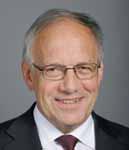
N. Schneider-Ammann
Academic Background
•Electrical Engineering Degree from ETH in Zurich (1977)
•MBA INSEAD, Institut Européen des Affaires d’Administration, Fontainebleau/Paris (1982-83)
Professional Career 1978 – 1981Project Manager in Organizational Development and Information Technology division of Oerlikon Bührle.
1981 – 1984 Delegate of the Board of Ammann Group.
1984 – 1989 Managing Director of U. Ammann Maschinenfabrik AG.
Since 1990 President and Chairman of the Board of Ammann Group, with 3,400 employees worldwide.
Other Involvement and Professional Associations
•Member of Board of Directors for Swatch Group, Mikron and Trösch.
•Member of Swiss National Parliament and Vice President of the Liberal Democratic Party since 1999.
•President of the Swiss work and think-tank Swissmem. (Swiss Mechanical and Electrical Engineering Industries.)
•Vice President of Economiesuisse.
•Executive Board member of commerce and industry association in Bern.
•Member of Executive Board of Swiss corporations in Germany.
•Member of the Executive Board of the Swiss Employer Association.
•Colonel, Member of General Staff, Commander, Mountain Infantry Regiment until 2002.
Suceeding in turbulent times
In recent history, the Swiss economy has enjoyed high levels of prosperity and stability which made it an attractive marketplace. This strong position allowed Switzerland to counteract and temporarily delay the effects of the global economic downturn with which many of its European neighbours have been struggling with for some time.
However, recently released economic data suggest that the industrials climate is now approaching a low point. In one clear sign of recession, orders for Swiss manufactured items plunged by 41.8% in the first quarter of 2009 (compared to 2008). This is one of the most significant drops for several years.
The overall economic decline of Switzerland’s major trading partners, coupled with the wider effects of the global economic downturn, have left their mark on the Swiss economy. As expected, in the first half of 2009, the impact of the crisis resulted in weaker domestic and foreign demand for “Made in Switzerland” products and services and consequently, a decline in exports.
Within the first quarter of 2009, revenues for imported and exported goods in Switzerland shrank by 15.1%, if compared to the same quarter in 2008.
During the same period, Switzerland experienced a lower demand for exports, not only from their core European trading partners (Germany -22.6%, France –24.2%, Italy -29.9%) but also from emerging markets which slowed to levels of between -20 and -50%. Since the global slowdown is expected to tighten its stranglehold on the already suffering manufacturing industry, these are alarming signs for the Swiss economy which relies heavily on exported goods.
The question remains: how should companies react in such a challenging environment?
Although the challenges are real and pose a threat across Switzerland’s underlying industries, signs of recovery are starting to surface. While there is no perfect off-the-shelf solution, Deloitte’s subject matter and industry experts agree on the following four key levers that should have a positive impact on the bottom line, enhance sustainability and excel performance beyond just monetary dimensions.
Credit is an important driver to support for growth and innovation for Swiss industry. Despite very low interest rates provided by the Swiss National Bank, there is still some resistance within the banking sector to providing easy access to funding. Thus, a number of companies find themselves with inadequate access to cash which limits the extent to which they can invest in innovation, implement change and invest in other long-term initiatives. This applies to all companies and not just to those experiencing some distress in their business operations.
“Even well-established companies, whether large or small, whose finances are sound, could reach their financial limits.”
J. Schneider-Ammann
As current challenging market conditions prevail, it is paramount to plan carefully and map out future liquidity needs with flexible sales and general administrative expenses and cost of goods sold structures to prevent a frantic search for cash.
In an environment where a company’s balance sheet and profit & loss statement dictate future strategy and tactical options, Talent Management, despite its huge importance, is often overlooked. While this appears to be a cross industry phenomenon, the industrials sector is especially struggling to attract and retain high quality human capital – having to compete with more financially attractive or alluring industries.
While outsourcing and off-shoring concepts are commonly applied by many Swiss manufacturing companies, there is a trend towards returning some manufacturing capabilities back from international locations to Switzerland.
Klaus Kummermehr
Manufacturing Partner
0041 (0) 44 421 6820 kkummermehr@deloitte.ch
Ethan Schaerer
Senior Consultant
0041 (0) 44 421 6785 eschaerer@deloitte.ch
Despite free labour mobility and its advantages for Switzerland, this shift may well enflame the alreadycritical resource situation in the industrials arena. The pressure to stay ahead of the innovation and knowledge curve remains high, specifically in a country such as Switzerland which has limited natural resources.
Balancing short term resource needs with long term talent development, as well as the introduction of programs that tap into the new generation of workforce and their interests, will be key to addressing profitability shortfalls caused by market fluctuations and to securing Switzerland’s overall competitiveness in this unforgiving global market.
Innovation
In common with other countries which have a scarcity of natural resources, Switzerland depends largely on its ability to continuously strengthen its position as a leading, innovative powerhouse in Europe. Since investments and government funding in Switzerland have been capped, research and development spending has experienced a slight decline as a natural consequence of the overall economic slowdown.
Securing additional funding will be crucial to the longterm competitiveness of the Swiss manufacturing industry as other global regions are investing heavily to boost their research capabilities. While there have been some encouraging signs of increased collaboration through close partnerships between academia and industry, more emphasis on knowledge transfer is necessary to leverage the brain power and infrastructure of both “worlds” in order to commercialise new ideas more successfully.
From “going green” to “being green” Recent developments in the area of sustainability further stimulated consumer awareness and tougher environmental standards have forced companies to rethink their green agenda. While in the past, “going green” was often a mere nuisance, companies will now have to incorporate fully sustainable business practices into their operating strategies. As dull as sustainable programs may sound initially, companies will capitalise on “greening” as it has the potential to morph into a significant factor of future buying decisions and become a long term value driver.
Although, historically, having a “green” section in your annual report and meeting minimal environmental standards was considered sufficient, those companies that fully operationalise sustainable concepts will shape the future of the market place and are most likely to reap the rewards from “going green” to “being green”.
Until recently, the manufacturing industry was considered part of the problem. However, the sector’s innovation and technological capabilities now have an opportunity to change current perceptions and become a catalyst for sustainable and environmentally friendly solutions that will secure and enhance the ultimate brand “Swiss Made”.
Continued cost pressures, global competition, restricted funding options and significant dependence on the economies in the EU region will undoubtedly have a major influence on the future of the Swiss manufacturing industry.
While great challenges lie ahead, the country’s historical tradition of innovation driven by exposure to foreign political and economic pressures will inherently stand it in good stead. Previous experience of such situations has fundamentally shaped the DNA of the Swiss manufacturing industry and strengthened the core capabilities of its players. In Switzerland, the manufacturing industry has already overcome similar challenges and has proved itself equal to the task.
However, on this occasion, the focus for many Swiss manufacturers should extend beyond existing domestic and internationally emerging markets.
New ways of driving innovation across the entire value chain and their growth potential should be explored in order to allow Swiss manufacturers to acquire an additional edge in the market place.
* Gearing ratio = Net Debt/(NetDebt + Market value of equity)
** Market cap includes all types of shares (not just the listed shares)
na –not applicable
Source: Financial statements; SIX Swiss Exchange
For more information about the Deloitte Stock Exchange Analysis or our services, please contact:




Howard da Silva
Lead Corporate Finance Partner, Zurich 0041 (0) 44 421 6205 hdasilva@deloitte.ch
Konstantin von Radowitz
Partner M&A Transaction Services, Zurich 0041 (0) 44 421 6457 kvonradowitz@deloitte.ch
Andrew Busby
Director M&A Transaction Services, Zurich 0041 (0) 44 421 6477 abusby@deloitte.ch
Jan Dominik-Remmen
Director Corporate Restructuring, Zurich 0041 (0) 44 421 6406 jaremmen@deloitte.ch
Dr. Urs Breitenstein
Partner Valuations, Zurich 0041 (0) 44 421 6455 ubreitenstein@deloitte.ch
Jean-François Lagassé
Partner M&A Advisory, Geneva 0041 (0) 22 747 7106 jlagasse@deloitte.ch
Disclaimer of liability
This Index has been prepared as general information only and does not consider the specific objectives, situation or needs of anyone including any member of its target audience. You should not rely on the information in the Index or disclose it or refer to it in any document. Deloitte does not accept any duty of care or liability to anyone regarding this Index or any of its content and we are not responsible to anyone for any loss suffered in connection with the use of this Index or any of its content. We make no representation or warranty about the accuracy of the information in the Index. Circumstances might have changed since the date this Index was prepared.
Deloitte AG is a corporation registered in Switzerland with registered number CH-020.3.908.370-9. A list of members’ names is available for inspection at General Guisan-Quai 38, Zurich, Switzerland, the firm’s principal place of business and registered office. Tel: +41 (0) 44 421 6000 Fax: +41 (0) 44 421 6600.
In this publication, references to Deloitte are to Deloitte AG a subsidiary of Deloitte & Touche LLP. Deloitte LLP is a member firm of Deloitte Touche Tohmatsu (“DTT”), a Swiss Verein. DTT is an organisation of member firms around the world devoted to excellence in providing professional services and advice, focused on client service through a global strategy executed locally in over 140 countries. With access to the deep intellectual capital of approximately 150,000 people worldwide, DTT member firms and their respective subsidiaries and affiliates deliver services in four professional areas –audit, tax, consulting, and financial advisory services –and serve more than 80 percent of the world’s largest companies, as well as large national enterprises, public institutions, locally important clients, and successful, fast-growing global growth companies. Services are not provided by the DTT Verein, and, for regulatory and other reasons, certain member firms do not provide services in all four professional areas. As a Swiss Verein (association), neither DTT nor any of its member firms has any liability for each other’s acts or omissions. Each of the member firms is a separate and independent legal entity operating under the names “Deloitte,” “Deloitte & Touche,” “Deloitte Touche Tohmatsu,” or other related names.
© Deloitte AG 2009. All rights reserved.