Eric Nathan Artistic Director
Frank Epstein Founder Season 53, 2025-2026
Eric Nathan Artistic Director
Frank Epstein Founder Season 53, 2025-2026
March 1, 2026

FRANK EPSTEIN, Founder
ERIC NATHAN, Artistic Director
TONY ARNOLD, 2025-26 Artistic Partner
GASTON GOSSELIN, 2025-26 Julie I. Rohwein Collage Fellow
DAVID HOOSE, Music Director Emeritus
CIYADH WELLS, General Manager
Musicians on Today’s program
SARAH BRADY, flute
ALEXIS LANZ, clarinet
JENSEN LING, bassoon
SARAH SUTHERLAND, horn
ANDY KOZAR and CHLOE SWINDLER, trumpet
WILLIAM LANG, trombone
ANGEL SUBERO, bass trombone
CRAIG MCNUTT, percussion
CHRISTOPHER OLDFATHER, piano
CATHERINE FRENCH and HEATHER BRAUN, violin
CONSUELO SHERBA, viola
JAN MÜLLER-SZERAWS, cello
IAN SAUNDERS, bass
ANNA HANDLER, conductor
Board of Trustees
ANN TEIXEIRA, Interim President
MEGHAN TITZER, Treasurer
CHARLOTTE DOBBS, Clerk
MICHAEL ALPERT • FERDINANDO BUONANNO • KAREN CARMEAN • ELSA MILLER • FRANCOISE MOROS • RUTH SCHEER
Honorary Trustees
NICK ANAGNOSTIS* • CHARLES BLYTH* • SUSAN DELONG • PETER EPSTEIN*
CAROLYN REFSNES KNIAZZEH *in memoriam
Artistic Advisory Panel
TONY ARNOLD • MATTHEW AUCOIN • MARCOS BALTER
ANTHONY CHEUNG • TANIA LEÓN • JOAN TOWER
Collage New Music is grateful for the support of the following foundations:
Welcome to the second half of Collage New Music’s 53rd season. This program a uniquely creative and layered culmination of…
Articulating experiences we humans have...but no English, or apparently German, words for expressing them...
Creating multi-syllabic German words that capture them...just try to pronounce them!
Eric rising to the challenge to write musical interpretations of conditions for which no words exist!
Have a wonderful afternoon of exploring, feeling, listening, laughing, and ‘ah-hah’ing! I’ll be right with you!
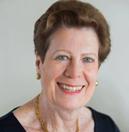
Ann Teixeira
Dear Friends,
We are so happy to be back at Goethe-Institut Boston for this afternoon’s program, continuing our partnership for a second season, co-presenting my complete Missing Words series.
We welcome back to the podium BSO Assistant Conductor Anna Handler following her sold-out debut with Collage at
Goethe-Institut one year ago. She leads an expanded Collage ensemble of fifteen musicians, including the Longy School of Music faculty brass quintet, who perform here via our artistic partnership with Longy, and bassist Ian Saunders, who joins us from Project STEP, whose students I met with yesterday via Collage’s new partnership. I am thrilled that Anna, Collage, Ian, and our friends at Longy are presenting this complete work for the first time in a live concert setting.
Missing Words (2014-2021) is my longest work, totaling 85 minutes in six parts, composed over a period of eight years. Each of the six works comprising the series were commissioned and premiered separately by different ensembles, and ultimately recorded and released together on a CD on New Focus Recordings in 2022. Given the varied instrumentations of these works – octet, brass quintet, duo, sextet, piano trio, quartet – it takes an adventurously flexible ensemble like Collage to present them all together.
In April 2020, Longy’s President Karen Zorn had scheduled the concert premiere of the then-complete five–part series with their faculty and students, but it was an early casualty of the COVID pandemic. However, my experiences during the pandemic inspired me to add one more work to this series, Missing Words VI. The Longy faculty quintet had already begun rehearsing in 2020, so it is especially rewarding for them to join us today, with Longy’s Artistic Director Andy Kozar at the helm on trumpet.
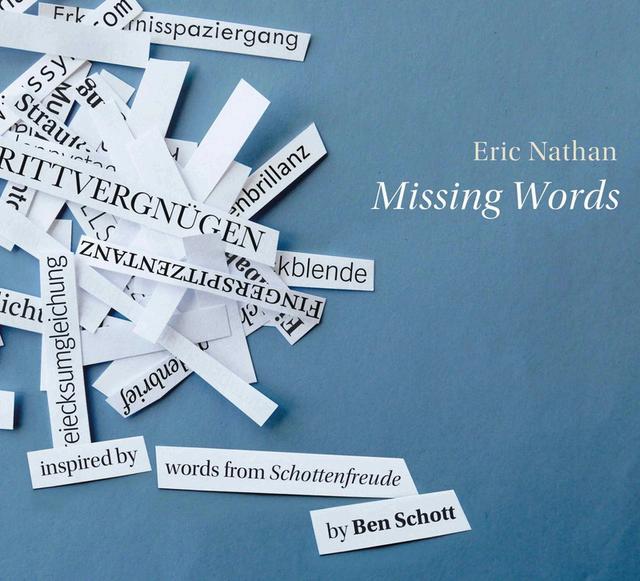
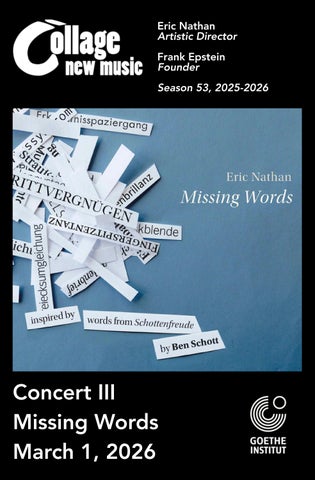
Missing Words is inspired by German words invented by British writer Ben Schott in his book Schottenfreude: German Words for the Human Condition (Blue Rider Press/Penguin Group). These words illuminate experiences of everyday life for which English has no synonyms. The words are therefore “missing” from English, and Schott has proposed new words that English speakers can adopt, in the vein of Doppelgänger, Schadenfreude and Wanderlust. I love the wit, humor, pathos and intimacy of Schott’s words, and use the concepts they evoke as points of departure for the music.
These words were first introduced to me by my wife, Luyuan, via a New York Times Op-Art piece that Schott published. After hearing the initial Missing Words performed, my Brown University colleague David Josephson encouraged me to set the entire book to music. While I only made it to setting 21 out of the book’s 120 words, this series was born.
As you listen, I encourage you to follow along with the “texts” in the program – the words and their short definitions. Laughter is welcome.
In some ways, on a personal level, hearing the music with you all in attendance feels like a final emergence from the pandemic. The series closes with the word Rolleirückblende (“The flood of memory released when looking at old photos”). Perhaps we need another new German word: the flood of memories released when hearing music written years ago finally performed.
Thank you for being here.

Eric Nathan
Frank Epstein, Founder Eric Nathan, Artistic Director
Nancy and Richard Lubin Concert
Sunday, March 1, 2026 at 3pm
Goethe-Institut Boston
Presented in partnership with Goethe-Institut Boston
Sarah Brady, flute
Alexis Lanz, clarinet
Jensen Ling, bassoon
Sarah Sutherland, horn
Andy Kozar & Chloe Swindler, trumpet
William Lang, trombone
Angel Subero, bass trombone
Anna Handler, conductor
Sponsored by Carl and Claudia Shuster
Craig Mcnutt, percussion
Christopher Oldfather, piano
Catherine French & Heather Braun, violin
Consuelo Sherba, viola
Jan Müller-Szeraws, cello
Ian Saunders, bass
Eric Nathan Missing Words (2014-2021) (b. 1983)
Missing Words I for clarinet, bassoon, horn, string quartet, double bass
I. Eisenbahnscheinbewegung (Railway-Illusion-Motion)
“The false sensation of movement when, looking out from a stationary train, you see another train depart.”
II. Herbstlaubtrittvergnügen (Autumn-Foliage-Strike-Fun)
“Kicking through piles of autumn leaves.”
III. Fingerspitzentanz (Fingertips-Dance)
“Tiny triumphs of nimble-fingered dexterity ”
Missing Words II for brass quintet
I. Leertretung (Void-Stepping)
“Stepping down heavily on a stair that isn’t there.”
II. Kraftfahrzeugsinnenausstattungsneugeruchsgenuss (Automobile-Interior-Furnishing-Aroma-Pleasure)
“New car smell.“
III. Brillenbrillanz (Spectacles-Luminosity)
“The sudden, innervating clarity afforded by new glasses.”
Missing Words III for violoncello and piano
I. Rollschleppe (Escalator-Schlep)
“The exhausting trudge up a stationary escalator.”
II. Mundphantom (Mouth-Phantom)
“Feeling that the thermometer is still under your tongue after it’s been removed.”
III Straußmanöver (Ostrich-Maneuver)
“The short-term defense strategy of simply denying reality.”
IV. Schubladenbrief ((Desk-)Drawer-Letter)
“The letter you write, but never send.” -Intermission-
Missing Words IV for flute, clarinet, percussion, piano, violin, violoncello
I. Erkenntnisspaziergang (Cognition-Stroll)
“A perambulation taken with the specific intention of contemplation.”
II. Dreiecksumgleichung (Triangle-Reorganization)
“When two friends you ’ ve introduced form a new friendship that excludes you. ”
III. Tageslichtspielschock (Daylight-Show-Shock)
“Being startled when exiting a movie theater into broad daylight.”
Missing Words V for violin, violoncello, piano
I. Ludwigssyndrom (Ludwig’s-Syndrome)
“Discovering an indecipherable note in your own handwriting.”
II. Kissenkühlelabsal (Pillow-Chill-Refreshment)
“The ineffable pleasure, and instant relief, of a cool pillow.”
III. Watzmannwahn (Watzmann-Delusion)
“The impulse to take impetuous risks when tantalizingly close to your goal.”
Missing Words VI for flute/piccolo, clarinet/bass clarinet, violin, cello
I Witzbeharrsamkeit (Joke-Insistence) I
“Unashamedly repeating a bon mot until it is properly heard by everyone present.”
II. Betttrug (Bed-Deception)
“The fleeting sense of disorientation on waking in a strange bed.”
III Witzbeharrsamkeit (Joke-Insistence) II
“Unashamedly repeating a bon mot until it is properly heard by everyone present.”
IV. Dielennystagmus (Hallway-Nystagmus)
“Repeatedly catching and avoiding people’s gazes when, say, approaching them down a long corridor.”
V. Witzbeharrsamkeit (Joke-Insistence) III
“Unashamedly repeating a bon mot until it is properly heard by everyone present.”
VI. Erebusterror (Erebus-Terror)
“Dread at the first indications of a fatal disease.”
VII. Rolleirückblende (Rollei-Flashback)
“The flood of memory released when looking at old photos.”
The concert will conclude by 5:00pm.
Please join Collage for a reception following the performance
The movement titles of Missing Words, and their translations and definitions, quote text from Schottenfreude by Ben Schott.
Copyright © 2013 by Ben Schott.
Used by permission of the author. All rights reserved.
written By Robert Kirzinger
Eric Nathan’s Missing Words pieces are part of a long lineage of the work-cycle in art. We find cycles or series throughout the history and geography of art, embraced by every artistic medium, each with its own solution to the idea of narrative versus technique: consider the Roman poet Ovid’s Metamorphoses, with its mythic underpinning and persistent theme of transformation, or the Japanese artist Hokusai’s early 19th-century print cycle 36 Views of Mount Fuji, with its narrative of the everyday life of the Japanese people and its recurring motif of the country’s most famous mountain; or Bach’s Brandenburg Concertos, which explore the medium of the concerto gross genre, solving the problem of the multiplesoloist concerto in a variety of ingenious ways.
The Missing Words cycle, so far comprising six pieces for various ensembles, has as its conceptual framework a collection of “German” portmanteau words created by Ben Schott to describe otherwise ineffable human experiences. Schott’s book Schottenfreude, like the musical works it inspired, is itself a poignant, erudite, and humorous work of art. Its entries resonated strongly with Eric Nathan, whose music captures the range of human experience, and embodies an understanding that life’s richness results from the accumulation of all of its facets, from the mundane to the profound. Nathan’s sonic and artistic imagination is fired by a dazzling range of cultural ideas, from architecture to archaeology to art to literature. He’s especially fascinated by the interaction of person and place, and travel has been a reliable source of inspiration.
It was during his travels specifically during his year in Italy as a recipient of the Rome Prize of the American Academy of Rome that Nathan’s first Missing Words piece was born. He composed the piece for the Scharoun Ensemble, which was then in residence at the Academy. Made up of members of the Berlin Philharmonic, the group is based in Germany; this suggested the quasi-Germanic concept for Nathan’s piece. Missing Words I is scored for an octet of winds and strings, which gave the composer a broad acoustic palette.
The composition of Missing Words I set in motion a process, familiar to the composer, of seeking out the most direct musical language to express the emotional and narrative content of a succinct idea. Already possessing a strong compositional technique and a large toolkit of resources, Nathan frequently found himself developing new tools and sounds to translate into music the commonplace or surprisingly subtle ideas behind Schott’s linguistic constructions.
In many interesting ways, both musically and thematically, each of the individual sets of Missing Words pieces exemplifies the whole cycle. At times we ’ re asked merely to notice something—the way some physical action feels, the way it affects our mood.
Other pieces are one-liners, a nudge to the ribs, while others, perhaps unexpectedly given the tiny kernel of their origins, expand and reflect upon much bigger phenomena of human experience. Each of the pieces is complete in itself; at the same time, though, each is a porous little world of sound that grows beyond itself, blends with the memory of the others, and sings to us of a song of humanity.
Appropriately, given its Italian/German origin, the first of the three movements, Eisenbahnscheinbewegung (translated as “Railway-Illusion-Motion”) of Missing Words I is travel-oriented, evoking Europe’s rail-centric systems . As in many of these pieces, musical onomatopoeia abounds. Nathan creates the uneasy feeling of unexpected motion through glissandos in the strings and microtonal adjustments in the winds, an effect both physical and psychological (“this isn’t right...!”). The very high violins and viola playing tremolo suggest metal-on-metal shrieks as well as the excited tension that accompanies the start of a journey, and the clunking acceleration of cello and double bass playing pizzicato impels the motion until the spell is broken. This is the first of a number of movements within the cycle that are very specifically motion-oriented (see also MW II, first movement; MV IV, first movement, among others). Other recurring themes involve light,nostalgia, social moments, and physical sensation. Although brief, each little piece within the Missing Words octet required a new way of dealing with musical time that can’t rely on traditional formal ideas, a rethinking that had to be applied anew for many of the Missing Words pieces.
The physical activity described in Herbstlaubtrittvergnügen of kicking through piles of leaves is made up of a sharp action the horn and bassoon “kick” followed by a lingering result skittering strings describing the flying and floating leaves. Simple idea: but no kick, no leaf-scattering result, is ever the same. So, musically, the exactly notated wind music varies each time, as do the far more indeterminate, gestural reactions of the strings The wind music, marked “swaggering,” reflects the kicker’s initial delight in the activity. The third movement, Fingerspitzentanz, is a celebration of digital dexterity, requiring non-standard sound-creating techniques for all players.
In writing Missing Words II for brass quintet, commissioned by the Aspen Music Festival for the American Brass Quintet, Nathan was confronted with a much more homogenous ensemble than Scharoun’s octet, but made the most of its timbral reach in creating the three lighthearted, even funny, movements. For the first, Leertretung, Nathan has his quintet climbing inexorably until, suddenly, it slows to a crawl as the climber lurches on the “missing” top step. How to compose, though, “New Car Smell”? Framed by the action of starting, then restarting, a car, Nathan uses a single chord in various voicings to explore the un-pin-downable scent.
Brillenbrillanz, with its bright opening C major chord, seems tailor-made for the gleaming sound of the brass quintet Clear chords are muddied in places by the “blurred” tones created by requiring the players to play with a slide removed; the excited fanfare-like phrases reflect the emotional excitement of newly experienced clarity. This movement marks a new potential within the series of expansive, highly developed ideas in contrast with the aphoristic, moment-based approach of many of the movements.
Commissioned and premiered by cellist Parry Karp and pianist Christopher Karp, Missing Words III begins, like its predecessors, with a motion-word. In Rollschleppe, Nathan uses the musical metaphor of Sisyphean ascent to reflect on human struggle in an increasingly mechanized and dehumanized world. The cello’s final high, sustained pitches might be heard of cries of exhausted frustration. In Mundphantom, by having the pianist depress the sustain pedal, the cello’s exploratory gestures are recreated as “phantoms” within the piano’s resonance. The more darkly abstract Straußmanöver springs from political angst, the source of which is made somewhat explicit in its closing moments. Schubladenbrief mimics the feverish energy of a letter writer in the throes of immediate reaction to some important turn of events the cello, with its random pitches at the start and finish, suggests breathless illogic.
Missing Words IV was composed for the 50th anniversary season of the new music ensemble Boston Musica Viva, using its characteristic “Pierrot ensemble” makeup of flute, clarinet, violin, cello, piano, and percussion. The three movements of this piece are the longest and most developed in the series and exhibit particular interest in the evolution of thematic and textural ideas. The textures and rhythms of the first movement, Erkenntnisspaziergang, are based on an actual recording made by a cell phone in Nathan’s pocket as he walked the correspondence should be clear This onomatopoeia, impressively recreated using bows batted on strings, scratch tones, brushes in the percussion, unfocused wind sounds, and other fascinating combinations, is enhanced via harmonies that amplify the inner life of the walker variously calm, thoughtful, and intimate, as the automatic action of walking fades into the background. The second movement, Dreiecksumgleichung, features two “friendship triangles” of violin, cello, and bass clarinet and flute, piano, and percussion. The initial duos of violin and cello and of flute and piano are disrupted by adding a third; in the end, the flute and violin are left to befriend each other. The two sections feature very different music: the first is earthy and rugged, the second sparkling and light. The process of the flute’s ejection from its trio is far quicker, but happily the violin quickly responds. The use of gongs in the sustained, suspended opening of Tageslichtspielschock creates a kind of harmonic haze to create the feeling of moving from one all-engrossing environment to another; “nostalgic” piano and wind phrases in thirds entice the listener to linger awhile.
Piano trio violin, cello, and piano is the medium for Missing Words V, commissioned by Coretet for the Neave Trio. Perhaps inspired by the piano trio genre ’ s long tradition as well as by Schott’s word Ludwigssyndrom, Nathan based the first movement on interpretations of the hastily scribbled first draft manuscript of Beethoven’s Symphony No. 9, reinterpreting one music as an entirely different kind of music—albeit still with harmonic and figural foundations in the 1820s. Kissenkühlelabsal, the second movement, is another physical-sensation piece. Nathan expands upon Schott’s idea by contrasting the outside noises of a busy, unfamiliar city with the bliss of rest. Watzmannwahn likens the breathless high-wire act of the concerto cadenza to the title word’s suggestion of (perhaps irresponsible) derring-do. The re-invocation of Beethoven in this movement complete with a con spirito “Coda” that ends on a heroic E-flat major chord adds another level of referentiality in creating an almost Classical three-movement cohesion for this piano trio.
The sixth installment in the Missing Words cycle, composed for flute/piccolo, clarinet/bass clarinet, violin, and cello, and commissioned by Hub New Music and the Stony Brook Contemporary Chamber Players, returns to the aphoristic in the scope of its movements (each is about three minutes or less) At the same time, though, the whole is a kind of rondo, using the Schottwort Witzbeharrsamkeit as a recurring theme for the first, third, and fifth movements re-insistent insistence. As one can readily hear, the “bon mot” is “about” Beethoven, in whose 150th anniversary year Nathan composed the piece. In the first movement, it’s the piccolo whose wit is thrust upon the rest of the ensemble; in the third, bass clarinet and flute enjoy each other’s humor; in the fifth, the violin repeats the “quip” as though no one had ever said anything. (And everyone pretends not to hear.) The transparently dissonant and bright harmonies of Betttrug capture the all-too-brief, endless, and slightly bleary moments at the end of a restful sleep. In Dielennystagmus, the delicately layered texture of the meeting and abrupt parting of pairs of pitches arises from a gestural game Nathan has devised for the performers, where catching and averting eye-contact provides the cues for the durations, entrances and exits of each phrase.
Nathan wrote Missing Words VI in 2020, during the “lockdown year ” of the COVID-19 pandemic, and most of its movements are notably concerned with interactions among people parties, the awkwardness of encounters, the nostalgia of dwelling on a seemingly better past. The exception is Erebusterror, which pits a simple melodic idea heard first in flute, clarinet, and violin against a foreboding, noisy cello sound, which gradually overwhelms and infects the ensemble. By the end, the flute is left standing alone against the encroaching noise –“ a thread of dignity amidst what’s looming,” as Nathan writes
The concluding movement, Rolleirückblende (the word references the German Rolleiflex camera), acknowledges the powerful pull of the past, but also hints at optimism for the future, and embraces the ephemerality of the present The movement is in essence a re-composition of Erebusterror, re-tracing its entire structure, where the ominous sounds are now replaced by plaintive lines of chorale-like simplicity. Missing Words concludes here at its most intimate and fragile moment, unadorned, with itself laid bare looking ahead, behind, and also staying right here.
Composer and writer Robert Kirzinger is Director of Program Publications of the Boston Symphony Orchestra
Copyright © 2021 Robert Kirzinger. Reprinted from the CD liner notes to Missing Words (New Focus Recordings, 2022).
c Nathan’ s (b 1983) music has been called “ as diverse as it is esting” with a “constant vein of ingenuity and expressive pth” (San Francisco Chronicle), “thoughtful and inventive” (The w Yorker), and as “ a marvel of musical logic” (Boston Classical view).
than, a 2013 Rome Prize Fellow and 2014 Guggenheim Fellow,
has garnered acclaim internationally through performances by Andris Nelsons and the Boston Symphony Orchestra, National Symphony Orchestra, Milwaukee Symphony Orchestra, Boston Modern Orchestra Project, Scharoun Ensemble Berlin, International Contemporary Ensemble, Boston Symphony Chamber Players, JACK Quartet, American Brass Quintet, and A Far Cry, and by performers including Dawn Upshaw, Lucy Shelton, Tony Arnold, William Sharp, Jennifer Koh, Stefan Jackiw, Joseph Alessi, Gloria Cheng, and Gilbert Kalish. His music has been featured at the New York Philharmonic’s 2014 and 2016 Biennials, Carnegie Hall, Aldeburgh Music Festival, Tanglewood Festival of Contemporary Music, Aspen Music Festival, Ravinia Festival Steans Institute, 2012 and 2013 World Music Days, Library of Congress, and Louvre Museum.
Recent projects include commissions from the Boston Symphony Orchestra, including Why Old Places Matter (2014) for the Boston Symphony Chamber Players; the space of a door, that Andris Nelsons and the BSO premiered in 2016 and commercially released on the Naxos label in 2019; and Concerto for Orchestra, which Nelsons premiered on the 2019-20 season-opening concerts. Opening (2021), co-commissioned by the Milwaukee Symphony Orchestra and Serge Koussevitzky Music Foundation at the Library of Congress, was premiered by the MSO and broadcast nationally on a PBS television special.
Nathan has received commissions from the New York Philharmonic, Chamber Music Society of Lincoln Center, Barlow Endowment, Fromm Music Foundation, Tanglewood Music Center, and Aspen Music Festival. He’s been honored with a Goddard Lieberson Fellowship and Charles Ives Scholarship from the American Academy of Arts and Letters, Copland House residency, Civitella Ranieri Music Fellowship, ASCAP’s Rudolf Nissim Prize, four ASCAP Morton Gould Awards, BMI’s William Schuman Prize, Aspen Music Festival’s Jacob Druckman Prize, Leonard Bernstein Fellowship from the Tanglewood Music Center, and an Early Career Research Achievement Award from Brown University. Nathan has completed residencies at Yellow Barn, Copland House, and the American Academy in Rome, and is a 2022 Civitella Ranieri Foundation fellow.
Albany Records released a debut CD of Nathan’s solo and chamber music, Multitude, Solitude: Eric Nathan (2015), produced by Grammy-winner Judith Sherman. Chelsea Music Festival Records released Eric Nathan: Dancing with J.S. Bach (2019), featuring conductor Ken-David Masur in Nathan’s two suites of orchestrations of Bach keyboard works.
In 2020, Gil Rose and the Boston Modern Orchestra Project released a portrait album of Nathan’s music on the BMOP Sound label, and New Focus Recordings released a two-CD set of Missing Words in 2022 and the album Some Favored Nook in 2023.
Nathan serves as Artistic Director of Collage New Music, a Boston’s oldest contemporary music ensemble, now in its 53rd season. He holds the position of Associate Professor of Music in composition and theory at Brown University's Department of Music. In 2018, he was awarded Brown’s most prestigious award for junior faculty, the Henry Merritt Wriston Fellowship, that recognizes excellence in teaching. From 2019-2025 he served as Composer-in-Residence with the New England Philharmonic, and inaugural Director of its New Music Readings in 20242025, and received his doctorate from Cornell. He holds degrees from Yale (B.A.) and Indiana University (M.M.). Eric Nathan’s compositions are available worldwide for rental and sale by Just a Theory Press.
Learn more at www.ericnathanmusic.com.
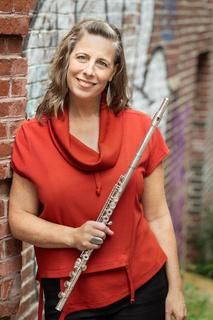
Flutist Sarah Brady hailed as “intensely expressive” (New Music Box) and “colorfully agile” (The Arts Fuse), is principal flute with the Boston Modern Orchestra Project (BMOP) and frequently performs with the Boston Symphony Orchestra, The Boston Pops, Boston Ballet, Boston Lyric Opera and Odyssey Opera. A core member of the Radius Ensemble and Collage New Music, she has collaborated with the Talea Ensemble, The Cortona Collective, Sound Icon, Boston Musica Viva, the Firebird Ensemble and the Silk Road Ensemble.
After earning an undergraduate degree as a full scholarship student at the University of Connecticut, Sarah received her graduate degrees from the Longy School of Music under the tutelage of Robert Willoughby. Prizewinner in the Pappoutsakis Flute Competition and the National Flute Association’s Young Artist Competition, Sarah served the Commissions Coordinator and Chair of the New Music Advisory Committee for the National Flute Association. Her solo, chamber and over 80 orchestral recordings including a 2019 GRAMMY award winning opera recording, can be heard on BMOP/Sound, Albany, New Focus, Naxos, Oxingale, Cantaloupe and Navona Records labels. Associate Professor of Flute at the Boston Conservatory at Berklee, Sarah also runs the Contemporary Classical Performance Program (CCMP). For more information please visit: www.Bradyflute.com
Alexis Lanz has been principal clarinetist of the Boston Ballet Orchestra since 2011, and he is a member of Sound Icon and the Callithumpian Consort. He has performed with the Boston Pops Esplanade Orchestra, A Far Cry, Xanthos Ensemble, and Symphony New Hampshire, and has appeared with the Atlantic Music Festival, the Summer Institute of Contemporary Performing Practice, New Hampshire Music Festival, and the National Orchestral Institute. He has also appeared as principal clarinetist of the New York String Orchestra Seminar and as soloist with the New England Conservatory Wind Ensemble Alexis has performed with conductors Stefan Asbury, Andrew Davis, Rafael Frühbeck de Burgos, Bernard Haitink, and James Levine. For three summers, Alexis was a student at the Tanglewood Music Center, where he was awarded the Gino B. Cioffi Memorial Prize. He earned his B.M. and M.M. degrees at the New England Conservatory, and his teachers have included Edward Cabarga and Thomas Martin.
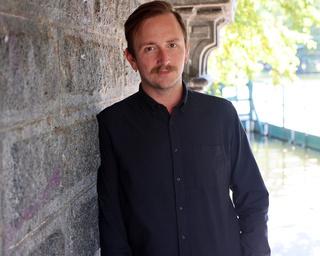
Jensen Ling, Bassoon, is an active orchestral and chamber musician in the New England area. Jensen is principal bassoon of the Orchestra of Emmanuel Music and frequently appears in and around Boston with groups such as Boston Modern Orchestra Project, Odyssey Opera, Boston Ballet Orchestra, Cantata Singers, Albany Symphony, and others. He has also appeared at the Rockport Chamber, New Hampshire, and Buzzards Bay Music festivals, and was named a Lorraine Hunt Lieberson Fellow at Emmanuel Music Jensen studied at The New England Conservatory of Music and Boston University. Currently, Jensen makes his home in the great neighborhood of Lower Allston, where he lives with his violist wife, Anna and their cat, Church.
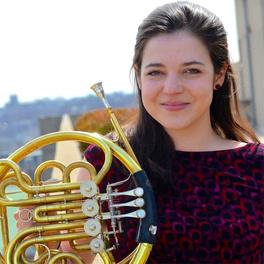
Sarah Sutherland is a Boston-based musician who performs and teaches throughout the Northeast. She is currently the third horn in the Springfield Symphony Orchestra and the hornist in the Back Bay Brass quintet, and has performed and recorded with many ensembles, including the Boston Symphony Orchestra, Boston Pops Orchestra, Boston Modern Orchestra Project, Boston Ballet, Boston Lyric Opera, Hartford Symphony Orchestra, Portland Symphony Orchestra,
Canadian Opera Company, and was a Tanglewood Music Center Fellow for two summers. Born and raised in upstate New York, Sarah began her musical studies at the age of four with the violin and at eight with the horn, adding the viola, trumpet and steel pans during high school. She moved to Rochester, NY to study with W. Peter Kurau at the Eastman School of Music; while there, she also studied horn with Jacek Muzyk and natural horn with Derek Conrad, and earned degrees in mathematics and statistics from the University of Rochester After the completion of her Bachelors degrees, Sarah moved to Boston to pursue her Masters of Music degree and Graduate Diploma from New England Conservatory, where she studied with Jason Snider and James Sommerville. Sarah teaches at the Wellesley Public Schools and Powers School of Music. She additionally serves as the Finance Officer for the Springfield Chamber Players, sits on the board of AFM Local 171 and serves as the musician representative on the board of the Springfield Symphony Orchestra.
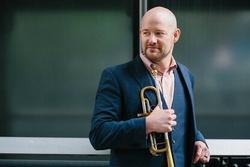
A native of Pittsburgh, Andy Kozar is a New York City and Boston based trumpeter, improviser, composer, and educator that has been called a 'star soloist' by TimeOutNY and noted for his 'precise trumpeting' by New York Classical Review. An advocate of contemporary music, he is a founding member of the contemporary music quartet loadbang which has been called ‘inventive’ by the New York Times and ‘cultivated’ by The New Yorker. He is also a member the Byrne:KozarDuo and has performed with contemporary, classical, and pop music ensembles including Bang on a Can, Queens of the Stone Age, Sigur Ros, Ensemble Signal, Boston Modern Orchestra Project, St. Petersburg Ballet, and the Wordless Music Orchestra.
He has worked closely with composers including Helmut Lachenmann, Christian Wolff, Joe Hisaishi (Spirited Away), George Lewis, Chaya Czernowin, and Pulitzer Prize winning composers Raven Chacon, David Lang, and Charles Wuorinen. His solo releases Ein horn and A Few Kites, both on New Focus Recordings, have received rave reviews including being called 'entrancing' by Alex Ross (The New Yorker, The Rest is Noise) and that 'Trumpeters around the world owe Kozar a debt of gratitude' by anearful. He is on faculty New England Conservatory Prep and at the Longy School of Music of Bard College in Boston where, in addition to teaching trumpet, he acts as the conservatory's Artistic Director, is the Chair of the Instrumental Studies Department, and is a co-director of the Divergent Studio, a summer program designed for young composers and performers of contemporary music. Andy is a Yamaha Performing Artist and exclusively performs on Yamaha trumpets.
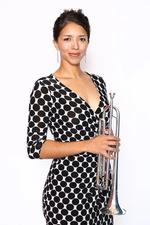
Hailed by the International Trumpet Guild for her “sweet, singing sound” and “shimmering vibrato,” Dr. Chloe Swindler (b. 1995) thrives on finding the sweet spots of blurred genre lines. Her career includes engagements as a soloist, chamber musician, orchestral musician, jazz musician, and studio musician. Chloe recently performed with pop singer Harry Styles at the Coachella Valley Music and Arts Festival, Lizzo at the BET Awards, and Vanessa Williams with the Colour of Music Festival. She is the second prize winner of the 2019 International Trumpet Guild Solo Performance Competition and a finalist of the 2019 Yale School of Music Woolsey Concerto Competition.
As an orchestral musician, Chloe has performed under the batons of Peter Oundjian, Ken-David Masur, and Marin Alsop. As a recording artist and performer, she has played in Capitol Records (Los Angeles), Boston Symphony Hall, Dizzy’s Club (NYC), Scullers Jazz Club (Boston), and Lotte Concert Hall (Seoul, South Korea) She has served as the Trumpet Faculty for the Los Angeles Philharmonic’s YOLA National Festival, and as Music Lecturer at California State University, Los Angeles. In addition, she has led masterclasses and lectures at Shenandoah University, the Longy School of Music of Bard College, the University of North Carolina Greensboro, Colorado State University, Berklee College of Music, and the International Trumpet Guild Conference.
Chloe holds degrees from UCLA (Doctor of Musical Arts), Yale University (Master of Music) and Boston University (Bachelor of Music). Other institutions she has attended include the Royal College of Music, where she studied abroad in the fall of 2015. While pursuing her DMA degree at UCLA, she worked as Teaching Associate for the Brass Department and Trumpet Studio, and for the general education course “The Art of Listening.” Chloe also served as Co-Chair of the school’s Anti-Racism Anti-Discrimination Action Committee, and led the Culture of Academia Sub-Committee.
Chloe currently works at Berklee College of Music and Boston Conservatory at Berklee as the Assistant Director of Engagement and Programming for the Diversity and Inclusion Office.
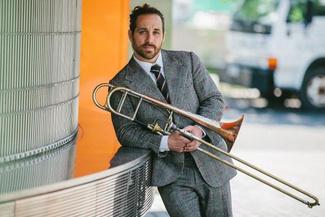
Originally from Long Island, trombonist William Lang is an active performer, improviser, and teacher based in New York City. He can be found playing in all settings and styles, from cutting edge premieres and classical masterpieces with orchestras to Broadway shows and with world famous pop artists. He has given his signature unaccompanied recitals throughout the United States, played concertos across America, Asia, and Europe, and has also recorded with such artists as Philip Glass, David Bryne, St. Vincent, Sufjan Stevens, Bryce Dessner, Nico Muhly, and Jonsi (of Sigur Ros.)
Intensely passionate for chamber music, he is a founding member of the groundbreaking ensemble loadbang (an original and unique group of musicians interested in creative act of building something truly new,) as well as a member of groups such as the Lang/Rainwater Project, TILT Brass, the SEM Ensemble, and the Argento Chamber Ensemble. William has premiered works from numerous distinguished composers, including such luminaries as Raven Chacon, Augusta Read Thomas, Lei Liang, Charles Wuorinen, Chen Yi, Alex Weiser, Mary Kouyoundjin, Chaya Czernowin, Anne Cleare, David Lang, Oscar Bettison, Felipe Lara, Kate Soper, George Lewis, Alex Mincek, Andy Akiho, Alex Temple, and Alvin Lucier.
The New York Times has called his playing "fiercely, virtuosic" and the Boston Globe has hailed him for his "superb performance" in past solo works. William teaches at the Manhattan School of Music, as well as the Longy School of Music, and is a performing artist for Stephens Horns and Long Island Brass.
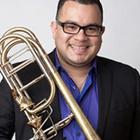
Venezuelan trombonist Angel Subero has performed with the Boston Symphony Orchestra, the Boston Pops, the Boston Modern Orchestra Project, the Iceland Symphony, the Boston Ballet Orchestra, the Starwars Symphony Orchestra, Naples Philharmonic, Albany Symphony Orchestra, the Boston Philharmonic, the Philharmonia Orchestra, the Venezuela Symphony Orchestra, the Caracas Philharmonic, and the Gran Mariscal de Ayacucho Symphony, among others.
As a chamber musician, Subero has appeared with the Burning River Brass, the Camerata Pacifica, the Atlantic Brass Quintet, Triton Brass, Boston Symphony Brass Ensemble, and Boston Pops Brass Ensemble. Mr. Subero has worked with such conductors as Seiji Ozawa, John Williams, Kurt Masur, Keith Lockhart, Robert Spano, Sir Colin Davis, James Conlon, Rafael Fruhbeck de Burgos, David Robertson and Christoph von Dohnanyi, Ingo Metzmacher, and James Depreist, among many others.
In the realms of jazz, Latin, and commercial music, Subero has appeared with artists such as Slide Hampton, Bob Brookmeyer, Jim McNeely, Claudio Roditi, Danilo Perez, New York Voices, the John Allmark Jazz Orchestra, Chris Botti, Rockapella, Boston, Temptations, The Ebonys, The Stylistics, The Manhattans, Jethro Tull, Oscar D’ León,
Dimension Latina, Isaac Delgado, Jose “Cheo” Feliciano, Larry Harlow, La Clave Secreta, Rebel Tumbao, Greg Hopkins Bigband, Bonerama, Ensamble Gurrufio, and Serenata Guayanesa, among others.
He attended the Aspen Music Festival and was a fellowship student at Tanglewood Music Center where he received the Omar de’l Carlo Fellowship and the Harry Shapiro Brass Award; He was also a fellow at the Pacific Music Festival in Japan. Subero was a guest soloist with the Boston Modern Orchestra Project, which commissioned a Trombone Concerto “From the Institutes of Groove” that was written for him by Grammy-nominated composer, Michael Gandolfi. The piece was recorded on the BMOP record label and was release in 2013. Mr. Subero can also be heard on the TRITON BRASS debut recording release in 2014 under the Hipbonemusic record label.
He has given masterclasses and recitals in the USA, Europe, Japan, Mexico, Colombia, and Venezuela. He is a regular guest professor at the State Foundation for the National System of Youth and Children’s Orchestras of Venezuela “El Sistema.” He is on the faculty at the Boston Conservatory of Music, Longy School of Music of Bard College, and the Atlantic Brass Quintet Seminar, and he is a member of the award-winning brass quintet “TRITON BRASS”.
Subero started his musical studies at the age of 13. He attended the Conservatorio Itinerante in Caracas, Venezuela, where he studied with the legendary Michel Becquet; In the US, he studied with Lawrence Isaacson, John Rojak, Douglas Yeo and studied jazz with Claudio Roditi and Jeff Galindo. He attended the Boston Conservatory, where he studied with Mr. Lawrence Isaacson, and the New England Conservatory of Music, where he received the NEC Merit Award graduating with distinction in Performance after studying with Mr. Douglas Yeo, retired bass trombonists of the Boston Symphony Orchestra Mr Subero plays S E Shires Custom Trombones exclusively
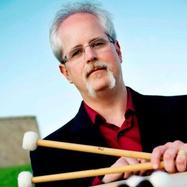
Known for his distinctive style and thoughtful musicianship, percussionist Craig McNutt has become a vital performer in the realm of percussion performance He has been featured as a soloist with the Rhode Island Philharmonic (Russell Peck’s Harmonic Rhythm) and Collage New Music (Steven Mackey’s Micro-Concerto). He has collaborated with some of the most celebrated composers of the 20th and 21st centuries, including Elliott Carter, Lukas Foss, John Cage, Bernard Rands, Gunther Schuller, George Rochberg, Charles Fussell, John Harbison, Michael Gandolfi, and Lee Hyla, and performed under the direction of many noted conductors, including James Levine, Seiji Ozawa, Simon Rattle, Roger Norrington, Christoph von Dohnányi, Gennady Rozhdestvensky, Robert Spano, Oliver Knussen, Reinbert de Leeuw, and John Williams.
As a performer, Mr. McNutt has worked with virtually all of Boston’s major musical groups, including the Boston Symphony and Boston Pops, Boston Ballet, Boston Lyric Opera, Cantata Singers, A Far Cry Chamber Orchestra, and the Boston Landmarks Orchestra. He is Principal Timpanist of the Rhode Island Philharmonic, and performs regularly as Principal Timpanist with the Boston Modern Orchestra Project, and Emmanuel Music. In the contemporary music genre, Craig is a featured percussionist for Collage New Music and ALEA III, and has performed with Boston Musica Viva and Dinosaur Annex. Equally at home in the field of historical performance, he regularly performs on baroque timpani with the period instrument groups Boston Baroque, Handel and Haydn Society, and Boston Cecilia.
A Massachusetts native, Mr. McNutt holds degrees from the Hartt School of Music and Yale University, and has completed additional studies at the New England Conservatory of Music. He is a two time alumnus of the Tanglewood Music Center, and has also spent summers studying at the Aspen Music Festival, and as a fellow of the Los Angeles Philharmonic Institute Currently Mr McNutt teaches at The New England Conservatory Preparatory School, The Music School of The Rhode Island Philharmonic, and Wellesley College. He has also served on the faculty of the Berklee College of Music.
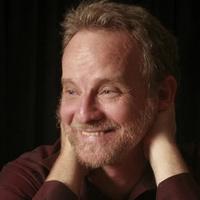
Christopher Oldfather has devoted himself to the performance of contemporary music for over twenty years. He has participated in innumerable world premiere performances, featuring every possible combination of instruments, in cities all over America. He has been a member of Collage New Music since 1979 and New York City’s Parnassus since 1997. He also performs with the Met Chamber Ensemble and is keyboard chair of the American Composers Orchestra. He appears regularly in Chicago and has joined singers and instrumentalists of all kinds in recitals throughout the United States. In 1986 he presented his recital debut in Carnegie Recital Hall, which then closed immediately for renovations. Since then he has pursued a career as a freelance musician, which has taken him as far afield as Moscow and Tokyo and has seen him play virtually every sort of keyboard ever made, including the Chromelodeon. He is widely known for his expertise on the harpsichord and is one of the leading interpreters of contemporary works for that instrument. As a soloist Mr. Oldfather has appeared with the New York Philharmonic, the New World Symphony, and Ensemble Modern in Frankfurt, Germany. He has collaborated with the conductor Robert Craft and can be heard on several of his recordings His recording of Elliott Carter’s violin-piano Duo with Robert Mann was nominated for two Grammy Awards in 1990
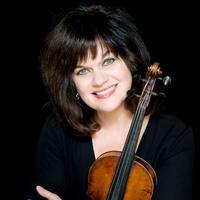
Canadian violinist Catherine French, a member of the Boston Symphony Orchestra since 1994, has established herself as a versatile and accomplished soloist and chamber musician in addition to her distinguished orchestral career. Ms. French garnered the grand prize at the Canadian Music Competition, the C B C Radio Competition and the National Competitive Festival of Music,Canada’s three major music competitions. She has performed as soloist with many leading Canadian orchestras and given recitals throughout North America and Argentina. Ms. French was featured with the Juilliard Orchestra and James de Preist, the Boston Pops and John Williams, and at Carnegie Hall in her debut with David Gilbert.
Lauded for her “superbly lyric” playing and her “amazing level of artistry” by Strad Magazine, Ms. French is a dedicated member of the Calyx Piano Trio and Collage New Music. Her avid interest in chamber music has led to performances at the Marlboro, Banff, Pórtland and Carolina chamber music festivals, quartet tours of Germany and China and annual concerts as part of the Prelude series at Tanglewood and the Curtisville Consortium. Ms. French has recorded for Albany Records and is featured in Donald Sur’s Berceuse for Violin and Piano with pianist Christopher Oldfather.
Catherine French began Suzuki violin at age four then continued her studies under the esteemed Canadian pedagogue Dr Lise Elson Ms French graduated from Indiana University with a Bachelor’s of Music degree and a Performer’s Certificate, then earned a Master’s degree from the Juilliard School. Her teachers were Miriam Fried, Felix Galimir and Joel Smirnoff. Ms. French has played with Collage New Music since the mid-1990’s.
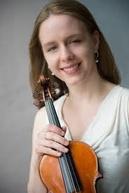
Heather Braun performs as first violinist of the prize-winning Arneis Quartet and as a member of the Orchestra of Emmanuel Music and Taconic Music Chamber Players. Heather began teaching violin and chamber music at the Boston University School of Music in 2014, and joined the Saint Anselm College faculty in 2016. She has performed throughout the United States, Canada, China, and Italy, including venues such as the Beijing Modern
Music Festival, Cabot Theater, Concord Free Library, Frederick Collection, Music on Main (Vancouver), Rockport Chamber Music Festival, Stanford University, Swarthmore College, University of Indianapolis, and Williams College.
Heather has performed as a soloist with various orchestras in Boston, Milwaukee, Washington DC, Danbury, CT and Manchester, VT. She has performed as visiting concertmaster for the Greenwich Symphony Orchestra and as a guest artist with the Greenwich Chamber Players. Other chamber music and solo collaborations include performances with Tony Arnold, Randall Hodgkinson, Marc Johnson, Robert Levin, St. Lawrence String Quartet, and Shanghai Quartet.
Heather earned her Bachelor of Music degree from the Eastman School of Music and completed her Doctor of Musical Arts degree at Boston University, studying with Peter Zazofsky. While a Tanglewood Music Center Fellow, she received the Jules C. Reiner Violin Prize; other awards received include the Zulalian Foundation Award (BU), the John Lad Prize (Stanford University) and Silver Medal at the ICMEC Competition
Heather is on the faculty at the Boston University Tanglewood Institute, Taconic Music Chamber Intensive and Danbury Chamber Music Intensive. She has also taught at Point Counterpoint, Duxbury Music Festival, Manchester Music Festival, and Apple Hill Center for Chamber Music.
Her recordings include chamber music by John Wallace, as a violinist soloist and member of the orchestra for Bach Cantatas with soprano Kendra Colton, and on Elena Ruehr’s latest album, Icarus, released in the spring of 2022 and featured on NPR and BBC Proms.
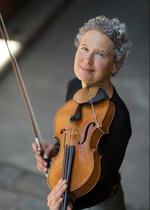
Consuelo Sherba, violist, is a founding member and artistic director of the performance ensemble Aurea, dedicated to exploring the connection between music and the spoken word. With Aurea since 2004, she has performed at the Chicago Humanities Festival, the New York University Humanities Festival, FirstWorks Providence, the Pawtucket Arts Festival, and around New England
For her work as a performer, she was chosen as Person of the Year by the Pawtucket Foundation in 2007, and in 2008, was awarded the prestigious Rhode Island Pell Award.
She has been on the applied music faculty at Brown University since 1986, and also teaches at the RI Philharmonic Music School. In the spring semester of 2010, she was appointed visiting assistant professor of music in performance at Wheaton College in Norton, MA. Past teaching appointments include Connecticut College, Haverford College, the University of Charleston, and the University of Massachusetts Amherst.
She performs with the Rhode Island Philharmonic, the Buzzard’s Bay Music Festival, and Music at the Meeting House on Cape Cod. She has also performed with the Milwaukee Symphony Orchestra, the Atlanta Symphony, the Boston Pops, the Vermont Symphony, The Carvalho Festival in Brazil, Monadnock Music, the Aspen Music Festival, the Colorado Music Festival, the Grand Teton Festival, the Round Top Festival, and was principal violist of the the Atlanta Chamber Orchestra, the Atlanta Ballet Orchestra, and the West Virginia Symphony. From 1983-2000, she was violist of the Charleston String Quartet, and performed with them all over the United States and Europe, and has appeared as guest violist with the Boston Chamber Music Society.
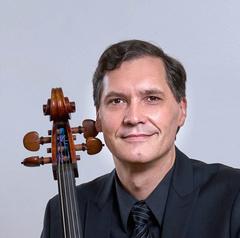
Cellist Jan Müller-Szeraws has a versatile career as a performer and teacher. Solo performances have included engagements with many orchestras including the New England Philharmonic, Concord Orchestra, Boston Landmarks Orchestra, Richmond Symphony Orchestra, Moscow Symphony Orchestra, Orquesta Sinfónica de Concepción, Orquesta de la Universidad de Santiago de Chile and Orquesta Sinfónica de Chile with repertoire ranging from concertos from the traditional repertoire such as Haydn, Dvorak, Schumann, Tchaikovsky, Bloch, Shostakovich to contemporary composers Chou Wen Chung, Gunther Schuller, Shirish Korde, Bernard Hoffer and John Harbison. Projects have included the release of "Anusvara", a disc with music by Shirish Korde for cello, tabla and carnatic soprano, the premiere and recording of "Suite for Solo Cello" by Thomas Oboe Lee as well as a disc with sonatas by Brahms and Chopin with pianist
Adam Golka for Hammond Performing Arts. He has been guest professor at the Universidad Católica de Chile, a guest with the Israeli Chamber Project as well as guest principal cellist for the Bamberg Symphony Orchestra in Germany and a regular extra player with the Boston Symphony Orchestra.
Most recently he has been pairing the Bach Cello Suites with works by Shirish Korde in his project “Bach & Ragas”. He is member of contemporary music ensemble Boston Musica Viva, Collage New Music and Boston/Andover based ensemble Mistral On the faculty at Phillips Academy Andover, he is a frequent guest artist at many festivals As Artist-in-Residence at the College of the Holy Cross in Worcester he directed the Performance Program and was founder and director of the Chamber Music Institute at Holy Cross, an intensive summer program for talented high-school and college students. Müller-Szeraws studied at the Musikhochschule Freiburg and holds degrees from Boston University. He plays a cello by David Tecchler, on loan from the Saul and Naomi Cohen Foundation.
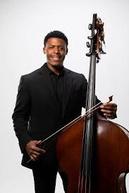
With an unwavering belief in the transformative power of music for social change, Dr. Ian Saunders is devoted to reshaping the contemporary relevance and significance of classical music. This commitment is evident through his artistic pursuits, educational contributions, and visionary leadership.
Dr. Saunders currently holds the role of Artistic Director at Project STEP, an institution committed to providing comprehensive music instruction to young musicians from historically underrepresented communities in classical music Prior to his tenure at Project STEP, he played pivotal roles within the leadership teams of The Eastern Music Festival, where he served as the Assistant Dean of Students, and The Longy School of Music, where he held the position of Assistant Dean for Artistic and Social Change. His invaluable insights and expertise have also been instrumental in shaping the vision and future of organizations such as Equity Arc (formerly National Instrumentalist Mentoring and Advancement Network) and Emmanuel Music in Boston, MA, where he actively serves as a board member.
Furthermore, Dr. Saunders is a distinguished fellow in the prestigious Sphinx LEAD program, a two-year leadership initiative designed to catalyze transformation within the music industry by empowering the next generation of executive leaders.
Dr. Ian Saunders continues to thrive in an exhilarating career as a highly sought-after bassist, appearing with prestigious ensembles such as The Cleveland Orchestra, The Cincinnati Symphony Orchestra, Chautauqua Symphony Orchestra, The Virginia Symphony, Sphinx Symphony, and many more. His musical journey also includes remarkable collaborations with Grammy-winning ensemble Roomful of Teeth, A Far Cry, Cherish the Ladies, rock legends Kansas, and the dynamic Hip-Hop artist, Thee Phantom. Moreover, his performances have graced iconic venues, including the John F Kennedy Center for the Performing Arts in Washington, D C , Heinz Hall in Pittsburgh, PA, and New York's illustrious Carnegie Hall His musical prowess has extended beyond borders, with appearances in Canada, Mexico, and the Bahamas.
As a dedicated educator, Dr. Saunders has made a significant impact in various educational settings. He has dedicated himself to teaching in youth programs nationwide, igniting the aspirations of students from K-12 and helping them cultivate success in their lives through the transformative power of music education. Furthermore, he has shared his knowledge and expertise at the collegiate level, teaching at institutions such as The University of Cincinnati, The University of Maryland, Northern Kentucky University, and Penn State University.
Since 2006, his teaching career has been centered around student development. However, what truly sets him apart as an exceptional educator is his unwavering commitment to the well-being of his students and his dedication to guiding them from their aspirations to their concrete future endeavors. This perspective has consistently proven to be invaluable in his work with students at all educational levels.
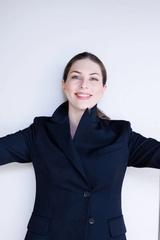
The German-Colombian conductor and pianist Anna Handler has been performing on stages and in concert halls around the world since her debut at Salzburg Festival in 2022.
In November 2025, she was appointed Chief Conductor of the Ulster Orchestra, a position she will begin in the 26/27 season. Since the 25/26 season, she has served as Kapellmeister at the Deutsche Oper Berlin, where she was invited to conduct eleven opera performances in her first season. She was previously a Dudamel Fellow with the Los Angeles Philharmonic in the 23/24 season. Following her debut at Walt Disney Concert Hall, she was immediately invited back to conduct the orchestra at the Hollywood Bowl in July 2025. Last summer, Handler made her highly successful debut with the Boston Symphony Orchestra at the Tanglewood Music Festival.
As a prominent advocate for Diversity, Equity, and Inclusion, Dr. Ian Saunders has been honored with invitations to impart his wisdom to numerous esteemed organizations, including Sphinx Connect 2021, The League of American Orchestras, The Chautauqua Institution, and many others 25
She was appointed Assistant Conductor of the Boston Symphony Orchestra by Andris Nelsons for a two-year term beginning with the 24/25 season and concluding in the summer of 2026, marking another important milestone in her career.
The 25/26 season will see her subscription debuts with both the Los Angeles Philharmonic at Walt Disney Concert Hall and the Boston Symphony Orchestra at Symphony Hall in Boston. Other notable engagements include appearances with the Dresden Philharmonic and the New Years concert of the Royal Swedish Opera, as well as a concert at the Elbphilharmonie Hamburg (Großer Saal) in April 2026 with Jonathan Tetelmann. She has previously conducted the Berlin Philharmonic Brass at the Dresden Music Festival.
Handler’s close relationship with the Salzburg Festival began in 2022 with her debut as Music Director of Kát’a Kabanová for the renowned Opera Camp series, followed by Ravel’s L’Enfant et les sortilèges in 2023 and Carl Orff’s Die Kluge in 2024. Further highlights include debuts with the Minnesota Orchestra, the BBC Philharmonic, and the Frankfurt Radio Symphony, as well as collaborations with Barbara Hannigan, Okka von der Damerau, Sabine Meyer, and Yo-Yo Ma.
Handler grew up in Munich and initially studied piano and conducting at the University of Music and Performing Arts Munich before continuing her studies at the Franz Liszt University of Music Weimar, the Accademia Pianistica Internazionale di Imola and the Folkwang University of the Arts. She completed her master's degree in conducting at the Juilliard School in New York in May 2023. At Juilliard, she was the first conductor ever to receive the prestigious Kovner Fellowship.
As director of the Ensemble Enigma Classica, which she founded in 2019, Handler works with renowned soloists. She is particularly interested in technology-supported music mediation in real time. Conducting from the piano and chamber music collaborations with violinist Laura Handler are an important part of her musical identity.
Handler received the Rising Star Award from the European Cultural Foundation Europamusicale and is a scholarship holder of the German Foundation for Musical Life. She was also awarded the Maria Ladenburger Prize for Music in cooperation with WDR, the Cusanuswerk Foundation and Deutsche Grammophon.
Special Thanks to Our Donors!
Represents donors who have given from September 2025 to January 2026
Conductor’s Circle ($5,000+)
Ferdinando Buonanno
Mary Epstein & family
Richard K. Lubin Family Foundation
David Neuwirth
David Oswald, In honor of Frank Epstein & Eric Nathan
Soloist’s Circle ($3,000-$4,999)
Alice M. Ditson Fund
The Amphion Foundation
Ann B. Teixeira
Composers’ Circle ($1,500-$2,999)
Aaron Copland Fund for Music, Inc.
Anonymous, In Honor of Susan DeLong
Julie I Rohwein
Claudia Shuster & in memory of Gary DeLong
Katie & Paul Buttenwieser
Eric Nathan
Benefactor ($1,000-$1,499)
Mike Alpert
Birgit Blyth
Karen Carmean & Doane Perry
Frank & Mary Epstein
Fellow ($500-$999)
Susan DeLong
Robert J. Henry
Linda Kimerling
Pat Swarr
Meghan Titzer
Donald Forte Jr.
Francoise Moros
Geoffrey Steadman
David McMullin
Lia G. Poorvu
Celeste Wilson
Patron ($250-$499)
Charles Anderson
A.Connolly Tolkoff
Robert Kusner
John Loader
Richard Cornell Carl Nathan
Sponsor ($100-$249)
Yu-Hui Chang
Eric Chasalow
Mark Devoto
Andrew List
John Rodney Lister
Marjorie Merryman
Catherine French Joel Moerschel
Michael Gilbertson
Daniel Godfrey
Randolph Hawthrone
Samuel Rechtoris
Hugh Russell
John Stewart
Mark Kagan Rena Subotnik
Christopher Krueger
Alfred Lerdahl
Sarah Tenney
Marcus Thompson
Arthur Levering Julia Wong
Donors up to $99
Bruce Creditor
Tamar Diesendruck
Marti Epstein
Judith Soffer
Lu Wang
Gerald Zaritzky
Carol Kort Majie Zeller
In honor of Collage Founder Frank Epstein’s retirement from Collage New Music after 52 years, Collage has created the Frank B. Epstein Commissioning Fund. The fund honors the immeasurable impact of Frank Epstein’s vision and legacy at Collage New Music and supports the creation of new work for Collage to premiere for years to come, continuing Frank’s vision into the next half century.
We are tremendously grateful to Collage’s family of supporters who have stepped up to be Founding Sponsors of this fund. Please inquire with us about how to become part of this initiative as a Sustaining Sponsor.
Nick Anagnostis* **
Dianne & Michael Blau
Birgit Blyth
Ferdinando Buonnano
Paul & Katie Buttenwieser**
John Carey**
Karen Carmean
Mary Allmon Epstein, DMA
Nomi Rozanna Epstein, DMA
Rebecca Alec Epstein
Joel Moerschel &
Bridget P. Carr
Carl & Amy Nathan
Eric Nathan
David Oswald**
Ruth & Ken Scheer
Stephen D. Senturia
Abraham Benjamin Tolkoff
Clara Margit Tolkoff
Emmanuel Walker Tolkoff
Ronan Lefkowitz Joshua Lev Tolkoff in memory of Murray Lefkowitz
Elsa Krasner Miller & Marvin Miller
*via Collage’s endowed fund
**via Collage’s 50th Anniversary Commission Fund
Please consider making a tax-deductible donation our website: www.collagenewmusic.org/donate
You can also donate by check, payable to Collage New Music P.O. Box 230150 Boston, MA 02123
Colloquium
Saturday April 25, 2026, 10am-5pm
Longy School of Music of Bard College
27 Garden St. Cambridge, MA
Featuring Mentor Composers:
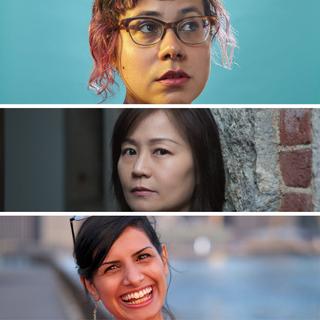
Angélica Negrón, Yu-Hui Chang, and Niloufar Nourbakhsh
Join Collage New Music for an event-filled day that brings together composers in the greater Boston region for workshops and talks. The day provides opportunities for composers to meet and share ideas with each other, and benefit from observations on their own music by guest composers.
Concert IV: Mosaics of Home
April 26, 2026 at 3:00pm
Longy School of Music, Pickman Hall
Pre-Concert Talk at 2:00pm with Artistic Director Eric Nathan and featured composers
Eric Nathan, CONDUCTOR
Tony Arnold, SOPRANO (2025-26 Collage Artistic Partner)
World premieres of Collage Co-Commissions with Eighth Blackbird and Left Coast Chamber Ensemble by JaRon Brown, Erin Gee, April Dawn Guthrie, Eric Nathan, Angélica Negrón and Juri Seo
Additional music by Christopher Trapani