Shirley Gorelick
Shirley Gorelick Family
June 23 – July 29, 2022
Essay by Claire Barliant
Eric Firestone Press 2024
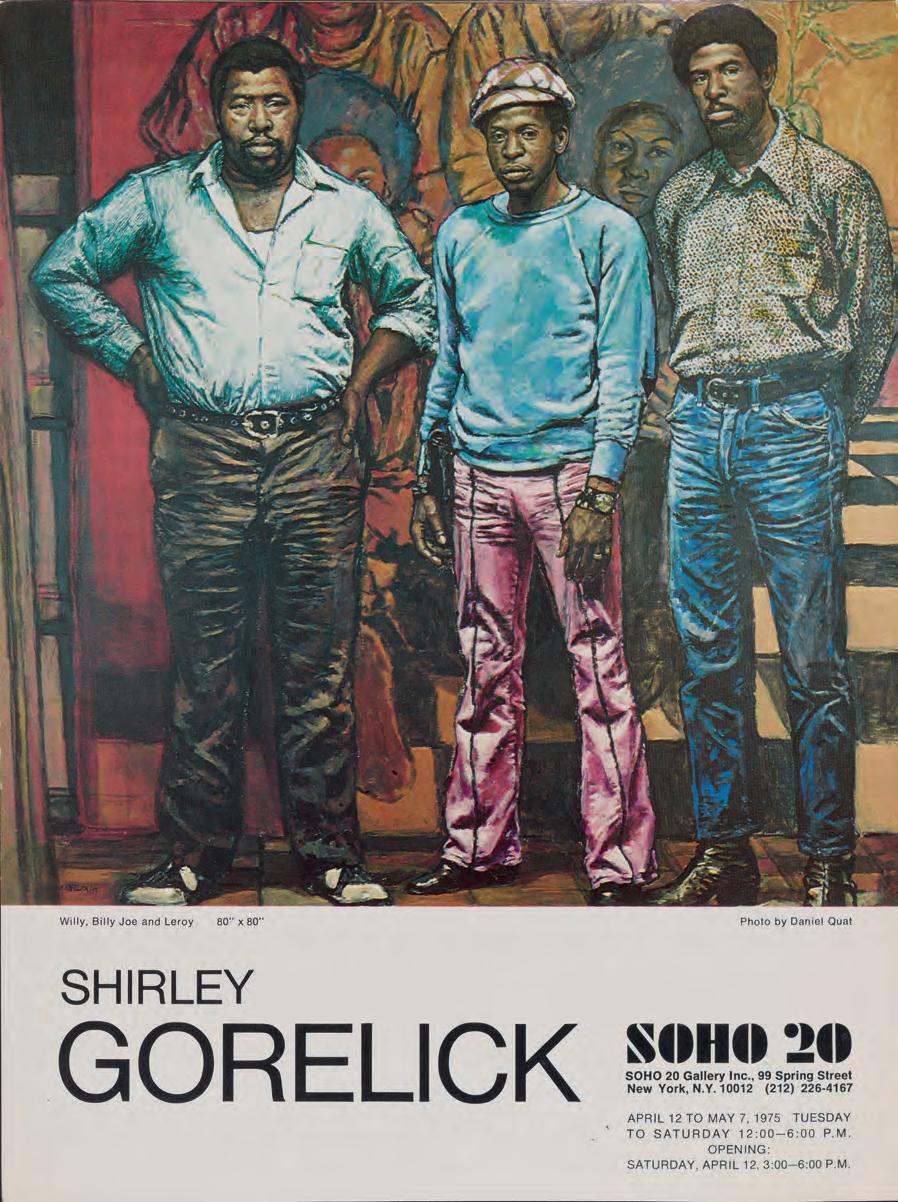
Announcement for Gorelick’s 1975 SOHO 20 exhibition
Shirley Gorelick: Family
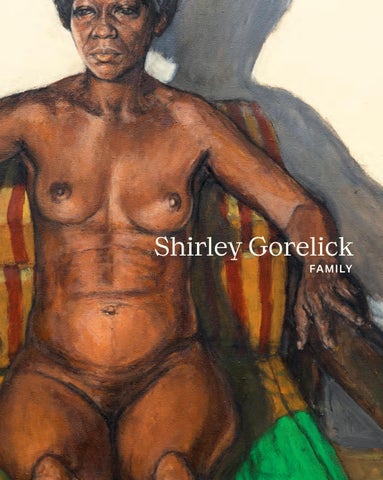
“I have no idea if she’s black,” critic John Perreault wrote in a 1975 review of large-scale, realist paintings by Shirley Gorelick—a white middle-aged Jewish woman who lived in the suburbs—“but her subjects are.”
He followed this statement by observing that Gorelick has “invented the palette for black skin, sorely needed.”1
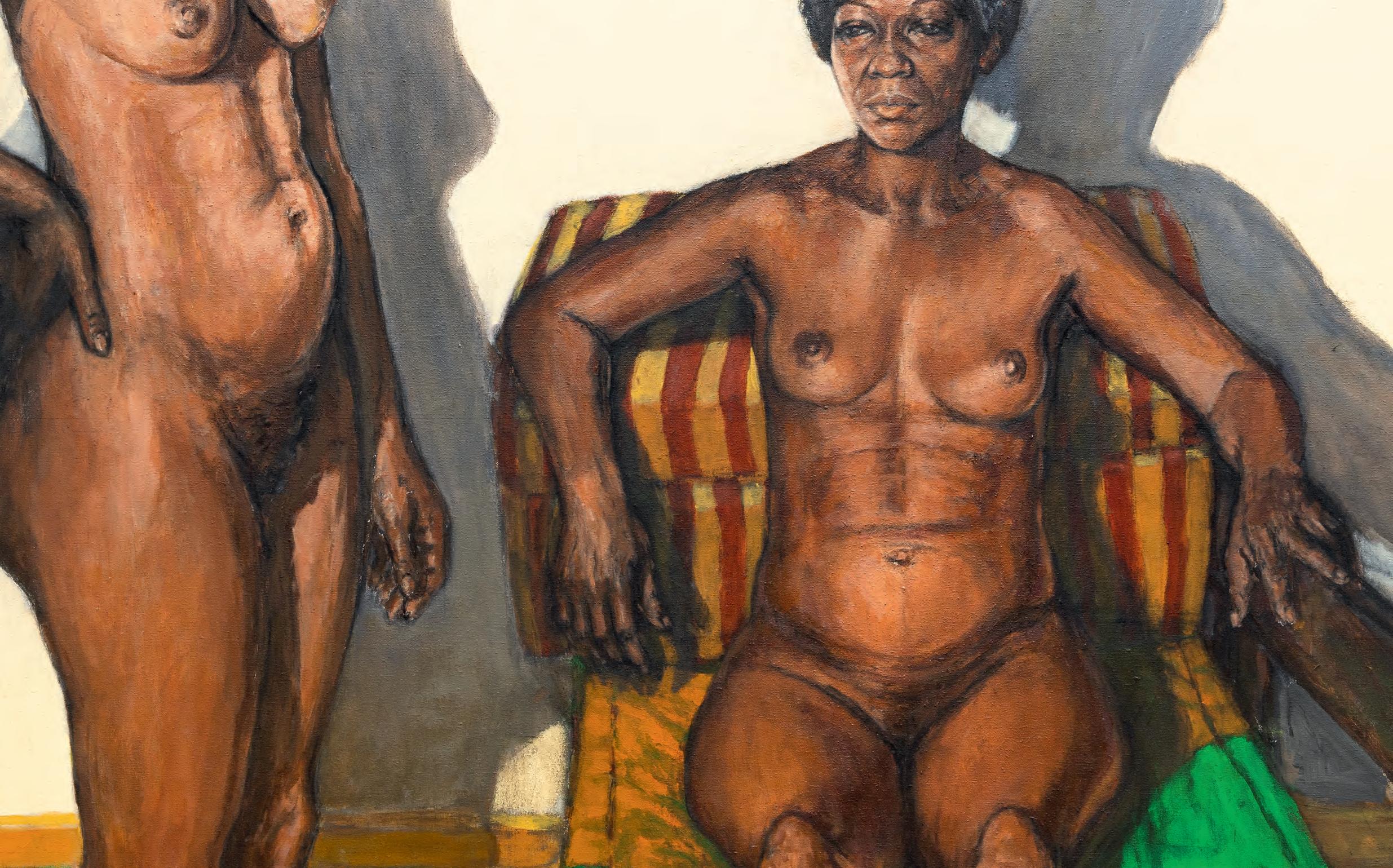
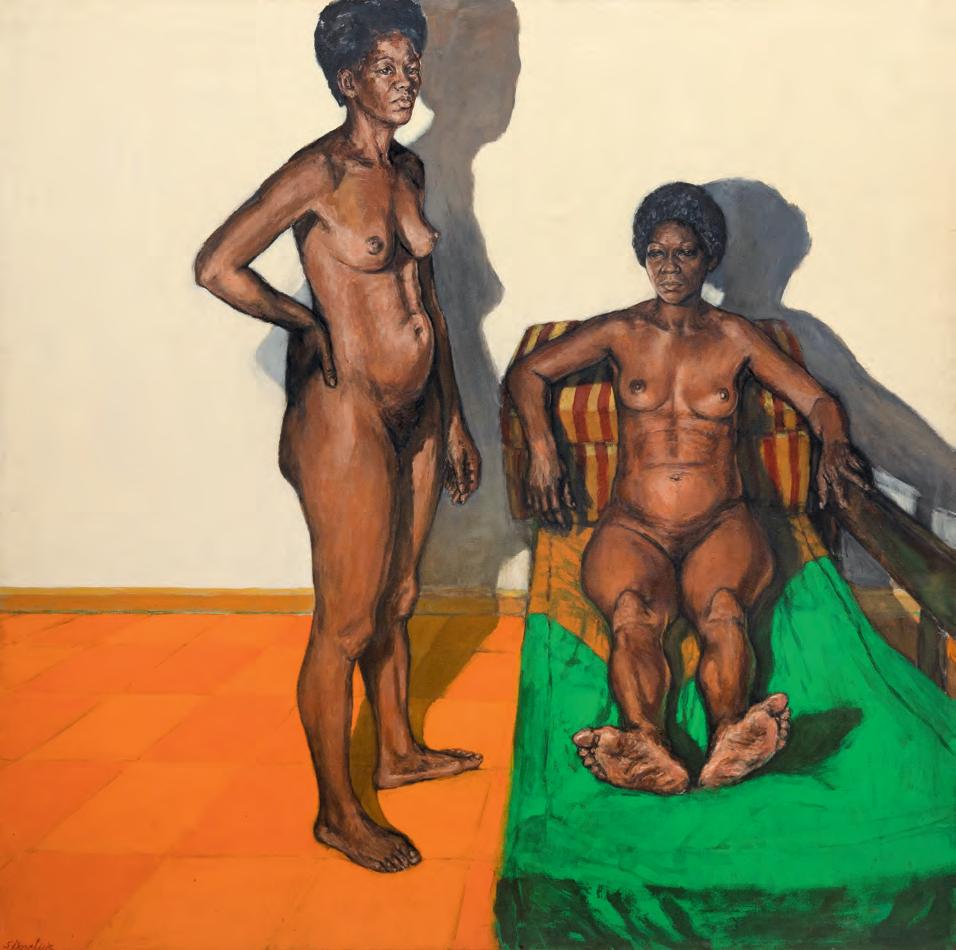
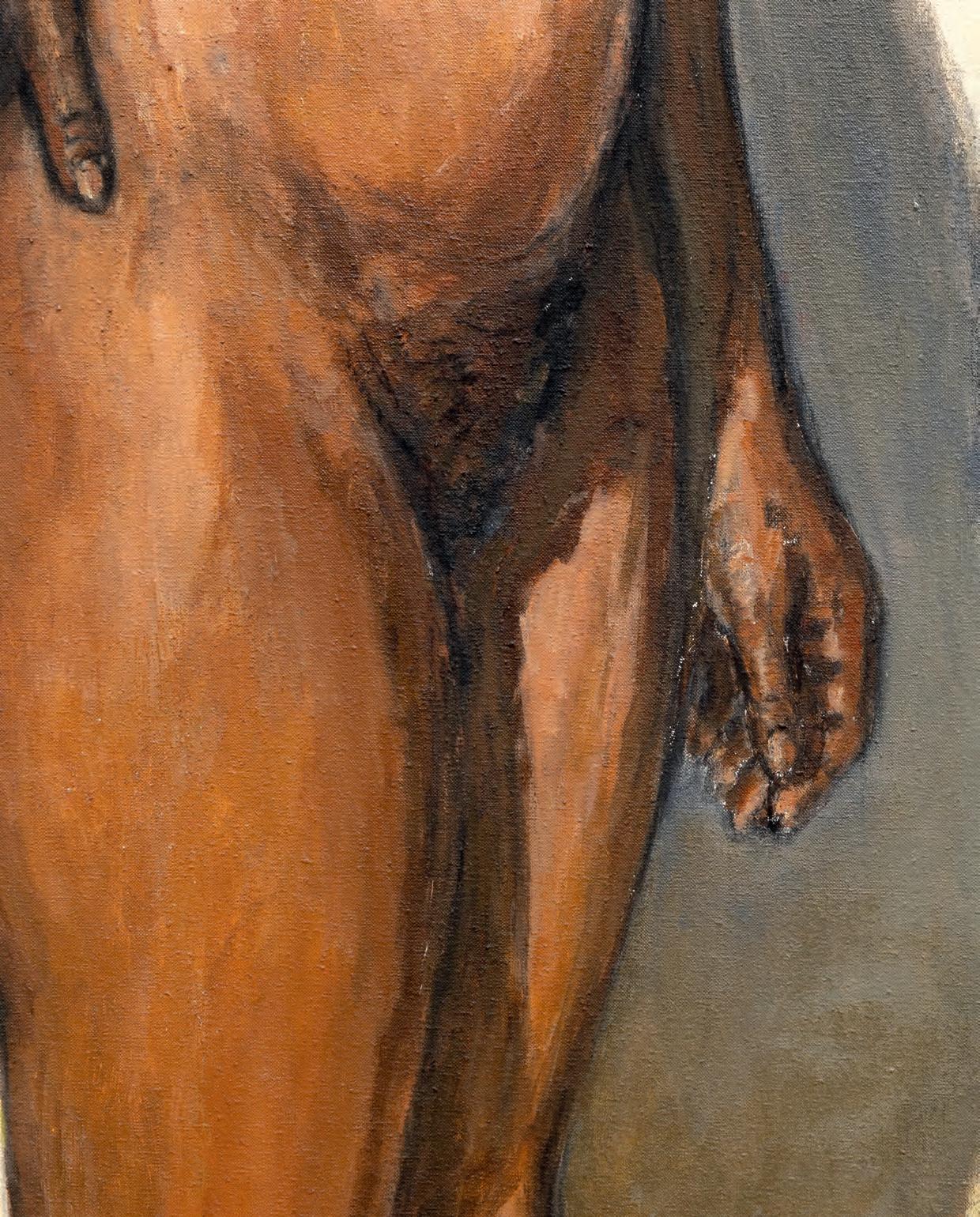
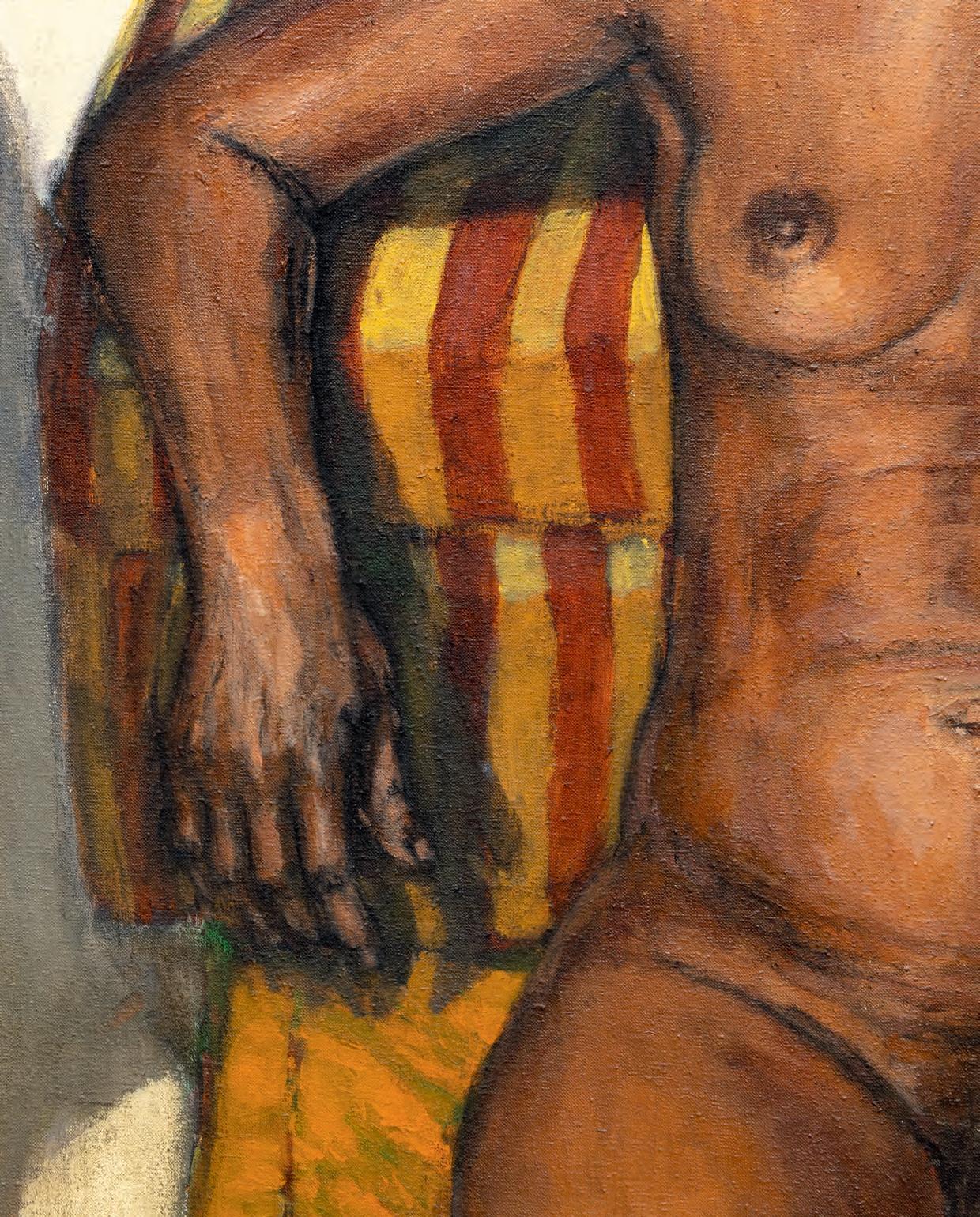
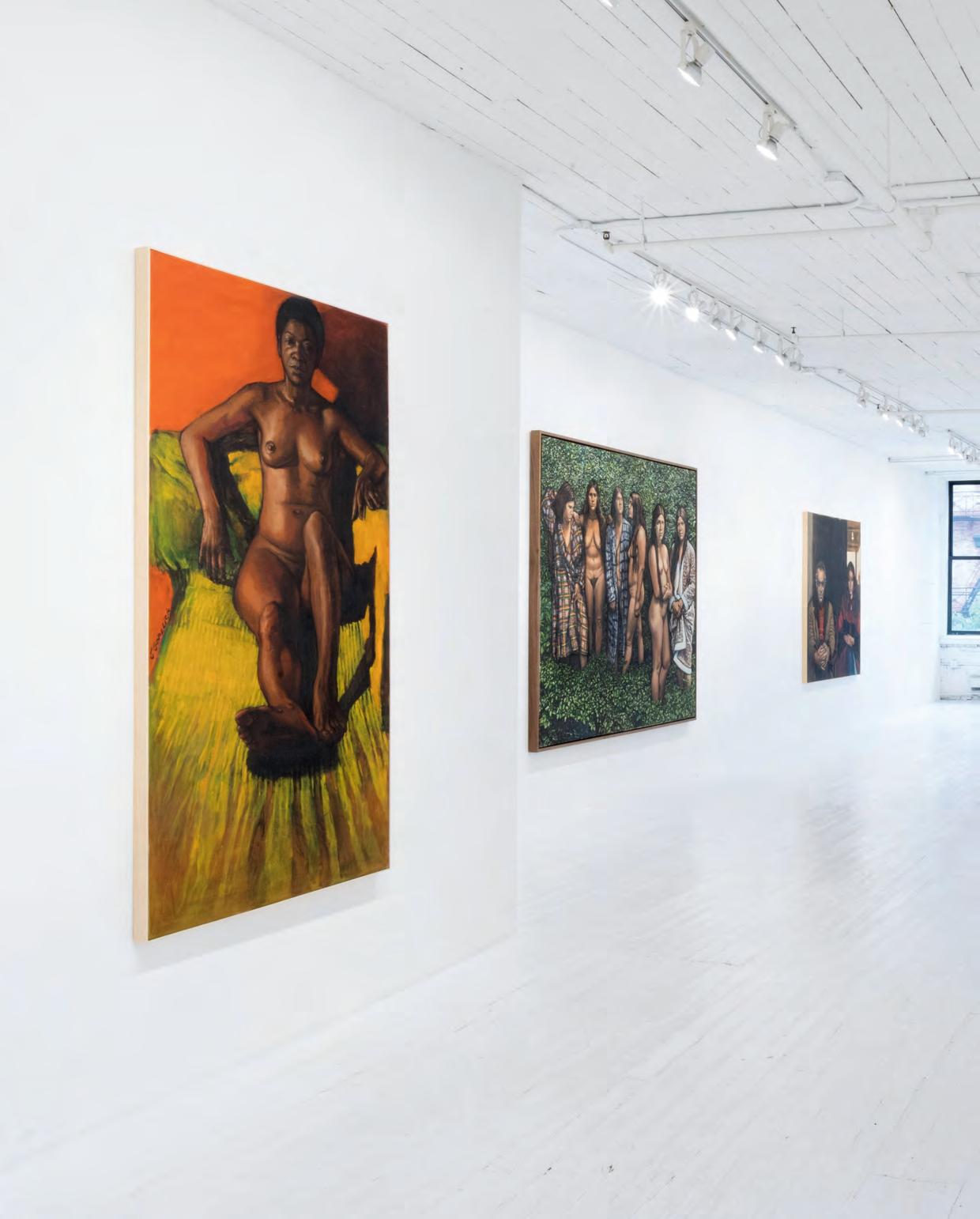
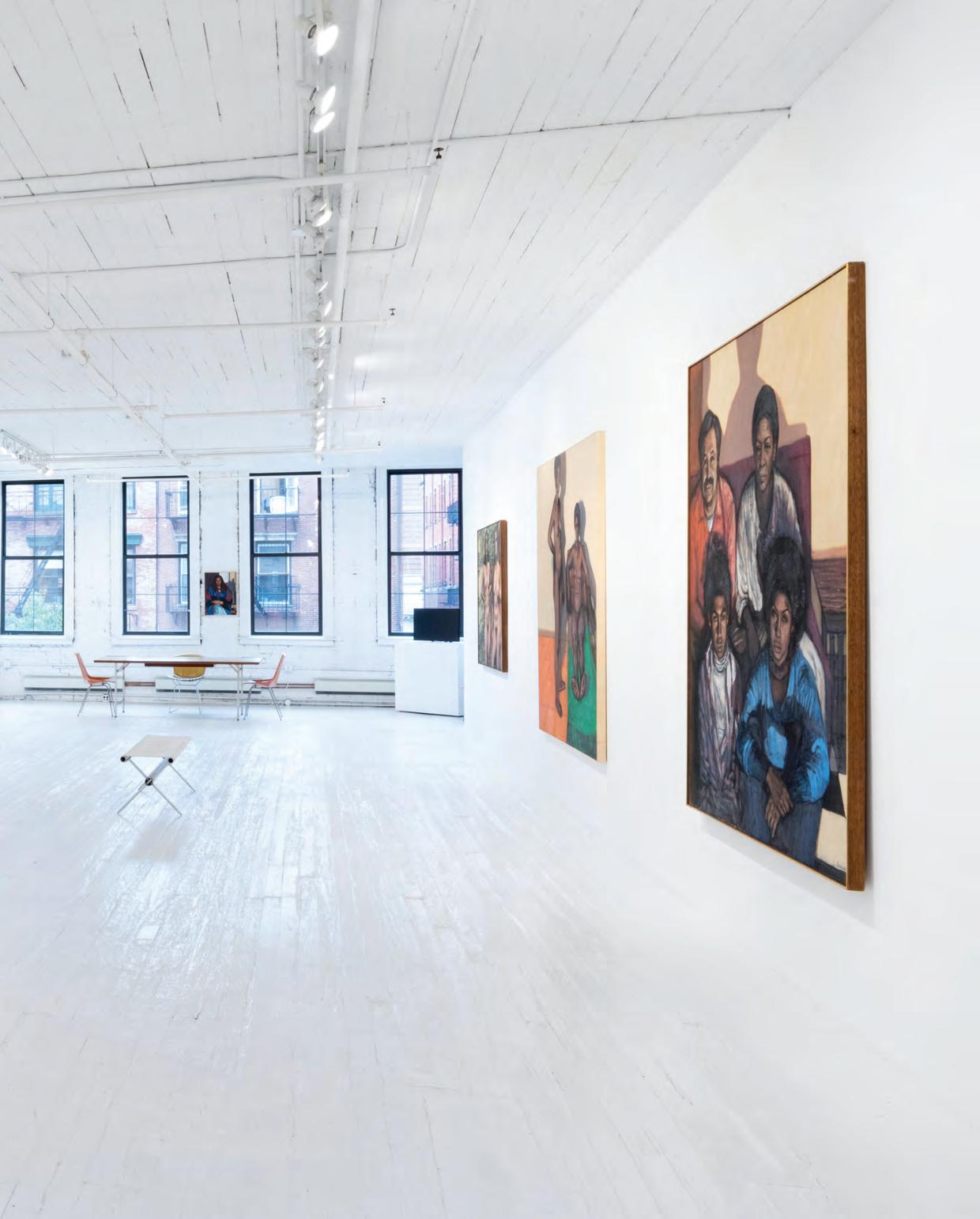
The palette which left such a strong impression on Perreault was on view in many of the paintings in “Family.” The exhibition featured sixteen portraits of subjects in Gorelick’s social circle, a group that included teenage women, middle-aged couples, a woman in a wheelchair, and a biracial family. Almost half a century later, Gorelick’s palette is still rivetingly complex, somehow conveying living flesh despite explicit evidence of the brushstroke. The nude black figure that captivated Perreault, Libby Ourlicht, was one of a select group of models that Gorelick worked with. (Others in the group included three adolescent sisters, who also posed nude, the couple Gunny and Lee Benson, and the psychologist Dr. Tess Forrest.) Gorelick worked serially, painting the same people over and over again—occasionally painting multiple versions of the same model on one canvas.
“I have so many ways to say something that I feel one painting generally doesn’t say enough,” she said in 1979.2
Perhaps one reason Gorelick felt she needed more than one painting to “say something” was because it took some time before she landed on the style for which she became known. By 1968, when she was forty-four, Gorelick was committed to a
Shirley Gorelick, Double Libby, 1970, acrylic on canvas, 80 × 80 inches
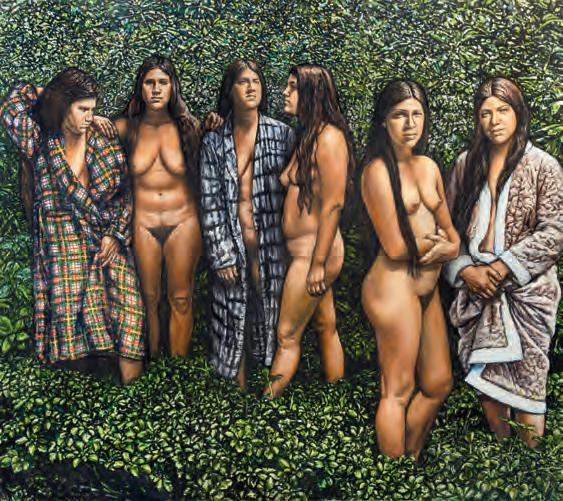
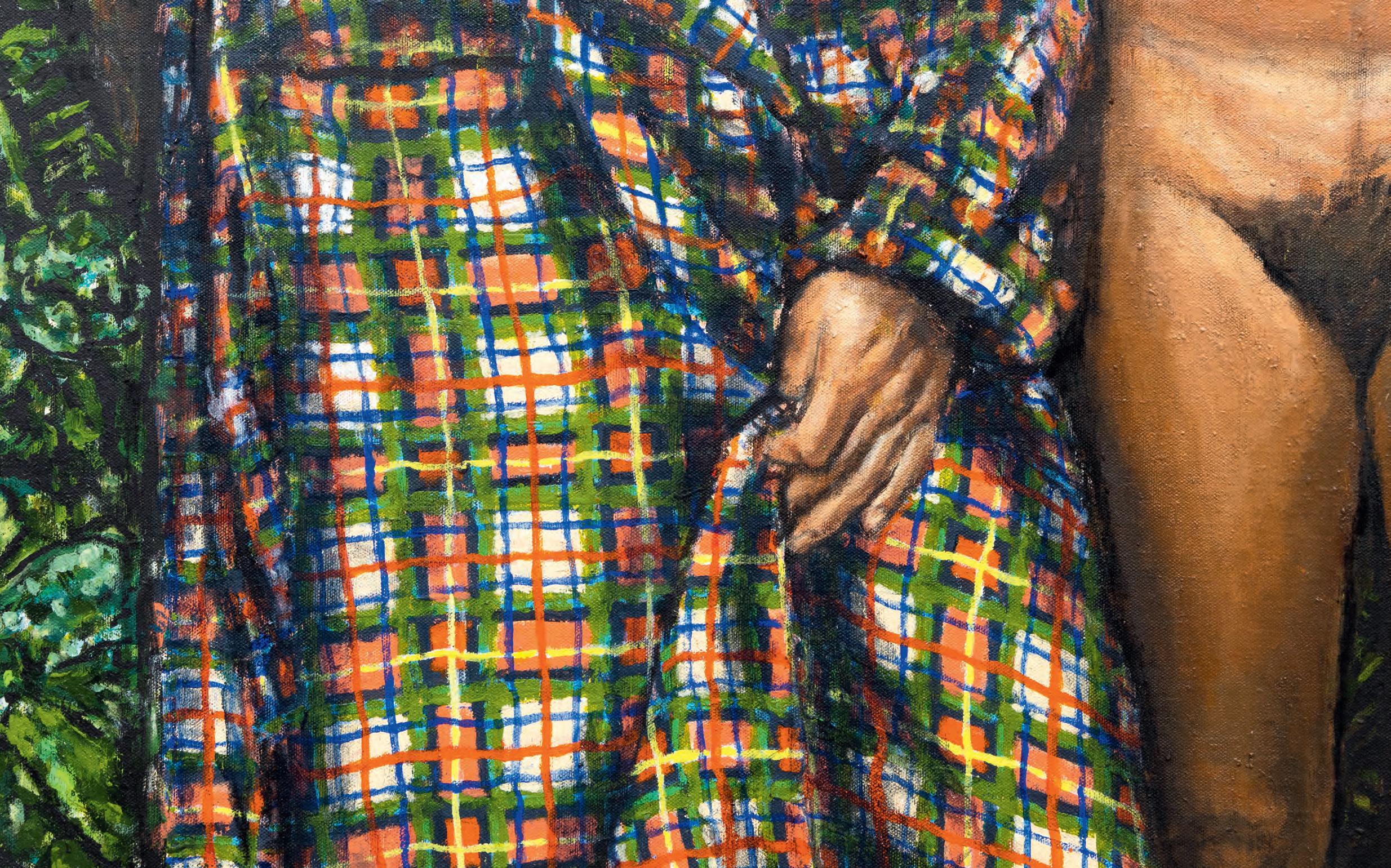
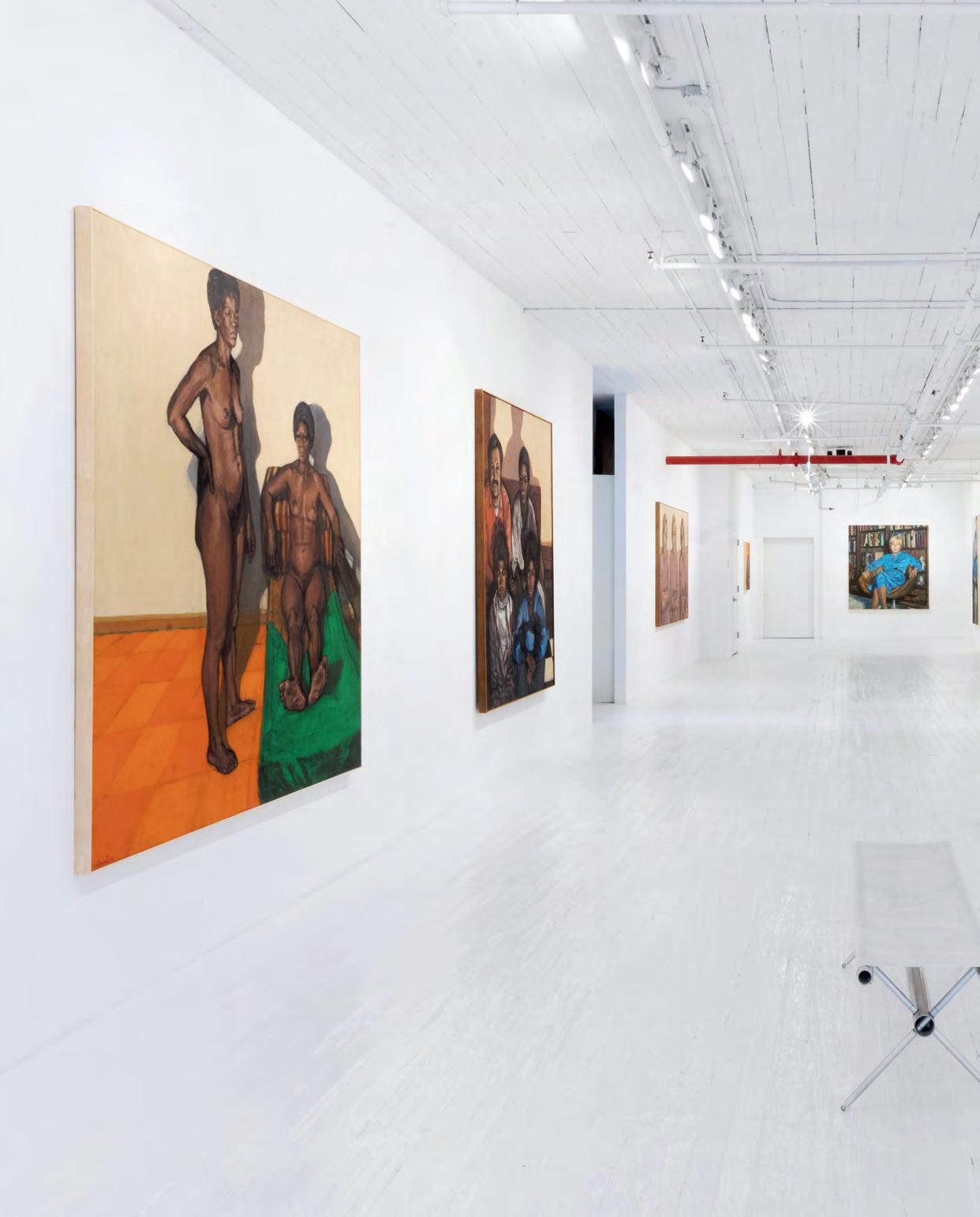
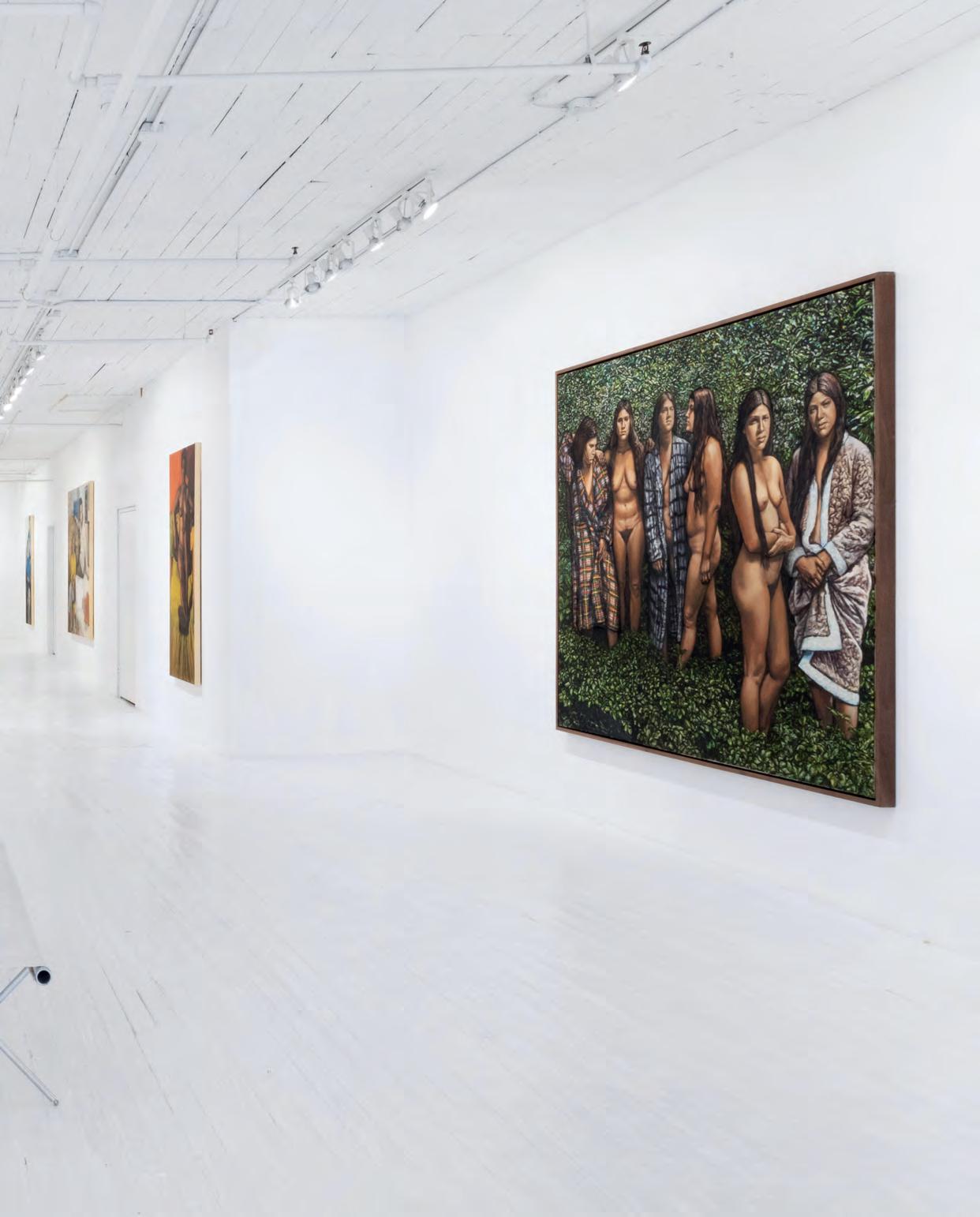
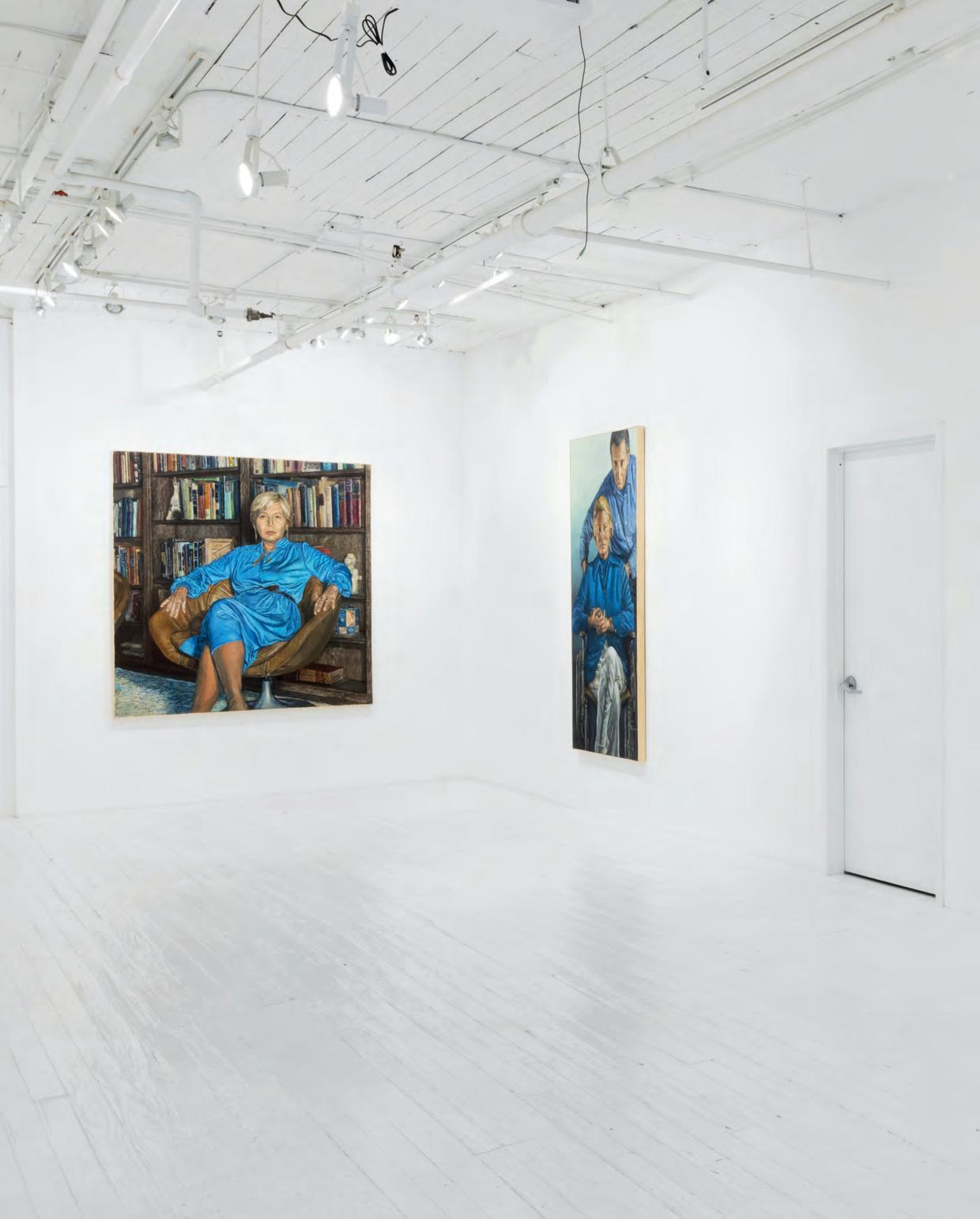
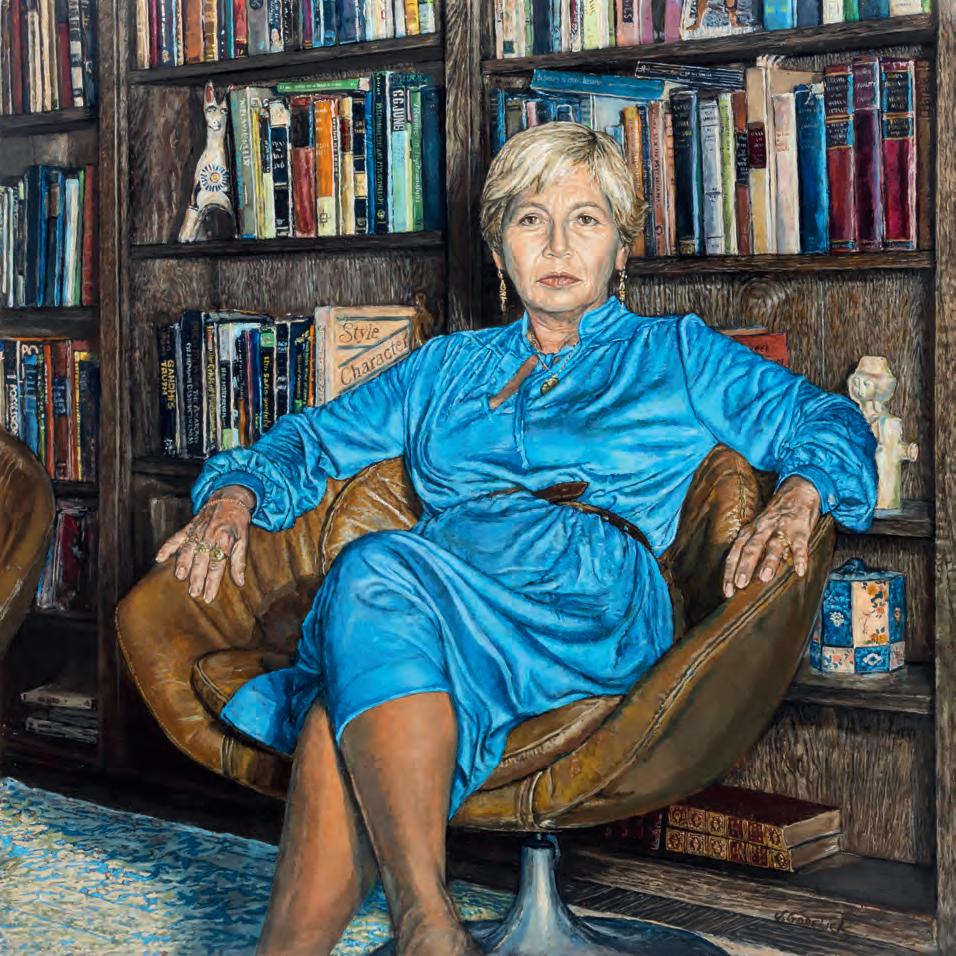
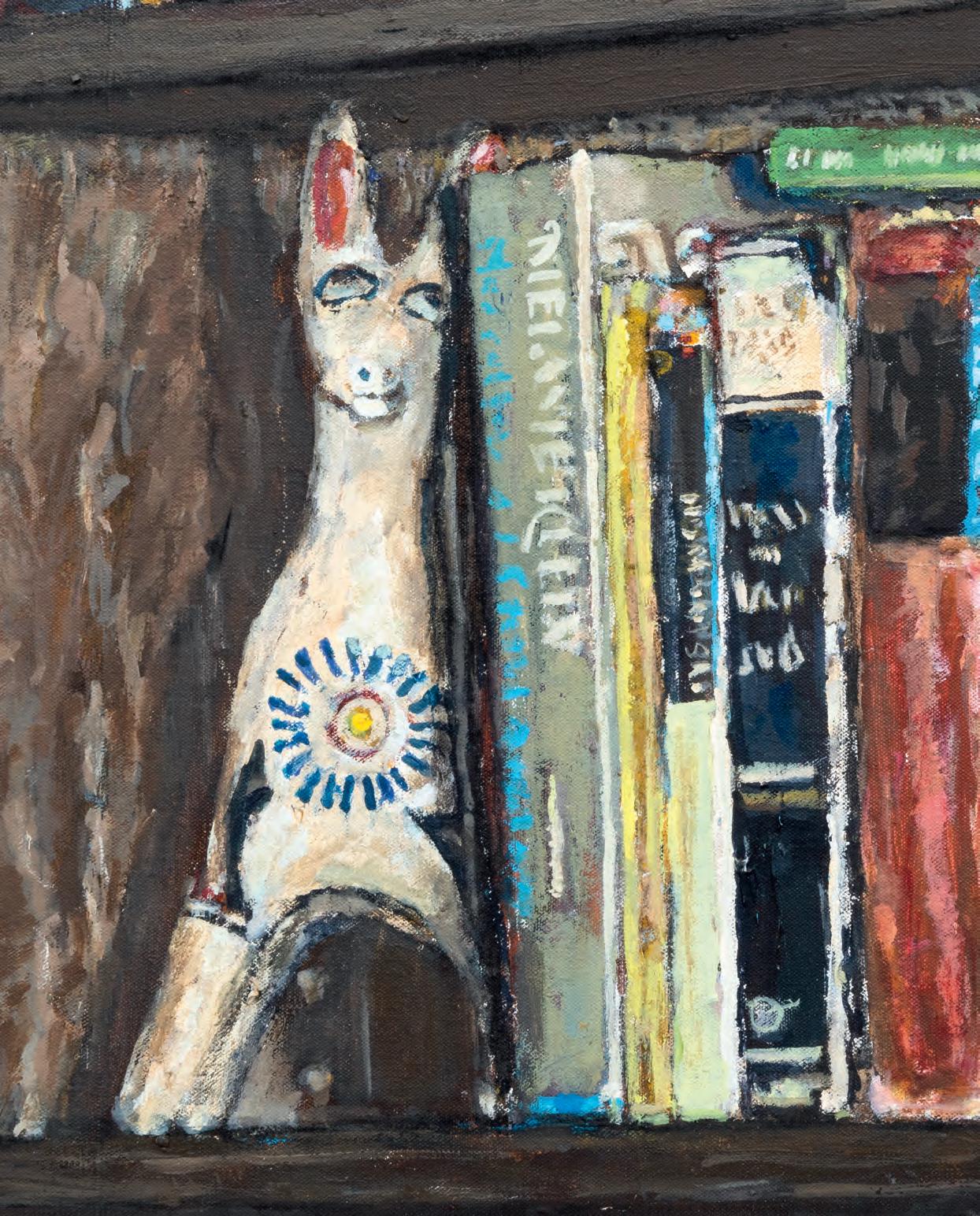
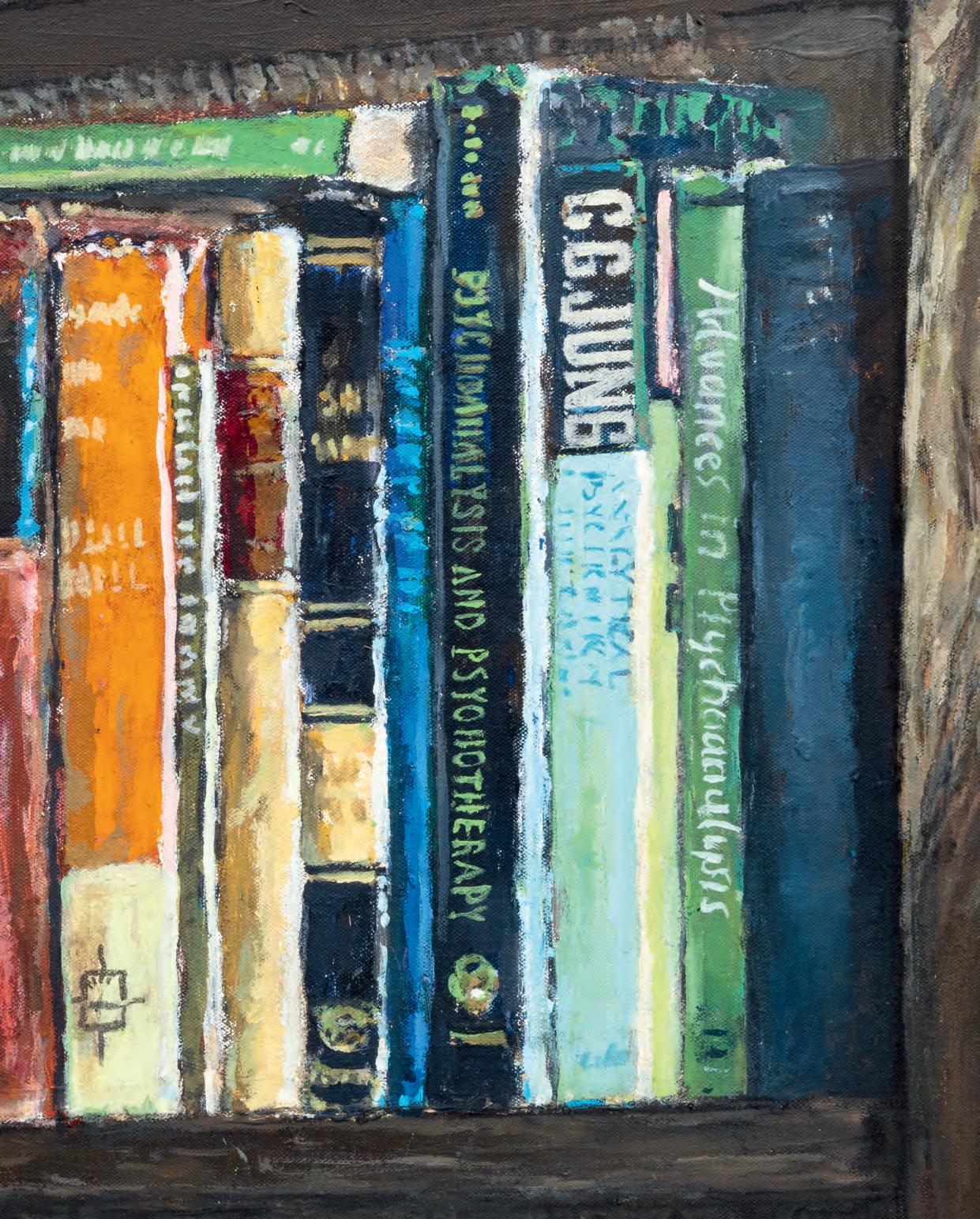
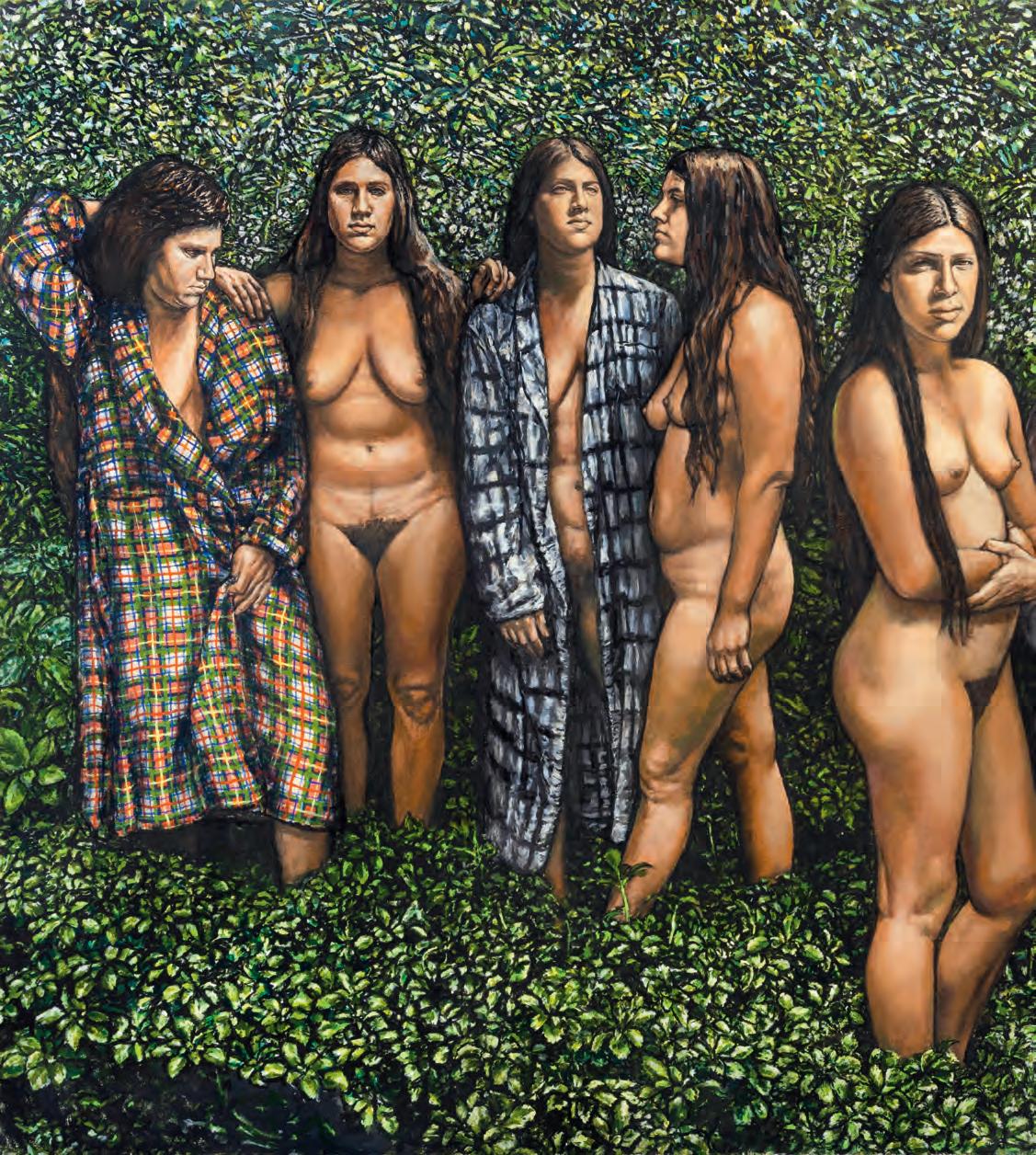
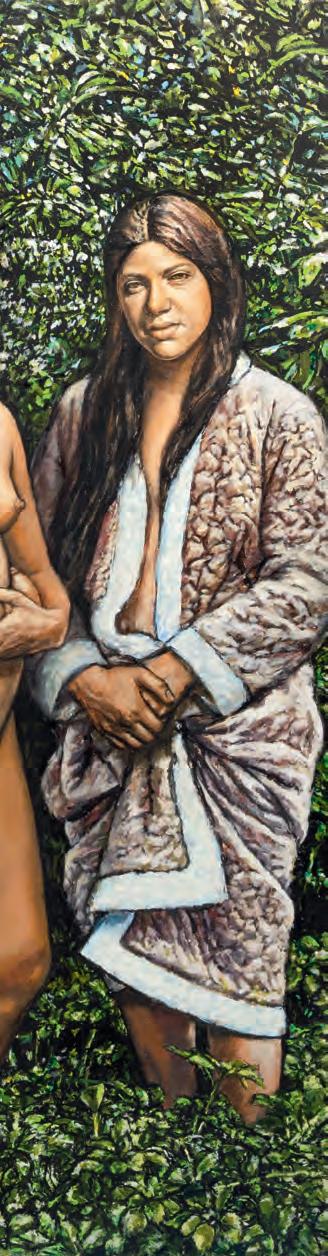
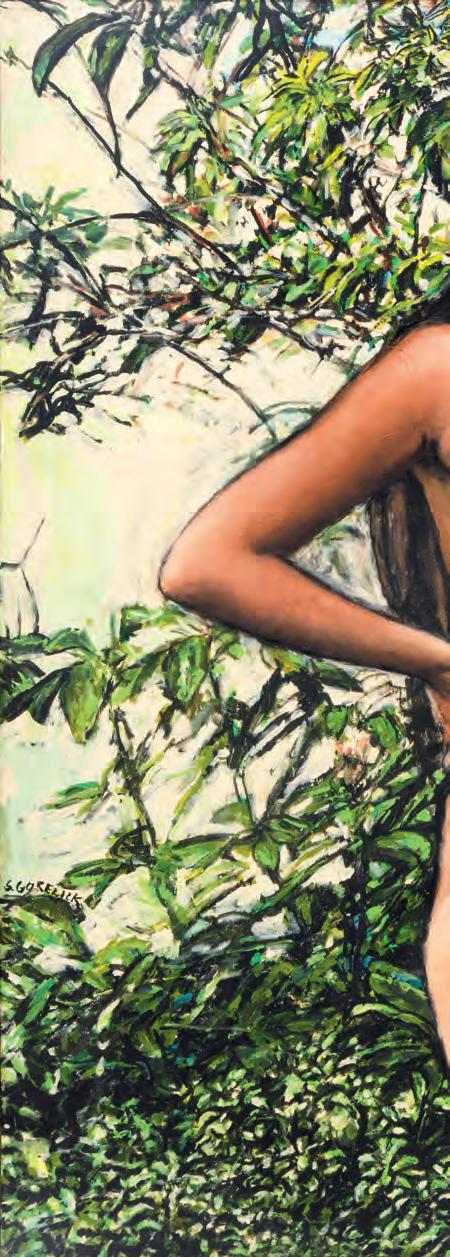
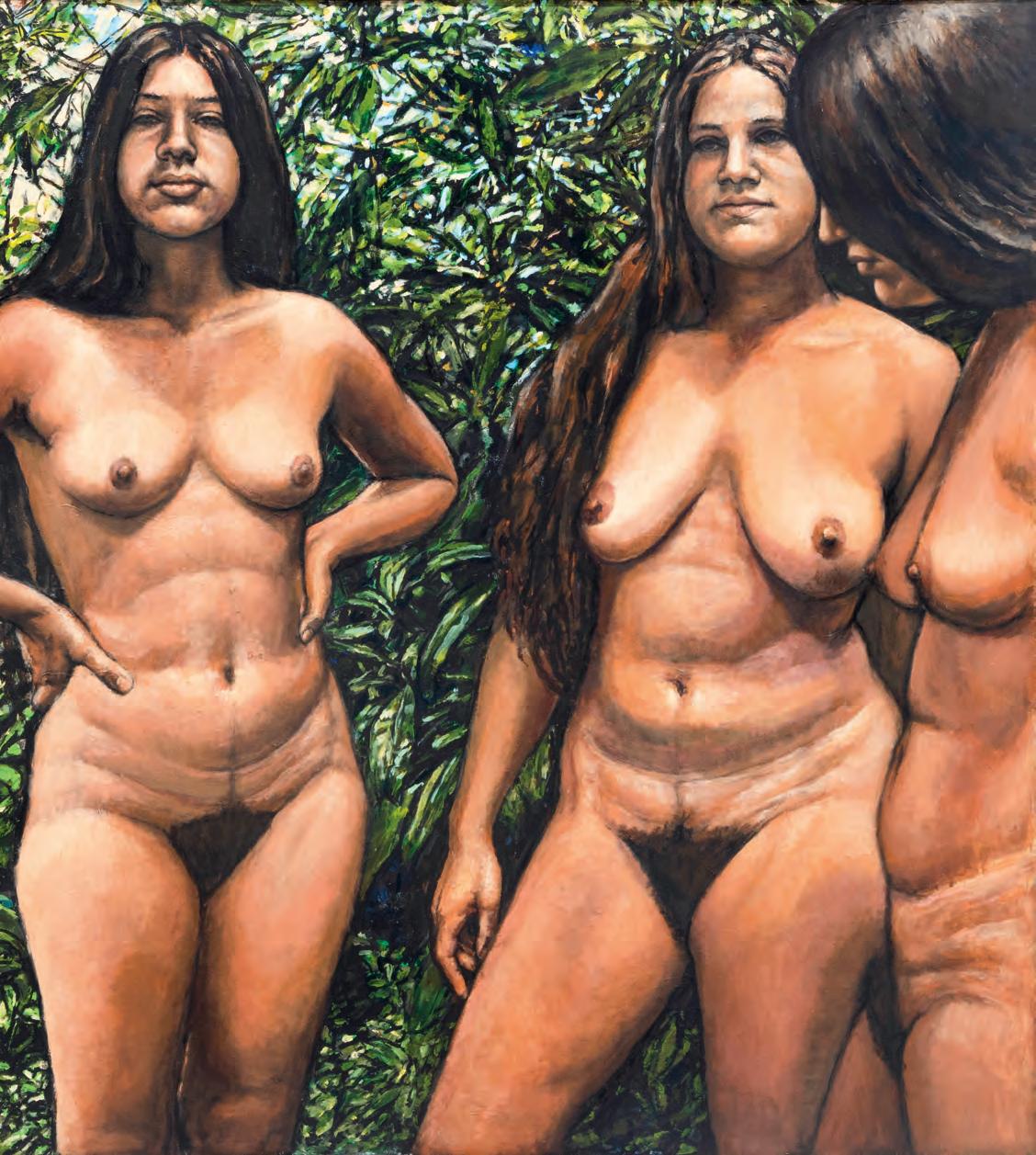
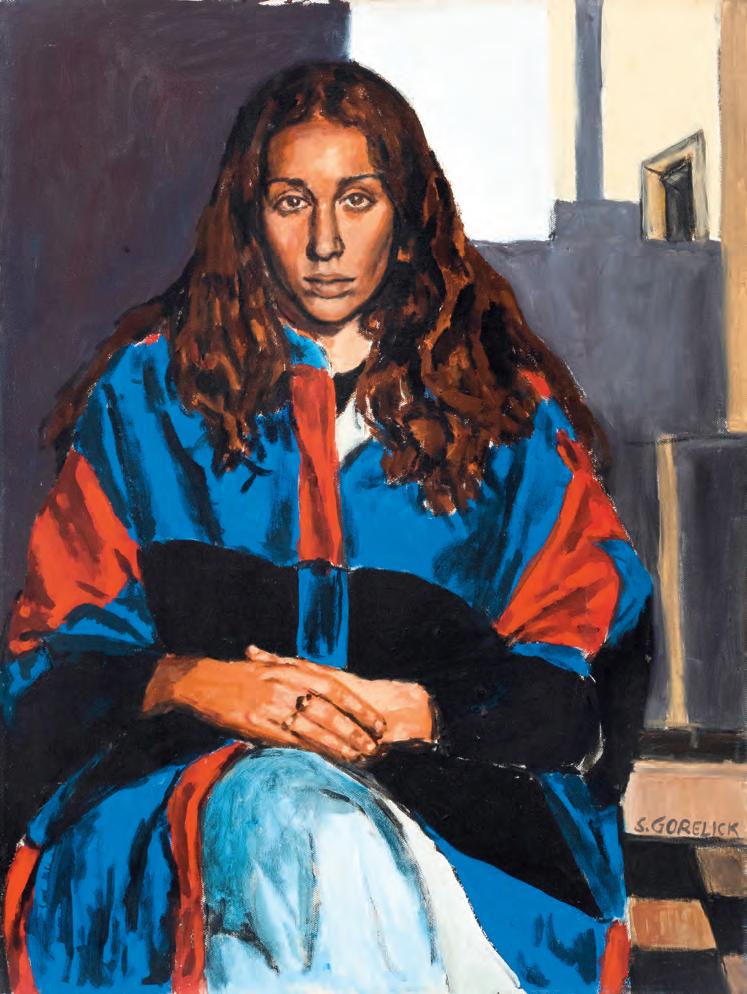
straightforward yet painterly approach to realism. Realism was (and often still is) dismissed by some critics as overly academic, void of artistic gesture. But for Gorelick, who was a formalist first and foremost, realism provided inexhaustible opportunities to play with shadow and pattern. And, importantly, paint. Gorelick wielded acrylic paint like oil, experimenting with thicker or thinner applications, and exploiting its plasticity. Several of the paintings in “Family” feature exquisitely layered backgrounds. The 1980 painting, Tess in a Blue Dress (pl. 5), places Dr. Forrest in front of a bookcase crowded with books and sculptures. The creases in the brown leather armchair, the fabric of the teal blue dress, and Forrest’s gold jewelry are rendered in rich detail. Similarly, in Three Sisters II (Westchester Gauguin) (pl. 8), from 1974–76, there
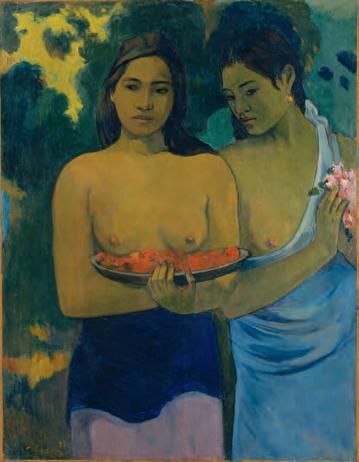
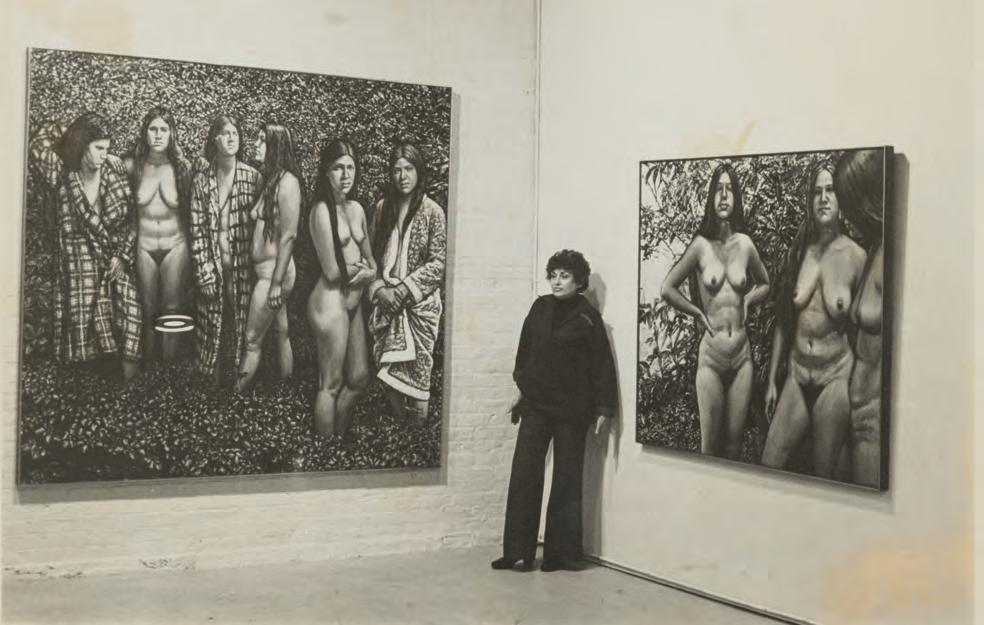
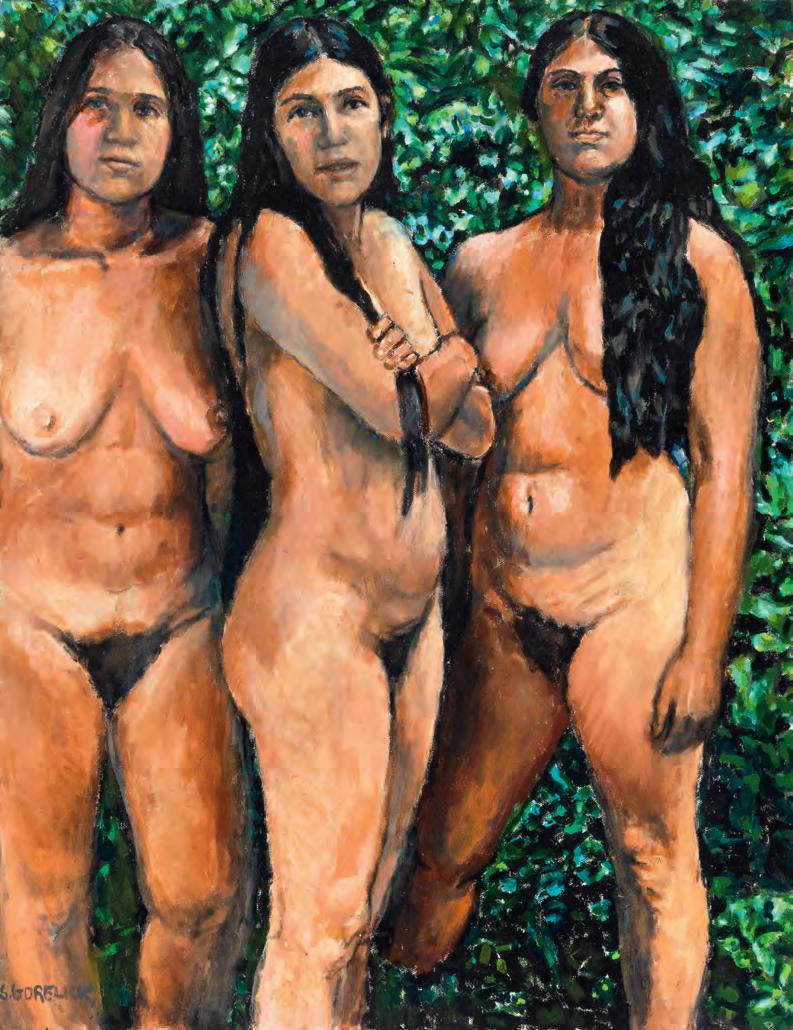
is a tremendous curtain of foliage in the background in which every single leaf is delicately articulated. The sisters slouch and smirk among the greenery in various states of undress, their bemused poses a wry wink at Gauguin’s passive Tahitian sirens.
Gorelick’s virtuosity and success in realist painting was hard won. In the 1950s, which was when Gorelick began to consider herself a painter, a young artist trying to get ahead in the New York art world would have been hard pressed not to embrace abstraction. The stars of that day—AbEx heroes such as Jackson Pollock, Joan Mitchell, and Willem de Kooning—dominated the galleries with immense canvases studded with amorphic shapes and vivid explorations of the many properties of paint. Gorelick, who went to Brooklyn College and studied art with
Paul Gauguin, Two Tahitian Women, 1899, oil on canvas, 37 × 28 1/2 in. (94 × 72.4 cm), Metropolitan Museum of Art, New York, NY, Gift of William Church Osborn, 1949
Shirley Gorelick, Three Sisters II (Westchester Gauguin), 1974–76, acrylic on canvas, 90 × 80 inches
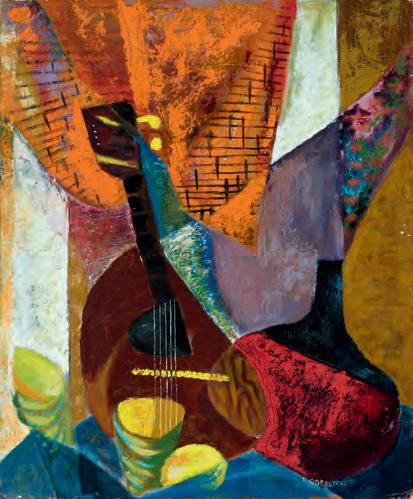
Serge Chermayeff, a Bauhaus-influenced architect who directed the Department of Design, fell hard for the doctrine of anti-figuration. During that period, she recalled that she “still believed that distortion was essential and that one had to leave the photographic image,” adding firmly that she believed that realism was “dead.”3
In 1956 Gorelick moved with her husband and two young children from Brooklyn to Great Neck in Long Island. Still considering herself a student, Gorelick brought some of her cubist paintings to a critique at the Cumberland Center for Continuing Education in Great Neck. Artist-teachers Saul Levine and Grace Hartigan encouraged her to push the distortion further, but a third artist participating in the critique, Betty Holliday Deckoff, had other ideas. “If she wants
the figure,” Deckoff argued with Levine and Hartigan, “she’s got to find it from her own observation.”4
The comment struck a chord. From then on, Gorelick proceeded not only to pursue figuration in earnest, but also to take herself seriously as an artist.
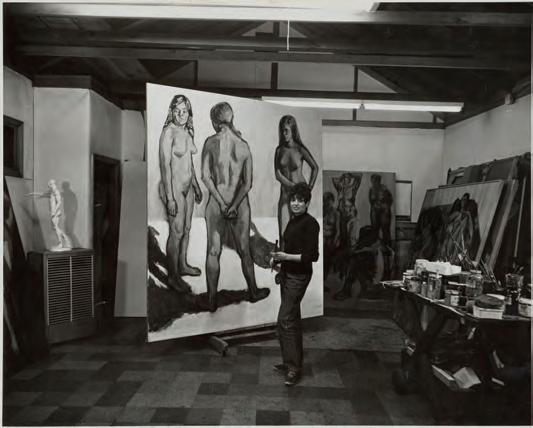
Over the next decade and half, Gorelick doggedly honed her technique, initially studying with Deckoff, who brought in models for her students to paint, then hiring her own models and working on her own. When she was interviewed by Dorothy Gees Seckler in 1968, Gorelick was at a critical juncture in terms of thinking about her work, moving from the “abstract” to the “specific,” from describing her paintings as primarily formal, as though the figure were merely another shape to be contoured and colored, to seeing her models as real people, with minds and personalities
Shirley Gorelick, Untitled (still life with guitar and vase), c. 1947–50, oil on canvas board, 23 7/8 × 19 7/8 inches
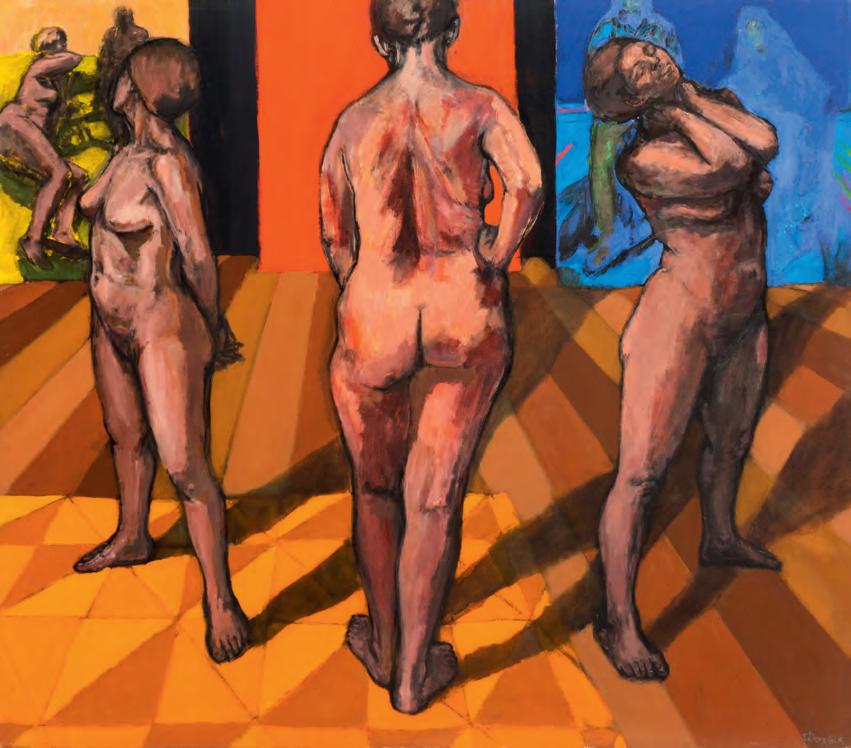
Shirley Gorelick, Three Graces III, 1968, acrylic on canvas, 71 × 80 inches
Shirley Gorelick in her studio, c. 1967. Photograph by William Crooks. Archives of American Art
that penetrated the canvas. “Now I’m very involved with all the elements of the environment and the figures, the psychological meaning of them, the scale and the shadows as well,” she told Seckler.5
Gorelick was part of a wave of painters in the late 60s and early 70s finding their way to figuration. One such artist, Philip Pearlstein, rejected any attempt to impose a narrative or symbolic interpretation onto his work. “As a rose is a rose,” he wrote in 1971, “so my paintings of models are paintings of models.” 6
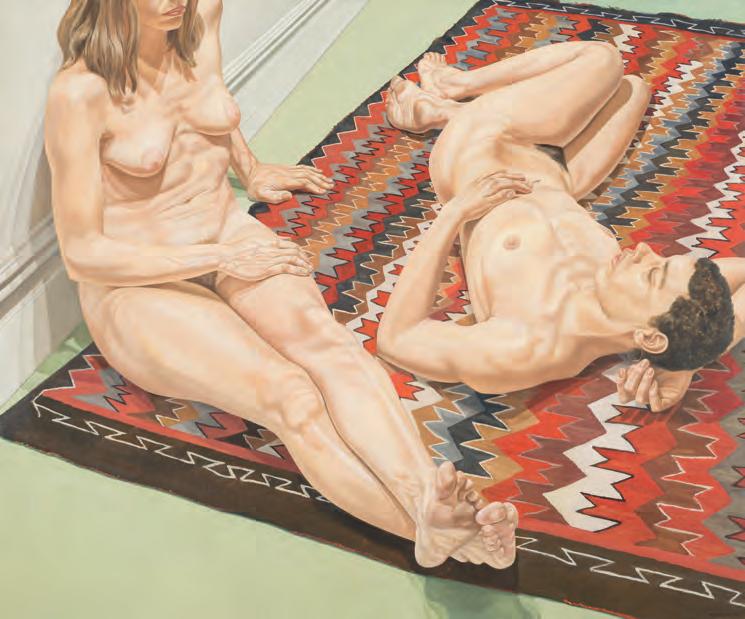
Indeed, in contrast to Gorelick’s lifelike palette, the skin color of the figures in Pearlstein’s paintings resembles wax or porcelain, and the figures are
often reclining, muscles slack, their faces in profile or obscured. Despite the difference in terms of style, Pearlstein was still captive to the legacy of modernism, shrugging off the possibility of social messaging via visual art, integrating people into his compositions as though they were objects, and insisting that the process was the point.
Gorelick departed gently from such views. She was beginning to embrace the power of the figure to impart meaning, to yield stories, to ignite imaginations. “I have been deeply involved with mostly middle-aged women with a great excitement in the internal form because they were very heavy,” she told
Philip Pearlstein, Two Female Models Sitting and Lying on a Navajo Rug, 1972, oil on canvas, 60 × 72 inches, Purchased with funds from the Coffin Fine Arts Trust; Nathan Emory Coffin Collection of the Des Moines Art Center, 1972.86. Photo Credit: Rich Sanders, Des Moines. © 2024 Estate of Philip Pearlstein / Artists Rights Society (ARS), New York
Seckler in 1968. “. . . They were women who represented people who lived in a sense. And they had a monument weight to them, much more than the physical weight.”7
What sort of “monument weight” did Gorelick have in mind? The scale of the paintings is larger than life, ensuring that viewers feel almost as though the figures are towering over them. Yet the notion of “monument” here does not seem to apply to size. Instead, the people being portrayed—while not famous—are powerfully arresting. Gorelick’s figures look directly at the viewer with confidence, if not outright defiance, as though daring someone to challenge their right to exist. And given the period in which Gorelick was
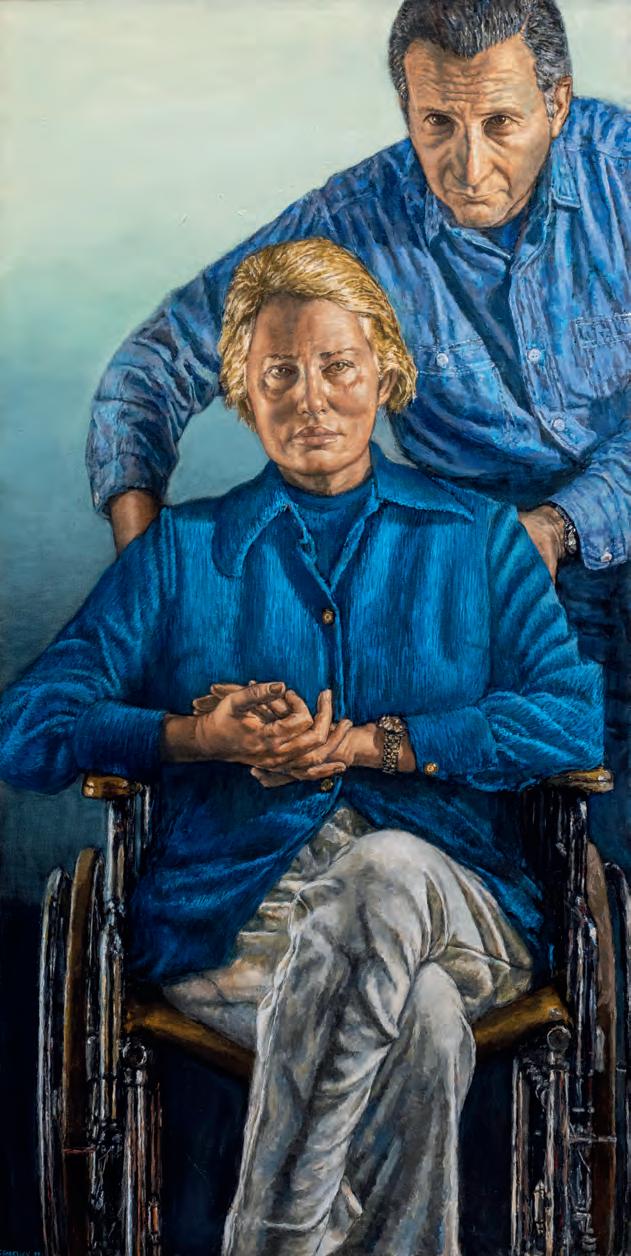
making these paintings, such challenges were not unheard of. Many of the people who Gorelick painted inhabited the margins of society. As Nicole Rudick noted of Gorelick’s subjects, “these were people who did not then typically find themselves the subjects of art: middle-aged women, disabled people, mixed-race families, and older couples.” 8
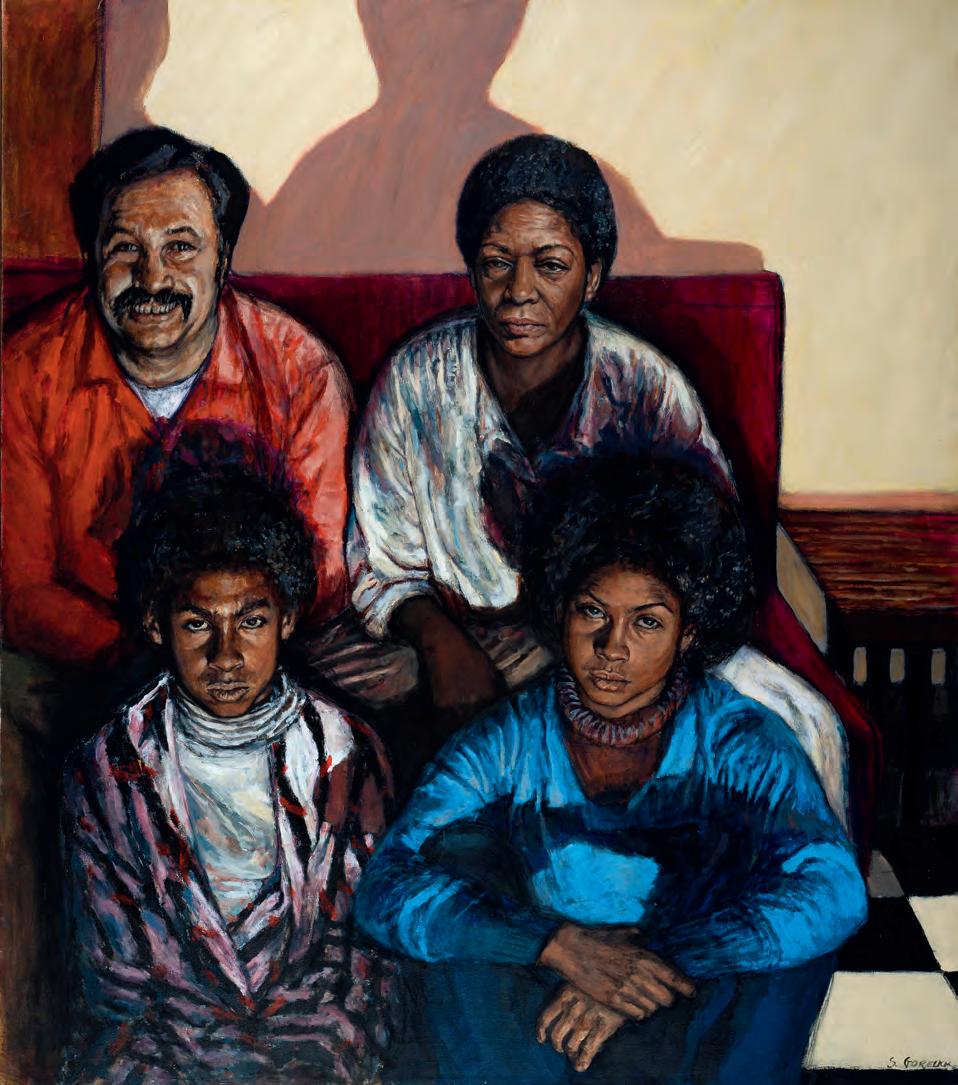
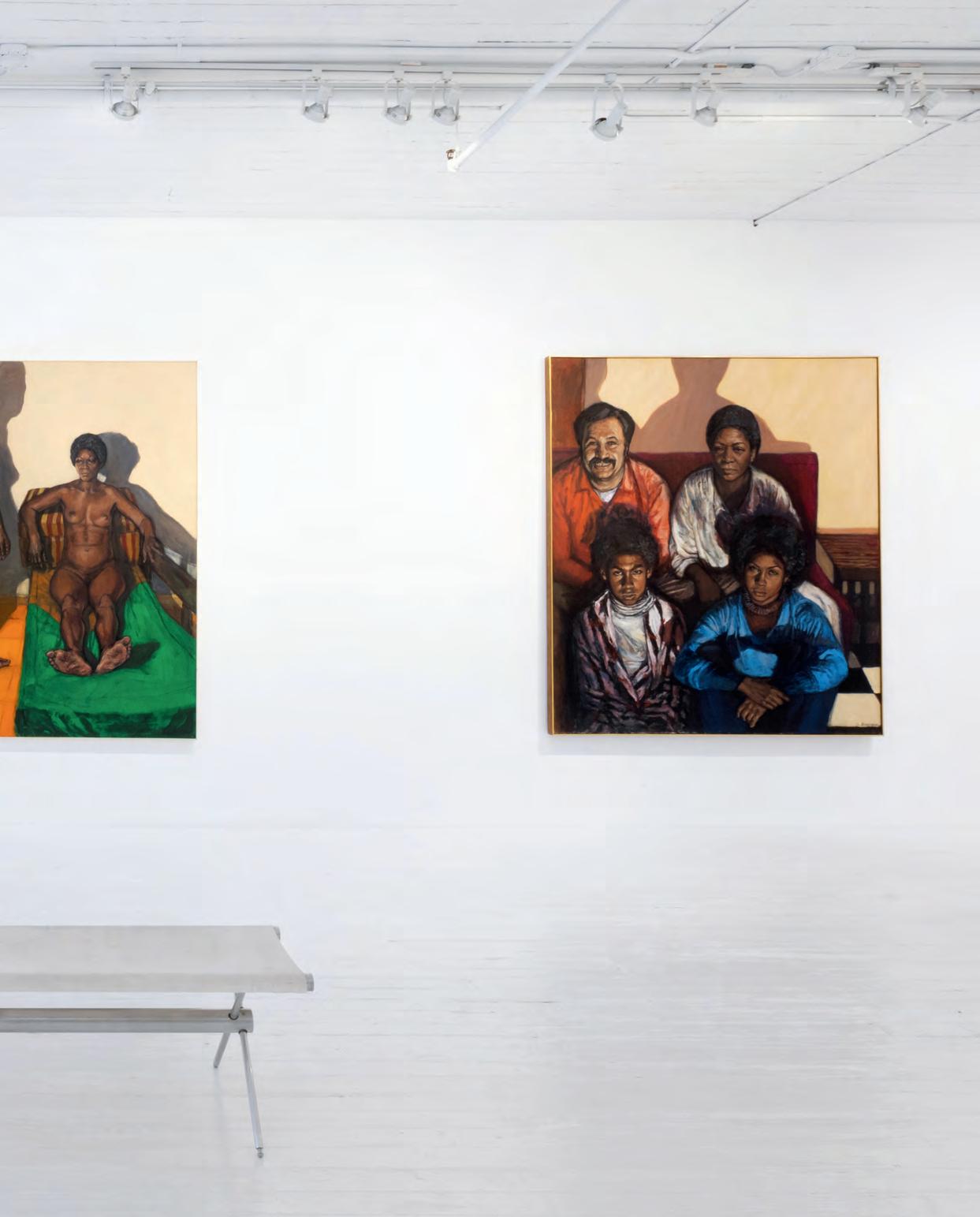
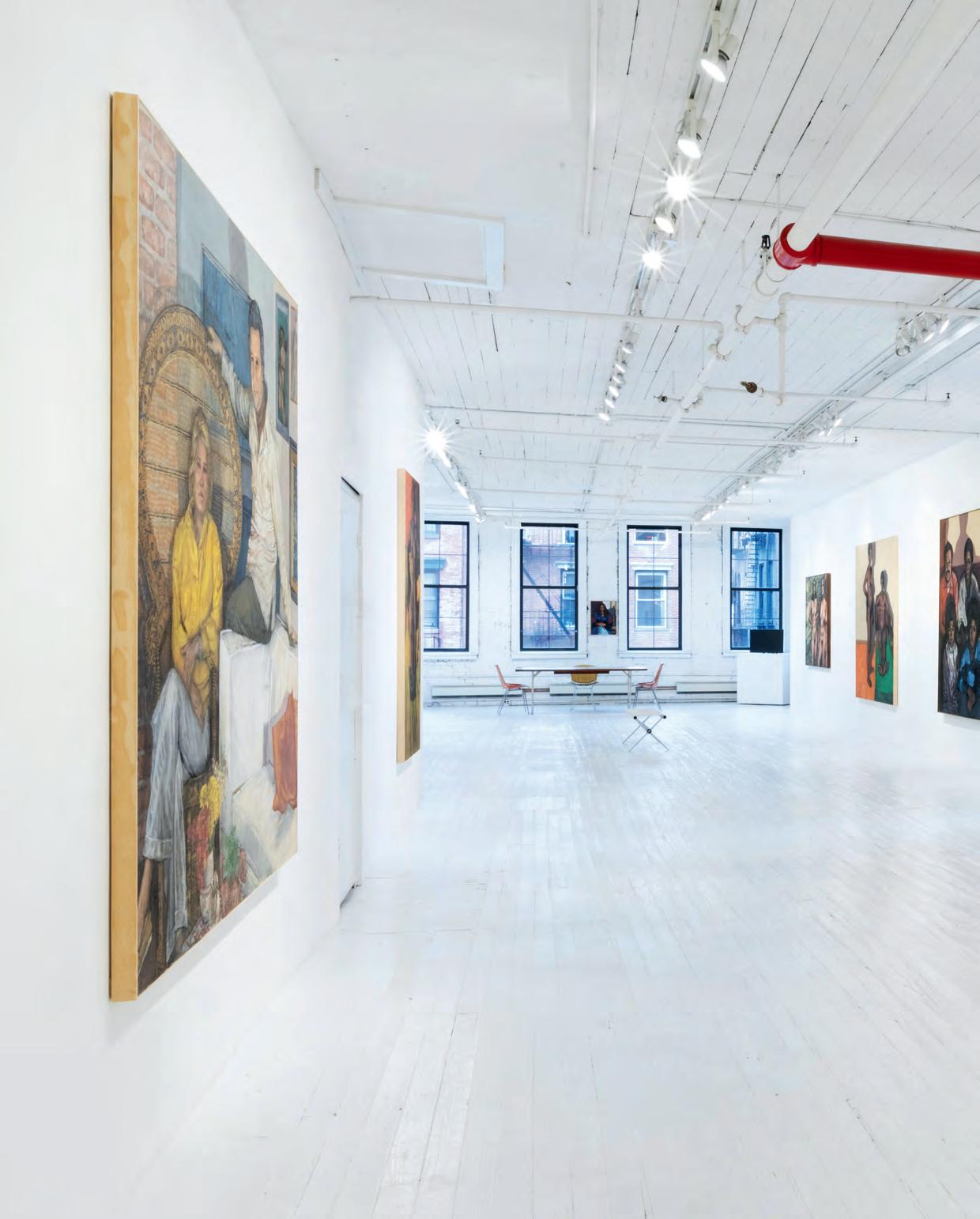
Gorelick’s 1973 painting, Family II (pl. 2), portrays Libby with her white Jewish husband and their two biracial children. The parents are seated on a bench behind the children, who are seated on the floor. The father alone is smiling, grinning, in fact. Libby looks calm and perhaps a bit tired, while her son and daughter, both wearing afros, look mildly annoyed at having
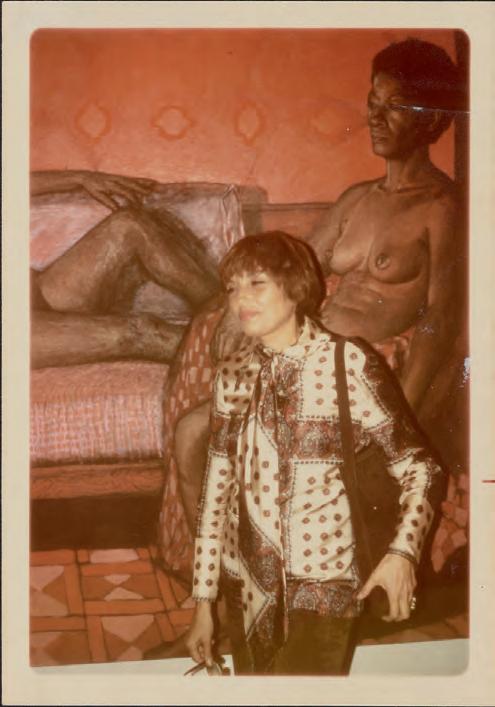
The artist, c.1973, with Double Libby II, 1971–2, acrylic on canvas, 72 × 84 inches. Archives of American Art
to sit for a portrait. The shadows are stark. The outlines of the two adults are crisply projected against the white wall in the background, while the face of the daughter, in particular, is dramatically composed from dark shades and lighter hues, her brow casting a dark triangle under one eye. The family is seated close together, as though forming a protective unit against any biases they might face.
Such biases were ever present for the Ourlichts. In a brief video documentary made in 2022 in conjunction with “Family,” Libby’s son, David Ourlicht, recalls hearing his parents talk about their first date. The couple was headed to an interracial club in Brooklyn but were pulled over by the police on the way. “The cop
had offered an ultimatum to my dad, ‘admit this is your whore and I’ll let you go,’” David relays in the video, “and he said, ‘this is not my whore, this is my date.’ So they spent their first night in jail.”
Gorelick first got to know Libby as her employer— Libby modeled for her as well as Alice Landes, an artist who lived down the street from Gorelick.9 But it is clear from her later paintings of Libby, especially those that depict her with her family, that what began as a business relationship blossomed into true friendship. Gorelick’s decision to paint the family is not explicitly political, but it is hard to ignore what was happening in the world at the time in which it was made. As David Ourlicht points out about his mother,
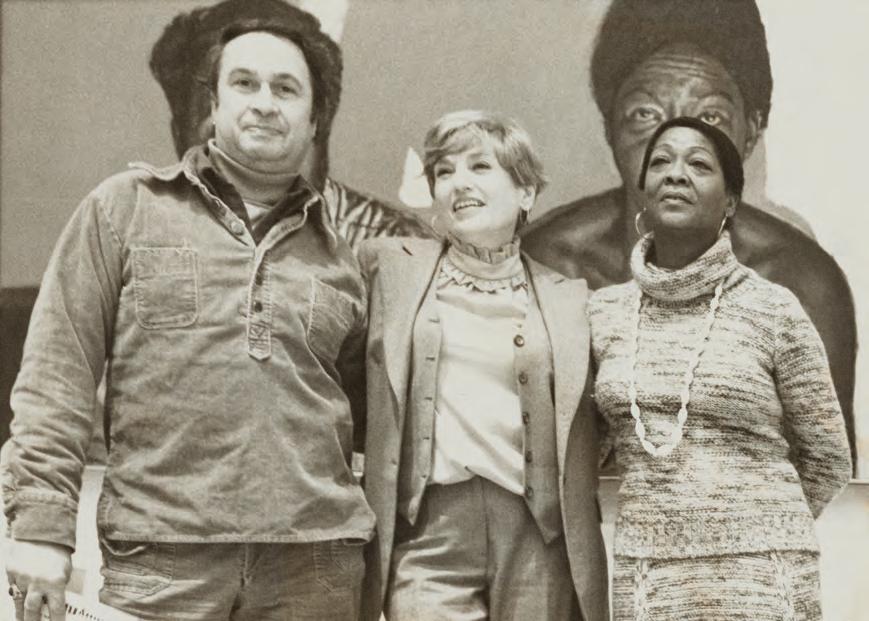
Boris Ourlicht, Shirley Gorelick, and Libby Ourlicht, 1979, with Libby and Boris, 1972, at Shirley Gorelick Paintings, 1971–1978 at the State University of New York at Stony Book. Archives of American Art
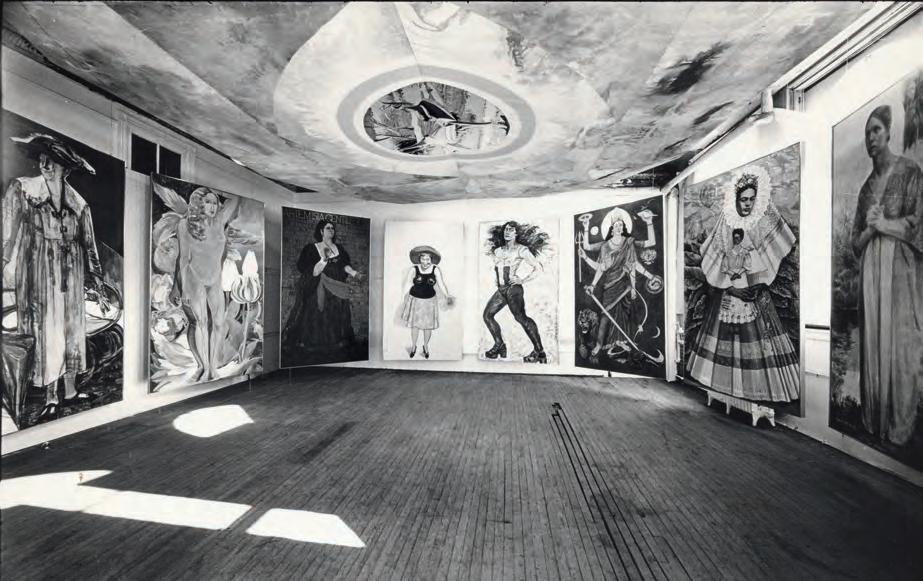
Installation view of “Sister Chapel” in the PS1 exhibition “Special Projects (Winter 1978),” January 15–February 18, 1978. MoMA PS1 Archives, II.A.540. The Museum of Modern Art Archives, New York. INPS1.111.2. Photograph by Gianfranco Gorgoni
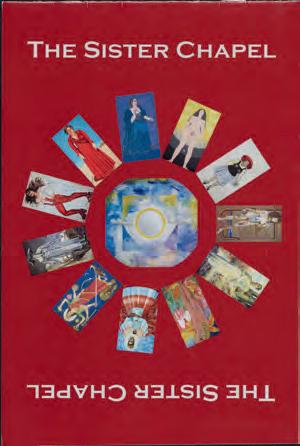
Cover of The Sister Chapel: An Essential Feminist Collaboration exhibition catalogue at the Rowan University Art Gallery, 2016. Archives of American Art
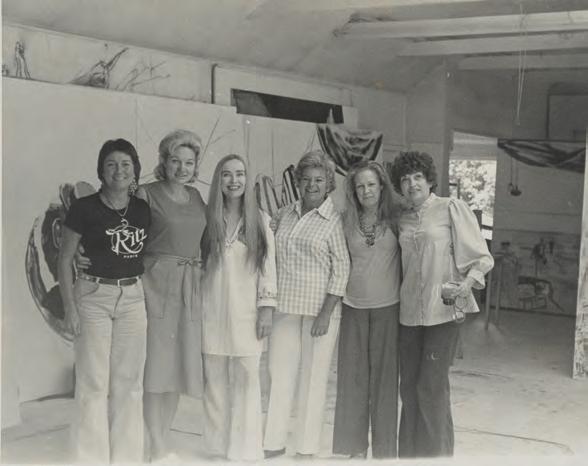
The artists of The Sister Chapel, Ilise Greenstein, June Blum, Betty Holliday, Elsa M. Goldsmith, Sylvia Sleigh, and Gorelick, at Holliday’s home and studio in Port Washington, NY, April 21, 1976. Photograph by John Pinna. Archives of American Art
Libby, and Gorelick: “They had the same progressive politics. It was the time of the Vietnam War. It was equal rights, women’s rights, gay rights, civil rights.”
Gorelick came to progressivism early in life, in part as a result of living through the depression. As she told Seckler, “I was very touched by the Depression and it altered my social point of view,” adding that she never got over her father’s humiliation that was not able to hold a job and support his family.10 As an artist, she promoted feminism and social justice. She made repeated portraits of Frida Kahlo, one of which was included in “The Sister Chapel,” a collaborative feminist response to the Sistine Chapel, promoting images of heroic women, which debuted at PS1 in 1978. She also helped found the Central Hall Artists Gallery in Port Washington in 1973, the first such women-only cooperative on Long Island.11 And the next year she joined the SOHO 20 Gallery, the second all-women
cooperative exhibition venue in Manhattan. Both venues were inspired by A.I.R., an actively feminist artists cooperative. Gorelick would show at SOHO 20 from 1975 through the ’80s, and it was her very first exhibition at the gallery that garnered the praise of Perreault, quoted at the beginning of this essay.12
Jessica Bell Brown, curator and head of the contemporary art department at the Baltimore Museum of Art, believes Gorelick’s sensitivity to portraying another human being is why the work is as successful as it is. By repeatedly painting her friends, she got to know them not only as a confluence of features and shadows and planes that worked compositionally, but also, in a deeper sense, as individuals with strengths and vulnerabilities and complicated psyches. For Gorelick, portraiture was a form of tribute. “The nuance of painting a subject like Libby over and over again,” Brown explains in the video documentary,
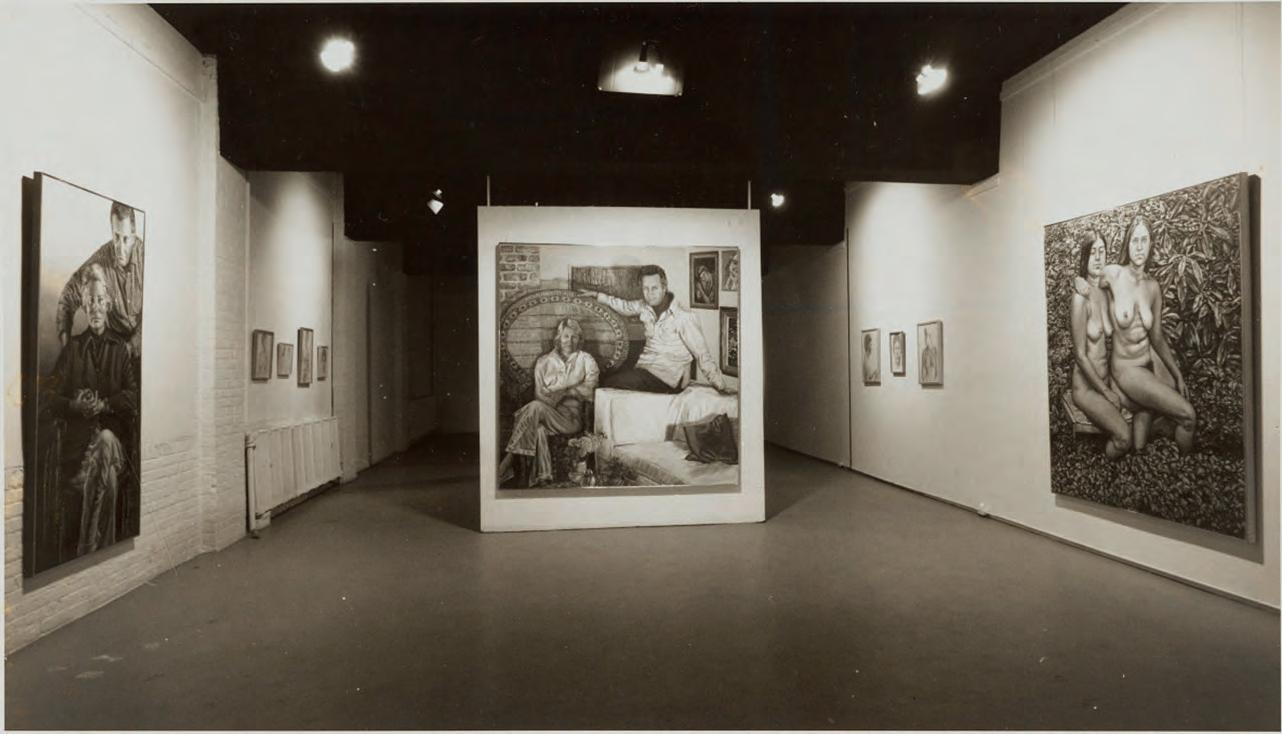
Installation view of Shirley Gorelick: Paintings and Drawings exhibition at SOHO 20, 1979. Archives of American Art
“ . . . gets us to this question of an irreducible identity, seeing a subject in different states of mind, states of being, or states of embodiment, allows us to see the complexity of one’s humanity.” And crucially, Bell adds, Gorelick did a service to viewers as well: “it allows us as viewers to not be narrow in our assessment or consumption of the images that she’s created.” ◾
1 John Perreault, “Outrageous Black Pop,” The Soho Weekly News, Thursday, May 1, 1975.
2 Helen A. Harrison, “People as Paint in Shirley Gorelick’s Works,” The New York Times, Sunday, February 11, 1979.
https://www.nytimes. com/2022/12/17/arts/philippearlstein-dead.html? searchResultPosition=1.
7 Gorelick, interview by Dorothy Gees Seckler.
CLAIRE BARLIANT is a writer based in Oak Park, Illinois. She has written for a number of art and architecture magazines, including Apollo, Art in America, and Artforum, and her comics have been featured in the New York Times Book Review and Apollo magazine. She authors a weekly-ish newsletter called Mushroom Head.
3 Shirley Gorelick, interview by Dorothy Gees Seckler, August 20, 1968, audio cassette recording, Dorothy Gees Seckler collection of interviews with artists, 1963–1976, Archives of American Art, Smithsonian Institution, Washington, DC.
4 Ibid.
5 Ibid.
6 William Grimes, “Philip Pearlstein, Whose Realist Nudes Revived Portraiture, Dies at 98,” The New York Times, Dec. 17, 2022,
8 Nicole Rudick, “Both Sides Now,” The New York Review of Books, July 27, 2022, https://www.nybooks.com/ daily/2022/07/27/bothsides-now-shirley-gorelick
9 Andrew D. Hottle, Shirley Gorelick (1924–2000): Painter of Humanist Realism (Newcastle upon Tyne, UK: Cambridge Scholars Publishing, 2014): 130.
10 Gorelick, interview by Dorothy Gees Seckler.
11 Hottle, 131.
12 Ibid.
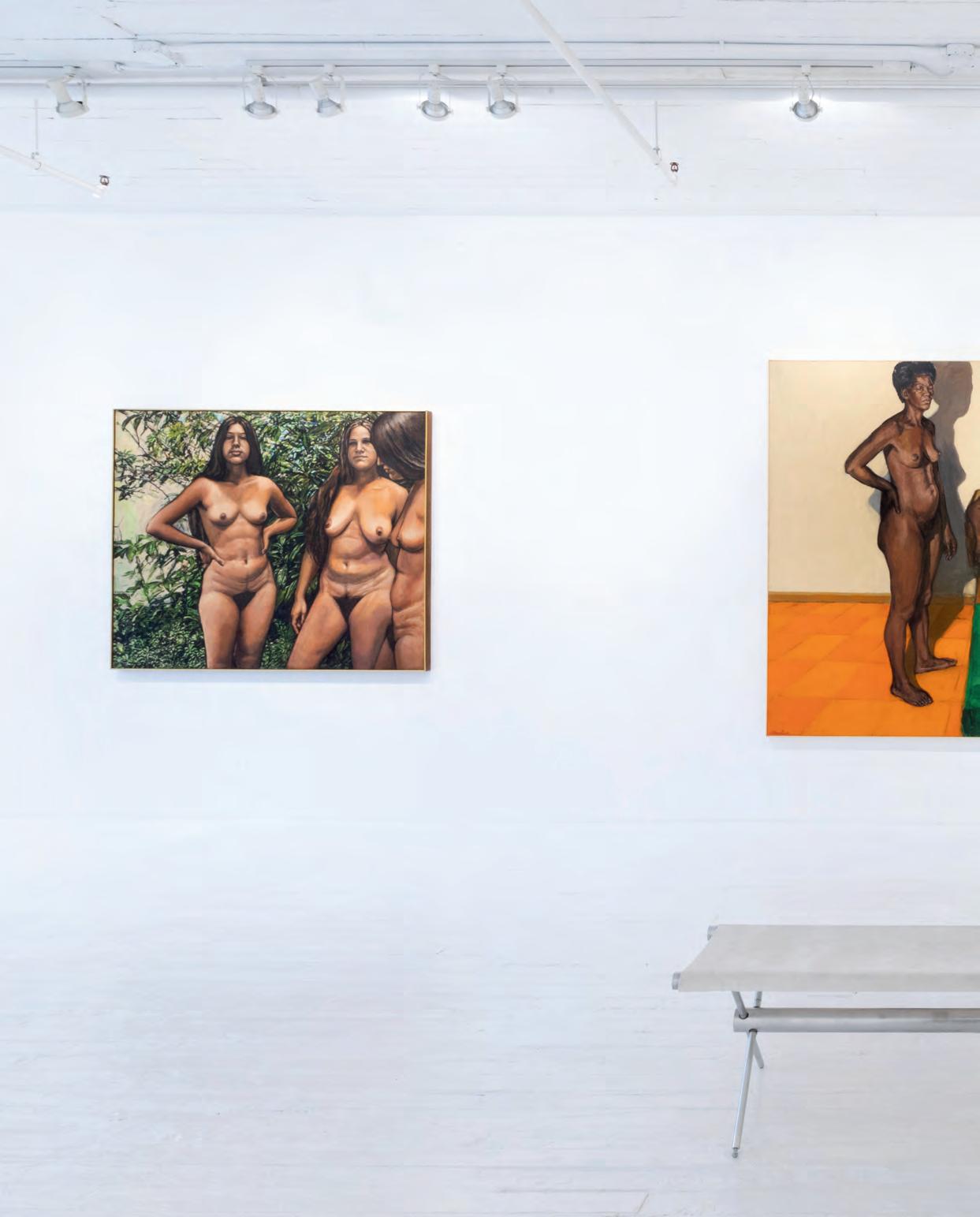
The artist with Three Sisters II and Untitled (Study for Three Sisters IV), at Shirley Gorelick/Alexandra Luman-Dian, Central Hall Gallery, Port Washington, 1974. Archives of American Art
The Exhibition
1 Double Libby, 1970
Acrylic on canvas
80 × 80 inches
(detail follows)
2 Family II, 1973
Acrylic on canvas
80 × 70 inches
3
opposite)
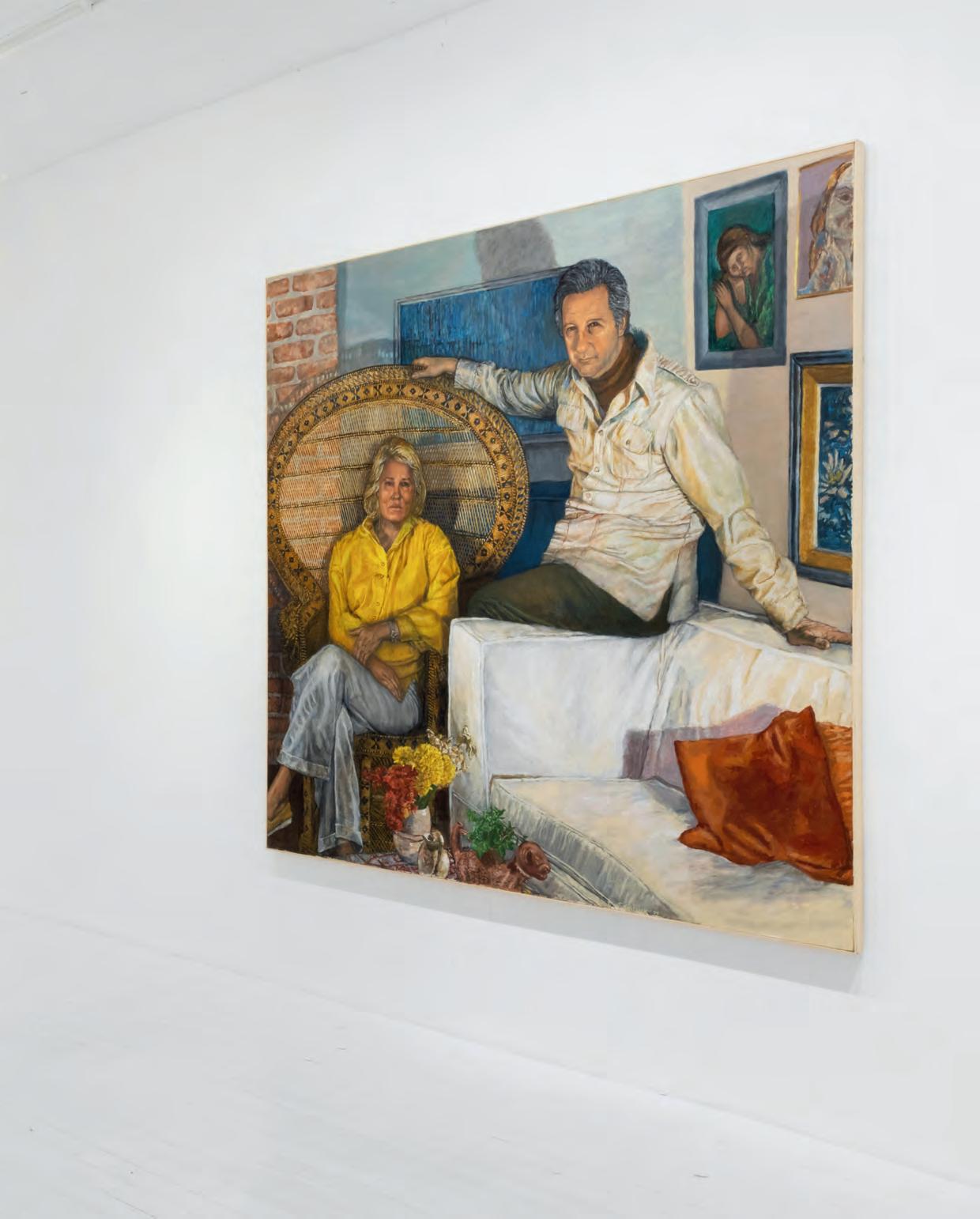
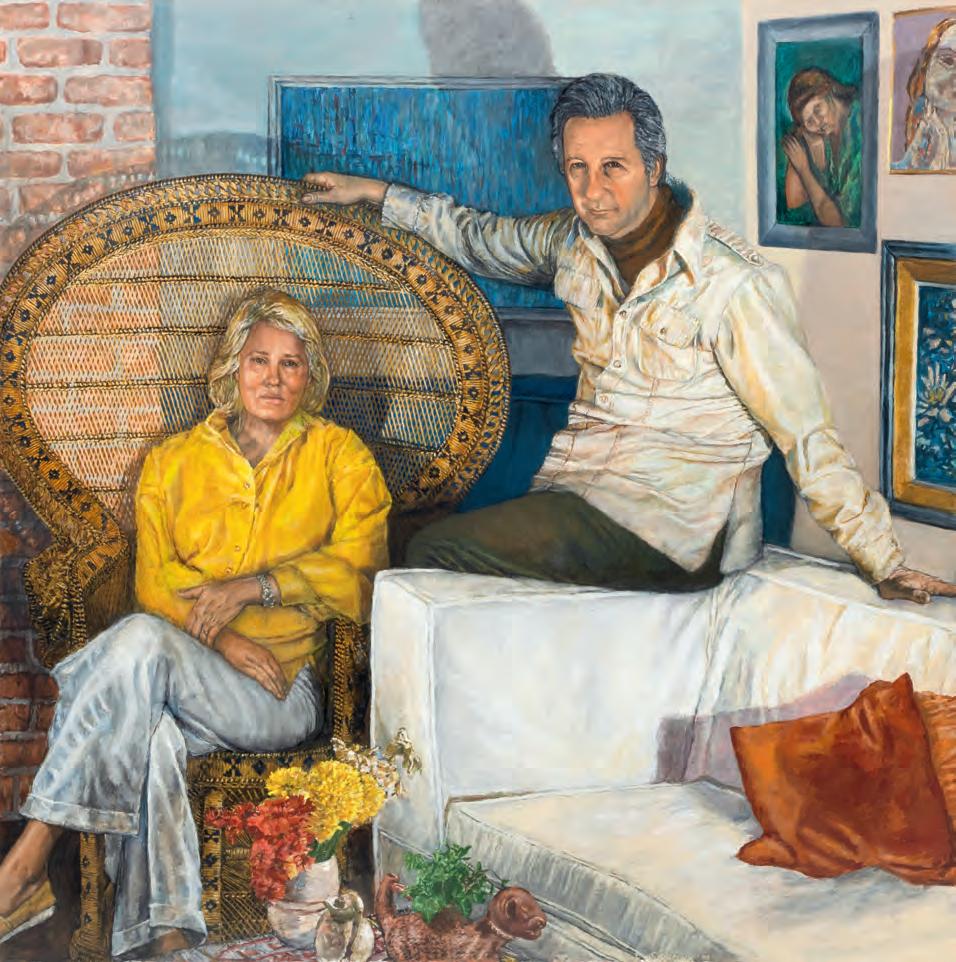
The Bensons I, 1977–78
Acrylic on canvas
80 1/8 × 70 1/2 inches (detail
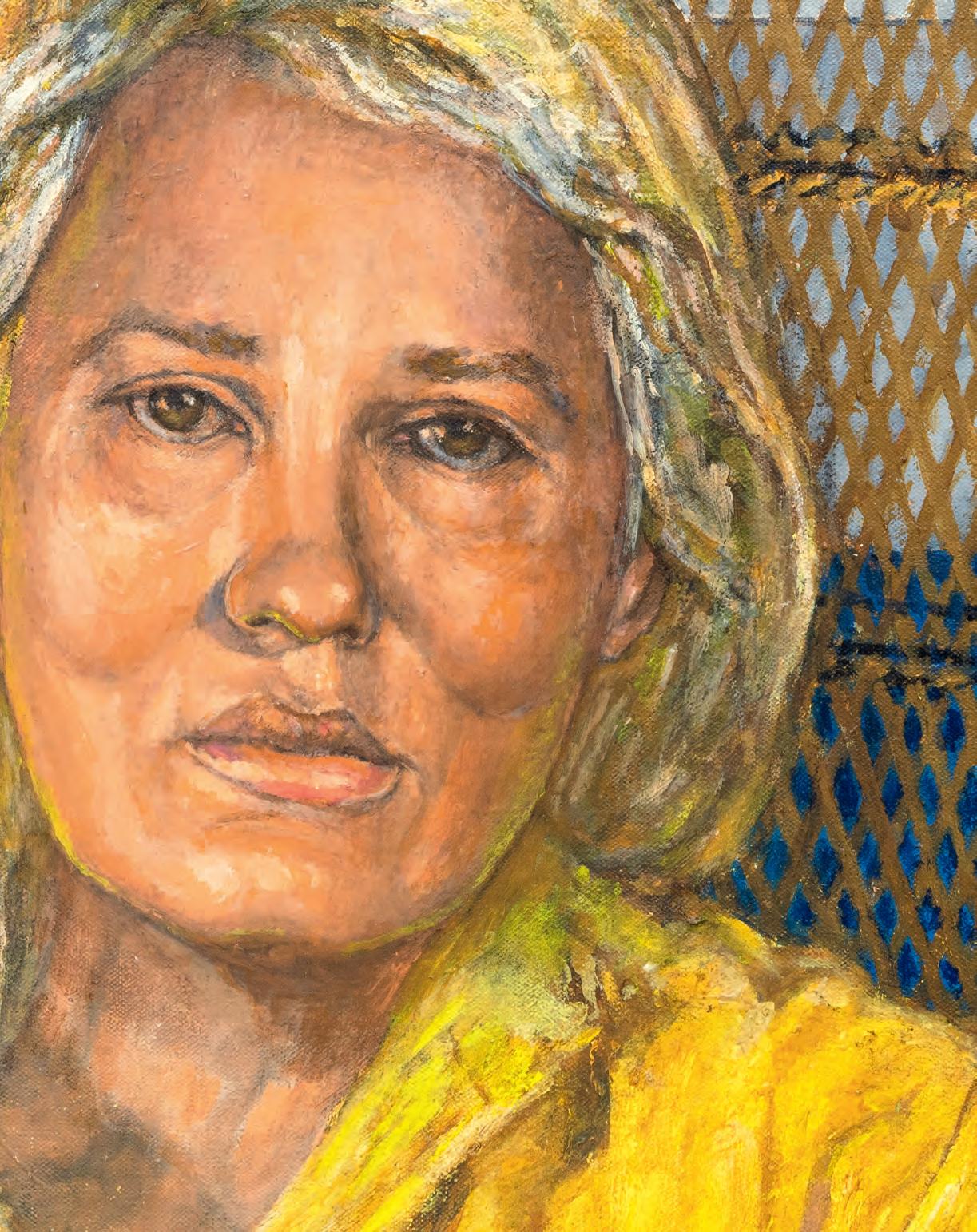
Gunny and Lee, 1977
Acrylic on canvas
80 × 40 inches
5
Tess in a Blue Dress (Dr. Tess Forrest), 1980
Acrylic on canvas
70 × 70 inches
(detail follows)
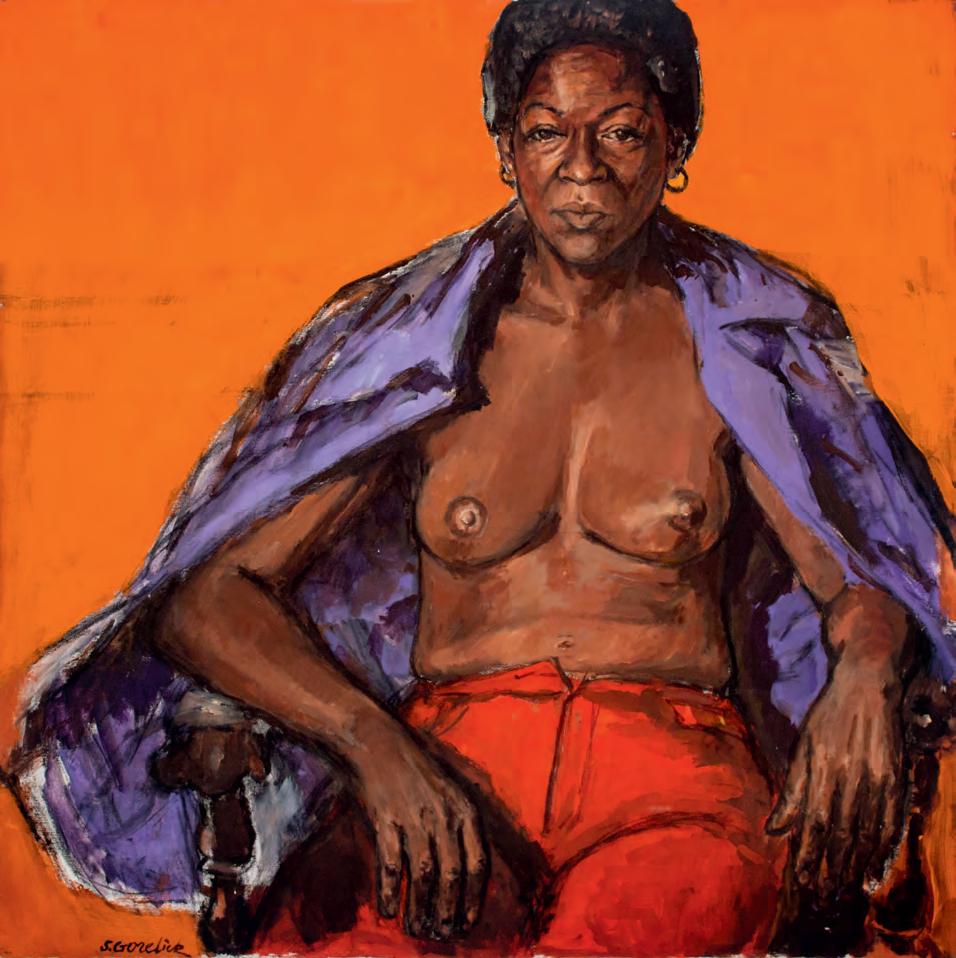
Untitled (Libby seated), 1971
Acrylic on canvas
36 × 36 inches
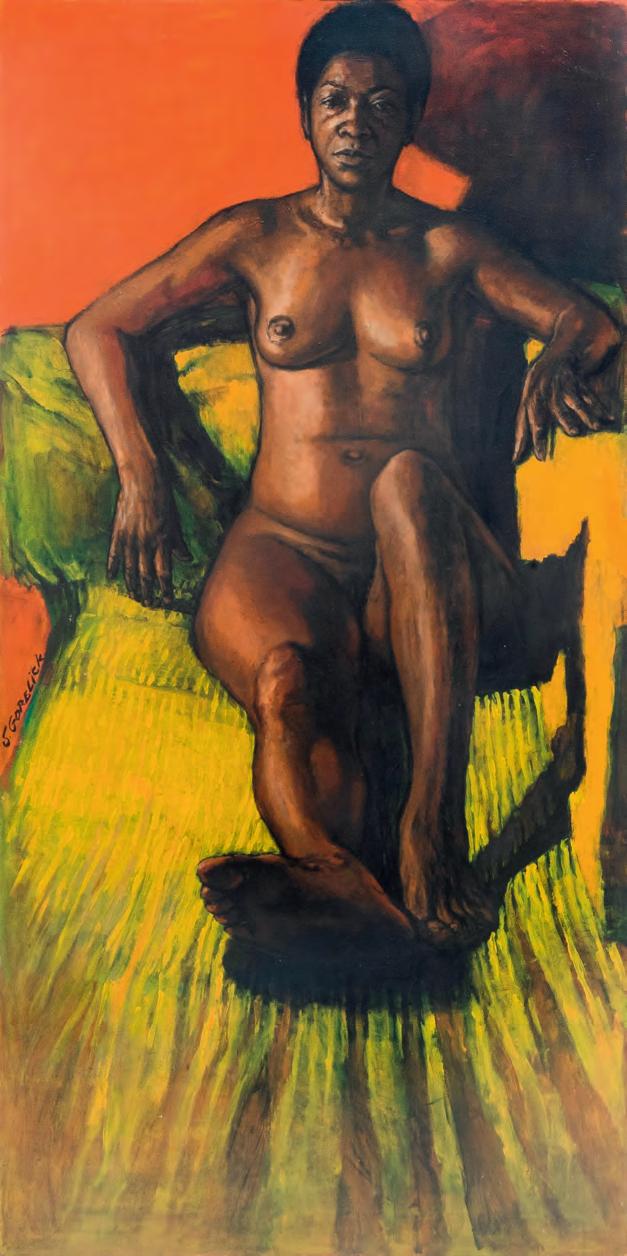
7 Libby, 1971–73
Acrylic on canvas
80 × 40 inches
8
Three Sisters II (Westchester Gauguin), 1974–76
Acrylic on canvas 90 × 80 inches
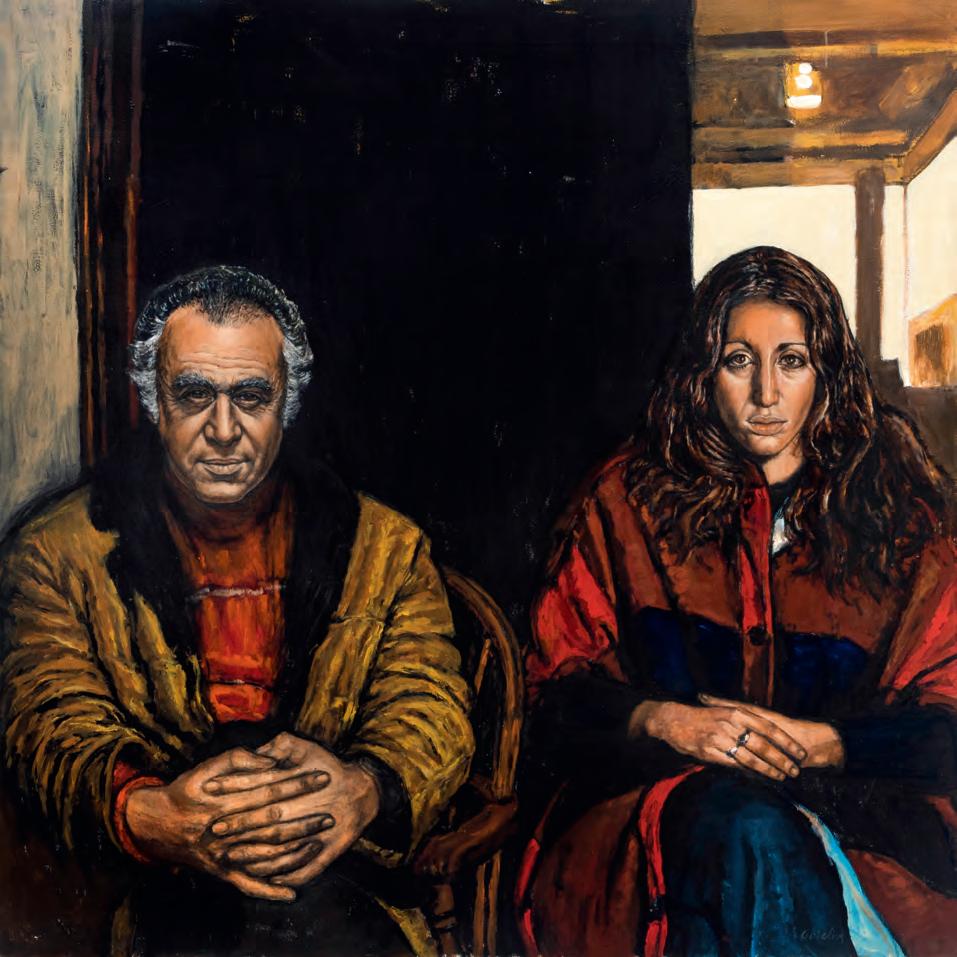
Sid and Lisa, 1974–75
Acrylic on canvas
70 1/8 × 70 1/8 inches
10
Three Sisters IV, 1974
Acrylic on canvas
55 1/4 × 67 1/8 inches
Untitled (Lisa), 1974
Acrylic on canvas
23 7/8 × 18 inches
12
Untitled (three nudes), 1974 Oil on canvas
26 × 20 1/8 inches
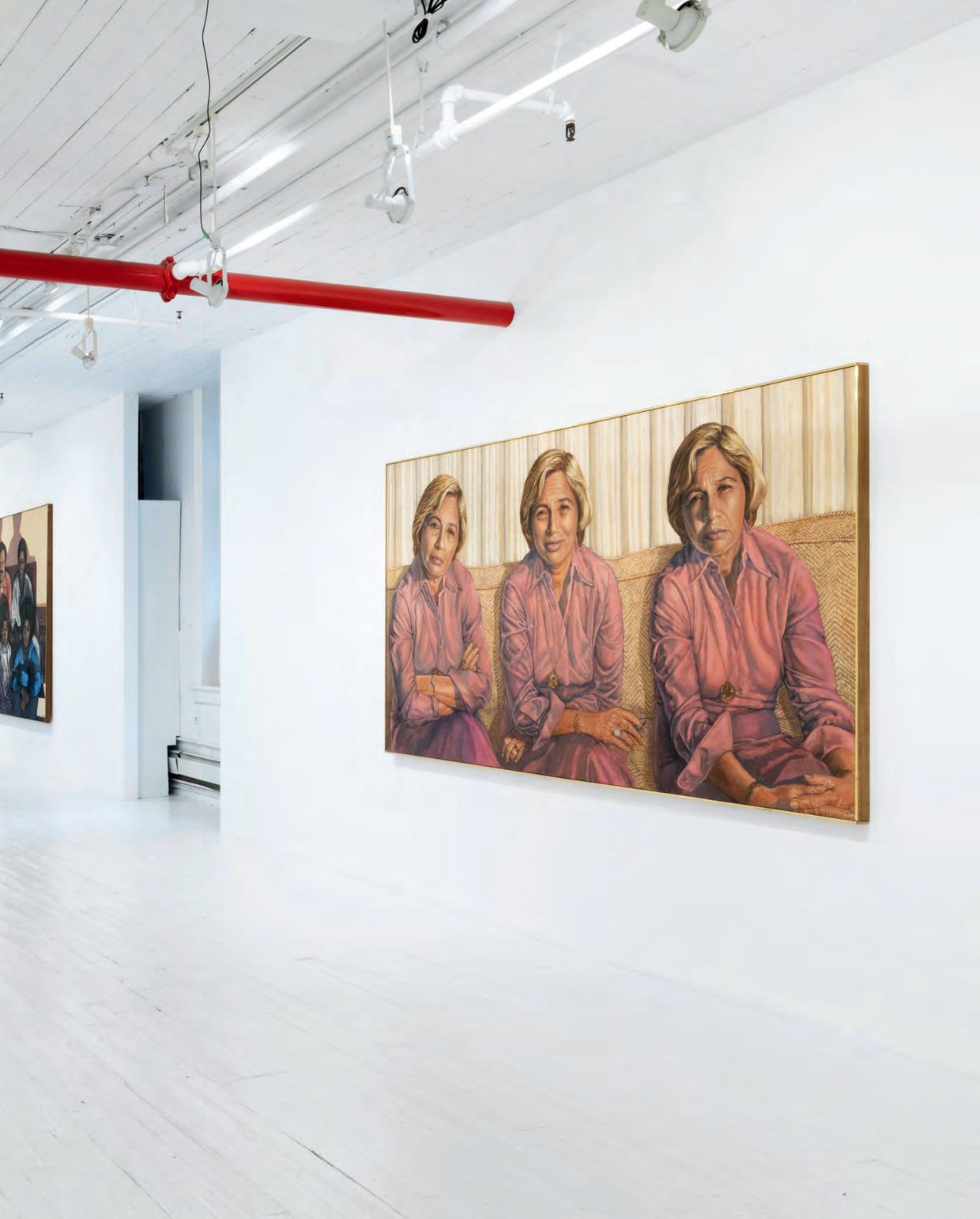
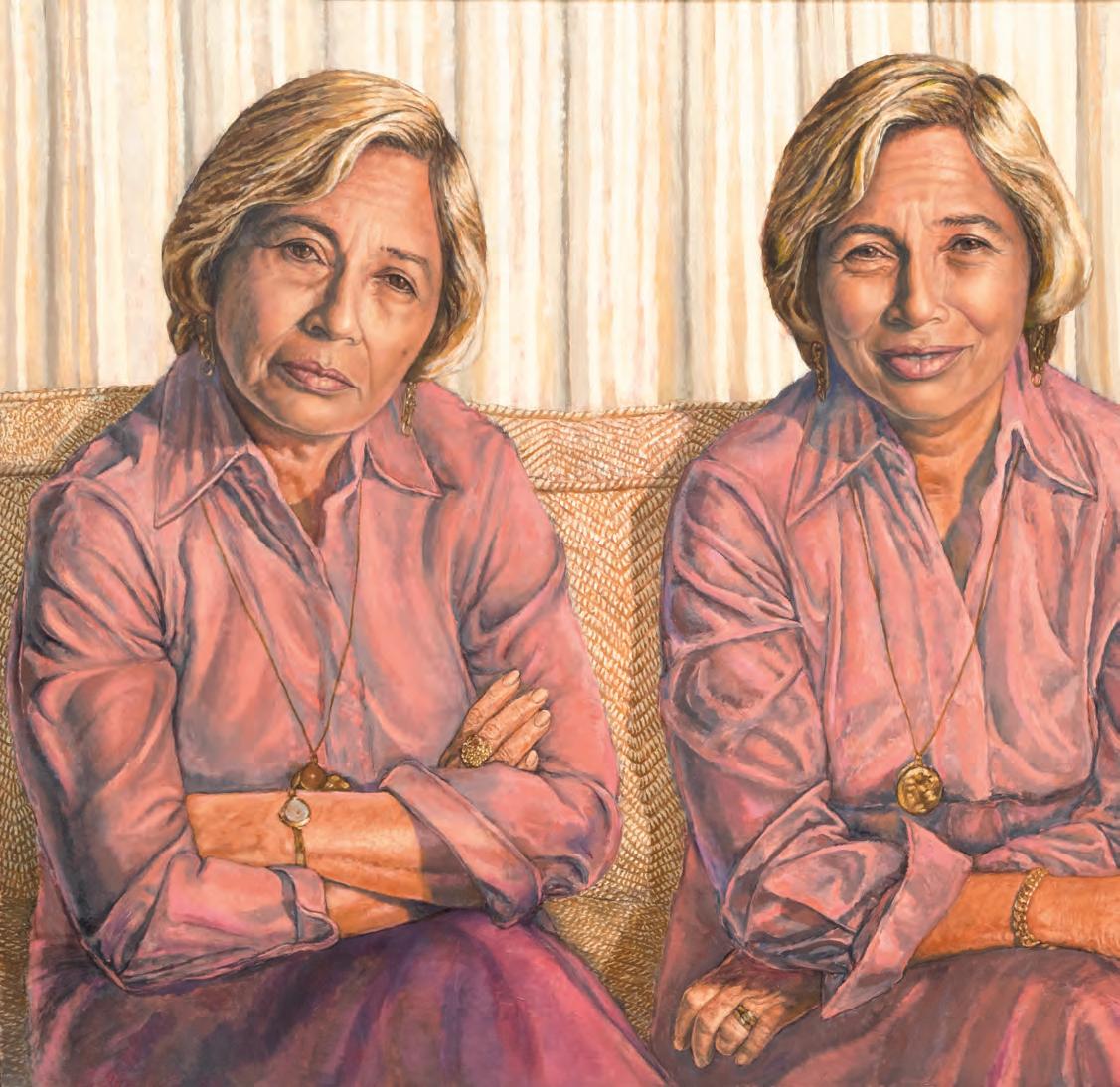
Tess Three Times, 1981–82
Acrylic on canvas
60 × 108 inches
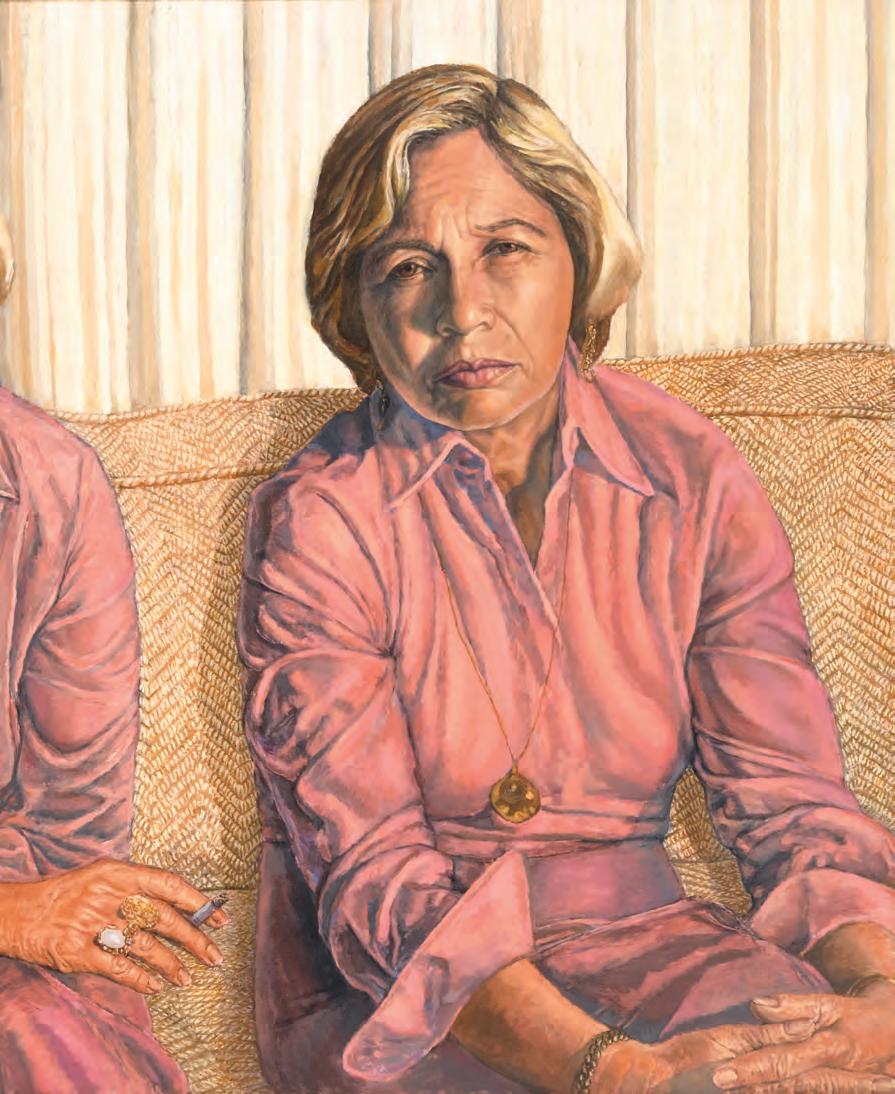
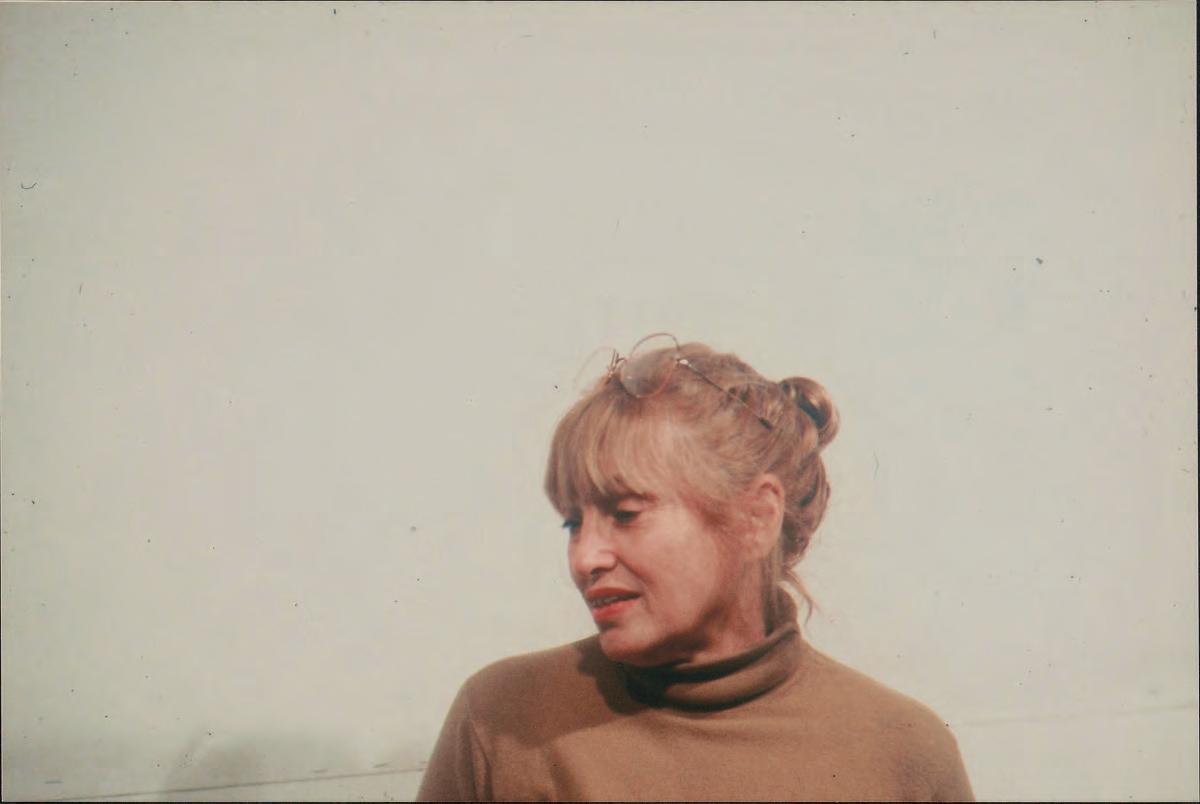
Shirley Gorelick, c. 1981. Archives of American Art
Shirley Gorelick
b. Brooklyn, New York, 1924 d. Washington, D.C., 2000
EDUCATION
SELECTED SOLO EXHIBITIONS
SELECTED GROUP EXHIBITIONS
1948 MA, Teachers College, Columbia University, New York
1944 BA, Brooklyn College, Brooklyn, NY
2022 Eric Firestone Gallery, New York
2008 Rowan University Art Gallery, Glassboro, NJ
1986 SOHO 20 Gallery, New York
1984 SOHO 20 Gallery, New York
1982 SOHO 20 Gallery, New York
1979 State University of New York at Stone Brook, Stone Brook, NY
SOHO 20 Gallery, New York
Great Neck Library, Great Neck, NY
1978 Central Hall Artists Gallery, Port Washington, NY
1977 SOHO 20 Gallery, New York
1976 Central Hall Artists Gallery, Port Washington, NY
1975 SOHO 20 Gallery, New York
1974 Central Hall Artists Gallery, Port Washington, NY
1966 Guild Hall, East Hampton, NY
1963 Merrill Galleries, New York
1962 Silvermine Guild of Artists, New Canaan, CT
1961 Doris Wiener Gallery, Provincetown, MA
Angeleski Gallery, New York
2021–23 How Do We Know the World?, Baltimore Museum of Art, Baltimore, MD
2021 13 American Artists: A Celebration of Historic Work, Eric Firestone Gallery, New York
2019 Go Figure!, Curated by Beth Rudin DeWoody, Eric Firestone Gallery, East Hampton, New York
2016 The Sister Chapel: An Essential Feminist Collaboration, Rowan University Art Gallery, Glassboro, NJ
2015 All Pores Open, Regina Rex, New York
2011 Groundbreaking: The Women of The Sylvia Sleigh Collection, Rowan University Art Gallery, Glassboro, NJ
1994 The Associates, SOHO 20 Gallery, New York
1993 My Friend My Sister, SOHO 20 Gallery, New York
1992 Words and Images, SOHO 20 Gallery, New York
SELECTED GROUP EXHIBITIONS (continued)
1991 Fall N Women, SOHO 20 Gallery, New York
1990 Winter on Broome Street, SOHO 20 Gallery, New York
20/20, SOHO 20 Gallery, New York
1988 SOHO 20 and Friends, SOHO 20 Gallery, New York
1987 Red: Paintings, Sculpture, and Works on Paper, SOHO 20 Gallery, New York
Summer on Broome Street, SOHO 20 Gallery, New York
1986 Self-Exposure, Smithtown Township Arts Council, St. James, NY
1985 Ten from SOHO 20, SOHO 20 Gallery, New York
1984 Fourteen From 20, SOHO 20 Gallery, New York
1983 7 Artists, Nassau County Museum of Fine Art, Roslyn, NY
1982 Views by Women Artists: Realist Paintings, Marymount Manhattan College, New York
1981 Studies for Major Artworks, Jean Lumbard Fine Arts, New York
Long Island Artists Invitational, C.W. Post Art Gallery, Greenvale, NY
1980 12, SOHO 20 Gallery, New York
Dialogues, Just Above Midtown, New York
Contemporary Naturalism, Nassau County Museum of Fine Art, Roslyn, NY
1979 Sources: Personal/Historical/Technical, SOHO 20 Gallery, New York
The Sister Chapel, Cayuga County Community College, Auburn, NY
43rd Annual Midyear Show, Butler Institute of American Art, Youngstown, OH
1978 Women Artists from New York, Art Gallery, State University at Stony Brook, Stony Brook, NY
The Sister Chapel, P.S.1., Long Island City, NY
Selected Politically Aware NY State Artists, Rensselaer County Council of the Arts, Rensselaer, NY
Long Island Artists ’78, Art Advisory Council, Port Washington, NY
Exhibition of Pictures, American Academy and Institute of Arts and Letters, New York
The Sister Chapel, State University of New York at Stoney Brook, Stony Brook, NY
Studies for the Sister Chapel, Elizabeth Weiner Gallery, New York
1977 Nothing But Nudes, Whitney Museum Downtown, New York
Central Hall Artists, York College of Pennsylvania, Yok, PA
Exhibition of Invited Paintings, National Academy of Design, New York
1975 Showing off, SOHO 20 Gallery, New York
Women Artists ’75, Alumni House, Adelphi University, Garden City, NY
Sons & Others: Women Artists See Men, Queens Museum, Flushing, NY
1974 Shirley Gorelick / Alexandra Luman-Dian, Central Hall Gallery, Port Washington, NY
19th National Print Exhibition, Brooklyn Museum, Brooklyn, NY
SELECTED GROUP EXHIBITIONS (continued)
1973
118 Artists, Landmark Gallery, New York
Contemporary Reflection 1973–74, Aldrich Museum of Contemporary Art, Ridgefield, CT
18, Graduate Center, City University of New York, New York
85th Annual Exhibition, National Association of Women Artists, New York
Point of View: 19 Women Artists, Portland Museum of Art, Portland, ME
Women Choose Women, New York Cultural Center, New York
3/Realists, Women’s Interart Center, New York
Four, Port Washington Public Library, Port Washington, NY
1971 1971 Annual Exhibition, National Academy Galleries, New York
Contemporary Figure Paintings, Suffolk Museum, Stony Brook, NY
1969 79th Anniversary Exhibition, National Association of Women Artist, New York
Work in Progress, Nassau Community College, Garden City, NY
Mr. Friend: The Impact of One Art Teacher, Architectural League of New York, New York
1968 Annual Exhibition of Long Island Artists, Nassau Community College, Garden City, NY
1968 Annual Exhibition, National Association of Women Artists, New York
1966 15th National Print Exhibition, Brooklyn Museum, Brooklyn, NY
The Human Form in Art Today, Galerie Exerjian, Great Neck, NY
47th Annual Exhibition of the Society of American Graphic Artists, Pepsi Cola Gallery, New York
Awards Exhibition: Long Island Painters, Guild Hall, East Hampton, NY
1965 Asociación Nacional de Mujeres Artistas en EE. UU., Tolsa Cultural Institute, Guadalajara, México
75th Anniversary Exhibition, National Association of Women Artists, New York
Long Island Painters’ Exhibition, Guild Hall, East Hampton, NY
Second 1965 Show, Provincetown Art Association, Provincetown, MA
Contemporary Long Island Artists, C.W. Post Fine Arts Center, Greenvale, NY
1964 15th Annual Long Island Artists Exhibition, Emily Lowe Gallery, Hofstra University, Hempstead, NY
Ninth Annual Art Exhibition by Long Island Artists, Hecksher Museum, Huntington, New York
Annual Exhibition, National Association of Women Artists, New York
Sixth Annual Rhode Island Arts Festival, RI
Exhibition of Oil Paintings, National Association of Women Artists, Bass Museum of Art, Miami Beach, FL
1963 Second Exhibition, Asociación Nacional de Mujeres Artistas, Museo Nacional de Bellas Artes, Buenos Aires, Argentina
Annual Exhibition, National Association of Women Artists, New York
Watercolor Exhibition, National Association of Women Artists
SELECTED GROUP EXHIBITIONS (continued)
Third 1963 Show, Provincetown Art Association, Provincetown, MA
The Alfred Khouri Memorial Collection, Norfolk Museum of Arts and Science, Norfolk, VA
28th Annual Midyear Show, Butler Institute of American Art, Youngstown, OH
21st Annual Exhibition, Audubon Artists, New York
1962 1962 Annual Exhibition, National Association of Women Artists, New York
20th Annual Exhibition, Audubon Artists, New York
2nd Pan-Pacific International Young Artists Exhibition, Tokyo, Japan
27th Annual Midyear Show, Butler Institute of American Art, Youngstown, OH
21st Annual National Exhibition, Painters and Sculptors Society of New Jersey, Jersey City, NJ
Invitation Print Show, Lincoln High School, New York
First 1962 Show, Provincetown Art Association, Provincetown, MA
1961 1961 Annual Exhibition, National Association of Women Artists, New York
Second 1961 Show, Provincetown Arts Association, Provincetown, MA
1960 25th Annual Midyear Show, Butler Institute of American Art, Youngstown, OH
155th Annual Exhibition, Pennsylvania Academy of the Fine Arts, Philadelphia, PA
First 1960 Show, Provincetown Art Association, Provincetown, MA
Brooklyn and Long Island Artists, Brooklyn Museum, Brooklyn, NY
70th Anniversary Exhibition, National Association of Women Artists, New York
18th Annual Exhibition, Audubon Artists, New York
Second Biennial of American Painting and Sculpture, The Detroit Institute of Arts, Detroit, MI
1959 Second Biennial of American Painting & Sculpture, Detroit Institute of Arts, Detroit, Mi
17th Annual Exhibition, Audubon Artists, New York
67th Annual Exhibition, National Association of Women Artists, New York
1958 66th Annual Exhibition, National Association of Women Artists, New York
1957 65th Annual Exhibition, National Association of Women Artists, New York
16th Annual National Exhibition, Painters and Sculptors Society of New Jersey, Jersey City, NJ
1956 64th Annual Exhibition, National Association of Women Artists, National Academy Galleries New York, NY
1955 25th Annual Spring Exhibition, Art League of Long Island, Flushing, NY
13th Annual Exhibition, Audubon Artists, New York
1954 62nd Annual Exhibition, National Association of Women Artists, National Academy Galleries New York, NY
1953 52nd Annual Exhibition, Art Association of New Orleans, Isaac Delgado Museum of Art, New Orleans, LA
1950 8th Annual Exhibition, Audubon Artists, National Academy Galleries, New York
SELECTED BIBLIOGRAPHY Books
Encyclopedia Entries
Interviews Reviews, Articles, and Essays
Baltimore Museum of Art, Baltimore, MD
Brooklyn Museum, Brooklyn, NY
Hillwood Art Museum, Long Island University, C.W. Post Campus, Brookville, NY
Housatonic Museum of Art, Bridgeport, CT
The Jewish Museum, New York, NY
Minneapolis Institute of Art, Minneapolis, MN
Nassau Community College, Garden City, NY
National Museum of Women in the Arts, Washington, DC
Provincetown Art Association and Museum, Provincetown, MA
Rowan University Art Gallery, Glassboro, NJ
Hottle, Andrew D. Shirley Gorelick (1924–2000): Painter of Humanist Realism Newcastle upon Tyne, England: Cambridge Scholars Publishing, 2014.
Hottle, Andrew D. The Art of the Sister Chapel: Exemplary Women, Visionary Creators, and Feminist Collaboration. Farnham, England: Ashgate Publishing Limited, 2014.
Morgan, Ann Lee. “Shirley Gorelick”, s.v., North American Women Artists of the Twentieth Century: A Biographical Dictionary. Edited by Jules Heller and Nancy G. Heller. New York: Garland Publishing, 1995.
Rubinstein, Charlotte Streifer. American Women Artists: From Early Indian Times to Present. Boston: G.K. Hall, 1982.
Gorelick, Shirley. Interview by Dorothy Gees Seckler, August 20, 1968. Audio cassette recording. Dorothy Gees Seckler collection of interviews with artists, 1962–1976, Archives of American Art, Smithsonian Institution.
Hottle, Andrew D. “The Power of Sisterhood: Shirley Gorelick and Frida Kahlo.” In Shirley Gorelick—Frida, Pablo, and The Self: The Artist as Model, n.p. Glassboro, NJ: Rowan University Art Gallery, 2008.
Koppelman, Connie. “A Woman’s Place: The Central Hall Gallery in the 1970’s.” Stony Brook, NY: Privately printed, 1996.
Southhard, Christina Cronin. “In Search of Lost art and Women Artists.” Port Washington News, October 27, 1994.
Leaf, Ruth. Intaglio Printmaking Techniques. New York: Watson-Guptill Publications, 1976; reprinted as Etching, Engraving and Other Intaglio Printmaking Techniques, Mineola, NY: Dover Publications, Inc., 1984.
Braff, Phyllis. “Mixing Power and Delicacy.” Art. New York Times, September 11, 1983.
Colin, Barbara Flug. “Shirley Gorelick.” Arts Magazine 56, no. 8 (April 1982): 15.
Lipson, Karin. “How ‘Women View Women.” Art Review. Newsday, November 4, 1982.
Nemec, Vernita. “A Constantly Changing Reality.” Artspeak 3, no. 20 (April 15, 1982): 8. Mayer, Sondra. “Retrospective Exhibition at Queens Museum.” Long Island Heritage (September 1981): 26.
Perla, Joy. “Shirley Gorelick: Perceptive Master of Portrait Painting”. North Shore: The magazine for Living on the Gold Coast 5, no. 2 (February–March 1981): 26–27.
Shirey, David L. “Discoveries Abound in Show at Post.” Art. New York Times, June 21, 1981.
Glueck, Grace. “Women Artists ‘80.” Art News 79, no. 8 (October 1980): 58–63.
Goodman, Peter. “A New Era for Nassau Museum.” Newsday, June 5, 1980.
“Introduction.” In Contemporary Naturalism: Works of the 1970’s, n.p. Roslyn Harbor, NY: Nassau County Museum of Art, 1980.
“Portraits That Tell a Lot.” Art. New York Times, January 13, 1980.
Contiguglia, Carol. “’Sister Chapel’ Though Provoking Exhibit.” The Citizen (Auburn, NY), November 11, 1979.
Harrison, Helen A. “People as Paint in Shirley Gorelick’s Works.” Art. New York Times, February 11, 1979.
Langer, Sandra L. “The Sister Chapel: Towards a Feminist Iconography, with Commentary by Ilise Greenstein.” Southern Art Quarterly: A Journal of the Arts in the South 17, no. 2 (Winter 1979): 28–41.
Sencer, Yvette Jayson. “Shirley Gorelick.” Arts Magazine 53, no. 9 (May 1979): 24.
“Shirley Gorelick.” Art Figures. Soho Weekly News, April 19, 1979.
“The Faces of Portraits.” Art Review. Newsday, December 28, 1979.
“A Pantheon of Woman.” Art. Newsday, December 6, 1978.
Hart, Michael. “Foot Paintings Excite – But Do Not Move.” Review. Three Village Herald (Stony Brook, NY), November 29, 1978.
Johnston, Laurie, “The ‘Sister Chapel’: A Feminist View of Creation.” New York Times, January 30, 1978.
“Large Scale with Differences.” Art Review. Newsday, February 11, 1978.
“Two Poles of Expression.” Art Review. Newsday, March 31, 1978.
“Using Space, Mystery.” Art Review. Newsday, February 3, 1978.
“Women, God, and the World—the Sister Chapel’s Trinity.” Art. Newsday, January 29, 1978.
Alloway, Lawrence. “Art.” The Nation 224, no. 5 (February 5, 1977): 156.
Cavaliere, Barbara. “Shirley Gorelick.” Reviews. Womanart 1, no. 4 (Spring–Summer 1977): 24–25.
“Chinese Masters at Queens Museum.” Art. Long Island Press, January 16, 1977.
O’Grady, Holly. “Shirley Gorelick.” Exhibition Reviews. Feminist Art Journal 6, no. 1 (Spring 1977): 39–40.
“Prints, Prizewinners.” Art Review. Newsday, December 16, 1977.
“Shirley Gorelick.” Arts Reviews. Arts Magazine 51, no. 7 (March 1977): 39–40.
“The Sister Chapel—A Traveling Homage to Heroines.” Womanart 1, no. 3 (Winter/ Spring 1977): 12–21.
Wallach, Amei. “An Art Capital for LI.” Newsday, February 13, 1977.
Orenstein, Gloria Feman. “Sister Chapel.” Womanart 1, no. 1 (Summer 1976): 31.
Preston, Malcolm. “It’s Easy to See That Realism Has Returned Big.” The Arts. Newsday, November 7, 1976.
“SoHo 20.” Womanart 1, no. 1 (Summer 1976): 16–19, 30.
Lubell, Ellen. “Shirley Gorelick.” Arts Reviews. Art Magazine 49, no. 10 (June 1975): 18–19.
Perreault, John. “outrageous Black Pop.” Art Reviews. Soho Weekly News, May 1, 1975.
“Superwoman!” Art. Soho Weekly News, September 25, 1975.
“An Li Co-Op, Artfully Done.” Newsday, June 9, 1974.
“Exhibit Explosion: Shows Crowd Community Libraries.” Art. Long Island Press, March 25, 1974.
“Joie de vivre: Hans Hofmann Exhibit is Vibrant.” Art. Long Island Press, November 10, 1974.
“Parallel Expressions.” Art. Newsday, July 9, 1974.
Paris, Jeanne. “Animals in Art: Fascinating Exhibit at Queens Museum.” Art. Long Island Press, July 7, 1974.
“A Lively Women’s Co-op.” Art. Newsday, September 29, 1973.
Pittman, Margrit. “Two Exhibits by Women Artists.” World Magazine, January 27, 1973: M6–M7.
Kanter, Nat. “Recognition by Peers is Artist’s Real Honor.” Sunday News (Great Neck, NY), December 31, 1972.
“Guild Hall Exhibits Varied Works of 4 Award Winners.” Art. Long Island Press, May 1, 1966.
Back, James H. “G. (sic) Gorelick.” Reviews and Previews. Art News 62, no. 3 (May 1963): 19.
Rosselot, Hernandez. “Seventy USA Artists.” Translated by Michel Ponce de Leon. National Association of Women Artists Newsletter (June 1963): 2.
Preston, Stuart. “Art: Eminent Italians.” New York Times, April 1, 1961.
Acknowledgments
Thank you to Shirley Gorelick’s family for entrusting us to show this important work. We are grateful especially to Jamie Gorelick of the Shirley Gorelick Foundation for her commitment to the artist’s legacy. Also at the foundation, a special thanks is due to Max Warsh for curating the gallery’s show and his help in putting together this publication. Thank you to Claire Barliant for her thoughtful contribution to this catalogue and highlighting Gorelick’s vision and significance. Thank you to the Archives of American Art, Washington, DC, the Des Moines Arts Center, IA, and the MoMA PS1 Archives for furnishing images for this publication. Thank you to the entire gallery staff, who make our work possible!
— Eric Firestone
Published on the occasion of the exhibition
Shirley Gorelick: Family
June 23 – July 29, 2022 on view at Eric Firestone Gallery 4 Great Jones Street, #3, New York, NY
ISBN: 979-8-9885944-5-1
LCCN: 2024921995
Cover: Detail of Shirley Gorelick, Double Libby, 1970, acrylic on canvas, 80 × 80 inches, see pl.1
Inside front and back covers: Details of Three Sisters II (Westchester Gauguin), 1974–76, acrylic on canvas, 90 × 80 inches, see pl. 8
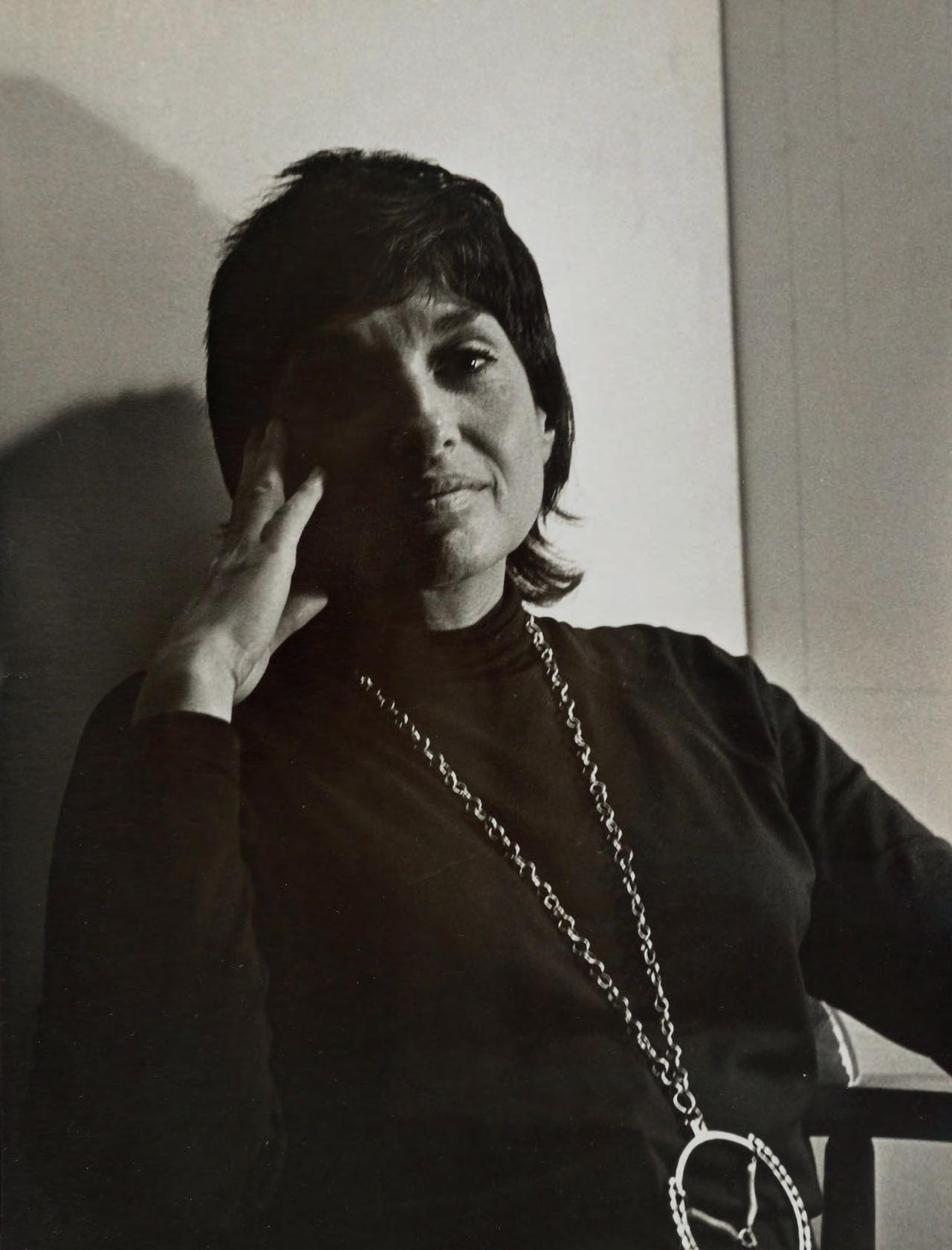
Frontispiece: Shirley Gorelick, c. 1970s.
Archives of American Art
Publication copyright © 2024 Eric Firestone Press
Essay copyright © 2024 Claire Barliant
Exhibition photography © 2024
Jenny Gorman
All artwork © 2024 Shirley Gorelick
Reproduction of contents prohibited All rights reserved
Published by Eric Firestone Press 4 Newtown Lane East Hampton, NY 11937
Principal: Eric Firestone
Managing Partner: Kara Winters
Senior Director: Jennifer Samet
Associate Director: Maddy Henkin
Principal Photography: Sam Glass
Design: Isabelle Smeall
Printing: GHP
Eric Firestone Gallery
40 Great Jones Street New York, NY 10012
646-998-3727
4 Newtown Lane East Hampton, NY 11937
631-604-2386
Ericfirestonegallery.com