It is already February! I would ask how we got here, but then I would be showing my age, as when you get older, you spend your life remarking how time flies, how tired you always are, and there just aren’t enough hours in a day!
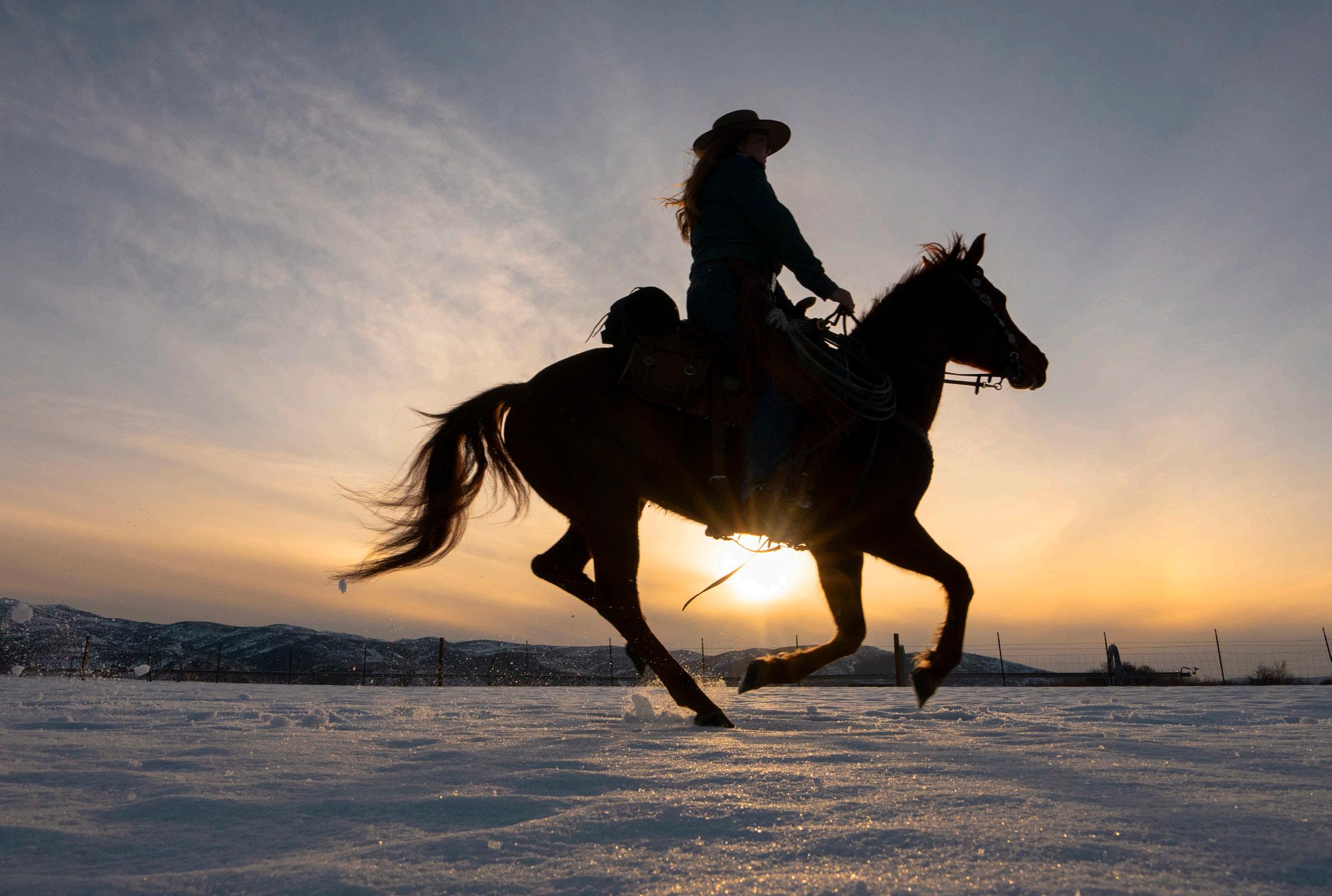
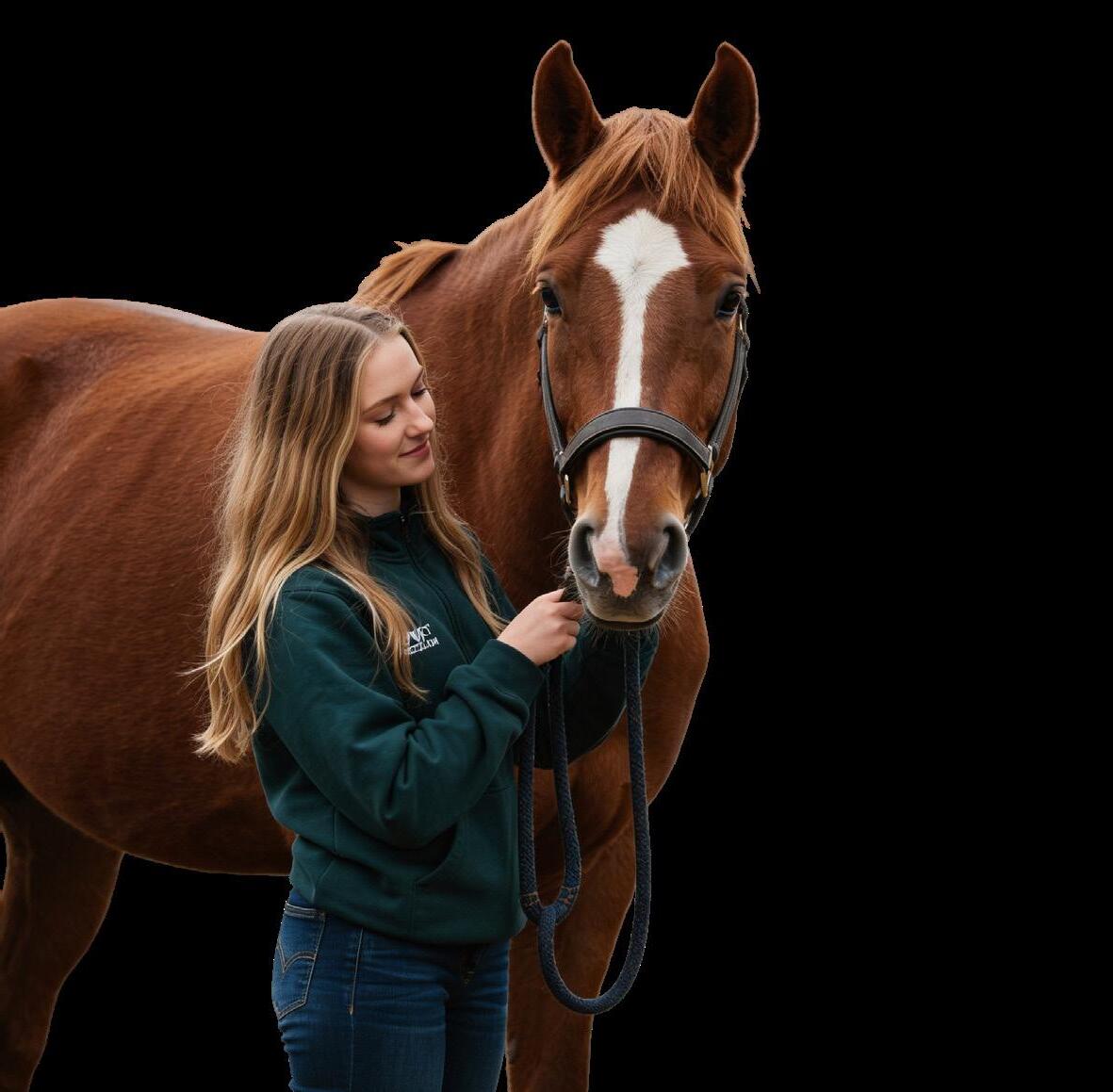
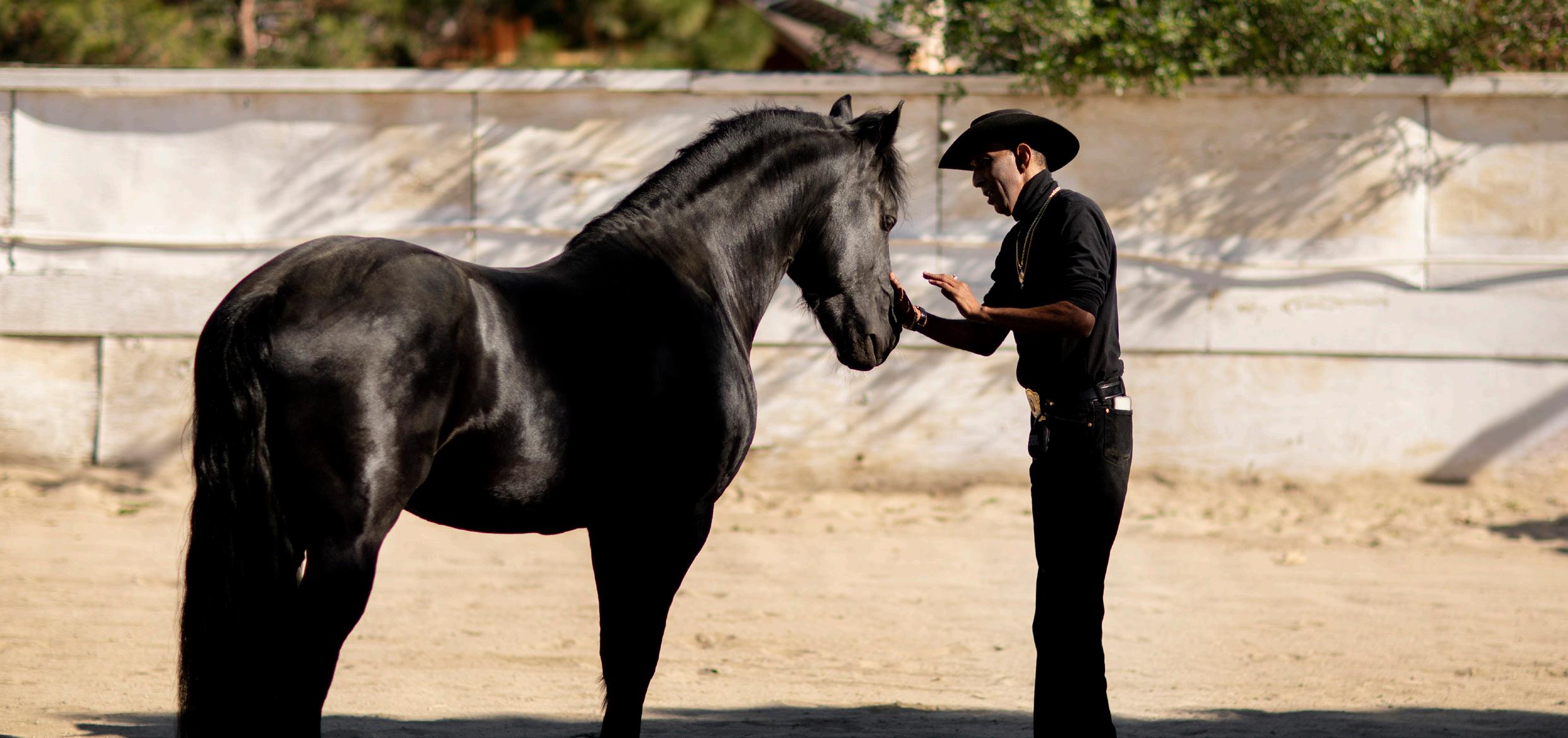
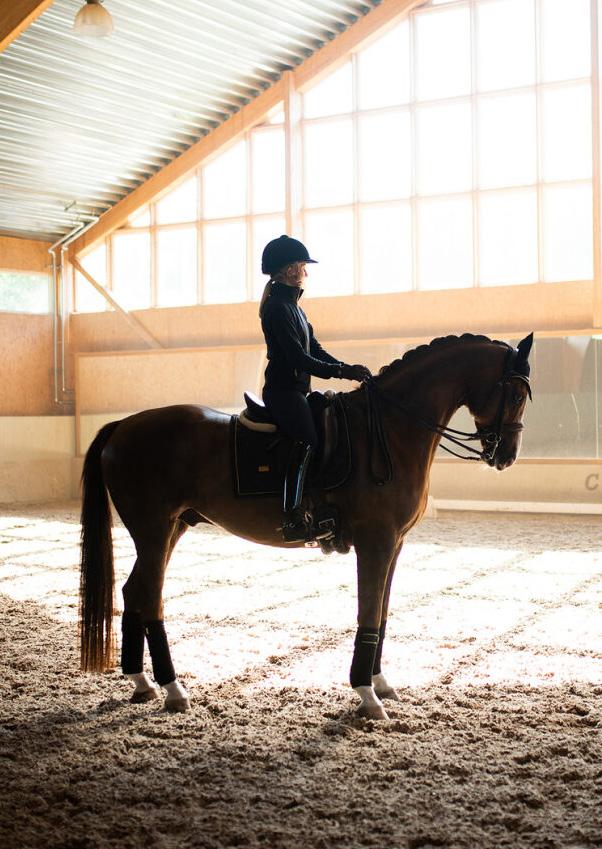
So as we step into the Year of the Horse, this issue feels especially fitting. Not because of symbolism alone, but because it reflects the full, honest picture of life with horses. From the school arena to the national stage, from careful preparation to muddy boots, this is a year that celebrates participation, learning, and simply showing up.
That idea runs through every page.
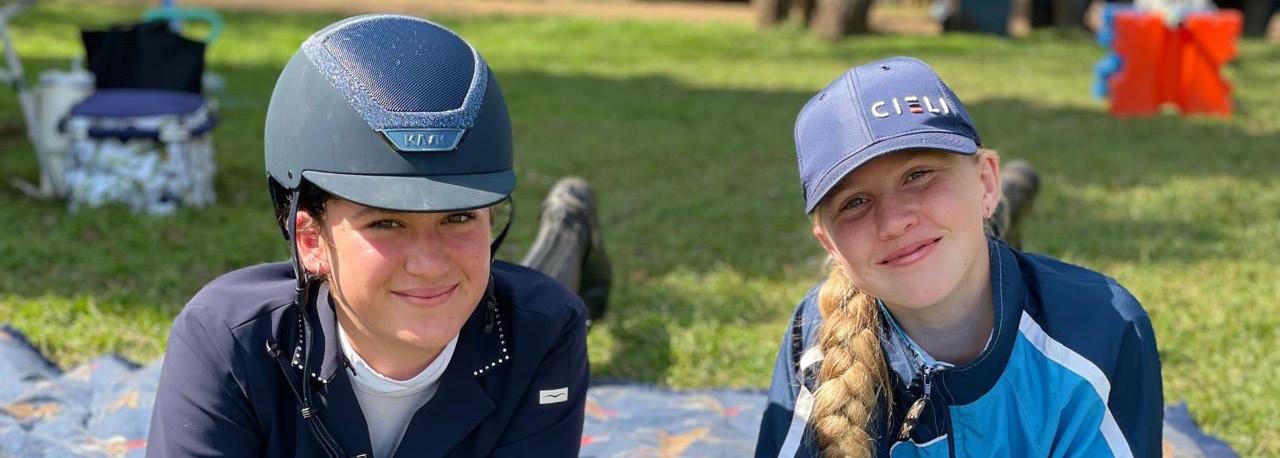
Our main feature focuses on SANESA, an organisation that continues to open the door for young riders across the country. At its heart is a message we believe strongly in: let them ride. Give children the opportunity, the support, and the space to grow in the saddle, whatever their starting point.
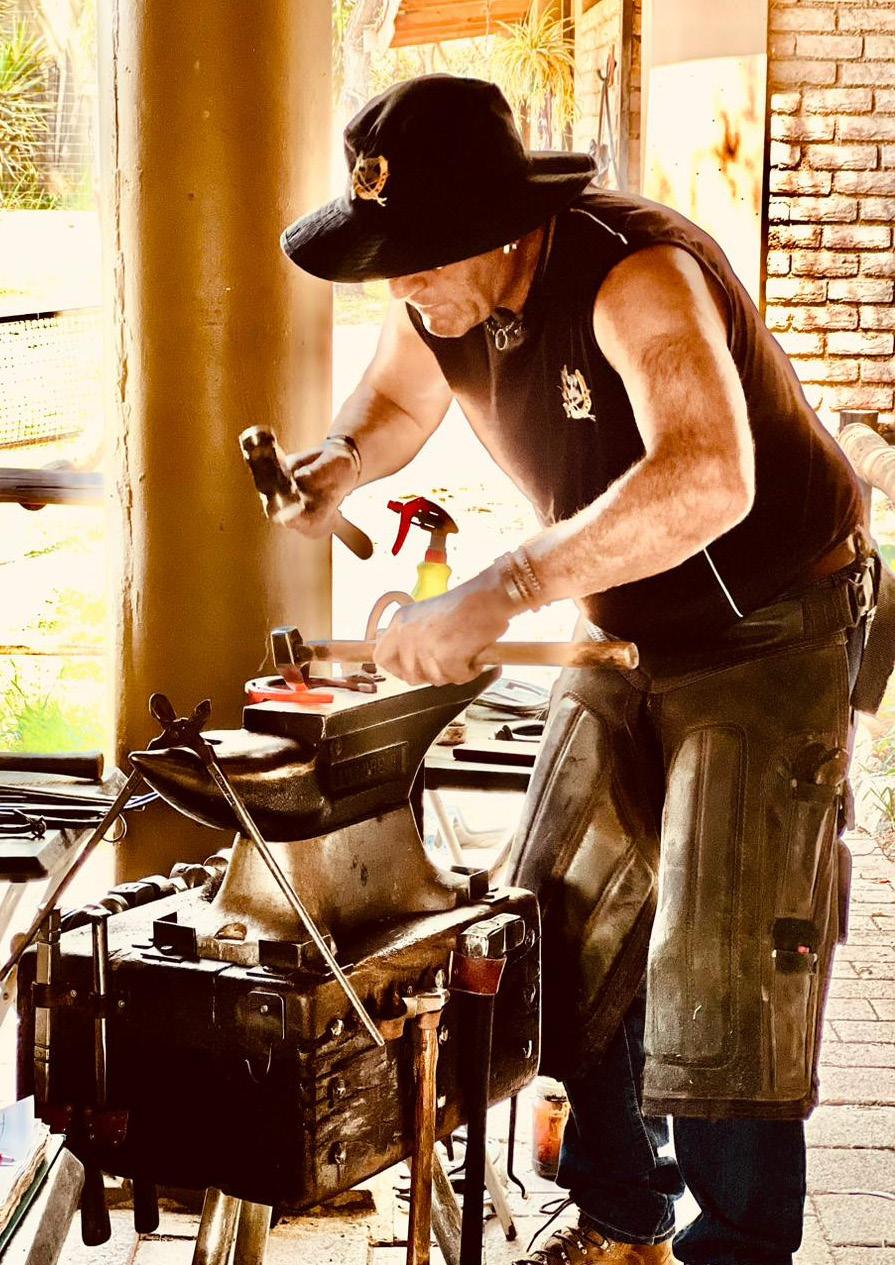
Alongside that, we turn our attention to the people and practices that quietly keep horses sound, comfortable and willing. From the farrier’s forge to recognising the subtle signs that a horse is uncomfortable, this issue leans into horsemanship that is observant, thoughtful and grounded in care.
You’ll also find familiar regulars, refreshed and purposeful and a little shorter and hopefully easier to read. A breed spotlight on the Thoroughbred, practical riding advice on tackling a line, training tips for something deceptively simple like standing still, and a gear guide unpacking the often-overlooked numnah. Even our fitness and digital safety features focus on the small details, ankles and online scams, that can have a big impact if ignored.
We’ve intentionally leaned into bite-sized, accessible pieces. Articles you can dip into between rides, on a coffee break, or while waiting at a show. Information that respects your experience, but doesn’t demand more time than you have to give.
As always, this magazine reflects real equestrian life. The effort, the learning curves, the humour, and the deep connection that keep us coming back.
Thank you for being part of it. And here is to a FANTASTIC 2026!
- Charlene Carroll charlene@equestrianlife.co.za
Charlene Carroll
By: Charlene Carroll
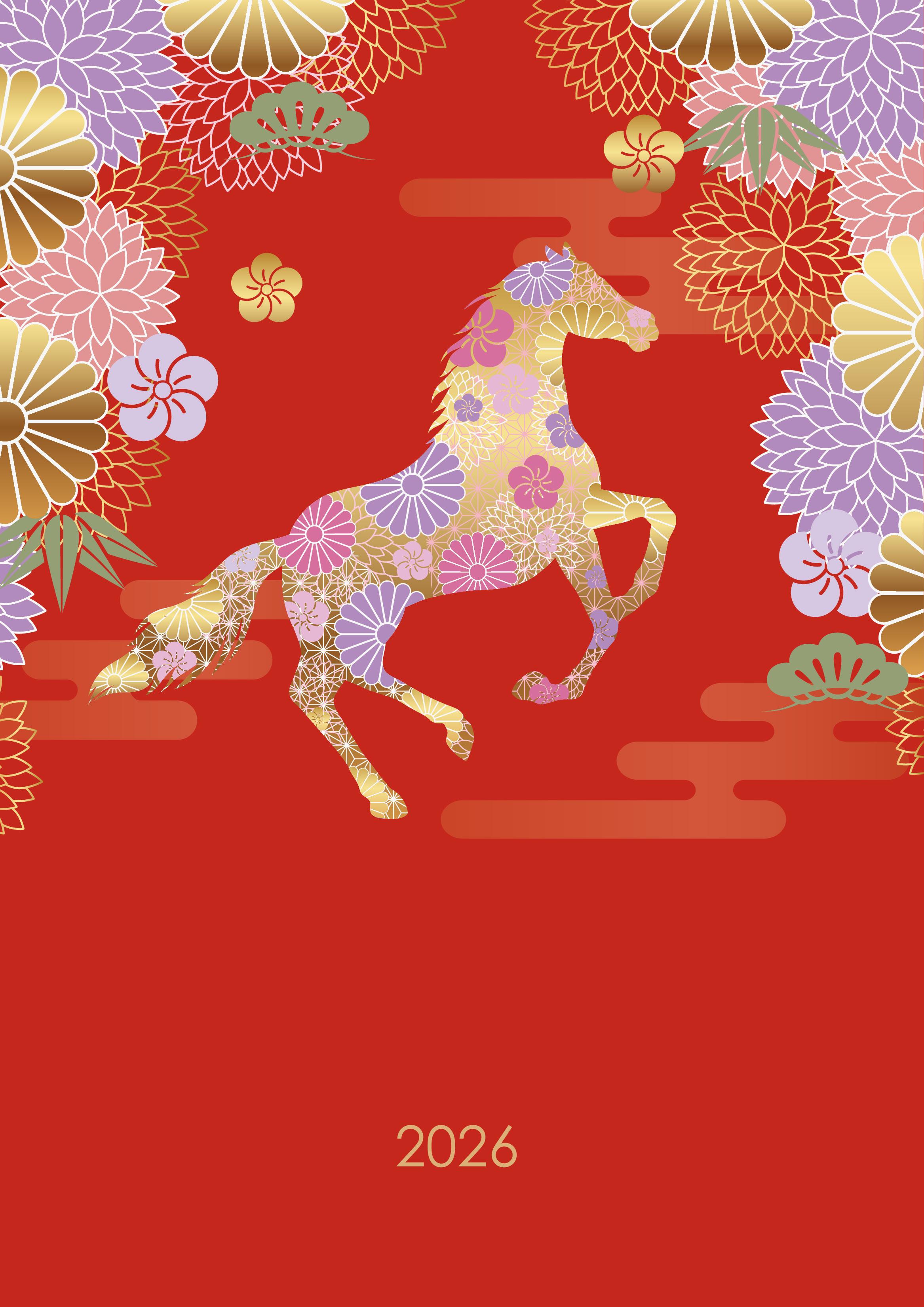
When the horse takes centre stage. 2026
Can someone please lunge this horse?
Every twelve years, the horse steps into the spotlight in the Chinese zodiac. For equestrians, it feels quietly fitting. Long before the Year of the Horse became part of an ancient calendar, horses were already shaping human history, carrying people across continents, into battle, through trade routes and into sport. The zodiac simply gives the horse its moment to be acknowledged for what it has always been. Powerful, independent and deeply woven into human life.
The Chinese zodiac follows a twelveyear cycle, each year represented by an animal. The horse is the seventh sign, positioned at the heart of the cycle. Unlike the Western zodiac, which shifts monthly, each animal rules an entire lunar year, beginning with Chinese New Year rather than 1 January. That date changes annually, usually falling between late January and mid February.
Recent Years of the Horse include 1990, 2002, 2014 and 2026, with the next
cycle returning in 2038. The 2026 Year of the Horse officially begins on 17 February, marking the start of the Lunar New Year rather than the calendar year. Each Year of the Horse is also paired with one of the five elements wood, fire, earth, metal or water which subtly shapes its tone and energy.
Where the zodiac came from
The origins of the Chinese zodiac stretch back more than 2,000 years, rooted in ancient astronomy, folklore and philosophy. One popular legend tells of the Jade Emperor inviting animals to race across a river to determine their place in the calendar. The horse, strong and fast, was tipped to finish early but was startled by a snake hidden in its hoof, causing it to leap back and place seventh instead.
Whether myth or metaphor, the zodiac became a way to understand time, personality and cycles of change. Each animal carries symbolic meaning, influencing how people interpret the year ahead and even the traits associated with those born under that sign.
What the horse represents
In Chinese culture, the horse is associated with movement, freedom and momentum. It symbolises progress, travel and the ability to push forward with confidence. Horse years are traditionally linked to action rather than hesitation, encouraging bold decisions and a willingness to embrace change.
People born in the Year of the Horse are said to share these traits. They are often described as energetic, independent and charismatic, with a strong sense of self. Horses in the zodiac are social creatures, natural communicators who enjoy being busy and visible. At the same time, they value freedom fiercely and do not thrive when constrained.
There is also a quieter layer to the symbolism. The horse represents endurance and loyalty, qualities that equestrians know well. Long before it
was celebrated in festivals and zodiac charts, the horse earned its place through service and partnership, offering strength without expectation of reward.
The element matters too Not all Years of the Horse feel the same. The accompanying element adds nuance. A Wood Horse year is associated with growth and collaboration. Fire Horse years are known for intensity and strong personalities. Earth Horse years bring stability and practicality, while Metal Horse years are more driven and disciplined. Water Horse years lean towards adaptability and emotional intelligence.
This layering reflects the depth of the zodiac system. It is not simply about predicting luck or fortune, but about understanding balance, rhythm and how different energies rise and fall over time.
Why the Year of the Horse feels special to equestrians
For those who live their lives around horses, the Year of the Horse carries a personal resonance. It feels less symbolic and more familiar. The qualities celebrated in the zodiac independence, sensitivity, strength and spirit are the same ones riders recognise every day in the stable.
There is also something comforting about seeing the horse honoured not as a tool or possession, but as a character in its own right. In the zodiac, the horse is not defined by what it carries or pulls, but by its nature.
Around the world, the Year of the Horse is marked with colour, movement and celebration. Parades, artwork and traditional performances often feature dynamic poses, echoing the energy the year is believed to bring.
A moment to pause and reflect
While the zodiac is not a science, it offers something more enduring. A chance to reflect on cycles, to notice patterns, and to mark time in a way that feels connected to the natural world.
For equestrians, the Year of the Horse is a reminder of why the partnership matters. Of the shared journey between human and horse that has spanned centuries and cultures. It invites a little optimism, a little bravery, and perhaps a renewed appreciation for the animal that continues to shape our lives in ways both practical and profound.
Every twelve years, the calendar tips its hat to the horse. For those who know them best, it feels like well deserved recognition.
Tailcoat
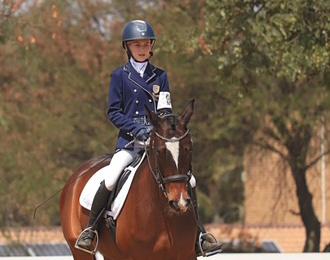
The ultimate symbol of upperlevel dressage, the tailcoat brings ceremony to the arena. Designed to sit neatly when mounted, it allows freedom of movement while delivering that unmistakable Grand Prix presence.
Dressage jacket
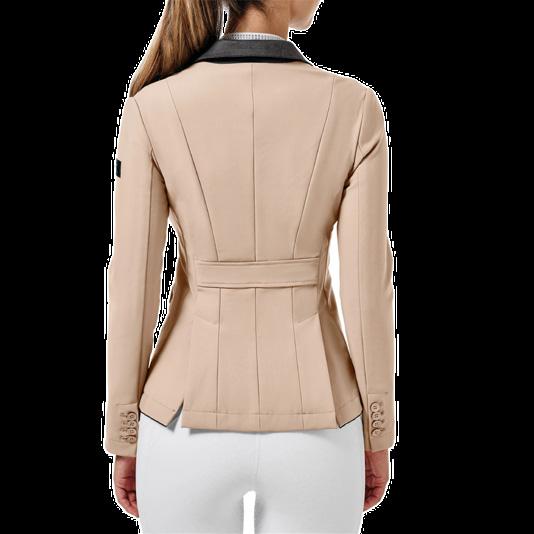
At lower and national levels, riders compete in a short dressage jacket rather than tails, offering a polished look with greater practicality. Traditionally black or navy, modern FEI rules also allow subtle dark tones at an international level, provided the overall appearance remains conservative and elegant. The jacket should sit neatly when mounted.
White breeches
Unforgiving but iconic, white breeches highlight the rider’s position and leg aids. Crisp, clean lines are essential, making fit and fabric just as important as turnout on the day.
Dressage boots
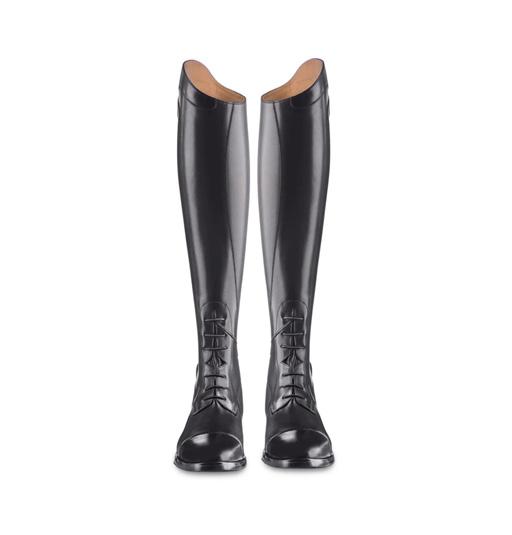
Tall, structured and elegant, dressage boots provide close contact and stability through the leg. A stiff outer profile enhances refinement, while modern linings ensure comfort during extended use.
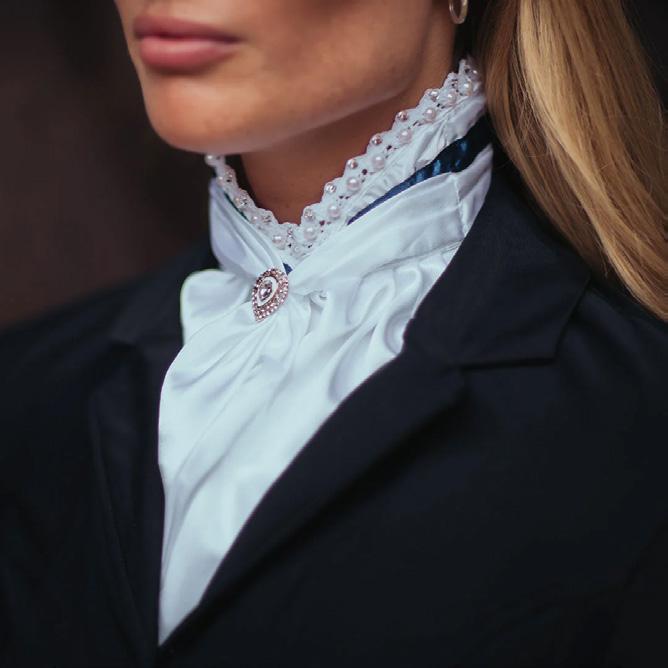
Stock tie or white shirt
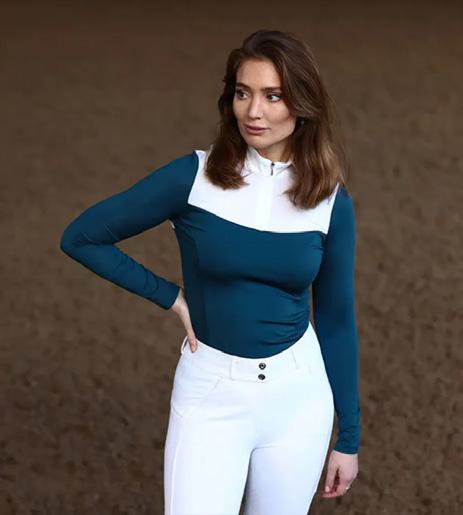
A stock tie remains a nod to tradition, especially at higher levels, while contemporary white shirts offer a sleeker alternative. Either way, the look is sharp, understated and timeless.
The Dressage Wardrobe
By: Charlene
WHERE TRADITION
Dressage has always carried Every item in the arena also tells a story of discipline, refinement. From the first the dressage wardrobe with unmistakable polish. the key pieces that dressage
The Dressage Wardrobe
Charlene Carroll
MEETS PRECISION.
carried a quiet elegance. serves a purpose, but it discipline, heritage and first salute to the final halt, wardrobe balances functionality polish. Here’s a closer look at define the modern dressage rider.
Gloves
Dressage whip
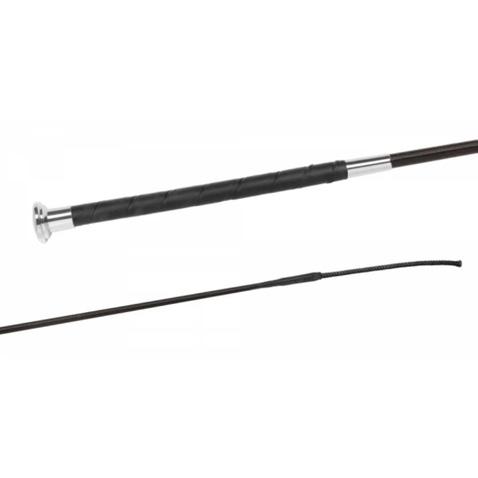
When permitted, riders may carry a single dressage whip in warm-up or at lower levels to subtly reinforce leg aids. When allowed, the legal maximum length is generally 90cm up to around 120 cm including lash.
Saddle pad/Numnah
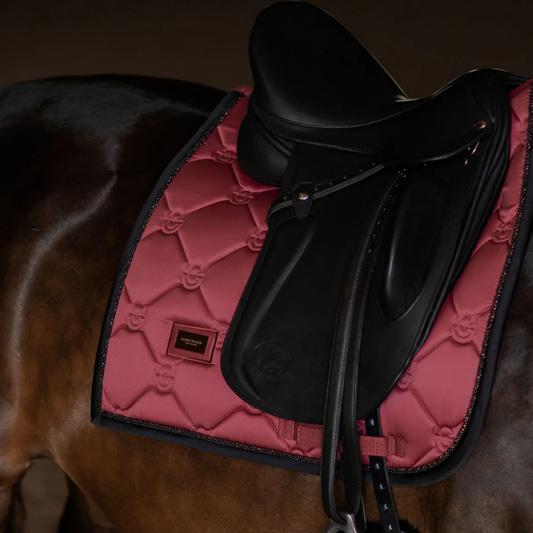
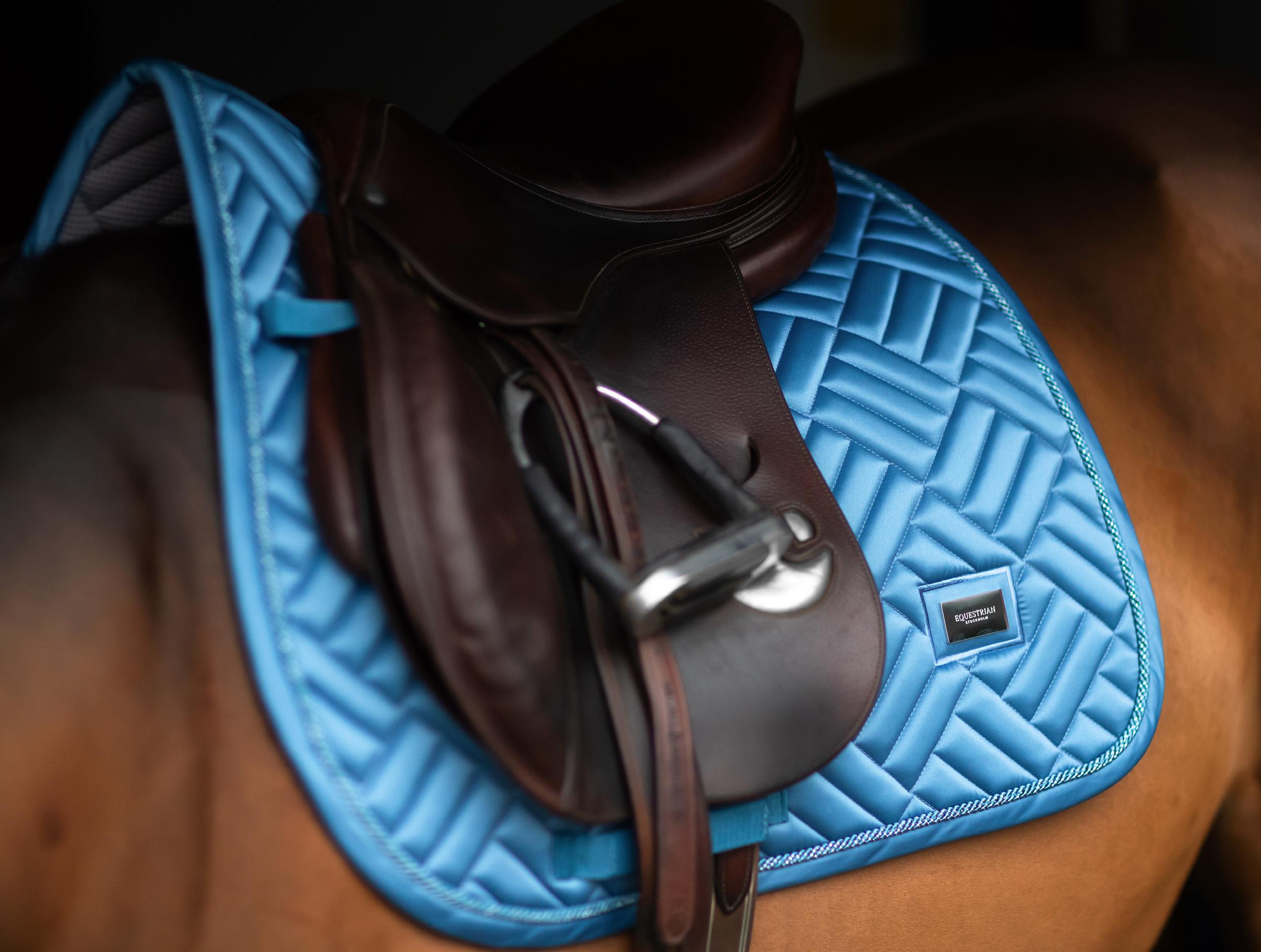
Typically cut longer and straighter than a jump pad, the dressage saddle pad follows the line of the saddle and offers generous coverage beneath the leg. Clean, white and contoured, it completes the picture while allowing the horse’s outline and movement to remain the focus, exactly where it should be.
Double bridle
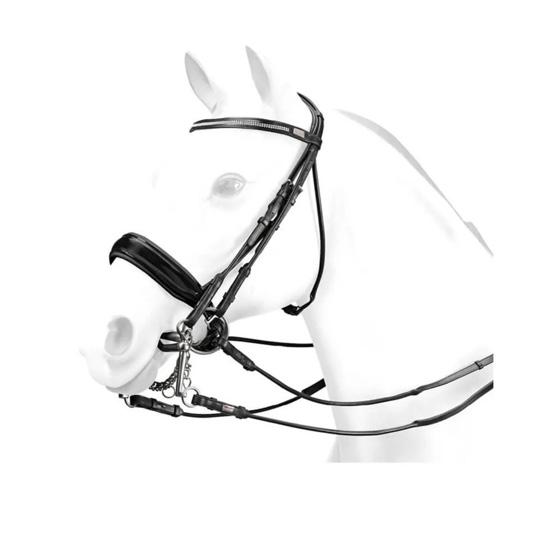
Seen on the uppermost dressage horses, the double bridle combines a bradoon and a curb to refine communication between rider and horse. At top international levels (FEI CDI3★ and above) it is the required competition bridle, while at lower and national levels riders may choose to stay in a snaffle.
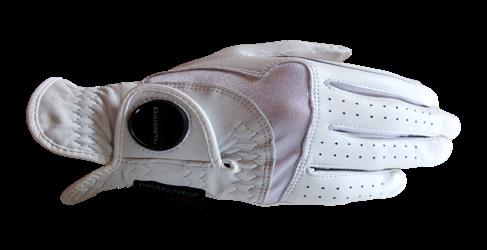
White gloves are traditionally worn at FEI and upper levels, where they form part of formal dressage turnout and highlight quiet, consistent contact. At lower levels, gloves are optional and often darker in colour, with riders choosing what best suits their comfort and confidence in the arena.
Dressage helmet
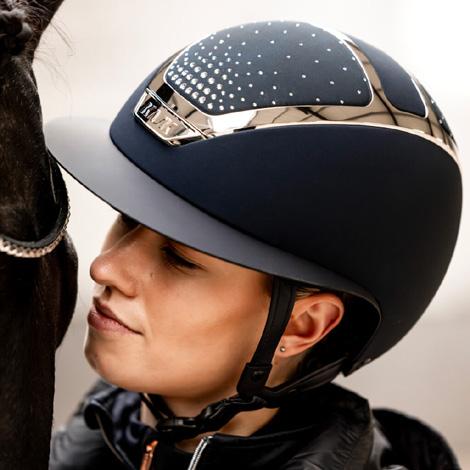
Approved protective headgear is now mandatory at all FEI dressage competitions, including Grand Prix, reflecting the sport’s shift towards safety without sacrificing elegance. Modern dressage helmets are designed to be sleek and understated, preserving the traditional silhouette.
Let them ride.
By: Charlene Carroll
This is SANESA.
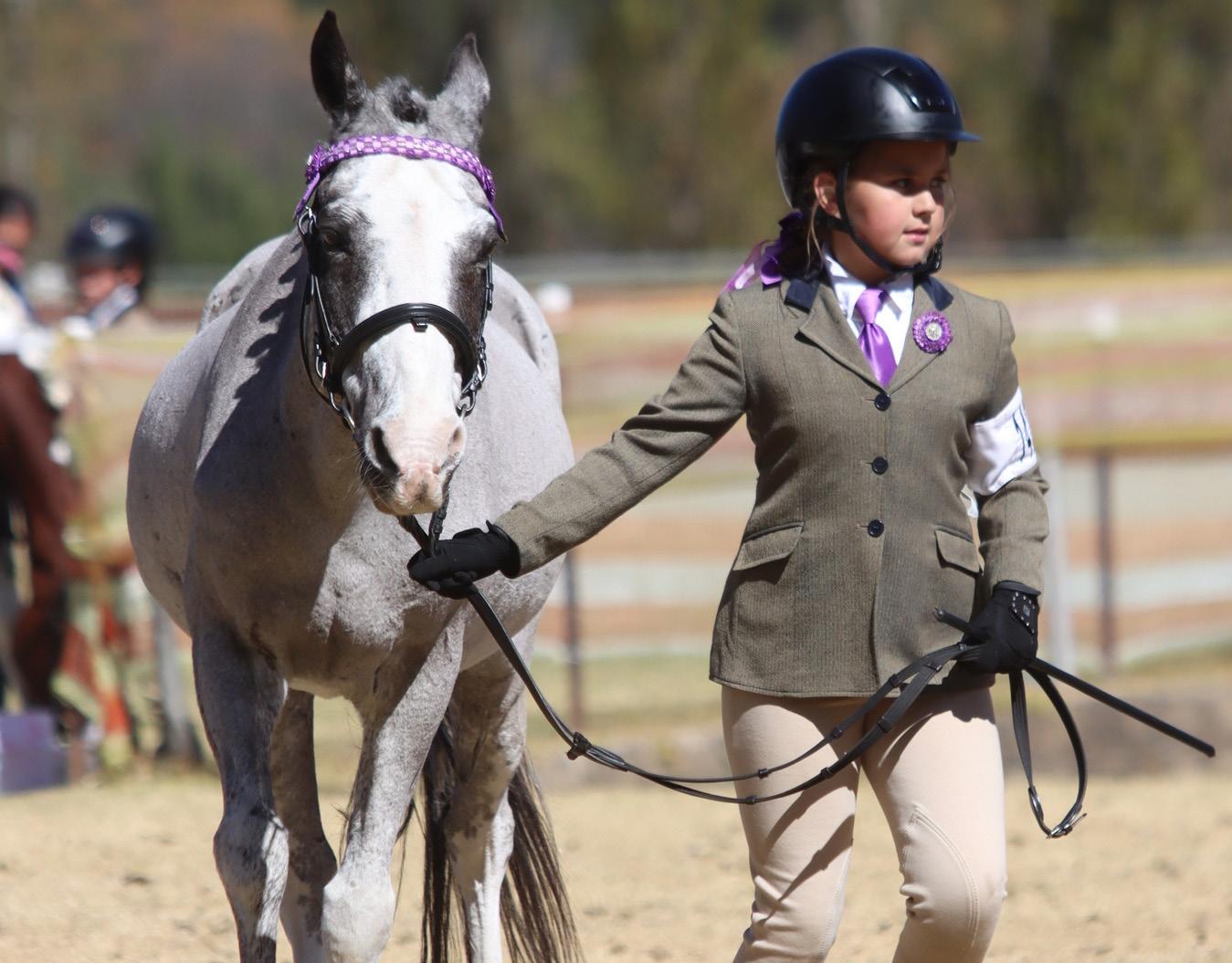
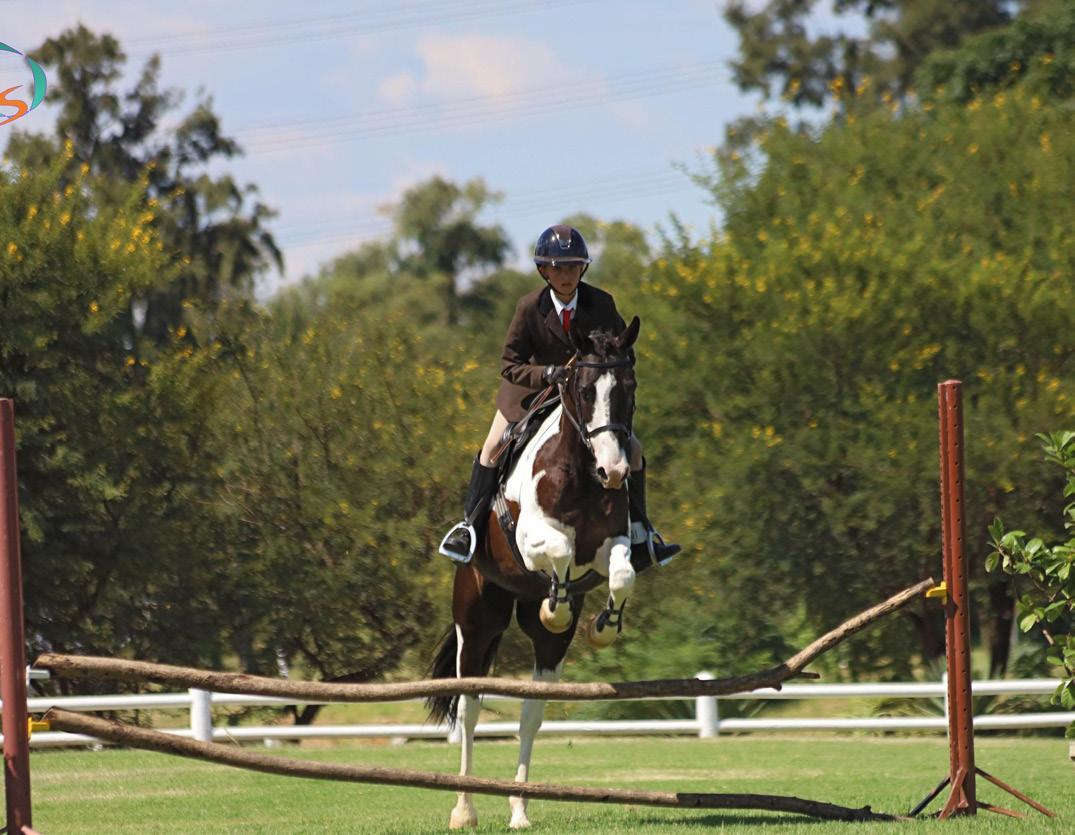
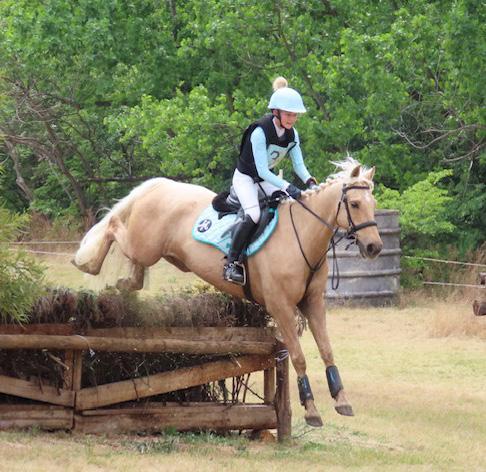
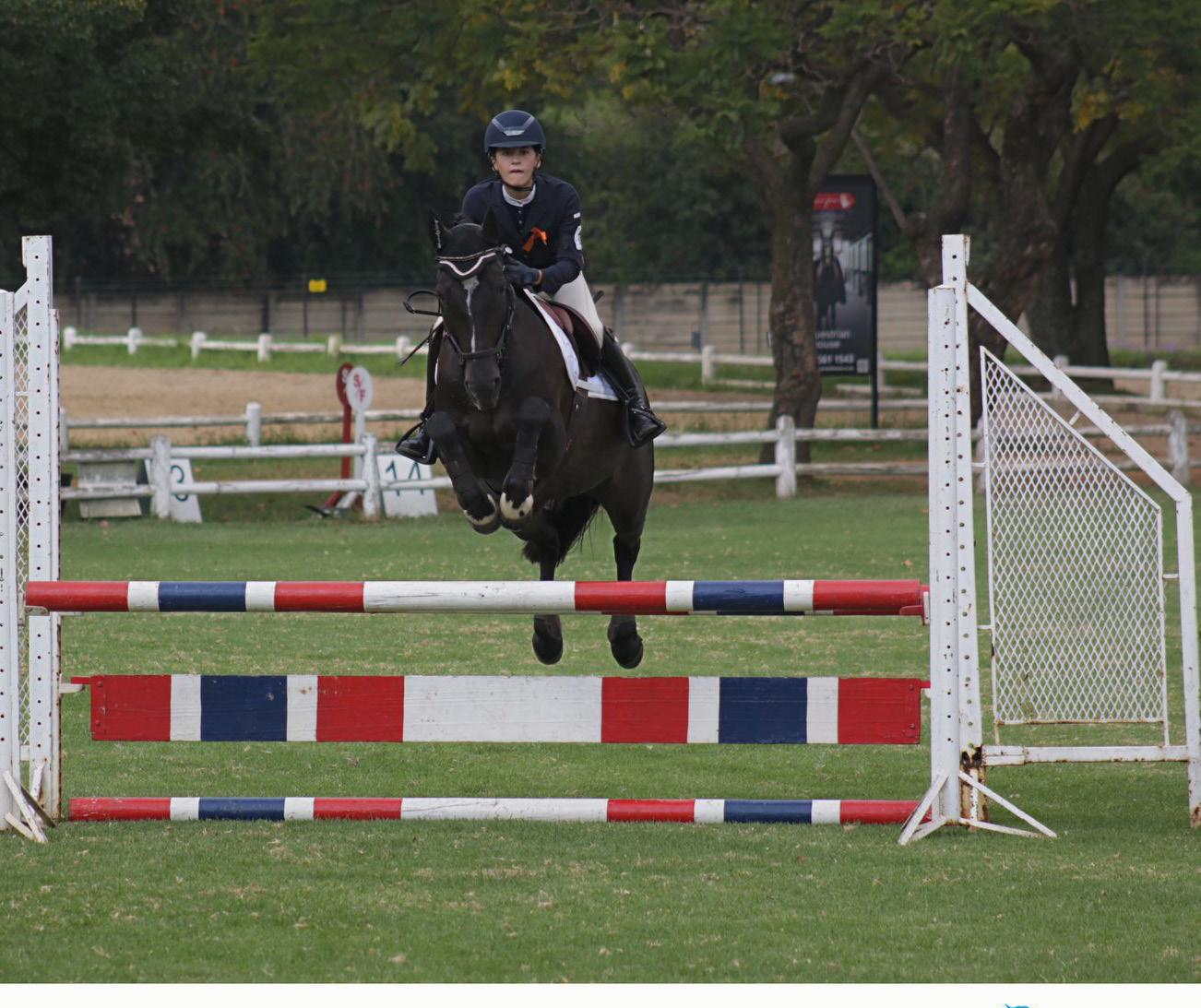
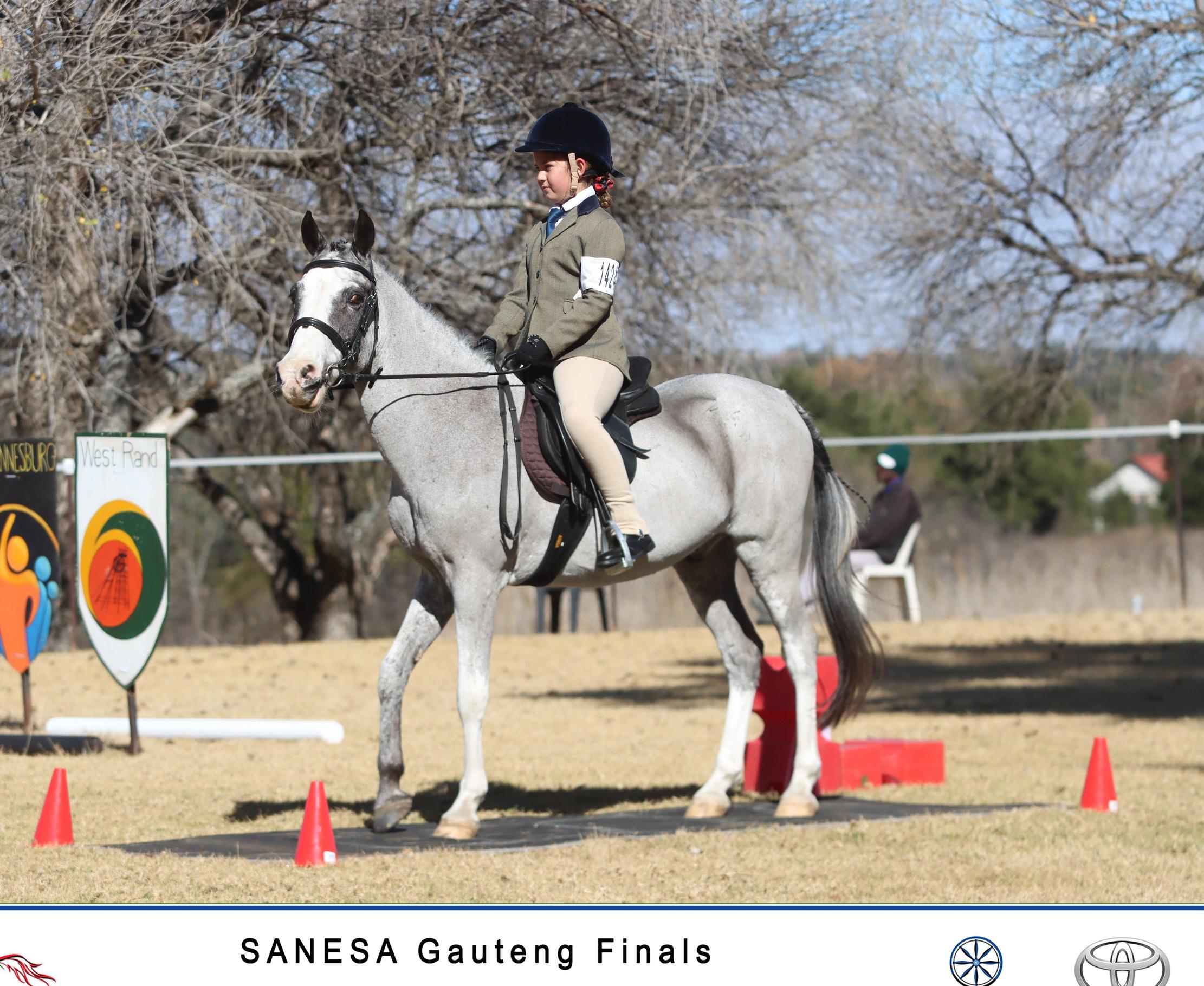
On a crisp winter morning, trailers begin to line up long before the first show bell rings. Ponies peer over stable doors, school blazers hang neatly over tack trunks, and nervous excitement hums through the warm-up arenas. For many of these riders, this is not just another competition. It is their school sport. It is their team. It is their place.
The South African National Equestrian Schools Association (SANESA) has become one of the most influential structures in the country’s equestrian landscape, not because it chases elite performance at all costs, but because it understands something fundamental about children, horses and sport: if you want equestrianism to thrive, you have to let kids ride.
“SANESA exists to provide an environment where children can participate correctly, safely and proudly at school level,” says Jan Joubert, President of SANESA. “For some, it becomes a pathway into the graded disciplines. For
others, it is simply where they discover a lifelong love for horses. Both outcomes matter.”
A school sport first SANESA is unique in South African equestrian sport because it is built around schools, not clubs. Riders compete as bona fide learners representing their schools, operating under the Department of Basic Education, and within a structure recognised by both the South African Equestrian Federation (SAEF) and the South African Sports Confederation and Olympic Committee (SASCOC).
That positioning matters.
“Equestrian sport is different to most other school sports because it measures a combination of horse and rider,” Joubert explains. “You can’t divide children purely by age. You have to create levels that reflect skill, experience and responsibility, while still keeping the educational principles of school sport intact.”
SANESA differentiates between primary and high school leagues and offers structured levels (levele 0-7) across disciplines, allowing riders to compete in an environment that is appropriate to their stage of development. Crucially, riders do not need to be affiliated to any other equestrian association or discipline body to participate.
“That accessibility is non-negotiable for us,” says Joubert. “If we raise the barrier too high at entry level, we lose children before they ever have a chance to grow.”
Built on structure, not shortcuts SANESA does not invent its own rules. Instead, it operates as a rule taker and rule implementer, aligning closely with national discipline associations.
“We only offer disciplines that are recognised by the SAEF,” Joubert says. “We work with those discipline bodies to en-
sure that our rules, judges, course standards and requirements mirror the broader equestrian environment, just adapted for school sport.”
Today, SANESA offers a wide range of disciplines, including dressage, showjumping, equitation, working riding, working hunter, performance riding and in-hand utility as part of its core league. Additional disciplines such as eventing, endurance, vaulting, mounted games, western, saddle seat, working equitation and mounted archery further broaden the offering.
Across all of them, welfare and safety are central. Horses and ponies may not compete in more than four classes per day, judges and officials must be appropriately qualified, and strict codes of conduct govern behaviour both in and out of the arena.
“Horse welfare is not a tick-box exercise for us,” Joubert says. “It is embedded in how the sport is structured. Limits on classes, proper warm-up procedures, correct tack, and age-appropriate expectations all form part of that.”
And then there is the fact that SANESA is run by three full time staff members and around 120 volunteers, none of whom are paid. The team are saints, as they have to handle multiple queries, juggle queries, systems, irate parents on WhatsApp groups, all while pulling schedules, riding times, and venues together.
More than ownership
One of SANESA’s most defining features is its approach to access. Riders may compete on privately owned horses or on riding school ponies, and borrowed horses are a common and accepted part of the system.
“In SANESA, what matters is not who owns the horse,” says Joubert. “What matters is that the horse is suitable, the rider is prepared, and the combination is managed responsibly.”
This approach has quietly changed the face of school equestrian sport in South Africa. Children who might never have had the opportunity to own a horse are able to compete, represent their schools and progress through structured levels.
It is one of the reasons SANESA has become such an important transformation space within the sport. Here, according to Joubert, “Children are exposed to equestrianism because their friends at school are riding. That matters.”
Competition with perspective
With more than 260 shows hosted annually across provinces and districts, SANESA runs one of the largest equestrian competition programmes in the country. Qualifiers lead to district finals, provincial selection and ultimately the SANESA National Championships, where riders represent their provinces on a national stage.
Yet despite the scale, the emphasis remains firmly on participation before pressure.
“We are very clear that SANESA is an entry point,” Joubert says. “Most of our riders are not graded. Many are competing for the first time. That has to be respected.”
But as with all sport, this philosophy is sometimes misunderstood. “There is a perception from outside that every SANESA rider should perform at graded level,” he says. “That is simply not realistic, nor is it fair. Every elite rider started somewhere. Our job is to create a correct environment where improvement can happen, not to exclude children because they are still learning.”
Judges are approved by the relevant discipline associations, arenas are signed off, and graded components are included at higher levels. At the same time, SANESA deliberately protects space for riders who are still finding their balance, confidence and rhythm.
The message from the SANESA body is clear: school sport is not about perfection,. It is about exposure, learning and enjoyment.
Let them ride
If there is one message that underpins SANESA’s approach, it is this: let children ride.
“Quite often, like with all school sports, the pressure doesn’t come from the children,” Joubert says. “It comes from adults, while many parents and instructors are exceptionally supportive, there is always an exception, and these exceptions place immense pressure on children.”
Parents, instructors and schools bring passion and investment to the sport, but SANESA has learned that protecting young riders sometimes means absorbing criticism in order to maintain perspective.
The beauty? Not all parents are equestrian by nature. In fact, those who are might argue that you are better off if you aren’t an equestrian as it allows you to give your child the patience, adoration, and respect that getting on and riding these magnificent creatures rightly deserves.
“Our goal is to always defend a child’s right to participate,” he says. “As long as they are riding safely, humanely, putting the horse first and within the rules, they belong in the arena.”
This philosophy extends to how SANESA handles complaints, discipline and conduct. Clear procedures exist, but the intent is always to protect riders and horses rather than to punish unnecessarily. The teams insists that children must feel safe, supported and proud when they wear their school colours. “If they don’t, we have failed,” adds Joubert.
A
pathway,
not a dead end
SANESA is not positioned in opposition to the graded disciplines. On the contrary, it actively sees itself as a feeder and partner.
“We encourage riders who want to move into the graded world to do so,” Joubert explains. “SANESA gives them the foundation. From there, they can choose their path.”
Many riders successfully compete in both environments, and SANESA works continuously to align its standards with discipline expectations where appropriate.
In school sport, recognition is powerful. SANESA riders may earn district, provincial
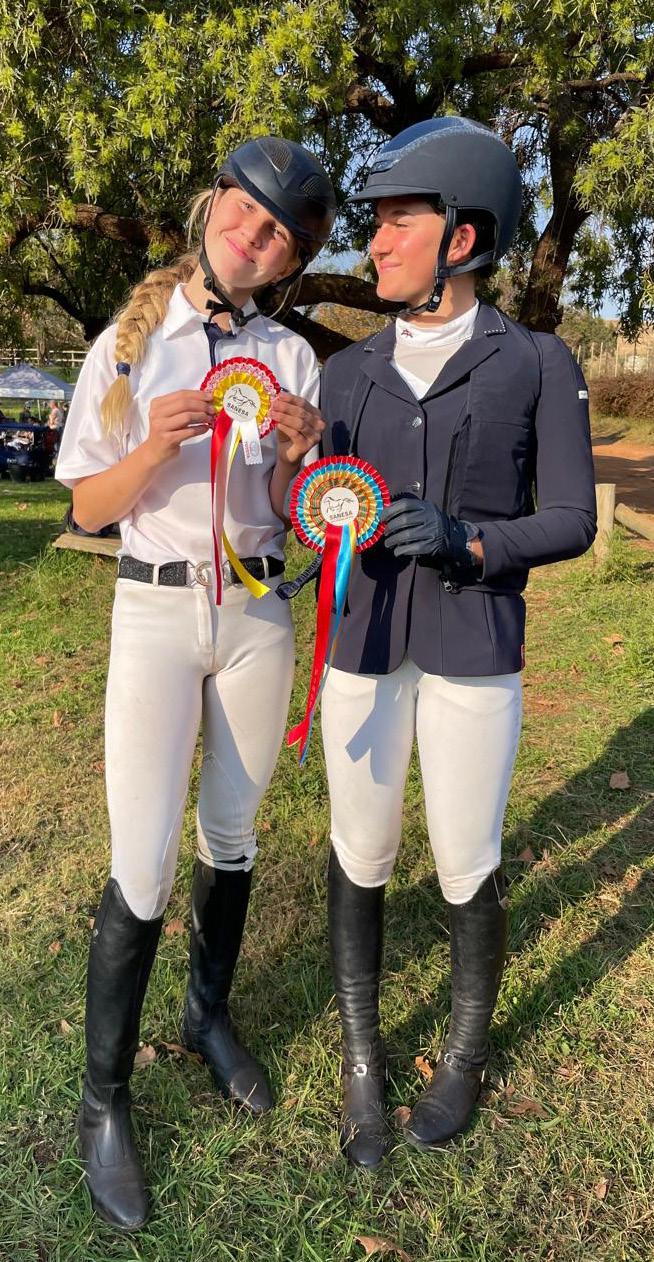
and national school equestrian colours, recognised by education and sporting authorities. For a child who has chosen equestrian sport as their primary code, that recognition is important. It tells them that what they do matters. It also reinforces equestrianism’s place alongside more traditional school sports.
“We are one of many sports competing for a child’s time and commitment,” he adds. “If we make participation too difficult or too exclusive, we lose them.”
Beyond the ribbons
As SANESA continues to evolve, the focus remains on refinement rather than reinvention. Systems are strengthened, disciplines reviewed, and governance continually aligned with best practice.
“We are always asking how we can do this better,” Joubert says. “How do we keep standards high without losing inclusivity? How do we protect welfare while expanding opportunity?”
The answers are rarely simple, but the direction is clear.
“SANESA is about giving children a place in the sport,” he says. “Whether they become future champions or lifelong horse lovers, the starting point is the same. Let them ride.”
And on any given weekend, as school banners flutter beside arenas, exhausted parents share a carrot with an all-knowing pony, and young riders adjust their numbers before entering the ring, that philosophy plays out quietly, one ride at a time. E
BREEDERS CORNER:
The Thoroughbred...
By: Charlene Carroll
Speed, stamina and a surprising second act beyond the racetrack.
Few horses have shaped the modern equestrian world quite like the Thoroughbred. Synonymous with speed and athleticism, this breed’s influence stretches far beyond the racetrack, touching almost every discipline we ride today.
Where it all began
The Thoroughbred’s story starts in England in the late 17th and early 18th centuries, when breeders set out to create the ultimate racehorse. By crossing native English mares with imported Arabian, Barb, and Turkoman stallions, they produced a horse built for speed, stamina, and heart. Almost every Thoroughbred alive today can trace its lineage back to just three foundation sires, a remarkable fact that still surprises many riders.
While racing was the original goal, Thoroughbreds quickly proved itself more versatile than anyone anticipated. As equestrian sport evolved, so did the breed’s role.
What defines a Thoroughbred
Thoroughbreds are refined, elegant horses, typically standing between 15.2 and 17 hands high. They are known for their long legs, deep chest, sloping shoulders, and powerful hindquarters. This conformation gives them the long, ground-covering stride that made them famous.
Mentally, they are often described as sensitive and intelligent. That sensitivity can be misunderstood, but in the right hands, it becomes one of their greatest strengths. They are quick learners, highly responsive, and deeply aware of their rider, which is why they thrive with consistent, sympathetic handling.
More than a racehorse
Although racing remains the breed’s most visible arena, Thoroughbreds are stars across the equestrian spectrum. Many top eventers, show jumpers, dressage horses, and endurance mounts have Thoroughbred blood, if not a full Thoroughbred pedigree.
In eventing, especially, the breed’s stamina, bravery, and gallop have made it a long-standing favourite. Off the track, Thoroughbreds also feature heavily in riding schools, Pony Club, and pleasure riding homes, proving that their talents do not end when racing does.
Who are they suited to
Thoroughbreds suit riders who enjoy a partnership built on trust and communication. They are ideal for riders who like a horse with opinions, energy, and personality. While they may not always be the easiest option for absolute beginners, many become exceptional teachers when given time to settle into a new job.
They are also well-suited to riders who enjoy variety. A Thoroughbred is rarely content doing the same thing every day and often excels when given mental stimulation alongside physical work.
A breed with heart
Perhaps the most enduring quality of the Thoroughbred is its heart. These horses try. They form strong bonds, rise to challenges, and often surprise their riders with just how much they are willing to give.
Ask anyone who has owned one and they will tell you the same thing. A Thoroughbred may not always be the easiest horse you will ride, but it is very often the one you will never forget. E
RIDING WITH INTEGRITY: Human Anti-doping in South African Equestrian Sport
The SAEF, as an affiliated member of the FEI, is part of a collaborative worldwide movement for doping-free sport led by the World Anti-Doping Agency (WADA). This movement aims to protect fair competition and the athletes’ health through anti-doping programs.
Staying informed about anti-doping is an essential responsibility for athletes. All riders must adhere to strict, zero-tolerance anti-doping rules to ensure fair competition and athlete safety; ignorance of prohibited substances is not a valid defence.
Human Anti-Doping in Equestrian Sport in SA
In South Africa, the fight against doping in sport, including equestrian disciplines, is part of a broader national and international movement to safeguard fair competition, athlete health, and sporting integrity.
We encourage our SAEF members to know how anti-doping principles apply in equestrian sport, the key institutions involved, the regulatory framework, and practical implications for riders and support personnel.
1. Regulatory Framework: WADA, SAIDS & National Rules
At the core of global anti-doping policy is the World Anti-Doping Code (WADC), developed by the World Anti-Doping Agency (WADA). This Code establishes the global standard for anti-doping regulations, including the Prohibited List of substances and methods, testing procedures, results management, sanctions, and athlete rights.
National federations and athletes who compete internationally must comply with the WADC and associated International Standards.
South African Institute for Drug-Free Sport (SAIDS)
Locally, the South African Institute for
Drug-Free Sport (SAIDS) is the National Anti-Doping Organisation (NADO) mandated to implement the WADC within the country. SAIDS’ core mission is to promote drug-free participation in sport, protect athlete health, and ensure fair play in all sporting codes.
Key functions of SAIDS include:
•Developing and implementing anti-doping rules that align with the WADC.
•Conducting in- and out-of-competition testing of athletes.
•Managing results and administering sanctions for anti-doping rule violations (ADRVs).
•Offering education and resources for athletes and support personnel.
•Administering a Therapeutic Use Ex-
emption (TUE) system for legitimate medical needs.
Notably, South African anti-doping legislation was amended in 2024 to align more closely with the latest WADC standards, reinforcing SAIDS’ legal authority and clarifying anti-doping procedures in national sport.
South African Equestrian Federation (SAEF)
The SAEF, through our affiliation to SASCOC and the International Federation for Equestrian Sports (FEI), recognises WADA’s global standards and man-
2. Application in Equestrian Sport: Human Athletes
All human athletes participating in equestrian competitions, including amateur riders, professionals, and those preparing for international events, must comply with anti-doping regulations when competing in events under SAEF or FEI sanction or participating in activities where SAIDS has jurisdiction (e.g., national championships).
Anti-doping rules cover: Presence of prohibited substances or their metabolites in the athlete’s sample.
Use or attempted use of prohibited methods.
Refusal to submit to testing.
3. Education, Awareness & Prevention
dates Clean Sport compliance for human equestrian athletes.
The SAEF’s internal regulations explicitly incorporate anti-doping provisions and require all members, athletes, officials, and support personnel, to comply with both SAIDS’ anti-doping rules, and WADA’s Code and Prohibited List.
This means South African equestrian athletes are subject to national anti-doping rules and to testing and potential sanctions under SAIDS’ governance.
Whereabouts failures and missed tests. Tampering or trafficking of prohibited substances.
Testing and Sanctions
SAIDS conducts both in-competition and out-of-competition testing. Samples are analysed by WADA-accredited laboratories, and ADRVs can lead to sanctions that may include:
Suspension from competition. Disqualification of results. Fines and other disciplinary measures.
Sanctions are proportionate to the severity and circumstances of each violation, with consideration for intent, substance type, and athlete cooperation.
Education is a central pillar of anti-doping efforts in South African sport, including equestrianism. SAIDS provides educational tools such as e-learning modules, webinars and workshops, medication check tools, and guidance on supplements and TUE processes.
The SAEF also emphasises the importance of athlete welfare and anti-doping awareness, urging riders to understand the rules and regularly check medications to ensure compliance.
4. Practical Tips for Equestrian Athletes
In practice, human equestrian athletes should:
•Know the Prohibited List
•Check all medications
•Engage with education resources
•Understand TUE procedures
•Comply with testing requirements
Human anti-doping in South African equestrian sport is built on global
WADA standards, enforced nationally by SAIDS and governed within the sport by SAEF. Clean sport depends on informed, accountable athletes and support personnel who understand the rules and respect the responsibility that comes with competition. Education, testing, and collaboration remain essential to protecting the integrity of equestrian sport in South Africa.
For any queries, please contact development@saef.org.za
Thave learned the language of the equestrian world.
he horse world has always relied on trust. We buy horses on reputation, recommend service providers by word of mouth and assume that someone who talks confidently about bloodlines, shoeing cycles or transport routes must know what they are doing. Increasingly, that instinct is being used against us.
Online scammers have become fluent in “horse”. They understand how we buy, sell, move and manage horses, and they know exactly which emotional buttons to press. The result is a growing number of riders, owners and yards being caught out by fraud that feels uncomfortably believable.
When the message sounds right
Unlike the obvious scams of the past, today’s fraudsters do not open with spelling mistakes or generic greetings. They reference specific disciplines, use correct terminology and often mirror the tone of genuine equestrian businesses.
A message offering a last-minute space on a transporter sounds plausible when it mentions a recognised route or an upcoming show. A horse advertised at a competitive price feels legitimate when the seller can talk knowledgeably about breeding, training history and veterinary checks. Even fake tack shop pages now copy real brands so closely that a quick glance is
rarely enough to spot the difference. The danger lies in familiarity. When something sounds like it belongs in our world, we are far less likely to question it.
The pressure points scammers exploit Horses create urgency by their very nature. Transport needs to be arranged quickly. Vet bills can be unexpected. A “once in a lifetime” horse seems too good to miss. Scammers understand this and apply pressure at exactly the wrong moment (wrong for you).
Common tactics include insisting on immediate payment to secure a horse, requesting deposits before viewings, or claiming that several other buyers are waiting. In some cases, victims are asked to move conversations off legitimate platforms onto private messaging apps, where there is less oversight and no formal record.
Emotion plays a role too. People are less guarded when they believe they are dealing with someone who shares their passion and understands the stakes.
Familiar scams wearing new tack
Many equestrian scams are simply old frauds dressed up for a niche audience. Cloned social media accounts mimic well-known transporters or retailers. Fake invoices are sent using logos lifted directly from real business-
es. Horses advertised for sale may exist only in stolen photos, with videos carefully edited to avoid scrutiny.
Even experienced horse people can be caught out, particularly when transactions happen remotely or across borders. The more normal online buying becomes, the easier it is for scammers to hide in plain sight.
Protecting yourself without losing trust
Staying safe online does not mean becoming suspicious of everyone, but it does require slowing down. Verifying details, cross-checking phone numbers and being wary of rushed decisions are simple steps that make a significant difference.
Legitimate sellers and service providers are rarely offended by reasonable questions or requests for proof. A re-
luctance to share verifiable information, or a refusal to allow in-person interaction where possible, should always raise concern. They also don’t advertise a 15.6HH pony.
Keeping
the horse
world connected and cautious
The digital space has opened extraordinary opportunities for the equestrian community. It has made knowledge more accessible, widened markets and connected riders across disciplines and continents. But it has also created new risks that rely on our shared language and trust.
Understanding that scammers now speak horse is the first step. The second is remembering that instinct, when paired with a moment of verification, remains one of the strongest tools we have.
GEAR GUIDE: THE
The quiet workhorse of your tack room.
By: Charlene Carroll
It sits between saddle and horse, rarely gets the credit, and yet has more influence on comfort and performance than most riders realise.
For something so humble, the numnah carries a lot of responsibility. It absorbs sweat, protects the saddle, cushions the horse’s back and, when chosen well, helps everything above it do its job properly. When chosen badly, it can quietly undo even the best saddle fit. Yet for many riders, the numnah is still selected on colour alone.
Modern numnahs have come a long way from the folded cloths of old, and understanding what they do and how they work can make a noticeable difference to your horse’s way of going.
Not just padding in disguise
A numnah’s primary role is not to fix saddle problems. That misconception alone causes endless confusion. A thick, plush pad might feel kind, but too much bulk can create pressure rather than relieve it. A well-designed numnah should protect without interfering, sit neatly under the saddle, and allow the panels to make proper contact.
Breathability matters more than softness. Materials that wick sweat and allow heat to escape help keep muscles supple during work. Cotton remains popular for everyday use, while
technical fabrics and wool blends are increasingly favoured for their temperature regulation and shock-absorbing properties.
The spine is not a coat rack
One of the most important features of a good numnah is clear spine clearance. The spine is not designed to carry weight, yet many ill-fitting pads collapse into the gullet once the saddle is girthed up. A shaped numnah that lifts into the saddle channel helps maintain airflow and prevents pressure along the topline.
This is especially important for horses with prominent withers or developing muscle, where a flat pad can quickly rub or compress sensitive areas.
Shape matters more than size
Dressage, jumping and GP saddles all sit differently, and the numnah should follow suit. A pad that is too long or too straight can creep, wrinkle or bunch, creating friction with every stride. Equally, a pad that is too small risks pulling tight under the saddle, undoing any intended clearance.
The right shape allows the numnah to be lifted into the gullet and sit quietly once the rider is on board. If you find yourself constantly tugging it back into place, something is off.
THE NUMNAH
Clean pad, happy back
A dirty numnah is more than just unpleasant. Sweat, grease and grit harden fabrics over time, turning soft padding into something closer to sandpaper. Regular washing helps maintain flexibility and prevents rubs, particularly behind the shoulder where movement is greatest.
Rotating between several pads also gives materials time to recover, rather than being crushed flat day after day.
When simple does the job
For most horses in regular work, a well-fitting saddle paired with a correctly shaped, breathable numnah is all that is needed. The goal is harmony, not compensation. If you find yourself adding layers to make things work, it may be time to look higher up the tack stack.
The numnah may not steal the spotlight, but when it fits properly, you can feel the difference. Sometimes the smallest piece of kit is the one doing the heaviest lifting.
FIVE TIPS FOR RIDING A JUMPING line with confidence and control.
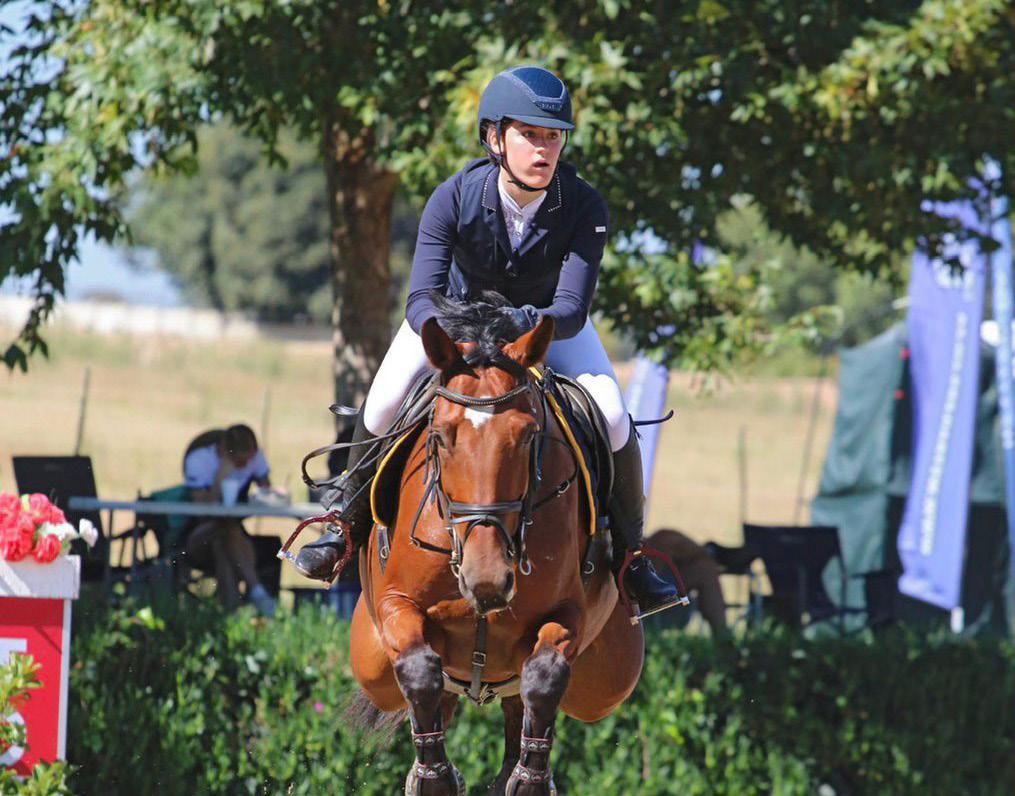
A jumping line may look simple when you walk the course, but riding it well requires far more than counting strides. Lines test a rider’s preparation, feel and ability to stay calm between fences. When things go wrong, it is rarely because the distance was unfair. More often, it is because the basics were missed. These five principles will help riders approach jumping lines with greater confidence and control.
Tip one: the line starts before the first fence
A jumping line does not begin at the take-off point of the first jump. It starts several strides before that, in the quality of the canter. By the time you turn onto the line, the canter should already feel balanced, adjustable and in front of the leg. If you are still organising in the final strides, you are already late. A good canter creates time and allows the line to unfold smoothly once you land.
Tip two: let the first jump set the tone
While riders often focus on the measured distance, the first jump has a huge influence on how the line will ride. A horse that jumps well, lands balanced and travels forward in rhythm will naturally meet the distance more easily. A flat or drifting jump immediately puts pressure on the rider. Instead of chasing a stride count, focus on producing a quality first jump that gives you options.
Tip three: keep the leg on, quietly
Between fences, the leg should support the canter without chasing it. Many riders either overuse the leg or take it away completely, both of which disturb balance. A consistent, quiet leg helps the horse stay confident and straight. When adjustments are needed, they should be subtle and early, using half-halts and brief leg aids rather than sudden corrections.
Tip four: ride straight, fence to fence
Lines quickly expose any lack of straightness. A small drift after the first fence can turn into a major issue by the second. Straightness comes from even contact, balanced weight and riding a clear line from centre to centre. A straight horse covers ground more efficiently and finds distances more easily, making the line feel calmer and more rideable.
Tip five: finish the line with intention
The job is not done when you land over the last fence. Riding away in balance reinforces good habits and prepares you for what comes next. Allowing the horse to rush or fall onto the forehand at the end of a line can undo the good work you have just done. A composed finish builds consistency and confidence.
A well-ridden jumping line feels almost effortless. There is no panic or last-minute fixing, just rhythm and flow from start to finish. That smoothness is built on preparation, feel and trust, and it is what turns a line from a challenge into an opportunity.
THE QUIET SIGNS YOUR HORSE IS
Horse care tips for the perfect partnership
Horses are generous animals. They carry us, try for us, and often keep going long after something feels wrong. Unlike us, they rarely complain outright. Discomfort usually shows up in quieter ways, woven into daily routines and small changes that are easy to miss if you are not looking for them.
Good horse care starts long before a vet call or a saddle fitting. It begins with noticing the subtle signals that tell you your horse is not quite at ease.
When grooming suddenly feels different
A horse that has always stood quietly for grooming does not usually change without reason. If your horse starts flinching under the brush, pinning their ears when certain areas are touched, or stepping away when you reach for the girth area, it is worth paying attention.
These reactions are often dismissed as moodiness, but they can point to muscle soreness, skin sensitivity, ill-fitting tack, or even early signs of discomfort elsewhere in the body. Grooming is one of the simplest daily check-ins you have. When it stops being relaxed, it is usually telling you something.
Small
changes in attitude under saddle
gles to maintain a rhythm they previously found easy. These shifts are often the first whispers of discomfort, and they deserve investigation rather than correction.
Standing differently in the stable or field
How your horse stands at rest can reveal a lot. Repeatedly resting the same leg, standing camped under, or shifting weight more than usual can all be signs that something is not quite right.
In the field, a horse that isolates themselves or chooses to stand still rather than move with the group may also be signalling discomfort. These changes are subtle and easy to overlook, especially in busy yards, but they are often meaningful.
Changes around feeding time
Most horses are honest about food. When a good doer starts leaving feed, eating more slowly, or becoming picky where they were not before, it is worth investigating.
Dental issues, gastric discomfort, stress, or pain elsewhere in the body can all affect appetite. Feeding time is another daily moment where quiet changes can reveal bigger underlying issues.
A shift in connection
Not all re- sistance is disobedi- ence. A horse that becomes reluctant to move forward, starts rushing, or feels unusually tense may be struggling physically or mentally.
This does not always present as obvious lameness. It can be a horse that suddenly dislikes transitions, feels hollow in their back, or strug-
Sometimes the clearest sign is harder to describe. A horse that feels less present, less willing to engage, or simply different to ride or handle may be telling you they are uncomfortable.
Experienced horse people often describe this as a loss of softness or generosity. Trusting that instinct, and being curious rather than dismissive, is a vital part of good horsemanship.
The Year of the Horse feels like a fitting reminder that our role is not just to train and manage, but to listen. Horses speak all the time. The challenge is slowing down enough to hear them.
THE ART OF STANDING STILL
Why teaching your horse to wait calmly can transform everything you do together
There is a moment every rider knows well. You ask your horse to halt, perhaps at the mounting block, perhaps at the gate, and instead of stillness, you get shuffling feet, swinging quarters, a step forward, a step back. It feels minor, almost not worth correcting. Yet the ability to stand quietly and willingly is one of the most valuable training skills a horse can learn.
Stillness is an active skill
Standing still is not a lack of movement. It is an active decision by the horse to wait, listen and remain mentally present. Horses are designed to move, to react, to respond to pressure and change. Asking them to pause calmly goes against instinct, which is why it must be taught with clarity and patience rather than force.
Many horses fidget because they have learned that halts are temporary and inconsistent. Riders often ask for a halt and then immediately fiddle with the reins, adjust their position, chat, or walk on again. From the horse’s point of view, there is no clear picture of what “stand” actually means. It becomes a vague suggestion rather than a firm, understandable request.
Start small and be precise
Begin by choosing a neutral place, such as the arena or a quiet yard, where there are minimal distractions. Ask for a halt from walking using a clear, calm aid. Once your horse stops, soften your reins without dropping contact completely. Your body should be tall
and still, signalling that nothing else is about to happen.
At first, ask for just a few seconds of immobility. If your horse steps forward or sideways, quietly correct it by asking them back to the original spot. This matters more than the length of time. The lesson is not how long to stand, but where to stand. Horses learn through consistency, and returning them to the same place reinforces clarity without tension.
Why standing still changes everything
Reward stillness generously. A soft word, a gentle stroke on the neck, or simply releasing pressure tells the horse they have made the right choice. Avoid constant rein adjustments or leg movements while you wait, as these often create the very restlessness riders are trying to fix.
Gradually increase the duration, mixing short halts with slightly longer ones. Over time, add real-life situations such as mounting, opening a gate, or waiting while another horse moves past. Each successful pause builds confidence and patience.
When a horse learns to stand calmly, everything else improves. Mounting becomes safer. Transitions become clearer. Horses become less anxious because they understand that not every moment requires action. In a world where speed and pressure often dominate training, teaching a horse to stand still is a quiet skill with lasting impact.
NO FOOT. NO HORSE.
Why your farrier remains the foundation of equine soundness
By: Charlene Carroll
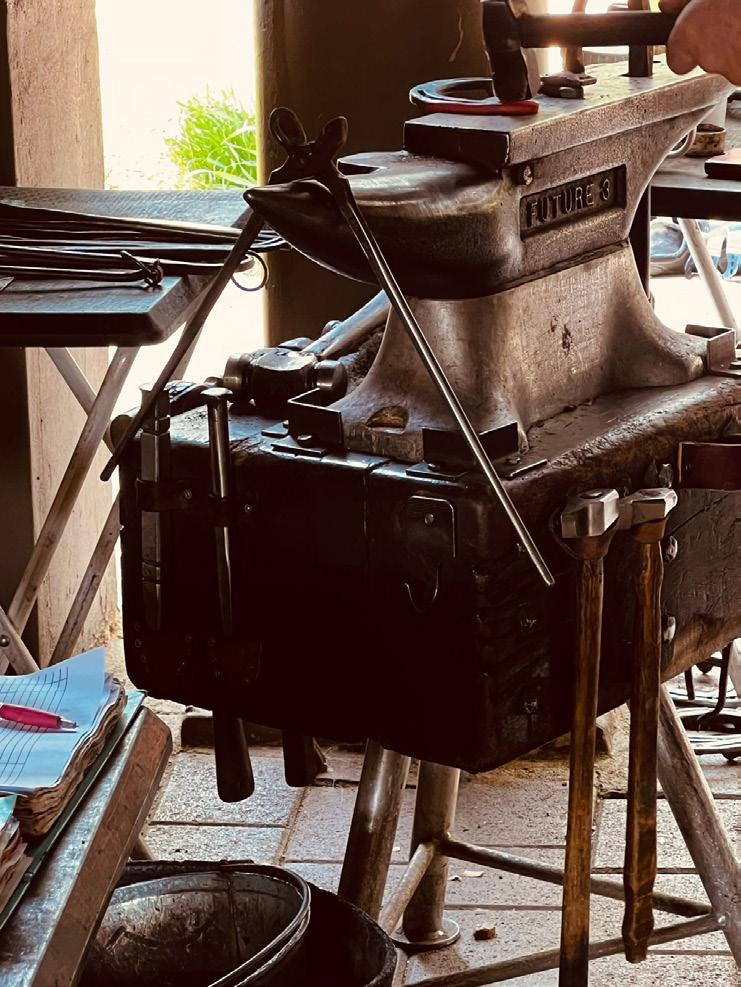
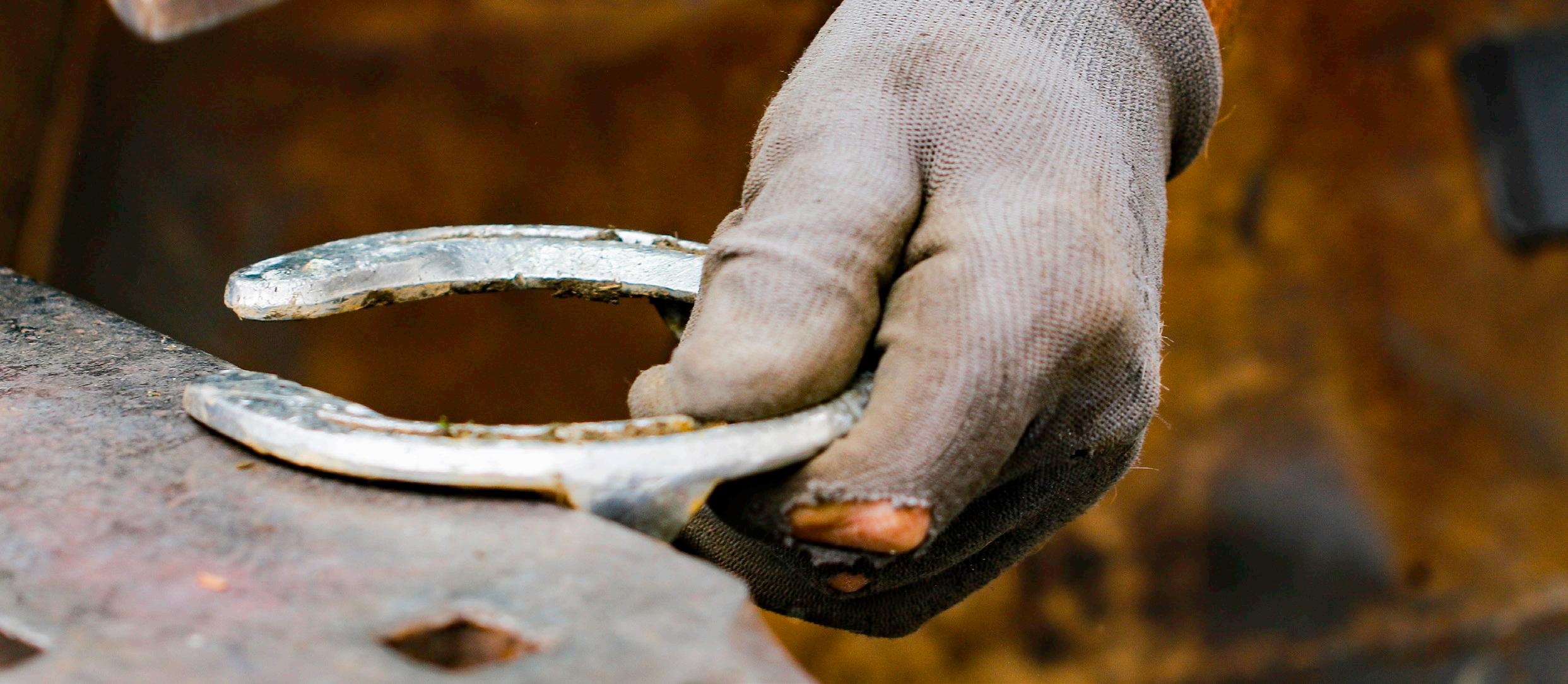
Most riders can recite the phrase “No foot. No horse.” without hesitation. It’s stitched into the fabric of horse culture, repeated at Pony Club rallies and murmured beside warm-up arenas. But when you sit down with an experienced farrier like David Hyslop, the meaning becomes far less proverbial and far more scientific.
“At a gallop,” David explains, “you’re talking about enormous stress through that structure. The deep digital flexor tendon, the ligaments, everything is under pressure. When a horse lands after a big jump, that force has to go somewhere. It travels through the foot.”
No foot. No horse. It is not folklore. It is biomechanics.
Far more than shoes and nails
One of the biggest misconceptions David encounters is that farriers simply arrive, nail on a shoe and drive away.
“That’s probably the biggest misunderstanding,” he says. “People think it’s just shoes and nails. But farriery is about understanding anatomy, movement, conformation, and the environment the horse lives in.”
In reality, the hoof capsule is not just a shell of horn. It encases and protects a bony column and a network of sensitive internal structures. Trim too aggressively, alter the balance incorrectly, or shoe without understanding proportion, and the consequences can ripple up the limb.
“I often explain it like this,” David says. “If you shave someone’s head, you haven’t made the skull smaller. You’re shaping what surrounds it. It’s the same with a foot. You’re shaping the capsule around what’s inside.”
That shaping requires more than theory. It requires experience.
Training, qualifications and the apprenticeship reality
Internationally, formal qualifications such as the Farrier International Testing System, started by Chris Gregory, offer recognised standards. The exam runs in several countries, including South Africa, the United States and Australia.
But locally, the pathway is less structured.
“There’s no longer a formal institution running full-time training here,” David explains. “Most of it happens through apprenticeship. You take on an apprentice, and they learn under you.”
Historically, many respected South African farriers emerged from army and police training systems. Those structures provided rigorous grounding. Today, however, practical learning under experienced hands is often the first route with many seeking international training later.
“And farriery is practical,” he emphasises. “Yes, there’s academic understanding of conformation and anat-
omy. But most of it is hands-on. You need years under horses. You can’t replace that with a textbook.”
The
environment problem
Modern horse management presents challenges that earlier generations of farriers did not face.
“Horses aren’t living in natural environments anymore,” David says. “Most yards are paved or concrete, paddocks are smaller, horses stand in water or mud, and they don’t wear their feet down naturally.”
Even the common horse walker, designed for convenience and conditioning, introduces unnatural movement.
“A walker is a great example, it is a completely unnatural gait,” he explains. “Horses weren’t designed to walk in tight circles for long periods. Over time, that affects how they land and how the foot develops.”
He references studies from military settings where repeated work on hollowed tracks altered landing patterns and contributed to structural changes such as sidebone. While walkers may be a necessary management tool, they are not neutral, making correct farrier work even more essential.
All of this means the modern farrier must account for environmental factors constantly.
The detective work
Farriery is as much investigation as it is craftsmanship.
“You’ve got to be a bit of a detective,” David says. “If a horse is brushing or moving unevenly, it’s not always the lower limb. It could be a sore back. It could be the saddle fit.”
When he lifts a limb, he pays attention to how the horse stands, how it shifts its weight, how it reacts. David says as a farrier you can feel when something’s not right, as the way the horse stands tells you a lot.
This is where communication becomes critical.
Trust, communication and the fiveweek cycle
Trust between owner and farrier is everything, according to David. Not every horse responds the same way to trimming or shoeing. Some tolerate changes easily. Others are sensitive. Each hoof has its own pathology and structure.
“Sometimes people read something on the Internet and assume that’s
what their horse needs. But horses are individuals. You’ve got to trust your farrier’s judgement.”
Communication is equally important. Owners see their horses daily. Farriers typically see them every five weeks. But your farrier still sees them far more than your vet or other service providers, so they are a good source of knowledge.
“I always tell my clients, you see your horse every day. We see them every five weeks. Any constructive input you can give us helps enormously.”
He describes working with a client who mentioned that a horse felt slightly foot-sore. On inspection, David identified thin soles. These subtle changes change the plan, he may now consider shoes or suggest the horse stays barefoot but use a sole hardener.
Fitting the shoe to the foot
One of the more technical errors David sees is when the shoe dictates the trim rather than the other way around.
“Too many guys make the mistake of making the foot fit the shoe,” he says. “It should always be the shoe fitting the foot.”
He describes the practice known as “cocking the heels in,” where heels are drawn in excessively to prevent a shoe from being pulled off. While it may seem practical, it alters natural balance.
“You’ve got to visualise proportion,” he explains. “I think in terms of alignment. Toe, quarters, heels — everything must line up correctly.”
Again, that ability to visualise proportion comes only with experience.
Modern tools, evolving trade
The image of the farrier with rasp and hammer still holds true, but the trade is evolving. David himself uses a grinder when needed, commenting that electric tools make the job more efficient and easier on the body, as farriery is physically demanding. Modern tools reduce strain without replacing skill.
There are also developments in materials. Glue-on and plastic shoes are regaining popularity. Overseas, 3D printing and laser-cutting technology are emerging, though still prohibitively expensive locally.
“You can’t just carry one model of shoe,” David says. “You have to adapt to the horse, the discipline, the environment. Even conditions from one side of a valley to the other can change how a foot behaves.”
The relationship with the horse Ultimately, David sees the horse as the primary client.
“You learn each horse,” he says. “They’re all different. You build a relationship over time. You understand how they stand, how they react, what they tolerate.”
That relationship, built quietly over repeated visits, underpins soundness more than most riders realise.
And so we return to the phrase.
No foot. No horse.
It is not dramatic. It is not exaggerated. It is simply factual. The hoof capsule may look like a tough outer shell, but it holds and protects structures absorbing immense forces every time a horse moves. And the best person to understand it is a trusted, trained, and respected farrier.
TRAVEL:
CAMDEBOO PARK
Where silence stretches the soul.
Slow travel and vast horizons in the Camdeboo National Park
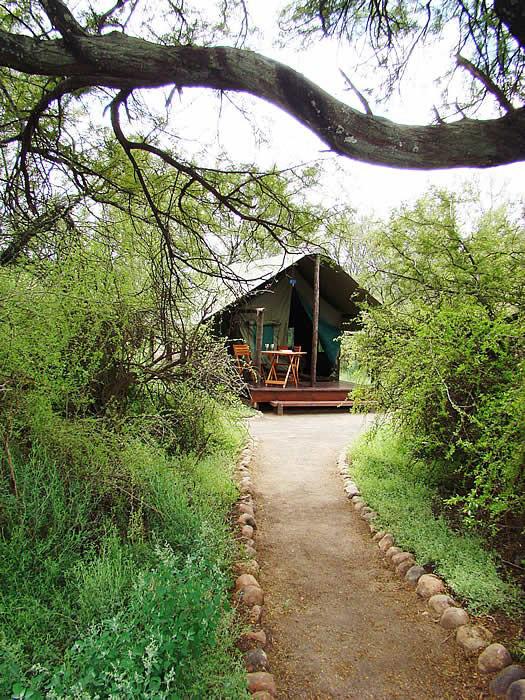
Some landscapes ask for your attention. Others demand it. The Camdeboo National Park does neither. Instead, it waits patiently, stretching out beneath an enormous Karoo sky, quietly confident that if you give it time, it will reveal itself.
Situated just outside Graaff-Reinet in the Eastern Cape, the Camdeboo is not a single, contained wilderness but a mosaic of landscapes that together tell a story of geological drama, desert resilience and unexpected diversity. It is a place where stillness feels deliberate, where space becomes the main attraction, and where the land’s scale gently resets your sense of proportion.
Three sections, one remarkable park
What makes the Camdeboo unusual is its layout. The park is made up of three distinct sections that are geographically separate yet thematically connected by the Karoo’s vastness.
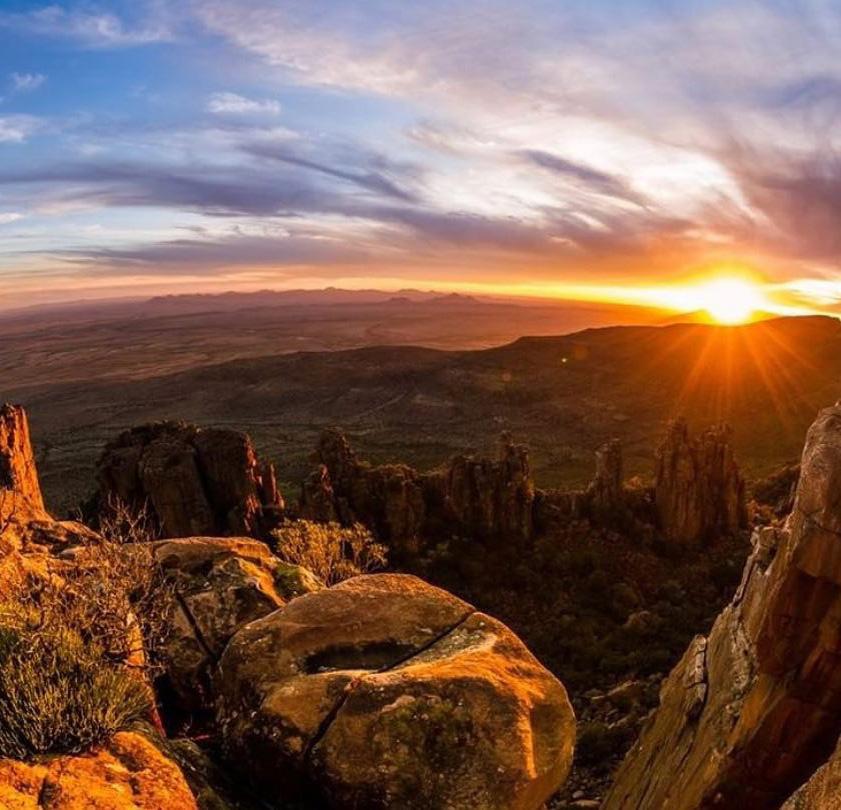
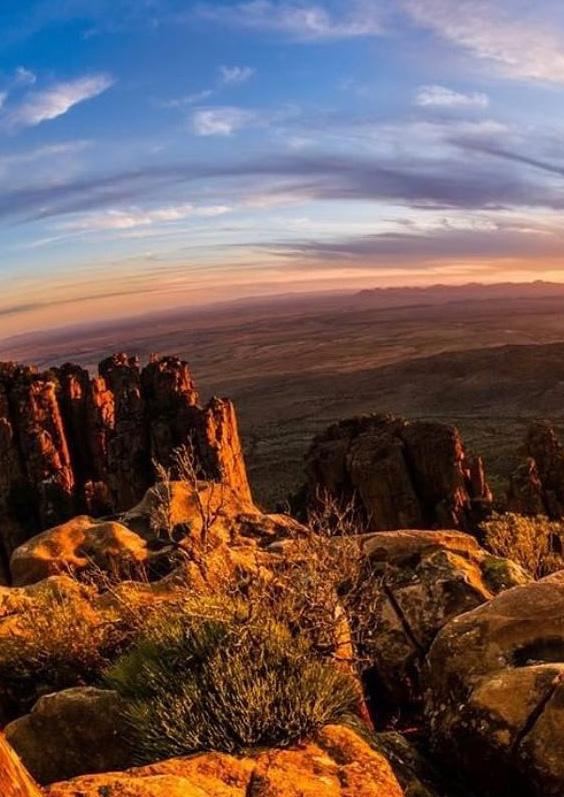
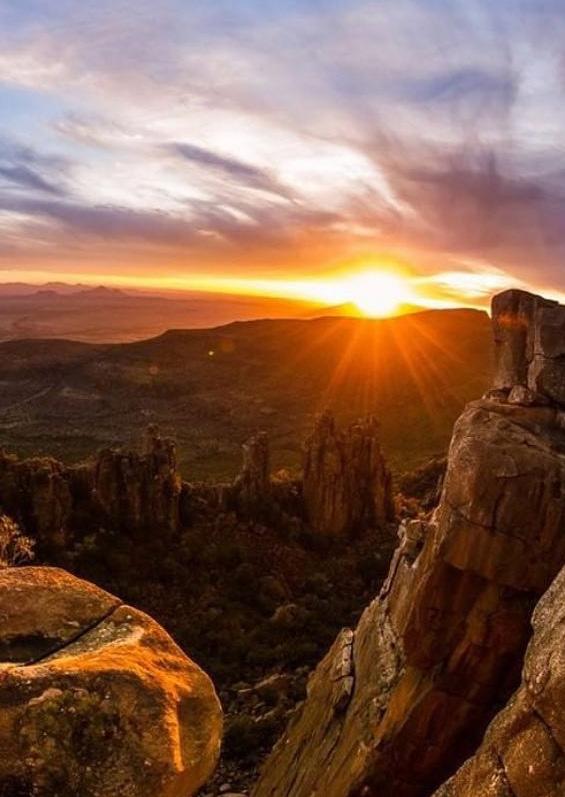
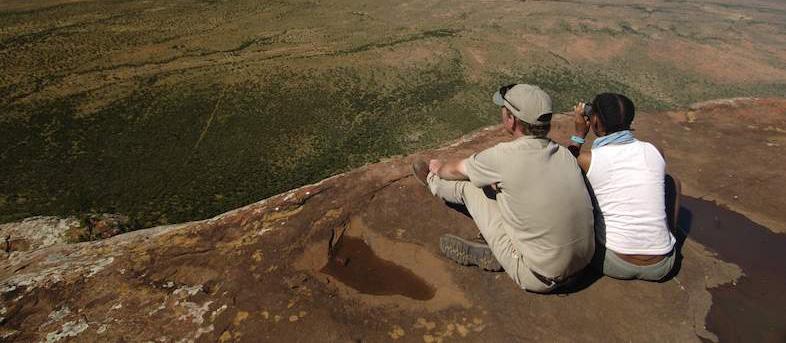
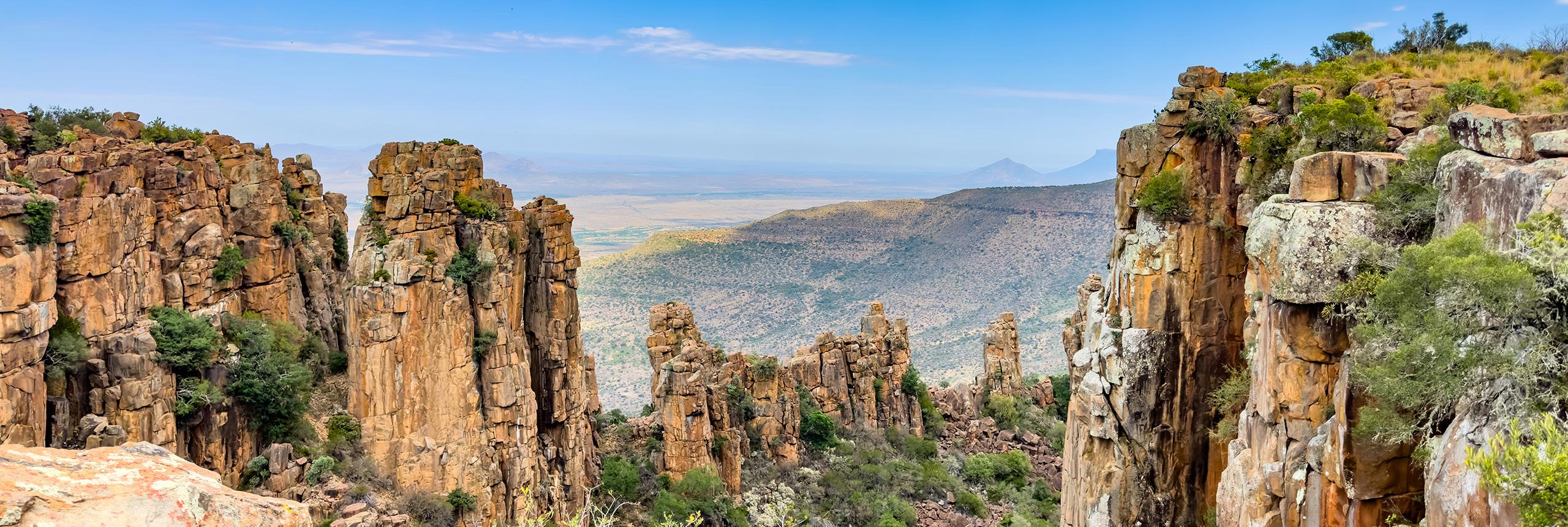
The best known is the Valley of Desolation, where sheer dolerite columns rise dramatically from the plains. Formed over millions of years through volcanic activity and erosion, these towering formations feel almost architectural, like the remnants of an ancient city carved by time itself. From the viewing platforms, the plains unfurl endlessly below, offering one of the most iconic views in the Eastern Cape.
The Nqweba Dam area introduces water into an otherwise arid narrative. Set against rolling hills and wide skies, this
section of the park offers picnic spots, birdlife, and a gentler rhythm. Flamingos, pelicans and a wide variety of water birds are often seen here, creating moments of softness and surprise in the Karoo landscape.
The third section, the Spandaukop area, is quieter still. It is here that the Camdeboo feels most expansive, with wide gravel roads, open plains and the sense that you are travelling through a landscape that has very little interest in being hurried.
Walking, driving and simply being
The Camdeboo rewards slow exploration. Several short walking trails near the Valley of Desolation allow visitors to stretch their legs and experience the textures of the Karoo up close, from hardy shrubs to intricate rock formations. These are not strenuous hikes, but they invite observation rather than urgency.
Game viewing in the park is understated but deeply satisfying. Plains zebra, red hartebeest, kudu and springbok move quietly through the landscape, blending into the muted tones of the Karoo. This is not big-five territory, but there is something grounding about wildlife that exists without spectacle, unbothered by attention.
Self-drive routes wind through the park, encouraging long pauses rather than constant motion. This is a place where stopping the car, switching off the engine and listening becomes part of the experience.
The role of Graaff-Reinet
Graaff-Reinet acts as both gateway and counterpoint to the park. One of South Africa’s most historic towns, it brings architecture, culture and human scale into contrast with the wilderness beyond. After a day in the park, the town’s tree-lined streets, museums and old buildings feel like a gentle re-entry into civilisation.
This proximity makes the Camdeboo ideal for a long weekend or a slow, thoughtful stopover on a longer journey. You can move easily between wild space and quiet comfort, never feeling rushed in either direction.
When the land does the talking
The Camdeboo is at its most compelling in the early morning and late afternoon, when light skims across the plains and shadows lengthen. Sunrise at the Valley of Desolation is particularly powerful, as the rock formations warm slowly from grey to gold.
Autumn and spring offer mild temperatures and clear skies, while winter brings
CAMDEBOO AT A GLANCE
crisp air and remarkable clarity. Summer days can be hot, but the heat is part of the Karoo’s character, best met with early starts and long midday pauses.
This is not a destination for ticking off activities. It is a place to linger, to look, and to let the land speak in its own quiet language.
A different
kind of richness
What the Camdeboo offers is not abundance in the conventional sense. It offers restraint. Space. Perspective. In a country filled with dramatic scenery, it stands apart by refusing to overwhelm.
You leave with dust on your shoes and a head full of sky. With an appreciation for landscapes that do not perform, but simply exist. And with the sense that, sometimes, the most memorable journeys are the ones where the land asks very little of you except time and attention.
https://www.sanparks.org/parks/camdeboo
Location: Just outside Graaff-Reinet in the Eastern Cape
Park highlights: Valley of Desolation, Nqweba Dam, Spandaukop area
Landscape: Karoo plains, dolerite rock formations, wide-open skies
Wildlife: Plains zebra, kudu, red hartebeest, springbok and diverse birdlife
Best viewpoints: Valley of Desolation viewpoints at sunrise or sunset
Things to do: Self-drive routes, short walking trails, picnicking, birdwatching
When to visit: Autumn and spring for mild temperatures; winter for clear skies
Time needed: One full day, or two nights in Graaff-Reinet for a slower pace
Facilities: Day visitor access via SANParks; limited facilities inside the park
Good to know: Bring water, sun protection and snacks; plan around heat in summer
YOUR RIDER’S Workout Toolkit
By: Charlene Carroll
Strong foundations for a quieter leg.
Your lower leg is your anchor in the saddle. When your ankles are weak or unstable, your leg swings, your heel creeps up, and balance becomes harder to maintain, especially when your horse spooks, jumps, or changes pace. Strong ankles don’t mean forcing your heels down.
Calf raises
Stand with feet hip-width apart and slowly rise onto your toes, then lower with control. This strengthens the calves and ankle joint, helping you maintain a deep, elastic heel without tension. For an added challenge.
Heel drops
Stand on a step with your heels hanging off the edge. Gently lower your heels down, then lift back up. This improves both strength and flexibility in the ankle, encouraging a longer, more stable lower leg in the saddle.
Single-leg balance
Stand on one leg for 30 seconds, keeping your hips level and posture tall. To progress, close your eyes or add small arm movements. This trains your body to stabilise through the ankle rather than gripping with the knee.
Ankle circles
Lift one foot off the ground and slowly circle the ankle in both directions. This simple movement increases mobility and control, helping your ankle respond smoothly to your horse’s motion.
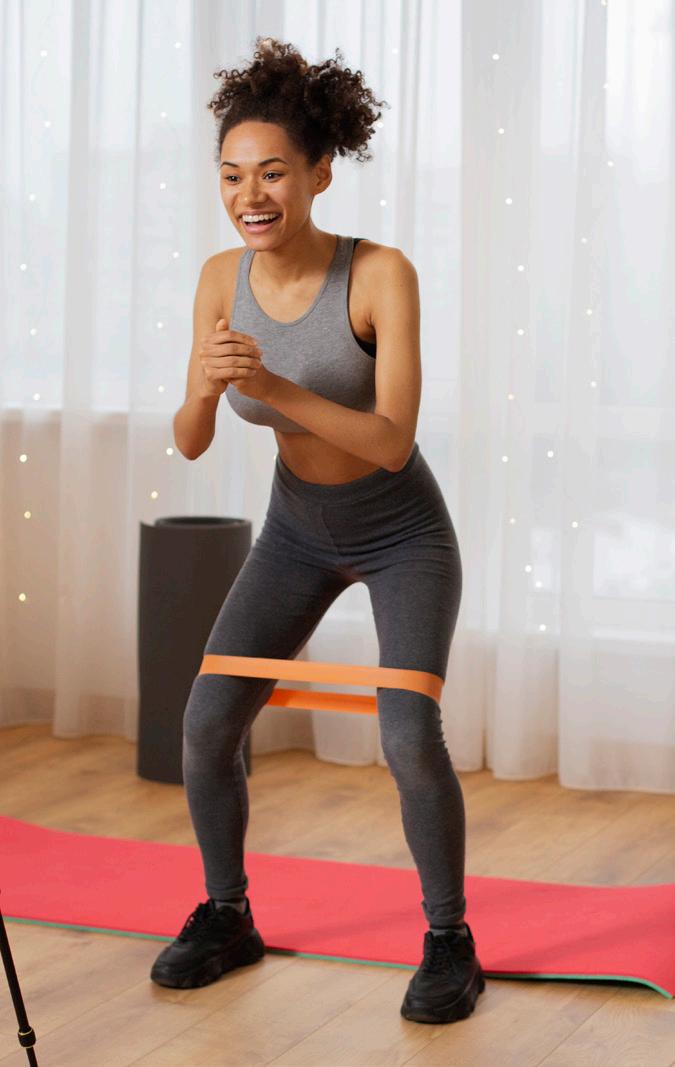
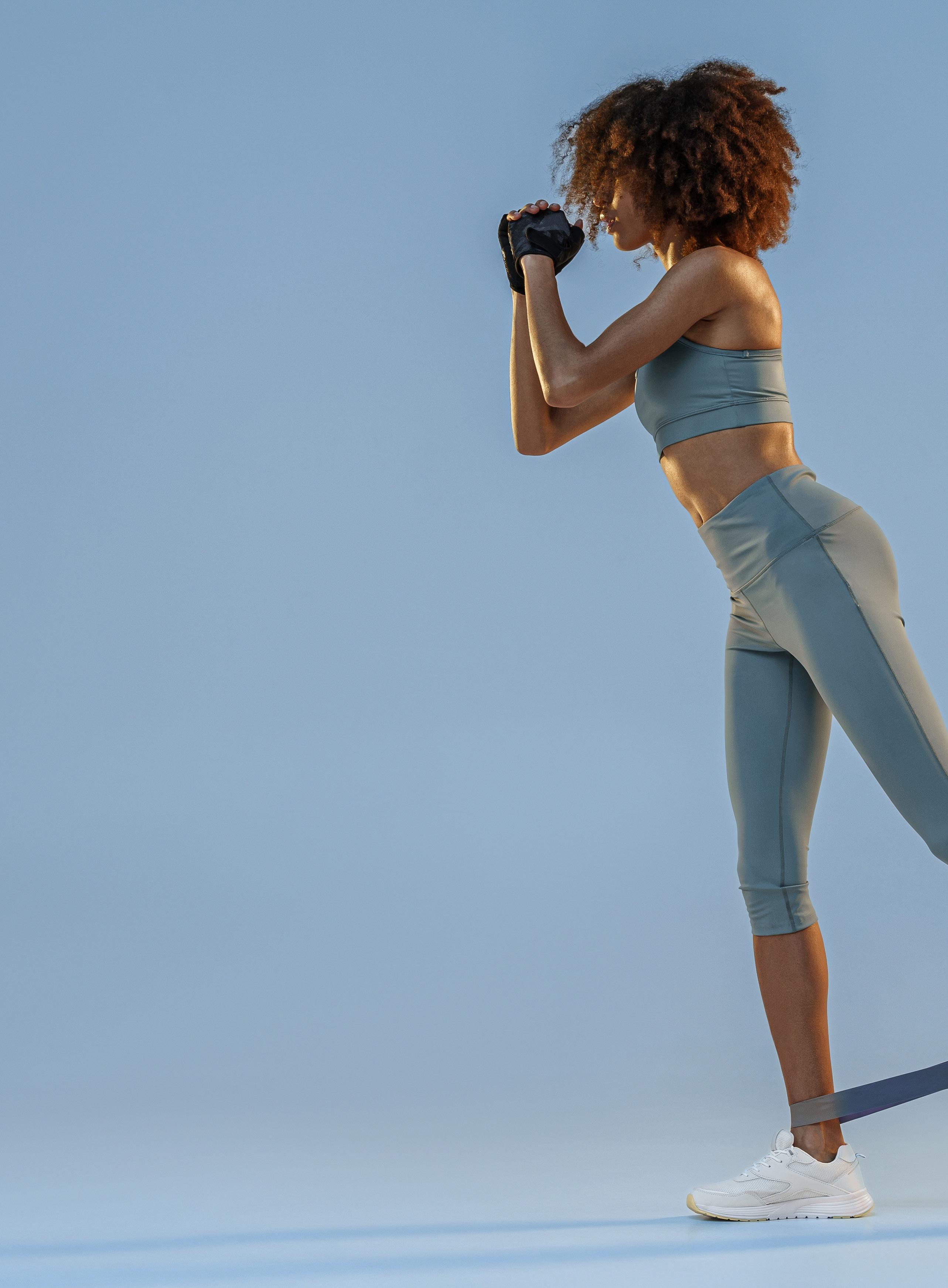
Resistance band foot presses
Loop a resistance band around the ball of your foot and gently press forward, then return. This strengthens the smaller stabilising muscles that support a secure, quiet leg.
Strong ankles create a steadier base, allowing the rest of your position to soften and flow. When your foundations are solid, everything above them rides better.
Kids Corner
By: Charlene Carroll
Barnyard Banter
Why did the sheep bring a pencil to school? Because it wanted to draw a baa-th!
What do you call a dog magician? A labracadabrador!
Why did the chicken join a band? Because it already had the drumsticks!
What do cats like to eat for breakfast? Mice Krispies!
Why did the frog take the bus to work? Because his car got toad away!
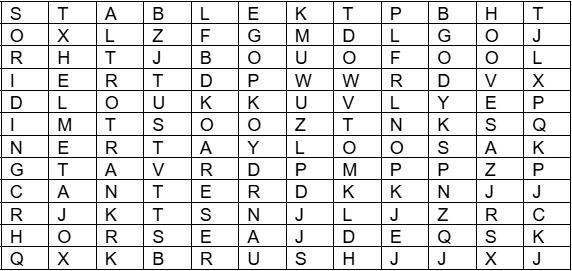
Bridle Brain Word Search
Find these hidden words:
MEET THE JOB:
Therapy Horse
You might not spot a therapy horse at a parade or show, but their work is just as important. Across South Africa, these calm and caring horses visit schools, hospitals, and therapy centres, helping people feel safe, relaxed, and understood.
Gentle hearts
Therapy horses are chosen for their calm nature and friendly personaalities. They’re happy to stand quietly and enjoy gentle pats and cuddles.
Helping hands
They work with therapists to support children and adults who may be feeling anxious, sad, or unwell.
Patient teachers
These horses are trained to move slowly and carefully, making them perfect partners for learning and confidencebuilding.
Short but special days
Therapy sessions are kept short so the horses don’t get tired or overwhelmed.
Lots of love
When they’re not working, therapy horses enjoy turnout time, grooming, and plenty of treats.
These quiet heroes remind us that sometimes the kindest jobs make the biggest difference.
VOLVO EX60 CROSS COUNTRY
Blending timeless design with advanced performance, The Volvo EX60 Cross Country brings the brand’s long-standing spirit of adventure into the electric age. Built on the all-new EX60 platform, this rugged yet refined SUV blends class-leading electric performance with the unmistakable Cross Country attitude. Distinctive design elements such as brushed stainless-steel skid plates, wider wheel arches, exclusive wheels, and Cross Country badging give it a bolder, more expressive stance, while the new Frost Green colour draws inspiration from Scandinavian landscapes.
Designed to go further, the EX60 Cross Country sits 20 mm higher than the standard EX60, with adaptive air suspension allowing for additional lift when needed. Available with all-wheel drive and offering up to 640 km of range, it delivers confidence, capability, and comfort for drivers with a true go-anywhere mindset.
Retail price: To be confirmed
PRODUCT Spotlight
By: Charlene Carroll
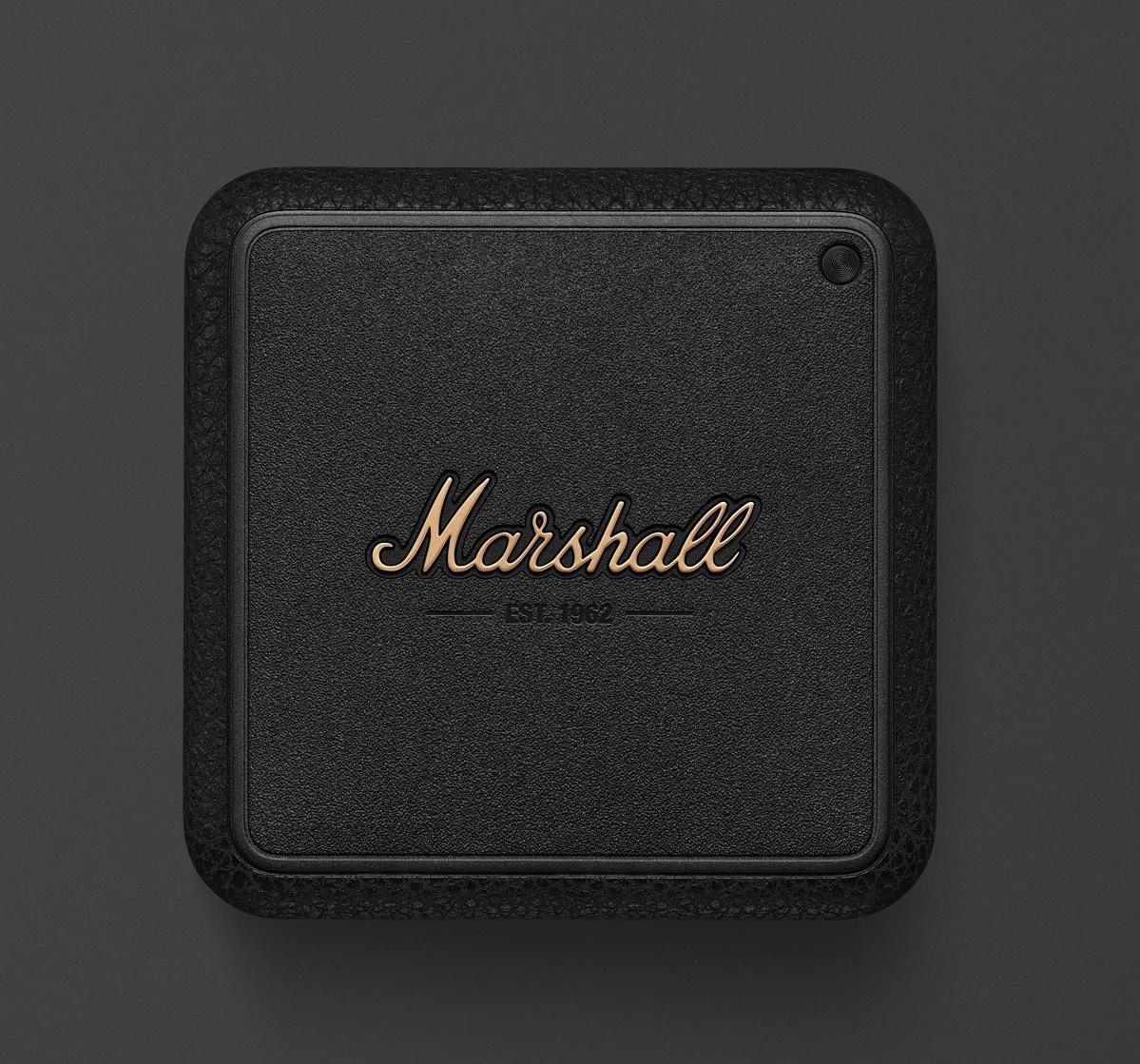
MARSHALL HEDDON
Marshall has brought new life to its iconic home speakers with the introduction of the Heddon, a wireless streaming hub designed to turn Bluetooth speakers into a connected, multiroom sound system. Built with the brand’s unmistakable rock-inspired aesthetic, the Heddon adds Wi-Fi streaming to Marshall’s third-generation speakers, allowing seamless playback via Spotify Connect, Tidal Connect, Google Cast, and AirPlay. Designed for homes with multiple Marshall speakers, the Heddon enables easy grouping and synchronised playback throughout your space, all managed through the Marshall companion app. Compact, purposeful, and unmistakably Marshall, the Heddon transforms a classic sound into a smarter listening experience.
Retail price: US $300
This month’s spotlight brings together innovation, performance, and refined design across motoring, equestrian gear, and home technology. From Volvo’s adventurous EX60 Cross Country, which carries the spirit of exploration into the electric era, to premium riding safety essentials and beautifully engineered lifestyle tech, each product has been chosen for its ability to elevate everyday experiences.
JMGO ULTRA O2S PROJECTOR
JMGO’s Ultra O2S is redefining big-screen living with what it claims is the world’s smallest ultra short throw projector. Shoebox-sized yet powerful, it delivers crisp 4K visuals at up to 100 inches from less than six inches away. With an ultra-low 0.18:1 throw ratio, 110% BT.2020 colour coverage, and an estimated 2,500 ISO lumens, it promises rich, cinematic images without dominating your space. Built-in Google TV adds seamless streaming, turning this compact unit into a full “laser TV” solution. Launching globally in late 2025, it’s a glimpse into the future of home entertainment.
Retail price: Online only and price varies
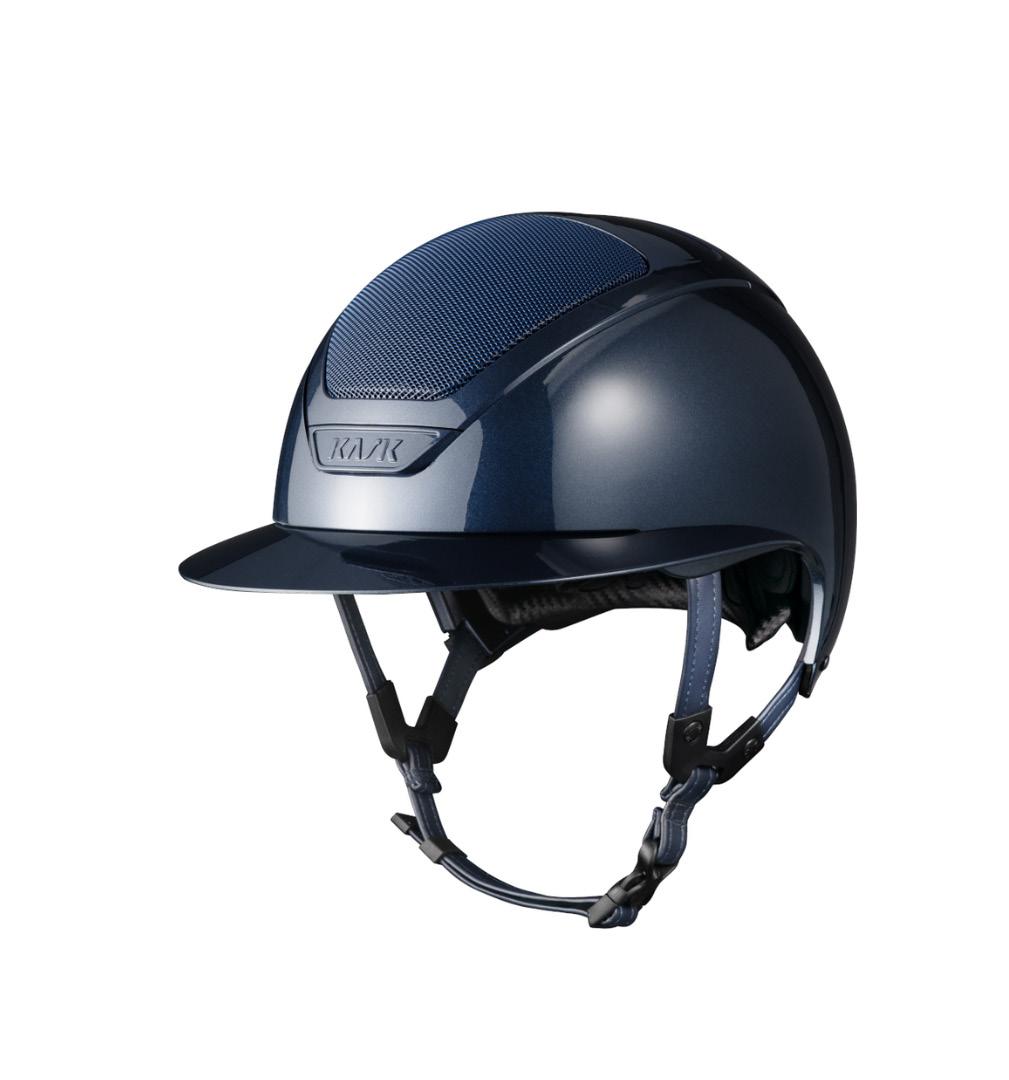
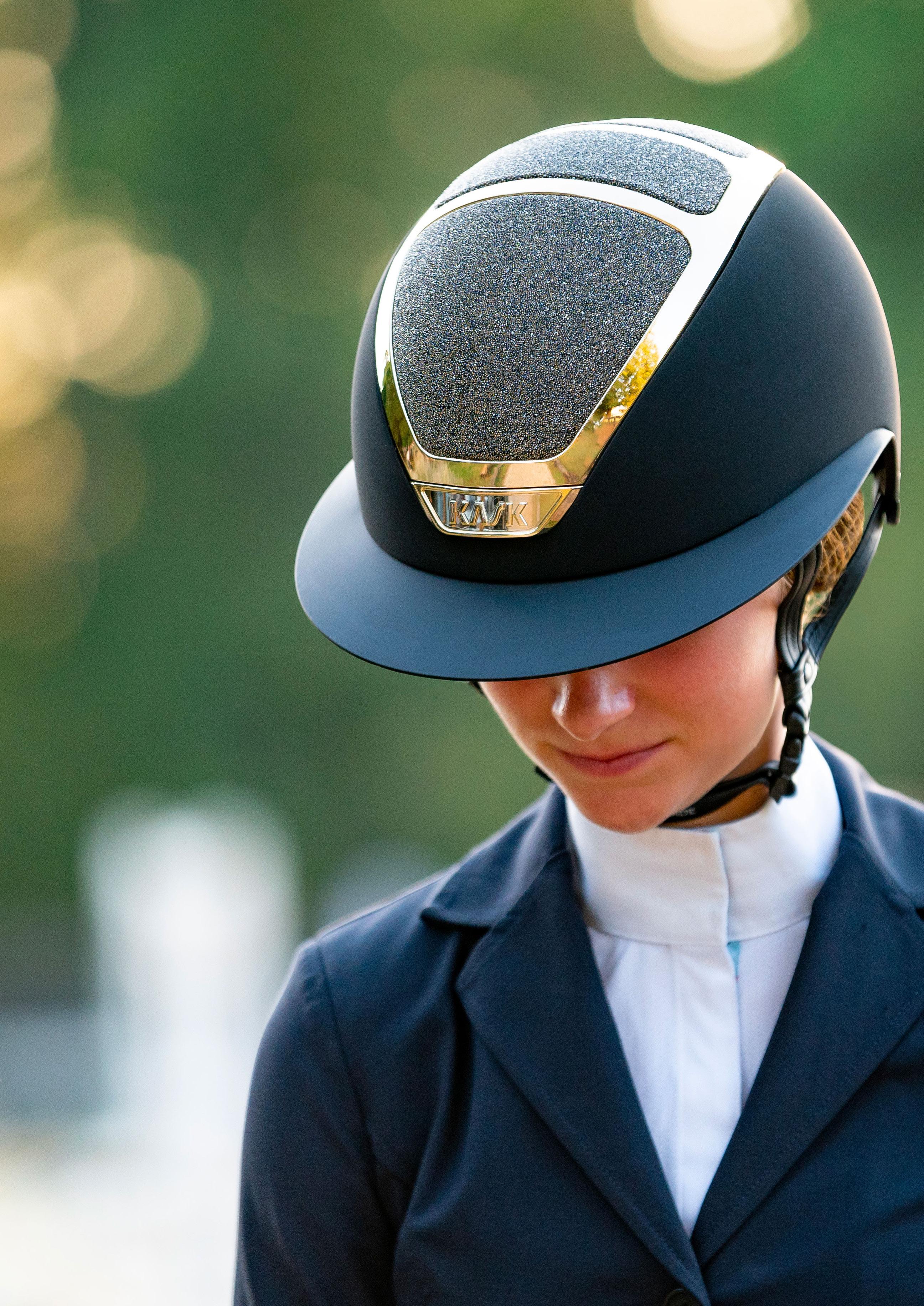
KASK STAR LADY PURE SHINE ATLANTIC BLUE
Designed with elegance and performance in mind, the KASK Star Lady Pure Shine helmet is a refined choice for riders who value both safety and style. Its distinctive wide brim and glossy Atlantic Blue finish create a flattering silhouette, while the ou shell is finished in a durable, waterproof, and scratch-resistan textile that is easy to care for. Inside, breathable Merino wool padding offers natural antibacterial protection and excellent temperature regulation for year-round comfort. Advanced ventilation channels ensure consistent airflow, and KASK’s patented self-adapting FIT System gently cradles the head for a secure, personalised fit. Certified to leading internationa safety standards, the Star Lady delivers confidence, comfort, and timeless sophistication in the saddle.
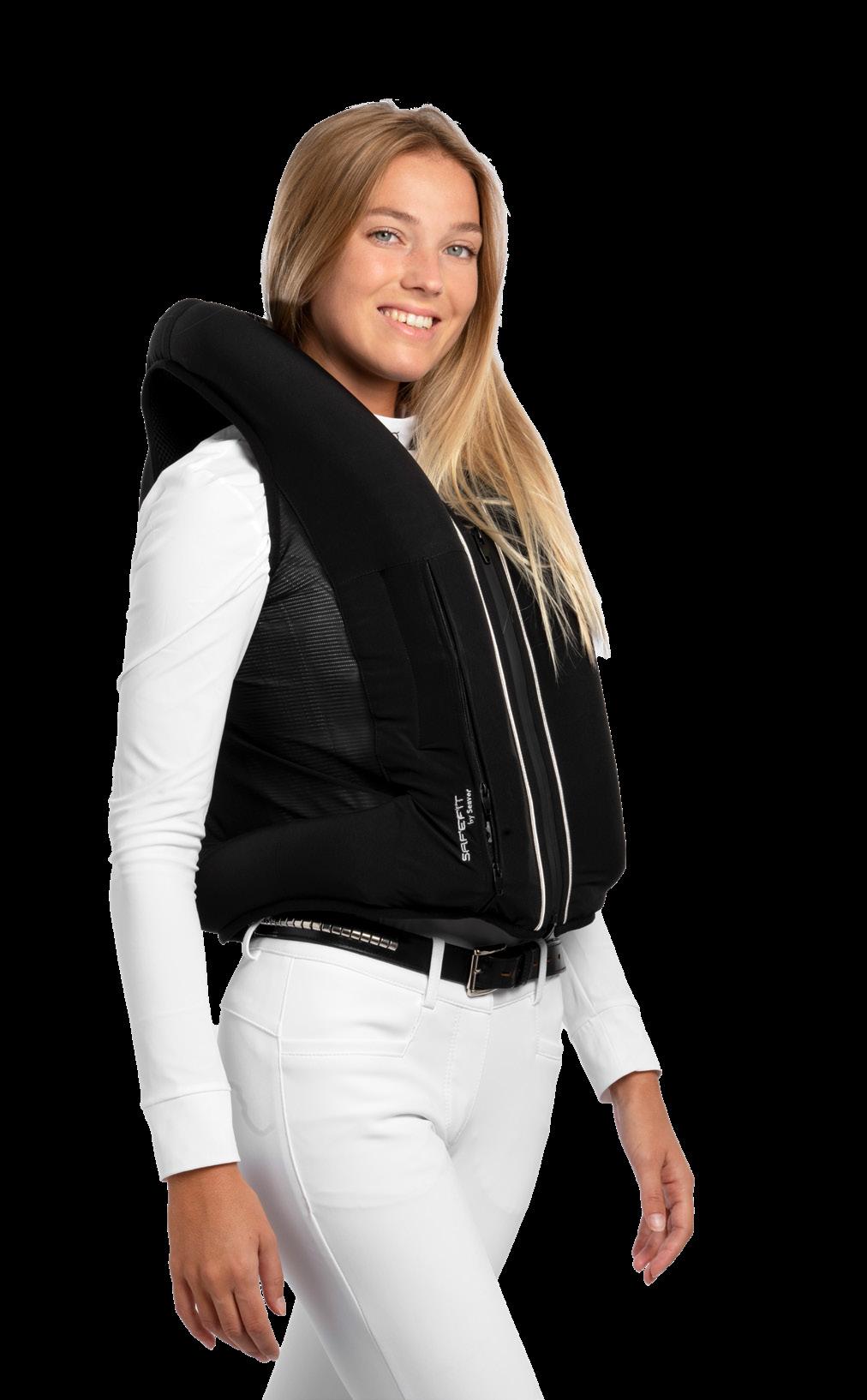
SEAVER SAFEFIT JACKET
The Seaver SAFEFIT airbag jacket is designed to offer riders peace of mind without compromising freedom of movement. In the event of a fall, its mechanically triggered airbag inflates in milliseconds, providing vital protection to the neck, spine, rib cage, abdomen, and back before impact. Inspired by safety technology used in motorsport, the SAFEFIT system connects discreetly to the saddle and is easily reset after activation with a replacement CO★ cartridge. Lightweight, flexible, and highly breathable, the jacket is comfortable enough to forget you’re wearing it once mounted. Its slim, adaptable design allows it to be worn under competition jackets or over everyday riding layers, making it a practical safety essential for riders at every level.
Retail price: R12,928.00
Tack Room Confessional.
The Head Groom has spent enough time in tack rooms, warm-up arenas and SANESAs to know that what’s said out loud and what’s actually true are rarely the same thing. This is where the unpolished truths live.
By: The Head Groom
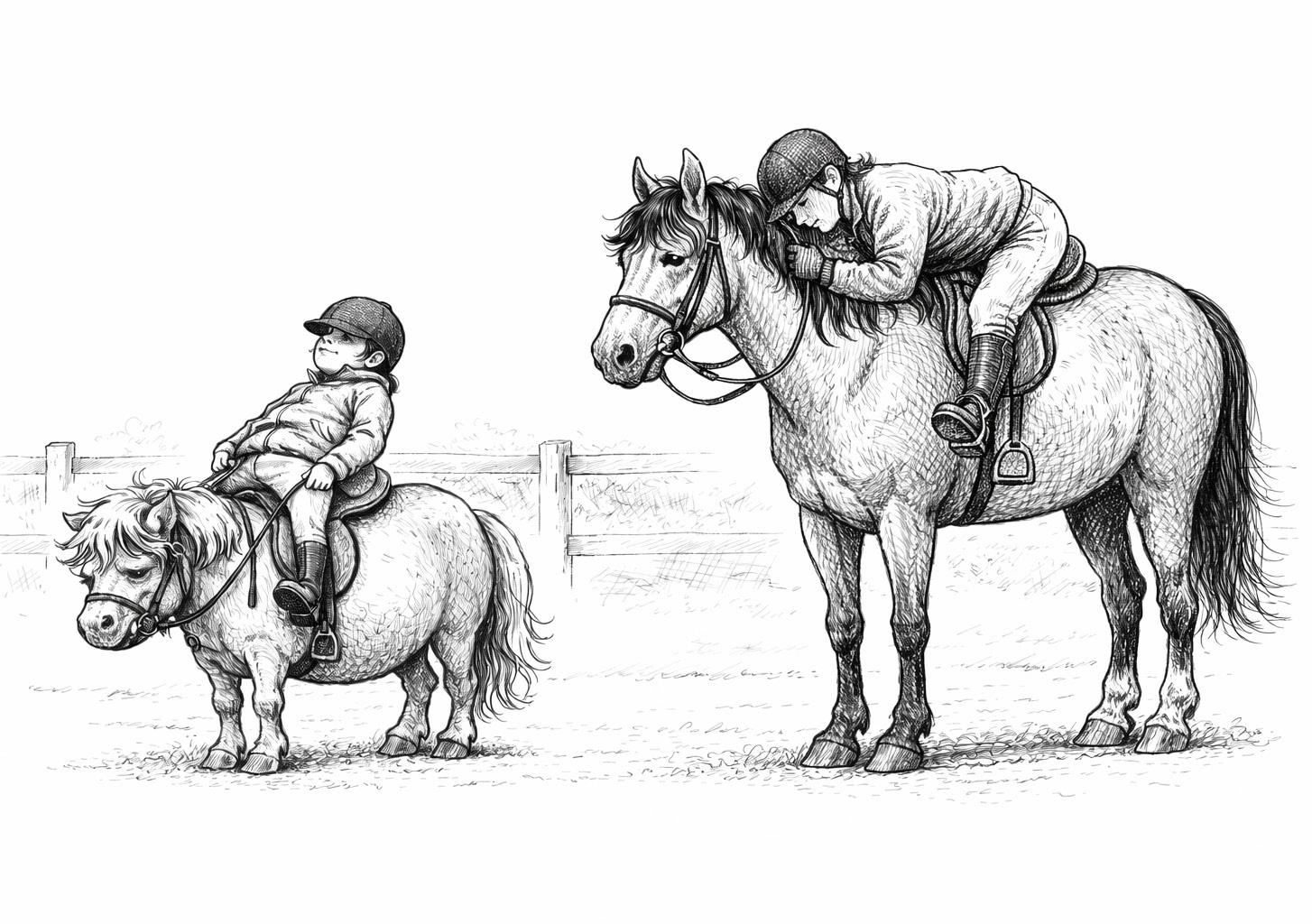
Your horse is not an armchair!
This should not need saying. And yet, every show, without fail, there they are. Riders parked in the saddle for hours, reins looped, weight sunk deep, watching entire classes unfold as though they’ve secured front-row seating with four legs and a pulse. Some chat. Some scroll. Some develop a posture best described as “soft furnishings”.
There are moments, usually around the third class you’ve watched from the sidelines while someone else remains mounted on their horse, when the temptation arises to deploy a small but sharp object. Not in anger. Just enough to prompt awareness. A Tom Thumb, perhaps. A gentle poke to remind the rider that they are, in fact, still sitting on a horse.
Sadly, this fantasy must remain just that. Startling the humans is one thing. Startling the horses would be unforgivable.
It’s often a mixed audience. Children who have never been taught any better, perched and lounging because no one has yet explained that horses are not designed for prolonged furniture use. And then the adults. The ones who know exactly how this works. One is a teaching moment. The other is a choice.
Warm-up arenas are particularly revealing. There is the horse working thoughtfully, stepping under, listening, adjusting. And then there is the horse standing immobile while its rider collapses through the hip, leans on the reins and appears to forget that posture, balance, and basic consideration still apply when one is not actively riding a movement. The horse waits. The horse always waits.
Standing in the saddle for long periods might look relaxed, but to the horse it means a fixed weight, an inactive back, and muscles that never quite get a break. Horses are extraordinarily polite creatures. They will stand there, ears
half-lidded, absorbing tension they did not create, while their riders debate plaiting choices or analyse a round that happened three hours ago. This is not patience. It is tolerance.
Add poorly fitted tack, tired footing, a long show day or a young horse still finding its strength, and suddenly that “just sitting” becomes genuine physical strain. Horses do not complain. They compensate. They hollow slightly. They brace. They switch off. And later, when things feel stiff or reluctant, everyone acts surprised.
There is also something quietly telling about how long some people choose to remain mounted. Getting off to loosen a girth, let your horse stretch, or simply give them a moment to exist without carrying you is not a sign of weakness or inexperience. Quite the opposite. It suggests you understand that riding is something you do, not something you occupy.
Of course, context matters. Busy show rings, safety concerns, young horses who need reassurance. Sometimes staying on is the sensible choice. But if you’ve been mounted long enough to spectate multiple classes, catch up on yard politics and consider lunch options, it may be time to reconsider your seating arrangement.
Your horse is not an armchair.
And no matter how comfortable you are, they are still holding you up. Quietly. Politely. Uncomplainingly. Just as they always do.