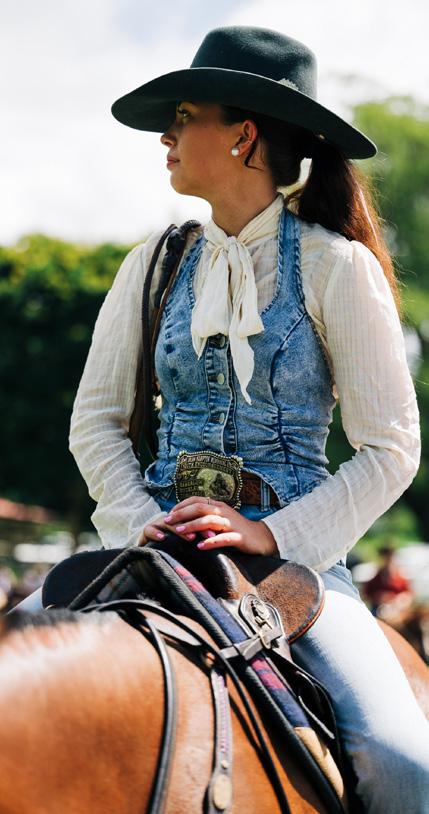
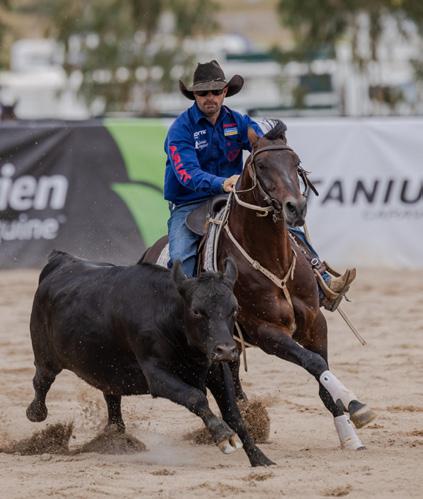
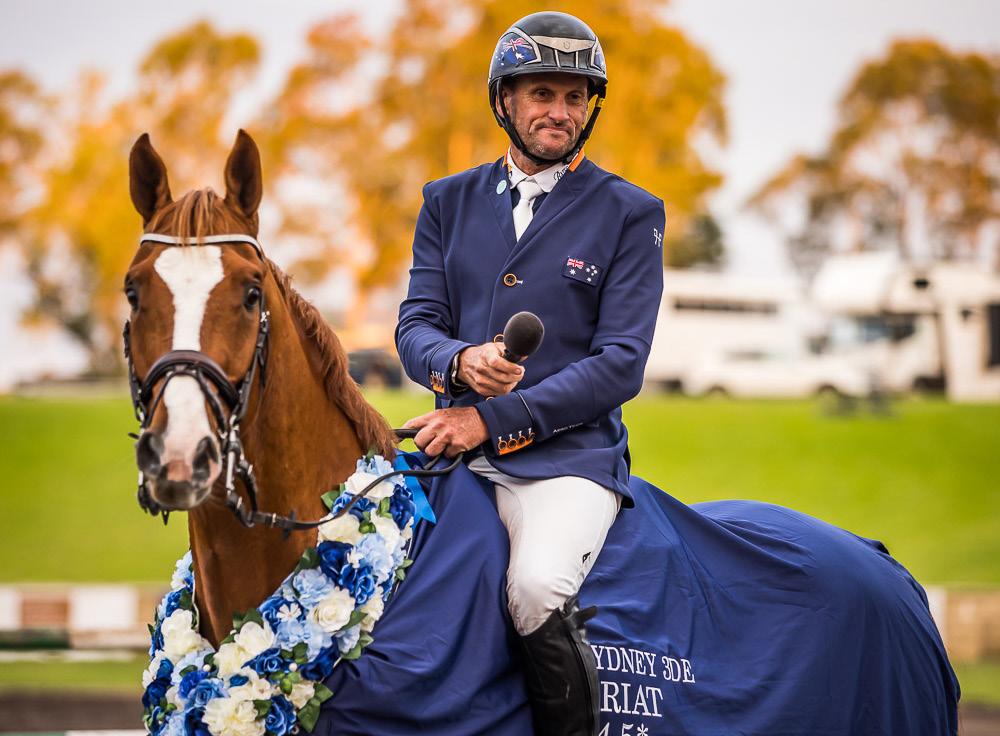
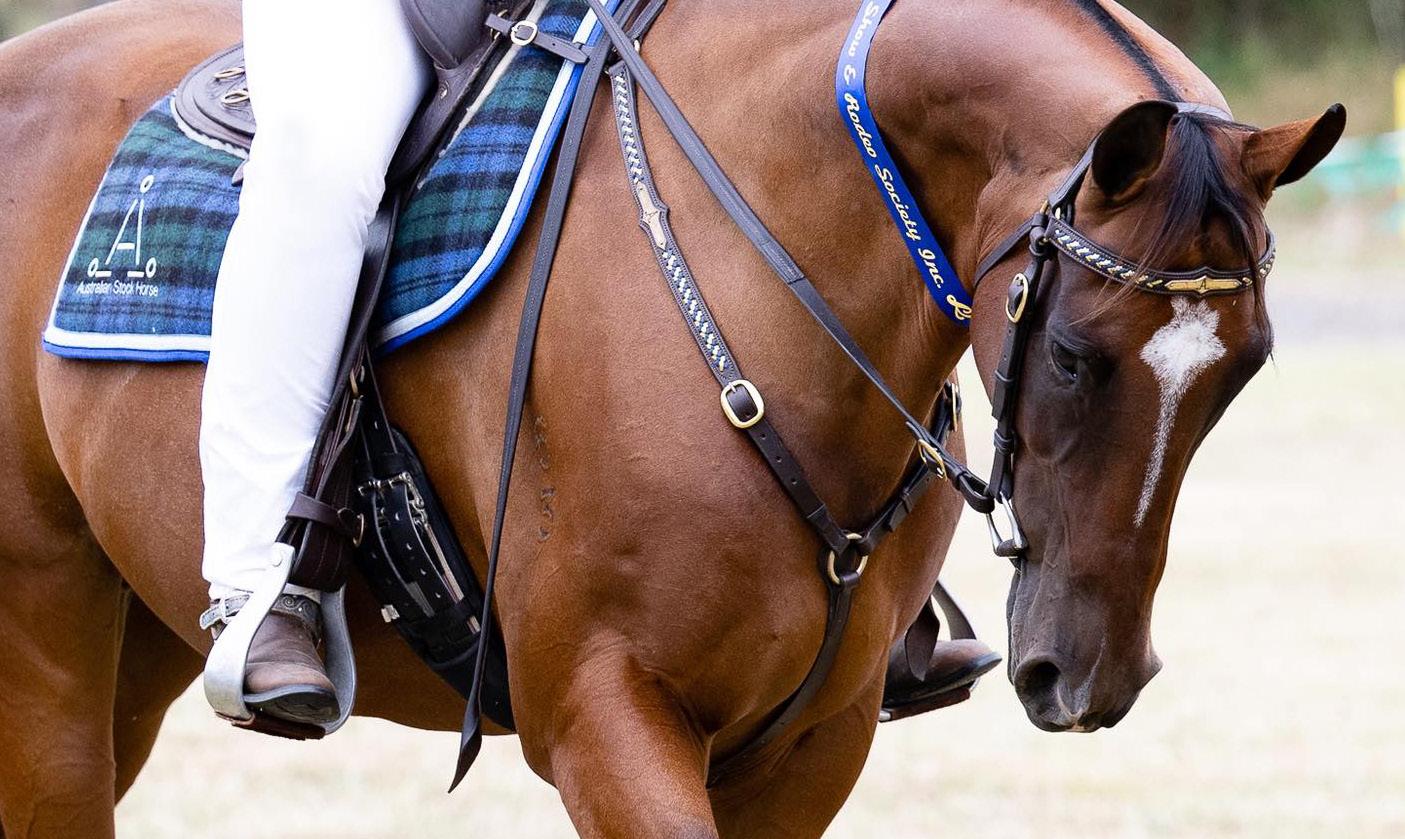
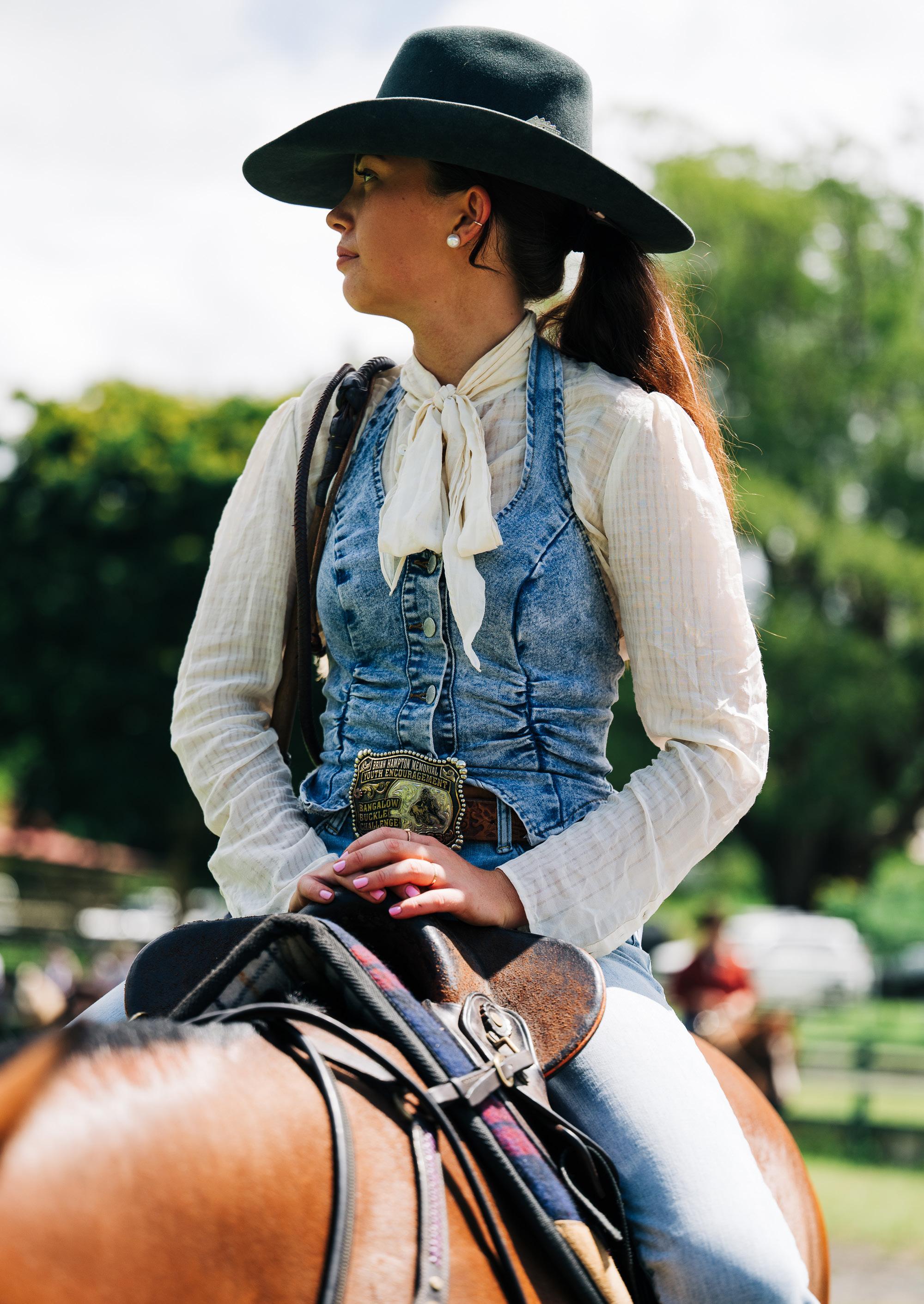
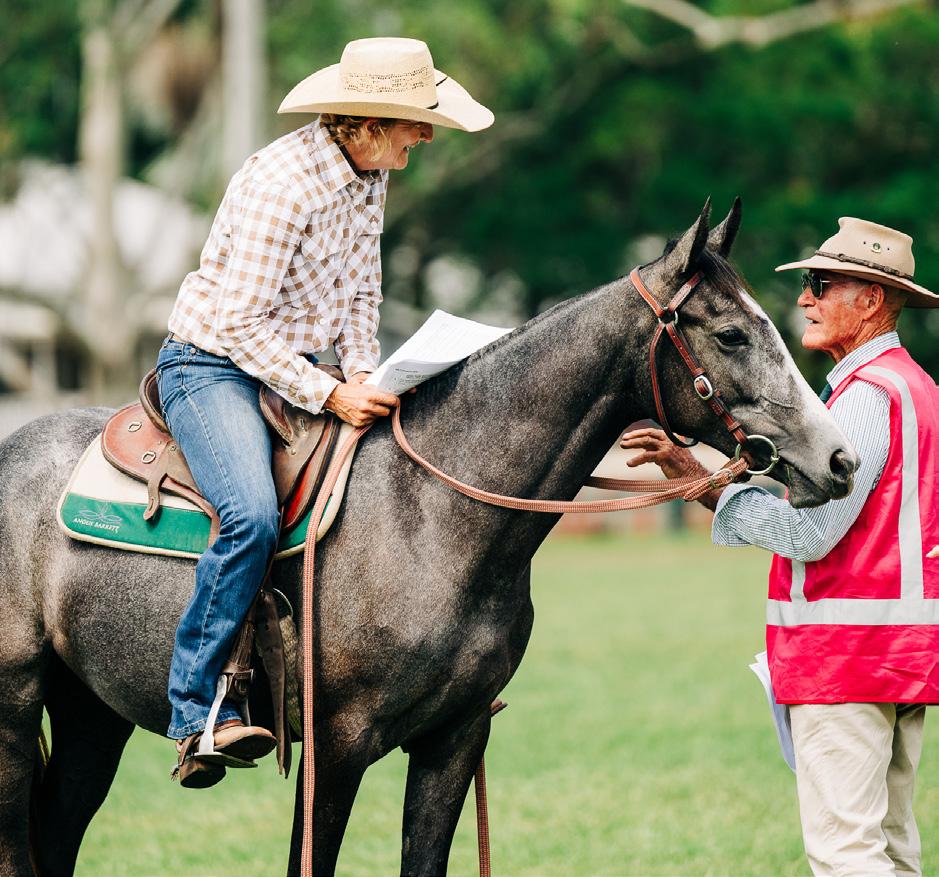
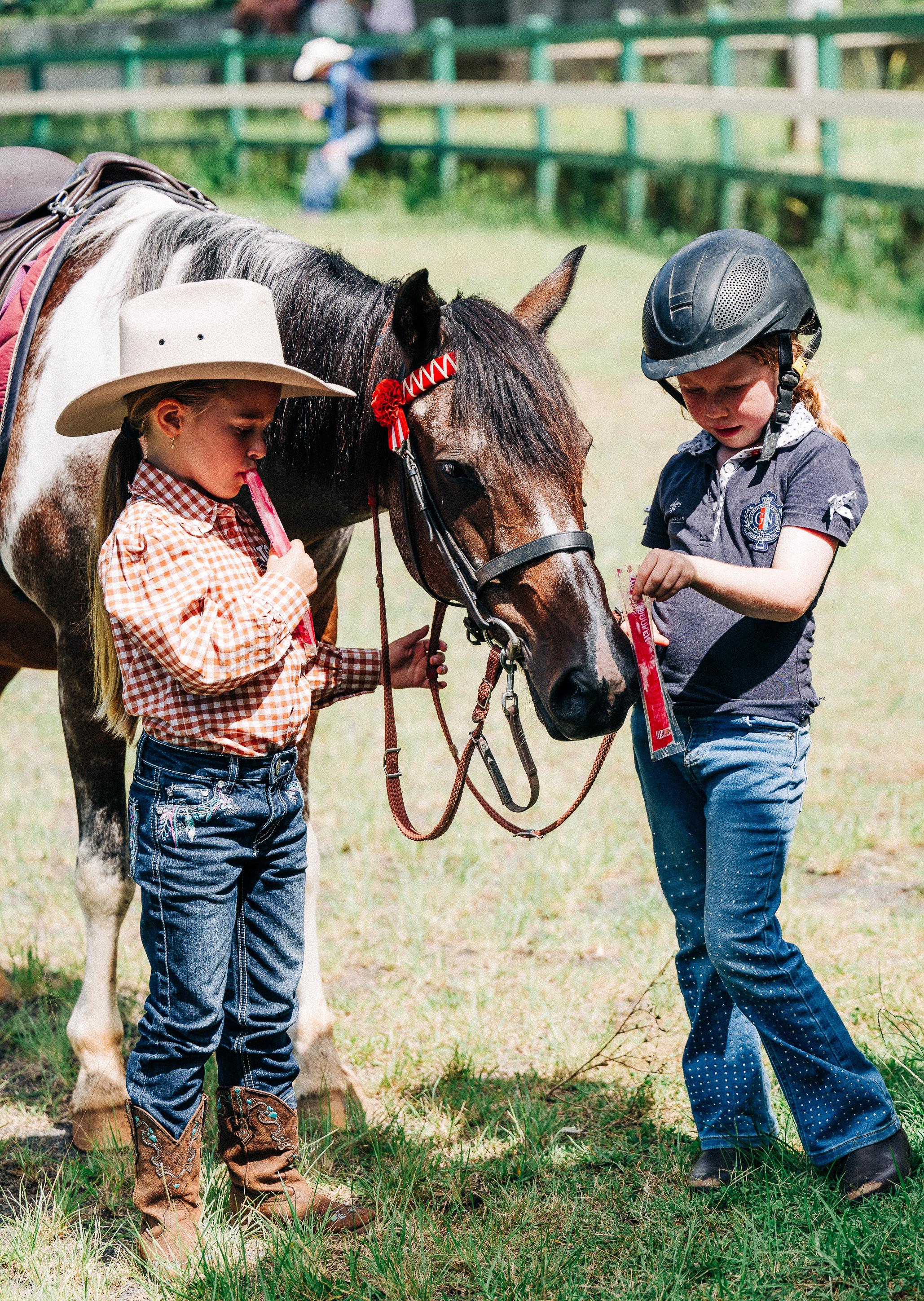
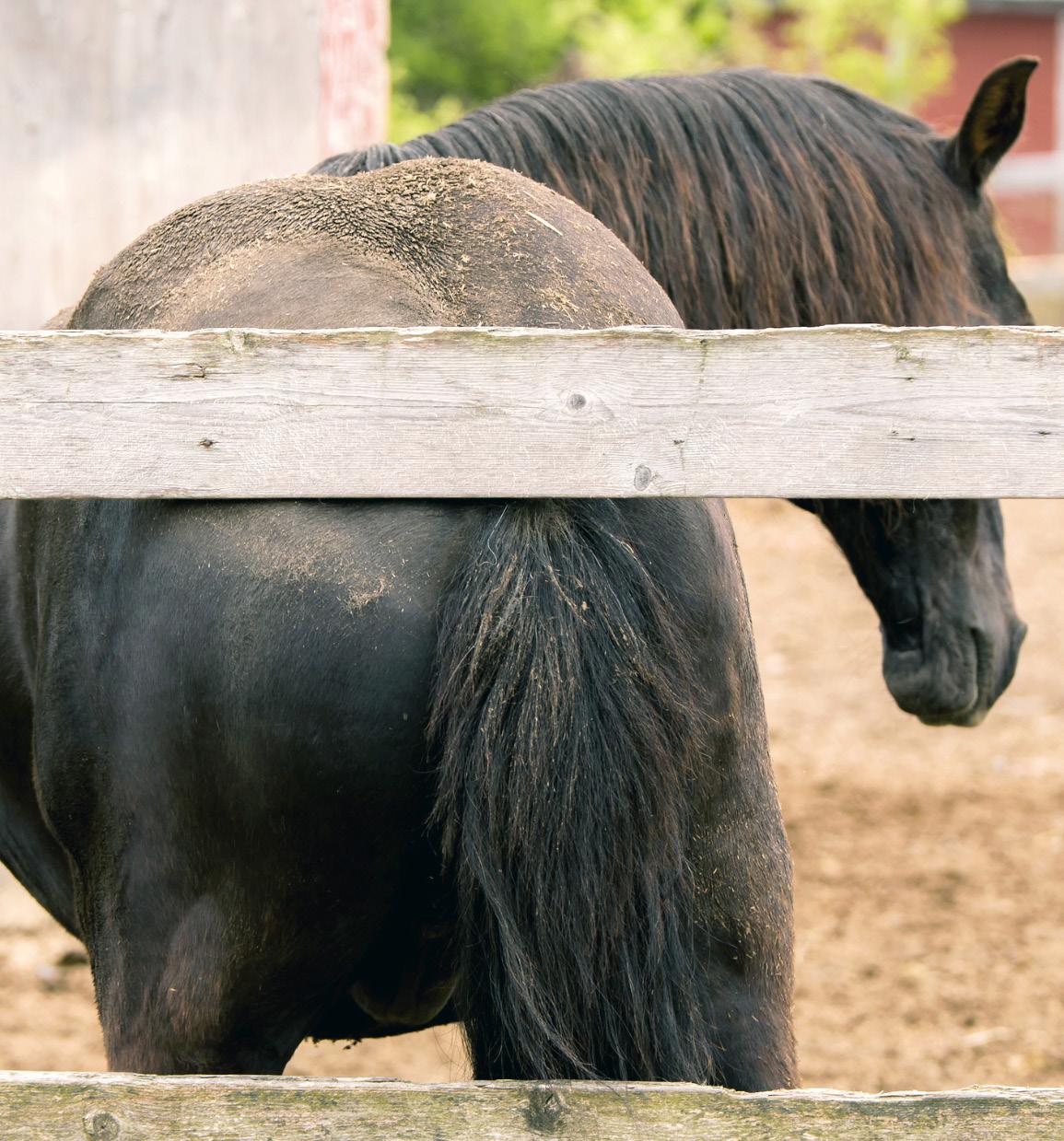
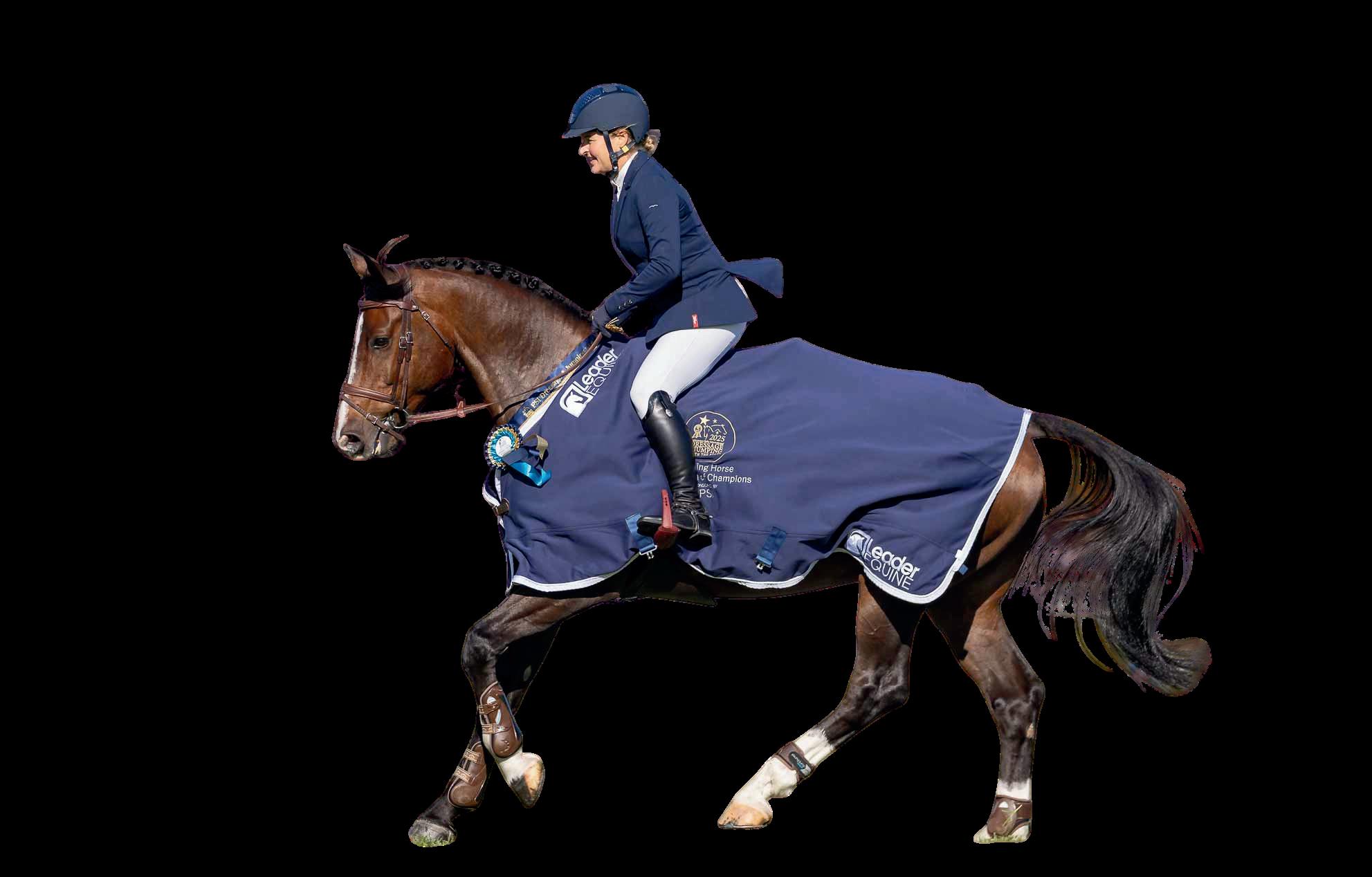
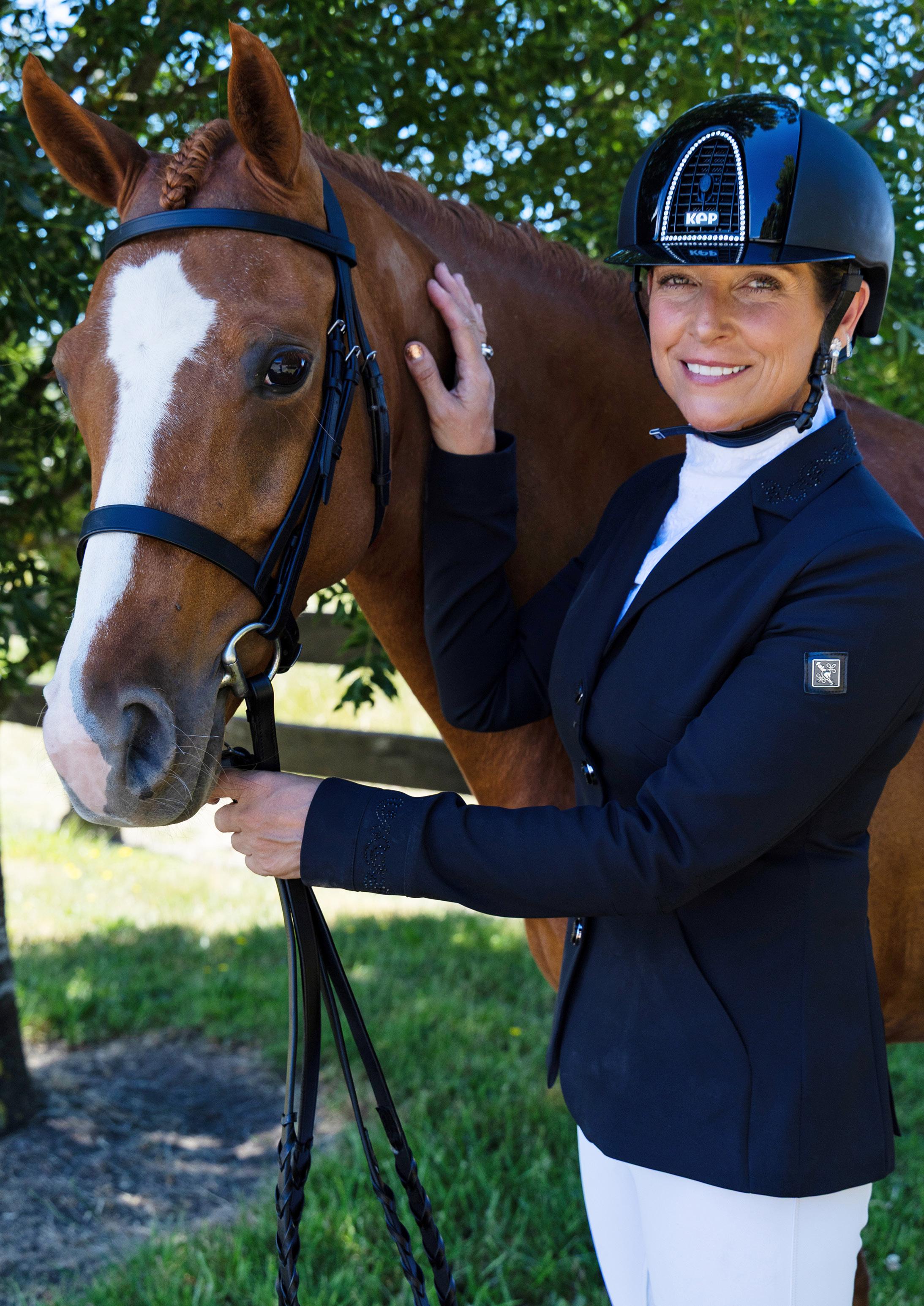
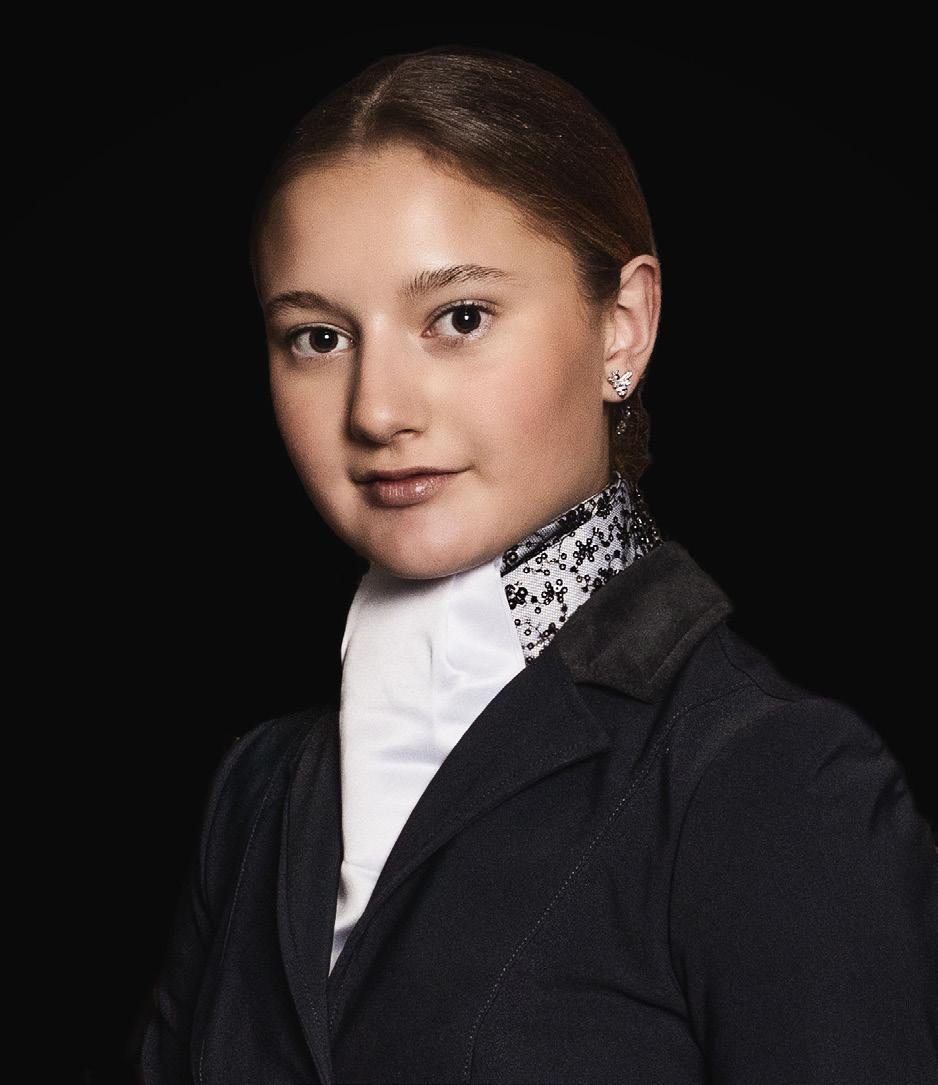
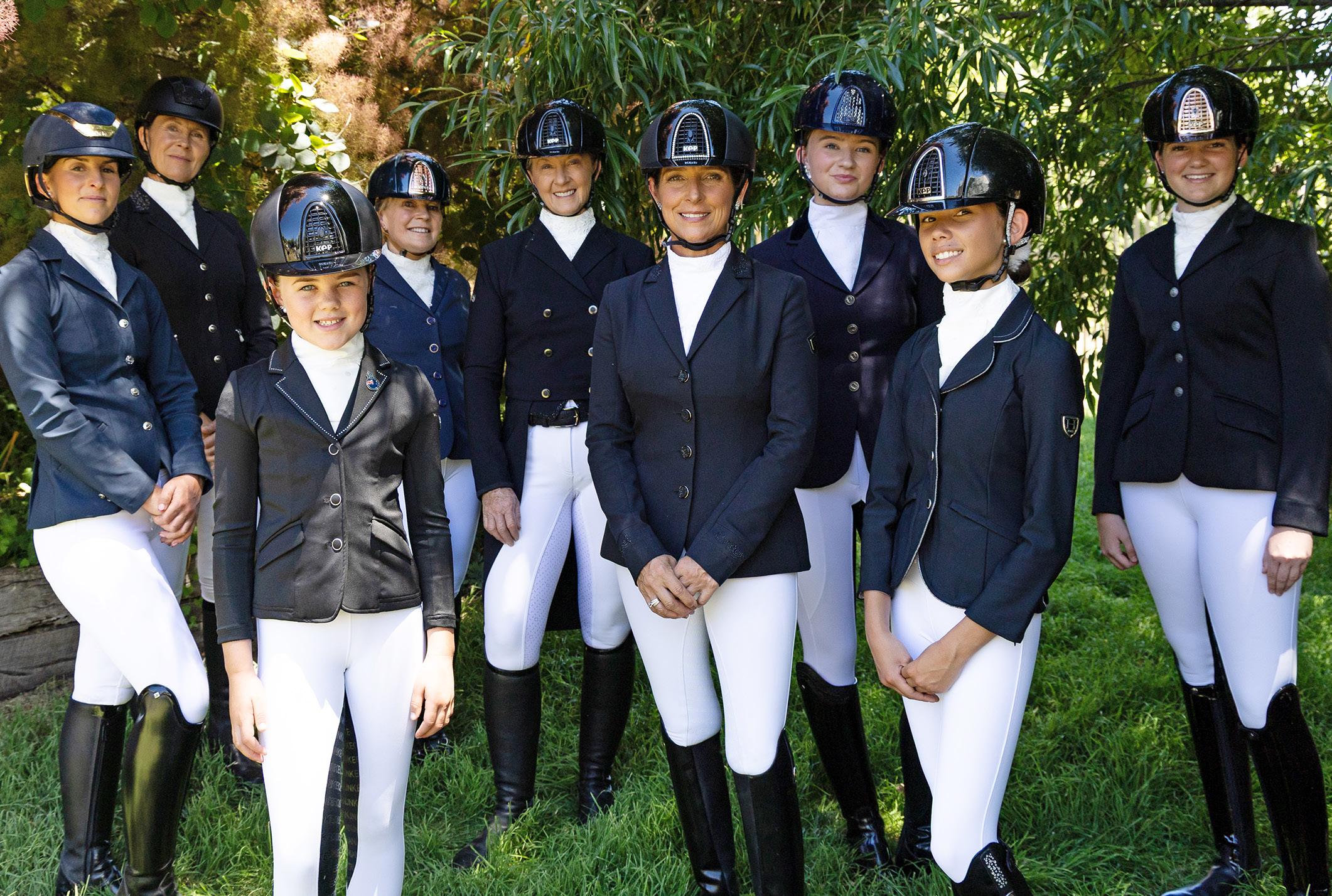
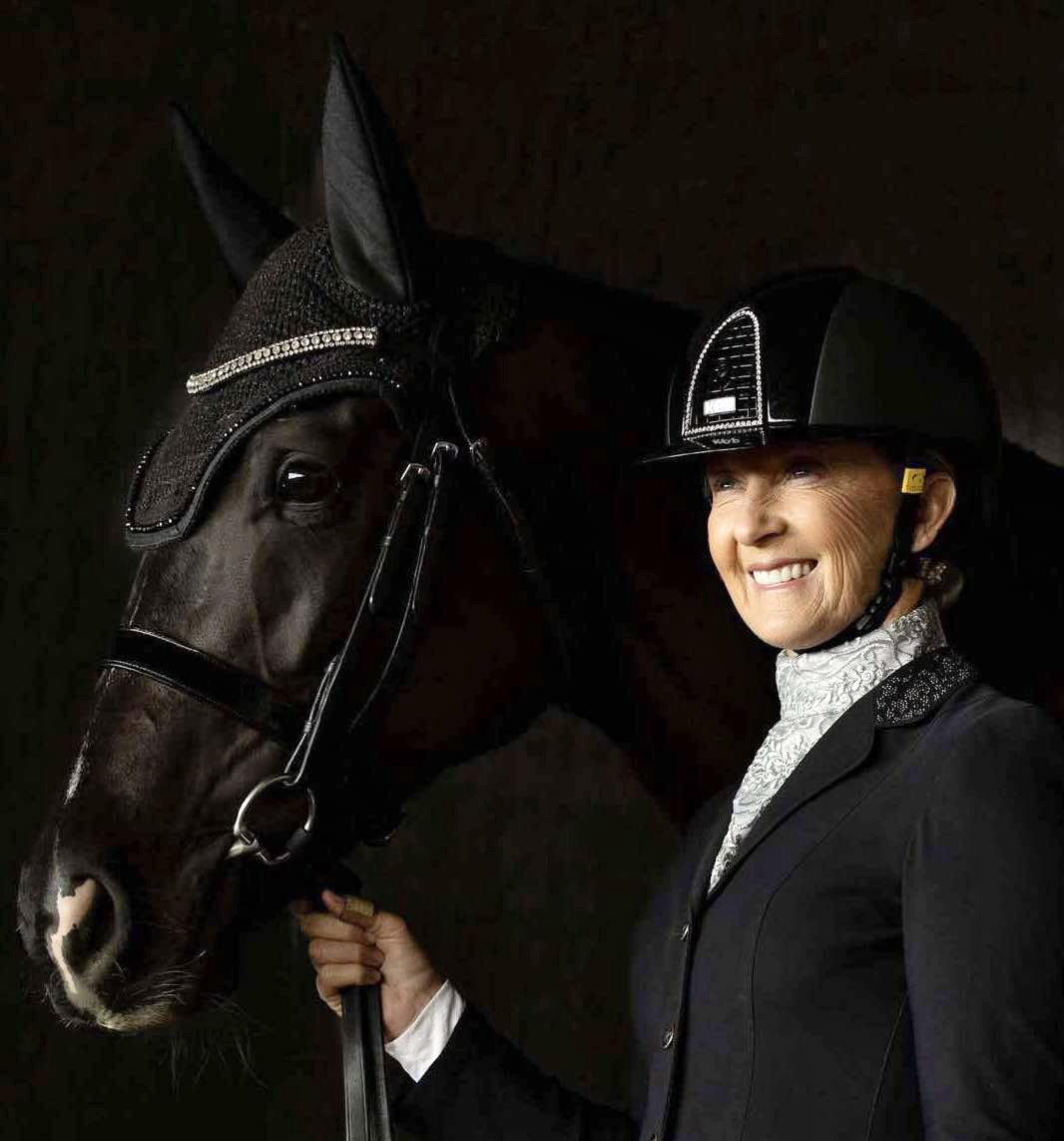
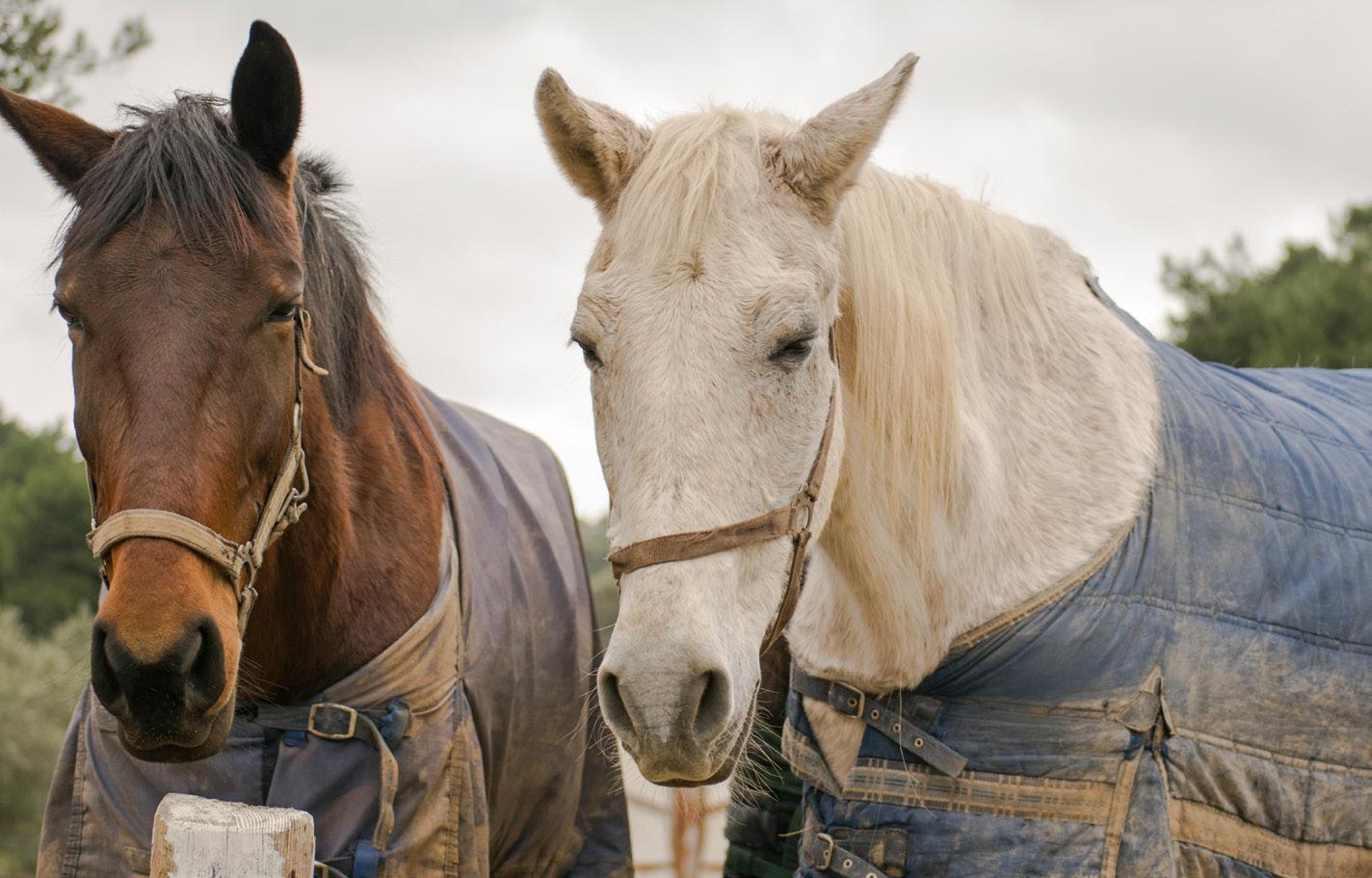
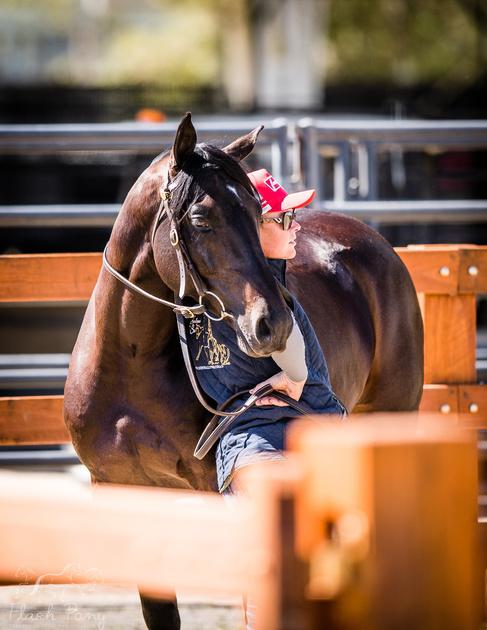
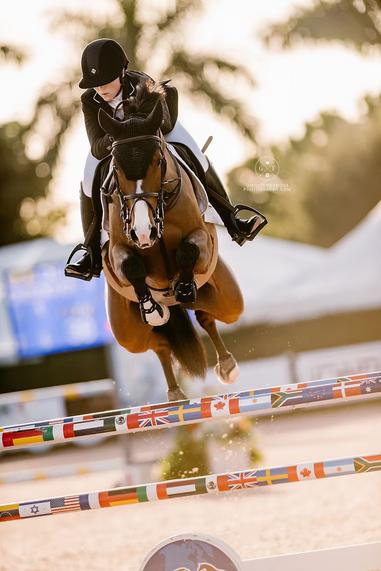
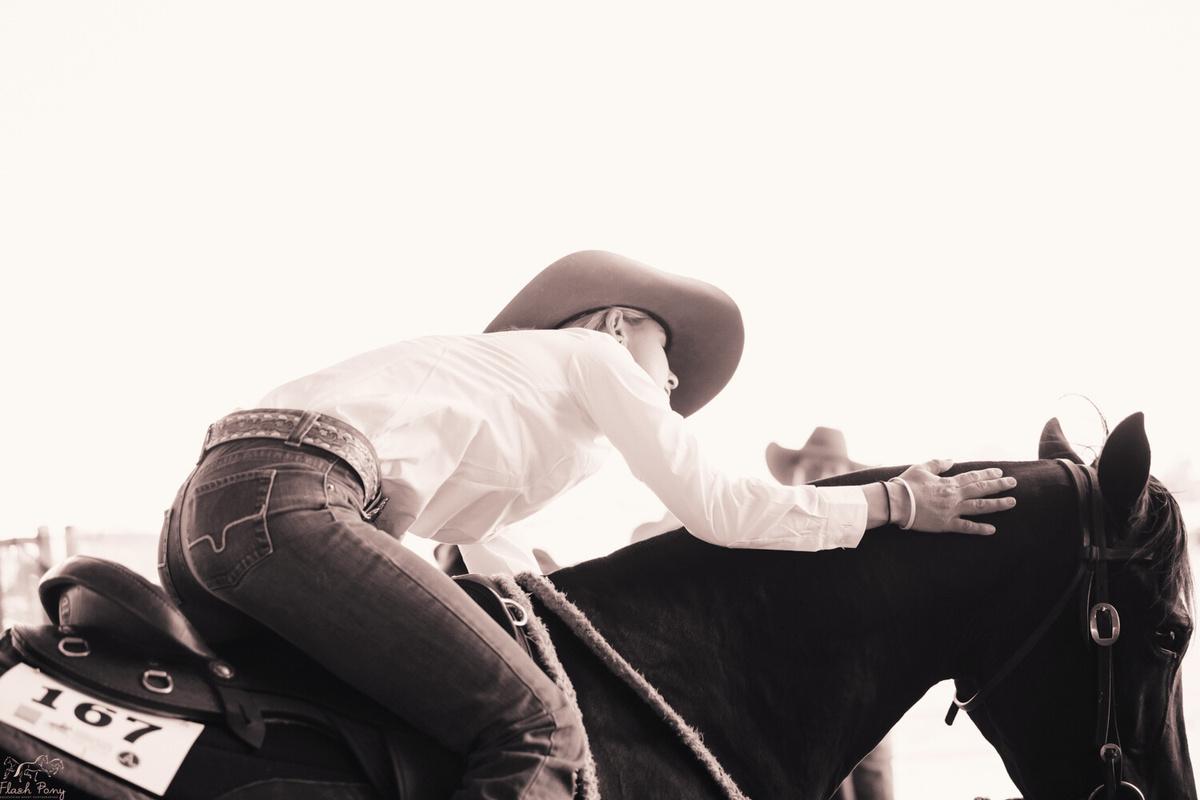
EVENTS . Bangalow Buckle Challenge. The grassroots event redefining competition
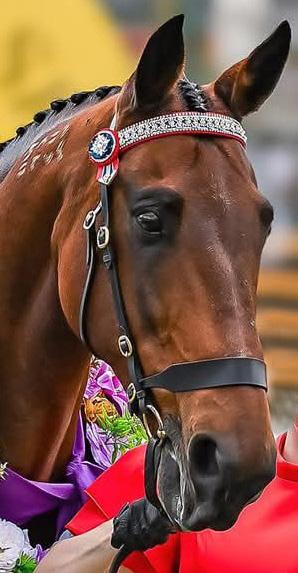
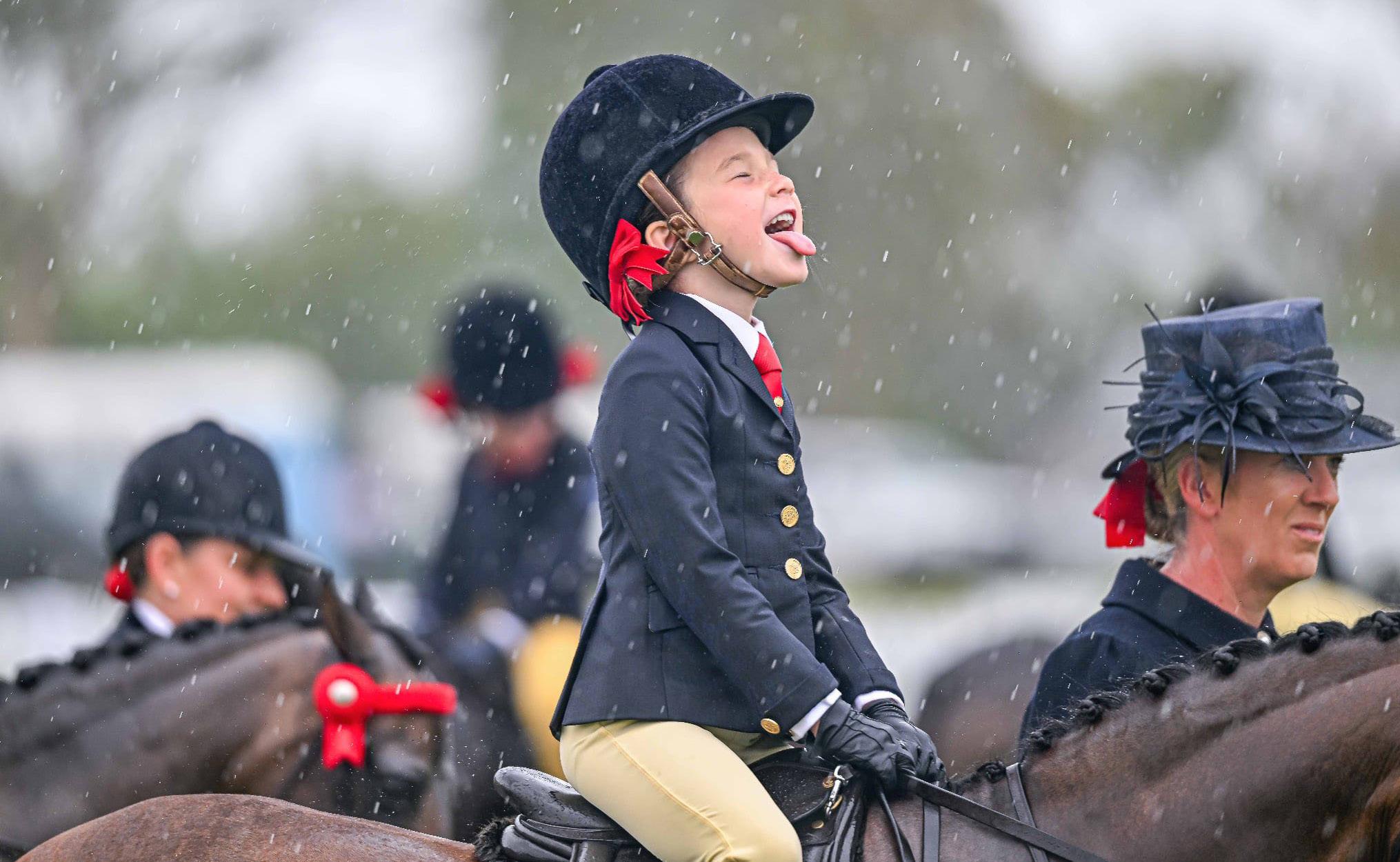
FEATURE . New Highs. Inside Cathay Cargo’s journey to the Hong Kong International Show
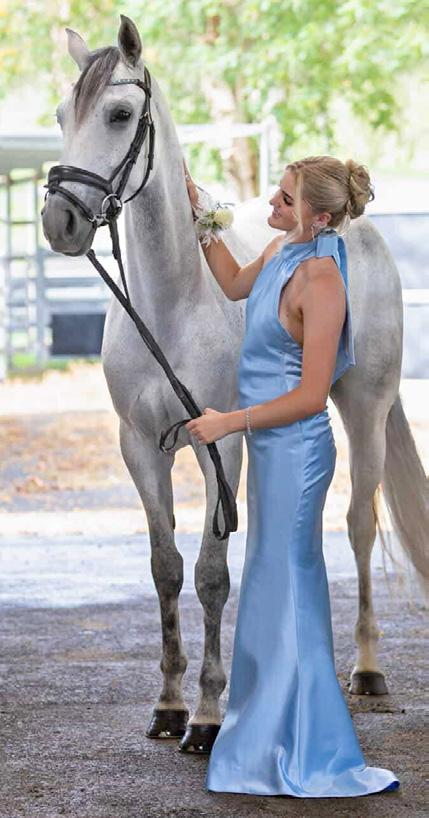
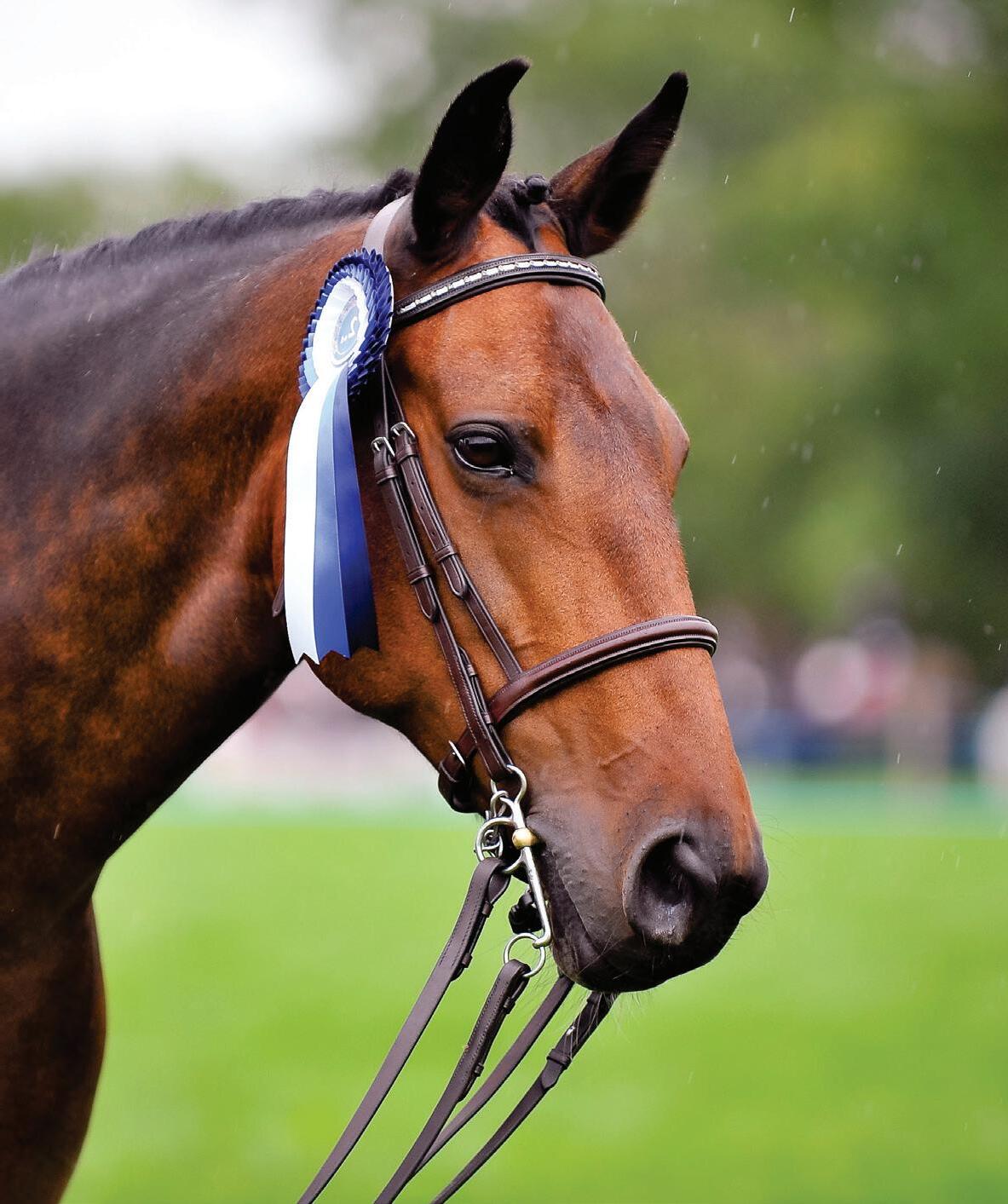
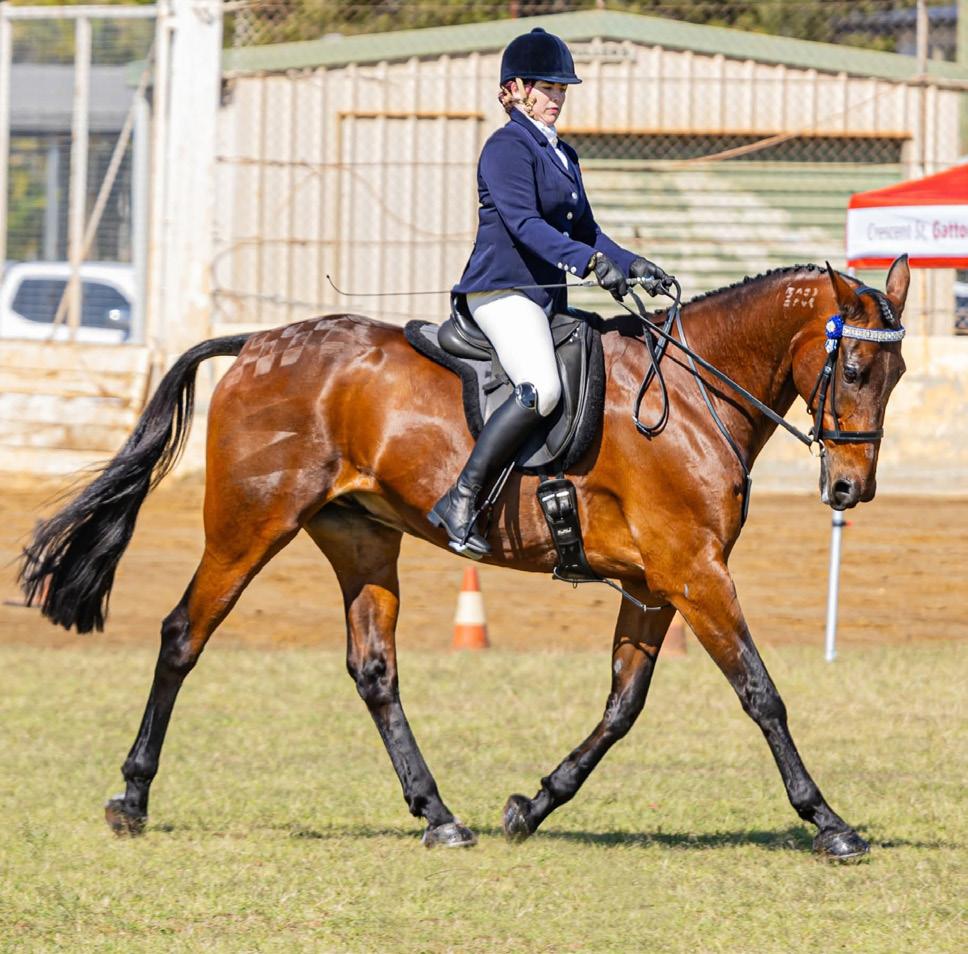
LIFE AFTER RACING . The Rise of Super Falcon. From Trotting Track to Show Ring Champion
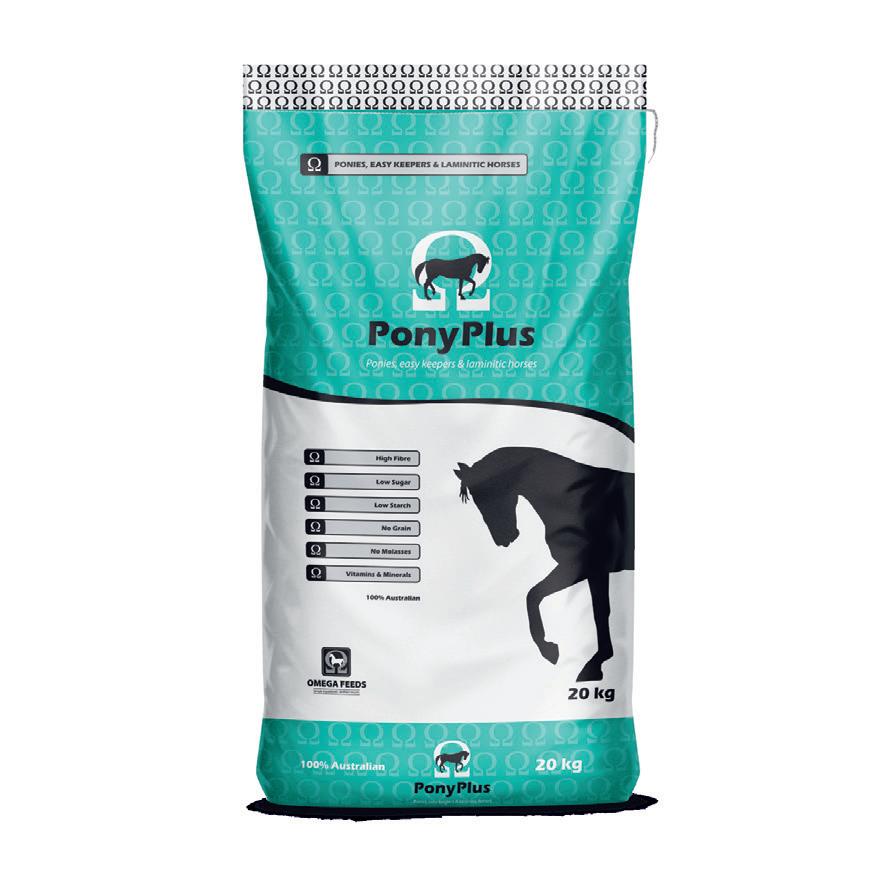
Complete Feed
Redefine Equine Wellness
in Springtime with PONYPLUS
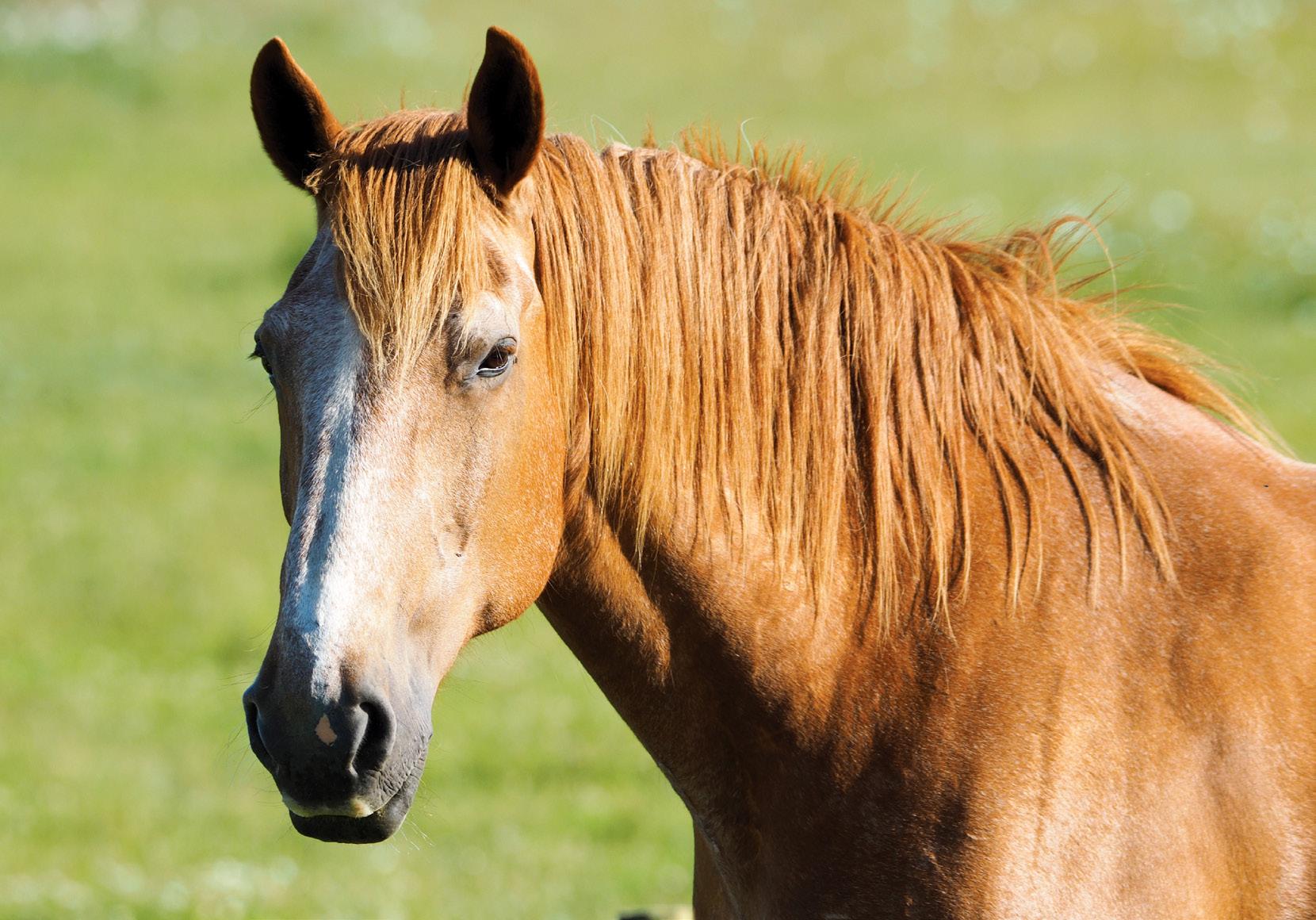
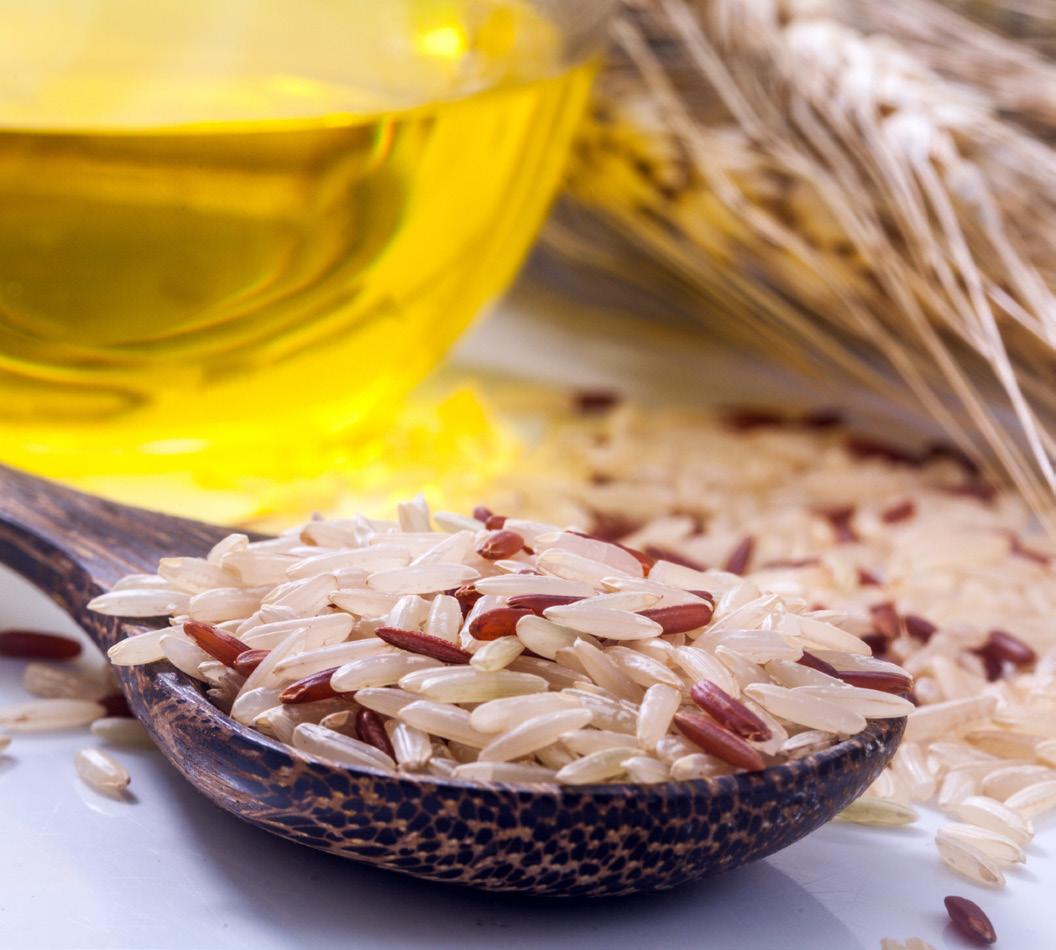
PonyPlus is a low sugar, low starch feed that has been specifically formulated for easy keepers and horses/ponies with metabolic conditions. It is a nutritious and filling feed that will provide your equine with good quality protein, vitamins, minerals, essential fatty acids (Omega 3 & 6) and bulk without oversupplying calories, starch or sugars.
Right now, riders on the other side of the world are welcoming a change of season. In colder climes, the warmth of the approaching spring is cause for celebration, while here in Australia, we’re more than happy to see the last of those summer scorchers!
I’m always struck by how March feels like a month of revitalisation in our community. The promise of fresher, crisper days reignites motivation, training schedules are back on track, and the competition circuit hums with renewed momentum.
So what better time to reflect on the ‘threads’ that are woven into the fabric of the sport we love: the early morning feeds, late-night checks, grooming, yard work, the patience and dedication to repeat a movement until it becomes effortless, and the determination to try again when it’s not. And no matter what the weather, we show up.
To outside eyes, these tasks may seem monotonous – but we know differently. They represent the daily commitment that makes us better riders, better owners, and maybe even better humans. Our devotion to our horses and our sport can teach valuable life lessons.
When we asked Olympian Stuart Tinney OAM what we can learn from horses, he answered: “Humility.” Food for thought - and there’s plenty more of that in this month’s Chat with a Champion, plus Dr Shelley Appleton’s fascinating Point of View on the habit some women have of making themselves small, and the effect that has on their horses.
Equine health is paramount, and Dr Jennifer Stewart’s deep dive into allergies is a must read, as is this month’s Vet Vibes on the exciting shift in equine veterinary thinking from crisis management to performance management - and don’t miss news of a truly innovative wound healing solution. Plus, we have some great tips on the feeding and care of our older horses.
Talking of health and fitness - human this time - Anne-Marie Lasserre delivers yet another excellent Ride Fit, explaining the practical, easy to implement steps you can follow that will help you to feel fabulous.
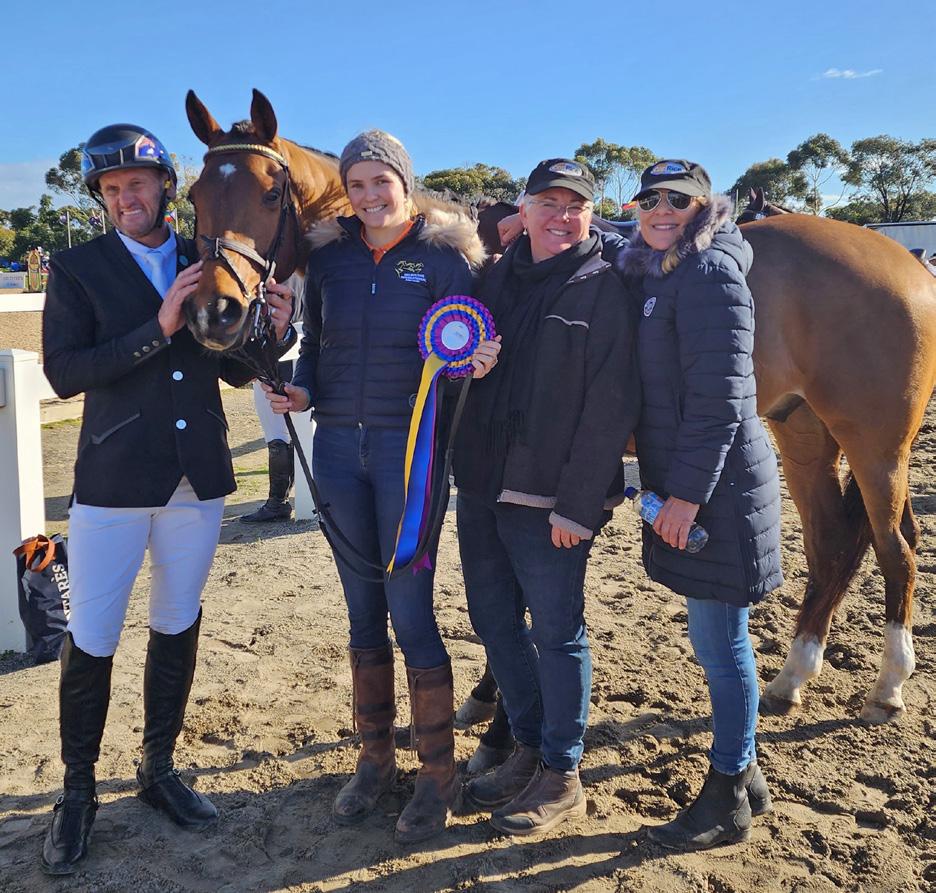
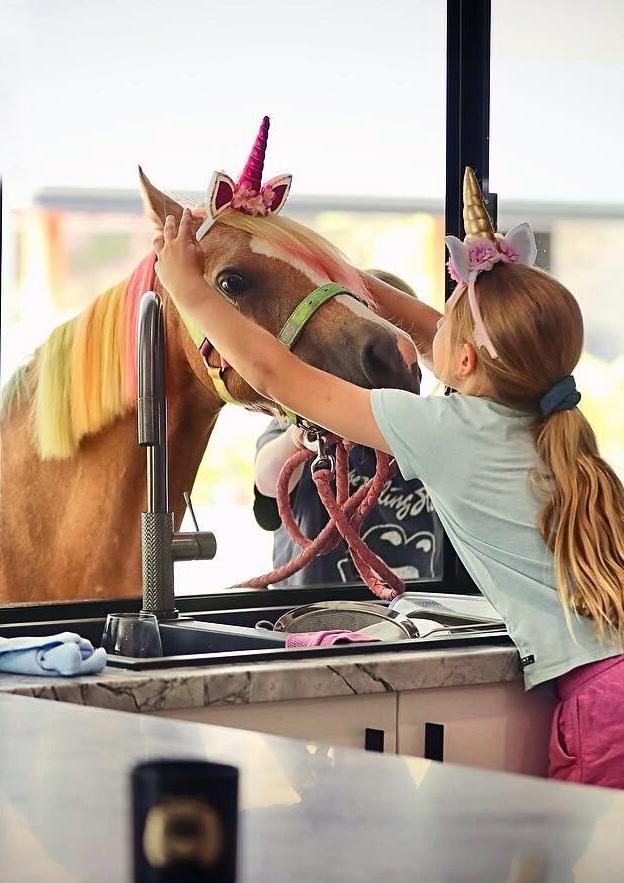
And how could we resist sharing the recent Bangalow Buckle Challenge? Open to all horses and riders of any age, this welcoming event is all about confidence building, new friendships, and the warmth and connection of community. It doesn't get any better!
AMANDA MAC
EDITOR, EQUESTRIAN HUB
If dressage is your passion, you're going to love Grand Prix rider Alice Hurley’s excellent advice on the value of short training sessions - and don't miss this month's Founders article on Natalie Waters, the woman who is redefining the riding stock.
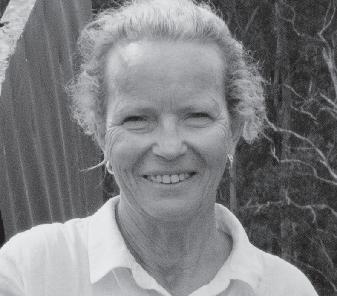
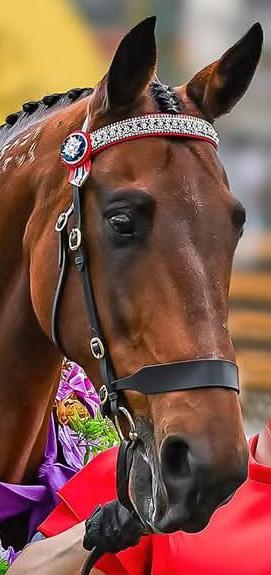
Verona Begadon was determined that her OTT Standardbred Super Falcon would one day be a star - we introduce you to her and to Zara Wyatt, a Young Rider who at just 18 years old, has already built an enviable résumé. Think a double dose of inspiration!
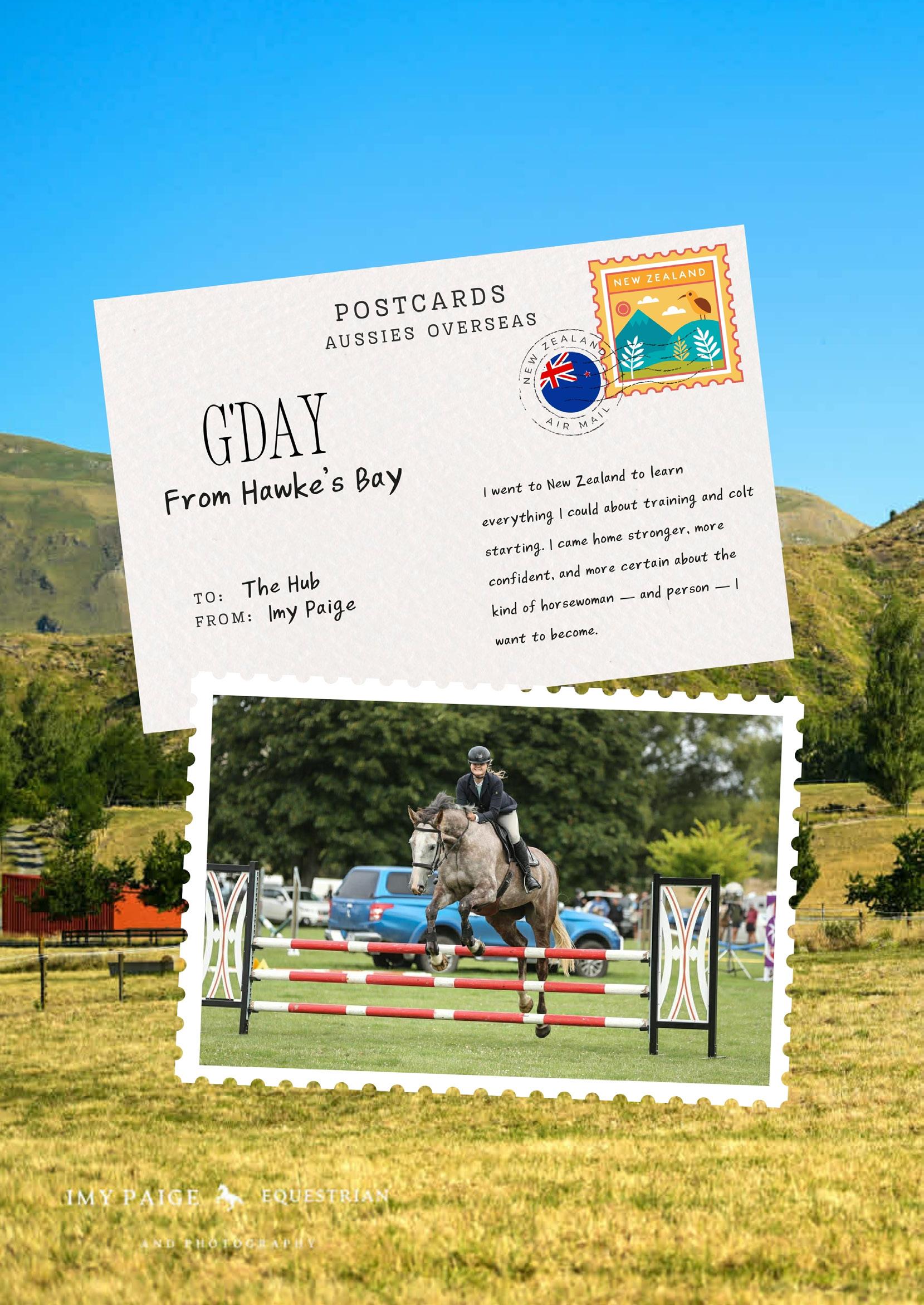
Itchy feet? Imy Paige shares her New Zealand adventures in Postcards – and our inside story on Cathay Cargo and the Hong Kong International Horse Show exemplifies the company’s commitment to caring for their sky bound equine passengers.
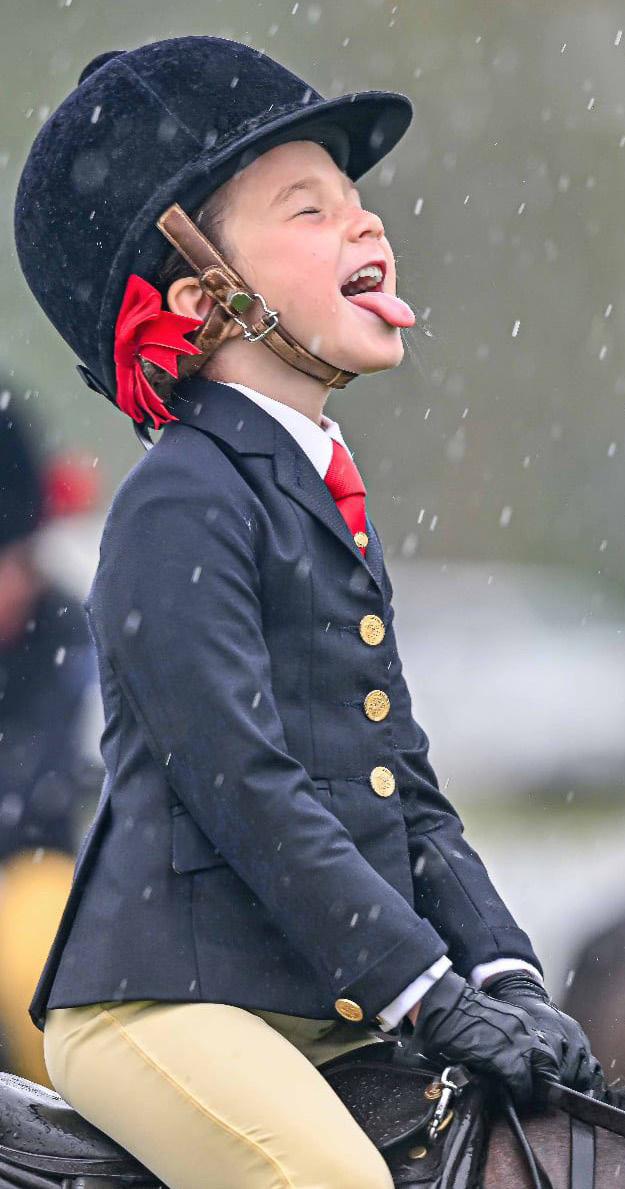
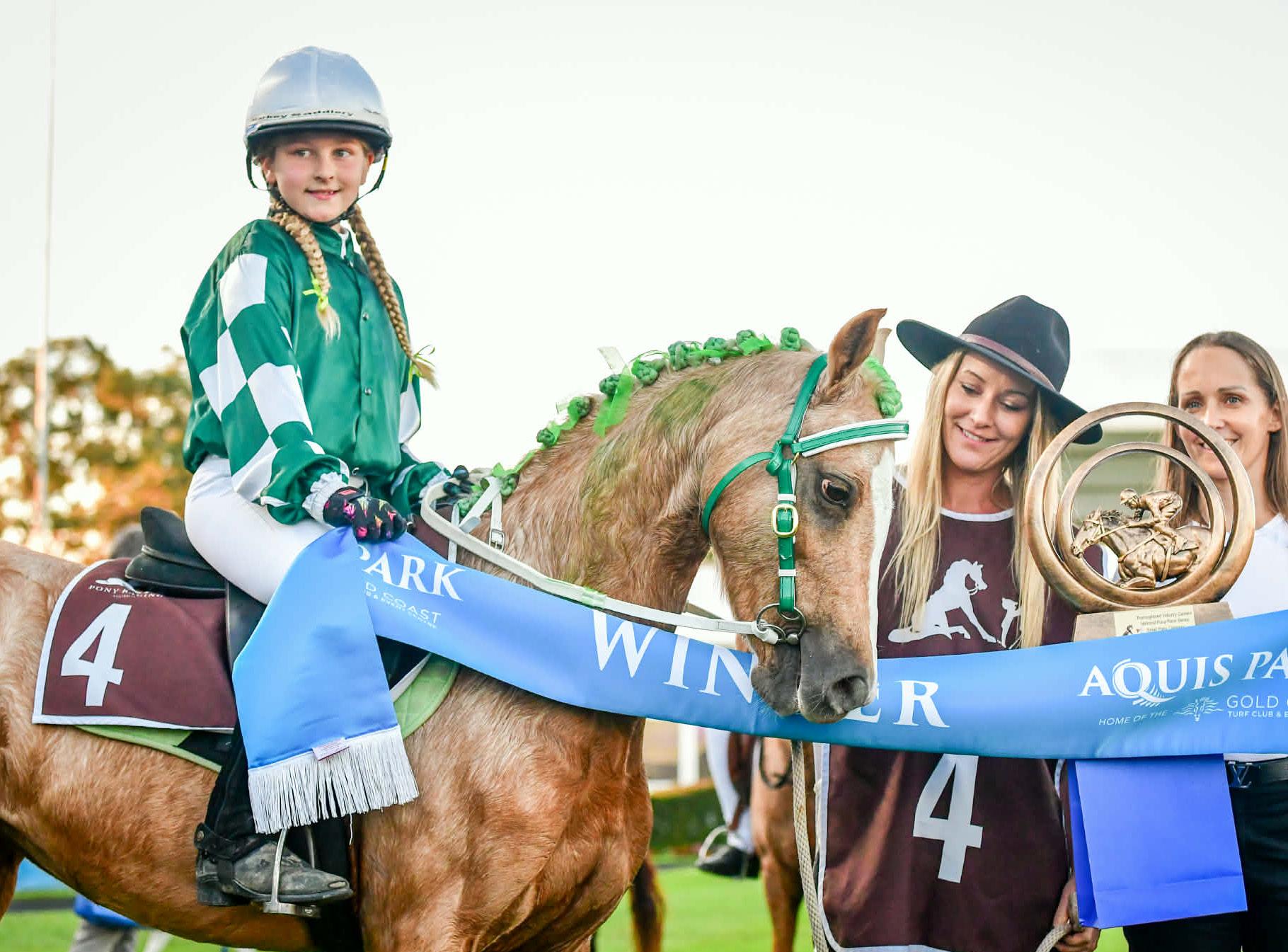
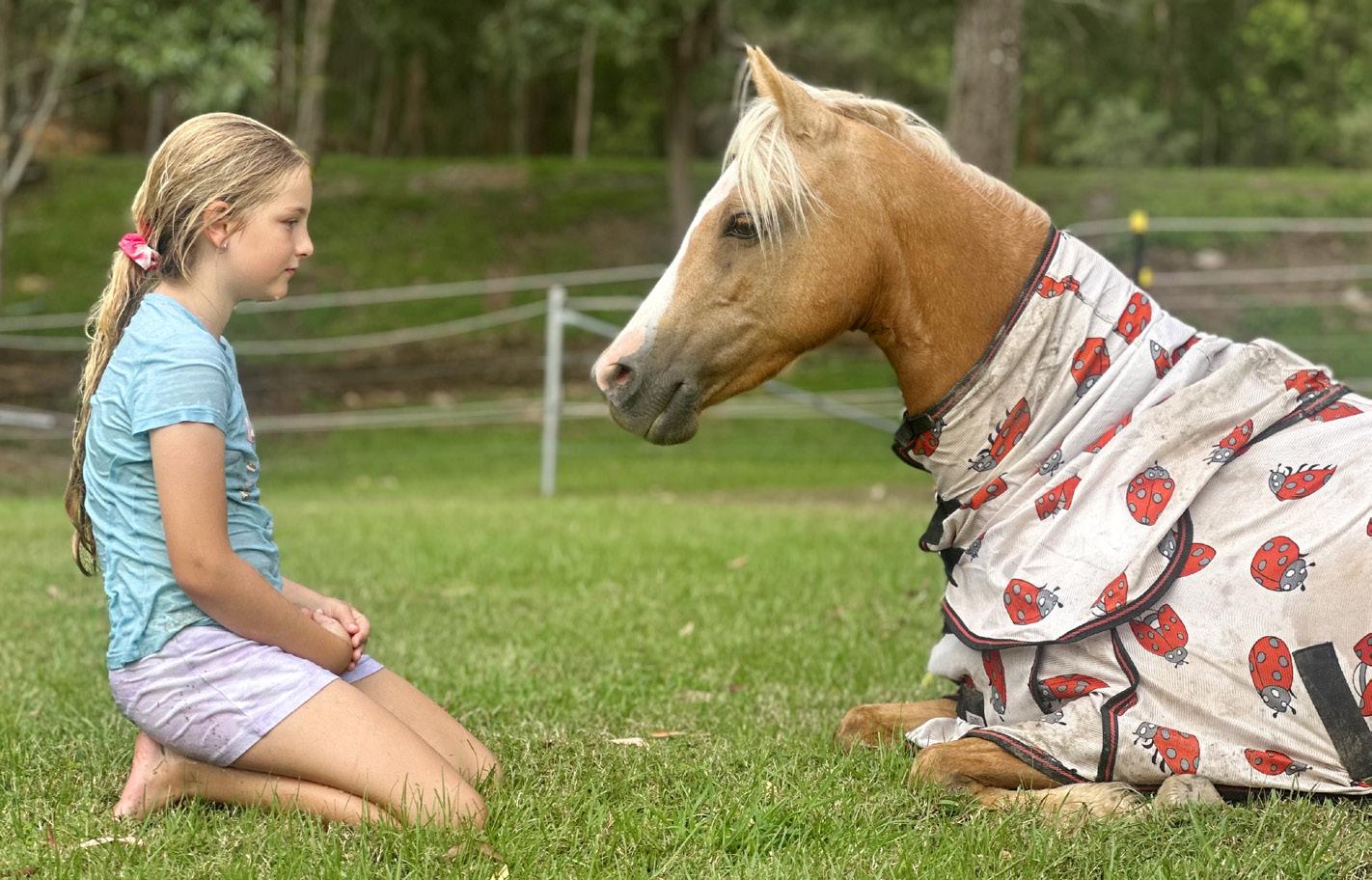
There’s just something about kids and their ponies, isn’t there? So we dare you not to smile at this month’s Behind the Shot, and the story of young Sophie Bink and Dazzle Me!
We hope these pages offer inspiration, insight, and a sense of connection to the community that shares your passionbecause they're your stories, your horses, and your commitment to the equestrian life that continue to shape this magazine.
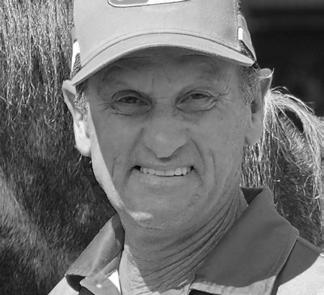
Stuart Tinney OAM
Stuart has represented Australia at multiple Olympics, and many other international competitions. He was awarded the Order Of Australia in 2000, and was inducted into the Sport Australia Hall of Fame in 2003. Stuart now primarily focuses on campaigning eventers, and providing elite training for up-andcoming riders. Don't miss Stuart in this month's Chat with a Champion.
Imy Paige
OUR CONTRIBUTORS
Dr Shelley Appleton
Shelley is the founder of Calm Willing Confident Horses. Originally a university academic specialising in human learning, she was also a dedicated amateur dressage rider. After realising that her 'hard mouthed' horse was actually just confused, she began experimenting and working with different horses, until her passion snowballed into a full-time career. Her Point of View article is a must read.
Vanessa Bunting
Vanessa is the Gold Coast Equine Clinic’s practice manger. She plays a key role in managing client communication, and overseeing the clinic’s marketing and administration. With a strong background in the equine industryincluding running Hillview Stables, her training and agistment facility –she has contributed an informative article on the shift in equine veterinary thinking for this month's Vet Vibes.
Dr Jennifer Stewart B.V.Sc., B.Sc., Ph.D.
With over 40 years’ experience as a veterinarian in mixed and equine practice, Jennifer’s special interest is equine nutrition. She was a Senior Veterinary Officer with the Australian Department of Agriculture, Water and the Environment for 10 years, and a Biosecurity Veterinarian with the ACT Government for two years. This month, she dives deep into the why and how of allergies in horses.
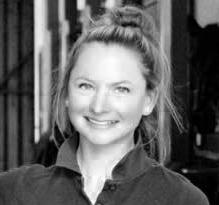
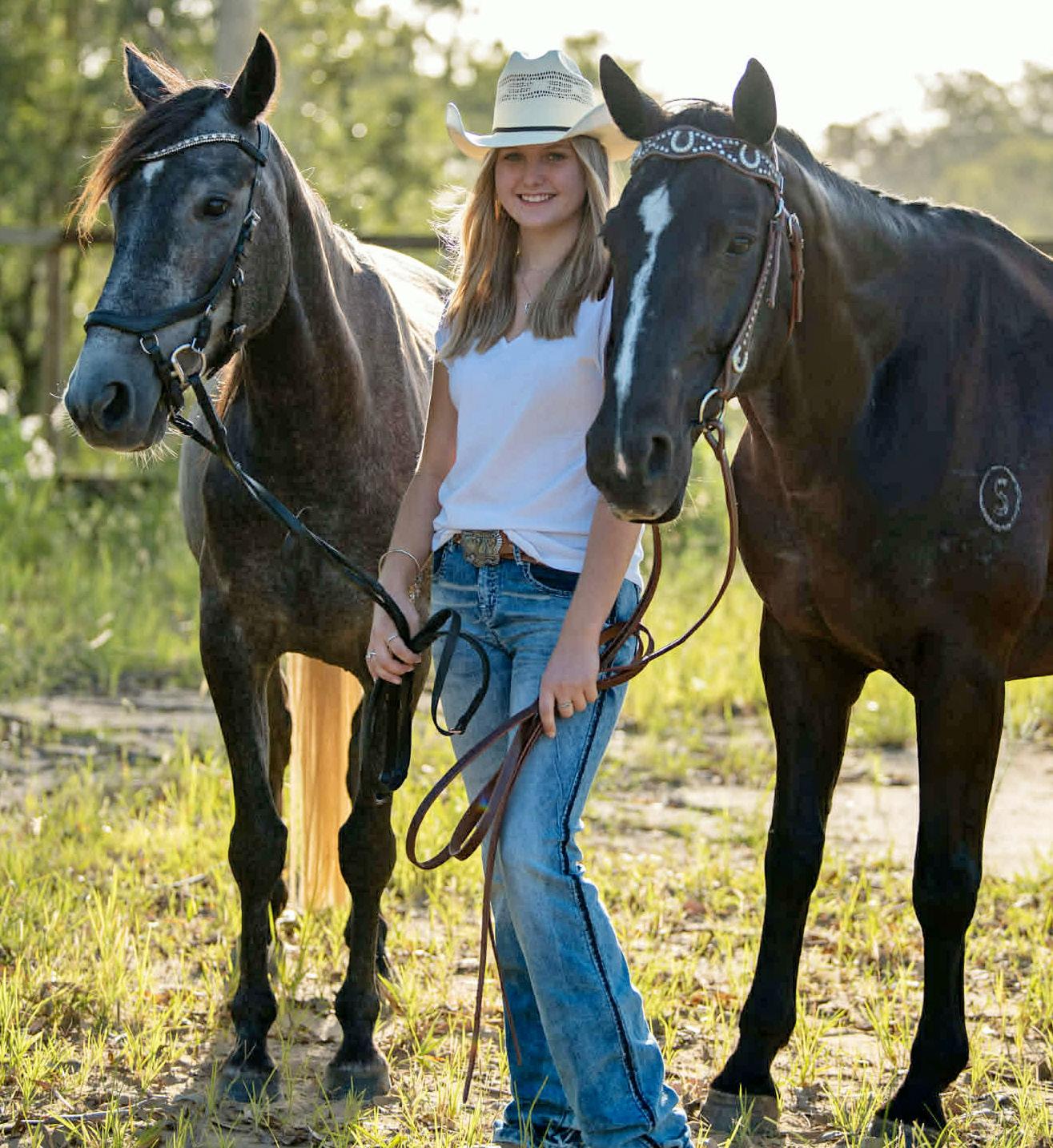
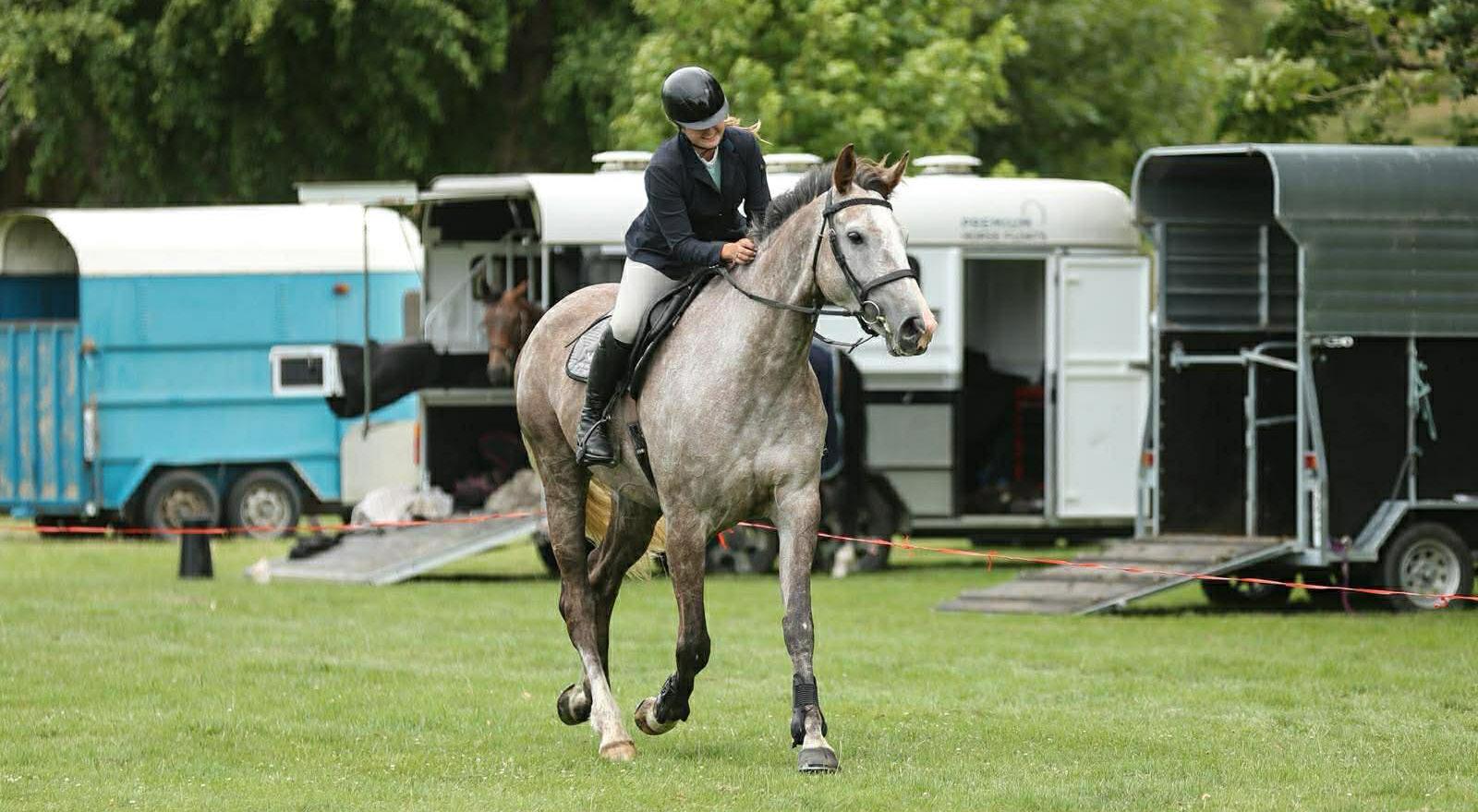
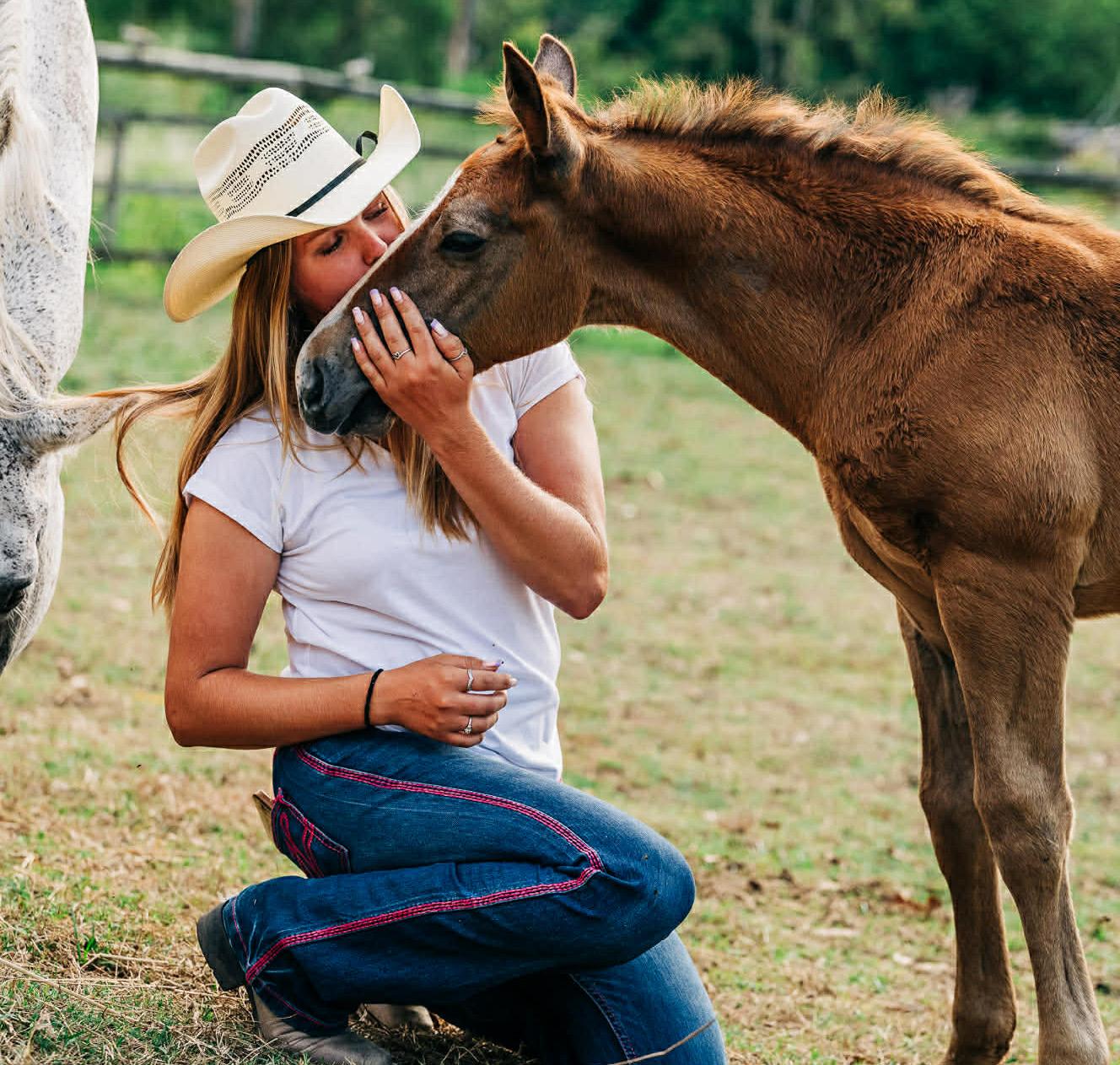
Imy is a passionate equine photographer dedicated to capturing the beauty, essence, and unique bond between a horse and rider. With her remarkable eye for detail and a deep love for the equestrian world, she creates images that tell a story, as well as providing many precious memories for owners and riders. She brings us up to date with her career and recent adventures in this month’s Postcards.
Anne-Marie Lasserre
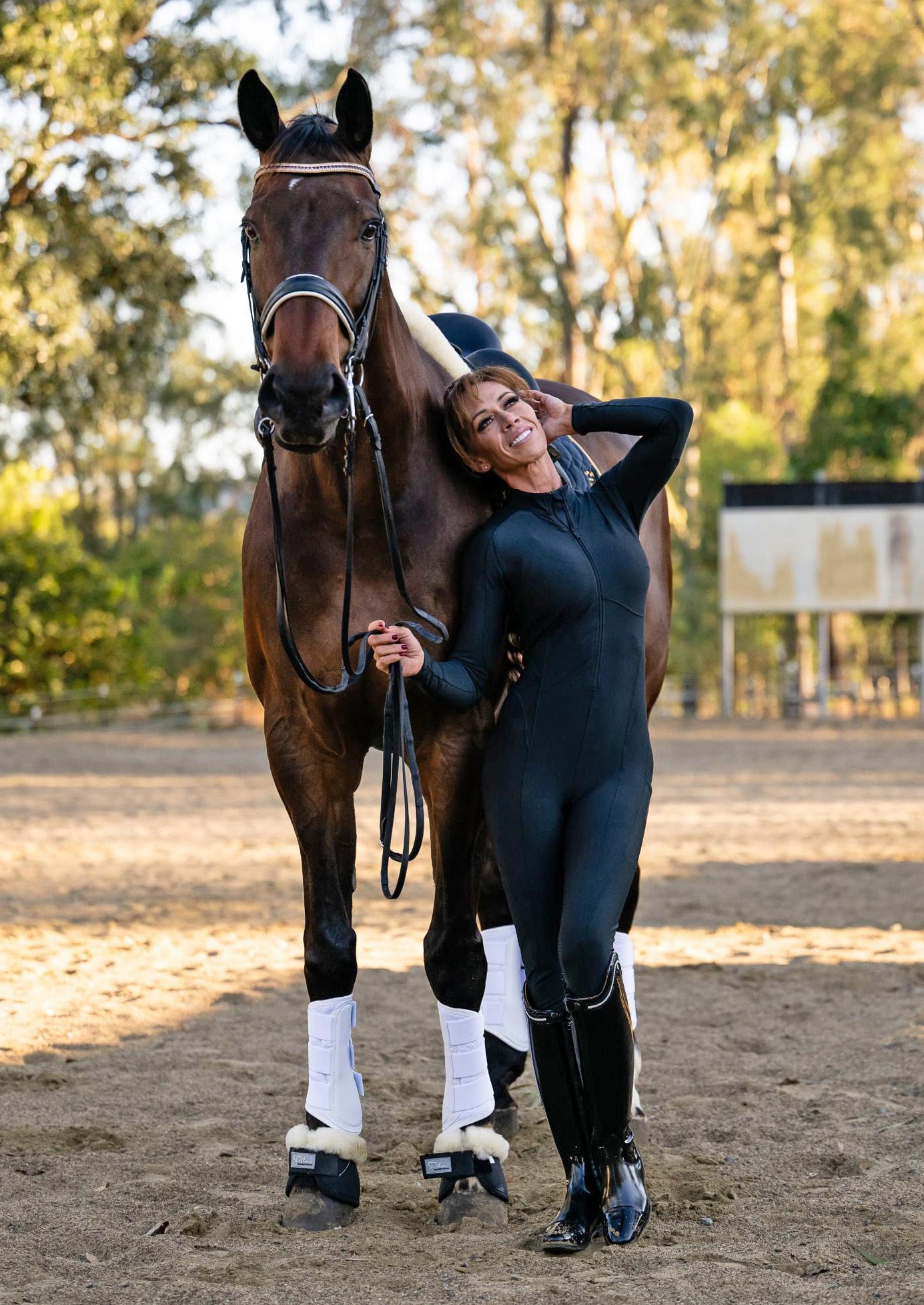
Anne-Marie is a Miss World and Miss Universe Figure Champion. She’s an AOR dressage rider, and a specialist coach in aesthetics, sports performance and nutrition. She is dedicated to empowering equestrians to achieve peak fitness and personal transformation - and if your looking to up your fitness and feel absolutely fabulous, this month's Ride Fit article is a must.
Alice Hurley
Alice is a Grand Prix level dressage rider and coach who has worked professionally for 20 years. She has competed internationally, and has produced multiple horses, both her own and her clients, to Small Tour. Her studies in equine biomechanics and rehabilitation underpin her approach, and in this issue she explains why short, intentional sessions are powerful training tools.
Dr Clarissa BrownDouglas Clarissa is an equine nutritionist with Kentucky Equine Research Australia. Her PhD from New Zealand’s Massey University focussed on equine growth and development. As part of KER’s equine nutrition team, Clarissa has worked with feed manufacturers, breeders, trainers, and riders around the world. In this issue, she discusses nutrition for our older horses.
OUR CONTRIBUTORS
Lisa Gordon
Lisa Gordon is one of Australia’s most recognised equestrian photographers, renowned for capturing the heart behind the competition. With decades of experience across Royals, state titles and grassroots events, her work blends technical precision with emotional storytellingpreserving the fleeting, authentic moments that define our sport. Turn to Behind the Shot and find out why this image is so meaningful to her.
Natalie Waters
For Natalie, CAPALL Equestrian is a reflection of her lifelong love for an industry she has been involved in for over forty years. It is her belief that what we wear in the saddle should reflect our individual elegance and strength, a belief that inspired her to create CAPALL Equestrian, the brand that celebrates quality fabrics and haute couture equestrian fashion. Read more of her fascinating story in this issue's Founders.
Zara Wyatt
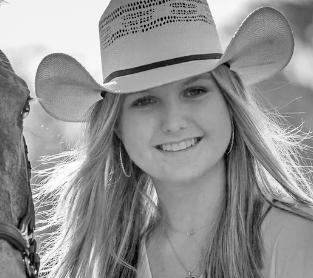
At just 18 years old, Zara Wyatt is already building a résumé many seasoned competitors would be proud of. Riding since the age of eight, she has spent the past decade immersed in the world of eventing - chasing start boxes, refining sub-30 dressage scores and learning the kind of partnership that only comes from producing your own horses. We are delighted to feature her inspiring story in this month's Young Rider.
Verona Begadon
Verona is a staunch supporter of OTT Standardbreds. Noticing they tended to get a less than glowing report card in comparison to their Thoroughbred counterparts, she decided it was time to set the record straight - and along with her beautiful OTT Super Falcon, she has done just that. Don't miss their inspiring story in this month's Life After Racing.
MINI NEWS
MAKYBE DIVA, AUSTRALIAN
ADELAIDE TO HOST 2026 OCEANIA CHAMPIONSHIPS WILL MATTHEW CLAIMS LIER CDI1* INTERMEDIATE I
RACING ICON, DIES AT 27
The Adelaide Equestrian Festival will host the 2026 Oceania Championships from 16–19 April, reinforcing its status as the Southern Hemisphere’s only CCI5*-L event. Adelaide has also secured hosting rights for 2029. The Championships will feature CCI4*-S (Senior) and CCI3*-L (Under 25) divisions, marking the first time the U25 class has been included at the Festival. More than 30,000 spectators are expected across four days of elite competition, entertainment and family-friendly festivities in the heart of the Adelaide Park Lands.
Australia’s racing community is grieving the loss of Makybe Diva, the only horse in history to claim the Melbourne Cup three consecutive times (2003–2005). The legendary mare passed away after a brief health battle, closing the chapter on one of the most remarkable careers Australian racing has known. Celebrated for her stamina, composure and extraordinary will to win, Makybe Diva transcended the sport, capturing the nation’s heart and redefining what was thought possible at Flemington. Her legacy endures as one of Australia’s greatest equine achievements.
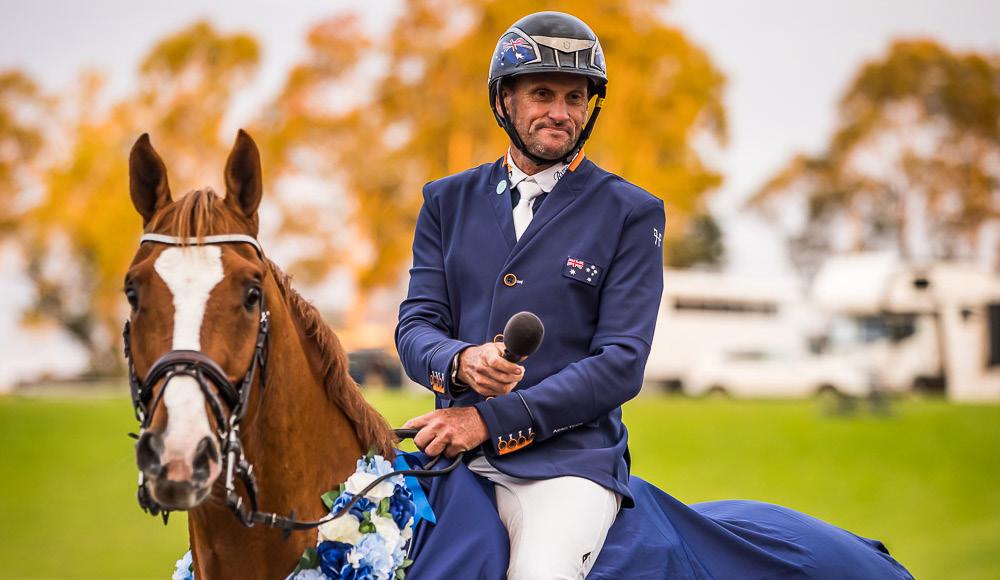
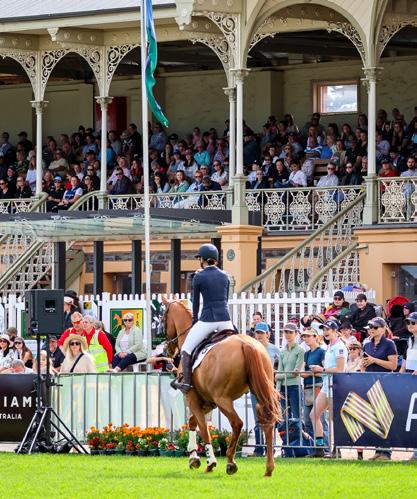
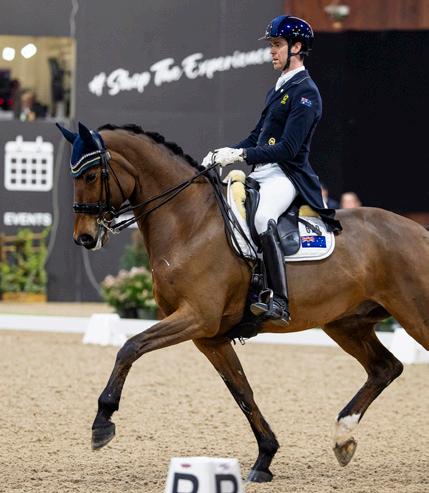
Australian Olympian Will Matthew claimed victory in the CDI1* Intermediate I at the Belgium Dressage Events CDI in Lier, partnering nine-year-old Hanoverian gelding Quentin FRH to score 69.735%, with marks reaching 71.324%. The pair also placed fourth in the Prix St Georges on 69.147%. Matthew described the result as a special milestone for the young horse’s first international start. He also competed in the CDI3* Grand Prix and Special with Oldenburg mare Faye 43, scoring 64.522% and 63.043%. Image by DigiShots.
DOHA GCT EVENT
EOI FOR 2026 INTERNATIONAL EXCHANGE
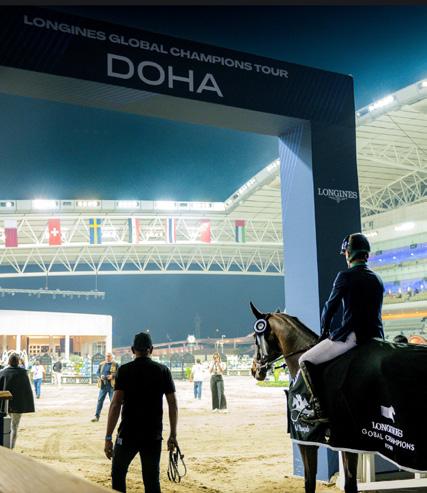
The Longines Global Champions Tour and Doha Equestrian Tour have confirmed that the Doha event scheduled for 4–7 March 2026 will not proceed as planned due to regional airspace restrictions and associated travel limitations. Organisers cited logistical and operational challenges impacting international horse and athlete transport. The programme is currently expected to resume from 11 March at Al Shaqab. Officials have confirmed all horses and personnel on site remain safe and well, with welfare a continued priority. For more information gcglobalchampions.com
Pony Club Australia is calling for Expressions of Interest (EOIs) for its 2026 international exchanges and competitions, with opportunities available for riders, coaches and team managers.
Submitting an EOI does not commit participants but allows early planning as dates, eligibility and selection processes are confirmed. Most overseas exchanges require riders to be 14 years or older, with a C Certificate or higher preferred. It’s a unique opportunity to represent Australia and build lifelong global connections. To apply go to ponyclubaustralia.com.au
2026 NUTRIEN
CLASSIC SETS NEW BENCHMARK
The 18th Nutrien Classic Sale & Campdraft has delivered its biggest result yet, marking 11 days of competition and sales with record-breaking figures.
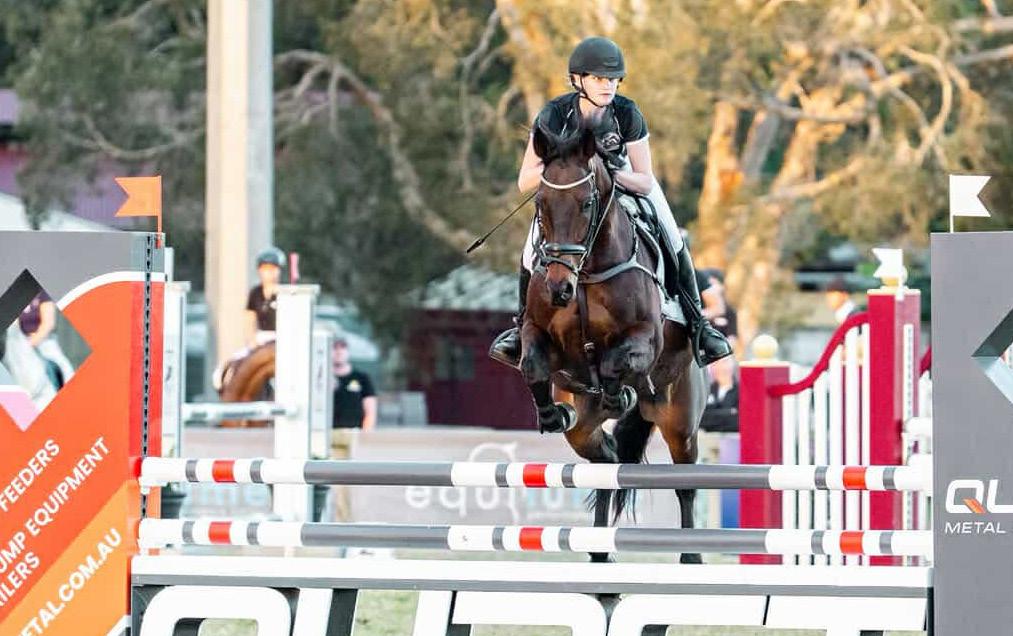
Of 680 lots offered, 602 were sold, producing a gross of $18.24 million and a strong average of $30,305.
Topping the sale was Smith Family Just Jack at an impressive $315,000. With Masters horses integrated into this year’s catalogue, the Classic achieved its highest-ever gross, reflecting outstanding vendor quality, robust clearance rates and continued buyer confidence across Australia’s performance horse industry.
Photo Grace Mary Photography
Apiam’s equine veterinary credentials are well-founded with a growing number of purpose-built dedicated Equine Vet Clinics and Referral Hospitals located in Victoria, New South Wales and Queensland, working alongside our network of mixed practice clinics in delivering quality equine veterinary care.
Find out more by visiting the
&
Scenic Rim Veterinary Service
Beaudesert QLD
Agnes Banks Equine Clinic
Agnes Banks NSW
Hunter Equine Centre
Scone NSW
Victorian Equine Group
Bendigo VIC
Gippsland Equine Hospital
Maffra VIC
Southwest Equine Veterinary Group
Warrnambool VIC
Animal Supplies
BEHIND THE SHOT
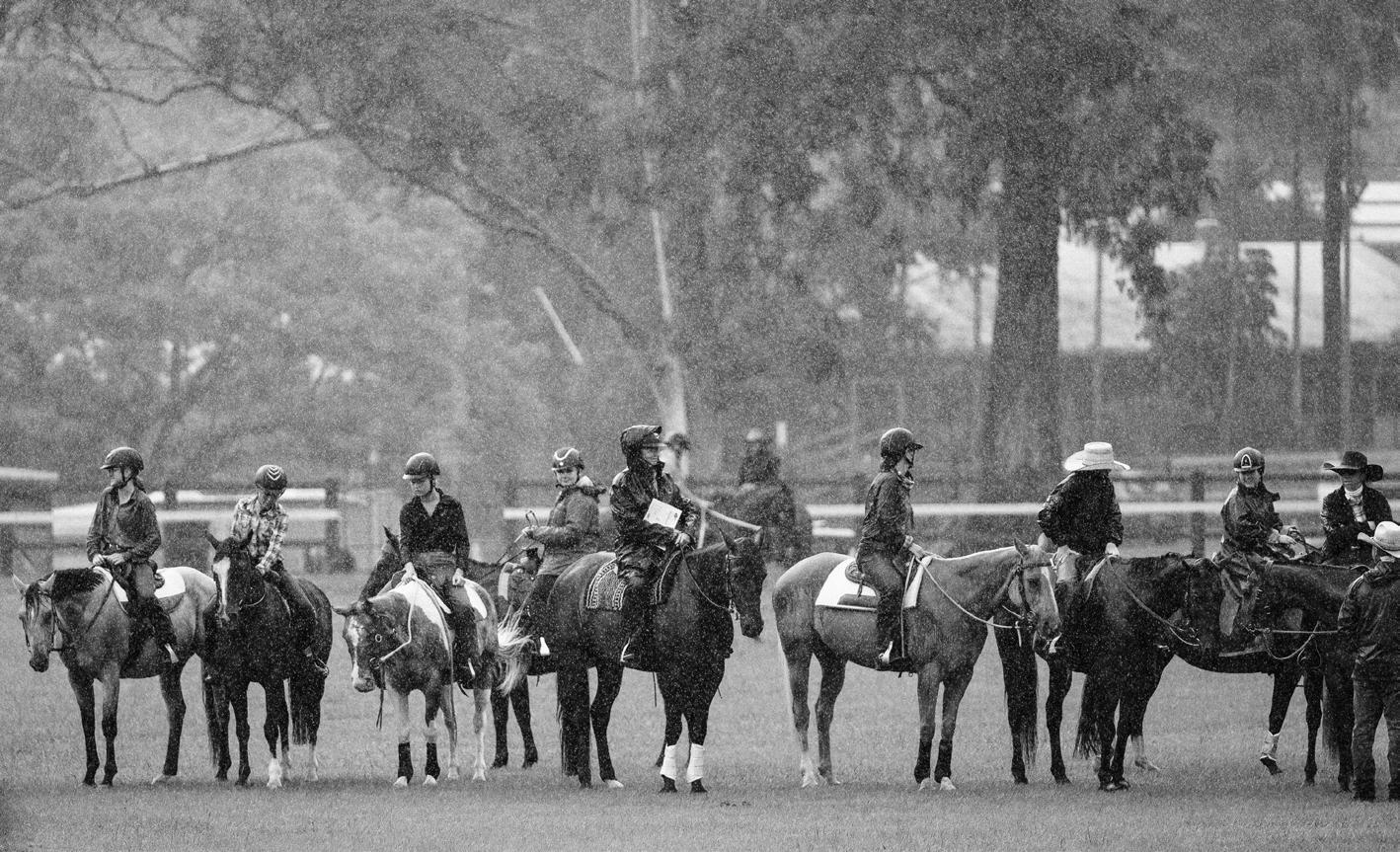
When the Storm Rolls In
LISA GORDON is one of Australia’s most recognised equestrian photographers, renowned for capturing the heart behind the competition
Event: Barastoc Horse of the Year
Location: Werribee Park, Victoria
Camera Settings: Nikon Z9, 120-300mm zoom lens, ISO 800, shutter speed 640, Aperture 2.8
Victorian weather has a way of making itself known. At Barastoc Horse of the Year at Werribee Park - one of the state’s biggest shows, with ten rings running and riders travelling from across Victoria - the skies darkened without warning.
Then the rain came. Heavy. Relentless. The kind that soaks jackets, unsettles ponies and tests even the most seasoned show families. It would have
been easy for the mood to dip. But horse kids are made of different stuff.
As the storm rolled through and a few ponies grew tight under the sudden downpour, Lisa Gordon's voice cut through the grey, calling out to the young riders: “Drink the rain!” And Millie Gardiner was quick to oblige.
And just like that, the energy shifted. Faces tipped skyward. Tongues out. Giggles bursting through the storm. What could have been a soggy setback became something unforgettable.
This image captures everything we love about grassroots equestrian life. It’s not
polished. It’s not posed. It’s real.
Lisa has spent decades documenting Australian equestrian sport, from major Royals to country qualifiers. She understands the rhythm of a show daythe nerves, the pressure, the fleeting seconds between classes. But she also knows that the most powerful photographs often happen between the official moments.
Rain at a major event affects more than just appearances. It changes footing, unsettles horses and stretches volunteers thin. Yet in this instant, joy steadied the atmosphere. Laughter softened tension. Relaxed riders meant calmer ponies.
Sometimes horsemanship is as simple as lightening the mood.
At an event the scale of Barastoc HOTY, the champions and ribbons matter. But years from now, it’s this memory that will last - the storm, the laughter, the shared resilience.
When Victorian weather does its worst? Stick your tongue out!
For more of Lisa's work, follow her on Instagram, or visit EQUInet Media
CHAT WITH A CHAMPION
Stuart Tinney OAM
STUART TINNEY has represented Australia on numerous occasions - and kindly took time out to talk with EH.
You’ve represented Australia at the highest level for many years. When you look back, what moment still gives you the greatest sense of pride - and why?
Winning the gold medal on home soil, in front of an Australian crowd, stands out by a long shot. That moment was incredibly special - so much so that we went back the next day and did another gallop around, which was almost as meaningful as the competition itself.
Eventing has evolved enormously over your career. What’s been the biggest shift you’ve witnessed, both in riding and horse management?
The biggest change came after Sydney, when roads and tracks and steeplechase were removed. That fundamentally changed the sport. There are constant smaller changes tooscoring tweaks almost every year - but that was the major one. It also shifted
the type of horses competing, with more European-style horses and fewer Thoroughbreds overall.
Have you noticed changes in how horses are managed?
Not dramatically from my perspective. What has changed is how often horses compete. In the past, you’d prepare for a big event and then give them a proper rest. Now, horses tend to compete more consistently throughout the year.
You’ve produced horses for decades. What do you look for in a young horse that others might overlook?
Soundness is huge. Trainability is huge. Those two things come first, without question.
You’ve ridden many exceptional horses. What do horses teach riders that nothing else can?
Humility. You can’t win everything - there are far more lows than highs. When
things do come together, you really need to savour it. One day you can be on top of the world, and the next day you can fall off. Longevity in the sport comes from accepting that.
At Olympic and championship level, pressure is immense. How did you learn to manage expectations?
Expectations come from yourself, so they need to be realistic. It depends on the horse you’re riding. Sometimes the goal is to be a strong team contributor; other times you might have a horse capable of winning outright. Ultimately, your job is to deliver the performance you’re capable of - that’s why you were selected. If you try too hard to exceed that, you can actually go backwards. Was there a setback that reshaped your approach to competition?
Missing out on Barcelona was a big one. I was selected, but the horse became
unsound just as we were loading him to fly to Spain. After that, it took years to rebuild - but by the time Sydney came around, I had three horses qualified. That experience taught me the importance of depth and not relying on just one horse.
You’ve enjoyed an exceptionally long competitive window. What do you credit most for that longevity?
My wife, Karen, and running a business alongside riding. Having a viable business allowed us to sustain what we were doing over the long term.
How has your definition of success evolved over time?
You should never stop learning. The sport keeps changing - rules, scoring, horse types - and the standard keeps rising. Staying competitive means keeping an open mind and trying to stay one step ahead, even as your body
reminds you you’re not 25 anymore.
Do you think the increasing variety of horse breeds has influenced that evolution?
Yes - although it’s mainly Thoroughbreds and Warmbloods now. Score changes have made Warmbloods increasingly competitive, but a top Thoroughbred still shines at five-star level because of endurance. The challenge is finding those horses in Australia, as we now breed more sprinters.
What matters more than talent or ambition?
Fundamentals. Balance, posture, and clear communication. If your foundation is strong, you can communicate effectively with your horse. Be clear, be sympathetic, and don’t get frustrated when they don’t understand - you’re dealing with an animal, not a machine.
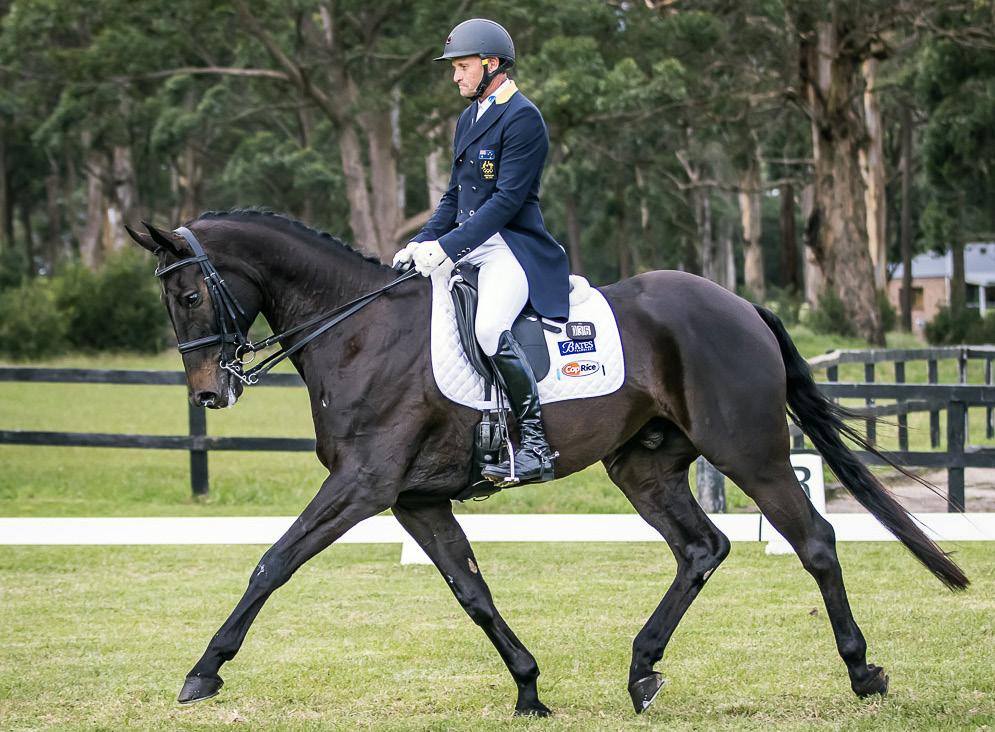
LEFT: Stuart has ridden many exceptional horses, including Elisabeth Brinton's Celebration, shown here after a decisive 4* win at the 2021 Sydney 3DE. ABOVE: Competing at Wallaby Hill in 2021, Leporis, owned by Stuart and Karen Tinney, went on to represent Australia at the 2021 Olympics in Tokyo (Images by Stephen Mowbray).
What advice would you give riders navigating the financial and emotional realities of building a competitive career?
Financially, it depends on your circumstances - there’s no avoiding that. Emotionally, it comes down to personality. Horses respond better to calm, systematic training than emotional reactions. Celebrate the wins when they come, but when you’re training, less emotion usually leads to better understanding.
How do you see the future of Australian eventing?
Very positively. We’re finally building a strong high-performance pathway for young riders again. There’s talent coming through at both grassroots and elite levels. Costs are a challenge - travel, fuel, entries - but that’s the reality across all sports.
What role do mentorship and community play in strengthening the sport?
Mentorship is huge. If you want to succeed internationally, you need someone who’s been there before. Eventing is holistic - you can’t just piece it together phase by phase.
Beyond medals and results, what do you hope your contribution to the sport will be remembered for?
Helping build a program that supports the next generation of riders to win medals for Australia in the future.
And finally - one piece of wisdom for the next generation?
Wear sunscreen and a hat when you’re not riding. Wear a helmet and sunscreen when you are.
Follow Stuart on Instagram, Facebook, or visit Tinney Eventing, where the primarily focus is on campaigning eventers and providing elite training for up-and-coming performance riders.
ABOVE: Stuart and Celebration making short work of the Sydney International 3DE water complex (Image by Stephen Mowbray). BELOW: Stuart, Viennese, Karen Tinney and Viennese's owners Kerry Blair and Alice Weller at the Melbourne International 3DE (Image courtesy Tinney Eventing).
LIFE AFTER RACING
Flying High with the Super Falcon
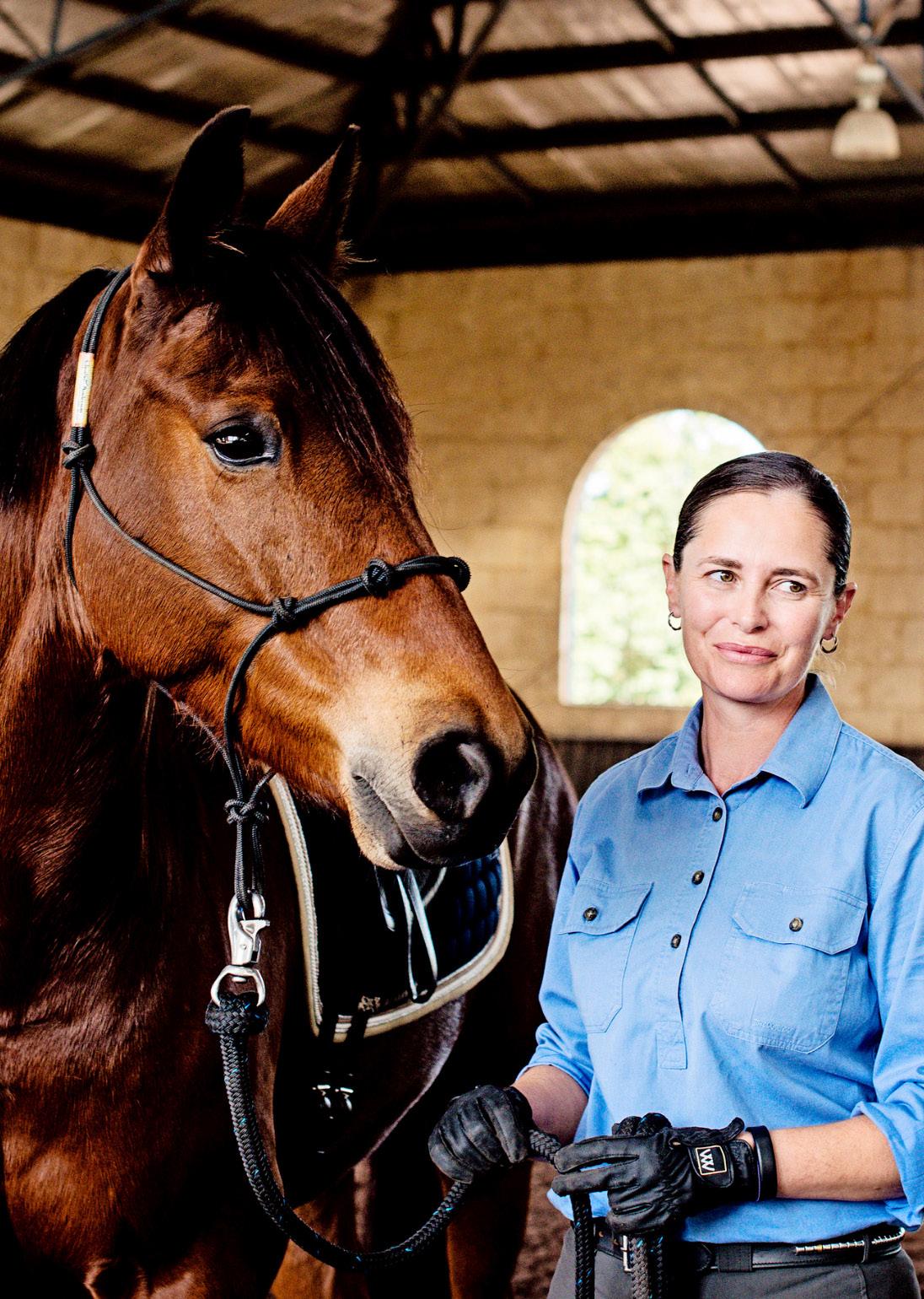
VERONA
BEGADON is, to say the least, determined - and when she realised OTT Standardbreds were underrated, she decided it was time to put matters to rights.
Verona Begadon is very sure of two things: nothing is impossible if you surround yourself with the right people; and determination pays big dividends, a lesson she learned early in life. And in partnership with Super Falcon (Mango), her off the track Standardbred, she’s proving her point on both counts.
Verona reckons that OTT Standardbreds generally tend to get a less favourable report card when compared to their Thoroughbred counterparts. But having been on the receiving end of negative perceptions herself, those are exactly the kind of ‘less than best’ opinions that she takes very great delight in challenging. So when Mango came into her life, she decided it was game on.
Originally from County Laois in Ireland’s picturesque Midlands, Verona started riding when she was 12 and for six years had regular lessons and enjoyed jumping and hacking. “I’ve always loved horses,” she says, “I lived and breathed them. They were a massive part of my life growing up.”
Unsure of what she wanted to do when she first left school, Verona eventually settled on a Nursing Degree through Edinburgh's Queen Margaret University. After graduating, she worked in the city for two years until the weather, not known for balmy days and blue skies, eventually got the better of her, and suddenly the idea of Australia
was looking very appealing. “I used to work with a guy from Toowoomba in Queensland. We’d talked about Australia a lot, and there was just something about it that kept tugging at me,” she muses.
It took another year to get the necessary arrangements in place, including a job offer from Brisbane’s Princess Alexandra Hospital, but now, 17 years later, she's
more than happy to still call Australia home.
And just as Australia had drawn her, it wasn’t too long after Verona’s arrival that horses began to call to her too. At the time she was nursing a patient with a friend who owned OTT Standardbreds - and when the opportunity presented itself, Verona visited the friend's property, had an enjoyable ride on one of their horses, and decided that she quite liked Standardbreds.
That said, she freely admits she had absolutely no idea what she was getting herself into: “I’d grown up with ponies and jumping horses and knew very little about the breed!” Nevertheless, always up for a challenge, she went to look at a horse she’d found through the Standardbred Association Queensland's (SAQ) adoption program – and she absolutely loved him. The horse was, of course, the then seven-year-old Mango. “I paid the $50 adoption fee and away we went,” she says.
Convinced that it wouldn’t be long before she was successfully competing with him, she soon realised that it wasn’t going to be quite as easy as she had
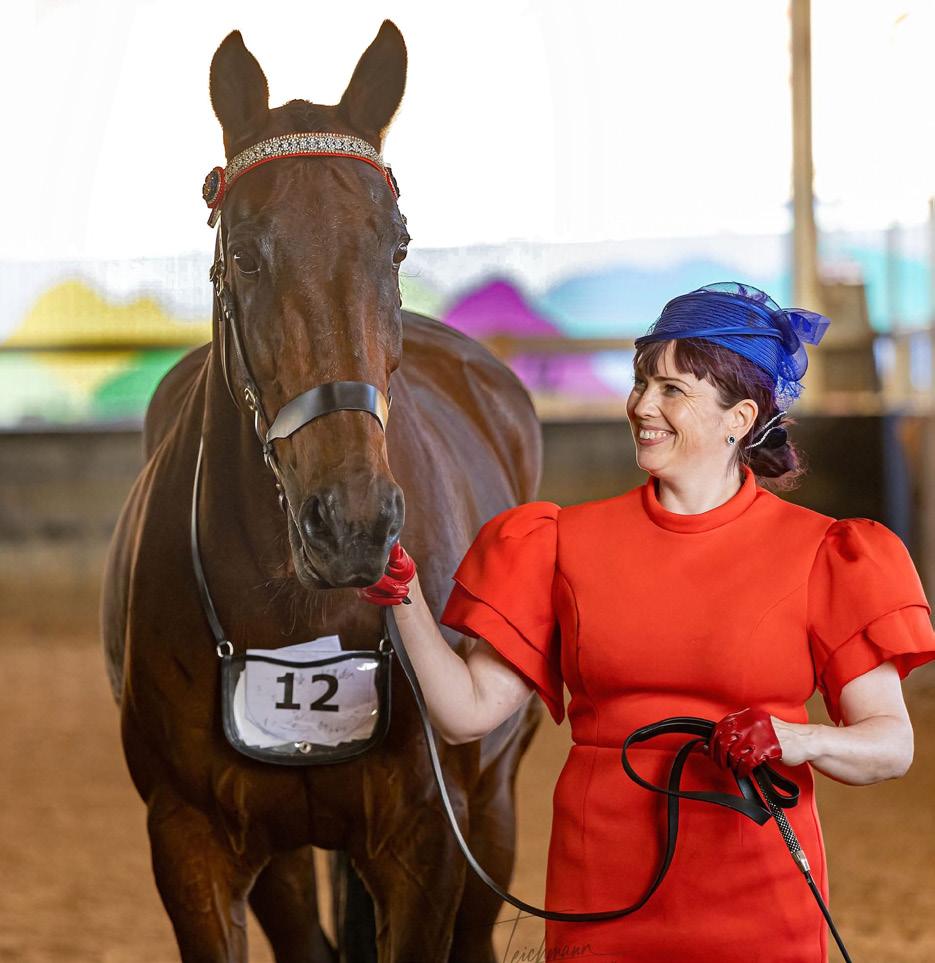
LEFT: The smile says it all - Verona and Mango, winners of the 2023 SAQ Track to Hack Championship. (Image by Teichmann Photography). THIS PAGE: As sweet as his namesake, Mango loves to give kisses, particularly if there's a treat involved (Image by Equinet Photography).
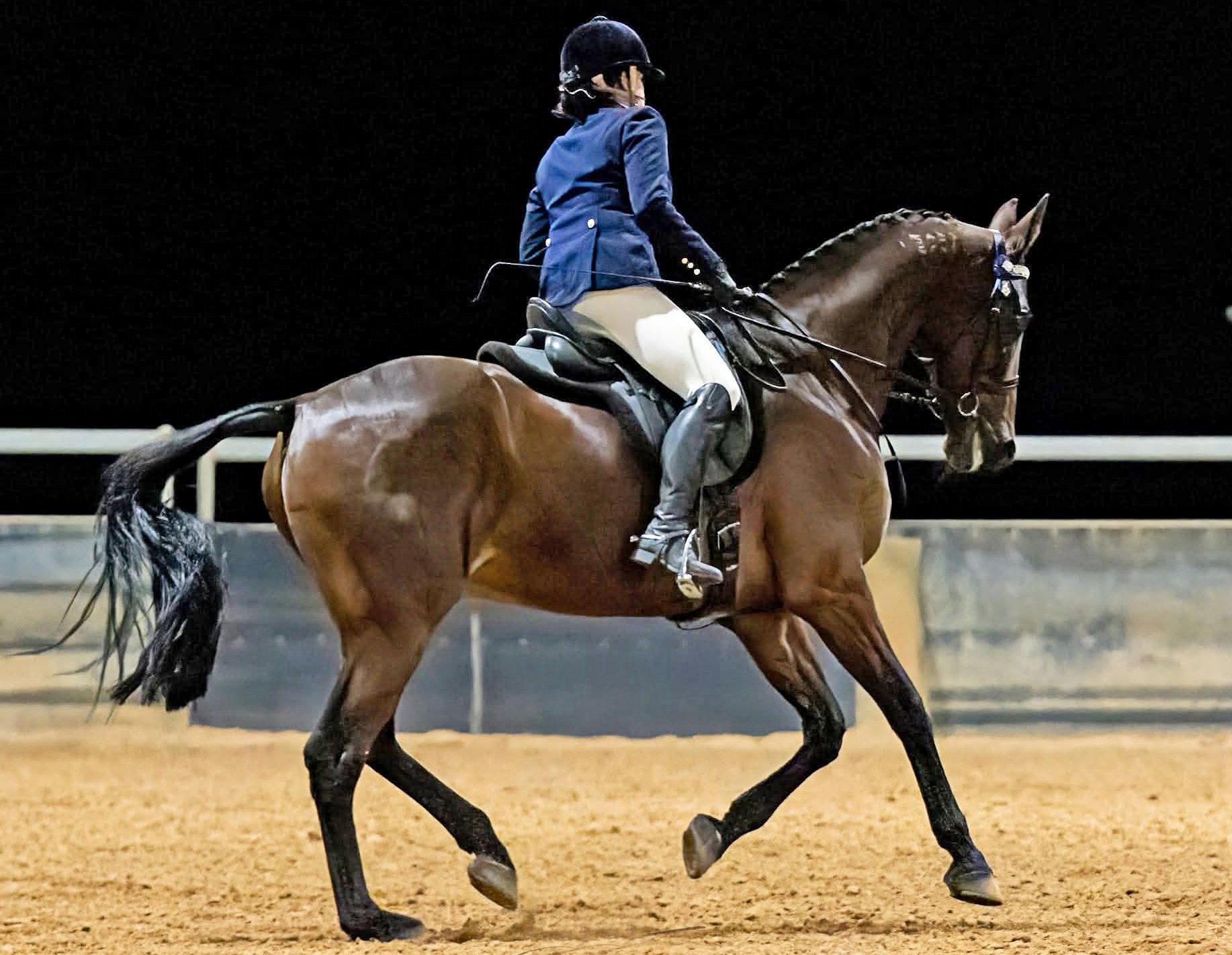
ABOVE: Mastering a two beat trot and three beat canter have been game changers for Verona and Mango, who are now wellknown competitors in open dressage classes as well as Standardbred showing classes (image by Teichmann Photography).
at first thought. “He’d been raced from when he was a two-year-old up until the time I adopted him and he'd done really well. He won $177,000 for his then owner, who'd bought him for $5,000 at auction - but he’d never had anyone on his back and had absolutely no idea what leg aides were about,” she laughs. And the following nine years proved to be a struggle; “I had a couple of coaches but we didn’t seem to be getting very far,” she recalls.
For some people, this might have been good enough reason to give up - but not Verona, who still firmly believed in Mango. So having exhausted all available avenues, she put out an allpoints bulletin to the Universe asking for the kind of help she and Mango needed.
And if you set any store in the Universe, or the old adage that when the pupil
is ready, the teacher arrives, you won't be in the least surprised that it was then Verona met dressage coach Kristy Battista, and everything changed.
Not only did Kristy start coaching Verona and Mango, she also put Verona in touch with performance vet Tim Hawthorne, and with Dr Narelle Stubbs, the official Australian Equestrian Team equine physiotherapist at four Olympic and five World Equestrian Games. Sure enough, the then 16-year-old Mango blossomed. “That's when all our successes happened. Kristy, Narelle and Tim have been the main factors in getting Mango's body into the condition where he can do what he does now," a delighted Verona says.
After retraining Mango to perform a balanced two beat trot and three beat canter, he became transformed to
the point where he now successfully competes in open novice dressage classes - and that's after enjoying more than a few accolades in ridden and inhand show classes.
As a side note, in Verona's opinion Mango benefited greatly from training with the Equiband® Pro system. Cofounded and developed by Narelle, the system encourages horses to activate and strengthen their core muscles, essential for the wellbeing of equine athletes at all levels,
Much of Verona's determination has been fuelled by her dream of making Mango a star. Acutely aware of the negative perceptions associated with OTT Standardbreds (and having experienced her fair share of being looked down on and bullied at
LIFE AFTER RACING
school) she has been on a mission to demonstrate how talented and versatile OTT Standardbreds in general, and Mango in particular, really are. "Basically, I turned my own life around, so I knew I could help him to do it too. Mango is a massive symbol for me, and I was determined to show people what he was capable of."
And Verona has succeeded! With his tattoo on full display and often the only Standardbred amongst larger and fancier breeds, Mango is recognised and respected by competitors and judges alike - respect that is more than well deserved. Winner of the 2025 QOTT Standardbred Leaderboard for Show Horse - an award Verona was thrilled to receive at the prestigious Equestrian Queensland Annual Awards ceremony - in 2024, Mango was Ekka Standardbred Champion, Equestrian Queensland OTT Leaderboard Champion Dressage Standardbred, and Champion Standardbred at the Kalbar Agricultural Show, and in 2023, the SAQ's Track to Hack Champion.
While Verona is keen to compete in more ridden show classes, she is now concentrating on dressage, which is also going very well: "We competed at a recent official competition and scored 62.5% in our Official Novice 2.1. That qualified us for the Adult Owner Rider National Championships in August at the Queensland State Equestrian Centre in Caboolture, so I am very excited."
Verona believes in a slow and steady approach to the now 20-year-old Mango's career: "If he can compete until he's 27 or older, I would love that. But we get an annual vet check to see how he's coping, and we're just taking it year by year.
If you're adopting, or thinking of adopting an OTT Standardbred, Verona has some good advice. "Be patient and find the right people to train you and bring out your potential. It's well worth it."
You can keep up to date with Mango's progress on Verona's Facebook page
ABOVE: Competing in the 2024 SAQ Track to Hack class. BELOW: Verona and Mango in the Open Ridden Hack Class during the 2025 SAQ Hack Championships at Gatton (Images by Teichmann Photography).
PONIES
Perfect Partners
Dazzle Me has been in SOPHIE BINK’s life for five unforgettable years.
Her name is Dazzle, and from the moment Sophie laid eyes on her, there was no turning back. Five years on, this sassy little palomino has become more than a first ponyshe’s the foundation of grit, growth and golden childhood memories.
Ten-year-old Welsh Mountain Pony
Dazzle Me - known simply as Dazzlemay stand just 12.1hh, but she carries the kind of presence that fills an arena.
Bred by NSJ Welsh Mountain Ponies
Stud in Yanderra, NSW, this golden palomino has been part of Sophie Bink’s life for five unforgettable years - and was, in fact, her very first pony. And yes… she had to be palomino.
A Pony Girl’s Dream
From the age of four, Sophie was devoted. Led classes at her local riding school quickly turned into independent riding, and what began as childhood
For over a year, she pleaded for her own pony. The brief was specific and nonnegotiable: palomino.
While the family was living in Canberra, Sophie’s nan and pop spotted a Gumtree listing and sent it through. A two-hour drive to Cootamundra later,
they met a pony who was in paddock condition but had safely carried young children and previously competed successfully at Sydney Royal. They saw potential. They saw heart. They saw the one.
At the time, Dazzle had never jumped. She was primarily a hack pony. But something about her said there was more to come. They were right.
Sassy But Sweet
In Sophie’s words, Dazzle is “sassy … but sweet.” She greets Sophie at the gate, ready for pats and cuddles. Their bond is obvious - built over early mornings, long afternoons and shared triumphs. But don’t mistake sweetness for softness. Dazzle has a need for speed and a bold approach to life. She launches enthusiastically at jumps and has been known to express herself with the
occasional buck or cheeky nip during girthing. She is, as Sophie describes her in one perfect word “expressive”.
Tiny But Mighty
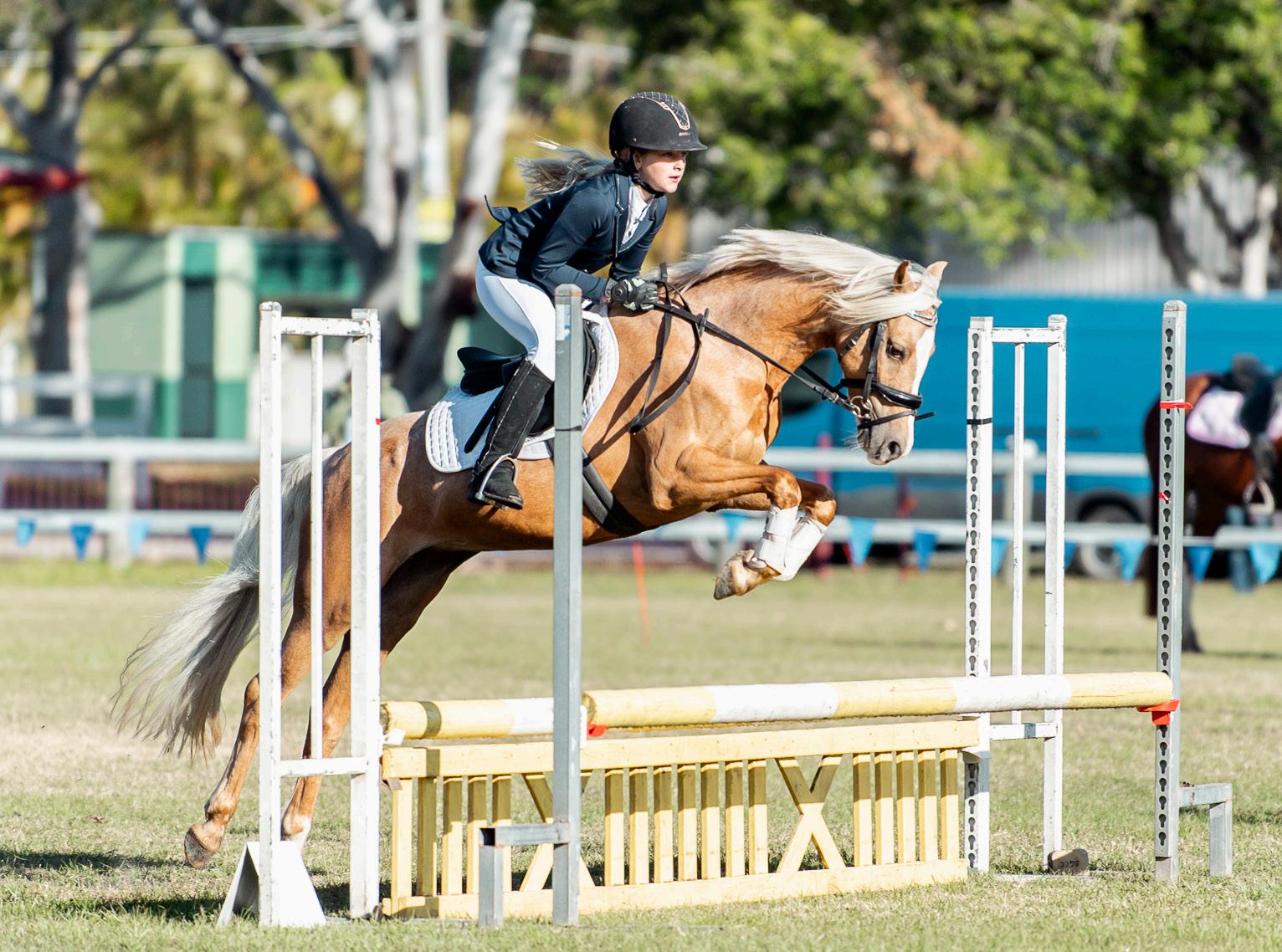
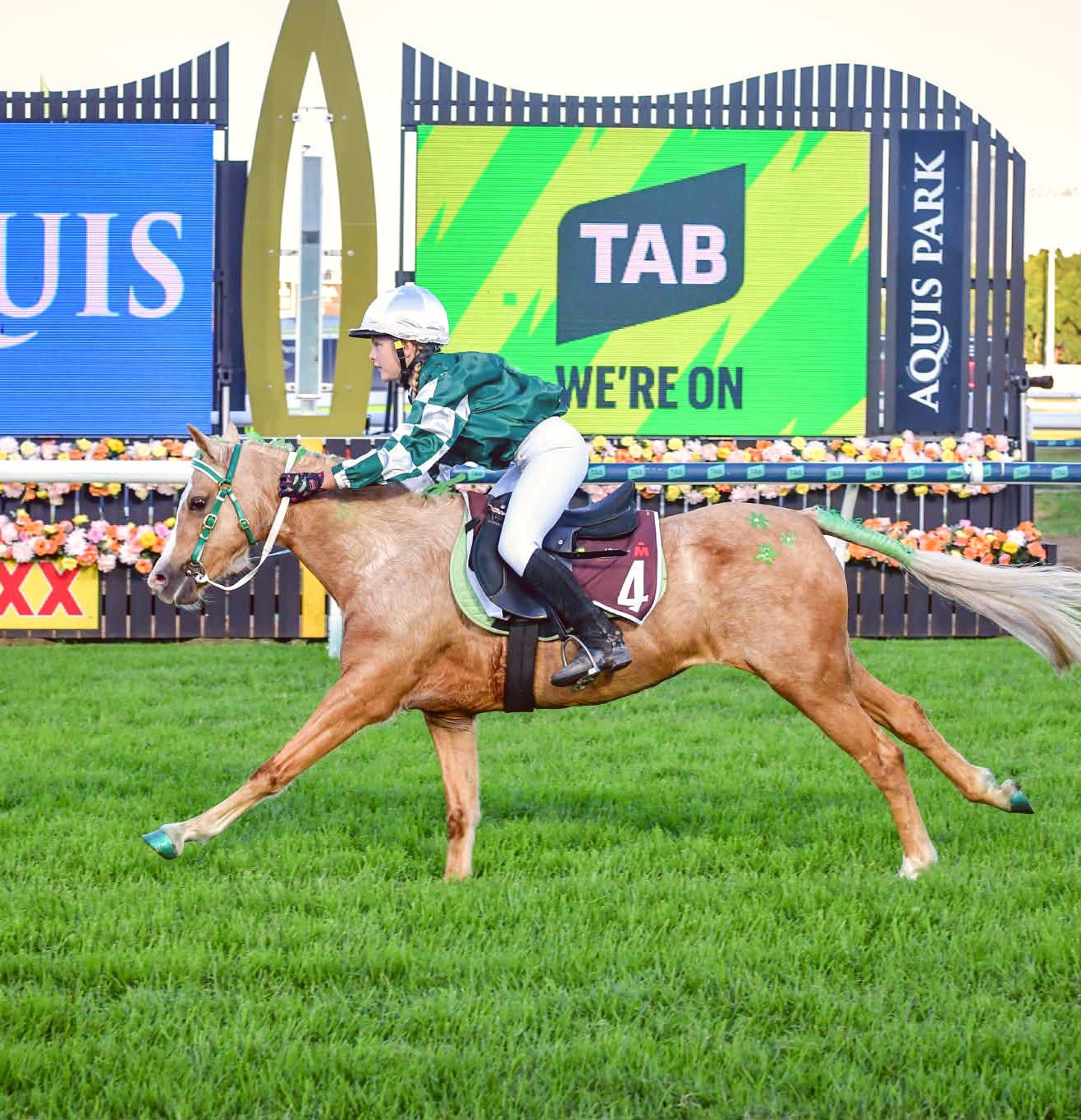
Dazzle continues to surprise. In 2025, she stunned everyone by winning the Gold Coast Pony Races at the Turf Clubproving her incredible turn of foot. She has also developed into a remarkably capable show jumper. Despite her compact frame, she has jumped 1.20m at home - a serious effort for a 12.1hh pony. Her favourite discipline now? Eventing. Because why choose just one thing when you can do it all?
Lessons Beyond the Saddle
Dazzle has taught Sophie how to ride - physically, mentally and emotionally. There have been bucks. There have been refusals. There have been falls. But there has never been quitting. Each time
Sophie dusted herself off, climbed back into the saddle and tried again.
Owning Dazzle has shaped more than riding skill. It has built responsibility and work ethic. Twice-daily feeds. Stable cleaning. Rugging. Grooming. Tack maintenance. Early mornings before school. Afternoons spent caring, not complaining. Her dedication doesn’t require reminding. It’s simply who she is.
The Pony Behind the Sparkle
Dazzle is a 10-year-old Welsh Mountain Pony standing at a perfectly pocketsized 12.1hh - compact, golden and impossible to ignore. At just 11 years old, Sophie Bink proudly calls her own, and together they are based in Mount Nathan on the Gold Coast, riding with Mount Tamborine Pony Club.
In the stable, she answers to many names - Dazzy, Pumpkin Pie, DazMaz,
ABOVE: The versatile Dazzle is more than capable of clearing 1.20m at home, a great effort for a 12.1hh pony (Image by Jasmine Dunmore Photography). LEFT: Surprise winners of the 2025 Gold Coast Pony Races.
Dazshmaz - depending on her mood (and how cheeky she’s feeling that day). She has a refined palate when it comes to treats, favouring Stud Muffins and carrots above all else, which is why Sophie insists that if Dazzle had a human career, she would undoubtedly be a food critic - or perhaps a professional taste tester.
Although, with her golden coat, flowing mane and undeniable presence, modelling would suit her just as well. After all, she is, as Sophie proudly describes, a true “Barbie pony.”
The Heart of It
First ponies are rarely just ponies. They are teachers of resilience. Builders of confidence. Mirrors of patience. They are the beginning of something.
For Sophie, Dazzle is more than her first pony. She is the foundation - of skill, of grit, of responsibility, and of that unshakeable horse-girl devotion that begins young and never quite leaves
LEFT & ABOVE: One of the family - Sophie and Dazzle share a very special bond. BELOW: Streaking towards the finish line at the 2025 Gold Coast Pony Races
Alice and the champion stallion Bluefields Berlin (Image by Jessica Aitkins Studio).
Tips for the Time Poor
When life gets busy, it’s easy to feel that there’s no point riding unless you have an hour to spare. ALICE HURLEY explains why short, intentional sessions can be some of the most powerful training tools.
Everyone leads a busy life and for those juggling multiple responsibilities fitting in a workout on your horse can at times feel impossible. Many people feel that if they can’t dedicate enough time for a ‘proper’ schooling session then the task of exercising their horse may seem pointless and they end up feeling defeated and deflated.
However, this doesn’t have to be the case. Whether it’s your busy schedule or extreme weather dictating your time with your horse there are lots of ways you can get the most out of the time you have.
Quality over Quantity: If you have a window of 20-30 minutes for a ride don’t waste your energy stressing about trying to work on everything. Simplify your session and if necessary, just stay in walk and trot to help focus your efforts. There is so much than can be achieved to improve your horse’s general way of going by focusing on the 'simple' stuff like a walk-trot transition for example.
I always say that each transition must add value to your training session. Challenge yourself to do 10 each way on a 20m circle. Focus on the line of the circle and the rhythm of the pace. After three, notice: what is the pattern? What needs adjusting? Do I need more inside leg? Does my horse need to be more responsive to the aid? Is my horse drifting out? Do I need more bend?
Put the adjustments into practice. After six, assess yourself: am I blocking with a hand? Am I central in the saddle? Ensure you are preparing consistently in the same way for each transition. By 10 you
have already worked on suppleness, responsiveness, rhythm, accuracy and your own position.
The importance of walk work:
Don’t underestimate the importance of walk work. It’s too hot, I can’t work my horse! It’s too wet, the arena is underwater! I only have 15 minutes to ride!
Providing you have a sensible horse and a safe environment, walk work can add so much value to your weekly regime; whether in the arena, in the paddock or out on trails. Meandering around on grass is a great way to encourage your horse’s proprioception whilst using his body and keeping the work different and fun.
If you’re up to a level where you are working on laterals this is a good opportunity to improve suppleness and strength in a low-impact way.
Groundwork: There are so many benefits of groundwork. If you are tight for time and you can’t afford to waste it tacking up, groundwork is an excellent alternative.
There are hundreds of exercises that can be performed with little more than a halter; from simple lunging and transitions, to lateral work and pole work. That said, working horses on the ground is a separate skill in itself and should be approached cautiously if you lack knowledge or confidence.
For me it is the foundation of your relationship with your horse and should be held to the same standard as when you’re in the saddle in order to compliment and support the ridden work. There is an endless selection of
exercises available online but my advice would be to seek the guidance of a trusted coach or equine professional to help choose what’s right for you and your horse.
Little and Often: Working your horse consistently in small, bite-sized chunks is far more valuable than leaving them in the paddock for days or weeks at a time and only pulling them out when you have time for a lengthy schooling session.
Consistency is key to building a relationship, to progress and most importantly to maintain a healthy, sound horse. Imagine if I told you to go for a 10k run after no exercise for 4 weeks. You wouldn’t feel too great either! Regular short, gentle work is more beneficial than nothing at all.
You can follow Alice on her Facebook page.
New Highs
Inside the CATHAY CARGO Journey to the Hong Kong International Horse Show.
In elite equestrian sport, the journey begins long before the first stride down centreline or the first fence leaves its cups. Before the polished boots, before the anthem, before the rails fall - there is a runway.
For the 2026 Hong Kong International Horse Show, that runway leads skyward.
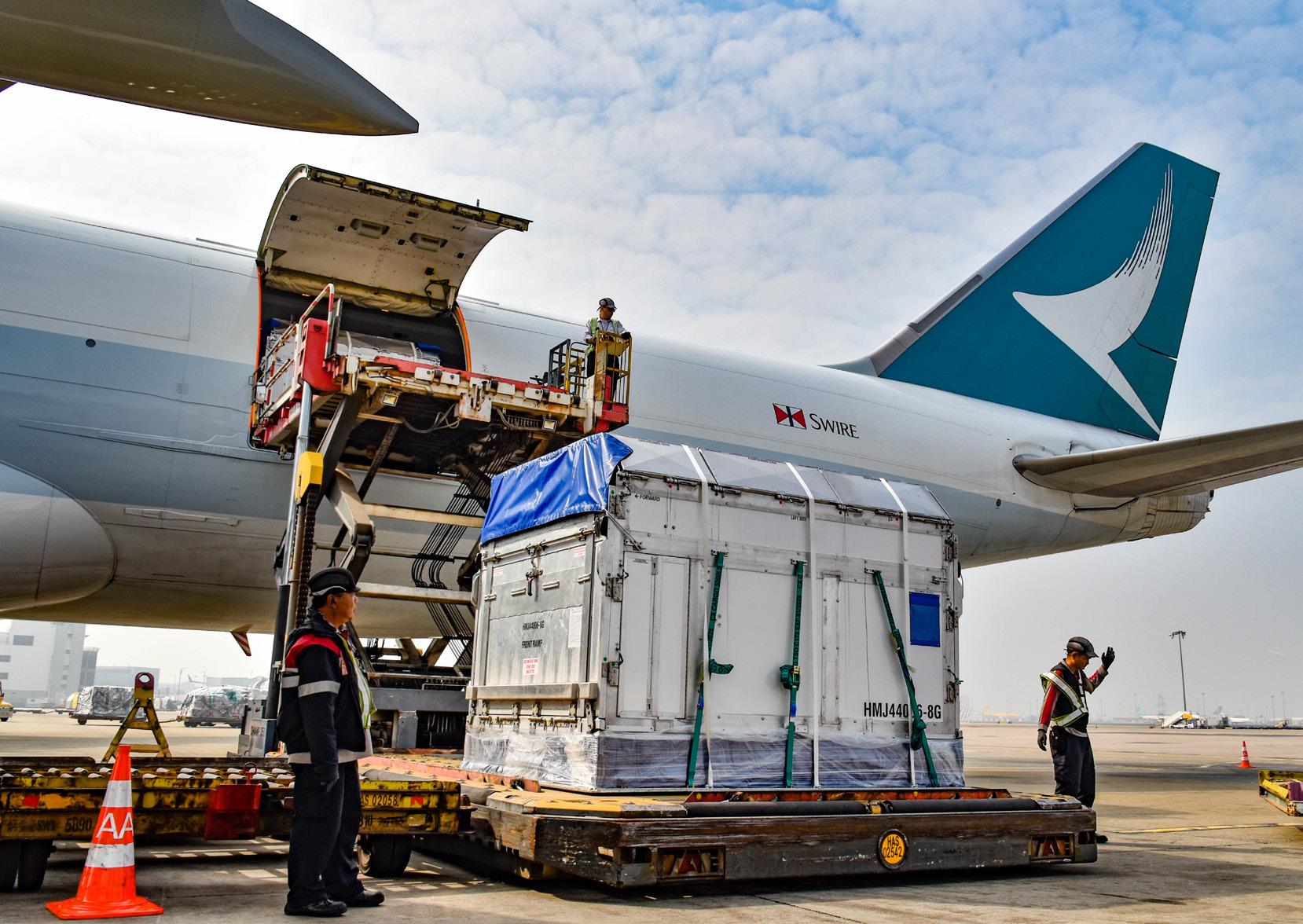
This year, 51 elite horses, nine ponies and seven dogs travelled by charter to Hong Kong. They flew standing up in custom-built air stalls, accompanied by a dedicated team of professional flying grooms and a specialised flying veterinarian who monitored them around the clock.
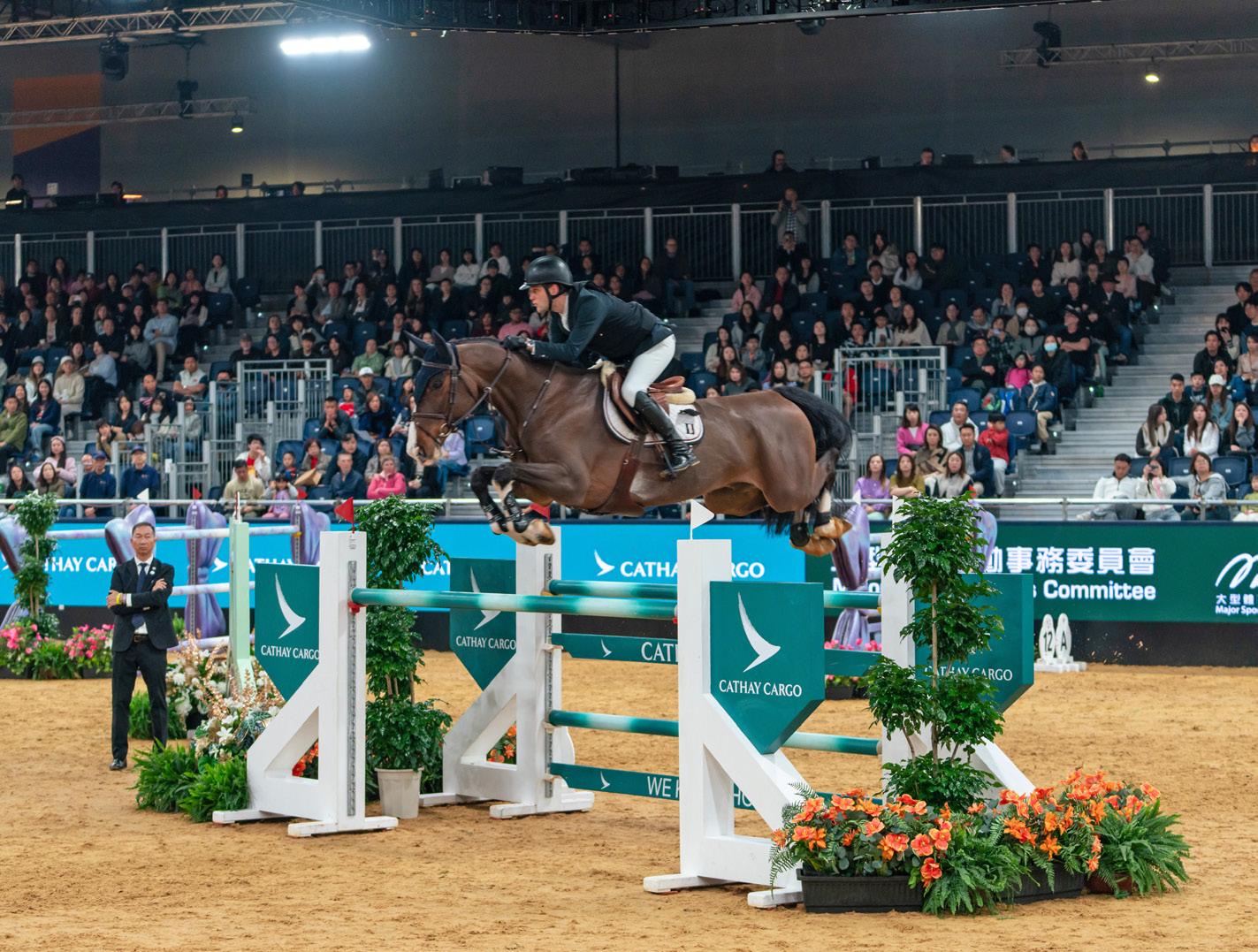
Behind this extraordinary operation is Cathay Cargo - Founding Partner of the
show and a global commercial team led by James Evans, General Manager Cargo Commercial.
For Evans, cargo is not about freight. It’s about trust. “I started my career in Cathay Pacific in the Cargo department 26 years ago,” he reflects. “What makes Cathay Cargo special is the people. There’s a genuine appreciation that every shipment matters to someone.”
And when that shipment has four legs and a heartbeat, that philosophy becomes deeply personal.
Months Before Take-Off
While spectators see a seamless arrival, planning begins months earlier. For events like the Hong Kong International Horse Show, Cathay Cargo forms crossfunctional working groups across cargo planning, flight operations and ground handling. Detailed risk assessments are conducted for every possible scenario
ABOVE: Equine passengers are given priority loading to minimise transit time on the ground. LEFT: Cathay Cargo - Founding Partner of the Hong Kong International Horse Show.
- from weather delays to diversions. Shipment timing is carefully considered to avoid extreme summer heat, winter cold or congested airport periods.
If conditions are not right, plans are adjusted. That discipline sits at the heart of their welfare-first approach.
Cathay Cargo was the first carrier in Asia to achieve IATA CEIV Live Animals certification, reflecting adherence to the highest global standards in live animal transport. But as Evans explains, certification is only the beginning.
“Welfare-first thinking is embedded as a decision-making principle across our organisation. It’s not just about meeting standards - it’s about constantly raising them.”
What Flying Actually Looks Like for a Horse
So what does the experience look like from the horse’s perspective?
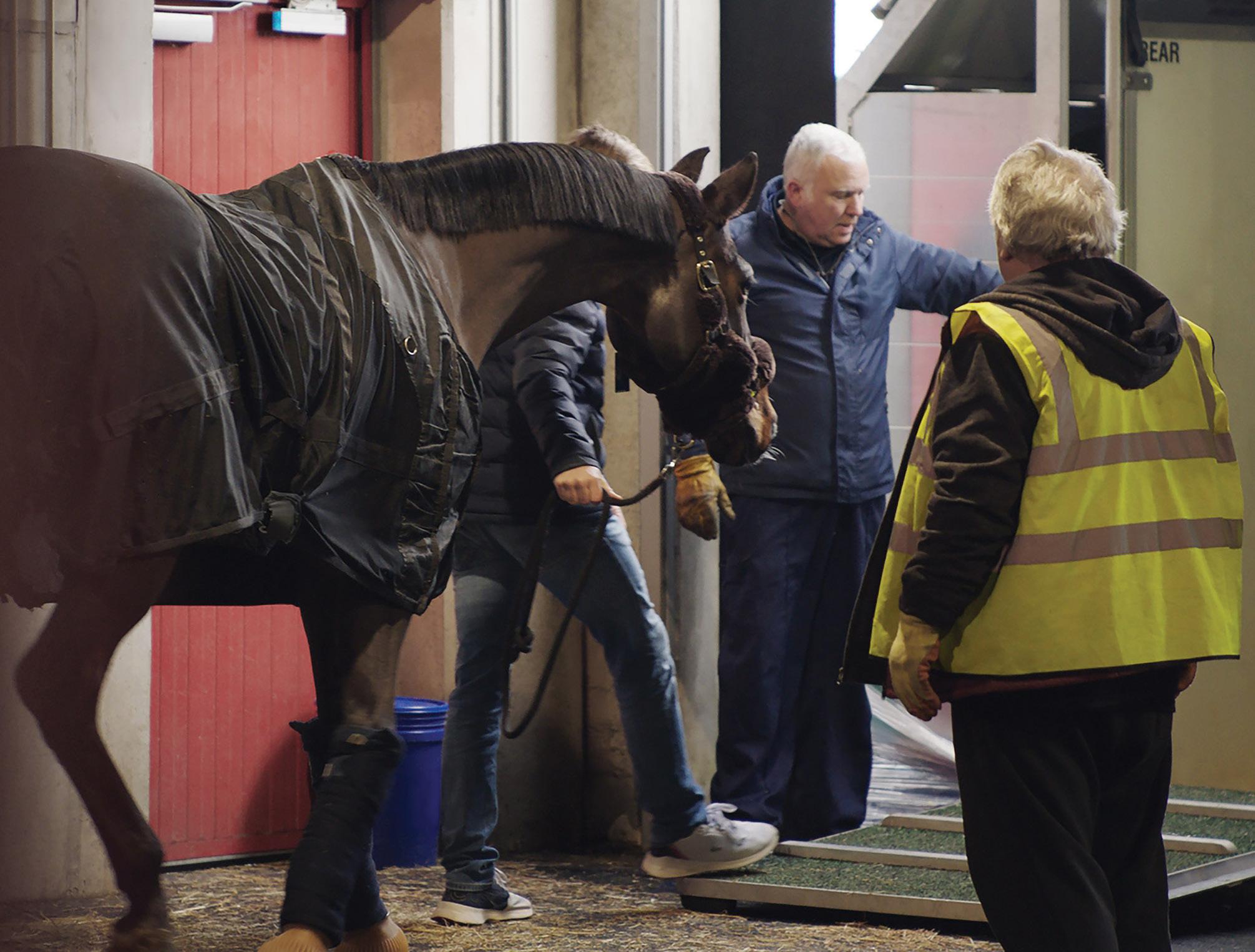
Unlike human passengers, horses do not sit. They fly standing up in IATA-compliant custom-built stalls designed to replicate stable conditions as closely as possible. Depending on temperament and size, horses may travel three to a stall, two to a stall or individually.
Before boarding, they are stabled at the airport to rest and relax. They receive priority loading to minimise transit time on the ground. Once airborne, the aircraft environment is adjusted specifically for them.
The main deck temperature is maintained between 12–14°C, accounting for the warmth generated inside the stall from body heat. Pilots use specialised software to monitor temperature, humidity and CO₂ levels continuously throughout the flight. Professional flying grooms and
veterinarians travel on the freighter with full cargo deck access. They monitor respiration rates, heart rates and overall demeanour, providing familiar feed at intervals to avoid digestive upset. Horses have access to ad lib hay - the equestrian equivalent of an all-youcan-eat buffet - and constant access to water. Electrolytes are available if required.
There is even a direct communication line between the grooms and the cockpit. If a horse appears unsettled, adjustments can be made mid-flight. Landing procedures are calibrated with equal care. Pilots use lower auto-brake settings and longer runway rollouts to ensure gentler deceleration - critical for animals that remain standing throughout the journey.
On the ground, speed is reduced
to walking pace. At the ramp, horse stalls are moved at approximately five kilometres per hour to minimise noise and vibration. Parking bays are booked as close to terminals as possible to shorten exposure to the busy apron environment.
It is logistics, yes - but it is also in motion.
The World’s Most Unusual Frequent Flyers
Among this year’s passengers have been athletes of every size and personality.
Leading the group in seniority is Cranford Fantastic, a 20-year-old brown dun Shetland pony whose calm confidence makes him a seasoned long-haul traveller.
At the other end of the spectrum is Okehurst Florence, an eight-year-old black mare Shetland pony known for her sweet nature and love of cuddles.
And when the ponies aren’t competing? They’re wonderfully, unapologetically pony.
Damerham Briar Lilly enjoys seaside swims as part of her regular fitness routine.
Beeftub Felix happily joins the family at the breakfast table.
Slades Dewberry pulls Santa’s sleigh through his hometown each Christmas.
Firle Lord Edmund is a champion roller - if there’s a surface, he will find it and give it his full commitment.
It’s a reminder that even the most elite
air travellers still have personalities that belong in paddocks and pony clubs.
In the 5-star international field is Equine America Unick du Francport, the 17-year-old bay gelding who partners with the legendary John Whitaker - the event’s most senior rider at 70.
This year’s line-up included eight Olympians, alongside World Cup winners, World Championship medallists and continental championship riders - and Hong Kong’s own Jacqueline Lai and Clarissa Lyra.
Yet before they are competitors, they are travellers. Each horse carries an official equine passport detailing breeding history, vaccinations and identifying markings. Health certificates and blood tests must meet the requirements of the destination country. Even elite athletes must clear customs.
ABOVE: For the Cathay Cargo team, transporting horses is about logistics - but it's also in motion.
What Success Really Means
For Evans and his team, success is not measured in applause. It is measured in two quiet moments.
The first is when horses step off the aircraft calm, healthy and competitionready.
The second is when riders, owners and organisers feel no added stress about the journey. “For an international event like this, the stakes are incredibly high,” Evans explains. “When riders can focus entirely on competition because they trust the travel - we’ve delivered.”
That peace of mind is perhaps the most invisible but powerful element of all.
The Future of Equine Air Transport
As expectations around transparency
and animal welfare continue to rise, the industry is shifting.
Evans believes the future lies in moving beyond simple point-to-point logistics toward fully optimised, care-driven journeys.
Advancements in stall design, more sophisticated environmental monitoring technologies and enhanced data analytics will continue to refine the experience. The aim is not just safe arrival - but optimal arrival.
In other words, not simply transporting horses. Supporting performance.
Before the First Fence
For Cathay Cargo, supporting the Hong Kong International Horse Show was particularly meaningful. As Hong Kong’s home carrier, contributing to a world-
class sporting event in their own city carries both pride and responsibility.
“Our purpose is simple,” Evans says. “Deliver horses safely and comfortably so they’re ready to compete and perform.”
It’s easy to celebrate the rider who clears the final fence. It’s harder to see the choreography that began months earlier - the planning calls, the temperature monitoring, the careful taxi speeds on the tarmac.
But somewhere between Europe and Hong Kong, at 30,000 feet in a carefully calibrated cabin, the competition had already begun.
And thanks to the teams who know how, these remarkable equine athletes arrive ready to do what they do best. To jump. To perform. To fly again.
ABOVE: Safe on the ground, it's time to compete.
POINT
OF VIEW
Stop Shrinking - Your Horse Notices
Why DR SHELLEY APPLETON believes relevance, not mysticism, is the real foundation of connection with your horse.
There is a quiet habit many women perfect long before they ever own a horse. It is the habit of becoming smaller. Smaller in conversations. Smaller in rooms. Smaller in opinions. Smaller in expectations. Do not inconvenience anyone. Do not impose. Do not be too much. Be agreeable. Be easy. Be pleasant.
It is an extraordinarily effective survival strategy in human society. You are rewarded for it. You are described as kind, considerate, low maintenance. You learn that shrinking keeps things smooth. Then you buy a horse. And the strategy quietly falls apart. Because horses do not interpret shrinking as kindness. They interpret it as irrelevance.
When you hesitate because you do not want to upset your horse, when you soften your request halfway through asking it, when you step back the moment you feel uncertain, clumsy, or judged, your horse does not admire your sensitivity. Your horse reads the situation in much simpler terms: you are not organising this, therefore I will.
So the horse scans the environment. It locks onto the gate. It drifts toward the grass. It disconnects. Not because it is dominant or damaged, but because you have diluted your own significance.
This is the moment many owners describe as a lack of connection.
When a horse is truly with you, something practical is happening. The horse is oriented toward you.
It is focused on you because you make sense. Following you reduces uncertainty. You feel organised and predictable. In behavioural terms, you have become relevant.
Connection is not mystical. It is learned relevance. Relevance requires you to occupy space.
Every time you handle your horse, you are shaping what it pays attention to. Whether you consider yourself a trainer or not is beside the point. If you lead, catch, saddle, ride, or simply move your horse from one place to another, you are teaching it what matters.
If you hesitate, withdraw, or dilute your expectation because you do not want to be inconvenient, your horse does not experience that as emotional intelligence. It experiences it as ambiguity. And ambiguity increases vigilance.
A prey animal is always organising its environment around safety. If you do not confidently occupy the role of organiser, your horse will look elsewhere for guidance. Often that means scanning for exits, focusing on other horses, or defaulting to habitual patterns that feel more certain than you do in that moment. This is not about dominance or force. It is about tolerating being significant.
Many women have spent decades refining the art of being smaller in order to stay safe, liked, or accepted. Then they stand beside a powerful prey animal and attempt to use the same strategy. It does not translate.
You cannot guide a horse while apologising for existing. You cannot ask for attention while quietly believing you should not have it.
Working well with a horse requires presence. It requires you to expect to be heard, not from ego, but because it provides clarity. Horses feel safer when the human in the interaction is coherent, predictable, and meaningfully present.
When a horse is with you, it is not mystical. It is a behavioural shift. The horse has learned that orienting toward you reduces uncertainty. You have become a stable point in its environment. Horses have a way of teaching you that you matter.
They require you to take up space in the interaction because it makes them feel secure. They need you to be organised. They need you to mean what you ask. They need you to believe that your signals are worth following. Not because you are superior. But because clarity reduces anxiety.
For many women, this becomes quietly transformative. The arena does not reward disappearing. It rewards presence. Your horse does not need you to be louder. It does not need you to be harsher. It needs you to be fully there. You are already capable of that. Your horse simply needs you to believe it.
Visit Calm Willing Confident Horses to learn more about Dr Appleton's programs and clinics.
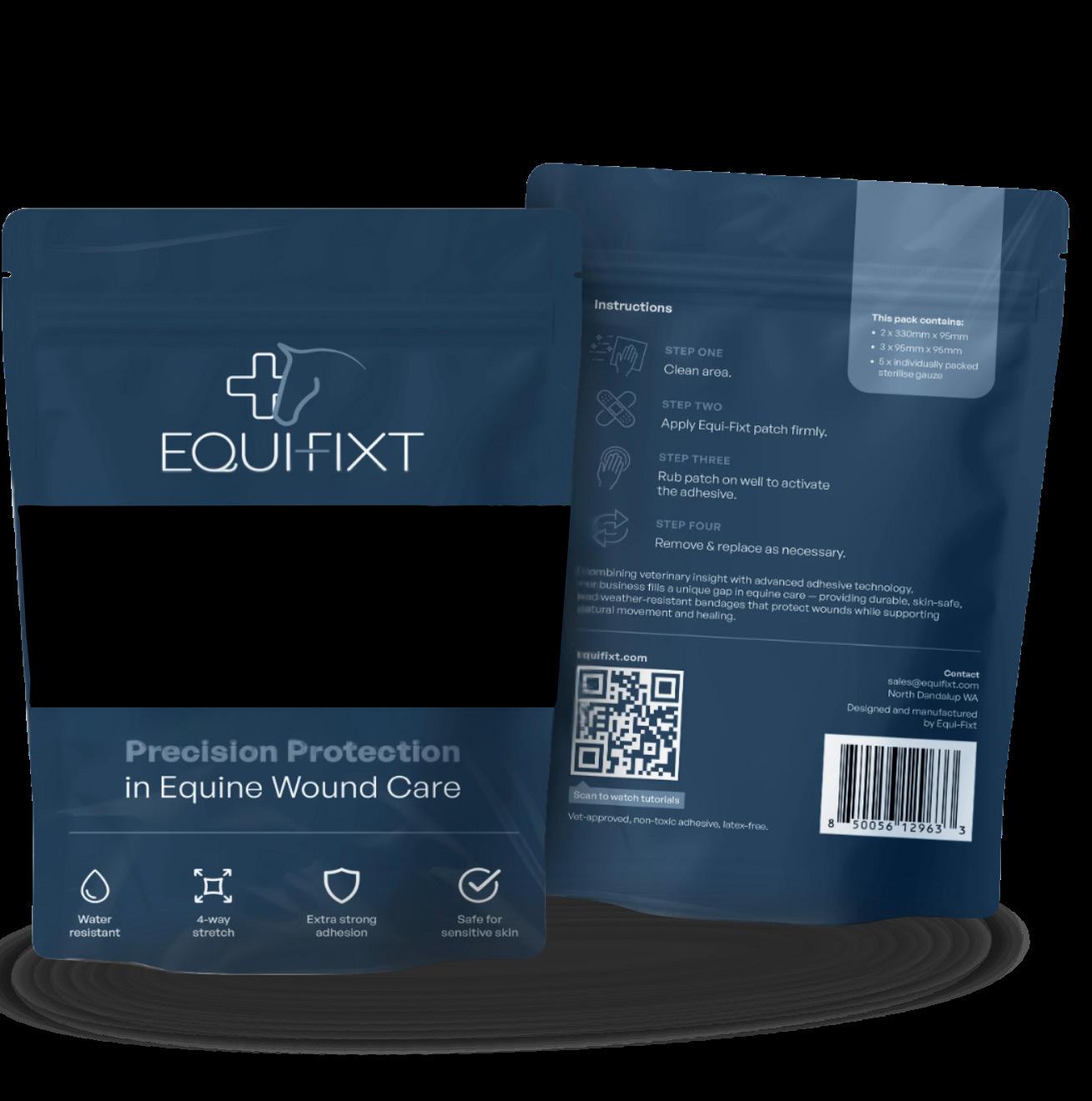
From the Stable to Innovation: The Story Behind EquiFixt
Practical innovations don't always begin in laboratories, writes HAYLEY WASSINK
In the world of equine care, some of the most practical innovations don’t begin in laboratories or boardroomsthey begin in stables, paddocks, and the everyday realities of horse ownership.
EquiFixt is one such innovation: a purpose-designed equine wound protection solution born not from theory, but from hands-on experience with horses in motion, in work, and in recovery.
Behind EquiFixt is Hayley Wassink, an accomplished rider whose path into product development began with a
very different goal - funding a future veterinary career. Like many horse people, she balanced riding, horse care, and work, gaining experience across a wide range of equine situations. Alongside her riding, she also worked closely with foster and rescue horses, many of which arrived with injuries, skin conditions, or rehabilitation needs.
It was in this environment - practical, resourceful, and often improvisationalthat a recurring problem became clear.
When Existing Solutions Fall Short
Protecting wounds on horses is
notoriously difficult. Areas such as the lower leg, joints, and high-movement zones are prone to dressing failure. Traditional bandaging can slip or loosen. Adhesive dressings designed for humans often struggle with hair, moisture, and the sheer range of equine motion. Even kinesiology tapes, increasingly seen in equine settings, were never designed with horses in mind.
For Hayley, managing foster horses meant needing solutions that worked reliably - not just in controlled environments, but in real paddocks, stables, and rehabilitation routines.
“Trying to keep a dressing in place on a moving horse is one of the most frustrating parts of wound care,” she explains. “You’re dealing with hair, sweat, dirt, and constant movement. Products designed for humans just weren’t holding up.”
Repeatedly needing to reapply, reinforce, or improvise coverings highlighted a gap: there was no simple, purpose-built, flexible protection designed specifically for equine skin, coat, and motion.
A Practical Idea Takes Shape
The concept that would become EquiFixt began with a straightforward question: what if wound protection could move with the horse instead of fighting against them?
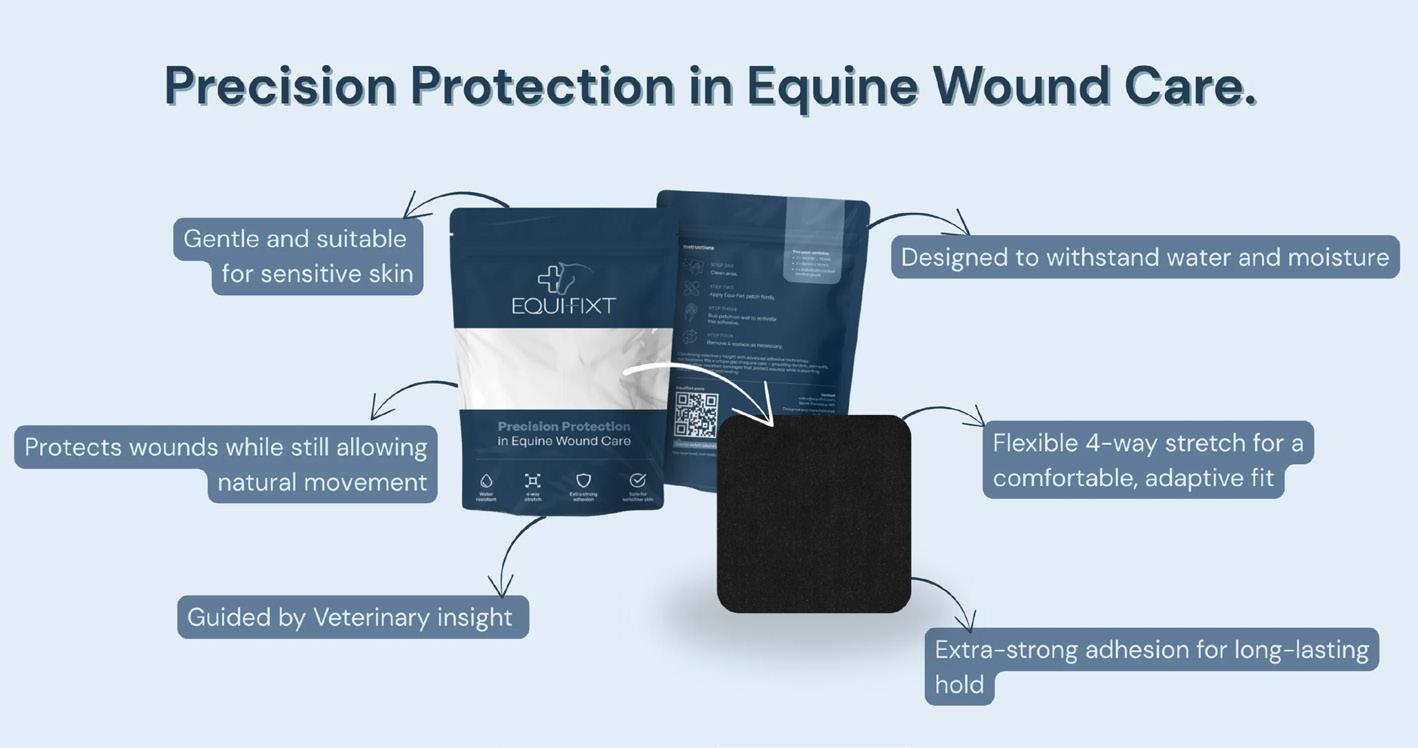
From that idea came a focus on three essential requirements: multidirectional stretch, reliable adhesion in stable conditions, and durability over time. The goal was not to replace veterinary treatment or dressings, but to provide a secure outer protective layer that could maintain coverage while allowing natural movement.
EquiFixt was developed with true four-way stretch - meaning it adapts to movement in all directions rather than pulling or lifting along a single axis. This is particularly important over joints and tendons, where skin shifts constantly during locomotion. The material
also needed to be water-resistant, acknowledging the reality of washing, sweat, and outdoor environments. Finally, it required an adhesive system suited to equine hair and skin, capable of maintaining hold without rigid restriction.
The result is a flexible, movementadaptive protective wrap designed specifically for horses rather than adapted from human products.
Built from Real-World Use
Hayley’s background as a rider and her work with foster horses remained central throughout development. Horses in rehabilitation, rescues recovering from neglect, and performance horses with minor injuries all informed testing and refinement. “Horses don’t stay still and dry,” she notes. “They roll, sweat, move, and live outdoors. If something works in that environment, it’s genuinely useful.”
This practical testing environment ensured EquiFixt addressed everyday equine realities rather than idealised scenarios. It also reinforced the importance of ease of use for owners and carers - particularly those managing multiple horses or ongoing treatment.
Supporting a Veterinary Path
EquiFixt’s origins are closely tied to
Hayley’s ambition to pursue veterinary science. Like many aspiring vets within the equestrian community, funding education required creativity and determination. Developing a product rooted in genuine equine need provided both an income pathway and a way to contribute to horse welfare before entering clinical practice.
Her ongoing involvement with foster horses continues alongside this journey, reflecting a commitment to practical horse care beyond competition arenas. Working with rescues often means dealing with injuries, skin damage, and rehabilitation - the very circumstances that first highlighted the need for better wound protection solutions.
A Horse-Centred Approach
What distinguishes EquiFixt is not simply its material properties, but its design philosophy: equine-specific rather than equine-adapted. While kinesiology tape and other human medical materials can sometimes be used on horses, they were never engineered for equine coat, skin mechanics, or movement patterns.
EquiFixt instead acknowledges that horses are a unique biomechanical and environmental context. Their skin shifts differently, their coat affects adhesion,
and their living conditions challenge durability. A protective solution must therefore be resilient, flexible, and stable in ways human products are not required to be.
Innovation from Experience
EquiFixt’s story reflects a broader pattern within the equestrian world, where riders, carers, and horse owners frequently become innovators out of necessity. Practical problems encountered in daily care often lead to solutions grounded in experience rather than theory.
For Hayley, the path from rider and foster-horse carer to product developer and future veterinary professional represents a natural progression: identifying a welfare challenge, creating a practical tool to address it, and ultimately aiming to support equine health at a clinical level.
EquiFixt began as a way to manage wounds more effectively in real horses living real lives. Its continued development remains rooted in that same principle - that equine care solutions should move with the horse, not against it.
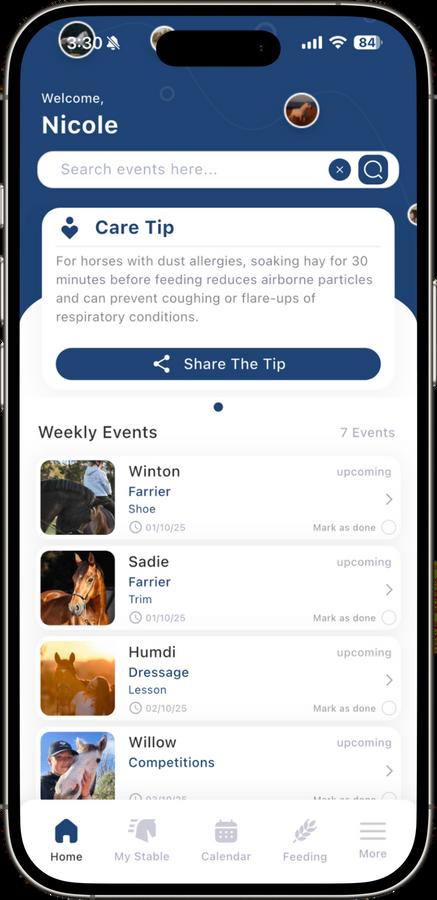
Tech Talk is brought to you by Equicare.
YOUNG RIDER
Zara Wyatt
With eventing as her primary discipline, ZARA WYATT is driven by adrenaline, heart and a deep sense of gratitude.
At just 18 years old, Zara Wyatt is already building a résumé many seasoned competitors would be proud of. Riding since the age of eight, she has spent the past decade immersed in the world of eventingchasing start boxes, refining sub-30 dressage scores and learning the kind of partnership that only comes from producing your own horses.
And what drives her? Adrenaline. Heart. And a deep sense of gratitude.
Finding Her Thrill
Eventing is Zara’s primary discipline, with the occasional crossover into show jumping for good measure. But nothing compares to that electric moment in the start box - the countdown, the breath, the surge forward. “It’s the adrenaline rush,” she says. “Sitting on a horse that loves it as much as you do is such a cool feeling.”
That shared hunger between horse and rider - both locked in, both committedis what fuels her ambition and keeps her chasing the next goal.
The Horses Behind the Story
Zara’s team reflects both promise and careful long-term planning.
Laradowns Aria, a five-year-old Warmblood x mare by Belcam Agassi, is her rising star. Athletic, naturally scopey and bold, Aria has already begun to show the quality required of a serious future * level horse. She also carries emotional significance, arriving just a month after the loss of a very special partner.
Alongside Aria is Cynbel Lodge
Fielder, known as Samson - a recently broken-in three-year-old Welsh Cob x Thoroughbred who she hopes will develop into a competitive dressage and eventing pony in the years ahead.
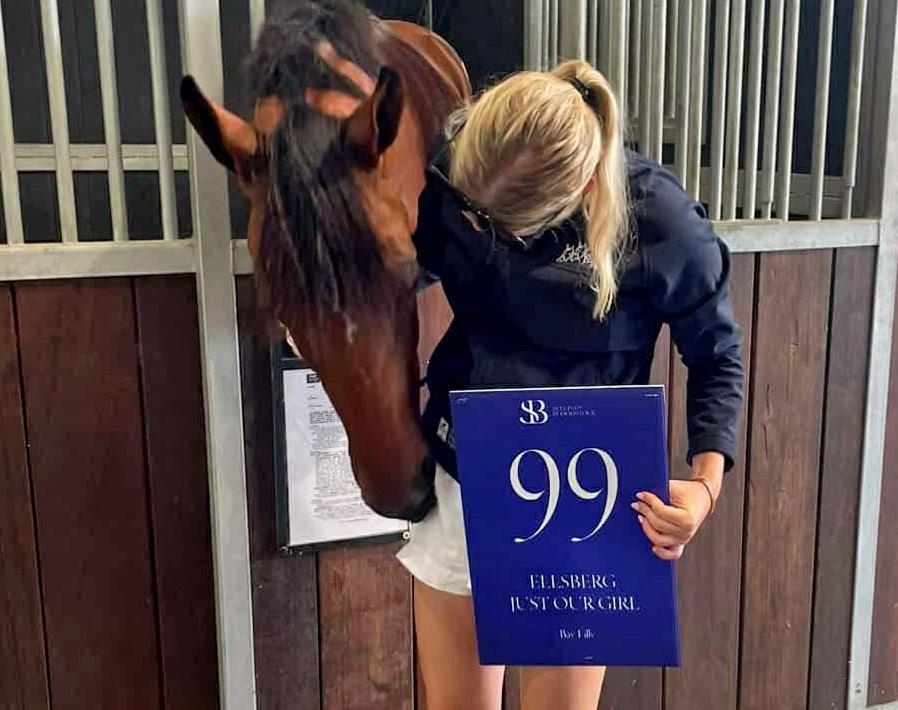
Then there is Just Our Girl, a broodmare whose story highlights Zara’s entrepreneurial mindset. Purchased in November, she foaled a yearling by Ellsberg who was bought for just $2,000 and later sold for $50,000 at the 2026 Inglis Classic Yearling Sale - a remarkable result that has helped fund future opportunities. Just Our Girl is now in foal to Tassort, due in August 2026, continuing a carefully considered breeding journey.
Behind all of these milestones, however, sits the horse who shaped her most: OTT Thoroughbred Lincolnfield Latte. Produced to 1* level and 2* qualified, consistently finishing on sub-30 dressage scores, he was tragically put to sleep in July last year. From a second placing at Camden CCN 1* Open on a 26.5 to standout performances at Festival of Showjumping, he was not only competitive, but deeply generous. “He was the most generous horse to me.”
His influence remains present in every ride, every decision and every step forward.
Zara has also made significant sacrifices along the way. In November 2025,
ABOVE: Making the tough choices needed to fund her career, Zara recently sold her filly Elsa for $50,000. LEFT: Zara with Laradowns Aria, her rising Warmblood x Star by Belcam Agassi.
ABOVE: With eventing as her primary discipline, Zara enjoys making the occasional crossover into show jumping.
she sold Laradowns Larrikin - “Larry” - whom she produced from scratch to a competitive 1*/EvA95 horse with multiple wins. Funding a career in horses requires tough choices, and she has embraced that reality early.
Proud Moments & Big Arenas
Producing Lincolnfield Latte to 1* level remains one of Zara’s proudest achievements, alongside securing 1* Champion and EvA95 Champion titles on the 2025 IQ Eventing Leaderboard. Strong performances at Camden and Festival of Showjumping further cemented her belief that she belongs in the sport’s upper levels.
Her favourite event is Scone Horse Trials at Ellerston Polo Fields - an event she describes as world-class and professionally run, one she eagerly anticipates each year.
For Zara, these arenas represent more than results; they represent growth, resilience and belief.
The Little Things That Matter
Away from the competition pressure, it’s the quiet rituals that anchor her.
Smuggling carrots. Hugging Aria in the paddock while she lies down for her morning snooze - “she’s not a morning person,” Zara laughs. Preparing her own horses on show mornings because professional turnout matters and because it simply doesn’t feel right to hand that responsibility over.
She also competes wearing a small crocheted toy of Jack, made by a friend - a tiny symbol she likes to think of as him galloping alongside her. It’s these small, steady traditions that keep her grounded.
Style in the Saddle
Zara’s competition look is polished yet practical: Cavaleria Equestrian baselayers, QJR breeches, Ariat socks and her Kask helmet. Between rounds, you’ll find her in a cap and sunnies - focused, composed and quietly competitive.
Words to Ride By
The best advice she has ever been given? “Just keep kicking. And if in doubt, take one out.”
For young riders starting out, her message is simple: keep going. Life may not follow the path you imagined, but you can control your response. Make the most of every opportunity - because life is too short not to.
On tough days, she reminds herself that tomorrow is a new day and that gratitude shifts everything.
She has long admired Laura Collett, while also following Australia’s international representatives with pride and ambition.
Eighteen years old. Ten years in the saddle. Horses produced, heartbreak endured, championships earned and futures carefully built. Exactly the kind of young rider we love celebrating at The Hub.
Follow Zara's career on Instagram.
A Shift in Equine Veterinary Thinking
There has been a shift in equine veterinary thinking from crisis management to performance management, writes Gold Coast Equine Clinic's VANESSA BUNTING.
Across the Australian performance horse landscape, a quiet shift is underway. The role of the equine veterinarian is evolving from emergency responder to strategic performance partner- and with that shift comes a necessary change in mindset from horse owners, trainers and riders.
For decades, veterinary involvement has too often followed sickness and injury. A horse becomes overtly lame.
A late night or weekend colic. A competition campaign falters. Behaviour deteriorates. Weight drops. Only then does the phone call occur. The model has been reactive by design.
But reactive medicine, while essential in moments of crisis, is not enough to sustain high-level equine performance or long-term soundness.
The modern equine athlete is asked to
train harder, travel further and perform under greater scrutiny than ever before. Margins between success and setback are narrow. Micro-inflammation, subtle asymmetry, early gastric irritation, low-grade respiratory compromise, performance degeneration - these do not announce themselves dramatically. They whisper first.
The philosophy emerging within progressive veterinary practice is simple:
VET VIBES
identify the whisper before it becomes the fracture.
Proactive, Not Reactive
The concept of “Proactive Veterinary Care” extends well beyond routine vaccination and dental reminders. It is a structured, deliberate approach to performance management.
Proactive care includes:
• Baseline gait evaluations before, during and post their competition campaign.
• Faecal egg counts guiding parasite control rather than calendar-based deworming.
• Advanced veterinary dentistry aligned with workload
• Gastroscopy when behavioural patterns change rather than months later when ulceration is advanced
• Regular bloodwork to identify any underlying abnormalities when something is a little ‘off’ and
• Periodic imaging, including radiography and ultrasonography to allow early detection and management of performance related conditions.
In performance horses, data gathered during soundness evaluations becomes as valuable as intervention during injury. Without a baseline, subtle change is difficult to quantify. With a baseline, it becomes measurable.
This reframing shifts the veterinarian’s role. No longer solely the problem-solver at the end of the chain, the vet becomes integrated into the training ecosystem from the outset.
Holistic - Without Abandoning Science
Holistic care in equine medicine is often misunderstood. It does not imply the rejection of diagnostics or pharmaceuticals. Instead, it recognises that the horse functions as a biomechanical and physiological system influenced by multiple inputs.
Joint pathology may not resolve without appropriate farriery. Gastric ulceration
rarely improves without dietary and stress modification. Muscular asymmetry can perpetuate low-grade lameness despite intra-articular therapy. Saddle fit, rider balance, conditioning schedules and surface selection all intersect with veterinary findings.
The most effective outcomes occur when veterinarians collaborate closely with farriers, saddlefitters, physiotherapists, nutritionists and trainers. Each professional addresses a layer of the system.
The patient's success after veterinary care depends heavily on controlled rehabilitation protocols and mechanical load management. For example, shockwave therapy may enhance tissue response, but without appropriate conditioning adjustments, the benefit diminishes. Holistic care, in this framework, is co-ordinated care.
Regenerative and RehabilitationFocused Medicine
One of the more defining shifts within modern equine practice is the move from corticosteroids toward regenerative strategies, rather than reliance on symptom suppression alone.
Biologic therapies encourage the horse’s own healing pathways. When combined with structured rehabilitation - surface management, progressive loading, monitored return-to-work plans and farrier support - they support tissue integrity over the long term.
We have been offering biologics for multiple ailments for years, but have certainly noticed the positive shift in owners and trainers alike, as knowledge and word of mouth grows. PRP, Pro-Stride, iRAP and now also
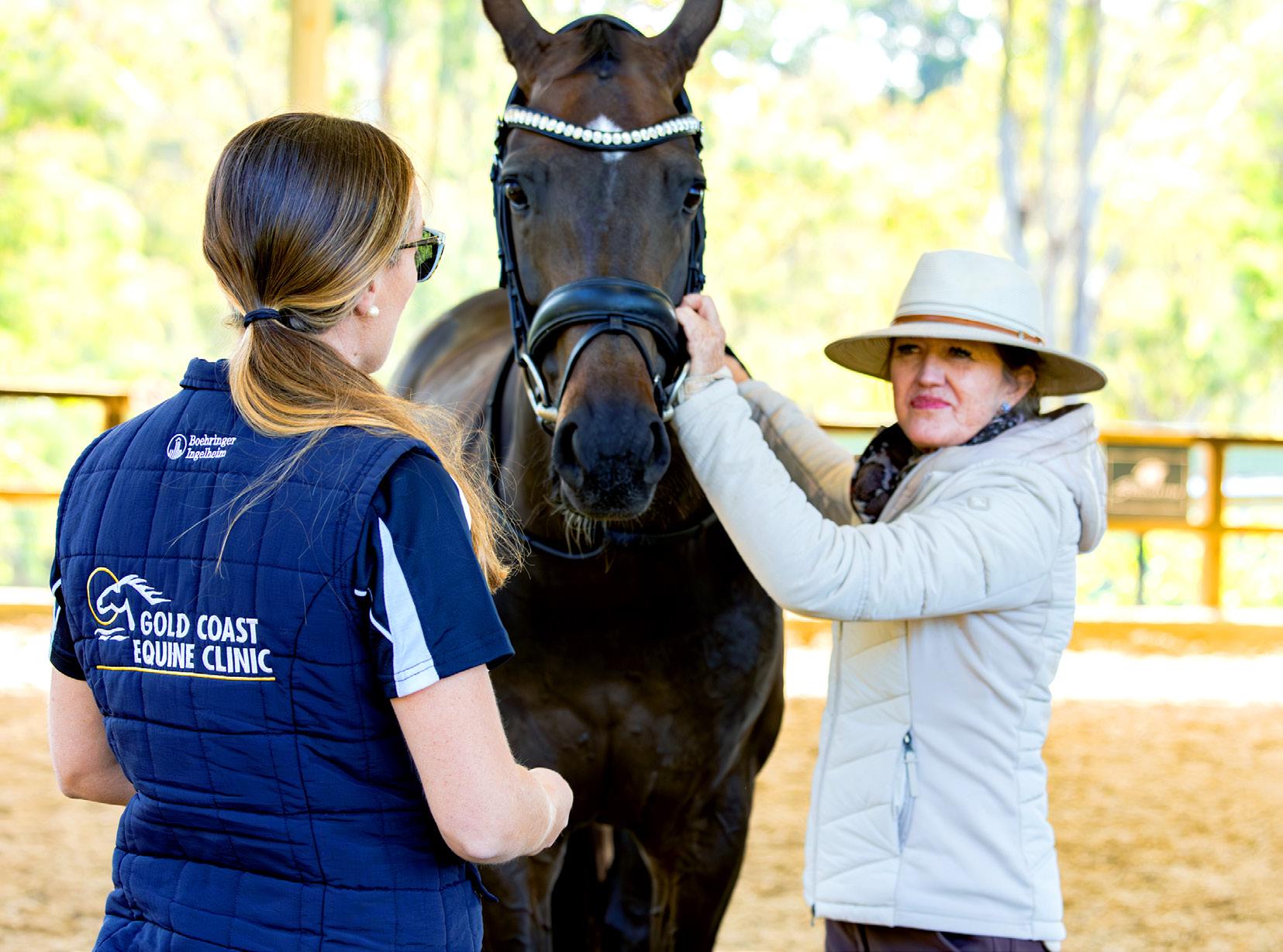
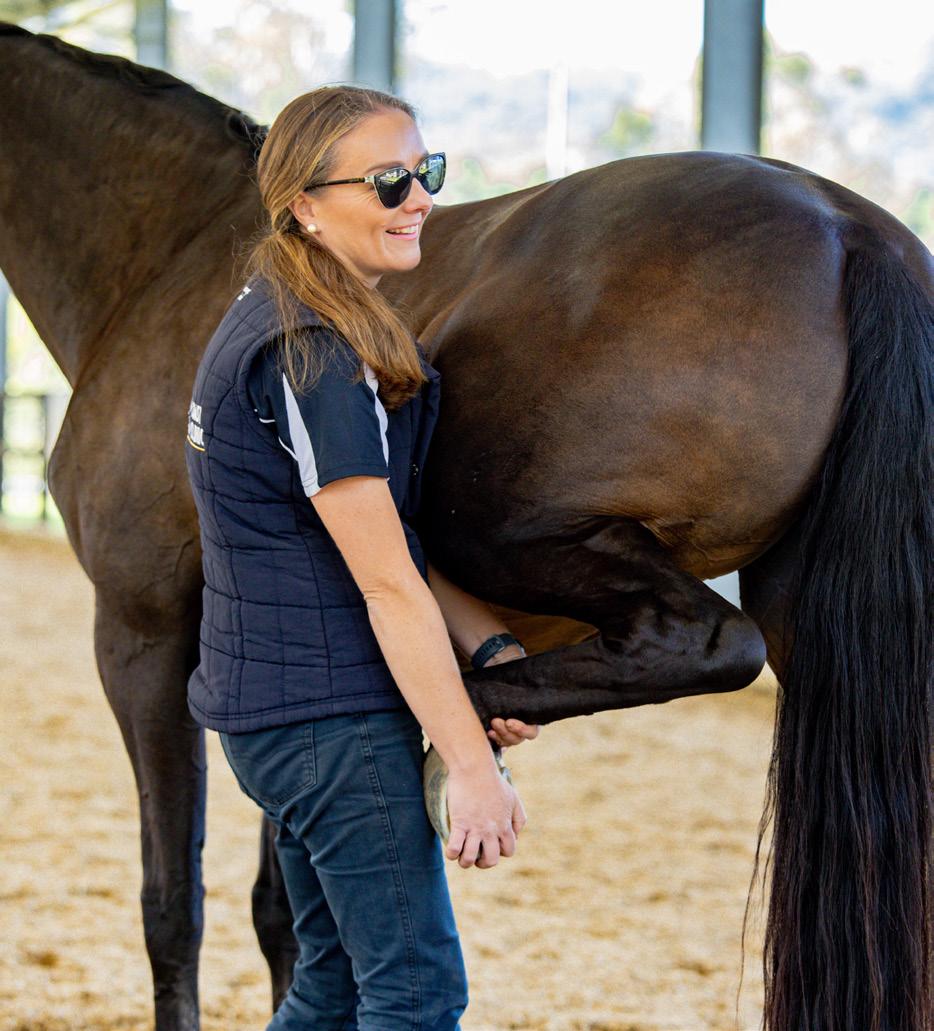
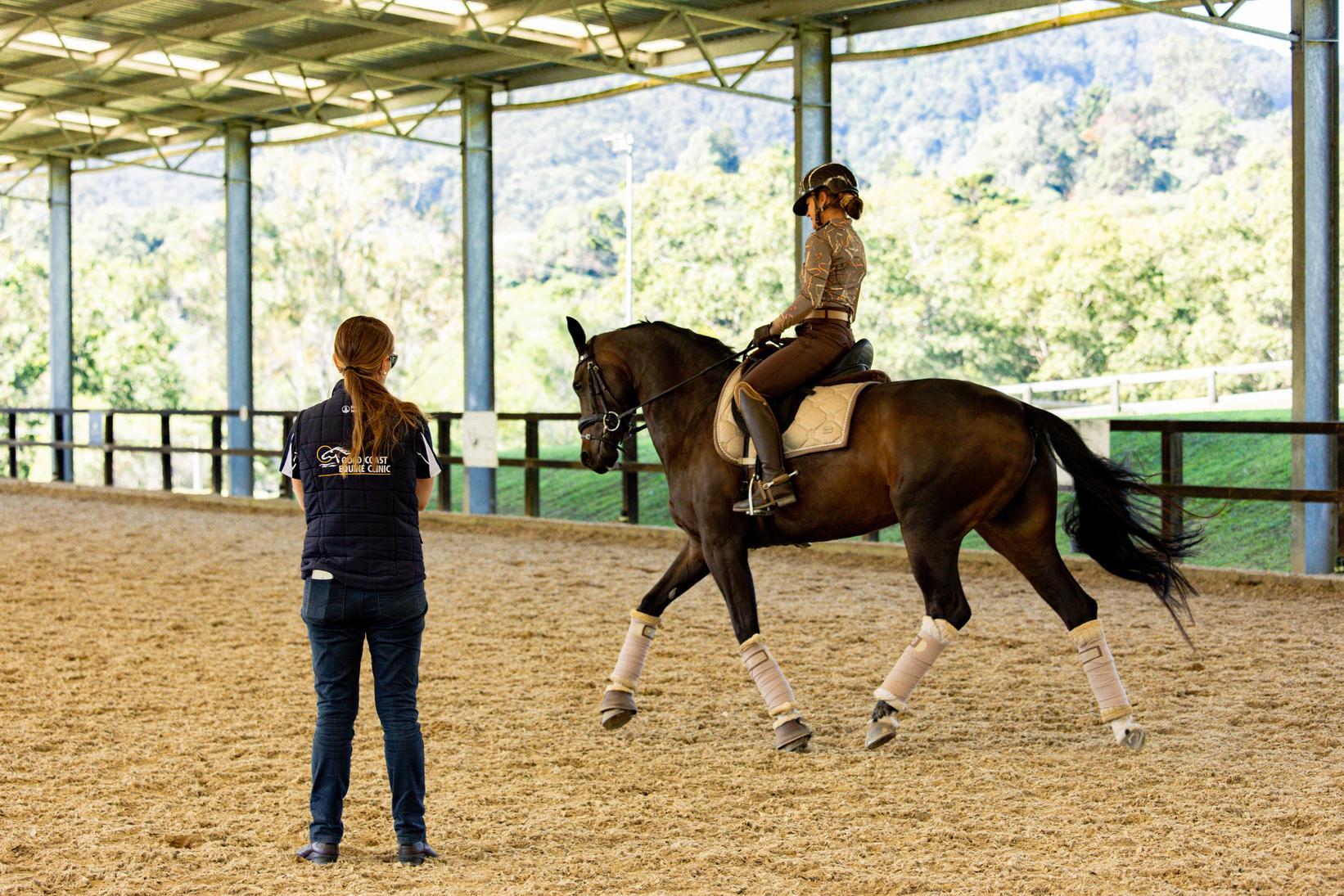
ABOVE & LEFT: Dr Rhian Partridge (owner of Gold Coast Equine Clinic) believes that rather than the vet being the problem-solver at the end of the chain, they should be integrated into the training ecosystem from the outset (Images by Brooke Flesser).
Performance Horse Mangement
Lameness Evaluations
Preventative Care
Rehabilitiaion
Gastroscopy
Shockwave and Laser
Regenerative Therapies
REHABILITATION
We provide a number of options and pathways to assist healing, strength and repair
Treatment Plans, Physio Assistance, Shockwave and Laser Therapies
IN HOUSE LABORATORY
Faecal Egg Count
Cytology, Hematology and Biochemistry
Our in-house laboratory allows us to provide fast turn around results, to better service our patients
ADVANCED MEDICINE
Intra-articuluar injections, muscle damage, tendon injuries and equine asthma are some of the examples of recent success stories that can be treated with PRP, iRAP, Pro-Stride and Alpha2
EMERGENCY
We are there for you and your horse 24/7 for emergency after hours care Regular clients also receive discounts!
This partnership model requires trust. It also requires education. Owners must see veterinary involvement not as a financial burden attached to a crisis, but as an investment in sustained performance and reduced downtime. Changing that perception is part of changing the industry.
Carving a New Path
Our hope to change to a positive emerging model of equine veterinary care is not louder or more dramatic. It is quieter, more analytical and more
It challenges long-held norms of requiring a vet only in an emergency and asks owners to plan ahead. We want to encourage collaboration rather than isolation between professionals, to work together and promote early diagnostics rather than delayed
It also repositions the veterinarian within the broader performance team, not at the periphery, but central to strategy.
Within this context, the recent development of our purpose-built Gold Coast Equine Clinic in
Advancetown (due for completion midlate April 2026) becomes an extension of this philosophy rather than a headline in itself.
The stabling, multiple assessment surfaces, in-house laboratory and expanded diagnostic capabilities are tools designed to support this proactive model. The new facilities will enable us to provide detailed lameness workups, structured rehabilitation and comprehensive preventative programs under one roof.
Equine sport is advancing. Training methodologies are evolving. Expectations are rising. Veterinary medicine must evolve alongside them, not only in technology, but in philosophy.
“Proactive, not reactive” is more than just our motto. It is a recalibration of responsibility. And in that recalibration lies the opportunity to preserve soundness longer, enhance performance more sustainably and redefine what modern equine veterinary care looks like in Australia’s competitive landscape.
VET
Horses do not articulate discomfort in ways humans easily interpret. Early behavioural shifts may indicate a brewing
Bangalow Buckle Challenge EVENTS
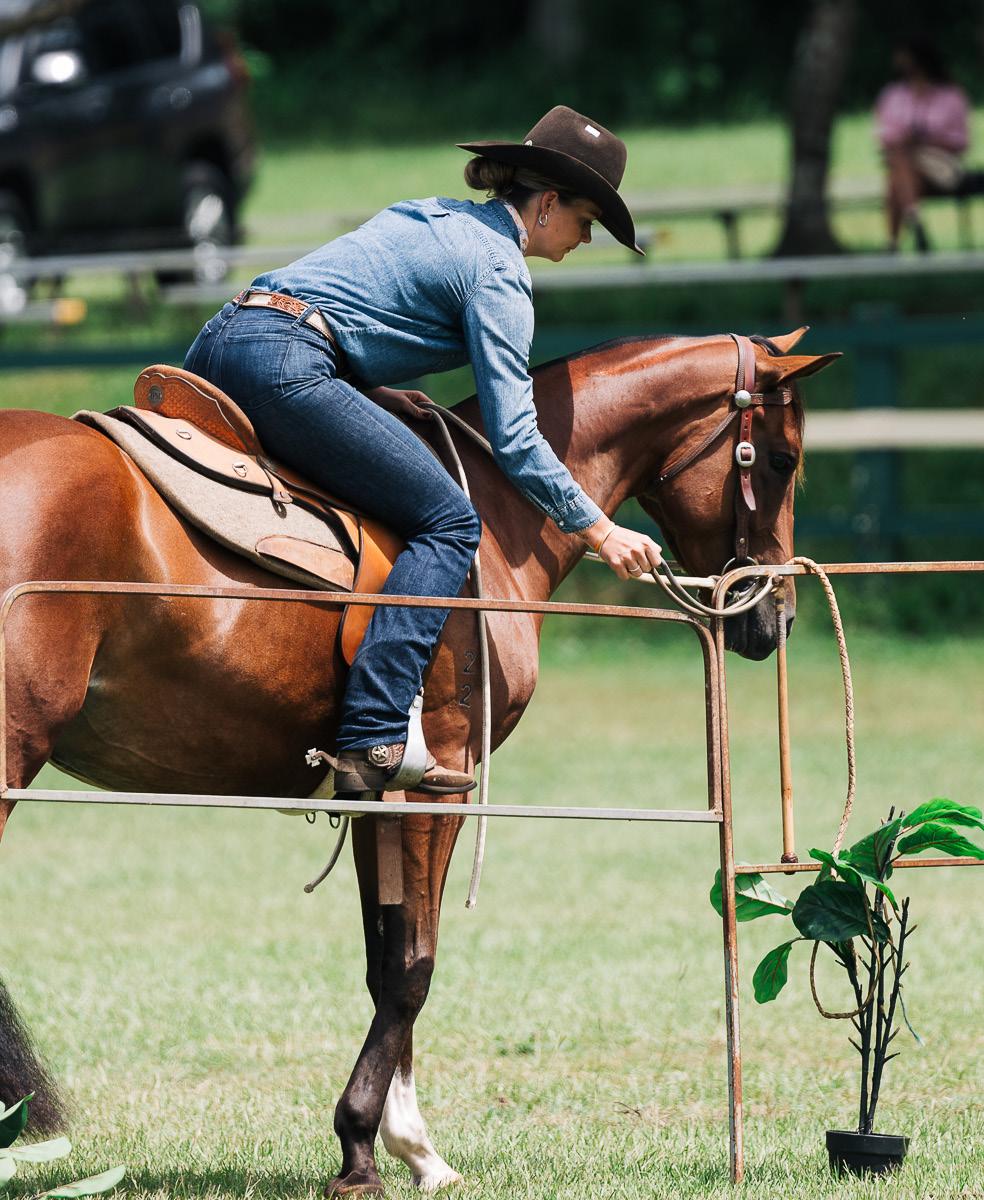
A welcoming grassroots event, open to any breed of horse and riders of all ages, where confidence grows, friendships form and community comes together under the Bangalow palms. Words and images by SAM CAVALLO.
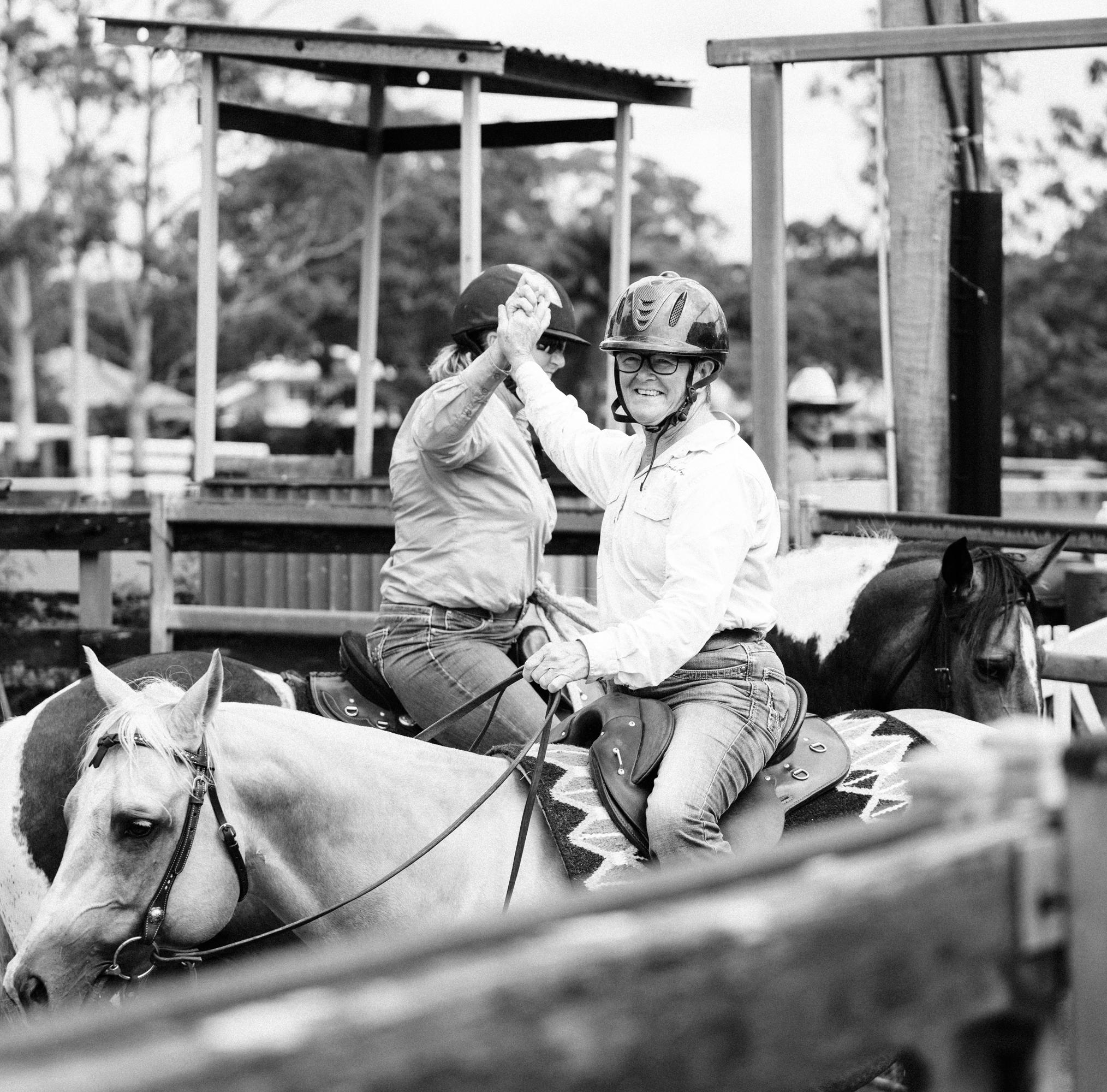
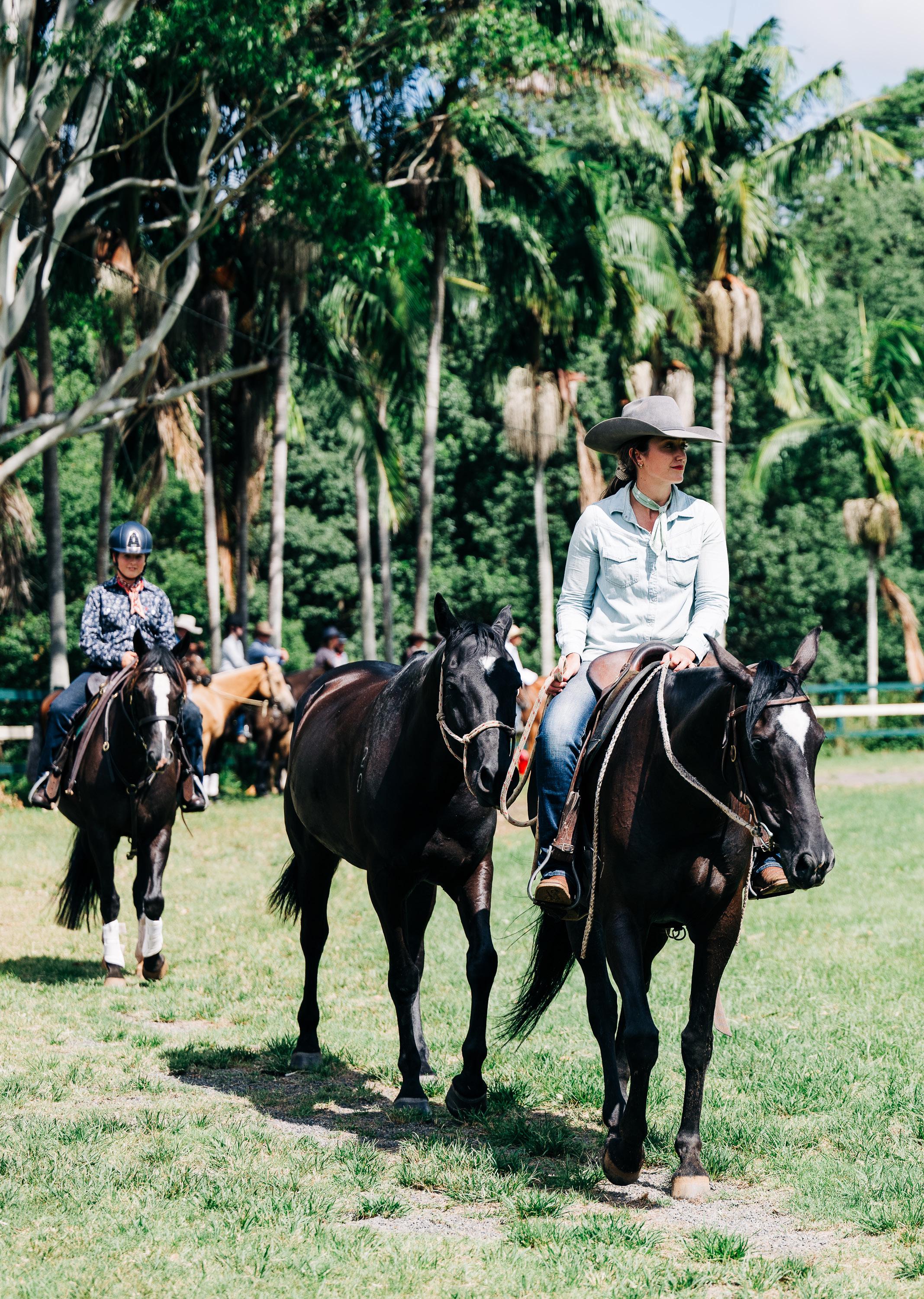
Under the sweeping Bangalow palms, with horses tied to floats and families setting up camp for the weekend, there’s a particular kind of energy that hums through the Bangalow Showground each year. It’s not competition nerves - it’s connection.
Now in its eighth year, the Bangalow Buckle Challenge has quietly grown from a grassroots idea into one of the most inclusive and eagerly anticipated fixtures on the Northern NSW equestrian calendar. And at the heart of it all is founder Zoe Olive - horsewoman, mentor, organiser, and self-confessed “Information Bureau.”
A Beautiful Place to Begin
When asked why she chose Bangalow showgrounds as the home of the event, Zoe doesn’t hesitate. The ground itself - framed by iconic Bangalow palms - feels special. It made sense to build something local that reflected the needs of the amateur riders she was already coaching, while also offering a welcoming way to start the year for more experienced competitors. Its proximity to the main street is part of the charm. A short, five-minute walk gets you to vibey cafes, great coffee, a delicious bakery and local pub with a cracking seasonal menu. You don’t even need to unhook the float!
Originally launched in 2018, the Challenge was born from a simple observation: plenty of riders wanted to have a go - but traditional competition pathways could feel intimidating to those just starting out. Uniform requirements. Registered horses. Formal gear. So, Zoe created something different.
Something for everyone
The Bangalow Buckle Challenge is open to all breeds. You don’t need a registered stock horse or performance bred horse. You don’t need the fanciest gear. As Zoe puts it, as long as you’re riding in a snaffle bit and your gear is clean and safe, you’re welcome!
Her passion for Australian Stock Horses runs deep - but this event isn’t about exclusivity. It’s about opportunity. In fact, Zoe saw it as a positive gateway: build confidence first, then perhaps riders might choose to explore stock horses and their versatility down the track.
From two-year-olds stepping into the arena for the first time to seasoned Super Horse entrants, competitors as young as three and riders well into their 60s and 70s saddled up - the age range alone tells the story.
It’s not unusual to see whole families competing. Mum and dad getting the kids into the mini and junior classes on Saturday morning, then riding their horses later in the day. Groups of teenage friends, often in matching pink or plaid shirts, hanging out under the shady trees waiting for their runs, cheering each other on. Trios of women over 50 who’ve made friends over the
ABOVE: All horses and riders were welcome, from older entrants, to (LEFT) seasoned Super Horse participants.
years now travel together for the weekend. It is, in every sense, multigenerational. Everywhere you look, there’s a little moment of happiness being shared. Memories being made. You can’t help but smile. It’s so much more than a horse show. It’s the embodiment of the lifestyle we all live and love.
The Master Horseman Behind the Scenes
A key figure in the Challenge’s evolution has been respected horseman Glenn Gough. Zoe first met Glenn at a clinic in the 90s. What began as instruction became mentorship.
Glenn - known widely within stock horse circles for his versatility, training philosophy and his celebrated stallion Regal Remedy - has always championed well-rounded horses and thoughtful horsemanship. He was a director on the Australian Stock Horse board and even publicly challenged critics years ago to match his horse’s versatility across disciplines - a challenge no one took up.
At Bangalow, Glenn judges every year and most importantly, gives feedback. After nearly every run, riders receive a few words of encouragement or insight. It’s a small gesture with enormous impact.
The day before this year’s Challenge, Glenn ran a clinic - even in very soggy conditions - and riders left feeling inspired rather than discouraged. That ethos of education over ego runs through the entire event.
Buckles, But Make Them Meaningful
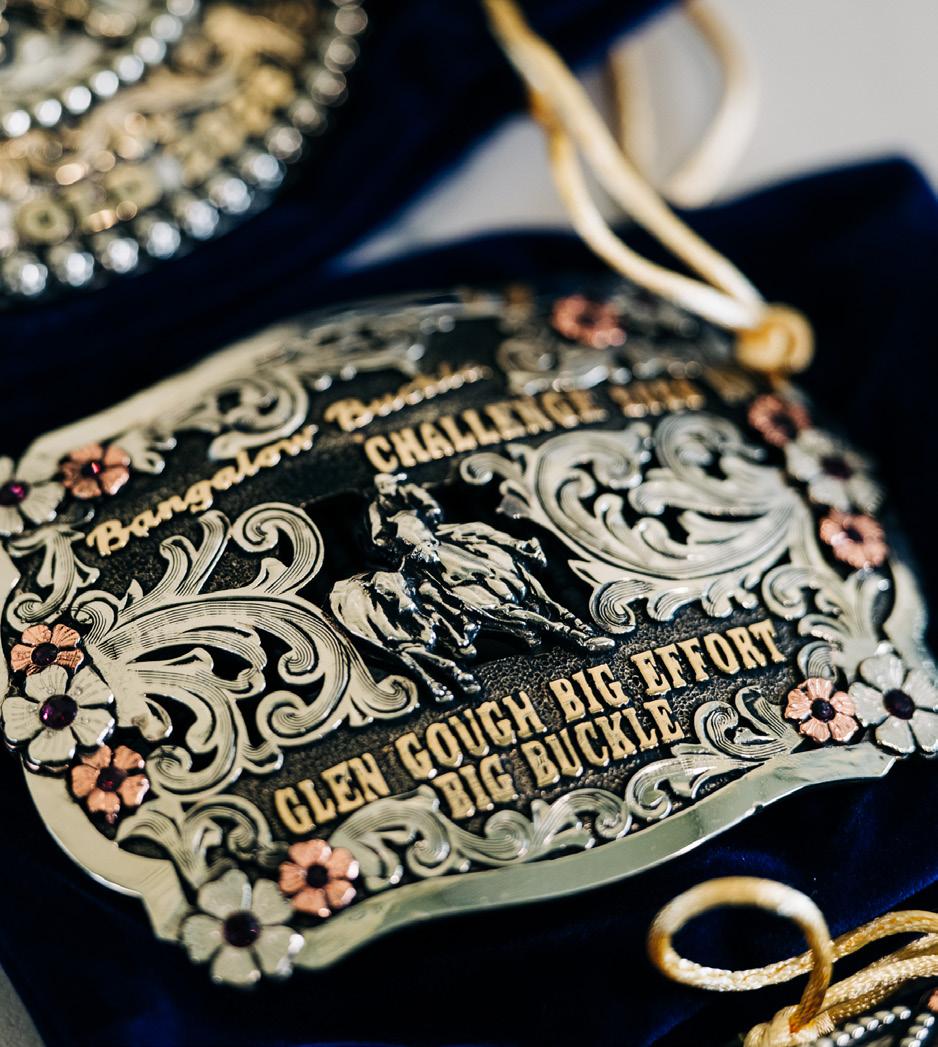
The name Bangalow Buckle came first - Zoe loved the ring of it. The buckles themselves have evolved over the years (the original versions, she laughs, were decidedly ‘budget-friendly’). Today’s buckles are beautifully crafted, and supplied through Aussie-owned company Ride Tough.
But the most talked-about buckle might just be the “Big Effort Big Buckle.” Originally fashioned from a repurposed hubcap as a tongue-in-cheek prize
for a dedicated helper, it has since become one of the event’s most prestigious awards. It recognises those who compete and then go above and beyond to support the event - in the office, in the yards or in the ring.
There’s also the Magnificent Master Rider buckle for competitors over 50 who embody participation and competitive spirit, plus incentive prizes from loyal sponsors who return year after year. Recognition isn’t reserved for the scoresheets. For Zoe, the most important thing about the Bangalow Buckle is inclusivity.
This year also saw the introduction of a High Point Award rug - fittingly won by two young riders tied on scores, proof that the next generation is already giving us a run for our money!
More Than a Competition
Perhaps the most telling answer Zoe gave when asked about her favourite part of the weekend wasn’t about trophies. “It’s seeing people enjoy riding
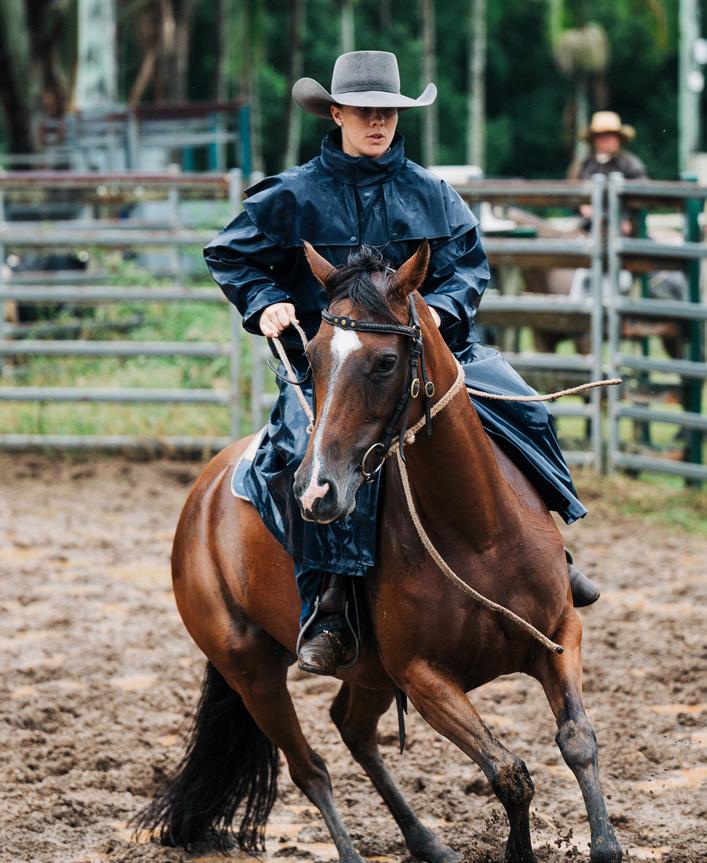
ABOVE: Never let wet weather get in the way of a great day out with with your horses and best friends.
their horses,” she said. “Seeing them make friends with like-minded people.”
The cattle work section - often a first for many riders - is structured so even inexperienced horses and riders can safely experience working a beast and come out with the thrill of achievement.
There’s a feedback session before the competition starts where riders can talk with coaches and judges in a constructive environment. This year, the local Lions Club ran the bar, creating a communal gathering point. An inaugural whip-cracking event added plenty of fun and entertainment on Saturday evening.
Even in challenging weather, smiles prevailed. That’s the magic of Bangalow Buckle. Not just family-friendly. Friendlyfriendly. As the event heads toward its 10th anniversary in 2028, there’s a quiet confidence about its future. ‘Build it and they will come’ isn’t just a phrase here - it’s been proven. Because when community comes first, everything else follows.
ABOVE & LEFT: Equestrian skills of all kinds were on display. BELOW: A beautifully crafted buckle by Ride Tough.
Bangalow Showgrounds is framed by iconic Bangalow palms
Creating friendships that will last a lifetime.
My Horse Has Allergies
Help! My horse has allergies - it’s not an uncommon statement. Nutritionists are frequently wary upon hearing this, as often the first suspect is ‘something in the diet’. However, although common in horses worldwide, most allergic skin diseases are caused by insect bites and environmental allergens.
Allergy, also called hypersensitivity, occurs when the immune system
(the body’s defence force) overreacts to something. Clinical signs vary depending on the intensity, body systems involved, and whether the reaction is localised or generalised. In horses, the skin and respiratory tract are frequently affected by hypersensitivity reactions. The two best characterised and most common hypersensitivity disorders are Culicoides hypersensitivity - Queensland itch, sweet itch, summer
eczema or insect bit hypersensitivity (IBH) - and severe equine asthma (SEA, formerly known as recurrent airway obstruction).
The immune system - a complex network of organs, cells and proteins – protects the body from damage and defends against infection. Immunoglobulins (Ig), produced by white blood cells, are a critical part of the defence system as they identify and bind to particular antigens. An antigen is a foreign substance that enters the body. Allergies occur when the immune system IgE pathway is activated and initiates a cascade of histamine and other inflammatory chemicals. In the skin, the clinical manifestations of this reaction include the wheal and flare seen in urticaria (Table 1).
IBH is the most common allergy with reactions to environmental allergens (atopic dermatitis) the next. Contact, food and drug allergies are very poorly defined in horses and diagnosis relies on elimination and provocation tests.
IBH: Around the world, bites from blood-feeding insects are the most common cause of skin allergies. Although most often due to midges (Culicoides), black flies, stable flies, mosquitoes and sandflies can all trigger allergies.
Clinical signs of IBH can occur in young horses and increase in severity every year. The preferred feeding sites of midges are ears, face, chest, mane/neck, legs, withers, rump, tail base, inguinal area and belly, and skin reactions are often seen in these areas. Some horses develop hives as well, and others develop hard calcified nodules which are in most cases permanent. The papules and edema are intensely itchy and the associated scratching and rubbing cause hair loss, skin thickening and secondary bacterial infection. The midges can also transmit onchocerca (neck threadworm) which is prevalent in northern Australia during wetter summer seasons -
however, its distribution is spreading south. Additionally, IBH is often associated with other hypersensitivities and it is not unusual to have IBH horses with concurrent environmental allergies (atopy).
Insect bite hypersensitivity is a complex combination of genetic and environmental factors. There is currently no accurate test for IBH and diagnosis is based on history, clinical signs, exclusion of other pruritic diseases and a positive response to insect avoidance. During the dawn and dusk feeding periods horses may be bitten by thousands of Culicoides and avoidance can be challenging!
A couple of features of this horrid insect’s behaviour can help combat their attacks: the midges are unable to navigate flight at wind speeds over 10 kph and they are most numerous around standing water. Moving affected horses away from standing water and stabling at night using fans can help to reduce insect bites - but even a 99 per cent success in avoidance might not help some highly sensitised horses and it can take several weeks for the immune system to settle - so patience is essential.
Nursing care includes cooling the skin with bathing, icepacks, or emollient creams and shampoos, such as vegetable oil, baby oil, Vaseline, glycerine, oatmeal, and aloe vera; using counter-irritants such as camphor, menthol, urea and capsaicin, and antipruritics such as crotamiton or aluminium acetate. The mainstay of treatment is steroids and possibly antihistamines and antidepressants, which must be discussed with your veterinarian.
Adverse feed reactions (AFR): Food allergy is a non-seasonal often pruritic skin disease due to hypersensitivity to proteins, carbohydrates, preservatives or antioxidants. It is an abnormal immunological reaction. With food intolerance, there is no involvement of
Table 1: Some definitions
Atopy
Genetic tendency to develop allergies (respiratory and skin)
Urticaria Wheals (called 'hives') +/- redness
Hives
Pruritis
Itchy rash, blotches or red lumps (wheals) small (pinhead) to large(dinner plate) in size, may come and go, associated with histamine
Itchy
Adverse food reaction Could be food intolerance or an allergy
Food intolerance
Involves the digestive system, not the immune system; abdominal discomfort, gas/flatulence, diarrhoea, irritable bowel syndrome (IBS), rashes, hives (urticaria)
Food allergy Involves the immune system and IgE
Papules Itchy bumps
Nodules Red lumps
Wheal Red, raised itchy lumps
Oedema Fluid accumulation
Alopecia Loss of hair
the immune system. Well-documented reports of food allergy in horses are rare. The affected animals suffered from either generalised papular eruptions, with or without pruritus, or a generalised skin oedema, particularly severe over the face and eyelids with variable self-inflicted damage. Suspected dietary allergies can only really be investigated with properly controlled feed exclusion trials. These are remarkably inconvenient, as they involve the strict elimination of all feedstuffs other than water plus one basic nutrient type and stable/yard confinement to prevent grazing. The horse must have a resolution of symptoms while on an elimination diet, return of clinical signs after provocative challenge and subsequent resolution after returning to the strict diet. The trial should run for at least four to six weeks or until signs of allergy disappear. Serological testing for foods has been reported to be unreliable as positive results in normal horses are inconsistent and do not correlate with response to clinical challenge.
Although it is commonly held that high-protein feeds may cause the
development of cutaneous papules, giving rise to the terms feed bumps, sweet feed bumps, protein bumps and humour spots, the association is unlikely. In other species, exposure to even small amounts of the offending allergenic protein results in an IgE response.
Feed hygiene: Infestation of feeds with pests and insects can trigger allergic reactions and colic. Moulds are linked to respiratory irritation and allergy in horses but mycotoxins have not been linked. Mycotoxin binders are available but they don’t reduce the actual mycotoxin load in feedstuffs and would need to be consumed with every mouthful of food.
Respiratory allergies: The most common allergic condition is inflammatory airway disease (IAD). The cause of IAD is uncertain. Preceding viral infection, the inflammatory effects of repeated episodes of exercise-induced pulmonary hemorrhage (bleeding) and hypersensitivity responses to inhaled environmental pollutants (including organic stable dusts, ammonia, and endotoxin) all may play a role. It is more common in stabled horses in the northern hemisphere. Stable dust
contains over 50 types of moulds, large numbers of forage mites, endotoxins, and other inorganic factors. The primary source of organic dust is hay and straw. In mild cases, soaking the hay prior to feeding is often effective in reducing dust levels in the horse’s breathing zone. The hay must be thoroughly soaked, preferably by immersing the hay in a large tub of water for 10-15 minutes, and no sooner than 20 to 30 minutes before feeding to avoid leaching of watersoluble nutrients from the hay.
Atopy: Atopic dermatitis is an inherited, recurring, urticaria that may or may not be itchy. It typically occurs on the face, ears and other smooth areas. Affected horses are genetically predisposed to develop IgE-mediated allergy to things in the environment (Table 2). Many atopic horses are also insect allergic and prevention of insect bites is important. The diagnosis of equine atopic skin disease is primarily based on history, signs and exclusion of other pruritic and⁄or urticarial skin diseases, and is often a lifelong disease. Lesions usually resolve within 12 to 24 hours; however, an affected horse may have persistent and chronic eruption of lesions over a period of days to months. Several breeds are more prone to atopy and allergies. Dutch Warmbloods, Morgans, Swedish Warmbloods, Oldenburgs, Hackney horses, Paso Finos, Polish Arabians and Arabian/Saddlebred cross have a higher incidence of atopy and respiratory allergies.
Non-allergic skin conditions: Eruptions or wheals that may or may not be itchy. They result from specific external stimuli such as pressure, cold, heat, sun, vibration (transport) or exercise. Affected horses generally present with urticaria or diffuse swelling at areas in contact with tack, boots, leg wraps or areas where blankets may rub. It can be associated with atopy. Some cases of grain bumps or stress-induced urticaria in racing Thoroughbreds could be considered a type of food
Table 2: Things horses can be allergic to
Antibiotics
Antioxidants
Barley
Black ants
Black flies
Bran
Carbohydrates
Cats
Cattle
Cockroaches
Cold Corn
Drugs
Exercise
Feathers
Flies
Fly spray
Friction
Garlic supplements
Grain mill dust
dependent, exercise-induced urticaria. Avoiding feeding the offending food within 4–5 hours of strenuous exercise should prevent the urticaria from developing.
Treating and managing skin allergies: This can be frustrating due to the practical difficulties of identification and avoidance of the allergen. Intradermal testing can identify causal allergen(s), followed by avoidance measures and/ or allergen-specific immunotherapy (ASIT). The aim of ASIT is to cause immunoglobulin (Ig) switching, so that antigen exposure results in normal IgG synthesis, rather than reactive IgE antibodies. All horses produce IgG antibodies against insect salivary proteins, but IBH cases produce IgE. Sterile ASIT solutions are best selected on the basis of intradermal test results.
Protocols often comprise initial frequent injections of increasingly concentrated allergen solutions, leading to fortnightly therapy that should continue for at least two years – perhaps for life. Some test and ASIT products are pure extracts of a specific allergen. For IBH, there are over 10 different saliva proteins plus proteins in the fly’s eye, abdomen and thorax that can sensitise horses when flies are crushed into the skin as the horse rubs. Because of the number of different allergens a ‘blunderbuss’ approach with whole-body fly extracts is often used for diagnosis and ASIT. In time, specific proteins will be able to be synthesised using molecular biologic techniques
Grain smut dust
Heat
Horse cubes
Horse flies
Horse tonics
Insects
Mange
Mites
Moths
Oats
Peanut hay
Pigeons
Preservatives
Pressure
Proteins
Sheep wool
Shampoo
Sweat (their own)
Vibration/transport
Wheat
and, potentially, a whole panel of sweet itch salivary and non-salivary antigens will then be available for diagnostic and therapeutic purposes in IBH horses.
For atopy, the success rate of ASIT is up to 84% in the first year of treatment and some horses can be maintained with ASIT alone, while others still require other medications, although the amounts of medications necessary to make them comfortable may be decreased.
A laboratory RAST test for feed ingredients such as oats, corn, alfalfa, beet pulp, and barley is unreliable for diagnosing allergies. Typically, both normal and allergic horses have positive blood tests for the various IgE types assayed. In reality, skin hypersensitivity reactions are very rarely due to diet and unless the horse is on the feed, it cannot have an IgE reaction to it. More commonly, these reactions are due to insects, parasites, bedding, tack, drugs, and various other agents that, upon contact with the skin, may trigger a hypersensitivity reaction.
Dr Jennifer Stewart BVSc BSc PhD is an equine veterinarian, a member of the Australian Veterinary Association and Equine Veterinarians Australia, CEO of Jenquine and a consultant nutritionist in Equine Clinical Nutrition.
All content provided in this article is for general use and information only and does not constitute advice or a veterinary opinion. It is not intended as specific medical advice or opinion and should not be relied on in place of consultation with your equine veterinarian
THE PERFECT COMPLEMENTARY BALANCER FOR ALL HORSES, ALL DISCIPLINES AND ALL DIETS
A concentrated source of essential amino acids for all horses and ponies - breeding, growing, exercising, competing and ageing. Jenquine all-4-feet provides quality protein to support growth, repair and maintenance of all body systems.
FOUNDERS
A New Tradition
How NATALIE WATERS is redefining the riding stock with CAPALL Equestrian.
The first pony Natalie Waters ever owned cost $50. Bought from the saleyards by her nonhorsey parents when she was eight, he was, in her words, “an absolute firecracker” - and she adored him. What began as childhood companionship quickly became something deeper: independence, responsibility, and the quiet freedom that only a pony can give.
Like many riders, Natalie’s journey evolved in chapters. Pony Club, open showing, riding anything she could sit on. At twenty, she left Australia for Canada, working on a ranch, riding young horses and leading pack trips through the Rockies. The adventure continued across the United States, from Colorado to Virginia, riding multiple horses a day and strapping at competitions in a professional eventing barn.
Horses weren’t just a hobby. They were a lifestyle.
Eventually, she returned home to study Equine Management at Melbourne University, later teaching Horse Husbandry at Victoria University. For years, riding became something she did around work and life - pleasure rides on weekends, competitions through HRCAV with her Andalusian x Quarter Horse, Arlo, exploring showing, showjumping and dressage.
But it wasn’t until 2024, joining Equestrian Australia and beginning her Pony Dressage journey with Freemans Lodge Daiya - Daisy - that something shifted. “When I went to look at Daisy
with my coach, Nirrelle Somerville, she told me I would have to work very hard and really change the way I rode,” Natalie says. “I took that on board without question.”
At the time, she describes herself as a nervous rider, someone who had lost confidence after years of difficult horses and stalled progress. Daisy changed
that. “She’s taught me to ride braver. To not be afraid to go forward. To create energy and ride out of my comfort zone.”
At 53, Natalie is chasing a dream she once thought might be out of reachriding in tails. “Sometimes I worry I’m starting too late,” she admits. “But to achieve that on such a special pony would honestly be a dream come true.”
ABOVE: Amelia wears Moulin, the new Aachen Stock with eye-catching black accents. LEFT: Natalie Waters is redefining the riding stock.
Finding Control in Presentation
As her competitive journey deepened, Natalie discovered something unexpected.
Preparing for her first EA competition, she realised that while she couldn’t control the score, the judges or the outcome - she could control her presentation. “My presentation became my priority,” she says. “It was my way of feeling proud of myself for showing up.”
That mindset - the power of presentation - would eventually become the seed of her brand: CAPALL Equestrian
A Couture
Mindset in a Traditional Space
Natalie had long dreamed of creating a bespoke equestrian business. The timing, eventually, felt right.
In an industry dominated by massproduced European brands, she
envisioned something different: an Australian label built on limited releases, intentional exclusivity and artistic expression. “The concept of bringing a haute couture, limited-production fashion culture for riders to embrace is the inspiration behind CAPALL,” she explains.
And rather than launch a full apparel line, she chose to focus on one of the smallest - yet most symbolic - pieces in competition attire: the riding stock. “My love of beautiful fabrics led me in this direction,” she says. “Putting together a competition outfit is expensive, yet one affordable stock can completely change your look from one test to another.”
Within dressage’s traditional black-andwhite palette, Natalie saw opportunity. “I’m drawn to the possibility of creating individuality, elegance, artistic
expression - even a bit of surprise or fun - within something so traditional.”
Reinventing the Riding Stock
To Natalie, an exceptional riding stock must first do its job flawlessly. “It must be comfortable. It must not move or come out over the jacket. The top underneath shouldn’t be seen. It should be easy to wash.”
But beyond function lies craftsmanship. “For me, exceptional is in the quality and uniqueness of the fabric, expert tailoring and continually exploring new designs while answering the needs of riders. Most importantly, it’s one the rider falls in love with.”
Her design process is meticulous and hands-on. She sketches each piece herself and sources fabrics globallyoften purchasing just one or two metres at a time to honour her promise of
ABOVE: Natalie and her models are all wearing the signature CAPALL style. Crafted from strictly limited quantities of hand chosen fabrics from all over the world, you can be sure your competition look is as individual as you and your horse.
no-repeat limited drops. “I have studied fashion, but I have no talent on a sewing machine,” she laughs. “So I focus on the design and fabric and work with a skilled seamstress to bring them to life.”
Currently, CAPALL offers five styles, including two front-attaching designsThe GP and The Aachen - that reimagine traditional construction.
Balancing history with modernity is central to her philosophy. “The history and functionality of the stock must be respected,” she says. “Modern style comes from refining tradition - thinking outside the box in fabric intricacies, patterns, embellishments and the concept of small exclusive releases.”
Confidence at Every Level
One of the biggest surprises since launching? Discovering how many amateur riders feel they must “earn” the right to wear a stock. “I’ve been surprised by how many riders outside of EA feel that wearing a stock is beyond their current level - that they’ll wear one when they reach a higher level.”
Natalie sees it differently. "It can close the gap between where you are and where you aspire to be"”
For her, presentation isn't vanity. It's mindset. "The way you present when you ride into the arena has the power to shift your thinking. It influences how seriously you take yourself and shows how much this matters"
She believes how you look influences how you think - your sense of belonging, how you carry yourself, and ultimately how you perform. “I don’t think there’s anything more beautiful than a wellturned-out horse and rider,” she says. “Yes, it’s about hard work and dedication - but first impressions matter.”
Success, in Small Moments
At the heart of CAPALL is a commitment to reinventing tradition for the modern rider - intentionally exclusive yet affordable, elegant yet accessible.
Success, for Natalie, isn’t measured solely in sales. “It’s seeing my stocks on riders at competitions. Receiving positive feedback. Riders saying they’re seeing CAPALL on socials. Watching the number of followers slowly grow.”
Like many small-business founders, she acknowledges the anxiety that comes with building something new - particularly in a niche industry where visibility can be hard-won. “There’s always that fear of not being seen,” she says. “Not being able to attend the big shows and be face-to-face with customers.”
Still, her priorities remain clear: sponsor riders and events where possible, support the industry that shaped her, and remain accessible.
Above all, she hopes riders embrace what CAPALL represents. “Style up. Stand out. Spoil yourself with something
special - at every level. Celebrate individuality and enjoy the journey feeling absolutely fabulous.”
Quickfire with Natalie
Go-to competition hype song?
The Rolling Stones or AC/DC - with a bit of ’80s disco for the drive.
Coffee order before a show?
Skinny capp, no lid, extra chocolate on top.
White breeches of choice?
JNK Collective tights and hybrids.
Plaiting: night before or 4am wake-up?
Top half the night before, bottom half and forelock in the morning.
Favourite competition venue?
Boneo - with a dream of riding at Willinga.
Visit CAPALL Equestrian to browse the full range.
ABOVE: Dressage coach Nirrelle Somerville wearing Ava, the stunning silver stock from Natalie's first release.
Imy Paige POSTCARDS
From Tamborine in Queensland to the rolling hills of Aotearoa, IMY PAIGE has had an unforgettable adventure.
At just seventeen, Imy Paige boarded a plane alone, passport freshly issued, chasing an opportunity that almost slipped past her.
She had seen the original call-out on Facebook - an assistant position with New Zealand horsewoman Vicki Wilson, World Cup show jumper and double World Champion in colt starting. The criteria initially required applicants to be 25. Imy didn’t apply.
Months later, the Wilson sisters posted again. Urgent. Criteria adjusted. Must be 17. Must have a driver’s licence. “That was me!” Imy says. “So I quickly applied and urgently got a passport.”
By November 2025, she had flown from Tamborine, Queensland to Hawke’s Bay for three months of immersion in highlevel horsemanship.
Vast. Peaceful. Inspiring.
The hills were the first thing she noticed. “They rolled endlessly around the property and made everything feel bigger and more open. It was simply beautiful - the kind of place that leaves an instant impression.”
The property reflected the training philosophy: practical, purposeful, functional. Nothing overdone. Everything intentional. Good horsemanship at the centre of daily life.
Spring was shifting into summer - milder than Southeast Queensland - shaping long, productive days in the saddle.
Big days. Big ideas.
Imy wasn’t there to holiday. She is building her own equine training business and hopes to compete in colt starting events, so the goal was clear: absorb everything.
Mornings began early - feeding up, then riding through the string before lunch. Arena work. Hill work. Obstacles. Fitness programs for jumpers. Afternoons brought hacking, swimming, breaker sessions. Late afternoons meant scanning pregnant mares. Most days included collecting semen for shipment.
She was coached in jumping and had the rare opportunity to lesson regularly on top-level horses, even competing two of them locally. Alongside performance training, she studied the Wilson’s holistic management approach - identifying discomfort early and exploring natural remedies wherever possible. “I’ve added
different training and fitness techniques to my way of working,” she says. “It’s opened my eyes to more natural remedies and variety in conditioning.”
Moments that stay
There were many. But two will never leave her. The first was mustering sheep in terrain that felt almost vertical. “There were moments where we’d be walking and suddenly hear someone yell, ‘You have to canter up or you won’t make it!’ That’s when it truly hit me how steep and unforgiving the land was.”
At the summit, the view was vast and raw. Then the sheep bolted downhill.
ABOVE: Imy was coached in jumping and had the opportunity to compete two horses locally. BELOW: Her experiences in New Zealand have encourage her to say 'yes' to more travel.
“We had to follow. It was incredible and completely terrifying all at once. Pure adrenaline, awe, and respect for the land.”
The second memory unfolded on the beach.
One evening, they loaded the truck and drove to the ocean. Dinner was cooked on the sand as the sun set. Near midnight, under a full moon, they rode along the shoreline. “The moon lit the water like silver. You could hear the waves beside us and the rhythm of hooves on the sand. It felt wild, freeing, slightly surreal. Just good horses, good people, and being exactly where I was meant to be.”
Quiet Confidence
New Zealand’s horse culture felt familiar in structure but different in feel. “There’s a quiet confidence,” Imy says. “They don’t overcomplicate things. They focus on feel, timing, and allowing the horse to think for itself.”
That simplicity - and trust - left the greatest mark.
Moving away from home challenged
her independence. It strengthened her belief in adaptability and confirmed her long-term goal: building horses from the ground up with foundations of patience, clarity, and trust. “This experience encouraged me to keep saying yes.
To travel more. To learn from different trainers. To keep refining myself.”
No matter where you are in the world, the language of the horse is the kind of trust that follows you everywhere.
Anne-Marie is a great example of the lifestyle choices she recommends..
Healthy that fits YOU best
We condition, polish and fine-tune our horses with devotion - but what about ourselves?
ANNE-MARIE LASSERRE has some great advice.
About time YOU start a health journey … but where do we begin? In a world where we’ll happily book the best farrier, schedule the saddle fitter twice a season, and import supplements from Europe for our beloved horses, isn’t it almost laughable how easily we postpone our own tune-ups?
Somewhere between early mornings at the yard and late afternoons at the office, we’ve perfected the art of polishing the horse … and quietly neglecting the rider.
But here’s the delicious truth: your body is half the partnership. In dressage, every half-halt, every lengthening, every whisper of collection travels through you first. If your energy is flat, your hydration low, your posture collapsed from one too many hours in the car to the yard, your horse feels it instantly. They are, after all, exquisitely honest mirrors.
Food Facts
A “detox” needn’t mean green juice exile. Think of it as refinement: trimming excess sugar and processed indulgences, favouring elegant simplicity: lean proteins, vibrant greens, berries, and a splash of olive oil (good fats).
Drink water as religiously as you condition tails; glowing skin and sharper focus are far chic-er than any filter.
Posture
Walk tall. Shoulders back, chin parallel, core softly engaged - as though you’re entering at A, even if you’re simply crossing the High Street. Posture is presence. Presence is power.
Muscle Up
Add tone the way you add polishdeliberately and with purpose. Light strength training, Pilates, or a purposeful twenty-minute walk after rides holding
2kg water bottles. You’ll feel steadier in the saddle, quieter in your hands, stronger in your seat.
Because the ultimate luxury isn’t just a perfectly turned-out horse. It’s a rider who is illuminated, aligned, and every bit as cared for as the steed beneath her.
The Walk Tall Morning Elixir
A morning ritual needn’t be dramatic to be transformative. In fact, the most elegant solutions rarely are. This simple four-ingredient elixir gently supports hydration, steadies your nervous system, and softens the morning cortisol spikebefore you even pull on your tall boots.
You’ll need:
Juice of ½ fresh lemon
1 teaspoon raw honey
¼ teaspoon ground turmeric
250–300ml warm (not boiling) water
Why it Works
Lemon supports digestion and gives your liver a gentle nudge after sleep.
Raw honey offers a soft, steady release of energy - far kinder than grabbing caffeine on an empty stomach.
Turmeric is naturally anti-inflammatory, helping calm the physical stress your body holds (especially after long days riding).
Warm water hydrates immediately, encouraging circulation and easing you into the day.
Drink it slowly. Before emails. Before the yard chaos. Before anyone asks anything of you.
Easy Peasy Two-Week Meal Guide
This is to regulate and gently reboot your metabolism. This is not about restriction. It’s about rhythm. Consistency. Nourishment that supports performancein and out of the saddle.
Breakfast (Approx. 400 calories)
Scrambled eggs (1 whole egg + 2 whites)
½ avocado
Sautéed spinach
1 slice gluten-free toast or a thick rice cake
Recommended: Herbal cinnamon tea
Protein-rich and satisfying - far kinder to your energy than a pastry grabbed on the way to the stables.
Mid-Morning (Approx. 200 calories)
Small pot full-fat coconut yoghurt
Handful of blueberries
Sprinkle of chia seeds
Creamy, chic, and quietly powerful for gut health.
Lunch (Approx. 500 calories)
Grilled chicken breast
¾ cup cooked quinoa
Large mixed leaf salad with cucumber, tomatoes, olives
Olive oil and lemon dressing
Balanced, anti-inflammatory, and sustaining for afternoon rides.
Afternoon Snack (Approx. 200 calories)
A small apple and 10 to 12 almonds
Effortless and portable - place them in the stable for easy convenience
Dinner (Approx. 500 calories)
Baked salmon or eye fillet
Roasted Mediterranean vegetables
Small sweet potato
Sparkling water with lime
Protein for tone. Fibre for digestion. Colour for radiance.
Hydrate generously - aim for 2 to 3 litres of water daily. Add strength training or Pilates three times weekly to complement the nutrition. It’s not about shrinking. It’s about riding taller, thinking clearer, and feeling as impeccably maintained as your ponies.
Follow Anne-Marie on Instagram.
Feeding Our Older Horses
Caring
for our golden oldies as they enjoy a wellearned rest requires attention to several factors, writes
DR
CLARISSA BROWN-DOUGLAS
While some older horses remain in excellent body condition and health, others deteriorate over time. Because of the physiological changes associated with aging, seniors may require special adaptations in health care, environment and diet, especially during the cold winter months. To ensure older horses stay healthy and maintain proper body
condition, there are four main factors to consider: reduced gut health, poor teeth, environmental stress, and disease.
Gut Health
Poor gut health can cause weight loss in older horses. It’s affected by many factors including feed type and quality, age, and parasite load or damage. Intestinal worms can scar and cause
chronic intestinal mucosal damage, which affects nutrient absorption. And because parasites compete for nutrients, they also cause decreased nutrient absorption. Your older horse requires a targeted program, with routine faecal egg counts and deworming an integral part of overall health care.
Besides parasite damage, other factors are responsible for decreased nutrient
absorption, particularly of phosphorus, vitamins and protein. Protein digestion is a particular problem in older horses (especially for those with parasitic damage) with muscle wasting a common occurrence. If insufficient protein is absorbed, the body breaks down its own muscle tissue to provide protein for important body functions. With a decreased ability to absorb protein, senior horses should be offered feed higher in protein. Not all protein sources are created equal though, so quality is important. Soybean meal is an excellent option because of its high quality amino acid composition.
Another factor affecting nutrient availability is the particle size of foodstuff when it reaches the intestinal tract. If the teeth fail to chew feed sufficiently, food particles will be too large for the digestive enzymes and microbes to effectively digest. The decreased efficiency of the digestive tract due to aging cannot be stopped but offering more nutrients in highly available forms and in small particles are ways to improve overall digestion and health.
Dental Problems
Problems occurring with normal wear and tear are tooth loss and deterioration of the biting surface. During normal tooth growth, the biting surface wears down and the tooth continually erupts from the jaw bone; resulting in shorter roots over time. In older horses, the root can become so short that the tooth is easily displaced, so care should be taken not to float teeth too aggressively. Inevitably, some teeth will fall out or have to be pulled out because of decay or infection. Also, without careful attention to the molar surface throughout the years, some irregularities can become severe enough to interfere with proper chewing. The biting surface may become wavy, especially if there is tooth loss on one part of the mouth but not on the opposing surface. Horses that lose incisors will have trouble tearing grass blades away from the root, so pasture may be too difficult to eat.
ABOVE: Stabilised rice bran is a great source of fat and highly digestible fibre. LEFT: With the appropriate level of care and nutrition, older horses can stay healthy.
However, pasture is fine for older horses with molar problems because grass is fairly easy on the digestive tract even if it’s not masticated well. Dental exams twice a year are appropriate for senior horses.
Tooth problems may be the reason older horses tend to be more susceptible to choke. A horse can choke on any kind of feed if it does not take the time or have the ability to chew food properly before swallowing. Some older horses chew less because of dental problems, and saliva production is relative to the amount of chewing. With decreased saliva, there is less lubricant to aid the passage of feed to the stomach. The result of either problem is choke, which can resolve itself fairly rapidly or can become a grave problem. Making sure an older horse has food prepared appropriately for the state of its dentition will result in less stressful mealtimes.
Environmental Stress
Temperature changes get harder to
tolerate as horses age, particularly cold weather. Sensitivity to cold may be from reduced body fat, which normally acts as insulation, or to changes in hormone production, which regulates the body’s ability to adjust to external heat and cold. Also, because fibre digestion in the hindgut produces heat which helps horses stay warm, any reduction in fibre intake will reduce internal heat. Adequate shelter from the elements and rugging would be advisable.
During cold weather, a horse often drinks less, because water lowers internal temperature resulting in cold stress. It is not uncommon for these horses to colic due to self-induced dehydration and subsequent impaction. Carefully monitoring water intake can help to avoid disastrous consequences. Feeding meals soaked in warm water and/or adding salt to the meal might entice a finicky horse to increase water intake.
Pain can make a horse so miserable it
may lose the desire to eat. The principal cause of pain in the older horse is arthritis. Keeping them out so they can move freely will help, provided there is adequate shelter. Other ways to make them more comfortable is giving a joint supplement and/or some mild painkillers. Attention to proper trimming or shoeing may help avoid unnecessary stresses on joints.
Senior Horse Nutrition
Sufficient roughage is a vital part of the equine diet, without which digestive issues can occur. Dental problems or anorexia can make intake of sufficient forage challenging. Older horses appear to do better on fresh green grass even if they have lost some molars because grass is easily chewed and digested. Many older horses pick up weight during spring, summer and autumn when the grass is growing, and lose weight in winter when grass is dormant. Problems tend to occur when an older horse gets its roughage from hay only. When teeth are not in good condition, they may not
be able to properly grind forage so it can be adequately digested.
Signs that eating hay is a problem are low intakes, or rolling and wadding of hay in the mouth. If this is the case, there are many alternative fibre sources available including chaff, hay cubes, beet pulp and soy hulls.
Although senior horses do not require vastly different feeds, it is a good idea to balance your oldie’s diet using a well formulated feed with good amounts of fibre and quality protein. This does not have to be a commercially labelled ‘senior feed’. Most senior feeds are fibre based, and incorporate lucerne, soy hulls, beet pulp, or a combination of these. But well balanced ‘normal’ feeds are perfectly fine for old horses too. Oldies will often struggle to maintain weight and condition during the winter months and a fantastic way of increasing calories in the diet is with fats and oils, such as soybean, canola, linseed, or rice bran. Stabilised rice bran is a great
source of fat and fibre. Unlike wheat bran, it has 20 per cent fat and highly digestible fibre. It also contains the antioxidant gamma-oryzanol.
With increased intakes, feeding smaller, more frequent meals may be desirable so as not to overload the stomach. To promote gastrointestinal health and improve fibre digestion in older horses, probiotics or digestive aids (yeasts, bacteria and enzymes) can be beneficial, as can pelleted or cubed feed, or a properly formulated mash.
Strong emotional ties motivate many owners to take extra steps to maintain their friends in health and comfort. Changes in routine care, environment and dietary management can help to achieve this goal.
Kentucky Equine Research recommends seeking the support of an equine nutritionist to formulate a tailored diet for your horse. Contact Kentucky Equine Research at advice@ker.com or 1800 772 198.
ABOVE: Adequate shelter from the elements and rugging is advisable.
Targeted Nutrition for World-Class Performance
For over 30 years Kentucky Equine Research has continually developed innovative solutions to the health and nutritional challenges inherent in modern equine management. The results of studies conducted at its research farms, as well as advances in equine nutrition from institutions around the world, are applied and thoroughly tested in the creation of KER products.
Proprietary ingredients and science-based solutions characterise KER Targeted Nutrition. Top equestrians worldwide in a variety of disciplines know they can rely on KER to fuel world-class performance.
Discover science-based products or your closest retailer at ker.com
P O D C A S T
F r o m t h e A r e n a t o Y o u r A i r P o d s ��
Y o u r h o s t s C h a r l i e B r i s t e r a n d H o l l y H a l l P e r r i n
b r i n g y o u g r a s s r o o t s r i d e r s t o r i e s , e x p e r t
i n s i g h t s a n d i n s p i r i n g c o n v e r s a t i o n s w i t h t o p
i n t e r n a t i o n a l c o m p e t i t o r s .
A v a i l a b l e n o w w h e r e v e r y o u l i s t e n .
B r o u g h t t o y o u b y
R E A L R I D E R S . R E A L I N S I G H T S . R E A L C O N N E C T I O N .
Get Your Shine On
No need for the drama of unruly manes and tails or dull coats when you have an array of products to deliver show ring shine.
The Royal Mane's Regal Detangler delivers a potent burst of cold pressed certified organic Argan oil and a host of moisturising ingredients, combined to create shiny, tangle free ultra-groomed manes and tails. Follow up with the The Royal Mane's Knight in Shining Armour concentrated shine and condition spray, and you have the perfect duo for show stopping braiding and styling, or as a daily leave in treatment.
Say goodbye to knots and dull tails with the Hairy Pony 2-in-1 Detangle & Shine Spray. This lightweight, dry-oil formula smooths and softens manes and tails for effortless brushing and a glossy, showready finish. Or is a remedial treatment in order? Then try Hairy Pony Hair Repair. Formulated to deeply nourish and hydrate your horse's mane and tail, it’s perfect for revitalising dehydrated, under-nourished or damaged hair.
Judges Choice Condition & Shine Hot Oil contains natural oils to hydrate your horse’s skin and fill the hair shaft. The product helps restore your horse’s natural oils and will have them show ring ready. Or try Judges Choice High Shine Serum to add the finishing touches to your horse’s tail, coat, legs, and quarters before entering the show ring, enhancing colour and shine and giving the tail that full bodied appearance.
Dr Show's Mane & Tail Detangler will not only release stubborn knots, but after thoroughly working the product through the hair, you will notice enhanced colour and shine and a full bodied appearance. And add Dr Show’s All in One Conditioning Shampoo to your grooming kit for a beautifully balanced blend of natural oils. You will love the sheen and lustre in your horse's coat after washing with this shampoo. WHAT WE'RE LOVING
The Royal Mane Detangler & Conditioner
Hairy Pony 2 in 1 Detangle & Shine Spray and Hair Repair
Judges Choice Condition & Shine Hot Oil and High Shine Serum
Dr Show's Mane & Tail Detangler and All in One Conditioning Shampoo
DWorld-Class Equestrian Excellence
Located at 141 Fraser Road, Lancefield VIC, this unique property is set on 25 acres and delivers stunning views of the Macedon Ranges. PROPERTY
esigned by one of Australia’s pre-eminent equestrians, every detail of this state-of-the-art, purpose-built equestrian centre has been meticulously considered to support elite performance, while delivering an environment of beauty, efficiency, and calm.
The outstanding 20 x 60 metre covered arena features a premium Capricorn
surface, providing exceptional stability, cushioning, and secure footing. A glassed viewing area with an adjoining kitchen completes the space. Nine stables, each fitted with ceiling fans, along with separate feed and tack rooms, a hot wash bay, and ample equipment storage, are adjoined by a generously proportioned machinery shed.
There are four undercover outdoor yards, seven large paddocks, and four day yards conveniently positioned near the indoor arena. All fencing is postand-rail, and reticulated water, four water tanks, a dam, and access to clear, fresh bore water provide outstanding water security.
A beautifully renovated two-bedroom cottage has been tastefully brought
There are separate feed and tack rooms, a hot wash bay, and ample equipment storage.
back to life with a stunning new kitchen featuring an island bench, solid marble benchtops, and quality Smeg appliances, along with a new bathroom and updated carpets, tiles, and paint throughout.
Multiple split systems ensure yearround comfort, while the surrounding grounds create a truly tranquil and restorative setting. Ornamental
grapevines, manicured hedges, poplars, mature silver birch trees, hydrangeas, and native shrubs frame the residence, while an established orchard offers olives, quince, cherry, apple, plum, apricot, nectarine, boysenberry, and fig trees.
Perfectly positioned between Lancefield and Kilmore, with easy access to hospitals, shopping,
dining, and everyday amenities, this remarkable property presents an unrivalled lifestyle opportunity, combining world-class equestrian facilities with serene country living in one of Victoria’s most picturesque and sort after regions.
View the property online, or call Jason York on 0447 391 089, or Beverley Higgs on 0448 271 222.
The new kitchen features an island bench, solid marble benchtops, and Smeg appliances.
The arena includes a glassed viewing area with adjoining kitchen.