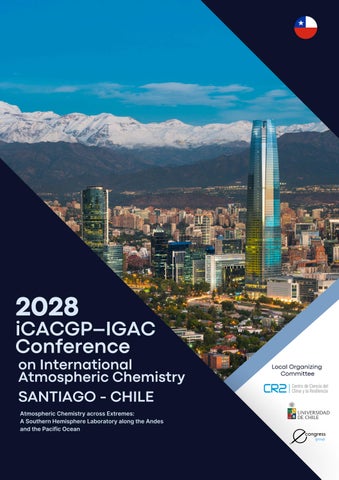
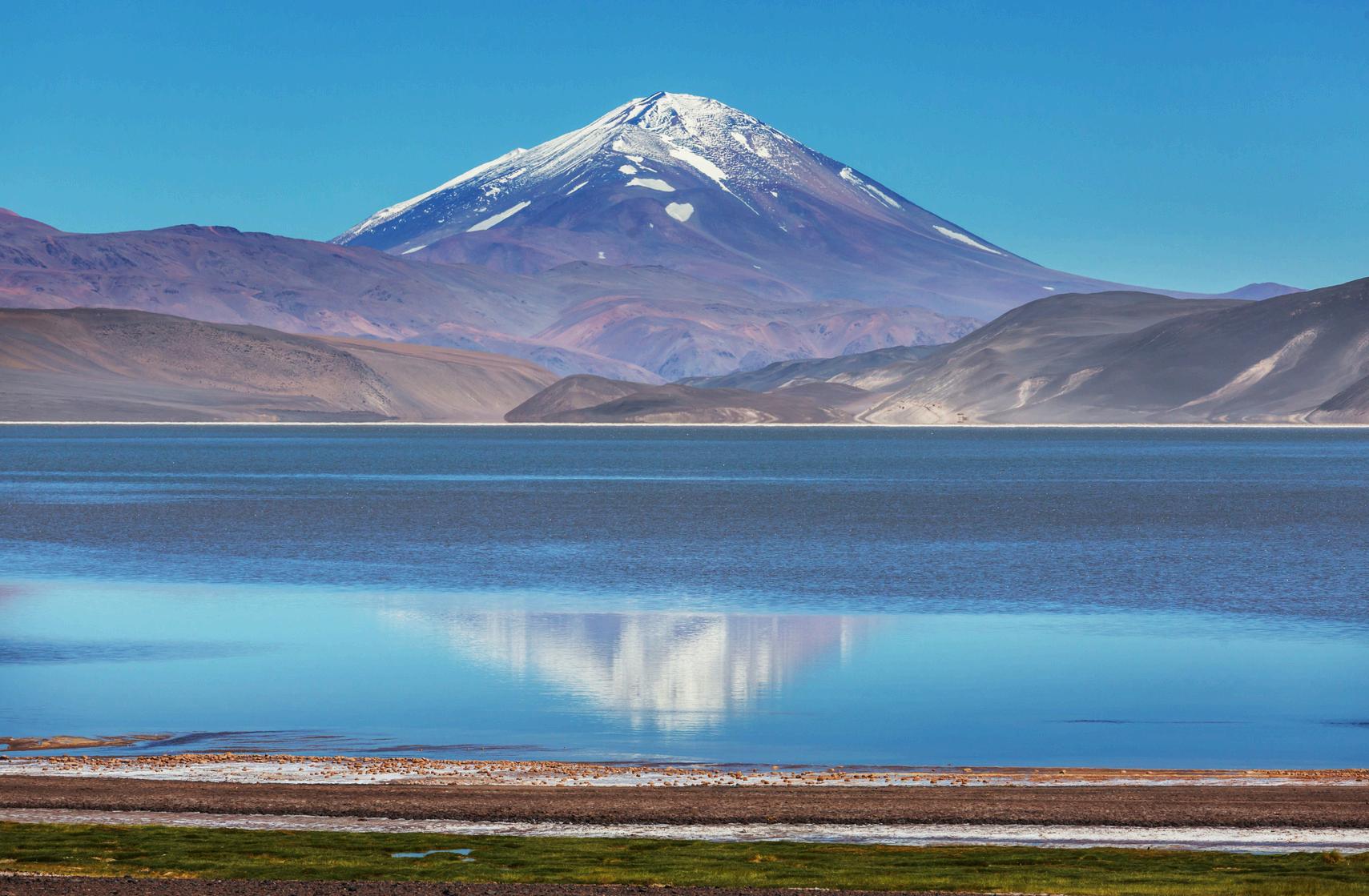
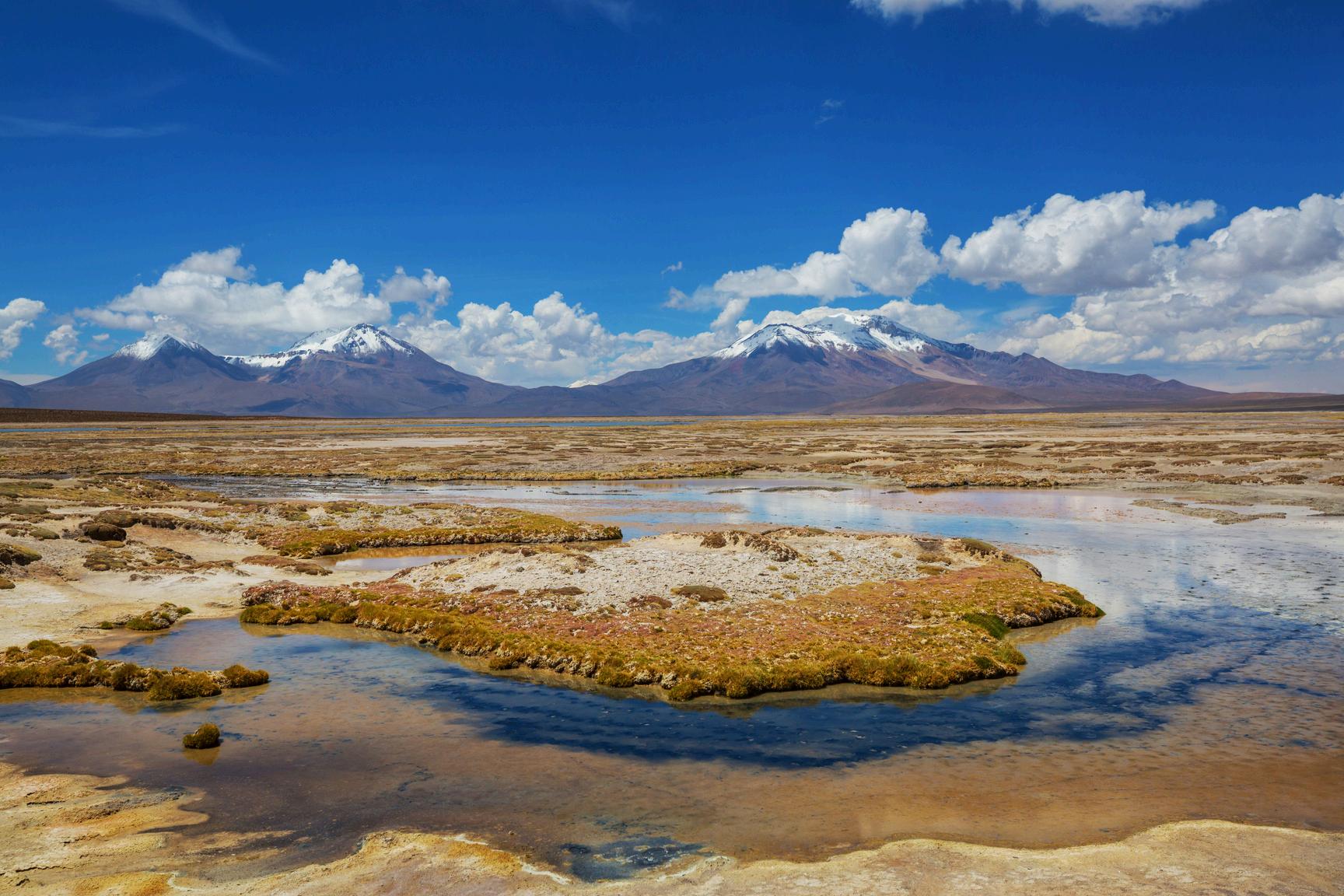
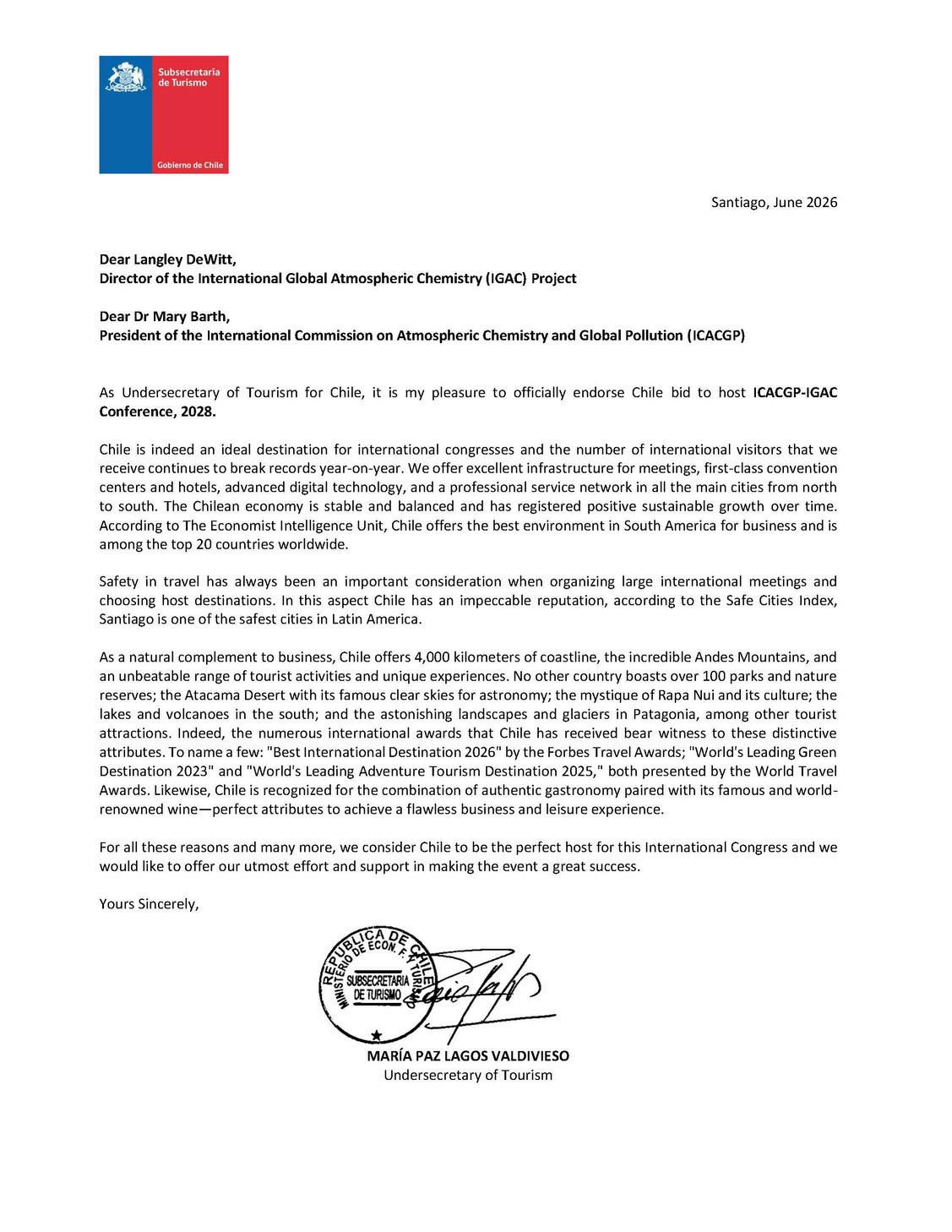
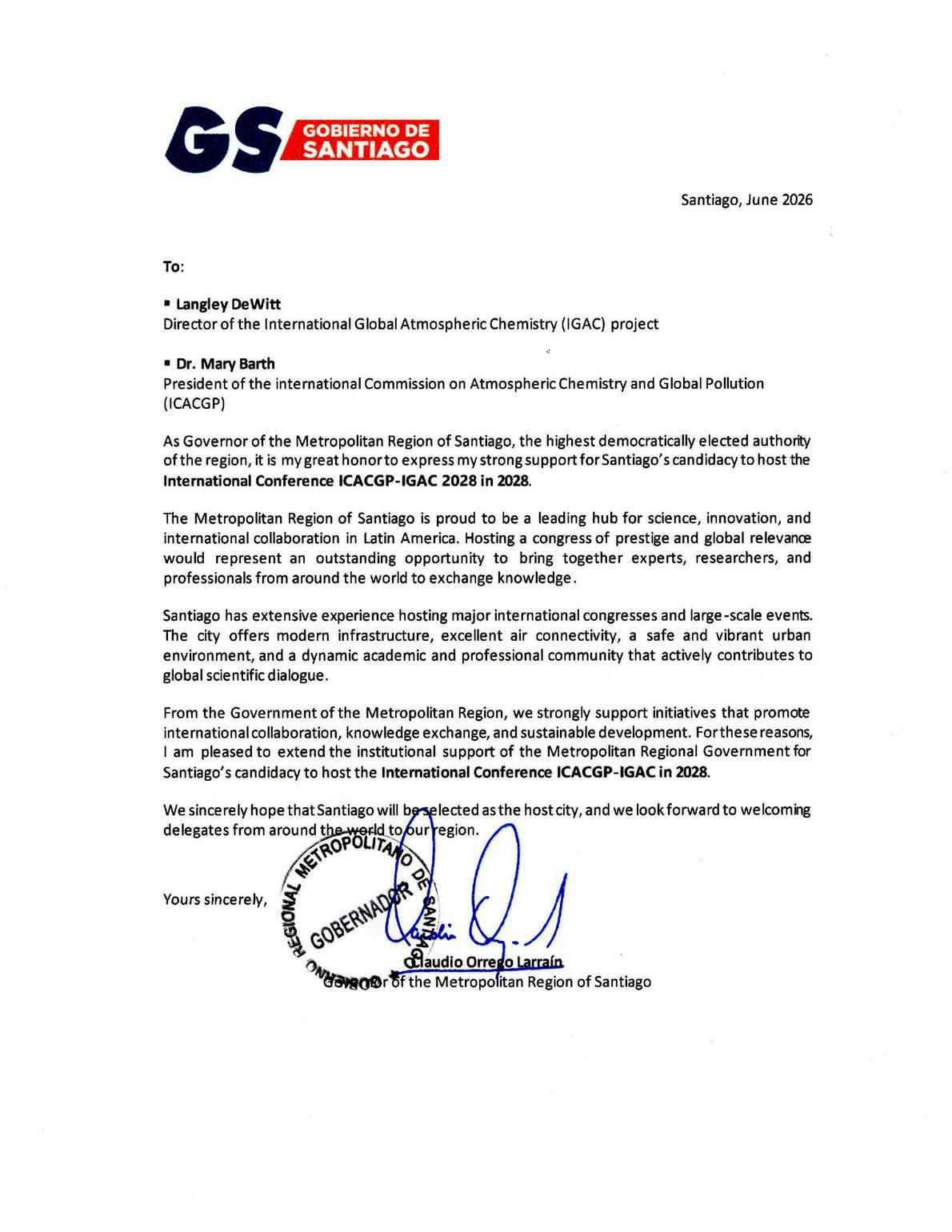
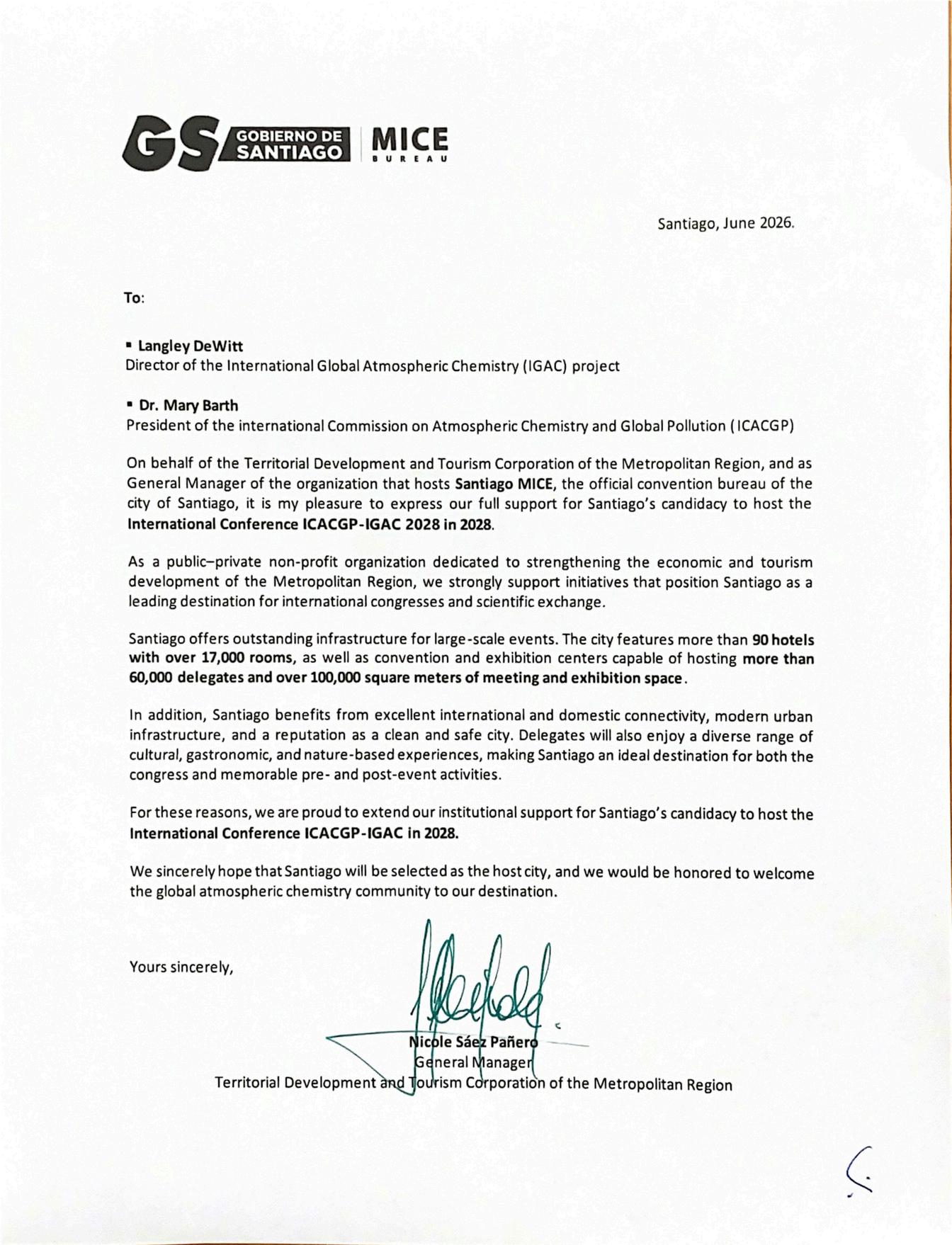
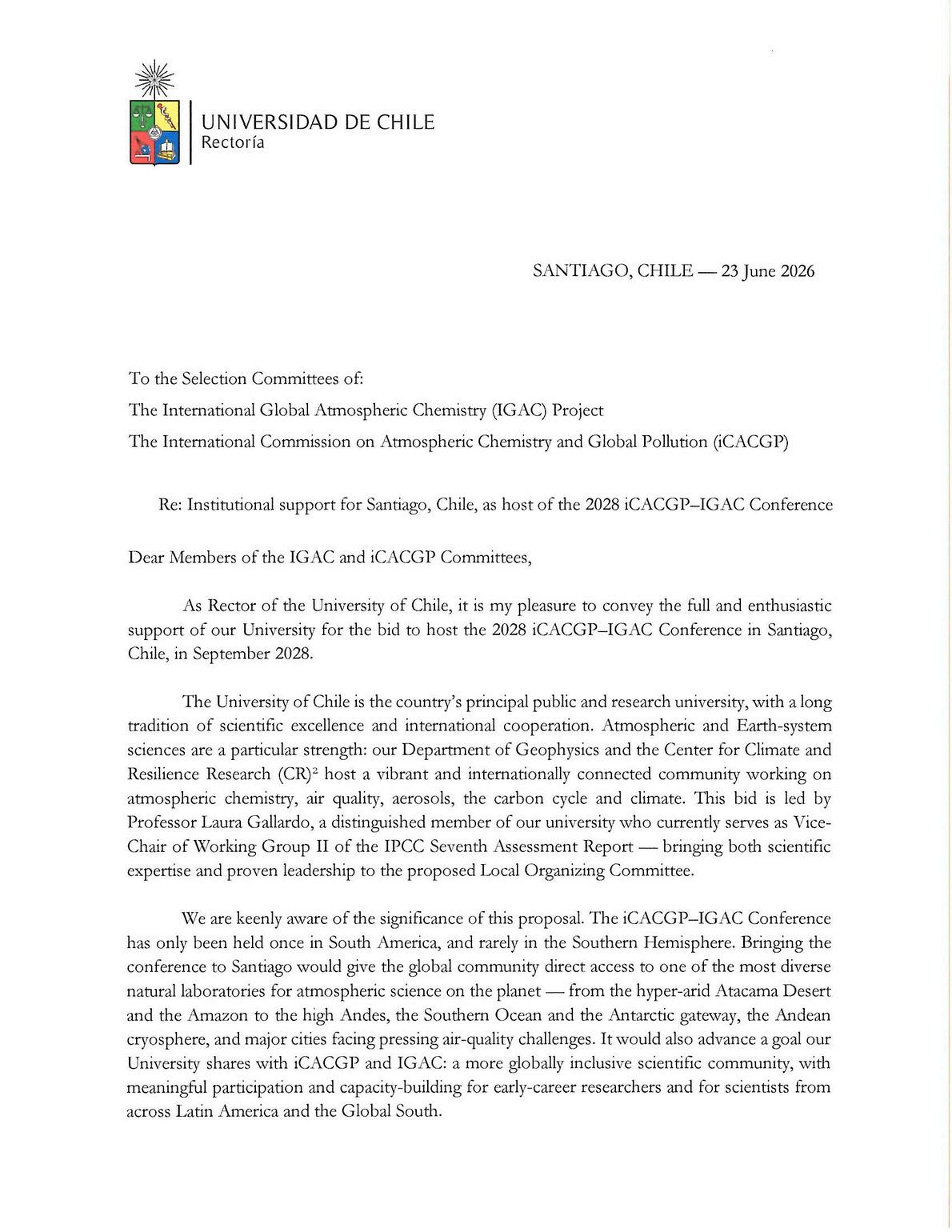
It outlines the scientific vision, proposed programme, host community, conference venue, logistical framework, sustainability commitments, and legacy of bringing theinternationalatmosphericchemistrycommunitytoSouthAmerica. The proposal highlights Chile and the wider South American region as an exceptional natural laboratory for atmospheric chemistry, spanning some of the world’s most diverse and contrasting environments — from the Atacama Desert and the Andes to the Pacific Ocean, the Southern Ocean, and the Antarctic gateway
With the leadership of an experienced Local Organizing Committee and the professional support of eCongress Group, Santiago offers the scientific expertise, infrastructure, international connectivity, and organizational capacity required to deliverasuccessful,inclusive,andmemorableiCACGP–IGACConferencein2028.
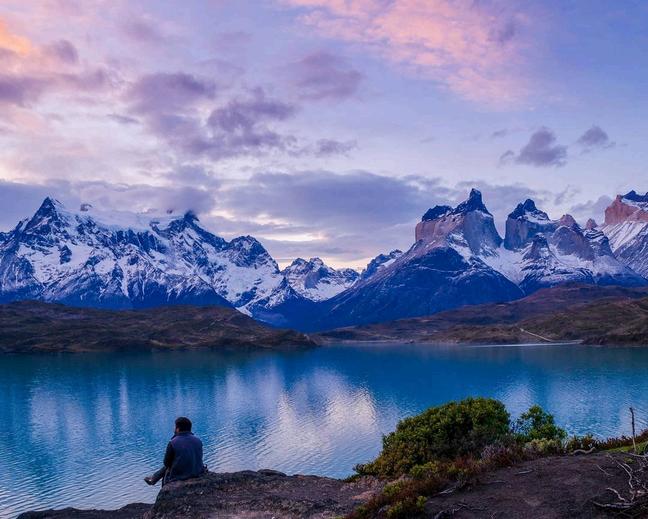
3ChileanMajorLandmarks
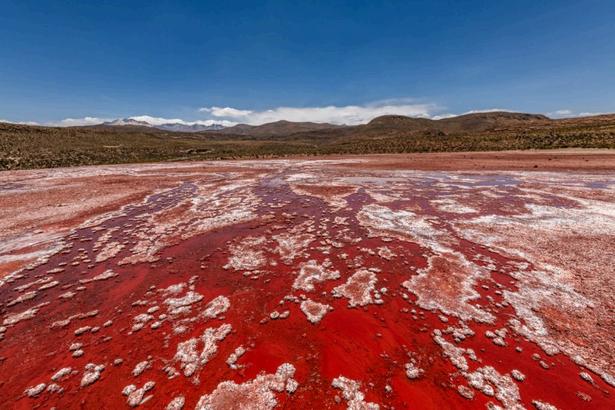
ATACAMA· EXTREMES
RAPANUIISLAND
ExecutiveSummary
Chile proposes to host the 2028 iCACGP–IGAC Conference in Santiago in early September 2028. Only once the iCACGP–IGAC conference has been held in South America (Natal, 2014), and not often enough in the Southern Hemisphere. Hosting in Santiago directly advances iCACGP/IGAC’s stated goal of rotating the conference acrossdiversegeographicallocations,andit brings the community to a continent that is one of the most scientifically compelling yet observationally under-sampled regionsoftheglobalatmosphere.
Our scientific case rests on a simple idea: South America is a natural laboratory for atmospheric chemistry like no other. Within a few hours’ travel from Santiago the atmosphere ranges across the driest desert on Earth (the Atacama), the largest tropical rainforest (Amazonia), the high Andes, the Southern Ocean and Antarctic gateway, Andean glaciers and the cryosphere, and some of the most polluted megacities in the Americas. Few host countries can offer this concentration of contrasting atmospheric regimes — pristine baselines and extreme pollution, natural and anthropogenic emissions, tropical and polar chemistry withinasinglebid.
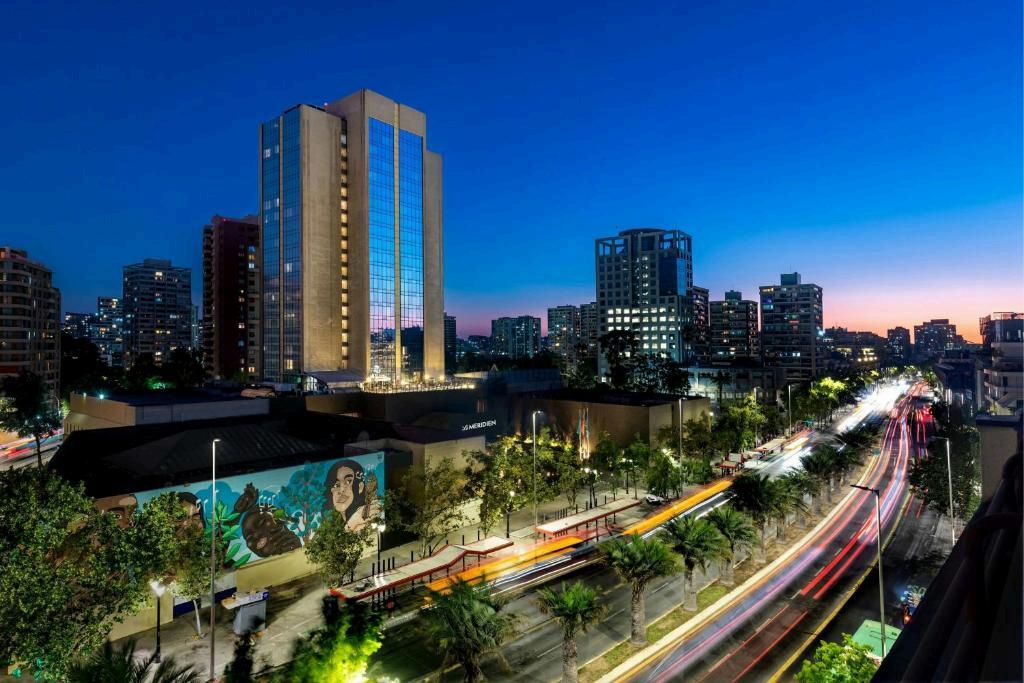
Theconferencewillbeledbyanexperienced local committee representing several universities in Chile and chaired by Prof. Laura Gallardo (University of Chile; ViceChair of IPCC AR7 Working Group II; AAAS Fellow), anchored at the Center for Climate and Resilience Research (CR)² and the Department of Geophysics of the University of Chile, with professional support from eCongress Group, a certified Chilean PCO with more than 15 years of experience running international scientific congresses. Thevenue,HotelLeMéridienSantiago,sitsin the heart of the city with conference capacity well above the iCACGP/IGAC baseline and abundant and diverse budget lodgingwithinwalkingdistance.
The full program follows the iCACGP/IGAC tradition: asingleplenary track,posterson display all week (in person and online), a strong Early Career Scientists Program, a hybrid participation option, a mid-week banquet and a free Wednesday afternoon withoptionalexcursionsbothbytheAndes and the Pacific Ocean. A central commitment of this bid is inclusivity and capacity-building for the Global South, with significant fee discounts and travel support targeted at scientists from lowandmiddle-incomecountries—mostofall from across Latin America and the Caribbean.
LOCALORGANIZING COMMITTEE
The LOC is chaired by Prof. Laura Gallardo and brings together researchers active in atmospheric chemistry, air quality, aerosols, emissions and atmospheric modelling.The committeecurrentlycomprisesthemembersbelow;thetablenotesroleandexpertise.
Name Role Affiliation Expertise
LauraGallardo Chair
Dept.ofGeophysics (DGF),Universityof Chile;(CR)²
NicolásHuneeus Member DGF,Universityof Chile;(CR)²
RodrigoSeguel Member
PontificiaUniversidad CatólicadeChile;(CR)²
YohannaVillalobos Member UniversityofChile
TomásBolaño Member UniversidadCatólica delMaule(Talca)
The committee already satisfies the requirement of more than one institution — the University of Chile, the Pontificia Universidad Católica de Chile and the Universidad CatólicadelMaule—togetherwiththe(CR)²researchnetwork,anditoffersstronggender balance (chair plus a majority of women). Crucially, its members’ expertise maps directly onto the proposed scientific themes: urban air quality and modelling (Gallardo, Huneeus, Seguel), the carbon cycle and data assimilation (Villalobos), and the Andean cryosphere (Bolaño).
Memberbiographies
Prof.LauraGallardo
Laura Gallardo is a Professor at the Department of Geophysics of the UniversityofChileandanadjointinvestigatoroftheCenterforClimate andResilienceResearch(CR)²,whichshefoundedanddirectedbetween 2012 and 2019. Her research spans atmospheric modelling and data assimilation,megacityairqualityandshort-livedclimateforcers,witha strong emphasis on the science–policy interface She holds a PhD in Chemical Meteorology from Stockholm University. She currently serves as Vice-Chair of Working Group II of the IPCC Seventh Assessment Report(AR7) thefirsttimeChileisrepresentedontheIPCCBureau and is a Fellow of the American Association for the Advancement of Science(AAAS)
Dr.NicolásHuneeus
Nicolás Huneeus is an Associate Professor at the Department of GeophysicsoftheUniversityofChileandanadjointresearcherat(CR)² His work focuses on aerosol modeling, emission inventories, air-quality forecasting and the use of satellite remote sensing, combining models and observations to characterize atmospheric composition over South America. He has been active in building air-quality modeling capacity across Latin America and in international aerosol model intercomparisons, and brings extensive experience coordinating regionalscientificcollaborations
Dr.RodrigoSeguel
RodrigoSeguelisanacademicatthePontificiaUniversidadCatólicade Chileandanadjointresearcherat(CR)² Hisresearchcentersoninsitu observations of tropospheric ozone and its precursors, urban photochemistry and air quality, including the meteorological and climatic drivers of extreme pollution episodes in Santiago and other Latin American cities. He has contributed to the scientific basis for airquality regulation in Chile and to communicating these findings to decision-makers and the public He currently acts as co-chair of the nextTroposphericOzoneAssessmentReport(TOAR).
Dr.YohannaVillalobos
Yohanna Villalobos is an Assistant Professor at the Geophysics Department, University of Chile specializing in the carbon cycle, atmospheric data assimilation and inverse modelling She applies topdown methods that combine in-situ and satellite observations (eg OCO-2) with atmospheric transport models to quantify CO₂ surface fluxes between land and atmosphere She holds a PhD from the University of Melbourne and has held research positions in Australia (CSIRO)andatLundUniversity,Sweden,bringinginternationalexpertise ingreenhouse-gasfluxestimationtothecommittee
Dr.TomásR.Bolaño-Ortiz
Tomás Bolaño-Ortiz is an Assistant Professor at the Universidad Católica del Maule (Talca) His research combines atmospheric modelling and remote sensing to study light-absorbing particles black carbon and mineral dust and their deposition on the Andean cryosphere, linking atmospheric composition to snow albedo and meltwaterresources Hisexpertiseconnectsdirectlytotheconference's cryosphere and high-altitude themes and extends the committee beyondtheSantiagometropolitanregion
Dr.CarmenVega
Carmen Vega is an atmospheric chemist (PhD in Physical Geography) and research advisor at the Dirección Meteorológica de Chile (DMC) Her work links the conference to the World Meteorological Organization’sGlobalAtmosphereWatch(GAW)programandtoChile’s long-term background monitoring including ozone and trace-gas observationsatremotesitessuchasRapaNui(EasterIsland)andCerro Tololo as well as black carbon in the Chilean Andes She adds essential operational and observational-network expertise to the committee.
Managing national and international scientific conferences across Latin America
From registration and abstracts to logistics, financial administration and on-site delivery
Proprietary technology for inperson, virtual and hybrid scientific conferences
The LOC will partner with eCongress Group, a Chilean professional conference organizer with more than 15 years of experience managing national and international scientific congresses across Latin America. eCongress is internationally certified as a Professional Conference Organiser (PCO) and as a DestinationManagementCompany(DMC),andoperatesaproprietaryplatformfor in-person, virtual and hybrid scientific events — directly relevant to the hybrid requirementoftheiCACGP/IGACconference.
Servicestobecontractedincluderegistrationandonlinepaymentinlocalcurrency(credit card, bulk payment, and invoicing/wire transfer), abstract-system integration, the conference website, on-site logistics and audiovisual production, the hybrid/streaming platform, and financial administration with transparent reporting to the LOC and IGAC/iCACGP.
The theme captures what makes this bid distinctive: the extraordinary range of atmospheric conditions concentrated in southern South America, and the opportunitytoaddressthepersistentundersampling of the Southern Hemisphere atmosphere. It connects naturally to the cross-cutting questions at the center of iCACGP/IGACscience—emissions,oxidation capacity, aerosols, clouds, deposition, air quality, and atmosphere–ocean–land–cryosphere coupling — while foregrounding regions and processes that the community rarelygetstodiscussonhomeground.
No previous host has been able to place pristine baselines and extreme pollution, tropical and polar chemistry, and natural and anthropogenic emissions, within such a compact geography — an asset for the scientific programme, for optional field excursions, andforcommunityengagement.
Closing the Southern Hemisphere observationalgap
Atmospheric-chemistry observations, networks and modelling capacity remain concentrated in the Northern Hemisphere. The Southern Hemisphere with its different land–ocean distribution, distinct oxidation and aerosol regimes, and limited long-term records — is systematically under-represented in the data sets and intercomparisons that underpin global assessments. Bringing the conference to Santiago is a deliberate step toward visibility, partnership and capacity-buildingforSouthern-HemisphereandLatin American science, in line with iCACGP/IGAC’s commitmenttoagloballyinclusivecommunity.
·Observations and emerging technologies — satellite and remote sensing, low-cost sensors, field campaignsandlong-termmonitoring.
·Models, data science and AI/ML — from process models to machine-learning approaches for emissions,forecastinganddatafusion.
·Atmospheric composition, climate and health coupling chemistry to climate forcing and to human andecosystemhealth.
·Equity, capacity and the science–policy interface strengthening Global-South participation and the translationofscienceintopolicyandviceversa.
ScientificProgram:DailyThemes
FollowingiCACGP/IGACtradition,theconferencerunsasasingleplenarytrack over five days (Monday–Friday), with posters on display all week. Each day carries a thematic focus that, together, traces a path across the continent’s atmospheric extremes — from foundations and cities to forests, deserts, oceans,iceand,finally,integrationandsolutions
Continuing a core iCACGP/IGAC tradition, the conference will run a strong Early Career Scientists (ECS) Program open to all early-career participants, integrated throughout the weekratherthanconfinedtoasinglesession:
Pleasant Mediterranean spring weather, with mild temperatures averaging 15–25°CinSantiago
ELECTRICITY
220V,50Hz(European-styleroundpinplugs) SAFETY
Santiago is one of the safest capitals in Latin America; low crime rates in touristandbusinessareas
INTERNET
4Gand5Gwidelyavailable;fastWi-Fistandardinhotelsandvenues Chile has one of the fastest internet speeds in the world and consistently ranks amongthetop5countriesgloballyinfixedbroadbandperformance
WhyChile,whySouthAmerica
Two arguments anchor the scientific case geographical diversity and observational need.
Acontinentofatmosphericextremes
Withinanationalterritoryspanning~4,300kmoflatitude,andafewhoursfromSantiago, the conference community can engage directly with an exceptional diversity of atmosphericregimes:
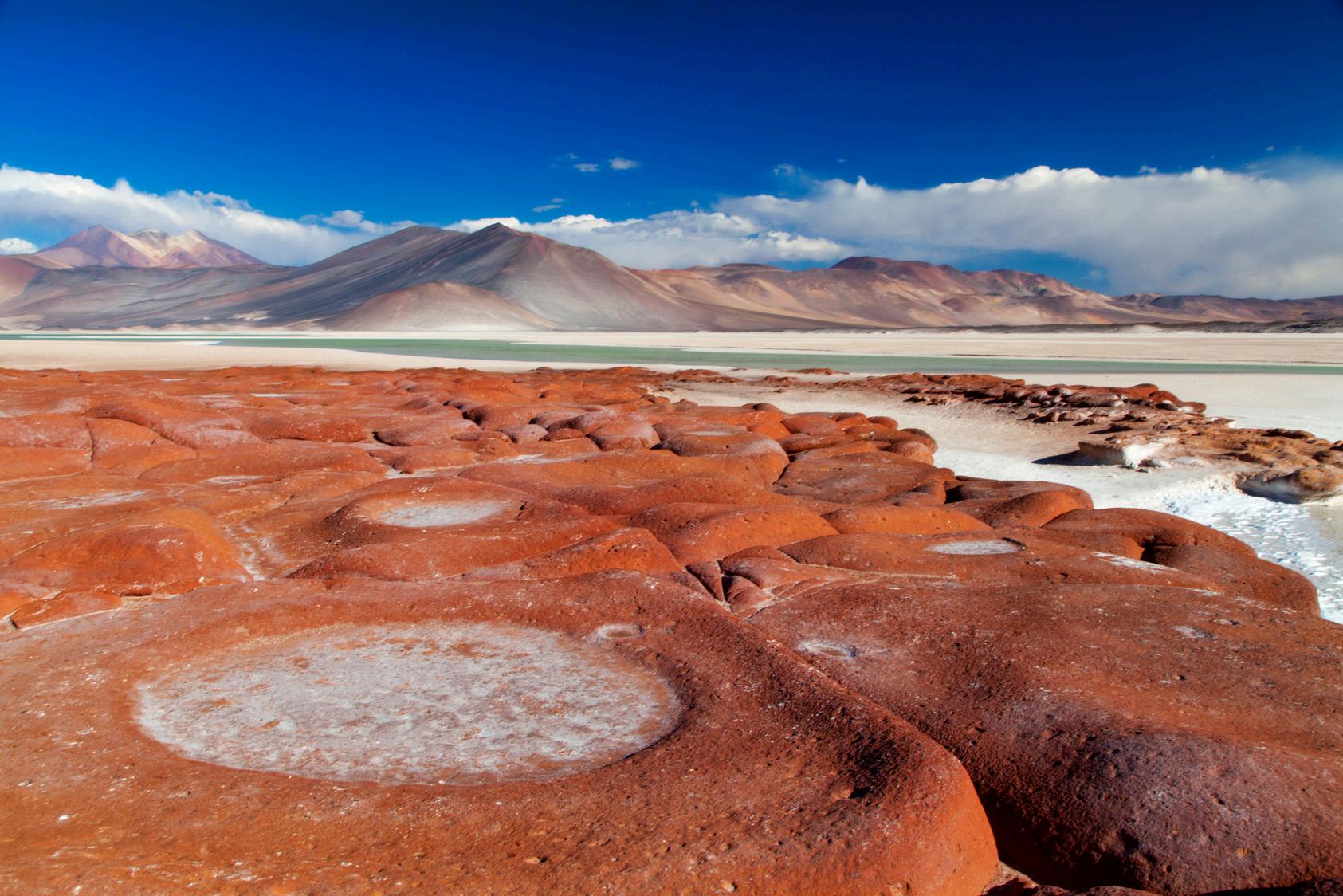
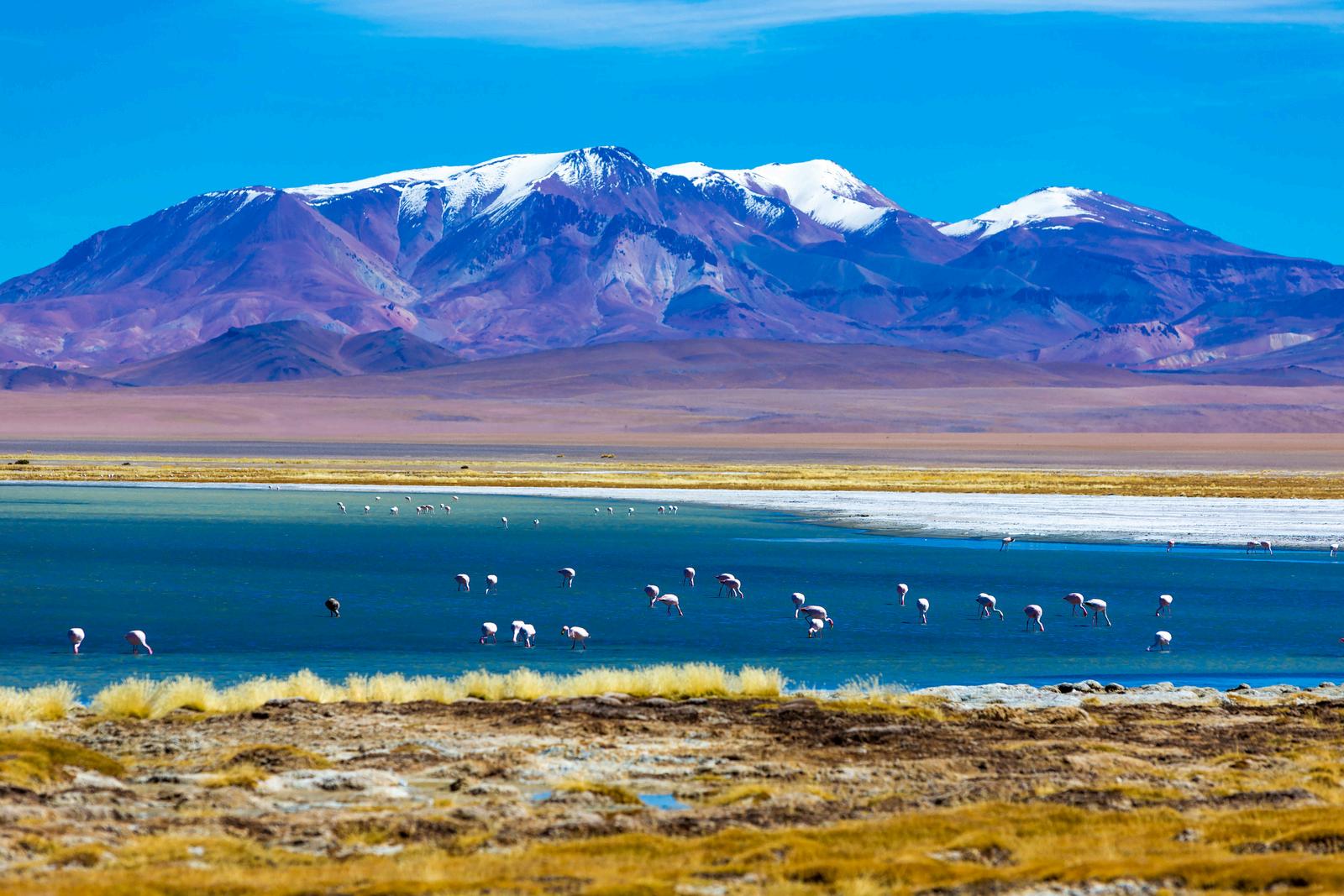
The Atacama Desert the driest non-polar desert on Earth and one of the most pristine, high-altitude atmospheres available for baseline and mineral-dust studies, depositionontohyper-aridsurfaces,andinstrumentvalidationunderclearskies.
Amazonia the largest tropical forest and a global hotspot for biogenic emissions, secondary organic aerosol, natural–anthropogenic interaction and biomass-burning chemistry,accessiblethroughlong-standingregionalcollaborations.
The Andes complex terrain that shapes transport, ventilation and the chemistry of mountain basins, and a setting for high-altitude observations and orographic effects onpollutantdispersion
TheSouthernOceanandtheAntarcticgateway thecleanestmarineatmosphereon theplanetandacritical,data-sparseregionforocean–atmosphereexchange,natural aerosol and clouds; Chile is a principal gateway to Antarctica through Punta Arenas andINACH
The cryosphere Andean glaciers and snowpack where deposition of black carbon and dust accelerates melt, linking atmospheric composition to water security in the region
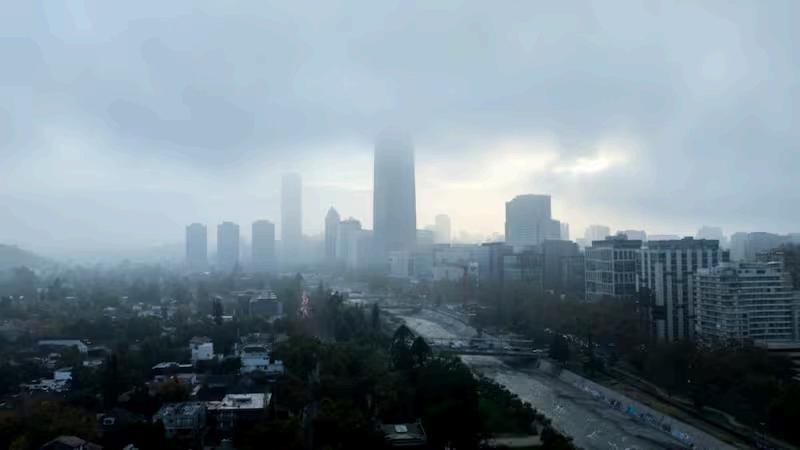
Megacities and air quality Santiago and other Latin American megacities face severe, terrain-trapped pollution, providing a living context for emissions, photochemistry,healthimpactsandthescience–policyinterface.
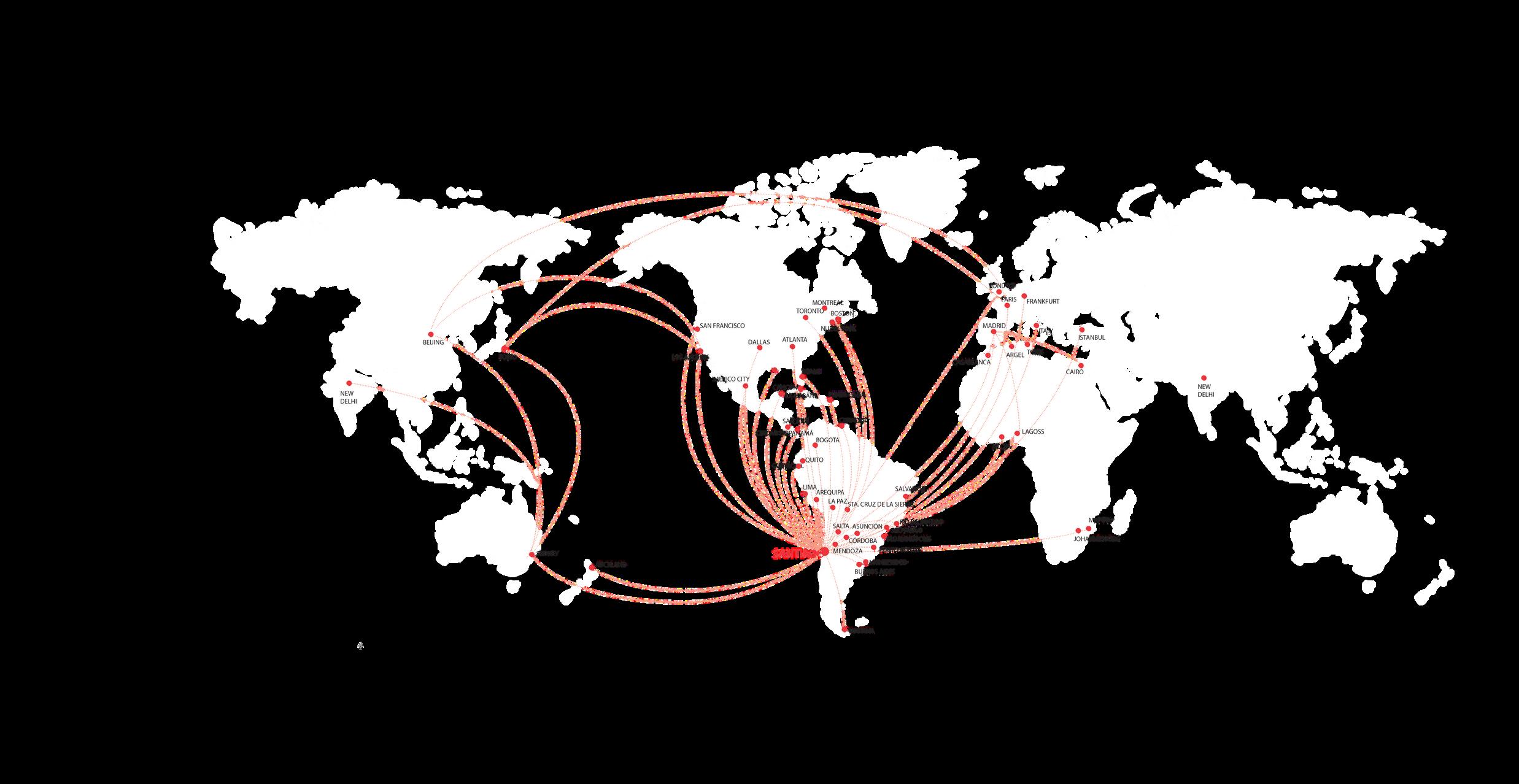
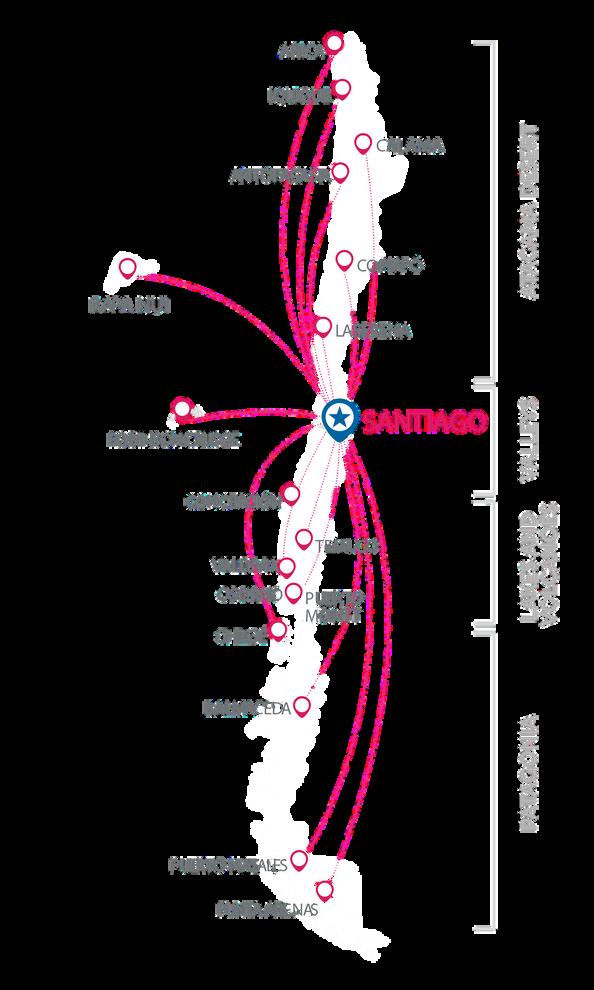
CHILECONNECTED
RAPA NUI ISLAND 5-HOUR FLIGHT FROM SANTIAGO
CHILOE ISLAND
2-HOUR FLIGHT FROM SANTIAGO
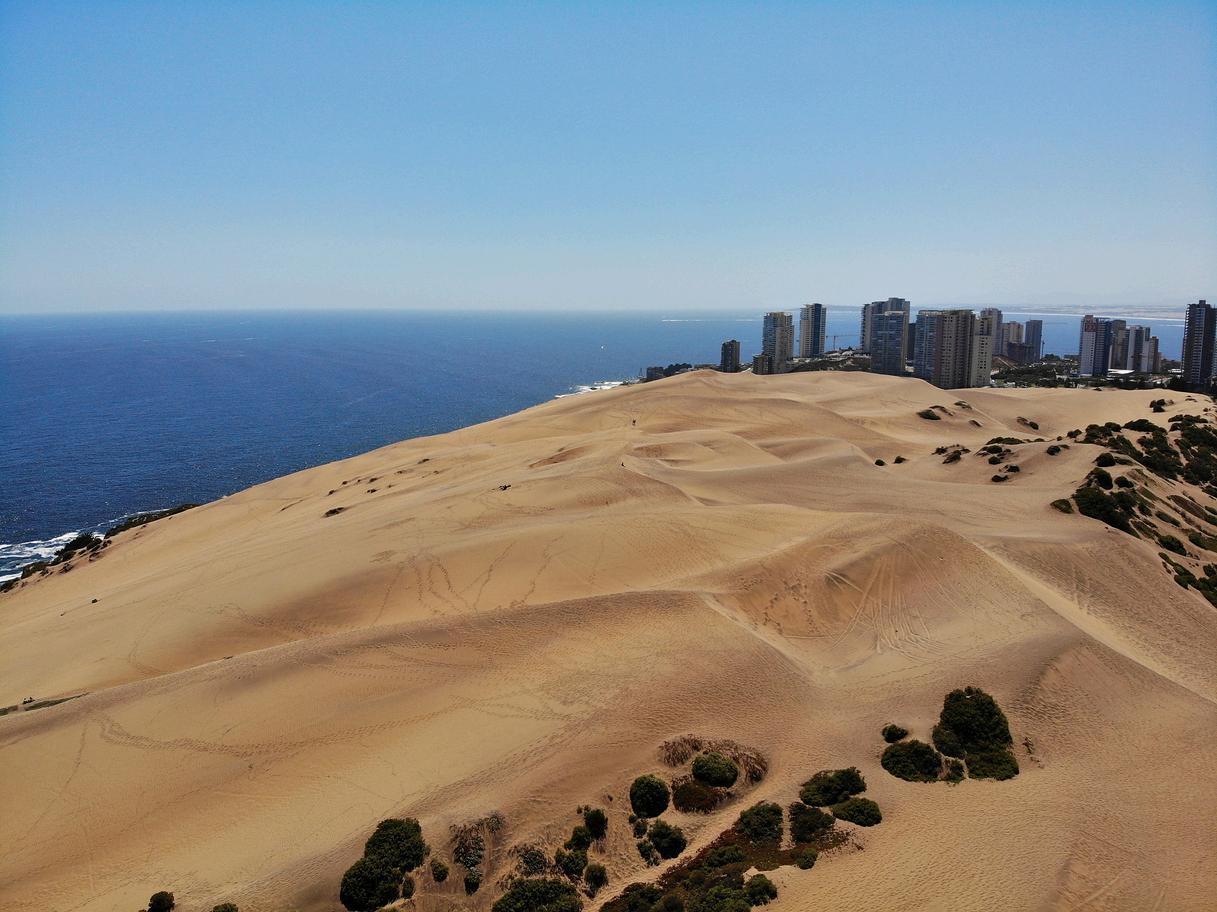
CONCÓN DUNES
A 1-HOUR DRIVE FROM SANTIAGO
Santiago: AModernCapital
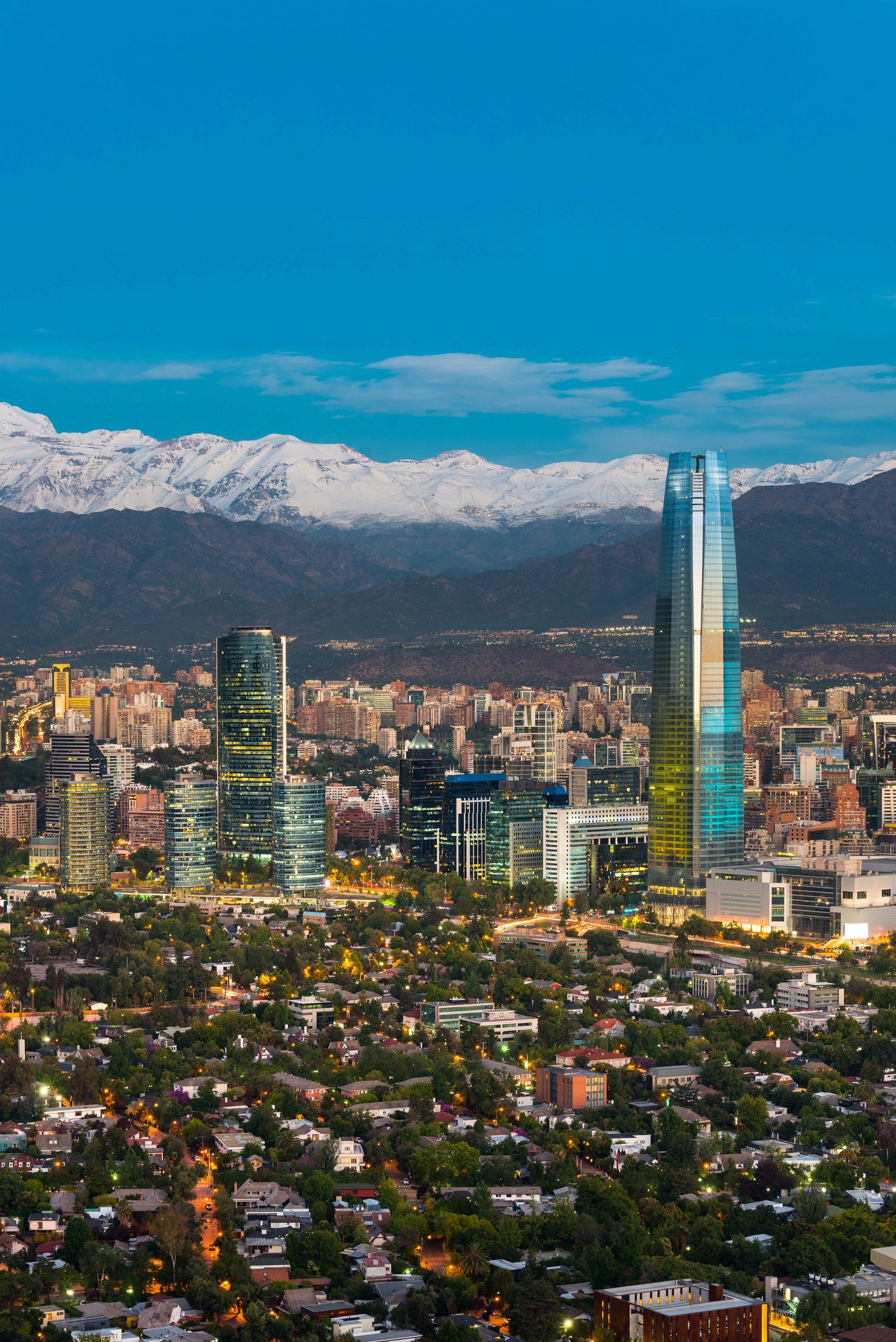
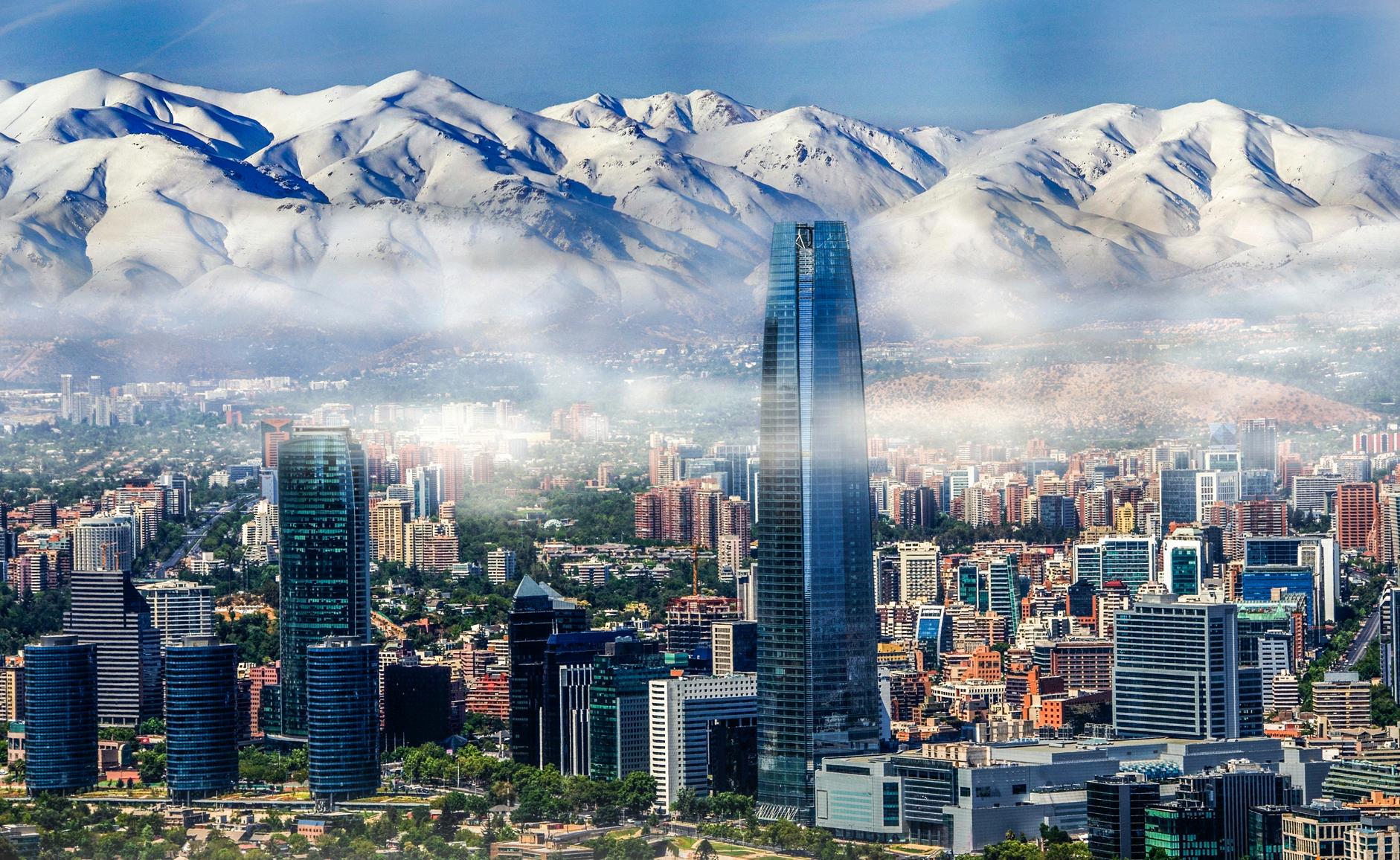
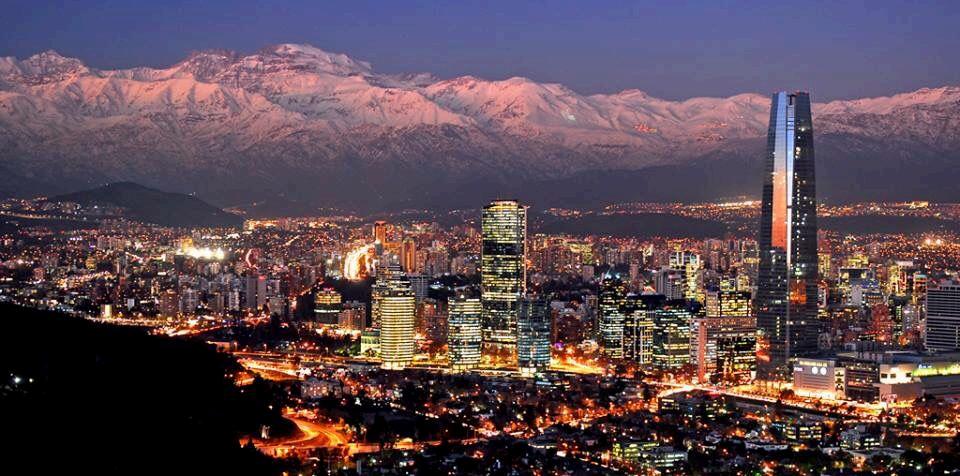
Santiago, the political, economic, and cultural heart of Chile, is a dynamic metropolitan city of over 7 million people In recent decades, it has undergone a profound transformation, driven by sustained investment in infrastructure, urban development, public transportation, and global connectivity Today, Santiago stands as a modern and efficient capital, seamlessly combining contemporary architecture,vibrantgastronomy,andarichculturalidentity allframedbythe dramaticbackdropoftheAndesMountains
Santiago stands as one of the safest and most modern cities in Latin America, supported by strong institutions, high-quality urban services, and a highly developed transportation network The city features the most advanced metro system in the region, with an extensive and continuously expanding network of lines, as well as a new world-class international airport that ensures seamless global connectivity. Visitors benefit from a clean, efficient, and well-organized urbanenvironment,complementedbyawelcomingandhighlyprofessionallocal community For international delegates and their families, Santiago offers a secure, comfortable, and world-class destination for hosting a premier internationalconference
Holding the congress in September offers a unique seasonal advantage, as participants can experience the beginning of spring in Santiago With increasingly pleasant temperatures, longer daylight hours, and the spectacular snow-capped Andes as a backdrop, Chile provides an inspiring setting for both professionalengagementandsocialinteraction
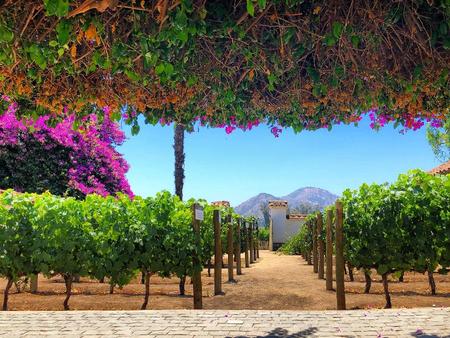
Chile offers exceptional post-event travel opportunities across a remarkable range of landscapes. Attendees can explore the Atacama Desert one of the driest places on Earth and home to world-leading astronomical observatories experience the vibrant culture and vineyards of central Chile, or travel south to discover the pristine fjords and glaciers of Patagonia For those seeking truly unique experiences, Chile also serves as a gateway to Antarctica, offering rare expeditionopportunities
This combination of a world-class scientific event with unforgettable travel experiences makes Chile a particularly attractive destination, enhancing both attendanceandtheoverallimpactoftheconference
Santiago'sComodoroArturoMerinoBenítezInternationalAirport(SCL)isthebusiest airport in South America outside Brazil and the main international gateway to the southern cone of the continent The airport has undergone a major expansion and modernization programme, offering a modern, efficient, and well-connected facility forinternationaltravelers.
The airport is located 15 km from the city center (approximately 30 minutes by taxi, Uber,orbusservice)
VISAACCESSIBILITY
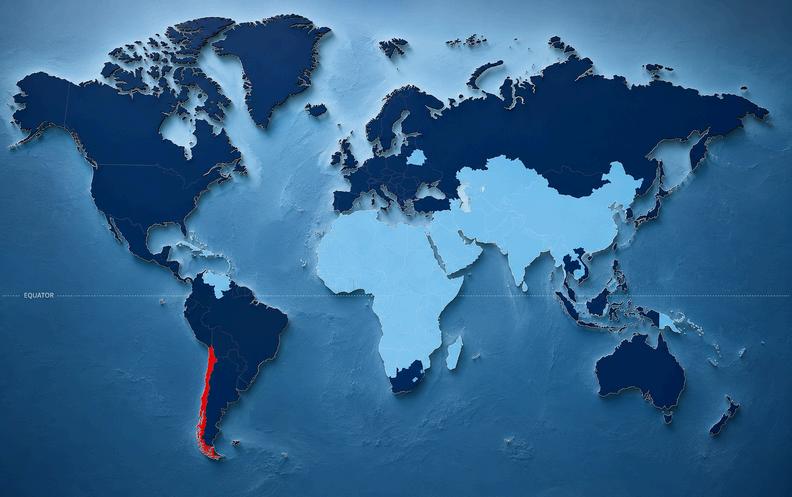
Chile maintains visa-free entry for citizens of a wide range of countries Nationals of the European Union, the United States, Canada, Australia, New Zealand, Japan, South Korea, and most Latin American countries do not require a visa to enter Chile forshort-termvisits
Forparticipantsfromcountriesrequiringavisa,theChileanMinistryofForeignAffairs provides established procedures to facilitate entry The organising committee will provideofficialinvitationlettersandsupportdocumentationtoassistdelegateswith theirvisaapplications
VISA-FREECOUNTRIES
AccommodationinSantiago
HOTELINFRASTRUCTURE
Santiagoboastsamatureandextensivehotelinfrastructure,withanamplesupplyof 4-star and 5-star properties operated by major international chains to comfortably accommodate 4,000–5,000 international delegates without any difficulty. The city has experienced substantial growth in its hotel capacity over the past decade, with numerous new properties opening inVitacura, Las Condes, Providencia, and the city centre
Major international hotel brands present in Santiago include Hilton, Marriott, Intercontinental, NH Hotels, Ibis, Radisson, DoubleTree by Hilton, Holiday Inn, W Hotels, Sheraton, and Hyatt, among many others Most of these properties are locatedwithin10–20minutesoftheMetropolitanSantiagoconventionvenue.
HOTELOVERVIEWBYCATEGORY
The conference organizing committee will negotiate preferential room blocks and conference rates with a selection of recommended hotels at different price levels, ensuring that delegates from all regions and budgets can find suitable accommodation conveniently close to the venue Shuttle services will be organized betweenthemainhotelareasandtheconventioncenter
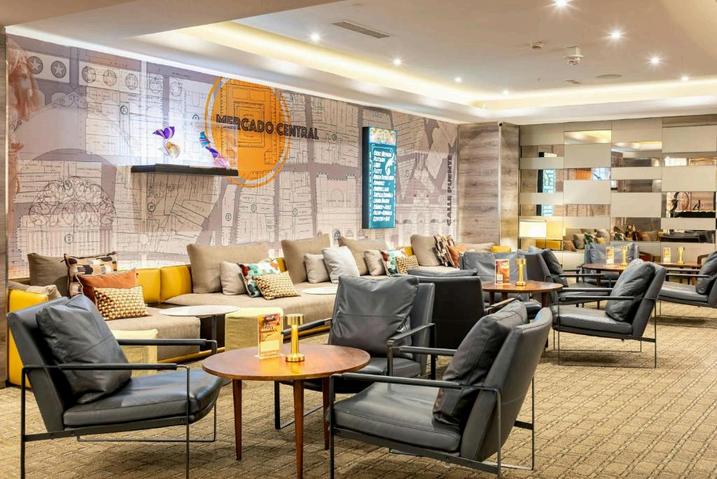
The hotel combines extensive conference facilities with 291 guest rooms, allowing the Local Organizing Committee to provide an integrated conference experience in which scientific sessions, networking activities, catering and accommodation can be concentrated within a singlevenue.
LeMéridienSantiagooffersapproximately2,119m²(22,809sq.ft.)ofmeetingspacedistributed across 12 meeting rooms. Its largest conference space, the Santiago Ballroom, provides approximately 680 m² (7,319 sq. ft.) and accommodates up to +700 participants in theatre configuration, meeting the expected requirements for the main plenary programme of the iCACGP–IGACConference.
ConferenceFacilities
The venue provides the flexibility required to accommodate the conference’s scientific programme,postersessions,networkingactivitiesandprojectmeetings.
The Santiago Ballroom will serve as the main plenary hall, offering a theatre-style capacity of upto600participants.AdditionalconferenceroomsincludeAtacama,Patagonia,Baquedano, Lastarria and Bellas Artes, each accommodating up to 200 participants in theatre configuration, together with several smaller meeting rooms suitable for committee meetings, projectdiscussionsandsideevents.
The availability of multiple meeting spaces within the same conference centre will allow the Local Organizing Committee and eCongress Group to develop an integrated venue layout incorporating the plenary hall, poster exhibition areas, coffee and networking spaces, project meetingroomsandparticipantservices.
CateringandParticipantExperience
Daily lunches and two coffee and tea breaks will be provided for conference participants. A varied selection of catering options will be available throughout the conference, including vegetarian, vegan, gluten-free, and other dietary alternatives to accommodate participants’ preferences and requirements. Catering and networking areas will be strategically integrated intotheconferencevenuelayouttofacilitateparticipantcirculation,interaction,andscientific exchangethroughouttheprogramme.
Le Méridien Santiago provides on-site catering, restaurant facilities, and dedicated event spaces, allowing all conference catering requirements to be efficiently coordinated with the scientific and social programme Special dietary requirements will be collected during the registrationprocessandcoordinatedinadvancebyeCongressGroupandthevenuetoensure aninclusiveandenjoyableexperienceforallparticipants.
TechnologyandHybridConferenceCapabilities
The conference venue provides meeting-space infrastructure, audiovisual capabilities, videoconferencing services and Wi-Fi connectivity These facilities will be complemented by eCongress Group’s technology and audiovisual services to support the hybrid requirements of the2028iCACGP–IGACConference.
The proposed hybrid conference infrastructure will support live streaming of plenary sessions, remote presentations, online participation, moderated Q&A sessions and access to digital conferencecontent.
By combining extensive conference facilities, accommodation, catering, technology and participant services within a single venue, Le Méridien Santiago provides a strong operational baseforthe2028iCACGP–IGACConference.
Its central location, flexible meeting infrastructure and capacity to host the scientific, networking and social components of the conference will allow the Local Organizing Committee and eCongress Group to deliver an accessible, efficient and internationally competitiveconferenceexperienceinSantiago.
Website,Registrationand Abstracts
eCongresswilldevelopandhosttheconferencewebsite(programme,ECS programme, key dates, travel & lodging, link to IGAC, link to the abstract system,andduringtheeventlinkstoallonlinecontent).
Registration and payment will be online in local currency, supporting credit cards, bulk payment, and invoicing/wire transfer, per the requirements. A single week-long registration fee will be offered (no daily fees),withseparatein-personandvirtualfees.
Indicative registration fees (to be finalised; ranges anchored to the solicitation’srecentfigures,adjustedforinflation):
Budget
Per the solicitation, the costs and financial risks are the LOC’s responsibility, with any surplus returned to IGAC and transparent reporting throughout. The budget must include at least: PCO fees; venue; LOC-provided transport; coffee/lunches; banquet; and conference materials. Revenue: registration fees; scientific organizations/funding agencies;andothersources(city,tourismbodies,foundations,industry,donations).
To support inclusive participation and make attendance more accessible for delegates withfamilyandcaregivingresponsibilities,childcareserviceswillbeavailableduringthe conference.
This initiative is designed to help parents and caregivers fully engage in the scientific programme, networking activities and overall conference experience, while providing a safeandwelcomingenvironmentfortheirchildren.
In addition, a private and comfortable breastfeeding room will be available at the conferencevenue,providingadedicatedspacefornursingandexpressingmilk. Further details regarding childcare availability, age ranges, schedules, registration procedures and breastfeeding facilities will be communicated in advance of the conference.
ASouthernHemisphereLegacy
Hosting the 2028 iCACGP–IGAC Conference in Santiago will be more than bringing an international scientific meeting to Chile. It will be an opportunity to strengthen atmospheric chemistry across the Southern Hemisphere, build lasting connections betweenglobalandLatinAmericanscientificcommunities,andinspireanewgeneration ofresearchers.
FromtheAtacamaDeserttotheAndes,fromthePacificOceantotheAntarcticgateway, Chile offers an extraordinary natural laboratory for understanding our changing atmosphere.
Santiago is ready to welcome the global atmospheric chemistry community — to share knowledge, create new collaborations, and shape the future of atmospheric science together.