The University of Bristol's Award Winning Independent Student Newspaper


The University of Bristol's Award Winning Independent Student Newspaper
When
accepted
place
study History in Bristol in the aftermath of the 2020 BLM movement, I was well aware that the city’s colonial history was resting heavily on its shoulders. Over time, I have become increasing ly aware of the University’s complic ity in supporting families who had active roles in the slave trade.
According to the University’s esti mates, 89 per cent of the wealth used to found its existence was reliant on the labour of enslaved people. This funding, seen as charitable dona tions, enshrined colonial families in the institution's history, with many prominent and symbolic buildings being named in their honour; nota ble examples include the Fry Building and Wills Memorial Building.
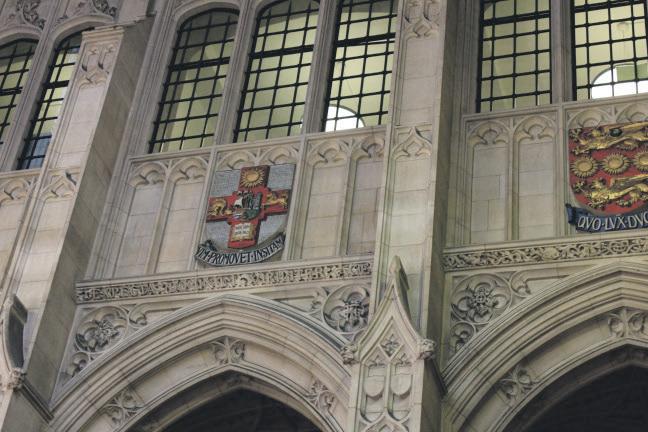
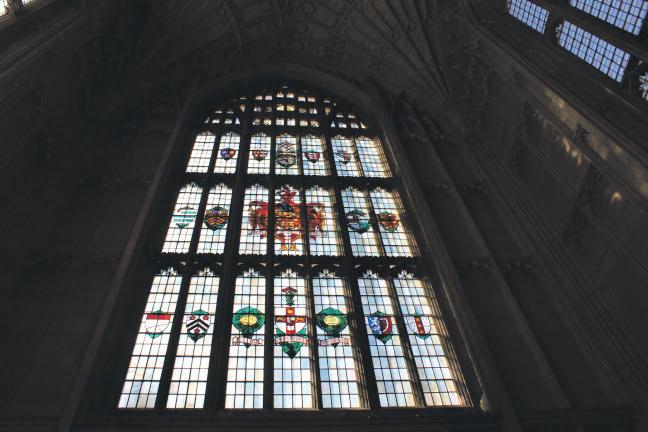
These families were also bestowed the honour of visibility on the University Crest, which became the
University logo as late as 2003.





A sun for the Wills family, a dolphin for the Colston family, and a horse for the Fry family. Each family with their own colonial legacy through their direct participation in the slave trade.
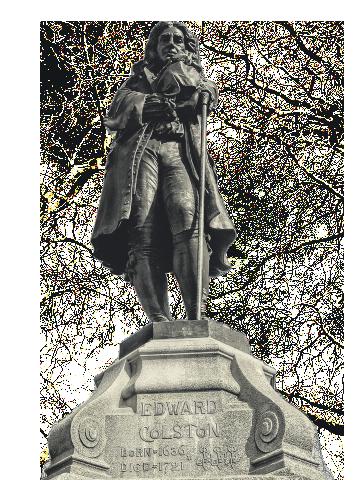
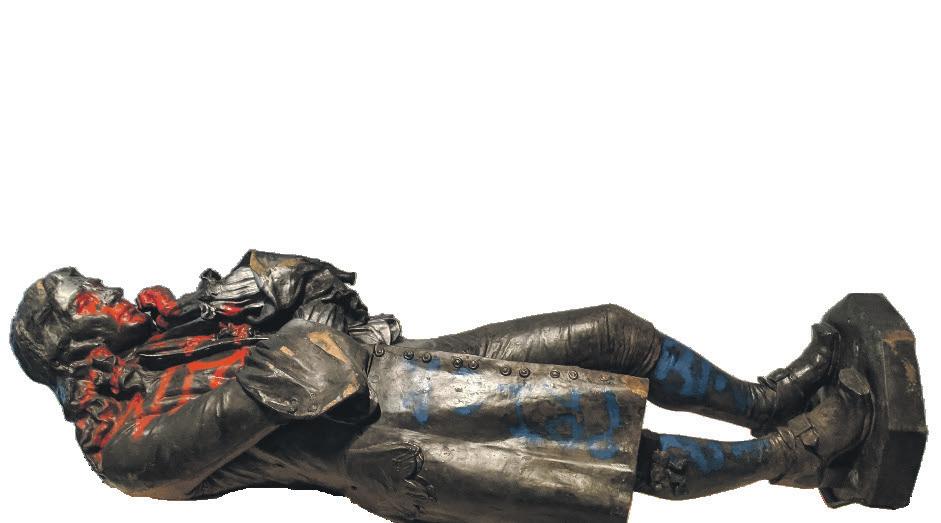
The Colston family’s links to the slave trade are particularly infamous locally and internationally owing to the toppling of Edward Colston’s statue in 2020. As deputy governor of the Royal African Company, he was directly responsible for the en slavement of 84,000 people, 19,000 people of whom died in the Atlantic crossing. In August 2021, ‘Colston Street Halls’ was renamed to ‘Accom modation at Thirty-Three’, in an effort from the university to become an anti-racist organisation.
The second family to feature on the logo is the Fry family, who invent ed the world's first chocolate bar. The Frys were responsible for 39 per cent of all cocoa imports from the Carib bean and its slave plantations.
The family continued to exploit people even after the abolition of slavery in 1833, through enslaving people in countries where slavery was not yet illegal, like Sao Tomé.
Epigram spoke to Dr. Richard Stone who, having spent 19 years at the University, is passionate about researching the economic legacies of slavery, particularly in relation to the University. He explained the hypocrisy of the charitable donations of the Fry family who, despite being responsible for forced labour, was a key figure in the Bristol abolitionist movement.
‘You can't deny that he would have known what the conditions were like because he's read Equi ano’s narrative. He's an abolitionist. He would have known buying all of these ingredients is propping up slavery, and yet he's still being active ly, knowingly complicit in it, which is really, really complicated.’
Finally, the Wills family were
tobacco manufacturers who owned slave plantations in the US despite Slavery being abolished in the UK.
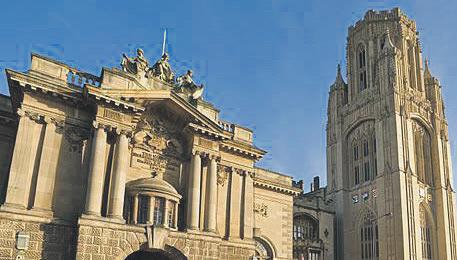
The Wills family is perhaps the most visibly commemorated family in the structure of the University today with the iconic Wills Memorial Building named after the University’s first chancellor, Henry Overton Wills III, whose donations are claimed to have made the institution possible.
This begs the question, do the ac tions of these families truly represent the current institution as we see it today? What role should the Universi ty play in educating its population on the dark side of its past? And more crucially, what should be done about the University logo?
Demands for Bristol University to address its colonial history are not new. In 2017, ‘Past Matters’, a project lead by Dr. Stone, organised a peti tion to change the name of
@epigrampaper_
Continuedfrompage1
Wills Memorial Building. This petition gained 692 signatures and divided Bristolians, with a counter petition appearing in reaction.
At the time, the university commented to Epigram that ‘it is important to retain these names as a reflection of our history.’
In 2020, Epigram met up with Asher Websdale and Shakeel TaylorCamara, students involved in the ‘Past Matters’ project, who stated, ‘The biggest issue is that people that oppose these movements really struggle to understand what memorialisation is. There are many ways we can memorialise without paying homage to any of these people.’
Since 2020, the University has stated that they have ‘made a commitment to review the logo which is part of a wider project looking at our brand identity.’ A request for an updated statement from the University in October 2022 was greeted with a reiteration of this ‘commitment’.
However, according to Dr. Stone, change is imminent: ‘I don't know what we'll see. It's important that this is based on consultation and discussion. It needs to be a back
engagement with people.’
‘Everyone should feel welcome in university. And if you have these difficult histories and you're trying to push them under the carpet, intentionally or not, you create a barrier for some people.
The crest is present in all University branding: every official document and email is smeared with this colonial reminder. Logos are visual brand reputations, thus leading us to question why the values of the University appear to be validating the role of these individuals who were directly accountable for profiting from human exploitation.
Dr Stone agrees: ‘For me, 20 years is quite a long lifespan for a brand. So, I think it's time for the university to rebrand, to change a lot of its graphics.
And it's part of a natural process that our relationship with the past shouldn't be fixed in time [...] We always need to be mindful of the past, but equally we really need to look to the present and the future as well.’
The past is not static, and in order for the University to be brought in to the modern, anti-racist institution it professes it is, the logo should be changed. The fact that until recently I, and many others, were unaware of the colonial links in the logo speaks
to how normalised the University’s colonial history is.
Dr. Stone notes that we miss the colonial nature of the logo because it's ‘hidden in plain sight’: A lot of these things don’t look like [...] they're connected to slavery. And that's a big part of the problem. So, one of the things we need to do is train people to look critically, to think critically, and to alter the way people think about things.’
Often, those who argue against a change will claim that if we keep these symbols of the slave trade, it will educate people. Even if this were true, I don't see how this would educate people more effectively than a change itself. Moreover, serious questions would be raised if new logos were created on the same argument: if a modern, controversial figure, linked to the suffering of hundreds of thousands, and directly responsible for countless more, was memorialised in this way on the basis of ‘education’, why would we memorialise the past in this way Bristol University would not be the first Bristol academic institution to change the logo in the aims of reassessing the colonial narrative. The Dolphin School in Montpelier designed a new image in March 2021 as the dolphin was likened to
of the Colston family. This change was not an erasure of history. Instead, it redirected the historical narrative into one that does not glorify the profits of the slave trade.
Throughout my investigation, it’s become clear that a change is needed. This is crucial, not just for legacy of the University itself but also for the students and staff, who deserve more than to be represented in this antiquated, immoral way.
to undo, to undo and undo and undo this infinitive of arrears, their fissile mornings, their fragile, fragile symmetries of gain and loss
fromOssuary II byDionne Brand
Co-Editors-in-Chief: James Dowden and Mark Ross
Deputy Editors: Alexander Sampson and Marine Saint
Creative Directors: Freya Shaw and Oscar Hunter
News
Editor: Radhika Gurnani
Deputy Editor: Lena Stein
Digital Editor: Aeliya Bilgrami Subeditor: Shreyas Kanna
Editor: Lauren Sanderson
Deputy Editor: Lily Farrant
Digital Editor: Tamara Letts
Investigations Editor: Aidan Szabo-Hall Subedit: Dan Hutton
Opinion
Editor: Quinn Clearwater
Deputy Editor: Nina Micciche
Digital Editor: Laurie Hallam Columnist: Katie Sowerby Subeditor: Eve Bentley-Hussey


In 1989, Epigram’s second ever edition flew from the press with the captivating headline, ‘Veni, Vidi, VC’. A new Vice Chancellor, Sir Christopher Jeremy Morse, had joined from an illustrious career in banking and was stepping into the Higher Education sector. At that time, Epigram’s incipient journalism was bound with gossip columns, lewd articles and tabloid-worthy headlines. But its core remained raucously entertaining, catering to both the higher interests of pseudointellectuals and the lascivious eyes of students born in the sexual revolution era. Nowadays, TikTok and TheTabenjoy the viral dump of rumours and comedy that packed Epigram’s columns. And some could argue that in this digitalising era print newspapers are reasonably defunct.
But we beg to differ. We’re adding fizz back to the forgotten paper and the change begins now. Our rebrand comes as a wider push to give our printed journalism more bite, more interest, more intrigue. We’ve stripped back to black and red, not just for Black History Month, but for the foreseeable future. And just as this issue champions black narratives, stories and ideas – gems previously silenced – we want every issue to sparkle with the voices of the University. This content comes from you. Take a long look, an even longer read, and a second to add your voice. There’s never been a better opportunity.
Arts: Editor: Rianna Houghton
Deputy Editor: Phoebe Caine
Digital Editor: Melissa Braine
Critic Columnist: Milan Perera Subeditor: Ella Fraser
Music Editor: Oscar Ross
Co-Deputy Editors: Jake Paterson and Josh Templeman
Digital Editor: Sam Cox Subeditor: Hannah Thompson
Editor: Evelyn Heis
Deputy Editor: Jake Tickle
Digital Editor: Amelia Jacob
Investigations Editor: Kalila Smith
Sci-Tech
Editor: Emily Barrett
Deputy Editor: Dhristi Agarwal
Digital Editor: Carla Rosario
Investigations Editor: Tiberiu Toca
Sport Editor: Joe Green
Deputy Editor: Jojo Lewis Digital Editor: Louis Edward Investigations Editor: Eddie McAteer
Charlotte Carpenter - Creative Director
Elsie King - Visual Designer
Epigram talked the UoB’s Persian Soc, who are criticising the universi ty’s response to the crisis.
The society is arguing that this issue is not being given as much at tention as other political issues, such as the war in Ukraine or the death of Queen Elizabeth II.
‘The reason they said they wouldn’t talk about it is that they said it would attract a lot of neg ative attention and alienate some students.
Mark Ross Co-Editor-in-ChiefStudents from the University of Bristol have called out the university’s lack of response to Iranian anti-government protests, discussing the harmful impacts this can of have on students both in Iran and on campus.

Protests erupted across Iran following the death of 22-year-old woman in September after being taken into custody by the ‘morality police’. She fell into a coma following her arrest for breaking strict laws re quiring women to cover their head.
Reports have emerged of brutal treatment of protesters by gov ernment forces, who have cracked down on the demonstrations. One human rights group says that the crackdown has killed at least 201 people.
Notably, university-wide emails were not distributed about the crisis in the same way that they were for other global issues.
Individuals from the society raised their concerns with university staff.
Judith Squires, Deputy Vice-Chan cellor of the university, is reported to have responded that 'this isn't the first time something like has hap pened in this part of the world, and it definitely won't be the last'.
Instead, the university offered wellbeing support and hosted an event in the Global Lounge:
A society member commented: ‘They offered some coffee and cake. They had a lot of wellbeing support there which was fab.
'But it’s not wellbeing we are asking for. We want them to email people about it [the crisis].’ They also mentioned that another reason for the university’s refusal to send emails is fear of adverse feedback.
‘But it is not a political, or racial issue…it is a human rights issue. It is just about people being free…for students not to be shot at.’
When Epigram asks about the situation with other Persian societies at other universities, we learn that UoB is not an anomaly, and that ‘no universities in England are really speaking about it’.
Members go on to explain the benefits of a university-wide email to students affected by the crisis.
‘A lot of people in the society are upset that [those around them] aren’t bringing up this issue in con versation…and offering support… it is quite a big thing, especially for international students who have their family in Iran.
‘It is difficult to focus on their work with everything happening at home’
They add that university publicity would precipitate more student ac tion, such as increased social media posting and support for protests.
‘Instagram and social media is the really the only thing we can do.
It puts pressure on political figures, celebrities, governments... to speak out’. The case of the Iranian protests raises the wider question of when the university should publicly speak out about international issues.
A spokesperson for the University of Bristol said:
‘As an institution, we assess how best to respond to human rights issues on a specific and individual basis, as we also do in cases of terri torial invasion or warfare.
'Our primary aim is to offer sup port for members of our community who are most likely to be impacted
by any situation in their homeland. In this case, it was felt that we should absolutely support Iranian students, who we reached out to via email, and organised an event in the Global Lounge which was well attended.
'We will also continue to work closely with the Students’ Union and its elected officers to deliver support, through the Global Lounge, for any student or colleague who is affected by the current situation in Iran.
'And we will adopt a similar approach whenever the need arises in response to other human rights issues and crises in the future.’
• Kai Benjamin earns a semi-final spot on the prime-time programme
• The experience has given him the confidence he needs to pursue a music career
Kwiatkowski News reporterA Bristol second year student is set to perform in front of millions of peo ple this weekend on the hit ITV show ‘The Voice’.
Kai Benjamin, 19, who studies psy chology at Bristol, faced off two com petitors to earn his semi-final spot on judge Anne-Marie's team, who de
scribed Kai's music as 'beautiful' and 'so exciting.'
Earlier on in the show he earned the prestigious 'four chair turn,' with all four judges commending his unique brand of English-Japanese singing and rapping, which Kai said left him 'speechless.'
Kai grew up in Cornwall, with his love for music starting an early age, when he was given a guitar aged 7.
While his sound started out as acoustic it has since developed into rap, and he cites his move to Bristol as key in sparking his interest in mu sic:
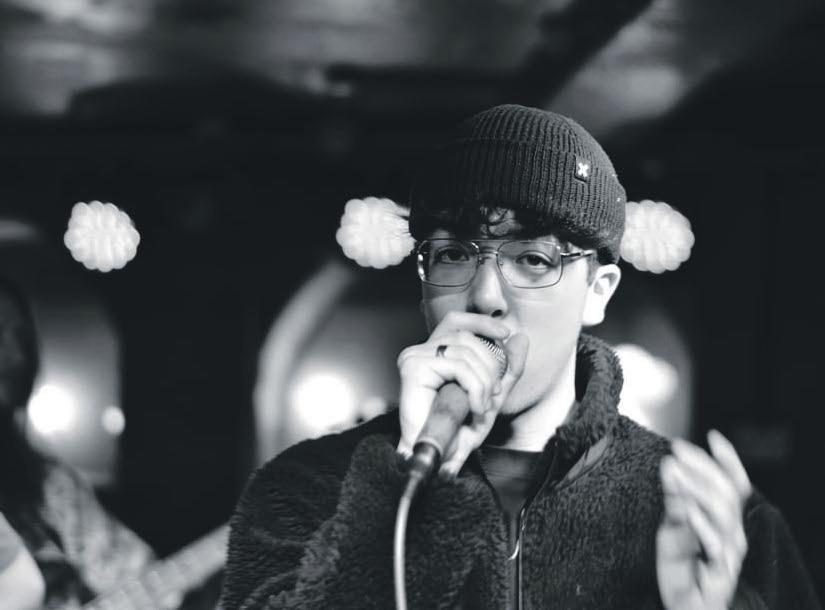
'I'm from a little Cornish village that's very sleepy. In Bristol there are so many inspirational people. I love it.'
Despite this, Kai still speaks fondly his hometown, stating that his 'family have been super supportive’ and ‘It's
good to be around people who are real with you.'
Kai's songs span topics from rela tionships to mental health and are filled with catchy 'flows.'
His blind audition of Ariana Grande's '7 Rings' certainly caught the interest of the internet, with over 200,000 views on YouTube and 600,000 views on social media plat form TikTok.
The stakes are high for Kai, with the ultimate winner of The Voice be ing awarded a deal with Polydor Re cords alongside a chance to release their debut single, which could help launch a successful music career.
Kai has echoed this sentiment, since appearing on The Voice has given him confidence that a career in music is, in his own words, 'not just some pipe dream.'
• Students calling for University to raise awareness of Iran protests
• University refuses to play too political a roleUnsplash/ Artin Bakhan Sofie
• The University of Bristol has announced that it is appealing a part of the court’s ruling on the recent Natasha Abrahart court case.
 Mark Ross Co-Editor-in-Chief
The University of Bristol has announced that it is ap pealing a part of the court’s ruling on the ruling on the recent Natasha Abrahart court case.
Abrahart, a second-year physics undergraduate, took her own life in April 2018. She had suffered with severe social anxiety since child
hood.
Natasha’s parents believe the University did not do enough to accommodate her needs, suing the University under the Equality Act on the grounds of negligence and disability discrimination in March.
In May of this year, a judge ruled that the University discriminated against Natasha by failing to accom modate her mental health disability. He ordered the university to pay damages of £50,000.
The University is appealing the judge’s finding that they were in breach of the Equality Act.
The University has issued the following statement:
'We would like to make it clear that this appeal is not against the Abrahart family, nor are we disput ing the specific circumstances of Natasha’s death. We remain deeply
sorry for their loss and we are not contesting the damages awarded by the judge.
In appealing, we are seeking abso lute clarity for the higher education sector around the application of the Equality Act when staff do not know a student has a disability, or when it has yet to be diagnosed.
In Natasha’s case, academic and administrative staff assisted Natasha with a referral to both the NHS and our Disability Services, as well as suggesting alternative options for her academic assessment to alleviate the anxiety she faced about presenting her laboratory findings to her peers.
However, the judgement suggests they should have gone further than this, although Natasha's mental health difficulties had not been diagnosed. Understandably, this has
caused considerable anxiety as it puts a major additional burden on staff who are primarily educators, not healthcare professionals.
It is important that students and their families are clear on what
universities can and cannot do, and that students receive appropriate specialist care under the NHS should they need it’.
University
In conversation with Epigram, Ella recounted the documentary-making process.
Rhadika Gurnani News EditorThe film features interviews with nine Ukrainians, who share their individual ac counts of the current conflict.
Some interviewees have fled from Mariupol, an area which recently suffered what has been described as genocide, while others are planning journeys back to their hometowns to reunite with loved ones.
As founder of the Pachamama Project, an NGO which makes and distributes reusable sanitary pads for refugees, Ella was keen to see how the project could provide aid to those displaced by the war.
Earlier this year, she and Jenny visited refugee camps in Poland to coordinate this, and it was during this time that the idea for the film was born.
'Back in February, when we heard about the beginning of the Ukraine war, I think it shocked everyone and it really affected me. A lot of us couldn’t switch off the news and I barely left my house that week.
'Through Pachamama, we had so many of our volunteers contacting us asking how they could help.
'With these situations, it’s just really difficult to know unless you go. I booked a trip for Easter to go with Jenny to do some distributions and media, and we ended up deciding to make a documentary.
'We distributed sanitary products to 1000 people in the camps, and then saw the situation, which was just awful.
'We went out there to find out whether reusable pads could work in the camps in Poland, and found that 4000 people were sharing two washing machines and didn’t have anywhere to dry their stuff.
'So, we set up a fund for dispos able products and raised £7,000 with an organisation called Pads for Refugees.'
The Pachamama Project, in collab oration with another organisation on the ground in Poland, has since shipped 16,000 pads for 2,000 wom en in Ukraine.
When Epigram asks what the Voices of Ukraine aims to achieve, Ella states that she and Jenny want to give those in the camps 'The opportunity to tell their stories and their words'.
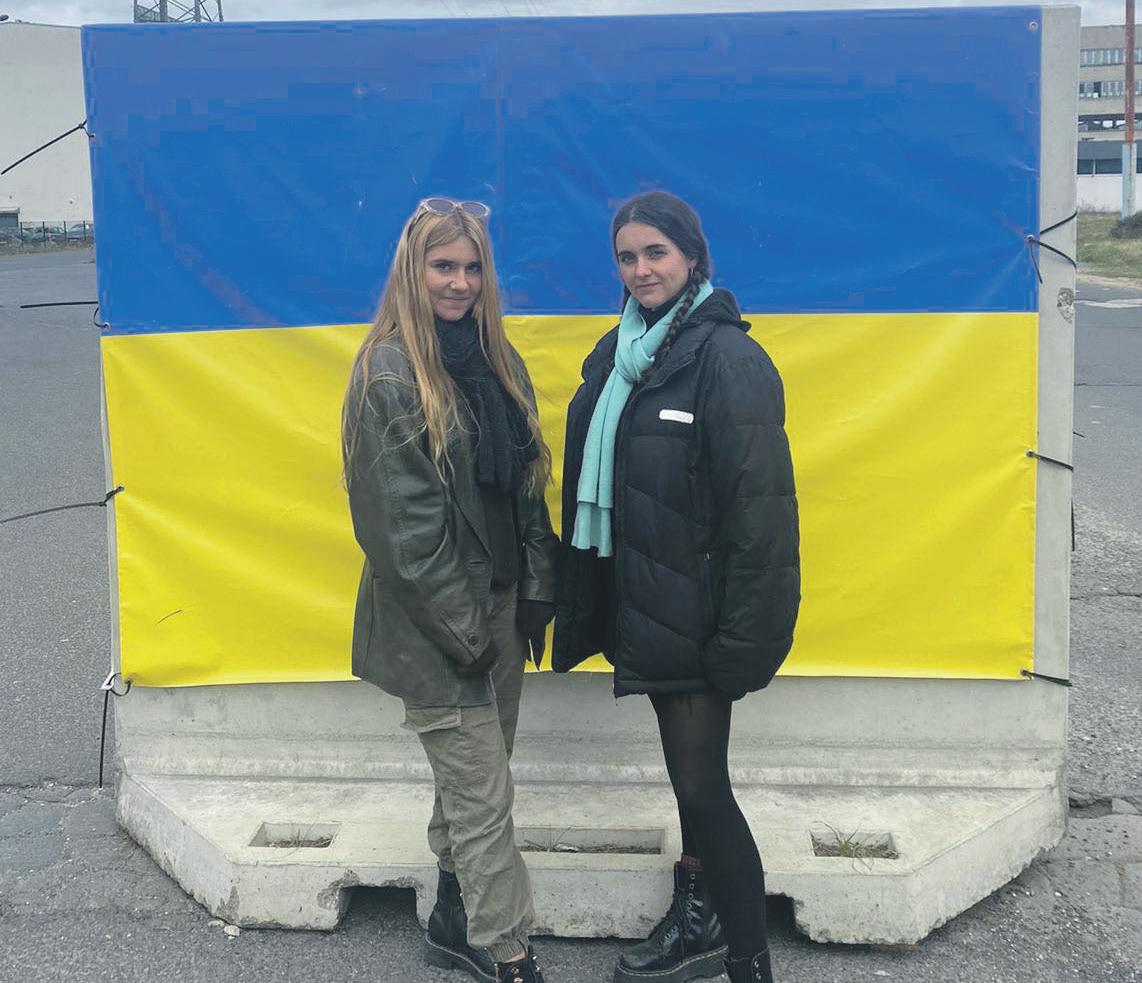
'We all read the headlines, but I think quite often we feel quite dis tant from the people behind them who are living these experiences.
The premiere will be followed by a discussion with Iryna Zemlyana, an activist who is extremely well-known in Ukraine.
Zemlyana was living in Kiev the night before the war began, when she was notified by her contacts at CNN of what was about to occur. The following day, she received a call from the Ukranian government urging her to leave imminently, as she was on the second line of the Russian kill list.
The activist will speak to attendees of the premiere from hiding, giving invaluable insight and expertise on the war as a journalist and security specialist.
According to Ella, Zemlyana 'Doesn’t know what has happened to her house and if it is still standing'. In this way, her talk will also come from a candid, personal perspective, relating her experience of going from a renowned public figure to a refugee.
This event is also a fundraiser for humanitarian relief, with part of the proceeds going to the Pachamama Project.
The rest of funds raised will be
split between the Institute of Mass Information, which supports Ukrain ian journalism, and Eden Aid, which transports essential supplies and services to the Ukrainian border.
The premiere will take place on Tuesday 25 October at 6pm in Lecture Theatre BH.05 (in the new Humanities Building at the back of 7 Woodland Road).
Tickets cost £5 to attend in person or £3 to attend online.
• Two
of Bristol students, Jenny Barruol and Ella Lambert, launch a new documentary: Voices of Ukraine
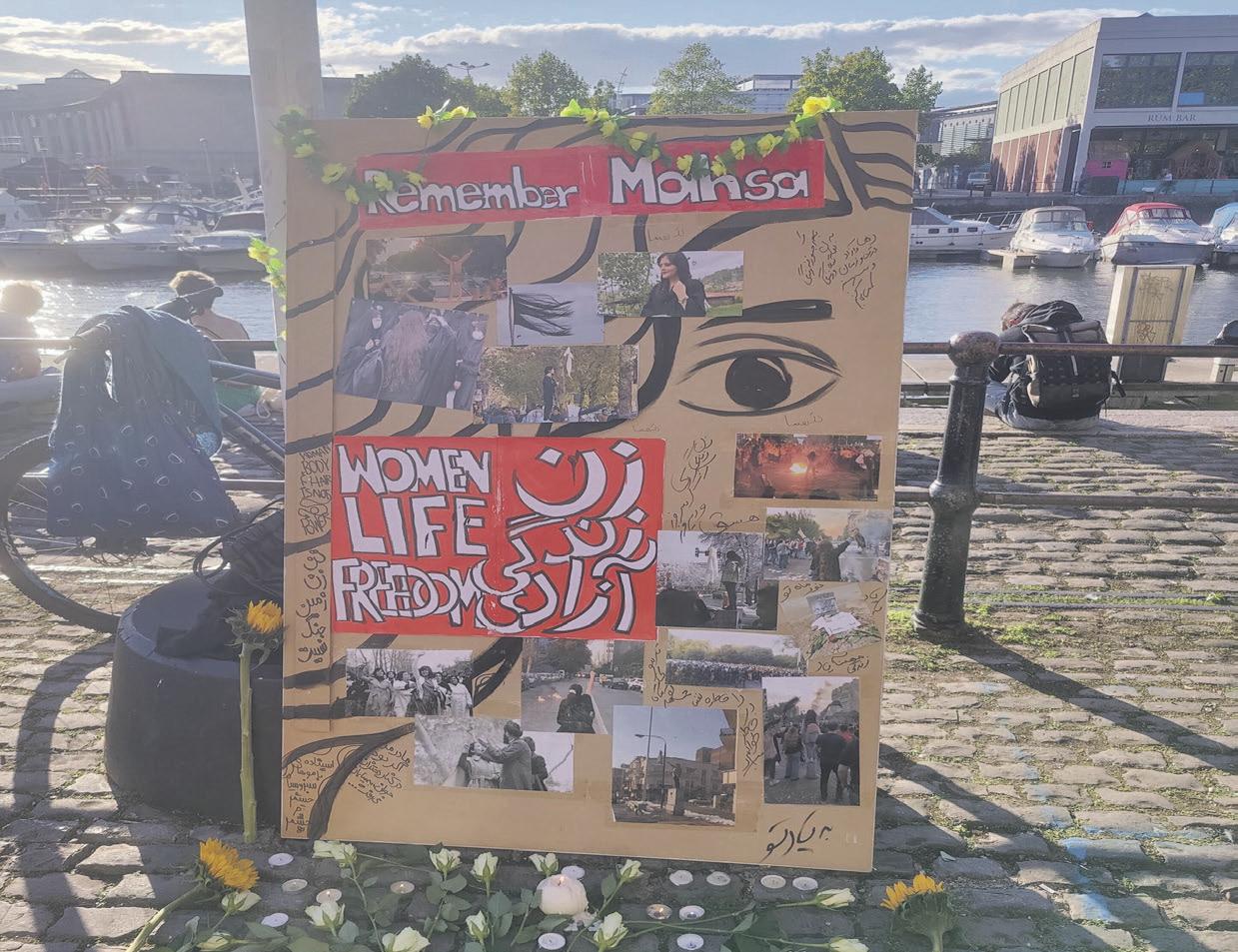
• A vigil was held in Bristol for the death of Mahsa Amini in front of the Arnolfini art gallery.
 Shreyas Rajesh Kannan News Sub-Edtor
Amini died at the age of 22, at the hands of the Iranian authorities after being detained for wearing a headscarf ‘improperly’ under the country’s strict hijab laws. Allegedly beaten and killed by the ‘morality’ police, a charge that authorities deny, her death has sparked a series of wide scale protests across Iran.
Displayed on a billboard amidst candles were pictures of the protest ers, mostly Iranian women and dis enchanted youth who were cutting their hair or raising their hands; acts of defiance against the theocratic regime.
The vigil was organised by two local artists Roxanna Vilk and Amak Mahmoodian, a lecturer at UWE. Keen to show the ‘human face’ of
the conflict as part of the sizeable Iranian diaspora in Bristol, the event was a show of solidarity with the protests, while offering time and space for contemplation.
With an internet blackout stretching across the country and a media crackdown initiated, dis parate reports are being received from all provinces. From what is being revealed, Iranian authorities have retaliated in often brutal ways to the protests, with the President Ebrahim Raisi vowing to deal with the protests ‘decisively’: videos show anti-riot police threatening, beating, detaining and even firing live ammu nition at groups of protesters.
Iranian authorities report a death toll of 40, but human rights groups worry that the number is much higher.
Asked how Bristolians have react ed to the vigil, Ms Vilk states that ‘It’s heart-warming to see people comethey might have seen it on social media, saying they want to come and express an interest and show solidarity’.
She noted that even when the event was posted on social media at noon, many had attended the vigil that started at 5pm. Amongst those
who had attended to pay respects were students, activists, parts of the Iranian diaspora and general mem bers of the public who had shown inquisitiveness in the gathering.
Ms Vilk noted that, with regards to the wider population, many were still ignorant about the situation in Iran:
‘I’ve made stories and made films about Iran for the past 20 years’ she states, ‘I would say that we have a long way to go’.
But awareness is spreading. Pro tests have occurred across the UK in a show of grief, horror, and solidarity with the people of Iran.
In London, protesters clashed with police outside the Iranian Embassy, while last Sunday protesters in Bristol gathered at College Green burning headscarves and chanting in Persian.
When asked about the headscarf and why Iranian authorities have reacted so violently against its removal, Ms Vilk replied that ‘the enforcement of the Hijab was a pillar of the revolution, so to knock that back, they would have to knock back the entire system’.
The Iranian revolution in 1979 was an overthrow of the Imperial Pahlavi
dynasty by Islamists, Leftists and a beleaguered populace suffering from economic mismanagement under the monarchy.
The replacement was a theocratic state that precipitated a dilution of women’s rights, freedom of religion and a policy of de-westernisation that included mandatory hijabs for woman.
Many in Iran have become disen chanted with the regime, but their voices against repression are being increasingly met with violence with
the latest protests unfolding now the largest since 2009.
When the vigil was turning to a close, members of the Bristol Iranian diaspora said their goodbyes to each other and hugged, fearing for their country’s future and, in some cases, their families back home. Given the internet shutdown and public ignorance about Iran, the organisers urged to ‘keep the lens on Iran; keep people talking about it, talk to our friends, read posts and do whatever we can.’
18th
•
Marine Saint Deputy EditorThe talk, entitled ‘BBC at 100 – the end of an era?’, covered the diverse history of the landmark broadcasting institution, its major turning points, challenges, and place in the future media land scape.
The event took place in the Wills Memorial Building on Queens Road and started at 6pm.
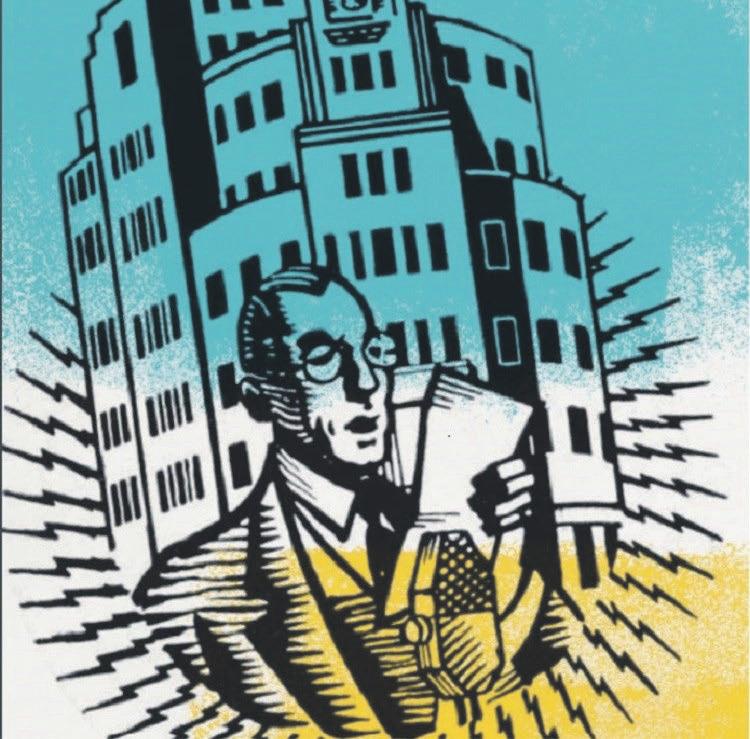
Professor Potter recently published his book on the Corporation, ‘This is
The BBC – Entertaining the Nation, Speaking for Britain? 1922-2022’ which equally coincides with the centenary events.
Bristol became one of the BBC’s centres for production during the Blitz when more staff moved to the base in Whiteladies Road, built in 1934.
It has become the national hub of natural history programmes for the BBC and has gained world renown.
Given the rich history of the BBC, Professor Potter was asked by Epi gram how it will be able to compete with other streaming platforms and news providers in the future.
Professor Potter noted the huge challenge facing the BBC, with the competition of programmes on de mand and the need to remain rele vant and important to audiences.
As Professor Potter explained, ‘The BBC can fill holes in the media land scape abandoned by everyone else. Within a declining newspaper indus try, the BBC is one of the few institu
tions left which can be both investi gative and political.’
Ahead of his more in-depth discus sion during the talk, Professor Potter detailed some of the prominent diffi culties facing the Corporation.
According to Professor Potter, the disengagement of audiences, in grained attitudes and inequalities with the BBC are still causing obsta cles, as well as the code on employ ees regulating their own social media and public content.
Professor Potter said: ‘As it cele brates its centenary the BBC can be proud of many achievements, but we also need to recognise and analyse its various failings.
'At a time when some are calling for an end to the TV licence fee and for profound changes to the struc ture of British broadcasting, this is an opportunity to consider how the BBC has evolved over its first century and recognise that the BBC has constant ly been obliged to adapt to its chang ing environment.’
The
of October marked the centenary of the BBC, and University of Bristol Professor Simon Potter started local celebrations with a public lecture.
alcohol harm reduction, drink spik ing, and nightlife safety. The videos, available on the BID’s website and YouTube channel, aim to educate students about taking care of them selves and others when in Bristol, and include advice from both officials and students.
to ensure our work is connected to what’s happening across the city. We had Welcome Angels at each of our nights to support students and pro vided free buses for safe transport to and from our Welcome club nights’.
The SU has provided a clear state ment of their stance on spiking: ‘Drink
found that the experiences shared in anonymous interviews were synon ymous with an overwhelmingly dis satisfied view from students towards safety in Bristol’s clubs and bars.
The first student interviewed ex plained that they felt a need to re main aware of themselves and oth
wards gender-based violence and consent in student communities.
Marine Saint Deputy Editor and Features Columnist*This article covers themes of spik ing and harassment.
Ayear has passed since the spiking spate in Bristol, where a viral video of a drink being spiked in Pryzm launched an outburst of night-time safety cam paigns across the city as more cases of harmful club experiences came to light. This initial reaction culminated in ‘Girls Night In’, a boycott and clo sure of clubs across the UK during the end of October 2021.
Since then, multiple new and re branded policies have been intro duced in Bristol’s bars and clubs, such as the Ask for Angela campaign, where you can discreetly seek help from venue staff if you find yourself in a vulnerable or potentially harm ful position. Significant research has also taken place as part of the Erase the Grey and Never Have I Ever cam paigns, examining approaches to
Why is it then, that students still feel unsafe? Epigram spoke to stu dents to understand how fears of spiking and harassment have shaped university night life experiences, and whether there has been an impactful shift in the cul ture of Bristol’s nightlife.
The incentive for student safety has been reflected in the city’s nighttime economy, Bristol City Council, Bristol University, and the SU’s reac tions and initiatives which have de veloped over the past year to ensure students feel safer. Epigram asked representatives from these institu tions if real change has been made and what the practical implications of these campaigns have been.
One of the most recent safety initiatives introduced in Bristol is a col laboration be tween the universities, the police force, Bristol City Council and Bristol City Centre BID. To raise awareness among students, a series of films and posters have been commissioned to offer advice regarding drug and
Vicky Lee, Head of Bristol City Cen tre BID, stressed the promise of this new collaboration, especially the series of films, ‘To send a message to new residents to our city about how to look after themselves and each other’. According to Lee, the inclu sion of the Police and students displays ‘A unit ed message as a night-time com munity to make people feel welcome and highlight where to turn for help’.
This particular campaign launch coincided with Freshers’ Week, to welcome new and returning stu dents to Bristol and promote the col laborative steps being taken towards safety. Izzy Russell, Bristol SU Student Living Officer, noted how Bristol SU has been working tirelessly to en sure there are safety measures and resources in University bars, such as testing kits, drink toppers, and staff training in the Ask for Angela scheme.
Russell com mented on the integration of Bris tol’s previous campaigns, such as Bristol Rules, into the SU’s night-time safety ethos: ‘We've continued to work closely with Carly Heath, Bris tol's Night-time Economy Adviser,
spiking is a criminal offence carrying a sentence of up to 10 years in prison.
‘Bristol SU takes all allegations of drink spiking extremely seriously and any student found to be spiking peo ple’s drinks will be reported to both the University and the police’.
Bristol City Centre BID’s latest stu dent safety cam paign continues the work of Bristol Nights, the City Council’s cam paign offering support on how to safely enjoy Bristol’s vibrant night life. This includes re-distributing the Bristol Rules billboards and posters, which can be found across campus.
In a statement to Epigram, Coun cillor Ellie King, Cabinet Member for Public Health, Communities and Bris tol One City, emphasised the initial goal of the campaign. She explained: ‘If we can prevent one student from becoming a victim of crime, then we have made a difference’.
Many students, however, feel that the focus on advising students how to stay safe, rather than re-educating those perpetrating harassment or al lowing such events to go unpunished, is a flaw in the council’s response.
Epigram investigated two case stud ies of students’ experiences, which provided insight into the University community’s current views on the official stances.
When posed with the question: Is Bristol now safer at night? Epigram
ers in drinking environments, even within a large group setting, and felt that the safety measures imposed in Bristol’s nightlife have been a shortterm solution in line with social me dia campaigns, rather than a practical change.
Even with successful club boycotts like ‘Girls Night In’, the first in terviewee saw no real chang es in attitudes towards nighttime safety from the clubs and bars themselves.
They said how ‘As a society, we’ve come to terms with the fact that we might get spiked; we shouldn’t have to accept that. In terms of safety in clubs, the behaviour of staff often disrupts a night out—their training hasn’t been extended enough and what we still see is a desire to pre serve reputation'.
The student highlighted the need for re-education regarding consent in order to combat this issue. ‘The way forward is to tackle the root problem rath er than seek ing temporary measures.
Drink covers, for example, tell you that people can be spiked, but we should try and stop it earlier. There is an overlap between consent and nightlife culture that people still do not seem to under stand or educate others about’.
The second student interviewed detailed their experience of club
The need for an open discourse between students and professionals and a renewal of trust in nightlife security subsists
'I wish I knew the answer to what more could be done, but all I know is that I’m always scared’
Epigram's Deputy Editor speaks to students to investigate whether there has been a shift in Bristol's nightlife culture.
'The disregard shown towards spiked girls at clubs is criminal'Lauren Sanderson Lily Farrant Tamara Letts Aidan Szabo-Hall Marine Saint Daniel Hutton Investigations Editor Columnist Subeditor
‘I thought this was over, but it’s still happening to freshers now. We are aware of this, but they may not be’Bristol City Centre BID Student Safety campaign / Plaster Communications
bing during the spate: ‘There were some security checks at clubs at the height of the spiking but it wasn’t enough to stop determined individ uals. I appreciate services like Night line who are doing an excellent job, but feel like it’s an education we’re lacking rather than preventative measures’.
anti-spiking devices as effective de terrents for potential perpetrators.
Although the impression from the stu dent body is that bouncers at clubs do not always help to create a safe envi ronment, La Rocca underlined that their
Afrightening aspect of Britain’s current cost-of-living crisis is that it is non-discriminative. Students, boomers, and business own ers alike are experiencing a daunting solidarity as they face an economic reality that sees individuals across the nation unable to afford basic necessi ties.
When struggles and uncertainties are far-reaching, it can be difficult to know where to place our focus. Epigram visited pubs within the Uni versity of Bristol area, known to be frequented by students and locals, to determine whether the financial crisis is impacting landlords and their businesses.
his belief that raising prices ‘to even 50 pence higher’ would not signif icantly affect their customers. On a blackboard at the side of the bar is a notice stating that the pub ensures all staff are paid the London living wage—which stands at 11.95 an hour—and when queried, staff mem bers reported no recent or upcoming changes to their working hours. The manager concluded that their prices still fall beneath the Bristol city aver age of £4.52 a pint and that custom only declines notably during the summer period when many students return home. Students will find it re assuring to know that The Hope & Anchor is by no means at risk of clos ing anytime soon.
UK could quadruple by the end of the decade to anywhere between £15-£20. Such costs are financially unviable and would force an implausible number of pubs to close their doors for good, so the response from Bristol’s pubs seems heartening.
The Portcullis' landlord Paul, com mented that he was ‘yet to feel the full effects of the cost-of-living crisis’, despite experiencing a twelve-toeighteen per cent rise in his energy bills.
I’m always scared’.
Both students stipulated the vari ous precautions they take when go ing out at night in the city, including the use of location tracking services and having a direct point of contact if walking home alone. The require ment for improved security does not end with the measures in clubs, it is evident that city-wide campaigns such as Bristol Nights are a valid con tribution to the night-time economy.
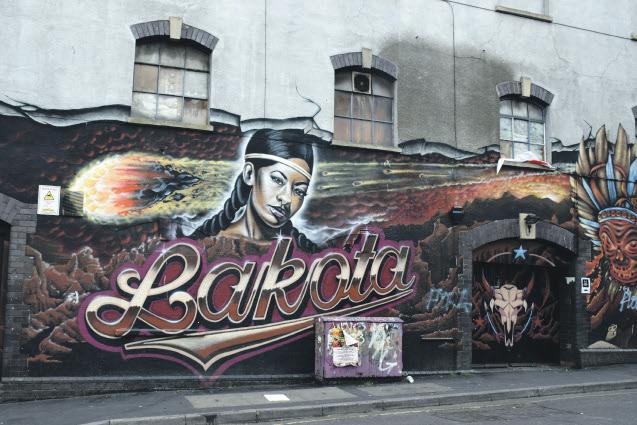
Epigram reached out to a number of clubs in Bristol and received a com ment from La Rocca, one of the Clift on Triangle clubs popular amongst students. For the majority of clubs approached, including Lakota and Pryzm (the location of last year’s viral spiking video), information regarding their spiking and security policies is available via their websites.
11.4 per cent of those polled reported feeling the least safe in Gravity
feeling the least safe in Pryzm and Gravity, while Thekla, SWX and Rev olution were amongst those that re cieved the fewest votes.
Similar data collections have been made with the aims of addressing student experiences, such as the SU’s No Means No research project. The immediate impact of safety meas ures and initiatives indicates that this is a pressing issue which is actively being engaged with by policymakers and nightlife providers.

Nonetheless, for the onus to be placed on perpetrator culpability and re-education, a change of mind set towards consent is necessary.
Inside Clifton’s well-known Hope & Anchor, their £3 lager disappeared, replaced by a notably pricier £4 alter native. Price increases during periods of economic uncertainty appear in evitable, with Wales Online recently reporting a 70 per cent rise across the UK in the average cost of a pint since the 2008 financial crash. However, the manager of The Hope & Anchor identified the 33 per cent rise in lager cost as distinct from the cost-of-liv ing crisis, instead citing difficulties with a local brewery.
He noted that ‘The costs we charge are the lowest possible to still main tain a profit margin’, yet also opined
The price of a pint in the UK could quadruple by the end of the decade
A reluctance to increase prices was similarly expressed by bar staff at The Mardyke, a community pub in Hot wells. The manager has reportedly implemented a more selective price increase, choosing to raise the prices of more popular brands of beer, lager, and cider. The cost of Amstel, rising steadily over the course of six months from £2.90 to £3.20 a pint (with the most drastic increase occurring in the past three weeks) has been met with some complaints from pub regulars. The staff member who spoke with Epigram admitted that the landlords are unhappy with the price increase and, believing it unnecessary, are in volved in discussions to potentially reduce them back down.

These takes on the cost-of-living cri sis appear far removed from circulated warnings that the price of a pint in the
Due to the pub’s ideal location along side the iconic Bristol landmark, Paul’s business is more tourism-dependent and he identified Brexit as‘remaining a larger issue’—it is perhaps noteworthy that Paul’s cheapest and most popular pint is one imported from Belgium.
When asked about staffing, Paul expressed gratitude around being a ‘self-contained’ establishment, as his small team of four staff members man ages to avoid high running costs, per haps indicating that smaller, independ ent, or more intimate pubs are offered slight relief from the soaring costs.
Paul voiced the growing concern that the impacts of the crisis will become more pronounced around the Christ mas period, coinciding with a decline in tourism. He balanced his apprehension by acknowledging that‘students help’.
We can identify two avenues of consensus among these reports by landlords: pubs are yet to feel the full impact of the crisis, and the student population is a significant aid in help ing to maintain a healthy business. Rising costs are an unfortunate reality across the country, a reality that pubs are not immune to. Whilst the situa tion is likely to worsen in the coming months, current demand for pubs is strong and many of our local gems will remain safe for a while longer.
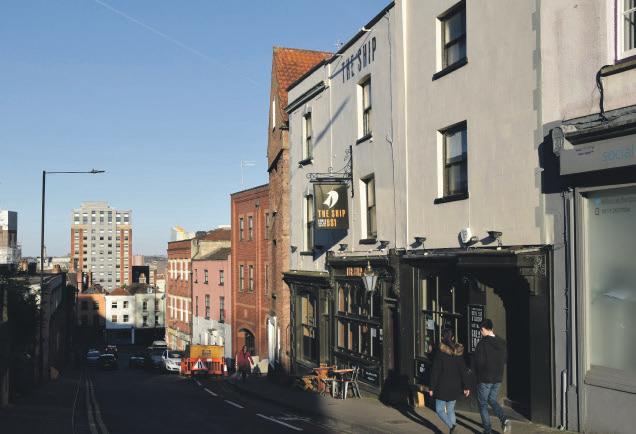
Epigram visited Bristol's most popular drinking holes to determine the impact of the financial crisis on student pub culture.Unsplash/Dan Cristian Paduret
Student views regarding club policies are less aligned with the stances of officials and University campaigns
According to the Higher Ed ucation Statistics Agency, of the students who graduated from UK universities in 2021, 39.4 per cent of White graduates attained a first class degree, whereas only 20 per cent of Black graduates achieved the same. Black students were also twice as likely to achieve a lower second, third or pass than mixed-race stu dents.
What these statistics reveal is that if you are a minority ethnic student—and particularly if you are Black—you are more likely to attain a lower degree classification than a White British stu dent.This difference in educational out comes is standardly referred to as the BAME attainment gap.
Regarding the #ClosingTheGap report, undertaken in collaboration with Universities UK (UUK) in 2019, Baroness Valerie Amos asked: ‘Why is this happening? In Britain, we are proud to have some of the best universities in the world at tracting glob al talent, yet the data in this report shows that even when BAME students overcome the hurdles that prevent them getting to university in the first place, they do not have an equal chance at succeeding. We are not op erating a level playing field’.
This is a sector-wide problem from which the University of Bristol also suffers, with a gap of 4 percentage points (pp) affecting BAME students.
To fully ascertain the cause of the gap is a complex process, however the culture of an institution is an impor tant contributory factor in relation to the attainment of students from BAME backgrounds, and has a strong association with students’ sense of belonging and community. Low num bers of BAME students and academic staff - along with university leader ship teams that are not representa tive of the stu dent body - have been identified as limiting an insti tution’s capability to address the at tainment gap.
In 2019, 72 per cent of UK stu dents were White: it is not uncommon for students to turn up to a lecture or seminar to find that they are the only person of col our present, an isolating experience that may potentially make them wea ry about speaking up. In 2021, 2,425 of 22,855 professors were from BAME backgrounds, and only 160 were Black. NUS found that when BAME
students were asked why they were ‘less likely’ to be satisfied with their experience and less likely to get a first or upper second, respondents repeat edly cited feelings of isolation and a sense of not belonging.
The BAME attainment gap does not exist in isolation within higher education, but is part of the wider structural nature of racial inequality in the UK. Just one firmly embedded manifestation of this inequity is the colonial curriculums traditionally, and still frequently, taught in British universities, which have historically retained a Eurocentric view of his tory, and of knowledge systems in general. Recent research efforts to decolonise Western curriculums have highlighted the detri mental impact of ignoring the contributions of academics from other parts of the world, or from non-White members of their own communities. A uni versity ‘community’ that fails to adequately scrutinise Brit ain’s historical role in their teaching, and doesn’t accu rately depict the histories of minorities, may contrib ute to poorer engagement and progression onto postgraduate studies for fee-paying students.
The University of Bristol has not shied away from such proposed issues, setting up the Be More Em powered for Success programme to improve the experience of BAME students at the University. The teams involved support School, Faculty and Service level in itiatives to make the Uni versity more inclusive and engaging for students of colour. They also create activities to support a greater sense
of belonging and positive student experience through initiatives that promote visible role models, social equality, and wellbeing.
The efficacy of this work is reflected in the University’s recent attainment gap statistics: it has more than halved in four years. In 2016/17 the gap was 9 percentage points (pp), and it was narrowed to 4pp by 2020/21. The na tional gap was more than double this.
her the first Black female history pro fessor in the UK. The Guardian reported that as of this year, Bristol was also only one of two universities out of 128 that laid out in writing that decolonising the curriculum was a part of their core stra tegic plan. Their History department offers courses on slavery and migration in Great Britain in the 19th Century, as well as moving away from solely Euro pean history and providing units on the Aztecs and Incas, American Indians and global empires.
In order to stamp down on uncon scious biases—the University provides a range of training for academic and professional services staff, including training on disrupting racism, race equality resources and addressing un conscious biases. Members of staff in formed Epigram that these were well attended, although the suggestion was raised that such training needs to be made mandatory.
In addition, and perhaps more im
students are able to achieve the same as their White peers.'
portantly, the University applies anon ymous marking for credit-bearing as sessments: for most assessments on taught courses, staff do not know who the author of a paper is so unconscious bias cannot play a role in marking.
Where the University falls short, how ever, is in its representation. According to their website, they have developed an ‘institutional commitment’ to ‘im prove the representation, progression, experience and success of our minor ity ethnic staff and students’, acknowl edging that improvements need to be made in terms of enrolling more BAME
Zoe Pithers, Head of Student Inclu sion at the University of Bristol, said that ‘The research we commissioned the SU to carry out in order to understand the attainment gap made it clear that stu dents’ sense of belonging and their dayto-day experiences had a significant impact on how they are able to engage with and perform in their studies’.
Though the number of BAME stu dents and staff has increased sig nificantly in the past decade, Bristol remains a predominantly White Uni versity. As of 2019, 84.6 per cent of aca demic staff were White, and only 19.5% of Home undergraduate students were from BAME backgrounds as of 2020.
While Bristol has made progress in narrowing the gap, the problem of representation needs to be tack led in order to create an envi ronment where minority ethnic students are able to achieve the same as their White peers.
For Black History Month, Epigram looks at the University of Bristol's efforts to narrow the BAME attainment gap in higher education.
Mateo Cruz
'The BAME attainment gap does not exist in isolation within higher eduction, but is part of the wider structural nature of racial inequality in the UK'Flickr / jordin57
‘The problem of representation needs to be tackled in order to create an environment where minority ethnicEpigram / Cameron Scheijde
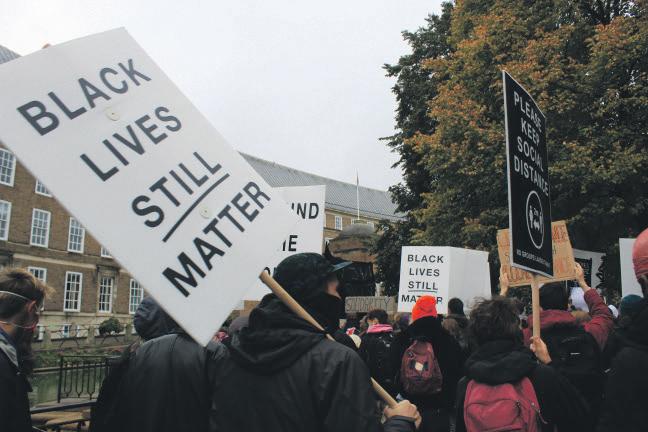
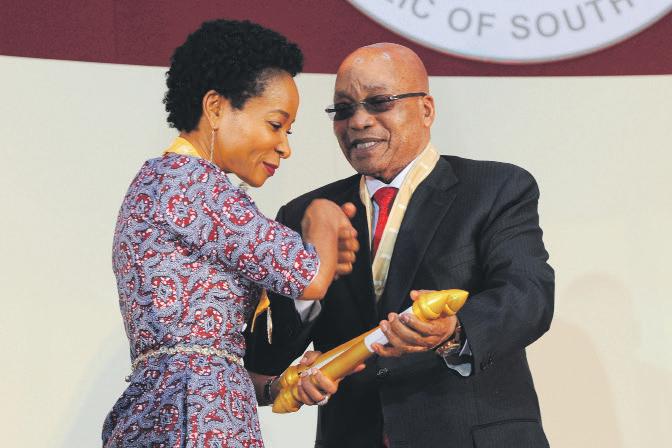
In conversation with Professor Mamokgethi Phakeng and the Rt Hon. Lord Paul Boateng at the ‘Legacies of slavery, ‘Hidden Histories’, and contemporary racism’ lecture.
Milan Perera Arts Critic ColumnistAt this much-anticipated lecture held at the Uni versity of Bristol in honour of Black History Month 2022, the Rt Hon. Lord Paul Boateng proclaimed, ‘It doesn’t matter whether you call it reparation or restitution, but there should be an imperative for redressing’.
Lord Boateng was accom panied by cel ebrated aca demic and campaigner Professor Mamokgethi Phakeng—well-known for her work towards decolonising education and campaigning for better access to education—in con versation with Professor Tim Cole,
#RhodesMustFall began as a stu dent-led movement in 2015 at the University of Cape Town, demanding the removal of a monument to the coloniser Cecil Rhodes. Synonymous with the fight for decolonisation, stu dents protested against the continu ation of White hegemony, continued inequity, lack of access and a lack of representation of Black histories and culture in university systems.
theme for Black History Month 2022 is 'Time for Change: Action Not Words.'
This movement was felt at univer sities around the world, renewing the discourse around the decolonisation of higher education. The Rhodes Must Fall Scholarship was a green shoot that sprang from this movement. The Scholarship seeks to ensure that the next generation of activists, theorists and scholars have access to financial support for postgraduate studies, enabling them to continue con tributing to the diverse voices required for this process.
Professor Phak eng emphasised the importance of including Rhodes’ name in the scholarship scheme—a decision that initially raised eyebrows, including those of potential benefactors. Yet she remained adamant that the colo
nial legacy of Cecil Rhodes. She point ed out that ‘Rhodes hasn’t yet fallen. It happens only through scholarship’, and it is through this scholarship that she hopes to foster an understanding of Black Consciousness, Pan-African ism and Black Radical Feminism.
Professor Phakeng drew further attention to the University of Bris tol crest, which still bears symbols of colonialism, notably the dolphin emblem of Bristol-born merchant Edward Colston. Colston was infa mously associated with the Royal African Company, which shipped 84,000 African natives into the trans atlantic slave trade. Previous to the anti-racism protests of 2020, he was
theme of Black History Month 2022 is ‘Time for Change: Action Not Words’. In the wake of 2020’s Black Lives Mat ter protests, which saw individuals and institutions alike declaring their commitment to tackling rac ism, the aim of this Black His tory Month is to encourage a movement be yond short-term or performative gestures towards real, long-term ac tion.
‘Frederick Douglass, as quoted by Lord Boateng: 'Power concedes nothing without a demand.'
It is impossible to fathom the his tories of London or Bristol without
Considering the lasting legacy of anti-Black symbols and contempo rary forms of rac ism, Lord Boateng recalled a past campaign in which he participated, which raised a fu rore in the Daily Mail in their protest against the major anti-black caricatures ‘golliwogs’ on manufacturer Robertson’s jam jar la bels. Professor Phakeng highlighted that racism nowadays has morphed into more sophisticated forms, more often ‘with a smile and a hug’. She pointed to her lived experience of competing with a White colleague for a job, highlighting that she had to ‘prove her worth’ in order to secure the job, more than was required of
Professor of Social History and Di rector of the Brigstow Institute at the University of Bristol. Vice-Chancellor Professor Evelyn Welch welcomed the panel.
Visible symbols of colonialism and the legacies of slavery were a powerful focus of the the discussion. Profes sor Phakeng was ap pointed the Vice-Chancel lor at the University of Cape Town in 2018 and has been instrumental in founding the Rhodes Must Fall Scholarship.
Professor Phakeng pointed out the necessity for people with lived ex perience of racial discrimination to have the opportunity to discuss the issues that directly affect them. She welcomed individuals to be allies in the struggle, but not at the expense of disposing of those directly affect ed by the legacies of colonialism.
Lord Botang end ed with Frederick Douglass: ‘Power concedes nothing without a demand’. Or: no struggle, no progress’.
‘The
‘Racism nowadays has morphed into more sophisticated forms, more often "with a smile and a hug"'
minute videos. Next we’re headed to “TV 3.0” – the metaverse, interactive, blended experiences of content. But maybe, maybe in 15 years, we will come back to traditional formats.’ (Sam Barcroft)
 Alexander Sampson Deputy Editor
As it stands, COP27 is happening and the machine of global discussion, rather than action, lumbers on. This is the predicament facing the world’s natural history creatives, and the dilemma posited before a group of 5 award-winning, world-renowned members of the wildlife film industry at this year’s Wildscreen Festival.
‘We are communicating to the converted very well,’ continues Ella, ‘And we are not communicating to the unconverted well at all.’
Several nods murmur through the audience. ‘What are we doing wrong?’
In an age blighted by disinformation, viral antagonism and entrenching internet enclaves, the digital sphere presents a hostile landscape to explore. Yet this is the frontline for natural history filmmakers across the world in their battle to amplify nature’s voice.
Previously, natural history filming served research, documentary, educational and entertainment purposes. However, with climate change poisoning every natural habitat on earth, the future of the planet’s ecosystems is at stake. The job of communicating this crisis lies in the hands of a small and highly specialised industry struggling to find its voice, and even its place, in the new digital hierarchy.
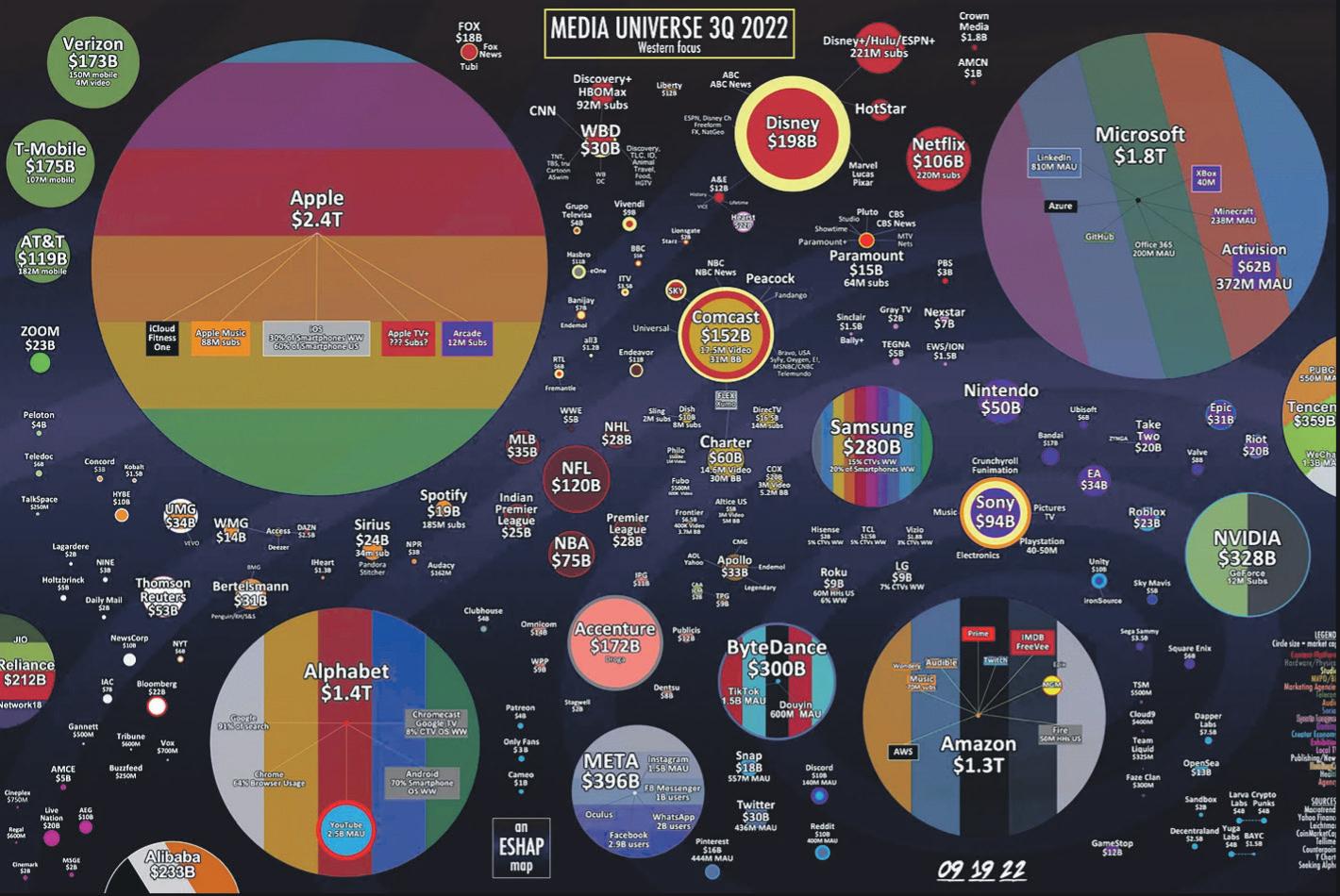
‘Half the problem,’ notes Sam Barcroft, ‘is that the shape of the media universe has transformed in the last decade alone.’ Sam is the founder of Creatorville, a YouTube production company with a vision to democratise content production. He notes that Meta, formerly Facebook, has shrunk from being valued at $1.4Tn in 2021 to $326Bn in 2022. ByteDance has grown by 417 per cent, and the BBC has maintained its
meagre $5Bn share.
The people and methods of content production have transformed too. An enormous, incalculable proportion of the content we (the general public) currently consume is produced by non-professionals – customers and consumers working with Amazon tripods on Tik-Tok, filming with iPhones and editing on Canva. The market is so ripe that a quick prayer to the algorithm gods can leave users with millions of views in minutes.
This is not news, but for a documentary-led industry it presents a significant problem. Climate change and social media are working at such rapid rates of change that a 2-year shoot in the Amazon is quickly out of date in terms of facts and demand.
Changing the business and content model is therefore crucial to the survival of the industry, something Cam Whitnell is pioneering with a minnow of the wildlife sector – CBBC.
Cam grew up on his family's zoo alongside his three brothers. He began filming their lifestyle and care for the animals back in March 2020, and has diligently built a social media presence. He is, perhaps, wildlife’s first influencer, and believes that his subsequent recruitment by CBBC and Nikon came as a result of already having a wellestablished personal brand.
Instead of producing a documentary and then trying to sell it through advertising, he suggests starting with someone who already has a major following and plugging the filming of the series as it goes along. The person
is key: ‘People are invested in people. That’s what works now.’
Packaging facts and stories through a likeable personality is certainly the most successful model in today’s digital climate. But it is not just who: formatting is also crucial. In Cam’s words, ‘the future is one minute or less.
In a streaming world driven by serotonin and cortisol spikes, quick drama sells. Lengthy documentaries –no matter how beautifully shot – don’t reach those who aren’t interested in wildlife or climate change. Nor do many people have time to sit down and catch an hour of Green Planet Instead, finding new ways of
formatting content, as well as the content itself, is key.
According to Sam Barcroft, we are close to mainstream blended experiences – so close, in fact, that platforms such as Twitter, Facebook and Instagram are being labelled ‘legacy medias’. For an industry facing an uphill battle in a market saturated with streamable content, the future of immersive experiences and virtual reality may give them the edge.
‘We’re currently in “TV 2.0”. TV 1.0 was traditional film, public service broadcasting and TV services like BBC, ITV and Channel 4. Now we’re in phase two – short form content like Tik Tok, Youtube, Reels and one
For the time being, short form content seems to be the industry’s lifeline. But this presents several dilemmas opposed to the established mode. Long shoots and carefully planned projects form the spine of the wildlife documentary, yet truth moves slower than the internet, and research is too dense, long and slow to grab attention in the neon city of Tik Toks and nude influencers.
Sacrificing longevity for wildlife sensationalism – a turtle strangled in plastic, or a violent hunting montage – feeds the internet beast but starves the industry, and the public, of the beautiful, slow and subtle moments within nature
More factual content is either too dull or too political: a beach covered in oil, or a new gas pipeline through a wildlife reserve raises ire on both sides of the climate change conflict; anger is fought in the comments and not the wild, and deforestation, sewage dumps and illegal fishing continue in the background.
Veering between savagery and cuteness, despair and hope, the wildlife film industry’s content is caught in the internet’s toxic snare.
For David Elisco, an industryrenowned producer, the answer lies in telling a human story: ‘In the feature space it’s not about facts. It’s about story and it’s really, really about
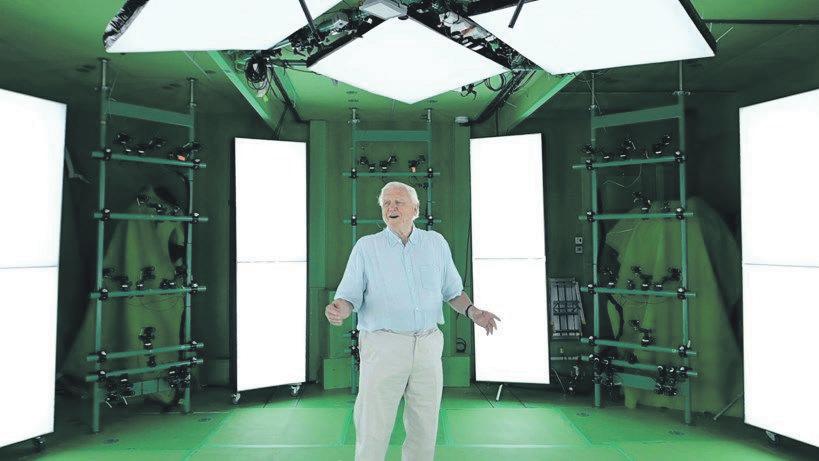
‘If we had communicated the facts well enough,’ asserts presenter and paleoanthropologist, Ella Al-Shamahi, ‘COP27 wouldn’t be happening next month.’
‘Half the problem, is that the shape of the media universe has transformed in the last decade alone.’
emotion. How do you connect with an audience that makes them sit up and engage with the story? [Tell them] about people and what drives them. The responsive chord is that you [the viewer] walk in their shoes.’
David’s HHMI Tangled Bank Studios is the productive arm for the Harvard Medical Institute. Having won nu merous awards since its inception, the studios has successfully commer cialised ground-breaking research for over 10 years. David credits this to finding a balance between facts and stories, and stresses that both are equally important:
‘We need to stop trying to convince people of anything; it doesn’t work. We need to start with a story – that’s what people out there are waiting to hear – an amazing story. But let’s not substitute facts for a story.’
Alongside facts and storytelling, Professor Steve Simpson –a marine biologist at the University of Bris tol – believes bringing more voices to the table will help. If ‘artists, mu sicians, academics, authors and the BBC come together’ then change will occur. In Steve’s philosophy, enabling science to ‘permeate society’ will ‘take us to a better place’.
Coupling influential people with scientific projects solves one aspect of the audience-reaching conun drum. And there are many other ben efits too: the ‘more people of differ ent backgrounds, interests and fields’ that help convey the ‘reality of wild life destruction’, the more pockets of the internet this message will reach. Each person brings a new format, a new voice and a new audience. ‘This is how we fix the problem’
Amidst a ranging debate, the final word goes to Gibbs Kuguru, a shark geneticist and National Geographic presenter. Communicating the exis tential threat climate change poses to both humans and wildlife, for him, lies within finding mutual ground.
‘I’ve stopped talking about climate change altogether – it’s too big. We need to break the problem down. Rather than talking about carbon emissions and methane, I’d rather talk about clean water and clean air. These are things people can under stand and care about.
‘We’re all people; we all kind of want the same things. Let’s find the middle ground and say, “We all like these things, so let’s work towards that”, and the other issues will fall away.’
The unease many people feel around STIs owes to sever al reasons: the diseases themselves often don’t have the most aestheti cally pleasing of symptoms, and they affect some of the most private areas on our bodies—areas with an innate sense of vulnerability.
But this is only half the story. There are many unpleasant diseases we view sympathetically, as afflictions, on which we don’t pass any judg ment at all. Whilst it doesn’t help that STIs can look and feel unpleasant, the truth is that feelings of shame are typ ically triggered by disparaging moral judgements from others.
There is a ‘Type to get an STI,’ one student told Epigram, ‘dirty’ people who ‘don’t wash themselves after sex’. But this is a falsehood. Whilst you may contract a UTI through poor personal hygiene, cleanliness has nothing to do with the transmission of STIs: anybody can contract one. You don’t have to be unclean, you don’t have to be particularly unsafe, and you don’t have to be engaging
in casual sex with multiple partners.
To catch an STI you only have to have unprotected sex once; the difference between catching one and not is, in most cases, dumb luck.
Still, the desire to moralise about these diseases persists. If left un treated they can become serious, but rather than admit that anyone can catch an STI, some may instead compartmentalize and blur the lines between behaviour and character.
Rather than placing the stigma on the act of unprotected sex, they place it on the person themselves: it is a cer tain ‘type’ of person that these things happen to—dirty, or irresponsible or promiscuous. In the case of the 1980s AIDS epidemic—an age pervaded by a rampant homophobia—or the Great Pox of the 16th century, STIs could even act as an indica tor of moral per version.
When these stigmas persist it can be hard for many not to feel ashamed and even afraid of a diagnosis, even in pro gressive communities. Concealing these anxieties, and wilfully rejecting testing out of fear of stigmatization, serves to exacerbate the issue. ‘It’s just like blissful ignorance at the mo ment’, said one student, explaining why she hasn't got tested.
The most prevalent STIs in Bristol, chlamydia and gonorrhoea, are of ten asymptomatic. Chlamydia, which accounted for roughly 45 per cent of new STIs in 2019 , shows no symptoms in three-quar ters of women and half of men.
Gonorrhoea, which account ed for eleven percent of new STIs in 2019, making it the third most com mon in Bristol, shows no symptoms in half of women and one-tenth of men. Both diseases, if left untreated, can still lead to infertility. In these cases, the only way to find out if you are in fected is either by getting tested or by the people you infect tracing it back to you.
The longer you wait to get tested, the more damage you could poten tially do to your self and to oth ers.
The irony of the testing fear is that catch ing an STI ear ly contributes substantially to the effectiveness of treatment. Chla mydia, gonorrhoea, and even syphilis (which is on the rise in Bristol) can be cured with a short course of antibi otics or a single injection if caught in the early stages and can potentially be out of your life in two weeks. Even for diseases like HIV and herpes that can't be directly cured, treatments
work more effectively the earli er they are administered. Their effects can be significantly re duced and the diseases them selves can be rendered largely untransmissible.
Though STIs can do plenty of damage if left untreated, imple menting proper precautions— such as testing and early treat ment—can mitigate the effects that even the more serious sexu al diseases may have upon your sex life.

Though ignorance sometimes may be bliss, in the case of STIs it’s only bliss for so long, and at that point, it can already be too late.
You can order free, unmarked test kits for chlamydia, gonor rhoea, HIV and syphilis through Unity Sexual Health , even if you’re asymptomatic. It's rec ommended that you test every time you have unprotected sex with a new partner. If you have symptoms, you can arrange an in-person appointment at the Student Health Service.
The tests are quick and non-invasive, and prescriptions can be given soon after a posi tive result. In the words of one student: ‘When I had gonor rhoea it got treated faster than if I’d had a chest infection. You just have to get over the fact of get ting tested. Once you've done that, it can be far less scary than you'd have thought’.
What harm does STI stigma really do? And why, in the modern day, do we still feel ashamed?
Jack Randall Second Year English
‘I've stopped talking about climate change altogetherit's too big. We need to break the problem down.'
‘We need to stop trying to convince people of anything; it doesn't work.'
‘There is a ‘Type to get an STI,’ one student told Epigram, ‘dirty’ people who ‘don’t wash themselves after sex’.'
The longer you wait to get tested, the more damage you could potentially do to yourself and others.Instagram:
The decline and fall of Liz Truss
dent community. Then there is the moral imperative for students as re sponsible citizens not to turn a blind eye to the plight of hundreds and thousands who are not as fortunate as them.
W
ho needs Netflix’s House of Cards when we have the real House of Cards at the heart of Westminster? It is gener ous to draw parallels with the hit US Television show, as British politics has been on a freefall for the last three months and the apt theatre analogy would be The Play That Goes Wrong!The fiscal policy of Truss may have been the reboot of a Thatcher-Rea gan-style libertarian, deregulated economy but it proved to be disas
struggling to stay solvent, sending shivers down the spine of many looking forward to the dividends of retirement. The Pound had suffered a 37-year low ebb against the US Dollar this month which propelled inflation to an unprecedented level.
Truss repeatedly derided those who raised valid questions regarding her economic model which promised
ODespite the roaring defiance of “I’m a fighter, not a quitter” in the House of Commons only 24 hours earlier, Liz Truss was forced to come out of the safe cocoon of 10 Downing Street and face a panoply of microphones, cameras and glaring eyes of the press and announce her resignation before swiftly retiring to her residence.
Even among the acolytes of the Right-leaning media such as the GB News, who never ceased in their ad ulation of Liz Truss during those frac tious few weeks of the Conservative leadership contest, there is a stunned silence.

The Economist assessing the events surrounding the demise of the HM Queen Elizabeth II calculat ed that, once the official mourning period for the monarch was taken into account, Truss 'had seven days in control. That is roughly the shelf-life of a lettuce.' The live feed of a lettuce that was set up by The Daily Star be came the focal point among the neti zens whose humorous outputs knew no bounds.
The lettuce looked sad and shriv elled and so did Liz Truss after her resignation speech. The short and tumultuous tenure of Truss left both her party and the country in a peril ous state which would reduce the party to electoral oblivion while the country is on a shorter trajectory to economic downturn. Why should we as students concern ourselves with the legacy of a failed political leader, one may ask?
The fact remains that the students do not operate in a vacuum as some scientific experiments do but in the current political zeitgeist. The cost of living, the rate of inflation, the inter est rates, rising mortgage costs and the unprecedented rise of energy bills have a direct impact on the stu
trous. On paper, the “mini” budget was the wet dream of corporate Britain which has been bankrolling the Conservative Party for years. Un derstandably, the sense of entitle ment among the corporate leaders for their beneficence and unwaver ing support sustained the Tory Party thick and thin.
On a human level, it was a pitiful sight that she was willing to offer her friend and ally, Kwasi Kwarteng as the sacrificial lamb to save her own skin though the very policies in question were both drafted and implemented as a united front by the Prime Minis ter and the Chancellor.
It would not take Milton Friedman to comment that these fiscal policies were bound to go lopsided even be fore they were implemented. As her opponent in the leadership debate, Rishi Sunak pointed out that these unfunded policies are nothing but a 'fantasy.'
Tax cuts for millionaires as Middle England staggered with higher en ergy bills, soaring inflation, severely cut public spending and rising mort gages could never be justified in the guise of 'growth'. The Conservatives who take great pride in themselves as the fiscally responsible party were left red-faced as these policies reduced the democracy to a 'chu mocracy'. The government bonds fell sharply, leaving the pension funds
prosperity and growth under the spurious banner of a "Trickle-down Economy”.
She branded them the 'an ti-growth coalition'.
It was police brutality - from the socalled 'Morality police' that brought Mahsa Amini’s untimely and tragic death.
Protests in Iran have continued daily since the death of Mahsa Amini. Protests have taken form in various ways; from women cutting off their hair, to using their art as a creative outlet, all in protest and solidarity.
Internationally, protests for Mahsa Amini can be seen in the streets of all countries, one protest I myself witnessed whilst walking through a small part of Venice.
Quinn Clearwater Nina Micciche Lawrie Hallam Katie Sowerby Eve Bentley-HusseyInstead of building a unity gov ernment which consists of diverse voices, she opted for a homogenised ensemble of friends and allies who were oblivious to the ramification of her policies.
As one of the first acts as the Prime Minster, Truss launched a Kristall nacht-type purge of some of the most senior civil servants such as Tom Scholar and Stephen Lovegrove while promoting those who shared her dogma.
The sin of Scholar was he suppos edly embodied what is called a Treas ury Orthodoxy which Truss detested.
As Liz Truss made history as the shortest-serving Prime Minster in British history, her legacy will gar ner no sympathy nor admiration as her libertarian economics backfired spectacularly bringing more uncer tainty to an already politically unset tled nation.
Similarly, here in Bristol a Vigil was held, organised by two local artists and reported on by Epigram writer Shrey Rajesh Kannan. I spoke to two Bristol students to get their opinions on the current events surrounding Mahsa Amini. Lucy Browning said she felt that ‘It is scary that in this day and age women are subjected to such vi olence for the way they personally dress themselves. It is truly disgust ing to witness such events’.
The idea of the morality police is archaic and ridiculously flawed. Giv ing the power to a set of citizens to solely judge other fellow civilians based on their practices of morality is a straight gateway to corruption and such tragic circumstances as these to consistently reappear.
Furthermore, the creation of mor al judges who have the ability to use force and brutality renders extreme violations of freedom, human rights and especially women’s rights.
Lastly, the right for overall judge ment and punishment in the Islamic faith resides with God ‘The judgment is only Allah's; He relates the truth
Protests and outrage have also taken form online with the hashtag #MahsaAmini which has been trend ing and flooding the comments of many accounts with large followings, particularly on Instagram. As a result of these protests of outrage, the Ira nian government has restricted the use of the internet, disallowing peo ple access to sites such as Instagram and WhatsApp. Evidently cutting off a vital source for spreading knowl edge of this injustice.
n the 16th of September 2022, a 22-year-old Irani an woman named Mahsa Amini, died in hospital in Tehran, Iran, under suspicious circumstanc es. Mahsa Amini was arrested on the 13th of September due to her head covering not being worn properly.The Independent has reported that as of the 3rd of October, some where in the region of 133 people have died, mostly demonstrators in the protests. Throughout Iran, peo ple and especially women and girls are risking their lives so that they do not face violence for their personal choices.
One of these protesters was 16-year-old vlogger Sarina Esmailza deh who used her online space to speak about women’s rights and contest the hijab law. According to Amnesty International, she was beat en to death by security forces at a protest in Gohardasht on the 23rd of September.
There are so many more contin uing stories like that of Sarina Es mailzadeh’s and Nika Shakarami’s, of innocent protestors who fight against tyranny and have their lives taken as the price.
Here we come to the simple idea that oppressors choose not to un derstand. We as women, as humans, remain to have the right to freedom of expression. We cannot be con trolled, and we cannot be silenced, the women and people of Iran have proven so. This is a fight for women to choose and for their choices of expression to be honoured. Interna tionally, we must stand in solidarity with the women of Iran and use our voices across all platforms to call for
justice.
Mahsa Amini's reminds us that freedom of expression is not yet a universal right
A student's take on the demise of the exPM
Milan Perera Arts Columnist
The world must not let Mahsa Amini's death be forgotten
@epigramopinion
UK Gov/Flickr
In the wake of a cost-of-living cri sis, and seeing rent, energy bills and living expenses at an all-time high, more and more students, across all levels of study are faced with no other choice but to take on part-time employment to support themselves alongside their full-time education.
Research from Student Beans in 2019 uncovered that more than a third (36%) of university students in the UK had a part-time job alongside their studies, as well as a staggering 21% revealing that they had two jobs during term time.
Compared to 2021, this figure has almost doubled, with the Student Money Survey revealing that 66% of the university students surveyed had part-time jobs, which can only be expected to increase this academ
like such a wild discrepancy, how ever, only a very small minority of students whose parents’ household income is below £25,000 are actual ly eligible for the maximum mainte nance loan.
This means that your parents’ sal aries, dictate how much the govern ment will lend you for your living costs at university, decreasing incre mentally all the way to £3,597, the more your parents earn. Not only does this system ignore the possi bility that some may be unwilling to fund their child’s further education, but effectively takes the decision out of the hands of prospective universi ty students and puts it in the hands of their parents or guardians.
Furthermore, this system does not account for the vastly different costs of living in different areas of the UK.
to live on the same amount of money as those who live in places with half the cost of living.
But what does this mean for stu dents? Adopting a part-time job to support an already full-time under graduate or post-graduate course inevitably does not align with the best academic interests of students. The unfortunate reality of the situa tion for many is a trade-off between academic performance and making ends meet. All of this has a knockon effect on academic performance. 74% of students reported that work ing alongside their studies had a detrimental impact on their grades whilst at university, for reasons such
Philosophy
Kwasi Kwarteng’s ‘mini-budget’ came at a time of hardship for many across the country. With rising inflation, food, and energy pric es, many looked at the government’s budget as an answer to all our wor ries. Instead, what we got was a fis cally irresponsible mess. The budget showed how the government is out of touch (a concern many had with Rishi Sunak’s bid for leadership) and that they have lost the trust of their voters. With many polls now showing that Labour has a chance at securing a big win at the next election, the Conservatives must do something big to ensure a win.
the political spectrum agree that the budget was a mistake.
Adopting a part-time job to support a full-time course does not align with the best academic interests of students
Bristol, for example, has an extor tionate cost of living, akin to London, and has been named the second most expensive city to reside in the UK, which is not taken into account by the student loan system at all. Last year, my student accommoda tion alone cost £8,358 for the year, which meant that I had no choice but to take up part-time employment to keep myself afloat.
as having to reprioritise their work and studies to be able to afford to pay their living expenses, detracting time from their degrees.
With the budget came the an nouncement of a cap on rising energy prices, something many households and students across the country were worried about. However, coupled with tax cuts many wondered where this money would come from.
When talking about the backlash the chancellor faced one student who will remain anonymous ech oed Labour MPs Rupa Huq’s remarks that she made while speaking at the Labour Party conference. Rupa Huq said, ‘You wouldn’t know he’s black’ and made comments that he is ‘Su perficially black’ which they agreed with. These comments showed how racism is a problem that both sides of the political divide must deal with. Many people view minorities as a monolith and those who dare move past the artificial identity of ‘blackness’ are attacked with racist abuse. Racist statements were also made against Priti Patel the former Home Secretary. Howard Beckett a leadership candidate for the Unite trade union was suspended from the Labour party after he said, ‘Priti Patel should be deported’. It shows that while people would preach an ti-racism the rules go out the window when it comes to someone they dis agree with or don’t like. People must learn to disagree without leading to racism.
ic year as the cost-of-living crisis reaches new heights.
This phenomenon stands as a cri tique of the current student loan systems in the UK and begs the ques tion of whether they are adequately fulfilling their intended role.
Using figures from Student Fi nance England as the focus here, the maximum maintenance loan, being the loan given to cover students’ liv ing costs, for the 2022/23 academic year (outside of London), stands at £9,706.
Despite this, findings from the Stu dent Money Survey show that the average cost of living for students is more like £9,720 per annum.
On the surface, this doesn’t seem
The private sector is even less af fordable going into my second year, where I will be paying about the same for my rent and utility bills. However, in comparison to my peers at Cardiff University, their rent was half the price of mine, paying on average £4,000 per annum for their
Only a small minority of students whose parents earn less than £25,000 are eligible
halls of residence and similarly going into private rentals.
Not only are the student loan sys tems failing to compensate students for the increasing cost of living, but they also fail to consider regional cost differences between different areas of study. Therefore, some stu dents like myself who attend univer sity in expensive cities are expected
Whilst our generation can be con sidered privileged compared to our graduate predecessors for having government loan systems in place to enable our further education, it is evident that maintenance loans sim ply do not stretch far enough. There fore, it is clear that reform in student finance systems is imperative to give students from all socio-economic backgrounds the opportunities they deserve to reach their full academic potential.
They ought to consider the ev er-inflating cost of living nationwide, as well as pay particular attention to accommodating the varying costs of living across different places of study.
Credit: Aleksandr Popov/Unsplash
As they offer a greater mainte nance loan to students living in Lon don to cover living costs, they ought to consider implementing similar measures across the country to ac commodate students living in more or less expensive university towns or cities. This will hopefully work to ensure that all prospective university students are able to attend the uni versity of their choice, without hav ing to compromise their grades.
Dan Hutton, a second-year Politics and International Relations student , said ‘I think that tax should be in creased not cut. If the government is committed to energy bailouts, then they need to pull that money from somewhere not reduced the amount of money they’re receiving by cutting tax’. He went on to say ‘The new budget was a failure in ideology. Trickle-down economics hasn’t worked for the past 12 years and there is no reason it would now’. When asked about his opinion on the U-turn Dan said ‘I think it’s good that they’re at least somewhat listening to public sentiment but considering how tone-deaf the cabinet seems I don’t think it’ll be the last time they will fold on major policy changes’.
I also questioned Elliot Stein, ex-chairman of the Bristol Universi ty Conservative Association. When asked what he thought about the budget he said, ‘If we didn’t borrow so much the budget would be good but being fiscally responsible means paying back your debts’. He went on to say that the ‘Backlash towards the party is warranted and that conserva tism is all about being fiscally respon sible’. Showing that students across
We have no right to question the ‘blackness’ of someone or suggest a person of colour should be deported. Kwasi Kwarteng’s budget was fiscally irresponsible and while some back lash was warranted, these comments show how racism is present on both sides of the political divide.
When asked about the Conserv ative’s chance at winning the next election Dan Hutton said he doesn’t think they will. Eliot Stein said that his ‘faith in the party is wavering’ and that ‘they might be wiped out’ in the next election. With Rishi Sunak’s tenure as Prime Minister just begin ning it is too early to say whether he will be successful in winning back the trust of the electorate. But with public attitude shifting in favour of Labour and the need for something new in parliament the Conservatives might just loose the position that they’ve now held for over 10 years.
As costs continue to increase stu dents will find it harder to find af fordable housing and keep up with the costs of living. The only thing we can do is wait to see if the govern ment has more plans to get us out of this economic crisis or we might have to wait till the next election for real change.
‘mini-budget’: ‘a failure in ideology'
Balancing the two isn't fair on anyone
The system does not ac count for the vastly differ ent costs of living in the UK
How can the new government reverse the damage?Carroll
W
‘Sharking’, is when older second and third-year students use their social status to exploit naïve and vul nerable freshers to ‘get with’ them (to use the colloquial term). This defini tion makes the perpetrators sound predatory, a word that one hopefully does not associate with the average Bristol student. Sharking, however, is not as uncommon as you might initially expect, and the ethics of it are more complex than they seem at face value.
According to the ‘Sexual Offences Act’ published in 2003 'the age at which people can legally consent to sexual activity is 16-years-old' and freshers, being 18 can therefore le gally consent. This makes a ‘get off’, even with an older student, seem harmless. But just because it’s legal for older and likely more emotionally
an older, more mature student would even consider making sexual advanc es on a younger less mature fresher? Even if the age gap is only a year, surely the emotional maturity differ ence is a big ‘turn-off’.
ith the commencement of a new academic year at Bristol University comes a new batch of freshers, flooding the streets and the clubs. But to some students, this new wave of young, dewy-eyed freshers represents not only a new cohort, but, disturbing ly, a new dating pool as well. Just because second and third-years can get off with freshers, does that mean they should?The difference in sexual maturity, however, is the more worrying aspect of sharking. An article by ‘Onaverage’, claims the average age for people in the UK to have sex for the first time is 18.3. A lot of freshers, therefore, come to university objectively quite sexually inexperienced, and this in
terparts makes it problematic. It is in the hands of older students to know the social power they wield. To recog nise that there is a power imbalance in that situation and act responsibly. Age, however, is a factor worth considering and of course, there will always be exceptions to rules. There’s no official definition of sharking, but the Urban Dictionary calls a sharker 'an older student at university' mak ing it easy to argue that ‘getting with’ freshers who have taken gap years is fine. While I do partly agree that this
Credit: Aleksandr Popov/Unsplash
experience can be preyed upon by older, more forward second and third years who might want to move a bit faster than they’re comfortable with.
'Second years seemed way cool er' reflects one Bristol second-year student. 'It’s a lot cooler to get with someone older than you than young er than you. You idolise people that are older than you […] that’s human nature'. There’s a huge social power imbalance present between a fresh er and an older student. Second and third years can seem more alluring to first years because of the social ‘clout’
how the power you wield changes the dynamicand sexually mature students to ‘get off’ with freshers, does that mean it’s ethical?
Arguably, going to university prompts a huge amount of emo tional and even sexual development. Transitioning from living at home and attending school where your biggest worry is what your mum is making for dinner that night, to mov ing to an entirely new city to live with strangers and suddenly worrying about things like rent and budgeting and other seemingly terrifying adult responsibilities, prompts a huge amount of emotional development. At least for me, when I look back to the person I was a year ago, a naïve, scared fresher, she seems a different person entirely to who I feel I am now.
Using this logic, it seems odd that
they hold which is exactly the reason freshers might be manipulated into doing things they might not be com fortable with.
'This particular guy was quite for ward […] then he got my number and asked me out to cocktails' the student goes on to say. 'I gave him a wrong name and number […] be cause I didn’t want to go out to cock tails'. When I asked her why she felt like she had to give him a fake num ber, she said: 'I felt pressure. I didn’t want to disappoint him', struggling to pinpoint her exact reasoning for feeling like she couldn’t just say no.
This new wave of freshers might be legally old enough to give con sent and might even be keen to ‘get with’ second years, however their emotional and possibly sexual imma turity compared to their older coun
affects the fresher sharker dynamic and makes it significantly less pred atory, I want to bring up again my previous point about leaving home prompting emotional maturity. I do not believe that maturity is a term that is synonymous with age it seems to me that it is rather life experiences create maturity.
Consent, however, I think is not a concept that is difficult to recognise and the narrative that it is, only serves to let off creeps who claim that 'it was hard to tell' if their nonconsenting victims gave consent. ‘Getting with’ a fresher who took a gap year and is the same age as you is one thing but using social and emotional ma nipulation to prey upon nervous first years who have just been dropped off by their parents is another thing entirely. I’d like to hope most Bristol students can differentiate between the two.
To stay safe on nights out, though, for freshers who might be worried, I would advise you to stay in groups, especially at clubs and keep track of friends you think might be too drunk to give consent. I think, how ever, it is far more worthwhile to give a quick reminder to older students as to why they should be cautious when making advances towards our newly arrived freshers. Consider how the power you wield changes the dy namic. How the maturity difference there might turn an innocent ‘get off’ into something far more sinister and damaging.
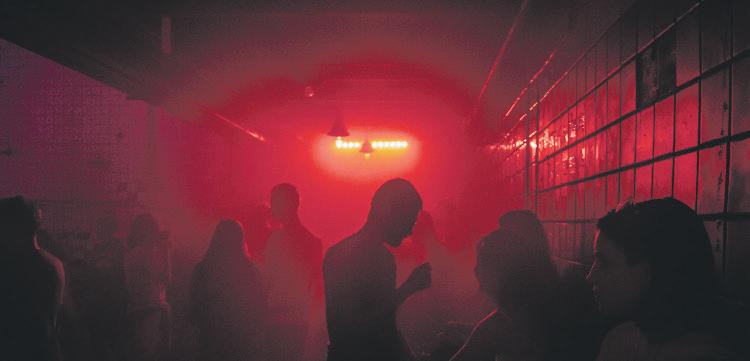
Is charity shopping culture being overrun by wealthy students? Should we be more conscious shopping second-hand?
B Quinn Clearwater Nina Micciche Lawrie Hallam Katie Sowerby Eve Bentley-HusseyIts roots are firmly planted in the rising popularity of charity shop ping, or ‘thrifting’. This phenomenon began gaining traction as the trend cycle turned towards a revival of 90s grunge and heroin-chic, later shifting to a resurgence of 2000s Y2K fashion.
Charity shopping has become an ex citing way to look for ‘one-of-a-kindvintage-pieces’, with its hit-or-miss nature simultaneously evolving it into a fun activity to do with friends.
In addition to the aesthetic rea sons for charity shopping, the rising contribution of fast fashion to the climate crisis means shopping sec ond-hand is not only an affordable option but also a sustainable one.
Although, while charity shopping may not contribute to overconsump tion in the way fast fashion does, can it be considered ethical?
The wealth disparity among Bris tol students is not breaking news to anyone, with some being far more fi nancially stable than others. Perhaps those who are able should be shop ping with sustainable brands where possible. This would both support climate-conscious businesses, as well as ensure items in charity shops are readily available for those who need them.
Although, the ethical dilemmas of charity shopping rings particularly true for those who use charity shop products as passive income. The phe nomenon of purchasing low-priced second-hand clothes and listing them for extortionate prices on sites such as Depop and Vinted is undeni ably unethical.
This ‘reseller career’ is a prime ex ample of the appropriation of charity shops. As places designed to make clothes and other various goods ac cessible to those of lower economic status, bulk-buying and gentrifying these items for personal capital is simply wrong.
ristol’s student population is no stranger to stereotypes, and its distinct fashion aes thetic is not an exception. From lec ture halls to club nights, this ‘Bristol Look’ is unmissable - but where does it come from?It may therefore be argued that the ‘Bristol Look’ is one of privilege - a class signifier, or perhaps a class di vider. In recent years it was deemed trendy to shop second-hand, wheth er that be in physical charity shops or online, and now that’s the ‘done thing’. But the aspect of privilege comes into play when we look at keeping on top of trends. With trend cycles evolving at an accelerated pace, having the financial ability to keep up is a privilege.
This then raises the question of whether charity shopping appropri ates working-class culture - are char ity shops truly for everyone? Though it is tricky to give a black-and-white answer, it is important to understand that people experiencing financial hardship rely on charity shops for affordable goods, therefore turning charity shopping into a novelty ex perience is somewhat appropriative. Choosing to shop in second-hand stores when you are financially able to afford high-street prices is an often forgotten privilege.
This outward expression of social class through fashion thus makes the ‘Bristol Look’ somewhat exclusive - the distinctiveness of the aesthet ic makes it visually clear who is and who is not partaking. This gives rise to a host of pressures for students to dress a certain way, which can be particularly disheartening for those who are financially unable to.
Ultimately, fashion is an extension of your identity, and having the free dom to express that as you please is extremely important. But it is equal ly important to be mindful of where and how you are choosing to shop. Some people rely on the places we may deem ‘quirky’ and novel, and certain trends and aesthetics require a degree of financial privilege - both things everyone should be continu ously conscious of when shopping second-hand.
Is it problematic for second and third years to make sexual advances on freshers?
Ella
English, Second Year
Instagram: @epigramopinion
Andrew Bolt, the news an chor for Sky News Australia lamented the newly formed cabinet of Liz Truss, not for the dis astrous economic policies that were about to follow but for the 'diverse' cabinet of Prime Minister Truss. Bolt went on 'There’s not a single white male in the top five jobs of the Unit ed Kingdom government. The Prime Minister is female, the top three cabi net jobs are all black and brown men. And the Deputy Prime Minister is an other woman!'
At face value, these figures sug gest that the UK has become a shin ing beacon of progressive politics with a strong emphasis on diversity and inclusivity. What these statistics do not indicate is that these leading lights of the public office are not necessarily the best friends of black and ethnic minorities. On the con trary, they have repeatedly shown their contempt and apathy towards ethnic minorities. As we mark Black History Month, it is of paramount importance to shed some light on this quasi-progress. Politicians and public figures love to recount their upbringings by hard-working immi grant parents to gain political and social capital. There is nothing wrong with this ploy as they set themselves as the representatives of those com munities. For example, both MP Sajid Javid and the London Mayor, Sadiq Khan, talked heart-warmingly about their Pakistani-born, bus-driving fa thers. No doubt these stories are the stuff dreams are made of: a son of an immigrant, low-wage worker rising through the ranks to gain access to the corridors of power.
'Actions speak louder than words' goes the oft-quoted maxim. Indeed, they do. Sajid Javid, who enjoyed an unenviable set of ministerial portfoli os, was in a position of power and in fluence to make a positive difference to the ethnic minorities which he ad dresses in uplifting tones routinely. But his voting record suggests that he voted consistently for a stronger enforcement of immigration rules and draconian policies of mass sur veillance of people’s activities. In 2013, when Javid worked for the
Treasury as its economic and finance secretary, he stood by the unprec edented spending cuts. A study by the University of Warwick pointed out that spending cuts affect Asian British communities disproportion ately as they are more likely to live in poverty due to a lack of employment opportunities, racism and sexism. In 2018, in the aftermath of the sen tencing of a grooming gang in Hud dersfield, Javid tweeted his delight with the words, 'These sick Asian pae dophiles are finally facing justice.' It is inconceivable to see why Javid felt the need to highlight their ethnicity.
As MP, David Lammy pointed out this only panders to the far-right who are eagerly waiting for an opportunity to attack ethnic minorities and stir racial tensions for their political gains. If he is a self-appointed representative of the British Pakistani community, he has a strange way of showing it.
Suella Braverman, the newly ap pointed Home Secretary, declared that she has a 'dream'. Although this pronouncement has echoes of the famous 'I have a dream' speech by Dr. Martin Luther King Jr., the content could not be any more contrasting. Dr King dreamt of a day when racial in justice would be wiped off the earth and where various ethnic groups could live in harmony, Suella Braver man’s 'I have a dream' sounds like a hangover from the 'Rivers of blood' speech by Enoch Powell. Braverman pointed out during a fringe meeting at the Conservative Party Conference that her 'dream' is to see a Telegraph front page with a picture of a plane taking off to Rwanda! It was incredu lous that one has to read the full news article or watch the clip in its entirety to confirm that these words were not taken out of context. The predeces sor to Braverman, Priti Patel, another prominent Asian high achiever has been instrumental in the 'Rwanda Plan' where people who are fleeing war-torn areas and persecution will have their worst nightmares come true. It is almost impossible to com prehend the relish with which both Patel and Braverman talked of the controversial 'Rwanda Plan' which has been repeatedly slated by Hu man Rights groups. It is both ironic and sad in the same measure that both Patel’s and Braverman’s families fled Africa for safety to the United Kingdom. One would expect a meas ure of empathy and understanding from individuals such as Patel instead of a gleeful, sadistic apathy for these unfortunate people who are fleeing for their lives.
Kwasi Kwarteng made history as the first Black person to hold the high office of the Chancellor of the Exchequer. No mean feat indeed and it has to be celebrated as to demon strate how far Britain has advanced as a nation. But that admiration ends there abruptly as Kwarteng’s mi ni-budget is set to be disastrous for low-income families who are strug gling to pay their mortgages in order to have their own homes. Kwarteng’s mini-budget disproportionately ben efits the top 1 per cent of the country at the expense of low-waged ethnic minority groups who would feel the tremors of this drastic fiscal policy in the coming months.
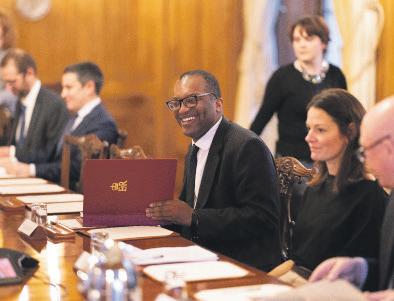
Kwarteng’s predecessor, Rishi Su nak, who currently ranks at number one in the GG2 Asian Powerlist was not exactly mingling with work ing-class individuals from ethnic minorities in his youth. In a recently surfaced video, then 21- year-old Sunak candidly pointed out that he has no working-class friends. In a re port compiled by the Joseph Rown tree Foundation in 2007, large pro portions of Black and Asian ethnic groups fall below the poverty line. According to the report, some 65 per cent of Bangladeshis and 45 per cent of Black Africans are considered to be below the poverty line.
As a person of colour, I fail to rec ognise any of the above individu als as inspirations to young people from ethnic minority groups as they
Katie Sowerby ColumnistGeneration Z are stereotyped as over-sensitive, technolo gy-obsessed snowflakes. We have been classed as the generation who have never had it so easy. So, with this growing, unsettling climate, along with the cost-of-living crisis and possible blackouts – will this break or make our generation?
that our generation are so addict ed to are items that we have been brought up to be dependent on. For instance, one of my early memories from school was being told the im portance of learning to touch type and how this was the future.
All the institutions we are a part of have turned to technology.
We are dependent on technology, as are other generations. The fear of possible blackouts for students is what effect they will have on our ed ucation. Our education has already been hugely disrupted by Covid 19 and strikes with little to no amenities to make this already difficult period easier.
Our entire lives are dependent on energy suppliers – so of course,
We have been classed as the generation who have never had it so easy. So, with this growing, unsettling climate, along with the cost-of-living crisis and possible blackouts – will this break or make our generation?
Credit: UK Government/Flickr
Before starting this article, I would like to acknowledge that not all stu dents are ‘Gen Z’, however, the ma jority are. Even if you are a mature student there are probably times you feel a part of Gen Z due to our self-deprecating sense of humour re flected on pages like Bristruth.
Despite the National Grid warning that blackouts remain an ‘unlikely’ scenario. This is an ongoing fear in many of Gen Z’s minds. Some could
we are scared. Students are already struggling to get by with the costof-living crisis. According to the Na tionwide Building Society of 1,000 students, 66 per cent were either struggling to pay their bills or unable to meet their rent.
This terrifying statistic emphasises how the cost-of-living crisis is already having a horrific effect on students. With the new fear of blackouts, which could cause university closures, stu dents are terrified and have every right to be.
Repeatedly, students are being af fected with little to no support from the government. However, despite everyone believing Gen Z to be soft ies, in reality it is quite the opposite.
Again and again, we have been tested and challenged and we have got through each difficult period with new memes and TikToks show casing our generation’s brilliant self-deprecating sense of humour.
Our university experience has in no way been an easy ride, and I wish all students the very best in the next few months.
espoused themselves with the inher ently less-compassionate policies of the political establishment. Perhaps a part of me is willing to give them the benefit of the doubt as they are compelled to prove their worth for the high office by pandering to a sys tem which is institutionally racist and regressive.
believe this is due to our heavily tech-dependent lifestyle.
However, before older generations criticise us and refer to how ‘back in their day’ they were not hooked to a screen. It does need to be remem bered that we did not pick this life style. We did not invent the smart phone, tablet or tv. These screens
With the ongoing cost of living crisis and possible blackouts this winter, are Generation Z up to the test?
Why is it that ethnic minority politicians aren't always the best friends of their communities?
Our university experience has in no way been an easy ride, and I wish all students the very best in the next few months.
Instagram: @epigram_film
Editor: Deputy Editor: Digital Editor: Investigations Editor: Subeditor & Film Critic:
Evelyn Heis Jake Tickle Amelia Jacob Kalila Smith Claire Meakins
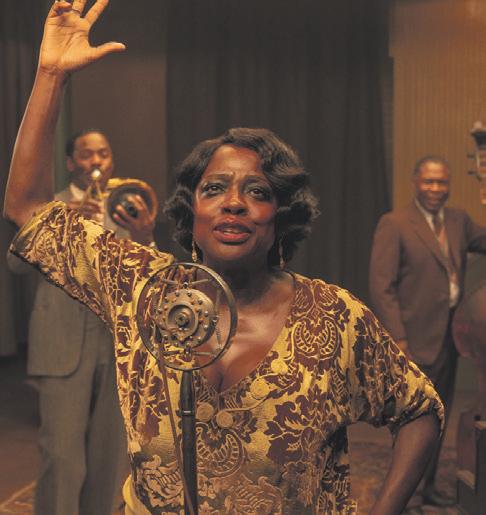
As we celebrate Black History Month this year, Milan Perera has provided us with six film recommendations that embody Black Excellence in film.
Milan Perera, Arts Critic ColumnistAfter years of systematic discrim ination, the contributions of black talent in the world of cinema are only beginning to receive due recog nition. As we celebrate Black History Month this year, here is a shortlist which embodies Black Excellence in the industry.
This gem of a movie is set against the Civil Rights Movement in Amer ica. Starring the legendary Sidney Poitier, the story revolves around the friendship of a well-educated, soft ly spoken young black man, Gordon (played by Poitier) and an illiterate, blind white woman, Selina (Eliza beth Hartman).
As Gordon helps Selina to get her life in order, she asks him to marry her but Gordon reassures her that 'there are many types of love' outside of the romantic kind. Although techni colour was available at the time, Guy Green, the director decided to shoot it in black and white, positioning the piece as an extended metaphor for ‘love knows no colour.’
This pioneering franchise was a defining moment of the ‘Buddy
Movie’ sub-genre, but they are more than just that. Created by Richard Donner, the four movies of the Le thal Weapon franchise capture the friendship of a black LAPD officer Roger Murtagh (Danny Glover) and his younger white colleague, Martin Riggs (Mel Gibson), as they go about their business of crime busting.
Despite pervasive racial tensions, the films depict a colour-blind ide alism where their friendship is based on respect, understanding, admi ration and affection. In an era of similar movies that glorified toxic white masculinity, Lethal Weapon is a breath of fresh air where male vulnerability in all its expressions is deftly portrayed. With memorable performances from esteemed black actors such as Darlene Love, Damon Hines and Chris Rock, Lethal Weap on is definitely worth revisiting.
Woman revolves around a young black lesbian, Cheryl (played by Dunye herself) who works at a video store where she comes across a black actress from the 30s simply credited as 'Watermelon Woman.' Cheryl sets herself on a quest to find the true identity of the 'watermelon woman.'
This critically acclaimed movie is often described as 'necessary view ing' and, in 2021, it was selected for preservation in the United States Na tional Film Registry by the Library of Congress for being 'culturally, histori cally, or aesthetically significant'.
Training Day once and for all sealed the reputation of Denzel Washington as one of the most icon ic actors in the history of Hollywood. Washington portrays a veteran LAPD narcotics officer, Alonzo Har ris, who escorts an ambitious young recruit, Jack Hoyt (Ethan Hawke) for a one-day evaluation through the gang-ridden neighbourhoods of Los Angeles.
Hailed as a landmark in New Queer Cinema, The Watermelon Woman is a vibrant pastiche of mocumentary and satire. Written, directed and ed ited by Cheryl Dunye, Watermelon
The movie depicts the criminal un derbelly as a nuanced and infinitely complex web of shifting loyalties, violence and compromises. Was Alonzo an unsung hero whose seem ingly compromised methods could solve crimes or is he just another bent cop?
A high-octane thriller which will keep you on the edge of your seat throughout.
Never in the history of musical bi opics has there been a movie with such candour, warmth and complex ity as Ma Rainey’s Black Bottom. This also proved to be the last movie ap pearance of the late Chadwick Bose man who plays the movie’s antago nist, Levee.
The story revolves around Ger trude 'Ma' Rainey, the legendary 1920s blues singer, who is planning to record an album with the lead track expected to be her live hit, Ma Rainey’s Black Bottom. However, Lev ee, a pushy trumpeter is determined to get his own version recorded, put ting him at odds with Ma Rainey.
The confrontation between the two is a masterclass in acting as Da vis and Boseman erupt like two vol canoes.
Adapted from August Wilson’s 1982 play of the same name, Ma Rainey’s Black Bottom captures a heady mix of sex, power and race with finesse.
Judas and the Black Mes siah (2021)
It is apt that director Shaka King draws parallels with the New Testa ment narrative of Christ’s betrayal and death with that of Fred Hamp ton (Daniel Kaluuya) of Black Panther Party. Like Christ, Hampton was be trayed and sent to be executed by a close associate, Bill O’Neil ( LaKeith Lee Stanford), an FBI informant. This Biblical framing to a real story lends the movie a great deal of pathos and weight.
Yet, this is by no means a wholly morbid story or a tragedy. Judas and the Black Messiah is a testament to the indomitable resolve and vision of a young black man who led a cam paign for a better future for his fellow black men and women. At the ten der age of 21, Hampton had a blue print of what needed to be done to achieve the total emancipation and empowerment of black Americans.
Daniel Kaluuya delivered a once in a lifetime performance as this pow erful figure, earning him the Acade my Award for Best Supporting Actor, making him the first black British ac tor to do so.
With a cast full of the biggest names in contemporary cinema, to say David O'Russell's Amsterdam (2022) has been highly anticipated would be an understatement. However, it seems that a brilliant cast can't save a film from poor writing...
Claire Meakins, Film & Tv SubeditorThe latest in the recent surge of murder mystery films, Amsterdam (2022) looked set to be an im mense success. To say that the cast is star-studded almost feels like an
understatement, with the film essen tially being a who’s who of the big gest names in contemporary cinema.
Alongside that, the premise is quirky and intriguing enough to entice even the pickiest of cinemagoers. Amster dam surely should have been too big to fail, but, yet, in many ways, it does.
Set in the 1930s, the film follows three unlikely friends who become entangled in a high-profile mur der case. In attempting to unravel this mystery, they discover a much darker conspiracy plot emerging amongst the American elite. Based on the real-life ‘Business Plot’ of
1933, Amsterdam takes a lax ap proach to historical accuracy, in stead prioritising its characters and the outrageousness of the plot.
This is not an issue in and of it self. Fictionalized retellings of histo ry can allow for creative storytelling and a great sense of fun, while still retaining a cohesive plot by using historical events as touchstones.
Amsterdam certainly has the first two, but it’s a bit of a hot mess when it comes to cohesion. The plot is dizzying, launching its audience through different times and coun tries while attempting to reconcile artistic pathos and campy humour.
The film’s strength is in the lat ter. Christian Bale is, unsurprising ly, brilliant as the well-meaning, if clueless, Dr Burt Berendsen deliver ing every line with exuberance and adopting an unusual physicality with ease.
Likewise, Rami Malek and Anya Taylor-Joy have a delightfully wit ty dynamic as husband and wife, Tom and Libby Voze. Taylor-Joy, in particular, does a wonderful job of being both incredibly hateable and funny, often at the same time.
Amsterdam’s acting talent is, un fortunately, let down by the script’s lacklustre attempts at profundity.
Long speeches about the value of love and friendship drag the film out and dampen its sense of fun.
Playing forbidden lovers, John David Washington and Margot Rob bie are often the unfortunate deliv erers of these speeches, with off-put ting close-ups only adding to their fatness.
While Robbie occasionally offers a sly look at the camera as if to ac knowledge the script’s ridiculous ness, Washington desperately tries to play these moments straight. [...]
[ To read the full piece, head over to the Epigram website! ]
Centring black female power, The Woman King is a modernday adaptation of the WestAfrican Agojie tribe. Directed by Gina Prince-Blythewood, she affirms that this "thing is for women and people of colour".
Chiyedza Zunzanyika, Third Year, LawThere is rarely a moment in The Woman King (2022) where the au dience is not gripped to the screen, sunken into the story or immersed in a partially reimagined world of black female dominance. The film truly challenges contemporary norms in cinema with the same ferocity that it challenges western ideas of female empowerment.
Unsurprisingly, the ambitious pro ject has found itself engulfed in con troversy, forced to answer complex questions around slavery and the line Hollywood can cross to achieve some desired socio-political goal.
As opposed to being an accurate historical documentary, I believe that the film is better suited as a brilliant contribution to the wider and grow ing genre of diasporic celebration-
joining movies like Black Panther (2018) in re-defining what it means to be both black, from Africa or a descendent of an African.
The star-studded film follows the Agojie, a West African all-female warrior unit that served to protect and extend the Dahomey tribe be tween the 17th and 19th centuries.

Directed by Gina Prince Bythewood and starring a mighty, stone-faced Viola Davis, the movie frames the Agojie in a much more nuanced light than the European accounts which exist today.
The Amazons of the Black Sparta (2011) – which is the only published book on the Agoji – described the women as ‘beastly’, ‘ugly’ and animal istic. In contrast, the film’s writer takes cues from her trip to Benin (the cur rent Dahomey) and gives the Agojie depth – painting each character with a stroke of vulnerability, wit, fear and a moral consciousness that questions the perpetual act of 'selling one’s peo ple.'
On the latter note, one might be nervous before entering the cinema due to Dahomey’s links to the slave trade. The film, at its onset, makes it
clear where the tribe stood during the 16th and 17th centuries, with lines such as, 'The slave trade is the reason we prosper', stated by one character.
The trade itself, and the role of Af ricans in it, is a vastly complicated subject that Hollywood may not be prepared to tackle. The film tries its best to explain some of these com plexities, taking note of the econom ic benefits afforded to states that participated in the trade, the ensuing tribal wars, and manipulation from western counterparts.
As one Portuguese trader remarks, 'You stop the trade, and you will be nothing'.
The writers, in their best effort to create pure heroines, attempt to over-dramatise the Dahomey tribes’ desire to stop the sale of people. It is arguably impossible to truly know or ascertain this. African history was –and is still – controlled and written about by the very people who con quered, enslaved, and brutalised us. Given this, we, as the viewers, can and should allow imaginative writing with the purpose of story-building.
The scenes of glory, gore and pain, encapsulated in a fresh and inspiring
tale of sisterhood, were well worth the ‘rewrite’. And as one critic ar gues, if anything, the movie is invit ing people to do some of their own research and explore areas of history that few are ever taught or choose to discover.
The cast is nothing short of phe nomenal; Led by Emmy Award-win ning Viola Davis (playing the mes merizing general Nanisca), who trains and leads the Agojie whilst battling some horrific trauma.

It is Davis’ rare ability to present as both powerful and sensitive that sub verts the 'strong black girl' stereotype and re-introduces a unique interpre tation of black female empowerment that is often ignored in the western feminist movement.
Lashana Lynch as Izogie steals every scene she’s in, whilst Thuso Mbedu as Nawi seemingly gives a performance that will define her ca reer, and surely highlight her as one of South Africa’s greatest exports.
The movie itself is shot exception ally well, and credit should be giv en to Bythewood’s camera work due to how superbly it showcases and magnifies dark skin, enhancing each
actor’s natural colour and allowing representation to be in its truest form – physically speaking. Additionally, the atmosphere is well enhanced by a thrilling and thundering musical score.
Standing beside other cinemat ic releases this year, The Wom an King (2022) offers an exciting, thought-provoking, and thunderous alternative to the now overdone ac tion films and weak contemporary commentaries we have become used to. You leave the theatre feeling something, whether that be inspired, uncomfortable, seen or ready to learn more.
The Woman King, and films like it, remain a small portal into the past, present and future of African history and Diaspora talent. It is a fresh, rare entry in the blockbuster market that, I, personally, absolutely loved.
All Images belong to Ilze Kitshoff / 2021 CTMG, courtesy of IMDB -
Alongside a brief insight into Ev's experience growing up as a Latina woman in the UK, this month's column deep-dives into the limited representation onscreen for PoC and LGBTQ+, and why such representation is so important.
Evelyn Heis, Film & TV EditorMoving to the UK at the age of eight was in many ways a good thing, with the move enabling me to receive a better education than my parents did and grow up in a safer environment, exposed to the vast Welsh countryside and an array of English literature I didn’t have access to at home; and yet, there were also some bad things that came with such a big move, for instance, growing up as the only Spanish-speaking, Latin
American kid in the neighbourhood.
I was born in Argentina in a family of eccentric and food-loving Argen tines who, consequently, also moved around a lot. My family immigrat ed to Spain when I was really little, in search of a better place to settle down following the socio-political and economical turmoil that riddled Argentina, and continues to affect our home to this day. Assimilating in Spain was quite easy for us, we spoke the same language and found that many cultural aspects overlapped. Even if we did miss home at first, we still had eachother.
But moving to the UK was a differ ent story. I had left my dad and other close family members in Spain, mov ing to a completely new place with my mum, brother and Welsh stepdad. Having only learnt English two years
prior to the big move, I had yet to pick up a more relaxed and fluid way of putting my words together, find ing that I had to translate my sen tences from Spanish to English in my head every time I spoke. The Spanish twang that stuck to my words and my bronze skin made me stand out a lot, and while most of the time I did feel welcome, I never saw myself represented. I longed to find someone else like me.
During these formative years the only person I had to look up to was my mum, the most-hardworking and resilient woman that I know, but one who could not nourish the desire I had for fitting in. We were the only Latin American people in the neigh bourhood and I believe we were the only Spanish-speaking members of the community too. This was some
the community too. This was some thing I grew to hate at the time as it made me stand out, refusing to reply to my mum in Spanish whenever she spoke to me in public, but something I am grateful to be able to share with her today.
Perhaps, if I had been exposed to others with similar displaced cultur al circumstances to me, even if they weren’t from Latin America, when I was a child, things would’ve been a lot less isolating. Truth be told, this isn’t something entirely unique to my situation, because the reality is that this sentiment is often shared by those who come from minority groups, who don’t see themselves ac curately represented.
For many years the LGBTQ+ com munity could not escape the AIDS epidemic, homophobic undertones,
or the tragic, adultorous love stories whenever they were portrayed in film and television. While those works do represent a big part of what has affected the community, it was rare to see a happy ending for gay char acters- yes, I’m talking about Call Me By Your Name (2017)- at least until Love Simon (2018), But I’m a Cheerleader (1999) and Heartstopper (2022-).
In many ways, it has been the same for the Black community, find ing that works which centre Black joy, as opposed to ones that focus on their traumatic, painful past, in film and television was quite uncommon. Which is why works like Black Pan ther (2018), Hidden Figures (2016), [...]
[ To read the full piece, head over to the Epigram website! #EvSays ]
Editor: Deputy Editor: Digital Editor: Investigations Editor: Subeditor & Film Critic:
Evelyn Heis
Jake Tickle Amelia Jacob Kalila Smith Claire MeakinsWith the rise of true crime content, live adaptations, tape-footage documentaries, unsolved mysteries, and all around serial killer content, there has been a great discussion on the ethics of the dark side of 'entertainment'.
Sophia Di Maida, Third Year, EnglishOver the last few years, social media has seen a steady increase of ‘true crime’ related YouTube chan nels, podcasts, TikTok accounts, etc. To accompany this, streaming services and production companies have released more and more con tent based around famous serial kill er cases: from Netflix’s newest series, Monster: The Jeffrey Dahmer Story (2022) to the Ted Bundy film, Ex tremely Wicked, Shockingly Evil and Vile (2019).
They’re gory, shocking, and full of gripping scenes. However, the reality is that this content is often poorly dramatized – this isn’t to mean the shows and films themselves are bad, per se, but rather that one has to question whether it is in poor taste to be exploiting very real, very dis turbing situations and their victims to turn it into popular entertainment.
This rise in demand for true crime related content for the sake of lei surely viewing might actually be causing more harm than we may first assume. From subsequent de sensitisation and romanticisation of criminals, to Hollywood profiting off
of real-life trauma, here are some of the issues with taking real-life seri al killers and turning them into film and television shows.
Apartments building. Cleveland was involved in calling the police for Konerak Sinthasomphone (Kieran Tamondong), but certainly not in the way the series suggests.
Why make things up for the sake of a show? Factual inaccuracy only leads to confusion and an inabili ty to truly empathise with the case as events that truly happened – the Dahmer docuseries certainly doesn’t serve the purpose of educating its viewers at all.
such as Dahmer eating human meat at the end of episode six, as well as other seemingly unnecessary and in dulgent snippets into the brutality of his crimes. Eric Perry, the cousin of one of Dahmer’s victims, Errol Lind sey, took to Twitter to discuss his rightful distress:
'I know true crime media is huge rn, but if you’re actually curious about the victims (the Isbell’s) are pissed about this show. It’s retraumatizing over and over again, and for what?'
romanticisation of the criminals that actually committed these crimes.
Evan Peters is known for taking on difficult characters throughout his acting career, all we need to do is watch one episode of American Horror Story (2011-) to know that, but it’s the public's reactions to these portrayals of serial killers that is be coming more and more concerning.
The first thing that is potential ly problematic is the accuracy, or rather inaccuracy, of some of these docuseries. Netflix’s latest true crime drama, Monster: The Jeffrey Dahmer Story, has led viewers to question its integrity in telling the correct story. Of course, it is hard to take snippets of events that happened and turn it into a full-blown series, especially when no-one knows the intimate de tails of Dahmer’s (Evan Peters) dayto-day life. However, creator Ryan Murphy seems to have leaned heavi ly towards hyperbolic dramatization.
For example, Glenda Cleveland (Niecy Nash) is shown as having lived in the apartment next door to Dahmer within the series – we see her being able to hear the power tools he used, and even her being able to smell the decomposing bod ies through their shared vent. This was not the case in real life; Cleve land didn’t even live in the Oxford
Another issue with these real-life serial killer documentaries is the role they can play in retraumatising its surviving victims, or the families of victims. It should not be forgotten that a lot of these crimes were com mitted within the last century, so in some cases there are victims that are still alive today.
While there is sometimes con sented inclusion of victims, such as Richard Ramirez’s victim Ana stasia Hronas, who was interviewed for the Netflix series Night Stalker: The Hunt for a Serial Killer (2021). However, there are also instances of unconsented representation of victims in these true crime produc tions. There are many moments in Monster, for example, that are hard enough for the average person to watch – let alone the people who ac tually experienced it first-hand.
The series doesn’t hold back on the gory details, either, showing scenes
That’s exactly the question – for what? Is it really fair to watch such content for entertainment purposes, knowing that its popularity and at tention is only forcing its victims to relive the unspeakable horrors they went through? Especially when the victims weren’t even approached be fore the filming went ahead?
The casting of ‘Hollywood heart throb’ actors (Evan Peters, Zac Efron, Ross Lynch – to name but a few) also problematises these docuseries. These casting choices may lead to a
Tweeting that you find Zac Efron as Ted Bundy ‘strangely hot’ isn’t quirky, it’s woefully ignorant. Yes, you can appreciate the good job an actor did in taking on the role of a cold-blooded killer, but that doesn’t mean you should let yourself forget that the events being portrayed by them actually did happen in real life.
Furthermore, it seems wrong for these actors and directors to be mak ing profit off these criminals and their victims without a percentage going to those who were directly affected by it. Of course, money is no true compensation for what these people went through, but it’s better to be directed towards those that were affected first-hand rather than the already rich and famous.
All this considered, it isn’t to say that ‘true crime’ content shouldn’t be made at all. Instead, it just needs to be produced with good intentions: to educate its viewing audience, to respect and honour the late victims, and to not romanticise the sadistic serial killer the show or film is based on.
Two months before its official release, BFI London Film Festival premiered White Noise. Read on to find out all about it.
Jacob Rozenberg,Second Year, English
Noah Baumbach doesn’t really do adaptations. His first, in over 27 years since his debut Kicking and Screaming (1995), might make you wonder why it’s been so long a wait.
The tricky terrain of White Noise, Don DeLillo’s eponymous 1985 nov el, feels like a familiar fit for the writ er-director.
Familial conflict, anxiety-leaden characters, deliberately rhythmically obtuse flows of overlapping dialogue
– many of the elements of DeLillo’s work feel opportune for a Baum bachian script. For a director whose work often feels adjacent to the lit erary, Mr. Jealousy (1997), and pok ing at the strains of married, domes tic existences – While We’re Young (2014) and Marriage Story (2019) –on paper he should feel right at home with the postmodern quandaries ex plored in his chosen source material.
White Noise’s three distinct acts detail the life of Jack Gladney (Adam Driver), an acclaimed college profes sor of Hitler Studies, and his attempts to hold together his fractured family before, during, and after the interfer ence of an Airborne Toxic Event.
Any reader of DeLillo will recall the idiosyncratic nature of his hyper
modern, affected dialogue: conversa tions which blur distinctions between high and low culture, characters’ ex aminations of the signs and symbols of consumer culture, and a sense of people constantly searching for ful filment and meaning in their lives, nonetheless.
Scenes depicting the family break fast time incorporate DeLillo’s tapes try of conversation, with each fam ily member’s grievances of different topics layered over one another in the sound mix, echoing the sense of cultural overload which the novel possesses. One unforgettably verbose scene sees this same indistinction be tween high and low cultural topics through an academic battle on the assessment of the early life of Icons;
from Gladney, on Adolf Hitler, and his opponent Murray Siskind (Don Cheadle) on Elvis Presley. It is far funnier than can be expressed in this article.
The film’s set design acts as a living embodiment of consumerist 1980s America.
Baumbach and cinematographer Lol Crawley shoot the Gladneys’ lo cal supermarket in a way presuma bly inspired by Andreas Gursky’s ‘99 Cent’, lines of seemingly infinite me ticulously-stacked shelves stretching into the distance – the supermarket as the church of modern America.
Greta Gerwig is Babette, Gladney’s wife, who provides the emotional and existential core of the film. Babette’s addiction to Dylar, a drug which is
said to numb the pain of modern life, is depicted with nuance by Gerwig, displaying the character’s feelings of emptiness shared by many other neu rotic Baumbach protagonists.
White Noise truly feels like the director is challenging himself, par ticularly in his depiction of the Air borne Toxic Event, which powerfully recalls both the impact of natural phenomena on our world and the not-too-far-away time of the COV ID-19 pandemic. The series of events which take place in the denouement make White Noise feel considerably more epic than most of Baumbach’s other works.

Horror may be more effective at achieving its desired effect on its audience than any other genre, but consequently could perhaps be ascribed as the most difficult type of film to get right.
It can be argued that there is no genre in film that is more impactful, more iconic, and more polarising than that of horror. It may be more effective at achieving its desired ef fect on its audience than any other genre, but consequently could per haps be ascribed as the most difficult type of film to get right.
Anyone who likes cinema will have an opinion horror, whether it be for or against; but the fact remains that it is a genre that has remained and outlived many other film-types, such as the Western, the Slapstick or the Film Noir, whose legacies for the most part are cemented exclusively in the past.
Though its subgenres may reach periods of burnout over time, horror as a whole remains a constant fixture of the cinematic catalogue, with its roots standing as far back as a centu ry ago with early entries such as Nos feratu (1922), The Man Who Laughs (1928) and Dracula (1931).
Perhaps the catalyst for its com
mercial springboard into popular commonplace Western cinema was the emergence of the slasher film in the late-1970s to mid-1980s, which generally consisted of a young pro tagonist being hunted down by a monster with seemingly insurmount able power.
While Alfred Hitchcock’s Psycho (1960) is often attributed with be ing the progenitor of slasher films, the two milestone releases that re ally validated horror as a financial hit were Tobe Hooper’s The Tex as Chainsaw Massacre (1974) and John Carpenter’s Halloween (1978), whose successes launched a myriad of frightful flicks for the next decade or so with a proven narrative formula and setting replicated over and over.
As such, subsequent films unrav elled from their popularity, alongside other similar film franchises such as Friday the 13th (1980-2009), A Nightmare on Elm Street (1984-2010) and Child’s Play (1988- ).
The zeitgeist lens that horror finds itself looking through in the 21st cen tury is now that of the supernatural, especially that of the possessed, the haunted, the unholy. No doubt much of what constitutes modern horror and the slew of paranormal releas es that are churned out on a yearly basis can be attributed to Friedkin’s seminal The Exorcist (1973), which remains to this day one of the most beloved and memorable horror films
of all time to many horror buffs, pri marily for its disturbing imagery and brazen commitment to repulsing its viewers.
Of course, the ultimate question pertaining to this most unique and striking method of visual storytelling is: Why do we enjoy horror films? As well as how has it managed to endure for so long, as a genre, when others have simply faded into the sands of time?
Perhaps the first step in trying to obtain an answer to that would be to cement an understanding of what 'good' horror is. It must be empha sised at this point that there is no definitive description of what consti tutes “good” or effective horror. This is dependent on the individual viewer’s own plethora of phobias and anxie ties, and whether a specific monster, situation or environment strikes fear into their hearts.
However, a common rule of thumb for writing captivating horror is the idea of taking the comfortable and the familiar, and transforming it into the uncomfortable and the un familiar. Often I found that my own reactions to horror films are at their most extreme when the respective narratives feign control and security to both its characters and to me as a spectator in its opening act, convinc ing me that I understand the situa tion only to then have my sense of reality and safety challenged.
It Follows (2014) – for its masterful handling of paranoia through a fa miliar but ever-daunting premise and simple but effective cinematography.
The Descent (2005) – for its im pressive ability to constantly escalate the dread of an already claustropho bic and bleak scenario.
The Conjuring (2013) – for quite simply a sequence in a basement that has terrified me since the age of 10 and the mere thought of it brings me to goosebumps every time without fail.
The Birds (1963) – for taking a seemingly absurd and mundane idea
and turning it into a genuinely tense and phobia-generating experience.
Misery (1990) – for taking the ap peal of celebrity status and flipping it into one of the most harrowing and toe-curling prospects imaginable.
Featured Images: IMDB
Some iconic horror films that come to mind that utilise this approach are Alien (1979), Audition (1999) and The Thing (1982), all of which intro duce the true extent of their horrific elements as the narratives’ events es calate.
It is this unshakeable state of par anoia and an inability to escape the dread of an idea that inspires the most fear into me and is an irrefu table thread that binds horror across its entire ancestry. Because of this characteristic, many audiences find that films that were not intended primarily to be a horror film terrify them more than works whose inten tion was to do just that, as that false sense of understanding the situation is amplified further.
For example, many viewers of my age will have childhood memories of films or programmes whose uncan ny visuals and unexpectedly dark themes permeate the mind for years after their first watch, such as Cor aline (2009), Monster House (2006) or the modern era of Doctor Who (2005-). All of which jarred me upon first viewings with how surprisingly they delved into the horror genre for supposedly more innocent narratives. Thus, the Other Mother from Coraline and the Weeping Angels from Doctor Who remain to this day a far more traumatising visual than that of Mi chael Myers or Freddy Krueger, sim ply because the former pair of mon sters appear in more light-hearted
narratives and yet belong in horror films all the same.
Another film that comes to mind that is terrifying despite having no such marketing to be a horror film is that of Alfonso Cuarón’s Gravity (2013), which on the external poses purely as a Sci-Fi survival film, yet most viewers would agree that from beginning to end it is relentlessly suffocating and anxiety-inducing, to the point of genuine visceral unease.
It must be highlighted, therefore, that there is an inherent desire within many people to be scared, unnerved and disgusted, otherwise horror films would not have an unwavering audi ence for 100 years. Perhaps it would be accurate to say that the appeal of the horror genre comes from endur ing the suffering of the protagonist almost as if it were oneself suffering their terror. We bear witness to their horrific journeys, with their fear and ours not so far apart, and thus mak ing the relief brought about by a res olution – a most impactful and valid catharsis.
That rush of adrenaline, that re minder of one’s vitality, the very fear that comes simply from being alive and having to endure the cruelty and agony of our world, is perhaps a feel ing that is made a little easier to cope with thanks to the escapism provided by the world of horror cinema.
Instagram: epigramarts_
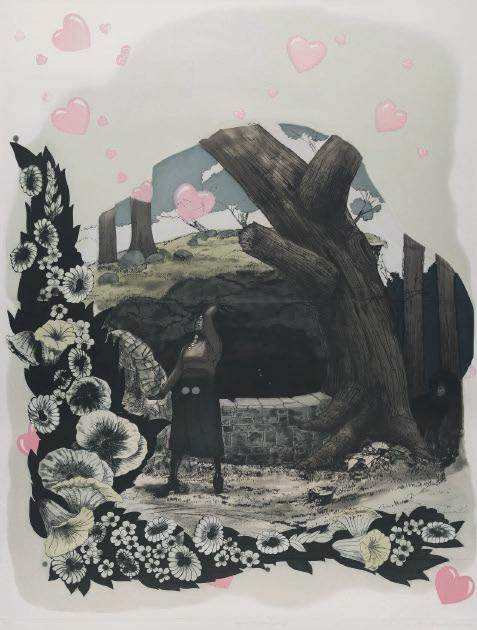
Anna Page spotlights the work of artist Ker ry James Marshall, who highlights Black joy and solidarity in his paintings.
Anna Page
Fourth Year English and French
It remains an enduring duty of the art world to bring to light the tal ent of Black artists after centuries of absent recognition. Like many pil lars of our society, the arts have had to undergo a significant amount of reform after being revealed as sys tems propagating systemic racism. Historically, it has been difficult for people of colour to see themselves represented in an art world dominat ed by an Occidental tradition that for so long actively sought to oppress them. Yet, today as we observe the 52nd Black History Month, this narrative is appearing to change. Black artistry is finally receiving the acknowledge ment it deserves. This month, we focus on the role of the arts in recog nising the violations of the past and presenting an optimistic manifesto of racial equality for the future. An ex ample of such an evolu tion in the art world comes in the form of the diversity of the exhibitors of the latest Biennale, occur ring in Venice this year. The Biennale, a large-scale international art show established in 1895, has historically been one of the whitest institutions in the art world. In previous editions,
we have witnessed an average of nine out of the ten exhibitors being white men.
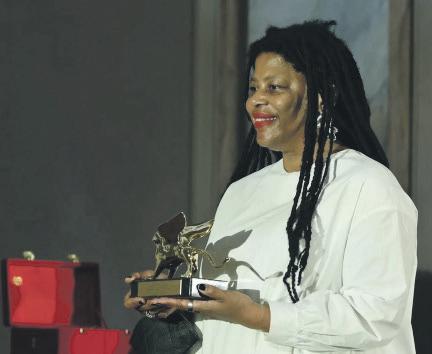
This year, however, for the first time in history, the two Gold en Lions, the Venice Biennale's highest honours, were award ed to women of colour: Sonia Boyce and Simone Leigh. Yet there is still work to be done. In 2019, a study conducted on the diversity of artists in major U.S. museums, found that 85% of the artists exhibited in the 18 largest US museums were white. African American artists were the least represented demographic group at 1.2%, despite con stituting a quarter of the US population.
When discussing the art produced by Black artists, it would prove ultimately re ductive to refer to them as a community void of differ entiation. Although there are many commonalities in the work produced by the Black community, many Black artists have spoken out against the racial gauze that society has sought to wrap around their
Neverthe less, for the BIPOC (Black, Indige nous, and peo ple of colour) artists who do intend to abord the subject of race through their artwork, many common themes seem to be at play. These include discussions of power, the impact of Empire, Black experience in the African diaspora, as well as the highlighting Black joy and
solidarity.
Alongside his peers of Kara Walker, Jean Michel Basquiat and Jacob Law
marginalization of artists like himself. He does this through the employment of a Rococo pas tiche.
Intent on the imitation of the works of European masters of the 18th century tradition, Mar shall challeng es the artistic establishment. Rococo art is often associated with staged scenes of young lovers seducing each other in romantic milieus. By altering the skin colour of these figures to represent people of colour with in his Rococo art piece, he shows that he too can create art in a style deemed “civilized” to the elitist eye. Wheth er the imitation infers homage or parody is for you to decide.
works presented in museums will be come normality.
rence, Kerry James Marshall propa gates a dialogue attempting to open the doors of white spaces previously excluded to Black artists. Resisting the temptation to bend to Western influ ences in their quest for acceptance, we have witnessed a movement of emerging Black artists redefining the contemporary art scene over the past century.
Racially engaged artworks are res olutely committed to voicing Black narratives, and one such artist who does just this, is Kerry James Marshall. An African American artist, born in 1955 in Birmingham, Alabama, his works touch upon the issue of the un der-representation of Black people in art history. In his series Vignette, Ker ry James Marshall stages Black cou ples in scenes familiar to a Western audience. The result is striking and encourages reflection on the place of Black people in art history and in museums.
In Wishing Well, Kerry James Mar shall sets out to dismantle the corner stones of the European art tradi tion that have been built upon the
What does appear clear is Marshall’s ingen ious way of carving out a space for Black artists like himself in the 21st century. As viewers, we are invited to observe this artistic tradition reima gined through the Black artist’s gaze and take note of any racial biases left over by colonialism within the artistic canon. In time, Marshall hopes that his inclusion of Black figures within art
In the years succeeding the BLM movement, which have been pep pered with instances of racially mo tivated violence reported in period ic occurrence, it is tempting for us to discount the ‘utility’ of art in this struggle for racial equality. But art, es pecially for marginalised communi ties, is necessary. It will be interesting to see where artists such as the prize winners of this year’s Venice Biennale, Sonia Boyce and Simone Leigh, take this discourse in the future.
'Historically, it has been difficult for people of colour to see themselves represented in an art world dominated by an Occidental tradition that for so long actively sought to oppress them.'
'Racially engaged artworks are resolutely committed to voicing Black narratives'Wishing Well / Carnegie Museum of Art The Kiss / Art Basel The Swing / The Wallace Gallery
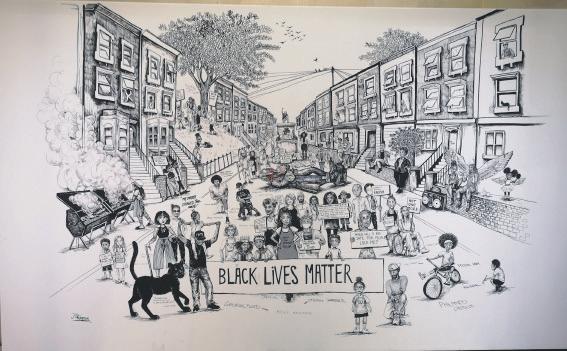
colonisation of institutions, education and art are of great importance in balancing the ledger. The families of Wills and Fry, the biggest benefactors to the University of Bristol, have benefited enormously due to links to slavery. Though neither family were directly involved with the slave trade, they capi
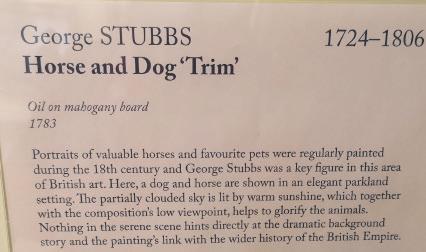
Milan Perera discusses the reinstatement of George Stubbs' painting The Horse and Dog 'Trim' in Bristol Museum & Art Gallery
without having an action plan to fol low.
portance. Speaking to Epigram on this was the esteemed Stroud-based art valuer and auctioneer, Nicholas Bowkett, who commented that 'I think objects of more than a hundred years old start to become interesting as they form a part of our history, both good and bad. Showing contro versial works of art in public spaces shouldn’t be banned but sensitivity
names with links to the slave trade. Sadly, no one can erase history. This is a present and future reality. We should do everything to capture his tory and express it in truth and fair ness for posterity.'
Milan
 Perera Arts Critic Columnist
After a brief absence, Horse and Dog ‘Trim’, the painting by the 18th Century Brit ish artist George Stubbs, is back on display at the Bristol Museum & Art Gallery amidst a wave of outspoken opposition. Though the subject mat ter itself is innocuous, the backstory surrounding this painting is conten tious and seems to perpetuate the racist stereotypes towards enslaved people. Did the City Museum make the right call in reinstating Stubbs’ painting?
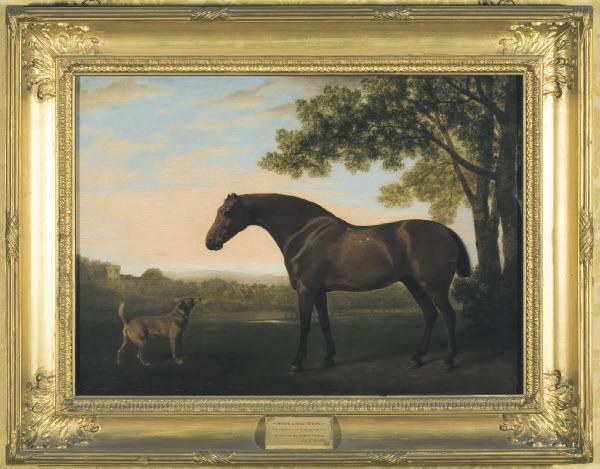
Works of art, such as paintings or sculptures, have an enormous power to invoke and inspire, even if they are not based on sound ideology. The Bristol based historian and broad caster David Olusoga commented that 'Statues aren’t about remember ing history; they are about memorial isation.' Museums are not inanimate structures of brick and mortar but liv ing and breathing organisms which present distilled narratives of history.
talised on the mechanisms prompted by it. 'It is quite ironic that I once gave a talk on the legacy of the Fry family in Fry Building!' Dr Stone recounts.
In his illuminating book, Out of the Wreckage, George Monbi ot comments that 'It is not enough to chal lenge an old narrative, how ever outdated and discredit ed it may be.
Change hap pens only when you replace it with another.'
Another year and another Black History Month. This year’s theme is “Time for Change: Actions Not Words.” These powerful words echo down the vista like a battle cry. It is not sufficient to be outraged at the ingrained racism and offensive nar ratives within society, but time for far-reaching actions to redress and restore. In the 2022 Priory Lecture, “Legacies of slavery, ‘Hidden His tories’, and contemporary racism”, the academic and activist, Profes sor Mamokgethi Phakeng, reiterated that it is grossly insufficient to just condemn expressions of colonialism
Museum artefacts with links to the colonial past and transatlantic slave trade cannot remain unchallenged, however great their artistic merits may be. The painting in question, Horse and Dog ‘Trim’, has been offen sive to many due to the racial tropes embodied in the work. Here lies the challenge. What is to be done? A per manent removal or a robust provi sion of its context?
Speaking exclusively to Epigram on these facets of the debate was Dr Richard Stone from the Department of History at the University of Bris tol. According to Dr Stone, the de
Not only the University of Bristol but churches, charitable organisa tions and institutions including the Bristol Museum and Art Gallery greatly benefitted from the legacy of these families. 'Even the university crest consists of symbols relating to the slave trade. Actually, it is not the ship symbol that’s most offensive but the dolphin and the sun which refer to Edward Colston and Wills family re spectively.' When I asked Dr Stone on how to approach controversial works of arts, especially those with nega tive racial connota tions, his response was that 'No collec tion of art in a mu seum or art gallery should be static. The meaning of a work of art is not dictated by those who created it. Its meaning is set by how any given so ciety interprets it.'
It goes without saying that a wider discussion over a period of time be fore the removal or contextualisation of a work of art is of paramount im
should be exercised in informing the public what they are about to see and providing them with a clear choice to view or not. It is a devil ishly complicated subject and I am conscious I am looking at it from a very narrow viewpoint (white, male, middle-aged and middle-class). If my ancestors were slaves I might have a very different outlook.'
When I put this question to Hilary Frank-Ito, a Postgraduate student from Nigeria, his views seemed to echo with that of Mr Bowkett’s. 'Centuries after, many are debating the most appropriate action to take towards redressing works of art or
When Epigram visited the City Mu seum and Art Gallery, Tasha - one of the curators, explained how the mu seum is committed to the decolo nisation of art. The newly mounted “Horse and Dog Trim” is accompa nied with a new plaque to provide a broader context. According to the museum, Uncomfortable Truths is a project, launched in 2018, that seeks to uncover difficult truths behind museum objects – how they were collected, what they represent and the problematic pasts that are hidden behind them.
We may be at the foothill of a long and arduous climb in battling the deep-rooted racism in contempo rary society, but it is a journey worth undertaking. As the relevant ancient proverb states 'It is better to light a candle than to curse the darkness'.
'It is not sufficient to be out raged at the ingrained rac ism and offensive narratives within society, but time for far-reaching actions to re dress and restore'
'Museum artefacts with links to the colonial past and transatlantic slave trade cannot remain un challenged, however great their artistic merits may be'Milan Perera / Epigram
Melissa Braine recom mends some of her fa vourite texts written
by Black authors Melissa Braine Arts Digital EditorLiterature plays a crucial role in our understanding of experi ence and history. The literary world's privileged foundations have inherently dismissed Black authors and denied them of careers and rec ognition. In doing so, we have also diminished authentic accounts of real Black experiences, identities, and voices.
To honour Black History Month and those voices in which we have unjustly silenced, I have collated some of my favourite texts written by Black authors that powerfully reflect the beauty and pain in both the modern and historical world. Although October is Black History Month, the celebration and inclu sion of Black narratives and authors should be ongoing.
Hood Feminism: Notes from the Women White Feminists Forgot (2020) – Mikki Kendall
multiplicity of intersections, such as their gender identity, race, class, sex ual orientation, and ability.
Kendall writes that ‘an intersec tional approach to feminism is key to improving relationships between communities of women, so that some measure of true solidarity can happen.’ Each chapter is designed to focus on the experiences of the mar ginalised, in which Kendall bravely draws upon her own experiences as a Black woman.
Under the Udala Trees (2015) –Chinelo Okparanta

felt narrative of Ijeoma and her struggle towards selfhood. Reflecting upon pivotal themes such as religious and cultural expectations, effects of war, sexuality and prejudice, and their consequential effect on Ijeoma’s mental state, Okparanta addresses Ijeoma’s constant endeavour towards personal freedom.
'Although October is Black History Month, the cele bration and inclusion of Black narratives and au thors should be ongoing.'
The Times, Open Water is a touching love song dedicated to the intense vulnerability and pain that accom panies the tender love between two young Black artists. Nelson explores the shared experiences of Black Brit ish youth and how their feelings of unbelonging sparks confinement and comfort within each other.
With a powerful depiction of race, masculinity, and the vulnerability of first love, Open Water is a beautiful and essential debut that asks what it means to find safety in love, only to lose it again.
In her collection of essays, Mikki Kendall calls out mainstream femi nism and its failure to address the needs of all women. Hood Feminism is rooted in ‘intersectionality’, a term coined by Professor Kimberlé Wil liams Crenshaw to reflect how our various identities result in different lived experiences. It is an urgent fight for justice for the people the various waves of feminism have con sistently excluded – those who are at a greater social disadvantage by the
Set in war-torn 1960s Nigeria, Chinelo Okparanta crafts the heart
The name of the novel itself comes from a famous folktale of the Nigeri an peoples, with the Udala Tree being a symbol of female fertility. Ijeoma’s struggles represent those of the ma jority of Nigerian women who are confined under the name of fertility and motherhood. Readers are none theless met with a glimmer of hope by the strength of the female protag onist and her personal fight for her future in which she longs for truth, freedom, and love.
Open Water (2021) – Caleb Azumah Nelson Winner of the Costa First Novel Award 2021 and a No.1 Bestseller in
X Centre: 11th Nov
Rianna Houghton Arts EditorThe importance of celebrating Black History should extend past October’s Black Histo ry Month. Here are some exciting events happening across Bristol over the next few months that mark the extension of this narrative of cele bration and education.
Professor Hakim Adi will be discuss ing his new book African and Carib bean People in Britain in Bristol’s historic centre of the African and Caribbean community. Tickets are £5, through bookhaus bookshop. In partnership with Black South West Network.
‘Telling Stories’, at The Coach House: 22nd Nov This panel discussion, facilitated by Stuart Taylor, Decolonial Schol ar-Activist, will explore issues around story telling. A creative ex ploration of the historical record by attempting to understand the ethical responsibilities of interpreting the
past. By Black South West Network.
Mimesis: African Soldier, by John Akomfrah: 1st Oct – 8th Jan Bristol Museum and Art Gallery screen Akomfrah’s cinematic blend of archive imagery of the African and Asian soldiers of World War I and newly filmed footage of the re imagined soldiers leaving home. The film runs for 73 minutes, with view ers able to enter the gallery at any point of the back-to-back screening. Donations are welcome.
Turning Point, Sweet Patootee Arts: 12th Nov – 5th March A series of four dramatic vignettes, interwoven with archive imagery and
rare folk songs and inspired by oral histories about Black Caribbean ex perience after World War I, will be screened at Bristol Museum and Art Gallery. This Caribbean melodrama and comedy is performed to camera, accompanied by a 3D soundscape of community participant voices. Dona tions are welcome.
‘More than a Number’, at the Trini ty Centre: 7th Nov – 15th Nov A free-to-see photographic exhibi tion, as part of Bristol’s Afrika Eye festival, showcasing images from 12 photographers from across Africa and concluding with a photo sym posium in Trinity’s Graffiti Gallery. Curated by Cynthia Maiwa Sitei.
‘Mugabe, My Father & Me’, at the Wardrobe Theatre: 16th Nov Zimbabwe-born Tonderai Munyevu gives his one-man show as part of Afrika Eye festival. This work charts the rise and fall of one of the twenti eth-century’s most controversial pol iticians through the personal story of the actor’s family. Interwoven with music by mbiri player and vocalist Millicent Chapanda.
Twitter: @EpigramCulture Instagram: @epigrammusic
Co -Deputy Editor
Co -Deputy Editor Digital Editor

Subeditor
Oscar Ross Josh Templeman Jake Paterson Sam Cox Hannah Thompson
Sunkissed, lighthearted and whimsical, we give you our antitode to back-to-uni blues : Ben Cipolla
 Oscar Ross Music Editor
Sounding somewhere between Jack Johnstone, George Ezra and Harry Nilsson, Bristol-based singersongwriter Ben Cipolla sat down with
me in Glitch Studio’s top salon room to speak about the importance of food, family and revisiting his Sicilian roots for his most recent album, Casa Mia.

During his Glitch Studio performance as part of Bristol's bespoke food and music festival, Buskers' Banquet, Cipolla engaged his audience with detailed descriptions of each song’s writing process and meaning maintaining his smiley, awkward charisma. While
some artists’ attempts to provide the backstory to every 8 bars of a song often come across as narcissistic and conceded, Cipolla left his audience understanding and enjoying the songs he played as if they had been listening to them for years.
'I wanted that sun-bathed balcony feel' said Cipolla when asked about the feel of his new album Casa Mia. I think it’s safe to say that it is mission accomplished, with Casa Mia going track for the track with sun-kissed ballads and wind-swept driving tunes. “The album is made up of 9 songs, each for a province of Sicily (and a bonus track because I like even numbers!)” Cipolla laughed as he talked me through the rich, interwoven history of his family and his music.
'I’m here all down to ice cream' Cipolla summed up after telling me of his grandparents' (Nonno and Nonna) arranged marriage
and then relocation to Stoke on Trent, where Nonno gave up his job as a miner to sell ice cream across all of Stoke on Trent.
Cipolla’s father, Sebastian, grew up wrapping ice lollies and learning clarinet, for which he went to music school where he met Cipolla’s mother.
Family is central to Cipolla’s music, as is evident in a stand-out song 'Trekking with the Stars'. Dedicated to his late uncle, Alfie (Alfonso) Cipolla, the wonderfully light-hearted and jazzy track remembers Cipolla’s fond memories of spending time with his cinema worker, Star Trek fan uncle. The great thing about Cipolla’s writing here is, that some songs dealing with such personal and specific material could isolate an audience or listener, instead, Cipolla invites the listener in, asking them to share in the story and his memories.
'I’ve been letting these ideas simmer away for a long time', commented Cipolla, describing his album like a Minestrone, taking time and love to create something of himself to benefit others:
for future generations, to inspire others to retrace their roots'. From sampling the whistle of a builder working outside his window on ‘Golden Hour’ to softly sung, warm melodies in Italian on ‘Cicero’, Ben Cipolla’s Casa Mia is s small slice of Sicilian sunshine, and everyone loves the sunshine, don’t they?
Epigram music shines the spotlight on the artists you should be listening to.
Josh Templeman Co-Deputy EditorLondon-based DJ and pro ducer Gemi is making some serious waves right now.
One of the leading lights in modern UK garage, Gemi has been shelling clubs up and down the country, dropping some of the nuttiest dubs in the scene right now along the way.
To put it simply, if you don’t know – then get to know.
UK garage has seen a meteoric resurgence in the past few years and Gemi is reaching its upper echelons. Appearing on line ups alongside UKG heavy weights Sammy Virji and Conducta, he has quickly proven himself as one of the most talented in the scene.
Channelling heavy influ ence from old-school garage, Gemi has been able to consol idate his signaure sound, using aiconic vocal chops and basslines that won’t let you stand still.
Music is meant to be fun and that’s exactly what Gemi brings.
including the likes of Katy Perry’s ‘California Girls’, Kylie Minogue’s
‘Spinning Around’ and, perhaps most insane, the Crazy Frog theme tune.
I can promise you, not much can match the euphoria of hearing ‘Frog Dub’ blast through a club sound system
Although UK garage is of ten forced into the back seat by genres like drum & bass and jungle here in Bristol, Gemi is no stranger to the Bristol music scene. Performing at both The Lanes and Crofter’s Rights, as well as on a curated line-up by Salute at Motion last year, it’s clear that Bristol can’t get enough
of him. Gemi has also worked with various Bristol-based artists, including DJ's Charli Brix and Notion.
With the UK garage reviv al still grwoing, we can only hope that it’s able to grip the Bristol music scene, and with Gemi's tunes, don’t be sur prised if that’s just what hap pens.

That Tuesday Feeling: Tuesdays 8-9 P.M
Millie and Sonny: Saturdays 3-4 P.M
Bored of the same old playlists and podcasts? Stuck in an audio rut? Don't stress, Burst Radio is free and accessible from 10 A.M to 10 P.M everyday day of the week! Full of brilliant podcasts and ecclectic music shows, Burst Radio celebrates its 25th Anniversary this year, so tune in (using one of our groundbreaking QR codes) and kick back to the best Bristol's airwaves has to offer:

A chilled-out, free-flowing discussion, emulating the atmosphere of chatting over dinner with a glass of wine. As three, final-year flatmates, we want to invite listeners into our slightly damp, but well-loved student house. Let us help navigate the beginning of your early adult life to the sounds of relaxed, soulful music. Listen as you’re cooking dinner, walking home from a late lecture, or psyching yourself up for a night at grotty Grav – whatever you like!
'Morning Wood' (Katie Wood): Saturdays 10-12 A.M
The hangover cure for the night before. Take a paracetamol, clean up the empty bottles from the kitchen and let yourself float away into a cinematic ambiance spanning genres, decades and cultures. Shortly after, violently relive what, or who, you did last night by indulging in some classically ‘student’ tracks. Feeling fantastic? Terrible? No idea? Let me tell you how I’m doing and you can relate. Consider it to be the 69ing of radio shows: we both win, or at least, you can admit you did try to like it.
Aiming to find out what makes Bristol’s music scene tick, Millie and Sonny plan to use both private and public interviews to explore the diverse musical culture in Bristol.
Showcasing new themes each week, such as 'Bristol’s favourite love songs' the pair also look to feature interviews and performances from local upcoming talent to help educate listeners on various genres, celebrating their work with a wider audience.
The Epigram Music Radio Show: Wednesdays 12-2 P.M
We're on the radio! Tune in for our picks of new and old, groovy and depressing bangers, accompanied by some suibatbly idiotic discussions and arguments about each of our music tastes ranging from Jake's eclectic indie rock, Josh's alternative hip-hop and Sam's... well Sam listens to some mad stuff. Make sure to tune in for our 1 P.M game segment: 'The Undergound Limbo Round!' where we bring the underdogs of the spotify algorithm to the airwaves, competing to find the most obscure diamonds in the rough we can get our ears on. Upcoming shows will also be featuring interviews with some of Bristol's best new artists, new games and contests. So be ready every wednesday, as we risk musical whiplash, jumping from Kenyan drill to Swedish underground rock, old-school rap to The Beatles and tell you why we love music.
Tales of our digital editor's night of ethereal vocals and experimental electrnnics at The Fleece
Sam Cox Digital EditorOn the back of their new album, I Love You Jennifer B, London’s Jockstrap brought their uncanny brand of chaos, joy and uncertainty to a mesmerised audience at The Fleece.

Formed in 2017 at Guildhall School of Music & Drama, Jockstrap’s Taylor Skye and Georgia Ellery are as many thespians as they are musicians. Theirs is a brand of pop whose unexpected twists and turns belong firmly on the stage as they aptly demonstrated on the Bristol leg of their U.K. tour in support of their whiplashinducing debut LP.
The group are largely thought of in the collective consciousness of critics and fans as something of a side-project to Black Country, New Road (the two projects share a member in Ellery) but this association does them a huge disservice.
This is not a criticism of Black Country, New Road, whose second album is already vying for Album of the Year alongside Kendrick Lamar and Big Thief (which is no mean feat) but is instead a celebration of Jockstrap’s own, unique vision.
They do, however, succeed where Black Country, New Road fall short; in their ability to defy genre, bravely push boundaries, and sound truly contemporary. While they’re inevitably linked with South London’s so-called ‘Windmill Scene’, their music is a more appropriate bedfellow of experimental electronic mavericks such as Aya, Tirzah and fellow Guildhall alumnus Mica Levi.
Their new record, three years in the making, is front-and-centre in their live set, where each of the ten tracks gets a run-out, amongst a handful of singles (and a rip-roaring encore of I Want Another Affair - Taylor Skyea Remix, perhaps their most unashamedly fun moment to date). That they don’t miss a single song from I Love You Jennifer B is a testament to its impressiveness as a singular artistic statement. Essential though the album is, however, their live set manages to exceed it in sound and scope.
Aptly for a Bristol audience, Ellery’s vocals soar in a way that pays homage, consciously or unconsciously, to the
trip-hop whisperings and nuance of Portishead’s Beth Gibbons, while Skye’s mad-scientist keyboard and synth set-up and dead-pan, thousand-yard stare recalls a 21st century Ron Mael of Sparks.
Jockstrap are a band that thrive on contradiction. The loud and the quiet, the realist and the expressionist,
the conventional and the idiosyncratic; these contrasts are dividing lines which are everpresent on their album but which are writ large in a live setting.
The disparity between the sweeping beauty of their acoustic songs and the bombastic playfulness of their more
electronic numbers is made more absurd, more jarring, but certainly more gorgeous on the stage.
In a period in which so many new acts inhabit a persona of peculiarity that seems gratuitous and forced, Jockstrap are so refreshing because they are genuinely, believably surreal.
Tune in and wind down to our picks from the range of amazing radio shows found exclusively on Bristol's own Burst Radio.Jockstrap / Eddie Whelan
 Oscar Ross Music Editor
Weaving through a sea of diehard Beabadoobee fans, mostly clad in Doc Martens and fish-nets, waiting in herds outside in the rain before the O2 doors opened, Epigram had a night of punk and bedroom-pop from Pretty Sick and the amazing Beabadoobee.
Excited for their debut Bristol show, American supporting act Pretty Sick kickstarted the night with some perfectly grungy rock tunes. Channelling a classic teen punk sound, the powerful three-piece, led by the magnetic Sabrina Fuentes, use two bass guitars rather than traditional guitar and bass drum set up (one using an octave), fuelling both their burning hot grittier tunes like 'Dumb' as well as providing gentle body to their more ambient songs such as 'Superstar' and 'Black Tar'.
Clad in a torn-up suit jacket and knee-high boots, Beabadoobee owned the stage from the second she stepped out. Glittery, jump-up bangers electrified the crowd song after song as Beabadoobee bonded with her audience, shouting out how she’s missed Bristol as well as bringing an intimate, half-shy stage presence that made the crowd only scream for more.
The crowd, on the other hand, were definitely not shy. From throwing red panda plush toys onto the stage to stereotypical hysteric screams and 'I LOVE YOU BEAAA' echoing around the O2, this certainly showed off the demographic of the ever-energetic Beabadoobee fan base.
The 22-year-old singer/ songwriter’s control of her crowd’s energy and command of the stage was amazing to watch: getting the whole crowd down to the ground during her first song, immediately setting the tone, bringing punky, hair-swinging energy to her heavier, shouted tunes, as well as chiller vibes to her songs off Beatopia. For these newer tunes, Beabadoobee
ditched her guitar to groove across the stage, mic in hand, jumping down to the front row or sitting on the edge of the stage to sing directly to her clamouring diehard fans.
However, my favourite part of Beabadooebee’s performance was the two-song acoustic break towards the end of the night. Here the set was stripped back to just acoustic guitar
as Beabadoobee sang her heart out alongside the crowd for her intimate, bedroom-pop hit single 'Coffee' and again for her more recent melancholy ballad, which the singer admitted to finding difficult to play live on account of its meaning to her.
To the encouraging shouts of the crowd, Beabadoobee killed it on this deeply personal song, rallying straight
afterwards to bring down the house with one last fiery, gritty, guitar-driven tune: 'Cologne' .
Overall, an amazing night, with brilliant music and a wonderful atmosphere. This is a set I am looking forward to seeing again as soon as I can.

Here's a fancy QR code to take you to Epigram Music's Spotify! Now you can listen to all of our favourite new tunes mentioned in print, online and radio.

 by Loyle Carner Oscar Ross, Editor
Granted, everyone and their stone island badges have been talking about this album since it got announced. On hugo. Carner reminds everyone how he earned his musical prestige in there first place, filled with classic dusty sun-beaming piano beats and new harsher sounds carrying Carner’s emotive narratives on race, manhood and being a fa ther. Tunes like this don’t come around often, so get at it.
Josh Templeman, Co-Deputy EditorI’ll be totally honest, I’ve been gatekeeping Sam Gellaitry all the way back to his Soundcloud era in the mid 2010s, but his latest re lease, VF VOL II, I think it’s time I let go. This year has been huge for him; supporting producer royalty in Madlib, performing alongside Kaytranada and most importantly dropping an album of bangers in VF VOL II. Gellaitry uses his vocals on every track to create a bouncy collection of electro-pop anthems. Amidst rave reviews, it’s impossi ble to not see the Scottish producer reaching new heights in the future.

In a haze of a glam-horror aesthetic, Oliver Sim - best known for his work with The xx - charts his battle against shame surrounding his HIV status in an empowering and personal deep dive into the psyche and failed romance. Taking mascualinity by the scruff of the neck and emblazoning it with an introverted and personal beauty, the record shines with a minimalist essence. Standouts ‘Fruit’ and ‘Hideous’ have the potential to be queer anthems for this decade , ‘GMT’ has soundtracked two of my summers in a row. A glittering and evocative debut not to be missed.
On his past albums, Alex Giannascoli has revelled in a lack of cohesion, jumping violently from luscious lofi to thrashy punk and auto-tuned aural collages. On his ninth record, the pathos, the experimentation and the auto-tune are still there, but as part of a much more cohesive whole. 'How many more songs am I supposed to write before I should turn it off and say goodnight?' he asks on Miracles. When they’re this good, a few more would be nice.
by Vieux Farka Touré and Khruangbin Hannah Thompson, Sub-EditorMy favourite album of this month is Ali, a collaboration between Vieux Farka Touré and Khruangbin. As a tribute to Vieux’s late father, the brilliant Ali Farka Touré, the album was apparently conceived of and recorded in just a week with much of the album a result of inspired improvisation. The song cycle, so deliciously rich and full of groove, engulfs you, thoroughly emulating the hypnotic quality of Ali’s tracks. Standouts for me include the crisp funk of ‘Tongo Barra’ and the melting melancholy of ‘Diarabi’. Ali is a testament to Khruangbin’s boundless aptitude for making any genre they occupy their own, and the enduring talent of the Father-Son duo Ali and Vieux.
A night of shimmering, punk driven bedroom pop at the O2.Beabadoobee @ O2 Academy Bristol / Jaake Paterson Ali
Our Co-Deputy Editor is here with the best live music Bristol has to offer this November.
Jake Paterson Co-Deputy Editor1 Nov, Bill Callahan - SWX
All-time cult-legend singerngwriter Bill Callahan comes to Bristol in a rare show off the back of his new record YTILAER. Sure to be an intimate view into his sparse and soulful blend of folk over his low droll tone, this is one not to be missed.
7 Nov, Pip Millett – SWX

Having recently got quite annoyed at our editor for comparing her with Jorja Smith, Pip Millet returns to Bristol with her soulful blend of RnB. Captivating audiences with her shift of direction into hip-hop and her unmistakable vocals.

8 Nov, Faye Webster – Thekla
After her sell-out show at the Exchange off the back of her 2021 record I Know I’m Funny haha, Webster’s pedal steel-led Southern
11 Nov, Blossoms – O2 Academy
Indie icons Blossoms emerge from the heady heights of the 2010s as survivors and indie head favourites traversing new pop territory on their new record Ribbon Around the Bomb. Sure to be a celebratory night in one of the smallest venues of their tour.
11 Nov, Adrian Utley’s (Portishead)
Arcadia – St George’s Soundtracking the 2018 film Arcadia for an live audience, Adrian Utley’s fame in Bristol as a member of Portishead reaches new territory in an exploration of the British countryside and its people. One for the more cultured of you out there.
14 Nov, Wet Leg – O2 Academy
A glorious rise to fame off of their eponymous debut and the nw classics ‘Chaise Lounge’ and ‘Wet Dream’, Wet Leg play their fourth show in Bristol this year, sure to be full of joy and energy as they approach this cycle’s end.
16 Nov, black midi – SWX
Having caught the band’s album release show in the summer, being thrown into a frenzy, the question of seeing black midi live is one of survival and achievement whilst witnessing one of the most creative and challenging bands of our time.
16 Nov, Dehd – The Lanes
Tracing a line between dreampop and south
song writing, Dehd pulls light out of the dark in what’s sure to be a chorusbelting and cathartic evening of indie over a few pints.
22 Nov, Whitney + Fenne Lily - SWX
17
Late-night and laid-back dreampop from one of the underground’s hottest new bands, Lime Garden play one of their first shows in Bristol after emerging in 2020. Going to be a packed evening on Gloucester Road.
22 Nov, Nation of Language
– The Fleece
Brooklyn new wavers Nation of Language released one of the most widely critically discussed albums last year in the form of A Way Forward. One to watch with their callbacks to early New Order infused with a modern indie twist.
Soulful Chicago tunes with a Bon Iver feel, Whitney headline SWX off the back of their new record SPARK. Opening for them is Bristol’s cult sad girl indie singer/songwriter Fenne Lily, whose delicate sets were the highlights of my first year.
23 Nov, Working Men’s Club – SWX
Techno-driven new wave tracks categorise Working Men’s Club as wholly independent in their essence. The Manchester band’s second record is industrial and northern and one not to be missed.
25 Nov, Porridge Radio – Trinity Centre
Mercury-nominated conceptual punks Porridge Radio have emerged from the back of pubs in Brighton to headline UK shows and European cult fame at Primvera Sound off the release of their new record Waterslide, Diving Board, Ladder to the Sky.
Craving for more live music this Autumn? Make sure you're all up to date on upcoming events with Bristol's own independent events app: Headfirst. Stuck for what to do on a night out? Tired of the same old club nights and pub trips? Headfirst is the best way to change up your nightlife and keep things fresh:
Epigram interviews
Hilary Frank-Ito, completing a PhD in telecommunications engineering at Bristol, and investigates what brought him to this point.
Milan Perera Arts Critic ColumnistWhen I met him for our interview in the Merchant Venturers Building at the Department of Engi neering, he was gazing outside the window at the gentle autumnal rain dropping on the red and yellow foli age underneath. When he saw me, he smiled and said, ‘I’m missing cricket already’, although it was just three weeks after the end of the cricket season.
Hilary Frank-Ito is completing his PhD in 5G Technology. He is in the final year of his dissertation which according to him has been a ‘marathon’. He is a member of HPN (High-Performance Networks), which
is part of the Smart Internet Lab in the Department of Electrical and Electronic Engineering at the Uni versity of Bristol. I had to ask him to put that down on paper as it sound ed like a strange tongue to my Hu manities sensibilities.
I put to him bluntly, ‘Why engi neering?’ and ‘Why Bristol?’ He sat down and said, ‘Have you got time? It’s quite a long story.’
The story begins in the 80s in the port city of Port Harcourt in southern Nigeria. ‘As a child I was fascinated as to how human voice could trav el through a wire. I know it sounds so naïve as a grown up but that was what fired my imagination about the
phenomenon of telecommunication.'
Although there was no telephone in his home, one day he plucked up the courage to ask a relative who had the luxury of owning a tele phone, ‘Can I speak to the phone?’ He ended up ringing a local radio station and to his amazement there was a person at the other end! It was a Damascene moment which would define his future.
After finishing his Bachelor’s de gree in Computer Science from the University of Port Harcourt, FrankIto chose Oxford Brookes University to complete his Master’s Degree in ‘Mobile and High-Speed Telecom munication Networks’.
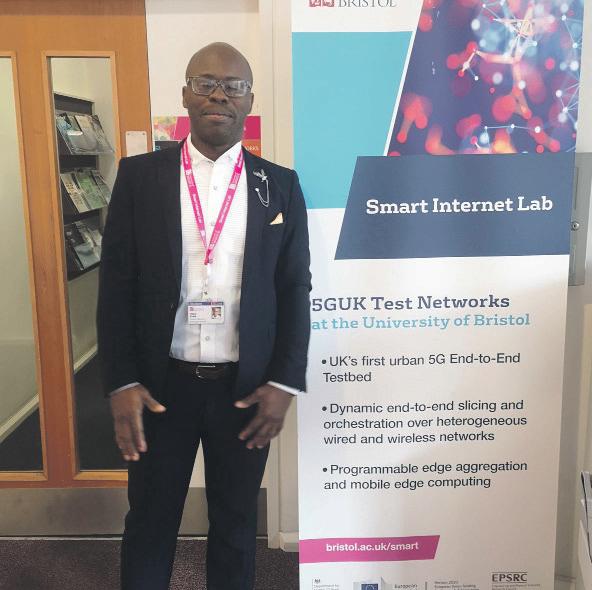
While finishing his Master’s de gree he travelled the country to catch a glimpse of the UK. He want ed to visit Bristol as he had heard a lot about the lively cosmopolitan nature and the burgeoning art and entertainment scene. After finishing his Master’s degree in 2014, he took up a teaching post at a polytechnic institute in Port Harcourt, but Bristol was never far from his thoughts.
To receive the necessary expertise in telecommunication and to make a
meaningful contribution to the field it felt incumbent on him to do fur ther studies. And Bristol was the nat ural choice!
His research seeks to formulate techno-economic models in support of booting ROI (Return of Investment) for enterprises in deploying private 5G Networks, identify approaches to optimise network resources in private 5G Networks through network clas sification and propose moni toring schemes for multi-do main private 5G Networks.
he joined Academicals Cricket Club where he found a group of academ ics who shared a passion for crick et. Not stopping with one university cricket team, he joined another one, Staff Cricket Club.
Frank-Ito firmly believes in the power of education to dispel misin formation and ignorance. When the world came to a halt due to Cov id-19, he made himself available to be interviewed, mainly by radio stations of his native Nigeria.
'I was fascinated as to how human voice could travel through a wire'
When I asked him the significance of his studies to everyday life, he elaborated, ‘the arrival of 5G Net works brings huge possibilities in wireless network deployment. With superior capability to support eMBB (Enhanced Mobile Broadband), mMTC (Massive Machine-Type Com munications) and URLLC (Ultra-Reli able Low-Latency Communications), diverse use cases are emerging, re sulting in innovative approaches to enterprise solutions.’
As a self-professed cricket fanatic,
Instead of rolling his eyes when he heard the misinformation that 5G technology is ‘responsible for the transmission of Covid-19’, he gen tly but assertively corrected this on radio.
When I asked about his long-term ambition, he said that he would like to see an era where coding becomes a mainstream activity.
Frank-Ito ended our discussion by telling me of his intention to take part in the activities of the Common wealth Society of Bristol, hoping he could make a positive contribution.
Bristol researchers have combined satellite technology with AI to monitor sea ice.
Lottie Adams Third Year, NeuroscienceUniversity of Bristol re searchers, in conjunction with UiT (The Arctic Uni versity of Norway), have developed a method of monitoring sea ice that allows for unprecedented year round monitoring of ice thickness and spread.

‘The Arctic ice is melting faster than ever. We need knowledge about the thickness of the sea ice, both to reduce safety risks for businesses and shipping in the Arctic, but also to make forecasts for the future cli
mate,’ said Dr Jack Landy, the lead author, based at UiT and formerly Bristol.
The article, published in Nature last month, is the first time scientists have been able to report data about the spread of sea ice across the entire Arctic year-round. This has profound implications for both improvements of safety for ships travelling with in the region and measurements of ice retreat in the context of climate change.
Before this use of AI, satellites used to measure sea ice could not function in the summer season. Dr Landy cites the cause of this as ‘In the summer months the satellites are dazzled by ponds of snow and ice meltwater that pool on the sea ice surface.’
When developing this technology, researchers compared previous satel
lite images with ice spread data from radar echo response. The AI used this comparison to identify unique char acteristics of meltwater and seawa ter, meaning real time satellite imag es can be analysed in the same way in order to forecast ice spread up to 310 days in advance. They have de veloped another similar programme which measures the thickness and height of the ice, meaning ships travelling through the area can assess whether they can break through.
‘Using the new satellite data, we are finally able to make sea ice forecasts informed by the ice thickness, not only for the winter,
but also for the summer. This will reduce safety risks for ships and fishing boats’ announced Dr Landy.
‘We can also predict whether there will be ice or not at a given location in September, by measuring the ice thickness in May.’
As ice recede grows in the summer months, shipping in the area will increase and this technology will become increasingly essential, especially as the region becomes busier and ships need to ac curately plot their course to avoid the risk of collisions.
Perhaps most interest ingly though, is that this new ly comprehensive data can be used to
massively improve our knowledge of how and where the ice of the arctic is receding.
Dr Geoffrey Dawson, co-author and Senior Research Associate at the University of Bristol, explained ‘We can use the new ice thickness data in advanced climate models to improve short-term weather forecasts and our predictions of what climate we will have in years to come.’
The more we know about the ex tent to which global warming is affecting the planet, the better the chance we have of combatting cli mate change, its causes, and the ef fects it will have. Dawson stressed how this work was only possible be cause of the CryoSat-2 satellite data.
Whilst fascinating, can this satel lite truly be used to its potential in fighting climate change, or will its commercial uses in the shipping in dustry will take precedence?
obstetrician James Blundell in 1818.
Lila Horne Second Year, BiologyMost people are aware of the ABO and Rh (plus or minus) blood groups which are one of the main compo nents to determine your compatibil ity to give and receive blood from others. However, other lesser-known blood groups exist, and they play a big role in how the immune system reacts to blood transfusions.
Blood transfusions have played an important role in medicine for centuries, with the first attempted blood transfusions recorded in the 1616 century by physician William Harvey after his discovery of blood circulation in the human body. 200 years later, the first successful human blood transfusion was performed by
Despite some early successes, many early blood transfusions resulted in fatalities until the discovery of the ABO blood groups in 1901. From this research, scientists were able to bet ter understand the dangers of mixing blood types and how to identify them, allowing transfusions to be safer and eventually become a life-saving prac tice in hospitals.
30 years ago, three mysterious an tigens were found to cause an allo immunisation (an immune reaction against an antigen that is not found in the patient’s body) reaction in peo ple with a rare blood type that be longed in neither the ABO and Rh groups. This study by the University of Bristol’s School of Biochemistry alongside the NHS Blood & Trans plant Department has managed to ge netically characterise the three mys terious previously known antigens, and two recently discovered during the study, as Er antigens, forming a new blood group.
By analysing the gene coding DNA sequences of people with alloantibod
ies which counter these Er antigens, the mutational changes to the PIEZO1 gene that codes the mechanosensitive ion channel protein Piezo1 were pin pointed.
Mechanosensitive ion channels are found in the membranes of cells and are a vital part of gene expression, cell migration and other functions. These changes to the PIEZO1 gene permitted for an altered Er protein to form on the surface of red blood cells by binding to the Piezo1 carri er molecule. The presence of the Er protein allowed for the alloantibodies to bind, creating an alloimmunisation reaction when it encountered blood that did not also carry the Er group.
The scientists then completed fur ther tests to strengthen the Piezo1 protein hypothesis by removing the
protein and then reintroducing it into the cell with gene editing. This allowed for Er antigens to be estab lished as a new blood group.
Er is the 44th blood group to be categorised. Each group discovered has reacted differently to the mixing of blood, with some being more seri ous than others.
Notedly, the transformation caused by the Piezo1 protein is of particu lar interest due to its involvement in health and disease of red blood cells.
During the study, the two newly dis covered Er antigens were associated with the loss of two separate preg nancies due to the antigens causing a rupture or destroying red blood cells in newborns and foetuses.
Piezo1 is also involved in other se
rious blood diseases such as stomat ocytosis where a slit-like pattern forms in place of the normal circular appearance in the centre of the blood cell and tissue swelling caused by the build-up of fluids in the lymphatic system. This study furthers scientific knowledge about the Piezo1 protein, improving the potential for further studies on red blood cells.

The formation of the Er blood group gives scientists the oppor tunity to expand blood tests to in clude individuals with rare blood types. This will increase the ability for doctors and other professionals to provide the best possible care for patients and the prevention of allo immunisation attacks during blood transfusions.
Damian Stone, a Bristol student who has co-founded a new app.
Tiberiu Toca Investigations EditorTT: Damian, could you introduce yourself?
DS: Hi, I’m Damian, a computer science and electronics student here at the University. We are trying to make an app for students called Too gether.
TT: So the app is called Toogether - with two o's. Why did you decide to pick this name?
DS: Toogether, because it's to join people, to connect people. We’re try ing to connect groups of students, to hang out, and make their university life more fun.
TT: Does what you've said now comprise everything the app does, or is there more to it?
DS: Obviously we have some plans for the future of how we can evolve, but for now - to connect students, to hang out, and have fun. There are a lot of international students here at
the University - a lot of people that aren't from Bristol, and sometimes it can be hard to meet people.
And you can create a profile in a group with your friends and then you can go and meet other groups of people. You will have a chat and a match section so you can see other people who want to hang out tonight. And in the future we are thinking of bringing in a map, so you will be able to see all of the things around you that you can do to have fun.
TT: Is your target audience just international students, is it new stu dents...?
DS: I think it can help everyone. International students, British people here, or maybe 3rd or 4th year stu dents who want to meet people from other faculties.
TT: What does your app do dif ferently to other social networking apps?
DS: I think there's a good market for an app for students - there are a lot of universities in the UK and
a lot of inter national stu dents.
For exam ple, you can see many apps are pretty similar. You can post a photo, create a profile, but the context creates a big difference between the interactions of users on LinkedIn and on Facebook. So we believe that our context for students is different from the other apps.
TT: Can you please introduce the team behind the project - is it just yourself?
DS: We are a team of two peo ple: me and my cousin, who studies business. He is in charge of all the business and marketing, and I am in charge of building the platform.
TT: How did you come up with the idea for the app?
DS: With the last year, with cov id, a lot of people have started using Tinder in groups to have fun and go to parties. And when I started first year obviously I wanted to have fun, to meet people and everything. So maybe we can do this same thing but for the students.
TT: Are you looking to eventually grow this idea?
DS: Yeah. Now we are in a pre-

launch state so we are focusing on developing this first version. But after launch we want to start seeing the metrics and try to find the market feet. Then we plan to grow to other universities in the UK, and eventual ly it will be an app for young people in general.
TT: So in the short term, do you think you have a road map with your app?
DS: We’re focused a lot on getting the first users. After that, we'll start focusing on the metrics - for exam ple daily and monthly active users, user retention. That will tell us if we're finding the market feet.
TT: You mentioned a lot of met rics and different ways of measuring them. Does the app have a dedicated algorithm in place for this?
DS: It depends how you define algorithms - if you're talking about AI, no, but we have our match algo rithm. We have an algorithm to see which users are nearby. So we match based on their location, which gen der they want to see, everything is configurable in the app.
TT: So how did you decide which algorithms to implement?
DS: I think it's a matter of time - being behind your computer ten
hours a day. You just try different things and you get it.
I did an internship last summer where I worked with AWS microser vices and that helped me understand a lot about software and architec ture. I've always been passionate about software and business - I real ly love to create things.
TT: Do you think so much exper tise was necessary to develop this app?
DS: Yeah, but I started coding when I was pretty young. There are a lot of things I didn't know. You just learn on the way.Obviously to make an app, the full thing with a backend and a front-end, you have to know how those two parts work.
TT: Where are you going to launch the app?
DS: It will be on Android and the App Store - we think mobile is the best platform and will be more use ful. What we want to do in the future is to split the code, to have an entire code focus ing on iOS and code for Android.
After 30 years, the scientists at the University of Bristol have established the 44th known blood group: Er.
The 2022/23 BUCS season is well underway with Coombe Dingle hosting several foot ball fixtures already, the headline event being the local derby between University of Bristol 1s and UWE 1s.
Played under the floodlights and in front of a strong home crowd that was well matched by a raucous away support, the derby did not disappoint with several decisive moments mak ing up an entertaining 2-2 draw.
A physical start set the tone for the rest of the game, with several strong challenges particularly from UWE as Bristol controlled possession in the early minutes.
The home side’s early dominance saw them win several free kicks in dangerous positions with no clear chances to show for it, although Dan Sutton’s deliveries from out wide were beginning to trouble the UWE defence.
UWE began to get more involved from the 20-minute mark retaining possession higher up the pitch, but the pressure of Bristol’s set pieces started to show as Sutton’s cross was flicked on by Javi Blazquez to Ben Bellman who shot wide.
UWE suffered a first-half blow when their goalkeeper, who had needed treatment earlier in the game, could not carry on and had to be replaced by an outfield player.
Tensions re mained high with several 5050 challenges, but UWE’s defenders overstepped the mark when Bristol’s Solly Tom lin-Kent was brought down inside the box, with the referee awarding a penalty despite strong appeals from UWE that threatened to boil over into something more.
minutes however as a well-worked set piece saw UWE head home an equaliser from close range, before coming close to taking the lead from a corner soon after as well as having a half-hearted penalty shout waved away.
Played in front of a strong home crowd that was well matched by a raucous away support
The heavens opened as the second half of a now very even contest got un derway. With 50 minutes gone, Sutton gave Bristol the lead once more as a speculative free kick from near the left touchline caught out UWE’s stand-in keeper at his near side, much to the delight of the home fans.
the linesman.
The decision prompted several minutes of debating with the restart delayed while UWE players pleaded their case, with the coaching staff claiming to have video footage that their ‘goalscor er’ was in fact onside.
Sutton got another free kick from an unconventional position on tar get although this time the keeper was untroubled, as UWE kept themselves in the game without creat ing many clear sights at goal as the game en tered its final 15 minutes.
Dennehy to make it 2-2 with five minutes to go.
Bristol thought they had taken a late lead when Pat Gibbs turned home a Sutton cross from ten yards, but the captain was judged to be offside by the linesman who also happened to be kitted out in a UWE tracksuit.
The protests meant little to a calm headed Sutton as he slotted home on the far left, despite the new keeper guessing correctly and gave Bristol a 1-0 lead.
The lead lasted only a couple of
The most controversial moment of a heated encounter occurred soon after when UWE seemingly equalised again via a header from a free kick, only for the goal to be disallowed a minute later for offside after a con versation between the referee and
However, with ambiguity over whether the goal was disallowed for offside or a foul and the ref unin terested in UWE’s attempts to im plement VAR as he fought to regain control of the game, the match was restarted with the score still 2-1 to Bristol.
The game remained close and very physical, with Blazquez going close with a header and then again with a low effort from the right side of the box that was pushed wide for a corner.
A lazy trip from a UWE defender gave Bristol a golden chance to seal the derby with a central free kick right on the edge of the box but were unable to convert.
UWE then found themselves in an identical position two minutes lat er after a robust challenge from a Bristol defender 20 yards from goal caused more arguing between the ri val teams.
The visitors punished the indisci pline with a UWE player putting the ball just below the top left corner and well out of reach of keeper Jack
The match remained high tempo in the dying minutes with the crowd’s support unwavering despite the rain, but no one could find a winner with the game questionably ending before UWE were given the chance to take a promising free kick.
Despite its contentious moments, both sides did justice to the occasion with fluid midfield play and strong defensive performances through out. Both sets of players will feel they could have emerged from the derby victorious, although Bristol had longer spells of domination and created more chances as the match neared its end.
Both sides did justice to the occasion with fluid midfield play and strong defense throughoutEpigram / Joe Green
new team, as companies were wary of sponsoring such an unknown entity. Relying instead on mem bership fees and a faculty grant of £450, they did manage to get things moving, albeit with some careful fi nancial management.
Despite overcoming the financial hurdle, there was the small logisti cal matter of storing the car. Unlike the F1 circuit, the team didn’t have the luxury of storing their crea tion with ease, nor did they have the money to spare for storage. Students, though, are an adapt able bunch, and the car went on its very own tour de digs – that is to say, student houses and basements across the city.
The car in question took eight months to produce, from design to completion and is made from a variety of materials sourced from
various different places. The front wheels were provided by a member of staff, the back wheels are from Amazon and the rest comes from hardware stores. The only standard pieces of kit they had to use were the motor and the batteries, which are provided by Greenpower itself.
By using batteries, the team are taking part in an initiative that has green energy at its heart. Electric cars, including this one, emit fewer greenhouse gases. We can all pretty much agree this is a positive step. Against the financial and logis tical odds, they took part in their first race last month and finished 13th in a 25-team race, earning themselves the Spirit of Greenpow er award for their efforts. All things considered, it’s probably fair to say they deserve it. Not to mention that participation in the race itself was
far from certain, as the car was only completed the day before the com petition!
Looking ahead to the future of the society, Richard and Owen Peck ham, the other Co-President said, ‘we would really love for the society to continue long after we are gone.'
‘We hope it can remain a fun and engaging society where engineers can get together and have a blast putting together cars.’
Richard, Owen and the rest of the committee have done some solid groundwork getting the society up and running despite the difficulties they faced. Hopefully, future com mittee members will have a slight ly less challenging experience with finances and logistics thanks to the founders’ efforts. That said, it shouldn’t be too easy, they are liter ally creating a car after all!
Eddie McAteer Investigations EditorNetflix’s Drive to Survive has been influential in pushing Formula 1’s rise in popularity, in part thanks to its insightful behind-the-scenes cov erage. Yet, how much can we as students actually relate to the fame and fortune of the likes of Ferra ri, Mercedes and Red Bull? Well, as it turns out, the students at Bristol Racing can identify with it slightly better than most of us.
For many of us non-engineers,
creating a functioning race car is about as likely as finding ourselves in Monaco with Charles Leclerc and Lewis Hamilton. The Bristol Racing team, however, have done just that, designing and building their own car for the Greenpower Formula24+ competition.
The society’s involvement in Greenpower began in 2021, after it became clear that joining Formula Student would come with signifi cant logistical and financial issues.

Richard Hughes, Co-President of the society, said, ‘We decided Green power was the best fit for what we wanted to get out of it and what would be achievable given the re sources at hand.’
External funding represented a significant obstacle for the brand-
As UoB took on UWE in an all-Bristol clash between the first teams, four Uni versity teams returned to BUCS ac tion after a busy preseason, with the opening league fixtures of the term bringing varied success.
The 1s led by example with a 3-0 away victory against Cardiff 1s, with first-years Reuben Gabb and Javi Blazquez both marking their debuts with a goal.
Player Chad Mitchell-Turner de scribed their performances as 'incred ibly promising' while also praising the team as a whole, saying 'The 1s played with a level of tenacity that Cardiff simply couldn’t handle. A reso lute performance from our defensive core was reflected in the score line'.
Mitchell-Turner also singled out goal scorer Pat Gibbs for 'putting in a typical awe-in spiring perfor mance which earned him self Man of the Match'.
The 2s also began their 22/23 campaign with a victory as they went behind early against the Hartpury 2s but rallied to
secure a 2-1 home win, with Josh Gor don scoring an 85th minute winner.
Mario Alvarez Junquera told Epi gram: 'The mighty 2s outplayed Hart pury with a very solid performance from all the team.
What was looking like a difficult season in Division 1 is now looking like a promising year.'
The 3s did not get off to as good a start, falling 4-0 away to the Car diff 2s. The game was level at half time before a 55th minute Cardiff goal set the tone for the second half.
Tom Brunnock said 'we’ve been try ing to implement a 3-5-2 formation,
however this is very new to some of the lads and I feel as though we wer en’t able to utilise its perks.'
'We started the second half strong but got caught out go ing 1-0 down, heads dropped from there and the game ended with an undeserved scoreline.'
The 4s played out a close game at home to neighbours UWE 3s under the floodlights, ultimately losing 3-2 following a 78th minute win ner from UWE.
Goalscorer Will Briggs said 'Bristol started brightly and dominated the first half hour however we failed to break the deadlock.'
'UWE opened the scoring on the counter attack but we responded quickly to make it 1-1 at halftime.'
Bristol did lead for much of the second half but according to Briggs 'the UWE substitutes changed the game'. Promotion re mains the target for the 4s this season despite the opening loss.
All teams will be looking to build on their performances as the season marches into the winter months.
Bristol Racing have been putting their engineering skills to the ultimate test
3-5-2 is very new to some of the lads and I feel we weren't able to utilise its perks
The 1s played with a lev el of tenacity that Cardiff simply couldn't handle
Most of us find it hard enough to focus on our degrees and keep up with work. Imagine having to do it while also competing in the top flight of English club rugby week-in weekout. I sat down with Phoebe Murray and Ella Lovibond who, while going to lectures and revising for exams, have also been playing key roles in the Bristol Bears team that is reach ing new heights. We talked about the progress the Bears have made in the last few years, finding a balance between university and rugby, and working towards putting on the Eng land shirt one day.
'Last year, we did really well. We achieved top four and got to the semi-final, which was our goal. But now the goal is stepped up a bit, and our goal is to win the league.' Centre Phoebe Murray is one of the long est-serving members of the Bristol Bears squad despite only being 23.
She is a leader in the team and one of the top players and try scorers of the last few years. She has seen the team completely transform in her five years from one that struggled to get training time on the pitch and in the gym, to one that is now being in tegrated into a professional environ ment and going toe-to-toe with the best in the country.
Following the women’s squad moving into the High-Performance Training Centre this summer and the renewal of Head Coach Dave Ward’s contract, Murray believes the pres sure is now on.
'I think last year, teams probably didn't expect us to do as well as we did. Whereas this year, we’ve probably got a bit of a target on our backs. I think this year
it's going to be even harder. But it's just a challenge that we’re excited to start.'
Training now consists of at least three sessions per week during the evenings, with players able to do daytime training as well if they can make it. For Murray, the fuller sched ule means trying to find a fine bal ance between rugby and the final year of her medicine degree at UoB. 'Typically, I'll probably get to placement for about half eight.
Then, I'll be on placement through to lunchtime at one o’clock. I start training at about half two where we do a speed session, a gym session, and a skills session.'
'Come the evening time, we've got a unit session and team training. So, we don't finish here until about half nine at night. I don't get home until about 10 o'clock at the moment. And then back into it the next day.'
Murray said this kind of schedule has taken time to adapt to. 'Person ally, I'm very good at prioritising things. I'm very happy to say no to things that are going to detriment myself.' For her, separation has been key. 'There are probably two sides to me that I can switch on and off. So, I'm on placement, I'm in hospital, and I’m literally solely focusing on that and don't really think about an ything else.'
'As soon as I step across into rug by mode and come to the training centre, then I'm just thinking about rugby. There's not much crossover of me worrying about one whilst I'm at the other.'
Unfortunately, the reality is that, at club level, rugby is still years off from becoming professional. But the England national team have been fully professional since 2019, with more and more opportunities to be paid at the highest level of 15s and 7s rugby becoming available every year. Ella Lovibond, fullback for the Bears and third-year engineering de sign student, had a taste of this over the summer and is hungry for more.
She was called up to train with the England squad for their exhibition matches at this year’s London 7s, de spite not having much previous 7s experience.
'It wasn’t a full contract, but that showed me a bit more of a profes sional environment. It was such a big event. The chance to run out at Twickenham in an England shirt –it’s pretty rare. And I got a try as well, so life goals complete.'
The summer holidays gave Lovibond an opportunity to focus solely on her rugby, without having to think about any pesky uni work.
'In summer, I was on the full-time program. I was doing daytime ses sions as well as the evening stuff. But when uni started, I said to Dave [Ward] that I can't do both – my lec tures finish at four or five and train ing starts at two. I need to prioritise uni, and he was perfectly happy with that', explained Lovibond.
Balancing two work lives is hard
but balancing two life ambitions seems to add another layer. 'I real ly struggled with it first and second year. I think last year I did a bit too much rugby; not enough studying. At the moment, I want to see how far I can get with rugby. If I finish uni and I don't get a professional contract, I will still do engineering. But it's not my main goal right now. I want to be starting every weekend and I do want to become professional.'
Murray also said that summer may have given her a better glimpse into her ambitions going forward.
'The dream of mine was that I'd be a professional athlete. I experienced it over the summer holidays when I
didn't have uni, and I'm just training. I absolutely loved it this summer. Ob viously, I can't graduate and then not work because I won't be able to afford to live. It's knowing that medicine is there forever, so I don't need to dive fully into that yet. The ultimate goal of playing in an England shirt is always top for me – I’ll never be satisfied until that. But until that happens, I've got to keep my level head on.'
The Rugby World Cup is taking place in New Zealand right now, with England looking like clear favourites
amid a 27-match win streak. Interna tional games are now sell-outs and next year’s Six Nations looks to be the biggest yet after a World Cup boost. The Bears kick off their Allianz 15s league cam paign on 19 November at Ashton Gate and will take part in a thrilling double-header with the men’s team versus Harlequins at Twickenham Stadium on 27 December.
It promises to be a very exciting season for the Bristol Bears women, so get involved in any way you can if you want to see the game grow.
Now the goal has stepped up a bit and our aim is to win the league
To run out at Twickenham in an England shirt - it's pretty rareSmifsports Photography