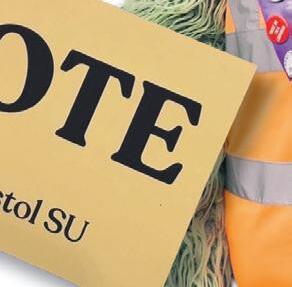
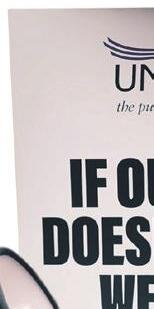
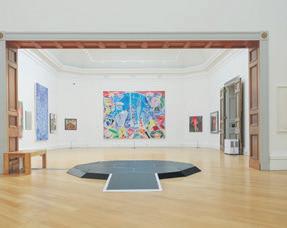
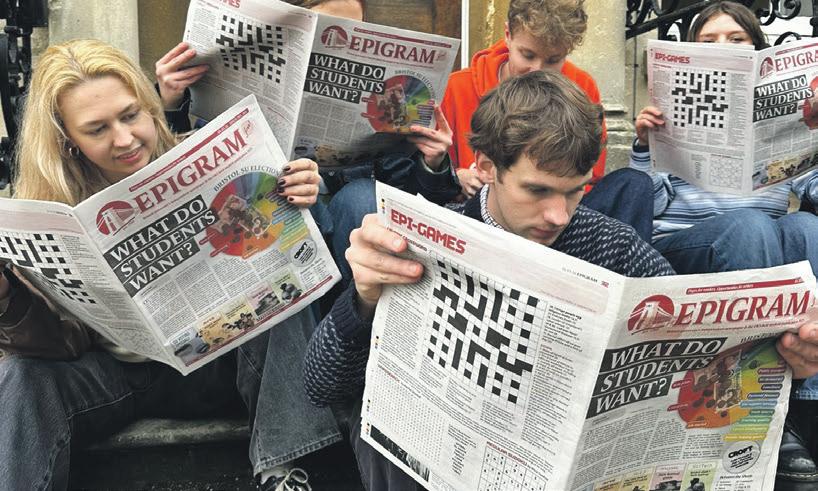
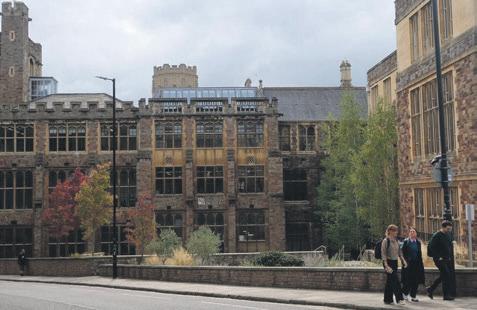
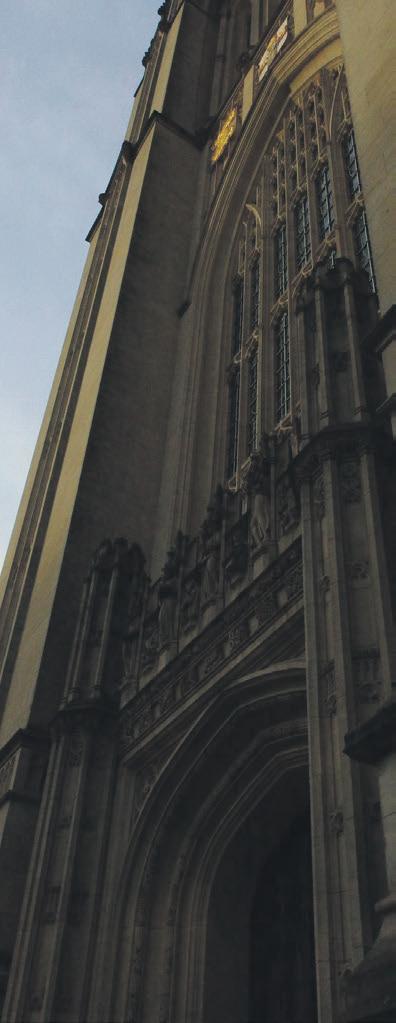
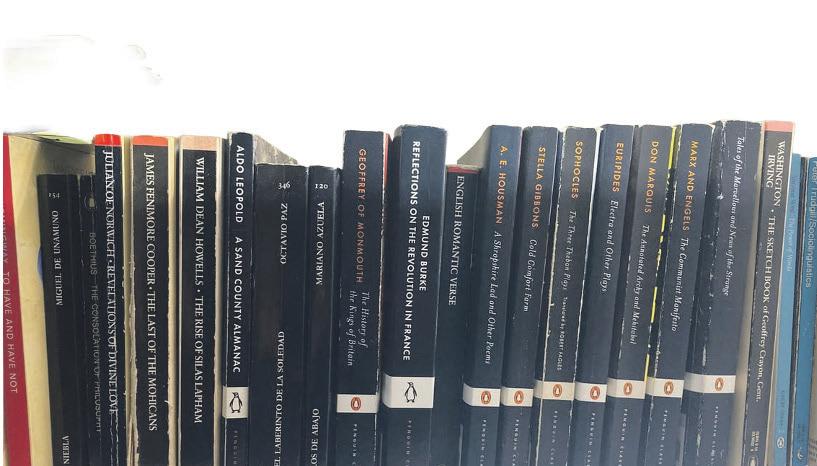
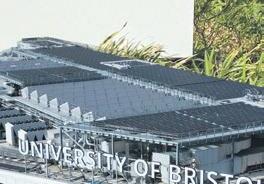
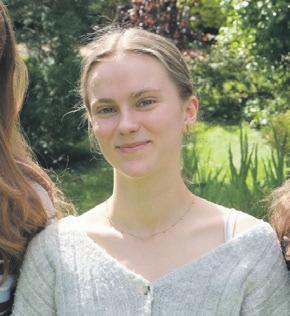
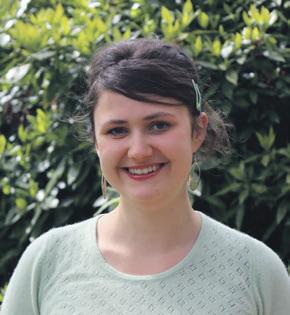
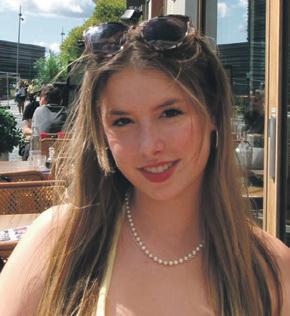
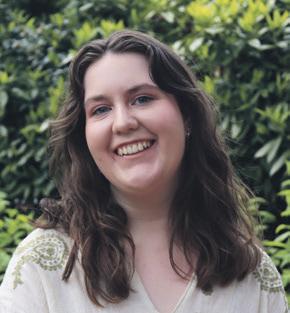
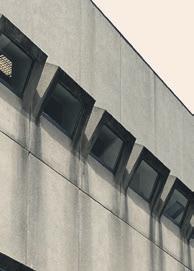
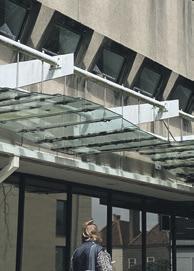
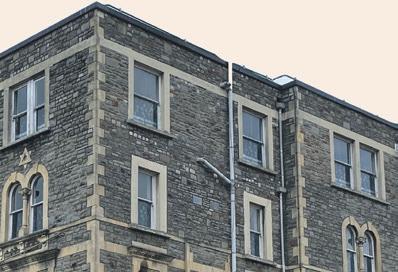
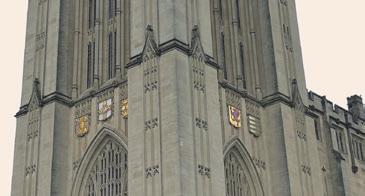
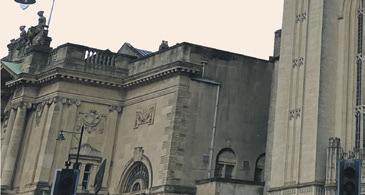
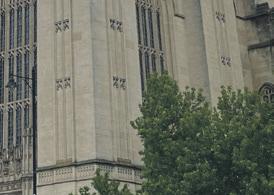
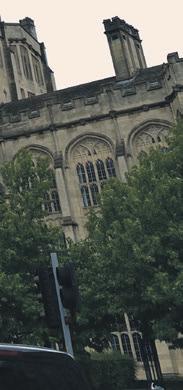
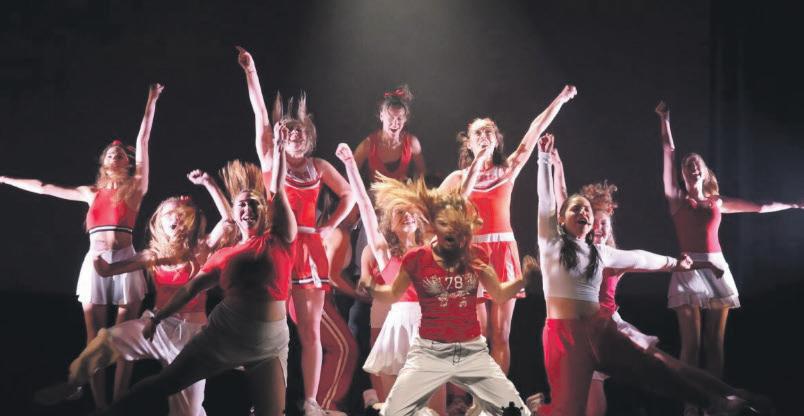
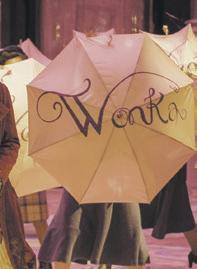
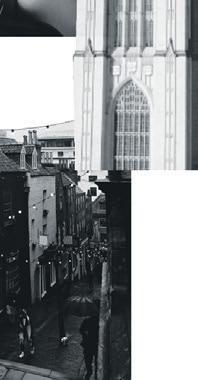
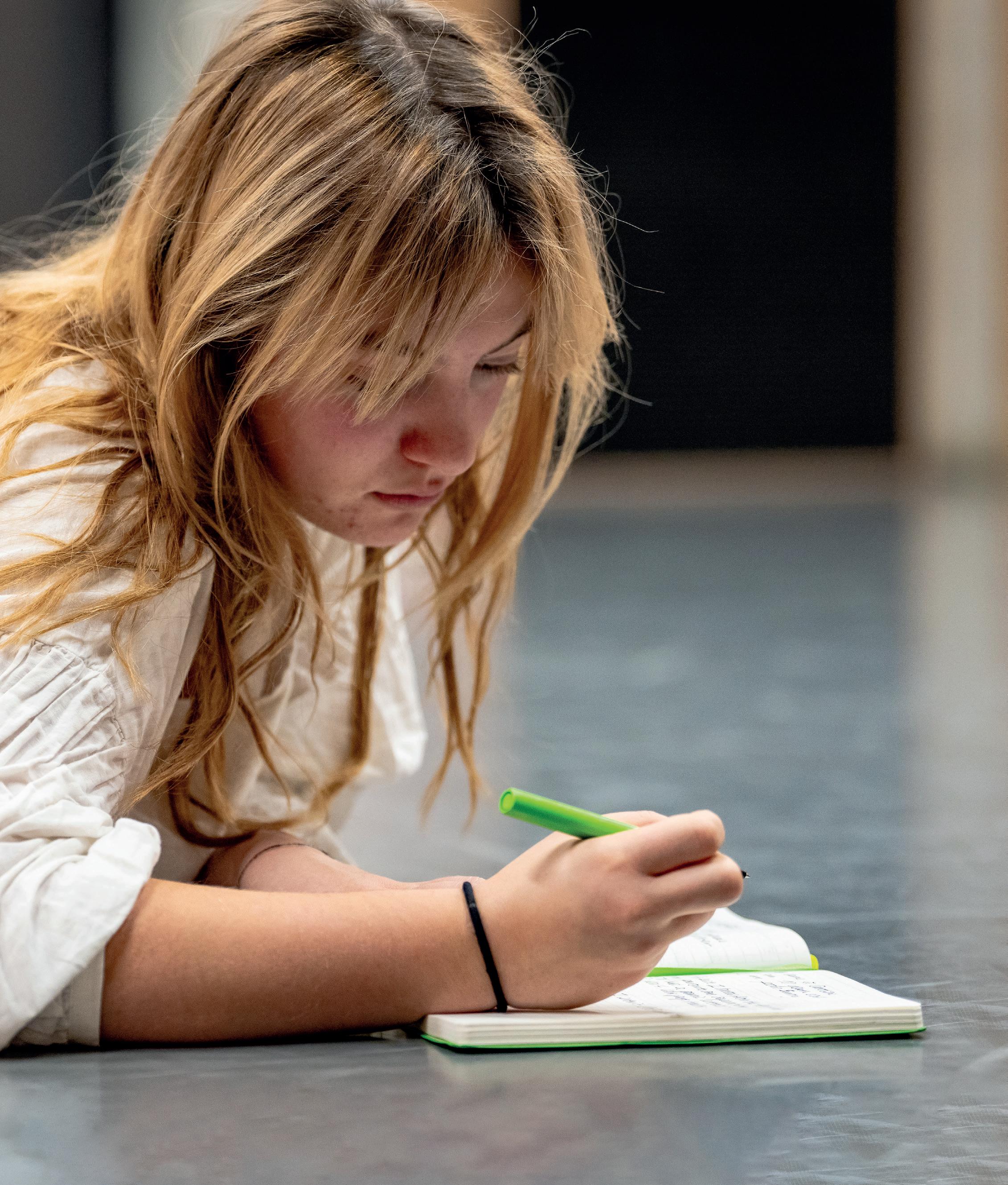
From changes to student transport and major campus redevelopments to strike action and royal visits, this year brought no shortage of talking points at the University of Bristol.
Free bus passes axed for students living outside Stoke Bishop
You cannot win a debate
rules are written in the edit
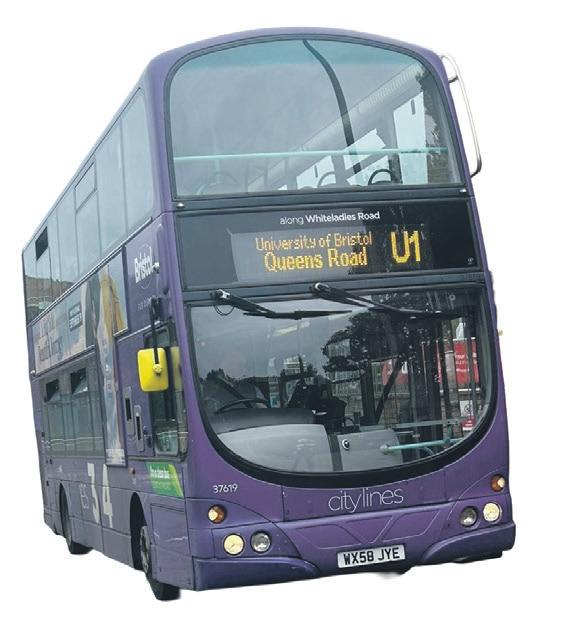
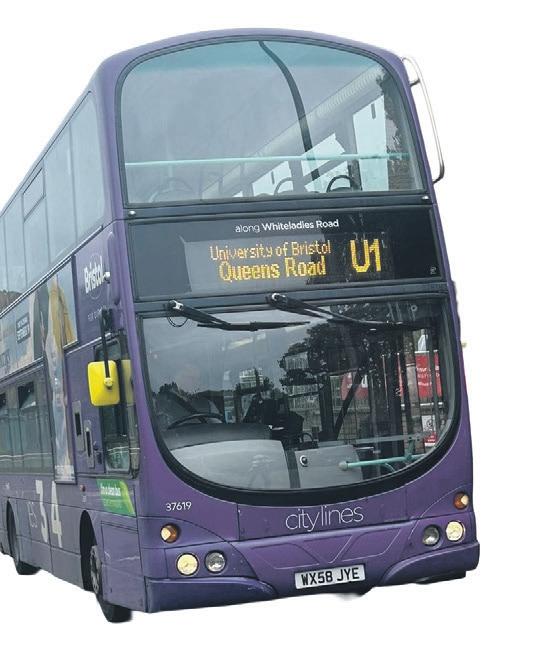
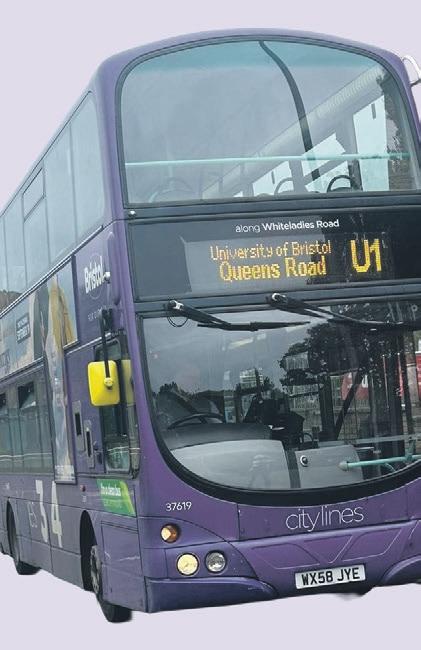
Before students had even unpacked, the university quietly announced a change that hit many students hard. The free bus pass, which was previously available to all undergraduates in university accommodation, was restricted to students living in North Village. Anyone outside of that area or who
Landmark moments of the academic
hadn’t applied for accommodation before the 1st of May would now have to pay £400 for the equivalent pass. The routes themselves were also trimmed. Last year’s pass covered the U1, 3, 4, and 72, whereas this year’s version covers just the U1, 5, and 77. A full Bristol Zone upgrade which previously cost £189 on top of the free pass, now costs £485 outright. The university said the changes reflected a shift away from a costly contracted arrangement with First Bus, and were intended to keep accommodation
Bristol
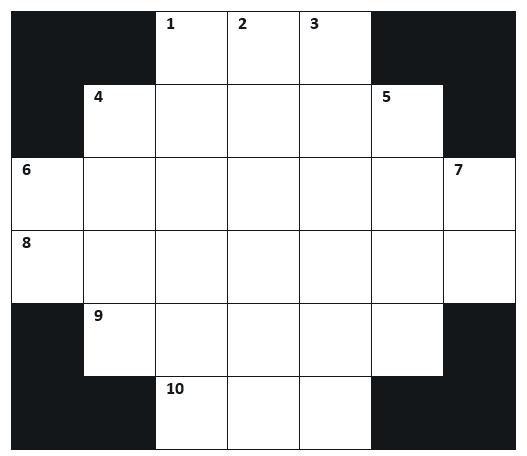
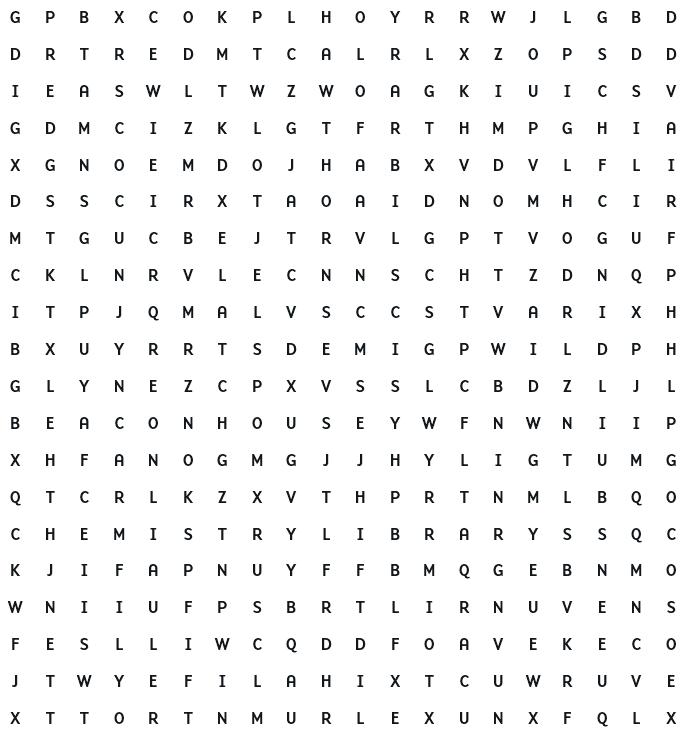
Can’t find your favourite crossword? Fear not Epigames have temporarily moved to page 12
Editorial
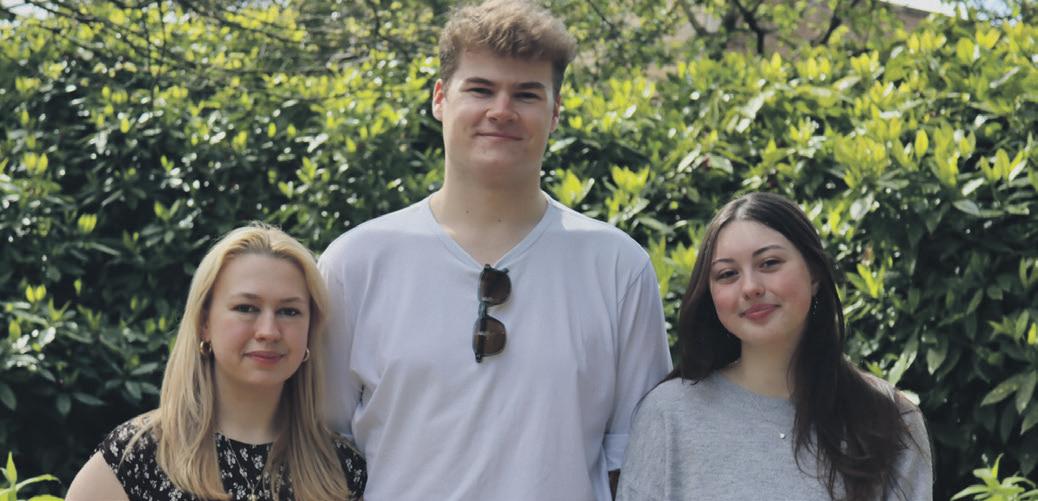
Even before enrolling myself at the University of Bristol, I knew Epigram was something I wanted to do. I’d always had a passion for writing and a sense somewhere I might want to be a journalist. But even with that knowledge of the paper and myself, nothing could have prepared me for just how much Epigram would change my life. Being Co Editor-in-Chief alongside Julia this year has been the biggest pleasure and privilege of my life so far and something I will forever be proud of.
In my first term of my first year, I picked up my first commission. Something about online activism. You see, I joined the university in September 2023. Less than a month later, the latest and most
severe development in the Israel-Palestine conflict took place. And since my first year flat resembled a social experiment that could have been the work of Milgram, that already di cult life transition was made even more interesting. So, I wrote. Anxious and confused, I explained why I thought online activism was bullshit. As any writer does, I look back at it and cringe, but at the time, I was proud. A feeling that compounded when the Opinion editor at the time told me it was going into the print edition.
If you haven’t written for us, you should. If for no other reason than that feeling of seeing your name in news print multiplied across hundreds of papers. It’s a di cult feeling to properly explain,
but it was something that confirmed to me that yes, actually, this is what I want to do with my time. (In one of our journalist’s career talks this year, we were told that any heroic reasoning for wanting to be a journalist was false – I knew this the whole time.)
In my second year, I applied for the Features and Opinion editorial teams. I got neither. But, clearly seeing my passion, last year’s Editor-in-Chief filled a blank space with my name in Sci-Tech’s editorial team. Not only was Sci-Tech the most supportive, fun section to get into, that half-rejection has taught me more than anything else. Just getting on with it is the most important thing I’d tell anyone, and something I value in this year’s editorial team more than anything. With a foot in the door, I began to make friends with others on the team who I wanted to spend my time with.
You see, when you are neither sporty nor musical, theatre-kid nor social butterfly, then social circles at university can feel impossibly distant. Being welcomed by Epigram and finally finding those people was the cold shower I needed to refresh myself at university. Since then, I’ve never been more positive.
As senior editorial team, we spent no time messing about. Still grieving my Opinion section snub, we promptly changed its name to Comment. A brand new section called Community was in-
James' favourite articles this year
Nine ways the budget will a ect university students
Cara Hene News Editor
We’re always asking our team, ‘why should students care?’ Naturally, students should care about the government’s budget, but sifting through its jargon is a job both tedious and confusing. Enter Cara Hene, News Editor, whose to the point story explained the parts of the budget that would directly affect students. From changing loan repayment thresholds to changes in taxes for co ee, the story captures student anxiety surrounding tuition fees to daily budgeting. It’s a story that has wrought genuine value and is exactly what Epigram stands for.
Dear Boys... from the ‘Out After Dark’ series by Mind the Gap
Emma Coleman Film & TV Deputy Editor
Mind the Gap was the brain child of Maddy Richards and Yezou Aymero. They created a space that highlighted the disparities between social contexts of students at the University of Bristol. A reality well known, but seemingly never spoken about. In Emma Coleman’s piece was an introduction into the di erence between male and female experiences at university, and in life generally. Its title addressing the men, and its contents urging their responsibility, speaks to a shifting cultural norm that is starting at universities.
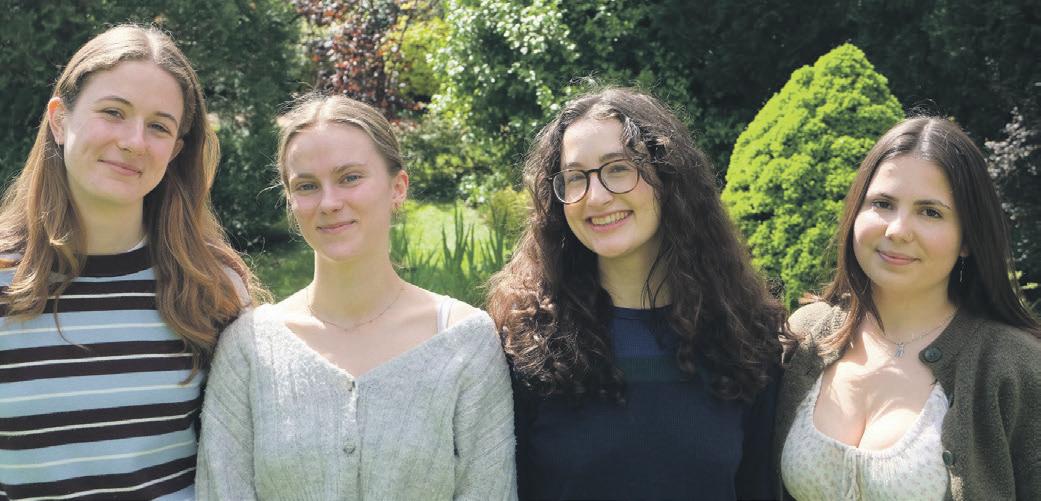
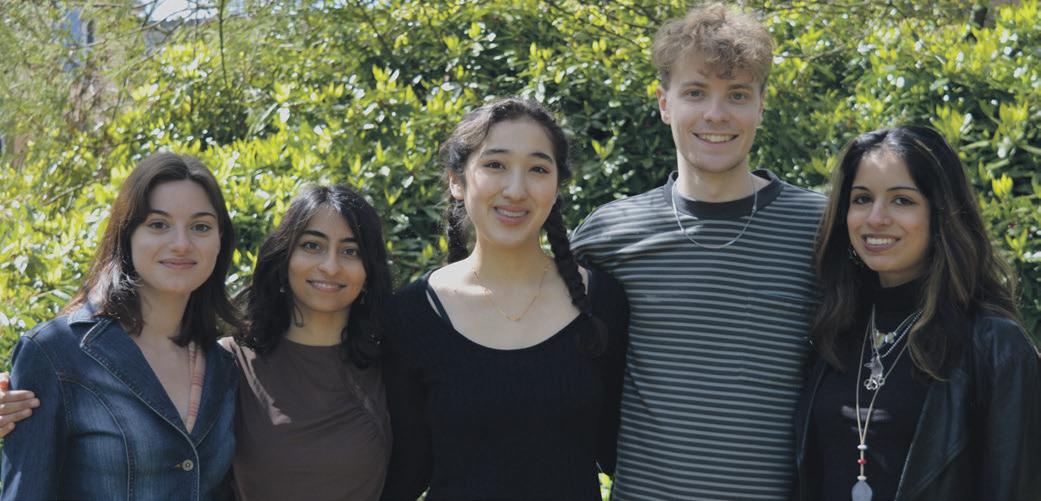
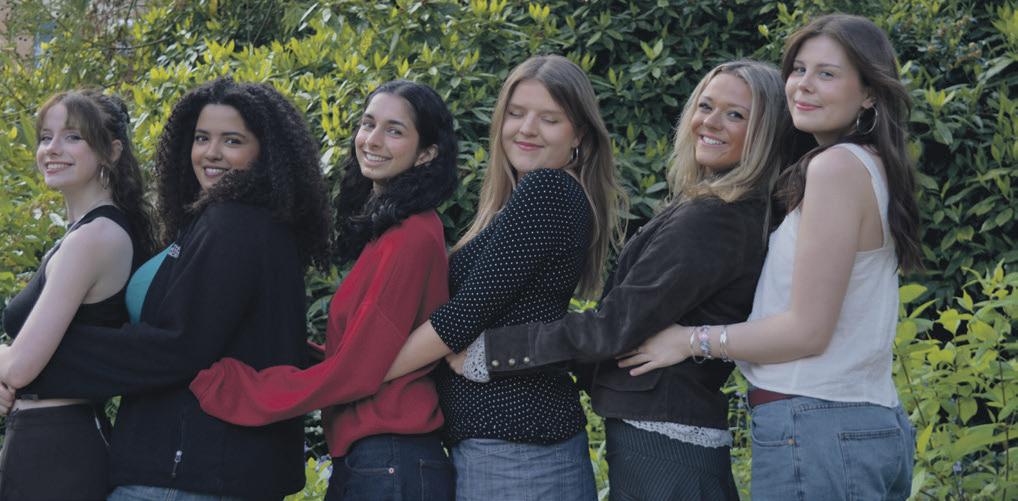
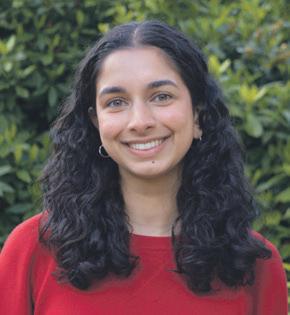
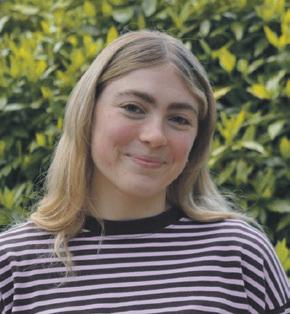
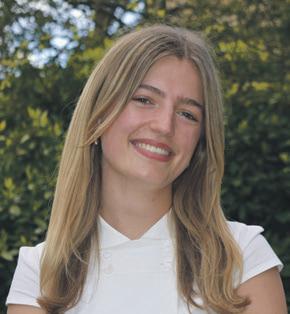
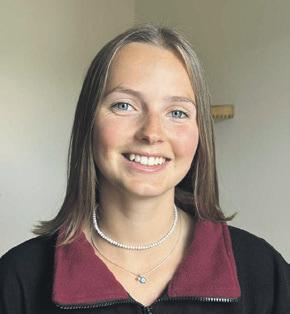
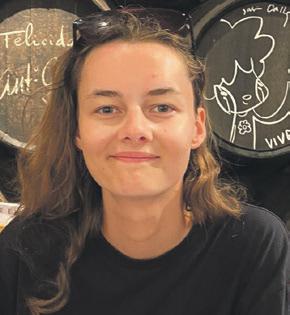
James Lewis Co Editor-in-Chief
troduced, where you can find Epitome, our student-centric what’s on guide. And we’ve seen new columns develop in the Features and Arts sections. Our September cover issue came from one of these: Mind the Gap. Its headline, ‘Bristol felt like a prep school reunion . . . for everyone but me’, was a provocative statement of intent at the Freshers’ fair. We weren’t just going to follow conversations; we were going to start them.
We’ve covered any and every story. From voluntary redundancies in university departments to dodgy halls of residences, new student production companies and films, student sports, music, and campaigns – we’ve tried our best to do it all.
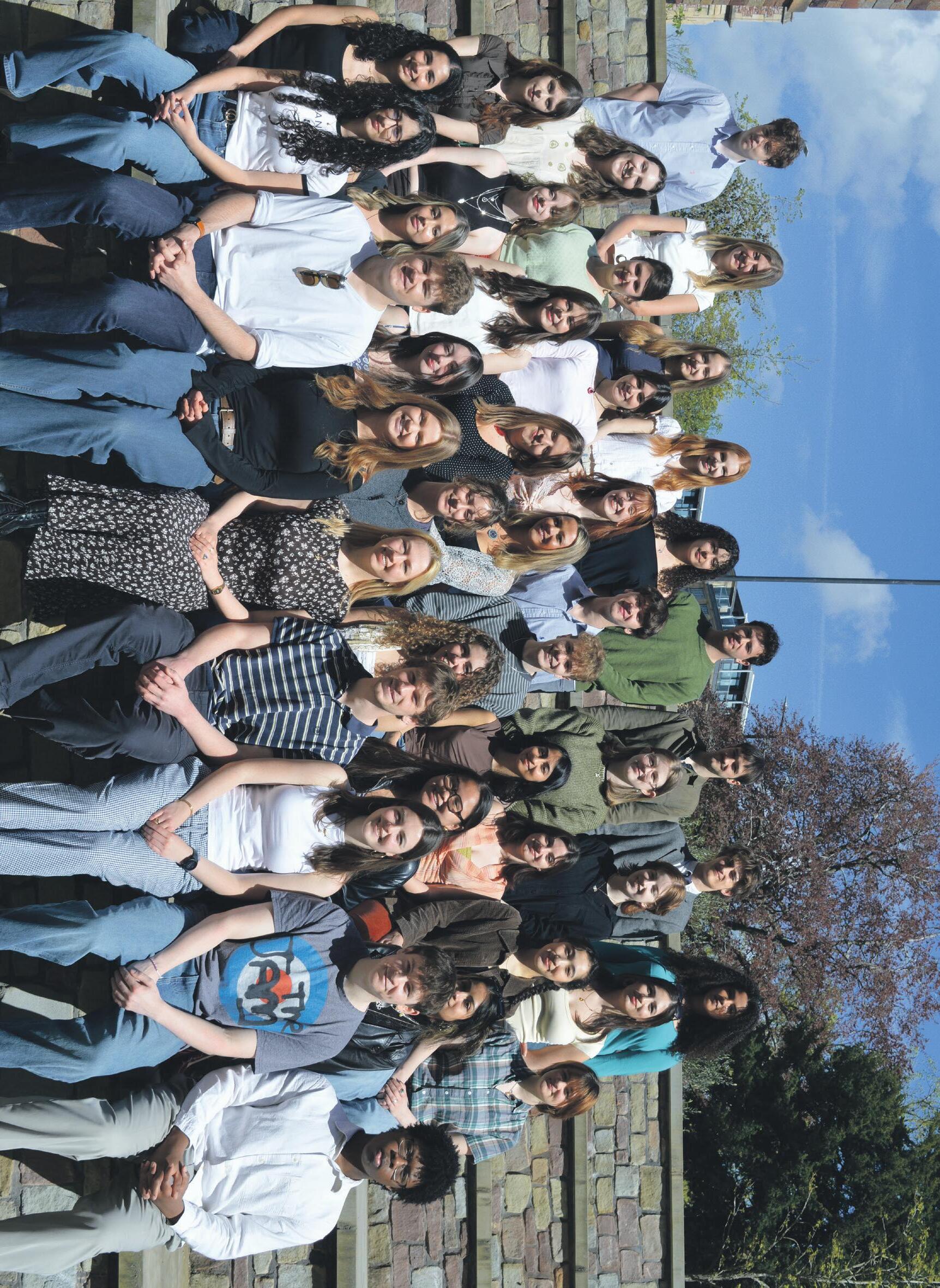
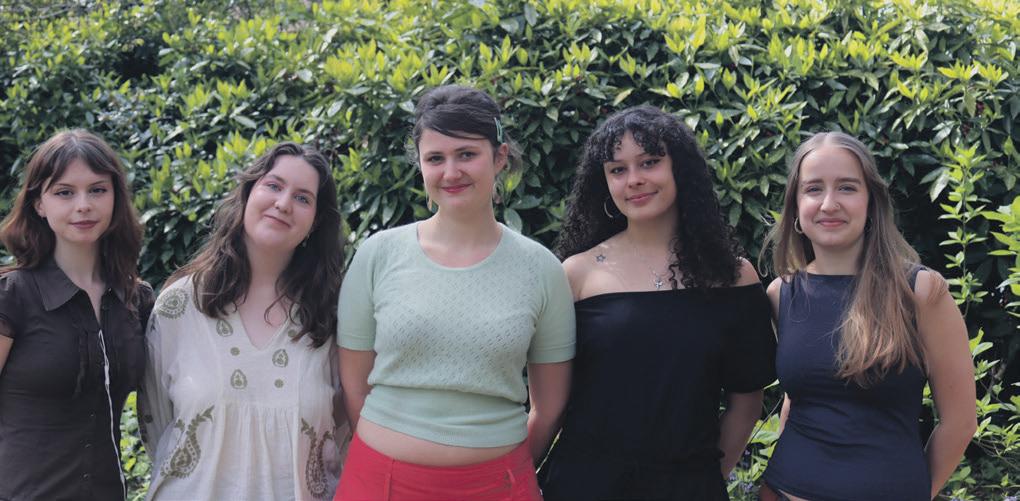
It’s been a lot. A lot of work. A lot of time and energy. But, at the end of it all, it’s been a lot of fun. So, as you peruse these final 32 pages of the 25/26 academic year, make sure to read the names in each page’s corner. Each and every one of those names is a student volunteer who has done great things for Epigram, and will no doubt do great things in the future. This paper – our ‘yearbook’ – is a celebration of everyone who has given their time and passion to make Epigram what it is today.
Daisy, Miles, Sofia, and Julia have given everything to this paper. Their talent is extraordinary and their commitment is inspiring. Thank you. While it’s gutting to be leaving, I won’t be leaving
In Conversation with Kasha Smal in Goldney Garden - Epigreen
Hannah Corcoran Third year, History
This story, and Epigreen itself, is an example of how Epigram gives our team the opportunity to find their own opportunities that align with their own interests. Journalism doesn’t have to be all doom and gloom – it is also a place to uncover the extraordinary in those places we think we know well. It’s great to see Epigram being used to show o all those people who enhance our university experience in ways that are not always obvious. I can’t wait to see where it goes in the future.
them. We’ve forged friendships through hard work and I’m sure they’ll remain strong for a lifetime. And I think that’s something extraordinary in and of itself.
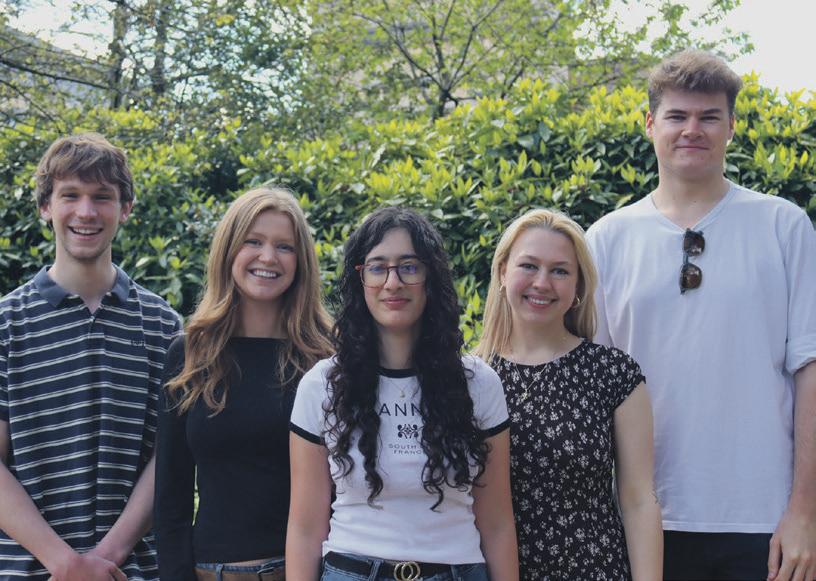
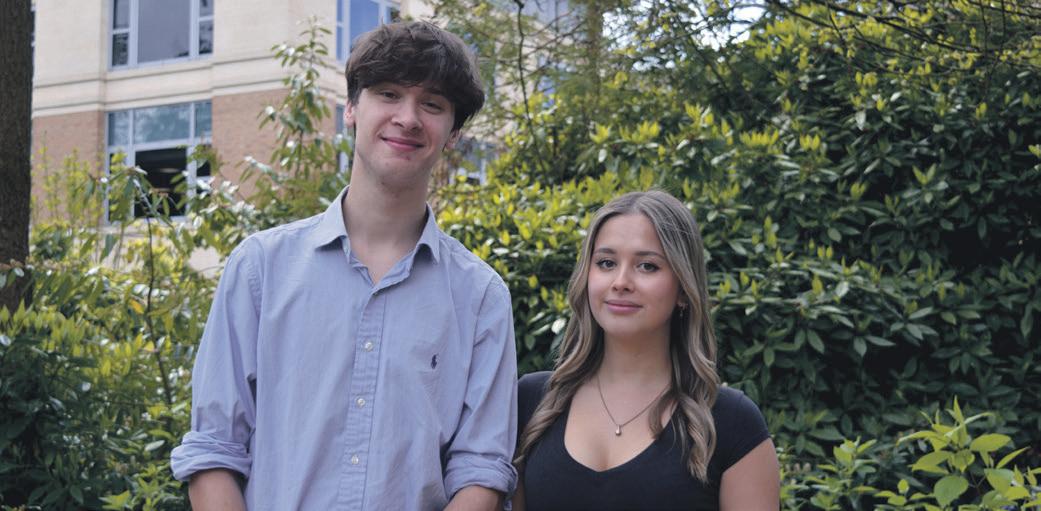
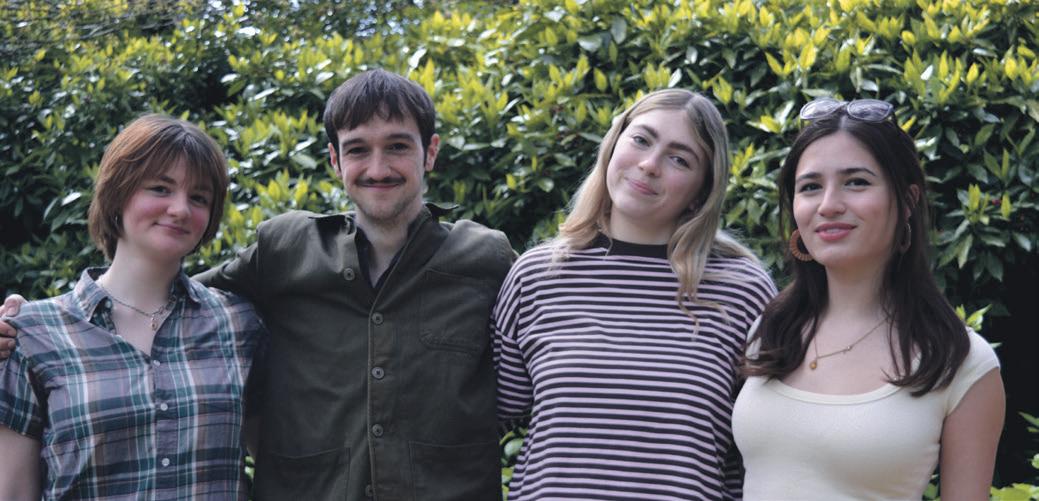
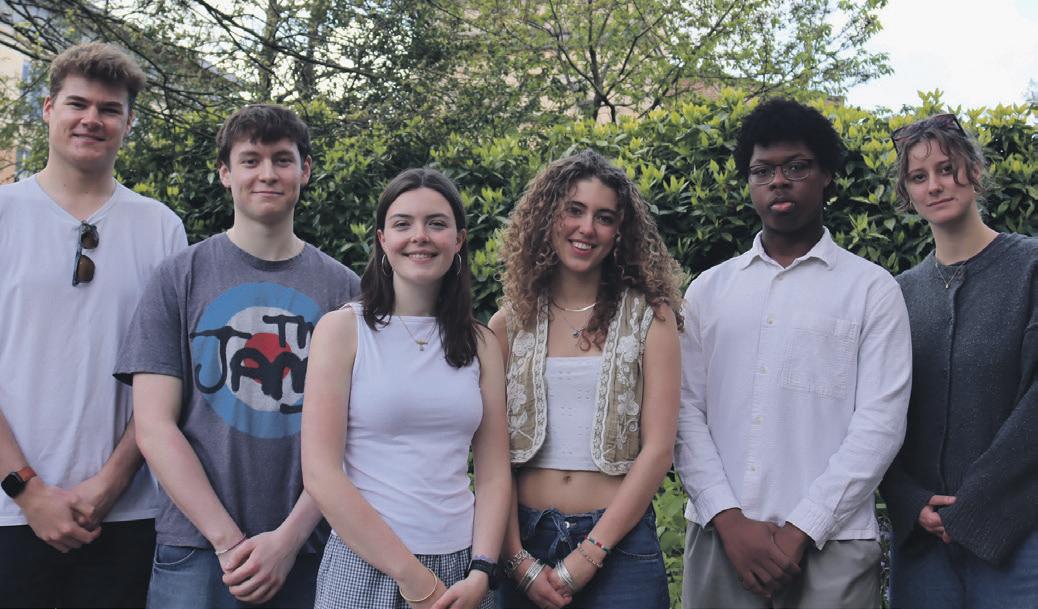
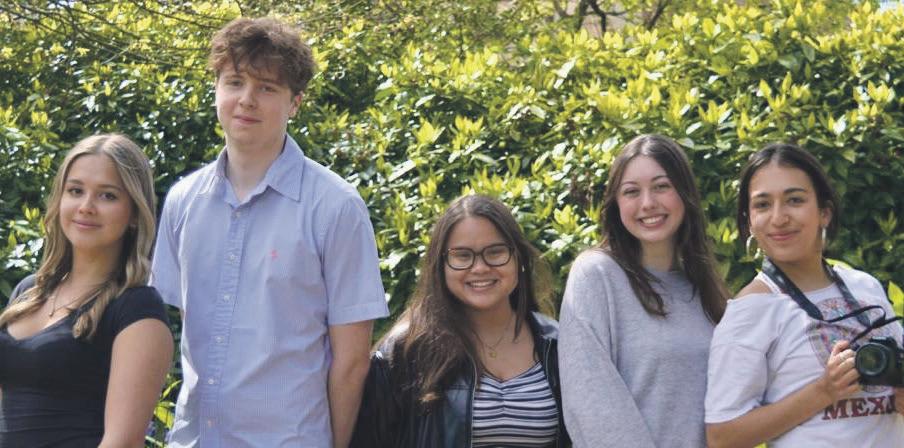
Whilst we’re obviously gutted to be leaving, it’s one of the things that makes Epigram such a great place. Every year a new team with their own interests and ideas takes on the full creative direction of what is a truly remarkable student newspaper. And while it might be di cult to accept that I’m now a hack in the student media world, I couldn’t have more confidence in the new team we’ve chosen to take Epigram forward. Emma, Jed, Hannah, Tylah, and Ella, good luck: I can’t wait to see what you do.
And of course, good luck to everyone else who has done anything for us this year. Whether you wrote one article or a hundred, took photos, illustrated, or helped organise our events, Epigram couldn’t have done anything if it wasn’t for you. If you are staying on at the university, I hope you continue with Epigram; you won’t regret it. And if you’re moving on to something else, I’m sure Epigram has prepared you to take on any challenge that comes your way. And please stay in touch!
For now, though, it’s time to take a little chill. Three years of anything is a lot, but when it’s as hectic as university is, then some time to reflect and think is essential. Get yourself a pint and enjoy the Bristol sunshine while it lasts.
Julia Mullins Co Editor-in-Chief
Now that term is over, I’ve been updating my CV and writing cover letters. It’s dawning on me that my degree is worth less than I expected. Purely in terms of CV real estate, my degree has literally been pushed aside. Luckily, I have Epigram to make up for it. Like many kids, I got my first job when I was 14, delivering newspapers, but unlike most of them, I followed through. No one was expecting that job to come with career progression.
Thankfully, being Editor-in-Chief doesn’t involve cycling around town at the crack of dawn. What the job lacks in manual labour it makes up for in other ways. Namely, sacrificing said degree, early mornings formatting print, endless emails, and, on occasion, wanting to quit. Epigram has
been both one of the hardest and most rewarding things I have done at university.
My degree, save a few units, has been a solitary endeavour, but Epigram made me feel like a valuable part of a team. Now, there are more people that know me as Co Editor-in-Chief than as a politics and philosophy student, and I wouldn’t have it any other way.
This editorial is one I have been eager to write because I have a story I’d like to tell, largely for my own personal satisfaction.
Last year, Susanna Reid, one of Epigram’s first editors, returned to Bristol. Susanna told us that The Sun wrote a story predicting that ‘Good Morning Britain’ would
Resident Photographers: Tom Foley & Suzanne Celerier
Head of Illustration: Mia Jansa
Business
Managing Director: Eden Chambers
Administrative Director: Arthur Clinton
EDIW O cer: Leah Pollard
Finance Director: Ike Idikakalu
Marketing Director: Olivia Hill
Head of Ads & Sales: Sian Clarke
Head of Technology: Miles Gilroy
Student Legal Counsel: Hannah Beason
be cancelled by Christmas. They put it on page three and Susanna framed it. Susanna smiled and said, ‘I’m very proud about it, that we have lasted, and the page three model has been cancelled by The Sun […] it makes me incredibly proud.’
When I was in sixth form I studied Economics. There were 20 of us and maybe four girls in the room. I was a typically rule following, well behaved, high achieving student, and as a direct consequence, I was miserable. I was easy to torment, and it was a regular occurrence.
A boy called Josh told me I ought to be on page three. With an air of politeness he informed me I didn’t belong in an economics class.
The words ‘Sir, did you hear what he just said!’ ran out of my mouth before I could stop it. It was pointless. I did as I was told, sat down, and the lesson continued.
A few years later, and turns out Josh was right. Page three of Epigram! Who knows, maybe I’ll frame it.
This has been my favourite discovery of student journalism, the likelihood is that if you want to do something, you probably can. I wanted to put my editorial on page three; done. You want to start a series called Epigreen, about the university’s green spaces? Sure, that sounds ace! A new column called Mind the Gap? Yes please. Serious-
ly, you have an awful lot of freedom. Unfortunately, access to these opportunities only gets harder from here on out. So, if you are a fresher worried about pitching to Epigram, please find some confidence in the fact that student journalism really is a free for all. Take what you can get, show up, and put something silly or heartfelt in print just for the sake of it. All you have to do is ask!
It took me over a year of being part of Epigram before I wrote a single thing. I got my first copy of Epigram at an open day in 2023. I honestly can’t remember reading it, but when I came to university, I searched for each new issue. In January 2024, I went to an introductory workshop. Asked what I was interested in writing about, I replied that I probably wasn't a good writer but that I could draw. Epigram commissioned an illustration and I never left. The next year, I got to work on redesigning Epigram’s print and social media output, and eventually I felt confident enough to write. Epigram has always been greater than only it’s writers, so if writing isn't your thing just yet, find an alternative way in.
Now that I’ve staked my claim on page three, I need to tell you about our incredible team. We absolutely lucked out this year. James, Daisy, Sofia, and Miles, you have been such a pleasure to work with but by far a greater pleasure to be friends with. I cannot wait to
see what you get up to next. And because I literally cannot wait, I’ve made some guesses for you, because what is a newspaper if not a time capsule?
Get ready, here are my predictions: James, you will be a reporter for a long time but eventually you’ll get around to publishing that novel, probably set in Jersey, and it will be a hit. Daisy, you’re going to be copywriting and marketing before going to do a masters, probably broadcast at city, and then you’ll be on the BBC, obviously, cause you’re not a sell-out. Sofia, you’ll be freelance, I think you’ll be travelling a lot. Probably doing stand-up comedy every once in a while to remind yourself you really are the funniest person in the room. Miles, first you’ll work in something science-y for credibility, and then you’ll be presenting documentaries alongside Brian Cox. And finally, I will be able to boast that I know you all. One thing that I’m the surest about is that we’ll stay in touch.
In the past year, not a day has gone by where I haven’t said the word Epigram I’m definitely ready for something new, but I’ll admit it’s a scary feeling. Luckily, the paper is in capable hands, and if the incoming senior team have half as much fun as we have had, it will be one of the best years of their life. Jed, Emma, Tylah, Ella, and Hannah, you are going to be formidable, I am so sure of it.
Jules' favourite articles this year
You cannot win a debate whose rules are written in the edit
Rosie Moore Third year, History
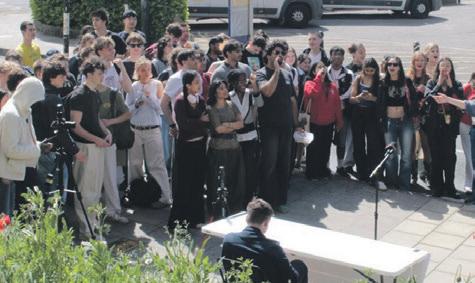
Just as we were wondering how on earth we were going to approach the situation, Rosie Moore’s article fell into our laps – or more accurately, our inbox. A few weeks ago, a boy with a sign and a camera showed up on campus hoping to get a rise out of students. As editors, we have to decide what to report on and how to report it, and crucially how to avoid playing in to the scene itself. Rosie Moore’s pitch came through – beautifully written and self-aware. Skip ahead to page six for the full article.
To read the rest of the articles James & I have suggested, go to: epigram.org.uk
Epigram Music's top 100 songs of 2025
Sophie Scannell Music Editor
The top 100 songs article is no mean feat. With entries from 48 di erent writers, it captures the breadth of our Epigram community. First year, first time writers; regularly commissioned ones; editors across the paper; and the senior team, including me! Organising, editing, formatting, ranking, and no doubt chasing up late submissions. This article was already a lot of work, but this year Sophie went above and beyond to turn the top 24 songs into a pull-out poster for our February issue, the perfect solution to any uni student’s empty bedroom wall.
Fun fact: the top 100 songs article has been a tradition of the music section since 2021!
The spoons that spills secrets: How The Berkeley causes drama
Corin Hadley SciTech Co-Editor
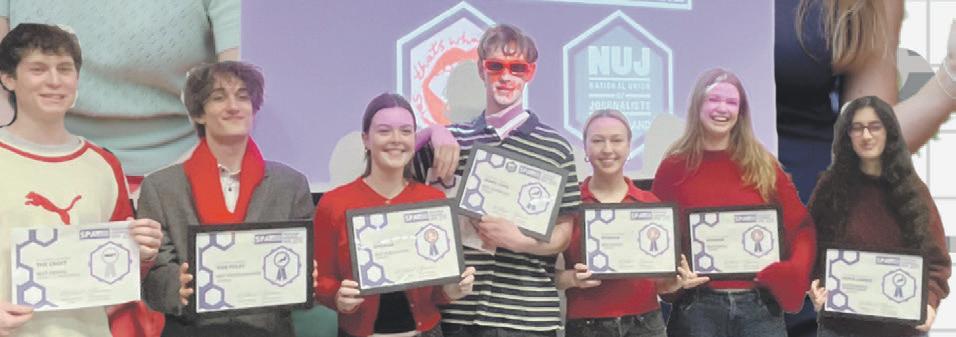
This article was nominated for a Student Publication Award. It didn’t win, and James could not hide his disappointment; I seem to remember hearing the words: ‘Corin Hadley is the best writer ever.’ I don’t always agree with James when he’s drunk, but Corin always has a great idea up his sleeve, and those great ideas turn into great headlines. Anyone remember ‘You stink and people love it’? That was a good'un. This article took us to a place we all find ourselves; sat crunk in The Berkeley, looking up at the ceiling saying ‘what’s that huge stained glass dome doing there?’ To find out why, please go read Corin’s article, I promise it does not disappoint.
Photo courtesy of: Eden Chambers
Bristol UCU and SU O cer: Tell us which student groups Horus Security monitored
The University of Bristol paid a private security consultancy thousands to monitor its student protest groups, including pro-Palestine and animal rights groups.
Guy News Subeditor | Cara Hene News Editor
AStudents' Union sabbatical o cer and the Bristol branch of the UCU have called on the University of Bristol to disclose which student groups they paid Horus Security to monitor.
Bristol SU International Officer, Jessie Yeung, told Epigram that she is demanding that the University ‘disclose the full extent of surveillance conducted.’
The University and College Union’s (UCU) Bristol Branch has also asked the University to tell them which student groups were under surveillance, Epigram has learnt.
The demands come after an Al Jazeera and Liberty Investigates investigation revealed the University of Bristol to be among 12 British universities that paid surveillance company Horus Security to monitor individuals and student protest groups, alongside the University of Oxford, UCL, and Imperial.
These institutions have ‘wast-
es profound legal concerns.’
Between 2024 and 2025, the University of Bristol paid Horus Security £8,700 for an alert service covering all protest activity across the city and provided a list of student protest groups it wanted monitoring, including pro-Palestine and animal rights activist groups.
One email sent in October 2024 by University of Bristol sta requested the monitoring of animal rights campaign groups Camp Beagle, Free the MBR Beagles, MBR Suppliers, Vivisection Exposed, Liberate or Die, and Animal Rising.
‘Our senior team are delighted with the briefing,’ another email from the university to Horus Security signs o .
Yeung, SU International O cer, told Epigram that:
“This is not an attempt to repress, prevent, or interfere with protest or activism...
ed hundreds of thousands of pounds spying on their own students,’ UCU General Secretary, Jo Grady, told Al Jazeera.
The UN’s special rapporteur for freedom of peaceful assembly and association also said that Horus Security’s use of AI to monitor student data ‘rais-
cratic rights and civil liberties.’
Horus Security describes itself as a ‘leading intelligence and security consultancy’, with services including social media monitoring, and has integrated AI into its operations since 2022.
There is no evidence that this activity, or other activity by Horus Security, is illegal.
A University of Bristol spokesperson told Epigram:
‘Horus Security Consultancy gathers publicly available infor-
“‘We were informed by the university that it is only for ‘safety’ and ‘no sta or students have been the subject’ - it is hard for the student body to take that claim seriously until the university discloses the full extent of surveillance conducted.
‘... we demand the university to commit to full transparency over the use of surveillance (not limited to on campus or over social media)’
Yeung also wanted to see the University ‘immediately terminate contracts with intelligence firms’ and ‘guarantee the protection of students’ demo-
Bristol UCU has also asked the University to disclose to them which student groups were monitored by Horus Security.
This request was refused by the University in a meeting three days after Al Jazeera went to press, according to Oscar Berglund, Bristol UCU’s co-President and Senior Lecturer in International Public and Social Policy.
‘They say they only use publicly available information, but that doesn’t make it not surveillance,’ Berglund told Epigram
Epigram asked the University whether it would continue to use Horus Security, but received no response to this question.
These institutions have ‘wasted hundreds of thousands of pounds spying on their own students.’
mation on any protest activity by any group in the city that could potentially a ect the safety of our university community.
‘It helps us to make informed decisions on where our security sta may be needed to provide support and if information needs to be conveyed to students and sta to keep them safe.
‘No sta or students have been the subject of the services used, and Horus has not been asked to provide information on any individual or political activity.
‘This is not an attempt to repress, prevent, or interfere with protest or activism and we always have and always will support the right to freedom of expression and to engage in lawful, peaceful protest.
‘There are legitimate concerns about providing information about specific groups, as this may potentially lead to action or increase risk to our community.’
Lola Lo to close doors permanently after ‘12 unforgettable years’
The director of Horus Security’s parent company - Horus Global - is Lieutenant Colonel Tim Collins, who is not without controversy.
Collins was probed for war crimes in the Iraq War, but was cleared of all charges in 2012.
More recently, Collins blamed an increase in pro-Palestine demonstrations on a Russian-Iranian orchestrated media campaign and called for non-British protestors who ‘misbehave’ to be deported.
Following the investigation, 15 University of Bristol academics have signed a ‘Statement Against the Institutional Surveillance of Students at UK Universities’, which stands at 228 signatures at time of print.
The statement demands that universities ‘disclose the full extent of surveillance conducted’ and says ‘the attempt by universities to justify this in the interests of larger campus safety is a disingenuous attempt to shirk responsibility for active repression.’
The closure of Tiki bar Lola Lo marks the end of an era for Bristol's student nightlife, as the club prepares to shut its doors after more than a decade on the Triangle.
A post to the nightclub's Instagram revealed that the club will be closing following a final event on Saturday, May 2.
Lola Lo is a Polynesian-inspired Tiki bar and nightclub on Queens Road on the Triangle in Bristol that hosts DJs and holds student nights.
The post read: ‘Saturday 2nd May will mark the final chapter for Lola Lo Bristol.’
‘After 12 incredible years, we’ll be closing our doors for one last time.
‘This place was never just a nightclub — it was where nights turned into mornings, strangers became friends, and memories were made on every corner of the island.
‘To everyone who’s danced with us, worked with us, and been part of the journey over the years — thank you. You made Lola Lo what it was.
‘The music may fade, but the memories will stay with us forever.’
As a part of the Lola Lo chain, the club is one of just two remaining in the UK alongside its counterpart in Reading.
Its closure is reminiscent of the broader decline of the British nightclub industry, where chain nightclubs have significantly struggled. The collapse of nightclub company Rekom UK in 2024 saw the closure of 17 venues.
Many Bristol venues continue to struggle with rising costs, declining demand from a shift in drinking habits, and the long-term impact of the COVID-19 pandemic.
Its final event, taking place on Saturday, May 2, will be a ‘Drink the Bar Dry’ night, running from 9pm until 4am to mark the venue’s closure.
Epigram has contacted Lola Lo Bristol for comment.
Keira Guy News Subeditor
The Bristol student hotspot announced the shock closure yesterday via Instagram.
Photo courtesy of: Epigram/Tom Foley
Keira
Photo courtesy of: Epigram/Keira Guy
Bristol SU renews support for Break the Mould at Student Council
Epigram
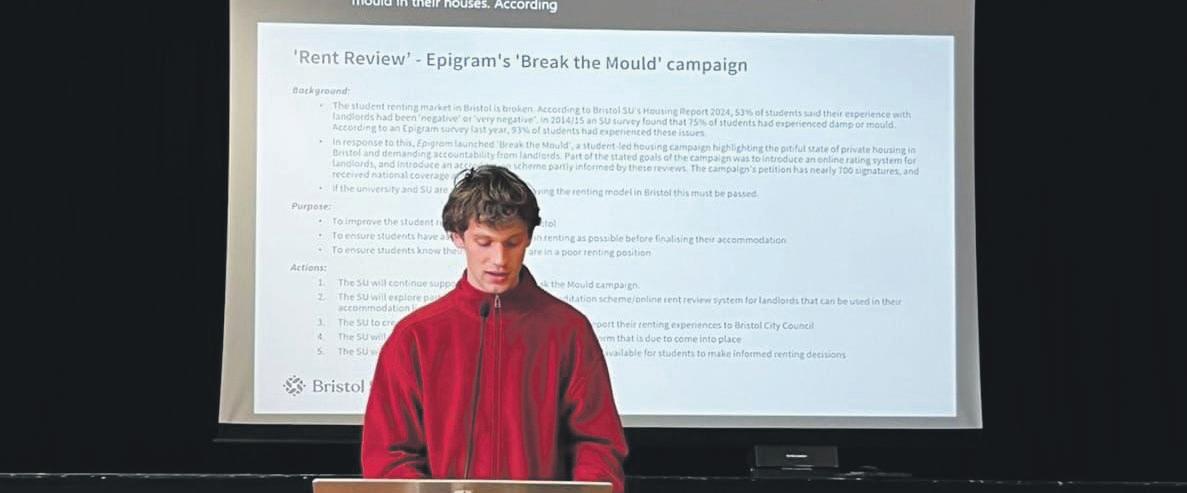
On April 16, the Student Council convened and passed a single motion: for the SU to continue supporting Epigram’s Break the Mould campaign calling for Rent Review and a landlord accreditation system.
Rent Review is Epigram’s proposed ‘TripAdvisor’ for student housing, allowing students to rate the quality of their housing and incentivise landlords to improve the quality of their services.
Epigram also encourages the SU to create a landlord accreditation system alongside Rent Review, which landlords could opt into.
‘If a landlord is willing to participate, it shows they take their tenants seriously’, James the told Student Council, adding ‘students will begin choosing those [landlords] with accreditation.’
Break the Mould’s petition ‘has over 700 signatures on Change.org.’ James called on the Student Council to ‘vote for this motion if you care about student housing in Bristol.’
The motion called on the SU to ‘explore partnering with an existing accreditation scheme/online rent review system’ and create ‘a signposting mechanism for students to report their renting
experiences to Bristol City Council’.
Epigram also proposed for the SU to work with them to ‘raise awareness on rent reform’ legislation such as the Renters Rights Act, parts of which will come into force this May.
The SU was also asked to use the resources they have at hand to help students ‘make informed renting decisions’, prevent tenants signing contracts too early, and make it easier for them to move out if they wish to.
James said that working towards Epigram’s proposals would ‘ensure that students who face housing issues have a seat at the table.’
Outgoing Student Living O cer Lucy Pears discussed housing issues with students after the motion had been passed.
Her pledges included lobbying the University to improve clarity of information about first-year accommodation landlords and also improve their complaints procedures.
Lucy also promised to address Bristol’s student housing market to reduce instances of students signing too early, which can, according to students, lead to ‘interpersonal issues.’
FLASH NEWS
To read more of our news coverage go to epigram.org.uk
Editor ...................................................... Cara Hene
University of Bristol Medical School latest to be hit with Voluntary Severance scheme
The University wants to cut the equivalent of one in ten Medical School sta on ‘Pathway 1’ and ‘Pathway 3’ contracts, covering most sta with teaching responsibilities.
Cara Hene & Sofia Lambis News Editor & Deputy Editor
Medicine is the latest School to be hit with a voluntary severance scheme, after academics in the School of Modern Languages and the School of Humanities were offered an identical deal in February.
The scheme is open to Pathway 1 and Pathway 3 sta in the Medical School, the vast majority of whom are involved in teaching.
During a meeting on April 22, Medical sta were told they will receive nine months' salary if they opt to sever their working contracts early.
The University wants to make 25 salaries’ worth of savings, or reduce the workforce in these categories by roughly one in ten jobs.
Bristol’s Medical School was ranked highest across the University of Bristol for teaching in 2025, and placed ninth in the country in the Times Higher Education Ranking 2026.
The Bristol branch of the Universities and Colleges Union (UCU) has said repeatedly that voluntary means are preferable to compulsory redundancies.
Nonetheless, sta are ‘completely despondent’ in the wake of the news, a Bristol UCU Medical Representative told Epigram
In February, Epigram spoke to Oscar Berglund, President of Bristol UCU, to help us get our heads around the voluntary severance scheme for all Humanities and Modern Language academics.
He argued this scheme marked the continued impact of a new policy requiring all schools to make a 50 per cent operating surplus.
Berglund claimed the ‘50 per cent surplus’ policy disproportionately impacts certain schools because, while it does not take into consideration buildings or equipment (such as lab machinery), it does consider employees and student fees.
Certain schools, many of them non-
STEM, spend proportionally more on sta , and crucially for the Medical School, have a comparatively lower percentage of international students.
Both Berglund and the Bristol UCU Medical Rep stressed that the Medical School faces additional pressures as the Government dictates the domestic to international student ratio at British medical schools, alongside capping overall intake.
Paying three times more than their domestic counterparts, the percentage of overseas students makes a great di erence to making or breaking the ‘50 per cent surplus.’
Expecting di erent schools to generate income in the same way and at the same level is akin to ‘comparing apples and oranges,’ Berglund said.
The scheme is ‘extremely likely to impact the student experience.’
In 2025, international students made up 6.7 per cent of the intake for the University of Bristol’s primary Medicine qualification (MB ChB), according to a Freedom of Information request made by Epigram.
Compare this percentage to other large courses from schools that have not had to put in place voluntary severance - such as Honours Law LLB at 41.2 per cent or Business and Management BSc at 56.9 per cent - and this latest voluntary severance scheme becomes part of this broader pattern.
For the Bristol UCU Medical Representative, the scheme also highlights that the policy does not allow the University or faculties to cross-subsidise.
Instead, they claimed, schools have to make a case for themselves.
Bristol UCU has lobbied the University since February 2025 to benchmark its schools against other universities, so as to mitigate these uneven impacts across disciplines, but this request was refused, according to Berglund.
The union says that any moves towards compulsory measures will result in industrial action.
‘It's frustrating knowing colleagues will lose their jobs in service of a surplus model that’s yet to be reasonably justified’, the Bristol UCU Medical Rep told Epigram
The University of Bristol is by no means the only university in the country facing hard choices, nor is it alone in leaning on overseas fees.
The sector is in deep financial difficulties - four in ten universities are in a financial deficit, accord-
ing to the O ce for Students.
However, the impact of cuts may well a ect students in addition to sta .
According to the Bristol UCU Medical Representative, the scheme is ‘extremely likely to impact the student experience’ within the Medical School.
A University of Bristol spokesperson said: ‘We have launched a voluntary severance process which is open to a small number of sta within our Medical School.
‘As part of a prudent, measured approach to managing our finances, we routinely take planned and focussed actions where necessary due to changing student demand and reducing research income streams, while routinely seeking opportunities to deliver our services more e ectively and e ciently. This includes identifying ways to reduce our non-pay spending.
‘The University is in constant dialogue with our trade unions about any proposal that may a ect sta . We are committed to working with them to find ways of delivering any necessary sta ng changes through voluntary means where possible, and to supporting our sta .’
Photo courtesy of: Epigram / Lenny Osler
Lenny Osler News Reporter
’s motion passed unanimously after Co Editor-in-Chief, James Lewis, re-emphasised the urgent need for a Rent Review system in Bristol.
Bristol UWE student accused of stabbing fellow student to death
Cara Hene News Editor
Police say that Jamie Collins, 21, was murdered by his housemate and university peer in north Bristol.
and Somerset Police Photos
Maclaren
nnnnnnnnnnnn
Comment
Editor's Choice:
Photo courtesy of: Epigram / Lenny Olser
At first, ‘Young Bob’ probably isn't a name that shouts sophisticated political strategy. The threat level seems even lower when you realise the guy isn't even old enough to vote. And yet, after just one day on campus, he's worked us up into a frenzy of food throwing and banner grabbing. Is this proof of his thesis, that students have become overly sensitive and unable to engage in constructive debate? Or is it that his deliberately o ensive claims just don't deserve the respect he is asking for? And if more of this politics is to come, do we as students need to find a better way of dealing with it? I'm not sure any of us have the answers to these questions, but Rosie Moore comes pretty close.
You cannot win a debate whose rules are written in the edit
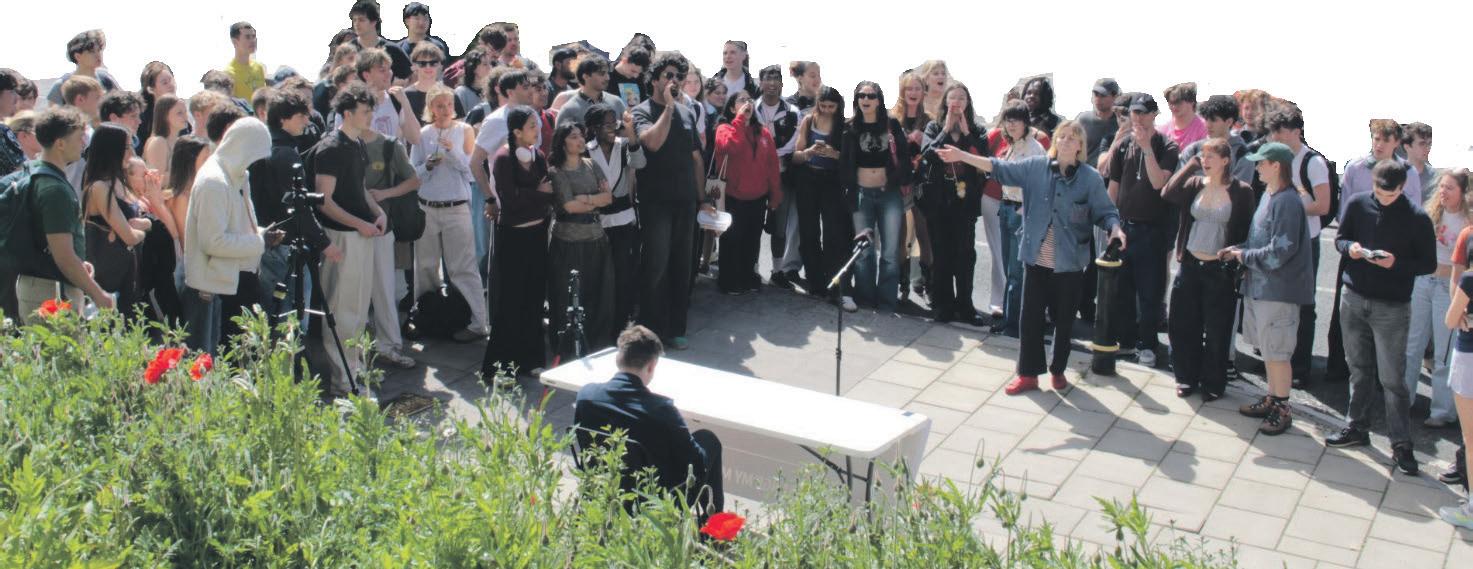
There is a patch of paving outside Senate House. Looks like it's on campus, but really it's a right of way and a road like any other. Normally, there's Marxist society recruiters or earnest second-years thrusting questionnaires at passers-by as part of their Science of Happiness coursework; On a scale of one to ten, how happy are you? And now, how happy are you after this cupcake?
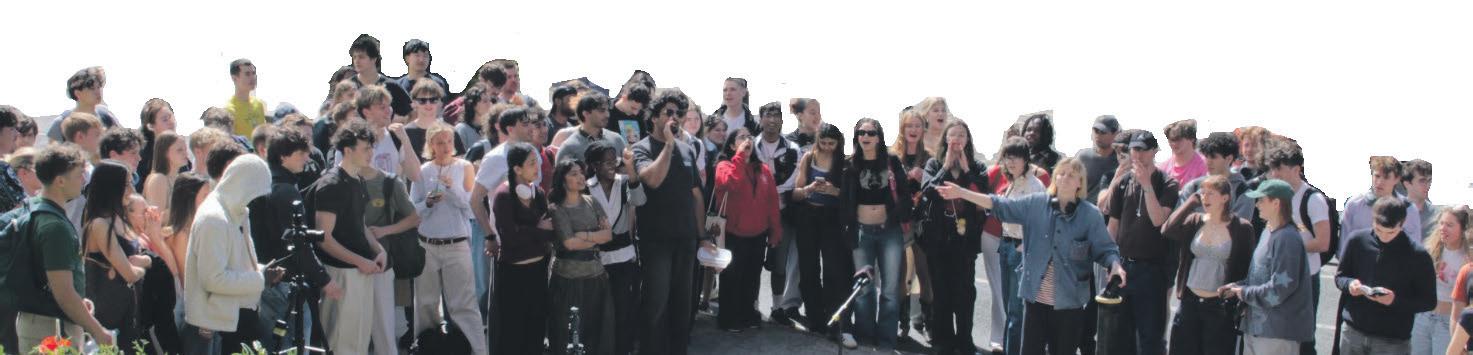
In three years, I have seen most things pass through that bit of pavement. Once, shu ing hungover to a nine a.m. lecture, I was handed a DIY rape kit and a chocolate bar. I had not, until the 29th of April, seen this:
‘ABORTION SHOULD BE COMPLETELY
BANNED. CHANGE MY MIND.’
The banner was professionally printed, the sort that warrants a trip to the Toolstation at the bottom of Belgrave Road, and propped behind a folding desk. In front of the desk: a microphone, and behind it: an accomplice, hood up, manning a tripod. The whole apparatus had the air of a man who had not turned up to debate so much as to harvest. He had not come to test his ideas in the agora; he had come to test them in the algorithm.
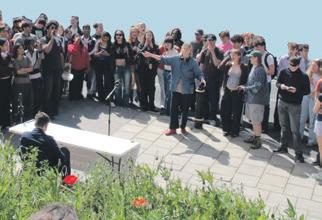
The folding chair, the Change My Mind sign, the camera angled for the reaction shot. The teenager behind the desk was channelling his best Charlie Kirk for his 135,000 followers on X.
I was not there when he arrived. By the time I had walked down from the
actually meant one o cer standing to the side. She had the demeanour of a woman who had drawn the short straw and was now adjudicating what she had correctly identified as content.
When I arrived, a boy approached the mic, was applauded for his courage, and announced that he agreed; abortion was fundamentally wrong. The applause curdled into the groan of a crowd that had realised it had been had. People sat on the grass and ate their meal deals. They watched and muttered and rolled their eyes at each other in the international semaphore of don't engage, it's what he wants. Everyone around had caught onto the game; rage-bait the students, capture their reaction, post it, and monetise the clip of the ‘woke liberal mob’ losing it at a man who ‘only wants a civilised debate.’ I, like several others, was smug in my moral superiority that I had caught on to his ploy and checked out.
That was going to be the article I was writing. We won. We Bristol students, hyper-diligent of the content economy we live in, were rising above it. We did it.
In the few minutes it took me to walk back to the ASS to write my first draft, feeling a proud member of Gen Z, the afternoon turned. Rumours circulated of food being thrown. The banner was seized. There were chants, and a Stand Up to Racism contingent arrived. The afternoon had taken on the energy of something no longer being watched but participated in.
Later that evening, the young man who had spent the afternoon courting opposition retreated, predictably, to the place that pays better for it. Bristol, he wrote, was ‘one of the worst universities’ he had visited. He had been
targeted, his equipment grabbed
he had also, he was careful to note, captured a large audience and not been hurt in any significant way.
The right, he concluded, ought to ‘take back’ universities like this one, where the response of liberal students had left their conservative peers intimidated and shut down.
The whole enterprise was contained in that single tweet. A man who had driven to Bristol with a tripod, a banner, and a microphone (which didn't actually work, by the way), in order to produce footage of left-wing students ‘behaving badly’, was reporting back that left-wing students had behaved badly and that this proved that universities needed taking back. They insisted, in public, that a man with a banner debating women's bodily autonomy was not a neutral feature of a Wednesday afternoon.
The outrage is the product and the grievance. He is allowed to be furious. The people he came to make furious are not, because their fury, by the terms of the operation, becomes evidence of his thesis. You cannot win a debate whose rules are written in the edit.
None of which is to say debate itself is the problem. Debate is the point of a university; it is, more or less, the point of a democracy. The question is a narrower one. It is whether a folding chair, a prop microphone, and a tripod constitute an invitation to debate, or an invitation to perform one, and whether we owe the second the same courtesy as the first.
The students who took the banner are not the villains of this piece, and I want to be careful not to write them as if they were. They did what I did
not. They insisted, in public, that a arriving, which
feature of a Wednesday afternoon. The fact that this is precisely what he came to film does not make them wrong. It makes the situation a trap, which is a di erent problem, and one whose solution I am not at all sure I have.
I sat on the grass, relished in my moral superiority, and wrote about it. They stood up to it. Both responses fed him something. Mine fed him an audience; theirs fed him a clip. There is no clean exit from a stage you are already on.
The bit I keep getting stuck on is this idea of the power of the shrug. The notion that there is something principled in not engaging, watching passively, delighting in one's own decision not to be a puppet in the game. I was very pleased with this at lunchtime, but I can hardly say it was a strategy. It is a posture, and it only looks like a strategy from a distance, on a sunny day, when nothing has yet escalated.
The moment the banner came o the desk, the shrug became a choice about whether to keep shrugging, and that is a di erent thing entirely. You can call it the staying-seated principled or you can call it cowardice, and on a given afternoon you might be right either way. What you cannot do, I think, is call it a victory.
There is a moment in Louis Theroux’s The Manosphere that aired recently on Netflix that reminds me of a similar idea. Theroux is in Marbella doing pull-ups in the sun with a 23-year-old influencer called Harrison Sullivan who posts as HStikkytokky to roughly a million followers and has built a career coaching teenage boys to be, in his phrasing, ‘fucking boys rather than soy boys or gimps.’
ters. Half-laughs. Has nothing. The bit only works against a particular kind of horrified mark, and Theroux, almost gently, has refused to be one. The clip dies in his hands.
I was, when that documentary came out, the person who declined to watch it. I told my parents, with some hauteur, that I was not going to spend a Sunday evening paying my Netflix subscription to platform a man who coaches boys into cruelty as a personality. I felt very clean about this. It was, I told myself, a small refusal of the same content economy I am now several thousand words into writing about.
It took a conversation over the kitchen table at Easter, with my Mum gently pointing out that Theroux's whole career is the trick of dragging this stu into daylight and watching it wither under polite scrutiny, for me to clock that my refusal had been a posture too. The documentary did something my superiority did not, which was deny the operation its in-group mystique. It made the trick legible. You cannot make people stop performing, but you can, at the margins, make the performance look stupid, and that is not nothing.
Which is, I suppose, what I am trying to do here. The piece you are reading will not stop him. It will, by some metric, register as a number on his spreadsheet. But it is also the other thing, the slow, kitchen-table version of what Theroux did to Sullivan in Marbella. Naming the trick. Making the performance look, on close inspection, slightly stupid.
Mid-pull-up, Sullivan asks Theroux, like a man who needs an enemy to perform against, whether he is one of the soy boys.
Did you just look at my arms? Theroux
He drove to Bristol on a Wednesday in April to produce a clip, three days after a man with a manifesto walked a pump-action shotgun into a blacktie dinner in Washington. He also produced this, which is something else, written slowly, in a library, by someone not sure she got it right and increasingly suspicious of anyone who is.
The framing has been quietly captured. The watcher is no longer the neutral position it imagined itself as; the fighter no longer guaranteed the high ground. The girl who took the banner and the girl who wrote about her taking it were on the same stage, lit by the same light. The only honest answer I have is that I do not know which of us got it right, and I am suspicious of anyone who says they do.
The pavement outside Senate House will, on Monday, host a bake sale, or a clipboard, or someone else with a folding chair and a worse idea. Students will walk past it on the way to a nine a.m. lecture in years to come. What we do then is, I think, the only part of any of this that is actually ours.
Rosie Moore, Third Year, History
Editor ................................................... Sam Couriel
As this year's library surge stumbles to an end, it's about time some basic ground rules are set.
Hana Sakurai Wernham
Second Year, English
The witching hour has passed: assessment period. Human desperation (unnatural nocturnal habits, stress-grinding your teeth, ca eine) converge with technological evils (having too many tabs open, emailto-print not working, autosave turning itself o ) to penetrate our libraries and workspaces with the most heinous of vibes. To the cause of the ailing student, I am most sympathetic. But standards of public conduct are slipping.
If you still have one moment of reading left within you, I implore you to read my list of unacceptable library behaviours. If you are guilty of any, know that I have found it in my heart to forgive you, but only because I can no longer go on library search and reserve all the books you need for your diss.
1. Having your bare feet out
In our civilised society, bolstered by institutions of progress such as the railways and Deliveroo, I did not think such a prohibition would have to be so explicitly stated: do not get your bare feet out in the library. Slipping your shoes o under the desk puts you on thin ice. But to expose the dogs is an (unprotected) step too far.
Only recently I was in the ASS sat next to a girl in slides (a far too permissive choice of shoe) who got her feet out and crossed her legs on her chair. Her wiggling toes commanded my gaze and to make matters worse she would occasionally pick dead skin o her heel. It was like a gory car crash – I couldn’t look away. Is ‘distracted by bare feet in the library’ a valid reason to fill out an exceptional circumstances form?
2. Hogging a seat
The politics here are complicated. I don’t claim to be a diplomat of seatbooking relations. Kicking someone out of their seat because you’ve booked it is a bit of a moral grey area. If you didn’t book the seat, it’s not yours –them’s the rules. But the law does not mitigate the awkwardness of the act of eviction itself: ‘Um, sorry, I think I booked this seat’, you stage-whisper, feigning forgiving uncertainty (‘I think’) even though you checked your seat reservation ten times on the way in. Now you, bureaucratic tyrant, must watch your ignorant victim struggle
to pack up their strewn belongings.
While booking gives you the (albeit fraught) right of eviction, it does not make it okay to leave your belongings at your seat for over an hour. If you could walk to Ashton Court in the time you’ve taken away from your desk, then you have forfeited rights to your seat. Don’t be annoyed when you come back and someone has deposed your hairband and empty meal deal pasta pot. These objects have no authority here. If you want to ‘reserve’ your seat for an unacceptable amount of time, full send it and use your MacBook as a placeholder…!
3. Doing snus
A pack of Velo seems to have joined the student’s inventory alongside the more orthodox laptop, notebook, and pencil case. I don’t want to chastise the nicotine addicts among us – you already mark yourselves out from the rest because of the circular outline that has burned itself into the pocket of your jeans. But digging around your gums to fish out the used pouch
then immediately touching your keyboard with dribbly fingers will make me question your integrity.
4. Foreplay
Going to the library with your amour is, on paper, an ino ensive idea. But making fellow students your unwilling voyeurs in the process is categorically not okay. By all means, motivate your girlfriend to finish her essay with some kind words of encouragement. But don’t embellish your words with unnecessary shoulder rubbing or, god forbid, a neck kiss from behind. Whispering is uncomfortably erotic enough as it is – don’t make it worse!
Staying on our best behaviour is in our best interests. We must do what we can to make the environment of our intellectual degradation (that’s what deadline season feels like, at least) more cooperative and pleasant. Heed
sta with water-filled spray bottles and have them spray miscreants like misbehaving cats. Bad student! Down!
The need to be clever
nnnnnnnnnnnn
Ever felt like you're not clever enough for universty? Maybe it's not a problem with you, but the system itself.
James Sinclaire
Third Year, Politics and IR
Upto 82 per cent of students report imposter syndrome. So, chances are, you know what it feels like. A feeling of being a fraud, of not belonging at university. A feeling that, ultimately, you are not clever enough to be here. Let me assure you, you most definitely are. Let me explain.
The University of Bristol consistently ranks in the top ten universities in the UK. You must be a clever cookie to make it here, so everybody here is. People have had similar experiences growing up, being the smart kid, getting good grades, being the one your mates would go to for help with homework.
Mixing a load of clever people together into a place like university should be amazing. Ideas should bounce o each other as everybody comes together to tackle the toughest problems of our time. Look At Bletchley Park, where Alan Turing and his team of eccentric oddballs went after a common goal of cracking the unbreakable Enigma Code. Brilliant stu , and they only did it because they were a load of clever clogs who complimented each other. I find this really weird.
University is built on rewarding a narrow view of individual intelligence. The cleverer your work sounds, the better presented your argument, the higher your grade. It’s a pretty crap way of assessing somebody’s overall
grasp of a topic. Despite all the fancy wording the university has on its website, this cleverness hierarchy
for most undergraduates. In such a system, you pin your self-worth on the number that pops up on Blackboard. It can feel like Turnitin kicking out a crutch you’ve often held yourself up with. This breeds insecurity rather than collaboration.
So, university doesn’t make putting a load of clever people in the same place very helpful.After all, nearly a quarter of students in 2025 went to private school. These students have been trained their whole life how to speak well, present themselves and project an enviable air of confidence that can boost an essay to a first-class grade. Sounding clever counts for a lot.
This is not helped by the egos you find in university, some students simply wanting to prove they are better than everybody else.
Because of this, the seminar room can be an intimidating environment. So many times, I’ve had experiences of people not listening to anybody else’s point. Many women, I’m sure, can instantly recall half a million stories about male students mansplaining a topic to them. People talk, but don’t listen
Or, people sit in silence, something I like to call the ‘first year seminar curse’. People don’t want to say something not absolutely bang on the mark. They are scared to allow that part of their identity to become vulnerable, fearful it will expose them as the imposter.
This impulse to appear clever also makes itself known outside of the classroom.
determined by grades is the experience
I have found it especially common when talking about every weird uncle’s favourite topic: politics. Students often appear as contrarians for the sake of it, adopting positions against the status-quo to appear as some unique, deep thinker. This can lead to arguments defending Donald Trump as a way of rejecting left-wing student culture. Or, it can be students standing outside of Senate House, handing out the Socialist Worker and rejecting the capitalist system. In both cases, whilst people may really believe in those opinions, there is an element of wanting to appear as having a unique understanding of the world.
In this, cleverness becomes tied to uniqueness. We live in such an odd time of social media, where our culture has become oversaturated with personalities and commentors. Having a sense of unique identity, expressed through your own unique thinking, is core to this need for young people to feel meaning in modern university life. But really, enough with all the competition. We are all driven by this same fear: we aren't clever enough to be here. We are. So let’s help each other.
Features
Postgrad paralysis: you've got the degree, now what?
Editor's Choice:
Sophie Lee Third Year, English
For my final editor's choice, I thought there was no better way to close o the year than with Sophie Lee's excellent piece about the impending dilemma many graduates are facing as summer approaches. Sophie considers the pros and cons of four popular routes for students to go down as we navigate the world we're coming into. She leaves us with the cliché but true sentiment that no matter where you end up, whether it’s a corporate o ce, a beach in Bali, or your childhood bedroom, there's no shame in not having it all figured out yet. For now, let's enjoy one last Bristol summer!
As the end of the academic year comes to a close, another batch of graduating students are stuck with the age-old dilemma: enjoy Bristol summer while you still can, or spend these weeks frantically applying for every grad job that pops up on LinkedIn? Half of your friends got their post-grad plans sorted in September, while the other half are signing up to panic master’s and booking holidays to Bali as we speak. In a time that’s so dominated by fear about what to do after university, what are the realistic options for students?
Full-Time Employment
The most conventional option, seeking employment, is often the next logical step for many UK undergrads. After spending three years in various states of drunkenness, graduation can be a nice moment to reset and get ready to move into the adult world. After all, we spent most of our lives working, so why not start now? At times it can often feel like the whole of Bristol is getting ready to move to London, with many conversations revolving around which postcode is most desirable (for what it’s worth, South West will always be the best…). While getting a job seems almost inevitable for postgrads, the job market is clearly not as stable as it once was. Gone are the days when Russell Group grads were guaranteed a spot in a Magic Circle law firm or Big Six publishing house. The number of job vacancies in the UK has fallen to the lowest level for six years, leading to unemployment for 18 to 24-yearolds rising to 14% by the end of 2025. Adding to this, the number of grad jobs available has fallen to around 10,000its lowest ever level. Clearly, simply ‘getting a job’ is not as easy as it once was.
It can often be hard to speak to parents and older adults about the di culty of landing a grad job in today’s market. Gone are the days of walking into a shop, handing them your CV, and being behind the till all in one day. In today’s
there can be thousands of applications for a single position. Many entry-level jobs often require experience, creating an impossible loop that postgrads often get stuck in. If this is the position you find yourself in post-graduation, try not to worry. The good thing is, everyone is in the same boat, and it’s okay to be struggling. Remember - it’s not you, it’s the economy.
(Panic) Master’s
Another extremely popular option is to sign on to another year of full-time education. With the University of Bristol o ering a 25% graduate discount on tuition fees, who wouldn’t want to sign up for one more year of the student lifestyle? After ex-
periencing three years of unbridled freedom, no responsibilities, and living with your mates, it can be extremely tempting to keep the good life going. And within this option, there are so many di erent avenues you could take! Why not develop your own niche research interests, broadening your undergrad dissertation into a full-blown Master’s level project? Or you could switch gears entirely, getting a degree in something more vocational? Why not try doing a non-academic qualification, like a PGCE, NCTJ, or something else entirely? Another year of study, whether it be academic or not, is often a safe option for many students. If you’re staying in the same city, then it’s a chance to keep the same routines, same friends, and same lifestyle that you’ve been cultivating for the last three years. It’s clearly a very attractive option. Even moving to a new university city o ers most of the same things you enjoyed in your undergrad.
Flying o to South East Asia for months at a time seems like a Bristol student rite of passage. If you didn’t find yourself in Bali during your gap year, you’ll no doubt have considered these market,
swanning o to sunnier climates after graduation. Another tempting option, postgrad travel o ers opportunities that are unlikely to be gained anywhere else. Travel, whether it be solo or in a group, can give you excellent insights into yourself, and can broaden your horizons massively. The student bubble of Bristol can be su ocating at times, and there’s no better way to see how di erent life can be than flying to the other side of the world. Travel teaches you independence, budgeting, and organisation, while also requiring you to be relaxed, able to go with the flow, and be present in the moment.
ing the stability of a home and a family, is not something to be taken for granted. This option, while scary, can also be perfect if you want to enjoy university without worrying about what comes next.
Often students can sign on to Master’s courses to avoid making a decision about what to do after graduation from their undergrad degree. If this is you, don’t feel pressured to have it all worked out yet. And remembertaking on another degree does mean more debt, as it’s a big financial commitment. If you’re ready and waiting to start your postgrad course in September, congratulations! See you back here for another graduation, same time next year?
So, there we have it! The four most popular post-grad options for students have been explored and weighed up. Postgrad life can be a really scary time, but even if it seems like everyone around you has got something figured out, we promise you they probably haven’t. And even if they do, it’s only a matter of time before you do too! Leaving university can often feel like being trapped in a pressure cooker where you have to have the next forty years of your life planned out, but you really don’t have to. Research has shown that most people will go through three to seven career changes in their life, so don’t worry if your postgrad job isn’t exactly what you’d dreamed it would be. Above all else, enjoy the last few weeks in Bristol while you can, and remember: you don’t have to have it all figured out yet.
However, while travelling can be a fun option for many, it’s important to remember that it’s also highly inaccessible for a vast majority of students. With the average trip costing between £2000 and £4500, many students are simply priced out of this experience. With a large proportion of students having to work during university to fund their degree, taking months away from home to travel also isn’t a realistic option. Although being able to travel is an incredible opportunity, a more realistic option for many students could involve taking a year or semester abroad via the university’s Study Abroad programme.
Move Home
Travel
And finally, the option that most students seem to dread. Moving back in with your parents. After spending three years away at university, this can often feel like a regression, going back to your childhood bedroom and no longer having control over your meal times. But, as su ocating as this option may feel, it’s also a privilege not a orded to every student. Being able to take the time to figure out what you want to do next, while hav-
The problem with voluntourism
Florence Snoxell takes a deep dive into the voluntourism industry, considering how this phenomenon can often do more harm than good.
Florence Snoxell Third Year, English
Two years ago, I had not travelled outside Western Europe. £1,450 of fundraising later, I am lying on Kenya’s dusty ground, screwing tyres together to construct some sort of tyre crossing that, upon being painted, somewhat resembles ‘The Hungry Caterpillar’.
My trip qualified as ‘volunteer tourism’ or ‘voluntourism’ for short. This refers to a form of international tourism that combines recreational activities with working to address social and/or environmental issues.
Voluntourism has flourished in recent years, currently being valued at $2.6 billion. It attracts roughly 10 million participants each year, most of whom are young people from the Global North and, within Europe, from the UK. (Author’s note: although no collective term is without di culty, ‘Global North’
serves as the most e cient descriptor given the constraints of my word count.) They are so prolific that many East, Central, and Southern Africans have taken to calling them ‘Mzungu’.
We can understand this alternative to traditional tourism as part of a wider trend to be more socially and environmentally responsible. Like so-called ‘slow fashion’, except swap a longer-lasting organic cotton shirt for a meaningful adventure halfway across the world ‘that will bring you memories to last a lifetime.’ That is what I was told, anyway.
At their best, these trips are transform-
“ernment corruption and bureaucracy.
My firsthand experience also provided meaningful insights into life in another culture and drove home a deeper understanding of global issues, nurturing a sense of shared humanity and global citizenship. (Aside, this may help explain why so many international volunteers are American: it provides an opportunity to leave a huge, isolated country with a seemingly omnipresent culture.) Given the current turn towards nationalistic divides, we would do well to challenge our assumptions and complicate our understanding of others.
Commercial voluntourism networks frequently prioritise creating a fulfilling experience for volunteers over solving the specific problems faced by local communities.
ative for both volunteers and local communities. It is true that Westerners could send funds without visiting, which would somewhat negate the saviour narrative perpetuated by volunteers positioning themselves as ‘rescuers’ rather than partners. But the promise for volunteers to travel there e ciently raises the much-needed funds and resources and ensures they are not lost to the throes of local gov-
Editor .............................................. Anna Dodd
Deputy Editor Ellie Barnes
Deputy Editor ........................ Charlotte Kerby
smiling children but lack evaluations of how their projects have impacted said children long-term. Their failure to do so reflects a lack of care as well as their awareness it could deter potential clients.
The main issue is who benefits. Whilst many volunteers have noble intentions, the organisations they work through are often commercial, for-profit companies. This has likely intensified in the wake of financial challenges following the pandemic, the cost-of-living crisis, and cuts to countries’ international aid budgets. The charity I worked with is one of many that has since ceased operations.
Commercial voluntourism networks frequently prioritise creating a fulfilling experience for volunteers over solving the specific problems faced by local communities. Many merrily cite testimonies of
This is because voluntourism is just one example of how clumsy attempts to do good end up harming communities we want to help. When poorly researched and poorly implemented, such projects often produce unsustainable solutions. Rather than take time to interact with locals and learn what problems they face and how previous attempts have failed, organisations can prioritise a quick, fix-all solution that might not last long. Yet volunteers fundraise thousands of pounds, pointing to a huge waste of funds. How much of this money does the community receive versus how much ends up in the company’s pockets? Repeated trips to the same area can also displace local workers, gradually stripping communities of their own expertise and financial opportunities so that they are dependent on international volunteers to function. They can also encourage environments detrimental to local children. Ian Birrel and Tara Winkler are two of many to report on unlicensed orphanages separating children from living relatives, making them vulnerable to abuse and sometimes even keeping them in deliberately squalid conditions to elicit more funding from international visitors.
cruit clients, organisations often carry out no background checks on volunteers. How would we react to unchecked strangers working with our children? Such a double standard promotes unskilled workers who can unduly burden already hard-pressed communities, who waste both time looking after them and money upgrading facilities. At its worst, this phenomenon produces the likes of Renee Bach, who despite lacking any medical training, founded a health clinic in Uganda and allegedly treated over 1000 children, 100 of whom died.
This double standard can also bleed into
“Voluntourism is just one example of how clumsy attempts to do good end up harming communities we want to help
Another issue is that, in a drive to re-
social media posts of volunteers with young children. Would you photograph Western children without their parents’ permission? Of course not. Treating local children as a photo opportunity not only reduces them to the status of the safari animals likely on your weekend itinerary but also indicates a higher interest in flaunting your work than cultivating a fruitful relationship with them. Whilst this article barely scratches the surface of voluntourism’s controversy, I do not wish to give in to cultural pessimism. I shall thus conclude by emphasising the power we have as individuals to transform international volunteering into a force for good.
How to volunteer abroad responsibly
* Research and apply some critical thinking to find more ethical and e ective institutions.
Is it a for-profit company or a well-reported charity? Does it work with local representatives to empower their communities? Does it provide volunteers with comprehensive training? What percentage of the donations goes to the community? Does it emphasise longterm engagement through repeat visits or partnerships with local organisations? Even actions such as organising donations of school supplies that children can continue using after you leave can have a longer-lasting impact than anything else you do there. (Author’s note: here I acknowledge my good friend Sórcha, who organised donations of school supplies for Rohingya child refugees in India.) Such websites as ‘GiveWell’, ‘The Life You Can Save’ and ‘Giving What We Can’ provide further useful criteria.
* Evaluate your motivations.
No amount of pre-trip preparation can inculcate you with a genuine care for local communities and their concerns. You will be far more likely to work sustainably for and learn from locals if you truly want to, rather than pursue your own agenda.
* Share your knowledge.
To empower those considering volunteering abroad or making a charitable donation. My impact can only extend to those who read this article. It may not be the cheeriest of Sunday-evening conversations, but it could prove very consequential.
Features
To read Epigram’s top moments of the year, also courtesy of the wonderful miss Daisy Yates, skip ahead to page 14!
Bristol ’s landmark moments of 2025/26
Daisy Yates Senior Digital Editor
> Continued from front page
The university said the changes reflected a shift away from a costly contracted arrangement with First Bus, and were intended to keep accommodation prices down, but the maths didn’t quite add up for those living in some of the university’s furthest halls from campus, outside of North Village. Metal Works in Bedminster is a 35-minute walk to Wills Memorial Building, and the newly opened Avon Point is 37 minutes. Of the 50 most a ordable first-year room types, only nine are in North Village - the only area that qualifies for the free bus pass. Students in the cheapest accommodations were disproportionately the ones left without it.
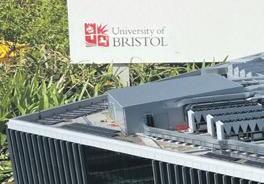
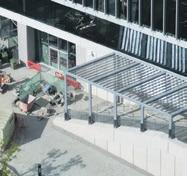
Temple Quarter campus
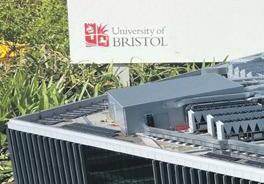
While the campus itself doesn’t o cially open until September 2026, Epigram was invited inside the university’s new Temple Quarter Enterprise Campus ahead of its planned opening.
Round lecture theatres will replace the traditional tiered format, and the campus will include four internal gardens, a dedicated Bristol Innovations Zone for around 300 enterprise partners, and sensory rooms. It will accommodate 4,600 students and 650 sta , with a particular focus on business, AI, and digital engineering postgraduates.
This has been a long time coming, with the opening delayed from
an original 2022 target date - but from the inside at least, the wait looks like it might be worth it.
The ASSL refurbishment
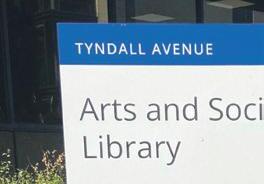
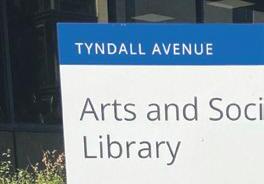
In October, students got their beloved 24/7 library back. The Arts and Social Sciences Library had been closed since June for a £1.8m refurbishment, leaving students to rely on click-and-collect services and alternative study spaces throughout the beginning of term.
The ground floor reopened on the 20th of October, with fresh new forest green walls, more social seating, and a small but meaningful detail - Ucard security gates that actually work. The full reopening followed in November, including a creative technology lab for emerging tech including virtual reality, and an exhibition gallery.
However, not everyone was won over, as the first and second floors of the library remained largely the same, despite the refurbishments' high price tag. One student even christened the new look ‘#NOTMYASS’.
Love it or hate it, the new ASSL is here to stay, and I, for one, was grateful to once again have somewhere to dramatically type essays at 2am.
Prince William visits Isambard-AI
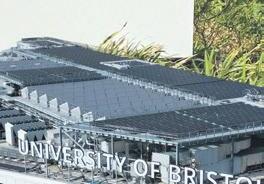
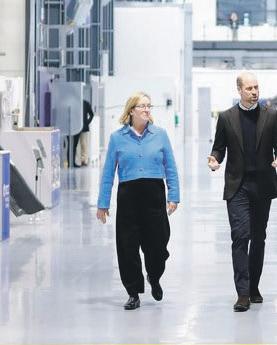
January brought the year’s most headline-grabbing moment. A visit from the Prince of Wales to the university’s National Composites Centre, where he came to see the Isambard-AI supercomputer in action. The £225m
machine is the most powerful in the UK and the fastest university-based supercomputer in the world, and since July has been used by hundreds of researchers across fields from climate science to drug development.
Prince William watched Professor Dann Mitchell simulate a heatwave over Kensington Palace using Isambard-AI, and met Paralympic gold medallist Emma Wiggs MBE, whose canoe seat for the Paris 2024 Games was built using digital tools at the NCC in just three months.
Bristol ranked sixth in the UK by TIME Magazine
February brought good news on the league table front (if you care about that sort of thing). TIME Magazine placed Bristol sixth in its 2026 UK rankings, behind only Oxford, Cambridge, Imperial, Edinburgh, and UCL. The university scored a strong 89.48 out of 100 for global
It’s certainly safe to say that the University of Bristol will look good on that graduate CV.
UNISON strikes over pay
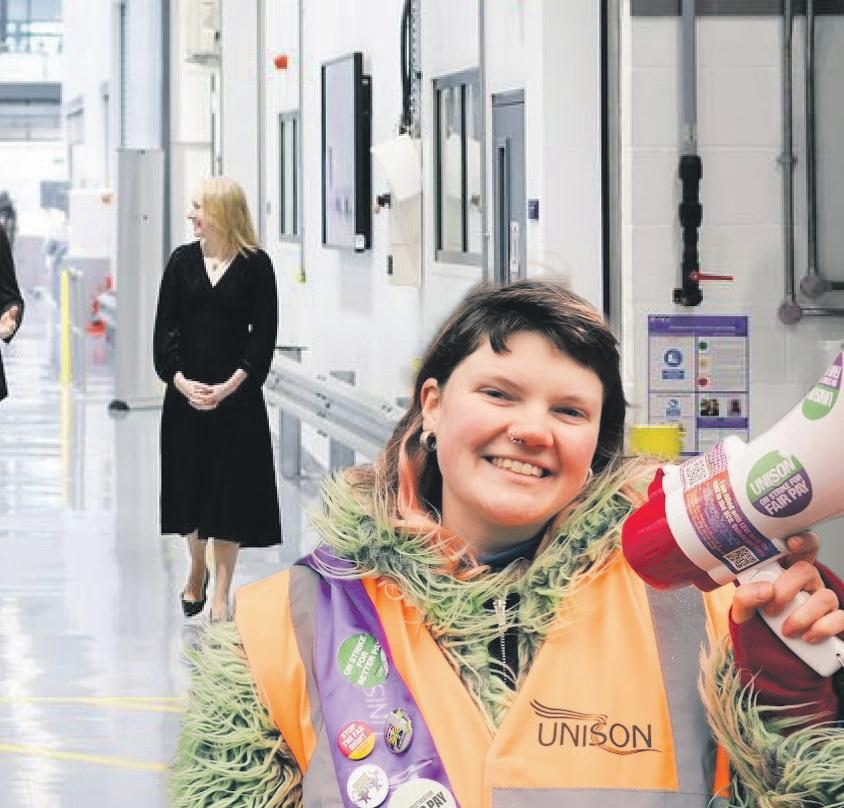
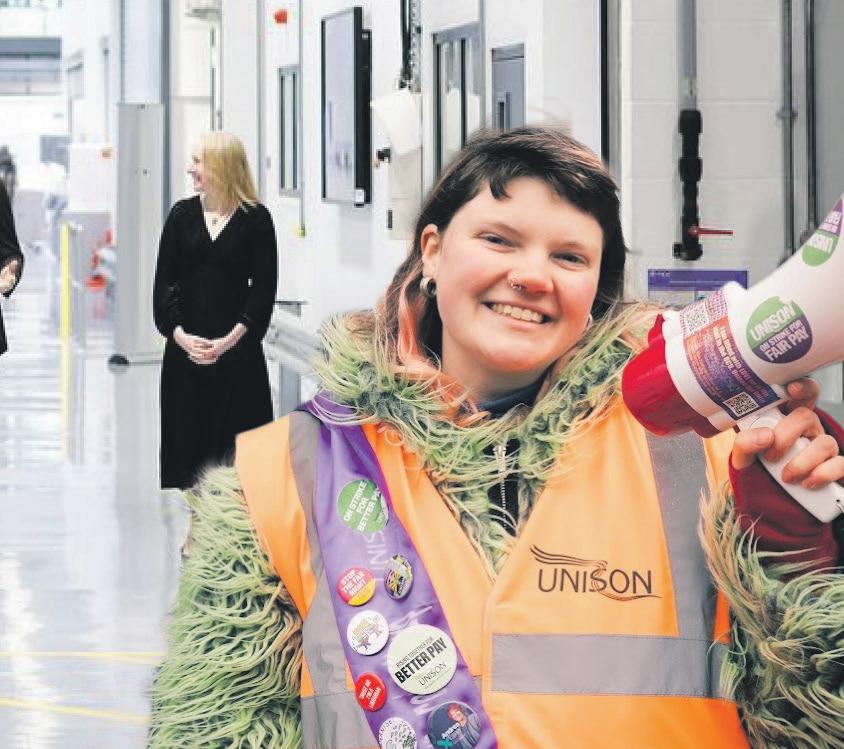
The other defining story of the second half of the year was harder to celebrate, but impossible to ignore. On the 10th of February, coinciding with the University’s winter graduations, UNISON’s Bristol branch began five days of national strike action over pay. The dispute centred on a 1.4 per cent increase from the Universities and Colleges Employers’ Association (UCEA), which strikers described as insulting, and the equivalent realterms pay cut of at least 2.5 per cent.
Professional services sta : administrators, library workers, IT teams, and student support services had voted to strike by 92 per cent on a 60 per cent turnout, the second highest percentage among British universities.
“This year brought no shortage of talking points at the University of Bristol
engagement, and separately placed 15th in Europe in the QS rankings, performing especially well in research, sustainability, and employability.
The results built on a strong set of domestic rankings, 10th in the Times Good University Guide, 15th in the Guardian, and confirmation of Bristol’s status as the fifth most targeted university by top graduate employers.
Further strike action followed in March, and then again in April, by which time hundreds of new members had joined the branch. Communications O cer Alex Tissandier acknowledged the bittersweet nature of the growth, as he believed many had signed up not for optimism, but because they feared their jobs were at risk following a series of departmental restructures.
The university said it could not unilaterally change the national pay award; however, UNISON’s coBranch Secretaries Nathan Street and Alexander Kidd were less diplomatic, emphasising that the sta ‘have been
asked to work too hard for too long, with workloads rising as wages drop.’
SU elections and NUS
referendum
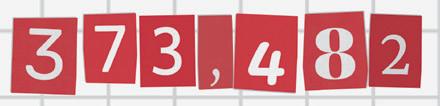
This year saw a record-breaking turnout for Bristol SU’s Full Time O cer elections, with 72,372 votes and 9,864 voters. Candidates campaigned tirelessly, and (shameless plug alert) so did we, with our News, Features, and Comment teams joining forces to keep the student body informed of candidate manifestos and when and how to cast their votes.
On the 17th of March, seven Full Time O cers were elected to represent the student body across areas such as student living, sport and development, union a airs, and equality, liberation and access, as well as dedicated postgraduate, undergraduate, and international student o cers.
Running alongside the elections was a referendum on whether Bristol SU should remain a liated to the National Union of Students – a vote that the SU holds every three years. After debates from both sides, votes were cast, and it was revealed on the 17th of March, after 5616 votes, that 68 per cent of students voted to remain.
These stories reflect a university in a year of change. From practical issues like transport and study spaces to major developments in research and expansion, the past academic year brought plenty for students and sta to keep up with.
Photos courtesy of: (left to right) University of Bristol, Stella Phipps, Kensington Palace, Sofia Lambis, Megan Hopkins & Cara Hene
‘ The best pizza is right here in Bristol’
Compared to the obvious charms of Clifton, say, or the vibrant diversity of Stokes Croft, Bristol city centre can feel a bit, well, soulless. But if you’re into food, it actually has a hell of a lot to o er – if you know where to go.
Everyone and their mum has told me about Gigi’s, right down to my Italian conversation assistant who, at that time, had only just arrived in the UK. I finally found myself beneath their brightly striped awning last week and, from the get-go, you sense a kind of laid back e ciency that makes you want to be part of whatever it is they’re offering. Spoiler alert: it’s amazing pizza.
After being invited to ‘take a pew,’ I started with a fizzy pineapple soda, chosen from an interesting assortment of ‘softs,’ which arrived in a frosted glass tankard complete with straw –a nice touch few places bother with these days. This delivered on its description, but if you want something stronger there’s also wine and beer.
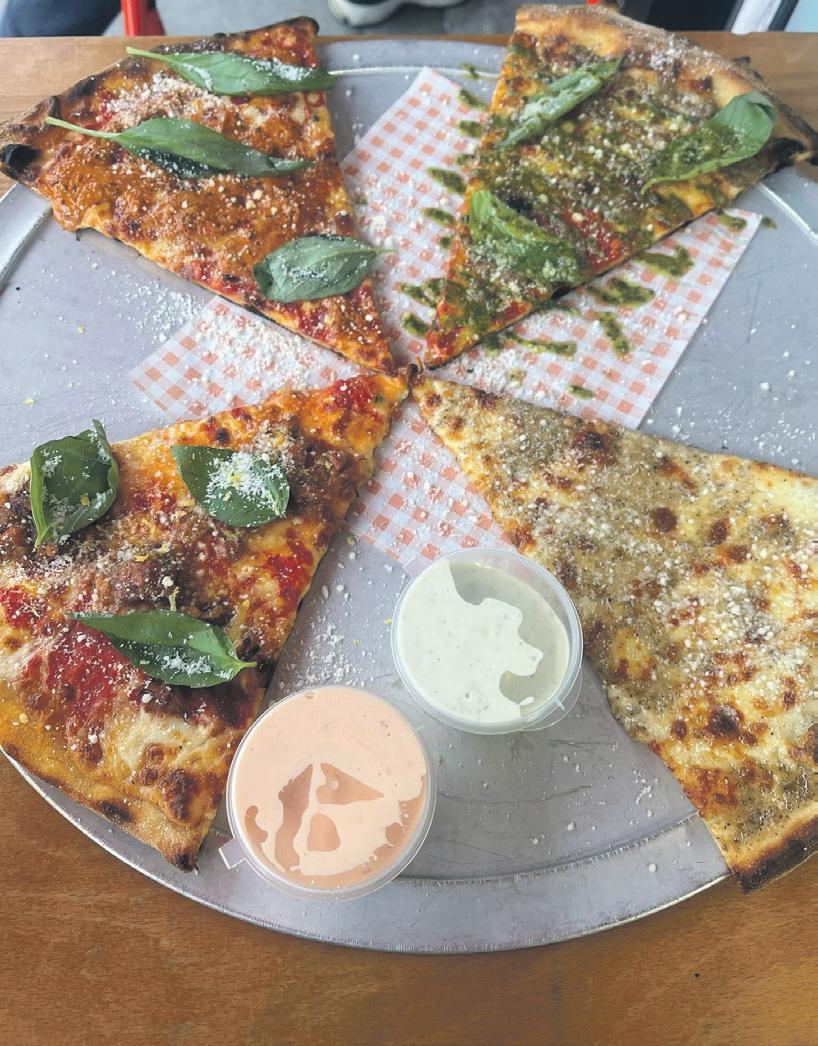
You can eat in, like we did, but Gigi’s also does a brisk takeaway trade to a wide clientele: students, pensioners, builders on their break – all united by a common desire for a lunchtime slice. Speaking of which, there soon appeared on our table a kind of dustbin lid arranged with four triangle-shaped works of art. Cautionary note: two are more than enough for one person, but I went above and beyond – for research purposes. Sitting right outside the shop window, where a team member was deftly shaping and dressing dough, I hoped she wouldn’t notice the extravagance of my selection from the alluring menu.
And alluring that menu is, yet it’s compact and pointedly unrepresentative: if you want a Hawaiian, get thee to Pizza Express. The ‘Ragù’ was a strong start – a perfectly crisp base just about supporting crispy islands of tender beef shin, all scattered with hard, salty cheese. The ‘Tapenade’ slice made its entrance with basil sauce liberally drizzled over a layer of olive pâté. Everything feels deliberately done yet in a chilled-out kind of way. Like, yeah, we make olive pâté and basil sauce: what of it? A friendly shrug. The ‘Cacio e Pepe’ – an homage to a Roman pasta classic –was an unassuming winner: intensely savoury, with a gentle heat coming from the accurate addition of pepper.
The Margherita was fine, although the sauce was slightly too sweet for me.
There were also some pleasing dips – a garlic and herb and the like – but, honestly, they just take up prime pizza real estate – they’re just not necessary. What was necessary, however, was the Pistachio Tiramisu. It was then that I was given my first piece of cutlery; up to that point it had been, rightly so, hand to gob. Served rustically in a plastic pot, the sponge fingers were properly soaked in a co ee solution that hit the desired note of sweetness. And take it from a pistachio-mania sceptic, the nutty paste really worked here.
I chatted to the owner, Raph, in between takes of a video he was filming to promote a new pizza. Gigi’s was born of a ‘give it a go’ attitude, he explained, that just rolled with their success. Having started out in a tiny shopfront with a second-hand oven, they’ve now expanded next door with brand new equipment and routinely work with other Bristol institutions. As well as being a valued member of the lively
culinary community, Michelin-starred establishment, Root, held their Christmas party here, and the owner of the super-cool pop-up The Scrandit is no stranger. But, Raph insists, their core values are unchanged. The same former Wapping Wharf fishmonger comes to make their pizza dough after he’s dropped his kid o at school, and leaves in time for pick-up in the afternoon.
Leaving Gigi’s, I felt genuinely buoyed by vibes (which Raph had encouraged me to soak up) and the manifest enjoyment of its customers. Just as she was leaving, a woman stopped to tell him that her upcoming trip to New York pizza institution Lombardi’s had been rendered unnecessary – the best pizza was right here in Bristol. And I can confide that pizza I’ve had in Italy is not automatically better either. I’m sure Raph appreciated her compliment, but Gigi’s aren’t competitive, nor are they precious about their brilliant food.
Annabelle Minnis First Year, Philosophy and Theology
Sometimes, the best nights out don’t involve queuing for drinks or shouting over loud music… they involve baking cakes with your friends!
Just a 20-minute walk from Harbourside, Bake it! Bristol is the city’s first competitive baking experience. Run by sisters Kalisha and Aleena, the concept launched less than a year ago but has already become a hot spot in Bedminster. Whether you’re after some wholesome flatmate bonding, a fun date night, or simply fancy doing something di erent with your friends, it is a refreshing alternative.
The concept is simple, there are 12 fully equipped baking stations, 90 minutes on the clock, and all the ingredients laid out to prepare your cake. No prep, no washing up, just a fun space to bake and decorate a cake with full artistic licence!
What to expect at Bake it! Bristol:
When you arrive, there is a garden themed bar area, and you can grab a cocktail while you wait. As a novice baker, I was worried that I would be returning to my flat with a questionable looking cake, but I was soon reassured. The Bake it! Bristol team had laid out each station with every ingredient, pre weighed, and drawers full of all the equipment we would need. As someone who hates the fa of baking at home, the experience promises a stress-free baking experience, and they do all the washing up for you!
Each month, they have a specific theme of cakes for you to bake; ours was ‘Whimsical Woodlands.’ We received a detailed recipe card to follow, with sta members wandering around to make sure nobody overwhipped the buttercream or left their cake in the oven. You could pick whichever flavours you wanted for both the cake and the buttercream, as well as whatever food colouring you’d like. We decided on a chocolate cake with marshmallow flavoured buttercream! The recipe was genuinely foolproof; my friend, who has
literally burnt pasta before, brought home a threetiered cake with fondant flowers on top!
The theme is just a starting point though, each pair gets to design their cake however they like, putting their own spin on the theme. By the end of the session there were a range of cakes, one had a full family of fondant woodland animals, and ours had a ‘Lorax’ inspired collection of trees on top. No two cakes looked the same, and that’s the point, everyone had the chance to have fun and get creative.
After we had taken our cakes out of the oven, it was time to decorate at the ‘Creation station.’ They provided sprinkles and di erent colours of fondant. Honestly, I think the hardest part of the whole experience was trying to figure out how to design our cake so we would win the competition. We decided on a ‘Lorax’ theme, although our attempt at ‘whimsical’ shrubbery turned into abstract blobs of fondant. After 90 minutes was up, everyone headed to the Head Baker station to display our cakes and wait for the judge.
Accessibility-wise, the main baking area is wheelchair accessible with an accessible toilet. They welcome guide dogs and service animals, just give them a heads up when booking so they can reserve a suitable station. For dietary requirements, the default cakes are vegetarian and halal. Vegan and gluten-free options are available with at least a week’s notice.
So, if your usual night out is starting to feel a bit predictable, head to 127 East Street in Bedminster to try out Bake it! Bristol. Whether you win the golden cake slice or not, you’ll be leaving with a huge cake, and a newfound respect for anyone who bakes for a living.
Kate Gaskill First Year, BA Modern Languages
Gigi's review
Photo courtesy of:
EPI-GAMES
REGULAR CROSSWORD
by Miles Gilroy
ACROSS
1. Subject of a debate hosted by Epigram in March (3)
5. Something you may be told to mind (3)
7. What many people will be in the coming months (2, 7)
9. Initialism of disappointment (3)
11. What one takes while running (7)
13. What might rise while running (3)
17. _____ the 25-Across (5)
18. Awards ceremony which saw Epigram win best designed student newspaper in the country (5)
19. Small battery, or reaction to a jump-scare (3)
21. A high-pitched bell sound (4)
22. A low-pitched bell sound (4)
23. What a train timetable tells you, e.g. (3)
25. Subject of a motion presented by Epigram and passed by the SU student council (5)
26. What you may get from 5-Down
29. Professor Brian (3)
30. Managing Editor of InSight Crime and Epigram's fourth guest speaker of the year (7)
31. European NASA (3)
35. Epigram's newest section, introduced this year (9)
36. Farewell (3)
37. You may sound like this (3)
MINI CROSSWORD by Kaz Freedman
EPIGRAM'S ANAGRAMS
Back by... some demand, can you unjumble these terms to reveal subjects Epigram's writers have produced brilliant articles about this year?
This crisis Bristol faces made our front page
bane
DOWN
2. Salty sauce (3)
3. Acclaimed sports journalist and Epigram's third guest speaker of the year (5)
4. BBC Europe Editor and Epigram's second guest speaker of the year (5)
5. Where you may find a Roman chair or a Jacobs ladder (3)
6. Physical music storage (3)
8. Epigram's annual panel event (3)
10. Pool past-time (9)
12. A tiny amount (4)
14. Conifer tree droppings (9)
15. BBC Diplomatic Correspondent and Epigram's first guest speaker of the year (7)
16. A short, witty piece of writing and what you're looking at right now (7)
19. Often measured in years (3)
20. Namesake of Bristol's engineering mathematics building (3)
24. Water motion induced by celestial bodies (4)
27. Red, vodka-based cocktail, for short (5)
28. Flowy substance (5)
29. Early entry in an avian dictionary (3)
32. Biblical boat (3)
33. Could be of hearts or a diamonds (3)
34. Word preceding ball or piece (3)
WORDSEARCH by Rachel Shortall
Now that exam season has come to a close for most, what better time to reflect on where we spent those embattled days – can you find all ten study spots hidden here?
Epigram's top five moments of 2025/ 26
2025/26 has been another unforgettable year for Epigram. We’ve delivered extensive election coverage, hosted inspiring industry events, launched brand-new creative teams, and continued to grow as a paper in every sense. With so many highlights to choose from, narrowing them down was nearly impossible – but here are some of the moments that made this year so special for Epigram.
& Photographers
Possibly
one of my personal favourite achievements of this year has to be the success of our newly founded illustration and photography teams. What began as an exciting new addition to the paper quickly has become an integral part of Epigram’s identity.
Throughout the year, our illustrators and photographers worked on every section of the paper, producing striking front covers, creative editorial artwork, and event photography that has given Epigram an even stronger and more distinctive visual identity.
Their work has made the paper more engaging and, may I say, stunning, but has also created opportunities for students with creative talents beyond writing to get involved in student journalism.
Theexcitement in March didn’t stop there, because alongside International Women’s Day came one of the highlights of the year: our annual Women in Media conference.
This year, the event was brilliantly led by our EDIW Secretary Leah Pollard with the help of Arthur Clinton, our Administrative Director, and Eden Chambers, Managing Director – and safe to say, they absolutely smashed it. Across three panels, we welcomed an inspiring lineup of women working across all corners of the media industry, from the Head of BBC West to freelance illustrators, videographers, and creatives.
Our panellists shared thoughtful advice, honest reflections on the industry, and candid responses to what it is really like building a career in media as a woman.
March
was a major moment in the Epigram calendar this year, coinciding with both the Bristol SU full-time o cer elections and a referendum on whether the Students’ Union should remain part of the National Union of Students (NUS).
Our News, Features, and Comment teams joined forces to provide thorough, wide-ranging coverage of every stage of the elections and referendum process. From candidate profiles and manifesto breakdowns to coverage of the nail-biting results ceremony, alongside opinion pieces from both sides of the NUS debate and features exploring why student voting matters, our team worked tirelessly this year to keep the student body informed.
It was a true team e ort, and one we are incredibly proud of, that brought together writers, editors, print and socials across the paper to deliver some of our most collaborative and impactful coverage of the year.
A note from the ...
Thisyear we built on the success of last year’s talk series with an inspiring lineup of some of the most respected names in journalism. We kicked things o with a bang in October by welcoming Epigram founder and BBC Diplomatic Correspondent James Landale! Welcoming, engaging, and generous with his advice, Landale shared invaluable insight into the realities of political reporting and reflected on the early days of Epigram, alongside entertaining anecdotes from his career - including that infamous David Cameron interview.
Throughout the rest of the year we were honoured to have been visited by Katya Adler, Jim White, and Deborah Bonello. Each speaker brought a unique perspective on the industry, from international reporting and political journalism to sports media and deep investigative storytelling.
These talks gave our writers the opportunity to hear directly from leading figures in the field, ask questions, and gain insight into how to navigate an increasingly competitive and fast-changing media industry.
WhileEpigram is first and foremost a space for aspiring journalists to develop their skills and grow in confidence, we’d be lying if we said awards season wasn’t exciting - and this year Epigram had plenty to celebrate!
In February, the South-West Student Publication Association regional conference was held in our very own Wills Memorial Building, where Epigram came away with an incredible seven awards. These included Best Photographer, Best Journalist, Best Design, Best Digital, and the big one – Best Publication in the South-West.
Our fabulous Deputy Editor, Sofia Lambis, received the Outstanding Commitment award in recognition of her dedication to the paper. Meanwhile, alongside winning Best Journalist, our 25/26 Co Editor-in-Chief, James Lewis, was also Highly Commended for Best Article for his tireless coverage of the university’s decision to scrap bus passes for first-year students.
WHAT A YEAR! It’s been so much fun and an experience we will never forget. We hope that everyone else on the editorial team has found it a productive and enjoyable experience. As a team, we cannot express our thanks enough. Without everyone’s help, we wouldn’t have been able to do nearly as much as we have. More than 1000 articles, 600 Instagram posts, nearly 400,000 website views, and plenty of formal recognition from the Student Publication Association at both regional and national awards – including runner-up in the Best Publication at the national conference – it’s safe to say you guys have killed it. Thank you for the passion and patience, the energy and endurance, and for always being so reliable.
It’s been such a fantastic year and one we will never forget. For everything going forward, we wish you all the best of luck. Not that you need it, of course. Please, please, please do try and keep in touch – follow us on Instagram and LinkedIn, send us your yearly newsletters; we just cannot wait to see where all of your guys’ ceiling of awesome truly lies. From what you’ve shown us this year, it seems that it’s probably glass and it’s ready to be shattered into a million pieces. Despite not wanting to sound like a broken record, thank you again: you’ve made our year so special.
Then, in March, the Epigram team packed our bags and headed to the University of East Anglia for the Student Publication Association National Conference (a ectionately known as SPANC). After an incredible weekend of inspiring talks from industry pros and a slightly rainy trip to Norwich town centre, the conference concluded with another hugely successful awards ceremony. Epigram took home awards for Best Creative Piece, Best Arts or Culture Piece, Best Newspaper Design, alongside a Highly Commended recognition for Best Publication in the UK!
These awards are a testament to the talent and dedication of everyone who has contributed to Epigram this year; we could not have done it without you.
Daisy Yates Senior Digital Editor
Suzanne Celerier & Emilia Ibarguen Donoso
What a year. The news never stops, and neither did we. Thank you to my editors for your countless hours spent on these amazing stories. It has been a genuine privilege to work with such a dedicated, talented, and lovely group of people. Together, we brought in a whole new way of editing, doubled the team over Christmas, and published over 100 articles (!!!). But I think that overall, we strengthened what Epigram does best: being a voice for students.
– Cara Hene News Digital Editor
Starting this year with a redefined section, Comment 25/26 had a serious task on its hands. From hot takes and debates to front pages and mini-series, we met that task pretty incredibly. Our little commission meetings became a monthly highlight and were always brimming with ideas, laughter, and excitement. The five of us made not just a great team but a seriously brilliant one. No pressure 26/27!
– Sam Couriel Comment Editor
Following the world of film, television, and pop culture through these hallowed pages has been a source of immense university joy. Gripping and heartfelt reviews that matter to students have brought this section to life. I don’t nearly have enough space to express all the wonders of the section and its exponential growth, nor to thank the brilliant cast and crew who somehow managed to churn out reams of content. But for now, much like Timothée Chalamet’s Oscar run…all good things come to an end.
– Felix Glanville Film & TV Editor
It’s been an absolute blast running the Features section of Epigram this year! We’ve done our best to capture the Bristol student perspective within the zeitgeist, and the various mini-series over in the Mind the Gap column have been excellent. All the ladies in the team are true gems, and I hope I speak for them all in saying this has been one of the most rewarding parts of my university experience. I wouldn’t trade it for the world. #girlpower
– Anna Dodd Features Editor
Working as supreme leader of the OUTSTANDING arts team this year has been a wonderful experience – I expect these absolute stars will go very far! Epigram has been a blessing for me – getting drunk next to Mel Giedroyc at an Old Vic press night was a personal highlight – and I believe we’ve done good work in opening up similar possibilities for the student writers of Bristol! P.S. Sorry if I missed your WhatsApp texts…
– Elle Heathcote Arts Editor
Epigram’s most rock ‘n’ roll section… where else can you cover every major festival in the city, review sold-out arena shows, or make an article about your favourite songs with an hour-long read time? To everyone who has written for us this year, thank you for supporting live music and having a bloody good time doing so! It’s been an absolute pleasure covering the best of Bristol for the past two years. Aditi, Eve, Arianna, and Anastasia – you’re all magic x
– Sophie Scannell Music Editor
Just a huge thank you to all the writers and illustrators who contributed to SciTech this year! We have thoroughly enjoyed reading your work and getting it out into the world. We managed a whopping 1.5 articles a week: relevant, exciting, bold. Also, huge love to the Epigram team for being so interesting, kind, supportive, and exciting. I hope the next generation of SciTechists are able to continue our little passion project with as much love as we have for it.
– Corin Hadley SciTech Co-Editor
It’s been a fantastic year for the Sports section! From being shortlisted at the SPAs, to establishing our first monthly column and women’s sports section, it’s been an intense but incredible year of student sport! Thank you to all of our wonderful contributors and writers – and of course the editorial team: Ed, Ava, Benjy, and Weronika!
– Emma Gri ths Sport Editor
2025/26 was the first year of Community at Epigram, and what a year it’s been! It’s been a pleasure to work with such a hardworking, creative, and talented team. From Epitome’s iconic Zed and Jed, to Rachel at Epigames, to Ivor, Cordell, and Alannah putting in the hours to publish countless articles, I owe you all a massive thank you. We’ve created a truly special section. Community forever <3
– Annabel Bienfait Community Editor
There aren’t many 20-year-olds who can say that they’ve won best publication in their region, hosted James Landale, Katya Adler, Jim White, and Deborah Bonello, and dragged themselves to Monday morning meetings every week all whilst pursuing a degree. In fact, I bet there are none. It’s truly a remarkable achievement, and I hope you make the most of it on LinkedIn; otherwise what was the point?
I jest. We’ve left a legacy of equality and fairness behind us, having restructured the society in a way that is beneficial to all members but also to the incoming team who gets to tame the beast of newly coined Epigram & Croft Publishing. The community we’ve built, unrecognisable from this time last year, is a triumph in itself and an atmosphere I hope future teams maintain and build from.
I think everyone at Epigram will agree when I say what a bloody year! It’s been an honour and a pleasure to work alongside a team of such dedicated and enthusiastic individuals, and an experience I’m sure none of us on the Exec team will forget anytime soon. From Freshers’ Fair madness to WiM mania, we’ve really made the most of the chaos this year, and I’m so proud of us all!
I’m going to save my soppiness for the formal, but I just want to say thank you and love you guys for all your hard work. You are the backbone of this society, and you make (my) dreams come true, you-ooh-ooh!
– Eden Chambers Managing Director
It is rare to find people that are both good at InDesign and enjoy using it. It is for that reason I am eternally grateful to Ella, Scarlett, and of course Jules for putting up with it alongside me and producing the beautiful pages you see before you. That gratitude also extends to the section editors who, while they may not enjoy InDesign as much, have become bloody good at it. Thanks, guys. And sorry for subjecting you to that. Farewell all, and I look forward to seeing some familiar bylines in the future.
– Miles Gilroy Senior Print Editor
Olivia Hill Social Secretary
Sian Clarke Head of Ads and Sales
Miles Gilroy Senior Print Editor
Hannah Beason Student Legal Counsel
Cara Hene News Digital Editor
Aimee Anderson News Deputy Editor
Keria Guy News Subeditor
Ellen Landale News Subeditor
Lenny Osler News Reporter
Dana Datu News Reporter
Brontë Harris News Reporter
Natalie Payne News Reporter
Ellen Paterson News Reporter
Ariella Greenfield News Reporter
Stella Phipps News Reporter
Hannah Roberts News Reporter
Anna Dodd Features Editor
Ellie Barnes Features Deputy Editor
Charlotte Kerby Features Deputy Editor
Hannah Corcoran Features Subeditor
Maya Tailor Features Subeditor
Amaya Lewis-Patel Comment Subeditor
Lilja Nassar Comment Subeditor
Yezou Aymero Features Column Editor
Madeline Richards Features Column Editor
Sam Couriel Comment Editor
Lindsay Shimizu Comment Deputy Editor
Amelie Patel Comment Deputy Editor
Annabel Bienfait Community Editor
Rachel Shortall Community Deputy Editor
Alannah Mylechreest Community Subeditor
Cordell Punter Community Subeditor
Jed Dixon Epitome Curator
Ella Heathcote Arts Editor
Julia Mullins Co Editor-in-Chief
James Lewis Co Editor-in-Chief
Sofia Lambis Deputy Editor
Eden Chambers Managing Director
Ike Idikakalu Financial Director
Leah Pollard EDIW O cer
Arthur Clinton Admin Director
Daisy Yates Senior Digital Editor
Grace Knight Arts Deputy Editor
Tylah Hendrickson Arts Subeditor
Amelia McCabe Arts Deputy Editorz
Alexandra Boersma Arts Column Editor
Ruby Wright Arts Column Editor
Felix Glanville Film & TV Editor
Eleanor Bate Film & TV Deputy Editor
Emma Coleman Film & TV Subeditor
Olivia Howard Film & TV Subeditor
Sophie Scannell Music Editor Eve Davies Music Deputy Editor
Every Bristol student should go to this exhibition
The Arts Editor argues the case for the RWA's newest dance-themed exhibiton, which is a perfect show for students to visit, full of high quality artwork and, importantly, cheap!
Ella Heathcote Arts Editor
The RWA’s new show ‘Dance Out’ is the first exhibition in a while to have a real positive and prolonged impact on me. Its host of well-known artists is impressive, and its curation even more so. It is a multidisciplinary dream, privileging no artwork over the others, with sound, film, painting and drawing filling the space. On walking up the stairs, we are met with a seemingly typical gallery space. The huge painting at the end of the room, Denzil Forrester’s ‘Blue Tent’, is an arrangement of vibrant fragments which immediately catches the eye, but venture further in and you will notice a haptic floor, videos and an ongoing sound installation which floods the room.
Head of Exhibitions, Kathryn Johnson, tells me it’s the first time an RWA show has had a soundtrack specifically curat-
ed for it, connecting the audible with the visual through the sounds of Bristol DJs. This is played through a haptic floor in the middle of the main room, which we stepped onto while we had a chat (needless to say, my voice recordings from that point are completely useless). The dancefloor acts as an installation. Although visually subtle and fairly unimpactful, once you step onto it, vibrations oscillate throughout your body – you’re infected with music, with movement. It also makes you look at the paintings around you di erently. The floor was installed with the deaf and hard of hearing in mind, though the sensation is universally enjoyable. Music is universal, and the curators have extended that into this show. It’s an undeniably uplifting exhibition. I have been trying to avoid turning to cliché, but the apparent must be pointed out: dance, at this moment, as throughout history, is a uniting force.
The show, I’m told, is intended to break into a wider audience. Students, for example, rarely know what the RWA is, although it is essentially on campus. While Bristol’s art scene thrives through nontraditional art forms, from gra ti to installations at club nights, its galleries often get left behind. Everyone knows the building, but perhaps its austere neo-Renaissance façade pushes students away. What could be housed there but some old oil portraits of aristocrats we don’t know or care about? ‘Dance Out’ flips this idea on its head. This exhibition proves why galleries are necessary and relevant. The RWA is evolving with its audience, combining interactive work with oil painting, film with drawing.
Of course, most of the works in this ex-
hibition are paintings. They should be flat and static, being two-dimensional objects, yet these particular artworks are brimming with life and movement. Curator and artist David Remfry RA tells me that he uses watercolour because of the movement it allows; the medium mirrors the subject, the translucent paints take on agency as they melt across the page – they dance. We see this in the dried and darkened drips of paint which have made their way down over planes of colour. One aspect of the paintings that stuck out to me was the clothes – a woman with a red vest top, red heels and black capris dominates one painting, a girl in a green 50s style dress another. Remfry paints real people, not vague crowds. The strong and decisive sense of character creates a vibrant sense of the humanity at the core of dancing.
In a room o to one side is a set of screens playing films by Melanie Manchot, in a piece called ‘Night Moves’, in which dancers move in various locations in the city – fun for any Bristol resident to spot where each video is filmed. The artist describes the film as a celebration of ‘Bristol’s trailblazing nightlife culture and recognises its need for protection amidst financial challenges and the privatisation of public space.’ So dancing becomes about more than movement; it is a reclaiming of space, it is a marker of our existence within space, a struggle against erasure.
A Tracey Emin video plays in another room, her 1995 piece ‘Why I Never Became a Dancer’ which shows dance as a form of resistance, for Emin, against the violent men of her past. This sense of resistance runs through the various events that the RWA is hosting around this exhibition, which includes youth dance classes, listening labs and performances and workshops surrounding dance in various cultures.
Despite the diversity in medium and subject (of course, within the wider theme of dance), there wasn’t a single piece of work that didn’t warrant attention – or, in fact, demand it. Each painting and drawing had a magnetism about it, yet each o ered something di erent. The attention to character in Remfry’s work that I mentioned is absent in Paul Dash’s pen and ink drawing ‘Whirling Dervish Parade’ and ‘Revellers Relax at a Refreshment Tank’, yet such a phenomenal movement is conveyed that it is clear through the artist’s rash pen strokes what we are seeing. These works unite Dash and his subjects through movement; we can imagine the artist’s gestures as he creates the work, a movement which is itself a kind of dance.
This show is a real pleasure. It makes you want to dance; it makes you think about dancing as a fundamental and universal act. It’s simply a collection of brilliant, vibrant, and far-reaching art.
The exhibition runs until the 9th of August. Please go! Please! For me! For art! Entry costs £1!
Photos courtesy of: RWA /Alastair Brookes
Arts
Miss the library? Poems to remind you of better times
Editor's note:
Joe Blyth Fourth Year, French and Music
The Hawthorns
It is my will to leave no stone unturned
Here is a place to see before it’s spurned. What lies beyond the front I never knew
A secret known today among the few
But till the builder’s hammer comes to pass
To pave the wreck and fill it all with books,
On Woodland Road the tired shell exists
And happily the lunchtime soup persists.
I don't know about you, but ever since I finished my degree, I've felt like a shell of myself. Purposeless and floating around the city, I miss the hospital glow of light in the ASSL, the ambient sounds of snot swilling around the nostrils of my neighbour, the euphoria of finding my favourite seat hadn't been occupied this time. If you've still got any time left in your degree, please appreciate the wonders this university has to o er. The following poems by Joe Blyth capture that otherwise indescribable magic, the magnetism of some of our most beloved libraries, so whether you're near of far, you may be transported back to better times.
The ASSL
From the plains of Roswell to the glens of Scotland
Many believe to have glimpsed an encounter from beyond:
A trail of lights across the sky, a form so unplaced in this world –
Brief and fleeting, to torment the viewer for life.
Yet there is something that came to visit us here: The cold concrete block with sheered edges that No warm-blooded thing could have conceived, Parked on the ground at Kingsdown.
Day after day, many venture within, Drawn by unknown forces. Some remain until the morning and emerge, The same but not quite.
I climb the stone steps heavy and smoothed by the weight of studious feet which fell before mine, up to the top, around and to the west room where the clicking and tapping and sighing of study is all around. I sit and hope I will manage to do more than stare at the blank screen.
After the bell has rung, I skip and hop back down the steps, Not with glee but of necessity as the great staircase was built with steps too shallow yet too long to either trudge wearily or bound. How disappointing.
Beacon House
Where is the beacon?
And where is the house?
Which is the right way in from 4 till close?
Important questions swirl unanswered under the bright lights
But what is life if not a search for meaning in the unknown?
Wills Memorial Building
Columnists .................. Alexandra Boersma & Ruby Wright
Being an English student means I don’t just have to read academic writing. I’ve studied a range of di erent literature; I might read Middlemarch one week and then watch Fleabag the next. To borrow from Walt Whitman, my degree contains multitudes. With my essays all submitted, I’ve had time to reflect on the best books I’ve read this academic year. Now I want to share my reflections with you. And who knows, maybe this list will inspire you to give a new book a try.
Nemesis by Philip Roth
Hands down my favourite book of the year was Nemesis by Phillip Roth. Firstly, this is because it was the most readable of anything on my reading lists this year. This probably has something to do with the fact it was written in the 21st century rather than the 16th (sorry Shakespeare!).
Nemesis is centred around the outbreak of Polio in 1940s America. Roth treats the subject with extreme care, detailing the emotions and actions of a community faced with an unexplained illness and death. Written in 2010, Roth had no knowledge of the COVID pandemic, but the book rather eerily tapped into feelings most of us have now experienced. Without giving too much away, what interested me about Nemesis was the way it explored life after disaster. In other words; survivor’s guilt. As the novel moves forward in time, the Polio epidem-
ic is managed and controlled. The characters have very di erent reactions to this, ranging from guilt and self-punishment to a renewed strength and hope in life.
Frankenstein by Mary Shelley
When this appeared on my reading list last year, I had a lot on my plate already. I decided to save time by listening to it as an audiobook. I think it is safe to say I had no idea what was happening (I don’t really do audiobooks).
Anyway, I gave Frankenstein another go this year when it cropped up on another unit’s reading list. I decided to get a physical copy of the book this time, and my experience was much better. First of all, I actually understood what was going on, which is something I’m always worried about when faced with ‘the classics’.
For those who don’t know, the novel gets its name thanks to Victor Frankenstein, the scientist who creates the Monster that haunts him for the rest of the novel. The Monster was a result of a scientific experiment and, after Frankenstein abandons him, quickly learns about humanity by observing a family and their interactions. The Monster then seeks revenge on his creator, whose attempts at playing God end tragically. This is a novel for anyone who loves the Gothic or gloomy ghost stories. It is also just an interesting read to think about the idea of ‘the Other’, the person rejected from society for not fol-
lowing the norms, especially in terms of their looks. Frankenstein’s Monster learns our language and has normal interactions with a blind man, only to be ostracised when the blind man’s family turn up and actually see him.
The Grapes of Wrath by John Steinbeck
Set during the Great Depression, this novel takes the reader on a journey through displacement to tragedy. It is not the most uplifting read, but it is important all the same. I must admit that I didn’t really get into this book until the halfway mark. I’m not sure why that was, but all I remember is that after that point I was gripped.
The novel follows the Joad family as they are displaced from their home and land and set o in search of work elsewhere. From this point on they almost never stay still, travelling from one temporary camp to the next. Their family is also torn down piece by piece as people die or leave along the way.
What stood out to me about this book was the parallel between the e ect of industrialisation back then and the e ects of AI today. One of the most predominant themes of The Grapes of Wrath is the loss of human connection to the land and the natural world. Aren’t we experiencing a similar loss of connection to art and literature through Artificial Intelligence?
Kashvi Cox runs through the best books she's read in her final year studying English
Kashvi Cox
Third Year, English
Three Women
by
Sylvia Plath
After reading Middlemarch for a unit last year, I was apprehensive about being confronted by another of George Eliot’s works. Luckily, this one was much shorter than her famous novel. In fact, it was a short story, which meant I could read it in one sitting. The fact this was shorter allowed me to fully appreciate the craft of Eliot’s writing and the ideas behind it.
In The Lifted Veil she explores the idea of sympathy through clairvoyance and telepathy, although maybe what she’s really exploring is empathy. This term did not enter the dictionary until the end of the 19th century, but Eliot appears to be ahead of her time in this short story. Empathy is about stepping into someone else’s shoes and actually feeling their feelings, whereas sympathy is less active. You can have sympathy for someone without knowing what the emotions they are experiencing are like.
I had to end my list with Three Women because this radio play was the focus of my dissertation. And I must say, no matter how many times I read it, I didn’t get bored of Three Women. I’m not normally someone who enjoys reading poetry. I find it interesting and I love to analyse it, but I don’t usually understand it unless I have a certain amount of context. Three Women is di erent. Well, for starters it is a radio play (so not technically a poem although it had many poetic qualities). Secondly, it was both beautiful writing and understandable. The play is formed of three women’s monologues and their di erent experiences of pregnancy, pregnancy loss and early motherhood. I could say so much more about this play, even after writing 10,000 words on it for my dissertation, but I’ll end here. All I’ll say is that I recommend reading this play if you want to like poetry or you want to give it another try.
The Lifted Veil by George Eliot
Film & TV
‘Last night was a movie’ : my Bristol years
through the lens
We all have those moments in our lives when we turn to our friends and exclaim ‘Oh my God, this feels like a movie!’ For film students, it’s usually everyday, and with my time at Bristol coming to an end, what better way to wrap up these past three years with movies and shows that are somewhat representative of my time here.
I distinctly remember the first time I felt like Bristol was a movie. In my first year whilst at BOSW (Best of South
West) I messaged my friends from home and insisted that Bristol was actually Pitch Perfect (2012). The stage lights, pyrotechnics and acapella covers of pop songs really launched me into a whole new world of performing arts that I’d never been witness to before.
As someone not from a big city, where the local spoons was a 30 minute drive away, experiences like this were formative for fresher me. There was a whole new world I was exploring.
The rest of my first year can only be described as a movie where the editor was being overworked and underpaid and so accidentally made a cut of a film from multiple di erent shoots.
Natalie Payne
Second Year, German and Spanish
Whenwe think of academic warriors in film and television, Elle Woods or Hermione Granger usually spring to mind. While they might both be staples on a Pinterest board, you can only say ‘What, like it's hard?’ so many times when what you’re doing is actually quite hard. If you feel that it’s time to move on to pastures new and find other characters to draw motivation from in times of academic despair, this is the list for you.
Rose Gupta M.I.High (2007-2014)
overachiever of the core four, demonstrated her academic prowess while being stalked by ‘A’. Although an all-nighter in the ASS might feel like her infamous season three breakdown, it’s probably healthier to take inspiration from her general disciplined academic outlook.
For a while I was consumed by Music Theatre Bristol (MTB)’s showcase piece of Bring It On (2000) and so I lived my cheerleader life for a while.
I also discovered that the film Theatre Camp (2023) was strangely accurate and all it takes is one MTB rehearsal to start allocating characters to real life people.
Olivia Pope Scandal (2012-2018)
Starting o strong with a childhood throwback. The original academic weapon inspo for every CBBC kid, Rose (Rachel Petladwala) successfully balanced achieving the best marks at Saint Hopes with her career as a child spy for Mi9.
Spencer Hastings – Pretty Little Liars (2011-2017)
Throughout the series, Spencer (Troian Bellisario), as the
In Scandal, it seems like Olivia Pope (Kerry Washington) is capable of navigating everything; an extremely successful career as a spin doctor, a secret a air with the President of the United States, and a very complicated relationship with both of her parents. If she can do it, so can you! (Although you’d probably want to avoid the second one).
Carrie Bradshaw Sex and the City (1998-2004)
In the darkest months whilst dealing with a death in the family the only film that made any sort of sense was About Time (2013) and by the end of the year I’d decided to switch courses to a single honours of Film and Television studies placing me firmly in my Legally Blonde (2001) era and on my path to becoming an academic weapon.
Films often heavily rely on their location to perpetuate meaning and personifying a place can make a location a character in of itself. Cue my home for the next two years: Waverley Road. There are so many memories stashed in this place and countless movie nights but I’ll do my best to condense two years into a few movies and shows that give you the most accurate depiction of my time spent here.
Starting o strong is Before Sunrise (1995). Those who know me will know
An Editor's farewell:
It really feels strange and surreal to bid goodbye to a wonderful three years at Bristol and with it comes the sad loss of great power and a departure from Epigram's Film and TV Editorial position. I could not have asked for a better section to manage this year - we have churned out an assortment of reviews, commentaries, live reports, festival coverage and everything in between. Our renewed partnership with Watershed ensured students could get close up to the incredible world of entertainment, while our enagagement online has made the section become one of Epigram's biggest and most-read. It has been a joy to work with the wonderful editorial team: with huge thanks to Emma Coleman as Subeditor, who is primed for duty as next year's Co Editor-in-Chief. Seeing so much passion for films and television shows has been a privilege of this role and I wish next years team the best of luck taking charge of the paper's best section. Entirely unbiased.
I love a late night walk, chat, insomnia cookie run, windowsill moment etc… essentially any reason to chat with the people I love whilst looking at the stars.
Before Sunrise is a beautiful and minimalist film that consists mainly of monologues and dialogue between the two characters as they wander the streets of Vienna.
Most people are grateful to their parents for passing down their good looks, or extreme athleticism but everyday I thank the genetic gods that my mother passed down her hostess skills onto me.
At times, Waverley house has felt entirely like an episode of Come Dine With Me (2005-) or in the more dire moments, The Bear (2022-). The amount of themed parties my living room has seen over the two years I’ve lived there is admirable.
It’s witnessed cowboys accusing each other of murder, a broken thumb as a consequence of a failed ballet lift and people from all the eras from an Irish bar wench in the famine to 1980s rock. What I’ve learnt is that, just like Come Dine With Me, sometimes the best way to spend your evening is to invite people over and cook them a meal. Nothing bonds people like food.
As I enter my final few weeks at Bristol I look to High School Musical 3: Senior Year (2008) to help me through. It’s the season of wrapping things up; spending days with friends on the Downs and basking in the sun pretending you’re in Mamma Mia (2008), maybe you’re wingmanning your friends like in Players (2024) or perhaps you’re simply one of the March sisters in Little Women (2019) finding their way.
Fictional characters to motivate you for the next academic year
Assane Diop Lupin (2021)
The only man to make it on to the list, Assane Diop (Omar Sy) is the main character of the French TV series Lupin. Maybe you fancy brushing up on your language skills, or maybe you just need the cunning intelligence of a gentleman burglar to break you out of an exam season funk.
Harper Stern Industry (2020-)
Lidia Poët
The Law According to Lidia Poët (20232026)
Who better to use as a source of inspiration than Italy’s first female lawyer! Her determination to fight for women’s rights serves as a good reminder of the value of our education, so use this time wisely before forgetting everything you know over the summer.
Diana Tell Me Lies (2022-)
Summer Roberts The OC (2003-2007)
As well as loving ‘shopping, tanning and celebrity gossip’ she got a 2300 (out of 2400) on the SAT and was accepted into Brown. Study now and hit the Gloucester Road charity shops later?
Kate, Carly, and Amber –bine your knowledge in a joint study session to outsmart the evil exam paper(s) looming over the next week.
Kate, Carly, and Amber The Other Woman (2014)
Her relentlessness in her pursuit of Mr Big sets the example that if you just keep going, nothing can stop you – not even somebody else’s marriage.
Industry is some of the best television to come out of the 2020s, and Harper Stern (Myha'la) is one of the reasons why. She’s ambitious and cutthroat, and displays the determination needed to make it through the academic year, as well as providing plenty of reasons to avoid a career in finance.
A character who works hard and is focused on her future, she uses her intelligence to escape a terrible relationship with as minimal damage as possible to herself and her reputation. Work hard now because you never know what it might be useful for later.
There’s nothing better than combining forces to outsmart the evil man in your life! Maybe this could be you and your coursemates if you combine your knowledge in a joint study session to outsmart the evil exam paper(s) looming over the next week.
Read more about fictional characters at epigram.org.uk
Photos courtesy of: IMDb
Photo courtesy of: Epigram / Beth Nugent
Beth Nugent Third Year, Film and Television
Image courtesy of: Unsplash / The Maker Jess
Saturday Night Live UK: a success despite all odds
Grace Parsons First Year, French and German
WhenSNL UK (2026-) was initially announced, the main response from the British public was to simply ask why? Many, including myself, were skeptical.
The US version isn’t particularly funny, so is there really an audience for a new version? And yet, over the past seven weeks SNL UK has slowly won people over with its British references and proving time and time again that it’s not afraid to get weird with its sketches.
The show was initially contracted for six episodes although this was extended to eight and has now been renewed for a second series starting in September. It certainly took a few episodes to find its footing, with some of the earlier episodes missing the clear personality the show has now developed, but it has quickly become a weekly favourite.
The show follows much the
same format as SNL (1975-) with a political cold open, mix of pre-filmed and live sketches and a weekend update segment. Whilst the sketches can be hit or miss, I have to say the cold opens have been more of a miss.
George Fouracres’ Keir Starmer impression, although initially entertaining, has quickly become tired, with each opening starting to look very much the same. On the contrary, Weekend Update (hosted by Ania Magliano and Paddy Young) has blossomed over the course of the first series, embedding ongoing jokes alongside a satirical report of the week's news packed with daring one-liners.
Alongside the fan-favourite weekend update hosts, the cast is made up of 11 previously relatively unknown British comics. And although the cast work amazingly as a whole, Jack Shep and Annabel Marlow have definitely stood out - bringing a much needed Gen Z voice to the show.
‘‘
These celebrities have been well integrated into the sketches, even including sketches specific to the guest host such as a Magic Faraway Tree inspired parody song in Nicola Coughlan’s episode. However, the monologues could do with some work.
Personally I’ve found that, much like on the US show, unless you are a fan of the celebrity, the monologues can go on for too long and are often simply boring without specific celebrity knowl-
Subeditor................................ Emma Coleman
Subeditor................................... Olivia Howard
Other sketches have su ered from simply not knowing when to stop - dragging down what would have been a funny sketch with every minute added, but this is a pretty consistent problem across sketch shows.
Jack Shep and Annabel Marlow have definitely
stood out - bringing a much needed Gen Z voice to the show.
edge. Like was I really supposed to know that Jamie Dornan collects rocks?
Jack Shep in particular has really shone in his roles, clearly having settled into his performance of campy, silly characters from episode eight's slightly extra dating expert to the viral shy Diana from the first episode.
As well as the cast, much like the original show, SNL UK has hosted a variety of British and Irish celebrities (along-
Flick Picks: The Editor's Edition
In terms of sketches, highlights have definitely been the sketches centred around British cultural references. From a parody of creepy British Pork adverts from the 80s that had the whole cast struggling to keep it together, to a play on Traitors calling out the contestants inability to see whats right in front of them and even a modern day Shakespeare complete with a lime bike and vape.
Felix Glanville Film & TV Editor
Dune: Part Two (2024)
John Hughes
Now, if you know me, there was no way this chocolatey treat was not going to make the list. Paddington directorial legend, Paul King, takes the sacred character of Willy Wonka and gives it some fresh life before the doors of his chocolate factory open. The film is exploding with colour, warmth, and character, and some national entertainment staples chucked in too. Matt Lucas, Rowan Atkinson, Olivia Coleman, Paterson Joseph, and of course, Hugh Grant as a dapper Oompa-Loompa. No notes.
We continue down the glorious Chalamet cinematic universe with Denis Villeneuve’s breathtaking sci-fi sequel. I watched this four times in cinemas, four. It still ba es me how this completely bombed at the Academy Awards in 2025. A stellar cast firing at all cylinders, beautiful cinematography that brings Frank Herbert’s novel, Hans Zimmer doing his usual masterpiece soundtrack behaviours, and an engaging story which managed to crunch down the mammoth run-time.
where this show goes in the future.
Having had a promising start, I hope that the show can iron out its current issues and continue to evolve into something greater, showcasing upcoming UK talent as well as making genuinely funny and relevant TV.
What’s really stood out for me is that the show is completely unafraid to be over the top, making for some random yet funny moments, like a celebration of David Attenborough’s 100th birthday that ended in a full-scale boxing match. These exaggerated, weird sketches alongside the risqué weekend update one liners and quintessentially British humor really make the show - setting it apart from and catering to its British audience.
With season two having just been announced to air in September 2026, it will be interesting to see
As a last hurrah to my time as Film & TV Editor and to my years in Bristol, I thought I’d compile my very favourite flicks which have been released throughout my undergraduate years (20232026). It’s whacky, whimsical, and you’re not allowed to judge.
I'm Still Here (2025)
Now for a modern-day classic. A beautiful and soulful film with the e ervescent Fernanda Torres delivering an emotional performance as Eunice Pava, who tracks down the disappearance of her husband during Brazil’s authoritarian military dictatorship. Not only was this film one of the first reviews I did for Epigram, but it came out during a time when my university life was full of a love for my history degree. The film is a genuine historical recapture of such an oppressive time.
It is at this point, which I am sure you have lost all respect for me as a film critic. OK, this film is not a necessary social commentary and it does cater to the generation of iPad kids with a disjointed plot, but it was an utterly nostalgic experience for me. I never thought I would hear the epic video game score by Nintendo's legendary Mahito Yokota on the big screen after nearly 20 years from the game's release. At a time when I have been reminiscing over first-year joy and nostalgia, this film captured that similar feeling.
Walter Salles
The Super Mario Galaxy Movie (2026) Aaron Horvath and Michael Jelenic.
Wonka (2023) Paul King
side American SNL icon Tina Fey) from Aimee Lou Wood to Riz Ahmed.
music
Spanning a number of stages and venues in just one day, Outer Town Festival has built its reputation in Old Market for its raucous takeover every April, hand-picking the city’s wildest grassroots bands and acts to soundtrack the madness. Here were just some of our favourites!
The Orchestra (For Now)
Review Roundup
Outer Town Festival
al, some of which was debuted on this tour, the night before at Cardi Tramshed. Then once those tunes were done, they finished with the aforementioned ‘Wake Robin’, which drove the mid-afternoon Trinity Centre crowd mad; they started a moshpit for this unassuming song. For a band once attributed with a ‘cult following’, The Orchestra (For Now) had great attendance.
Lacross Club
hurling himself across the stage, rolling around on the floor, and plummeting into the sardine-packed audience. (Proggy Windmill-scene BCNR-alike this is not). With breakneck speed and unrelenting energy, Lacross Club were an adrenaline shot of vital punk into the festival’s indie-leaning lineup. If you’re looking for music to jump around to, songs about Wales, or have a distaste for the concept of t-shirts, check them out as soon as humanly possible.
Scuttlers
What can be said about TO(FN) that hasn’t been said before? Maybe that Joe Scarisbrick looks a lot cooler smok-
ing straights on stage than he does vaping – but that’s irrelevant to this publication. Last time the South London seven-piece were in town, they played a manic sold-out show at The Exchange, which I was lucky enough to bear witness to. If they were firing on all cylinders last time, the engine they used this time relied on cylinders not yet theorised by mankind. Their sound is probably categorised somewhere between avant-folk, chamber pop, postpunk and prog rock. Two members of the ensemble are devoted entirely to strings, wailing out in a staccato fashion on their debut single ‘Wake Robin’, which was the only song played that is released already. The rest of the set was devoted to playing unreleased
Ever wanted to see the Dead Kennedys without having to buy a time machine and book a flight to California? Or to see Blur’s Graham Coxon if he was a dervish of frantic energy hell-bent on taking o his clothes? You can’t get much closer than Lacross Club, a garage-punk trio from Tenby, South Wales. Their slot at Outer Town in the Exchange Basement was a whirlwind, frontman Cai Barry
Few bands in this city’s grassroots scene can truly said to have achieved ‘cult’ status, but it is in seeing Scuttlers perform live that the phrase itself gains new meaning. Fronted by Bristol’s truest eccentric Myer Clarke, Scuttlers are hard to define through genre terms. Their songs are intricate blends of sparkling corkscrew guitar, tightly-wound time signatures, and locked-in basslines over- scored by Clarke’s mellowed howls and plaintive, po- etic vocal style. None of this can capture, however, the sheer frenzy of a Scuttlers live show.
Packed into the sold-out, low-ceilinged Elmer’s Arms, the overlapping crowd of gingham button-ups and bird’s-nest haircuts transformed into a writhing
sea of pure explosive movement. Song after song of spiralling, acerbic melodies seemed to entrance the band’s loyal followers into rapturous dance, moshing and crowd-surfing and leaping as one, conducted by the Ian Curtis-like gyrations of Clarke. If you’ve ever wondered where the crossover between Pentecostal megachurch and the Bristol jam community lies, the cult of Scuttlers is the place for you.
Early Bird tickets for 2027's Outer Town Festival are already available! Will you be catching the chaos next year?
Lost Track of Time day
s their name suggests, Lost Track of Time are founded on the ethos of having a good time, and leaving realworld worries at the door. Their own set to kick o the day at the ‘Timberyard’ stage was all the proof needed to see that vision come to life. Spending most of our day there, we watched the pair deliver a set that’d be hard to follow, blending disco influences and house samples that cruised the crowd through what, unbeknownst to us, would be the last glimpse of sunshine that we’d see that day.
big names, though, with four separate stages pillaring the venue, quality acts were in rotation from the moment the gates opened. Crazy P, Dan Shake, and more delivered stellar sets met with open arms, and a small shack-like stage garnered an equally impressive crowd, decorated aptly with a crowd-held sign reading ‘SHAKE IT TIL YOU MAKE IT’.
tell me about the festival’s ambitious set design, and it’s safe to say that they weren’t just talking the talk. Having seen the set-up process unfold on their Instagram over the last week, seeing the final product in person was nothing short of impressive. The derelict warehouse space was armoured with stages and platforms, most notably impressive bleacher-style platforms that lined each side of the ‘Timberyard’ stage, where dancers could rave on full display to the sea of festivalgoers below.
Joining them was a masterclass lineup of rave royalty. Groove Armada and Ross from Friends were the headline names behind the fully sold-out event with over 3000 people. The talent really didn’t stop at the
The live stage showcased some familiar LTT favourites, with Tu Luck fusing funk and rock in a set that may have even topped their already standout performance at the mansion party just a few months ago. Elsewhere, tucked between the larger stages, a rustic chill-out shelter o ered a brief break from the boogie. Sofas and beanbags were made the most of for some muchneeded regrouping before another shift of dancing begun, and losing each other in the crowd commenced.
This space also featured vintage pop up stores and a temporary tattoo parlour, making this unassumingly small space just one of the reasons this festival could’ve easily been a full weekend event. Chatting to founders Toby Ingham Thomas and Tommy Pollock some months ago, the pair were eager to
If the word ‘festival’ usually has images of blistering sunshine coming to mind, that was the only element that Saturday lacked. The heavens opening towards the end of the day, though, proved no match for a crowd charged with adrenaline at 8PM like it was the early hours of the morning. As it turned out, strobes illuminating the downpour was the perfect surreal backdrop for the cosmic experience that was Groove Armada’s closing set.
On a day of firsts - not least my first temporary tattoo and first time using a women’s urinal - Lost Track of Time’s debut festival was hopefully the beginning of many, many more to come.
Photos courtesy of: Epigram / Tom Foley and Sophie Stradling
Benjamin Ladner & Tom Foley
First Year, Geography & Resident Photographer
Poster courtesy of: Outer Town PR
Photos courtesy of: Eddie Hubble / @hubble_photo and Epigram / Elena Sedman
Eden Chambers President
Editor's Choice:
For the last paper of the year, the Music Section want to thank everyone who has written for us, supported live music and made some great pieces in the process! One of the highlights of the section is the privilege to see our favourite artists when they stop by in Bristol. Here are just some of our most exciting recent reviews!
Not everyone may feel as at home hanging out with our parents’ generation as I do, but it would be hard to find a room vibrating with the energy of reinvigorated youth. To kick o their set, leading lady Firouzeh Razavi appeared on stage in a punky, gladiator-inspired get-up and filled the air with her sirensound, its power bouncing o the walls, radiating in my body and making the hair on my arms stand on end. Her presence was magnetic and tamed the roaring crowd to a focused, buzzing excitement ready for the fun to begin. Awesome.
After the other supporting musicians had taken their places, at last frontmen Shaun Ryder and Mark ‘Bez’ Berry took to the stage to celebrate 35 years of Pills 'n' Thrills And Bellyaches, their seminal album and a nod to their hedonistic musical careers. As the familiar chords of ‘Kinky Afro’ rang out, the crowd burst into dance, unable (and unwilling) to fight the groovy rhythms of the music from their youth. Meeting at the intersection of an almost trip hop-esque electronic sound and 90s northern rock, Happy Mondays’ music seemed to have captured the hearts of a diverse audience, ranging from ravers to shroom-takers and everyone in between.
The necessity of Bez’s credits on albums and presence on the stage has historically been questioned, but in this performance, it made total sense to me. Bez acted as the transcendental bridge between the low-maintenance, e ortlessly cool stage presence of the musicians and the vibrant crowd. In
fact, what really twisted my melon as I revelled in Bez’s so-called ‘Bezness’ was that we don’t have musical mascots anymore! Gone are the days of Chas Smash’s energetic jig accompanying Madness or the animated dancing of The Stone Roses’ technician-come-vibes guy, Cressa. These guys were responsible for maintaining the atmosphere and high energy, giving attention to di erent parts of the crowd to make sure everyone was having a good time, and Bez fulfilled his role dutifully.
As the song came to a close, Ryder began to address the audience when Bez made it clear he wanted to say something. ‘This is dangerous,’ Ryder laughed, but Bez was quick to take the mic before the opportunity closed. ‘How can I be dangerous on the microphone when I’m in Bristol, the city of freethinkers?’ he protested, and the crowd erupted. It was refreshing to see artists using their platform to speak about subjects, like war or injustice, that are often deemed taboo and swept under the carpet in the celebrity circle.
Similarly, there were very few phones to be seen, unlike my most recent live music event in a Bristol club, where I couldn’t see through the sea of phones to the stage. This may be due to the age demographic that filled the room, as the incessant jokes about being old wouldn’t let us forget, but I truly think that the kind of groove that Happy Mondays puts down doesn’t grow old and speaks to the soul, entirely encompassing the viewer and rendering the phone a barrier to the show. I may not have been alive when the general populace of the crowd was enjoying their music the first time around, but this is exactly the kind of music that needs a resurgence, most of all in Bristol! I’d
love to see this quasi-dance-psychedellic-rock fusion come back to the circuit.
The gig featured the Happy Mondays’ greatest hits, including ‘Bob’s Yer Uncle’, ‘24 Hour Party People’, and, most famously, ‘Step On’, which got the place jumping all the way up to the balconies where people desperately leaned over to get just that inch closer to the irresistible aura beaming from the band. They exuded a kind of ease that comes from being legends of their day, allowing the
audience to relax and a contagion of fun to spread throughout the concert hall.
As the concert headed towards its end, the audience’s energy surged one more time and filled the air with chants of ‘one more song’
As the concert headed towards its end, Bez’s laser eye contact connected with someone in the crowd, and he bestowed one of his maracas during ‘Wrote for Luck’ upon the teenage boy who had been rocking out all evening in front of me. As he turned to his dad
and brother to weep with exultation into their arms, I reflected on the intergenerational reach of their music. I, too, had only become acquainted with their unique sound from my parents’ insistence on what they deemed essential music education. In a time of so much division, it filled me with optimism to be rubbing shoulders with people from di erent backgrounds, generations, even political opinions for all I know, but all gathered to just enjoy the cosmic waves of Happy Mondays.
SciTech
Novi: A new antidistraction app and vision for a connected future
to press a couple of buttons on your phone to get around a blocking system.
You may have seen Novi's pucks around the ASSL this exam season. Epigram found out more about the start-up and the people behind it.
Beth Robinson Masters, Science comms.
Novi
is a start-up company by students at the University of Bristol, which aims to tackle distractions, scrolling, phone addiction, and focus. It was available to use in campus buildings during exam season.
A new mobile app, Novi, recently launched as a pilot on campus. Founded by student entrepreneurs Matt Stewart and Nadav Jacobs, the software blocks distracting apps on your phone whilst you study, with a twist.
Unlike other app blockers, Novi uses an accompanying piece of hardware placed in a fixed position in the building. After downloading the app, you can decide which apps you would like to block, then tap in using this hardware, which blocks the selected apps. You then later tap out again, requiring you to proactively move, rather than being able
The Tech
Technical lead Louis Harris described building the app in Flutter, using the programming language Dart, where developers can use one codebase to update software on both Apple and Android. Tapping in and out is similar to using contactless payment or a UCard, using an NFC (near-field communication) chip, where your phone places energy into a chip, emitting and receiving back a signal once prompted.
When asked about data security, Harris described how the app relies on securely encrypted Google servers. He went on to explain the process of working with the University’s data team, which he describes as ‘scrupulous.’
He said the only data collected on users is a name, email, and time spent with apps blocked, used for further app development, and emphasised an ethos of not selling user data.
The Features
When testing Novi (on Android), it took around a minute to set up, and there were no obvious problems tapping in and out, with blocked
apps instantly closing when you try to open them. On the home page sits a tracker where you can set goals for how long you wish to remain o your selected apps, and a community tab for suggested improvements. Thus far, the biggest seems to be to add reminders to tap out. There are currently three emergency tap outs should you forget, which resets every month.
The Founders
In speaking with the team, there appears excitement, ambition, and passion to create a genuine movement, with personal anecdotes and concerns for the future cited as key inspirations. Nadav Jacobs described growing up with ADHD and mental health struggles as a
key motivator for his involvement, with Matt Stewart experiencing addiction to Instagram over the summer. Both have seen the firsthand e ects of how detrimental phones can be, and said they complement each other well through the ‘rollercoaster ride’ of late nights, joking that they probably see each other more than their families these days. The co-founders also shared how great the start-up infrastructure in Bristol is, with plenty of opportunity and support from the School of Innovation.
Something which stands out is the intent of the two co-founders. Discourse around phone use is all around, with new laws passing related to social media around the globe. In discussing this, Jacobs said ‘people are
starting to understand it, everyone knows there’s a problem with their phones, but no one knows how to capitalise on it.’ Both described how useful phones are – to communicate, to travel, to pay, emphasising the need to build long-term healthy digital habits rather than to be authoritative and remove phones altogether.
The Future
In addition to the pilot on campus, the Novi team has been working with local schools to explore how to address phone usage in the classroom, with expansive aims to extend into spaces such as at gigs, museums, restaurants, and in parks, to enable people to be ‘present in society’, and ‘change the way society functions’ as it pertains to phone use. When asked to describe Novi in three words, ‘community’, ‘presence’, and ‘freedom’ were used to describe its purpose. Their vision is to build their social impact for profit company into a focus infrastructure for society, hoping that there will be a space for Novi everywhere you can imagine. Novi has raised more than £62,000 in seed funding, with more pitches forthcoming. Throughout the exam period, the app was available to explore, initially in the Arts and Social Sciences Library (ASSL) and Beacon House. Further trials are expected soon.
If you want to try Novi out for yourself, you can download the app by scanning this QR code:
Waitrose ends mackerel sales
Waitrose has withdrawn mackerel from its shelves after concerns about overfishing.
Grace Golby
Third year, German, Russian and Spanish
It is Saturday morning and your corner of the shared-student-house fridge is empty. Like many other Bristol students, you find your week has disappeared between lectures, part-time employment, society events, and bed rot – meaning once again you must make the perilous voyage down the street to the supermarket. Yet, it is not until you arrive that you will realise something is missing.
Holy mackerel! Mackerel, an a ordable, nutritious staple, is o the menu (for now, if you shop at Waitrose).
In support of encouraging sustainable mackerel farming, Waitrose announced a suspension date of the 29th of April 2026 regarding its sourcing of the fish, becoming the first large UK supermarket chain to do so. This comes after long-standing concerns that the species has been continuously overfished, particularly in the North
Atlantic Ocean. Yet, in the wake of the cost-of-living crisis, the removal of this budget-friendly, protein-rich food source from supermarket shelves does cause some concern. Not only does this result in households having one less a ordable option during the weekly shop, but it also pushes up the prices of alternative fish options with their consequent increased demand. It raises questions of how sustainability should be balanced with a ordability and access to nutritious foods.
news article dating all the way back to 2010 can be found, commenting ‘Europe is stubbornly protecting quotas by refusing meaningful negotiation and, since the fish has gravitated north in recent years, Iceland says it is merely fishing within its own zones.’ This was in reference to warming oceans driving the mackerel up north.
So, when did this all begin? Tensions surrounding overfishing, sustainability, and access first became prominent during the ‘cod wars’ of the 1960s and 70s. This was a war of diplomacy, with Iceland, an island nation dependent on its waters, becoming concerned as to the prevalence of British ships fishing freely there, taking valuable resources back home with them. After conflict and threats of Iceland leaving NATO, Iceland eventually prevailed, resulting in established respect for a prohibition zone. Yet, the ‘cod wars’ certainly did not mark an end to debate over entitlements and fishing quotas internationally, explaining the current actions of Waitrose. A BBC
What is clear is that the extent of the overconsumption has been severe. Findings from the International Council for the Exploration of the Sea reveal that ‘the sum of the unilateral quotas for mackerel has resulted in catches that have exceeded the scientific
Corin Hadley
If you're a fossil fiend who's in Bristol in July, the university is putting on your dream event.
Jemima Choi,
SciTech Editor
Can't get enough of those geode cracking videos? Fancy a wholesome summer activity? This July, the University of Bristol's iconic Wills Memorial Building will host the Bristol Paleobiology Festival, an evening dedicated to the history of life on Earth.
Taking place on Friday, the 3rd of July (19:00 - 21:30), the event boasts a stellar scientific lineup. Award-winning broadcaster and academic Professor Alice Roberts will chair the evening, teaming up with University of Bristol
palaeontologist Professor Michael J. Benton, a leading figure on the discovery of how to determine the colour of dinosaurs, as the host of the evening.
Expect to hear your wildest questions about the ancient world answered, with the website naming but a few examples: ‘where does life come from, what colours were dinosaurs, how did mass extinctions shape modern
advice by, on average, 39 per cent since 2010’. This means that almost half of the total recommended mackerel quantity has been taken from our oceans. If allowed to continue, we are likely to see not only a loss of biodiversity, disrupting
Deputy Editor Alice Guskov
Deputy Editor Sanya Saxena
Deputy Editor Jemima Choi
the ocean’s food chains, but also business closures and lost jobs as mackerel numbers start to dwindle.
So, has Waitrose made the correct decision? The answer is not straightforward. It is clear that our supply of mackerel has been exploited for some time, reaching the extent of significantly exceeding scientific advice and causing diplomatic conflict between countries. While the species does reproduce quickly to replenish those taken and has a high nutritional yield, Waitrose’s actions help to ensure our mackerel supply is protected from collapse, preventing the situation from escalating to them having a critically low quantity in our oceans. Their actions could also potentially encourage other large supermarkets to take the same steps.
not change their dietary preferences and may end up struggling to a ord other options, adding strain to an already strained budget. This action hits less financially stable households hardest, raising questions of who has access to nutritious foods.
That said, as well as considering the impacts on our planet, we must consider the impacts on our families. The absence of mackerel on shelves could encourage households to explore cheap plant-based proteins and force wider responsibility for our excessive consumption of the fish. Yet, many people would rather
Bristol Paleobiology Festival arrives in July
we understand the wonders of ancient life on Earth without a time machine?’
The event promises to blend short film screenings and expert discus-
sions to tackle some of the biggest questions in science. That's dinner conversation sorted (to say the least!)
There's no need to have prior background in palaeobiology; whether you're an avid palaeo die-hard or a newcomer with a YouTube Shorts niche, the festival is designed to make the hottest new science accessible for everyone. And the best part? It's free!
I do believe that, at present, Waitrose has taken the correct steps and should continue to keep mackerel o its shelves - at least until we see the enforcement of science-based quotas and clear conditions as to when they could return. If we allow our mackerel to be further over-consumed, prices will be driven up by an increasingly limited supply regardless of current a ordability concerns. This means that families will still perhaps have to search for other nutritious options in the future. Governments should take responsibility for enforcing fishing quotas through strong agreements. Otherwise, we will end up in the situation where further supermarkets are forced to make decisions on limiting mackerel consumption, meaning they, in e ect, become the regulators. I believe it will not be too long until other supermarkets follow in Waitrose’s footsteps if we do continue on this path.
Event details
Date: Friday 03/07/2026
Time: 19:00 - 21:30
Location: Wills Memorial Building, Queens Road, Clifton, Bristol, BS8 1RJ, England
Secure your spot now via Eventbrite here: comer with a YouTube Shorts niche, new
Are we levelling the playing field for women in university sport?
Tilly Collard takes a deep dive into the culture of sport societies at university, considering the often unspoken prejudices women face and the deeply embedded inequalities that remain.
Tilly Collard
Third Year, English
Across the University of Bristol, hundreds of students take part in sports societies every week. From astro to courts to studios, university sport is often celebrated as a place of community, competition, and personal growth. But for many women involved in these societies, the experience is more complex, shaped by subtle inequalities, cultural expectations, and changing attitudes towards women in sport that continue to impact the experience. Interviews with female athletes across several Bristol sports clubs reveal a shared theme: progress is visible, but parity still feels some distance away.
For women’s rugby players at the University, the issue of gender presents itself in perception, reception, and opportunity.
“Nationally, women’s rugby has historically o ered fewer teams, fewer competitions, and fewer resources than the men’s game, due to a smaller number of women engaging in the sport. Rugby is rarely o ered to young girls at school, and although the sport is continually growing, players say the disparity is still noticeable at university level.
feeling anxious around large groups of intoxicated male players at socials:
‘You always feel a little uneasy,’ she said. ‘Even if nothing has ever happened, the possibility of threat is always there.’ Despite these concerns, many players emphasise that their personal experiences with the men’s club members and committees have largely been positive. ‘I’m friends with a lot of the men and all of them are super lovely,’ another player said. ‘Committee-wise, they’re always super professional and easy to work with.’
The club has also introduced initiatives aimed at increasing female participation in the sport, including ‘Give It a Go’ sessions and even coveted sports scholarships. Players also acknowledge an increase in interest following the success of the Women’s Rugby World Cup, where England brought home the trophy in September 2025. While one player reported a dismissive attitude towards the success of the women’s team, ‘the boys just laughed and said “well, it’s not real rugby, is it?”’ The majority of those interviewed said that the response has been extremely positive and supportive. ‘We’re definitely going in the right direction,’ one female student said regarding getting more women involved in sport at university, ‘but there’s still work to be done.’
One team said, “Oh, it’s just girls, we can win this easily”
One of the main barriers to female participation in sport is concerns about social perception. Fears of appearing ‘muscley’ or ‘unladylike’ deter many adolescent girls from their beloved sports teams, just one amongst many devastating consequences of socially dictated beauty standards for women. One netball player reminisced on her experiences, saying:
‘The male presence is just generally larger,’ one Bristol player said. ‘More people show up to games, there are more men’s teams, it’s easy to feel overlooked.’ This di erence in scale and attention can sometimes translate into subtly dismissive attitudes within the teams themselves. ‘I think there is a general attitude amongst the men that we’re not as good,’ she said. ‘It’s never said outright, but there’s an unspoken energy. Almost like they’re “Bristol Rugby” and we’re just “Women’s Rugby.”’
Additionally, rugby’s ‘laddish legacy’ and infamously heavy drinking culture can also be intimidating for female-identifying players when it comes to interactions o the pitch. One player described
‘When I was fifteen, girls would stop playing because they didn’t want to be seen as “ugly.”’ That pressure, she believes, carries through into university life. ‘Girls don’t play sport out of fear of perception,’ she said. The result is a hugely disproportionate representation of female athletes and sportswomen, both in mainstream media and within university life. While e orts are being made to get more women involved in sporting activities, this issue will never be resolved until we can dismantle the barriers of patriarchally idealised visions of female appearance and behaviour.
However, many women also find empowerment in their perception as sportswomen. In response to this is-
sue, another rugby player said: ‘Sometimes there’s a sense of being “unfeminine,” but I love how strong I am.’
Some sportswomen admitted to seeing gender-based prejudice on the competitive field. One polo player described her experiences, where, unlike many sports, men and women compete side by side. She recalled feeling underestimated by opponents from other universities: ‘One team said, “Oh, it’s just girls, we can win this easily.”’
Bristol’s polo team currently consists of a female-identifying majority, despite the fact that the professional sport is incredibly male-dominated. This could potentially be due to a larger number of young girls being encouraged to take part in equestrian sports, seen by some as a more ‘ladylike’ alternative to the corporeal physicality of rugby or football.
‘Men tend to have a higher level of confidence, or arrogance, when going up against women,’ she continued, before asserting that the atmosphere in the Bristol University club is incredibly welcoming and supportive. This once again points to a wider societal issue surrounding the perception of women in sports, rather than a problem within Bristol’s societies specifically.
However, if there is one issue facing
female sports teams that cuts across the whole field, it is the definitive lack of spectators and support for women’s games. Netball players said their weekly matches rarely attract large audiences, whereas, by contrast, men’s rugby fixtures often draw substantial crowds and a lively atmosphere. ‘There’s not really a culture of going to support big women’s games at the university,’ one netball player said. ‘But the men’s rugby team gets that.
It’s part of the culture of the University to go to their games and support them.’ The imbalance, she argues, reinforces broader perceptions about the value of women’s sport. ‘Until that is fixed, there is always going to be a sexist attitude towards sport at university.’
Female players admitted to feeling disheartened when their teams’ sporting achievements aren’t held to as high regard as those of their male counterparts. Many also said that they felt like this influences the way female sport is received by other sportsmen, as well as the general public. ‘I definitely don’t feel like I’m seen as an equal sportswoman,’ the netball player stressed.
This disparity also translates to the financial operations of the clubs. Men’s teams are more likely to receive external sponsorship, such as that between Men’s Rugby and the Bristol Bears. One interviewee alleged that the men's team receives a larger portion of the University funding due to their national reputation, while in contrast, many women’s teams must rely on internal fundraising
in order to enjoy their sports. ‘I umpire intramural games for free so that we can a ord to go to matches,’ one player explained, ‘The men don’t have to give anything to be able to play’.
This is just another symptom of the wider social condition surrounding the lack of sporting opportunity for women within our society, and a lack of appreciation and regard for that which exists. However, despite ongoing challenges, many athletes emphasise that attitudes are improving. Increased media coverage, growing participation rates, and high-profile international tournaments have all contributed to rising interest in women’s sport. At Bristol, clubs are making active e orts to recruit more women, improve attitudes, and cultivate a more supportive sporting environment. For many students, participation itself is part of that progress, dismantling prejudices and perceptions about women in sport. For these athletes, the university sports field can still feel like a site of inequality, but it is also a space where those inequalities are being challenged, one match at a time.
Photos courtesy of: Hanno Sie
We've teamed up with Overhead at UoB to give you exclusive quotes across campus and beyond. Follow them on Instagram: @overheardatu0b
‘What are you going to do after uni?’
‘I'm going to buy land in Tanzania and create a nature reserve
‘I've taken five showers this year’ ‘That's great for saving water!’
‘I was born to dance on tables at Folie’
‘I had Scarlett fever as a child’ ‘omg that's so vintage’
We are looking for photographers to contribute on an ad-hoc basis. Your role would consist of taking high-quality photographs that we can use both in print and online. Join the WhatsApp chat & email editor.epigram@gmail.com with
1) Your name, course and year group 2) A simple portfolio of your work
Or are you an illustrator?
We are always looking for illustrators and graphic designers to create art for both print and online Join the WhatsApp chat & email editor.epigram@gmail.com with
1) Your name, course and year group 2) A simple portfolio of your work or illustrate something for an existing Epigram article of your choosing
You don't have to write to be part of Epigram's community...
• Be the first to hear breaking news on campus and student analysis on a wide variety of issues at university and nationally.
• Contibute to Epigram's agony aunt column, exclusive to the print & take part in interviews for our features articles!
• Keep up with our editorial team behind the scenes.
• See details of our socials, upcoming formals and paper distribution days.
TURN YOUR PASSION INTO A PROFESSION
MA/MFA CREATIVE PRACTICE
A unique opportunity to study Directing, Dramatic Writing or Producing within a unified Creative Practice ecosystem. Designed for multi-hyphenate practitioners who are excited by collaboration and meeting the demands of the modern creative industries.
Dramatic Writing - Producing - Directing APPLICATIONS FOR SEPTEMBER 2026 ARE OPEN