






























































































Julia Mullins Co Editor-in-Chief
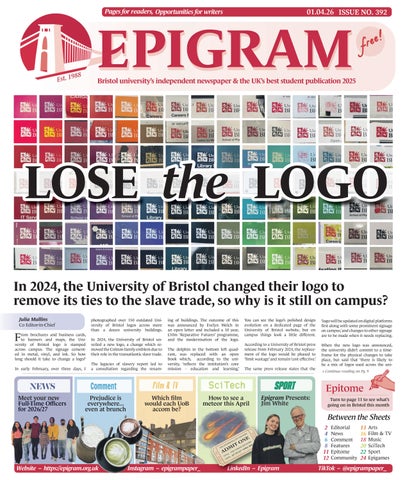
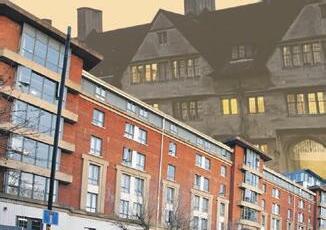
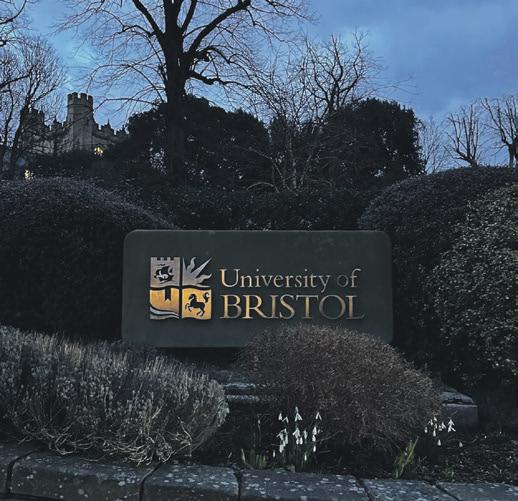
From brochures and business cards, to banners and maps, the University of Bristol logo is stamped across campus. The signage cemented in metal, vinyl, and ink. So how long should it take to change a logo?
In early February, over three days, I

























































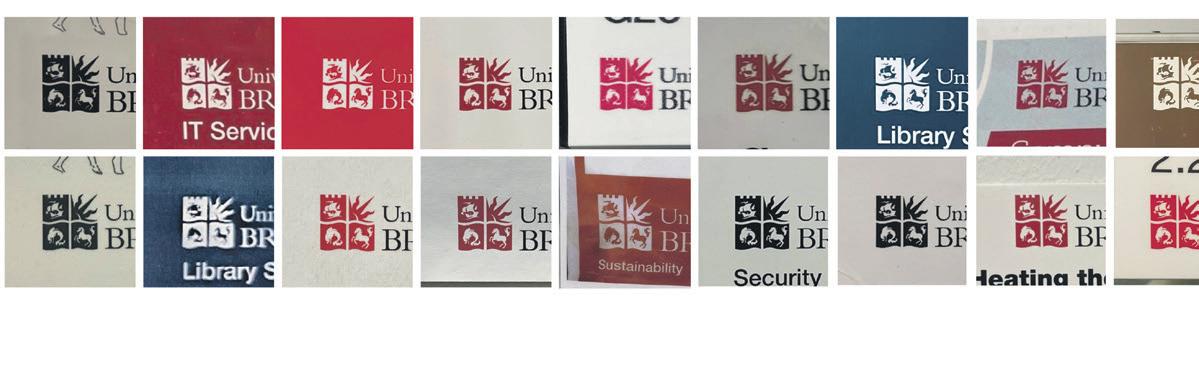
photographed over 150 outdated University of Bristol logos across more than a dozen university buildings.
In 2024, the University of Bristol unveiled a new logo, a change which removed the Colston family emblem due to their role in the transatlantic slave trade.
The legacies of slavery report led to a consultation regarding the renam-
ing of buildings. The outcome of this was announced by Evelyn Welch in an open letter and included a 10 year, £10m ‘Reparative Futures’ programme, and the modernisation of the logo.
The dolphin in the bottom left quadrant, was replaced with an open book which, according to the university, ‘reflects the institution’s core mission - education and learning.’
You can see the logo’s polished design evolution on a dedicated page of the University of Bristol website, but on campus things look a little di erent.
According to a University of Bristol press release from February 2024, the replacement of the logo would be phased to ‘limit wastage’ and remain ‘cost e ective.’
The same press release states that the















‘logo will be updated on digital platforms first along with some prominent signage on campus,’ and changes to other signage are to be made when it needs replacing.
When the new logo was announced, the university didn’t commit to a timeframe for the physical changes to take place, but said that ‘there is likely to be a mix of logos used across the uni-













































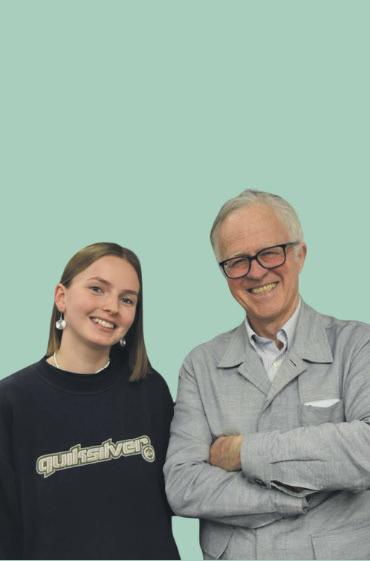








Julia Mullins
Co Editor-in-Chief
It's our penultimate issue of the year and with so much to catch you up on, there's no time for musings about the weather. March has been yet another huge month for Epigram with WiM, AGM, SPANC at UEA, NUS, and SU FTOs. Not a clue what any of those letters mean? Well, let me tell you…
We are proud to have played a part in Bristol's record-breaking levels of participation in student democracy this year with over 70,000 votes and almost 10,000 voters. For the month of March, Epigram dedicated itself to encouraging students to vote, covering the SU elections and National Union of Students (NUS) debate from start to finish. James, my Co-Editor, even hosted the NUS a liation debate, which you can watch back on YouTube thanks to our pals at UBTV.
Special thanks to Cara Hene and Lenny Osler for tackling the organisational challenge of interviewing every running candidate in the SU Elections, and you can meet your newly elected SU Full Time O cers (FTOs) on page four, with a full run-down from Lenny.


Recently we also had our society Annual General Meeting (AGM), which means applications are now open for 2026/27 exec team roles, who manage the behind the scenes of both Epigram and our sister publication, Croft. Behind every talk we've hosted, and workshop we've run, is the exec
team, diligently managing our finances, advertising, and sponsorship. Without them we would not have paper to print on, so please consider applying for a role. All the information you need is on our WhatsApp community and the Epigram Instagram page.
One of the events you'll be part of running if elected is Women in Media (WiM). WiM is our annual conference in celebration of International Women's Day. Epigram & Croft's biggest event of the year was put together by Leah Pollard, our DEIW o cer, Eden Chambers, and Arthur Clinton. We hosted keynote speaker Sarah Marshall, Head of BBC West & South West, and eight panellists across illustration, photography, copy writing, broadcast, and print journalism.
Last weekend, some of the Epigram team, accompanied by fellow Bristol publications That's What She Said (TWSS) and La Civetta, headed to the University of East Anglia (UEA) in Norwich for the Student Publication
Association National Conference (SPANC). Yes, it's called SPANC. The competition was tough, with over 1,400 entries across 26 categories.
We arrived at the conference this year as ‘reigning champions’, having taken home the award for Best Publication in 2025. I am so thrilled to say that this year did not disappoint, and we were highly commended for Best Publication!!
This year we also won Best Newspaper Design! For those of you who know us, you'll know this print has been a labour of love,






quite literally for Miles and I, so we are very proud to have been recognised for all our hard work. Special thanks go to Ella Blanshard and Alex Hill for all those late nights on InDesign. If you want to hear our drunken speeches you can watch back the livestream of the awards ceremony on YouTube.
We also took home some individual prizes this year. Eleanor Bate won best culture/arts piece for her film review of Weapons, which has been our highest performing website article of all time, with over 12k views. It's a lesson for all of us in how to write for search engine optimisation (SEO), the headline reads: ‘So, what was Weapons really about?’
Epigram's second award of the night for best creative piece went to our talented Deputy Editor, Sofia Lambis, with yet another memorable headline: ‘The orgasm gap keeps me up at night: Overheard at UoB's performative male contest.’ Both of which you can read online at epigram.org.uk.



James' favourite phrase at the moment is ‘it takes a village,’ and he's right. Unfortunately, the same can't be said for our dissertations, so we need to take a short break from the village, an expedition if you will, but we will be back in June for one final hurrah.
Our yearbook issue will be a special final run of the paper for the team that have worked so hard making it happen over the last academic year. As always, you can keep up with us online and on Instagram in the meantime, and to those of you writing your dissertations, GOOD LUCK!







































We've teamed up with Overhead at UoB to give you exclusive quotes across campus and beyond. Follow them on Instagram: @overheardatu0b












‘I've opened this lecture recording four times and learned nothing each time’








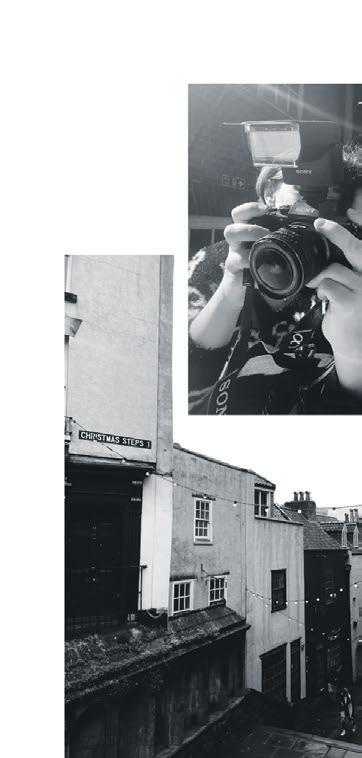





‘I think my degree is just a very expensive personality trait now.’














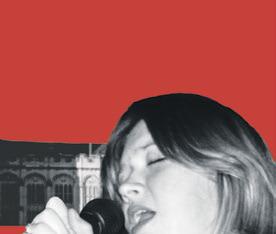














‘If I walk fast enough across campus it counts as cardio, right?’


‘Everyone here seems so put together and I just ate cereal for dinner out of a mug’







We are looking for photographers to contribute on an ad-hoc basis. Your role would consist of taking high-quality photographs that we can use both in print and online.



Join the WhatsApp chat & email editor.epigram@gmail.com with Interested in



1)Your name, course and year group
2)A simple portfolio of your work

Or are you an illustrator?
We are always looking for illustrators and graphic designers to create art for both print and online
Join the WhatsApp chat & email editor.epigram@gmail.com with
1)Your name, course and year group 2)A simple portfolio of your work or illustrate something for an existing Epigram article of your choosing






•Be the first to hear breaking news on campus and student analysis on a wide variety of issues at university and nationally.
•Contibute to Epigram's agony aunt column, exclusive to the print & take part in interviews for our features articles!
•Keep up with our editorial team behind the scenes.
•See details of our socials, upcoming formals and paper distribution days.




Lenny Osler, News Reporter


Union A airs O cer:



International Students O cer: Jessie Yeung

Undergraduate Education O cer:

Jordan Fung



Postgraduate Education O cer:
Sharan Khemlani


Equality, Liberation and Access O cer:
Jasper Daniel




How do you feel having been elected?




‘It feels surreal. It's just the best conclusion to campaign week, everyone's done so well. I feel honoured.’

‘I'm very grateful to have won again.’

Why do you think you stood out over the other candidates?
‘I've been involved with the SU for two years now, I've had the chance to inspect it from the inside as a Trustee, and from the outside as a student group leader.’
‘It was my ideas around incentivising students to participate in democracy, and making student groups feel more unblocked.’



What is the first thing you're going to do once in o ce?
‘I want to improve trust in the SU.’
‘I know where the SU went wrong, I've experienced it myself, and I know what needs to change.’

‘I'm a woman with a plan.’



‘I'm very upset that the students have decided to stay a liated with the NUS. We know the NUS has failed Palestinian and Muslim students.’
‘We look forward to the NUS trying to do better in the future.’

‘I'm feeling good, it's a good result after my hard work. I've got a lot of steps in, I've talked to a lot of people, so it's worth it.’

‘Absolutely grateful.’
‘I'm feeling very invigorated for the second year, and to work with this new incredible team.’

‘Overall, I'm just excited. I saw a lot of the e orts the rest of the candidates put in during the whole campaign… …I do wish that there could be some form of reward for everybody.’



‘I feel ill as fuck. Oh wait, I can't swear. I feel ill as hell, like, I didn't even campaign yesterday, I was so sick. I still feel sick, but I'm sure the shock and happiness is going to hit me soon.’

‘I'm so, so excited for this role. Pinch me, I'm dreaming, basically.’



‘I've been supported by the ‘Samosa Girls’ this election campaign.’
‘If you fancy the idea of free samosas, please come to our events.’
‘People like free food, and that's a reflection of student poverty.’

‘Talking to people, reaching out to people, asking them what they're thinking, instead of just hiding behind a table.’


‘We will probably be able to get a coach from Senate House and some accommodations, all the way to Eastgate shopping centre.’
‘This will be very beneficial for international students, because Wai Yee Hong in Eastgate is a Chinese supermarket where students can grab ingredients.’

‘The first thing I'll work on is the timetabling issue, which a lot of students find really concerning.’
‘I'll sit on the Timetabling Committee with senior university sta . Hopefully we can get an earlier release of timetables and more flexibility.’


‘The work speaks for itself. I'm really proud of what we've been able to do in the past year.’
‘It sets a precedent … even though it's a short time, it has an impact.’
‘I think it was my engagement with students.’
‘There were some days I would go to doors and just stand, and if somebody remembered that this dude opened the door for them, that could probably change their mind.’

‘I also walk up to them, ask how they feel on campus, ask them about their outfit, just engage with them.’



‘I want a schedule of events for postgraduates… …to always have something consistent that they can come to every month or so.’
‘Post-grad salsa class in September, or postgrad first aid training in October.’

‘Having a rendezvous discussion with all the heads of societies - that's something I'm really looking forward to.’


‘I think I won because like I've genuinely been there. I really bring that sort of personal drive to everything I do.’
‘I also have that experience - I worked for Bristol Institute of Learning and Teaching… …it's going to be great for that to culminate into this role next year.’

‘I think I worked really hard throughout the week. It was literally 9-to-9 on campus, speaking to people.’



‘Tackle those rising costs, because they don't reflect the maintenance loan, they don't reflect the financial realities of students.’
‘The university needs to accommodate that, but they're not. I think the bus pass is huge.’

‘I want to push for a discounted bus to Coombe Dingle, and that free breakfast that I've campaigned about.’



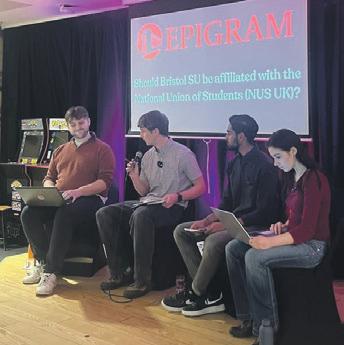
Last week, University of Bristol students voted on whether Bristol SU should remain in the National Union of Students (NUS) or disa liate.
Sofia Lambis
Deputy Editor
The results of the NUS referendum were announced on Friday.
NUS UK is a nationwide campaign network of students and is separate from the NUS Charity. Only Bristol SU's a liation to the former was being contested.
5,616 students voted on the question ‘Should Bristol SU be a liated to the National Union of Students?’
68 per cent voted YES and 32 per cent voted NO, meaning that Bristol SU will remain a liated with NUS UK.
Around 95 per cent of all Students' Unions throughout the country are a liated to the NUS. However, several student unions across the UK, such as Cambridge SU, recently voted against rea liation. Bristol SU pays £30,000 per year for NUS UK membership.
A referendum on Bristol SU's NUS UK a liation takes place every three years. The last vote was held in March 2023, but voter turnout was not high enough to be deemed valid under the SU's byelaws.
Bristol SU sends ten elected representatives to the NUS National Conference every year. These delegates vote on the policies and elections that decide the direction of the NUS. Like all a liated Students' Unions, Bristol SU can also submit motions to this conference.
A Standing Committee (which includes Full Time O cers, Chair of Networks, Faculty Reps and Student Trustees) agrees on Bristol SU's final list of motions to send to the NUS. Any student can write a motion for Standing Committee's consideration.
All University of Bristol students received the email from Prof. Tansy Jessop on March 2.
Stella Phipps News Reporter
Professor Tansy Jessop, Pro Vice-Chancellor for Education and Students, sent an email to students regarding recent events in the Middle East, saying students a ected should know that ‘our thoughts are with them’ and outlined where to get support.
‘We have a range of support and advice available for you, recognising that many students in our university community have connections to, and loved ones, living in areas a ected by international violence and conflict,’ Prof. Jessop went on to write.
US and Israeli military attacks in Iran took place on February 28 after failed US-Iran negotiations over Tehran's nuclear programme. Iran has responded to attacks with air and missile strikes across the region in Qatar, United Arab Emirates, Saudi Arabia, Bahrain and Kuwait.
The events mark the most intense escalation since the Israeli-Iran 12 day war in June 2025, with Iran's Supreme Leader Ayatollah Ali Khamenei killed on the first day of the conflict.
Al Jazeera reports that 555 people have been killed in Iran, at least nine in Israel, three in UAE, and one in Kuwait. Six American military personnel have been killed in Kuwait according to the BBC.
The March 2 email directs a ected students to student-services@ bristol.ac.uk and lists support offered by the University of Bristol.
‘If you are travelling in the region, please check the latest travel advice from the UK Government and relevant authorities. As airline operations are changing frequently, please refer to specific airline websites and apps for the most up to date flight status information.
‘We know how concerned many of us will be about the current situation. Bristol is a diverse community with many di erent nationalities. Let's continue to look out for one another and show support and kindness during this di cult time.’
The linked University of Bristol webpage detailing support for students says, ‘we are living in challenging times, with global incidents and regional conflicts impacting many. This insecurity is felt deeply by communities across the world, including our own at Bristol.’
In October 2023, Vice-Chancellor Evelyn Welch wrote to students regarding the Israel-Gaza conflict in which she outlined available support and asked the student body to ‘uphold our shared values of mutual respect, care, compassion and inclusivity.’
That email also alleged pro-Hamas material had been distributed at a campus protest. ‘It is important for everyone in our community to be fully aware that Hamas is categorised in the UK as a proscribed terrorist organisation,’ V-C Welch wrote.

Editor ...................................................... Cara Hene
Deputy Editor Aimee Anderson
Subeditor............................................ Katy Goodall
Subeditor Ellen Landale
Subeditor Keira Guy


Following the Meningitis B outbreak in Kent, which has led to two deaths, University of Bristol students are advised to remain ‘alert’ to the disease's signs and symptoms.
On Tuesday, the Students' Health Service shared an email warning students about the signs of Meningitis B.
They urged anyone becoming unwell with symptoms of meningitis and septicaemia (sepsis) to seek medical help at the closest Accident and Emergency Department, or by dialling 999.
An outbreak of Meningitis B, linked to a nightclub, emerged earlier this week in Kent, leading to vaccine rollouts on the University of Kent campus and the administering of 2,500 antibiotic doses.
The UK Health and Security Agency (UKHSA) has said that ‘all those a ected who are currently linked to the outbreak are young adults.’
Two people, a 21-year-old student at the University of Kent and an 18-year-old sixth former, have died as a result of the outbreak.
Highlighting the disease's rapid progression, the University of Bristol Students' Health Service listed signs and symptoms of meningococcal meningitis and septicaemia, which can include:
‘A fever, headache, rapid breathing, drowsiness, shivering, vomiting and cold hands and feet. Septicaemia can also
cause a characteristic rash that does not fade when pressed against a glass.’
‘Students are particularly at risk of missing the early warning signs of meningitis because they can be easily confused with other illnesses such as a bad cold, flu or even a hangover.
That’s why it’s vital that, if a friend goes to bed unwell, you check on them regularly and don’t hesitate to seek medical help by calling NHS 111 or contacting their GP if they have these symptomsoryou’reconcernedaboutthem.’
They stressed that early detection and treatment can save lives.
The MenACWY vaccination is routinely o ered to Year 9 and 10 schoolchildren, however it does not protect against the MenB strain. Although infants have been o ered the MenB vaccine on the NHS since 2015, the wider public must seek it privately from pharmacies if they wish to be vaccinated.
The Students' Health Service o ers appointments for any new student under the age of 25, who is registered with them and has not had their MeningitisACWY and/or MMR vaccination. Your vaccination history should be visible on the NHS app.
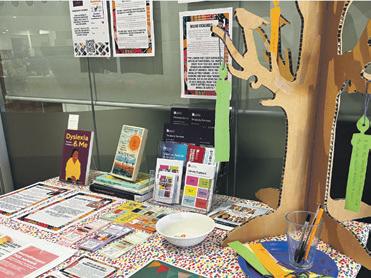

Dana Datu News Reporter
The Library Support team has been outlining available support and inviting students and sta to celebrate neurodivergency.
We've been recieveing so many great takes recently, and despite my best e orts it's impossible to squeeze them all onto two pages. If you want to know why Gen Z is having less sex, what's going on with snus, why it's wrong to fetishise autism, or basically anything else, head to the website. Also, this is already my second-to-last layup! Readers, keep reading. Writers, keep writing. And if you're thinking about joining the Comment team next year, apply (you should).


A note from Sam
inclusivity that can be the most complacement. Drawing on her own experience working alongside asylum seekers, she discusses the subtle behaviours that are pervasive even in cities like Bristol.
Rosie Neckles Third Year, Biomedical Science
As a collective, it's probably safe to say that we as Bristol students have earned ourselves a pretty progressive reputation. Some have even gone so far as to term us - god forbid - “woke”! But reading this piece from Rosie was a stark reminder that it is often those of us that feel most comfortable in our own inclusivity that can be the most complacent. Drawing on her own experience working alongside asylum seekers, she discusses the subtle behaviours that are pervasive even in cities like Bristol.

inclusivity that can be the most complacent. Drawing on her own experience working alongside asylum

The good news? Brunch season is incoming. The bad news? Prejudice is everywhere...
unseen, over-worked and disrespected by their workplace and customers.



Whether it's a product of power dynamics or people's subconscious detachment from the person behind the apron, there is a conversation to









how we can all treat each other better. However, as I finish my second year as a parttime waitress

hard for me to ignore something di erent. Something insidious underpinning these interactions but not said aloud.


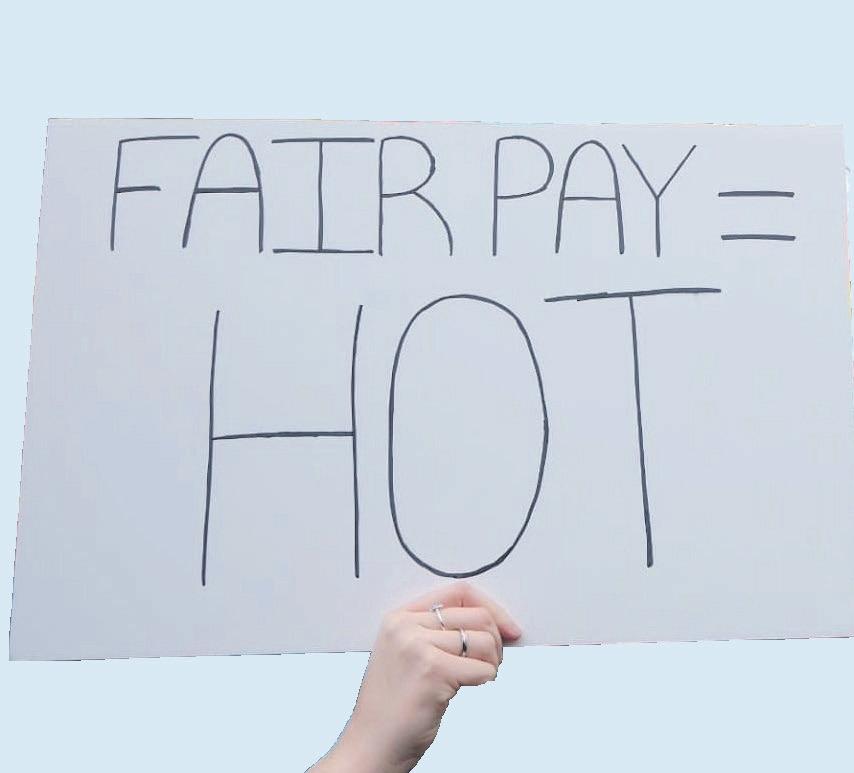
Why unpaid work shouldn't be normalised, and how it exploits desperation in a squeezing job market.
Rebecca Le Jeune
Fourth Year, Politics and IR

surround-

ly check, sure. But when you calculate how many hours actually went into it, the Excel crash outs and the ‘quick edits’ on a Friday afternoon, you start wondering whether you're e ectively earning half of minimum wage.

have often used the uncomfortable word: racism. As a society, we seem to be having increasing conversations surround-


ing asylum seekers and immigration.


be quick to exclude in in


Bristol from these conversations as a place that celebrates multiculturalism. I often feel a sense of pride from my fellow students to live in a city with such diverse food, music, and people. But even in Bristol, Reform, a party with loud views on immigration received 1,338 votes in the last election. Bristol is not immune to prejudice













s a fourth year on the brink (aah!) of graduation, my housemates and I have developed a shared sense of impending doom. For those of us who haven't quite secured the mythical graduate job yet, the anxiety is substantial.


dents, the same students who I'm sure celebrate Bristol's multiculturalism.
As a LinkedIn warrior on my daily scroll, I find myself caught by certain titles. Consider this: Global Governance & Accreditation O cer intern, part time, in London. With a name like that, how could you not click? And the process was impressive in itself - two rounds of interviews, two assessments… for an unpaid role. I smiled at it sadly, then continued scrolling. Is this really a thing?
So, is it worth it? Well… it's something. I've learned more about Slack's corporate lingo and organisational processes than I probably would have otherwise. And having something that goes beyond a society role on your CV is reassuring. But it's also a commentary on what the job market looks like. We need experience for the entry-level job. We need interviews for our unpaid roles. We're all getting squeezed. When I went abroad to the US, I was genuinely shocked to hear that working for the student paper came with a stipend, funded by the university. Speaking to peers, it's clear how warped our perception of what we're worth has become. We normalise unpaid labour because we don't know what the alternative looks like.





IIt is not uncommon to hear people say ‘everyone should work in hospitality at some point in their lives.’ Many who have will share stories of feeling and run by asylum seekers who came to the UK ten years ago. We have had many conversations on their ex-
Last year 111,084 people sought asylum in the UK, and the cafe I work in is owned





and the people a ected know it.

The thing about prejudice is that it's manifests itself in strange ways, often from good people who probably don't realise it's there. But from my counter





Unfortunately, our society is not perfect, and there is still work to be done to undo centuries-old ways of thinking. When I'm serving these customers, I want to ask them: ‘If the person serving you was from your town, if they were wearing the same outfit as you and they went to the same school: how would you speak to them?’ Sometimes we can take celebrated di erences like accents, religions and cuisines and allow them to become feelings of otherness. This is a dangerous line of thinking that can easily turn into dismissing the intelligence and personalities of people you've allowed to seem di erent.
Unpaid internships in the UK are generally illegal if the intern counts as a ‘worker’ with set hours, defined tasks, and work that benefits the employer. Yet many of us have one (or several) unpaid internships under our belt. As of last year, 61 per cent of internships undertaken by recent graduates in the UK were unpaid or underpaid. That alone says something.
Imagine how much ‘clout’ being the social sec for my Model United Nations society would have if it were paid. It starts there. But that's a topic for another day. Unpaid work shouldn't be unavailable if someone genuinely wants to pursue a side quest, especially in an area they're passionate about. Fine. Let it happen. But it should definitely not be the norm.


perience and treatment opening a business in Cotham, and we stipend to




I see it.




I see people slip into a tone of voice. I see them leave the cafe when they see my manager come out of the kitchen. I see them fail to be respectful in a way that goes beyond normal customer service behaviour. Sometimes I expe-







rience this change in attitude myself, particularly when working without my

These are important conversations to have, and I believe Bristol is the perfect place to have them. I still think the people here care deeply about world issues and injustice and this has been demonstrated recently with overwhelming support for Palestine. I would just like to ask: do you carry these values into your day-to-day life?
For one, it's incredibly dependent on your financial situation. While my unpaid work took very little of my week, for many, those extra five hours can genuinely make or break their uni experience. A part-time internship that pays a small stipend doesn't quite cut it either. It's motivating to get a month-
And the truth is, this reflects something bigger that deserves more attention. It doesn't have to be this way. There should be more links to paid work within your field locally. Say you're working at your local pub, why isn't somewhere like Wiper and True hiring University of Bristol students as paid PR interns? Why aren't there more structured pathways that make going to this university feel like it comes with tangible professional advantages?



Sometimes the issues you care about are closer than you think. Sometimes they're serving you your hungover brunch.



Local elections are coming up this May. Make sure to check whether you're eligible to vote, and register!
Editor ................................................... Sam Couriel
Deputy Editor .................................... Amelie Patel
Deputy Editor Lindsay Shimizu
Subeditor................................. Amaya Lewis-Patel
Subeditor Lilja Nassar


With the recent victory of ‘Hannah the Plumber’, should Bristol students feel optimistic?
Isaac Osborne
Second Year, Philosophy and Politics
In a by-election tipped to be on a knife's edge, the Green Party have won a decisive victory in the Greater Manchester constituency of Gorton and Denton, a Labour safe-seat held since 1935. Overturning a 13,413 seat Labour majority, Hannah Spencer, a local plumber who has lived in Manchester her whole life, defeated Reform UK's Matt Goodwin and Labour's Angeliki Stogia. With a 26 per cent swing and over 40 per cent of the vote, Spencer's 14,980 votes give her a majority of over 4000.
Zack Polanski, Green Party leader, told BBC Breakfast there were now no areas in which the Greens can't win; Gorton and Denton was only their 127th target seat. Since he became leader, party membership has surged, and they are now the UK's third biggest party. It comes at a time where Labour have nnnnnnnnnnnn
veered further and further to the right, attempting to out-Reform Reform, and seem unbothered by the prospect of leaving their progressive voter base behind. What does this result mean for the future of the Labour Party, the Greens, and the Government?
For the Greens, Thursday marked a monumental win. Defeating Labour in their 38th safest seat is a remarkable accomplishment and consolidates them as a serious option for anyone discontented with the current government or wanting to avoid a Reform win. Ever since the Greens' rise, the easy objection has been that they have no chance of winning, that a Green vote is a wasted vote. For the past month, voters in Manchester have been told that only Labour can beat Reform; Deputy Labour Leader Lucy Powell even wrote to Zack Polanksi telling him that the Greens had no chance. She, and the rest of the Labour establishment, have been proven very, very

















wrong. A politics built on hope is electable, and there are only going to be more Hannah Spencers. Such a seismic swing from Labour to the Greens spells a significant worry for Labour's chances at the next election. The Greens finished second to Labour in 39 constituencies across the country in 2024; if it can be done in Manchester, then it can be done in any of them. For Bristol, this is especially exciting. All constituencies other than Carla Denyer's Bristol Central are such places. If the polls are correct, Bristol could be entirely Green come 2029, or potentially sooner. Labour's only chances to avoid this is a change in direction, identity, and policy.
issues: U-turning on their stance on the ongoing genocide in Gaza after two years of defending and arming Israel, on the postponing of local elections, cutting the two-child benefit cap, and the winter fuel payment, as well as the distrust caused by the Mandelson a air.
As someone with usually sympathetic views towards Labour, these failures,
wants to survive, he must appeal to, or win back, progressive voters tempted to cross the floor for the Greens.






This is not impossible, though. A current reason for Labour's dismal polling is discontent at student loans' excessive interest rates and Government plans to freeze repayment thresholds for three years. Popular with not only students, but over half the population and 20+ Labour MPs, reforms to this broken system may provide the spark in Labour's redemption.


“ If the polls are correct, Bristol could be entirely Green come 2029, or potentially sooner









inclusivity that can be the most complacement. Drawing bring

free bus pass, is student safety becoming an afterthought?
alongside asylum seekers, she discusses the subtle behaviours that are pervasive even in cities like Bristol.
Sophie Mitchell
Second Year, Politics and International Relations


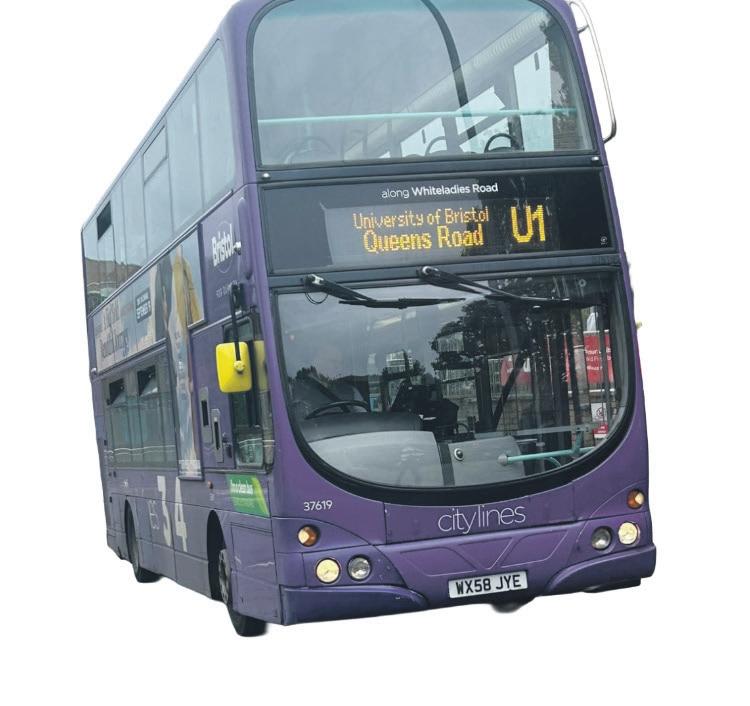
he University's decision to axe the inclusion of a U1 bus pass with all student accommodations has been positioned as a measure to bring down the cost of student accommodation. The decision came after the U1 bus route was handed over from the university to FirstBus last year, meaning students will be forced to choose between forking out an extra £400, or renouncing the relative e ciency that comes with access to the U1. But as the property portfolio of the University of Bristol absorbs more and more disparate postcodes, it is imperative to ask why it appears to be stepping back from its obligation to facilitate any connection whatsoever between the libraries, lecture halls and accommodations that now span the length and breadth of the city.
My experience with the transport



Similarly to Reform's recent rise pushing Labour further right, this result will surely force Starmer to accommodate Green policies, if he wants any chance of holding onto power. It is too easy to scrutinise their record; there has been too much flip-flopping around on important
Angela Rayner has already made a statement saying that the party needs to reflect, and to deliver the change they promised. The upcoming Spring Budget presents a perfect opportunity to do so. Commit to cutting student loan interest rates, and increase repayment thresholds, and it could just set o a change in identity which brings people back to their 2024 electoral home. In fact, sources suggest this could potentially be on the cards.


and their failure to communicate their few successes, cannot be ignored as signs of a government which is stagnant and without an identity. Appealing as sensible, technocratic, diligent lawmakers does not work when you don't get things done, when you backpedal on key decisions, and when you feign belief in whatever you think will get you elected. If things continue as they are, Labour will face a damning defeat at the local elections in May, and Labour MPs can only endure successive defeat for so long before they demand change upstairs. Labour is no longer ‘the leftwing party that can win,’ so if Starmer
Whether Starmer and the Labour leadership stick it out or change policies is anyone's call, but either way, the result in Gorton and Denton provides a reason for optimism amongst Bristol and its students.
links from Avon Point, a new accommodation in 2025, exemplify how the day to day inconvenience of living a 45 minute walk from campus without easy access to public transport can impact student life. I have encountered students assigned to Avon Point who have transferred out over Christmas, citing the hassle of trying to get to class on time from such a distance. Poor connection between housing and campus can easily take a real toll on student engagement with their course, societies and other university facilities, particularly when commutes can take an hour or more. This can vastly diminish possibilities of the student experience. Avon Point was not my first choice. In fact, it was not any one of my choices. The time I farcically spent ranking and ruling out options in
that lengthy, painstakingly considered application form now feels like a fool's errand. The de facto lack of choice first years are given with their accommodation should mean the university has an obligation to ensure students have practical transport links.
If this comes across as the grumblings of a fresher who can't be bothered to walk 45 minutes while hungover, then it is worth considering that restricted transport can potentially have more serious repercussions. Getting back to Stoke Bishop involves crossing the exposed and poorly lit Bristol Downs, which at night can feel intimidating or unsafe, particularly for female students. It would be nice to see the University take the initiative to nudge its students towards choosing the safer alternative when returning from a night out, or even from a late
class in winter, when the sun sets long before classes end at 6:00pm. In a city with infamously ine ectual mass transportation as it is, it's sad to see the University turning its back on a scheme that went some of the way towards alleviating that persistent obstacle.
Considering the university's buildings have rapidly expanded and are set to grow further, now seems like the worst time to cut access to one of the most convenient bus routes in the city.
Feedback from Avon Point students has shown clearly that proximity matters when it comes to student satisfaction, particularly in first year.
Overall, students' personal safety and day-to-day accessibility cannot be left to chance, forming part of the university's obligations in supporting students.
This month's editor's choice has coincidently timed perfectly with social media's current hot topic - Louis Theroux's ‘Inside the Manosphere’ Netflix documentary. Grace Bourne discusses how popular podcasts play into the manosphere phenomenon, and provides her own analysis after spending hours listening to find out what these men are actually saying. She observes how the form of the podcast lends itself so easily to spreading misogynistic rhetoric, and the article pairs nicely with the Theroux documentary's focus on influencers.
In early January we kicked o the year with a media scandal that took over the gossip columns, the ‘podosphere’, and worked its way up into the newsrooms. Steven Bartlett, host of the hugely successful podcast Diary of a CEO came under heavy fire for two podcast episodes, one in which he interviewed former club promoter, and man of somewhat undefinable fame, Chris Williamson, as well as a resurfaced episode in which he interviewed a controversial neuroscientist Dr Alok Kanojia (commonly known as Dr K). The extent of the backlash to the misogynistic comments (mainly concerning the men's takes on the declining birth rate) made in both episodes was a surprise, not because it was undeserved but because this kind of misogynistic social commentary has become increasingly dominant in non-traditional media spaces over the course of the last five years, and has been fairly unremarked upon. Over the course of ten hours of listening to these interviews, the tone of voice of both guests was what first struck me. Both Dr K and Williamson spout questionable facts and pure opinion with incredible authority, and without actively interrogating what they say at every turn. It is almost forgivable that people tend to just nod along in agreement, blinded by the nonnegotiable nature of their tone. There is a rambling yet fast paced nature to the episodes and one switches from being incredibly bored, to frustrated, and then at points involuntarily intrigued by the outlandish, often unfounded, assertions.
The most discussed quote after the Dr K episode resurfaced was Bartlett's question after a discussion about declining birth rates: ‘Does society have a responsibility to intervene in some way to correct this?’ The conversation develops into a back and forth about how important it is that men are able to pass on their genes. They suggest that male genes not being passed on is what is creating these incel communities
where men become resentful. Bartlett posits that if this is the case, ‘should we put systems in place to make sure that those men meet partners?’ Is he suggesting here that it is women's responsibility to take care of and subject themselves to these men who are part of a space which actively hates women and often encourages violence towards them? And expectedly, a woman's autonomy is not considered worth mentioning in this part of the discourse.
One of the most perturbing things I felt whilst listening to the endless drone of these three men was the level women were objectified throughout the conversations. At points I began to feel as if I was a member of a foreign species, whose psychology needed to be analysed in order to be understood and manipulated e ectively by men.
This kind of blatantly sexist, and incredibly concerning discourse is no longer a thing of the past, and in fact is becoming increasingly a thing of the future. A Kings College Study published in early March, found that 33 per cent of Gen Z men said ‘a husband should have the final word on important decisions’ and almost more disturbingly that Gen Z males were ‘twice as likely as Baby Boomer men to have traditional views on decision making within a marriage.’ This is not just a problem for Gen Z men either, ‘18 per cent of Gen Z’ women compared to ‘6 per cent of baby boomer’ women agreed. Conversations and beliefs that women are required to give up their rights are becoming ever more dominant. These once considered extreme views have escaped from a small subsection of the internet with a fury. Large swathes of Gen Z have consumed the Tate brother narrative that has been ever growing, and the Bartlett conversations slot right in perfectly to this discourse.
Podcasts are a fairly new medium in the media space, and their long form makes them an e ective way to have
Grace Bourne, Third Year, History and French




meaningful discussions, but this also allows their hosts and guests to bury outrageous comments in the weeds of hours-long conversations. And generally, the people willing to listen to these sometimes-three-hour long broadcasts are unlikely to be the ones to call out how problematic they can be.
Included in the top ten global 2025 podcasts published by Spotify were: The Joe Rogan Experience, Diary of a CEO, Modern Wisdom (hosted by Williamson) and The Tucker Carlson Show. The manosphere has got a strong grip over the podosphere, and the message is disseminating to their young listeners. 81 per cent of Joe Rogan listeners are male and 56 per cent are between 18-34; the intended consumers of this misogynistic rhetoric are clear; young men are being targeted by the manosphere, and the results are permeating into society. During his campaign Donald Trump did podcast interviews with ‘Joe Rogan, Theo Von, Andrew Schulz and Shawn Ryan,’ and this was a huge factor in the fact that ‘56 per cent of the votes of young men 18-29’ went to Trump compared to ‘41 per cent of young men’ in 2020. The lack of general interrogation
of these podcasts because of their somewhat inaccessible nature in being so long, has meant their impact has been broadly underestimated.
I wrote this article in reaction to the Bartlett scandal, in a moment of quiet when it comes to manosphere backlash. As it happened, the day I finished, the Louis Theroux ‘Inside the Manosphere’ documentary came out on Netflix. Theroux, famed for putting himself in the most extreme contexts, spends time with a variety of British and American manosphere influencers, exploring the world of misogyny, racism and far right ideology that has established itself on the internet. Watching these young men in possession of inordinate amounts of dodgy money spout vile comments, physically abuse members of the public and harass women in the street was upsetting, but the scariest thing I found whilst watching was the number of teenage boys and young men who flocked toward them in the street, venerating them and captivated by their ‘wisdom.’
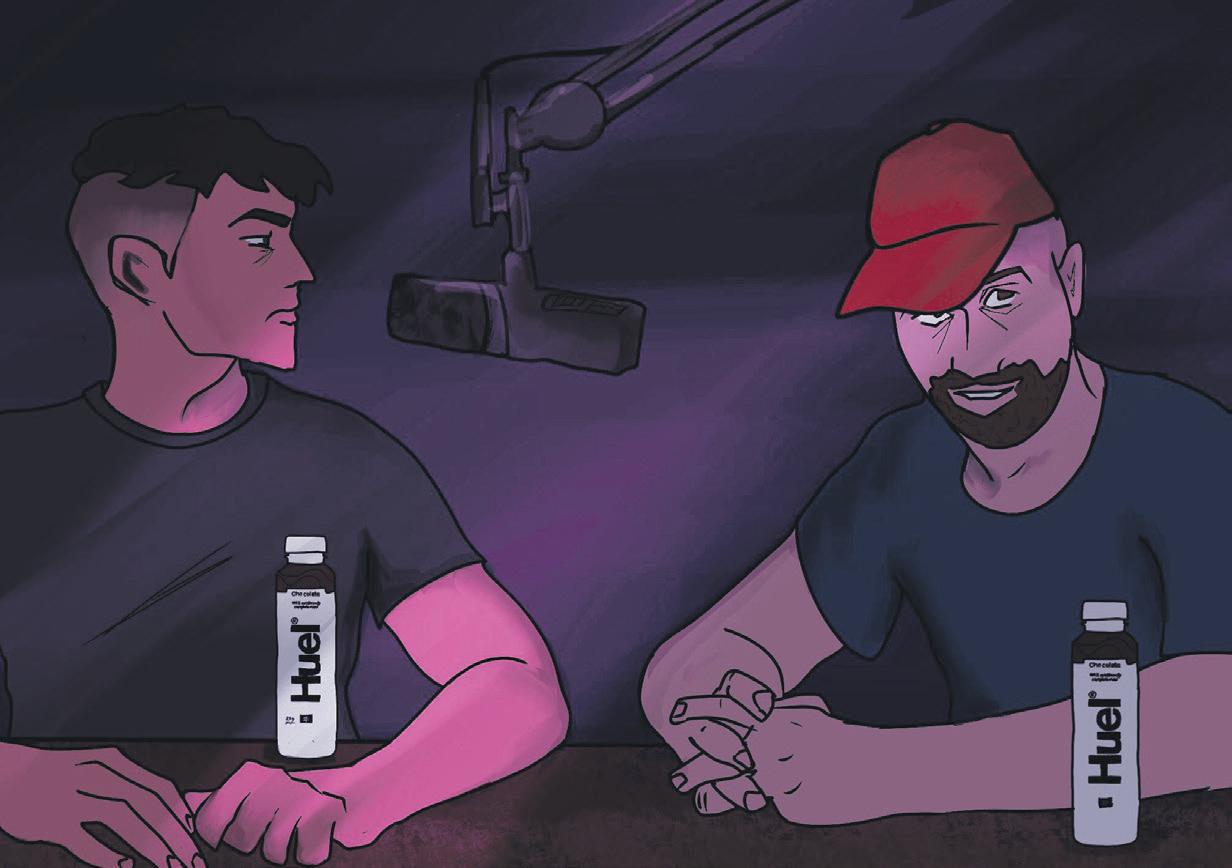
What is important to understand is that their impact is not limited to corners of the internet. The bravado, Huel
fuelled, gym bro culture which at first glance can seem harmless, has morphed into an extremist ideology that has disseminated widely. The documentary exposes these new media forms as ways of broadcasting this extremism. As well as the podcasts, all of these men have YouTube platforms in which they live stream pure vitriol. How societies react to these new media forms is not discussed in the documentary, but they are the cornerstones of the manosphere and how they are regulated, or at least how we create an alternative space, needs to be seriously interrogated when discussing how to limit manosphere influence.
The reaction to the Bartlett commentary and the documentary is a welcome intervention in this seemingly uncontrollable wave of manosphere podcasting being generally embraced without question. It is a reminder that this dark world lurks below the surface and has provoked an important conversation about how we divert these young men away from this toxic and dangerous culture. What is the antidote we can give Gen Z to the misogyny virus that has spread like wildfire?
Editor
> Continued from front page
When the new logo was announced, the university didn't commit to a timeframe for the physical changes to take place, but said that ‘there is likely to be a mix of logos used across the university for some time.’ Epigram even wrote in 2024 that ‘it will take several years to entirely replace the old logo.’
Two years on from the announce-
“Julia Mullins Co Editor-in-Chief
hands, drawing over the dolphin in an act of creative intervention.
The university has had a very e ective online overhaul – almost all of the external digital logos have been replaced. There was only one that Epigram found to fall through the cracks. Having submitted an unrelated Freedom of Information (FOI) request to the university, Epigram's news editor, Cara Hene, noticed something fishy in their reply.
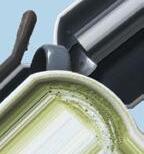
After months of closure and a £1.8m renovation, you wouldn't expect to find the Colston dolphin above a recycling bin.
ment, Epigram has been out on campus to document the physical progress of this change, and find out what the university means by ‘some time.’
Significant changes have been made –the likelihood is that if you want to pose for a graduation picture you'll probably find yourself stood in front of the new logo – but what about the ones that don't get snapped? The logos smaller than your fingernail, stuck to the back of PCs.
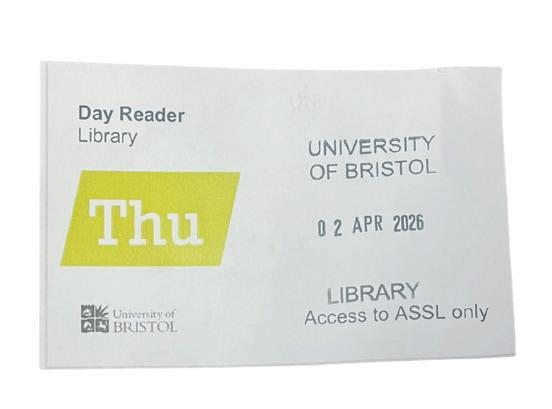
This all began with one tired looking laminated poster in the newly refurbished Arts and Social Sciences Library (ASSL). Having reopened last term, after months of closure and a £1.8m renovation, you wouldn't expect to find the Colston dolphin above a recycling bin.
Understandably, the task of replacing logos across an entire university campus is costly, but, considering the library took five months to fully reopen and cost £1.8m to renovate, it is surprising that this change wasn't made. Particularly considering many of the logos I found were simply printed paper or laminate.
In total, I found over 20 di erent instances of the old logo inside the library, but once you start noticing them, its impossible to stop, and I kept finding them in stranger and stranger places.
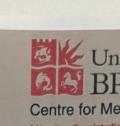
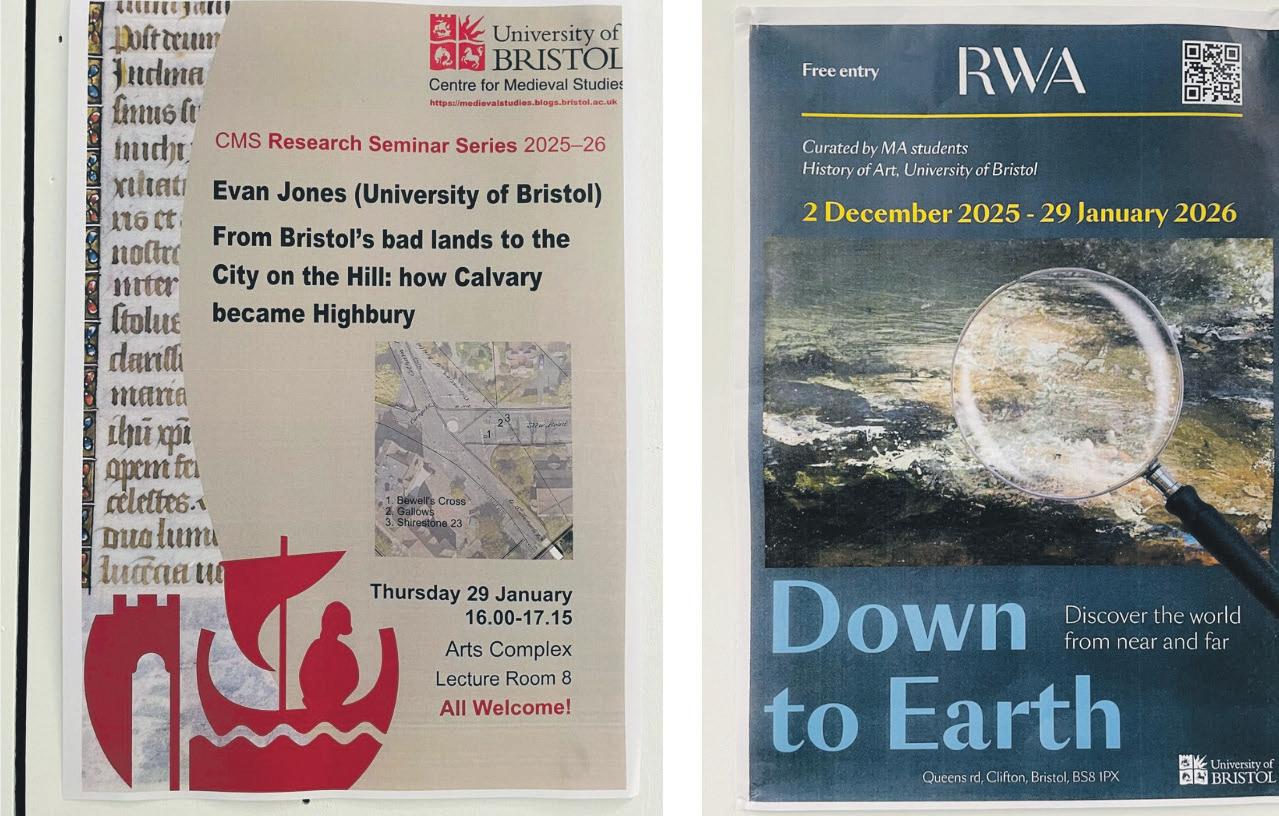
The logos started appearing in posters advertising new and upcoming events. The Centre for Medieval Studies is clearly still stuck in the past, advertising their 2025/26 seminar series using the old logo, and the same mistake was made, rather ironically, by MA History of Art students.
Like most institutions, the University of Bristol has branding and design guidelines. According to the brand identity page on their website, the university has ‘a range of ready-to-use toolkits featuring resources and templates for you to download and use,’ but these are only readily accessible with a sta log-in.
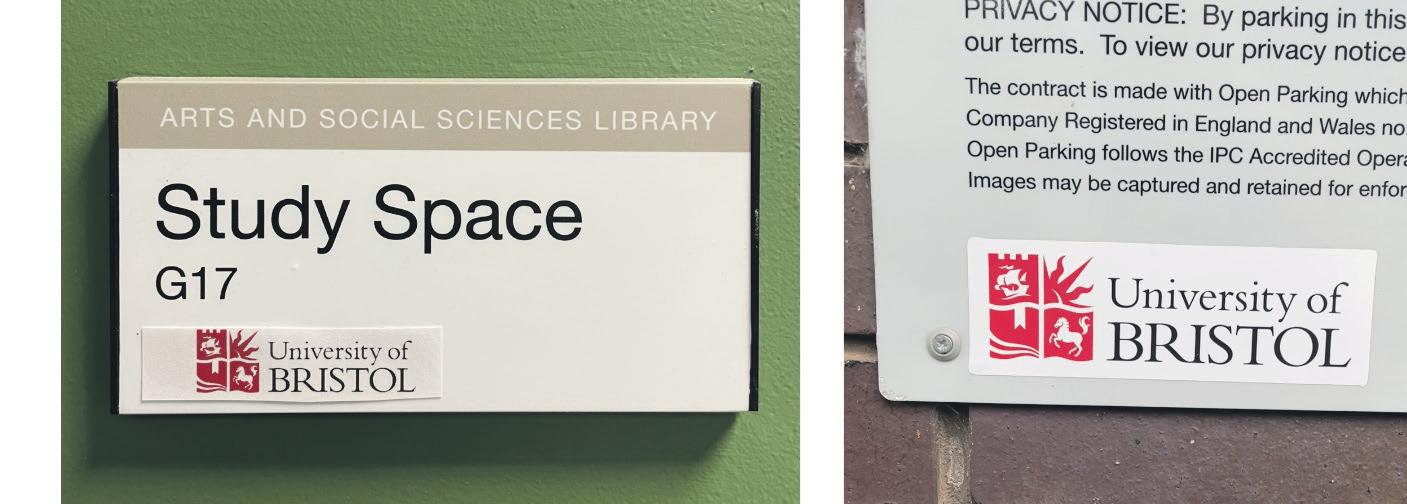
Many of the old logos haven't been completely replaced but instead covered up with paper or vinyl labels. In line with the university's 2024 statement, this is both a greener and cheaper option, as opposed to entirely replacing otherwise perfectly good signage.
Still, some students, or perhaps sta , have taken the logo into their own
This process was always going to take time – the university has always made that clear and has stuck to it's word. However, two years on from the change it is surprisingly easy to find the Colston dolphin lurking in every university building. This change demands significant attention to detail and, without a clear timeframe for the university commit to, it's hard to tell from campus that these changes are still being prioritised.






Tilly Collard discusses the complexities of reporting sexual assault, specifically looking at nuances within the university setting.
Third Year, English
Did you report it?’
This is often the first question people ask when I tell them I was sexually assaulted as a university student. It's usually well-intentioned; people want to believe that something was done, that accountability followed, that justice was possible. But beneath that question lies a misunderstanding of what reporting a sexual assault actually entails. The reality is that coming forward is still an incredibly di cult, deeply traumatic, and profoundly isolating process; one that many survivors are neither protected nor supported through.
Data from the 2024 Crime Survey for England and Wales (CSEW) evidences that fewer than 16 per cent of national sexual assault cases are reported to the police. When questioned on the barriers to making a report, 40 per cent of women said they felt embarrassed or ashamed, 38 per cent didn't trust the police to help, and 34 per cent were afraid of the reporting process. A quarter of survivors thought that the police would not believe them. National distrust of the police is an increasingly prevalent issue, with UK Parliament research from 2024 revealing that 52
per cent of adults questioned said that they had ‘no/not very much confidence’ in the police to tackle crime locally, with these figures increasing amongst minority groups (primarily black and mixed-race communities, or those identifying as LGBT+). Following cases such as that of Sarah Everard in 2021, many members of the public feel threatened by the police themselves, with a study by End Violence Against Women Coalition revealing that almost half the women polled have lost their trust in the police following the incident. When the institutions entrusted with the protection and care of society fall short, or worse, become sources of harm themselves, survivors of sexual assault are forced to retreat ever further into the shadows.
Making a report itself is an extremely di cult and often traumatic process. While the majority of reporting services undeniably do their best to make proceedings easier, the process of reporting a sexual assault incident is long, vulnerable and frequently invasive (with rape reports often involving internal examinations and swab tests). Even after enduring the process, the vast majority of reported cases do not result in a conviction. Home O ce statistics for 2024 place the number of reported rape cases that result in a charge at an appalling 2.6 per cent. The trauma of the reporting process, combined with the disgustingly low conviction rate, repels the majority of survivors from pursuing judicial action.
Societal shame and stigma remain among the most powerful barriers preventing survivors of sexual assault from coming forward. Despite growing
public awareness, many survivors still fear that disclosure will lead not to support, but to judgment, disbelief, or social isolation. Longstanding myths about sexual violence, such as the false idea that survivors provoke assault through their behaviour, clothing, or choices, continue to shape public attitudes and place responsibility on those harmed rather than on perpetrators. This stigma is often reinforced by cultural norms that treat sexual assault as a taboo subject, discouraging open discussion. Survivors may worry about being labelled, blamed, or defined solely by their experience. These fears are compounded when high-profile cases reveal horrific patterns of victim-blaming or when
Columnists Maddy Richards &





This print edition of Out After Dark brings you a piece on the barriers and unfortunate realities surrounding the process of reporting a sexual assault, exploring the idea that the reporting of a sexual assault can be a traumatising event in and of itself. This piece investigates the factors that may inhibit reporting, such as the societal stigmas around discussing sexual assault openly and publicly, or wariness of relevant authorities. It also unpacks the unspoken power dynamics which make coming forward feel especially challenging. Balancing incisive research with sensitive exploration of the issue, we found this piece educational and informative in more ways than one, and hope that through challenging stigma and shame, self-advocacy can begin to feel possible for all.


“Societal shame and stigma remain among the most powerful barriers preventing survivors of sexual assault from coming forward.
institutions fail to respond with sensitivity and accountability. As a result, many assaults go unreported because survivors weigh the emotional and social costs of disclosure and decide the risks are too high.
The social perception of sexual violence, a strange man waiting in a dark alley at night to pounce on an unsuspecting young woman, is incredibly misleading. More than 90 per cent of sexual assault survivors will have been assaulted by someone they know, according to new research by Glasgow University. Women are rarely taking a stranger to court, but rather friends, family, partners, employers and colleagues. Therefore, many may fear for their social relationships, employment or safety if they decide to come forward. There are currently very few measures in place to support and protect survivors after they make their report, amplifying the fear and stigma surrounding it.
For students, the burden of shame and stigma can be particularly acute within university environments, where personal lives, academic trajectories, and future prospects are deeply intertwined. Campuses function as small, insular worlds, and survivors may fear that reporting an assault will quickly escape the bounds of confidentiality, subjecting them to gossip, scrutiny, or social exclusion. When the accused is a fellow student, a friend, or a wellknown figure on campus, the risk of being disbelieved or ostracised can feel overwhelming, making silence seem like the least damaging choice.
Universities also present distinctive power dynamics that can intensify these fears. Survivors may worry about academic repercussions, such as being forced to share classrooms, residence halls, or research spaces with the person who harmed them. Others fear more subtle consequences, strained relationships with faculty, lost mentorship opportunities, or the sense that their credibility may be quietly questioned. For international students or those reliant on financial aid, visas, or scholarships, the stakes can be even higher, with concerns that involvement in a complaint process could jeopardise their ability to remain enrolled. Although many institutions have established reporting systems and support services, these measures have not always translated into trust. High-profile instances of delayed, opaque, or dismissive responses have fostered a perception that universities may prioritise institutional reputation over student well-being. In this context, stigma becomes not only a social force but an institutional one, shaping a campus culture in which survivors may doubt they will be heard, believed, or protected.
Addressing these concerns, the University of Bristol gave the following statement to Epigram: ‘We support students who have experienced any form of sexual misconduct, regardless of when or where it happened. Sexual misconduct is any kind of unwanted sexual activity, which does not always include physical contact.’
The main problem preventing the reporting of sexual violence is not in the quantity or even the quality of the services available, but rather the social fear and stigma still prevalent in sexual assault cases. Until that fear is meaningfully addressed, the question ‘Did you report it?’ will continue to miss the point. It frames silence as a personal failing, rather than as a rational response to systems that too often retraumatise, disbelieve, or abandon survivors.

Reporting is not a single act of bravery, but a prolonged and precarious process that demands survivors repeatedly expose their most painful experiences, often with little assurance of protection or justice in return. If society genuinely wishes more survivors to come forward, the burden cannot rest on them alone. It must be carried by institutions willing to rebuild trust, by communities prepared to challenge victim-blaming narratives, and by individuals who listen without judgment or expectation. This means shifting the conversation away from why survivors did not report, and toward why reporting remains so unsafe, isolating, and costly. Until survivors are met with empathy instead of scepticism, protection instead of punishment, and care instead of shame, reporting will never be simple. And silence, for many, will continue to feel like the only way to survive.
Sexual Violence Support Services (SVSS)
The SVSS o ers confidential, trauma-informed support to any student a ected by sexual violence or misconduct; with a survivor-led ethos, providing whatever type of care and support each individual person may require, be it counselling, academic aid or support in making a formal police report.
The Bridge
A Sexual Assault Referral Centre (SARC), who o er forensic and medical care for those who may wish to use it, as well as emotional support.
As useful as these resources may be, here at Mind the Gap we believe that safeguarding students against violence and harrasment is a systemic and cultural issue that needs to be tackled at its root.

Sam Brace Deputy Editor, The Bristle
This article is satire. It is intended for entertainment, and any resemblance to factual events is purely coincidental.
For the past months, not yet Academy Award winning actor Timothée Chalamet has been parading around like a bu oon in order to promote his latest film Marty Supreme (2025), in which he plays a ping pong ball (allegedly, I haven't seen it). Many have speculated how this will sway a panel of independent judges in favour of awarding Chalamet with Best Actor, however experts revealed to The Bristle their thoughts that this may be an attempt to make everyone forget that any other films even came out this year.
In a final e ort to get Chalamet over the line, the team behind Marty Supreme managed to convince the academy to let a ping pong ball host the awards, with voiceover from the late great Catherine O'Hara (best known for her role in Home Alone 2 (1992), in which she upstages Joe Pesci like nobody's business). In an exclusive post-mortem ouija board interview, O'Hara told The Bristle that she'd been visited by the evil spirit Maphisto (apparently he's ‘working freelance for Hollywood now’) who o ered her the role with a ‘hearty bonus if Chalamet takes the biscuit.’
Strange Brew, The Centre 03/04, £14
Jazz and hip hop supergroup Deyu rework high-energy tracks paying homage to the great MF DOOM. Highly recommended for fans of the masked man.
HEADSET140: Kahn, Neek, Just Jane, Zukki, Nio-B, Axle, Skillis + more
(The Island, City Centre, £7.50) 03/04
Expect all sorts of heavy bass from the grime, dubstep and garage scene.
RTN 10->10
(The Island, City Centre, £16) 04/04
RTN host a 12 hour techno marathon for those brave enough to answer. No phones on the dancefloor, only 7 DJs to keep you company from 10pm to 10am.
Hello to all Epitome readers, and welcome to another month exciting events in Bristol. We're nearing the end of term, but there's still time to explore the city: head to Sawmills for some dance music, or Cafe Kino for some rock. And if you fancy something more low-key, we've got poetry slams and cinema nights all detailed below...
Zed Law & Jed Dixon Epitome Curators
Cafe Kino 24/04, £10
Menacing, grungy rock outfit Wych elm bring an up close and personal performance. Sublimely supported by art punks Rabbit Vision, the explorative Slunk and Wych elm's own caitlin lamb. Recommended for fans of Sonic Youth.
Bristol Transformed Festival 2026
(The Trinity Centre, St Jude's, £10) 04-05/04
Bristol's leading festival of radical politics, arts and culture returns with workshops, panels and activities covering a whole range of leftist politics.
Dungeons & Dragons One Shots Nights
(Small Bar, City Centre, £14) 09/04
Always wanted to try D&D but never knew where to start? Learn the game and make your own character in a one-o beginner friendly adventure.
13th April onwards
The Wicker Man (Cafe Kino, Stoke's Croft, £6) 15/04
An unmissable British folkhorror classic returns to the big screen. See the spiritual precursor to Midsommar.
Film Night: SINNERS
(Easton Community Centre, £5) 16/4
Missed out seeing Sinners on the big screen? See the critically acclaimed film after a live blues warmup.
Gaza Film Fundraiser (Wild Goose Space, St Werburghs, £10) 17/4
2026
Sawmills 25/04, £20
Bris-Fest returns to Bristol's most exciting new venue with 6 stages of dance music from Sully, Devilman, and many, many more. If you still haven't checked out Sawmills, this is as good a chance as any.
Bring your worn clothes to Bristol's sustainability centre to give them a whole new lease of life.
Family Poems with Michael Rosen (St. George's Bristol, £12) 18/4
Family Poems with Michael Rosen (St. George's Bristol) 18/04 - Poetry Recital (£12) Watch an afternoon of poetry and stories with everyone's favourite childhood poet as part of the 10 day Lyra poetry festival.


Although Satan's latest ploy against the new world order has been unsuccessful (with Michael B. Jordan taking home the award) it's unclear if any other of his henchmen are on Hollywood's payroll. It also remains to be seen what sport Chalamet may try to turn into a movie next, but fears of shot put practice between scenes will surely be keeping the team behind Dune 3 awake at night.














Bizarre Bazaar

Outer Town Festival (Multiple Venues, £50) 11/04

(PRSC, Stoke's Croft, free) 04/04




Lyra Poetry Slam Grand Final (Arnolfini, Harbourside, £8) 19/04

Part jumble sale, part makers market, full of weird and wonderful things plus music and a bar.
See Laila Abbas' award winning black comedy ‘Thank You for Banking with Us’, with a discussion of themes and context after.
music and a bar.





Outer Town returns for its fifth anniversary special bringing a huge lineup of up and coming artists. Highlights include Windmill favourites The Orchestra (For Now) and local art
Watch 10 of Bristol's finest wordsmiths battle it out to be crowned champion by a judging panel and you, the audience.


Tribute Fest (Lakota, Stoke's Croft, £15) 17/04
A classic tribute rock line-up including Oasis, The Killers, Arctic Monkeys and more.
Book of Churches (The Cube, Cotham, £12.50) 29/04






The co-vocalist of Divorce presents his side folk project described as the ‘raw contents of [his] brain’
Clothes Mending Drop In (Sparks, Broadmead, free) 17/04




5 University of Bristol Botanic Garden
Editor Annabel Bienfait
Deputy Editor ................................ Rachel Shortall
Deputy Editor ..................................... Ivor Starkey
Subeditor Cordell Punter
Subeditor.............................. Alannah Mylechreest
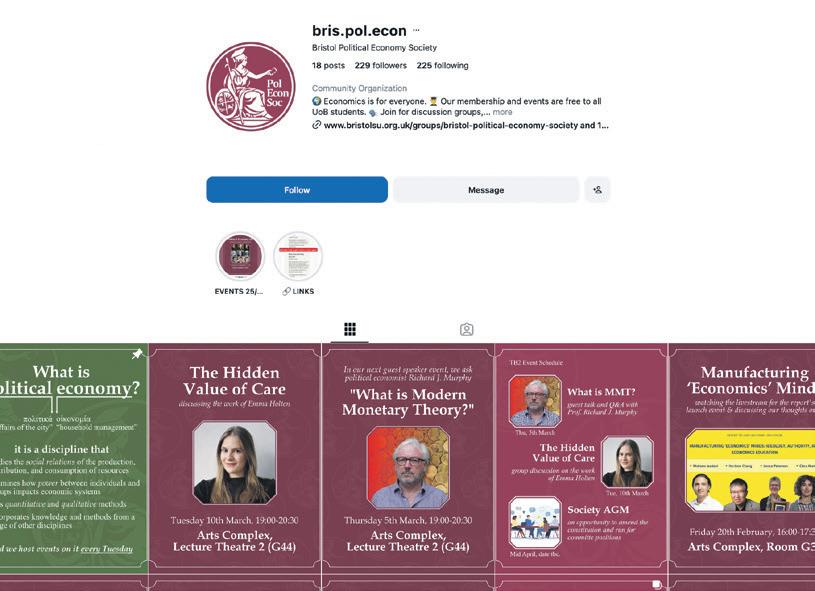
In March, I interviewed Louis Bush, a second-year student of Politics and Economics, to discuss his journey creating and leading a brand-new society that takes a slightly di erent approach to the study of economics. Through Political Economy Society (PolEconSoc), Louis aims to create an accessible and welcoming space for students interested in the political and sociological aspects of economics. The society is free to join and o ers unmissable speaker events to members.
Lenny Osler News Reporter
PolEconSoc aims to connect economics to everyday life, rather than presenting it as just a series of maths equations. And, crucially, to demonstrate why politics, and power relations, are the real drivers of economic outcomes. I sat down with Louis to talk about the birth of Political Economy Society (PolEconSoc), its impact and significance, and his plans to grow the society in 2026/27.
What sparked the idea of founding PolEconSoc?
‘Well first of all, around this time last year I was looking at EFM (Economics, Finance and Management) Society, and their events were all socials. But they were posited as the o cial academic society for the School of Economics, and I found that super weird.’ ‘In PhilSoc (Philosophy Society), you have this amazing environment where people e ectively lead seminars and tutorials on topics in philosophy. Like, why can't we have that?’ ‘And second, I was speaking with Dr Danielle Guizzo in the School of Economics, and what she teaches is more heterodox. It's beyond the scope of the kind of ‘textbook’ economics that's generally taught at Bristol and at most universities. And I was like wow, this is really interesting, I wish we
were doing this more on our course.’
Why is the existence of PolEconSoc particularly important right now?
Within how economics is being taught, there's this huge emphasis on solving mathematical problems. Whether people are rich or poor, whether people's needs are met, it's just treated like a numbers game. Like you can solve that in the same way that you can determine the optimal construction of a bridge. But the economy is not a bridge. When you do stu in maths, there's an objectively correct solution. But discussing the economy, we must acknowledge the variety of demographics, functions, jobs, and identities of those living within it. It then becomes more of a political discussion: there are di erent people, they want di erent things, we are stakeholders. If we reduce all of these things to just conversations about maths, we totally remove the concept of value from these things.
Moving on to the highlights of the last year, which guest speakers have you brought in for PolEconSoc events?
I think the talk by Jo Michell was really good. He's an academic from UWE, and
chair of the Post-Keynesian Economics Society. We had a student attending who was into right-wing, free market economics. So there was this dialogue, a debate, between an academic who was very educated on the subject and a student who would never have been able to have that conversation outside of PolEconSoc. These are the sort of things you would imagine happening in an idealised seminar.
Have there been any challenges involved with setting up a new society?
We weren't eligible for booths at the Welcome Fair, so immediately we were screwed because that's hundreds of students that we're unable to advertise to. We didn't have the reach we were really hoping for, so we ended up relying on postering, word of mouth, and advertisement through existing societies' Instagrams.
How have you engaged students over the past academic year?
We've had 12 events and meetings in total. There were a lot of guest speaker events in TB1, because I happen to know a lot of people. But then are we just a society that does guest speaker events? So in TB2 we pivoted to more discussion groups, Phil-
Soc-style, which I think helped improve member retention and turnout. The students that we've had attend our events, they seem really interested. People will say ‘I heard this mentioned on the news before, but no one had ever explained it to me in a way where I could then ask questions and interrogate it.’ Economics and Politics students will say ‘sometimes we talk about this in our seminars but we can't really get into it due to time constraints.’
Do you have any exciting plans for PolEconSoc next year?
Book Gary Stevenson. But really, we have two main objectives for next academic year. The first is to do some kind of mini conference in the South West for all the other societies and



people who are trying to do the same thing that we are - make an interesting academic society about political economy.’ But also, just trying to hit that point where turnout at meetings is around 20, 30 people, where there's a real variety of discussion, a variety of views. If students feel confident to express di erent ideas about the economy and how it intersects with political institutions, social institutions, they can do that, and they can disagree, and they can share ideas, and they can change each other's minds.
First Year, BA Modern Languages It was one of those daunting, umbrella-defying evenings. My friend and I battled our way through the wet, icy wind, all the way up the hill towards Condesa, a Mexican restaurant on Whiteladies Road, hoping it might treat us to some sunshine. We weren't disappointed. As soon as we walked in, the softly candlelit tables and warm sandstone walls made us feel we'd crossed over from a damp south Bristol street into a cosy, subterranean pueblo magico.
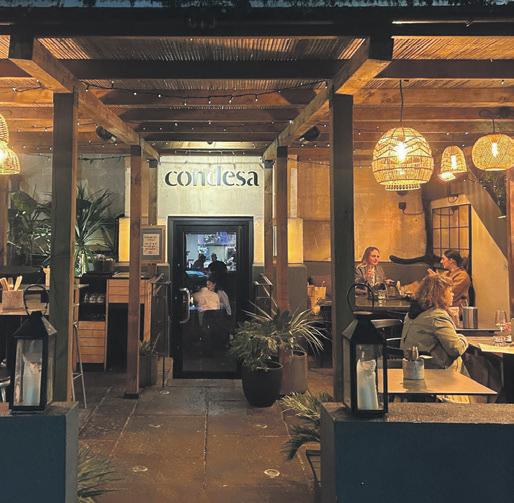
Passing tables neatly tucked into recesses in the walls, I started making mental notes of the best-looking dishes – a pointless exercise, because everything looked so damned good.
We were seated at the bar with a commanding view of the kitchen, the hatch flanked by a backlit arsenal
of di erent mescals and other faintly dangerous type of liquor. Condesa knows it's good at what it does, and makes sure you know it too.
Like the crew of a submarine at action stations, the sta manoeuvred briskly and e ciently from kitchen to table, and although occasionally we had to resort to head-craning and pointed staring, we were generally well looked after. I appreciated the friendly yet firm advice concerning the menu, reassured by the opinion that we had ordered ‘borderline too much.’
A carafe of ice-cold house white got along famously with the first dish out of the gate: quesadillas, handmade in house, with an oozing Bristol queso and jammy pineapple salsa
mas, por favor!’
that widened my eyes from its sheer ingenuity as much as chilli kick. I could eat that again and again and – after a short rest – again. Next to arrive in the parade of deliciousness were tacos – the standout dish of the night. The smoked carrot was reduced to its most concentrated flavour, and both were triumphantly adorned with a blistered runnyyolked egg anointed with crunchy sesame chilli oil and chopped parsley. And for nine pounds, to feed two? I'd pay that just to watch them make it.
By now all table decorum had gone out the window: it was a full-on, eat-with-your hands a air. The pork tacos were on the dry side and onenote by comparison, less ‘con todo’ and more ‘con not-quite-enough’. And as much as I enjoyed the
meaty slab of the ‘hen of the woods’ mushroom atop a tangle of sauteed wild mushrooms and almond mole, I was left craving a piquancy to cut through all that earthiness. Still, a thoughtful and skilled piece of cooking, and one I defy you to recreate authentically at home.
Despite being ladies of appetite, even we were flagging by the time a hill of hispi cabbage slid onto our section, yet its cascade of juicy raisins and smoked almonds roused us to dig deep, and indeed, in. Charred edges, soft but firm... you're sick of hispi cabbage by now, I'm sure, but my god, they know how to cook vegetables here.
To read more about Condesa, visit epigram.org.uk
Katie Asha argues a case for the humble scrapbook to make its return to the student population.
Katie Asha
Editor Ella Heathcote
Deputy Editor .................................... Grace Knight
Deputy Editor Amelia McCabe
Subeditor.................................. Tylah Hendrickson
Subeditor............................................... Eloise Nicol

down and document their life via more tactile hobbies.
Here's my case for why everyone should be giving it a go.
it encourages you to become conscious of the small parts of life that bring you joy: an interesting logo printed on a restaurant's napkin; the ticket from the cloakroom at a club; an autumn leaf on the pavement; the receipt from a food shop you did for a meal with a friend.
First Year, English is distinctly ephemeral, physical art will outlast you until it is destroyed, making it a constant companion that you can show to your friends, family, and future children. Showing someone a specific page in your scrapbook can reveal exactly who you were and what you loved when you created it!
As of late, an old hobby is having a quiet resurgence: scrapbooking, aka ‘junk journaling’, is the newest trend online. In an age where tickets, receipts, menus, and the rest of our paper trail is increasingly digitised, people are actively seeking out ways to slow
‘Junk journaling’ is a hobby involving collecting day-to-day souvenirs – receipts, ticket stubs, postcards, napkins – and creating art from them. The core idea is that even the most small parts of everyday life can contain beauty; and mundane ‘junk’ can be used as a way to document a paper trail of our life. The hobby of

If scrapbooking is an act of mindfulness, then surely it has cognitive benefits? Within the chaos of uni life, frantically rushing to your 9am to going out, with the days of the week blurring into one, what are the things that make everyday beautiful? Scrapbooking, as an inherently unfinished, rough, or experimental style of creating art, is extremely forgiving: you don't need to be a professional or maintain a consistent artistic style to do it. You just need a notepad, glue stick, and a pen.
scrapbooking could be interpreted as an act of mindfulness and noticing, as
Scrapbooking is also a great way to document travelling, as it creates a physical archive of all the big and small things you found special about visiting certain places. A ripped paper napkin or old receipt may on it's surface seem like nothing special, but could hold an association for you with a special moment, favourite meal, or formative event of the trip.
Scarlett Smith shares her thoughts on Bristol's failed city centre mural and what should be done about it.
Scarlett Smith
First Year, Spanish and Portuguese
Imagine a walk to your university. Your walk to get some groceries from Lidl. Your flat shopping trip to Cabot Circus. It's summer, and on the way you have the option to walk through a small park. Someone has stopped walking their dog to watch a butterfly float between
the white and yellow flowers. An elderly couple sit on the bench, watching bikes whizz past behind the row of planters. You take o your headphones, and you can hear a tiny hoverfly pass by your ear. This slice of paradise was – and could be – the reality of Bristol's city-centre.
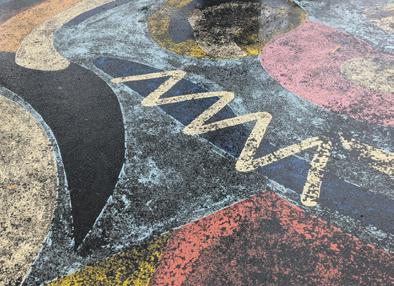
The deterioration of Bristol's city-centre mural has been ridiculously, and disappointingly, quick. Bristol City Council cite ‘an unforeseeable technical issue’ as the reason for its demise, despite using ‘specialist road line marking paint.’
The mural ‘Our Common Ground’ is part of a wider plan to replace ageing fountains with artwork, and to
Due to the tactile nature of scrapbooking, its sentimental value is unmatched – it is an amazing feeling to be able to hold a page of your scrapbook and touch a piece of paper held by a di erent version of you from five, ten, or even fifteen years ago. A junk journal makes the past tangible in a way that digitised media can't. Primarily, like any creative hobby, scrapbooking is a way of expressing yourself; in this case, through the documentation of things that bring you joy. While a phone's camera roll
Why not start now? Try tearing out the corner of this page!

install repaired paving alongside trees and flowers. The reality of this change is, frankly, depressing. We have not yet received the pollinator-friendly artistic paradise that the council's website promises. Despite this, looking back at the history of this small slice of ground, its potential is clear. Throughout the 1940s into the 1970s this area was
a neat green garden flanked with decorative plants. Could a return to this preserve some peace between the storms of e-bikes and scooters?
Even the smallest of wildflower patches can benefit pollinators. A mixture of native and non-native plants ensures that wiry local flowers survive for generations of harsh winters, while decorative foreign plants provide blossom all year round. With their choice of da odil planters and the aim to install the purple-flowering Judas trees, Bristol City Council intend to head in this direction. When these trees outgrow their planters, however, they are sentenced to be hacked up when they inevitably outgrow and damage their planters. These planters around the edge of the mural are designed to stop vehicles driv-
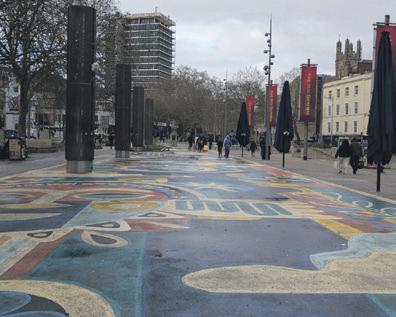
ing over the artwork, but couldn't these be used for even more wildflowers or smaller plants that are more suited to a small space? A return to a lower-level garden-style green area seems undoubtedly a more sustainable solution. Aside from environmental benefits, the most noticeable impact will be how we experience this space day-to-day.
Alex Boersma investigates if Bristol students still engage with poetry.
Alex Boersma Literature columnist
In honour of world poetry day this month alongside people increasingly reaching for screens, poetry has had to compete for our attention in a fast moving world. As a poetry lover myself, I began to wonder if it still has a space in students' lives? It's a tale as old as time that many of us were traumatised by poetry at GCSE and A level and may struggle to read a poem without subconsciously analysing it. However, it's an incredible art form and should still be engaged with outside of our studies.
I interviewed 16 students about their engagement with poetry from a wide range of subjects including English, Classics, Law, Zoology, Sociology, Philosophy, German, Modern Languages, Film, and Theatre.
My interviews generally confirmed what I assumed was the case; 75 per cent of those I interviewed reached for other forms of literature before poetry, leaving only 25 per cent reaching for poetry first. Those who did reach for poetry first explained ‘poetry is lightning in a bottle’ and believe ‘poetry can provide deep emotional impact, truth and humour in a faster and more elegant
way.’ Those who didn't reach for poetry explained this was because they found long form novels better for escapism and relaxation as they felt they could properly get invested. One student explained ‘poetry is too short and only the most powerful and famous stay with you’ whereas they found they could talk about novels more generally. Another explained that ‘poetry takes time’ with multiple readings and more thought needed than with a novel. This seems to be the main reason why students don't reach for poetry first with some respondents expressing that they feel guilty
Lost by John Milton, Les Fleurs Du Mal by Charles Baudelaire and of course, The Orange by Wendy Cope.
“Poetry is a universal language or way of communicating truths that we can all share
reading poetry without taking the time to unpick it and properly understand the poem, with one student describing not doing so as ‘disingenuous.’ Two students explained they found non-fiction books more mentally stimulating than poetry so reach for non-fiction.
Students had a variety of favourite poets, including but not limited to: Sylvia Plath, Wendy Cope, Mary Oliver, Derek Walcott, Patti Smith, and Frank O'Hara. It somewhat surprised me that not many classic poets were mentioned with only Tennyson and Milton mentioned. Some favourite poems included So many rooms by Laura Scott, The World's Wife by Carol Ann Du y, the epic Paradise
I asked students which poems first got them into poetry and while many said the classic Love through the ages GCSE poetry anthology, others remembered exactly where they were when they first fell in love with poetry. Some of the poems mentioned include the inevitable Milk and Honey by Rupi Kaur, The ning-nang song by Spike Milligan, Because I could not stop for Death by Emily Dickinson there were two mentions of Valentine by Carol Ann Du y, likely because this was also taught at GCSE and Failing and Flying by Jack Gilbert. Two students had poems that they remember having to recite at school; The Tyger by William Blake and The Village Blacksmith by Henry Wadsworth Longfellow.
I have written poetry in my notes app for as long as I can remember, none of them will ever see the light of day, however the act of writing them and being able to turn big feelings into delicate poetry has served me well and acted as a sort of therapeutic practise. Of those interviewed, 90 per cent wrote their own poetry as well as reading it. This again was suspected, however it did shock me that it was such a high percentage. Many students noted that they wrote poetry for the same reason as myself, to process emotions and events. One explained writing poetry helped them process their childhood trauma which they found particularly helpful as they are neurodivergent and found this works for them. They explained that their ‘struggle for human connection’ is what ‘fuels’ their poetry most. One student explained writing poetry acts as ‘a vehicle to move out of dark emotional places’ with the majority of students agreeing that they wrote about negative emotions and overwhelming feelings.

Another described their inspiration stems from the ‘particularly beautiful
and symmetrical’ which I found particularly lovely. A couple also mentioned that they have neglected writing poetry due to university and hope to get back into it again once they have graduated, which I can relate to procrastinating my dissertation by writing this article!
A close friend of mine also told me about the poetry collection he is writing at the moment and gave me a sneak peek, though I'll admit I'm an avid reader of his Substack so had enjoyed a couple already! He gathers lots of inspiration from religion and the unconventional which society rejects such as the perverse, mysticism and distortion. He explains he enjoys using poetry to explore ‘pushing the limits of what is and isn't acceptable in everyday life.’
don't believe poetry is able to give. Others mentioned more newer forms of poetry such as music and slam poetry which, though untraditional, are merely new forms of
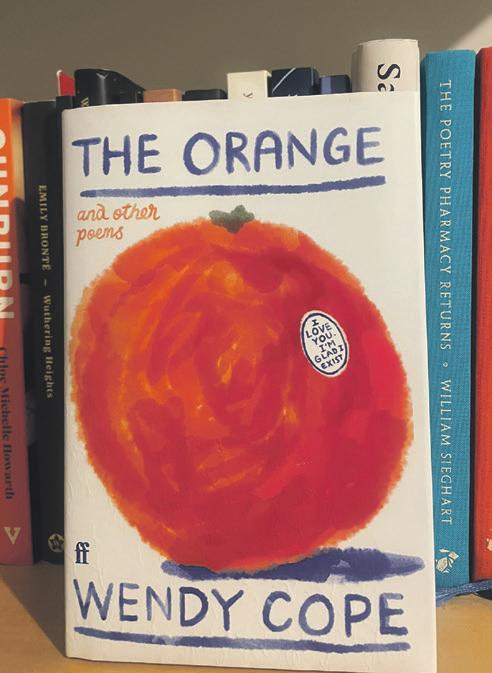
Finally, I asked the respondents if they believe poetry is a dying art form? 57 per cent said maybe, 25 per cent said no and 18 per cent said yes. One expressed ‘it's always been an art form on the fringes, but with lowering literacy and comprehension rates, the art form as a whole is in jeopardy, at least as far as a young perspective is concerned.’ Some students also noted that social media has lowered attention spans and so many struggle to sit down and read a poem they need to think about in depth as many ‘reach for quicker dopamine fixes.’ Reassuringly, as of 2025, ‘1 in 4 children and young people still enjoy reading poetry’ despite the temptation of social media and streaming. Lots of students noted the two have combined with the emergence of social media poetry, which has made it more accessible.
With the rise of TikTok and Instagram poets, the form of poetry is constantly evolving. One student who does believe poetry is a dying form stated this is because ‘there is no definitive start and end to poetry’ in the same way there is with novels. They continued explaining that our generation doesn't enjoy things without distinct starts and ends and stressed that they feel we need to believe we have ‘completed’ something which they
poetry. One student added ‘poetry will always hold the human experience, just in di erent ways to how it once did.’ I couldn't agree with this more. However there are still poetry events in Bristol such as the Lyra poetry festival which Epigram will be covering next month and poetry open mics. Despite this, one student believes we need more ways than events where poetry is read aloud to make it more accessible and ‘get rid of the stigma that poetry is complicated.’
Looking into this topic has been very reassuring: students do still engage with poetry and many find it a beautiful form of expression, particularly to process emotions and capture the beauty of everyday life. One student explained ‘writing poetry is one of the fundamentals of human expression;’ it captures what we can't quite say, in the same way music and art do.
Over the past few years, I have completed a poetry challenge on Instagram called ‘Escapril’ which provides poetry prompts everyday throughout April to inspire new poems, feel free to join in! I hope this article serves as a reminder of how beautiful poetry is and how much we need to preserve it in the beautiful and mundane moments as well as the heightened.
Columnists
..................
Alexandra Boersma & Ruby Wright
Editor Ella Heathcote
Deputy Editor .................................... Grace Knight
Deputy Editor Amelia McCabe
Subeditor Tylah Hendrickson
Subeditor............................................... Eloise Nicol
Francesca Scott shortlists the best reading spots on and o campus
Francesca Scott
Third Year, English
It's fair to say that trudging to the ASS (the bane of any UoB student's existence) is getting monotonous to say the least, so I've curated some more inspiring places to read on—or just o —campus (spoiler: you can no longer hide behind the excuse of the library being too “stu y” to avoid your reading). Whether you're trying to finally lock in on that uni reading you've been avoiding for weeks, or flee your D&B-thumping house in search of tranquillity, I tested out every library, as well as a few hidden gems, to find out where you can actually get some reading done. After all, what's the point of cracking open your Oscar Wilde or your fat engineering textbook if no one's there to witness it? So, without further ado, here's my shortlist of the best reading spots on campus.
Starting o with the prettiest, and perhaps the most optimistic, given the time of year — Royal Fort Gardens. In my defence, the sun was out when I was here, briefly convincing every-
one (myself included) that spring might finally be within reach. If you're Rory Gilmore level attached to your reading spot — à la the episode where she's outraged to find someone else by her tree — you'll be pleased to know there's no need for territorial behaviour here. Royal Fort Gardens has no shortage of trees with excellent back support, so your ideal reading perch is very much still up for grabs. If you've been hibernating in your room to escape winter's wrath, consider this a gentle reintroduction to daylight. Right on our doorstep, it's the perfect place to soak up some long overdue vitamin D while finally making a dent in your reading list — just don't forget to check the weather app beforehand!
the Source co ee may be doing more than its fair share of the work.

If serene views help you focus, the Queen's Building library is a solid choice. Its large windows o er some of the best views on campus, creating a calm, open atmosphere that's easy to settle into. With plenty of desks, seating, and other handy amenities, it's ideal for quiet reading and focused study. Even better, the in-house Source cafe has you covered with reasonably priced food and ca eine, making it unlikely you'll perish halfway through a chapter. Thoughtfully designed and ever so accommodating, you'll be tearing through your reading before you know it – granted,
It's Term 2, and we once again turn to the surely crucial romanticisation of our studies in a bid to motivate us (our brains really are that gullible), and this library facilitates exactly that. Essentially the lesser-known sibling of Wills, the Physics Library is one I only recently discovered. I have to admit, I usually steer clear of anything Physics-related, but alas! (Harry Potter) — don't be put o — it's surprisingly welcoming and has everything you need to live out your dark academia fantasy. Tucked away on the third floor of the Physics Building, you'll need to follow the corridor through the Maria Mercer Library to reach the Silent Study area. As the sign on the door promises, it's consistently peaceful, and being surrounded by hefty physics books I know nothing about, I can't help but feel a bit smarter just by being there. Perfectly close to your lectures, and much smaller than Wills, it has the cosiest vibes. With plenty of seating, you can either settle in for some focused reading or curl up with a good book on one of the armchairs (the best one is on the mezzanine floor, fyi).
With a super dreamy view of Bristol (picture-perfect at golden hour) and plenty of genuinely comfy seating, the SU Living Room has to be one of the best places to get lost in a good book. With lots of little nooks and crannies for peaceful reading, the place feels instantly comforting — every seat has at least some form of back support, and the sofas are the biggest I've ever seen (just be careful not to slip into a sofa coma, because that's going to set you back a week).
Super vibrant and colourful, with plenty of natural light, the room feels open and airy — what's not to love? That being said, with a microwave on site, the only battle you'll need to wage is the lunch-
time flock threatening to disturb your peace. If quiet is your goal, it's best to avoid the lunch rush.
This spot was admirably recommended to me (and by admirably, I mean it's pretty tempting to gatekeep): super tranquil, and benches aplenty, I can attest it's the perfect place to spend a relaxed afternoon with a book. The walk there is mercifully downhill, and arriving just in time for the day's last rays of sun, the gardens were glowing. It's a little tricky to find, tucked away within the cathedral, but after following the Night Stairs and a few helpful signs, you're rewarded with one

of the prettiest sights around. Conveniently central yet hidden from the bustle of the city, it feels like a little sanctuary. Totally free, the Gardens are an ideal change of scenery if you want somewhere a bit o the Uni grid to read. As I left, the sound of choir practice followed me out — a charmingly unexpected soundtrack, far preferable to the usual Woodland Road racket. Just be prepared: you may need to leg it back up Park Street afterwards (I live in the city centre, thank God). With reading spots this good, you might want to think twice before heading to the dungeon that is the ASS library.
Eleanor Bate Film and TV Deputy Editor
You thought BRAT was over and out? Well, Watershed had other plans. In celebration of Charli XCX's mocumentary The Moment (2026) the Watershed went all out in February, hosting a Charli XCX look-alike competition, several preview screenings of the film, and an afterparty fit for those decked out in their finest BRAT green as they danced away their generational trauma. Epigram was grateful to be invited by the Shed to cover the event and observe the iconic BRAT curtain.
BRAT Summer, BRAT Winter, BRAT Autumn, and BRAT Spring; dance-pop icon and global sensation Charli XCX is still riding the wave of her culture-dominating 2024 era.
Her mockumentary-style film The Moment explores exactly that: what comes after a pop phenomenon like BRAT, and how an artist attempts to hold onto the momentum once the summer that defined it is over.
Released in UK cinemas on the 20th of February, The Moment playfully blurs fiction and reality as it imagines the pressure of sustaining such a defining cultural moment. Epigram had the opportunity to attend a special screening of the film on the 6th of March, followed by a ‘Party 4 U’ afterparty at Bristol’s iconic independent cinema, Watershed. The event was hosted by Bristol drag
queen Quiches Lorraine, who for one night only fully embodied the pop diva herself, appearing in black buss-down locks, a white vest, and dark shades. Joining them on the decks was ‘Girl, So Confusing’ collaborator Lorde, or rather, local drag performer Tess Drive, spinning tracks for the afterparty DJ set. As the lights dimmed in Screen 1, in came the Essex diva herself, Char-
li XCX (or, more accurately, Quiches Lorraine), who had ‘travelled all the way to Bristol’ to introduce her film, The Moment, which she confidently described as ‘the best film of all time.’
The audience erupted. The room sounding less like a cinema and more like a hen do in full swing — laughter, whoops, and cheers echoing around the theatre.
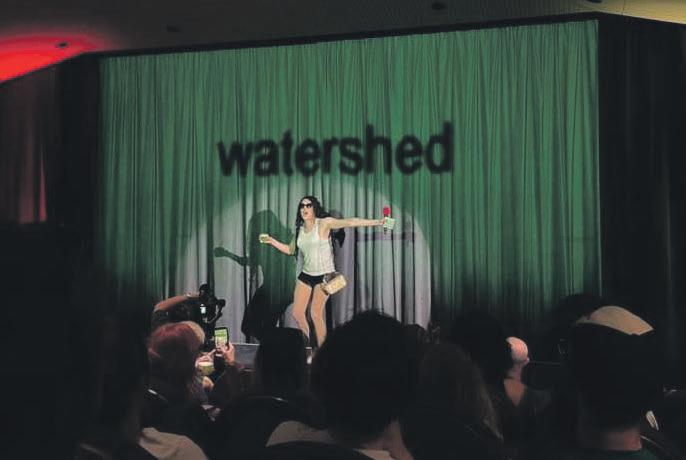
The Moment, directed by Aidan Zamiri in his feature debut, is a mockumentary that follows Charli XCX and her team as they attempt to prolong the magic of her BRAT era through an explosive tour and concert film. Along the way, it explores the complexities that come with sudden fame and mounting pressure — raising questions about identity, persona, and
the volatile cycle of the music industry.
Charli XCX’S film has received mixed reviews from critics. The Moment, to me, just misses the mark. The mockumentary o ers up a deep dive into the battle between public and private in celebrity life. What could’ve been a satirical success falls short of fully committing to the bit. The Moment explores the push from labels to keep their cool, the desire to never let the good times end, versus the will of the artist to try new things and remain relevant in an ever-changing cultural landscape.
the true emotional sucker-punch was not performed by Charli at all. For me, the character of Celeste was the most authentic performance. Haliey Gates was witty and dry at points and moving in others. Watching her vision for Charli’s show be slowly overtaken by Johannes’ corporate backed and out of style amazon extravaganza was bitterly unjust and gave the film the emotional underpinning I saw it grasping for.


The film itself was fun, beautifully shot with enigmatic and grainy shots of brutalist London hotels, hazy Ibiza spas, grungy warehouses etc. Set up to be great, the film was entertaining but lacked the gall to actually dive deeper into the troubles of the music industry.
Charli in this film is funny, witty, self-deprecating, playing a monster-boss caricature of herself. However,
Each accommodation has something that makes it stand out, whether it be great parties, extravagant balls, visually enticing exteriors or a pickled rat. In this article, I’ve explored what films relate most closely to each UoB accommodation.
West Village is close to campus and Clifton, and home to some of the prettiest accommodations. With a hint of grandeur at Goldney Manor, the tower in the garden, and the finely trimmed gardens, Goldney has an undeniable visual appeal.
With its somewhat artsy set of residents, who clearly favour an accommodation with good views (if but a little pretentiously), decent parties and
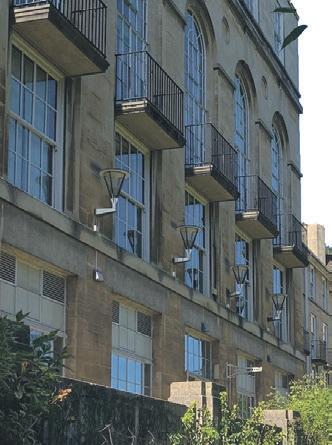
whimsical vibes, Dead Poets Society (1989) seemed like a good fit. Not only is there a poetic quality to Goldney and its gardens, but the hidden grotto underneath bears significant resemblance to Beaver Valley Cave, where the Welton Academy boys go to secretly read poetry.
Ferris Bueller’s Day O (1986) also struck a chord, with a definite slight slacker vibe amongst Goldney residents, but with one priority that’s clear, to have a good time. Who wouldn’t wanna skip lectures to chill out on the grass in front of Goldney manor?
Manor Hall is in a great location, with deceptively massive rooms, huge kitchens and some pretty nice gardens too. Nonetheless, it is not particularly known for its parties, which is why this ac- commodation
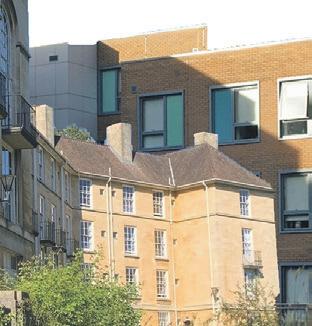
would be Perks of Being a Wallflower (2012). Whilst a lot of residents seem to favour being a bit cool and quirky, some, I fear, are trying a bit too hard - which can be a bit cringe, just like the movie. I would say this accommodation is underrated, it boasted some great pres and a couple of good parties in my first year, which clearly have gone under the radar.
North Village is well known for being the area most densely populated with private school students. Wild Child (2008), could easily relate to either Badock, Churchill, or even Wills, with a definite prevalence of lacrosse players in these halls - a sport that I hadn’t even heard of before attending the University of Bristol. I also want to give special mention to Wolf of Wall Street (2013), as the vast majority of laddish finance-bros in the making seem to be North Village residents.
lot of films that could be related to Wills Hall. It’s an accommodation with a reputation for being one of the poshest at UoB, which is why it’s surely got to be Saltburn (2023). With a grandiosity known for imitating Oxford University halls, goldstone exterior and mahogany desks, Wills certainly aligns with Saltburn’s university setting and the manor house that Felix’s (Jacob Elordi) family reside in.
The Moment was almost self-aware; jabs made at the label’s push of ‘BRAT summer’ and the desperately out of touch attempts to remain relevant to a young audience however, the satire never fully lands and left me feeling unsure.
I came away feeling confused more than moved. It seemed easy to take jabs at the those in the periphery of the moment that was BRAT Summer, without letting go of her own sense of cool. This to me misses the mark of a mockumentary.
The film was almost a period piece, capturing the zeitgeist of an era all of us can remember well.
Project X (2012) perfectly encapsulates Hiatt Baker’s consistently busy atmosphere. With frequent parties that are often massive but also hectic (with injuries, fainting etc) that get shut down by security, Hiatt definitely fits the vibe of the slightly insane party that takes place in Project X.
Orchard Heights would of course have to be Flushed away (2006) if it were a film. Ratatouille (2007) may have seemed like the obvious choice for its claim to fame, but the poor guy (meaning the pickled rat) was not left to live in peace, unlike Remi, so it had to be Flushed Away.
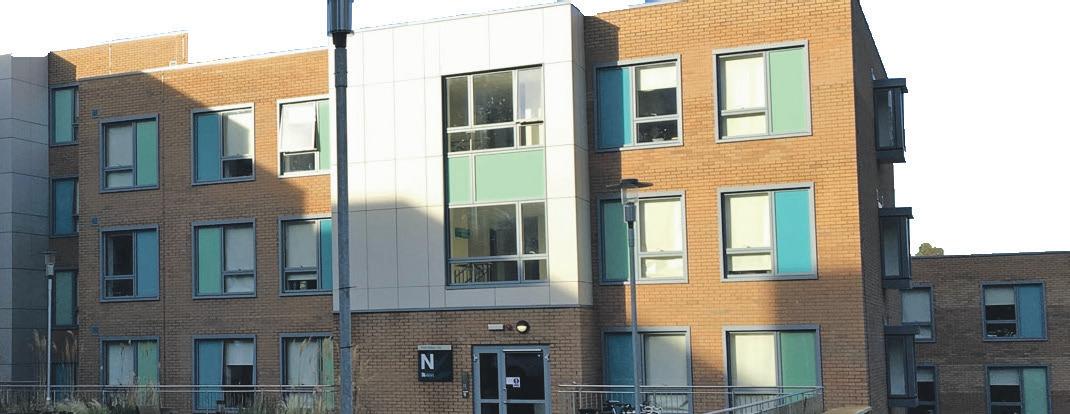
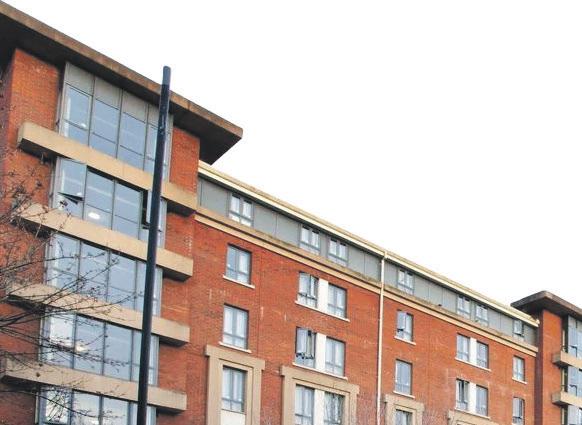
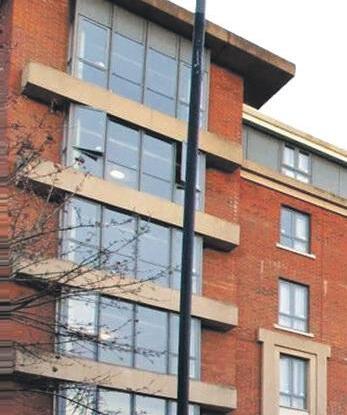
There are a
Not only that, but Wills provides residents with cloaks for dinners that take place in chandelier-lined halls, just like Felix does with Oliver (Barry Keoghan), where black tie is customary at family dinner. Hiatt Baker holds a reputation in North Village and university-wide for hosting some of the best parties and being generally a very lively accommodation. With up to 30 people on each floor, Hiatt is densely populated before parties even occur.
Read more about films and Bristol accommodations at epigram.org.uk

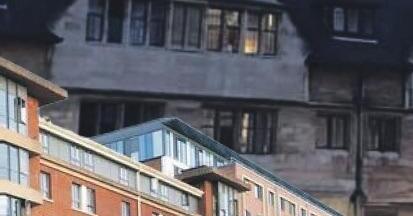
Editor
Deputy
Deputy Editor
Subeditor................................
Subeditor...................................
Laura Cooper
Second Year, English & Film
Oscar Degirolamo First Year, English & Film
Aday at Watershed filled with optimism and inspiration: Bristol’s most iconic independent cinema hosts an array of events for young people looking to get started in the film industry.
If you are a student working towards a career in film and television, you are likely familiar with the fear that this industry is an endless uphill battle, where decent opportunities are few and far between. You will know exactly how it feels to constantly be asked about your ‘plan B’ or advised to consider pivoting to something more conventional; interactions that leave you fretting over what your future may hold.
Keenly aware of these anxieties and with a mission to uplift young creatives, Watershed presents ‘Inside Screen’ alongside the BFI (British Film Institute) Film Academy. Its February 2026 iteration was packed with screenings, Q&As, and chances to connect with likeminded people, and I
attended hoping to absorb everything I could from the experts around me.
The day began with a screening of two short films that were selected to receive funding from the BFI Network Short Film Fund, a vital financial support operation for emerging UK based filmmakers. The films, Grandboy (2025) and Pen Mari (2025), worked as an excellent pairing to illuminate the vast range of genres and styles that the fund endorses, Grandboy being a heartfelt realist drama spotlighting the struggles of young carers, and Pen Mari being a disturbingly comedic folk horror following one man’s desperate search for a horses’ skull.
Pen Mari was the stand out of the pair, director Siôn Marshall-Waters managing to blend absurd Lynchian images with the style of grim comedy familiar to early episodes of Breaking Bad (2008-2013). After the screening came a Q&A session with both Siôn and the producer for Grandboy, Liping Pan.
attempting to tackle all of your tasks alone and subsequently burning out.
For the second session of the day, we were introduced to a panel of producers: Bex Rose, Martha Redfern and Lily Woodcock, for a Q&A focusing on demystifying the often overlooked role. I was particularly inspired by Lily’s career journey as she spoke about forming a successful production company alongside her university friends.
In fact, the whole panel stressed the importance of building their work around friendships; an encouraging sentiment for me with my experience studying
‘‘It’s okay to feel like you’re not going at the same pace as everyone else.
When asked for advice from one of the audience members, Liping’s statement, ‘don’t be afraid to ask for help’, really stuck with me. She mentioned how much insight she received from consulting the BFI team with her questions and concerns an essential aspect to keep in mind to avoid the common habit of
film feeling defined by the friendships I have forged with talented creatives. I also appreciated one audience member’s question about personal wellbeing during production, what with the high work load and frustrating problem solving producing demands.
The conclusion drawn by the panel returned to the importance of the strong bonds within your team that will allow you to ‘lean on’ those you trust. If you believe that you can persevere through
Flick Picks: Films you should have watched by age 20



Frances Ha (2012)
Noah Baumbach





Ferris Bueller's Day O (1986)
John Hughes
This film follows Frances (Greta Gerwig), a woman in her 20s navigating her tumultuous life in New York City. She lacks direction and hops between apartments after her closest friend, Sophie (Mickey Sumner), moves out of their shared home and she can no longer a ord it. It’s a film about friendship but also about finding oneself and growing up and into a person that is shaped positively by their experiences rather than conforming to expectations. It encapsulates the ebbs and flows of life with a comfortingly positive outlook without being an over-sensationalised success story.
Photos courtesy of: IMDb


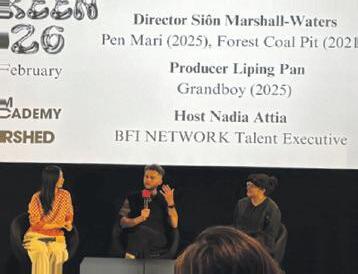
a di cult problem, you are already closer to solving it.
Oscar Degirolamo: All Set West and Networking Session
All Set West brought three alumni from their programme: Jay Adlam (Art Dept), Daniel Marky (Camera Dept) and Em Robinson (A.D. Dept).

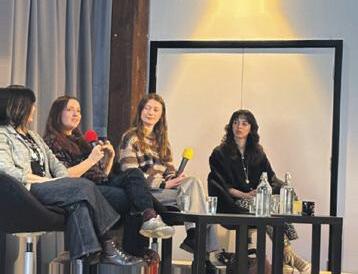
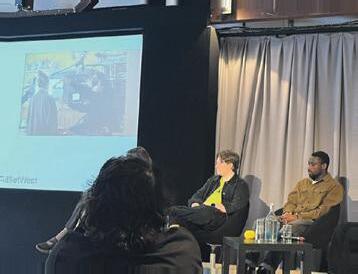
It is always inspiring to see people who have found a foothold in such a di cult industry, but does that mean you can always give new inspiring words to the people desiring a foothold…no. However, Daniel Marky brought down the walls of logistical fear, set-up by a lot of industry talks.
Daniel said: ‘It’s okay to feel like you’re not going at the same pace as everyone else.’ This really spoke to me as he said something completely new about achieving your goals. The day ended with a networking session, which consisted of all the attendees being able to mingle with industry professionals from various sectors such as short film experts, distribution professionals, and mem-



Miss Sunshine (2006)
Ferris Bueller’s Day O is a comedy about the titular high school student (Matthew Broderick) who decides to skip school and make the most of a perfect spring day in Chicago. He fakes being sick and convinces two friends to join him for an adventure around the city. I watched this film for the first time with my dad when I’d taken a day o school and it was instantly a film I'd never forget, so this might be a slightly biased inclusion, but it’s great nonetheless. It’s a classic by the king of feel-good films, John Hughes, that celebrates youth and spontaneity. A must-watch for all teenagers.
Another feel-good favourite of mine. The comedy-drama hinges around a dysfunctional family road trip travelling across America, so that their young daughter, Olive (Abigail Breslin), can compete in a beauty pageant. Each character represents a di erent struggle and a di erent stage of life, and the film explores the reality of family relationships. It promotes individuality and authenticity, and once again challenges society’s obsession with success. It is a heart-warming watch no matter what age you are, but it is particularly touching as a young adult in a transitional stage of life.
bers of the BFI funding programme. What made it special was the events acknowledgement of the struggles of networking and how daunting it can be.
I would like to thank the Watershed for running this event as so many young people were there and engaging with the day, which gives me a lot of hope for an industry that is under threat.
To read the full reviews and more, go to epigram.org.uk



Paris is Burning (1990)
Paris is Burning is a documentary chronicling the ball culture of New York City in the 80s, focusing on the Black and Latino LGBTQ+ communities who created the vibrant competitions. It follows members of di erent ‘houses’ who compete in runway-style contests. It explores the lives of the performers, as well as the performances themselves, as many of them face poverty, racism, homophobia, and the threat of HIV/AIDS. It is such an incredibly touching film. I also think it's a very important film to watch at this age for understanding the roots of this massively influential culture.
Variety is the word this month in the music section! We've got some great opinion pieces on dance music saving troubled times, and with the infamous return of 2016 culture we look back at some of its greatest hits. We took a trip down to the new home of Longwell Records for a brilliant chat with its owner, and got the inside scoop from Brief mess who are making waves in the student scene and beyond. Lots to read, lots to hear, lots to enjoy… get to it!

Hanno Sie
Fourth year, Italian & Spanish
RECORDS, INDEPENDANT RECORD SHOP EST
2015’ reads the sign outside the newly opened shop inside the Clifton Arcade. Originally opened in Keynsham, Longwell Records is now welcoming customers old and new into their new shop in the Clifton Arcade.
The shop is an oasis of music (no pun intended), with crates filled with just about anything you could possibly want. Bad Bunny's critically acclaimed album DeBÍ TiRAR MáS FOToS sits next to a copy of De La Soul's latest work Cabin In The Sky. There's even a section dedicated to the Bristol and local music scene, with a copy of Mezzanine by Massive Attack sitting front and centre.
Arguably the first thing you notice inside Longwell Records is the ‘listening station’ set up at the back of the shop. Iain says that giving customers an opportunity to listen to the records and hear the quality before they buy them aligns with Longwell's values. Iain tells Epigram that ‘we want to make sure people get a real-
ly good experience when they come here and to feel welcome.’
Near the door there is a section for cheaper second-hand records.
‘Sometimes inside you'll get the original bus ticket or the receipt from the shop on the day, and I think that's such a beautiful thing’ Iain says. ‘I always just leave it in because that's what makes it special.’
Despite the dominance of streaming services in the music industry, sales of records continue to grow each year.
A new report by the Entertainment and Retail Association (ERA) showed that UK record sales are now at an 18year high as of March 2026 suggesting that there is still a place for physical media in today's musical landscape.
He also stresses the importance of community as a record shop owner.
‘The friends I've made and the friendships that I've seen be made within the shop are brilliant. I've been here four weeks and it's such a nice feeling. You get a lot of attention in the beginning when you open up a new shop, that's standard, but here it's really genuine.’
It's not just regular folk that have an attachment to Longwell Records.
Massive Attack member Grant ‘Daddy G’ Marshall featured at the shop's leaving party back in January, and London-formed band Razorlight
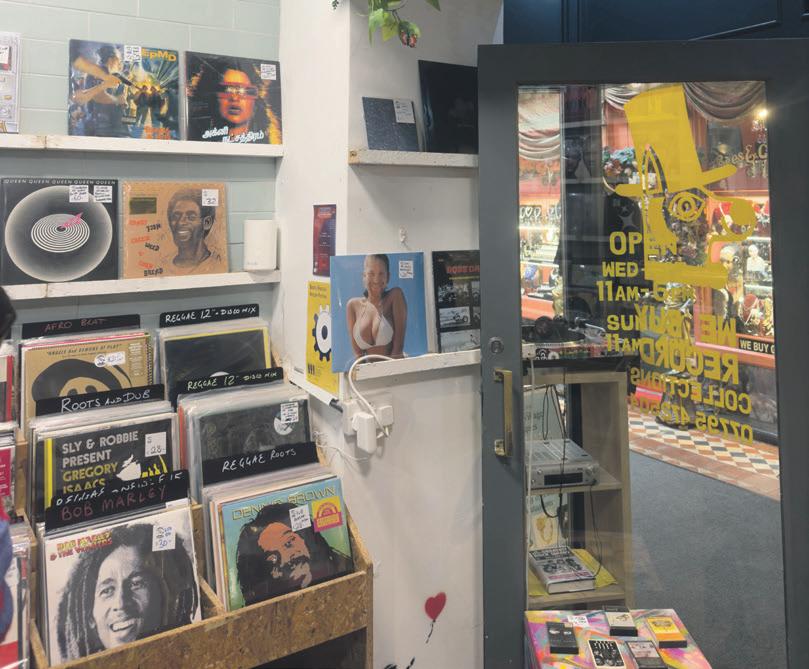
played a small gig at the old Keynsham location in 2018. Bristol born trip-hop group Smith and Mighty also played at Longwell Records in 2025.
Iain notes that his 15+ years of work with class-A drug users prior to opening the Longwell Records left him feeling burnt out, prompting him to try something completely new and start working with ‘vinyl addicts.’
With over ten years of history, Longwell Records has come a long way from where it began. Iain recalls his days of buying and selling records over the internet in 2015, right before a miraculous encounter with a EuroMillions winner that agreed to pay for the shop's first six months' rent. ‘£148 million - I thought he was going to make me a millionaire!’ jokes Iain. ‘He saw me as a genuine person, and when he did that, I didn't even know who he was!’
Longwell Records' move to Clifton wasn't just prompted by increased footfall and opportunity for better business. Iain also recalls his personal attachment to the area, having spent a lot of time in Clifton with his mother during his childhood. ‘I never would have dreamt as a lad from Southmead that I'd have a proper shop in the Arcade. I'm not one of these influencers or manifesters and all that stu . That's not for me; that's just not reality.’
Iain sees Longwell Records doing well in five years' time. ‘Hopefully we'll still be here. Like I said, it's such a wicked area and it's given me a lot more energy.’ He gestures to the various pieces of colourful artwork behind him. ‘Hopefully with a bit more art and things on the walls- and maybe a better lamp shade!’
Epigram asked Iain what the first record he ever bought was. ‘It was from Plastic Wax Records on Gloucester Road, which is still there today. I suppose the first actual physical record I bought was Grey Day by Madness. It used to be all about the music videos. So iconic, they were so much fun.’ As for his personal favourites, Iain told Epigram ‘Definitely Blue Lines, which was Massive Attack's debut album.’
Longwell Records is open 11AM-5PM Wednesday to Saturday, and 11AM4PM on Sundays. Have you been yet?
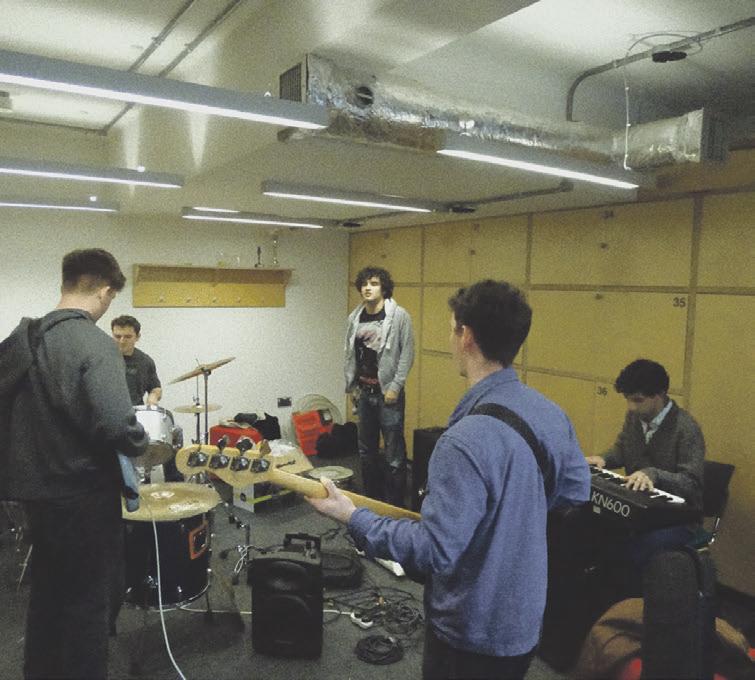
Student band Brief Mess began in the dream world of a New Year's resolution made by frontman Luka, and over a cigarette-fuelled conversation in the Thekla smoking area by guitarist Tomas and friend Joe, who graduated before their vision could become actualised.
Going from casual evening jam sessions in Redland last summer, to now landing a spot on a gig lineup at the Bristol Fringe, the band are finally finding their feet in the student music scene. I watched this journey unfurl from the very beginning, as they searched for a drummer, argued over band names, and adapted to lineup changes. Days ahead of their first live performance, I sat in on their rehearsal to get a sneak preview of their set and to discuss all things band related.
The hardest part of getting the band idea o the ground was fulfilling all the necessary parts of a rock band configuration. When drummer Orlando slotted in as the missing puzzle piece this September, Brief Mess was born, with Tomas on guitar, Louis on bass, Arin on keyboard and Luka on vocals. The gang have been rehearsing all year alongside their studies, meeting in the Student Union practice rooms to play their favourite tracks from the bands which have inspired them the most. With their setlist comprising
of alt rock from the late 90s and classic Britpop hits, it's clear where their artistic influences come from, but I wanted to know more. Luka explains his a nity for androgynous male vocalists, whilst Arin and Orlando nod to Christine McVie and Max Romeo as standout figures in their respective fields. Louis wholesomely credits bandmate Tomas as his inspiration, citing his ‘beautiful guitar playing’, which he feels is sonically reminiscent of Johnny Marr's jangly style.
To read the full article, go to epigram.org.co.uk
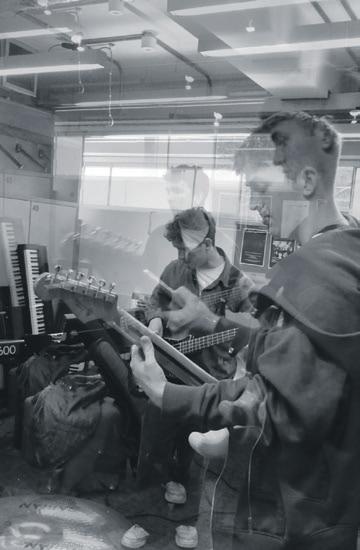
Editor Sophie Scannell
Deputy Editor Aditi Hrisheekesh
Deputy Editor ..................................Eve Davies
Subeditor Anastasia Baker
Subeditor Arianna Balsamo


From Charli XCX's unapologetically club-ready brat to Harry Styles' surprise foray into techno-pop with ‘Aperture’, pop culture seems eager to declare a dance music revival.
Asha
Festival lineups brim with DJs, pop stars borrow rave aesthetics, and tours like Charli XCX and Troye Sivan's SWEAT transform arenas into something resembling a warehouse at 2am.
But why particularly now does it feel like we are in a renaissance of dance music? And how does this resurgence correlate with the state of our current political climate?
Dance music's popularity typically correlates with periods of economic recession – most famously during the 2007-2009 global financial crisis, in which club music frantically rose to popularity during the
economy's most sudden crash to date.
The dance-centric music of this time subsequently became known as ‘recession pop’. Vice says ‘a recession banger means to o er your listeners a place of escape within your music, turning every party into an extravagant, maximalist club experience even if you're broke.’
While the phrase ‘recession pop’ feels distinctly modern, the phenomenon itself is anything but new. Historically, dance music has always been used as a means of escapism in times of adversity.
Jazz music rose to popularity as a direct response to the Great Depression of the 1930s; disco music saturated the airwaves in the 1970s amidst violent struggles for civil rights; synth pop was born in the 80s during the emergence of the AIDs epidemic as well as economic inequalities widening in both the UK and US.
There's no denying that dance music currently dominates the global musical landscape. Festival lineups are saturated with DJs. Pop's biggest names — from Dua Lipa to Beyoncé — have leaned heavily into dance and club-adjacent sounds.
Disha Angadi First Year, Law
Want to see the full top ten list? Go to epigram.org.uk.
The music released in 2016 can only be described as this vivacious symphony which e ectively fused tropical house, dance-pop, and urban influences resulting in a sound which broke the mold of traditional guitar-led production.
Unlike today's music which seems to be either driven by algorithms or by shock value (a perfect example of this is ‘Gnarly’), music back then felt fresh and timeless. It is this timelessness which has made it relevant in pop music nearly a decade later.
Nostalgia and the feeling of wanting creativity in music is stronger than ever, especially now as feeds feel more engineered and the internet no longer feels exciting nor does it feel like a space run by people but one run by machines. Therefore, the movement ‘2026 is the new 2016’ comes as no surprise.
Although the UK is not technically experiencing an economic recession, the nation is living through what social scientists are dubbing a polycrisis: a situation in which multiple di erent societal instabilities overlap (inflation, political uncertainty, the continuing repercussions of the pandemic, etc.), resulting in a population unable to craft a clear idea of what their future will look like.
While it might seem strange or ironic that charting music tends to act as an antithesis to the public mood, in reality it makes sense: as doubt about the future develops, people increasingly look to pop culture to lift their spirits; and in times where people feel stable, secure, and happy, they can a ord to indulge in slower and more reflective songs. Music becomes more focused on immediacy: raising the listener's spirits for one night, or even just one song. Dance music has predominantly marginalised groups to thank for its development: disco, house, techno and drum and bass all emerged from queer, Black and workingclass communities, particularly in spaces where mainstream society o ered little safety or belonging.

One Dance (ft. WizKid and Kyla)
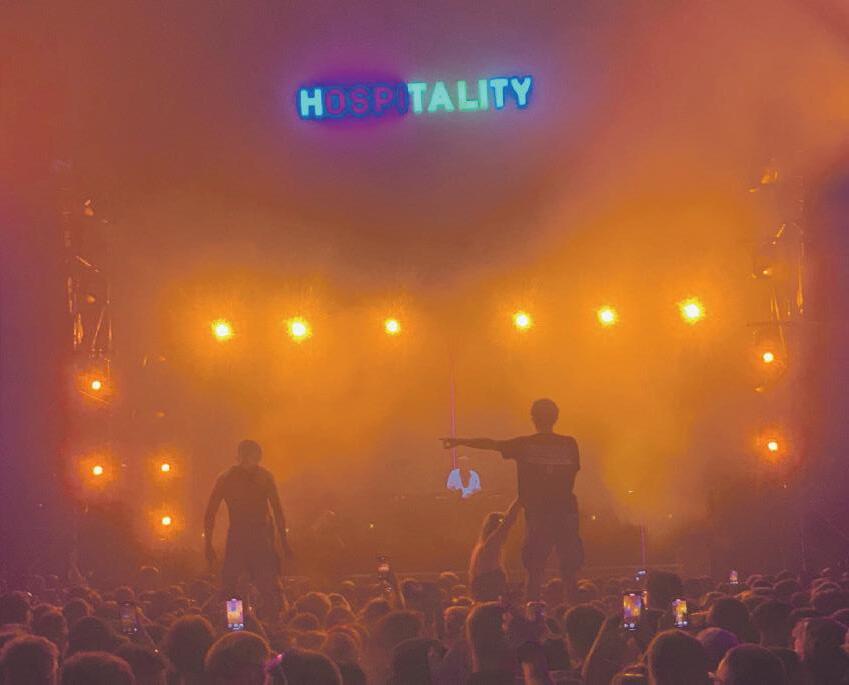
Dance music as we know it today is inseparable from these communities. All these genres of dance music have shaped the clubs as we know them today – and Bristol's own drum and bass history, shaped by Black British artists like Roni Size, reflects this lineage.
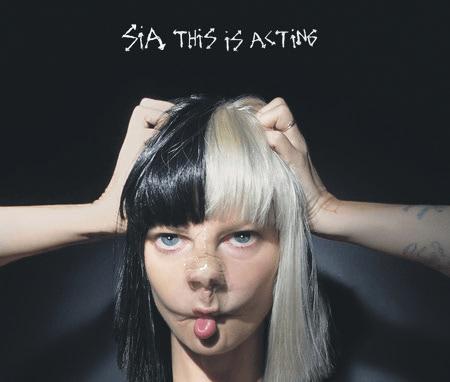
Cheap Thrills (ft. Sean Paul)
The song which ruled 2016 was One Dance with its powerful kick drum and Afrobeat rhythms making for the perfect club song. The tropical and hip sound is further amplified by the vocal samples of British singer Kyla from her funky 2008 track, ‘Do You Mind’.
The flirty beginning with ‘Baby, I like your style’ coupled with the minimalist vibe of a song creates the perfect atmosphere for a party. The bass heavy track keeps the listener immersed from the beginning till the very end.
The very definition of ‘camp’. From the music video to the lyrics, this song presents a carefree attitude rightfully earning it the title of the ‘song of the summer’.
The song presents a combination of colourful synths and drums which serve not to overwhelm but make space for the artists to excel. The almost conversational style of the lyrics makes it feel like a dialogue between a girl who just wants to dance and a guy who is head over heels in love with her.
Ultimately, dance music has been a constant force — particularly in Bristol — since its conception.
The fact that it now receives mainstream validation from already wealthy, predominantly white pop artists does not mean it was previously irrelevant.


Lush Life
This lead single from Zara's second studio album So Good is the embodiment of the YOLO mindset. It invites listeners to have a devil-may-care attitude and cruise through life on their own terms.
This powerful messaging is further amplified by the electro-pop production.The bass and scrambled-tambourine sounds also create a catchy melody which perfectly compliments Zara's strong, nasal voice. This timeless song dominated the charts as the summer jam of the year.













TITLE - THE LYRIDS METEORS














DATE - 16TH TO 25TH APRIL 2026







Get some background on the incoming meteor storm: the Lyrids. Find out more about how to see them and where they come from.
Jemima Eardley
First Year, Neuroscience
Every year, in late April, the dusty trails of the Lyrid meteors wander into our atmosphere and collide with our orbit, allowing us to see the beautiful white streaks they make as they disintegrate across the sky!
Meteors are broken parts of celestial objects, such as comets or asteroids, that fall so fast (around 50 km/s) that the air in front of them doesn't have time to move out of their path. This ionises (heats up) the air and squashes it, allowing meteors to reach very high surface temperatures – think crowded Thekla – and have a bright glow. The Lyrids are made up of multiple elements, including iron, magnesium and nickel, which when ionised create bright, white trails. The Lyrids come from the comet C/1861 G1 Thatcher, first recorded by the ancient Chinese in 687 BCE.
Whilst Lyrids don't promise the green glowing trails that we have seen many times before in the classic superhero movies or the dramatic, dooming meteor showers in sci-fis, they do o er lovely views across the night sky and the occasional fireball.
(Alexa, play ‘Fireball’ by Pitbull)
This year the annual Lyrid Meteor Shower will fall between the 16th and 25th of April,with its peak being the 22nd of April.
On a dark night, you should be able to see five to six meteors per hour, with




this increasing to 10-20 per hour on the peak night (the 22nd of April). In some exceptionally heavy showers, this has been as high as 100 meteors per hour.
When looking for the Lyrids, you should first find the parallelogram-shaped Lyra constellation, named after the stringed musical instrument (a lyre). This constellation is near the meteor shower's radiant – the point in the sky from which we can first see the Lyrids appearing. An easy way to spot the Lyra constellation is to find the star Vega (in the East) - the fifth brightest star in the sky. Around this area is where you should be able to spot the Lyrids!
For the lazy student or the ‘it's too cold to go outside’ student, there are other ways to potentially see the Lyrids. For anyone with a doorbell camera or even CCTV /security cameras on their building, check if they caught anything overnight. There's also a chance you could spot something out of the window if it's dark enough.
For the dedicated stargazers, photographer wannabes, constellation-painting picnic groups or friends who just wanna chill and watch with a few beers, observing a meteor shower can be a very nice way to spend one evening of your week.
Whilst I can't promise you'll see the Lyrids, I've given some pointers as to the best days and places to go. Good luck!



Five tips to maximise your chances of seeing the Lyrids:






The Lyrids are best viewed when it's dark (sunset is around 20:15 in late April). It takes your eyes around 20 minutes to adjust to the dark – so be patient and resist scrolling!
To maximise your chances, base yourself away from any streetlights or city lights. Ideal locations in Bristol are: The Downs, Victoria Park and Brandon Hill.
If the weather isn't cold, wet or windy (unlikely in Bristol), it is recommended to find a spot outdoors and lie down to get a 360-degree view of the sky. Make sure to check the weather on the day (and take coats!).
For some useful photography tips, check out the video on the Royal Museums Greenwich Lyrid Meteor Shower article.
If you're dedicated enough to go out, I would highly recommend a blanket, hot chocolate and maybe a friend or two…

Where the Lyrids will appear in the night sky:

To more easily find this area of the night sky, I recommend downloading the Stellarium App on your phone:







































My annaconda don't...












There are devices that claim to allow plants to sing. Find out how they work, and the strange relationships plants have with sound.
Plant electrophysiology sonification is a bit of a mouthful. Recently, there's been a noticeable rise in digital devices that claim to make plants ‘sing.’ I beg your garden?!
I hadn't come across this before, but the products are real, often quite spenny, and increasingly popular enough to sustain a small industry of their own. Their targeted audience is spiritually superior and rooted in a Clifton Boho gentrified living room. So before we get too carried away, it's worth asking a more basic question: what are these devices doing, how do they work?
The devices sold online don't capture
airborne sound from plants, alas, there are no live jam sessions picked up by a microphone. Instead, it taps into the plant's bioelectrical activity. Unbeleafable scientific evidence has historically shown us that plants generate structured electrical signals. Electrodes clipped to a leaf sense tiny shifts in resistance, voltage, and conductivity inside the tissue. Because the raw signal is very weak, it's first boosted by an amplifier and then converted into digital data through an analog-to-digital converter. Software maps those fluctuations onto musical features such as pitch, loudness, and rhythm. That data is then sent to a software synthesiser and speaker system, which produce the audible sound. You're hearing a creative translation of electricity into music: tada, jazz hands.
You might be thinking: don't all living things bring out electrical activity? In broad terms, yes. If you really wanted to, you could try to capture the electrical waves of the mould growing in a uni bathroom. You can moss around with it as much as you'd like, and the musical output would change depending on the
organism and how you choose to map the signals to sound. What gets called ‘plant music’ is essentially the translation of bioelectricity. Plants don't have neurons, but they still generate electrical signals, and fungi do too. The biggest challenge would probably be practical: mould is microscopic and fragile, so attaching electrodes without disturbing it would be much trickier than clipping sensors to a leaf. Still, the underlying idea is the same, just a more fiddly experiment. Maybe a project for later.
It would be inaccurate to say that plants emit nothing at all. Studies show that plants produce ultrasonic airborne clicks that humans cannot hear. These have been recorded and compressed into artworks of their own, known as ‘plant orchestras’. Many animals such as moths and rodents can detect ultrasound, so these sounds could influence herbivore behaviour, and plant interactions. Interestingly, stressed plants emit far more clicks than healthy ones, suggesting that plants are part of an acoustic environment we are only beginning to study.

Corin Hadley

What are the merits of spinning a record or two in the bedroom?
Sophie Scannell Music editor
‘If music be the food of love, play on!’ demands Shakespeare in his opening of Twelfth Night. In the aftermath of the SU's annual S.H.A.G. Week, and it's got us thinking: can music satiate sexual appetites in the same way as well… sex does?
psychological reasons: elevation of mood, distraction from insecurities about body or performance, heightened bonding with your partner (especially if you guys have a particularly synced music taste). But is there any empirical evidence to back it up?
Evolutionary theories of sexual selection and music as social bonding






Deputy Editor Alice Guskov




Deputy Editor Sanya Saxena



Deputy Editor Jemima Choi

That was all about whether we can hear plants. But can they hear us? You might know the 1976 album Mother Earth's ‘Plantasia’. Nicheness backed by The Guardian who described it as ‘an underground hit’. It was composed for plants and their planters (caretakers if you will) to listen to, together, and allegedly make plants grow faster and bigger.
Whimsical as that idea is, plant growth depends on many variables: temperature, moisture, light, and root space, to name a few. It is di cult to isolate the e ect of a particular playlist from all those factors. Still, the broader question remains: what about sound itself? Has granny lost it, or does speaking kindly to plants make them grow quicker…
Few studies focus directly on human speech and plant growth, but research does suggest that sound waves can influence plant physiology. Variations in frequency and intensity can a ect development, although the mechanisms remain unclear. The important distinction is that plants respond to vibrations, not to the emotional
A shared neurological basis for music and sex
meaning of words. The TikTok experiments comparing complimented and bullied plants are entertaining, but they are not controlled science. Some reports suggest that mild vibrations may support growth while harsher vibrations can be detrimental. Whatever you do, do not yell at your plant.



titled around ‘sex’, ‘sensuality’, or ‘seduction’, and then averaging each song's beats per minute, researchers have concluded that 119 bpm is the ‘definitive’ titillating tempo. Songs of this tempo include: weirdly a lot of Lady Gaga's discography, most notably ‘Bad Romance’ and ‘Just Dance’. Fittingly, ‘The Power of Love’ by Huey Lewis & The News and, not so fittingly, Michael Jackson's ‘Thriller’. Make of that all what you will.
Ra-ra-ah-ah-ah Roma-roma-ma Gaga, ooh, la-la



All of this leaves us in a middle ground. Plants probably do not appreciate compliments in any human sense, but careful attention to their environment certainly helps them thrive. Sending positive vibes may improve your mental health if not theirs. The practical takeaway is simple: attentive care matters. Noticing a browning leaf early can signal a problem with water, light, or air quality. In that sense, good plant care is less about serenading them and more about consistent observation. You grow, girl.






Not totally, unfortunately, but there is ample research to suggest that musicality can increase chances of attracting suitors and that, when getting down to it, playing your favourite tunes can result in more pleasurable sex. Having a bit of background noise whilst doing the deed can be beneficial for a number of
A study in Canada found that listening to your favourite songs activates the very same endogenous opioids (brain chemicals) as drug-taking, gambling, and, the pièce de resistance… having an orgasm. These opioids are neurotransmitters that modulate reward responses in the brain. That is to say, the pleasure felt during sex is chemically the same as when you hit play on your favourite tune. Although your favourite song alone can't instantaneously result in orgasm (a shame, as that would make things a lot easier), the fact that it's the same pleasure receptors being provoked by both music and sex is enough to suggest that it could be helpful in getting you there.








The Darwinian take on it all will come as a surprise to no one, hinging on ideas of natural selection and evolution. He suggested that music developed as a result of its use in mating displays and ‘charming the opposite sex’ - think birdsong or whale song! He went on to suggest that language subsequently derived from these ‘previously developed musical powers.’ These powers of musicality, the biological ability to perceive and produce music, have been observed to be, at least in part, genetically inherited. So, whilst the search for a mate has had the knock-on e ect of making us more musically inclined over time, our musical ability has in turn become an attractive trait given its potential genetic benefits! Something to think about when the next ‘aspiring DJ’ is preying on you in the Thekla smoking area.
The optimal BPM for getting it on
Someone has actually taken the time to figure this one out. Collating which songs appear most across 413 playlists
sex?
Short answer: No.
If you want to be ‘better at sex’, your best bet is talking to your partner and definitely not reading this article for song recs. Having said that, a 1973 study seemed to show that music might help you to have a better time. Traditional sexual dysfunction therapy tends to focus on anxiety reduction in the bedroom, but doesn't get down to the meat and potatoes of the issue: sex drive. These researchers pulled no punches. Every socially acceptable method under the sun was employed: patients were shown images and videos of
heterosexual sex, were read erotic literature, and, crucially, were played music. Admittedly, one of the main tape recordings played was ‘Japanese Sounds of Sex’, a compiled vocal cacophony of the female orgasm, which does feel like cheating a little to deem it music. However, patients were encouraged to play music such as Indian evening ragas, Reggae, or even Ravel's ‘Boléro’ to accompany sexual play, and it was found that this was often just as e ective as the erotic material shown to participants, and significantly more e ective where no stimulation was added. So, music can't make you a better shag. Sorry. But it can increase stimulation for both parties, so a step in the right direction maybe?
After taking a look at many studies, and calling blu on some more than others (i.e. counting on Michael Jackson to save your sex life), it seems pretty conclusive overall that music, although not a sole contributor to better sex, can certainly get things moving in the bedroom to ensure more fun. Give it a go, but do use Lady Gaga sparingly so as not to scare o your partners completely.
nal saw over a 70 per cent increase in tickets sold in the opening 48 hours compared to previous years. The impact the Lionesses had last July, when England made history in becoming the first team to lift back-to-back European trophies in Switzerland, is not stopping.
This Mother's Day, a sold-out Ashton Gate hosted another major event in women's sport - the League Cup Final, which kicked o at 14:15 live on BBC One and Sky Sport to a record-breaking crowd of 21,619 people.
Bristol has been chosen for yet another legendary moment in women's sport: the first final in domestic football of 2026. This is one of the most exciting occasions of women's pro football, and it's happening in Bristol - and I have front row tickets. Although, as a Gunner, I was mi ed that Arsenal missed out on this meet-up, I was very excited to see Chelsea and Manchester United's sides up close, as they both have had such huge seasons. No matter the team, I will never pass up an opportunity to support women's football or see some of our beloved Lionesses up close.
The Women's Super League (WSL) has reported that this League Cup Fi-
From the outset, this match was going to be very interesting as both squads had a lot to prove, and both were playing with incomplete sides, as all have lost key players to international duty in the Asia Cup and injury. United had a di cult task from the first whistle as Chelsea had beaten them in the last 10/12 WSL meetings and United have never lifted the League Cup (the only teams to have lifted it are Chelsea, Manchester City and Arsenal). Chelsea dominated the first 20 minutes with 76 per cent possession. Despite this, United fought hard and tested Chelsea/England keeper Hannah Hampton throughout the match.
But ultimately, for the third time, Manchester United lost a domestic cup final to Chelsea, although they fought hard. The fact that United made it to the final is huge, as they beat out reigning 2024/2025 Champions League champions Arsenal in the semi-final. This victory is huge for Chelsea, who have faced significant criticism since falling behind in the Women's Super League table, bringing into question whether or not they will qualify for next season's


Champions League. From the team that secured the domestic treble last season, Chelsea's position proves how much can change so fast in football.
Through the pouring rain in Bristol shone England's Lionesses. Lauren James scored the first goal 19 minutes into the final, and Aggie Beever-Jones secured Chelsea's victory in the second half.
In the stands, I was struck by the collision of cultures in women's football. Families flooded the stands, and we were surrounded by young girls hoping the players would come over and sign their shirts and programmes. Yet behind us, United and Chelsea fans were hurling chants at each other, bringing passion across football. For the first time in the WSL, alcoholic drinks are allowed into the seats of some of the stands, so there were a few incidents of people stumbling down steps. Yet people apologised if they accidentally swore in front of us, and everyone supported both teams despite their loyalty to their clubs. The atmosphere was one of politeness and respect, and my friend, who had only attended men's matches, was taken aback by this new atmosphere.
In the second half, the sun shone down, drying up the clogged pitch and soaked fans, although the conditions remained di cult. There was heartbreak for Chelsea defender Natalie Bjorn, who made her return to the field after a hamstring injury that kept her out of the game from December to February, but was helped o only five
minutes later, sustaining a non-contact injury to her leg and leaving in tears. Chelsea rallied to finish the job, which they did with poise and precision.
After facing criticism for not dedicating enough resources to their women's team, Manchester United increased their squad value in the winter window by £700,000, reaching £2 million for the first time over the Christmas break. No other women's team has recorded such a drastic increase. This new investment was evident in the squad we saw in this final, although they could not score, United pushed Chelsea to produce their best performance in recent weeks.
This League Cup is the last time teams who have qualified for the UEFA Champions League will compete due to format changes, so this final is the last in which the very best teams from that WSL season will play.
So, what's next? Under the WSL are two domestic treble trophies: the Women's Super League Trophy and the League Cup, the third in the treble being the FA Cup.
The team at the top of the WSL scoresheet then lifts the Women's Super League trophy. This 2025/2026 WSL season ends the weekend of Friday, 21 May, but Manchester City will likely lift the trophy as they are 15 points ahead of Manchester United, who are sitting in second place as of the time of publication.
This was the first time United made
it to the League Cup final - we can expect big things from the club in the future. Both Chelsea and Manchester United have a quick turnaround and are returning to the WSL on Wednesday, the 18th of March, playing Brighton and West Ham respectively.
There are other big matches to look out for soon in 2026.
On the international stage, the qualifiers for next year's World Cup, hosted by Brazil, are happening throughout March and April. For the Lionesses, the most exciting confrontation is the England vs Spain match, which Wembley is hosting on the 14th of April.
Later in the year, Women's Africa Cup of Nations (WAFCON) and AFC Women's Asian Cup will be taking place across March and April during the International break. For England, there are no knockout international matches scheduled for our Lionesses in 2026.
More locally, on a club level, the WSL season ends in May, although we can be confident Manchester City will win. After that, the biggest upcoming matches are the UEFA Champions League quarter-finals that will be taking place throughout March and April.
These fixtures will be covered by Disney+ and some by the BBC. The Champions League Final is scheduled for 23rd May, held in Oslo. The new WSL season will kick o in September, with Manchester City being crowned WSL champions this season.
Epigram had the incredible opportunity to hear from Jim White, sports journalism veteran, on his star-studded career and advice for the next generation.
Emma Gri ths Sports Editor



It is not often that I am happy to be in university past 5pm - in these times of short days and cold nights, the call of home often proves just too tempting. However, on Tuesday, 3rd March, the lure of hearing Jim White trumped that call of my sofa, as he came into the Arts Complex to talk about his career in sports journalism.
Jim is nothing short of an icon in football journalism. He was one of the founding sta members of The Independent, and his words have graced the covers of four national newspapers. He has a longstanding football column with The Telegraph, as well as hosting a podcast ‘The Good Days Are Coming’. He's written several acclaimed books about football, including a Manchester United biography and a memoir ‘You'll Win Nothing With Kids’. Oh, and he's covered seven World Cups and six Olympic Games.
In short, Jim White knows everything there is to know about the vast multimedia industry of sports entertainment. Anything he doesn't know, to be honest, probably isn't worth knowing in the first place.
It's an incredible opportunity to be able to be sat in the same room as a
Editor .............................................. Emma Gri ths
Deputy Editor Ava Featon
Deputy Editor Benjy Howard
Subeditor....................................... Weronika Lecka
Subeditor Edward Wallace


legend of this calibre, one that has interviewed the likes of David Beckham - who White remembers ‘smells lovely’ - and many other household names that we have grown up with.
His stories are prolific and punctuate his advice constantly, painting a life and career that is not much short of the movies. From Frank Bruno, heavyweight boxing legend, making him get in his back garden ring against him before allowing him to have an interview, to being completely out of his depth at the Olympic dressage, the ‘most ridiculous sport of them all,’ his career has truly taken him far and wide. White has a way of making everyone in the room feel at ease, regaling us with stories as a favourite, much-experienced uncle would.
Yet he is not just here to romanticise the career that everyone gathered in the room dreams of pursuing. His has been a hard-fought, long career, built over many decades of polished work.
‘I'm not going to sugar-coat it, it's really hard to get into the profession these days.
‘When I first started at journalism, my first editor said there are two things you need to know about journalism - first of
all, useable copy on time is what you're delivering. And that absolutely covers everything. The other thing he said to me was “start with a bang, end with a bang, and run like hell in between.”’
It's a rarity to be able to have so much wisdom accessible to you as a young, aspiring journalist, and those gathered were very aware of the opportunity presented to them. Ava Featon, Epigram's own Sports Sub-Editor, was fantastic at asking questions pertinent and relevant to the gathered student body - namely, how on earth to get a job.
‘When I left [Bristol University], I got a job on a local paper - so immediately totally irrelevant to you guys.’
‘In my days, you got a job. I think now what you've got to do is that you've got to create the job. In a sense, you've got to become a bit of an entrepreneur … give yourself a portfolio of stu , otherwise no one is going to be interested in you.’
He's also aware of the short comings of his industry. When asked if journalism is a place for women, he is insistent that ‘Without a doubt and absolutely no reason why not. However, sports journalism is still fundamentally in the dark ages. On
Sunday in the press conference [at Manchester United], do you know how many women were there? One.’
Despite these caveats of the hard work ahead of us, it is also oddly reassuring to hear such a veteran confirm the essentials: that ‘enthusiasm and love [are still] the principal thing.’
‘When you are a journalist, you're the readers' eyes and ears ... everything's storytelling ... That's what being a journalist is. Simple as that. It's telling the world what you think about something.’
When put like that, the ever-moreuntouchable first job suddenly seems just a bit more tangible. White is matter of fact and incredibly modest, despite his incredibly illustrious career. He emphasises that you can always improve your creative skills, that you need to ‘ask and find someone who knows about [the sport] if you don't know about it - that's how you progress.’
It's obviously a tried and tested formula for White. From his first match report, which ‘you had to phone your copy through to the copy taker,’ the world of sports broadcasting has changed almost unrecognisably to the instant machine that we now
know, with match reports available the second the final whistle blows.
White recalls how ‘I did the Euros final at Wembley in 2021, for the front page of The Daily Telegraph, and I had to send 800 words on the final whistle, so the moment the match was over - and it went to penalties. So, I quickly wrote two opening paragraphs. One “England win, glory glory, Marcus Rashford hits the back of net …” and the other that said “Sixty five years of hurt, it goes on” ... Guess which one they used.’
It's easy to forget when White is recalling these stories that these are some of the highest profile sporting events of our time, from the Euros finals to the opening ceremony of the London and Paris Olympics. Yet it is obvious that his passion for telling these stories is not founded on the celebrity.
‘My dad said to me when I was looking for something to do in life, if you can make your living out of your hobby, you'll always be happy - and that's basically what I've done.’
Epigram are incredibly grateful to Jim White for sharing his wisdom with us - I think everyone in that room left feeling that the career of their
The Fighter returns to Bristol as Epigram explores the added motivation and pressure of having loved ones in the crowd.
Last Friday, the 13th of March, The Fighter's Fight Night saw 30 previously untrained boxers showcase what their two months of coaching had been for. Yet again, the judges were left just as awed by the talent showcased as the crowd of 1500 University of Bristol students. We spoke to the family and friends of Ciarán Kilbane to learn more about what drives him and the preparation behind his fight.
Speaking to Ciarán's parents gave an idea of why he had put himself forward: though hockey is his prime interest, he dabbles in many di erent societies at the university, and boxing was one more sport to add to the list. Like any parents, they were apprehensive about this decision, with his father, who has seen his fair share of time in the ring,
explaining that it is easy to take a punch, but hard to walk away with a loss.
Thankfully, after three bloody rounds of high-energy boxing, Ciarán was judged unanimously to be the victor. Speaking to a friend of his, we discovered this was certainly well-earned: ‘he's taken it very seriously,’ opting not to drink during the last couple of months. The fighters attended two training sessions a week, and most used the rest of their time to improve their fitness, a non-negotiable in such a demanding sport.
It was hard to find a gap in the throng of Ciarán's supporters to speak to him, but he was more than happy to talk to us, describing the feeling, aptly, as ‘electrifying.’ He hadn't felt anything like it before. Ciarán told us how he ‘looked over at [his] corner every round,’ giving him ‘something to fight for.’
Just as motivating was his decision to raise money for Young Lives vs Cancer, a charity that supports young people and families facing cancer, providing practical help and emotional support when it's needed most. This is also the charity of choice for Ciarán's upcoming Medics' Strip Show, so it made sense to push all e orts towards reaching the fundraiser's target of £1000, 125 per
cent of which has already been raised.
Yet for every fighter tasting victory on Friday night, there was another walking away with a loss, and one of the most compelling stories of the evening belonged to Radost Yosifova. A thirdyear who, by her own admission, had never thrown a serious punch in her life before January, she took on one of the night's strongest female bouts and came out on the wrong side of the judges' decision. And yet, catching up with her in the aftermath, she was grinning.
‘Honestly? I'm buzzing,’ she laughed, still visibly pumped from the fight. ‘I lost and I still feel incredible.’ It's that kind of paradox that makes Fight Night what it is. Radost had signed up on something of a whim, a dare from a flatmate, she confessed, and had arrived at the first training session fully expecting to quietly drop out within a fortnight. She didn't. Instead, she found herself hooked, not just on the training, but on the identity that came with it. ‘There's something about telling people you're a boxer’, she grinned. ‘Even for two months. Even if you've never boxed before.’
The preparation had been brutal by her own account. While she stuck to the two weekly sessions, she'd thrown her-
self into supplementary running and fitness work with a commitment that surprised even her friends. ‘I think I was just too stubborn to show up underprepared,’ she said. In the ring on Friday, that stubbornness was on full display, her opponent may have edged the decision, but Radost pushed her to the very last bell, drawing some of the loudest reactions of the night from a crowd that had a nose for genuine e ort.
What struck us most was her attitude towards the loss itself. There was no deflection, no excuses, just a remarkably cleareyed perspective.
‘She was better than me on the night. That's it.’ She paused, then added, ‘But I'd back myself if we did it again.’
Whether that rematch ever materialises, Friday proved that Radost Yosifova is not someone who stays down for long.

ACROSS
7. French April Fools' tradition, translated as ‘April fish’ (7, 1, 5)
11. Comic ______ (6)
12. What a farmer may do to soil (4)
13. Popular trading medium in 2021 (3)
14. Not you or anyone else (2)
19. Animal visible in this grid (5)
22. Sleeps (5)
23. Short Editor-in-Chief (3)
24. Went looking for grapes in 2009 (4)
25. Metal found most predominantly in oysters (4)
27. Milky coffee (5)
28. Making fun of someone's mother, perhaps (6)
30. Wise hooter (3)
31. Polymer often mistaken for silicon (8)
35. Urgent acronym (4)
36. Zig's counterpart (3)
37. Short microphone (3)
39. Is it not? (5)
40. Ping's counterpart (4)
41. Prefix with liberal or lithic (3)
42. What you might do to an alligator later (3)
43. Monsters ___ (3)
45. Kurdish flute (3)
46. Christ (5)




Find all the answers online at epigram.org.uk
DOWN
1. Period that ends with 15-Down (4)
2. Prank target (4)
3. Opposite of NNW (3)
4. Type of cycle (3)
5. National flower of Wales (8)
6. ‘Hop’ is an Eastery one (4)
8. Curt apology (3)
9. 20, for a cat (3)
10. Hideaway (3)
15. What you may be celebrating on the fifth (6)
16. Mamdani's domain (3)
17. Previously known as ComicBook MS (5, 4)
18. What 19-Across or 34-Down might be made of (9)
19. With 19-Across, Super Bowl LX half-time performer (3)
20. Perfect gift for a Giraffe (8)
21. Famous Kershaw, writer of Chesney Hawkes' ‘The One and Only’ (3)
25. Symbol of 25-Across (2)
26. Concert vs library, as an extreme example (7)
28. National research funding org (4)
29. Mouth border (3)
32. Triatomic oxygen, comprising a layer of the atmosphere (5)
33. Wheeler or Drew, perhaps (5)
34. Hunting target, for children (3)
38. Introverted personality type (4)
40. ‘Put a ___ in it!’ (3)
44. Organisation which had a round of elections last month (2)









There are no planets in retrograde until May, which for the non-astrology lovers essentially means April is an opportune and profitable time to move forward with goals and to get life back on track. With Mercury moving direct, the entire zodiac will feel a lifted clarity after confusion, experience less delays, and will find more ease with communication and planning.
Aries (March 21 – April 19)
April is where Aries thrives, as the Sun spends most of the month in this sign, which has the potential to make this an intense time, with astrology a ecting your identity and life direction. Consider this month as a turning point, a time for new beginnings, growth, and to take on leadership opportunities.
Taurus (April 20 –May 20)
Astrology this month will be a ecting the realm of the unconscious mind for Tauruses. Prepare to confront kar-




by Anna Dodd, Features Editor
mic patterns from your past life and to let go of old wounds. Following deep subconscious clearing, the Sun will enter your sign on April 20th which will bring rebirth and renewal; this is a time of preparation and decision-making that will make your life easier come May.
(May 21 – June 20)



into an increased sense of responsibility. This pressure may in turn bring advancement and personal growth that will be recognised by others.


Uranus will enter Gemini at the end of the month, beginning a seven-year long transit that will a ect mental revolution, new ways of communication and innovation. Geminis this month will benefit from taking responsibility, directing energy towards long term goals and laying foundations, especially regarding your home and family.


(June 21 – July 22)
Transits this month will affect your career and public image, you may be navigating changes regarding jobs and leadership and come

Leo (July 23 - August 22)
Aries energy will be expanding your wider mindset and vision of the world, possibly bringing a restructuring of belief systems. The early part of the month could initiate an urge to travel and a heightened interest in learning and teaching.
Virgo (August 23 –September 22)
This may be an emotionally intense time for Virgos; honor deep suppressions that may surface and don’t be surprised if you come to some visceral and psychological breakthroughs.
Libra
be a ecting relationships and partnerships in your life, potentially bringing clarity to situations that are unstable and provide you with a heightened ability for honesty. Whilst this could be a time of endings, it may also mark the beginning of new bonds.

Scorpio (October 23 – November 21)


(September 23 – October 22)
with new opportunities for romance.




Capricorn (December 22 – January 19)


The fiery energy of Aries in your 6th house will encourage you to make changes to your day-to-day life; think about routines and habits that aren’t serving you and consider how small amendments could benefit your long-term health.



The Full Moon in Libra on the 12th will

Sagittarius (November 22 –December 21)
April is looking to be a joyous month for fire sign Sagittarius, expect passion and bursts in creativity to help you with business prospects and hobbies. This could also be an exciting time for dating, you may be presented
You will feel the pulse of astrology this month in the heart of your home life and come to realisations regarding your emotions and inner world. April could be a time of restructuring personal things to find more balance, specifically with your living situation or family.
Aquarius (January 20 - February 18)
The Aries energy of this month pairs well with Aquarians, allowing for a surge in communication and acceleration of ideas, thoughts and conversations. Beware of mental overload, April demands balance between fieriness and mastery.
Pisces (February 19 – March 20)
April is a time for decision making, prepare for alterations to your money, and potential new opportunities for income. You may see a change in your values and priorities.