
WHEN IT COMES TO WOOL PRICES, THE ANSWER ISN’T EASY
By SIERRA DAWN McCLAIN Capital Press
This spring, Capital Press got a question from a reader who raises Rambouillet and Merino sheep in Eastern Oregon: “Why are wool prices so low?”

The answer is both simple and complex. The simple answer is the global wool market faces oversupply and sagging demand.
But the complex piece is how the industry got to that point. Many factors — long-term trends and recent developments — have created the current market conditions.
Farmers are worried about wool prices, calling the market “dismal,” “on a downbound trajectory” and “borderline alarming.” Producers of medium, coarse and black wools are especially suffering.
“It’s hard,” said Maria Rooney, who raises Coopworth, Romney and horned Dorset sheep in Silverton, Ore.
Rooney has been in the industry for nearly 35 years and has faced challenging times, but she said the past few years have been so difficult she questions whether she can remain in business.
In 2022, the average price paid for wool nationally was $1.53 per pound, according to USDA’s National Agricultural Statistics Service, down 19% from the 2019 average of $1.89 per pound.
Pricing varies significantly based on the breed, quality, amount of vegetable matter and micron, meaning the wool diameter.
In recent months, experts say producers of medium wool have commonly been paid 20 cents per pound — not even enough to cover shearing costs and at least 60% below pre-2019 pricing.
How did we get here?
PRSRT STD U.S. POSTAGE PAID PERMIT No. 241 Wenatchee, WA 98801 Volume 41 48 Pages PO Box 2048, Salem, OR 97308 Phone: (509) 397-2191 Number 3
Courtesy of Maria Rooney Maria Rooney with one of her favorite ewes.
June 2023 The Growers’ Guide P.O. Box 2048 Salem, OR 97308-2048 Address Service Requested See Wool, Page A9
Dealer Index located on Page A10






A2 The Growers’ Guide June 2023 Third Class Postage, Permit No. 241 paid at Wenatchee, Washington Published monthly by EO Media Group from 245 Commercial St. SE, Suite 200, Salem, OR, with nearly total coverage of the farms and ranches within the Inland Empire region of eastern Washington, northeast Oregon, the Idaho Panhandle and western Montana. Copyright 2023. Editor and Publisher: Joe Beach Advertising Sales: Jim Holt Advertising Assistant: Greg Hains Phone: (509) 397-2191 Jim’s cell: (509) 413-7674 Advertising email: growersguideads@capitalpress.com News email: growersguidenews@capitalpress.com Website: www.growersguide.com Mail: P.O. Box 2048, Salem, OR 97308 No part of this edition of The Growers’ Guide may be reprinted in part or in whole without the express permission of EO Media Group. Advertising Deadlines and Subscription Information 2023 Deadlines: July 5 August 2 Sept. 6 Subscriptions: 1 year — $15 2 year — $25 3 year — $33 Foreign - $30. U.S. funds
Producers operating in Oregon, Washington, Idaho and Montana can receive The Growers’ Guide FREE upon request! SUBSCRIPTION FORM P.O. Box 306 • Colfax, Washington 99111 509-397-2191 • farmads@growersguide.com Check One: ❒ New ❒ Renewal ❒ Address Change NAME _____________________________________________ COMPANY NAME MAILING ADDRESS _________________________________ CITY STATE ZIP ______________ COUNTY ________________________ PHONE ___________ – ___________ –EMAIL The following is confidential and for our statistical purposes only Acres__________________ Dryland Irrigated Orchard Principal crops_________________________________ Commercial Livestock: Hogs Cattle Sheep Poultry Other____________ Number of Head_______ SIGNATURE ___________________________ PO BOX 2048, SALEM, OR 97308 800-882-6789 • growersguideads@capitalpress.com WE HAVE THE HEAVY TRUCK PARTS YOU NEED AXLES • CROSSMEMBERS • TIRES • WHEELS • FUEL TANKS • MISC PARTS POWER TRAIN • DRIVELINES • HOODS • TRANSMISSIONS • ENGINES • CABS COOLING PACKS • OIL PANS • REAR CUTOFFS • FIFTH WHEEL • ECMS • PTOS 509-321-5428 3020 N. Flora Rd. Spokane Valley, WA admin@highmtnhorsepower.com highmtnhorsepower.com JONES PERFORMANCE HOODS & FENDERS Various models available for Kenworth, Peterbilt, Freightliner, & Volvo $2,500-$4,000 (Fenders in stock for T800 & 379 applications.) IN STOCK Excellent Personal Service! 2017 Kenworth T880: 809,951 miles, former tanker, 248” wheelbase & 286” cab to end of frame length, PACCAR MX-13 engine @ 405HP, Eaton autoshift FO18E313A. 8-bag rear suspension w/ disc brakes, DSH40 housings with 3.25 ratio. 13.2k rated Spicer steer axle and 13.5K rated Watson and Chalin lift axle behind cab, Stock # 1405 $57,500 2001 Kenworth T800 - 6NZ CAT C15 Engine with 18-speed Eaton manual trans., long slide fifth wheel & drop axle with 234” wheelbase, updated disc brake front axle, 40,000lb. rears w/ 3.70 ratio $52,500
June 2023
TRACTORS
TRAILERS
’65 MFG CONTAINER TRAILER, 6000 Gallon Tank,
MISCELLANEOUS


15’, Ground Drive $950
500-GALLON NH3 TANK Dual Fill $2,000
YETTER 6150 HYDRAULIC MARKER $1,000
LETOUREAU Pull Scraper, All Hydraulic $7,500

ADAMS Pull Grader $1,000
FLATBED 15’, All Steel, Bang Board $1,950
ADS IV6000 Performance Module $995
GUSTAFSON SEED TREATER $495
4-BOMBER TIRES & WHEELS $250 EA.
2-NEW HADCO 10-Hole Hubs, Spindles $250 EA.
CAT 3306-DI ENGINE $2,500
UNVERFERTH WHEEL SPACERS 16”, 16” ID $500/PR

12000 GALLON NH3 TANK, Concrete Piers Included $19,500
M&W 450 GRAIN DRYER, PROPANE, PTO $3,000
HOWARD M130 ROTAVATOR, 11’, PTO Drive $1,000
(4) ALLIANCE 24.5R32 R1 TIRES ON GVM WHEELS $8,950
APPLICATORS
SHOPBUILT SPRAYER 95’ 1000-Gal. Tank, Hydraulic Drive Pump $6,500


SHOPBUILT BACKPACKER, 1100 Gallon Cone Tank, Hydraulic Drive Pump $7,950
VALMAR AIRFLO 6600 DRY SPREADER, 60’ Booms, Roll Tarps, Duals, Detroit Diesel Power Unit For Fan $19,995

SHOPBUILT SELF PROPELLED SPRAYER, Detroit Diesel Engine, 750 Gallon Tank, 72’ Booms $9,995
SHOPBUILT BACKPACKER, 1000 Gallon Poly Tank, 60’ Removable Booms $2,950
VEHICLES
’91 FREIGHTLINER COE, 711K Mi, Series 60. 9 Spd, A/R, Setback Front Axle $7,500
PALOUSE WELDING BACKPACKER SPRAYER, 1000 Gallon Cone Tank, 70’ Booms, Foam Marker $6,500 SHOPBUILT BACKPACKER, 2000 Gallon Tank, Hydraulic Drive Pump, Trimble Node, Wilrich 42’ Field Cultivator, DYKO Points, 5 Section Liquid Control, Tine Harrow $19,950
TILLAGE BUYS
’01 HITACHI ZX120 EXCAVATOR, 7077 Hrs, Thumb, 34” & 60 Buckets, A/C $49,950 TYLER TENDER BODY CALL HD POWER SYSTEMS 8000 WATT GENERATOR, Unused, 13 HP Honda Engine, Electric Start $750 ACME FORKLIFT, 4WD, Front Duals $1,000
Roller, 5/6/8’ Sections $100/FT.
BRILLION 18” Roller, 42’ $150/FT.

KRAUSE 1751 DOUBLE OFFSET DISK, 18’, 19-22” Blades $2,750
JD 1710A MULCH TILLER, Summers Tine Harrow $2,950


JD PK03 OFFSET DISK, 16’ $2,950


M&W EARTHMASTER DISK CHISEL, 5 Shank $7,500
KILE FERTILIZER POINTS FOR CHISEL PLOWS MAKE OFFER

WILRICH FIELD CULTIVATOR, 32’, Plumbed For Liquid Fertilizer, Tine Harrrow $3,200
IH 596 DISK, 25’, 23-24” Blades $12,000
CALKINS 4X4 FIELD CULTIVATOR FRAME, 42’, Harrow $1,200
JD 1000 FIELD CULTIVATOR, 36’, DYKO Points, Morris Tine Harrow $3,000
COMBINES & HEADERS
’17 TAKEUCHI TB240, 1561 Hrs, Cab, Air/Heat, Thumb, Angle Blade $44,950

CLARK 20,000# FORKLIFT,

DRILLS
HORSCH RAZOR POINT, Poly Seed Dividers With Carbide Plates MAKE OFFER CROSS SLOT DRILL, 21.5’, Mark IV Openers, Late Blades, 2600 Solution Tanks, AgPro Air Box $65,000
(4) IH 150 SPLIT PACKER HOE DRILLS, 10’, 18”
Spacing $1,500 EA OR ALL (4) FOR $5,000

AGPRO DRILL PARTS, Meter Rolls. Blades, Packer Wheels/Tires & More 1/2 OF NEW
CASE IH PRECISION 500T DRILL RUNS FOR SMALL SEED $2,950
AGPRO DRILL TOOLBAR, 30’ $4,950
GREAT PLAINS SS SCRAPERS CALL WAGNER 455 DRILL TOOLBAR, 35’, JD 980 Shanks, Chrome Ally Fertilizer Points $15,000
‘82 MACK SUPERLINER Mack 6 Cylinder, 13 Speed, 20’ Bed/Hoist, Removable Box, Roll Tarp $19,950 ‘74 MACK RL700L Mack 6 Cylinder, 10 Spd, 20’ Alloy Aluminum Hopper Bed, Roll Tarp $10,950 ‘76 IH 2070 Tandem, Cummins 290, 10-Spd., 2000-Gal. Poly Tanks, Pump $5,950 ‘78 FORD F600 370 V8, 4WD, 5-Spd. Trans. $2,400

’10 PETERBILT 384 DAYCAB, Cummins ISM @ 410 HP, 10 Spd, Late Engine work $33,950 ’85 CHEVROLET K30 DUALLY, 108K Mi, V8, 4WD, AT, 8’ Flatbed $7,950


’99 IH 9200, 731K Mi, Series 60 @ 400 HP, 10 Spd, Alum Outside Wheels $19,950


’95 GMC 7500 CAB & CHASSIS, 85K Mi, Cat 3116, Allison, Air Brakes $12,950
’88 KW T600, Cummins, 9 Spd, Aluminum Outside Wheels, Wilmar Loadrunner 16 Ton Tender, Hyd Drive, Roll Tarp $20,000 ’05 WINNEBAGO JOURNEY, 68K Mi. 350 Cat, Allison, Exhaust Brake, 39’, (3) Slides, Aluminum Wheels, Air Ride, Onan Generator $49,950
’19 KAWASAKI BRUTE FORCE 750 4 WHEELER, 4557 Mi, Fuel Injected V Twin $5,000 ’75 CHEVROLET C65 CAB/CHASSIS, 427, 5X2, Air Brakes, PTO & Reservoir w/ Valve $1,950
’10 KW T680 FACTORY DAYCAB, 580K Miles, Cummins 550, 10 Spd, 220K Miles On Factory Crate Engine $42,000
’12 KW T800, 543K Mi, Cummins ISX @ 485 HP, 10 Spd, 0 Miles On Out Of Frame Overhaul, Lift Axle, APU, All Aluminum Wheels $95K ’12 KW T800, 577K Mi, Cummins ISX @ 485 HP, 10 Spd, Late In Frame, Lift Axle, APU, All Aluminum Wheels $75,000 ’74 IH 1700, 37K Mi, V8, 5X2, Bed & Hoist $1,500 ’76 FORD F700 SEED TRUCK $1,500 CHEVROLET C65 FLATBED, Propane $1,500 ’67 CHEVROLET C50, Bed & Hoist, 1500 Gallon Stainless Steel Tank, Honda Pump $3,950

June 2023 The Growers’ Guide A3 (208) 882-6531
CAMOPLAST
YOUR
DEALS
WESELLAG TRACKS! •
• CONTINENTAL • FIRESTONE • SOUCY
BEST
ARE AT...
(2) CAMOPLAST 30” TRACKS For CIH STX Quad $500 & $750 ‘62 JD 3010 1634 Hrs. since OH, Dual Loader with Bucket and Hay Forks, 2 Remotes $10,500 CAMOPLAST 36” TRACK FOR JD9030/RT $750 FARMALL H, Loader $2,000 ’74 VERSATILE 900, 8368 Hrs, Duals, 3 Remotes… $7,000 ’08 CIH STEIGER 485, 6059 Hrs, 800 Duals, Diff locks, Autosteer & Head Available for $6K Additional $129,950 ’62 ALLIS CHALMERS HD6 DOZER, Shows 3020 Hrs, Angle Blade $5,950 ’03 CASE IH STX375, 10763 Hrs, PTO, Wheel Weights, Diff Locks, 520/85R42 Duals $69,950 ’09 JD 8230T, 5400 Hrs, AutoSteer, New Tracks & Idlers, Front Weights $112,500 JD 8400T, 8K Hrs, Late Tracks, PTO, AutoSteer Ready $55,000 ’83 AC 8070, 9K Hrs, MFWD, Self Leveling Loader With Grapple & Joystick, Power Shift,
Duals $29,950 UNUSED KINZE KIT FOR CUMMINS CONVERSION ON JD 8850, $30,000 (3) JOHN DEERE
Wrecking Out MAKE OFFER
Rear
8850’S,
(2)
EA.
1500 GALLON POLY TANKS, $1,500
‘11 CASE IH 8120 LEVEL LAND 4016 Sep Hrs., Luxury Cab PARTING OUT, 1/2 OF NEW ‘96 CASE IH 2188 1 Owner/Operator Since New, 4797 Sep Hrs., ‘96 Case IH 1010-30’ Head, ‘06 2020-30’ Flex Head $29,950 ‘85 IH 1470 4905 Engine Hrs., New Chopper, Good Tires $2,950 CRARY CWS For MacDon 40’, Extra Driveline and Fan $7,000 ’00 CIH 2015 PICKUP HEAD, 13 $9,000 ’93 JD 9600, Rea Leveler, ’97 JD 930R Head & Cart $14,950 UNUSED AWS AIR BAR SYSTEM FOR JD 625F $3,500 JD 5 BELT PICKUP ON 18’ HEAD $1,500 ’89 JD 7722, 5783 Hrs, 925F & 924R with Carts $7,950 CASE IH 8230 LEVEL LAND, 3004E/2214Sn Hrs, Chopper, Rock Trap $124,000 ’04 CIH 2052 RIGID DRAPER HEAD, 25’ $9,950
JACOBSEN 5 REEL PULL MOWER,
’56
OFFER
Front Duals $3,950
CHRIS CRAFT WOOD BOAT, ’05 EZ Loader Tandem Trailer MAKE
15
‘77 TOTEM-ALL EQUIPMENT TRAILER
Ton, 16’ Deck + 4’ Beavertail $4,950 ’76 JONES SPRAYER/SWATHER TRAILER, Pintle Hitch, Air Brakes, Fold Out Sides to 11’ $3,250
Tandem $2,500 ’16 CONTINENTAL CARGO WEDGE, 12’ X 7’, Single Axle, Optional Doors/Window/Light Pkg/Wheels/ Spare, Conversion For Sleeping Quarters $6,995 ’78 COMET 4 AXLE HOPPER PUP, 25’, 16’ Tongue, Roll Tarp $15,000 ASK FOR ERICK! (208) 882-6531 ’80 CASE 850B DOZER 7398 Hrs, Carco 30 Winch, PAT 8’ Blade, Sweeps, Canopy CAMOPLAST 36” TRACK FOR JD 9030/RT 6533608/R242795 $750 For Case IH Quadtracks, No Core Required New! Midrollers SHOPBUILT Harrow, AGPRO 5” Paired Starter In Stock! HAY EQUIPMENT MILLER PRO HAY INVERTER $6,000 ’16 JOHN DEERE 835 MOCO, Shedded $25,000 NEW HOLLAND 166 HAY INVERTER $3,500 ’20 MF 2270XD, 30K Bales, Roller Chute, Tandem, Scales, AutoLube $115,000
SHOPBUILT HYDRAULIC HARROW CART, 60’, 5 Bar Stiff & 3 Bar Flex $3,500 JD 2410 CHISEL OUTER FRAMES $2,000 EA. KRAUSE 4241 FIELD CULTIVATOR, 41’, K Tines, 4” Chrome Alloy Sweeps, 5-Bar Flex $8,500 WIL-RICH 22’ Chisel Plow $2,950 ROLLER 15”
By Dana

Steaks for the grill
Summer is here, so it’s time for steaks on the grill. Here are some recipes from the Wisconsin Beef Council.
Mediterranean grilled chuck steak with vegetables

Ingredients:


1 pound beef blade chuck steak
2 teaspoons Mediterranean spice mix
2 zucchini, cut lengthwise
8 baby sweet bell peppers
1 teaspoon olive oil


Marinade
2/3 cup balsamic vinegar

2/3 cup olive oil
Wisconsin Beef Council Mediterranean grilled chuck steak

1 Tablespoon Mediterranean spice mix
Cooking:
Combine marinade in a small bowl. Place beef Chuck steaks & marinade in a foodsafe plastic bag; turn steaks to coat. Close bag securely and marinate in refrigerator 6 hours or as long as overnight, turning occasionally.
In a medium size bowl toss zucchini & mini bell peppers with 1 teaspoon olive. Place vegetables on grid over medium heat. Grill 3 to 5 minutes on each side. Remove from grill and set aside. Once slightly
cooled, slice zucchini into ¼-inch slices and set aside. Remove steaks from marinade; discard marinade. Season each side of the steak with 1/2 Tablespoon of spice mix. Place steaks on grid over medium, ash-covered coals. Grill, covered, 3 to 4 minutes (over medium heat on preheated gas grill, 3 to 4 minutes) for medium rare (145°F) to medium (160°F) doneness, turning occasionally. Remove from the grill and season with salt, as desired. Serve alongside grilled vegetables.
See Kitchen, Page A5


A4 The Growers’ Guide June 2023
Best Prices on Irrigation Supplies 10% OFF PROMO CODE: CAP10 Sprinklers • Rain Guns Drip Tape • Dripline • Filters • Poly Hose Lay Flat Hose • Micro • Valves • Air Vents Fertilizer Injectors ...and much more! Fast & Free Shipping from Oregon 1-844-259-0640 www.irrigationking.com
Continued
Grilled flat steak bread
Ingredients:
1 beef strip steak, Boneless (about 1 pound)
1-8oz refrigerated pizza dough
1 white onion, sliced
1-1/2 Tablespoon olive oil
1/2 Cup roasted red peppers, sliced
1/2 Cup blue cheese, crumbled
1/2 Cup arugula leaves
1 Tablespoon balsamic syrup
ROTARY CUTTER

1 teaspoon kosher salt
1 teaspoon freshly ground black pepper
Cooking:
Pre-heat a small skillet over medium heat; add 1/2 table-
spoon olive oil and onions to the pan. Cook for 8 to 10 minutes or until onions are caramelized; Remove from skillet and set aside.
On a greased sheet pan,
take the pizza dough and form it to the size of the sheet pan. Brush both sides of the dough with 1/2 Tablespoon of olive oil. Place pizza dough on grid over medium heat. Grill the dough for 30 seconds to 1 minute on each side being careful not to burn it. Remove the dough and place it back on the sheet pan. Top the flat bread with roasted red peppers & 1/4 cup of blue cheese. Bake in the oven at 375°F for 10 minutes; once the cheese is melted slightly remove from oven and set aside.
Season both sides of the steak with salt & pepper. Place
XH-1500 ROTARY CUTTER 15’, Bondioli high horsepower gearboxes and drive lines, 1.5”-17.5” cutting height, 4” material cutting capacity.
5026 ROTARY CUTTER 26', 1000-RPM driveline, skid pans, hyd cylinders for level lift, double-acting wing lift cyls, transport locks, 10-gauge deck.

ON ORDER!
steak on grid over medium, ash-covered coals or over medium heat on preheated gas grill. Grill according to the chart for medium rare (145°F) to medium (160°F) doneness, turning occasionally. Remove steak and let rest for 5 minutes. Slice into 1/2inch strips and set aside.
Take the flat bread and top with the caramelized onions, arugula, sliced steak, remaining blue cheese, and drizzle the balsamic syrup on top. Cut into 6 even sized squares and serve.

See Steak, Page A7
(2) FX-1800 ROTARY CUTTER 15' cutting width, medium duty, 540RPM- PTO, single domed welded deck, 6.5" blade overlap, high blade tip speeds.

IN
RS-320 ROCK PICKER Large 3.2 cubic yard hopper, T-iron tapered grate, picks 2" to 28" rocks, large flotation tires.


*30’ of mowing and shredding excellence. *Accommodates 30”, 32”, 36”, 38” row spacings. *Excellent shredding and distribution capabilities on Fixed Knife units. *Unique drive layout allows for clutch at every down box. *Spun formed pans available on pan unit. *Floating hitch with rubber grommet rear suspension. *Phasing system for a parallel lift cut. *Non-adjustable clutches provide low maintenance. *Available Cyclone Deck Debris Fan Kit. *350hp, 60 degree splitter gearbox allows for unique driveline layout.

Odessa, WA • (509) 982-2644 • 1-800-572-5939 "THE FARM EQUIPMENT SPECIALIST" Don Walter: don@walterimplement.com www.walterimplement.com


2023 MASSEY FERGUSON

1840, medium rectangular baler with knotter fan, quarter turn bale chute, 14” x 18” bale chamber
2023 BESTWAYAG
FIELDPRO IV 1850-
100 SPRAYER
100’ booms, AutoGlide XR boom control, FiberWorks boom breakaways, Hypro® CleanLoad™ inductor, 50 to 100 gallon rinse tank

MF 2607H, 74 HP, MFWD, 8x8 shuttle trans., w/ 911X loader....... IN STOCK!
COMBINES
SRW800 WINDROWER


Multi purpose 3-pt. hitch, rock windrower, variable hydraulic drum angle from 0 to 18 degree.


HIGH RISE 8000 ROCK PICKER Hopper capacity- 3 cu. yds., Picking width- 60”, Dumping height- 96”, Rock size- 2-27”.

MAY-BRIDGE 2M26 26’ HARROW CADDY, easily lifts the Harrow and swivels 90º for a transport width of less than 8’ 6”


June 2023 The Growers’ Guide A5
Kitchen
Wisconsin Beef Council Steak at bread
from Page A4
AGSHIELD 20’ ROLLER- Straight Pull w/ Levelling Blade & Water Fill Kit CALL UNVERFERTH 1645 45' Rolling Harrow, X-fold CALL ROLLING HARROW
CALL ALLIED FARM KING #C10155 10’ rear blade, , 3 pt $9,700 WALTER IMPLEMENT
*Programs subject to change. Financing O.A.C. • ALL PRICES F.O.B. ODESSA
HOULE, loader-mount rock bukets & grapples from 5’ to 9’ VARIOUS MODELS IN STOCK '11 GLEANER S77, duals, 390-bu, variable spd header..........CALL GLEANER R62, combine.................................................CALL
NEW BRENT V8000 GRAIN CART,with tarp, 850 bu. capacity, 20” auger, 550 bu./min. unload, 6’8”-9’1” side reach CALL NEW BRENT V1000 GRAIN CART, 1000 bu. capacity, 20” auger, 550 bu./min. unload, 6’8”-9’1” side reach CALL
WALTER IMPLEMENT Odessa, WA • (509) 982-2644 • 1-800-572-5939 "THE FARM EQUIPMENT SPECIALIST" www.walterimplement.com
FX-530
IN STOCK!
STOCK! IN STOCK! IN STOCK! ON ORDER! ON ORDER!
IT’S THE PITTS
By Lee PittsNyssa Tractor &
Nyssa Tractor &
Our yard has 5 miles of road, the rest is farm machinery & parts. www.nyssatractor.com


Toll Free (833) 372-4020


Losing ground
Ever since I subscribed to my first livestock periodical at the age of 15 my favorite section to read has always been the ranch real estate ads because to me, dirt is the secret to prosperity and happiness.
Land is a much better investment than cattle because land doesn’t run away or die from anaplasmosis.
I’ve always dreamed of owning my own ranch, one that would pencil out and could be paid for with the cattle I raised. Alas, I’m 70 years old and the only land I’ve ever owned is under my house and on the bottom of my boots. Along the way I used up a lot of Ticonderoga #2 pencils trying to find a place that would pay for itself.

I used a variety of formulas to find a ranch that would “pencil”, such as the ranch should be worth twice the value of the cattle it would carry.
LOW MILES
2015 Freightliner Cascadia, Detroit 505 hp, 12 spd., auto., easy driver! ...............................$54,900
The only place I ever found that penciled out was in the Malpais borderlands that would starve a saguaro cactus to death. It was also on the Mexican border and I’m glad I didn’t pull the trigger on that deal because it’s now a jumping-off point for illegal aliens and drug smugglers.
No wonder it was what’s known in the trade as “an oleo ranch”... a cheap spread. OK, I admit I did place a couple parameters that made it harder to find a place of my own.


Although I absolutely love places like Montana, South Dakota, Wyoming and Nebraska I’m a bit of a wienie and could never survive their winters.
I also didn’t want a public lands ranch because that would mean I’d have the government for a landlord and I’d rather be boiled alive, have recurring kidney stones, or be kicked in the groin than to have that band of misfits, crooks, weirdos, freaks and screwballs in Washington DC have such control over me.
By the way, according to the infamous western figure, Tom Horn, being kicked in the groin is one way to gain ground. “You want some land,” he asked, “I’ll kick you in the @#$%& and you’ll have a couple achers.” (At the age of 43 Horn acquired his own plot of ground in Boulder, Colo., after he was hung for allegedly killing a kid.)

See Pitts, Page A7
2001 Freightliner FLD120, Series 60, 12.7, Jakes,


2006 Freightliner Box Truck, Cummins 260 hp, 6 spd. manual, 20’ dry box, 2500 lb. lift gate ... $19,900


2011 Freightliner Cascadia, Detroit 450 hp, 10 spd., air ride, A/C $34,900

10 spd., A/C ....... $24,900

A6 The Growers’ Guide June 2023
www.leepittsbooks.com
CLASS 8 TRUCKS 509-534-9088 2000 IH 4700 24’ Bed, T444E, 7.3, 185 hp, Allison auto., 24’ flatbed with liftgate, NON CDL CALL NOW HIRING: TRAILER MECHANIC WANTED! 1997 Freightliner FLD, Detroit S60 400 hp, Jakes, 10 spd., A/C ........................ $19,900 2000 Peterbilt 385, CAT C10, 335 hp,
A/C, new steer tires $19,900 2010 International 8600, Cummins, 291,000 original miles, 10 spd., 3.90 ratio. .... ................................CLEAN ! 2004 Sterling Crane Truck, Mercedes MBE 4000, Jakes, 8LL, Tufftrac susp., double lockers, IMT crane with pallet forks, 155,000 miles...CALL Kenworth, Cat powered AUTOMATIC., 20’ ft. bed and hoist....$45,000 (Grain box available) (833) 372-4020
Implement
Implement
S201705-1 240 E FRONTAGE RD N | JEROME, ID | BISONPIPE.COM largE QUANTITIES OF 30" & 36" IN STOCK FOR IRRIGATION LINES 800.764.7473 UHM WearsHoes & Poly aUgers • Poly Cup Flighting • Multiple Discharge Spout Length Options • Wireless Remote On & Off Control • Hydraulic Fold • Remove and Install In About 5 Minutes Tailgate Mount Seed Augers 8" Bill Stout: (509) 597-7065 Email: fabmech2@gmail.com 520 28th St. N. #13, Lewiston, Idaho FAB-MECH LLC Seed Auger Standard Features: oes
Nyssa, OR
Steak
Continued from Page A5
Grilled cowboy steaks
Ingredients:
2 beef ribeye steaks (about 1 pound)
Rub:
2 teaspoons sweet paprika

1-1/2 teaspoons dried thyme leaves
1 teaspoon garlic powder
1 teaspoon onion powder
1/2 teaspoon salt (optional)
1/2 teaspoon pepper
Cooking:
Pitts
Continued from Page A6
My last restriction on buying a ranch was that I didn’t want to have to mollycoddle and babysit a bunch of hunters, fishermen, dudes or dudettes just to make ends meet. No Air BNB’s or “glamping” for me.
Of course, I could have taken the easy way out and married a rancher’s daughter and I have noticed that the more land a rancher owns the prettier his daughter is, but I couldn’t help it that the only woman I’ve ever loved was just as land poor as me.
I suppose the real reason I never bought a ranch was because of all the ranchers I’ve met over the years I’d say about 90% of them were rich but broke. Poor but loaded. Busted but wealthy. They might have a net worth of ten million dollars but didn’t have two nickels to rub together because it was all tied up in their ranch. They are land-locked into path of poverty.
A ranch couple might only
Combine Rub ingredients; press evenly onto beef ribeye steaks.
Cook’s Tip: Beef top sirloin, top loin (strip) or tenderloin steaks, cut 1 inch thick; or 2 pounds beef Porterhouse or T-bone steaks, cut 1 inch thick may be used.
Place steak(s) on grid over medium, ash-covered coals or over medium heat on preheated gas grill. Grill according to the chart for medium rare (145°F) to medium (160°F) doneness, turning occasionally.
See Cowboy, Page A11
vacation once a year and that’s when they go to Cheyenne or Winnemucca for a video sale to watch their calves sell.
Some people say that all land is good for is holding the world together but I think it’s the best store of value there is. Certainly better than Bitcoin. So I’ve continued to dream about ranches in never-ever-land from seven to $775 million and in the meantime they’re getting more and more out of my price range. The price of ranch land in Texas went up 29% last year alone! Astute land-grabbing tech billionaires like Bill Gates and John Malone are fueling the rise.
In hindsight, I should have just bought a place because I doubt that ranch land has ever penciled out. Even when Florida sold for 17 cents an acre or when we paid Mexico 34 cents an acre for Arizona and New Mexico I bet you’d break a bunch of pencils trying to find a way to make it pay with cattle.

Meanwhile, all I’ve been doing is losing ground.
TRACTORS
‘20 KUBOTA-L3901HST, 39hp 4 WD, with loader, 269 hours $24,500 ‘89 ALLIS CHALMERS 7580, 4WD, 6100 hrs., runs good $9,500
HAY EQUIPMENT


‘09


MISCELLANEOUS
RANGER RZR 800 EFI, winch, snow plow, 1871 miles $8,795 A & L F500 GRAIN CART, corner auger, 500 bu. capacity $6,500


TERREX-TC75 17,000 LB. EXCAVATOR WITH STEEL TRACKS AND HYDRAULIC THUMB, (N.A.P.) $52,500


NEW ‘23 KUBOTA RTV-X1140, diesel, 4-seat, full cab CALL BUSH HOG 5’ SQUEALER ROTARY CUTTER, $695 BUSH HOG-SQ72 6’ ROTARY CUTTER, $1,100 JOHN DEERE 5820 FORAGE HARVESTER, mid-80’s, 4WD with head, 6308 hrs $39,900 LAND PRIDE-LR72 72” LAND SCAPE RAKE, $650 LAND PRIDE-PD15 POST HOLE DIGGER, 9” & 12” augers $1,250
SPRAYERS
‘96 AG CHEM ROW GATOR 854, 90’ boom $24,500
TILLAGE & DRILLS


WISHEK 842N 17’ DISK $28,900 NOBLE 6000, sweep plow $6,995 JD 975, 4-bottom plow $4,995

NEW ‘23 MANITOU-MLT1841-145 TELEHANDLER, just in CALL HESSTON 6650 SWATHER WITH 14’ HAY HEAD $8,500

‘19 MACDON-M1170 SWATHER TRACTORS WITH MULTIPLE HEADS TO CHOOSE FROM CALL


COMBINES & HEADERS


GLEANER 4200 13’ complete pickup header with SwathMaster pickup unit, like new
‘13 MACDON D65, 40’ draper header, Gleaner adapter
June 2023 The Growers’ Guide A7
BULK OIL We Fill Your Container 5 Gallon to 55 Gallon Many Grades N. 8321 Market, Spokane • (509) 467-3130 • (800) 791-2149 www.pacpetro.net * CaseIH 8010 combine with Hillco and header $140,000 OBO * International cultivator $2,000 * John Deere 450 3-section drills $18,000 * Springtooth $1,500 * Springtooth sections $125 each * Greenstar SF3000 dome $3,500 * N7 Gleaner combine, fresh chrome cylinder bars $1,000 * Stoess header cart for 27ft header $2,400 * John Deere 4-section rod weeder $1,700 TAYLOR HOF | 509-876-1590 | taylor.hof.th@gmail.com 3 ROADS EQUIPMENT and CONSIGNMENT LLC Superior Sales at Low Consignments Rates NEW ‘23 MASSEY FERGUSON 1842, small square baler CALL 1-800-545-5395 Local (541) 276-6222 Email: sales@feheq.com www.FEHEQ.com EVENINGS: • Dan Palm 541-379-625 • JR Loiland 541-240-0572
Shane
•
Palm 541-379-2830
$45,000
$17,500
‘05 MACDON 9352I swather with 15’ 972 draper header, 2503 hrs $26,500
‘03 MACDON 9352 swather with 15’ 972 draper header, 3035 hrs $24,500
POLARIS


A8 The Growers’ Guide June 2023 S280658-1 Celebrating Our 51st Year in the Tire Business - 1971-2022 Celebrating Our 52ndYear InTheTire Business 1971-2023
Wool
Long-term trends
The wool industry has been in decline for decades, said Diego Paullier, general manager of Chargeurs Wool USA, a South Carolina woolen mill.
The advent of synthetic fiber in the 20th century led to downturns in the wool and cotton industries, especially after polyester clothing flooded the market in 1951, said Brent Roeder, an extension specialist on range sheep production at Montana State University.

The rate at which people buy and dispose of clothes has also changed.
“Wool products are beautiful, and they last forever,” said Paullier, of the mill.
“Nowadays, it’s fast fashion. People feel they have to buy new clothes every year.”
Lisa Surber, a wool consultant with LM Livestock Services LLC, echoed Paullier: “Young people are wearing more disposable clothes.”

Surber said cultural changes have also played a part. Americans dress more simply than in decades past, ditching high-end woolen coats and suits.
“We’re way more casual
than we have been even 10, 20 years ago,” said Surber.
Another long-term trend has been declining manufacturing capacity in the U.S., where environmental and labor standards make wool processing expensive, said Roeder, of Montana State. As a result, manufacturers have been offshoring wool processing for many years.
Roeder said that while these trends have been gradually reshaping the wool market for decades, more recent events have changed it at warp speed.

China
In 2019, as part of a trade spat, China imposed a 25% tariff on imported American wool. The move was devastating to U.S. sheep farmers who relied on the Chinese market.
“It kind of killed that market,” said Daniel “Dan” Gutzman, wool buyer for Pendleton Woolen Mills in Eastern Oregon.




Gutzman estimated that before 2019, China was buying about 75% of the world’s wool. Pre-tariff, China was a major buyer of
America’s black, coarse and contaminated wools.
“That’s why we’re seeing absolutely no market for black and contaminated wool,” said Roeder, of Montana State.
Experts say although producers of finer wools also have legitimate reasons for concern, their market is more stable. Will Griggs, manager of the Utah Wool Marketing Association, said over the past few years, finer wools have suffered price-wise but remained marketable.
“There is still a pretty
good home for those (smaller-micron wools),” agreed Gutzman, of Pendleton.
Some exporters have bypassed China’s tariff through waivers or by retaining ownership of the wool through the entire supply chain. Overall, however, the tariff continues to hurt U.S. producers.
After the tariff came an event that further devastated the industry: the pandemic.
“The trade war with China was the first thing that really hampered our exports. We rolled right from that into COVID,” said Peter Orwick, executive director of the American Wool Council.
COVID-19 collapse
The global shutdown sparked by the COVID-19 pandemic dramatically cut wool demand.
People working from home and attending Zoom meetings did not buy as many suits and coats made from fine wool. The suit market, said Roeder of Montana State, “disappeared overnight.”
Snarled supply chains, high freight costs and difficulty securing truckers and shippers made matters worse, said Griggs, of the Utah Wool Marketing Association.

See Sheep, Page A12

Umatilla County Food

Processing Facility -
Umatilla County, Hermiston, OR.
19 +/- acres, 58,000 Sq. Ft. bldg.
$4,950,000

CP#02022
Stoney Ridge RanchKlamath County, Keno, OR, 415 +/-acres.

$3,200,000
CP#02621
Stage Gulch Wagner Ranch Umatilla County, Echo, OR, 184 +/- acres.
$1,600,000
CP#01722
County, Unity, OR , 1876 +/- acres
$1,500,000
CP#01520
Shy Mountain RanchUnion County, Elgin, OR, 194 +/- acres.
$1,499,000
CP#00522
Wetherell RanchDel Norte County, Crescent City, CA, 104 +/- acres.
$1,400,000
CP#02121
McKay Creek Hideaway PropertyUmatilla County, Pilot Rock, OR, 160 +/- acres.
$975,000
CP#00123
Sage Hill Development Property, Umatilla County, Pendleton, OR 17 +/- acres. $890,000 CP#00523
Loop Road Acreage, Umatilla County, Hermiston, OR 6 +/- acres. $785,000 CP#00923
LaRue/Strese PlaceWheeler County, Condon, OR, 880 +/- acres. $785,000 CP#01721
Columbia River Scenic Property, Umatilla County, Irrigon, OR, 70 +/- acres. $600,000
CP#00823
Condon Main St. Commercial PropertyGilliam County, Condon, OR, $395,000
CP#01023
Reese Dryland Property, Umatilla County, Pendleton, OR 272 +/- acres. $375,000
CP#00723
Big River Pizza & Grill, Gilliam County, Arlington, OR. $375,000 CP#00623
Brickyard Parcel, Union County, LaGrande, OR. 9 +/- acres.
$295,000
CP#00423
McKay Creek Acreage, Umatilla County, Pilot Rock, OR, 118 +/- acres.

$275,000
CP#00323
June 2023 The Growers’ Guide A9
Continued from Page A1
Courtesy of Maria Rooney
Farm, Ranch, & Recreation All Brokers licensed in the state of Oregon 541-278-4444 101 S.E. 3rd St., Pendleton, OR 97801 www.whitneylandcompany.com Jim Whitney, CLE CCIM/Owner/ Principal Broker Todd Longgood, CLE Owner/Broker Gary
Broker Blake Knowles Broker Travis Bloomer Broker Christopher
CLE Principal Broker Licensed in Washington Ashley Moala Broker Licensed in Washington NEW LISTING Forest Cove AcreageUnion County, Cove, OR, 63 +/- acres. $1,500,000 CP#01123 East Goose Creek GetawayBaker County, Keating, OR, 482 +/- acres. $1,500,000 CP#01422 Pinherio RanchBaker
Maria Rooney, left, a longtime sheep rancher, acts as a sheep and wool judge at the Oregon State Fair.
Jellum
Stuvland,
PENDING
Greyn Fertilizer Supply

Montana
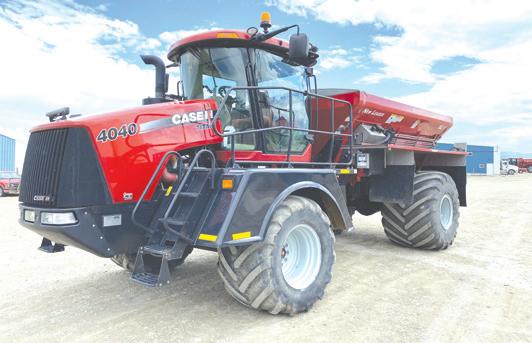
‘18 CASE TITAN 4040, New Leader NL4500 G4 Edge Spinner Spreader. Viper 4 controller, Smartrax. Very nice truck.$198,500


‘09 AGCHEM 8203, Agco controller, Trimble auto-steer. Caterpillar C9 Diesel Engine, TerraShift transmission. Airmax precision bed. 70’ boom. 3,437 hrs. $77,500
‘04 CASE IH FLX 4510, with Case FLX 810 70’ Air Applicator Bed. Raven Viper 2 Controller, Raven Smartrax MD Auto Steer. Electric Roll Tarp. 5180 hrs. $72,000
2018 TERRAGATOR TG8400B FLOATER, 1,505 Hrs, AGCO SISU Power, Diesel, CVT Transmission, Air Max Precision 2 Bed, Stainless Steel 70’ Boom, Raven Viper 4, Electric Roll Tarp............... $228,500
‘12 TERRAGATOR 9300 FLOATER, Cat C13 diesel engine, terrashift transmission, AirMax Precision 2, 70’ stainless steel boom, electric roll over tarp, GPS, Raven Viper Pro, 4,302 hours. $82,500


2019 TERRAGATOR TG8400C, 1619 Hours, Airmax Precision 2 bed. 70’ stainless steel boom. Raven Viper 4 controller, Auto Steer, Amazing Machine $248,500
‘12 VECTOR 300, Cummins diesel engine, Allison automatic transmission, New Leader L4000 G4 dry spreader box, twin spinner, all hydraulic, stainless steel insert, Raven Viper Pro monitor, Auto Steer, 4,561 hours. $92,000
‘17 TERRAGATOR TG8400B, Airmax Precision, 70’ boom, Viper 4, 3254 hours................. $154,000
‘16 TERRAGATOR TG8400B, 3628-hrs, AirMax Precision 2 $148,000




‘15 TERRA GATOR 8400B, Precision 2-70’ Boom, granular bins, Viper Pro, Auto Steer, 3600-hrs $132,500
‘14 TERRA GATOR 8400, Dry Floater, Air Max
Precision 2 70’ boom, granular bins, Viper Pro, auto steer, 3500-hrs $123,500
‘16 CASE IH TITAN 3540 FLOATER, 1512.1-hrs, 3-wheeler with 810 Air Delivery Box, 70’ boom, coap bins, Viper 4, Autosteer $167,000
HYUNDAI HL730-9A WHEEL LOADER EROPS, Cummins diesel engine, heat, air conditioning, Am/Fm radio, 8’ bucket, 2.5 cubic yard capacity, 17.5R25 tires, operating weight 23,500 pounds, rear view camera. 5684 hours $92,500
‘95 Pemco Feed Trailer
Overhead unload, Tag axle. $17,900


‘04 PETE, floater spray truck, 76’ boom, 20” nozzle spacing, Envisio Pro, Raven control valves $69,000
‘15 Case IH 4530 Floater, Case 810 Flex Air system, 70’ stainless steel boom, micro ingredient bin, electric roll tarp, Raven Viper Pro, Smartrax light bar, 2,384 hours. $155,000 ‘88 IH, 24 ton tender $27,500
‘15 CASE IH 4530 dual micro ingred bins, 70’ boom, Viper Pro, 2964-hrs $148,000
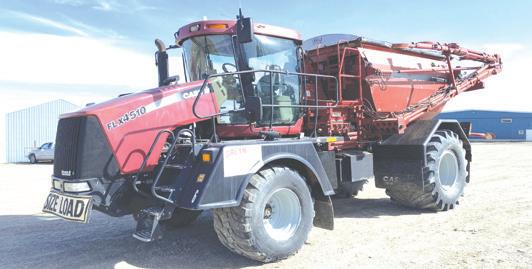
‘18 RBR VECTOR 380 FLEX AIR, 1,825hrs, 380hp Cummins Engine, Allison Automatic Transmission, Air Ride chassis, 4 wheel drive, 380-90-46 Tires, 810 Flex Air System, Triple Bin, 70 foot booms. Raven Viper 4+, Raven GPS and Light Bar, Auto Steer, Accu Boom. $228,000
‘16 TIMPTE SUPER TENDER TRAILER, 40’ aluminum tender trailer, hopper bottom, rear hydraulic discharge conveyor, under hopper conveyor, outer controls, electric roll tarp. $72,000
‘89 KENWORTH T-800 TENDER TRUCK, 350 Cummins engine, 10 speed Eaton Fuller transmission, steerable pusher axle, 16 ton Wilmar side shooter tender. $29,500

1993 Willmar 16 Ton Rear Auger tender.

Mounted on a pup trailer, with air brakes. Honda powered Hyd. System. Roll Tarp.
$16,500
‘08 STERLING ACTERRA, fuel truck, Cummins diesel, Allison auto, tandem axle full screw, 3600-gal 5-comp fuel body, dual metered hose reels, frame mounted storage boxes, 218,755-mi $38,500
H hydrostatic, adjustable axles, 4 wheel steering, air conditioning, New Leader L4258 G4 dry spreader box, twin spinner, all hydraulic, 380/90R46 tires, Raven monitor, Raven GPS, 3072 hours
2013 ROGATOR 1300 $ 88,500
Soilection Four Bin dry air flow system, 70’ boom, Raven Viper Pro monitor, 4,530 hours. Must see truck, amazingly clean, and well cared for.
2015 TERRAGATOR TG9300B $ 82,500
A10 The Growers’ Guide June 2023
AC Harrow 208-507-0187 B13 Accucon 509-534-4460 B4 Auction Sales Company 541-296-1012 C15 Ag Trucks and Equipment 509-338-7346 C1 Agpro Marketing & Mfg., Inc. 208-746-2212 B8 Agri-Tool and Supply LLC 800-321-5460 C13 Agri Service 800-260-3599 C9 Altitude Agri Services 509-551-4774 C7 Andy Knapp 509-466-6153 B9 Aqua Tech 509-507-3800 B13 Bank of Eastern Oregon 541-676-9125 B3 Barnes Welding, Inc. 509-745-8588 B12 Bell Equipment, Inc. 208-937-2402 B10 BFI Native Seed 509-765-6348 C8 Big Iron Repair 509-770-5560 C4 Bill Russell 208-651-8698 B4, C8 Bison Pipe & Supply 208-324-2142 A6 Blue Mountain Agri-Support 208-746-6447 B3 Booker Auction 509-297-9292 A12 Bourgault Tillage Tools 800-878-7714 C10 Burlingame Machinery Consignments 509-240-2799 A16 Class 8 Trucks 509-534-9088 A6 Correll’s Scale Service 800-572-0426 B12 Dayton Tractor and Machine 509-382-4824 B15 D & S Tires 208-635-0700 A8 Diamond K Sales 541-369-2755 A13 Ed-Ka Manufacturing, Inc. 509-635-1521 C14 Fab-Mech 509-597-7065 A6 Farm & Home Supply 509-843-3395 B10 Farm Equipment Headquarters 541-276-6222 A7 Ferticell USA 480-361-1300 C8 Greyn Fertilizer Equipment 406-466-5356 A10 Heartland Ag Systems 509-766-6638 C7 Harvest Solutions 541-786-2358 C5 High Mountain Horsepower 509-321-5428 A2 Hillco Technologies, Inc. 800-937-2461 A2, B4, C5 Ioka Farms 503-873-6498 C12 Irrigation King 844-259-0640 A4 JECO Supply 208-882-6531 A3, C16 Jerry’s Farm Supply, LLC 509-879-8294 B12 JD Sprayer & Tractor 509-635-1640 C6 Jones Truck & Implement 509-397-4371 A11, B14, C4, C9, C13 J&T Equipment Sales 406-381-3159 A13 Kincaid Real Estate 503-397-4434 A7 Leland Trailer & Equipment 509-535-0291 C5 Loomis Truck & Tractor 509-650-7242 B11 McGregor Company 509-397-4360 C11 Metallion Industries 503-630-7740 A4 Mountain Hi Truck & Equipment 509-529-1761 C10 North Frontier Farms, Inc. 406-403-4600 C13 North Pine Ag Equipment 509-523-6461 A14 Northwest Trailer Center 800-231-4660 C12 NW Mixer Feeders 208-459-2750 B13 Nyssa Tractor & Implement Inc. 541-372-4020 A6 Odessa Trading Company 509-982-2634 B15, C14 Pacific Petroleum & Supply 509-467-3130 A7, B2, C13 Palouse Welding & Machine, Inc. 509-878-1551 C7 Pape Machinery 503-437-6864 A15 Parsons Equipment 509-632-5205 C3 Photosyntech 701-226-8958 C2 Pure Country Harvest LLC 509-765-5671 B5 Randy’s Truck, LLC 509-525-9410 B12 R & G Machining 503-829-6038 C9 R & M Steel Co. 208-454-1800 B2 Rick Franklin Corporation 541-451-1275 C10 Rocky Mountain Steel 800-851-8612 A11 SS Equipment 800-360-3935 A14 Spectrum Crop Development 509-659-1757 B4 St. John Hardware & Implement 509-283-2211 B1, B16 State Bank of the Northwest 877-789-4335 C15 Stockland Livestock Exchange 800-372-6845 C8 T&S Sales 509-535-1177 B14 Tankmax, Inc. 509-545-4600 B11 3 Roads Equipment and Consignment 509-876-1590 A7, C9 Trailer World 503-981-8777 B14 Walter Implement 509-982-2644 A5 Western Packaging 855-928-3856 A13 Whitman County Custom 509-982-2644 C11 Whitney Land Company 541-278-4444 A9, B2, C7 Wood’s Hay & Grain 208-255-4270 A10 Younker Bros. 800-362-2387 B8 Phone Page Company Company Phone Page For A Complete listing Visit: WWW.FERTILIZEREQUIPMENT.NET
406-466-5356 – Choteau, Montana • 406-476-3402 – Dutton,
DEALER INDEX
Continued from Page A7
Cowboy marinated skirt steak
Ingredients:
1-1/2 pounds beef skirt steak, cut into 4 to 6-inch pieces
1/4 cup red onion, diced
1-15 ounce canned corn, rinsed & drained

1 cup cherry tomatoes, cut in-half
1/3 cup Italian dressing
2 Tablespoon fresh basil, chopped
2 teaspoon granulated garlic
1 teaspoon freshly ground black pepper
1 teaspoon kosher salt
Marinade
2 Tablespoon vegetable oil


2 Tablespoon fresh lime juice
3 Tablespoon water
2 teaspoon garlic, minced
2 teaspoon sweet paprika
1-1/2 teaspoon dried
thyme leaves
1 teaspoon garlic powder
1 teaspoon onion powder
1/2 teaspoon kosher salt
1/2 teaspoon black pepper
Cooking:
Combine Marinade ingredients in small bowl. Place beef Skirt Steaks & marinade in food-safe plastic bag; turn steaks to coat. Close bag securely and marinate in refrigerator 6 hours or as long as overnight, turning occasionally.
Combine tomatoes, corn, red onion, basil, garlic, Italian dressing, salt and pepper in a medium bowl; cover and refrigerate until ready to serve.
Cook’s Tip: Whole grilled corn on the cobb can be used in place of canned. Place 4 corn cobs on grid over medium, ash-covered coals. Grill, 10 to 14 minutes (over medium heat on preheated gas grill, 8 to 10 minutes) turning on all sides.

Remove corn and let cool. Carefully cut corn kernels from cob and let cool.
Remove steaks from marinade; discard marinade. Place

steaks on grid over medium, ash-covered coals. Grill, covered, 7 to 12 minutes (over medium heat on preheated gas grill, 8 to 12 minutes) for
medium rare (145°F) to medium (160°F) doneness, turning occasionally. Carve steaks diagonally across the grain into thin slices; season with salt, as desired.
USED COMBINES


USED TRACTORS


PRICED WITH HEADERS UNLESS OTHERWISE STATED


SPRAYERS

June 2023 The Growers’ Guide A11
Cowboy
Direct Ship & Cutting Available ROCKY MOUNTAINSTEEL • USED CABLE • ALL FENCING HARDWARE AVAILABLE • CABLE CLAMPS 400 3rd Ave. North Nampa, ID 83687 800-851-8612 208-466-0036 rockymtnsteel@integra.net Available at our Nampa Location.... Canadian 2 ” x 31’ Well Stem Pipe / 8 7 We Are Now Stocking American Made T-Posts Dan Helbling Rena OlsOn TyleR elsTaD nic MayeR MEET OUR SALES STAFF! ‘11 CASE IH 2303, swather, RD162 disc head, 1,750-hrs $75,000 ‘20 BRANDT 1547 GRAINBELT, 47’x15”, EZMover $24,000 JD 510, 5-shank ripper $11,500 BRENT/UNVERFERTH CPC, 7-shank, disc ripper $12,500 S264810-1 LANDOLL RENTAL RETURN, 40’ double disc drill IN STOCK! ‘19 MONOSEM NG+4, 8-row 30”, hemp plates $75,000 DRILLS Ask About Our Waivers on New & Used Equipment! ‘01 CASE IH-STX440, PTO, 8252 hours $105,000 ‘19 CASE IH 90 NARROW FARMALL, 153 hrs $68,500 ‘91 CASE IH 9280, 24.5 x 32 duals, 8900 hrs $45,000 ‘97 JOHN DEERE 8400T, PTO, weights, 11,000 hrs $49,000 ‘20 MAHINDRA 1626HST LOADER/BACKHOE, 168 hours $28,000
Courtesy Wisconsin Beef Council Grilled cowboy steaks
‘19 GVM T380 120 POMMIER, HAWKEYE, RAVEN, 2 sets tires, 1568 hrs $400,000 APACHE 790, Raven system, 60-90’ boom, 3305 hours $40,000 FAST 90 3PT. SPRAYER $25,000
NEW CASE IH SPEED TILLER 475, 41’ CALL ‘80 KRAUSE 1950, 28’ disk.. $12,000 LANDOLL 6231-36 DISK CALL McFARLANE 16-bar 60-70’ harrows CALL
TILLAGE & MISC.
‘22 CASE IH 9250 HILLCO HILLSIDE, 4WD, w/FD245 head $780,000 ‘22 CASE IH 8250 HILLCO HILLSIDE, 4WD, w/FD245 head $760,000
‘06 CASE IH 8010, 4WD, Hillco, 3020 header $150,000 ‘08 CASE IH 2588, Hillco, 4WD, 2010 $50,000 ‘04 CASE IH 8010 LL, 4WD, 3020-35’ flex, 2633 sep $90,000 ‘03 CASE IH 2388 LL, 4WD, 3200 sep., 2020 30’ $40,000 (2) ‘01 CASE IH 2388, Hillco, 4WD, 1010 30’ $50,000 EACH ‘99 CASE IH 2388, Hillco, 2WD, header $35,000 ‘95 CASE IH 2188 LL, 2WD, 1010 header $17,500 ‘94 CASE IH 1688, Hillco, 2WD, 1010 header $25,000 ‘13 JOHN DEERE S680 STS, LL, 2WD, duals, 2387 sep., 2018 FD75-40 header. $245,000 MANY CASE IH 2020, 35’ headers, Make Offer! CALL
‘22 CASE IH 580 QUAD, PTO, twin pump, 6-valve, 575 hrs $565,000 ‘10 CASE IH 485 QUAD, 36” tracks, 4357 hrs $195,000
Sheep
Continued from Page A9
“We’d arrange a truck, agree to a price that made us sick to our stomachs just to move the wool, then the driver would not show up,” said Griggs.

Although the supply chain has since improved, the backup led to an oversupply of wool.
The pandemic also disrupted specialty markets for high-quality wool used by crafters. For example, trade shows shut down, and some have not resumed. Rooney, the Silverton farmer, said she is sorry to have lost wool shows that were a marketing avenue.
Finally, COVID left its mark on woolen mills. At the height of the outbreak, mills worldwide were shut for weeks or months. When they started up again, many workers had retired or found
other jobs, leaving a generational knowledge gap and labor shortage that persists three years later.
The other effect of the mill slowdowns was a global processing backlog. Roeder, of Montana State, and Orwick, of the American Wool Council, said pro-
ducers in the U.S., United Kingdom, New Zealand and elsewhere are sitting on warehouses full of wool.
The oversupply, combined with lower consumer demand, is a recipe for low pricing.
Although mills are gradually rebuilding capac-
ity, experts say returning to “normal” won’t be easy.
“Once you stop a train like this, it’s hard to get it started again,” said Griggs, of the Utah Wool Marketing Association. “They’re just starting to get back on track.”
The slowdowns especially hurt one market: wool growers’ contracts with the U.S. military.
Contracts disrupted
For decades, the U.S. military has been the No. 1 buyer of American wool, said Orwick, of the wool council. The military has chosen wool for its apparel because of its properties as a flame-resistant, durable, odor-resistant, fast-drying and breathable material.
Even before the pandemic, sheep ranchers were troubled by the government’s decision to discontinue wool for a few military apparel lines. For example, a few years ago, the U.S. Navy halted its wool pea-

coat program and switched to synthetic parkas.
When COVID hit, the military wool market got worse. Some mills, due to shutdowns or slowdowns, were unable to meet military contract timelines, said Orwick, of the wool council. He estimated the industry got a 1 1/2 years behind on military quotas. In response, the military dropped some contracts.
“Military contracts are beginning to pick up again, but we’re definitely not to the level that we were,” said Roeder, of Montana State.

Future military demand is unknown. Although the military remains the largest buyer of domestic wool, Orwick and Surber said recruitment is down, which could impact future demand.
Thrifty consumers
U.S. consumers facing inflation have less disposable income to spend on wool clothing, said Gutzman, Surber and Griggs.
See Innovation, Page A13
A12 The Growers’ Guide June 2023
Courtesy of Peter Orwick Peter Orwick, left, with his father Jim Orwick, right, in the Orwick shearing shed.
Will Griggs
Gutzman said that in an economic downturn, one of the first things consumers cut back on buying is apparel, and in an uptick, it is one of the first things they resume.
“It’s like a bellwether of the economy,” he said.
Meanwhile, Europe has traditionally been a major destination for high-fashion woolen clothing, but as Europeans have faced the war in Ukraine, high inflation and soaring energy costs, consumers have become more cautious about spending, said Paullier, of South Carolina.
Government aid

Some producers and sheep associations are asking the federal government for more aid.
In the past few years, many struggling producers have used a USDA program called the wool and mohair loan deficiency program. The program can double what a qualifying producer makes, up to 40 cents per pound.

“It’s not huge, but it helps,” said Rooney, the Oregon sheep farmer.
Although some industry leaders are talking with the farm bill’s authors in Congress about how to support wool producers
with federal funds, others see innovation as the wool industry’s best hope.
Opportunity, innovation

Some wool markets remain fairly strong, including the sock market, said Paullier and Orwick.

Rooney, the Oregon farmer, said there is also still an opportunity to make a good profit by selling premium fleeces at wool shows or to niche mills and hand spinners. The problem, she said, is that while the price per pound is high, the volume sold is typically low.
Experts say there is room for innovation in wool marketing.
“I think there’s opportunity, but it’s gonna come with innovation,” said Gutzman, of Pendleton.
Gutzman said Pendleton Woolen Mills is innovating by refining its washable product lines, investing in energy-efficient equipment that gives fabrics a special feel and exploring new apparel styles and patterns.

Beyond Pendleton, Gutzman said he sees many potential opportunities for innovation: turning low-value wool into garden products, making recyclable packaging to replace bubble wrap and blending wool with cotton to make jeans, for instance.
See
1999 FREIGHTLINER FL112 15YD DUMP, 370hp M11, 8ll, Jake, AC, PS, Dbl. frame, 16K front, 40K rears on Hendrickson spring, 50% 22.5 tires, pintle, air gate.
1998 GEHL DL6H40
4X4 TELEHANDLER, 7,000lb lift capacity, 40’ lift height, enclosed cab w/ heat, 3 way steering, 5200hrs, 4.5 John Deere diesel, 80% 13.00x24 tires, 60” forks, runs and works great

$31,500

2000 FORD F650 5YD DUMP, 26K gvw, 210hp 3126 Cat diesel, Allison AT, PS, AB, 90% 22.5 tires, 10’ dump, air and electric trailer hookups, Under CDL $26,500


4 product tanks, hyd. compressor, work bench, air greaser, 6 hose reels, 90% 11r22.5’s, 90% brakes, runs and drives great $39,500

1998 CATERPILLAR TH103 TELEHANDLER, 10,000lb lift capacity, 44’ lift height, outriggers,4x4, 3 way steering, 48” forks, 75% 14.00x24 tires, 9100hrs, runs and works excellent $43,500
1997 FORD WATER TRUCK, reman 210hp 5.9 cummins, 6spd. , AB, AC, PS, 26K gvw, 2000 gallon tank, PTO pump, front, side and rear spray, 75% 22.5’s on aluminum wheels $29,500


2004 FREIGHTLINER M2 SERVICE TRUCK, 300hp C7 Cat, 6spd Allison, AC, Cruise, PS, AB, 26K GVW., exh. brake, Locker, 6000# Autocrane, Hyd. Outriggers, wireless remote, 22cfm compressor, 80% tires and brakes $33,500
1997 GRADALL 534C-10
TELEHANDLER


4x4, 40’ lift height, 4BT Cummins, 7100hrs, outriggers, 10K capacity, 60% 14.00x24 tires, runs and works great $41,500

1991 AUTOCAR
12YD DUMP, 425hp Cat 3406B, 18spd, Jake, lift axle, full lockers, 15.5’ box, 60% 11r24.5’s, 700k miles, pintle hitch, air gate, Runs drives great $41,500

June 2023 The Growers’ Guide A13
Innovation
from Page A12
Continued
Education,
Dump Trailer - 2006 Innovative Trailer 8’ x 12’ 14k GN Diamond Trailer Sales Your All Service Dealer • Halsey, OR 541-360-0341 • 541-740-5135 OVER 350 UNITS ON OUR LOT View our inventory: diamondksales.com 9537548-319-104979-DiamondK - Page 1 - Composite Your All Service Dealer • Halsey, OR 541-953-7548 •541-740-5133 Stop in or visit our website diamondksales.com to view our inventory Goosenecks • Tilts • Dumps • Truckbeds • Enclosed Bumpers • Parts & Service $7,500 • Potato Bags • Printed Bags • Plain Bags • Bulk Bags • Stretch Film (ALL GAUGES) WE SPECIALIZE IN BULK BAGS! Albany, Oregon Ellensburg, Washington CONTACT INFORMATION: Phone: 855-928-3856 9283856-ROP-149152-WesternPackaging - Page 1 - Composite BAGS: • Seed Bags • Fertilizer Bags • Feed Bags • Potato Bags • Printed Bags HAY PRESS SUPPORT: • Hay Sleeves • Strap • Totes • Printed or Plain • Stretch Film WE SPECIALIZE IN BULK BAGS! www.westernpackaging.com LOCATIONS: Albany, Oregon (MAIN OFFICE) Ellensburg, Washington CONTACT INFORMATION: Phone: 855-928-3856 Fax: 541-497-6262 info@westernpackaging.com CUSTOMER SERVICE IS OUR TOP PRIORITY! 9283856-ROP-149152-WesternPackaging - Page 1 - Composite BAGS: • Seed Bags • Fertilizer Bags • Feed Bags • Potato Bags • Printed Bags • Plain Bags HAY PRESS SUPPORT: • Hay Sleeves • Strap • Totes • Printed or Plain • Stretch Film (ALL GAUGES) WE SPECIALIZE IN BULK BAGS! www.westernpackaging.com LOCATIONS: Albany, Oregon (MAIN OFFICE) Ellensburg, Washington CONTACT INFORMATION: Phone: 855-928-3856 Fax: 541-497-6262 info@westernpackaging.com CUSTOMER SERVICE IS OUR TOP PRIORITY! 9283856-ROP-149152-WesternPackaging - Page 1 - Composite BAGS: • Seed Bags • Fertilizer Bags • Feed Bags • Potato Bags • Printed Bags • Plain Bags • Bulk Bags HAY PRESS SUPPORT: • Hay Sleeves • Strap • Totes • Printed or Plain • Stretch Film (ALL GAUGES) WAREHOUSE PACKAGING: • Stretch Film • Pallet Sheets •Pallet Covers • Totes • Woven Polypropylene • Bopp • Polyethylene • Pocket Bags • Roll Stock & More! 1980 INTERNATIONAL SERVICE TRUCK, 210hp DT466, 5&2 spd., AB, PS, IMT 425AT knuckle boom with remote, hydraulic outriggers, 13hp Curtis 25CFM compressor, 70% 11r22.5 tires, 12’ service body $19,500 2001 CHEVROLET C6500, 210 hp 3126 Cat diesel, 6spd manual AC, PS, PB, 95K miles, 90% 245/75-19.5 tires, 15’ Flatbed, PTO hydraulic winch, 26K GVW. $19,500 1998 FREIGHTLINER FL70 4X4 LUBE SERVICE TRUCK, 126K miles, 26K GVW, Reman 275hp 3126 Cat Diesel, Md3060 Allison AT, AC, PS, AB, cruise, 14’ enclosed body oil tank,
Page A14
J&T Equipment Sales Stevensville, MT 406-381-3159 www.jandtequipmentsales.com $42,500
N

• PASCO, WA (509) 547-1795
• QUINCY,
Education
FORAGE HARVESTERS
NH FR780, 2019, 1,191 engine hours, 2x12 drum, air compressor, hyd. Lateral float, crop processor, 2wd, 721 HP, 8 row 600 BFI header, leather seat $449,000 ORCHARD/VINEYARD
NH T4.95V, 2014, more details coming $13,900 (2) NH T4.90V, ROPS, 4WD, 2,600 hours ea., good rubber.................$35,000 ea.
NH T4.90V, 2016, rops, 4wd, 4,154 hours, 16x16 trans., 3 remotes $18,900
NH TD4040F, 2014 $12,900
Hydralada Pruner Kits, several in stock Please call for prices and details
Hydralada 49565 chainsaws, several in stock $3,500ea.
Seppi 6’ flail mower, hammers, offset, 540 $7,500 COMBINES
New CX 8.80 spike tooth, more details coming
Used CX 840 spike tooth with model year 2018 790cp 12ft header $47,000
Used 2014 CX8080 spike tooth with 790cp $206,000
Roeder, of Montana State, said some companies are innovating by becoming more vertically integrated, such as Duckworth Co., a wool clothing company owned by a sheep farming family.

BALERS – SMALL SQUARE
(3) NH BC5080’s, 2016’s, nice balers............................................$27,000-$29,000
NH BC5080, 2016 $25,500
Freeman 370 engine baler.........................................................................$15,000

Freeman 330 engine baler.........................................................................$11,000 BALEWAGON
NH 1095, 6,900 hours, super singles.............................................................$61,000 RAKES
(7) NH 216’s, $6,900 to $17,900
Allen 8827, cable controls $9,900
LMC 8603 wheel rake, Darf-style HD, 2013, lots of life left......................$13,900
(2) Twinstar 2030G2-5 to choose from $25,900 Ea. Twinstar 2030G2-5, 2012, great shape $26,900
We are a full line dealer for SUPREME-SEGUE-ROTOMIX MIXERS/TUB

GRINDERS
Farmhand 822, corn grinder with wheat sieves, 540 pto $10,625
Rotomix 1105 truck mount, 2003, new stainless liners, new augers, new knives, new LH discharge chute. On 1990 Peterbilt 357 double frame, Cat 3176, 400 HP, 13 speed..................................................................................................$74,900
Supreme 900T, 2016, call for more details please....................................$55,900
SWATHERS
NH SPEEDROWER 260, 2021, 416 header, low hours, new rolls............$169,000
NH SPEEDROWER 260, 2016, 3 speed, deluxe cab, 518 hours................$150,000
(2) NH 416 rotary header, 2014’s, rubber rolls $19,900 ea.
(2) NH HS16 hay headers, good rolls, good floors...............................$18,000 ea.

NH 770HD, 18’ rotary..................................................................................$7,500
NH 974 6-row corn header $6,500

CaseIH 1680, 1990, 5468 hours, 25’ auger header...................................$19,700 TILLAGE/SPRAYERS/MISC.
Wishek 812N-18 disk w/ cage roller packer, 28”, scrapers, great shape $45,000
Unverferth 220, 26’ rolling basket, 12.5” baskets, straight........ $12,900
Krause 5817W 16’ offset disk, scrapers........................................................$30,000 TRACTORS
NH LM5060 Telehandler, 2009, new short block, 5,793 hours, includes Blue MTN VM3 hay head $75,000

NH T9.600, more details coming $252,000
NH T8.360, 2011, duals front & rear, 6 remotes, 9,673 hours............. $69,900
NH T7.260, 2019, 1186 hours, deluxe cab, autocommand cvt, 20.8R42 singles $186,000
NH T7.260, 2019, 1213 hours, deluxe cab, autocommand cvt, 20.8R42 singles $186,000
NH TG305, 2007, duals, new rubber, suspended front axle, 8,800 hours....$79,900
NH TG255, 2005, 7,346 hours, 18.4R46 duals, supersteer front axle, powershift, front weights, rear wheel weights, 4 remotes $59,900
NH TC29DA, 2006, 4wd, loader w/ SSL QA, 1,956 hours, supersteer, fully serviced $15,900
NH Workmaster 95, cab, 4wd, loader, SSL QA, only 180 hours!!! Warranty remaining $65,000
NH Workmaster 35, 2018 $23,900
AGCO-RT120A, cab, 4wd, CVT trans, 4,491 hours $67,000
International 400, gas, wide front end, great bend loader, TA...................$5,370
JD 4030, 1976, cab, 2wd, 8,400 hours, synchro-mesh trans, 158 loader w/ bucket $19,700
CONSTRUCTION
Volvo ECR880 PRO, Only 24 hours!!!, like new, 2 buckets $110,000
WA (509) 787-3595 • OTHELLO, WA (509) 488-9606 • HERMISTON, OR (541) 567-3001 • LA GRANDE, OR (541) 963-8144 • ALBANY, OR (541) 757-8112 www.sseqinc.com O% 1For commercial use only. Customer participation subject to credit qualification and approval by CNH Industrial Capital America LLC. See your participating New Holland dealer for details and eligibility requirements. Eligible equipment limited to dealer inventory in stock. Previous retail sales are not eligible. Down payment may be required. Offer good through June 30, 2023. Not all customers or applicants may qualify for this rate or term. CNH Industrial Capital America LLC standard terms and conditions will apply. This transaction will be unconditionally interest free. 2Cash back amounts vary and are applied at time of sale. Taxes, freight, setup, delivery, additional options or attachments not included in suggested retail price. Offer subject to change or cancellation without notice. ©2023 CNH Industrial America LLC. All rights reserved. CNH Industrial Capital and New Holland are trademarks registered in the United States and many other countries, owned by or licensed to CNH Industrial N.V., its subsidiaries or affiliates.
Surber, the wool consultant, said she believes coarser wools could be used in more tennis shoes, upholstery, insulation and other products. She said lowvalue wool could be useful for roadside reclamation or erosion control.
Another opportunity lies in the gardening sector. Several universities have conducted studies showing that dirty scrap wool — such as from a sheep’s belly or tail — can be a useful fertilizer because of the high nitrogen and nutrient properties.

Albert Wilde, a Utah sheep producer with about 2,600 sheep, is exploring this use. He stumbled into this work when he put waste wool around his wife’s plants to hold water, which worked well. When he later learned wool is also an effective fertilizer, he bought a pellet mill and started making wool pellets under the brand name Wild Valley Farms, selling them to gardeners as fertilizer. His business is growing, and he recently signed a contract with Lowe’s to test the product in stores in 2024.
“We are excited about the

growth,” said Wilde.
“We’ve got a lot of high hopes resting in what (Wilde is) doing,” said Griggs, of Utah Wool Marketing Association.
Education
Many wool experts say the sheep industry can do a better job of educating consumers about wool’s sustainability, which could help wool regain some of the market share it lost to synthetics.
According to the International Wool Textile Organisation, based in Belgium, one of wool’s greatest properties as a sustainable material is its biodegradability, in contrast to fabrics made from plastics derived from fossil fuels.
Globally, according to the European Environment Agency, between 16% to 35% of all microplastics released in oceans annually come from synthetic fibers.
Wool industry leaders say it doesn’t make sense that consumers talk about saving the planet yet continue to buy synthetic clothes instead of natural fibers.
“I do think there’s opportunity for education,” said Rooney, the sheep farmer.
Surber, the wool consultant, agreed. Although wool producers have faced a few tough years, she still has hope for the industry as producers embrace innovation and education.
“If we want to tell our story, now’s the time,” she said.
A14 The Growers’ Guide June 2023
Continued E-Mail: cschmidt@att.net Located at E. 2110 Babb Road, Rosalia, WA CALL (509) 994-2133 ORTH PINE AG EQUIPMENT, INC.
from Page Early order Horsch Discounts! (Winter Delivery)
A13 Pays For Itself In As Few As 1000 Acres! 98% Weed Seed Kill Rate! * Even The Tiniest Of Seeds!
Courtesy of Maria Rooney Maria Rooney’s Coopworth lamb gets his wool sheared o for the summer.
YOU’VE READ ABOUT IT... YOU’VE SEEN IT..... NOW...LET’S TALK AGRONOMY Your banker will approve. Your accountant will approve. Your agronomist will approve. Can more than pay for itself in ONE crop harvest! Available For: • John Deere S-Series • CaseIH 30,40 & 50 Series Early Order Discounts Available! Seed Control Units (SCU) Potential $18 Per Acre NRCS Payment for E595G under the CSP. Don’t Wait for a Government Payment(s). Contact me today to talk about the agronomy aspects of this program and how it can: • INCREASE YIELD • CUT CROP PROTECTION PRODUCT COSTS on select haytools now through June 30, 2023 0% for 48 Months1 Cash Back 2 OR BALERS – LARGE SQUARE (26) NH BB340SPLUS 3x4 BALERS IN STOCK!! Some Single Axles, lots of Tandem Axles, Several Different Packages, Most with LoopMaster Knotters, Price Points From $75,900 to $129,900!! NH 340S, 2016, tandem axle, 24,125 bales, bale chamber extension.. $55,000 NH BB9080, 2012, 18,723 bales, single axle $49,900 NH BB9080, 2011, single axle, 22,654 bales, large 1000, IV III....................$39,900 NH BB9080R, 2009, Rotocut, tandem axle, 67,000 bales, bale chamber extension $29,900 Case IH LB434XL, 2019, 21,779 bales, large tandem axles...........................$84,900 Case IH LB434XL,
S264984-1
2019, 29,126 bales, single axle.....................................$65,900
Claas 5300, 2019, roto-cut, 19,604 bales.................................................$79,900
Claas 5300, 2019, 35,000 bales, rotocut, tandem axles, hyd. Brakes………$69,000


June 2023 The Growers’ Guide A15
EQUIPMENT






MISCELLANEOUS

A16 The Growers’ Guide June 2023 B URLINGAME MACHINERY C ONSIGNMENTS Diana Burlingame-Jones, Office (509) 240-2816 Email: burlingamemachinery@hotmail.com Ed Nate Burlingame (509) 240-2799 • Jones (509) 520-4116 CERTIFIED EQUIPMENT APPRAISALS! CHECK OUT OUR WEBSITE AT BURLINGAMEMACHINE.COM FOR ALL THE LATEST EQUIPMENT, NEW ITEMS ADDED DAILY! COMBINES JD 625 RIGID HEADER, Stoess cart, completely overhauled, extra sickle $15,000 TRACTORS DRILLS & PLANTERS 30’ THOMAS DRILL, 12” sp., set-up for anhydrous & liquid fertilizer $30,000 ‘86 MERRITT 48’ $17,500 ‘01 JD 9750 $30,000 ‘88 CAT 65A, no PTO, 13,500 hrs, 4-valve, new bolt on tracks... $30,000 ‘04 MF 8245, $55,000 CAT 45, 13,290 hrs., PTO, 3 pt., front wts., 3-valve, bolt on blocks,tracks and undercarriage in very good shape... $35,000 CAT D4D SA, 2-valve, undercarriage in good shape... $8,500 JD 956 HYDROSWING SWATHER, 15 1/2’, cut approx. 1500 acres. Comes with transport cart $18,500 POWER LINX 2118. dual power hitch $12,000
JD 9650 HILLSIDE W/930R HEADER & CART, approx. 4000 sep. hrs., good shape $55,000 ‘03 JD 8320, Trimble guidance system $59,500 ‘94 RAVEN FLATBED TRAILER $15,000 ‘97 BEALL 8,000 gal. & ‘85 BEALL 5,000 gal. pup $27,500 CAT 75C CHALLENGER, PTO $20,000 CAT D5 DOZER w/Holt blade $11,500
HAY
TRANSPORTATION
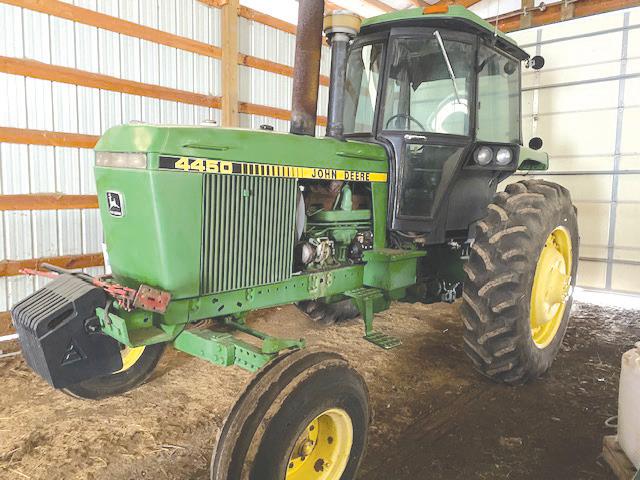
BRAND NEW R&M WELDING 20’ 600 BU. HEAVY DUTY SLIP TANK & BED $28,000 SUNFLOWER 33’ sweep, 5’ blades, rotary harrow on rear $7,500 TILLAGE ‘04 PARMA 20’ CULTIPACKER $17,500 60’ FLEXI-COIL 2340 AIR CART & FLEXI-COIL 820 DRILL, $30,000 ‘JD 5055E, w/bucket $25,000 JD 4450, 150 hp, lots of recent work done, good shape $38,500 ‘04 REINKE 48’ TRAILER, brakes & tires good shape $18,000 45’ LUFKIN SPREAD AXLE, brakes & tires, good shape $10,000 ‘18 40’ GOOSENECK FLATBED TRAILER $15,000 GLEANER-R62 w/30’ MACDON HEADER $22,000 EZEE-ON 4280 AIR SEEDER w/1550 36’ TOOLBAR $47,500 CASE-IH 9370, new tracks on front, PTO $75,000 JD 9430, PTO, new tires, 4218 hrs $150,000 ‘90 IH, DT466, 13 spd., 210 hp $13,500 MACK CH613, w/ bed, hoist, & slip tank $18,000
JD 4455 W/ JD 280 LOADER & BUCKET, 4-valve, 15
4WD. Nice tractor, everything works. 3300 hrs $42,500 ‘09 JD 8320RT, 5-valve, new
PTO, 3 pt.,
7200 hrs., Greenstar GPS & rate control $145,000 JD 650 26’ TANDEM DISK, 23” blades $10,000 BOURGAULT 7200 60’ SUPER HARROW, 23” teeth $15,000 SWATHER
$2,500
(3) JD 450 DRILLS, hydraulic, set-up for liquid fertilizer, 7-1/2” spacing, 21 openers per drill, blades in good shape $16,500
speed Powershift,
tracks,
approx.
CART
QUADTRACS
‘98 JD 9200, 8597 Hours, Full Power Shift, 3 Valve Hyd, Triple, 20.8x42 Wheel Weights, Clean Cab, 310 HP, Recently Fully Serviced $45,900


DRILLS
$160,900
NH 7308 Loader, 540 PTO, 3PT,
‘79 VERSATILE 875, with 7900 Hours, Consigned $9,000


CULTS & CHISELS
‘21
CASE IH 4440, 850 Hours, Luxury Cab, 710/70R42 Tires, 135’ Boom, 3” Front Fill, Single Nozzle Body, 7 Section, 20” Spacing, Boom Flush Valve, AFS Pro 700, AIM Command, AFS 372 Receiver, Accuguide Nav II Controller, One
‘19 CASE IH 4440, 2882 Hrs., Luxury Surveyor Cab, Active


Suspension, 380/90R46 Tires, 120’ 7 Section, 20” Spacing,
$109,900
‘03 FLEXI-COIL 5000HD, 45’ single shoot, liquid deep band set-up, 12” spacing, 5.5” rubber press wheels, 5” paired row boots $24,900
‘99 FLEXI-COIL 5000, Stainless Couplers, 41’, 4” Packers, 12” Spacing, Stealth Openers $39,900
DISKS
‘99
GP 4000/2220 Air Drill, 40’x
HARROWS
‘11 GP FH6851HD, 51’, 16 Bar Flex Harrow, Forward Folding, 12’ Mid Sections $27,900
HILLCO 48’ HARROW, 12-sections, Transport Cart, IH Spring Tooth Harrow, Bolt on Replaceable Points, 4-Bar Pepin Flex Harrow $9,900
SPIKE HARROW , Hill’s Hydro-Hitch cart, 50-ft, 5-bar flex harrow, hydraulic fold $3,500


JD
JD
606, 6-Disc Plow, Steel Wheels...................$1,200

‘16 CASE IH 4440, 4100 Hours, 120’ Boom, Accuboom Section Control, Autoboom Height Control, Pr 700 AIM Command Pro, Foam Marker, 650/65R38 Turf Tread $189,900


‘00 GALLENBERG Self Propelled Sprayer, 120’ boom, 8.3 Cummins, 4WD, Guidance, Consigned $37,500


MCGREGOR FERTILIZER CART, backpacker fertilizer cart, 500 gal. poly tank, ground drive pump, bomber tires $1,900


SPRAYER, shop-bilt 80’ pull-type, single tips, 750-gal poly tank, 4-section AutoBoom, 2 fence-row nozzles, 24.5-32 tires,10-bolt, induction tank, rinse tank $5,900
‘90 LORAL MAGNUM IV, truck mounted fertilizer applicator, Allison automatic trans., 2-speed gear box, single axle truck with fertilizer applicator on top $9,900

BALERS
AGCO 4790, Square Baler $19,900
JD 458, Mega Wide Plus Pick-up, 1000/540 PTO, Twine and Net wrap $19,900
‘03 NH 580, 16x18 Bale, Hydraulic Pick-up, Bale Extension, ¼ Turn Chute, Newer Knotters , Consigned $13,900
MISCELLANEOUS
KUBOTA-B4672,
(4) 620/70R38 TIRES WITH RIMS, 3-Like New, 1-has 2 Seasons on it, consigned $16,000

LEON, 8' front blade, consigned $1,000
KUBOTA V6280, hyd tree trimmer, consg $500
June 2023 The Growers’ Guide B1 S283855-1 Visit Us At: www.stjohnhardware.com Spokane, WA (509) 244-4902 Nezperce, ID (208) 937-2422 Moscow, ID (208) 882-7501 Fairfield, WA (509) 283-2111 St. John, WA (509) 648-3373 Yellow Highlight denotes recent trade PACKERS/ROLLERS AGRICOT ROLLER, 40’, 5-Section, 14” Packers, Two Tongue, New Unmounted Tires and Tubes Included $15,000 HESSTON 2210, 38’, 3-Section, Heavy Harrow, 7 ½” Spacing, Cons $5,000
’12 APACHE AS1220, 1100-hrs, 1200-gal, both narrow and flotation tires, hyd adjust axles, Trimble FM750, Section Control, Raven Auto Boom Height, Clean Unit! $124,900 ‘13 GP 3S-4010HD, 40’x7.5” Spacing, Turbo Coulter, Double Disc, Large Diameter Hitch Package, 3-Channel Shaft, Consigned, $74,999 ‘10 CASE IH 485Q, over 10K--hrs, 1 new 32” track, 1- 36” & 2- 30” tracks, head redone ‘18 by SJH
AFS Pro
AutoBoom
Control,
A&L 850S, 850 BU, Hydraulic Gate, Hydraulic Folding Auger, PTO Drive, Hydraulic Drive, Newer Gearbox $22,500 Rate Dual Body Shut-Off, Nav II Controller, Intake Flow Meter $299,900
700,
Height
Combo
‘00 NH TC29, 1622 Hrs., 4WD,
(N.A.P.) $14,900 ‘22 CASE IH STEIGER
in FF $389,900
‘98 JD 9300, 360 HP, 3-valve hydro, 710/70RY38 tires, power shift transmission, consigned $39,900 CALKINS,36’, new JD shanks, Morris 3-bar tine, consg $7,995 IH 45, 17’, 3pt., Outter Wing Fold $2,900 CASE IH 5500, 27’, Twisted Points, 3 Bar Harrow, Consigned $5,495
‘21 CASE IH PUMA 150, 480hrs, Mechanical Cab Suspension, Bluetooth Radio, Adjustable Mirrors, LED Cab Work Lights, LH & RH Rotary Beacons, 6.7L Engine w/Visctronic Fan, 120V Engine Block/Transmission
500W, 905 Hours, 500 HP, Luxury Cab, Powerdrive, Engine Brake, Pro 1200, HiCapacity Hydraulic Pump, Performance Lighting, PTO, Auto Guidance, 710/70R42 Duals, Front and Rear Weights. Call Scott
4WD 150-HP & OVER
JD KILLEFER 15’ OFFSET DISK, Not on wheels, Consigned $1,295 ‘22 CASE IH PUMA 150, Mechanical Cab Suspension, Standard Comfort Pack, High Visibility Roof, Bluetooth Radio, 2 Tele/Heat/Remote Adjust Mirrors, 12 Work Light, LH and RH Rotary Beacons, Isobus Class 3 Speed Control, 120V Engine Block/Transmission Heater $178,900 ‘19 CASE IH 620Q, 3728 Hrs, New Tracks, Powershift, Luxury Cab, LED Cab Roof Worklight Package, Dual Beacon Light, Large Display, Nav III with 372 Receiver WAAS, Telematics, Cold Weather Starting Aid Package, Engine Compression Brake, True Ground Speed Sensor, Hydraulic Pump, Twin Flow Smart Torque Pump, 6 Electric Remotes, Power Beyond Supply and Return, 1000RPM PTO, High Capacity Bar with Diff Lock, Undercarriage Scrapers $429,900 IH 800, 10-bottom plow,
walking beam in center, good moldboards, good landsides and pads...................$5,600
MOLDBOARD PLOWS
3600, 6-Bottom, Auto Reset, Consigned $6,995
$25,900 ‘00
7.5” Spacing, Hyd Drive, 2x13 Packers, T-Handle Adjust, Ravin Hyd Motor Drives, Ravin Monitor & Antenna $29,900 ‘13 MACDON-PW7,16’ Rake Up Header ,(N.A.P.) $24,900 ‘99 MACDON 972, 36’ draper header $7,900
PLOWS
FLEXI-COIL 3450, Dual Fan, Double Shoot, ISOBUS, 30.5l-32 12 Ply Tires, 340 BU , (N.A.P.)
Camera, (N.A.P.) $429,900
SWATHERS
3 pt. Backhoe, PTO, Pump, Consigned $5,995
CASE IH STX385Q, 4 Remotes, Camo Tracks in
Condition, Consigned $85,900 CASE IH MXM 5130, Call Steve in St. John for more info. NH RB460 BALER. Call Corey in Nez Perce for more info. LANDOLL 40’ DRILL. Call Steve in St. John for more info..
SPRAYERS/ APPLICATORS
Good
Researchers invent robotic ‘hand’ to pick blackberries
By SIERRA DAWN McCLAIN Capital Press


Researchers have developed a robotic “hand,” resembling a claw, to pick blackberries.

Their aim is to eventually automate blackberry harvest to help growers who face rising labor costs and a shrinking agricultural


workforce.
“It’s about having availability and dependability of labor,” said Renee Threlfall, a food science researcher at the University of Arkansas, who partici-
pated in the project.
Harvesting fresh-market blackberries is labor-intensive because the delicate berries must be picked by hand to prevent squishing or crumbling.
“Blackberries are very fragile, very delicate,” said Yue Chen, a leader on the robotics project.
Chen is an assistant professor in the Wallace H. Coulter Department of Biomedical Engineering co-run by the Georgia Institute of Technology and Emory University. Formerly, he

was an assistant professor in the University of Arkansas mechanical engineering department.

Chen, whose background is in medical robotics, got the idea to automate harvest when he realized the soft-touch robotics he was developing for the medical

B2 The Growers’ Guide June 2023
University of Arkansas Andrea Myers, a graduate student in food science, picks blackberries while wearing sensors on silicone nger sleeves to determine the amount of force required to pick the delicate berry without damaging it for post-harvest storage.
Renee Threlfall
Yue Chen
N. 8321 Market, Spokane • (509) 467-3130 • (800) 791-2149 www.pacpetro.net TOUGH
TARPS True to Size 6 oz., from 6x8 up to 40 x 60 Silver/Black Super Heavy Duty Added UV Protectant For Longer Life All Brass Grommets Reinforced! IN STOCK! 54 Cell-541-969-5383 Office-541-278-4444 Fax-541-276-0090 chris@whitneylandcompany.com www.whitneylandcompany.com * Licensed in the states of Oregon and Washington D. Stuvland Broker Land Company 3rd OR 97801 Licensed in Washington Company has been dedicated to providing professional Oregon real estate Northwest since 1970. We are a group of professional real estate brokers commercial experience who have a diverse background dealing with all from financing through production, throughout the Pacific Northwest and the Rocky Mountain states. first-hand knowledge of farming, banking, and marketing. You will have the working with knowledgeable agriculture real estate professionals who have the necessary financial and evaluation skills. The Whitney Land Company has been dedicated to providing professional real estate services in the Pacific Northwest since 1970. We are a group of professional real estate brokers with farm, ranch and commercial experience who have a diverse background dealing with all types of agriculture from financing through production, throughout the Pacific Northwest and the Rocky Mountain states. Our agents have first-hand knowledge of farming, banking, and marketing. You will have the confidence that you are working with knowledgeable agriculture real estate professionals who have the necessary financial and evaluation skills. Now Licensed in Washington Christopher D. Stuvland, CLE Principal Broker Cell 541-969-5383 Office 541-278-4444 chris@whitneylandcompany.com Ashley Moala Broker Cell 541-379-1338 Office 541-278-4444 ashley@whitneylandcompany.com The Whitney Land Company 101 SE 3rd, Pendleton, OR 97801 • whitneylandcompany.com Christopher and Ashley are Licensed in the states of Oregon and Washington
See Hand, Page B3
TARP
University of Arkansas
Researchers have developed a soft robotic hand for picking blackberries.




Hand
Continued from Page B2
field might have applications outside healthcare.


He asked Threlfall, the food science researcher, to partner with him on a farm robotics project.


Threlfall’s food science graduate student, Andrea Meyers, and Chen’s robotics Ph.D. student, Anthony Gunderman, also joined the team.
The team’s first task was to find out how a person picks a blackberry. Does a picker twist or pluck? How much force does it take? If the researchers could figure out how a person harvests blackberries, they could program a robotic hand to do the same.


Threlfall had an idea for how to track human picking behavior: using silicone finger sleeves, little caps people put on their fingers to turn pages more easily, reduce friction or protect blisters.
The researchers attached biometric sensors to the silicone finger sleeves, put the sleeves on a picker’s fingers and allowed the sensors to track how the hand was picking blackberries.
The sensors found it takes about one-half Newton, a unit of force, to pick a ripe blackberry. That is a small amount of force.

See Robotic, Page B4


June 2023 The Growers’ Guide B3
EVENING PHONES Devin Thompson: (208) 791-7584 Dan Borders: (208) 791-7583 www.bluemountainag.com (208) 883-3007 Moscow, ID • 2275 Nursery 620 Thain Road • Lewiston, ID (208) 746-6447 "We Service What We Sell" Since 1987 @BlueMountainAg BlueMountainAg.com www.bluemountainag.com 620 Thain Road • Lewiston, ID (208) 746-6447 NEW DYNA-FLEX 9335-35' Draper Flex Header GLEANER 8200, 30’ auger flex-header with Crary air reel CALL GLEANER 8200, 25’ auger flexheader with Crary air reel CALL 2015 NH 216 RAKE CALL GLEANER R72 CALL GLEANER R72 .................... CALL 2008 GLEANER R75 with lots of updates, draper header, consigned CALL USED EQUIPMENT IN STOCK! S98 NEW '20 NEW MF/Hesston Balers 620 Thain Road • Lewiston, ID (208) 746-6447 u Mowers u Blades u Tillers u Landscape Visit Us On Online OnlyLeft!1 '12 MF 2846A, 4'x6', 1000-PTO, 72" pickup, auto tie, bale kicker CALL Attachments NEW VERMEER 2300 Twin Hay Rake 1745D, 4x5 Round Baler ON ORDER! Rep Photo SOLD JUST IN New Vermeer 504R Signature Baler IN STOCK & Bale Processor SOLD 1838 , Small Square Baler
Robotic
Continued from Page B3
Chen and Gunderman then used the data from the trials to build a silicone robotic hand with three soft gripper prongs that can grab a berry and gently pull it off a plant.
Threlfall and Meyers tested the post-harvest fruit quality, look -
ing for leakage, decay or crumbling.


“The post-harvest quality was fine,” said Threlfall.
She said it appears that other factors besides the robot have more influence on quality and storability, such as the weather and the specific cultivar.
The next step, said Chen, is creating a full
robotic system — a project he estimates could take three to five years. The system will need a base robot, an arm that connects the base to the hand and an artificial intelligence system that can help the robot navigate autonomously and be able to detect which berries are ripe. This project, which has received fund -

ing, is underway.
Chen and Threlfall said they believe the robotic hand could be tailored for use in other berry crops, including raspberries and blueberries.

The researchers have published two papers
on their work. One, in the journal HortScience, received the Outstanding Fruit Publication Award from the American Society for Horticultural Science. The IEEE Robotics and Automation Society published another paper.
the amount of force required to pick the delicate berry without damage.
1981 FORD-F700 grain truck
barn stored for 33 years, only used for harvest, 29,000 miles, V8, 5 & 2 speed rear, power steering $9850 OBO

B4 The Growers’ Guide June 2023
University of Arkansas
Biometric sensors on silicone finger sleeves determine
Call Bill Russell (208)651-8698
(To Order) • Sweeps • Coupler Boxes • REPAIR • REBUILD • HARDFACE • Custom Augers • Reflight Platform Augers REPLACEMENT HELICAL & SECTIONAL FLIGHTING Available ACCUCON WE MAKE PARTS FOR MATHEWS COMPANY AG PRODUCTS! MC MATHEWS COMPANY Website: www.accuconofspokane.com • Email: accucon@hotmail.com 904 N Dyer Road Spokane, WA 99212 Fax: (509) 534-4337 (509) 534-4460
S283186-1
Turning raptors, beneficial insects into allies
 By SIERRA DAWN McCLAIN Capital Press

A group of farmers and other landowners followed wildlife biologist Tim Pitz around a farm as he pointed at birds, naming them.
He then bent low, pointing to tiny insects such as green lacewings the color of emeralds with transparent, fairy-like wings.
At Headwaters Farm in Gresham, Ore., Pitz was teaching a workshop about how farmers can use raptors and beneficial insects for pest control.
Pitz, who has a wildlife biology background and is an orchard manager in the Columbia River Gorge, said he teaches these workshops independent of his employer as “a hobby, or more like a passion.”
Pitz said raptors can help farms by eating rodents and small birds.
See Raptors, Page B6
June 2023 The Growers’ Guide B5
Sierra Dawn McClain/Capital Press
Tim Pitz looks for beneficial insects on a plant covered with aphids.
Raptors
Continued from Page B5
A family of barn owls, for example, can eat 3,000 gophers annually. Meanwhile, beneficial insects can keep down pesky insects’ populations.
“How can we help the creatures which also help us?” Pitz said.
Pitz said farmers can encourage beneficials to live and work on their farms.
Setting up perches is one effective way of attracting raptors. Pitz encourages farmers to install tall perches resembling telephone poles. The perch size should vary, he said, depending on the type of raptor the farm is trying to attract.

For instance, a kestrel has little feet and needs a small-diameter perch. A farmer might want to attract a kestrel if
See Pitz, Page B8
TIM PITZ
Occupation: Independent wildlife biologist and workshop leader; separately, full-time orchard manager at Mount Adams Fruit
Education: Bachelor of science in biology and wildlife biology (double major) from the University of Montana
Age: 44
CLASSIFIED ADS
102 Public Notices
WANTED
Water rights for 40 acres Walla Walla County, Washington Call 509-531-5420
157 Events
UI 2023 SNAKE RIVER WEED
TOUR AND FIELD DAY
Please join us June 28 for a guided tour of current research on weed management in alfalfa, corn, dry bean, sugar beet, and wheat. Other topics include herbicide carryover, cover crops for weed suppression in dry bean, and volunteer alfalfa control in sugarbeet. Demonstrations of cover crop species and herbicide injury symptoms. There will also be researcher updates on interseeding cover crops into silage corn, biostimulants, potato production and storage management, insect studies, and organic alfalfa production. Lunch provided.
3 credits available.
University of Idaho
Kimberly R&E Center 3806N 3600E, Kimberly
Check in: 8am - 9am
Tour: 9am - 12pm
June 28, 2023
Kimberly, ID 208-423-4691
ADVERTISERS who want quick results use classified ads regularly.
Reach more than 14,000 people via our mailing list and get exposure on our website:
210 Trucks 2009 Freightliner Columbia, Mercedes 450HP, 13 Speed Transmission, 4 Spring Suspension, Double Lockers, 208in. wheelbase, 74,000 Original Miles, $56,000. Gresham, OR. Tim: 503-719-2545

222 Truck/Auto Parts & Accessories

Truck Bed and Hoist: Custom made by Callahan Mfg. 20ft long with racks and rollup tarp, $15,000. Quincy, WA 509-7856291

564 Farms
OVER 325 ACRES OF FARMLAND. Primary and supplemental water rights as well as rights for water storage in large reservoir. 2 large wells producing 1 at 125/ gpm and 1 at 175/ gpm. Currently covered in hazelnuts and cane berries. Property includes 2 manufactured homes and 2 labor houses. Detached garage, general-purpose building & machine shed. Wilsonville, OR 503-504-5258
564 Farms
FARM PROPERTY FOR SALE:
The sale of farmland, including three (3) houses and buildings, being sold by a private bid sale. The real property consists of approximately 6,500 acres in Whitman County. The Real Property consists of approximately 4,128 acres of pasture ground and 2,292 acres of farm ground. All bids must be received by 1:00 PM, June 22, 2023, at Brock Law Firm, Attn: Corey F. Brock, 111 S. Post St. Ste. 2280, Spokane, WA 99201. If you wish to inspect the property, you may contact Scott Evans at (509) 595-1008 or Clay Barr at (509) 254-7269. For any further questions regarding the sale, or to obtain a bid packet, you may contact Corey F. Brock, attorney, at (509) 622-4707
573 Timber Property
Commercial Timberland
Eastern Oregon Sealed Bid 695 acres +/-. Located in Union and Wallowa Counties, Oregon Bids are due on or before June 23, 2023
Contact Oregon Trail Realty, Candace Bowman, Principal Broker, for Property information, bid forms and Cruise packet. Call or Text 541-786-3164 or Email: candy@oregontrailrealty.com
652 Help Wanted - Full Time
Dairy Farm seeking qualified herdsperson. Job includes overseeing daily herd health and reproduction, calf management, training and schedule milking staff and help with harvest work during harvesting. Must work well with others and also be able to assist with managing people. Bilingual preferred. Excellent pay and benefits included. Text messages preferred.
Ferndale, WA 507-995-5491
652 Help Wanted - Full Time
Canyon Falls Farm is seeking a proactive and goal oriented Irrigation/ Electrical Manager to join our farm leadership team. As the Master Electrician, the Manager is responsible for ensuring the readiness of the irrigation and electrical operations to obtain a highly efficient center pivot irrigation system with as little downtime as possible. Master Electrician licensing required. Advanced degree in relevant field preferred.

667
Loans & Financing
Financing for all new and used Farming equipment including trailers! Some trucks also qualify. Seasonal payment plans available for qualified businesses. Don’t delay in obtaining the equipment you need for your business. Call us Today! Priority National Leasing, LLC (800) 935-1048 www.prioritynational.com We offer 100% tax deductible financing! North Bend, OR 800-935-1048
Canyon Falls Farms is seeking a proactive and solution-oriented Field Mechanic to join our farm team.
The Field Mechanic makes safe and timely repairs as well as maintenance to ensure functional operation of all the farm equipment including on automotive, industrial, and Ag. A successful mechanic can diagnose problems and has the mechanical knowledge to solve them using safe, cost effective, and efficient methods. The position supports the Burley, ID farm.
Burley, ID 208-844-6707
FOR QUICK CASH
Use a classified ad to sell items you no longer use.
EVERYTHING is coming up results when you use a classified ad!
Something for everyone in the Classifieds
$80,255-$120,385 (Starting pay is generally set between minimum and midpoint for new hires or developing employees. Individual pay is adjusted as performance is demonstrated and sustained at increasingly competent levels over time. With approval, experienced employees with critical skills may be hired above this guideline.)

American Falls/ Burley, ID 208844-6707
716 Hay, Straw, Forage Red Clover Haylage for Sale, 1300 pound bales, $75 each. McMinnville, OR. Jon @ 503-8573170
Feedstore quality, barn stored, central Oregon 2 string bales with lab test. Teff: high protein, low carb/ sugar. Barley/ pea: good value alternative to alfalfa. Bluegrass straw: low carb/ sugar. Ideal horse hay. Small and large loads. Discount on full truck loads. Madras, OR. Call or text: 541-7773459. Email: highdeserthay@ gmail.com
719 Feed, Grain Corn Silage Available
B6 The Growers’ Guide June 2023
Sierra Dawn McClain/Capital Press
Tim Pitz holds up a raptor nest box.
this fall. Delivery Available. Scio,
503-930-2738
OR
Classified Ads work hard for you!
You could have your ad here! Call 509-397-2191
www.GrowersGuide.com Got a great deal? Tell them you found it in the Growers Guide! ADVERTISERS who want quick results use classified ads regularly.
728 Dogs, Cats, Pets
Anatolian x Great Pyrenees & Great Pyrenees puppies ready for work. Ontario, OR 208-739-5189
Border Collie x Kelpie puppies. 8 weeks old, 1st shots and wormed. 3 males, 3 females. $100. (2) one year old males started $200. Cotton, CA. Call or text 530-227-2489
Livestock, Property or Family protection, Russian Shepherds. Dad is 160lbs. All shots, vet checked. Pictures on Facebook Oregon & Idaho Caucasian Orvcharka.
$500. Wilder, ID 541-910-4979
749 Swine
250 to 300lb butcher hogs and gilts. $350 each. Have butcher dates. Lots to choose from. Sprague River, OR 541-205-8837
758 Cattle Beef
Full Blood Limousin 2 year old bull. Gentle and ready for service. Full blood semen for sale. Top Bloodlines. Dallas, OR 503-9104769
Yearling SimAngus bull out of MR SR Highlife. White face with black body. Semen tested. Delivery available. Burlington, WA 360-661-3058
Angus Bull-Registered. 4 years old, born on 3/27/2019. Weighs about 1800 pounds but has a calm demeanor. Field tested with 100% success rate, $3,200. Hillsboro, OR 503-628-0613
821 Christmas Trees
5,000 Douglas Fir 5ft to 8ft. Very nice trees. Troutdale, OR 503348-5902
Something for everyone in the Classifieds
824 Seed
869 Livestock Equipment
911 Hay Equipment
911 Hay Equipment
923 Farm Equipment
Quality VNS Alfalfa Seed: $2.50/ lb. Touchet, WA. Chris Kregger 509-520-2864; 509-394-2400

840 Miscellaneous
WANTED ATTORNEY
Looking for attorney to sue. Mention Cowboy Steve and Kyle Trevino for $$ million for raise. Call 509-837-4324
CLASSIFIED ADS work hard for you. Try one today!
&
Supplies WANTED USED LIVESTOCK EQUIPMENT
* Portable Panels
* Cattle Squeeze Chutes
Old is OK. Will pick up at your farm/ranch!
BILL (208) 651-8698
887 Irrigation Equipment
We Find Water Farm or Home
www.Hydro-Imaging.com
Dave 509-468-9062
WHEEL LINES
Ranch King, 4 or 5 inch, 1/4 mile complete, levelers, sprinklers, movers, new bolts, Great Shape. Dixon, CA 530-774-3717
890 Packing/Processing Equipment
899 Heavy & Industrial Equipment
2012 John Deere 85D, 5300 hours. Well maintained and serviced regularly. Equipped with Hydraulic PL Thumb, Hydraulic Pressure gauges, Quick Connect, Auxiliary Hydraulic, Front Blade, Crawler Pads. 47” and 24” Buckets, New Dromone Coupler. $58,500 OBO. Banks, OR 503-773-5077
FOR SALE
REBUILT NEW HOLLAND
• Bale Wagons • Parts For All Models Call Lonnie 877-735-2108 or 406-249-8565

NEW HOLLAND BALE WAGONS
Buy • Sell • Trade All Models Parts/ Tires/ Manuals Financing • Delivery www.balewagon.com Luke Wilhite 208-880-2889
Hesston 2270XD 3x4 baler. 22,851 bales. Bale ejector and scale kit. FREE NATIONWIDE DELIVERY. $119,000 Tangent, OR 541-979-5492
ProAg Skoop. Runs and functions as it should. Can haul 3x3, 3x4 bales, 4x4 bales or 21 bale bundles (84 small square bales). Tangent, OR 541-979-5492
917 Orchard/Vineyard Equipment
Flory 6400 nut sweeper in good condition with 4 cylinder Wisconsin gas engine excellent condition. Asking $3,000. McMinnville, OR 503-559-9128
1994 New Holland TR97 terrain tracer. New Holland 971 30ft rigid with trailer. New Holland 971 13ft pickup. Degelman Strawmaster 70ft with Valmar. 1979 Wishek 714 31ft. Florence, MT. Mike 406546-2454
IH 1460, new rebuilt feeder house, return and clean grain chains and bearing, bulk tank auger flighting, return auger, front tires, bushings and bearings on sieves. 1010 20ft header, new sickles and guards. Runs very well, doesn’t burn oil. Checked over every other year by St. Johns (Nez Perce). $10,000 OBO. 208-507-0888
CAT 307 Excavator: with digging bucket and log grapple. Mechanical thumb, 3300 original hours, 16,000 lbs, runs and operates great, $27,000. Aurora, OR 503709-9585


WHY WAIT! GET YOUR CLASS AD NOW!

Sunnyside Valley Irrigation District (SVID) will be accepting sealed bids for the following surplus equipment: 1963
BUCYRUS-ERIE
CRAWLER/ DRAGLINE MODEL
2011 Massey Ferguson Hesston Round Baler 2856A. It has made 8900 bales. Asking $23,000 Burns, OR 541-589-2360

Massey Ferguson Orchard Tractor 3435F: Excellent Condition, $21,000. Gervais, OR 503-9911515
Classified Ads work hard for you!
920 Tractors
WANTED: TRACTORS TO BUY!
Cat 9U, 7U, RD6, prefer running or not for parts. I come to you, pick up at your farm. Pay in cash.
Athol, ID BILL (208) 651-8698
Anderson Rotary Rock Picker. Series E from Armor Metal Products. $4,500. Jacksonville (Ruch), OR. 541-690-5919


Bin Dumper: front bin dumper attachment for forklift. Excellent condition, $6000. Gervais, OR 503-991-1515

899 Heavy & Industrial Equipment
Genie S-125 Manlift: 125ft, 5500 hours, in great shape, $54,000. Aurora, OR 503-709-9585

B-22 with 50-foot boom. The machine was in operation until 2013. Many extra parts including additional bucket. The purchaser will be responsible for moving. Minimum Bid: $15,000.00 cash or cashiers check. Machine can be viewed at 120 South 11th St. Sunnyside, WA. Monday through Friday between 8.00 am and 3.00 pm. Contact Chris Gardner, Shop Supervisor at 509-8376980 for information. Sealed bids will be received until July 5, 2023 at 3:00 PM. At which time they will be opened and publicly read aloud.
2015 Massey Ferguson WR9860 Rotary with 16ft 9125 Razor Bar Header. 1623 hours. Runs great. All systems function as expected. Normal header wear, $95,000 OBO. Bishop, CA 760-937-0764
WANTED: International Hydro 100 or 186. Good Shape. No loader necessary. 775-304-1928

2009 Summers Ultra Supersprayer: 133ft suspended boom, 1500 gallon tank, $22,000 OBO. Tekoa, WA. Call 509-284-2311 for more information.
Massey Ferguson Orchard Tractor 3435F: Excellent Condition, $21,000. Gervais, OR 503-9911515


1988 Loral L8000 Dry Spreader. L-10 Ford Diesel engine. 60ft Stainless Steel Booms, Make offer. Lovelock, NV 775-422-7733


John Deere 8400: MFWD approximately 9500 hours 4 hydraulic outlets, new rear rubber 710/70 R38, duals, fronts 600/65 R28, $73,000 Lafayette, OR. 503437-4833

1994 IHC Loral Easy Rider. 2400C Dry Floater Air Max V dry Air Flow System. 60ft Stainless Steel Booms, Make offer. Lovelock, NV 775-4227733
John Deere 2855N: 4511 original hours, loader, 2WD, $17,500. Aurora, OR 503-709-9585
923 Farm Equipment
John Deere 995 switch plow. 6 bottom. All new wear parts. $19,000.
Dayton, OR 971-237-5466
Gleaner R62 Combine: RWA, 27ft header. John Deere 455 drills, 35ft, 7.5in spacing, straight grain. Calkins 36ft cultivator. Calkins 32ft cultiweeder. Pomeroy, WA. 509-751-7609
WANTED: GRAIN DRILLS JD MODELS 450, 8300, 8200, ALSO


& Case IH Drills
Call Chris Visser: 559-269-1951
John Deere 6000 Starfire with 450 RTK Antenna. Starfire RTK Unlock Capable. SF1 capable as is. Price $11,995. Albany, OR 541-979-9776

V-Ditcher, Arts Way, VH7ER, 24in depth capable, 10 hours. Stainless Saddle tanks, Tool bars, John Deere Quick attach, Front Loader Arms and 5 Shank Ripper. Asking $8,000 OBO Othello, WA 509-989-1742
I’ve closed my business and need to sell the following- 60 inch Howard rototiller, needs 75 horse tractor, $1,990.00, Gaspardo 6 foot double bar mower, $990.00, 50 gallon sprayer, 3 point with electric pump $50.00 Newberg, OR 503-537-4297
June 2023 The Growers’ Guide B7 CLASSIFIED ORDER FORM RATES Individual Classified 40¢ per word, 1 Issue 60¢ per word, 2 Issues 80¢ per word, 3 Issues MINIMUM CHARGE (15 WORDS) 1 Issue $6.00 2 Issues $9.00 3 Issues $12.00 16/ $6.40 21/ $8.40 26/ $10.40 31/ $12.40 Mail to: The Growers’ Guide, P.O. Box 2048 Salem, OR 97308 • E-mail: GrowersGuideAds@capitalpress.com PAYMENT MUST ACCOMPANY AD Use this form, make your own, or call us at (509) 397-2191 FOR SALE WANTED Classification Number of Issues Name Address City State Zip Phone Total Amount Check Enclosed PLEASE NOTE: Minimum Charge Is $600 For 15 Words Or Less 17/ $6.80 22/ $8.80 27/ $10.80 32/ $12.80 18/ $7.20 23/ $9.20 28/ $11.20 33/ $13.20 19/ $7.60 24/ $9.60 29/ $11.60 34/ $13.60 15/ $6.00 20/ $8.00 25/ $10.00 30/ $12.00 35/ $14.00
International
You could have your ad here! Call 509-397-2191 Reach more than 14,000 people via our mailing list and get exposure on our website: www.GrowersGuide.com
Pitz


Continued from Page B6
they have recurring vole problems, said Pitz. Voles mark their highways with urine that reflects ultraviolet light, and kestrels can spot these trails while flying.


A farmer who wants to keep small birds away from a crop, such as ripe winegrapes, may prefer to attract a falcon or hire a falconer.


“Falcons pretty much eat small birds for a living,” said Pitz.


Setting up nest boxes can also attract raptors. Pitz advises farmers to study the type of nest each species needs.

For example, a barn owl needs a large cavity, and the entry hole should be ovalshaped. An ideal box has ventilation holes, is light-colored so chicks don’t become overheated inside on a hot day and is in a quiet spot near vegetation. Use native grasses rather than cedar wood chips for nesting material, said Pitz, and occasionally clean out the boxes.


See Boxes, Page B9


B8 The Growers’ Guide June 2023
(800) 366-5962 (509) 534-7818 6305 E. Valleyway, Spokane, WA, 99212 AERVOE FLEET & ENGINE PAINT IN STOCK! H H H H H H H H H H H H CUMMINS ISX, long block CALL CUMMINS N14, Celect Plus, long block Exch $9,000 CUMMINS BIG CAM, long block Exch $8,000 REBUILT & USED DIESEL ENGINES • Cat • Cummins • Detroit • IH • Case • John Deere ENGINES FOR SALE ‘05 IH 4300, IH DT466 power $9,500 MEDIUM & HEAVY DUTY DRIVE TRAIN REBUILD CENTER • Parts & Custom Repair • Exchange Units Available $13,250 $10,000 (800) 362-2387 (509) 534-1112 N. 322 Eastern, Spokane, WA, 99212 1112 AIRWAY, AVE • LEWISTON, ID 83501 (208) 746-2212 • FAX: (208) 746-9913 Toll Free Order Line: (800) 492-2212 WEB: agproinc.com 3% NCA on all credit card transactions. THE RIGHT EQUIPMENT FOR THE BEST RESULTS! Contact Us Today for Your Spraying Equipment Needs... ATV Sprayers, ATV Field Sprayers, Skid Sprayers and 3 Pt. Sprayers plus Custom Manufacturing and Other Equipment. ATV Sprayer •15 or 25 gallon molded poly tank with drain •12v diaphragm pumps - high pressure or high volume • Deluxe folding booms with no-drip nozzles and XR TeeJet tips ATV Field Sprayer • 65 or 125 gallon tank • 7560C-R roller pump, 4hp Honda engine • 30’ or 40’ booms Skid Sprayers • 60, 100, 200 or 300 gallons • single or dual poly tanks • Honda engines with Hypro diaphragm 3-Point Sprayers • 65, 110, 150, 200, or 300 gallons • PTO driven Hypro diaphragm • suspended 20, 25, and 30 foot booms
Sierra Dawn McClain/Capital Press Tim Pitz stands next to an owl nest box near a greenhouse and compost area.
Boxes
Continued from Page B8
Pitz said trying to attract raptors demands patience; a farmer may build an environment, but a raptor may not find it for years.
For conventional farms, he warns that some rodenticides are deadly to secondary consumers, meaning a raptor eating a poisoned rodent might die. Some rodenticides are more toxic, so Pitz advises farmers to be aware of what they’re using.
Pitz said farms may find raptors are a more efficient, inexpensive form of pest control than poison. He referenced Israel’s National Barn Owl Project, funded by the Ministry of Agriculture and Tel Aviv University, which reduced the rodenticide volume used in the agricultural sector.
Pitz also encourages farmers to release beneficial insects to control pests. For example, he has loaded up drones with ladybugs and dropped them over orchards.
The key to getting beneficials to stick around, he said, is building good habitats. If a farmer plants a hedgerow with native plants, beneficial insects are likely to make a home there and overwinter.

June 2023 The Growers’ Guide B9
Sierra Dawn McClain/Capital Press
ATTENTION! BOOKER ONLINE AUCTION 8 Lots of Big Bale Hay at 8 Bales per Lot CLOSES WEDNESDAY, JUNE 21st @10am For More Information and Bid Number: Contact Booker Auction 509-297-9292 www.BookerAuction.com
A honeybee, a type of beneficial insect, on crimson clover in a hedgerow.
IT’S THE PITTS
 Lee Pitts
Submit upcoming ag-related events on www.capitalpress.com or by email to newsroom@capitalpress.com. All times re ect the local time zone unless otherwise noted.


TUESDAY-THURSDAY JUNE 13-15
International Dairy Foods Association Leadership Symposium: Cornell University, Ithaca, N.Y. The symposium provides a forum for rising professionals in the dairy industry to collaborate with other game-changers to sharpen their executive skills. Website: https://www.idfa.org
TUESDAY-FRIDAY JUNE 13-16
Agriculture Transportation Coalition 35th Annual Meeting: Greater Tacoma Convention Center, 1500 Commerce St., Tacoma, Wash. Ocean shipping and domestic transport challenges continue, constantly changing, the future uncertain. At the 35th Annual AgTC Meeting, we’ll build relationships, pursue solutions. Website: https://agtrans.org/events/
FRIDAY JUNE 16
Washington Wine Board Meeting: 9 a.m.-noon. Walter Clore Center, Prosser, Wash. The Washington State Wine Commission board and sta will discuss current issues relevant to the state’s wine industry, ongoing events and campaigns, and the organization’s broader strategies. This board meeting is one of several throughout the year. Website: bit.ly/43CsEv8
WEDNESDAY JUNE 21


VIT Tech — Rootstocks: 2:30-3:30 p.m. Walla Walla Community College Enology & Viticulture Center, 3020 E. Isaacs Ave., Walla Walla, Wash. OSU rootstock trial results, presented by Jeremy Schuster, Oregon State University. One ODA/WSDA pesticide credit available for this session (in-person only). Zoom registration link will be posted one week prior to session.Website: https://bit.ly/3NaJJaO


B10 The Growers’ Guide June 2023
Guide
LARGE INVENTORY OF COMBINES! CALL FOR INFO!
A column by
Every month in The Growers’
See Calendar, Page B11
SEEDING EARLY ORDER PERIOD OPEN NOW!! CALL FOR PRICING AND AVAILABLE INCENTIVES!! NEW HOLLAND 1715 TRACTOR, $9,500
hours $87,000 NOW $83,000 BRAND NEW JD 17G MINI EXCAVATOR 2023 CALL FOR PRICE JD 946, Moco, Flail Con CALL NEW HAY JD 4400 TRACTOR W/ 420 LOADER $15,750 NEW JOHN DEERE C300 MOCO- NEW PRICE CALL Grangeville: (208) 983-1730 118 West South St., Grangeville, ID 83530 • Sales • Parts • Service Nez Perce: (208) 937-2402 311 Oak St, Nez Perce, ID 83543 Web: www.belleq.com is currently being rebuilt. Call for price and inventory updates. BRAND NEW JD 5100M TRACTOR WITH 540M LOADER AVAILABLE ................ CALL FOR PRICE BESTWAY FIELD PRO IV - PULL SPRAYER
90 ft booms auto height sensing - great shape $30,500 JD 9620R 2019, 1164 hrs. $490,000 HAY SEASON READY!! DEMO GREAT PLAINS TURBOMAX, 30’, rolling spike harrow and rolling basket harrow too firm the soil. TRUE VERTICAL TILLAGE $110,500 KIOTI CK3520SEHCB TRACTOR WITH CAB AND LOADER AND 66” QUICK ATTACH BUCKET CALL KIOTI-RX7320PCB, 4WD, cab, w/ 82” QA bucket... CALL NEW KIOTI-DK6010SE HST, deluxe cab, loader w/ QA 72” bucket... CALL NEW KIOTI DK5310 SE, 50-hp ROPS, loader w/72” QA bucket... CALL NEW KIOTI-CK2620HST, 4WD, w/ 66” QA bucket... CALL NEW KIOTI CX2510, HST, 25-hp, cab, loader w/ 50” bucket, mid-mount mower... CALL KIOTI STANDARD DUTY 60”, 66” & 72” SINGLE ARM RAKE GRAPPLES $2,770 - $3,950 IDEAL ROTARY CUTTER, 72” cutting width $2,955 NEW BUSH HOG-RTX92G ROTOTILLER, $6,550 (509) 843-3395 Toll Free: 1-888-643-3395 643 Main Street, Pomeroy, WA www.fhsupply.com FARM & HOME SUPPLY, INC. KIOTI ENHANCED LOW-RATE FINANCING 0% O.A.C./ 72 MONTHS OR CASH REBATES! KIOTI-CK3520SE W/LOADER, 66”quick attach bucket $33,227
1085 MASSEY FERGUSON $18,500
JOHN
DEERE 6130D, with loader- has new tires and comes with pallet forks and bale spear 2400
,
Prescribed fire managers keep close eye on flames
 By BRAD CARLSON Capital Press


CROUCH, Idaho — Forest managers set a fire May 18 as a means of reducing the intensity of future wildfires. By using prescribed fire to reduce the under-


brush in the Pinney Slope area, the likelihood of a future fire “blowing up” will be diminished, they said.
Community concerns over smoke have driven management of this prescribed burn, which is near
the small southwest Idaho town of Crouch — about a mile by air.
“The big concern is smoke,” Traci Zimmerlee, Boise National Forest Lowman District ranger and agency administrator for the Pinney burn, said from


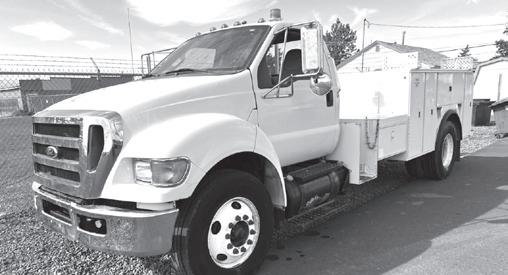


an observation area and drop point May 18.
Smoke can settle in Crouch and neighboring Garden Valley, where the air quality is measured, and over roads along Payette River forks.
The day’s smoke behav-
ior and burn progress were good, Zimmerlee and burn boss Ryan Shannahan said. Some problematic prescribed fires last year have prompted stricter approval rules this year.
B12 The Growers’ Guide June 2023
Brad Carlson/Capital Press Traci Zimmerlee, agency administrator for the Pinney Slope prescribed fire and Boise National Forest Lowman District ranger.
Dave Walsh/USFS Dustin Doane, U.S. Forest Service Intermountain Region fuels program manager, and Pinney Slope burn boss Ryan Shannahan discuss resource availability.
The Rebuilding Specialists Better Than New Since 1970 (509) 745-8588 Waterville, WA NEW, Better Than Factory PACKER WHEELS for JD & IH! www.barnesweldinginc.com Now Manufacturing! CORRELL’S SCALE SERVICE A R.B. Pugh Company 509-765-7754 • 800-572-0426 4300 Rd. K NE • Moses Lake www.correllsscale.com Service • Repair • Installation • Testing Sales • Rental • Lease Specializing in Truck Scales! ‘08 FORD F-750, Cummins, 7 speed, 16’ bed, 84k miles, Stock 338 $27,750 Randy's TRucks & EquipmEnT Walla Walla, WA Email: randy@randygauto.com Prices subject to change 509-520-8099 ‘02 KW-T300, Cat 3126, manual trans., non CDL, Stock #348 $23,750 ‘09 FREIGHTLINER M-2, CAT C-13, 10 spd., cab and chassis, one owner, 344K miles $36,750 ‘12 FORD service box, Cummins, manual trans., 35K miles $28,750 ‘10 IH, Cummins 8.3, Allison auto., one owner, 125k miles, Stock 329 $42,750 AUTO PRE EMISSIONS ‘07 IH 7600, DT-530, HAULMAXX rear suspension, with 24’ bed, Stk.360 JUST IN PRE EMISSIONS ‘05 IH 7600, Cummins ISM, engine brake, 8LL, 14,600 front, lift axle, HAULMAXX rear suspension, with 28’ flatbed,
See Fire, Page B13
185k miles., Stk.355 JUST IN
‘10
FREIGHTLINER-M2, Cummins, Allison auto. with PTO gear, 170k miles, Stk.265 $27,650
PRE EMISSIONS ‘05 STERLING, MB@450 HP, E-brake, 10 speed, 20k front, 44k rears, with 28’ flatbed, 220k miles IN SOON
‘13
Freightliner, Cummins @350 hp, Allison 6 speed automatic with PTO, 28’ flatbed, 192k miles JUST IN
‘12
PETE 348, Cummins 8.3, 8 LL, 14,500 front, with 24’ flatbed, 260k miles IN SOON
JD
350 dozer, with 6-way blade, diesel, shows 8030 hours $14,750
‘95
FORD-L8000, Cummins 8.3, Allison automatic IN SOON
‘08
FREIGHTLINER-M2, Cummins, manual, with 19’ bed JUST IN
Brad Carlson/Capital Press


Dustin Doane, U.S. Forest Service Intermountain Region fuels program manager, and Pinney Slope burn boss Ryan Shannahan discuss resource availability for May 18 and beyond.
Fire
Continued from Page B12

The Boise National Forest’s history with wildfire is long but largely suppression-based, Zimmerlee said. “Now we are trying to bolster our fuels management program” by using fire.


The Pinney burn’s approval was more than a year in the making, including reviews and adjustments, she said. She is the final signer of the burn plan, which has four signers total.

Pinney, which is a landscape or surface burn, is about 960 acres. The Boise National Forest plans 11 spring burns in five ranger districts.
At the Pinney drop point May 18, Brian Cardoza, superintendent of the Idaho City Hotshots fire crew, tracked the ignition progress relative to burn objectives while the Boise forest’s Paul Mitchell worked as the “holding boss,” analyzing fire behavior to hold it within the planned area.
Flames were low, good for smoke lift, Mitchell said. Wind from mountains to the east also helped smoke get up and away from the communities.
“This is some of the closest Forest Service land to private land,” said Shannahan, who is also the north zone fuel specialist for the Boise forest. “For us to be


See Burning, Page B14

June 2023 The Growers’ Guide B13
Brad Carlson/Capital Press Sam Lewis, prevention technician for the Boise National Forest Emmett Ranger District, at the Pinney Slope prescribed fire.
HARROW HARROW AC Harrow 91 Whitetail Dr Grangeville, Idaho 208-507-0187 acharrows@gmail.com • Manage Residue • Level Fields • Incorporate Chemicals • Seedbed Preperation Add flexibility to your farming operation with a flexible spike tooth harrow from AC Harrow AC Harrow 29 Long Haul Rd Grangeville, Idaho 208-507-0187 acharrows@gmail.com 1121 Garber St Caldwell, ID 83605 (208)459-2750 www.nwmixerfeeders.com VR-Direct Drive Series Laird Manufacturing is in the business of manufacturing, selling and distributing equipment for the cattle feeding industry. Laird’s proven design, Direct Drive system, 2-Speed drive system, ruggedness and durability has made them a leader in the vertical mixer and feed delivery markets. •Less Tractor/PTO horse power requirements •All Direct Drive systems are available with auto shift option. •Fuel efficiency •Top Quality Total Mix Ration •Topline finish •Minimum downtime •Easy maintenance •2 – Speed shifting Customized Solutions for Your Needs Contact Us Today...
Burning
Continued from Page B13
good neighbors, this is a critical area to treat hazardous fuels.”


Good conditions and progress characterized the first day, May 13, when crews burned 100 acres, he said. May 14 was also productive thanks in part to a favorable wind.
Burning on May 15 was stopped after about 20 minutes when a storm brought rain, hail and lightning.
No burning took place May 16-17 amid high humidity and unfavorable wind and ventilation conditions.


On May 18, ventilation, or upward movement of smoke, “is good, but not as good as the first day we burned,” Shannahan, a Garden Valley resident, said. Humidity had dropped enough to allow the fire to burn the targeted 75 acres.


Prime time often is from around 11 a.m. to 3 p.m. — when a high sun angle puts more heat on the ground to aid ventilation, and enough time remains for smoke to rise and escape, he said.


Traveling to and from the Pinney drop point several times May 18, veteran firefighter Sam Lewis, prevention technician for the Boise forest’s Emmett Ranger District, documented the burn at different stages and spoke with local residents, visitors and fire department officials about its progress. He checked in with colleagues stationed at key points to inform passersby, keeping everyone informed of the fire’s progress.
“I’ve always loved the community relations side,” he said.


B14 The Growers’ Guide June 2023
Dave Walsh/USFS
Cash pricing shown. Financing available O.A.C • 8.5’ x “22’ with Cold-Rolled I-Beam frame/tongue • Stake pockets and rub rail • 8’ slide-in ramps, tractor rated • Grommeted sealed LED lighting • Storage tray in tongue area Gervais, OR 503-981-8777 Near Woodburn, OR John 3:16 BIG TEX OVER-THE-AXLE FLATBEDS Best Trailer...Best Price! www.trailer-world.com • www.trailer-world.com www.trailer-world.com • www.trailer-world.com • Always Best Service guaranteed. • • Always Best Service guaranteed. • 14OA-22’ 14K MSRP $11,950.75 ON SALE NOW Prices valid until 6/15/2023 $9,849 TECHNOLOGY BASED AGRICULTURAL SOLUTIONS JONES TRUCK & IMPLEMENT Guidance Systems & Parts Colfax, WA The Dalles, Oregon Walla Walla Lane Stephens 541-298-6277 Steve Dixon 509-956-3108 Professional Ser vices Manager, Cer Crop Advisor YOUR GUIDANCE PROFESSIONALS: Charlie Gibson 541-705-5610 Jody Boyd 509-595-0449 509-336-1340 Jamie Main
The Pinney Slope prescribed re north of Crouch, Idaho.
How sustainable is
By SIERRA DAWN McCLAIN Capital Press
How sustainable is labgrown meat? That’s the question researchers at the University of California-Davis are asking in a new study.
The study’s abstract says consumer interest in animal cell-based meat, also called cultured or lab-grown meat, continues to grow, with some consumers viewing cultured meat as “a viable environmentally conscious replacement for livestock production.”
The problem, the abstract says, is that not enough research has been done on how sustainable the production of lab-grown meat is. This new study aimed to help answer that question.
The UC-Davis research team conducted a life-cycle assessment of how sustainable the production of labgrown meat is compared to beef, analyzing the energy needed to produce each product and the greenhouse gas emissions at each production stage.
In an initial pre-print research paper that has not yet undergone peer review, they concluded cultured meat production is not as environmentally friendly as it seems.
“Our findings suggest that cultured meat is not inherently better for the environment than conventional beef. It’s not a panacea,” Edward Spang, one of the paper’s authors and an associate professor in the Department of Food Science and Technology, said in a statement.
One challenge with the production for lab-grown meat is that is requires the use of highly refined or purified growth media, which make animal cells multiply. The researchers say this method is similar to the biotechnology used to make pharmaceuticals.
“If companies are having to purify growth media to pharmaceutical levels, it uses more resources, which then increases global warming potential,” Derrick Risner, the paper’s lead author and a doctoral student in the UC-Davis Department of Food Science and Technol-
ogy, said in a statement.
Risner said if companies continue to produce cell-cultured meats “using this ‘pharma’ approach,” it will be worse for the environment and more expensive than conventional beef production.
Andrew Noyes, a spokesman for GOOD Meat, a cultivated meat company, said the UC-Davis study is based on a flawed premise.
“The UC-Davis study is largely based on arguments that nutrients fed to cells will continue to be pharmaceutical grade,” he said. “That assumption is flawed and
‘22 CASE IH FARMALL
USED TRACKED TRACTORS


TRACTORS
USED COMBINES


‘22 CASE IH 8250, 350 Hrs., Harvest Command, 4wd, Chopper, Duals, Lux Cab #998 $475,000
‘21 CASE IH 8250, 650 Hrs., Harvest Command, 4wd, Chopper, Duals, Lux Cab #997 $425,000
‘10 CASE IH 8120, 2720 hrs., Chopper, Duals, 2wd, #1003 $95,000
‘06 CASE IH 8010, Duals, Chopper, 1800 Hrs.,2wd, #829 $75,000
‘98 CASE IH 2388 HILLSIDE, 4WD, Duals, Chopper, 30’ 1010 Header $35,000
‘97 JOHN DEERE 9500 SIDE HILL, 2700 hrs., chaff spreader, 25’ header with cart, ConsJ70 $35,000
‘95 CASE IH 2188, Duals, Big Top, 25’ 1010 Header, #957 $19,000
USED TILLAGE, SEEDING, GRAIN CARTS & MISC.
‘14 HORSCH ANDERSON JOKER RT370, New Blades, #ConsD71#460 $60,000

‘14

Odessa, WA (509) 988-0433
Coulee City, WA (509) 681-0466
Ritzville, WA (509) 660-3210
June 2023 The Growers’ Guide B15
doesn’t align with
or
young and rapidly evolving industry. For example, the cost of the nutrients that we feed our
the vision
actions of this
lab-grown meat? See Meat, Page B16 ★ YOUR COMPLETE EQUIPMENT SERVICE CENTER ★ FABRICATION & REPAIR ★ We repair & rebuild hard to find parts – combine shafts, final drives, etc… ★ specialists in cat repair or rebuild ★ expanded machine shop capabilities Dayton Tractor & Machine, Inc. DTM DTM 36710 Hwy 12 • Dayton, WA (509) 382-4824 After Hours: 382-4623 • Email: daytrac@columbiainet.com ★ Service ★ Auto, Truck, Combine & Equipment Parts ★ Repairs ★ Rebuilds ★ Machining PRE-HARVEST REPAIRS & TUNE-UPS 40 YEARS ExPERIENcE TRAck PRESS & BUSHINg WoRk COMPARE OUR LABOR RATES! SPRAYER ‘23 APACHE-HS1100, 4WD, Hydro, 120’ Booms, Raven, Capstand , 1120 Gallon Tank $CALL ‘22 CASE IH Farmall 70A, 0 hours, ROPS, 4WD, Loader, PTO, 1308 $CALL ‘16 JOHN DEERE 6110R, 1800 hrs., MFD, Cab, PTO, 3pt., 2 remotes, std. trans.# $80,000 ‘16 JOHN DEERE 6110R, 02850 hrs., MFD, Cab, PTO, 3pt, 2 remotes, std. trans.# $75,000 ‘84 JD 8450, Quad Range, 3-Remotes #consd75 $19,500 ‘78 STEIGER Panther 3, ST325, 4-Remotes, Duals, Cat Engine, ConsD62 $15,000 USED WHEEL
‘23 APACHE-HS1100, 4WD, Hydro, 120’ Booms, Raven, Capstand , 1120 Gallon Tank, $CALL
‘14 CHALLENGER-MT775E, 6025 hrs., PTO, 3pt, 14” Tracks, 6 Rmts., #1313, (N.A.P.) $160,000
‘22 CASE IH 8250, 250-650 Hrs, Harvest Command, 4wd, Chopper, Duals, Lux Cab, $CALL
‘14 HORSH ANDERSON JOKER RT370, 37’, New Blades, #ConsD71 $60,000
‘14 BOURGAULT 3710, 60’, 10” Spacing, MRB, w/ L6550 Car $185,000
BOURGAULT 3710, 60’, 10” Spacing, MRB, w/ L6550 Cart $185,000
www.odessatrading.com
‘14 CHALLENGER-MT775E, 6025 hrs., PTO, 3pt, 14” Tracks, 6 Rmts, #1313 $160,000
70A, 0 hours, ROPS, 4wd, Loader, PTO, #1308, (N.A.P.) $CALL
Meat
Continued from Page B15
cells has fallen in recent years and we have demonstrated success with non-pharma grade ingredients in our R&D eff orts.”

For the study, the scientists considered broad environmental impacts and defi ned global warming potential as the carbon dioxide equivalents emitted for each kilogram of meat produced.
Using this metric, they found that a higher volume of greenhouse gases is emitted in the production of lab-based meat that uses growth media compared to traditional beef.

The global warming potential of lab-based meat, the scientists concluded, ranges from 4 to 25 times greater than the global warming potential of average retail beef.
In their paper, the researchers wrote that in the near term, cultivated meat’s environmental impact is likely
to be “orders of magnitude higher” than conventional beef.

The researchers, however, did not rule out the possibility that companies might develop more sustainable production methods in the future.


“It’s possible we could reduce its environmental impact in the future, but it will require signifi cant technological advancement to simultaneously increase the performance and decrease the cost of the cell culture media,” said Spang, the associate professor.
Other authors on the paper include Yoonbin Kim and Justin Seigel of UC-Davis and Cuong Nguyen of the University of California Division of Agriculture and Natural Resources.


The research was funded by the UC-Davis Innovation Institute for Food and Health and the National Science Foundation.

B16 The Growers’ Guide June 2023
Press Association File A
Visit Us At: www.stjohnhardware.com Spokane, WA (509) 244-4902 Nezperce, ID (208) 937-2422 Moscow, ID (208) 882-7501 Fairfield, WA (509) 283-2111 St. John, WA (509) 648-3373 Yellow Highlight denotes recent trade ‘13
'02 CASE IH 2388,3458-Sep-hrs, level land, feeder reverser, single spd hydro, 2WD, 20.8x42 duals, 18.4x26 rears, new rub bars, Field Tracker...................................... $32,900 CASE IH 1688,6894 Hours, Field Tracker, 4WD w/2 SP, 30.5 single Front Tires, 6” Axle Extention, Cons. $12,900 HILLSIDE COMBINES ‘21 CASE IH 9250, 645 Sep. Hrs., 4WD, Hillco Leveler, Automation, Beaterless Transition, Folding Unloading Auger $585,900 ‘20 CASE IH 9250, 733 Sep. Hrs, Hillco Leveler, Automation, 4WD, Autosteer $525,000 ‘05 CASE IH 8010, 3554 Engine Hours, 4WD, Leveler, ‘12 CIH 3020 35’ Header Included , Cons $140,000 ‘06 CASE IH 8010, 3453 Sep. Hrs., 4WD, Leveler, Very Clean $109,900 We Have Headers! 25’ & 30’ 1010’s and 25’ 1020’s No Reasonable Offer Refused! CALL NOW!!! !!USED HEADERS!! ‘11 NH CR9080, 2132-Sep-hrs, Hillco Hillside leveler, 4WD rear axle, diamond tread tires, 24.5R32 duals, extended wear pkg with chrome cage & transition, fine cut chopper, chaff spreader, Deluxe light pkg, Intelliview Monitor, Trimble E-Z-Steer, consigned $149,900 ‘91 CASE IH 1680, 4403-E-hrs., Hanson leveler, Hillco transition conversion, bulk tank ext., hard-faced augers, 3 seasons on cage & rotor, chopper, new style fan, 1-spd hydro, 30.5Lx32/14.9x24, Consigned $35,000 ‘84 CASE IH 1470, 4900 hrs., 4WD, Hillco Leveler, Schwerth Concaves, Blue Grass Fan, Slow Down Kit, Rebuilt Injector Pump, New Injection Tips, 810 Header Included, Consigned $6,900 ‘86 CASE IH 1680, Hillco 2000 Leveler, 18.4-38 Duals, Chopper, 2WD, Hard Surfaced Augers, (N.A.P.) $7,900 ‘15 CASE IH 9240, 2210 Sep Hrs, Zero Hrs on Complete Engine Rebuild, New Radiator, Hydraulic Grain Tank Covers, Luxury Cab, 620/70R42 Duals $209,900 LEVEL LAND ‘18 CASE IH 8240, 1287 Hours, call Mike Nelsen at Moscow for more information! JD 9770. Call Stephen in NezPerce for more info $149,000
burger cultured from animal cells.
CASE IH 8230, level land, 2110-Sep-hrs, header tilt, rock trap, cross-auger control, fine cut chopper, HID lights, Diff lock, AFS autosteer, 520 front duals, 750/85R42 rear..$149,900




June 2023 The Growers’ Guide C1 BE READY FOR SPRING, WE HAVE MACHINES READY TO GO TO WORK! • 430-HP CUMMINS • TIER 4 PERFORMANCE • ALLISON 4000 SERIES AUTO • MERITOR #33,000 AXLES • TWIN BAG REAR SUSPENSION • TANK SIZE: SS 1600, 2000, 2400-GAL. • BOOM WIDTHS: 90-132’ • SPECIALTY ALUMINUM BOOMS • CHOICE OF CONTROLLERS • 50 MPH TRANSPORT SPEED We Specialize In Providing Quality Application Equipment Our Equipment Provides: Mobility • Capacity • Durability • Economics • Simplicity • Individual Nozzle Control • Control Pressure Independent of Rate or Speed • Row-to-Row Liquid Fertilizer Uniformity While Automatically Changing Orifice Sizes Based on Rate or Speed • No Need to Change Orifices for Anhydrous Ammonia Apps · High Strength Aluminum Alloys · Light & Durable Construction · Engineered Welds · Outer Boom Sections Hydraulically Break-Away · 100’, 120’, 132’ Widths · SS Plumbing SPECIALTY ALUMINUM BOOMS!!! REMEMBER: Ag Trucks is Your PNW Dealer for SPECIALTY ALUMINUM BOOMS FIRE WATER CANNONS: 80 GPM, Pans 180 Degrees Left And Right, 70 Degrees Vertical, 2” Receiver Mount, Corded Remote Control $5,400 www.agtrucksandequipment.com Great Falls, Montana Steve Raska 406-788-5361 Garfield, Washington Justin Honcoop 509-338-7346 AMAZONE ZG-TS-100001 SPREADERS! ✔ Spreads 120’ Full Overlap Pattern ✔ 9 Tons Urea Capacity ✔ Auto-Compensates for: ê Wind ê Slope ê Swath Width ✔ Mounted or Pull-Type AG-TRK 430 AG TRUCKS is a RAVEN PRECISION AG Sales Source. Our Association with Ag Enterprise in Cheney, WA, gives us much more depth of service than most stand-alone dealers. We deeply Appreciate our Relationship with Gary Farrell and His Entire Crew. DON’T FORGET! 2015 AG TRUCKS VECTOR: 4000 hrs, • 350 hp 8.9L Cummins, Allison Auto • Meritor Planetary Axles •- 2400 Gal SS Tank •132’ Millenium Booms, • Trimble 750 • Capstan Sharpshooter • Raven Boom Height • 480 Alliance Tires $365,000 2020 AG TRK430: 1200 hrs, • 430 hp 9L Cummins, Allison 4000 RDS Auto • Meritor Planetary Axles • 2400 Gall SS Tank • 132’ Millenium Booms • Raven Viper 4, Hawkeye Ultraglide Boom Height • 710 Alliance Tires Call For Pricing
Organic Valley’s rebuilt creamery back in operation
By GEORGE PLAVEN Capital PressMcMINNVILLE, Ore.
— The receiving station at Organic Valley’s newly rebuilt creamery in McMinnville, Ore. was quiet on a recent May afternoon as plant manager Scott Fields led a tour of the upgraded and expanded facility.
It is here, Fields explained, where trucks hauling 50,000-pound tankers of raw milk arrive daily from dairy farms across Oregon, Washington and Idaho. All that milk is then collected and stored in one of four towering steel silos.
“We can unload two trucks at the same time now, which is something we couldn’t do before,” Fields said, highlighting the station improvements.
The fate of this plant was anything but certain two years ago, after it was heavily damaged by a large fire that broke out during routine maintenance.

Organic Valley officials weren’t sure if they would rebuild in the wake of the blaze, which destroyed the 25,000-square-foot main building.
However, Organic Valley — the country’s largest farmer-owned organic cooperative — ultimately decided it would bring back the creamery in phases. Phase one started on Oct. 4, 2021, and the plant began processing milk again in May 2022.
“We built this thing in eight months,” said Mark Pfeiffer, vice president of internal operations for the Organic Valley. “I take away a lot of gratitude for our team, and certainly for the city and fire department. ... Obviously, an event like that you play back like it was yesterday.”

C2 The Growers’ Guide June 2023
George Plaven/Capital Press
See Creamery, Page C4
The Organic Valley creamery in McMinnville, Ore. was significantly damaged by fire two years ago. The co-op has finished phase one of the facility’s rebuild, and began processing milk at the facility in May.
Agricultural Equipment • Consignment • Appraisals • Loader Tractors “Where My Mission Is Helping Farmers Turn Excess Capital Into Working Capital”
TRACTORS
JOHN DEERE 8650, 1300 hrs., 290 h.p. - engine, with 2300 hrs. on JD Dealer engine OH.,16 F. & 6 R. trans., 20.8x38 tires - good shape. Overall! $24,800
DRILLS
INTERNATIONAL 86 RING PACKER, 26 ft. approx., 22 in. ring packer wheels, foldup design $5,500
COMBINES
1998 JOHN DEERE 9510 SH, sidehill machine, 3200 hrs.-sep., chopper, chaff spreader, 30.5x32 drive tires, 14.9x24 rear tires, buddy seat, with JD 925 F header, 25 ft., pickup reel and Stoess header cart. Nice Package! $19,600
SPRAYER/ FERTILIZER
FLEXI-COIL 55 SPRAYER, 650 gal. poly tank, 72’ booms, hydr. pump drive, Raven control valves, flow control valve, pull style with Raven SCS440 control head. Nice!......... $5,400
TIRES & TRACKS

(3) GOODYEAR DT712 RADIAL COMBINE TIRES, 520/85R42, bar style, 50% (used), less the 1/2 of new. Would prefer to sell all together $980 EACH
CAMOPLAST TRACKS, pair of 30” width. Came off of JD 8430T tractor. Please call for information $7,500


FORD-FW40, 8800 hrs., 295 h.p. Cummins engine, 20 F. & 4 R. trans., 20.8x38 tires -good shape, 4 remotes. Nice Overall! $12,000 CASE-IH 890 LOADER, SL-self leveling, mounts, good bucket. Was on Case 7250 tractor, 238 h.p., 1994/96 vintage $6,500
(86) JOHN DEERE SUITECASE WEIGHTS, 100 lb. each, P/N R127764. New Price $153 each. Off of JD 9400T. Mounts available also. Great Bargain! $110 each
TRUCKS & EQUIP.

1996 DODGE RAM FLATBED PICKUP, 241,000 miles showing, 5.9L-24V Cummins turbo diesel, 4x4, 5 spd., good 215/85R16 tires, dually, 7 ft. x 10 ft. flatbed. Great Service Truck! $7,500

VALMAR 3220 AND HARROW CART, 60 ft., 10 bar flex harrow - spike, with Honda 11 h.p. engine, stored inside, low usage. Nice! $5,800
1995 CASE-IH 2188, 2600 hrs., beater, 30.5Lx32 tires, good concaves, H.S. augers, good maintenance, with Case 25’ 1010 header with cart. Low Hours Nice! $22,500
MCGREGOR-STYLE SPRAYER, 80ft. suspended booms, 1000 gal. poly tank, L&R Raven boom valves, hyd. drive pump $3,800
GOODYEAR DT820 RADIAL TRACTOR TIRES, (5) of, 620/70R42, 30/40% (used), 1/3 of price. Would prefer to sell all together $1,300 EACH
CAMOPLAST CATERPILLAR TRACKS, used, 30” width, blocks good. Came off of Challenger MT765, number on tracks 1R1321...$4,200
PLOWS
MCGREGOR NO TILL GRAIN DRILL, 24 ft., 1 1/8 in. Fertilizer Shanks, Disk Opener - 12 in. spacing with rubber packers, 500-gallon anhydrous tank and 350-gallon solution poly tank, folds to 12 ft. width......... $12,000


ANHYDROUS TENDER NH3 NURSE TANK, 14,000 gal., farmer used $35,000 ‘06 AG CHEM 280 DRY BOX, 60 ft. aluminum booms, off of Rogator $2,500
FERTILIZER SPRING COIL SHANKS, approx. 60 shanks, 3/4 in. 21 in. clearance, dual tubes $15 EACH
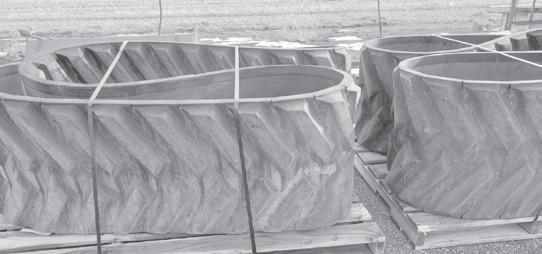
‘67 IH LOADSTAR 1600 WHEAT TRUCK, 80,200 miles showing, 345 engine-gas, 5&2 trans., brakes recently gone through, steel bed, hoist, metal racks, 9:00x20 tires. Good Shape! $2,500

GRAIN BOX, for Wheat or Seed Truck, 14ft. long $3,900


20 FT. METAL BED, Racks and Hoist on 1978


Ford Tandem Wheat Truck Model 9000, Detroit engine - bad, Eaton 10 spd. trans., 11R24.5newer front Toyo tires $5,000 ‘69 IH 1600, boom truck, 392-engine, newer winch included REDUCED! $950

GRAIN MASTER MFG, 18’ grain racks, metal, side ladder, 54” sides, 8.5’ width $2,500
HARROWS
FLEXI-COIL 85 HEAVY HARROW CART, 50’, 9/16” tines, 16.5Lx16.1SL tires, adjustable tine angle. Rare Find! $8,900 MORRIS SPRING TINE HARROW, 50 ft., 10 sections and lift arms, 3/8 in. tine, tine angle adjustment, off of Morris Rangler II Packer $2,500 HARROW CART, 60 ft. with Valmar machine COMING IN!
CASE IH 7100, grain drills, 5-unit set, 60’, 20” spacing, hoe openers, 5” wide packers , with 500 gal. poly tank, fertilizer manifolds and Stoess hitch............................
ANHYDROUS TENDER APPLICATOR CART, 1,000 gal. NH3 Tank and running gear $2,500

$10,800
JOHN DEERE-LZ1010, 32’, 4-unit set, hydr. depth control, 10” spacing - hoe openers, extra parts, with hitch
$1,200
STOESS GRAIN DRILL HITCH, for JD HZ drills, newer early style, can rotate tires, green color $500
BRILLION-P8 CULTIPACKER, 4” axle. Hard to find!
1992 GLEANER R62, 3220 sep. hrs., 330 h.p. engine water cooled - same as R72, 4 chain F. & R. - 1 year ago, 30.5Lx32 drive tires, 14.9x24 rear tires, good A/C, with Gleaner 30 ft. header and cart. Nice Unit! $22,500


POLY ELLIPTICAL LEG TANK, 1,000 gal, with steel hoops $1,500
POLY TANK,500-gallon tank. (Only one tank available.) $200
DISKS & RIPPERS
$800
3-IH 150’s, 42’ grain drills, 12” spacing, steel hoe openers, hyd depth control, rubber packers, fert maniflod, with hitch $4,500
IH 150, grain drills, 36’, 3-unit set, 10” spacing, hoe openers, cast boots, hyd. depth control $2,900

BARBER GRAIN DRILL FILL, 8 in., inside box style, downspout $550
HAY EQUIPMENT


NEW HOLLAND 570 SMALL SQUARE BALER, 14 x 18 in. twine, 540 PTO, spring bale tension, recent knotter replacement, stored inside. Nice! $11,500
ALLEN 8827 HAY RAKE, twin parallel bar rake, folding style, 5 bar baskets, hyd. drive, electric control box, tongue jack $8,800

SUPREME INTERNATIONAL 900T
FEED MIXER/WAGON, Twin Mixer Augers - H.S., scale, left hand discharge conveyor - with parts to switch it to the right-side discharge, 1000 PTO drive, has duals to go with. Purchased New, Only Used One Year! NICE! $66,800

R & R SUBSOILER, 7-shank unit, parabolic shank design, drawn “V” frame! Nice! $4,500
JOHN DEERE 1710A DISK CHISEL, 17 ft., disk blades 21 in., scrapers, shanks, walking tandem axle, with Morris Harrow. Extra shanks and sweeps $3,800 INTERNATIONAL 800 MOLDBOARD PLOW, 10-bottom, flex frame, one rear coulter, 18” shears, spring tip, tires good. Solid! $3,500 WHITE CHISEL PLOW, 36’ width, 1-1/2’ spacing approx., 25 shanks$3,900 KRAUSE 2341, chisel plow, 17-shanks $3,800

KRAUSE 2813, 19’ chisel plow, spike points, spring style C-shanks $2,900
CULTIVATORS
JOHN DEERE 1000, approx. 32’, singles on the wings $2,500 FLEXI-COIL 420 CULTIVATOR, 36 ft., 1 ft. spacing, 12 in. sweeps with hard caps, front caster wheels, single point depth control, extra parts, with harrow $6,500
RODWEEDERS
CALKINS 1660 CHISEL CHOPPER,
CALKINS WEEDER CABLE HITCH, with 70 ft. spreader bar, 3 in. tubing, for 10 1/2 ft. weeders, 1/2 in. air craft cable. Can break down to use as 40/50/60 ft. also. Nice Unit! $1,900
CALKINS, 4-unit set, lime green vintage, handle depth control, 1” rods, with cable hitch $2,000
MISCELLANEOUS
JOHN DEERE 330 DISK, 25 ft., F. 20 in. R. 22 in. blades, 9 in. spacing, dual tires on main frame, single tires on wings, scrapers , rear pull hitch mounted $5,500
BUSH HOG, 7-shank ripper, V-style, drawn unit with parts BH 5-shank unit$5,000
BUSH HOG 28’ DISK APPROX., discs F. 21” & R. 21-1/2” with scrapers $4,000
WESTFIELD TR80-51, grain auger, PTO drive, 8”x51’, hyd. lift for height, swing-away intake hopper (for trailers), hyd. drive $3,500
IRRIGATION EQUIPMENT, Marathon electric motor, 150-hp and 125-hp, misc pipes, valves, many, many more items CALL CATTLE HANDLING EQUIPMENT (3) Calf Shelters and Wind Break, also some extra frames $50 each
June 2023 The Growers’ Guide C3
(509) 681-1277 www.parsonsequipment.com Email: parsonseq@gmail.com www.parsonsequipment.com SUMMER SAVINGS!
Darrel Parsons
‘10 CASE IH 2010 HEADER, 30 ft., auger/ rigid, twin sickle, full finger & H.S. auger, fore & aft on reel, pickup reel, with header cart. Possible backup header and Good Shape! $12,800
JOHN DEERE 7722, with Rahco Full Hillside Conversion, 5500 hrs. sep., 35.5LX32 drive tires, chopper, fixed sieve, with JD 224 header and cart $7,500
15 ft. 6 in., 15 reset ripper shanks, hydr. adjustable disk gang, chopper roller on back. Also, rear pull hitch on back. Rare Find! $14,500
2014 JOHN DEERE 635F HEADER, 35 ft., flexible full finger auger, good flighting - HS, pickup reel, with nice Stoess header cart. Also, spare JD 935 F header for parts. Great Package Deal! $19,800
JOHN DEERE 500 GRAIN CART, approx. 500 bu. capacity, PTO drive $4,500
1995 JOHN DEERE 930, 30 ft., pickup reel, reed fore & aft, with Stoess header cart $4,800
Creamery

Continued from Page C2
Organic Valley acquired the McMinnville creamery, about 50 miles southwest of Portland, in 2016. Before the fire, it employed 44 people processing 4 million pounds of milk daily from co-op members to make butter and nonfat dry milk powder.





While the fire was devastating, it didn’t destroy everything, Pfeiffer said. The original milk dryer and evaporator were spared, as were two milk storage silos.



That made it more feasible to rebuild. The co-op invested $32.5 million in phase one, which includes the new receiving bay, testing laboratory and fluid milk processing room.

See Organic, Page C5





C4 The Growers’ Guide June 2023
George Plaven/Capital Press From left, Mark Pfei er, vice president of internal operations for Organic Valley; Paul Silva, maintenance manager at the McMinnville creamery; and co-op CEO Je Frank tour the newly rebuilt facility on May 11.
Amy Hanifan McMinnville Fire Department Fire ghters battle the ames April 20, 2021, at the Organic Valley Creamery in McMinnville, Ore.
COMPLETE MOBILE REPAIR SERVICES PORTABLE LINE BORING • HEAVY EQUIPMENT • AG REPAIR Serving the greater Eastern Washington area bigironrepair@odessaoffice.com Scott Carroll: 509-770-5560 Eddy Carroll: 509-988-0184 JONES TRUCK & IMPLEMENT Colfax, Washington, Located on Highway 26 JTI, YOUR PARTS HEADQUARTERS Ag, HeAvy Duty & Automotive (509) 397-4371 WA, ID, OR: 1-800-831-0896 Phone (509) 397-4371 • WA, ID, OR 1-800-831-0896 Website: www.jtii.com | E-mail: jti@colfax.com Walla Walla Highway | Colfax, WA 99111 JONES TRUCK & IMPLEMENT IT’S OUR PEOPLE! Heather Fisher Kent Gingerich PARTS Steve DeFord Jim Gordon Albert Francois Nicole Wells SERVICE Ryan
Terry
Mark
Larry
Justin
Brandon
Jesse
Adam
Chad
Jakob
Justin Bagby Jim Dunning Bob Manderscheid Woody Dowell • Tips • Fittings • Electronics • Valves • Filters • Screens • Nozzles • Cam Locks • Transfer Pumps • ATV Sprayers • Hand Guns • Shut-offs SPRAY PARTS SPRAY PARTS GOOD INVENTORY! EARTH METAL EARTH METAL SUPER SHARP EDGE Earth Metal, 20" disk blade, Part No. 87618056 $5825 Earth Metal, 22" disk blade, Part No. 87618068 $5500 CASE IH SWEEPS & POINTS CASE IH SWEEPS CIH Sweep, #1547095C2, Size 4.5 $22 50 CIH Sweep, #1547097C2, Size 7.5 $22 50 CIH Sweep, #1547098C2, Size 9 $2250 CIH Sweep, #1547099C2, Size 10.5 $20 00 & POINTS CIH Sweep, #1547100C2, Size 12 $22 00 Straight Chisel, #601986R1 $18 75 Twisted Chisel, #594545R or #594546R1 $26 00 Part No. Description Size Price 47843259 Transition Cone (Flagship Combine) $5,941 00 87298773 Vane Kit (Flagship Combine) $985 60 47502133 Transition Cone (Heavy-Duty, Stainless Steel Vanes) 80 $3,335 00 B93194 Vane Kit (with Standard Hardware) 80 $820 00 Vane Kit, 40/60 Size, Stainless Steel Vanes, Part No. 321933A1 Vane Kit, 80 Size, Stainless Steel Vanes, Part No. 84272906 TRANSITION CONES & VANES TRANSITION CONES & VANES $80640 $125000 Cone kits come complete with vanes installed. Hardware available with wear resistant coating. Mark Herdt Will Gordon Jared Larson Carrie Lyle Casey Jones Eric Jones
Stolz
Cochran
Appel
Peringer
Vandenbark
Jorgensen
McClintock
Hoshauer
Aeschliman
Renneke
Organic
Continued from Page C4
Two additional 40,000-gallon silos were also installed, nearly doubling the plant’s capacity.

Today, the creamery has resumed making milk powder in 2,000-pound totes for large customers and is processing 2% pasteurized milk, half-and-half and cream.

As part of phase two, Pfeiffer said the co-op is still considering whether to start making butter again at the creamery. Doing so would cost an estimated $40 million to reinstall equipment and cooler storage. He expects a decision will be made by June.
“The butter segment has really changed in how people consume it,” Pfeiffer said.


Pfeiffer said McMinnville is the epicenter for receiving milk among the co-op’s 59 member-farms in the Northwest.

“Without this facility, I don’t know that there would be as much of a market,” he said.


Jeff Frank, who joined the co-op as CEO in January, was also on hand for the May 11 tour. He watched and listened as the group peeked inside the dryer and evaporator room, testing lab and pasteurization alcove, which gleamed with shiny new equipment.
“We’ve come a long way,” Frank said. “It’s exciting to see.”

June 2023 The Growers’ Guide C5
• Case IH • New Holland • Gleaner • Lexion • Especially John Deere combines including narrow & extra narrow concaves by Precision Farm Parts ✔ Better Cleaning ✔ Longer Life ✔ Less Fuel Use at OEM Prices harvestsolutionsinc.com • 541-786-2358 Harvest Solutions, Inc. Better parts than you're already buying! Parts & Service For All Manufacturers Go To: www.lelandtrailer.com Unit #9701 1985 FRUEHAUF COMBO 48’ X 96” INSIDE FRAME FLATBED. air ride, 2 x 60” boxes, 24.5 LP’s, 9,780 tare weight, Unit 35892 2005 EAST 48’ X 102” ALUMINUM FLATBED, $21,950 $6,500 Closed tandem, 11R - 22.5 tires, sliding winches
George Plaven/Capital
Press Ivonne Brambila, quality analyst for Organic Valley, tests a milk sample inside the laboratory at the coop’s newly rebuilt creamery in McMinnville, Ore.
JOHN DEERE 4930 SPRAYER

• 4,900 Engine Hours
• 95% Rubber-Goodyear 380/90R50 Ultra Sprayer
• 120’ Boom w/Breakaways, 5-Nozzle Bodies w/10 gal. GPA Tips

• 5 gal. SS Eductor, 3” Side-Fill & 3” Front-Fill
• 5-Section JD Height Control, 7-Section Full JD Auto Boom
• 1200 gal. SS Solution Tank
• Greenstar Starfire 3000, 2650 Monitor, Back-Up Camera
Good, Solid Sprayer. $118,500 Financing, OAC

2021 JOHN DEERE 5100E w/New 520M JD Loader (Perfect Farm, Ranch, Cattle, Hay Tractor)
• 187 Hours
• 1-Owner
• 24 speed F - 12 R
• Global Quik-Tach Loader, 74” Bucket
• Single Handle Detach - Attach Hydraulics for Bucket
• JD Drawbar w/Pin Attachment
• 2 Remotes
• Fully Serviced - Ready to Go Call for all information 509.635.1640 or Cell 509.595.0841
$78,500 - Financing - OAC
Fish and Wildlife: Wolves no longer endangered in Washington
By DON JENKINS Capital PressWashington Department of Fish and Wildlife biologists recommended May 18 removing wolves from the state’s endangered species list and reclassifying wolves as a state sensitive species.
Wolves are neither endangered nor threatened because their population is robust, growing and dispersing across the state, according to a status review that contained the recommendation.
Wolves in the western two-thirds of Washington are federally protected and would be unaffected by a change in state status.
As a state sensitive species, wolves in the eastern one-third of state would still be protected. The change would be minimal, Fish and Wildlife wolf policy coordinator Julia Smith said.
“It doesn’t change things very much. It simply means that words — ‘endangered,’ ‘sensitive’ — have meanings,” Smith said.
Fish and Wildlife routinely reviews the status of endangered and threatened species. The release of the wolf review May 18 started a public comment period that will end Aug. 16.
The department expects to present the recommendation to the Fish and Wildlife Commission in October.
The maximum penalty for illegally killing a sensitive species is 90 days in jail and a $1,000 fine, compared to a year in jail and $5,000 fine for poaching an endangered species.
Smith said the commission could set stiffer penalties for poaching wolves, even as a sensitive species. The department has special fines for killing species such as bald eagles, golden eagles and peregrine falcons.
See Wolves, Page C7
C6 The Growers’ Guide June 2023
Wolves are neither endangered nor threatened in Washington, according to state Fish and Wildlife biologists.
Wolves
Continued from Page C6
Biologists stopped short of recommending wolves be taken off the protected species list entirely.
Wolves are established in Eastern Washington and north-central Washington, but have only a “novel presence” in south-central Washington and no presence in Western Washington, according to biologists.
Full recovery will depend on a robust wolf population in Eastern Washington moving west, they said.
The report does not recommend any changes to the department’s use of lethal control as a last resort to curb chronic attacks on livestock in areas under its control.
Stevens County rancher Scott Nielsen, who heads the Cattle Producers of Washington range-riding program, said reclassifying wolves would be a good step.

“Wolves and wolf recovery are doing very well in northeast Washington,” he said.


The Center for Biological Diversity criticized the recommendation.

“We’re

Washington’s wolves receive the


protections they deserve under state law and the wolf plan,” staff attorney Sophia Ressler said in a statement.

Fish and Wildlife biologists recommended sticking with the state’s wolf recovery objectives.
The objectives include having at least 15 packs reproducing pups each year. There were 26 packs with pups at the end of 2022, but they didn’t meet the second objective of being scattered throughout the state.


A recent study by Fish and Wildlife and the University of Washington projected the second objective will be met by 2030 when wolves fi nally colonize the North Cascade Range and the northwest coast.

Fish and Wildlife started counting wolves in 2008. The population has grown for 14 straight years by an average of 23% a year, according to the department.
Fish and Wildlife counted 216 wolves in 37 packs at the end of 2022.
Over the past 14 years, an average of 10% of the state’s wolves have died each year. Tribal hunters, who can legally harvest wolves, accounted for 36% of the wolves killed by humans between 2008 and 2022, according to the department.

June 2023 The Growers’ Guide C7
going to do everything we can to ensure that
123rf
• Aerial Fungicide Application • Precision Aerial Chem-Fallow Application • In Crop, CRP & Outground • Aerial Weed Control WEED, INSECT, FUNGUS ISSUES? 509-551-4774 www.altitudeagriservices.com 4 PALOUSE WELDING DESIGN & MFG 509-878-1551 605 E Main Palouse, WA 99161 www.palousewelding .com email: sales@palousewelding.com We're Here To Keep You Running! Repair, Manuf., Shop Agri-Cover istributor Harsh Hoists Spare Parts CNC Plasma Table CuTs uP To 1.5" Flame CuT For ThiCk meTal Too 35'
SIGN UP EARLY FOR stoCk steel Sign Up for Summer Maintenance and Fall Seeding Equipment! FALL SEEDING! www.whitneylandcompany.com Farms - Ranches Recreational - Commercial
or 25'. All 7½" Seed Spacing with 15" Midrow Deep Bander.
Capital Press File
expected to decrease later
Negative milk margins make for tough times
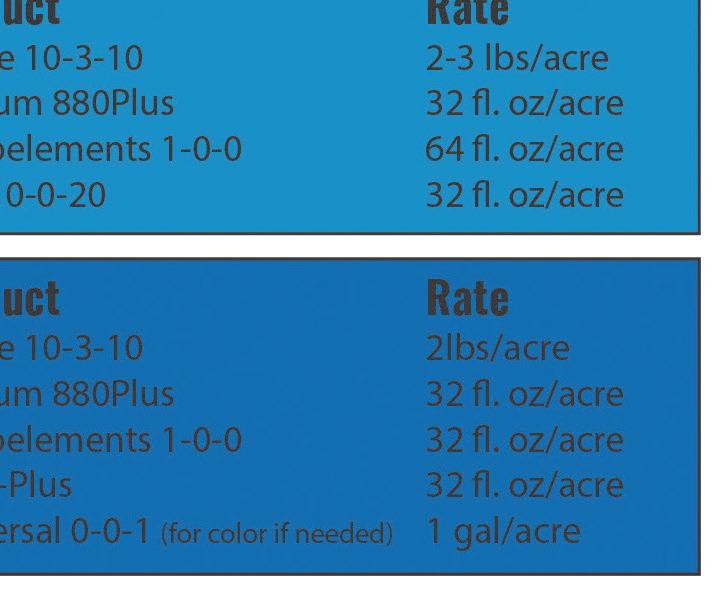
 By CAROL RYAN DUMAS Capital Press


Bigger milk supplies in some milk-producing regions of the world and lackluster dairy product demand, particularly in China, are putting downward pressure on milk prices.
“Throw in growth in
Europe, the U.S. and New Zealand milk production and you get a little too much supply around relative where demand is at,” said Mike McCully, president of the McCully Group consulting firm.
Lackluster demand is probably going to continue into the third quarter of 2023, he said during a dairy
market outlook webinar by AgWest Farm Credit.


“Conventional thinking is we’re going to have some lower prices in the first half and then a rebound in much higher prices in the second half. That’s not looking to be the case right now the way things are playing out,” he said.
See Dairy, Page C9

C8 The Growers’ Guide June 2023
Cows feed at a dairy near Kuna, Idaho. Feed prices are
this year, an analyst says.
WANTED USED LIVESTOCK EQUIPMENT • Portable Panels • Cattle Squeeze Chutes Old is OK. Will pickup at your farm/ranch! Call Bill (208)651-8698 Aug 14th - All Class Cattle Sale Aug 21st - Feeder Special Aug 28th - All Class Cattle Sale * small animal sale with Lamb Pool * Sept 4th - No Sale Sept 11th - Feeder Special Sept 18th - All Class Cattle Sale * small animal sale with Lamb Pool * Sept 25th - Feeder Special For Market Reports, Check www.stocklandlivestock.com ALL CLASSES OF CATTLE SELL MONDAY-11:00 a.m. www.stocklandlivestock.com Toll Free: 800-372-6845 Davenport, WA on Highway 28 Jack McGuinness 509-703-3982/406-671-7078 Kale McGuinness 509-703-3981 June 19th - All Class Cattle Sale June 26th - Feeder Special * featuring small animals * July 3rd - No Sale July 10th - Feeder Special July 17th - No Sale July 24th - Feeder Special July 31st - All Class Cattle Sale * small animal sale with Lamb Pool * Aug 7th - Feeder Special Do it right the first time... COMPETITIVELY PRICED: SAFE Acres Seed Mixes CRP Mixes with Wildflowers Pollinator Conservation Programs Locally adapted, source-identified, true native seed for a full complement of grasses, forbs and shrubs. 509.765.6348 Moses Lake, WA www.bfinativeseeds.com
While milk supply is close to what was expected, the demand piece is worse than expected, he said.
“We’re probably … close to the darkest hour here right now in terms of pricing,” he said.

Lower milk prices and high feed costs are taking a toll on farm margins. Cost of production is in the low $20s a hundredweight, and milk prices are averaging $17 to $18 per cwt., he said.

The first quarter, first half of this year are pretty bleak, he said. Farm margins are down $1.75 to $2 a hundredweight from a year ago.

“That’s the bad news. The worse news is those margins were not good in Q1, looks like they’re going to be worse here in Q2,” particularly for large Class III states, he said.
June futures for Class
III milk dipped under $16 a cwt., the lowest in two years, he said.
“It’s going to be some tough sledding here for a little while on dairy farm margins until we get out to second half,” he said.
The bright spot is lower feed costs for corn and soybean meal in the fourth quarter, he said.

Prices of those commodities and hay are already seeing some relief, and it looks a lot better in the fourth quarter and into 2024, he said.
“But there’s a fair bit of room between now and then to get to that spot,” he said.

“It’s going to be tough going for the next couple of months. Farmers are going to be grouchy about milk prices … the bright spot is lower feed costs in the future,” he said.
The good news is feed prices have been dropping rather substantially, with December futures price on corn dropping under $5 a bushel, he said.
Brazil’s corn crop is a lot larger than people expected, and China has been dropping its U.S. corn purchases.
“In general, you’ve got a lot cheaper corn, soybeans in the Southern

Hemisphere,” he said.
USDA is also projecting record corn and soybean production in Brazil.
In addition, good spring weather in the U.S. has put corn and soybean planting progress ahead of average
and ahead of last year, he said.
“Do we get back down to $4.50 a bushel (for corn)? We very well likely could if we have a good summer and into the fall,” he said.
S283782-1
We Absolutely, Positively Have The Best Remanufactured Engines Available Anywhere! Huge Inventory • Expert Technical Assistance


REBUILT DIESEL L/B ENGINES
REBUILT LONG BLOCK SPECIALS
Cummins-L10-M11.....................................$18,995.00EXCH
Cummins 855 Big Cam 400 ........................$15,995.00 EXCH
Cummins N-14............................................$17,995.00 EXCH
Cummins ISX-15..........................................$22,500.00 EXCH
Detroit Series 60.........................................$25,500.00 EXCH
Detroit DD13 DD15 DD 16.......................$25,500.00EXCH
CAT C-15......................................................$25,500.00 EXCH
CAT 3406......................................................$17,995.00 EXCH
CAT 3126-C7................................................$16,500.00 EXCH
7.
9.
10.
at $5,995
Navistar Maxx Force 11 and 13 Starting at $22,500.00


Call on other gas or diesel engines. We are a major rebuilder on all diesel brands. All work done in house! IN BUSINESS SINCE 1975.


June 2023 The Growers’ Guide C9
Dairy Continued from Page C8 CONTACT THE GROWERS’ GUIDE AT PO BOX 2048, SALEM, OR 97308 800-882-6789 • growersguideads@capitalpress.com 3 ROADS EQUIPMENT and CONSIGNMENT LLC Superior Sales at Low Consignments Rates Taylor Hof 509-876-1590
Walla Walla, WA *On select models with approved credit from AGCO Finance, LLC. Contact your participating dealer for more details. Of er va d Apr 1- June 30 2023 and may be sub ect to change wi hout not ce ©2023 AGCO Corpora on Massey Ferguson s a wor dw de brand o AGCO Corpora on AGCO and Massey Fe guson are rademarks of AGCO A l r gh s reserved IN STOCK, READY TO ROCK. R&G Machining and Grumpy’s Performance Center COMPLETE DIESEL MACHINE SHOP AND TRUCK REPAIR MULINO, OREGON • SHOP: 503-829-6038 • NATIONWIDE: 1-800-823-6038 CUMMINS 3.9-4BT $4,650 5.9 ‘88-’02 $4,850 5.9 ‘03 & up $5,150 6.7 C/R. $5,450 FORD 6.0 P/S $5,845 6.4 P/S $6,545 6.7 P/S $7,650 6.9-7.3 IDI $5,150 7.3 P/S $5,150 GM 6.6. Duramax $6,550 6.2-6.5. $4,895 JD, IH & CASE Starting at $5,995 KOBELCO, KOMATSU, HITACHI Starting at $5,995 PERKINS & ISUZU Starting at $5,995 MITSUBISHI & NISSAN Starting at $5,995 YANMAR & KUBOTA Starting at $4,495 BOBCAT & SHIBAURA Starting at $3,995 DOOSAN & TAKEUCHI Starting at $5,995 IVECO, DEUTZ & DETROIT Starting at $8,995 HINO & NEW HOLLAND Starting at $5,995 CATERPILLAR & HYUNDAI Starting
taylor.hof.th@gmail.com
250 ENGINES & 450 CYLINDER HEADS IN STOCK! We have a complete line of
diesels
diesels
mini
skidsteers.
OVER
import
and obsolete
for your
excavators or
EXCH NEED ENGINE PARTS, GAS OR DIESEL - CHECK IT OUT: WWW.EBAY.COM/STR/GRUMPYSPERFORMANCECENTER GRUMPYSPERFORMANCE@GMAIL.COM CUMMINS 6.7 MAGNUM $6450 AND CORE $4,650 1. We Grind & Weld Crank Shafts and Cam Shafts 2. We Weld Blocks & Heads 3. Exchange Connecting Rods or Connecting Rod Kits 4. Diesel or Gas Engine Kits 5. Cylinder
Heads or Block O-Ringing
6. Block & Cylinder Head Exchanges
Diesel & Gas Engine Balancing
8. Custom Grinding Diesel & Gas Cam Shafts
Cylinder Head Porting
Line Boring & Line Honing
Roxor
Attack on dog won’t be counted against wolf pack
By DON JENKINS Capital Press


Mauling a dog won’t count against a northeast Washington wolf pack after wildlife managers classified the dog as a “pet,” a label

the owner says overlooks the protection it gives the family’s horses, chickens and children.
Stevens County resident Luke Davis said Waylon, a 10-year-old blue heeler, a breed also known as an
Options to Fit
Australian cattle dog, had tangled with bobcats and cougars, but never a wolf until May 12.
Waylon, who survived the attack, was probably injured by the Onion Creek wolf pack, the Department of Fish and Wildlife concluded. The pack killed calves in February and April. Two more attacks and the department will consider lethal control.
The department counts attacks on livestock and dogs that protect or herd livestock, but not pets. Fish and Wildlife maintains Davis told investigators that Waylon was a pet.
In a written statement to the sheriff’s office and in an interview Wednesday, Davis said that’s not so. “I never told them Waylon is just a pet,” he said.
From now on, Waylon, injured and battered, will be kept indoors or in a fenced
Waylon, a 10-year-old blue heeler, was attacked by a wolf pack in Stevens County, Wash. He guards horses at a small ranch, according to his owner. The Department of Fish and Wildlife classi es Waylon as a pet and won’t count the attack as a strike against the pack. See Dog, Page C11

Water, Fert. or Fuel Storage!
high & low view windows for each, Shur-Lok black tarp, Alcoa alum wheels, 11R24.5 virgin rubber, chip resistant undercoating on hoppers and landing gear, 24" off ground, 18" pin setting, front & rear ladders & view platform, LED lights, 4 chrome corner caps.
1987 BEALL 75 GALLON, 2 COMPARTMENT (2500 / 5000) 4 AXLE PULL TANK TRAILER, MC 306 AL, BOTTOM LOAD, SCULLY, VAPOR, 295 75R 22.5 RUBBER ON STEEL WHEELS, TEE’D DISCHARGE, CABLE INTERNALS, 35’ BARRELL, 7’6” DRAW BAR THAT EXTENDS TO 12’6” APPROX, PUMP FORWARD LINE $19,900


'21 TRAV-A-LONG
20' PUP TRAILER, 2nd half of NW A-Train set or selling 20' DRAW BAR!
Water, Fert. or Fuel Storage!
2- '21 TRAV-A-LONG A-TRAIN 40' & 20' HOPPER SET, 40' lead, full Holland air pintle hitch setup, 2 hoppers, high & low view windows for each, Shur-Lok black tarp, Alcoa alum wheels, 11R24.5 virgin rubber, chip resistant undercoating on hoppers and landing gear, 24" off ground, 18" pin setting, front & rear ladders & view platform, LED lights, 4 chrome corner caps.


'21 TRAV-A-LONG
20' DRAW BAR!
1988 BEALL 7000 GALLON 3 COMPARMENT (3000 / 1500 / 2500) 4 AXLE PULL TANK TRAILER, MC 306 AL, PAINTED BARREL, TEE’D DISCHARGE, Y BRANCH, 295 75R22.5 TIRES ON ALL ALUMINUM WHEELS, 30’ BARRELL, 8’6” DRAW BAR $19,900
'02 F-LINER FLD80, Cat 3126@330-hp, 10-spd, Reyco spring suspension, 11R22.5 drives on aluminums, 315/80R22.5 on steers, 2001 Progress aluminum 4-compartment MC406AL fuel delivery tank, 4400-gal, 1500/1500/800/600, double pumper, hose reels and meters in rear, bottom load, scully, vapor, air internal.
'16 PETE 579, Cummins ISX-11.9L 425-hp, 10-spd trans, 3:70 rear ratio, 295/75R/22.5 rubber @ 100% everywhere, 60% brakes, 222-W/B, 152"C/T, 21' 9" OF frame, 703,2150-mi.
'05 PETE 335
1997 PETERBILT 377, CAT C-12 430 HP, 10 SPEED TRANS, 11R24.5 TIRES, PETE LOW AIR LEAF SUSPENSION, ALL ALUMINUM WHEELS, TWIN 110 FUEL TANKS, DOWN EXHAUST, MILES 718,934 ON ECM / ODOMETER HAS BEEN CHANGED AND IT READS 74,480, 2015 “ITB” ALUMINUM BED, 20’ OAL, HARSH RL-J100 HOIST, SHUR-CO ROLL TARP, 3 GATES, REAR DOOR OPENS ALL THE WAY TOO, FULL HITCH PACKAGE
20' PUP TRAILER 2nd half of NW A-Train set or selling separately, large ring turn-table, Alcoa wheels, 11R24.5 virgin rubber, high and low hopper view windows, Shur-Lok black tarp, front & rear ladders & view platform, LED lights, hopper is 24" off ground, 4 chrome corner caps, hopper has Gator Hyde applied.


'21 MERRITT AGMAX A-TRAIN HOPPER SET,


'15 PETE 579, MX13 motor @455-hp, 13-spd, 4-bag air ride, 3:42 rear ratio, sliding 5th wheel, all aluminum wheels with 295/75R-22.5 NEW capped rubber with 70% steers, 60% brakes on drives, front disc brakes, 391,977 original miles, tilt wheel, controls in steering wheel, chrome bumper, SS visor, nice clean 5th wheel!
'99 IH 4900
DT466 @210-hp, 9-spd, spring suspension, 11R22.5 tires, steel wheels, 231,606-mi, 1974 Beal 2700-gal, 3-compartment 900/900/900, bottom load,
'02 F-LINER FLD80 Cat 3126@330-hp, 10-spd, Reyco spring suspension, 11R22.5 drives on aluminums, 315/80R22.5 on steers, 2001 Progress aluminum 4-compartment MC406AL fuel delivery tank, 4400-gal, 1500/1500/800/600, double pumper, hose reels and meters in rear, bottom load, scully, vapor, air internal.
315/80-R22.5 steers with 11R22.5 drives, Cummins ISC @ 300-hp, 10-spd, Reyco spring ride, 462,000-mi,
(4) 2023 DEMCO 40’ STEEL GRAIN TRAILERS, 2-HOPPERS, SPRING SUSPENSION, STEEL WHEELS, 11R24.5 RUBBER, VENTED HOPPERS, 2-RIDGE STRAPS, FRONT AND REAR PLATFORMS, REAR LADDER, SHUR-CO BLACK MANUEL ROLL TARP. BRAND NEW........
23'x102" flatbed with removable rails and lift gate. Very clean truck!
flatbed truck, 224"-W/B, 16K fronts with 40K rears, 315/80-R22.5 steers with 11R22.5 drives, Cummins ISC @ 300-hp, 10-spd, Reyco spring ride, 462,000-mi,
23'x102" flatbed with removable rails and lift gate. Very clean truck!
'15 PETE 579
MX13 motor @455-hp, 13-spd, 4-bag air ride, 3:42 rear ratio, sliding 5th wheel, all aluminum wheels with 295/75R-22.5 NEW capped rubber with 70% steers, 60% brakes on drives, front disc brakes, 391,977 original miles, tilt wheel, controls in steering wheel, chrome bumper, SS visor, nice clean 5th wheel!

scully, vapor recovery, mechanical internals, double pumper, one on each side.
40' lead, 20' pup, Air Ride susp, Shur-Co tarp, 11R22.5 Yokohama tires, all alum. wheels, white finish, LED lights, set approx. 16,200-lbs. 20,000-lb Warn 2-spd winch with remote, 13 side winches & stake pockets, strobe light package in bumper, 6' upper air deck ramp, 2 pullout steps on either side, 237/75R17.5 tires, aluminum over steel wheels, Neway air ride suspension, 15' tail, Apitong decking, centralized grease system, traction plate on rear ramp with center keyhole tie-downs on both edges, LED lights, side opening tool boxes, arrived 7-20-21.
'99 IH 4900, fuel truck, DT466 @210-hp, 9-spd, spring suspension, 11R22.5 tires, steel wheels, 231,606-mi, 1974 Beal 2700-gal, 3-compartment 900/900/900, bottom load,
scully, vapor recovery, mechanical internals, double pumper, one on each side.
'21 LANDOLL 9330E-51-15 TRAVELING AXLE POWER TAIL
'22 LANDOLL 835 E-R-53 AG outs to 13'6", 27' well, Apitong decking, air weight digital load max air scale, 3rd axle lift, toolbox in neck, chain hanger behind lock arms, strobe package in rear bumper, 4-prong electrical outlet at rear of trailer for emergency lights, 3-pair flag holders, boom trough, weld-on steel/wood deck with rubrail, counter weight cut-out pakcage for rear steel deck, gooseneck mudflaps, traction bars for trunion slope 50" spread on axles for max well space. Coming in Oct. 2021.
40' lead, 20' pup, Air Ride susp, Shur-Co tarp, 11R22.5 Yokohama tires, all alum. wheels, white finish, LED lights, set approx. 16,200-lbs. 20,000-lb Warn 2-spd winch with remote, 13 side winches & stake pockets, strobe light package in bumper, 6' upper air deck ramp, 2 pullout steps on either side, 237/75R17.5 tires, aluminum over steel wheels, Neway air ride suspension, 15' tail, Apitong decking, centralized grease system, traction plate on rear ramp with center keyhole tie-downs on both edges, LED lights, side opening tool boxes, arrived 7-20-21.
1997 PETERBILT 377, CAT C-12 430 HP, 10 SPEED TRANS, 11R24.5 TIRES, PETE LOW AIR LEAF SUSPENSION, ALL ALUMINUM WHEELS, TWIN 110 FUEL TANKS, DOWN EXHAUST, 724,117 MILES, 2015 “ITB” ALUMINUM BED, 20’ OAL, HARSH RL-J100 HOIST, SHUR-CO ROLL TARP, 3 GATES, REAR DOOR OPENS ALL THE WAY TOO, FULL HITCH PACKAGE.........................................
'22 LANDOLL 835 E-R-53 AG, hydraulic de-tach, aluminum pullouts to 13'6", 27' well, Apitong decking, air weight digital load max air scale, 3rd axle lift, toolbox in neck, chain hanger behind lock arms, strobe package in rear bumper, 4-prong electrical outlet at rear of trailer for emergency lights, 3-pair flag holders, boom trough, weld-on steel/wood deck with rubrail, counter weight cut-out pakcage for rear steel deck, gooseneck mudflaps, traction bars for trunion slope 50" spread on axles for max well space. Coming in Oct. 2021.
2009 JET 22’ HOPPER TRAILER,FRONT AXLE IS A DOLLY WITH 14’ DRAW BAR, SPRING SUSPENSION, 1 HOPPER, STEEL WHEELS, 11R22.5 RUBBER 60%, BRAKES 60%, STEEL WHEELS, SHUR-CO ROLL TARP
Mountain Hi truck & EquipMEnt


C10 The Growers’ Guide June 2023
FLAT CARS- THE BETTER BRIDGE • Lower Cost • Custom Lengths up to 90' • Certified Engineering Services Available • Steel Construction P.O Box 365 • 101 Industrial Way, Lebanon, OR 97355 Contractor License # 71943 Office: 541-451-1275 Email: info@rfc-nw.com www.rfc-nw.com Mountain Hi truck & EquipMEnt P.O. Box 165, Walla Walla 99362 • Darin Harvey, Cell: (509) 520-3401 • Dick Harvey, Cell: (509) 520-3400 • Randy Stober, Cell: (509) 520-0494 (509) 529-1761 '21 LANDOLL 9330E-51-15 TRAVELING AXLE POWER TAIL 2- '21 TRAV-A-LONG A-TRAIN 40' & 20' HOPPER SET, 40' lead, full Holland air pintle hitch setup, 2 hoppers,
(509) 529-1761
P.O. Box 165, Walla Walla 99362 • Darin Harvey, Cell: (509) 520-3401 • Dick Harvey, Cell: (509) 520-3400 • Randy Stober, Cell: (509) 520-0494 (509) 529-1761
BTT products are made in North America and backed by Warranty, a Performance Guarantee and Gold Standard Customer Service. Talk to a BTT dealer or contact us at 1.800.878.7714 or info@tillagetools.ca. MAX LIFE™ Products • Harrow Tines • Sweeps & Spikes • Scrapers • Threshing Pins • Power Hiller Tines Seed Openers Fertilizer Knives Seed Boots Replaceable Tips Blue Armour Sweeps & Reversible Chisels Speed-Loc™ Quick Change Products Deep Rippers Shank Savers Chisel Plow Points Sweeps & Spikes tillagetools.ca Bourgault Tillage Tools Our complete line of ground engaging tools fit most makes and models of seeding, tillage, and specialty machines.
Farm.
Your
Dog

Continued from Page C10
yard, Davis said. “But before the attack, I would never have said Waylon was a quote-unquote ‘pet,’” he said.


Fish and Wildlife spokeswoman Staci Lehman said the department does not plan to reconsider classifying Waylon. “We have confidence in our staff,” he said.
Stevens County Sheriff Brad Manke said it shouldn’t matter whether Waylon was a pet or working dog. Fish and Wildlife should change its policy and count attacks on pets, he said.

“Especially if it’s on private property,” Manke said. “A person’s personal property is a person’s personal property.”


Wolf packs saturate the county. The sheriff’s office is exploring its legal options in controlling wolves, Manke said.
“I want to keep a positive working relationship with Fish and Wildlife, but I have different goals and a different mission for my constituents than they have,” he said.
The Davises live 40 miles northeast of Colville, the county’s largest city. The family has a small horse ranch, chickens and three children, ages 10 to 3. Waylon is trained to corral and protect the horses, Davis said.


The family has three other dogs. “We know we live in cougar, wolf and bear country,” Davis said.
Aggressive barking awakened Davis and his wife, Alex, early May 12, he said. “We knew it wasn’t shooingaway-the-deer barks.”

Alex Davis looked out and saw a wolf charging toward the house. Davis said he
grabbed a rifle, but his wife was the first to fire from the porch — a pistol shot in the air.
The wolf ran away. Waylon, a hind leg bleeding, went to the veterinarian, where puncture wounds were also found around his neck. The vet bill came to more than $800, Davis said.

While the Davises were at the vet, a Fish and Wildlife biologist visited the scene, but didn’t see any wolf signs. Davis later sent to the department photos of tracks he found. Lehman said the department couldn’t tell from the photos whether it was wolf tracks.
Davis said he also found tufts of wolf fur, suggesting a fight with Waylon.
The department listed the attack as “probable.” It would still have counted as a predation for the purpose of moving closer to considering lethal control, if the department didn’t classify Waylon as a pet.
The American Kennel Club describes blue heelers as “sturdy hard-muscled herders of strength and agility.”
Stevens County Cattlemen’s Association President Scott Nielsen said common sense says Waylon was a working dog.

Waylon, a 10-year-old blue heeler, was attacked by a wolf pack in Stevens County, Wash., and su ered wounds to his neck. He guards horses at a small ranch, according to his owner. The Department of Fish and Wildlife classi es Waylon as a pet and won’t count the attack as a strike against the pack.

June 2023 The Growers’ Guide C11
The McGregor Company 28232 Endicott RD • P.O. Box 740 • Colfax, WA 99111 (509) 397-4360 EQUIPMENT DIVISION FAX (509) 397-6306 • AFTER HRS (509) 288-7364 • www.mcgregoreq.com Equipment Division MIG • TIG • ARC • STAINLESS Including decorative architectural deck & stairway railings Call Ryan Baune For Paint, Bodywork, Glass, Bed Liners, and Sand Blasting! Call Steve Evans For Welding & Custom Fabrication, Shop and Mobile Repair! • Custom Fabrication & Welding • Field Repair • Parts Fabrication • Painting & Sandblasting • Shank Shop (We rebuild shanks!) We Now Build Heavy Harrow! Equipment Manufacturing, Updating! & Repair Choose Our Skilled Painters to restore your tractor or heavy equipment. Do you have a large truck, heavy machinery, or farm equipment that needs to be re-painted? You can trust us to execute precise and detailed painting on your equipment. We can match any color, and precisely apply decals.
& Welding We provide innovative welding solutions to meet the needs of each customer. Welding Services Offered: • Aluminum • Arc • Metal Inert Gas (MIG) • Tungsten Inert Gas (TIG)\ • Pipe • Portable • Shop • Stainless Steel • Structural • Custom Fabrication • Equipment Repair • Plasma Cutting
Precise and Professional Painting
Easterday to pay $1M for civil violations
By DON JENKINS Capital Press
Cody Easterday will admit he committed civil violations while defrauding Tyson Fresh Meats and pay a $1 million fine, according to an order filed May 26 by the Commodity Futures Trading Commission.
If approved by U.S. Dis-
trict Judge Stanley Bastion in Richland, Wash., the order will settle allegations that Easterday submitted inflated cattle inventory figures in 2017 and 2018 to the Chicago Mercantile Exchange.
The false statements allowed Easterday to exceed the exchange’s limits on speculating on future cattle prices, according to the order.
Locally owned full service facility including full line: Parts Department • Service and Repair Shop


•Used Trailer Sales and Trailer Rentals


Parts for: Semi-Trailers (landing gear, suspension, ABS, brake shoes and drums, wheel end, body parts, roofing, lights, doors), liftgates (Maxon, Palfinger, and Waltco), box truck parts (Morgan, Supreme), roll-up door parts, Cargo Control (straps, winches, bungees)

518 E. Dean Ave., Spokane WA • 800-231-4660 www.northwesttrailercenter.com

The commission filed the civil charges in 2021 against Cody Easterday and Easterday Ranches as prosecutors brought criminal charges against Easterday, who procured and fed cattle for Tyson’s beef plant in Pasco.


Easterday, 51, pleaded guilty to wire fraud and to billing Tyson for more than 265,000 head of cattle that didn’t exist. He is serving an 11-year term at a federal prison in Lompoc, Calif.
Easterday used the ill-gotten money from Tyson to cover losses totaling more than $200 million over 10 years in the cattle futures market, according to prosecutors.
At his sentencing in October in front of Bastion, Easterday blamed a gambling addiction.
The commission fined Easterday’s commodity broker, CHS Hedging of Minnesota, $6.5 million in December for inadequately supervising Easterday’s trading.
Easterday was identified in the order against CHS as “customer A,” but was identified in statements by members of the commodity commission.
CHS did not thoroughly investigate the source of the $147 million that Easterday deposited with the broker or seek to understand the purpose of his speculative trading, according to the order.
The speculative trading bore no relationship to Easterday’s business needs to hedge against changing cattle prices, according to the order. Under his cattle-feeding agreement with Tyson, Easterday risked losing money if cattle prices fell.
Easterday’s speculative trading at times generated margin calls of between $5 million and $8 million. Easterday always met the calls, and some payments exceeded his annual income, according to the order.
CHS risk managers asked Easterday in 2017 where he got the money. Easterday didn’t have a good explanation, but CHS did not followup and made no more inquiries, according to the order.
“Customer A continued to regularly make seven-figure daily margin payments to cover losses from his speculative trading,” the order read.
The commodity commission in 2021 reached a $30 million settlement with Easterday Ranches. The settlement has no practical effect because the company was liquidated in bankruptcy court.


All other creditors, including Tyson, have priority over the commodity commission’s claim.
Easterday still owes Tyson $177.1 million in court-ordered restitution. Easterday has two lawsuits against Tyson, seeking to reduce his debt to the company.
Easterday claims Tyson reneged on a deal to share proceeds from selling “Cody’s Beef” in Japan. Another suit alleges unfair business practices by the meatpacker. Tyson denies the allegations in both lawsuits.
C12 The Growers’ Guide June 2023
877-928-1646 541-928-1646 32427 Old Hwy. 34 Tangent, OR 97389 New, Used, and Rebuilt Tractor Parts Farmlandtractor.com
Cody Easterday
503.873.6498 | INFO@IOKAMARKETING.COM | IOKAMARKETING.COM ROB DUERST & BRANDON BISHOP | SILVERTON, OREGON HELPING YOU GROW YOUR BEST PASTURE | LAWN | CUSTOM BLENDS | COVER CROPS
Costs jump 50% for raising Anderson Ranch Dam
By BRAD CARLSON Capital Press


The projected cost of raising the Anderson Ranch Dam is substantially higher than estimated in a feasibility study three years ago, U.S. Bureau of Reclamation officials told the Idaho Water Resource Board.
The jump from about $83 million to $124.8 million reflects higher costs for construction materials and labor and more detail as design work progresses, Reclamation officials said.
Reclamation and the board are partnering on the project to raise the 456foot dam, on the South Fork Boise River northeast of Mountain Home, by 6 feet. The reservoir capacity, currently 413,000 acre-feet, would increase by about 29,000. A review under the National Environmental Policy Act continues.
The board will cover 89% of the project’s cost, and Reclamation will pay the rest.
Reclamation provided the updated cost estimate at the 30% design stage
BIG FAT SEED Grain Cleaners


— which includes a more refined design of the dam raise, spillway modification and more than 18 mitigation projects around the reservoir rim to accommodate the higher water surface elevation, according to a board news release.
From the earlier estimate, construction cost increased from about $44 million to $65 million while the cost of reservoir rim projects increased from $12 million to $39 million, Lanie Paquin, who manages Reclamation’s Snake River Area Office in Boise, told the board. The team in subsequent design activities will focus on opportunities to reduce costs. They could be identified in a “value-engineering study” and a “constructability” review, both key in major projects, project manager Chris Keith of Reclamation told Capital Press.





A currently preferred plan is to build a spillway overlay, rather than removing and replacing the spillway, to leave more water in the reservoir during construction and potentially speed up construction, Reclamation offi-
cials said earlier. During construction, the potential restriction on the


reservoir pool elevation is expected to be lower than the feasibility study expected,
which should reduce potential impacts on water users, Paquin said.
June 2023 The Growers’ Guide C13
Air-gravity grain cleaners that separate grain/seeds/ dirt from one another using a powerful airflow. • Add value to your crop • Clean your own high-quality seed • Inexpensive to operate • Simple and user-friendly Phone (406) 403-4600 www.bigfatseed.com Sandy Smith - Parts Jamie Sasser - Parts Jason Vinti - Parts ✔ Parts ✔ Sales ✔ Service WE'RE HERE TO SERVE YOU! Jessica Smith-Parts Amanda
Service Pete
Kent Gingerich-Parts Justin
Waldo
Rena
Tyler
Doug
- Parts Tim
Anthony
- Service Nikki
- Parts Alex
Jessie
Michael
Manuel
OUR STRENGTH IS OUR PEOPLE! JONES TRUCK & IMPLEMENT Walla Walla, WA: 304 N. 9th (509) 525-6620 1-800-525-6620 Website: www.jtii.com • E-mail: sales@jtii.com Rena Olson (509) 956-3110 Tyler Elstad (509) 540-9009
Smith
Nelson - Manager
Bagby-Service
Solis - Service
Olson - Sales
Elstad - Sales
Bradwin
Godwin - Parts
Peralez
Anderson
Marx - Service
Solis - Service
Scholz- Service
Ortis- Service
USDA to assist organic dairy farmers
Capital Press

USDA is making $104
million available to organic dairy farmers to assist them with projected marketing
costs in 2023. The funding will help mitigate market volatility,
higher input and transportation costs and an unstable feed supply that have created unique hardships in the organic dairy industry, USDA stated in a press release.


“Organic dairy producers have faced significant and unique increases in their marketing costs, compounded by increases in feed and transportation costs and the limited availability of organic grain and forage commodities,” Zach Ducheneaux, the Farm Service Agency administrator, said in the press release. “This program will keep our small organic dairies in operation as they continue to weather a combination of challenges outside of their control.”
FSA will begin accepting applications for ODMAP on May 24. Eligible producers include certified organic dairy operations that produce milk from cows, goats and sheep.
After weathering the pandemic, organic dairy producers are now dealing with the additional challenges of unprecedented shocks to global trade, which have dramatically cut the supply and increased the costs of organic feedstuffs, the Organic Trade Association said in a press release.

Data from Mercaris, a
market research firm specializing in organic agriculture, shows the average price of feed for organic dairy cows jumped by nearly $200 per head from 2018 to 2022.

“We are pleased that USDA is moving forward with this much needed program. The need is real, and the need is now,” Tom Chapman, CEO of the OTA, said in a press release.
“Family farmers are the foundation of the organic dairy sector, and we are heartened that USDA has recognized the urgency to get the resources out to those in need,” he said.
OTA is also urging USDA to release more funds to ensure the full allocated amount reaches producers in need, pointing out that the assistance would amount to $30 million if every organic dairy farmer in the country applied for the assistance.
“With unprecedented organic feed costs and inflationary pressures over the last couple of years, resources like ODMAP are really going to matter as farmers plan for the rest of this year,” Adam Warthesen, cochairman of the OTA’s feedstuffs relief task force and senior director of government and industry affairs for Organic Valley, said in the press release.

FSA is accepting applications from May 24 to July 24. To apply, producers should contact FSA at their local USDA Service Center.

C14 The Growers’ Guide June 2023
• Grain Boxes • Drill Fills • Truck BeDs • HeaDer carTs • HoisTs • Drill MounTeD culTivaTor • Harrow carTs • niGHT crawler • Packers & roller ParTs Authorized Dealer For The Original SHUR-CO Roll-Over TARPS POLY AUGERS AVAILABLE!!! H H ED-KA PUP TRAILERS New & Used Suspension Available! COMPLETE TRUCK SETUP includes 8'x20' flatbed, hoist, PTO, hydraulics to rear, slip tank, tarp & hitch Full Tire Service ✔ All Sizes of Tires & Wheels ✔ Mounting & Balancing With 16-bar harrow, hydraulic turn wheels and self-latching pull arms. ED-KA 45' ROLLER CARTS For Sale NEW ED-KA HARROW SECTIONS ED-KA 60' & 72' CARTS CALL FOR PRICING! 72' Cart with 16-Bar Harrow........Please Call for PriCing! NEW! www.Ed-KaManufacturing.com
EO Media Group Holstein cows graze at an organic dairy. USDA is offering money to organic dairies to help with marketing expenses.
Researchers explore risks of grazing sheep on pastures after wildfires
By SIERRA DAWN McCLAIN Capital PressWhen a wildfire strikes, some of its destructive impacts are clear: scorched ground, blackened trees, burned houses.
A lesser-known impact is that wildfires can drastically change rangeland by depositing ash contaminated with metals that are not part of normal animal diets on the landscape and altering the minerals essential to livestock.


In a new study published in the journal California Agriculture, the University of California-Davis explored whether sheep grazing on pastures that have regrown after wildfires are negatively impacted by metal contaminants and altered minerals.

The researchers looked for toxic metal residues in meat and wool from sheep that had grazed on post-fire landscapes. They found that grazing sheep on regrown pastures did not significantly alter the metal content in the lambs’ meat and wool — good news for ranchers, sheep and, from a food safety perspective, consumers.
The researchers, however, did find some potentially toxic heavy metals in a few meat samples.
“We didn’t get striking evidence that tells us, when there’s a fire, it means everything is contaminated with heavy metals. But it does raise the question that maybe we should be doing a little bit of surveillance to see if this is spurious or common. And we should be finding a way to screen grazing herds,” Sarah Depenbrock, assistant professor and agronomist in the UC-Davis School of Veterinary Medicine, said in a news release.
The researchers conducted their investigation 6 miles north of Hopland, in Central California, where the River Fire had burned in 2018. The wildfire scorched two-thirds of the land at the university’s Hopland Research and Extension Center, presenting an opportunity for scientists to conduct a study.
“A bunch of researchers came together to brainstorm how we could take advantage of this unfortunate event,” said Depenbrock.
The researchers knew that large, older plants on rangelands that have not recently burned may contain high concentrations of metals, such as mercury, sequestered over years of growth. When the plants burn in a wildfire, these metals may be distributed in ash on the landscape.
To determine whether the sheep that grazed on this land produced contaminated meat, the researchers compared meat from lambs that grazed on regrown pastures in 2019 to frozen meat samples that were collected the year before the River Fire.
They tested for lead, mercury, arsenic, molybdenum, cadmium, beryllium, cobalt and nickel, and did not find any of these metals in the meat.
However, they did find that 3 out of the 26 samples tested positive for non-essential chromium and thallium, potentially toxic heavy metals. Although the levels were not significant, the researchers said further studies are needed.
The researchers also tested wool samples. The wool did not test positive for metals, but again, the team recommended further research.
Finally, the team analyzed mineral levels of minerals in sheep that had grazed in regrown pastures.
“It’s a very small study, but it was quite interesting to find that copper was


actually lower in the postfire grazing group, which makes me wonder,” said Depenbrock.
Some major diseases in sheep are associated with copper deficiency. To prevent sheep from getting diseases related to copper deficiency, the researchers said ranchers should screen and monitor livestock for trace minerals including copper.
Valerie Eviner/UC-DavisConsignment Auctions
Sell items from our site or yours!




Farm & Construction Equipment


Business Liquidations
Estate Auctions
Benefit Auctions

June 2023 The Growers’ Guide C15
Ewes and lambs graze on a Hopland Research and Extension Center pasture that burned in the 2018 River Fire.
P R O F E S S I O N A L A U C T I O N S E R V I C E S 5 4 1 . 2 9 6 . 1 0 1 2 | A U C T I O N S A L E S C O . C O M We have options to market and sell one piece at a time, or complete dispersals. Let our experience work for you! JUNE 18TH THE DALLES ESTATE AUCTION AUGUST 5TH & 6TH CONSIGNMENT AUCTIONS OCTOBER 21ST & 22ND CONSIGNMENT AUCTIONS NORTHWEST Garfield: 509-635-1361 Colfax: 509-252-6070 Rockford: 509-252-6080 Palouse: 509-252-6090 StateBankNorthwest.com Start planting seeds for your success with State Bank Northwest. We have money to lend...today! We are local and invested in Whitman County’s growth with branches in Garfield, and now Colfax, Rockford and Palouse. Come experience the community banking difference with a safe, solid and liquid bank. We have 120 years “in the bank,” and we’re set for 120 more! Growth
Focused!


C16 The Growers’ Guide June 2023 TRUCKS & TRAILERS ’85 CHEVROLET K30 DUALLY, 108K Mi, V8, 4WD, AT, 8’ Flatbed $7,950 ’95 GMC 7500 CAB & CHASSIS, 85K Mi, Cat 3116, Allison, Air Brakes $12,950 ‘77 TOTEM-ALL EQUIPMENT TRAILER 15 Ton, 16’ + 4’ Beavertail.............................................$4,950 WWW.JECOSUPPLY.COM YOUR BEST DEALS ARE AT... ’16 CONTINENTAL CARGO WEDGE TRAILER, 12’ x 7’, Single Axle, Optional Doors/Window, Light Pkg/ Wheels/Spare, Conversion For Sleeping Quarters..$6,995 SHOPBUILT BACKBACKER, 1100 Gallon Cone Tank, Hydraulic Drive Pump $7,950 ’19 KAWASAKI BRUTE FORCE 750, 4557 Mi, Fuel Injected V Twin $5,000 12,000 GALLON STATIONARY NH3 TANK $19,500 NEW/UNUSED KINZE KIT FOR JD8850 CONVERSION TO CUMMINS $30,000 (3) JD 8850 WHEEL TRACTORS, Wrecking Out MAKE OFFER (2) 1500 GALLON POLY TANKS $1,500 EA. NEW/UNUSED TRACK FOR BOBCAT 864/T200/ T630/T650 CTL, 450/86/52 $600 (8) FIRESTONE 24.5R32 TIRES $700 EA. Combine Parts In Stock! • Augers • Drapers • Concaves • Cuttings Parts • Sprockets • Chaffers & Sieves • Feederhouse Chains • MacDon Guards & Drapers • Liner Kits for Auger Tubes & Cones (4) IH 150 SPLIT PACKER HOE DRILLS, 10’, 18” Spacing $1,500 EA OR ALL (4) FOR $5,000 AGPRO DRILL TOOLBAR, 30’......................$4,950 DRILL ’83 ALLIS CHALMERS 8070, 9K Hrs, MFWD, Self Leveling Loader With Grapple & Joystick, Power Shift, Rear Duals $29,950 TRACTORS ’62 JD 3010, 1634 Hrs on Overhaul, Du-Al Loader, 2 Rear Remotes $10,500 ’12 KW T800, 577K Mi, Cummins ISK @ 485 HP, 10 Spd, Late In-Frame, Lift Axle, APU, All Aluminum Wheels $75,000 ’78 COMET 4 AXLE HOPPER PUP, 25’, 16’ Tongue, Roll Tarp, Full Turntable $15,000 ’74 IH 1700, V8, 5X2, 37K Miles $1,500 TILLAGE IH 596 TANDEM DISK, 25’, 23-24” Blades $12,000 JD 1000 FIELD CULTIVATOR, 36’ Dyko Points, Morris Tine Harrow $3,000 MISCELLANEOUS • Camso • Soucy • • Trackman • • Firestone • IN STOCK! AG TRACKS HARVEST JD 5 BELT PICKUP ON 18’ HEAD $1,500 NEW HOLLAND 166 HAY INVERTER $3,500 ’04 CIH 2052 RIGID DRAPER HEAD, 25’ $9,950 (4) ALLIANCE 24.5R32 TIRES ON GVM WHEELS $8,950 ’74 MACK RL700, Mack 6 Cylinder, 10 Spd, 20’ Alloy Aluminum Hopper body, Roll Tarp $10,950 ASK FOR ERICK! (208) 882-6531