Make ever y epic writing journey a cosy one Hobbiton handcraft from the makers of the world’s most magical pens.
Friday Initiatives
Furbnow
Fyio
Fyxer
Genous Green
Greyparrot Growth
Home
HowNow
Ignite
Kalidescope
Know
Launch
Lokoso
Love
Magnify
Monumo
My EdSpace
Naked Energy
Natalie Trict Publicity
Needi
New Street Properties
Nooni
One Day
On Sale Live
Oxccu
Oxydise UK
Pet Proov
Photon Therapeutics
PhygitalTwin
PHYSICSX
Plan Your Baby
PQShield
Purpl
Raindrop
Recombine
Rosenberg.Media
ScrubMarine
SegmentStream
Semaverse
Semble
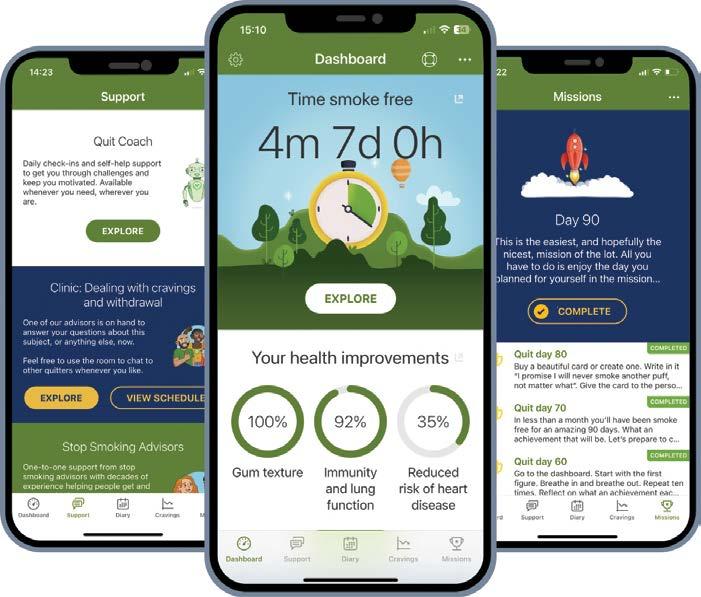
Smoke Free
Snyk
SOBO Club
Stayf
Superdielectrics
Syrvi
The Remarkables The
Nestled by the coast of Lusail sits the splendor of Raf es and Fairmont Doha, where luxury is rooted in even the smallest details. Open the doors to mesmerizing hospitality and make memories in a world of sophistication.
DOWNLOAD YOUR DIGITAL EDITION HERE
UNUSUAL
FEATURES
CEO Wissam Younane wissam@bncpublishing.net
MANAGING DIRECTOR Rabih Najm rabih@bncpublishing.net
ART DIRECTOR Simona El Khoury
EDITORIAL TEAM Tamara Pupic, Aalia Mehreen Ahmed
MEDIA SALES MANAGER Olha Kovalova olha.kovalova@bncb2b.com
CONTRIBUTING WRITERS Sam Sabet SUBSCRIBE Contact subscriptions@bncb2b.com to receive Entrepreneur United Kingdom every issue.
Access fresh content daily on our website
THE UK100 AND THE LEGENDS LEADING
Entrepreneur United Kingdom
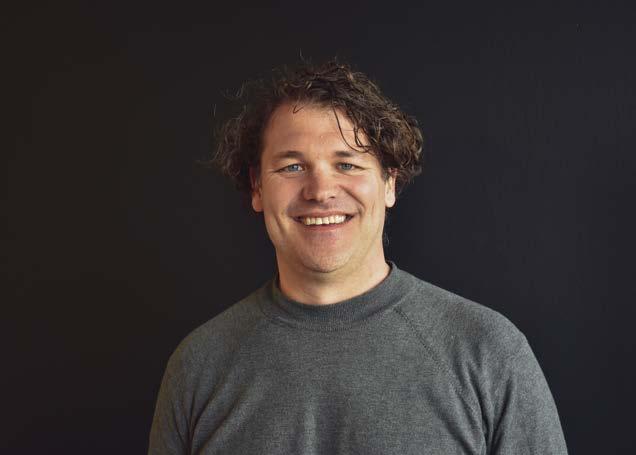
This month, Entrepreneur UK takes the pulse of enterprise. In our UK100, we spotlight the start-ups reshaping industries - from tech and creative ventures to services you didn’t know you needed. Alongside them, the 15 Legends remind us that experience still counts: the people whose ideas have defined sectors and set the standard. In this March edition, our conversations explore the forces shaping technology, creativity and entrepreneurship. Danny Cortenraede learned business at a kitchen table in the Netherlands, listening to his family debate contracts and payments. That grounding stayed with him. Today, he runs InStudio Ventures, investing where sports, media and technology intersect. His model brings athletes in as active investors and
prioritises long-term value over passing trends.
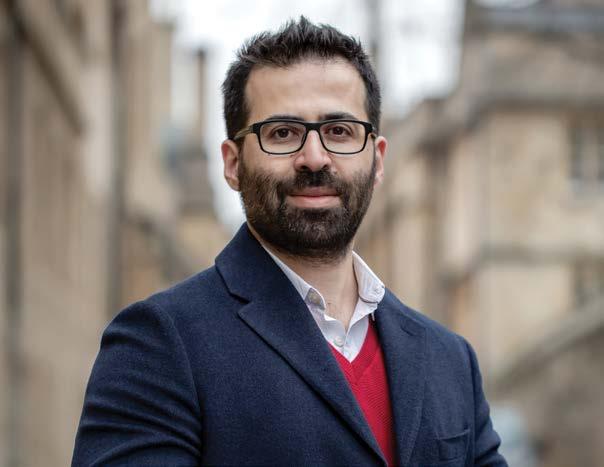
Naomi Timperley, co-founder of Tech North Advocates, discusses mentoring founders, connecting Northern innovation hubs and strengthening the next wave of UK tech. Marine Tanguy, founder of MTArt Agency, makes the case that cultural influence is economic influence - positioning artists as central players in how brands and cities define themselves. From fair pay to international public art projects, her work underlines the commercial power of creativity. Meanwhile, Chris Lewis, Chair of the Venture Capital Trust Association, examines why Venture Capital Trusts matter at a time when early exits often eclipse sustained growth.
We ask the harder questions: is the UK building global tech leaders, or defaulting to rapid exits? What will the ecosystem look like in five years? From kitchen tables to boardrooms, the principle remains the sameunderstand the problem, involve the right people, and build something that lasts. We also showcase Entrepreneur UK’s Business Breakfast at EVE in Kensington - watch this space for future events!
Thanks for reading,
Patricia Cullen Features Editor, Entrepreneur United Kingdom
In the Loop /
Is the UK Building Global Tech Leaders or Early Exits?
The UK’s tech scene is undeniably thriving. From the cobblestone streets of London to the universities of Oxford and Cambridge, the nation has proven itself a fertile ground for the next generation of tech entrepreneurs. From groundbreaking advancements in AI and fintech to deep-tech
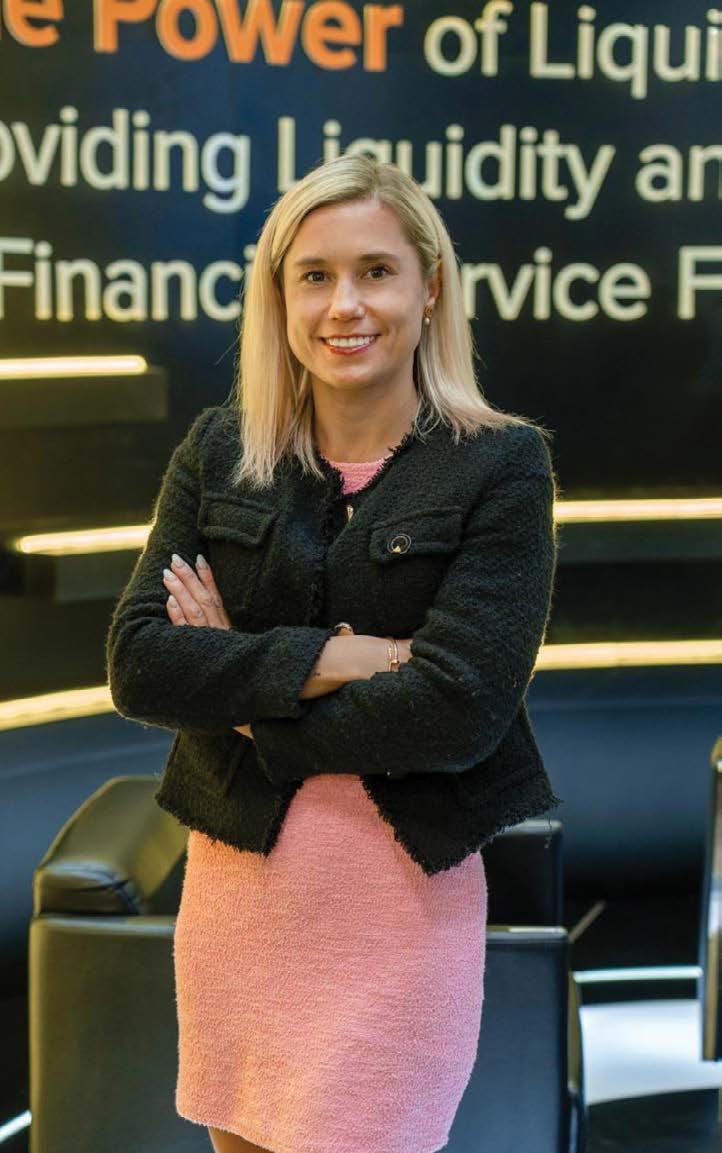
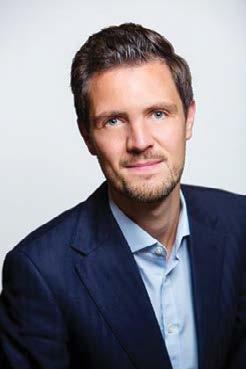
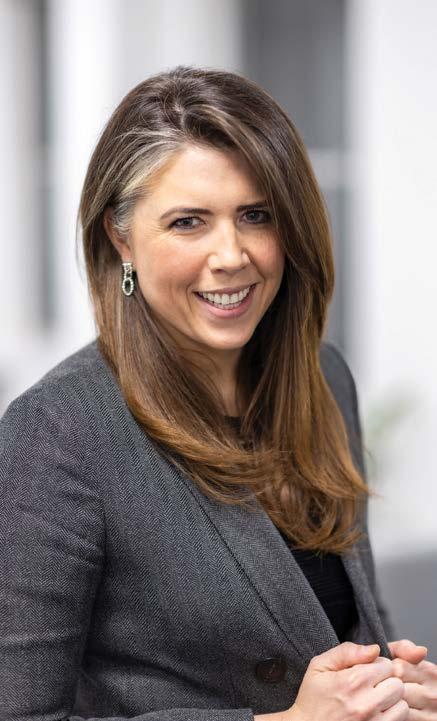
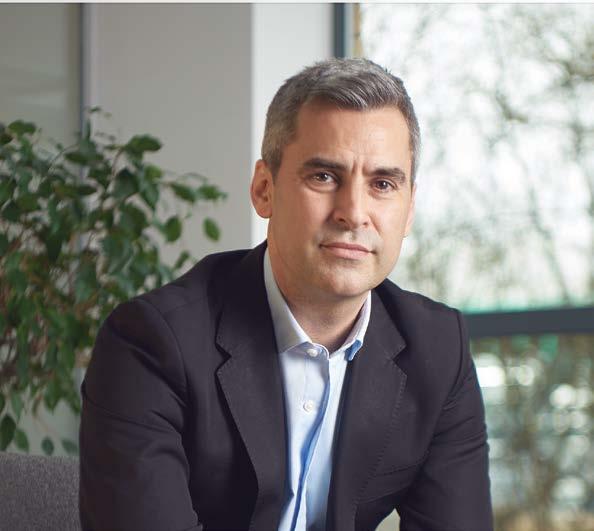
→ Mei Lim, Group CFO and Managing Partner at Anthemis
ventures pushing the envelope, there’s no doubt that the UK has the talent, the infrastructure, and the ambition to lead globally in tech innovation. But is the UK creating a fertile ground for building global tech giants, or is it more of a launchpad for high-potential start-ups that sell out early, often to foreign buyers? This question is increasingly
being raised as UK-based tech companies continue to struggle with scaling past a certain point, despite earlystage success.
Entrepreneurs, investors, and policymakers alike are beginning to look closely at what works, what needs to change, and how the UK can move past its dependence on early exits to nurture truly worldleading businesses. To answer this, I spoke with a group of entrepreneurs, investors, and thought leaders who are shaping the future of the UK’s tech ecosystem.
The Missing Ingredient: Late-Stage Funding
One of the recurring themes throughout the conversations I had was the UK’s chronic lack of capital for growth-stage companies. Mei Lim, Group CFO and Managing Partner at Anthemis, a venture capital investor, puts it bluntly: “Too many of the UK’s most promising businesses cannot access the capital they need to grow. Nearly 70% of scaleups are unable to secure the investment required to reach their full potential.” According to Lim, this
TOO MANY OF THE UK’S MOST PROMISING BUSINESSES CANNOT ACCESS THE CAPITAL THEY NEED TO GROW. NEARLY 70% OF SCALE-UPS ARE UNABLE TO SECURE THE INVESTMENT REQUIRED TO REACH THEIR FULL POTENTIAL”
scale-up funding gap – often referred to as the "Valley of Death" – amounts to a staggering £15bn per annum. These companies, which employ millions and generate trillions of pounds for the economy, are left unable to scale because the capital they need isn’t readily
available. Lim continues, “Without support for founders throughout their journey, especially at the growth and pre-profitability stages, the UK risks losing its most ambitious companies to alternative markets that are better equipped to fund them.” She
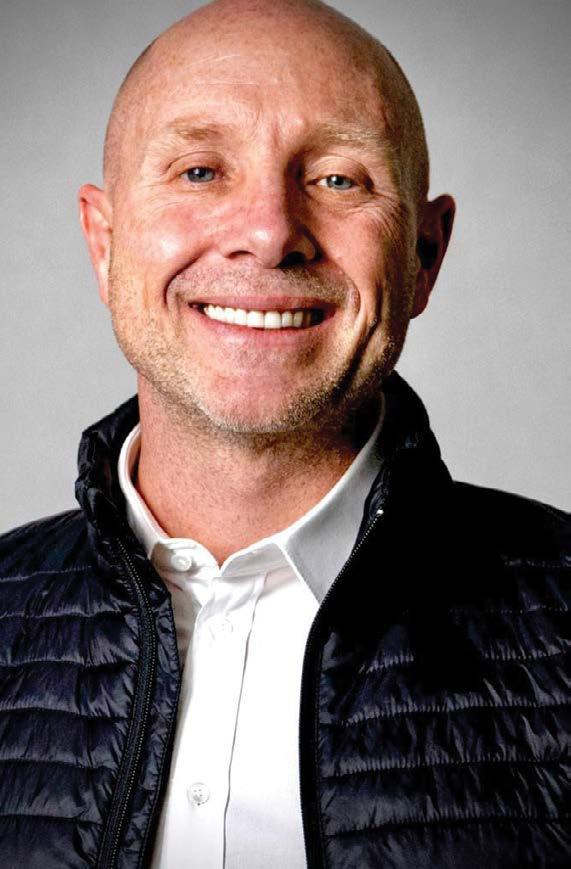
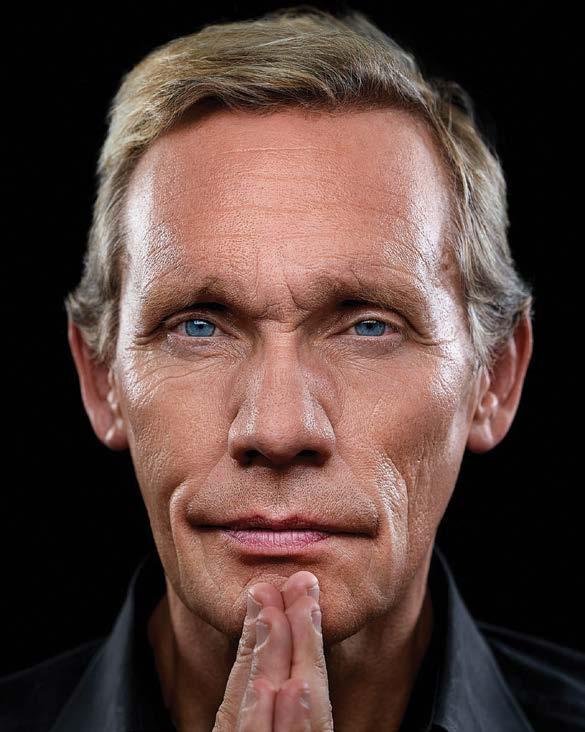
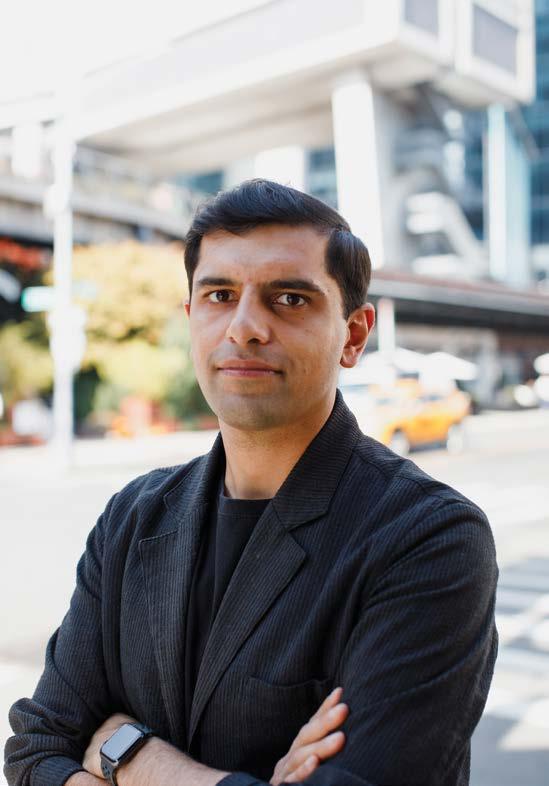
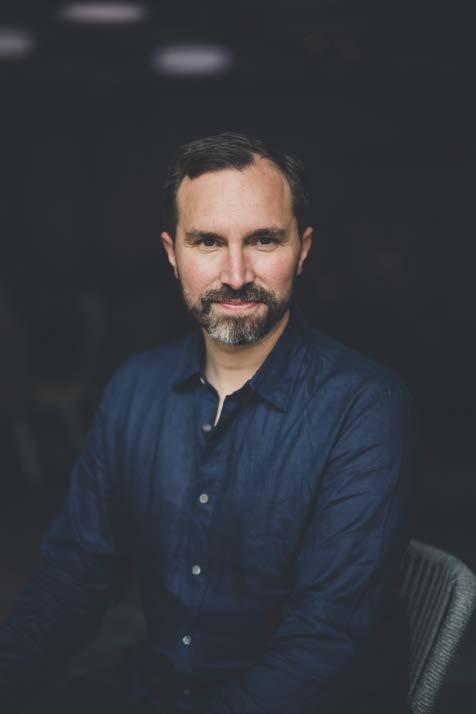
→ Juanjo Mestre, co-founder and CEO of Dcycle
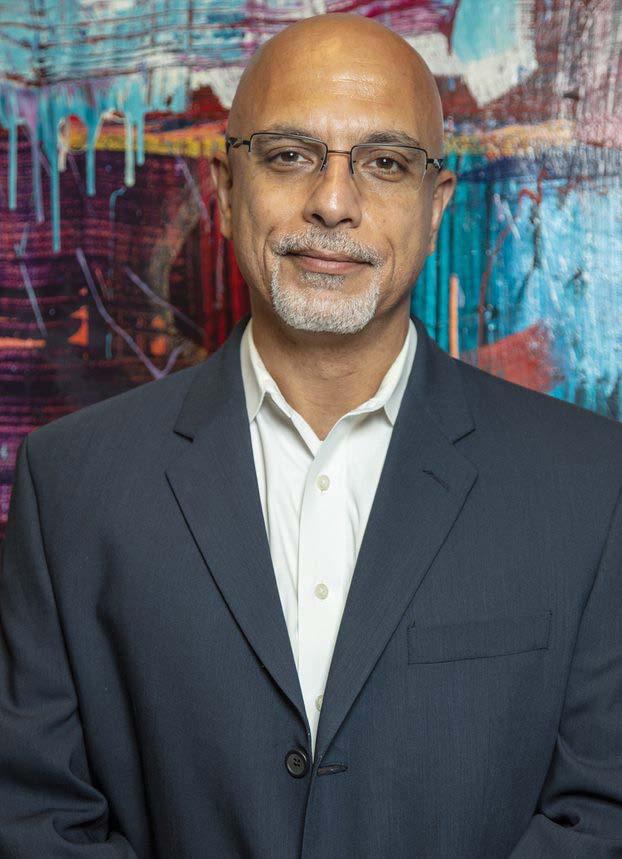
Executive Director at
highlights a significant flaw in the UK’s venture capital landscape: while there’s an abundance of seed funding and earlystage capital, the true test of success - the ability to scale - often hits a wall. The current capital structure, while helping startups reach initial milestones, is failing to take companies to their true global potential.
Many high-growth businesses are forced to either sell out to foreign companies or relocate to markets like the US, where access to patient capital is more readily available. The risk, as Lim points out, is that the UK is not nurturing the longterm infrastructure that can truly empower tech giants to emerge.
The Pressure to Exit Early
This trend is something Barney Hussey-Yeo, founder and CEO of Cleo, an AI-driven financial assistant, has experienced firsthand. While he believes the UK has all the ingredients for
global tech successincluding talented founders, great ideas, and early-stage capital - he contends that the system often pressures entrepreneurs to exit too soon, just as they are on the brink of scaling up. "Britain builds exceptional tech companies, but our system nudges founders toward early exits just as they’re ready to scale.
The UK isn’t short on ideas, talent or earlystage capital – the problem is that we create value here, only for it to be realised elsewhere.
2025 was the LSE’s strongest IPO year since 2021, but it still saw high-growth companies like TeraView drawn overseas by deeper capital pools and markets that actually reward ambition. As the global economy enters an AIdriven growth cycle, scale is decisive, and without aligned venture capital, pension fund participation, public funding and a listings regime that rewards ambition, the UK risks
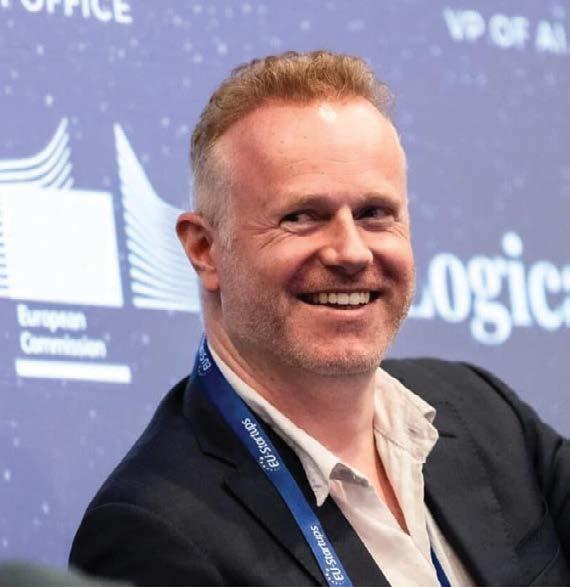
→ Jana Zdravecka,
global fintech company INFINOX
In the Loop /
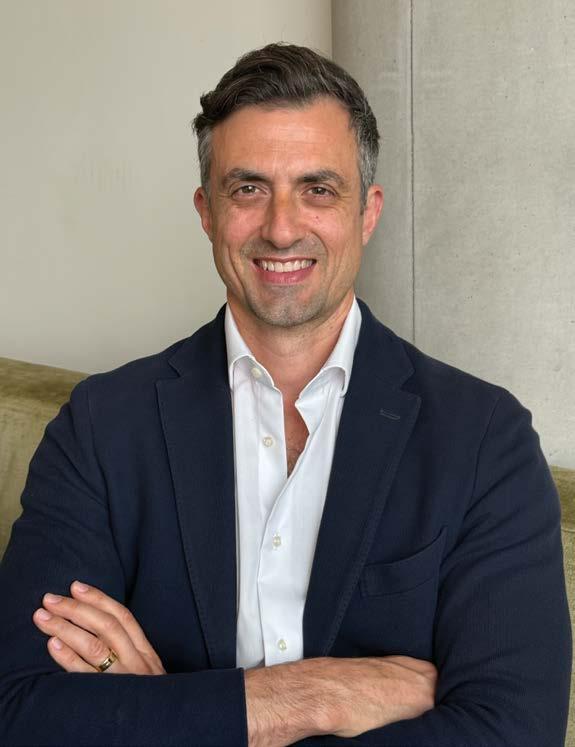
↑ Adam Harrington, co-founder of iDG (Intellectual Digital Global)
exporting the value it creates. If Britain wants growth, productivity and global tech champions, it must back founders through scale - not just at the starting line." Hussey-Yeo,’s sentiment resonates with many who believe the UK’s capital framework is too short-sighted to nurture homegrown tech giants. Without a shift in how we view funding and growth, the UK risks losing more of its most promising companies to international markets where scale-up capital and strategic support are more readily available.
The Discipline of the New Fundraising Environment
However, things are starting to shift. In 2026, the UK’s fundraising environment became more disciplined, as investors began to demand solid business fundamentals. Juanjo Mestre, co-founder and CEO of Dcycle, a start-up modernizing sustainability and compliance data management, reflected on this change in the context of his own business journey: “The fundraising environment has become much more disciplined in 2026, with
BRITAIN BUILDS EXCEPTIONAL TECH COMPANIES, BUT OUR SYSTEM NUDGES FOUNDERS TOWARD EARLY EXITS JUST AS THEY’RE READY TO SCALE. THE UK ISN’T SHORT ON IDEAS, TALENT OR EARLY-STAGE CAPITAL – THE PROBLEM IS THAT WE CREATE VALUE HERE, ONLY FOR IT TO BE REALISED ELSEWHERE”
investors now demanding clear unit economics, tangible revenue traction, and a credible path to profitability rather than a simple ‘total addressable market’ slide in an investor deck.” This shift has prompted a broader rethinking of what it means to build a sustainable business. Mestre, whose company Dcycle raised €6m in Series A funding in December 2024, attributes his company’s success to taking a measured, strategic approach: bootstrapping until the model was validated before seeking external capital. “In the early days, we focused on developing the product and growing our client base. By the time we raised external funds, we had already reached over
We
have strong early funding and public R&D commitments, but this doesn’t always translate into the late-stage capital and scale-up infrastructure
needed to build global tech giants.”
2,000 clients,” he says. Importantly, this approach has also allowed Dcycle to strategically pursue acquisitions, most notably the company’s recent ESG-X acquisition. This move highlights how capital, when deployed thoughtfully, can accelerate growth and create opportunities that
might otherwise be difficult to achieve through organic means alone. Mestre’s approach mirrors a broader shift towards more sustainable, growthoriented ventures in the UK’s tech sector, driven by the demands of today’s investors for solid business fundamentals.
The Global Lens: A Critical Perspective on UK Ambitions
Despite these improvements in the fundraising landscape, a larger issue still looms: the UK’s ability to support its companies beyond the domestic market. Jana Zdravecka, Executive Director at global fintech company INFINOX, notes a tension at the heart of the UK tech ecosystem. While London remains Europe’s leading tech hub, there is a persistent gap between early-stage success and later-stage scaling: “The fact is that London alone accounts for the lion’s share of VC deals and has helped the country build a vibrant pipeline of seed and early-stage innovation,” Zdravecka acknowledges. However, this often fails to convert into the late-stage funding needed to scale companies globally. “We still struggle with the ‘incubator
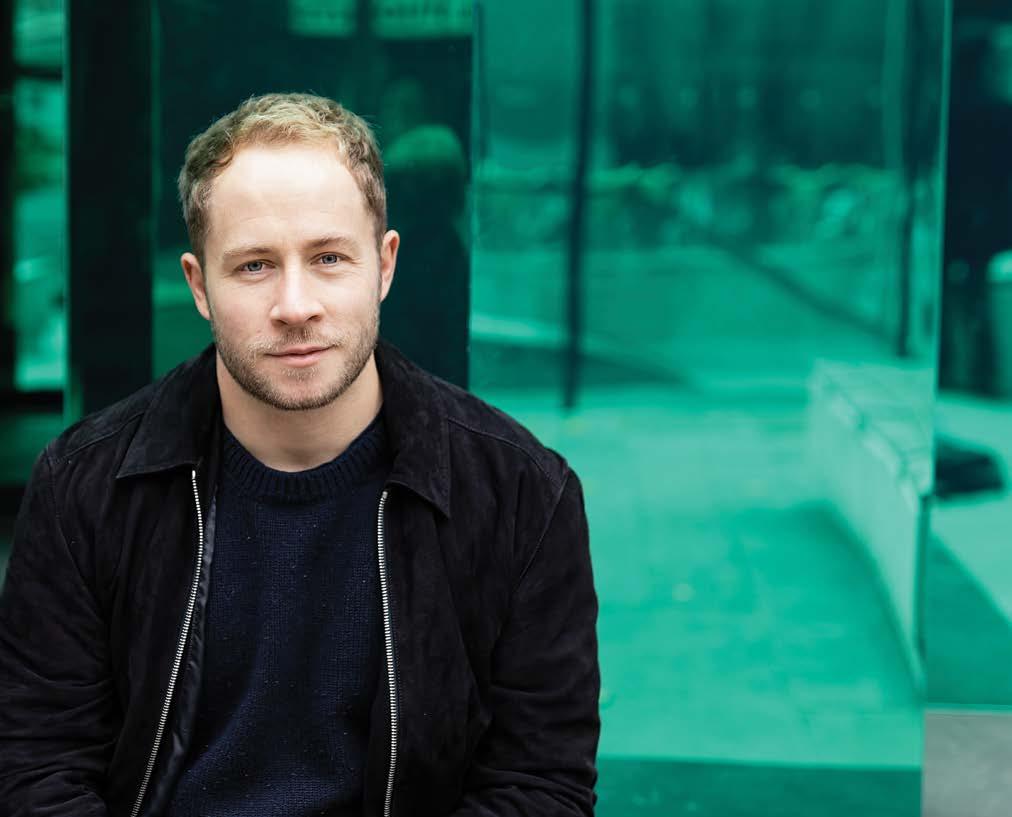
→ Barney Hussey-Yeo, founder and CEO of Cleo
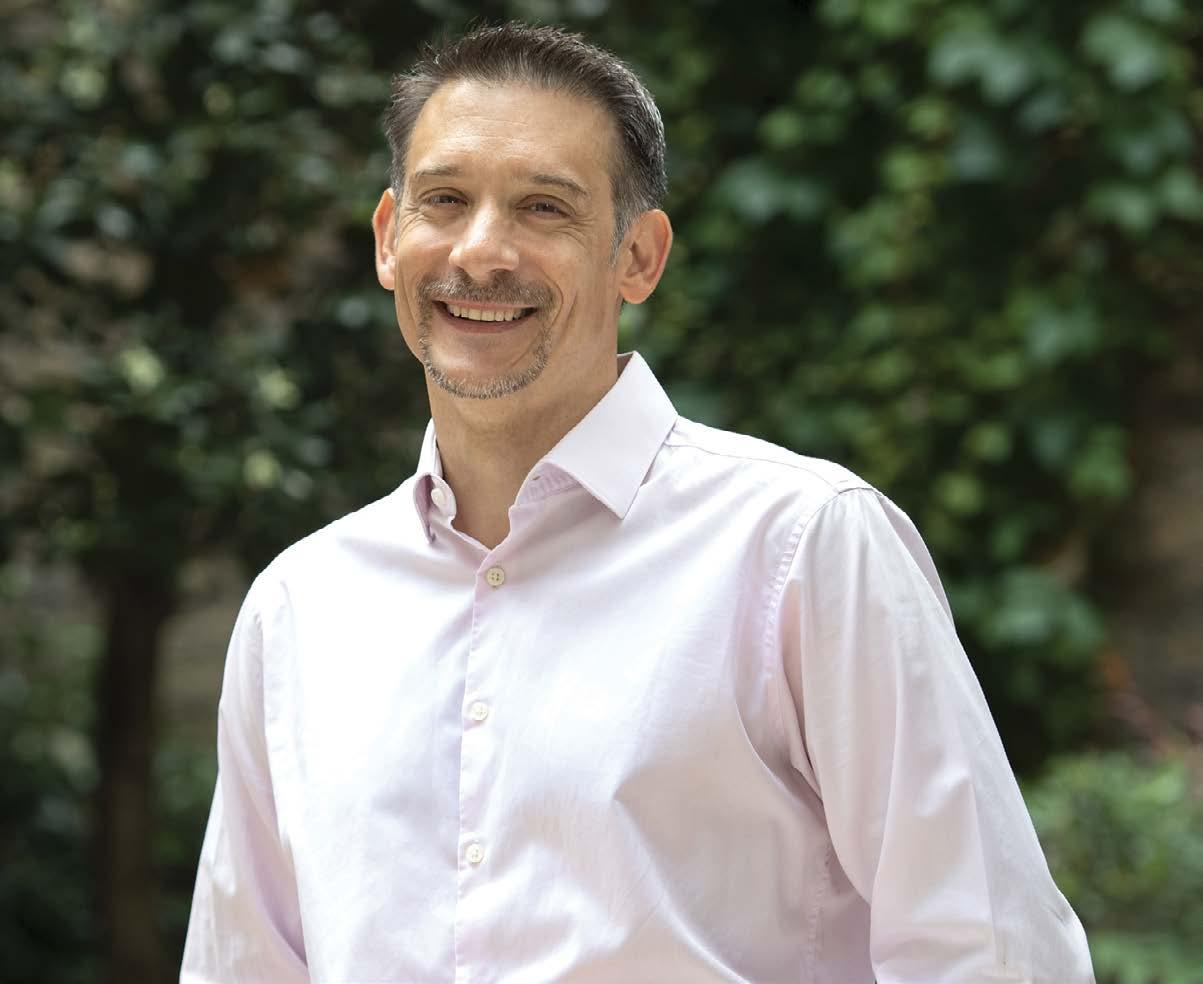
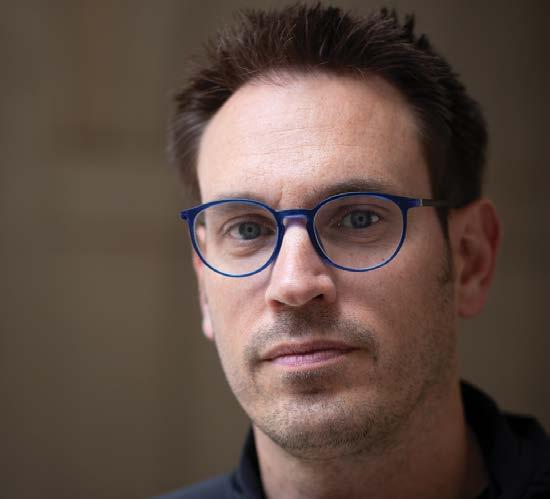
→ Thomas Cuvelier at RTP Global
In the Loop /
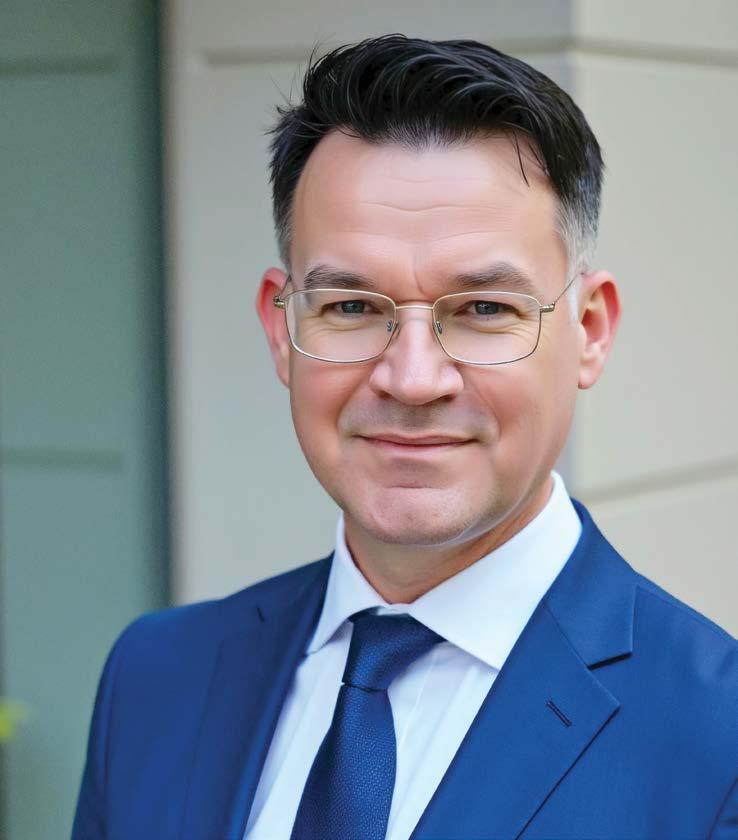
→ Andrew B. Morris, Investor and Chairman of SCALE
economy’ critique,” Zdravecka says. “We have strong early funding and public R&D commitments, but this doesn’t always translate into the late-stage capital and scale-up infrastructure needed to build global tech giants.” Zdravecka's observations mirror the concerns of many entrepreneurs and investors who feel that while the UK’s ecosystem has strong initial support for early-stage ventures, the same cannot be said for scaling these ventures into dominant, global players. “To stay competitive, we need an environment for founders that offers more patient capital, supportive public policy, and deeper domestic VC pools that carry companies through growth into global leadership,” she says.
The UK’s Structural Gaps: Breaking the ‘Series B Barrier’
For many UK-based founders, the scaling journey is hindered by a lack of late-stage funding. Adam Harrington, cofounder of iDG (Intellectual Digital Global), a firm with operations both in the US and the UK, explains how the UK’s venture ecosystem consistently fails at the crucial Series B stage: “The UK remains structurally optimized to produce highly polished assets for someone else’s balance sheet rather than to compound true global category leaders,” Harrington says. “The system, however, consistently breaks at Series B and beyond. Domestic growth capital thins out, foreign capital brings longer diligence
cycles, and founders are pushed toward early M&A or globally scaled funding that often entails US relocation.”
This phenomenon is particularly damaging, as it pushes the most promising start-ups to exit early, preventing them from reaching their full potential as global leaders.
“Bootstrapping has risen as a rational response to expensive equity, but this further skews outcomes toward capital-efficient, earlier exits rather than market-defining platforms,” Harrington continues. As UK start-ups grow and attempt to break into international markets, they often find themselves lacking the late-stage capital and resources needed to reach full scale.
The result? Many of them are acquired by foreign players or relocate abroad to access the capital and support they need to compete on the global stage.
A Glimmer of Hope: Later Exits and Sustainable Growth
Despite these challenges, there is hope for the future of UK tech. Alex Chikunov, founding partner at Verb Ventures, a UK-based VC firm, points to the fact that UK exits are happening later and at more developed stages. “The UK is still building global tech leaders more than pushing founders into ‘sell early’ outcomes,” Chikunov says, citing data that suggests “only around one-third of UK exits happen pre-Series C.” This, he believes, indicates a strong focus on building larger, more resilient companies before exit, as opposed to the early exits
seen in the US.
Chikunov’s optimism is backed by the fact that the UK is home to more unicorns than any other country in Europe, and many of these start-ups are being built with global ambitions in mind. However, he also points out that the UK’s venture capital ecosystem still lags behind the US when it comes to providing the early-stage acquisitions that support rapid scaling. “In the US, the M&A flywheel spins earlier because there is a deeper bench of buyers operating at scale,” Chikunov explains. Despite these challenges, there’s a clear shift toward building businesses that are focused on long-term growth. The UK’s tech sector is increasingly focused on creating companies that can stand the test of time, rather than selling out at the first opportunity.
The Need for a Holistic Approach to Scaling
Andrew B. Morris, Investor and Chairman of SCALE, a platform empowering founders to connect and grow, shares his thoughts on how the UK can foster an environment where tech founders are supported through scale rather than simply at the start of their journey. “The UK has all the ingredients to build global tech leaders,” Morris says. “We should be backing them to become long-term category winners, not just nudging them toward early exits.”
Morris highlights the need for faster, clearer support for innovation and access to scale-up-focused capital, stressing that “growth capital is needed, but in the UK, it’s not flowing to the
scaleups who need it.” For the UK to remain competitive on the global stage, it must create an ecosystem that rewards sustainable, long-term growth and encourages founders to push through the challenges of scaling.
“SEIZE THE MOMENT AND BUILD WITH A GLOBAL MINDSET.”
The AI Moment: A Window for Global Leadership
As the world stands on the brink of an AI-driven growth cycle, the UK has a unique opportunity to leverage its deep technical expertise and world-class academic institutions. Thomas Cuvelier at RTP Global, a venture capital investor, sees AI as one of the areas where the UK can emerge as a global leader. “The UK boasts deep technical
expertise, top academic institutions, and world-class talent,” Cuvelier says.
“These structural advantages put UK founders in an excellent position to build globally relevant AI, fintech, and deep-tech companies.”
Cuvelier advises UK founders to think globally from the outset: “Seize the moment and build with a global mindset.” With AI, fintech, and deep-tech companies set to drive the next wave of global innovation, the UK is in a prime position to lead, provided its founders have the support and capital they need to scale beyond national borders.
From Scale-Ups to Global Giants
The UK’s tech ecosystem is at a crossroads. The country is capable of building innovative, worldclass companies, but it still faces significant challenges in helping those companies scale to global leadership. Without deeper, more patient capital at the growth stage, and a shift in mindset that prioritises long-term value over short-term exits, the UK risks losing its most ambitious tech entrepreneurs to foreign markets. While there’s a growing focus on long-term growth and a greater number of exits happening later in the lifecycle, the key to future success lies in providing the necessary capital, infrastructure, and policy support to help businesses scale. The UK has the potential to build global tech leaders, but only if it commits to nurturing those leaders through the scaling process, rather than nudging them toward early exits.
In the Loop /
Connecting the Dots
Naomi Timperley on mentoring founders, uniting Northern innovation, and shaping the future of UK tech. by
PATRICIA CULLEN
Naomi Timperley didn’t take the conventional path into tech. She never studied computer science, never launched directly into a venture-backed start-up, nor followed the corporate ladder. Her journey began in the travel sector, a far cry from the boardrooms and accelerator rooms she now inhabits. “My route into tech wasn’t linear. I didn’t study computer science or start in a venture-backed start-up or go down the corporate route. My first career was actually in the travel sector,” she recalls.
Her first real foray into the tech world came almost by accident, in the late 1990s, when she worked for a tech recruitment company in Manchester. “One of the accounts I worked on was one called Vertex. I still remember the first guy that I ever placed, which was a C++ programmer called Rajeev Patel at Vertex on a contract,” she remembers. These early experiences, connecting talent with opportunity, would foreshadow the work she would dedicate herself to: building ecosystems where talent could thrive.
After a detour raising her daughters,
Timperley co-launched the UK arm of an American events company, which she ran across nine cities within two years. She recounts the experience with both pride and the kind of candid realism that permeates her reflections on entrepreneurship: “We got offered investment. We turned it down. Usual story, they wanted 40%. I had an American business partner. We would have both been minority shareholders. It wasn’t the right thing to do.” These early ventures also led Timperley to work with youth and women entrepreneurs. She founded Enterprise Lab, a programme bridging education,
employment, and enterprise, and a space where young people could test ideas in real markets. One of her favourite projects involved a dozen under-25s bringing products to life through Portobello Road Market. “It was really helping people that had an idea for something. And over the course of about 12 weeks, bringing that product, even if it was really early stage, to market. Very different to the world of working now,” she reflects.
This focus on bridging gapswhether between talent and opportunity, education and enterprise, or founders and the complex tech
→ Naomi Timperley is the founder of Tech North Advocates
ecosystem - has become a central thread in her work. She notes a persistent truth she encounters in her mentoring: “Talent is everywhere, but access isn’t.” That insight underpins much of her career, from her work with Enterprise Lab to founding Tech North Advocates, her leadership role with Global Tech Advocates, and her most recent initiative, Endgame.
At Endgame, Timperley works alongside founders to ensure they’re not just building products, but sustainable businesses. Her insights? “The biggest thing is confusing product processes with business progress. Founders can get deeply attached to building tech features, tech roadmap around that, but then
“
GROWTH AMPLIFIES WHATEVER YOU’VE GOT THAT IS ALREADY FRAGILE. SO IF YOU HAVEN’T GOT THE RIGHT GOVERNANCE IN PLACE, YOU’VE NOT GOT THE RIGHT TEAM STRUCTURE, OR YOUR CASH DISCIPLINE ISN’T STRONG, SCALE JUST ACCELERATES THAT PROBLEM”
actually delay the hard conversations around product market fit, who their customers actually are, the commercial model around that, and then the leadership capability.”
She sees another common misstep: scaling too early.
“Growth amplifies whatever you’ve got that is already fragile. So if you haven’t got the right governance in place, you’ve not got the right team structure, or your cash discipline isn’t strong, scale just accelerates that problem.” At Endgame, Timperley and her team focus on clarity: of value proposition, of the customer, of unit economics, and even of potential exit strategies.
“Once that’s in place, the execution that they might want, which might be in
three, five, or ten years, becomes far more powerful,” she says.
A key component of her work is her dedication to regional innovation. She points to the North of England as a case study in untapped potential, highlighting a project called Northern Arc. The initiative treats cities such as Manchester, Liverpool, Leeds, and Sheffield not as isolated hubs but as a connected innovation ecosystem, aiming to rival global clusters like Silicon Valley or the Ruhr in Germany.
“Northern Arc is about looking at how we can bring Liverpool, Greater Manchester, West Yorkshire, South Yorkshire, Cheshire, and Warrington, and then Lancashire as a conurbation.
→ Naomi Timperley championing UK tech growth.
In the Loop /
And how, if we did and enabled that, northern innovation would be much more powerful.”
Timperley highlights the fragmentation that currently hinders investment and growth in the North: “Investors only sort of see fragmented snapshots rather than the full picture… With each city having its own inward investment agency, the businesses are not getting the best fit for their needs. Whereas with a connected approach, you can leverage talent, research, and resources across the entire region.” She frames the Northern Arc project as a model for strategic, co-ordinated regional innovation - one that puts the North firmly on the global tech map.
Mentorship and connection remain central to Timperley’s philosophy. As she reflects on the ripple effects of guidance, she shares a story from the Liverpool Tech Climbers panel: “An individual on the panel, Jay Ascroft, wrote on LinkedIn: ‘Great mentors make all the difference in start-ups. I was introduced to Naomi Tindley and she invited me and my provisional co-founder over to her house for a cup of tea. 45 minutes later, we walked out full of confidence. Gone was the fear, replaced with excitement. I quit that job the very next week. It started my journey into entrepreneurship, and I’ve never looked back.’” These stories reveal mentorship’s impact, reflecting Timperley’s belief that influence exists to create opportunity. “For me, influence only matters if it’s used to open doors, especially for other people.” She is equally passionate about diversity and inclusion in tech. “Innovation thrives on diversity of thought. If ecosystems are not diverse, they stagnate. The rooms that I’m going into and that other people are going into need to reflect the society that we live in,” she stresses, linking inclusive practice directly to
sustainable innovation.
Timperley also has a strong perspective on technology trends, particularly AI. But she approaches it with pragmatism. “AI will continue to transform every sector. But the most interesting developments will be sector-specific applications: climate, advanced manufacturing, health, and the creative industries.” She cites the AI Empower Programme she co-created for the Turing Innovation Catalyst as a pilot for the Department of Science and Industry Technology as a practical example: “We worked with businesses that weren’t AI-first… and actually using it to solve a problem, not because it’s a nice shiny thing. And the impact on that was phenomenal.”
For founders shaping the next wave of UK tech, she offers hard-earned advice: “Don’t just build a product. Build a business that has got choices - choices around capital, growth, pace, and exit. Remember that resilience is a strategy, not just a personality trait.” Timperley emphasises preparation and understanding the problem deeply: “A lot of people say, ‘I’ve got a great idea for this,’ but they don’t really think about the problem. Researching, having real conversations, and understanding if people would actually pay to use your product - that’s the foundation of a strong business.”
Despite the challenges facing UK tech - from fragmented regional ecosystems to constrained IPO markets - Timperley remains optimistic. “We’re still a major global player. We’ve still got one of the largest and most valuable tech ecosystems in Europe. The labour market is still resilient and dynamic. And even though you’ve got AI-related roles, there’s still demand for cyber security, infrastructure specialists, data, cloud, hybrid technical roles, and developers with commercial as well as technical skills.” She celebrates the opportu-
nity the current moment provides: “It’s a really interesting and exciting time for people to create things. You can take an idea, test it, get customers, and just go for it without too much money to start. That’s really powerful.”
Her commitment to practical mentorship extends beyond advice into action. Programmes such as Freelancer 100, designed for female freelancers in tech, digital, and creative sectors, have lasting impact: “Three months later, we have 108 people engaged in it, some of these women are still working together, still talking to each other, still connected.” For Timperley, it’s about confidence and creating a safe space for founders to speak honestly. “Most of it has been around confidence. Founders specifically need a safe space to speak honestly. That’s often when they get their biggest breakthroughs.”
Timperley reflects on the cumulative purpose of her career: nurturing talent, bridging gaps, and connecting people. Whether it’s through Endgame, Northern Arc, Tech North Advocates, or Global Tech Advocates, her mission is clear: “It’s about building confidence around UK businesses, connecting tech founders to a global community, and making sure the pipeline of founders from different backgrounds, regions, and routes into tech are seen, introduced, and supported.”
Timperley’s journey - from tech recruitment in Manchester to influencing thousands of founders across the UK - demonstrates that leadership in tech is not only about code, capital, or innovation, but about human connection, mentorship, and a relentless focus on bridging gaps. In her world, the future of UK tech is not just about creating products; it’s about creating opportunities, confidence, and ecosystems that allow creativity and entrepreneurship to flourish.
In the Loop /
Entrepreneur UK’s Business Breakfast: Navigating Growth in a Challenging Economy
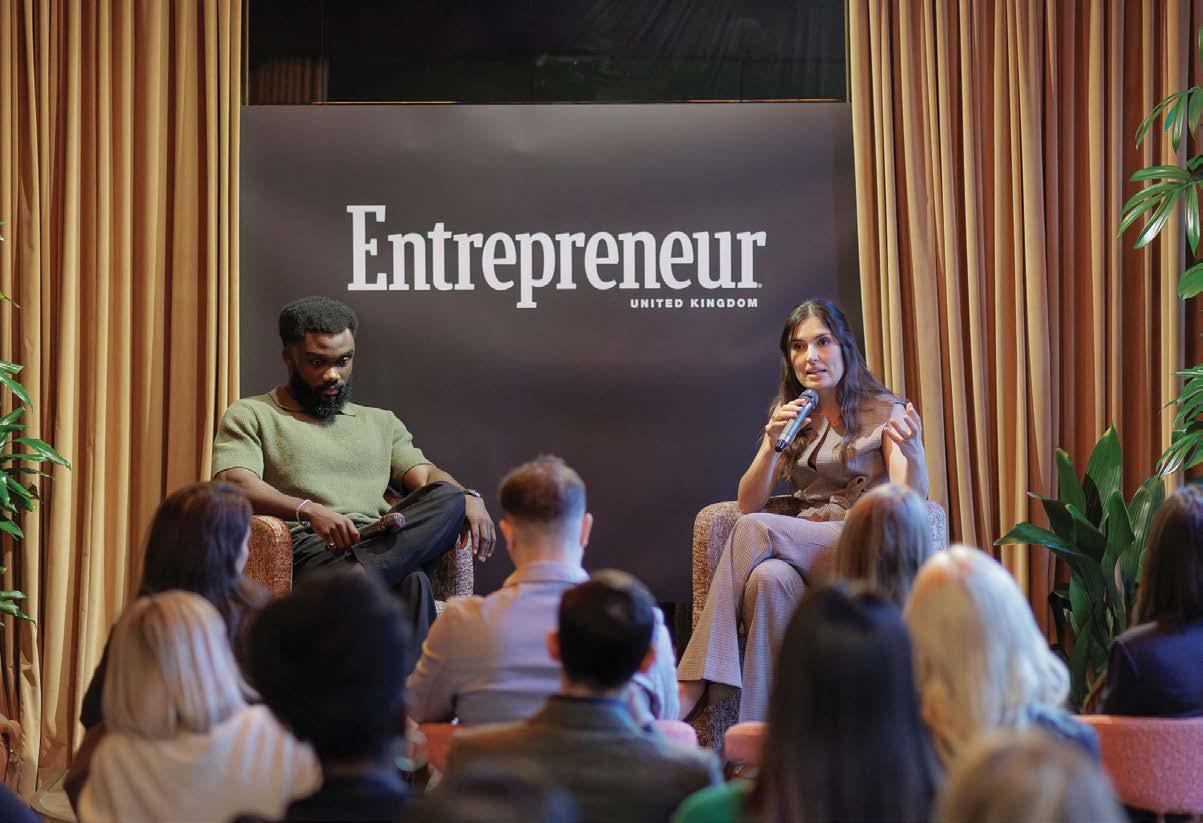
On February 4th, Entrepreneur UK hosted an exclusive, invitation-only Business Breakfast at EVE, Kensington, bringing together more than 40 senior entrepreneurs and decision-makers. Centred on the theme “Surviving & Thriving: Smart Growth in a Tough UK
Economy,” the event featured keynote speakers Marine Tanguy, founder of MTArt Agency, and Timothy Armoo, founder of Fanbytes. Drawing on their respective expertise in art innovation and digital marketing, both offered practical and strategic insights into scaling sustainably in a volatile economic climate.
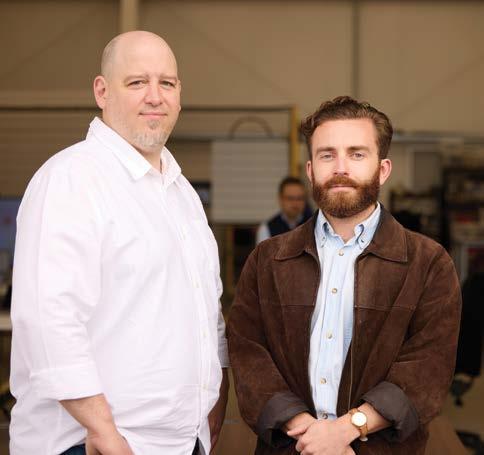
→ Entrepreneur UK’s Business Breakfast, hosted at the EVE Hotel, Kensington Speakers Timothy Armoo and Marine Tanguy. Photography: Charlie Burgio – charlieburgio.com
Founders come together to exchange strategies and strengthen their networks by PATRICIA CULLEN
Ethics and Creativity in Entrepreneurship
As founder of the B Corp - certified MTArt Agency, Tanguy has reshaped how contemporary artists connect with collectors and galleries. Her business model prioritises fair compensation, sustainability and transparency, reflecting her belief that long-term success must extend beyond profit to positive societal impact. “I am very passionate about paying people fairly,” Tanguy emphasised, underscoring her commitment to equitable compensation in an industry often marked by income disparity. For her, responsible growth is inseparable from ethical practice.
The conversation also turned to artificial intelligence. While acknowledging its operational efficiencies, Tanguy raised concerns about its effect on creativity and labour.
“The more my team uses AI, the more their creative abilities are decreasing,” she noted, cautioning against over-reliance on automation. She further highlighted issues within AI-driven labour systems: “AI sadly uses people from very poor countries, incredibly poorly paid and exploited. They are not employed, they are all freelance.” For Tanguy, sustainable business means prioritising people alongside performance. She also stressed the
“WHEN SOMEONE GIVES YOU THAT FIRST CHEQUE, IT FEELS AMAZINGYOU’RE WILLING TO GIVE EVERYTHING. YOU MAY EVEN BE TEMPTED TO GIVE 40 OR 50%”
importance of maintaining control when raising investment. “I’m 70% shareholder, and I have full control over the company,” she reflected. “When someone gives you that first cheque, it feels amazing… you may even be tempted to give 40 or 50%.” Her advice to founders was clear: secure strong legal and financial guidance early, keep as much control as possible, and ensure rights and projections are clearly defined before accepting funding.
Strategic Timing and Investment Insights
Complementing Tanguy’s focus on responsible leadership, Armoo addressed the importance of timing and strategic positioning in growth. Having built Fanbytes alongside the rapid rise of influencer marketing, he attributes much of his success to identifying the right market moment. “We are living in a global
economy now. We can get our products and services to anyone in the world through social media, Amazon, Shopify etc. We are living in a golden age,” Armoo said, highlighting the scale of opportunity available to modern founders.
Central to his philosophy is what he calls “wave picking” — the skill of identifying and aligning with emerging trends early. “If you pick the right wave, you don’t have to be the best. Was Fanbytes the best influencer company? No. But we picked the very best wave. So while influencer marketing grew, so did we,” he explained. For Armoo, growth is driven as much by market momentum as by innovation.
He also emphasised the emotional dimension of investment. “Go on LinkedIn and see who has built a version of your business, but perhaps an older one. It will be an emotional sell. You are
the new version of them; they will live through you,” he advised, encouraging founders to frame their ventures as successors to proven models. In addition, he urged entrepreneurs to study competitors closely, particularly on social media: “What is your current competitor doing on social media, and how can you replicate what they are doing with your angle on it?” For Armoo, incremental innovation - refining and improving existing ideas - can be more powerful than attempting to reinvent the wheel.
Innovation with Responsibility
Together, the insights shared at Entrepreneur UK’s Business Breakfast offered founders a balanced framework for growth: combine ethical leadership with strategic timing; prioritise people while remaining commercially astute; and scale with both discipline and vision. In today’s complex economic environment, sustainable success demands both innovation and responsibility — a message clearly reinforced by the perspectives of Tanguy and Armoo. Entrepreneur UK will continue hosting its Business Breakfast series, providing further opportunities for founders to connect, exchange ideas and navigate growth with confidence. Please follow our social channels for upcoming dates and announcements..
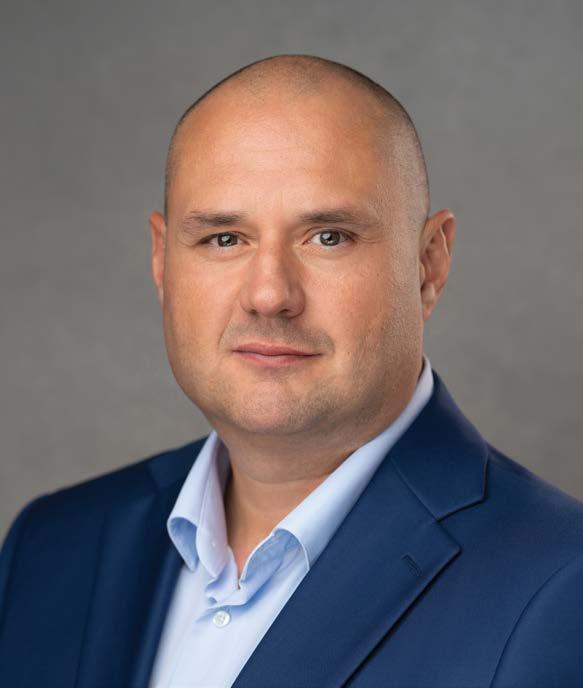
→ Danny Cortenraede - Judge TV
series Unicorn Hunters
THE LONG GAME
In modern sport, the real stakes aren’t on the pitch
by PATRICIA CULLEN
There is a calm that comes only from having watched plans unravel, deals collapse, and money vanish - and live to see what comes next. Danny Cortenraede learned it at a kitchen table in the Netherlands, listening while his father and grandfather debated contracts, payments, and what it meant
to run a business. “I grew up in a very entrepreneurial family,” he says. “Sitting there, listening to those conversations, I was exposed to real entrepreneurship. It wasn’t glamorous. It was work. I saw how hard my family worked, how they built businesses. At the time, I thought it was normal. Later, it planted the entrepreneurial bug in me.”
A good mindset is both positive and realistic - but it also means taking responsibility for the outcomes. You are in charge and you need to make the right decisions and pivot where it’s necessary”
Responsibility, Not Romance
Cortenraede, serial entrepreneur and founder of InStudio Ventures, an investment firm working with athletes and innovation, challenges the mythology of entrepreneurship: the hoodie-clad wunderkind, the overnight exit, the heroic burnout. “Building companies, thinking long term about how you are building real value - that’s important,” he says. “And taking responsibility. You don’t get your salary every month. It’s just a whole different game that we’re playing.” As a child, he
→ Danny Cortenraede with Jameis Winston
saw both the stress and the freedom. “My family did a great job building the businesses – but I also saw when things were not working out. When the client went bankrupt.” That, more than the wins, shaped him. Seeing up close how obstacles were met, managed and overcome. “Are you thinking about it for 12 months and whining? Or are you looking at how we are pivoting? What can we do?”
The answer, inherited and internalised, is simple: “A good mindset is both positive and realistic - but it also means taking responsibility for the outcomes. You are in charge and you need to make the right decisions and pivot where it’s necessary.” It sounds almost unfashionable in 2026 to talk about honesty as a differentiator, but Cortenraede returns to it again and again: over-deliver; don’t over-promise; build longterm value; think in decades, not quarters. “I believe if you’re doing good, good things will happen,” he says. “With a clear strategy and a defined North Star, consistently building your base and delivering with the right people and the right team, you can achieve a lot.”
The Corporate Detour
Unlike many of the start-up founders who dominate entrepreneurial folklore, Cortenraede did not leap straight from school into a venture. He spent nearly a decade in the corporate world. “I don’t regret that,” he says. “I think working for brands like Vodafone and Sony added so much structure and discipline.” He learned governance, strategic execution and
→Danny Cortenraede, a serial entrepreneur and founder of InStudio Ventures
“
THINK GLOBAL FROM DAY ONE. WORK WITH THE RIGHT PEOPLE LOCALLY. THAT WILL FAST FORWARD THINGS.”
the mechanics of closing huge deals. “I was working with big corporate clients, closing multimillion dollar deals and RFPs. I think working in organisations like that and having responsibility for such big amounts, you acquire the basics which you normally don’t learn as an entrepreneur if you just go straight into it.” It is an unfashionable position in some start- up circles, where corporate experience is
sometimes dismissed as bureaucratic baggage. But for Cortenraede, it was foundational. “I combine my entrepreneurial instinct for building companies with the structure and discipline that I learned in the corporate world.” Only after that apprenticeship did he quit what he describes as a “relatively high paid corporate job” to build from scratch. First agencies. Then investments. Then, ultimately, InStudio Ventures.
Building InStudio Ventures
To understand InStudio Ventures, you have to understand the problem Cortenraede set out to solve. “Eighty percent of early stage companies are failing within the first five years,” he says. “You have super smart founders, great solutions, but they just don’t make it.” He had already scaled agencies working with global brands and clubs –from The Walt Disney Company to Nike, from FC Barcelona to Real Madrid. He had seen how difficult sustainable growth really is. “So I thought, what can I do differently? How can I help, specifically in sports, media and technology? Because that’s what we understand. That’s where we can add value.”
InStudio began by scaling companies from zero to Series A in what he describes as “a very structured way. Based on KPIs and milestones.” It worked with US start-ups and European companies expanding into America. Today, the model is more focused – and more selective. “We’re focusing on later stage companies. At least doing $1m in ARR. We have a proven business model. We know the financials. We know the CAC. If we see that’s working, then we go in with a bigger cheque size. Somewhere between
→ Danny Cortenraede with NBA star
Kevin Durant and NFL quarterback
Jameis Winston
$2m and $3m on average.” The sector focus is deliberate: sports, media and technology. And the thesis rests on one simple observation. “Sports is an asset class in its own right. It is a $500bn industry right now, and is set to grow upwards of $800bn.”
In a world of declining linear television and fragmented attention, live sport remains stubbornly resilient. “It’s the only thing that people are still watching live,” he says. The implications are enormous. Media rights escalate. Tech giants bid aggressively. Entire leagues become institutional investment vehicles.
And InStudio positions itself across the spectrum. On one side: “premium assets” – franchises, leagues, institutional ownership stakes. On the other: emerging leagues and sports technology. Women’s sport, in particular, is central to the growth thesis, with leagues such as the WNBA and the Women’s Super League drawing increased capital and audience share. “It’s a barbell portfolio approach,” Cortenraede explains. “On the one side, institutional assets. On the other hand, early stage growth technology platforms.”
The former offer durability and long-term appreciation. The latter offer asymmetric upside. “The NFL, for example, is outperforming the S&P 500 already for 20 years,” he says.
The Athlete Council
“The athletes are actually equity holders in all these different companies. So they are shareholders. It’s different if you put your money to work and you hold equity instead of short term endorsement deals.”
If the portfolio structure is one differentiator, the governance model is another. InStudio’s investors include professional athletes from NFL, NBA, MLB, premier league etc – not as passive cheque-writers, but as active participants. It has established what it calls an “athlete council”. “What we saw and still see is, these professional athletes spend their whole career playing at the highest level. They’re making an incredible amount of money, but sometimes they also end up with nothing or they just spend it in the wrong way.” The answer, in Cortenraede’s view, is education and ownership. “We involve the athletes in what we’re doing and why we’re doing it. So they really understand where they put their money to work. They join deal flow meetings.”
If InStudio is considering an investment in a wearable technology company, the athletes test it. If it is exploring a franchise stake, they interrogate the leadership. “This
whole education about investing – that’s what we’re very keen on. And involving the athletes in this whole process.” The structural difference is equity. “The athletes are actually equity holders in all these different companies. So they are shareholders. It’s different if you put your money to work and you hold equity instead of short term endorsement deals.” In a market saturated with celebrity-backed funds that offer glossy quarterly updates but limited transparency, this participatory model is unusual. “If you put all these like-minded athletes in one room, there’s so much magic happening,” Cortenraede says. “And it’s something that’s really working.”
Access and Trust
In venture capital, “deal flow” is a cliché. But access remains everything. “What’s unique about InStudio Ventures is definitely the access that we have and the investments we’re investing in,” Cortenraede says. He points to their position as lead investor in Boardroom, the media and investment company co-founded by Kevin Durant “For people that don’t know him, the only three National Basketball Association (NBA) athletes who have a lifetime deal with Nike are Michael Jordan, LeBron James, and Kevin Durant,” he says. Durant’s business partner is Rich Kleiman. Among the other investors is Michael Rubin, founder of Fanatics. “There is a great strategic partnership. It’s built on trust and positioning. There are no shortcuts in business. You need to work long term.”
That philosophy extends to institutional assets. InStudio has secured access to investments in top-tier US leagues and global motorsport – scarcity plays by any measure. In the NFL, only a small number of firms are permitted to invest, and ownership stakes are tightly regulated. “The NFL has much more demand than access,” he says. “There are only six big firms who can invest into the NFL.” Scarcity breeds value. But value is unlocked, in Cortenraede’s view, through networks. “It’s really about building these relationships over the years.”
Think Global, From Day One
Cortenraede moved from the Netherlands to New York and then to Los Angeles. He has lived in the US for nearly seven years. The move was strategic. “Fifty-three
percent of sports technology investment is happening here in the United States,” he says. But his advice to UK founders is not to abandon Britain. It is to think globally. “What is working in your market doesn’t mean directly it’s also working in the US. It’s a different culture. Different things companies are looking for.” The solution? International ambition from the outset. “Think global from day one. Work with the right people locally. That will fast forward things.” And, crucially: “Focus on ownership and long-term value creation. Not short-term headlines or valuations.” It is a rebuke to a generation seduced by unicorn status and social media metrics.
The Future of Sports Tech
When asked what lies ahead, Cortenraede returns to data. “Sports technology was $13bn in 2021. In 2030, we will go to $103bn,” he says. “Forty-two percent of this money is going into fan engagement.” Fan engagement. Data intelligence. Direct-to-fan ecosystems. Athlete-led platforms. Institutional ownership structures. “The combination is something that we really believe in,” he says. “Having access and being minority owners in clubs and leagues gives us a very big advantage. We’re on the cap table there.”
The UK, he argues, is uniquely positioned. “It combines sports heritage with a strong technology ecosystem. If you’re talking about football, the Premier League is top.” Founders who combine innovation with strategic alignment, he says, “rather than just building in isolation, they
will lead the next phase of global sports.” There is, inevitably, doom and gloom in the air – economic headwinds, regulatory shifts, political turbulence.
Cortenraede acknowledges it. He hears the complaints from entrepreneurs in Europe. He understands why some relocate. But he remains stubbornly optimistic. “There are still opportunities if you’re focusing on the right things with the right people,” he says.
The Kitchen Table, Revisited
Cortenraede has two young sons. He hopes they are watching. “Hopefully I can lead by example,” he says. “They see me. I moved from the Netherlands to New York, to Los Angeles, building businesses here. I didn’t have somebody who was backing me up.” His eldest is already asking questions. “He loves sports. ‘How are you working with these athletes, daddy?’ And I’m trying to explain it. Don’t be transactional. Over-deliver. Build equity. Think long term. Be honest. Take responsibility.”
The same lessons that echoed around his childhood kitchen table years ago. The world of sports investment is glossier now. The stakes are larger. The deals are more complex. But the philosophy is the same. In an era obsessed with speed, scale and spectacle, it is a radical position: that value is built slowly; that trust compounds; that ownership matters; that sport – for all its glamour – is still, fundamentally, about people. And that the long game, played properly, still wins.
The Art of Value
Marine Tanguy on cultural influence, creative economics and why the future of UK growth may be visual. by PATRICIA
CULLEN
→ Marine Tanguy, founder, MTArt Agency
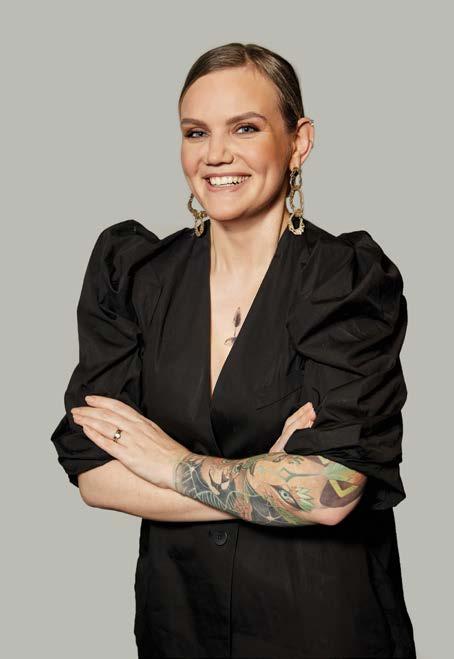
We consume up to 10,000 images a day. In that saturated landscape, artists are no longer peripheral - they are central to how brands differentiate, how cities build identity, and how nations project soft power. Marine Tanguy saw the shift early. Through MTArt Agency, she built a platform designed to support artists’ independence while proving their commercial worth. At a time when tech platforms wrestle with ethics and AI models test copyright law, she argues that the real power lies in understanding - and investing in - cultural value. Entrepreneur UK finds out more…
} You built MTArt Agency to make artists central economic players. What’s the biggest lesson you’ve learned about creating cultural value in the UK?
When we started our company, artists were being paid in ‘exposure value’. ‘How lucky would they be to display their works and being seen’ we would hear often. We wanted to change that. I published my first academic paper with Warwick University (https://www.sciencedirect.com/science/article/abs/pii/
→ Marine Tanguy and Christies x MOWAA NJS
“TECH PLATFORMS ARE UNDERGOING INTERNAL CHANGES FROM FIRING LARGE AMOUNTS OF WHITE COLLARS UP TO REDEFINING THEIR OWN ETHICAL POLICIES IN THE AGE OF AI. IT’S A FASCINATING TIME TO RUN A COMPANY WITH CREATIVITY AT ITS HEART”
S0040162518318249) on measuring the value of the arts and artists in our everyday spaces and we made sure that every single project was paying the artist fairly. By doing so, we showed that artists were not just cultural actors but economical actors too.
} Where does cultural power really sit today - with artists, institutions, brands, or tech platforms?
As political parties are being challenged, newspapers and magazines are becoming the new communities where one looks to belong from a value and lifestyle standpoint. Entrepreneurs have become larger cultural voices than their own firms and artists are increasingly central in a visual world where we consume 10,000 images a day. Something that we benefited from at MTArt Agency is the need for brands to differentiate themselves visually and culturally in an age where people are experiencing visual fatigue. We saw a drastic
increase in brand partnerships commissioning creatives and artists. Tech platforms are undergoing internal changes from firing large amounts of white collars up to redefining their own ethical policies in the age of AI. It’s a fascinating time to run a company with creativity at its heart.
} How is the rise of digital tools changing how artists are represented, commissioned, and monetised?
Pre social media, the only way in which an artist could be
noticed was to show in an art gallery. Nowadays, an artist can be anywhere in the world and start reaching out to collectors, partners and art curators. This has diversified the art world and challenged the status quo. As a talent agency, we saw this change coming and made sure to be a platform that supports the artist’ independence, not the other way around. AI is a much larger problem as currently, IPs laws are weak and many of these AI models and generators are training their models on stolen
imagery from creatives and artists. That’s the challenge of the century.
} You often talk about imagination as the UK’s edge. How does MTArt turn creativity into infrastructure?
London remains one of the top creative cities in the world. When most cities tend to lean in towards a specific sector (Los Angeles for the entertainment industry and San Francisco for the tech sector), London is a melting pot of the top publishers, entertainers, advertisers, art world players etc: a dream set up for the best ideas to emerge from these collaborations. MTArt Agency benefits from this daily.
} The UK invests heavily in tech start-ups, but less in cultural IP. What would scaling creative talent like tech founders look like? The creative sector generates £140 billion every year, the same as the food and beverage industry and yet it is dismissed as a business case. As someone who has raised from
AI IS A MUCH LARGER PROBLEM AS CURRENTLY, IPS LAWS ARE WEAK AND MANY OF THESE AI MODELS AND GENERATORS ARE TRAINING THEIR MODELS ON STOLEN IMAGERY FROM CREATIVES AND ARTISTS. THAT’S THE CHALLENGE OF THE CENTURY”
→ Angel of the Norf
the top VCs and angel investors, it is my core mission in life to show that backing culture is a smart investment move and one that benefits our society as a whole.
} Your agency applies venture-style thinking to artists. How does that change their career trajectories - and what can tech learn from it?
We diversified their revenue streams, widened their audiences and increased their market price by over 150%. So many of our artists are now recognised globally and again, what a great proof that is in showing that backing the arts and artists is the right thing to do.
} Have you seen investment in cultural projects spark local innovation beyond London?
Absolutely - the Middle East has shown a deep understanding of the importance of backing the arts to develop their international positioning, soft power and appeal for people to travel to these places and live and work there. Saudi Arabia is investing heavily, with over $21.6 billion in cultural projects as part of its economic transformation. Major focus areas include the $63 billion Diriyah development, AlUla’s arts scene, and the Red Sea International Film Festival and Abu Dhabi is investing over AED 30 billion ($8.1
billion+) in culture and creative industries to boost tourism and jobs. We raised funding from one of the top Qatari fund four years ago and have been developing large scale public art projects in the Middle East since 2019.
} What skills should the next generation of artists develop to thrive at the intersection of creativity, commerce, and technology?
A legal literacy to navigate their rights, especially their IPs.
} Do you think the UK truly understands the economic power of its creative sector - or is there still a perception gap?
It’s poorly understood despite great reports by
McKinsey like this one: https://www.mckinsey.com/ uk/our-insights/assessingthe-direct-impact-of-the-ukarts-sector so let’s continue to spread the word : ).
} If you could change one thing in UK policy to better support creative talent, what would it be?
Ireland just launched the world’s first scheme to provide basic income for artists, understanding the value that they bring to society. I would like to match this. I also published a book with Penguin (https://www. penguin.co.uk/authors/298745/marine-tanguy) on the importance of visual literacy in a time where visual misinformation is everywhere, I would want visual literacy to be a part of our curriculum.
Investing in Collaboration Tech Is the Smartest Move Entrepreneurs Can Make in the AI Powered Workplace
by SAM SABET
If you’re building a company in the UK right now, chances are you’re investing heavily in AI, cloud platforms, and automation. As well you should be, because without a doubt these are the tools that will define the next decade of growth. But there’s a less glamorous, often overlooked truth: none of those investments will reach their full, long-term value if your teams can’t collaborate well, especially in today’s AI powered workplace.
You can have the most advanced AI tools inside your productivity suite, but if your meeting rooms, remote or home workers are equipped with poor quality microphones, outdated cameras, or unreliable conferencing setups, your teams will still struggle. People won’t hear each other clearly, insights and ideas won’t land, decisions will be revisited, and innovation will get lost. As a result, costing time, and losing your most valuable competitive advantage, agility and adaptability.
Recent IDC1 research reinforces this reality. In the UK, 71% of organisations say collaboration improves returns on tech investments, yet many continue to operate with weak collaboration infrastructure, leading to disconnected teams, underutilised tools, and stalled innovation. Meanwhile, 66% of employees say the quality of collaboration directly impacts
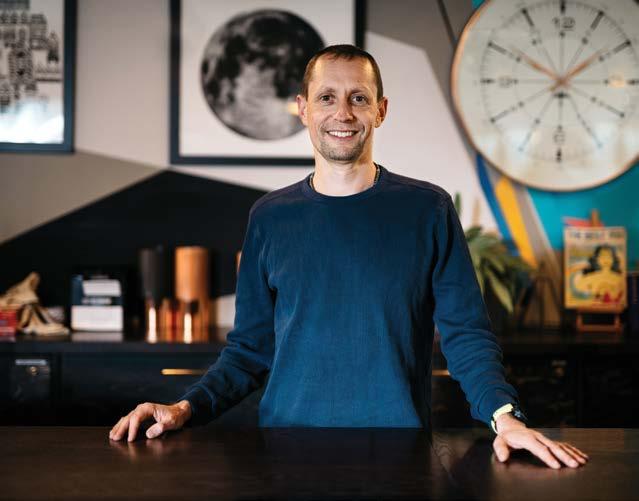
→ Sam Sabet, CTO at Shure
whether projects finish on time, which is a critical signal for resource strapped startups.
For entrepreneurs, the takeaway is simple:
collaboration between human-led teams and AI agents is the multiplier, and one of the fastest ways to improve it is investing in the right communication technology.
YOU CAN HAVE THE MOST ADVANCED AI TOOLS INSIDE YOUR PRODUCTIVITY SUITE, BUT IF YOUR MEETING ROOMS, REMOTE OR HOME WORKERS ARE EQUIPPED WITH POOR QUALITY MICROPHONES, OUTDATED CAMERAS, OR UNRELIABLE CONFERENCING SETUPS, YOUR TEAMS WILL STILL STRUGGLE”
Why audio and video are business-critical, not “IT nice-to-haves”
Founders often focus on visible tools including apps, platforms, dashboards. But what drives day to day productivity is what people experience in meetings: the clarity of voices, the ability to read body language, the reliability of joining without tech drama, and the feeling of inclusion (whether in the room or remote).
When people can’t hear clearly, misunderstandings happen. Attendees disengage. Decisions get repeated in multiple follow-up calls because the original conversation wasn’t clear enough.
Investing in high quality microphones, echo cancellation, noise suppression, and proper audio processing is not a luxury, it is foundational to business efficiency. And in an AI-driven workplace, clean audio fuels more accurate transcriptions, summaries, and informs the behaviours and responses of your AI Agents.
In addition to audio, video is no longer just about seeing faces on a screen. Intelligent framing, speaker tracking, and multispeaker views help remote contributors feel as present as those sitting in a meeting room. This matters enormously for hybrid teams, because when someone feels less present, they almost
‘T/Investment
always end up with less influence.
Better collaboration, better AI value, better brand trust
There’s also a reputational dividend that’s easy to overlook when measuring AI’s impact. In sales calls,
CLEAR VOICES, INTELLIGENT FRAMING, AND SEAMLESS JOINING
DON’T JUST IMPROVE MEETINGS; THEY GENERATE CLEAN, CONSISTENT SIGNALS THAT MAKE YOUR AI SUMMARIES, ACTIONS, AND INSIGHTS MORE ACCURATE AND USEFUL.
demos, board updates, and investor pitches, the quality of your audio and video becomes a proxy for the quality of your execution and, by extension, your brand. Clear voices, intelligent framing, and seamless joining don’t just improve meetings; they generate clean, consistent signals that make your AI summaries, actions, and insights more accurate and useful. When your collaboration technology is strong, it positively and directly shapes how customers and investors perceive you, ensuring your company presents as credible, consistent, and trustworthy. That polish builds confidence, reduces perceived risk, and delivers a premium brand experience at every touchpoint (whether in the room or remote) while also giving you reliable data to measure AI’s real value.
Cloud-enabled devices reduce IT headaches and down time
Most start-ups don’t have large IT teams, sometimes they have none at all. But in the phase when they start growing their offices and meeting rooms, cloud managed AV devices change the game by enabling remote monitoring, simple deployment, automated updates, and proactive issue detection. Instead of rushing between rooms to restart equipment, IT teams (or non technical staff) can manage everything from one dashboard, saving time and avoiding costly disruptions. Founders can glean
valuable insights from usage patterns of the technology tracked via cloud-enabled management systems. This allows them to further optimise their limited resources and investments.
If your AV doesn’t work, your AI can’t work
Every founder wants to leverage AI for meeting summaries, follow-ups, content creation, or workflow automation – but most importantly, to deliver the gains that stem from the power of agentic AI. Productivity and efficiency are something startups can’t waste. But AI is only as strong as the signal it receives. If the audio in a meeting is indistinct or inconsistent, the summaries will be too. Noise in the signal leads to errors and inefficiency. If cameras can’t capture expressions accurately, AI analysis loses important context. Moreover, if your hardware and software aren’t integrated, AI has no coherent environment in which to operate. Strong, cloud managed collaboration technology lay the groundwork for every future AI benefit you plan to unlock.
Why collaboration needs both strategy and empathy
IDC’s research highlights a consistent split: leaders see collaboration tools as strategic levers for agility and ROI; employees experience their personal impact: clarity, ease, reduced frustration. The stats tell the story:
businesses prioritise revenue growth (47%), efficiency (45%), and customer experience (41%), while employees care about skill development (44%), new learning opportunities (44%), and achieving better work-life balance (44%).
This isn’t a contradiction. Good collaboration infrastructure, especially high-quality audio and intelligent video support both sides. For founders and leaders, it accelerates cycles and strengthens customer interactions. For employees, it provides clarity, reduces admin load, and increases the sense of connection. In other words, collaboration technology is one of the few investments where organisational priorities and personal priorities genuinely align.
A founder’s framework for choosing the right collaboration tech Entrepreneurs don’t need to be experts in AV systems or IT infrastructure, but they do need a clear decision framework. The most important thing is to avoid building a patchwork of disconnected tools. Choosing an integrated collaboration platform gives employees a single, reliable environment in which to meet, communicate, and share content. From there, founders should place the quality of their collaboration technology at the centre of their investment decisions, because effective communication starts with being heard and seen clearly.
Standardising meeting rooms early also pays
dividends. When every small room has the same setup, people move smoothly between spaces and issues are reduced dramatically. It’s equally important to choose hardware that can be managed through the cloud, so updates, diagnostics, and monitoring happen automatically without pulling already stretched teams away from critical work.
A simple, practical roadmap to measure AI’s real value in the workplace
For early-stage companies, the journey begins with understanding that AI’s
value in the workplace can’t be measured purely through short-term efficiencies or cost savings. Those quick wins matter, especially in the early days, but they rarely reflect the technology’s full potential. The real measure comes from how AI improves the quality of collaboration, strengthens decision-making, accelerates innovation cycles, and creates a long-term competitive advantage. When start-ups are opening their first offices or scaling their workspaces, the first step is still to fix the basics, but with a clear eye on measurement. Ensuring meetings connect
reliably, standardising audio setups, and removing tool duplication are essential groundwork, because without stable, high-quality inputs, it becomes almost impossible to collect meaningful data about how AI is performing. Once reliability is established, entrepreneurs can begin tracking early indicators such as reduced meeting duration, reduced repeat meeting frequency, time to decision and time-to-market, and employee friction points, all signals that help quantify how collaboration quality enhances productivity.
Once the basics are stable,
THE REAL MEASURE COMES FROM HOW AI IMPROVES THE QUALITY OF COLLABORATION, STRENGTHENS DECISION-MAKING, ACCELERATES INNOVATION CYCLES, AND CREATES A LONG-TERM COMPETITIVE ADVANTAGE.
the next phase involves deploying a strong AV foundation, introducing cloud managed hardware, upgrading room systems, and piloting AI features with a few teams. This is where companies begin to see measurable time savings and improved decision clarity. Later, companies can scale these improvements further. This typically means expanding AI across more workflows, implementing simple governance, and aligning the entire organisation around a clear “collaboration playbook” that outlines when to meet, how to use rooms, when to work asynchronously, and how decisions get documented. At this stage, collaboration becomes predictable, scalable, and aligned with business goals.
The founder takeaway
The AI powered workplace rewards clarity, connection, and speed. Entrepreneurs who invest early in collaboration technology unlock those advantages more quickly and more reliably. These tools don’t just make meetings better; they make the business better. They amplify every other tech investment, support both leadership and employee needs, and form the foundation of a modern, productive, and AI ready company. Your cloud, your AI, and your people will only be as powerful as your collaboration infrastructure allows them to be. Invest wisely, and everything else accelerates.
What Will the UK Tech Ecosystem Look Like in Five Years?
How AI, capital, regional hubs and trust will reshape Britain’s technology ecosystem by 2030. by
PATRICIA CULLEN
Britain’s technology sector has long thrived on reinvention. From fintech’s ascent in the wake of the financial crisis to the rapid scaling of AI ventures in recent years, the UK has repeatedly demonstrated an ability to adapt, attract capital and produce globally relevant companies. Yet the next five years may prove more decisive than the last decade combined.
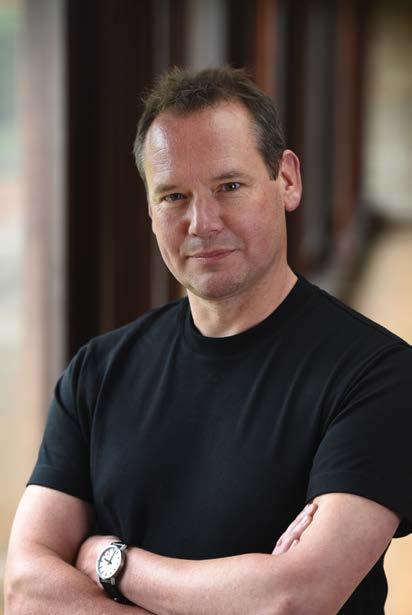
→ Justin Floyd, founder and CEO of RedCloud Technology
The ecosystem stands at an inflection point. Artificial intelligence is shifting from experimental novelty to embedded infrastructure. Capital is more disciplined. Talent is increasingly fluid, no longer confined to London’s traditional clusters. Policymakers speak of sovereign capability, while founders speak of resilience and speed. The question is no longer whether the UK can produce standout start-ups - it can - but whether it can sustain global competitiveness in a world where innovation cycles are shorter, geopolitical tensions sharper, and capital more selective. To explore what comes next, Entrepreneur UK asked five leading
→ Matt Henderson, co-founder and CEO of Phoebe.ai
founders and ecosystem builders to look ahead. Their predictions offer a snapshot of where the smart money, bold talent and next wave of opportunity may lie - and what it will take for the UK to remain not just relevant, but formidable.
1/ From AI Experimentation to AI Infrastructure
Justin Floyd, founder and CEO of RedCloud Technology, a company that provides AI-driven insights for FMCG markets, believes the next phase of UK tech will be defined less by novelty and more by application. Having taken RedCloud from a private British venture to a Nasdaq-listed technology company in March 2025, Floyd has built his business around AI-driven trade intelligence serving FMCG markets across emerging economies. “By 2030, the UK tech ecosystem will be shaped by how effectively AI is applied beyond consumer use cases,” he says. “The most valuable companies will be those using AI to improve decision-making in complex, real-world systems - from industry and infrastructure to healthcare, finance and energy.”
Floyd argues that Britain is well placed for this transition. “The UK is well positioned here. It has deep technical talent, strong research foundations and experience operating in regulated, high-complexity environments.” He also notes a
mindset shift among founders: “We’ll see more founders thinking internationally from the outset rather than building for a single market.” For Floyd, the coming years will mark a move “from experimentation to impact,” with an emphasis on resilience, intelligence and systems that make the real economy function more effectively.
“IN FIVE YEARS, THE UK TECH ECOSYSTEM WILL LOOK LESS LIKE A LONDON-ONLY STORY AND MORE LIKE A NETWORK OF SPECIALISED SUPERCLUSTERS”
2/ The Rise of the Zero-Employee Company
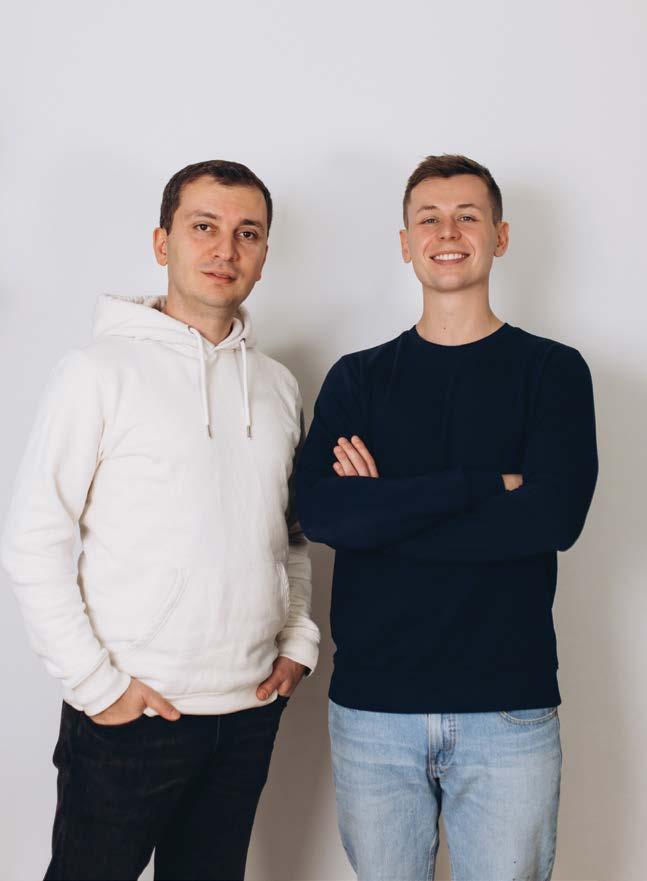
Matt Henderson, cofounder and CEO of Phoebe.ai - an AI agent platform that investigates and prevents software failures - argues that AI will fundamentally reshape company structures. “We are moving toward a generation of hyper-efficiency,” he says.
→ Lilia Stoyanov, founder and CEO of Transformify
→ Emanuel Georgouras, CEO of PistonDAO
→ Sarah Bone, co-founder of YEO Messaging
“We will see an explosion of high-impact, lean teams. This includes the rise of the single-person startup and, eventually, the first ‘zero-employee’ companies - entities where AI agents handle the entire execution cycle while a solo founder provides the strategic vision.” The economics driving this shift are clear: abundant seed capital paired with plummeting software development costs, accelerated by AI coding agents. Entry-level roles may see slower wage growth as routine coding is automated, while engineers able to orchestrate AI systems
BY 2030, THE FASTEST-GROWING
UK
TECH COMPANIES WON’T BE THE LOUDEST, THEY’LL BE THE MOST TRUSTED” “
- the “AI-leveraged” - will command exceptional value. At the top, infrastructure providers such as Nvidia, Google and Anthropic will dominate, while smaller UK companies carve out niche applications. Henderson predicts the traditional SaaS model will face structural upheaval, as the cost of software creation
approaches zero, forcing companies to find new ways to capture value.
3/ The Rise of the Supercluster
Lilia Stoyanov, founder and CEO of Transformify, a global HR and workforce management platform foresees the UK ecosystem becoming less London-centric and more geographically diverse. “In five years, the UK tech
ecosystem will look less like a London-only story and more like a network of specialised superclusters,” she says. “London will remain a leader in fintech, but faster growth will come from Cambridge - Oxford for deeptech and AI, and Manchester, Bristol and Edinburgh for applied AI, healthtech and industrial innovation.” The centre of
gravity will shift toward AI-first companies and the infrastructure that supports them - compute, data centres, cybersecurity and governance. Stoyanov emphasises that producing global champions will depend on scale capital and speed of adoption, particularly in regulated sectors. Without it, strong startups risk scaling elsewhere or exiting prematurely.
4/ Tokenised Markets and the Financialisation of Everything
Emanuel Georgouras, former UK CEO of Edgewater Markets and now CEO of PistonDAO, a tokenised investment platform enabling shared ownership of highvalue collectibles, predicts the UK will consolidate its role as a global financial innovation hub. “The UK will be a major hub for financial innovation, with London remaining one of the world’s top centres for fintech and digital assets,” he says. Capital flows will increasingly favour data-driven and tokenised markets, while regional hubs like Manchester, Edinburgh and Bristol grow in influence. The ecosystem will be dominated by platforms offering real-time analytics, price discovery and liquidity across digital and physical assets. Talent will gravitate to firms combining financial expertise with advanced data science and algorithmic trading, often operating remotely. Georgouras points to PistonDAO, a platform enabling shared ownership of high-value collectibles, as an example of how digital infrastructure can turn previously illiquid assets into investable markets.
5/ Trust as a Competitive Advantage
Sarah Bone, co-founder of YEO Messaging, a secure AI-driven communication platform believes the next wave of UK tech success will hinge on credibility rather than visibility. “By 2030, the
fastest-growing UK tech companies won’t be the loudest, they’ll be the most trusted,” she says. Cybersecurity, digital identity and AI governance will lead as
Capital flows will favourincreasinglydata-driven and tokenised markets, while regional hubs Manchester,like Edinburgh and Bristol grow in influence. The ecosystem will be dominated by platformsreal-timeoffering analytics, price discovery and liquidity across digital and physical assets.
regulation forces companies to rethink how technology is built and used. Talent will follow, moving to the intersection of technology, ethics and regulation.
The UK’s edge, Bone argues, will be exporting trust as much as technology—providing frameworks and governance that make systems secure, ethical and globally deployable.
The Shape of 2030
Taken together, these predictions suggest that the UK tech ecosystem of 2030 will be leaner, more specialised and more consequential. Artificial intelligence will underpin infrastructure, trading systems, governance frameworks and internal company operations. The centre of gravity will shift from experimentation to execution. Three forces recur. First, AI will be embedded everywhere—from industrial systems to tokenised markets. Second, capital and power will concentrate at the infrastructure layer, favouring those who control compute, models and liquidity. Third, competitive advantage will hinge not only on innovation, but on trust: regulatory fluency, secure design and the ability to operate in complex environments.
Geographically, the story will broaden. London will remain dominant in fintech and global capital flows, but specialised clusters across Cambridge, Oxford, Manchester, Bristol and Edinburgh will deepen technical breadth. Unlocking late-stage capital and accelerating adoption, particularly in regulated and public sectors, will determine whether companies grow into global champions or sell prematurely. By the end of the decade, UK tech may look less like a collection of startups chasing growth at any cost, and more like an integrated system: capital-efficient, AI-native, globally oriented and governed with credibility. If the UK can align research strength, financial expertise and regulatory sophistication, it will not merely participate in the next technological cycle - it will help define it.
/Predictions
The UK’s Innovation Engine
Why Venture Capital Trusts Matter Now More Than Ever by
PATRICIA CULLEN
As Chair of the Venture Capital Trust Association (VCTA) - representing 13 managers controlling over 90% of the UK’s VCT market and £6bn in assets - Chris Lewis warns that weakening policy support could push the UK’s most promising tech start-ups to scale overseas instead of at home.
The UK’s start- up ecosystem doesn’t run on ambition alone - it runs on capital. And for thousands of early-stage companies, that capital comes from VCT. The VCTA’s backing has powered a generation of UK tech firms - not just with funding, but with governance, strategic mentorship, and the infrastructure founders need to scale. But the model now faces pressure. Proposed changes to tax relief and policy support could
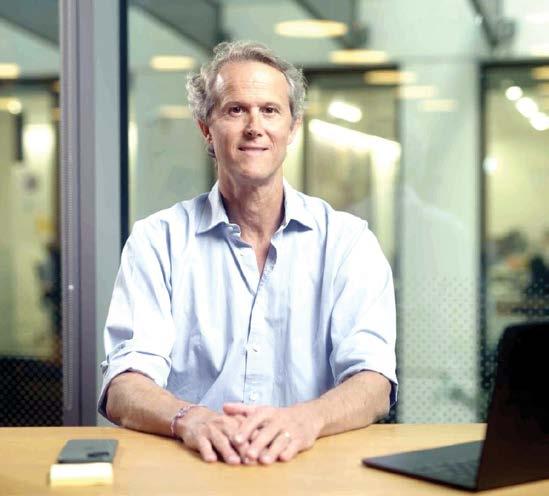
→ Chris Lewis, Chair of the Venture Capital Trust Association (VCTA)
widen the UK’s earlystage funding gap at a critical moment for AI, climate tech, and deep-tech growth. Survey data from VCT-backed founders paints a stark picture: many say their companies would be smaller - or wouldn’t exist at all - without VCT support. A quarter would even consider relocating abroad.
In this interview with Entrepreneur UK, Lewis discusses whether the UK risks losing its next wave of tech champions, how VCTs are shaping scale-ups beyond capital alone, and why stable, long-term policy could determine whether the UK remains a global innovation leader — or watches its start-ups grow elsewhere.
Is the UK at risk of losing early-stage tech companies if the VCT framework isn’t strengthened?
The risk is both real and measurable. In the latest independent survey of VCT-backed founders, a quarter told us they would consider moving their headquarters abroad if VCT support were weakened, and two-thirds said they would be forced to seek funding elsewhere. More fundamentally, 91% said their business would be smaller without VCT funding, and more than one in four believe they simply would not exist today without it. If we don’t modernise and strengthen the policy
framework for VCTs, we risk watching some of the UK’s most promising
their product development or R&D roadmap. This combination of both
“Proposed cuts to upfront tax relief would increase the funding gap which, over time, risks shrinking the size of our tech and innovation economy at the very moment we need it to accelerate”
early-stage tech companies scale internationally instead of here at home.
Where are VCTs making the biggest difference in scaling British tech today?
The biggest positive impact of VCTs isn’t just through the capital they provide, but the entire ecosystem they help build around founders. In the survey, 79% of founders credited VCTs with enabling them to hire senior talent and specialist advisers, 77% highlighted improvements to their financial reporting and governance, and nearly two-thirds said VCTs provided mentoring that materially shaped their strategic decisions. More than half said VCT involvement accelerated
financial and holistic support is exactly what we need to help British tech companies scale quickly and sustainably at home.
What would the immediate impact be on UK startup funding if the current policy support were withdrawn?
Proposed cuts to upfront tax relief would increase the funding gap which, over time, risks shrinking the size of our tech and innovation economy at the very moment we need it to accelerate. The impact would be quite stark. Founders told us that if access to VCT funding were limited, 62% would have to scale back their growth plans almost overnight, 45% would reduce headcount, and two-thirds would be
pushed into seeking alternative funding in an already competitive landscape. Perhaps most worrying, one in four said they would consider relocating abroad.
Are UK tech founders becoming too reliant on VCT capital?
It’s worth noting that there remains a substantial gap across the UK funding ecosystem, of which the VCT scheme is one (albeit a critical) part that supports early-stage companies as they scale. What our survey data shows is not over-reliance, but the importance of effective partnership at the right stage. While 90% of founders are satisfied with VCT investment terms, the majority of them will also pursue other forms of capital as they mature. VCTs help companies get to the point where institutional investors, later-stage VCs, and strategic partners are willing to engage. In fact, 59% of founders told us VCTs directly supported them in preparing for a future exit, acquisition, or follow-on funding round. So, rather than creating dependency, VCT investment strengthens a company’s ability to diversify its capital sources later on.”
What early signals are you seeing from the VCT-backed company survey about the future of UK tech growth? The signals show both
‘T
/Predictions
enormous potential and a clear warning. On the positive side, 68% of founders say VCT funding is ‘extremely important’ to their growth. We’ve seen firsthand what this kind of early backing can unlock: companies like the Beauty Tech Group, which secured its first institutional capital
from a VCT while it was still loss-making and generating under £7m of revenue, went on to scale internationally and ultimately list on the London Stock Exchange at a £300m valuation. Younger companies are especially growth-hungry as 81% of firms under five years old
supported raising VCT investment limits, which we were pleased to see implemented in the Autumn Budget. However, nearly half of all founders, and almost two-thirds of younger ones, remain worried about potential cuts to VCT tax relief. Their concern is under-
There is a huge opportunity here, but only if policy keeps pace with the ambitions of the sector”
standable: without stable long-term incentives, the next wave of high-potential businesses may struggle to access the patient capital that enabled today’s success stories. There is a huge opportunity here, but only if policy keeps pace with the ambitions of the sector.
→ The VCTA recently hosted a West Midlands Roundtable, joined by Alex Ballinger MP and Gurinder Singh Josan CBE MP
15 PIONEERS WHO SHAPED UK INNOVATION
THE RULE-BREAKER
SIR RICHARD BRANSON
VIRGIN GROUP | FOUNDED 1970
Sir Richard Branson left school at 16 with dyslexia, launched Student magazine from a church crypt, and went on to build Virgin into a global brand encompassing airlines, music, space travel, and telecom. Branson’s approach: when an industry frustrates you, create your own path. His career demonstrates the power of audacity, visibility, and cultivating a brand that carries both personality and purpose
The message for today's founders: If an industry frustrates you, find a way to do it differently — and make your brand visible.
THE INVENTOR
SIR JAMES DYSON
DYSON | FOUNDED 1991
James Dyson spent more than a decade developing a bagless vacuum cleaner, creating over 5,000 prototypes before the DC01 succeeded. Banks refused to fund him, so he financed the project himself, even remortgaging his home. Today, Dyson employs over 14,000 people across more than 80 countries.
The message for today's founders:
Persistence pays: every failure is a step toward what works.
The message for today's founders:
Start small, hustle hard, and let results speak louder than credentials
THE SELF-MADE HUSTLER
LORD ALAN SUGAR
AMSTRAD | FOUNDED 1968
Alan Sugar grew up in Hackney, East London, in a council flat. At 16, he started selling car aerials and electrical goods independently. In 1968, he founded Amstrad, which became a major consumer electronics company, achieving significant success in home computers and audio equipment throughout the 1980s.
nita Roddick opened her first shop in Brighton with around £4,000, driven by a belief that business could do good. She refused to test products on animals, championed fair trade, and built a global brand showing that ethics and profit could coexist.
t 26, Martha Lane Fox co-founded one of Britain’s first major internet companies. She weathered the dot-com crash and sold Lastminute.com for £577m in 2005. Later, she served as the UK’s Digital Champion and was appointed a crossbench peer in the House of Lords.
THE TECH VISIONARY
SIR CLIVE SINCLAIR
SINCLAIR RESEARCH | FOUNDED 1961
Aself-taught tinkerer who never went to university, Sinclair put a personal computer into British homes with the ZX Spectrum in 1982 - years before home computing was a global obsession. He showed that defining a category doesn’t require permission.
The message for today's founders:
You don’t need permission to create a new market - you need to build it first.
THE ENTERTAINMENT DISRUPTOR
SIMON COWELL
SYCO ENTERTAINMENT | FOUNDED 2002
CThe message for today's founders:
Your biggest setback can be the reset you didn’t know you needed.
owell started in the EMI mailroom and rose through the ranks of the music industry. Early ventures, including a record label, failed, but he rebuilt from scratch and transformed global entertainment with Pop Idol, The X Factor, and Got Talent - formats now licensed in over 180 countries.
The message for today's founders:
Your past doesn’t dictate your future. Start with what you have.
THE CALCULATED GAMBLER
DENISE COATES
BET365 | FOUNDED 2000
Denise Coates is the founder and joint chief executive of Bet365, one of the world’s largest online gambling companies. She began working in her family’s betting business and recognised early that the internet would transform wagering. In 2000 she purchased the Bet365.com domain and launched the online business in 2001 after borrowing against the family’s betting shop estate. Bet365 has grown into a global leader in online sports betting and casino operations, and Coates is among Britain’s wealthiest self-made billionaires.
THE UNLIKELY MOGUL
DUNCAN BANNATYNE
BANNATYNE GROUP | FOUNDED 1996
BBannatyne bought his first ice cream van at age 30 with a £450 loan, after earlier leaving the Royal Navy. He went on to build a health club and leisure empire worth over £300m.
The message for today's founders:
You don’t avoid risk - you analyse it until you know the smartest bet to take.
The message for today's founders:
Scale is built by knowing your market and evolving with it.
The message for today's founders: Inspiration is everywhere. Recognise it, act fast, and build something people want.
Sir Philip Green bought the Arcadia Group, including Topshop, in 2002 and grew it into one of Britain’s most prominent high-street retail names. During the 2000s, Topshop became a fashion destination with flagship stores and international recognition. Arcadia’s portfolio included Topman, Miss Selfridge and other major brands.
Dunkerton started selling clothes from a market stall in Cheltenham. He later co-founded Superdry, inspired by Japanese street style. The brand floated on the London Stock Exchange in 2010 at around £400m.
THE BUILDER
SIR JOHN TIMPSON
TIMPSON | FAMILY BUSINESS, REINVENTED FROM 1975
Sir John Timpson inherited a struggling shoe repair chain and transformed it into a £300m-plus services empire. He practised radical employee trust, giving shop managers near-total autonomy - and proved that empowering people drives growth.
The message for today's founders: Stop managing. Start trusting.
The message for today's founders:
The best businesses solve problems you face yourself every day.
What started with a single shop in Victoria, London, to give people freshly made food without long waits, grew the brand into 500+ stores globally, combining speed, quality, and convenience.
THE DEEP TECH PIONEER
HERMANN HAUSER
ACORN COMPUTERS / ARM HOLDINGS | CO-FOUNDED 1978
Hermann Hauser co-founded Acorn Computers, whose innovations led to the creation of the ARM chip architecture - now used in the vast majority of smartphones worldwide. Hauser helped build the foundation of modern mobile computing.
The message for today's founders:
The most transformative founders aren’t just building a businessthey’re solving what seems impossible.
The message for today's founders: Being told “no” is market research - it highlights exactly where the opportunity lies.
THE MODERN ICON
BARONESS MICHELLE MONE
ULTIMO | FOUNDED 1996
Baroness Michelle Mone started with no fashion experience and a maxed-out credit card. Despite early rejection, she persisted and built Ultimo into a leading lingerie brand valued at around £50m.
START-UPS TO WATCH IN 2026 UK 100
The first half of this issue spoke to founders such as Naomi Timberly, Marine Tanguy, and Danny Cortenraede, sharing their insights on strategy, investment, and the forces shaping the tech ecosystem. Now, we turn the spotlight to the start-ups bringing those ideas to life.
The UK100 Start-ups to Watch in 2026 are scaling fast, refining breakthrough technologies, and turning ambition into measurable progress. These are the start-ups putting vision into actionthe teams, products, and innovations shaping the next wave of UK tech.
THE UK NOW RANKS IN THE TOP THREE GLOBAL VC ECOSYSTEMS, ALONGSIDE THE US AND CHINA.
UK START-UPS raised around $23.6bn in venture capital in 2025, a 35 % increase on the previous year and the first annual growth in four years. That funding total makes 2025 the third-highest year on record for UK start-up investment.
Fintech continued to attract major investment, with hundreds of funding rounds and billions raised across the sector.
THE UK HAS NOW PRODUCED OVER 200 UNICORNS (START-UPS VALUED AT $1BN+).
new unicorns were added in 2025 alone, surpassing 200 total unicorns in early 2026.
Over 35% of UK start-up funding in 2025 came from international investors.
HEALTH TECH AND LIFE SCIENCES
start-ups also saw significant funding, underlining sector diversity.
London remains the dominant star-tup particularlyhub,for AI and deep tech investment, regionalthough cities likeOxford,Cambridge, and Glasgow are gaining traction.
UK tech talent pipelines now supply over 160 universities’ worth of skilled graduates to the ecosystem.
UK START-UPS ACCOUNT FOR ROUGHLY 30 % OF ALL EUROPEAN VENTURE CAPITAL INVESTMENT, MAK-ING THE UK THE LARGEST TECH FUNDING DESTINATION IN EUROPE.
ANNA
ANNA handles business bank accounts, invoicing, payroll, taxes and daily admin tasks for small business owners & freelancers.ANNA’s revenue has more than tripled in the past two years while keeping customer satisfaction very high. Founders Eduard Panteleev and Boris Diakonov have built three successful businesses together, Tochka, Knopka and Poidem!.
ARTIO
Artio, the fast-moving start-up redefining what is possible in the carbon markets, the financial infrastructure that channels capital into climate action, from forests and peatlands to clean cooking stoves and direct air capture. They have built the world’s first early-stage carbon insurance product, powered by a proprietary AI-driven risk engine that improves with every policy. Without scalable insurance, developers struggle to secure finance, buyers lack confidence, and investors face unhedged risks. Artio changes this dynamic.
ASTRAL SYSTEMS
Deeptech firm, Astral Systems, is redefining what it means to be a fusion company. Its founders, who hail from science and tech backgrounds, are harnessing fusion’s potential to revolutionise modern medicine, industry, and clean energy. With bold innovation and global ambition, Astral is one of the UK’s most exciting technology ventures to watch (and most potentially the biggest tech name to come out of Bristol).
ANNA FOUNDER BORIS DIAKONOV
ARTIO CO-FOUNDERS IBRAHIM SARWAR AND BILAL HUSSAIN
ASTRAL CO-FOUNDERS TALMON FIRESTONE (LEFT) AND TOM WALLACE-SMITH (RIGHT).
AZOMA.AI
Azoma.ai, fresh off a highly publicised recent funding round, is redefining brand visibility in the age of AI search. Trusted by global brands like Mars, HP, Colgate, and Koch, Azoma tracks visibility across ChatGPT, Gemini, and other AI engines, then generates the structured content these systems actually cite. Founded by ex-Amazon executive Max Sinclair, the platform is experiencing massive growth, and is widely seen as a category-defining solution for AI-driven discovery in the post-SEO era.
BEACON
Beacon provides an AI Supply Chain Workspace that connects every stakeholder in one shared interface, automatically updating container milestones and estimated time of arrivals as well as aggregating purchase orders, invoices, and other key documents.
BLACKDOTSOLUTIONS
BLACKDOT SOLUTIONS
Blackdot Solutions helps investigators use open-source intelligence (OSINT) –the use of publicly available or licensable data to produce actionable intelligence – to fight crime and reduce risk.
AZOMA FOUNDER MAX SINCLAIR
BEACON CO-FOUNDER & CEO FRASER ROBINSON
CEO STUART CLARKE
BRILL POWER B
rill Power – an Oxford University spin out, is producing the tech needed to make batteries last longer, cost less and be more sustainable. Cofounded by Carolyn Hicks, an alumna of the Oxford MBA, alongside a team of Oxford students, Brill Power makes batteries perform better and, in turn, more environmentally viable. Since its inception, Brill Power has proven successful: securing funding and winning awards. Linked with names such as Aston Martin Lagonda, Brill Power is now set to play a key role in the future of the EV rollout in the UK. Recently bought out by Palmer Energy Technology, Brill Power’s technology is going to be integrated into EV battery systems.
CAMERA INTELLIGENCE
Camera Intelligence’s AI-powered camera reinvents creator workflows. With a $2m seed round, viral product reviews, hundreds of units shipped, and US expansion, they’re scaling fast to meet demand for professionalquality content.
BRILL POWER CO-FOUNDER CAROLYN HICKS
CAMERA INTELLIGENCE FOUNDER VISHAL KUMAR
CARMOOLA
Carmoola is one of the UK’s fastestgrowing fintechs, and has earned major awards and recognition for launching new products that make car finance fairer, faster and fully digital for UK drivers.
CLIMATE CONNECTION
Climate Connection is an events start-up that has created over 25,000 meaningful connections for businesses in the climate start-up community. Its flagship event has become the largest regular monthly climate networking event in the UK and it recently launched Connection Studio, a consultancy to help large organisations create more impactful events.
CARMOOLA TEAM – DRIVING INNOVATION TOGETHER
JULIETTE DEVILLARD IS THE FOUNDER AND CEO OF CLIMATE CONNECTION
Cimate X is a data analytics start-up that provides many of the world’s biggest banks, insurers and real estate firms with climate risk insights and suggested investments to improve resilience (e.g. against floods, wildfires, storms, subsidence, heat). As the impact of extreme weather increasingly disrupts communities everywhere, Climate X’s data is helping drive the response, allowing firms to climate-proof buildings and infrastructure. Unlike other data companies in this space, Climate X can provide insights at building level (or even a floor within a building) in almost any location around the world.
CLIMATE X COGNA
CCogna provides the system of work to transform critical industries with AI, automating complex workflows in utilities, manufacturing, and logistics. Customers including Cadent Gas, Ocado and Tropicana are unlocking productivity trapped in manual processes.
omplex
Chaos is an AI platform developed to run scalable, structured dialogue across stakeholders, empowering consultants to align teams rapidly and deliver clear, evidence-based outcomes in a fraction of the usual time.
CLIMATEX CO-FOUNDERS KAMIL KLUZA AND LUKKY AHMED
COGNA FOUNDER BEN PETERS
CORPORA. AI
Corpora.ai is a Scientific Frontier Research Platform, combining the largest evolving graph of open-source intelligence with advanced reasoning AI. With insights across every domain of knowledge, it empowers scientists and researchers to accelerate discovery, drive innovation, and achieve meaningful breakthroughs.
Credas is redefining compliance for the UK property and regulated sectors. Its platform accelerates verification, prevents fraud, and its Compliance Wallet enables seamless and reusable identity checks at national scale.
CORPORA.AI CEO MEL MORRIS
THE CEO OF CREDAS,TIM BARNETT
CRUXY
Built as a bootstrapped consultancy by Carrie Osman, Cruxy is now a strategic partner of choice for over 160+ high-growth projects involving tech firms and their private equity investors. Today, over 80% of Cruxy’s clients are based in the US, a testament to how British-born precision and sharp execution can make waves across the Atlantic. Cruxy has delivered growth strategy to 40+ capital markets fintechs and advised 20+ private equity firms (ranging from $1bn up to $100 billion AUM) on value creation through product, packaging and pricing.
CUBBI
Cubbi is the UK’s first parental discount platform helping new and expecting parents cut the cost of early parenthood. Built by mums, for mums, it’s rapidly becoming a go-to moneysaving essential.
CULTUREAI
CultureAI is a fast-growing UK startup defining the future of safe AI adoption across the UK, USA and beyond. As AI becomes embedded in everyday work, sensitive data is exposed in ways legacy tools cannot see or control. CultureAI delivers real-time visibility, guardrails, and user coaching across sanctioned and shadow AI, empowering organisations to enforce AI governance confidently and accelerate secure, scalable adoption.
CRUXY CEO CARRIE OSMAN
CUBBI FOUNDERS OLIVIA AND TANYKA DAVSON
JAMES MOORE IS THE FOUNDER AND CEO OF CULTUREAI
DINTS INTERNATIONAL
Dints International is a UK start-up democratising exports for UK SMEs and supplying underserved markets like Africa and LATAM with essential industrial equipment. Dints International was founded in 2007 by Geoffrey de Mowbray, with a small family loan charged at interest – Dints has never taken external equity investment. It has now grown into a company that generated £30m revenue in 2024 and is on track to grow this year.
DDwelly
welly is an AI-enabled rollup of UK letting agencies, and is set to become one of the leading tech platforms next year, expecting 10,000+ properties through VC-backed acquisitions within just two years of inception. Founded by former operators from Uber and Gett.
DINTS INTERNATIONAL FOUNDER GEOFFREY DE MOWBRAY THE START-UP DWELLY IS FOUNDED BY ILYA DROZDOV, DAN LIFSHITS AND DMITRY KHANUKOV
ELECTRIC TWIN
EMOTII.AI
emotii.ai is redefining global communication by delivering emotionally aware, culturally precise, real-time translation across 126+ languages. It’s solving human problems where most big-tech solutions fall short, transforming how international teams connect and collaborate
Electric Twin builds synthetic audiences that help organisations understand their customers instantly. Using AI and social science research, the tech simulates how real audiences behave, so companies can test ideas, messaging and campaigns and get feedback in minutes, instead of weeks. The Times and Lebara are among those already using the platform.
ELECTRIC TWIN CO-FOUNDERS DR BEN WARNER (L) AND ALEX COOPER
EMOTI.AI FOUNDER SUMIT SACHDEVA
FILMD
Preston-based FILMD unites the UK filmmaking community in one home where cast and crew discover opportunity, prove their craft, run productions together and build careers from first script to final screen.
Firgun Ventures
Firgun Ventures is the first VC firm specialising in early growth-stage quantum technology.
Founded by Dr Kris Naudts, former academic psychiatrist-neuroscientist and Founder of Culture Trip, and Zeynep Koruturk, former Executive at Goldman Sachs’ and Co-Founder of Goldman’s Tech Initiative, Firgun is capitalising on quantum’s global inflection point, with the ethos: first, do no harm.
Fleek is scaling the global secondhand clothing supply chain by connecting thousands of resellers with verified vintage wholesale suppliers worldwide. Fleek aims to reduce textile waste, create resilient income streams, and transform how vintage fashion is distributed worldwide.
Fleek
FILMD FOUNDER CRAIG HEYWORTH
FLEEK CO-FOUNDERS ABHI ARORA AND SANKET AGARWAL
FOUNDERS DR KRIS NAUDTS AND ZEYNEP KORUTURK
FFRACTILE FLOK
Founded in London in 2022 by Walter Goodwin, Fractile is building a radically new AI chip designed specifically for inference: unlocking major gains in speed, cost, and energy efficiency.
lok is the world’s first AI physiotherapy clinic, providing NHS patients with sameday access to virtual appointments for back pain. It is the only digital MSK service approved under UK regulations (CQC, MHRA) capable of fully automating treatment pathways, and has been proven to halve NHS waiting lists for back pain treatment.
FLOK CO-FOUNDERS RIC DA SILVA (L) AND FINN STEVENSON
FRACTILE CEO WALTER GOODWIN
FRIDAY INITIATIVES
Friday Initiatives helps organisations work smarter with data. Turning it from a costly compliance headache into a strategic asset that drives clarity, trust and growth. They deliver this work across financial services, technology, publishing, government and social impact sectors in the UK and internationally, and have grown more than 500% last year.
Fyio is a fastgrowing female-founded UK start-up transforming sensitive document management. Combining simplicity with enterprise-level security, it answers urgent national needs for trusted digital identity, secure sharing and document protection.
Furbnow
Birmingham-based Furbnow cuts the chaos of home energy upgrades. The company is scaling fast with 1,256% revenue CAGR and a mission to upgrade one million homes by 2030.
FRIDAY INITIATIVES WAS CO-FOUNDED BY EMMA DUNN AND LAUREN MURPHY
THE FURBNOW TEAM
FYIO WAS CO-FOUNDED BY LOUISE MARSH AND SARAH WRIXON
Fyxer AI is an email AI agent. In 2025, Fyxer raised $43m across 24 days, hit $25m ARR in 10 months, expanded into the US, and grew from 7 to 56 staff, all while empowering everyday professionals to unlock productivity with AI, rather than be bogged down by admin.
GENOUS
Genous is paving the way for a green future, with a personalised service enabling customers to cut emissions, averaging 5.6 tCO2e per home, make significant savings and improve accessibility to scalable climate action.
GREEN PT
GreenPT delivers secure privacy-first AI assistants powered by renewable energy, offering transparent European hosting and customisable APIs that help organisations build accurate sustainable and responsible AI experiences for their future.
FYXER CO-FOUNDERS RICHARD HOLLINGSWORTH, ARCHIE HOLLINGSWORTH, AND MATTHEW FFRENCH
GENOUS CEO SIMON BONES
GREENPT FOUNDER ROBERT KEUS
GREYPARROT
Greyparrot is a pioneering AI-driven waste analytics firm for the recycling industry. Launched in 2019, Greyparrot has become one of the top 100 fastest-growing startups in the UK and has the world’s largest database on household packaging waste, analysing 100bn waste items in 2025 alone. Greyparrot uses its data to help waste facilities operate more efficiently and show CPG firms how many of their products really get recycled, and how many get lost to residue or landfill.
HOME OWNER’S PASSPORT
rowthLens is the ‘Risk Radar’ for hiring. The AI platform fuses 20+ years of People Science with predictive data to ensure Seedstage ventures scale without breaking.
Government are looking at mandating Digital Property Logbooks in 2026 to put home owners in control of their property deeds and data. The Home Owner’s Passport is one of just three regulated apps doing this today.
GREYPARROT FOUNDER MIKELA DRUCKMAN
GROWTHLENS FOUNDER RAUSHAN IRGALIYEVA
HowNow
HowNow is a learning and upskilling platform that helps organisations to connect every employee with skillsled learning, using AI agents in the flow of work. The company serves customers across +30 countries and is on a mission to upskill 10m people by 2030.
HOWNOW CO-FOUNDERS ASHISH KUMAR, NELSON SIVALINGAM, AND KUVERA SIVALINGAM
Jeremy Lynch, the entrepreneur who also holds the crown as TikTok’s biggest football star, has raised close to £1m in funding to scale the growth of his productivity supplement, HP-1. HP-1 is leading a growing movement that recognises the importance of focus, and our need to improve productivity in today’s dopamineaddicted world. Lynch believes that mental focus is the new frontier in fitness, and the foundation of success in both physical and mental performance.
HP-1
HP-1 FOUNDER JEREMY LYNCH
HUMANOID FOUNDER & CEO ARTEM SOKOLOV
HYPERVSN CO-FOUNDER KIRYL CHYKEYUK
HUMANOID H
umanoid is the UK’s first industrial humanoid robotics company. It built a wheeled, then a bipedal robot - the latter in 5 months, fastest in the industry, learning to walk in 2 days - and completed 4 commercial POCs in its first year. The robots perform industrial tasks and interact with humans, addressing critical labour shortages in the UK and globally.
HYPERVSN
HYPERVSN revolutionises visual communication with groundbreaking 3D holographic technology, empowering brands to captivate audiences globally. Backed by an exceptional pool of investors including Richard Branson and Mark Cuban, its ultra-scalable technology showcased inside the Las Vegas Sphere, HYPERVSN is redefining what’s possible.
iIGNITE IMPROVEMENTS
Multi–sixfigure consultancy, Ignite Improvement has helped hundreds of SMEs build high-performing teams through times of change using their proven Team Success System. Founded by Angela Hodgson, who has previously worked with global brands including Bentley Motors and Jaguar Land Rover, the start-up partnered with three UK universities in 2025, including Leeds Business School.
Cook is an AI-powered nutrition app founded by Dr Maria Kardakova, delivering science-backed personalised meal plans and smart grocery support to help UK families eat healthier, waste less and build sustainable habits.
iCook ISEMBARD
Isembard is a manufacturing startup that makes high-precision parts for critical industries, including aerospace, defence and energy. They are working to trigger the second Industrial Revolution through its manufacturing model.
ICOOK FOUNDER MARIA KARDAKOVA
ISEMBARD FOUNDER ALEXANDER FITZGERALD
JOII
UK-based menstrual health startup Joii has launched the world’s first AI-powered app and pads that accurately measure period blood volume
Kaleidoscope
Kaleidoscope began development in 2022, founded by Michael Gould to help growing businesses move beyond fragile spreadsheet based planning. The platform delivers connected, collaborative planning through a live business model that reflects how companies actually operate. By unifying finance, sales and operations in one source of truth, Kaleidoscope improves forecast accuracy, reduces risk and enables faster, more confident decision making.
JOII FOUNDER AND CEO JUSTYNA STRZESZYNSKA (BY ALEKSANDRA SCHMIDT)
KALEIDOSCOPE FOUNDER MICHAEL GOULD
KNOW YOUR BUSINESS
Know Your Business launched in 2025 and has already supported tens of thousands of UK founders with clear, trusted guidance and fastgrowing monthly reach. They are expanding their guidance hubs and expert content every week - making them a standout 2026 SME resource.
LAUNCHLEMONADE
LaunchLemonade is a no-code AI platform that allows users to build, deploy and monetise intelligent workflow and decision-making AI agents. In under two years, LaunchLemonade has rapidly evolved into a fast-scaling platform with over 6,000 users.
KNOWYOURBUSINESS FOUNDER JASON TASSIE
LAUNCHLEMONADE FOUNDER CIEN SOLON
LOKOSO FOODS
Lokoso Foods is a new ethnic baby foods brand co-founded by Nancy Olaoye. The nutritious, and preservative-free ready meals are inspired by the flavours of Africa and the Caribbean, giving babies and toddlers an early taste of home.
LION’S BRAIN
Lion’s Brain is a first-to-market functional snacking brand redefining plant-based crisps. Made with clean ingredients, mushroom-based flavours, and infused with Lion’s Mane extract, the range delivers bold taste with elevated design. Bridging traditional snacking and functional food, Lion’s Brain is built as a scalable, IP-led challenger brand for consumers who want added benefits with their everyday snacking.
Love Finance, the UK’s fastestgrowing SME lender and broker, has a well deserved spot on Entrepreneur UK’s ‘UK 100’. Bootstrapped and profitable, with 900% growth in four years, funding £400m to 8,000+ UK businesses, delivering fast, flexible loans, and fulfilling its mission to make business finance simple and beautiful.
LIONSBRAIN FOUNDER IAN MCCARTHY
LOKOSO FOODS CO-FOUNDER NANCY OLAOYE
MAGNIFY PR O
ne of the UK’s fastest-growing PR agencies, launched in 2024, it has rapidly built nearly 30 clients, including managing all communications for Britain’s fastest growing TV news channel GB News.
MEDIMO
MediMo is an online booking marketplace which enables those in need of treatment to quickly and easily search for and book available private appointments in their area. MediMo was launched in summer 2025 by Manchester-based Wesley ClarkeSullivan after a football injury led him to discover there was a glaring gap in the market for a platform that made it easier for people to find and book a physio at short notice. Recognising that issues with booking processes span the full private healthcare system, Wesley has big plans to develop the platform beyond its current focus of physiotherapy, osteopathy and chiropractic services in 2026, enabling people to access the care they need, nationwide.
MAGNIFY PR FOUNDER NICK OWENS
MEDIMO FOUNDER WESLEY CLARKE-SULLIVAN
MEVO
Mevo is a start-up radically decarbonising cement using AIpowered alkali fusion, cutting emissions up to 85%. It produces circular MevoCem at scale in Wrexham, home to the UK’s largest ultra-low carbon cement facility.
MONEYAPPI
Moneyappi is revolutionising workplace financial wellbeing with AI-powered coaching, gamified learning, and real-time insights. Already adopted by leading employers, we’re scaling internationally and reshaping how organisations support employee financial resilience.
Monumo C
ambridge-based Monumo’s AI engine ‘Anser’ is transforming engineering in white goods, industrial motors, automotive OEMs, drones and more. Despite only having seed funding, Monumo is rapidly growing commercially, with pilots quickly converting to full contracts with major global brands.
MEVO CO-FOUNDER AND CEO ELIZABETH GILLIGAN
MONEYAPPI FOUNDER RAY LAW
MONUMO CEO DOMINIC VERGINE
NAKED ENERGY
Naked Energy is transforming heat with UK-built solar thermal technology that can be up to ten times more efficient than standard PV. With landmark projects like the British Library, it’s redefining how Britain decarbonises heat at scale.
MYEDSPACE
MyEdSpace is the online platform making toptier education available to every student. Its teachers are the best 1% in the UK and reach thousands via live-streams and social media. This summer, students achieved triple the national average of top GCSE grades.
MYEDSPACE CO-FOUNDERS SEAN HIRONS AND KHARIS YANAKIDIS
NAKED ENERGY FOUNDER AND CEO CHRISTOPHE WILLIAMS
NATALIE TRICE PUBLICITY
Natalie Trice Publicity is a UK PR agency rebuilt from scratch after founder Natalie lost her dad in 2025, with a clear mission: help brilliant businesses be seen and heard. They deliver PR that turns expertise into real visibility, from strategic storytelling and media outreach to thought leadership and reputation building. It is for founders ready to grow, scale, and build a legacy that lasts.
NEW STREET PROPERTIES
Nneedi
needi is the intelligent corporate gifting concierge transforming how modern businesses build lasting relationships. As the go-to gifting platform for some of the world’s biggest and most forwardthinking companies, they deliver everything from meaningful client and team gifts to fully customised branded merchandise – all under one seamless, bespoke platform.
NEWSTREETPROPERTIES CO-FOUNDER CONNOR ROBINSON
ew Street Properties is a UK property business created to make property feel simpler and more human, helping buyers, sellers, landlords, and investors make confident decisions without the jargon. The team combines straight talking advice with practical support across the full journey, from finding opportunities to managing next steps, with a strong focus on trust, transparency, and long term value.
NATALIE TRICE, FOUNDER OF NATALIE TRICE PUBLICITY
NEEDI CO-FOUNDERS LOUISE DOYLE AND STEPH SCHOLES
ON SALE LIVE
In 2025 On Sale Live built and sold out the only event for marketing professionals working across the £134bn experience economy. They have created a training masterclass from The Global Institute of Experience Marketing and been described as “The accidental architect of a live experience revolution” by Exhibition News.
nooni
nooni offers a fresh take on hydration: a premium sparkling electrolyte drink crafted for real life. Low salt, low sugar and UK made, the brand is elevating everyday wellness beyond traditional sports drinks.
ONE DAY
Oneday is a platform that helps people launch real businesses by combining accredited entrepreneurial education with powerful AI tools and 1:1 mentorship. They are backed by over £15m in VC funding and demonstrating rapid traction.
NOONI CO-FOUNDER EMILY MARGARET AUSTEN
ONEDAY CO-FOUNDERS RANBIR ARORA AND TARAS POLIK
OXCCU
OXCCU is a spin-out from the University of Oxford developing a one-step catalytic process to convert waste carbon into sustainable aviation fuel. The company operates its first demonstration plant, OX1, at Oxford Airport and is progressing a second demonstration plant as part of its pathway towards larger-scale deployment, supported by a combination of UK Government funding and private investment.
Oxydise exists to democratise access to hyperbaric oxygen therapy and red light recovery. Delivering best-in-class systems with education, safety, and ongoing support. As the UK’s largest distributor of HBOT equipment, trusted by elite athletes including Anthony Elanga, Ben Whittaker and ‘World’s Strongest Man’ (2021, 2022, and 2024) Tom Stoltman, they’re now scaling internationally across Dubai, the United States, France and Germany, supporting everyone from high performers to those navigating chronic illness recovery. Looks like this start-up is perfect for the Entrepreneur UK100 list.
Oxydise UK
OXCCU FOUNDER & CEO ANDREW SYMES
OXYDISE FOUNDER ALAN TRIM
PETPROOV
PetProov protects pet buyers and breeders from fraud with secure identity checks, welfare assessments and transparent digital records, bringing trust, safety and accountability to a market overwhelmed by scams, misinformation and risky online pet sales.
PHOTON THERAPEUTICS
Photon Therapeutics has launched the PhotonUVC Vet, a breakthrough in veterinary eye care. In just five seconds, its non-contact UVC technology deactivates corneal infections that threaten vision, reduces reliance on antibiotics, improves compliance, and delivers faster, safer outcomes. With human trials currently in progress, Photon will redefine standards for clinicians, patients, and responsible medicine. A great addition to the Entrepreneur UK100 list!
PETPROOV – PET CARE INNOVATOR
PHOTON THERAPEUTICS FOUNDER SUNIL SHAH
PHYGITALTWIN
PhygitalTwin unifies gaming and fashion. This exciting start-up turns a sketch into playable Roblox skins and physical products, while PHYGEN automates manufacturing patterns. Together, they provide the infrastructure enabling digital and physical creation for brands.
PLAN YOUR BABY
Plan Your Baby is the only telehealth fertility and pregnancy clinic. Their mission is to provide highest quality treatment and modern customer experience for fertility related problems nationwide. A well deserved entrant on the Entrepreneur UK100 list.
PHYSICSX
PhysicsX is a London-based deeptech firm using AI and machine learning to accelerate physics simulations and engineering design across aerospace, automotive, energy and semiconductors.
PHYGITALTWIN FOUNDER LOUISE LAING
PHYSICSX FOUNDER JACOMO CORBO
PLANYOURBABY FOUNDER MARIJA SKUJINA
PQSHIELD PURPL
PQShield is a UK scale up business building postquantum cryptography solutions - hardware, software and cloud - to safeguard sensitive communication and systems against future quantum threats.
RAINDROP
Pension-finding platform, Raindrop, works with financial institutions such as AJ Bell, Monzo and Aegon and has helped reunite customers with almost £1bn in lost pension savings.
Purpl is the UK’s first money-saving platform, created to reduce the additional financial pressures associated with living with a disability or long-term health conditions recognised under the Equality Act. Founded by Georgina Colman, who has multiple sclerosis and ADHD, Purpl offers discounts and exclusive offers across various products and services to help members save money. The platform is available online and through the mobile app on Apple Store and Google Play. Purpl also offers a digital membership card for in-store offers currently available with Dunelm and Halfords. Verified members can access offers from a wide range of brands, including Morrisons, EDF Energy, Hoover, Debenhams, Samsung, Expedia, and more.
PQSHIELD CEO & FOUNDER, ALI EL KAAFARANI
PURPL FOUNDER GEORGINA COLMAN
RAINDROP CO-FOUNDERS VIVAN SHRIDHARANI (CCO), MARCO ROSS (CEO), AND PHILIP DANILE FORTIO (CPO)
RECOMBINE
Recombine is the leading self-hosted conversational AI agent platform. Recombine runs in a company’s own cloud, with no vendor lock-in. An industry secret, Recombine’s platform is quietly powering some of the fastest growing UK fintechs and marketplaces.
SCRUBMARINE
ScrubMarine is tackling one of shipping’s most overlooked problems: biofouling, a hidden driver of fuel waste, emissions and operational risk. Founded by 21-year-old robotics engineer Rohith Devanathan, the startup is building autonomous underwater robots to clean and inspect hulls safely and at scale. With strong early backing and pilots ahead, ScrubMarine is one to watch in 2026.
ROSENBERG. MEDIA
Founded by PRWeek 30 under 30 alumni, Rosenberg.Media looks set to make waves in 2026 – with CEO Lawrence Rosenberg taking a mediafirst approach to his work. Whereas most PRs hide behind their clients, Rosenberg is quickly becoming one of the most well-known names in the comms industry, featuring in the likes of LBC, The Telegraph, Startups Magazine, amongst others.
ROSENBERG.MEDIA CEO LAWRENCE ROSENBERG
SCRUBMARINE FOUNDER ROHITH DEVANATHAN
SegmentStream
SEMAVERSE
Semaverse is tackling the world of M&A with their new intelligence platform. The founders, Mo and Christian, are well versed in tech and start-up with experience across Skype, Microsoft, Google and Amazon, and their new platform targets investment banking, private equity, and corporate development teams, providing a system that learns from organisational knowledge and applies governance frameworks to AI-driven analysis throughout the deal lifecycle. It’s driving decision making and giving more insight and data to those investing and acquiring.
SegmentStream is an AI-powered Marketing Intelligence Platform reinventing marketing analytics for the AI era The start-up uses Agentic AI to help digital marketers measure and optimize cross-channel ad investment with full automation. Unlike traditional tools, SegmentStream predicts future results and automatically implements optimization actions across ad platforms, closing the gap between analytics and execution. The startup has raised $2.7m in Seed funding and was recently selected as one of the Top 3 start-ups at the 2025 Web Summit Pitch Competition out of more than 2,700 companies.
PAVEL PETRINICH, CO-FOUNDER & CHIEF REVENUE OFFICER (CRO) OF SEGMENTSTREAM
SEMAVERSE CO‐FOUNDERS MO LADHA AND CHRISTIAN PROKOPP
SEMBLE
Semble is the open, flexible platform built for private healthcare. By cutting admin, connecting workflows, and empowering 14,000+ clinicians, it boosts patient safety, reduces clinician burnout, and transforms care delivery.
SMOKE FREE
Smoke Free, founded by Dr David Crane after his own struggle to quit, uses behavioural science, 24/7 advisor support and free nicotine replacement to deliver industry-leading results. With over 7 million downloads, a 57% quit rate and major public-health savings, the platform is scaling internationally with a bold goal: helping 1 million people quit smoking each year.
SEMBLE CEO AND CO-FOUNDER CHRISTOPH LIPPUNER
Snyk
Snyk is a developerfocused cybersecurity platform that scans and fixes vulnerabilities in code, open-source dependencies, containers and infrastructure to embed security into development workflows.
SOBO CLUB
The SOBO Club is a private membership community co-founded by Tre Lowe and Enas Daeki, designed for those who are driven to expand their businesses, nurture their entrepreneurial spirit, and pursue their creative passions
STAYF
Oxford graduate Max Zhurilo is building Stayf, a UK-based health-insurtech shifting insurance medicine from treating disease to rewarding health, using employers as the lever to change global workplace benefits paradigms.
SOBO CLUB FOUNDERS TRE LOWE AND ENAS DAEKI
STAYF FOUNDER MAX ZHURILO
SUPERDIELECTRICS
Superdielectrics is a Cambridge based start-up, who are developing the technology needed to build a clean, safe, affordable and sustainable energy system anywhere in the world through aqueous zinc batteries.
SURGERY AI
Surgery AI is a healthcare start-up which looks to streamline the surgery booking process, which could save the NHS and other healthcare systems millions of pounds in wasted time and productivity. It was launched by two female graduates from Imperial Business School, with backgrounds in both the healthcare sector and the AI sector – merging the two skillsets together.
Syrvi
Syrvi is a consultancy-led business, founded by Peter Juhasz and Istvan Vigh, that delivers AI-driven sales and marketing automation to help SMEs generate leads, qualify buyers, and grow revenue automatically. Syrvi enables SMEs to scale intelligently without hiring. Their purpose-built AI system strengthens decisions, accelerates revenue, and elevates sales and marketing performance, driving sustainable, future-ready growth.
SYRVI CEO PETER JUHASZ
THE REMARKABLES
The Remarkables is a PR agency that has quickly made a mark in just over a year, collaborating with brands like Spar, Stock Spirits Group, Meta, and TikTok. Founder Kerry Parkin recently launched The Mark, an AI visibility tool that’s already attracting major brands. Within her agency work, Parkin also serves as a Board Advisor and campaigner for Survivors of Bereavement by Suicide, a cause close to her heart after losing her aunt. Her efforts have helped push for increased bereavement leave at the government level.
THE SLEEP CONSULTANT ACADEMY
The Sleep Consultant Academy is a multi-six figure start-up founded by husband and wife duo Dani and Chris McFadden. It provides sustainable employment opportunities for mothers by helping 100s of people globally train as accredited infant sleep consultants around their families. The start-up has seen growth to 10,000 followers and expansion to Australia in 2025.
THE REMARKABLES FOUNDER KERRY PARKIN THE SLEEP CONSULTANT ACADEMY CO-FOUNDERS DANI AND CHRIS MCFADDEN
THROXY
Throxy is an outbound growth partner for businesses selling into traditional industries - combining human judgment with AI efficiency. Its outcome-incentivised model not only delivers qualified meetings for clients, it has taken Throxy’s own business to $1.5M ARR with just three people before a $6.2M seed round.
TMT ID is a British mobile identity startup that recently received £30m in investment. It deserves to be on the list as its technology is vital to preventing the fraud epidemic sweeping the UK. UK Finance figures show in H1 2025 over £620m was stolen through scam and payments fraud.It has reported 30% growth this year and an 80% rise in demand for its fraud and identity protection services. Its platform conducts over 100m daily identity checks across 200+ countries using mobile network data from over three billion numbers.
THROXY CO-FOUNDER PABLO JIMÉNEZ DE PARGA RAMOS
TMTID CEO JOHN WILKINSON
TRANSHUMANITY
Most agentic ai solutions are targeting the enterprise market with higher revenue, TransHumanity are focussing their efforts on unlocking value from Agentic AI in the public sector and initially, specifically transport. They are focussing on enabling transparency, control and trust to help the end user understand the reasoning behind how the AI is working and through a human-in-the-loop system, allowing the user to take control. After spinning out of Loughborough University at the start of 2025, they have had a successful year 1, onboarding our first local authorities and growing our team to 9.
TREEFERA
Treefera is a powerhouse AI native start-up making supply chains smarter - $30m funding secured, science-driven team thriving, and trusted by leaders like Amazon Rainforest Conservation and Royal Family Farms.
TREEFERA CO-FOUNDER CAROLINE GREY
VALERANN
Valerann is first in the world to use AI for traffic management, reducing accidents by 15% and saving lives. First in the world to deliver nationwide deployment of AI for traffic management using space technologies.
VIRIDI
Viridi is a Southampton-based UK start-up transforming captured CO2 into high-performance chemical ingredients through a scalable solid-catalyst platform. Viridi transforms captured CO2 into sustainable chemical ingredients, cutting carbon emissions and replacing fossil-based feedstocks. Its technology enables brands to lower environmental impact while keeping performance high across homecare, personal care and consumer products.
VIRIDI CO-FOUNDER & CEO DANIEL STEWART
WAGGEL
Waggel is redefining pet protection, merging coverage with care. AI-powered claims, preventative health tools, and human support make insurance faster, easier, and genuinely supportive for pets and their families.
WAGGLE CEO AND FOUNDER ANDREW LEAL
WATER2
Co-founded by Bear Gryll, Water2 brings cultural credibility and serious growth potential to the wellness space. Driven by booming demand for healthier, more sustainable everyday habits, Water2 has seen remarkable momentum with its best-selling Pod 2.0, an easy-to-install under-sink filtration system which filters 95.2% of chlorine, 85.4% of lead and 99.99% of microplastics, all while preventing up to 99.99% of bacterial growth inside the unit delivering better-tasting water straight from the tap. With over 150,000 homes now using the Pod 2.0, Water2 is becoming a staple in the UK’s shift toward home-based wellbeing.
Luxury services company Wheely operates in London, Paris and Dubai. It combines innovative technology with privacy-first travel and customers can book chauffeured journeys through its app. It has raised $43m in funding, is profitable and has more than $100m in gross bookings annually.
Win-Win is tackling the cocoa crisis head- on with its award-winning cocoa-free chocolate alternative.
Following Series A funding in 2025, the team, led by CEO Mark Golder, has accelerated product development, partnerships and market traction. Founded by Ahrum Pak,Win-Win combines bold climate resilience innovation with real-world impact, positioning it as a standout start-up to watch in 2026.
WATER2 FOUNDER CHARLES ROBINSON
WHEELY - LUXURY RIDE HAILING SERVICE
WINWIN - CASHBACK AND REWARD PLATFORM
YEO MESSAGING
YEO Messaging is redefining secure communication with patented facial recognition, geofencing and burn-after-read controls. Now selected for the prestigious Grow London cohort, YEO Messaging is setting new standards for digital trust and compliance, not just building a secure communications platform but creating the foundations for digital trust globally. One to watch in 2026 and beyond.
YOTEWO
Yotewo is an AI-curated talent marketplace that makes hiring engineers as simple as sending a voice note. Start- ups got endorsed by UCL, fundraised from multiple British VCs and grew 6x times over the last year.