Make ever y epic writing journey a cosy one Hobbiton handcraft from the makers of the world’s most magical pens.
The Mirra 2 Chair just keeps getting better. How? We updated the chair so it’s 30 percent lighter than the original Mirra - and the chair’s nylon base and spine are now 100 percent recycled content. We also gave it a fresh, inspired colour palette so it can look professional, casual, or sporty. One thing that hasn’t changed is the flexible yet supportive design that allows your body to move naturally and freely - the way it was meant to move.
The Mirra® 2 Chair is turning heads again
FEATURES EDITOR Patricia Cullen patricia.cullen@bncb2b.com
CEO Wissam Younane wissam@bncpublishing.net
MANAGING DIRECTOR Rabih Najm rabih@bncpublishing.net
ART DIRECTOR Simona El Khoury
EDITORIAL TEAM Tamara Pupic, Aalia Mehreen Ahmed
MEDIA SALES MANAGER Olha Kovalova olha.kovalova@bncb2b.com
CONTRIBUTING WRITERS Gordon Drakes and Pip Wilkins SUBSCRIBE Contact subscriptions@bncb2b.com to receive Entrepreneur United Kingdom every issue.
COMMERCIAL ENQUIRIES sales@bncb2b.com
Access fresh content daily on our website
/ FRANCHISING, GROWTH AND GETTING IT RIGHT
Entrepreneur United Kingdom
There was a time when franchising sat outside the mainstream conversation about entrepreneurship. Dependable, perhaps. Predictable, certainly. Not exactly glamorous. That feels increasingly out of date.
In this June Entrepreneur UK issue, we explore a sector that has evolved far beyond copy-andpaste business models and uniform storefronts. Modern franchising offers something increasingly valuable: entrepreneurial freedom with a proven framework for growth. In uncertain economic times, that combination matters.
We’re proud to present the Entrepreneur UK Top 50 Franchises - a guide to the brands, leaders and systems shaping British franchising right now. This isn’t a
ranking of size or visibility alone. This alphabetical list is about innovation, franchisee support and the long-term thinking behind sustainable growth in a changing market.
But this edition is not a celebration of easy wins. Because there’s no such thing. Behind every successful franchise network is a constant balancing act: growing without losing identity, maintaining consistency without slipping into bureaucracy, and preserving independence without losing control of the system. When it fails, the impact is rarely contained - it shows up in the finances, the operations, and the people behind the business. Our feature Inside the Franchise Model highlights the risks and power imbalances that can exist within franchising. We also speak to some of the most influential voices in the sector. Ruth Brown, Managing Director of Home Instead UK and Chair of the British Franchise Association, discusses leadership, trust and why franchising still represents one of the most overlooked routes into business ownership. And in our conversation with Suki Dehal, Head of Franchising at Lloyds Bank, he reveals how lenders view franchising not as a guaranteed model, but as a risk assessment exercise - where brand strength alone isn’t enough, and success depends on track record, franchisee capability, governance and the ability of people on the ground to deliver the model in practice.
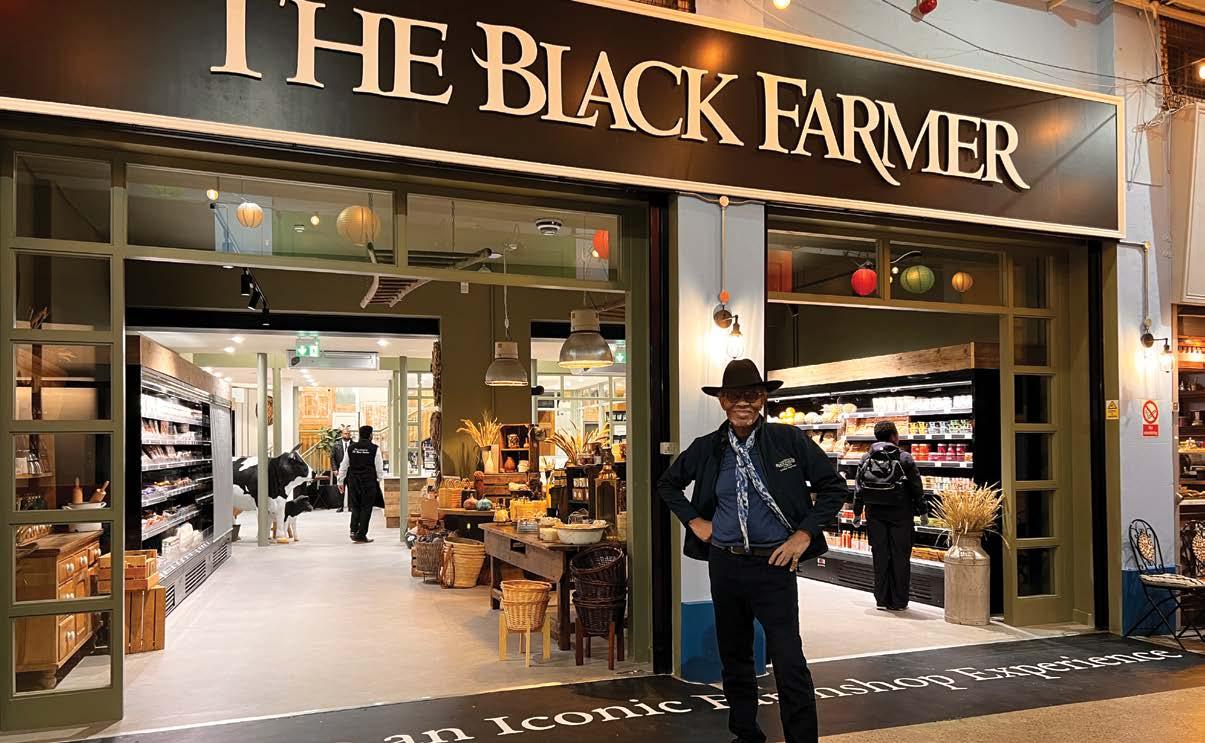
Elsewhere, Wilfred Emmanuel-Jones, founder of The Black Farmer, highlights a non-franchise route to scaling a consumer brand in the UK, and shows how identityled branding can achieve national retail success outside traditional franchising models.
What emerges across these pages is a picture of franchising that feels more relevant than everpragmatic, ambitious, structured, and still entrepreneurial. Not a shortcut to success, but for many, a smarter route towards it.
Patricia Cullen Features Editor, Entrepreneur United Kingdom
The Franchise Reality Check
What sustainable franchising really takes by
PATRICIA CULLEN
Franchising has long been sold as one of the safest routes into business ownership: a proven model, established systems and the backing of an experienced brand. But behind the success stories lies a far more demanding reality. Rising costs, staffing pressures and
Where do expectations around franchising most often diverge from reality for new franchisees?
There are two areas where expectations most commonly diverge from reality. The first is around the day-to-day experience of running a business. If a franchisor does not give a clear and balanced picture of what ownership really involves, including the highs, the challenges and the lessons learned by existing franchisees, new owners can
growing operational complexity are reshaping what sustainable franchise growth actually looks like. According to Ruth Brown, Managing Director of Home Instead UK and Chair of the British Franchise Association, the strongest franchise systems will not necessarily be the fastest growing, but the ones built on solid support, operational discipline and realistic expectations.
enter with unrealistic expectations. Franchising provides a proven model and Solid support, but success still requires resilience, adaptability and hard work. The second area is financial. Prospective franchisees need a clear understanding of the total investment required, the ongoing costs of operating the business, how long it is likely to take to reach breakeven and what level of income they may be able to generate over time. Responsible franchising is
“THE MOST EFFECTIVE FRANCHISE RELATIONSHIPS ARE GENUINE PARTNERSHIPS. BOTH PARTIES ARE WORKING TOWARDS THE SAME OBJECTIVE: BUILDING A SUCCESSFUL AND SUSTAINABLE BUSINESS”
→ Ruth Brown, Managing Director of Home Instead UK and Chair of the British Franchise Association
about presenting realistic financial expectations rather than promoting an overly glamorous picture of business ownership.
How has the economics of franchising changed in recent years, around costs, margins and compliance?
Over the past decade, operating costs for everyone have increased significantly. Government policy changes, wage inflation, regulatory requirements and wider economic pressures have all affected the cost of running a business. Strong franchisors respond by continually investing for example in technology, innovation and process improvement. By streamlining operations and improving efficiency, franchisees can help offset rising costs and protect profitability while maintaining outstanding service quality.
What are the most common reasons franchisees struggle or fail?
One of the most common reasons is a failure to follow the proven model. Franchising works because it is built on tested systems and processes. When franchisees attempt to reinvent the wheel rather than applying the guidance provided, they
In the Loop /
can create unnecessary challenges for themselves. Another factor is underestimating the level of commitment required. Franchising offers a proven framework to setting up a business, but it still requires a level of hard work and consistent leadership especially in the early days. Finally, some franchisees delay seeking support when issues arise.
The most successful owners communicate openly with their franchisor and address challenges early, rather than allowing problems to escalate.
Where should the balance sit between franchisor control and franchisee independence?
The most effective franchise relationships are
genuine partnerships. Both parties are working towards the same objective: building a successful and sustainable business. The franchisor provides the brand, systems, support and strategic direction, while the franchisee applies those tools within their local market. The key is to establish clear roles and responsibilities from the
outset, ensuring both sides understand how they work together to achieve shared goals.
In people-heavy sectors like care, how much does staffing now determine success or failure?
In sectors such as care, people are central to success. Recruiting the right individuals, retaining them and providing a strong onboarding experience all have a direct impact on service quality and business performance. Because caring can sometimes feel like an isolated role, ongoing support and a positive
culture are particularly important. Leadership also plays a critical role. Franchise owners who set a clear vision, define expectations and create a supportive environment are far more likely to build engaged, high-performing teams.
What do new franchisees most consistently underestimate?
Many new franchisees underestimate the emotional and practical realities of business ownership. Running a franchise like any business inevitably involves unexpected challenges and some periods of uncertainty. There is also a significant
sense of responsibility that comes with leading a team and knowing that employees and their families depend on the business for their livelihoods. While this responsibility can be demanding, it is also one of the most rewarding aspects of franchise ownership.
What will separate strong franchise systems from weak ones over the next decade?
The strongest franchise systems will be those that continue to innovate while remaining true to their core values. Technology, automation and artificial intelligence will play an increasingly important role in improving efficiency and
enhancing decision-making. However, innovation alone is not enough. The most resilient franchise brands will combine forwardthinking strategies with a strong culture, clear purpose and consistent values. Ultimately, successful franchisors will be those that both embrace change and deliver on the promises they make to franchisees.
What is the one truth you would tell someone before they buy a franchise today?
Carry out thorough due diligence. Understand exactly what you are investing in, what the dayto-day responsibilities look
“FRANCHISING CAN BE AN INCREDIBLY REWARDING WAY TO BUILD A BUSINESS, DUE TO THE SUPPORT PROVIDED AND THE COLLABORATIVE PEER NETWORK”
like, the likely challenges and the support available to you. Speak to existing franchisees, ask detailed questions and take the time to build a realistic picture of what ownership involves. Franchising can be an incredibly rewarding way to build a business, due to the support provided and the collaborative peer network. Franchise owners receive so much support to help with running their business which just isn’t there when setting up on your own which is why there is such a high success rate in franchising. But success starts with making a fully informed decision.
Inside the Franchise Model
Rachael Beddow-Davison on credibility, control and the cost of getting it wrong
by PATRICIA CULLEN
Rachael Beddow-Davison, director of Form Data Solutions and former Vodafone franchisee, says she was left with significant debt and mental health struggles after running Vodafone franchise stores. She is now among 62 former franchisees taking Vodafone to court over its franchise model. Franchising initially offered the appeal of entrepreneurship with the backing of a global brand, but her experience later exposed issues around limited control, visibility and balance in the partnership. In this Entrepreneur UK interview, she reflects on resilience, risk, and the lessons that led her to build independently.
What first attracted you to franchising as a business model?
I was first introduced to franchising through my then employer, Vodafone. At the time, I was a store manager and Vodafone was moving a large part of its retail estate into franchise ownership. The opportunity appealed to me because it combined entrepreneurship with the backing of an established global brand, where I had already built my career over the previous five years. For me, it felt like an opportunity to apply the skills I had developed in retail management to build and grow my own business, while continuing to operate within an established brand, customer network and retail structure. However, my experience also highlighted the downside risks that can exist within franchise relationships when commercial pressures and expectations change. After raising concerns and following the internal processes available to me, including internal investigations, those issues ultimately remained unresolved and eventually led to litigation.
That experience reinforced the importance of transparency, due diligence and fully understanding both the opportunities and risks involved in franchising.
What qualities are most important when choosing a business partnership?
The biggest lesson I’ve learned is that trust and transparency are everything. A partnership must work commercially for both sides over the long term, especially in franchising where one side often has significantly more power and control over the other. Clear communication, consistency, trust and a willingness to genuinely collaborate are critical. It’s also
important that both parties understand each other’s risks and challenges, rather than treating the relationship as purely transactional and one sided. I think many franchisees enter partnerships believing they are joining a shared journey with the protection of a large brand. Therefore, expectations, financial models and decision-making processes must be open, collaborative, and sustainable from the start.
What did the experience teach you about resilience as an entrepreneur?
The experience taught me that resilience is not just about working hard, it’s about adapting, staying
THE BIGGEST LESSON I’VE LEARNED IS THAT TRUST AND TRANSPARENCY ARE EVERYTHING” “
focused and continuing to move forward during uncertainty. From the moment I became a franchisee, I started building our own in-house reporting tools because we were largely reliant on franchisor reporting, which didn’t always provide the full picture of how the business was performing. I wanted greater visibility not only into sales performance and commission accuracy, but also into the behavioural and operational measures that were driving the business day to day. That process made me far more analytical as a business owner and reinforced how important it is to have direct access to accurate, real-time business data rather than relying purely on headline reporting. Running a
→ Rachael Beddow-Davison, director of Form Data Solutions and former Vodafone franchisee
franchise business through periods of operational and financial pressure tested my resilience significantly, both personally and professionally, but it also taught me how important it is to stay solution-focused and keep adapting when circumstances change. What originally started as a way to better understand and manage my own business ultimately evolved into my current company, where we now help franchisees and business owners gain clearer insight, stronger operational control and better decision-making through the data their businesses generate every day. One of the biggest lessons I’ve learned is that failure or setbacks shouldn’t stop people from pursuing entrepreneurship. In the UK, failure is often viewed negatively, whereas in other entrepreneurial cultures it’s seen as part of the learning process. The important thing is to keep learning, keep adapting and keep moving forward.
What advice would you give someone considering franchising today?
Conduct as much due diligence as possible and seek advice from a franchise legal expert before signing anything. Speak not only to current franchisees, but also to former franchisees if you can. Understand the commercial model in detail and make sure you know how both sides actually make money. It’s important to look beyond the strength of the brand and really assess the long-term sustainability of the relationship. Ask questions about how
decisions are made, how changes are introduced and what level of support exists if trading conditions become difficult. I’d also advise people to focus not only on projected profits, but also on understanding the downside risk. Many people naturally look at the potential upside when entering a franchise, but it’s equally important to understand how much capital is at risk, what happens if trading conditions change and whether the business model remains sustainable under pressure. Franchising can absolutely create fantastic opportunities and many people build very successful businesses through it. However, like any partnership, success depends heavily on transparency, trust and having a model that works fairly for everyone involved. There is also increasing discussion around standards and accountability within the wider franchising sector, with growing interest in whether additional protections or oversight may be needed following a number of high-profile franchise disputes across different industries. As part of that wider conversation, we are gathering experiences from current and former franchisors and franchisees to support discussions around best practice, transparency and the future of franchising in the UK. If you have experience within the franchise sector, please use the link below to share your experience and contribute to the wider discussion.
forms.office.com/e/q9exVeTv8u
THE FRANCHISE TEST
How Lloyds Bank assesses which franchise businesses get funded - and which don’t
by PATRICIA CULLEN
Franchising is often sold on certainty: a recognised brand, a proven system, a business model already tested elsewhere. But from a lender’s perspective, the calculation is rarely that straightforward. Behind every franchise agreement sits a more complex question about risk - not just whether a model works on paper, but whether the people behind it can make it work in practice. As Head of Franchising at Lloyds Bank, Suki Dehal spends much of his time assessing exactly that balance. In conversation with Entrepreneur UK, he discusses what lenders really look for in a franchise business, why some sectors prove more resilient than others, and how the relationship between banks and franchising has evolved beyond simple replication and scale.
How does franchising compare to independent businesses from a lending and credit risk perspective?
When assessing franchise proposals we have the benefit of reviewing performance from existing franchisees in the brand to give greater confidence in the viability of projections. Generally speaking franchisees can benefit from the economies of scale and we have seen that brand awareness enables businesses to grow at a faster trajectory than an independent counterpart.
What key factors determine whether a franchise is considered bankable by lenders like Lloyds?
When reviewing the viability of a franchise model there are numerous factors that come into consideration. Firstly we will review if we have any connections already banking with us from that brand and how they have performed with us historically. In addition to this we would review the legal agreement to ensure it is in line with our environmental and social policies and if the advisors that have supported the production of the model are approved members of the British Franchise Association. We would also look to review the performance of both the original franchisor business and any pilot operations to confirm viability of the business.
GENERALLY SPEAKING FRANCHISEES CAN BENEFIT FROM THE ECONOMIES OF SCALE AND WE HAVE SEEN THAT BRAND AWARENESS ENABLES BUSINESSES TO GROW AT A FASTER TRAJECTORY THAN AN
INDEPENDENT COUNTERPART”
What financial characteristics do the most fundable franchise models typically share?
Typically the business will need to demonstrate that they have a recognisable brand and system that can be replicated. Secondly the franchisor will need to demonstrate that they have the capability to sufficiently train and support franchisees to be able to deliver their model. Finally the financial performance of the business needs to demonstrate sufficient margin to franchise and opportunity within a territory to replicate success seen in historical sites.
Where do you see the biggest risks in franchise lending - cashflow, scalability, or franchisee performance?
The main risk we see from well established franchise models is in the selection of franchisees. This can be seen more often with newer franchise models and proper consideration of the key skills needed to invest along
with personal contribution towards the set up costs to demonstrate a shared risk and clear motivation to succeed. Whilst having some support from family and friends isn’t prohibited, it’s important to understand a franchisee’s demonstrable success in their career to date to give greater confidence in their ability to run a franchise business successfully.
How does Lloyds assess first-time franchisees versus experienced multi-unit operators when making lending decisions?
Largely the fundamentals of the assessment remain similar as we will in both instances be looking to ensure that the franchisee has the capability to operate the model and sufficient opportunity to compete effectively within their territory to generate sufficient profitability for repayment. The added benefit a multi-unit franchisee will have is that capability can already be proven if they are looking for a 2nd or subsequent location
with the same brand. This will also have the added benefit of additional cashflow for debt servicing from existing businesses that can further strengthen a proposal.
Which franchise sectors currently show the strongest resilience from a credit performance standpoint?
Whilst we don’t have a specific sector that is most favoured, we are currently seeing a large proportion of opportunities in both domiciliary care and food & beverage sectors where a number of new providers have entered the market in recent years, along with an increasing re-sales market for franchisees to realise their investment upon exit.
Suki Dehal has worked for LBG for 16 years across various commercial banking roles supporting SME businesses. Within that time the last 10 years has been exclusively working within the Franchising Sector and heading up the Franchise Unit since 2021. The role involves working with franchisors of all sizes to establish the banks appetite to support and then helping prospective franchisees to raise the funding needed to invest in their franchise ambitions. Alongside his role in the bank Suki has sat as a NED with the British Franchise Association supporting ethical UK franchising and ran his own Franchise Business in partnership with his wife as franchisees.
In the Loop / Scaling a franchise
Where the legal friction really starts
by GORDON DRAKES
Franchising can be a powerful growth model - but the same contract that enables scale is also where disputes are born. Here’s where UK franchise agreements most commonly break down, what franchisees underestimate, and how multi-unit expansion changes the legal dynamics. Franchising is often marketed as a “proven system”. That’s truebut it’s also incomplete. The system isn’t just the brand standards, the training, or the playbook. It is also a franchise agreement. The franchise
agreement sets the rules of the road: who controls what, who pays for what, and what happens when the business is under pressure. And pressure is exactly when most franchise disputes appear. Not because anyone wakes up wanting a fight - but because growth creates complexity, and complexity exposes misalignment between commercial expectations and contractual reality. Below are the most common legal pinch points we see in UK franchising - and what scaling operators can do to stay out of the ditch.
WHERE DO FRANCHISE AGREEMENTS MOST COMMONLY LEAD TO DISPUTES IN THE UK?
Territory vs channel conflict:
This is the number one repeat offender. Franchisees often assume territory means “no competition”. Disputes flare up when franchisors introduce (or expand): Online ordering and national delivery
Aggregator partnerships
Concessions, pop-ups or non-traditional/”white label” formats
Network densification (another site “near enough” to hurt)
If a franchisee is buying a territory, the contract should be clear what they are actually getting: exclusivity (rare), protection (limited), or priority (often just procedural). The gap between expectation and drafting is where disputes begin.
Performance enforcement and termination
Most agreements include a mix of KPIs, default triggers and termination rights. On paper, it’s straightforward. In real life, enforcement tends to be inconsistent - especially when a franchisor is scaling fast. Problems usually arise when:
- KPIs are vague, or measured inconsistently
- The franchisor tolerates non-compliance for years, then suddenly tightens the screw
- Termination rights are exercised in a way that feels commercially abrupt
(even if legally available)
English courts will generally uphold clear
new tech stack, refreshed look and feel, new suppliers, new compliance
“One of the more sensitive - and commonincreasingly - sources of dispute sits outside the agreement itself: what was said (or implied) before it was signed”
Mandated refurbishments with open-ended cost exposure
Compulsory tech upgrades without a clear ROI narrative
Supply chain changes that shift margin unexpectedly Legal rights to change the system don’t remove commercial resistance. The better systems manage change through phasing, clarity, and predictability.
Misrepresentation: expectations set before signing
One of the more sensitive - and increasingly common - sources of dispute sits outside the agreement itself: what was said (or implied)
contractual rights. The real risk is relational and reputational, especially in larger networks.
System change: who pays, when, and why Franchisors must evolve:
requirements. The dispute usually isn’t whether change is needed - it’s whether the cost allocation is fair and the timing is workable. Flashpoints include:
before it was signed. Franchisees will often argue they were induced into the agreement by:
- Overstated financial projections or payback timelines
- Selective or incomplete
In the Loop /
disclosure of network performance
- Optimistic assumptions around site viability or territory potential
- Informal assurances on support, competition or rollout pace
From a franchisor perspective, agreements usually contain protections:
- Entire agreement clauses
- Non-reliance statements
- Limited or carefully caveated financial forecasts
But these are not a complete shield.
Under English law, misrepresentation claims can still arise where statements are untrue or misleading, or lack reasonable foundation. Remedies can include damages or, in some cases, unwinding the deal entirely. This is particularly acute in:
- Early-stage or fast-growing systems (where data is thin or evolving)
- International brands entering the UK using non-UK benchmarks
- Multi-unit deals where projections scale across a portfolio
“The best time to renegotiate terms is before you commit to the next units - when the franchisor wants your growth”
The risk is rarely deliberate misstatement. It is optimism becoming perceived fact. For franchisors, consistency between marketing and contract is critical. For franchisees, projections should be treated as assumptions to be tested - not promises to be enforced later.
WHAT CLAUSES DO FRANCHISEES TEND TO UNDERESTIMATE BEFORE SIGNING?
If you ask franchisees what they negotiated, you’ll usually hear: fees, territory, term. What they often underestimate is the quiet machinery that governs their day-to-day.
The manual (and the franchisor’s discretion)
The operations manual is often incorporated by reference - and can usually be updated unilaterally. That means obligations can effectively expand after you’ve signed. The deal is not fixed. Franchisees are signing into a system where the franchisor often retains ongoing control.
Restrictive covenants
Post-termination restrictions can be broader than people expect - and they matter most at the exact moment you want options. Restrictions may limit:
- Operating a competing business
- Working in the sector in any capacity
- Soliciting customers, staff or other franchisees
These provisions directly affect exit options and future livelihood. They are not just boilerplate.
Renewal, transfer and exit economics
Franchisees often assume renewal is automatic and resale is straightforward. Usually, neither is true. Renewal may be conditional on refurbishment, training, payment of fees, and a clean compliance record. Transfers can be tightly controlled via consent conditions, approval rights and pre-emption mechanics. Building a business does not guarantee control over exit. The contract governs that outcome.
In the Loop /
HOW DOES THE LEGAL DYNAMIC SHIFT AS OPERATORS SCALE TO MULTIPLE UNITS?
Multi-unit operators are a different species. They think in portfolios, not premises - and that changes the legal risk profile.
Cross-default risk increases
As you add sites, you often see cross-default provisions: a breach in one unit can trigger consequences across the group (including termination risk or loss of development rights). One operational problem can become a portfolio-level crisis. You need systems, not heroics.
The agreement becomes less “standard form” Once a franchisee is committing to multiple units (often with development schedules), the legal deal should evolve too: staged exclusivity, realistic rollout mechanics, clearer site approval processes, and sensible flexibility on corporate structuring. If the legal terms don’t evolve as the financial exposure grows, you end up with big-money decisions governed by small-business paperwork.
Disputes become about discretion and consistency
Multi-unit franchisees will scrutinise franchisor decision-making more closely: territory decisions, channel strategy, enforcement patterns, and support delivery. As scale increases, the battleground becomes how rights are exercised, not just whether they exist.
WHAT’S THE MOST COMMON LEGAL MISTAKE FRANCHISEES MAKE WHEN EXPANDING?
The most common mistake is simple: expanding the footprint without upgrading the structure. That shows up in three ways: Using a single-unit legal and governance model for a multi-unit business
The original structure might be fine for one site - it’s often inefficient and risky at five.
Not negotiating at the moment of leverage
The best time to renegotiate terms is before you commit to the next units - when the franchisor wants your growth.
Not
stress-testing exit and underperformance
scenarios
Multi-unit growth magnifies the impact of one weak unit. If the contract doesn’t allow sensible rebalancing - resales, restructures, relocations - small problems become expensive problems. Growth without contractual recalibration stores up risk. It doesn’t announce itself on day one; it shows up when trading dips, when the model changes, or when you want to exit.
Franchising rewards alignment, not
just ambition. The strongest systems treat the franchise agreement not as a static document, but as a live framework that evolves alongside the business. Because in the end, most disputes are not caused by bad drafting - but by the slow widening of the gap between what was expected and what was agreed.
Gordon Drakes is a Partner at Fieldfisher LLP, and co-head of Fieldfisher’s franchising team. Gordon advises franchise businesses on UK and international franchise structuring, growth strategies, and managing dispute risk. Gordon is also a member of the BFA’s legal committee.
Visual storytelling with a strong eye for what looks
Trusted by brands, businesses and clients for a detail-driven, beauty-oriented and authentic approach
Rated Excellent on Google • Trusted by Hundreds of Clients Leading Venues & Notable Events.
BETWEEN THE LINES
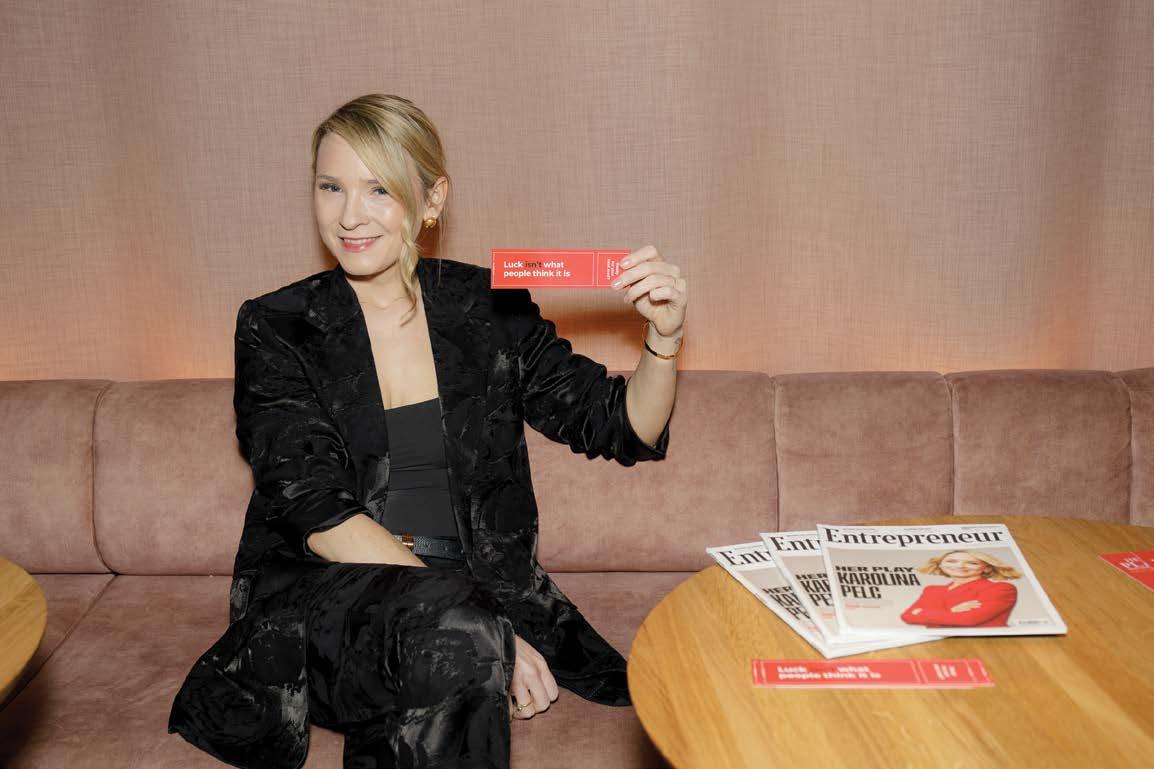
INSIDE HER PLAY: MAKE YOUR OWN LUCK - THE DEBUT BOOK FROM KAROLINA
PELC
by PATRICIA CULLEN
Your debut book Her Play: Make Your Own Luck is out this month - what made this the right moment to tell your story?
I don’t think there is ever a perfectly comfortable moment to tell the story of your life. If anything, the timing became right precisely because I stopped waiting to feel fully ready. For years, people saw isolated versions of my story: the founder, the executive, now the investor, the woman on stage talking about resilience and risk. But very few people knew what sat underneath all of it - arriving in London with almost no money, working in casinos in central London, years on cruise ships, living in the Philippines and Malta, navigating male-dominated industries, and privately questioning whether I belonged in the rooms I had fought to enter. After exiting BeyondPlay, I realised something important. Success has a strange way of editing people’s stories retroactively. Once there is an outcome, everyone assumes the journey made sense all along. It didn’t. Much of it was uncertain, personally costly and, at times, deeply lonely. Interestingly, the book is not
→ Karolina Pelc, author of Her Play: Make Your Own Luck, out now
actually the detailed startup story people might expect after seeing the headlines around BeyondPlay. The deeper startup-building years will likely form the second book. Her Play is really the story of everything that shaped the founder long before the company existed. There was also something fascinating to me about the timing culturally. Founders, creators and even authors are now expected to build far more publicly than ever before. Writers are no longer simply releasing books; they are building communities around them. In many ways, modern authorship now resembles entrepreneurship. Ultimately, I wrote Her Play because I felt there was space for a different kind of business story. One that talks honestly about ambition, reinvention, class, power dynamics and the emotional reality of following a path without knowing where it will lead you.
While Her Play focuses more on the journey behind the founder than the startup itself, how did your experience scaling businesses shape your perspective on growth?
One of the biggest misconceptions around growth is that it is simply about speed. In reality, growth is about whether your systems, people and decisionmaking can absorb increasing complexity without collapsing under it. At BeyondPlay, we experienced that very early on. Like many startups, there comes a moment where you move from testing in controlled environments to real customers, real traffic and real expectations. On paper, we believed we were ready. Then live transactional volumes hit. PagerDuty started waking me up in the middle of the night because parts of our infrastructure simply were not scaling fast
→ The full interview is available on the Entrepreneur UK YouTube channel
enough. Our databases struggled. Some queuing systems behaved completely differently under real pressure than they had during testing. Nothing teaches you humility faster than watching reality stress-test assumptions you were previously confident in. What mattered was recognising the risk early enough to act decisively. We fixed the immediate issues, but we also made a harder decision: temporarily slowing aggressive commercial expansion while we rebuilt parts of the infrastructure properly. That is one of the least glamorous but most important lessons in scaling. Growth is not just about winning customers. It is about making sure the foundations underneath the business can survive success once it arrives. What gave me an interesting perspective on this is that although I only experienced the earlier stages of scaling directly as a founder with BeyondPlay, I had already spent years inside companies going through massive transformation journeys. I worked in businesses
THE BUSINESSES THAT SURVIVE EXPANSION TEND TO UNDERSTAND EXACTLY WHO THEY ARE, WHAT PROBLEM THEY SOLVE AND WHAT STANDARDS CANNOT SLIP AS THEY GROW”
that evolved from startups into unicorns, expanded across Europe and entered the US, and grew from one product vertical into multiple ecosystems. Before experiencing scaling as a founder myself, I had already observed what hypergrowth does to businesses from the inside. Growth magnifies everything - strengths, weaknesses, communication and leadership alike. The market eventually stops rewarding vision alone and starts rewarding operational discipline. Founders love talking about ideas because ideas are exciting. Scale, however, is often about process, precision and repeated execution over long periods of time.
Which chapter felt the most important for you to write, and why?
Probably the cruise ship chapters. Not because they were the most glamorous, but because they explain almost everything about how I later operated in business and leadership. People often underestimate environments like cruise ships or casino floors because they don’t fit traditional ideas of professional success. But those years taught me more about human behaviour, composure and adaptability than any boardroom ever did. You learn to read people quickly. You learn emotional control while operating in fast-paced environments where mistakes are public and consequences immediate. Cruise ships are fascinating human ecosystems. Thousands of people from different countries and backgrounds living and working in close quarters, often exhausted and far away from home. There is nowhere to hide. That teaches you a lot about coexistence, emotional intelligence and observing people carefully. Those years also forced me into independence
→ Her Play: Make Your Own Luck
very early. I never viewed going home as an option. There were moments where I genuinely did not know what would happen next, but pushing through those situations gave me one of the most important lessons of my life: resilience is trainable. There is also humour in those chapters. Chaos. Absurdity. The casino and cruise world exposes you to humanity in its rawest form - ego, loneliness, wealth, addiction, generosity, escapism - sometimes all within the same evening. It’s also where I met the very first hero, or, with today’s language, ally in my journey. Someone who saw potential and decided to crack the door slightly ajar for me, so I could kick it wide open later. In many ways, the book starts as a memoir about casinos and cruise ships but gradually becomes a broader story about reinvention and learning to trust your ability to navigate uncertainty.
When people finish the book, what do you hope they take away from it?
I hope people walk away feeling less ashamed of unconventional paths. So many people quietly believe they are behind because their careers or lives do not resemble the neat trajectories they were taught to aspire to. Mine certainly didn’t. And yet almost every chapter of my life that once felt confusing later became useful in some way. I also hope the book challenges the idea that successful people move through life with certainty. Most don’t. We consume so many polished success narratives today that people start believing confidence arrives first and action follows. In my experience, it is often the opposite. Another thing I wanted readers to feel is permission. Permission to start before they feel fully validated. Permission to reinvent themselves. The book is not about pretending fear disappears. It is about understanding that fear and action can coexist. If readers finish the final page feeling slightly braver about their own lives or decisions, I’ll consider that meaningful.
Larger organisations cannot. Once businesses expand across markets and management layers, culture has to become operational rather than aspirational. I’ve also seen companies mistake expansion for validation. Expanding too early can amplify weaknesses instead of strengths. A flawed process executed at scale simply creates bigger problems faster. The strongest operators focus less on appearing successful and more on whether the underlying business can withstand pressure repeatedly over time. And finally, leadership endurance matters more than people admit. Businesses rarely break because of one dramatic moment. More often, they erode gradually through poor communication.
What can we expect to see next from you?
This magazine issue focuses on franchising and expansion. From your experience, what most often determines whether growth holds at scale?
The businesses that survive expansion tend to understand exactly who they are, what problem they solve and what standards cannot slip as they grow. In expansion or franchising, clarity is your currency - if a process cannot be clearly articulated without you in the room, it simply cannot be scaled. Scale exposes ambiguity brutally. Small teams can survive on instinct and proximity for a while.
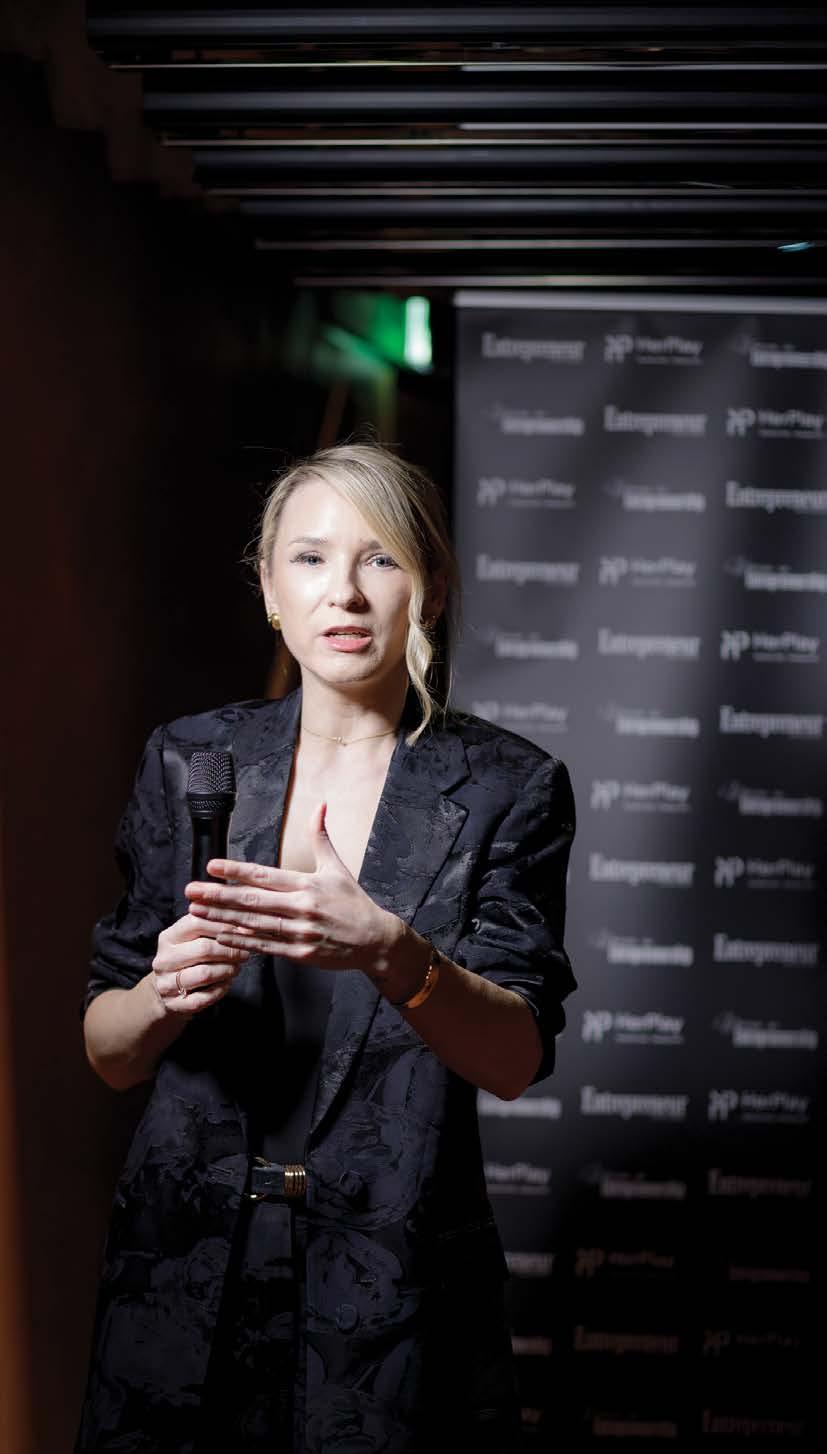
The book is only one part of what I want HerPlay to become. Over the last year, I realised people were connecting not just with the business story itself, but with the broader conversations around reinvention, risk, visibility and unconventional career paths. I want to continue building on that through speaking, investing, founder education and curated events. I’m particularly interested in creating spaces where ambitious people can have more honest conversations around uncertainty and ambition rather than constantly performing perfection. That is part of the reason I started hosting the HerPlay pre-launch dinners in London. I wanted to create rooms that felt thoughtful rather than transactional. On the investment side, I plan to continue backing early-stage founders, particularly those from unconventional backgrounds who may not fit traditional pattern-matching models but possess resilience, adaptability and strong instincts. I also think we are entering a fascinating era culturally where founders are no longer simply building companies. They are building narratives, communities and media ecosystems around themselves at the same time. That shift changes leadership entirely and I’m very interested in exploring it further through content, speaking and future projects. Writing the book reminded me how powerful storytelling can be when it moves beyond polished business language and becomes something more human. Her Play: Make Your Own Luck is now available to order on Amazon and at leading retailers
Farmed, Not Franchised
by PATRICIA CULLEN
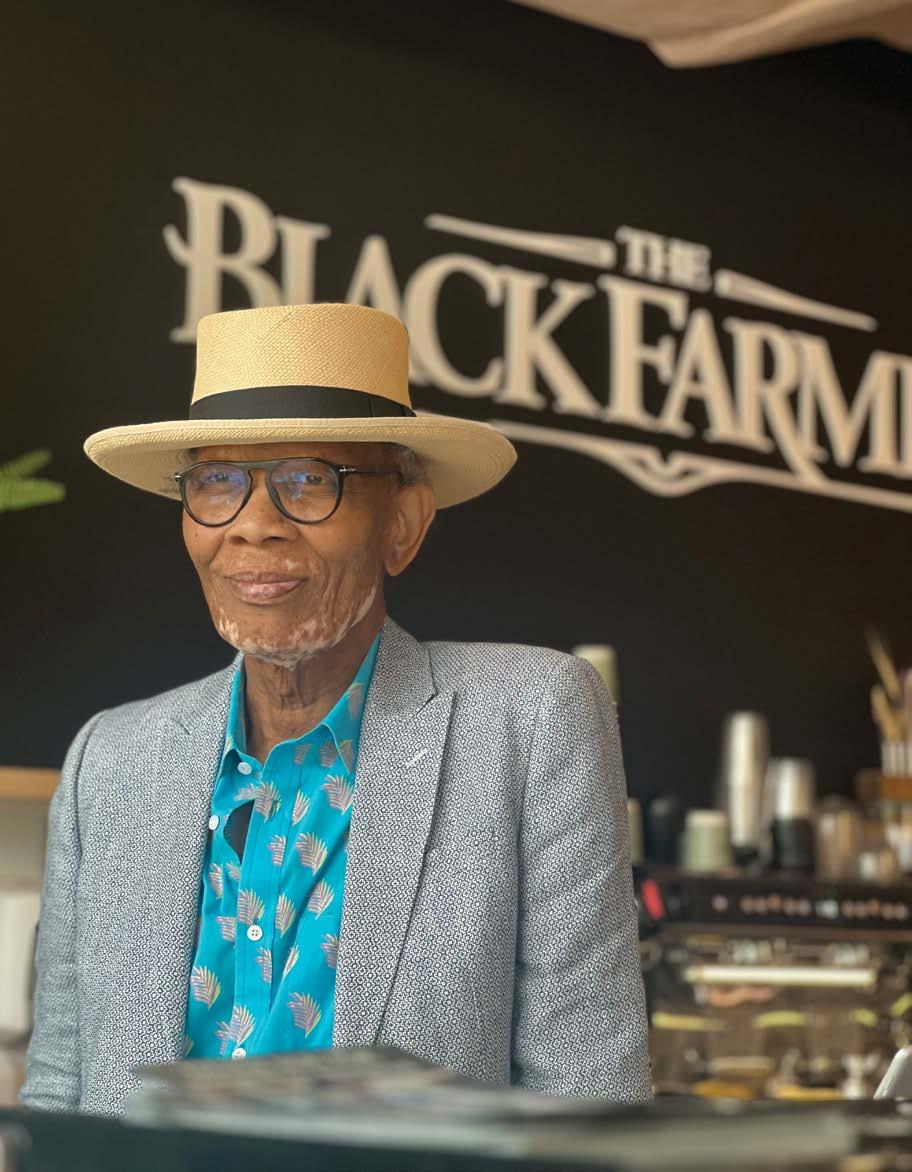
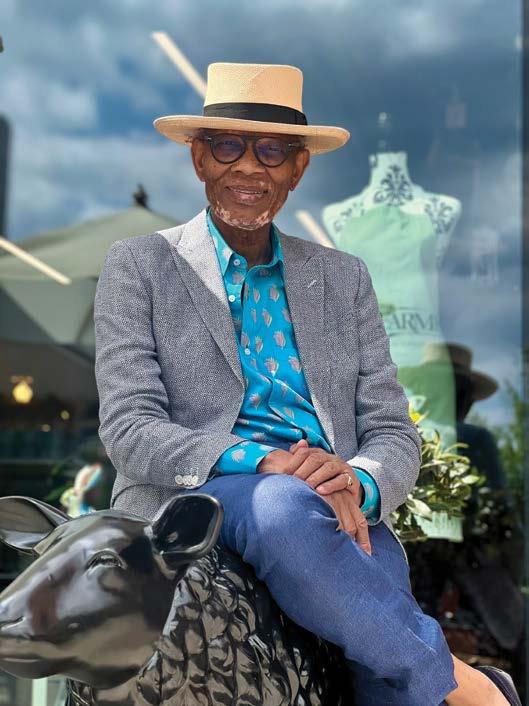
Wilfred Emmanuel-Jones and the making of The Black Farmer
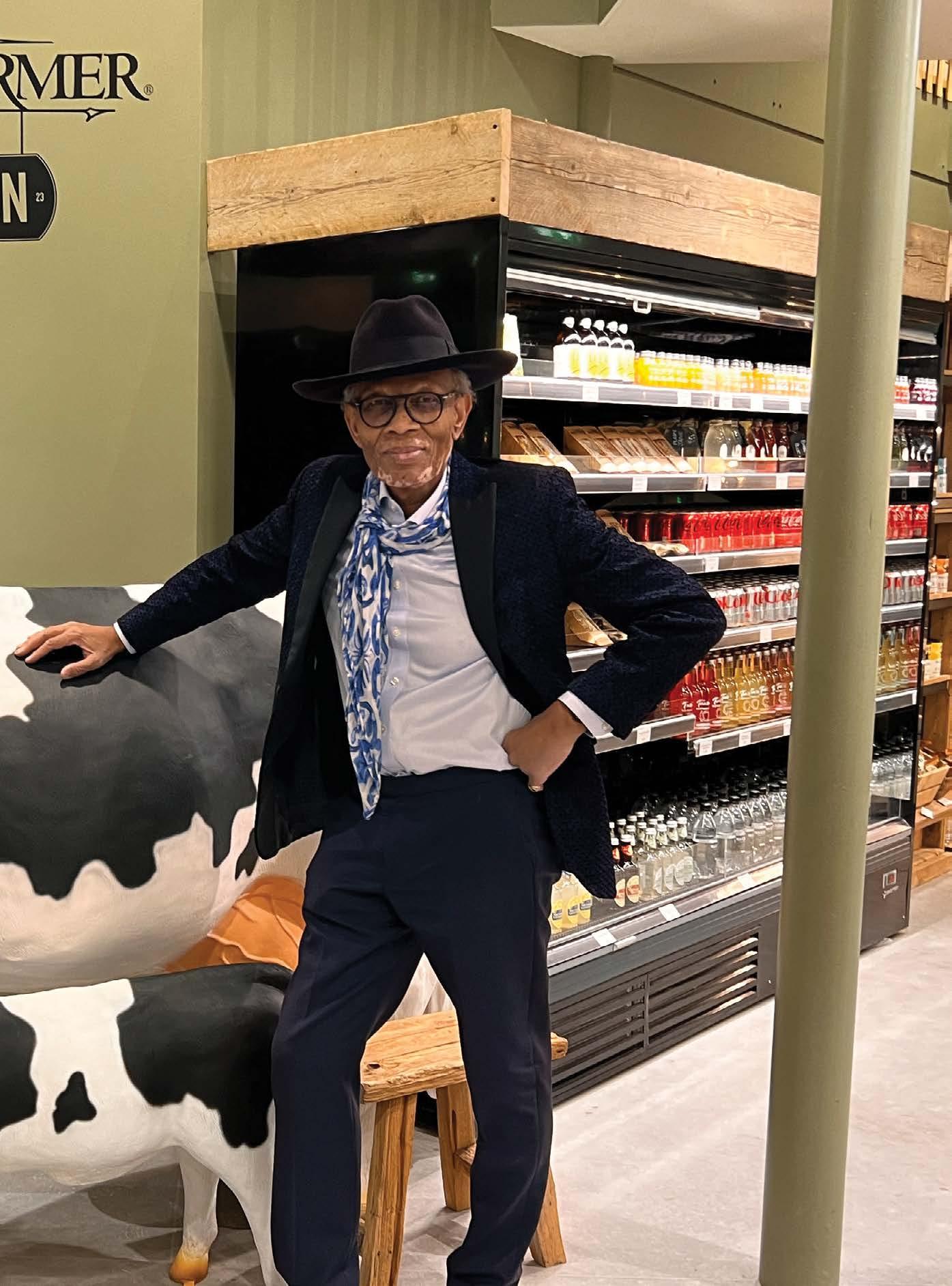
→ Wilfred Emmanuel-Jones, founder, The Black Farmer
For a magazine issue shaped around franchising - its systems, its repeatability, its promise of scalable certainty - the story ofThe Black Farmer offers something slightly out of frame. It is, on the face of it, a success story in British food retail. But it is not a franchise. Nor did it begin as one. Instead, it is a case study in a different kind of expansion model: one built on narrative, persistence, retail distribution, and a long, sometimes awkward process of navigating UK grocery gatekeepers. The result is The Black Farmer - a brand that now sits on supermarket shelves across the UK, extending into online retail and selective farm shop-style ventures. Yet its origins lie not in business strategy, but in something more personal and far less structured: a childhood promise made in Birmingham.
THE FARM THAT BEGAN AS A PROMISE
Wilfred Emmanuel-Jones traces the origins of his business back to Jamaica, where he was born in Parrandon, before moving to Birmingham at the age of three. He describes his upbringing in the UK as taking place in what he calls an “urban jungle”, a world that felt far removed from any sense of rural life. Yet there was a counterpoint. His father kept an allotment - a small patch of land that became, in Emmanuel-Jones’ telling, something more significant than food production. It was an escape, routine, and early exposure to land as a possibility. “That allotment really became my oasis away from the urban misery I was living in,” he says. At 11, he made a promise to himself: one day, he would own a farm. It is the kind of childhood ambition that might normally fade into biography rather than business. For Emmanuel-Jones, it became a structuring principle - a personal sense of purpose that shaped the decisions that followed. He often returns to the idea that clarity of purpose is what drives direction. “If you don’t know what your personal purpose is,” he says, “you’re just in survival mode.” It is a framing that sits uneasily with conventional business thinking, where planning, forecasting and structured progression are often treated as the foundation of success. Emmanuel-Jones, by contrast, treats purpose as the starting point and everything else - education, career, even opportunity - as secondary.
SCHOOL, SURVIVAL AND LEARNING OUTSIDE THE SYSTEM
His route through education did not suggest a conventional trajectory. Dyslexic and disengaged from formal schooling, he describes his time at secondary school as unsuccessful by most measures. The system, he suggests, simply did not fit the way he processed the world. After school came the army, and then catering - a move that, at the time, was less career choice than institutional sorting. He worked as a chef at a time when kitchens were not associated with celebrity culture or media visibility, but with hierarchy, pressure and repetition. Yet even then, he describes a kind of internal consistency. Whatever he was doing, the idea of owning a farm remained fixed. That long-term focus becomes one of the defining elements of his story - and one he contrasts sharply with what he sees as a modern tendency towards shortcycle thinking in business. In his view, many entrepreneurial journeys fail not because of lack of ideas, but because of a lack of sustained direction.
BREAKING INTO THE BBC: PROXIMITY AS STRATEGY
The next stage of his career moved into broadcasting. He went on to work at the BBC as a producer-director, entering television despite having no conventional route in, and building his way into the industry. The conventional channels did not respond. So he approached the institution
from the outside. At BBC Pebble Mill in Birmingham, he began volunteering in a way that was deliberately unorthodox. He helped security staff open gates. He worked alongside cleaners. He spent time simply being present in the buildingclose enough to opportunities to make himself visible. Eventually, he moved into
it, was often to manage difficult personalities and translate them into broadcastable content. It was, in effect, brand-building - but in a media context.
LEARNING HOW BRANDS BEHAVE
Looking back, the BBC years appear less like a job and more like a training ground
“PEOPLE ARE TRYING TO ERASE UNCERTAINTY. THERE’S ONLY ONE CERTAIN THING IN LIFE, AND THAT IS LIFE IS UNCERTAIN”
broadcasting, working his way into the BBC in entry-level roles. He has described being an outsider in the industry - without the background or networks usually associated with itbut he was given a chance to start as a runner, which opened the door into television production. That entry point led to a long career in television, including work as a producer and director on food programmes. It also provided something less tangible but arguably more important: an education in how narratives shape perception. He worked with chefs who would later become household names, including Gordon Ramsay at an early stage in his television career. Emmanuel-Jones’ role, as he describes
in storytelling, audience behaviour and cultural positioning. Food, in particular, became a lens through which to understand consumer engagement. Personalities mattered. Stories mattered. Familiarity mattered. These ideas would later become central to The Black Farmer, but at the time they remained implicit. After 15 years, Emmanuel-Jones left the BBC to set up his own food and drink marketing agency. It was a significant move: no guaranteed clients, no financial security, and no clear runway. But he says he saw it less as a calculated gamble and more as stepping into the unknown. “People are trying to erase uncertainty,” he says. “There’s only one certain thing in life, and that is life is
uncertain.” That belief sits at odds with conventional business thinking - and, by extension, with the logic of franchising, which is built on reducing uncertainty through replication and standardisation. EmmanuelJones, by contrast, treats uncertainty as a constant rather than a problem to eliminate. His agency went on to work with brands including Kettle Chips, Lloyd Grossman sauces, and Plymouth Gin. It was commercially successful enough to allow him to pursue a goal that had never left him: buying a farm.
RECOGNISING THE GAP
When he eventually bought land in the UK, the moment carried clear symbolic weight. The promise to his 11-year-old self had been fulfilled. But the reality of being a Black farmer in rural Britain brought new dynamics. He describes suspicion, misunderstanding and isolation - including one incident where neighbours reportedly assumed his polytunnels were being used to grow cannabis. More broadly, he began to recognise a structural absence: the lack of diversity in farming and food production, and the absence of brands that reflected that reality in any orthodox way. That gap became the foundation for The Black Farmer. Importantly, Emmanuel-Jones resisted the idea that it should be positioned as a niche or ethnic brand. Instead, he wanted something deliberately conventional. “I wanted a mainstream brand,” he says. The decision to enter
‘T/Investment
the sausage category was not arbitrary. It was strategic. “In Britain, you can’t get more mainstream than sausages.” From the outset, the brand faced resistance. Supermarkets were unsure how to position it. Early research warned against the name itself, suggesting it would alienate consumers. He ignored that advice. “Research tells you what people thought yesterday,” he says. “It can’t tell you what people are thinking tomorrow.” It is a line that captures a broader philosophy: conviction over consensus. The brand launched with gluten-free sausages, aimed at a mainstream audience rather than a niche dietary segment. But the early
challenge was not product - it was access. Supermarkets said no. So EmmanuelJones did something more direct. He took the product to agricultural shows and farm events across the country, focusing not on buyers but on consumers. The strategy was simple: get people to taste the product. Once they did, demand began to build. He then encouraged those consumers to contact supermarkets directly. “It was a street fight,” he says of the period. It is an unusual phrase in the context of food retail, but it captures something important about the way the brand grew: not through structured rollout, but through pressure from below.
RETAIL WITHOUT THE FRANCHISE MODEl
Over time, The Black Farmer secured supermarket listings and became established in mass-market retail. But its growth model remained distinct from franchising. There were no franchisees replicating units. No standardised store rollouts. No operational duplication across territories. Instead, the business expanded across three interconnected channels:
• supermarket retail
• online direct-to-consumer sales
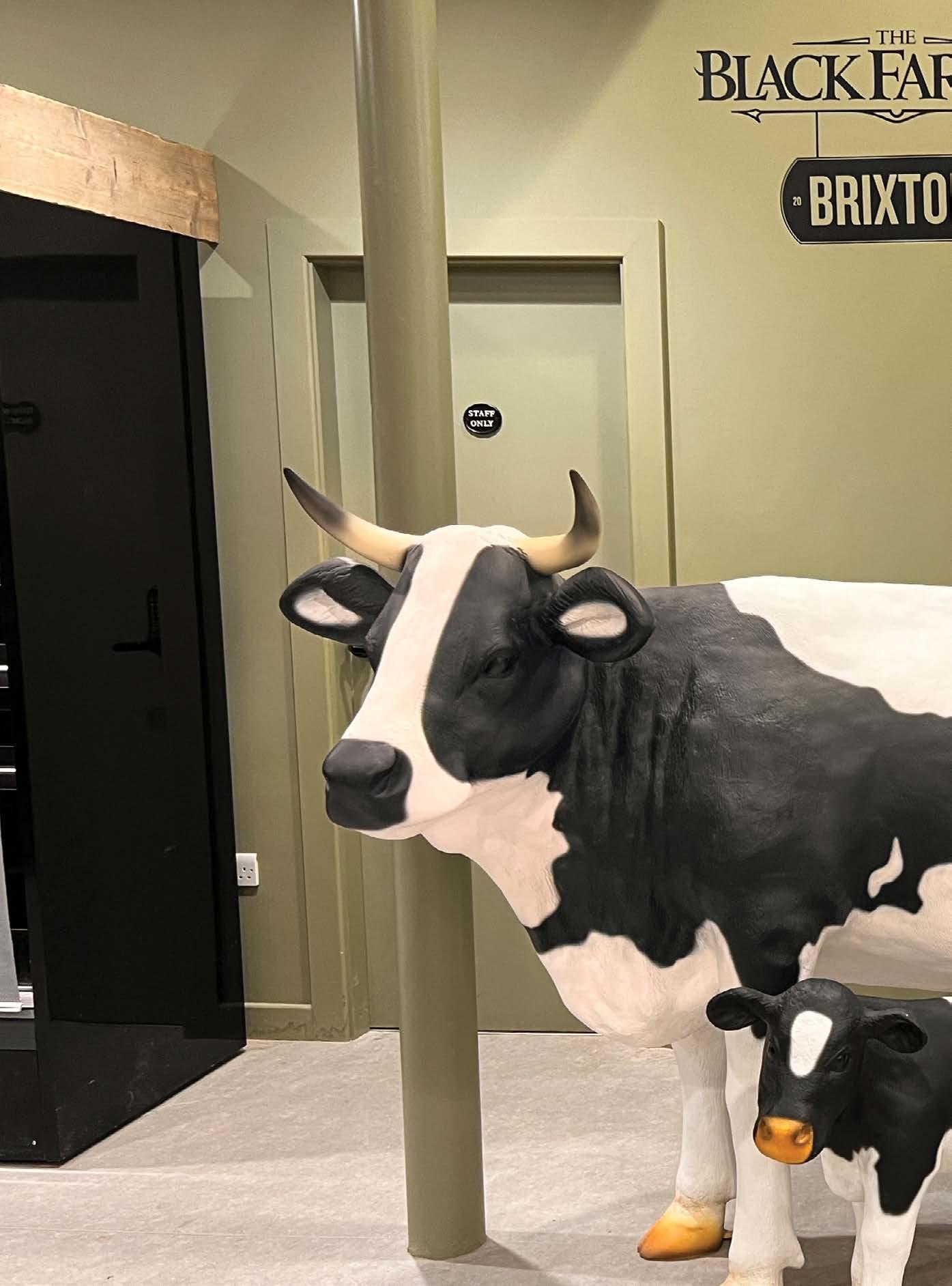
• and physical farm shops The farm shops - including sites in Brixton and White City - represent a further evolution. They are not simply points of sale, but
what Emmanuel-Jones describes as “relational retail”. In contrast to transactional models (supermarkets, delivery platforms), these spaces are designed to encourage time, atmosphere and engagement. “They’re a bit like a spa,” he says. The intention is not efficiency, but experience. In franchise terms, this is significant. Much of modern franchising focuses on consistency and repeatability. EmmanuelJones’ model instead prioritises emotional connection and environment as drivers of brand strength.
BRAND AS INFRASTRUCTURE
Over time, his ambition has
expanded beyond food. He describes a vision in which The Black Farmer could extend into pubs, hotels and broader lifestyle spaces - not unlike the expansion strategies of brands such as Virgin. But he is also realistic about the distinction between creating a brand and operating a business. “There are people who are good at running businesses,” he says, “and people who create things.” The implication is that scale eventually requires both. He is open about the challenges of investment. Traditional funders, he suggests, tend to prefer proven models rather than experimental brands. As a result, much of the business has grown without large external backing. That independence, he argues, has come with a trade-offslower scaling, but greater control. He also notes a common pattern among founders who exit too early and later regret it.
THE LONG VIEW
Now, more than 20 years after the brand’s launch, Emmanuel-Jones describes The Black
Farmer as being at a new stage of readiness.
Established in the UK, recognised by consumers, and embedded in retail, the question is no longer whether the brand works - but where it goes next. International expansion is a clear direction, particularly in Englishspeaking markets such as Australia, Canada, New Zealand and the United States. He believes the brand’s themes - identity, inclusion, and cultural positioning - translate globally. And, notably, he does not rule out franchising as part of that future. “I would franchise it.” After building the brand outside franchising logic, he now sees franchising as a possible tool for scaling what already exists. Alongside this, Emmanuel-Jones is interested in how technology is reshaping entrepreneurship itself. He is particularly focused on artificial intelligence and its implications for work, creativity and education. In his view, the traditional path - school, university, profession - is already weakening. “We are going into the age of the entrepreneur,” he
says. In that context, he sees tools like AI not as replacements for human creativity, but as amplifiers of it. His own experiments include digital systems embedded into the brand, including an AI assistant based on his voice and philosophy. It is another extension of the same pattern: brand, story, and technology converging into infrastructure.
OUTSIDERS AND SCALE
What ultimately runs through EmmanuelJones’ story is an argument about who gets to build successful businesses in the first place. Innovation, he suggests, often comes from outsiders - people operating beyond the
assumptions and structures of established systems. That idea sits comfortably within a franchise-focused issue precisely because it complicates one of franchising’s central promises: that scale is primarily a question of structure. In EmmanuelJones’ case, scale emerged differently - first through conviction, then through distribution, then through consumer demand. Systems came later. And that may be what makes The Black Farmer more than a business success story. It is not simply an alternative to franchising, but a reminder that brands are rarely built through systems alone. Before replication comes belief; before structure, identity.
FRANCHISING AT A TURNING POINT
Franchising in the UK has always been built on a simple idea: a proven business model, replicated through local ownership. Increasingly, that simplicity is harder to recognise in practice. Across the UK - from high streets and home care to food, fitness and travelfranchise systems are operating in a very different environment to the one many were originally designed for. Costs have risen steadily. Recruitment has become more difficult. Regulatory requirements are more complex. And customer expectations, shaped by digital convenience and service transparency, are higher than ever. The result is a shift in what franchising now demands. It is no longer just about replicating a successful model. It is about sustaining it across dozens, sometimes hundreds, of local operators - each running their own business, each facing the same external pressures. For franchisors, that has meant a move towards more operational depth: greater investment in training, ongoing support, technology and communication systems that hold networks together as they scale. For franchisees, it has meant entering a market where brand strength alone is not enough; clarity on costs, support and day-to-day reality matters just as much. Franchising still offers something distinctive in the UK economy: a structured route into business ownership at a time when starting independently can feel increasingly risky. But the nature of that structure is changing. It is becoming less about simply providing a “ready-made” business, and more about the strength of the system around it — and how well that system adapts under pressure. What follows is a snapshot of the sector: the Top 50 UK franchises shaping the next stage of growth.
ANYTIME FITNESS
Anytime Fitness has established itself as one of the UK’s leading 24/7 gym franchise gym franchise, with 185 clubs across the UK and Ireland serving over 200,000 members. Its round-the-clock access model - enabled by smart-card technology and compact, well-equipped club formatsreflects growing consumer demand of modern consumers for flexible, affordable fitness that fits around busy lives. The brand reported 8.3% revenue growth in Q1 2024, reflecting the continued strength of the fitness sector post-pandemic as consumers increasingly prioritise their health and wellbeing. Typical investment ranges from approximately £400,000 to £600,000, with a minimum personal investment of around £170,000, Anytime Fitness sits at the more accessible end of the premium gym market - and its recurring membership revenue model delivers the kind of predictable, monthly income stream that franchise investors prize. Franchisees benefit from a global network of over 5,000 clubs worldwide, providing collective buying power, a unified technology platform, and a reciprocal access model that allows any Anytime Fitness member to use any club globally - a genuine differentiator in a competitive market. FROM
Action COACH
ActionCOACH is one of the world’s largest business coaching franchises, operating in more than 80 countries with over 200 franchise partners across the UK. Its franchisees provide structured business coaching and mentoring to both SME owners and leadership teams, and to corporate executives and senior leaders in larger organisations. Coaching is delivered through one-to-one sessions and group coaching, helping clients improve profitability, build stronger teams, implement scalable systems and prepare for long-term growth or exit. The model is a high-margin, knowledge-based franchise with no requirement for physical retail premises, allowing operators to run lean businesses with relatively low overheads. ActionCOACH’s proprietary coaching systems, developed and refined over more than 30 years, provide franchisees with established business diagnostic tools, growth frameworks and coaching programmes delivered through one-to-one sessions, workshops and group seminars. UK franchise investment starts around £29,000, with larger territory models requiring higher investment.
Aspray is a UK franchise opportunity operating in loss assessment and property claims management. When a homeowner or business suffers property damage through flooding, fire, storm, or escape of water, Aspray franchisees act as professional loss assessors, managing the insurance claim on the policyholder’s behalf to ensure they receive the full settlement they are entitled to under their policy. The business model is commission-based: franchisees are typically paid a fee linked to the insurance settlement achieved, rather than charging clients upfront,
BARKING MAD
meaning clients are generally not required to pay fees directly at the start of the process.
Strong claims knowledge, local contractor relationships, and exceptional project management skills are the keys to success in this model. With investment from around £35,000 and access to a sector worth hundreds of millions of pounds annually, Aspray franchisees who excel in the model can build very significant businesses. Aspray was selected for inclusion in the Entrepreneur UK Franchise 50 list, reflecting its standing among franchise businesses featured by the publication.
arking Mad is a UK pet care franchise founded in 2000 that provides a dog home-boarding service. Franchisees operate local businesses by matching dog owners with approved host families who care for pets in their own homes while owners are away. The model is a franchise system, with franchisees running independent businesses under the Barking Mad brand and receiving support with training, systems, and operations from the franchisor. It is part of the Franchise Brands group and operates across many areas of the UK.
BELVOIR GROUP
Belvoir Group is one of the UK’s largest property franchise networks, founded in 1995 and headquartered in Grantham, Lincolnshire. It operates a multi-brand franchise model across the UK, covering residential lettings, property sales, and property management, along with a separate financial services division. It has grown significantly through both organic expansion and acquisitions, now supporting a large network of locally owned offices that combine national brand strength with on-the-ground expertise in their individual markets.
BETTERCLEAN SERVICES
Betterclean Services is a UK commercial cleaning management franchise operating in the B2B cleaning sector. It provides services such as office cleaning, retail cleaning, and cleaning for schools and other commercial premises through locally owned franchise businesses. Franchisees manage teams of cleaning
operatives and build contracts with business clients within their assigned territory, while overseeing operations, staffing, and client relationships. The franchise offers training, systems, and operational support to help franchisees run their businesses in a regulated commercial environment. Investment typically starts from around £20,000 depending on the franchise package and location. The business operates within the wider UK commercial cleaning industry, where franchisees build recurring contract-based revenue streams that can vary depending on local market conditions and business development.
BLUEBIRD CARE
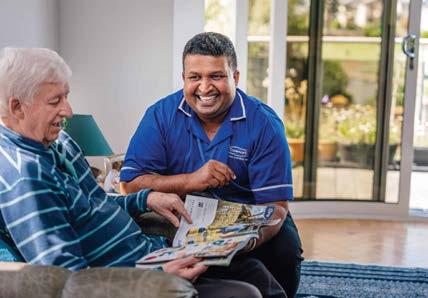
Bluebird Care is a UK home care franchise network that provides personal care, dementia support, and complex care services to adults across a large number of locations in the UK. The brand has built a reputation in the UK home care sector - consistently achieving outstanding CQC ratings across its network - and its franchisees include both career-changers motivated by purpose and experienced healthcare professionals seeking to build their own business. As with other home care models, Bluebird Care is a management franchise: franchisees build a team of professional care workers and manage the operational, regulatory, and commercial aspects of a domiciliary care business. The investment starts at around £50,000, with working capital requirements reflecting the time it takes to build a full care roster. It is not a quick return model - profitability can take several years depending on local conditions - but the businesses that franchisees build are deeply embedded in local communities, with strong long-term value. With the UK’s over65 population growing year on year and NHS capacity under sustained pressure, demand for quality home care is structural, long-term, and likely to intensify rather than diminish.
CAREMARK BRIGHT & BEAUTIFUL
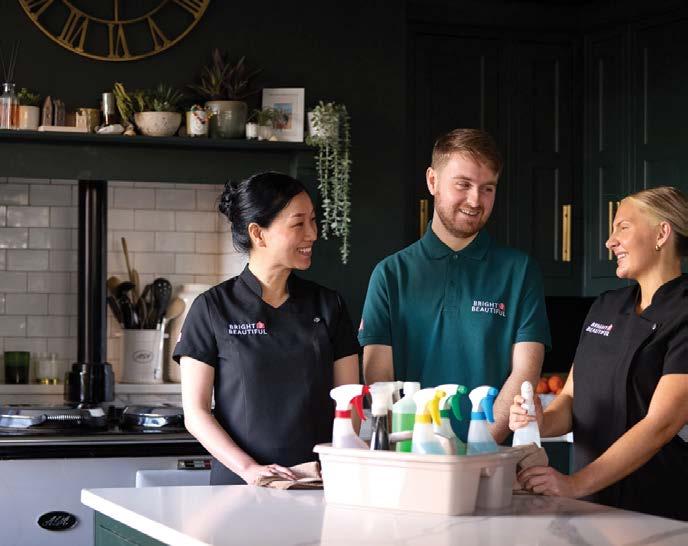
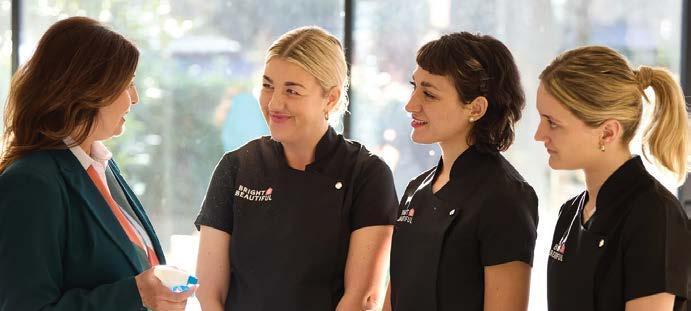
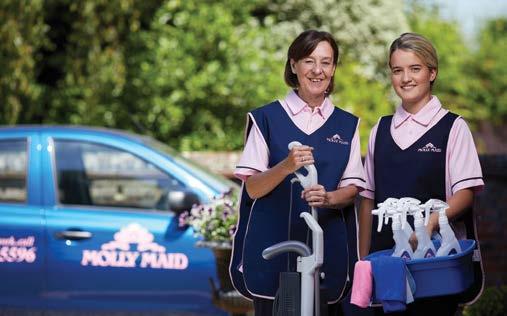
Bright & Beautiful is a UK domestic cleaning franchise operating within the home services sector. It provides a management-style franchise model where franchisees recruit, train, and manage teams of cleaning staff who deliver domestic cleaning services to residential clients within an agreed territory. Franchisees are also responsible for client relationships, scheduling, and overall business operations. The franchise provides training, systems, and operational support to help franchisees run their local business effectively. Investment typically starts from around £18,000 depending on the franchise package and territory. The business operates within the wider UK domestic cleaning market, where franchisees serve households requiring regular or oneoff cleaning services and pricing and margins vary depending on local conditions and service structure.
Caremark is a UK home care franchise that provides personal care, companionship, and support services to elderly and vulnerable adults in their own homes. It operates a management franchise model in which franchisees recruit and oversee teams of care and support workers rather than delivering care directly, while managing the operational and commercial aspects of the business within a regulated sector. The network operates across a large number of franchise locations in the UK. Investment typically starts from around £35,000, along with additional working capital required to support early trading and business development. Caremark provides training, compliance guidance, and ongoing operational support to help franchisees meet regulatory requirements, including standards set by the Care Quality Commission. The business operates within the UK domiciliary care sector, which is influenced by long-term demographic trends and demand for care delivered in the community.
CAPRINOS PIZZA
Caprinos Pizza is a UK-based pizza franchise founded in 2013 that operates within the delivery and collection quick service restaurant sector. It has expanded across multiple locations in the UK through franchised outlets, with some international presence reported in selected markets. The brand focuses on value-driven, fast-service pizza aimed at the takeaway and delivery market, appealing to a broad customer base including families and younger consumers. Its growth reflects
ChipsAway
ChipsAway is the UK’s leading specialist in minor automotive paint and bodywork repairs - the small dents, chips, and scratches that are too minor for a full body shop but too significant to ignore. With over 200 franchisees operating across the UK, ChipsAway has built a national brand in a genuinely underserved niche, offering consumers a convenient, mobile repair service at a fraction of the cost of a traditional bodyshop. The franchise operates on a mobile model - franchisees work from fully equipped vans, attending customers at home, at work, or at dealerships and fleet operators. With an entry investment of around £29,000, it is among the more affordable options on this list, yet it offers the upside of operating in a market insulated from economic cycles: there will always be demand for vehicle repairs regardless of the broader economy. Part of the Franchise Brands group, ChipsAway franchisees benefit from a national marketing infrastructure, a well-managed consumer brand, and the operational expertise of one of the UK’s most experienced franchise groups. Average franchisee earnings are consistently strong, and the model scales well for those choosing to add a second technician or vehicle.
wider expansion trends in the UK independent pizza franchise sector, driven by franchisees attracted to comparatively lower entry costs and a simplified operational model compared with larger global QSR brands. Investment requirements vary depending on store format and location but are generally lower than many major international pizza franchises. The business provides franchisees with training, operational systems, supply chain access, and ongoing support to operate their local stores.
COSTA COFFEE
COFFEE & HOSPITALITY
Costa Coffee is one of the UK’s largest coffee shop chains by number of outlets, operating thousands of locations across the country in formats including high-street cafés, drive-through sites, motorway service stations, and retail concessions. It is owned by The Coca-Cola Company following its acquisition in 2019 and is one of the most established coffee brands in the UK market. While the brand previously operated a franchise model in the UK, the majority of its current estate is company-operated, and new franchise opportunities are not widely available in the UK. Costa generates significant revenue as part of a large global coffee business. The business continues to operate at scale across the UK coffee sector, supported by strong brand recognition and a wide retail footprint.
DOMINO’S PIZZA
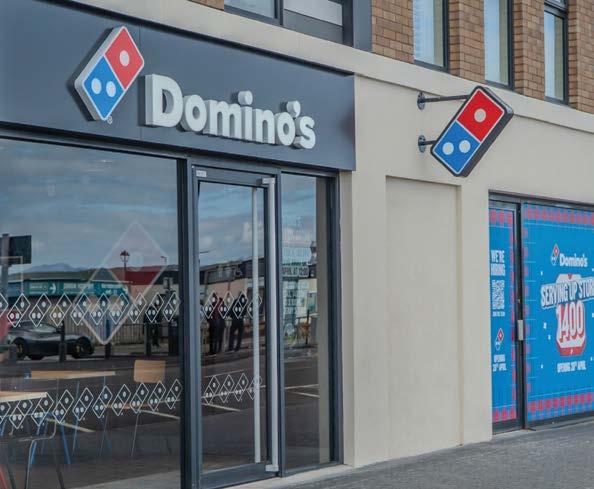
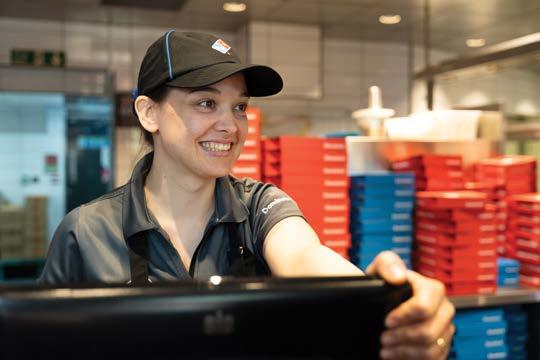
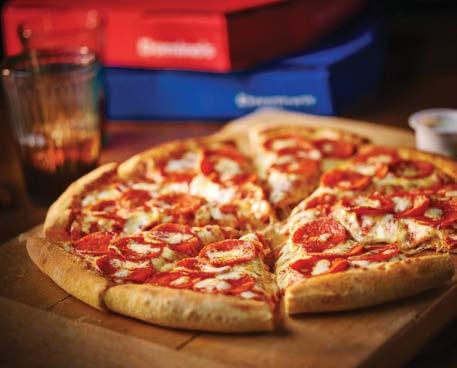
Domino’s Pizza has significantly shaped the UK pizza delivery market, operating over 1,000 franchised stores across the country and holding a leading position in the home delivery sector. Its business model is strongly digital-focused, with a large proportion of orders placed online or via mobile app, reflecting wider growth in delivery-led food service. The brand operates a franchise system in the UK, where independent franchisees run local stores under Domino’s name with central operational and marketing support. Investment requirements are typically in the several-hundred-thousand-pound range, depending on store format and location. Franchisees are supported through structured training and ongoing operational guidance. The business operates within a highly competitive quick service restaurant market, supported by strong brand recognition and a well-established delivery infrastructure.
Driver Hire is the UK’s leading specialist staffing agency for drivers and logistics personnel - a multi-awardwinning franchise operating for over 40 years. As the e-commerce boom continues to drive unprecedented demand for qualified HGV and LGV drivers, Driver Hire franchisees are positioned at the intersection of a structural supply shortage and surging customer need. The business places temporary and permanent drivers with hauliers, distribution companies, local authorities, and retailers across the UK. The franchise is a management model: franchisees build and lead teams of recruitment consultants rather than working as consultants themselves. With a starting investment of around £25,000 and no requirement for industry experience, it is an accessible entry point into the lucrative B2B staffing sector. Franchisees benefit from Driver Hire’s national contracts - which provide immediate revenue from day one - as well as comprehensive training and a well-established operational platform. Consistent EF100 top-100 appearances reflect a business with genuine commercial depth and a network of franchisees achieving strong earnings in a sector with structural, long-term demand.
DYNO ROD
Dyno Rod is part of the British Gas and Centrica plc family of brands - the UK’s largest supplier of drainage and plumbing services to residential and commercial customers - and represents one of the most powerful brand endorsements in the franchise sector. Operating under the umbrella of a household name trusted by millions, Dyno Rod franchisees provide emergency and planned plumbing, drainage, and drain unblocking services to both consumer and business clients. The franchise benefits from British Gas’s national marketing infrastructure, its multi-million household database, and its established brand that drives high inbound enquiry volumes. Franchisees access lead generation through the Dyno and British Gas networks, providing a pipeline of work that independent plumbing businesses typically take years to build. The essential nature of the services - drainage emergencies do not respect economic cycles - provides strong demand resilience. For experienced plumbers or drainage professionals seeking to transition from employment to business ownership with the security of a national brand behind them, Dyno Rod offers a compelling route - combining technical credibility with corporate marketing muscle.
EXPENSE REDUCTION ANALYSTS
Expense Reduction Analysts (ERA) is one of the world’s largest cost management consultancy networks, operating on a successfee model that has made it highly attractive to both clients and franchisees. ERA franchisees work with SMEs and larger organisations to identify and deliver savings across operational costs - from utilities and telecoms to insurance, logistics, print, and professional services - taking a share of the savings achieved as their fee, meaning clients pay nothing unless results are delivered. This risk-free proposition for clients creates a powerful, conversation-starting sales tool, and ERA’s proprietary benchmarking database - built over 30 years of cost analysis across thousands of categories - gives franchisees an analytical advantage that would take years to develop independently. Investment starts from around £25,000, with the brand providing a twoweek initial training programme, ongoing mentoring, and full analytical infrastructure. ERA operates in a market where demand is structural and cyclical: in economic downturns, businesses focus intensely on cost reduction; in growth periods, they need cost management expertise to scale efficiently. It is a franchise model of genuine intellectual depth that rewards both commercial and analytical aptitude.
Fantastic Services
500+
Fantastic Services is the UK’s largest multi-trade home services franchisea digital-first marketplace platform connecting consumers with professional cleaning, gardening, pest control, handyman, and removals services. Its franchise model is distinctive: franchisees buy into a specific service category and territory, using the Fantastic Services brand, booking platform, and customer acquisition engine to build a portfolio of repeat residential and commercial clients. Investment starts from as little as £4,000 for a single-service operator, making it one of the most accessible franchise opportunities in the country. The brand’s technology infrastructure is its key competitive advantage: an appbased booking system, automated scheduling, CRM, and a marketing engine that delivers a steady flow of new customer enquiries, allowing franchisees to focus on service delivery and team building rather than marketing spend. Fantastic Services has grown rapidly since 2009 - now serving over one million customers - and its multi-service model creates natural expansion pathways for franchisees who begin with one trade and grow into additional categories. For entrepreneurs seeking a low-cost, technology-enabled entry into the booming home services sector, Fantastic Services is the standout proposition. HOME
GOCRUISE & TRAVEL
GoCruise & Travel is the UK’s leading cruise and holiday specialist franchise network, providing independent agents with the brand, technology, supplier relationships, and training to build highly profitable specialist travel businesses. The cruise sector in particular has experienced extraordinary post-pandemic growth, with passenger volumes exceeding pre-Covid levels and average spend per booking significantly higher than short-haul package holidays. Franchisees focus on building a loyal client base of cruise enthusiasts - an audience characterised by high disposable income, strong brand loyalty, and a propensity for frequent, high-value bookings. Commission rates in the cruise sector are among the most generous in travel, and GoCruise’s volume relationships with major cruise lines mean its franchisees access rates unavailable to smaller independent agents. With investment from around £5,000 and a home-based operating model, GoCruise & Travel represents a genuinely accessible route into a premium travel niche - one that rewards relationshipbuilding, destination knowledge, and the kind of personal service that cruise customers increasingly seek over online booking platforms.
Greensleeves Lawn Care
Greensleeves Lawn Care is the UK’s largest professional lawn care franchise and the 2025 Elite Franchise Rising Star of the Year - surging 33 places up the EF100 rankings in a single year, a testament to the extraordinary momentum it has built. It is one of the most compelling growth stories in UK franchising, capitalising on a garden care sector that has seen explosive demand since the pandemic-era boom in outdoor living. The franchise provides professional lawn treatment programmes - feeding, scarifying, aeration, and weed control - on subscription-style repeat contracts. This recurring revenue model is Greensleeves’ great commercial strength: once a customer is acquired, income is highly predictable across the annual treatment cycle. The investment starts at around £30,000, covering a branded vehicle, equipment, product, and a protected territory with a defined customer base. Franchisees receive ongoing agronomic training, marketing support, a proprietary customer management platform, and the backing of a brand with 25 years in the sector. With territories expanding rapidly and a growing national profile, Greensleeves is the franchise to watch in 2026 and beyond.
Hitsona is the UK’s largest independent group exercise franchise - a remarkable achievement for a British-born brand in a sector typically dominated by North American imports. Its studios deliver high-intensity interval training (HIIT) group fitness classes using a proprietary audio-visual programme, combining the energy of a large group class with the efficiency and accessibility of a smaller studio format. The compact studio model - typically 1,500 - 2,500 square feet - keeps build-out costs and rent overheads significantly lower than full gyms, while the appointment-based class format
HITSONA
eliminates the queuing and overcrowding issues that frustrate members of traditional gyms. Recurring membership revenue, low churn among committed members, and strong community culture create a financially attractive and personally rewarding franchise. Investment from around £30,000 for a franchise licence plus fit-out costs make Hitsona accessible to fitness entrepreneurs who combine passion for the sector with the commercial acumen to build a sustainable studio business. An EF100 regular, Hitsona continues to expand its UK footprint with a compelling product-market fit.
JACKSON FIRE & SECURITY
Jackson Fire & Security is a management franchise providing fire protection and security compliance services to commercial premises across the UK - a business built on legislative necessity. All commercial buildings in the UK are legally required to maintain compliant fire detection, suppression, and emergency lighting systems, with regular inspection, testing, and servicing required under the Regulatory Reform (Fire Safety) Order. This creates a universe of contracted, legally mandated, repeat-revenue clients. The franchise is explicitly compliance and legislation-led - and this is its great commercial strength.
Clients do not stop buying fire safety services because the economy slows; they cannot afford to, legally or ethically. The result is a recession-proof revenue model with strong client retention and very high switching barriers once a service relationship is established. Franchisees build a team of qualified fire and security engineers and a portfolio of contracted maintenance clients, with Jackson’s national brand, procurement relationships, and compliance expertise providing a foundation that would take years to build independently. For entrepreneurs seeking a management franchise in an essential, regulated sector, Jackson is a compelling choice.
KALL KWIK
Jani-King
Jani-King is the world’s largest commercial cleaning franchisor and one of the most accessible in the UK, with entry-level investments starting from as little as £3,000 - making it an exceptional option for aspiring entrepreneurs who are capital-constrained but commercially ambitious. Its franchisees provide professional cleaning services to offices, hotels, healthcare facilities, retail environments, and sports venues across the country. What distinguishes Jani-King from many competitors is its account guarantee scheme: franchisees are provided with an initial portfolio of contracted cleaning accounts, removing the cold-start revenue challenge that affects most new businesses. This guarantee is funded by the franchise fee and provides new operators with an immediate income base from which to grow. The business is designed to scale: franchisees can start on a part-time basis and progressively take on additional accounts and operatives as their confidence and capital grow. For those seeking a low-cost entry into a recessionresistant, recurring-revenue business, Jani-King offers a genuinely democratic pathway to entrepreneurship.
Kall Kwik has operated in the UK for several decades as a B2B print, design, and communications franchise, with a long history in a sector that has undergone significant digital change over that period. Today’s Kall Kwik operates as a business communications provider, offering services including print, design, signage, promotional merchandise, digital marketing support, and fulfilment solutions to business clients. Its customer base includes a mix of SMEs and larger organisations with ongoing communications needs, often involving repeat work and long-term relationships. Investment typically starts from around £80,000 for a new centre, with resale opportunities sometimes available for buyers seeking an established operation. Kall Kwik continues to evolve its service offering in line with industry developments, incorporating digital print technologies, online ordering systems, and workflow software, supported by its parent group Franchise Brands. It provides a structured franchise model for entrepreneurs interested in B2B services and local business client relationships.
KFC is the UK’s leading fried chicken brand, serving up freshly-hand breaded chicken across its restaurants every day. The brand operates more than 1,000 outlets, with around three quarters run by its franchise partners – a network of 27 multigeneration small and mediumsized businesses across the country. Last year,
KFC announced a growth plan to deliver a £1.5billion impact in the UK and Ireland, including plans to open hundreds of new restaurants over the next decade. KFC is putting that into action in 2026 with a pipeline of new restaurant openings, supported by franchise partners, who will play a key role in delivering the brand’s long-term ambitions.
KFC works closely with its franchise partners to set them up for success operating one of the UK’s best-known
brands. KFC seeks experienced operators with substantial assets and liquidity. This is a franchise built for multi-site investors and franchisees are expected to actively manage and grow their estates, often operating multiple locations. Successful operators gain access to one of the strongest marketing platforms in global foodservice, highly developed operational systems and a collaborative approach geared towards growth and value for both KFC and franchisees.
umon is one of the world’s most established supplementary education franchises, with over 4 million students globally and more than 650 study centres across the UK. Its method - a self-paced, individualised mathematics and English programme built on daily worksheets and incremental progression - has been refined over 70 years and is trusted by parents and educators worldwide. One of Kumon’s most distinctive characteristics is its extraordinarily low entry cost: from as little as £1,000 for those running from community premises such as schools, libraries, or church halls. This accessibility has made it possible for teachers, graduates, and parent-entrepre-
LITTLE KICKERS
CHILDREN’S FOOTBALL EDUCATION
FROM £10,000 INVESTMENT
120+ UK TERRITORIES UK UNITS
2002 EST.
Little Kickers has steadily built a well-established children’s activity franchise network in the UK. Little Kickers delivers football coaching programmes for children aged 18 months to seven years, combining early skills development with fun, socialisation and confidencebuilding through structured play. With a relatively accessible entry investment compared with many franchise models, Little Kickers is widely regarded as an approachable opportunity within the sector. Sessions are typically delivered in sports halls, leisure centres and schools, removing the need for dedicated premises and enabling franchisees to operate a mobile, community-based business. The model is often homebased, offering flexibility to structure working hours while managing a team of coaches. Operating in more
neurs to build profitable education businesses with minimal capital, though franchisees typically need to commit significant personal time, particularly in the early phases of building their student base. Revenue is generated through monthly student fees, and as student numbers grow, income scales proportionally. Well-run Kumon centres with 200+ students can generate very strong annual earnings. The brand invests in instructor training, a proprietary assessment and materials system, and ongoing pedagogical development - giving franchisees access to a genuinely world-class educational methodology.
than 25 countries worldwide, Little Kickers combines international brand recognition with local delivery, supported by UK systems covering marketing, coaching curricula, administration and ongoing training. It remains a community-focused franchise with strong appeal among entrepreneurs seeking a flexible, family-aligned business opportunity.
McDONALD’S
QUICK-SERVICE RESTAURANTS
£500,000 – £1.85 MILLION INVESTMENT
1955 (UK: 1974) EST.
1,300+ UK RESTAURANTS UK UNITS
No list of UK franchises is complete without McDonald’s - the global giant that essentially invented the modern franchise model. With over 1,300 restaurants across the United Kingdom and a stated ambition to have 95% operated by franchisees, McDonald’s remains the most powerful brand in British fast food. Annual sales per location range between £2m and £5.8m, and the company targets franchisee ROI of 20–25% annually over the 20-year term of the agreement. Entry costs are significant: a total investment of £500,000 to £1.85m is required, with at least 25% in unencumbered personal funds. Prospective franchisees must also pass a rigorous nine-month unpaid training programme, working in operational roles across McDonald’s restaurants before being considered for a licence. The company does not grant entirely new sites frequently - most opportunities arise when existing franchisees sell - meaning patience and persistence are prerequisites. In return, franchisees inherit an unrivalled marketing infrastructure, a supply chain honed to extraordinary efficiency, and a brand that remains the first choice of millions of British consumers. For those with capital and commitment, McDonald’s is still the gold standard.
Merry Maids
DOMESTIC CLEANING
FROM £22,000 INVESTMENT
85+ UK TERRITORIES UK UNITS
1979 (UK: 1990) EST.
Merry Maids is one of the UK’s most established domestic cleaning franchises - part of the ServiceMaster family of brandswith over 85 territories providing professional home cleaning services across the country. It is a management franchise: franchisees build and manage teams of professional cleaners rather than cleaning homes themselves, creating a scalable business with recurring, subscriptionstyle revenues. Investment starts from around £22,000 and ServiceMaster’s substantial corporate infrastructure provides franchisees with national marketing, CRM technology, training programmes, and a procurement network that significantly reduces operating costs. The domestic cleaning market - worth over £8bn annually in the UK - is large enough to support multiple national brands, and Merry Maids’ 40-year UK heritage gives it strong consumer recognition in the regions where it operates. For franchisees who invest in building a quality team of cleaners and focus on customer retention, the recurring weekly or fortnightly cleaning contract model creates a business with predictable revenue, strong customer lifetime value, and a clear path to a valuable exit when the time comes.
METRO ROD
MMOLLY MAID
Molly Maid is the UK’s numberone domestic cleaning franchise, operating for over 40 years in a sector worth more than £8bn annually. It was voted People’s Choice at the 2025 Elite Franchise Top 100 Awards - a testament to its exceptional franchisee satisfaction and brand reputation. Each Molly Maid franchise is a management business: franchisees hire and manage teams of cleaning staff rather than carrying out the work themselves, creating a scalable model capable of generating significant recurring revenue. The business requires a modest initial investment of around £18,000, making it one of the most accessible franchises in this list, and franchisees receive comprehensive training on oper-
etro Rod is the UK’s leading drainage and plumbing franchise, providing planned and emergency drainage services to commercial, industrial, and domestic clients across the country. Its franchisees handle everything from drain unblocking and CCTV surveying to full drain rehabilitation and repair - essential infrastructure services with perpetual, recession-proof demand. The brand is part of Franchise Brands plc - one of the UK’s largest and most sophisticated franchise groups - which provides Metro Rod franchisees with access to national contract infrastructure, fleet procurement, technology platforms, and a management team with deep franchise expertise. National accounts with major property managers, facilities companies, and commercial landlords provide franchisees with a guaranteed revenue base from which to build their territories. Metro Rod’s franchise model has evolved to target experienced business leaders and career professionals seeking an ownership opportunity in essential services - people who want to build a legacy business rather than run a van. Its consistent EF100 placement reflects a franchise network delivering on that ambition.
ations, marketing, HR, and customer service. The model’s dependence on recurring customers creates a relatively stable, predictable revenue base - and the domestic cleaning market proved largely recession-proof, with demand remaining strong even during broader economic downturns. Now part of the Neighbourly group of service franchises, Molly Maid benefits from a sophisticated support infrastructure, proprietary operating systems, and a 40-year brand heritage that creates immediate consumer trust. For entrepreneurs seeking a management franchise with low entry costs and strong recurring income potential, Molly Maid is the category leader.
NIC Local
NIC Local is one of the UK’s most respected commercial cleaning franchises, backed by over 55 years of industry heritage and consistently ranked in the Elite Franchise Top 100. Its franchisees build and manage contract cleaning businesses serving offices, retail environments, schools, healthcare facilities, and other commercial premises - a sector characterised by repeat, contracted revenues and strong demand resilience
OVENU
Ovenu is the UK’s largest and most established oven cleaning franchise, founded in 1994 and operating nationwide through a network of trained franchisees. The business specialises in professional domestic and commercial oven valeting, using proprietary eco-friendly cleaning systems to restore ovens, range cookers, hobs and extractors to near showroom condition. Built on a franchise model, Ovenu provides entrepreneurs with training, branding, equipment and territory-based business support, allowing individuals to run their own local service businesses under the wider brand. Over the years it has expanded internationally and is widely recognised as one of the leading names in the UK home services franchise sector.
across economic cycles. The management franchise model allows franchisees to scale their business by building a workforce of cleaning operatives and a portfolio of contracted clients, with NIC’s national brand, support infrastructure, and procurement relationships providing a significant competitive advantage over independent operators. Investment starts from around £40,000, with the business typically operating from a home office in the early stages. As co-publishers of the British Franchise Journal with the BFA, NIC Local sits at the heart of the UK franchising establishmentreflecting a commitment to industry standards, franchisee development, and professional excellence that pervades its entire business culture.
PITMAN TRAINING
Pitman Training is one of the most venerable names in British professional education - a brand with nearly two centuries of heritage that has reinvented itself continuously to remain relevant in the modern workforce training market. Its franchise network of over 50 centres provides practical skills training in office administration, bookkeeping, accounting, medical administration, digital marketing, and IT - qualifications that employers actively seek and that deliver clear, near-term career outcomes for students. The franchise model is straightforward: franchisees operate Pitman Training centres, providing both in-centre and online training programmes to individuals seeking career advancement, career change, or return-towork qualifications. Government funding streams, employer training budgets, and private fee-paying students provide diversified revenue. Investment from around £30,000 makes Pitman Training accessible for entrepreneurs with backgrounds in education, training, or human resources who want to combine purpose with commercial return. The brand’s extraordinary heritage provides immediate credibility, and its evolving digital training offer keeps it competitive in a market where online learning alternatives are proliferating.
RADFIELD HOME CARE
HOME CARE & HEALTHCARE
FROM
Radfield Home Care has carved out a distinctive position in the UK home care market by focusing relentlessly on quality - both of care delivery and franchisee business performance. Founded by a brother-and-sister team with backgrounds in care and finance, the brand has built its network with a selectivity that prioritises sustainable, profitable franchises over rapid expansion for its own sake. Franchisees are typically professionals transitioning from corporate or healthcare careers, motivated by the opportunity to build a meaningful business with genuine community purpose. Radfield’s investment requirement of around £45,000 is within reach of many career-changers, and the brand’s outstanding record of multi-award-winning franchisee support - including dedicated field teams, a proprietary technology platform, and access to a community of experienced peers - makes it a compelling choice in a competitive sector. The brand’s growth trajectory and consistent recognition in franchise industry awards suggest a network that has figured out the formula for sustainable home care franchising in a way that many competitors are still working towards.
Raring2Go!
Raring2Go! is a distinctive franchise in a category rarely seen in the sector: local family media. Its franchisees publish a regular digital and print magazine for families in their territory, packed with information on local events, activities, holiday ideas, and services for children - and monetised through advertising sales to local businesses seeking to reach the family market. It is a franchise for those with strong community connections, communication skills, and a genuine love of family life. The model is home-based, flexible, and low-overhead - requiring investment from around
RECOGNITION EXPRESS
ecognition Express is the UK’s leading branded merchandise and promotional products franchise - an often-overlooked but commercially robust B2B category that every business needs. Its franchisees provide branded clothing, promotional gifts, awards, and corporate merchandise to businesses of all sizes, serving both the HR and marketing functions of their clients. The model is built on relationshipdriven sales: franchisees cultivate a portfolio of business clients with recurring promotional needs, becoming a trusted supplier partner for events, staff recognition programmes, charity fundraising, and brand awareness campaigns. High average order values, strong repeat business rates, and a broad client base that spans every sector make it a commercially stable franchise. With investment from around £30,000 and minimal overhead - most franchisees operate from home offices and use the brand’s supplier network and print-on-demand infrastructure rather than holding stock - Recognition Express is an accessible and profitable B2B franchise for commercially-minded entrepreneurs. FROM £5,000
£5,000 - making it an accessible choice for parententrepreneurs, teachers, and community professionals who want to build a business around their existing knowledge and relationships. Revenue is generated through a combination of digital advertising, print advertising, and sponsored content packages sold to local businesses. In an era where local media has largely retreated from communities, Raring2Go! fills a genuine gap - and the trust that franchisees build as the go-to source of family-focused local information creates a competitive moat that is difficult to replicate digitally.
REVIVE! AUTO INNOVATIONS
Revive! is one of the UK’s most awarded management franchises, specialising in mobile smart repair of alloy wheels, bumpers, and bodywork. Unlike ChipsAway’s technician model, Revive! is explicitly structured as a management franchise: franchisees scale by building a team of employed technicians and growing a portfolio of commercial contracts with dealerships, fleet operators, and leasing companies - in addition to retail customers. This management structure creates a genuinely scal-
able business with a realistic path to building a multi-van, multi-technician operation generating significant passive income. Investment starts from £35,000, with the brand providing extensive business coaching, marketing support, and a technology platform that handles job management, invoicing, and customer communications. An EF100 consistent presence, Revive!
has also invested in green chemistry - developing water-based paints and repair processes that align with ESG priorities and the growing demand from fleet operators for environmentally responsible supply chain partners. For entrepreneurially minded franchisees who want to build a team rather than work on the tools, Revive! is an outstanding option.
ServiceMaster Clean has been part of the UK franchising landscape since 1959 - one of the longest-established franchise brands in the country - providing professional cleaning, restoration, and disaster recovery services to both residential and commercial customers. The brand’s portfolio spans contract cleaning, carpet and upholstery cleaning, and property restoration following flooding, fire, and smoke damage. The restoration element is particularly valuable: when disaster strikes a property, ServiceMaster Clean franchisees are called by insurers, loss adjusters, and property managers to execute professional remediation - providing high-margin, insurance-funded work that supplements the steadier cleaning contract revenues. This dual-channel model gives franchisees access to both recurring and eventdriven income streams. With over 300 licensed operators, ServiceMaster Clean is a franchise with genuine national coverage and decades of brand trust. Investment from £25,000 provides access to comprehensive training, proprietary chemicals and equipment, and the backing of ServiceMaster’s North American corporate resources.
SIGNS EXPRESS
Signs Express is the UK’s largest signs and graphics franchise, with a network of over 65 production centres providing everything from vehicle liveries and building signage to exhibition graphics, window displays, and branded merchandise for businesses of all sizes. It is an established, BFA-affiliated franchise with 35 years of UK trading history - a rare tenure that speaks to the durability and commercial soundness of the model. The B2B focus gives Signs Express franchisees access to high-value, repeat-
purchase clients: businesses that need signage on an ongoing basis as they grow, rebrand, or open new sites. Investment starts from around £40,000, covering the fit-out of a production facility, equipment, and initial working capital. Some franchisees acquire existing centres - which come with an established client base - while others open new greenfield sites in underserved markets. The brand provides full training on production, design, and sales; a national marketing presence; a proprietary supplier network that reduces input costs; and an active franchisee community that shares expertise. Signs Express consistently features in industry awards and the EF100, reflecting a franchise network in strong health.
SNAP FITNESS
Snap Fitness is a 24/7 gym franchise that competes directly with Anytime Fitness in the lower-cost, alwaysopen segment of the UK fitness market. With over 80 clubs across the UK and a global network exceeding 2,500 locations, it offers franchisees a proven, compact gym model with recurring membership revenue and the marketing reach of a major international brand. The 24/7 model - enabled
SNAP-ON TOOLS
TOOLS & AUTOMOTIVE
FROM £9,000 + WORKING CAPITAL INVESTMENT
For the third consecutive year and fourth time overall, Snap-on Tools holds the top position in the UK’s definitive Elite Franchise Top 100 (EF100) ranking - a feat that speaks to a model refined over six decades in the British market. The global leader in professional tool manufacturing and distribution, Snap-on offers franchisees an iconic ‘showroom on wheels’: a fully branded, custom-built mobile store that visits automotive technicians and workshops on a fixed weekly round, removing the overheads of fixed retail space. Its UK network of over 430 franchisees delivers a catalogue of more than 22,000 products to professional customers across the country. Uniquely, Snap-on charges no per-
by smart-entry technology and compact club formats of 3,000 - 4,500 square feet - significantly reduces staffing costs relative to traditional gyms, while providing members with the flexibility they increasingly demand. Member retention and referral are the key commercial levers: clubs with strong culture, clean facilities, and reliable equipment consistently outperform those that treat the business as purely a property play. Investment of £300,000 to £500,000 reflects the fit-out of a professional gym facility, equipment, technology, and working capital. For franchisees with experience in fitness or property, Snap Fitness offers a well-structured entry into a market where recurring membership revenues can deliver strong cash-on-cash returns.
430+ UK / 4,700+ WORLDWIDE UK UNITS
centage-based royalty fees - franchisees keep 100% of their profits - and provides in-house financing through Snap-on Finance Ltd, making entry remarkably accessible at a starting fee of just £9,000 plus working capital. Average franchisee sales exceed £8,000 per week. New franchisees complete ten days of classroom training
followed by a six-month intensive programme, including a dedicated Franchise Developer riding with them for the first four weeks. With a failure rate of less than 0.5% and the option to build a multi-territory empire, Snap-on Tools is the benchmark by which every other UK franchise is measured.
SNAPPY SNAPS
Founded in 1983, Snappy Snaps has grown into one of the UK’s best-known photographic retail franchises, specialising in photo printing, personalised gifts, passport photos and imaging services. The business began franchising in 1987 and now operates around 120 locations across the UK, combining high street retail with digital photo services and commercial printing solutions. Acquired by the Timpson Group in 2013, Snappy Snaps continues to expand through its franchise network, offering entrepreneurs a recognised national brand and established operational support. Franchise investment levels typically range from around £35,000 minimum investment to total start-up costs of approximately £143,500, depending on store format and location.
SOLICITORS GROUP(THE FRANCHISE)
The legal services franchise sector is one of the most interesting growth areas in UK franchising, as regulatory changes have allowed non-lawyerowned legal services businesses to operate under the Alternative Business Structure (ABS) framework. Several franchise models have emerged to allow legally qualified professionals - and, increasingly, non-lawyers with business management skills - to build scalable legal practices under a established brand with shared back-office, compliance, and marketing infrastructure. For solicitors and legal executives who are excellent lawyers but less experienced in business development and practice management, the franchise model offers access to a client acquisition engine, operational systems, and a brand that allows them to focus on legal work rather than business administration. It is a sector in early developmentmodels vary significantly in structure and quality - but the commercial logic is strong. Aspiring legal franchise investors should engage closely with the BFA and conduct rigorous due diligence on the franchisor’s ABS authorisation, track record, and support infrastructure before committing. The opportunity is real; the execution quality varies.
SPEEDY FREIGHT
COURIER & LOGISTICS
FROM £30,000 INVESTMENT
QUICK-SERVICE RESTAURANTS
FROM £180,000 INVESTMENT 70+
Speedy Freight is a same-day courier and logistics franchise that has featured in the Elite Franchise Top 100 for four consecutive years, most recently ranked 31st. Its network of franchisees provides time-critical delivery solutions to businesses across the UK - from manufacturers and distributors to hospitals and retailers - filling the gap between nextday parcel services and dedicated courier options. The franchise operates as a management model: franchisees build a team of drivers and a portfolio of business clients within their territory, managing operations rather than driving themselves. With an investment from around £30,000, it represents good value in a sector experiencing structural growth driven by the continued expansion of e-commerce, justin-time manufacturing, and the increasing complexity of business supply chains. What distinguishes Speedy Freight is its established national contract infrastructure - new franchisees access existing business on day onecombined with a support system that includes dedicated franchise development managers, business planning tools, and a technology platform that automates much of the operational complexity. Speedy Freight’s consistent EF100 placement reflects a model of genuine commercial quality.
Subway is one of the world’s largest fast-food chains by outlet count, and in the UK it operates around 2,000 locations across high streets, shopping centres, hospitals, universities and transport hubs. Its appeal to franchisees lies in its relatively accessible entry cost (typically ranging from around £100,000 to £200,000 depending on site, format and location), compact store model, and a menu built around customisable, freshly prepared ingredients that align with evolving consumer demand for convenience and perceived health-conscious options. The brand has invested heavily in its menu and core product offering, alongside ongoing improvements to its digital infrastructure, including app-based ordering and delivery partnerships. While performance varies significantly depending on location and footfall, franchisees benefit from structured training, site selection support and global brand marketing. Applicants are typically expected to demonstrate access to substantial capital, making it a more accessible entry point into food retail compared with many major quick-service restaurant brands.
TaxAssist Accountants is the UK’s largest network of accountancy shops - a distinctive model that brings professional accountancy services to the high street, positioning itself as accessible, personal, and local rather than corporate and remote. With over 400 shops across the UK, it serves more than 100,000 small business and self-employed clients, providing tax returns, bookkeeping, payroll, accounts preparation, and business advisory services. The retail-facing format - shops with window signage in high-footfall locations - provides walk-in client acquisition that is unavailable to most accountancy practices, which rely entirely on referral. This marketing advantage, combined with TaxAssist’s proprietary software, centralised compliance support, and training infrastructure, allows qualified accountants to focus on client relationships rather than business development and administration. Investment from around £50,000 provides access to a protected territory, comprehensive training, and the TaxAssist brand and technology platform. For qualified accountants ready to make the leap into practice ownership, TaxAssist offers one of the most commercially de-risked routes available.
TTHE TRAVEL FRANCHISE TAXASSIST ACCOUNTANTS
ACCOUNTANCY & FINANCIAL SERVICES
FROM £50,000 INVESTMENT
400+
700+
he Travel Franchise is the UK’s largest homeworking travel agent franchise - a business model perfectly constructed for the post-pandemic travel resurgence. With over 700 consultants across the country, it provides a technology platform, supplier relationships, industry ATOL protection, and training that allow franchisees to build bespoke holiday packages for clients from a home-based office - accessing a £127bn global travel industry with minimal overhead. Investment starts from just £2,995 for its entry-level ‘lite’ package - one of the lowest barriers to entry on this list
- rising to around £14,995 for the Premium package that includes marketing credits, a guaranteed trips programme, and a 60% commission split. The brand’s ‘Not Just Travel’ consumer brand is well-established, and its franchisees benefit from exclusive access to supplier rates that are simply unavailable to individual independent agents. As travel demand has returned strongly following the pandemic - with many consumers prioritising experiential spending and high-value holidays - The Travel Franchise’s consultants are well-positioned to serve a market spending more than ever on tailored, expert-arranged travel.
EDUCATION & TUTORING
FROM £45,000 INVESTMENT
90+ UK CONSULTANTS
UNITS
TUTOR DOCTOR
Tutor Doctor is one of the world’s fastest-growing education franchises, delivering personalised, one-to-one tutoring to students of all ages and abilities through a network of franchised consultants across the UK.
Unlike traditional tutoring centres, Tutor Doctor operates as a home-based management franchise: franchisees recruit and match professional tutors with families in their territory, handling all customer relationships, scheduling, and quality assurance. The model requires no educational background - franchisees run a business rather than teach - making it accessible to entrepreneurs from commercial or sales backgrounds. With an investment from around £45,000, it offers a low-capital entry into the fast-growing private education market, which has seen substantial growth as parents invest increasingly in academic support for their children following the disruption of pandemic-era schooling. Franchisees benefit from Tutor Doctor’s proprietary CRM and matching platform, its national marketing, and a training programme recognised for its depth and franchisee support. An EF100 regular, Tutor Doctor exemplifies the education franchise model at its best: purpose-driven, scalable, and commercially robust.
Watermill Bread
FOOD & BAKERY
VARIES BY FORMAT INVESTMENT
GROWING UK NETWORK
The artisan bakery and bread franchise category is one of the most exciting emerging sectors in UK food retail, riding a powerful consumer wave of interest in craft food, provenance, and the baking revival accelerated by lockdown-era home baking culture. Several UK bakery franchise brands have emerged to meet this demand, offering consumers the warmth and quality of artisan products at accessible price points and in convenient high-street or market locations. The category combines strong consumer emotion - few retail experiences match the sensory appeal of a working bakery - with genuine commercial robustness, as bread and baked goods represent a daily purchase category with high repeat buying rates. For franchisees with a passion for food and an interest in building a retail business with genuine community roots, bakery franchises offer an authentically British, emotionally resonant opportunity. Investors in this category should look carefully at the franchisor’s production model - whether products are baked on-site or delivered - as this significantly affects both the customer experience and the operational demands on the franchisee.
WINGSTOP
QUICK-SERVICE RESTAURANTS
Wingstop is one of the fastestgrowing QSR brands -a chicken wing specialist that has defied the category’s challenging economics to deliver extraordinary growth. Launched in the UK in 2018, it has expanded rapidly to over 40 restaurants and shows no sign of slowing, driven by a cult following built on social media, limited-time flavour drops, and a delivery-first model that capitalises on the UK’s appetite for premium chicken. The brand’s success reflects a broader shift in UK fast food towards bold flavours, high-quality proteins, and social-media-native brand identities. Wingstop’s extensive flavour range - from lemon pepper to Korean BBQ and atomic - has built passionate brand advocacy among Gen Z and Millennial consumers, translating into exceptional same-store sales performance and high average unit volumes within the UK QSR sector. Investment requirements are significantreflecting the build-out of a full QSR restaurant - and Wingstop UK grants franchises selectively to experienced operators with multi-site QSR backgrounds. But for qualified operators, few brands offer the growth momentum currently on display.
What’s next for franchising?
A steady model in an uneven economy
by ENTREPRENEUR UK STAFF
Franchising in the UK doesn’t tend to present itself as something new. It rarely claims to be disruptive, and it doesn’t often get framed as a major economic story. But it has become one of the more stable ways small business actually gets done. Industry estimates put the sector at around £17 - 18bn in turnover, supporting roughly 700,000 jobs across tens of thousands of franchise businesses. The figures aren’t precise in a strict statistical sense, but they’re consistent enough to show scale. This isn’t a niche model anymore. It’s part of the underlying structure of how services are delivered. What
franchising really offers hasn’t changed much. It reduces the distance between starting a business and knowing what you’re supposed to do with it. Brand, systems, marketing, training - all of that is already in place. In exchange, you give up a degree of freedom. That trade-off feels more relevant now than it used to, at a time when costs are higher and independent start-ups carry more uncertainty than they once did. Franchising doesn’t remove risk. It just makes it more predictable. The biggest shift in recent years is what franchising actually looks like on the ground. It’s no longer defined by high street units and retail space in the way it once was. That model still exists, but it’s no longer where most of the movement is.
Instead, growth has drifted towards serviceshome care, cleaning, property maintenance, education support, fitness and wellness. Things people rely on regularly rather than occasionally. It’s not a glamorous part of the economy, but it is a steady one. Care in particular stands out, and not because it’s a trend, but because it isn’t one. Demand is being driven by something much simpler: demographics. An ageing population means more people needing support at home, and that need is not going away. Franchising has a role here because care delivery depends on consistency. It needs systems, training, and structure in a way that many other services don’t. In that sense, franchising isn’t just a business model in this space - it’s part of how the service is actually delivered.
Behind the scenes, the way franchises operate has also shifted. Most systems now run on software in a way that would have looked quite different a decade ago. Booking platforms, customer management tools, automated marketing, performance tracking - all of it is now standard. Artificial intelligence (AI) is beginning to sit inside those systems too, mostly doing small but useful work: writing copy, handling enquiries, helping with scheduling. It hasn’t changed what franchising is, but it has changed how efficiently it runs. There’s also been a
change in the type of businesses being franchised. Models are becoming more focused. Instead of broad, general service brands, there is a move towards tighter, more defined offeringsspecific services aimed at specific needs. That makes them easier to replicate, easier to train, and more consistent across locations. It also makes the sector feel more structured, less varied, and more system-led than
before. Franchising is often described as business ownership, but it sits somewhere between independence and structure. You invest, you operate, you take responsibility - but within a framework that is already defined. That balance has always been part of the model. What has changed is access. Lower-cost franchises, mobile services, and home-based businesses have opened the door to more people
who might not previously have considered business ownership at all.
So the sector keeps expanding, not because it reinvents itself, but because it adapts steadily to where demand appears. More services. More systems. More structured ways of delivering things people already need. And perhaps that’s the real point. Franchising doesn’t succeed by trying to be exciting. It succeeds by making business owner-
“BRAND, SYSTEMS, MARKETING, TRAINING - ALL OF THAT IS ALREADY IN PLACE. IN EXCHANGE, YOU GIVE UP A DEGREE OF FREEDOM”
ship more accessible, more repeatable, and in many cases, more achievable than it would otherwise be. Which is why the future of franchising in the UK may not be about disruption at all - but something arguably more important: helping more people build businesses that actually work.
SIX UK BUSINESS SYSTEMS THAT WERE FORCED TO REACT IN REAL TIME
Franchising is usually sold as repetition that works. Same product, same system, different postcode. But not every business in this space is a pure franchise - and that’s exactly the point. A product launch turns into a national talking point. A change in how people order quietly rewires performance across hundreds of stores. A crisis forces entire networks into survival mode at once. These are the moments where UK franchise-like multi-site brands stopped being predictable - and started reacting like something a lot messier, and more interesting.
GREGGS
THE VEGAN
SAUSAGE ROLL
LAUNCH STORM In 2019, Greggs launched its vegan sausage roll, which unexpectedly became a national news story after public criticism from a media commentator. The reaction triggered widespread coverage, social media debate, and unusually high demand. Several UK stores reported selling out soon after launch. What began as a product release turned into a full-scale cultural moment driven by public reaction.
Toys “R” Us UK
Overnight disappearance from the high street
In 2018, Toys “R” Us UK entered administration and closed all its UK stores. The shutdown was rapid and widely reported, with large retail sites across the country closing within weeks. It became one of the most visible UK retail collapses of the decade, marking the end of a major franchise-style network in the UK toy sector.
PizzaExpress COVID restructuring across hundreds of sites
Between 2016 and 2018, Pret faced major UK media scrutiny following serious allergy-related incidents. The company responded by strengthening allergen labelling and changing in-store processes across its UK network. The case became widely discussed in the food industry and influenced how other UK chains approached transparency and food safety communication. Pret A Mangerallergy scrutiny and system-wide change
During the COVID-19 pandemic in 2020, PizzaExpress entered a major restructuring process that included renegotiating rent agreements across its UK restaurant estate. The company temporarily closed sites during lockdowns and later adjusted its footprint as trading conditions changed. It became a headline example of how large restaurant chains had to restructure to survive lockdown-era disruption.
The Body Shop administration and UK store closures
In 2024, The Body Shop’s UK business entered administration, leading to widespread store closures and restructuring under new ownership. The event was widely covered in UK business news as a major turning point for a longestablished British retail brand. It highlighted how even globally recognised retail systems can be rapidly restructured when financial pressures mount.
DOMINO’S UK Digital ordering overtakes phone sales
In the late 2010s, Domino’s UK underwent a major behavioural shift as online and app ordering overtook traditional phone ordering. The transition created performance differences across franchise stores depending on digital adoption. It became a widely reported example of how franchise systems evolve when consumer behaviour moves onto digital platforms.
Why the smart money is backing franchising in uncertain times
by PIP WILKINS
With the OBR cutting UK growth forecasts to 1.1% and unemployment expected to reach 5.3% this year, economic uncertainty remains a reality. In times like these, many investors are turning to franchising for structure and stability. For over 20 years, franchising has maintained a failure rate below 6%, compared with around half of start-ups failing within three years. It is a legal agreement where one party pays fees in exchange for training, support and the right to operate a proven business model.
Why franchise?
John Preston, managing director of Mathnasium UK, explains, “An independent tutoring business carries all the risk of figuring things out from scratch - the curriculum, the
systems, the marketing, the operations. With Mathnasium, franchisees step into a proven model that has been refined over decades. The systems work. The curriculum works. Our role is to provide the framework and ongoing support so franchisees can focus on what actually drives growth: delivering a great experience for families.” Rab Selvaratnam owns multiple Mathnasium centres in Ealing, Watford, St Albans and Harrow. Selvaratnam says: “Before joining Mathnasium, I worked in banking within a strategy team in Canary Wharf. I wanted something where I could build my own business and have more control over how I spent my time.” His banking background helped shape his move towards a more financially secure business path. “I did look at other
options, but the more due diligence I did, the more appealing franchising became.”
Why is franchising so successful?
Franchising offers stability in uncertainty. As Selvaratnam explains, not having to figure everything out alone is beneficial. “With a strong franchise system, the path has already been paved. The systems, processes and financial model are already tested, so you’re not reinventing the wheel. That dramatically reduced the risk.” When you buy a franchise, you are paying for the inside knowledge, the years of testing, failing, succeeding and hitting on that sweet spot that gave them a successful business. They’ve made all the expensive mistakes, so you don’t have to. “One of the biggest advantages with a franchise is that you can focus on what you’re good at and lean on the franchisor’s systems and support for the rest. Mathnasium provides the framework, from the operational model to training and marketing, so you’re never starting from zero. Especially in the early stages, that guidance makes a huge difference,” Selvaratnam says.
Expert support
Support is a huge part of the success of franchising. Most franchisees enter with no prior experience in the sector. Preston explains how far their support goes: “Our support doesn’t stop at the end of induction. We work closely with franchisees across operations, marketing, recruitment and business performance, particularly in those first few years when the foundations are being built. The goal is to help franchisees build sustainable businesses over the long term, not just get them through the door and leave them to it.”Brand risk drives strict franchisee selection. Preston explains: “Every franchisee becomes the face of Mathnasium in their community, so we’re careful about who joins the network.” In some brands 80% of applications are rejected. “Do your due diligence and really stress-test the model. When I was exploring Mathnasium, I spoke to as many franchisees as possible and looked carefully at the numbers,” Selvaratnam advises.
Pip Wilkins is the CEO of the British Franchising Association.
1-6 JUNE 2026
LEAVE YOUR ALGORITHM BEHIND
KATHARINE HAMNETT | MIKE SKINNER | RORY SUTHERLAND | SAM THOMPSON | NICK CLEGG | YOMI ADEGOKE |
JODIE HARSH | JAMIE LAING | BIG JOHN | KATHARINE VINER
MARTIN SORRELL | HINGE | M&C SAATCHI | THE GUARDIAN
| OGILVY UK | TRANSPORT FOR LONDON | GOOGLE DEEP -