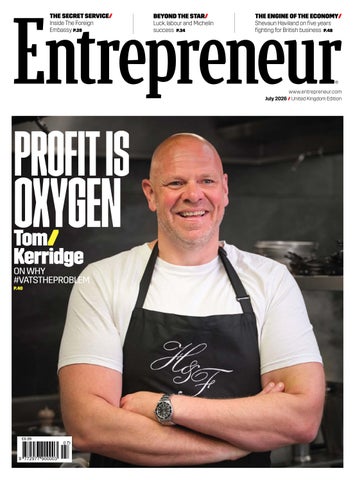
PROFIT IS OXYGEN




ODE TO BAG END
Limited Edition
Make ever y epic writing journey a cosy one Hobbiton handcraft from the makers of the world’s most magical pens.


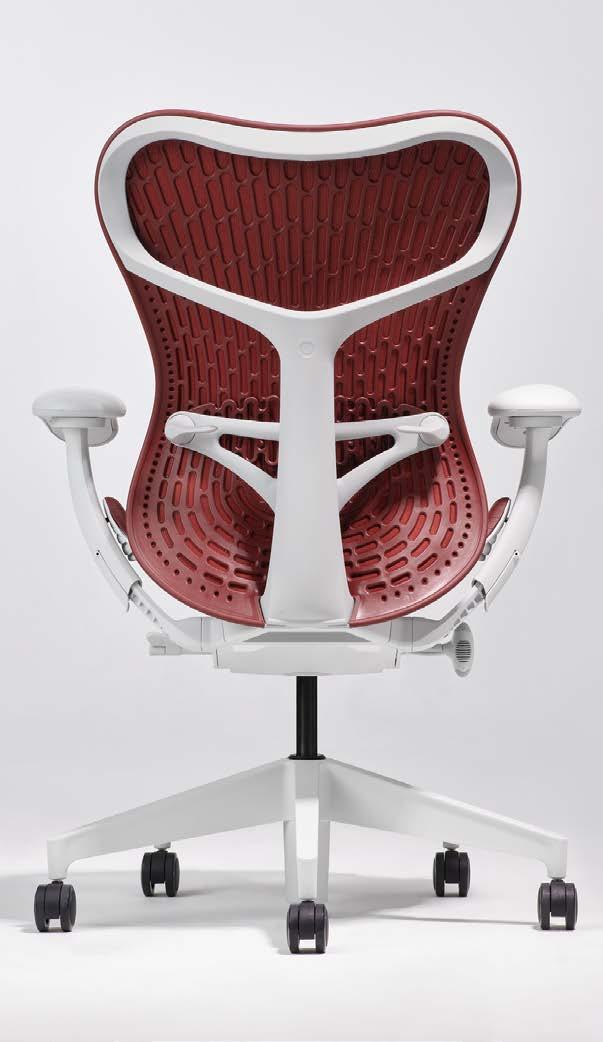
The Mirra 2 Chair just keeps getting better. How? We updated the chair so it’s 30 percent lighter than the original Mirra - and the chair’s nylon base and spine are now 100 percent recycled content. We also gave it a fresh, inspired colour palette so it can look professional, casual, or sporty. One thing that hasn’t changed is the flexible yet supportive design that allows your body to move naturally and freely - the way it was meant to move.
The Mirra® 2 Chair is turning heads again
FEATURES EDITOR Patricia Cullen patricia.cullen@bncb2b.com
CEO Wissam Younane wissam@bncpublishing.net
MANAGING DIRECTOR Rabih Najm rabih@bncpublishing.net
ART DIRECTOR Simona El Khoury
EDITORIAL TEAM Tamara Pupic, Aalia Mehreen Ahmed
MEDIA SALES MANAGER Olha Kovalova olha.kovalova@bncb2b.com
CONTENT MANAGER Viktoria Walkowiak viktoria@bncb2b.com
REGIONAL DIRECTOR Andy B
CONTRIBUTING EDITOR Omar Hamdi
CONTRIBUTING WRITERS Elmira Amdiy
Contact subscriptions@bncb2b.com to receive Entrepreneur United Kingdom every issue.
ENQUIRIES sales@bncb2b.com
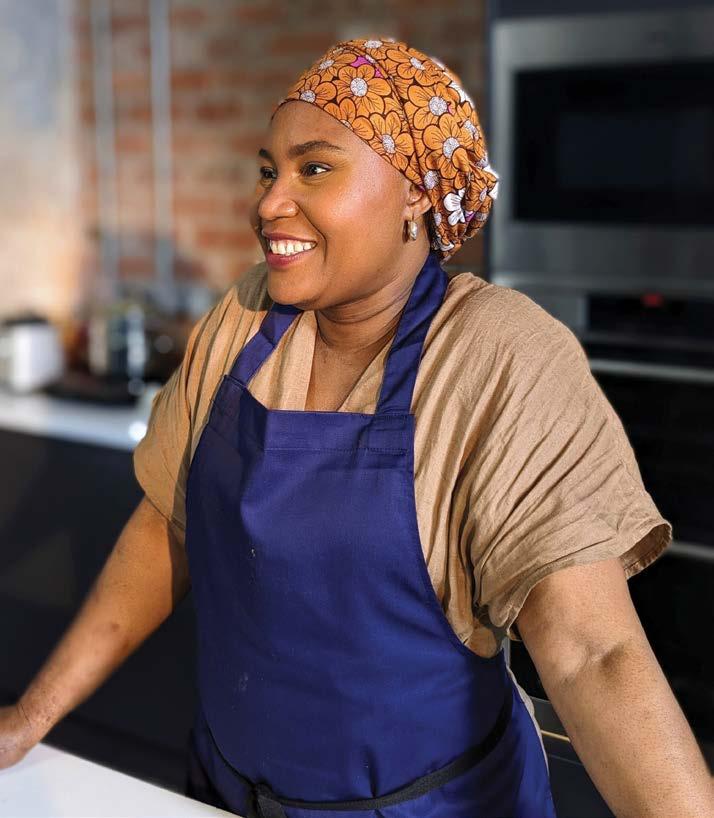
→ Adejoké Bakare, the UK's first Black female Michelin-starred chef
THE TABLES ARE TURNING
Entrepreneur United Kingdom
Hospitality is often described as the art of making people feel welcome. In reality, it is one of the UK’s most important entrepreneurial industries - a sector that employs millions, shapes communities, drives tourism, and generates billions for the economy. Yet few industries are facing more pressure. From rising costs and labour shortages to business rates, regulation, and the ongoing debate around VAT, hospitality operators are being asked to do more with less while continuing to deliver exceptional experiences. The question facing the sector is no longer whether it can survive disruption. It is how it can thrive through it. That is the focus of this special July issue of Entrepreneur UK.
We begin with one of Britain’s most respected chefs and restaurateurs, Tom Kerridge, who discusses the realities facing hospitality businesses today and why the campaign #VATsTheProblem has become a defining issue for the sector. We also meet Adejoké Bakare, the UK’s first Black female Michelin-starred
chef, whose journey represents both a personal triumph and an important moment for UK hospitality. Alberto Zandi, co-founder of Emerald Hospitality Group, talks about building brands, scaling businesses, and creating experiences that endure.
One of the most interesting things about hospitality is that it rarely stays in its lane. It appears wherever people seek connection, meaning and shared experience. It is as present in a neighbourhood restaurant as it is in a global brand, a start-up community or a centuries-old institution. That broader perspective runs throughout this issue. Payal Dalal, Mastercard Center for Inclusive Growth, and Mark Barnett, Global Head of Small and Medium-Sized Enterprises, explore how technology, artificial intelligence and inclusion are reshaping the future of small business. We also discover hospitality in unexpected places: from the Foreign Embassy’s secret-supper gatherings, where food becomes a catalyst for connection and shared experience, to Peter Gago’s stewardship of a remarkable 182-year-old Australian wine institution. Taken together, these stories reveal something larger than hospitality alone. They speak to how businesses create experiences, build trust, adapt to change and find new ways to deliver value in an increasingly complex world.
Hospitality may be the theme of this edition, but the lessons extend far beyond the sector itself. They are lessons about leadership. About resilience. About growth. And perhaps most importantly, they are lessons about people. Because whether you run a Michelin-starred restaurant, a family business, a start-up, or a global enterprise, success ultimately depends on your ability to create value for others. Hospitality simply reminds us of that truth more clearly than most.
Patricia Cullen Features Editor, Entrepreneur United Kingdom




In the Loop /
CAPITAL, COURTESY AND THE BUSINESS OF EXPERIENCE
How Alberto Zandi is building scalable hospitality, media and personal growth platforms by
PATRICIA CULLEN
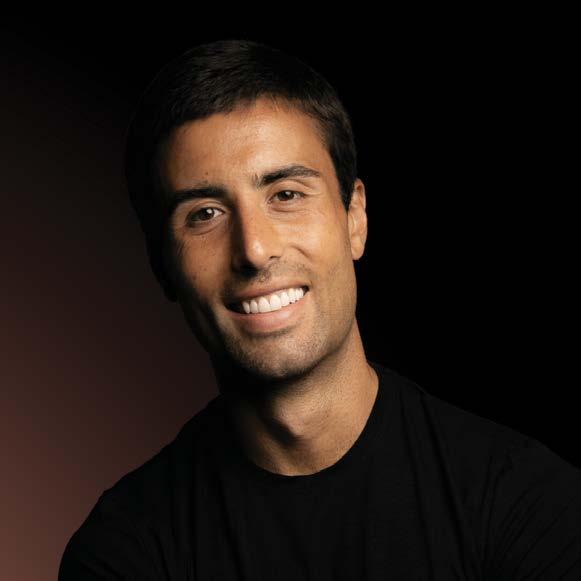
Alberto Zandi did not set out to build a hospitality group. When he arrived in the UK from Madrid at the age of 18, the plan was very different. He came to study business, finance and computer science, not to create a restaurant empire. Hospitality was never the original destination. Yet just over a decade later, Alberto is the co-founder of Emerald Hospitality Group, one of the UK’s fastest growing private companies, recognised in The Sunday Times 100. The business operates multiple luxury restaurant brands, employs hundreds of people, works with a major international financial institution, and has become one of the most closely watched hospitality groups in the country. Alberto himself has also been recognised by Forbes 30 Under 30.
The path from a young student newly arrived in London to one of the country’s most closely watched young entrepreneurs has not been linear. It has moved through finance, strategy consulting, international expansion, personal pressure, loyalty, discipline, and a series of decisions taken long before most people have even begun to understand the shape of their professional lives. What connects it all is not food alone. It is timing. It is conviction. It is resilience. It is systems. And, increasingly, it is meaning. “We never thought of ourselves as traditional restaurateurs,” Alberto says. “We are
entrepreneurs. Hospitality is the industry we chose because it is one of the most powerful ways to make people feel something.”
A beginning built on pressure
Alberto and his twin brother Arian moved from Madrid to the UK as teenagers. They studied business management and computer science, an academic path that included UCL and The London School of Economics. Both were ambitious, academically driven and used to moving quickly. But life in London became difficult early. After an initial period of financial support from their father, the relationship broke down. The brothers had to become financially independent almost overnight. Tuition fees, rent and daily life in one of the most expensive cities in the world had to be covered without the safety net they had expected. “We stopped having a relationship,” Alberto says. “I still do not have a relationship with him. It has been 12 years.” It was a painful period, but also a deeply formative one. There was no time to wait for perfect conditions. They had to work, study and survive at the same time. Alberto secured a role at a financial institution. Arian joined a telecom company. Both were still students, but they were already being exposed to the realities of corporate life. Very quickly, they realised that the traditional corporate ladder was not where they would build their future. “We quickly understood that the conventional corporate world was not for us,” Alberto says. “The bureaucracy, the pace, the layers of approval. We wanted to build, test, fail, learn, and grow at pace, not wait.” That period revealed something that would define Alberto’s next decade: pressure did not slow him down. It sharpened him.
A freezing night in London
The first major turning point came through a dinner in London. Arian introduced Alberto to Livio Bettoschi, one of the founders of a major European consulting firm with
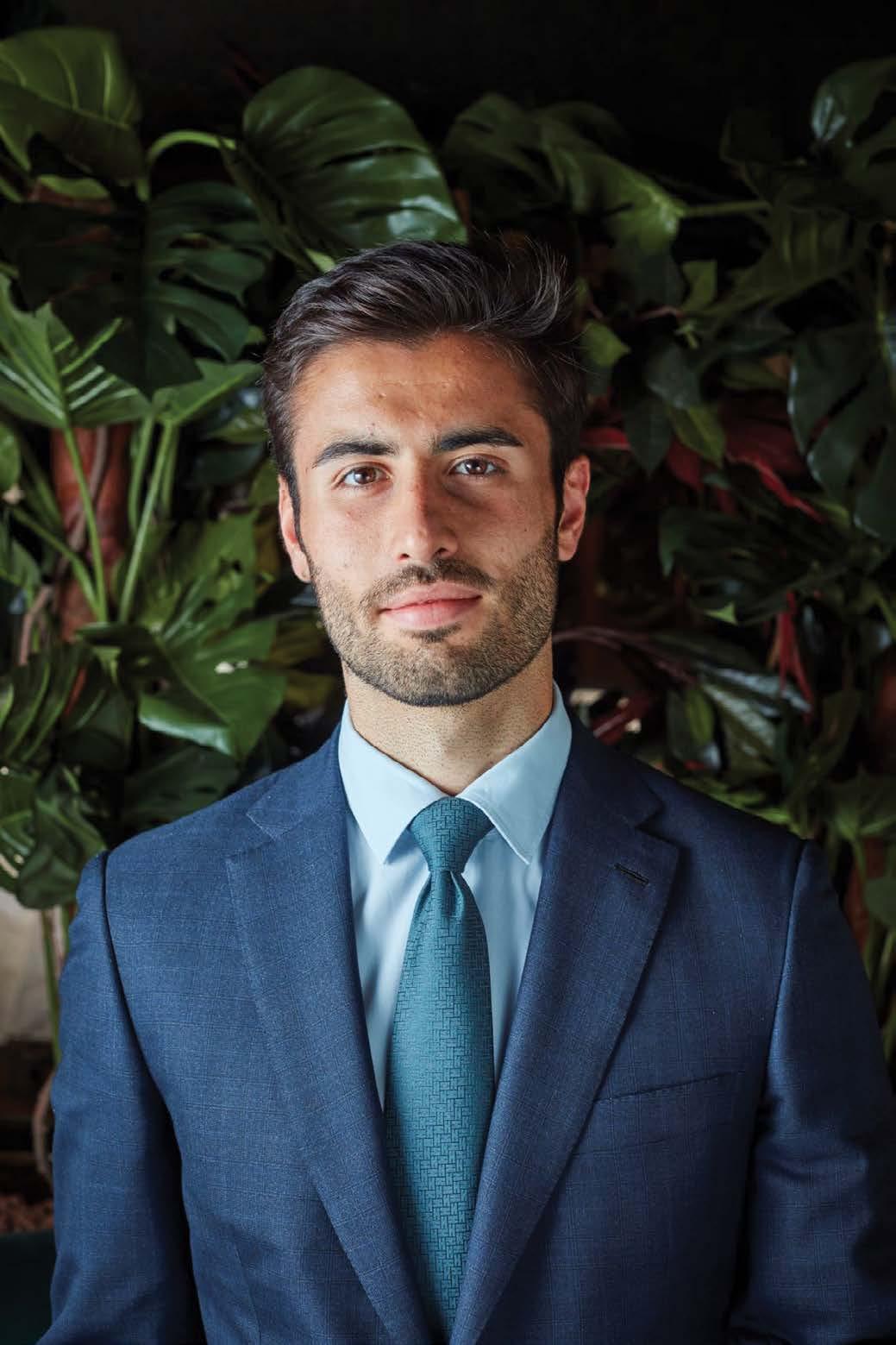
→ Alberto Zandi, co-founder of Emerald Hospitality Group
Sometimes naivety is an advantage. We did not know all the reasons it could not work, so we tried”just
In the Loop /
WE ARE ENTREPRENEURS. HOSPITALITY IS THE INDUSTRY WE CHOSE BECAUSE IT IS ONE OF THE MOST POWERFUL WAYS TO MAKE PEOPLE FEEL SOMETHING”
international operations. The meeting took place on a freezing January night. They were sitting outside. “It was freezing,” Alberto remembers. “But I was completely compelled by him. He had built something huge, but he still had the energy of someone who was building every day. I remember thinking, this is someone I want to learn from.” At the time, Livio’s consulting group employed thousands of people and generated hundreds of
millions in revenue. For Alberto, still only 19, the encounter represented more than a job opportunity. It was proximity to scale. It was proximity to ambition. It was proximity to someone who had built something real, and to all the lessons that would come with it. Within weeks, both brothers left their corporate roles and joined Livio’s firm as business analysts. The salaries were modest, but the exposure was extraordinary. They were placed inside
a global consulting environment that operated across industries, markets and continents. It was a large company, but it still had the urgency and energy of a start up. For the brothers, it became a school of strategy, structure and execution. They learned how large organisations worked. They learned how transformation projects were sold. They learned how decisions were made at the highest levels. They learned how to
handle pressure, how to listen, how to observe, and how to think commercially before speaking. And, importantly, they learned how systems and processes could change the performance of entire companies. Then came Iran.
The Iran window
In 2016, the Obama administration signalled a temporary easing of sanctions on Iran under the nuclear agreement. For international businesses, this created a rare opening into a major market that had been largely closed for decades. For Alberto and Arian, it was a strategic opportunity. “We thought there must be something there,” Alberto says. That night, they began researching the Iranian economy. They mapped key industries, senior executives, financial organisations, pharmaceutical groups and automotive companies. They built a picture of a market that was opening faster than most companies were prepared for. They presented their research to Livio. His question was simple: what do you want? Their answer was bold. They wanted to create their own company and be paid as an independent commercial partner, not as employees. They believed that if they could open the right doors, understand the market, build trust, and create commercial value, the opportunity could be significant. The request also included a substantial financial package, the kind normally reserved for very
senior executives in the corporate world. Their ask was bold, but so was the opportunity they proposed. Livio took the proposal to the company’s headquarters in Italy. Weeks later, he
are not going to be employees anymore,” he told him. “You are not paying us as individuals. You are paying a company.” Livio agreed. The arrangement proved significant
“The magic is in the balance. If you become too focused on spreadsheets, you lose the soul. If you become too focused on creativity without structure, you cannot survive”
came back with questions. How could the arrangement be justified? Why should two young analysts be given that level of responsibility? Alberto’s response was direct. “We
almost immediately. As part of the Iran opportunity, both brothers were paid handsomely, each earning high six figure compensation at an age when most of their peers were still trying
to secure graduate roles. But the money, while important, was not the real lesson. What mattered more was the understanding that commercial value could be created through timing, courage, intelligence, positioning, trust, and the ability to operate in complex markets. The brothers, still in their early twenties, began helping secure access to major organisations in Iran across multiple sectors. Several introductions developed into commercial agreements worth millions in annual revenue. It was an early lesson in confidence, commercial judgement and execution.
“We were very naive, at the end of the day we were only 20 years old,” Alberto says. “But sometimes naivety is an advantage. We did not know all the reasons it could not work, so we just tried. Most barriers to doing something are in one’s head. A young mind often sees fewer barriers than an adult mind. When I think of our ask back then, I think of it with pride but also humour, because I do not know if now I would be able to be as bold with the same request.” The window did not stay open for long. As Donald Trump’s election campaign signalled a shift in US policy towards Iran, the opportunity began to narrow. The brothers realised they needed a new path. They went back to Livio with another proposal. “You have seen our commercial skills in a market like Iran,” they told him. “Now we want to learn
In the Loop /
how to compete in mature, competitive markets like the UK. To do that, we need to become the best consultants we can be. Put us on your most strategic projects.” It was not a request for comfort. It was a request for difficulty. Livio agreed again. For the next two years, Alberto and Arian worked across international consulting projects in Dubai, Istanbul, Milan and several African markets, including Nigeria, Ghana, and Zambia. The work focused mainly on telecoms digital transformations. It was an education in systems at scale. It was also a period that built a loyalty in Alberto that has stayed with him. He speaks about Livio not only as a professional influence, but as someone who gave two young men an opportunity before the world had given them credibility. That sense of loyalty, to people who believed early, would later shape the way Alberto and Arian built teams, partnerships and businesses.
London and the hospitality thesis
When the brothers returned to London, the context had changed again. In emerging markets, they had learned how to identify opportunities quickly. In consulting, they had learned how large companies operated. In mature markets, they now needed to understand how to build something of their own. They began selling consulting services into companies they already knew. Commercially, it
worked. But emotionally and creatively, it was not enough. They wanted to build something tangible. They began studying industries through the same consulting lens they had used elsewhere. One
chefs,” Alberto says. “It has systems.” That insight became the foundation of Emerald Hospitality Group. Alberto and Arian believed there was an opportunity to bring corporate discipline, data, structure and systems
“One of the most important things I have learned is that you can create something extraordinary from a very ordinary place”
pattern became clear. Across sectors, the most valuable companies were no longer simply selling products or services. They were selling experiences. Consumers wanted emotion. They wanted consistency. They wanted identity. They wanted brands that made them feel part of a world. At the lower end of hospitality, brands such as McDonald’s and Starbucks had mastered operational consistency. They could deliver the same experience almost anywhere in the world. At the higher end, luxury restaurants had mastered creativity, atmosphere and taste, but rarely scalability. Most high end restaurants were still single site businesses, often led by chefs, intuition and emotion rather than systems, data and operational infrastructure. “What McDonald’s has is not
into luxury hospitality without destroying the emotion that makes restaurants magical. They did not want to remove the art from hospitality. They wanted to make the art scalable.
Emerald Hospitality Group The first Emerald Hospitality Group restaurants were deliberately different from each other. Zuaya brought Latin American energy and immersive design to Kensington. Como Garden was inspired by the romance and elegance of Lake Como. El Norte introduced a luxury Spanish concept in Mayfair. Riviera, in St James’s, created a multi level restaurant inspired by the South of France. The strategy was not to build one restaurant and replicate it endlessly. It was to build a portfolio of distinct brands, each designed for a different customer, occasion and real
estate opportunity. This was strategic. “One of the biggest barriers to scaling restaurants is real estate,” Alberto explains. “If you only have one brand, you need to find exactly the right site for that brand every time. But if you have several brands, you can look at an asset and ask which concept fits best.” That flexibility became one of the group’s greatest strengths. Emerald Hospitality Group now employs hundreds of people, operates several brands, and is expanding through new openings and international projects. The group is also developing larger scale concepts, including major multi concept venues backed by significant investment. The company is projected to generate over £20m in revenue, with what Alberto describes as healthy margins for an industry known for pressure, volatility and low profitability. But his language remains more strategic than culinary. “We are entrepreneurs,” he says. “Not restaurateurs.” That distinction matters. For Alberto, the restaurant is not only a place to eat. It is a carefully designed system of experience, memory, emotion, operations, finance, people and brand.
The balance between art and business
Emerald’s growth is built around an idea that Alberto returns to often: hospitality lives at the intersection of business and art. Too much business, and the guest experience becomes cold.
Too much art, and the business becomes financially unsustainable. “The magic is in the balance,” he says. “If you become too focused on spreadsheets, you lose the soul. If you become too focused on creativity without structure, you cannot survive.” This balance is also what allowed the group to attract institutional support. In an industry where many operators struggle with consistency and financial discipline, Emerald presented hospitality through the language of infrastructure, reporting, systems, controls and scalable brands. That approach helped convince a major financial institution to support the group’s next phase of growth. It also shaped the way Alberto thinks about leadership. At 30, he is no longer simply building restaurants. He is building a company that can operate beyond him. That has meant strength-
ening the group’s headquarters, hiring senior leaders across operations, HR, finance and marketing, and moving himself gradually from day to day operational involvement into a more strategic role. For many founders, that transition is difficult. For Alberto, it is necessary. “If the business only works when I am in every detail, then I have not built a business,” he says. “I have built a job for myself.” It is a revealing line. Behind the ambition is a discipline that is sometimes less visible than the restaurant openings, the press coverage, or the awards. Alberto is not only interested in building what can be seen. He is focused on building the infrastructure beneath it. That is where he believes real longevity is created.
The human cost of building Success has come quickly, but Alberto
does not speak about it as if it has been easy. He talks openly about the emotional intensity of building a business from a young age. A company in its early stages, he says, is a living thing. It changes daily. It gives you hope in the morning and anxiety by the evening. It can make you feel powerful and fragile on the same day. One of his biggest personal lessons has been learning not to identify completely with the business. “In the early stages, a start-up is a living thing,” he says. “It has ups and downs every day. If you identify yourself completely with it, you become emotionally unstable. I had to learn that the business is one thing, and I am another.” That separation, he believes, has made him a better decision maker and a healthier person. It has also made him more reflective about success. Recognition from Forbes and
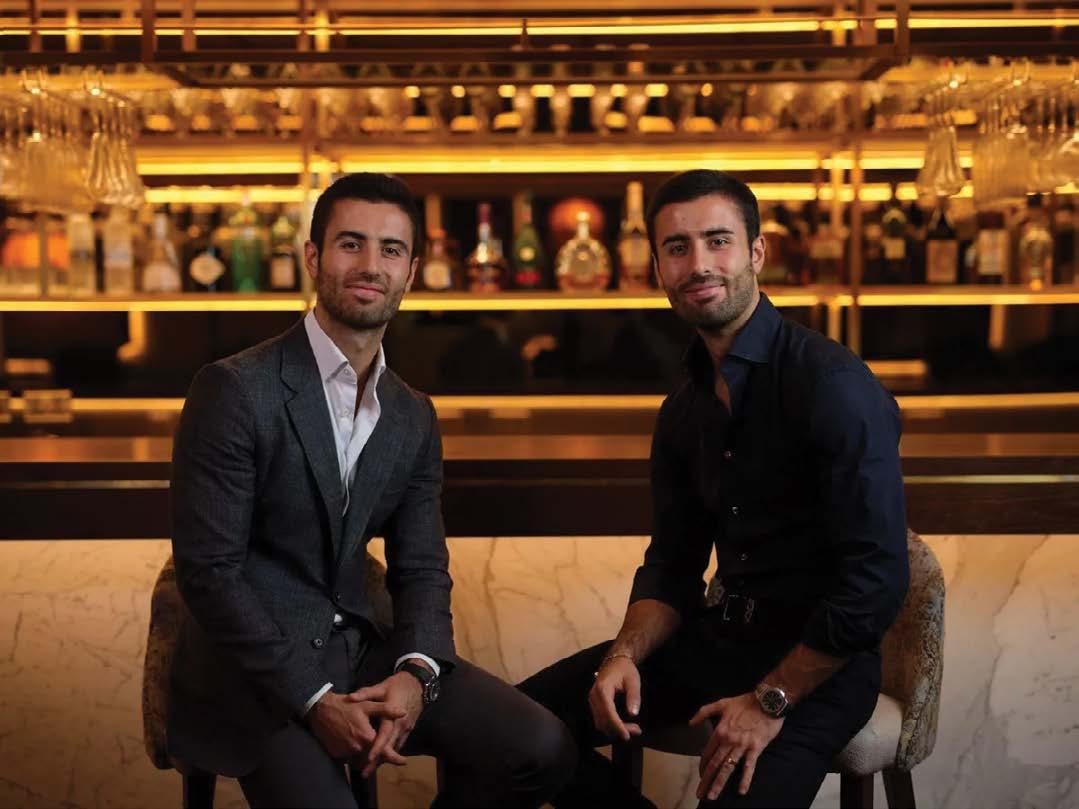
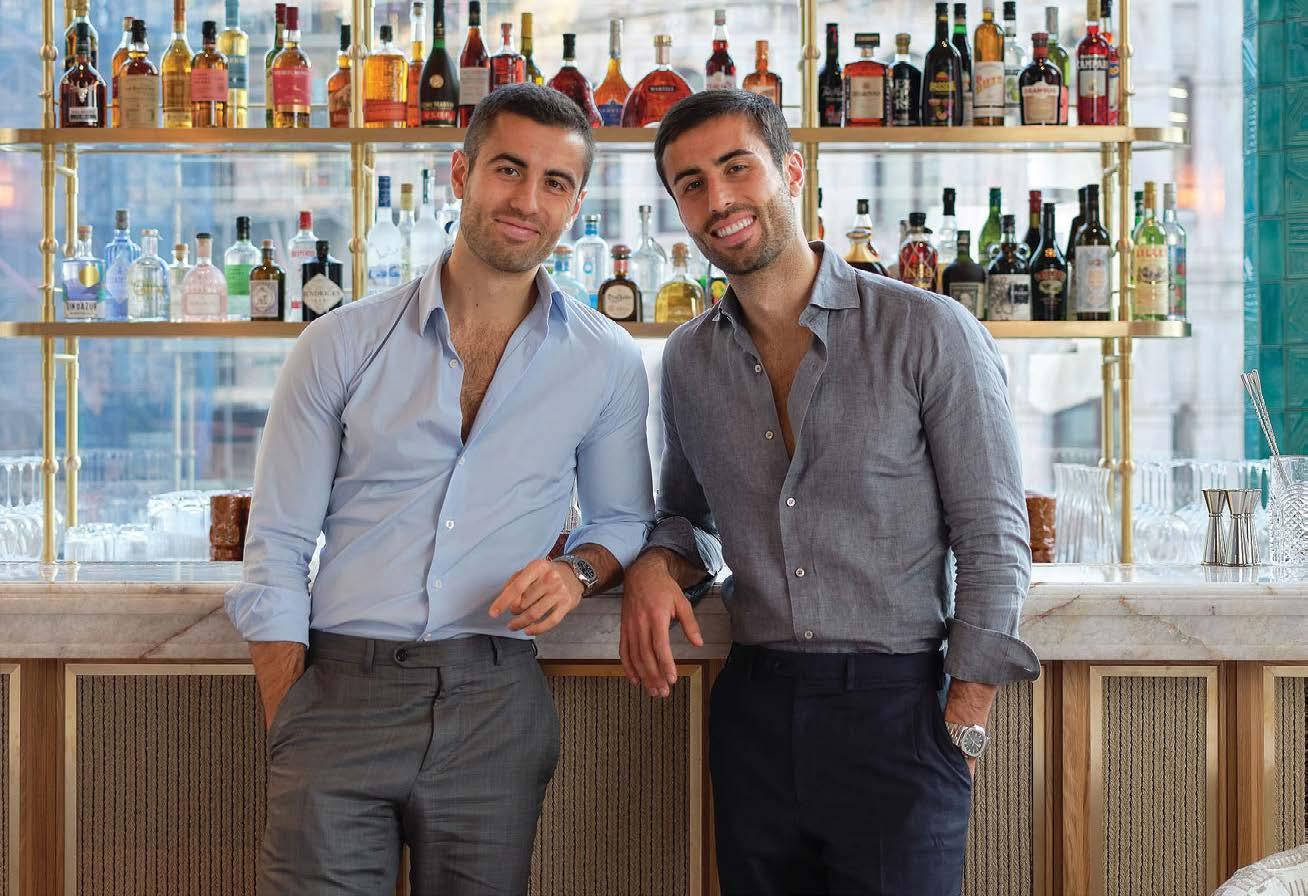
→ Alberto and Arian Zandi, cofounders of Emerald Hospitality Group
In the Loop /
The Sunday Times matters, but Alberto is careful not to confuse awards with identity. They are markers. They are not the destination. “The danger is thinking that once you get there, everything will make sense,” he says. “But there is always a new there. There does not really exist. There is only here.” It is this more human understanding of ambition that would eventually become central to his next major project.
Thriving Minds
While Emerald Hospitality Group expanded physically, another part of Alberto’s life began expanding digitally. In 2024, he launched a podcast originally focused on early stage founders, interviewing entrepreneurs recognised on Forbes 30 Under 30. The idea was born from a personal question. What is success? And why had the world’s definition of it become so unhealthy? “I felt the definition of success had become distorted,” he says. “Too much money, too much speed, too much comparison. People were building a very unhealthy relationship with ambition before they had even started.” The podcast quickly grew. Within a year, it had nearly 200,000 subscribers. It later evolved into Thriving Minds, expanding beyond entrepreneurship into health, neuroscience, nutrition, sport, psychology, entertainment, performance and personal growth. The mission became broader and more emotional: to help people unlock the best version of themselves. Today, Thriving Minds has surpassed 1 million subscribers and is one of Europe’s fastest growing personal growth podcasts. Alberto has interviewed some of the world’s leading founders, doctors, scientists, athletes, actors, and artists. The show has become, in his words, “a conversation about the human behind the success.” Often, the episodes move beyond achievement into vulnerability, identity, pressure, failure, relationships, health, trauma and meaning. “Sometimes I think Thriving Minds is more of a therapy room than a podcast,” he says. “People come in to talk about success, but what often matters most is the cost, the pain, the lessons and the humanity behind it.” The podcast has also led to a book deal with Simon & Schuster for a forthcoming work on entrepreneurship and personal development. For Alberto, the media platform is not separate from his entrepreneurial identity. It is the next expression of it. At Emerald Hospitality Group, we reach hundreds of thousands of guests annually, after eight years of very hard work. At Thriving Minds, we reach millions, after two years of very hard work. Both are systems of attention. Both can create memories. Both can make people feel less alone.
From hospitality to human growth
There is a through line between Emerald Hospitality Group and Thriving Minds. In hospitality, Alberto creates spaces where people can escape, connect and remember. In media, he creates conversations where people can reflect, learn and grow. Both are built around experience. Both are built around
emotion. Both are built through systems. “Some of the best memories of my life are around a dining table,” he says. “That is why hospitality matters. You are not just serving food. You are creating moments people remember.” But his ambitions are now broader than business alone. Health, wellness, mental health and personal growth are becoming central to the next phase of his life and work. He still speaks with the intensity of a builder, but with a more reflective understanding of what success can cost. The younger Alberto wanted to build. The current Alberto still wants to build, but he also wants to understand why. This evolution has not made him less ambitious. It has made the ambition more precise. He wants Emerald Hospitality Group to become a leading international hospitality platform. He wants Thriving Minds to become the number one personal growth podcast in the world. He wants his book to help young entrepreneurs build healthier relationships with success, failure and themselves. The scale remains. But the purpose has become clearer.
The ordinary place
The mythology of entrepreneurship often begins with certainty. Alberto’s story begins with pressure, loyalty, naivety, hard work and the willingness to try. No family safety net. No hospitality background. No perfect plan. Just two brothers who moved quickly, learned aggressively and kept placing themselves in rooms where they were younger and less experienced than everyone else. “One of the most important things I have learned is that you can create something extraordinary from a very ordinary place,” Alberto says. “No money, no network, no perfect background. Just a dream, and the willingness to work until something changes.” That belief now sits at the centre of his work. Emerald Hospitality Group continues to expand, with new restaurants and international openings ahead. Thriving Minds continues to grow, with the ambition of becoming the number one personal growth podcast in the world. His book will add another layer to the same mission. At 30, Alberto Zandi is still building. But what he is building has changed. It is no longer only about business, revenue or recognition. It is about creating systems that help people feel something. A table that helps someone forget the world for a few hours. A conversation that helps someone understand themselves better. A business that gives people jobs, training, purpose and opportunity. A platform that reaches millions with ideas that can change how they live. The story began with a 19 year old sitting outside on a freezing London night, saying yes to something he did not fully understand. More than a decade later, that instinct remains. “We were very naive,” he says. “But we just did not quit.” And perhaps that is the real system behind everything he has built. Not certainty. Not perfection. But movement. The courage to begin before the blueprint exists. And the discipline to keep building until the world catches up.

INTO NEW WORLDS
ENTREPRENEUR UK: BUSINESS BREAKFAST
Where leading founders share what it really takes to succeed
by ENTREPRENEUR UK STAFF
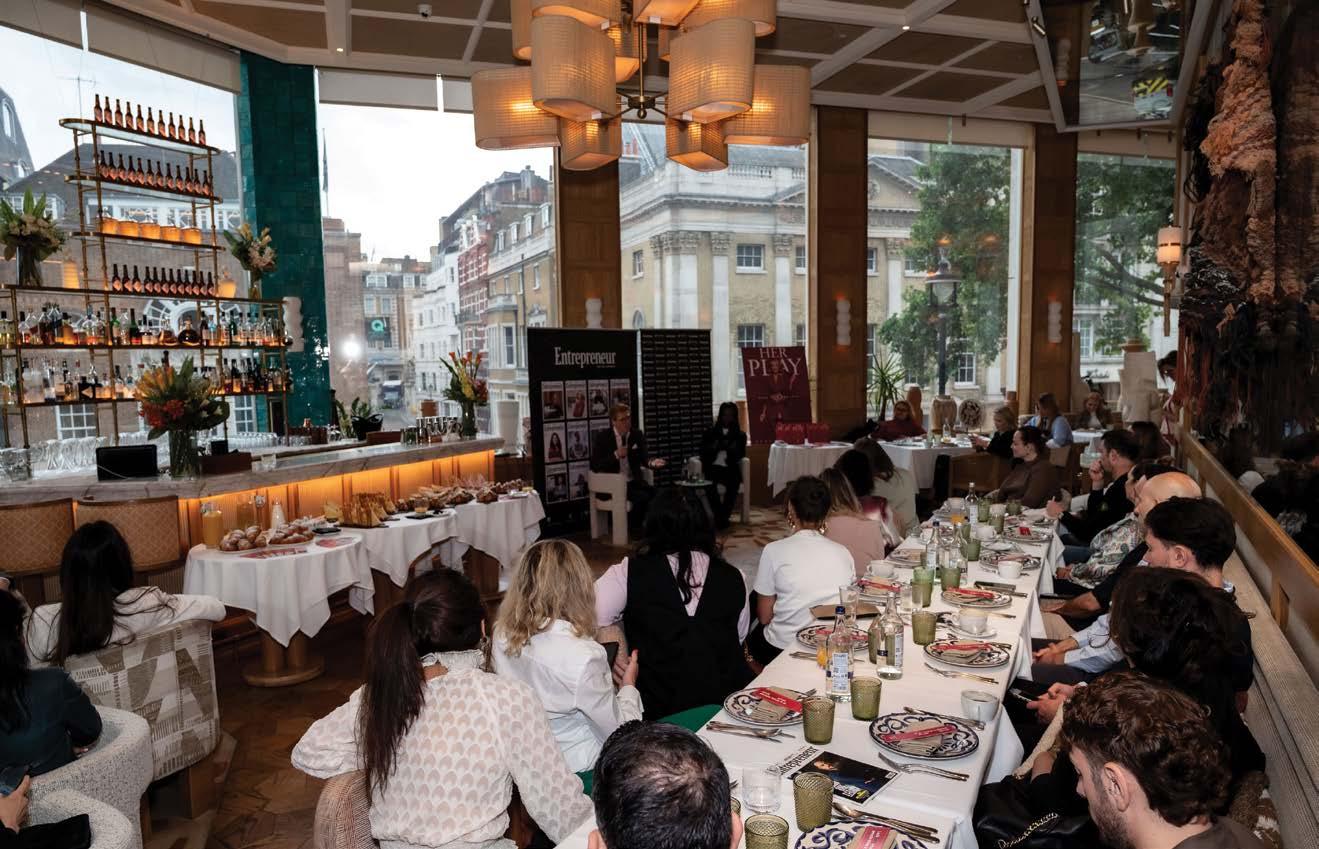
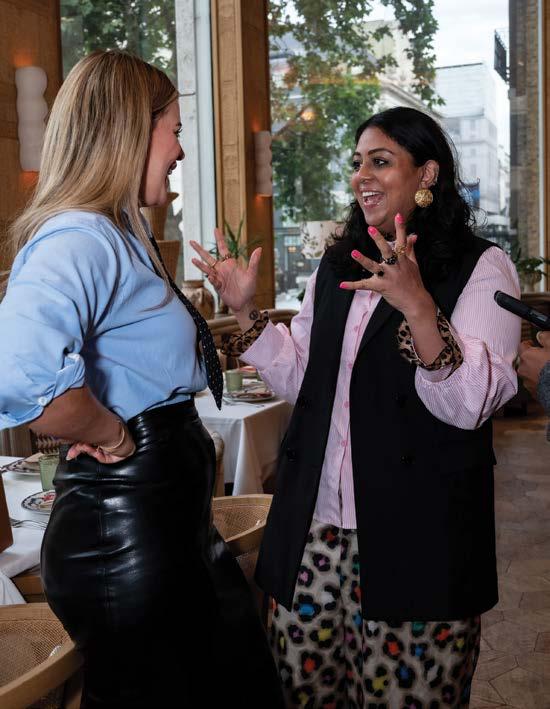
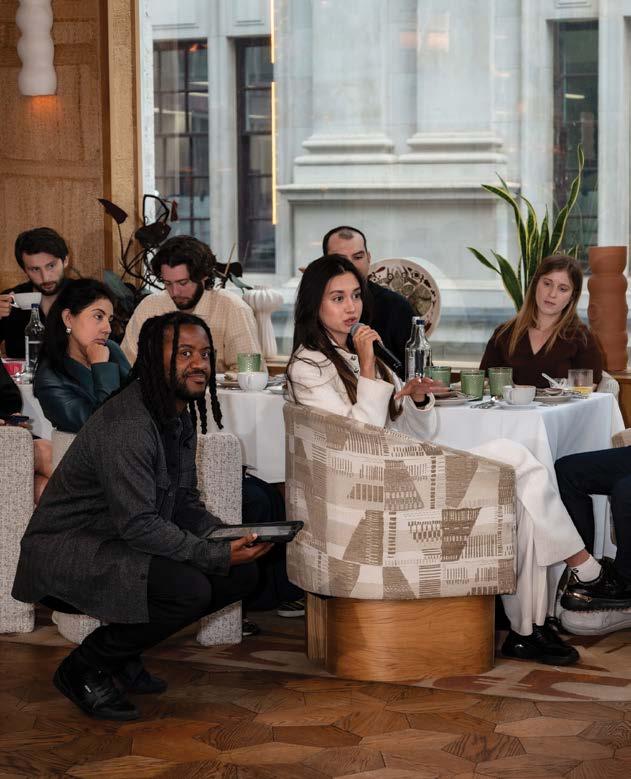
Riviera, a Côte d’Azur-inspired restaurant in St James’s, London, designed to bring the feel of the South of France to the city, set the scene for Entrepreneur UK’s Business Breakfast, where approximately 40 founders, investors and business leaders gathered to discuss the realities of building companies in 2026.
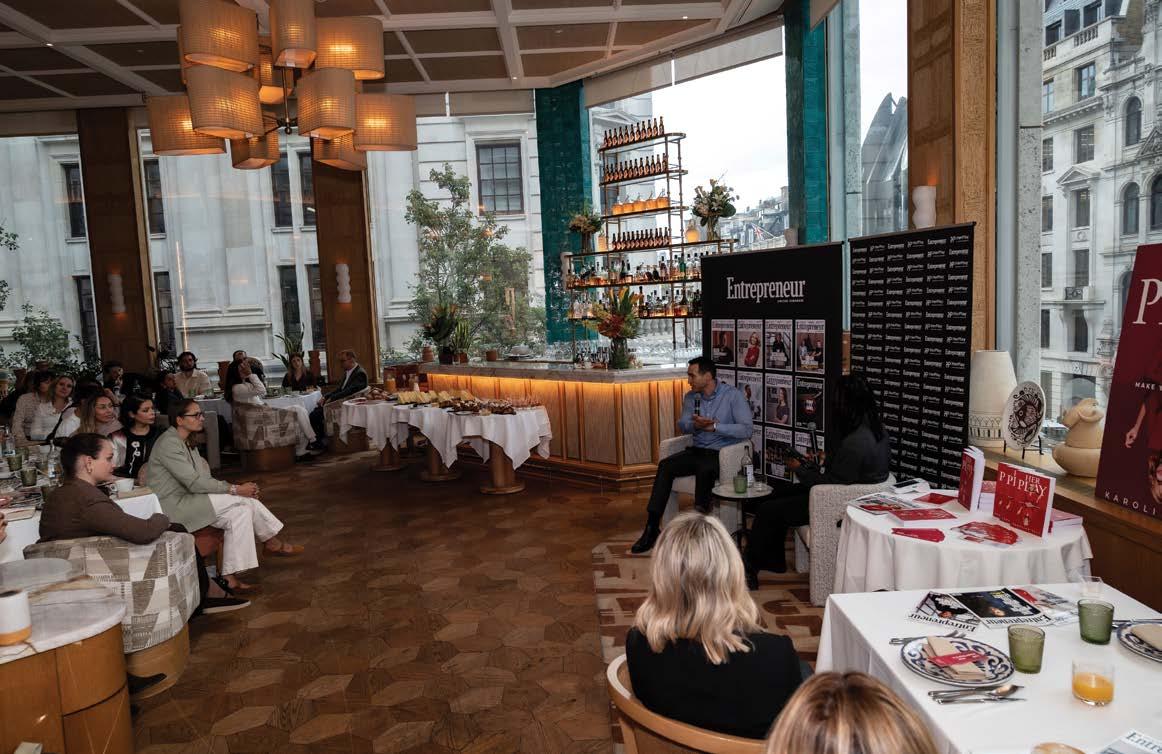
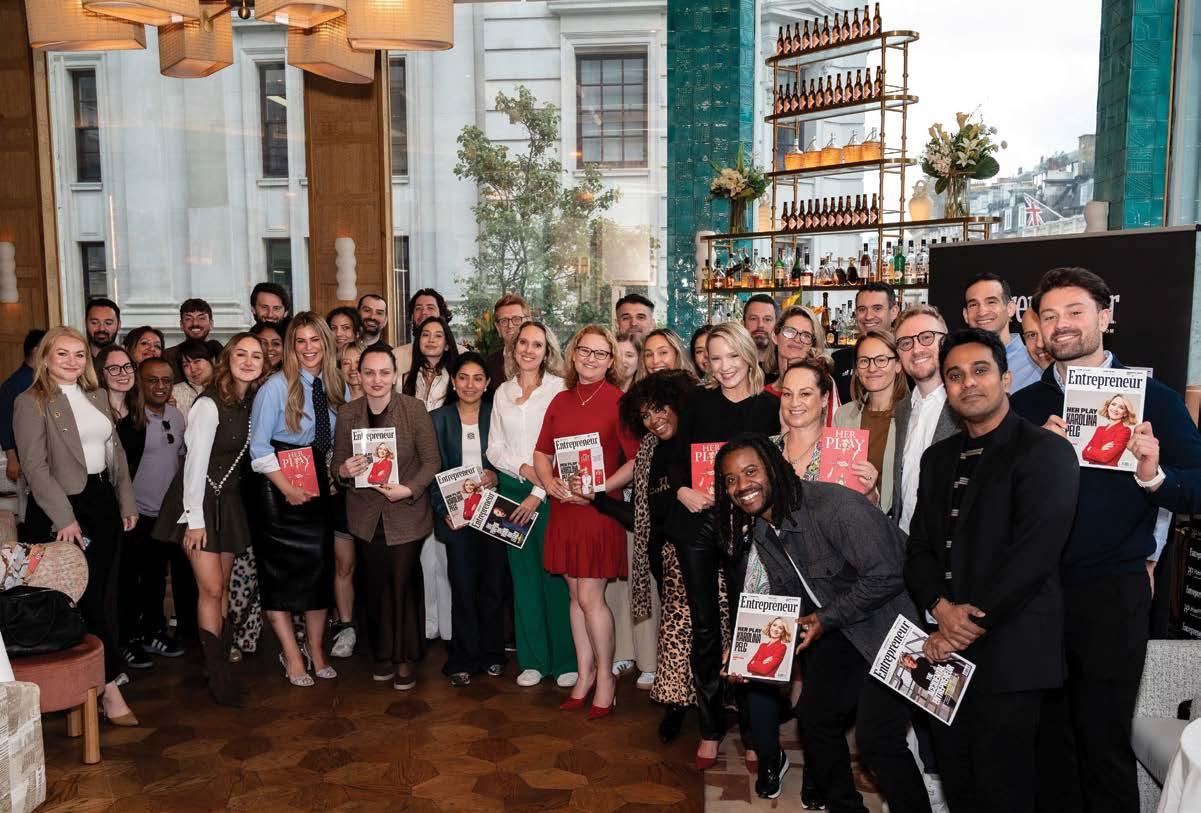
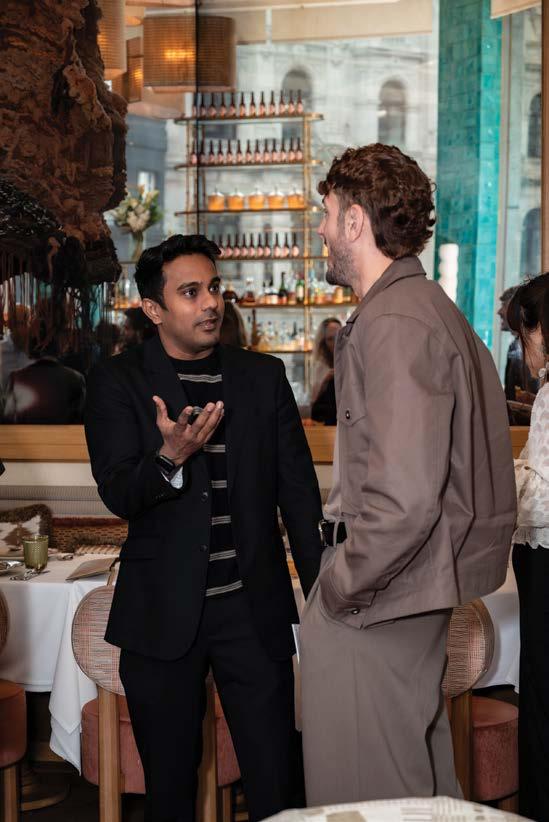
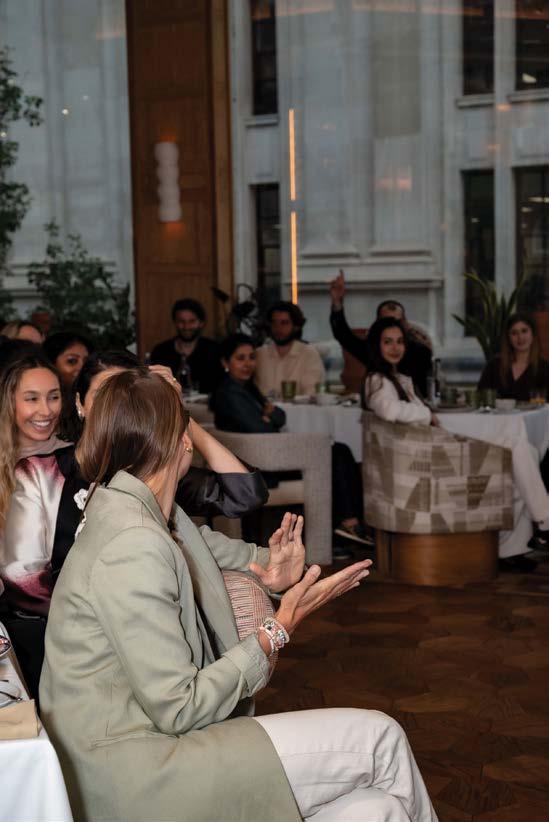
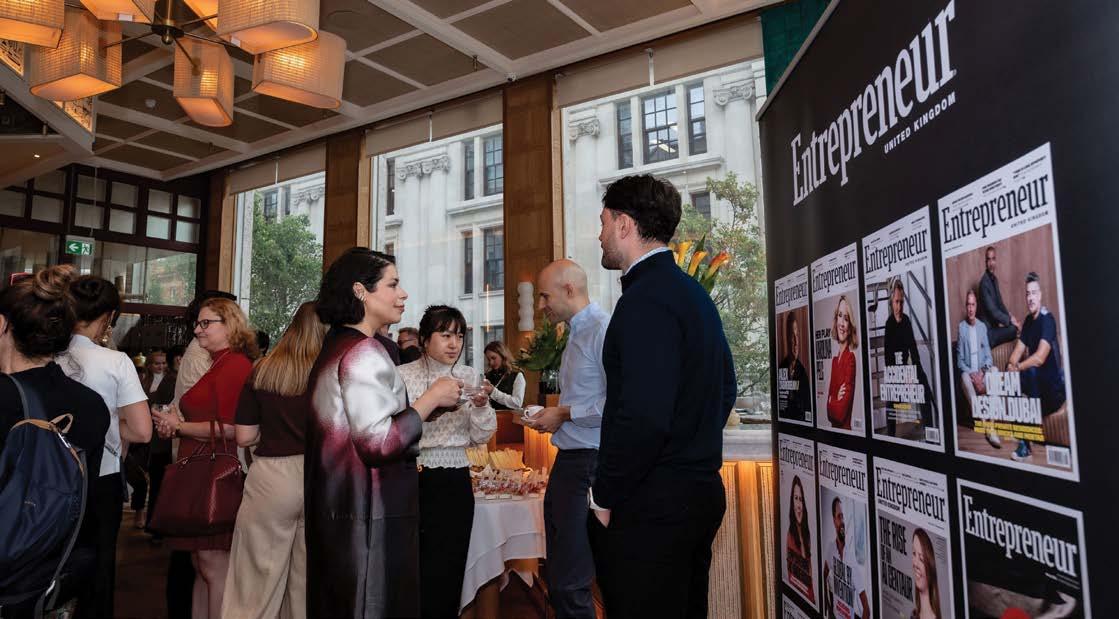
→ Entrepreneur UK’s Business Breakfast brought together leading business voices for discussion and networking
Hosted by investor and entrepreneur Andy Ayim, the conversation quickly moved beyond croissants and surface-level optimism into the mechanics of endurance, perception and decision-making under pressure. The four speakers included Nir Eyal, behavioural scientist and author of Beyond Belief, which explores how to replace limiting beliefs with more empowering ones; Karolina Pelc, author of Her Play: Make Your Own Luck, focused on creating opportunity rather than waiting for luck; Amelia Sordell, founder of personal
branding agency Klowt; and Richard Moore, entrepreneur and founder of a multi-million-pound business - all of whom offered a shared view of entrepreneurship shaped less by theory than by pressure, conviction, and the realities of building in uncertain conditions.
Eyal, author of Beyond Belief, which explores how core beliefs shape behaviour and performance, opened with a familiar but uncompromising theme: perseverance.
“The number one defining trait, and this is what the studies verify, is persis-
“PERSEVERANCE DOESN’T GUARANTEE SUCCESS, BUT QUITTING GUARANTEES FAILURE”
In the Loop /
tence,” he said. “That perseverance doesn’t guarantee success, but quitting guarantees failure.” He rejected the idea of ambition as linear progression. “We tend to think of motivation as a straight line,” he said. “But it can’t be that
“
simple.” Most founders, he suggested, already understand both the goal and the behaviour required - the challenge lies in sustaining it when conditions shift. “We already know the benefits that we want. We know what we want. We know the behaviour because these days there are no secrets.” Pelc spoke about the emotional cycle of building a company. “The entrepreneur journey is a rollercoaster,” she said. For her, what separates enduring founders is not execution alone, but conviction in the underlying idea. “What will always separate standout founders is their passion and belief in what they do,” she said.
What will always separate standout founders is their passion and belief in what they do” “
Your job is not to be an influencer. Your job is to build a marketing channel that brings business into your business”
The discussion remained grounded in the realities of building under pressure, with founders returning repeatedly to questions of resilience, perception and long-term survival. Sordell shifted the conversation to visibility and control in a founder-led economy. “I share about 10% of who I am
In the Loop /
online,” she said. “You feel like you know me, but you only see a fraction of my life.” That partial visibility, she argued, builds commercial trust rather than undermining it. “That creates an effect where people feel like they know you and therefore trust you - and want to buy from you.” She drew a clear line between authenticity and overexposure. “Your job is not to be an influencer. Your job is to build a marketing channel that brings business into your business.” And, she added: “If I went on Instagram crying about how hard my day was, are you really going to come and spend £7,500 on a workshop with me? Probably not.” Moore credited his growth to positioning himself as a trusted voice in his sector, arguing that clarity drives followership and commercial traction. “When you give people clarity and a solution, they want to be led,” he said. Follow Entrepreneur UK on LinkedIn and Instagram to stay updated on future Business Breakfasts.

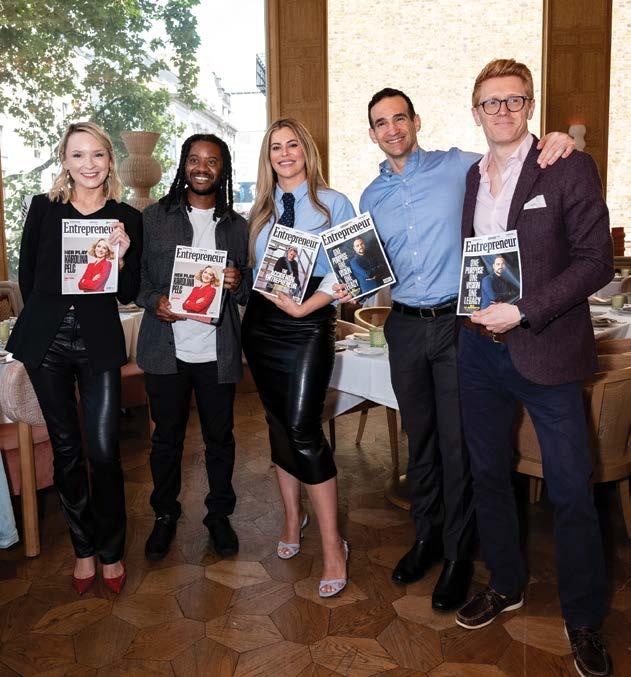
→ Speakers and host at the Business Breakfast: Karolina Pelc, Andy Ayim, Amelia Sordell, Nir Eyal and Richard Moore

The Back Office Disappears
by PATRICIA CULLEN

The hospitality sector is used to pressure. But for small and medium-sized (SME) businesses in the UK, the combination of rising labour costs, stubborn inflation and chronic staffing shortages has created something closer to attrition than adjustment. For Payal Dalal, Mastercard Center for Inclusive Growth, and Mark Barnett, Mastercard’s Global Head of Small and Medium-Sized Enterprises , those pressures are also accelerating a more fundamental shift in how small businesses operate in the age of artificial intelligence (AI).
Speaking about the future of hospitality SMEs, Barnett is blunt about the immediate reality. “The minimum wage is up, food prices are up,” he says, “so it’s about doing more with less.” Barnett argues the sector is “in the middle of a tech revolution,” one that will disproportionately benefit smaller firms before larger competitors fully catch up. The catalyst, in his view, is AI. Not as a distant abstraction, but as an operational tool already beginning to reshape demand and behaviour. Recent Mastercard Economics Institute research suggests consumers are already using AI tools to plan more “experience-led hospitality journeys” -
Mastercard bets on a radical reinvention of SME business life.

“ from restaurant choices to travel planningforcing businesses to adapt to increasingly algorithmically shaped customer expectations. However, the more immediate transformation, Barnett argues, is internal. “This idea of being able to do more with less is going to be really important,” he says. “AI can help give back hospitality owners and workers more time to do the things they want to be doing - serving customers.” In his vision, the “back office” largely disappears into automation. Bookkeeping, reconciliation, fragmented software systems - all of it increasingly handled by AI agents. “Unless I’m in the back office running disparate operational systems, reconciling things or doing paperwork, it could all be done by
The minimum wage is up, food prices are up, so it’s about doing more with less”
agents,” he says, “or it will very soon be done by agents.” The implication is not just efficiency, but a restructuring of daily working life in SMEs, where owners often act as marketer, accountant, HR manager and customer service lead simultaneously. Barnett recalls meeting a restaurant owner who had consolidated payments, operations and administration into a single fintech stack - with one exception. “In this case, he still needed a relationship with a traditional bank for customers paying in cash,” he says.
Trust in a digital economy
If Barnett frames the opportunity, Dalal focuses on the friction slowing digital adoption. For many small businesses, she says,
↑ Payal Dalal, Mastercard Center for Inclusive Growth

WE DID A STUDY ACROSS 2,500 SMALL BUSINESSES ACROSS EUROPE. THEY UNDERSTOOD THERE WAS A DIGITAL IMPERATIVE, BUT VERY FEW HAD TAKEN ACTION”
the issue is not awareness of digital tools, but confidence in them, according to recent research titled, The digital transformation of European micro-businesses. “We did a study across 2,500 small businesses across Europe,” she says. “They understood there was a digital imperative, but very few had taken action.” Cost is part of the explanation. But a more significant barrier, she argues, is trust: a fear that digital systems will extract more value than they deliver. ‘Do I want all of my data in these systems?’ ‘What value is it going to bring to me versus what value is it going to extract from me?’ are common concerns. Mastercard’s response, she says, has been less about technology and more about mediation. That includes curated toolkits for SMEs, peer-to-peer learning networks

and hands-on technical support designed to reduce the risk of adoption. During the pandemic, she notes, UK government funding for digital trans-
↑ Mark Barnett, Mastercard’s Global Head of Small and Medium-Sized Enterprises
FOR A SMALL BUSINESS OPERATING ON SUPERTHIN MARGINS, THOSE EXTRA 13 DAYS CAN BE A MATTER OF LIFE AND DEATH”
“ he says, pointing to Mastercard whitepaper research, “Cybersecurity through the SME lens” suggesting that nearly half of SMEs have experienced a cyberattack, with a significant proportion failing to recover. “Nearly one in five businesses that were attacked were not trading a year later.” In response, Mastercard has developed tools that scan businesses for vulnerabilities and provide automated recommendations - a kind of “virtual chief information security officer” for small firms lacking internal IT teams. For Barnett, AI is either an equaliser or a risk amplifier, depending on how it is deployed, and both executives return repeatedly to AI not as a single tool but as an operating environment. Barnett envisions a near future in which SME owners can interrogate their businesses in natural language: How many days can I survive? Where can I improve working capital? Should I be chasing payments? Dalal’s emphasis is slightly different: AI makes things significantly easier for SMEs if introduced in the right way, with a focus on outcomes - how it helps small businesses save time or make more money - and on improving the wider ecosystem of platforms and institutions that serve them. She cites a case in Indonesia where machine learning and alternative data reduced a loan approval process from two weeks to 24 hours. “For a small business operating on super-thin margins,” she says, “those extra 13 days can be a matter of life and death.”
formation was available, but uptake was limited. “Small businesses didn’t know where to start and they didn’t trust the system,” she says. The solution, in Mastercard’s framing, is not simply financial incentives but hands-on support through implementation - pairing businesses with others who have already adopted systems such as CRM or inventory management tools.
Payments as infrastructure - or something more If digital tools are reshaping operations, payments remain the connective tissue. Barnett rejects the idea that payments are merely infrastructure, describing the shift from cash-based trading to digital payments as transformative not just for transactions, but for business intelligence itself. Once payments are digitised, they generate data that allows small firms to better understand receivables, cash flow and creditworthiness. “You start to see receivables in a digital form,” he says. “And they trust that a lot more than written paper.” For Mastercard, that data layer is central to its value proposition - particularly in cross-border commerce, where Barnett notes that digital networks allow SMEs to operate across multiple currencies and markets almost seamlessly. The secret sauce for SME growth, according to Dalal, lies in three things: access to capital, going digital, and being connected to the networks that power the modern economy, which are the primary focus of Mastercard Strive, the Center’s global small business program. She adds that research from the Mastercard Economics Institute shows travellers are already using digital and AI tools to optimise decisions, particularly around price, route and value. “That will only accelerate.”
The cyber threat shadowing small business growth Barnett adds another dimension to the SME equation: cybersecurity. “It’s the number one concern that comes up,”
The next five years
Products and services are often designed for larger businesses, but Mastercard says it also focuses on smaller firms - feeding insights from the ground back into the system so SMEs are better served and the UK can “leapfrog” in its digital transformation. Barnett predicts a fundamental shift in how consumers interact with hospitality and travel. Planning a trip, he suggests, will increasingly happen through AI systems which will curate options, optimise prices and assemble full itineraries. Mastercard is also moving in that direction, bringing enterprise capabilities to small businesses: do you need a chief financial officer, a chief marketing officer, or a chief security officer? Today, a small hospitality owner has to be all of these things themselves. “The whole process will be incredibly simple,” he says. “Almost everything will be done by AI agents.” Payments, however, will remain the point at which human intent reenters the system. Dalal adds a note of caution about how that future is built. “What we don’t want is agents prioritising really big hotels,” she says. “We want small businesses to have a chance to compete.” For all the confidence in automation, both return to the same constraint: adoption is uneven and trust remains fragile. SMEs, they argue, are still moving from analogue systems to digital ones, before they can fully enter an AImediated economy.
THE SECRET SERVICE
Inside The Foreign Embassy
by PATRICIA CULLEN
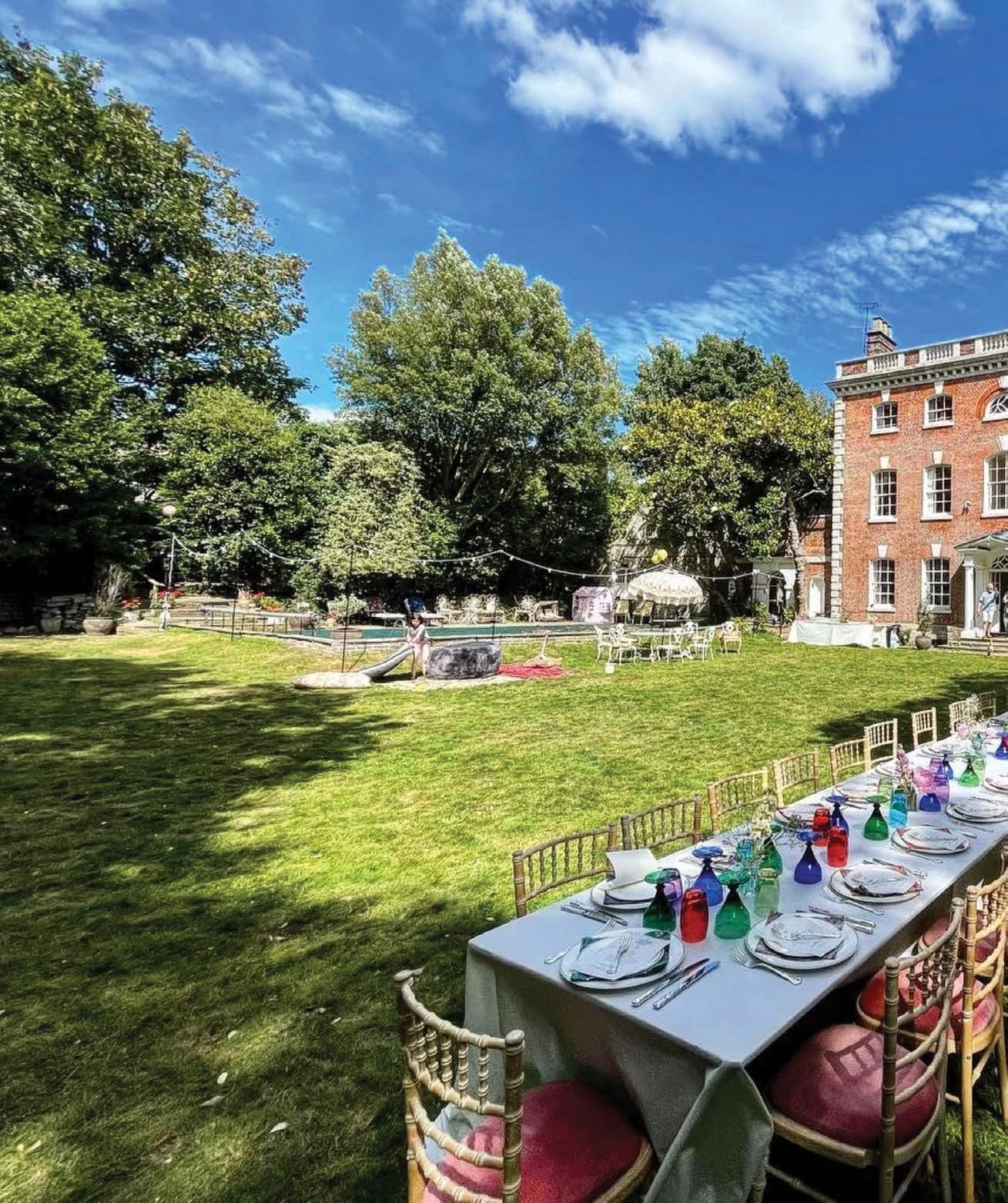
In a hospitality landscape squeezed by rising costs, shifting tastes, and shrinking attention spans, The Foreign Embassy doesn’t compete with restaurants - it redefines what dining out can be. At its core is exceptional, high-end food, reimagined as part of a wider experience where storytelling and setting amplify every plate. Part supper club, part travelling theatre, part design experiment, it turns fine dining into something immersive, where spaces become worlds in themselves. From secret locations to long-table feasts, each experience is unrepeatable by design. Founded by Lori Di Francesco, Dave Fretton and Jo Forel, Entrepreneur UK speaks with Lori to find out more…
→ Artist Rob Montgomery’s 50th birthday
B/The Foreign Embassy
Who and what is The Foreign Embassy, and what idea is behind it?
The Foreign Embassy is a collective that tells stories through food and brings people together around a table to eat new things and meet new friends. We throw one-off feasts in historic buildings and also cater for private clients, helping to bring their events to life. I have a background as a designer and event organiser along with a serious obsession with food, but when I moved to London, I entered the restaurant business. I owned hospitality businesses, and using them as a platform, I began to blend my skills to start a successful creative food events company, organising immersive culinary
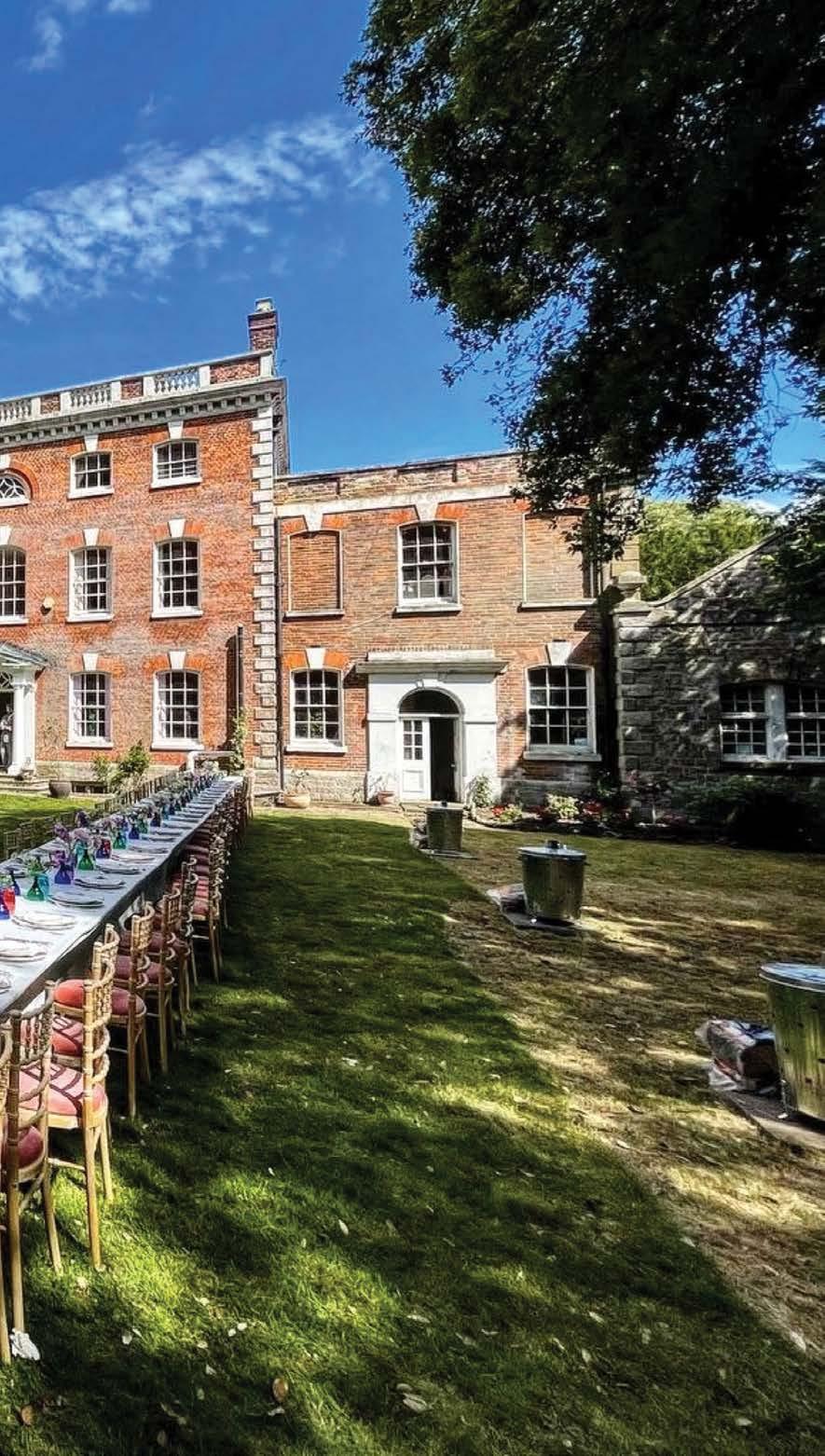
experiences for big brands such as Gucci, Harvey Nichols and Peroni. My wife Jo, a writer, creative and fellow eater, has always supported and helped me on this venture. In lockdown, we took a leap and moved out of London to Kent. I stepped down from my hospitality businesses but kept the food event company with the idea of continuing it in our new home. We bought and renovated a Victorian foreign embassy where we live, with the idea of using it one day for pop-ups. And things escalated when I met my current business partner Dave, who shares our passion for food and has a background as a great chef. The rest, as they say, is history. We started organising communal creative feasts in secret locations, with guests only discovering the menu as they took their seats. We cooked in sailors churches, old fire stations, glasshouses and Charles Dickens’ holiday home. But always a single long table for people to connect
around, and food themed to a specific concept, inspired by seasonal produce, culture, or the venue itself. We then broadened our offering to private and corporate events, but always trying to keep the fundamentals of our Foreign Embassy DNA in the equation. At heart, we are eaters, we are feeders, and we are feasters.
What made you want to take dining out of a fixed place and into something more fluid?
As mentioned, I spent years in the hospitality business. I’m a dynamic person and I thrive on constant change and new challenges. So, as much as I used to love the restaurant life, it can be very repetitive and, from my point of view, there are unfortunately more cons rather than pros. Events have more freedom and leave more room for creativity and experimentation, giving us the chance to explore new ideas and provide a richer, more exciting experience.
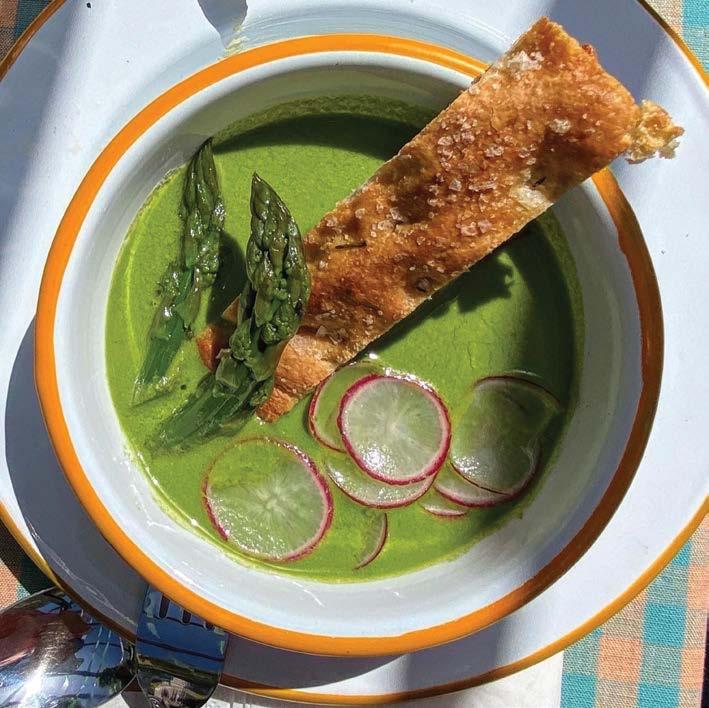
→ Chilled asparagus soup, bacon jam and mozzarella soldiers.
“WE NEED TO BE MORE DYNAMIC AND NIMBLE, TO CREATE MORE SPACE FOR CREATIVITY. SO POP-UPS FEEL LIKE A WIN WIN IN THE CURRENT CLIMATE”
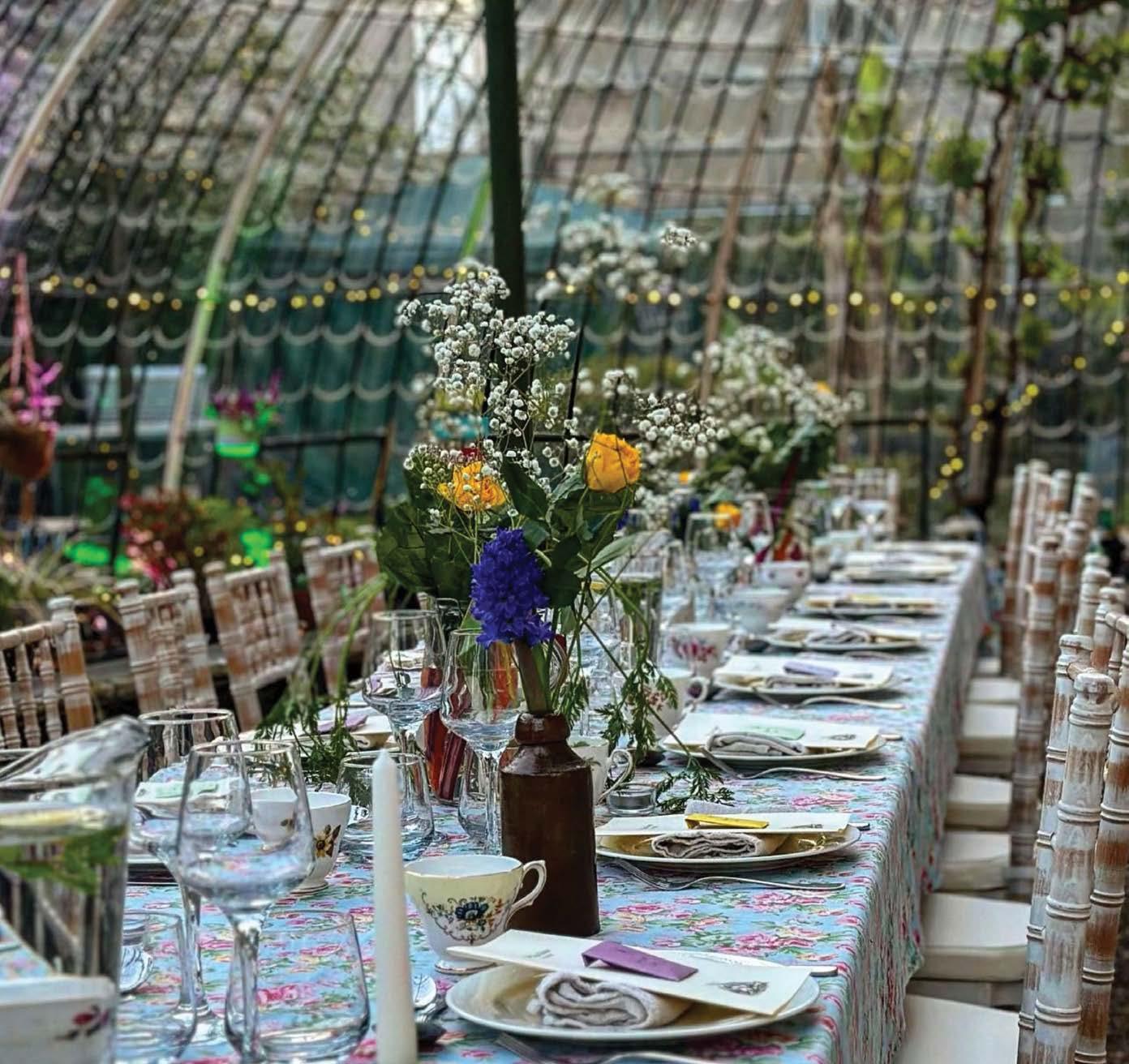
→ The Glass Onion - Ramsgate Italianate Glasshouse
/The Foreign Embassy
FOOD SHOULD BE FUN, AND WE BELIEVE HOSPITALITY AS A WHOLE SHOULD BE STEPPING UP TO MAKE SURE THERE’S NOTHING AVERAGE ABOUT A MEAL OUT” “
Where do you see The Foreign Embassy sitting: between hospitality, art, or something else entirely?
I believe The Foreign Embassy sits right in the middle of a circle, where food is obviously the star of the show, but can be surrounded by a series of other elements to heighten the experience. From music to theatre, art, design, nature, colour, and history, we try not to leave anything outside this circle. This keeps our options and imaginations wide open and means we can take inspiration from the things around us to create something special. We always aim to build a memorable experience, rather than just a good meal.
Do you think hospitality is shifting from service to experience and culture?
Absolutely yes. Food is not just fuel, heaven forbid! Eating is a very predominant part of our life and we should embrace it, making it feel more fun and unexpected. Life is tough right now - the world feels uncertain and the cost of living has gone through the roof. So people just don’t have the means or enthusiasm to spend the time and money they have on decent
but forgettable meals out. That’s why The Foreign Embassy doesn’t just bring good food, it comes with a strong, deliberate element of surprise. There’s a theatre to it, whether guests are eating seafood straight off the rocks or pouring bisque out of teapots. Food should be fun, and we believe hospitality as a whole should be

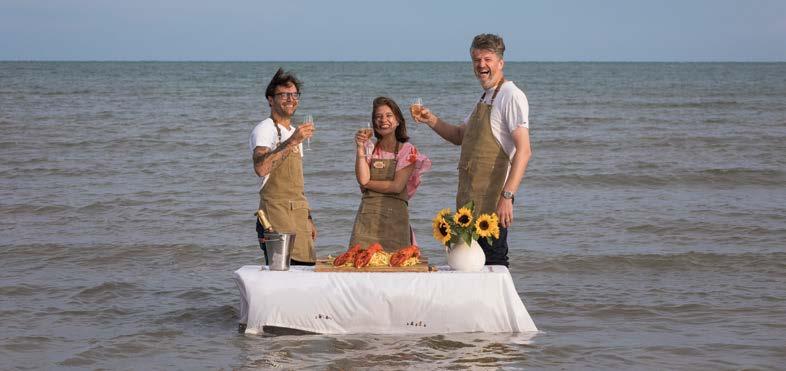
with its table appearing in Ibiza for The Ray of Light Awards Festival 2025. Pop-ups feel like a win win in the current climate.
What does brick-and-mortar hospitality need to survive?
Honestly, that’s a tricky one to answer. When you have a restaurant, nothing

stepping up to make sure there’s nothing average about a meal out.
Why do pop-ups feel like such a natural fit for chefs right now?
Everything feels uncertain, overheads are high, and chefs running restaurants can end up in a tangle of admin and financial stress rather than focusing on the food itself. We need to be more dynamic and nimble, to create more space for creativity. The Foreign Embassy is never in a fixed location,
can be left unsupervised. There is a constant need for an incredible amount of passion, dedication and attention to detail. Creating a strong clientele is not the most diffcult part, but maintaining it is tough. There’s no room for error. I think brick-and-mortar hospitality will always exist, but as it gets increasingly challenging, restaurants need to be more flexible and inventive than ever. I guess we can say that only the strongest - and most imaginative - will survive.
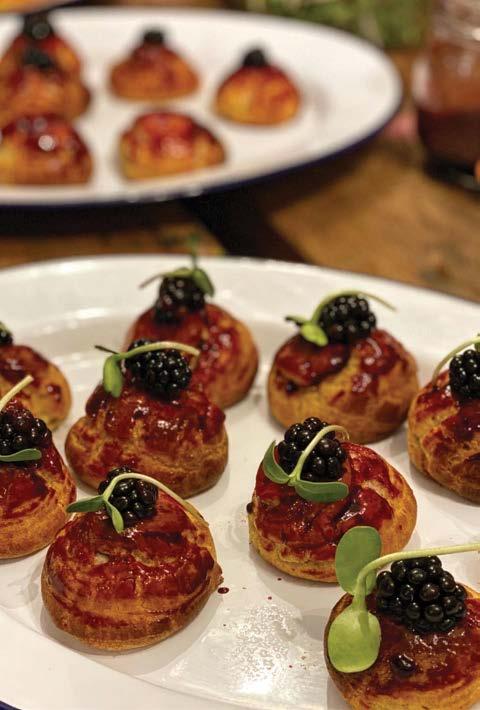
→ Poached rhubarb pavlova
→ Paranza popcorncockle, prawn, squid, scallop. Lemon and dill infused vinegar spray
→ The Foreign Embassy photography by Kent Mathews
CHANGING THE TUNE
In Victoria, London, a district more associated with Whitehall than late nights, karaoke has found an unexpected home. For Arnaud Studer, founder and CEO of BAM Karaoke Box, the success of the concept says something larger about how people want to spend their leisure time. While bars, pubs and clubs continue to navigate rising costs and shifting consumer habits, BAM has quietly gone in the opposite direction. Since opening its London venue in 2024, the business has delivered year-on-year growth, building on a model first developed in Paris more than a decade ago.
Studer did not arrive in hospitality by the conventional route. A graduate of EDHEC Business School and the London School of Economics, he began his career in investment banking. The turning point came during a trip to Tokyo in 2012, where he encountered Japan’s private-room karaoke culture for the first time. What struck him was not simply the singing, but the atmosphere around it:
intimate, design-conscious and social, offering an experience that felt worlds away from the public karaoke bars familiar across Europe.
Two years later, he opened the first BAM Karaoke Box in Paris, creating what would become Europe’s first premium karaoke box concept. Today
the company operates eleven venues across Europe, from Paris and Bordeaux to Madrid, Chamonix and London. When BAM arrived in the UK, there was no guarantee the concept would translate. London’s nightlife has long been built around pubs, bars and clubs, institutions that remain woven into the city’s social fabric. Yet the response has been immediate. “Nightlife doesn’t need to
be loud or chaotic to be memorable,” he says. “It needs to be shared, immersive and personal.”
That idea increasingly sits at the heart of modern hospitality. The most successful operators are no longer simply selling food, drink or entertainment; they are creating occasions. Experiences that give people a reason to leave home, gather together and participate rather than observe. BAM has continued to evolve that formula through gamified karaoke experiences including Name That Song and BAM BAM Roulette, while a new format, Battles, has launched in France and Spain and is expected to arrive in London soon. “In a world where Londoners want fun that feels safe, social and stylish, we offer what I call affordable luxury,” Studer explains.
“Our mission is to create places where people don’t just consume entertainment, they participate in it.”
The distinction matters. At a time when almost any film, album or sporting event can be accessed from a sofa, hospitality’s competitive advantage increasingly lies in creating moments that cannot be replicated elsewhere. The venues thriving are often those that understand experience is no longer an added extra; it is the product itself. As London’s nightlife continues to evolve, Studer sees BAM not as an alternative to hospitality, but as an expression of where it is heading: social, experiential and built around participation. In a sector often preoccupied with what consumers are spending, BAM’s growth suggests the more important question may be what they are spending it on.
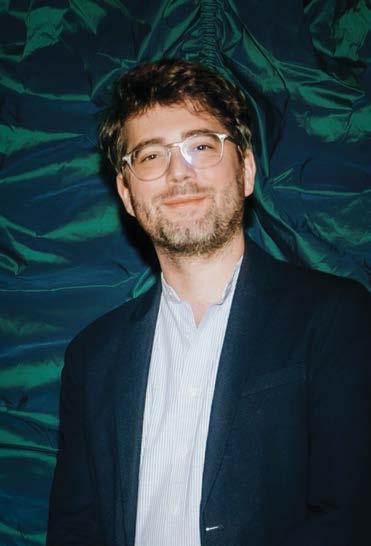
→ Arnaud Studer at the opening of BAM Victoria in April 2024
BEYOND THE STAR
In an industry obsessed with certainty, Adejoké Bakare remains remarkably comfortable with chance. The chef behind Chishuru made history in 2024 when she became the first Black woman in the UK to receive a Michelin star. Later that year, she was named Chef of the Year at the National Restaurant Awards. It was a landmark achievement not only for Bakare but for British hospitality itself: recognition that West African cuisine, long overlooked by mainstream fine dining, belonged firmly at the highest level of the country’s culinary conversation.
Luck, labour and Michelin success by PATRICIA CULLEN
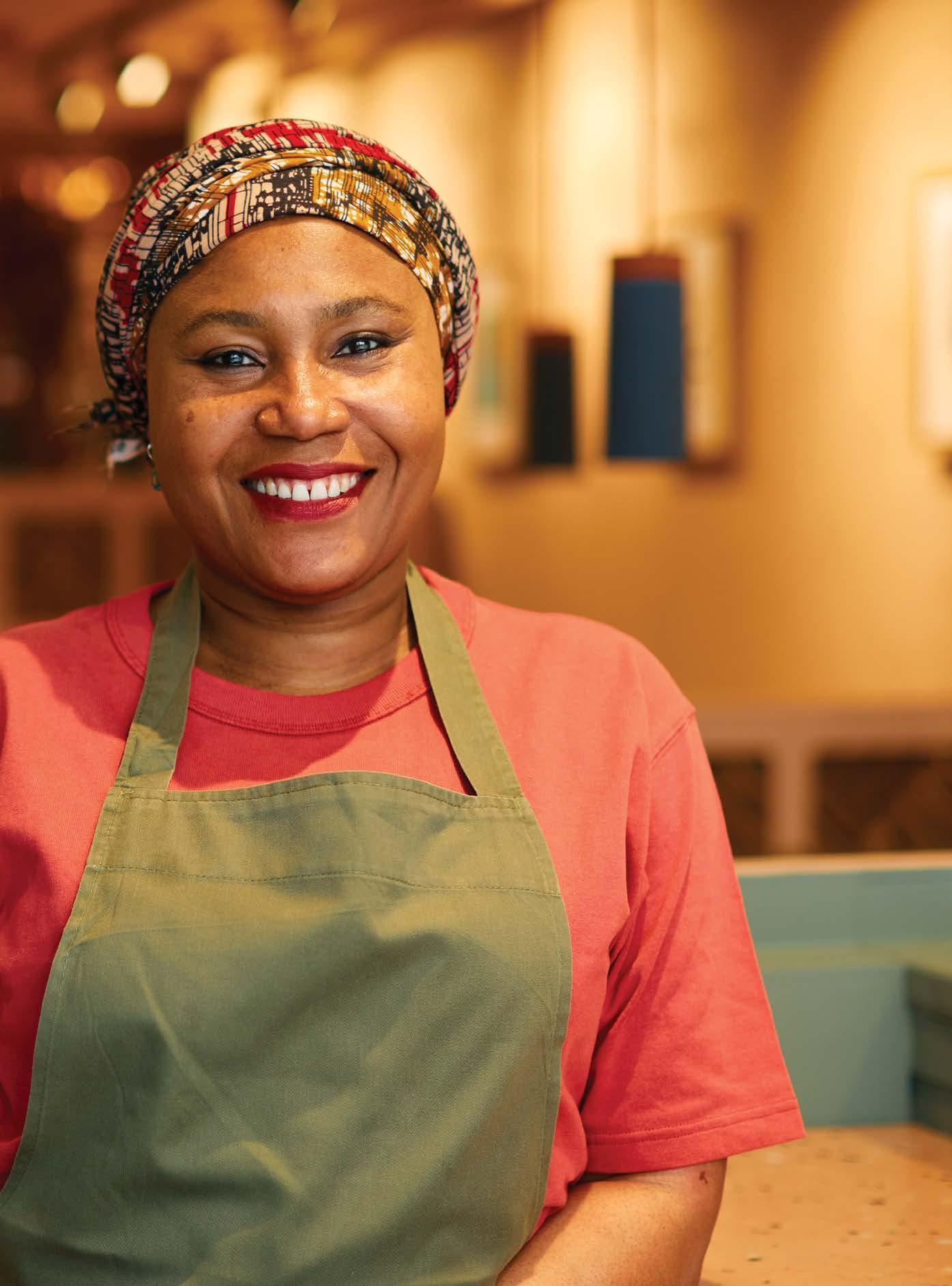
→ Adejoké Bakare, the UK's first Black female Michelin-starred chef
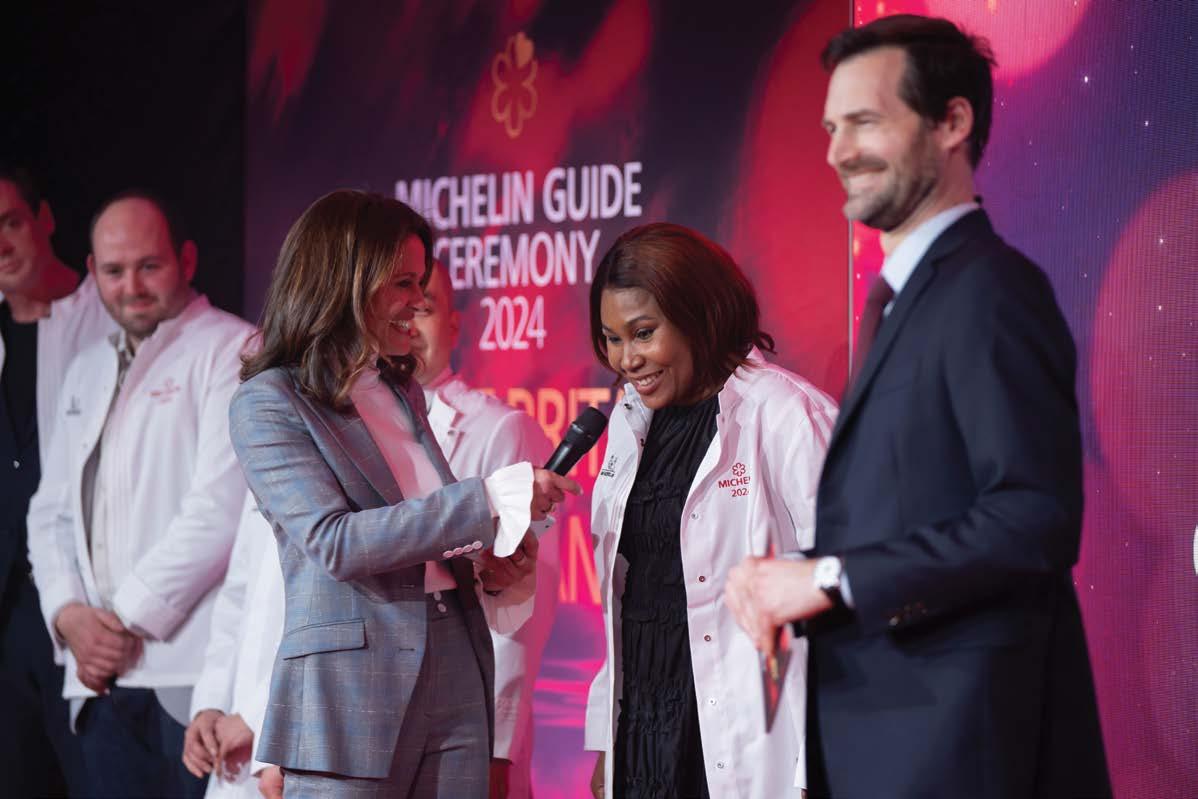
MANY GUESTS START WITH ‘I’D LIKE TO GO TO A MICHELIN-STARRED RESTAURANT’ AND THEN THEY SEARCH THE MICHELIN GUIDE WEBSITE FOR WHICH ONE THEY’LL CHOOSE. IT’S THE WORLD’S BEST SEARCH ENGINE FOR RESTAURANTS”
Yet listening to Bakare speak about success, there is little triumphalism. Instead, there is a clear-eyed understanding of how fragile restaurant businesses can be, how much luck matters, and how quickly acclaim can become expectation.
“What does earning a Michelin star actually change about how you run a restaurant day to day?” she is asked. “It is overwhelmingly positive. Many guests start with ‘I’d like to go to a Michelinstarred restaurant’ and then they search the Michelin Guide website for which one they’ll choose. It’s the world’s best search engine for restaurants. Having a star
brings pressure, on the basis that we don’t want to lose it, but also because some guests come in with a certain level of expectation and we’ll upset them if we don’t deliver it.”
The Michelin star remains one of the few accolades capable of transforming a restaurant’s fortunes overnight. Yet for Bakare, the award is less a
destination than a responsibility. The challenge is no longer simply creating extraordinary food. It is delivering excellence every day, to every table, under the gaze of diners who arrive expecting perfection. That tension between recognition and reality runs throughout her story. When asked about the biggest lesson from building a restaurant in Britain, Bakare’s answer cuts against the mythology of meritocracy that often surrounds successful chefs. “Luck plays an enormous role. There were a couple of turning points in Chishuru’s history where if
→ Bakare at the Michelin Guide Ceremony 2024
things hadn’t gone our way, or if an opportunity hadn’t arrived at a very specific time, we wouldn’t even be trading today. It’s a bit like music or movies - it’s not a rational business at all.”
It is a refreshingly honest assessment. Hospitality is often portrayed as a sector where hard work inevitably rises to the surface. Anyone who has spent time around restaurants knows otherwise. Timing, landlords, investors, economic cycles, and sheer circumstance can be every bit as influential as talent. Perhaps that is why Bakare’s rise feels so unusual. There was no carefully plotted ascent through Michelin kitchens, no apprenticeship under celebrity chefs, no strategic pursuit of accolades. Asked when she realised Chishuru was
operating at Michelin level, her answer is disarmingly candid. “It was honestly a huge surprise. When we were doing the fit-out of the Fitzrovia site in 2023, the amount of time we devoted to thinking ‘how
will this look when we have a Michelin star’ was exactly zero. Some restaurants open with a clear, naked determination to get accolades; we were very much not one of those. In hindsight I can say that
cooking the food of my heritage and cooking from my heart was the secret to it - Michelin do like restaurants that tell a story - but that wasn’t a deliberate choice to get noticed.”
There is a lesson here
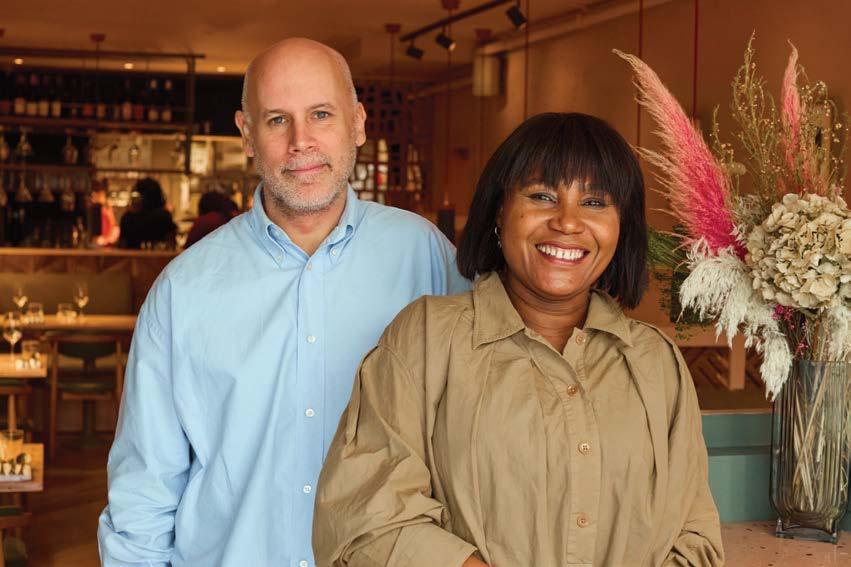
LUCK PLAYS AN ENORMOUS ROLE. THERE WERE A COUPLE OF TURNING POINTS IN CHISHURU’S HISTORY WHERE IF THINGS HADN’T GONE OUR WAY, OR IF AN OPPORTUNITY HADN’T ARRIVED AT A VERY SPECIFIC TIME, WE WOULDN’T EVEN BE TRADING TODAY”
for an industry increasingly susceptible to trends and branding exercises. Chishuru’s success emerged not from trying to fit into a fine-dining template but from confidently rejecting it. The restaurant’s identity is rooted in Bakare’s own heritage, experiences and instincts rather than an imagined Michelin ideal. Still, authenticity alone does not pay wages. The modern hospitality industry is built on consistency, and Bakare
↑ The team behind Chishuru: Joké Bakare and Matt Paice
“ I WOULD ADVISE ANYONE THINKING OF OPENING - ESPECIALLY A CHEF - TO TEAM UP WITH SOMEONE WHO THINKS ABOUT DOWNSIDES AS WELL AS UPSIDES, WHO WORRIES ABOUT MONEY, WHO PROPOSES CUTS INSTEAD OF SPENDING”
knows how difficult consistency has become in an era of soaring costs and chronic labour shortages. “What do you think UK hospitality most underestimates about delivering consistent excellence?” she is asked. “I think the importance of consistency is well understood in the industry; it’s fundamental. The challenge isn’t knowing its importance, it’s in pulling it off. Retaining great staff is number one; achieving that while also not blowing your entire budget on labour is hard. Similarly we need to deliver delicious creative dishes but at the same time the price of raw materials has never been higher.”
It is a dilemma familiar to operators across the country. Diners want creativity, quality and value. Staff deserve better pay and conditions. Ingredients cost more than ever. Something has to give. And right now, many restaurants fear that what gives may be their survival. Asked about the state of British hospitality, Bakare
offers a sobering diagnosis. “I don’t know any operators who aren’t feeling the pain. One of London’s busiest restaurants reports a 40% drop in sales this year compared to 2025. Dining out is a luxury purchase and so our industry feels the changes in consumer sentiment and spending power very keenly.”
The statement captures the precariousness of the current moment. Even acclaimed restaurants are not insulated from economic headwinds. Awards can bring attention, but they cannot reverse broader shifts in consumer confidence. Yet despite the pressures, Bakare remains energised by the work itself.
“What’s been your toughest challenge - creative, operational, or financial - in running the restaurant?” “The creative challenge is there of course but I wouldn’t describe it as ’tough’ because it’s what gets me out of bed every day. One of the greatest things about hospitality is that - even with all the difficulties we face - it is an enjoyable, exciting and
fulfilling industry to work in. The financial challenge really happens at the beginning: once you’ve got your restaurant open, you’ve cleared the biggest hurdle by far. So it’s operational: labour again. Finding great chefs who work well as a team, who collaborate with me, who look out for each other… I first opened Chishuru in Brixton in September 2020 and only now in 2026 do I finally feel I’ve got the team I want.”
There is something revealing in that final admission. In an age of instant success stories and accelerated timelines, Bakare speaks about building a team as a six-year process. Excellence, she suggests, is not merely about talent. It is about trust, patience and collective effort. That philosophy extends beyond the kitchen. For independent restaurateurs attempting to navigate an increasingly unforgiving market, Bakare’s advice is rooted not in creativity but in restraint. “One of the funny things about restaurants is that we’ve all had hundreds of lunches and dinners in other people’s venues, we can see what their menus are, how they operate, what their design is - so everyone is an expert to some extent. I would advise anyone thinking of opening - especially a chef - to team up with someone who thinks about downsides as well as upsides, who worries about money, who proposes cuts instead of spending. I tease my business partner Matt that he’s my ‘head of dull’ because this is how he thinks.” It is perhaps the most important lesson of all. Restaurants may be built on vision, but they survive through discipline.

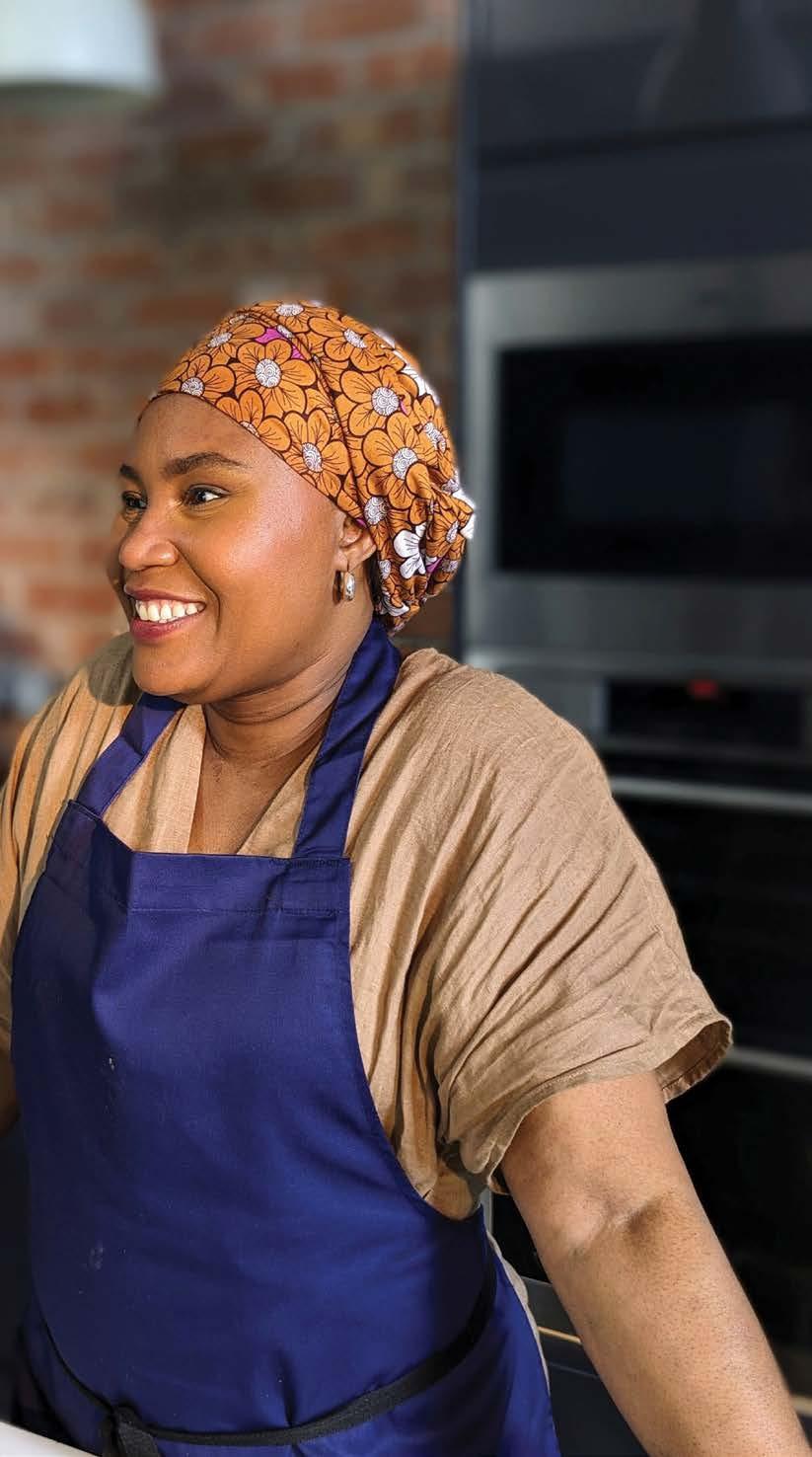
Bakare’s own journey has never followed a conventional script. Before Chishuru, she had no traditional career pathway through the industry. Asked whether being a Black woman in British hospitality shaped the opportunities available to her, she reflects on an unconventional route into professional cooking. “I never had a career path in this industry: I started out by winning a competition in a newspaper in 2019 and that was the first time I ever cooked professionally. I’ve only ever worked for myself. We’ve encountered various commercial landlords who didn’t want us or who have been actively unhelpful but I’ve never had someone standing in my way to stop me.”
The answer is characteristic: measured, unsentimental and determined. Bakare’s achievement matters because of what it represents. It broadens the image of who can succeed in British hospitality and what kinds of cuisine can be celebrated at its highest levels. Yet she remains resistant to simple narratives of inevitability or destiny. Her story is not one of a chef following a prescribed route to Michelin glory. It is the story of someone who trusted her own voice, cooked from her heritage, survived the industry’s brutal economics, and benefited from moments of fortune when they mattered most. In a business where success is often attributed entirely to genius, Bakare offers a more truthful formula: talent, persistence, teamwork and luck. Not necessarily in that order.

↓ A signature baobab dessert at Chishuru
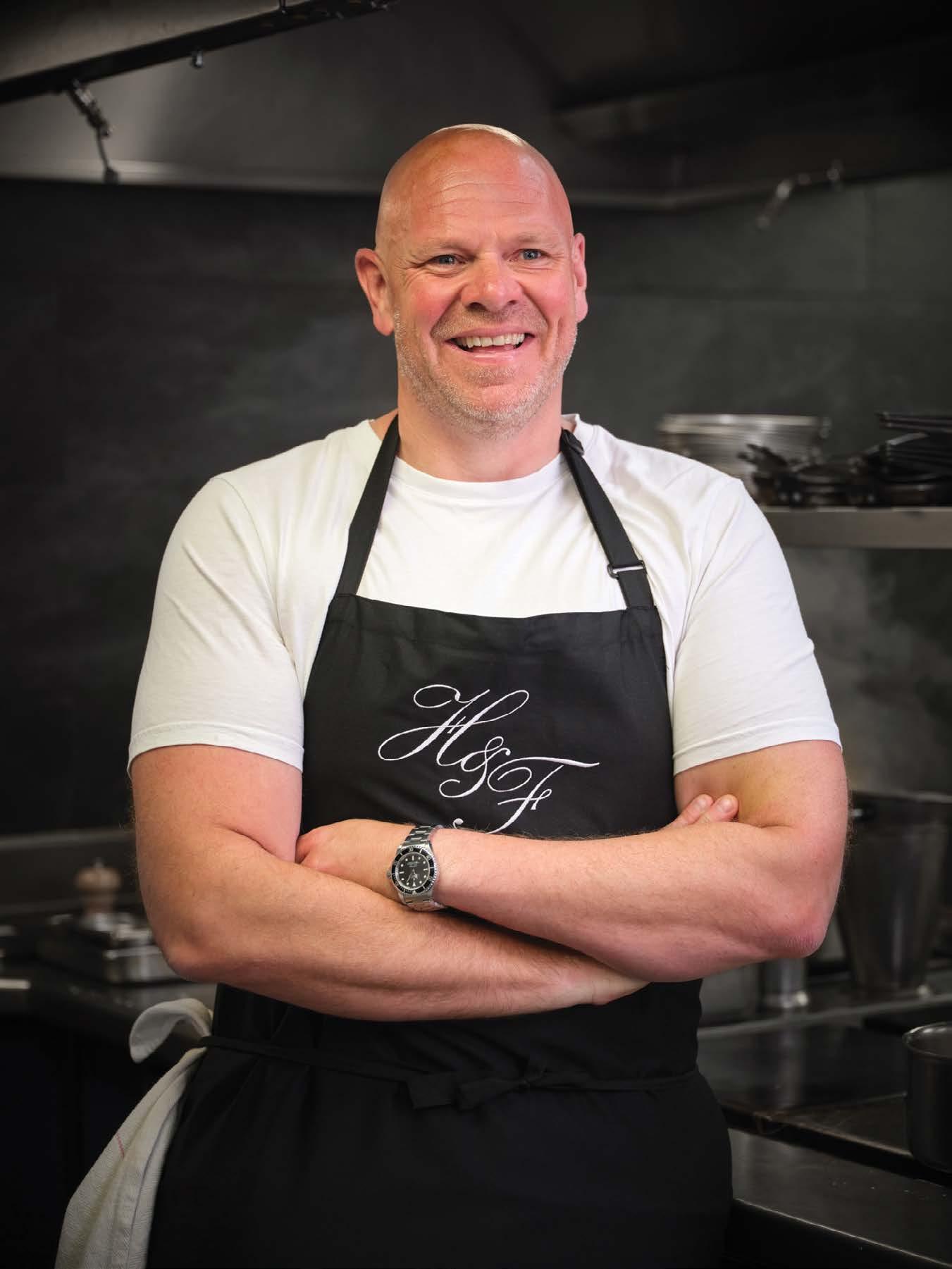
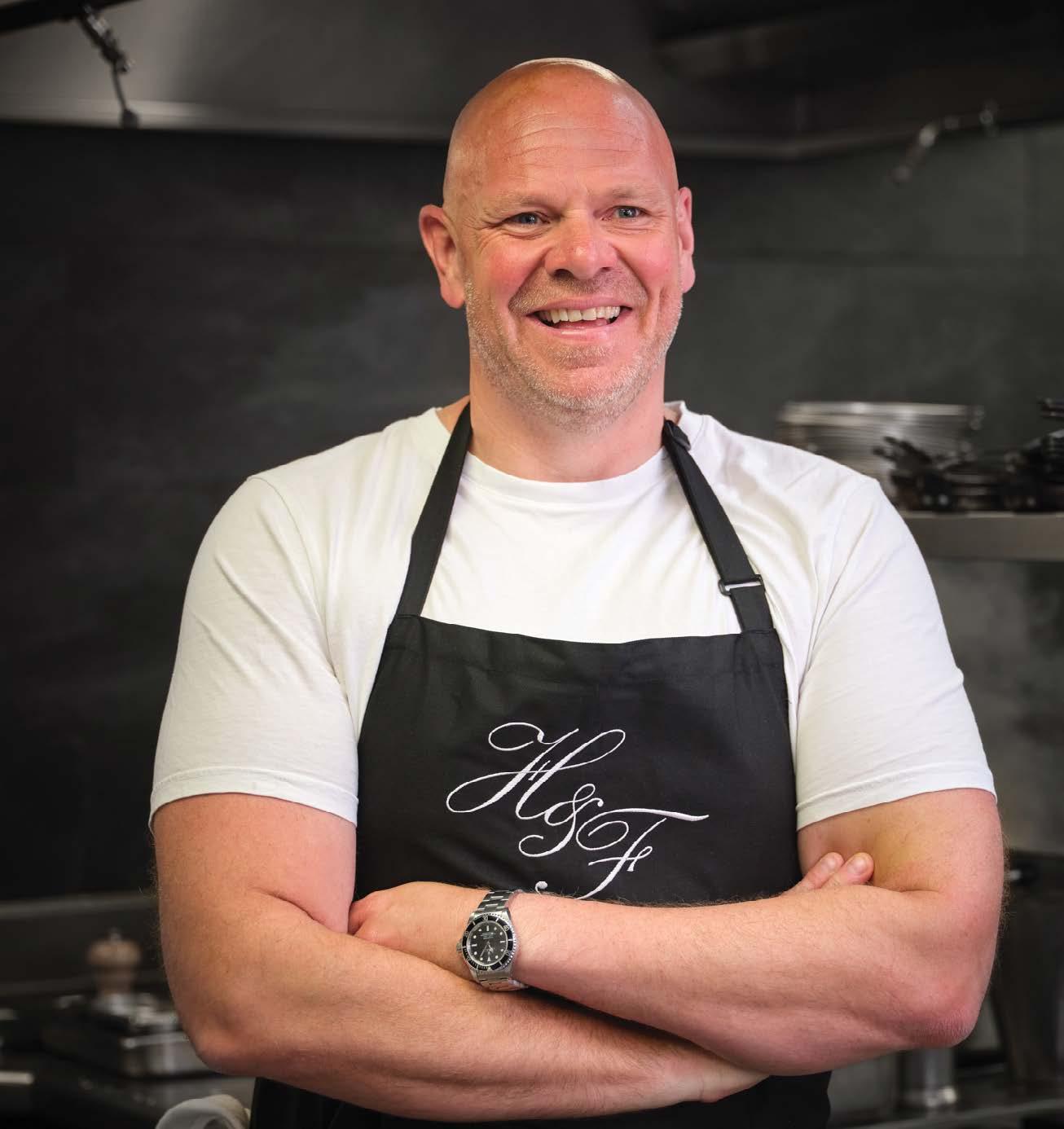
← Tom Kerridge, an advocate for hospitality and VAT reform
PROFIT IS OXYGEN
TOM KERRIDGE
ON HOSPITALITY, THE ISSUES AT STAKE, AND #VATSTHEPROBLEM
by PATRICIA CULLEN
The Michelin-starred chef Tom Kerridge says Britain’s hospitality sector is fighting for survival. Behind the busy dining rooms and smiling staff, he argues, an entire industry is running out of breath. There is a particular contradiction at the heart of British hospitality in 2026. Walk into a busy pub on a Friday evening and everything appears reassuringly intact. Glasses clink. Tables are full. Kitchen doors swing open and shut. Families gather around Sunday roasts. Friends share pints after work. The rituals remain familiar, comforting even. Yet, Kerridge says, many of those businesses are struggling to survive. “Even places that are busy,” he says, “they may look vibrant, but they’re not making any money. They’re not making a profit. And if they are, it’s very, very small.”
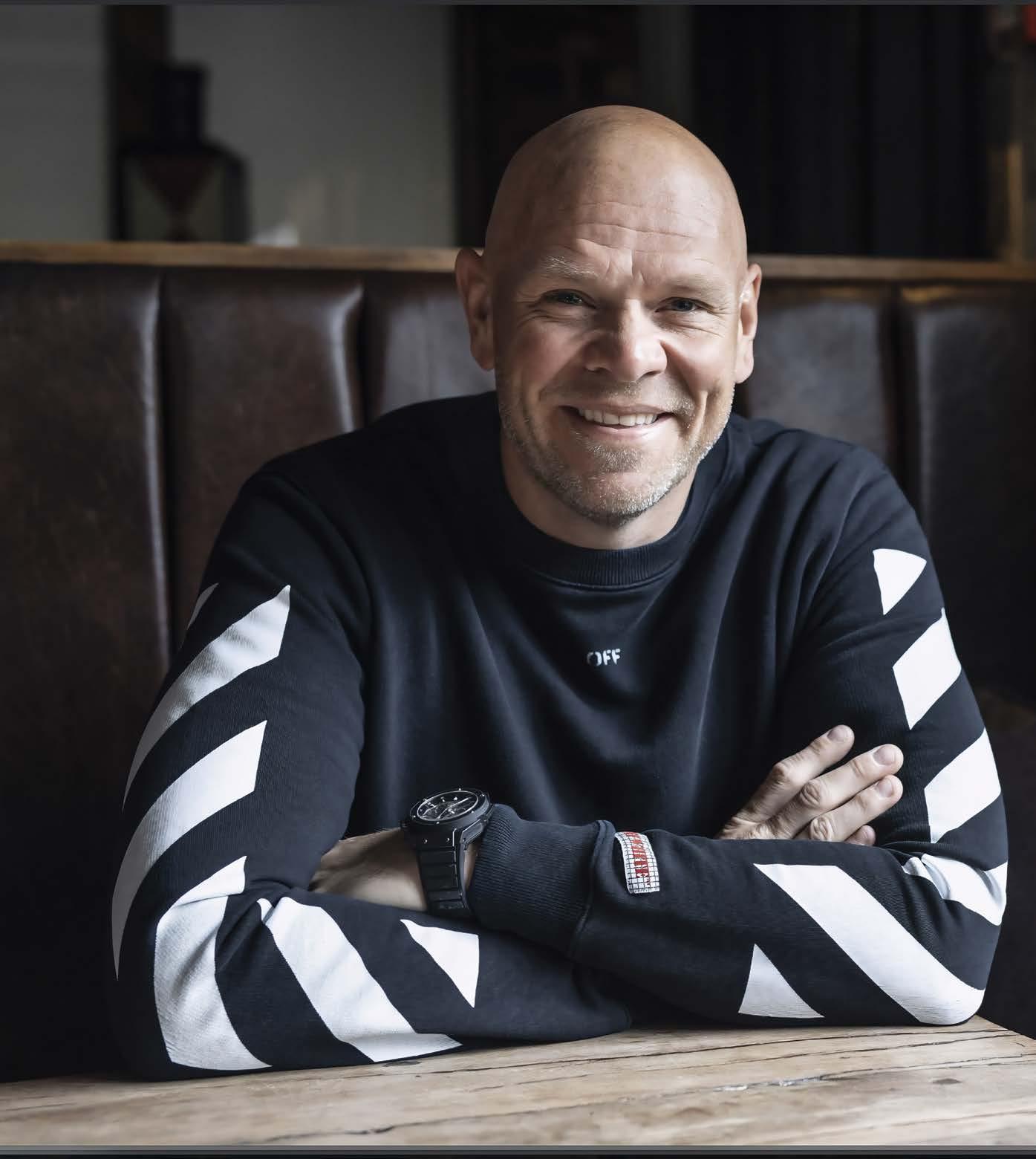

THE BIGGEST ISSUES THAT ARE FACING HOSPITALITY, ARE THE BACKEND COSTS THAT ARE ABSOLUTELY DROPPING IN”
Kerridge has spent much of the past two decades becoming one of Britain’s most recognisable culinary figures. The chef behind the twoMichelin-starred The Hand & Flowers helped redefine the British pub, transforming what was once considered ordinary pub food into something worthy of international acclaim. Alongside television appearances
and bestselling books, he has become one of hospitality’s most prominent public voices. Now, however, he finds himself talking less about cooking and more about economics, including his backing of the #VATsTheProblem campaign, which calls for a cut in VAT for the hospitality sector.
“The biggest issues that are facing hospitality,” he says, “are the back-end costs that are absolutely dropping in.” It is a phrase he returns to repeatedly: back-end costs. The invisible pressures that customers rarely see but which increasingly determine whether a business lives or dies. Energy bills. Food inflation. Utilities. National insurance increases. Business rates. Rising wage costs. Individually, each might be manageable. Together, Kerridge argues, they have created a perfect storm. During the pandemic, he says, there was at least a sense that Governments understood the scale of the crisis. “It was horrific and nobody really knew what was going on,” he recalls, “but it felt that there was some form of scaffolding around there.” That support structure has now disappeared.
The challenge facing hospitality today is less dramatic than lockdown but, in some ways, more insidious. Businesses are open, customers are returning, yet margins are evaporating. The consequences, Kerridge argues, are already visible. “It becomes a race to the bottom,” he says.
“Everybody de-skills. You’re losing staff. You’re not re-employing. You’re looking for easier options.” What is lost in that process is not merely profit but innovation.
“One of the most creative, exciting and brilliant industries that there is,” he says, “is having the life sucked out of it.” The numbers are stark. “We’ve got 21 businesses shutting every single week.” Those closures span the entire sector. Independent cafés. Neighbourhood restaurants. Local pubs. Michelin-starred dining rooms. Country hotels. City-centre conference venues. The pressures, Kerridge insists, do not discriminate. “It doesn’t matter if it’s a local café, a neighbourhood restaurant, your local pub around the corner that you love going to two or three times a week, or whether it’s a special-occasion Michelinstar restaurant. All of those costs are affecting every single hospitality business.”
The crisis, in his view, is not confined to hospitality. It reaches into communities themselves. Restaurants and pubs are often discussed as leisure destinations. Kerridge sees them differently. “They’re intrinsic in the way that people talk to each other,” he says. The teenager working shifts behind the bar is somebody’s son or daughter. The café owner sponsors the local football team. The pub hosts community groups. The restaurant buys from local suppliers. Hospitality, he argues, forms part of the social infrastructure of modern Britain. When
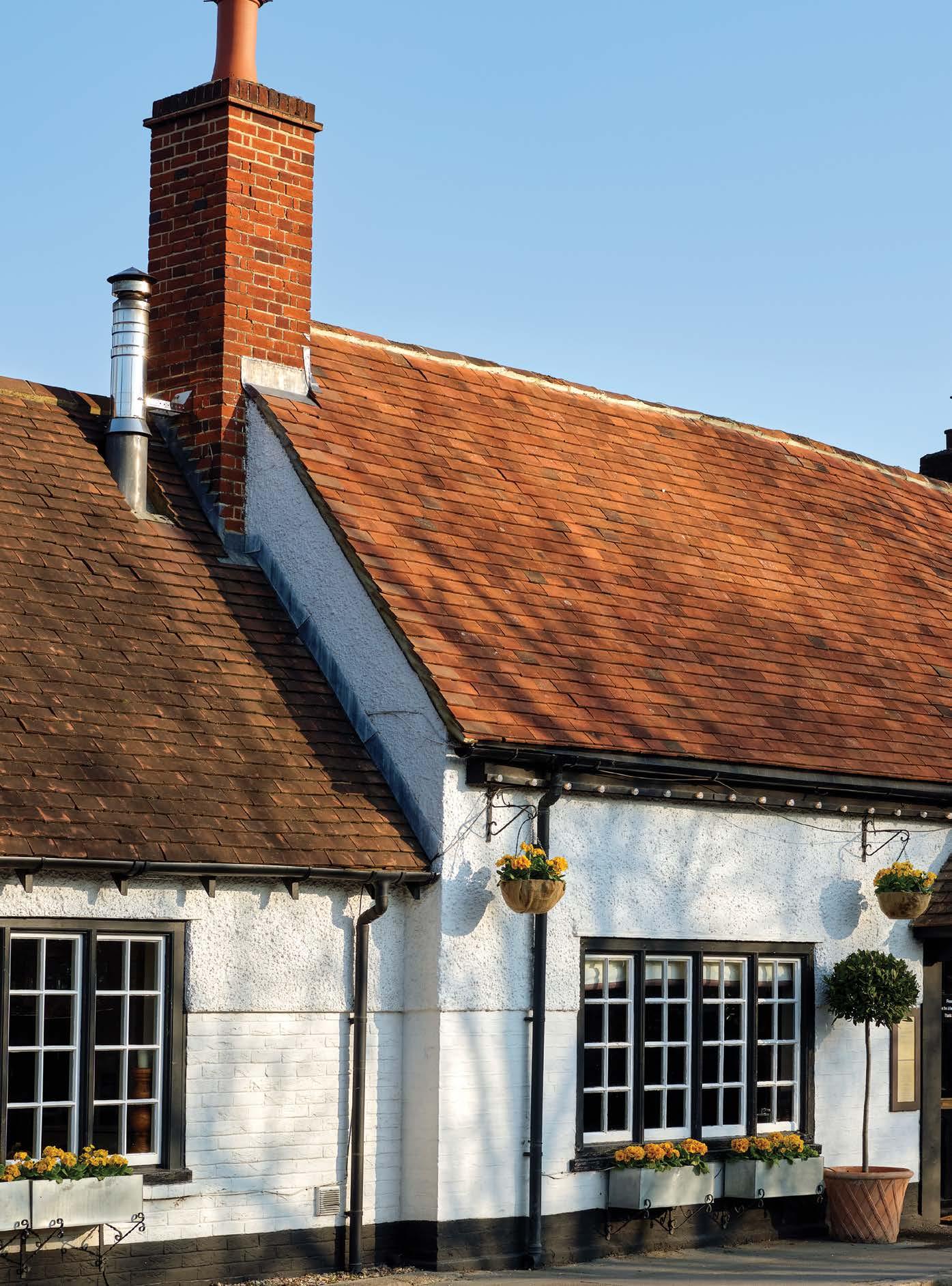
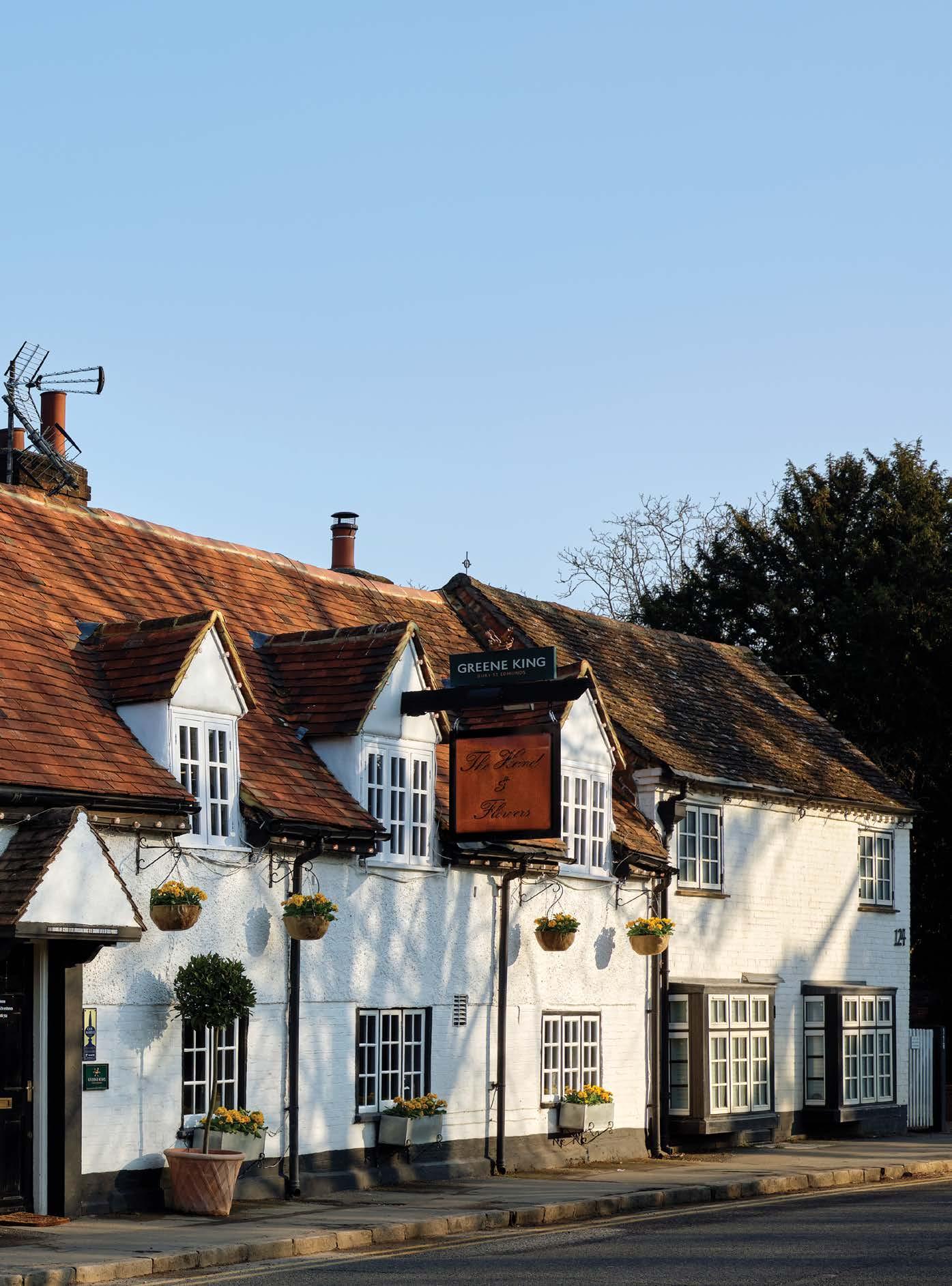
→ The Hand & Flowers, a Michelin-starred pub in Marlow, run by chef Tom Kerridge
WHEN SOMEONE COMES THROUGH THE DOOR, SOMEBODY MAKES EYE CONTACT AND SAYS HELLO. THAT SENSE OF CONNECTION CANNOT BE TAKEN AWAY BY AI”
ONE OF THE MOST CREATIVE, EXCITING AND BRILLIANT INDUSTRIES THAT THERE
IS, “IS HAVING THE LIFE SUCKED OUT OF IT.”
venues disappear, communities lose more than places to eat and drink. “They help make our communities happier, more connected and far more vibrant places to live.”
At the centre of Kerridge’s campaigning is one demand: a reduction in VAT for hospitality from 20% to 10%. Cue the #VATsTheProblem movement. The campaign, backed by trade organisations, restaurateurs, brewers and operators across the industry, argues that Britain’s hospitality VAT rate places businesses at a competitive disadvantage compared with many
European neighbours. Many European countries use reduced VAT rates, including Ireland’s 9% rate on much of its hospitality sector. “First and foremost,” Kerridge says, “the biggest thing that affects hospitality in this country compared to anywhere else in Europe is the VAT rate.” The objective is not simply survival. A VAT reduction, he argues, would create breathing room. “It would stop closures.” Then comes a phrase that may become one of the defining lines of Britain’s hospitality debate. “Profit is oxygen.” For him, it is less a slogan than a practical truth. “Profit is
oxygen. Oxygen breathes lifeblood into business. It’s about growth.”
This is not, he insists, about wealthy owners extracting more money from struggling communities. Rather, it is about allowing businesses to invest. “Businesses that are losing money are not going to spend extra money on training somebody.” That has implications far beyond restaurant kitchens. Hospitality remains one of Britain’s largest employers of young people. It provides first jobs, career paths and opportunities for those who might not follow traditional academic routes.Without room for businesses to grow, those opportunities begin to disappear. “There is no growth prospect,” Kerridge says. “It’s stagnant or moving backwards.”
His frustration increasingly appears directed not at political ideology but at what he sees as a failure of economic understanding. A long-time supporter of Labour, Kerridge speaks positively about public services, workers’ rights and social mobility. “I believe in the minimum wage,” he says. “I believe that people should have those opportunities.” Yet he also believes parts of government fail to understand how businesses actually
operate. What particularly concerns him is the difference between theoretical economics and practical experience. He reaches for a metaphor from restaurant life. When you’re running a business yourself, you understand its pulse in a way numbers alone never can. Spreadsheets matter. But they are not the whole story. “If your accountant runs your business,” he says, “there is no growth, there is no prosperity.”
Underlying his argument is a belief that policymakers need a clearer understanding of how businesses operate on the ground. Business, he argues, requires confidence, investment and a degree of certainty. “There needs to be trust in industry experts.” Across the UK, meanwhile, thousands of operators are engaged in quiet daily negotiations simply to stay afloat. The conversations rarely make headlines. Owners negotiating with suppliers. Requests for extra payment time. Promises to settle invoices next week. “They’re having conversations with their supply chain every single day,” Kerridge says. What strikes him most is the loyalty that often exists throughout the sector. Hospitality operators frequently prioritise paying local suppliers ahead of government liabilities.
They’ll prioritise paying the butcher, the fishmonger and the greengrocer ahead of other obligations, often juggling who gets paid and when just to keep things moving. The result, he argues, is a vicious cycle. Businesses collapse. Tax revenues disappear. Communities lose amenities. The Government collects less, not more. “You’ve got to see the bigger picture of this.” Yet for all the economic analysis, Kerridge remains at heart a chef. When asked what practical difference a VAT reduction would make, he immediately turns not to balance sheets but atmosphere. “First and foremost,” he says, “you’ll stop listening to the pub landlord moaning about how hard it is.” A healthier industry creates happier workplaces. Happier workplaces create better experiences. People become more creative. Businesses take risks. The food improves.
The hospitality sector, after all, has undergone one of the most remarkable cultural transformations in modern Britain. Thirty-five years ago, British food was frequently mocked internationally. Today, the country is home to one of the world’s most dynamic dining scenes. “Now we’re one of the most eclectic and valued spaces in the food scene globally,” he adds. That transformation did not happen by accident. It emerged through experimentation, investment and generations of chefs pushing boundaries. Kerridge worries that momentum is now at risk. “We have been able to grow and adapt because we’ve had that breathing space.” Without it, innovation slows. Creativity contracts. Risk-taking disappears.
If there is one area where Kerridge sounds unexpectedly optimistic, it is technology. Artificial intelligence, he believes, will reshape many professions. Hospitality, however, occupies a uniquely protected position. “We are very fortunate,” he says. Unlike industries centred around information processing, restaurants remain grounded in sensory experience. AI may streamline ordering systems, inventory
management and administration. What it cannot replicate is flavour. Or seasonality. Or human connection. Kerridge speaks enthusiastically about vineyard visits, conversations with growers and the subtle ways weather alters ingredients. “AI is not affecting Mother Nature.” A carrot grown during a wet summer tastes different from one grown in a dry season. A wine reflects rainfall, sunshine and soil. These variables cannot be automated away. Nor can hospitality’s most fundamental interaction. “When someone comes through the door,
WE HAVE BEEN ABLE TO GROW AND ADAPT BECAUSE WE’VE HAD THAT BREATHING SPACE.” WITHOUT IT, INNOVATION SLOWS. CREATIVITY CONTRACTS. RISK-TAKING DISAPPEARS.
somebody makes eye contact and says hello.” That moment matters. “That sense of connection cannot be taken away by AI.” At a time when many industries fear technological disruption, hospitality’s greatest strengths remain stubbornly human. “We are all about interaction, Mother Nature and human connection.” Ultimately, what distinguishes businesses that continue to thrive
despite the pressures? His answer is surprisingly simple. Reliability. Not gimmicks. Not viral social media campaigns. Not celebrity endorsements. “The success of those businesses is belief in themselves and consistency.” He cites everyone from burger operators to three-Michelinstarred chefs. The common thread is clarity of purpose. “They go, ‘This is what we do, and we’re going to do it really well.’” Value matters too. A memorable meal at a world-class restaurant can represent value. So can a perfectly executed burger. What customers remember is authenticity. Craft. Commitment. Consistency.
And perhaps those same principles underpin Kerridge’s message to the Government. His argument is not especially radical. Hospitality is asking not for special treatment but for the conditions necessary to survive, invest and grow. Without intervention, he fears the industry will continue shrinking. With support, he believes it can once again become a driver of jobs, culture and regeneration. When urban planners imagine revitalised town centres, he notes, their drawings always contain the same elements. Cafés. Bars. Restaurants. Pedestrianised streets. People gathering together. “Nobody’s investing in that,” he says, “if you’re going to lose money.”
The challenge facing policymakers is whether they view hospitality as a luxury sector or as essential civic infrastructure. For Kerridge, the answer is obvious. Hospitality is not simply where we eat and drink. It is where communities meet, where young people work, where creativity flourishes and where towns find their identity. The industry’s future, he argues, depends on whether the Government recognises that reality before more businesses disappear. And so he returns to the phrase that has become both a warning and rallying cry. “Profit is oxygen.” The question facing Britain’s hospitality sector is how much air remains in the room.
To find out more visit: https://www. vatstheproblem.co.uk/
The Engine of the Economy
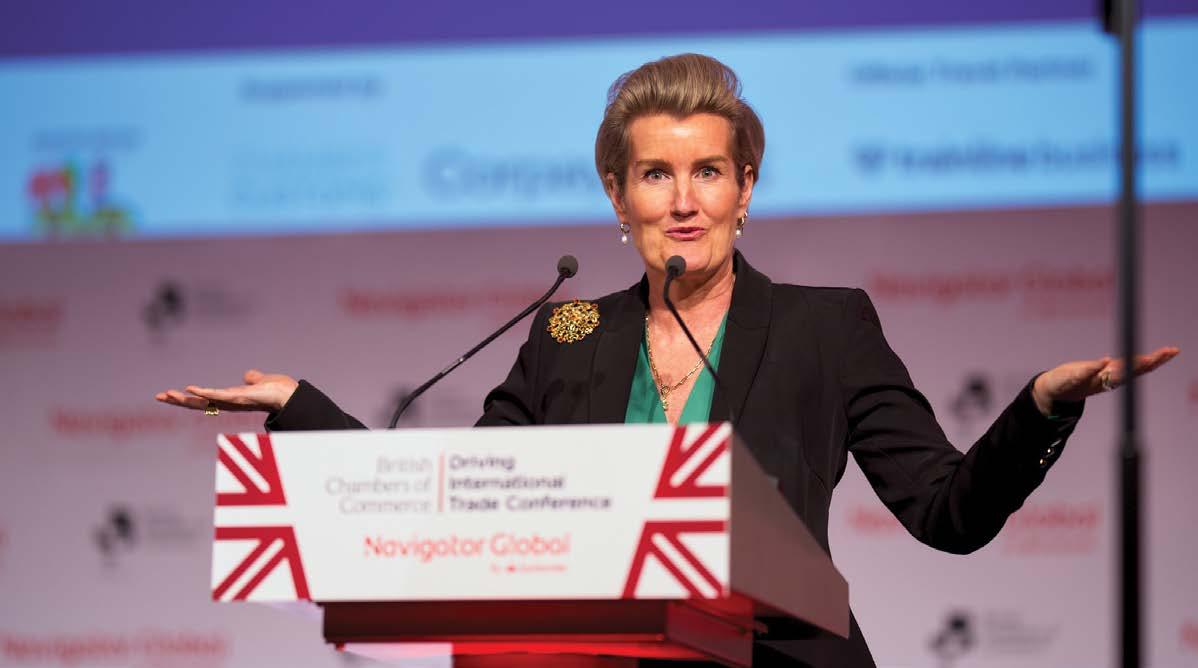
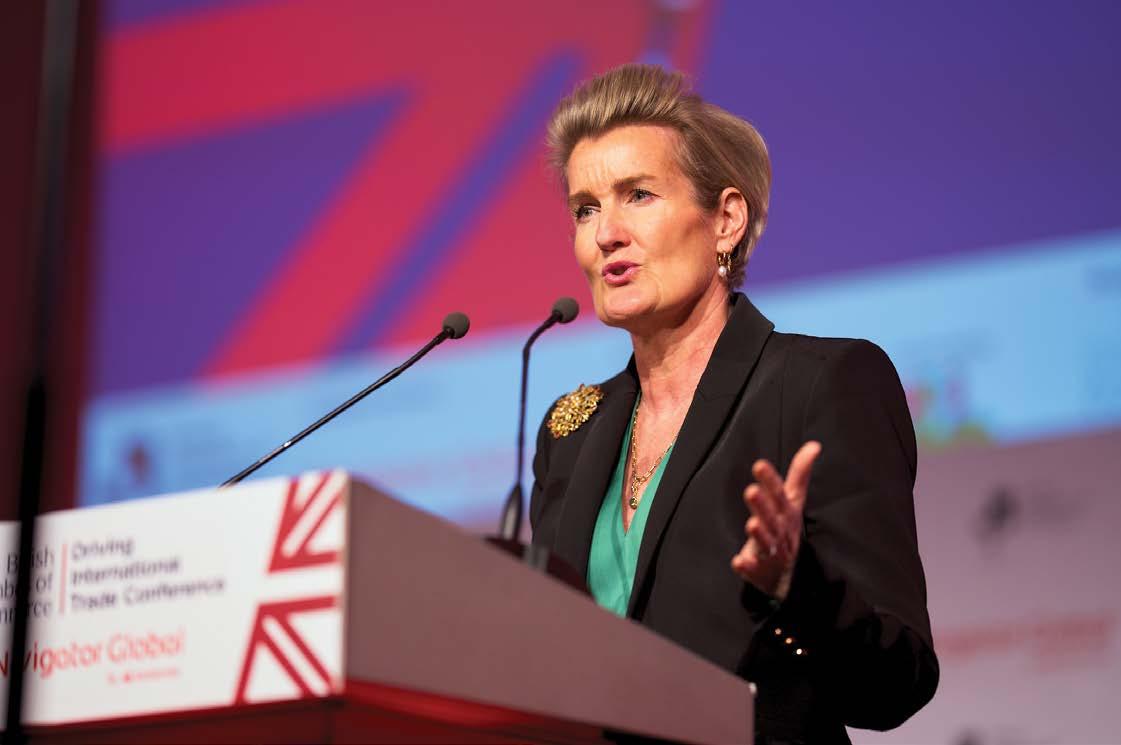
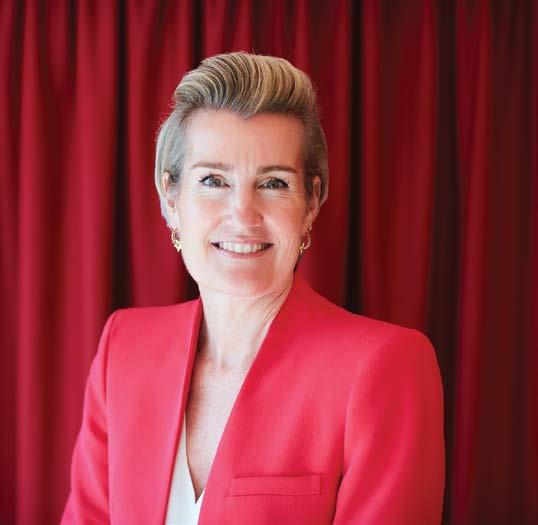
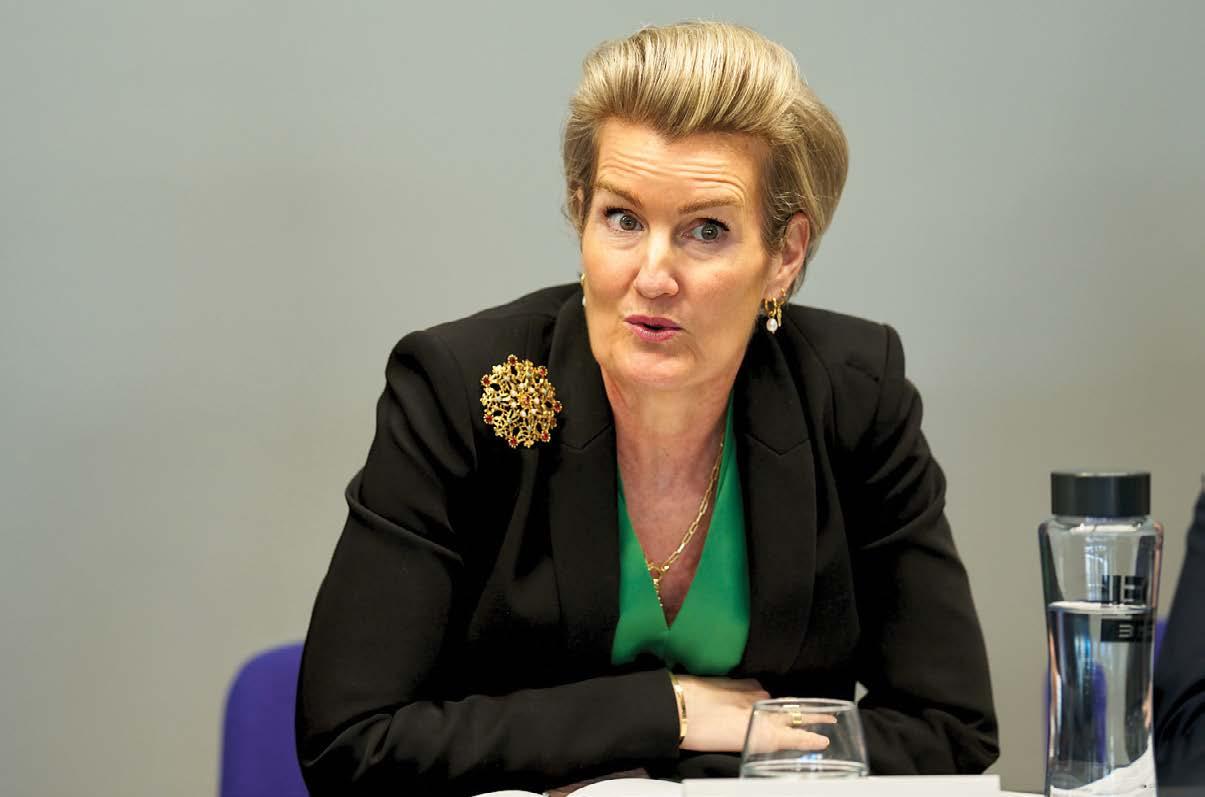
Five years is a lifetime in modern business. Since Shevaun Haviland became Director General of the British Chambers of Commerce in May 2021, Britain has endured a succession of economic shocks that would test even the most resilient organisations: the long tail of Covid-19, the war in Ukraine, soaring energy prices, inflationary pressures, labour shortages and an increasingly uncertain global trading environment. Yet as she reflects on her tenure, Haviland remains focused not on the crises but on the businesses that have weathered them.
It’s been an amazing five years representing the voice of British business,” she says. The organisation she leads sits at the centre of one of the UK’s most influential business networks, representing companies ranging from multinational corporations to family-run firms, startups and scale-ups. “Our network has businesses from the largest, a big proportion of SMEs, startups, scale-ups, all sizes, all sectors, all regions and nations, as well as British Chambers in 75 countries
around the world. So it’s an incredible network to represent.”
The mission, she says, is straightforward: “My job is to ensure that the UK is the best place to start, grow and invest in business.” In practice, that means gathering evidence from thousands of companies, building policy recommendations and taking those ideas directly to the government. It is a role that requires equal parts diplomacy, persistence and pragmatism.
When Haviland joined the organisation, Britain was tentatively emerging from
Shevaun Haviland on Five Years Fighting for British Business by PATRICIA CULLEN
the pandemic. “It was Boris’s sunny-up plans, if you remember that,” she says with a smile. “But we had quite a bit more Covid-19 to come.” Her first major victory came shortly afterwards when the British Chambers of Commerce successfully lobbied the Treasury for further support for hospitality businesses facing another difficult Christmas season. “That was my first big win.”
Bigger challenges quickly followed. The
Russian invasion of Ukraine triggered an unprecedented energy crisis that left businesses facing costs many simply could not absorb. Unlike households, companies had no equivalent protection from soaring energy bills. “We then went on to have a war in Ukraine, massive energy price spikes,” Haviland recalls. “Again, we worked really hard with the government to have an energy cap for busi-
nesses, which unlike consumers, businesses didn’t have. So that was another great policy win.” Those interventions helped cement the BCC’s reputation as one of the country’s most influential business voices. Ahead of the General Election, the organisation presented political parties with 149 policy recommendations. Remarkably, 82 found their way into Labour’s manifesto. “It was great to see them taking on board our recommendations,” says Haviland. “And we’ve been working with them on implementing those.”
THE SMES OF THE UK ARE THE ENGINE OF THIS ECONOMY. THEY ARE OFTEN PIVOTAL TO THEIR PLACE, PIVOTAL TO THEIR COMMUNITY, TO THEIR HIGH STREET”
Perhaps one of the most significant developments under her leadership has been the expansion of the BCC’s international reach. Earlier this year the organisation launched the Diplomatic Advisory Hub alongside the Foreign Office, the first joint government-business initiative of its kind. Drawing on intelligence from Britain’s diplomatic network and the Chambers’ global connections, the project is designed to help companies navigate an increasingly complex
HSBC British Franchise Awards Winners
‘T/Leadership
IN A WAY AI CAN BE THE GREAT LEVELLER BETWEEN SMALLER AND BIGGER BUSINESSES. IT CAN REALLY HELP THEM MAKE THE LEAPS AND BOUNDS THEY NEED TO”
world. “We’re using incredible geopolitical information from around the Foreign Office network and our global network to help businesses navigate the many challenges of exporting and trading around the world,” she says.
Yet despite these successes, 2026 has not delivered the calmer conditions many businesses hoped for. “I think it’s fair to say we came into this year cautiously optimistic,” Haviland says. Companies had already spent much of the previous year absorbing higher National Insurance contributions and rising employment costs. “Businesses spent last year trying to absorb the new National Insurance tax increases, which hit a lot of our smaller members hard.” Just as confidence began to return, new geopolitical tensions emerged. “We then had more
challenges around US trade tariffs and the Iranian conflict. So that has definitely hit optimism.” The bigger problem, she argues, is not any single policy or event but the cumulative weight of rising costs. Alongside tax increases, businesses have faced higher minimum wages, increased energy bills, changes to business rates and new employment regulations. “It’s a real stack of costs that businesses are facing,” she says.
Nowhere is that pressure felt more acutely than in hospitality. While politicians often speak about the sector in terms of rescue packages and emergency support, Haviland believes it deserves to be recognised as one of the country’s most important economic and social assets. “Hospitality is absolutely core to the nation and the economy,” she says.
Through the Chamber network she sees first-hand how pubs, restaurants, cafés and hotels help define communities and support local economies.
The sector has also been among the hardest hit by recent cost increases. “They have generally larger workforces, which means they have had a bigger hit from increasing National Insurance, and often a younger workforce, which means minimum wage increases.” Haviland is careful to stress that businesses support fair pay. “Businesses don’t mind paying a minimum wage. They are delighted. They want to pay their people well. Our businesses are our people.” The challenge lies in the pace of change. “Minimum wage has increased 45% in the last five years.” Combined with inflation and rising food costs, that creates enormous pressure on businesses operating on margins of one or two per cent. “There’s only so much of those costs you can pass on to customers.”
If there is one issue that consistently frustrates Britain’s business community, it is business rates. Haviland has spent years campaigning for reform and remains convinced that the current system acts as a brake on investment. “We’ve been asking for total reform of business rates for many years,” she says. The problem, in her view, is simple: “You’re paying tax before you’ve sold a single thing, literally before you’ve opened the door.” She recalls one member business that manufactured chocolate and sold successfully online. When the company considered opening a high-street store, the economics simply didn’t add up. “They were going to have to sell £10,000 worth of chocolate before they even started. So they decided not to do that.” For a government seeking to revitalise town centres, the implications are obvious. “We really want thriving
high streets. We want businesses investing.”
The system can also create unintended consequences. “If you invest in a building that you own by putting solar panels on your roof, that actually increases the value of the property and therefore increases your business rates.” Instead of encouraging investment in sustainability, the tax regime can penalise it. “A full overhaul of business rates will absolutely help our high streets in a big way.”
Throughout the conversation, Haviland returns repeatedly to the role of SMEs. “The SMEs of the UK are the engine of this economy,” she says. “They are often pivotal to their place, pivotal to their community, to their high street. They’re absolutely crucial for a successful, growing UK PLC.”
The question, then, is how Britain helps more of them grow. For Haviland, the answer lies in three areas: exporting, supply chains and technology. “How can you trade more around the world? We are one market, but there are hundreds out there.” Equally important is connecting smaller firms with major infrastructure projects. She points to Sizewell C as a model. The Chamber network has helped 3,500 businesses enter the project’s supply chain. “That’s not just manufacturing and construction. That is local taxi firms, local hotels, local restaurants who all benefit from that investment in that place.” And then there is artificial intelligence. “We can’t have an interview without mentioning AI, of course,” she laughs. Yet behind the familiar buzzword, she sees a genuine opportunity. “We really believe that
by grasping the opportunities of AI, our smaller businesses can drive productivity in a way they never could before.”
More importantly, AI could help level the playing field between smaller firms and larger competitors. “In a way AI can be the great leveller between smaller and bigger businesses. It can really help them make the leaps and bounds they need to.”
As our conversation ends, I ask what single change she would make tomorrow to unlock the next generation of British scale-ups. Unsurprisingly, she cannot limit herself to one answer. First, she wants to reduce the costs that constrain investment. “How can we reduce costs for business so that we can unleash that money into investments?” Whether through lower energy bills, business rates reform or easing employment costs, the goal is the same: freeing up capital for growth. But there is a second challenge. “Let’s make sure we can invest in ourselves as the UK,” she says. Britain needs more capital flowing into ambitious businesses, helping them scale, innovate and export. “How can we help release more money into the system to help businesses scale up and grow and stay in the UK and export around the world?”
It is, in many ways, the defining question facing the British economy. After five years navigating crises, Haviland remains convinced that the country already possesses the raw ingredients for success. The entrepreneurs are there. The ambition is there. The innovation is there. The task now is to create the conditions that allow them to flourish.
→ Shevaun Haviland, Director General of the British Chambers of Commerce
The Missing Ingredient in Growth
by ENTREPRENEUR UK STAFF
For years, Britain’s start-up story has been told through a familiar geography: Shoreditch coworking spaces, Mayfair venture firms, and the dense network of accelerators clustered in and around London. It is a narrative of proximity - to capital, to networks, to opportunity. But for Jenson Brook, founder of Britain’s Got Startups (BGS), that geography has quietly become a distortion.
“The problem has always been visibility, not quality,” he says. It is a simple line, but one that reframes the entire debate about UK entrepreneurship. Because if Brook is right, the issue is not a shortage of strong businesses
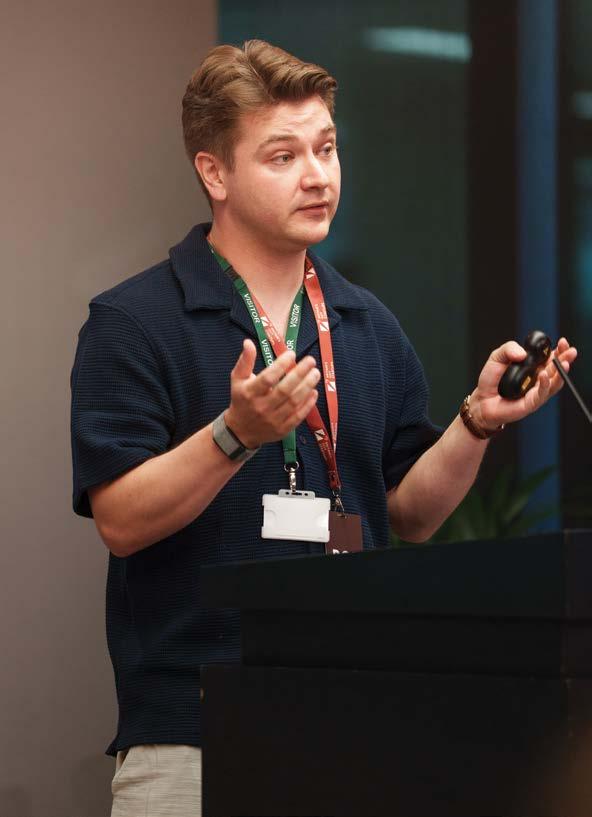
outside London - it is a shortage of exposure. BGS was created to address that gap. Its aim is to surface founders from across the UK and connect them with investors who, in many cases, would never otherwise see them.
Brook knows both sides of the divide. He spent seven years building businesses in London before returning to North Yorkshire, where the contrast between the capital’s ecosystem and regional realities became, in his words, impossible to ignore. “I was exposed to the saturation of education and investment and people with experience in dealing with early-stage start-up funding,” he says. “But the problem’s never been about the quality of business. It’s always been about visibility.”
That lack of visibility, he argues, is not accidental. It is structural. “There are extraordinary businesses being built in Inverness, Penzance, Swansea and Norfolk,” he says. “Because of the ecosystems those companies are in, there’s not as much education, visibility or access to investment.” According to data compiled by BGS with Beauhurst, around 80% of early-stage investors remain based in London. That concentration creates a feedback loop: investors invest where other investors already are; founders move to where capital is easiest to access. The result is a startup economy that looks national on paper but remains heavily centralised in practice. For Brook, however, the implications extend far beyond the tech sector.
The blind spot in Britain’s growth story
The UK’s economic debate is often framed around productivity, scale-ups and innovation policy. But Brook believes one of the most important components of regional growth is consistently overlooked: the everyday businesses that underpin local economies. “I think it’s a genuine market failure,” he says. At the centre of that failure, in his view, sits hospitality. “Hospitality, care and local retail probably employ the most people in regional towns. They anchor high streets and communities really know when they close.” It is a statement that shifts hospitality from lifestyle sector to economic infrastructure. Yet in most investment conversations, it rarely features in that way. The reason, Brook argues, is structural misalignment. “They just don’t fit the VC pattern of exponential returns.”
Venture capital is designed around scale - software businesses that can grow rapidly without proportional increases in cost.
→ Jenson Brook, founder of Britain’s Got Startups
A restaurant, pub or hotel, by contrast, is tied to physical space, staffing and local demand. That makes hospitality less attractive to traditional investors, even as it remains central to the health of regional economies.
High streets as economic indicators
The decline of hospitality in many UK towns is often discussed in cultural terms - the loss of character, community, or social space. Brook sees something more fundamental. High streets, he argues, are not just retail environments. They are economic indicators. When hospitality businesses close, it is not only jobs that disappear. It is also footfall, confidence, and the informal infrastructure that supports other forms of business activity. “A city with great restaurants, venues and hospitality is a city that attracts talent, events and business tourism,” he says. That idea reframes hospitality as a multiplier rather than a standalone industry. It does not just serve an existing economy - it helps create the conditions for new economic activity. Brook points to York, where BGS hosted its Northern Britain showcase, as an example of how place shapes participation. “York is a beautiful place to go. It’s laced with history, cobbled streets, great restaurants and great venues.”
In practical terms, those qualities influence whether people travel for events, how long they stay, and how willing they are to engage with local business communities. “We attract more people to our events based on where we hold them,” he says. The implication is straightforward: investment follows experience as much as opportunity.
Hospitality as hidden infrastructure
For Brook, one of the most overlooked aspects of hospitality is its role in making places feel investable. Investors, he argues, are not purely rational actors responding to spreadsheets and forecasts. They are people whose decisions are shaped by environment, convenience and perception. “The ecosystem and everything else is the foundation of why someone might want to set up a company somewhere,” he says. A strong hospitality sector does not replace financial infrastructure or policy support. But it complements them by making regions more attractive to visit, work in and ultimately invest in. That is particularly important for areas outside London, where perception often lags behind reality. In many cases, Brook argues, regional Britain suffers not from a lack of opportunity but from a lack of narrative.
The London effect
Despite his focus on regional growth, Brook is realistic about London’s continued dominance. “A lot of people naturally want to go to London. I did.” Like many founders, he initially viewed the capital as essential to success. “I thought I’d earn more money. I thought I’d attract better people. And I loved having a London postcode.”
London offers proximity - to investors, customers, and networks - that is difficult to replicate elsewhere. But it also
A CITY WITH GREAT RESTAURANTS, VENUES AND HOSPITALITY IS A CITY THAT ATTRACTS TALENT, EVENTS AND BUSINESS TOURISM. THAT IDEA REFRAMES HOSPITALITY AS A MULTIPLIER RATHER THAN A STANDALONE INDUSTRY. IT DOES NOT JUST SERVE AN EXISTING ECONOMY - IT HELPS CREATE THE CONDITIONS FOR NEW ECONOMIC ACTIVITY”
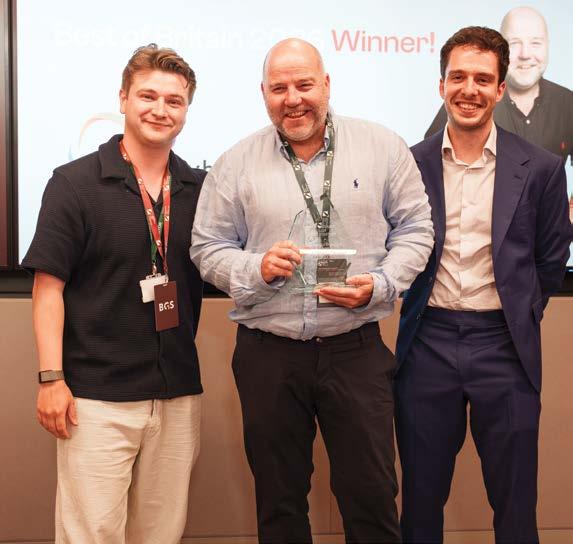
creates a cost structure that can be hard to sustain. “You quite quickly see that you save a lot of your margin just because you’re not based in London.” What surprised him most after leaving, however, was not cost savings but talent distribution. “There is talent available in the regions.” That belief underpins BGS’s core mission: to make that talent visible.
Beyond tech: the limits of scale thinking
One of Brook’s central critiques is that UK growth policy has become overly focused on a narrow definition of scalability. In practice, that often means prioritising software and technology businesses over traditional or service-based industries. But this approach, he argues, ignores the complexity of regional economies. In many towns and cities, hospitality is not peripheral - it is foundational. It provides
‘T/Visibility
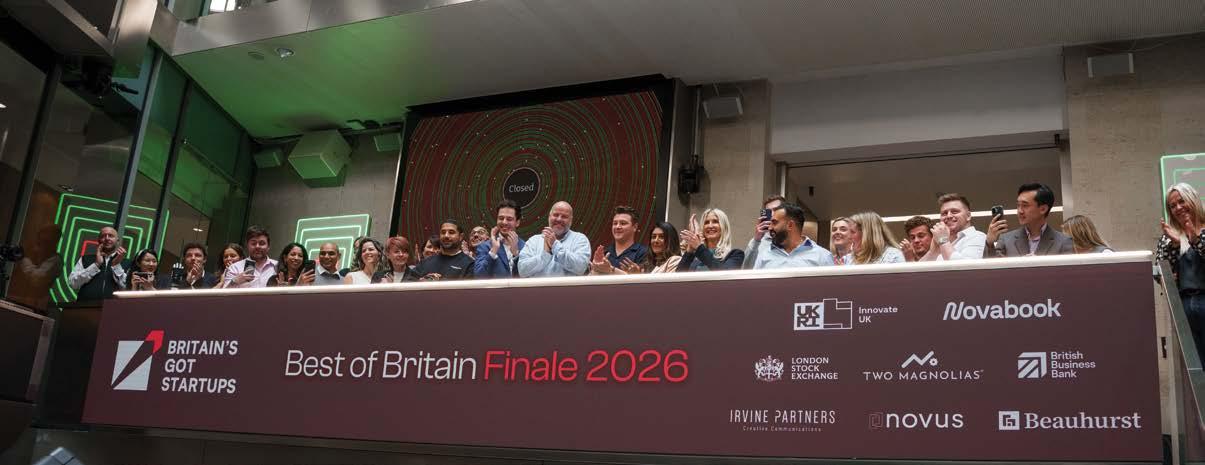
employment, anchors town centres, and supports other forms of local enterprise. Yet because it does not scale in the same way as digital products, it is often excluded from investment frameworks designed for high-growth start- ups. Brook believes that needs to change. “I think there really does need to be a change with patient capital, investing over 10 to 25 years.” That longer-term approach, he argues, would allow for more meaningful investment in sectors that are essential to regional stability but less attractive to venture capital.
The social economy of place
At its core, Brook’s argument is about how places function. He returns repeatedly to the idea that economic growth is not purely financial - it is social. “There’s always going to be the mechanic. There’s always going to be the hairdresser. There’s always going to be somewhere for people to socialise. And that is the pub. Thank God for that.” It is a reminder that despite the rise of digital economies, physical spaces still matter. People still gather. They still eat out, meet, travel and socialise. Hospitality, in this sense, is not a legacy industry. It is a continuing requirement of how economies function.
A
shift in perspective
Brook is careful not to position his
argument as anti-London or anti-tech. Instead, he sees it as an attempt to rebalance a system that has become too narrowly focused. “If regional founders don’t just look to London, perspectives will start changing,” he says. “We can start looking at the international stage.” That shift - from London-centric to globally aware regional entrepreneurship - is already beginning, he believes. Increasingly, investors from Europe, North America and the Middle East are looking at UK regional businesses as viable opportunities. But unlocking that potential requires more than capital alone. It requires infrastructure, visibility and, crucially, places people want to be.
The foundation beneath growth
For all the focus on start-ups, scale-ups and investment rounds, Brook’s argument ultimately returns to something more fundamental. Growth, he suggests, does not begin in pitch decks or funding rounds. It begins in places. “I think it’s the cornerstone of a regional economy,” he says. Hospitality, in that framing, is not a supporting act. It is part of the stage itself - the environment that makes everything else possible. And if the UK is serious about rebalancing its economy beyond London, Brook believes it may need to start by paying attention not just to where capital flows, but to where people
actually want to live, meet, and build something in the first place.
THERE’S ALWAYS GOING TO BE THE MECHANIC. THERE’S ALWAYS GOING TO BE THE HAIRDRESSER. THERE’S ALWAYS GOING TO BE SOMEWHERE FOR PEOPLE TO SOCIALISE. AND THAT IS THE PUB. THANK GOD FOR THAT.”
Never be seduced into believing it isn’t the role of business to tackle the big issues, because it absolutely is.
DAME ANITA RODDICK FOUNDER, THE BODY SHOP
THE LONG GAME
At Hound Lodge on the Goodwood Estate in Sussex, Peter Gago reflects on a wine business that has scaled, adapted and endured across nearly two centuries, as Penfolds marks 75 years of Grange, its iconic flagship wine, regarded as one of the world’s most collectable labels. Chief winemaker since 2002, he is only the fourth person to hold that role since Grange was created in the early 1950s. That continuity places him within one of the longest unbroken lines of stewardship in global winemaking. Penfolds itself dates to 1844, founded in South Australia by Dr Christopher Rawson Penfold, an English physician who emigrated during the early colonial period. As Dr. Christopher Rawson Penfold hailed from Sussex himself, it’s a fitting location for the esteemed wine producer to be celebrating Grange’s 75th anniversary and reflecting on the brand’s journey since that voyage from England to South Australia 182 years ago.

Peter Gago and the 182-year business of turning time into value by PATRICIA CULLEN
A wine made against resistance
The defining wine in Penfolds’ history, Grange, was created against internal resistance. In the early 1950s, winemaker Max Schubert developed an experimental style inspired by the Great Chateaux of Bordeaux, but unlike anything being made in Australia at the

time. It was designed for long ageing rather than immediate release. There was scepticism at first and after a few years, Max was told by the board to stop making his experimental wine, however he continued regardless in secret. For several years, Grange was made without approval, with barrels and production kept out of sight. The risk was dismissal. “He could hide the barrels, he could hide the bottles,” Gago says. “But he couldn’t hide invoices for new oak.”
Three early vintages - 1957, 1958 and 1959 - emerged from that period. In 1962, the earliest vintages of
Grange won great acclaim at the Sydney Wine Show, after which the board instructed Max to recommence production. It was then he revealed it had actually never stopped.
Structure over brand identity
Penfolds now produces wines from Australia, France, the United States and China, across a wide price spectrum. At the top end, Gago describes the business less as a brand than as an inherited system. “I don’t refer to Penfolds as a brand,” he says. “I refer to it as a culture.” The distinction matters: brands are
repositioned, while cultures persist. Grange is made to a defined stylistic idea rather than a shifting brief, with consistency across vintages prioritised over reinvention. The emphasis is on recognisable character in every release, regardless of year or origin. Gago repeatedly returns to time as the defining variable in wine. “The world of wine seduces you,” he says. “We call it the grip of the grape.” Wine is made in one moment but judged in another, often years later. Value is realised slowly, not immediately. “Immediate gratification? Not really,” he says. He describes wine as a “drinking investment” - not financial
“THE WORLD OF WINE SEDUCES YOU. WE CALL IT THE GRIP OF THE GRAPE”
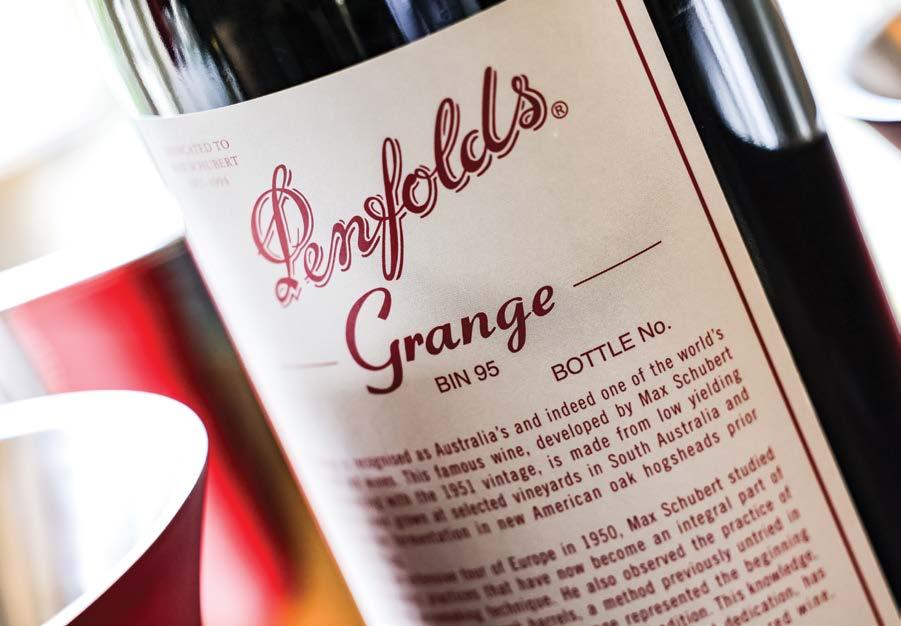
speculation, but experience unfolding over years. Bottles evolve, and so does perception. “You don’t start with complexity,” he says. “You develop it.”
Expansion and controlled experimentation
In keeping with Penfolds’ desire to always push the boundaries in pursuit of excellence, Penfolds has expanded its footprint under Gago’s leadership, including production in France and collaborations with a ground-breaking fine wine collaboration with Domaine Paul Jaboulet Aîné, which produces the iconic Syrah expression, La Chapelle, in the Northern Rhône Valley. The collaboration has seen Penfolds and Jaboulet combine their two flagship fine wines - arguably the greatest Shiraz from the Southern hemisphere, Grange, and the the greatest Syrah from the Northern hemisphere, La Chapelle - creating a fine wine like no other. Such a bold move could have been seen as a risk but the response from wine critics the world over has been overwhelmingly positive. These ventures are framed internally as extensions rather than departures. “We now have bookends,” Gago says. “Champagne at one end, fortified wines at the other.” Between them sits a portfolio designed to explore different expressions of structure, ageing potential and place. Another of the more experimental initiatives is G3, G4 and G5 - multivintage blends of Grange
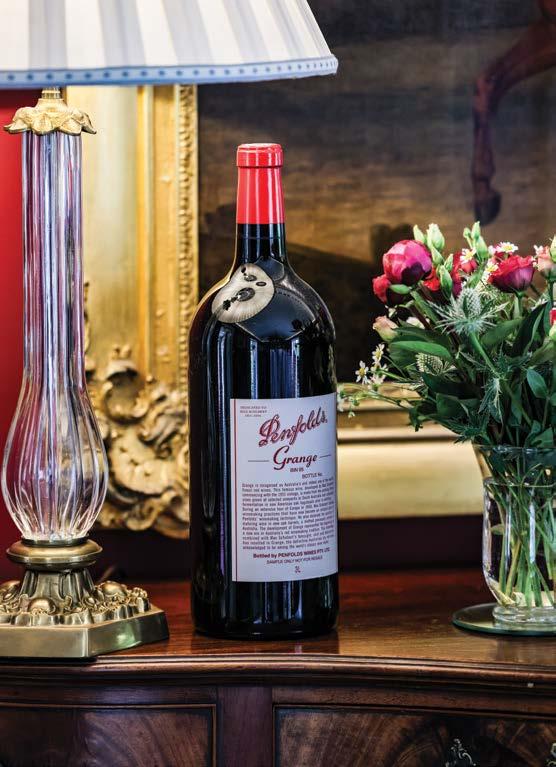
combining three, four and five vintages in a single release, creating true collectors’ items that upon opening in the years to come, will be fascinating to try as their complexity deepens.
A shift in global recognition
A defining moment in Penfolds’ international profile came in 1995, when the 1990 Grange was named Wine of the Year by Wine Spectator. The impact was immediate: prices shifted, demand expanded and Australian fine wine gained greater visibility in global markets.
“It put Australia on the global map,” Gago says. The recognition did not create the reputation but amplified it internationally. Within the company, reputation had already
been built over decades of internal consistency. Today, time is formally recorded through The Rewards of Patience, a publication now in its ninth edition. Regarded as the ultimate form guide for Penfolds wines, a new edition of the Rewards of Patience is published every 5 years and contains up-todate tasting notes for every back vintage of every Penfolds wine ever made. The tasting notes are provided by leading wine critics from across the world who taste the wines alongside Penfolds winemakers every 5 years and share their independent assessment. Their notes are collated and published in each new edition, giving Penfolds wine collectors the valuable knowledge of how
WE
NOW HAVE BOOKENDS. CHAMPAGNE AT ONE END, FORTIFIED WINES AT THE OTHER”
the different vintages of Penfolds wines they are cellaring are faring; whether they should be opened and enjoyed soon, or if they have further ageing potential.
Continuity as structure
At Penfolds, innovation sits within continuity rather than against it. From Schubert’s pioneering work creating Grange in the 1950s to the recent and rare multi-vintage releases of Grange (and Yattarna, Penfolds’ flagship white wine), experimentation exists alongside a consistent expectation of style and quality in the glass. For Gago, the aim is not reinvention but recognisable character across wines that may not be opened for decades. He calls it the Penfolds House Style. It is a model built around patience - and the belief that what is poured today is part of a story still
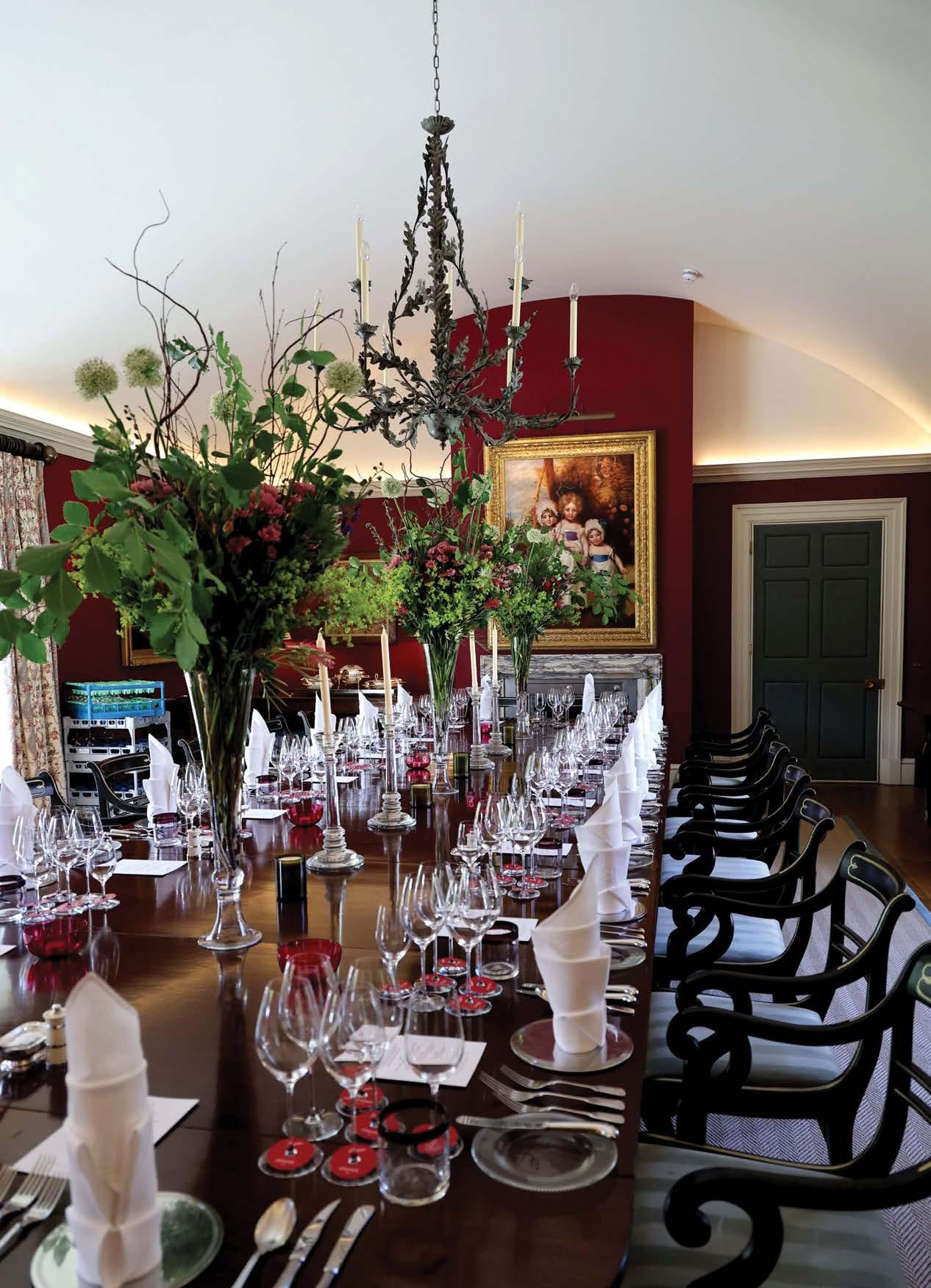
Invisible By Default
Hospitality brands have long competed for search rankings and social media attention. But Tilly Gray, Director of PR and AI at Mason Rose, a luxury hospitality PR and communications agency, says generative AI is reshaping how
travellers discover and trust brands. After advising more than 160 hotel leaders on AI discoverability, she warns that businesses must rethink visibility, reputation and digital strategy or risk being left out of the customer journey entirely. Entrepreneur UK finds out more…
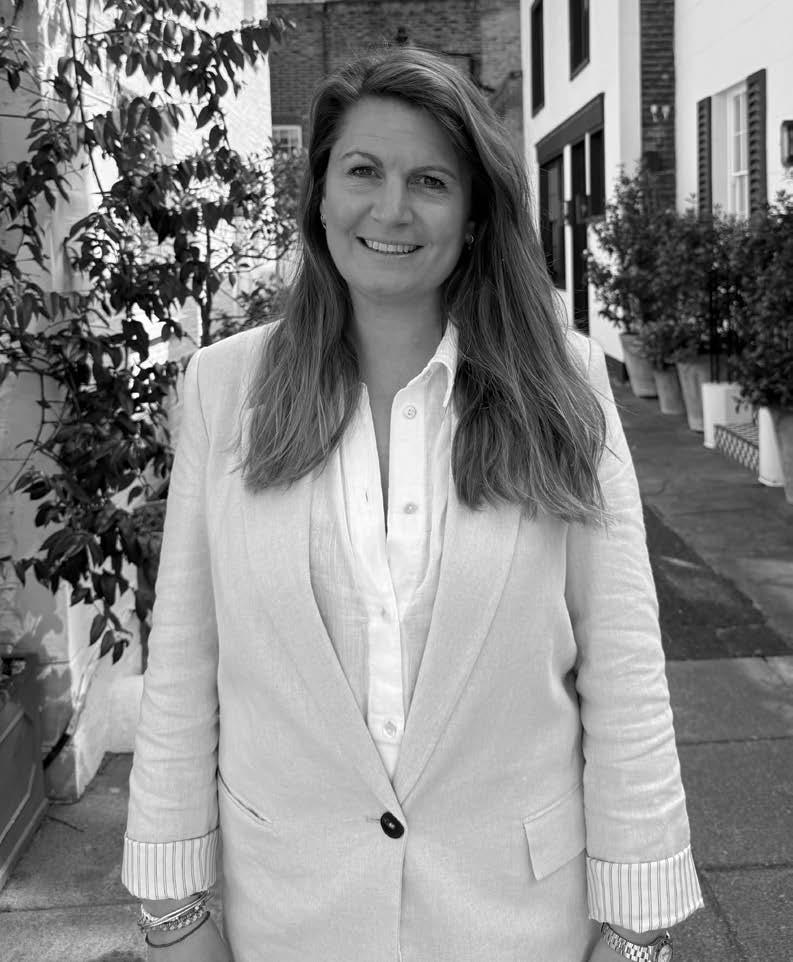
Have hospitality leaders truly grasped the scale of the AI disruption heading their way?
No, not yet, given the fast-changing nature of AI, many are feeling overwhelmed by it (understandably!) and what to prioritise to stay ahead. However the response to my consultancy has been incredible, which reflects the keenness from leaders to learn and understand how best to approach it. This is the fourth industrial revolution, and where TV, the internet and radio took many years to reach mass adoption, AI has reached mass adoption in two months, so it is a technological advancement like we have never seen before. Most hospitality leaders are thinking about AI as a tool to use internally, rather than fully understanding how critical it is for their entire business and brand positioning beyond their website. The Generative search shift we are seeing, means that there are now zero-click searches, and that when AI mentions a hospitality brand in its summary, it acts like a recommendation or advertisement where the consumer knows your brand, and trusts your information, often without even a visit to your website. This is a fundamental shift in how discovery works, and it’s happening faster than most businesses
Why AI is rewriting hospitality visibility by PATRICIA CULLEN
→ Tilly Gray, Director of PR and AI at Mason Rose
are adapting their strategy.
You’ve warned that hotels can become “invisible by default.” What’s the biggest mistake brands are making right now? Many hospitality brands will become invisible by default due to a few reasons 1) An overreliance on SEO, strong SEO and ranking on Google no longer guarantees visibility , 2) a weak third party presence, if AI lacks trusted sources to validate the brand, it will be deemed invisible 3) Generic Positioning, if travel brands are deemed similar to others, AI can’t differentiate and won’t include it and 4) inconsistent data, if there is mismatched information out there about a brand, AI models will ignore it.
After 15 years in PR, what convinced you that AI expertise would become essential to staying competitive?
Over the last five years, I noticed that what once worked as a PR, no longer delivered the same results, and that we needed to pivot our client and business strategies to survive. I realised that while AI is rapidly transforming discovery, search, and editorial influence, PR remains a highly nuanced, relationship-led industry with very little AI specialism built specifically for it. This gap created an urgent need for AI expertise that understands the realities of PR not generic tech solutions, but
practical, industry-specific guidance from a PR expert who deeply understands the luxury travel sector, and this is why I trained to
“AI SHOULD TAKE OVER THE FRICTION POINTS, THE ADMIN, THE LOGISTICS, THE DISCOVERY LAYER, SO THAT HUMANS HAVE MORE TIME TO DO WHAT HUMANS DO BEST, ADD WARMTH, VALUE AND CONNECTION TO A TRAVEL EXPERIENCE, THAT AI SIMPLY CAN’T”
become a qualified AI professional with a PR expertise to offer hoteliers, travel brands and PRs guidance on how to positively implement and embrace AI to maximise the commercial opportunity rather than be disrupted by it or left behind.
For years, hospitality brands focused on SEO and social media. Has AI changed the rules of visibility?
There are new rules of visibility, whilst SEO is still important, the priority is no longer to rank highly on Google, but instead to be the preferred brand that is trusted enough by the AI models to be recommended or cited, so
trust is now the primary ranking signal. AI rewards clarity and factual consistency across multiple sources, and content that is easy to extract and summarise. A good way to help with this mindset shift we need to make, is to see AI platforms as a new persona that hospitality brands need to convince.
You’ve advised more than 160 hotel leaders on AI discoverability. What separates the businesses embracing this shift from those resisting it?
The response has been incredibly positive, and perhaps that is due to being fortunate enough to work with some of the most forward-thinking hoteliers from around the world, who are always looking for the next innovation. More specifically, those
businesses embracing it are those that are at the core, are curious, and have an eagerness to learn and experiment with AI and the opportunity that it brings. Hopefully, my one-to-one AI consultancy and seminars provide these leaders with trusted expert guidance on how to navigate this unchartered landscape. Subsequently, this has reassured them that this is in one of the most exciting shifts our industry has seen in decades and is a chance for us to take control back and redefine how influence is built, how brands are discovered and how their stories are told.
Hospitality is built on human connection. As AI becomes embedded in the industry, where should people always remain at the centre of the experience?
Hospitality has always been about making people feel seen, understood, valued and cared for and whilst AI is transforming the industry in incredible ways, enabling hyper personalisation and productivity at scale, to streamlining operations, the most important parts of the travel experience are without doubt, inherently human. My view is that AI should take over the friction points, the admin, the logistics, the discovery layer, so that humans have more time to do what humans do best, add warmth, value and connection to a travel experience, that AI simply can’t.
Knead To Grow?
Inside a
viral bakery
journey by PATRICIA CULLEN
Sara Al-Janabi, founder of Big Boy Bakery, an award-winning bakery specialising in giant bakes, reflects on how a university pop-up turned into a cookie business that quickly gathered momentum through social media and sell-out drops. She talks about the reality of building and running it largely on her own, the burnout that came with rapid growth, and the decisions needed to turn early demand into something more sustainable.
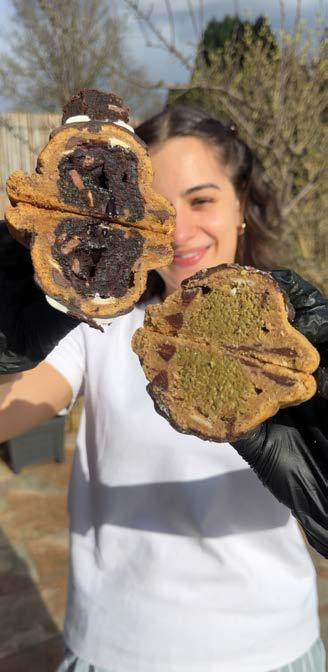
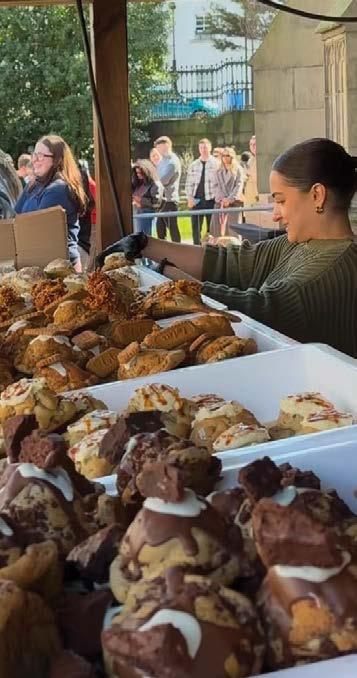
When did you realise Big Boy Bakery had the potential to become a serious business?
It hit me during my final semester at uni, right in the middle of exam season. I had just done my first ever pop-up and sold out in under two hours. Seeing the queues for the first time was crazy to me. I actually had to move my market table because it was becoming a fire safety hazard and blocking the entrance! Even then, the queue was wrapping
around the entire market and people were still arriving after everything had sold out. What overwhelmed me most was having to then turn people away. The market organisers told me they genuinely hadn’t seen anything like it before. It wasn’t until the end of the day that I processed what had actually happened and it made me so emotional to realise I had something real which I could grow.
What’s been the biggest driver of the brand’s rapid growth?
Sharing the journey on social media, without question. I wanted people to see what it actually looks like to build something from nothing. I’d film myself at 5am after a baking shift, completely unfiltered, show the chaos of getting ready for a pop-up and be honest on camera when I was burnt out or unsure whether something was working. People connected with that in a way I never expected. At pop-ups, they’ll come up and talk to me about things I’ve shared online or disasters I’ve had along the way. Yes, they’re there for the cookies, but you can tell they’re genuinely invested in the journey and where it’s all going. I think that same energy carries through online too. You can see it in the way people engage with my posts. It feels like they’re growing alongside the brand, rather than just following it.
How have you turned social media buzz into loyal customers and repeat sales?
I think it ultimately comes down to the product. People wouldn’t keep coming back or reordering if the cookies weren’t genuinely good. From the beginning, I’ve tried to make Big Boy Bakery feel like something you can’t get anywhere else. Every pop-up has a different box, and while I’ll bring back the flavours people go mad for, there’s always something new in the mix too. I think that sense of anticipation around what flavour is coming next is a big part of it. Because the drops are limited, it gives people a reason to come back and see what’s new, which keeps things exciting. I also think people can genuinely taste the homemade difference. It’s nothing like something you’d pick up off a supermarket shelf. There’s a level of care and quality that comes with making everything by hand and I think customers recognise that. That’s probably why I keep seeing so many familiar faces at pop-ups and why so many people come back to order again.
What’s been the biggest challenge in scaling the business so far?
I’m the founder, the baker, the marketer, the logistics team, literally all of it. I was juggling all of that through my final year exams and as demand kept growing, it became harder to keep everything at the standard I wanted it to be. The moment it really hit me was the Bombed Out Church collaboration, where I committed to making 1,000 cookies out of my mum’s kitchen. I pulled it off, but the burnout afterwards was very real. There were definitely moments where I was baking through the night, running on very little sleep and wondering whether I’d completely overcommitted. When you’re doing everything yourself, you simply can’t give 100% to every part of the business all of the time. I’ve had to learn that scaling isn’t about working harder, it’s about working smarter, planning better and knowing when to ask for help. It’s not a bad problem to have and I’m incredibly grateful for the growth. In a weird way, every challenge has been proof that people care and that the business is moving in the right direction. But it’s definitely made me realise that the next chapter of Big Boy Bakery needs to be bigger than just me. The one-man show has worked so far, but it can’t go on forever.
Which decision has had the greatest impact on Big Boy Bakery’s success?
Putting myself into the brand. Early on, I was completely focused on the product, which obviously matters, but the real shift came when I started letting people into the story behind it. Once I began being open about what it was actually like to build something as a final-year university student, with no business experience and quite a bit of fear and doubt, people became more invested in me and in the product. I stopped trying to make everything look polished and just showed it as it was and I think that’s what made it click. That decision to put myself out there and be vulner-
→
Sara Al-Janabi, founder of Big Boy Bakery
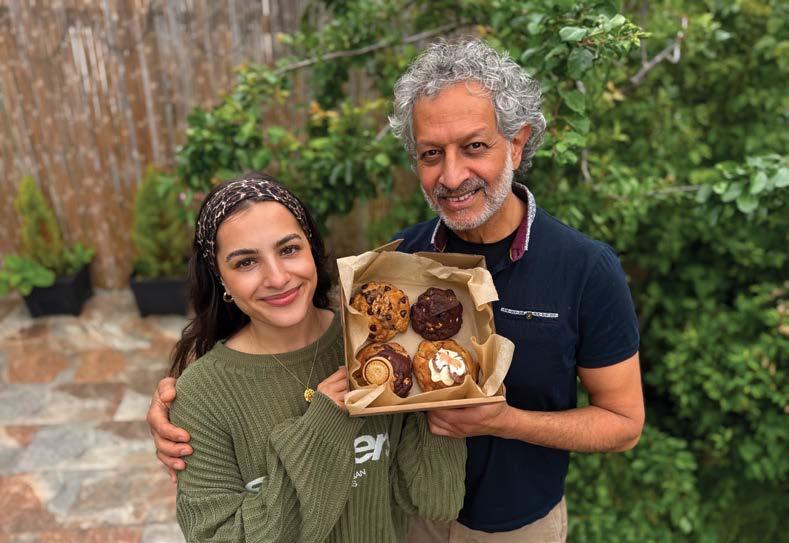
“
WHEN YOU’RE DOING EVERYTHING YOURSELF,
YOU SIMPLY CAN’T GIVE 100% TO EVERY PART OF THE BUSINESS ALL OF THE TIME”
able online, rather than just showing a perfect brand, changed everything for me. It’s helped grow my confidence while building the community around Big Boy Bakery and I really do think that’s what’s driven the growth more than anything else.
What’s your vision for Big Boy Bakery over the next five years? Over the next five years, I’d love Big
Boy Bakery to have a permanent presence. But honestly, the pop-ups and brand collaborations are what I love most, so I want to do a lot more of those across the UK. There’s nothing quite like a pop-up day. Seeing people come together, having all my friends and family in one place and watching something that started in my mum’s kitchen bring so many people through the door. The energy I feel after a day like that is just unmatched. I’d love to take it beyond the UK eventually too. My family is Polish and Iraqi, so I’ve always grown up around different cultures and living in Barcelona during my year abroad really opened my eyes to how differently cities experience food and community. That idea excites me a lot and I’d love to explore what Big Boy Bakery could look like internationally one day. At the moment, that still feels unreal to say out loud given this all started with me baking cookies at home and posting them online, but I think that’s the fun part. If there’s one thing this journey has taught me, it’s that the things that seem unrealistic today can become surprisingly normal if you keep showing up. So who knows, maybe in five years time there’ll be a Big Boy pop-up somewhere I’ve never even visited yet.
S Pressure/
Profit, Pressure and People
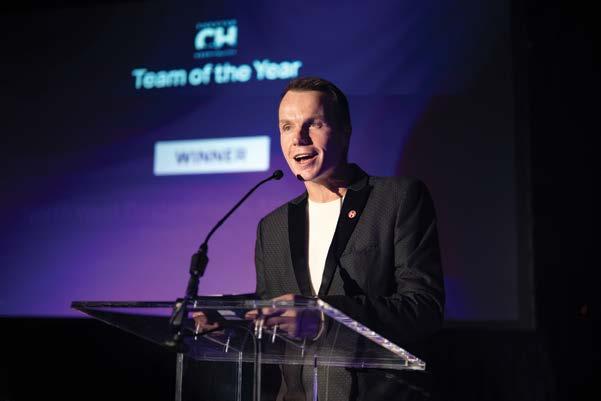
UK hospitality is under pressure from business rates, labour costs and inflation, forcing operators into trade-offs, according to Steven Hesketh, founder of SAVVY Collective. “There’s nothing that many businesses can do about it other than swallow them, so to speak.” He says this is driving higher prices or reduced services: “It ultimately does mean higher prices and or reduction of services.” Operators are making subtle, often invisible cuts to absorb costs. “Everyone’s just trying to be as clever as they can be.” Hesketh cites once-unthinkable changes now becoming routine, such as removing bedroom water or altering pillow setups: “Do you put water in the bedrooms? Now you take
them out and maybe you put filtered water in your own reusable bottles. Do you do things like single pillows on the bed and the second pillow in the wardrobe?” Even small increases matter. “At one of our properties, it works out to be something as bonkers as £6 extra per room per night.”He adds that these pressures are hard to absorb and limit investment: “You just can’t hide or swallow that. You just really can’t.”
With COVID loans still being repaid alongside rising business rates, he says: “We’re just coming to the end of paying off our COVID loans and all this type of stuff. And then you’re hit with your business rates increased. What’s ultimately happening is that longer term investment into your product is taking the biggest hit.”
Recruitment pressures and structural change
Recruitment and training are also being reshaped by cost and wage pressures, with Hesketh saying the traditional model of developing young staff in-house is becoming harder to sustain. “Gone are the days where you’ve gone, let’s recruit some youngsters in, let’s train them up, let’s get them ready.” Operators, he says, are now forced to prioritise immediate productivity over long-term development.“You are now so pushed for time and cost when recruiting.” Rising wages have also narrowed the gap between entry-level
and experienced staff. “For an extra quid or two, you may as well just get a more experienced team member.” He acknowledges this reduces opportunities for younger workers, particularly where training time is limited. “Sadly, their wage is pretty much the same… that extra time to invest in the training of someone that has those soft skills you need for hospitality, so to speak.” Despite this, he argues hospitality still plays a vital social and developmental role. “We are without doubt one of the most resilient industries out there.” And

→ Steven Hesketh, founder of SAVVY Collective, a hospitalityfocused strategy and marketing consultancy group
for young people in particular, he highlights the human value of the workplace. “The joy of them working with teams… some of their strongest relationships can be with the people they work alongside.”
AI, automation and the limits of technology
On artificial intelligence, Hesketh is cautiously optimistic, rejecting the idea that it threatens hospitality jobs and instead seeing it as a practical tool for efficiency. “I think it’s a case of not being scared, and just embracing the inevitable. He describes AI as a way to improve speed and decision-making. “Can
GONE ARE THE DAYS WHERE YOU’VE GONE, LET’S RECRUIT SOME YOUNGSTERS IN, LET’S TRAIN THEM UP, LET’S GET THEM READY”
we get sharper, smarter, quicker answers?” In particular, he highlights its value for independent operators with limited resources, where small efficiency gains matter. Even routine admin and communication tasks can be improved through AI. However, he draws a clear line at replacing human roles in guest-facing settings. “What I’m not a big fan of is the robotic barman.” For Hesketh, hospitality depends on human connection that technology cannot replicate. “When you go to a lovely bar, actually part of the fun is having that little bit of banter.” He warns that over-automation risks eroding that experience. “That sense of connection cannot be taken away.”
Independent hotels vs global chains
On competition between independent operators and large hotel groups, Hesketh takes a pragmatic view. While acknowledging the advantages of scale enjoyed by major brands, he argues that independents often outperform on agility and innovation. “I have always had this opinion that we’re 2-3% behind on occupancy to the big brands.” However, he suggests that tougher trading conditions can narrow that gap by favouring flexibility over scale. “As times get tough, I think that does sway to our advantage.” Independent operators, he says, are able to move quickly and experiment with new concepts in ways large groups cannot replicate.
“The independents are very nimble, and can make things happen fast.” He cites examples of rapid reinvention driven by necessity rather than capital investment. “They’ve actually transformed what was an office into a lovely private dining room with a Harry Potter-type theme…within a week.” Such agility, he argues, creates opportunities for differentiation even in a highly competitive market. “You just wouldn’t get that in the big corporate hotel world.” However, he acknowledges that independents face structural disadvantages in capital expenditure and refurbishment cycles. “Whereas these big hotel chains can maybe have funds that sort of, we’ll just throw a million at that one.” By contrast, smaller operators often rely on limited internal resources for reinvestment. “For me to invest £100,000 in my product, I just couldn’t do that right now.”
Community as economic infrastructure
Despite these challenges, Hesketh argues that the long-term strength of hospitality lies in its integration with local communities. “The success for me has always been about our engagement with the community.” He describes community involvement as a practical business strategy rather than a marketing exercise, encompassing schools, charities and local partnerships. “If you support the school’s
charity, that really bodes well that you’re a local business supporting 300 kids at a local school.”
These relationships, he says, generate long-term goodwill that translates into sustained customer loyalty. “My experience has always been that they’ll support you.” He argues that businesses which fail often underestimate the importance of local integration. “Communities support communities.”
Outlook: constrained but cautiously optimistic
Looking ahead, Hesketh sees growth through consolidation, partnerships and acquiring underperforming assets. “We are looking to grow over these next 12 plus months.” He believes many independent hotels are sound but exhausted after prolonged pressure. “Those owners are probably a little bit tired… and actually their businesses are still great businesses.” He notes demand remains resilient for leisure and social experiences. “They still want to go and have a nice birthday treat… they still want to get out and have a coffee with their friends.”
Even as spending shifts, he says hospitality retains its social role. Reflecting on the sector’s ongoing challenges, from rising costs to operational pressures, he adds: “It’s a marathon, not a sprint.” He argues the sector’s future will be defined by endurance, adaptability and incremental efficiency under sustained cost pressure.
Boutique, Bold, Bespoke
James Guest, co - owner of GuestHouse hotels, talks to Entrepreneur UK on growing GuestHouse without losing individuality, identity, or imagination
by ENTREPRENEUR UK STAFF
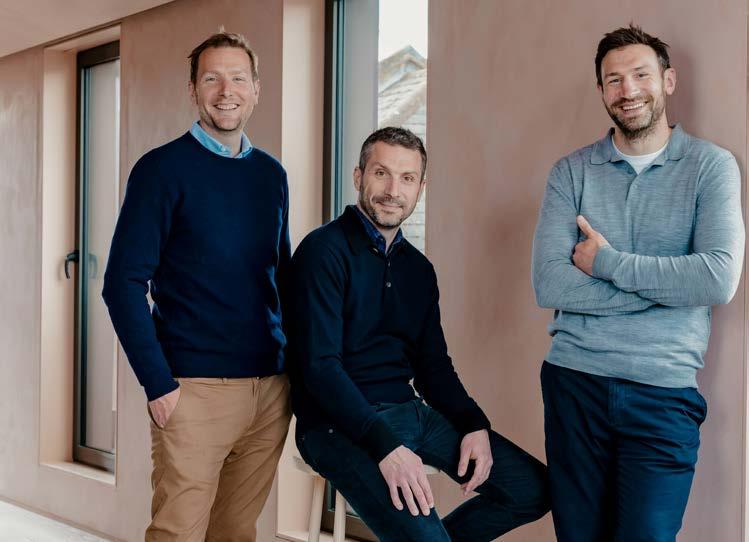
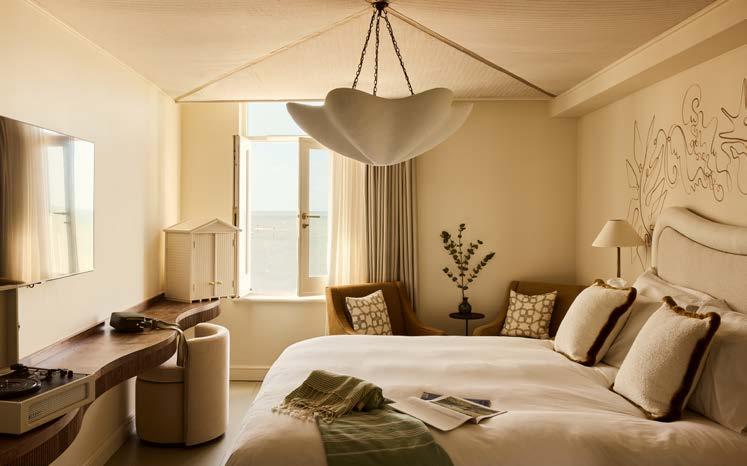
GuestHouse continues to expand its boutique hotel portfolio across the UK, but co-owner James Guest is determined to keep each property distinct. In this conversation, he explores how the brand balances scale with soul, why guests are increasingly drawn to authentic, experienceled stays, and how design, food, and storytelling are tailored to each hotel’s local character.
What is GuestHouse in one sentence?
One off wonder-filled boutique hotels in happening hotspots.
How do you scale boutique hospitality without losing its soul?
It’s important to retain a consistent positioning and sense of values and personality. However, for us we’re dedicated to avoiding a cookie cutter and generic approach to design, delivery and creativity so all of our hotels are totally unique and we think that’s important while scaling up.
What are guests really looking for now?
People are looking for authentic experiences and seeking venues that offer something different and genuinely care about their guests. There is a greater understanding of what good looks like so there is an impatience for poor quality and certainly slow delivery.
What makes each GuestHouse feel different?
There are brand threads which run through each property, but every hotel connects in its own way to the locality. Through design, food and drink, and inevitably the team, the experience blends with the city and the history of the building. All of our properties at one point were people’s homes so we try to deliver a narrative to help convey a sense of story to the setting.
Where does GuestHouse go from here?
We are always on the lookout for the next GuestHouse hotspot but we continually look to improve our existing properties and experiences across the board. We have just completed a refurbishment of some of our Bath bedrooms and we have just redesigned our bar and lounge spaces in Bath in addition.
→ Owners (and siblings) of GuestHouse hotels, James, Tom and Tristan Guest
→ No. 42 Margate, By Guesthouse
You have to be mean with your equity.
SIR CHARLES DUNSTONE CO-FOUNDER OF CARPHONE WAREHOUSE
Where UK Entrepreneurship is Heading
Ideas tested, ambition on display. by
ENTREPRENEUR UK STAFF
There are moments when a city reveals more about itself in a fortnight than it does in an entire year. Over two weeks, London hosted two of the UK’s most influential business gatherings: SXSW London and London Tech Week. Although very different in style, both shared a common aim - exploring the future of business and entrepreneurship. Founders, investors, creatives and business leaders came together to discuss the ideas, technologies and people shaping the next generation of enterprise. As media partners at both events, Entrepreneur UK had a ringside seat and spoke with many of those involved, while also observing the wider conversations unfolding across the events. Beyond individual interviews, a broader picture emerged: a UK entrepreneurial scene marked by confidence, collaboration and a strong focus on long-term growth.
→ Sir Martin Sorrell, Chairperson of MediaMonks
SXSW London approached entrepreneurship from a wide-angle perspective. Rather than focusing solely on business or technology, the festival encouraged conversations that connected culture, creativity and society. Entrepreneur UK spoke with an eclectic mix of figures, including Ben Cohen, co-founder of Ben & Jerry’s, Sir Martin Sorrell, Chairperson of Media.Monks, and writer, comedian and mental health campaigner Ruby Wax. Despite their different backgrounds, similar themes surfaced - leadership, communication, innovation and adapting to change. It was a reminder that entrepreneurship is shaped as much by cultural forces as by commercial ones, and that leadership often spans multiple disciplines. That spirit carried through the event. Conversations moved fluidly between entrepreneurship, creativity and emerging technology, often within the same discussion. Artificial intelligence was a recurring theme, but rarely treated in isolation. Instead, speakers explored its impact across media, marketing, education and healthcare, alongside questions of ethics, trust and responsible innovation. Rather than positioning technology as the sole driver of change, SXSW London highlighted the importance of combining technical progress with creativity and leadership. London Tech Week offered a more grounded perspective. Where SXSW explored ideas, London Tech
Week focused on execution. Entrepreneur UK spoke with founders and business leaders including Mel Morris, CEO of Corpora.ai, Giselle Gonzalez, founder of EqualReach, and Max Buchan, founder and CEO of Valerian, alongside dozens of entrepreneurs working across artificial intelligence, fintech, healthtech and beyond. While each business had its own story, common challenges emerged around investment, scaling and sustainable growth. The emphasis was less on possibility and more on the realities of building and sustaining companies. Across exhibition floors and networking spaces, the tone was confident but pragmatic. Founders showcased products already entering the market, investors searched for scalable businesses, and discussions frequently turned to funding, international expansion and talent. Artificial intelligence remained central, but the focus increasingly shifted towards practical application - how to use it responsibly and effectively, rather than simply adopting it for its own sake. Taken together, these conversations point to a UK tech sector that appears increasingly disciplined while
continuing to embrace innovation. Despite their differences, both events shared a defining feature: they brought together people who would not usually share the same room. Founders spoke with creatives, investors exchanged ideas with campaigners, and experienced leaders engaged with first-time entrepreneurs. Much of the value came from these informal exchanges, where ideas could be challenged and new relationships formed. It reinforced how modern entrepreneurship rarely develops in isolation, instead relying
on collaboration and shared experience. Covering both events also highlighted the importance of stepping back from individual conversations. While each interview offered insight, broader patterns only became visible when viewed together. Across both events, similar themes appeared repeatedly: collaboration, resilience, adaptability and responsible innovation, alongside a focus on building businesses capable of sustainable growth. These patterns suggest a maturing UK entrepreneurial scene, where ambition is increas-
TAKEN TOGETHER, THE PAST TWO WEEKS REFLECTED A UK ENTREPRENEURIAL LANDSCAPE WHERE CONFIDENCE, INTERNATIONAL OUTLOOK AND COMMERCIAL AWARENESS WERE RECURRING THEMES RATHER THAN PROVEN TRENDS”
→ Patricia Cullen, features editor at Entrepreneur UK with Mel Morris, co-founder, Corpora. ai at London Tech Week
→ Ruby Wax, actress, comedian, writer, and mental health campaigner
‘T/Events
ingly matched with discipline and longer-term thinking.
It also underscored the role of journalism in connecting those signals. Individual stories matter, but trends often only become clear when conversations are compared across contexts. Looking across SXSW London and London Tech Week revealed shared priorities shaping UK entrepreneurship: international ambition, responsible innovation and long-term value creation. These ideas surfaced consistently across sectors and stages of business. Seen together, the two events offered complementary views of entrepreneurship. One explored creativity, experimentation and the generation of ideas; the other focused on execution, investment and commercial growth. Neither stands alone. Instead, they show that modern entrepreneurship depends on balancing imagination with operational discipline. Strong ideas remain essential, but so does the ability to turn them into businesses that can compete globally. If SXSW London explored what the future might look like, London Tech Week showed how many are already building towards it. The result is a picture shaped not by sweeping change, but by consistent signals across conversations - of ambition, discipline and the ongoing work of turning ideas into lasting businesses.
ACROSS BOTH EVENTS, SIMILAR THEMES APPEARED REPEATEDLY: COLLABORATION, RESILIENCE, ADAPTABILITY AND RESPONSIBLE INNOVATION, ALONGSIDE A FOCUS ON BUILDING BUSINESSES CAPABLE OF SUSTAINABLE GROWTH”

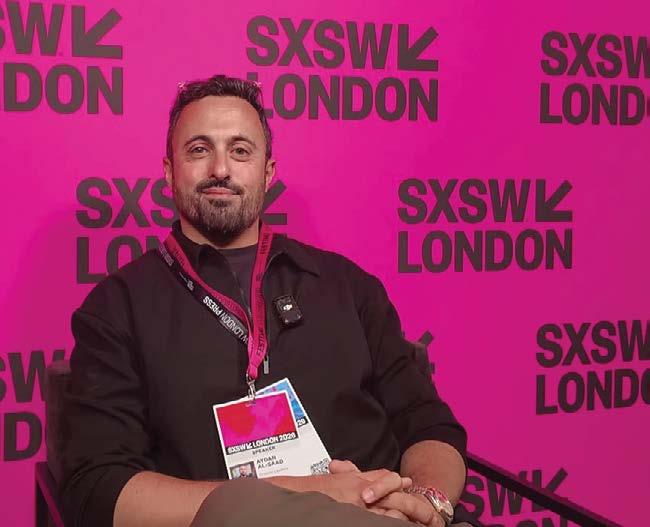

→AydanAlSaad, creator entrepreneur
↑ Danna Mulya, co-founder, Podego
→ David H. Grinspoon is an American astrobiologist
Failure is so much more interesting because you learn from it.
SIR JAMES DYSON
Why I Backed Luxury Hospitality When Everyone Else Was Pulling Out
by ELMIRA AMDIY
When I got involved with Wild Tavern back in 2020, we were in the middle of a global pandemic. Hospitality was facing one of the most challenging periods in its history and many investors were actively looking for ways to reduce their exposure to the sector. It was difficult to argue with the headlines. Restaurants were closed for extended periods, streets sat empty, revenue streams stalled, there was a real sense of fear, and operators were navigating an unprecedented level of uncertainty. In April 2020, around 1.6m hospitality workers were on furlough in the UK, while between January 2020 and January 2021, the number of hospitality businesses fell by around 10%. For many operators, despite being unable to trade normally, costs such as rent, utilities, insurance, supplier
commitments, maintenance and overheads continued to accrue. Across the industry, conversations had shifted away from growth and expansion towards preserving cash, supporting teams and simply trying to stay afloat. Given those conditions, I completely understood the scepticism. Nobody knew how long restrictions would last, what further measures might be introduced or how quickly normal life would return. What interested me was not whether the next six months would be difficult, that much was obvious, but whether the long-term outlook for the sector had genuinely changed. I wasn’t convinced that it had.
My background is in investment banking, having spent years in sales and trading at Barclays Capital, Nomura and UBS. One of the most valuable lessons I took from that world is that markets are cyclical. They move up and down, often very quickly, and periods of uncertainty can create opportunities if you are willing to take a long-
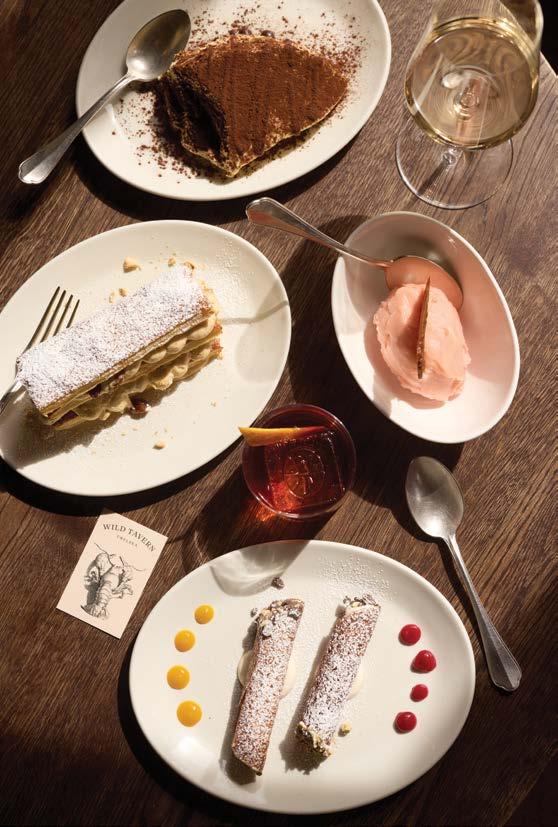
term view. Investing during those periods is never risk-free, but the best opportunities rarely emerge when confidence is at its highest. For me, it was a calculated risk based on experience, analysis and instinct.
When I looked at restaurants in 2020, I saw a sector under enormous pressure, but I also saw something people had been deprived of for months. Restaurants provide warmth, atmosphere, social
↑ Food from Wild Tavern - a plated dish served in a contemporary London restaurant setting
RESTAURANTS PROVIDE WARMTH, ATMOSPHERE, SOCIAL CONNECTION AND EXPERIENCES THAT ARE DIFFICULT TO REPLICATE ELSEWHERE”
connection and experiences that are difficult to replicate elsewhere. People had missed birthdays, anniversaries, celebrations and time with family and friends. Nobody knew exactly when recovery would come, but I felt strongly that when people were able to return, many would do so enthusiastically. We saw that play out across the wider leisure and travel sectors as restrictions lifted, with demand returning far faster than many had predicted. The sector was not unfamiliar territory to me either. Alongside my finance career, I had already been involved with Hostellerie La Farandole, a luxury hotel and waterfront restaurant business on the Côte d’Azur. That experience taught me that while restaurants can be financially demanding and operationally complex, the best businesses create a level of loyalty that is difficult to replicate. People may compare prices, but they return because they trust the quality, enjoy the atmosphere and
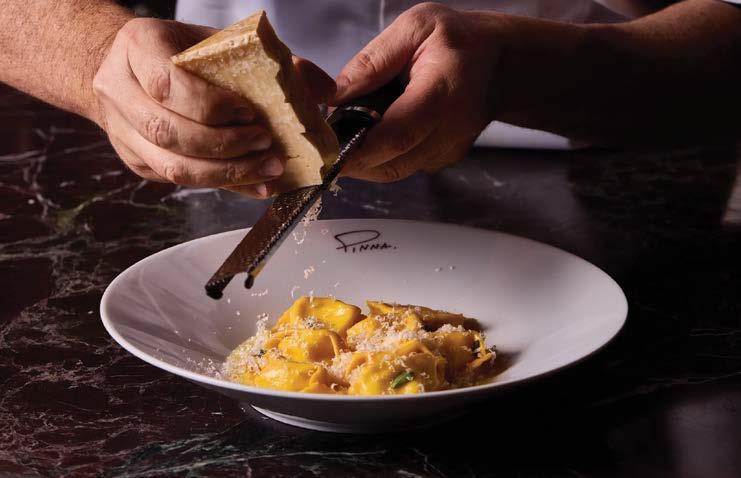
know what to expect. That was the context behind my decision to become involved with Wild Tavern. Many people looked at the wider market and saw risk. I looked at the business itself. Was there genuine customer demand? Could the foundations support growth? Most importantly, were the people behind it capable of building something much larger than what existed at that moment? In my experience, successful investments are rarely built on concepts alone. Concepts evolve, menus change and markets move, but what matters most is the quality of the people running the business day to day. What convinced me about Wild Tavern was not only the restaurant itself, but George Bukhov-Weinstein and Ilya Demichev, who I had also known for many years. They cared deeply about every aspect of what guests experienced and understood that restaurants are often won or lost on details. The food matters, of course, but so does the atmosphere, the service, the welcome people receive when they walk through the door and the consistency of the experience from one visit to the next. Those things are difficult to measure on a
spreadsheet, yet they are often what separates good businesses from great ones. Making the investment was probably the easiest part. Building the business afterwards was considerably harder. Restaurants rarely succeed because of one big decision. More often, success comes from hundreds of small details being executed consistently over time. One of the things people often underestimate about restaurants is that guests experience every part of the business simultaneously. They experience the food, the service, the atmosphere, the pricing and the quality of execution in a single sitting. If one element falls short, people notice. That is why consistency matters so much. Guests do not experience strategy documents or growth plans. They experience whether they are welcomed properly, whether standards remain high on a busy Friday evening and whether the overall experience feels worth returning for. That focus on consistency has shaped how we have approached growth. Today, The Wild Group now includes Wild Tavern, Wild Corner, Wild Notting Hill, Wild Izakaya, Chelsea
↑ Dish from Pinna Mayfair - Italian fine dining plate
Grill, Belvedere and Pinna Mayfair, with Krokodilos in Kensington currently being redeveloped into a new grill concept later this year. It generates an 8-figure turnover across the seven venues and employs more than 300 people in London, with Wild Tavern tripling its turnover. While these figures are encouraging, I am most proud of what they represent: strong teams, loyal customers, disciplined execution and a culture that values quality and consistency over shortcuts. The market today looks very different to the one we were operating in during 2020. Demand has returned, people are travelling, dining out and prioritising experiences again, and there remains a strong appetite for quality hospitality. At the same time, guests are more informed, more selective and increasingly thoughtful about where they spend their time and money. What has changed most is not necessarily people’s willingness to spend, but what they expect in return. At the premium end of the market, simply being expensive is no longer enough. People are looking for places that feel special, whether that comes from exceptional food, outstanding service, a unique atmosphere or simply a feeling that every detail has been considered. It rewards businesses that focus on quality and consistency,
RESTAURANTS RARELY SUCCEED BECAUSE OF ONE BIG DECISION. MORE OFTEN, SUCCESS COMES FROM HUNDREDS
OF SMALL DETAILS BEING EXECUTED CONSISTENTLY OVER TIME”
which are exactly the things that create long-term value. That same thinking continues to guide our decisions today. We continue to explore opportunities in both the UK and internationally, including America, but we are equally focused on strengthening the businesses we already have. Our redevelopment of Krokodilos in Kensington into a new grill concept is a good example of that approach. Sometimes growth comes from opening something new, but often it comes from recognising untapped potential in an existing asset and having the patience to develop it properly.
Looking back, one of the most valuable lessons I have learned as an investor, entrepreneur and business owner is
that confidence rarely comes from having all the answers. More often, it comes from understanding the numbers. Understanding revenue, margins, cash flow and profitability gives you options because you are making decisions based on facts rather than assumptions. Strong instincts and creative ideas matter, but understanding how a business works gives you the confidence to trust those instincts and act on them. I would also encourage people not to wait until they feel completely ready. There is rarely a moment where every light turns green and every uncertainty disappears. Whether you are making an investment, launching a business or stepping into a leadership role, there will always be unknowns. At some point, you have
to make a decision based on the information available to you and trust yourself to navigate what comes next.
The other lesson is that leadership is not about being liked by everyone. It is about being clear, fair, consistent and willing to take responsibility when things do not go to plan. You can be empathetic without avoiding difficult decisions, just as you can be ambitious without compromising your standards. Five years on, the industry continues to face new challenges, but the fundamentals that attracted me to the sector in the first place remain unchanged. People still value quality, atmosphere, connection and memorable experiences. Trends come and go, markets rise and fall, but businesses that understand what their customers value and deliver it consistently will always have an opportunity to succeed. That was the conviction behind the investment then, and it remains the conviction behind the business today.

Elmira Amdiy is an investor, entrepreneur and hospitality operator. Formerly in investment banking at Barclays Capital, Nomura and UBS, she co-built The Wild Group into an eight-figure London hospitality business with 300+ staff.
Everybody sits.