Make ever y epic writing journey a cosy one Hobbiton handcraft from the makers of the world’s most magical pens.
Nestled by the coast of Lusail sits the splendor of Raf es and Fairmont Doha, where luxury is rooted in even the smallest details. Open the doors to mesmerizing hospitality and make memories in a world of sophistication.
DOWNLOAD YOUR DIGITAL EDITION HERE
BUSINESS UNUSUAL
22 Closing the Gap
How HSBC UK is powering the next wave of women entrepreneurs
42 Franchising - The Business Model Helping Women Succeed Female franchisees on the rise
44 Mother, Builder, Founder From family idea to London brand
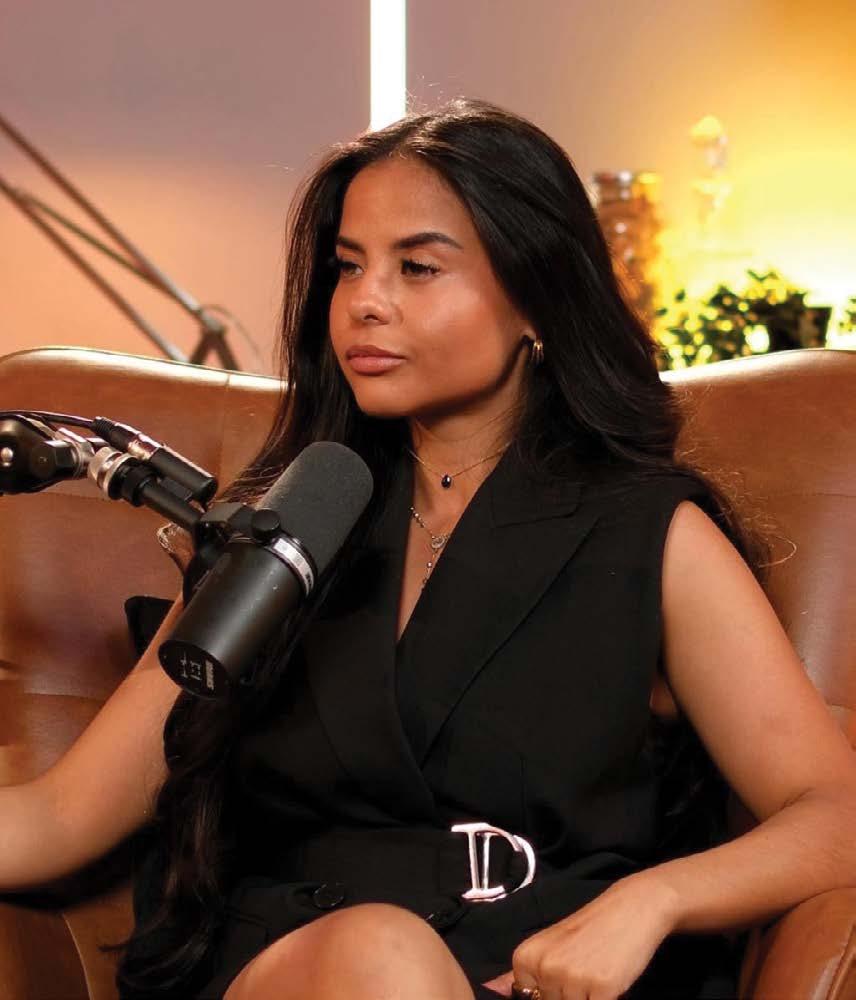
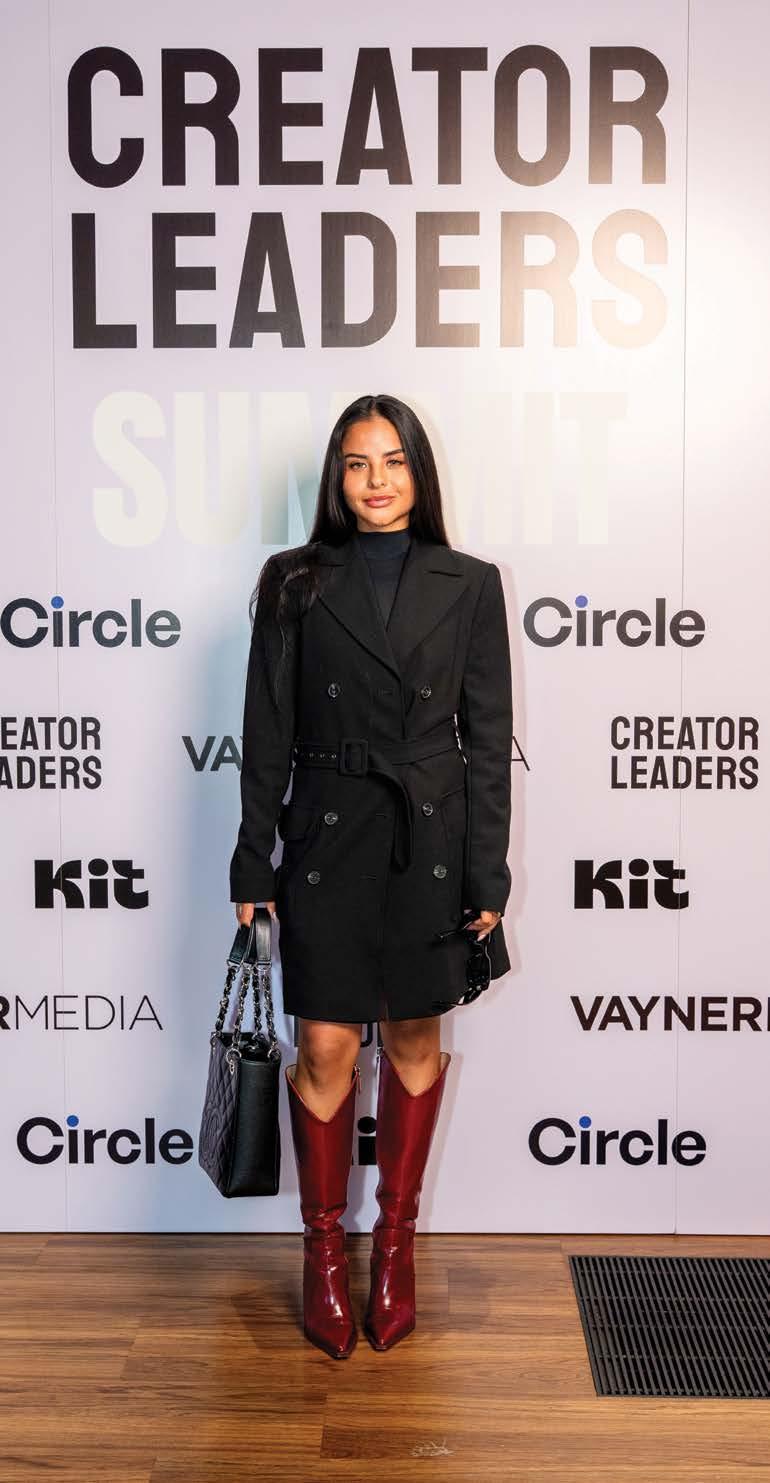
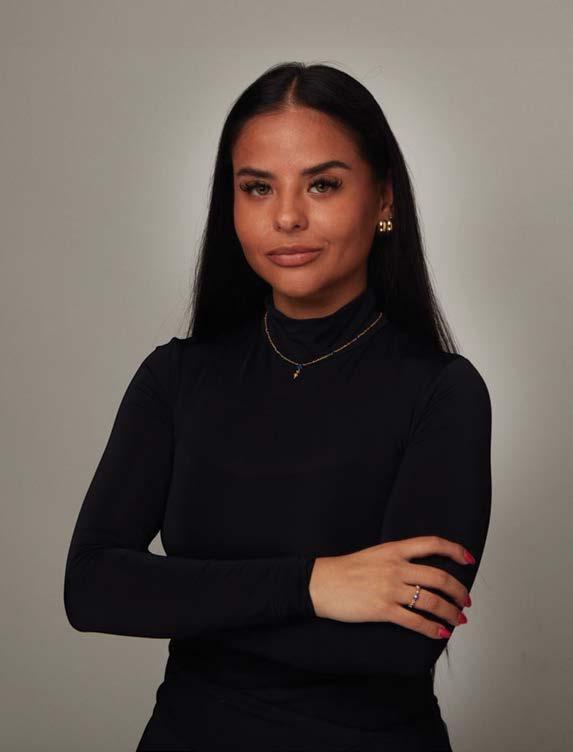
↑ Lara Acosta, co-founder of Kleo and founder of Literally Academy
54 Challenging Perceptions Redefining women’s ambition in industry
58 Britain’s Untapped Advantage Why women remain our most underleveraged economic asset
STARTUP SPOTLIGHT
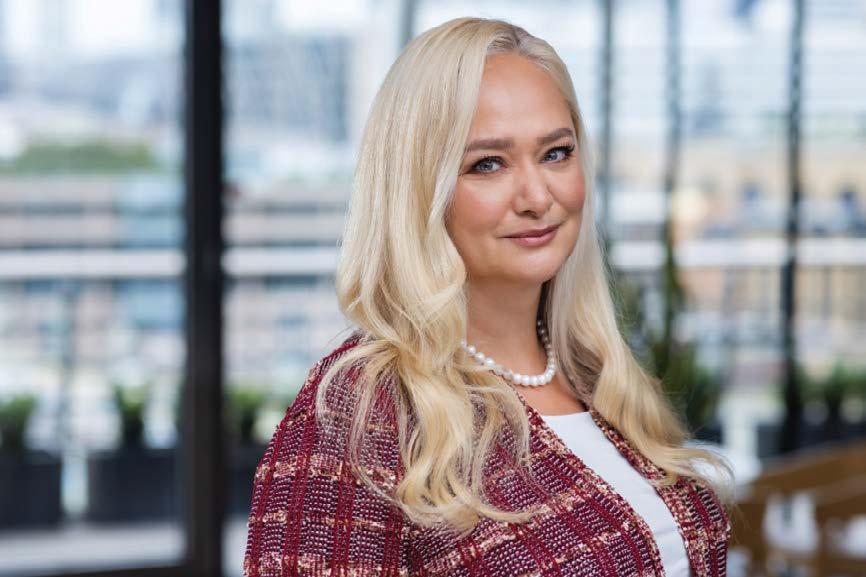
61 How Aimee Smale Built Odd Muse Into a Global Fashion Brand Entrepreneurship without backing or networks
38 Cracking the LinkedIn Code
How Lara Acosta turned content into companies
46 Women Leading Innovation Haircare by women, for women
48 Why ‘Girl Boss’ culture does more harm than good Empowerment slogans hide structural inequality
52 Why women are still asked to ‘lead like men’ What’s the real cost?
72 Can the UK Lead the Global Wellness Revolution? Inside the expanding market
IN THE LOOP
14 Beyond the Ceiling Insight, strategy, and growth for womenled businesses with Abby Galfour
18 Making HER Mark Women shaping arts and culture
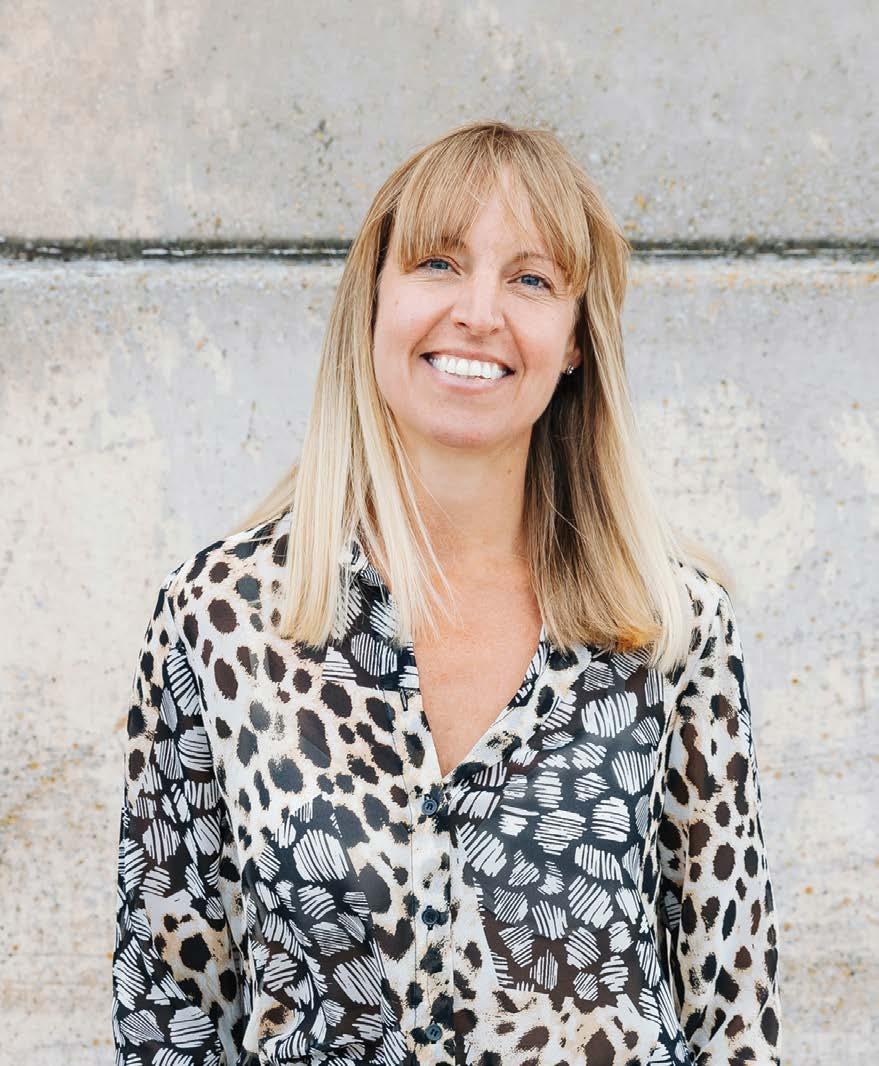
FEATURES EDITOR Patricia Cullen patricia.cullen@bncb2b.com
CEO Wissam Younane wissam@bncpublishing.net
MANAGING DIRECTOR Rabih Najm rabih@bncpublishing.net
ART DIRECTOR Simona El Khoury
EDITORIAL TEAM Tamara Pupic, Aalia Mehreen Ahmed
MEDIA SALES MANAGER Olha Kovalova olha.kovalova@bncb2b.com
Pip Wilkins, Sophie Jane Lee, Helen Wada, Sedge Beswick and Lubov Chernukhin
SUBSCRIBE
Contact subscriptions@bncb2b.com to receive Entrepreneur United Kingdom every issue.
COMMERCIAL ENQUIRIES sales@bncb2b.com
WWW.ENTREPRENEUR.COM/EN-GB Access fresh content daily on our website
WOMEN IN BUSINESS DRIVING CHANGE ACROSS THE UK
Entrepreneur United Kingdom
Women remain underrepresented in leadership, underfunded, and too often overlooked in the UK’s business ecosystem - but change is underway. This issue of Entrepreneur UK puts women in business front and centre, showcasing founders, operators, and leaders who are reshaping the landscape on their own terms.
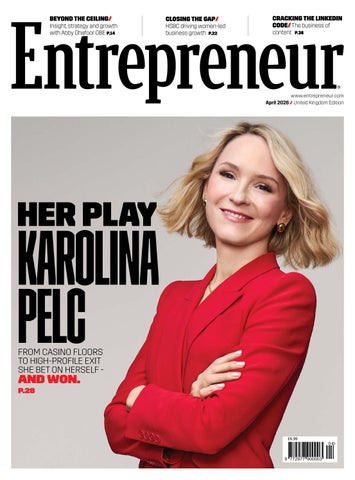
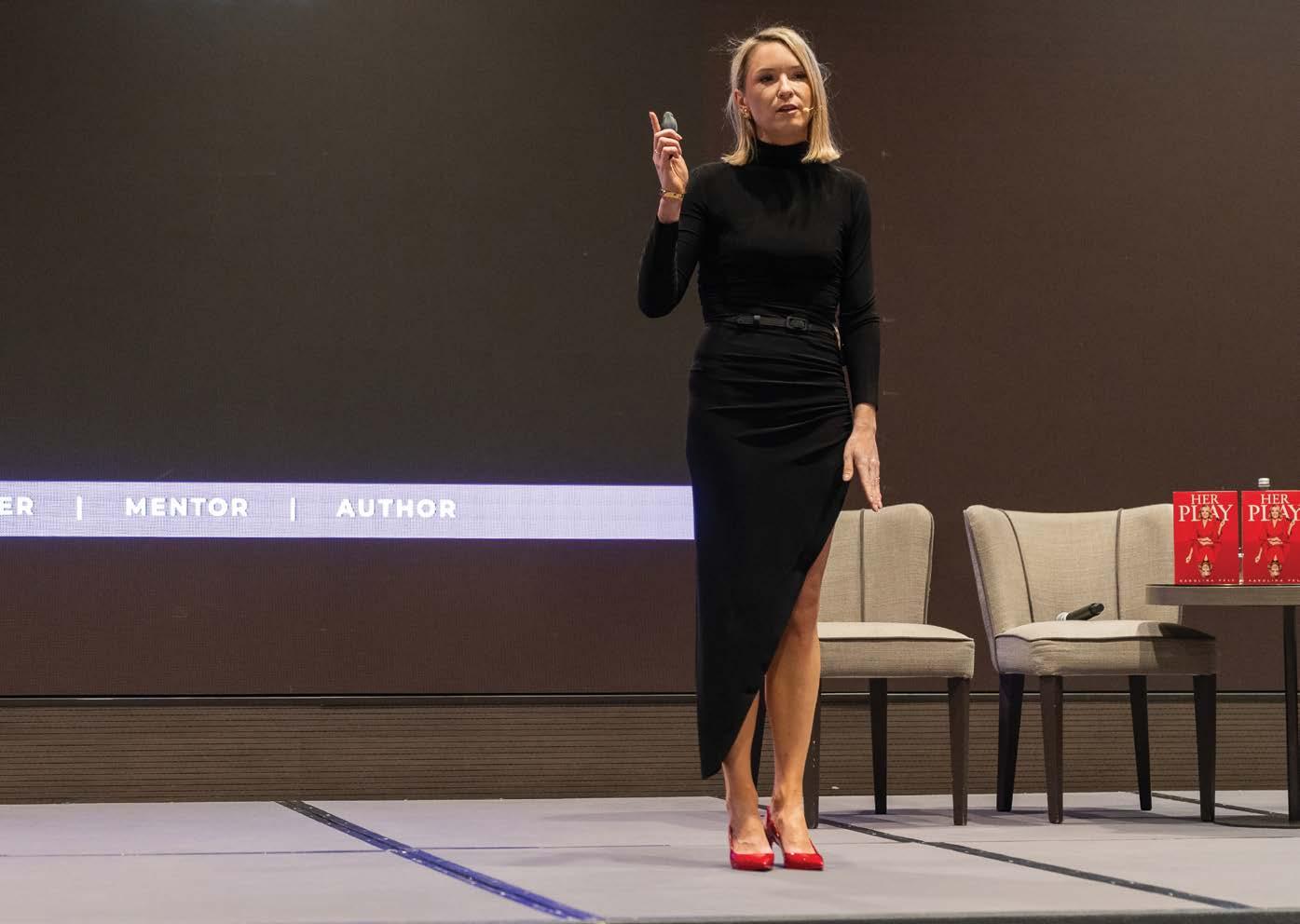
Karolina Pelc opens the conversation with her new book, Her Play: Make Your Own Luck. Part memoir, part playbook, it draws on lived experience to trace a career built through persistence, bold decision-making, and calculated risk. Luck, Pelc suggests, is rarely accidental; it’s created - crafted one courageous move at a time. Her story highlights the broader theme of this issue: women taking charge of their careers and shaping the future of business.
Despite advances, women-led businesses still face significant barriers to capital. In conversation with Stephanie Betant, Head of Global Trade Solutions at HSBC UK, she explains how large institutions can better align funding, networks, and global trade opportunities with the ambitions of female founders. While progress is evident, knowledge gaps and confidence barriers continue to shape outcomes, alongside the availability of capital.
From a structural perspective, Abby Ghafoor draws on both her advisory work across firms and her role as Chair of the London Chamber of Commerce and Industry Women in Business Committee. She notes that many organisations treat gender equity as a compliance exercise rather than a growth strategy. Where initiatives are embedded strategically, measurable impact emerges; where they are symbolic, progress stalls.
Operators are showing what practical leadership looks like. Sedge Beswick, who built ASOS’s social media team from one hire to thirty-plus and pioneered influencer strategy, reframes ambition for women, showing how motherhood, career, and strategy intersect and why deliberate, sustainable ambition is often the most powerful. Meanwhile, founders such as Aimee Smale and Diksha Sethi reflect a new generation of women-led businesses: digitally native, community-driven, and less reliant on conventional pathways for scaling.
Barriers persist, but women leaders are navigating them with strategy, ingenuity, and networks that amplify their influence. This issue of Entrepreneur UK shines a light on how they are turning experience into action, and ambition into tangible impact. The April edition is full of insight, inspiration, and ideas to explore.
Patricia Cullen Features Editor, Entrepreneur United Kingdom
In the Loop / Beyond the Ceiling
Insight, strategy, and growth for women-led businesses with Abby Ghafoor OBE
by PATRICIA CULLEN
As the CEO of ARC Management Consulting and Chair of the London Chamber’s Women in Business Advisory Board, Abby Ghafoor has a unique vantage point on the state of women in business across the UK. Her perspective blends hands-on consulting experience with a deep understanding of structural barriers that continue to impede female entrepreneurs and leaders. In conversation with Entrepreneur UK, Ghafoor was frank, optimistic, and insightful about the current landscape - and the steps needed to accelerate change.
“Over the past decade, there has been meaningful progress for women in UK business, particularly visible in their representation at senior levels. However, the progress is really uneven,” she explains. “It’s often concentrated in certain sectors and certain geographies.” Despite the gains at senior levels, significant challenges remain beneath the surface, shaping who thrives and who struggles in the UK’s business landscape. “Many women are entering businesses as we speak, launching really exciting new ventures and stepping into leadership, but the system still isn’t designed with them in mind. What we’re seeing is not a lack of ambition - there is a tremendous amount of talent and capability among women, yet the structures in place to support them are still lagging behind.”
For Ghafoor, the issue is the barriers women face navigating existing business structures. When asked about these structural hurdles, she elabo-
→ Abby Ghafoor, CEO of ARC Management Consulting and Chair of the London Chamber’s Women in Business Advisory Board
LONDON POSITIONS ITSELF AS ONE OF THE MOST INCLUSIVE BUSINESS HUBS IN THE WORLD, AND IN MANY WAYS IT IS: THE DIVERSITY OF TALENT AND THE SHEER NUMBER OF OPPORTUNITIES ARE AMONG ITS GREATEST STRENGTHS”
rated: “It’s about seamlessly engaging with male counterparts - both giving and receiving mentorship - and collaborating across teams. Too often, everyone works in silos, whether men or women, but real learning happens when they work together.” This insight underscores a recurring theme in her work: collaboration across gender lines is not just beneficial but necessary. The isolation of women in business networks, she argues, limits exposure, mentorship, and ultimately opportunities for advancement.
Ghafoor is also critical of the often superficial approaches to gender equity that she encounters in consulting. “I’ve heard a lot of the usual talk about tick-box exercises, but I want to encourage people to move beyond them and take real action. Change has to start from policy; it has to begin at the root, rather than simply doing something because it’s expected, without understanding why it needs to be done in the first place.” She stresses that meaningful change requires understanding the rationale behind gender equity initiatives. Ghafoor ‘s approach is firmly rooted in the belief that policy alone, without purpose or accountability, risks becoming performative.
Her perspective on London’s business ecosystem is similarly nuanced. While acknowledging the city’s global reputation for diversity, she cautions against assuming inclusivity is
In the Loop /
universal. “London positions itself as one of the most inclusive business hubs in the world, and in many ways it is: the diversity of talent and the sheer number of opportunities are among its greatest strengths. Yet in practice, inclusion can be superficial. Opportunities are not evenly or equally distributed, and significant gaps remain in visibility, funding, sponsorship, and mentorship across the city.”
These gaps are particularly pronounced for women from ethnic minority backgrounds. Ghafoor notes a lack of financial education and mentorship in some communities, creating a disconnect between perceived opportunity and actual access. “For many women, particularly those from ethnic minority backgrounds, there is a lack of
“
the UK would be beneficial. But geographically, some parts of the country face challenges that London simply doesn’t. Take Manchester, for example - a heavily industrial city where the need for women in leadership, particularly in STEM sectors, is acute. Initiatives should certainly be rolled out, but they cannot follow a one-size-fits-all template.”
On the question of whether firms invest strategically in gender equity, Ghafoor’s is candid: “It’s a mix, but too many organisations remain stuck in a compliance mindset, doing what’s required rather than what’s effective. True strategic investment links gender equality to commercial outcomes - fostering growth, driving innovation, retaining talent, and holding leadership accountable for
STARTING IS NOT A PROBLEM. THE ISSUE ISN’T THE ENTRY. IT’S PROGRESSION AND SCALE. SO WITHOUT THE RIGHT SUPPORT, MANY SIMPLY PLATEAU OR OPT OUT”
financial education within their communities. While there are hubs in London that focus on support, a disconnect remains between the perception of opportunity and the reality of access. London is diverse and full of possibilities - but you really need to dig beneath the surface to see them.”
She contrasts London with other UK regions, highlighting the uneven rollout of inclusivity initiatives: “I think London does it better, and rolling out certain initiatives across
results.” Ghafoor emphasises accountability as central to meaningful change. She shares a practical example without naming the company: “They’re holding the senior leadership team accountable for every woman who leaves the leadership team. It’s a significant step, and it’s encouraging to see it happening. Examples like this need to be highlighted - it’s genuinely optimistic and shows that change is beginning to take root.”
Networks and platforms that
tangibly support women are also critical in her view. “The Women in Business initiative at the LCCI focuses on addressing gaps in the market by bringing the right teams together - including men on the advisory board, which I think is crucial. While there are women on boards and CICs tackling policy, for me it’s about moving beyond talk and putting tangible policies in place. Accountability, like the example I mentioned earlier, is exactly what we need to see. Real change comes when everyone is on board in practice, not just in principle. That’s why it’s genuinely optimistic to see some companies actually doing it.”
Ghafoor’s observations on the pipeline of women in business are sobering: “The pipeline doesn’t fail in just one area - it leaks at multiple stages. The most critical drop-off tends to occur at key transition points, such as moving from mid-level roles to senior leadership, or when businesses are on the cusp of scaling. It’s at these mid-tier moments that many women fall away.” She highlights that the challenge is not in entry but progression and scale: “Starting is not a problem. The issue isn’t the entry. It’s progression and scale. So without the right support, many simply plateau or opt out.” The structural solutions she advocates are clear: intentionality, access to capital, transparent decision-making, inclusive leadership pathways, and accountability at board level. “We need a more intentional approach, driven by the right motivations rather than simply ‘because we have to.’ Women require greater access to capital, networks, and leadership opportunities, which means rethinking how funding is distributed and increasing transparency in decision-making. More inclusive pathways to leadership must be created, alongside stronger accountability at board level, with clear metrics tied to progression. Importantly, we need to normalise that
women should not have to choose between success and sustainability. With the right structural changes, the impact will be significant - not just for women, but for the UK economy as a whole. It’s a genuine win-win situation.”
Finally, Ghafoor’s advice to female entrepreneurs is rooted in capability and confidence: “Go out into whichever sector you choose and make sure you connect with a strong network. Engage with sector-specific communities, position yourself as a leader in your industry, and be recognised for your expertise - not because you’re a woman, but because of the knowledge and skill you bring to the table.”
For Ghafoor, leadership and success are not defined by identity alone, but by talent, vision, and strategic thinking. Her optimism is tempered with realism, but she remains clear: inclusion and equity are not just moral imperativesthey are economic imperatives for the UK.
“We need to start thinking about the bigger picture, rather than focusing narrowly on identity. Yes, there are many women launching businesses - and that’s fantastic. But recognition should come for talent, not simply for being female, a mother, a daughter, Muslim, or Asian. I happen to be all of those things, but they are incidental; what matters is my skill and contribution. Ultimately, my goal for this committee is that it becomes unnecessary in around 20 years - that we’ve done our job when it no longer needs to exist.”
Ghafoor’s words are a call to action: the road to equality is far from over, but the path is clear. With intentional policy, practical accountability, and a focus on talent above all else, the UK’s business landscape can unlock the full potential of its women leaders - not only advancing equity, but driving the growth of the economy itself.
In
the Loop /
MAKING HER MARK
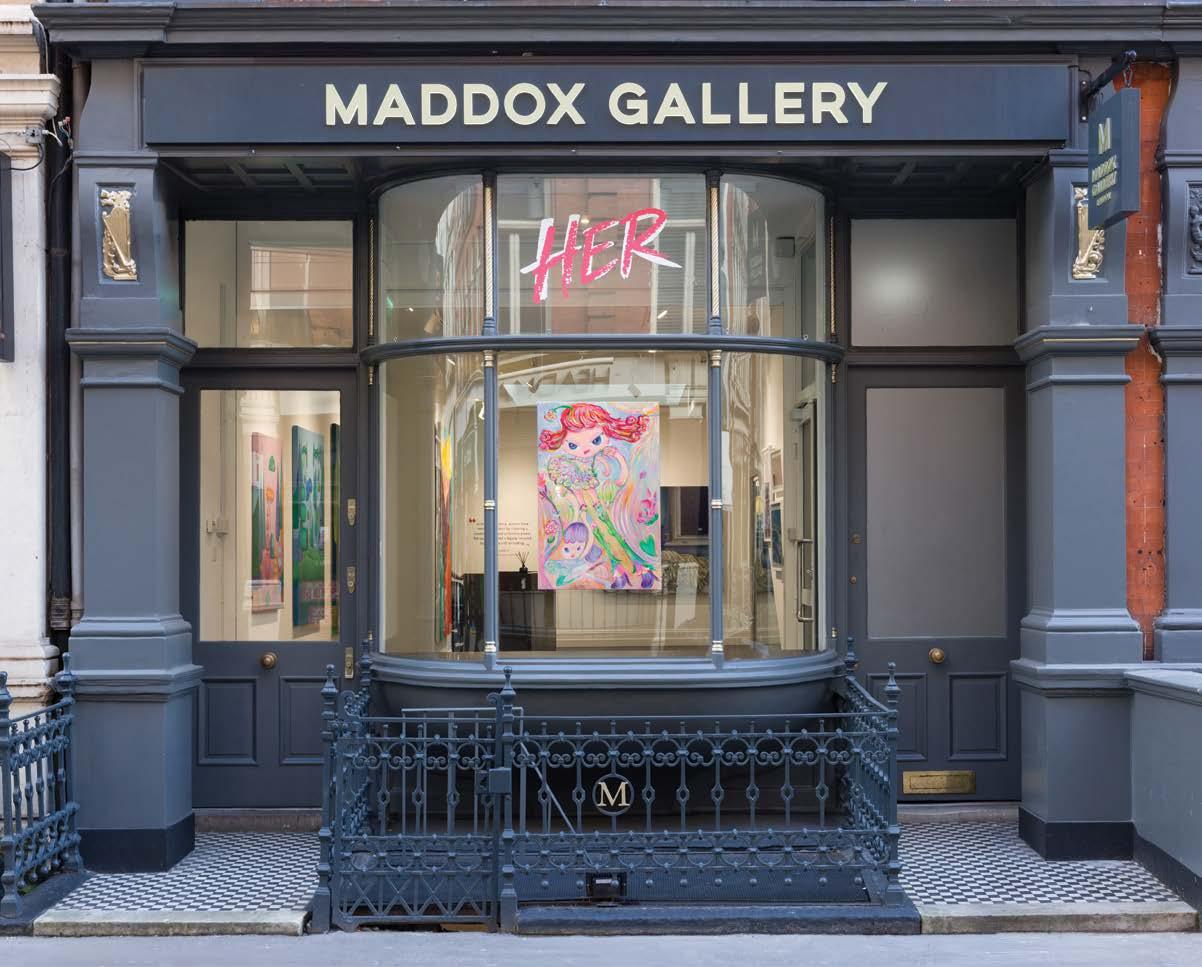
At Maddox Gallery in London, women across the arts and creative industries gathered for Women Shaping Culture, an International Women’s Day event held in collaboration with Mumble Forum, the growing network for female founders and leaders. Bringing together cultural voices and entrepreneurial networks, the evening reflected a broader shift towards community-led influence and collaboration.
Founded by Monique Hodgson, who was recently named the Global 100 –2026 award winner for Most Influential Women’s Industry Platform CEO (UK), Mumble Forum has become an increasingly prominent force in this space. Designed as a collective for female leaders, entrepreneurs and innovators, it offers curated events, thought leadership, brand partnerships and a membership network centred on collaboration and growth.
At the heart of the evening was HER, a female-led exhibition spanning generations of artists, from emerging voices to established figures. Yet the exhibition formed just one part of a wider conversation - one shaped by the growing influence of networks like Mumble Forum, where cultural engagement and
Events like HER are so important to give women the opportunity to showcase their talent and work in a still largely male dominated industry”
commercial opportunity intersect. As Hodgson’s platform continues to expand through its membership community, app and strategic ventures, its focus remains on building an ecosystem where connection drives both creativity and business.
Rachel Thomas the moderator and chief curator of Hayward gallery says, ”Beyond the gallery walls, the “Creative Force for Change” must reach those whose voices are currently being silenced. This is why the Mumble Forum is so essential: it utilises the power of art and female voices to bridge the gap between isolation and inspiration. By centering exhibitions through a
new lens, one that recognises the woman artist not as a “niche” category but as a primary driver of 21st-century culture. We can create a different future.”
For Fi Lovett, Global Director at Maddox Gallery, the exhibition reflects both progress and the history that precedes it: “The exhibition brings together female artists across generations, from emerging talent to pioneering figures such as Yayoi Kusama and Bridget Riley, now in their nineties, showcasing the remarkable breadth of creativity. For much of history women have been denied access and visibility, particularly within the creative fields. Those barriers are
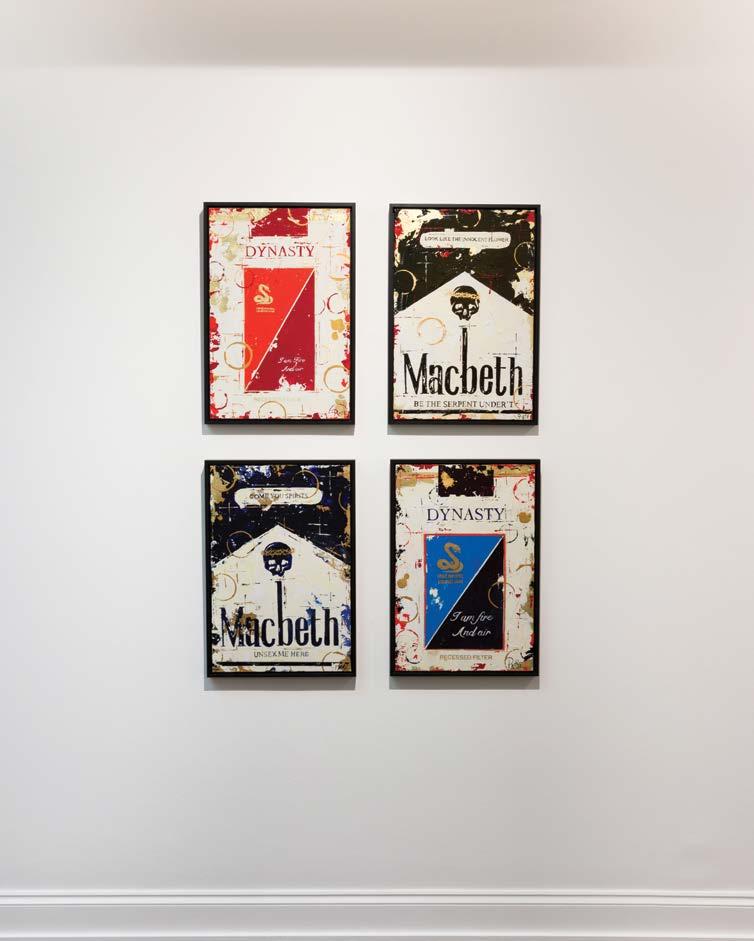
↑ Top Left to Bottom Right: Charlotte Rose, 'Dynasty in Red' (2026); 'Lady Macbeth in Black' (2026); 'Lady Macbeth in Blue' (2026); 'Dynasty in Blue' (2026), 'HER' at Maddox Gallery
being dismantled as women increasingly challenge, shape, and expand the contemporary art canon.” The intergenerational mix is intentional. Established artists appear alongside younger practitioners, highlighting how recently many structures of the art world have shifted. While women have long shaped contemporary art, recognition has often been uneven - a lack of clarity that Lovett suggests makes the sector difficult to navigate: “The creative sector is inherently challenging, not least because historically it’s not been a meritocracy. Without clear metrics and fixed rules, it can be easy for talent to be dismissed without explanation. Yet market indicators such as auction results provide an index that can’t be ignored, increasingly driving recognition and demand. The lesson for women in any industry is to know your worth, be fearless in asserting it and steady the ladder for those who follow.”
Another notable shift is the rise of women collectors. As more women build wealth and influence across finance, technology, and entrepreneurship, their presence in cultural investment has grown. Events like HER reflect that changing landscape, bringing artists and collectors together to foster new relationships. Among the featured artists is Charlotte Rose, whose pathway into the art world mirrors these evolving opportunities. Rose taught herself to paint during lockdown before staging her debut solo exhibition, I Quit
→ Left to Right: Monique Hodgson (Founder and CEO, Mumble Forum), Fi Lovett (Global Director, Maddox Gallery), Rachel Thomas (Chief Curator, Hayward Gallery), Charlotte Rose (Artist), 'Creative Forces for Change Evening', hosted by Mumble Forum and Maddox Gallery
Last Week, in 2021. Instead of relying on traditional gallery routes, she built an audience through social media, reaching collectors directly while developing her practice. Her fashion background also offered early exposure to the realities of creative work: “I think being an artist and a model has bled into each other quite nicely; each thing supports the other. I was able to learn a lot about what it takes work ethic wise to make it in the arts from working alongside top creatives such as photographers and creative directors from such a young age. Both are extremely competitive and difficult industries to thrive in so it took a lot of grit and work to get a foothold in either.”
That experience reflects a wider shift across creative industries, where networks and visibility are increasingly central to opportunity. Platforms such as Mumble Forum play a growing role in this ecosystem, offering access not only to audiences but to collaboration, knowledge-sharing and commercial pathways. Rose notes: “Events like HER are so important to give women the opportunity to showcase their talent and work in a still largely male dominated industry. It was a great way to introduce new talented female artists to female collectors! In my experience I’ve seen a huge increase in women buying my artwork in recent years
If the next generation of women is to thrive creatively, they need both the opportunity and the conditions that allow talent to develop and endure” “
world is increasingly visible. Women are not only producing work but also building the communities and markets that sustain it. Yet, for Lovett, lasting progress depends on addressing structural barriers to access: “A real shift would start with greater public investment in arts education. Current provision is extremely limited, yet early exposure to the arts is often where creative confidence and ambition takes root. If the next generation of women is to thrive creatively, they need both the opportunity and the conditions that allow talent to develop and endure.”
As Mumble Forum continues to evolve into a
Central to Hodgson’s vision is the idea that human connection - not just visibility — underpins sustainable growth, both culturally and commercially. Through its expanding platform, as well as Mhouse Agency and upcoming media ventures, the focus remains on creating meaningful access and long-term opportunity. Ultimately, the evening pointed to a broader shift. While exhibitions like HER highlight creative talent, it is the networks behind them that are increasingly shaping how that talent is supported, seen and sustained. Through platforms like Mumble Forum, women are not only participating
and from what Fi had described in the talk it sounds like that is the story for many other artists.”
The growth of female-led networks within the art
global membership community and app-based network, its offering spans expert-led workshops, immersive experiences and curated partnerships aligned with purpose.
in cultural conversations but actively building the structures that define them - creating a more connected, collaborative and forward-looking creative economy.
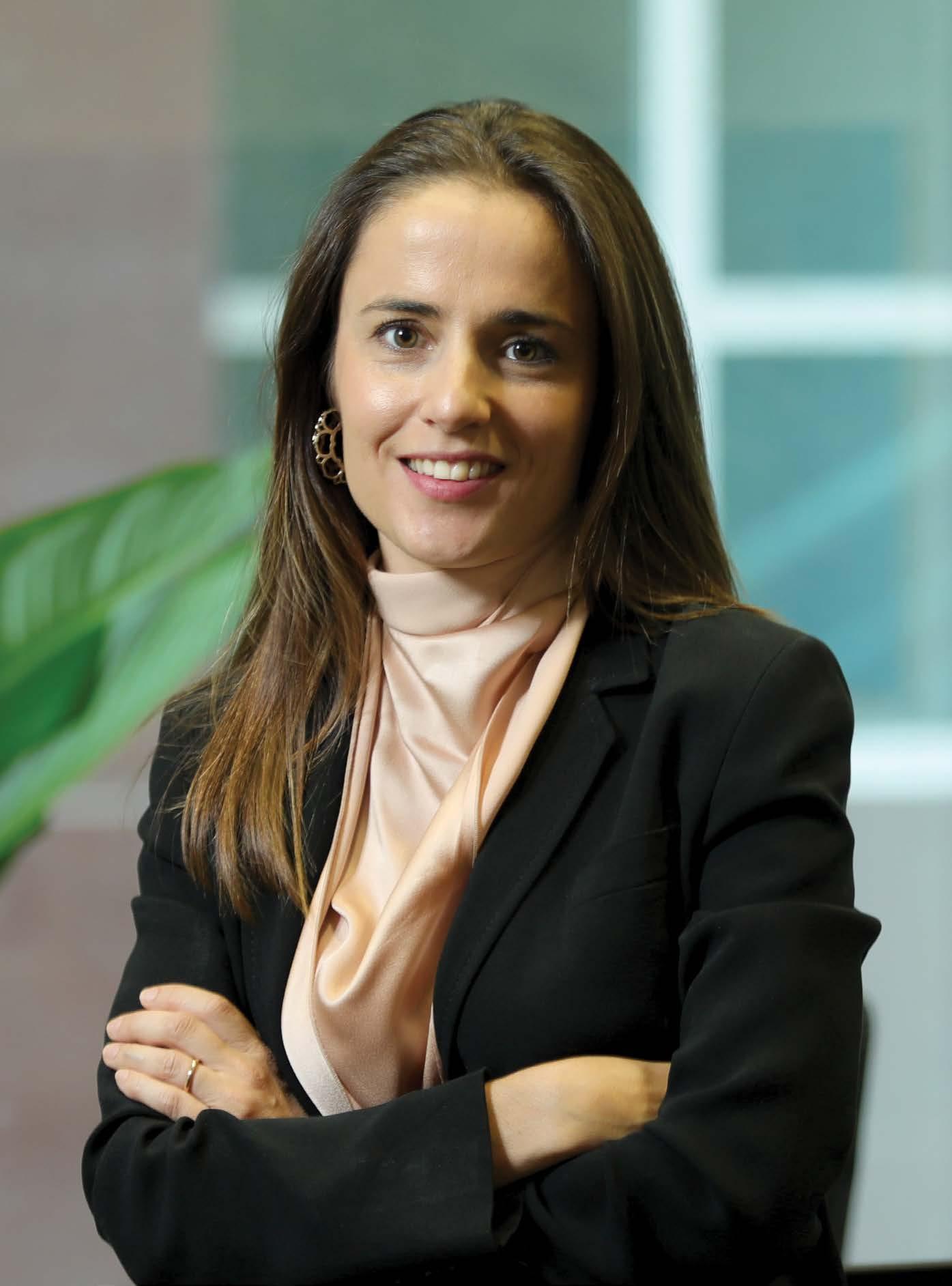
← Stephanie Betant, Head of Global Trade Solutions at HSBC UK
CLOSING THE GAP
HOW HSBC UK IS POWERING THE NEXT WAVE OF WOMEN ENTREPRENEURS
by PATRICIA CULLEN
With women-led businesses poised to unlock £250bn in economic value, HSBC UK’s Women’s Business Growth Initiative is breaking down barriers - from financial confidence to funding access - while building a stronger ecosystem for growth. Despite employing over 2.7m people, women still own just 19% of UK businesses, highlighting a major untapped opportunity. I caught up with Stephanie Betant, Head of Global Trade Solutions at HSBC UK, to find out more…
“
THROUGH THE HSBC UK WOMEN’S BUSINESS GROWTH
INITIATIVE, WE WANT TO HELP CLOSE THAT GAP. MAKING IT EASIER FOR WOMEN TO START, FUND AND GROW THEIR BUSINESSES”
What impact does the initiative hope to achieve?
Women-led businesses are essential to the UK economy, contributing an average of £11.2m a year. With the right support, women-led businesses have the potential to boost the UK economy further unlocking up to £250bn in economic value according to the UK Government. They are a powerful driver of jobs, innovation and growth with women employing over 2.7m people in the SME space alone, yet only 19% of UK businesses are owned by women. Through the HSBC UK Women’s Business Growth Initiative, we want to help close that gap. Making it easier for women to start, fund and grow their businesses. For women business owners, we offer personalised funding support alongside a community of like-minded business founders that provides
access to free events, networking and masterclasses. We’ve already seen strong momentum, with over 1,200 women signing up since launch in September 2024.
What are the biggest challenges women entrepreneurs face today, and how is HSBC UK addressing them?
Two challenges stood out in our research –the first is financial confidence and skills. Our research revealed that more than half (53%) of women entrepreneurs say financial knowledge is essential, yet less than 10 percent (8%) feel highly skilled. We’re tackling this knowledge gap by offering events and masterclasses designed to build their financial confidence, skills and support better decision-making. The second is knowledge of how to access funding. It’s encouraging to see access to finance is improving, with only 11% finding it a challenge in Q1 2026 compared to 25% in 2025, but knowledge barriers still exist, with
some women still relying on higher-cost options such as credit cards (13%). Through the initiative, we provide personalised funding support with a Business Specialist for funding up to £100k, or a Relationship Manager for funding over £100k (lending subject to status), alongside connections that help women find the right support at the right time.
What advice would you give to women looking to scale their businesses in today’s global market?
Focus on understanding your finances, including cash coming in and going out, where you make profit, and where you need to invest to grow. Know what types of funding options are available, so you can choose what best fits your growth plans for your business. If numbers aren’t your strength, seek support early and keep learning. It also helps to build a strong network, because learning from other founders can save time and avoid costly mistakes. At HSBC UK, our global presence means we’re uniquely placed to support businesses, using our experience and expertise to offer informed insights and connect these women to a broad network of support.
“I EXPECT MORE WOMEN TO START AND GROW BUSINESSES, BUT PROGRESS DEPENDS ON SUSTAINED SUPPORT, PARTICULARLY AROUND FINANCIAL EDUCATION AND ACCESS TO FUNDING”
How do you see women in business evolving over the next five years, and what role can financial institutions play?
I expect more women to start and grow businesses, but progress depends on sustained support, particularly around financial education and access to funding. Last year, the ONS revealed that a record number of 1.8m women now run businesses across the country, with women over 50 accounting for the fastest growing group of entrepreneurs. That’s why a commitment like the Women in Business Growth Initiative is so helpful. It signals HSBC UK’s real intent to improve
access to finance and support for women-led businesses, and tackle a long-standing imbalance where women are less likely to secure loans, grants or investment. At HSBC UK, we aim to make a difference by combining practical learning, tailored guidance and fair access to finance, so more women can grow with confidence and contribute to the wider economy.
Can you share a success story from the initiative that particularly stands out to you?
The feedback and testimonials have been great, and as a result we are seeing more women join the initia-
tive. I’m proud to say that in March alone, we engaged with over 700 business owners, and as of April last year we have completed £90m in lending. For me, that’s a powerful reminder of why the Women’s Business Growth Initiative matters, so women can get the right support. It’s designed to help women founders navigate those moments with stronger support around funding and growth - through access to events, networking, masterclasses and personalised funding support - so great businesses aren’t held back simply because the decision-makers don’t immediately relate to the customer they’re built for.
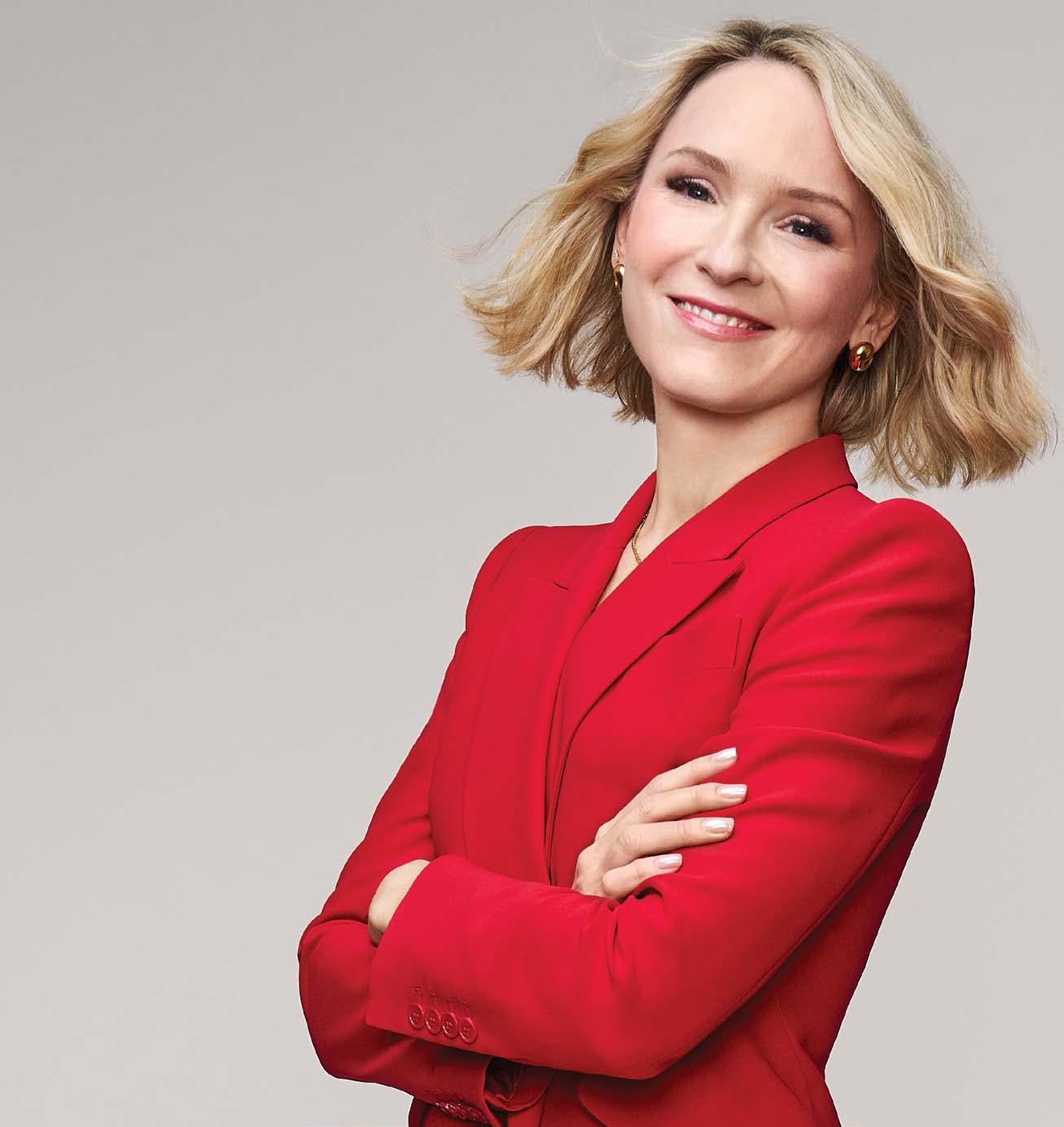
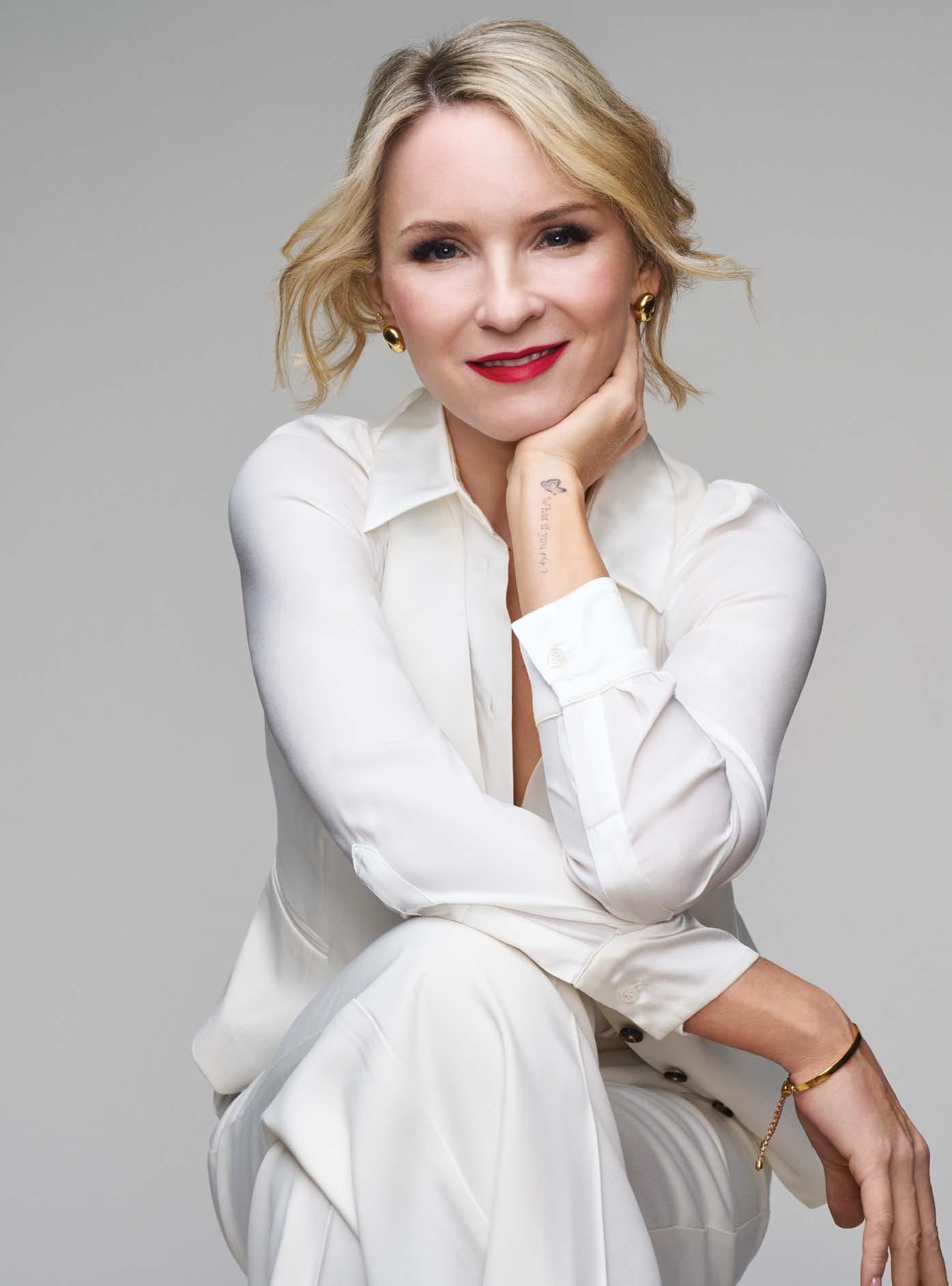
→ Karolina Pelc, building businesses and inspiring women leaders worldwide
HER PLAY: KAROLINA PELC
From casino floors to high-profile exit she bet on herself - and won by PATRICIA CULLEN
Few founder stories begin on a casino floor. Pelc was born in communist Poland in 1984, just a few years before the system collapsed. Her childhood unfolded during the country’s turbulent transition into a post-communist economy - a time when industries were being rebuilt and entrepreneurship was only beginning to reemerge. Career paths were far more predictable than they are today. Stability was valued over risk, and entrepreneurship was rarely presented as a visible professional option. Ambition, however, surfaced early. As a teenager Pelc excelled academically, competed in sports and took part in literary competitions - experiences that instilled both discipline and curiosity about the world beyond her immediate surroundings. Her early professional life took an unconventional turn. Rather than following the traditional path of university followed by corporate employment, she began working as a casino dealer in Warsaw. Shortly after Poland joined the European Union, Pelc moved to London as part of the first wave of young professionals seeking opportunities abroad. From there she joined cruise ships, dealing cards in high-stakes gaming rooms serving international guests. The environment was intense and psychologically complex. Dealers were expected to read people quickly, understand probability instinctively and make decisions under constant pressure - skills that would later prove surprisingly transferable to business. After several years working in land-based casinos, Pelc secured her first role in what was then a rapidly emerging sector in the UK: online gaming. The timing was significant. Following the UK
Gambling Act of 2005, the country became one of the first fully regulated markets for online gambling, and a new generation of technology companies began building the digital infrastructure behind the rapidly growing industry. What had once been confined to casino floors was moving online - and an entirely new sector was taking shape.
Driven by a strong desire to grow professionally, Pelc pursued opportunities wherever they appeared. Over time she progressed from operational roles into senior leadership positions across the online gaming and technology sector. Her career would eventually span multiple markets and geographies, with professional chapters in London,
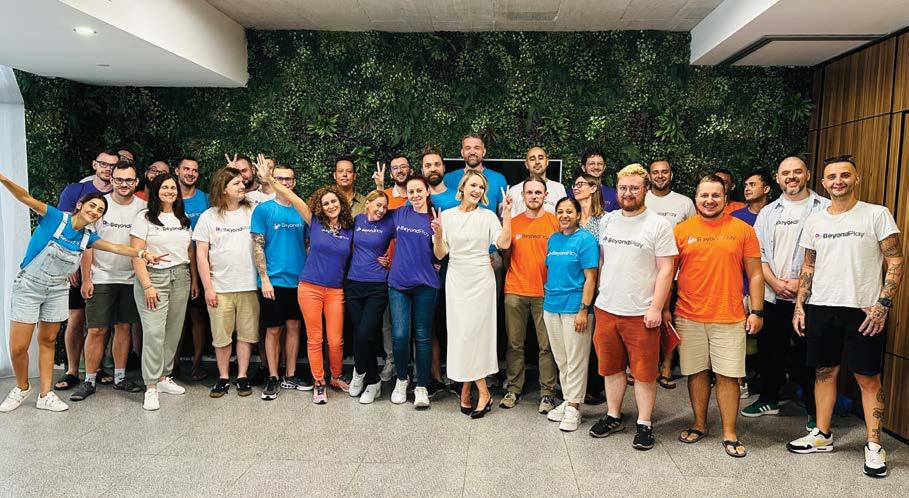
Spain, the Philippines and Malta. Before founding her own company, Pelc held leadership and advisory roles within some of the industry’s most recognisable brands, including LeoVegas and William Hill, eventually progressing into C-level and board positions. The experience gave her a deep understanding of how large gaming platforms actually operate - from product development and regulation to customer behaviour at scale. But at a certain point the next step became difficult to ignore. Rather than continuing to build products inside large organisations, Pelc decided to bet on herself. That decision led to the creation of BeyondPlay, a technology company focused on multiplayer engagement within digital gaming
“START-UPS ARE A ROLLER COASTER - AND
THERE’S NO
SEATBELT”
environments. Built quickly and shaped by deep industry insight, the company gained rapid traction and was acquired by FanDuel - part of Flutter Entertainment - in under three years. Flutter is one of the world’s largest gaming groups and home to global brands including Sky Betting & Gaming, Paddy Power and PokerStars. Today Pelc operates at the intersection of entrepreneurship, investment and storytelling. In addition to backing emerging founders, she has become an increasingly visible voice in conversations around risk, leadership and non-linear career journeys, particularly within communities supporting women in business and entrepreneurship. Her forthcoming book, Her Play: Make Your Own Luck, draws on two decades of experience. The gifting edition was first unveiled at an Impact Retreat Summit on Necker Island, where the very first copy was presented to one of Karolina’s earliest business icons, Sir Richard Branson. Part memoir and
part mindset exploration, the book examines the psychology behind reinvention - weaving together personal narrative with insights from behavioural science, neuroscience and even epigenetics. Rather than presenting a traditional startup playbook, it explores the mindset behind becoming an entrepreneur - and how uncertainty can become a catalyst for opportunity. Entrepreneur UK finds out more...
When you started BeyondPlay, did you imagine the journey could end in an acquisition? I think there are broadly two types of founders. Those who build to sell, and those who don’t really think about an exit until much later. Because of my corporate background in the gaming industry and my exposure to mergers and acquisitions in the sector, I always knew an exit was the desired outcome. I also had a fairly clear understanding of the ecosystem and the kind of companies that could eventually become natural acquirers. In fact, I even had some of those names written down on a vision board long before the company existed. That doesn’t mean I knew how to get there - or that it would happen in such a short space of time. Day to day, my focus was simply on building something I believed in and solving a real problem in the industry. I sold the company in February 2024, right before my 40th birthday. If you had asked me in mid-November
“IN STARTUPS YOU’RE NOT JUST HIRING SKILLS -
YOU’RE
HIRING RESILIENCE”
whether that would happen, my answer would probably have been: Are you kidding me? That’s one of the ultimate truths about start-ups. They are a roller coaster - and there’s no seatbelt.
What was the toughest strategic decision you had to make as a founder?
The toughest decisions are almost always about people. When you’re building a start-up, you’re not just hiring skills - you’re hiring resilience. One of the mistakes I made early on was focusing too heavily on résumés. Experience matters, but what matters even more is how people behave when things go wrong - because in start-ups things go wrong all the time. Some of the strongest team members I worked with weren’t necessarily the most impressive on paper. But they had something far more valuable: they stayed calm under pressure, adapted quickly and didn’t crumble when the plan changed for the fifth time in a month. If I were building a team again, I would hire far more deliberately for resilience than credentials. The second toughest decision came much later and was tied to the
eventual sale of the company. At one point we decided to introduce a second product alongside our core innovation. The original product was highly innovative but came with many unknowns. It was pushing the boundaries of how players could interact with each other inside gaming environments. The second product, however, addressed a very clear market gap that had emerged after a similar solution disappeared following an acquisition. In theory it sounded like a no-brainer. In practice it cut our runway in half and forced the leadership team to run what was essentially two start-ups inside one company. Strategically it de-risked the business. Operationally it nearly broke us. It cost me people, sleep and a fair amount of sanity, but it paid off.
You negotiated much of the sale agreement yourself. What advice would you give founders dealing with a massive corporate buyer?
Negotiating with a company that large can feel intimidating at first. When you’re a start-up founder sitting across from a multi-billion dollar organisation with an entire team of
lawyers, bankers and corporate development professionals, the natural instinct is to assume they hold all the power. But negotiations rarely work that way. The dynamic is closer to poker than people realise. Two things matter more than almost anything else: leverage and bluff. Leverage came from something very simple. During the entire due diligence and negotiation process, I never took my foot off the gas. We were still raising capital. We were still selling the product. We were still building. And in parallel I started conversations with two other potential acquirers. That wasn’t
emotional reality of the situation. And the uncomfortable part of bluffing is that you have to accept the possibility that it might fail. You have to be willing - at least psychologically - to walk away with nothing. In poker terms, if you’re not prepared to lose the pot, you probably shouldn’t be playing the hand.
Why did FanDuel ultimately acquire the company?
Ironically, it was exactly that decision. When a small startup gets acquired by a company that large, people often assume the outcome appeared suddenly. In reality, these moments are usually years in the
“IF YOU SLOW THE COMPANY DOWN WHILE NEGOTIATING A SALE, YOU WEAKEN YOUR POSITION”
theatre - it was discipline. If you slow the company down while negotiating a sale, you automatically weaken your position. Momentum is one of the few real bargaining chips a startup has. But the second element is the one founders rarely talk about. Bluff. In reality, the final buyer was the only one that truly aligned with my values and the future I wanted for the company. But I could never show how much I wanted that outcome. Sometimes that meant projecting a level of indifference that didn’t entirely match the
making. It came down to timing and strategic fit. The technology we built matched something they needed at precisely that moment. We had already proven scalability by going after large customers early - even though doing so nearly broke our infrastructure. And our team brought something equally important: deep industry experience. Not just startup experience, but years of operating inside the ecosystem before BeyondPlay even existed. In my case, almost two decades.
→ Founder, investor, and innovator - Karolina Pelc leads on her own terms
With such a remarkable outcome, can you say you were one of those flawless founders whose meticulous execution led exactly where it needed to go?
There were far more mistakes than I’m willing to publicly list. I was a first-time founder. I had what Jensen Huang once called the founder’s superpowernaivety. The flip side of that is a fair amount of cluelessness. I hired too fast and fired too slow. I trusted too many people. I fought too many battles myself. And I didn’t delegate nearly enough. There’s actually a chapter in the book about not doubling down on a losing hand. Let’s just say I doubled on split tens against an ace far more times than I can count when it came to trying to keep certain people on the team. I also maintained what I liked to call an open-door policy with the team as we grew - which eventually turned into a fairly open-door policy between me and my therapist. Most founders will recognise those mistakes. The uncomfortable truth is that no matter how many podcasts you listen to or books you read, some lessons can only be learned the hard way. Experience tends to be the only real teacher.
Was there a moment when you genuinely thought the company might fail?
Probably once a week - if not every day. When we struggled to secure funding. Every time an investor rejected us. Every time a potential customer walked away and you start wondering whether the next ten will do the same. Operating in a heavily licensed industry didn’t help either. Every email from our licensing lawyers made me think we might fail after all. There were also moments when people I trusted failed that trust in ways I never expected. I found myself fighting legal battles I had never imagined we would face. At the same time I was running dangerously close to burnout. The thing that probably kept me from sliding into it completely was a simple thought: if I step away, what happens to the company? That responsibility has a way of keeping you moving forward - even when everything else feels uncertain.
“YOU DON’T ALWAYS CHOOSE THE HAND YOU’RE DEALT - BUT YOU DO CHOOSE HOW YOU PLAY IT”
twice. I job-hopped because I was chasing opportunities to grow. I changed countries multiple times and even qualified from marketing into product along the way. And then there are the parts that look far less glamorous. I arrived in London as an immigrant with about £300 to my name. At one point I ended up without a roof over my head because I chose to invest in a pair of pink boots rather than secure accommodation. My food budget would run out by the middle of the month. I quit jobs by quite literally slamming doors behind me. I came dangerously close to being deported from the US during my cruise ship time. None of that looks like the neat founder narrative people often imagine. But those experiences shaped resilience and risk tolerance. And if that doesn’t make you curious to read the book, I’m not sure what will.
Your book explores the psychology of risk and the beliefs that shape how we make decisions. What is the most important lesson you want the business world to take seriously about risk?
Your memoir exposes the messy reality behind success. What disproves the myth that entrepreneurship is a linear path?
Probably the fact that almost none of my journeys followed a straight line. I quit university - not once but
I’ve become increasingly interested in how our relationship with risk is shaped long before we start companies. Many founders assume their appetite for risk is simply a personality trait. But in reality it’s often deeply influenced by the environment we grow up in. If you grow up in a place where stability is fragile - whether because of political systems, economic uncertainty or family experiences - you learn very early to prioritise safety. That kind of conditioning can stay with you long after your circumstances change. I was born in communist Poland and grew up during a time when the country was going through an enormous economic transition. Security was not something people took for granted. And yet, despite that background, my own approach to risk turned out to be very different. I still find myself trying to understand
→ Redefining what it means to be a woman in business.
“NOT GUIDANCE. NOT ENCOURAGEMENT. REAL STAKES. THAT’S SPONSORSHIP”
why. One exercise I sometimes suggest to founders is simply to reflect on the messages about risk they absorbed growing up. What were the beliefs about money and stability in your household? Were risk-takers admired - or criticised? Was failure treated as something shameful, or as part of learning? Once you start thinking about those influences, you can ask a much more interesting question. Is the level of risk I’m willing to take today based on my current reality - or on fears that belong to a very different chapter of my life? For many founders, just recognising that distinction can be surprisingly liberating.
After building and exiting a company, what made you decide to write the book?
For a long time I resisted the idea of writing a book. The start-up world already has shelves full of playbooks promising formulas for success, and my own journey looked nothing like a formula. When people look at a start-up exit or a successful career move, the word that often comes up is luck. But when I started reflecting on the path that took me from casino floors and cruise ships to building and selling a venture-backed company, what I saw wasn’t luck at all. It was a long chain of decisions, risks and reinven-
tions that gradually created opportunities. That became the starting point for the book. Her Play is partly a memoir, but it goes deeper than that. It explores the mindset behind reinvention - the moments when you take a risk before you know whether it will work, the times you reinvent yourself, and the willingness to move even when the path isn’t obvious. In most card games you don’t choose the hand you’re dealt - but you do choose how you play it. And that, in many ways, is the central idea of the book.
What do women still have to do differently to be taken seriously in leadership roles?
I don’t think women need to do much differently. In many cases, they simply need to be seen differently. For years the advice has been that women should become more assertive, more confident, more visible - essentially adapt to leadership models shaped in maledominated environments. In reality, many women already operate with those qualities. What often makes the real difference in a career is not mentorship, but sponsorship. Women are frequently offered mentorship - advice, encouragement, a coffee conversation. What actually moves careers forward is sponsorship: when someone is willing to put their reputation, capital or influence behind you. If I were advising women early in their careers, I would suggest a simple three-step approach to turning a supporter into a sponsor. First, demonstrate competence and reliability - people sponsor those they trust to deliver. Second, be explicit about your ambition. Sponsors cannot back goals they don’t know you have. And third, ask for opportunities that carry real stakes. Not guidance. Not encouragement. Responsibility. That’s what sponsorship really looks like.
When it comes to funding and founding, what is the most underacknowledged barrier women face today?
One of the most under-acknowledged barriers is what I call “confidence from
the first believer” - something I explore in Her Play: Make Your Own Luck. We talk a lot about venture capital statistics, but what often goes unnoticed is the role of early conviction - the person who believes in a founder before the traction is obvious. Many successful companies begin with one individual
“WHAT
IF I FALL? BUT WHAT IF.. YOU FLY?”
who takes that early bet. When women don’t receive that initial confidence, many promising ideas never reach the stage where venture capital even becomes relevant. That’s one of the reasons I’ve started actively investing in early-stage founders myself. Not because female founders need special treatment - but because access to that first belief can completely change the trajectory of a company. Sometimes a single early supporter can make the difference between an idea staying an idea and becoming a business.
If you were founding a company today, what would you prioritise?
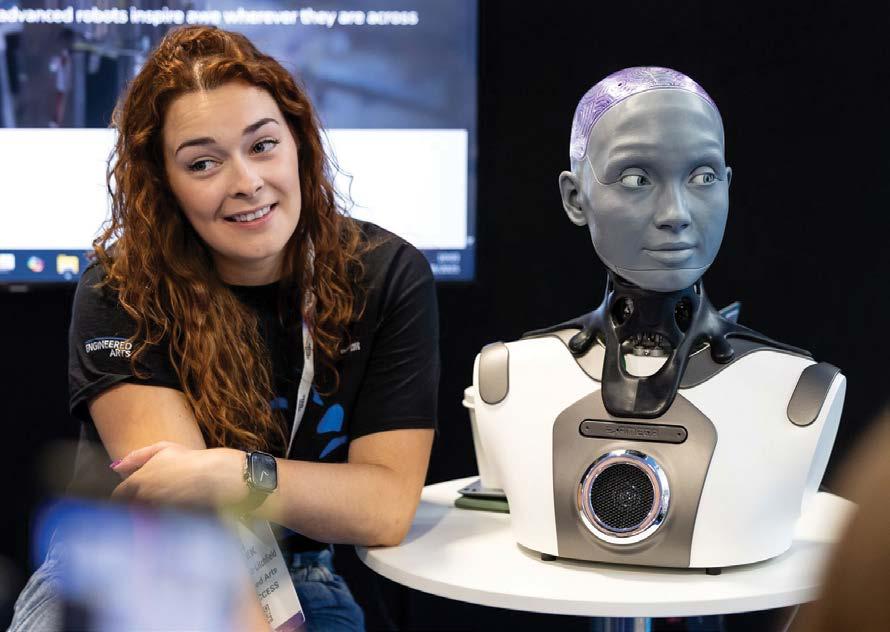
The first thing I would prioritise is taking full advantage of AI. Founding a start-up today compared to even five years ago feels like a completely different world. I wouldn’t necessarily say it’s easier, because these capabilities are available to everyone - which means everyone is moving faster. But for truly creative founders, AI multiplies their competence and productivity in ways we haven’t seen before. Small teams can now move at speeds that previously required entire departments. That also means the real advantage is no longer just access to tools - it’s how willing you are to move
before you feel ready. Most people still operate from a place of “What if I fall?”
The founders who win are the ones who reframe it to: “What if you fly?”
You can already see that shift reflected in investment trends. The traditional expectation that every startup must begin with a technical co-founder is starting to soften. What I wouldn’t compromise on is people. Markets change, products pivot and technologies evolve quickly. But the resilience, ambition and judgement of the people building the company ultimately determine whether it survives those changes.
What are you focusing on next?
I continue to invest in and support the founders I work with, particularly those building ambitious companies in industries and regions that historically haven’t had the same access to networks or capital.Beyond that, I’m focused on bringing the ideas behind Her Play into the world through speaking and conversations around risk, leadership and unconventional paths. The book will be available on Amazon and through leading retailers worldwide, and it really is the foundation for everything I’m building next. I also share more of that journey - both the lessons and the behind-the-scenes of this next chapter as an author and keynote speaker - on Instagram at @ storiesbypelc. And if you know me, you’ll know I’m fairly addicted to achievement - so the goals I’ve set for the book and my speaking career are by no means small. At the same time, I’m trying to learn something new. How to rest.That might still involve writing the sequel - but it also means learning how to slow down a little and find moments of calm within the chaos.
It’s a work in progress. herplay.com
In the Loop /
Europe’s decisive decade:
Why
founders, investors and innovators need to be at London Tech Week this June
The next ten years will determine whether Europe leads in the technologies shaping the global economy. London Tech Week 2026, taking place 8-10 June at Olympia London, is where the people who will decide that outcome are gathering. Here is why you should be in the room.
Europe is entering what many industry leaders describe as a decisive decade for technology. The next ten years will determine whether the region leads in the technologies shaping the global economy: from artificial intelligence to quantum computing, robotics, and frontier science. For founders building the next generation of technology
companies, the stakes have never been higher. Across the UK and Europe, the ecosystem has matured dramatically. World-class research institutions, growing technical talent and a rapidly expanding venture capital market have positioned Europe as a formidable force in global innovation. But scaling breakthrough companies still requires stronger collaboration
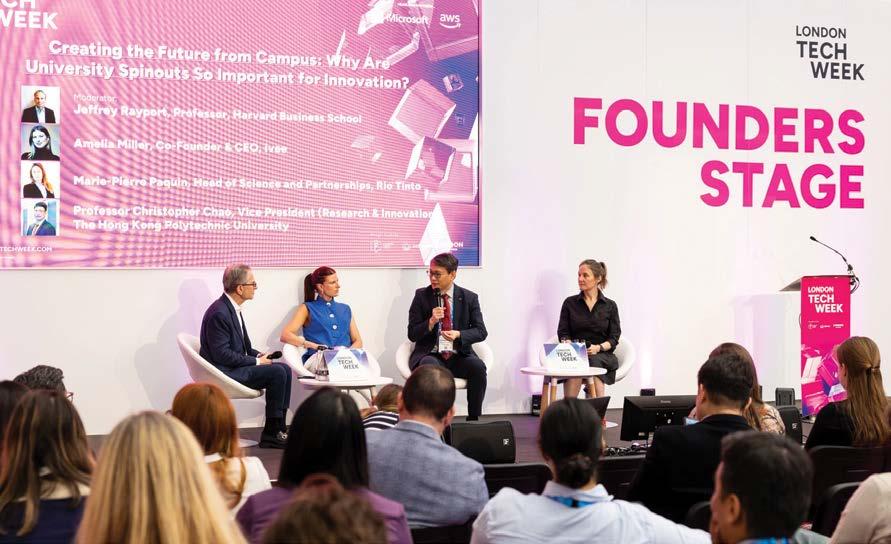
between founders, investors, enterprises, and policymakers. That is why convening the ecosystem matters more than ever. From 8–10 June 2026, thousands of technology leaders will gather at Olympia London for London Tech Week 2026: where thinkers and doers shape the future of business through technology. For anyone building or backing the next wave of
transformational companies, this is not simply another conference. It is a rare opportunity to be in one room with the people shaping the direction of global technology at a moment when decisions made now will define European competitiveness for a generation.
Where Europe’s tech leaders meet
London Tech Week has grown into a truly global platform for technology dialogue, collaboration and dealmaking. The 2025 edition welcomed more than 30,000 attendees from 128 countries, including 12,500 enterprise leaders, 5,500 startup founders and over 1,000 investors. For entrepreneurs, that density of opportunity is invaluable: connecting directly with capital, corporate partners and fellow founders accelerates the kind of relationships that would otherwise take years to build. In 2026, the programme is organised into two interconnected environments. Enterprise World brings together senior executives deploying AI,
↓ Tech showcase at London Tech Week 2025
data and digital infrastructure at scale, including the CIO of Unilever, the Chief AI Officer of HEINEKEN, the CTO of Booking.com, the Chief Data Officer of the LEGO Group, and leaders from Deutsche Bank, Standard Chartered and National Grid. These are the buyers, partners and customers that growth-stage founders spend months trying to reach. Startup World is built specifically for entrepreneurs and innovators. The Founders Stage, Deep Tech Stage, and Ignition Stage will host founders sharing unfiltered lessons from building category-defining companies, from initial idea to unicorn scale. The Ignition Stage will also host the finale of Tech Nation’s grand pitch competition, the UK’s biggest entrepreneurship competition with a prize of over £1m for the winning startup.
“This is the beginning of a new industrial revolution.
One powered by intelligence. Because of AI, every industry in the UK will be a tech industry.” — Jensen Huang, CEO, Nvidia, speaking with UK Prime Minister Sir Keir Starmer at London Tech Week 2025.
The rise of applied AI and frontier innovation
Artificial intelligence sits at the centre of this year’s agenda, but it is only one part of a much larger transformation. Advances in robotics, space technology, life sciences and quantum computing are
LONDON TECH WEEK HAS GROWN INTO A TRULY GLOBAL PLATFORM FOR TECHNOLOGY DIALOGUE, COLLABORATION AND DEALMAKING”
opening entirely new markets, and events that bring together scientists, engineers, investors and operators are becoming critical infrastructure for the innovation economy. The speaker lineup reflects this breadth. Aravind Srinivas of Perplexity, Mati Staniszewski of ElevenLabs, Lucy Lui of Airwallex, Alex Kendall of Wayve, Anton Osika of Lovable and Max Jaderberg of Isomorphic Labs join Dr Hermann Hauser KBE, co-founder of ARM. The programme already features 40+ Unicorn Founders from across the Globe. Headline partners Microsoft and AWS will shape key parts of the programme, addressing AI infrastructure, enterprise skills and what it takes to
scale in a rapidly shifting landscape.
From conversation to action Europe’s opportunity is clear, but success is not guaranteed. Competition from the United States and Asia is intensifying. What will determine Europe’s position in the global technology landscape is not just invention, but execution: building stronger connections between founders and capital, between startups and enterprise customers, and between innovators and policymakers. For founders seeking investment, the highest density of VC involvement is expected in 2026, alongside a significantly enhanced VIP programme offering
curated one-to-one meetings, closed-door roundtables and private briefings. New for 2026: hackathons, opening active formats for collaboration and hands-on problem solving. For investors, the concentration of founders across AI, deep tech, fintech, quantum and life sciences under one roof over three days is extraordinarily efficient. As Europe enters its decisive decade, the most important conversations about innovation, scale, and global competitiveness are just beginning. The most ambitious founders, investors, and innovators will be in the room. Register at londontechweek. com with the discount code ENTREPRENEURUK25 for 25% off your pass.
↓ Jeffrey Rayport, Amelia Miller, Professor Christopher Chao, Marie-Pierre Paquin
CRACKING THE LINKEDIN CODE
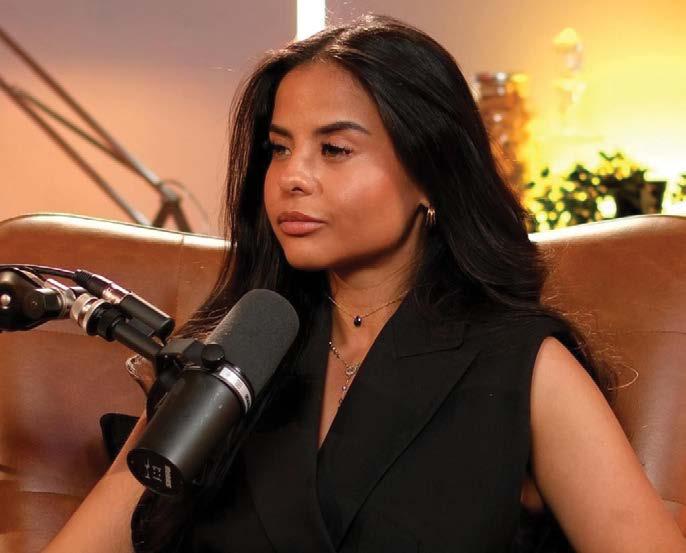
In 2022, Lara Acosta was unemployed and spending hours online trying to understand a platform most people treat as little more than a digital CV. Instead of scrolling, she began studying LinkedIn: the posts that travelled, the creators who consistently reached large audiences, and the structures that seemed to trigger the algorithm. Posting daily and refining her approach, Acosta quickly built one of the platform’s most visible personal brands. That audience has since evolved into two ventures: Kleo, a tool analysing how creators and posts perform, and Literally Academy, where she teaches founders how to turn their companies into stories people actually want to follow. In an online economy increasingly shaped by distribution, Acosta argues that content is no longer optional - it’s infrastructure. Entrepreneur UK speaks to Acosta about building an audience, launching Kleo and turning content into a business.
You went from unemployed in 2022 to becoming one of LinkedIn’s most visible creators. What was the turning point where your personal brand became a real business?
Hard work. I spent hours every day reverse-engineering the platform and the content it rewarded. I did everything in my power to then deliver on that and improve every single day. I never got complacent. I never
How Lara Acosta turned content into companies. by PATRICIA CULLEN
→ Lara Acosta, co-founder of Kleo and founder of Literally Academy
“
I WAS COMMITTED TO MAKING IT
WORK
AND I LOVED WHO I BECAME IN THE PROCESS OF LEARNING SO MUCH SO FAST”
celebrated too much. I kept my eye on the price (was consistently improving at whatever the goal was. Better clients, better content, better network). I made sure I understood which content strategies worked at the time - and used them. I found a unique angle and doubled down. I had nothing else to do - I was committed to making it work and I loved who I became in the process of learning so much so fast.
Many founders struggle with distribution. How can SaaS entrepreneurs use personal branding and storytelling to gain traction early on?
Today, the winners are not just the founders who build the best products - they’re the ones who understand distribution. Content is no longer optional. It’s a core growth channel. For SaaS founders, the first step is choosing the right platform: where do your customers actually spend time? Then turn the journey of building your product into ongoing storytelling.
- Why did you build the company?
- What problem are you solving that others aren’t?
- Are you bootstrapped or funded, and why?
- What are you learning as you build?
→
Acosta studies audience behaviour and content strategies to help founders
grow their brands
/Strategy
Every one of those questions is a piece of content. When people follow the story, they start to trust you. And trust lowers the barrier for them to try your product. One tactical thing I always recommend: build a waitlist early. Social content drives awareness, but a waitlist captures intent. It’s one of the simplest ways to convert attention into future users.
As co-founder of Kleo, what insights about content and audience growth surprised you most once you started analysing creator data at scale?
One insight that surprised us was that most creators think their problem is time. When we asked our users how long it takes them to write a post, many said five minutes… usually using ChatGPT. So the real issue isn’t time. It’s expectations. Highperforming content rarely comes from five minutes of effort. The posts that actually grow audiences usually come from hours of thinking about the topic, the angle, the relevance, the structure, and the packaging. Yes, I can write a post in five minutes today, but that’s because I spent thousands of hours learning how content works. AI can speed up execution, but it can’t replace the thinking behind great content. The creators who win with AI are the ones who have already developed the skill and use the tools to amplify it.
What gap in the creator economy were you trying to solve when you launched Literally Academy?
LinkedIn was full of generic content, motivational posts, and recycled advice. There was little guidance in 2024 on how to create contentnow, in 2026, understanding content and algorithms is essential to building a profitable brand online, especially on LinkedIn. The gap was in the way this is taught, not just based on trends but on understanding a core untapped market (LinkedIn) and how they also purchase through socials - even more than on other platforms.
As a woman building companies in the SaaS and creator economy, have you experienced any challenges - or advantages - that shaped how you lead and build your brand?
From the very start I had an advantage, and it was the fact that I’d do whatever it takes to win. People in the space which is male-dominated noticed it and stopped judging me because of my gender and judged me based on skill and drive. Women did the same for me. I made it a point to try to be the most useful and everything started happening for me. Being a woman has proven to be an incredible advantage; I stand out, we
“
AI CAN SPEED UP EXECUTION, BUT IT CAN’T REPLACE THE THINKING BEHIND GREAT CONTENT. THE CREATORS WHO WIN WITH AI ARE THE ONES WHO HAVE ALREADY DEVELOPED THE SKILL AND USE THE TOOLS TO AMPLIFY IT”
stand out. Being intelligent, articulate and driven as a woman puts you top of the list in the right places, and the places that don’t like it weren’t meant to be for you anyway.
What advice would you give women founders who want to build both a successful company and a visible personal brand?
In a world where everyone is trying to be loud, be useful. The opportunities you want come from having leverage, and leverage is built favour by favour, by resources and opportunities shared to others. Always give someone value, help them, take the call - you never know who will introduce you to your next client, speaking event, co-founder or even podcast!
→ From unemployed to LinkedIn standout: Acosta knows what it takes to grow online
THE PARLOUR AT EVE KENSINGTON.
A distinctive suite of three beautifully designed rooms, The Parlour offers a flexible setting for private hire - designed for events that move seamlessly from day to night.
With plush lounges, eclectic dining spaces, and a dramatic stage room, The Parlour is made for everything from private dining and conferences to performances, launches, and celebrations. Warm lighting, bold interiors, and flexible layouts accommodate up to 120 standing guests. Bring your own DJ or band and keep the party going.
‘T/Franchise
Franchising - The business model helping women succeed
by PIP WILKINS
Are you ready for a positive statistic for a change? In 2005 just 20% of franchisees were women. Fast forward 19 years and that figure now stands at 40%, according to our 2024 National Franchise Survey sponsored by NIC Local. To get some facts behind the growth and with our own EWIB (Empowering Women in Business) event in May 2026, we asked our members what they thought motivated women to join franchising. The results were:
62% said ‘Flexibility and Work Life Balance’ 21.6% said ‘Low Risk Route To Business Ownership’ 10.8% said ‘Training and Ongoing Support’ 5.4% said ‘Community Support and Peer Networking’
But what is behind these figures aside from the natural societal growth of women in the workplace? What is it that appeals to women about franchising and what are women already in the industry doing to support this momentum?
Safer way into business
Helen McEvoy, who has received great support from her franchisor at The Holiday Franchise said: “Going it alone can be daunting. The support I get from my franchisor is unparalleled. They are brilliant and support me every step of the way. I get to run my own business and be independent but wrapped in a supportive and encouraging network of
→ Franchisor Ruth Brown is the MD of domiciliary homecare franchise Home Instead
professionals; the perfect combination.”
perspective and her journey through it?
“
Award-winning franchisor Franchisor Ruth Brown is the MD of domiciliary homecare franchise Home Instead. Both she and the brand are multi-award winners, including receiving the Queen’s Award for Enterprise for their ‘innovation to the care sector through their franchise model.’ She also has recently been made chair of the BFA (British Franchise Association), only the second woman to hold the position in the association’s 49 year history. Quite simply, Brown is one of the most experienced female franchisors, so who better to illuminate the subject of franchising from a female
Home Instead – growth
Brown’s journey with the brand began just five years after it was founded and franchised. When she joined in 2010 there were 35 franchisees; they now have 266, a growth of 660% in just 14 years. The Home Instead network is now almost fully sold out,
I’VE ALWAYS SUPPORTED WOMEN TO ACHIEVE THEIR AMBITIONS. AROUND 50% OF THE FRANCHISEES I’VE BROUGHT INTO HOME INSTEAD ARE WOMEN; I KNOW HOW TRANSFORMATIONAL A FRANCHISE JOURNEY CAN BE FOR WOMEN’S CAREERS AS WELL AS THEIR FAMILIES”
with only resale sites available to buy, as early adopter franchisees are now at the stage of retiring and selling their businesses.
Franchisor insight
Whilst Home Instead is unquestionably highly successful, Brown explains that it has taken discipline and focus to achieve that
sustained, ethical growth. She explains: “Our biggest challenge was juggling growth at pace with maintaining quality whilst carving out a new market. Private Pay Care was very much in its infancy when we started and we were seen as disruptors.”
Why homecare?
It was Brown’s own experiences that brought her into the homecare sector: “Like so many, I have first-hand experience of juggling work alongside caring responsibilities, whether that was for family members or more recently my Mum who is in the late stages of vascular dementia. Home Instead’s focus on changing the way care is provided in the UK was something I wanted to be part of.”
Empathetic leader
How have Brown’s experiences shaped her leadership style? “I’d like to think it has made me an empathetic leader who considers the whole person behind the franchisee or team member, not just numbers. I also put a lot of emphasis on trust because I know how isolating both leadership and caring can be if you don’t have the right support.”
Supporting women in franchising
Brown sets the example across the industry of lifting as she climbs: “We have a high percentage of women at Home Instead,
both at national office and across the network and they demonstrate daily just how much they can accomplish when given the opportunity and the right support. I’m also very aware that if, like me, you’re one of the relatively few women in franchising in senior roles, you have a responsibility to hold the door open for others.”
Transforming lives
She continues: “I’ve always supported women to achieve their ambitions. Around 50% of the franchisees I’ve brought into Home Instead are women; I know how transformational a franchise journey can be for women’s careers as well as their families. One of my greatest motivations is not only transforming care across the UK but also providing genuine opportunities to people’s lives every single day. When I see a franchisee who I recruited years ago reach a major milestone, celebrating maybe a decade of success or bringing in their next generation into the business it’s incredibly rewarding.” To find out more about franchising your business or buying a franchise, visit www. thebfa.org. EWIB will be held on May 20th, 2026, at the Leicester Tigers Stadium. Tickets are available from: https:// www.thebfa.org/ empowering-women-inbusiness/
Pip Wilkins QFP is CEO of the BFA
MOTHER, BUILDER, FOUNDER
The creator of Little Explorers explains how family inspiration led to a London brand redefining play-based learning.
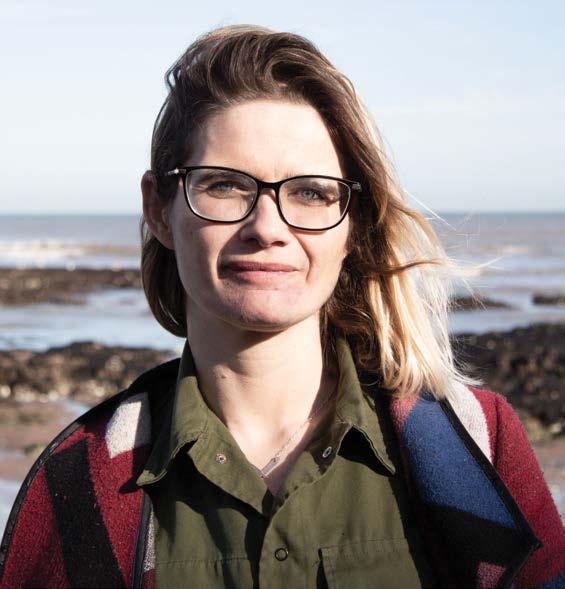
→ Diksha
What made you turn the idea for Little Explorers into a company?
Little Explorers started very organically. I didn’t originally set out to build a business in education. My two children, Kabir, who is 10, and Aanya, who is 7, have been my biggest inspiration. My husband Paramvir and my family have been my greatest support. Watching my children grow and seeing how much children learn through play sparked my passion for early childhood development. Dilkap Colleges in Mumbai, founded by my father, Dilip Kapoor, educates over 2,000 students and is led by my brother, Arjun Kapoor (CEO). Being involved at board level has deeply shaped my passion for education, which I am now bringing to the UK through Little Explorers—
blending strong academic foundations with play-based learning. Today it’s about creating spaces where children can learn through curiosity, creativity, and joyful exploration.
That’s when I decided to turn Little Explorers into a company (JMD Ltd) — not just offering sessions, but building something that could support early childhood development in a much bigger way. My vision is to create environments where children develop confidence, curiosity, and a love for learning from the very start.
Coming from a creative background, how did you translate that into a scalable business model? My creative background helped shape the idea behind Little Explorers. I’ve always believed that children learn best when they are given the freedom to explore, which is why our approach is based on child-led learning. The activities are designed to create curiosity and allow children to discover things on their own rather than follow instructions. At the same time, I knew that for the idea to grow it needed some structure. We developed repeatable session formats, designed sensory activities, and created a strong brand experience that parents recognise and trust. Another important part of Little Explorers is parent partnership. We believe early learning works best when parents are involved in the journey, so we create environments where families feel connected to their child’s development.
How do you filter the noise and stay focused on the bigger vision?
Entrepreneurship comes with a lot of advice and opinions, and while some of it can be helpful, I’ve learned that you also have to be careful not to get distracted by too much noise. One thing many entrepreneurs say is that you shouldn’t listen to the negative voices around you. If you truly believe in your vision and feel you can make it happen, then staying focused is what really matters. For me, I take advice by asking whether it aligns with the core values behind Little Explorers — child-led
by PATRICIA CULLEN
Sethi, founder, Little Explorers
learning, creativity, and strong parent partnerships. If it helps us create better experiences for children and families, then it’s worth considering. Ultimately, building something meaningful requires clarity and resilience. I stay focused by remembering why I started — my passion for early childhood development and the inspiration I draw from my own children — and making sure every step we take supports the bigger vision for Little Explorers.
What mindset shift was required to move from running sessions to building a brand?
The biggest mindset shift was moving from thinking about individual sessions to thinking about the bigger picture. In the beginning, the focus was simply on creating beautiful, engaging experiences for the children in each class. But as Little Explorers started growing, I realised it needed to become something more scalable. That meant stepping back and thinking like a brand builder rather than just a session leader. It involved developing a clear philosophy around child-led learning, creating consistent programmes, and building strong parent partnerships so families feel part of the journey. The shift was really about moving from doing everything myself to building something that can grow and reach more
MANY WOMEN UNDERESTIMATE THEIR IDEAS OR FEEL THEY NEED EVERYTHING TO BE PERFECT BEFORE TAKING
THE FIRST STEP, BUT BUILDING A BUSINESS IS REALLY A PROCESS OF LEARNING AND EVOLVING ALONG THE WAY”
families while still staying true to the creativity and values that Little Explorers was founded on.
What are your challenges as a female founder?
One challenge is balancing the many roles that come with being both a founder, a parent and also a homemaker. As a female entrepreneur, there can sometimes be an assumption that your business is more of a passion project rather than a serious venture, especially in areas like early childhood education. Another challenge is learning to trust your own vision even when others may question it. Building a business requires resilience and consistency, as a founder you often have to make decisions before others fully see the potential. When you are clear about your mission and believe in what you are building, it becomes much easier to navigate those challenges and keep moving forward.
What’s your key lesson for female founders?
One of the most important lessons I’ve learned is to trust your vision and not wait for permission to start. Many women underestimate their ideas
or feel they need everything to be perfect before taking the first step, but building a business is really a process of learning and evolving along the way. It’s also important to stay confident in your direction and not let too many outside opinions derail you. Advice can be helpful, but ultimately you have to believe in what you are building. For me, Little Explorers grew from a genuine passion for children and early development, inspired by my own two children. That passion turned into a business because I stayed committed to the idea and kept focusing on the bigger vision. My advice to other female founders is simple: believe in your idea, start where you are, and keep going. I’m honoured and grateful to be named a finalist on the Nursery Management Today Entrepreneur Power List.
How is female entrepreneurship evolving?
I think one of the biggest shifts is that many female founders today are building businesses with a much stronger sense of collaboration, empathy, and shared growth. There is more of a mindset of
supporting each other rather than competing. Women entrepreneurs are increasingly creating communities where founders help one another, share experiences, and lift each other up. That sense of collaboration is incredibly powerful.
What defines an impactful leader today?
An impactful leader creates an environment where teams feel supported, ideas are valued, and people are encouraged to grow. In today’s world, leadership is not just about competition, it’s also about collaboration and helping others succeed. For me, the best leaders think beyond short-term results. They focus on building something meaningful, staying true to their values, and creating positive impact for their community, their teams, and the people they serve. As they say, teamwork makes the dream work. Entrepreneurship is really about building something meaningful that can positively impact people’s lives. For me, Little Explorers is about creating environments where children can grow with confidence and a love for learning.
Women Leading Innovation
Using expertise and innovation to create hair care for women, by women
by ENTREPRENEUR UK STAFF
Entrepreneur UK talks to Dr. Charlene Makita, CEO and founder of Natural Aura, a science-led textured hair care brand…
COULD YOU INTRODUCE YOURSELF AND YOUR COMPANY?
I am an analytical chemist turned entrepreneur and the founder of Natural Aura, a science-led hair care brand for textured hair. My journey began during Masters and OhD research on the medicinal and chemical properties of the Moringa plant. I became fascinated by how natural ingredients interact with scalp health at a molecular level. During my research, I noticed a surprising gap: despite the massive global
market, there was very little scientific research or safe product options dedicated specifically to textured hair. This pushed me to move beyond academia to build solutions myself. Natural Aura sits at the intersection of science and innovation, using Moringa oil rich in antioxidants and vitamins, to strengthen the textured hair and improve moisture retention. My broader mission is to use technologies like AI to help women better understand their hair and reduce the “trial-anderror” of product selection.
HOW IS DEEP DOMAIN EXPERTISE GIVING FOUNDERS A COMPETITIVE EDGE IN AI?
We are reaching a point where AI itself is no longer the advantage; understanding the problem deeply is. Without field-specific knowledge, it is easy to build impressive-looking tools that fail to solve real issues. For instance, much of the beauty industry’s historical research has focused on straight or wavy hair, leaving Afro textures underrepresented in scientific datasets. This creates “data deserts”. Some current AI algorithms struggle to interpret textured hair because they weren’t trained on diverse enough data. A domain expert recognises these nuances: • A general system might
→ Dr. Charlene Makita, CEO and founder of Natural Aura
“Black women receive a staggeringly low percentage of venture capital, roughly 0.5%”
simply label an image as “curly”.
leading tech companies reshapes industry perceptions and inspires the next generation.
HOW CAN BLACK FEMALE FOUNDERS USE
THEIR
PERSPECTIVE TO DRIVE INNOVATION?
more inclusive,we’re making it more accurate and more effective.
WHAT KEY LESSONS SHOULD WOMEN FOUNDERS KNOW?
• An expert understands the critical differences in porosity, density, and coil patterns between type 3 and type 4 hair. By curating quality datasets rather than just large ones, experts can train AI to be more accurate, inclusive and genuinely useful.
networks and decisionmaking spaces. Black women receive a staggeringly low percentage of venture capital, roughly 0.5%. This isn’t due to a lack of innovation, but rather “pattern recognition” in investment. Investors tend to fund what feels familiar
Our lived experiences allow us to identify gaps that mainstream industries ignore. This perspective ensures that solutions are authentic and relevant. In the textured hair industry, a multi-billion dollar market innovation has stalled because the people in the room often have the same backgrounds. When founders bring their specific knowledge of 4C
WHAT IS THE BIGGEST BARRIER FOR BLACK WOMEN IN TECH, AND THE SOLUTION?
The biggest barrier is a systemic access gap regarding capital,
to them, often overlooking high-growth markets serving diverse communities. Solving this requires building ecosystems that provide mentorship, strategic partnerships and visibility. Representation is also key: seeing more Black women
textures or protective styles into product design, they make technology more inclusive, accurate, and effective. When founders bring unique perspectives into product development and technology design, we’re not just making innovation
Building something meaningful requires discipline and patience. I would share these three lessons:
} 1. Execution is kinder than perfection: Progress comes from consistent action and iteration, not waiting for a perfect launch.
} 2. Your expertise is your advantage: Scientific or technical knowledge is the foundation for contributing to evolving industries.
} 3. Resilience is a strategic resource: It isn’t about burning out; it’s about staying connected to your purpose and moving forward with intention.
HOW WILL WOMEN SHAPE THE FUTURE OF TECH AND BUSINESS?
Women are already shaping the future of innovation, particularly in industries like AI, biotechnology and wellness. These spaces require human-centred approaches, and women are bringing new perspectives that prioritise real-world impact. As more women step into leadership as founders, investors and innovators, we will redefine how technology is built, who it serves and what problems it prioritises. The future of tech won’t just include women, it will be shaped by them.
Why ‘Girl Boss’ culture does more harm than good
by SOPHIE JANE LEE
For the past decade, ‘Girl Boss’ culture has been sold to women as liberation. A glossy promise that if we just hustle harder, brand ourselves better and optimise our output, we’ll finally break free from systems that were never built for us. But beneath the pink packaging and empowerment slogans sits a far more uncomfortable truth. Girl Boss culture doesn’t dismantle inequality; it monetises it. Increasingly criticised as extractive, it pushes women to adopt the same cut-
throat, patriarchal tactics they were once told to resist, prioritising individual financial gain over collective solidarity. It takes structural problems such as unequal pay, underfunding, unpaid labour, the motherhood tax, burnout and discrimination, and reframes them as individual failures. If you’re not succeeding, the problem is you. Your mindset. Your confidence. Your work ethic. Your personal brand. Conveniently, the solution is always available…for the right price.
The economic logic behind the business of empowerment
To understand why Girl Boss culture has thrived, we must examine the economic logic underlying it and how empowerment has become something to package, price and sell. Girl Boss culture didn’t emerge in a vacuum. It is a predictable outcome of a market system that excels at turning structural inequality into individual responsibility and social movements into commercial opportunity. Modern capitalism still operates on a centuries-old framework that prioritises growth and productivity at all costs and rewards extraction over regeneration. It isn’t inherently good or bad, but its impact is visible everywhere. In many ways, capitalism has opened doors for women, including access to income, independence and entrepreneurship. But that access has always come with conditions. The system rewards women who can perform success without disrupting the status quo, and Girl Boss culture was no exception. Behind the glossy branding, the ‘girl boss’ archetype often obscured a far less empowering reality. Many of the brands held up as feminist success stories were built on the exploitation of other women’s labour, particularly women of colour and low-wage garment workers, whose work remained invisible while empowerment was marketed at the top. The collapse of companies like Nasty Gal exposed how easily feminist language could coexist with the same extractive supply chains and workplace
practices women were supposedly escaping.
Empowerment as performance
Girl Boss culture promoted a version of empowerment rooted in performance.
“
BEHIND THE GLOSSY
BRANDING,
THE ‘GIRL BOSS’ ARCHETYPE
OFTEN OBSCURED A FAR LESS EMPOWERING REALITY”
Hustle culture was reframed as freedom, overwork as passion, and precarity as a personal failure rather than the result of structural inequality. Long hours, blurred boundaries and burnout were celebrated as badges of honour, especially for women who had already been conditioned to outsource their sense of worthiness. Crucially, this model prioritised individualism over solidarity. The language of ‘leaning in’ placed responsibility squarely on women’s shoulders, encouraging them to work harder, adapt faster and self-optimise more efficiently. When success failed to materialise, the failure was internalised rather than attributed to the system itself. And the solution was always
another product women could buy to fix themselves.
When systems fail, women are blamed
One of the most damaging aspects of girl boss culture is its tendency to shift responsibility from systems to individuals. If you’re not succeeding, the narrative suggests it’s not because of the gender pay gap, lack of affordable childcare, biased funding models or workplace discrimination. It’s because you didn’t want it badly enough. Didn’t manifest hard enough. Didn’t post consistently enough. You simply didn’t believe in yourself enough to make it work. This framing lets institutions off the hook. Structural inequality becomes a personal mindset issue, and it adopts a further insidious layer when this language is used to manipulate women to part with more cash. It keeps women running on a treadmill, exhausted, self-blaming, and convinced that the solution is just one more course, a ‘guru-led’ programme, or a 6-step strategy away.
Gatekeep, gaslight, girlboss
This tension has since been captured, somewhat darkly, in the viral meme ‘gatekeep, gaslight, girlboss.’
Emerging from online culture as satire, the phrase reflects growing disillusionment with a version of empowerment that began to feel hollow and self-serving. Its popularity speaks less to individual women’s behaviour and more to a collective recognition that what was once framed as feminist progress often required adopting manipulative, exclusionary tactics in order to survive within existing power structures. Rather than dismantling patriarchal norms, Girl Boss culture frequently rewarded their replication. Success was less about changing the system and more about learning how to navigate, and sometimes mirror, its worst behaviours. In the process, feminism itself was flattened into a consumer-friendly aesthetic: millennial pink slogans, motivational quotes and branded empowerment campaigns that boosted profit margins while leaving the material conditions of most women untouched. What was sold as liberation became a lifestyle: aspirational, marketable, often white and middleclass, and disconnected from structural change.
Women’s unpaid labour holds up the system
What often goes unacknowledged in this conversation is the sheer volume of unpaid and invisible labour women are already carrying. From caregiving and emotional labour to community-
“
LET’S
RETIRE THE PINK CUPCAKES AND BALLOON ARCHES ON INTERNATIONAL WOMEN’S DAY AND START DEMANDING STRUCTURAL, SYSTEMIC CHANGE”
building and behind-thescenes work that keeps organisations functioning, women are sustaining both the economy and social structures, often without recognition, compensation, or protection. When empowerment narratives ignore this reality, they don’t just miss the point; they actively deepen harm. You cannot hustle your way out of a system that depends on your exhaustion.
Who does girl boss culture actually serve?
Despite its universal messaging, girl boss culture has always been deeply exclusive. It overwhelmingly centres white, affluent, conventionally attractive women
who can afford to take risks, absorb failure and perform success in an Instagram-ready way. Women of colour, disabled women, working-class women, carers and those without financial safety nets are routinely left out of the picture. When empowerment requires aesthetic conformity, financial cushioning, and constant visibility, it ceases to be empowerment and becomes supremacy. And then there’s the language itself. Calling grown women ‘girls’ while celebrating leadership is not neutral. It’s infantilising. It subtly reinforces the idea that ‘boss’ is the default for men, while women require a modifier to justify authority. Words
matter, especially in professional contexts. So what do we need instead? Not more slogans, strategies or empty promises. Let’s retire the pink cupcakes and balloon arches on International Women’s Day and start demanding structural, systemic change. While women make up around a third of business owners globally, women-led startups still receive just 2–3% of venture capital funding. This isn’t a pipeline problem. It’s a perception problem, and a power problem. Until money, decision-making and risk are distributed differently, empowerment will remain cosmetic. As entrepreneur and founder of Make Love Not Porn, Cindy Gallop puts it, “Don’t empower me. Pay me.” Real progress doesn’t come from teaching women to adapt more efficiently to broken systems, but from changing the systems themselves. That means fundamentally shifting how work is valued, how labour is compensated, and who gets funded, backed and believed. Whose narrative drives the collective conversation. Anything less isn’t empowerment at all. It’s extraction, dressed up in pink with a cherry on top.
Sophie Jane Lee is a voice and visibility consultant and the author of Beyond Palatable: A Manifesto for Unapologetic Women out on the 8th March, published by Luath Press
BOLD FOR THE BOLD
Why women are still asked to ‘lead like men’
- what it’s costing organisations – and what we can do about it
by HELEN WADA
As a female leader in business, I have spent much of my career shaping my own path of leadership, often against the tide in male-dominated environments.
Early in my career as a chartered accountant, I was fortunate to work with
brilliant men and women. The talent was undeniable. Yet there was an unspoken message that became clearer the further I progressed. If you wanted to succeed at senior levels, you had to push through others, prioritise your own advancement, and stay relentlessly focused on your personal trajectory,
sometimes at the expense of your peers. Leadership, it seemed, was about toughness, visibility and self-promotion. Collaboration was appreciated but rarely rewarded. Empathy was valued until it slowed decisions down. And confidence was applauded, as long as it looked and
sounded familiar. The metrics reinforced this behaviour. Performance was measured through individual targets and personal visibility, with little recognition for collaboration or shared success. Unsurprisingly, it was often men who progressed first. Decades later, much has changed. Yet in other ways, we appear to be moving backwards. Inclusion and diversity programmes are quietly being scaled back. Economic pressure and shifting political narratives are reshaping priorities. And in many organisations, progress is increasingly framed as a “nice to have” rather than a strategic imperative.
What
is the commercial cost?
So why are women still being asked, implicitly and explicitly, to “lead like men”? And what is the commercial cost of continuing down this path? First, we need to question the assumption itself. What does it actually mean to “lead like a man” or to “lead like a woman”? In practice, effective leadership is far less about
gender and far more about the individual. It is shaped by personality, values, experience and leadership style. Both men and women are capable of bringing decisiveness, authority and commercial focus when required. Over the past two years, researching for my book HUMAN-WISE: How to lead from within and sell with confidence, a clear pattern began to emerge. The skills traditionally associated with “female” leadership are, in fact, the very qualities organisations most need today. This is becoming even more apparent as we move further into the age of AI. As routine tasks and processes are increasingly automated, and even higher-level analysis is supported by technology, the real differentiator is no longer access to information. It is the ability to think critically, ask better questions, exercise judgement and build meaningful human connection. Empathy, curiosity, collaboration and the ability to build genuine connection are no longer optional. They sit at the heart of trust, influence and sustainable commercial relationships and growth. And yet these skills remain undervalued when it comes to promotion and reward. In my work with leadership teams, I see this repeatedly. Performance and potential are still judged through a relatively narrow set of behaviours. Being visible, vocal and confident in asserting your views is rewarded quickly and consistently. For many
women, this creates a difficult balancing act. Lead with empathy and collaboration and you risk being seen as lacking commercial edge. Step into more direct, decisive territory and the language can shift just as quickly. “Too assertive.” “Too challenging.” “Not quite the right fit.” The behaviour is rarely the issue. It is the interpretation that holds people back. At the heart of this sits a powerful assumption: that performance and growth are best driven through a traditionally “male” mindset focused on individual ambition, competition and personal gain.
We need to build a more HUMAN working world However, in today’s complex and rapidly changing world, a different type of leadership and new set of metrics are required. One that draws on the very HUMAN skills more traditionally associated with women. This is not
WOMEN NO LONGER NEED TO “LEAD LIKE MEN.” THEY NEED TO LEAD FROM WITHIN, WITH CONFIDENCE IN WHO THEY ARE AND THE VALUE THEY BRING”
about being “soft” or lacking edge. It is about authentic authority. Leading with confidence, care and collaboration at the heart of how decisions are made and results are delivered. Multiple studies show a positive and significant relationship between board gender diversity and firm performance. Research on FTSE 100 firms finds that this relationship becomes especially pronounced when three or more women serve on a board (International Journal of Finance and Economics, 2021). McKinsey’s 2023 research shows that companies in the top quartile for gender diversity are around 27% more likely to outperform their peers financially. If women continue to be encouraged to “lead like men,” driven by outdated expectations and individual-centric metrics, organisations risk losing the very skills that contribute to stronger business outcomes. With the rapid adoption of AI, there is growing recognition that the true differentiator in business will be the HUMAN skills that technology cannot replicate. Critical thinking, judgement, collaboration and the ability to build trusted relationships are becoming more valuable, not less.
So, what does this mean in practice?
It means leaders, whether male or female, must lead from within and show up with confidence. They must be clear about who they are
and what they stand for. They must blend commercial focus with a coaching mindset that develops people and strengthens relationships and ultimately grows the top and bottomline of business. This is the essence of The Human Advantage in practice. Through my work, I have distilled these capabilities into five practical steps, in an easy to remember way – all about being HUMAN:
H – HOW YOU SHOW UP. Lead with self-awareness, confidence and presence.
U – UNDERSTANDING OTHERS. Listen deeply, get curious, and build genuine connection.
M – MINDSET MATTERS. Blend commercial ambition with a coaching approach to developing others and commercial relationships. A – ACT & ADAPT. Navigate uncertainty and challenge constructively, without damaging trust.
N- NEXT STEPS. Turn conversations into progress, focusing on commercial outcomes and value creation.
Women no longer need to “lead like men.” They need to lead from within, with confidence in who they are and the value they bring. Instead let’s turn the tables and ask, how can men lead more like women and bring the HUMAN elements of leadership to life? One conversation at a time.
Helen Wada is author of ‘HUMAN-WISE: How to lead from within and sell with confidence’ which publishes on March 03, priced £14.99
‘T/
→ Sedge Beswick, founder and former CEO of the influencer and social-first marketing agency SEEN Connects
Challenging perceptions of what ambition looks like for women in the industry
by SEDGE BESWICK
Iam ambitious. Unapologetically so. I like working and more than that, I want to work. For years though I tried to temper how that looked. Early in my career I softened my edges, careful not to appear ‘too much’. I told myself I didn’t quite know what I wanted yet or that I was still finding my voice. In reality, I knew I wanted influence, ownership and growth. I just wasn’t sure it was safe to say that out loud.
Ambition, when attached to women, has always come with caveats. “She’s intense”. “She’s blunt”. “She’s a bit full-on”. Rarely: “She’s clear” or “She knows her value”. As a society, we have tarnished the word ambition when it comes to women. We have made it something to manage rather than something to admire. Herein lies the problem because men are rewarded for ambition. It is assumed. It is expected. A man who declares that he wants more - more responsibility, more money, more power - is considered focused, strategic and driven. Yet, when a woman demands the same, she is often assessed for tone before she is assessed for talent. Nowhere does this tension become more visible than around motherhood.
I am of the firm belief that ambition does not die in the delivery room. However, unfortunately,
the way the world responds to it often changes overnight. When a man becomes a father, the narrative is largely uninterrupted. His professional capability is not interrogated and his hunger for his role is not questioned. He is not asked whether he still wants the big account, the travel schedule or the promotion. If anything, fatherhood can enhance perceptions of stability and leadership.
When a woman becomes a mother, her ambition is suddenly up for debate and the questions come in thick and fast: Is she coming back full-time? Will she still want the pressure? Should we offer her something “less intense”? While these questions are intended with care, they are rarely neutral.
“MOTHERHOOD FORCED A RECALIBRATION, NOT BECAUSE I BECAME LESS AMBITIOUS, BUT BECAUSE I BECAME CLEARER
ON MY EXPECTATIONS, BOUNDARIES AND WHAT MATTERED TO ME IN THIS NEW STAGE OF MY LIFE”
They assume that ambition is fragile in women. That it is incompatible with care. That it must be dialled
down to accommodate life. The structural reality is that women’s lives often carry more logistical and emotional labour. It’s an unavoidable, uncomfortable truth, but instead of redesigning systems to acknowledge that, we subtly redesign our expectations of women. We shrink the definition of ambition to fit the system, rather than expanding the system to fit ambition.
In industries like mine - brand, marketing, media - ambition is often confused with performance. We reward visibility, the busiest calendar, the loudest voice, a constant online presence. These are the optics of success. I
have performed that version of ambition; I have said yes to the extra meeting, the additional project, the “quick” call. I have stretched myself thin to demonstrate value. It looked impressive on paper. It felt productive in the moment. It was also wildly unsustainable.
Motherhood forced a recalibration, not because I became less ambitious, but because I became clearer on my expectations, boundaries and what mattered to me in this new stage of my life. Some of the most ambitious decisions I have ever made would not traditionally be labelled as such. I turned down a private equity deal because the timing did not align with my family. I restructured my business model to prioritise longevity over short-term revenue spikes. I built a portfolio career that allows for scale and presence at home. None of those decisions were retreats. They were all strategic moves that no one is applauding.
Ambition is not defined by how loudly you chase growth. It is defined by what you are building towards. We have been conditioned to associate ambition with
expansion at all costs. Revenue up and to the right. Headcount growth. Bigger offices. Bigger teams. Bigger noise. In many cases though, ambition can be far more nuanced. It can be about leverage, ownership, equity and designing a career that compounds rather than consumes.
The women I see operating at the highest level are not less ambitious because they factor in family, energy or longevity. They are more deliberate. Every
decision ladders up to a clear end goal. They understand trade-offs and they make them consciously. I reject this being classed as softness because it actually demonstrates an incredibly high level of strategic maturity. The problem is that our dominant narrative still centres on uninterrupted careers and on systems built around the assumption that someone else is absorbing domestic responsibility, with metrics that reward constant availability.
When women step outside that model, their ambition is often reinterpreted as a compromise. If they scale aggressively, they are asked how they are coping. If they scale cautiously, they are labelled risk-averse. If they protect their time, they are difficult. If they don’t, they are praised for their “commitment”. We don’t just have to be ambitious. We have to be palatable while doing it. We have to reassure rooms that our ambition will not inconvenience anyone. This is the double bind. We are encouraged to lean in, but only if we do it gracefully and do not disturb the system too much. We can be ambitious but only if we maintain warmth, humility and approachability at all times.
Ambition by its nature disrupts. It challenges hierarchy, it questions pay gaps, it negotiates terms and it says no. Ambition requires boundary-setting, and boundaries, particularly in women, are still too often interpreted as hostility. When a man protects his time, he is decisive. When a woman protects her time, she is uncollaborative. When a man negotiates hard, he is commercially astute. When a woman negotiates hard, she is demanding.
These are often not dramatic confrontations. They are microsignals; reactions, raised eyebrows, subtle shifts in tone and over time they shape behaviour. So, women adapt. They soften their language, dilute their ambition, add qualifiers and over-explain. The cost of this is not just emotional. It is economic. When women are conditioned to downplay ambition at key life stages, industries lose leaders. Businesses lose operators.
Boards lose perspective. The irony is that ambition coexisting with motherhood often sharpens it. As you shift into being ‘mum’, your time becomes finite, you protect your energy like never before, you’re sharper on decisions and your tolerance for wasted motion drops dramatically. You learn quickly what matters because you have to.
Ambition after motherhood is rarely about proving, it is about building well and constructing something that workscommercially and personally - at the same time. It is about understanding that scale without sustainability is a huge liability, not a badge of honour. This is the shift I believe we need to see more clearly. Equally, ambition is not one size fits all and is a constant, individual evolution. It does not have to look like constant acceleration, exhaustion and unsustainable volume. It can look like ownership, equity, saying no and designing systems that do not rely entirely on you. Not for everyone, but for me it looks like boardrooms AND babies.
The question is never whether women are ambitious enough. The question is instead whether our definitions are expansive enough to
AMBITION IS NOT ABOUT FITTING INTO A PRE-EXISTING STRUCTURE. INSTEAD, IT IS ABOUT HAVING THE CONFIDENCE TO RESHAPE IT”
recognise ambition when it does not perform to the usual parameters. Until we interrogate that, we will continue to misread ambition in women as aggression, distraction or compromise. As I said, ambition does not die in the delivery room. What often dies is our permission to express it in the same way. If we want to genuinely move the conversation forward, we need to stop asking whether women can
“have it all” and start asking why ambition has been defined so narrowly in the first place that we’re expected to try. Ambition is not about fitting into a pre-existing structure. Instead, it is about having the confidence to reshape it. Perhaps the most ambitious thing a woman can do in this industry is refuse to shrink her definition of success to make everyone else comfortable.
From pioneering social and influencer marketing at ASOS to founding and scaling SEEN Connects into a £24m global agency, Sedge Beswick is proof of what happens when bold ideas meet relentless drive. Her expertise has shaped campaigns for brands including Nike, eBay, LVMH and Red Bull, connecting them to culture in ways that deliver real, bottom-line results.
Britain’s Untapped Advantage: Why Women Remain Our Most Underleveraged Economic Asset
by LUBOV CHERNUKHIN
The UK can rightly celebrate progress. The latest FTSE Women Leaders Review shows women now hold more than 43% of board roles across the FTSE 350 and around 35% of leadership positions. Nearly three quarters of FTSE 350 boards have 40% or above leadership positions held by women. This is an international success story. However, statistics can flatter to deceive; representation is not the same as power. Women
remain underrepresented in the four roles that truly shape corporate direction:
Chair, Chief Executive Officer, Finance Director and Senior Independent Director. It may appear, that in compliance with externally imposed targets and to appear to march with the times, big business has filled Board Rooms with more women, but those women continue to have marginal influence on the business itself.
Female Chief Executive numbers have even edged down. If we are serious about growth, productivity
and competitiveness, we must stop treating female leadership as a diversity metric and start treating it as an economic strategy driven by economic and educational incentives. The problem is structural. Our economic system was designed around a linear, uninterrupted education and career model, including early acceleration, continuous full-time employment, peak earnings and retirement. This model is aimed at men and does not reflect the lived reality of most women. Instead of
→ Lubov Chernukhin, Chairwoman of Satellite Energy Systems and a Director at Capital Construction & Development
adjusting the economic system to reflect this reality, women were hoodwinked into an impossible challenge of “having it all”. Women are now expected to combine professional contribution with primary responsibility for family life. These unrealistic demands have never been faced by men. The reality of this straddled position for women is a constant compromise on all fronts leading to poorer quality outcomes both at work and at home resulting in lower pay and work positions and reduced quality of family life, child rearing and collapsing birth rates. Motherhood continues to carry a structural economic penalty, which narrows the executive pipeline to force an “either/ or” choice for women between career or family. Highly capable women step off the corporate ladder just as they approach senior leadership or avoid high-growth sectors altogether because the risk of interruption is too high. This is not a social issue; it is a capital allocation failure. It is also a profound social challenge that goes to the heart of our societal survival. An
percentages. We need practical shifts that make a meaningful difference. First, we must normalise and promote the concept of a second career. Careers should not be a single uninterrupted race. Women should be able to build one career early on and another later, after raising children, without being economically penalised. Some countries already recognise this. Hungary, for example, offers lifelong income-tax reductions for working mothers of 25% per child for life when women return to work after raising their children. The UK should adopt this example as well as design its own model, such as state-backed university or professional education
LADDER
economy that structurally sidelines mothers is not only inefficient, but also unsustainable. When 50% of the society doesn’t contribute to an economy to their full potential and the society cannot maintain replacement population growth model, the society will fail, its culture will fade away and both will invariably be replaced by the imported economic contributors.
As a country we invest heavily in educating women and then fail to retain and fully deploy
and leadership capabilities that strengthen organisations.
Second, we need to make it easier for women who chose to do so to combine work and motherhood without paying a long-term financial penalty. Too many women lose momentum and income at the point they have children. Practical measures such as tax-deductibility of private childcare and tax incentives for employers for retention during and after maternity leave would make a real difference. The employers alone cannot shoulder the burden of retention especially in a struggling economic climate. They should be incentivised to create work-place nurseries and day-care like in Belgium and Denmark. If those were tax deductible or even partially subsidised by the State, it would go a very long way to close the national childcare shortage gap, allow companies to retain their valuable employees and permit women to continue uninterrupted professional growth. Third, we must move beyond representation and focus on real economic power. Influence does not come from titles alone; it comes from controlling budgets, leading revenue and making investment decisions. More women need to run profit and loss divisions, lead major projects and sit where capital is allocated. If HIGHLY CAPABLE WOMEN STEP OFF THE CORPORATE
that talent. This destroys economic value and social coherence. Businesses lose experienced employees with a varied perspective, investors lose returns, the state loses tax revenue, and productivity suffers. In an era of constrained growth, leaving half the talent pool partially utilised is a strategic financial and political error. If we want to unlock the billions in potential growth associated with fuller female participation, we need structural reform, not just celebration of
loans specifically for women re-entering the workforce. That is not a subsidy, it is an investment. Expecting women to re-enter competitive sectors without funded access to updated qualifications and technical skills is economically shortsighted and structurally unfair. Experienced women returning in their late thirties or forties bring sound judgement and maturity, strong work ethic, fresh perspective,
B/Sustainability
IN AN ERA OF CONSTRAINED GROWTH, LEAVING HALF THE TALENT POOL PARTIALLY UTILISED IS A STRATEGIC FINANCIAL AND POLITICAL ERROR. IF WE WANT TO UNLOCK THE BILLIONS IN POTENTIAL GROWTH ASSOCIATED WITH FULLER FEMALE PARTICIPATION, WE NEED STRUCTURAL REFORM, NOT JUST CELEBRATION OF PERCENTAGES”
business knew that investment in women over their careers is net positive, it would back women into revenue generating roles early and not steer them into support functions due to the current view that they will “marry, get pregnant and leave anyway”.
Fourth, given the number of women who choose entrepreneurship over the unfairly stacked and often misogynistic corporate career path, financial regulators must explore the process of small business loan approvals for female applicants. While the World Bank micro lending programmes, in for example Africa, lend exclusively to women based on their high statistical repayment rate, in the UK women are less likely to receive
business funding than men. In early stage/seed funding, one report found female founders were about 31% less likely to be successful in getting funding than male founders.
Female entrepreneurs also receive less in small business loans. Data from analysis of the UK Start Up Loans programme (a key small business lending scheme) shows female-led firms got nearly £30m less than men in 2023, and all-female founder teams only raised 162 deals worth £232m versus 1,413 deals worth £6.5bn for all-male teams. As a result, on average, female founder teams’ share of total investment value remained around 2.0-2.8% of equity investment. Indeed, LSE report women may be less likely to apply for finance or are perceived differently by lenders due to stereotypes and risk assessments, resulting in lower access to credit despite similar business viability.
This brings us back to the first point of this article. We must change the stereotypical career progression model so that it suits the other 50% of our productive population. We need to elevate the role of motherhood in the survival of our culture and preservation of our country. We must incentivise employers to accommodate women who chose to combine motherhood and work. We need to have education funding available for women who re-enter workforce after raising their children. Education that would enable them to be a competitive up to date economic participant, able to get business finance, progress to executive roles, and to drive growth and prosperity for our country. Through my long and varied career, I have seen capital deployed at scale and watched what happens when the right people are trusted with responsibility. Opportunity is everywhere, but it chooses the well prepared. My advice to women is
simple. Build competence that cannot be questioned and trust your experience and knowledge. Choose roles that teach you how money is made and decisions are taken. Deliver results consistently. Be clear about your point of view and defend it calmly with evidence. Do not rely on being liked; rely on being valuable. Find mentors who will challenge you, not flatter you, and be brave enough to take calculated risks when opportunity appears. Confidence is not a personality trait it is the by-product of preparation and performance. Most importantly take your career very seriously and plan it out. Include years of motherhood in your planned life path if that is what you want and make sure to plan your return to a self-fulfilling role in the workforce. The UK has made progress, and we should acknowledge it, but board statistics are not the destination. If we want faster growth, stronger companies, a more resilient economy and cultural cohesion we cannot afford to waste capability. Gender balance is not about optics or fairness alone; it is about economic strength and the UK’s future. It is not about showcasing fairness and equality; it is about the UK thriving and preserving its cultural identity and economic security. In a world that is becoming more competitive and less forgiving, we should be using every advantage available to us. Fully backing women in business is not a concession, but rather a strategic decision that will determine whether we lead or fall behind.
Lubov began her career in investment banking at J.P. Morgan and ABN AMRO and now leads businesses across energy security, property development, and food and drink. She is Chairwoman of Satellite Energy Systems and a Director at Capital Construction & Development
How Aimee Smale Built Odd Muse Into a Global Fashion Brand
by PATRICIA CULLEN
Odd Muse founder Aimee Smale launched her fashion brand without the traditional advantages many entrepreneurs rely on. She launched the brand relying solely on her own funds, intuition, and a precise concept, without backing, networks, or traditional experience.. “When I started Odd Muse, I was 23 and had £12,000 saved. I didn’t have
investors, industry connections, or a traditional fashion background. I just had a very clear vision of the brand I wanted to build.” She reflects on the leap into entrepreneurship. “Early on, I would say ignorance is bliss. Everything is intimidating when you’re taking that risk to actually start something. I never really felt I was at a disadvantage because I was a woman, if anything I felt I was at an advantage. My only marketing strategy then was speaking to people organically online, I feel a lot of young women have mastered that.”
Aimee Smale, founder, Odd Muse
IF YOU HAVE A CLEAR VISION AND YOU’RE WILLING TO WORK RELENTLESSLY TO EXECUTE IT, THAT MATTERS FAR MORE THAN HAVING THE PERFECT BACKGROUND. SOMETIMES YOU JUST HAVE TO BACK YOURSELF BEFORE ANYONE ELSE DOES”
As Odd Muse grew, she noticed new dynamics. “It was as Odd Muse began to grow, the fact I was a woman was really something I noticed when walking into certain rooms or having certain conversations. It was a really new experience, I think I’d kept myself in a world surrounded by positive women who championed my success, as I did theirs. And then you’re suddenly in a room with a lot of corporate men who find your success incredibly surprising and sometimes ‘cute’.” Her perspective as a young
female founder proved advantageous. “I think it actually gave me a huge advantage because I am the customer. I understand how young women want to feel in their clothes confident, elevated, effortless.” From the start, she shaped a timeless, modern aesthetic. “From day one, I didn’t want Odd Muse to be trend-driven. I wanted it to feel timeless and premium, but still modern. Being a young founder meant I could combine that traditional elegance with the way women actually live now, through social media, events, travel, and daily life. It also meant I built the
“
I THINK WOMEN SOMETIMES FEEL PRESSURE TO SHRINK THEIR AMBITION TO BE MORE ‘LIKEABLE.’ I’VE LEARNED THAT IT’S OKAY TO WANT BIG THINGS AND TO SAY THAT OUT LOUD”
brand very communityfirst. Our customers don’t just buy the clothes, they feel part of the Odd Muse world.”
Ambition, she says, has been about building long-term value. “For me, ambition has never been about proving something to other people. It’s about building something meaningful and long-lasting. I’ve always thought about Odd Muse as a legacy brand, something that could exist decades from now. That mindset changes how you make decisions. You think about quality, reputation, and brand equity rather than short-term wins. I think women sometimes feel pressure to shrink their ambition to be more ‘likeable.’ I’ve learned that it’s okay to want big things and to say that out loud.” She has also navigated the
scrutiny of success. “As you grow, it is inevitable you are going to hit a side of the internet that judges you for quite literally anything you do. And for a woman, it’s almost like you can’t be too successful. It’s important to know that when you hit a certain level, these people are going to be there no matter what you say or do. So you should never water yourself down for an audience that is inevitably always going to be there, and always going to be negative.”
Social media has been both powerful and challenging. “Social media is incredibly powerful, but it can also push brands to chase trends very quickly. I feel we still to this day struggle to find that balance. I used TikTok very much as a Brand Awareness tool in the beginning stages, I needed as many people to
know about Odd Muse as possible. I was always aware that in order to elevate the brand, other platforms were more necessary. I think we are still figuring out our place on TikTok now that we are more established, but I still use my personal channels to talk all things business and how we do what we do, as that’s something I want to give founders.”
The brand’s identity remains central. “I think we’ve maintained our Brand Identity through product, myself as a front facing founder and community. Anyone can spot an Odd Muse dress from a mile away, even if it’s unreleased. I always say to founders you are your biggest USP, and I’ll always proudly reply yes but when I get stopped and asked if I am ‘the odd muse girl’. Through that combination, we’ve really formed a community and maintained our identity.”
Smale has faced skepticism but turned it into motivation. “Absolutely. When you’re young and female, people often assume the business is smaller than it is or that you’ve had help behind the scenes. The help behind the scenes is a big one, people are always really shocked to find out we are still entirely self funded. Instead of fighting that perception, I used it as motivation. It made me incredibly disciplined about the numbers, the operations, and the long-term strategy of the business.”
Her strategic decisions have driven sustainable growth. “One of the biggest decisions I made early on was to focus on hero products instead of
constantly chasing newness. Pieces like our signature dresses became the foundation of the brand, which meant we could grow without overcomplicating the business. We are in a new era where we have slightly more demand for a wider offering, not just dresses through the customer we’ve built and now our wholesale partners. We’re expanding into new categories but always keeping that slow strategy in mind with everything we do.”
Leadership has evolved with the team. “My leadership style is very vision-driven. I’m deeply involved in the creative direction and brand identity because that’s the heart of Odd Muse. It took me a long time to realise that my mind needs to constantly be in the future of the brand, and not so much the day to day management. I implemented departmental managers 3 years in, and I feel this was a game changer for myself and my team.” For aspiring founders, her advice is straightforward. “The biggest lesson I’ve learned is that there is never a perfect moment to start. When I launched Odd Muse, I didn’t feel ready. I didn’t know everything about manufacturing, logistics, or scaling a business. But you learn those things by doing. If you have a clear vision and you’re willing to work relentlessly to execute it, that matters far more than having the perfect background. Sometimes you just have to back yourself before anyone else does.”
UK Female Leaders Say Equality Still Falls Short In the Loop /
Data from MyWorkwear paints a stark picture of the modern workplace for women in the UK. While progress has been made on equal pay, deeper issues remain: nearly seven in ten female business leaders report gender-based discrimination, and a majority say they don’t feel safe at work. From concerns around harassment and lone working to overlooked issues like ill-fitting PPE, the findings highlight a critical truth - true workplace equality extends far beyond pay. Over two thirds (69%) of female business leaders say they still experience gender-based discrimination in the workplace, according to new research. The survey of 101 senior figures across the UK, commissioned by personalised workwear provider MyWorkwear,
revealed alarming statistics of women feeling worried about personal security and harassment at offices and factories across the country. Concerningly, 70% of respondents didn’t feel safe in the workplace, with the most common reasons cited being personal security, such as on-site security or lone working (36%), a lack of protection from bullying and harassment (34%) and physical safety (31%). On a more positive note, 69% of women said they believed both sexes now receive equal pay for the work carried out. “Workplace equality isn’t just about pay,” commented Gayle Parker, Commercial Director at MyWorkwear. “It’s about safety, inclusion and ensuring women feel safe when they go, attend and come back from work. The results are clearly
“
WORKPLACE EQUALITY ISN’T JUST ABOUT PAY. IT’S ABOUT SAFETY, INCLUSION AND ENSURING WOMEN FEEL SAFE WHEN THEY GO, ATTEND AND COME BACK FROM WORK”
telling us that this is not the case, and firms need to take action to turn this worrying trend around. “We want to encourage the next generation of female leaders to believe they can achieve anything, and this must start with ensuring the workplace is safe, inclusive and that staff are fitted out with the right clothing. It’s the basic things that can make such a huge productivity difference.” When asked what factors made them feel like an equal member of the team, respondents ranked equal pay for equal work as the most important. This was followed by opportunities for training and career progression, while women’s workwear options and internal recognition were also highlighted as key contributors for creating a sense of inclusion. “Ill-fitting PPE and workwear might seem minor, but it sends a wider message about whether women are fully considered in workplace planning,” continued Gayle. “As a workwear provider, we are engaged in regular conversa-
↓
Gayle Parker, Commercial Director at MyWorkwear
tions with hundreds of firms about the need for a wide range of women’s workwear options. Our data shows a shocking 62% of women have been expected to wear men’s fit or unisex fit items in the workplace at some point in their career. “This is disappointing from bosses across the country, especially when you consider the vast amount of dedicated women’s workwear that is available in 2026.” The MyWorkwear report did show some evidence that companies were listening, with 75% of women surveyed saying their employer now provides women’s fit PPE and workwear options as standard and over two thirds (69%) saying they’re given a wide selection to choose from. Despite signs of progress, the findings make clear that pay parity alone is not enough to define true equality at work. Until safety, inclusion and everyday experiences are addressed, many women across the UK will continue to feel unsupported in the very environments meant to empower them.
For further information or to access the full survey, please visit: https://www.myworkwear.co.uk/the-myworkwear-workplace-equality-report
ILL-FITTING PPE AND WORKWEAR MIGHT SEEM MINOR, BUT IT SENDS A WIDER MESSAGE ABOUT WHETHER WOMEN ARE FULLY CONSIDERED IN WORKPLACE PLANNING”
BEYOND THE SIDELINES
by PATRICIA CULLEN
At Mansfield Town FC, CEO
Carolyn Radford holds a role still uncommon for women in English football’s upper ranks. Her routevia insurance and businessillustrates how leadership pathways have broadened, even as expectations around credibility and authority remain uneven. Much of the challenge, she suggests, lies not in access alone but in how women are perceived once in the room. Progress is evident, but incomplete: gains in representation continue to sit alongside more persistent, less visible barriers. Entrepreneur UK spoke to Radford about how those tensions play out in practice.
← Carolyn Radford, CEO of Mansfield FC
What’s the biggest barrier you’ve faced as a woman in business, and how did you navigate it?
One of the biggest barriers has been being underestimated, walking into a room and feeling that you have to prove your credibility before you’ve even started speaking. That’s been consistent across different sectors, whether in insurance, football, or business more broadly. I navigated it by focusing on preparation and results. Over time, consistent delivery speaks far louder than perception. I’ve also learned not to shrink myself to make others comfortable, confidence, when backed by substance, changes the dynamic.
Have you ever felt pressure to lead differently because of your gender? In what ways?
Absolutely. There’s often an unspoken expectation that women should lead in a softer or more accommodating way, but also not be ‘too’ assertive. It’s a difficult balance because the same traits are judged differently depending on who is displaying them. I’ve come to realise that authenticity matters more than trying to fit a mould. My leadership style is collaborative but decisive, and I don’t see those qualities as mutually exclusive. In fact, I think that blend is a strength.
How do you balance business growth with expectations around caregiving or family life?
Balance is never perfect, and I don’t think it should be portrayed as such. I have three children, and my family is incredibly important to me, but I also have significant professional responsibilities. For me, it’s about integration rather than strict separation, being present where I am, whether that’s at work or at home. I’m fortunate to have a supportive husband, and we approach things as a team.
PROGRESS HAS CERTAINLY BEEN MADE, BUT THERE’S STILL A NOTICEABLE GAP IN HOW FEMALE-LED BUSINESSES ARE FUNDED AND PERCEIVED”
Flexibility, good organisation, and being comfortable with imperfection all play a part.
Do you think funding and investment opportunities are truly equal for women in the UK today? Why or why not? No, I don’t think they are equal yet. Progress has certainly been made, but there’s still a noticeable gap in how female-led businesses are funded and
perceived. Part of that comes down to representation, who is making the investment decisions and what they’re familiar with. There can also be unconscious bias in how risk is assessed. It’s improving, but there’s more work to do in creating a level playing field.
What change would make the most immediate difference for the next generation of female entrepreneurs? Greater visibility and access to networks, mentorship, and capital. When women can see others who’ve done it, and have direct access to the same rooms and opportunities, it accelerates everything. I also think normalising different paths to success is important. There isn’t one way to build a business, and there shouldn’t be one ‘ideal’ profile of an entrepreneur. The more we broaden that perception, the more we unlock potential.
“Balance is never perfect, and I don’t think it should be portrayed as such. I have three children, and my family is incredibly important to me, but I also have significant professional responsibilities”
In the Loop /
“For
me, credibility comes from doing the work, doing it well and doing it consistently and I want my 2 daughters Jemima 12 and Adelphi 6 to also live their lives with this mindset”
→
YolanDa Brown is a co-founder of Soul Mama, a grassroots music venue and restaurant in London
WHO GETS TO CLAIM THE SPACE?
YolanDa Brown:
redefining leadership, creativity, and impact on her own terms
by ENTREPRENEUR UK STAFF
YolanDa Brown has always moved between worlds. A double MOBO Award-winning saxophonist, she is equally at home on stage, on air, and in boardrooms. In spring 2024, she opened Soul Mama, a grassroots music venue and restaurant, breaking the global record for the largest-ever crowdfunding raised by a restaurant and earning a Guinness World
Record in the process. Alongside her creative career, Brown has spent years shaping the UK’s arts landscape: she was Chair of Youth Music for six years, sits on the Arts Council National Council, is a trustee of the PRS Foundation, a King’s Trust Ambassador, and serves on the arts and media honours committee. She has even been invited by the Department of Education to advise on the National Plan for Music Education.
Yet despite these achievements, Brown is candid about the pressures women face in claiming authority. “I do not allow other people’s measurements of success, or their unconscious bias, to determine who I am or what I do. Of course there have been moments where I have been aware of the need to prove myself more, simply because I am a woman, but I made a decision a long time ago not to build my life or career around other people’s limitations. I stay focused on excellence, purpose and impact. For me, credibility comes from doing the work, doing it well and doing it consistently and I want my 2 daughters Jemima 12 and Adelphi 6 to also live their lives with this mindset.” For Brown, credibility is something to take rather than wait for. “I have also learned that credibility is not something you wait to be given. You claim it by showing up fully in every space you occupy. Whether I am on stage, in a boardroom, on air, or building a business, I bring the same level of care, preparation and conviction. Over time, that creates its own authority. I think as women we can sometimes be encouraged to shrink, to soften our ambition, or to explain ourselves more than necessary, but I believe in letting the work speak while also being unafraid to own the space I have earned.”
In the Loop /
Launching Soul Mama, she says, shifted her understanding of risk.
“Soul Mama has completely taken my relationship with risk to a new level. Now I see it as something to design intelligently and embrace… not run away from. I hate the term measured risk, if it was measured then surely it would not be risk. One of the biggest lessons is that risk is not just financial, it is emotional, reputational and personal. Opening a venue while balancing family life and an already full career required a different level of resilience. As women we are often conditioned to wait until things feel ready or perfect. But entrepreneurship does not work like that. With Soul Mama we have had to move decisively, sometimes opening doors before everything is fully figured out and trusting that we can build while we grow. I have learned that courage and clarity are more important than certainty.”
She stresses the importance of owning both creative and commercial
leadership. “It starts with ownership, ownership of your narrative, your IP and your decisions. Too often women in business or creative industries are positioned as the face or the talent while others sit behind the scenes making the business decisions. I made a very conscious decision to understand the commercial side of everything I do from contracts to revenue streams to long term strategy. Positioning yourself as a business leader also means speaking that language confidently, like my favourite word… drum roll EBIDTA! Do not be afraid to ask about numbers, margins, partnerships, equity. And importantly build a team that respects you as both a creative and a decision maker. The two are not mutually exclusive, in fact they are most powerful when they sit together.”
Motherhood, she says, has reshaped how she leads. “Support systems have been everything. I often say that no woman does this alone and we should not be expected to. For me that
“
WE NEED MORE FLEXIBILITY BUILT INTO HOW BUSINESSES AND INDUSTRIES OPERATE, ESPECIALLY FOR WOMEN WHO ARE LEADING, NOT JUST PARTICIPATING”
includes family support, from my husband to my daughters, trusted childcare (my retired parents who are both awesome) and a strong team around me professionally. It also includes having people who genuinely believe in the vision and are willing to step in when needed. But what is still missing is structural support. We need more flexibility built into how businesses and industries operate, especially for women who are leading, not just participating. There is also still a cultural expectation that women should hold it all together seamlessly. The reality is balance is dynamic and we need to normalise that.”
If one structural change could transform opportunities for women, Brown says it is access to capital. “Access to capital, full stop. REAL capital! Not a token gesture, real backing for start up and growth, early on, that is when most businesses need it. Not after the success story movie has been written and support is backed by glossy data. Women, particularly
→ YolanDa Brown is a double MOBO Award winning artist
women of colour, are still significantly underfunded when it comes to investment. And when you are building something multi dimensional like a venue, a brand and a creative platform, traditional funding models do not always understand that vision. We need more investors who recognise the value of cultural businesses and creative ecosystems, not just traditional start-ups. If we can unlock capital for women building at scale you will see not just individual success stories but entire communities and industries transformed. We currently employ 45 people and in the next couple of months that will increase to 100 with the launch of our second site. We are very proud of that, feel a great deal of responsibility and want to do more… loads more.”
For Brown, success is not only about personal achievement but creating a platform for others. Across music, media, and business, she exemplifies how ambition, ownership, and preparation can define a career on one’s own terms, while providing a model for women pursuing multi-hyphenate lives in the UK.
Can the UK Lead the Global Wellness Revolution?
Inside the rise of the UK wellness revolution
by PATRICIA CULLEN
When Kate Barlow founded Fittest five years ago, the UK’s wellness and longevity scene was booming - but its stories weren’t. Functional fitness, recovery tech, and performance wearables were emerging, yet brands lacked a voice. Drawing on her own immersion in the culture, she built Fittest to bridge that gap, shaping narratives, elevating founders, and positioning UK brands at the forefront of a global movement. Entrepreneur UK finds out more…
}Fittest was launched five years ago - what gap did you see in UK health and longevity communication at the time, and how did you set out to fill it?
Fittest was born long before longevity, biohacking and performance health became mainstream headlines. Five years ago, there was no dedicated communications agency specialising in performance-led brands. Functional fitness, wellness and recovery technology, wearable data and serious training culture were still treated as niche. Investment was beginning to pour into these sectors, wellness becoming an asset class in its own right, but the storytelling hadn’t caught up, and brands didn’t have anyone to act as a true partner for them to bring to life strategic communications strategies and position them properly. This was the gap I set out to solve. Through my own deep involvement in training and performance culture, specifically CrossFit and functional fitness, I was already immersed in their world. I understood the nuance and credibility markers as I am
the target consumer and I live and breathe the culture. I could see that these brands weren’t being serviced, and this is why I built a specialist agency focused solely on the intersection of health, fitness, wellness and technology, positioning these brands as cultural forces. This means shaping category language, educating media, building founder profiles and creating credibility. There is no one out there doing what we do, or I believe capable of doing what we do, because there is no one as connected and deeply entrenched within this world than us.
}What’s been the most surprising insight you’ve learned working with brands in the UK tech and wellness space?
Given the doom and gloom around the UK, my answer might be a bit contrarian. I’m constantly surprised at just how good we are in the UK in this space. We are an absolute powerhouse when it comes to wellness and tech. One of our early clients Runna, were acquired last year
by Strava, a great example of a tech business right at the cutting edge of the industry, which took a relatively simple founding insight and scaled rapidly into a global business. We are a great place for innovation and have all the fundamentals to build out great global brands, but often we do see concepts scale here and the focus on US expansion given the size of that market. We also create great IP and founder-led businesses fuelled by great technology, whether that’s a monster apparel brand like Represent (George and Michael Heaton) and their 247 apparel line, which is really at the cutting edge of blending fashion and performance with the sort of technical fabric development reserved for established global players. Or footwear specialists like R.A.D (Ben Massey), who are ripping up the playbook for established performance footwear in training and recently running with a really innovative new super shoe the U.F.O. that has gone counter to the established materials science playbook in that space. We’ve also
CONSUMERS ARE SMART. THEY’RE MORE INQUISITIVE THAN EVER, THANKS TO HAVING DATA AT THEIR FINGERTIPS. BUT WHAT THIS ALSO MEANS IS THEY’RE FAR MORE SCEPTICAL
ALONGSIDE
BEING MORE INFORMED”
→ Kate Barlow, founder of Fittest
definitely developed a really progressive culture when it comes to tech and it’s context to wellness and longevity, London matches New York when it comes to innovative concepts like the recently opened Unbound clinic in Shoreditch, and we’ve got founders like Andy and Katie Mant at Bon Charge who have led the charge in the wellness tech space developing some of the first truly global products in Red Light, EMF, PEMF and Blue Light blocking technology which is now starting to really creep into the mainstream.
}HYROX is one of your established clients. How do you help UK performancefocused brands translate complex science or innovation into messages that engage audiences?
At its core, we believe in one thing: the audience of people who are actively engaged in the culture of wellness across both physical and mental health are some of the best consumers in the world and we help brands connect with those people. Ultimately, they are all looking to really understand how a product or a piece of technology is going to meaningfully improve their quality of life and longevity. This often means we are boiling down complex technical insights into actionable pieces for their
audience, acting as the bridge that connects. Interestingly, the audience we would consider a ‘wellness’ audience has grown hugely over the past 5 years. I think the Venn diagram of technology, fashion, fitness and wellness intersects in a much broader way than we ever thought they would. Certainly when we were first explaining HYROX to people the lofty goals of seeing it featured in places like Vogue were miles away but over time have become commonplace. The pursuit of these subjects is no longer the nice realm of a dedicated few; it’s an all-encompassing pursuit for everyone, from the ultramathoner, to the wellness anarchist enjoying a glass of wine after a HYROX, to the mum who wants to give her kids the best start in life (very often they are the same person)
}Digital tools, data, and media are constantly evolving. How are you using them to tell brand stories today, and how do you see these trends shaping the future of UK wellness, longevity, and tech-driven communication? It is constantly evolving, and you constantly have to adapt. We’re living through the most data-rich moment the world has ever seen, data really is everywhere and everyone is tracking it in whatever way they can - personally and professionally. Within our sectors, you have wearables tracking HRV, sleep and recovery, diagnostic platforms that analyse blood, hormones and metabolic markers. AI-driven training apps and even class concepts like One }}
I HEAR ABOUT THE BACKLASH AGAINST THE 5 AM CLUB AND HUSTLE CULTURE, WITH CALLS TO “SLOW DOWN” AND EMBRACE THE 8 AM CLUB INSTEAD. FOR ME, THAT’S NOT REALISTIC - AND I’M SURE MILLIONS OF OTHER ENTREPRENEURIAL MOTHERS FEEL THE SAME”
City launching in Battersea Power Station in May this year, are offering personalised programmes in real time. However, when it comes to how we use this data in the context of strategic storytelling and brand reputation building, there are a multitude of ways we apply industry insights and data. One is insight-led positioning by analysing cultural signals, such as search behaviour, community conversations and performance metrics to understand what people are genuinely prioritising, interested in - what’s trending and what’s popular. This allows us to build narratives, not just parrot product features.
Consumers are smart. They’re more inquisitive than ever, thanks to having data at their fingertips. But what this also means is they’re far more sceptical alongside being more informed. Vague claims don’t cut through anymore, so we really look at building credibility for these brands through proof. For example, last year we created and launched HYROX’s Scientific Advisory Council and unveiled the inaugural HYROX Sports Science Report 2025. This wasn’t just a PR announcement but a strategic credibility play that formalised scientific research within the sport to position HYROX as a legitimate, research-backed sporting discipline. Finally, integration across platforms is essential. Media is no longer siloed; it is 360. For example, a brand story today might begin with a founder interview in business press, then evolve into a LinkedIn thought leadership piece, then into short form educational video content across social media, further amplified through creator partnerships or affiliate ecosystems. It’s essential to now build a strategy to move fluidly across channels. Digital tools and the evolving media landscape are accelerating change, but the core principle remains that people don’t buy metrics, they buy meaning, so our job is to position brands not just within trends but at the forefront of cultural shifts.
}Being a mother of twins in a male-dominated, performance-heavy industry is rare. How has that shaped the way you lead your team and approach creative problemsolving in this tech-enabled sector?
When I launched Fittest, I didn’t think about whether I was a woman entering a male-dominated space, it honestly didn’t occur to me at the time. I was purely driven by instinct and passion as I saw an opportunity to do something great and that I also loved, and what could be better than that.This is not to say I haven’t experienced the occasional misogyny or underestimation; this absolutely does exist. But I have never allowed it to become something of an obstacle. I’m naturally very competitive so if someone doubts me, or I experience
negativity, this simply fuels me to prove them wrong, and our reputation has been built on this mindset. Becoming a mother to twins however fundamentally changed me and the knock on effect of this on my leadership and capacity to oversee the team. Nothing prepares you for this overwhelming shift of responsibility and logistical complexity. We don’t have family nearby and for a long time we didn’t have full time childcare and the juggle was crippling. It forces you to become ruthlessly efficient and you have to stop romanticising the notion of being productive and just crack on with it whenever possible. This has really shaped how I run the agency and I am particularly outcome driven rather than time driven. I care a lot about impact and standards and the ever evolving technological landscape has really helped to enable this, as it’s allowed us to establish high performance, and honestly without it enabling flexibility to work anywhere and everywhere, I wouldn’t be here. I hear about the backlash against the 5 AM club and hustle culture, with calls to “slow down” and embrace the 8 AM club instead. For me, that’s not realistic - and I’m sure millions of other entrepreneurial mothers feel the same. At it’s core, it really is about just getting sh*t done. I often have to wake up at 5AM just to be able to have time to read my emails. This works for me, and I love it because I love what I do. George Heaton, the co-founder of Represent, talks a lot about balancing work-life and navigating multiple time zones while his team is in the UK and he lives in LA, and the reality really is that you have to dedicate time and be passionate about what you do.
}Launching well.being was a big step. How do you see this tech-enabled editorial platform shaping the future of UK health, longevity, and digital innovation?
We’re operating in a world where earned media no longer lives in a silo, where a single story can show up across owned channels, social platforms, newsletters, community led spaces and so on. For brands, regardless of sector, world building has become essential in order to stay relevant and front and centre of consumers minds. Well.being allows us to participate in culture not just advise on it. At its core, it is an editorial platform exploring the intersection of human optimisation, technology, performance and modern life. It combines long form, short form, video, social media, and soon podcast formats, to reflect how media is actually consumed today. However, from a business perspective, it reflects where communication is heading and owning and operating such media infrastructure and understanding how to build and distribute it is a competitive advantage. Well.being is a live demonstration of that capability.