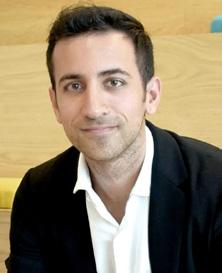
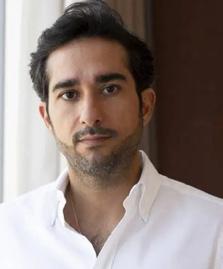
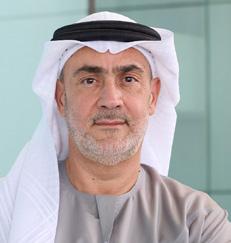
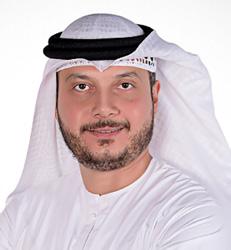
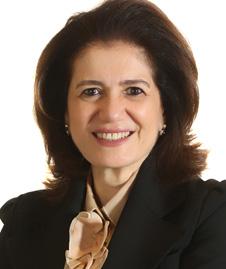
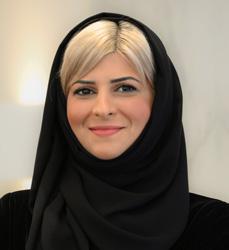
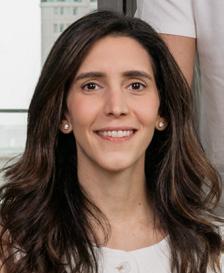
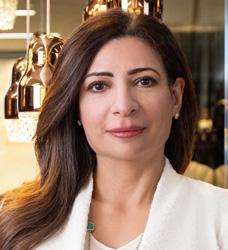
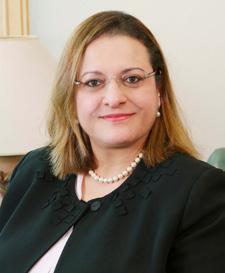
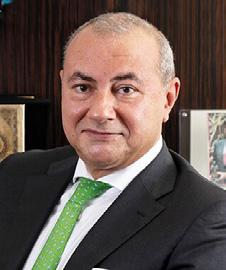
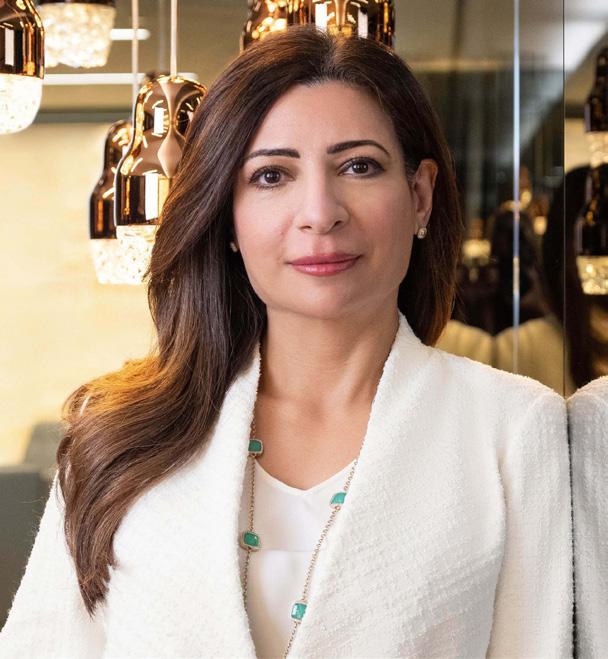
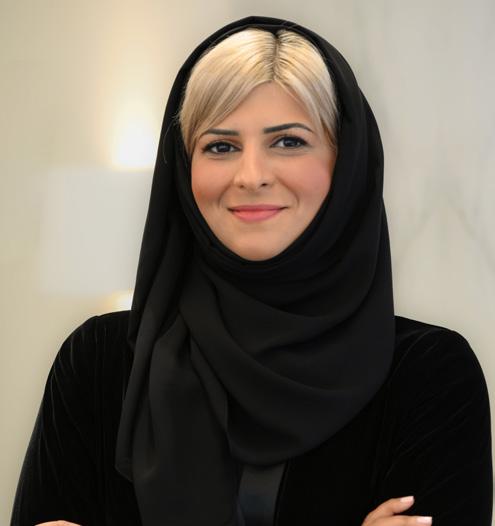
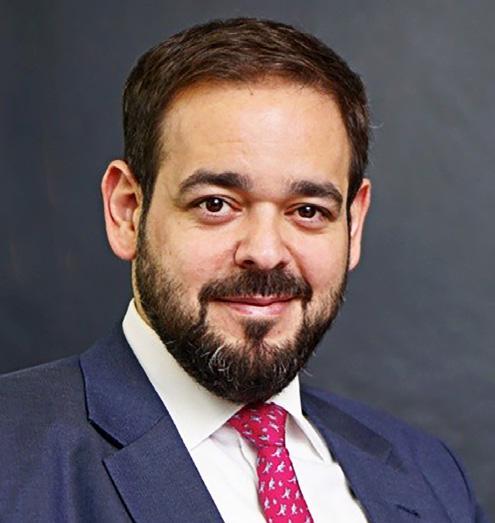
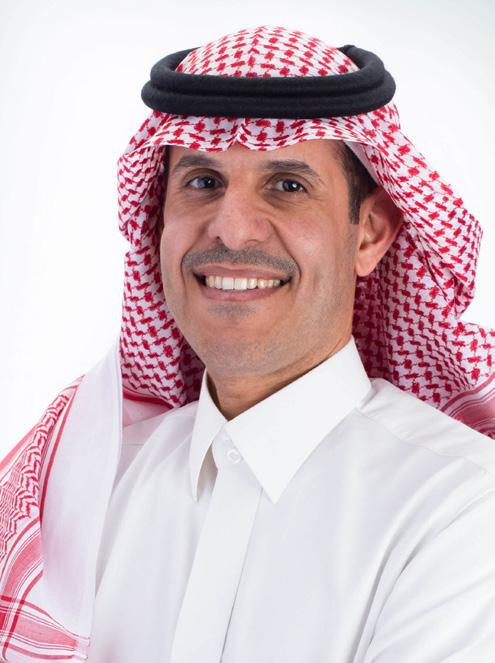
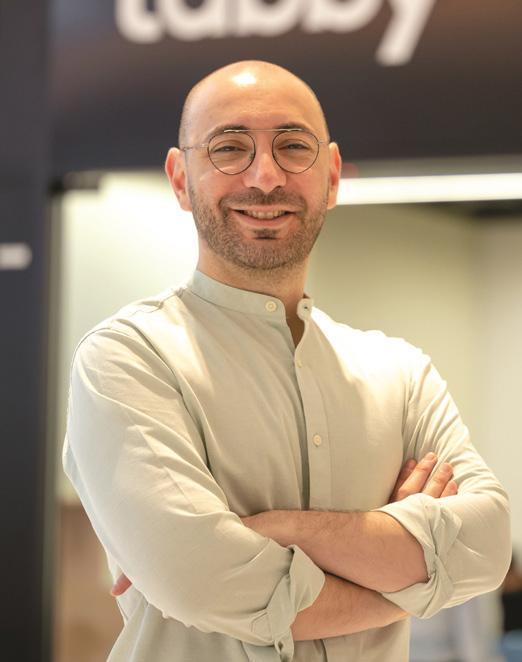
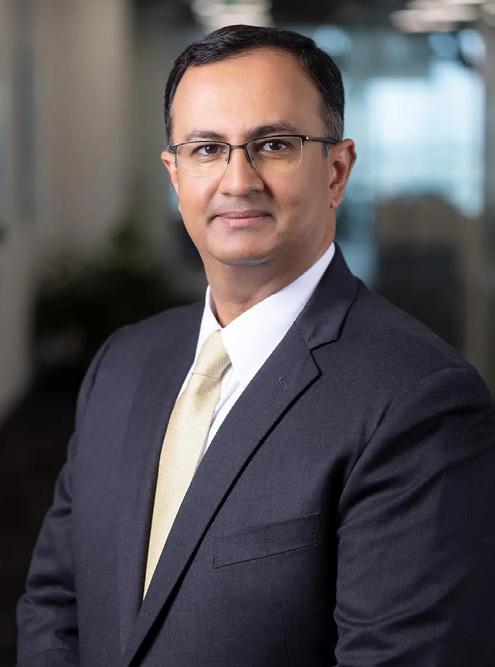
DIRECTOR OF INNOVATION Sarah Saddouk sarah@bncpublishing.net
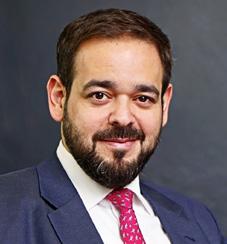
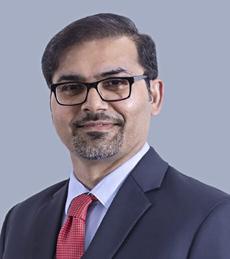
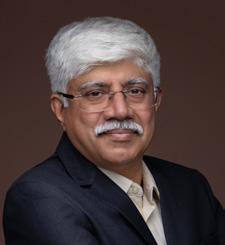
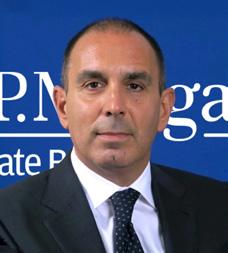
GROUP SALES DIRECTOR – B2B GROUP Joaquim D’Costa jo@bncpublishing.net
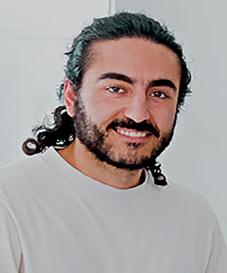
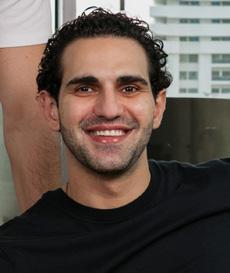
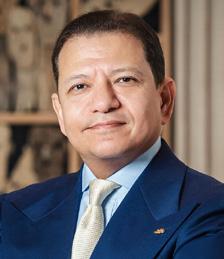
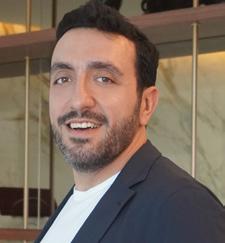
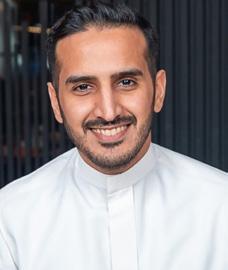
HEAD OF PARTNERSHIPS Samir Glor Samir@bncpublishing.net
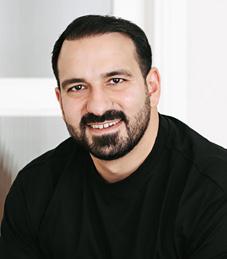
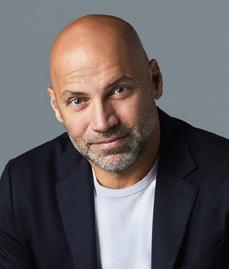
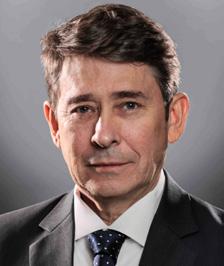
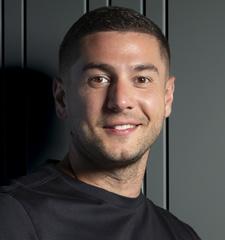
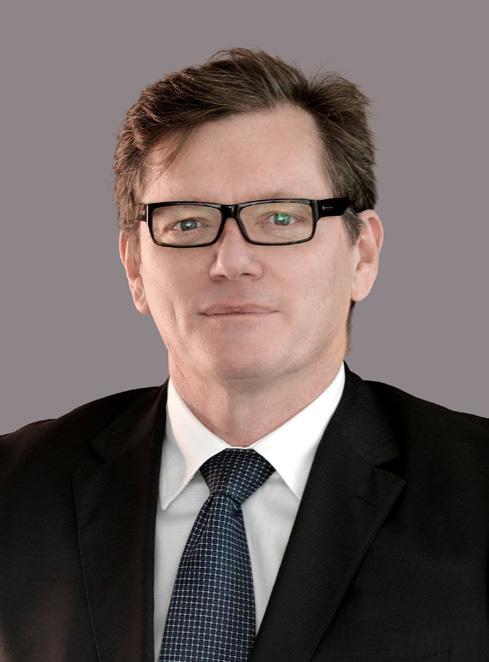
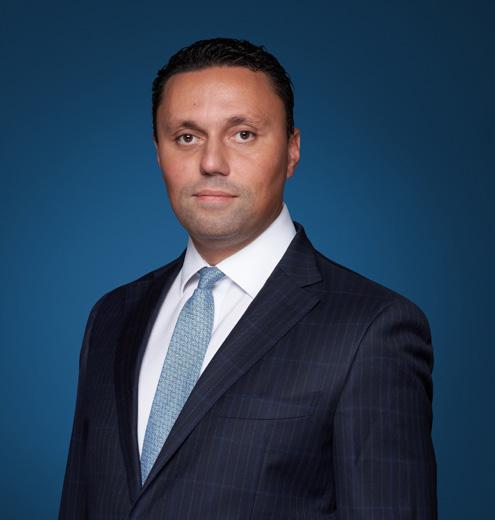
BUSINESS DEVELOPMENT DIRECTOR Andy Soulahian andy.soulahian@bncpublishing.net
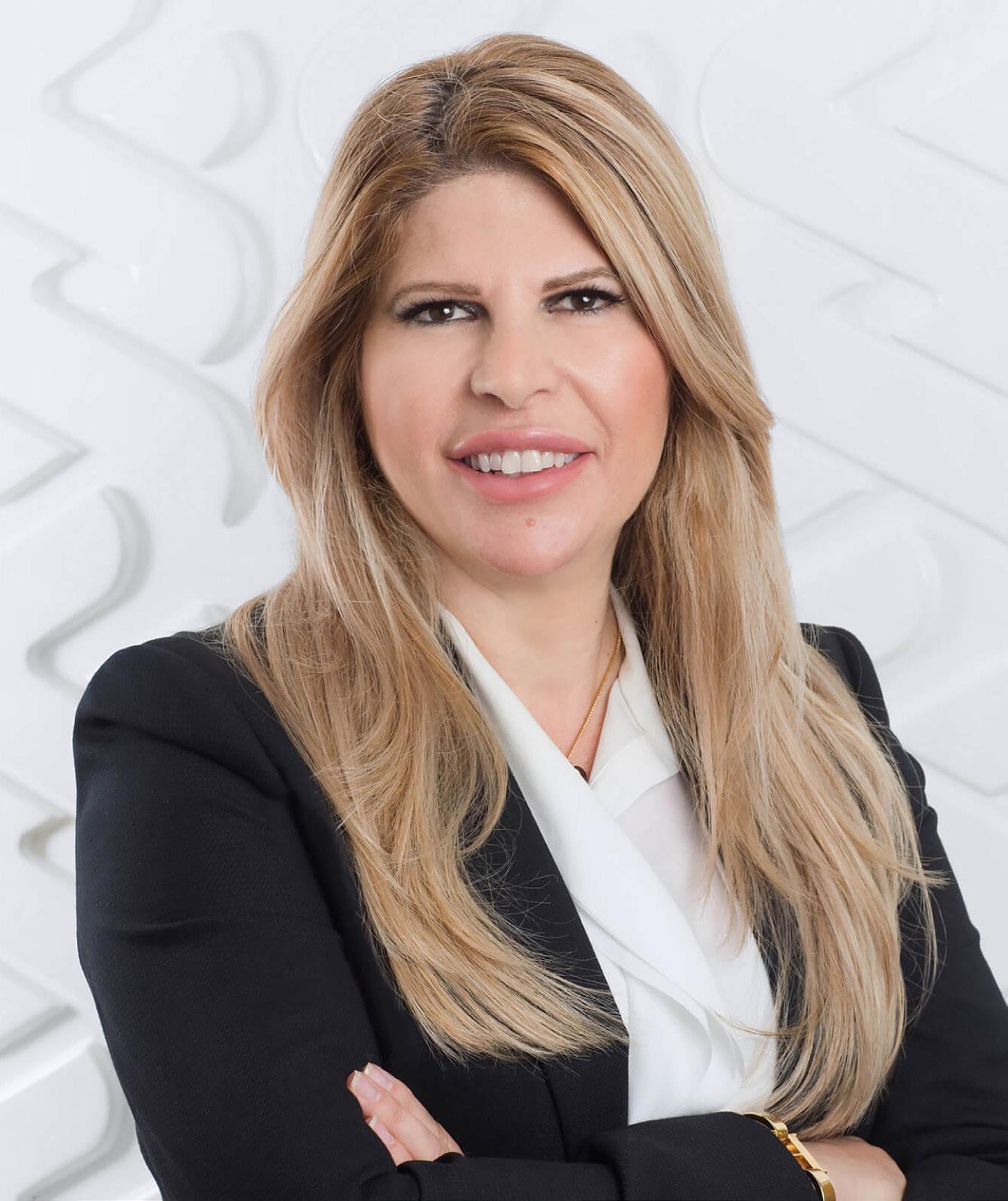
COMMERCIAL LEAD Anna Chipala anna@bncpublishing.net
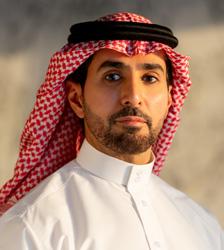
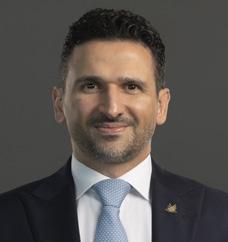
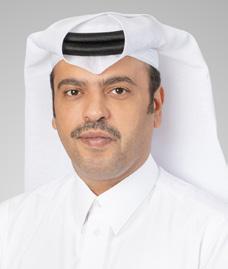
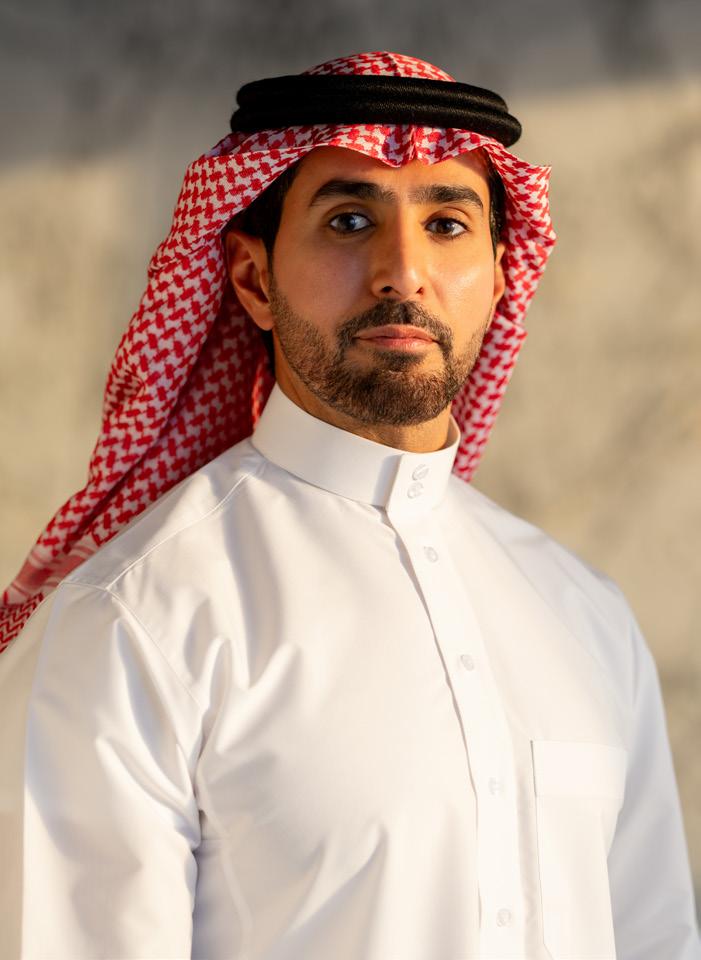
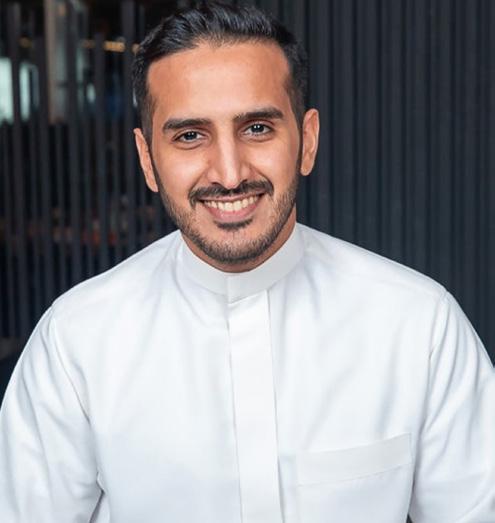
COUNTRY MANAGER KSA Amjad Fakhouri amjad@bncpublishing.net
ART DIRECTOR Simona El Khoury
CREATIVE LEAD Christian Harb chriss@bncpublishing.net
SUBSCRIBE
Contact subscriptions@bncpublishing.net to receive Entrepreneur Middle East every issue
COMMERCIAL ENQUIRIES sales@bncpublishing.net
ENTREPRENEUR.COM Access fresh content daily on our website
FINANCE FRONTIER 2026
Finance Frontiers 2026 celebrates the individuals and institutions shaping the future of finance across the Middle East and North Africa.
From banking and fintech to investment, insurance, capital markets, wealth management, and financial infrastructure, this special edition recognizes the leaders driving innovation, resilience, and economic growth across the region.
Organized by country, this list reflects the diversity and strength of MENA’s financial ecosystem, bringing together the executives, entrepreneurs, and visionaries driving innovation, growth, and transformation across one of the world’s most dynamic economic regions.
ALJAZIRA BANK
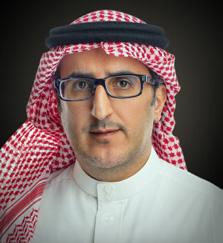
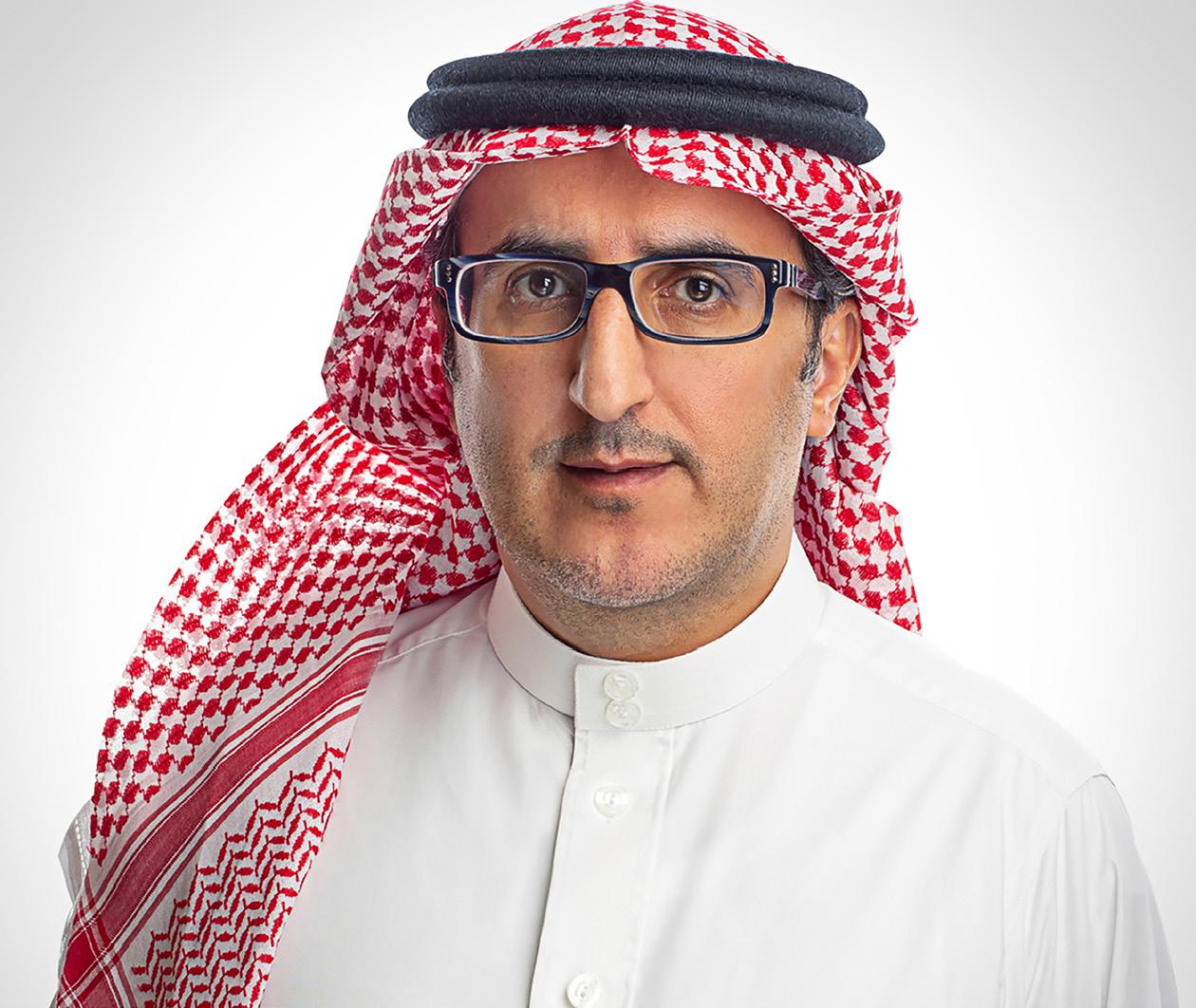
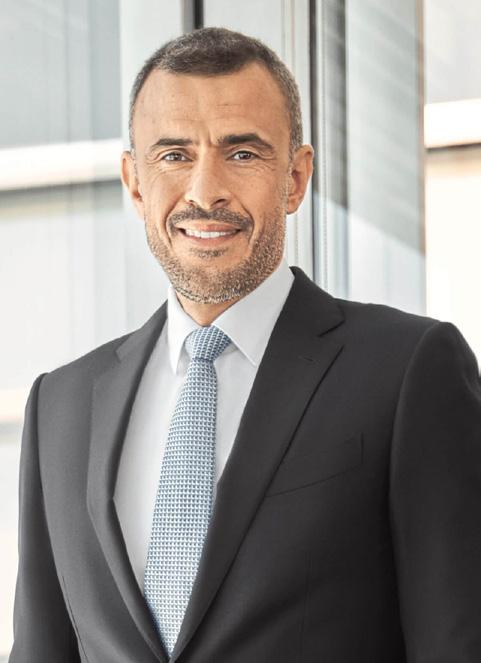
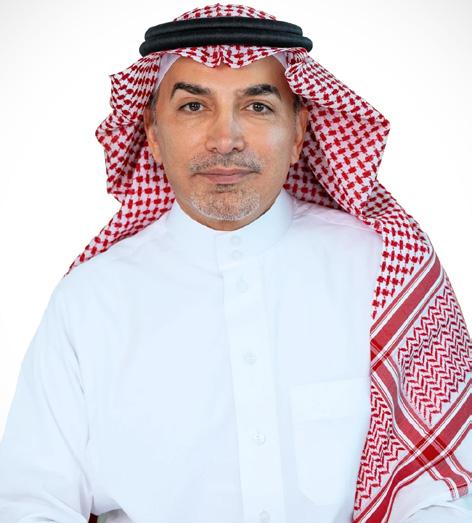
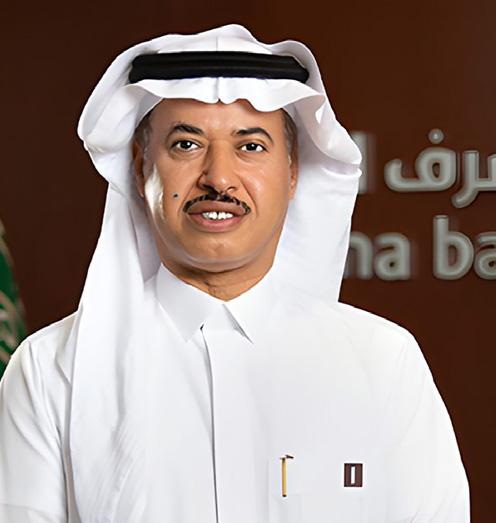
Naif Al Abdulkareem, CEO and Managing Director, Aljazira Bank
Launched in 1975, Aljazira Bank has grown from a traditional Saudi financial institution into one of the Kingdom’s leading Shariah-compliant banks, combining Islamic banking principles with digital innovation to serve individuals, businesses, and investors while supporting Saudi Arabia’s Vision 2030. Helming the bank’s operations is its CEO and Managing Director Naif Al Abdulkareem, who has prioritized Aljazira’s position as a connected ecosystem player by creating value through partnerships, platforms, and integrated experiences. “We are actively collaborating with fintechs, technology providers, and strategic partners to extend our capabilities
www.aljazirabank.com.sa/en-us
beyond core banking, whether in digital payments, wealth solutions, or investment platforms,” he says.
“Our ecosystem strategy is also aligned with our ambition to be the preferred financial partner for affluent customers, offering them seamless access to wealth products and advisory services. This ecosystem approach enables us to meet our clients where they are, embed financial services into broader life and business journeys, and unlock new forms of value creation. Most importantly, we are performing a more active role in the Kingdom’s digital economy, supporting both individual clients and enterprises as they grow and scale.”
Having held his current roles since November 2020, Abdulkareem’s leadership has accelerated Aljazira Bank’s focus on wealth management, digital transformation, and customer-centric banking, alongside strong financial growth — a journey that he believes mirrors the Kingdom’s own journey as a finance hub. “Saudi Arabia’s financial transformation is not simply about adopting new technologies; it is about rethinking the role of banks in a more dynamic, digital economy while preserving the trust that sits at the core of our industry,” Abdulkareem notes. “At Aljazira Bank, we see innovation and trust not as competing priorities, but as mutually reinforcing. Innovation allows us to deliver more transparent, personalized, and efficient experiences, while trust is what gives those innovations meaning and longevity.”
“Our approach is therefore anchored in disciplined innovation, where every advancement, whether digital platforms, fintech partnerships, or new investment solutions, is guided by strong governance, risk management, and a long-term view of value creation,” he elaborates. “This is also reflected in our recent rebranding efforts, which were designed to reinforce our identity as a modern, client-centric institution and to strengthen our position as the bank of choice for affluent customers. This balance ensures that as we evolve, we continue to protect client wealth and contribute to the broader stability of the financial system.”
Indeed, in December 2025, the bank marked a new chapter with the launch of its “Wealth Grows Here” brand identity – a move that reflected its strategic shift toward wealth management, digital-first banking, and a more integrated ecosystem spanning Aljazira Capital and Fawri.
But at the core of the values put in place by Abdulkareem, and the Aljazira culture itself, is a deep alignment with its human assets. “Leadership must be grounded in clarity of purpose, adaptability, and a commitment to people development,” he says. “One of the most essential principles is fostering a culture that embraces change while remaining anchored in strong values. This includes empowering teams to think innovatively, encouraging calculated risk-taking, and investing in continuous learning. Equally important is preparing the next generation of talent, not only with technical skills, but with strategic thinking, resilience, and a deep understanding of the evolving financial landscape. Our rebranding journey has reinforced these principles internally, aligning our teams around a unified vision of becoming the bank of choice for affluent customers and a leader in wealth advisory. As a strong institution, we believe banks are built when people are given both direction and trust to contribute meaningfully to the organization’s long-term vision.”
Unsurprisingly, Abdulkareem holds a staunch belief that Saudi Arabia’s Vision 2030 will continue to reshape not only the country’s economy, but also the role banks play within it. In his view, the next phase of growth will be driven by sectors that demand increasingly sophisticated financial solutions. “First, the expansion of capital markets and investment activity will significantly increase demand for sophisticated financial solutions and advisory services,” he explains. “This aligns directly with our continued leadership in Wealth Management, where affluent clients seek advanced, Shariahcompliant investment opportunities. Second, the rise of SMEs and entrepreneurship is reshaping the economic landscape, requiring more agile financing and banking models. Third, sectors such as tourism, entertainment, technology, and renewable energy are opening new avenues for project financing and strategic investment.”
According to Abdulkareem, the future role of banks is not limited to funding high-growth sectors, but also includes helping businesses unlock new opportunities through capital, strategic insight, and innovation. “At Aljazira Bank, we are strengthening this role through fully digital solutions across retail, corporate, and capital banking, delivering seamless, customer-centric experiences while helping individuals and businesses capitalize on the opportunities created by Vision 2030,” he says.
Drawing on more than two decades in Saudi Arabia’s financial sector, Abdulkareem believes the success of any major transformation ultimately depends on an organization’s culture and its ability to align behind a shared strategic vision. He also notes that his personal definition of success has evolved over the course of his career. “It is about moving from focusing primarily on performance metrics to taking a more holistic view centered on sustainable impact, institutional strength, and people development. Today, success is not only about achieving financial results, but about building an organization that can adapt, endure, and create lasting value for clients, employees, and the broader community.”
When asked about the legacy he hopes to leave behind, his answer extends well beyond financial performance. “For sure, it is trust, transformation, and positive societal impact,” he says. “For the institution, this means building a bank that is resilient, forwardlooking, and recognized for its integrity and innovation. For the industry, it means contributing to the evolution of a more dynamic and inclusive financial ecosystem. And for the communities we serve, it means playing a meaningful role in enabling opportunity, supporting growth, and contributing to the Kingdom’s long-term prosperity.”
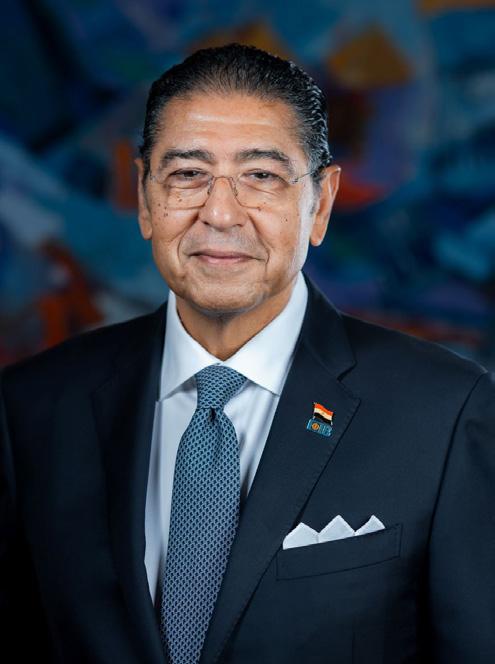
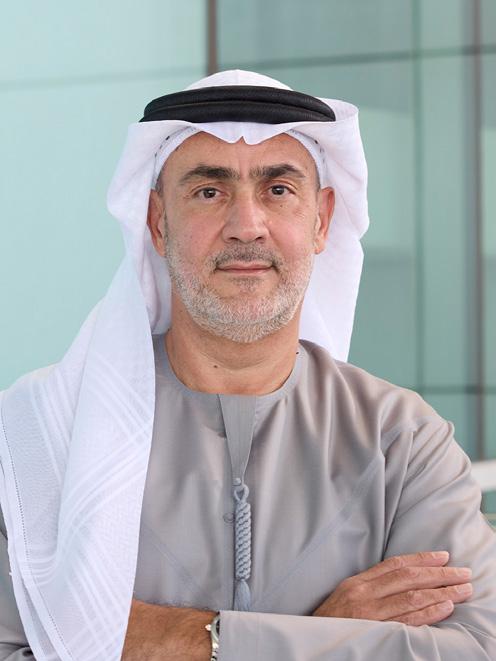
Hisham Ezz Al-Arab, CEO, Commercial International Bank (CIB), Egypt
www.cibeg.com www.efgholding.com
Hisham Ezz Al-Arab was reappointed CEO and Executive Board Member of the Commercial International Bank (CIB)Egypt in 2024, after serving as its Chairman from 2023. Prior to his appointment, Ezz Al-Arab served as an advisor to the Governor of the Central Bank of Egypt in 2022, and founded and chaired HE Advisory in 2020.
He was also a former Chairman and Managing Director of CIB from 2002 to 2020. Before CIB, Ezz Al-Arab held banking roles at Merrill Lynch, Deutsche Bank, and JPMorgan in London. He also serves as Chairman of the Board of Trustees of the CIB Foundation.
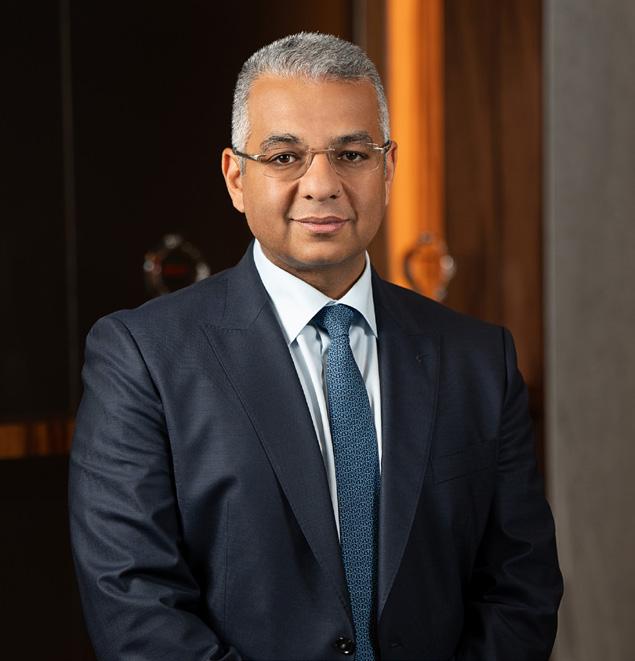
Karim Awad, Group CEO and Chairman of the Executive Committee, EFG Holding
Karim Awad is the Group CEO, Chairman of the Executive Committee, and a board member of EFG Holding. He joined EFG Hermes in 1998 in the investment banking department and became Head of Investment Banking in 2007.
He eventually became the CEO of EFG Hermes in 2012 and Group CEO of EFG Holding in 2013. In 2024, he was chosen as a member of the Egyptian President’s Economic Council, and in 2025 joined the Egyptian Prime Minister’s Macroeconomy Advisory Committee.
Awad holds a Bachelor of Business Administration degree from The American University in Cairo.
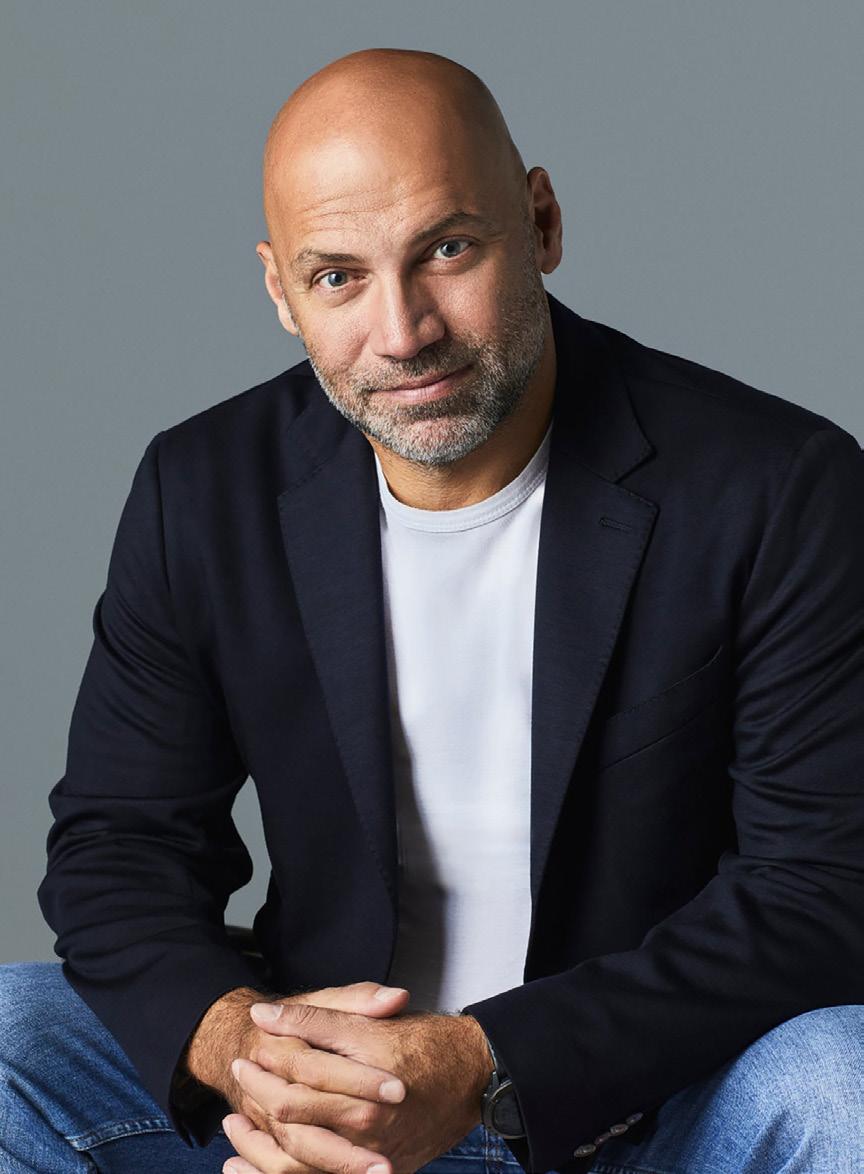
Ala’a Eraiqat, Group CEO, Abu Dhabi Commercial Bank
www.adcb.com
Ala’a Eraiqat has served as Group Chief Executive Officer of ADCB since 2009, leading the bank through a period of sustained growth, digital transformation, and market leadership. With more than three decades of banking experience, he previously held senior roles at leading international financial institutions before joining ADCB in 2004.
Under his leadership, the bank has strengthened its position through a strong focus on customer service, innovation, and operational excellence. In addition to leading ADCB and its subsidiaries, Ala’a serves as Chairman of Al Hilal Bank, ADCB’s Islamic digital retail banking subsidiary, and chairs several of the group’s key executive and credit committees.
Mohamed Abdelbary, Group CEO, Abu Dhabi Islamic Bank
www.adib.ae
Mohamed Abdelbary was appointed Group CEO in October 2024 after serving as Acting Group CEO from March 2024.
Prior to that, he was ADIB’s Group Chief Financial Officer and previously held senior leadership positions at Standard Chartered, Barclays, and Citibank. He has more than 28 years of experience in banking and financial services.
MONTY HOLDING
Mountasser Hachem, Founder and Chairman, Monty Holding
www.montyholding.com
Mountasser Hachem is the founder and Chairman of Monty Holding that includes the neobank and digital wallet MyMonty, the advanced payment gateway and merchant solutions platform serving businesses globally MontyPay, its sister company Monty Finance, and the global leader in SMS messaging, mobile value-added services (VAS) , and mobile financial services Monty Mobile
He launched the neobank to drive financial inclusion, revolutionizing traditional banking while serving the unbanked and underserved populations in Europe, the Middle East, and beyond.
Recently, MyMonty, operating under Monty Finance S.A.L., and MontyPay announced their upcoming relocation to a brandnew headquarters at the seaside of Downtown Beirut in 2026. This state-of-the-art facility will stand as the largest fintech headquarters in Lebanon and the Middle East.
Hachem is confident that Lebanon will remain a land of opportunity and potential. While many organizations have chosen to scale back or relocate operations abroad, Monty Finance S.A.L. and MontyPay continue to invest heavily in talent, technology, and infrastructure within Lebanon.
In 2025, Hachem launched Moya Networks with a vision to disrupt the global telecommunications sector with its AI-first approach to telecom infrastructure. Unlike conventional providers, Moya integrates cutting-edge artificial intelligence and advanced analytics to deliver predictive maintenance that slashes network downtime, smart diagnostics that dramatically reduce operational costs, datadriven network optimization that enhances service quality, and real-time insights that empower strategic decision-making
The company’s comprehensive solution suite encompasses submarine and terrestrial network aggregation, cloud services, and enterprise connectivity. This holistic approach positions Moya not just as a vendor, but a transformative force bridging next-generation technology with real-world telecom challenges.
Shayne Nelson, Group CEO, Emirates NBD
www.emiratesnbd.com/en
Shayne Nelson is a veteran banking executive with more than three decades of leadership experience across retail, corporate, private, and Islamic banking.
He served as Group CEO of Emirates NBD for 12 years, leading one of the Middle East’s largest banking groups through a period of significant growth and transformation.
Nelson currently serves on the boards of several financial institutions, including Emirates Islamic, Emirates NBD Capital, DenizBank, and RBL Bank, and is a member of Mastercard’s Eastern Europe, Middle East, and Africa Advisory Board. Before joining Emirates NBD, he was CEO of Standard Chartered Private Bank in Singapore.
A Graduate Member of the Australian Institute of Company Directors, Nelson is also an Associate Fellow of the Australian Institute of Managers.
Hana Al Rostamani, Group CEO, First Abu Dhabi Bank
www.bankfab.com
Hana Al Rostamani is Group CEO of First Abu Dhabi Bank (FAB), the UAE’s largest bank.
With more than 20 years of experience in banking and financial services, she previously served as Deputy Group CEO and Head of Personal Banking, where she led the transformation of FAB’s consumer banking business with a strong focus on customer experience and digital innovation.
A graduate of George Washington University, Hana has also served on the boards of several leading organizations, including du and Mastercard Advisory. As the only female CEO of a major UAE-headquartered listed bank, she is widely recognized for her visionary leadership and commitment to innovation.
GEIDEA
Abdullah Faisal Al Othman, Founder and Chairman, Geidea
“I would like my legacy to be one that expands economic agency by enabling more people and businesses to participate, make decisions, and pursue opportunities with confidence,” says Abdullah Al-Othman, founder and chairman of Geidea and AO Holdings, and co-founder of United Lemar Company Ltd.
With investments spanning Saudi Arabia, the UAE, Bahrain, the UK, Austria, and India, Al-Othman has built a diversified portfolio guided by the conviction that capital should generate both commercial value and broader economic impact. That same philosophy shaped the growth of Geidea into one of Saudi Arabia’s and the region’s leading payments companies. Yet, for Al-Othman, market leadership is only one milestone. His long-term vision is to further
expand Geidea’s global footprint and establish it among the world’s leading financial technology companies.
“I would like Geidea to be remembered not only for the technology it built, but for the barriers it helped remove,” he adds.
“This includes the role that we played in accelerating cashless payments which became especially important during COVID-19, when safe, reliable, and accessible payment solutions were critical to merchants, consumers, and the wider economy. Helping businesses continue to operate during such a challenging period is one of the contributions that reflects the real value of financial technology.
“However, one of the most meaningful shifts in our journey has been moving from a POS-led business to a broader payments ecosystem that supports merchants across more parts of their daily operations. That evolution reflects a simple belief: the best financial technology should make complexity easier for customers.
But Al-Othman’s ultimate ambition extends beyond building successful businesses; it is to contribute meaningfully to Saudi Arabia’s longterm transformation.
“For the wider industry, I hope Geidea’s journey demonstrates that companies built in Saudi Arabia can contribute not only by adopting global innovation, but by originating ideas, building regional leadership, and shaping the future of finance beyond the Kingdom,” he says.
A firm believer in the ambitions of Saudi Vision 2030, Al-Othman sees entrepreneurs and SMEs as the driving force behind a more diversified, innovation-led economy. He also believes Saudi Arabia’s rapid evolution is creating unprecedented possibilities for those willing to embrace change, maintaining that with the right mindset, determination, and vision, anyone can thrive in the Kingdom’s new era of growth.
“Saudi Arabia has an opportunity not simply to modernize an existing financial system, but to help define what a modern financial system should become,” he says.
On that journey, Al-Othman does not see innovation and stability as competing forces. Rather, he believes the most valuable innovation is that which reinforces stability by making financial services more resilient, transparent, accessible, and responsive to the needs of the wider economy. For entrepreneurs, however, the real challenge lies in separating novelty from meaningful progress.
“A technology may be new, but unless it solves a genuine problem, expands economic participation, or improves financial decision-making, it will not create lasting value,” he explains.
“Saudi Arabia’s financial transformation demonstrates that innovation and trust can advance together. The strongest financial ecosystems are those where technological progress is matched by sound governance, resilient infrastructure, and public confidence.
“As finance becomes increasingly digital, embedded, and intelligent, trust must be built into every layer of the system. It cannot be treated as something added after a product has been developed. Cybersecurity, data governance, operational resilience, transparency, and human accountability will become even more important as financial services become faster and more seamlessly integrated into everyday life.”
This philosophy is reflected in the way Al-Othman has positioned Geidea at the heart of the real economy. He believes payments are far more than transactions; they are a vital link connecting merchants, financial institutions, and consumers. When those connections work seamlessly, he adds, businesses operate more efficiently, customers gain easier access to financial services, and capital flows through the economy with greater speed and efficiency. “The institutions that will lead the future of finance will not necessarily be those that introduce every new technology first,” Al-Othman says. “They will be the ones that continue to earn trust as the pace of change accelerates. The future will not be built by choosing between speed and trust. It will be built by designing speed that deserves trust.”
Al-Othman has complemented his entrepreneurial experience with executive education at leading international institutions, including the Business Leadership Program at Boeing International Headquarters in St. Louis, the United States, and the Entrepreneurship Programme at the University of Oxford in the United Kingdom. He is also a member of the Business Entrepreneurs Committee at the Chamber of Commerce, holds a bachelor’s degree in Information Technology from King Saud University, and earned an MBA from Alfaisal University.
Yet, Al-Othman believes some of the most important lessons in leadership cannot be taught in a classroom. They are learned through experience. One of the defining lessons of his career is that growth rarely fixes weaknesses; instead, it reveals and magnifies them. “When an organization is small, weaknesses in culture, governance, communication, decision-making, or customer experience can appear manageable. As the organization grows, those same weaknesses become far more significant,” he explains.
“I wish I had understood earlier how important it is to build the right foundations before growth makes them more difficult to change.
“Experience has also taught me that leadership is defined as much by what you decide not to pursue as by what you choose to pursue. Opportunities will always exceed an organization’s capacity. Focus therefore becomes a form of discipline.”
Reiterating his belief that success is measured not by the size of a company, but by the opportunities it creates for others, Al-Othman emphasizes the importance of investing in people and building institutions that stand the test of time, believing these are the foundations of lasting progress.
“We often celebrate what companies build, but the greatest legacy is what they enable others to build. If, years from now, more businesses have been created, more jobs have been supported, and more people have had the opportunity to realize their ambitions because of the foundations we helped put in place, then that will be the achievement I value most. The best legacy is not a monument to one person or one company—it is the technological, institutional, and human infrastructure that empowers generations to achieve more,” Al-Othman concludes.
STANDARD CHARTERED
Rola Abu Manneh, Chief Executive Officer, UAE, Middle East, and Pakistan, Standard Chartered www.sc.com
Rola Abu Manneh is the Chief Executive Officer of Standard Chartered in the UAE, Middle East, and Pakistan. She is the first Emirati woman to head an international bank in the UAE and the wider region and have successfully managed to transform the UAE business into one of the top three markets for the Standard Chartered Group.
In early 2023, Rola joined as a Director on the Boards of both Standard Chartered (Pakistan) Limited and Standard Chartered Uganda. Rola is also on the
Boards of MyZoi and Appro, digital ventures through the Bank’s subsidiary, SC Ventures. In 2021, Rola became a member of the Board of Directors of Make-A-Wish Foundation UAE and the Dubai International Chamber, whose mission is to represent, support and protect the interests of the business community in Dubai.
Over the years, Rola has championed women empowerment and female entrepreneurship through different initiatives and is committed to supporting the wider community by providing university students with mentorship programmes, in collaboration with leading partners, which aim to prepare participants with the necessary skills to succeed in their chosen professions. Rola is a member of the Global Council for Sustainable Development Goal 5 - Gender Equality (‘SDG5’); a UAE delegate in G20Empower; and a member of the NYUAD Vice Chancellor’s Leadership Council.
In 2024, as a testament to her efforts, Rola was recognised as one of the Top 100 Executive Management leaders heading global corporate powerhouses in the MENA region by Forbes Middle East’s Global Meets local. She was also listed as one of the most powerful Emirati businesswomen, leading the Forbes Middle East 2024 list of the most powerful Arab businesswomen, in addition to the Top GCC Banker leaders power list by Finance ME.
Rola was also featured in the prestigious Arabian Business Power of Finance list and the ‘Top 100 Most Influential Arabs’ lists for three consecutive years. In 2023 and 2022 Rola was recognised as ‘one of the most powerful and influential ‘Women Business Leaders’ in the region as well as the top 50 most inspiring leaders by Arabian Business. In 2021, Rola was awarded Banking Leader of the Year at the Gulf Business Awards and for the past five consecutive years, she has been featured as one of the ‘Middle East’s Power Businesswomen’ by Forbes Middle East.
Rola completed her studies at the University of London - Royal Holloway and Bedford New College and holds a Bachelor of Science in Mathematics and Operational Research. She is fluent in Arabic and English and is married with two children.
XTB MENA
Achraf Drid, CEO, XTB MENA
www.xtb.com/sca-en
The Middle East is evolving from a source of capital into one of the world’s fastestgrowing investment markets, fueled by smartphone penetration of more than 90% across much of the GCC, millions of first-time investors using digital platforms, and government initiatives to boost participation in capital markets as part of broader economic diversification efforts.
As a result, global fintech firms are increasingly positioning the region as a key growth market.
Among them is XTB, a Poland-founded investment platform listed on the Warsaw Stock Exchange that has grown into one of Europe’s largest brokerages since its launch in 2005. Today, the company serves more than 1.7 million clients across multiple international markets, offering access to more than 6,300 financial instruments, including stocks, ETFs, forex, commodities, indices, and CFDs, alongside market insights, educational content, and multilingual customer support.
Its first Middle East entity was established in Dubai in 2021, and the company strengthened its regional presence in 2025 with the opening of its new office at Dubai World Trade Centre’s One Central. The expansion was supported by the renewal of the company’s Dubai Financial Services Authority (DFSA) license and reflects its long-term commitment to the UAE’s evolving regulatory and investment landscape.
Steering XTB’s Middle East expansion is CEO Achraf Drid, who has focused on establishing the company’s regional presence by building local talent, strengthening regulatory and institutional partnerships, and expanding across the GCC.
Drid believes today’s MENA investors are more informed, connected, and
ambitious than ever before. Once seen as the domain of seasoned market participants, investing is now attracting a new generation of young professionals, entrepreneurs, and business owners looking to build long-term wealth through global markets.
“The biggest transformation has been in investors’ mindset. Investors are no longer asking, ‘How do I trade?’ They are asking, ‘How do I build a portfolio? How do I diversify internationally? How do I make better longterm financial decisions?’ That shift is incredibly encouraging because it reflects financial maturity rather than short-term speculation,” he explains.
According to Drid, XTB’s role is to support the evolution of investing in the region by combining technology, education, and a regulated investment environment. He believes the company’s competitive advantage no longer lies in offering the widest selection of financial instruments, but in helping clients make better-informed investment decisions through education, transparency, high-quality execution, and disciplined risk management.
“Access is an incredible achievement, but access alone is not enough,” he says. “Giving someone the ability to invest is only the first step. Helping them understand risk, diversification and longterm investing is where real value is created. As an industry, we still have significant work to do. Financial literacy should evolve alongside technology.
“For example, artificial intelligence will enhance the investing experience, but it should support investor decision-making rather than replace it.”
“That is why trust is built when clients understand what they are investing in, have transparent information and can rely on the platform during both calm and volatile markets.
“The companies that will define the next decade of investing are those that combine innovation with responsibility.”
That philosophy also shapes Drid’s view of regulation, as he considers it an essential driver of trust and long-term growth. “I have always believed that regulation is an advantage, not an obstacle,” he says. “Strong regulation creates confidence among investors, partners, and institutions. Sustainable growth comes from building trust rather than chasing short-term opportunities.
“That is exactly why the UAE has created one of the world’s most attractive environments for regulated fintech companies by combining innovation with regulatory clarity.”
Looking ahead, Drid believes the future of investing will be defined not by the number of products a platform offers, but by its ability to help clients navigate increasingly complex markets with confidence. “The future belongs to platforms that combine world-class technology with education, transparency, and a long-term commitment to helping clients build wealth responsibly,” he says.
As a final piece of advice to investors across the region, Drid encourages them to look beyond short-term market movements and focus instead on building lasting wealth through discipline and patience. “If I had to choose one quality regional investors need more of, it would be long-term thinking. Markets create opportunities every day, but wealth is built through discipline, consistency, and patience—not through chasing the next trend.”
“Technology can open the door to investing, but trust is what keeps clients walking through it. Our mission is not simply to provide access to financial markets, it is to help people become more confident, disciplined and informed investors. If we achieve that, growth follows naturally.
AL RAMZ
Haisam Odeimeh, Chief Executive Officer - FS, Al Ramz www.alramz.ae
When Haisam Odeimeh joined Al Ramz as Chief Financial Officer in 2017, he became part of a UAE financial institution with an established legacy spanning nearly two decades. Today, as Group CEO – Financial Services, he is leading the firm’s next phase of growth by combining its traditional strengths with a strong focus on fintech-driven innovation.
Against the backdrop of the GCC’s accelerating digital and economic transformation, Odeimeh says the challenge lies in balancing rapid
innovation with long-term stability. “In financial services, trust is the product,” he emphasizes. “Technology only matters if it strengthens that trust, improves access, reduces friction, or creates better outcomes for clients. As leaders, our role is to move fast without becoming reckless. That means building strong governance around innovation, testing ideas properly, investing in infrastructure, and making sure the client experience improves without compromising controls. I often say that in finance, you cannot “move fast and break things” unless you are very clear about whose things you are breaking. We prefer to move fast and build things that last.”
As such, Odeimeh believes unlocking the full potential of the finance industry lies in shifting from transactional services to intelligent, integrated financial platforms. “Clients no longer want isolated products; they want access, insight, execution, reporting, and advice in one connected experience,” he says. “That requires firms like Al Ramz to rethink the operating model: stronger data architecture, digital onboarding, automated workflows, better client intelligence and more seamless integration between trading, advisory and reporting. The hype is usually about the tool. The real value is in redesigning the machinery behind the tool. A chatbot is interesting; a fully connected financial institution that knows how to serve clients faster, safer, and more intelligently is transformational.”
In enabling this transformation, Odeimeh believes artificial intelligence (AI) will be instrumental—but he stresses such progress can be fully realized only when paired with human judgment and responsible leadership. “AI will become very good at processing information, detecting patterns, automating workflows and improving decision support,” he says. “That is a major opportunity for finance. But human leadership still matters most where judgment, accountability, ethics and context are required. Markets are not just mathematical systems; they are human systems. Fear, confidence, incentives, politics, reputation and timing all matter. AI can help identify what is happening.
Leaders still need to decide what it means and what to do about it. That requires experience, instinct and sometimes the courage to act when the model is useful but not complete. The future is not humans versus machines. It is humans with better machines, hopefully making fewer expensive mistakes.”
Odeimeh, who, before joining Al Ramz, has also held senior leadership roles at Al Hilal Bank and KPMG Lower Gulf knows a thing or two about what it takes to be an effective leader. “Five years ago, leadership was often about having the clearest plan,” he says. “Today, it is just as much about building teams that can adjust the plan without losing discipline. In markets, you need analytical people because numbers matter. But you also need adaptable people because numbers do not always behave politely. My leadership philosophy has evolved toward creating teams that combine intellectual honesty with speed. I want people who can challenge assumptions, change their minds when the facts change and still execute with confidence. The best teams today are not the ones that pretend to know everything. They are the ones that learn faster than the environment changes. That is not easy, but it is where real competitive advantage comes from.”
A Master’s degree holder in Banking and Finance from Sorbonne University, Odeimeh also has a Bachelor’s degree in Accounting from the University of Toledo, and is a U.S. Certified Public Accountant (CPA). Under his leadership, Al Ramz has expanded its digital investment ecosystem with an AI-powered trading platform offering access to UAE and U.S. markets, robo-advisory, copy trading, realtime market data, and streamlined digital onboarding, reinforcing its position as one of the UAE’s leading financial services firms.
But he is also quick to attribute the company’s success to the nation it is headquartered in. “The UAE ecosystem gives companies permission to think bigger,” Odeimeh says. “That is extremely powerful. The regulatory environment, government digital infrastructure, investor appetite and national ambition all create a setting where financial institutions are encouraged to modernize, not merely maintain. Initiatives around digital identity, open infrastructure,
market development and capital market reform have allowed firms like Al Ramz to move faster and rethink how financial services should be delivered. What is unique about the UAE is that ambition is not abstract. It is translated into policy, infrastructure, platforms and execution. For companies operating here, that creates both an opportunity and a responsibility. The opportunity is to build faster. The responsibility is to build properly.”
Having led his company through the geopolitical crisis that took place in early 2026, and continues to have a ripple effect across businesses in the region, Odeimeh notes that periods of market uncertainty often provide the clearest lessons for both institutions and investors alike. “Recent market volatility reminded us that liquidity, confidence and sentiment can shift very quickly, sometimes faster than fundamentals,” he says. “In those periods, the instinct may be to pause, but the better response is to sharpen your focus. For us, uncertainty forced a closer look at where we allocate attention, capital and technology. It pushed us to become more disciplined in reading flows, understanding client behavior and separating short-term noise from real structural movement.”
“What it revealed about the organization was encouraging: resilience is not created during volatility; it is revealed by it,” Odeimeh continues. “We saw our teams become more focused, more collaborative and more practical. Markets have a habit of removing unnecessary decoration from strategy. What remains is usually the truth.”
With a strong company culture in place, and a clear-cut vision in mind for Al Ramz, Odeimeh believes the evolution of financial services is only just beginning. “By 2030, financial companies will operate with far more automation, personalization and integration than they do today,” he declares. “Client onboarding, reporting, portfolio analytics, compliance monitoring and execution workflows will become far more connected. Financial institutions will need to become technologydriven organizations with strong regulatory and risk foundations, not traditional institutions with technology added on top. Companies will compete on intelligence, responsiveness, trust and experience. But one thing will not change: clients will still want to know that someone responsible is thinking carefully about their money. Technology will transform finance, but trust will still be the currency that matters most.”
DUBAI ISLAMIC BANK
Chilwan, Group CEO, Dubai Islamic Bank
www.dib.ae
Dr. Adnan Chilwan is one of the world’s leading figures in Islamic banking, with nearly three decades of experience spanning both conventional and Sharia-compliant finance. As Group Chief Executive Officer of Dubai Islamic Bank (DIB), the world’s first Islamic bank and the UAE’s largest Islamic financial institution, he has played a defining role in expanding the reach and global credibility of Islamic finance.
Today, Dr. Chilwan leads an institution with assets exceeding US$106 billion, a market capitalization of more than US$18 billion, and a workforce of over 10,000 employees. Under his leadership, DIB has strengthened its position as a global Islamic banking leader while expanding its international footprint and driving innovation across its operations.
A strong advocate for integrating Islamic finance into the global financial system, Dr. Chilwan has consistently championed innovation that combines modern banking practices with Sharia principles. His leadership has helped position Islamic banking as a competitive, resilient, and increasingly mainstream component of the international financial landscape.
His contributions have earned widespread industry recognition. Entrepreneur Middle East named him among its 33 Indian Visionaries in 2025, while Forbes Middle East included him among the Top 100 CEOs in the Middle East in both 2023 and 2024. He was also recognized among the region’s 100 Most Influential Sustainability Leaders in 2023, received the Banker of the Year award at the MEA Finance Awards in 2022, and was honored with the Lifetime Achievement Award at the same awards in 2021.
Beyond DIB, Dr. Chilwan serves on the boards of several strategic subsidiaries and investments, including Noor Bank, Deyaar PJSC, Liquidity Management Centre, and the International Islamic Financial Market. He also chairs the board in Kenya, where he supports
the growth of Islamic finance and advances financial inclusion across emerging markets.
Widely regarded as a thought leader, Dr. Chilwan works closely with governments, regulators, academic institutions, and industry organizations to help shape the future of Islamic finance. His strategic vision continues to strengthen the industry’s role within the global financial system while promoting sustainable economic development.
Dr. Chilwan holds a PhD, an MBA in Marketing, and is a Certified Islamic Banker (CeIB), reflecting his commitment to continuous learning and professional excellence. Outside the boardroom, he is an avid sports enthusiast with a particular passion for cricket, bringing the same discipline and long-term perspective to his personal interests as he does to his leadership.
Adnan
Waleed Al Mogbel, Managing Director and CEO, Al Rajhi Bank
www.alrajhibank.com.sa
Waleed Abdullah Al-Mogbel is the Managing Director and CEO of Al Rajhi Bank, serving as CEO since 2020 and Managing Director since 2022. He is also Chairman of Emkan Finance, Neoleap, Tanfeeth, and EJADA Systems, and a Board Member of Takaful Al Rajhi. With more than 24 years of experience in banking, finance, auditing, taxation, and financial consulting, he holds a PhD in Auditing from Cardiff University, a Master’s degree in Finance from the University of Southampton, and a Bachelor’s degree in Accounting from King Saud University. Under his leadership, Al Rajhi Bank reported US$282.5 billion in assets and US$4.9 billion in net income in the first nine months of 2025. Since 2023, the bank has issued US$4.5 billion in sustainable sukuk to support renewable energy and social projects.
Nadir S. Al Koraya, President and CEO, Riyad Bank
www.riyadbank.com
Nadir Al-Koraya is the CEO of Riyad Bank, a position he has held since 2024. He previously served as Chief of Treasury and Investment at Riyad Bank after spending more than 20 years in treasury leadership roles at Samba Financial Group. He is also Chairman of Jeel Digital Innovation and 1957 Ventures Fund, a Board Member of Riyad Capital, and a member of Mastercard’s Advisory Council for the Middle East and Africa. He holds an MBA from California State University and a Bachelor’s degree in Civil Engineering. Under his leadership, Riyad Bank reported total assets of US$130.9 billion and operating income of US$2.4 billion in H1 2025. The bank operates across Saudi Arabia, Singapore, the U.K., and the U.S., and launched its Google Pay digital wallet service in Saudi Arabia in 2025.
Shamsa Al Falasi, CEO, Citi Bank - UAE
www.citigroup.com
Shamsa Al Falasi is CEO of Citibank, N.A. UAE Onshore Branch and Citi Country Officer for the UAE. She made history as the first Emirati woman to lead Citi’s operations in the country.
Since joining Citigroup as a graduate trainee in 2004, she has built more than two decades of international banking experience, holding leadership roles across Dublin, London, São Paulo, and the UAE. Before becoming CEO, she led Citi’s Global Subsidiaries Group for the UAE, GCC, and Iraq.
Al Falasi also serves on the boards of AmCham Dubai and the Dubai International Chamber, supporting business and economic development.
GLOBAL SOFTWARE SOLUTIONS GROUP
Mahmoud Abu Ebeid, Co-founder and CEO, Global Software Solutions Group www.gsstechgroup.com
Mahmoud Abu Ebeid’s approach to financial technology is shaped by his background in engineering: an emphasis on systems, structure, and long-term foundations.
A civil engineering graduate of the American University of Sharjah, Abu Ebeid spent the early part of his career working in a field where complex projects required careful planning and coordination, which later influenced how he viewed technology’s role in finance. Mahmoud has also pursued executive courses at Harvard Business School, further strengthening his leadership philosophy and global perspective on innovation, governance,and sustainable growth. He has also completed the Fintech Course from Harvard VPAL
In 2021, he left engineering to co-found Global Software Solutions Group (GSS Group), a UAEheadquartered enterprise solution provider in the banking and financial services, working on areas including digital banking, payment modernization, Open Finance, artificial intelligence (AI), and cloud transformation. Today, the company works with 25 financial institutions and supports millions of financial transactions daily across the UAE.
As CEO and co-founder of GSS Group, Abu Ebeid believes leadership in finance today is no longer about simply managing change, but about anticipating and shaping it. As technology reshapes the industry, he says financial institutions are already competing on speed, intelligence, trust, and the ability to innovate continuously.
“I believe technology has fundamentally changed the role of leadership. Artificial intelligence, Open Finance, real-time payments, and cloud technologies are not simply digital initiatives; they are redefining how economies function and how value is created. Yet, despite all this innovation, one principle remains unchanged: finance is built on trust,” he stresses.
“As leaders, our responsibility is to ensure that innovation strengthens trust rather than compromises it. That means combining technological ambition with strong governance, regulatory discipline, and an unwavering commitment to customer confidence,” Abu Ebeid adds. “Every platform we build, every financial institution we support, and every innovation we introduce is guided by a single philosophy:
technology should make finance more inclusive, more intelligent, more resilient, and ultimately more human.”
While technology is changing how financial institutions deliver services, Abu Ebeid believes the process cannot come at the expense of the trust built over decades. He argues that the challenge for financial leaders is finding a balance between adopting new capabilities and maintaining the systems that customers and regulators rely on.
“Financial institutions have earned public trust over decades, and that trust cannot be sacrificed in the pursuit of speed. Equally, institutions that fail to innovate risk becoming irrelevant. Our role is to help bridge these two realities,” he explains. “At GSS Group, we modernize financial institutions without disrupting the foundations that make them resilient.”
Rather than replacing existing systems entirely, Abu Ebeid says successful transformation requires integrating new technologies with existing operations. “Our experience supporting more than 25 financial institutions has demonstrated that successful transformation is not about replacing legacy systems overnight. It is about creating an intelligent evolution where innovation integrates seamlessly with existing operations while improving efficiency, customer experience, and long-term competitiveness.”
Beyond technology, he also points to talent as a critical part of transformation. For Abu Ebeid, the success of digital initiatives depends not only on the platforms being built, but also on the engineers, specialists and teams responsible for implementing them.
“Technology alone does not transform organizations,” he emphasizes. “People do.”
“By bringing together world-class engineers, architects, and domain experts, we help our clients accelerate innovation while maintaining the confidence of regulators, customers, and shareholders,” he says.
GSS Group’s approach is built on three pillars: diversification, talent development, and disciplined execution. For Abu Ebeid, these areas are essential
to building a company that can adapt to market changes while maintaining long-term growth.
Since its establishment, GSS Group has also been involved in several initiatives supporting the UAE’s financial infrastructure, including the country’s National Payment Systems Strategy (NPSS), a roadmap to modernize the country’s payment infrastructure, and the Central Bank of the UAE’s Financial Infrastructure Transformation (FIT) Program.
“We are privileged to work alongside the Central Bank of the UAE and leading financial institutions and national initiatives across the UAE, contributing to an ecosystem that is becoming a global benchmark for innovation,” Abu Ebeid says. “What makes the region exceptional is not only its investment in technology but also its willingness to embrace collaboration between regulators, financial institutions, fintech innovators, and technology partners.”
In terms of capital, Abu Ebeid believes the focus has shifted from simply moving money to improving
how it moves. Technology now determines how efficiently, securely and intelligently financial resources can flow across markets and institutions.
“Capital has always powered economic growth. Today, technology determines how efficiently, securely and intelligently that capital moves,” Abu Ebeid says.
He believes the UAE’s financial ecosystem has evovled from collaboration between regulators, banks, fintech companies and technology providers, with continued investment in digital infrastructure helping create an environment where financial innovation can develop alongside strong regulatory standards.
“Our ambition extends beyond delivering successful projects. We want to contribute to a financial ecosystem that is more connected, more inclusive, and better prepared for the future,” he states. “As a national UAE-based company, we also see it as our responsibility to develop local talent, support national priorities, and help position the region as a global center for financial innovation.”
“We are not simply building technology for the financial sector, we are helping build the future infrastructure of trust, opportunity, and economic growth,” he adds.
Looking ahead, Abu Ebeid expects the next phase of financial services to be shaped by technologies such as AI, Open Finance, real-time payments, and embedded finance. Together, he says, these developments will create a more connected financial ecosystem where services become increasingly seamless and personalized.
“We are committed to building the platforms, talent, and capabilities that allow financial institutions to innovate faster, operate smarter, and compete confidently in an increasingly digital global economy,” he declares. “The future of finance will not be defined by individual institutions, it will be defined by connected ecosystems. That is where the greatest opportunities lie.”
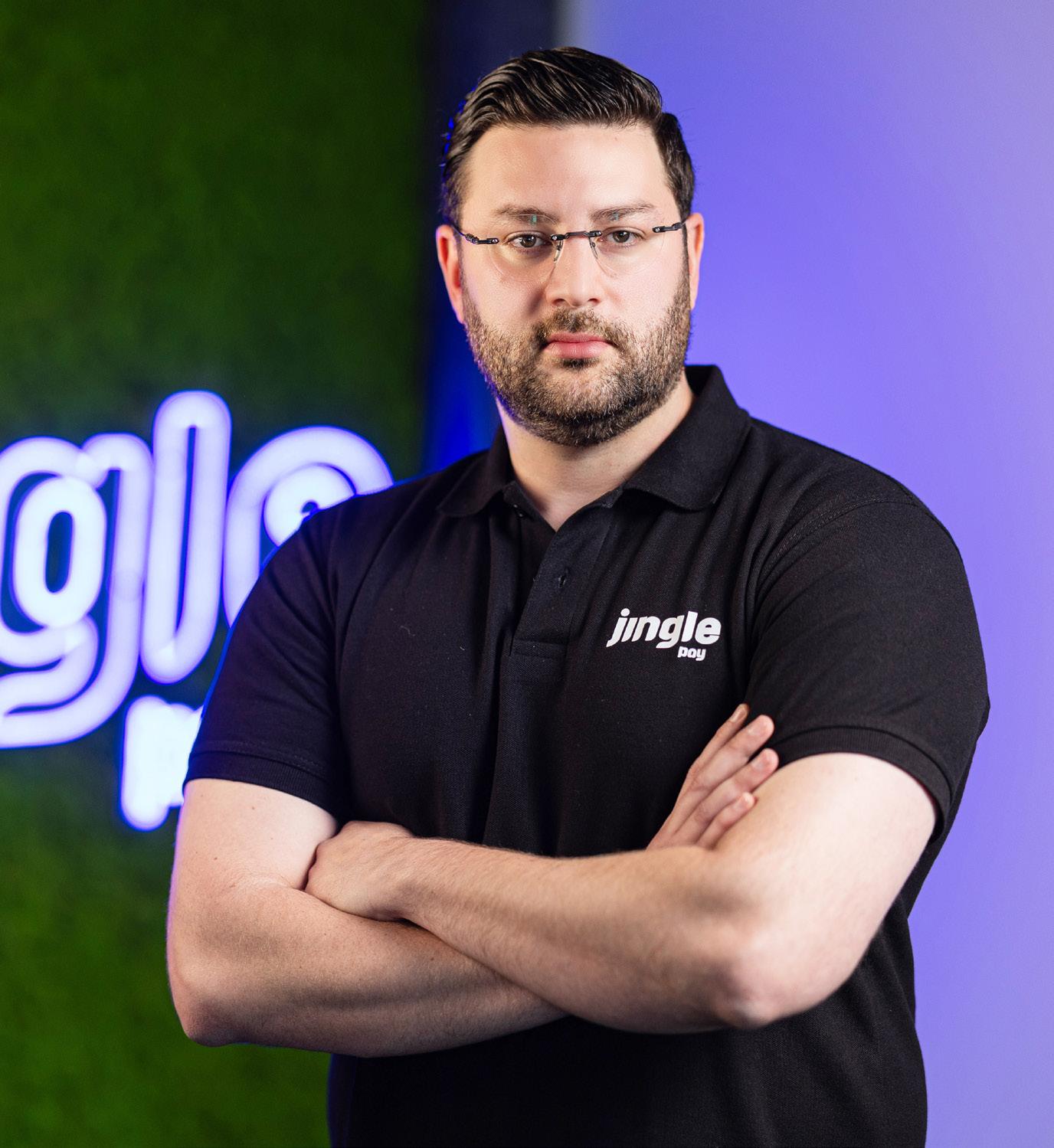
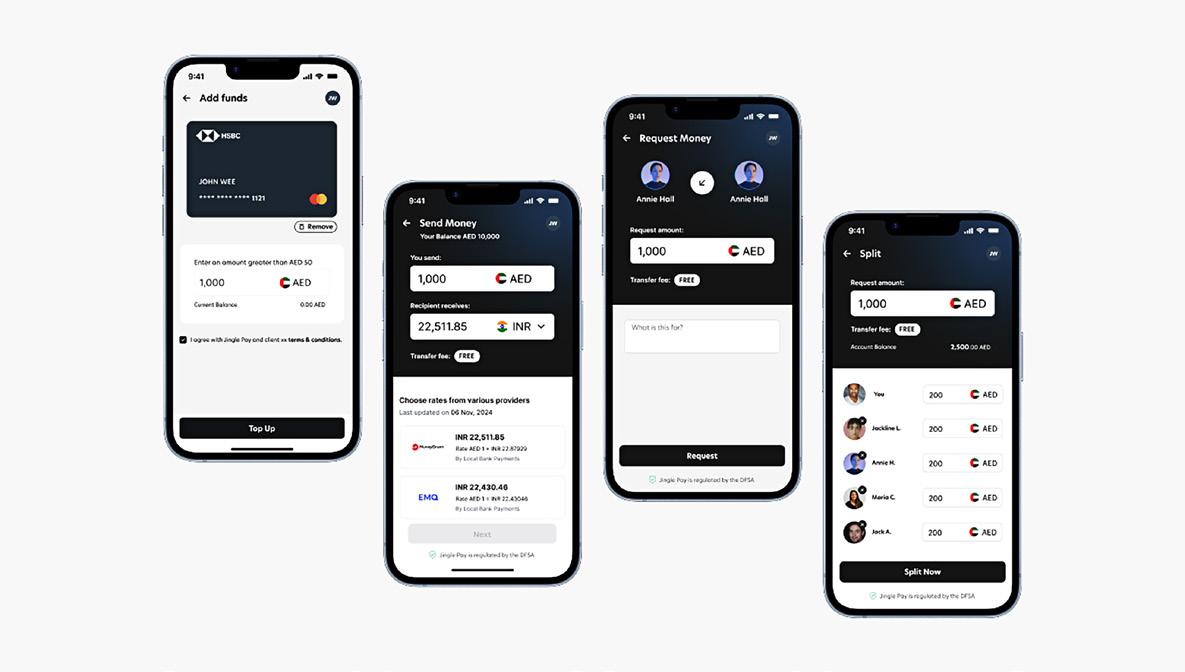
Founded by Amir Fardghassemi, Jingle Pay was built on a simple belief: everyone deserves access to transparent, affordable financial services. The company began by tackling one of the world’s biggest challenges, cross-border money movement, ensuring that expatriates sending their hard-earned income home keep more of what they earn instead of losing it to excessive fees and hidden FX markups.
Under Amir’s leadership, Jingle Pay has emerged as one of the Middle East’s leading fintech success stories, building the infrastructure that powers global money movement through innovation, scale, and financial inclusion. Today, the company is on track to process more than US$5 billion in annualised payment volume across 19 million annualised transactions, connecting consumers, businesses, and financial institutions across 150+ countries and supporting 99+ currencies.
Jingle Pay is proud to have helped remittance senders save more than US $58 million by making cross-border payments faster, more transparent, and more affordable across key corridors including Pakistan, India, the Philippines, and other markets throughout APAC and MENAP. Its global payments ecosystem is powered by strategic partnerships
with Mastercard, Western Union, MoneyGram, Network International, and BOTIM, while its growth is backed by leading investors and strategic partners including Plug and Play, 500 Global, MoneyGram, and Bank Alfalah. Licensed by the Dubai Financial Services Authority (DFSA) and FINTRAC Canada, Jingle Pay continues to redefine the future of global money movement and embedded financial infrastructure.
“Innovation may capture attention, but trust is what earns permanence,” Amir Fardghassemi states. “In financial services, trust is not a feature; it is the foundation upon which everything else is built. Technology evolves quickly, but confidence is earned over time through consistency, governance, and execution.”
“At Jingle Pay, innovation is never pursued in isolation. Every advancement must strengthen resilience, regulatory integrity, and customer confidence,” Fardghassemi adds. “Sustainable businesses aren’t defined by how quickly they launch products; they’re defined by how responsibly they scale them.”
With more than 15 years of experience in fintech, Fardghassemi sees the next chapter of financial services happening beyond the applications consumers interact with and within the infrastructure powering them.
“The real transformation lies in creating intelligent, programmable financial infrastructure that enables value to move across borders as seamlessly as information moves today,” he explains. “Whether through modern settlement architecture, digital assets, or next-generation payment rails, I believe the next chapter of financial services will be built beneath the surface, not on it.”
Leading a company in an industry where technology, regulation, and customer expectations evolve simultaneously has also reshaped his approach to leadership. For Fardghassemi, effective leadership is not about having every answer but about creating clarity in uncertain environments.
“My role isn’t to have every answer. It’s to build an organisation capable of adapting faster than the environment around it,” he says. “That requires trust, accountability, and giving talented people the confidence to make decisions with ownership.”
While artificial intelligence is expected to transform execution across financial services, Fardghassemi maintains that leadership will remain deeply human.
“Leadership remains fundamentally human because it requires vision, ethics, empathy and the ability to make decisions where no historical data exists,” he says.
Culture, he adds, remains one of the few advantages that cannot be easily replicated. At Jingle Pay, he prioritizes people who continue to learn, challenge assumptions and embrace change. In a rapidly evolving sector, he believes innovation depends not only on technology but on teams capable of adapting alongside it.
Market uncertainty has further reinforced the importance of resilience over rapid expansion. Rather than pursuing growth at any cost, Jingle Pay has focused on strengthening its infrastructure, institutional capabilities and business diversification.
“The last few years reminded the industry that growth alone is not a strategy,” he says. “Periods of uncertainty force organisations to distinguish between momentum and resilience.”
“More importantly, it reinforced a principle we’ve always believed in sustainable value creation comes from discipline, not speed. Markets change. Strong foundations endure,” Fardghassemi stresses.
Looking ahead, Fardghassemi sees a future where financial services become increasingly seamless and embedded into everyday experiences. More importantly, he hopes Jingle Pay contributes to a more connected global financial system, one where access is shaped by “opportunity rather than geography.”
UEB3 VENTURES
Viktor Uzunov , CEO, UEB3 Ventures
www.ueb3fund.com
As founder and CEO of UEB3 Ventures, a globally positioned private investment fund managing US$70 million in digital assets, Viktor Uzunov is helping bridge the worlds of institutional finance and Web3. His vision is built on a simple premise: that digital assets are no longer a niche asset class, but the foundation of the next generation of financial infrastructure.
Long before launching UEB3 Ventures, Uzunov built his career in traditional finance. After graduating in London, he joined Jefferies, where he rose to the role of Vice President. It was there that his understanding of capital markets led him to a different conclusion about blockchain than many of his peers.
“Coming from investment banking, you are trained to understand how capital moves, how markets are structured, how risk is priced, and how institutions think,” he says. “When I first looked seriously at blockchain, I did not see it only through the lens of Bitcoin or speculation. I saw a technology that could change settlement, ownership, transparency, liquidity, and access.
“The more I studied it, the clearer it became that this was not just another cycle of innovation. It was a shift in how value could be created, stored, transferred, and verified globally.”
That conviction was reinforced by the resilience of digital asset infrastructure across multiple market cycles and the growing participation of sophisticated investors and institutions.
“That was the turning point for me,” Uzunov explains. “I realized Web3 was not about replacing traditional finance overnight. It was about upgrading parts of the system that had become too slow, too fragmented, or too inaccessible.”
Those principles became the foundation of UEB3 Ventures, which combines the discipline of institutional portfolio management with the speed and innovation of digital assets. Rather than chasing market narratives, the firm focuses on structured, risk-managed
exposure designed for institutional and private investors, with transparency, governance, and capital preservation at the core of its investment philosophy.
“Digital assets are often associated with hype, speculation, and tokens. But at UEB3 Ventures, we do not build around narratives or token speculation. We build around fundamentals, risk management, and the belief that finance is moving on-chain through transparent, programmable infrastructure,” Uzunov says.
“Capital preservation is central to the way we think. That does not mean avoiding risk completely. It means understanding risk, measuring it, managing it, and making sure every decision fits within a disciplined framework.”
Beyond investment performance, Uzunov believes education and transparency are essential to the industry’s long-term success. UEB3 Ventures aims to provide investors with disciplined access to digital assets supported by clear information, helping them understand both the opportunities and the risks. Its strategy is built around diversified exposure to digital asset markets and infrastructure, reflecting Uzunov’s conviction that the industry’s real transformation lies not in individual tokens, but in the broader shift of finance toward on-chain ownership, settlement, transparency, liquidity, and global accessibility.
Looking ahead, Uzunov believes the next era of wealth creation will be shaped by the convergence of artificial intelligence, tokenization, and digital assets.
“Artificial intelligence will change how decisions are made. Tokenization will change how assets are owned and accessed. Digital assets will change how value moves and settles,” he explains. “Separately, each one is powerful. Together, they can reshape the entire wealth management landscape.
“AI will make financial intelligence more personalized, faster, and more data-driven. It will help investors analyze risk, identify opportunities, and manage portfolios in ways that were previously available only to large institutions.
“Tokenization will make private markets more accessible and efficient. Assets such as real estate, private credit, funds, and other real-world assets can become more liquid, transparent, and easier to distribute globally.
“Digital assets provide the underlying financial rails for this new environment. They introduce programmable ownership, faster settlement, and global transferability.”
As digital finance continues to evolve, Uzunov is confident that the next chapter of the industry will be written by jurisdictions that combine innovation with institutional credibility. Among the many financial centers competing for that role, he believes the UAE has established itself as the clear choice—and the natural home for UEB3 Ventures.
“The future of digital finance will be global, and the UAE understands that better than almost anywhere else,” he concludes. “What makes the UAE so attractive is that it does not only talk about the future; it actively builds for it. There is a clear appetite to support innovation, attract talent, and create an environment where entrepreneurs and investors can operate globally.
“For digital finance, that matters enormously. This is an industry that needs regulatory clarity, institutional participation, and access to international markets. The UAE offers all three.”
Selim Kervancı, CEO, Middle East, North Africa & Türkiye; CEO, UAE, HSBC
www.hsbc.ae
Selim Kervancı is Chief Executive Officer for the Middle East, North Africa, and Türkiye (MENAT) at HSBC Bank Middle East, a role he assumed in 2025.
He oversees the bank’s operations across nine markets, spanning Corporate and Institutional Banking as well as International Wealth and Premier Banking.
With more than 28 years of banking experience, Kervancı has spent his career at HSBC, holding senior leadership roles across investment banking, capital markets, advisory, and client coverage.
Before his current position, he served as CEO of HSBC Türkiye, leading a major business transformation. He also serves on the board of HSBC Bank Middle East Limited.
Selim Elgen, Managing Director and Market Head, JP Morgan UAE
www.jpmorgan.com/AE
Selim Elgan is Managing Director and Market Head for the UAE at J.P. Morgan Private Bank. Based in Dubai, he leads the bank’s private banking business for ultra-high-networth individuals and family offices across the UAE and the wider Middle East and North Africa.
Elgan brings more than 30 years of private banking experience, having spent the majority of his career at Citigroup in senior leadership roles across Russia, Central and Eastern Europe, Africa, and the Middle East.
He is recognized for his expertise in wealth management, strategic client advisory, and building long-term relationships with high-net-worth and institutional clients.
Ahmed Abdelaal, Group CEO, Mashreq
www.mashreq.com/en/uae/neo
Ahmed Abdelaa is a banking executive with more than 30 years of experience across international and regional financial institutions. Throughout his career, he has held senior leadership roles spanning corporate and investment banking, trade finance, real estate finance, debt and equity capital markets, project finance, Islamic banking, retail banking, portfolio management, and global markets.
Recognized for his broad financial expertise and strategic leadership, he has led complex banking solutions across major global markets. Ahmed holds an MBA from London Business School, completed the Advanced Management Program at Harvard Business School, and earned a bachelor’s degree in Economics and Political Science from Cairo University.
Adnan Anwar, CEO, National Bank of Fujairah
www.nbf.ae
Adnan Anwar has served as CEO of National Bank of Fujairah since October 2024, following nearly two decades with the bank. He joined NBF as Head of Finance in 2005, became Chief Financial Officer in 2010, and was appointed Deputy Chief Executive Officer in 2020.
With more than 25 years of banking experience, he has played a key role in driving the bank’s growth, financial performance, and digital transformation. As CEO, he is focused on strengthening customer and employee experiences while expanding NBF’s products and services. Adnan holds an Executive MBA from London Business School.
Ayham Gorani, Co-founder and CEO, Pemo
www.pemo.io
Ayham Gorani is co-founder and CEO of Pemo, a UAEbased fintech company transforming business spend management for SMEs. A Germany-born entrepreneur and computer scientist, he has spent nearly two decades building digital businesses.
After founding and successfully exiting his first company in Germany, he relocated to the UAE in 2011 to pursue new opportunities in the region’s growing technology sector. Under his leadership, Pemo has developed innovative financial management solutions that help businesses automate expense management, streamline financial operations, and improve efficiency, establishing itself as one of the region’s leading fintech platforms.
KAMA CAPITAL
Khaldoun Hilal, CEO and Co-Founder, Kama Capital www.kama-capital.com
For Khaldoun Hilal, leading a financial company has never been about chasing the latest trend but creating lasting value. As CEO of Kama Capital, a globally regulated online broker, he has built his approach around the infrastructure behind transactions, the culture that shapes teams, and the trust that keeps clients coming back.
“At Kama Capital, every product decision comes back to one question: does this genuinely serve the trader? Does it actually make someone’s trading experience better and more transparent? When that’s your filter, you naturally avoid the kind of reckless innovation that erodes trust,” he says.
After more than 15 years in financial markets, Hilal has witnessed the industry go through waves of change. But amid the constant push for disruption, he believes some of the most important principles remain the same. Across conversations on market volatility, artificial intelligence (AI), and the future of fintech, Hilal returns to one central idea: the companies that last will be those that consistently deliver on their promises.
“I used to think leadership was about having all the answers. Today, I see it differently,” Hilal says.
“I believe leadership is about asking the right questions, listening to your team, and trusting them to find the best solutions.”
“Fintech moves so fast that no one person can know everything. That’s why it’s important to build a strong team, give people responsibility, and create a culture where everyone feels comfortable sharing ideas and challenging the way we think,” he adds.
“My job today isn’t to have every answer. It’s to help my team succeed. And when you do that, the results usually speak for themselves.”
One of the biggest shifts Hilal sees shaping the future of finance is the wider availability of institutional-level tools, saying Kama Capital is working to close the gap between large financial institutions and individual traders by making advanced infrastructure more accessible.
“The retail trader was essentially working with inferior tools. We’re changing that. Whether someone deposits US$500 or US$500,000 with Kama Capital, they get the same sub-15 millisecond execution and the same institutional infrastructure. That’s a structural change in how this industry thinks about who deserves the best,” he explains.
According to Hilal, expanding access in finance also depends on having the right systems behind it, the reason why he sees infrastructure as one of the biggest challenges and opportunities in the market.
Building from scratch instead of relying on whitelabel platforms was a deliberate decision for Kama Capital. Although it required more time and investment, the approach gave the company direct control over its infrastructure and reduced its dependence on third-party technology.
“It was the harder path and the longer one. But it means that today, when we make a promise to a client, we can actually keep it,” he shares.
Hilal credits much of Kama Capital’s growth to the broader fintech ecosystem that has developed in the UAE, describing Dubai as one of the world’s
strongest environments for building financial technology companies. After working across the region for years, he says the difference lies not only in regulation but also in the way government entities and the private sector work together to support innovation.
“The regulators here don’t just make rules— they help build the industry. Whether it’s the UAE regulators, DIFC, or the Central Bank, they’re all working to create an environment where companies can grow,” he says. “That makes a big difference. Instead of spending your time dealing with paperwork and bureaucracy, you can focus on building better products and serving your clients.”
Asked whether market volatility had ever forced him to rethink his strategy, Hilal says a well-designed strategy should withstand changing market conditions.
“I don’t believe volatility should force a strategy change. A solid strategy should be built to accommodate any market condition. If you’re rethinking your entire direction every time markets move, you didn’t have a strategy to begin with,” Hilal explains.
“What volatility does is test your execution. There was a period of intense simultaneous pressure across multiple sessions, the kind of environment where many brokers quietly widen their spreads and slow their fills to protect themselves at the client’s expense,” he adds. “We didn’t do that. Not because we got lucky, but because the infrastructure was built for exactly that moment.”
Concluding the conversation, Hilal says his view of legacy is tied not to recognition, but to building a company that endures.
“I want Kama Capital to always be a company that keeps its promises, serves its clients well, and continues to grow across more markets around the world,” he says.
MAL
Abdallah Abu-Sheikh, Founder, Mal www.mal.ai
Abdallah Abu-Sheikh has built a reputation for spotting technology shifts long before they reach the mainstream.
He first made his mark by founding UAE-based Astra Tech in 2022, and transforming it into a fast-growing technology holding group behind the voice-calling app Botim, digital wallet and fintech platform PayBy (rebranded as Botim Money), on-demand home services platform Rizek, and AI business consultancy platform Quantix.
In late 2024, G42 Group acquired Abu-Sheikh’s stake in Astra Tech.
Having stepped down from the company, the Jordanian-Emirati entrepreneur has since turned his focus to his next venture: Mal, an AI-native Islamic digital bank headquartered in Abu Dhabi.
Mal is aiming to redefine how Islamic financial services are built and delivered. Rather than digitizing traditional banking systems, Mal has been designed from the ground up as an AI-native institution, embedding artificial intelligence across compliance, risk management, and customer experiences while remaining rooted in Sharia principles.
The vision has already attracted significant market attention. In early 2026, Mal secured US$230 million in seed funding -one of the region’s largest seed rounds- led by BlueFive Capital, alongside strategic investors and family offices. Shortly afterward, the company received in-principle approval from the Central Bank of the UAE to operate as a fully licensed digital bank, marking an important milestone in its regulatory journey.
The timing is notable. Islamic finance has grown into a global industry worth more than US$4 trillion, yet much of the sector continues to rely on traditional banking infrastructure and physical branch networks. As younger, digitally native consumers increasingly expect seamless mobile experiences, Mal is positioning
itself to bridge the gap between ethical finance and modern financial technology.
Central to that strategy is artificial intelligence. The platform is being developed to automate Sharia compliance, enhance risk assessment, and deliver predictive financial insights while offering customers personalized banking and wealth management services through a mobile-first experience. By integrating compliance directly into its technology architecture, Mal aims to simplify processes that have traditionally required significant manual oversight.
The company’s ambitions extend well beyond the UAE. Alongside serving the Gulf market, Mal intends to expand into major Muslim-majority economies, including Indonesia, Pakistan, and Bangladesh, where growing smartphone adoption and large underbanked populations present significant opportunities for digital financial services.
BANK JULIUS BAER
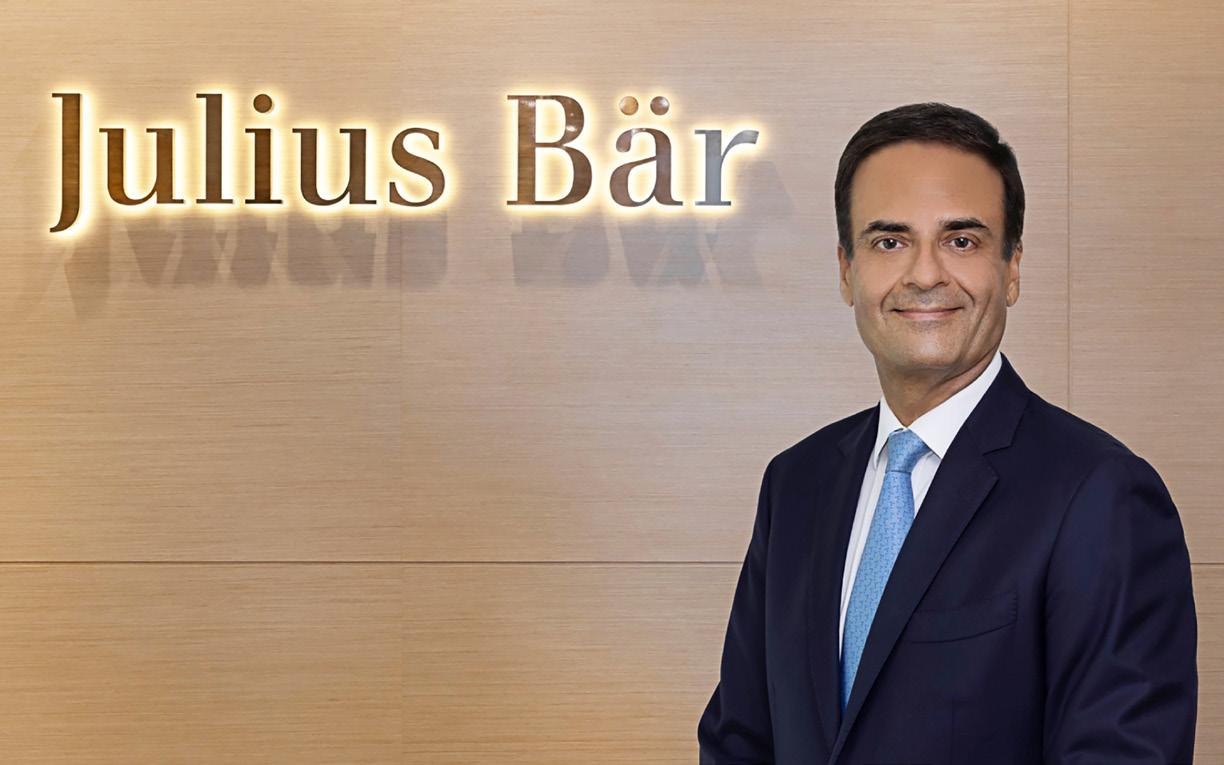
Rahul Malhotra, Region Head Emerging Markets, Bank Julius Baer www.juliusbaer.com
Rahul Malhotra is Region Head Emerging Markets and Member of the Global Wealth Management Committee (GWMC) at Bank Julius Baer based out of Dubai, UAE. In this role, Rahul is responsible for expanding Julius Baer’s business presence and client base across five markets, including India Onshore, Global Non-Resident Indians (GNRI), Middle East and Africa, Central and Eastern Europe and Israel, Greece and Cyprus, Turkey.
Under his leadership, Region Emerging Markets has embarked on an ambitious expansion strategy in core countries.
Rahul brings over 35 years of extensive experience in financial services and is deeply familiar with the evolving needs of clients in his region.
Before taking on additional responsibilities for Region Emerging Markets in January 2024,
Rahul led the Global India and Japan business for the Bank.
Prior to joining Julius Baer, Rahul was Head of Southeast Asia and previously Head of South Asia at J.P. Morgan Private Bank for 11 years, where he supported clients in Singapore, Malaysia, Indonesia, Thailand, Australia and NRIs across regions. Most recently, he was responsible for special projects of the International private bank of J.P. Morgan.
Before that, he was Head of Wealth Management for Asia at Merrill Lynch and successfully built the Global India business. Earlier in his career, Rahul spent 20 years at Citibank, where he was based in India, the UAE, the UK, and Singapore.
Passionate about philanthropy, Rahul is also a member of the Julius Baer Foundation and works closely with colleagues globally on education and wealth inequality initiatives.
On paper, seasoned fintech entrepreneur Shahid Munir has all the credentials of a financial industry leader: a prestigious education, experience at global banking institutions, and the successful co-founding of Minted Money, a platform democratizing access to investment in physical precious metals, as well as Ummah, an AI-native financial infrastructure company.
Yet, he credits one of his most valuable business lessons not to the boardroom, but to his father’s convenience store in Stourbridge, where he first learned what small businesses need that traditional finance often overlooks.
“I grew up inside that shop, not being formally taught but absorbing the fundamentals through
daily repetition,” he says. “What that taught me, which formal finance almost entirely overlooks, is that business at its most fundamental level is about relationships and reliability. In a corner shop, if you get the pricing wrong you feel it that same day, and if a customer does not trust you they simply walk to the next shop. There is no quarterly review and no board meeting. The feedback loop is immediate and unforgiving.”
Because of those early experiences, Munir has never lost sight of the people behind every financial transaction. His time in institutional finance showed him how easily the industry can become disconnected from the customers it serves. That realization led him into fintech entrepreneurship, where he set out to build the integrated financial rails that enable businesses to grow and thrive.
“A business in the UK or the US has a payments ecosystem that was built for them, but a business in Pakistan, or Nigeria, or Bangladesh, or even a diaspora-led business in London serving those markets, faces a completely different reality,” Munir explains. “The rails are fragmented and the APIs do not exist or they are unreliable. Compliance requirements are opaque, banking relationships are difficult to establish, FX is expensive and slow, reconciliation is manual, and risk management is guesswork.”
While Ummah was built to provide the financial infrastructure powering modern digital businesses, Minted Money was founded on a simple belief: everyone deserves the opportunity to secure their financial future through ownership of precious assets. “Billions of people across South Asia and the Middle East already save in gold and silver and have done so for generations. It is not a trend and it is not a fad. It is a deeply embedded cultural and financial behavior that predates modern banking by centuries,” Munir explains.
“And yet, in 2018, there was no modern financial product that respected that behavior.”
In 2018, Munir co-founded Minted Money (formerly Minted Gold), becoming its sole owner in 2023. The FCA-regulated digital platform makes saving and investing in physical precious metals accessible
and affordable for everyday investors.”What Minted Money taught me is that trust in financial services is not universal but cultural. The mainstream financial system assumes that everyone trusts fiat currency, trusts banks, and trusts the same institutions, but they do not. Millions of people trust gold because they have seen currencies collapse, and they trust tangible assets because they have seen banks fail. That is not irrational. That is lived experience,” Munir says.
“The gap between mainstream finance and lived financial behavior is enormous, and it is a gap that most fintech companies do not even see because they are building for people who already trust the system. Minted taught me to build for people who do not, and to earn that trust through transparency, reliability, and respect for how they already manage their money.”
Minted Money has since expanded to include two products: Minted Edge, a modern banking platform combining accounts, cards, foreign exchange, and money management, and Minted Pay, a global payment solution that enables businesses to accept, route, and
optimize payments. Together, they provide a unified financial stack built for modern commerce.
Throughout this growth, Munir has viewed regulation not as a constraint, but as a competitive advantage. “When we went to the FCA to get Minted licensed, it was one of the hardest things I have ever done,” he recalls. “We were a new company with no track record, led by a founder from an ethnic minority background, asking one of the world’s most rigorous financial regulators to trust us with people’s money. There was no shortcut and there was no fast-track. We had to earn it.
“And that is exactly the point. Regulation, done properly, is the mechanism by which trust is established at scale. A customer does not need to personally know me to trust that their money is safe because they trust the regulatory framework that holds us accountable, and that is enormously valuable.
“The balance between speed and discipline is not as difficult as people make it sound. You move fast on product, you move fast on engineering, and you move fast on go-to-market. But you do not move fast on compliance, on risk management, or on the promises you make to customers about how their money is handled. Those things require patience, precision, and a willingness to do the hard work that most startups try to skip.”
Looking ahead, Munir believes fintech’s next wave of innovation will be driven not by better consumer apps, but by stronger financial infrastructure.
“I believe the next decade of fintech will be defined not by who builds the best app, but by who builds the best infrastructure. Infrastructure that is global, inclusive, reliable, and fair. Infrastructure that does not ask where you are from before deciding whether to serve you,” he concludes.
“We do not build workarounds. We build standards. And the standard we are setting is simple: every business, everywhere, deserves infrastructure that works.”
Joseph Abraham, Group CEO, Commercial Bank of Qatar
www.cbq.com.qa/en
Joseph Abraham is the Group CEO of Commercial Bank of Qatar, a position he has held since 2016. He is also Vice Chairman of Alternatif Bank in Türkiye and a Board Director of United Arab Bank (UAE) and National Bank of Oman. With more than 30 years of international banking experience, he previously served as CEO of ANZ Indonesia and held senior banking roles across Indonesia, Singapore, Hong Kong, Ghana, the U.K., and India. He holds an MBA from Stanford Graduate School of Business. Under his leadership, Commercial Bank has accelerated its digital transformation, with more than 98% of customer transactions conducted through automated channels. The bank also processes over 90% of corporate payments, 99% of salary disbursements, and 96% of trade finance transactions digitally, reinforcing its position as one of Qatar’s leading financial institutions.
Abdulrahman Bin Fahad Al-Thani, Group CEO, Doha Bank, Qatar
www.dohabank.com.qa/ar/
Abdulrahman bin Fahad bin Faisal Al-Thani is the Group CEO of Doha Bank, a position he has held since 2023 after serving as Deputy CEO from 2022. With nearly two decades of experience in Qatar’s banking sector, he previously held senior leadership roles at Dukhan Bank and Qatar International Islamic Bank across retail, corporate, international, private, and Islamic banking. Al-Thani holds a Bachelor’s degree in International Business Management from Northumbria University, U.K. Under his leadership, Doha Bank reported total assets of US$32.8 billion and net profit of US$204.8 million in the first nine months of 2025. The bank also issued a US$500 million bond that was nearly four times oversubscribed with a US$1.8 billion order book, while launching Tadbeer Mobile for corporate banking and revamping its card portfolio.
Abdulla Mubarak Al-Khalifa, Group CEO, QNB Group
www.qnb.com
Abdulla Mubarak Al Khalifa is the Group CEO of Qatar National Bank (QNB), a position he has held since 2018. He leads the Middle East and Africa’s largest banking group, overseeing its operations across more than 28 countries. Under his leadership, QNB has advanced its digital transformation strategy through investments in artificial intelligence, cloud computing, and blockchain technologies. He also serves on the boards of several QNB Group entities. Under his leadership, QNB reported net profit of QAR17 billion in FY2025, with total assets reaching QAR1.39 trillion. The bank maintained a cost-to-income ratio of 23.3% and a capital adequacy ratio of 19.3%, issued US$1.1 billion in sustainable bonds, and acted as lead coordinator for Qatar’s inaugural $2.5 billion sovereign green bond. QNB operates more than 900 locations and 5,000 ATMs with over 30,000 employees worldwide.
Bassel Gamal, Group CEO, Qatar Islamic Bank (QIB)
www.qib.com.qa/en
Bassel Gamal is the Group CEO of Qatar Islamic Bank (QIB), a position he has held since 2013. With more than 30 years of experience in banking and finance, he is also Chairman of QIB-UK and a Board Member of QInvest.
Before joining QIB, he held senior leadership roles at Ahli United Bank Group, including Senior Deputy Group CEO –Banking Group, and previously served as CEO of Ahli Bank Qatar. He began his career at Commercial International Bank in Egypt.
Under his leadership, QIB reported net profit of QAR4.6 billion and total assets of QAR200.8 billion in 2024. The bank’s total income reached QAR11.7 billion, while maintaining the lowest cost-to-income ratio among Qatari banks at 17%. QIB has also expanded its digital platform to more than 300 services and introduced several first-tomarket digital banking innovations.
Salem Al Mannai, Group CEO, Qatar Insurance Group (QIC Group)
www.qic-group.com
Salem Khalaf Al Mannai is the Group CEO of QIC Group, a position he has held since 2020. He joined the company in 2001 and has held leadership roles across its motor, marine, cargo, and health insurance businesses, including Deputy CEO of QLM and Deputy Group President & CEO for QIC’s MENA operations.
He holds a postgraduate degree from the University of South Wales. Under his leadership, QIC Group has strengthened its position as one of the MENA region’s leading insurers, expanding its presence across regional and international markets through digital innovation and diversified insurance solutions.
Founded in 1964, QIC operates across retail, corporate, specialty, and reinsurance segments, serving customers in Qatar, the MENA region, and global markets.
With over 32 years of experience in banking and financial services, Ramesh Murthy’s role as Senior Executive Officer at CUSP Wealth, a Dubai-based WealthTech platform, has been instrumental in advancing the company’s vision to redefine how individuals build, manage and grow their wealth by offering them a combination of artificial intelligence (AI)-powered analytics and human expertise. “The original problem was the accessibility gap in wealth management: high fees, high minimums and fragmented advice that made investing difficult for everyday professionals,” Murthy notes. “The biggest challenge, however, isn’t technology; it’s trust at scale. At its core, CUSP Wealth aims to build confidence and provide clarity in long-term decision-making. Our mission is to make investing clear, accessible and efficient for everyone.”
To address the aforementioned challenges, CUSP Wealth combines AI-driven portfolio optimization with access to human financial advisors, while offering low investment thresholds, transparent pricing, and Shariah-compliant investment options designed to make long-term investing more accessible to a wider range of investors. Regulated by the Dubai Financial Services Authority (DFSA), the platform also provides access to more than 10,000 U.S.-listed stocks and ETFs, alongside bilingual support in English and Arabic.
“Access and understanding are important enablers, but the ultimate objective is helping investors feel reassured that they are making structured, informed choices aligned with their future goals,” Murthy emphasizes.
Today, as AI continues to reshape the wealth management industry, Murthy believes it has shifted the sector from reactive decision-making to predictive models. “Portfolios that once required a team of analysts can now be constructed, monitored and rebalanced in real time, at a fraction of the cost,” he explains. “At CUSP Wealth, AI isn’t a feature; it is the foundation.”
For Murthy, however, the real opportunity lies in making wealth management more personal. He believes the future of investing will be shaped by solutions that better reflect each individual’s goals, risk tolerance, and values.
“The next chapter of wealth management is about personalisation at scale; it’s about understanding an individual’s goals, risk tolerance and values deeply enough to build a portfolio that genuinely reflects who they are,” Murthy says. “Investors, particularly younger ones, are no longer willing to separate who they are from how they invest. Faith, ethics, sustainability, these are no longer niche overlays. They are becoming the baseline expectation. At CUSP Wealth, we built for that reality for Shariah compliance at scale from day one.”
Indeed, alongside its focus on transparency and innovation, CUSP Wealth offers more than 1,300 Shariahcompliant investment options for individuals seeking to align their financial decisions with their values. Notably, in 2026, the company became the first AI-powered WealthTech firm in the UAE to receive an official Fatwa.
Murthy shares that much of CUSP Wealth’s innovation strategies have been spurred on by the nation’s own ambitious goals in both conventional and Islamic finance. “The UAE has done something rare – it has built regulatory infrastructure that actively invites innovation,” he says. “Choosing regulation under the DFSA was a deliberate decision to prioritize credibility, investor protection and institutional-grade governance from day one. That alignment is not incidental; it’s strategic. The UAE’s vision is to be the world’s leading hub for financial services, and specifically Islamic finance. The country is building the infrastructure; we’re building the retail layer that puts it in people’s hands. When a government’s ambitions and a company’s mission point in the same direction, the only question is how fast you can move.”
But to operate in such a fast-moving ecosystem, Murthy shares that there are certain traits that will separate the excellent business leaders from the mediocre ones.
“Clarity above everything,” he declares. “In a fast-moving environment, the leaders who create calm environments are the ones who can distill complexity into clear decisions, for their teams and their clients. Beyond that, intellectual honesty: the willingness to say what the data shows, even when it’s uncomfortable. Finance has a long history of telling people what they want to hear. The leaders who will matter in the next decade are the ones building genuine conviction: in their products, their governance and their people. And finally, cultural intelligence. The clients of tomorrow are global, diverse and increasingly values-driven. Leaders who understand that identity and finance are inseparable will build the institutions that last.”
Disclaimer:
This material is provided for general information purposes only and does not constitute investment advice, a recommendation, or an offer to buy or sell any financial product. Any reference to advisors, tools, or portfolios is subject to T&Cs. Advisory calls are only available to clients who meet the suitability assessment required by Cusp Wealth. Investments involve risk and may result in loss of capital. Past performance is not a reliable indicator of future results. Cusp Wealth Ltd is regulated by the DFSA, reference number F011420. Cusp Wealth Ltd is registered in DIFC with license number 10863. Services are available only to DFSA-classified DIFC retail clients and are not offered outside the DIFC.
Jayesh Patel, CEO, Wio Bank
Jayesh Patel is Chief Executive Officer of Wio Bank, one of the UAE’s fastest-growing digital banks and a leading force in the country’s rapidly evolving financial services sector. Since assuming the role in 2020, he has led the bank’s strategic vision, commercial growth, and operations, transforming Wio into a digitalfirst financial institution serving individuals, entrepreneurs, and businesses through an expanding suite of banking and investment solutions.
With more than two decades of experience spanning banking, fintech, digital transformation, and technology, Patel has built a career at the intersection of innovation and financial services. Before joining Wio Bank, he held senior leadership positions at Emirates NBD, where he led the bank’s retail strategy and digital transformation initiatives. He went on to
launch and head Liv., the Middle East’s first digital-only lifestyle bank, helping redefine the region’s approach to digital banking and customer experience.
Earlier in his career, Patel worked at Deloitte and IBM in the United States, advising Fortune 500 companies on business strategy, technology, and digital transformation. This combination of consulting, technology, and banking experience has shaped his leadership style and enabled him to drive innovation across multiple areas of financial services.
Today, Patel is widely recognized as one of the pioneers of digital banking in the Middle East. Through his leadership at both Liv. and Wio Bank, he has played a significant role in accelerating the UAE’s fintech ecosystem and advancing the country’s ambition to become a global hub for digital finance. His focus remains on leveraging technology to simplify banking, empower entrepreneurs, and deliver seamless financial experiences for customers.
Patel’s academic background reflects the multidisciplinary expertise that has defined his career. He earned a Bachelor of Science in Civil Engineering from Southern Illinois University Edwardsville, a Master of Science in Mechanical Engineering from the University of Illinois, and a Master of Business Administration from the Tuck School of Business at Dartmouth College.
Combining deep technical knowledge with strategic business leadership, Patel continues to shape the future of banking in the UAE. Under his leadership, Wio Bank has established itself as one of the country’s most innovative financial institutions, demonstrating how digital-first banking can deliver greater accessibility, efficiency, and value for both consumers and businesses.
Mohamed Khadiri, CEO, Bank of Sharjah www.bankofsharjah.com
Mohamed Khadiri has served as Chief Executive Officer of Bank of Sharjah since May 2023. With more than 24 years of experience in corporate and investment banking across the US, Middle East, and North Africa, he has held senior leadership roles at leading global financial institutions, including Salomon Smith Barney, Citibank, Barclays, and HSBC.
Before joining Bank of Sharjah, he was General Manager at Kuwait International Bank, where he helped expand the bank’s domestic and international business and led major transactions. Khadiri is recognized for driving growth, digital transformation, and customer-focused strategies across the banking sector.
Abdullah Ali Al Khalifa, Managing Director and CEO, Alinma BankNBD
www.alinma.com
Abdullah Ali AlKhalifa is the Managing Director and CEO of Alinma Bank, serving as CEO since 2021 and Managing Director since 2025. He has more than 30 years of experience in banking, having previously served as Chief Financial Officer at Banque Saudi Fransi and held senior financial leadership roles at Al Rajhi Bank, Arab National Bank, and Samba Financial Group. He holds a Mas ity. Under his leadership, Alinma Bank has accelerated its digital-first strategy, launching its Digital Factory and expanding its fintech arm with services including ClickPay and AlinmaPay, strengthening its position as one of Saudi Arabia’s leading digital banks.
Obaid A. Alrasheed, Managing Director and CEO, arab national bank (ANB)
www.anb.com.sa/web/anb
Obaid Abdullah Al-Rasheed is the Managing Director and CEO of Arab National Bank, a position he has held since 2021 after serving as Deputy CEO for a decade. With nearly 40 years of experience in Saudi Arabia’s banking sector, he has held senior leadership roles across retail banking, private banking, and branch management. He is also Vice Chairman of SHL Finance Company and serves on the boards of anb capital, Saudi Chemical Company, and Dr. Sulaiman Al Habib Medical Services Group. He holds a Bachelor’s degree in Business Administration from San Jose State University. Arab National Bank operates 125 branches, 57 remittance centers, and a London branch. In Q1 2024, it reported US$61.9 billion in assets and net income of US$329.6 million.
ODE TO BAG END
Limited Edition
Make ever y epic writing journey a cosy one Hobbiton handcraft from the makers of the world’s most magical pens
Muhannad Ebwini, Founder and CEO, HyperPay
www.hyperpay.com
Muhannad Ebwini is the Founder and CEO of HyperPay, a Saudi Arabia-headquartered fintech and digital payments company. He has more than 25 years of experience in fintech, e-commerce, gaming, and payments. Before founding HyperPay, he held leadership roles at OneCard, where he helped develop the online payments ecosystem across MENA, as well as at Maktoob’s Souq.com and eSolution. He also serves as a Board Member of GatetoPay. Ebwini holds an MBA in Management and International Business from NYIT and a Bachelor’s degree in Computer Software Engineering from Princess Sumayya University. Under his leadership, HyperPay became one of the region’s leading payment providers, secured an Electronic Money Institution (EMI) license from the Saudi Central Bank, and continues expanding its payment infrastructure and digital financial services across the GCC.
Abdulmajeed Alsukhan, Co-Founder and CEO, Tamara
www.tamara.co/en-ae
Abdulmajeed Alsukhan is the Co-Founder and CEO of Tamara, a Saudi Arabia-based fintech company and buy now, pay later (BNPL) platform. Before co-founding Tamara in 2020, he worked on technology ventures across the logistics and e-commerce sectors. He has played a key role in advancing digital consumer finance across the GCC through locally tailored payment solutions. Under his leadership, Tamara has grown into one of the region’s leading fintech companies, achieving unicorn status while serving more than 25 million customers through over 120,000 partner merchants across Saudi Arabia and the GCC. The company employs more than 1,000 people and continues expanding its financial services ecosystem.
Abdulaziz Fahad Al Jouf, Founder and CEO, PayTabs
ai.paytabs.com/en/ecommerce-retail
Abdulaziz Fahad Al Jouf is the Founder and CEO of PayTabs, a Saudi Arabia-based payments infrastructure and fintech company he established in 2014. He began his career in IT at Saudi Aramco before launching ventures in e-commerce. He holds an MBA focused on e-business, along with studies in information technology and e-commerce in the United States. Under his leadership, PayTabs has expanded into more than 10 markets across MENA, processing billions of dollars in transactions annually. The company has developed payment infrastructure, payment orchestration, QR payments, SoftPOS, and digital commerce solutions, serving businesses across sectors including retail, hospitality, government, education, aviation, and transportation.
Moayad Alfallaj, Co-Founder and CEO, Rasan
www.rasan.co/en
Moayad Abdullah Suleiman AlFallaj is the Co-Founder and CEO of Rasan, Saudi Arabia’s first publicly listed fintech and insurtech holding company. He also serves on Rasan’s Executive Committee and the boards of Rasan and Tameeni. Before co-founding Rasan, he held leadership roles at Insurance House Company and Tameeni, and previously founded a technology company supporting Saudi Arabia’s government digital transformation. He holds a Master’s degree in Marketing Communications and a Bachelor’s degree in Marketing from Anglia Ruskin University, UK. Under his leadership, Rasan has built one of Saudi Arabia’s leading digital insurance ecosystems through platforms including Tameeni and Treza, helping modernize the Kingdom’s insurance and financial services sectors while becoming the Middle East’s first listed fintech and insurtech holding company.
Walid Walid Mezher, Co-CEO, Barclays Investment Bank
www.ib.barclays
Walid Mezher is Co-CEO Middle East and Head of Markets, MEA, at Barclays, where he oversees the firm’s Markets, Investment Banking, Corporate Banking, and Private & Wealth Management businesses across the region. He also leads the bank’s regional strategy, growth, and innovation initiatives. With nearly two decades at Barclays, he has been a member of the regional management team since 2017.
He holds a bachelor’s degree in Business Administration and Managerial Economics from American University of Beirut, an MBA in Finance from Ecole Superieure de Gestion (ESG) in Paris and an MSc in Finance from ESCP-EAP. He also holds an Islamic Finance Qualification.
Tony Cripps, Managing Director and CEO, Saudi Awwal Bank
www.sab.com
Tony Cripps is the Managing Director and CEO of Saudi Awwal Bank (SAB), a position he has held since 2021. With more than 40 years of experience in international banking, he previously served as CEO of HSBC Singapore and HSBC Australia, and was a Group General Manager at HSBC Group. He also serves on the boards of SAB, HSBC Saudi Arabia, and SAB Invest. Cripps holds AFMA Australia (Financial Markets) and SFE Australia (Accredited Futures Traders License) qualifications. Under his leadership, SAB has continued its transformation following its merger with Alawwal Bank, strengthening its position as one of Saudi Arabia’s largest banks. The bank operates a nationwide network and continues to expand its digital banking capabilities while supporting the Kingdom’s Vision 2030 agenda.
Tareq Al Sadhan, Group CEO and Board Member, Saudi National Bank (SNB)
www.alahli.com/en
Tareq Abdulrahman Al-Sadhan is the CEO of Saudi National Bank (SNB), a position he has held since 2024. He previously served as President and CEO of Riyad Bank and spent 18 years at KPMG Saudi Arabia, where he became one of the firm’s youngest partners and later CEO and Managing Partner. He also held senior public sector roles at the Saudi Central Bank (SAMA), the General Authority of Zakat and Tax, and the Saudi Fund for Development.
Al-Sadhan holds degrees from King Saud University, École Nationale des Ponts et Chaussées, the University of Edinburgh, and INSEAD, and is a fellow of both the AICPA and SOCPA. Under his leadership, SNB—the Kingdom’s largest bank by assets—reported net profits of SAR25.01 billion in 2025, up 18% year-over-year, while expanding its digital banking platform NEO and strengthening its role in financing Saudi Arabia’s Vision 2030 initiatives.
Hosam Arab, Co-Founder and CEO, Tabby
www.tabby.ai/en-ae
Hosam Arab is the Co-Founder and CEO of Tabby, a Riyadh-headquartered fintech company he launched in 2019 with Daniil Barkalov. He previously co-founded Namshi, the regional online fashion retailer acquired by Emaar in 2019, and earlier worked across engineering, advisory, and private equity.
He holds an MBA from Harvard Business School. Under his leadership, Tabby has grown into one of MENA’s leading consumer finance platforms, serving more than 25 million registered users across Saudi Arabia, the UAE, and Kuwait.
The company partners with over 65,000 brands and businesses, processes more than US$18 billion in annualized transaction volume, acquired Saudi digital wallet Tweeq in 2024, and reached a US$4.5 billion valuation in 2025.
RIYADH EXHIBITION & CONVENTION CENTER, MALHAM
THE FASTEST
Hosted by:
Co-organised by:
Raheel Ahmed, Group CEO, RAKBANK
www.rakbank.ae
Raheel Ahmed has served as CEO of RAKBANK since January 2022, leading the bank’s next phase of growth with a focus on customer experience, digital innovation, and data-driven transformation.
With more than 30 years of international banking experience across Asia, the Middle East, Africa, and Europe, he previously served on the Executive Committee at Barclays UK as Chief Product & Analytics Officer, where he led the digital and analytics transformation for more than 20 million customers.
Earlier in his career, he held senior leadership roles at Standard Chartered and Citigroup, building a reputation as a transformational leader in retail and digital banking.
Seraj Faidi, CEO, Reem Finance, UAE
www.reemfinance.ae
Seraj Faidi is CEO of Reem Finance PJSC, where he leads the company’s strategy, growth, and overall operations. Since joining Reem Finance in 2016, he has held several senior leadership roles before being appointed CEO.
With more than 20 years of experience in banking and financial services, Faidi previously held executive positions at Arab Bank, Abu Dhabi Commercial Bank, and Mashreq Bank, with expertise spanning consumer, private, and SME banking.
He holds an MBA in Global Banking and Finance from Geneva Business School in Switzerland, a bachelor’s degree in Accounting, and is also a certified trainer specializing in leadership, CSR, and Emiratization.
Mark Chahwan, Nadine Mezher, and Jad Sayegh, Co-Founders, Sarwa
www.sarwa.co/en
Sarwa, the name is an Arabic for wealth, is the brainchild of co-founders Mark Chahwan, Nadine Mezher, and Jad Sayegh.
Established in 2017, with a commitment to make investing easy, Sarwa is a UAE-based robo-advisory wealth management firm.
Mark Chahwan (CEO) oversees the strategic direction and growth of the platform. Prior to Sarwa, he worked in banking, wealth management, and strategy.
Nadine Mezher (CMO) leads marketing and communication strategy, drawing on over 20 years of experience in the field.
Jad Sayegh (CTO) leads the technology and product development, bringing extensive technical experience to the firm.
Faisal Toukan, Co-Founder and CEO, Sarah Toukan, Co-Founder and CPO, Talal Toukan, Co-Founder and Head of Engineering, Ziina
www.ziina.com
Faisal Toukan is the co-founder and CEO, Sarah Toukan is the cofounder and Chief Product Officer, and Talal Toukan is the co-founder and Head of Engineering of Ziina, the UAE’s first peer-to-peer payment platform.
The trio co-founded the fintech company in 2020 to simplify digital payments and make financial transactions faster, more secure, and more accessible. Under their leadership, Ziina has become one of the UAE’s leading fintech startups, enabling users to send and receive money instantly using only a phone number, without the need for bank account details.
Faisal, the CEO, is focused on building innovative financial solutions that make everyday payments seamless for individuals and businesses across the region.
Elham Yousry Mahfouz, CEO, Commercial Bank of Kuwait
www.cbk.com
Elham Yousry Mahfouz is the CEO of Commercial Bank of Kuwait, a position she has held since 2014. She joined the bank in 2000 as Manager of International Banking and progressively held top-executive positions, including General Manager of the New York Branch, Acting General Manager of International Banking, General Manager of International Banking, and Deputy CEO. Before joining Commercial Bank of Kuwait, she worked at several Kuwaiti financial institutions, building approximately 30 years of experience.
She earned a bachelor’s degree with honors in Business Administration from the American University in Cairo and is a member of the Legal Bankers Institute in London.
Khaled Alshamlan, Group CEO, Kuwait Finance House (KFH)
www.bh.kfh.com
Khaled Alshamlan is the Group CEO of Kuwait Finance House (KFH) since 2025 and is a board member of KFH Capital Investment Company.
With 27 years of experience in the banking sector, he previously held several senior leadership roles at KFH, including CEO of KFH Kuwait from 2023-2024, Group Chief Retail and Private Banking Officer, Group General Manager of Retail Banking, and General Manager of Corporate Banking–Kuwait. He earned a bachelor’s degree in Economics from Kuwait University in 1995 and completed executive leadership, financial analysis, and risk management programs, including training at Harvard Business School and the Kuwait Investment Authority.
Abdullah Aldabbous, Founder and CEO, MyFatoorah
www.myfatoorah.com
Abdullah Aldabbous is the founder and Managing Partner at MyFatoorah, an online payments platform headquartered in Kuwait. Before founding MyFatoorah, he was a Senior Analyst for the valuation and business modeling team at EY.
Isam Al-Sager, Vice Chairman and Group CEO, National Bank of Kuwait (NBK)
www.nbk.com
Isam Al-Sager is the Vice Chairman and Group CEO of the National Bank of Kuwait, with over 45 years of banking experience.
He joined NBK in 1978 and became a member of the board in 2022, and currently serves as a board member of Mastercard.
He holds a Bachelor of Science degree in Business Administration from California State Polytechnic University, USA.
Ali Abulhasan, Co-Founder and CEO, Tap Payments
www.tap.company
Ali Abulhasan is the co-founder and CEO of Tap Payments, a MENA payments provider.
He has more than 15 years of experience in the payments and financial technology sector. As CEO, he oversees the company’s operations and growth across the region.
Randa Sadik, CEO, Arab Bank
www.arabbank.com
Randa Sadik is the CEO of Arab Bank, a position she has held since 2022, after serving as Deputy CEO since 2010. Prior to joining Arab Bank, she spent 24 years at National Bank of Kuwait, where she held leadership roles including General Manager of the International Banking Group in London and Kuwait.
She serves as Board Member of Oman Arab Bank, Board Member of Arab National Bank in Saudi Arabia, and Chairman of Al Arabia for Finance SAL in Lebanon. She is also the Chairman of Jordan Capital and Investment Fund Company, and holds board positions in several Jordan-based financial institutions.
Sadik holds a Master of Business Administration from the American University of Beirut.
Tamer Ghazaleh, CEO, Capital Bank of Jordan
www.capitalbank.jo/en
Tamer Mohammed Sulaiman Ghazaleh is the CEO of Capital Bank of Jordan. With more than 26 years of banking experience, he previously served as Deputy Group CEO and Group CFO of Bank Audi in Lebanon, and earlier held senior finance roles at Standard Chartered Bank (Jordan).
He also serves as Vice Chairman of Odeabank and sits on the boards of Bank Audi Egypt, Solifac, and BAPB Holding. Ghazaleh holds a Bachelor’s degree in Accounting from the University of Jordan and completed the Advanced Management Program at Harvard Business School. Under his leadership, Capital Bank continues its regional expansion across Jordan, Iraq, Saudi Arabia, and the UAE. The bank has reported sustained growth in assets, equity, and profitability while strengthening its position as one of Jordan’s leading banking groups.
Nasser Saleh, Founder and CEO, MadfoatCom
www.madfoat.com
Nasser Saleh is the founder and Executive Chairman of MadfoatCom, with more than 25 years of experience in financial services, consulting, technology, and digital payments. He previously worked for companies such as Andersen Consulting, Accenture, Microsoft, Al Rajhi Bank, DAI, and USAID.
Saleh has led initiatives in IT strategy, financial systems, eBusiness programs, performance management systems, IPO support, business process reengineering, and e-trading system development. He established the IT department at Dlala Brokerage & Investment Shareholding Company and managed digital banking programs at Al Rajhi Bank.
Hisham Okasha, CEO, Banque Misr, Egypt
www.banquemisr.com
Hisham Okasha has been the CEO of Banque Misr since September 2024. Previously, he served as Chairman of the National Bank of Egypt from 2013 to 2024 after joining the bank as Deputy Chairman in 2008, where he supported its restructuring under the banking reform program led by the Central Bank of Egypt.
He began his banking career at Arab Bank (Egypt) in 1992 and later headed the Offsite Supervision Sector at the Central Bank of Egypt in 2007. He holds a bachelor’s degree in Economics and Computer Science and a Master of Public Administration from The American University in Cairo.
www.ajmanbank.ae
Mustafa Al Khalfawi is Chief Executive Officer of Ajman Bank, bringing more than two decades of leadership experience in the UAE banking sector. Before joining Ajman Bank, he held senior leadership roles at First Abu Dhabi Bank, including Head of Global Banking UAE, Global Head of Government, Sovereigns & Public Sectors, and CEO of FAB’s ADGM branch. He also served on the boards of FAB Islamic and Magnati.
A Board Member of the Union of Arab Banks, Mustafa is recognized for driving growth, innovation, and customer-focused banking. He holds an Executive Master’s in Big Data and Business Analytics from ESCP Business School, a bachelor’s degree in Marketing and Management from Ajman University, and has completed executive education programs at the Yale School of Management and the University of Oxford’s Saïd Business School.
Rashed A. Al Ansari, Group CEO, Al Ansari
Financial Services
www.aafs.ae
Rashed A. Al Ansari is Group CEO and a Board Member of Al Ansari Financial Services, the parent company of Al Ansari Exchange. Appointed Group CEO in 2023 after serving as CEO and General Manager of Al Ansari Exchange since 2010, he has led the group’s expansion to more than 230 branches across the UAE.
Under his leadership, Al Ansari Financial Services completed its landmark IPO and listing on the Dubai Financial Market in 2023. He has also spearheaded the group’s digital transformation, strengthening its cross-border payments, mobile banking capabilities, and payment technology solutions, reinforcing its position as a leading financial services provider.
Mustafa Al Khalfawi, CEO, Ajman Bank
Ashraf Sabry, Founder and CEO, Fawry
www.fawry.com
Ashraf Sabry is the founder and CEO of Fawry. Before establishing Fawry, he spent 10 years leading sales at IBM Egypt.
He later served as Chief Executive Officer of Raya Holding, where he oversaw operations, finance, and business development.
Sabry has more than 20 years of experience in the technology, finance, and information technology sectors.
He holds a Master of Business Administration degree from University of Leeds in the UK.
Mohamed ElEtreby, CEO, National Bank of Egypt (NBE)
www.nbe.com.eg
Mohamed El Etreby is the CEO of the National Bank of Egypt (NBE), a position he has held since 2024.
Prior to this, he served as Chief Executive Officer of Banque Misr from 2015 to 2024, where he was responsible for overseeing the bank’s operations and strategic direction.
El Etreby has worked across senior executive roles within the Egyptian banking sector, focusing on commercial banking and financial management.
Waleed Sadek, Founder and CEO, PaySky
www.paysky.io
Waleed Sadek is the founder and CEO of PaySky, overseeing its growth in digital payments and financial technology since 2017.
He is also the visionary behind the Yalla Super App, a regional financial platform built in collaboration with Visa, and the founder and CEO of FinTra Holding.
His professional experience includes digital banking, mergers and acquisitions, financial technology, business development, and strategic management.
Islam Shawky, Co-Founder and CEO, Paymob
www.paymob.ae
Islam Shawky is the co-founder and CEO of Paymob. He cofounded the company while studying at The American University in Cairo and has led its growth into a digital payments platform processing millions of transactions annually.
Shawky also serves on the Board of Trustees of the Technology Innovation and Entrepreneurship Center.
He holds a Bachelor of Science degree in Engineering from the American University in Cairo.
Ahmad Hammouda, Co-Founder and CEO, Thndr
www.thndr.app
Ahmad Hammouda is the co-founder and CEO of Thndr, an investing app based in Egypt.
Before founding Thndr, he served as General Manager of Uber Egypt and previously held the position of Vice President at CI Capital Investment Banking.
Hammouda is a Chartered Financial Analyst (CFA) and holds a bachelor’s degree in Business Administration from The American University in Cairo.
Walid Hassouna, Founder and CEO, valU
www.valugroup.com
Walid Hassouna is the founder and CEO of valU. He previously led the non-banking financial institutions platform at EFG Holding and served as Vice Chairman of EFG EV Fintech.
He was Chairman of PayTabs Egypt and is a board member of KarmSolar. Earlier, he worked for 17 years in banking, including roles at Bank Audi, Misr International Bank, and Banque Misr.
He holds a Bachelor of Business Administration from Cairo University, an MBA from Georgia State University, and an Islamic Finance qualification from the Chartered Institute for Securities & Investment.
Toufic Koussa, Co-Founder and CEO, Whish Money
www. whish.money
Toufic Koussa is the co-founder, Chairman of the Board, and CEO of Whish Money, a fintech and digital payment platform based in Lebanon.
Under his leadership, Whish Money has grown from a local disruption into a regional fintech powerhouse, transitioning from a standalone digital wallet into an embedded financial engine.
The platform now boasts over 1 million users and operates in more than 110 countries.
Maher Mikati, Founder and CEO, Areeba
www.areeba.com
Maher Mikati is the founder and CEO of Areeba, a Beirut-headquartered payment technology company.
Under his leadership, Areeba has grown into a regional payment service provider, delivering issuer processing, merchant acquiring, digital payment, and fintech solutions across the Middle East and Africa.
The company is a licensed processor for both Visa and Mastercard and serves banks, fintech companies, merchants, and government entities with payment infrastructure and digital financial services.
Fares Kobeissi, Founder, Chairman and CEO, Bluering
www.bluering.com
Fares Kobeissi is the founder, chairman and CEO of Bluering, a Lebanon-headquartered fintech company specializing in digital lending and credit automation solutions for banks and financial institutions.
Since founding the company in 2007, he has led its expansion across the Middle East and other international markets. He also founded the Association of Lebanese Software Industry (ALSI).
Rafik Nayed, Group CEO, Al Salam Bank
www.alsalambank. com
Rafik Nayed is the Group CEO of Al Salam Bank. He also serves as Chairman of Gulf African Bank, Chairman of Al Salam Bank Algeria, Managing Director of ASB Capital (DIFC), and Board Member of Solidarity Group.
Prior to joining Al Salam Bank, he held senior roles at Deutsche Bank, including Vice Chairman of MENA, Chief Country Officer for the UAE, and Senior Executive Officer of Deutsche Bank AG Dubai (DIFC). Before joining Deutsche Bank, he served as CEO of the Libyan Investment Authority.
Usman Ahmed, Group CEO, National Bank of Bahrain (NBB)
www.nbbonline.ae
Usman Ahmed is the Group CEO of National Bank of Bahrain with over 30 years of international experience across EMEA and Asia-Pacific. Prior to his current role, he was the CEO and an Executive Board Director of Citi Malaysia, and the Executive Chairman of Citigroup Global Markets Malaysia.
He also previously served as COO for Citi Asia’s Corporate Bank in Hong Kong and Corporate and Investment Banking Head for Citi in the Philippines. Usman is currently a Board Member of Bahrain Islamic Bank, SICO Bank, GCC-BDI Institute, Bahrain Association of Banks and Injaz Bahrain.
Abdulla Almoayed, Founder and CEO, Tarabut
www.tarabut.com
Abdulla Almoayed is the founder and CEO of Tarabut, a regulated fintech platform in MENA. He has over 15 years of experience investing in and operating businesses across the MENA region.
Prior to founding Tarabut in 2017, he also founded Almoayed Technologies, an open banking, fintech, and digital infrastructure provider headquartered in Bahrain. Almoayed earned a degree in Business Management from the University of Westminster and a Master of Business Administration from London Business School.
When space and setting matter.
A villa experience shaped by nature and a calm coastal environment. Thoughtful dining venues and well-appointed wellness facilities support both focused days and relaxed moments, creating a stay that feels balanced and complete.