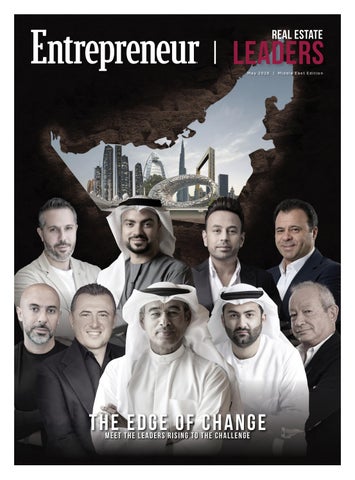
Entrepreneur Middle East (Real Estate Leaders) | May 2026
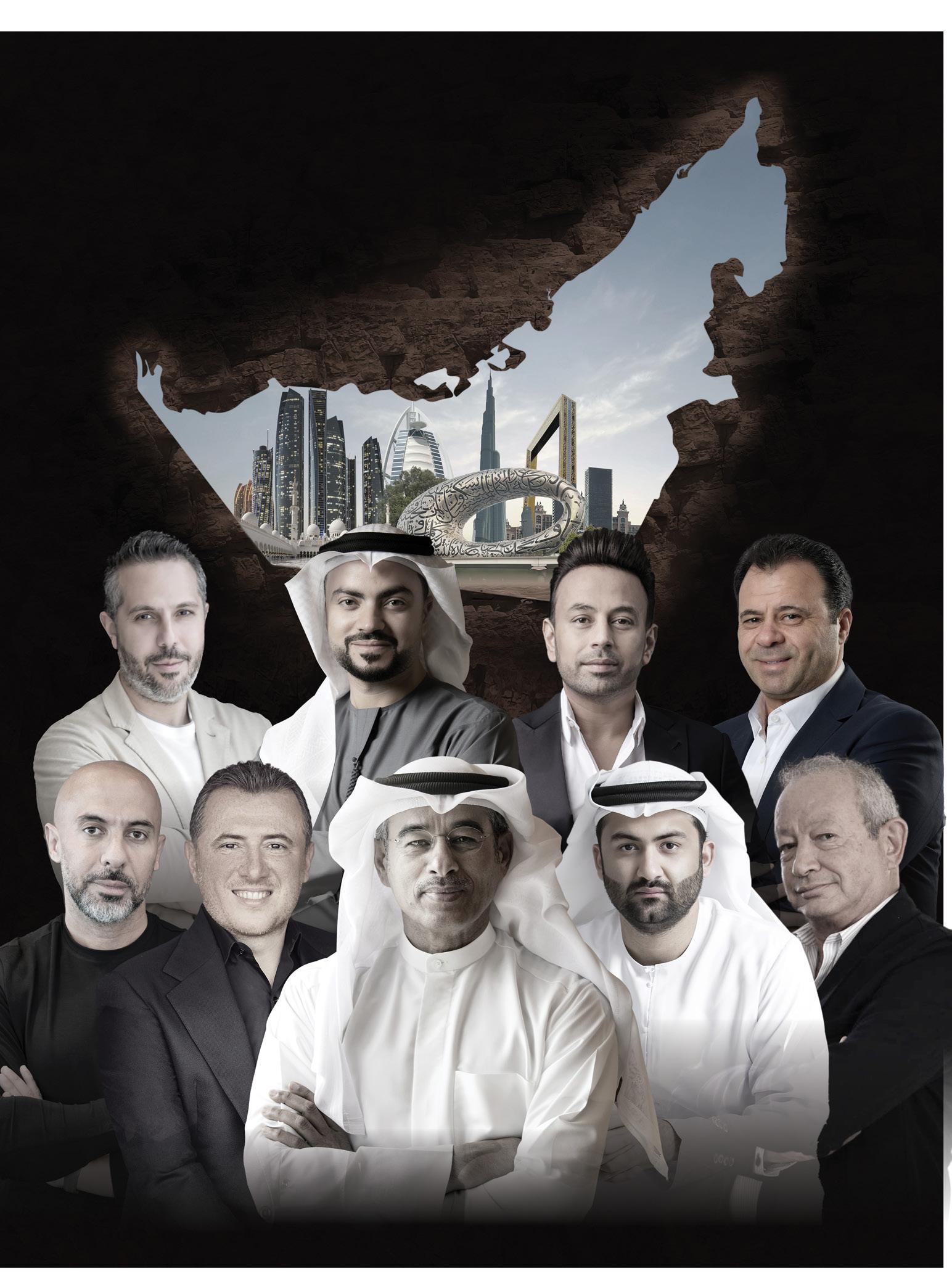
The Builder Who Never Stopped Building
Mohamed Alabbar turned a global crisis into a blueprint for conquest
True Vision Always Rises
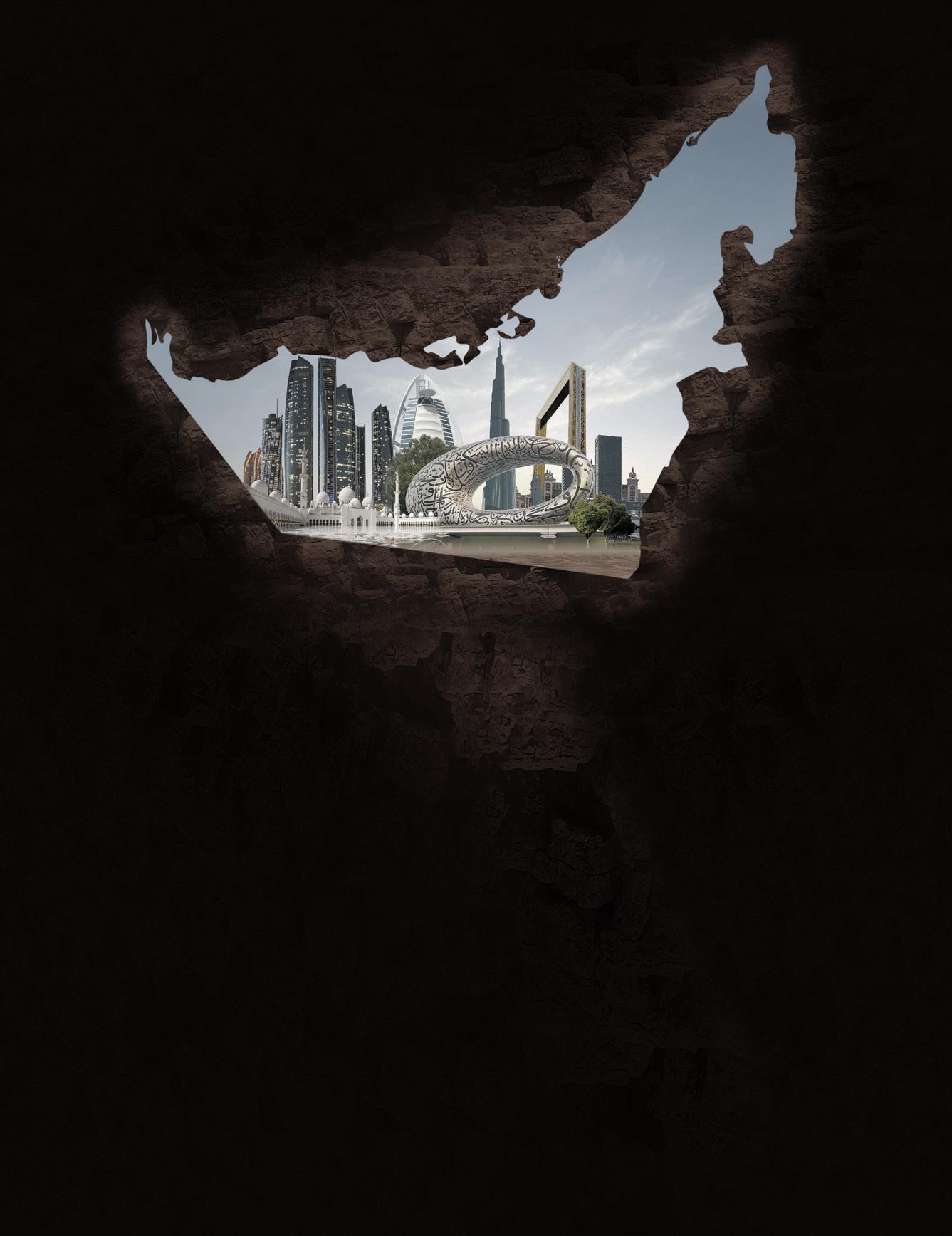
It has never been solely about the abundance of resources a nation holds, but about how those resources are envisioned and transformed
Position of Strength
Abbas Sajwani built AHS Properties into one of Dubai’s most formidable ultraluxury developers in less than five years
The Ecosystem Builder
Ahmed Alkhoshaibi does not build properties. He builds cities
The Long Game
Naguib Sawiris has built empires in telecoms, media and mining
Built to Last
How Kareem Fahmy Reads the Storm — and Sees Only Blue Sky
A Foundation Designed to Endure
Satish Sanpal Lays the Groundwork for Dubai’s Next Chapter
The Foundation Never Moves
As geopolitical uncertainty rattled global markets, Ali Al Gebely never wavered
Building Beyond Borders
Mohamed Adib Hijazi has been quietly doing what he has always done: building homes, nurturing communities, and refusing to be rattled by the world beyond his construction sites
The Gilded
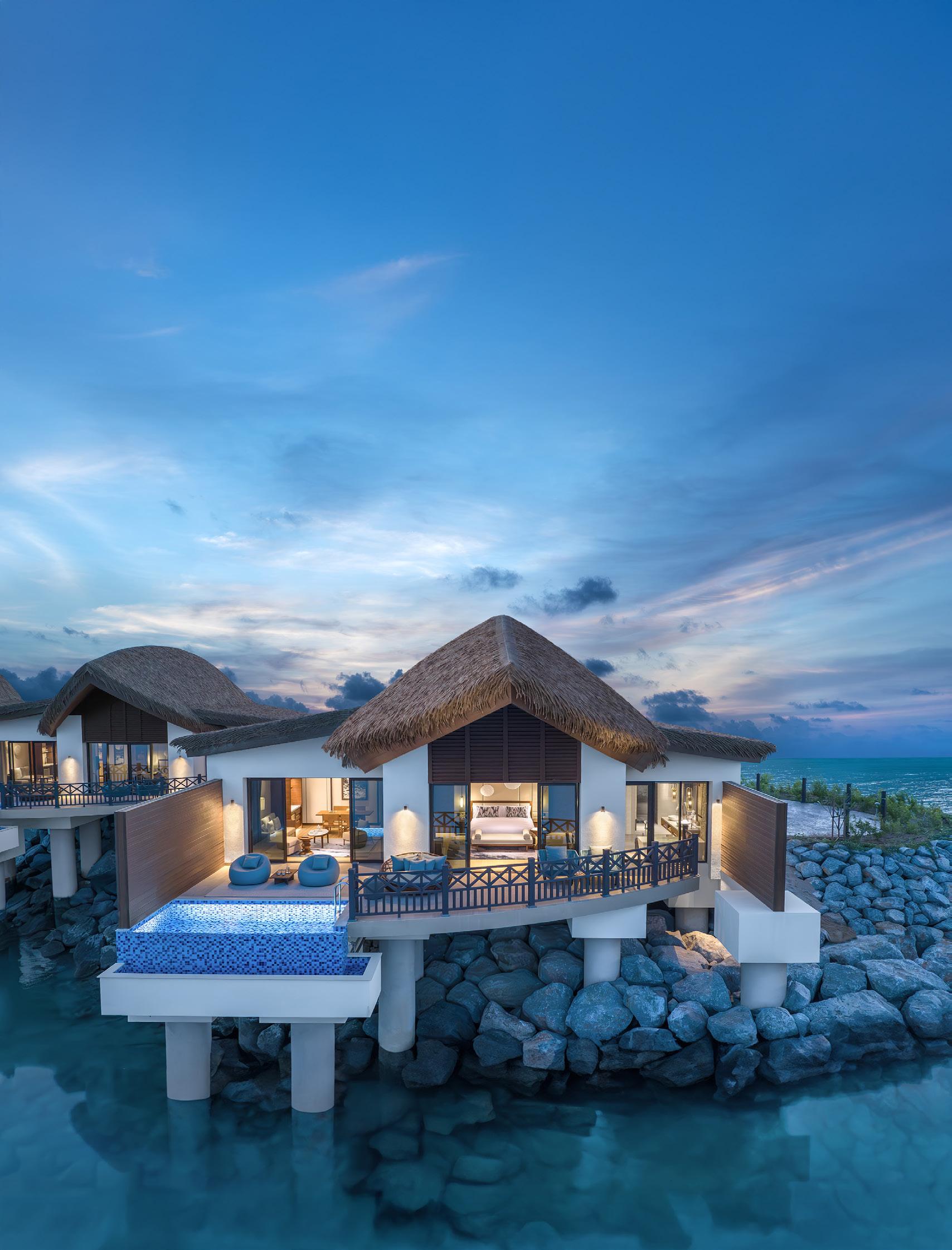
Where Purpose Meets the Coast
The 50°C Frontier
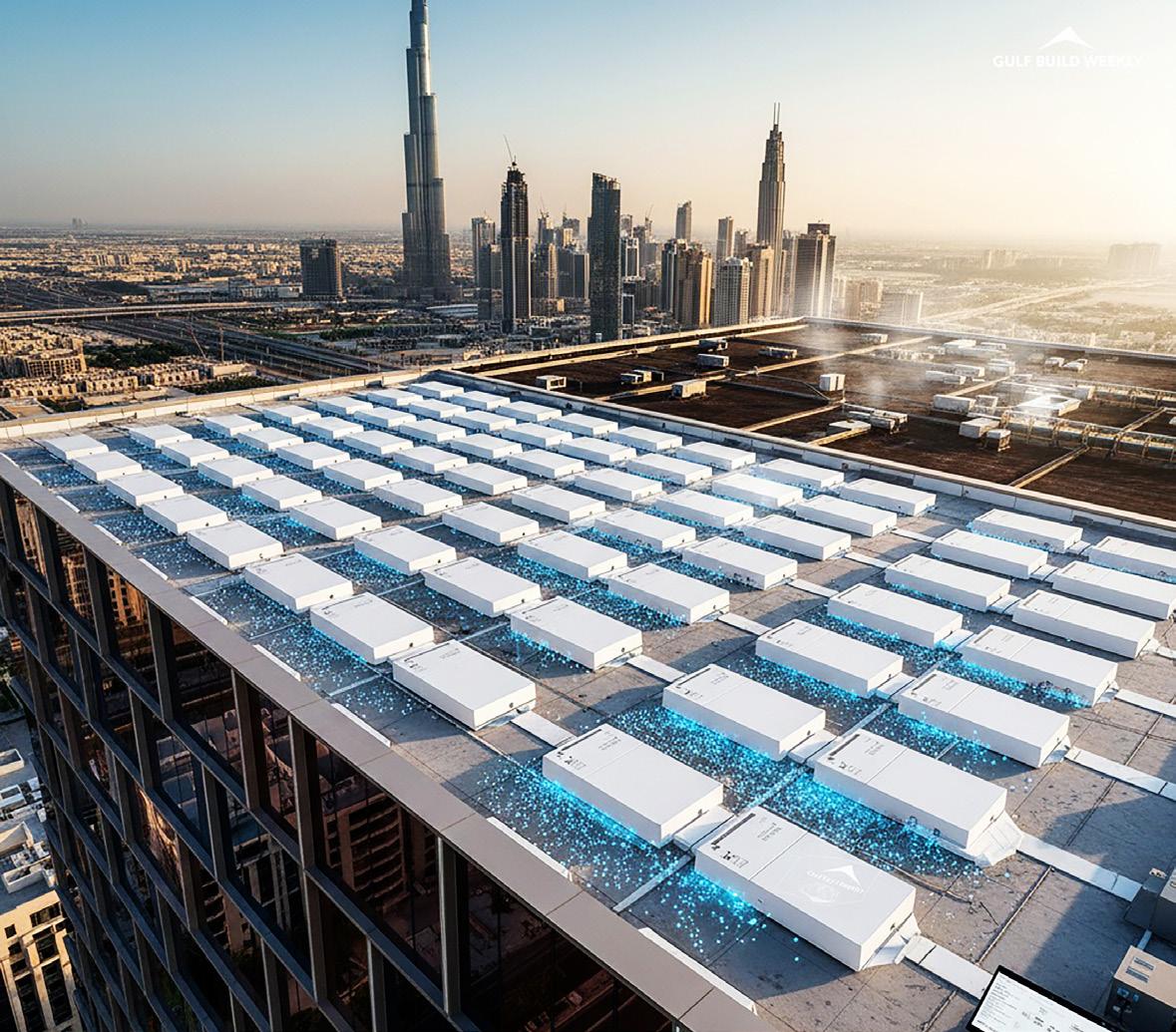
How the Middle East is Engineering the Future of Passive Cooling
The Invisible Butler
How “Living Algorithms” Are Redefining the 2026 Branded Residence
The Blue Frontier
How Dubai’s 2026 Waterfront Masterplans are Rewriting the Rules of Marine Luxury and Environmental Resilience
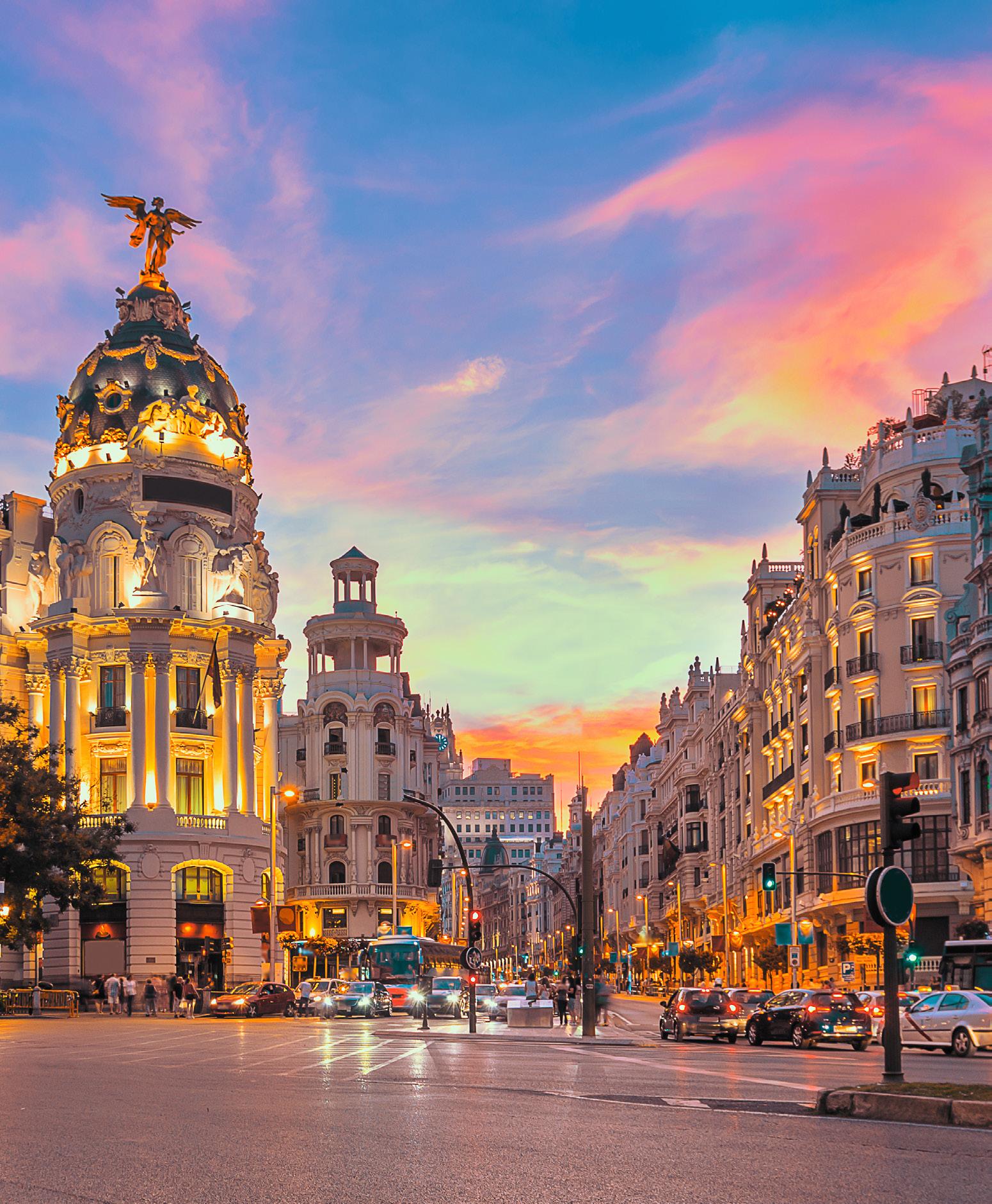
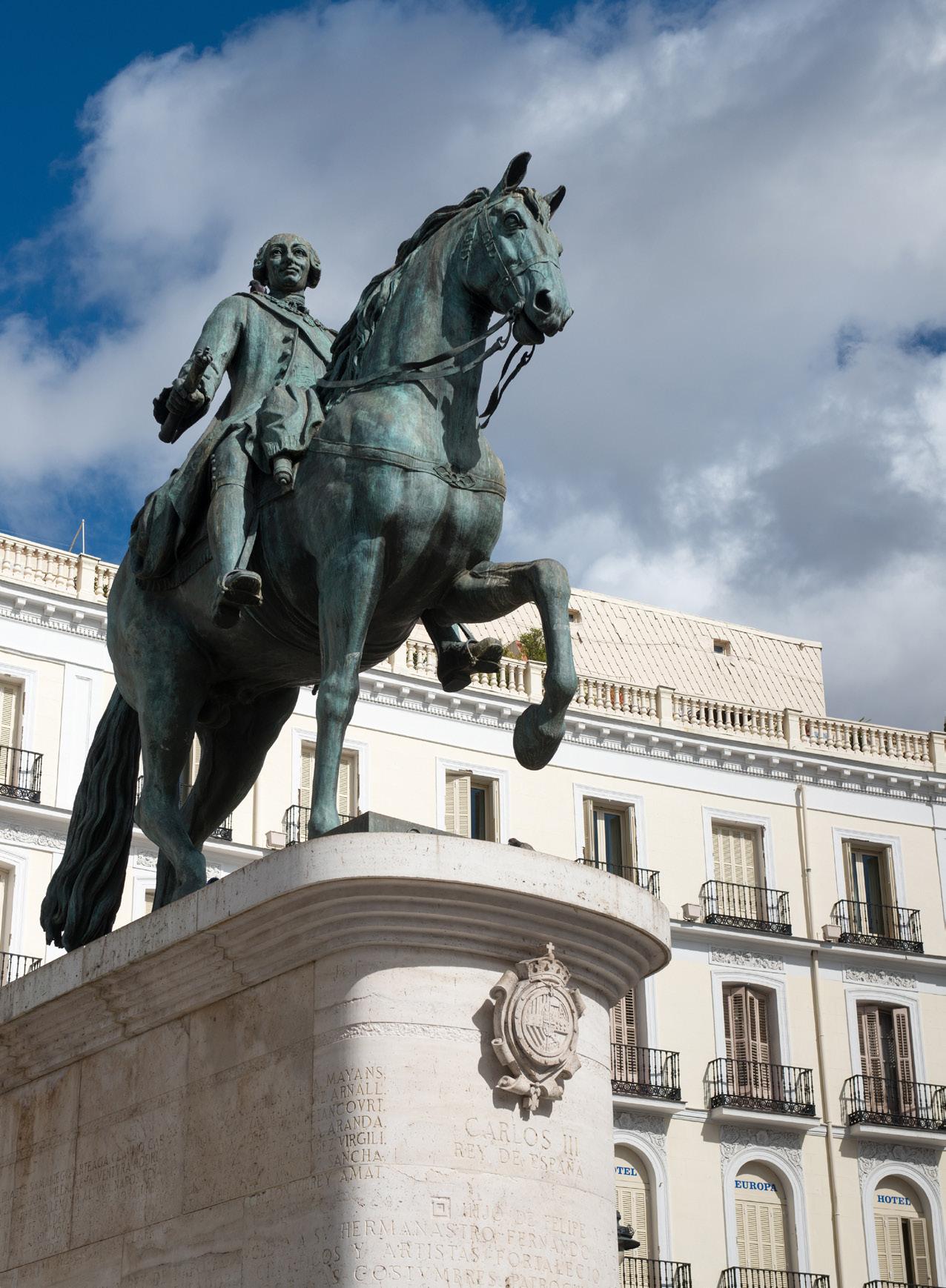
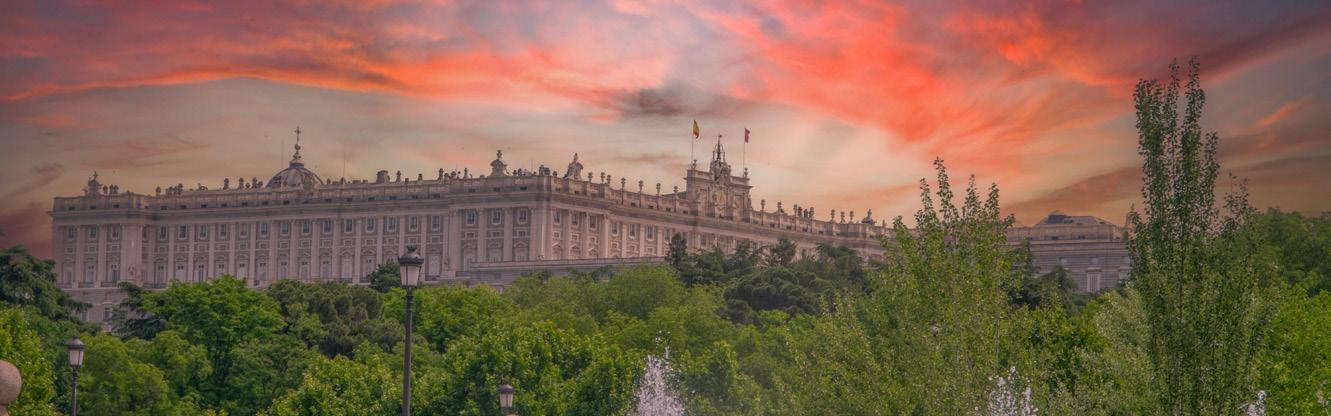
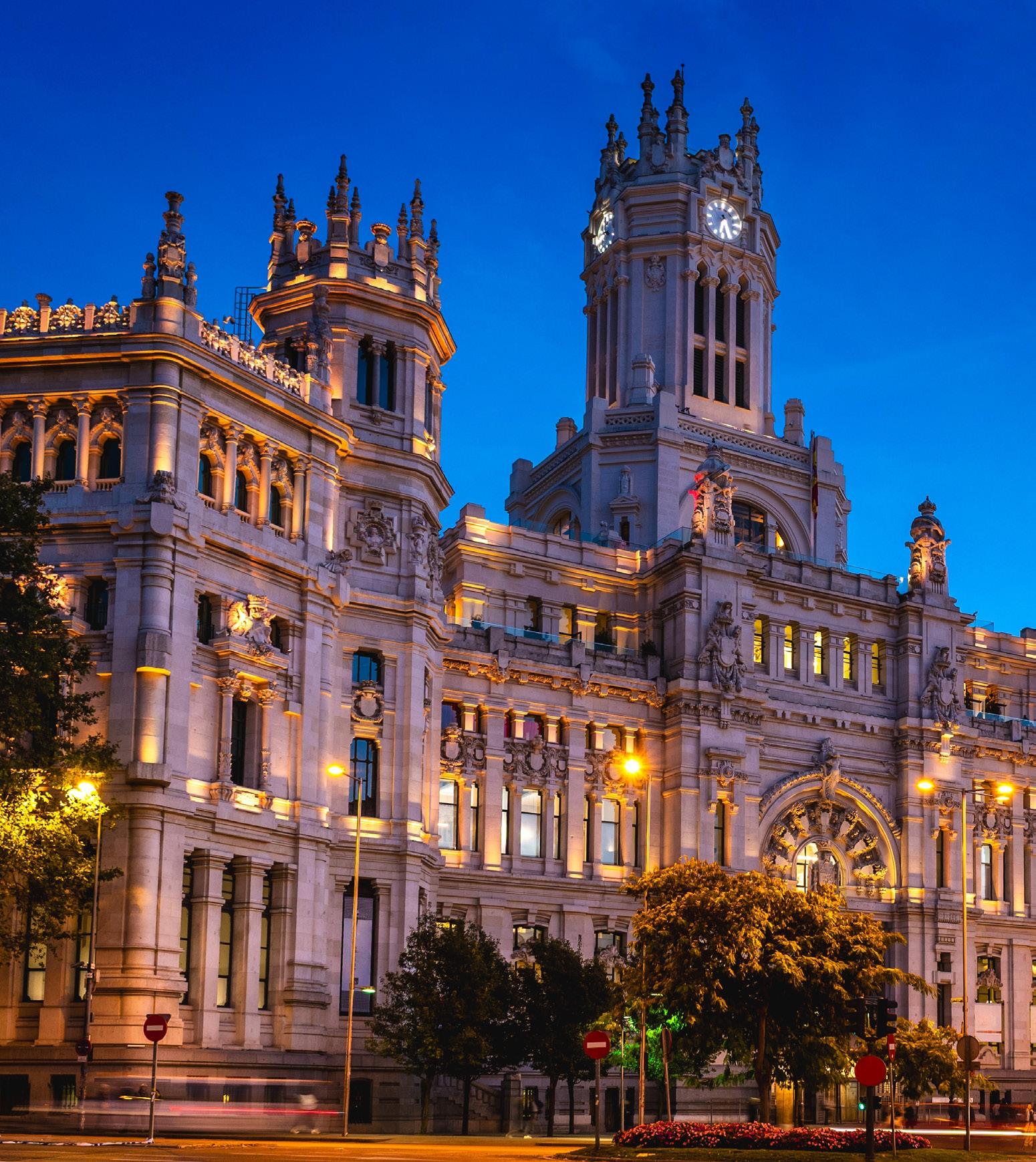
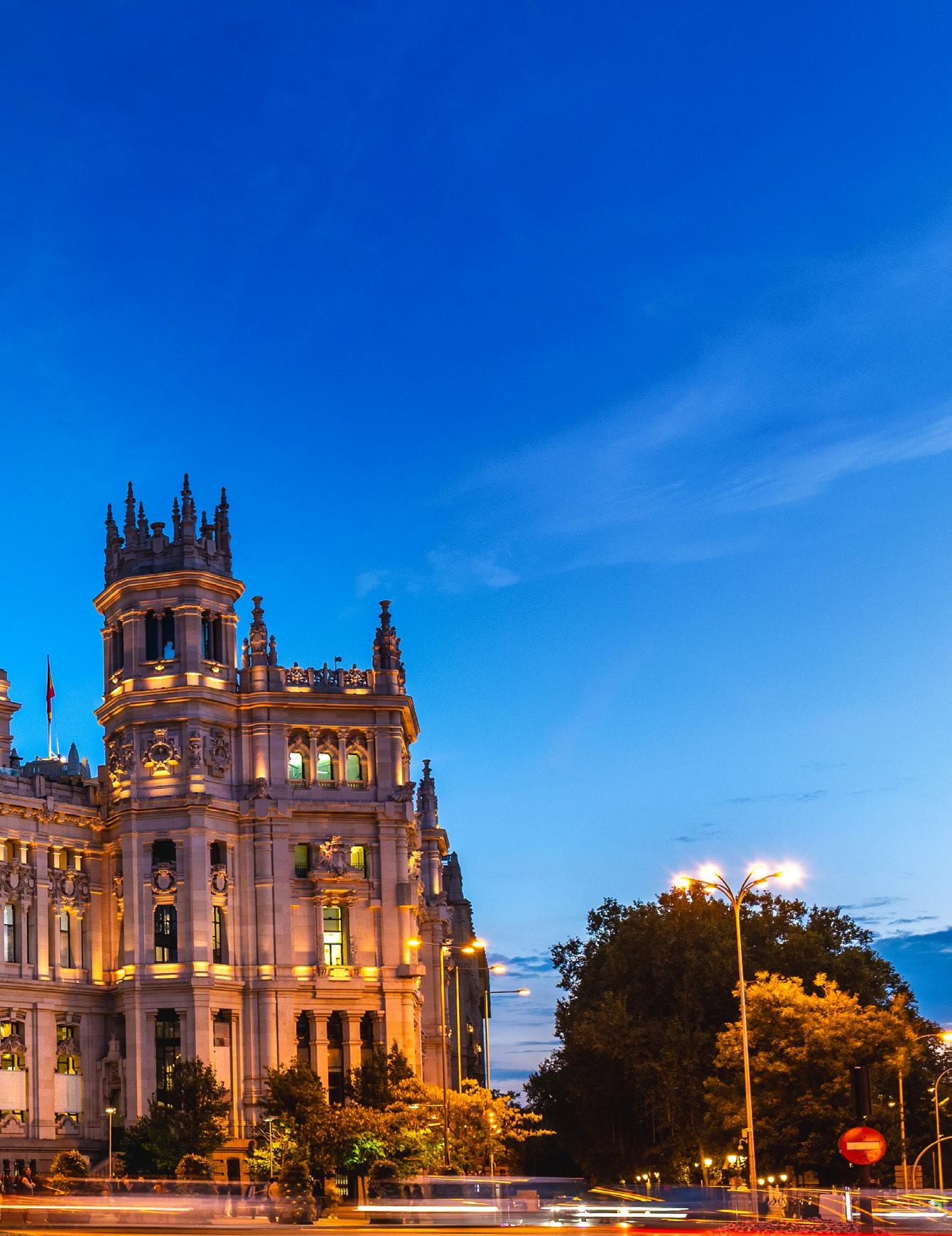
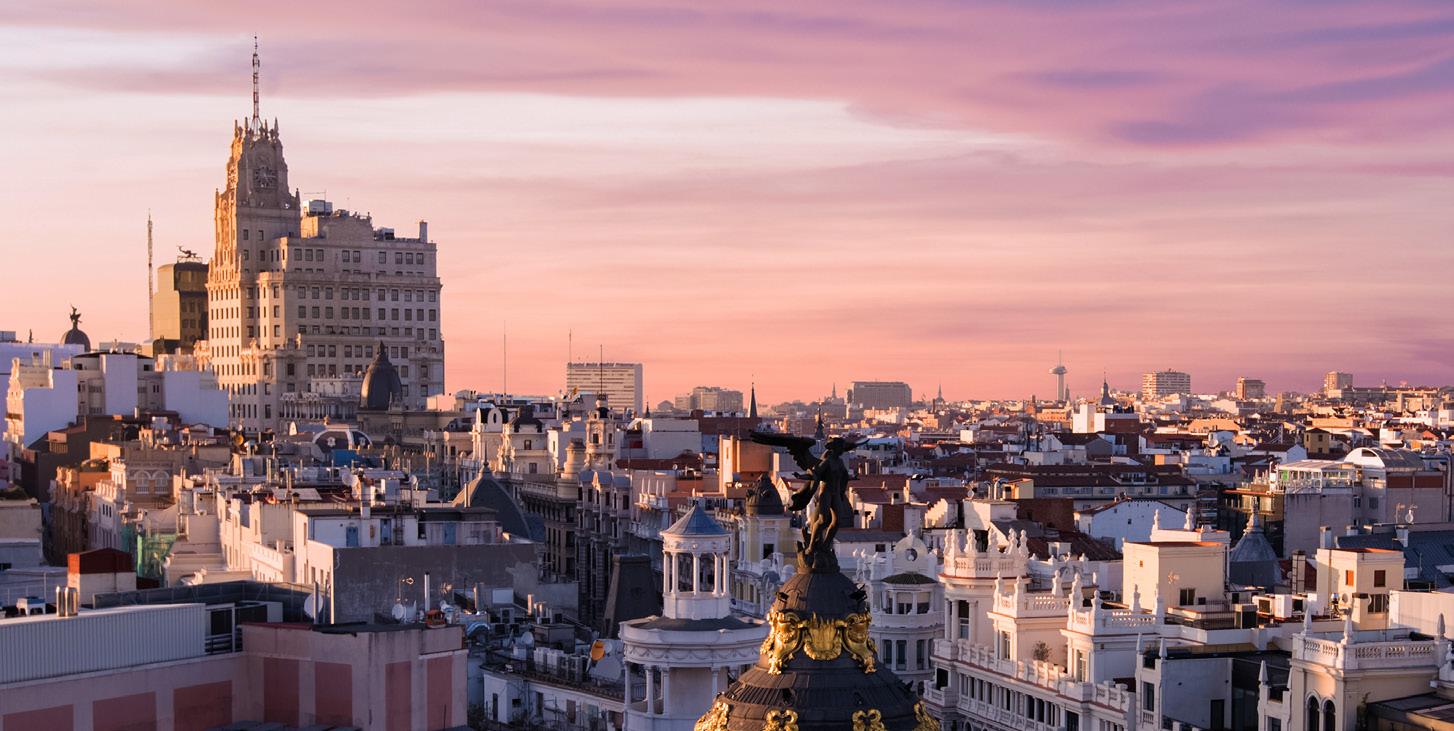
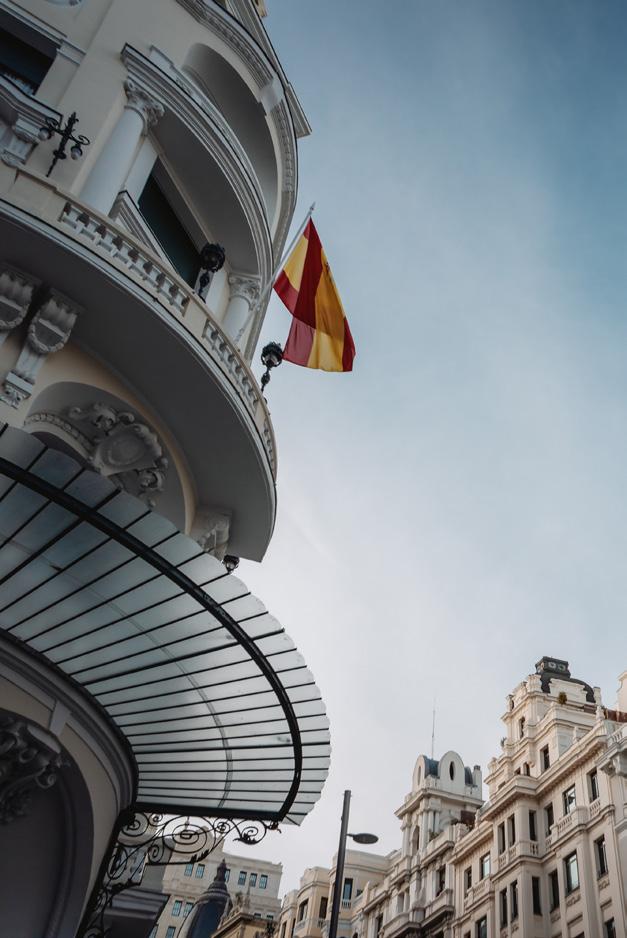
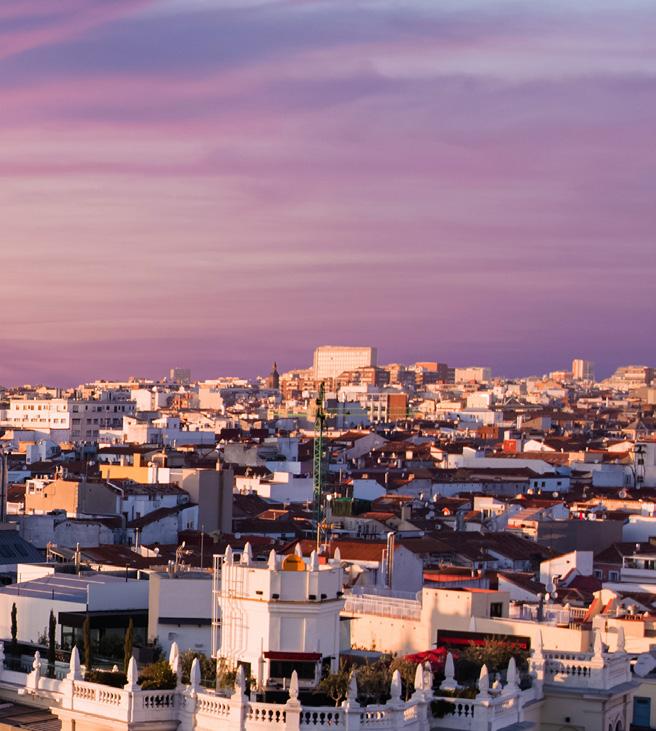
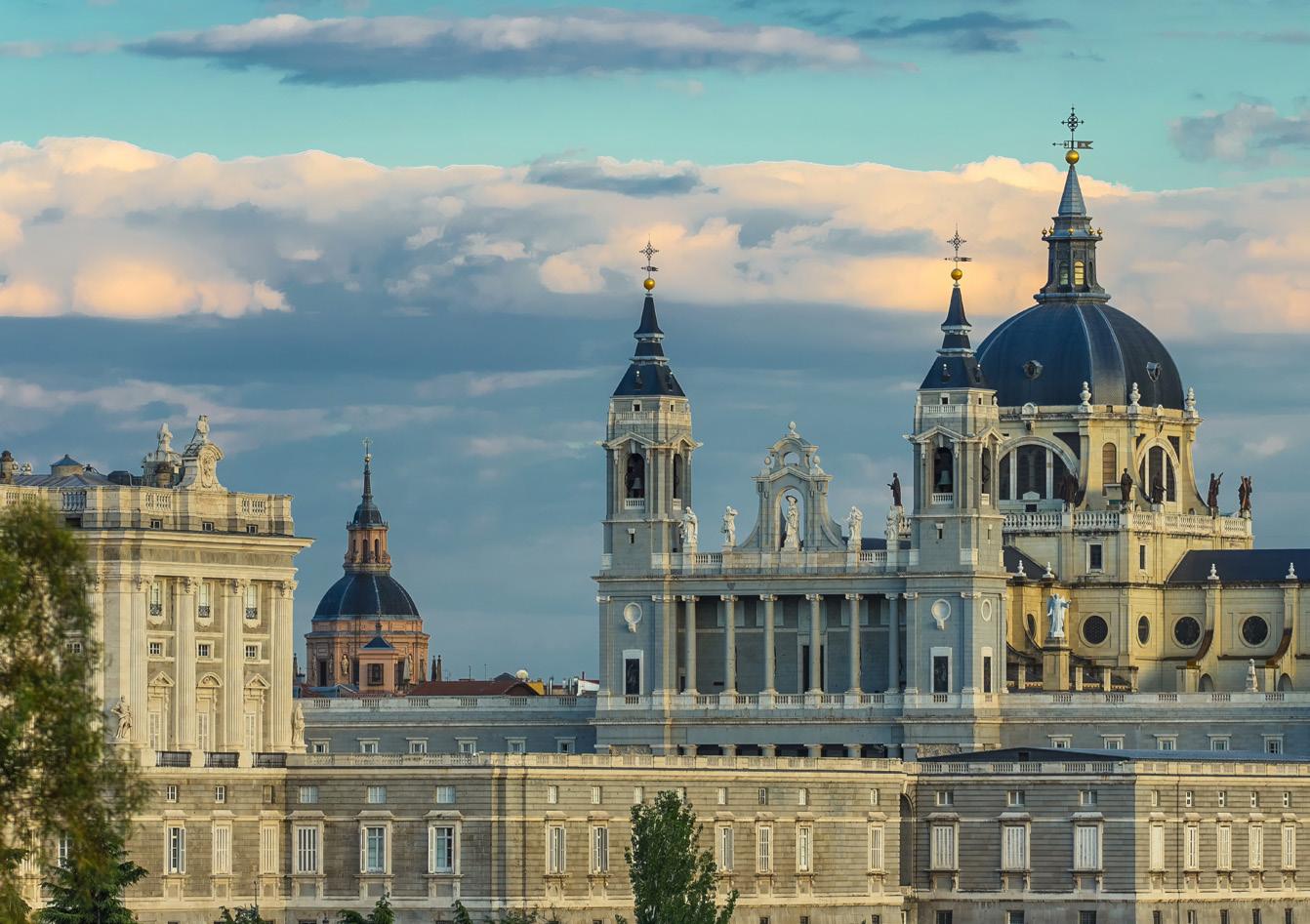
Why Madrid is the New Crown Jewel of Global Real Estate
As international capital pivots away from traditional hubs, the Spanish capital is stepping into a transformative era of prestige
ODE TO BAG END Limited Edition
Make ever y epic writing journey a cosy one Hobbiton handcraft from the makers of the world’s most magical pens
It always seems impossible until it’s done.
Nelson Mandela
THE BUILDER WHO NEVER STOPPED BUILDING
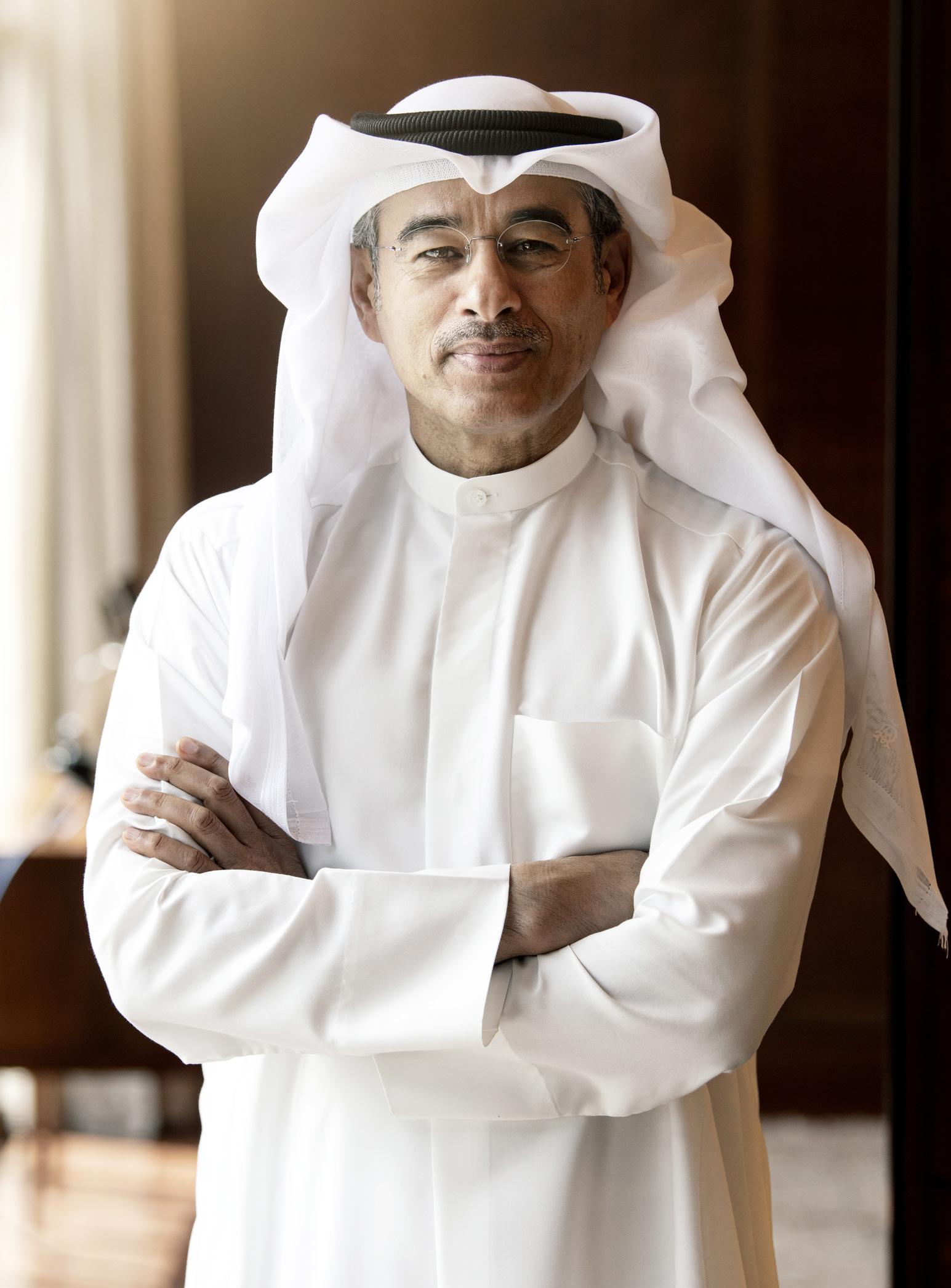
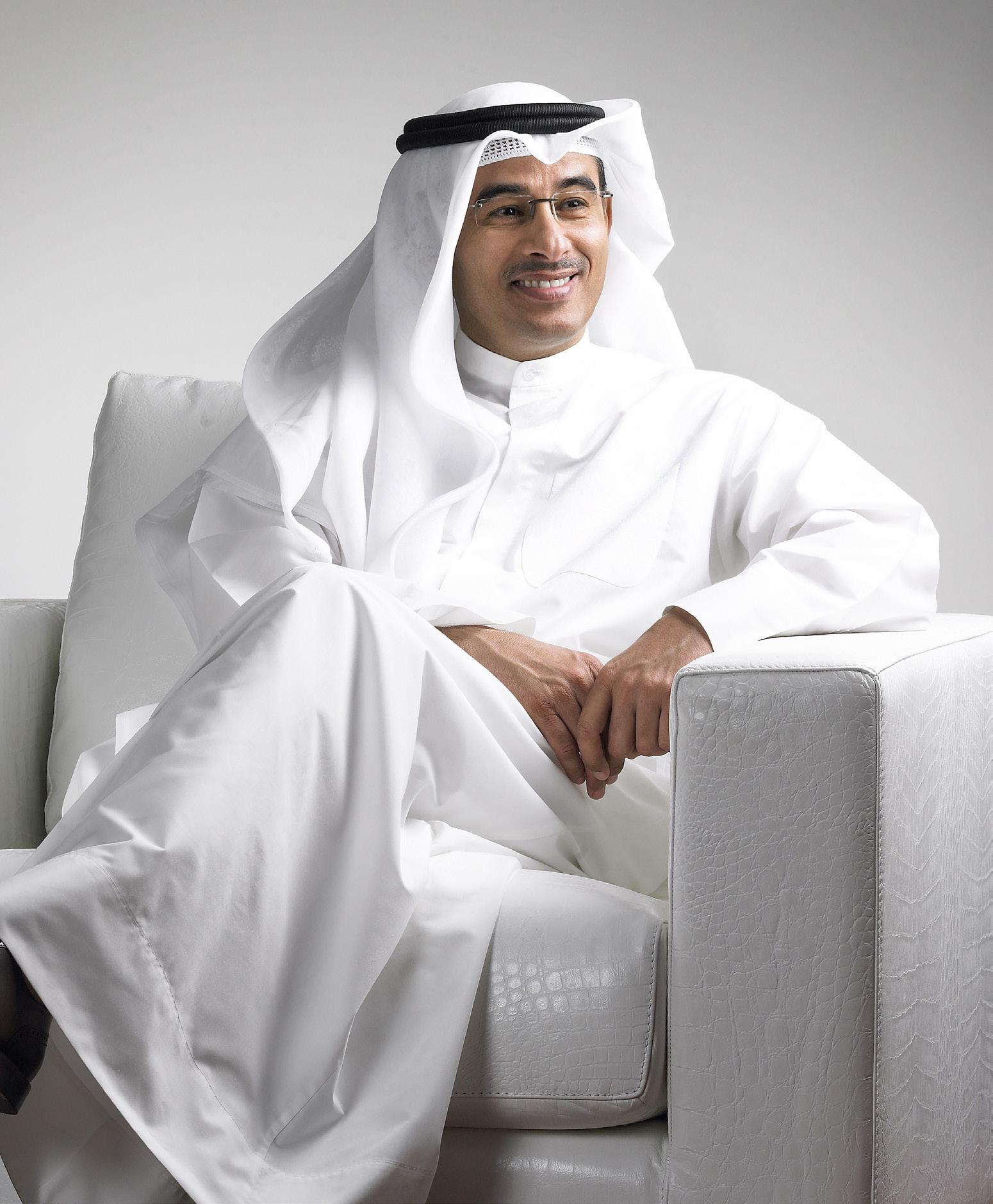
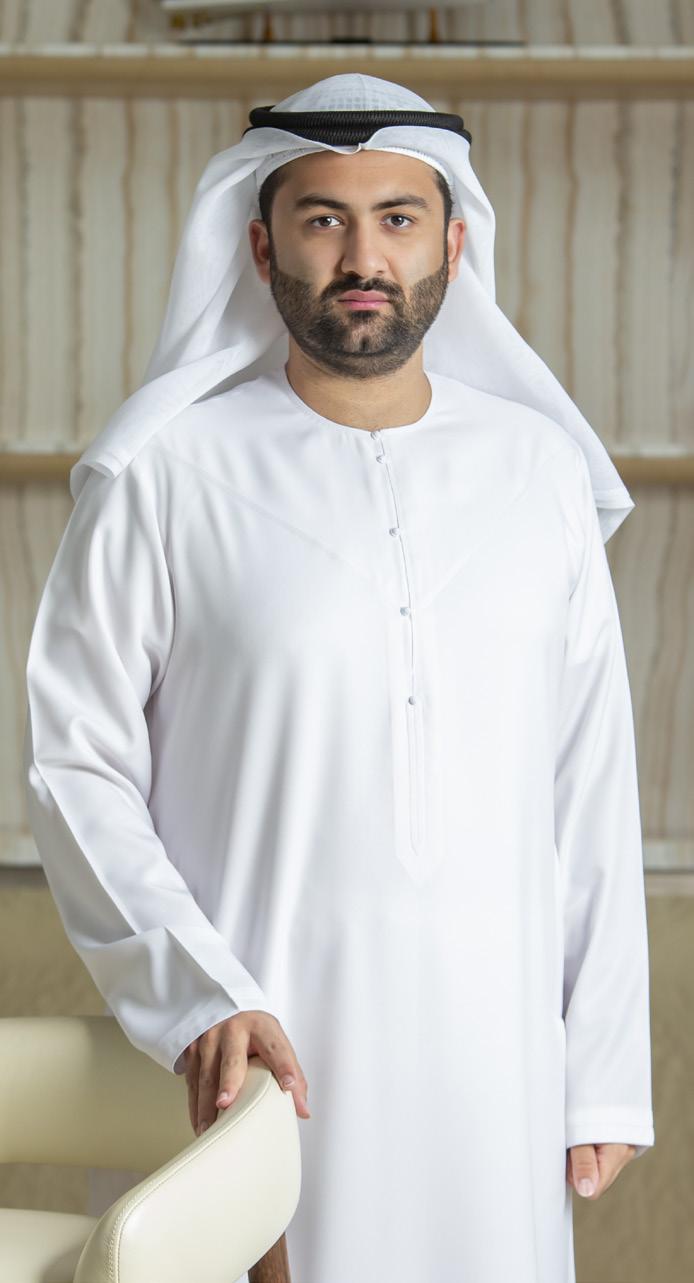
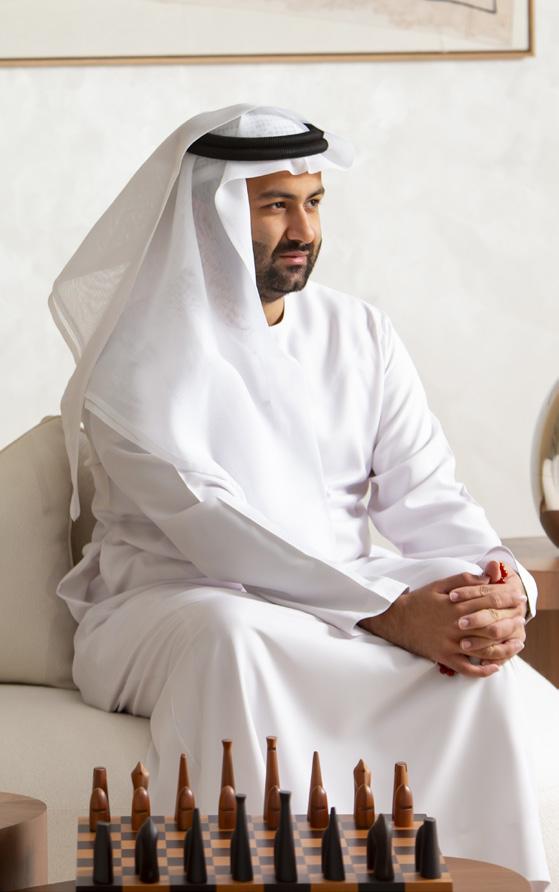
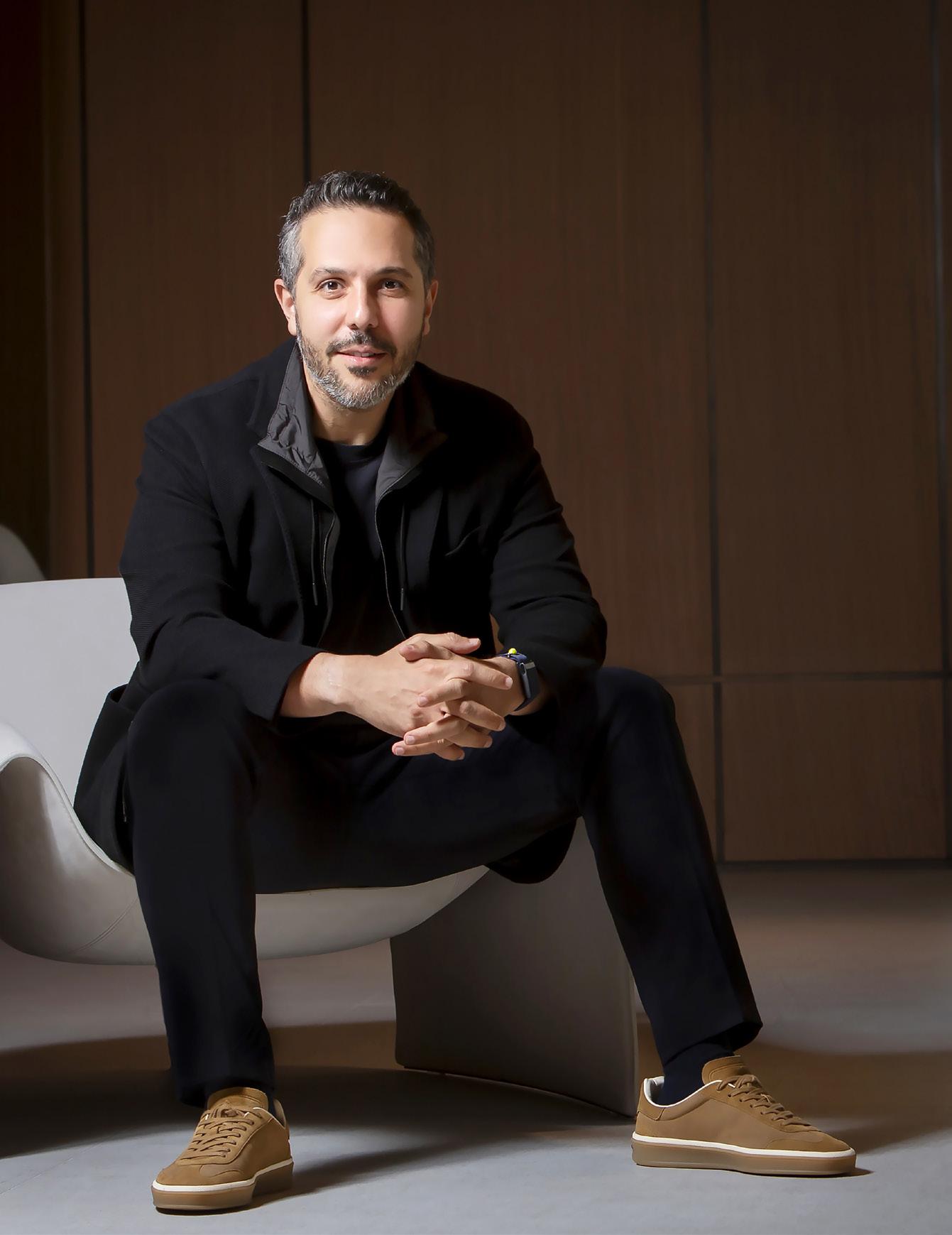
Mohamed Alabbar turned a global crisis into a blueprint for conquest. As founder of Emaar Properties — the company behind the Burj Khalifa, Dubai Mall and hundreds of thousands of homes — he has seen storms before. Here, he explains why the UAE’s greatest chapters are yet to be written.
There is a particular kind of confidence that can only be earned, not assumed. Mohamed Alabbar, the man who built a skyline, who conjured the world’s tallest tower from desert sand and raw ambition, has earned it many times over. He speaks not with the caution of a man who has weathered storms, but with the restless energy of one who has learned to move faster because of them.
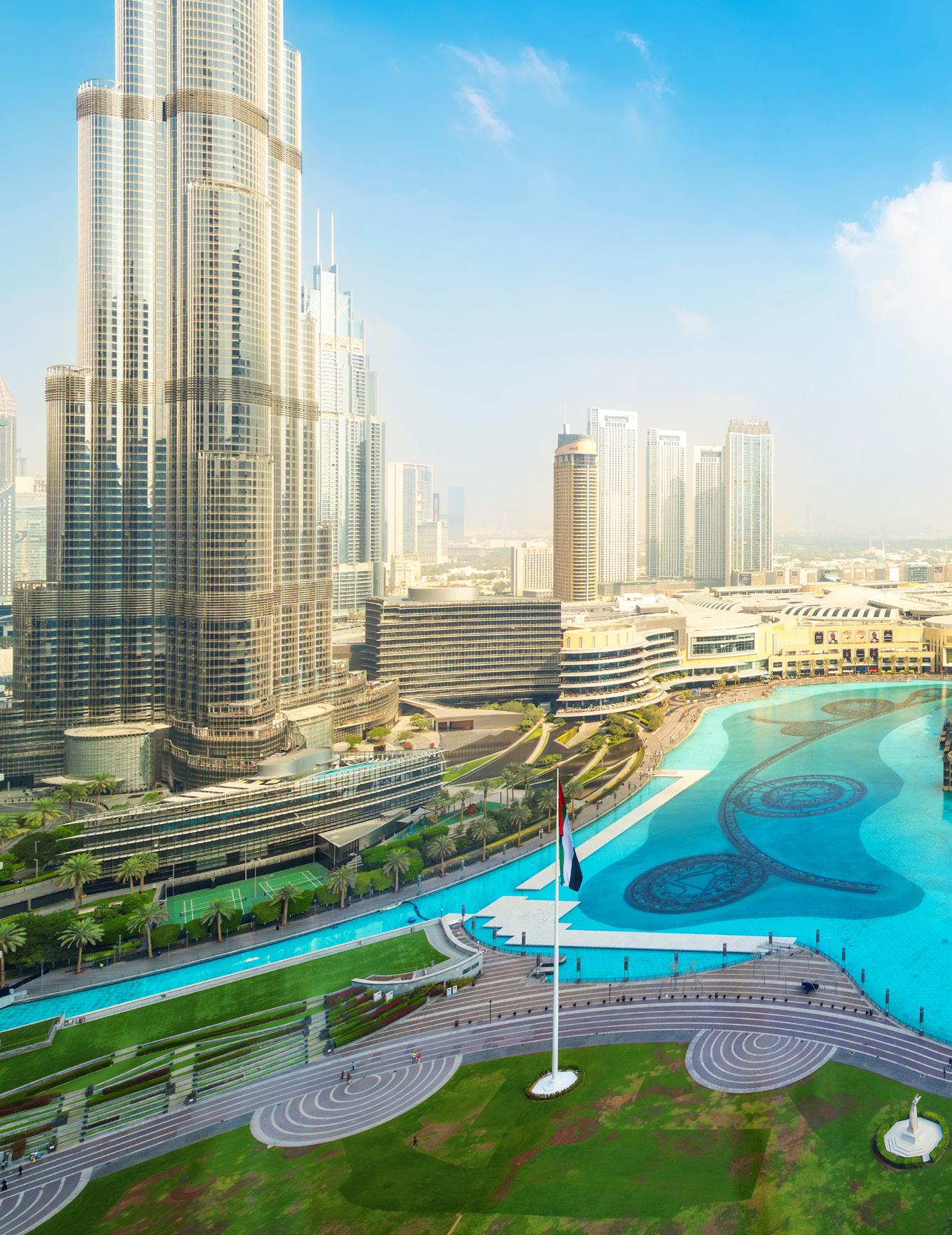
Alabbar founded Emaar Properties in 1997. Today, Emaar is one of the world’s most recognised property developers — a colossus responsible for hundreds of thousands residential units delivered across the UAE alone, with a presence stretching across the Middle East, North Africa, South Asia and beyond. Its flagship mixed-use megadevelopment, Downtown Dubai, represents one of the most audacious urban planning exercises of the 21st century: a 500-acre district anchored by the Burj Khalifa — still the world’s tallest building at 828 metres — and the Dubai Mall, which draws more than 105 million visitors per year, making it the most visited retail and leisure destination on the planet.
That philosophy — blunt, unapologetic, and entirely deliberate — is how Alabbar summarises the growth
model he forged from previous crises the region has faced. It is a strategy of aggressive expansion tempered by what he calls being “positively paranoid”: a management discipline that targets growth leaps of between 40 and 70 per cent while simultaneously maintaining iron control over costs, processes and market risk, monitored not quarterly, not monthly, but day by day.
“The desire for rapid growth and taking money from the table must be coupled with strict control over processes,” he explains. That means leveraging technology at every turn, watching market dynamics in real time, and — most critically — securing what Alabbar calls financial ‘safety doors’: mechanisms that ensure cash flows in from clients in precise alignment with obligations going out to contractors. It is a system born not from theory but from hard-won scar tissue.
The numbers that most impress Alabbar are not the headline ones — not the 163 floors of the Burj Khalifa, not the 1.2 kilometres of The Dubai Fountain, not the AED 26.2 billion in revenue Emaar recorded in 2023, up 28 per cent year-on-year. The numbers he returns to are the quiet ones, from the worst possible moment.
During the global financial crisis of 2008 to 2009, Emaar was simultaneously managing approximately 100 active construction sites with 40,000 customers paying monthly instalments on off-plan properties. In normal times, around 1,000 customers at any given moment would request a two-month payment delay. At the peak of what Alabbar memorably calls the crisis “tsunami”, that number rose to just 1,200 — barely a tremor — before falling back to 700.
For Alabbar, that statistic is the purest expression of what the UAE has built: not just towers and malls, but something far more durable — a covenant of confidence between the state, its institutions and the people who choose to invest in its future. Through every period of global uncertainty, that covenant has held. “The resilience of human beings and their memory is something that is great for the world.”
The years since have only amplified the case. Dubai’s residential property market recorded its best-ever year in 2023, with transaction volumes surpassing AED 411 billion — a figure that would have seemed fantastical even a decade ago. Emaar’s own property sales that year hit AED 40.5 billion, its highest ever recorded, driven by sustained demand from international buyers, regional investors and a growing base of long-term residents drawn by the emirate’s safety, infrastructure and quality of life.
Emaar’s portfolio now encompasses not just residential towers but entire ecosystems: The group’s total assets exceed AED 100 billion. Emaar Development — the build-to-sell arm listed on the Dubai Financial Market — posted a net profit of AED 5.7 billion in 2023, a 52 per cent surge on the prior year.
But ask Alabbar what he would tell his younger self, and the answer is not about leverage ratios or landbank strategy. It is about people.
“The advice that I wish someone had given me is that I should have the best people to work with me,” he says. “And when I bring the best people to work with me, and after they prove that their work is good, I give them a small percentage of the company. Because a good person is hard to find, so if you find one and they prove themselves for a year and work well with you, you give them a share of the company — or at least a percentage of the profit if you don’t want to give them a share of the company.”
It is a philosophy that has shaped Emaar’s culture from the inside out. The company employs tens of thousands of people directly and supports
hundreds of thousands more through its supply chains, contractor networks and tenant base. Its graduate and leadership development programmes have become a pipeline for some of the UAE’s most capable real estate professionals.
His second principle is simpler, and perhaps more universal: “Success requires hard work day and night. Sometimes you might succeed, and sometimes you might not and have to change your path.” For a man who has redesigned the skyline of one of the world’s fastest-growing cities, the humility in that observation carries real weight.
And his third principle takes aim at the most persistent illusion in real estate: the seduction of the brand.
True brand value, Alabbar insists, is not built on spectacle. It is built on mastery. “With this foundation of quality, you can easily compete with anyone,” he says. Which makes his next observation all the more pointed.
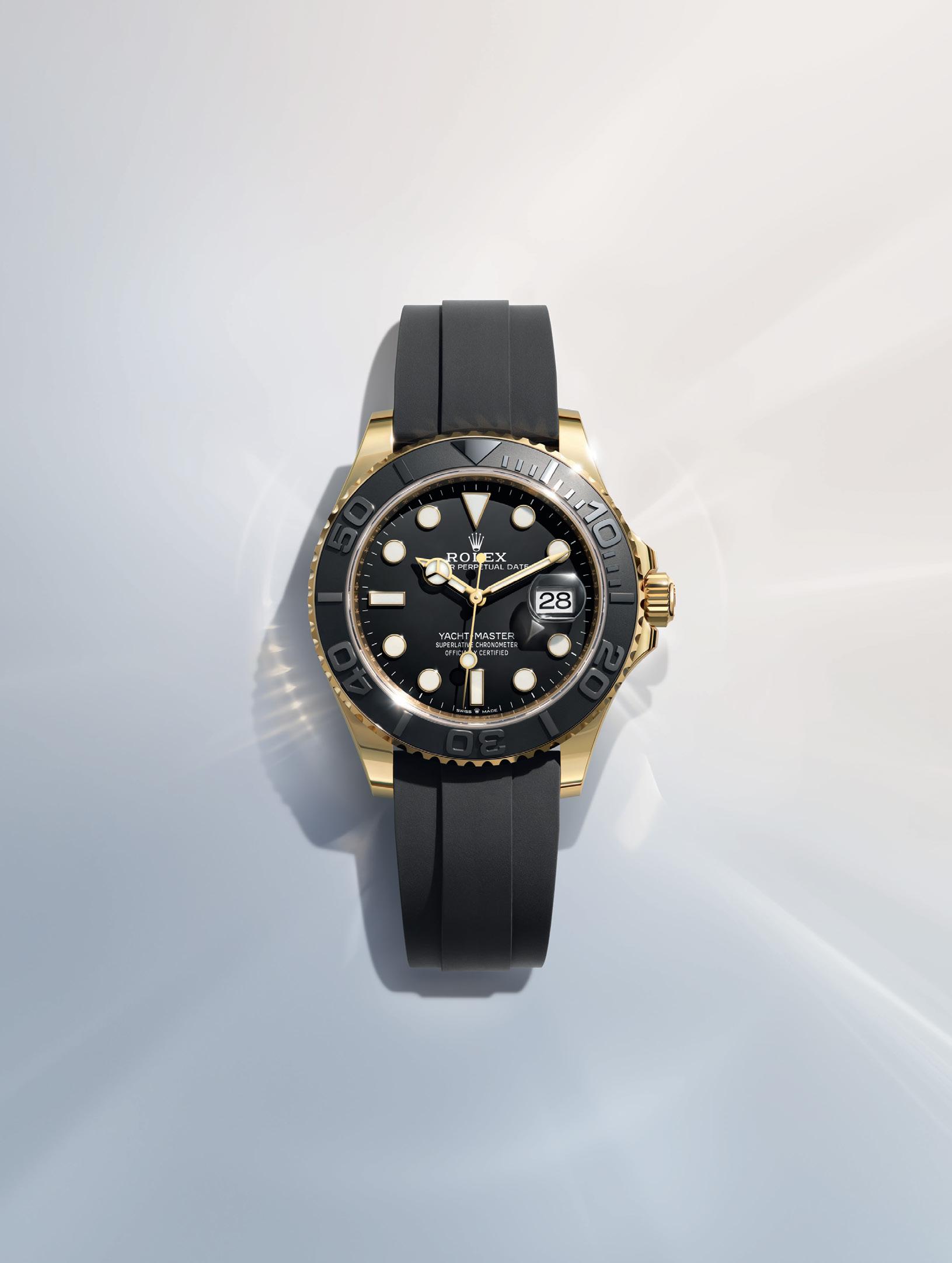
“There is a lot of fanfare in real estate companies,” he continues. “Someone wearing an expensive watch, driving a Rolls-Royce, making an advertisement on a yacht, or going to Monaco — don’t believe that. This is all just fanfare.” He reserves particular scepticism for
the oversized billboard — that supposed symbol of market confidence. “When I see a large billboard on the street, I think to myself: it’s like you’re telling people you can’t sell and you’re begging them to come to you.” Excessive marketing, in Alabbar’s view, is a form of deception. Quality, delivered consistently at scale, is the only lasting advertisement.
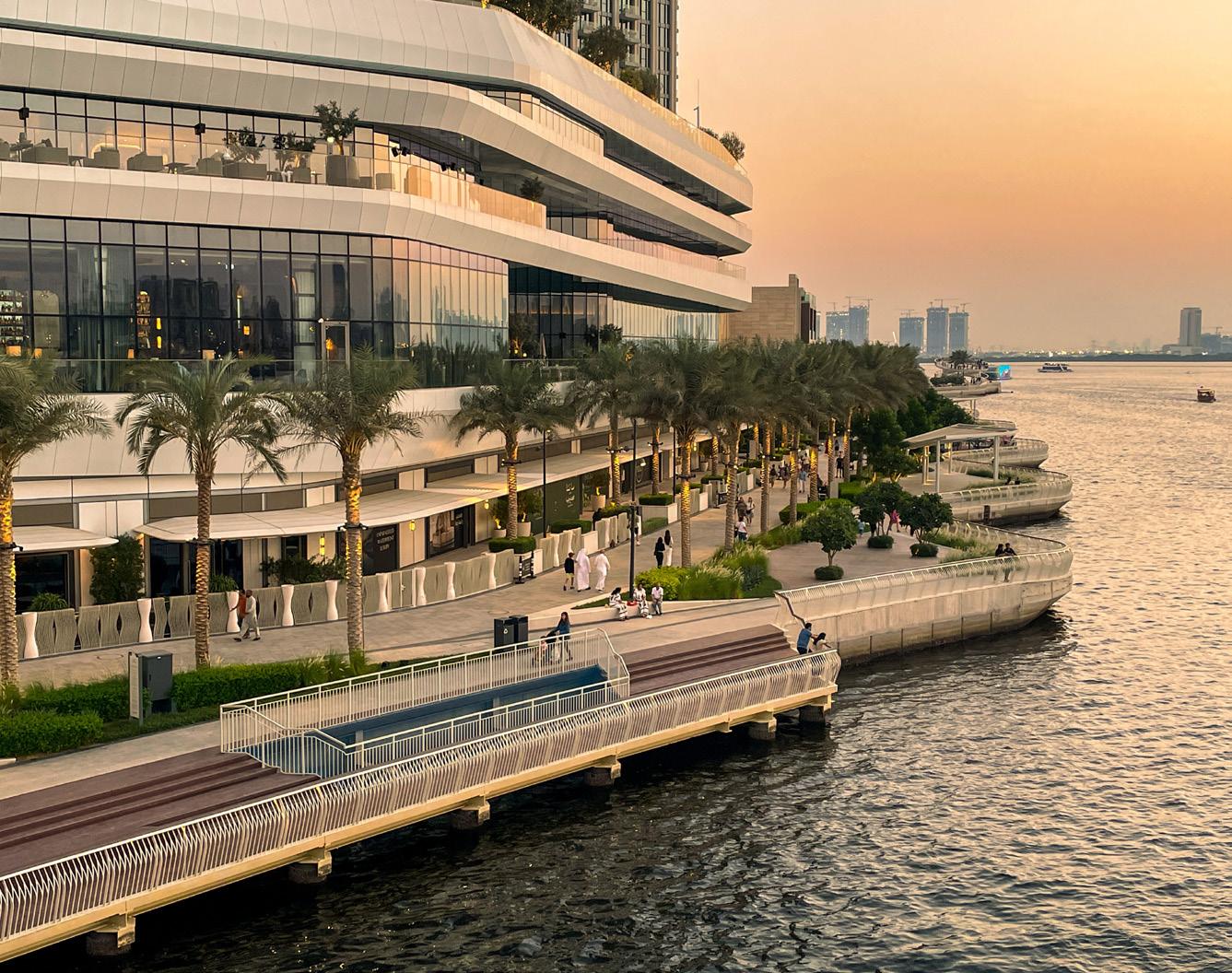
It is a standard that Emaar has applied across every project it touches. From the immaculate delivery of Emaar Beachfront — a private island community of 27 residential towers stretching along 1.5 kilometres of pristine shoreline — to Creek Harbour, the 6-square-kilometre waterfront city rising along the banks of the Dubai Creek, designed around a new tower that will surpass even the Burj Khalifa in height, the company’s commitment to execution over announcement remains absolute.
“The desire for rapid growth and taking money from the table must be coupled with strict control over processes.
The recent period of geopolitical uncertainty — the tensions, the regional conflicts, the anxious headlines — has tested markets across the world. And yet, in the story of Dubai’s real estate sector, the chapter being written right now may be among the most remarkable. The emirate added more than 100,000 new residents in 2023 alone. Prime property values continue to appreciate. Off-plan sales, the mechanism through which Emaar has long channelled its growth, remain at record levels, with buyers from Europe, South Asia, East Asia, and across the Arab world choosing Dubai as their destination of choice.
Emaar’s pipeline reflects that confidence. The company has tens of thousands of units under active development across the UAE, with new master-plan communities in various stages of delivery. Rashid Yachts & Marina, a 430-berth marina district on the Dubai Creek, is redefining waterfront living. The Oasis, a 100-million-squarefoot community in Dubailand, represents one of the most ambitious horizontal developments in the group’s history.
For Alabbar, none of this is accidental. It is the compound result of lessons drawn from crises, of discipline applied daily, of quality delivered without compromise, and of a fundamental belief in the UAE’s capacity to attract, retain and reward ambition. He has learned, as he puts it, from every shock — and each time, the lesson has been the same: that the institutions and systems built here are stronger than the forces that test them.
There is, perhaps, no better argument for that belief than the view from the 124th floor observation deck of the Burj Khalifa on any given day: a city that did not exist in this form thirty years ago, humming with purpose, stretching toward a horizon it is still in the process of defining.
There is one final lesson that Alabbar carries with him — one shaped not in a boardroom, but in conversation with the architect of the UAE itself. “Sheikh Mohammed bin Rashid keeps telling me, there is a day and there is night, and the night comes. Are you ready for the night? Honestly, we are ready for the night every single night of our lives.”
Mohamed Alabbar built much of what you can see from there. And by his own account, he is nowhere close to finished.
“The advice that I wish someone had given me is that I should have the best people to work with me.
TRUE VISION ALWAYS RISES
OMNIYAT Group’s Founder and Executive Chairman reflects on resilience, leadership, global capital, and the enduring vision that has shaped the UAE into one of the world’s most trusted destinations for ambition, humanity, and growth.
“It has never been solely about the abundance of resources a nation holds, but about how those resources are envisioned and transformed. The UAE stands as a powerful example of this principle, where resources have been masterfully leveraged through wisdom, foresight, and a future-driven mindset. Under exceptional leadership, the nation has been built on excellence, precision, and long-term strategic planning that continues to define its global standing today.”
Having witnessed the country’s transformation over decades, Amjad speaks about the UAE not simply as a market, but as one of the most extraordinary examples of leadership, resilience, and longterm vision in modern history, a nation that continuously turns challenges into momentum, and uncertainty into progress.
“The UAE is a very unique market,” he says. “It cannot be compared to any other country.”
What makes the UAE exceptional, in his view, goes far beyond economic growth or infrastructure. It is rooted in a philosophy established by the late Sheikh Zayed bin Sultan Al Nahyan and the late Sheikh Rashid bin Saeed Al Maktoum, a philosophy built on unity, humanity, knowledge, wisdom, openness, and belief in possibility.
“I witnessed the evolution of the UAE and the depth of the leadership’s vision,” Amjad reflects.
“What is remarkable is how the leadership elevated that vision across generations. They took the foundations and values established by Sheikh Zayed bin Sultan Al Nahyan and Sheikh Rashid bin Saeed Al Maktoum and continued
building on them with extraordinary clarity and ambition.”
He points to the leadership of His Highness Sheikh Mohamed bin Zayed Al Nahyan, President of the UAE, and His Highness Sheikh Mohammed bin Rashid Al Maktoum, Vice President and Prime Minister of the UAE and Ruler of Dubai, as leaders who transformed vision into a living national culture.
And today, you feel those values everywhere in the UAE.
“Only those who have lived in the UAE and witnessed its response through every challenge can truly understand it,” he says. “Each time, the UAE emerges even stronger, more advanced, and more deeply united.”
That resilience has deeply influenced the way Amjad built the Group itself.
“Every business goes through cycles,” he says. “Preparing for those moments is the real challenge, and coming out of them stronger is what truly matters.”
For him, resilience begins with clarity.
“When you have a clear vision, a North Star, and a defined path, you can overcome every type of cycle. Through every challenge, we found opportunities because we stayed true to our vision. That is part of the Group’s DNA.”
But sustaining growth through cycles also requires discipline.
“You must surround yourself with the right people; people who believe in the vision and build on strong financial foundations. Those are the elements that allow companies not only to survive challenges, but to continue evolving through them.”
He points to the country’s response during global crises as evidence of that mindset.
“When many countries chose to shut down, the UAE responded with speed, confidence, and organization,” he says. “The healthcare investments, the solutions, the communication with people, the reassurance provided to society, everything was executed under a system and strategy that became a benchmark globally.”
“The leadership consistently ensured that people felt
protected physically, emotionally, and psychologically. That reflects genuine wisdom and genuine care.”
Today, as the region navigates another period of geopolitical uncertainty, he believes the same leadership principles are once again defining the country’s response.
“We are witnessing extraordinary discipline, advanced protection systems, and strong national capabilities,” he says. “But what stands out most is how leadership continues to engage directly with people, providing reassurance, stability, and confidence.”
He recalls one statement that resonated deeply across the country during recent events.
“As His Highness Sheikh Mohamed bin Zayed Al Nahyan said: ‘In the UAE, everyone is Emirati.’ That statement carried enormous meaning. It reinforced unity, belonging, and humanity at a moment when people needed reassurance most.”
“The UAE is no longer simply viewed as an attractive market,” he says. “It is increasingly seen as an institutionally sound and sustainable destination for global capital.”
AVA, Palm Jumeirah, Omniyat.
The Alba, Omniyat.
And according to him, global investors are recognizing that reality with growing conviction.
“The investors who have closely observed what has been demonstrated here are no longer questioning whether they should be in this market,” he says. “Having experienced multiple cycles and witnessed its evolution over time, they now have a deeper understanding of market dynamics and are increasingly focused on how to position themselves more effectively within it.”
That confidence is reflected in the Group’s own performance.
Our Group was founded on a clear strategic vision that a multi-brand platform built around distinct, market-leading brands, each operating with its own identity and focus, would outperform a single-brand model over the long term. Two years on, the thesis is reflected in the market data. According to Dubai Land Department figures for Q1 2026, OMNIYAT Group ranked among the three largest real estate developers in Dubai by total transaction value. In the apartment and office segments, where the Group operates exclusively, it ranked first among all developers.
“The Group witnessed a 3x higher performance in sales during 2025 compared to 2024, reflecting strong
underlying momentum and continued market confidence. Building on this trajectory, the company recorded US$935 million in sales between January and March 2026, reflecting sustained demand across both the OMNIYAT and BEYOND portfolios during a period when many international markets experienced hesitation and uncertainty.”
For Amjad, the numbers reinforce the underlying strength of Dubai’s luxury real estate market.
“Dubai’s luxury real estate continues to offer exceptional value compared to other major global cities,” he says. “On a like-for-like basis, luxury product here remains priced at nearly half the value of comparable offerings in London, New York, or Singapore.”
“Governance, safety, connectivity, quality of life, infrastructure, and the ambition of the leadership, these fundamentals have not changed.”
“The UAE has consistently strengthened its competitiveness over the past three decades across technology, infrastructure, real estate, connectivity, and culture. What defines the country is its constant desire to elevate every aspect of society while also creating platforms for people to grow, build, and succeed.”
Vela, Vela Viento, The Lana, Omniyat.
“Governance, safety, connectivity, quality of life, infrastructure, and the ambition of the leadership, these fundamentals have not changed.
“At the same time, the market has seen a temporary slowdown amid the current geopolitical landscape. However, with our long-term perspective and a clear strategy in the real estate sector, we remain confident and grounded in a strong pipeline and healthy backlog that supports our continued momentum.”
And our Group’s next chapter will continue to grow alongside that vision.
“We have a strong pipeline of major projects scheduled for handover in 2026 and early 2027, and a new phase of growth is already taking shape,” he says.
With a landbank spanning more than 16 million square
feet across premium UAE locations, he sees the future opportunity as significantly larger than anything the company has delivered so far.
“The opportunity ahead of us is larger than what we have achieved until now. And I am confident in our ability to continue growing in different segments of the market.”
Ultimately, beneath the discussion of markets, capital, and development lies something more personal, a belief shaped by decades of witnessing the country’s evolution first hand.
“My conviction remains with the UAE and its leadership,” Amjad concludes.
BEYOND, Hado. BEYOND, Kanyon. BEYOND, Evermore, Marjan Beach.
POSITION OF STRENGTH
Abbas Sajwani built AHS Properties into one of Dubai’s most formidable ultra-luxury developers in less than five years. As the region navigates through a period of geopolitical tension, the youngest billionaire in global real estate has a clear vision for international investors: the window you are waiting for doesn’t exist.
There is a particular kind of confidence that only comes from having seen a market perform under pressure.
Abbas Sajwani, the 26-year-old Founder and CEO of AHS Properties, has that confidence in abundance – and the numbers to back it up. In a city that recorded AED 917 billion in real estate transactions in 2025 alone, where residential sales prices surged by 20 per cent in a single year and where 130,000 new investors entered the market – up 55 per cent year-on-year – Sajwani has managed to carve out a position at the very apex of the market.
Founded in 2021, AHS Properties has grown its gross development value to more than $3.3 billion in less than five years, with a portfolio that stretches across the most coveted addresses in Dubai: Palm Jumeirah, Emirates Hills Sheikh Zayed Road, and the Dubai Water Canal. Projects such as One Crescent – a $250 million development that sold out within a week of launch – and Casa Canal with interiors by Fendi Casa, an $850
million statement of intent that shifted 80 per cent of its units within days, has made AHS Properties one of the most talkedabout names in ultra-luxury real estate globally. Sajwani has also just sold out AHS Tower, a Grade-A commercial building on Sheikh Zayed Road, marking the company’s expansion beyond the residential segment. Not bad for a development company only five years in operation.
But Dubai’s record-breaking run has not been without its tests. The recent period of regional geopolitical tension sent tremors through global markets, prompting some investors to pause, reassess and, in some cases, look elsewhere. For a market that has built much of its momentum on the confidence of international capital – Europeans have been among AHS Properties’ biggest buyers in recent years, relocating to Dubai full-time rather than treating it as a secondary home – the question of how the market responds to external factors is not merely academic. It is existential.
For Sajwani, the answer has been written not in commentary but in completed transactions. Seated in the AHS Sales Gallery at City Walk – a carefully curated space designed to embody the developer’s ethos of quality and refinement – he is characteristically measured in his assessment of recent events. But the conviction beneath the calm is unmistakable.
“The UAE today is not only resilient, it is structurally more mature than in previous cycles,” he says. “In previous downturns, Dubai was still proving itself. Today, it’s already proven. What you’re seeing now is how it behaves under pressure.”
It is a view rooted in a decade of watching Dubai transform from a market that was still earning its credibility into one of the world’s most closely watched investment destinations. The numbers tell that story with unusual clarity. In the first half of 2025 alone, Dubai’s real estate sector recorded AED 431 billion in transactions – a 25 per cent increase on the same period in 2024 – attracting close to 95,000 investors and welcoming 59,000 first-time entrants into the market. Residential sales prices climbed a further 16.6 per cent year-on-year. The city’s population has now reached 3.97 million, growing at 5.5 per cent annually, and 8.68 million overnight visitors arrived in just the first five months of 2025. On almost every metric that matters, the trajectory has been one of acceleration, not retreat.
What makes Sajwani’s perspective particularly valuable is that he operates at the segment of the market most exposed to sentiment – and least dependent on it. Ultraluxury real estate is, by its nature, driven by allocation decisions made by high-net-worth individuals who have already made up their minds about Dubai as a jurisdiction.
When markets wobble, the question is not whether they still want to be here; it is whether they’ll still act. And the answer, he says, was unambiguous.
“It proved something simple: the top of the market doesn’t flinch,” he says. “We didn’t see panic. We saw continuity. Deals still closed, conversations didn’t stop, and serious buyers stayed engaged. That tells you demand isn’t momentum-driven – it’s allocation-driven. The difference is important. Momentum disappears quickly. Allocation doesn’t.”
This distinction matters enormously for understanding the current moment. Dubai has, at various points in its history, been accused of being a market built on narrative – of hype and speculation rather than genuine structural foundations. That accusation has become harder and harder to sustain. The Dubai 2040 Urban Master Plan provides a clear 20-year framework for the city’s development. The D33 Economic Agenda targets doubling the size of the economy by 2033. Infrastructure investment is accelerating. The regulatory environment is becoming more transparent.
For Sajwani, those fundamentals are the story. Not the headlines.
“Nothing changed … and that’s the point,” he says plainly. “Population is growing. Capital is entering. Policy is consistent. Infrastructure is accelerating. If you strip away the headlines, the underlying system is doing exactly what it was doing before. Markets don’t correct because of noise – they correct when fundamentals break. And here, they didn’t. If anything, moments like this reinforce confidence because they show the system holds under stress.”
AHS Properties is itself a living demonstration of that thesis. When Sajwani launched the company in 2021, he did so against a backdrop of post-pandemic uncertainty and lingering questions about whether Dubai had finally run out of road. He was 22 years old. He started with luxury villas on Palm Jumeirah and Emirates Hills, renovating and repositioning them with an architectural precision that would come to define the AHS brand. Within three years, he had expanded into landmark residential developments in partnership with Fendi Casa, sold out a commercial tower on Sheikh Zayed Road, and assembled a portfolio with a GDV of over $3.3 billion. Now, he is recognised as the youngest billionaire in global real estate.
The scale of that achievement makes his view on the current geopolitical situation more than just another developer’s bullish take. He has built a business specifically designed to succeed in the part of the market where confidence is the product – and he has seen that confidence hold.
“What surprised me most wasn’t that activity continued – it’s how calm it was,” he says. “Buyers in the ultra-prime segment are not reacting to headlines. Over the past 45 days, we’ve recorded close to AED 1 billion in transactions. That’s not theoretical demand –that’s executed capital.”
One of the less-discussed dimensions of Dubai’s resilience is the speed at which its government moves. In many established Western markets, policy responses to external shocks can take months to materialise. In Dubai, the rhythm is measurably different. Regulatory clarity arrives quickly. Investor visa frameworks are adjusted to attract the right people. The infrastructure pipeline doesn’t pause. For a developer making long-horizon bets on where capital will flow next, that responsiveness is not merely a convenience – it is a core part of the investment case.
“Speed creates confidence,” Sajwani says. “In most markets, uncertainty lingers because decisions take time. Here, clarity comes quickly – and that changes how everyone behaves. As a developer, that means we don’t hesitate. We continue building, deploying, and planning. And globally, investors notice that. They’re not just investing in real estate … they’re investing in how a system responds under pressure. Dubai consistently answers faster than other markets. That’s a competitive advantage.”
That advantage is becoming increasingly visible in the global conversation about where serious capital belongs. For much of the past decade, Dubai’s pitch to international investors rested heavily on its tax efficiency – a compelling but ultimately limited argument in a world where many jurisdictions offer competitive fiscal regimes. The city has now, Sajwani argues, moved well beyond that narrative.
“This is one of the few places where capital can move at the same speed as ambition,” he says. “In most legacy markets, friction is the problem –regulation, timelines, approvals. Here, execution is fast. Capital today isn’t just chasing returns – it’s chasing environments where decisions can actually be implemented. Dubai has moved beyond the ‘taxefficient’ narrative. It’s now about velocity, clarity, and certainty. That combination is rare and that’s why capital keeps returning.”
The data supports the argument. According to the Dubai Land Department, the first half of 2025 saw AED 326 billion in real estate investments – a 39 per cent increase in value compared to the same period in 2024 – made by close to 95,000 investors. Office rents in the emirate rose 17 per cent year-on-year in 2024, driven by multinationals relocating their regional headquarters. In 2025 alone, more than 250,000 new companies were established in the UAE, bringing the total number of operating businesses to 1.4 million. This is not the profile of a market in retreat; it is the profile of a market in serious, sustained expansion.
For Sajwani, those statistics translate directly into opportunity – and into a very specific message for those investors who paused during the recent period of uncertainty.
“Pausing isn’t the mistake. Staying paused is,” he says. “The biggest risk in markets like this isn’t being wrong. It’s being late. By the time a market feels ‘safe’ again, pricing has already moved. Every cycle rewards the same behaviour: the people who act when it’s unclear, not when it’s obvious. So my message is simple. Don’t follow confidence, anticipate it.”
It is a message, he adds, that applies particularly to the ultra-prime segment that AHS Properties occupies. Dubai’s overall residential market is broad and increasingly mature, offering entry points across a wide range of price levels. But at the very top – in the AED 20 million-plus tier where AHS Properties operates, where 32-unit developments like the forthcoming Casa AHS offer Sky Villas and Sky Palaces with private infinity pools over the Dubai Water Canal, where penthouses and sky mansions at One Crescent look out across the Palm – supply is structurally constrained in a way that insulates pricing from the kind of downward pressure that affects the broader market.
AHS Properties was named Dubai’s number-one developer for premium residential sales valued between $5 million and $10 million in 2024. Its projects – designed in collaboration with some of the most prestigious names in global architecture and interiors, including Killa Design, Hirsch Bedner Associates, and Fendi Casa – have consistently sold out before or shortly after launch. The pipeline is expanding: alongside the residential portfolio, AHS Properties has recently acquired a prime plot on Sheikh Zayed Road earmarked for a mixed-use development combining commercial, residential, hospitality and retail – a response to what Sajwani sees as a fundamental shift in how Dubai’s residents want to live.
He is, for now, keeping his conviction focused. When asked where he is placing his bets for the next 24 months, he is characteristically precise.
“Ultra-prime, but more importantly, ultra-selective,” he says. “The next phase of this market isn’t about volume. It’s about differentiation. The gap between average and exceptional assets is going to widen significantly. We’re focused on projects that feel like long-term legacy positions, not just developments. At the top end, buyers aren’t just purchasing real estate. They’re securing position … position globally, socially, and financially. That’s where my conviction sits.”
It is, in many ways, the same conviction that led Sajwani to launch AHS Properties in the first place: a belief that the most durable markets are not built on cycles but on consistency, and that the UAE has now assembled all the component parts that a truly durable market requires.
“A real market isn’t built on cycles. It’s built on consistency,” he says. “You need population growth, policy clarity, infrastructure, and trust in governance. Most cities have some of those. Very few have all of them working at the same time. Dubai does. But what really defines a durable market is execution. Vision is
easy. Delivery is hard. Here, projects get built, timelines are met, and strategy translates into reality. That’s what makes it sustainable, not just attractive.”
For international investors still hesitating at the edge of a decision, Sajwani has one final thought. It is not a reassurance, exactly. It is something more challenging than that.
“The window you’re waiting for doesn’t exist,” he says. “Markets don’t announce entry points. They move quietly, then suddenly. If you’re waiting for certainty, you’re positioning yourself behind the people who create it. The question isn’t ‘is this the right time?’ It’s ‘what happens if I’m late?’”
In a city that recorded more property sales in the first 290 days of 2025 than in the entirety of 2024, and where even a period of significant geopolitical tension failed to dent the conviction of the most serious capital in the world, it is a question that deserves an honest answer.
“The window you’re waiting for doesn’t exist. Markets don’t announce entry points. They move quietly, then suddenly.
THE ECOSYSTEM BUILDER
Ahmed Alkhoshaibi does not build properties. He builds cities — complete communities woven together with schools, hotels, gyms, cafes, and branded residences. As Group CEO of Arada, he kept construction sites humming and sales teams busy throughout one of the most testing periods in regional memory.
Ahmed Alkhoshaibi does not see Arada as a property developer in the conventional sense. Ask him what the company does and he will describe something considerably more ambitious: an ecosystem builder, a creator of communities, a group that weaves gyms and schools and hotels and cafes and wellness destinations into every project it delivers — because bricks and mortar alone have never been enough.
That philosophy has served Arada well during a period that tested the entire region. As Group CEO, Alkhoshaibi navigated the recent weeks of geopolitical turbulence with a clarity of purpose that comes from knowing exactly what you are building — and why people will always want it.
“The UAE has been reinventing itself since the decision was made, decades ago, to diversify away from oil and build an economy around trade, connectivity and services,” he says. “Every cycle since then has followed a similar pattern: there has been external shock, rapid adaptation, and accelerated growth on the other side. Whether it was the global financial crisis or the pandemic, the UAE has always found a way to come out stronger. What has made this period different has been the
level of preparedness. The UAE protected its people, kept its institutions running, and demonstrated a quality of governance that has been noticed globally. For those of us who have been here for years, this does not come as a surprise — and it explains why we believe that the long-term trajectory for this country remains as strong as it has ever been.”
The statistics from those weeks are striking. In March 2026 — by any measure an extraordinarily challenging month for the region — Dubai processed over 13,500 real estate transactions worth AED 37 billion. For Alkhoshaibi, that figure is not just a number. It is proof that the foundations of this market run deeper than any short-term shock can reach.
Arada’s own experience during the period mirrors the broader data. Across March and April, activity held up across the group’s portfolio. The picture was not uniform — and Alkhoshaibi is the kind of leader who speaks honestly about differentiation within the market, rather than painting everything with the same optimistic brush — but the headline finding was clear: demand is broad, real, and does not depend on any single buyer profile.
“Our own experience tells us that demand is broad, real and does not depend on any one single buyer profile,” he says. “Over the course of March and April, we have seen activity hold up across our portfolio, with some areas performing better than others. In Sharjah, our Masaar forest communities continue to be among the fastest-selling suburban developments in the UAE, while we have also seen no dip in investor and end-user interest in the Aljada community — Sharjah’s largest ever urban megaproject. At the same time, our ultra-luxury portfolio in Dubai, including Armani Beach Residences at Palm Jumeirah, has continued to draw demand, including via the sale of a AED 92.5 million penthouse in March. This tells us that not only is our product offering strong, but that the fundamentals of our markets have not diminished either.”
That product offering is worth examining in some detail, because it is central to understanding why Arada has been
able to maintain momentum where others might have faltered. The company operates across Sharjah and Dubai, spanning mid-market family homes and ultra-luxury branded residences, across residential, commercial, hospitality, and fitness. It is a deliberate diversification — one that ensures no single segment can derail the whole, and that the value proposition for buyers goes far beyond the price per square foot.
Akala, located between Downtown Dubai and DIFC, is what Arada calls the world’s first precision wellness destination — a concept that reframes what luxury urban living can mean. Inaura Downtown is creating a new benchmark for fitness-led hospitality, positioning wellness not as an amenity but as an architecture of daily life. The group opened its first hotel at the end of last year, with a pipeline of more to follow alongside a full portfolio of food and beverage brands.
And then there is Formative — Arada’s newly formed fitness collective, which has become the UAE’s largest gym operator by revenue, with 40,000 members across 19 clubs, now embedded across Abu Dhabi, Dubai and the group’s communities in Sharjah, and scaling faster than at any point in its history.
“What separates us is that we are not just a developer selling units,” Alkhoshaibi says. “We are building an ecosystem. Akala, located between Downtown Dubai and DIFC, is what we call the world’s first precision wellness destination. Inaura Downtown is creating a new benchmark for fitness-led hospitality. We opened our first hotel at the end of last year, and have many more to come, alongside a full portfolio of F&B brands. And Formative — our newly formed fitness collective, which became the UAE’s largest gym operator by
revenue, with 40,000 members across 19 clubs — is now embedded across Abu Dhabi, Dubai and our communities in Sharjah, and scaling faster than ever. So from gyms to hotels, and from schools to cafes, our revenue-generating businesses deepen the value of everything we build and give buyers a reason to commit that goes far beyond price per square foot.”
The practical consequence of that model was visible throughout the recent weeks. The numbers from the period at Arada are instructive. In just eight weeks, the group handed over 13 premium apartment blocks in Aljada, held three separate sales launches, awarded the main construction contract for an international school, and opened a flagship fitness centre in Abu Dhabi. Sales teams in Sharjah were busier in April than they were in February.
“In the past eight weeks we have continued to sell, continued to build, and continued to launch,” he says. “Our ultra-luxury pipeline in Dubai, including Armani Beach Residences and Akala, continued to convert at the levels we were seeing before the disruption began. This level of activity is a direct result of how this business is structured. In the UAE, we operate across Sharjah and Dubai, across mid-market family homes and ultra-luxury branded residences, across residential, commercial, hospitality and fitness.”
Much of that operational continuity was made possible by the UAE government’s decisive response. From a supply chain perspective, logistics were swiftly redirected through Khorfakkan and Fujairah, removing a potential bottleneck before it could disrupt construction timelines. Financial infrastructure remained intact. The ecosystem around development — from banks to contractors to logistics partners — kept moving.
“Across the ecosystem we’ve seen an agile approach that has put us in a position where we have been able to build without pause or interruption,” Alkhoshaibi says. “We know that the UAE’s financial community are well-placed to support us if required, and there was no disruption to the financial infrastructure that underpins a country’s success. From a supply chain perspective, logistics were moved to flow through Khorfakkan and Fujairah. This enabled us to focus on delivery and ensure that we can meet our timelines without delay. That is the practical consequence of a wellgoverned country, and it is a competitive advantage that very few markets can match.”
The broader macro context only strengthens the case for the UAE as a destination for global capital. In April alone — in the midst of the regional pressure — nearly AED 45 billion worth of transformational infrastructure was announced. The new Dubai Metro Gold Line. The completion of the world’s first purpose-built air taxi station. The Fourth Federal Corridor connecting the Emirates. While other countries in similarly pressured situations might have deferred, the UAE announced expansions.
“Given the ongoing regional complications, other countries might have paused,” Alkhoshaibi says, “but the UAE has a track record of building its way out of challenges. From ease of doing business to quality of living, progressive regulation, full foreign ownership, long-term residency pathways and no income tax — the UAE has built an environment that actively welcomes capital. At the same time, the country is investing at enormous scale in infrastructure.”
The structural case for the region, he argues, is one that holds up to any rigorous analysis. Full foreign ownership rights, long-term residency pathways, zero income tax, a regulatory environment that continues to improve — these are not marketing slogans. They are the architecture of a market that was designed, from the ground up, to attract and retain global capital over the long term.
“In March 2026 — arguably the most challenging month this city has ever faced — Dubai still processed over 13,500 real estate transactions worth AED 37 billion,” he says. “That tells me that the foundations of the local property market are deep enough to withstand this kind of short-term shock.”
For Alkhoshaibi, the past two months have been, ultimately, a validation of the choices Arada made long before the pressure came: to build across multiple segments, to create communities rather than just developments, to establish businesses that generate revenue and community in equal measure. The diversification that might once have seemed complex proved its worth when conditions became difficult.
The pipeline ahead reflects that ambition. Armani Beach Residences at Palm Jumeirah — one of the most distinctive branded residential addresses in the Dubai market — continues to draw buyers. Akala, the precision wellness destination between Downtown Dubai and DIFC, represents a new chapter in what urban luxury can mean. And across Sharjah, the Aljada and Masaar communities continue to set the benchmark for what master-planned suburban living looks like in the UAE.
“The long-term trajectory for this country remains as strong as it has ever been,” Alkhoshaibi says — and for those who have watched Arada grow from a single development company into a multi-dimensional real estate and lifestyle group, that is not a hope. It is a plan backed by data, by execution, and by a decade of building things that last.
The ecosystem keeps expanding. The conviction has not wavered. And somewhere between a penthouse sale in Palm Jumeirah and a gym opening in Abu Dhabi, Arada’s broader thesis about what the UAE property market truly represents is being proved, one community at a time.
“The UAE protected its people, kept its institutions running, and demonstrated a quality of governance that has been noticed globally.
THE LONG GAME
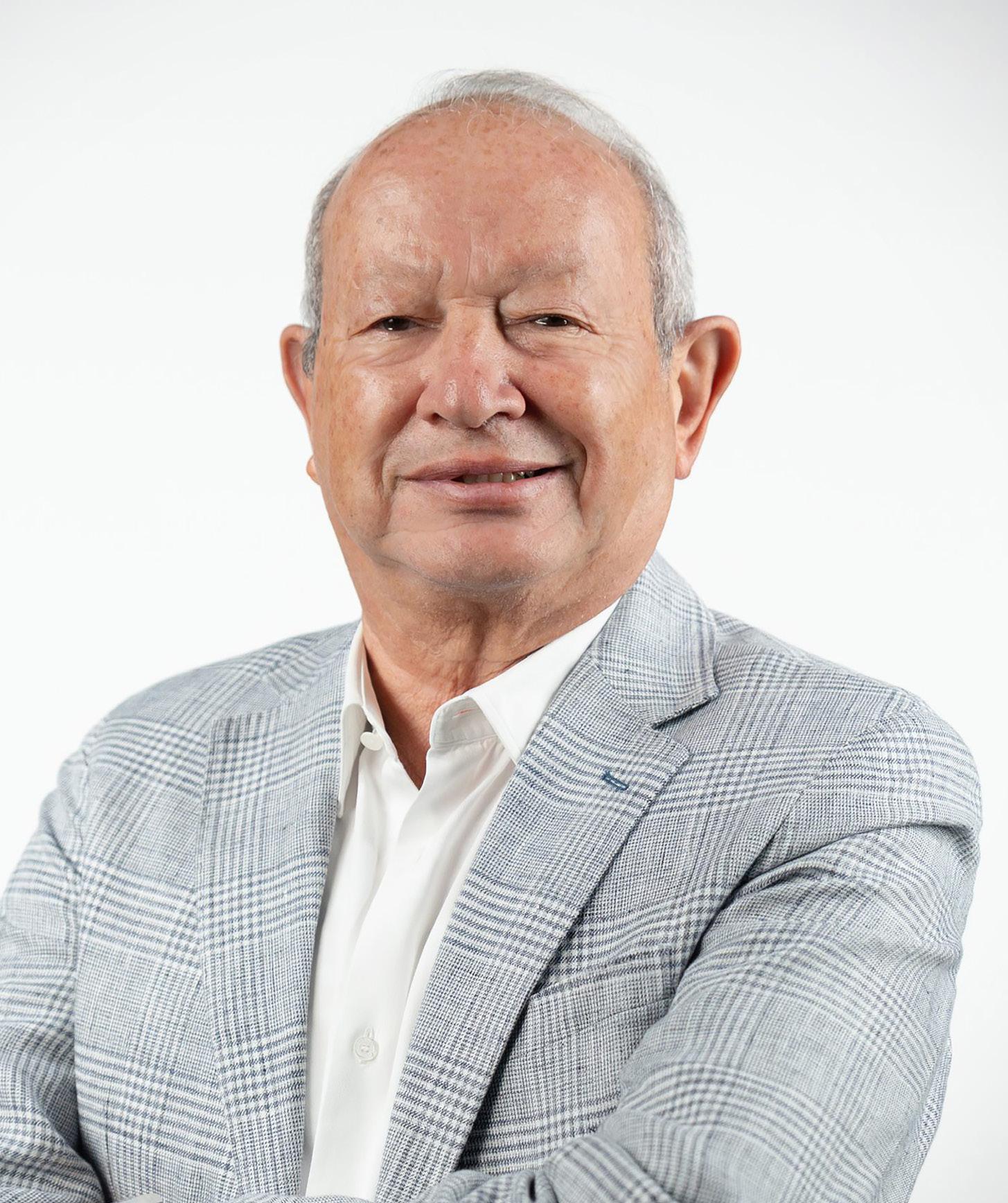
Naguib Sawiris has built empires in telecoms, media and mining. Now, with ORA Developers doubling its UAE investment to AED 30 billion and a new city rising between Dubai and Abu Dhabi, the Egyptian billionaire is making his most emphatic statement yet –and he chose the most turbulent moment possible to make it.
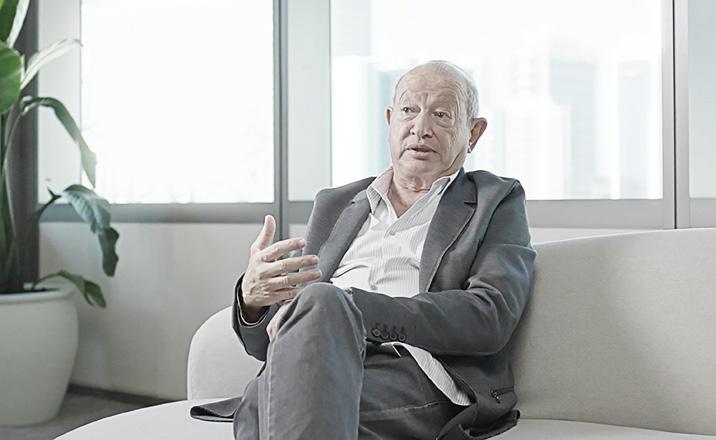
There is a particular kind of investor who only moves when everyone else is hesitating. In April 2026, with geopolitical tension casting a shadow across the Gulf, the 71-year-old Egyptian billionaire Naguib Sawiris stood in Ghantoot – the sundrenched stretch of coastline between Dubai and Abu Dhabi – and announced he was doubling his UAE investment from $15 billion to $30 billion. The timing was entirely deliberate.
“I chose this moment to announce the project on purpose,” said Sawiris, Chairman of ORA Developers, with the directness that has made him one of the most quoted voices in global business. “It is an opportunity to demonstrate our commitment to the country and to prove our belief in the future of the UAE.” And then, with a smile that suggested he was only half joking: “Those who are thinking of leaving the UAE, don’t worry … leave your investments to me, and I will complete the project.”
The conviction is backed by results. ORA’s flagship BAYN masterplan in Ghantoot recorded AED 2.7 billion in residential sales in 2025, ranking among Abu Dhabi’s top ten projects in the official ADREC market report and placing ORA third among the emirate’s top developers. The first phase sold out completely, with 40 per cent of buyers UAE nationals – an endorsement, in Sawiris’ view, that goes beyond commercial validation. “When Emiratis choose your development,” he says, “that tells you something real about what you have built.”
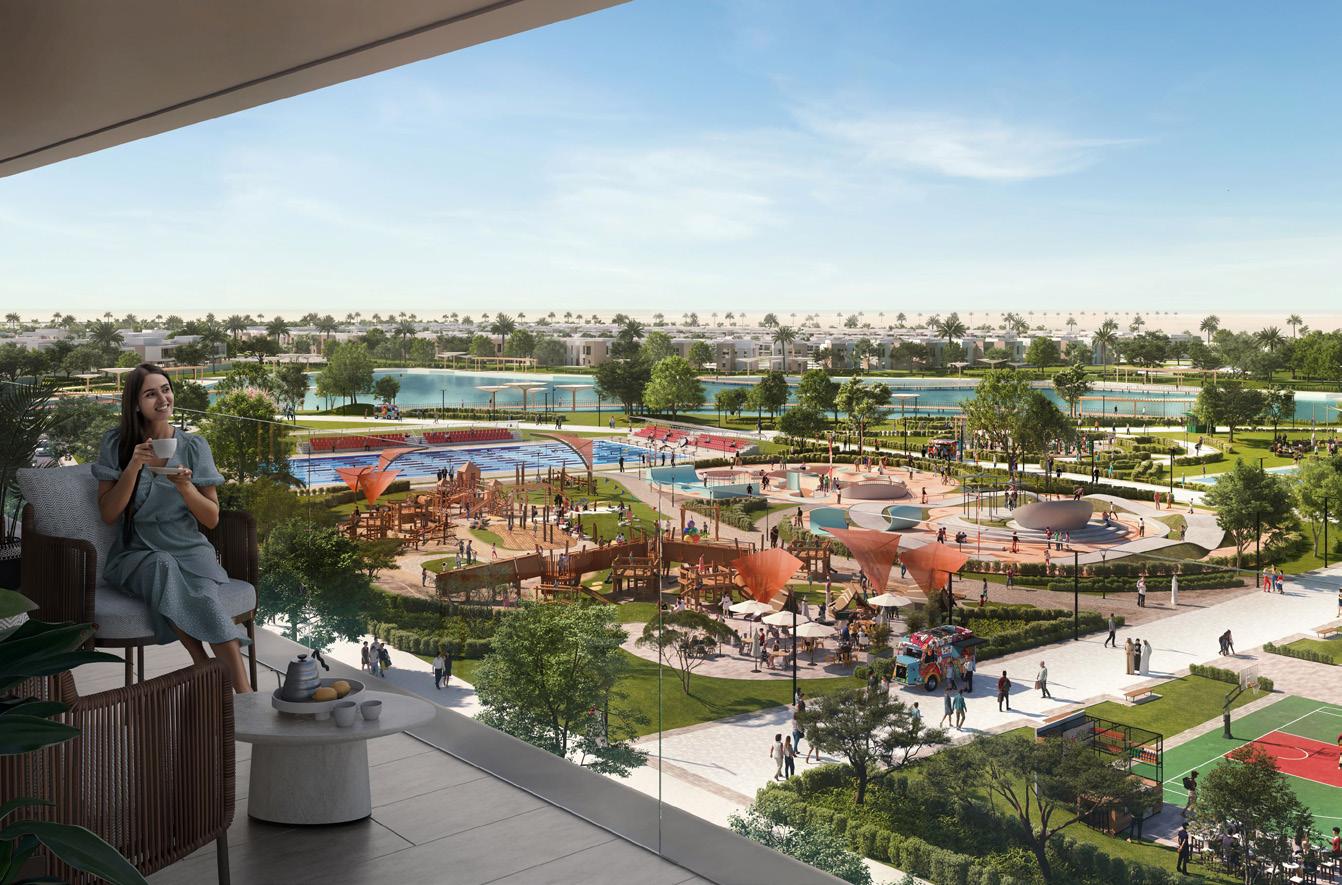
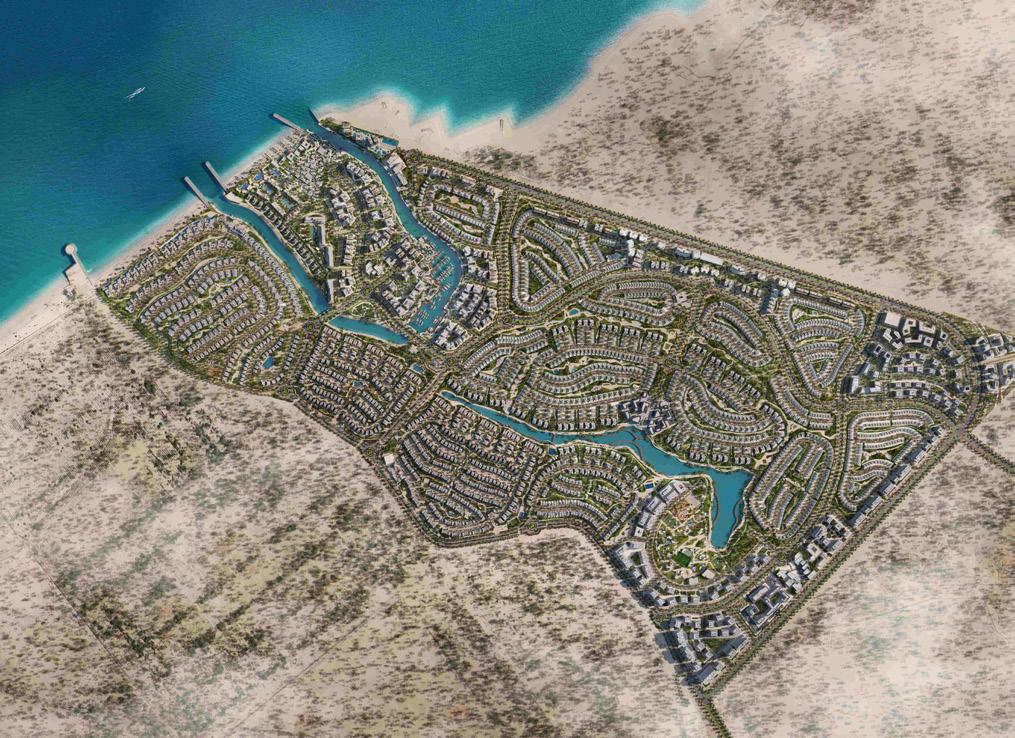
What is taking shape in Ghantoot is formidable in scale. Following ORA’s acquisition of an additional 4.8 million square metres from Abu Dhabi-listed Modon Holding, the total development footprint has doubled to 9.6 million square metres. BAYN will eventually house 32,000 residents across 9,000 homes, anchored by a 1.2-kilometre beachfront, a marina, a lagoon, a 100,000-square-metre sports club, schools, hospitals, retail, offices and a hotel. Sawiris calls it simply “Ghantoot city – a new city between Dubai and Abu Dhabi. You can work in Abu Dhabi and live here. You can work in Dubai and live here.” With direct access to Sheikh Maktoum Bin Rashid Road and 25 minutes from Al Maktoum International Airport, the location makes that pitch entirely credible.
Understanding what Sawiris is doing here requires understanding the man. Born in Cairo in 1954, educated at a German school before earning his engineering diploma and a master’s in technical administration from ETH Zurich, he joined the family’s Orascom conglomerate in 1979 and spent the next four decades building, acquiring, fighting and winning on a grand scale. He took Orascom Telecom into 28 countries. He sold his telecom stake for over $4 billion. France awarded him the Légion d’Honneur. He launched ORA Developers in 2016, and the company now oversees a portfolio worth more than $45 billion across seven countries, from the Ayia Napa Marina in Cyprus to the Eighteen luxury development in Islamabad to a contracted city of 120,000 homes near Baghdad.
The thread running through all of it is a comfort with turbulence that few investors genuinely possess. “When there is a pause in the market and prices soften, that is not a crisis,” he says. “That is a signal. It reflects that it is time to buy. You buy when people are willing to give a discount. Every serious investor knows this. The question is whether you have the conviction to act on it.”
The broader market data validates his reading. Dubai recorded AED 252 billion in real estate transactions in Q1 2026 alone, a 31 per cent annual increase. In the first half of 2025, close to 95,000 investors entered the UAE market – up 26 per cent year-on-year – committing AED 326 billion, a 39 per cent rise in value. Population in Dubai has reached 3.97 million and is growing at 5.5 per cent annually, driven by golden visas, remote-worker permits and a global talent pool that has concluded, with increasing confidence, that the Emirates is not merely a tax address but a genuine home.
It is a shift Sawiris has tracked closely, and it has shaped ORA’s entire approach in the region. “The people coming to the UAE now are not coming to park money and leave,” he says. “They are coming with their families, their businesses, their ambitions. They want schools, hospitals, places to walk by the sea. They want a life. That is what BAYN is being built to give them. We are not selling units – we are building a community.”
His confidence in the country’s model is personal as much as commercial. “More than 200 nationalities live
“You buy when people are willing to give a discount. Every serious investor knows this. The question is whether you have the conviction to act on it.
here in peace, with stability and prosperity,” he says. “That is not a small thing. That is remarkable. When you build in a country with that foundation, you are building on solid ground. The fundamentals do not change because of headlines.” The UAE has always had vision, he adds, but the thing that has changed is the delivery: “The plans are not just plans – they become reality. Infrastructure gets built. Roads get expanded. Airports grow. For a developer with a long-term perspective, there is no better environment in the world right now.”
In Ghantoot, where a 1.2-kilometre beachfront is slowly taking shape along a coastline Sawiris first visited by boat from Dubai – struck, he recalls, by
how untouched and calm it was, by the clarity of the water and the quiet that felt increasingly rare along a rapidly urbanising Gulf – that long-term bet is already being poured in concrete. “I am expecting the property market to continue booming,” he says simply. “Once this crisis is off the news, it will return to the previous boom – and come back stronger than before.”
With AED 30 billion committed, 9.6 million square metres of land secured, and a development that will eventually house a city’s worth of residents on one of the Gulf’s last untouched coastlines, the long game – as Naguib Sawiris plays it – has well and truly begun.
BUILT TO LAST
How Kareem Fahmy Reads the Storm — and Sees Only Blue Sky
When the region’s headlines darkened and lesser markets flinched, the CEO of Innovate Living kept building. Kareem Fahmy tells us why the UAE’s property boom isn’t a cycle — it’s a civilisational project.
There is a particular kind of calm that comes with genuine conviction. Kareem Fahmy has it. The founder and CEO of Innovate Living — the boutique ultra-luxury developer that has spent 17 years reshaping what is possible on Palm Jumeirah and beyond — speaks about Dubai’s property market the way a seasoned architect talks about a building he knows is properly load-bearing. Not with bravado. With certainty.
That certainty has been tested. In the weeks following the regional conflict that sent jitters through international markets in spring 2026, some investors paused. Some developers went quiet. Fahmy did neither. He continued construction on Innovate Living’s expanding portfolio, pressed ahead with the company’s landmark AED 1.4 billion (USD 400 million) pipeline on Dubai Islands, and co-launched Omoria Private Residences — the world’s first ultra-luxury boutique residential hospitality brand — with H.E. Dr. Omar BinSulaiman. For a company that built first and sold second because the pipeline
projects are off plan, it was business as usual. Which, in a rattled market, is an act of profound confidence.
The numbers behind his confidence are formidable. Dubai’s real estate transactions rose 36.5 per cent year-on-year in 2024. Prime residential capital values climbed 6.8 per cent that year, with projections pointing to growth of up to 9.9 per cent in 2025. Dubai has consistently ranked among the world’s top three cities for ultrahigh-net-worth population growth. Against that backdrop, a period of regional instability was always going to be a bump, not a cliff. Fahmy agrees — and goes further.
He describes the weeks of the crisis with a striking specificity — not the view from a boardroom, but from the street. ‘From safety measures to flight delays, from accommodation to food and general support, the authorities moved quickly to make life easier for residents, visitors and families,’ he says. ‘Security was present. Services continued. Life carried on with a remarkable sense of calm.’
He is particularly pointed about the role of international media. ‘Much of the noise came from outside the country, which exaggerated the situation significantly,’ he says. ‘For those of us living here, the reality felt very different. Children were still playing outside, people were still going about their daily lives, and there was no sense of chaos. I personally had plans to travel, but I chose to stay because I felt completely comfortable and safe here.’ It is the kind of testimony that is difficult to manufacture.
Fahmy founded Innovate Living in 2008 — one of the more courageous moments to launch a luxury property company, given that the global financial crisis was simultaneously detonating across world markets. That contrarian instinct has defined the company ever since. Where others see disruption, Innovate Living sees design opportunity.
The company’s track record bears this out. Its first major project came in 2012, when Innovate Living acquired plots on Palm Jumeirah and began constructing a series of signature villas. N Frond Villa followed, with 6,150 square feet of space, private swimming pools and jacuzzis. Villa Allegra, on the G Frond — a grand 28,000-squarefoot residence inspired by Southern Californian architecture — was listed at AED 230 million and sold in 2024. Each project sold before broader competitors caught up. Each set a new standard.
The flagship Palme Couture Residences — launched in 2018 on Palm Jumeirah — crystallised Innovate Living’s brand proposition: a curated collection of just 14 residences, combining threebedroom apartments, four-bedroom townhouses and five-bedroom duplexes, every detail sourced from Italy’s finest furniture houses, every finish chosen with the obsessive attention to material quality that has become the company’s signature. As Innovate Living itself puts it, the company resonates with those who ‘recognise quality at a glance.’ That is not a boast. It is a business model.
The 2026 turbulence caused by the conflict, Fahmy says, was a real-time test of the market’s structural depth. And the market, on his reading, passed. ‘We were actively looking for investment opportunities and distressed sales, but there were very few,’ he admits. ‘Some sellers reduced slightly, and some people delayed final payments around handovers, but that can happen in any market cycle.’ The important distinction, he argues, is psychological. ‘People are moving with caution, not panic.’
That distinction matters enormously to developers reading demand signals. Panic selling distorts markets. Cautious pausing is merely the market breathing. And what Fahmy saw in this period was the UAE’s resident base — people who had built lives, businesses and families here — concluding, fairly quickly, that there was nowhere better to go. ‘Some people left temporarily, but many of them came back,’ he says. ‘Others who considered leaving realised very quickly that it is extremely difficult to find the same lifestyle, safety and opportunity elsewhere.’
This brings him to a question that serious investors have been asking for two decades: are the UAE’s property fundamentals actually real, or is the market permanently
one crisis away from correction? Fahmy’s answer is unequivocal. ‘The fundamentals did not change,’ he says. ‘If anything, this period reminded people how strong they are.’
The data supports him. Population growth in Dubai continues on a trajectory that keeps housing demand structurally ahead of supply in the premium segments. The UAE’s Golden Visa programme — expanded and refined in recent years — has created a new class of long-horizon resident investors who behave very differently from speculative buyers. Infrastructure investment shows no sign of slowing: the Dubai Metro Blue Line is under construction, new beaches and green urban spaces are being developed, and the planned new international airport
— designed to handle 260 million passengers annually, with 400 gates and five runways — is a statement about the scale of ambition at work here.
Fahmy nods to all of it, and adds a dimension that pure economics misses. ‘The UAE’s leadership keeps finding new and compelling ways to attract people, families, businesses and capital,’ he says. ‘The government also continues to create initiatives that support families, businesses and residents — from family-focused programmes to payment facilities, SME support, visa flexibility and infrastructure expansion. The direction is clear. The UAE is not standing still. It is constantly improving.’
He makes an observation that will interest portfolio investors particularly: the market was, in his view, running hot before the disruption hit. ‘We were already expecting some form of market correction because the market had been moving very fast,’ he says. The turbulence, in other words, may have delivered organically what the authorities might otherwise have had to engineer — a pressure release valve on a market that had been sprinting.
Against this backdrop, Innovate Living’s own business model has proved its worth. The company’s philosophy — finish first, sell second — is notably unusual in a market where off-plan sales dominate and developers routinely sell units that exist only as renders. ‘Our previous projects were completed before being sold,’ Fahmy explains, ‘and that gives us a very different level of confidence and control.’
This discipline extends to how the company approaches risk at the outset of every project. ‘When we start any project, we think carefully about risk, market cycles and possible disruption,’ he says. ‘So this period did not change our direction.’ The company continued construction throughout. ‘We believe that once our products are ready, they will be worth significantly more because of their quality, delivery and positioning.’
That confidence in long-run value creation is now being channelled into the company’s most ambitious bet yet. In March 2025, Innovate Living announced the acquisition of
prime waterfront plots on Dubai Islands — a 17-squarekilometre, five-island development spanning more than 20 kilometres of beach, aligned with the Dubai 2040 Urban Master Plan — laying the foundation for an AED 1.4 billion development pipeline. ‘Dubai Islands is an extraordinary opportunity for us to bring ultra-luxury waterfront living to life in a way that reflects our core values of being intentional, curated and design-led in everything we do,’ Fahmy said at the time. The acquisition positions Innovate Living at the epicentre of Dubai’s next generation of premium residential development.
Simultaneously, the company has co-founded what may be its most conceptually adventurous venture. Omoria Private Residences — launched in partnership with H.E. Dr. Omar BinSulaiman — bills itself as the world’s first ultraluxury boutique residential hospitality brand, rooted in the Japanese philosophy of Omotenashi: the art of anticipatory, unconditional hospitality. Its first operational project, Omoria Palme Couture on Palm Jumeirah — formerly known as Palme Couture Residences, now reimagined and elevated under the Omoria brand — will mark the brand’s arrival. The debut project on Dubai Islands, meanwhile, will be the first to carry Omoria’s DNA from concept to delivery: a limited collection of waterfront residences with direct beach access, bespoke Italian interiors, a penthouse-level padel court with panoramic sea views, infrared saunas, salt rooms, ice baths, oxygen therapy, and centralised air and water purification systems. It is, in conception, a wellness resort that you own rather than visit.
The ambition behind Omoria reflects something Fahmy returns to throughout the conversation: the idea that Innovate Living’s work is not merely commercial, but participatory in a larger national project. ‘Working in the UAE is not only about profit,’ he says. ‘At Innovate Living, we want to be part of the growth of this country. We want to create products that matter, that contribute to the UAE’s vision, and that reflect the values of innovation, creativity and difference.’
He draws an explicit connection between the company’s philosophy and the leadership model he observes around him. ‘The leadership always finds solutions. They treat people like family. They build infrastructure not only for business, but for health, happiness, safety and quality of life.’ He cites the Dubai Fitness Challenge, the Year of Giving, the Year of the Family, SME support initiatives. ‘That matters because it shows that the government cares about every layer of the economy. We try to follow the vision of the leaders here: to always improve, to always innovate, and to always think about how to create something meaningful.’
For international investors currently watching the UAE from a distance, Fahmy’s message is not a sales pitch. It is something closer to an invitation. ‘Come and see it for yourself,’ he says. ‘Do not make a decision about this market from outside, based only on headlines or secondhand opinions. Visit the UAE. Walk the streets. Meet the people. Study the numbers. Look at the safety, the infrastructure, the quality of life and the scale of opportunity.’
He argues that the UAE’s competitive position as a global capital magnet is structural, not circumstantial. ‘As a business hub, the infrastructure here is mature, holistic and advanced. You have safety, connectivity, logistics, regulation, lifestyle, technology, talent and opportunity all in one place. The UAE is not following the direction of the world; in many ways, it is already ahead.’ The global conversation about where capital belongs, he suggests, keeps returning the same answer. ‘Global investors want stability, growth, safety and long-term vision. The UAE offers all of that.’
His personal conviction for the next 24 months is unambiguous. ‘I believe the rebound will be stronger than many people expect,’ he says. Investors who are present and
committed, he suggests, will be disproportionately rewarded. ‘Those who stay positioned, or who come back quickly, are likely to benefit the most.’
He pauses before offering what might be his cleanest encapsulation of the UAE’s enduring appeal to high-conviction investors. ‘Once international investors truly see what has been built here,’ he says, ‘the question will no longer be whether to invest in the UAE. It will be: why did they wait so long.
It is a line that lands because he has earned the right to say it. Seventeen years of building in Dubai — through the financial crisis, through Covid, through regional turbulence — has given Kareem Fahmy a reading of this market that is not theoretical. Innovate Living’s villas on Palm Jumeirah stand as proof. The AED 1.4 billion Dubai Islands pipeline stands as commitment. Omoria stands as vision.
The UAE, he says, is ‘built on vision, faith, ambition and execution.’ For a man who has spent nearly two decades turning exactly those qualities into bricks, glass and sea views, that is not a slogan. It is a business plan.
A FOUNDATION DESIGNED TO ENDURE
Satish Sanpal Lays the Groundwork for Dubai’s Next Chapter
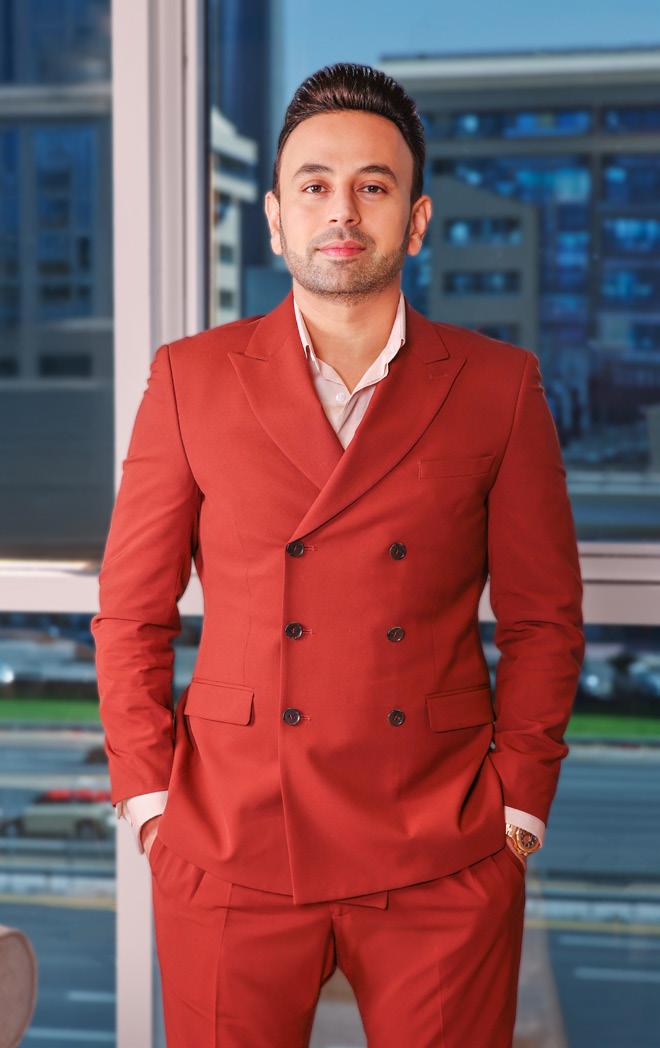
As geopolitical tremors rippled through global markets, Satish Sanpal, Founder and Chairperson of ANAX Holding, barely flinched. Here is why the man behind one of Dubai’s most dynamic property groups believes the UAE’s greatest chapter is still ahead.
There is a particular kind of calm that comes only from experience. Satish Sanpal has it in abundance. The Founder and Chairperson of ANAX Holding sits with the unhurried confidence of a man who has watched Dubai reinvent itself multiple times — and backed it every time. When recent geopolitical turbulence sent shockwaves through financial markets and caused more than a few investors to pause, Sanpal was not among those reaching for the exit. If anything, he was looking at the entry points.
His optimism is not the breezy, unexamined kind. It is rooted in data, in the lived reality of building a business empire in the UAE, and in a forensic understanding of what actually drives this market. And what it tells him, unambiguously, is that the story of Dubai real estate is far from over.
The numbers back him up. Dubai recorded its best-ever year for property transactions in 2024, with deal volumes surpassing AED 760 billion. The first quarter of 2026 continued that
momentum, with off-plan sales hitting their highest monthly total of the year in April — a 4.2 per cent increase over the same month in 2025. Population growth continues to underpin demand, with Dubai’s population having crossed the 3.8 million mark and the emirate targeting 5.8 million residents by 2040 under its Urban Master Plan. Against that backdrop, Sanpal’s confidence looks less like optimism and rather more like arithmetic.
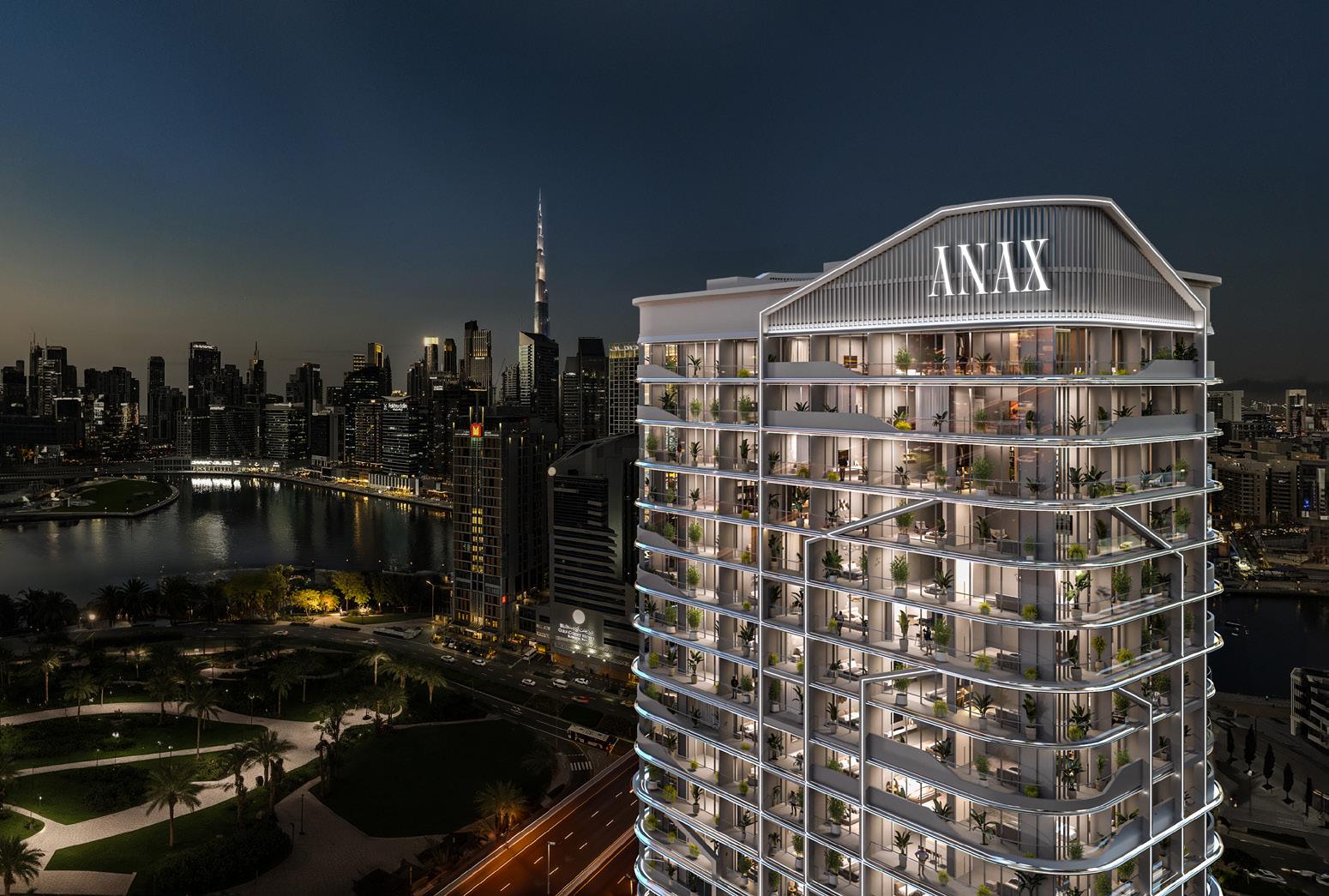
ANAX Holding was founded in 2018 as a diversified investment group spanning real estate, hospitality, and strategic investments, with ANAX Developments as its flagship vehicle in the property space. From its base in Dubai, the group has expanded its influence steadily, earning recognition from Forbes Middle East for its role in transforming the emirate’s luxury landscape. Sanpal himself relocated to Dubai in his early twenties with modest investments, a sharp instinct for opportunity, and a determination to build something lasting. What he built is a group that today competes at the very top of the market.
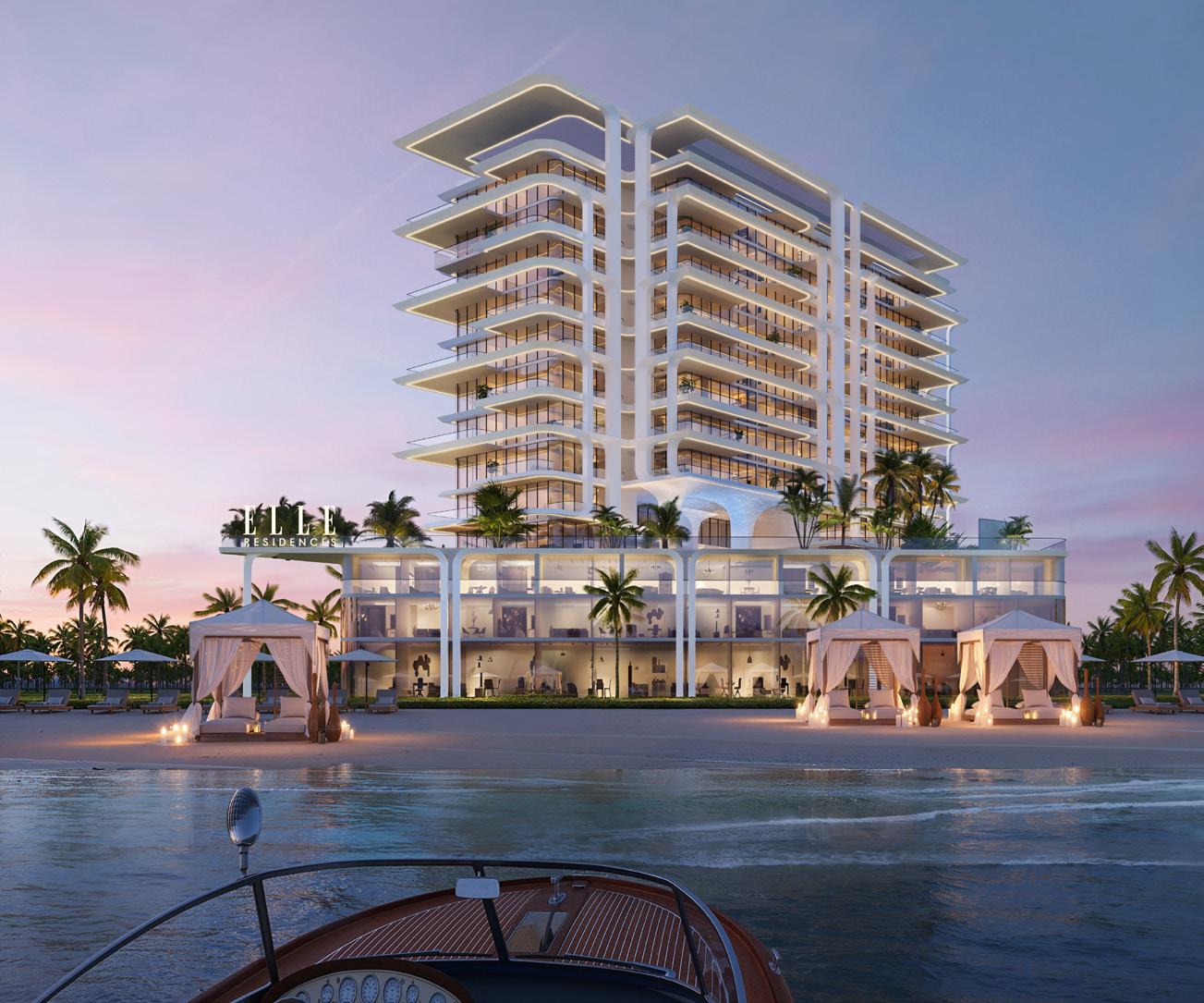
That trajectory reached a defining moment in September 2025, when ANAX Developments unveiled ELLE Residences Dubai Islands — the Middle East debut of the globally iconic ELLE brand in the residential property space. Developed under a licensing agreement with Lagardère News, the project brought together two internationally acclaimed design firms: The One Atelier, known for luxury branded residences created for Dolce & Gabbana, Fendi Casa and Karl Lagerfeld, and ARQUINAUT, the creative studio founded by Gregory Martínez de Riquelme. Situated on Dubai Islands with direct beachfront access, ELLE Residences offers one-bedroom apartments to four-bedroom townhouses spanning up to 4,592 square feet, with floor-to-ceiling glazing, wraparound terraces, panoramic Arabian Gulf views, rooftop pools, private spas, yoga decks, and a 24-hour concierge service. Sales officially opened on 26 September 2025 and the development is slated for completion by Q3 2027. ELLE Residences sold out shortly after launch.
It was, by any measure, a statement of intent. ELLE had previously entered the branded residential market in Miami, where its 180-residence Edgewater tower set a benchmark for lifestyle living in the United States. Dubai was next, and it was ANAX that earned the right to bring the brand to the region — a vote of confidence in both the company and in Dubai itself.
That launch came before the geopolitical disruption that would rattle global confidence in the weeks that followed. The real test of any developer is not how they perform when conditions are perfect, but how they hold their nerve when they are not. On that measure, Sanpal is clear about what the past months have revealed.
“The property market is transitioning from rapid growth to a more mature and stable phase,” he says. “What we have
seen is a clear shift in buyer behaviour. Investors are taking longer to make decisions, transaction timelines have extended, and there is greater scrutiny on pricing, product quality, and developer credibility. But as a result, demand is becoming more disciplined and more genuine.”
That shift, he insists, is not a threat to the market. It is a sign of its growing sophistication. Dubai has long been characterised by fast money and speculative heat; the emergence of more deliberate, quality-conscious buyers represents a structural evolution rather than a cooling. For a developer whose philosophy has always centred on quality and strategically located product, it is, if anything, a tailwind.
“We are still seeing consistent activity, particularly in projects that offer clear value to today’s buyer,” Sanpal says.
“The property market is transitioning from rapid growth to a more mature and stable phase. What we have seen is a clear shift in buyer behaviour.
“The demand is still there — it’s just more considered now, and that plays to our approach.”
This is a point worth dwelling on. Dubai’s real estate market is no longer the raw, speculative frontier it was in the early 2000s. It has been through cycles — the crash of 2008, the slowdown of 2015 to 2016, the pandemic-driven pause of 2020 — and has emerged from each one with stronger regulatory architecture, better-informed investors, and a broader international buyer base. The introduction of long-term residency visas, the Golden Visa programme, and the continued liberalisation of business ownership rules have fundamentally altered the pool of people who see Dubai as home rather than simply a transaction.
Those structural advantages were on full display when regional turbulence arrived. Sanpal watched closely as the government moved quickly and decisively, maintaining the alignment between public institutions and the private sector that has become one of the UAE’s most distinctive competitive advantages.
“We saw a strong alignment between leadership, institutions, and the private sector,” he says. “Decisions were made quickly, and there was clear direction — which is critical in moments like this. Achieving a high level of coordination between all parties is essential to preserving economic resilience and avoiding any setbacks for the private sector, and that translated into continued project execution and long-term planning across the sector.”
The speed and clarity of that response did not go unnoticed by investors. While some markets saw capital pause or rotate away in search of safer harbours, the UAE’s financial system remained stable, supported by prudent regulation, strong liquidity, and what Sanpal describes as proactive policy measures. The message sent to international capital was unambiguous: this is a jurisdiction that manages uncertainty, not one that is managed by it.
For investors who did pause — and there were some — Sanpal has a direct message.
“Think long-term,” he says, simply. “We have seen the market slow down before, and it has consistently come back stronger. Q1 2026 confirmed that Dubai’s fundamentals remain intact. For investors, this is where the opportunity lies — there is more flexibility in pricing and payment plans today, and that level of negotiating leverage is unlikely to exist once the market strengthens again.”
The global conversation about capital allocation has, if anything, intensified the focus on the Gulf. In a world where yield is scarce, regulatory certainty is precious, and geopolitical risk is everywhere, the UAE’s combination of economic fundamentals, proactive governance, and a genuinely transparent regulatory framework looks increasingly rare.
“The region benefits from a combination of strong economic fundamentals, proactive governance, and a business environment that consistently attracts capital,” Sanpal says. “The regulatory framework and infrastructure here provide a level of transparency and execution certainty that investors value. The UAE is moving forward steadily and remains one of the world’s most trusted destinations in which to live, work, and do business.”
It is a view backed by the flow of institutional capital into the emirate. The past three years have seen a wave
of family offices, sovereign wealth-adjacent funds, and international high-net-worth individuals establish a permanent footprint in Dubai — drawn not just by tax efficiency but by the quality of infrastructure, the stability of the legal system, and a lifestyle offer that has matured considerably. Private school places, world-class healthcare, direct long-haul flight connectivity, and a cultural scene that has expanded dramatically all play their part.
ANAX itself is a beneficiary and a driver of that evolution. The group has expanded its team, brought in new leadership, and is continuing to build its pipeline in prime areas of Dubai. New project launches are in the pipeline for 2026 across several strategic locations — a signal that, whatever the short-term noise, the company is firmly focused on the years ahead.
“Even amid volatility, our strategy has been to stay the course and continue investing in future growth,” Sanpal
says. “This has not stopped well-positioned developers from continuing with launches, construction, and planning.”
Beyond the commercial logic, there is something in Sanpal’s story that speaks to a larger truth about Dubai. He arrived as a young man with ambition and not much else, built his network through years of careful relationship-building, and turned that foundation into a group that is now featured by Forbes Middle East and counted among the emirate’s most prominent property voices. His journey is, in miniature, the journey of the city itself — relentlessly forward-looking, built on international talent and capital, and underpinned by a governance model that has consistently prioritised long-term credibility over short-term convenience.
He speaks, too, about what a market that is truly built to last actually looks like — and leaves little doubt that he believes Dubai fits the definition.
“A market that is truly built to last comes down to a few key factors: strong regulatory frameworks that enforce discipline through each cycle, consistent policies that can absorb global disruption without changing direction, and infrastructure that is planned well ahead of demand,” he says. “The UAE fits that definition. As a long-term resident of Dubai, I have seen this first-hand, alongside a consistent focus on the safety and wellbeing of citizens and residents.”
Sanpal’s personal philanthropy runs alongside his commercial ambitions. Through the Sanpal Foundation, he supports initiatives in food security, education, and community development — an expression of the philosophy that success, in his view, is incomplete unless it creates impact beyond the balance sheet. His efforts have been recognised with the Loomba Foundation Award, presented by Lady Cherie Blair, for dedication to social impact and empowerment.
Looking ahead, his conviction is total. Over the next 24 months, ANAX will continue its upward trajectory, with investment across its ventures, an expanded team, and new pipeline projects in prime Dubai locations. For Sanpal, the question of where to place capital is not complicated.
“My conviction remains firmly in the UAE,” he says. “When you look at the fundamentals and long-term trajectory, it’s hard to see a more compelling place to be over the next 24 months. We are confident in where the market is heading.”
In a world full of uncertainty, that is the kind of clarity that capital finds hard to resist. And if the past two decades of Dubai’s story have proven anything, it is that Satish Sanpal has a habit of being right.
THE FOUNDATION NEVER MOVES
As geopolitical uncertainty rattled global markets, Ali Al Gebely — Founder and Chairman of ONE Development and heir to a 44-year regional legacy — never wavered. Here, he explains why the UAE is not just weathering the storm but is built to make the storm irrelevant.
There is a version of the story that says the UAE real estate market wobbled. That conversations dried up, confidence drained away, and investors sat on their hands waiting for the clouds to pass. Ali Al Gebely would like to correct the record.
“Demand never disappeared,” he says, with the unhurried certainty of a man who has been watching markets for a very long time. “It simply paused for a moment of reassessment — before returning with clarity.” Pause. Return. Clarity.
These are not words you typically hear in the middle of a geopolitical storm. But then, Ali Al Gebely is not a typical developer.
As Founder and Chairman of ONE Development, the fast-ascending UAE developer whose AED 4.5 billion portfolio spans three cities and represents one of the most ambitious build programmes in the region, Al Gebely carries more than a business card when he walks into a room. He carries 44 years of Al Gebely Holding’s legacy: a conglomerate that has
navigated energy markets, infrastructure cycles, and regional upheaval across decades and geographies. When Al Gebely says he has “watched multiple market cycles,” it is not a talking point. It is biography.
That depth of experience matters now more than ever. The past several weeks have placed the Middle East under a spotlight that no developer asked for. Conflicts in neighbouring theatres, the reverberations of global interest rate volatility, the constant low hum of geopolitical uncertainty — all of it has landed on the desks of developers, investors, and buyers who were, many of them, already deep into commitments in one of the world’s fastestgrowing real estate markets. How the sector responds — and how its leaders speak — says everything about where it is truly headed.
For Al Gebely, the response has been characteristically direct. “Every challenge reveals what truly matters,” he says. “What this moment has revealed about the UAE is that its market is not built on speculation — it is built on structure.”
The numbers behind UAE real estate’s rise are by now well-rehearsed — but they bear repeating in any honest assessment of what is at stake. Dubai’s real estate market recorded transactions worth over AED 500 billion in 2024. The emirate’s population has grown by more than 100,000 people in each of the past several years, driven by Golden Visa uptake, a post-pandemic flight-to-quality among high-net-worth individuals, and a regulatory framework that has been deliberately redesigned to attract and retain global capital. Abu Dhabi is not far behind: the capital has registered recordbreaking land and property transactions in consecutive years, with sovereign confidence flowing from Mubadala and ADQ-backed developments reshaping entire city districts. Against this backdrop, Dubai’s D33 economic plan targets a doubling of the emirate’s GDP by 2033 — a goal that requires, among other things, a real estate sector that does not merely keep pace, but leads.
ONE Development is designed to do exactly that. Launched as a boutique developer with headquarters across Abu Dhabi and Dubai, the company has in a remarkably short time assembled a portfolio that its larger, longer-established competitors would not dismiss. Laguna Residence — its flagship — is a twintower development in Dubai’s City of Arabia valued at AED 2.4 billion and distinguished as the UAE’s first fully AI-integrated residential community. The project broke ground just 55 days after launch. DO Dubai Islands brings ONE’s design-forward, tech-integrated sensibility to Dubai’s newest waterfront destination, anchored by the innovative DO Hotels & Residences brand — the world’s first music-themed hotel concept, created in
partnership with global superstar Amr Diab. And ONE Residence, the company’s debut in Abu Dhabi, is a 31-storey tower on Al Reem Island that has already made international headlines as the first residential building in the world to feature a fully integrated aerial mobility ecosystem, including rooftop access for eVTOL (electric vertical takeoff and landing) aircraft.
Together, they represent AED 4.5 billion in total projected valuation — and they were all launched within a single year.
“We are talking about a country with sustained population growth, world-class infrastructure investment, policy clarity, and a government that moves decisively when the moment demands it,” Al Gebely says. “That is not a combination you find in many markets in the world right now.”
Ask Al Gebely about the impact of the recent regional conflict, and he does not sidestep the question — but he refuses to allow it to define the narrative. “Honestly? Nothing changed that matters,” he says. “The UAE’s population is growing. Infrastructure investment continues at a pace that most countries can only aspire to. The regulatory environment — RERA, the framework around off-plan sales, investor protections — remains among the most robust in the world.”
He is right on the regulatory front. Dubai’s Real Estate Regulatory Authority has spent years
building a framework that insulates investors from the worst risks of off-plan development — mandatory escrow accounts, inspection regimes, transparent registration. These mechanisms did not waver during the recent uncertainty. Nor did Abu Dhabi’s equivalent structures. More broadly, the UAE’s no-income-tax, no-capital-gains-tax environment continued to offer what no amount of geopolitical tension can erode: structural financial advantage.
“Dubai’s D33 plan is not a response to short-term turbulence,” Al Gebely says firmly. “It is a 10-year vision that transcends any headline cycle. In Abu Dhabi, the same discipline and long-term thinking applies.” He pauses, then adds the line that captures his entire worldview: “The noise was external. The foundation is internal. Foundations don’t move.”
Having watched markets through the global financial crisis of 2008-09 — which briefly sent Dubai property values plunging before the market remerged stronger and more regulated than before — Al Gebely understands both the anatomy of a genuine correction and the difference between structural damage and market sentiment. “Having been part of Al Gebely Holding’s 44-year journey across the region, I understand what real structural depth looks like in a market,” he says. “External noise comes and goes.”
At ONE Development’s three active projects, the engagement Al Gebely describes during the uncertain weeks was not the
fevered churn of a seller’s market, nor the hollow silence of one in freefall. It was something more substantive — and, he argues, more encouraging. “The conversations remained engaging, with an improved quality and in-depth planning from our clients,” he says. “Serious buyers and investors used the circumstances to go deeper — to ask harder questions about delivery timelines, developer credibility, and long-term value creation. Those are exactly the conversations we want to be having.”
This is the characteristic that most distinguishes the UAE market of today from the one that existed fifteen years ago: the quality of the investor. Where the pre-2008 boom attracted speculative capital that moved at speed and with little due diligence, today’s buyers — particularly in the premium and super-prime segments — are sophisticated, patient, and increasingly focused on developer track record. In that environment, the question is not just whether a project sells, but who is selling it and whether they can deliver.
It is a distinction that plays directly to ONE Development’s strengths. Al Gebely has built the company around what he describes as “phased delivery”: a model designed to de-risk investment while maximising early-stage returns, supported by full pricing transparency, real-time investor dashboards, and governance structures that give buyers visibility at every project milestone. “We are not asking investors to take a leap of faith,” he says. “We are asking them to look at the evidence.”
The evidence is, by any measure, compelling. Laguna Residence sold out rapidly following its spectacular launch at Dubai’s Coca-Cola Arena — an event that featured Amr Diab, Bollywood superstar Kareena Kapoor, and Egyptian actor Amir Karara, and set the template for the kind of aspirational, experience-first marketing that has come to define the ONE brand. The project, which features a podium-level sandy beach lagoon, over 40 amenity facilities, and a proprietary AI application that integrates facility management, smart appliances, and resident services into a single ecosystem, is on track for handover in Q4 of 2027.
DO Dubai Islands followed, bringing the branded DO Hotels & Residences concept to the water. Then came ONE Residence in Abu Dhabi — launched at Emirates Palace in December 2024, with Kevin O’Leary — “Mr Wonderful” of Shark Tank fame — among the high-profile names drawn into ONE Development’s orbit.
“On track — and accelerating,” is how Al Gebely describes the state of the business today. “Our pipeline is intact. Our partnerships are intact. Our team has not slowed down for a single day.” He allows himself a rare moment of competitive candour: “If anything changed in that period, it is this: the market now has even more clarity about which developers are serious, which ones are structured, and which ones are built for the long term. We know which category we fall into — and so do our investors.”
There is a philosophical dimension to Al Gebely’s approach to development that goes beyond yield and returns. Ask him what a market “built to last” actually looks like, and he responds with a framework: population growth that drives sustained demand; governance depth that creates trust; infrastructure that outpaces development; policy adaptability; and a national vision that extends beyond any single business cycle. “The UAE fits every single criterion,” he says. “And then exceeds them.”
What further differentiates ONE Development within that market, he argues, is the distinction between building projects and building communities. “Communities require long-term thinking: walkability, wellness integration, digital infrastructure, sustainability pathways,” he says. “We embed AI end-to-end. We design for how people will want to live ten years from now — not just how they live today.”
At ONE Residence on Al Reem Island, that philosophy takes its most dramatic form. The 31-storey tower is the first residential building in the world to integrate an autonomous aerial mobility ecosystem — built in
collaboration with Advanced Mobility Hub and powered by VertiHub — with rooftop infrastructure for eVTOL aircraft that goes beyond a headline feature to represent a genuine statement about the future of urban living. The inclusion of a drone logistics port for last-mile delivery is no less radical in its implications. In a country whose leadership has already committed to fully autonomous transport representing 25 per cent of all journeys by 2030, ONE Residence is not ahead of its time. It is precisely on time.
At Laguna Residence in City of Arabia, the AI integration operates at the infrastructure level — not layered on as a feature, but embedded into the building’s systems from the ground up. Smart watches allow residents to access amenities, control their environment, and manage services without ever reaching for a phone. The effect, Al Gebely describes, is a community where technology supports life rather than interrupting it.
Global smart-building market forecasts suggest the sector will exceed $570 billion by 2030. ONE Development
is positioning itself not merely to participate in that growth but to define what it means in a residential context.
For investors still sitting on the fence — and Al Gebely is too experienced to pretend they do not exist — his message is unambiguous. “Stop waiting for certainty,” he says. “No market in the world can guarantee it today — and those who demand it first are often the ones left watching opportunity pass them by. The UAE does not promise certainty; it delivers clarity.”
The distinction is not semantic. Clarity of regulation means rules that are known, enforced, and investorprotective. Clarity of vision means a national strategy — Dubai D33, Abu Dhabi’s equivalent frameworks — that tells capital exactly where the country is heading and why. Clarity of execution means a government and a development sector that consistently deliver on what they announce. “When government acts with speed and coherence, it sends an assuring signal to the entire ecosystem — to developers, to investors, to international partners — that this is a market that is managed, not just monitored,” Al Gebely says.
He is visibly proud when he speaks of UAE leadership — and the tone is entirely genuine. “I am deeply proud to be building in a country led the way this one is led,” he says. “The vision, the decisiveness, the genuine
care for people and for prosperity — it is something that cannot be manufactured. It is something that is felt every single day in the way the market responds, in the way businesses operate, and in the way the UAE presents itself to the world.”
For those who entered during previous moments of UAE uncertainty, the pattern is consistent: they look back and call it the best decision they made. “What are you waiting for that is more compelling than what is already in front of you?” Al Gebely asks, with the directness of someone who has never confused caution with wisdom. “In my experience, the investors who waited for perfect conditions missed the moment when conditions were, in fact, already perfect for them.”
When Al Gebely describes the next phase of ONE Development’s growth, the ambition is striking even against the backdrop of what has already been achieved in a single year. Three upcoming projects in Abu Dhabi are in the pipeline. A landmark launch on Al Marjan Island in Ras Al Khaimah — one of the most hotly anticipated new real estate destinations in the region — is on the horizon. The expansion into Egypt is already under way: DO New Cairo, the company’s first project in the country, completed its first phase sell-out and has broken ground on its second phase, with excavation works started in April 2026. The growth roadmap extends further still: Saudi Arabia, Europe, London, Shanghai.
It is an international vision — but it is rooted in a local conviction. “My deepest conviction is in this country, in its leadership, and in the communities we are creating,” Al Gebely says. “Not just for investors — but for the people who will call these places home for generations to come.”
That framing — communities over projects, generations over cycles, conviction over sentiment — is what ultimately distinguishes Al Gebely and ONE Development from the headline noise of any given month. Markets rise and fall. Geopolitical weather fronts move through. And underneath it all, in the UAE, the foundations remain exactly where they were: solid, structural, and unmoved.
“When external noise creates hesitation elsewhere, capital starts looking for the one place that answers the question: where do the fundamentals actually hold?” Al Gebely says. “The answer keeps coming back here.”
He smiles — the quiet smile of a man who has been saying this for years and is growing accustomed to being proved right.
BUILDING BEYOND BORDERS
As the UAE property market scales heights that would have seemed unimaginable just a decade ago, Mohamed Adib Hijazi — the founding chairman of HRE Development — has been quietly doing what he has always done: building homes, nurturing communities, and refusing to be rattled by the world beyond his construction sites.
The numbers that define Dubai’s real estate market today would have seemed like fantasy at the turn of the millennium. In the first 290 days of 2025 alone, the emirate recorded AED 525.87 billion in property sales — surpassing the entire sales total for 2024 in less than a year. Residential prices have risen 20 per cent in a single year. Average rents are up 19 per cent. In 2024, total residential transactions reached 169,000 — a 42 per cent surge on the year before. The UAE’s real estate market is now valued at nearly US $694 billion, on a trajectory toward US $759 billion by the decade’s end. Dubai has become, by almost any measure, one of the most dynamic property markets on the planet.
And yet, for all the record-smashing statistics, the story of how that market got here is as much about the individuals who built it, brick by brick, project by project, family by family, as it is about the macro forces that turbocharged demand. Few people better embody that human dimension of Dubai’s property revolution than Mohamed Adib Hijazi — the founding chairman of HRE Development and a man who has been quietly constructing the UAE’s future for more than three decades.
Hijazi established HRE Development from a base in construction, and what has followed is one of the emirate’s more compelling corporate stories: a disciplined, values-led evolution from contractor to developer, guided by a philosophy that has never changed even as the market transformed around it. Today, HRE has delivered over 350 projects and provided homes to more than 12,000 families across the UAE.
“Real estate, at its core, has never been about buildings for me,” he says. “It has always been about the families those buildings shelter, the communities they create, and the futures they make possible. Everything we do at HRE flows from that single conviction.”
Hijazi speaks at a moment of particular resonance. The wider region has navigated a period of significant geopolitical turbulence — the kind of instability that, in lesser markets, sends investors fleeing and developers into suspended animation. Dubai, characteristically, has absorbed the pressure and emerged with its fundamentals not merely intact but reinforced. For Hijazi, the resilience of the market in the face of external headwinds is a validation of everything he has always believed about the UAE’s foundational strength.
“When you have built here for 30 years, you develop a certain faith in this place,” he says, his manner measured and precise in the way of someone who has spent decades translating vision into concrete reality. “The UAE has faced global financial crises, regional conflicts, a pandemic. Each time, the market has found its footing faster than almost anywhere else in the world. That does not happen by accident. It happens because of the quality of governance, the clarity of vision, and the sustained commitment to making this a place where people genuinely want to live and invest.”
HRE Development’s most recent landmark achievement tells you everything you need to know about how Hijazi runs his company.
Skyhills Residences 1 — the company’s flagship residential project in the Jumeirah Village Circle area — was handed over to residents six months ahead of schedule. In an industry where delayed handovers have, historically, been the rule rather than the exception, delivering early is a statement of operational discipline that carries significant weight.
The project, which attracted strong buyer interest from both regional and international investors, exemplifies HRE’s approach to development: high design integrity, exacting construction standards, and a commitment to the long-term value of what is built rather than the short-term economics of what can be sold. It is a philosophy that has made HRE one of the UAE’s most respected mid-sized developers — the kind of company that does not always generate the headlines of its larger peers, but consistently delivers in ways that matter most to the families moving into its buildings.
“Delivering Skyhills Residences 1 six months ahead of schedule was not a surprise to our team,” Hijazi says. “It was the result of years of building systems, relationships, and a culture where quality and timeliness are not negotiated. That is what we stand for.”
Beyond Skyhills Residences 1, HRE’s portfolio spans more than 350 completed projects across the UAE — a body of work that, when viewed in aggregate, represents a significant contribution to the physical fabric of the country. Each project, Hijazi insists, has been approached with the same discipline: careful site selection, rigorous design standards, and an uncompromising commitment to handover quality that has generated the kind of repeat business and referral pipeline that sustains a developer through cycles.
The numbers behind HRE’s social footprint are equally telling. The company’s landmark AED 30 million contribution to Dubai Cares supported global education access initiatives — a gesture that speaks to the breadth of Hijazi’s thinking about what a property company’s obligations to the world actually are. But perhaps most striking was HRE’s AED 100 million contribution in 2026 to the Mother of the Nation Endowment for Orphans, directed at supporting education and healthcare access for vulnerable children. The company also dedicated ten residential units within Skyhills Residences to Awqaf Dubai, ensuring that the development would, from the day its doors opened, serve purposes beyond the purely commercial.
Hijazi’s vision of what a property company should be extends well beyond balance sheets and delivery schedules. HRE serves as a strategic partner of the Fazza International Championships — the UAE’s prestigious sporting event celebrating People of Determination — an alignment that reflects Hijazi’s personal conviction that inclusive community building is not a corporate
social responsibility line item but a fundamental responsibility of anyone building the places where people live their lives.
The company has also been an active champion of women’s advancement in the real estate sector, participating in the Dubai Land Department’s She Pioneers initiative — a programme designed to elevate the role of women across the property industry at a time when the sector is increasingly recognising that diversity of leadership produces better outcomes for everyone.
“We are not just building homes,” he says. “We are building neighbourhoods, communities, and — I genuinely believe this — a more inclusive society. Every unit we hand over, every initiative we support, every family we house is another thread in that fabric.”
The industry recognition that has followed speaks to a career built on genuine impact. Hijazi was honoured with the prestigious Pioneers of Development Medal by the Arab Parliament — a recognition of leadership and contributions to the property sector that carries significant weight across the region. In 2026, the Arab Union awarded him its Premier Achievement Medal for Real Estate, cementing his position as one of the defining figures in the story of regional development.
These are not the kinds of honours typically bestowed on property people who focus solely on margins and volumes. They reflect something rarer: a developer whose influence on the built environment of his region has been matched by his influence on the way the industry thinks about its purpose.
“A disciplined, values-led evolution from contractor to developer, guided by a philosophy that has never changed even as the market transformed around it.
“Delivering Skyhills Residences 1 six months ahead of schedule was not a surprise to our team. It was the result of years of building systems, relationships, and a culture where quality and timeliness are not negotiated. That is what we stand for.
The backdrop to HRE’s recent successes has been a regional environment that, while ultimately resilient, has tested the nerves of even the most experienced market participants. Political turbulence across the broader Middle East has created moments of genuine uncertainty — the kind that make international investors hesitate, supply chains strain, and project timelines come under pressure. For developers in the UAE, the challenge has been to maintain confidence, protect delivery commitments, and continue offering a compelling proposition to buyers at a moment when the geopolitical noise has been loud.
Hijazi, for his part, has navigated this period with the equanimity of someone who has seen multiple cycles and drawn a consistent lesson from all of them: the fundamentals of the UAE market are structural, not cyclical, and they do not change because of events beyond its borders. “Every period of uncertainty is also a period of opportunity for developers who have been disciplined in how they operate,” he says. “We never overleveraged. We never chased volume at the expense of quality. When the market faces pressure, that discipline becomes your greatest asset.”
The data supports his confidence. Dubai achieved its third successive year as the world’s leading greenfield foreign direct investment destination in 2024, capturing 6.2 per cent of total global investment flows. The city’s population crossed the three million threshold for the first time. Off-plan transaction volumes in 2024 were four times their pre-Covid levels — not the fragile froth of a market in distortion, but the durable expression of sustained structural demand. Knight Frank’s luxury market analysis found 435 transactions above the US $10 million mark in 2024, establishing a new record and cementing Dubai’s position as the world’s leading luxury residential market.
For HRE, these macro tailwinds have been complemented by the company’s own pipeline. With Skyhills Residences already delivered and further projects in development, the company is well positioned for a market that, even as it moderates from the extraordinary highs of 2024 and
2025, remains underpinned by demand that most global cities would envy.
Ask Hijazi about the outlook and his answer is characteristically direct. The UAE has earned its global status as a safe haven for real estate investment — not through marketing, but through governance, infrastructure, and the consistent delivery of what was promised. The period of recent regional instability has, if anything, sharpened the contrast between Dubai’s stability and the volatility that characterises too many alternatives. “I look at the next five years with genuine optimism,” he says. “Not blind optimism — we are serious developers, and we understand cycles. But grounded optimism, based on what this country has built and what the fundamentals of this market tell us. The UAE is not going anywhere but forward.”
The ambition that drives him has not dimmed with the decades. If anything, the combination of a maturing market, a more sophisticated buyer base, and a broader social mandate has given HRE’s mission a sharper definition. More projects are in the pipeline. The Skyhills brand — built on the credentials of that early-handover achievement — carries real weight in the marketplace. The social commitments, from Dubai Cares to the Mother of the Nation Endowment, continue to deepen.
More than 30 years after he first broke ground in the UAE, Mohamed Adib Hijazi remains, at his core, a builder — of homes, of communities, of careers, of the social infrastructure that makes a city worth living in.
The Pioneers of Development Medal and the Premier Achievement Medal for Real Estate from the Arab Union recognise a career that has been defined by exactly that: building beyond the immediate, thinking beyond the transaction, and holding, through market cycles and geopolitical turbulence alike, to a vision of what real estate can and should be.
In a city that has always been defined by its ambition, Hijazi has been one of the quiet architects of what that ambition looks like when it is built well.
Leadership is not about being in charge. It is about taking care of those in your charge.
Jacinda Ardern
THE GILDED OASIS
REDEFINING
LUXURY IN DUBAI’S INTERIOR DESIGN RENAISSANCE
From Sand to Sanctuaries: How the World’s Most Ambitious Skyline is Moving Inside, Crafting a New Visual Language for the 21st Century Home.
Dubai has never been a city of whispers; it is a city of grand statements and architectural crescendos. For decades, the global narrative surrounding this desert metropolis focused on the “tallest,” the “largest,” and the “first,” creating a skyline that acts as a beacon of human ambition against the vastness of the Arabian horizon. However, as the dust settles on the iconic structures of Downtown and the architectural ribbons of the Palm Jumeirah, a quieter, more sophisticated revolution is taking place—one that happens behind heavy, bespokecarved doors. The evolution of interior design in Dubai is a mirror held up to the city’s own rapid transformation, signaling a shift from a landscape once dominated by “Gold and Glitz” to a complex, multi-layered aesthetic where the ancient Silk Road meets the sleek efficiency of Silicon Valley.
Step into a penthouse in the Bulgari Residences or a custom-built villa in Emirates Hills today, and you are less
likely to be blinded by polished gold leaf than you are to be soothed by the muted textures of “Quiet Luxury.” This movement, which has hit the Emirate with the force of a shamal, prioritizes tactile wealth over visual noise. Designers are increasingly opting for a palette inspired by the surrounding topography: the muted ochres of the Lehbab dunes, the pale turquoise of the Arabian Gulf, and the charcoal of the Hajar Mountains. It is a transition toward organic modernism, where the focus has shifted entirely to materiality. It is no longer enough for a dining table to be expensive; it must be a monolithic slab of rare Vicenza stone or hand-charred Yakisugi wood that tells a story of craftsmanship and geological time. This new restraint is not about a lack of resources, but rather the confidence to let raw, high-quality materials breathe without the need for excessive ornamentation.
While international trends like Japandi and Mid-Century Modern are prevalent in the city’s showrooms, Dubai’s design DNA remains inextricably linked to its roots, albeit through a neo-Arabesque lens. Modern Dubai interiors treat heritage as an accent rather than a costume. The traditional Mashrabiya, once used strictly for privacy and climate control in the wind towers of old Bastakiya, is being repurposed as backlit feature walls or lasercut metal room dividers that cast cinematic shadows across micro-cement floors. Similarly, the Majlis—the historical heart of the Arabic home—has evolved from a formal, sequestered room into an integrated, communal lounge area. By utilizing low-slung modular sofas upholstered in heavy Emirati-inspired weaves, designers are bridging the gap between ancestral tradition and the high-paced cosmopolitan comfort required by today’s global residents. The result is a space that feels grounded in the region while functioning for a modern, international lifestyle.
In a city where summer temperatures demand a retreat indoors for several months of the year, biophilic design has become a necessity rather than a stylistic choice. The urge to connect with nature is primal, leading to the rise of internal courtyards—glass-encased miniforests that allow residents to see greenery from every room while remaining in a perfectly controlled environment. Vertical gardens and moss walls act as natural air purifiers in highrise apartments in DIFC, while the thunderous, choreographed fountains of the past are being replaced by “Mirror Pools.” These shallow, still bodies of water reflect the desert sky, creating a sense of infinite space and a psychological cooling effect that is essential for urban wellbeing. This integration of the natural world is more than just aesthetic; it is a vital component of the “wellness-centric” home, a trend that has seen gymnasiums replaced by meditation alcoves and spa-grade recovery suites within private residences.
“In a city where summer temperatures demand a retreat indoors for several months of the year, biophilic design has become a necessity rather than a stylistic choice.
“It is about the silence of a perfectly acoustically treated room, the coolness of a stone floor underfoot, and the way the light hits a piece of local art at sunset.
This aesthetic maturity is supported by an invisible backbone of technology that defines the modern Dubai lifestyle. In this city, a home that isn’t “smart” is considered unfinished, but the goal has shifted from overt gadgetry to seamless, invisible integration. The modern interior hides its brain; sound systems are embedded behind plasterboard, and circadian lighting systems automatically adjust the color temperature of a home to match the sun’s trajectory. This ensures that even in a city that never sleeps, the home remains a sanctuary that respects the biological rhythms of its inhabitants. Lighting is now treated as “architectural jewelry,” with brands like Occhio and Flos being used to highlight specific textures and art pieces rather than simply illuminating a room. The focus is on the “scene”—how a room feels at 7:00 PM during a dinner party versus 7:00 AM during a quiet breakfast.
As a global melting pot, Dubai has become a playground for the world’s elite design firms and fashion houses. We are seeing an unprecedented fusion of styles, often referred to as “Vibrant Eclecticism.” It is not uncommon to see a 19th-century French chandelier hanging over a custom-made resin dining table in a home that features walls adorned with contemporary African art or Brazilian mid-century furniture. This lack of a single “gatekeeper” style allows for a level of creative freedom rarely seen in more established design capitals like London or Paris. The city’s residents are increasingly looking for “soul” in their spaces, which has led to a burgeoning pride in “Made in the UAE.” Local artisans and workshops in the industrial heart of Al Quoz are being commissioned to create oneoff pieces, from hand-knotted rugs to sculptural lighting, reducing carbon footprints and ensuring that Dubai’s homes have a narrative that is locally grown rather than imported in a shipping container.
Sustainability is the next great frontier for the region’s interiors. For a long time, the words “sustainable” and “luxury” were rarely used together in the Dubai context. However, a new generation of homeowners is demanding ethically sourced timber, recycled glass countertops, and VOC-free paints. This shift is also influencing the “Slow Design” movement, where there is a move away from “fast furniture” toward heirloom pieces that are built to last generations. Developers and designers alike are realizing that true luxury in the 21st century is synonymous with responsibility. This includes the use of smart glass that tints according to heat intensity and grey-water recycling systems that feed those lush internal gardens, proving that high-end living can coexist with environmental consciousness.
Ultimately, interior design in Dubai has moved past the era of imitation and into an era of self-assured identity. It no longer looks to the West for validation, having carved out a niche that is uniquely its own: The Maximalist Minimal. It is a style that understands luxury is not about how much you can show, but how deeply you can feel at home. It is about the silence of a perfectly acoustically treated room, the coolness of a stone floor underfoot, and the way the light hits a piece of local art at sunset. As the city continues to grow and reinvent itself, its interiors will remain its most intimate record of progress. From the nomadic tents of the past to the smart-glass towers of the future, Dubai has proven that even in the heart of the desert, the most beautiful oases are the ones we build for ourselves within the four walls of our own sanctuaries.
Just because you are CEO, don’t think you have landed. You must continually increase your learning, the way you think, and the way you approach the organization.
Indra Nooyi
Inside SIORA’s Japanese Ikigai-Inspired Masterplan
WHERE PURPOSE MEETS THE COAST
When BEYOND Developments unveiled SIORA, its first beachfront masterplan on Dubai Islands, the announcement marked more than the launch of a coastal destination. It introduced a philosophy-led approach to masterplanning, one that reframes waterfront living around purpose, wellbeing, and long-term urban value.
Positioned on Island B, one of the most strategically located and visually prominent precincts within Dubai Islands, SIORA benefits from uninterrupted shoreline frontage while remaining seamlessly connected to the wider destination. This balance between immersion and accessibility enhances both lifestyle appeal and investment positioning, placing the masterplan within one of Dubai’s most forward-looking coastal growth corridors.
Spanning over two million square feet, with approximately 2.7 million square feet of gross floor area, SIORA represents
BEYOND’s first large-scale beachfront community and a significant step in the company’s coastal expansion strategy. Conceived as a fully integrated ecosystem rather than a singular development, the masterplan weaves together landscape, architecture, and lifestyle into a cohesive framework designed for longevity.
A Vision Rooted in Purposeful Living
At the heart of SIORA lies the concept of purposeful living, inspired by the Japanese philosophy of Ikigai, centred on meaning, clarity, and balance in everyday life. This influence is
translated into spatial planning decisions that shape how residents move, interact, and experience their surroundings.
More than 70 percent of the masterplan is dedicated to open green spaces, amounting to over 1.5 million square feet of landscaped environments that form the connective tissue of the community. Shaded pathways, green corridors, and open lawns foster a lifestyle where wellness is embedded organically rather than imposed.
A defining element of SIORA’s planning framework is its integration with the wider coastal landscape of Dubai Islands. The masterplan is conceived as a pedestrianled beachfront district where nature shapes the rhythm of daily life. Positioned along a broader sixkilometre continuous beachfront, SIORA benefits from direct connectivity to an expansive shoreline where the sea becomes part of everyday living. Promenades, cycling routes, and jogging trails extend across residential and lifestyle zones, reinforcing a culture of movement shaped by landscape.
Design Inspired by Nature
Environmental responsiveness plays a central role in SIORA’s planning logic, guided by three principles inspired by Japanese garden philosophy: Kaze (wind), Mizu (water), and Kage (shade).
Kaze informs building orientation to capture coastal breezes and enhance ventilation.
Mizu introduces water as a cooling and reflective landscape element.
Kage shapes light and shadow, guiding façades and public spaces to improve comfort.
Together, these principles create a climate-responsive environment where sustainability and emotional wellbeing operate in harmony.
As Adil Taqi, CEO of BEYOND Developments, explains: “This masterplan aims to define the next generation of urban coastal living, in line with Dubai’s inspirational 2040 Urban Master Plan that puts wellbeing, walkability, and nature at the heart of community life. It embodies our vision for future waterfront living environments where design excellence, natural beauty, and emotional connection come together to empower people to live balanced experiences and connect purposefully with
nature and the community. This coastal sanctuary is inspired by Japanese garden philosophy of finding purpose and fulfilment in everyday life, and reflects closely our long-term goal to elevate human life through every space we create and in every segment we operate in.”
HADO: The First Residential Expression
Anchoring the first phase of SIORA is HADO, the inaugural residential development within the masterplan. Designed as an architectural extension of SIORA’s landscape philosophy, HADO translates the principles of balance, light, and spatial calm into built form.
Comprising three residential towers rising across twenty-one levels, HADO offers 678 residences spanning one- to fourbedroom homes, including simplex, duplex, and penthouse residences, providing a range that serves both owneroccupiers and long-term investors seeking rental yield in a lifestyle-driven coastal setting.
The towers are arranged to open toward the sea, maximising light, airflow, and panoramic views. Stepped massing preserves sightlines while maintaining harmony with the masterplan’s scale. A shared landscaped podium connects the towers through courtyards, reflective water features, and shaded gardens, reinforcing continuity between architecture and
nature. Interiors feature ceiling heights of 3.2 metres in the living areas and a palette of natural materials, with layouts conceived to maximise openness and a sense of calm.
At ground level, fourteen boutique retail units introduce select dining and lifestyle concepts, complemented by shared amenities including a gym, children’s areas, a chef’s kitchen, cigar lounge, and multipurpose spaces. An elevated pool, meditation gardens, shaded terraces, and dedicated wellness facilities complete a lifestyle offering designed to flow naturally between private and communal living. HADO is scheduled for handover in Q3 2029.
Investment Outlook
Dubai Islands sits within one of the city’s highest-priority development zones, with infrastructure investment and government-backed masterplanning driving sustained interest from both regional and international buyers. Beachfront assets in emerging Dubai destinations have consistently demonstrated strong capital appreciation, and SIORA’s positioning as a community-led, amenityrich district is designed to attract long-term value. For investors, HADO represents an early entry point into a phased masterplan, a structure that historically supports price growth as subsequent phases are released and the wider destination matures.
A Growing Coastal Community
While HADO represents the first residential chapter of SIORA, it signals the beginning of a broader masterplanned destination. BEYOND Developments is set to unveil
additional projects within SIORA over the course of the year, further expanding the district’s residential and lifestyle ecosystem.
This phased rollout reflects a long-term commitment to shaping a complete coastal community rather than a singular development moment.
Adding a New Dimension to Dubai Islands
As Dubai Islands continues to evolve into one of the city’s most prominent waterfront destinations, developments that combine vision with execution will define its identity. SIORA contributes a distinct dimension to this narrative, one centred on purposeful living, environmental responsiveness, and human-centric design. By embedding Ikigai into the foundation of its planning philosophy, BEYOND Developments positions SIORA not simply as a beachfront address, but as a coastal community where intentional design, long-term liveability, and real investment value converge, setting a new benchmark for what waterfront living in Dubai can mean.
A smooth sea never made a skilled sailor.
Franklin D. Roosevelt
How the Middle East is Engineering the Future of Passive Cooling THE 50°C FRONTIER
The region is leading the way on new tech in building The midday sun over the Empty Quarter does more than just shine; it exerts a physical pressure, a relentless thermal weight that has defined the architecture of the Arabian Peninsula for millennia. Historically, the solution was thick mud-brick walls and wind towers that caught the high-altitude breeze to channel a cooling draft into shaded courtyards.
However, the 21st-century explosion of glass-and-steel metropolises across the Middle East fundamentally broke that ancient contract with the climate. For decades, the region relied on “brute force” cooling— massive, energy-hungry HVAC systems that fought a losing battle against the 50°C frontier by chilling interiors to artificial winters while bleeding heat back into an increasingly sweltering urban environment. Today, as the UAE pushes toward its Net Zero 2050 Strategic Initiative and Saudi Arabia constructs the sprawling, mirror-clad future of NEOM, a profound shift is occurring. The construction industry is moving away from active mechanical intervention and toward a sophisticated “Passive-First” philosophy. This revolution is being led not by architects alone, but by a new generation of high-performance construction products that turn the building’s skin from a liability into a thermal shield.
At the heart of this transformation is the literal transparency of the modern Middle Eastern city. The glass skyscraper, once a symbol of Westernimported prestige, has long been the region’s greatest thermal adversary. In a climate where solar radiation is the primary driver of cooling loads, a traditional glass building acts as a massive greenhouse, trapping heat that the air conditioning must then work overtime to remove. The evolution of the facade is now centered on Electrochromic “Smart” Glass, a product that has moved from experimental labs to the core specifications of major regional developments. By utilizing a microscopically thin ceramic coating and a lowvoltage electrical charge, this glass can transition from clear to fully tinted in response to the sun’s intensity. This isn’t just about glare; it is about blocking up to 90% of solar heat gain before it ever crosses the threshold of the building. In the context of the Middle East’s peak summer months, where the electrical grid is pushed to its absolute limit by
Image courtesy of Bert Kaufmann
cooling demands, the implementation of smart glazing is a financial and environmental imperative. It allows developers to downsize their mechanical cooling plants by as much as 25%, saving millions in upfront capital expenditure and even more in long-term operational costs.
However, the glass is only the first line of defense. The very bones of the building—the concrete and the insulation—are being re-engineered to act as “thermal batteries.” One of the most significant leaps in material science currently hitting the Middle Eastern market is the integration of PhaseChange Materials (PCMs) into structural components. These substances, often encapsulated in micro-pellets within drywall or insulation layers, work on a simple but brilliant principle of physics: latent heat. As the building begins to heat up during the scorching afternoon, these materials absorb that thermal energy by melting at a molecular level. They don’t just get hot; they store the energy. When the desert air cools at night, the materials solidify, releasing that stored heat back into the atmosphere or the building’s exhaust systems. This creates a “thermal
lag” that effectively smooths out the massive temperature swings of the desert day-to-night cycle. In a region where the sun is the enemy for twelve hours and the sky is the heat sink for the other twelve, PCMs allow a building to “breathe” in sync with its environment, maintaining a stable interior temperature without the constant cycling of AC compressors.
This focus on the building’s skin extends upward to the roof, which in the Middle East is often the most abused surface of any structure. The phenomenon of the “Urban Heat Island” is a critical concern in dense centers like Downtown Dubai or the developing districts of Riyadh. When dark rooftops and asphalt roads absorb the sun’s energy, they re-radiate it, causing city centers to be significantly hotter than the surrounding desert. The construction product market has responded with High-Albedo Reflective Coatings and “Cool Roof” membranes. These aren’t just white paints; they are engineered surfaces designed to reflect up to 80% of solar radiation back into the atmosphere while also emitting any heat they do absorb.
When applied at a district-wide scale, these products don’t just lower the temperature of a single warehouse or residential block; they fundamentally alter the microclimate of the city. By lowering the ambient outdoor temperature, the efficiency of every surrounding air conditioning unit increases, creating a virtuous cycle of cooling that reduces the strain on the national power grid.
The sophistication of these products is matched by the digital frameworks used to manage them. In the Middle East, the product isn’t just the physical material; it is the “Digital Twin” that accompanies it. Building Information Modeling (BIM) has become the standard for giga-projects, allowing engineers to simulate the thermal performance of every window, wall, and roof coating before a single brick is laid. Sensors embedded within structural beams and MEP (Mechanical, Electrical, Plumbing) systems now provide real-time data on how materials are holding up against the region’s unique challenges—namely, the combination of extreme heat,
high humidity, and corrosive salt air in coastal cities. This “Phygital” approach ensures that a high-performance coating or a smart glass panel is performing exactly as intended. If a facade panel begins to lose its reflective properties due to sand abrasion or salt crystallization, the building management system flags it for maintenance before it leads to a spike in energy consumption. This level of granular control is essential for the region’s ultraambitious sustainability goals, where even a 1% deviation in thermal efficiency can result in millions of dollars in lost energy over the lifespan of a tower.
While the technology is impressive, the shift is also being driven by a tightening of the regulatory environment. Codes like the UAE’s Al Sa’fat and Abu Dhabi’s Estidama have moved from being guidelines to becoming the law of the land. These regulations mandate the use of highperformance thermal breaks, non-combustible insulation, and specific solar reflectance indices for all new builds. This has created a massive market for international
manufacturers to bring their most advanced “Green” products to the Gulf. We are seeing the rise of low-carbon “Green Concrete,” which replaces traditional energy-intensive clinker with industrial by-products like fly ash or ground granulated blast-furnace slag. These materials not only reduce the carbon footprint of the building’s skeleton but also often offer superior thermal resistance compared to traditional mixes. In the harsh, sulfate-rich soils of the region, these innovative concrete products provide the dual benefit of longevity and environmental responsibility.
As we look toward the next decade of construction in the Middle East, the definition of a “building product” is being entirely rewritten. It is no longer enough for a brick to be strong or for glass to be clear. In the 50°C frontier, every material must be a multifunctional asset. A facade is now a power plant if it integrates thin-film photovoltaics; a roof is a cooling engine if it uses radiative sky cooling technology; and a wall is a thermal buffer if it utilizes phase-change chemistry. The Middle East is no longer just importing Western construction standards; it is
setting the global pace for how humanity will build in a warming world. By leveraging the desert’s extremes as a catalyst for innovation, the region is engineering a future where luxury and sustainability aren’t just compatible—they are inseparable. The result is a new architectural vernacular, one that respects the ancient wisdom of the wind tower but executes it through the lens of 21st-century material science.
“We are seeing the rise of low-carbon “Green Concrete,” which replaces traditional energy-intensive clinker with industrial by-products like fly ash or ground granulated blast-furnace slag.
The secret of getting ahead is getting started. The future belongs to those who prepare for it today.
Sheikh Mohammed bin Rashid
Al Maktoum
THE INVISIBLE BUTLER
How “Living Algorithms” Are Redefining the 2026 Branded Residence
From AI-driven climate biometrics to the “car-to-couch” automated elevators of the Bugatti Residences, PropTech is no longer an amenity—it is the ultimate luxury.
In the hyper-competitive corridors of Dubai’s real estate market, the word “luxury” has undergone a profound transformation. In 2024, it was defined by marble finishes and celebrity-branded lobbies. By 2026, those are merely the baseline. Today, the ultra-high-networth individual (UHNWI) isn’t looking for a home that just looks expensive; they are looking for a home that “thinks.” The rise of the “Living Algorithm” marks a shift where Property Technology (PropTech) has moved from the back office of developers to the very heart of the resident experience. Led by visionary collaborations between automotive titans and architectural disruptors like Binghatti, the Middle East is now the global testing ground for the world’s most advanced residential tech.
For years, the “Smart Home” was a collection of fragmented gadgets—a tablet to dim the lights or an app to check the security camera. In 2026, that era is over. We have entered the age of Spatial Intelligence. In the latest penthouses across Downtown Dubai and Business Bay, homes are equipped with biometric sensors and AI “co-pilots” that operate invisibly. These systems don’t wait for a command; they anticipate needs. Utilizing Agentic AI, the residence monitors the owner’s circadian rhythms, adjusting the Kelvin temperature of the lighting and the oxygen-to-nitrogen ratios of the HVAC system to optimize sleep or focus. In these residences, luxury is the total absence of friction.
Nowhere is the intersection of tech and prestige more visible than in the Bugatti Residences by Binghatti. Taking a page from the engineering manuals of Molsheim, the building treats the automobile not as a tool for transport, but as a piece of high art. The standout feature of 2026 is the Cité des Sciences car lift system. These aren’t your standard freight elevators. They are high-speed, vibration-dampened platforms that allow residents to drive their vehicles—be it a Chiron or a customized SUV—directly into their glass-walled “Sky Mansions.” This “Car-to-Couch” philosophy integrates the garage into the living room, utilizing AI-driven docking systems that ensure the vehicle is perfectly aligned with the home’s aesthetic. It is a mechanical ballet that turns the simple act of arriving home into a multi-sensory performance.
“With the “People of Downtown” project highlighting the diverse, highvelocity lifestyle of the area, PropTech is facilitating a new “Membership” model of living.
The PropTech revolution in the Middle East is also tackling the region’s greatest challenge: the climate. But in 2026, sustainability is being sold as a premium feature. Developments like MercedesBenz Places are pioneering the use of Integrated Photovoltaic (BIPV) façades. The very “skin” of the building acts as a massive solar farm, wrapped in the iconic Mercedes-Benz pattern. This isn’t just about saving on DEWA bills; it’s about “Energy Autonomy.” Furthermore, Kinetic Architecture— façades that move and tilt based on the sun’s trajectory—uses AI to minimize heat gain while maximizing natural light. For the resident, this means a home that is perpetually comfortable, whisper-quiet, and environmentally responsible, all without a single manual adjustment.
Luxury is defined by what you don’t see. The most sophisticated PropTech in 2026 is the Digital Twin—a 1:1 virtual replica of the building that lives in the cloud. Every pipe, wire, and elevator motor in Dubai’s newest “Hyper-Towers” is fitted with IoT sensors. The building’s AI monitors these components in real-time, predicting a failure weeks before it occurs. This is “Predictive Maintenance.” In a 2026 branded residence, you will never see a “Repair in Progress” sign on an elevator or deal with a sudden leak. The “Invisible Butler” has already dispatched a technician to fix the issue before the resident even realizes it exists. This technology has reduced operational costs by up to 18%, a margin that is being reinvested into even more conciergelevel services for the residents.
Finally, the technology has spilled out of the apartment and into the neighborhood. With the “People of Downtown” project highlighting the
diverse, high-velocity lifestyle of the area, PropTech is facilitating a new “Membership” model of living. Through blockchain-backed digital keys, residents of these top-tier towers have frictionless access to a network of VIP lounges, private gyms, and beach clubs across the city. Whether you are at the Armani Hotel for a gala or a coffee meeting in DIFC, your digital identity ensures the city treats you as a “Global Citizen” of the brand you live in. Dubai has officially surpassed New York and London as the capital of Branded Residences. In this city, the future isn’t just something we wait for—it’s somewhere we live.
This evolution is fueled by a massive surge in PropTech investment within the UAE, which is projected to reach over $1.6 billion by 2032. The Dubai Land Department’s “DLD Strategic Plan
2026” has been a primary catalyst, moving beyond digital title deeds into blockchain-secured smart contracts that allow for “fractional ownership” of these ultra-luxury assets. Now, an investor can own a “slice” of a Burj Khalifa-view penthouse for as little as AED 2,000 via platforms like Stake or Prypco. This democratization of the high-end market is creating a new class of digital landlords, further cementing Downtown Dubai as the epicenter of real estate innovation.
As we look toward the second half of the decade, the line between hospitality, automotive design, and residential living will continue to blur. The branded residence is no longer just a home; it is a high-performance machine designed to optimize every second of the human experience. In the 2026 landscape of Dubai, the ultimate status symbol is no longer the key to the door, but the algorithm that knows when you’re coming home and has already prepared the perfect environment for your arrival.
The biggest adventure you can take is to live the life of your dreams — and to bring as many people with you as you can.
Oprah Winfrey
BLUE FRONTIER
HOW DUBAI’S 2026 WATERFRONT MASTERPLANS ARE REWRITING THE RULES OF MARINE LUXURY AND ENVIRONMENTAL RESILIENCE
In a city defined by its relationship with the horizon, the next evolution of Dubai’s coastline is moving beyond the simple reclamation of land to a sophisticated era of ecological restoration, where projects like the Dubai Reefs and the revitalized Palm Jebel Ali are proving that ultra-high-networth investment and marine biodiversity are no longer mutually exclusive.
The salt-scented air along the Dubai coastline in 2026 carries a different weight than it did a decade ago. It is no longer just the scent
of ambition and imported sand; it is the smell of a living, breathing ecosystem that is being meticulously engineered to survive and thrive. As the city matures, its definition of luxury has undergone a radical transformation. We have moved past the era where a private beach was the ultimate status symbol. Today, the true mark of prestige in Dubai’s real estate market is the health of the water that laps against those private shores. The “Waterfront 2.0” movement is not merely a construction trend; it is a profound shift in how the emirate views its greatest natural
asset: the Arabian Gulf. At the heart of this shift lies a bold realization that for coastal real estate to maintain its astronomical value in a changing global climate, it must become a participant in the environment rather than an intruder upon it. This is most evident in the sprawling, ambitious vision of the Dubai Reefs project and the ecological frameworks now underpinning the massive relaunch of Palm Jebel Ali and the Dubai Islands.
To understand the scale of this change, one must look beneath the surface of the turquoise
water. For years, the narrative of Dubai’s coastal development was one of displacement—moving earth to create iconic shapes. However, the projects coming to fruition in 2026 are focused on replacement and enhancement. The Dubai Reefs initiative, now a global benchmark for marine architecture, has successfully integrated millions of cubic meters of artificial reef structures into the foundations of new residential clusters.
These are not merely concrete blocks dropped into the sea; they are 3D-printed, chemically optimized habitats designed to mimic the natural calcification of coral. For the investor purchasing a villa on the newly shaped fronds of the Dubai Islands, the “amenity” isn’t just a infinity pool—it is a thriving underwater forest that acts as a natural carbon sink and a nursery for local marine life. This biophilic approach to the ocean provides a dual benefit: it creates a world-class diving and snorkeling environment for residents while simultaneously providing a massive, natural wave-breaker that protects the shoreline from erosion and rising sea levels.
The economic logic driving this ecological pivot is as clear as the water in a controlled lagoon. Global capital is increasingly tied to ESG (Environmental, Social, and Governance) criteria, and Dubai’s developers have recognized that the next generation of billionaire buyers is looking for more than gold-plated faucets. They are looking for legacy. They want to know that their home contributes to the planetary good. This has led to a surge in “Blue PropTech,” where real-time sensors are embedded in the seabed of residential canals to monitor water quality, salinity, and biodiversity. These metrics are then displayed on home management systems, allowing residents to see the tangible impact of their community’s conservation efforts. It is a far cry
from the passive luxury of the past. Now, the value of a property is intrinsically linked to the “Bio-Score” of its surrounding waters. High-end developments are now competing on their ability to attract whale sharks or regenerate seagrass meadows, turning the coastline into a series of interconnected marine sanctuaries that double as the world’s most exclusive neighborhoods.
Nowhere is this more visible than on the resurrected Palm Jebel Ali. Long a symbol of a previous era’s paused dreams, its 2026 incarnation is a masterpiece of sustainable engineering. The fronds are no longer just platforms for mansions; they are designed with “smart flushing” technology, utilizing the natural tides and sophisticated underwater gates to ensure constant water circulation, preventing the stagnation that plagued earlier reclamation projects. The landscaping on these islands has moved away from water-intensive exotic plants toward halophytic (salttolerant) vegetation that can be irrigated with recycled greywater. This creates a unique aesthetic—a lush, rugged, and authentically Arabian coastal fringe that feels more integrated into the Gulf’s natural beauty than the manicured lawns of yesteryear. It is a “wild luxury” that resonates with a global clientele tired of the cookie-cutter opulence found in Mediterranean or Caribbean hubs.
The social implications of this new waterfront are equally significant. As Dubai continues to position itself as a hub for the “People of Downtown” and the creative class, the coastline is becoming a laboratory for sustainable living. The integration of solar-powered water taxis and hydrogen-fueled marina shuttles has reduced the carbon footprint of coastal transport to near zero. Floating villas, once a futuristic concept, are now a permanent fixture of the Dubai Islands, equipped with self-contained waste-to-energy systems and cooling loops that use the deep, cold water of the Gulf to regulate indoor temperatures. These structures do not just sit on the water; they interact with it, utilizing the thermal mass of the ocean to achieve energy efficiency levels that were previously thought impossible in the heat of the Middle East. It is a testament to the city’s ability to turn environmental challenges into architectural breakthroughs.
Image courtesy of Edgardo
W. Olivera
“The fronds are no longer just platforms for mansions; they are designed with “smart flushing” technology, utilizing the natural tides and sophisticated underwater gates to ensure constant water circulation, preventing the stagnation that plagued earlier reclamation projects.
As we look toward the end of the decade, the success of Dubai’s “Marine Regeneration” will likely be measured by more than just square footage or sales figures. It will be measured by the return of the hawksbill turtle to the beaches of the Palm and the clarity of the water in the Dubai Canal. For the news platforms and magazines documenting this transition, the story is no longer about how much sand was moved, but about how much life was invited back. The real estate market has realized that in a desert climate, water is the ultimate luxury, and protecting that water is the ultimate investment. The 2026 waterfront is a vibrant, living shield for the city—a place where the line between the built environment and the natural world has finally, elegantly, begun to blur. By prioritizing the “Blue Economy,” Dubai is not just building homes; it is securing its future as the world’s premier coastal sanctuary, proving that the most sustainable way to build on the water is to build for the water.
This evolution also impacts the cultural identity of the city. For the “Brits in Dubai” and the international community that calls this coastline home, the focus on marine health has fostered a new sense of stewardship. Community-led reef monitoring programs and beach restoration galas have replaced standard social mixers. There is a collective pride in the fact that the view from a balcony in Downtown or on the Palm is looking out over a success story of human ingenuity and environmental respect. The real estate of 2026 is a statement of intent—it says that Dubai is ready to lead the world in coastal resilience. As the sun sets over the Dubai Reefs, reflecting off the glass of a zero-carbon tower, it is clear that the city has found its true North. It is a future that is deep, sustainable, and undeniably blue, where the value of a home is measured by the life it sustains beneath the waves as much as the life it hosts above them.
Give me six hours to chop down a tree and I will spend the first four sharpening the axe.
Abraham Lincoln
Why Madrid is the NEW CROWN JEWEL
of Global Real Estate
As international capital pivots away from traditional hubs, the Spanish capital is stepping into a transformative era of prestige.
The rise of the Madrid real estate market is not merely a localized phenomenon or a post-pandemic recovery story; it is the unfolding of a new chapter in European urban history, one where the Spanish capital is finally stepping into its role as a global titan of lifestyle and investment. For decades, Madrid was the sophisticated, slightly reserved cousin to the more flamboyant Barcelona or the hyper-financialized hubs of London and Paris. It was a city of deep history, quiet wealth, and an almost defiant commitment to a specific pace of life. However, over the last few years, a transformative energy has taken hold of the city, turning its golden-hued streets into some of the most soughtafter residential and commercial terrain on the planet. This surge is fueled by a perfect storm of factors: a massive influx of international capital, a revolutionary urban expansion project in the north, and a lifestyle “premium” that few other cities can replicate. As we look at the skyline today, dotted with cranes and modern glass structures that sit harmoniously alongside nineteenthcentury balconies, it is clear that Madrid is experiencing a renaissance that is as much about modern ambition as it is about historic preservation.
The catalyst for this shift can be traced to a fundamental change in how global investors perceive value. In an era of high inflation and volatile markets, the tangible security of brick and mortar in a stable, pro-business European capital has become the ultimate safe haven. Madrid offers a unique proposition: a luxury discount compared to other tier-one cities, paired with an infrastructure that is arguably superior to many of its peers. The city’s Metro system is world-class, its Barajas Airport is a major gateway to both the Americas and the rest of Europe, and its high-speed rail network makes the entire Iberian Peninsula accessible in a matter of hours. When you combine this connectivity with a legal framework that encourages foreign investment, it is no surprise that the world’s ultra-high-net-worth individuals are shifting their portfolios toward the prestigious 28001 zip code. This isn’t just a trend of the wealthy buying second homes; it is a structural migration of capital that is redefining the city’s economic DNA.
Central to this narrative is the “Miami of Europe” phenomenon. Madrid has become the primary destination for the Latin American elite, who see the city not just as a financial refuge but as a cultural home. From Mexico to Venezuela and Colombia, investors are pouring billions into the Salamanca and Jerónimos districts. These buyers have brought with them a demand for a level of service and amenity that was previously rare in the Spanish capital. We are seeing a surge in branded residences—apartments associated with luxury hotel chains that offer 24-hour concierge services, rooftop infinity pools, and private gyms. The opening of the Four Seasons Private Residences near Puerta del Sol was a watershed moment, setting a new price ceiling for the city and signaling to other luxury brands that Madrid was ready for the pinnacle of the market. This has sparked a halo effect across the surrounding neighborhoods, where derelict historic buildings are being meticulously restored to their former glory, fitted with stateof-the-art sustainable technology, and sold to a global audience before the scaffolding even comes down.
However, the rise of Madrid is not limited to the polished cobblestones of the city center. To understand the true scale of Madrid’s ambition, one must look toward the north, where Madrid Nuevo Norte is currently reshaping the city’s future. This is the largest urban regeneration project in Europe, a colossal undertaking that will transform over two million square meters of land. It is a visionary city within a city that aims
to solve the perennial urban challenge of balancing growth with sustainability. By extending the Castellana—Madrid’s main north-south artery—the project will create a hyper-modern business district designed to compete with London’s Canary Wharf or Paris’s La Défense. With hundreds of thousands of square meters dedicated to green space and a brand-new high-speed rail hub at Chamartín, Madrid Nuevo Norte is the engine that will drive the city’s economy for the next thirty years. It represents a shift from a service-based economy to one centered on innovation, tech, and international finance, ensuring that the demand for high-quality housing will only continue to grow.
What truly cements Madrid’s position as a rising star is the lifestyle dividend. In a world where the lines between work and leisure have blurred, Madrid offers a quality of life that is increasingly difficult to find in other global capitals. The city is a masterpiece of 15-minute urbanism, where world-class dining, elite shopping, and iconic parks like El Retiro are all within walking distance. The culinary scene is currently enjoying a golden age, with a new generation of chefs reinventing Spanish tradition and attracting foodies from every corner of the globe. This cultural vibrancy creates a stickiness for residents; people come for the investment, but they stay for the spirit of the city.
“Madrid has become the primary destination for the Latin American elite, who see the city not just as a financial refuge but as a cultural home.
There is a palpable sense of safety and community in Madrid that is rare for a city of its size. Parents feel comfortable with their children in the parks until late in the evening, and the social life of the city— revolving around the eternal terrazas—provides a social fabric that is both welcoming and energizing.
From an environmental perspective, Madrid is also positioning itself as a leader in green urbanism. The Bosque Metropolitano (Metropolitan Forest) project, a 75-kilometer green belt consisting of nearly half a million trees, is designed to encircle the city, mitigating the heat-island effect and improving air quality. Developers are following suit, with new residential projects prioritizing LEED and BREEAM certifications, floor-to-ceiling windows for natural light, and vertical gardens. This commitment to sustainability is not just a moral choice; it is a savvy business move. Modern investors, particularly the younger generation, are looking for assets that align with their values, and Madrid is delivering a green luxury that is both aesthetically stunning and environmentally responsible. This focus on the “well-building” standard is attracting a new demographic of health-conscious, affluent residents who view their home as a sanctuary of wellness.
Furthermore, the regional government’s fiscal policies have played a crucial role in this ascent. With significant tax reductions for new residents and a focus on cutting red tape for property development, Madrid has created an environment where capital feels welcomed rather than penalized. This pro-growth stance has attracted not only individual investors but also major multinational corporations, who are relocating their headquarters to the Spanish capital to take advantage of the lower cost of living for their employees and the high-quality talent pool produced by Spain’s elite business
schools. This influx of corporate talent creates a robust rental market, providing investors with reliable yields in addition to capital appreciation. The synergy between government policy and private enterprise has created a cycle of reinvestment that is visible in every newly paved street and refurbished facade.
As we look toward the future, the momentum appears unstoppable. The Madrid brand is stronger than it has ever been. It is a city that has managed to modernize without losing its soul, a place where you can find a cutting-edge tech startup operating out of a 200-year-old building. The rise of real estate in Madrid is a testament to the city’s resilience, its openness to the world, and its unwavering belief in its own potential. For those who have already invested, the rewards are visible in the shifting skyline and the bustling plazas. For those still watching from the sidelines, the message is clear: the sun is rising on a new era for Madrid, and the opportunities are as vast and bright as a Castilian summer day. This is no longer a hidden gem; it is the new crown jewel of the European property market, a city that has mastered the art of living well and investing wisely. With its unique ability to fuse the grandeur of the past with the innovation of the future, Madrid isn’t just growing—it’s arriving.
It has always been easy to hate and destroy. To build and to cherish is much more difficult.
Queen Elizabeth II
LEADERS AT THE EDGE OF CHANGE
In every cycle, there are those who wait for certainty — and those who create it.
There is a quality shared by every visionary featured in this special edition of this issue called The Edge of Change. It is not simply success, influence, or even experience. It is belief.
Belief in Dubai. Belief in the UAE. Belief that progress is never accidental, and that the future belongs to those willing to build it — especially when the world around them feels uncertain.
Over the past year, the region has navigated moments of tension and conflict that inevitably tested sentiment across global markets. Yet throughout these conversations with industry leaders including Mohamed Alabbar, Ali Al Gebely, Kareem Fahmy, Satish Sanpal, Mahdi Amjad and Naguib Sawiris. One message emerged again and again: confidence has not disappeared — it has deepened.
That confidence is not based on optimism alone. It is rooted in fundamentals.
The UAE continues to demonstrate extraordinary economic resilience, with GDP growth projected at around 4% and non-oil sectors contributing more than 70% of the national economy. Dubai’s real estate market alone recorded hundreds of billions of dirhams in transactions over the past year, reinforcing its position as one of the world’s most dynamic investment destinations. Population growth continues, tourism remains strong, infrastructure investment is accelerating, and global capital continues to flow toward the emirate.
But numbers only tell part of the story.
What truly defines this market — and the people leading it — is ambition. The willingness to think beyond the next quarter, beyond the next headline, and even beyond the next skyline. The leaders in these pages understand that real estate has never simply been about buildings. It is about vision. It is about creating destinations, shaping economies, and designing the way future generations will live.
That requires courage.
It requires the ability to make difficult decisions when conditions are unclear. It requires leadership during moments of volatility. And perhaps most importantly, it requires the discipline to keep building while others hesitate.
Anil Bhoyrul
Dubai has always rewarded that mindset.
This city was not created by caution. It was built by people who saw possibility where others saw risk. Every major chapter in its growth story, from its earliest trade ambitions to its emergence as a global capital for luxury, finance, tourism, and innovation, began with individuals who believed bigger was possible.
That spirit remains alive today.
The conversations in this issue are not reflections on a market slowing down; they are perspectives from leaders preparing for what comes next. A new generation of projects, communities, investment strategies, and ideas is already taking shape across the UAE. The edge of change is not a distant concept. It is happening now.
And if there is one thing this edition makes clear, it is this: the future of UAE real estate will not be defined by uncertainty, but by the people bold enough to lead through it.
LEADERS
CEO Wissam Younane wissam@bncpublishing.net
MANAGING DIRECTOR Rabih Najm rabih@bncpublishing.net
EDITOR IN CHIEF Anil Bhoyrul anil@bncpublishing.net
FEATURES EDITOR Aalia Mehreen Ahmed aalia@bncpublishing.net
DIRECTOR OF INNOVATION Sarah Saddouk sarah@bncpublishing.net
GROUP SALES DIRECTOR – B2B GROUP Joaquim D’Costa jo@bncpublishing.net
HEAD OF PARTNERSHIPS Samir Glor Samir@bncpublishing.net
DIRECTOR OF BUSINESS DEVELOPMENT Andy Soulahian andy.soulahian@bncpublishing.net
COMMERCIAL LEAD Anna Chipala anna@bncpublishing.net
CREATIVE LEAD Christian Harb chriss@bncpublishing.net
SUBSCRIBE Contact subscriptions@bncpublishing.net to receive Entrepreneur Middle East every issue
COMMERCIAL ENQUIRIES sales@bncpublishing.net
ENTREPRENEUR.COM Access fresh content daily on our website
All Rights Reserved 2026. Opinions expressed are solely those of the contributors. Entrepreneur Middle East and all subsidiary publications in the MENA region are officially licensed exclusively to BNC Publishing in the MENA region by Entrepreneur Media Inc. No part of this magazine may be reproduced or transmitted in any form or by any means without written permission of the publisher. Images used in Entrepreneur Middle East are credited when necessary. Attributed use of copyrighted images with permission. All images not credited otherwise Shutterstock. Printed by United Printing and Publishing. PO BOX 502511 DUBAI, UAE P +971 4 4200 506 EntMagazineME Entrepreneur-me
When space and setting matter.
A villa experience shaped by nature and a calm coastal environment. Thoughtful dining venues and well-appointed wellness facilities support both focused days and relaxed moments, creating a stay that feels balanced and complete.