








CEO Wissam Younane wissam@bncpublishing.net
MANAGING DIRECTOR Rabih Najm rabih@bncpublishing.net
ART DIRECTOR Simona El Khoury
EDITOR IN CHIEF Anil Bhoyrul anil@bncpublishing.net
MANAGING EDITOR Tamara Pupic tamara@bncpublishing.net
FEATURES EDITOR Aalia Mehreen Ahmed aalia@bncpublishing.net
JUNIOR EDITORIAL ASSISTANT Kristine Erika Agustin
DIRECTOR OF INNOVATION
Sarah Saddouk sarah@bncpublishing.net
GROUP SALES DIRECTOR – B2B GROUP Joaquim D’Costa jo@bncpublishing.net
HEAD OF PARTNERSHIPS
Samir Glor Samir@bncpublishing.net
BUSINESS DEVELOPMENT DIRECTOR Andy Soulahian andy.soulahian@bncpublishing.net
COMMERCIAL LEAD
Anna Chipala anna@bncpublishing.net
COLUMNIST Tamara Clarke
CONTRIBUTING WRITERS
Pallavi Dean, Sami Khoreibi, and Najla Al Midfa
SUBSCRIBE
Contact subscriptions@bncpublishing.net to receive Entrepreneur Middle East every issue
COMMERCIAL ENQUIRIES sales@bncpublishing.net
ENTREPRENEUR.COM
Access fresh content daily on our website
AUMET
Even amid regional instability, bold retail moves in Dubai prove that optimism - and investmentstill have a powerful place in the Middle East’s growth story.
There are moments when the headlines feel heavier than usual - when uncertainty dominates the narrative, and hesitation becomes the default response. The current regional climate is one of those moments. Conflict has understandably impacted sentiment, disrupted travel patterns, and, in some cases, slowed footfall across key retail destinations. And yet, step into Dubai Mall today, and you’ll find a very different story unfolding.
The recent launch of Primark, brought to the UAE by Alshaya Group, is not just another retail opening - it is a statement. A statement of confidence, of long-term thinking, and of belief in the resilience of this market. Despite geopolitical tension, despite softer tourism in recent weeks, Alshaya chose to move forward. Not cautiously, not tentatively - but decisively. That decision has paid off.
The opening has been nothing short of a success, marking the brand’s highly anticipated UAE debut and drawing significant consumer interest from day one. And importantly, this is only the beginning. A second store is already set to open on April 9, part of a rapid rollout strategy that includes multiple locations across Dubai in quick succession.
It would have been easy to pause. To delay. To “wait and see.” In times like these, many businesses instinctively retreat - freezing investment, scaling back ambition, protecting the short term at the expense of the long.
Alshaya has done the opposite.
And that is precisely why it matters.
Because in challenging environments, leadership is not defined by caution - it is defined by conviction. By the willingness to act when others hesitate. By understanding that markets like Dubai are not built on momentary conditions, but on long-term fundamentals: infrastructure, consumer appetite, and an unwavering position as a global retail hub.
What Alshaya has demonstrated is a playbook more retailers should be paying attention to. Move forward. Invest intelligently. Trust the market. And, crucially, show up for your customer when it counts.
There is always good news to be found - it just requires a shift in perspective. While uncertainty may dominate the macro narrative, on the ground, there are businesses choosing growth over fear.
In doing so, they don’t just drive revenue - they reinforce confidence across the entire ecosystem.
And right now, confidence might be the most valuable commodity of all.
Anil Bhoyrul Editor-in-Chief

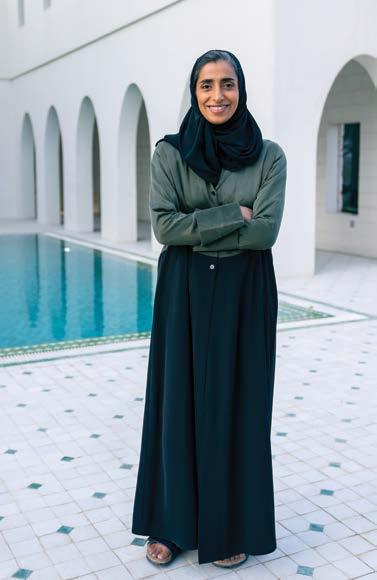
→ Fatma Al-Khater is the co-founder and CEO at Torba Market, Partner and Board Director at A-typical Ventures, and founder and Board Director at Qatar Venture Capital Association.
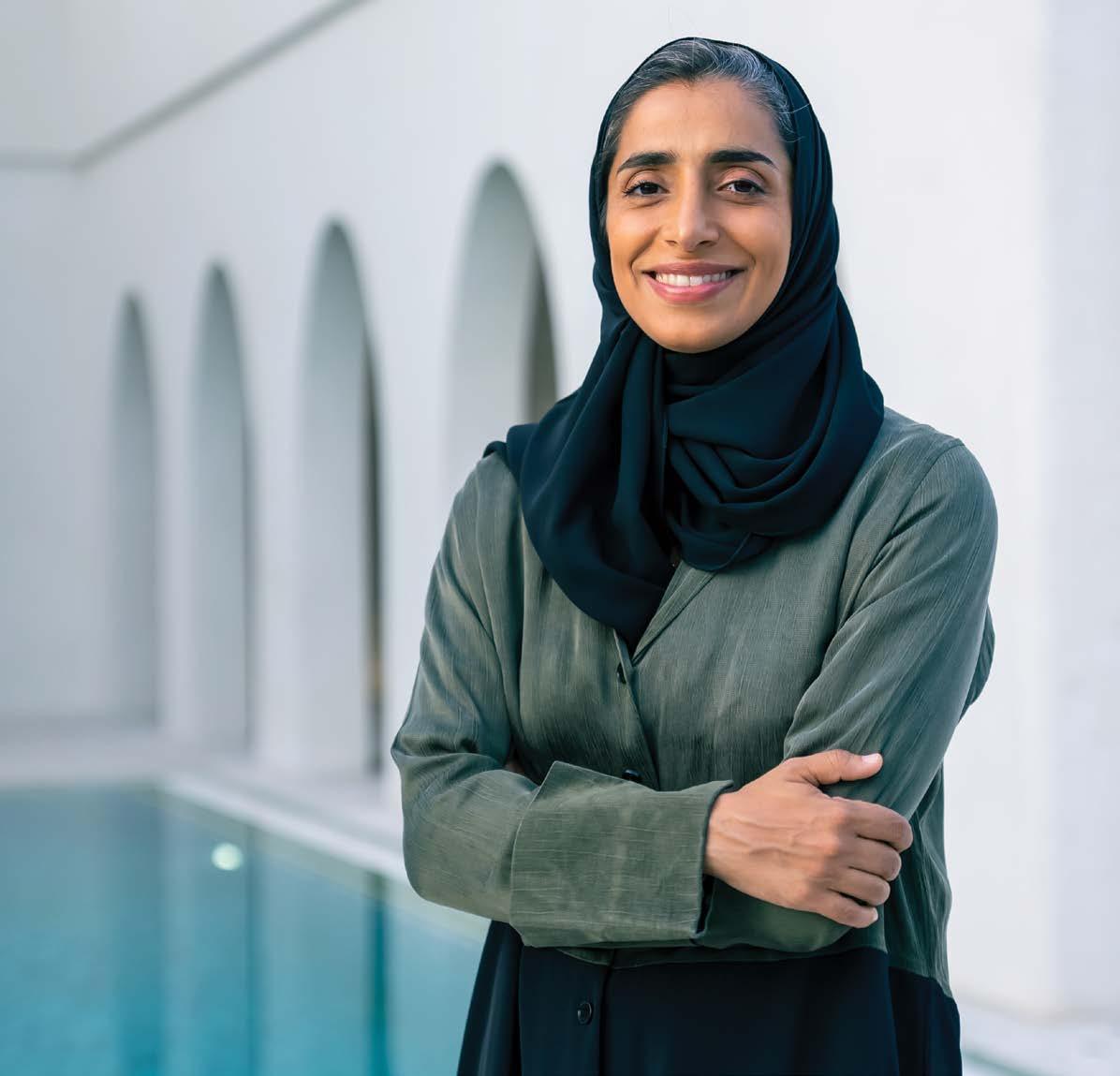
Qatari entrepreneur and investor Fatma Al-Khater on what it takes to build lasting companies in Qatar. by TAMARA PUPIC
“FOR MANY FOUNDERS, QATAR SERVES AS AN IDEAL PILOT MARKET, ALLOWING THEM TO TEST, REFINE, AND VALIDATE SOLUTIONS BEFORE SCALING REGIONALLY OR INTERNATIONALLY.”
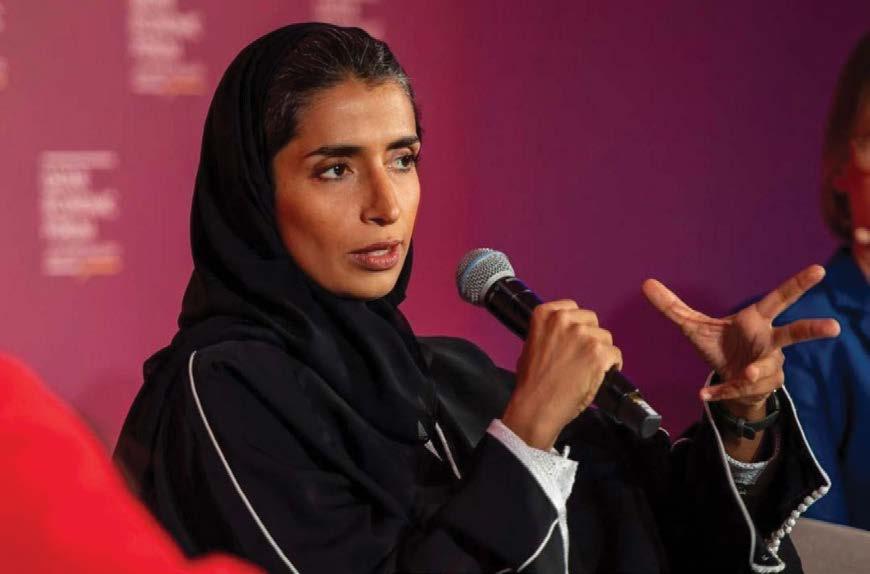
As the co-founder and CEO of Torba Market, partner and board director at A-typical Ventures, and founder and board director of the Qatar Venture Capital Association, Qatari entrepreneur and investor Fatma Al-Khater is deeply versed in the nuances of building a company in a market like Qatar.
This is why she argues that global startup conversations often underestimate the opportunity of emerging ecosystems.
“While the population size is relatively small, what is frequently overlooked is the country’s strategic depth its
global connectivity, strong purchasing power, and deliberate long-term investment in innovation,”
Al-Khater says. “For many founders, Qatar serves as an ideal pilot market, allowing them to test, refine, and validate solutions before scaling regionally or internationally.”
Regulation is another area that Al-Khater says is often misunderstood. “Yes, regulatory frameworks in sectors such as food, health, and fintech are rigorous, and navigating them requires patience and strong local insight,” she says. “However, this rigor
creates trust, quality, and credibility often giving startups that succeed here a competitive advantage when entering more complex or regulated markets elsewhere.”
Cultural context, Al-Khater adds, is another defining factor shaping how businesses are built and scaled in Qatar. “Qatar has a strong foundation of family-owned businesses, which continue to shape the commercial landscape. At the same time, we are seeing a clear generational shift, with younger entrepreneurs increasingly embracing startups, technology, and venture-
backed growth models,” she explains. “This blend of tradition and modernity is forming a distinct entrepreneurial identity, one that values long-term relationships, reputation, and impact alongside innovation and scalability.”
Al-Khater’s entrepreneurial and community-building credentials came to the fore with Torba Market, established in 2017 at the Ceremonial Court of Qatar Foundation in Education City. The initiative became Qatar’s first artisan, plastic-free farmers’ market, created to connect small local producers directly with the public. “In its earliest days Torba was a modest farmers’ market, supported by a small group of vendors and visitors who shared a belief in conscious consumption and local entrepreneurship,” Al-Khater says. “Since then, Torba has grown into a landmark destination in Qatar. Today, it attracts thousands of visitors each season, operating from November through April, while the rest of the year our team continues to work from our office on programming, partnerships, and ecosystem development.”
She adds, “Today, Torba stands not just as a market, but as a movement one that supports local entrepreneurs, nurtures community, and invests in the next generation through initiatives like Torba Junior. For me, that long-term impact is just as important as sales performance or scale.”
When Doha-based investor Alina Truhina founded UTOPIA Capital Management, a venture capital platform that includes A-Typical Ventures—a Middle East–focused VC fund backed by the Qatar Investment Authority—Al-Khater joined as Partner and Board Director at A-Typical Ventures. In this role, she gained a firsthand view of investment opportunities and challenges across the region which she describes as “a dynamic and diverse entrepreneurial landscape.” Al-Khater says, “Opportunities are driven by strong demand for disruption and innovation in sectors such as finance, health, logistics, and energy particularly among young, tech-savvy populations. However, challenges persist like access to later-stage capital particularly Series A and beyond varies widely across markets. Talent mobility restrictions in some regions further complicate regional scaling.”
However, Al-Khater remains optimistic. “The appetite for innovation is growing, and mechanisms such as venture studios and cross-border funds are emerging to bridge structural gaps,” she says. “This signals a maturing ecosystem where regional collaboration will increasingly unlock scale and sustainability for startups.”
In 2025, Al-Khater founded the Qatar Venture Capital Association (QVCA) alongside founding members A-Typical Ventures, Golden Gate Ventures, Rasmal Ventures, and Builders VC MENA. The association serves as Qatar’s first national platform and a unified voice for the country’s venture and investment community. “QVCA’s mission is to strengthen investor confidence, coordinate policy advocacy, and create a structured framework for capital and talent entering the country,” Al-Khater says. “In the short term, we focus on strengthening investment networks, improving access to capital, and promoting investor education. In the long term, our vision is to build a globally connected, self-sustaining VC ecosystem that directly supports Qatar’s
economic diversification and innovation goals.”
Looking ahead, Al-Khater sees Qatar’s startup ecosystem entering a phase defined by long-term ambition and global relevance. “Founders today benefit from more sophisticated funding mechanisms, stronger institutional backing, and clearer national direction through initiatives such as Qatar National Vision 2030 and QIA’s US$1 billion Fund of Funds,” she says.
Al-Khater adds that addressing the remaining gaps in later-stage capital, specialized deep-tech talent, and seamless regional integration will be critical for ensuring that Qatar’s startup ecosystem continues to compete confidently on a global stage, but Al-Khater concludes by pointing out that “the ecosystem has matured through improved regulatory frameworks, government-backed accelerators, and deeper collaboration between corporates, universities, and investors.” She says, “Over the past decade, entrepreneurship in Qatar has evolved from a niche pursuit into a core pillar of economic diversification.”
Qatari Entrepreneur and Investor Fatma Al-Khater’s Advice for Building a Business in Qatar
} BUILD FOR EXPORT MARKETS FROM DAY ONE
“Qatar is an excellent place to pilot and validate ideas, but long-term growth requires a regional or global mindset from the outset. Founders should design products, teams, and business models that can scale beyond the local market.”
} CHOOSE PARTNERS STRATEGICALLY
“Capital alone is not enough at early stages. Entrepreneurs should align themselves with investors, mentors, and institutions that bring operational experience, long-term commitment, and the ability to open doors across markets.”
} EMBRACE REGULATION AS A COLLABORATOR RATHER THAN A CONSTRAINT
“Engaging early and transparently with regulators helps founders navigate complexity, build credibility, and ultimately create stronger, more trusted businesses especially in regulated sectors.”
} INVEST DEEPLY IN TALENT AND CULTURE
“Competing for specialized technical and leadership talent requires more than compensation. Building purpose-driven cultures, clear growth pathways, and meaningful ownership is critical for long-term success.”
} FOCUS ON IMPACT ALONGSIDE RETURNS
“In our region, businesses that deliver real social, economic, or environmental value tend to resonate more deeply with customers, partners, and policymakers. Mission-aligned entrepreneurship is not just good ethics it’s good business.”


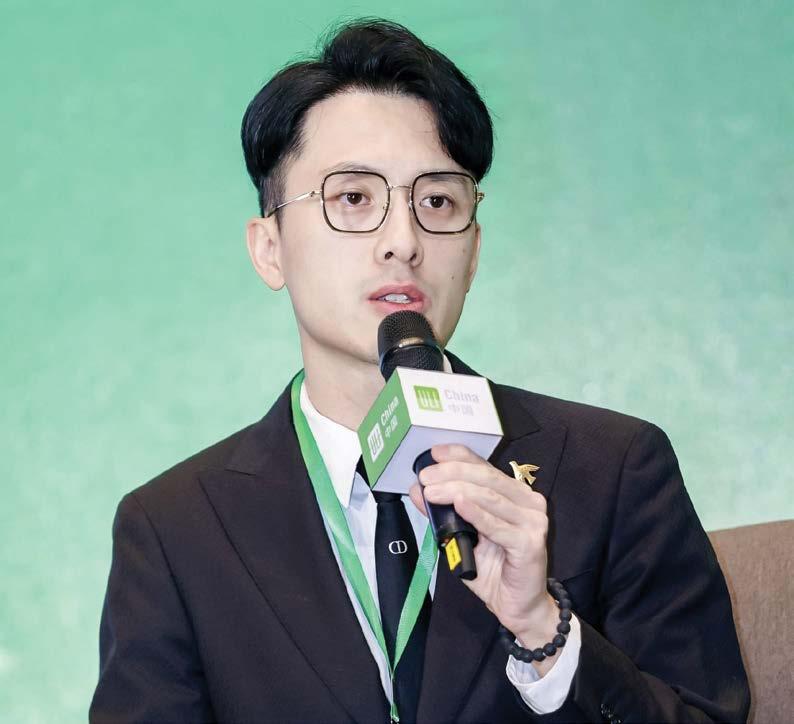
Born in Hong Kong, NEXX is now building the next generation of intelligent supply chains in Qatar, combining AI, data, and local insight to power the region’s logistics future. by
TAMARA PUPIC
The story of NEXX began when Oscar Hui Ka (now its CEO, Professor Yu Bee (now its Chief Scientist), John Chan (now its Chairman) set out to transform an aging industrial building in Hong Kong into a fully automated cold storage facility. Despite widespread skepticism about its limited capacity and inefficient multi-floor layout, the team applied advanced AI-driven optimization to redesign the warehouse’s resource allocation. The result was a breakthrough in operational efficiency that turned the project into a regional benchmark for smart warehousing. This success became the foundation for a broader vision shared with Houston Huang, then CEO of J.P. Morgan China, to build a company capable of redefining global logistics. Together, they established NEXX, a Hong Kong-based enterprise
specializing in AI-powered supply chains and intelligent warehouse systems.
Guided by their belief that global logistics routes are being redefined by new dynamics in international trade, the NEXX team has turned its attention to exploring opportunities in Qatar. “We believe the GCC will emerge as the logistics hub connecting Asia, Europe, and Africa,” Ka notes. “NEXX is fully committed to leveraging our proprietary AI logistics technology as a catalyst to build a world-class logistics ecosystem across the MENA region. Our initial focus will be on establishing a network of advanced logistics warehouses to accelerate this transformation.”
A core part of their strategy is to become a truly localized company in the GCC, rather than an external player serving the region. Establishing the NEXX regional headquarters within the GCC is central to achieving this vision, and Qatar quickly stood out as the ideal location—driven by several key factors. “Qatar has developed an exceptional educational ecosystem, and it has also strengthened its innovation landscape through robust support systems and growing venture capital frameworks,” Ka says. “By establishing our regional base in Qatar, we position ourselves at the center of MENA’s economic transformation while maintaining the local presence needed to build trust and foster strong partnerships across the region.”
Adding a NEXX MENA co-founder, Ibrahim Al-Derbasti, the company is now registered with the Qatar Financial Centre (QFC) and is participating in an accelerator program organized by TASMU. Out of Doha, the NEXX team is currently focused on advancing the company’s core product — NEXXBot, an AI-powered expert system specialized in supply chain management that combines industry knowledge, data-driven insights, and logistics expertise.
The team’s main challenge of building a company in Qatar has been product–market integration — ensuring their AI-driven solution fits the unique dynamics of the regional logistics ecosystem.
“Moving from Hong Kong to Qatar, we couldn’t assume that our existing product format and business model would directly apply. The key question was whether our core experience was relevant in a completely new cultural and commercial landscape,” Ka says. “To tackle this, we spearheaded a deep localization initiative, engaging in extensive conversations with potential clients and partners on the ground. This wasn’t about surfacelevel adjustments — it was about fundamentally understanding their unique workflows and pain points.”
The pivotal moment came when the NEXX team consciously shifted their perspective. “By viewing our operations through the lens of MENA clients and partners, we conducted a fundamental reassessment and ultimately redefined our value proposition,” Ka explains. “This process was transformative; we didn’t just find a ‘fit’ — we discovered a superior strategic blueprint. We successfully evolved into a powerful China–MENA operational model, and overcoming that initial integration challenge didn’t just solve a problem — it unlocked a much larger market opportunity for us.”
The benefits of setting up
in a country that prioritizes building a competitive, knowledge based economy and developing a world class logistics infrastructure, Ka explains, have been multiple. “Our smart fulfillment center at Milaha Logistics City is one benefit, but
NEXX has also built the AI Lab and R&D team with Chinese and Qatari local talents, in partnership with QSTP, by leveraging the resources of QRDI and Education City.
“We’ve also enjoyed unmatched financial incentives for technology transformation, such as the US$1billion Investment incentive Program from Invest Qatar, offering up to a 40% subsidy It is an unparalleled incentive that we have not found elsewhere. This powerful financial signal, directly linked to Qatar’s diversification agenda, confirms the nation’s serious commitment to tech
transformation. It is a primary reason we are not only proceeding with our current project but are also expecting and planning for more projects in Qatar, as we are confident in the long term, government backed push for technological driven logistics eco-system.”
While many founders look beyond Qatar in search of growth, NEXX has taken a different path. The company has developed a carefully calibrated expansion strategy that turns Qatar’s relatively small market size into a strategic advantage — using it as a testing ground for innovation, localization, and scalability before expanding across the wider MENA region.
“We’re positioning Qatar as our regional showcase through flagship partnerships with local leaders like Milaha,” Ka says. “Together, we’re developing the Smart Fulfillment Center — one
of the region’s first AI-powered logistics facilities — as a tangible proof of concept. By leveraging Qatar’s incentives and executing with precision, we’re building a strong track record in delivering complex logistics transformations.”
Qatar also serves as a gateway to the wider MENA region through its strong institutional and commercial connections.
“We’ve tapped into QNB’s regional banking network — including QNB Bank A.S. — to secure introductions to local companies in new markets,” Ka says. “Likewise, platforms such as TASMU have facilitated our expansion into Saudi Arabia by linking us with partners active across both markets. These relationships offer immediate credibility and streamlined access to regional opportunities.”
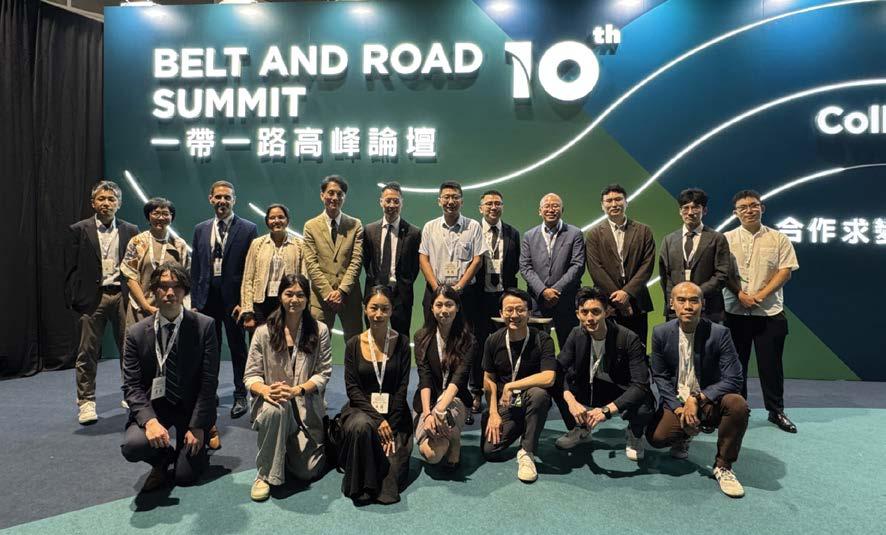
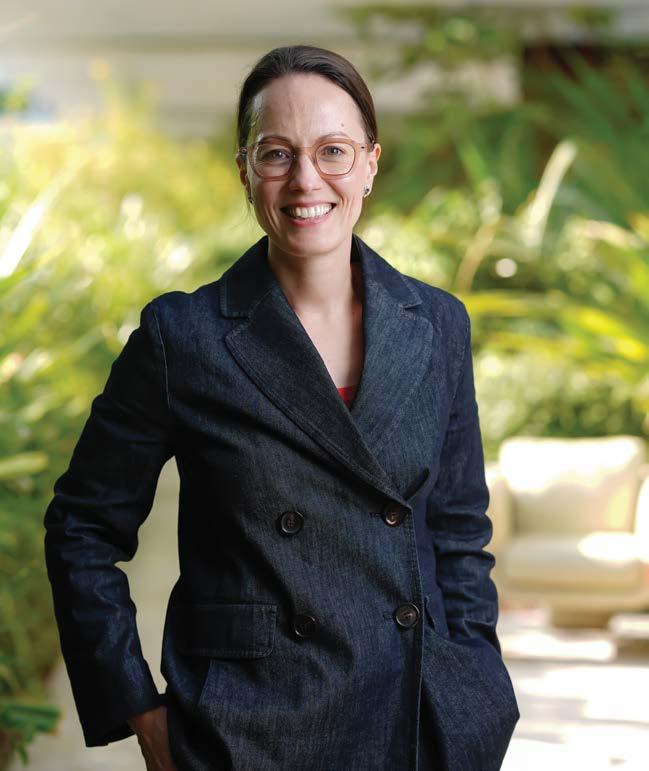
Utopia Capital Management and QVenture Capital Association’s Alina Truhina shares insights on Qatar’s venture capital ecosystem (and what makes an idea more “fundable” than others).
by AALIA MEHREEN AHMED
Alina Truhina is today the Founding Partner at Utopia Capital Management, a UK-headquartered global investment management company that operates across Southeast Asia, the GCC, Levant, Türkiye, and Pakistan, and co-Chair and Board Director of the QVenture Capital Association (QVCA), a Qatar-based emerging industry body committed to strengthening the venture capital (VC) and private equity (PE) ecosystem in the country. But even before Truhina had delved deep into these roles, she’d amassed a wealth of VC experience as the co-founder of Founders
Factory Africa which invested in early-stage startups across Africa. It was a tenure during which she invested in over 100 ventures across fintech, healthtech, and agritech. As such, she doesn’t mince her words when asked what startup founders —particularly those in Qatar— should avoid while trying to raise funds. “Too many founders try to sound fundable instead of building something exceptional and scalable,” she says. “Artificial intelligence (AI) means anyone can write a business plan or have a fundable concept. But do you have an unfair advantage, a unique experience, network, or technical niche? What real world leverage sets you apart? My advice: Don’t copy the playbook. Define your edge, and build your moat from day one.”
To ensure her work offers better support to entrepreneurs across the Global South, Truhina offers her expertise across all three branches of Utopia Capital Management: A-typical Ventures, an early-stage Middle East fund; The Radical Fund, a Southeast Asia–focused climate-tech venture fund; and The UTOPIA Studio, a venture builder creating AI-native, AI-optimized companies designed to
scale. “A-typical Ventures is the Middle East arm of UTOPIA Capital, a fund that backs regionally rooted, globally relevant ventures in sectors that don’t fit traditional playbooks but hold systemic potential,”
Truhina explains. “Our name is intentional: we look for “atypical” opportunities in sovereign infrastructure, industrial resilience, vertical AI, or cross-border systems, and we invest early, often as the first institutional check. Our capital strategy spans Pre-Seed to Series A and leverages the broader UTOPIA platform: from technical and go-tomarket support via the Studio, to downstream risk capital via follow-on investment. Many of our deals emerge directly from problem-oriented deep dives (PODs), where we align capital, infrastructure, and ecosystem partners around a defined opportunity space. We look for domain experts and we aim to turn regional complexity into commercial advantage.”
On how this translates into UTOPIA Capital’s investment focus, Truhina explains: “UTOPIA is purposebuilt for the early stage because that’s where structural gaps are most visible, and where long-term value is
Alina Truhina on the trends or technologies that will define the next wave of investable startups across Qatar and the broader Global South
“The next generation of Global South ventures will embrace complexity to scale across verticals and geographies. At the moment, we are excited about the following:
}1. INFRA INTELLIGENCE: Ventures enabling energy grid optimisation, VPPs, digital twins for data centres, and intelligent retrofits for industrial performance.
}2. DECARBONISING INDUSTRY: Platforms optimising cross-border logistics, low-carbon materials, and manufacturing efficiency through agentic AI.
}3. SOVEREIGN SYSTEMS: Technologies enabling sovereign data, disaster risk infrastructure, national energy stacks, and domestic control layers.
}4. FLOW RAILS: Infrastructure for programmable settlements, cross-border money flows, tokenisation, and SME finance layers.
}5. VERTICAL AI COMPANIES: Domain-specific AI for health productivity, education infrastructure, and food security resilience. Each of these categories represents a POD within UTOPIA, and each is an investable thesis grounded in the real needs of the regions we operate in.”
VALUE IS CREATED BY BUILDING REAL DEFENSIBILITY EARLY, THROUGH DOMAIN EXPERTISE, PROPRIETARY DATA, INFRASTRUCTURE, AND CLOSE PROXIMITY TO CUSTOMERS. IN EMERGING MARKETS, SUCCESS COMES FROM PLATFORMS AND PARTNERSHIPS THAT LOWER THE COST OF BUILDING, SCALING, AND LEARNING, AND NOT JUST ACCESS TO CAPITAL.”
developed. Across A-typical Ventures in the Middle East, The Radical Fund in Southeast Asia, and The UTOPIA Studio, we invest from Pre-Seed to Series A. Our Studio co-builds companies from the idea stage, often before incorporation, while our funds deploy capital. We back domain experts sourced through curated networks or our Fellowship, and focus on high-leverage, underbuilt sectors such as infrastructure intelligence, sovereign systems, industrial decarbonisation, financial rails for crossborder economies, and vertical AI ventures in health, education, and food security. Each of these sits within a POD — a focused, pre-researched venture cluster with pre-aligned partnerships and technical infrastructure designed to accelerate execution.”
With Utopia Capital Management offering such a wide-ranging suite of services and support, Truhina has but one underlying criteria when it comes to choosing startups to invest in: “I look for businesses that can take advantage of our expansive geographic and technical capacity!”
This condition is particularly applicable to her work within Qatar, she notes. “I believe that Qatar is not the
“middle;” but the center of an emerging unified venture economy across the Global South,” Truhina continues. “Our model seeks out entrepreneurs that can break through verticals and borders to build a new generation of infrastructure and innovation. By investing early we can work hand-in-hand to broaden and accelerate the entrepreneurs vision and by providing frictionless capital, tech stack, and local-global network we significantly derisk and accelerate the time to market.”
For Truhina, that conviction is reflected most clearly in the entrepreneurs she backs. “As a passionate embracer of fearlessness in the face of complexity, we seek out entrepreneurs that have hyper technical or jurisdictional knowledge,” she says. “This is executed through technical thematics that we call ‘PODs’, as mentioned earlier. Each POD is a cluster of five to seven Global South entrepreneurial technical experts looking to solve problems that are often unseen, overlooked, or discarded. Today, we are looking for entrepreneurs interested infra intelligence, decarbonising industry, sovereign systems, flow rails, and vertical AI companies”
Moving into 2026, Truhina advises founders and entrepreneurs to focus on long-term impact instead of quick wins. “Founders should focus on solving structurally hard problems with patience and depth, rather than optimizing for speed or short-term traction,” she adds. “Value is created by building real defensibility early, through domain expertise, proprietary data, infrastructure, and close proximity to customers. In emerging markets, success comes from platforms and partnerships that lower the cost of building, scaling, and learning, and not just access to capital.”
“AI
MEANS ANYONE CAN WRITE A BUSINESS PLAN OR HAVE A FUNDABLE CONCEPT. BUT DO YOU HAVE AN UNFAIR ADVANTAGE, A UNIQUE EXPERIENCE, NETWORK, OR TECHNICAL NICHE? WHAT REAL WORLD LEVERAGE SETS YOU APART? MY ADVICE: DON’T COPY THE PLAYBOOK. DEFINE YOUR EDGE, AND BUILD YOUR MOAT FROM DAY ONE.”

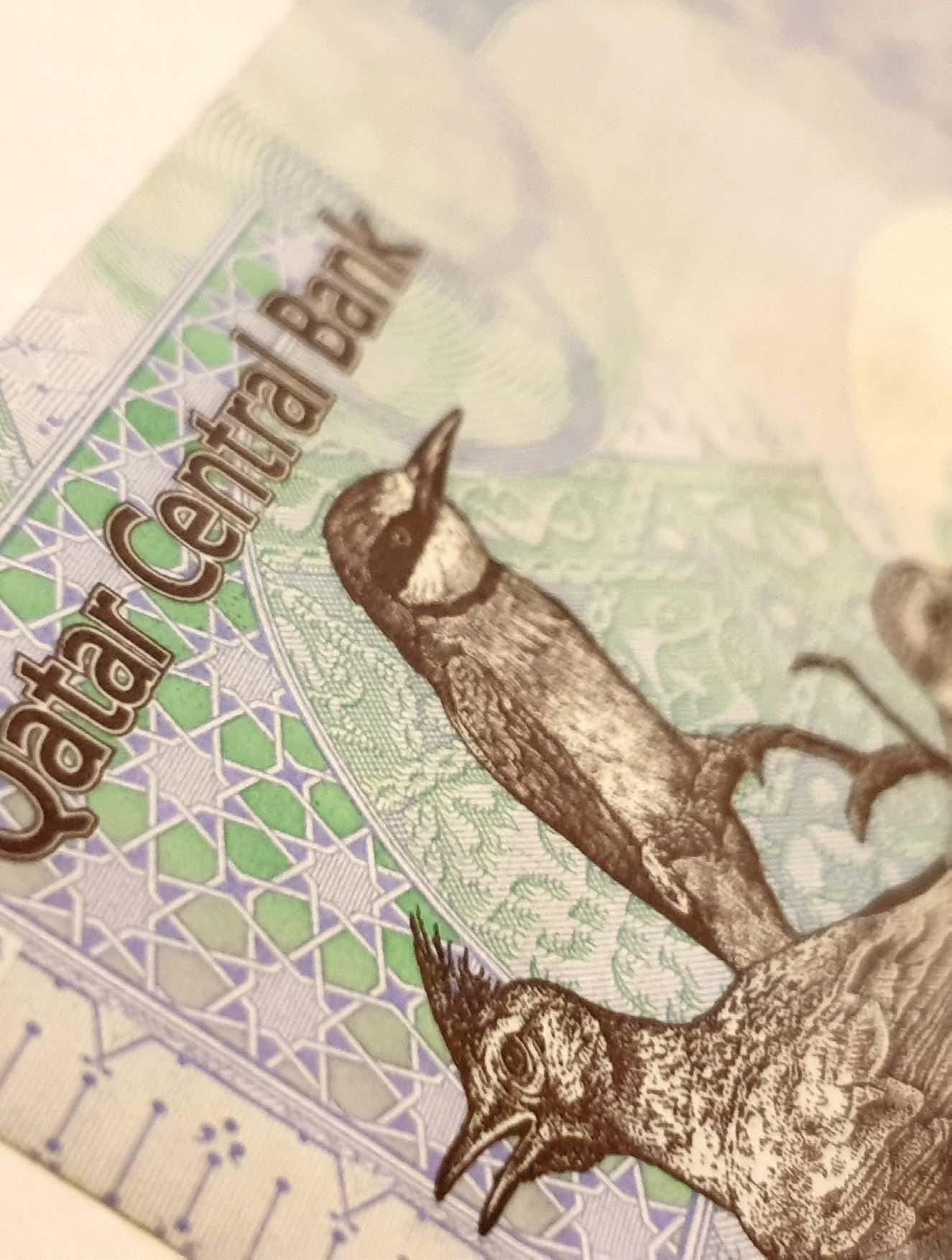
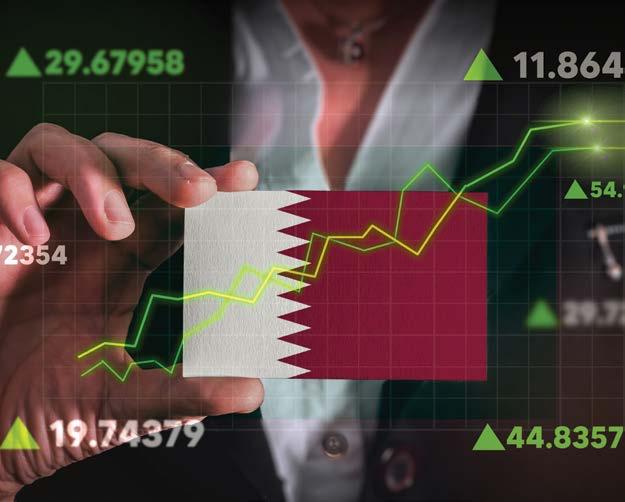
Qatar Central Bank has introduced a package of precautionary measures to support the country’s financial system amid rising geopolitical tensions, including unlimited liquidity facilities for banks and temporary relief for borrowers.
The central bank said its assessment of recent developments confirmed that Qatar’s banking sector remains resilient, with strong liquidity, capital levels well above regulatory requirements, and solid provisions against credit risk. Banks continue to hold substantial liquidity in both Qatari riyals and foreign currencies, with sufficient resources to meet customer demand and absorb short-term funding pressures.
Despite this, the central bank said heightened external uncertainty warranted additional support. It will offer unlimited Qatari riyal repo facilities against eligible
securities held by banks to maintain liquidity in the domestic market. In addition to its existing overnight repo window, a new term repo facility with maturities of up to three months will be introduced to provide greater certainty for lenders’ cash-flow management.
As part of the measures, reserve requirements on deposits will be reduced to 3.5% from 4.5%, releasing additional liquidity into the
banking system. Banks will also be permitted to offer affected customers the option to defer principal and interest payments for up to three months, subject to internal policies and regulatory guidance.
The central bank said it will continue to monitor global, regional, and domestic developments closely and stands ready to take further action to preserve financial stability and orderly market functioning.
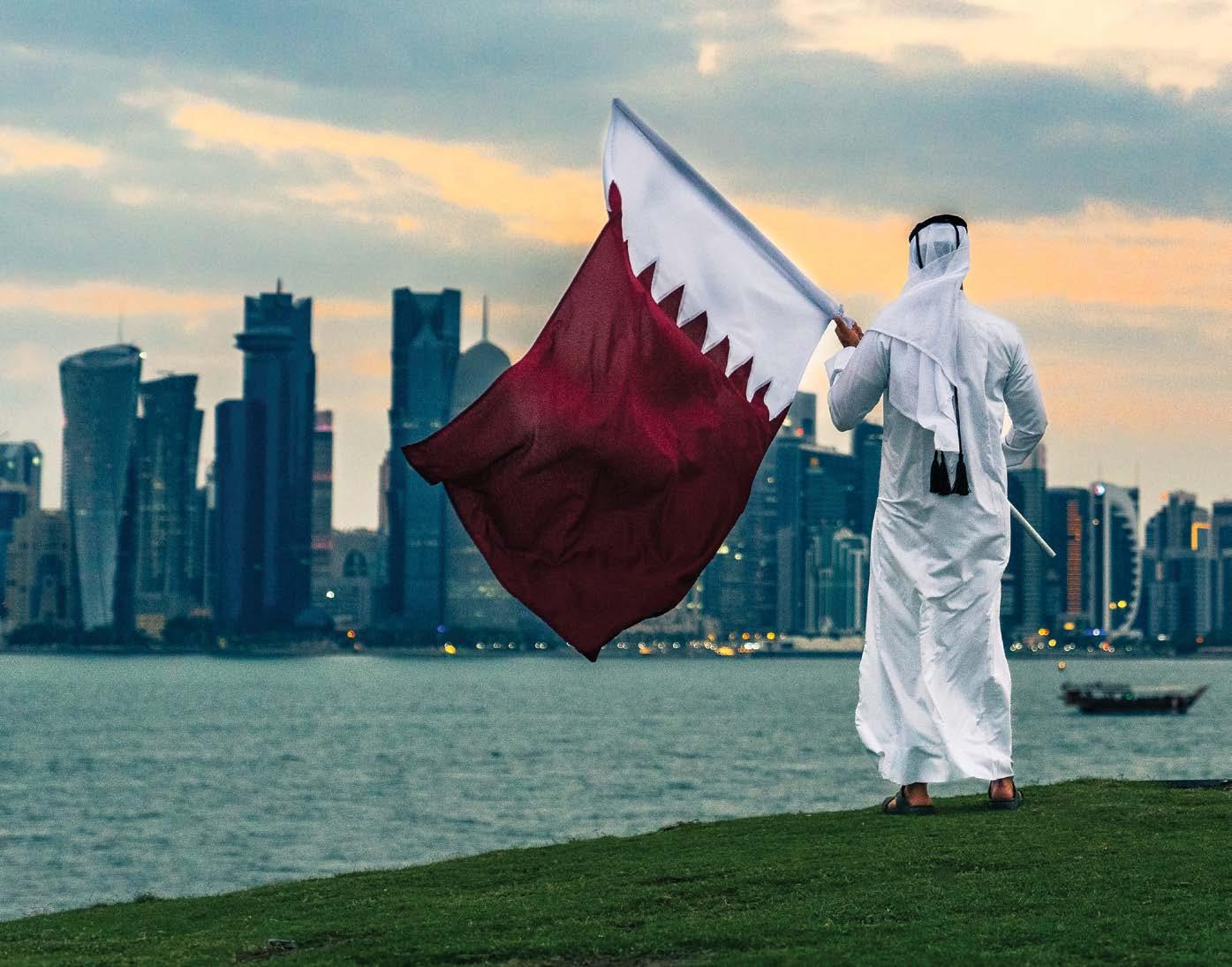
In early February 2026, Qatar rolled out two new long term residence permit categories to attract senior executives and high potential entrepreneurs from around the world.
These Executive and Entrepreneur permits

enable eligible foreign nationals to live and work in Qatar for up to ten years, providing greater stability and flexibility. By introducing these permits, Qatar underscores its commitment to economic diversification, innovation and global competitiveness, presenting a compelling option for business leaders and founders seeking a long term regional base.
The government is moving beyond conventional employer sponsored immigration models. Its goals include drawing and retaining top tier leadership, fostering entrepreneurship and foreign investment, ensuring long term security for key contributors to the economy, and solidifying Qatar’s status as a regional business and financial hub. With extended residency rights, opportunities to own assets and provisions to sponsor family members, the country signals a desire for executives and entrepreneurs not just to work in Qatar but to build their futures there.
Two distinct permits cater to different profiles. The Executive Long Term Residence Permit targets senior managers within qualifying organizations— such as publicly listed companies, financial institutions, insurance providers and consulting firms regulated by Qatari authorities. Applicants must be nominated by a
registered employer, hold a valid Qatari residence permit, meet minimum salary thresholds (higher for executive director titles), and possess at least five years of senior management experience. Those approved gain residency independent of employer sponsorship and receive a new Qatar ID.
Meanwhile, the Entrepreneur Long Term Residence Permit supports founders launching or expanding businesses in Qatar. Applicants need a nomination from a recognized business incubator (such as the Qatar Development Bank’s programs, Qatar Science & Technology Park or Start Up Qatar), an endorsement letter and proof of financial capacity. Additional documentation varies depending on whether the applicant is inside or outside Qatar. Approved applicants receive an entry visa if they are abroad and then a Qatar ID, or go straight to obtaining a Qatar ID if already in the country.
By offering these visas, Qatar aims to compete with other Gulf Cooperation Council states that provide similar programs. The permits are valid for up to ten years and can be renewed, grant holders freedom from employer sponsorship, allow them to sponsor family and domestic workers, and provide business friendly advantages such as asset ownership and merchant
discounts. Entrepreneurs also gain access to tailored incubator support, mentorship and preferential commercial opportunities—making Qatar particularly appealing to high earning professionals and founders.
Successful participation in these programs requires early preparation. Prospective applicants should evaluate their eligibility regarding salary and role requirements, coordinate with employers or incubators to secure nominations, collect necessary documents (including attested degrees, bank statements and police clearances), confirm that their companies meet eligibility criteria, and plan timelines for document attestation and approvals to avoid delays.
These initiatives are part of a broader strategy to attract global talent and investment. The forthcoming Highly Skilled Talent Visa, still in development, is expected to further diversify Qatar’s economy under the National Vision 2030. Additionally, Her Highness Sheikha Al Mayassa has signaled plans for a Creative Visa aimed at artists and cultural innovators, enabling extended collaboration with Qatari cultural institutions and underscoring Qatar’s ambition to evolve into a knowledge based economy.
HOW THE CEO BEHIND THE MENA REGION’S FIRST NASDAQ-LISTED MUSIC STREAMING PLATFORM CREATED A REAL-TIME GEOPOLITICAL MONITORING PLATFORM THAT HAS HELPED MILLIONS UNDERSTAND MAJOR GLOBAL DEVELOPMENTS IN REAL TIME.
by AALIA MEHREEN AHMED
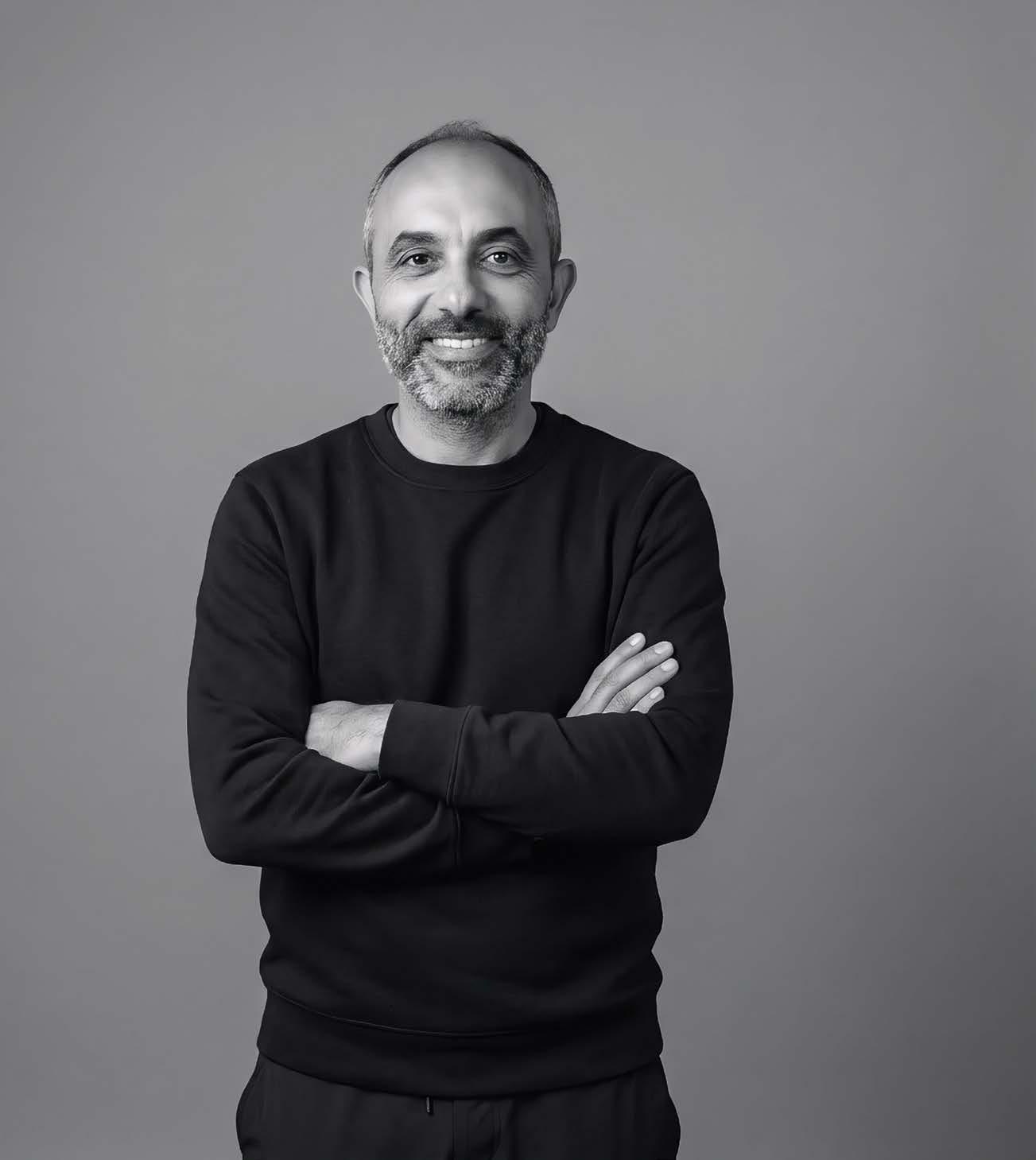
When Elie Habib last spoke to Entrepreneur Middle East, in 2024, he’d made something of a personal declaration: that he was committed to “embracing the title of a builder.” Two years later, in a quiet continuation of that sentiment —one that has primarily defined his entrepreneurial journey as the co-founder and CEO of music streaming platform Anghami— he engineered World Monitor; a platform that users would go on to label as “a Bloomberg Terminal for geopolitics.”
→ Elie Habib is the co-founder and CEO of music streaming platform Anghami, CEO of entertainment platform OSN+, and the founder of geopolitical monitoring platform World Monitor
The
geographic spread
surprised me most. The
US accounts for
roughly
13% of traffic, Europe 20%, MENA 18%, Asia 35% (Vietnam, Indonesia, Japan, Korea all at an unexpected scale), across 174 countries total.”
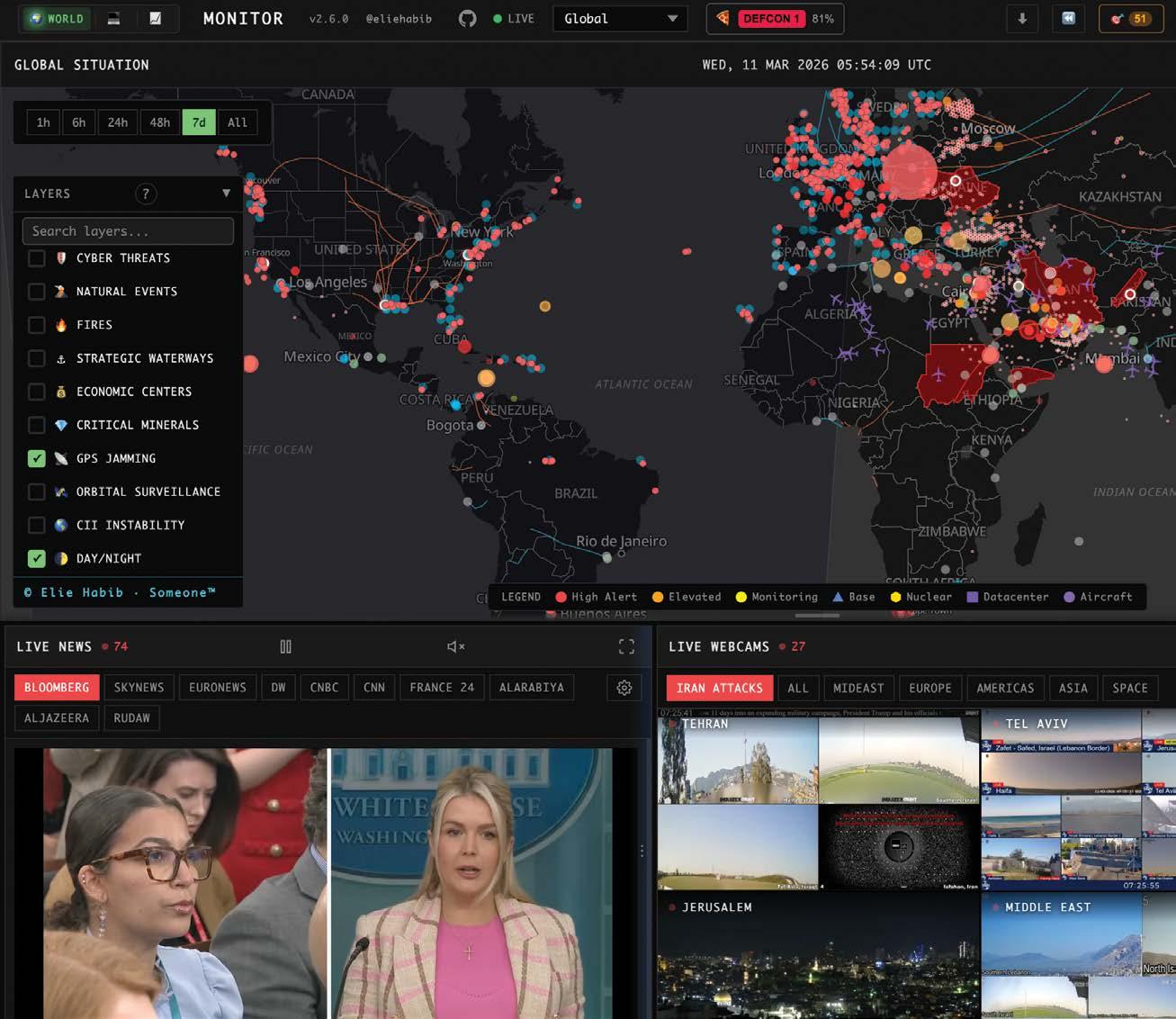
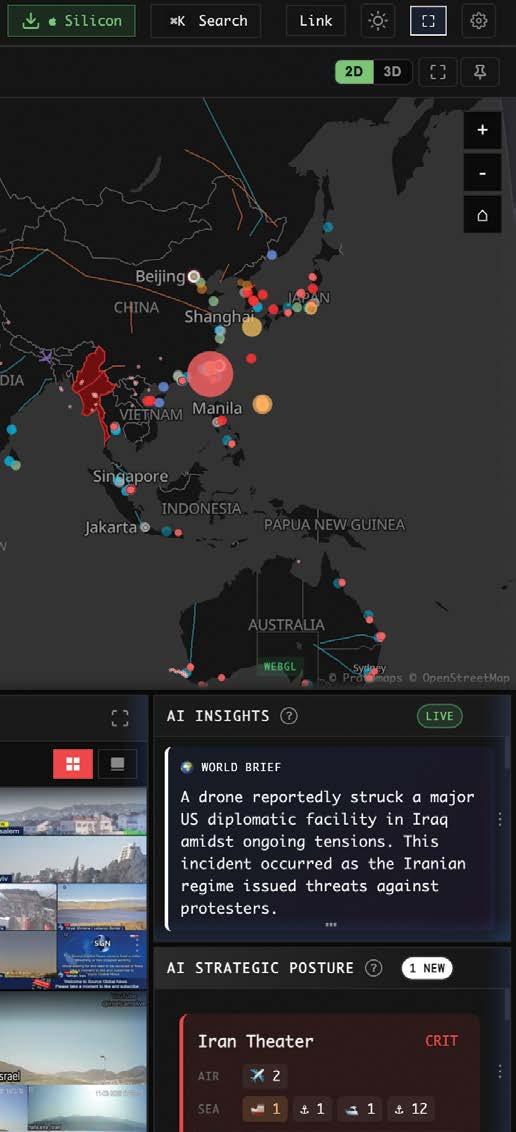
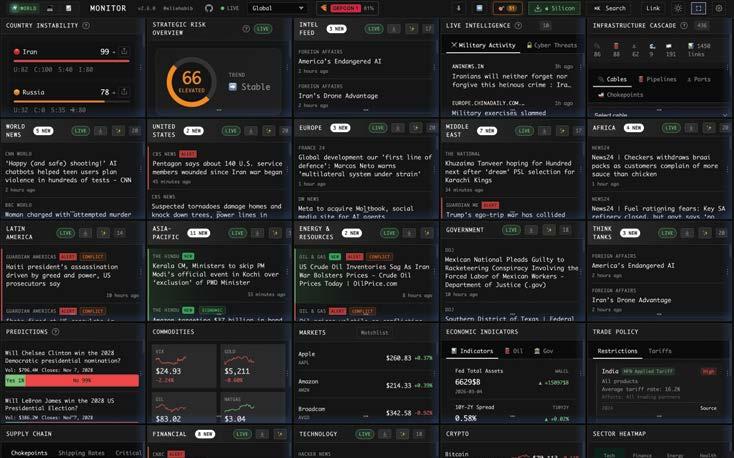
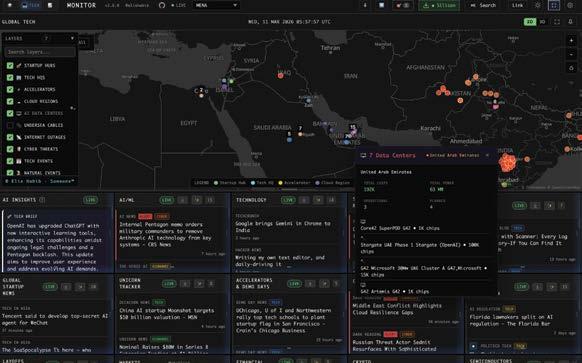
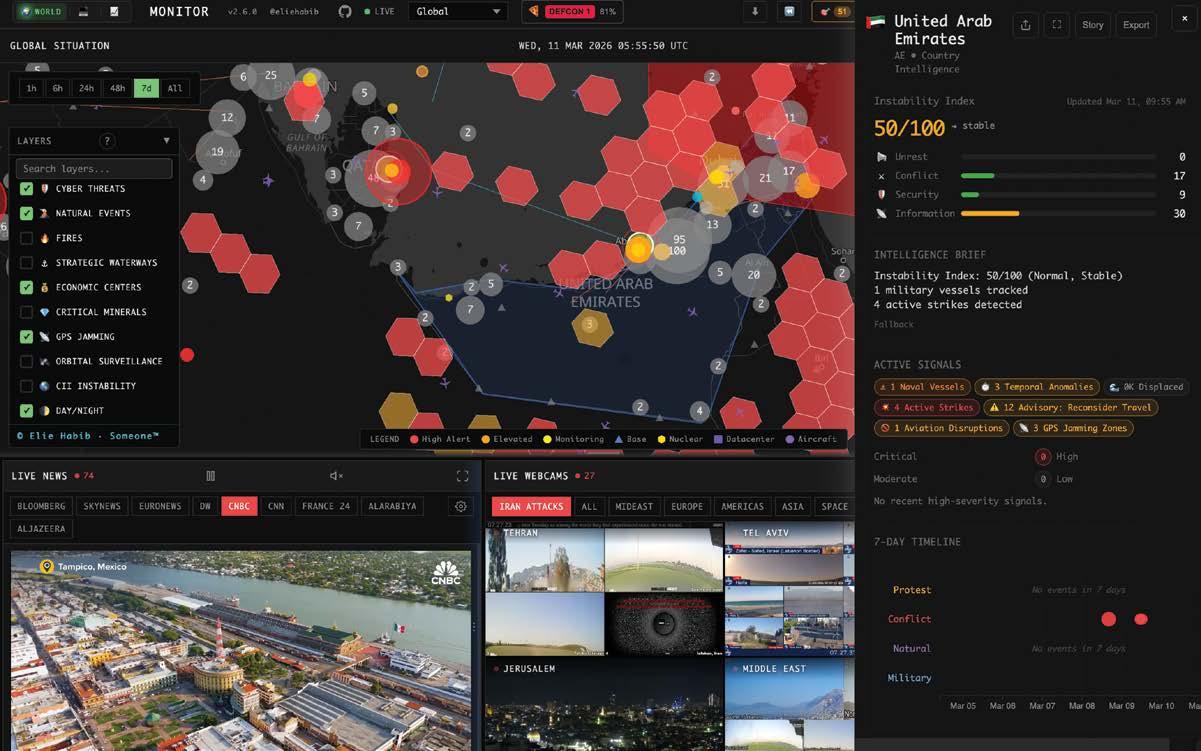
Created as a real-time dashboard that brings together information from a plethora of sources to help people understand what’s happening around the world, World Monitor tracks data like news reports, military activity, ships and aircraft movements, internet outages, infrastructure like pipelines and data centers, and natural events.
But Habib admits he didn’t expect a project that he’d
“vibe-coded” over a weekend to take off at the rate that it did.
“I built World Monitor in a single day in early January 2026 as a personal learning exercise, posted once on LinkedIn, and then on Twitter on the same day, and then largely forgot about it.” Habib tells Entrepreneur Middle East today. “About 10 days later traffic exploded: 400,000 users in a week, which then kept climbing. The last 30
→ World Monitor is a real-time map that connects global news and data signals to reveal how major events may be unfolding and intersecting.
days reached over four million visitors, with 490,000 in a single day during the Iran strikes.”
Indeed, since the start of the regional conflict on February 28, 2026, World Monitor has become something of a digital staple for many across the world. But for Habib, it has meant iterating at a pace the platform had not originally been designed to handle. “Scaling under those conditions is a live engineering problem,” he says. “The core tension is refresh rate: real-time processing costs significantly
The regional escalations made World Monitor visible, not useful. The underlying function —aggregating and correlating open-source signals across 200+ countries in real time— is at least as valuable during stable periods, because that’s when early warning actually changes decisions.” “
more than five-minute intervals. During the Iran escalation I built a new incident-tracking map layer with severity badges, Telegram intelligence retrieval, real-time regional air raid siren alerts with Hebrew-to-English
translation, GPS/GNSS jamming detection, airport cancellation feeds, embassy risk advisories, a strategic risk score, satellite tracking, and stock market tracking, all in a (another) single day. The platform was never designed for this volume. Every spike was both a stress test and a forcing function.
By thus combining all this data on one interactive map, the platform helps users spot patterns—such as when multiple reliable sources report the same development, when markets react before news breaks, or when unusual activity appears in a specific region. In layman’s terms, World Monitor helps people see how global events might be connected by putting many different signals in one place.
But given the platform decodes such a vast amount of information at any given time, Habib took an explicit decision early on while creating World Monitor: no human editors. “Credibility is structural, not editorial,” he adds.
As such, every incoming article on World Monitor goes through three sequential classification passes. “A rules-based engine screens headlines against a severity hierarchy: major geopolitical events and nuclear
events at the top, routine diplomacy at the bottom,” Habib explains. “Compound detection catches escalation patterns single keywords miss: a military strike scores high on its own, but when the target is geopolitically significant the system escalates automatically. A Large Language Model (LLM) then refines categorization asynchronously: users see results from the faster passes immediately, the LLM corrects in the background.”
The credibility of these data sources is tiered, adds Habib. “Wire services and
official channels such as Reuters, AP, the Pentagon, and the United Nations sit at tier one,” he says. “BBC and Al Jazeera are tier two. Specialist outlets like Bellingcat follow. The system processes over 200 news feeds, representing more than 450 sources, with confidence scores weighted proportionally. A single niche blog triggers nothing. Breaking alerts require the article to be under fifteen minutes old, corroborated by at least two distinct sources, and pass deduplication. A thirtyminute cooldown per event prevents the same story flooding the feed.”
The final filter in this process of delivering information to the end user is what is known as the convergence layer. “The system triangulates eight independent signal types simultaneously: internet outages, military flight patterns, naval vessel movements, protest activity, shipping disruptions, satellite-detected fires, historical baseline deviations, and supply chain disruptions,” Habib explains. “When multiple signal types converge on the same geography, that convergence is what surfaces. A single-outlet claim generating no
WHETHER BUSINESSES CAN BE APOLITICAL IS SEPARATE FROM WHETHER THEY CAN AFFORD TO BE GEOPOLITICALLY UNINFORMED. THE LATTER IS CLEARLY NO LONGER VIABLE.”
corresponding movement across those eight channels gets treated as noise. This is what allows the platform to generate breaking news automatically, without human intervention.”
But in the absence of human verification, and in an era when there is an unspoken onus on the reader to corroborate news validity, one could be slightly dubious about “fake news” trickling into the platform. Habib, however, offers an assuring response. “The architecture itself is the primary defense,” he asserts.
“Two independent tier-rated sources must agree before the system acts. That eliminates the vast majority of singleoutlet fabrications. The convergence algorithm
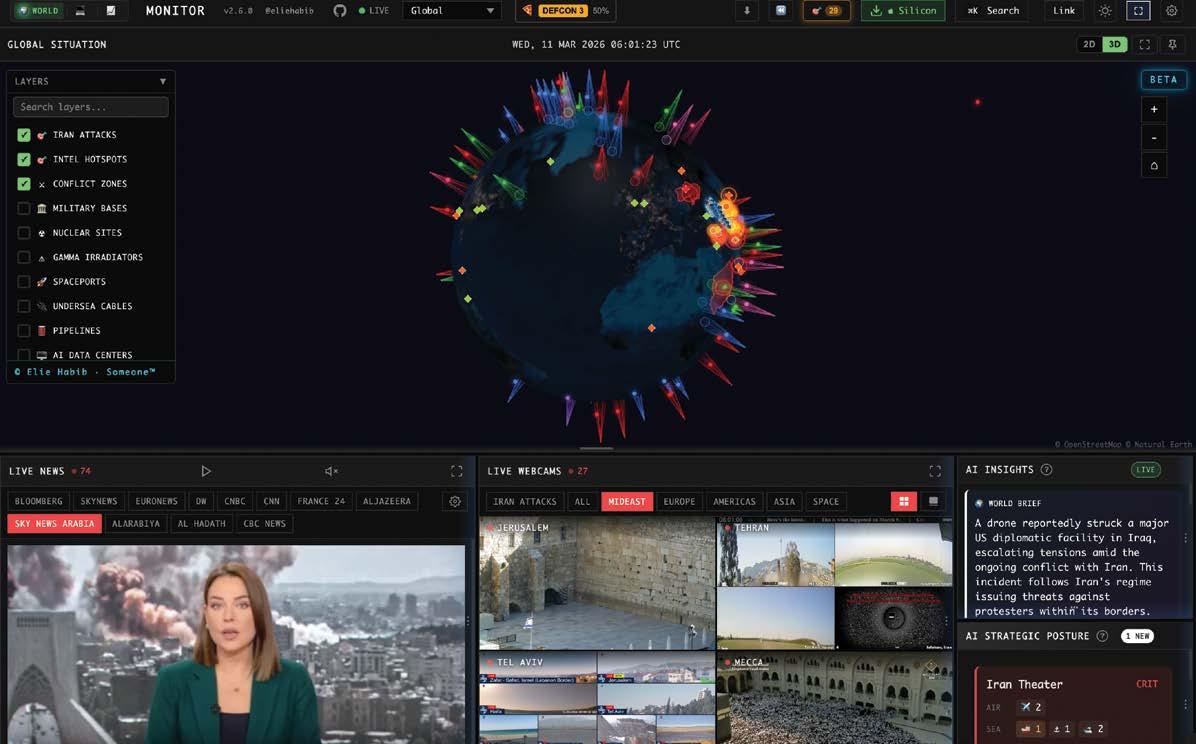
→ World Monitor also helps businesses track geopolitical signals that could affect supply chains, markets, and investments.
adds a second layer. Any text-based claim that generates no corresponding movement across the eight signal types gets suppressed automatically. A false report about a country entering a conflict that appears only in text feeds but shows nothing in military flight tracking, naval movements, or prediction markets gets treated as low-confidence noise. Now, no automated system fully resolves this in genuinely novel scenarios: an event with no historical baseline, or one specifically designed to exploit the corroboration logic. That remains an open architectural question. But ultimately the goal is to be significantly more reliable than undifferentiated news aggregation; not to claim perfect accuracy.”
Perhaps the most direct reflection of how trusted the platform has become lies in the diversity of its user base. “The geographic spread surprised me most,” Habib says. “The US accounts for roughly 13% of traffic, Europe 20%, MENA 18%, Asia 35% (Vietnam, Indonesia, Japan, Korea all at an unexpected scale), across 174 countries total.”
But equally striking has been the behavioral diversity of World Monitor’s users, Habib reveals. “Some users track commodity impact on maritime chokepoints. Others monitor military flight patterns or energy infrastructure. Finance professionals use it alongside market data. Six segments have emerged organically: journalists,
security and risk analysts, traders, academic researchers, policy analysts, and the general
correlating open-source signals across 200+ countries in real time— is at least as valuable during
The platform works as ambient global awareness, not only as a reactive tool. That passive use case has the most untapped potential. The most interesting next step is separating signal from noise more precisely.” “
public. The one I’m focused on is the segment that gets value from signal distillation rather than data accumulation: analysts and decisionmakers who need to understand what matters, why, and what its impact is on them specifically.”
These demographics, however, aren’t by chance. Beyond the platform’s current major use to dissect geopolitical events, it offers insights that were intended right from the start. “The regional escalations made World Monitor visible, not useful,” Habib emphasizes. “The underlying function —aggregating and
and port conditions, not reacting after a disruption. The platform works as ambient global awareness, not only as a reactive tool. That passive use case has the most untapped potential. The most interesting next step is separating signal from noise more precisely.”
stable periods, because that’s when early warning actually changes decisions. For investors, the most actionable use case is monitoring structural shifts that precede market-moving events: shifts in military posture, regulatory signals, commodity infrastructure changes, or political instability moving from low to elevated before it becomes headline news. The Country Instability Index is most useful precisely when scores are rising quietly, not after a conflict has started. For supply chain managers, the value is continuous monitoring of chokepoints, shipping routes,
As such, Habib notes that a number of industries can benefit from real-time geopolitical signal tracking. “And that’s basically any organization whose operations, costs, or revenues are exposed to geography; that covers more industries than people assume,” he says. “Shipping and logistics companies track chokepoints and port risk in real time; a rerouting decision on a vessel can cost millions. Energy companies monitor pipeline integrity and political risk across producing regions. Financial institutions with exposure to Gulf FDI, emerging market equities, or commodities use geopolitical signals as leading indicators that precede price moves. Defence contractors need situational awareness as an operational baseline. Newsrooms use it for breaking event coverage. The category that interests me most is global supply chains: multinational manufacturers and retailers who assumed stability in their sourcing geography and are now discovering that assumption is expensive.”
But despite the economic potential World Monitor promises to unlock for businesses, the platform itself is not one that Habib
→ World
be used by industries ranging from finance and energy to logistics and media to track geopolitical signals in real time.
intends to profit off of. “I have two constraints. The hard one: I will not monetize war-related content,” Habib says. “The platform reached millions of people during an active military escalation. Putting advertising or a paywall on that access is wrong.”
Habib’s second, “soft” constraint is his own time and attention. “I am the CEO of a company that’s thriving, and World Monitor will not become a second full-time job,” he says.
That said, Habib believes the platform could eventually offer additional tools for professionals who rely on geopolitical intelligence in their daily work. “Within those constraints, a Pro tier is
the most coherent direction,” he says. “The features that create the most value for professional users are scheduled AI briefings via Slack, email, or WhatsApp; custom alert rules for specific countries, sectors, or threshold triggers; API access for organizations that want to integrate World Monitor data into their own tools; and advanced country intelligence briefs with deeper financial and security layers. The open-source community has absorbed a substantial portion of the development work: 36,000+ GitHub stars, 6,000 forks, 50+ code contributors, around 1,200 contributors across ideas and issues. The free tier stays free. The Pro tier funds the infrastructure that makes both possible.
A venture-backed growth model does not fit this.”
But the broader shift that platforms like World Monitor point to extends beyond business models or product features. At its core the conversation leads to a deeper question about business and geopolitics today: can companies still afford to remain apolitical?
“Whether businesses can be apolitical is separate from whether they can afford to be geopolitically uninformed,” Habib discerns. “The latter is clearly no longer viable. The former is a values question I won’t resolve for anyone. What has changed is the cost of information. The tools that gave governments and large enterprises a structural information advantage
were expensive because aggregating and correlating open-source signals at scale required significant human and technical infrastructure. AI closes that gap. A single person can now build a platform that does much of what expensive systems do. That’s a structural shift.The practical implication: the excuse of not knowing is gone. Real-time instability data, military movement tracking, prediction market signals, supply chain disruption indicators, all of it is accessible in a browser, free.”
“A company making sourcing, investment, or expansion decisions without this input is not apolitical. It’s uninformed. Those are different things,” Habib concludes.



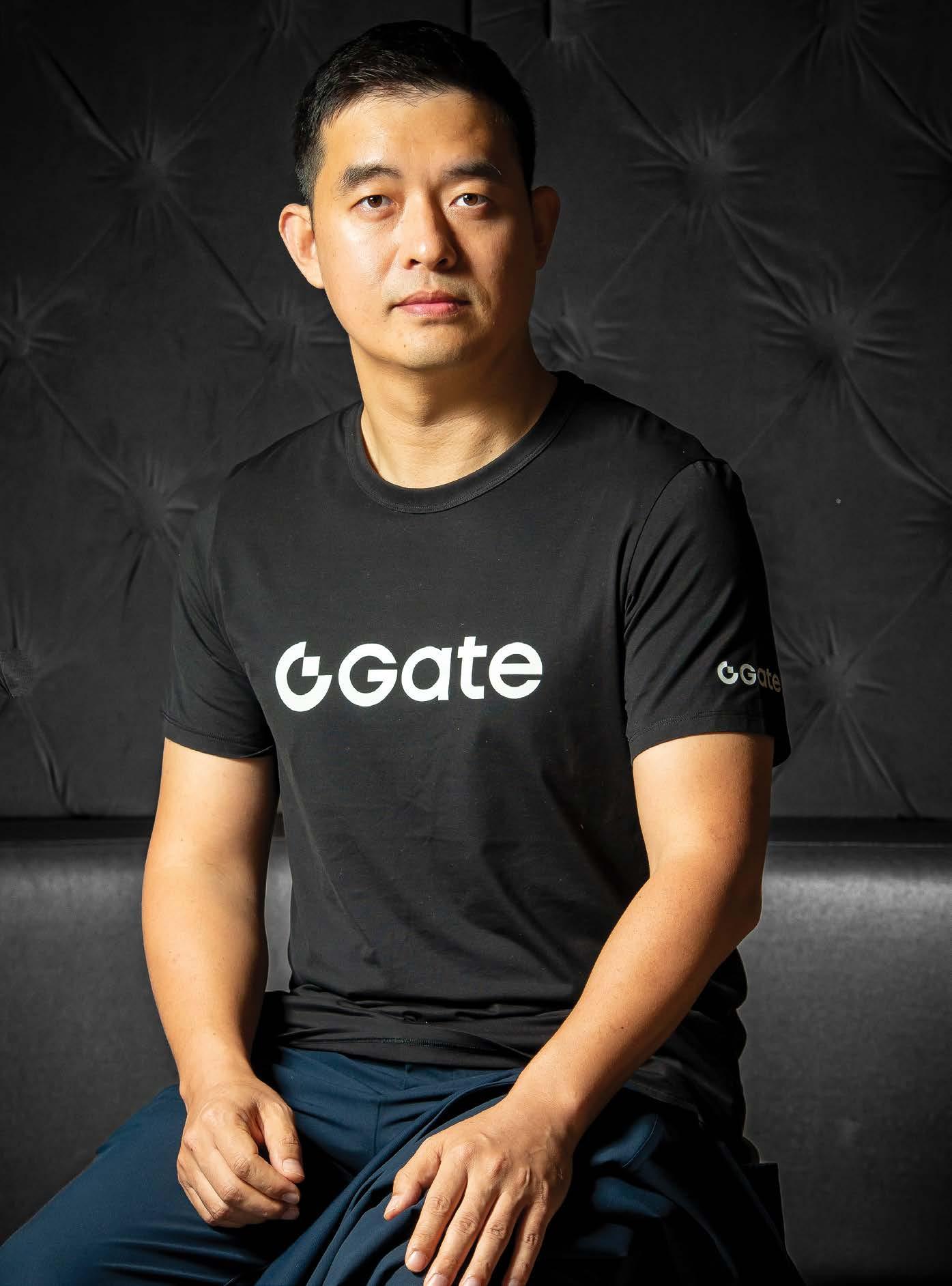
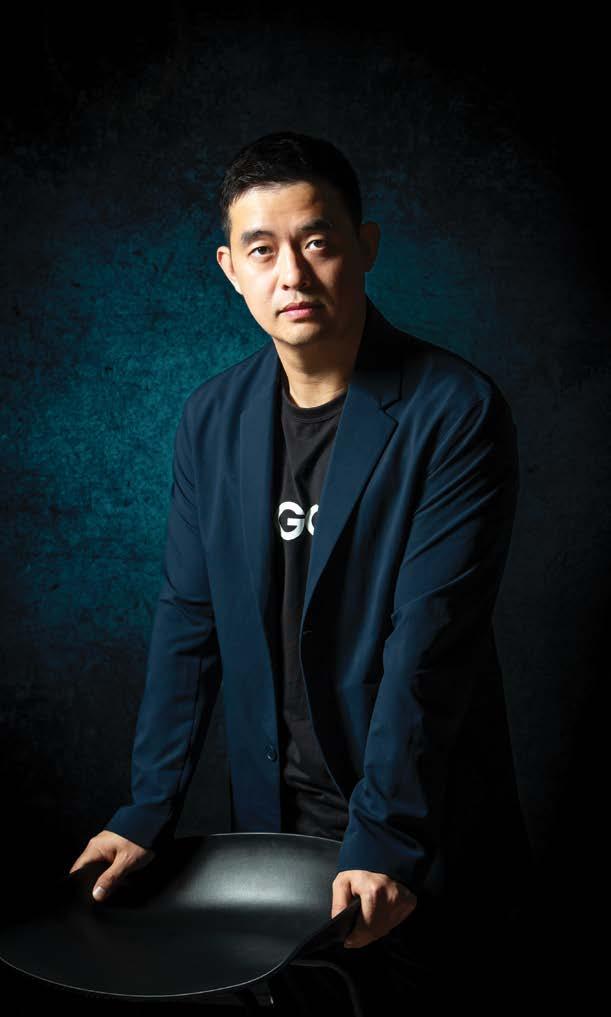
→ Dr. Han, Ph.D. is the founder and CEO of the leading global cryptocurrency exchange Gate.
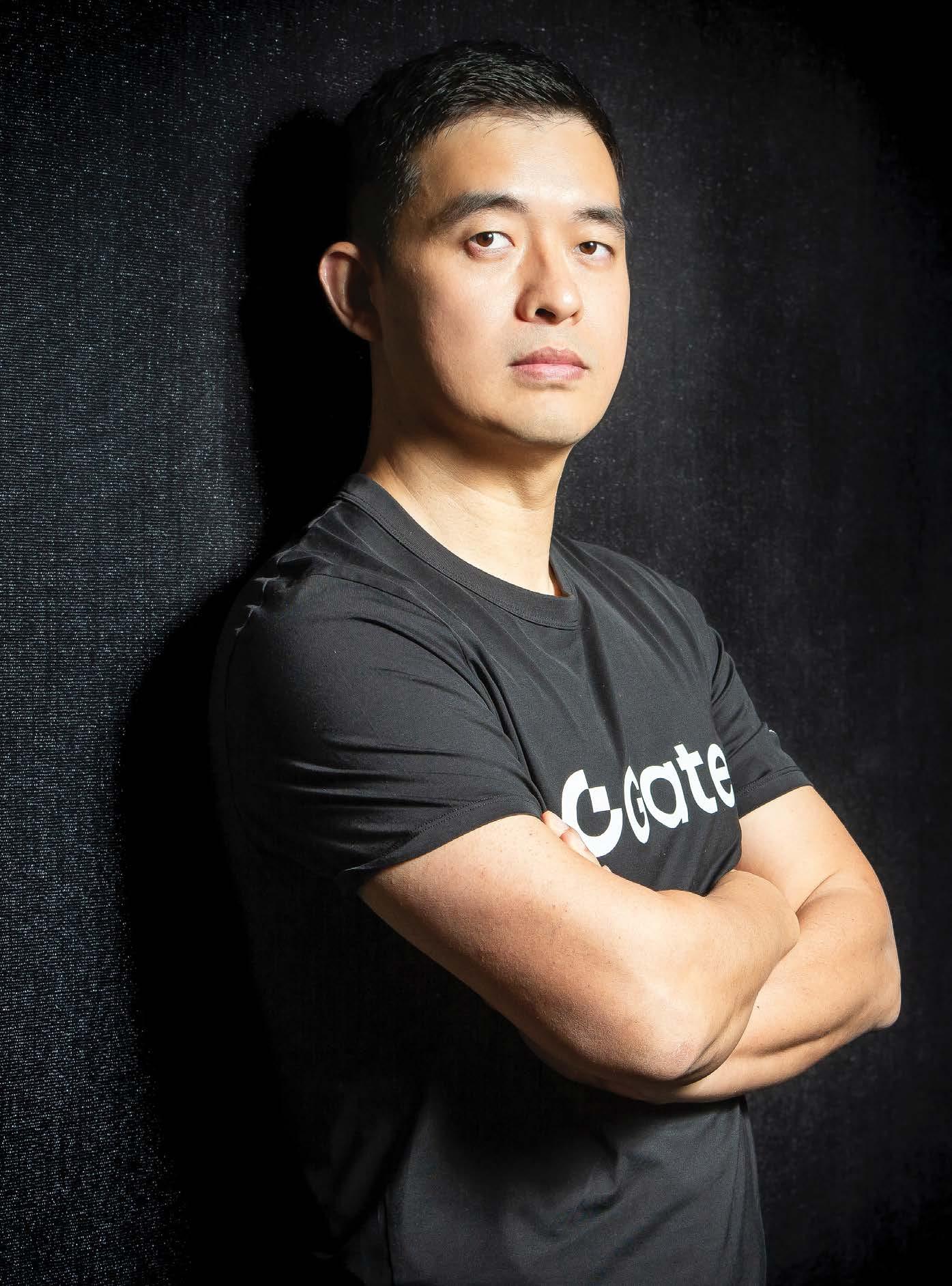

GATE FOUNDER DR. HAN
by TAMARA PUPIC
→ Gate is currently listed as one of the top 3 global cryptocurrency exchanges by most widely tracked industry aggregators, based on trading volume and related metrics.
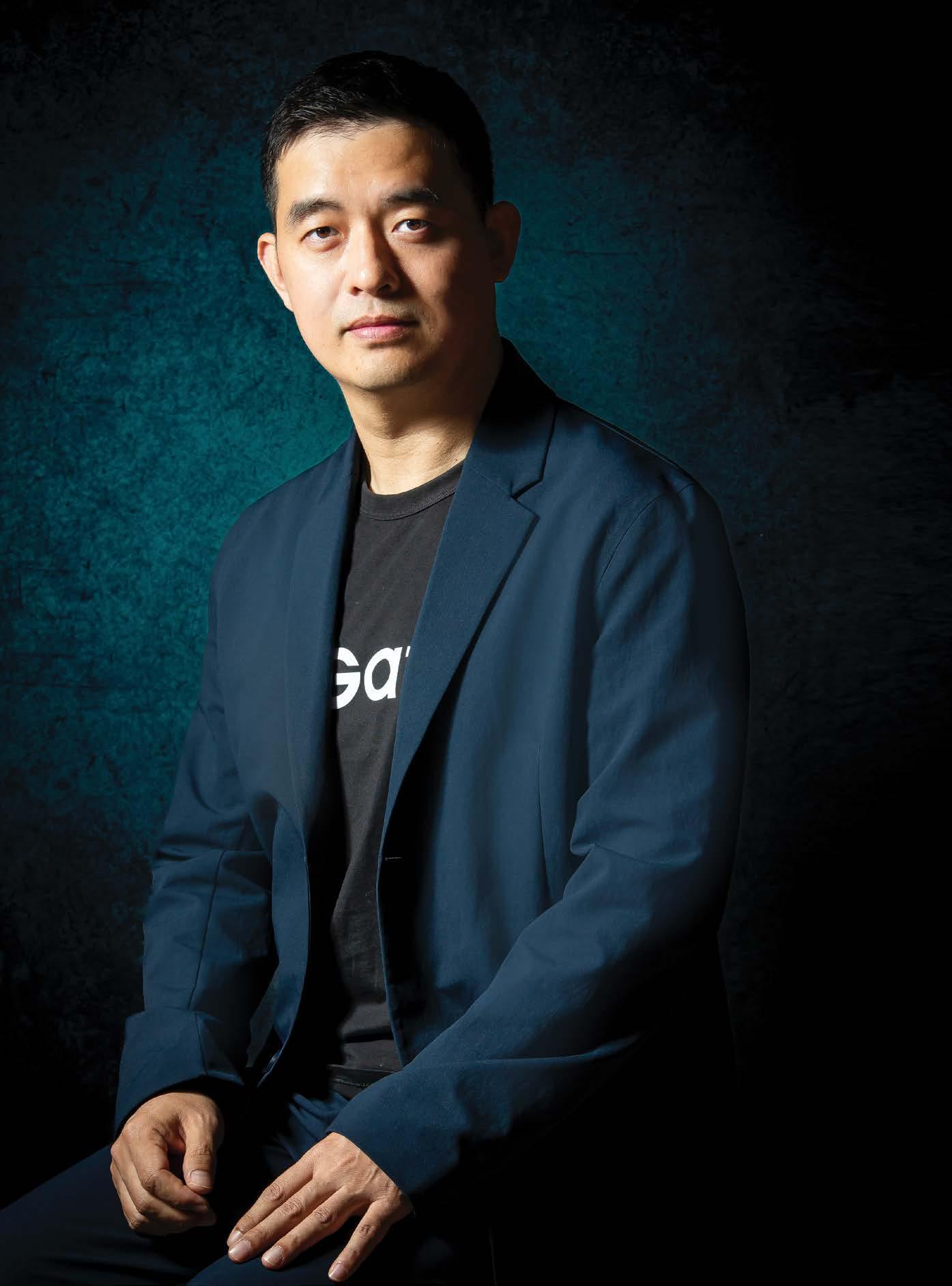
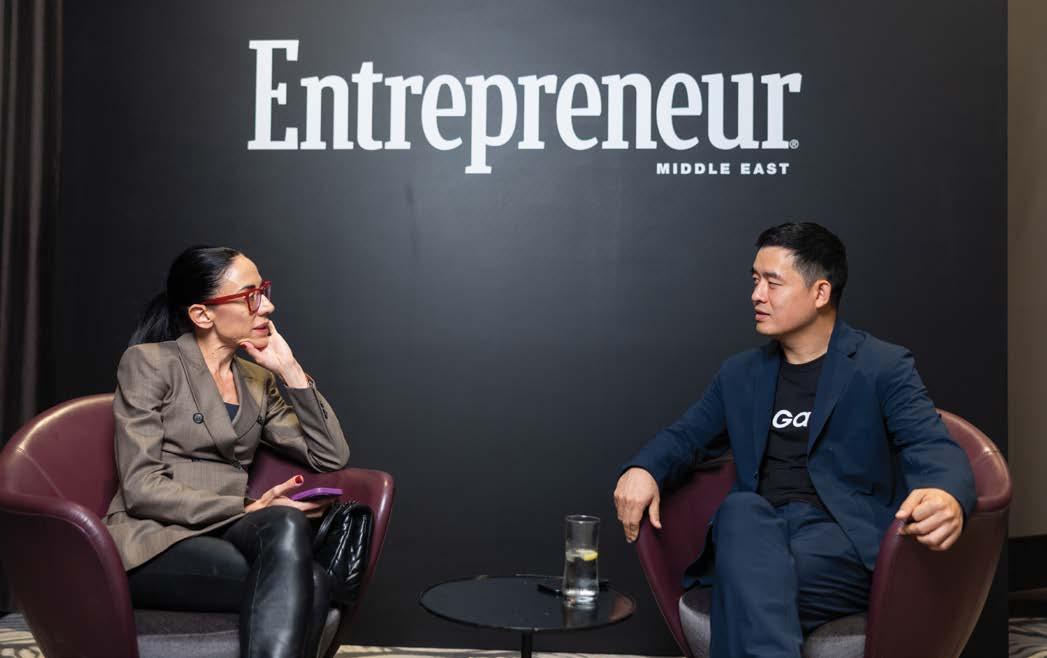
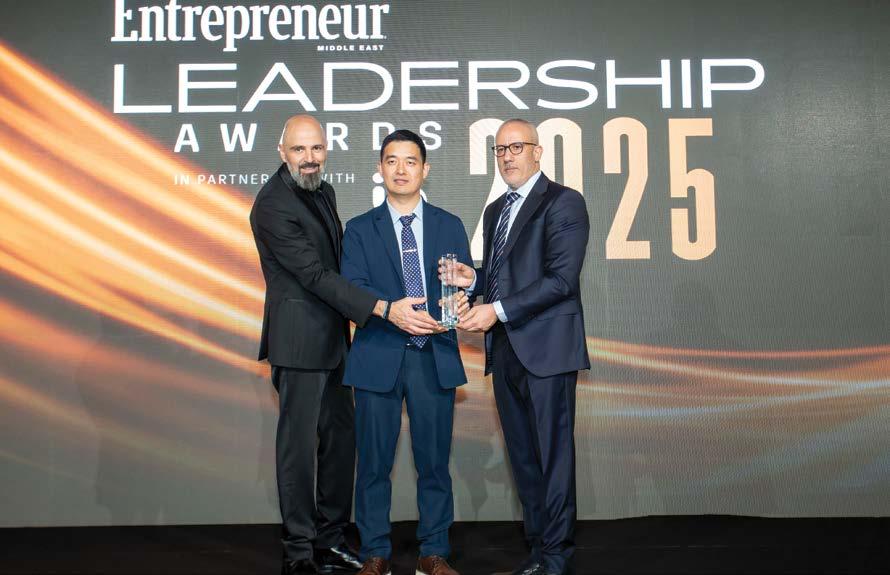
It was at the Entrepreneur Leadership Awards 2025 by Entrepreneur Middle East gala dinner last December that I was looking for the winner of the Best Crypto Exchange award — pushing through a noisy crowd of people taking selfies, shaking hands, laughing loudly, interrupting each other.
I was expecting Dr. Han, Ph.D., founder and CEO of the global cryptocurrency exchange Gate, to fit into that picture. But no—he met me slightly aside from the flow of people, remaining polite, disciplined, and focused on our conversation as if no distraction or interruptions were competing for our attention.
Irealize that is also how he built the crypto exchange Gate over the past 15 years: patiently, methodically, and largely indifferent to the fluctuating yet constant noise around and within the crypto sector.
Gate is currently listed as one of the top global cryptocurrency exchanges by most widely tracked industry aggregators, based on trading volume and related metrics. It was the first mainstream cryptocurrency exchange to commit to 100% reserves, which in 2020 was ahead of the industry standard. Then, in October 2025, Gate took it a step further by committing to a 124% reserve ratio.
As Gate surpasses 49 million active users, Dr. Han points to security as the single most important factor in how those users choose a crypto exchange. “We have extensive experience and provide strong custody and security measures to protect user assets,” he says.
“Transparency is also critical. We were the first to provide proof of reserves, showing that user assets are fully backed. We also open-sourced our auditing system so users can verify it themselves.”
As part of its strategy to become a fully regulated global crypto exchange, Gate has obtained regulatory registrations, licenses, or approvals across jurisdic-
tions including Lithuania, Argentina, Malta, Italy, Gibraltar, the Bahamas, Hong Kong, and Japan, following the 2024 acquisition of Japan-licensed exchange Coin Master. In 2025, Gate obtained licenses in multiple U.S. states and launched Gate US; plus, its subsidiary Gate Technology FZE secured a VASP license from Dubai’s Virtual Assets Regulatory Authority (VARA). “We started as a one-person operation,” Dr. Han says. “Today, we have more than 2,000 employees, including over 1,000 developers. We have offices in Japan, Malta, the United States, and UAE (Dubai), but many team members work remotely.”
Going back to the period when Gate was still a one-person operation reveals that Dr. Han was among the earliest builders in the global cryptocurrency industry. With degrees in computer software engineering and advanced degrees in mathematics and computer science (Peking University), Dr. Han pursued a PhD in
“
WE HAVE EXTENSIVE EXPERIENCE AND PROVIDE STRONG CUSTODY AND SECURITY MEASURES TO PROTECT USER ASSETS. WE WERE THE FIRST TO PROVIDE PROOF OF RESERVES, SHOWING THAT USER ASSETS ARE FULLY BACKED. WE ALSO OPENSOURCED OUR AUDITING SYSTEM SO USERS CAN VERIFY IT THEMSELVES.”
optics from Canada. After completing one year of postdoctoral work in Canada in optoelectronics, he returned to China to start a business in high-performance computing and optoelectronic software development. Then, in 2012, while conducting high-performance computing research, he noticed graphics cards being widely used for Bitcoin mining. “About 12 years ago, I was trying to find the best hardware to run software simulations. I then discovered that people were using the same kind of hardware for Bitcoin mining. That was the first time I heard about Bitcoin,” he says.
“I started studying what Bitcoin was. It was easy for me to understand because I have a technology background. There was a white paper, very well written, and the code was open source, so you could easily check the details. That was my first encounter with Bitcoin.”
However, intellectual curiosity alone was not what led Dr. Han to start Gate. In 2013, he attempted to purchase 100 Bitcoin on an online forum but was scammed, losing approximately CAD 2,000–3,000 (US$1,500–2,300). The
“ ON THE PRODUCT SIDE, WE EVOLVED FROM A CENTRALIZED EXCHANGE TO ALSO OFFERING DEFI AND TOKENIZED TRADFI PRODUCTS. USERS WANT MORE CONTROL OVER THEIR ASSETS, SO WE BUILT DECENTRALIZED SOLUTIONS AS WELL.”
experience prompted him to build a secure trading platform.
Gate was founded in April 2013, originally under the name bter. com, during a period when the crypto industry operated largely without regulatory frameworks. In its first two years, Dr. Han
personally wrote much of the platform’s core code, handling everything from infrastructure and application programming interfaces (APIs) to website development.
In 2017, when China carried out a sweeping crackdown on cryptocurrency activity -from declaring Initial Coin Offerings (ICOs) illegal to instructing major domestic exchanges to cease operations or relocate overseas- Dr. Han’s platform relocated to the Cayman Islands and rebranded as Gate.
Today, his stance on regulation is pragmatic. “Early on, the lack of regulation helped the industry grow. Today, regulation is necessary to protect users from risks like hacking and illegal activity,” Dr. Han says.
“Regulators should provide clear guidelines and objectives but avoid micromanagement. Exchanges have the expertise
ENCOURAGE
ENTER CRYPTO EARLY. CRYPTO WILL CHANGE THE WORLD, AND MOST ASSETS WILL EVENTUALLY BE TOKENIZED AND MOVED ON-CHAIN.”
and technology to meet compliance requirements. Excessive micromanagement wastes time and resources, especially for smaller companies. Overall, regulators are improving as they gain more understanding of the industry.”
Alongside the broader expansion of the crypto industry, Gate has undergone its own internal acceleration, with its product strategy moving well beyond only centralized trading. As Dr. Han explains, “On the product side, we evolved from a centralized exchange to also offering DeFi products. Users want more control over their assets, so we built decentralized solutions as well.”
integrated on-chain environment—unified by GT as the native gas token—where users can build, trade, and create within a single ecosystem.
“We continuously launch new products because crypto evolves very quickly. We are now fully focused on Web3, as we see strong demand for decentralized infrastructure and services.”
with on-chain efficiency and seamless user experience. This approach bridges TradFi and crypto into a single platform, setting a new industry benchmark for next-generation financial infrastructure.
Brand visibility followed infrastructure. Starting from the 2024/25 season, Gate.io has become the Official Sleeve Partner of
That shift has recently taken shape in Gate’s “All in Web3” strategy, a comprehensive on-chain ecosystem built around Gate Layer, its high-performance Layer 2 blockchain. Serving as the foundation, Gate Layer enables a new generation of decentralized applications, including Gate Perp DEX, a decentralized perpetuals exchange, and Gate Fun, a zero-code token launchpad. Together, these products form an
Innovation doesn’t stop there. Gate recently dabbled into a new model of on-chain TradFi by integrating tokenized stocks and traditional financial instruments directly into its crypto ecosystem, creating a true 360-degree trading experience. In recent interviews, Dr. Han emphasized how Gate is using blockchain infrastructure to deliver compliant, high-liquidity access to traditional assets
FC Internazionale Milano, which will see its logo featured on the sleeves of the playing kits for both the men’s and women’s teams, as well as the club’s U20 teams. Also in 2025, Gate signed a multi-year deal to become the exclusive crypto exchange partner of the eight-time World Drivers’ Championship–winning team, Oracle Red Bull Racing. Gate’s branding is featured on the RB21, team kit, driver and crew suits, and Max
Verstappen’s helmet. “It significantly increased global awareness. These were major milestones for us,” Dr. Han says.
Stepping back from Gate to the crypto industry as a whole, Dr. Han draws on years of navigating multiple market cycles, treating both bull and bear phases as exercises in discipline.“Crypto used to follow a four-year cycle based on Bitcoin supply, but today it is influenced by the global economy. Bull and bear markets still exist, but the dynamics have changed,” he explains. “In bull markets, hype can lead to mistakes and bubbles. You need to be careful not to overextend or launch too many products without discipline.
“In bear markets, revenue is lower and morale can drop. That is the time to reduce unnecessary spending and focus on product development and long-term improvements. Finding the balance is a key lesson we learned.”
When it comes to the industry’s next chapter, Dr. Han sees stablecoins and real-world asset tokenization as foundational. “Stablecoins are a form of real-world assets because they are backed by fiat currency. Initially, they were mainly used for trading, but today they are widely used for payments,” he says. “Real-world asset tokenization is growing quickly. Assets like gold and stocks can now be traded on-chain, globally and 24/7. This increases accessibility, efficiency, and liquidity. We will see more traditional assets move onto blockchain.”
“BY 2026, I EXPECT AI-DRIVEN INTERFACES THAT MAKE CRYPTO MUCH MORE ACCESSIBLE.”
By contrast, Dr. Han remains cautious about central bank digital currencies.“CBDCs have been discussed for years, but I have not seen real success yet,” he says. “Blockchain already
provides trust through technology and consensus, so users do not necessarily want centralized control. CBDCs must compete on experience, cost, and efficiency like any other project. Without clear advantages, adoption will remain limited.”
Looking ahead, Dr. Han believes artificial intelligence will play a decisive role in crypto adoption.
“AI will significantly improve user experience. Crypto platforms are still too complex for normal users,” he explains. “With AI, users won’t need to learn complicated interfaces. They will simply express their intent, and the system will execute it for them.
“By 2026, I expect AI-driven interfaces that make crypto much more accessible.”
After more than a decade building through volatility, regulation, and reinvention, Dr. Han’s advice to founders—particularly those in the UAE—is grounded in experience. “I encourage founders to enter crypto early. Crypto will change the world, and most assets will eventually be tokenized and moved on-chain,” he says.
“Founders should build in major crypto hubs like Dubai, Abu Dhabi, Hong Kong, or Singapore. These ecosystems make it easier to find capital, partners, and talent. Starting in a small city without an ecosystem makes growth much harder.”

Despite regional uncertainties, Dubai’s design community continues to adapt with resilience, keeping projects moving while adjusting to a changing environment. by PALLAVI DEAN
I’ve lived in the UAE for 45 years, so I’m used to Middle East instability. Iran may be just 50km from the closest border, but military action always felt “over there”. Israel is 2,000 km and a three-hour flight away.
But since late February, some 1,900 Iranian drones and missiles have targeted the UAE. Despite well over 90% being intercepted, six people have died.
Better qualified commentators can debate the whys and wherefores of the conflict. Here I simply address the question: how is the city’s growing community of architects and interior designers coping?
To answer it, I’ve broken our industry’s work down into five key functions, and explained what’s business as usual vs what’s business unusual. They are design, construction, money, travel and people. (Short answer: so far things are slightly but not very different).
For context, Roar is a mid-sized firm with about 30 people in Dubai, 10 in Cebu (Philippines), and two in Riyadh. Most of our work is interior design, with some architecture. Chatting with friends and peers in the industry, our experience seems fairly typical.
1/ DESIGN
}BUSINESS AS USUAL: This is the most normal part. If you walked into our Dubai studio at Alserkal Avenue at 11am on a Tuesday morning, you wouldn’t notice much different. Designers, CAD technicians and the commercial peeps are all doing their thing; even our pet dogs are still coming! The cafes and restaurants around us are open and busy.
Basic stuff we take for granted like power, water, and the Internet – we still take them for granted.
I was actually with our team in Cebu when the war started on Saturday Feb 28th, and they’re unaffected. Riyadh, I’m told, has faced some attacks but fewer than UAE.
}BUSINESS UNUSUAL: For the first few days we all worked from home. Since then we’re mainly in the studio. A couple of times a day we get an alert on our phones saying “potential missile threat, seek immediate shelter”. We don’t evacuate but follow the official advice, which is to stay indoors.
}BUSINESS AS USUAL: I’ve
been surprised that cranes are still moving, and construction sites are the usual bustle of activity. I half expected a lot of clients to hit the pause button, but of the 20 or so UAE projects on our books, nothing has been put on hold. Yet.
}BUSINESS UNUSUAL: I did have one site visit in Abu Dhabi (about an hour’s drive from Dubai) cancelled last minute. The missile alert sounded, and the project manager decided it was safer to postpone.
We’re starting to see delays in delivery of furniture and material, especially from Europe. That’s because the Strait of Hormuz is closed and container ships can’t dock in Dubai. There are
alternative ports on the Indian Ocean and Red Sea, so goods can be trucked from there. For building construction, a lot of big ticket items like steel and HVAC systems come from China. All of this will surely be slower and more expensive.
}BUSINESS AS USUAL: As a company owner, your second thought (after “is my family safe”?) is “what does this mean for business?”. The sharp economic slowdown from COVID is fresh in our minds. So far, as I mentioned, nothing’s been cancelled. It’s early days, but payments are coming in as normal.
Looking forward, while I’m obviously concerned, I’m
I HALF EXPECTED A LOT OF CLIENTS TO HIT THE PAUSE BUTTON, BUT OF THE 20 OR SO UAE PROJECTS ON OUR BOOKS, NOTHING HAS BEEN PUT ON HOLD. YET.”

comforted by the fact that government departments and companies are our biggest client in the UAE. And the UAE economy is rock solid. One economic statistic from our director (my husband Richard, a journalist): Abu Dhabi alone has US$1.8 trillion in its Sovereign Wealth Funds, which is effectively ‘rainy day’ money. If they choose to keep spending on construction to keep the economy moving, they can.
}BUSINESS UNUSUAL: We typically get 15 – 20 RFPs per month. So far in March, we’re about normal.
Kathryn Athreya, our managing director, says new business signings are “a little slow, which is typical during Ramadan when signatories are less available. We’ll have a clearer picture in early April.”
A number of conferences in Dubai have been postponed. I expect a slowdown in capital spending from multinational companies, so fewer new offices and regional headquarters. I also expect a slowdown from the hospitality industry, as hotel revenues in particular will be down. I’m hearing chatter that some hotels may take the opportunity to close for refurbs, but nothing concrete.
As a firm we’ve done contingency planning with our finance director for “what if” projects do get cancelled and new business dries up. So we’re watching money closely: an AI research project we were just about to sign off on has
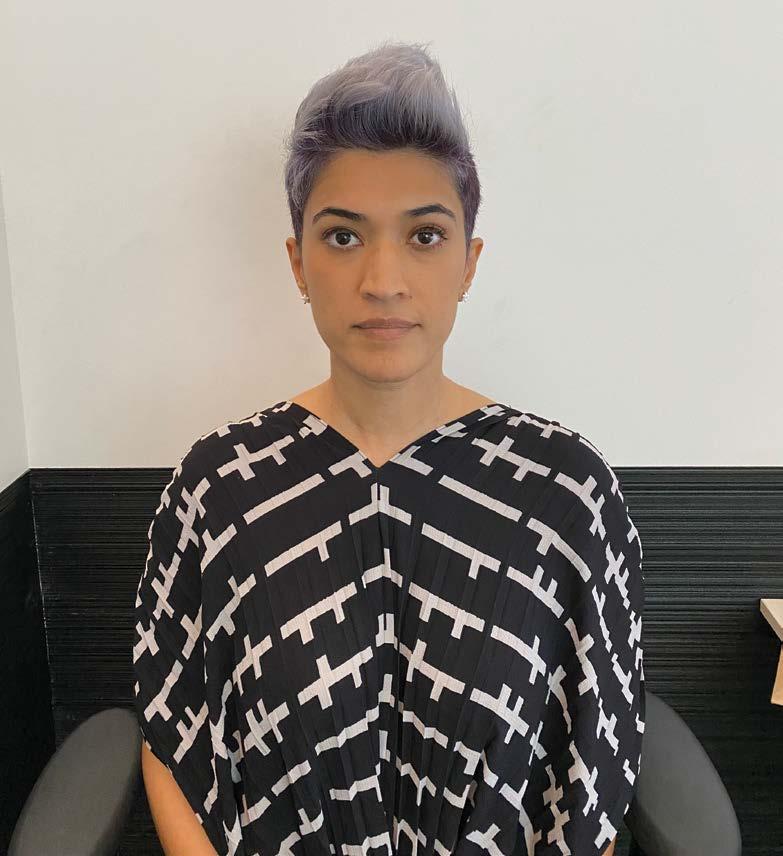
→ Pallavi Dean, Founder,
Roar
FINAL THOUGHT. RIGHT NOW, THE DAY-DO-DAY BUSINESS IS RUNNING I’D SAY 85% AS USUAL. BUT THERE IS DEFINITELY AN AIR OF UNCERTAINTY.
Indeed, I’m writing this article on Saturday 14th March from Dubai Airport, waiting to catch a flight to Chicago. This was a planned trip. It’s not absolutely essential that I go, but I feel it’s important to “show not tell” our international clients that UAE companies are operating normally. Passengers are buying champagne in Dubai Duty Free, and I’m at the salon getting my eyebrows done. One of my US clients is a fan of Dubai Chocolate, so I’m stocking up.
times. But I’m also conscious to not over-catastrophize.
}BUSINESS AS USUAL: We’re back in the office, commuting to and from work with little interruption aside from those phone warnings. The UAE President went for coffee in Dubai Mall the other night, in a high profile display of BAU.
I was in Asia when the war started, and worried that I wouldn’t be able to get back. But I found a flight via Bangkok to Abu Dhabi with Etihad Airways. It’s pretty easy to get in and out of the UAE if you want to.
}BUSINESS UNUSUAL: Some staff are nervous about the situation. Understandably so. We’re simply abiding by the directives issued by the authorities, which is to carry on as usual unless there’s a specific warning.
The schools have been closed since the war began, and the Spring Break brought forward. So that does cause some disruption for parents (I have two teenagers). Like many creative service firms, we have a hybrid system – mainly work from the office, with some flexible work from home. While design can be done from anywhere, construction is a contact sport. We’re telling staff that site visits are not optional.
been put on hold, as are pay rises and hiring.
}BUSINESS AS USUAL: About 50% of our work is outside the UAE, so no change there. Our main market is Saudi Arabia, but we also have active projects in Bali (luxury hotels and villas) the US (offices in Chicago and Boston) and Europe (office in Frankfurt).
}BUSINESS UNUSUAL: Capacity is down with airlines like Emirates, though creeping back to normal-ish. Some international airlines such as KLM and Cathay Pacific have suspended flights to the UAE. Flights in and out of UAE airports are using a special ‘safe corridor’.
Some fragments from intercepted drones have landed close to or at the airport. I’m not trivializing what’s going on – these are clearly worrying
Final thought. Right now, the day-do-day business is running I’d say 85% as usual. But there is definitely an air of uncertainty.
Pallavi Dean is the founder and Creative Director of Roar. Pallavi plays at the intersection of design and entrepreneurship, having founded her design firm Roar in 2013. A trained architect and sustainability specialist, she has won multiple awards for work across a range of sectors including commercial, hospitality and residential.
You’re One LEAP Away

From 13-16 April 2026
Riyadh Exhibition and Convention Center - Malham, Saudi Arabia
Secure your pass now
Founders should be choosing strategic expansion over retrenchment, reinforcing a long-term growth outlook despite market volatility. by
SAMI KHOREIBI
We were running out of time. By early 2011, the
Arab Spring had turned our growth story - building the region’s first utility-scale solar company - into a liquidity crisis that threatened to erase everything we had built. Payments across multiple markets were delayed. Despite exhausting every option, my co-founders and I faced the moment every founder fears: we had enough for one last payroll.
We walked into our meeting with the Government of Abu Dhabi’s renewable energy company, Masdar, expecting disappointment. Instead, we found partnership. Within a week, we were armed with a shareholder loan that allowed us to bridge receivables, protect our team, and continue operating. This decisive, aligned support at a critical moment is how we survived, and how we thrived. That experience shaped my understanding of resilience. It is not just about surviving shocks; it is about the systems and partnerships that allow you to absorb them and keep building. This commitment is a pattern I first saw in 2008, during the global financial crisis. I remember pitching solar in London while Bear Stearns imploded on a screen in the boardroom. While global capital was pulling away, Masdar stepped in to validate our ambition. That journey eventually led to nearly $1 billion in revenue and an exit to a UK pension fund, proving that companies built here are serious exporters of
innovation.
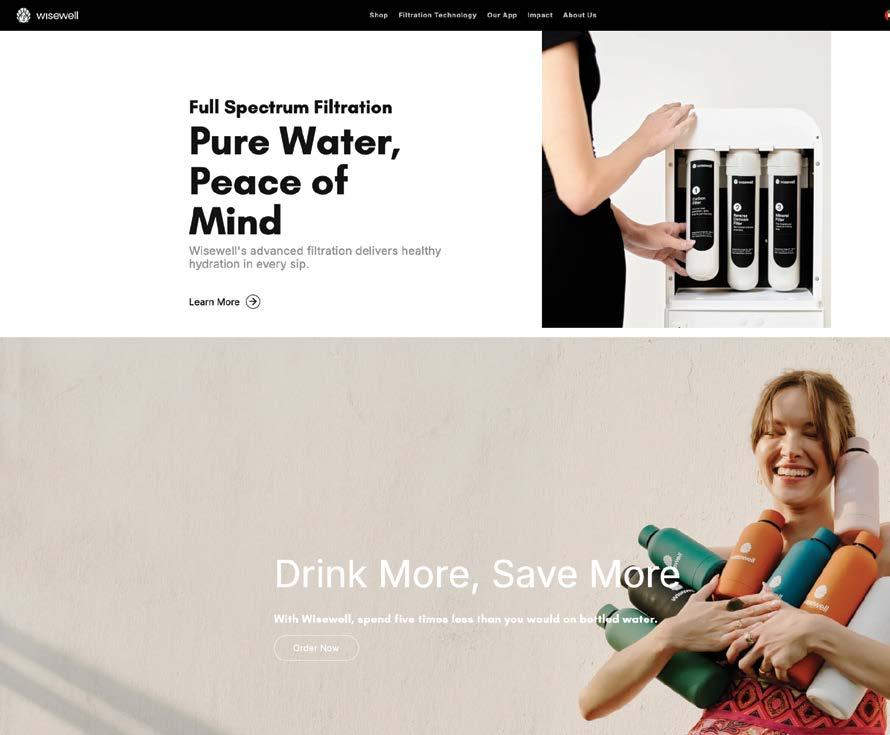
Fifteen years later, I am applying those lessons to a new frontier with Wisewell, our water technology venture. The nature of the test has shifted from capital to movement. In the geopolitically charged operational trenches of 2026, we are navigating a friction fundamentally different from the previous . We are managing a supply paradox: record-breaking demand for water sovereignty met with unreliable sea routes from our manufacturing hub in Shenzhen.
In most global hubs, a conflict of this scale results in a retraction. In the UAE, it results in an integrated national response. At a Majlis hosted by His Excellency Helal Al Marri, I saw this responsiveness in action. After sharing our logistics disruptions with leadership, we were connected with Emirates Cargo to execute immediate air-freight solutions. This is the unique reality of this market: motivated founders work with motivated government at an unmatched velocity. That resilience is rooted in the history of this land. In the desert, survival is dictated by the handhal—a fruit that thrives in the harshest conditions through hardened defiance. It is a cultural symbol for the toughness required to build here.
A few days into the 2026 attacks, His Highness President Sheikh
Mohamed bin Zayed said, “The UAE is attractive. The UAE is beautiful. The UAE is a model. But I tell them: do not be fooled by the UAE’s appearance. The UAE has thick skin and bitter flesh – we are not easy prey.”
For founders, there is a lesson in that. Building a company is not about avoiding volatility; it is about developing the ability to withstand it. Because of this nineteen-year perspective as a UAE based founder, we are not retracting; we are strategically expanding. We are building systems that do not fracture under pressure.
Like the handhal, we are rooted. We are resilient. And we will emerge stronger still.
IN MOST GLOBAL HUBS, A CONFLICT OF THIS SCALE RESULTS IN A RETRACTION. IN THE UAE, IT RESULTS IN AN INTEGRATED NATIONAL RESPONSE.

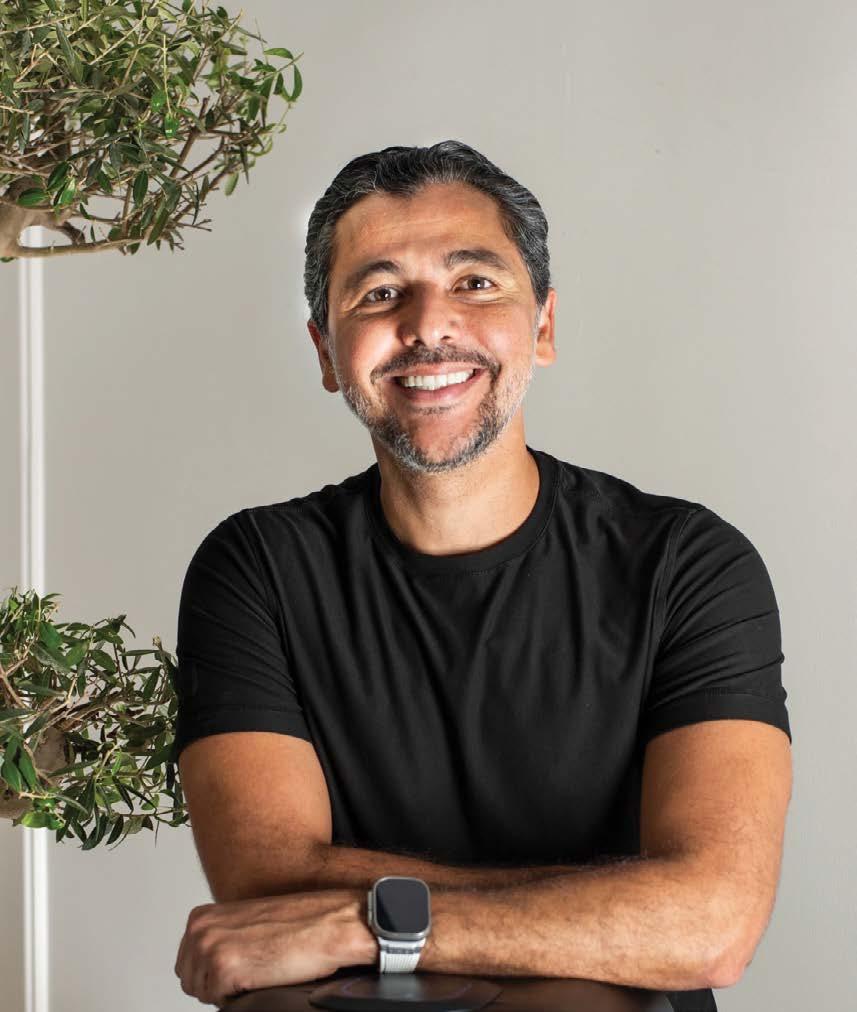
Sami
Khoreibi, Founder of Wisewell
Sami Khoreibi is a serial entrepreneur and investor who took his first company public on the TSX at age 25. He currently leads Incubayt Investments (backing impact-driven founders) and Wisewell, a consumer water-tech company that has
already diverted over 12 million plastic bottles from landfills—and climbing. Previously, he built and exited the MENA region’s first utility-scale solar developer to a major UK pension fund. A World Economic Forum Young Global Leader, Sami is also a featured investor on the hit business TV series The Final Pitch, broadcast to over 120 million viewers worldwide.

B/Gear
Gadgets and doodads that you might’ve missed out on, sourced by a tech aficionado by
TAMARA CLARKE
/
Xiaomi Pad 8
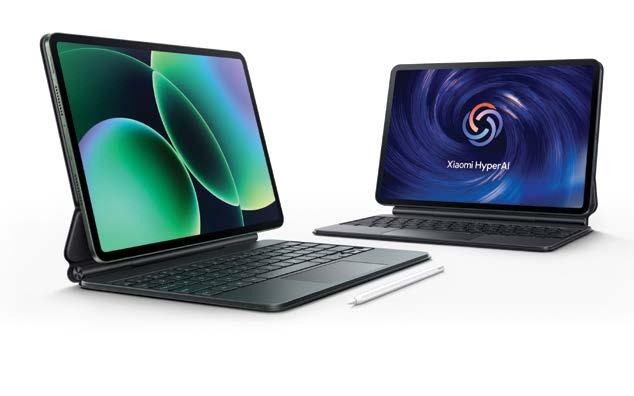
The new, Xiaomi Pad 8 is a highperformance alternative to a PC. With an ultra-thin profile of just 5.75mm and weighing only 485g, this tablet travels well allowing you to work virtually anywhere. Powered by the Snapdragon 8s Gen 4 Mobile Platform and a large 9,200mAh battery with 45W turbo charging, you can seamlessly multitask, while on-the-go. Running on Xiaomi HyperOS 3, the device has a new interface featuring updated lock screens, wallpapers, and desktop elements,
and an 8MP front camera deliver crisp, clear visuals, while up to 256GB of storage gives you enough room for daily apps, photos, and media. Xiaomi Pad 8 also introduces the all-new Xiaomi Focus Pen Pro, a premium stylus weighing only 17.5g. It features pressure-sensitive control for precise input, along with intuitive pinch and double-tap gestures for seamless interaction with documents and artwork.


Honor 600 Lite delivers an ultra-slim metal body with a full-view display, ultra-clear photography powered by a dedicated AI Camera Button and a 6520mAh longlasting battery. The all-new smartphone features a 6.6-inch full-view display, delivering sharp visuals, vivid colors, and a smooth viewing experience. The display is framed by an ultra-narrow 1.23mm bezel, creating a near edge to-edge viewing experience. The AI Camera Button gives you instant access to the camera controls, such as zoom and style switching. Paired with a 108MP main camera, it captures clear, detailed shots. Powered by a 6520mAh large-capacity battery with 45W Honor SuperCharge, the device supports long-lasting use and fast top-ups to keep you going all day.
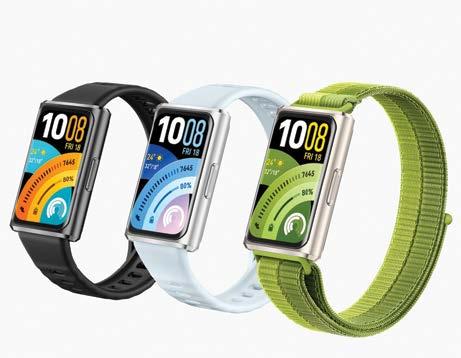
Huawei Band 11 Pro is back and bigger than ever before. It features a 1.62-inch microcurved display with a peak brightness of 2,000 nits. Measuring just 8.99 mm thin and weighing only 18 g, the device has a sleek aluminium alloy body delivering a premium, sporty aesthetic. Its autonomous GNSS positioning system, enables precise tracking during workouts. Whether you’re running on a track, training outdoors, or mountain cycling, it accurately records and maps every route. The Band 11 Pro also introduces wrist-based running posture monitoring using a built-in IMU sensor, which detects key metrics in real time, including ground contact time, vertical oscillation, and left-right ground contact balance. Other features include AI-powered running plans, sleep tracking and highperformance sensors that monitor key metrics such as average HRV, heart rate, and SpO2 during sleep, offering interpretations and actionable suggestions to help improve your sleep.
TAMARA CLARKE, a former software development professional, is the tech and lifestyle enthusiast behind The Global Gazette, one of the most active blogs in the Middle East. The Global Gazette has been welcomed and lauded by some of the most influential tech brands in the region. Clarke’s goal is to inform about technology and how it supports our lifestyles. Talk to her on Twitter @TAMARACLARKE theglobalgazette.com
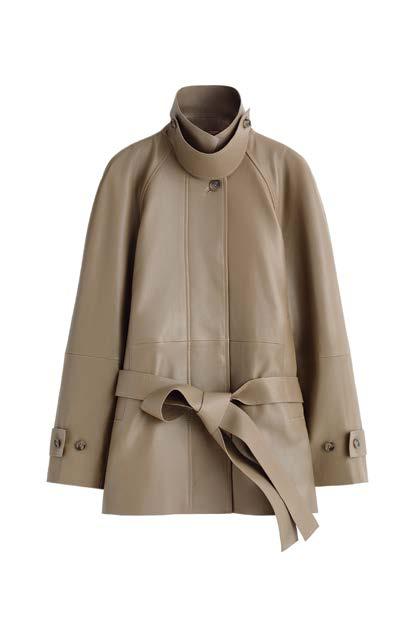
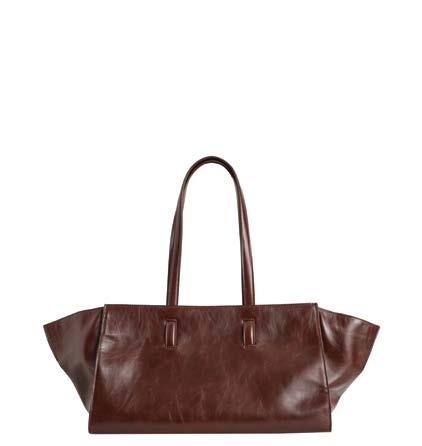
From better goods to better wardrobe bests, every issue, we choose a few items that make the approved executive selection list. In this edition, our picks are from COS, & OTHER STORIES, and Rolls-Royce.


By Rolls-Royce
In response to global client demand, Rolls-Royce Motor Cars announces the Coachbuild Collection: an entirely new proposition in super-luxury, in which a true coachbuilt motor car and an extraordinary multi-year program of experiences are conceived as one. Each Coachbuild Collection is rare and extravagant, authored entirely by Rolls-Royce and created on a completely new canvas, never to be repeated. Clients with a special affinity for the marque are invited to participate in the program through the global Rolls-Royce Private Office network.
“I have had the privilege of meeting clients around the world who seek the very pinnacle in luxury and share an extraordinary passion for RollsRoyce design. It became clear that they wished to see not only what Rolls-Royce would create if left entirely to its own imagination and with the freedom offered by coachbuilding, but they also wanted to witness that journey at every stage. Coachbuild Collection is the result. This is something the superluxury world has never seen before. The experience of this program is inseparable from the motor car itself, and both will be brought to life with the care and ambition worthy of the collectors who inspired them – and of Rolls-Royce itself,” Chris Brownridge, Chief Executive, RollsRoyce Motor Cars.





& Other Stories introduces the April collection, defined by a fresh sense of expression and spontaneous ease. “This season isn’t about minimalism. It’s about contrast - pieces liberated from old rules and brought together in instinctive, unexpected ways. That tension creates a fresh kind of expression.”- Jonathan Saunders, Chief Creative Officer. www.Stories.Com



COS unveils its Spring Summer 2026 campaign fronted by acclaimed actor Alexander Skarsgård, Korean actor Park Gyuyoung, and models Vittoria Ceretti and Taemin Park. Rooted in exceptional craftsmanship and enduring style, the collection advances the modern wardrobe through exquisite materiality, artful cuts and thoughtful detailing – encapsulating the house’s distinctive design handwriting. The COS Spring Summer 2026 collection will be presented at an off-schedule show in Seoul, South Korea on Wednesday 25 March and will be streamed live on COS channels. www.cos.com




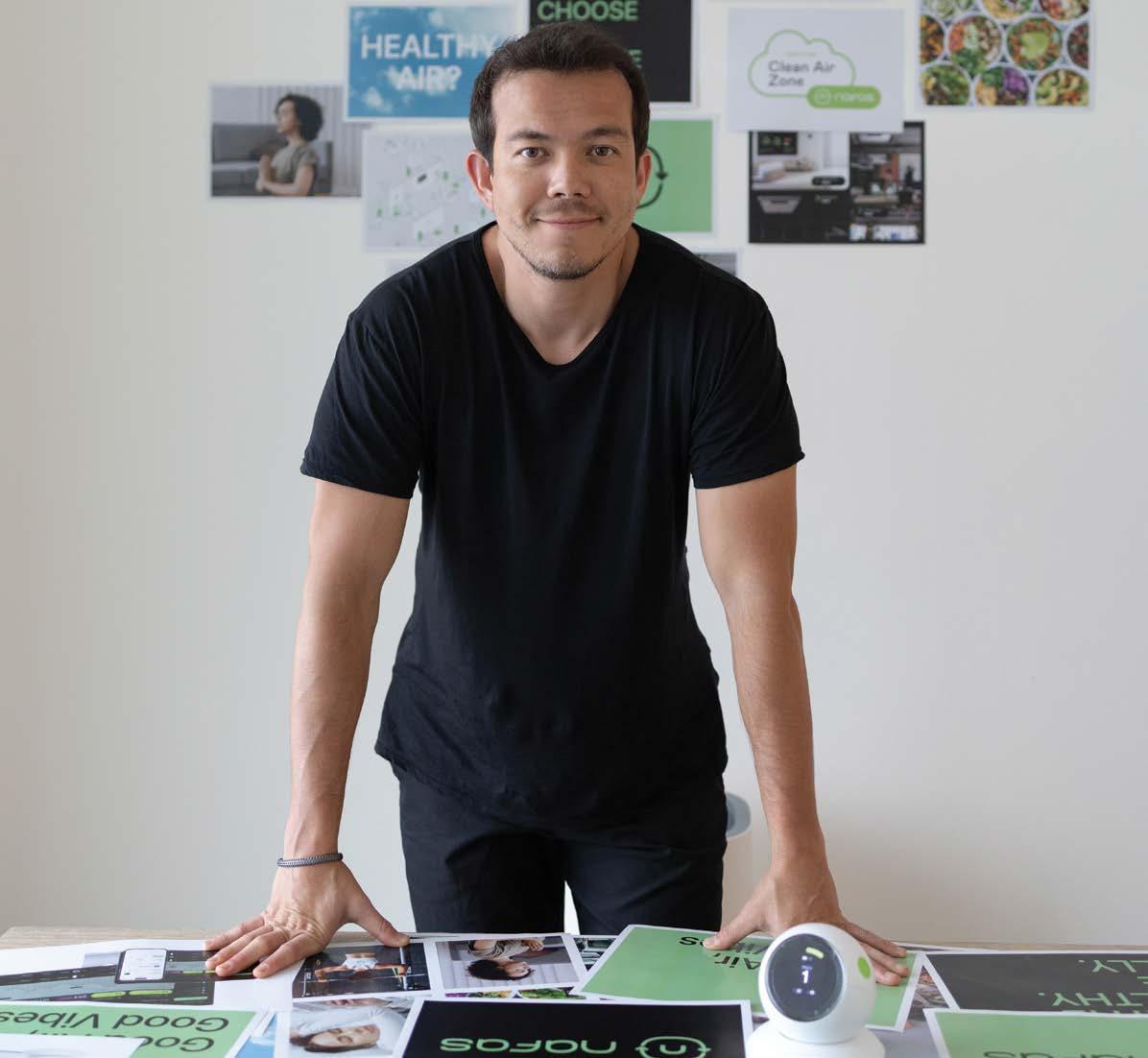
Nathan Roestandy, co-founder and CEO of Nafas, on scaling the company's air-quality technology with Qatar as a key market for regional growth.by
Ntathan Roestandy, co-founder and CEO of Singaporeheadquartered Nafas, proudly shares that his air-quality health technology company has already generated significant revenue across multiple markets and is now poised to scale further. The company’s immediate focus is on establishing a strong presence in Qatar and the wider GCC, backed by its first institutional funding round led by Singapore-based Rigel Capital and Qatar Development Bank.
Nafas’s entry into Qatar began with early conversations with the Qatar Environment and Energy Research Institute (QEERI), which eventually led to its first investment in the country through Doha Tech Angels, an angel investment syndicate based in Doha. Following several visits and engagements with various organizations, it became clear that Qatar— and the wider GCC—offered a strong strategic fit for the company’s growth. "In 2022, as we began approaching research labs that specialized in air quality, we got connected with QEERI (Qatar Energy & Environment Research Institute) which paved the way for our eventual expansion into Qatar and GCC,” Roestandy says. "However, it wasn’t until we received investment from Qatar Development Bank (through the Startup Qatar program) that we finally decided to officially setup an office in Qatar, which included myself relocating to Doha. This was in early 2025, since then it's been an amazing experience and a big inflection point in my personal development and aspirations of being an entrepreneur.”
The origins of Nafas trace back to Roestandy’s early career in his family’s manufacturing business, which produced apparel for regional and global fashion brands. Frequent business trips to China exposed him to the country’s rapid industrialization and the new industries it was fueling. Among the developments

that stood out most to him was the growing challenge of air pollution—an issue that would later inspire the creation of Nafas. "In China, sustaining rapid growth came at the expense of immense environmental damage as well as increasing backlash from the public, specifically around issues that carried significant health consequences,” Roestandy explains. "As awareness for air pollution reached a tipping point, consumer behavior en masse began to shift and drive demand for emerging trends in the health and wellness category, one of which was air pollution. Seeing all of this happen in China, I began to ask myself if this is a trend that could also unfold in other emerging countries?”
Roestandy then began developing a business plan focused on creating a vertically integrated software and hardware company. At its core was a central value proposition: addressing how millions of urban residents in highly polluted cities could be supported in their pursuit of healthier air. "A few months later I recall meeting Piotr, an old high school friend who started his career in advertising and ended up as Chief Marketing Officer at a giant tech company,” he says. "He expressed to me his desire to start a business in the environmental space and also spoke about air pollution and how he was personally affected by it. After several conversations, we decided to team up and build Nafas. My background in manufacturing and product design coupled with his marketing and communications skillset proved to be an effective combo as we proceeded towards recruiting a founding team which included our third co-founder Eason Chow, an ex-Dyson designer and engineer.”
“
Expanding to the wider GCC market was always part of Nafas’s Middle East expansion plans, however, we wanted to first situate ourselves in Qatar and build a team that would support expansion into other GCC countries.”
The journey to build Nafas officially began in early 2020, with the Nafas mobile app in Indonesia quickly becoming the #1 environmental app in the country, reaching hundreds of thousands of downloads and helping Nafas win the prestigious Google award for Social Impact Startup of the Year. Roestandy adds, "The second act of the business was the launch of the Clean Air Zone subscription service, an indoor air quality monitoring and purification solution that combined hardware,
software and operations into a fixed monthly fee. The goal of Clean Air Zones is simple, to democratize access to healthy air and create a new standard for indoor air quality management in emerging countries. Accomplishing this goal would entail building strong competencies across a wide range of domains, from cutting edge hardware for air purification and monitoring, cloud and IoT platforms to big data and AI."
Today, Nafas counts multinational companies, international schools and universities, as well as government organizations as its customers. The Clean Air Zone service is also serving hundreds of residential customers across Qatar, UAE, and Indonesia. "Nafas is currently operational in the UAE and is in the process of setting up an entity in Dubai,” Roestandy says. "Expanding to the wider GCC market was always part of Nafas’s Middle East expansion plans, however, we wanted to first situate ourselves in Qatar and build a team that would support expansion into other GCC countries.”
He adds, "While Qatar’s domestic B2C market may be small, its B2B and B2G markets are sizable, therefore it is important to correctly estimate the market opportunities relevant to the startup and approach expansion in a very tactical and efficient way while making sure that it is investing in the right avenues and forming partnerships to help with operations and distribution.”
Offering his perspective to
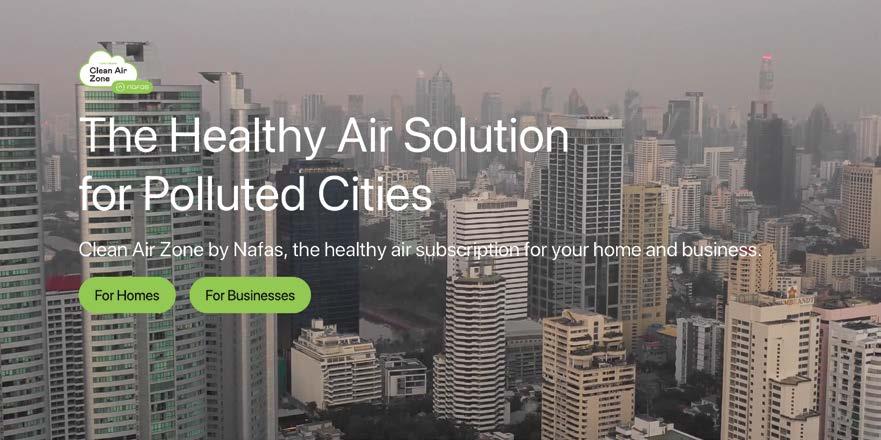
WHILE
MAY BE SMALL, ITS B2B
ARE SIZABLE, THEREFORE IT IS IMPORTANT TO CORRECTLY ESTIMATE THE MARKET OPPORTUNITIES RELEVANT TO THE STARTUP AND APPROACH EXPANSION IN A VERY TACTICAL AND EFFICIENT WAY."
fellow entrepreneurs, Roestandy reflected that the most significant hurdle Nafas encountered in Qatar was navigating the complexities of deal-making. "As a foreign company entering Qatar it's easy to become enthralled by the myriad of opportunities available, given that there are so many of them. However, developing a good understanding of the cultural nuances of doing business in Qatar and more importantly learning the mechanics of how to close deals is something that is less obvious and often overlooked,” he says. "In fact, it is perhaps the most important challenge to overcome in order to become successful, especially if the business involves selling to government institutions and enterprise customers. For me personally, overcoming that challenge required a lot of guidance and support which fortunately already existed in the startup ecosystem.
However, without extreme proactiveness and curiosity in reaching out to key individuals and organizations as well as building strong relationships, Nafas would have had a much more difficult time in building traction in Qatar."
Nafas currently has four commercial partnerships with various companies spanning Qatar, the UAE, and KSA, which enable it to expand in a cost effective manner while still maintaining a strong presence in each market. "Building strong commercial partnerships that leverage each company's distribution and operational capabilities is a critical part of Nafas’s expansion strategy,” Roestandy says.
Roestandy concluded by noting that in many emerging countries, air pollution and other environmental challenges are often seen as unavoidable byproducts of growth and industrialization,
making such markets well-suited for Nafas’s solutions. Qatar, however, stands out as particularly attractive, with a unique combination of factors that strengthen its potential as a key market for the company’s expansion. "The first is a pro innovation government that is playing a crucial role in shaping the development trajectory of the country, particularly around sustainability and health, two core pillars of Nafas’s value proposition,” he says. "The second, which closely relates to the first, is favorable regulatory conditions to help foreign companies such as Nafas enter the market.
Lastly, a growing startup and capital markets environment that's conducive towards early-stage company growth. Adding to that is the unique geography of the country which makes air pollution somewhat of an endemic problem."
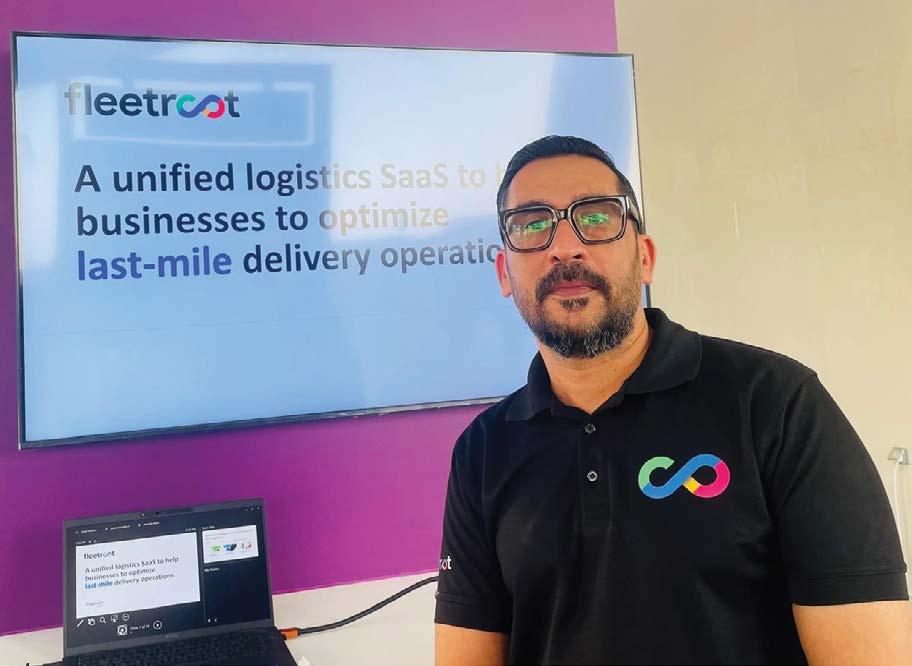
With a strong foundation in the transportation industry, Moidu Chandanam, founder of logistics platform Fleetroot, gained firsthand insight into the operational challenges businesses encounter in managing their logistics efficiently. However, his decision to tackle these challenges went beyond simply launching a business—it was driven by a desire to create lasting impact and build something meaningful. “The big gap I saw was in how last-mile logistics and mobility were managed,” Chandanam says. “Businesses were relying on manual and outdated systems, and customers expected fast, seamless service post-COVID-19. That mismatch created inefficiencies and frustrations. I realized there was a huge opportunity to build technology locally that could solve these gaps, while also being scalable across the region.”
Since launching in the UAE in 2018, Chandanam’s startup has grown into a software-as-aservice (SaaS) platform that helps businesses in optimizing the last-mile delivery of goods and services, predominantly in healthcare, retail, and logistics. Following the support from Egyptbased Flat6Labs and the UAE’s Mohammed Bin Rashid Innovation Fund (MBRIF) accelerator program, Fleetroot is now a part of TASMU Accelerator by Qatar’s Ministry of Communications and Information Technology (MCIT). “Right now, we’re focusing on strengthening our footprint in Qatar and expanding into other GCC markets, while continuing to build our product,” Chandanam says. “The support in Qatar has been encouraging. Accelerators and programs like TASMU Accelerator have given startups like ours access to mentorship, networking, and exposure that would have been difficult to achieve on our own. The regulators are also showing flexibility, which is
important for innovation. Of course, there’s room for the ecosystem to grow further, but the direction is very positive.”
For Fleetroot, Chandanam continues, Qatar has proved to be a strong launchpad. “The domestic market is smaller, yes, but it allows us to test, learn, and refine our solutions quickly,” he says. “From there, we’re already looking outward especially to GCC neighbors where similar problems exist. The key is to build something solid at home and then replicate it across markets where the need is just as strong.”
Speaking of startup challenges, Chandanam points out to building trust and raising capital. “As a startup, you don’t always have the brand or resources of larger companies, so you have to prove yourself with every customer,” he says. “I overcame it by being very hands-on with clients, listening closely to their needs, and making sure we delivered on our promises. Over time, that consistency built credibility.”
Chandanam adds, “Raising capital is never easy, anywhere in the world. In Qatar, the conversations are definitely opening up more than before. Local investors are becoming more curious about early-stage startups and the kind of value they can create beyond just financial returns. That said, I think we’re still in the early days but the shift is happening, and it’s promising.”
Fleetroot’s mission to revolutionize last-mile delivery through advanced technology and customized solutions—viewed as essential to any company’s success—aligns seamlessly with the Qatar National Vision 2030. Chandanam adds, “Qatar National Vision 2030 is about building a knowledge-based economy, and that directly aligns with what we’re trying to do using technology to improve efficiency and sustainability. Having that
“
THE SUPPORT IN QATAR HAS BEEN ENCOURAGING. ACCELERATORS AND PROGRAMS LIKE TASMU ACCELERATOR HAVE GIVEN STARTUPS LIKE OURS ACCESS TO MENTORSHIP, NETWORKING, AND EXPOSURE THAT WOULD HAVE BEEN DIFFICULT TO ACHIEVE ON OUR OWN.”
alignment gives us confidence that our work is contributing to a bigger national goal, not just our own company’s growth.”
As a closing thought, he advises aspiring entrepreneurs in Qatar to align their ventures with the nation’s long-term vision while focusing on solving real, on-theground challenges. “Start small, but start. Don’t wait for the perfect
moment or the perfect product. Entrepreneurship is a journey of constant learning and adapting,” Chandanam concludes. “Also, be patient, success doesn’t happen overnight, but if you stay close to your customers and keep solving their problems, growth will follow. Most importantly, remember why you started your ‘why’ will keep you going through the tough times.”
Adel Haddad, co-founder and Chief Strategy Officer at Aumet, an artificial intelligence (AI)-first procurement operating system for healthcare, on how his journey reflects the promise of Qatar’s evolving startup ecosystem.
by TAMARA PUPIC
Before co-founding Aumet, an artificial intelligence (AI)-first procurement operating system for healthcare, Adel Haddad worked in finance, corporate and investment banking, which offered valuable structure and discipline but also highlighted the limits of large organizations. To broaden his perspective, he pursued an MBA at IE Business School, where he deepened his interest in entrepreneurship and innovation. However, it was his Aumet co-founder, Yahya Aqel, who ultimately ignited his entrepreneurial spark. “While working in pharmaceutical supply chains, Yahya experienced first-hand how manual and wasteful procurement cycles were, and how fragile healthcare supply chains became during COVID-19. For me, it was the convergence of seeking a faster-paced environment and tackling a meaningful inefficiency. Together we decided to build Aumet to address those pain points in healthcare procurement.”
As an AI-enabled business-to-business (B2B) healthcare platform that provides tailored solutions to healthcare providers, Aumet sprang to life in the US, Saudi Arabia, and is now a part of TASMU Accelerator by Qatar’s Ministry of Communications and Information Technology (MCIT). “Healthcare providers—hospitals, clinics, pharmacies— struggled with two interrelated issues: access and waste. On one side, securing the right medicines on time was difficult due to fragmented procurement and supply chain silos. On the other, huge quantities of medicine expired unused because of short shelf life and poor forecasting,” Haddad explains. “In Qatar, as in the wider region, providers lacked digital infrastructure for
inventory forecasting, redistribution, or real-time data-driven procurement. That gap is what Aumet set out to solve: building a platform that minimizes waste, ensures consistent supply, and reduces inefficiencies across the healthcare value chain.” Aumet now operates in Saudi Arabia, the Gulf Cooperation Council, Jordan, Egypt, and France. “We are at a pivotal moment, closing our Series A round. This will allow us to expand in Qatar by hiring a dedicated business development team and tapping into the strong data science talent pool from local universities,” Haddad says.
Beyond fundraising, Haddad adds, Aumet has already proven the impact of its solution at scale. “In Jordan, we successfully digitized the procurement and inventory cycle for the
Ministry of Health’s hospitals,” he says. “At Al-Bashir Hospital, the largest in the country, our system reduced medication waste significantly—translating into over JOD2.3 million in savings in just one year. That success has validated both our technology and our model, giving us a strong case study to replicate in Qatar and beyond.”
Having raised pre-seed, seed stages, and pre-Series A round, the Aumet team is now encouraged that Qatar Development Bank (QDB), one of Qatar’s sovereign entities, has come on board as a strategic backer in its current Series A round. “It is helping us bring our solution into the public hospital system. This type of institutional support not only provides capital but also credibility and access to major stakeholders,” Haddad says. “We’re also seeing a shift among other investors in Qatar. While early-stage risk appetite is still developing, accelerators like TASMU Accelerator | MCIT have bridged that gap by validating startups, connecting them with corporates, and providing structured pathways for engagement. This is creating more confidence for investors to consider backing earlystage companies.”
In developing the Aumet platform, Haddad found it challenging to balance the fast-paced nature of a startup with the slower, more structured processes of larger institutions. “Public procurement processes and regulatory frameworks often take time, which can feel slow for an agile company like
ours,” he says. “We’ve learned to adapt by starting with smaller pilots that demonstrate value quickly. Once stakeholders see
says. “Regulators have also shown increasing openness to digital health solutions, particularly those that align with
tangible results, it’s easier to build trust and scale. We also invest heavily in relationshipbuilding with regulators, hospital administrators, and partners early on, so that when the time comes to expand, we’re already aligned.”
As Qatar positions itself as a regional hub for innovation, the country’s expanding ecosystem of investors, regulators, and accelerators has become a key enabler for emerging entrepreneurs.
Within this dynamic environment, Haddad explains how the local support network has shaped and accelerated his journey.
“The support ecosystem has been instrumental. TASMU Accelerator, for example, gave us direct exposure to policymakers and healthcare providers that would have been hard to reach alone,” he
national priorities. These combined efforts create an environment where startups can genuinely plug into the ecosystem rather than operate on the fringes.”
As Qatar positions itself as a regional hub for innovation, especially trough its Qatar National Vision 2030 and National Health Strategy 20242030, the country’s expanding ecosystem of investors, regulators, and accelerators has become a key enabler for emerging entrepreneurs. Within this dynamic environment, Haddad reflects on how the local support network has shaped and accelerated his journey.
“Qatar prioritizes system efficiency, resilience, and service quality—goals that align directly with our
mission,” he says. “For us, that alignment means our projects have strategic relevance: when we present a solution that improves efficiency in procurement and reduces waste, we are not just solving a hospital’s operational problem—we are contributing to national objectives. That perspective shapes how we pitch, where we allocate resources, and how we design our partnerships.”
As many founders look beyond Qatar for growth, Haddad remains focused on building a strong foundation from Doha while strategically exploring regional and global opportunities.
“Qatar offers a strong foundation: reliable infrastructure, high standards of living, and visa policies that make it easier to attract international talent. That makes Doha a viable base for scaling,” he says. “At the same time, our growth strategy is regional and global. We are using our success cases—like the Jordan MOH transformation—as proof points for neighboring markets in the GCC and MENA. We are exploring partnerships with regulators, large hospital groups, and distributors in Saudi Arabia, the UAE, and Egypt.”
Haddad concludes, “In short, Qatar is our launchpad, but our ambition is to replicate successful deployments wherever healthcare procurement challenges exist.

Starlink is now available in the UAE, following the country’s addition to the company’s official coverage map.
Elon Musk is expanding support in the UAE with the reported rollout of Starlink, alongside making Tesla Superchargers temporarily free during recent regional tensions.
Starlink is now available in the UAE, following the country’s addition to the company’s official coverage map. Monthly subscriptions start at approximately AED 300,