Entrepreneur Middle East May 1, 2026 | Purpose-Built with VentureOne
/May 1, 2026
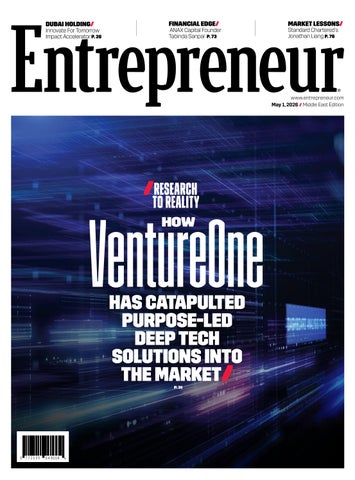
P.31 Building with Purpose
REDA NIDHAKOU , CEO of Abu Dhabi-based venture builder VentureOne, says the deep technology solutions that will stand the test of time are not necessarily those built on novelty and perfection, but something much simpler.
P.41 Stability Drive
How GCC businesses are rallying with relief, funding, and policy support in the midst of regional disruptions.
P.17
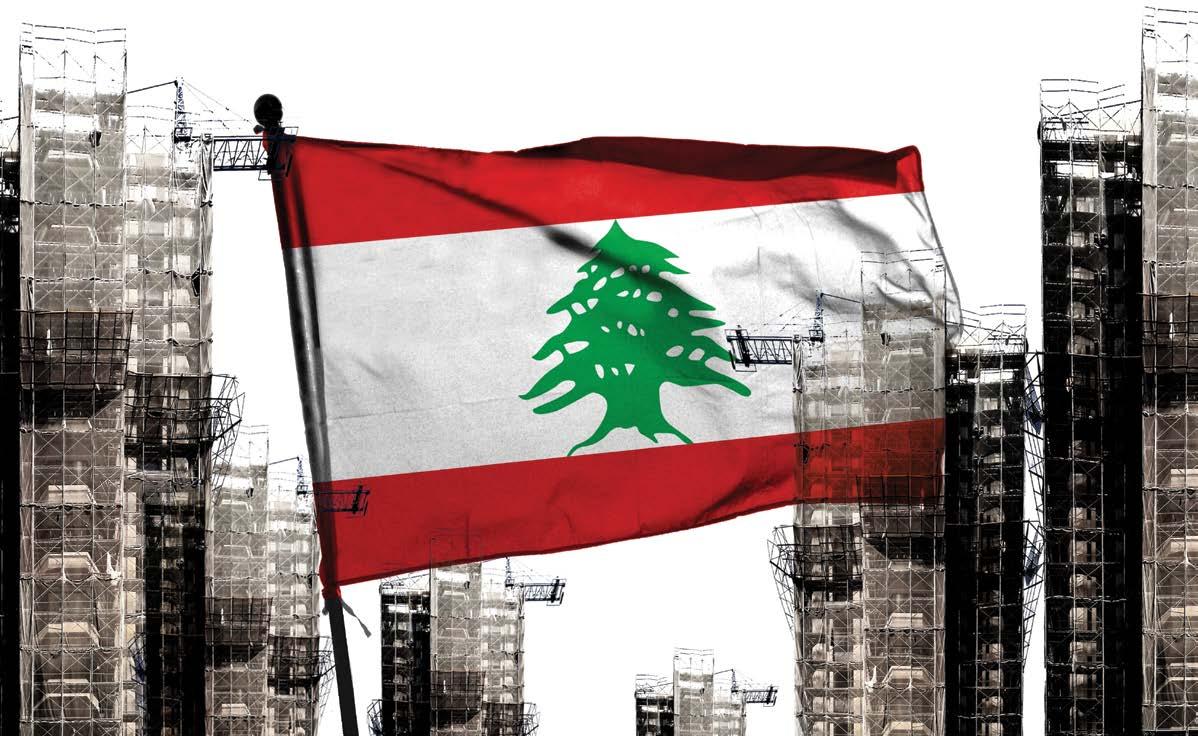
Pride and Pressure
Why Lebanon’s entrepreneurial stories can’t wait — hear from DARMMESS SOCIAL ENTERPRISE, WOOTTON CREATION, AL MASHREK INSURANCE AND REINSURANCE, AND SADER.
BUSINESS UNUSUAL
26 Dubai Holding
Meet the scale-ups shaping the future of the UAE’s circular economy
‘TREPONOMICS
63 Crisis, Done Right
How UAE employers can stay compliant and protect their workforce
69 People Under Pressure
FIKRAH’S SARAH BROOKS on how UAE employees and employers are navigating crisis
73 Financial Edge
ANAX Capital Founder TABINDA SANPAL presents ANAX Capital
76 Market Lessons
Standard Chartered’s JONATHAN
LIANG on why the 1990 Gulf crisis offers a roadmap for today’s markets.
↑ Sonya Ravic Vuckovic is the founder of LOFI.ae, a digital compliance platform for UAE SMEs.
STARTUP SPOTLIGHT
79 Beyond Home Cares
How RAFEEQ CONNECT is redefining elderly support in the UAE
IN THE LOOP
84 Sheraa Launches AED5 Million Entrepreneurs Resilience Fund
Sharjah Entrepreneurship Center (Sheraa) has launched the Entrepreneurs Resilience Fund to provide fast-tracked financial, operational, and marketing support for Sharjah-based startups and SMEs.
CEO Wissam Younane wissam@bncpublishing.net
MANAGING DIRECTOR Rabih Najm rabih@bncpublishing.net
ART DIRECTOR Simona El Khoury
EDITOR IN CHIEF Anil Bhoyrul anil@bncpublishing.net
FEATURES EDITOR Aalia Mehreen Ahmed aalia@bncpublishing.net
JUNIOR EDITORIAL ASSISTANT Kristine Erika Agustin
DIRECTOR OF INNOVATION
Sarah Saddouk sarah@bncpublishing.net
GROUP SALES DIRECTOR – B2B GROUP Joaquim D’Costa jo@bncpublishing.net
HEAD OF PARTNERSHIPS Samir Glor Samir@bncpublishing.net
BUSINESS DEVELOPMENT DIRECTOR Andy Soulahian andy.soulahian@bncpublishing.net
COMMERCIAL LEAD
Anna Chipala anna@bncpublishing.net
COLUMNIST Tamara Clarke
CONTRIBUTING WRITERS Fida Chaaban, Jonathan Liang
SUBSCRIBE
Contact subscriptions@bncpublishing.net to receive Entrepreneur Middle East every issue
COMMERCIAL ENQUIRIES sales@bncpublishing.net
ENTREPRENEUR.COM
Access fresh content daily on our website
EntMagazineME Entrepreneur-me
PO
P +971 4 4200
Editor’s Note /
DUBAI JUST SOLVED A STARTUP PAIN POINT MOST FOUNDERS KNOW TOO WELL
A new partnership between DWTC Free Zone and Wio Bank signals a long-overdue shift in solving one of the UAE’s most persistent startup bottlenecks.
Dubai has built its global reputation on being one of the easiest places in the world to start a business. Founders can obtain a trade license in record time, free zones compete aggressively on packages and incentives, and the overall environment is designed to encourage entrepreneurship.
But anyone who has actually gone through the process knows that the real challenge doesn’t lie in setting up a company. It starts immediately after.
Opening a corporate bank account has long been one of the most frustrating and time-consuming steps for new businesses in the UAE. While a company can be licensed in a matter of hours or days, banking onboarding with traditional institutions can stretch into weeks, sometimes even longer. Compliance requirements, risk assessments, and manual processes often slow things down to a point where early-stage momentum is lost before it even begins.
This is why the recent partnership between the Dubai World Trade Centre Free Zone and Wio Bank deserves
attention. At its core, it is not just another value-added service or a marketing collaboration. It directly addresses a structural issue that founders have quietly struggled with for years.
By integrating digital banking into the company formation journey, the initiative allows entrepreneurs to move from incorporation to financial operation far more quickly. Wio, as a digital-first bank, has already demonstrated that business accounts can be opened in a matter of hours rather than weeks. That difference is not incremental—it is transformational.
For a startup, the ability to operate immediately is critical. Without a bank account, there is no real business activity: no invoicing, no payments, no payroll. A delay of even a couple of weeks at this stage can disrupt early cash flow, delay client onboarding, and create unnecessary friction at a moment when speed matters most.
Wio’s rapid growth in the UAE reflects how strong this demand is. The bank has surpassed AED 50 billion in customer deposits within just a few years of launch, while its customer base has expanded by more than 70 percent year-on-year.
What makes the DWTC Free Zone partnership particularly significant is the ecosystem approach it represents. Instead of treating banking as a separate, post-setup hurdle, it brings it into the core of the business formation process. This kind of integration removes friction at the exact point where founders need clarity and momentum.
This initiative is a step in the right direction. It acknowledges a reality that many founders understand all too well: starting a business is not just about paperwork, it is about functionality. And functionality begins with access to banking.
If other free zones follow suit, Dubai could once again raise the bar, not just in how quickly businesses are created, but in how quickly they can actually begin to thrive.
Anil Bhoyrul Editor-in-Chief
Your Palace of Experiences
Enlighten Your Eternal Beauty, Inside and Out!
@muarjewels www.muarjewels.com
info@muarjewels.com
Pride and Pressure
Lebanese entrepreneurs share how running a business amid constant uncertainty brings both frustration and a deep sense of pride. by TAMARA
PUPIC
Rose Bechara Perini Lebanese Entrepreneur On Rethinking Business In Lebanon
Rose Bechara Perini urges Lebanese entrepreneurs to emphasize diversification, trusted partnerships, and long-term thinking as essential to protecting both their businesses and the people behind them.
by TAMARA PUPIC
Rose Bechara Perini, founder of Darmmess Social Enterprise, leads a Lebanese social enterprise focused on producing and exporting high-quality extra-virgin olive oil while supporting small farmers and rural communities. The company aims to build a sustainable value chain around olive cultivation by preserving traditional agricultural practices, ensuring fair income for farmers, and
expanding the presence of Lebanese olive oil in international markets.
“For us, olive oil is not simply a product,” Bechara Perini said. “It represents generations of agricultural knowledge and the livelihoods of families who depend on their land. Our work has always been about connecting those producers to markets that appreciate and sustain that heritage.”
In early March, Bechara Perini explained that her business had faced cumulative losses, operational damage, and ongoing interruptions across production and logistics due to more than three years of regional instability. Then, the latest developments introduced additional challenges and constraints.
“At the moment, we are unable to export to several Arab markets that were historically important for our sales,” she explained. “Shipments to Europe, which many Lebanese producers rely on, are also facing delays and uncertainty. For a small enterprise built around exports, these disruptions immediately affect cash flow, planning, and the ability to continue supporting the farmers we work with.
“At the same time, the local market in Lebanon has slowed dramatically. Purchasing power has fallen sharply, and many people are understandably focused on basic necessities rather than specialty food products.
→
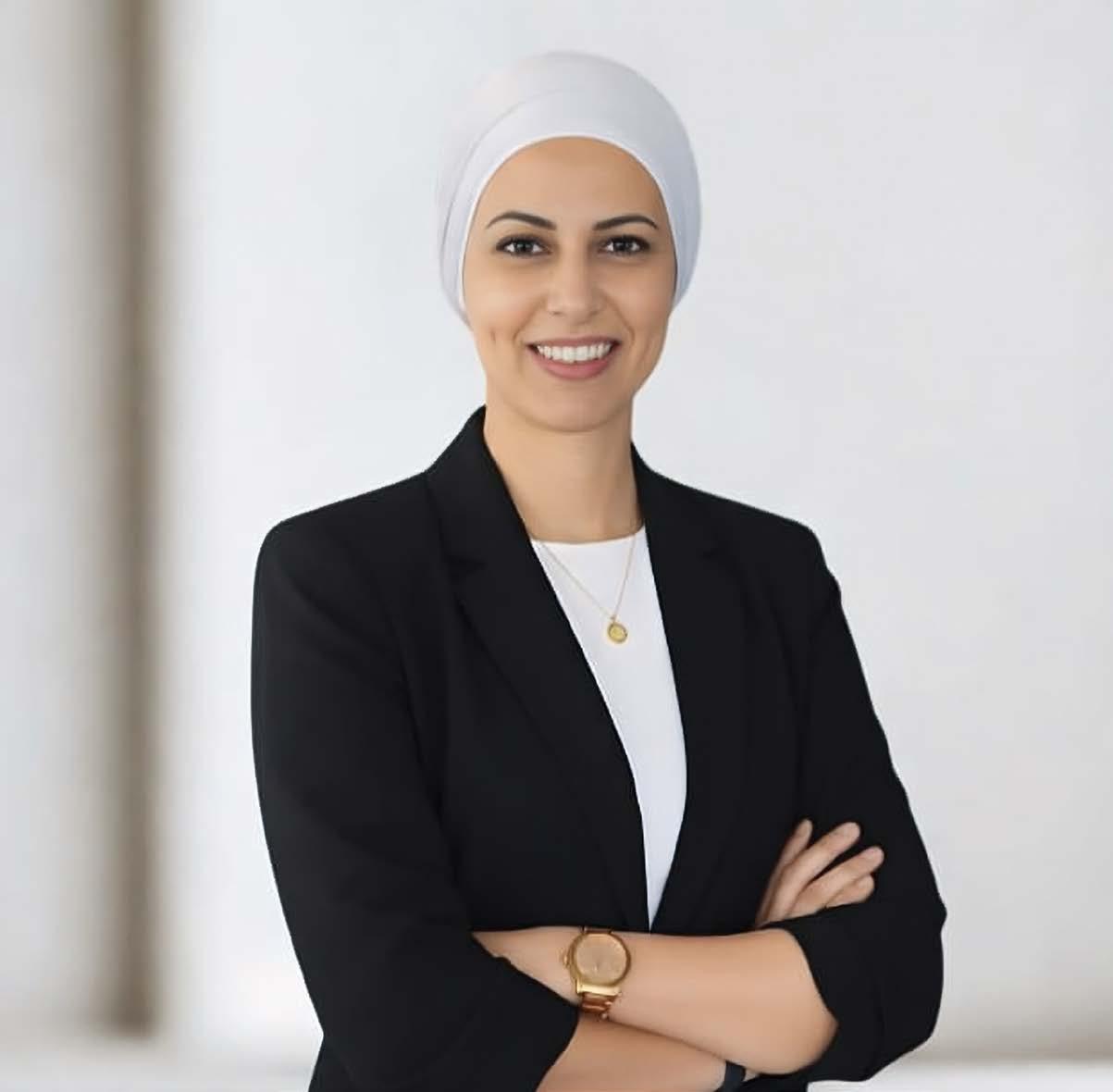
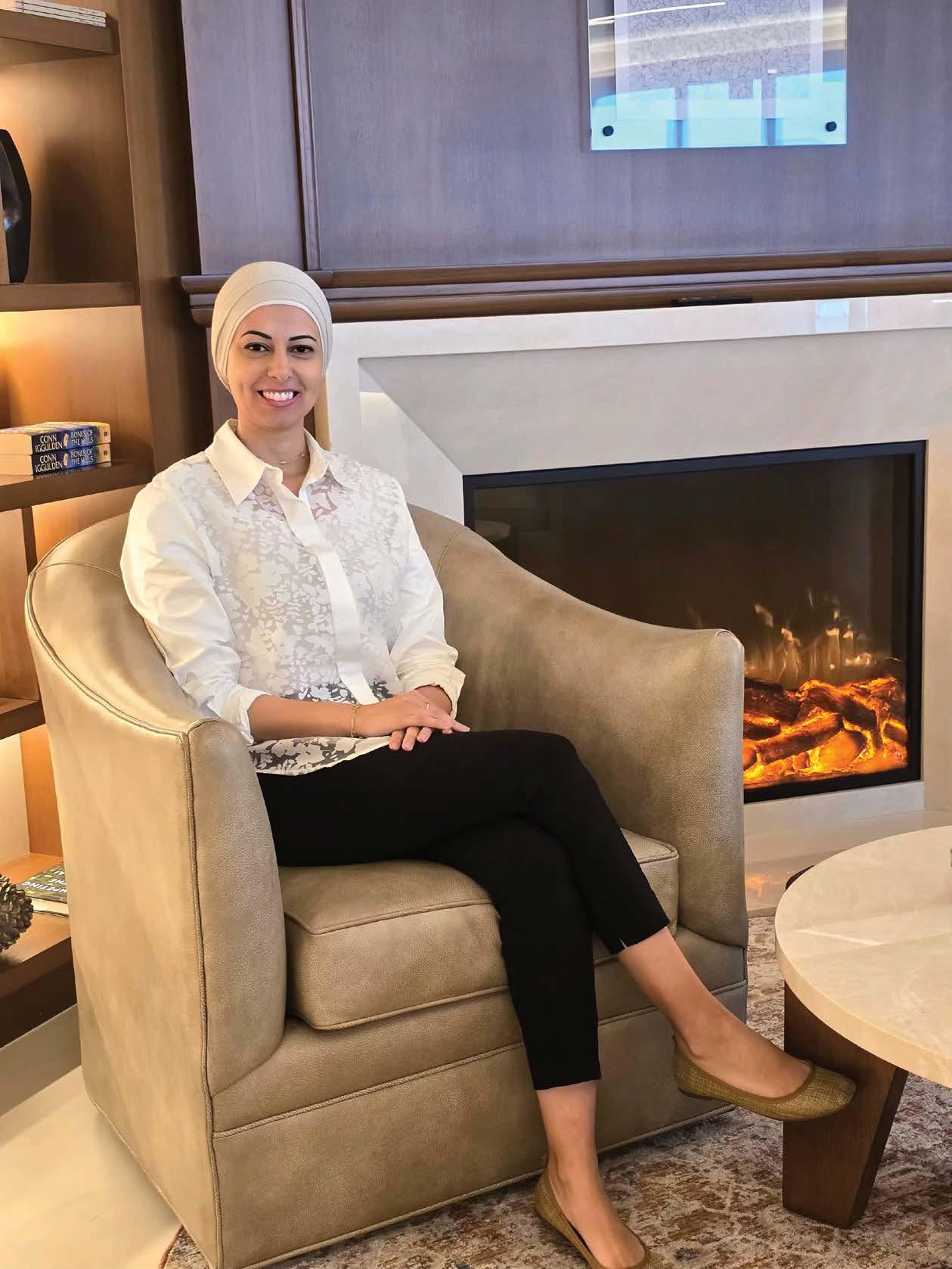
Rose Bechara Perini is the founder of Darmmess Social Enterprise.
“FOR US, OLIVE OIL IS NOT SIMPLY A PRODUCT. IT REPRESENTS GENERATIONS OF AGRICULTURAL KNOWLEDGE AND THE LIVELIHOODS OF FAMILIES WHO DEPEND ON THEIR LAND.”
IN LEBANON, UNCERTAINTY IS CONSTANT. RESILIENCE ALONE ISN’T ENOUGH: COLLABORATION, SUPPORTIVE PARTNERSHIPS, AND LONG-TERM STRATEGIES ARE ESSENTIAL TO SURVIVING AND PROTECTING THE PEOPLE WHO DEPEND ON YOUR BUSINESS.”
“What makes this particularly painful is that behind every liter of olive oil are farmers, harvesters, and rural families who depend on the harvest season to sustain themselves. When exports stop or markets freeze, the consequences ripple through entire communities.”
Some weeks ago, Bechara Perini explained that her
business had reached a point where the priority shifted from growth to survival, and she decided to focus on sustaining operations while safeguarding the livelihoods connected to its agricultural heritage.
“For a product like extra-virgin olive oil, timing matters a great deal: it is always best
when it is fresh, and our entire production cycle is built around delivering the harvest to clients while it is still at its peak quality,” she explained.
“When shipments stop or buyers hesitate, the impact is immediate. Stock that was meant to move quickly to international markets remains unsold. For a small social enterprise
Resilience Growth Playbook
Rose Bechara Perini, founder, Darmmess
Social Enterprise. says,
}“In Lebanon, uncertainty is constant. Diversify your markets, build direct, trusting relationships with buyers, and design your business to withstand disruption. Resilience alone isn’t enough: collaboration, supportive partnerships, and longterm strategies are essential to surviving and protecting the people who depend on your business.”
working closely with growers, these delays create real pressure across the entire value chain.
“At this stage, the truth is that there are no easy solutions. We are doing what many small Lebanese producers are doing: trying to stay flexible and keep communication open with our buyers while the situation evolves.
“But after several years of repeated interruptions, the reality is that small enterprises like ours are reaching the limits of what we can absorb alone.”
←
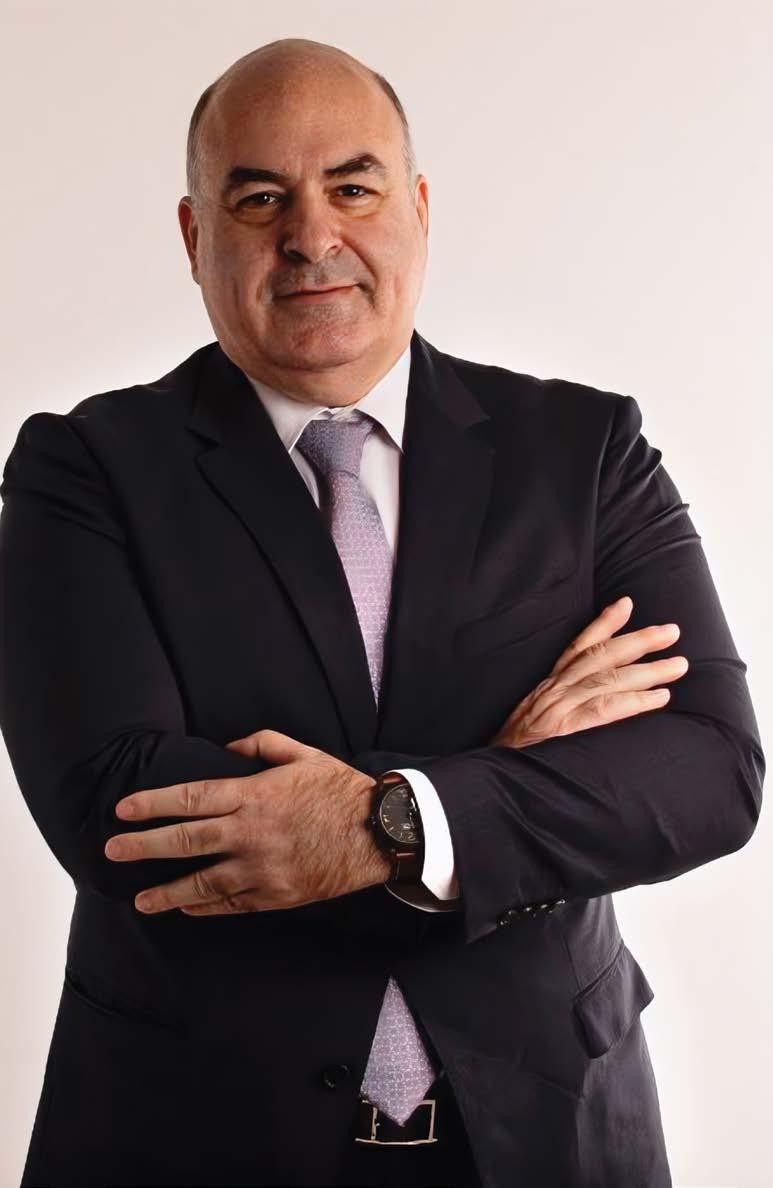
Alexandre Abraham Matossian, Chairman and CEO of Al Mashrek Insurance and Reinsuranc
Alexandre Matossian
Chairman and CEO of Al Mashrek Insurance and Reinsurance Alexandre Matossian speaks to the emotional weight and sense of purpose of running a business on the frontlines of crisis.
by TAMARA PUPIC
Alexandre Abraham Matossian, Chairman and CEO of Al Mashrek Insurance and Reinsurance, brings decades of experience leading a business in one of the region’s most volatile environments.
At the helm of the company, which has operated in Lebanon since 1962, Matossian has navigated multiple periods of instability, well before the latest conflict, positioning him as a seasoned voice on resilience and continuity in times of crisis.
“Operating in Lebanon teaches you to function without guarantees: only preparedness, adaptability, and persistence,” says Matossian. “Running a business in Lebanon has always required resilience, but the current situation amplifies every challenge. There is a constant tension between responsibility toward clients, employees, and one’s own safety and family.
“OPERATING IN LEBANON TEACHES YOU TO FUNCTION WITHOUT GUARANTEES: ONLY PREPAREDNESS, ADAPTABILITY, AND PERSISTENCE.”
“Emotionally, it is a mix of fatigue, uncertainty, and determination. There are moments of doubt, but also a strong sense of purpose, especially in insurance, where your role becomes critical in times of crisis.”
Matossian says his insurance business in Lebanon has long operated in an environment shaped by economic collapse, currency devaluation, and declining purchasing power.
“Growth has been modest and largely defensive rather than expansiondriven,” he explains. “The sector itself has been under significant strain, with reduced policy uptake, increased claims volatility, and limited access to reinsurance markets. Still, demand for essential coverage remained relatively stable, acting as a lifeline for continuity.”
However, since the onset of the latest conflict, operations have shifted into survival mode. “One immediate and severe impact has been the disruption of client servicing and claims processing,” Matossian explains. “For example, during a period of intense escalation, several clients were unable to access hospitals within their insurance networks due to road closures and safety risks. Simultaneously, communication lines were inconsistent, delaying approvals and emergency responses.
“Additionally, we experienced a temporary shutdown of our physical office due to safety concerns in the surrounding area, forcing an abrupt transition to remote work under less-than-ideal conditions.”
To mitigate the impact, Matossian shifted the business to remote operations, decentralized decision-making, and prioritized critical client needs. And looking ahead, his outlook remains cautious. “The immediate future is unpredictable, and long-term planning feels almost theoretical,” Matossian concludes. “However, businesses that survive this period will likely emerge more adaptive, more efficient, and more deeply connected to their communities.”
Resilience Growth Playbook
Alexandre Abraham Matossian shares key advice for withstanding constant disruption in Lebanon.
}Build Redundancy Early
“Do not rely on a single office, supplier, or system. Diversify operations so your business can func tion under disruption.”
}Prioritize Cash Flow Over Growth
“Liquidity is survival. Focus on sustaining operations rather than expansion during uncertain times.”
}Invest in Relationships
“Strong ties with clients, suppliers, and employees become your most valuable asset during crises.”
}Stay Agile
“Conditions change rapidly, your decisions must be quick and adaptable rather than perfect.”
}Take Care of Your Team
“Your employees are also under stress; supporting them directly impacts your business continuity.”
Sader Built to Endure: How Keeps Operating Through Conflict in Lebanon
With roots dating back to 1863, SADER’s longstanding foundations and strategic evolution have enabled it to sustain operations without interruption amid the latest escalation in Lebanon. by
TAMARA PUPIC
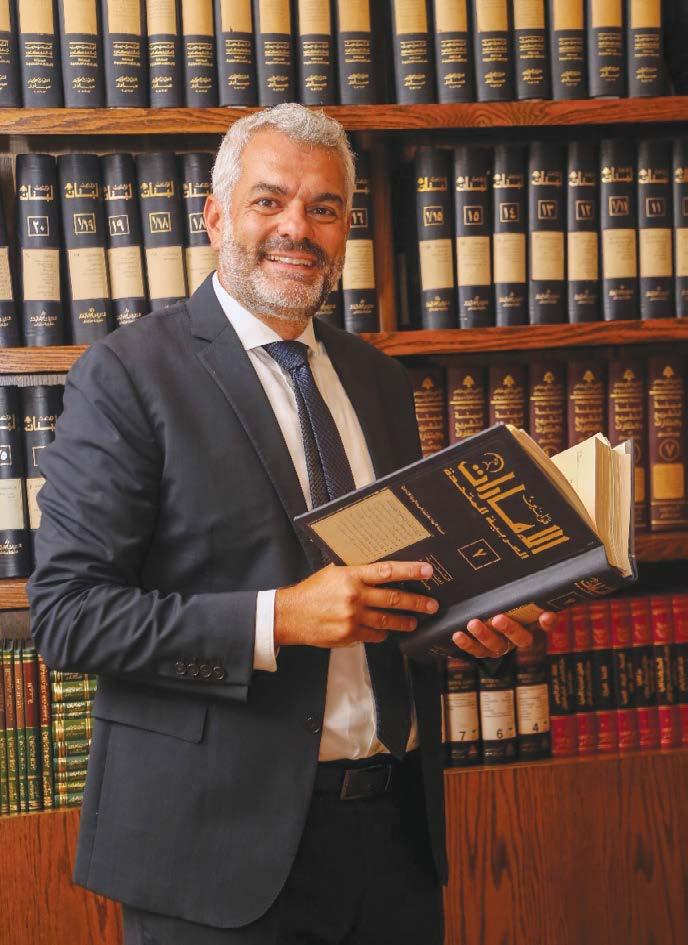
Rany J. Sader, Chief Legal Innovation Officer at SADER, says the company’s ability to continue operating through the latest conflict is the result of decades of deliberate positioning and institutional strength.
Founded in Beirut in 1863 and expanded across multiple jurisdictions, including becoming Dubai’s first licensed legal publisher in 2004, SADER has evolved into an integrated legal knowledge platform.
As conditions in Lebanon recently deteriorated, SADER’s operations were relocated where necessary, but never stopped, which as Sader explains underscores a business model built on resilience, adaptability, and long-term strategic foundations.
“The latest escalation struck immediately and operationally. The environment contracted, and fast,” Sader says. “Prior investments absorbed the blow. Remote work policies and digital infrastructure, put in place as early as 2015, preserved continuity before it was ever at risk. The challenge shifted from infrastructure to coordination, requiring constant recalibration based on team availability and conditions on the ground.”
↑ Rany J. Sader, Chief Legal Innovation Officer at SADER
“OPERATING HERE DEMANDS A STRUCTURAL APPROACH, NOT A REACTIVE ONE. CRISIS IS NOT AN EVENT; IT IS AN OPERATING CONDITION. OVER TIME, THAT REALITY SHAPES HOW YOU BUILD.”
In essence, three priorities guided the response: core functions transitioned to remote and hybrid models, operations moved but did not stop, and digital platforms were reinforced to guarantee uninterrupted access to legal content. “And business priorities were recalibrated ruthlessly, protecting what mattered most while reducing new initiatives during peak uncertainty,” Sader explains.
Sader explains that entrepreneurs operating in Lebanon possess something stable environments rarely produce: a deep capacity to anticipate disruption and absorb it without losing direction.
“Operating here demands a structural approach, not a reactive one. Crisis is not an event; it is an operating condition. Over time, that reality shapes how you build,” he says.
Sader adds that Lebanese businesses have long demonstrated an ability to operate beyond local constraints and integrate into regional and global markets. Despite ongoing geopolitical challenges, he highlights that the country continues to sustain a highly competitive cross-border legal community, providing SADER with a structural advantage throughout its history. “A new generation of legal professionals educated abroad, alongside established practitioners expanding across the UAE and the wider region, continues to reinforce that strength,” he says. “Lebanon remains a distinct legal culture hub, one that shapes talent, perspective, and legal thinking for the future.
“The goal has never been simply to endure. It has been to turn relentless pressure into durable, long-term advantage.”
Resilience Growth Playbook
Rany J. Sader, Chief Legal Innovation Officer at SADER, shares advice for entrepreneurs in Lebanon.
}Build for disruption, not stability
“Disruptions are environmental. Systems must absorb them, with flexibility embedded into operations, decision-making, and team structures.”
}Maintain disciplined cash management
“Liquidity preserves optionality, and optional ity is survival. Prioritize digital readiness; physical dependency is a vulnerability.
}Protect the core business above all else
“Protect the core business and diversify structurally across jurisdictions, banking systems, and operations.”
}People are the foundation of continuity
“Leadership, in this environment, is measured by its ability to maintain clarity and carry the team through.”
and
Resilience:
Joseph El Khoury Reset
Repositions for Growth Amid Lebanon’s Crisis
Joseph El Khoury, founder of Joseph El Khoury Design Studio, and Managing Partner at Ex Nihilo S.a.r.l., is shifting his businesses toward more scalable, less locally exposed models—while maintaining confidence in Lebanon’s enduring strength as a hub for creativity and talent. by
TAMARA PUPIC
Joseph El Khoury is the founder of Joseph El Khoury Design Studio (JEKDS) and Ex Nihilo s.a.r.l., two Beirut-based ventures spanning design services and product development. Established in 1995, JEKDS operates as a design and consulting studio across interior architecture, product and concept design, installation art, and public space design, using a lean, flexible model supported by a network of freelancers and specialists. Ex Nihilo, launched in 2003 as a product-based brand focused on crafted objects, previously relied on local workshop production and artisan collaboration. However, ongoing economic challenges and conflict in Lebanon have forced a pause in manufacturing, with both ventures now undergoing restructuring toward more agile, scalable models less
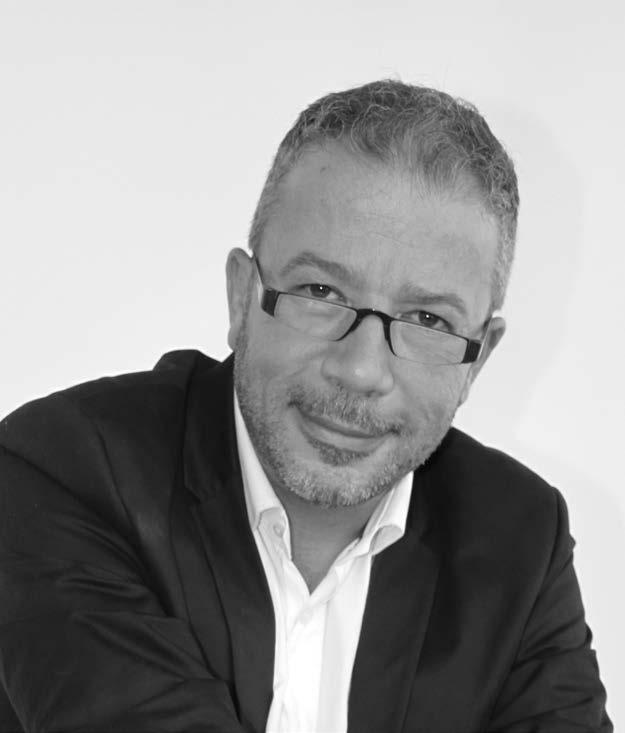
↓ Joseph El Khoury is the founder of Joseph El Khoury Design Studio (JEKDS) and Ex Nihilo s.a.r.l.
dependent on local production constraints.
“The design and construction sector in Lebanon has been significantly affected by the ongoing crises,” El Khoury explains. “Many practices have adapted by downsizing, becoming more flexible, or shifting toward regional and international opportunities. Despite these challenges, the context has also encouraged a more resilient, resourceful, and conceptdriven approach to design.
“Overall, the business is at a transitional stage- moving from traditional, locally anchored models toward more sustainable and scalable structures aligned with current realities.”
Since the escalation of the latest conflict in Lebanon, El Khoury’s businesses have faced immediate disruptions- from the design side, projects have been paused or delayed as clients hold back on new investments, and from the operational side, the existing challenges in local production have intensified, including material sourcing delays and difficulties in maintaining consistent workshop activity. “There is also a psychological impact that cannot be ignored. In such contexts, both clients and designers shift into a more cautious, short-term mindset, which directly affects the type and scale of work being undertaken,” El Khoury explains. “This combination of operational disruption, market hesitation, and uncertainty has required a constant reassessment of priorities and a more adaptive, flexible approach to running the business.”
In response to the situation, El Khoury focused on increasing flexibility, reducing dependency on unstable systems, and maintaining continuity wherever possible.
“On the design side, I adapted the workflow to be more agile and less reliant on physical presence. This included prioritizing design studies, concept development, and remote collaboration. I also adjusted project scopes to align with clients’ current
constraints, offering more phased or modular approaches.
“On the product side, I made the decision to pause traditional workshop-based production rather than force an unsustainable model. Instead,
Resilience Growth Playbook
Architect and Designer Joseph El Khoury Urges Lebanese Entrepreneurs to Rethink Survival Strategies Amid Escalation
}Stay lean and adaptable
“Avoid heavy fixed structures and build your operations in a way that can adjust quickly. Flexibility is one of the most valuable assets in an unstable environment.”
}Do not depend on a single system
“Whether it is production, sourcing, or revenue streams, diversification is essential. Relying entirely on one local system can expose your business to sudden disruption.”
}Focus on what you can control
“In uncertain contexts, external factors are often unpredictable. Concentrating on the quality of your work, your processes, and your relationships helps maintain stability and direction.”
}Think beyond the local market
“Exploring regional or international opportunities can create additional resilience and reduce exposure to local volatility.”
}Maintain clarity and consistency
“Even during difficult periods, it is important to stay clear about your positioning and values. This builds trust and allows your business to remain coherent as it evolves.”
I shifted focus toward research and development, refining designs, testing smaller-scale prototypes, and exploring alternative production strategies that could be more resilient in the long term.
“Operationally, I kept the structure lean and relied on a trusted network of collaborators rather than fixed overhead, which allowed for greater adaptability during periods of fluctuation.”
Amid ongoing disruption, El Khoury is undertaking a strategic reset of his businesses with an aim to shift toward models that are less exposed to local volatility and better aligned with scalable, sustainable growth.
“Running a business in Lebanon over the past years requires a constant balance between resilience and realism,” he says. “On one hand, the environment is unstable and often unpredictable; on the other, it forces you to become resourceful, adaptable, and highly aware of how you operate. “There is also a strong emotional dimension. Periods of uncertainty affect not only business decisions, but also the mindset with which you approach work. You learn to manage interruptions, delays, and shifting priorities while maintaining a certain level of consistency and professionalism.”
However, he remains upbeat, noting that Lebanon continues to offer a unique context for creativity and talent. “Constraints often push you to think differently, simplify processes, and focus on what is essential. This has influenced the way I approach design and business, making it more intentional and grounded,” El Khoury says.
“Looking forward, I expect the environment to remain complex, but I also see a gradual shift toward more flexible and outward-looking models. For me, the focus is on building structures that are less dependent on local instability, while still maintaining a connection to the context that shaped the work.”
Nadine Helwe’s Lebanese Entrepreneur Strategy for Staying
Afloat
Wootton Creations owner Nadine Helwe on how to sustain momentum in uncertain times.
by TAMARA PUPIC
Nadine Helwe, owner of Wootton Creations, leads a Lebanese eco-conscious homeware and lifestyle brand focused on creating sustainable, design-driven products that combine aesthetics with environmental responsibility. The company’s collections include handcrafted baskets, bags, and home accessories made from plant-based materials.
“Before the latest conflict, we were in a steady growth phase, expanding our range, building a loyal local and international customer base, and strengthening our retail presence through our concept store and local markets,” Helwe said.
“Today, we operate with a small, dedicated team across production and retail, in a phase of cautious resilience rather than growth. While the sector has been impacted by reduced spending and ongoing uncertainty, we
are seeing a shift where conscious, locally made products are becoming less of a niche and more of a necessity for healthier, more mindful living.”
Helwe highlighted the impact of the conflict on her business included an immediate decline in foot traffic and sales as consumer spending shifted toward essentials, alongside rising costs, electricity challenges, and supply instability.
Despite these pressures, she emphasized. “Running a business in Lebanon is challenging but deeply formative. It pushes you to think creatively, adapt quickly, and operate under constant pressure.
“There is both frustration and pride. Frustration from instability, but pride in building something meaningful despite it. It builds resilience, sharpens decision-making, and teaches you to value small wins.”
Resilience Growth Playbook
Nadine Helwe, the owner of Wootton Creations, says:w
}“Focus on what moves—prioritize fast-selling products and package them into corporate gifts and bundles. Expand your presence through local retail touchpoints like restaurants, guesthouses, and concept stores. Keep your operations lean and adaptable, and most importantly, build strong direct sales channels—Instagram, WhatsApp, and loyal customers will carry you further than anything else.”
→ Nadine Helwe is the owner of Wootton Creation.
Meet the Scale-Ups shaping the Future of the UAE’s Circular Economy
We are halfway to the 2050 net zero target. While national commitments continue to grow, linear models of ‘take, make, waste’ stand in the way of meaningful progress. With global waste generation projected to rise by more than 80% by 2050 compared to 2023 levels, accelerating the transition to a circular economy is no longer optional, it is essential.
FOOD LOSS AND WASTE
Souji: Alchemising cooking oil into cleaning products
“We can prove that sustainability can also be profitable,” states Souji founder, Sergio Fernández. The Spanish scale-up uses patented technology to convert used vegetable cooking oil into non-toxic cleaning products. “With our machine, customers produce a ready-to-use product on-site.” This reduces packaging, avoids shipping, lowers emissions and cuts operational costs while simplifying daily routines.
Peeling back on plastics with PeelPack
PeelPack is a Swiss scale-up that upcycles potato peel by-products into a biodegradable and compostable fibre-based material. “Our focus is simple,” explains CEO Slava Drigloff. “Replace plastic at an industrial scale while
creating measurable environmental and business value.”
PeelPack’s packaging works for existing production lines and meets retailer requirements for strength and shelf life. “Many alternatives are either too expensive, niche or difficult to scale. Our solutions are practical for large supply chains from day one.”
From food to sustainable design with Ottan Ottan is the brainchild of multi-award-winning materials researcher and industrial designer Ayşe Yılmaz. This UK scale-up transforms food waste into durable, low-carbon and design-ready bio-composite materials, replacing plastics, ceramics, stone and wood.
“We deliver measurable carbon reduction at material level by replacing extractionbased inputs with upcycled food and agricultural waste,”
THROUGH EXPERT MENTORSHIP, PRACTICAL MASTERCLASSES AND DIRECT ACCESS TO INVESTOR NETWORKS, THE ACCELERATOR EQUIPS FOUNDERS WITH THE TOOLS TO TRANSFORM THEIR VISION INTO A PROVEN SUCCESS STORY.
→ Mohamad Rabih El Chaar, Nadeera Technologies
shares Yılmaz. “Our materials require no new factories, enabling scalable impact.”
Creating conscious events with BIRD Collaborative mybird is a UAE-based social enterprise providing premium sustainable products to the hospitality and events sector, including plastic-free disposables and reusable drinkware solutions. Every client order directly funds the removal of 1kg of waste from UAE waters, turning everyday hospitality operations into measurable environmental action.
“Our goal is to connect daily business decisions to real impact,” says co-founder Nabil Mhanna. “When a venue switches to mybird, they’re not just reducing plastic use, they’re actively funding ocean recovery in the UAE.”
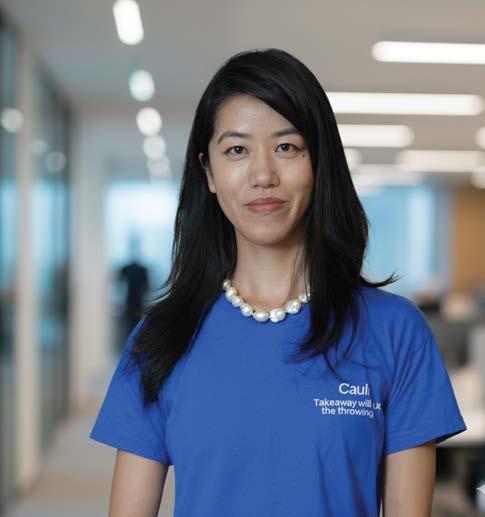
Cauli: Serving smart Mingqiao Zhao and
Josephine Liang co-founded Cauli to help F&B businesses eliminate waste. Its AI-enabled reusable food packaging system allows customers to borrow and return food and drink containers easily.
RESOURCE RECOVERY AND REGENERATION
Sorting the future with Cycled Technologies Cycled Technologies simplifies and incentivises recycling. The Norwegian scale-up was inspired by co-founder and CEO Ayoola Brimmo’s childhood growing up on a poultry farm. “Waste like chicken excrement and leftover corn were buried. After it rained, I noticed the corn seeds sprout. What we thought was waste had value. Years later, standing at a landfill, I saw the same opportunity at a much larger scale.”
“Cycled develops proprietary, AI-enabled hardware embedded directly into the waste collection infrastructure, enabling automated sorting at source. Contribu-
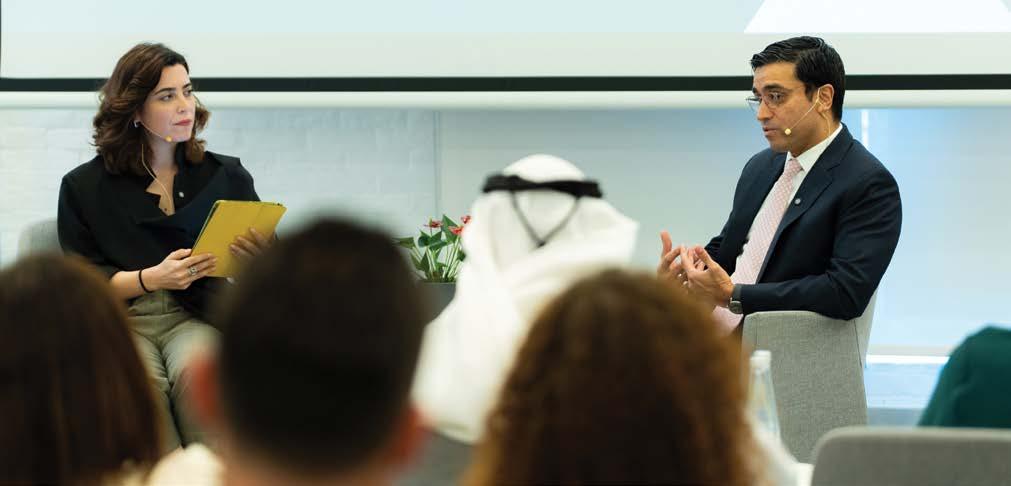
→ Fireside Chat with Amit Kaushal, Group Chief Executive Officer, Dubai Holding on building synergies with the Group
→ Abdulaziz Bin Redha, HyveGeo
WHEN A VENUE SWITCHES TO MYBIRD, THEY’RE NOT JUST REDUCING PLASTIC USE, THEY’RE ACTIVELY FUNDING OCEAN RECOVERY IN THE UAE.”
tors are rewarded through a built-in points and special discount vouchers with partner brands”.
Without: Recycling the unrecyclable
Without, a deep climatetech company behind a proprietary technology, transforms unrecyclable plastic and textile waste into high-quality, recyclable materials. “Most companies recycle what’s easy, like PET bottles and aluminium cans,” shares Anish Malpani, Founder. “We recycle what nobody else can: chip packets, sachets and chocolate wrappers that make up less than 1% of recycled plastic globally.”
Laying new foundations for future homes with Rumett Rumett is a Denmark-born
scale-up led by construction architect Diana Saleh. She developed the world’s first paper-free mineral gypsum wall panel partly made from bio-ash for fast, low-carbon and fire-resistant building. “Our approach is rooted in Danish design culture,” explains Saleh. “Our panels are mechanically fitted, not glued, and designed to be dismantled and reused instead of demolished. It
allows spaces to change without creating waste.”
Waste to nature with CO2Wall
Dutch scale-up CO2Wall is transforming urban spaces with AI-driven living green walls and roofs. Its living structures reduce CO2 emissions, noise and temperature by three to eight degrees while filtering air.
“ MANY ALTERNATIVES ARE EITHER TOO EXPENSIVE, NICHE OR DIFFICULT TO SCALE. OUR SOLUTIONS ARE PRACTICAL FOR LARGE SUPPLY CHAINS FROM DAY ONE.” PEELPACK
Sustainable ceramics with Seramic Materials
Seramic Materials stems from Dr. Khalid Al Ali and Dr. Nicolas Calvet’s 2007 PhD research. It uses an innovative process to transform low-value industrial solid waste into sustainable ceramic products, including floor and wall tiles and hightemperature thermal energy storage materials.
Revent: Reinventing IT
Businesses frequently face high upfront costs when buying new tech devices for employees and operations. Meanwhile, previously owned and perfectly operational ones are discarded in landfills.
Revent, a UAE-based scale-up, bridges the gap by offering businesses affordable subscriptionbased IT device rental plans. The model expands device lifecycles, reduces electronics-related emissions and makes technology more accessible, “proving that
→ Ayoola Brimmo, Cycled Technologies
→ Mingqiao Zhao, Co-founder of Cauli
CYCLED DEVELOPS PROPRIETARY, AIENABLED HARDWARE EMBEDDED DIRECTLY INTO THE WASTE COLLECTION INFRASTRUCTURE, ENABLING AUTOMATED SORTING AT SOURCE. CONTRIBUTORS ARE REWARDED THROUGH A BUILTIN POINTS AND SPECIAL DISCOUNT VOUCHERS WITH PARTNER BRANDS”.
circularity can be profitable,” says co-founder Dhananjay Choubey.
DIGITAL INNOVATION FOR SUSTAINABILITY
Smart grid solutions with Enlog Enlog offers autonomous, AI-driven systems to reduce energy waste, improve
power quality and make buildings grid-responsive. The scale-up has helped customers save 4,000 tonnes in CO2 emissions and 23% in energy bills — proof of ROI.
Closing the loop with Nadeera
Nadeera is a UAE-based social enterprise delivering digitally enabled solutions for sustainable solid waste management. Nadeera simplifies and incentivizes recycling through its digital platform called “Yalla Return”, a smart material recovery system scaled across commercial and residential properties. Yalla Return integrates advanced technologies including Reverse Vending Machines (RVMs), AI-powered infrastructure, and IoT sensors to monitor, track, and optimize waste management at the source, enabling more efficient material recovery and data-driven environmental impact.
“We focus on making waste recovery simple and motivating for everyday users,” explains co-founder Michel Mokbel. “By turning sustainability into a personalised and rewarding experience, we help people claim ownership over their impact.”
Mruna: Imagining water’s infinite cycle
Mruna is a UAE climate and infrastructure innovation company which creates innovative nature-based circular water systems for built environments. “Most sustainability solutions focus on tracking, reporting or making daily
operations slightly more efficient,” shares founder Ziad Hussami. “Measuring impact is not the same as creating it. Real change requires reimagining infrastructure from the ground up.”
Mruna’s BiomWeb technology enables wastewater treatment onsite, using a family of products that emulate nature-based aquatic systems to biodegrade waste and filter toxic heavy metals for a simple, affordable and decentralised water supply system.
HyveGeo: Turning deserts green
“HyveGeo was born from a simple question,” explains Abdulaziz Bin Redha, founder of the UAE desert greening and carbon removal company. “What kind of land will my daughters inherit?”
“I did not want them to inherit scarcity; I want them to inherit abundance.” To enable environmental regeneration, Redha created a product with bioactive compounds that enables soil to better capture carbon and improve water and nutrient retention, enabling arid land to support life. “We are building resilience, food security and a better future for the next generation.”
After completing the intensive 12-week programme, five finalists will have the opportunity to pitch their solutions to investors and businesses at Demo Day in May.
Stay tuned to the scale-ups’ journey throughout the Dubai Holding Innovate For Tomorrow Impact Accelerator live on Instagram
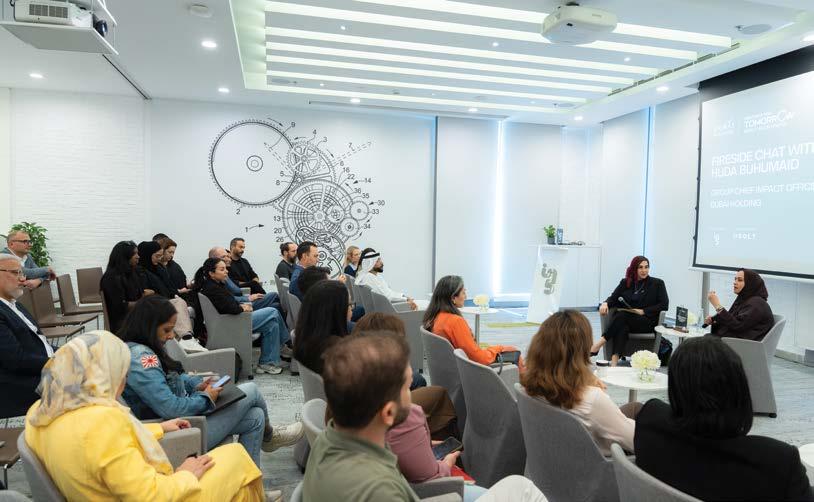
→ Fireside Chat with Huda Buhumaid, Group Chief Impact Officer, Dubai Holding on creating meaningful, measurable impact.
→ Diana Saleh, Founder of Rumett
PURPOSE-BUILT
WITH VentureOne
TURNING UAE DEEP TECH INTO REAL-WORLD IMPACT
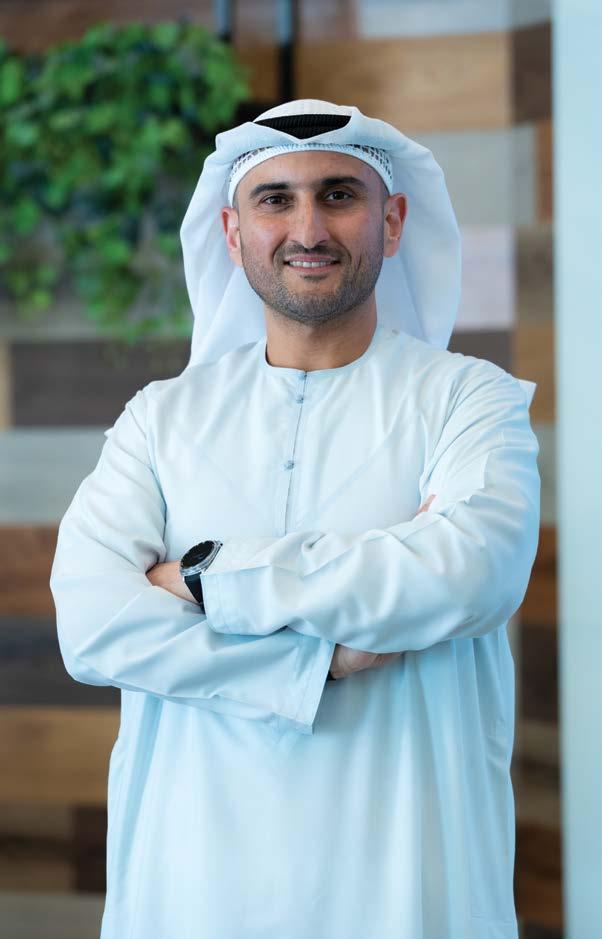
Reda Nidhakou, CEO of Abu Dhabi-based venture builder VentureOne, says the deep technology solutions that will stand the test of time are not necessarily those built on novelty and perfection, but something much simpler.
by AALIA MEHREEN AHMED
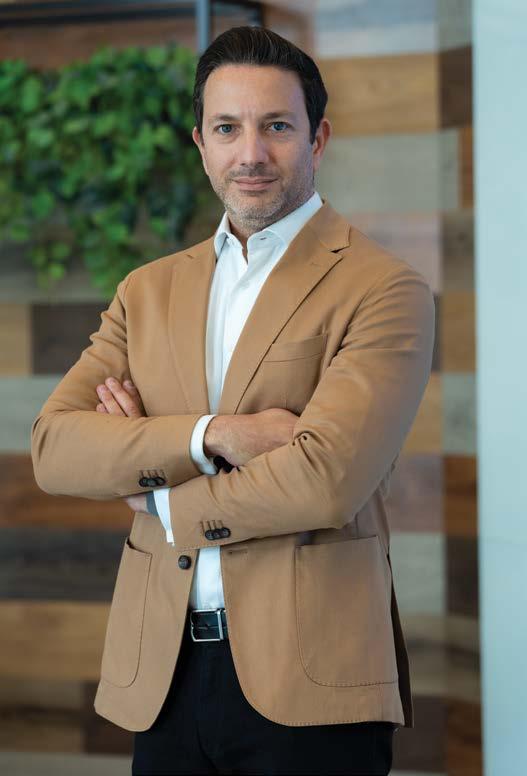
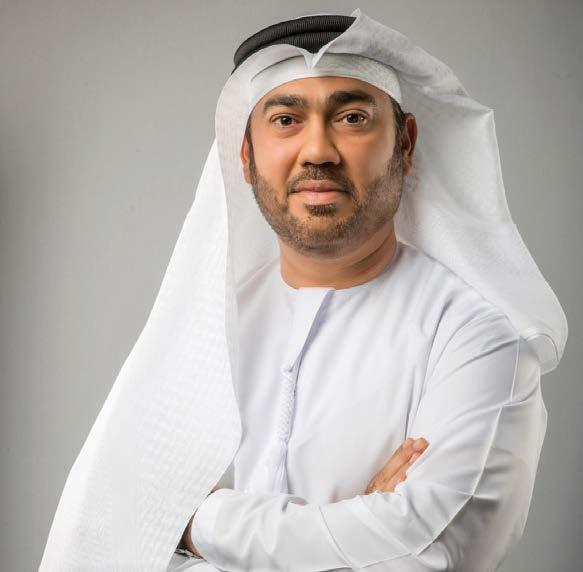
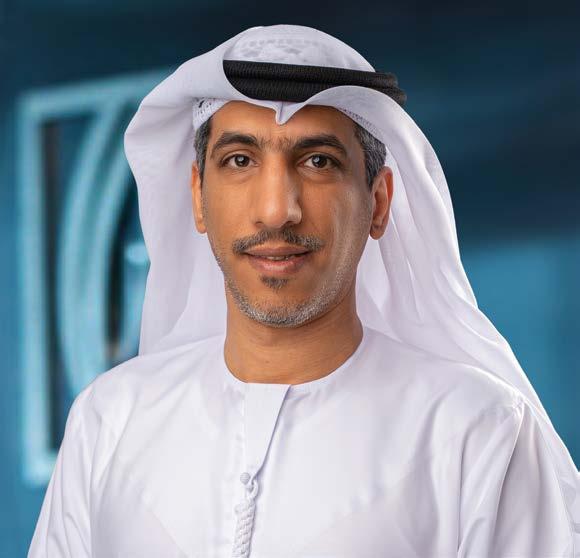
← Reda Nidhakou is the CEO of VentureOne, the venture building arm of the Abu Dhabi government’s Advanced Technology Research Council.
There is a word that often appears when leaders and entrepreneurs in technology share their visions: innovation. Yet when Reda Nidhakou discusses the operations of VentureOne, the venture building arm of the Abu Dhabi government’s Advanced Technology Research Council (ATRC), he uses the word sparingly. As the CEO of an entity that helps transform tech research and development (R&D) into scalable companies, Nidhakou’s measured usage of the word becomes even more significant when reports like that of GitNux’s Market Data
Report 2026 show that “nations are racing to out-innovate each other, with over two and a half trillion dollars funneled into global R&D last year alone.”
“Technology cannot advance purely on the strength of its science,” Nidhakou says. “A lot of research fails to go to market not from lack of brilliance, but from a gap between technical excellence and real-world deployment. Something that is truly market-ready starts with a validated problem: Research that begins by examining a genuine, costly, unmet need — rather than chasing technological novelty — is far more likely to find customers. Technology must also survive the last
“
Not every research project succeeds, and not every successful project becomes competitive enough to build a company around. Our role is to identify the technologies that can become viable solutions.”
→ VentureOne is dedicated to turning applied research from the Technology Innovation Institute (TII) into game-changing commercial products and solutions that address industry challenges worldwide.
mile to market. Even when it meets a clear need, deployment is complex, and prototypes often quietly fail at this stage. At ATRC and VentureOne, we address this by co-developing solutions alongside real clients from day one, stress-testing them in operational conditions, and refining them through real-time feedback. Technology solutions are also engineered to scale from the start. Modular, adaptable solutions that can extend across sectors, geographies, and platforms are built very differently from those designed for a single use case. We prioritize technologies with broad ambition.”
Nidhakou’s approach, and indeed that of VentureOne, are aligned with what the current statistics promise. According to StartUS Insights’ Deep Tech Market Report 2026, Europe alone could generate up to US$1 trillion in deep tech enterprise value and create as many as one million jobs — but only “if research intensity can be translated into scalable companies.” With similar potential in the deep-tech ecosystem, it is in the latter half of that statistic where VentureOne operates. “Not every research project succeeds, and not every successful project becomes competitive enough to build a company around,” Nidhakou says. “Our role is to identify the technologies that can become viable ventures: Products that work outside the lab and solve pressing industry problems, that have the right cost structure, and that can scale internationally. Part of this process is studying our right to win, the competitive landscape, and the scalability of a solution beyond one client or one country.”
“Our methodology is not about creating as many ventures as possible,” he adds. “It is about solving the right problems, by turning technology into solutions, and only then deciding whether they should become companies. Rather than launching 20 ventures for the sake of numbers,
WE LOOK AT WHAT THE UAE NEEDS, WHAT CHALLENGES ARE WORTH SOLVING, AND THEN WE BUILD SOLUTIONS AROUND THOSE. THAT’S A MUCH MORE INTENTIONAL PROCESS. IT’S NOT ABOUT IDENTIFYING A GOOD IDEA AND SUPPORTING IT. WE AIM TO DESIGN THE RIGHT SOLUTION FROM THE GROUND UP.”
we’ve deliberately focused on a smaller number of ventures with real impact.”
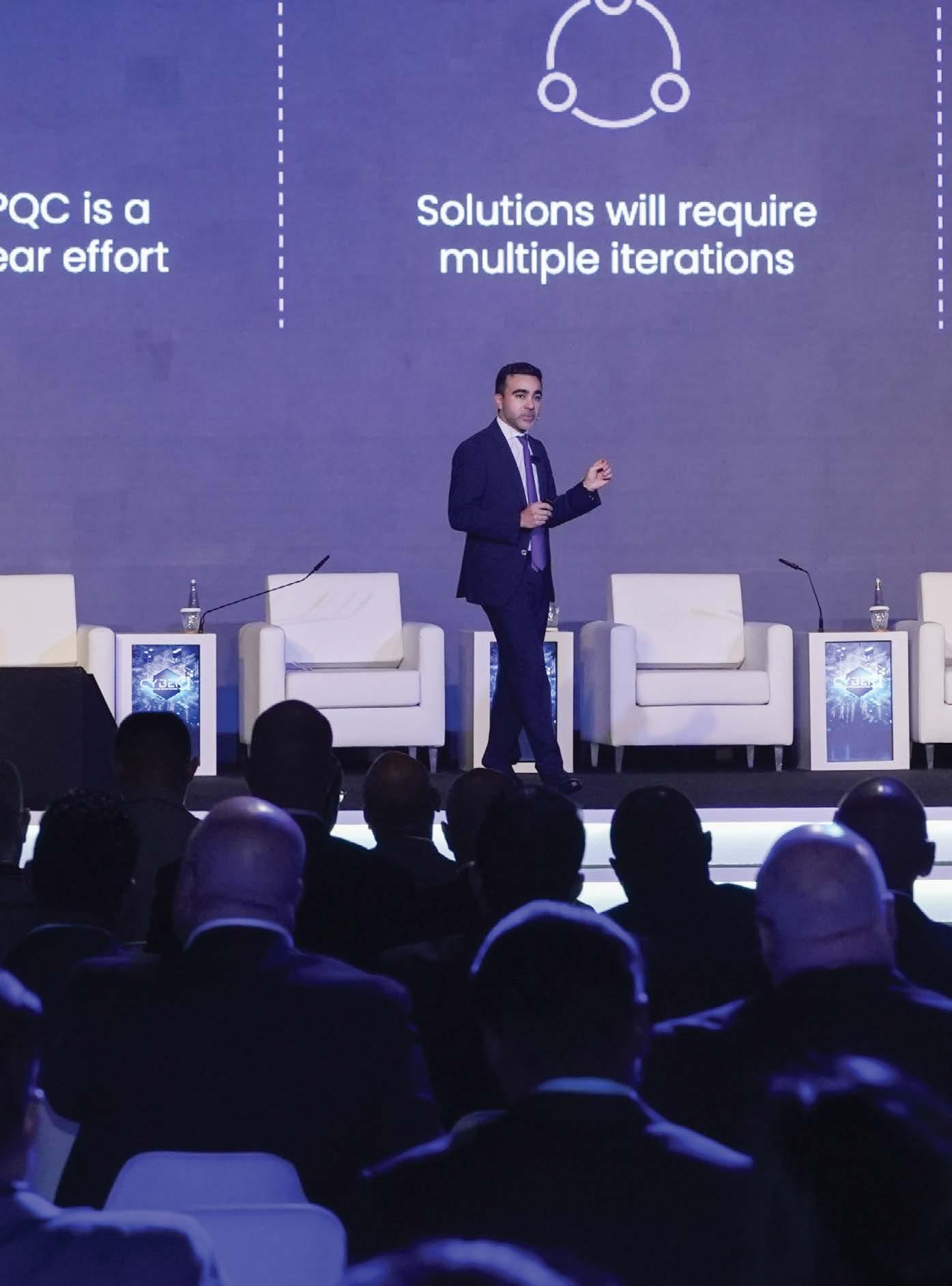
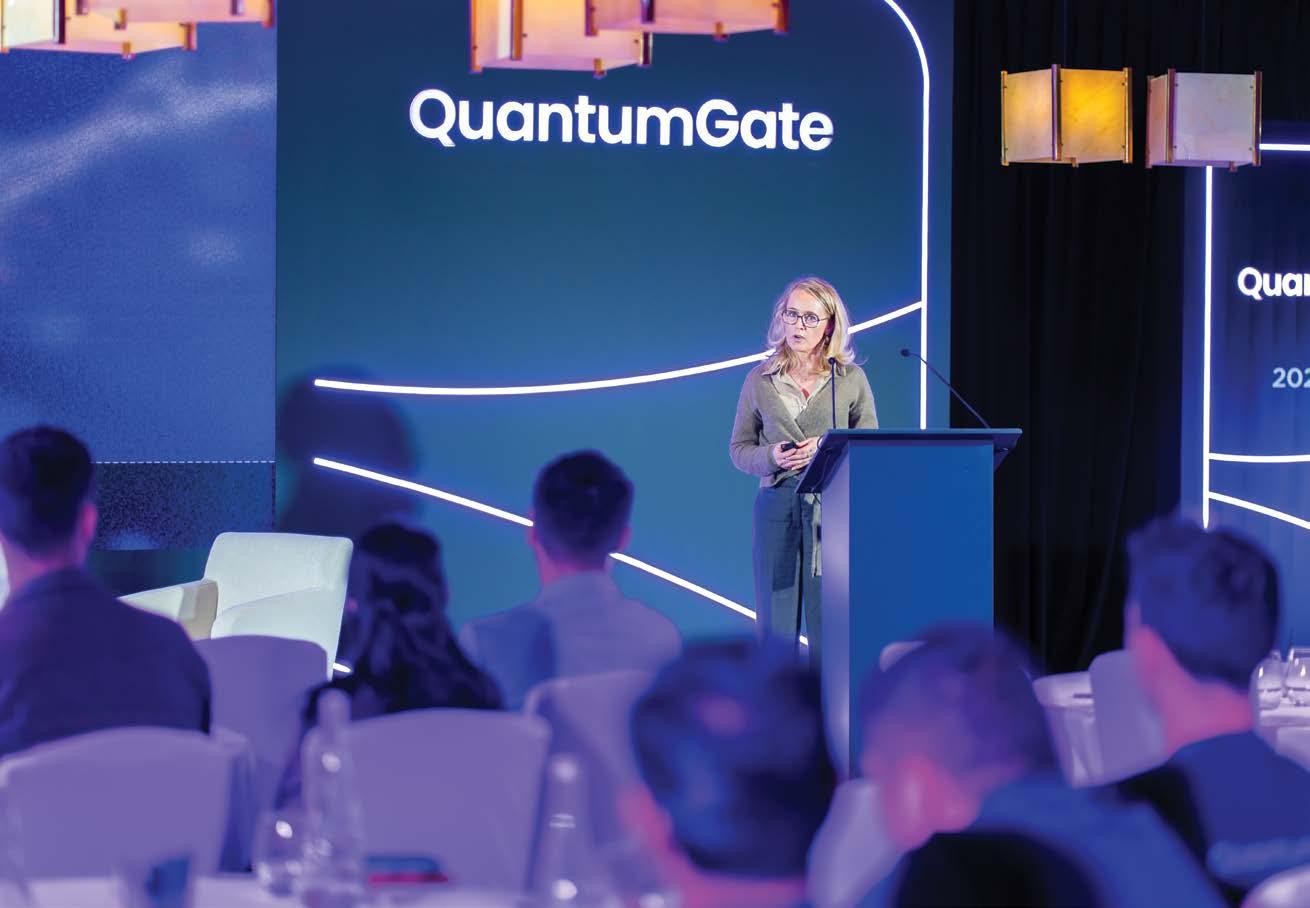
Currently, four different ventures born out of VentureOne offer prime examples of the entity’s vision: ai71, a company that develops AI-powered enterprise productivity solutions; SteerAI, which is powering the offroad autonomy transition; QuantumGate, a cybersecurity venture that helps organizations protect their data assets for the
post-quantum world; and Nabat, a climate tech venture that enables scalable, data-driven ecosystem conservation and restoration.
“For us, success means leaving an impact in the sectors we enter while building businesses that can stand on their own,” Nidhakou explains. “Our vision is to use game-changing deep tech to transform industries and make a tangible positive impact. As I mentioned, VentureOne is part of ATRC, which is designed to operate
→ At VentureOne, Nidhakou oversees the launch of ventures that bring deep tech solutions to market, partnering with trusted industry and government entities to ensure our solutions address real-world needs.
The ATRC ecosystem’s stable early funding removes the survival anxiety that forces premature commercialization decisions, buying ventures the runway to get integration right. And national alignment functions as a credibility accelerant.” “
He adds that VentureOne’s holistic approach sets the entity apart from conventional venture capital (VC) investors and startup incubators. “In our case, we don’t start with startups; we start with problems. We look at what the UAE needs, determine what challenges we can solve, and then build solutions around those. That’s a much more intentional process. It’s not about identifying a good idea and supporting it. We aim to design the right solution from the ground up.”
“One of the structural advantages of the VentureOne model is access to early-stage governmentbacked funding through ATRC,” Nidhakou adds.
as a single, integrated system to accelerate deep tech.”
ASPIRE, ATRC’s business development arm, sources real-world industry challenges from end users. The Technology Innovation Institute (TII), ATRC’s applied research arm, develops tech solutions in close collaboration with those users. VentureOne then takes those solutions to market as products and companies.
“This model ensures we are building from validated demand, which significantly reduces the gap between development and deployment,” he says.
“This initial funding gives each startup the runway to validate its technology, hire the right people quickly, and iterate. This is done without the distraction and dilution that typically defines the early stages of a startup. This approach is particularly well-suited to deep tech. These technologies require time, coordination, and clear direction. By aligning industry challenges, research, funding, and execution from the outset, we’re able to build ventures with a stronger foundation and a clearer path to scale.”
The proof, of course, speaks for itself. The clearest validation of VentureOne’s model appears in how the aforementioned four ventures have grown.
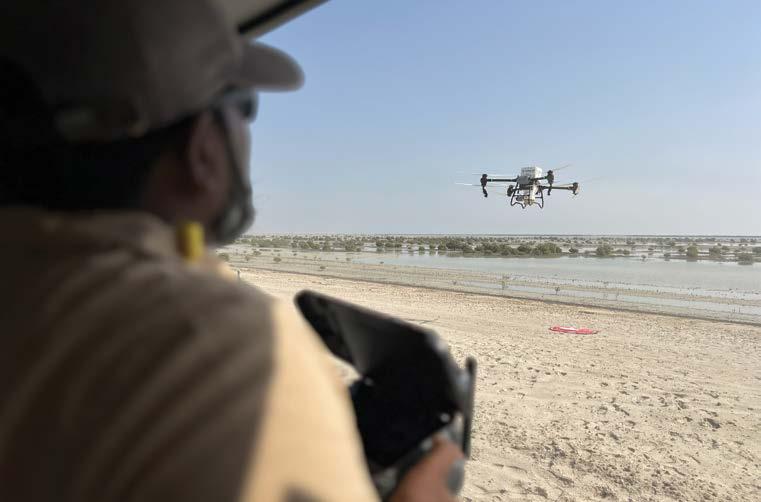
“Our ventures are showing strong real-world adoption signals so far,” Nidhakou says. “ai71’s talent has grown from 40 to over 200 and has made agreements with several clients. QuantumGate solutions are actively being deployed national across critical infrastructure projects. SteerAI has signed a handful of local partnerships and already added to their product lineup. Nabat has partnered with the Environment Agency - Abu Dhabi (EAD) on a multi-year contract as part of the Abu Dhabi Mangrove Initiative.”
Nidhakou got the opportunity to observe a different side of the tech industry when he also took on the role of CEO at Nabat in 2025. “This has given me a different vantage point on the UAE’s AI ecosystem,” he says. “What strikes me is how much genuine appetite exists at the government and institutional level for AI to be applied to real environmental and societal challenges and not just productivity or efficiency gains. Nabat’s partnership with EAD reflects serious national commitment to using advanced technology in service of long-term climate resilience. That combination of government mandate and technical ambition creates ideal conditions for powerful AI deployment.”
Such deep experience has allowed the VentureOne team to better observe the pitfalls in scaling deep-tech ventures. “The challenges that derail deep-tech ventures at scale tend to be organizational and relational rather than technical, and yet they often aren’t addressed with the same rigor as the tech itself,” Nidhakou says. “Three key challenges stand out: The first is client inertia at the integration layer: enterprises and governments are often convinced by the technology, but challenged by the operational complexity of embedding it. The second is talent continuity under growth pressure as scaling quickly creates a temptation to hire quickly, but the wrong people in small, high-stakes teams can cause disproportionate damage. The third is the credibility gap between proof-ofconcept and procurement. Government buyers in particular require extensive validation before moving from trial to contract.”
Unsurprisingly, the VentureOne and ATRC teams have taken considerable measures to address these three hindrances. “The ATRC ecosystem’s stable early funding removes the survival anxiety that forces premature commercialization decisions, buying ventures the runway to get integration right,” Nidhakou says. “And national
GOOD TECH LEADERS CAN BUILD, BUT EXCEPTIONAL ONES CAN TRANSLATE: BETWEEN
THE RIGOR OF RESEARCH AND THE MESSINESS OF A REAL CUSTOMER; BETWEEN WHAT THE TECHNOLOGY CAN DO AND WHAT THE MARKET NEEDS RIGHT NOW; AND BETWEEN A TEAM OF BRILLIANT SPECIALISTS AND A COHERENT ORGANIZATION MOVING IN ONE DIRECTION.”
alignment functions as a credibility accelerant: A venture operating inside a government program arrives at procurement conversations with institutional endorsement already established. Additionally, having engineering teams work directly with clients through the deployment phase helps dissolve the integration inertia problem.”
Amid all the nitty gritty of deep tech scaling, however, there is one inherent quality of the industry that can sometimes supersede all other efforts: the pace of change. But for this too, VentureOne has incorporated relevant measures.
“Technology will always move quickly,” says Nidhakou. “VentureOne ensures our ventures are designed to evolve and scale through a multifaceted approach: First, we start with problems, not tech capabilities, co-designing solutions with partners to ensure that we’re addressing realworld problems. We also ensure our solutions are modular. If you build a large, fixed system, it becomes outdated by the time it’s deployed. We build solutions with components that are designed to evolve, extend,
and adapt over time. A good example of this is CoreX, SteerAI’s autonomous driving system, which is designed to integrate into existing vehicles, meaning users can deploy autonomy gradually, without replacing entire fleets.”
Nidhakou makes what may be the most profound statement in this interview when he talks about the role of a leader turning technology in the lab into a scalable, market-ready company. “Good tech leaders can build, but exceptional ones can
translate: between the rigor of research and the complexity of a real customer; between what the technology can do and what the market needs right now; and between a team of brilliant specialists and a coherent organization moving in one direction. That translation capacity, more than any domain expertise, determines whether technology leaves the lab,” he says.
There is some poignance when he adds that shifting an idea from research to market is also fundamen-
tally an act of repeated letting go.
“It’s letting go of perfection in favor of feedback, of the instinct to solve a problem completely before sharing the solution, and of the assumption that a solution’s technical merit is obvious. The leaders who navigate this well tend to have developed a high tolerance for ambiguity while maintaining standards. Operating across multiple ventures creates constant exposure to how others navigate the realities of deployment, customer pressure, and commercialization. Our
WE’VE STARTED WITH OVER 100 OPPORTUNITIES AND NARROWED TO ABOUT FIVE VENTURE CANDIDATES THAT WE ARE
PURSUING AT FULL SPEED. ”
leaders are learning from each other in real time, which accelerates growth, building business judgment and technical expertise in parallel.”
As Nidhakou and his team now prepare for the rest of 2026, the CEO shares that the VentureOne fundamentals will remain unchanged. “In the near term, the focus is on continuing to build in a disciplined way,” he says. “We’ve started with over 100 opportunities and narrowed to about five venture candidates that we are now pursuing at full speed.”
He explains that upcoming ventures will take on productiv-
ity and safety challenges in logistics, lack of transparency in financial transactions, water security, and other issues. He says their goal is to focus on the right ventures—the ones solving real problems and that have the potential to scale internationally—rather than build as many as possible. VentureOne is also continuing to grow the ventures they have already launched, working closely with partners, and expanding into new markets.
“Our ambition is for VentureOne to consistently launch highimpact technology businesses, export Abu Dhabi tech to the world, and deliver real, measurable impact.”
Reda Nidhakou, CEO of VentureOne, shares three lessons he’s learnt about incubating deep-tech companies from early-stage research to real-world deployment
}LESSON #1
“The distance between an excellent tech innovation and a deployable product is not a gap you can engineer your way across. It requires sustained proximity to the people who will actually use what you’ve built — their operational realities, their institutional constraints, and their definition of success, which is often not the same as yours. Every venture we’ve built has been shaped as much by that ongoing client relationship as any internal roadmap.”
}LESSON #2
“The importance of pace. In deep tech, often the instinct is to wait until something is ready before showing it. We actively resist that instinct. Showing something real and imperfect with the end user early builds a fundamentally different relationship than presenting a finished system. It creates co-ownership, and it surfaces the misalignments that would otherwise become expensive to fix six months later.”
}LESSON #3
“Then there’s talent. Not just attracting it, but protecting it through the hard phases. The period between proof-of-concept and the first real contract is when the pressure to deliver is the highest. The teams that hold together through that phase do so through a shared sense of purpose and vision, which I would say is a condition for survival.”
INTO NEW WORLDS
YOU’RE ONE LEAP AWAY
From 31 Aug - 3 Sept 2026 Riyadh Exhibition and Convention Center - Malham, Saudi Arabia
SECURE YOUR PASS NOW
STABILITY DRIVE
How the GCC is backing its business ecosystems
by AALIA MEHREEN AHMED
While regional escalations have disrupted, to a certain extent, the normalcy of business operations in the GCC, companies and startups have moved swiftly to adapt, supported by a wave of relief measures, financial interventions, and policy responses rolled out across the region. From rent relief and fee waivers to liquidity support and targeted funding initiatives, governments and institutions have stepped in to reinforce business continuity and sustain market confidence. In this comprehensive roundup of announcements, we highlight some of the most prominent ways regional governments and institutions have responded to the ongoing crisis with resilience and tenacity.
Support /
STABILITY PUSH
DUBAI SOUTH
ROLLS OUT RENT RELIEF, PAYMENT FLEXIBILITY FOR SMES
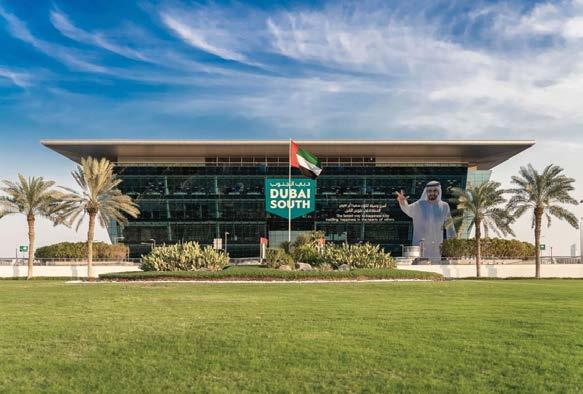
Dubai South, a master-planned city offering free zone business setup, logistics hubs, aviation services, commercial property, and residential communities, has introduced a targeted support package for small and medium enterprises (SMEs) operating within its Business Park, as part of broader efforts across Dubai’s business community to help companies navigate the pressures created by the ongoing war.
The initiative by Dubai South aligns with wider economic facilitation measures announced in Dubai, including an AED1 billion (US$272.26 million) package approved to support the business sector. Within this context, Dubai South’s approach focuses on delivering direct, practical relief to SMEs, particularly those operating within its Business Park ecosystem.
At the core of the support package are measures designed to ease immediate financial strain. These include rent-free incentives linked to contract
better manage shortterm liquidity challenges without disrupting their operations.
Dubai South has also waived minor administra-
renewals, allowing eligible tenants to reduce one of their most significant fixed costs. In addition, the initiative introduces greater flexibility around payment deferrals, enabling businesses to
for eligible renewals, offering businesses a degree of cost predictability and stability as they plan for the months ahead.
Together, these measures are aimed at helping SMEs preserve cash flow while maintaining their presence and operations within Dubai South’s Business Park. By focusing on both immediate relief and cost stability, the initiative seeks to create a more supportive environment for businesses navigating uncertainty.
Nabil Al Kindi, Group CEO of Dubai South, emphasized the importance of SMEs within the emirate’s economic landscape, noting that they remain central to Dubai’s broader growth story. “This initiative reflects our commitment to enabling our business community by providing practical and timely support, while reinforcing a stable environment for long-term success,” he added.
tive penalties as part of the package, further reducing the cost burden on SMEs during this period. Importantly, it has confirmed that current rental rates will be maintained
Officials also highlighted that the support package is part of a wider effort to sustain economic momentum and ensure that companies across Dubai are able to continue operating and expanding despite external challenges. The measures are expected to be reviewed and refined over time to remain aligned with evolving market conditions and the needs of the business community.
→ Nabil Al Kindi is the Group CEO of Dubai South
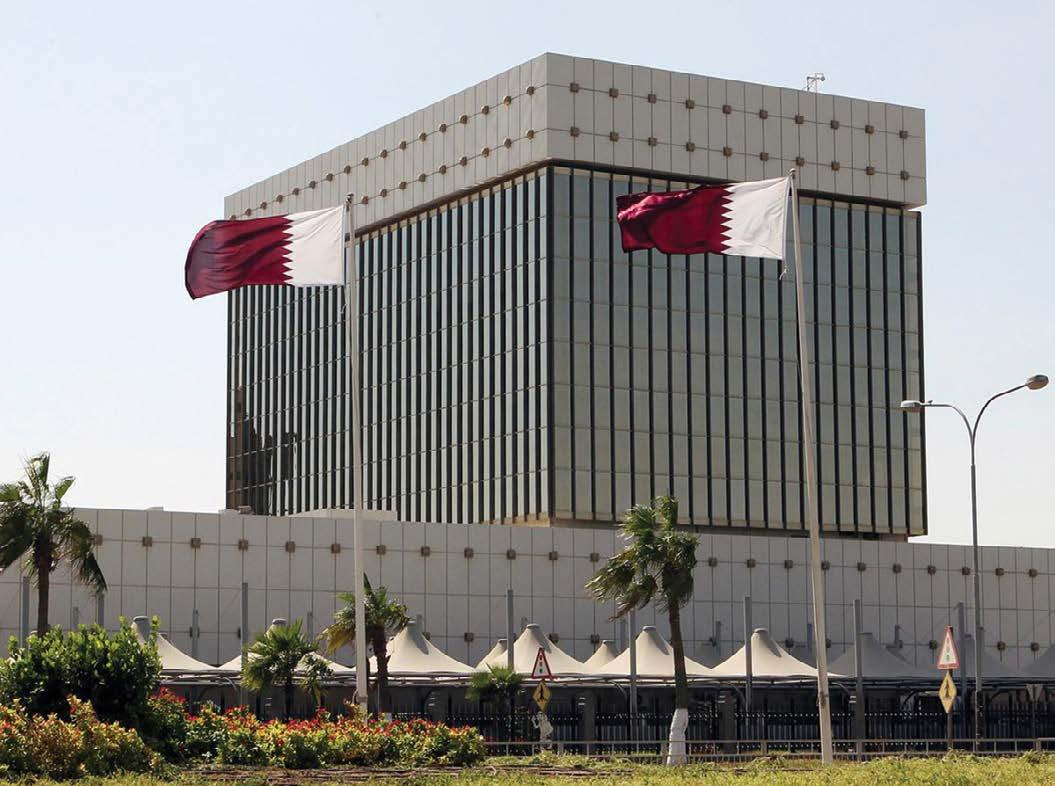
QATAR CENTRAL BANK
Qatar Central Bank (QCB) has introduced a series of preemptive support measures to safeguard financial stability, as Gulf policymakers respond to the economic fallout from the ongoing Iran war.
According to Bloomberg, the central bank has allowed lenders to defer loan principal and interest payments for
up to three months for customers affected by current conditions. The move is aimed at easing short-term financial pressures on businesses and individuals navigating an uncertain operating environment.
The measures build on a broader assessment by QCB, which found that Qatar’s financial system remains resilient despite geopolitical developments. Liquidity levels continue to be strong, capital buffers exceed
regulatory requirements, and banks are well-positioned to meet funding needs under stressed conditions.
As part of its monetary policy response, QCB will provide unlimited Qatari riyal liquidity through repurchase (repo) facilities against eligible securities held by banks, ensuring continued access to funding within the local market. In addition to its existing overnight repo facility, the central bank has also introduced a term repo facility with maturities of up to three months to support more predictable cash flow management.
The central bank has further eased reserve requirements, reducing the ratio on deposits from 4.5% to 3.5%, a move expected to inject additional liquidity into the banking system.
QCB noted that these steps are precautionary, reflecting both the strength of the domestic financial sector and the need to remain responsive to evolving global and regional conditions. The central bank added that it will continue to monitor developments closely and act as needed to maintain orderly market functioning and financial stability.
Support /
SME SUPPORT
BAHRAIN SEES
KEETA
LAUNCH SME SUPPORT INITIATIVE FOR 2,000+ BRANDS
Keeta, a technology-driven delivery platform, has launched a support initiative aimed at helping small and medium-sized enterprises (SMEs) across Bahrain, as part of efforts to strengthen the local business ecosystem amid ongoing economic pressures.
The initiative offers eligible SME partners— defined as businesses operating five or fewer physical locations—a temporary reduction in commission fees over a 30-day period from April 6 to May 5. The move is designed to provide greater operational flexibility, enabling businesses to better manage costs and maintain continuity while continuing to serve customers across the Kingdom.
According to the company, the program is expected to benefit more than 2,000 SME brands currently operating on the platform, highlighting Keeta’s growing presence within Bahrain’s local
business landscape. The initiative applies to both existing partners and new businesses that join during the programme period, ensuring broader access to support.
“Small and medium-sized businesses are at the heart of everyday life, they shape communities, create jobs, and bring
people together,” Aiden Qiao, General Manager of Keeta Bahrain, said. “At Keeta, we are committed to supporting our partners in meaningful ways, ensuring they have the flexibility and confidence to continue operating and serving their customers. Our focus remains on building a strong ecosystem for local businesses,
and standing by them when it matters most.”
By offering targeted fee reductions, the initiative aims to ease short-term financial pressures on SMEs while reinforcing Keeta’s role in supporting local entrepreneurs and contributing to a more resilient and connected economy in Bahrain.
PRICE PROTECTION
KUWAIT
In early April, Kuwait introduced a subsidybacked price control mechanism on essential food items, as authorities move to safeguard consumers and ensure market stability amid ongoing global supply disruptions.
The decision, announced by the Ministry of Commerce and Industry, aims to maintain the uninterrupted flow of goods into the local market while preventing price hikes driven by rising import costs and supply chain challenges. Acting Undersecretary Marwa Al-Jaidan said the measures are designed to protect consumers, support importers in managing higher costs, and ensure the continued availability of key commodities.
The subsidy framework, which will remain in effect until June 30 with the possibility of extension, forms part of broader efforts to strengthen food security during a period of heightened economic uncertainty. Authorities have indicated that the list of supported goods may be expanded depending on market conditions, particularly
if additional products are impacted by global disruptions.
Some of the covered items, including long-life milk and eggs, are produced locally, with producers already benefiting from feed support programmes coordinated with relevant entities. The ministry also retains the flexibility to include other staples, such as meat, if needed.
To ensure compliance, the ministry has intensified market oversight since the onset of the crisis, deploying inspection teams to monitor prices, track product availability, and enforce subsidy conditions. Companies found violating the regulations face strict penalties, including repayment of subsidies and exclusion from future support programmes.
Officials said the measures are aimed at balancing support for the private sector with consumer protection, reinforcing price stability while strengthening Kuwait’s overall food security framework in the face of evolving challenges.
DRAWS RED LINE ON FOOD PRICES WITH SUBSIDY SUPPORT
↑ Marwa Al-Jaidan, Acting Undersecretary of Kuwait’s Ministry of Commerce and Industry
MAJID AL FUTTAIM’S MA’AN
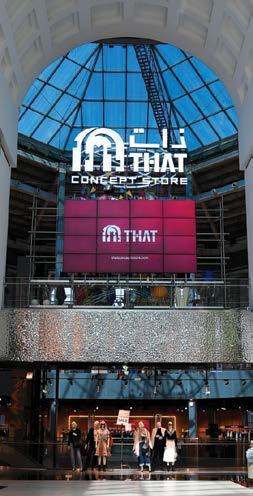
Majid Al Futtaim, one of the UAE’s largest lifestyle providers with shopping malls, retail, communities, and leisure destinations across the Middle East, Africa, and Asia, has partnered with with the Mohammed Bin Rashid Establishment for Small and Medium Enterprises Development (Dubai SME), to launch Ma’an – a platform designed to support UAE-based entrepreneurs and emerging businesses by giving them direct access to large-scale consumer ecosystems and growth opportunities.
By integrating selected businesses into destinations such as Mall of the Emirates, Carrefour, VOX Cinemas, and THAT Concept Store, the initiative enables entrepreneurs to showcase their offerings in high-footfall environments where millions of consumers shop and engage.
Positioned as a collabora-
tive public–private sector effort, the program seeks to bridge the gap between emerging brands and established retail infrastructure, allowing SMEs to accelerate market access, strengthen visibility, and drive commercial growth.
“This initiative reflects the importance of strategic public-private collaboration in creating practical growth opportunities for SMEs,” Ahmad Al Room Almheiri, Acting CEO of the Mohammed Bin Rashid Establishment for Small and Medium Enterprises Development (Dubai SME), said. “By connecting emerging businesses with established consumer platforms, Ma’an
enables entrepreneurs to strengthen market access, build brand visibility, and accelerate commercial growth. The programme also supports Dubai SME’s continued mandate to empower entrepreneurs and strengthen the SME ecosystem in line with priorities of the Dubai Economic Agenda, D33, and as per the directions of our city’s leadership.”
Ahmed Galal Ismail, CEO, Majid Al Futtaim Holding, added: “The role of our malls has always been to bring people and communities together, and that responsibility has never been more important than it is today. Small businesses are a cornerstone of the UAE’s
economic and social fabric, and Ma’an reflects our commitment to creating pathways for homegrown brands to scale and thrive.”
Beyond retail space, the initiative also provides participating businesses with access to Majid Al Futtaim’s wider marketing and communications ecosystem. This includes exposure through the SHARE app, social media platforms, mall digital screens, media outreach, and collaborations with influencers and lifestyle partners—offering brandbuilding opportunities that would typically take years to achieve independently.
Open to UAE-based businesses that had been operating for at least 12 months and demonstrated a strong brand proposition, Ma’an is designed to support not just immediate visibility, but long-term growth.
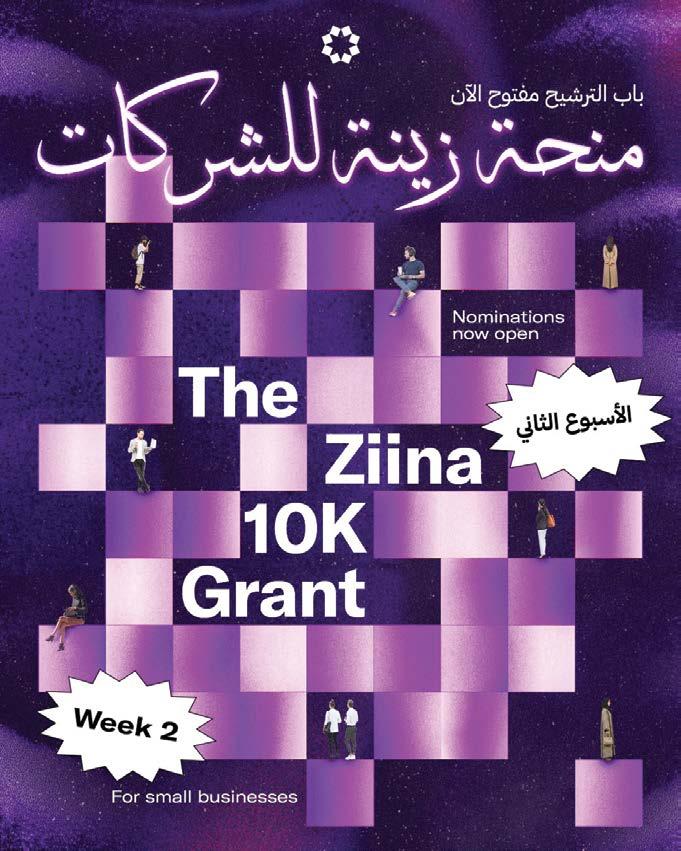
UAE-based fintech platform Ziina has extended its AED10,000 Small Business Grant initiative into May, following strong community response to the program’s initial rollout in April.
Launched to address immediate liquidity needs among SMEs, the initiative awards AED10,000 each week to a UAE-based small business nominated by the public. Originally planned as a fourweek program, it has now been extended as nominations surged, reflecting both strong engagement and the demand for targeted financial support.
The grant is awarded based on a combination of community backing, business need, and the strength of each nominee’s story—offering a more targeted approach compared to random selection. Under the extended program, one business will continue to receive the weekly grant every Monday.
Ziina said the initiative is designed not only to provide financial relief, but also to spotlight the role small busi-
TARGETED SUPPORT
ZIINA
LAUNCHES WEEKLY
AED10,000
GRANT TO SUPPORT SMES
nesses play within their communities. The company noted that SMEs are often among the first to feel the effects of economic uncertainty, even as they continue to support their customers, employees, and local ecosystems.
By combining direct financial support with communitydriven nominations, the initiative aims to help small businesses sustain operations, maintain visibility, and navigate evolving market conditions.
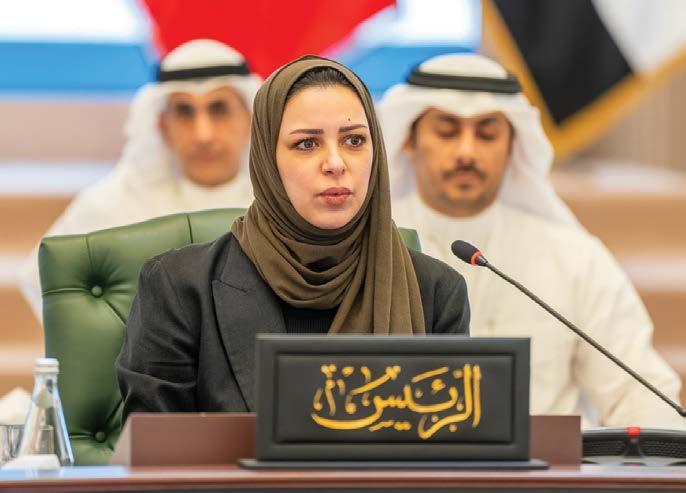
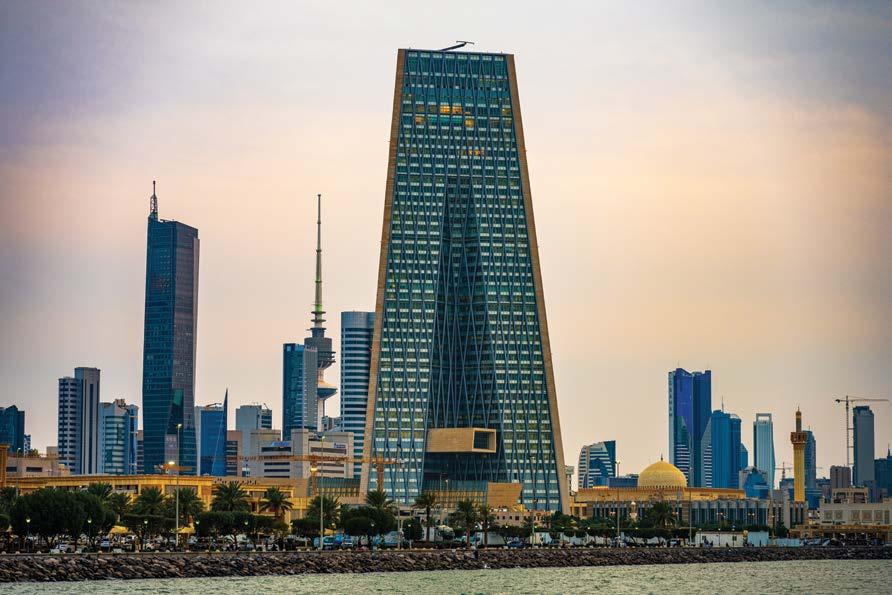
KUWAIT CENTRAL BANK
Kuwait’s central bank has introduced a series of regulatory easing measures for local banks, lowering key liquidity thresholds and expanding lending limits in a pre-emptive move to support economic stability amid ongoing geopolitical tensions in the region.
The measures come as policymakers respond to the potential fallout from the war, with Kuwait considered particularly exposed due to its geographic proximity and vulnerability to disruptions such as a possible closure of the Strait of Hormuz. In this context, the Central Bank of Kuwait has opted to act early, prioritizing preparedness over reaction in the face of uncertain scenarios.
At the core of the package is a broader effort to increase flexibility in how banks manage funding and liquidity, with the aim of easing potential pressures on both financial institutions and their customers. The central bank introduced six key measures, including four focused on liquidity standards, alongside adjustments to lending limits and capital adequacy requirements.
Among the changes, the minimum Liquidity Coverage Ratio has been reduced from 100% to 80 percent, while the Net Stable Funding Ratio has also been lowered from 100% to 80 percent. The regulatory liquidity ratio has been
cut from 18% to 15 percent, and the maximum permissible negative cumulative gap under the liquidity ladder system has been increased.
In parallel, the central bank has raised the maximum available financing limit from 90% to 100 percent, allowing banks greater capacity to extend credit. The capital adequacy ratio has also been reduced from 13% to 12 percent, further expanding operational flexibility within the banking system.
While the Kuwaiti banking sector remains fundamentally strong, the measures are designed as a precautionary step to ensure resilience under more adverse scenarios. The approach reflects a broader shift among regional policymak-
ers toward proactive intervention, even if the most severe risks do not materialize.
In Kuwait, fiscal pressures are also in focus. Oil revenues for the 2025/2026 fiscal year are estimated at KD13.71 billion, below earlier projections, while total revenues are expected to reach KD16.64 billion against expenditures of KD24.54 billion—pointing to a potential budget deficit of KD7.9 billion, subject to final accounts. Against this backdrop, the central bank’s decision to expand liquidity and lending flexibility underscores a cautious but proactive approach, aimed at maintaining financial stability while equipping banks to navigate a rapidly evolving economic landscape.
SME FUNDING
QASHIO
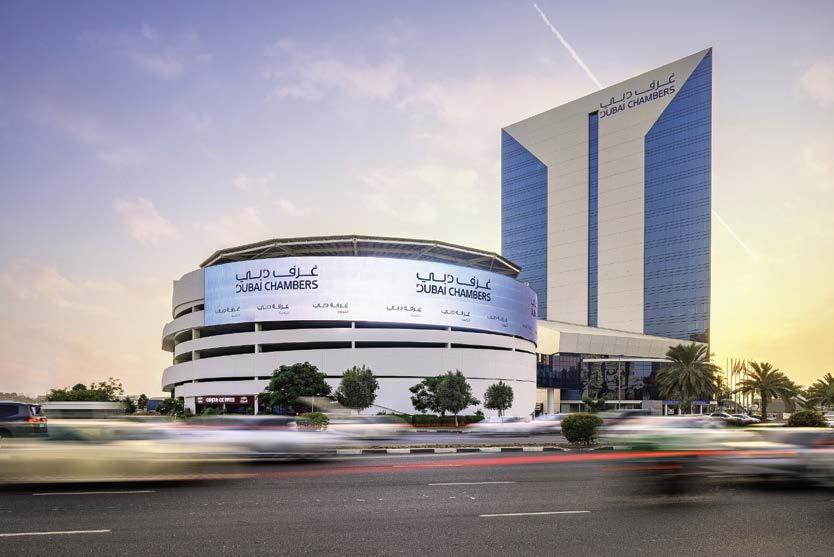
PARTNERS WITH DUBAI CHAMBERS TO LAUNCH
AED10 MILLION SME INITIATIVE
Dubai-based spend management platform Qashio has partnered with Dubai Chambers to launch “Qashio For You,” a targeted initiative aimed at supporting small and medium-sized enterprises (SMEs) across the emirate amid ongoing economic pressures.
Running until the end of June
2026, the program will deliver more than AED10 million (US$2.7 million) in financial relief and welcome bonuses to eligible Dubai-based businesses. Positioned as a communityfocused effort, the initiative is designed to ease operational and financial pressures by offering SMEs immediate, practical support.
Under the program, participating businesses can access Qashio’s platform with no setup fees and benefit from deferred payment options to help manage short-term cash flow challenges. Depending on the plan selected, SMEs may also receive up to 75,000 Qashio points, which can be converted into Emirates Skywards Miles or Jumeirah ONE points, or redeemed as uncapped cashback to provide added financial flexibility.
In addition to financial incentives, the initiative includes a series of educational webinars focused on financial resilience, cost control, and cash flow management, alongside efforts to foster a broader business community through knowledge sharing and engagement.
“In challenging market conditions, access to liquidity, control, and tangible rewards while managing cashback can make a measurable difference to how businesses operate and come out on the other side of this resiliently and stronger,” Armin Moradi, Founder and CEO of Qashio, said. “‘Qashio For You’ is a reflection of our commitment to the Dubai business community — not just as a service provider, but as a partner invested in their long-term success.”
→ Armin Moradi is the founder and CEO of Qashio
EDUCATION BOOST
INDIAN SCHOOL BAHRAIN
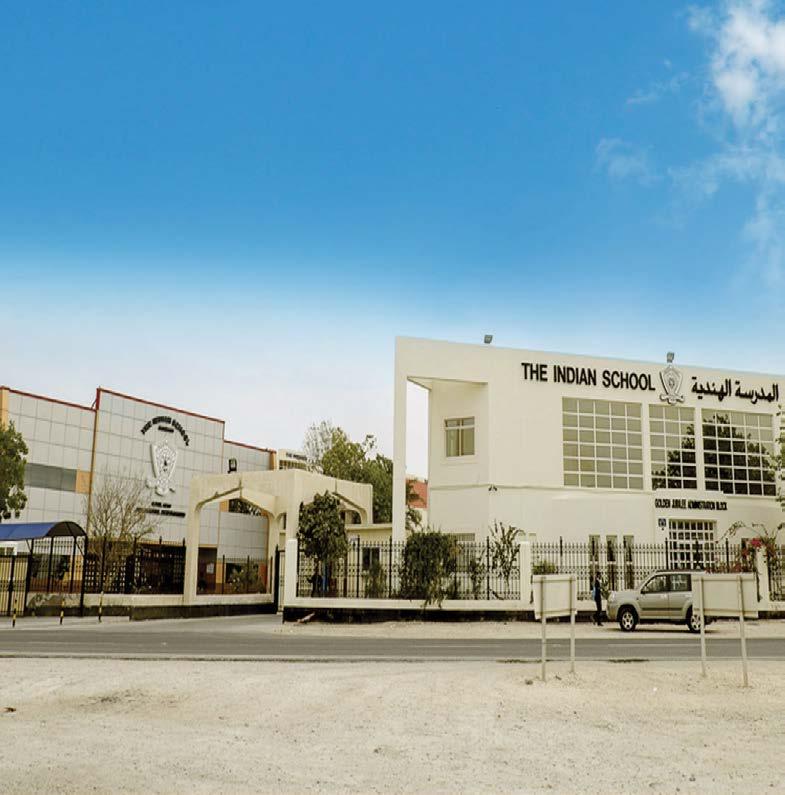
The Indian School Bahrain (ISB) has launched a BD400,000 Smart Classroom project across its Isa Town and Riffa campuses, while also announcing the deferral of April transport fees in a move aimed at easing financial pressure on parents amid ongoing regional uncertainty.
The initiative, implemented in collaboration with Zain Business, is set to enhance learning outcomes for approximately 11,500 students. A total of 350 classrooms—225 in Isa Town and 125 in Riffa—have been equipped with advanced digital infrastructure, including 86inch 4K interactive displays with multi-touch capabilities, alongside upgraded libraries and laboratories. The school has also introduced smart surveillance systems across campuses to further strengthen student safety.
School authorities said the project reflects a broader push toward integrating technology into education, while ensuring continuity under evolving conditions. Drawing on lessons from the pandemic, the institution noted it remains prepared to maintain uninterrupted learning, with student and staff safety continuing to be a key priority.
In parallel, ISB announced that it would defer the collection of transport fees for April, offering immediate financial relief to families. The school clarified that transport services operate under a 10-month contract structure, renewed from September 2025 to June 2029, and that existing financial frameworks remain in place despite the temporary deferral.
COST RELIEF
EMIRATES NBD
CUTS BANKING FEES, EXTENDS DISCOUNTS FOR SMES
Dubai-based banking group Emirates NBD launched a Business Support Package offering temporary fee relief to SMEs to help them manage day-to-day operations amid regional conflict.
The package includes waivers for loan deferment fees, international courier charges for business card deliveries, cheque return fees due to unforeseen cash flow interruption, and business debit card replacement fees over the next few months.
Cash withdrawals at ATMs across the UAE and GCC will also be free, and charges for letters of credit and guarantees are discounted by 30%. The bank is also offering a 40% discount on cash management services.
“Emirates NBD is pleased to introduce the Business Support Package, reinforcing our commitment to SMEs by offering greater flexibility at a time when it matters most,” said Hamad Mohamed Zayed, group head of business banking at Emirates NBD. “Through the package, we aim to build confidence and provide meaningful support as the UAE continues to consolidate its position as a globally competitive economy.”
→ Hamad Mohamed Zayed is the Group Head of business banking at Emirates NBD
CREATIVE BACKING
ALSERKAL AVENUE
LAUNCHES BLANK SPACE TO SUPPORT EMERGING ARTISTS
Alserkal Avenue launched “Blank Space,” a new initiative aimed at supporting UAE-based creative practitioners and collectives by providing access to temporary space, resources, and visibility during a period of uncertainty for the sector.
The program, designed to support up to three collectives living and working in the UAE, offers free warehouse space for four weeks, along with utilities, essential materials, and marketing support. The initiative also encourages collaboration and dialogue across disciplines, enabling participants to develop their work while engaging with peers and wider audiences.
Positioned as a response to the pressures facing emerging creatives, Blank Space aims to remove one of the most significant barriers to creative production: the cost of physical space. By embedding participants within Alserkal Avenue’s established creative ecosystem, the initiative aimed to provide both infrastructure and exposure, while fostering community-led growth.
“Blank Space came about as a response to the pressures that emerging creatives in the UAE are experiencing,” Basmah El Bittar, Director of Alserkal Avenue, explained. “The initiative is designed to encourage creative practitioners from different disciplines to come together and benefit from being part of an established creative infrastructure without the financial pressure of a physical space.”
Applications for the program had been open until April 10, with collectives invited to submit propos-
als outlining their members, practices, and project concepts, as well as a four-week activation plan.
Selected participants were also expected to include a public-facing element, such as a showcase, performance, screening, or open studio, ensuring broader community engagement.
Alserkal Avenue, which has a longstanding track record of supporting artists during challenging periods through access to warehouse spaces, positioned Blank Space as an extension of its ongoing commitment to nurturing emerging voices across design, craft, music, and visual arts.
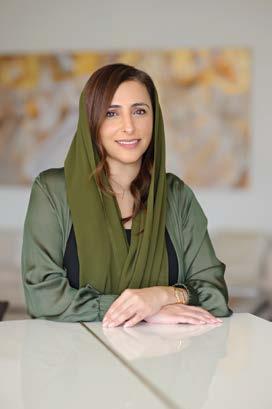
→ Basmah El Bittar is the Director of Alserkal Avenue
CONNECTIVITY BOOST
UNVEILS SME-FOCUSED CONNECTIVITY PLAN
UAE-based telecom giant du has launched a business continuity initiative aimed at supporting small and medium enterprises (SMEs) and startups across the UAE, as part of wider efforts to help businesses navigate an increasingly challenging operating environment.
The program is built around three core pillars: enhanced connectivity support with exclusive offers, upgraded mobile plans and tailored bundles, and the upcoming rollout of new, innovative services. Together, these measures have been designed to ensure uninterrupted operations for businesses, while enabling them to scale efficiently in a fast-evolving market.
At its core, the initiative addresses one of the most critical needs for SMEs—reliable connectivity. By strengthening its business offerings, du is positioning itself as a long-term partner for companies at different stages of growth, from early-stage startups to more established enterprises looking to expand.
The upgraded mobile plans and customized bundles aim to improve productivity and provide greater flexibility, allowing businesses to adapt their connectivity solutions based on operational demands. Meanwhile, the introduction of new services, which are expected to roll out in the coming months, signals du’s broader push to move beyond traditional telecom offerings and deliver more integrated, future-facing solutions for the SME segment.
Fahad Al Hassawi, CEO of du, said the initiative reflects the brand’s commitment to supporting businesses beyond basic service provision. “At du, we believe that every business deserves a partner who understands that their success is built on staying connected,” Al Hassawi added. “We are here to ensure that businesses can focus on growth and innovation while we take care of keeping them seamlessly connected.”
Available immediately to SMEs and startups across the UAE, the initiative underscores du’s strategic focus on expanding its presence in the enterprise segment, while responding to the evolving needs of the country’s growing business community.
As demand grows for more sophisticated, integrated connectivity solutions, initiatives like this are expected to play a key role in supporting operational continuity and longterm business resilience.
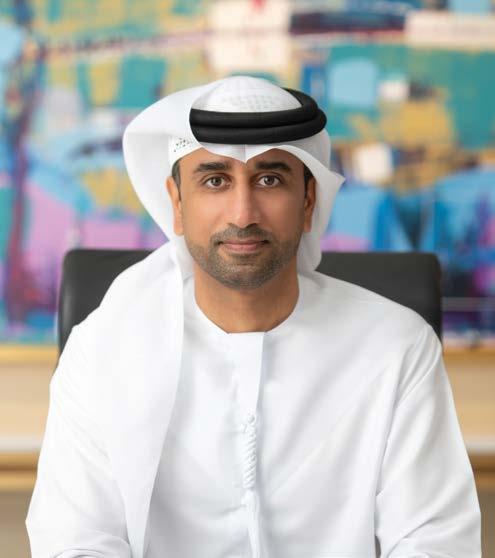
↑ Fahad Al Hassawi is the CEO of du
BINANCE
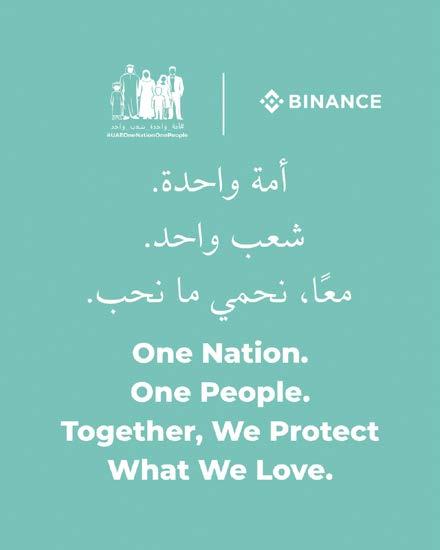
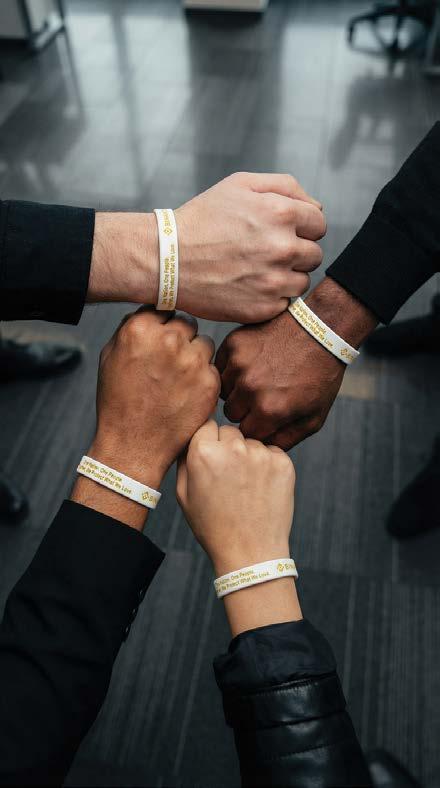
Binance, the global blockchain ecosystem behind the world’s largest cryptocurrency exchange by trading volume and registered users, has announced its participation in the UAE’s national civic initiative, “One Nation. One People. Together, We Protect What We Love.” in partnership with the Design Commission Abu Dhabi (DCAD).
The move reflects Binance’s continued commitment to the UAE and its support for national efforts that promote unity, stability, and shared responsibility. Marking the Year of Family, the initiative brings together entities from across government, business, education, and the wider community in a collective civic effort. It aims to strengthen solidarity between citizens and residents while promoting the UAE’s core values of unity, cooperation, responsibility, and social cohesion through nationwide and community-led engagement.
Binance joins a growing group of leading institutions contributing to the initiative and is currently the only global cryptocurrency exchange participating, reinforcing its position as a long-term partner in the UAE. As part of its involvement, the company is supporting the initiative through active engagement, including contributions to DCAD’s residency focused on textile design and innovation, in line with the Commission’s broader goal of advancing design-led innovation, cultural production, and a future-ready creative economy.
“This initiative represents more than a campaign; it is a collective civic expression of unity and shared responsibility,” said Tarik Erk, Head of MENAT and Senior Executive Officer, Abu Dhabi at Binance. “Our partnership with the Design Commission Abu Dhabi is grounded in a common objective to support national efforts that strengthen both the societal fabric and the economic ecosystem; from creative industries to innovationled sectors. The UAE continues to set a global benchmark for how nations can balance progress with strong community values. We are proud to contribute to this vision and to stand alongside partners across the country in supporting initiatives that create meaningful and lasting impact.”
JOINS UAE’S “ONE NATION. ONE PEOPLE.” INITIATIVE
BUSINESS EASE
DIEZ
ROLLS OUT COST RELIEF, FLEXIBILITY FOR DUBAI FIRMS
The Dubai Integrated Economic Zones Authority (DIEZ) has rolled out a set of economic support measures aimed at strengthening business resilience and easing operational pressures for companies across its three major zones: Dubai Airport Freezone (DAFZ), Dubai Silicon Oasis (DSO), and Dubai CommerCity.
Introduced in response to current regional conditions, the measures are designed to enhance flexibility, support business continuity, and enable companies to navigate uncertainty while maintaining growth momentum.
At the core of the package are steps to reduce immediate cost burdens. These include the stabilization of rental rates upon contract renewal, as well as the waiver of selected administrative fees such as late licence renewal penalties. Companies are also being offered the option to pay rent in monthly installments, with all related instalment fees
waived, to support liquidity and cash flow management.
In addition, DIEZ has introduced a three-month deferral of shareholder amendment fees, alongside waivers for company restructuring and authorised capital amendment fees. A similar three-month deferral applies to licence activity amendment fees, giving businesses greater flexibility to adapt operations, restructure, or expand in response to evolving market conditions.
“The measures reflect DIEZ’s firm commitment to Dubai’s longstanding approach to supporting the business community and enhancing its stability by providing flexible solutions that respond to the current regional situation and ensure business continuity,” Dr. Mohammed Al Zarooni, Executive Chairman of DIEZ, said. “ It also reflects its ongoing efforts to realise the leadership’s vision through practical initiatives that enable companies to navigate challenges with confidence and resilience.
→
Dr. Mohammed Al Zarooni is the Executive Chairman of DIEZ
Support /
MARKET SUPPORT
DFSA, DIFC
ANNOUNCE TEMPORARY MEASURES TO AID FINANCIAL FIRMS IN DUBAI
The Dubai Financial Services Authority (DFSA) has introduced temporary regulatory relief measures to support new firms seeking authorization and existing regulated firms in the Dubai International Financial Centre (DIFC).
The DFSA said the measures aim to help firms manage operational challenges while continuing to serve clients and maintain regulatory standards during challenging times.
“DIFC firms have demonstrated great resilience and financial strength during this exceptional period,” said Mark Steward, Chief Executive of the DFSA. “The DFSA wishes to provide assistance to firms, on request, as a bridge to the resumption of normal trading and has developed a framework to provide temporary regulatory flexibility across a range of areas for those seeking DFSA authorisation and for existing authorised firms.”
The relief measures include temporary flexibility in authorization, licensing and administrative requirements, adjustments to governance and staffing arrangements as remote work continues, and extended timelines for regulatory reporting and supervisory processes.
Selected regulatory initiatives may also be postponed, provided it would not affect regulatory outcomes. The measures will be ap-
plied on a risk-based, proportionate and time-limited basis, depending on the nature and complexity of each firm. The regulator emphasized that regulatory standards and supervisory expectations remain unchanged and said it would continue to monitor financial and operational conditions across the DIFC.
In a separate move, DIFC has also introduced temporary economic support measures for its business and retail community, effective immediately.
The measures include flexible payment plans for retail and commercial sectors, installment plans for license renewal fees, and additional support for retailers. Grace periods will also be provided for selected administrative payments related to lease contracts, the Registrar of Companies, the Data Protection Department, and employee registration under DEWS.
CULINARY SHOWCASE
SPINNEYS
LAUNCHES IN-STORE ‘CHEF’S COUNTER’ TO SPOTLIGHT HOMEGROWN CULINARY TALENT
Spinneys, the regional supermarket chain, has launched a new in-store community platform, The Chef’s Counter, showcasing dishes from homegrown chefs and culinary entrepreneurs across the UAE.
The Chef’s Counter opened on April 15, featuring chef Kelvin Cheung of fine-dining restaurant Jun’s Dubai, offering a limited selection of menu items at select Spinneys locations. The opening selection includes a kimchi crunch salad, a Notorious Sandwich, and Cheung’s signature cookies.
The initiative is intended to support independent restaurants and local entrepreneurs facing financial pressures, by giving them access to Spinneys’ customer base and retail footprint.
“The Chef’s Counter is about conversation, connection and celebrating the individuals who make the UAE’s food scene so dynamic,” said Warwick Gird, General Manager –Marketing & E-commerce, Spinneys. “At a time when many independent operators are under real pressure, we see a responsibility to use our platform to support them.”
The Chef’s Counter will feature a rotating lineup of chefs and food founders each week, giving customers continued access to the region’s independent dining scene.
VISIBILITY BOOST DUBAI CREATIVE COMPANY
THINKSMART HUB
SUPPORTS LOCAL BUSINESSES WITH FREE PROMOTIONAL REELS
The ThinkSmart Hub, a Dubai-based production company, is rolling out a community-focused initiative aimed at giving local businesses free video exposure through short-form content.
Based in the Al Quoz area, the creative content hub is offering complimentary promotional video reels to selected UAE-based businesses amid ongoing economic pressures.
Businesses are invited to submit their profiles via the company’s social media page for a chance to be featured.
According to the company, more than 100 brands have expressed interest since the campaign opened.
The first batch of productions began last week, with around 15 businesses selected for filming, while additional shoots are scheduled to continue throughout the week.
MEDIA AID
DUBAI CONTENT START-UP
SOCIABL
OFFERS UAE BUSINESSES WITH FREE PROFESSIONAL VIDEO AMID ECONOMIC CHALLENGES
Dubai-based content marketing and social media start-up
Sociabl has launched True Stories, a campaign offering a free, professionally produced video to businesses or community initiatives across the UAE amid regional economic challenges.
The initiative aims to help organizations with a story to tell stay connected to their communities, particularly those that may lack the time, budget, or resources to showcase their work.
“With Sociabl True Stories, we simply want to put our craft in service of someone else,” said Kerry Reid, CEO and Co-Founder, Sociabl. “Whilst we are a start-up, we feel incredibly blessed to be in a position so early on in our own story, to be able to do this. We love what we do, we believe deeply in the power of story, and we want to use that well.”
Rather than reducing staff amid market uncertainty, Sociabl is using its team’s skills and creativity to give back and support the wider community. The team will produce the video using existing resources, drawing on its experience helping brands craft meaningful narratives across the GCC.
Nominations and submissions are open across Dubai and the UAE until April 21, 2026. Businesses and community initiatives can submit their stories directly via Sociabl’s website, Instagram, LinkedIn, or by tagging #SociablTrueStories.
LIQUIDITY SUPPORT
BAHRAIN
ROLLS OUT LOAN DEFERRALS, BHD7 BILLION LIQUIDITY
The Kingdom of Bahrain has rolled out a broad package of loan deferrals and liquidity support measures aimed at easing financial pressures on households and businesses, while safeguarding stability across the banking sector amid ongoing economic strain.
Announced by the Central Bank of Bahrain (CBB) under directives from His Royal Highness Prince Salman bin Hamad Al Khalifa, Crown Prince and Prime Minister, the initiative allows retail banks and financing companies to offer customers the option to defer loan installments and credit card payments— including both principal and interest—for up to three months.
The relief applies to both individuals and corporations, providing temporary breathing space as cash flow pressures persist.
Banks have also been granted flexibility in how they classify affected loans during the deferral period, helping to prevent an immediate increase in non-performing exposures. With Bahrain’s total domestic loan book estimated at BHD11.3 billion, the program is expected to have a widereaching impact across the economy.
Alongside repayment relief, the CBB has introduced a series of liquidity measures to ensure continued credit flow. Retail banks will have access to unlimited Bahraini dinar liquidity for six months against eligible collateral, currently valued at around BHD7.0 billion. The repo facility has also been extended to three months, giving lenders greater flexibility in managing short-term funding needs.
In addition, reserve requirements have been reduced from 5.0% to 3.5%, while key liquidity ratios—including the Liquidity Coverage Ratio (LCR) and Net Stable Funding Ratio (NSFR)—have been lowered from 100% to 80%, releasing additional funds into the economy.
Everybody sits.
Sit your best.
ODE TO BAG END
Limited Edition
Make ever y epic writing journey a cosy one. Hobbiton handcraft from the makers of the world’s most magical pens
Crisis, Done Right: A Guide for UAE Employers
How employers can manage uncertainty while staying compliant with UAE labor law and safeguarding their workforce. by
TAMARA PUPIC
‘T/Crisis
Since the escalation of Iran-linked attacks on the UAE on February 28, 2026, elements of the UAE labor market have begun to mirror COVID-era responses, with companies revisiting layoffs, hiring freezes, and salary adjustments.
But unlike during the COVID-19 pandemic,no emergency framework has been introduced in the UAE and employers should not assume they can replicate COVID-era actions without
legal risk, says Sonya Ravic Vuckovic, founder of LOFI. ae, a digital compliance platform for UAE SMEs. “As of today, there has been no formal or official declaration by the UAE authorities placing the economy or the labor market in a legally recognized state of emergency, crisis, or war comparable to the framework that was introduced during COVID-19 under Ministerial Resolution No 279 of 2020.
That distinction is legally significant,” Ravic Vuckovic
adds.
She explains that, during COVID-19 , the UAE government adopted a proactive and highly structured regulatory response which expressly allowed temporary adjustments to employment relationships, including flexibility around salary reductions, leave arrangements, and workforce restructuring. “Those measures were exceptional in nature and were supported by a clear legal instrument that provided employers with
a defined framework within which to operate,” Ravic Vuckovic adds.
“In contrast, the current situation, despite being influenced by regional geopolitical tensions and conflict, has not triggered a similar formal legal response.
“There is no equivalent ministerial resolution or federal decree currently in force that would permit employers to unilaterally implement emergency measures such as salary reductions or mandatory unpaid leave outside the standard legal framework. As a result, the default position under UAE Labor Law, as well as under Abu Dhabi Global Market (ADGM) and Dubai International Financial Centre (DIFC) employment regulations, continues to apply in full.
“This means that any deviations from agreed employment terms still require employee consent, and employers must remain compliant with standard rules governing termination, deductions, and contractual amendments. From a strictly legal standpoint, the system is operating under normal conditions, even if the broader economic and geopolitical environment is more complex.”
However, Ravic Vuckovic points out that the absence of a formal declaration of a state of emergency or a single comprehensive legal framework does not mean that the authorities are inactive or unresponsive. “On the contrary, the UAE government retains full capacity to act through a series of targeted and incremental measures aimed
→ Sonya Ravic Vuckovic is the founder of LOFI.ae, a digital compliance platform for UAE SMEs.
AS OF TODAY, THERE HAS BEEN NO FORMAL OR OFFICIAL DECLARATION BY THE UAE AUTHORITIES PLACING THE ECONOMY OR THE LABOR MARKET IN A LEGALLY RECOGNIZED STATE OF EMERGENCY, CRISIS, OR WAR COMPARABLE TO THE FRAMEWORK THAT WAS INTRODUCED DURING COVID-19 UNDER MINISTERIAL RESOLUTION NO 279 OF 2020. THAT DISTINCTION IS LEGALLY SIGNIFICANT.”
at regulating, easing, and stabilizing the current situation,” she says.
“Rather than introducing one overarching instrument, the approach being taken reflects a more flexible and adaptive regulatory strategy. This allows the government to respond to specific challenges as they arise, whether in the areas of employment, immigration, or business operations, without imposing broad measures that may not be necessary across all sectors.”
One early and practical example of this responsive approach, Ravic Vuckovic adds, can be seen in the area of immigration and residency. The UAE has introduced a temporary grace period in March 2026 addressing individuals whose residency status was affected by travel disruptions linked to the current regional situation. Specifically, residents whose visas expired on or after February 28, 2026, while they were outside the country are permitted to return to the UAE without obtaining a new entry permit until March 31, 2026, and without incurring overstay fines.
“While this measure does not directly regulate employment relationships, it is highly relevant from a labor market perspective,” she says. “It reflects a clear policy intent to preserve workforce continuity, support employee mobility, and reduce administrative and financial burdens on both employers and employees during a period of uncertainty. It also signals that the government is willing to introduce targeted, practical solutions even in the absence of a broader emergency declaration.”
But the reality on the ground is different. As the UAE market increasingly voices that companies are revisiting layoffs, hiring freezes, and salary Voice AI to cut costs as revenues come under pressure from the crisis, we examine whether these measures are compliant with UAE labor laws (unless and until new regulations are formally introduced) or risk exposing firms to regulatory and legal challenges.
“In normal circumstances under UAE Labor Law employers are not permitted to unilaterally reduce an employee’s
salary or impose deductions outside of those expressly allowed by law,” Ravic Vuckovic says. “Permissible deductions are limited and clearly defined, for example disciplinary fines within statutory limits or recovery of specific amounts such as advances or loans, and even these must follow due process.
“Any broader salary reduction requires the explicit consent of the employee and must typically be documented through an amendment to the employment contract.
“Similarly, layoffs must follow formal termination procedures including notice periods and, where applicable, end of service benefits. Arbitrary or unjustified termination may expose the employer to claims for compensation.”
Ravic Vuckovic points out that, even without employee consent, employers do retain certain managerial prerogatives. “Notably, they can require employees to work remotely and can direct them to take accrued annual leave,” she says. “In practice, we are already seeing these measures being widely implemented as a first line
‘T/Crisis
response to uncertainty. These steps allow companies to manage operational costs and business continuity without immediately resorting to more drastic contractual changes.
However, Ravic Vuckovic highlights that when it comes to measures such as unpaid leave, reduction of working hours, or temporary or permanent salary reductions, the legal position becomes much stricter. “These changes fundamentally alter the terms of employment and therefore require the clear and informed consent of the employee,” she reiterates. “In the absence of such consent, imposing these measures unilaterally would likely be considered a breach of contract and could give rise to legal claims.
Ravic Vuckovic adds that it is important to emphasize a fundamental principle of UAE employment law. “The law always operates on a dual
foundation,” she says. “On one hand, it is designed to protect employees and safeguard their rights, particularly in relation to remuneration, working conditions, and termination. On the other hand, it consistently preserves the employer’s right to organize and manage its business in a manner that aligns with its operational needs and commercial objectives. This balance is intentional and forms the core of the employment relationship framework in the UAE.
“In the current environment, there are no special or ‘emergency’ measures being applied. Instead, what we are seeing is the application of standard, or regular, legal mechanisms that exist within the law and are used more frequently due to the prevailing economic and geopolitical conditions.”
However, she points out, when it comes to measures that directly affect
the core terms of employment (reductions in working hours, unpaid leave, temporary or permanent salary reductions, or any other measures that materially alter the employment contract), employee consent is a strict legal requirement.
In practice, Ravic Vuckovic explains that for such measures to be legally valid and defensible, the employer must meet several key conditions.
“First, the employer must provide clear, objective, and substantiated reasons for the proposed changes. These reasons should not be generic or vague. They should be supported by measurable data, financial considerations, operational requirements, or other demonstrable business justifications.
“Second, the employer must define clear timelines. Any proposed measure must be time bound, with a defined start and end date, or at minimum a clearly articulated review mechanism. Indefinite or open ended measures are significantly more difficult to justify and are more likely to be challenged.
“Third, the employer must ensure transparency in communication. This means presenting the situation to the employee in a clear and structured manner, explaining both the rationale and the expected impact of the proposed measures. Importantly, the employee must be given adequate time and opportunity to review the proposal, seek clarification, and provide an informed response.”
“Only where these elements are satisfied and the employee provides their explicit consent can such measures be implemented lawfully. Without consent, implementing these changes would expose the employer to legal risk, including potential claims for breach of contract or unlawful variation of employment terms.”
Ravic Vuckovic says that employees are entitled to object to, and seek clarification or redress for, any unilateral changes to the fundamental terms of their employment.
The first and most practical avenue for recourse, Ravic Vuckovic explains, is
internal escalation.
Employees are encouraged to raise concerns directly with their employer, typically through HR or management channels.
If internal resolution is not achieved, employees have the right to escalate the matter to the relevant regulatory authority. “In the mainland UAE, this would involve filing a complaint with the Ministry of Human Resources and Emiratization,” she says. “In ADGM and DIFC, employees can submit complaints through the respective employment regulatory bodies or dispute resolution mechanisms applicable within those jurisdictions. These institutions are empowered to review the facts, assess compliance with the law, and facilitate resolution.”
Ravic Vuckovic explains that the key feature of the UAE legal system is its strong emphasis on mediation and conciliation. Before any matter proceeds to formal litigation, the parties are typically encouraged, and often required, to attempt to reach an amicable settlement. This process is designed to be efficient and to minimize both time and cost for all parties involved. It also reflects the broader policy objective of preserving employment relationships where possible.
“If no resolution can be reached through these mechanisms, the employee retains the right to pursue formal legal proceedings,” she adds. “Depending on
the jurisdiction, this may involve the UAE courts or the specialized courts of ADGM or DIFC. At this stage, the dispute becomes a formal legal case, and both parties are required to present evidence supporting their position. The outcome will depend on the factual circumstances, the documentation available, and whether the employer complied with the legal requirements, including obtaining consent where necessary and providing sufficient justification for any changes implemented.
“Employees may seek various forms of relief, including unpaid wages, compensation for unlawful termination, end of service benefits, or damages arising from breach of contract. The strength of such claims often depends on whether the employer followed proper legal procedures, provided clear and substantiated reasons for any changes, and ensured that the employee was given an opportunity to respond and provide consent where required.”
IN NORMAL CIRCUMSTANCES UNDER UAE LABOR LAW EMPLOYERS ARE NOT PERMITTED TO UNILATERALLY REDUCE AN EMPLOYEE’S SALARY OR IMPOSE DEDUCTIONS OUTSIDE OF THOSE EXPRESSLY ALLOWED BY LAW.
Ravic Vuckovic notes that the UAE Labor Lawdoes not operate in isolation from organizational processes and internal governance. “In many cases, the outcome of a dispute is significantly influenced by how well the issue was managed internally before escalating to external forums. Proper documentation, transparent communication, and adherence to procedure are often decisive factors in determining the legal standing of either party,” she says.
“From my professional perspective, based on experience, it is absolutely
critical that conflicts are resolved within the organization whenever possible. Once a dispute leaves the internal environment and enters external forums, both parties begin to incur additional costs, not only financial but also reputational and emotional. For the company, this can result in reputational exposure, while for the employee it often introduces a high level of stress and uncertainty.
“It is also essential to distinguish between personal perceptions of fairness and the objective legal framework. While an individual may feel
that a situation is unjust, the legal assessment will always be based on verifiable facts, contractual terms, and applicable regulations. The law will protect the employee where there is a clear legal basis to do so, but the outcome of any dispute is ultimately determined by evidence and legal merit rather than perception alone.
“In many situations, the balance of information and institutional knowledge tends to favor the employer, particularly when policies, procedures, and documentation are well established. However, this advantage does not override the legal protections afforded to employees. Rather, it underscores the importance of both parties understanding their rights and obligations and engaging constructively within the framework provided.”
Importantly, many UAE employers are ensuring business continuity in times of crisis responsibly, meaning they do not shift the burden onto employees in a way that breaches labor law, but instead adopt alternative measures that allow them to remain fully compliant with applicable regulations.
LOFI.ae founder Sonya Ravic Vuckovic explains that these include the following:
INTERNAL OPTIMIZATION
Employers in the UAE are permitted to the lawful use of workforce optimization within existing contractual boundaries. This includes leveraging existing contractual flexibility, such as adjusting work allocation,
ANY BROADER SALARY REDUCTION REQUIRES THE EXPLICIT CONSENT OF THE EMPLOYEE AND MUST TYPICALLY BE DOCUMENTED THROUGH AN AMENDMENT TO THE EMPLOYMENT CONTRACT.
redistributing tasks within teams, and optimizing internal processes.
Employers can often achieve meaningful cost efficiencies through better resource utilization without altering the fundamental terms of employment.
REMOTE WORK ARRANGEMENTS
Employers in the UAE are permitted to direct employees to work remotely, provided that they also ensure the employee is equipped with the necessary tools, access, and infrastructure to perform their duties effectively. This is not merely a logistical adjustment but a regulated work arrangement that requires clear policies, defined expectations, and
proper documentation. When implemented correctly, it can significantly reduce operational costs while maintaining productivity.
STRATEGIC USE OF ANNUAL LEAVE
Employers have the right to direct employees to utilize their accrued leave, which can help manage short term operational slowdowns. This is a standard mechanism under UAE labour law and, when used appropriately, allows companies to preserve cash flow without infringing on employee rights.
OPERATIONAL RESTRUCTURING
Another widely used approach is operational restructuring that does not
affect core employment terms. This may include revising internal workflows, consolidating roles where appropriate, introducing efficiency driven changes, or investing in digital tools and automation. These measures are generally within the employer’s managerial discretion, provided they do not result in unilateral changes to salary, working hours, or other fundamental contractual rights.
CONSENSUAL ARRANGEMENTS WITH EMPLOYEES
Consensual arrangements with employees include negotiated temporary changes such as voluntary unpaid leave, adjusted working hours, or temporary salary modifications, provided that these are clearly agreed upon by the employee. The key element here is that any such arrangement must be voluntary, transparent, and properly documented, with clear terms, defined duration, and mutual understanding.
From a broader perspective, one of the most effective strategies is proactive communication and stakeholder engagement. By clearly articulating the company’s position, challenges, and plans, employers can often secure cooperation from employees and create a more collaborative environment. This approach not only helps in implementing necessary adjustments but also strengthens trust and reduces the likelihood of disputes.
People Under Pressure: An HR View of the UAE Workforce Response to Crisis
Fikrah HR Managing Director Sarah Brooks shares frontline insights on how employers and employees are reacting to rising uncertainty following the February 28, 2026, regional escalation.
by TAMARA PUPIC
To assess the impact of the escalation of Iran-linked attacks on February 28, 2026, on the UAE labor market, Entrepreneur Middle East also spoke with Sarah Brooks, founder of UAE-based HR consultancy Fikrah HR to understand the evolving sentiment among business owners and employees. When asked how business owners and employees have been responding to mounting pressure, Brooks sums it up in one word: cautious. “On the one hand, it is buoyant, with plenty of candidates searching for roles, either as recent arrivals to the region, those who were already searching prior to the current situation, or those doing so due to decisions made in response to it. It’s reminiscent of the labor market during and post-COVID-19 .”
She expects that conditions within specific sectors, as well as the maturity and size of individual businesses, will dictate
hiring trends at present and in the near future. “Unfortunately, smaller entities and those in industries with a higher level of impact, for example food and beverage, retail, and hospitalit are not hiring; they are managing their head counts carefully and, in some cases, reducing them where they can,” Brooks says.
“This has led to uncertainty and anxiety among both those in employment, with “will I be next?” thoughts, and those searching, who are concerned about finding a suitable position that can support them.”
With businesses across the UAE increasingly turning to salary cuts and layoffs to preserve continuity, Brooks warns that such measures are often a knee-jerk reaction driven by immediate cash flow concerns. While not entirely unjustified, she points out that these approaches are not the only option, with alternative strategies available that can help companies protect both their operations and their people.
PUT YOURSELF IN THEIR SHOES- WOULD YOU ACCEPT WHAT YOU ARE PROPOSING? HONESTLY, IF THE ANSWER IS ‘NO,’ THEN REVISIT IT. ASK THE TEAM; OFTEN, THEY CAN COME UP WITH SOLUTIONS AND IDEAS THAT THEY WILL SUPPORT.”
“They ought to be reaching out to suppliers, landlords, banks, and so on, and trying to negotiate better terms and payment rates,” Brooks says. “Review products, services, and pricing- what’s selling and what’s not? Where are the biggest profit margins, and can those product or service sales be increased? Is there anything not creating genuine value in the business? What are the mandatory must-haves? “Don’t skimp on the things that will carry you through—marketing, for
example. If you don’t maintain visibility with your customers, you will have to start from scratch again.
“Review your payments and subscriptions—can they be revised, and are they actually needed?
“And finally, have conversations with your team about all of this and more. Keep them in the loop about how the business is genuinely performing at all times, not just in times of need. Celebrate when the business is doing well, and acknowledge when it’s not,
then put action plans in place to improve it.
“Put yourself in their shoes- would you accept what you are proposing? Honestly, if the answer is ‘no,’ then revisit it. Ask the team; often, they can come up with solutions and ideas that they will support.”
As both employers and employees across the UAE have been through a phase of rising stress driven by both workplace pressures and broader safety concerns, Brooks believes the post–February 28 environment could
ultimately push workplace culture toward becoming more consultative, compassionate, and empathetic.
“There is an air of uncertainty and a sense of being in limbo, with many feeling somewhat disengaged,” Brooks explains.
“Many can’t travel due to flight restrictions but would want to, either temporarily or permanently. They are also torn between the reason they moved to the UAE, for a better life and standard of living, even in the current circumstances, and moving home, where they would feel safer but not generate the same level of income and would face significant compromises to their living standards.
“Then there are those who have truly made the UAE home and don’t want to leave but are feeling pressure from family, friends, and colleagues that they should. It’s a very challenging time all around.
“Access to mental health hotlines and government support will go a long way in alleviating some of this. Companies also need to step up and support this internally by providing information and space for people to discuss and review their situation, options, and decisions. Hopefully, the changes
→ Sarah Brooks is the Managing Director at Fikrah HR.
HAVE CONVERSATIONS WITH YOUR TEAM ABOUT ALL OF THIS AND MORE. KEEP THEM IN THE LOOP ABOUT HOW THE BUSINESS IS GENUINELY PERFORMING AT ALL TIMES, NOT JUST IN TIMES OF NEED.
implemented will be long-term and will greatly benefit companies well into the future.”
In the end, Brooks warns that the market risks repeating the same missteps seen during COVID-19— and cautions that this is not a test it can afford to fail twice.
“For many companies, there is little to no financial planning in terms of ensuring annual leave and gratuity accrual provisions are made or safeguarded, not to mention a lack of reasonable cash flow management to ensure they have the capacity to meet employee salary obligations in such circumstances,” she says.
“Additionally, they fail to recognize the benefits of communication and transparency with their employees. If they had taken the time, before such situations, to educate and share business financials, even at a
ACCESS TO MENTAL HEALTH HOTLINES AND GOVERNMENT SUPPORT WILL GO A LONG WAY IN ALLEVIATING SOME OF THIS. COMPANIES ALSO NEED TO STEP UP AND SUPPORT THIS INTERNALLY BY PROVIDING INFORMATION AND SPACE FOR PEOPLE TO DISCUSS AND REVIEW THEIR SITUATION, OPTIONS, AND DECISIONS.
high level, it would have made the current challenges easier to understand and accommodate, and the team would likely be more empathetic and supportive of necessary changes.”
Brooks points to one key lesson to be acted on after this crisis, calling on business owners to adopt stronger financial discipline and more robust forward planning.
“I can’t speak for business owners as to their specific needs; however, I would suggest they require financial support and guidance— both in navigating these challenges ahead of time and in managing them now. This includes structured education on financial management, ensuring buffers are in place to maintain payments, guidance on approaching negotiations, and possibly some form of financial support,” Brooks concludes.
FUN COMES GUAR ANTEED
ANAX Capital Founder Tabinda Sanpal’s Vision for Finance in Dubai
Category
When ANAX Capital founder Tabinda Sanpal set out to bridge the gap between innovation and institutional standards in the financial sector by creating a platform that provides investors with secure access to global markets, one key question emerged: which jurisdiction to choose as its base?
The UK-educated Sanpal began her career as an FX sales executive at Hantec Markets Ltd, an FCA-regulated brokerage firm, where she focused on managing and expanding the company’s foreign exchange client base. “It meant being on the front lines of a fast-paced and highly competitive market. It was a challenging start, particularly as someone with limited experience, often negotiating with professionals who knew the space inside out and had years
ANAX Capital founder and Director Tabinda Sanpal on launching a
A–licensed brokerage firm in the UAE. by TAMARA PUPIC
‘T/Finance
of experience in the field. However, that environment became my greatest training ground.”
Armed with deep industry knowledge and a mindset that accepts no shortcuts to building credibility in finance, she was ready to venture out on her own, but not in the UK.
“Dubai was the natural choice because it has evolved into a global financial hub with a strong regulatory framework, strategic geographic positioning, and access to international markets,” Sanpal says. “When all these factors aligned, I knew the timing was right to bring my vision to life.”
Her decision was grounded in a clear assessment of the UAE’s investment and trading sector, which she sees as continuing to mature under a well-defined regulatory framework, strengthened governance, and growing participation from regional and international investors. “While global markets such as the US and Europe offer greater depth and longerestablished liquidity, the UAE distinguishes itself through regulatory modernization, strategic geographic positioning, and its role as a capital hub connecting the Middle East, Asia, and Europe,” Sanpal says. “The market remains competitive and continues to evolve in line with international best practices.”
Sanpal explains that launching a a Category A–licensed brokerage firm “demands more than ambition”—it requires substantial capital, strong governance, and a long-term commitment to compliance and operational excellence. “My advice to entrepreneurs considering launching a regulated investment and trading firm in the UAE is to take measured and calculated risks,” she says.
“DUBAI WAS THE NATURAL CHOICE BECAUSE IT HAS EVOLVED INTO A GLOBAL FINANCIAL HUB WITH A STRONG REGULATORY FRAMEWORK, STRATEGIC GEOGRAPHIC POSITIONING, AND ACCESS TO INTERNATIONAL MARKETS.”
This approach has defined ANAX Capital’s positioning within the UAE’s competitive financial services landscape. “Our focus has been on building a structured brokerage model that prioritizes compliance, risk management, and responsible client onboarding,” Sanpal says. “We aim to combine institutionalgrade processes with a client-centric service approach. Rather than focusing solely on rapid expansion, we have concentrated on strengthening infrastructure, governance, and service consistency to support sustainable growth.”
Today, ANAX Capital offers a wide range of brokerage, portfolio management, advisory with secure access to global financial markets, including forex, CFDs, OTC products, equities, futures, and options. Backed by a capital base of AED 30 million, it delivers transparent advanced trading technology tailored to both individual and institutional investors. It is licensed and regulated by the UAE Securities and Commodities Authority (SCA) with First Category License, ensuring full compliance with the highest standards of transparency, investor protection, and financial conduct.
Since its launch, ANAX Capital has marked key milestones, including securing regulatory approval, establishing a structured operational framework, and building a stable, growing client base. These achievements, Sanpal says, have enabled the firm to build investor trust in under a year in a sector where credibility typically takes much longer to establish. “Early progress was reflected in client retention levels and increasing referral activity, which we consider important indicators of trust,” she explains. “Establishing credibility within the first year was supported by experienced leadership, transparent communication, adherence to compliance standards, and consistent service delivery. Trust remains a continuous commitment rather than a one-time achievement.”
Sanpal’s career trajectory in finance reflects a broader industry shift, as diversity becomes increasingly embedded across global financial institutions. The latest Gender Balance Index by OMFIF shows women now hold 19% of leadership roles across central and commercial banks, as well as sovereign and pension funds, up from 16% a year earlier. In the UAE, this trend is also gaining momentum, with greater female participation at the leadership level contributing to more diverse perspectives, sharper risk assessment, and stronger long-term strategic decision-making. “Women today bring a level of perseverance and determination that continues to raise the bar across the industry,” Sanpal says. “When different voices are included at the table, decision-making becomes stronger and more balanced.”
She adds, “The next phase of progress should focus on moving beyond visibility toward influence, where women are not only present, but actively shaping the future of the financial industry.”
Looking ahead, Sanpal says ANAX Capital’s strategic priorities include continued investment in technology infrastructure, prudent product diversification in line with regulatory approvals, and the strengthening of institutional relationships. The firm also plans to enhance its risk management systems and expand client education initiatives to remain aligned with evolving regulatory standards and market developments.
“Our objective is sustainable, well-governed growth that contributes positively to the UAE’s broader financial ecosystem,” Sanpal states.
TREP TALK
ANAX Capital founder and Director Tabinda Sanpal on Leading in Finance
} “For entrepreneurs looking to enter the investment and trading sector, my first piece of advice is to understand that success requires discipline and a strong foundation in risk management. Markets are unpredictable, and the ability to manage risk effectively often defines long-term sustainability.
“For women aiming to build leadership roles in financial services, it is essential to seek opportunities to influence decisions and lead by example. Leadership in finance, both specifically and in business more broadly, is about inspiring confidence, driving performance, and creating meaningful impact within your organization. It requires the courage to step into responsibility and make positive change in the environment in which you work.”
/Markets
Echoes of the Past: A Playbook for Today’s Markets
History doesn’t repeat, but it often rhymes. Jonathan Liang explains why the 1990 Gulf crisis offers a vital roadmap for today’s markets. by
JONATHAN LIANG
Tensions had been building. Military assets were being amassed across the Middle East. Despite ongoing diplomatic talks, the US launched a swift air campaign, destroying key air defenses and command-and-control centers. Oil prices surged on the outbreak of hostilities.
While, to most, this would be reminiscent of the ongoing Middle East conflict, I am, of course, referring to Operations Desert Shield and Desert Storm in 1990.
History doesn’t repeat itself, but it often rhymes. There are parallels between 1990 and today that may prove instructive for the economy and markets as we try to gauge the path forward.
First, the US economy. In the run-up to the 1990 Gulf War – roughly from 1987 through March 1990 – growth was solid, with job creation averaging about 200,000 per month. Yet credit availability was starting to tighten, even as household debt-to-income ratios climbed to multi-year highs, particularly among lower-income households. Against this backdrop, the Fed met in March 1990 at one of its regular FOMC meetings. By then, nonfarm payrolls were decelerating and barely positive. Hostilities in the Middle East were underway, and oil prices were expected to push inflation higher. Weighing the risk of higher inflation against a cooling labor market, the Fed chose
to hold rates steady. Oil prices soon spiked –soaring from about US$17 per barrel to nearly US$40. The shock helped tip the US economy into recession, with unemployment rising from around 5% in March 1990 to 7.3% by the end of 1991. Despite the jump in headline inflation, the Fed ultimately ‘looked through’ the supply-driven price
THE PARALLELS BETWEEN THE 1990 GULF WAR AND THE PRESENT-DAY MIDDLE EAST CONFLICT ARE STRIKING AND HARD TO IGNORE.
shock and slashed rates aggressively from late 1990 through 1992. Ten-year Treasury yields tumbled from roughly 9% to 6.6% by the end of 1992. Fast forward to today. Our base case is that the US will avoid recession and achieve a soft landing as the Middle East conflict moves towards some form of resolution in the coming weeks. As in 1990, a brief conflict can produce a transitory, oil-driven inflation bump. We expect the Fed to look through a temporary price spike and refocus on a
decelerating labor market once large-scale hostilities end. Policymakers are likely to stay on hold at least through the first half of the year, but if the US labor market continues to soften, cuts could come into play in the second half.
There is, of course, a meaningful risk that the conflict drags on – we assign a 30% probability to a prolonged confrontation. In that scenario, the Fed may temporarily sound more hawkish to guard against inflation expectations, but eventually, it would likely
need to support a weakening economy as recession risks mount.
The parallels between the 1990 Gulf War and the present-day Middle East conflict are striking and hard to ignore. Ultimately, history remains our best guide for navigating an uncertain future.
Jonathan Liang Chief Investment Officer for Fixed Income and FX, Standard Chartered’s Wealth Solutions Unit
The voice of entrepreneurship around the world
→ Sawsan Shalabi is the Founder of Rafeeq Connect, a UAE-based startup offering companionship service for elderly people
Beyond Home Cares
As loneliness emerges as a growing yet often overlooked challenge of aging in an increasingly modern life, UAE-based startup Rafeeq Connect is rethinking elderly care by offering in-person and virtual companionship services designed to complement family support. by KRISTINE ERIKA AGUSTIN
In the UAE, elders are widely regarded as pillars of the community, valued not only for their role within their families but also for their contributions to society. This respect is reflected in both tradition and practice, with the government supporting senior citizens through a range of initiatives, such as discounted services, free transportation, home care, pensions, and housing assistance.
Aligning with these values, Rafeeq Connect, a UAE-based startup, offers a companionship service for elderly people designed to complement family care through consistent human connection. “Rafeeq Connect is built around the idea that companionship itself has value. It is not medical care and not traditional support services,” says Sawsan Shalabi, founder of Rafeeq Connect. “It is structured, consistent human presence, conversation, shared activities, and emotional connection.”
The platform provides both in-person visits and virtual sessions, with a focus on keeping elderly people socially engaged and addressing what it sees as a frequently overlooked issue: loneliness.
“
A 2025 report by the World Health Organization’s Commission on Social Connection found that one in six people globally experiences loneliness, with serious effects on health and well-being. Beyond emotional strain, the report noted that strong social connections can help reduce inflammation, lower disease risk, and improve overall health outcomes. On the other hand, the study warned that loneliness and social isolation can have serious consequences, increasing the risk of conditions such as stroke, heart disease, and diabetes, while also contributing to cognitive decline. It also highlighted mental health impacts, noting that people who feel lonely are twice as likely to experience anxiety and depression.
RAFEEQ CONNECT IS BUILT AROUND THE IDEA THAT COMPANIONSHIP ITSELF HAS VALUE. IT IS NOT MEDICAL CARE AND NOT TRADITIONAL SUPPORT SERVICES. IT IS STRUCTURED, CONSISTENT HUMAN PRESENCE, CONVERSATION, SHARED ACTIVITIES, AND EMOTIONAL CONNECTION.”
S/Community
“One of the defining realizations for me was understanding how overlooked loneliness is as a challenge of ageing, and really, of modern life in general,” Shalabi explains. “During [the COVID-19 pandemic], this became impossible to ignore. Physical distance made it very clear how essential human connection is to emotional wellbeing, and it was not just older adults who were affected. Loneliness showed up across generations.”
Since 2010, Shalabi had been travelling back and forth to the UAE, but when she finally moved in 2020, her plans quickly coincided with an unexpected global lockdown, just a week later. The pandemic, which significantly reduced face-to-face interactions, coupled with her own separation from her
grandparents, made the issue feel even more immediate and personal. “Physical distance made it very clear how essential human connection is to emotional wellbeing,” she recalls. “And it was not just older adults who were affected. Loneliness showed up across generations.”
Shalabi built her career in corporate roles focused on strategy and systems, while also gaining exposure to humanitarian work which deepened her interest in people-centred initiatives. Over time, this combination shaped how she approached Rafeeq Connect, both as a service and as a business. In February 2026, she eventually stepped away from her full-time corporate role to focus on the startup. “The decision to leave corporate was not impulsive,” Shalabi admits. “It came from a growing sense that I wanted to build something more directly connected to people.”
“The biggest challenge was stepping away from stability into uncertainty, but at the same time, it felt like a very natural transition. I was moving toward something that felt aligned, not away from something,” she adds.
Rafeeq Connect operates on a subscription model, where families sign up for structured companionship sessions. They share the needs and preferences of their elderly loved one, and the platform matches them with a suitable companion.
Trust and safety are central to the service. According to its official website, companions are carefully selected and screened through interviews and orientation processes to ensure professionalism, kindness, and cultural awareness, as sessions are guided by clear boundaries to ensure comfort and reassurance for families. “What makes it different is that it treats companionship as something intentional, not something left to chance,” Shalabi declares.
While some home care providers in the UAE already include companionship within broader services, Rafeeq Connect is trying to carve out its own space by making companionship the core offering, rather than
an add-on. “Our focus is not on tasks, it is on connection. That changes how everything is designed, from how we select companions, to how we match them, to how sessions are structured,” the founder explains.
Instead of a one-size-fits-all approach, Shalabi stresses that Rafeeq Connect gives importance on personalization, pairing elderly clients with companions based on shared interests, personality, and emotional needs. “Every individual is different,” she says. “We tailor the experience based on personality, interests, and emotional needs.”
“Families are not just looking for someone to visit, they are looking for consistency, safety, and reassurance. That is what we aim to provide,” Shalabi states.
But in a region where elderly care is traditionally seen as a family responsibility, will a paid companionship model really work? Compared to Western markets where institutional elderly care is more common, Shalabi believes the UAE’s family-oriented culture makes Rafeeq Connect’s approach more aligned.
“In the UAE, family connection is deeply rooted, which is something I respect and value. Rafeeq is not here to replace family, but to complement it. Many families care deeply, but life
is fast paced, children live abroad, or schedules are demanding. We provide a way to ensure consistent presence,” she clarifies.
At the same time, Shalabi highlights the UAE’s startup ecosystem as a key driver of growth for early-stage founders, pointing to its openness to new ideas, diverse communities, and strong culture of
collaboration. “Being part of communities that connect entrepreneurs to each other has created opportunities that go beyond funding, from partnerships to shared learning,” she says.
Looking ahead, Shalabi says expansion is part of the plan, but it will be gradual and intentional. In the short term, the startup aims to strengthen its companion
“IN THE UAE, FAMILY CONNECTION IS DEEPLY ROOTED, WHICH IS SOMETHING I RESPECT AND VALUE. RAFEEQ IS NOT HERE TO REPLACE FAMILY, BUT TO COMPLEMENT IT. MANY FAMILIES
CARE DEEPLY, BUT LIFE IS FAST PACED, CHILDREN LIVE ABROAD, OR SCHEDULES ARE DEMANDING. WE PROVIDE A WAY TO ENSURE CONSISTENT PRESENCE.”
network and refine its matching process. Further down the line, she sees room to explore new formats of engagement, including group interactions, communitydriven initiatives, and partnerships that embed companionship into broader wellbeing programmes. “I see Rafeeq Connect evolving into a platform that normalizes companionship as an essential part of wellbeing,” Shalabi says. “The goal is not just to serve individuals, but to shift how we think about connection as a society.”
As the UAE continues to accelerate economically, technologically, and socially, Rafeeq Connect is anchoring its approach in something quieter but increasingly rare: time, conversation, and human presence.
In The Loop/ Sheraa Launches AED5 Million Entrepreneurs Resilience Fund
Sharjah Entrepreneurship Center (Sheraa) has launched the Entrepreneurs Resilience Fund to provide fast-tracked financial, operational, and marketing support for Sharjah-based startups and SMEs.
Launched under the directives of Her Highness Sheikha Bodour bint Sultan Al Qasimi, Chairperson of Sheraa, the fund supports businesses in key sectors that play an important role in maintaining economic stability, including manufacturing, food security, and healthcare.
The Fund is aligned with the UAE’s “Proud of UAE” campaign, contributing to broader efforts to support business continuity and economic stability.
Applications are now open, with a fast-tracked evaluation process designed to speed up funding decisions and ensure timely access to support.
The Fund offers equity-free, non-repayable grants, alongside support programs and market visibility opportunities. Sheraa aims to mobilize up to AED5 million with the support of its strategic partners across government and private sector entities. The Fund is designed to support established businesses facing current challenges, helping them maintain operations and move forward with confidence. Startups and SMEs can apply via https:// sheraa.ae/erf
The initiative is delivered through a collaborative model, bringing together strategic partners to support Sharjah’s entrepreneurial ecosystem through a shared commitment to its continued growth. The Fund focuses on supporting viable businesses that contribute to long-term economic resilience and stability. The fund is supported by Beeah Group, CE- Ventures, National Paints, Al Midfa Investments Group, Sharjah Investment and Development Authority (Shurooq), Careem, RAK BANK, Floward, Alaan, Sharjah Research Technology and Innovation Park (SPARK), Sharjah Broadcasting Authority, Sharjah Roads & Transport Authority, Sharjah Majid Al Futtaim, Emirates Petroleum Company P.J.S.C, Publicis Groupe, Entrepreneur Middle East, Inc. Arabia, and Paymob.