Contact subscriptions@bncpublishing.net to receive Entrepreneur Middle East every issue
COMMERCIAL ENQUIRIES sales@bncpublishing.net
ENTREPRENEUR.COM
Access fresh content daily on our website
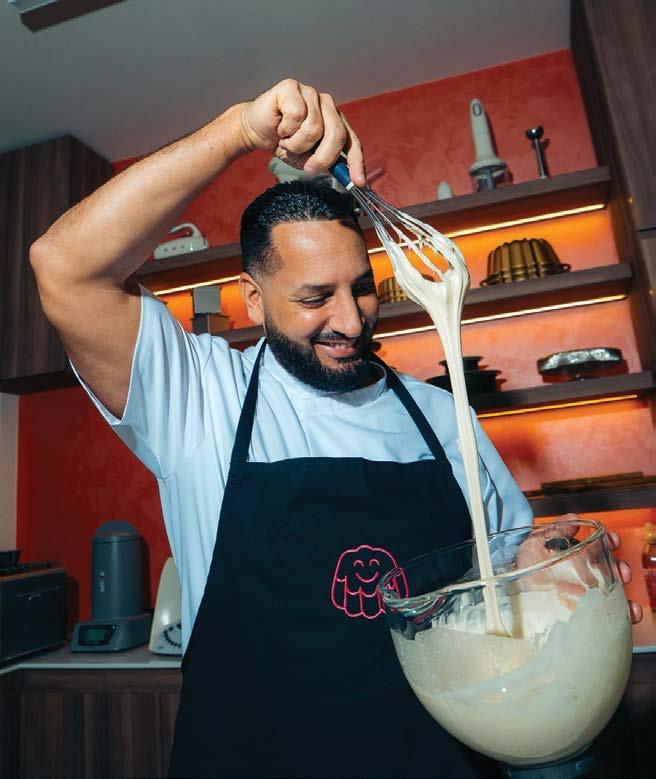
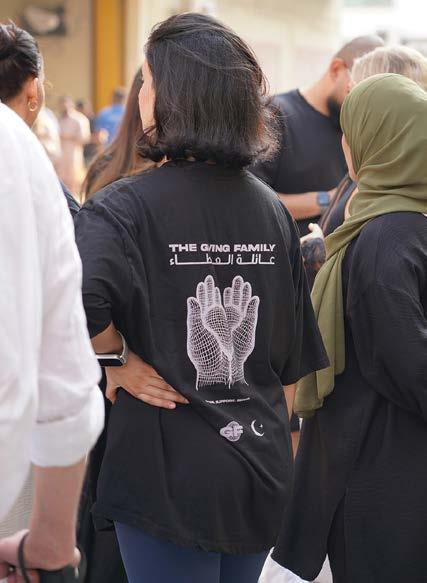
↑ Fadie Musallet is the founder of FadieCakes, Em Fadie, One Of Us, and The Giving Family
WHY I BELIEVE THE UAE IS NOW THE WORLD’S NUMBER ONE LEADER IN AI
When I read that the United Arab Emirates will host the Artificial Intelligence Summit in 2028 and co-chair the 2027 edition alongside the Swiss Confederation, I didn’t just see another international event announcement. I saw confirmation of something I have believed for years: the UAE is no longer an emerging player in artificial intelligence, it is leading the world.
A decade ago, few would have predicted that a young nation of just over 10 million people could position itself at the forefront of one of the most transformative technologies in human history. Yet today, the UAE ranks first globally in AI adoption, with
usage rates reported as high as 97 percent across government services and key industries. AI is not a pilot project here. It is embedded into daily life.
This success did not happen by chance. The UAE launched its National Strategy for Artificial Intelligence 2031 years before many major economies created comprehensive AI roadmaps. That early commitment integrated AI into healthcare, education, transportation, energy and smart city infrastructure. While others debated regulation, the UAE moved to implementation.
The investment figures are equally striking. Hundreds of billions of dirhams have been directed toward AI development and digital transformation in recent years, attracting global technology companies and positioning Abu Dhabi and Dubai as major AI hubs. In Abu Dhabi alone, the number of AI-focused companies has surged dramatically, with hundreds of firms now operating within a rapidly expanding ecosystem.
What truly distinguishes the UAE, however, is ambition beyond its borders. The country has committed significant funding including a $1 billion AI initiative focused on Africa to help shape global AI infrastructure. Leadership here is not just about domestic growth; it is about influencing the global trajectory of technology.
As someone who lives and works in the UAE, I see the transformation firsthand. Government services powered by AI, startups developing world-class applications, universities training the next generation of AI specialists. It is happening at scale and at speed.
In a world where many nations are racing to catch up, the UAE has already taken the lead. Hosting and cochairing major global AI summits is not symbolic. It reflects reality.
The future of artificial intelligence is being built here and the UAE is confidently writing its next chapter.
Anil Bhoyrul Editor-in-Chief
Enlighten Your Eternal Beauty, Inside and Out!
@muarjewels www.muarjewels.com
info@muarjewels.com
Bonds That Build
Serial entrepreneur Ghizlan Guenez’s F Force is a culmination of all the business lessons and mindset techniques that have guided her through her own decade-long journey as a founder. With the platform now allowing her to disseminate all that knowledge to up and coming female entrepreneurs, Ghizlan reflects on what success and failure mean to her today.
by AALIA MEHREEN AHMED
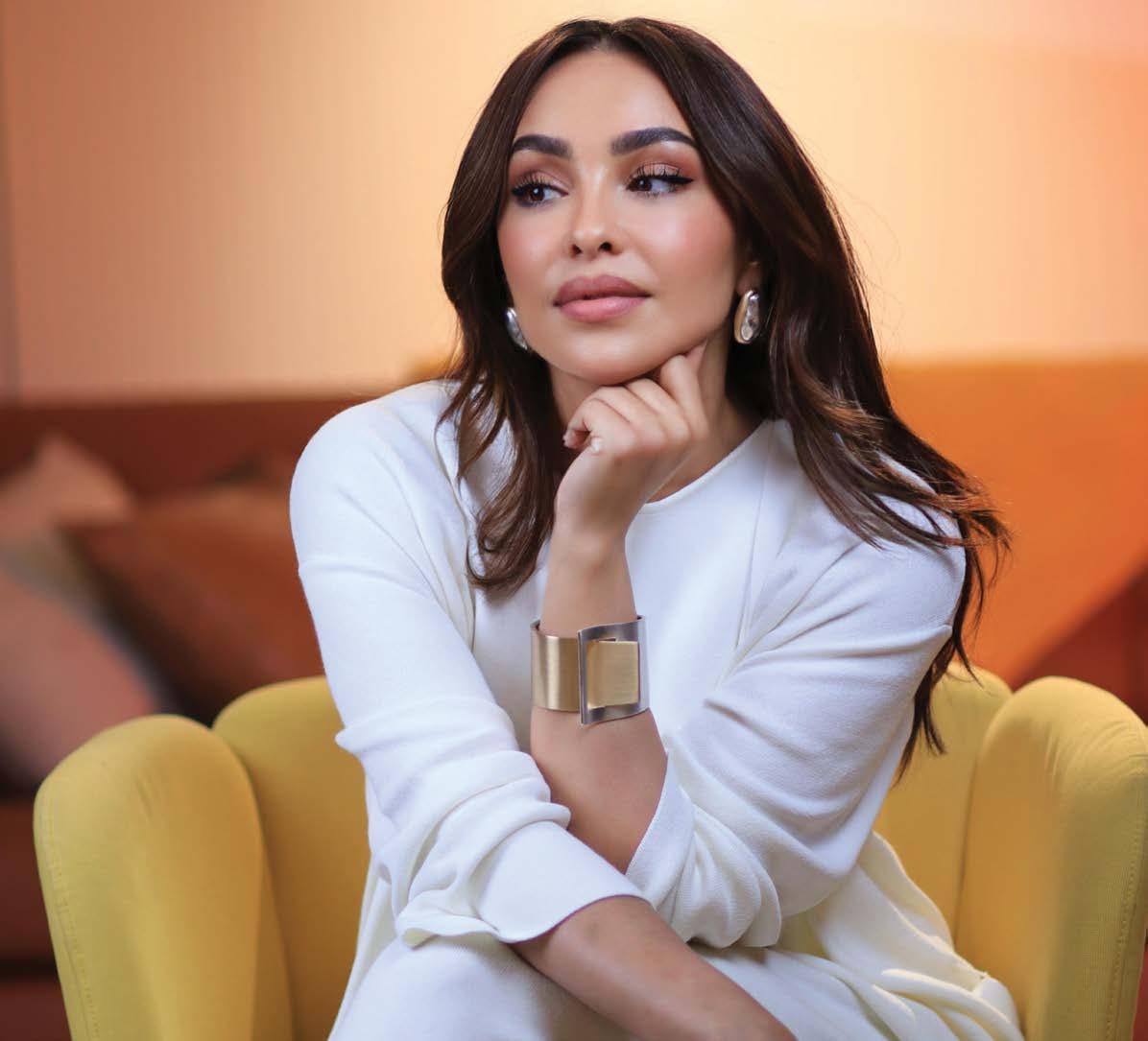
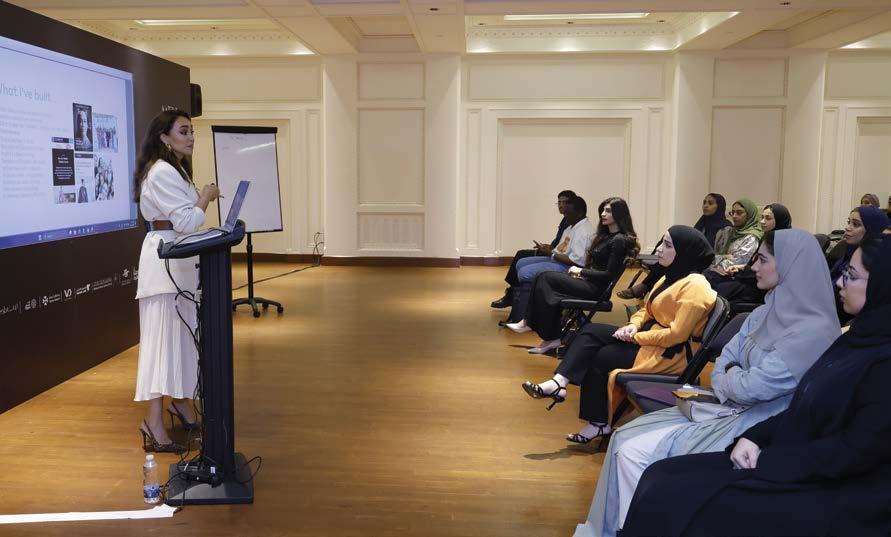
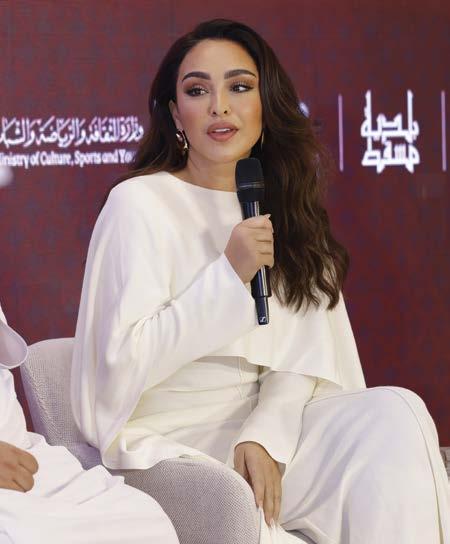
→ Ghizlan Guenez is the founder and CEO of F Force, a community and education platform for women entrepreneurs.
B/Introspection
Ghizlan Ghizlan Guenez’s Instagram page (which, at the time of writing this article, has over 308,000 followers) includes a line in its bio that perhaps best encapsulates her approach towards business, and indeed life itself: “Will provoke you into seeing the glass half-full.” Guenez’s optimism shone the brightest when, at the height of the coronavirus pandemic, she announced that her luxury fashion e-commerce platform, The Modist, was closing down. Soon after the news, which sent a ripple of astoundment and sympathy across
the region’s entrepreneurial ecosystem, Guenez decided to do something few entrepreneurs may want to do immediately: publicly talk about it.
“Actually, part of my fabric is that I used to have fear of rejection,” Guenez tells me. “But I think the minute you overcome something that is a bit of a challenge in you, it becomes something of a superpower. And so when I first started speaking about closing a business, the intention was not so much to kind of go out there and talk about failure as it were, but it was more around the fact that this was a business that was known, right? So many people were inspired by it and by the work that we did at The Modist, and so many people reached out to kind
of connect after we closed. So I went out there and spoke about it because I felt that we had done something incredible through that business. We’d created so much impact: whether it was in the community of modest dressers who felt that they were shown in a beautiful light, or introducing the category of modesty in luxury fashion, or all of these accolades that we got. And I felt that just because we closed because of COVID and certain circumstances, it doesn't take away from everything that we'd done. So I went out there and spoke about it.”
Here, Guenez makes an acute observation about how failure can sometimes be romanticized, but only long after it can be used as a mere footnote. “Most people speak about failure
when they're writing their biographies and after they have succeeded,” she says. “So then it becomes this scenario of ‘Oh, wow, look at how you overcame all this!’ But when you're going through it, and you still don't know what's next…in that moment, it's super vulnerable to be able to talk about it. So it became important to me, for people in general, to understand that it's part of life. Everybody knows failure is a part of life, but we're kind of so closed about it. I go as far as saying that if you're not failing —failing small in things that you're doing in general— it means you're not challenging yourself enough. And you're not pushing the envelope and you're not taking risks. It's so much more important to know how to deal with failure and treat it as this experience that's going to give you information and data that you're going to take and do something with, as opposed to sitting and sulking in it.”
By not allowing herself to fall prey to a victim mindset, Guenez was able to do something quite extraordinary: use the small-scale, community-led work she started after closing her first startup to eventually build her next brand. “
When the news about The Modist came out, so many of the women who are part of my community reached out, scared about their businesses because, to
→ Guenez has been an advocate for redefining success through impact alongside profitability
I GO AS FAR AS SAYING THAT IF YOU'RE NOT FAILING — FAILING SMALL IN THINGS THAT YOU'RE DOING IN GENERAL— IT MEANS YOU'RE NOT CHALLENGING YOURSELF ENOUGH. AND YOU'RE NOT PUSHING THE ENVELOPE AND YOU'RE NOT TAKING RISKS. IT'S SO MUCH MORE IMPORTANT TO KNOW HOW TO DEAL WITH FAILURE AND TREAT IT AS THIS EXPERIENCE THAT'S GOING TO GIVE YOU INFORMATION AND DATA THAT YOU'RE GOING TO TAKE AND DO SOMETHING WITH, AS OPPOSED TO SITTING AND SULKING IN IT.”
them, if such a large business had to close, then they worried that they too were not going to sustain their businesses through the pandemic. So I started mentoring and advising women for free, just, you know, by getting on Zoom calls. With some I would spend many days over an extended period of time, and with others, it could be just one call. I must have spoken to like 50 or 60 women. I realized then that despite the challenges, there are common knowledge gaps, misconceptions and mindset blocks for female founders at the start of their career. And I figured
that, you know, I could actually put a program together that would tackle so many of these challenges.”
A little over a year later, in 2021, F Force was launched as a platform to help women launch and grow businesses by offering them courses and workshops centered on leadership and mindset strategies.
F Force’s offerings span several programs, most of which are delivered online, alongside occasional in-person workshops and activations. At the core sits Riyada, an evergreen flagship entrepreneurship program designed to run continuously, with women joining weekly rather than through fixed cohorts. “It's got three parts to it,” Guenez explains. “First, there’s recorded material —about six or seven units— focused on entrepre-
neurship in the real world. In these, I’m not teaching how to launch a campaign with half a million dollars and a full team; I’m teaching how to launch when you have no resources. The second part is mentorship. We do weekly sessions every Wednesday where we deep-dive into different topics, answer questions about their ideas or businesses, and sometimes bring in guest experts. All of this is online and highly interactive. The third part is the community. From the moment they join, they’re part of a shared space where they connect weekly and stay in touch through group chats, creating peer-to-peer learning that’s just as important as the formal teaching. That’s our main program — Riyada. It is evergreen and open, with women joining on a weekly basis. Participants complete an eight-week program but continue
B/Introspection
beyond it, and there are no cohorts, making the offering fully ongoing.”
But while F Force may seem, on the face of it, as a simple mentorship platform, it addresses a more deep seated issue within entrepreneurial circles. A 2025 article by the University of Colorado Boulder, cites a study by two assistant professors at the Leeds School of Business and Rice University Business School that highlights a worrying reality: “while both male and female entrepreneurs equally reach out to mentors of both genders, male mentors are disproportionately likely to accept outreaches from male mentees.” A 2025 report by Development Dimensions International, a US-based global leadership development and talent-management consultancy, shows that only 37% of women
have access to career mentors, limiting their growth and opportunities. Additionally, a 2025 report by Guider shows that “female mentors receive 28% more endorsements than their male counterparts.”
Female mentors are therefore in demand, now
more than ever, by female startup founders.
For Guenez, addressing this need and creating direct tangible impact has been paramount — and so far, F Force has shown promising results. ““When we look at the numbers, our flagship entrepreneurship program alone — among several
others — has graduated over 500 women, and 73% of them launch businesses within six to 18 months of completing it,” she reveals. “For me, launching a business isn’t just about commercial success or money. It’s about taking that step, overcoming fear, and unlocking a new mindset. We’ve had women leave abusive relationships and completely change their lives — not simply because they started a business, but because they recognized their own power and ability to take risks. So the impact goes far beyond the numbers. The stories create a ripple effect much bigger than entrepreneurship itself. We also tend to work in isolation as women, but when you’re surrounded by others like you, the energy, support, and empowerment become transformative.”
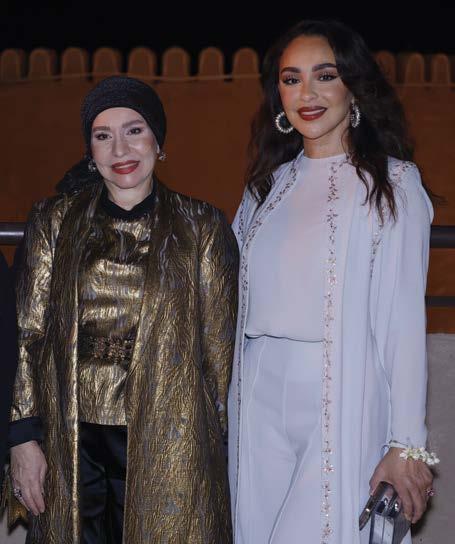
→ Guenez with her mother.
FOR ME, LAUNCHING A BUSINESS ISN’T JUST ABOUT COMMERCIAL SUCCESS OR MONEY. IT’S ABOUT TAKING THAT STEP, OVERCOMING FEAR, AND UNLOCKING A NEW MINDSET. WE’VE HAD WOMEN LEAVE ABUSIVE RELATIONSHIPS AND COMPLETELY CHANGE THEIR LIVES — NOT SIMPLY BECAUSE THEY STARTED A BUSINESS, BUT BECAUSE THEY RECOGNIZED THEIR OWN POWER AND ABILITY TO TAKE RISKS.”
In the midst of enabling a better quality of life for her F Force community, Guenez surmises that her own definition of success has also altered along the way. “When I started, I didn’t really have a clear definition of success — I thought it was the traditional things: media features, accolades, growth, and making money,” she says. “I achieved all of that with my first business, and it changed my perspective. But today, success is freedom — the ability to spend time with family or friends and do what I truly enjoy. It’s also seeing real impact on the people who engage with my work. At the same time, commercial success still matters to me. I want to make money because it enables greater impact. Impact without commercial success isn’t sustainable, and commercial success without impact is meaningless. For me, success is doing work that is both meaningful and impactful.”
But while Guenez endeavors to make the path easier for other female entrepreneurs, it might be easy to forget that she, too, is one herself. Part of the reason the very first educational unit at F Force is related to self care and strengthening the mindset is because Guenez is all too familiar
with the repercussions of letting one’s mental health stale. “I went through real burnout after my first business —it took me a year and a half to recover— so I understand how serious it is,” she says. “Often it’s less about not having time and more about the belief that putting yourself first is selfish. But you can’t pour from an empty cup. When you take time for yourself — as an entrepreneur, a mother, a woman — the energy you gain amplifies
into the people around you. The same applies to teams: if you’re depleted, your team will feel it too. So we do a lot of mindset work and share practical tools people can experiment with to find what works for them and build sustainable habits over time.”
As such, Guenez says she uses a plethora of ways to keep herself balanced amid the peaks and troughs of entrepreneurship. “There are many tools, and every entrepreneur eventually
discovers what works for them. For me, faith and prayer are central — they ground me. I believe that everything happens for a reason, even if we don’t understand it at the time, and I try to live by that principle. Alongside that, I exercise mainly for my mindset, meditate, and sometimes journal. And having a strong support system — family and close friends — is just as important in keeping me grounded.”
Guenez adds that the person she turns to, more than most, to seek such inspiration is her mother. “I call her my coach. She's the person who keeps me grounded through and through.”
As Guenez now prepares for the rest of 2026, she has a simple goal driving her every move: for the F Force community to keep growing. ““I hope our programs —and even our social media content— help women realize how much potential they already have,” she declares. “It’s about believing in it, then seeking the knowledge, mentorship, and doing the work to unlock it. When someone shifts their mindset, their whole life can change. I truly believe women carry that power within them.”
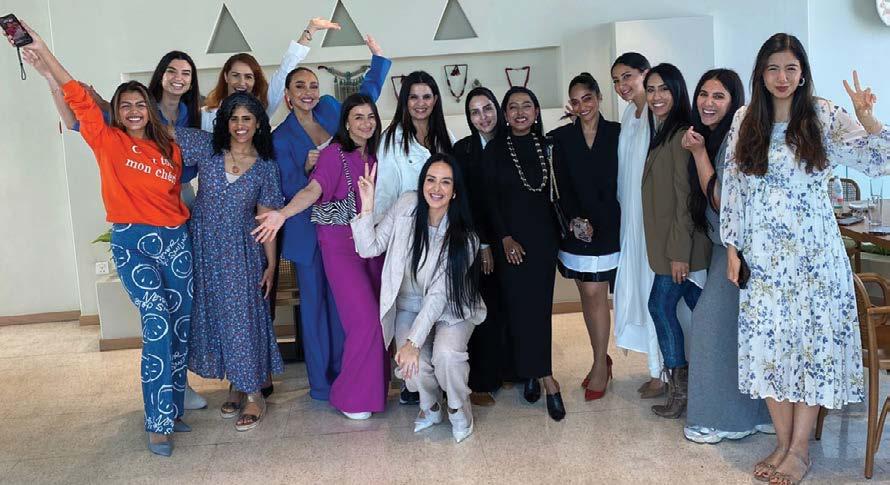
→ F-Force connects women entrepreneurs in a peer community built around shared growth and accountability.
Entrepreneur Middle East Calls on GCC Business Leaders to Share Crisis Playbooks
Entrepreneur Middle East invites GCC corporate and business leaders to share how they are protecting operations, managing teams, sustaining investor confidence, and identifying opportunity amid disruption.
As regional tensions continue to evolve, businesses across the GCC are operating in an increasingly complex and uncertain environment.
Entrepreneur Middle East is inviting founders, SME and large business leaders, investors, and corporate executives across the region to share how they are responding in real time to the shifting landscape.
We are seeking insights on business continuity and risk preparedness, including crisis response structures, remote operating models, and contingency planning, as well as the perspectives on shifts in consumer demand, from spending reprioritization and contraction patterns to sector-level resilience.
In addition, we are interested in how leadership teams are managing internal operations during this period, including strategic communication, team morale, security considerations, mental health, and decision-making under pressure. Perspectives on investor relations, including transparent stakeholder communication, funding resilience, and navigating changes in market sentiment, are also welcome.
Founders are further encouraged to highlight any crisisdriven opportunities they have identified across sectors.
Selected responses will be featured in an upcoming report examining how the GCC’s entrepreneurial ecosystem is adapting under pressure.
Submissions can be sent to tamara@bncpublishing.com and aalia@bncpublishing.com.
Into New Worlds
You’re One LEAP Away
From 13-16 April 2026
Riyadh Exhibition and Convention Center - Malham, Saudi Arabia
Secure your pass now
ON THE FRONTLINE OF POWER
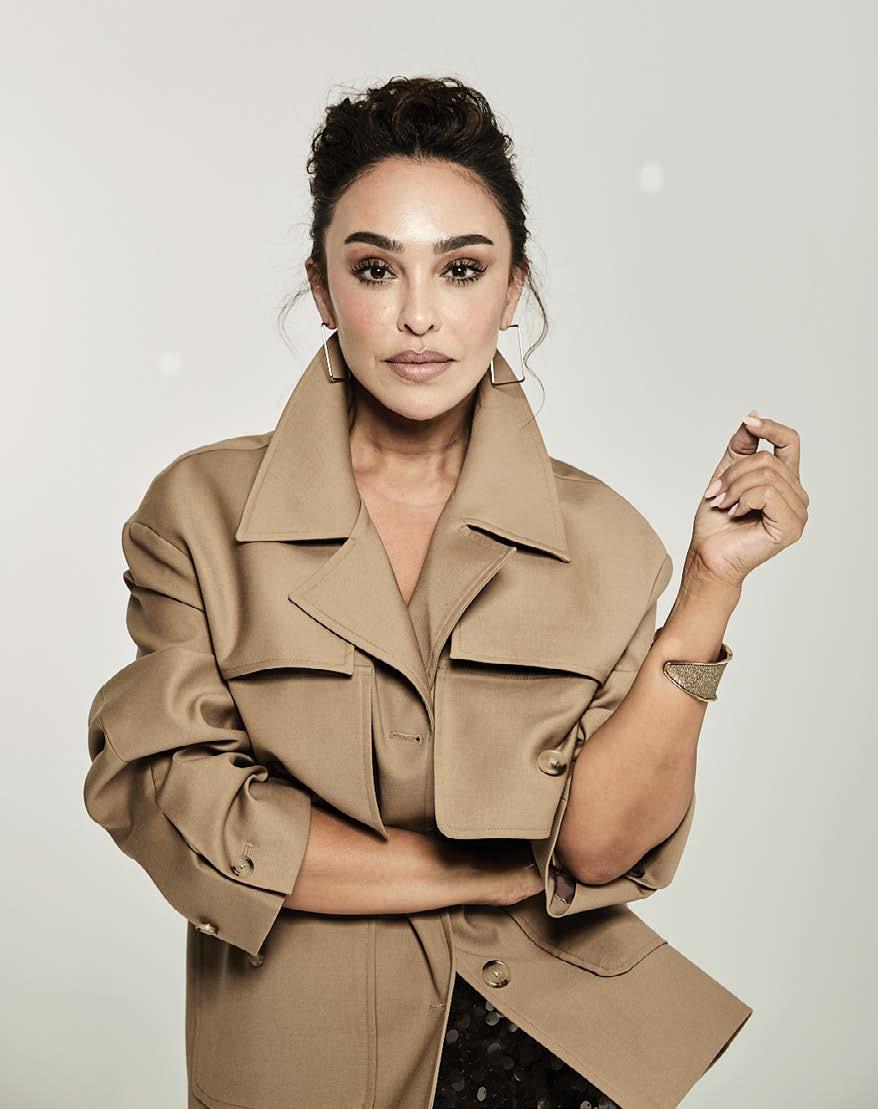
In a career defined by high-stakes interviews and global turning points, Hadley Gamble reflects on resilience, authenticity, and the discipline required to lead — both on screen and beyond it.
by TAMARA PUPIC
Pinning Hadley Gamble down required a fair amount of patience.
We met at the 1 Billion Followers Summit in Dubai in early January, exchanged messages, and made a plan. That plan nearly dissolved during her time in Davos for WEF 2026, resurfaced briefly through a few hurried emails from the World Government Summit, and finally came together when she appeared on Zoom from the sidelines of the Microsoft AI Tour in Riyadh, Saudi Arabiafrom there, she was preparing to fly to the Munich Security Conference.
“I’ll sometimes have two weeks in one place, but after about two weeks, I
THE TURNING POINT FOR ME WAS LEAVING WASHINGTON AND COMING TO THE REGION. IT WAS CAREER-MAKING AND DEFINING. IT SIMPLY WAS.”
start to feel restless. I joke that I’m a bit of a Bedouin now, I need to move,” she says.
In her 20-year career as a broadcast journalist, Gamble’s dynamic and entrepreneurial character has rarely been suited to confinement within a television studio. Once, she spent four years in the anchor chair of a daily show- and ultimately found it limiting. “There’s something inherently inauthentic about a studio, everyone is perfectly made up, fixed in place,” she says. “I always wanted to be on the road, to be moving. Being in person, on location, has always been better.”
Gamble is currently Chief International Anchor at Abu Dhabi-based IMI, where she leads the development of high-pro-
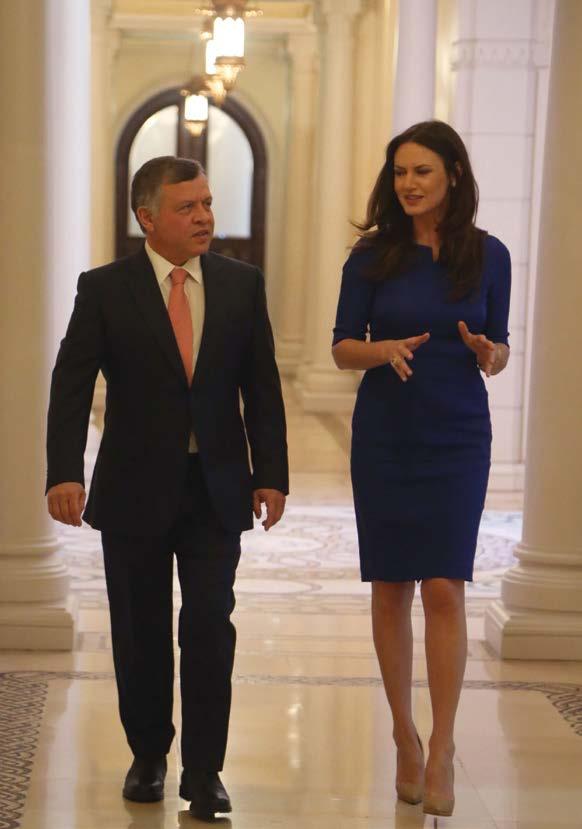
↓ Hadley Gamble in conversation with His Majesty King Abdullah II bin Al-Hussein of Jordan.
Source: Hadley Gamble
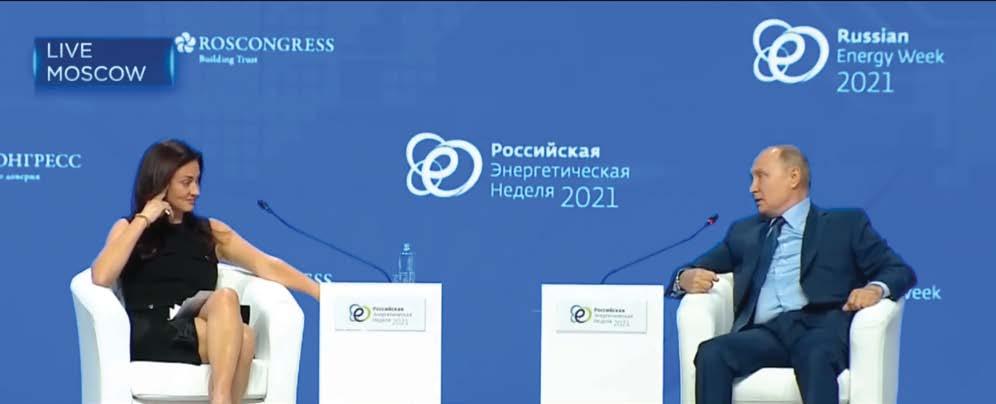
→ Hadley Gamble interviewing President Vladimir Putin on stage during the Russia Energy Week forum in Moscow in October 2021.
Source: Hadley Gamble
file interviews and original features across the group’s portfolio of media brands. The position represents a defining chapter in a career that began at ABC News and Fox News in Washington, DC, where she covered the 2008 US presidential debates, election night, and the inauguration of President Barack Obama, before being fundamentally redefined by her move to the Gulf in 2009.
“The turning point for me was leaving Washington and coming to the region,” she says. “It was career-making and defining. It simply was.”
Her colleagues in Washington questioned her decision to move, with one senior editor suggesting the Gulf was not the “real” Middle East. Yet, the then 27-year-old Gamble saw it differently, viewing Abu Dhabi, Riyadh, and Doha as emerging centers of power.
“In the early years, there was the whole narrative about when we would hit peak oil, green energy, and who was going to control that. And I just thought it was funny, like never count the Gulf out,” she says. “First of all, they controlled the energy of the world for a century, and now they’re investing in green energy,
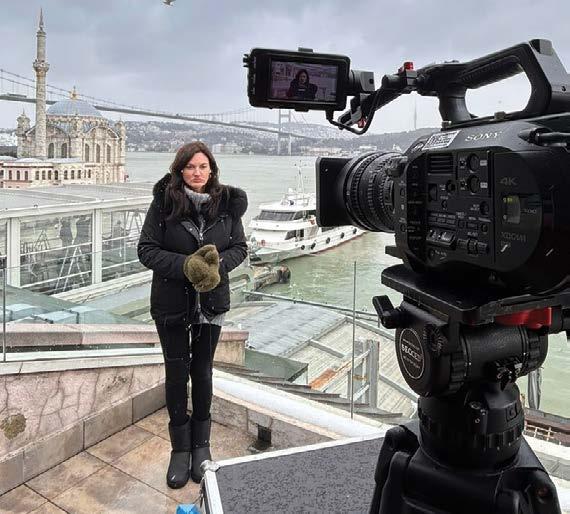
↓ Hadley Gamble reporting from Istanbul, Türkiye.
Source: Hadley Gamble
green hydrogen, and all these new technologies as well. The data centers are an extension of their ability to be farsighted enough not only to survive, but to thrive. So they own the energy of now, and they’ll own the energy of the future. I find that rather brilliant.”
“The region has a strong story to tell. It’s not perfect, but it’s significant. And if you have a story, you should tell it yourself. No one else should define your narrative for you.”
The UAE, particularly Dubai and Abu Dhabi, has positioned itself as a regional media hub, with broadcast journalism becoming a fiercely competitive, multinational arena. Within that landscape, Gamble distinguished herself by focusing on the intersection of energy, geopolitics, financial markets, and global business, examining how political and economic forces shape both regional and global outcomes.
“Business leaders often prefer to stay away from politics. They don’t want controversy or complications with governments, and it’s understandable,” Gamble says. “But in recent years, geopolitics has moved to the top of the crisis-management agenda for CEOs and corporations. The intersection of energy, politics, trade wars, and government policy has become central to business strategy, and it has always interested me.”
Gamble adds that while programming demands often shape coverage priorities, she consistently advocated for editorial focus on the interdependence between geopolitical decisions and market outcomes. “I’ve fought to pursue those stories because they have longevity, they have longer legs,” she says. “They also allow you to build deeper relationships with people in government and business. Over time, they recognize your genuine interest in the subject, and that leads to better conversations and more meaningful interviews. It happens naturally when the passion is real.”
Here, Gamble underscores that cultivating credibility through face-to-face engagement in the GCC carried particular significance as it influenced not only her editorial access and outcomes, but also contributed to shaping broader media narratives about the region. “In the early years in the Gulf, many leaders were advised never to speak to the press. I don’t think that was the right approach. If you have nothing to say, then don’t do an interview—that’s fair. But if you are a business or a government entity with a message, you should be able to articulate who you are, what you do, and what you stand for,” she says.
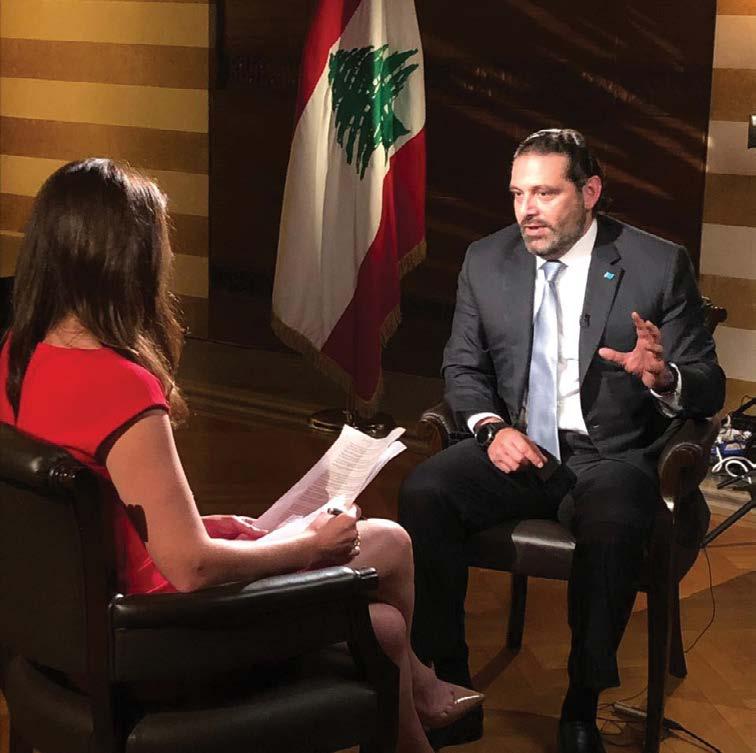
↑ Hadley Gamble interviewing Saad Hariri during his tenure as Prime Minister of Lebanon.
Source: Hadley Gamble
“Over time, there’s been a shift. Leaders in the region are now much more open to interviews and more accepting of critical questioning. They understand that constructive pushback is not a personal attack. There’s a clear difference between thoughtful, critical journalism and hostile attacks.”
Therefore, Gamble advises leaders to avoid being “overly mediatrained,” arguing that “it is a shame that, in an era that rewards authenticity, governments and businesses pay for advice that directly contravenes this.” She adds, “The region has a strong story to tell. It’s not perfect, but it’s significant. And if you have a story, you should tell it yourself. No one else should define your narrative for you.”
Now, Gamble is well positioned to offer guidance not only to leaders and their communications teams, but also to journalists — sharing insights into the craft behind her meaningful reporting. “Read everything, talk to everybody, ask people what they want to know from these people,’ she says. “Also, simple questions usually get the most telling answers. They are the story, how they think, feel, look, speak. Don’t get in the way of that - amplify it.”
Another — and, in her view, even more important — piece of advice is simple: “Keep talking, keep moving.” She says, “Sometimes, someone will say something so egregious or outrageous that you can’t quite believe it, so you try to keep your composure. Occasionally you’ll laugh, because it’s human. And I think, thankfully, audiences are looking for authenticity now, rather than a very wooden, dry, down-the-middle broadcast. That style is fading, and it’s much more interesting to watch something that feels real.
“It’s your job to get as much out of them as you can in a very limited amount of time. You never know how long the interview will be, and it’s not guaranteed you’ll get anything usable. So you have to be laser-focused and keep moving. Otherwise, you miss the opportunity, and it doesn’t come around again.”
“
In the early years in the Gulf, many leaders were advised never to speak to the press. I don’t think that was the right approach. If you are a business or a government entity with a message, you should be able to articulate who you are, what you do, and what you stand for.”
Hadley frequently hosts high-level international panels with some of the most influential figures in politics and business, including at the previously mentioned World Economic Forum in Davos and the Munich Security Conference. Career highlights also include opening the 2022 NATO Summit in Madrid with an interview with NATO Secretary General Jens Stoltenberg and moderating Saudi Arabia’s first women’s business forum.
Central to her mastery in moderating panels, she explains, is the
Over time, there’s been a shift. Leaders in the region are now much more open to interviews and more accepting of critical questioning. They understand that constructive pushback is not a personal attack. There’s a clear difference between thoughtful, critical journalism and hostile attacks.”
ability to bring the audience along with her — a skill that depends on understanding who they are and what resonates with them. “A World Government Summit audience is completely different from an ADIPEC audience in oil and gas,” Gamble explains. “All that the latter wants to know is how the global situation is going to impact their product and their profit. Whereas at the World Government Summit, it’s more big-picture and esoteric — what’s going to drive the next green revolution, the next big idea, OpenAI, or whatever comes next.”
No account of Gamble’s career to date would be complete without reference to her widely covered panel with Russian President Vladimir Putin at Russian Energy Week in Moscow. It effectively made Gamble, then an anchor at CNBC, the last Western journalist to interview him before the outbreak of the war in Ukraine. Putin firmly denied that Russia was using energy as a political weapon amid Europe’s mounting gas crisis. “It was in October 2021 which made it a particularly interesting moment,” Gamble recalls. “Russians had already started restricting the amount of gas
allowed through the pipelines to Europe, and European gas prices were spiking. There was still some question over whether he would invade Ukraine, but the 90,000 troops hadn’t yet been positioned at the border, so the focus was more on gas prices at the time.”
“In those days before the invasion, many people, including me, still didn’t think he would go through with it,” she continues. “I assumed the economic cost of leaving the global financial system would be too high. Why accelerate becoming economically dependent elsewhere? But I think many underestimated his determination around NATO expansion and his belief that his concerns weren’t being taken seriously.”
In the months leading up to the invasion of Ukraine, Gamble immersed herself in the story, cultivating close relationships with Ukrainian sources and reporting extensively from the ground. “I actually flew myself to a meeting between the Ukrainian
↑ Hadley Gamble filming an on-location interview in Saudi Arabia.
Source: Hadley Gamble
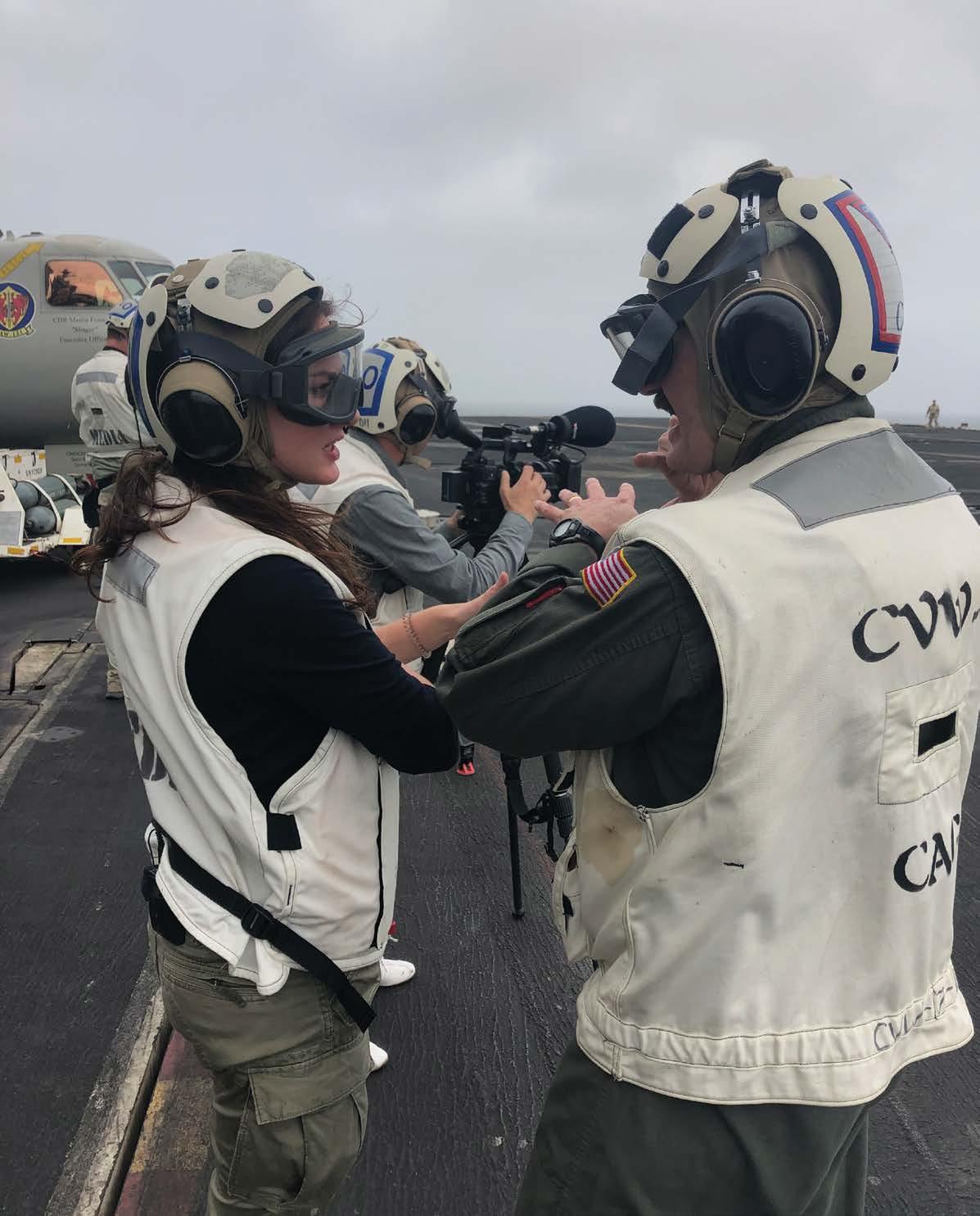
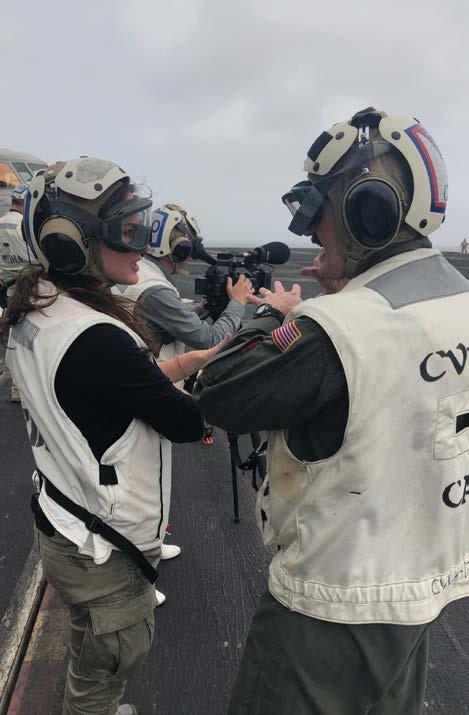
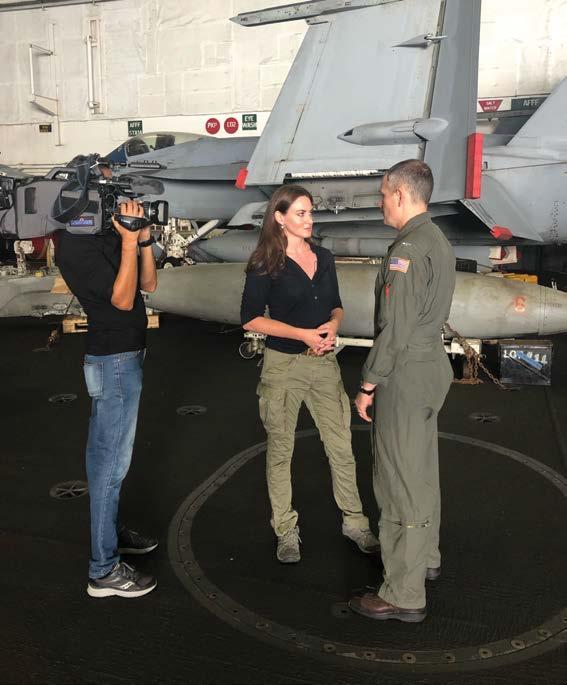
↑ Hadley Gamble on board the USS Abraham Lincoln, a US aircraft carrier, somewhere in the Indian Ocean in 2019.
Source: Hadley Gamble
Foreign Minister and the NATO Secretary General, whom I had known and interviewed for years,” she says. “Most people had already gone on Christmas break, the management wasn’t particularly interested in the interview, but I insisted on going. I paid to fly there myself, and they rented basic equipment for me.”
“I secured two interviews that I did at 5:30 in the morning in a poor hotel setup, with mismatched cameras,” Gamble recalls. “One was with the Ukrainian Foreign Minister Dmitro Kuleba who warned that Ukraine would end up fighting Europe’s war on its own territory which, of course, is what happened.The interview turned out to be incredibly prescient. What he described unfolded almost exactly as he said it would.”
She continued to report on the Russia-Ukraine conflict, including a
high-profile interview with NATO Secretary General Jens Stoltenberg. However, despite the time she had invested on the ground in Ukraine prior to the invasion, CNBC ultimately chose not to assign her to cover the outbreak of the war. “I was told, quite bluntly, ‘We don’t send business journalists to cover wars.’”
By that stage, after months on the road, she had chosen to briefly step back. Yet when the invasion began, she was immediately on the phone with Ukraine’s Foreign Minister in what became the first interview with a Ukrainian official on Western media following the outbreak of the war. “The channel started taking me live across various programs. I called my boss to ask to go to Russia. For some reason, it didn’t fully register that Russia might be just as dangerous, if not more so, given press freedom concerns. But I didn’t care
“
I was never going to be the prettiest or the smartest, but I worked the hardest. If you do that, even in corporate media, that’s hard to take away from you. ”
about that. I just wanted to be where the story was unfolding.”
She boarded one of the last flights into Russia before the airspace closed and proceeded to report live for two consecutive weeks across US programming and international broadcasts. “It was a fragile atmosphere in Moscow. US companies were announcing their exits, and people were cautious about what they said. At one point, I was broadcasting from Moscow while the Ukrainian foreign minister was speaking from an undisclosed location in Ukraine. In television terms, those are the moments when you feel completely inside the story,” Gamble says.
“But after about ten days, the pressure intensified. There were instructions not to call it a war or to avoid using certain words. I said we wouldn’t conduct interviews if we couldn’t use real words. Ultimately,
we decided to pull out. It was an intense and extraordinary period.”
With this track record of high-impact television journalism, Gamble is well positioned to assess the state of today’s media landscape. In her view, audiences now expect a multiplatform, on-demand experience — and while traditional television in its old form may be fading, the appetite for quality-driven content remains strong. She adds, “I think diversity of voices has to be actively pushed. In traditional media, simply having people from different places doesn’t automatically mean you’re getting different perspectives. If everyone was trained in the same institutions and thinks in the same way, the narrative won’t necessarily change. True diversity is about diversity of thought and worldview, not just background.”
Drawing on her experience, Gamble believes that success in television starts with authenticity. ”The networks have a tendency to produce presenters who look the same, sound the same, and are interchangeable,” she says. “From a management perspective, that can feel efficient: if one person leaves, another can step in and replicate the same style. But that uniformity doesn’t necessarily resonate with audiences. Over the past decade or more, what has truly connected with people are distinct personalities.
Whether audiences agree or disagree with them, those are the individuals who stay with you. They feel memorable because they’re not interchangeable.”
But, Gamble adds, success in television ultimately rests on hard work. “I was never going to be the prettiest or the smartest, but I worked the hardest,” she says. “If you do that, even in corporate media, that’s hard to take away from you. Be the one who works the hardest and stays until the job is done. Even if you’re not the
a sense of grounded clarity about what she has built so far. “I know who I am as a journalist. I don’t feel the need to want someone else’s career or trajectory,” Gamble says. “Part of that comes with age, of course, but it’s also experience. Once you’ve put in the work and achieved what you set out to do, there’s a stabilizing feeling that comes with it. Accomplishment isn’t external — it’s internal. You know when you’ve earned it.”
“Especially for women, I think that confidence changes how decisions are
made,” she adds. “They become more balanced, more grounded. You operate from a position of strength rather than comparison. You can appreciate what others are doing without feeling diminished by it.
“Moving to the GCC region was part of that evolution for me,” Gamble concludes. “I’ve been fortunate to work across different markets and environments, and I believe growth and reinvention are healthy. Progress and evolution are good for all of us.”
BE THE ONE WHO WORKS THE HARDEST AND STAYS UNTIL THE JOB IS DONE. EVEN IF YOU’RE NOT THE FAVORED REPORTER, PEOPLE RECOGNIZE RELIABILITY.”
favored reporter, people recognize reliability. These days, that matters even more. Newsrooms are smaller. There aren’t enough people to do the work. You can’t just be a figurehead—you have to show up and deliver.”
Her future plans include On the Record interviews, which are traditional, high-level conversations with major CEOs and global newsmakers that will run across all IMI platforms, as well as the Reality Check with Hadley Gamble podcast, featuring exclusive, in-depth discussions.
In conclusion, Gamble reflects on her career with
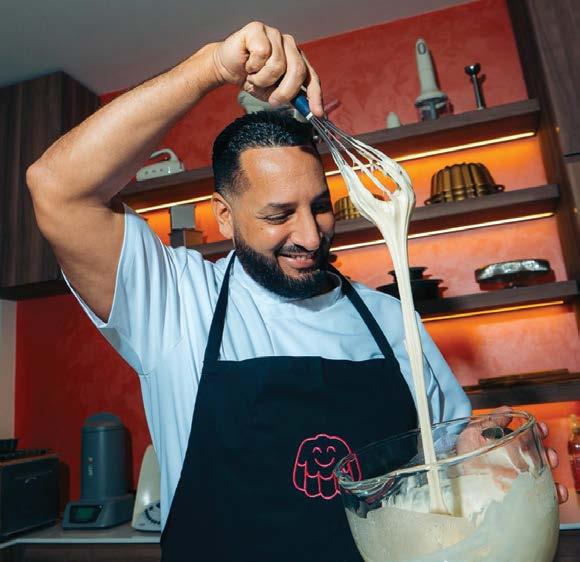
↑ Fadie Musallet is the founder of FadieCakes, Em Fadie, One Of Us, and The Giving Family
THE ART OF GIVING BACK
PALESTINIAN-AMERICAN ENTREPRENEUR FADIE MUSALLET SHARES HOW HE HAS EMBEDDED PHILANTHROPY AND SOCIAL RESPONSIBILITY INTO HIS BUSINESSES WITHOUT COMPROMISING SUSTAINABLE GROWTH. / by
AALIA MEHREEN AHMED
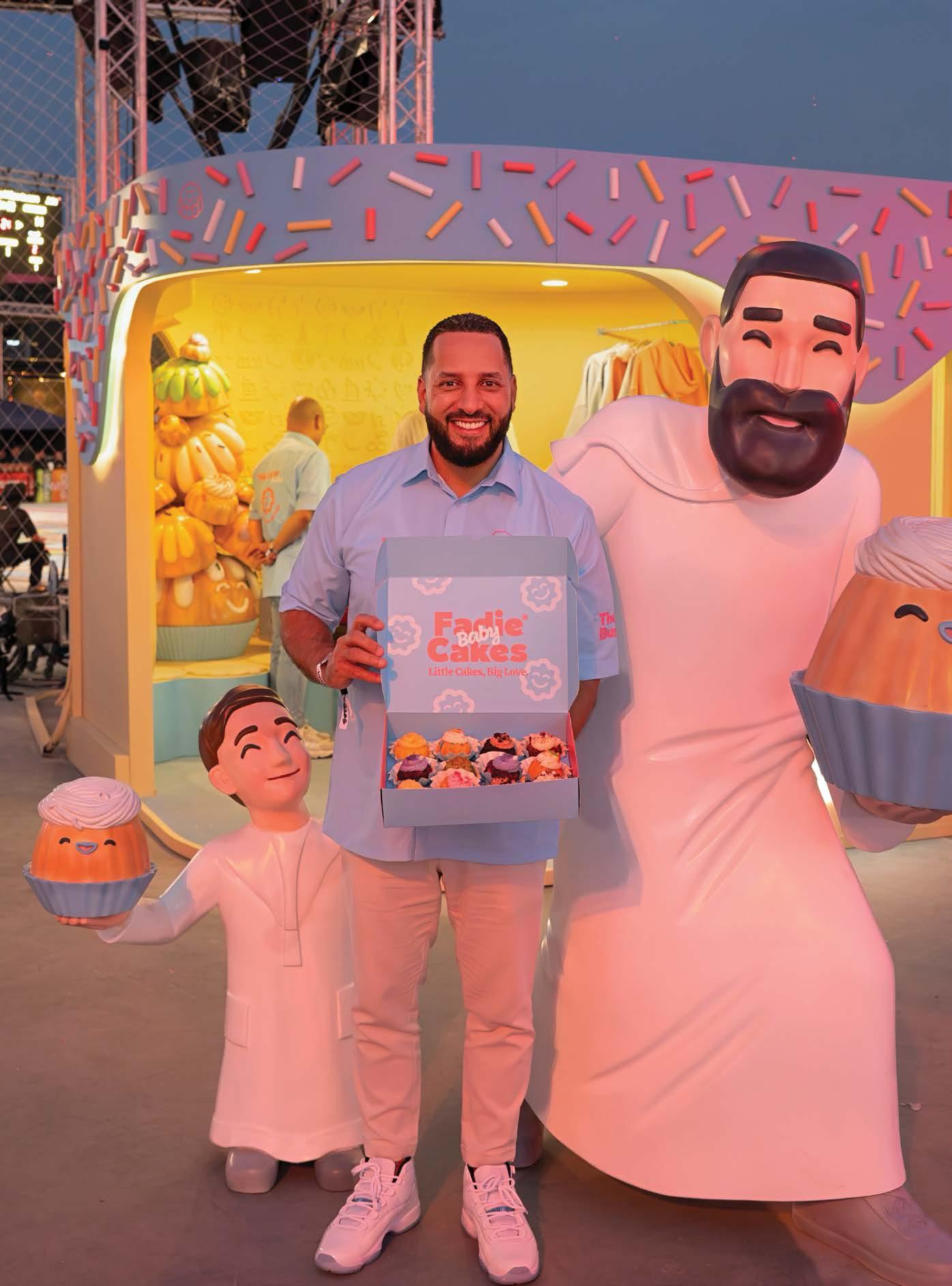
Fadie Musallet is today the owner of a number of business ventures including FadieCakes, a Bundt cake brand running a year-round “Buy One, Feed One” campaign via Careem and pop-ups; Em Fadie, which offers heritagedriven Palestinian olive oil with proceeds supporting families in need; The Giving Family, a UAE-based non-profit supporting labor workers and vulnerable families through donations and community campaigns; and most recently, One Of Us, which is an ultra-luxury Al Quoz event space for curated brand experiences. “But I didn’t reach here following a traditional entrepreneurial path,” Musallet says. “My education gave me discipline, but most of my learning came from life, work, and experience. Growing up, I watched my mother raise five children on her own after my father passed away. That taught me resilience, gratitude, and responsibility early on. I never set out to build companies for status. I wanted to create value and solve real problems. Every venture started from a genuine need I saw. Across all my businesses, my vision is simple: build sustainable platforms that serve people, create opportunities, and give
back more than they take.”
Indeed, ensuring tangible social impact is the common thread that connects all of Musallet’s brands. As such, within a few minutes of speaking with Musallet it becomes clear why “giving is the new rich,” is a phrase the Palestinian-American often uses in his conversations. “I’ve always been this way,” he says. “My values haven’t changed. What did change was my environment. At one point, I was around the wrong crowd, and I made a conscious decision to surround myself with people who carry the same values and purpose as I do. I’ve never been materialistic. You can have all the money in the world, but it doesn’t bring real fulfillment. Success without purpose feels empty. Seeing hardships up close always reminds me that impact matters more than image. Since then, every decision I make is guided by one question: Does this help people? If it doesn’t, I walk away.”
Musallet’s very first entrepreneurial foray was therefore The Giving Family, which he launched a decade ago in 2016. A UAE-based organization dedicated to helping blue collared workers in the
country, The Giving Family through regular meal donation drives as well as other services that are designed to help those in need during times of crisis. “Donations come from volunteers, corporate sponsorships, and community campaigns,” Musallet explains. “The mission is simple: provide dignity, support, and hope where it’s needed most.”
EVERY VENTURE STARTED FROM A GENUINE NEED I SAW. ACROSS ALL MY BUSINESSES, MY VISION IS SIMPLE: BUILD SUSTAINABLE PLATFORMS THAT SERVE PEOPLE, CREATE OPPORTUNITIES, AND GIVE BACK MORE THAN THEY TAKE.” “
“
WE’VE DISTRIBUTED OVER ONE MILLION MEALS TO LABOR WORKERS. BUT THE REAL IMPACT IS PERSONAL. IT'S IN THE SMILES, GRATITUDE, AND DIGNITY RESTORED. ONE WORKER ONCE TOLD US IT WAS THE FIRST TIME IN MONTHS SOMEONE HAD ASKED HOW HE WAS DOING. MOMENTS LIKE THAT REMIND ME WHY WE DO THIS.”
sold,” Musallet explains. “Our brand welcomes everyone.. all ages! Living by our motto: “Cake brings us together.” Revenue comes through Careem delivery and pop-ups throughout the year, with seven signature flavors and monthly featured flavors available for a limited time. Meanwhile, Em Fadie offers pure olive oil hand-pressed in my mother’s backyard in Palestine. It’s for anyone
“The Giving Family has been one of the most meaningful parts of my life,” he continues. “We’ve distributed over one million meals to labor workers. But the real impact is personal. It's in the smiles, gratitude, and dignity restored. One worker once told us it was the first time in months someone had asked how he was doing. Moments like that remind me why we do this.”
It is this same sentiment that Musallet carried forward when he launched Em Fadie in 2024 and FadieCakes in 2025. “Focused on Bundt cakes, FadieCakes combines indulgence with impact through our year-round “Buy One, Feed One” campaign, feeding labor workers with every cake
who appreciates quality, heritage-driven products. Sales are made via delivery, with a portion of proceeds supporting families in need in Palestine.”
With Em Fadie, however, Musallet gets a chance to highlight the resilience and beauty of his Palestinian heritage. “For me, success isn’t just financial; it’s about how many lives we touch and how responsibly we use our platform,
especially in a world facing so much hardship and injustice,” he says. “With Em Fadie, this responsibility feels deeply personal. Our olive oil comes from my mother’s backyard in Palestine, hand pressed and rooted in generations of tradition. It represents resilience, heritage, and dignity. Sharing that with the world isn’t just business. It's honoring where I come from and
→ ↓ Andrea Bocelli (right) and his wife Veronica Bocelli (left) in KatyaKovtunovich tunics.
← Hollywood actress Lindsay Lohan wearing a Katya Kovtunovich dress.
↑ Musallet with Huda Beauty founder Huda Kattan.
MORE THAN ANYTHING, I WANT MY SON TO BE PROUD … NOT OF WHAT I OWN, BUT OF HOW I LIVED. I HOPE PEOPLE REMEMBER THAT I BUILT SUCCESSFUL BUSINESSES WITHOUT LOSING MY HUMANITY.”
what I stand for. Every bottle reminds me that my work must always mean more than profit.”
But Musallet is also quick to address that showcasing his homeland’s culture isn’t a business shtick. “There are a lot of people who want to advertise Palestine because it gets them eyeballs now,” he laments. “But my Palestinian roots are who I am; not a marketing strategy. They taught me resilience, dignity, and generosity. These values guide how I lead and grow. As we scale, I focus on staying honest, respectful, and rooted in truth. Growth means nothing if you lose yourself. And I believe success and integrity can coexist with accountability, transparency, and humility. Money is a tool. It can grow ego, or it can grow impact. I choose impact!”
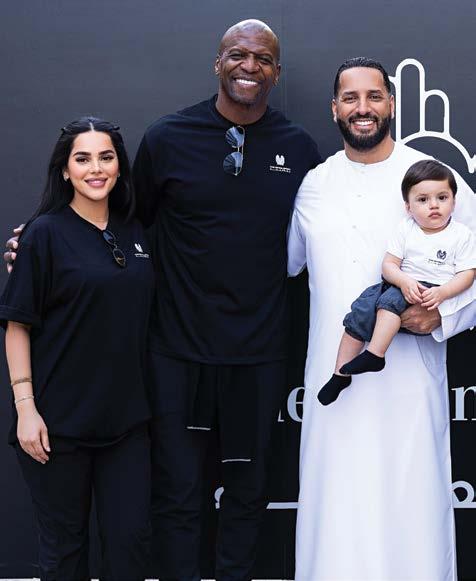
In staying true to his vision, Musallet has built an impressive network of connections over the years. At The Giving Family, he’s had the opportunity to partner with Hollywood star Terry Crews and Kevin Hart. Crews, in fact, was a part of one of The Giving Family’s Iftaar pack distributions during Ramadan last year, notably having delayed his flight back home to be a part of the meal drive. Earlier this year, when
renowned beauty entrepreneur Huda Kattan launched a new line of Huda Beauty Easy Bake loose baking and setting powder, FadieCakes was an official part of the event, where the brand’s bundtkins —bite-sized versions of its signature bundts— emerged as fan favorites. He’s also been a cast member of Netflix’s popular reality show Dubai Bling.
“Partnerships have been key in amplifying impact, but we are very selective with who we work with,” Musallet says. “We don’t collaborate with influencers; we work with people who influence, people who use their platform to
create real, lasting change in the world. That applies to both my business and The Giving Family. Collaborations with Huda Beauty, Kevin Hart, and Terry Crews weren’t about visibility or trendiness, they were about joining forces with people who share our purpose, who care about making a meaningful difference, and who can help us touch lives on a larger scale. When you align with people who genuinely care, the impact grows far beyond what one person or one company can do alone. That’s what makes partnerships truly powerful.”
As Musallet now moves into 2026, he hopes the
impact of his work is felt, first and foremost, by his now two-year-old son, Hessan. “More than anything, I want my son to be proud … not of what I own, but of how I lived,” he says. “I hope people remember that I built successful businesses without losing my humanity. I want him to grow up seeing that his father chose kindness over convenience, integrity over shortcuts, and service over ego. Inshallah he learns that true success is measured by how you treat people when no one is watching. If my work continues helping others long after I’m gone, and if my values live on through him, that’s real legacy.”
↑
is
↑ American actor Terry Crews at The Giving Family’s Iftaar pack distributions during Ramadan 2025.
The Giving Family
a UAE-based non-profit dedicated to restoring dignity to labor workers and families in need.
ODE TO BAG END
Limited Edition
Make ever y epic writing journey a cosy one. Hobbiton handcraft from the makers of the world’s most magical pens
by LARA VARJABEDIAN
‘T/Lessons
When I first had the idea that would later become UBQT, it was 2014.
I was travelling constantly for work. I had lived in multiple cities, built a global circle of friends, and developed an international professional network. And yet, despite being “connected,” I felt disconnected. I rarely knew who was in which city, who was visiting where, or when our paths might cross.
The problem felt obvious to me. But I didn’t start. At the time, social media was already shifting from
connection to content, though nothing like today. When I shared the idea, the response was predictable: “How will you compete with LinkedIn? With Facebook?”
The doubt was enough to silence the spark.
Looking back, the issue wasn’t the market, it wasn’t the competition, it was the timing. It was too early then to start what is today UBQT. I didn’t yet have the startup scars, emotional resilience, ecosystem awareness, or instinct for timing required to build something ambitious. So when the idea resurfaced years later through recon-
necting with my co-founders, I was finally ready… and so was the market signalling that social media is now all media, that we experience a digital fatigue, a need of human connections away from the noise.
} Lesson 1: Trust Time
In the startup world, there’s constant pressure to move fast, launch fast, win fast. But ideas are like seeds. If you take the time to learn how to plant them properly, the harvest will be stronger. Between 2014 and launching UBQT years later, I unknowingly built the toolkit I would eventually need, through corporate leadership roles, startup exposure, strategic partnerships, and hard lessons across industries and continents.
If you have an idea but feel “not ready,” it doesn’t mean the idea is wrong. It might mean you’re still becoming the person capable of building it. But there is a nuance: don’t hide behind “not ready” when the truth is fear. I always think you can build that person along the way.
I often tell young founders: spend time in the corporate world first. Learn structure. Learn governance. Most importantly, learn human behaviour, who puts the company first, who puts ego first, who thinks collectively, who thinks individually.
The startup world is creative chaos and it’s exciting but without foundations, chaos can swallow you.
Trust time. It prepares you quietly. It’s about connect-
ing the dots, the way Steve Jobs once described, but only in hindsight.
When we finally launched UBQT, I assumed clarity of problem would automatically translate into growth. It didn’t. Network businesses are brutal. No one joins a platform to be alone. People join because others are already there.
Breaking the network effect isn’t a marketing challenge. It’s a behavioral one. We had to rethink everything.
}
Lesson 2: Focus on What Moves the Needle
Two months after launch, I realized we had to stop focusing on individual users and start focusing on communities.
We built a community feature allowing members of the same group to automatically be connected inside UBQT. Instead of asking one person at a time to join, we partnered with alumni groups, conferences, and corporate teams. People didn’t join into emptiness. They joined into belonging.
That shift changed everything. It also forced me to lean into my real strengths: B2B and relationships.
My background in partnerships, go-to-market strategy, and negotiation became our growth engine. I realized something powerful:
Technology opens the door.
Trust is what gets people to walk through it.
For founders, your unfair advantage may not be code or capital. It may be your
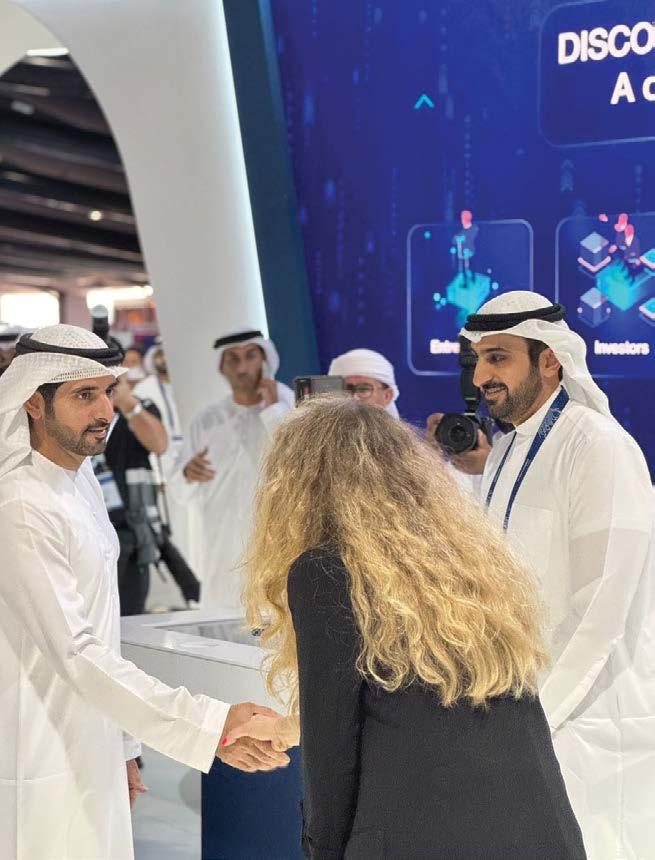
↓ Lara Varjabedian presented UBQT to H.H. Sheikh Hamdan bin Mohammed bin Rashid Al Maktoum, Crown Prince of Dubai, during GITEX 2025
IF I COULD SUMMARIZE THE JOURNEY IN ONE SENTENCE , IT WOULD BE THIS: BUILD YOURSELF WHILE YOU BUILD YOUR COMPANY.”
ability to build authentic human relationships. In the early days, interpersonal capital matters more than financial capital.
Building a startup also changes how you see people. There are two kinds: those who extend a hand and those who quietly pull it away.
Some will surprise you with generosity, introductions, advice, and energy. Others, including people you expected to support you, will offer nothing more than a polite nod.
At first, that realization hurts, but you get used to it. I’ve had founders ask me, “Did you experience this when starting UBQT?”
The answer is yes. It’s a pattern. Some don’t believe you can make it. Others simply don’t want you to.
} Lesson 3: Protect Your Energy
Entrepreneurship is an emotional marathon. You cannot waste energy chasing validation from people who don’t want to see you grow.
Focus on the builders. The believers. The ones who support you without being asked. Ignore the rest.
Especially as women in business, we are often conditioned to over-explain, over-prove, overconvince. But you don’t need everyone. You need the right few.
Over time, another truth becomes clear: nothing matters more than the mission, not ego. not rejection, not outside opinions from people who don’t understand what you’re building.
There will be moments when investors don’t “get it.” When someone says, “This will never work.”
When doors close. You have two choices: let it get under your skin or stay anchored.
} Lesson 4: Anchor in Your Mission
Your mission is your compass. If you are solving a real problem, one you deeply understand, your job is not to convince everyone. Your job is to keep moving.
I learned to separate signal from noise. User feedback is king, constructive feedback is gold and ego-driven commentary is distraction.
Founders must become emotionally disciplined: sensitive enough to listen, strong enough to filter.
Then comes the hardest part: patience. Slow traction, repeated pitches, endless iterations, invisible work.
It can feel like nothing is happening… until suddenly, something shifts. Early adopters become advocates. Unexpected brands call. Opportunities compound.
What looks like overnight success is built on months, often years of consistency.
} Lesson 5: Persistence and Passion Win — Quietly Hard work is not glamorous.
UBQT was never about “having a startup” to boost my ego or “playing the VC game.” It was born from conviction, from the belief that digital connection had lost its human core, and that this problem would only intensify.
In my view, passion differentiates startups building something truly unique and impactful from those that are simply businesses.
It’s answering feedback at midnight. Refining endlessly. Adjusting strategy without losing vision. Staying present when results are slow.
You live and breathe your idea. You test it in real conversations. You fail, adjust, build again and one day, momentum shifts.
Persistence often looks like stubbornness, until it works.
On this International Women’s Day, I reflect not on funding milestones or partnerships, but on evolution.
The 2014 version of me had the vision. The 2026 version of me has the resilience, the expertise, the network. If I could summarize the journey in one sentence, it would be
this: Build yourself while you build your company. Because startups are not just products, they are mirrors.
If you protect your energy, build real relationships, anchor yourself in mission, and trust time eventually, time meets you halfway. And when it does, you’ll be ready.
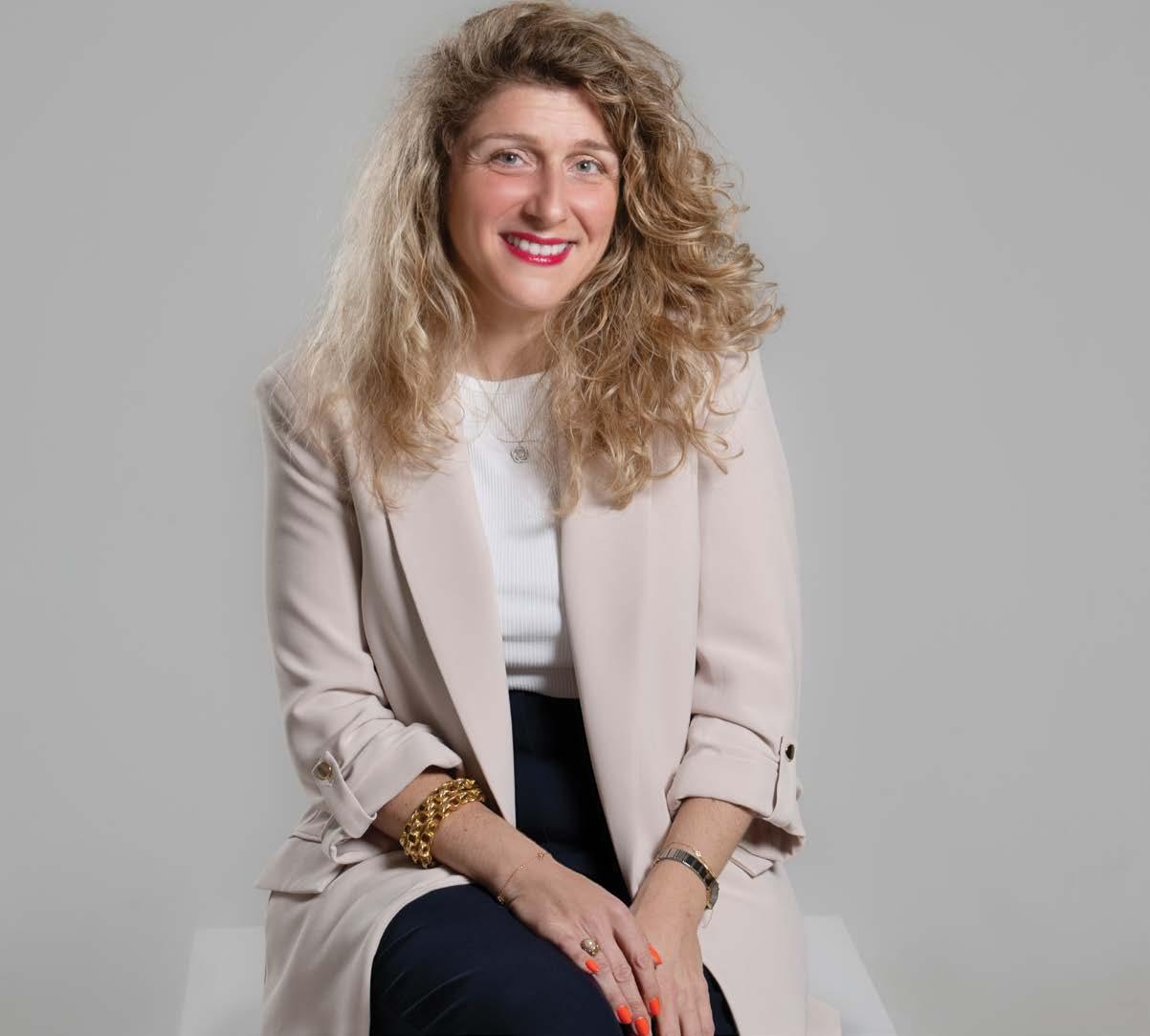
Lara Varjabedian is co-founder and CEO of UBQT, a UAE-built AI-powered platform designed to turn digital networks into meaningful real-life connections. She brings global experience across corporate leadership, startups, and venture innovation, with deep expertise in insurtech and healthtech. Varjabedian holds a European Master's degree in Finance and spent over 13 years in insurance at Generali Group and Coface, working across EMEA, the Americas, and APAC. Her entrepreneurial journey began with Prenetics, Hong Kong's first unicorn to IPO on Nasdaq, where she helped introduce genomics to European insurers. Focusing on emerging technologies, she later founded Kojo and co-founded Thought On Paper (TOP), supporting early-stage startups. She co-founded UBQT alongside Jonathan L. Hasson and I.Q. Sayed.
The RippleLeadership That Customers Feel
by RAHUL SINGH
Customer experience is often measured by visible factors such as vehicle quality, booking speed, transparent pricing, and quick service turnaround in the mobility sector. Yet one of the biggest influences on how customers actually feel about a brand often goes unnoticed. Leadership behavior, the way leaders communicate, build trust, and shape workplace culture, plays a powerful role in how employees perform and, ultimately, how customers experience the brand.
For globally established mobility companies operating in competitive markets like the UAE, leadership today extends far beyond operational oversight. It plays a defining role in setting the internal environment that enables employees to perform at their best. This "inside-out" approach to leadership recognises that customer experience starts with how one leads people.
Leadership as the Foundation of Customer Experience
Leaders shape every customer interaction by the decisions they make internally, often long before a customer enters a branch or completes a booking. Our choices influence employee confidence, engagement, and accountability. When leaders provide clear direction and act consistently with organisational values, teams are better equipped to deliver reliable and high-quality service.
Workplace insights across the UAE continue to highlight the influence leaders have on employees' professional lives. In service-led industries such as car rental, this influence becomes particularly significant. Frontline teams are the face of the brand, and their behaviour reflects the environment leadership creates.
Engaged employees are more attentive, more responsive, and more willing to take ownership of customer needs. Where leadership lacks clarity or alignment, service inconsistency often follows, which directly affects customer trust and loyalty.
Culture, Trust, and Performance
One builds a positive workplace culture on trust and transparent communication. Leaders who communicate openly by sharing context behind decisions and encouraging dialogue foster significant alignment across teams. This clarity reduces friction, improves collaboration, and reinforces accountability.
Trust also enables performance. When employees feel trusted, they are more confident in taking initiative and adapting to change. This trait is particularly relevant in the automotive and mobility sector, where customer expectations, technology, and operating models continue to evolve rapidly.
that motivate teams to stay engaged and committed.
This responsibility goes beyond performance metrics. It includes recognising contributions, supporting professional growth, and consistently demonstrating values in day-to-day decisions. Leaders who invest in people build stronger emotional connections between employees and the organisation.
When employees feel supported and valued, the impact is reflected immediately in customer interactions. Confidence, professionalism, and empathy become part of everyday service delivery, strengthening the brand's reputation over time.
Leading from the Inside Out
Inside-out leadership shifts the focus from external customer initiatives to internal culture-building. Rather than viewing customer experience as a standalone function, leaders recognise it as the outcome of strong internal alignment.
In a sector increasingly shaped by
A CULTURE THAT PRIORITISES LEARNING OVER BLAME ALLOWS TEAMS TO REFINE PROCESSES, IMPROVE SERVICE QUALITY, AND RESPOND MORE EFFECTIVELY TO CUSTOMER EXPECTATIONS.
Equally important is creating environments that support learning. Progressive leaders understand that improvement requires space for experimentation. A culture that prioritises learning over blame allows teams to refine processes, improve service quality, and respond more effectively to customer expectations.
The Expanding Responsibility of Leaders
Leadership responsibilities have broadened significantly in recent years. Employees increasingly seek purpose, development, and alignment with organisational values. Leaders must therefore create environments
digital transformation, this approach is critical. Technology can streamline processes, but it cannot replace human judgment, reassurance, or accountability. Customers continue to rely on people, particularly when challenges arise.
Organisations grounded in a strong internal culture are also more resilient. They adapt more effectively to market changes without compromising service standards, ensuring consistency even during periods of growth or transformation.
A Continuous Ripple Effect
Leadership behaviour creates a ripple effect that keeps moving. Strong
leadership shapes a positive culture, which in turn boosts employee engagement, and engaged employees deliver better customer experiences.
In the automotive and mobility sector, where service quality is becoming a key differentiator, leadership plays a decisive role. Organisations that lead from the inside out are better positioned to deliver consistent, high-quality customer experiences because they invest in their people first and allow excellence to follow naturally.
When senior leaders lead through both their behaviour and their strategy, customer excellence becomes part of everyday operations rather than just an ambition.
Rahul Singh is the Managing Director of the Car Rental Division at AA Al Moosa Enterprises, overseeing the prestigious brands Thrifty and Dollar Car Rental in the UAE and Oman. With more than 25 years of experience in the car rental and transportation industry, Singh has been the driving force behind the company’s evolution into a market leader. His strategic vision, coupled with his exceptional business acumen, has shaped the company’s path to success, setting new industry benchmarks and solidifying its position as the top car rental providers in the region. Singh’s professional journey with AA Al Moosa Enterprises began in 1997, where he quickly became known for his ability to drive growth and innovation. Under his leadership, the company has expanded its fleet, improved customer service, and increased market share, all while maintaining a focus on operational excellence and profitability. The company grew from a #7 position in the market in 1997 to #1 in just seven years, and holds the position till date. Holding a Master’s degree in Management, with a major in Marketing, and a Bachelor’s in Economics, Singh combines academic expertise with practical experience to navigate complex business challenges.
‘T/Mobility
The City in One App:
Why Integrated Mobility Will Define the Future of Urban Life
by DANIIL SHULEYKO
When I think about the future of cities, I don’t picture shiny buildings or futuristic trains. I see something far less visible, but far more important: the digital fabric that holds urban life together.
For residents, expectations are straightforward. People don’t want to juggle apps, platforms, or providers just to move around their city. They want one smooth journey from A to B. Integrated mobility responds to that expectation by reducing friction — replacing fragmented steps with a single, coherent flow. Demand for this approach is already evident. According to Oliver Wyman, 84 percent of users say they would even be willing to pay more for integrated
smart mobility services.
This shift is happening globally. The mobility-as-a-service market is expected to more than triple by 2032, as cities and users move away from isolated solutions toward connected urban ecosystems. What was once seen as convenience is increasingly becoming a baseline expectation.
I’ve seen this transition up close in markets that moved early toward integration. Kazakhstan offers a telling example. There, urban services that were once scattered across multiple platforms — pub-
lic transport schedules, on-demand mobility, traffic signaling, and everyday logistics — we have consolidated into a single app. The significance is not the number of features, but the behavioral shift it enables. Planning a journey becomes one continuous action instead of a series of workarounds. At scale, this kind of consolidation changes how people experience their city — and how cities understand movement in real time.
Hidden backbone
What makes this possible is something most people rarely think about: maps. Not maps as static navigation tools, but as a living digital backbone connecting vehicles, roads, and traffic systems. When this layer is strong, data from buses, taxis, scooters, and traffic lights doesn’t just coexist — it reinforces itself, creating a live, shared picture of urban mobility.
This is where many mobility systems fall short. Most rely on third-party maps built for basic routing, not for operating cities in real time. Integrated mobility requires much more: lane-level precision, constant updates, telemetry ingestion, and the ability to merge public and private data streams. Without this foundation, seamless mobility remains theoretical. With it, the city begins to function as a coordinated system rather than a collection of disconnected services.
The measurable gains
Once that backbone is in place, the potential extends
well beyond everyday transport. New forms of shared mobility can be added quickly. Traffic can be managed dynamically, preventing congestion before it forms. Emergency and municipal services can respond faster because they operate on the same real-time data as the rest of the city.
The impact becomes clearest in these critical services. In Kazakhstan and Uzbekistan, for example, we helped integrate emergency response systems to the same real-time mobility infrastructure used for everyday transport. Residents gained visibility into estimated arrival times, reducing uncertainty during emergencies, while AI-assisted call handling helped ease pressure on dispatch centers. As a result, repeated ambulance requests fell by 35 percent — a signal of how transparency and coordination can
improve both efficiency and public trust, even beyond mobility itself.
This kind of integration also changes the equation for governments. A unified digital platform is significantly more cost-efficient than maintaining multiple parallel systems with separate vendors, contracts, and support structures. It allows new services to be launched faster, scaled more easily, and adapted as urban needs evolve.
The broader benefits are equally compelling. Integrated mobility supports cleaner air, shorter commutes, better accessibility, and more efficient energy use. In GCC cities, McKinsey estimates that smart mobility solutions could reduce commuting times by 15 to 20 percent and cut
whether daily traffic incidents or larger-scale crises.
The cities that will lead The cities that will lead the next decade will not be defined by the size of their fleets or the height of their towers. They will be defined by their ability to integrate — to turn fragmented systems into seamless journeys. Across markets, one pattern is clear: the real foundation of future urban life is not concrete and steel, but the infrastructure of maps, data, and integration. Cities that invest in this digital backbone will not only improve livability and sustainability; they will build the resilience and efficiency required to compete on a global stage.
ONCE THAT BACKBONE IS IN PLACE, THE POTENTIAL EXTENDS WELL BEYOND EVERYDAY TRANSPORT. NEW FORMS OF SHARED MOBILITY CAN BE ADDED QUICKLY. TRAFFIC CAN BE MANAGED DYNAMICALLY, PREVENTING CONGESTION BEFORE IT FORMS.
pollution by around 12 percent. Cities that can respond to road conditions in real time are also better prepared for disruptions —
Daniil Shuleyko is the CEO of Yango Group.
‘T
/Talent
Why the UK’s Tech Talent is Finding its Heart in Dubai
In London’s financial circles, they’re calling it the “Billionaire Flight”, but where does talent leave to and what environment leads it to excel?
by FARIDA GIBBS
Let’s take a deeper look into what the data tells us: 16,500 millionaires are projected to leave the UK this year, a record-shattering exodus fueled by shifting tax landscapes and a tightening regulatory grip. We see industry titans like Nik Storonsky, founder of Revolut, leading the charge toward more growth-aligned markets. But as I look out over the Dubai skyline from my new base, I realize that while the numbers capture the scale of the movement, they miss the “Human Intelligence” behind it.
This isn’t just a movement of capital; it’s a movement of intention.
The UAE is no longer just a destination on a map for global founders; it has become the world’s most
dynamic launchpad. For a leader focused on the next decade of impact, this region offers an environment designed specifically for the speed of the future: one that far outweighs the traditional benefits of established Western markets. While the UK provided the initial foundation where I learned the discipline of operational excellence, I believe that true growth requires an ecosystem that matches your ambition. Moving my base here isn’t just a strategic evolution; it is about planting my expertise in a region where innovation is the native language and the infrastructure is built to say ‘yes’ to scale. This isn’t a departure, it’s an upgrade to a world-class stage.
AS I BRIDGE MY BRITISH UPBRINGING WITH MY MIDDLE EASTERN HERITAGE, I REALIZE I’M DOING MORE THAN JUST MOVING A COMPANY. I’M PROVING THAT WHEN YOU STAY TRUE TO YOUR ROOTS AND LEAD WITH EMPATHY, THE WORLD HAS NO BORDERS. FOR THE FIRST TIME IN MY CAREER, THE BRIDGE IS COMPLETE.”
For me, this journey is deeply personal and rooted in my upbringing. As a woman of Egyptian and Pakistani heritage, moving my business operations to the UAE felt like a full-circle moment. In my nearly three decades in business, I’ve operated by a simple mantra: People buy people. In many Western markets, business has become increasingly transactional and detached,
but here in the UAE, business remains beautifully relational and personal. Here, the values instilled in me by my mother and late father, respect, empathy, and integrity, aren’t just “soft skills”; they are the primary currency of the boardroom. There is an unshakeable power in being in a place where your professional ambitions and your cultural soul are finally in total alignment.
While the UK media focuses on the “exit,” the UAE is focused on “The 3 Cs” I hold dear: Competence, Credibility, and Care. Through the D33 economic agenda, Dubai has positioned itself as the world’s most effective talent magnet. What excites me most isn’t just the technology, it’s the “can-do” spirit. In the UK, scaling often meets the friction of
WE AREN'T SIMPLY MOVING AWAY FROM AN OLD SYSTEM; WE ARE RUNNING TOWARD A REGION THAT IS ACTIVELY BUILDING THE FUTURE.”
} 3. Lead with integrity.
The "Billionaire Flight" makes for a catchy headline, but the real story is about the creation of a new global corridor of belonging. We aren't simply moving away from an old system; we are running toward a region that is actively building the future.
My late father used to tell me, “Just keep going on.” As I bridge my British
legacy bureaucracy. In Dubai, the infrastructure is actively pulling you forward. We are moving from a world of “Why?” to a world of “Why not?” For an entrepreneur who leads with both head and heart, that energy is more valuable than any headline-grabbing tax break.
Advice for the global founder looking at Dubai as their new business hub:
} 1.Trust your gut, but move at "Dubai speed."
} 2. Scale with AI, but lead with human intelligence (HI).
upbringing with my Middle Eastern heritage, I realize I’m doing more than just moving a company. I’m proving that when you stay true to your roots and lead with empathy, the world has no borders. For the first time in my career, the bridge is complete.
Farida Gibbs is the CEO of Gibbs Consulting Technology. Serving as Europe’s largest minority woman-owned business, Gibbs Consulting
is an award-winning IT/Business Services firm offering a hybrid approach for Project Based Delivery with a specific focus on Data & AI, Agentic AI, Core Infrastructure, Cloud, Security and Customer Experience across UK, Europe, Middle East, Africa, India and the US. With over 450 innovative, highly skilled diverse employees, her business delivers outcomes, staff and task augmentation for Financial Services, Pharmaceutical, Banking, Technology and FMCG. Awards include being named Top 10 Most Impressive Women in Consulting Tech for Global Transformation 2025, Top 10 Most Admired Women in the Middle East 2025, CEO of the Year for IT Consulting Services (London), Top 20 Most admired Women in Tech, Business Woman of the Year (MSDUK Awards), Most Influential Women in UK Tech, Top 50 International Women in Services, SIA Top 100 European Influencer in Staffing, Winner of Leadership Team of the Year at The Toast of Surrey Awards, Finalist in Director of the Year at The Toast of Surrey Awards, Global Power 100 Women in Staffing, E&Y Entrepreneur of the Year finalist, International Top 50 Women in Staffing, Business Woman of the Year (Lloyds), European Business Awards. Ambassador of MSDUK (Minority Supplier Development UK), Board Member of ESDP (European Supplier Diversity Program) appointed to HM Cabinet Office SME Advisory Panel and Supplier Diversity work-stream lead.
Along with co-peers, Farida recently launched Care Packs, a UK-registered charity with a simple mission: to provide a gift of hope to those in need. The charity focuses on tackling poverty by distributing Care Packs in the community, including Baby Care Packs.
FUN COMES GUAR ANTEED
B
#TamTalksTech
Gadgets and doodads that you might’ve missed out on, sourced by a tech aficionado. by
TAMARA CLARKE
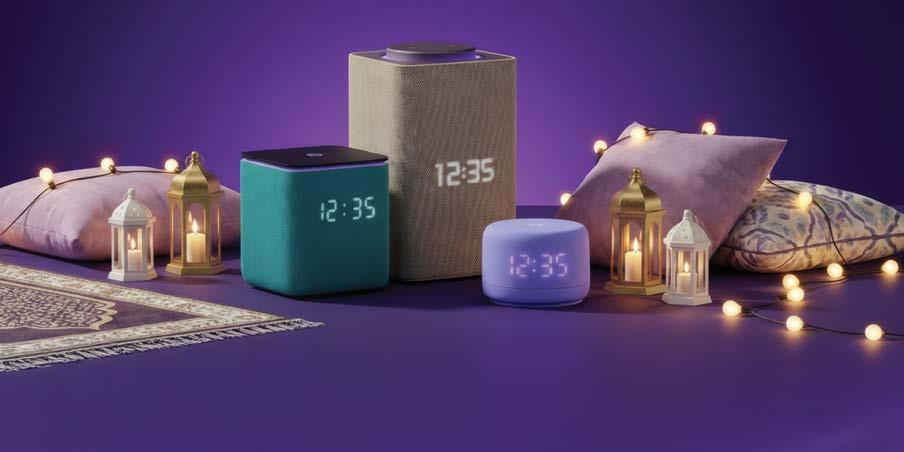
Yango Yasmina AI powered speakers expand with new Ramadan features →
While AI speaker trends are focused on integrating advanced generative AI for more nuanced, personalized interactions, Yango Yasmina ups the ante by incorporating new Ramadan features.
Yango Group’s bilingual AI assistant Yasmina is rolling out a set of Ramadan-focused updates in both Arabic and English, to help users keep track of the Ramadan calendar, stay aligned with prayer moments and access daily tips and curated audio content throughout the holy month. With simple voice prompts, during Ramadan users can ask Yasmina Ramadan calendar questions such as “How many days until Ramadan?”, “Which day of Ramadan is it today?” or “How much time is left until Iftar?”. To support everyday Ramadan routines beyond timekeeping, Yasmina will also provide daily Ramadan tips by voice upon request throughout the month of Ramadan. These brief recommendations are practical and accessible, covering themes such as intention-setting at the start of the month, respectful conduct while fasting, balanced routines around suhoor and iftar, and wellbeing habits like hydration — grounded in widely observed Ramadan practices.
During Ramadan Yasmina will set the Noor Dubai 93.9 radio station as the default and offer thematic Ramadan playlists available via simple voice requests, such as “Yasmina, play Ramadan dua” — making it easier to move between spiritual moments, family time, and everyday tasks without picking up a phone. Moreover, users can also schedule a Quran recitation during the holy month — for example: “Set Quran on my alarm at 6 pm.”
For families, Yasmina will also offer a Ramadan quiz available in Arabic with simple educational questions — a light, shared way to learn and reflect together during the month. Users can start it with a voice prompt such as “Let’s play Ramadan riddles.”
“Ramadan is a season shaped by rhythm — prayer moments, family gatherings, and small daily habits that carry meaning,” said Rami Abu Arja, Senior Innovation Marketing Manager at Yango Group Middle East. “With these updates, Yasmina is designed to support that rhythm in a natural, voice-first way — from calendar
questions and prayer timing to curated audio and short daily advice that fit into real home routines.”
Ramadan updates complement Yasmina’s existing religious features, including Quran recitations by parts (juz’) by a dedicated reciter, and recitations of specific surahs by various reciters, as well as other faith-related voice requests already available on Yasmina-enabled devices.
Beyond Ramadan with Yango Yasmina Midi
The Yango Yasmina Midi is a 24-watt AIpowered smart speaker featuring advanced voice control in Arabic and English, designed for immersive sound with deep bass. It includes 4 microphones, room correction technology and an LED display. It keeps you organized with timers, reminders and scheduling features. When connected to the Yango Play app, it functions like a smart home hub offering interactive, personalized experiences. With Yango Play, Yasmine gives you access to over a million songs, playlists and trending hits, so you have music for every mood. Powered by YangoGPT for natural conversations, storytelling and answering questions in English and Arabic, including the Khaleeji dialect. What’s more, Yasmina offers regional insights in a warm, familiar voice as it’s loaded with local cultural traditions and values. Perhaps the biggest flex is how Yasmina Midi offers users Arabic immersion to learn or familiarize themselves with the language.
TAMARA CLARKE, a former software development professional, is the tech and lifestyle enthusiast behind The Global Gazette, one of the most active blogs in the Middle East. The Global Gazette has been welcomed and lauded by some of the most influential tech brands in the region. Clarke’s goal is to inform about technology and how it supports our lifestyles. Talk to her on Twitter @TAMARACLARKE theglobalgazette.com
The Executive Selection
From better goods to better wardrobe bests, every issue, we choose a few items that make the approved executive selection list. In this edition, our picks are from NUWAE and Schiaparelli.
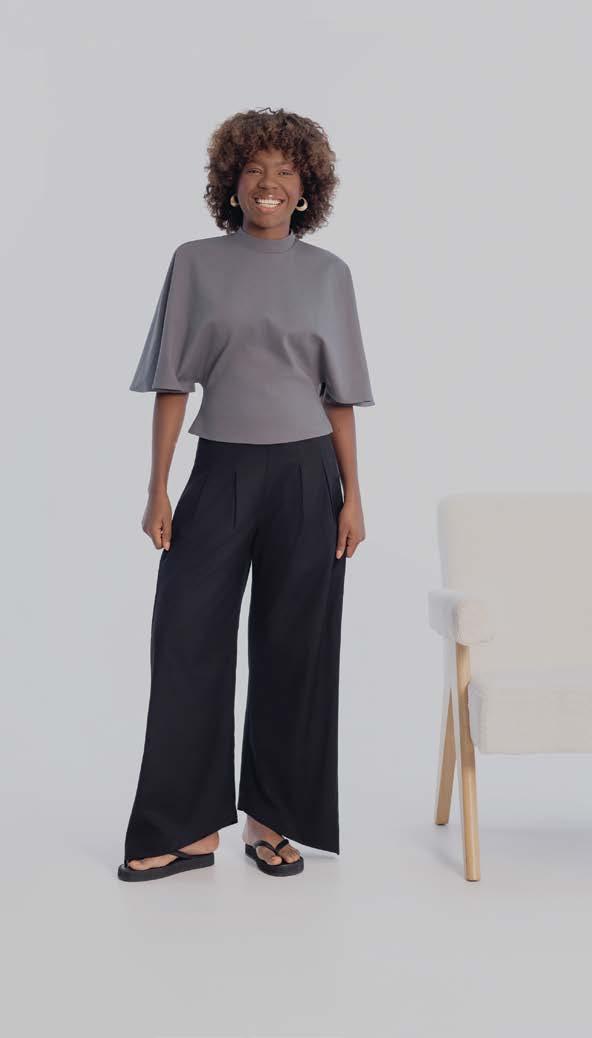
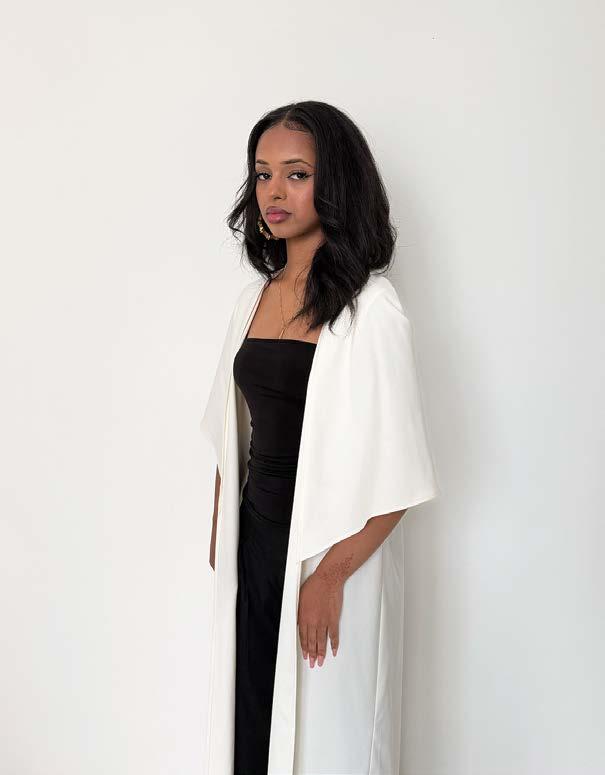
NUWAE ← ↑
The Dubai-based label redefines Ramadan dressing with sculptural modestwear designed for longevity, versatility, and quiet confidence.
Ramadan dressing is often associated with predictable silhouettes and occasion-specific pieces. But Dubaibased label NUWAE—pronounced “new way”—is offering a more considered alternative this season, one that blends modern design with modest sensibilities through sculptural layering, subtle Japanese-influenced tailoring, and versatile wardrobe staples designed to be worn well beyond the holy month. Founded in 2021, and designed and produced locally in limited quantities, NUWAE operates through small capsule drops built around elevated essentials and unisex silhouettes. Each piece is conceived to be styled multiple ways, encouraging a curated wardrobe rather than seasonal excess. For Ramadan 2026, NUWAE spotlights a refined edit of key styles that transition seamlessly from daytime commitments to afterdark Iftar gatherings. At the forefront is the Cinched Tee (AED 390), a reimagined essential distinguished by its mid neckline, fluid cape-style
sleeves, and softly structured body that contours gently at the waist. The Three-Quarter Fold Top (AED 420) continues the brand’s understated design language. With its relaxed fit, folded sleeve detailing, and unisex cut, the silhouette is tailored for comfort in warmer weather while remaining suitable for layering. For evening occasions, the Light Cape Jacket (AED 550) paired with the Pleated Slant Pant (AED 410) delivers a polished yet relaxed ensemble. The look can be styled with a long-sleeve base layer for added modesty or worn beneath an abaya, underscoring the adaptability central to the brand’s philosophy. Meanwhile, the Lightweight Maxi Jacket (AED 495) stands out as an elongated layering piece designed to provide coverage without compromising proportion or movement. Across collections, NUWAE’s aesthetic remains calm and composed, favouring clean lines, minimal visible seam work, and relaxed tailoring over overt branding.
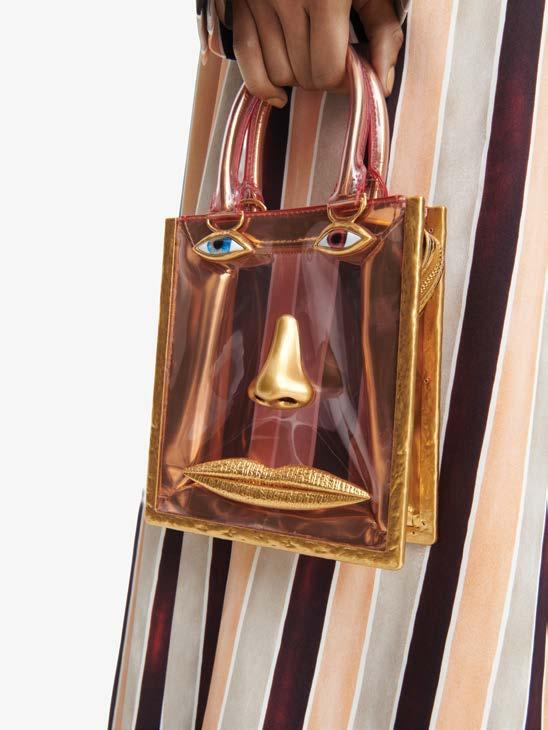
↓ →SCHIAPARELLI
For Ramadan, the brand spotlights refined silhouettes from its Spring–Summer 2026 collection.
With The Ramadan Edit, Schiaparelli frames dressing as an act of intention. Drawn from the first act of its Spring–Summer 2026 Ready-to-Wear collection, the selection emphasizes composure and control through silhouettes that balance structure with softness. Double-breasted dresses in striped crepe
and camel poplin define the offering, sculpting the body with measured precision. Finished with discreet gold bijoux buttons, the pieces capture light subtly rather than theatrically, underscoring the house’s preference for quiet impact. The tailoring feels deliberate yet fluid, designed to command presence without
excess. Elsewhere, striped satin trousers introduce movement and ease, paired with soft cashmere knits that offer understated refinement. Textured taupe viscose ensembles, accented with keyhole buttons and delicate gold chain details, elevate comfort into couture territory. Across the edit, contrasts are thoughtfully managed — strength meets softness,
structure meets serenity — resulting in looks that feel both grounded and graceful. Accessories complete the narrative. A large raffia Soufflé bag lends lightness and a sense of motion, while the oversized Soft Secret bag in braided calf leather, embellished with signature bijoux buttons, anchors each ensemble with tactile craftsmanship. The interplay between airy materials and rich leather further reinforces the collection’s dialogue between fluidity and form. The first act of Schiaparelli’s Spring–Summer 2026 collection is available at the Schiaparelli Salons at 21 Place Vendôme in Paris, as well as select global locations including Landmark Prince’s Building in Hong Kong, Hôtel de Paris Monaco, Harrods in London, Bergdorf Goodman in New York, Neiman Marcus in Los Angeles and Dallas, Dubai Mall in Dubai, and private salons at Mandarin Oriental Dubai Jumeirah and Hankyu Osaka.
Create Apps Success Stories
With the third edition of the Create Apps Championship —– Dubai Chamber of Digital Economy’s flagship program, and part of the Create Apps in Dubai initiative— announced, this series spotlights some of the most prominent mobile apps that have been born out of previous editions of the Championship. by AALIA MEHREEN AHMED
Finalist - Second Edition
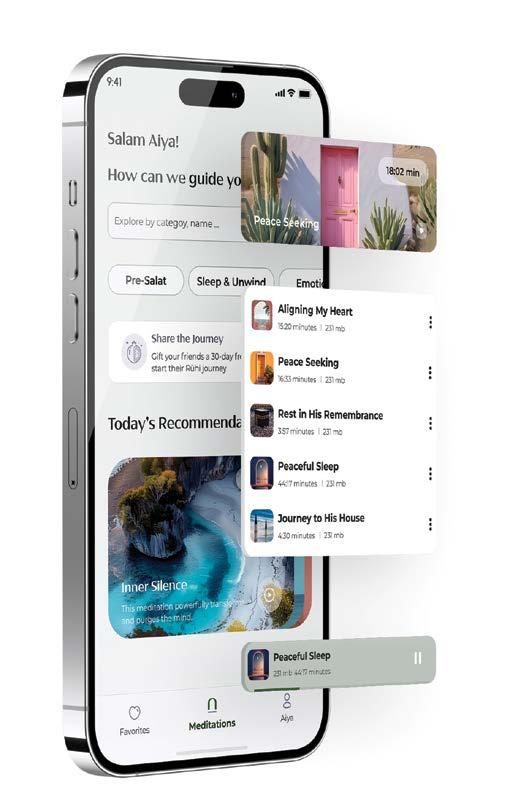
With the advent of more, and better, mental health tools, a quieter, more nuanced discourse has emerged: the need for culturally sensitive and faith diverse options. Zahra Salah and Noor Salih decided to tackle this gap from a Muslim perspective when they co-created Rūhi, an Islamic meditation app. “Rūhi was born out of a need for a mindfulness
tool that speaks our language,” Salah explains. “We felt that the dominant narrative on wellbeing didn’t align with our values and culture. It felt borrowed from a heritage that isn’t ours. The generic mindfulness apps present a one-size-fits-all approach rooted in Western interpretations of Eastern practices, leaving many communities feeling disconnected from tools that are proven to be beneficial. For wellbeing practices to truly deliver impact, it needs to resonate with us on a deeper level.”
Salah explains the complexity of the situation with a simple analogy. “It’s like when everyone is offered coffee, but some of us actually prefer tea or Karak. Real inclusivity isn’t about providing one option for all; it’s about honoring different tastes and traditions. Rūhi bridges that gap between modern mental health practices and cultural authenticity. We center the practices, language, and wisdom to reflect our culture and values. We believe everyone deserves access to wellbeing resources that honor their identity and heritage, not ones that ask them to adapt to someone else’s framework.”
Rūhi was thus built as a meditation app that integrates spirituality into modern wellness, but with an aim to blend heritage with neuroscience. “It’s for anyone with a God-centric worldview who is tired of mentally translating phrases like “the Universe” to make meditations resonate with their heart,” Salah elaborates. “As
→ Zahra Salah the
Muslims ourselves, we created something that speaks directly to our faith and values—no adaptation required. Now Rūhi is doing for wellness what milk alternatives did for coffee shops: finally creating a solution for an audience that has been overlooked for far too long.”
Soon after its inception, Rūhi found support in building its base when the application got accepted into the Create Apps Championship. While it notably emerged as one of the finalists of the second edition, Salah notes that the benefits of the program extended beyond its six-month window. “The Championship forced us to fine-tune every aspect of our journey,” she says. “Taught by experts in the industry, it feels like a mini marathon training. With deadlines and submissions, you are slowly but surely guided toward a finish line. It’s important to understand that this is prep work for the actual job and that founders who understand their purpose will come out the strongest. We also used the mentor circle to build relationships we value and cherish. Some of our mentors are still offering support and guidance, which we are utterly grateful for (thank you, Weera!) Finding the right support is essential to succeed in any venture. The competition helped facilitate a beautiful network of impactful professionals in their fields.”
Having amassed beneficial knowledge and connections, the Rūhi team has successfully built on the momentum it gained as Championship finalists. “We’ve made significant progress on multiple fronts, both in B2B and B2C,” Salah shares. “You see, Rūhi is built as more than just a digital platform; it’s a community-centered brand. So through monthly events that combine meditation sessions with expert-led workshops, we’ve created meaningful connections with our audience, fostering belonging and ambassadorship. We’ve also held regular in-person meditation sessions for employees of ICD Brookfield Place, offering people from diverse backgrounds, in the heart of Dubai’s buzzing
financial district, a space to experience authentic wellness rooted in spirituality. Furthermore, we are part of the Dubai Founder HQ platform, which positions us within Dubai’s innovation ecosystem and provides access to resources that accelerate our growth.”
Such meaningful initiatives have also opened doors for some strategic collaborations along the way. “Mental health clinics have integrated Rūhi subscriptions into their packages to offer Muslim clients an after-care tool that integrates easily into their daily lives,” Salah adds. “We’ve also secured a corporate pilot contract with Emirates Airlines, delivering a hybrid wellness solution that includes on-site sessions and
premium app subscriptions for their staff. A partnership with an iconic corporation that values its employees’ well-being and understands that wellness is not a tick-box solution.”
While thus remarking upon Rūhi’s milestones so far, Salah notes that her app’s journey is in many ways reflective of the Emirate it is based out of. “Dubai has always led the way in innovation and progress, and we’re building in line with the vision of Sheikh Hamdan’s Mental Wealth strategy to promote mental wellbeing,” she says. “This is a UAE-born innovation addressing a gap that exists globally: wellness tools have largely ignored the spiritual foundations that guide daily life for so many, both here and around the world. Rūhi
fills that gap by honoring faith as a core component of mental and emotional well-being, not as an afterthought or something to be secularized. Where other apps strip away spiritual elements in pursuit of universal appeal, we embrace them. Much like Dubai strategically rebranded to become a destination people travel across the world to experience, Rūhi is rebranding wellness, making faith-based mental health something people actively seek, not settle for translated alternatives. This region has proven it can set global standards, and we’re positioned to do exactly that. Because what we build today, our future generation will rely on tomorrow.”
With a clear vision in mind, Salah remains optimistic about her venture’s road ahead. “Rūhi’s roadmap is buzzing, both internally with new features rolling out in phases, as well as externally penetrating the market space,” she shares. “We have been in meeting rooms with both big and small corporations, resulting in several upcoming partnerships. First off has been a collaboration with Noon, where Rūhi vouchers were included with their deliveries leading up to Ramadan, leveraging one of the region’s largest e-commerce platforms to expand our user base in the peak spiritual season. We also have a line-up of bespoke activations and collaborations with
international luxury brand names, offering wellness with cultural intelligence. As for corporate memberships, we are in the process of signing another leading institution known for its innovative employee wellness strategy that focuses on a culture of belonging. Being a homegrown startup in Dubai means we move at the city’s pace, adapting rapidly to client needs and evolving alongside them. This makes us more than a service provider; we’re co-creating the future of wellness in the region!”
'TREP TALK
Zahra Salah, cofounder of Rūhi, shares advice to founders considering joining future editions of the Create Apps Championship
} “Understand that the journey is more important than the result. This applies to both the competition and to startup life in general. Use all the tools you are provided with to enhance your skills. We highly recommend building a network of people who share your values and believe in your product. This can only be achieved through meaningful connections, because beyond any venture, the most important aspect of a company is the people behind it.”
subject less boring, and point our curiosity and enthusiasm in the right direction, this will be a great step in our personal and academic development.”
Ever wondered how sometimes it’s difficult to walk a few steps to grab a bottle of water at the end of the day but when you are travelling to a distant location for something fun, you just can’t wait to get out of the house?” asks
Benjamin Etrue, founder and CEO of Querist Ai (QAi). “Well, that’s the same for learning something new. Learning is a crucial part of the journey in life. But sometimes it kind of feels like a chore instead of it being like an exciting plan to fulfil our dreams. If this gap can be breached to make any topic and
It was precisely this sentiment that led Etrue to build QAi, an AIpowered trivia app that transforms PDFs and documents into interactive quizzes, making learning engaging and personalized. With adaptive difficulty, real-time analytics, and CPE credits, it helps students and professionals
retain knowledge while they play. “Traditional trivia games recycle questions, leading to boredom and disengagement,” Etrue laments. “For students who study hefty documents or books, which become draining to get through, my application is a learning aid through an AIpowered gamified engine that lets users turn any topic or document into a personalised quiz master, tests you on what you have absorbed, and provides information on areas where you need more in-depth understanding. Our core audience are students, professionals, trivia enthusiasts, educational institutions, and event organizers.”
As such, Etrue believes QAi’s differentiating factor lies purely in how it allows users to tailor their learning journey.
“Traditional trivia apps rely on static question banks based on generic topics,” he notes. “But with our AI gamified solution, we make every trivia experience a personalized journey, making learning fun and interactive. The research module of this application will drive personal studies and data-gathering content for learning and become the “vibe-coding” of a research content builder.”
Etrue’s belief in his vision earned him a spot as one of the finalists of the second edition of the Create Apps
Championship. “The program opened doors to a wider audience and networking with several other like-minded founders,” Etrue says. “It was, and still is, an amazing journey since the team is always following up and helping us along this journey. I was deeply honoured to be a part of and hope this program grows bigger each year.
Etrue now moves into 2026 with a steady mission to work towards. “We are already live on both app stores and have secured partnerships and approvals from two major telecoms in the UAE: Etisalat in January 2025 and du in December 2025 for our carrier-based billing modules. We are in the throes of initiating our
For students who study hefty documents or books, which become draining to get through, my application is a learning aid through an AI-powered gamified engine that lets users turn any topic or document into a personalised quiz master, tests you on what you have absorbed, and provides information on areas where you need more in-depth understanding.”
The exposure to network with Business oriented individuals, know-how on how to present or pitch our ideas and sell your business through storytelling backed by data was incredible.”
go-to-market strategy to secure more paying customers and generate revenue. We are in talks with a few agencies like Mesh Ads to determine how best to drive traffic and push this venture.
Benjamin Etrue, founder and CEO of Querist Ai (QAi), shares advice to founders considering joining future editions of the Create Apps Championship
}“This is not an opportunity worth missing. If you are ready to put in the work and grow your business, this is by far the best place to be to make that happen. I do not think you will find a more supportive and inclusive program out there like this.”
In The Loop/
STEP DUBAI 2026
The 14th edition of STEP Conference took place on February 11–12, 2026, at Dubai Internet City, with a fully AI-dedicated program aligned with the UAE’s National Strategy for Artificial Intelligence 2031.
Under the theme "Intelligence Everywhere: The AI Economy", the event welcomed more than 8,000 attendees, including over 400 startups and more than 100 companies and
speakers from the region and international markets. The program provided access to an active investor community representing more than US$12.6 billion in deployable capital.
A long-time supporter of the STEP Conference, Entrepreneur Middle East had two dedicated booths on-site at STEP Conference 2026, providing opportunities to engage directly with readers, founders, and startups from across the regional tech ecosystem.
In The Loop/ Paul Dawalibi /
CEO, INNOVATION CITY
Paul Dawalibi, CEO of Innovation City, explained how the UAE’s AI-powered free zone in Ras Al Khaimah has quickly become one of the most talked-about ecosystems in the region’s technology landscape.
The UAE is home to more than 40 free zones, many of which offer licensing, visas, and office space. Dawalibi believes that model, while effective, is no longer enough. “We think free zones can do better,” he said. “It’s not just about selling a license, a visa, or a desk and wishing companies the best of luck.”
Instead, Innovation City is built exclusively for technology and innovation-driven companies, spanning artificial intelligence, Web3, gaming, robotics, and healthtech, and Dawalibi’s approach centers on identifying the specific pain points faced by founders in these sectors and building the infrastructure, resources, and support systems to help them overcome those challenges. His ultimate goal is to see the next generation of unicorns built out of Ras Al Khaimah.
One of the defining pillars of Innovation City’s strategy is
what Dawalibi calls "density of intensity.” Dawalibi argues that fragmentation across multiple free zones can dilute this effect. When companies in the same sector are scattered across different jurisdictions, opportunities for collaboration and organic innovation may be lost. “Innovation happens when you put enough smart, driven people in the same place,” he said. “Extraordinary things tend to follow.”
“We’re thinking differently about the problem,” he said. “We’re not just trying to bring tens of thousands of tech companies. We’re trying to build the next unicorns.”
Dawalibi envisions Innovation City becoming the largest free zone in the UAE and the region’s “unicorn factory.” “We want to be the Silicon Valley of the Middle East,” he said. “The place where companies are born, grow, and choose to call Ras Al Khaimah home.”
RAY DARGHAM /
CO-FOUNDER AND CEO, STEP
Ray Dargham, co-founder and CEO, STEP, reflected on the festival’s 14-year journey from a 100-person gathering in a co-working space to one of the region’s most influential tech platforms. STEP began in Dubai’s first co-working space, Make Business Hub, and it has since evolved into a flagship event that mirrors the UAE’s startup ecosystem.
When we started, there were maybe four or five VCs in the entire region,” Dargham said. “The number of startups was far smaller, and the government and other entities were not as involved or active as they are today.”
The turning point came around 2015—a year Dargham describes as pivotal not only for STEP, but for the ecosystem at large because the various
elements of a startup ecosystem began to meaningfully align. Early-stage founders who once took the stage with teams of fewer than a dozen employees went on to build category-defining companies.
"Over the past decade, the ecosystem has matured significantly,” he said. "Funds have reached the end of their cycles, some returning capital to LPs, others launching second and third funds armed with deeper experience and stronger networks. The region is no longer
In The Loop/
experimenting, it is compounding."
Beyond scale, STEP has become synonymous with something harder to quantify: community. “What I’ve heard from someone recently,” Dargham said. “is that they attend many events, but STEP is where their soul is.
For STEP, the product is the experience. Attention to detail, curated programming, and long-term relationship-building have been central to maintaining that experience. "In any business, especially when you face challenges—financial or otherwise—it’s easy to take shortcuts,” he said. "But once you compromise on your core principles, the product and culture start to fade.”
Looking ahead, Dargham explained that the next decade of entrepreneurship in the region would look radically different from the last driven primarily by artificial intelligence. “I think there’s never been a better time to be a founder,” he said. "AI tools have dramatically lowered the barriers to entry. Founders no longer need large technical teams or significant upfront capital to build and test products. You can build a system of AI agents for sales, marketing, and operations without spending tens of thousands of dollars. You can get started immediately.”
However, with this democratization comes a new challenge for the
region. International players can enter regional markets seamlessly, often in multiple languages. As a result, Dargham argued that founders and investors in the Middle East must think bigger.
“We have incredible technical talent in the region,” he said. “But we need to build with global ambition from day one. Rather than stopping at expansion from Dubai to Saudi Arabia, founders should design for the US and global markets early on, raising capital internationally when necessary, while maintaining strong operational ties to the region."
In recent years, STEP has launched editions in San Francisco, creating direct
bridges between the Middle East and Silicon Valley. “We’re not trying to parachute in and do something flashy,” Dargham said. “We’re building community there the same way we did here- starting small and growing organically.”
“There’s a lot of interest in Dubai from Silicon Valley,” he added. “When you mention it, people’s eyes light up.”
As for founders navigating this AI-driven era, Dargham’s advice is clear. "Build boldly but stay disciplined. If you’re lazy, AI won’t save you. You still have to put in the work.”
RONY HAGE /
FOUNDER, FOUNDER CONNECTS
Rony Hage, Founder of Founder Connects, talked about the emotional weight of entrepreneurship and why community may be one of the most undervalued assets in the startup journey.
Hage himself is no stranger to startups. With 15 years in the tech industry and multiple ventures under his belt, including a marketplace business operating in Los Angeles, he experienced firsthand the isolation that can accompany growth.
While building his previous startup, Hage sought proximity to the US ecosystem without physically relocating. With a co-founder on the ground in the United States and a family based in Dubai, he began
joining founder communities abroad to stay connected.
“Although we were doing really well, I realized how much knowledge I could gain just from being part of these communities,” he explained. That insight became the seed for Founder Connects, a curated, membership-based community designed specifically for tech founders in the region.
Unlike open networking groups, Founder Connects is intentionally selective. Founders cannot simply pay
to join- they are interviewed before being accepted.
“We want to make sure you’re serious about building,” he said.
In just two years, the community has grown to 300 vetted tech founders. Alongside its private membership model, Founder Connects also organizes public events to create broader opportunities for collaboration across the ecosystem.
Through hundreds of conversations, Hage has observed a recurring pattern among founders: ambition paired with underestimation of the journey’s difficulty. “Many first-time entrepreneurs have an idea of what the journey looks like,” he noted. “Then they realize, it’s actually very tough.” That’s where community becomes critical.
Hage’s own exposure to diverse founders has expanded his perspective. Conversations with healthtech entrepreneurs, for instance, opened his eyes to sectors he previously overlooked. “I wasn’t attracted to healthtech before,” he said. “Until I started speaking to healthtech founders and realized how interesting and important it is.”
This cross-pollination of ideas is exactly what Founder Connects aims to facilitate: founders learning not just from success stories, but from each other’s lived experiences.
Beyond Dubai, Founder Connects is expanding into Abu Dhabi and
In The Loop/
preparing to launch in cities such as Doha and Beirut, with additional regional rollouts planned.
The move has revealed noticeable cultural differences. Dubai, as a global hub, attracts a high concentration of expatriate founders. Abu Dhabi presents a different dynamic- equally serious, but culturally distinct.
“Every single founder is serious,” he said. “But they approach problems differently—and that’s a good thing.”
As artificial intelligence reshapes industries at unprecedented speed, founders are feeling both pressure and possibility.
“There’s definitely a race,” Hage said. “Everyone wants to be an AI founder. In the early wave of AI enthusiasm, many rushed to build lightweight wrappers around existing large language models and position themselves as AI startups. Now, the market is cleaning itself up. People are realizing that’s not the way forward.”
If there is one thread running through Hage’s advice, it is humility. “No one knows all the answers,” he said. "In fact serial founders succeed not because they possess all the knowledge, but because they ask more questions than most. So have the courage to start. Ask relentlessly. Surround yourself with the right people.
ADEO ROSSI /
ENTREPRENEUR, INVESTOR, STARTUP MENTOR, AND FOUNDER
Entrepreneur, investor, startup mentor, and founder Adeo Rossi said his decision to come to the region was driven by an instinct that “something’s happening.” He said, "There’s a moment right now where all these pieces have come together. It is like in all the previous ecosystem breakthroughs in places such as Singapore, Chile, Colombia, and Finland, all of a sudden you just see explosive growth with unicorns and all these great companies coming out and I feel that moment is happening right now.”
Three ingredients come together - stability, talent, and capital,” he added.
"And when there's the right mixture of those three things, all of a sudden just great companies get born, unicorns get started, the region starts just exploding. Those ingredients are here right now, and that moment is now.”
When asked how he defines his role after three decades in entrepreneurship and investing, Rossi said, “I work on
things that I think are important to make the world a better place.”
He explained that his focus today is mobilizing ethical capital at scale. “I really believe that we need more ethical investors deploying capital to fix the problems that humanity is facing,” Rossi said. "Now there are entrepreneurs everywhere. They need capital. And so I'm trying over the next few years to launch 10,000 new funds worldwide. A hundred in the next couple years here in the GCC to start
funding these solutions that humanity needs.”
He also underscored the scale of the gaponly about 4% of the largest cities in the world have thriving venture capital ecosystems. "If we launch 10,000 funds, that will bring it up to about closer to 50%,” Rossi said. "We need probably 25,000 more funds for really a 100% of the top largest cities in the world to have thriving VC ecosystems. So there’s a long way to go and that’s the problem I’m trying to solve.”
On artificial intelligence, Rossi argued that the conversation has shifted dramatically in
just weeks. “I looked at how much AI changed just three weeks ago. There was the release of something called Open Claw, which allows you to create like humanlike agents on a local computer that can do literally anything that a human can do.
“And you can actually set up teams of agents on a single computer. And then if you have multiple computers, you can set up multiple teams of agents that are human capable.”
“All our mental models about what AI can do, what humans can do within AI have changed pretty dramatically just in 3 weeks time.”
He believes this could
accelerate global problem-solving. “All I know is that one person can do the work of hundreds today. That was not possible before.”
Rather than framing AI as a threat, he sees it as an abundance engine. “I think we have so much work to do. Even if all of humanity started working on the problems that we’re facing, we wouldn’t have a big enough labor force to fix them. So maybe this AI was what we needed.”
When discussing founder traits, Rossi was unequivocal about conviction. “If you don’t believe in what you’re trying to do then it’s very hard to have the
courage of your convictions to do the impossible when things get tough.”
He also emphasized resilience. “So grit, determination, just the ability to say no matter how hard it gets, no matter how difficult things become, I’m going to make it happen.”
Asked to define success, Rossi said that it is leaving humanity in a better condition than when he started.
“If I could make the world significantly better for my children, and even if I end up in a penniless state, that would be far better than if I ended as the richest person in the world,” he said.
In The Loop/
DR MARWAN ALZAROUNI /
CEO OF AI, DUBAI DEPARTMENT OF ECONOMY AND TOURISM
CEO, DUBAI BLOCKCHAIN CENTER
Dr Marwan Alzarouni talked about Dubai’s AI leadership, the rapid evolution of artificial intelligence, and the mindset founders need in this new era.
The whole idea of Dubai comes from its leadership. Our leadership is always forward looking,” he said. "In Dubai, since its inception, the leadership has always been thinking about the bottom line for people. Why would anybody move to Dubai? Why would anybody do business with Dubai?”
“Dubai thinks big and does what it says it will do. One of the first to have the blockchain strategy as a city, one of the first -if not the first- to have made its virtual assets and crypto regulator, and one of the first in the world to publish AI ethics back in 2017.”
Asked what it feels like to lead AI within Dubai’s economic framework, Dr Alzarouni said, “It’s an amazing place to be right now. It’s a very exciting space. The only limitation is the imagination of the entrepreneur. Now you
have no excuse, you now have all these AI agents to help you build your business.”
On the current AI cycle, Dr Alzarouni described it as a mix of both hype and substance. “But what we’ve seen in the last three weeks as innovation has been mind-boggling. In general, I think startups right now are much more agile. With AI tools readily available, founders have no reason to hesitate. You owe it to
yourself to try.”
He rejected the idea that AI tools are overrated. “I think they’re underrated actually, but the challenge is choice overload. We are spoiled for choice when it comes to tools. So pick one and start and that’s it and go for it.”
On the broader employment debate, Dr Alzarouni remained optimistic. “No, I think it will create people with multiple startups instead of, you
know, working on only one idea. Now you can just use the prompt and after 15 minutes you can launch it and then see how the world reacts. The sky is the limit.”
When the topic turned to regulation, he acknowledged complexity. “I think every person has a responsibility to be using AI in a responsible way not to be complacent with what AI gives you. I advise founders to test outputs critically and compare results across tools to strengthen their thinking."
Education, he believes, is central to responsible adoption.“The most important thing that’s missing with AI is education.”
His advice for entrepreneurs is multi-fold. “You should not get stuck in the status quo. I don’t think you should put yourself in a box. Always keep exploring. Keep pushing the boundaries. Don’t get stuck and don’t let work define who you are.
“Every single person you meet gives you a different perspective. So, meet as many people as you can.”