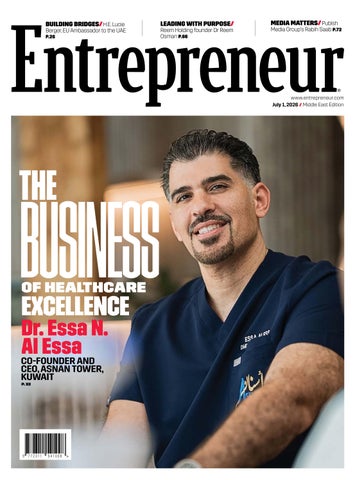
Entrepreneur Middle East July 1, 2026 | The Business Of Healthcare Excellence
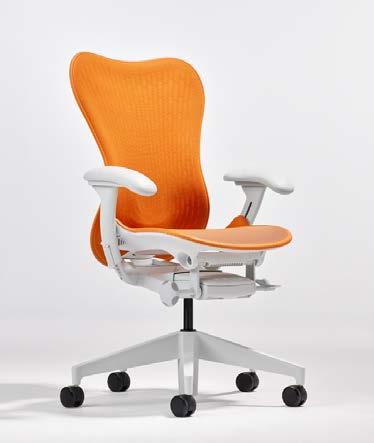
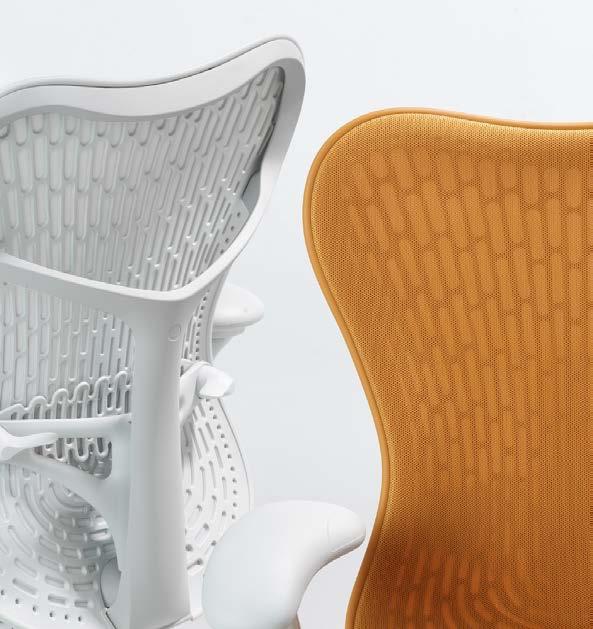
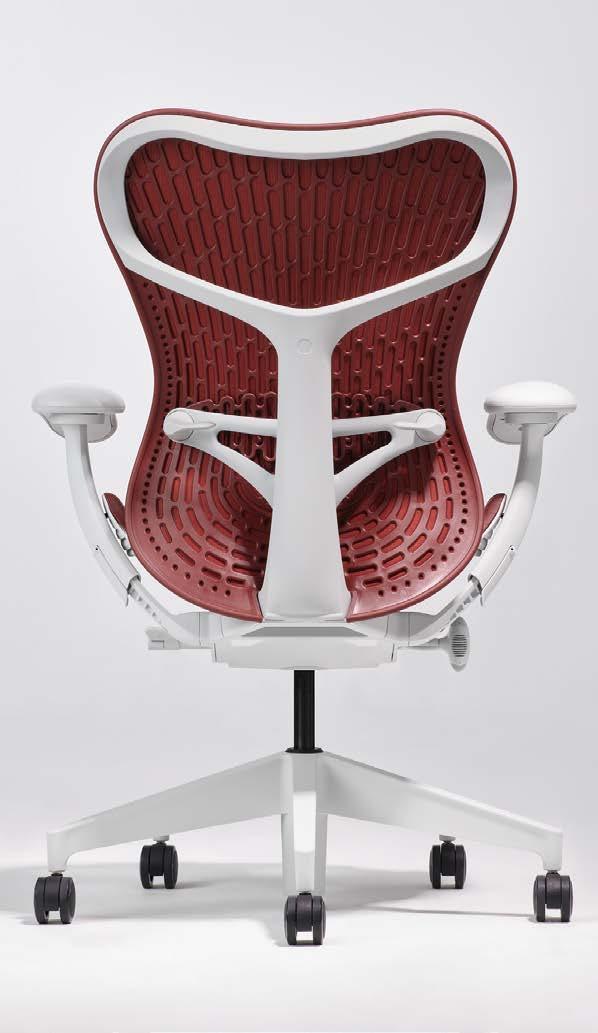
The Mirra 2 Chair just keeps getting better. How? We updated the chair so it’s 30 percent lighter than the original Mirra - and the chair’s nylon base and spine are now 100 percent recycled content. We also gave it a fresh, inspired colour palette so it can look professional, casual, or sporty. One thing that hasn’t changed is the flexible yet supportive design that allows your body to move naturally and freely - the way it was meant to move.
The Mirra® 2 Chair is turning heads again
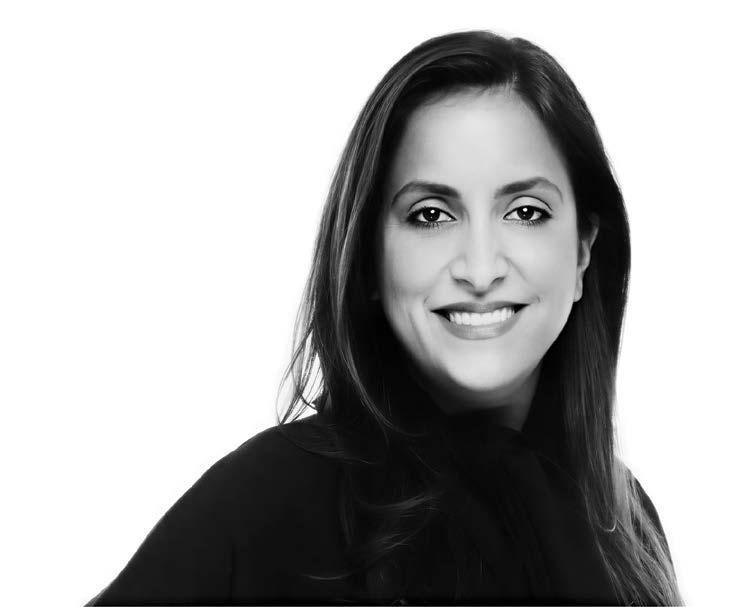
DR. ESSA N. AL ESSA, co-founder and CEO, Asnan Tower
UEB3
P.46
Journalist turned author HAFSA LODI presents her new book, Turbulence. P.51
Shanghai
BUSINESS UNUSUAL
19 France-UAE Business Relations
Business France CEO LOUIS MARGUERITTE says France has full confidence in the UAE as a strategic partner
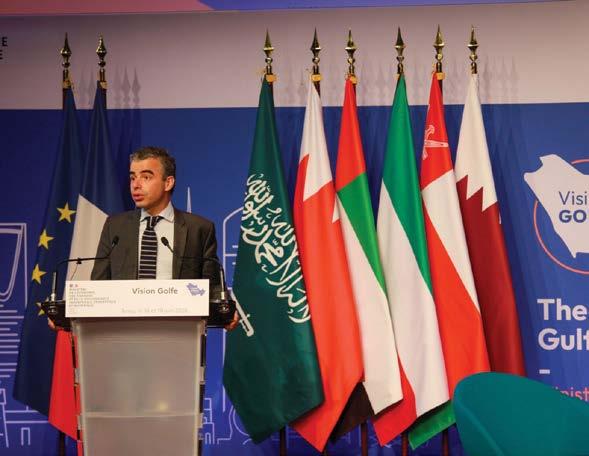
24 Vision Golfe 2026
Bringing together 1,200+ leaders to advance FRANCE-GCC partnerships
26 Building Bridges
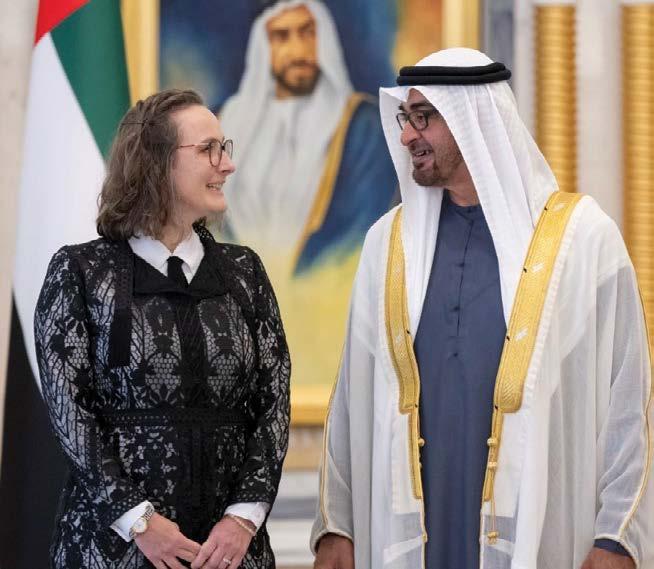
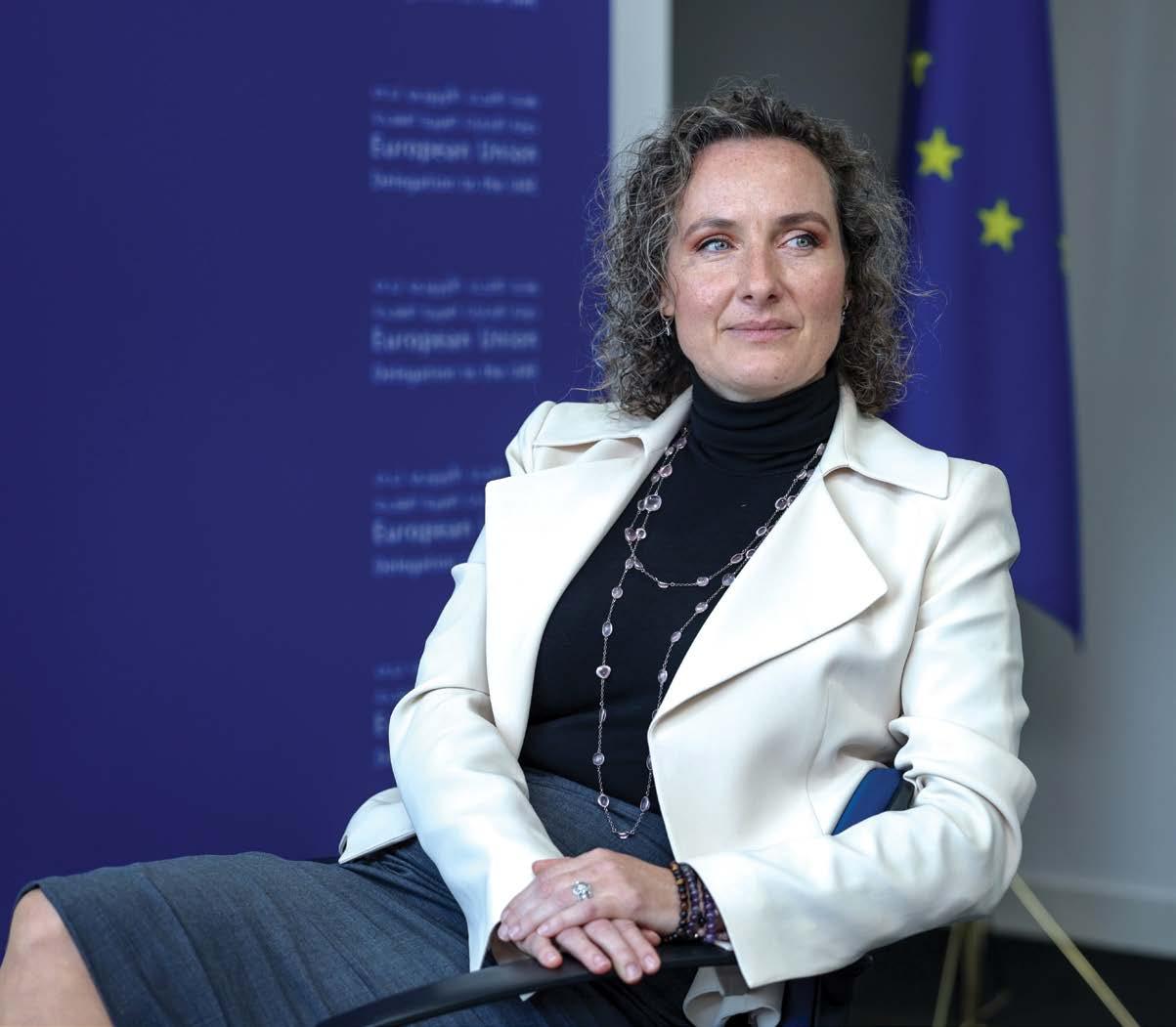
EU Ambassador to the UAE H.E. LUCIE BERGER discusses the growing EU-UAE trade and investment ties
‘TREPONOMICS
63 Navigating a More Connected World
Why the UAE is becoming the wealth bridge for globally mobile entrepreneurs and international investors
66 Creating Businesses That Matter
Reem Holding founder DR REEM OSMAN
68 Where Certainty Meets Scale
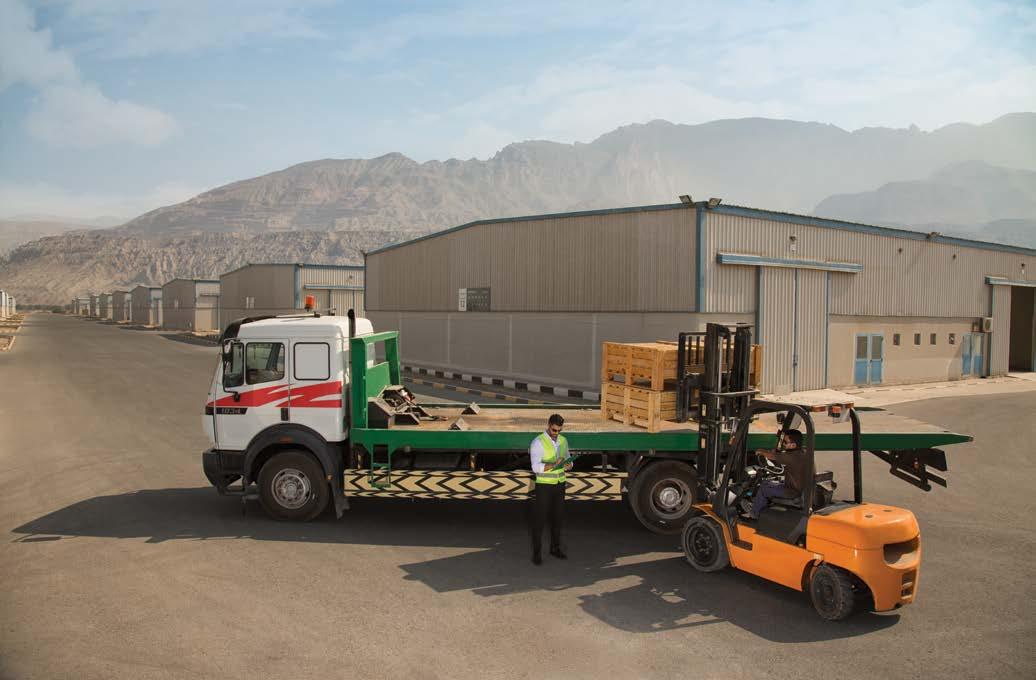
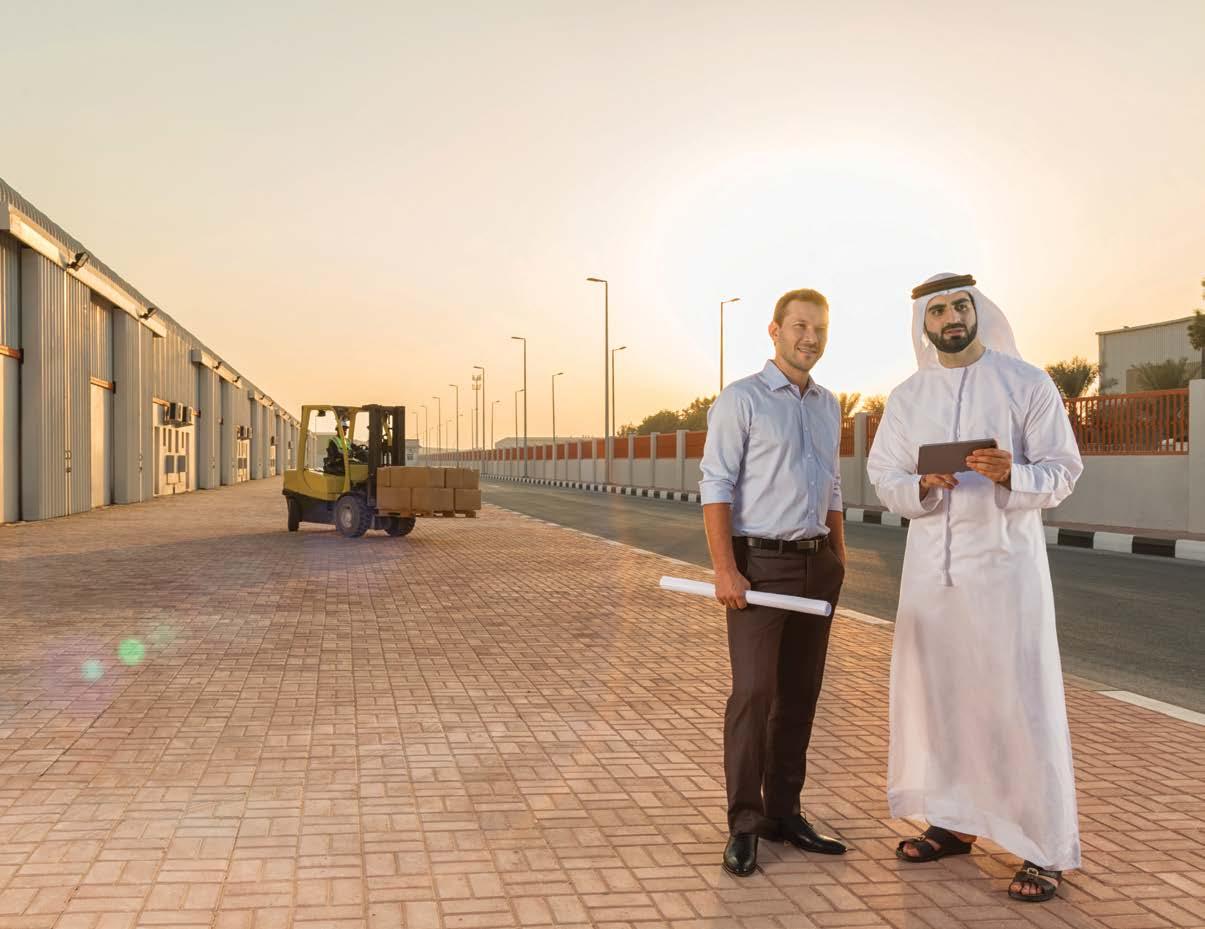
Inside RAKEZ’S strategy to position Ras Al Khaimah as a scalable industrial hub for global manufacturers amid shifting supply chains
72 Media training is a must for entrepreneurs
RABIH SAAB, Group Head - Media Division, Publsh Media Group, on the importance of visibility for entrepreneurs
STARTUP SPOTLIGHT
79 Built for MENA
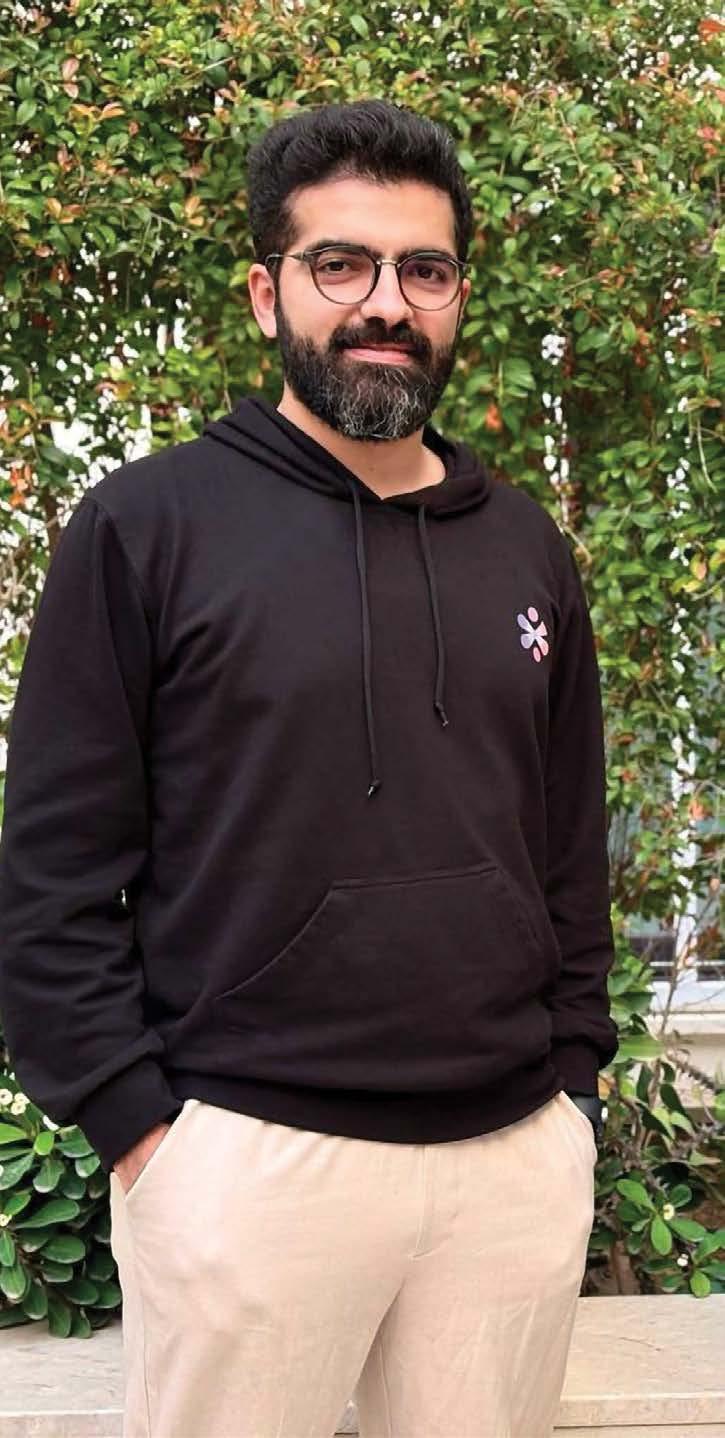
How Tunisian-born and UAEheadquartered CLUSTERLAB is making voice AI smarter for the region
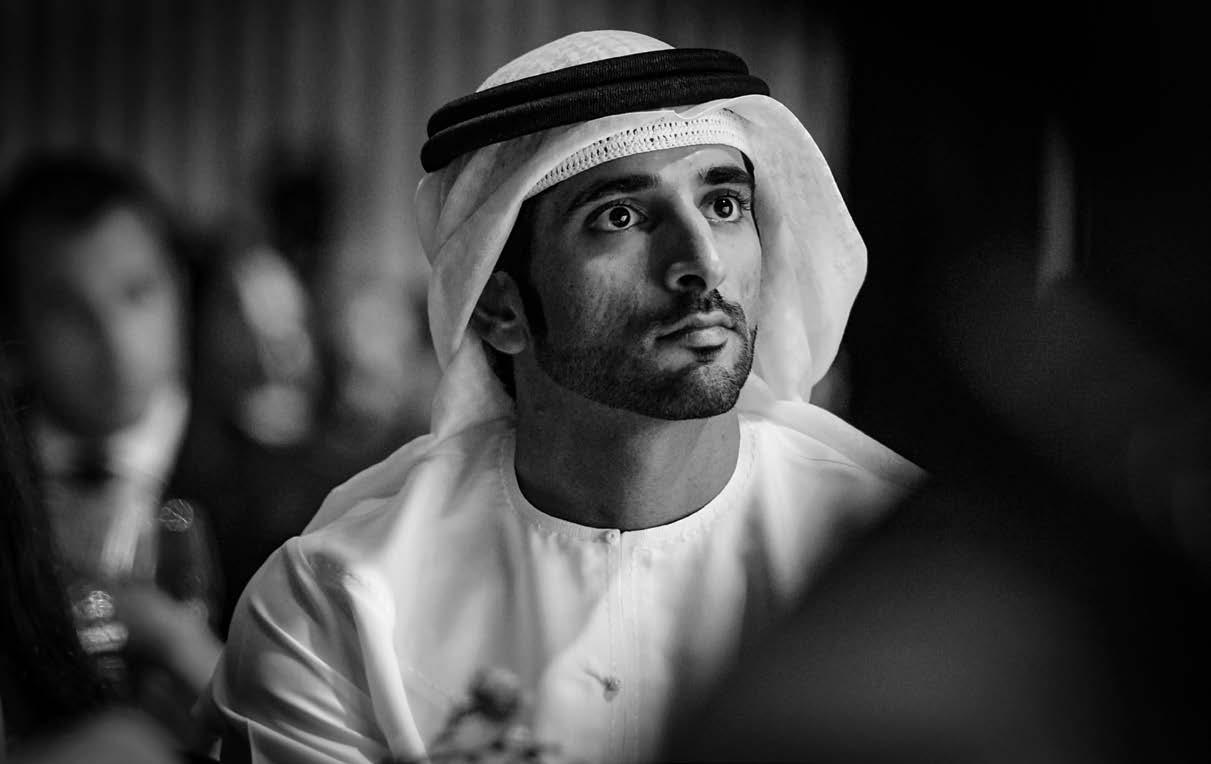
84 H.H. SHEIKH HAMDAN launches ‘Dubai-it’ award to recognize high-impact entrepreneurs, businesses, and projects
CEO Wissam Younane wissam@bncpublishing.net
MANAGING DIRECTOR Rabih Najm rabih@bncpublishing.net
COUNTRY MANAGER KSA
Amjad Fakhouri amjad@bncpublishing.net
ART DIRECTOR Simona El Khoury
EDITOR IN CHIEF Tamara Pupic tamara@bncpublishing.net
SENIOR FEATURES EDITOR Aalia Mehreen Ahmed aalia@bncpublishing.net
GROUP SALES DIRECTOR – B2B GROUP Joaquim D’Costa jo@bncpublishing.net
HEAD OF PARTNERSHIPS Samir Glor Samir@bncpublishing.net
BUSINESS DEVELOPMENT DIRECTOR Andy Soulahian andy.soulahian@bncpublishing.net
COMMERCIAL LEAD
Anna Chipala anna@bncpublishing.net
COLUMNIST Tamara Clarke
CONTRIBUTING WRITERS
Fida Chabaan, Rabih Saab, Rajesh Kannan
SUBSCRIBE
Contact subscriptions@bncpublishing.net to receive Entrepreneur Middle East every issue
COMMERCIAL ENQUIRIES sales@bncpublishing.net
ENTREPRENEUR.COM
Access fresh content daily on our website
→ H.E. Lucie Berger with the UAE President HRH Mohamed bin Zayed Al Nahyan.
THE READINESS PARADOX
As I write my first note as the Editor in Chief of Entrepreneur Middle East, I remember 2016/2017, when I was promoted to my first editorial leadership role, and I was not ready. I did not expect a promotion to bring so much anxiety. It was one of the most difficult years of my career.
Now, having served as Managing Editor of Entrepreneur Middle East for nine years, I know the brand inside out. I’ve lived through its best and most challenging moments, and during that time, I’ve experienced some of the highest highs and lowest lows of my personal life.
Today, the Entrepreneur Middle East brand and I are at peace. We are ready for each other. And together, we are ready to bring out the very best in one another.
With this story, I want to make two points:
Too often today, people are elevated before they are prepared. Titles arrive before perspective. Authority arrives before wisdom. It leaves them looking like an elephant in a china shop: moving fast, breaking things, and failing to understand the responsibility that comes with occupying the room. Wait until you are ready.
Then there are times we are not ready for, and never will be. Like the uncertainty all of us in the UAE and the GCC have lived through since February 28, 2026. Yet the lesson here is the opposite: do not wait to be ready. Think, pivot, change direction 300 times, try 3,000 other things to get to the other side. Do not sit on the sidelines whining, looking for excuses, investing minimum effort, and justifying it all with “the crisis.”
The challenge is knowing the difference between the moments that require patience and the moments that require courage.
Tamara Pupic Editor in Chief Entrepreneur Middle East
INTO NEW WORLDS
France Has Full Confidence in the UAE as a Strategic Partner
Business France CEO Louis Margueritte’s UAE Visit Underscores Growing Economic Ties Between Both Nations Ahead of Vision Golfe 2026. by AALIA MEHREEN AHMED
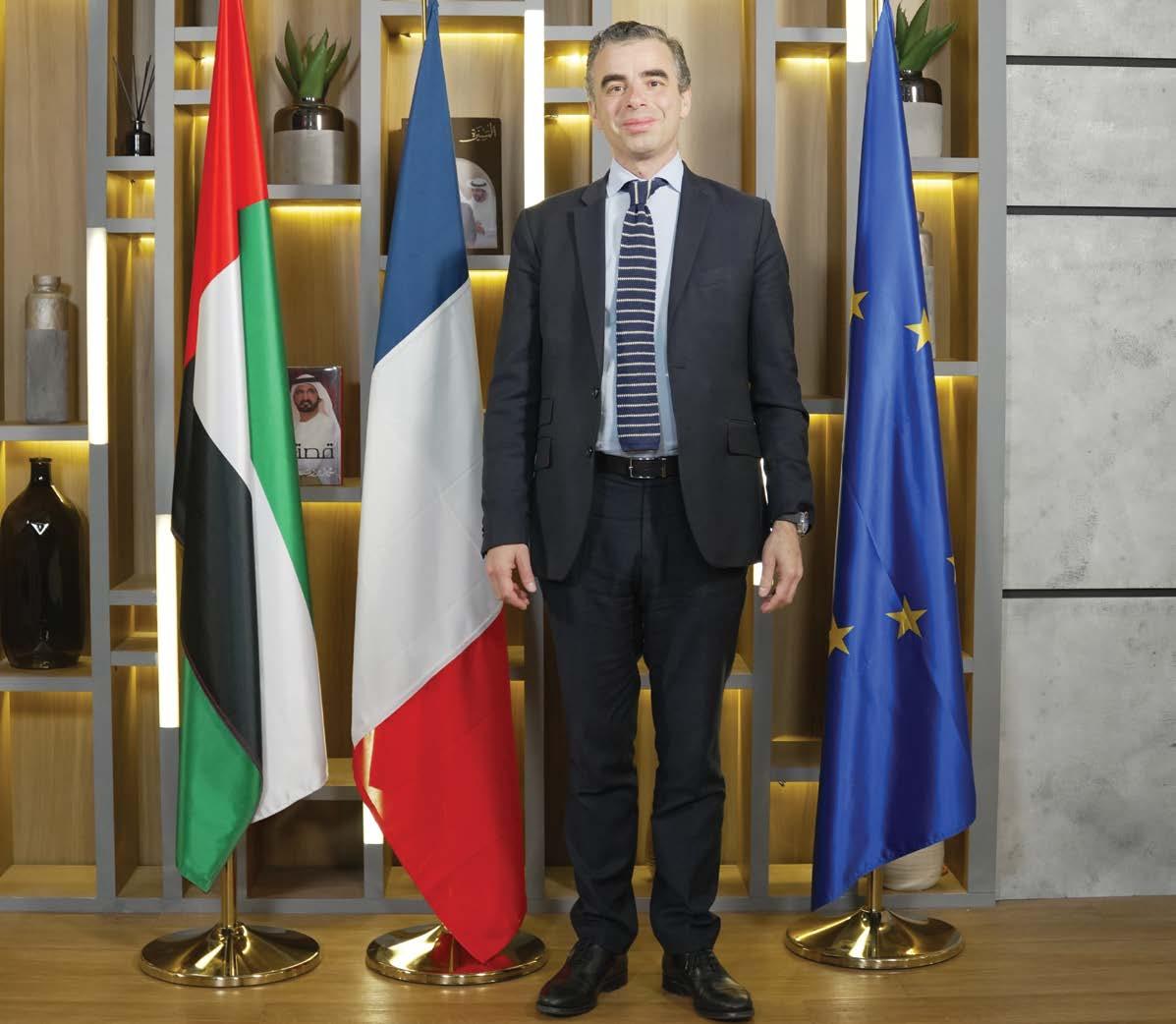
→ Louis Margueritte is the CEO of Business France. He was appointed the title of CEO in early 2026 by French President Emmanuel Macron.
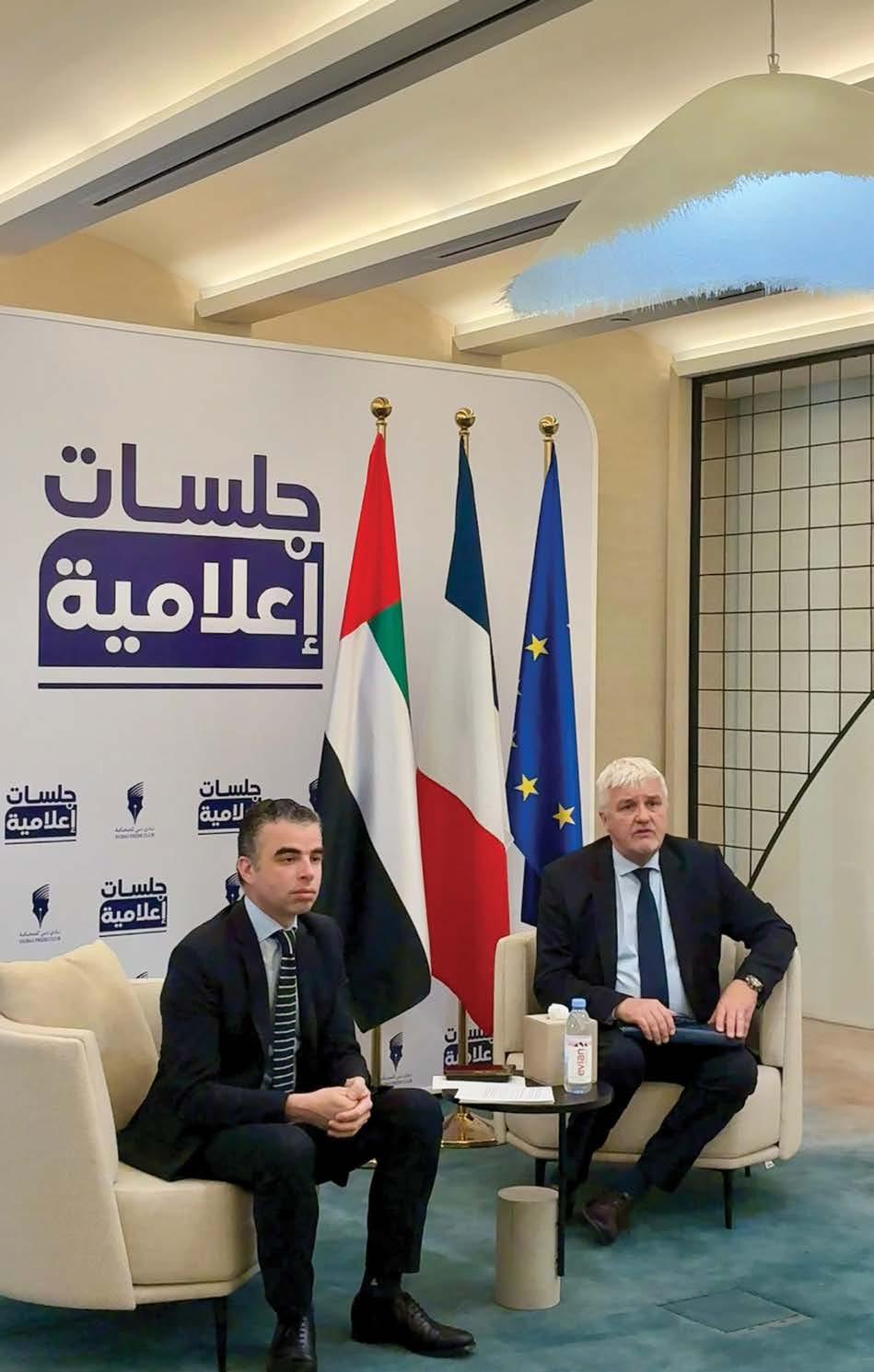
→ Louis Margueritte, CEO of Business France, and Axel Baroux, Regional Managing Director, Business France Middle East, at Dubai Press Club on May 20, 2026.
Louis Margueritte, CEO of Business France, the French government’s national agency responsible for supporting the French economy’s international growth, visited the UAE ahead of the entity’s flagship business event Vision Golfe 2026 which takes place from June 18-19, 2026.
During the high-level visit, Margueritte –who was appointed the title of CEO less than three months ago by French President Emmanuel Macron–met with leading institutional and economic stakeholders including Investment Corporation of Dubai (ICD), MGX, First Abu Dhabi Bank, Kerzner International, as well as H.E. Helal Saeed Al Marri, the Director General of Dubai’s Department of Economy and Tourism
Discussions centered on strategic investment opportunities, artificial intelligence,
advanced industries, tourism, infrastructure, and long-term economic cooperation between France and the UAE.
On May 20, 2026, Margueritte also met with members of the UAE media at a press conference held at the Dubai Press Club. “The UAE is no longer only a strategic market for France,” he said. “It is increasingly a strategic co-builder of future industries. In times of profound global transformation, trusted partnerships matter more than ever.”
Margueritte also emphasized upon how France and the UAE continue to strengthen a long-standing strategic partnership built on trust, investment, innovation, and a shared ambition for long-term transformation and sustainable growth.
Bilateral trade between the nations reached €10.8 billion in 2025, representing a 27% increase year-on-year, while total trade between France and the GCC reached €24.9 billion, confirming the growing depth and diversification of economic ties across the region. Additionally, the UAE reached a historic 24.5% growth in non-oil trade in the first half of 2025, with the total value of global non-oil foreign trade reaching AED1.7 trillion. Among the UAE’s top 10 global trading partners at the time was France.
THESE FIGURES ILLUSTRATE NOT ONLY THE INTENSITY OF OUR EXCHANGES, BUT ALSO THEIR INCREASING DIVERSIFICATION AND SOPHISTICATION. ABOVE ALL, THEY REFLECT THE STRONG LEVEL OF MUTUAL CONFIDENCE THAT UNDERPINS OUR ECONOMIC RELATIONSHIP.
supporting the country’s strategic ambitions. Even in more challenging contexts, they have continued to leverage the UAE’s position as a regional platform to access new markets and develop new growth opportunities. This ability to combine stability, agility and long-term vision remains one of the defining strengths of the French presence in the UAE today.”
Business France currently supports nearly 2,000 French companies across the Gulf region, including more than 800 in the UAE, through market intelligence, strategic advisory, business matchmaking, and investment facilitation initiatives.
“These figures illustrate not only the intensity of our exchanges, but also their increasing diversification and sophistication,” Margueritte commented, during the media briefing.
“Above all, they reflect the strong level of mutual confidence that underpins our economic relationship. They also demonstrate the considerable potential that still exists for further development, driven by shared priorities, long-term investment strategies and a common vision for sustainable growth.”
With more than 600 French companies operating in the country, the UAE is the largest
French business presence in the Middle East.
Margueritte, who had paid a visit to some of these UAE-based French companies the day prior, highlighted the resilience of the French business community in the UAE.
“French companies themselves have shown a deep and enduring commitment to the region. Many have established long-term operations here and actively contribute to the UAE’s economic transformation and diversification objectives,” he said. “Across sectors such as energy, infrastructure, healthcare, luxury and digital technologies, French companies play a meaningful role in
Each year, Business France also organizes around 60 sector-focused initiatives across the region, including major French pavilions at UAE trade fairs such as Gulfood, WHX, Beautyworld Middle East, Wetex, and The Big 5.
Margueritte’s visit comes ahead of Vision Golfe 2026, the flagship economic forum organized by Business France to strengthen strategic and investment ties between France and the Gulf region. The forum will take place on 18–19 June 2026 at the French Ministry for the Economy, Finance and Industrial and Digital Sovereignty in Paris under the High
WHAT MAKES VISION GOLFE
DIFFERENT IS THAT IT HAS EVOLVED AT THE SAME PACE AS THE FRANCE–GCC RELATIONSHIP ITSELF. IN THE BEGINNING, MANY COMPANIES CAME MAINLY FOR VISIBILITY OR NETWORKING. TODAY, THE LEVEL OF CONVERSATION IS COMPLETELY DIFFERENT.”
Patronage of President Emmanuel Macron.
It has become a key platform for accelerating investment, strategic dialogue, and business partnerships between France and the GCC.
“What makes Vision Golfe different is that it
has evolved at the same pace as the France–GCC relationship itself,” Margueritte said. “In the beginning, many companies came mainly for visibility or networking. Today, the level of conversation is completely different. What makes the format particularly
strong is that it’s built around public-private cooperation. That’s something France has real expertise in. And it’s something that is very much expected in the Gulf today.”
The previous edition of Vision Golfe gathered
more than 1,250 participants and generated over 2,000 high-level business meetings. The 2026 edition will focus on AI, energy transition, industrial partnerships, logistics, water security, human capital, and future industries.
→ Louis Margueritte, CEO of Business France with Aalia Mehreen Ahmed (left), Senior Features Editor at Entrepreneur Middle East and Sarah Saddouk, Director of Innovation, Entrepreneur Middle East I Entrepreneur IMPACT.
RIYADH EXHIBITION & CONVENTION CENTER, MALHAM
THE FASTEST
Hosted by:
Co-organised by:
Vision Golfe 2026 Brings Together 1,200+ Leaders to Advance France-GCC Partnerships
The forum featured 13 high-level panel discussions, more than 80 speakers, and over 3,500 B2B meetings, reinforcing its role as a key platform for France-Gulf economic dialogue.
More than 1,200 participants, five ministers, and dozens of public and private sector leaders gathered in Paris from June 18-19, 2026 at Vision Golfe 2026.
Held during a week that brought together political, economic, and technology leaders in Europe, and organized by Business France, Vision Golfe 2026 brought together senior government officials, institutional leaders, and business executives from France and all GCC member states.
The forum featured 13 high-level panel discussions, more than 80 speakers, and over 3,500 B2B meetings, reinforcing its role as a key platform for France-Gulf economic dialogue.
Now firmly established as a flagship platform for economic exchange between France and the Gulf, Vision Golfe 2026 highlighted the growing momentum and diversity of Franco-Gulf business ties. “Today, and maybe more than ever, I want to reaffirm a simple and strong message: France stands firmly alongside the countries of the Gulf,” said Louis Margueritte, Chief Executive Officer of Business France. “Despite current tensions, we remain deeply convinced of the region’s extraordinary potential and we believe together in a region that will overcome the current crisis. We believe it will make a strong rebound.”
The forum was inaugurated by Roland Lescure, French Minister for the Economy, Finance and Industrial, Energy and Digital Sovereignty, Nicolas Forissier, French Minister Delegate for Foreign Trade and Attractiveness, as well as Margueritte. They welcomed delegates by highlighting the scale of cooperation between France and the GCC and the opportunities for future growth. “Trade between France and the Gulf Cooperation Council countries reached nearly €25 billion in 2025, reflecting the strength of our economic relations and the significant potential for further cooperation,” said Forissier.
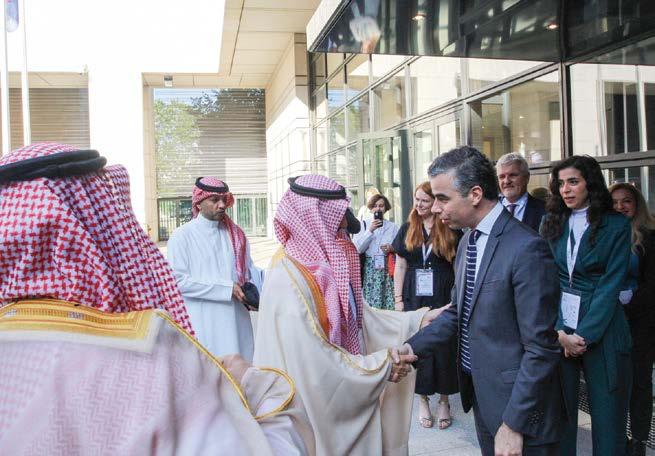
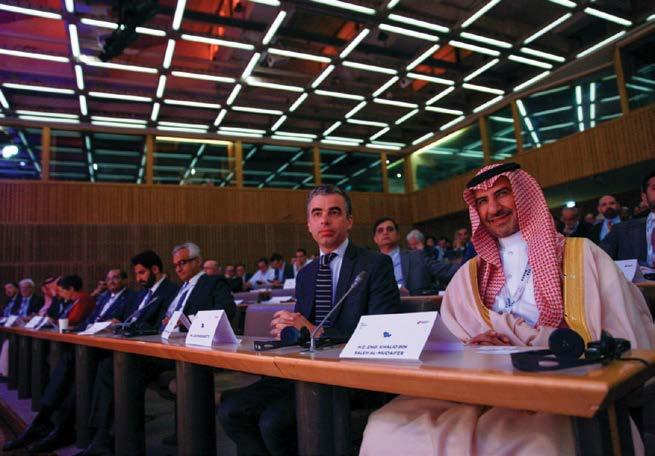
Senior Gulf officials also participated, including H.E. Eng. Khalid bin Saleh Al-Mudaifer, Vice
Minister of Industry and Mineral Resources of Saudi Arabia; H.E. Mohammed Abdulrahman Al Hawi, Undersecretary at the UAE Ministry of Investment; H.E. Khalid Ebrahim Humaidan, Governor of the Central Bank of Bahrain; and H.E. Eng. Saleh Alsolami, CEO of Saudi Arabia’s National Industrial Development Center.
French and Gulf officials alike described Vision Golfe as an important catalyst for advancing governmental and business cooperation.
“France and the Gulf share a rich history and common values – we both believe in stability, long-term thinking, and the importance of enduring partnerships,” affirmed H.E. Humaidan.
The Vision Golfe 2026 agenda covered a broad range of sectors, including energy, AI and emerging technologies, industry and manufacturing, logistics and supply chains, food security, healthcare, smart cities, luxury and culture, and human capital development.
Water security and sustainable infrastructure emerged as key priorities, with discussions emphasizing innovation, resource management, and public-private partnerships. As Luis de Lope, CEO of Saur International, noted, “The GCC countries are setting a global benchmark in advancing water security and infrastructure
resilience. Events such as Vision Golfe play an important role in strengthening cooperation between France and the GCC, creating opportunities to share expertise, accelerate innovation and deliver long-term economic, environmental and social value.”
The forum also featured discussions on cooperation in space, cybersecurity, and defense technology, with participants exploring opportunities for co-investment, technology transfer, talent development, and research. A networking evening at Paris’s Palais Galliera – Musée de la Mode brought together leaders from the fashion and luxury sectors, including Pascal Morand, President of the French Federation of Haute Couture and Fashion, and H.R.H. Princess Noura bint Faisal Al Saud.
Participants also took part in a workshop with Saudi Arabia’s Public Investment Fund (PIF) focused on investment collaboration, while a visit to French quantum computing company Quandela highlighted France’s capabilities in deep-tech innovation.
The forum took place amid significant geopolitical developments, reinforcing the importance of dialogue and economic cooperation, with
speakers emphasizing the resilience of Franco-Gulf economic relations and the role of business partnerships in supporting long-term stability and prosperity.
Vision Golfe 2026 delivered several concrete outcomes, including the signing of a partnership between Quandela and Mekdam Holding Group in the field of quantum technologies between France and Qatar.
The forum also marked a milestone in food security cooperation, with SEMMARIS (Rungis International Market) and Abu Dhabi Food Hub signing a Memorandum of Understanding to strengthen agri-food supply chains. Describing the ambition behind the partnership, Bertrand Lambroise, International Director of SEMMARIS, said, “Food infrastructure is not just about buildings or logistics; it’s about connecting people – linking producers with consumers and bridging local excellence with global markets.”
Vision Golfe 2026 also served as a platform for strategic insight. On June 19, Global Health Stratalogues (GHS) launched Roadmap to Entering the KSA Healthcare Market: A Strategic Guide for International Companies, a market intelligence report unveiled during the summit. Produced by GHS, with MedEdge MEA as Media Partner and published in partnership with the Global Health Exhibition (GHE), the report reflects Vision Golfe’s growing role as a forum for thought leadership and sector expertise, particularly in healthcare. Additional partnerships and investment projects are expected to emerge from discussions held during the forum.
As France and the GCC enter a new phase of economic cooperation, Vision Golfe continues to serve as a platform where strategic dialogue is transformed into partnerships, investments, and long-term impact.
Building Bridges: H.E. Lucie Berger, EU Ambassador to the UAE
A new interview series by Entrepreneur Middle East featuring ambassadors to the UAE, exploring trade, investment, innovation, and the partnerships strengthening economic ties between nations and the region
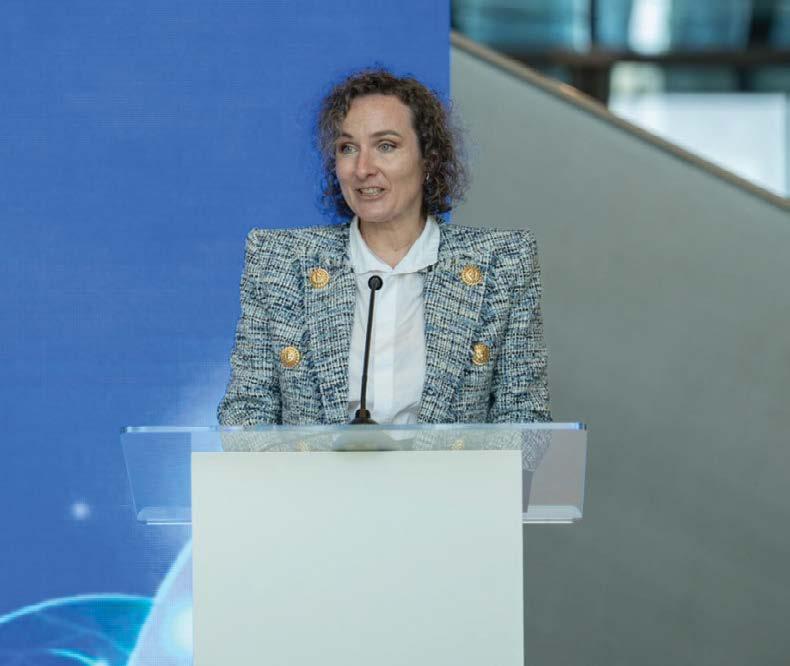
→ H.E. Lucie Berger took on the role of European Union Ambassador to the UAE in September 2023.
As the UAE continues to strengthen its position as a global hub for trade, investment, and innovation, its partnerships with major economic blocs are becoming increasingly important.
Among them, the European Union stands out as one of the UAE’s most significant strategic and economic partners.
The EU is the UAE’s largest source of foreign direct investment, with investment reaching €186 billion, while bilateral services trade is valued at €39
“A FREE TRADE AGREEMENT WITH THE EU GIVES THE UAE ENHANCED ACCESS TO THE WORLD’S LARGEST SINGLE MARKET, COMPRISING 450 MILLION PEOPLE. AT THE SAME TIME, THE UAE IS A GLOBAL TRADE HUB. A FREE TRADE AGREEMENT WITH THE EU WOULD FURTHER STRENGTHEN AND SOLIDIFY THAT POSITION.”
billion. The UAE is also the EU’s primary export destination in the Gulf and its largest investment partner in the region.
It is therefore fitting that the inaugural edition of Building Bridges, Entrepreneur Middle East’s new interview series with ambassadors to
the UAE, features H.E. Lucie Berger, Ambassador of the European Union to the United Arab Emirates.
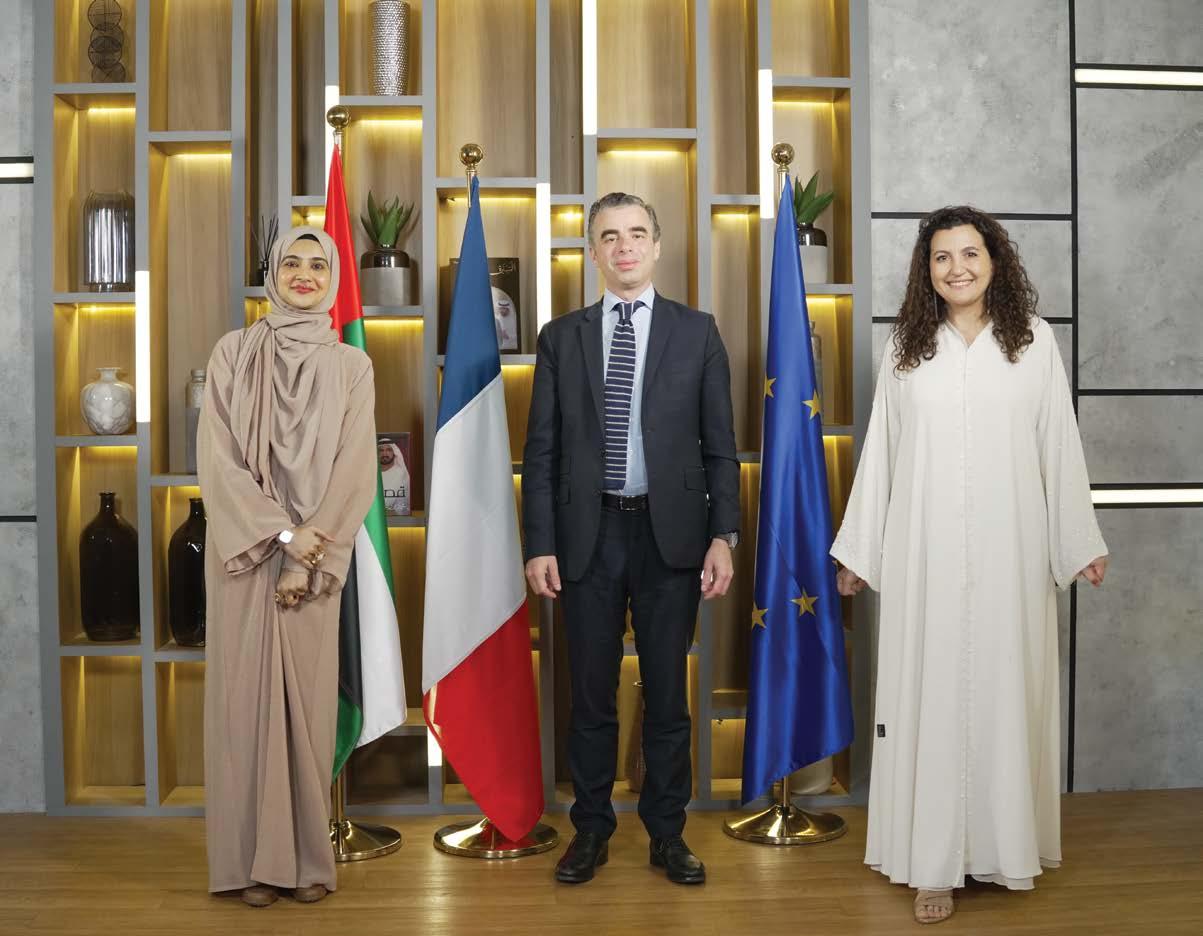
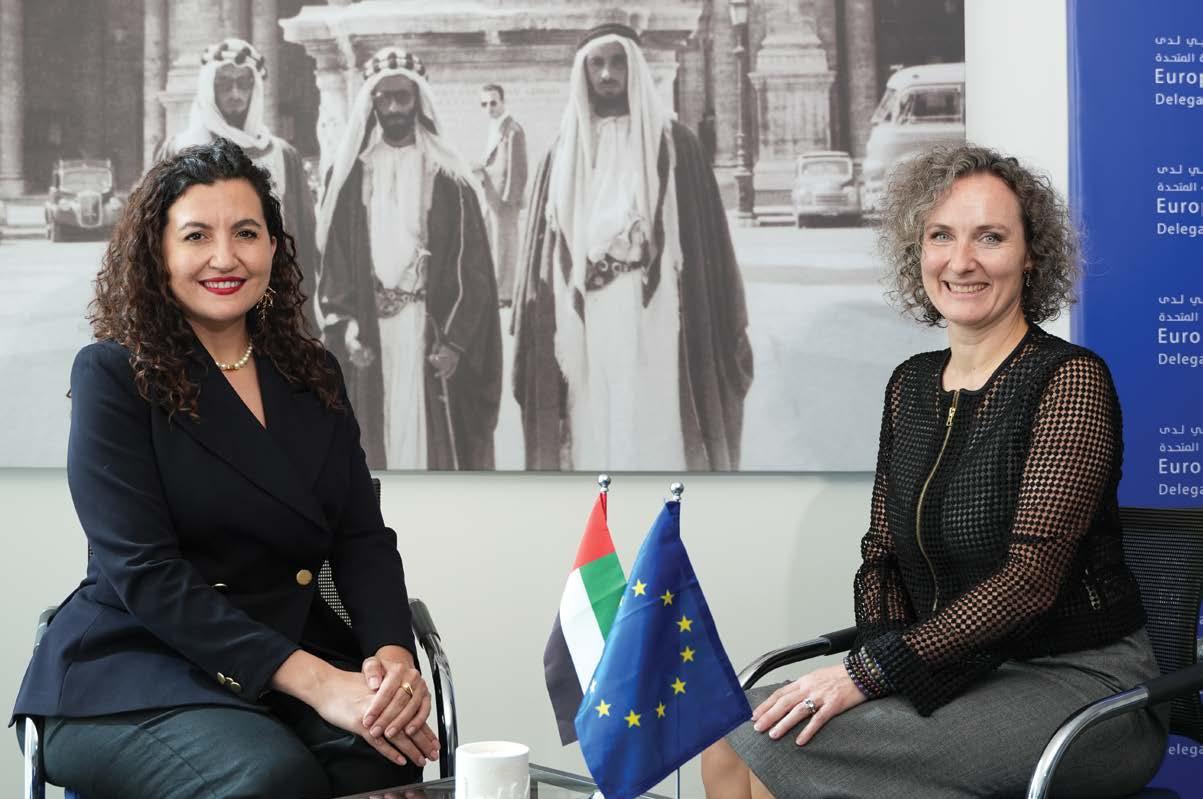
In this conversation with Sarah Saddouk, Director of Innovation, Entrepreneur Middle East I Entrepreneur IMPACT. - BNC Media Group, H.E. Berger discusses the growing EU-UAE trade and investment ties, particularly following the launch of EU-UAE Free Trade Agreement negotiations. Alongside broader Strategic Partnership Agreement negotiations, these efforts can serve as a catalyst for stronger relations between the EU, the UAE, and the wider GCC.
→ H.E. Lucie Berger, EU Ambassador to the UAE, and Sarah Saddouk, Director of Innovation, Entrepreneur Middle East I Entrepreneur IMPACT.
“ONE AREA WHERE I BELIEVE SIGNIFICANT POTENTIAL CAN BE UNLOCKED IS CUSTOMS COOPERATION AS IT FACILITATES THE MOVEMENT OF GOODS, BUILDS TRUST, AND SUPPORTS HIGHER TRADE VOLUMES.”
H.E. Berger, who took on the role of European Union Ambassador to the UAE in September 2023, highlights that recent geopolitical shifts have accelerated rather than delayed trade negotiations between the UAE and the EU.
“The free trade agreement is even more important today than it was before,” she says. “Since the launch of
the negotiations, both sides have demonstrated a strong commitment to concluding the agreement in record time.
“Why is it so important now? We are living in turbulent times. A free trade agreement with the EU gives the UAE enhanced access to the world’s largest single market, comprising 450 million people. Through provisions
such as investment facilitation, greater trade liberalization, and enhanced customs cooperation, it helps build economic resilience. Greater resilience means being better prepared for future challenges while creating a more attractive environment for investors.
“At the same time, the UAE is a global trade hub. A free trade agreement with the EU would further strengthen and solidify that position. It is therefore beneficial in both directions. Beyond its political significance, such an agreement would have a meaningful economic impact by supporting growth, encouraging investment, and strengthening resilience in both the UAE and the European Union.”
Looking ahead, H.E. Berger believes there are several practical areas where the UAE and the EU can deepen cooperation and unlock further economic value beyond the free trade agreement itself.
“One area where I believe significant potential can be unlocked is customs cooperation as it facilitates the movement of goods, builds trust, and supports higher trade volumes. As we work toward increasing trade exchanges through a free trade agreement, customs cooperation will be an important enabler of that growth.
“Investment is another key area. Much will depend on what we achieve through the free trade agreement and the priorities both sides set for future investment strategies. Renewable energy, in particular, presents considerable opportunities and could be further supported through the agreement, helping to unlock additional investment and cooperation.
“Public procurement is also important. If we can reach an agreement on
procurement rules that facilitate greater participation of European companies in certain areas, that would encourage investment and deepen economic cooperation. While some sectors may be sensitive, public procurement touches many parts of the economy and could create meaningful opportunities for businesses on both sides.”
Beyond traditional trade, Berger sees some of the strongest opportunities for long-term UAE-EU cooperation emerging in advanced technologies, particularly artificial intelligence (AI) and renewable energy.
“AI is a major priority for both the EU and the UAE. We may approach it from different perspectives, but there is a strong recognition on both sides that while AI offers tremendous opportunities, it also comes with significant risks. This creates an opportunity for deeper cooperation, particularly around regulation and governance.
“Renewable energy is another area with enormous potential. The UAE has long been a regional leader in the sector, and we have worked closely together for many years. Looking ahead, I see strong opportunities for increased investment and joint projects in renewable energy, clean technologies, and the broader energy
transition. A future free trade agreement could play an important role in accelerating those investments and unlocking further cooperation.”
the public and private sectors. By working together, we can not only strengthen our partnership but also help shape the global conversation
data, developing AI skills, and encouraging wider adoption of AI technologies. The EU has already established a network of 19 operational AI Facto-
“AI IS A MAJOR PRIORITY FOR BOTH THE EU AND THE UAE. WE MAY APPROACH IT FROM DIFFERENT PERSPECTIVES, BUT THERE IS A STRONG RECOGNITION ON BOTH SIDES THAT WHILE AI OFFERS TREMENDOUS OPPORTUNITIES, IT ALSO COMES WITH SIGNIFICANT RISKS. THIS CREATES AN OPPORTUNITY FOR DEEPER COOPERATION, PARTICULARLY AROUND REGULATION AND GOVERNANCE.”
As AI becomes a strategic priority for governments and businesses worldwide, the European Union is investing heavily in the infrastructure needed to support its ambitions.
“The UAE has positioned itself as one of the fastest adopters of AI across both
around AI,” she says. The European Union is accelerating its ambitions to become a global leader in artificial intelligence through its 2025 AI Continent Action Plan, which focuses on expanding computing infrastructure, improving access to
ries and 13 AI Factory Antennas linked to its supercomputing infrastructure, while plans for larger AI Gigafactories continue to advance across Member States.
To support innovation, the
European Commission has
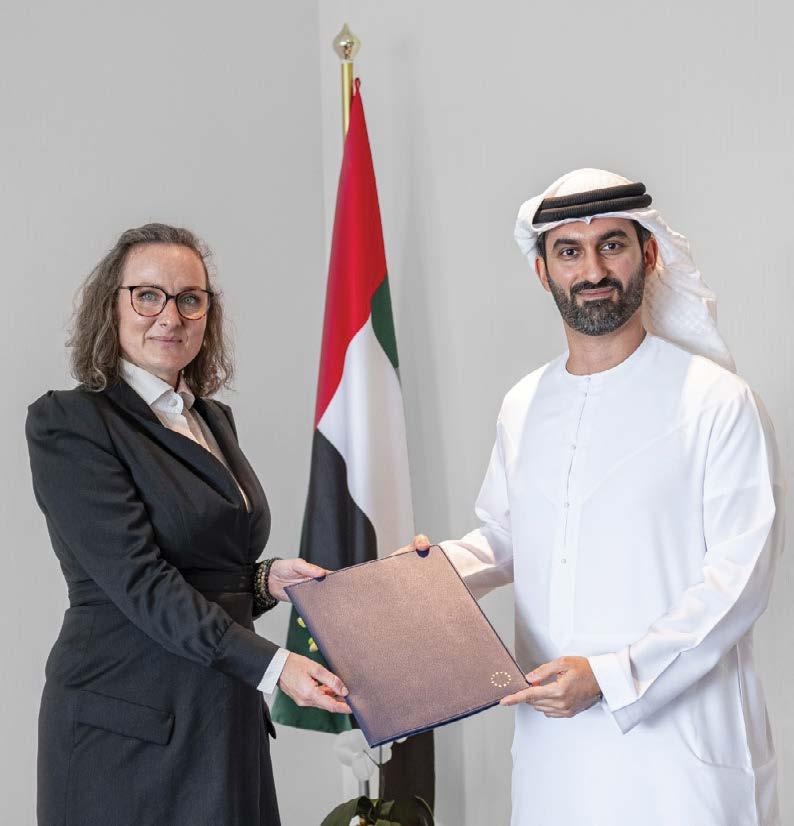
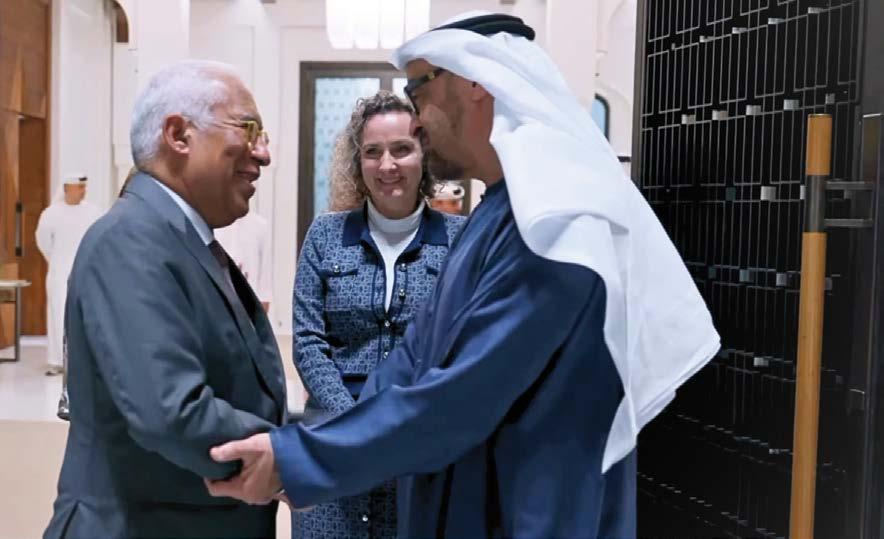
→ The Ambassador accompanied President of the European Council António Costa during his meetings with the UAE President HRH Mohamed bin Zayed Al Nahyan.
also launched a Data Union Strategy aimed at increasing data availability and sharing for AI development. In parallel, it has proposed an AI Omnibus package designed to simplify regulations, reduce compliance costs, and provide greater legal certainty for businesses operating in the AI sector.
H.E. Berger explains that the EU’s planned network of AI Gigafactories is designed not only to expand computing capacity, but also to strengthen Europe’s long-term competitiveness in AI. At the same time, the initiative has attracted significant interest from UAE investors.
“We have a clear plan to increase Europe’s capabilities in artificial intelligence and to build the infrastructure needed for researchers, innovators, and companies to develop and scale AI technologies. Our ambition is for Europe to become a leading global hub for artificial intelligence,” she explains.
“When it comes to gigafactories, we are not talking about a single project. The plan is to establish around 10 AI gigafactories across the EU. Alongside that, we are investing in data centers and other critical infrastructure required to harness the full potential of AI.
“These projects will require significant investment. This is where partnerships become particularly important. In my view, leadership in AI cannot be achieved in isolation. The UAE has already built substantial expertise and infrastructure in this field. By partnering with countries such as the UAE, Europe benefits not only from investment, but also from valuable knowledge, experience, and innovation capabilities.”
In parallel, climate innovation and clean energy remain among the most active areas of cooperation between the UAE and the EU. According to H.E. Berger, both sides share a strong
THE EU’S AI PROJECTS WILL REQUIRE SIGNIFICANT INVESTMENT. THIS IS WHERE PARTNERSHIPS BECOME PARTICULARLY IMPORTANT. IN MY VIEW, LEADERSHIP IN AI CANNOT BE ACHIEVED IN ISOLATION.
commitment to sustainability and have already established several mechanisms to support joint investments and knowledge exchange.
“We already work very closely together in this area because both the EU and the UAE are strongly committed to these priorities. Over the past three years, we have developed a number of initiatives focused on climate finance, building on the momentum of COP28 and the commitments made around climaterelated investments. We are also partnering with Alterra to bring together different funding mechanisms and identify projects where we can invest jointly.
“We are building on the experience of European institutions such as the European Bank for Reconstruction and Development (EBRD), which is already working actively with Emirati partners, including private-sector organizations, on renewable energy
projects in regions such as Africa. The European Investment Bank is also a key partner in these efforts.
“Beyond renewable energy, water security is becoming an increasingly important area of focus, particularly ahead of the UN Water Summit taking place in the UAE later this year. We are exploring opportunities to develop joint projects and co-funding mechanisms to support water-related initiatives.
“We are also preparing to launch a new trans-Mediterranean renewable energy and clean technology initiative, which will include an investment platform. The Gulf countries are important partners in this effort. Given our shared neighboring regions, there is significant potential to combine our expertise, technology, and investment capabilities to support renewable energy development and sustainable growth together.”
Small and medium-sized enterprises form the backbone of both the UAE and European economies. H.E. Berger believes there is significant untapped potential for deeper collaboration, particularly in helping startups and SMEs access new markets, build partnerships, and commercialize innovation.
“SMEs account for more than 90% of the UAE’s economy and are equally important in Europe, especially when it comes to job creation. Supporting them is therefore a major priority for us. During periods of uncertainty, SMEs are often the most vulnerable, which makes it even more important to provide them with the right tools and opportunities.
“One of the key strengths of our partnership is market access. Beyond the opportunities that could be created through a future free trade agreement, we already offer a number of
programs designed to facilitate cooperation between SMEs in the UAE and the EU.
“A good example is the Enterprise Europe Network, which helps businesses access the EU single market and connect with potential partners across Europe. The Sharjah Research, Technology and Innovation Park became the first UAE entity to join the network last year. Through it, companies can access information on European regulations, identify business opportunities, and connect with partners across a wide range of sectors.”
While trade, investment, and innovation often dominate discussions around UAE-EU relations, H.E. Berger believes that culture and people-to-people connections remain equally important in building lasting partnerships.
“During challenging times, initiatives such as Europe Day and European
Month take on an even greater significance. They are not only celebrations of European culture, but also a demonstration of our confidence in the UAE, our belief in its resilience, and our commitment to this partnership.
“Being able to celebrate Europe Day and launch the EU Film Festival in Abu Dhabi and Ras Al Khaimah this year was particularly meaningful. It sent a clear message that our focus remains on the future, on cooperation, and on continuing to build together. Culture has a unique ability to bring people closer, build understanding, and create connections that go beyond politics and economics.
“Ultimately, strong partnerships are built not only through agreements and investments, but through the relationships between people. Cultural exchanges help strengthen those ties and create new opportunities for cooperation for years to come.”
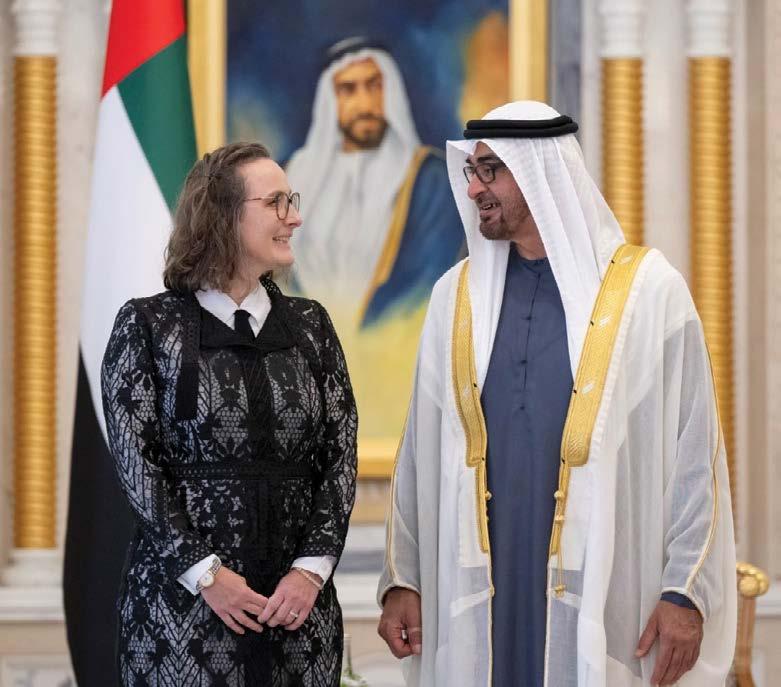
→ H.E. Lucie Berger with the UAE President HRH Mohamed bin Zayed Al Nahyan.
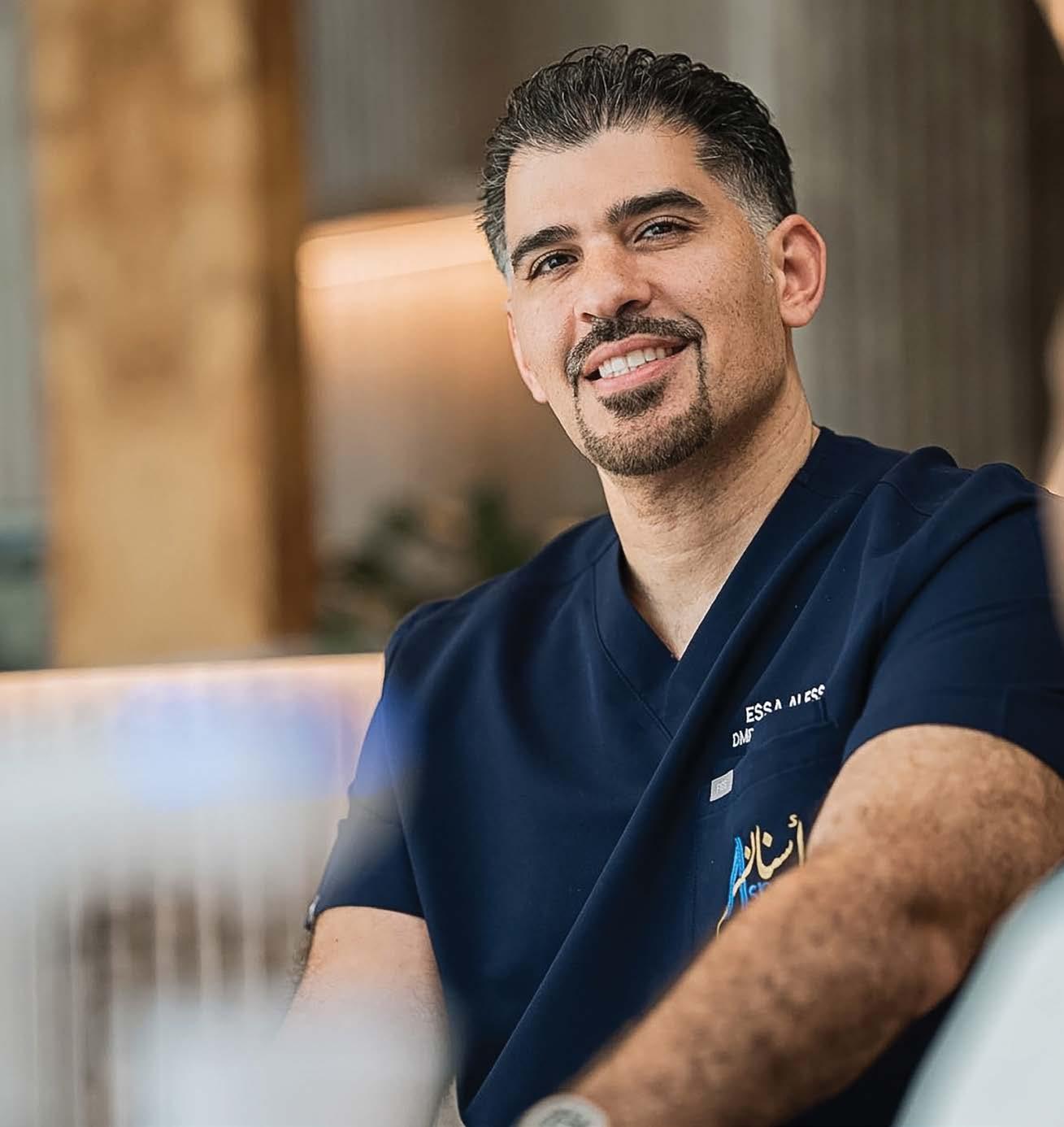
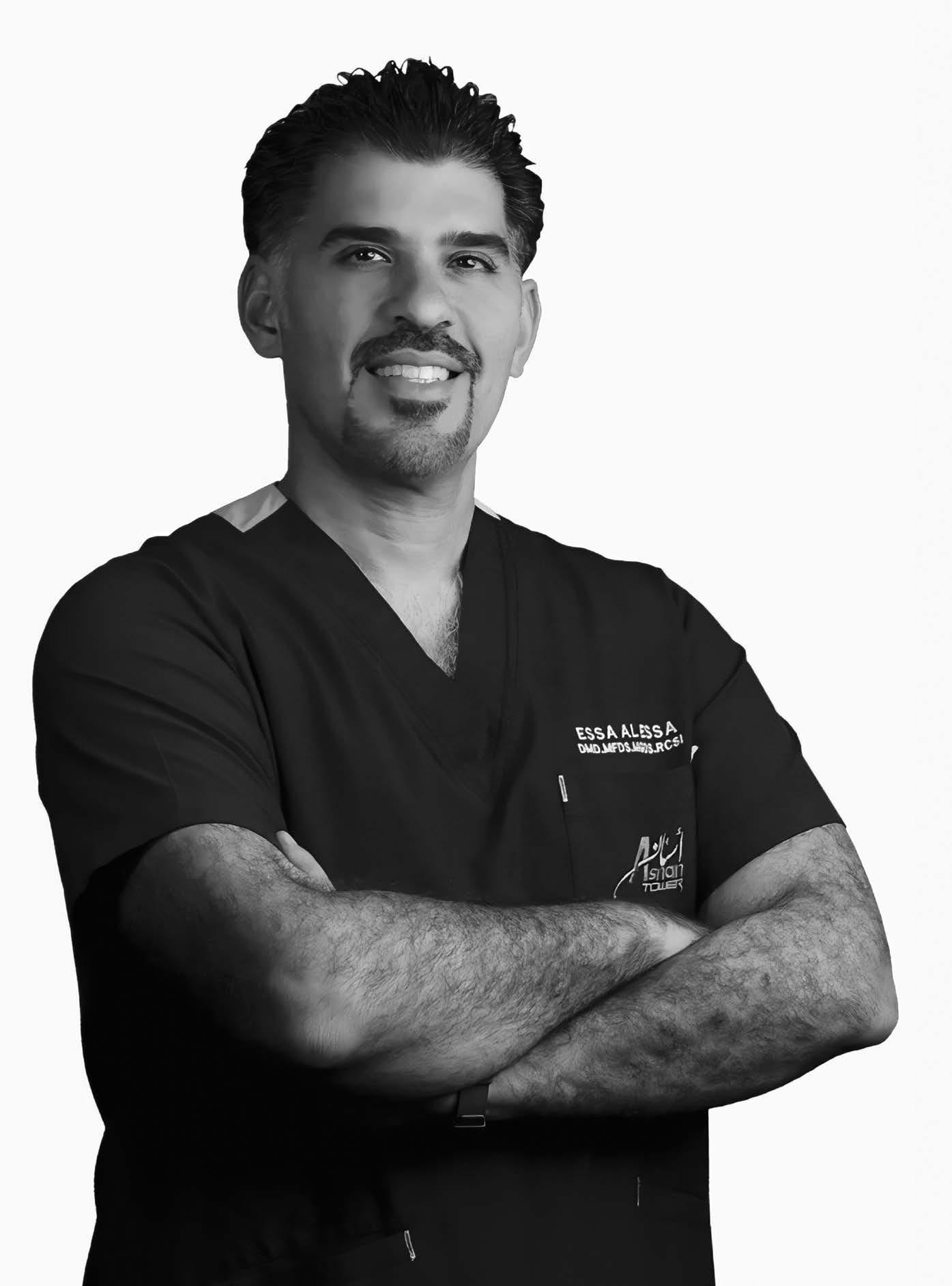
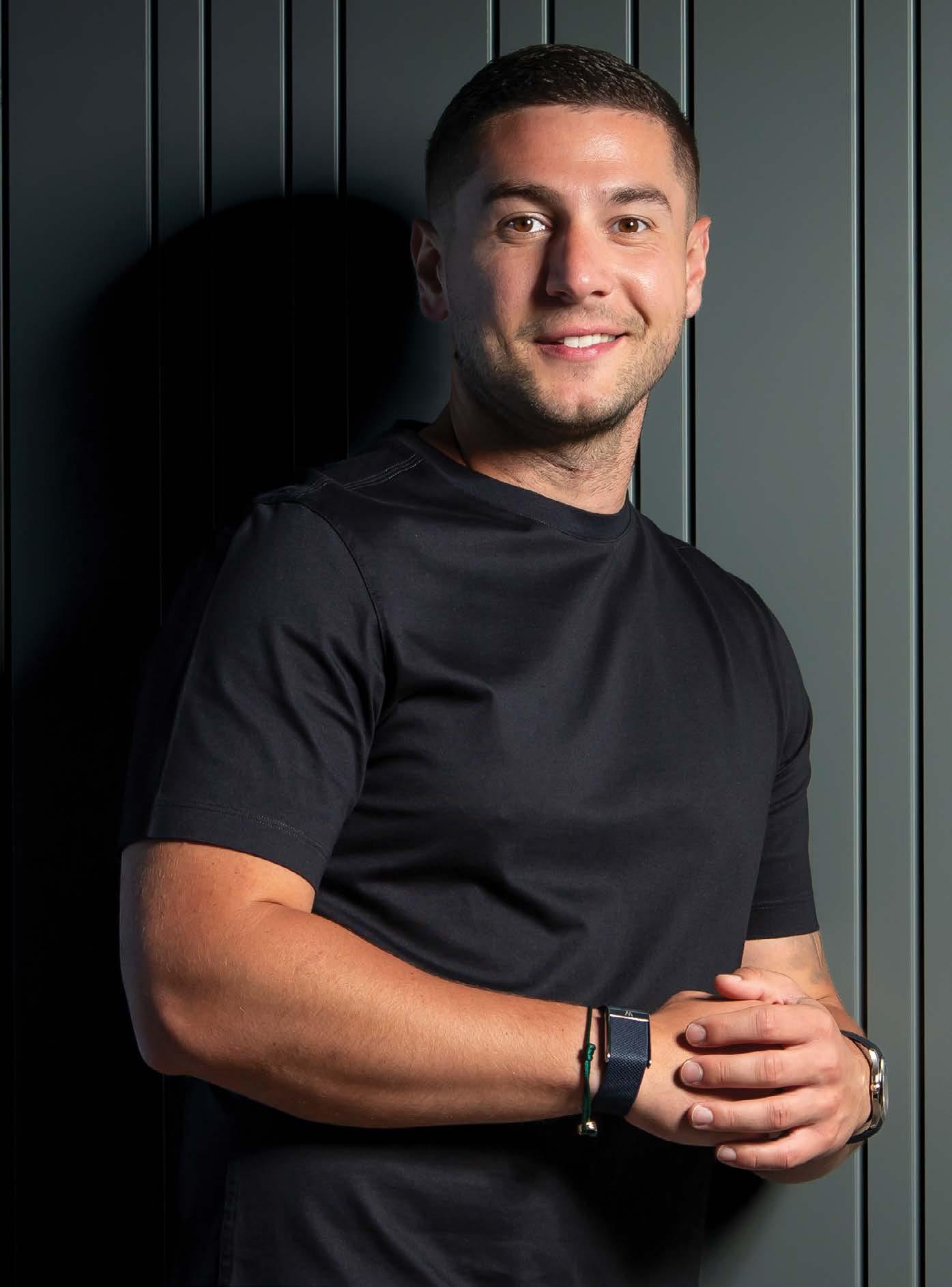
→ Dr. Essa N. Al Essa is the co-founder and CEO of the Kuwaitbased dental healthcare provider Asnan Tower.
KUWAIT WORLD BUILT FOR THE FROM
Dr. Essa N. Al Essa on why Kuwait-headquartered Asnan Tower—home to the world’s largest single-site dental clinic—believes its best chapter is yet to come.
by TAMARA PUPIC
When asked how he built the world’s largest single-site dental clinic, Dr. Essa N. Al Essa, cofounder and CEO of the Kuwait-based dental healthcare provider Asnan Tower, gives an unusual answer. “It was the decision to go vertical. Literally,” he says. “Building
BUILDING ASNAN TOWER
AS A
DEDICATED HEALTHCARE
TOWER RATHER THAN A CLINIC INSIDE A MALL OR A BUILDING — THAT CHANGED HOW PEOPLE PERCEIVED US. WE WEREN’T JUST A DENTAL CLINIC. WE WERE A DESTINATION.”
Asnan Tower as a dedicated healthcare tower rather than a clinic inside a mall or a building — that changed how people perceived us. We aren’t just a dental clinic. We are a destination.”
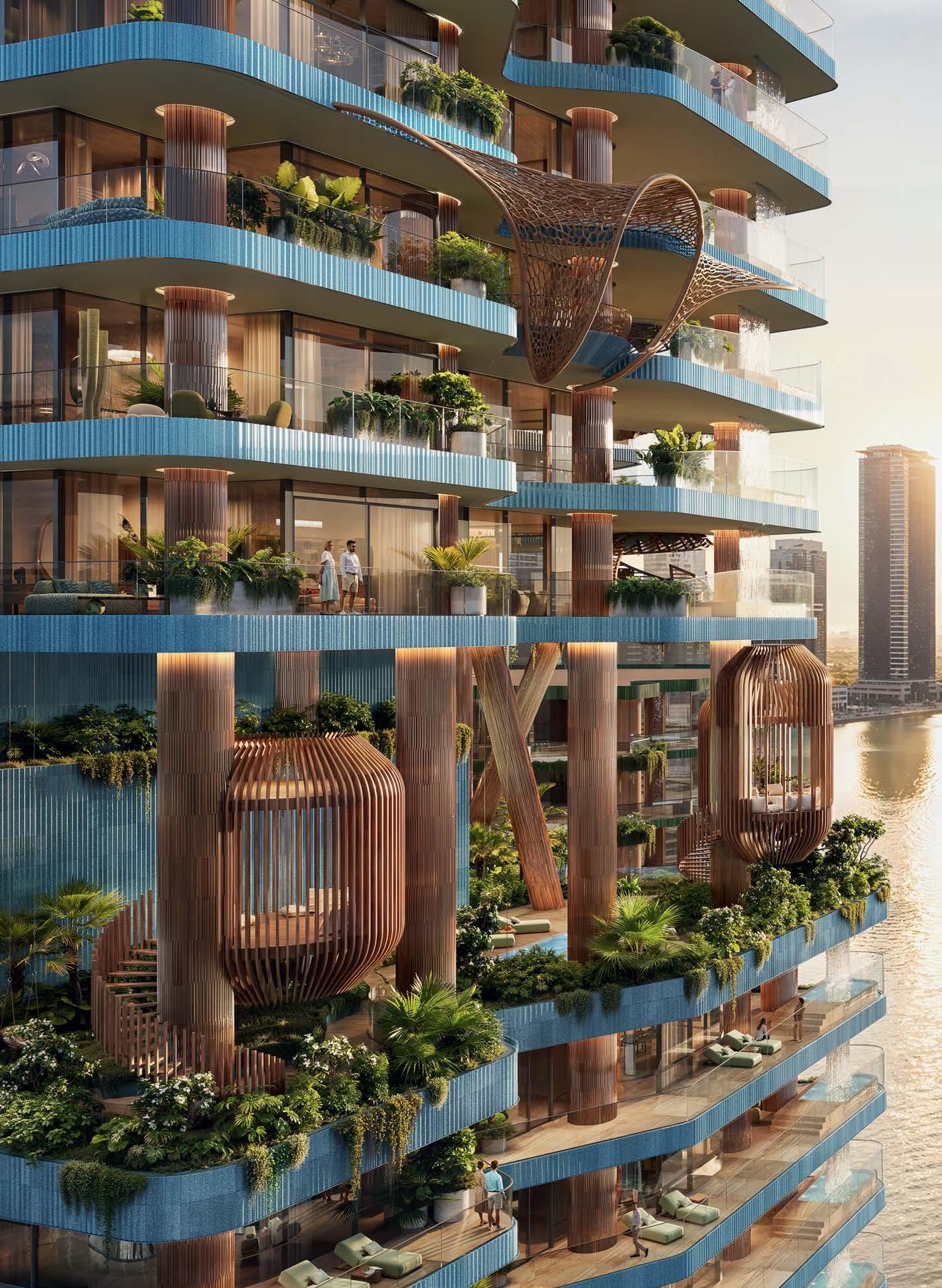
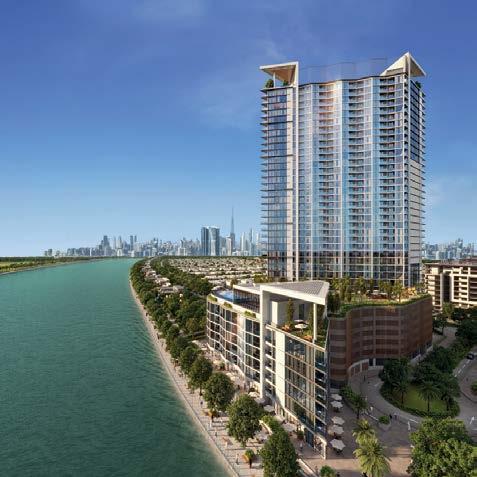
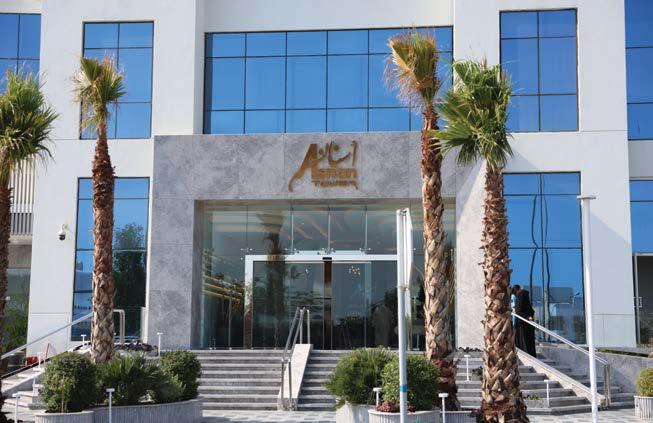
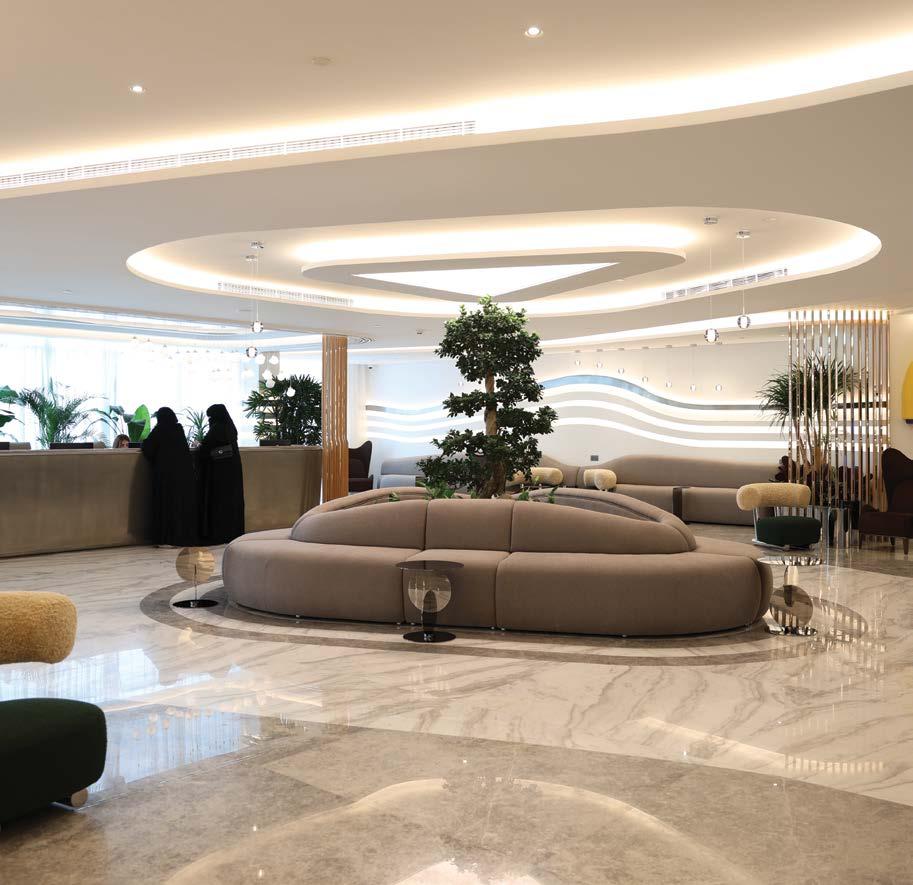
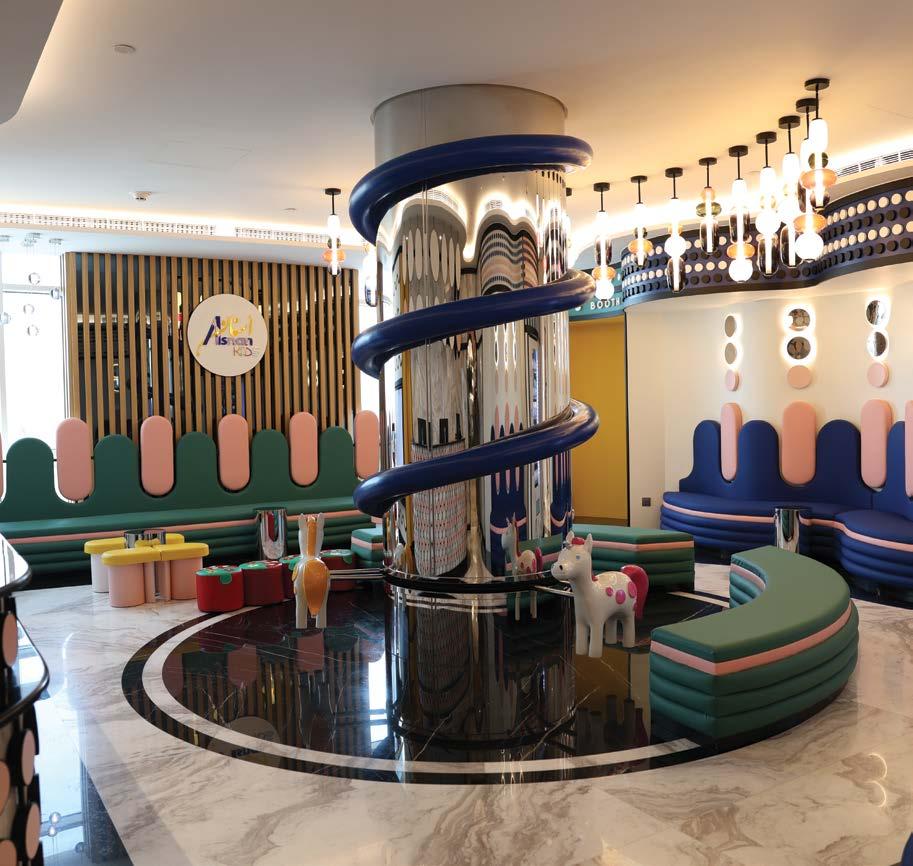
Asnan Tower occupies a modern high-rise overlooking Ras al Salimya’s bustling waterfront—a physical reflection of Dr. Al Essa’s conviction that world-class healthcare should be delivered through world-class facilities, combining clinical excellence with exceptional patient experience.
When Dr. Essa N. Al Essa returned to Kuwait after earning his advanced dental qualifications, including a PhD in Dentistry from the University of Pittsburgh, he expected to begin building his own practice. Instead, he discovered that Kuwaiti regulations required dentists to complete five years of post-graduation experience before opening a private clinic.
Rather than viewing the waiting period as a setback, Al Essa turned it into a strategic
advantage. He invested in acquiring the premium domain asnan.com, launched an educational platform to improve dental awareness across the Middle East, and later transformed its content into a print magazine at a time when internet access was still limited. By building the Asnan brand and establishing the reputation of its doctors long before opening its doors, the company entered the market with a level of recognition that few new clinics could match. When the mandatory five-year
↑ Asnan Tower occupies a modern high-rise overlooking Ras al Salimya’s bustling waterfront.
period ended, Al Essa officially launched Asnan Clinic.
Surprisingly, the turning point that transformed him from dentist to healthcare entrepreneur came not in a boardroom, but in his own dental chair. “I was treating a patient, and I saw how much their smile transformed them, not just physically, but emotionally, psychologically,” Dr. Al Essa says. “And I thought: what if this experience wasn’t limited to one patient at a time? What if I could build something that gave thousands of people that same transformation? That’s when I realized the clinic was never my ceiling — it was my foundation. I didn’t leave dentistry. I scaled it.”
While Dr. Essa N. Al Essa continued to earn professional recognition—including becoming a holder of the American Board of Dentistry, a member of the American Dental Academy and the American Dental Association, as well as holding qualifications from the Royal Irish College of Surgeons in Ireland and co-founding Asnan Tower Dental— his transition from accomplished clinician to business leader was not without its challenges.
Looking back, he says the shift required a fundamental change in mindset. “The hardest lesson was realizing that being the best dentist in the room does not automatically make you the best leader,” Dr. Al Essa explains. “As a clinician, I was in complete control—I had the training, the tools, and the expertise. Running a business is entirely different. It requires leading people, navigating uncertainty, and making decisions with incomplete information.
“The biggest shift for me was learning to trust my team. Dentists are trained to be precise and to do everything themselves, but a CEO has to delegate, empower others, and build systems that are bigger than any one individual. I overcame
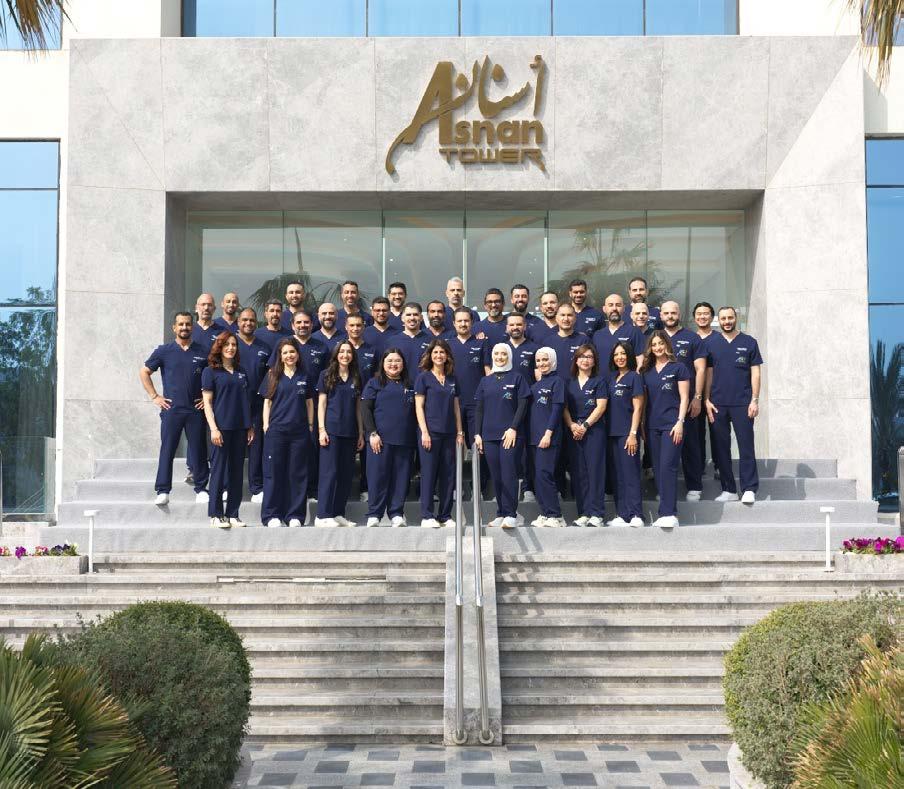
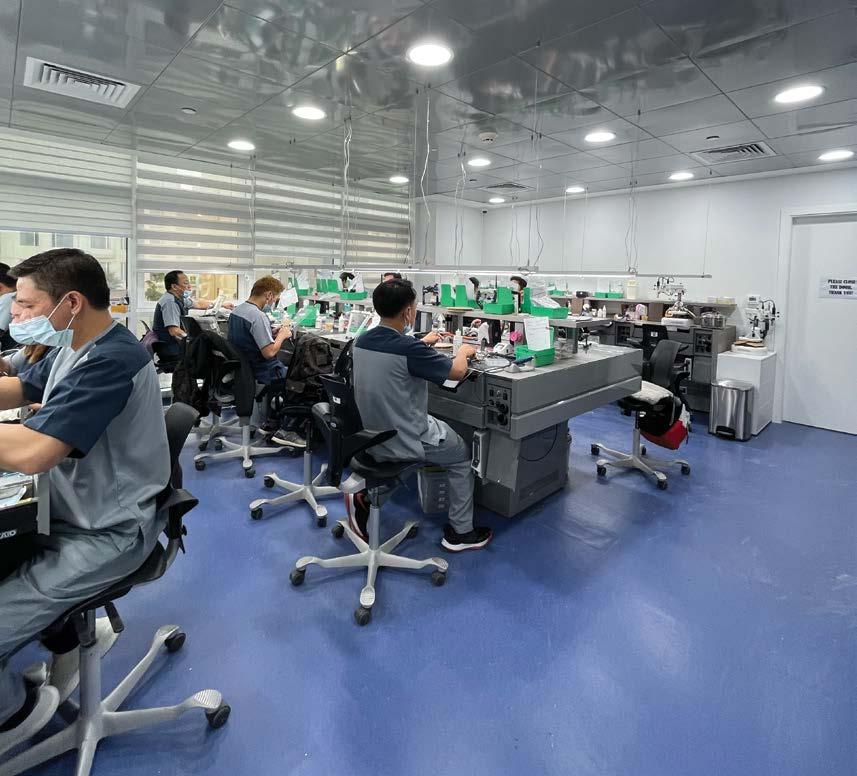
→ The Asnan Tower Dental Team – Home to U.S.-trained consultants across every field of dentistry.
realities of running a sustainable business, which Dr. Al Essa says, is a tension that has accompanied him throughout his career. “I’ll tell you how we think about it: clinical excellence IS the commercial strategy,” he explains. “Every time we cut a corner clinically, we pay for it tenfold in reputation. And in healthcare, reputation is everything.
“We built financial discipline around one rule: never let the budget dictate the standard of care, but always be smart enough to build a business that can sustain that standard. That means efficient operations, the right pricing model, and never over-promising to patients. When patients trust you, they come back. When they come back, the business grows. It’s that simple — and that hard.”
TODAY, ASNAN TOWER HAS GROWN INTO ONE OF THE MIDDLE EAST’S MOST RECOGNIZED DENTAL HEALTHCARE PROVIDERS, EXPANDING FROM JUST EIGHT DENTAL CHAIRS TO AN IMPRESSIVE 103. SETTING IT APART IN THE REGION, ASNAN TOWER HAS A U.S.-TRAINED CONSULTANT IN EVERY FIELD OF DENTISTRY, GIVING PATIENTS ACCESS TO WORLD-CLASS SPECIALIST EXPERTISE ACROSS EVERY DISCIPLINE UNDER ONE ROOF.
that challenge by surrounding myself with talented people and giving them the trust and responsibility to excel.”
Today, Asnan Tower has grown into one of the Middle East’s most recognized dental healthcare providers, expanding from just eight dental chairs to an impressive 103. Today, Asnan Tower has grown into one of the Middle East’s most recognized dental healthcare providers, expanding from just eight dental chairs to an impres-
sive 103. Setting it apart in the region, Asnan Tower has a U.S.-trained consultant in every field of dentistry, giving patients access to world-class specialist expertise across every discipline under one roof. A key driver of that growth has been its early commitment to innovation, with investments in cutting-edge technologies such as same-day digital scanning and 3D printing to minimize human error, improve precision, and maximize efficiency. More importantly, Dr. Al Essa made those
investments long before they became industry standard.
“We invested in technology before the market demanded it,” he says. “We brought in international-standard equipment and techniques when many said it was unnecessary for Kuwait. It wasn’t unnecessary. It was visionary.”
Yet investing in the highest standards of patient care is not always the easiest commercial decision. For healthcare entrepreneurs, the pursuit of clinical excellence must constantly be balanced against the
While Asnan’s growth story is far from over, Al Essa’s outlook extends well beyond his own business. He believes the GCC healthcare sector is approaching a pivotal moment that will redefine how care is delivered across the region.
“We have governments that are investing seriously in healthcare infrastructure, populations that are increasingly health-conscious, and a private sector that is finally stepping up to meet that demand with quality, not just quantity,” Dr. Al Essa says.
“But we also have gaps. We still over-rely on medical tourism abroad for specialized care. We still face a shortage of homegrown clinical talent. And we still have patients who don’t prioritize preventive care until something goes wrong. The opportunity for entrepreneurs in this space is enormous — precisely because the needs are still unmet at the level they deserve.”
Dr. Al Essa is equally passionate about Kuwait’s future, arguing that the country is far more attractive as a destination for healthcare investment and entrepreneurship than it is often given credit for. “You have a population with high purchasing power, strong government support for healthcare development, and a culture that deeply values family wellbeing — which translates directly into healthcare spending. Add to that our geographic position as a regional hub, and Kuwait becomes a natural launchpad for scaling across the Gulf,” he says.
“The advantage I always point to is the trust factor. Kuwaitis trust local brands built by Kuwaitis. If you build something genuine here, with real quality and real values, this community will rally behind you. That loyalty is not something you can buy, you earn it. And once you have it, it becomes your strongest competitive advantage.”
As Kuwait’s healthcare landscape continues to evolve, Al Essa believes entrepreneurs should focus on the opportunities emerging from changing patient expectations and advances in medical care. In particular, he sees two areas with significant long-term potential:
“Preventive care. Kuwaitis are becoming increasingly wellness-focused. There is a massive opportunity to shift the model from reactive treatment to proactive health management,” Dr. Al Essa explains. “Specialized centers of excellence, instead of general hospitals trying to do everything, the future lies
in dedicated, world-class centers focused on specific specialties. Patients want expertise, not generality. That’s exactly the model Asnan was built on.”
Looking ahead, Al Essa’s priorities for Asnan Tower are clear: perfect the patient experience, accelerate innovation, and pursue regional expansion— but only in that order. “You can’t expand what isn’t perfect yet,” he says. “First, we double down on perfecting the patient experience at every touchpoint. Then we scale.” Asnan is also exploring the integration of artificial intelligence into diagnostics and treatment planning, not to replace clinicians but to enhance their capabilities.
While Kuwait will remain the company’s home and flagship market, Al Essa believes the Asnan model has the potential to expand well beyond its borders. “Kuwait will always be our home,” he says, “but the Asnan model was built to travel. Watch this space.”
→ Asnan Tower is committed to innovation, with investments in cutting-edge technologies such as same-day digital scanning and 3D printing to minimize human error, improve precision, and maximize efficiency.
TREP TALK
Dr. Essa N. Al Essa on Building a Business Without Compromising on Quality
}Build on purpose, not on profit.
“I know everyone says that, but few people live it. The businesses that last — the ones that become institutions — are the ones rooted in a genuine desire to solve a real problem for real people.”
}Don’t be afraid to be the first.
“When I started, there were people who questioned whether Kuwait needed what I was building. Build anyway. The market doesn’t always know what it needs until you show it.”
}Invest in your people
“Your team is your product. The best equipment means nothing without the right humans running it.”
}Don’t wait until you’re ready.
“You’ll never be fully ready. Start, learn, adjust, and keep going. That’s the only path.”
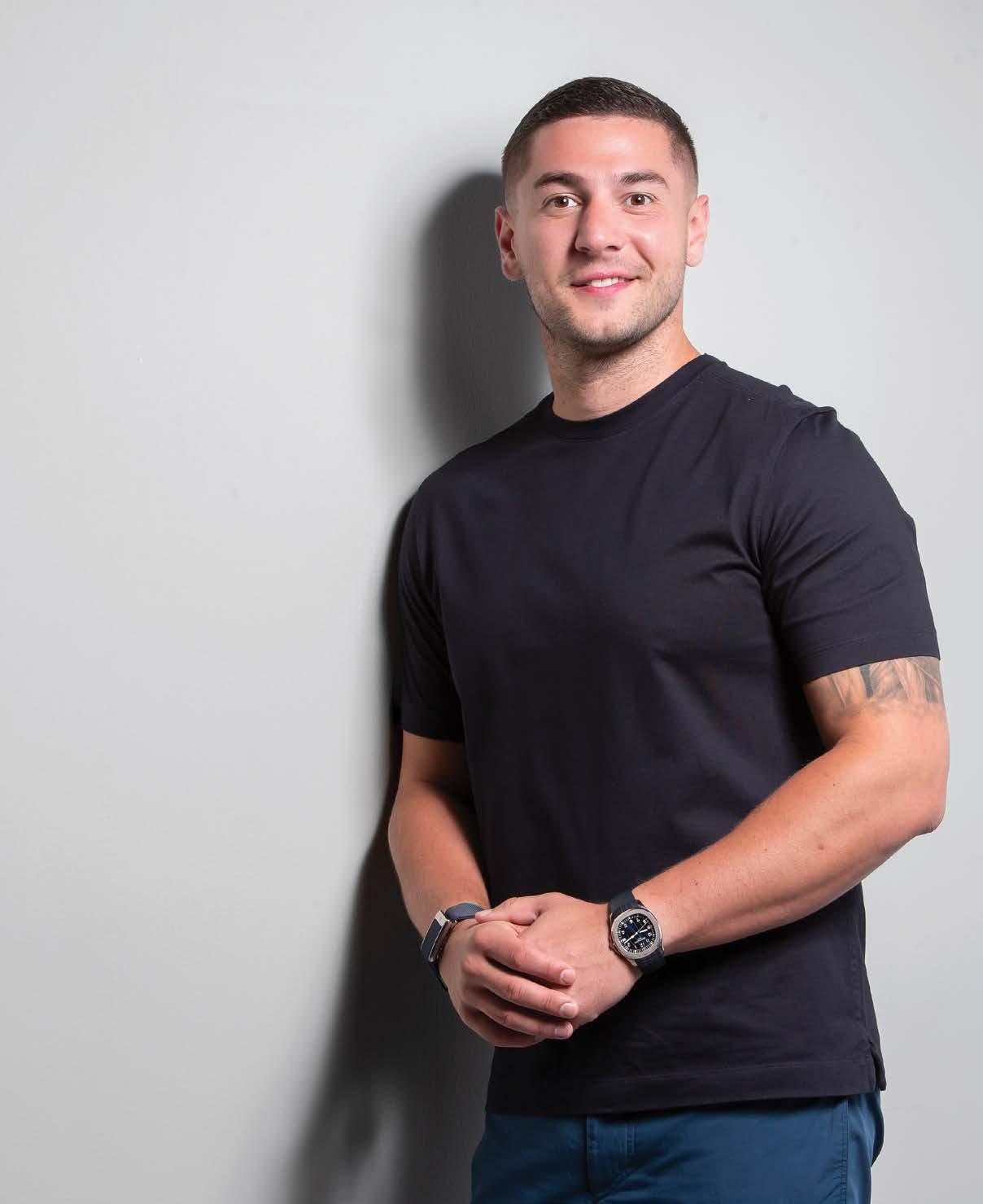
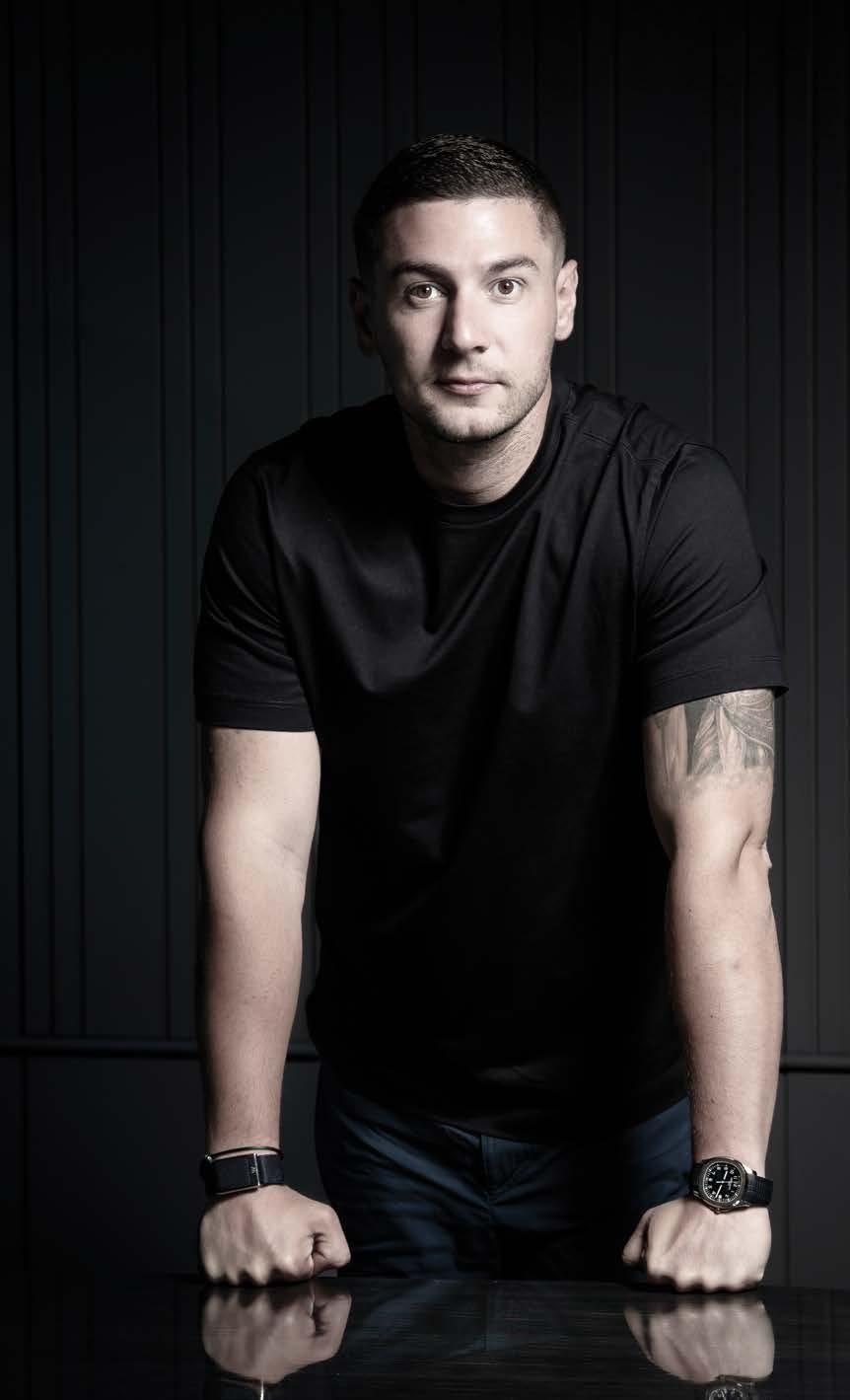
→ Viktor Uzunov is the founder and CEO of UEB3 Ventures, a globally positioned private investment fund focused on digital assets, managing US$70 million in assets.
FROM WALL STREET DISCIPLINE TO DIGITAL ASSET INNOVATION
UEB3 VENTURES CEO VIKTOR UZUNOV
“The future of digital finance will be global, and the UAE understands that better than almost anywhere else,” says VIKTOR UZUNOV, founder and CEO of UEB3 Ventures, a globally positioned private investment fund focused on digital assets, managing US$70 million in assets.
by TAMARA PUPIC
The Bulgarian-born fund manager focuses on digital assets and considers the UAE to be a natural hub for companies like UEB3 Ventures, as it offers “a rare combination of ambition, speed, capital, regulation, and global connectivity.”
Uzunov adds, “What makes the UAE so attractive is that it does not only talk about the future; it actively builds for it. There is a clear appetite to support innovation, attract talent, and create an environment where entrepreneurs and investors can operate globally.
“For digital finance, that matters enormously. This is an industry that needs regulatory clarity, institutional participation, and access to international markets. The UAE offers all three.”
Long before the UAE emerged as a catalyst for his ambitions in digital assets, Uzunov was forging his career in the traditional world of finance.
After graduating in London, Uzunov worked as a Vice President at Jefferies. It was during his years in investment banking that Uzunov came to view blockchain not as another investment trend, but as the foundation of a new financial infrastructure. “Coming from investment banking, you are trained to understand how capital moves, how markets are structured, how risk is priced, and how institutions think,” he says. “When I first looked seriously at blockchain, I did not see it only through the lens of Bitcoin or speculation. I saw a technology that could change settlement, ownership, transparency, liquidity, and access.
“The more I studied it, the clearer it became that this was not just another cycle of innovation. It was a shift in how value could be created, stored, transferred, and verified globally.”
Uzunov’s conviction was shaped by two important insights - the resilience of digital asset infrastructure across multiple market cycles and the growing interest it attracted from sophisticated investors and institutions. “That was the turning point for
I REALIZED WEB3 WAS NOT ABOUT REPLACING TRADITIONAL FINANCE OVERNIGHT. IT WAS ABOUT UPGRADING PARTS OF THE SYSTEM THAT HAD BECOME TOO SLOW, TOO FRAGMENTED, OR TOO INACCESSIBLE.” “
DIGITAL ASSETS ARE OFTEN ASSOCIATED WITH HYPE, SPECULATION, AND TOKENS. BUT THE REAL OPPORTUNITY IS ABOUT MOVING FINANCE ON-CHAIN THROUGH TRANSPARENT, PROGRAMMABLE INFRASTRUCTURE.”
me,” he explains. “I realized Web3 was not about replacing traditional finance overnight. It was about upgrading parts of the system that had become too slow, too fragmented, or too inaccessible.”
Yet, leaving behind the stability and structure of investment banking to pursue opportunities in the emerging digital assets sector was far from an easy decision. “In investment banking, the path is demanding, but it is also clearly defined. There is structure, prestige, and a system around you,” Uzunov explains. “Entrepreneurship is different. You leave certainty behind and step into an environment where everything depends on your judgment, resilience, and ability to execute.
“Moving into digital assets required conviction. It also required humility, because no matter how much experience you have, a new industry forces you to learn again.
“That decision shaped me because it taught me the importance of independent thinking. It is easy to follow an established path. It is much harder to build one before everyone agrees that it is obvious.
“It also made me a more disciplined leader. In a fast-moving industry, you cannot afford to be emotional.
You need conviction, but not ego. You need ambition, but not recklessness. You need to move quickly, but with structure.
“That balance between courage and discipline has become central to how I lead today.”
In line with that, he built UEB3 by combining the rigor of traditional finance with the speed and innovation of digital assets, while keeping transparency, risk management, and capital preservation discipline at the center.
UEB3 applies institutional portfolio management and disciplined digital-asset strategies, with a focus on structured, risk-managed exposure for institutional and private investors.
“Digital assets are often associated with hype, speculation, and tokens. But at UEB3 Ventures, we do not build around narratives or token speculation. We build around fundamentals, risk management, and the belief that finance is moving on-chain through transparent, programmable infrastructure,” Uzunov explains.
“Capital preservation is central to the way we think. That does not mean avoiding risk completely. It means understanding risk, measuring
it, managing it, and making sure every decision fits within a disciplined framework.
“Sustainable growth comes from consistency. It comes from education, transparency, strong partnerships, and building products or strategies that can survive different market environments. Anyone can look successful in a bull market. The real test is how a company behaves during corrections, uncertainty, and pressure.”
UEB3 frames its investor experience around an accessible entry point supported by transparency and education.
For Uzunov, participation in digital assets should come with clear information, a disciplined framework, and education that helps investors understand both the opportunity and the risks.
UEB3’s approach is built around diversified exposure to digital asset markets and infrastructure, all within a risk-managed framework. For Uzunov, the point is not hype or token-picking, but a broader shift in how finance moves on-chain - from ownership and settlement to transparency, liquidity, and access.
Asked what will have the greatest impact on how wealth is created and managed in the years ahead, Uzunov points to the convergence of artificial
AT UEB3 VENTURES, WE ARE BUILDING WITH THE BELIEF THAT THE NEXT STAGE OF DIGITAL ASSETS WILL BE DEFINED BY PROFESSIONALISM. THE EARLY PHASE OF THE INDUSTRY WAS ABOUT EXPERIMENTATION. THE NEXT PHASE IS ABOUT INSTITUTIONALIZATION.”
intelligence, tokenization, and digital assets.
“Artificial intelligence will change how decisions are made. Tokenization will change how assets are owned and accessed. Digital assets will change how value moves and settles,” he explains.
“Separately, each one is powerful. Together, they can reshape the entire wealth management landscape.
“AI will make financial intelligence more personalized, faster, and more data-driven. It will help investors analyze risk, identify opportunities, and manage portfolios in ways that were previously available only to large institutions.
“Tokenization will make private markets more accessible and efficient. Assets such as real estate, private credit, funds, and other real-world assets can become more liquid, transparent, and easier to distribute globally.
“Digital assets provide the underlying financial rails for this new environment. They introduce programmable ownership, faster settlement, and global transferability.”
For Uzunov, this convergence also explains why his work extends beyond digital asset portfolio management into tokenized real assets through Arreat Capital. He believes the future of finance will connect liquid digital markets with real-world ownership, creating new opportunities for investors globally.
According to Uzunov, the future of wealth management will be about accessing a broader universe of assets through smarter, more efficient infrastructure. “I believe the winners will be those who combine technological innovation with trust, credible governance, and sound investment principles,” he says. “Technology will open the door, but credibility will determine who walks through it.”
UEB3 frames current performance as an outcome of process rather than a headline claim. Uzunov attributes results to disciplined execution and risk management, while emphasizing that past performance is not a promise of future returns. “I have always
believed that the companies that survive are the ones that can manage risk, allocate capital intelligently, and make decisions with a long-term perspective. This is even more important in digital assets, where the speed of innovation is extremely high, but so is the level of volatility,” he explains.
“Disruption is important, but disruption alone does not create trust. Investors need to understand what they are investing in, how risks are managed, who is accountable, and what the long-term thesis is. Without that, even the most exciting technology can fail to attract serious capital.
“At UEB3 Ventures, we are building with the belief that the next stage of digital assets will be defined by professionalism. The early phase of the industry was about experimentation. The next phase is about institutionalization.
“That requires discipline. It requires governance. It requires the ability to say no to opportunities that may look attractive in the short term but do not fit the long-term strategy.”
Looking ahead, Uzunov believes one of the biggest misconceptions among institutional investors is the tendency to view digital assets as a single, uniform asset class. In
reality, he argues, the sector has evolved into a diverse ecosystem of distinct segments, each with its own risk profile, use case, and investment thesis.
Understanding these differences will be critical for investors seeking to capture the opportunities emerging across the next generation of financial infrastructure. “There is a major difference between speculative tokens, blockchain infrastructure, tokenized real-world assets, stablecoins, decentralized finance, and long-term digital stores of value,” Uzunov explains. “When institutions treat everything as “crypto,” they miss the depth and complexity of the opportunity.
“What they are missing is that digital assets are no longer only about price appreciation. They are about infrastructure. They are about programmable finance, faster settlement, broader access, transparent ownership, and new models for capital formation.”
For Uzunov, the industry is not defined by hype, speculation, or the next token narrative. Its deeper direction is the movement of financial activity on-chain, where value, ownership, and settlement can become more
transparent, programmable, and globally accessible.
While risks remain inherent to the digital assets sector, Uzunov notes that the key challenge for investors is no longer determining whether digital assets will play a role in the future financial system, but identifying which parts of the ecosystem are likely to become integral to it. “The institutions that understand this distinction early will have an advantage,” he concludes. “They will not be chasing hype; they will be positioning themselves for the next architecture of global finance.”
}This content is for informational purposes only and does not constitute financial, investment, or legal advice. It is not intended to promote, market, or advertise any virtual asset product or service. The views expressed are those of the individuals quoted and do not necessarily reflect Entrepreneur Middle East. Readers should conduct their own due diligence and consult qualified professionals before making investment decisions. Digital assets may lose value in part or in full and may be subject to extreme volatility.
Pushing The Envelope
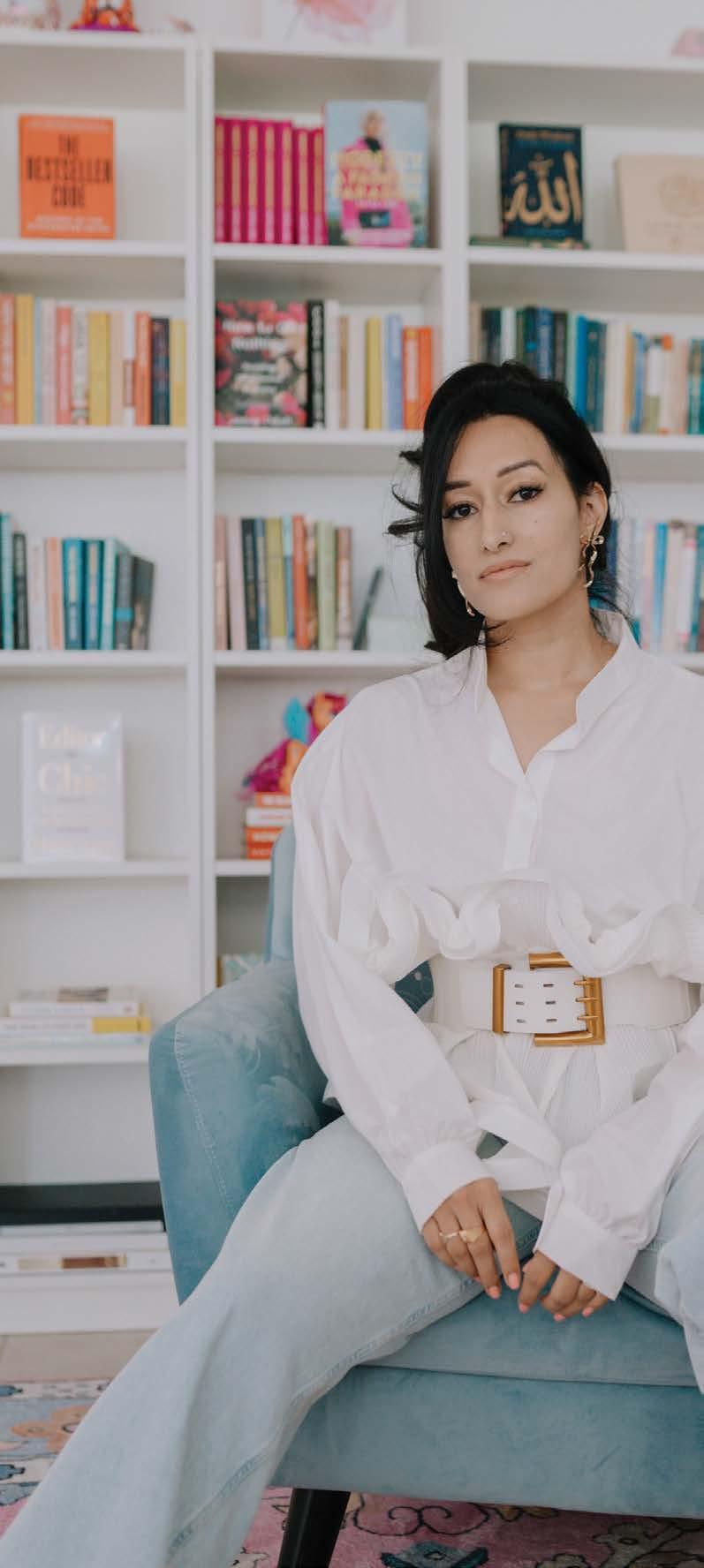
Journalist turned author Hafsa Lodi’s new book, Turbulence, is an unadulterated deep dive into how faith and feminism intersect in the lives of Muslim women, and the complexities that arise when both are defined from a cultural lens. But beyond Lodi’s writing prowess lies an honest tale of what it takes to choose to become a creative entrepreneur. by
IAALIA MEHREEN AHMED
n January 2023, Hafsa Lodi wrote a piece titled “This is what Andrew Tate means for Muslim women like me” for British newspaper The Independent. The piece—an honest and personal take on how the Internet personality’s flagrant and flamboyant views had, at the time, garnered a rabid, mostly male following—was soon met with negative feedback from said followers on social media platform X. But to Lodi’s dismay, most of the comments came from men who, just like herself, identified as Muslim. “I woke up to so much hate,” she recalls. “There were hundreds of messages. It was so, so disheartening. People were saying things like, “Who is this? She’s not even Muslim. Look at her, her hair is uncovered.” Someone even said, “Oh, I found this picture from her Facebook.” And again, what I had written wasn’t some huge exposé — it was just an opinion piece. I was really shocked that people could be so disgusting. But then my publisher got threats. I even remember my dad saying, “Maybe you should write under a fake name. Maybe you shouldn’t be writing under your own name. You have to think of your
→ Hafsa Lodi is an award-winning journalist who writes frequently about the intersection of faith, fashion, and feminism.
safety. You have kids.” My husband was also shocked.”
For Lodi, a mother of two, to have stepped back after such a brutal experience would have been understandable. “For a few days, I was just very disheartened,” she adds. But it only bolstered her resolve to continue walking down a path she had chosen long before Internet trolls and influencers had anything to do with her work. “I kept thinking: how can there be such hatred? And it was especially sad because these were Muslim men. I wouldn’t have cared as much if they were Islamophobic or racist trolls, you know? But these were men from the same community that I see myself as part of. So it showed me how important it is to keep writing stories that address these misconceptions and misguided notions of faith and religion. I never really thought of it as positioning or building a brand. It just felt like: this is what I want to write about, so I’ll continue writing about it.”
towards complex political and cultural topics, Lodi went on to study journalism in Toronto. “One of my major stories in university, towards the end of my degree, was about honor killings occurring within South Asian Muslim communities in Canada. It actually became the cover story of my university’s magazine. My whole angle with that piece was that this was not a Muslim issue. In the Canadian media, honor killings were being framed as something inherently tied to Islam, and I wanted to argue that it was not a Muslim practice and not something Islam condones.”
“IT SHOWED ME HOW IMPORTANT IT IS TO KEEP WRITING STORIES THAT ADDRESS THESE MISCONCEPTIONS AND MISGUIDED NOTIONS OF FAITH AND RELIGION. I NEVER REALLY THOUGHT OF IT AS POSITIONING OR BUILDING A BRAND. IT JUST FELT LIKE: THIS IS WHAT I WANT TO WRITE ABOUT, SO I’LL CONTINUE WRITING ABOUT IT.”
And write she did. In February this year, Lodi’s first fiction novel, Turbulence, hit the shelves. Set in the Middle East, it tells the story of aspiring documentary-maker Dunya Dawood who reaches a life-changing epiphany in the middle of a long plane journey (the title of the book a metaphorical and literal nod to what the character experiences during the flight). At the heart of it, the story explores how the balance between culture, faith, ambition and feminism manifests in the life of a modern Muslim woman.
But Lodi’s journey into this niche topic began at the tender age of 14, when she was still in high school and doing an after-school internship at a local media publishing house. With an inclination
“But at the time, though, I remember thinking: I’m just this 22-year-old journalist. People could easily dismiss me by saying, “She’s just trying to defend her religion. What does she really know about Islam?” So I decided to study Islamic law for my master’s degree in London, so I would have some kind of academic grounding when writing about stories related to religion. That became the niche I was moving toward, I guess — women’s issues, faith-centered stories, and Islam-focused journalism.”
But for a while, Lodi’s path eventually led towards a staff writer’s job at local UAE newspaper The National’s lifestyle section. “It was completely the opposite of what I had been doing… I was writing a lot about fashion, food, parenting, relationships, and things like that,” she adds with a wry smile.
But between 2016 and 2017, with the boom of the modest fashion industry, Lodi found an opportunity to weave her way back into writing about topics closer to her scope of personal interest. “We had a hijabi model
IF YOU WANT TO WRITE A BOOK, DO IT BECAUSE YOU LOVE WRITING, YOU’RE PASSIONATE ABOUT THE CRAFT, AND YOU GENUINELY WANT YOUR STORY TO EXIST IN THE WORLD. FINANCIAL SUCCESS IS NOT GUARANTEED; THAT WAS DEFINITELY A LESSON I LEARNED WITH MY FIRST BOOK.”
on major runways for the first time in 2017 — Somali-American, Halima Aden. And because I was the only Muslim woman journalist on the lifestyle desk, those stories naturally came to me to write. I remember one story I did called “Is Modest Modeling an Oxymoron?” Because for me, growing up, I had never seen a hijabi model modeling fashion. It seemed contradictory to modesty, and that was what a lot of people were thinking at the time as well. But when you spoke to Muslim women who were modest fashion influencers, they had a completely different perspective. I thought it was really interesting to explore that tension in a story. That became my first story about modest fashion. After that, any new hijab brands, abaya brands, or modest swimwear brands naturally ended up coming my way, and I found myself writing about all of these things.”
In a fortunate twist, one of Lodi’s pieces on modestwear was picked by a publisher in London. A trip to the English city while being pregnant, some back-and-forth conversations, and a signed contract later, Lodi — who, by then had quit her post at The National and was a freelance writer— was able to release her first non-fiction book, Modesty: A Fashion Paradox, in June 2020.
But a release in the midst of the COVID-19 pandemic meant unprecedented hurdles were added to Lodi’s book publishing journey. “It was a tough release period. I had book tours in the UK and the US, but they got canceled, obviously, because of the lockdown. But through that period, I realized I wanted to write something else, but this time I wanted to try fiction. I thought there’s something
about non-fiction that not everybody will pick up. Not everybody wants to learn. But fiction is…well, there’s more fun, there’s more flexibility.”
But while attempting to fictionalize her perspectives and experiences allowed Lodi the kind of creative liberty she couldn’t afford in her non-fiction work, it came with a unique creative challenge: staying true to her personal experiences and viewpoints while honoring the faith she practises. “I had some doubts about that throughout the writing process,” she admits. “At first, I just wrote everything that came to me, and then I kept editing and editing. I also asked for the opinions of people I trusted. There’s a female Muslim scholar, Dr. Sofia Rehman, whose book club I’ve been part of for about six years now. There’s actually a scene in the book that was inspired by one of her book club sessions. I even asked her at one point, “Am I being respectful here?” I don’t want to give away too much, but there’s one part where the protagonist basically has a dream involving someone from the Prophet Muhammad’s family and has a conversation with them. In that sense, I was fictionalizing someone from history, which made me cautious. But it was all very vague, rooted in positive lessons, and never intended to be disrespectful in any way. That would be the last thing I’d want to do with this work! I’m writing as a Muslim woman, as a woman of faith, and as someone who deeply reveres these figures. So it was definitely a difficult balance to strike.”
Adding to such a complex creative process was also the fact that her female protagonist, like Lodi herself, is a South Asian woman — a collective
culture spanning the Indian subcontinent with different, and often convoluted, perceptions of the very topics Turbulence dissects. This too was a reality Lodi was aware of while writing the book, which reflects in the characters of the book. “I wanted to bring some nuance to that idea,” she says. “The main character, Dunya, has a mother who is not a typical South Asian mother at all. She had an arranged marriage and — this isn’t a spoiler, it’s revealed very early on — her husband was abusive. She eventually left him and raised Dunya as a single mother. Her own parents cut her off because of that decision, so she no longer has a relationship with them. That entire experience leaves her deeply disillusioned with both culture and religion. The mistake she makes, though, is conflating culture with religion. Because of that, she doesn’t teach her daughter anything about Islam. It’s not necessarily that she doesn’t believe in it completely, but she wants nothing to do with what she sees as religion shaped and distorted by culture. So Dunya ends up seeking faith on her own. She feels drawn to the message herself and begins exploring it on her own terms.”
But in showing that the female protagonist, despite not having a conservative upbringing, chooses a life that is, Lodi hopes to show the true spectrum of what faith-led feminism entails. “I wanted to explore why someone might genuinely want that kind of life, even when it’s not being forced upon them. Because it’s not always about coercion. There are aspects of that lifestyle that can feel meaningful, grounding, and fulfilling to some women. I wanted to show what might draw a young Muslim woman toward that path on her own
terms. And I think that’s something many people misunderstand about feminism. It’s not that one choice is inherently right and another is wrong. The important thing is that the decision itself belongs to the woman.”
In writing such multidimensional characters, Lodi hopes to contribute towards a wider creative movement wherein Muslim authors are pushing the envelope in terms of representation. “I think the literary industry has already started moving away from that monolithic view of the ‘Muslim character,’” Lodi says. “With Turbulence, that was something I really wanted to do as well. I knew I wanted a clearly Muslim female protagonist, but I didn’t want her to become a stereotype. I didn’t want her to be conventionally religious or perfectly pious. I wanted her to have doubts about her faith, to question things, and to arrive at her own understanding through learning and reflection. At the same time, I wanted faith to remain a positive and grounding part of her identity throughout the book. She goes through highs and lows, dips and peaks in her relationship with faith, but ultimately it becomes something meaningful and stabilizing for her. I also wanted to clearly separate culture from religion, because I think that’s a major issue in Islam today — we often conflate the two. I wanted her journey to involve untangling those things in a very real way and learning to recognize the difference between them.”
In the midst of all this, Lodi faced a new set of struggles in getting her book published. “My first publisher, Neem Tree Press, was initially set to publish Turbulence as well. But in early 2025, after merging with a larger publisher, Unbound, the company was liquidated. Suddenly, everything fell apart,” she reveals. “All the [book] rights reverted to me, and I was left with this finished manuscript of Turbulence. At that point, the book had already gone through edits, had a completely different cover, and only needed one final round of editing.”
Lodi, who at the time was working as a full-time journalist at Vogue Arabia, says having to pitch the book from scratch was not an idea she was ready to entertain.
“I just didn’t have the energy for it either,” she says. “Even before signing with Neem Tree Press, I had already sent around 60 emails to literary agents and publishers in New York and London. I know 60 emails may not sound like a huge number, and technically I could have sent many more, but I was working full-time and honestly, there just wasn’t much interest in this kind of book in the West at the time. So when the Neem Tree deal collapsed, I reached out to Kira, founder and CEO of The Dreamwork Collective, a publishing house here in Dubai. I had written about some of their authors before and knew she was a respected publisher. I’m honestly so grateful she believed in the book. She accepted it largely as it was, we did one final edit, and we
changed the cover (which I was actually happy about because I never really loved the original one anyway!) It felt like such a blessing to have that support from her, because otherwise I genuinely don’t think the book would have ever been published. But publishing is a very difficult journey. It really isn’t for everyone.”
It is that final sentiment Lodi hopes to pass on to any budding or upcoming authors in the UAE and beyond. “Don’t expect to make money from your book,” she says. “If you want to write a book, do it because you love writing, you’re passionate about the craft, and you genuinely want your story to exist in the world. Financial success is not guaranteed; that was definitely a lesson I learned with my first book.”
“Right now, although there’s no real profit coming to me from this work, I think I’ve started looking at it from a more spiritual or holistic perspective instead,” she continues. “My mindset now is: do what your soul feels called toward. Do what feels meaningful and fulfilling to you. If your intentions are sincere and your heart is in the right place, then hopefully the reward — financial or otherwise — will come eventually, InshaAllah… That’s where I am with it right now!”
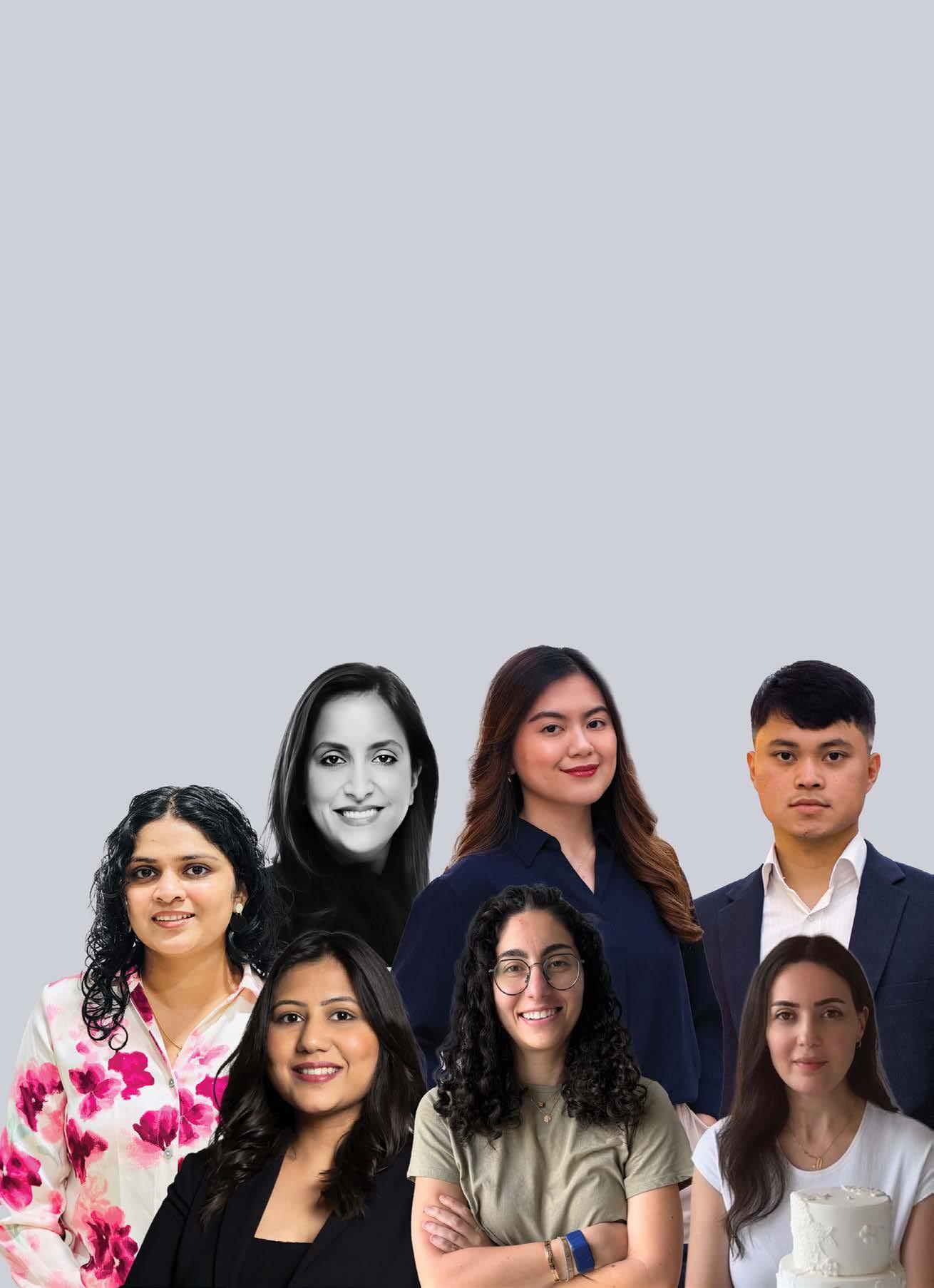
How Seven Small Business Founders In
The UAE Rethought Resilience
Amid UncertaintyRegional
by AALIA MEHREEN
In early March 2026, four simple words from UAE President H.H. Sheikh Mohamed bin Zayed Al Nahyan —”we will emerge stronger” — set at ease an entire nation that was coming to terms with unforeseen regional volatilities. In a striking example of how a country’s leadership shapes the collective mindset of its people, I found that all six UAE-based small business owners I reached out to for this story shared the same sentiment about the futures of their own brands – the words uttered either verbatim, or as slightly different renditions of the same line. But upon looking deeper, it is clear that such confidence isn’t superficial, but more a result of proactive business strategies intentionally honed over time. Take Zein Fayek, for example, who founded boutique cake studio La Torta By Zein in Syria in 2016 and launched in the UAE in just January this year. La Torta By Zein had been operational in the UAE for just over a month when the February 28 disruptions began – but as an
AHMED
Today, resilience means staying consistent, making thoughtful decisions under pressure, and continuing to build with purpose— even when results are not immediately visible. As such, I believe La Torta will emerge stronger from this period. These challenges have pushed me to refine operations, strengthen positioning, and become more strategic.
entrepreneur who has led her business through not just the COVID-19 pandemic but also displacement during the nearly 14-year-long Syrian civil war, Fayek was prepared.
“My understanding of resilience has changed significantly – it is no longer about pushing harder, but about adapting quickly and managing uncertainty with clarity,” Fayek says.
“Operating in volatile environments taught me that flexibility is more important than control, and I developed the ability to continue working without guaranteed outcomes. These experiences strengthened my mindset and prepared me for ongoing challenges. Today, resilience means staying consistent, making thoughtful decisions under pressure, and continuing to build with purpose—even when results are not immediately visible. As such, I believe La Torta will
emerge stronger from this period. These challenges have pushed me to refine operations, strengthen positioning, and become more strategic.”
Fayek notes that low footfall, rising costs, and external factors affecting consumer behavior were the three main financial pain points she faced in the immediate aftermath of the crisis.
“Without large financial buffers, I focused on operational efficiency and flexibility,” she says. “I reduced waste, adjusted production volumes, and prioritized products with consistent demand. Diversification was also key. I introduced smaller, more accessible items, explored B2B opportunities, and strengthened my presence on delivery platforms to increase reach. At the same time, I remained open to adjusting pricing, menu structure, and sales
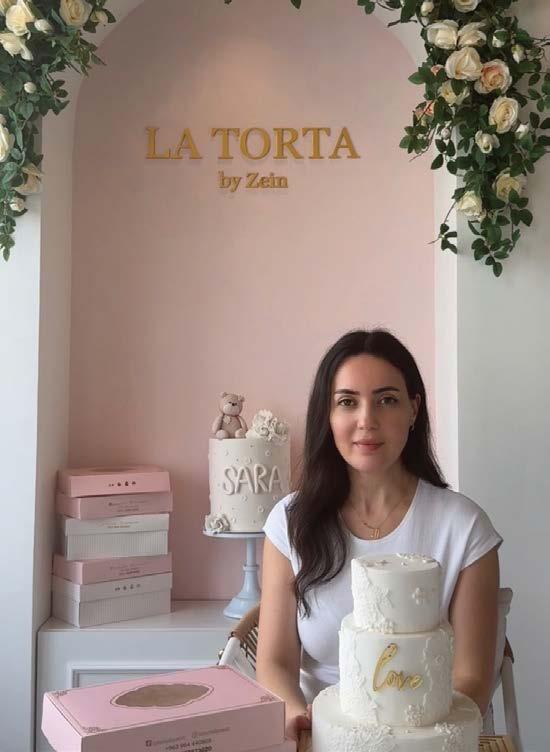
Zein Fayek, founder, La Torta by Zein
→ Zein Fayek is the founder of La Torta by Zein. The Syrian entrepreneur originally launched the brand in Damascus in 2016 and expanded to Dubai in January 2026.
↑ La Torta by Zein is a boutique cake studio based in Dubai’s Arjan area. It specializes in customized cakes and handcrafted desserts, with a strong focus on quality, balanced flavors, and refined aesthetics.
channels based on performance. Contingency planning became practical—being ready to pivot quickly and manage resources carefully has been essential in maintaining stability during uncertainty.”
Adopting lean cost structures and benefitting from diversified revenue streams are proactive decisions that
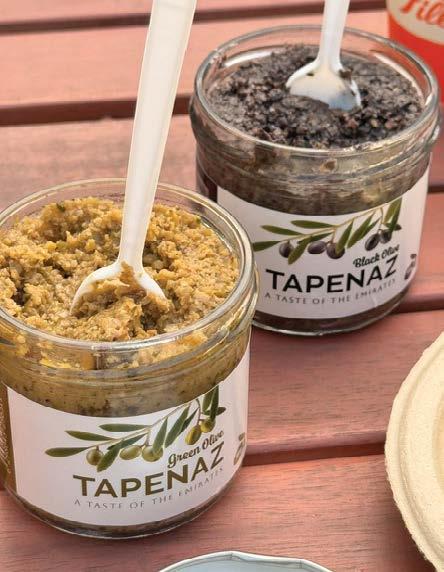
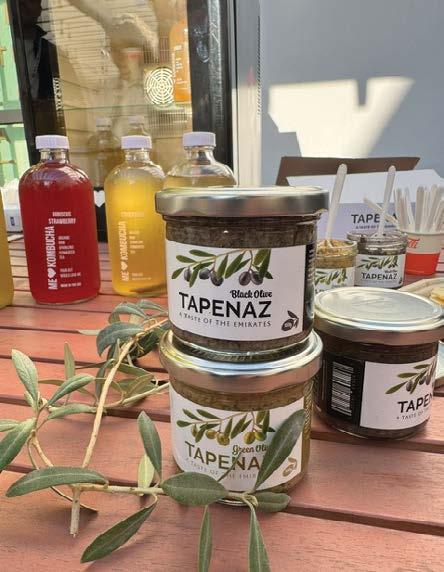
helped two other UAE small businesses brave the storm as well — quite literally to an extent, given these entrepreneurs had the added worry of navigating torrential weather conditions throughout March 2026. The first of these brands is Maharlikan, a premium casual footwear brand founded in 2024 by Gen Z Filipino entrepreneurs Bianca Louise Badando and John Kirsten Simeon; the second is TAPENA, a gourmet tapenade (olive spread) brand “with a twist,” founded by Emirati entrepreneur Nazpari Azari in November 2025. Citing business lessons learned not only from the coronavirus pandemic, but also from the devastating April 2024 Dubai floods, both brands leaned into disciplined, low-overhead operations to navigate uncertainty—while Maharlikan focused on cautious
inventory scaling, flexible supplier decisions, and phased growth to protect cash flow, TAPENA maintained stability by controlling costs, ensuring consistent production, strengthening supplier relationships, and expanding into retail to offset declines in hotels, restaurants and cafes (HoReCa) demand.
“While our contingency planning may look different from
The country’s supportstrongfor, infrastructure, and pro-business environment creates a foundation that smallencouragesbusinesses to keep building through uncertain periods.
Bianca Louise Badando and John Kirsten Simeon, co-founders, Maharlikan
that of larger businesses, the principle is the same: protect sustainability while staying adaptable,” Maharlikan co-founder Simeon says. “These practical measures have given us the ability to continue building steadily, even during periods where many businesses may feel pressure to react too quickly.” Badando adds that building a premium product with limited resources during uncertain times called for increased attention to detail. “As a growing footwear brand, every decision—from inventory
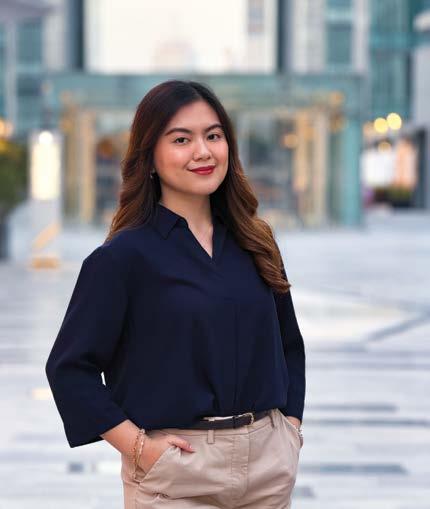
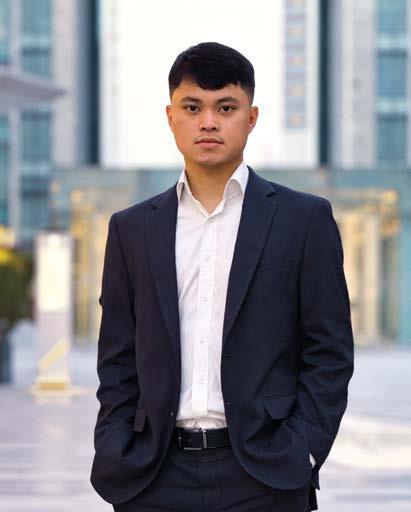
← → Bianca
Louise Badando and John Kirsten Simeon are the Gen Z Filipino co-founders of Maharlikan, a UAE-based premium casual footwear brand founded in 2024.
planning to supplier coordination—has to be made carefully to protect both quality and cash flow,” she adds. “The challenge therefore has been staying focused and motivated while operating in an environment where external factors can shift consumer behavior very quickly. Our approach has been to remain calm, make data-conscious decisions, and focus only on what strengthens the brand long term.”
TAPENA founder Azari reflects similar sentiments when she shares that “as a founder, I’ve had to stay focused, make careful decisions, and ensure continuity. It’s not easy, but the priority has been to keep the business stable and moving forward.”
Azari, who had already
led her business to clinch listings across major retail chains in the UAE such as Spinneys, Waitrose, Union Coop, and Carrefour, also credits support from the Mohammed bin Rashid Establishment for SME Development which
helped establish TAPENA’s factory and launch the business last year. “Today, despite the unprecedented challenges, we are growing through strong community support and word of mouth. However, this also highlights a broader
Today, despite the unprecedented challenges, we are growing through strong community support and word of mouth. However, this also highlights a broader challenge: local manufacturing startups need stronger public relations (PR) and marketing support to scale, especially UAE-born brands aiming to compete and represent the country’s food industry and promote ‘Make it in the Emirates.’
founder, TAPENA
challenge: local manufacturing startups need stronger public relations (PR) and marketing support to scale, especially UAE-born brands aiming to compete and represent the country’s food industry and promote
→ Nazpari Azari is the Emirati founder of TAPENA, a UAE-born gourmet spread brand that reimagines traditional tapenade into a fresh, healthy, and versatile product suited to modern lifestyles.
Nazpari Azari,
My business did not start during COVID-19, but that period still shaped how I view uncertainty and stability. It helped me understand that timing is never fully in our control. Experiences like the pandemic and the UAE floods also reminded me how unpredictable life can be. I’ve learned that resilience is not about controlling everything, but about staying calm, steady, and moving forward through uncertainty.
‘Make it in the Emirates.’ I believe with the right support, TAPENAZ can contribute even more to the UAE’s local food industry.”
Both sets of founders note that the lack of knee-jerk reactions to the crisis is strongly bound to their definition of resilience – which is strikingly similar to the definition shared by La Torta By Zein’s Fayek. “Resilience now means being adaptable, prepared, and able to respond quickly without losing direction. We’ve realized that strong businesses are not built only on great products, but on flexibility, planning, and the ability to stay steady during uncertainty,” Maharlikan’s Badando shares. Meanwhile TAPENAZ’s Azari says that her understanding of resilience has become more practical. “It’s not only about growth, but about sustaining the business during uncertainty. Experiences like COVID-19 and the April 2024 UAE
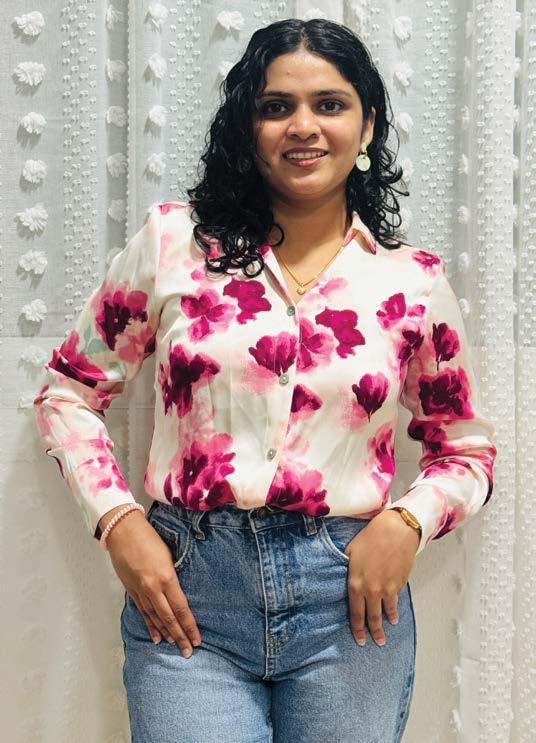
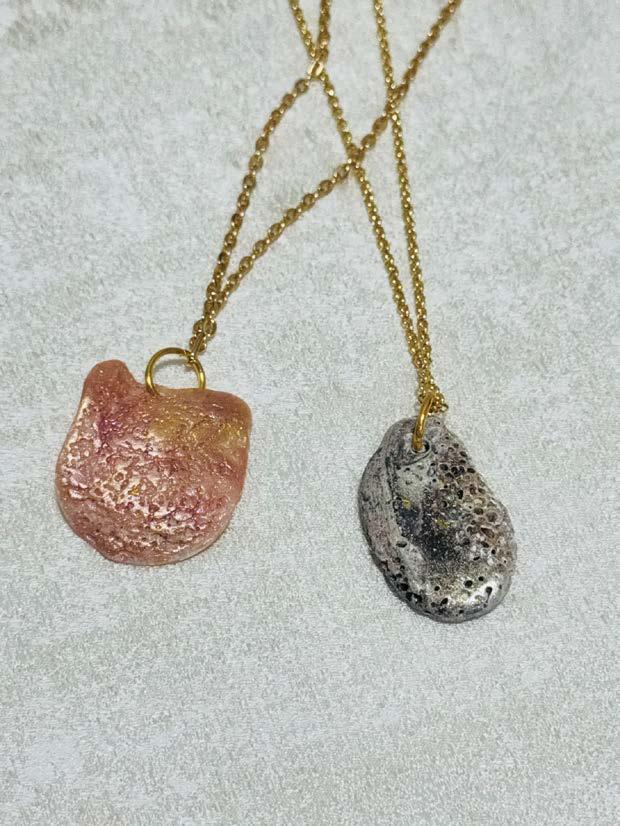
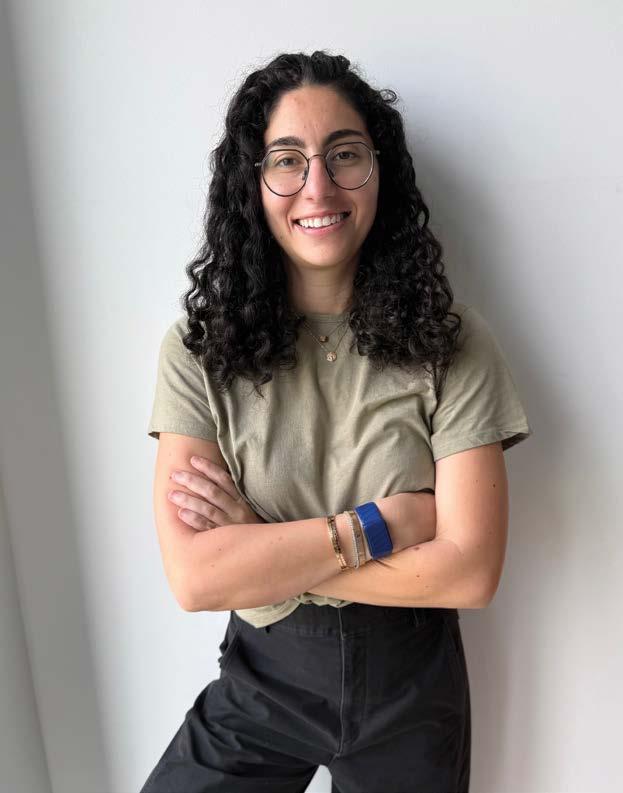
→ Ishara Malshani Settinayake is the Sri Lankan founder behind Peaches Craftella, a handmade lifestyle brand launched in
floods helped me react faster and stay disciplined. This time, I focused on protecting what I’ve built and adapting quickly to changing conditions.”
One other small business owner who can resonate with these statements is UAE-based Sri Lankan entrepreneur Ishara Malshani Settinayake who launched
2024 in Abu Dhabi.
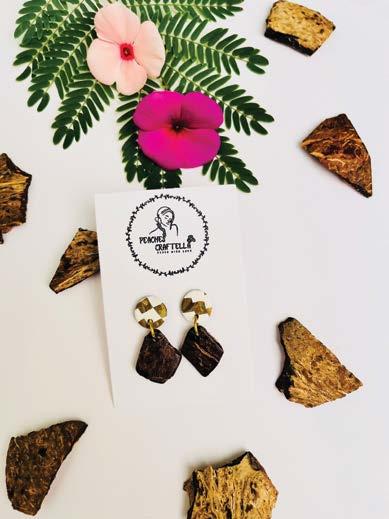
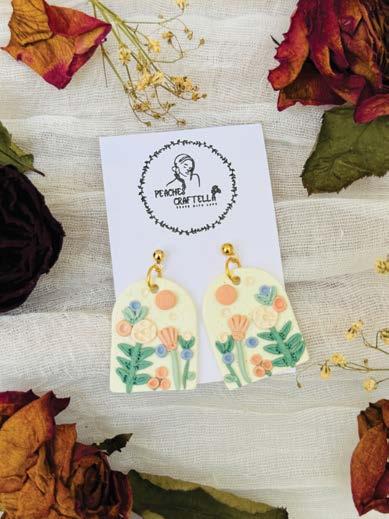
↑ Peaches Craftella transforms natural and upcycled materials such as coconut shells, seashells, and clay into jewellery and home décor pieces. in Abu Dhabi.
IN
THE UAE,
RESILIENCE
IS NO LONGER A REACTIVE MEASURE, BUT BUILT INTO THE CORE OF HOW BUSINESSES ARE DESIGNED AND SCALED
handmade lifestyle brand Peaches Craftella in 2024 in Abu Dhabi. “My understanding of resilience has become more gentle over time,” she says. “Earlier, I thought it meant pushing through everything without stopping, but now I see it more as balance — adapting and continuing without pressure. My business did not start during COVID-19, but that period still shaped how I view uncertainty and stability. It helped me understand that timing is never fully in our control. Experiences like the pandemic and the UAE floods also reminded me how unpredictable life can be. I’ve learned that resilience is not about controlling everything, but about staying calm, steady, and moving forward through uncertainty.”
Settinayake, who balances her work at Peaches Craftella with a full-time corporate job as well as raising a family, notes that the encouragement she received from the small business community in the UAE has been particularly helpful in the last few weeks. “Even small moments — like seeing someone resonate with something I made by hand — are
what keep me motivated,” she says. “I also take part in pop-up markets whenever I can, usually with a small, simple, and thoughtful display, which allows me to share the brand in a more personal way. Peaches Craftella is still growing, but at its heart it remains a story made by hand — rooted in calmness, emotion, and meaningful expression.”
But in narrating her experience, Settinayake brings up a point very similar to the one raised by TAPENAZ founder Azari: the challenges of marketing a brand with a very limited budget. “I have to be intentional and creative with how I share my work, especially when resources are small and everything is self-driven,” Settinayake adds. “There are also emotional moments when sales are slow, even though a lot of care and effort goes into each piece. However, I’m supported strongly by my husband, my sister, and my close friends, which helps me stay grounded. I try to take things step by step –even as I slowly expand into home décor and accessories so the brand can grow in a more natural and balanced way– and remind
One of the biggest challenges has been knowing how to show up during a time like this. It didn’t feel right to continue posting or selling normally with everything happening in the region. As a LebaneseAmerican, it also felt very personal. I ended up taking a step back and being more intentional, rather than forcing anything.
Malak Raad, founder, Lunaloom
myself that I’m building something meaningful over time. For me, Peaches Craftella is about creating something that feels like a quiet breath — intentional, warm, and rooted in slow, meaningful crafting. Each piece is made to carry emotion, simplicity, and a sense of calm connection.”
Another UAE-based small business that seeks to create meaningful bonds through its work is custom embroidery studio
Lunaloom, which was launched in November 2025 by Lebanese-American entrepreneur Malak Raad. “Running a business during this period of uncertainty has definitely changed how I think about resilience,” she says. “It’s not always about pushing through, sometimes it’s about knowing when to pause and focus on what matters. My attention
naturally shifted more toward family, and experiences like COVID-19 reminded me that things don’t always go as planned, and that’s okay. While I don’t have anything structured yet, since the business is still new, I have been keeping things flexible. Because most of what I do is event-based and small-scale, it’s made it easier to pause when needed without too much pressure.”
With unfathomable repercussions of the regional crisis reaching her native land, Lebanon, Raad says she also had to deal with other emotionally-led decisions. “One of the biggest challenges has been knowing how to show up during a time like this,” she admits. “It didn’t feel right to continue posting or selling normally with
→ Malak Raad is the Lebanese-American founder of Lunaloom, a Dubai-based custom embroidery studio that offers live embroidery at events alongside personalized stitched pieces.
↑
everything happening in the region. As a Lebanese-American, it also felt very personal. I ended up taking a step back and being more intentional, rather than forcing anything.”
One source of solace for Raad, however, was the same as that for Peaches Craftella’s Settinayake: the UAE business community. “A lot of businesses have been opening up their spaces for small brands like mine to pop up, which has helped a lot with visibility and getting my name out there,” Raad shares. “It’s made a real difference and has shaped how I see the future of the business.”
Indeed, one such business that opened up its space rent-free to local and homegrown brands “to keep the community ecosystem alive” is
design-led cultural hub The Casa Collective — its Indian co-founders, architect-turned-entrepreneur Ritika Kothari and Zohra Bandali, being the final voices of UAE small businesses in this piece. Kothari says that taking this decision was part of a broader decision-making process, which also included deferring employee salaries rather than cutting them. “Watching our team take shelter during the alerts was the hardest moment,” Kothari shares. “They look to us not just for salaries but for safety and clarity. Decision-making therefore became instinctive. Defer what can wait, cut what must go, protect the people first. Regional tensions also disrupted our launch momentum: events cancelled, global shipments stuck, brands unable to participate due
AS UAE SMES —WHICH CONTRIBUTE OVER
63% OF
THE
NATION’S NON-
OIL GDP—
CONTINUE TO GROW ALONGSIDE THE GOVERNMENT’S GOAL OF REACHING ONE MILLION BUSINESSES BY 2031, THE SECTOR’S RESILIENCE IS BEING SHAPED BY BOTH FORMAL INITIATIVES AND COMMUNITY SUPPORT.
Launched in November 2025, theLunaloom studio focuses on bespoke craftsmanship and interactive experiences, bringing a contemporary approach to traditional embroidery.
to spiked logistics costs. So our approach became simple: stay functional, stay honest with the team, and make decisions we could stand behind regardless of outcome.”
Much of Kothari’s approach can be attributed to her simultaneous role as the CEO of Colab Cloud Tech, a Dubai-based tech studio that offers immersive, digital-first solutions. Some of it, as per Kothari herself, was learnt through the COVID-19 crisis. But the co-founder shares a third, more personal reason: beating cancer. “Resilience used to mean bouncing back; it doesn’t anymore,” she says. “It means staying functional while the ground is still moving. As a cancer survivor, I have never been scared of starting from scratch or navigating unpredictable events. COVID-19 taught us all that disruption isn’t exceptional, it’s periodic. Both experiences pushed us to build lighter, leaner, and with greater community dependency. This time the response felt more instinctive. We didn’t wait for clarity before acting. We moved quickly to restructure, localise, and communicate openly with partners and the team. What changed most profoundly was the understanding that resilience isn’t an individual quality; it’s a collective one. The
Through it all, the community was our most tangible support. People checked in, shared our space, redirected their networks toward local businesses, and showed up when it mattered. Not dramatically — quietly and consistently, which is the more valuable kind. We will emerge stronger because we were forced to build more honestly.
Ritika Kothari, founder, The Casa Collective
community absorbing the shock alongside us was not incidental. It was structural. That’s what Casa Collective was built for, and this period proved it.
→
Like many of the other small business founders in this story, Kothari too found monetary respite through lean cost structures and diversification. “There was no significant financial buffer, but there was structural flexibility: low fixed overheads, no longterm vendor commitments in the early months, and a team small enough to pivot quickly,” Kothari shares. “When the disruption hit, that leanness became an advantage. We deferred non-essential expenses, temporarily paused global partnerships, and redirected focus to existing on-the-ground operations: local brands, existing community, the physical space itself. Meanwhile, diversification across the two businesses that I own —The Casa Collective and Colab Cloud Tech— provided a psychological and operational hedge. When one was disrupted, the other held. The lesson we carry forward is that flexibility is the only reliable buffer a young business actually has.” “Through it all, the community was our most tangible support,” Kothari adds. “People
Ritika Kothari, an Indian architect-turned-entrepreneur, is the founder of The Casa Collective, a design-led cultural hub in Al Quoz, Dubai.
→ Conceived as a third space for artists, designers, makers, and the culturally curious, The Casa Collective functions as a living gallery, event venue, design hub, and pop-up space for Dubai’s creative community.
checked in, shared our space, redirected their networks toward local businesses, and showed up when it mattered. Not dramatically — quietly and consistently, which is the more valuable kind. We will emerge stronger because we were forced to build more honestly. Plans that didn’t survive contact with reality were replaced with something more grounded.... local roots, genuine relationships, and a community that now knows what Casa Collective stands for not because we told them, but because they experienced it together with us.”
Indeed, as small and medium businesses in the UAE —a sector that accounts for over 63% of the nation’s non-oil GDP— continue to grow and the government continues its goal to house one million such businesses by 2031, it is clear that this resolute and resilient ecosystem is a blend of formal initiatives and local community support.
Badando and Simeon, the young entrepreneurial duo behind Maharlikan, summarize it best when they say: “The country’s strong support for entrepreneurship, infrastructure, and pro-business environment creates a foundation that encourages small businesses to keep building through
uncertain periods. Just as important has been the encouragement from our community—customers, peers, and supporters who continue to believe in the value of local and emerging brands. That support reinforces our belief that difficult periods can strengthen businesses rather than weaken them. We believe we will emerge stronger because resilience is now part of how we operate—not just how we respond to crisis, but how we grow every day.”
From 31 Aug - 3 Sept 2026 Riyadh Exhibition and Convention Center - Malham, Saudi Arabia
SECURE YOUR PASS NOW
Enlighten Your Eternal Beauty, Inside and Out!
@muarjewels www.muarjewels.com
info@muarjewels.com
Navigating a More Connected World:
How the UAE Is Becoming the Wealth Bridge for Globally Mobile Entrepreneurs
In today’s world, wealth no longer sits neatly within national borders. Families may live in the UAE, run businesses in India, hold assets across Asia and educate their children in the UK or the US. For globally mobile entrepreneurs and affluent families, wealth has become inherently cross border.
by RAJESH KANNAN
This shift is fundamentally reshaping how individuals think about their financial lives. Ambitions, assets and obligations now span multiple jurisdictions, making traditional, single market banking approaches increasingly insufficient. What clients need instead is a banking partner that can connect these worlds seamlessly and help them navigate complexity with confidence.
Against a backdrop of market volatility and
geopolitical uncertainty, one trend has become unmistakable: wealth is becoming more global, and the UAE is emerging as a central anchor in this shift.
Positioned at the intersection of major financial corridors linking East and West, the UAE’s role as a global connector has never been more relevant. Importantly, despite recent volatility, client activity in the UAE has remained resilient, underscoring the market’s structural strength rather than short term sentiment.
The UAE as a Cross Border Wealth Hub
Over the past decade, the UAE has evolved into a dynamic bridge for globally mobile entrepreneurs and investors. As a leading financial and business hub, it continues to attract capital, talent and enterprises from across Asia, Europe and Africa. This evolution is central to our strategy at Standard Chartered, where cross border connectivity sits at the heart of our ambition to be a leading international wealth manager.
As the UAE grows both
organically and through its ability to attract high net worth individuals and professional investors, demand for sophisticated and internationally aligned wealth solutions is rising. For many clients, the UAE is no longer simply a place to live or base a business—it has become the anchor of their broader cross border wealth strategy.
This is particularly evident among internationally active families and Global Indians. Many have operating businesses in India, property and residency in the UAE, investment portfolios in Singapore or Hong Kong, and children studying across the UK or the US. For these clients, the ability to manage liquidity, investments and risk across markets in a coordinated way is not a luxury—it is essential.
Periods of uncertainty tend to sharpen this global mindset. Rather than reacting to daily headlines, clients are increasingly making deliberate, long term decisions: diversifying across asset classes and geographies, focusing on quality, and maintaining disciplined investment strategies. The objective is not just to preserve wealth, but to position it for opportunities that may emerge “the day after” volatility subsides.
Why International Banking Capabilities Matter
This is where international banking—and, more importantly, a focused network of wealth hubs—becomes a true differentiator. At Standard Chartered, our
FOR CLIENTS, THE PRIORITY IS NO LONGER SIMPLY TO RESPOND TO CHANGE, BUT TO POSITION THEMSELVES AHEAD OF IT. IN THIS CONTEXT, THE UAE’S ROLE AS A BRIDGE FOR GLOBAL WEALTH IS SET TO BECOME EVEN MORE CRITICAL.”
international footprint spans many markets. Within this global network, our Priority Private proposition for high net worth clients is anchored around selected wealth hubs including the UAE, Singapore, Hong Kong and Jersey. These centres are not chosen arbitrarily; they reflect the real corridors through which our clients live, invest and build their futures.
For clients, the value of this connectivity manifests in three critical ways. First, seamless cross border access—the ability to move and manage wealth across jurisdictions with fewer friction points. Second, integrated advice—guidance that considers the entire global portfolio rather than treating each market in isolation. Third, local depth combined with global perspective—insights grounded in on the ground expertise, informed by broader macro and market trends. Ultimately, this is not about scale for its own sake. It is about connectivity: joining the dots across different parts of a client’s financial life and translating complexity into clarity.
The Global Indian Opportunity
The Global Indian segment encapsulates many of these cross border dynamics. These clients often retain strong commercial, cultural and familial ties to India, while building global footprints in terms of residence, business and investment activity.
For them, the UAE offers a compelling base—proximity to India, a robust and sophisticated financial ecosystem, attractive business conditions, and strong connectivity to other key markets. When paired with an international banking platform that understands multi generational and cross geographical aspirations, the UAE can function as a true wealth bridge—supporting the creation, protection and transition of wealth across borders.
People at the Heart of a Connected Proposition
Behind every effective cross border proposition are the people who bring it to life. Serving globally mobile clients requires speed, precision and deep
technical expertise. Relationship teams must navigate multiple regulatory environments, tax considerations and market cycles, while delivering a consistent and high quality client experience.
This human element—the ability to listen, interpret complex needs and coordinate across markets—remains central to effective international banking, particularly during periods of volatility. Our clients are supported by highly trained and INSEAD certified Relationship Managers and Wealth Advisors positioned across our network, complemented by an expanding range of digital wealth solutions.
Positioning for What Comes Next
Market cycles will continue to evolve, and periods of volatility are inevitable. What is changing more fundamentally is how and where wealth is created, owned and transferred. It is increasingly global, mobile and interconnected.
For clients, the priority is no longer simply to respond to change, but to position themselves ahead of it. In this context, the UAE’s role as a bridge for global wealth—supported by an international banking platform and a focused network of wealth hubs—is set to become even more critical.
International banking today is no longer just about accessing multiple markets. It is about orchestrating a connected, cross border wealth strategy in an increasingly borderless financial world.
Rajesh Kannan is head of Wealth and Retail Banking, UAE, International Banking EMEA, Jersey (UK) and head of Global Indian Clients at Standard Chartered
Dr. Reem Osman: Building Businesses With Purpose Through Reem Holding
by TAMARA PUPIC
Dr. Reem Osman has successfully bridged the worlds of medicine, corporate leadership, and entrepreneurship by transforming a career that began in surgery into one that now spans healthcare, consulting, media, real estate, and lifestyle ventures through Reem Holding.
Widely recognized as one of the Middle East’s leading healthcare executives, Dr. Osman built her reputation over more than two decades of clinical and leadership experience.
Beginning her career as an accomplished eye surgeon, Dr Osman’s talent for precision, patient care, and problem-solving later defined her transition from clinician to healthcare executive to entrepreneur.
She has been the Vice Chairperson of one of the region’s largest healthcare groups, where she has played a key role in driving expansion strategies, operational transformation, and cross-border growth initiatives.
While these achievements established her as a respected healthcare industry leader, Dr. Osman’s entrepreneurial ambitions ultimately led her to create Reem Holding, a 100% female-owned strategic consultancy and investment platform built alongside her daughters.
Today, Reem Holding serves as an independent organization that supports and develops business ventures across multiple sectors.
“My passion for creating high-impact businesses led me to start Reem Holding and grow into exciting industries including food and beverage, media, advertising, and consulting,” says Dr. Osman. “I discovered that the fundamentals of effective leadership— agile crisis management, systemic innovation, and human-centric design—apply to any industry after so many years of management experience.”
Healthcare remains a core pillar of the organization through its Healthcare Consultancy Division, which provides advisory and operational
management services to hospitals, clinics, healthcare investors, and healthcare projects.
Among the ventures operating under Reem Holding is Zaina Café, a lifestyle and food-and-beverage brand founded by Zaina Batterjee at the age of 15. The concept has since expanded across the UAE and Saudi Arabia, with plans to enter Egypt. The group also oversees Wide Wings Media & Advertising, a strategic marketing, branding, and content production company led by the CEO Seham Batterjee, serving regional and international clients through operations in the UAE and Egypt.
In addition, Batterjee Properties, under the leadership of Co-CEO Lulua
passionate about empowering the next generation of women in leadership. “The most important lesson for aspiring female leaders is to lead with adaptive communication and to boldly claim your power,” Dr. Osman explains. “Success in high-stakes situations demands having faith in your knowledge and sticking to your choices without needing frequent agreement or prior justification. Gaining proficiency in a variety of professional knowledge allows one to move fluidly from high-empathy leadership that motivates creative teams to the clear, data-driven accuracy needed to manage a boardroom.
Through Reem Holding, she actively
I DISCOVERED THAT THE FUNDAMENTALS OF EFFECTIVE LEADERSHIP—AGILE CRISIS MANAGEMENT, SYSTEMIC INNOVATION, AND HUMAN-CENTRIC DESIGN—APPLY TO ANY INDUSTRY AFTER SO MANY YEARS OF MANAGEMENT EXPERIENCE.”
Batterjee, manages strategic real estate assets across the UAE and Saudi Arabia, with a focus on long-term value creation and sustainable growth.
Dr. Osman explains that the creation of Reem Holding was also inspired by the UAE’s vision for economic diversification and talent development. The UAE’s national aim of economic diversification and developing next-generation. “We are able to close the gap between bold innovation and unfailing dependability by building a multi-diversified portfolio,” she explains. “The objective is always the same, whether it is fostering a family-led entrepreneurial spirit in lifestyle venues like Zaina Café, promoting narrative excellence through Wide Wings Media, or offering strategic business consulting, transforming innovative concepts into long-term businesses that actively improve lives and influence the region’s future.”
As a female entrepreneur and business leader, Dr. Osman is also
promotes generational entrepreneurship, encouraging young women to be disciplined and decisive strategic thinkers.”Long-term resilience also depends on developing a strong peer community and keeping strategy and emotion apart,” she adds. “Your enthusiasm for execution is preserved when you see professional friction as an operational variable to be managed rather than as a personal slight.
“Actively developing an impartial inner circle of trustworthy peers offers the vital viewpoint needed to remain grounded. In the end, combining human-centered empathy with calculated resilience is a powerful competitive advantage rather than a weakness.”
Recognized with more than 20 international awards, Dr. Reem Osman consistently ranks among the most influential women in the Middle East. Beyond her executive responsibilities, she is a sought-after keynote speaker and mentor to entrepreneurs. And to all aspiring entrepreneurs and emerging leaders, Dr. Osman advises to embrace non-linear growth “because the most significant companies are created at the nexus of purpose and flexibility.”
She adds, “In order to leave a lasting legacy, entrepreneurs must recognize that operational efficiency is meaningless without empathy; long-term disruption results from a thorough grasp of human friction and the creation of sustainable solutions that actively improve lives.”
As she looks to the future, Dr. Osman believes the next generation of leaders must combine empathy with disciplined execution, while remaining firmly anchored to a clear sense of purpose. She also encourages entrepreneurs to view setbacks not as failures, but as opportunities to learn, adapt, and refine their approach.
“Ultimate success demands having the courage to act on calculated instinct, building businesses with structural integrity, and leading people with compassion,” she says. “That is how lasting impact is created, and how influence endures over time.”
/Ras Al Khaimah
Where Certainty Meets Scale
In April 2026, the World Trade Organisation’s (WTO) latest World Trade Prospects and Statistics report announced that, in a historic first, the UAE had entered the ranks of the world’s top 10 exporting nations. This milestone comes at a particularly pivotal moment for global trade routes and supply chains, as the effects of geopolitical shifts and crises
continue to be navigated. While this reality is encouraging industrial investors, more than ever, to place greater value on stability, continuity, and operational certainty, it has also offered UAE-based manufacturing hubs a unique opportunity: to move beyond locationled appeal and establish ecosystems that are resilient, reliable, and built to scale over the long term.
The Industrial Move to the UAE’s North with RAKEZ by AALIA MEHREEN AHMED
FOR INDUSTRIAL OPERATORS MANAGING MULTI-MARKET SUPPLY CHAINS, THIS INTEGRATED APPROACH SIGNIFICANTLY REDUCES EXPOSURE TO DELAYS AND REGULATORY AMBIGUITY.”
Ras Al Khaimah is increasingly emerging as a destination that meets these evolving expectations, offering a balance of reliability, cost efficiency, and long-term scalability. At the centre of the northern emirate’s growth has been the Ras Al Khaimah Economic Zone (RAKEZ) and its range of business licenses, legal structures, and facility options.
In his experience, RAKEZ Group CEO Ramy Jallad notes that there are a select few factors that industrial investors now place
above brand-name cities: namely, the cost of land and facilities, the speed of licensing and set-up, the strength of logistics connectivity and ease, and the transparency of regulatory frameworks. Workforce availability and long-term scalability have also become decisive factors, as manufacturers plan multi-phase growth strategies rather than short-term footprints. He adds, “In today’s environment, predictability is no longer just an advantage, but a necessity, and it is increasingly shaping how and where industrial investments are made.”
Home to more than 40,000
“IN TODAY’S ENVIRONMENT, PREDICTABILITY IS NO LONGER JUST AN ADVANTAGE, BUT A NECESSITY, AND IT IS INCREASINGLY SHAPING HOW AND WHERE INDUSTRIAL INVESTMENTS ARE MADE.”
/Ras Al Khaimah
companies from over 100 countries today—with manufacturing forming one of its fastest-growing segments— RAKEZ has cemented its position in the UAE by offering competitive industrial land rates, customizable warehouses, and built-to-suit facilities that allow businesses to deploy capital strategically rather than absorb inflated overheads.
In addition, the economic zone’s streamlined licensing framework, including fast-track setup capabilities for certain business activities, helps reduce
time-to-market, while 100% foreign ownership structures and transparent regulatory processes offer clarity from the outset.
Jallad notes that it is a combination that, for manufacturers operating on tight production cycles, directly supports cost control and protects margins.
But beyond lean operational models that protect margins, RAKEZ has been able to unlock another core fact: reducing operational risk has become equally central to the equation.
RAKEZ’s one-stop-shop model
“RAKEZ has cemented its position in the UAE by offeringindustrialcompetitive land rates, customizable warehouses, and built-tosuit facilities that allow businesses to deploy capital strategically rather than absorb inflated overheads.”
therefore consolidates licensing, visa processing, banking facilitation, compliance coordination, and corporate services under a single ecosystem. Dedicated key account managers and centralized government liaison mechanisms minimize bureaucratic fragmentation. VAT registration, ESR compliance, accounting support, and audit facilitation are also coordinated within the same framework, lowering administrative complexity. “For industrial operators managing multi-market supply chains, this integrated approach significantly reduces exposure to delays and regulatory ambiguity,” Jallad explains. Increasingly, industrial decision-making is being shaped not only by cost and speed, but by the ability to operate with confidence amid shifting global conditions. As such, to further improve its procurement, partnerships, and distribution capacity —and indeed, its overall value proposition— RAKEZ has remained committed to fostering industrial clusters. Its manufacturing base spans fabricated metal products, chemicals, rubber and plastics, machinery and equipment, building materials, automotive
components, electrical equipment, food production, packaging, furniture, and wood products, among others. This ecosystem diversity has proven to be an important bow in the economic zone’s armor. “The clustering effect not only shortens supply chains but also strengthens resilience,”
registrations, compared to 2024. From a geographical standpoint, Ras Al Khaimah’s positioning plays a critical role in strengthening operational reliability for industrial businesses. Easy access to logistics hubs and integrated road networks across the
“PERHAPS ONE OF THE BIGGEST REFLECTIONS OF RAKEZ’S STRENGTH LIES IN THE FACT THAT IN 2025 IT RECORDED A 44% SURGE IN NEW COMPANY REGISTRATIONS, COMPARED TO 2024.”
Jallad explains. Supporting this ecosystem is the economic zone’s uniquely embedded ESG infrastructure, which includes shared utilities, structured waste management systems, and industrial planning aligned with sustainable building standards and cleaner production practices. All of this enables companies to meet increasingly stringent environmental benchmarks”
Perhaps one of the biggest reflections of RAKEZ’s strength lies in the fact that in 2025 it recorded a 44% surge in new company
UAE and GCC supports more reliable and controlled access points for the movement of goods.
For manufacturers targeting regional distribution corridors across the Middle East, Africa, and South Asia, this logistical positioning enables greater planning certainty while helping manage transport risks and costs.
But in what is perhaps the thread that ties all of these advantages together is scalability — the promise of which is built into the RAKEZ ecosystem. Investors can begin operations within
ready warehouses and expand to industrial land without relocating outside the zone. Options across free zone and non-free zone frameworks allow operational flexibility depending on market strategy. Workforce visa solutions, including long-term residency and Golden Visa pathways, support talent retention, while staff accommodation facilities ensure operational continuity. Long-term lease flexibility further enables phased growth, transforming RAKEZ from a launch platform into a long-term industrial base. Today, in a global climate where conditions continue to evolve, industrial investors are prioritising environments that offer clarity at entry, continuity in operations, and the flexibility to scale without disruption. Meanwhile, the UAE’s broader industrial vision, reflected in initiatives such as Make it in the Emirates, continues to reinforce the country’s commitment to building resilient, future-ready manufacturing capabilities. Moving into the rest of 2026, RAKEZ’s model aligns closely with both — providing a structured, reliable ecosystem where businesses can establish, operate, and expand with confidence over the long term.
Why Media Training Is No Longer Optional for Entrepreneurs
by RABIH SAAB
For years, entrepreneurs in the Gulf treated media training as something for politicians and multinational CEOs – not for founders building businesses in Dubai or Abu Dhabi. That thinking is now a real disadvantage.
Today’s founder is not just building a company, they are performing
The UAE understands this better than most.
Dubai’s digital startup ecosystem grew by 120% in 2024 alone. With that explosion of new voices competing for attention, funding, and credibility, the ability to communicate clearly and with confidence has become a genuine competitive edge.
The UAE also has the highest social media penetration rate in the world at 115% – meaning founders here are watched, quoted, and judged online more than almost anywhere else on earth.
Yet most entrepreneurs step in front of cameras and microphones with no preparation at all. They know their product inside out. They struggle to explain it in a way that engages, persuades, or inspires. That gap is costly – not only in missed media opportunities, but in the slower, less visible erosion of trust that comes from communication that feels flat, evasive, or generic.
What media training actually develops is something deeper than interview technique. It helps founders find their authentic voice – the specific perspective, personal story, or bold point of view that no competitor can copy. In a market as crowded and fast-moving as the UAE, generic communication is invisible. Specific, honest, well-prepared communication builds the kind of credibility that compounds over time, turning one good media appearance into a lasting reputation.
This matters because audiences have changed. In the Gulf as everywhere, people no longer trust polished corporate statements. They trust human voices – founders who speak plainly, take clear positions, and sound like themselves rather than a press release.
The next generation of business leaders shaping this region will not necessarily be the ones with the biggest budgets or the fastest growth. They will be the ones who, when opportunity or crisis arrives, know exactly what to say – and how to say it in a way that people remember.
In business today, visibility is power. But only if you know how to speak when the spotlight finds you.
Rabih Saab is the Group Head - Media Division, Publsh Media Group. With over 15 years of experience in marketing and corporate public relations across the Middle East, Saab has established himself as a leading force in strategic communication.
leadership in public. One clumsy answer in a podcast interview, one defensive response to a difficult question, one poorly handled panel moment – and investor confidence, employee loyalty, and customer trust can shift fast. In a region where business is deeply personal and reputation travels quickly, that risk is especially high.
“THE NEXT GENERATION OF BUSINESS LEADERS SHAPING THIS REGION WILL NOT NECESSARILY BE THE ONES WITH THE BIGGEST BUDGETS OR THE FASTEST GROWTH. THEY WILL BE THE ONES WHO, WHEN OPPORTUNITY OR CRISIS ARRIVES, KNOW EXACTLY WHAT TO SAY – AND HOW TO SAY IT IN A WAY THAT PEOPLE REMEMBER.”
FUN COMES GUAR ANTEED
#TamTalksTech
Gadgets and doodads that you might’ve missed out on, sourced by a tech aficionado by
TAMARA CLARKE
Samsung doubles down on data protection with new Privacy Display ↓
The Samsung Galaxy S26 Ultra features a 6.9-inch Dynamic AMOLED 2X display, powered by the Snapdragon 8 Elite Gen 5 chip with advanced Galaxy AI. It boasts a 200MP main camera, 50MP periscope zoom, and faster 60W charging. In addition, its brand new Privacy Display feature - a world first on a mobile device - sets a new standard for privacy protection.
The seemingly innocuous act of someone glancing at your screen can lead to severe consequences, such as identity theft, financial loss and hostile takeovers of personal accounts. Data breaches on mobile phones from shoulder surfing - the act of spying on a user’s screen or
which limits viewing angles to protect sensitive information on your screen. Essentially, Privacy Display makes the display very difficult to read if you’re not looking at it straight on. The feature can be toggled on and off using quick settings, with two intensity levels, or activated only for certain tasks such as when using your banking app or entering your pin or password on the lock screen. You can also set it so that only notifications are blocked out, which keeps the rest of the screen easily viewable.
keypad in public - are a growing trend, despite being considered a low-tech security threat. This nefarious technique is frequently used to harvest PINs, passcodes and financial data. Shoulder surfing poses significant risks because it bypasses standard technological security measures entirely, but Samsung is changing the game with Privacy Display.
/Hardware that prioritizes privacy
Galaxy S26 Ultra is notably thinner and lighter with a 7.9mm titanium design. It features a flat Armor 2 front and Aluminum frame and Privacy Display,
The Ultra has four cameras on the back offering greater range than competitors. For this year Samsung has upgraded the lenses on the 200MP and 50MP 5x telephoto cameras to collect significantly more light. The result is brighter, more detailed images in low-light scenes and less blurry shots of moving subjects because of faster shutter speeds. Other notable camera features include 100x digital zoom and the new Horizon Lock for video stability.
Samsung hit another hardware home run with the Galaxy S26 Ultra S Pen, an integrated stylus featuring 4,096 levels of pressure sensitivity, IP68 water/dust resistance, and Air Command functionality. It offers a natural writing experience designed for the S26 Ultra’s display and gives you the option of free-hand writing and drawing.
/The softer side of Galaxy S26 Ultra
Galaxy S26 Ultra also has software and AI improvements to complement its hardware upgrades. Most notably are Horizontal Lock and Photo Assist. Horizontal Lock uses advanced algorithms to let you tilt and twist the device as much as you want while keeping the video steady to produce level footage. Photos Assist, powered by Galaxy AI offers advanced generative editing in the Gallery App. The 5,000mAh battery provides solid, all-day battery life, with Super Fast Charging 3.0. Galaxy S26 Ultra comes with three storage options: up to 1 TB with 16 GB of memory and 512 GB or 256 GB with 12 GB of memory, so you can choose the capacity that fits how you use your phone.
TAMARA CLARKE, a former software development professional, is the tech and lifestyle enthusiast behind The Global Gazette, one of the most active blogs in the Middle East. The Global Gazette has been welcomed and lauded by some of the most influential tech brands in the region. Clarke’s goal is to inform about technology and how it supports our lifestyles. Talk to her on Twitter @TAMARACLARKE theglobalgazette.com
ODE TO BAG END
Limited Edition
Make ever y epic writing journey a cosy one. Hobbiton handcraft from the makers of the world’s most magical pens
The Executive Selection
A quieter take on conscious luxury
Founded in 2025 by Dubai-based entrepreneur Elke Steijns, VOGAYA is a luxury handbag label crafted entirely from plant-based leather, using materials derived from sources such as coffee and bamboo. The brand reflects a growing attempt to rethink longheld assumptions around leather as the default marker of quality. The debut collection introduces two signature styles. The Bambote is a soft tote crafted from bamboobased leather, with the raw material sourced from Vietnam. The Espressa, by contrast, is a more structured shoulder bag made from coffee-based leather with a croctextured finish, using coffee sourced from Brazil.
While plant-based leather has existed for some time, recent advancements have allowed for improved texture, durability, and finish—bringing it closer to the expectations typically associated with traditional leather goods. For brands like VOGAYA, this opens up the possibility of competing not just on ethics, but on product quality. Design-wise, the approach remains restrained. The bags follow a minimalist, almost architectural direction, with clean lines and a focus on tactile detail rather than overt branding. This emphasis on longevity—both in style and construction—aligns with a wider movement within luxury that favors timelessness over seasonal turnover.
From better goods to better wardrobe bests, every issue, we choose a few items that make the approved executive selection list. In this edition, our picks are from VOGAYA, Maserati, Bianchet, and Primark.
The brand name —a combination of “voyage” and “Gaia”— points to a journey toward a more conscious relationship with nature. Animal leather still dominates luxury, and change will be gradual. But brands like VOGAYA suggest that luxury doesn’t need to be redefined entirely—just reconsidered at the level of materials, as consumers begin to value transparency alongside design and craftsmanship.
VOGAYA →
← Clusterlab’s Callab.ai, offers voice AI solutions across multiple industries, including real estate, healthcare, hospitality, retail, and debt collection, with particular focus on Arabic language and its dialects.
Built for MENA: Making Voice AI Smarter for the Region
Voice AI is rapidly reshaping contact centers, but building systems that work across Arabic dialects remains a challenge. Tunisian-born and UAE-headquartered startup Clusterlab, through its product Callab.ai, is tackling that gap, and its entry to Y Combinator, a seed-stage startup accelerator, marks a key milestone in scaling its vision. by KRISTINE ERIKA AGUSTIN
Artificial Intelligence (AI) is quickly changing the way contact centers operate, with more businesses turning to voice AI agents to cut costs, manage high call volumes, and reduce customer wait times.
And the shift isn’t slowing down. As per a 2024 report by Gartner, a US-based market research firm, at least 70% of customer service journeys will begin and be resolved through conversational GenAI or third-party assistants built into mobile devices by 2028, instead of interacting with a human agent. WE
ON A SIMPLE OBSERVATION: THE GLOBAL AI INDUSTRY WAS BUILDING IN ENGLISH, FOR WESTERN USERS, ON WESTERN DATA, AND THE MIDDLE EAST WAS EXPECTED TO ADAPT. WE WANTED TO BUILD THE OPPOSITE, AI DESIGNED FROM DAY ONE FOR THE LANGUAGES, DIALECTS, AND INFRASTRUCTURE OF OUR REGION.”
→ Haithem Kchaou is the CEO of UAEheadquartered AI startup Clusterlab.
Yet there seems to be a gap in the MENA region. With many AI systems mainly designed and trained for Western users, Arabic -especially its regional dialects- can confuse these systems, leading to errors, miscommunication, or failed interactions.
This underrepresentation led Tunisian-born and UAE-headquartered startup Clusterlab to develop its product Callab.ai, a voice AI solutions that cater to the region’s consumers. Founded by Tunisian entrepreneurs Haithem Kchaou (CEO) and Chehir Dhaouadi (CTO) in 2020, the Dubai-based team is building voice AI that understands Arabic in all its forms.
“The global AI industry was building in English, for Western users, on
Western data, and the Middle East was expected to adapt,” Kchaou explains. “We wanted to build the opposite, AI designed from day one for the languages, dialects, and infrastructure of our region.”
One of their projects, Elm, an AI-powered library developed for Tunisia’s Ministry of Higher Education, became an early test case of how global AI tools can fall short outside Western markets. According to Kchaou, they don’t always translate well in a local context and the issues keep coming back to three main gaps: language, data, and infrastructure.
That experience is also what pushed them toward voice AI. “Text AI already had dozens of serious players, but voice
AI that genuinely worked in Arabic and its dialects, and that could integrate with the legacy telephony stacks enterprises in our region actually run on, was almost nowhere to be found,” Kchaou adds.
With Callab.ai, users can speak naturally regardless of accent, as the system is designed to understand them, supporting multiple languages including English, Spanish, French, German, Mandarin, particularly Arabic, and its regional dialects.
“Callab.ai is an AI voice agent that answers the phone, understands the caller in their own language and dialect, and either resolves the request end-to-end or hands it cleanly to a human agent with full context preserved,” Kchaou explains.
“
CALLAB.AI IS AN AI VOICE AGENT THAT ANSWERS THE PHONE, UNDERSTANDS THE CALLER IN THEIR OWN LANGUAGE AND DIALECT, AND EITHER RESOLVES THE REQUEST END-TO-END OR HANDS IT CLEANLY TO A HUMAN AGENT WITH FULL CONTEXT PRESERVED.”
→ Callab.ai has been accepted into Y Combinator’s P26 batch, joining the accelerator’s latest cohort of early-stage companies.
Across industries like real estate, healthcare, hospitality, retail, and debt collection, Callab.ai essentially works as a 24/7 AI voice agent that picks up and handles high volumes of calls, takes care of routine requests like scheduling, reminders, updates, and basic inquiries, and keeps communication running even when teams are busy or offline.
“No hold music, no IVR menu maze, and a conversation that feels natural rather than scripted,” he emphasizes.
However, while contact centers are one of the clearest areas where voice AI can deliver quick, measurable ROI, they also remain among the most complex environments to implement, Kchaou admits.
OUR APPROACH HAS BEEN TO KEEP OUR ENGINEERING AND DELIVERY ROOTS FIRMLY IN THE REGION, BECAUSE THAT IS A STRUCTURAL ADVANTAGE WE HAVE NO INTENTION OF GIVING UP, WHILE BRINGING THE COMPANY’S CENTER OF GRAVITY FOR FUNDRAISING AND GLOBAL GO-TO-MARKET CLOSER TO WHERE THAT ECOSYSTEM IS MOST MATURE.”
“A contact center would be running on Cisco Unified Communications Manager (CUCM) or a legacy Private Branch Exchange (PBX), serving customers in Arabic and its regional dialects, bound by strict data residency requirements, and a Western voice AI vendor would arrive with a polished demo that did not hold up once deployed against the customer’s production systems,” Kchaou says.
“Callab.ai was built from the integration layer upward. We started with the hardest part, native
compatibility with the telephony stacks enterprises already operate, and then built the AI capabilities on top of that foundation,” he explains.
“That is the inverse of how most of the market has approached the problem.”
This approach earned them a major credibility boost after being admitted to Y Combinator’s (YC) P26 batch, one of the world’s most competitive seed-stage startup accelerators, known for backing companies such as Airbnb, Stripe, and Dropbox.
“Being accepted into YC was, first and foremost, an additional confirmation that our region produces world-class solutions and worldclass talent. We are proud to be among the small group of UAEheadquartered startups to join YC, and also the first company with Tunisian roots in YC’s history,” he shares. “The deeper reason we wanted to join was the opportunity to be challenged at the highest level, in an environment that has historically produced the products that shape the world.”
The three-month YC program is designed to accelerate growth, typically pushing startups toward two outcomes: a stronger product with more traction and better access to fundraising opportunities, an exposure that is especially strategic in scaling Callab.ai.
“Building a deep-tech voice infrastructure business requires a particular kind of capital base, one with a long time horizon and a high tolerance for the technical bets our category demand,” Kchaou acknowledges, noting that such opportunity is typically concentrated in Silicon Valley in the US, a global hub for tech innovation that attracts major venture capital.
“Our approach has been to keep our engineering and delivery roots firmly in the region, because that is a structural advantage we have no intention of giving up, while bringing the company’s center of gravity for fundraising and global go-to-market closer to where that ecosystem is most mature,” he adds.
Kchaou believes voice AI adoption in the Middle East will accelerate rapidly over the next few years, driven by consumer expectations that are already shifting toward instant service. In his view, routine tasks like changing a delivery address will no longer require long wait times, as AI voice agents take over a large share of everyday customer interactions.
“What makes our region distinctive is that this transition cannot simply be a copy-paste of what is happening in the United States,” Kchaou clarifies. “It has to respect Arabic and its many dialects, local data residency requirements, and the legacy telephony infrastructure that is not going anywhere in the foreseeable future.”
Within this context, he positions Callab.ai as built to help enterprises adapt to these realities through voice automation.
↑ Chehir Dhaouadi is the CTO of Clusterlab.
H.H. Sheikh Hamdan Launches ‘Dubai-it’ Award to Recognize High-Impact Entrepreneurs, Businesses, and Projects
The award recognizes achievements that demonstrate excellence, distinction, and measurable impact delivered in record time.
H.H. Sheikh Hamdan bin
Mohammed bin Rashid Al Maktoum, Crown Prince of Dubai, Deputy Prime Minister, Minister of Defence, and Chairman of The Executive Council of Dubai, has launched the Dubai-it Award, a new annual recognition program celebrating individuals, projects, companies, and institutions that transform bold ideas into exceptional achievements through outstanding execution.
The award builds on the broader Dubai-it initiative launched by His Highness Sheikh Mohammed bin Rashid Al Maktoum, Vice President and Prime Minister of the UAE and Ruler of
Dubai, to embed Dubai’s philosophy of action across government and business. Rooted in turning ambition into achieve ment, ideas into reality, and vision into tangible results, the initiative promotes a culture of excellence, innovation, accountability, and rapid execution.
Announcing the launch, Sheikh Hamdan said the Dubai-it philosophy has become a driving force behind innovation and progress in the emirate, inspired by the vision of Sheikh Mohammed and Dubai’s development journey. He noted that the annual award will recognize those who embody this approach by delivering exceptional results, while also inspiring the next generation of transformative success.