WORKFORCE, & MINNESOTA’S
A conversation with Minnesota lawmakers.


WORKFORCE, & MINNESOTA’S
A conversation with Minnesota lawmakers.
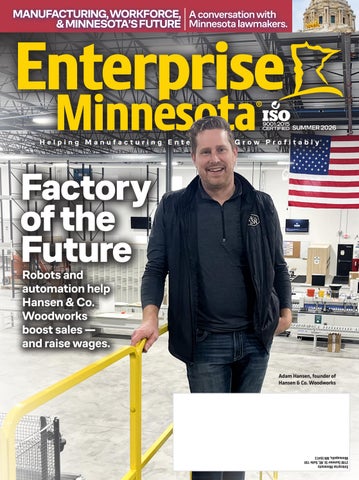
Robots and automation help Hansen & Co. Woodworks boost sales — and raise wages.




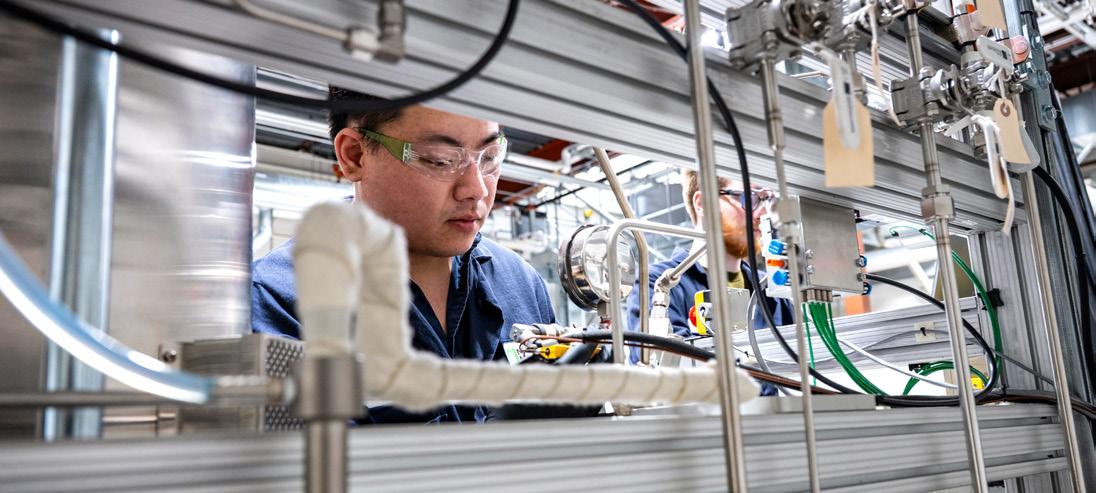
Niron
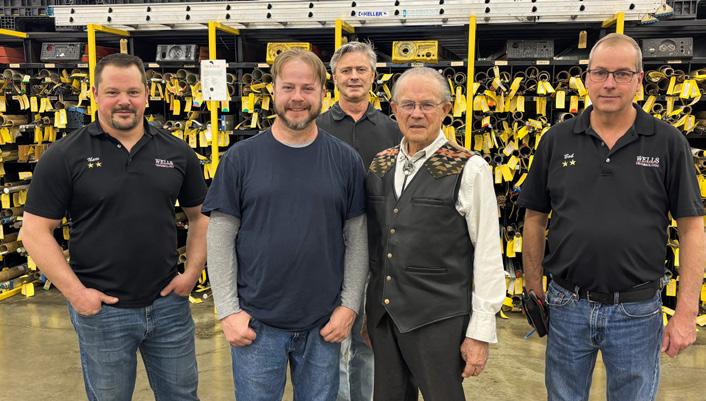


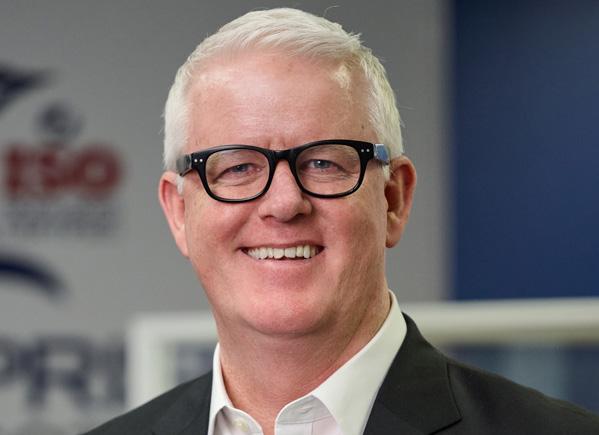
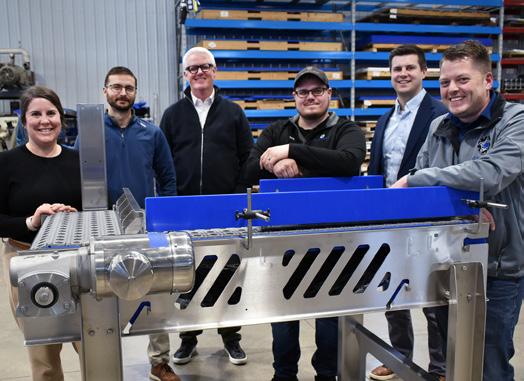
Mark
Enterprise Minnesota’s mission is more critical than ever, and I’m honored to be part of it.
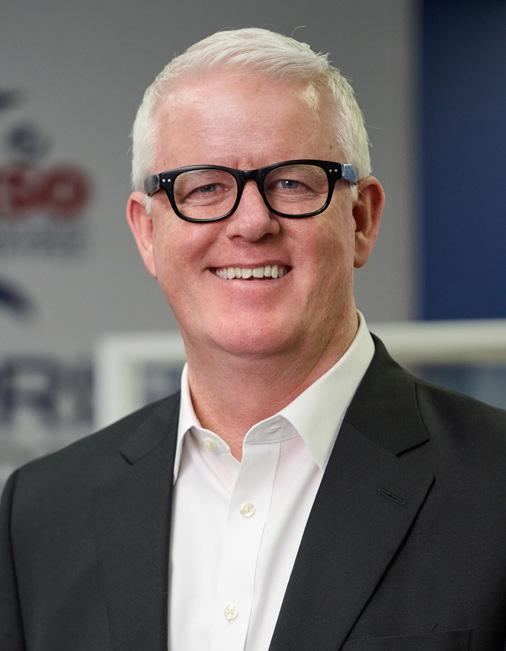
Before joining Enterprise Minnesota in March, I did what I always do when considering a new opportunity: I asked around. You can’t throw a frisbee in this state without hitting somebody who’s in manufacturing or knows someone who is. So, I asked neighbors, former colleagues, and business owners I’d worked with over the years.
The feedback was remarkably consistent: Enterprise Minnesota has a great reputation, real expertise, and people who actually make a difference. A measurable difference. One former coworker said they read everything Enterprise Minnesota put out: Enterprise Minnesota® magazine, The Weekly Report, The State of Manufacturing®, manufacturing workshop content, and more. “It’s just good information,” he said. That stuck with me. What I found when I got here confirmed those sentiments. This is not just a professional services organization. It’s a team of genuine experts who show up every day connected to work that matters. The consultants, the business developers, and our marketing and finance teams know what they’re doing,
and how important it is. Their conviction that manufacturing is a critical part of the fabric of our state’s economy energizes them.
Throughout my career I’ve had the privilege of leading companies with significant manufacturing operations, which sparked my fascination with how things actually get made — from engineering and production to process improvements and the problemsolving that happens on a plant floor.
There’s something remarkable about watching a team of smart, passionate people figure out how to do something better, faster, more efficiently. It never gets old.
I bring that same curiosity to Enterprise Minnesota, where my first priority has been to listen: to our clients, our team, and to our partners across the state. The people who’ve been doing this work for years are the ones who understand our challenges and opportunities. My objective is to learn from their insight.
What I’ve found in early conversations is encouraging. The fundamentals behind our organization are strong. The core of what Enterprise Minnesota does — helping companies grow profitably by bringing in expertise that many small- and mid-sized manufacturers simply can’t afford to carry in-house — remains critical.
And the need for our expert insight is growing. From tariffs and regulatory pressure to workforce development, the new paid leave law in Minnesota, and succession planning, manufacturers are constantly navigating new challenges. They always have. Manufacturers solve problems for a living. They’re going to find solutions. Our job is to help them get to them faster and implement solutions that work.
Enterprise Minnesota has spent decades earning the trust of manufacturers across this state. I intend to honor and build on that trust as we work together to strengthen Minnesota manufacturing.
Lynn K. Shelton
Editorial Director
Kate Peterson
Creative Director
Scott Buchschacher
Copy Editor
Catrin Wigfall
Writers
Amanda Dyslin
Suzy Frisch
Gail Hudson
Elizabeth Millard
Mary Lahr Schier
Ryan Steinert
Photographers
Alex Carroll
Robert Lodge
Elizabeth Millard
Mary Lahr Schier
Lynn K. Shelton
Contacts
To subscribe or change an address ldapra@enterpriseminnesota.org
For back issues, additional magazines, and reprints ldapra@enterpriseminnesota.org 612-455-4202
For permission to copy lynn.shelton@enterpriseminnesota.org 612-455-4215
To make event reservations events@enterpriseminnesota.org 612-455-4239
To advertise or sponsor an event chip.tangen@enterpriseminnesota.org 612-455-4225
Enterprise Minnesota, Inc. 2100 Summer St. NE, Suite 150 Minneapolis, MN 55413 612-373-2900
©2026 Enterprise Minnesota ISSN#1060-8281. All rights reserved. Reproduction encouraged after obtaining permission from Enterprise Minnesota magazine. Enterprise Minnesota magazine is published by Enterprise Minnesota.
2100 Summer St. NE, Suite 150 Minneapolis, MN 55413
POSTMASTER: Send address changes to Enterprise Minnesota 2100 Summer St. NE, Suite 150 Minneapolis, MN 55413

As the Small Business Administration (SBA) works to reduce the regulatory burden on businesses and unleash growth, it seeks input
from Minnesota manufacturers.
resident Ronald Reagan once said that the nine most terrifying words in the English language are: “I’m from the government, and I’m here to help.” The Small Business Administration’s (SBA) Office of Advocacy wants to show that’s not always the case.
At Enterprise Minnesota’s annual State of Manufacturing® (SOM) event last November, two representatives of the agency described their mission and explained how manufacturers might help advance it. Their goal: bring the voices and concerns of Minnesota businesses to the highest
levels of policymaking.
The Office of Advocacy aims to cut $100 billion in regulatory costs for small businesses. Andrew Coffield, the Office advocate for small businesses in six Great Lakes states, including Minnesota, says since early 2025 they’ve reduced that burden by about $48 billion.
Despite their efforts, many have never heard of the Office of Advocacy. “We’ve got a PR problem as an agency because these small businesses are used to doing everything themselves,” says Deputy Chief Counsel for Advocacy Chip Bishop, noting the advocacy arm was established in 1976.
“We work with Congress, we work with the agencies, and we work with the White House to amplify what small business owners are saying,” says Coffield. “Ultimately, our job is to be their voice.”
Coffield and National Special Advisor Geoffrey Grove introduced themselves at the SOM event as small manufacturers’ “bridge for a better policy,” especially when it comes to handling serious regulatory challenges. “As a national advocate, my charge is to advocate for a regulatory environment that supports, not stifles, your success,” Grove told onlookers.
The
hotline
allow
small
will also
business
owners
to
comment
as regulations
are being developed, Coffield says. The Office of Advocacy wants to know what will work or what might be burdensome for their business.
In Enterprise Minnesota’s latest SOM survey, government policies and regulations ranked as the top concern (53%) among manufacturers, along with taxes (44%) and tariffs (42%).
Within days of taking office, President Donald Trump launched a new era of deregulation with an executive order saying, “For every new regulation, 10 must be cut.” To achieve that goal, Bishop says his office hopes to complete its hiring of 10 regional advocates and two national special advisors to wage the battle on behalf of the country’s 36 million small businesses.
Advocates engage with small business owners at conferences, small roundtables, and one-on-one meetings. They field complaints about labor and environmental regulations, but “one of the top things I hear about not only in Minnesota but around the Great Lakes is the concern around CMMC (Cybersecurity Maturity Model Certification),” says Coffield. Business owners who want to manufacture for and sell to the federal government must be certified first to protect sensitive non-public information based on CMMC standards. “I’m hearing from small businesses that they’ve spent over
$300,000 and they’re still not certified,” Coffield says.
“Small firms are shouldering a regulatory load designed with the larger businesses in mind,” Grove says. Regulations should be “right sized” and scaled for the resources of employers with 50 employees or less, he says.
Minnesota companies weigh in “It’s encouraging to see that [the Office of Advocacy] is reaching out and making an effort to be a little bit more business friendly than I have experienced in the past,” says Brandon Andersen, president and owner of Fireside Lodge Furniture Company in Pequot Lakes, Minn. The company has been selling its hand-crafted wood furniture to retailers and the hos-
whole industry.”
Previously, the company included hardware so customers could attach the furniture to the wall. Today, furniture manufacturers must also increase the weight of dressers and chests by 25 to 30%, and limit how much a top drawer can open.
At Fireside Lodge Furniture Company, the extra weight means higher material and transportation costs, plus more workers’ comp claims for strained backs. “We have to comply with these federal rules and testing requirements that are ridiculous, just to make sure [the furniture] complies,” Andersen says, noting his company’s cost to comply has run from $30,000 to $50,000.
While Andersen says he hasn’t brought this issue to the Office of Advocacy, he
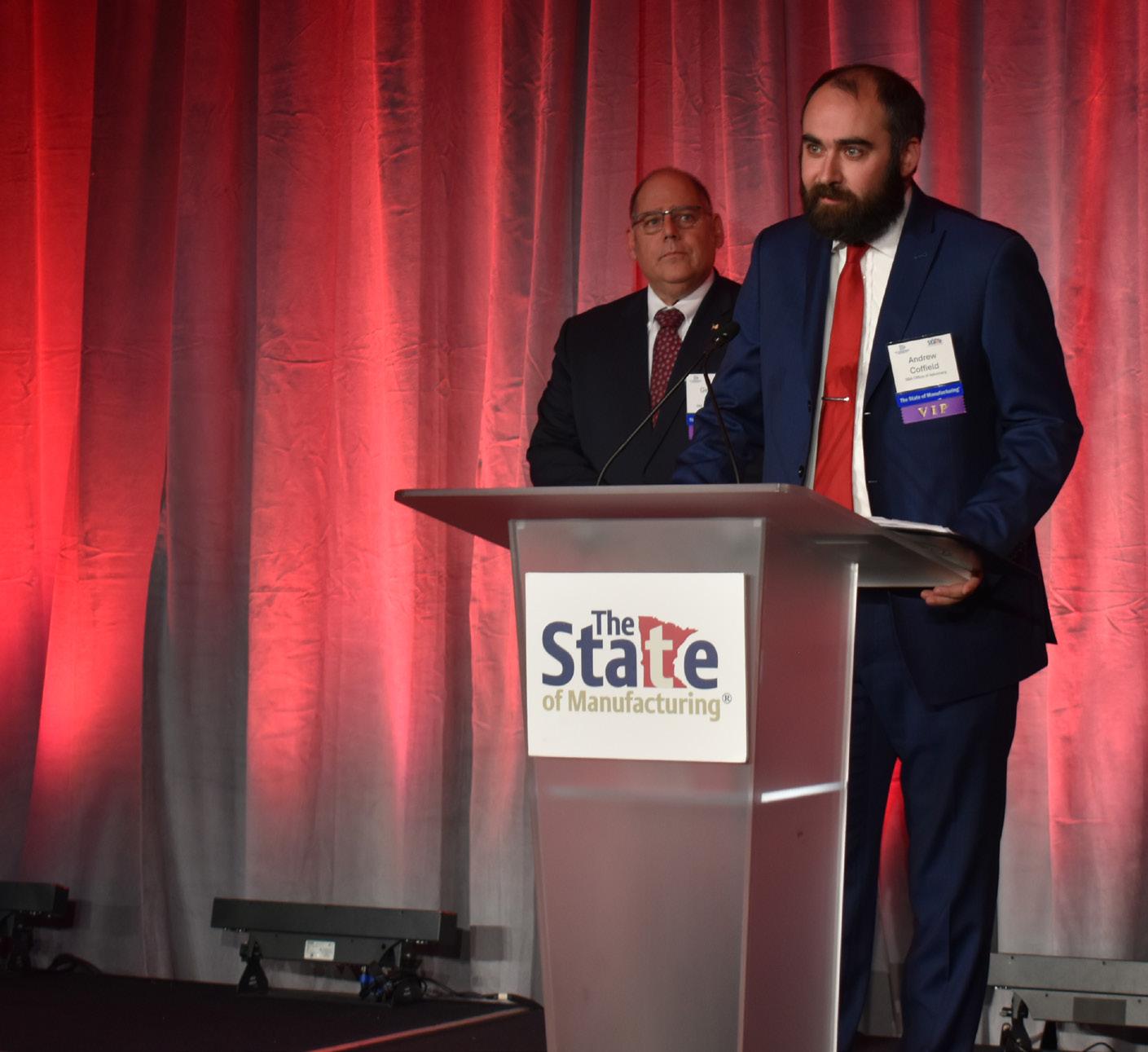
Andrew Coffield, the advocate for small businesses in six Great Lakes states, says since early 2025 the Office of Advocacy has reduced the regulatory burden by about $48 billion.
RedTape@sba.gov, 1-800-827-5722
pitality industry across the U.S. for more than 20 years.
One of the more costly regulations for Andersen’s company has been the STURDY Act (Stop Tip-overs of Unstable, Risky Dressers on Youth Act), which went into effect in 2023 after several children were killed. “It’s obviously a horrible thing,” he says, “but the over-reaction on that was to change the
has talked about other pressing matters such as Minnesota’s workers’ compensation rules and the Minnesota Paid Leave program, which took effect Jan. 1, 2026. He’s also complained about federal trucking regulations. “If we just increase the allowable weight on trucks by 10%, it’s going to have a minimal impact on the roads, but it’s going to help drive down the costs significantly,” he says.
For Dan Ortloff and his company, Falls Fabricating in Little Falls, Minn., it’s the paperwork that takes a toll. His ownership group used several SBA loan products to purchase the company in 2021 and to add
To encourage small business owners to share the kinds of concerns expressed by Andersen and Ortloff, the Office of Advocacy launched a “Red Tape Hotline” last May.
equipment in 2024-2025. “Sometimes that process can be almost overbearing with the hoops you need to jump through and the paperwork that’s required,” he says. Falls Fabricating offers a range of services in sheet metal, machined com-

ponents, and welded assemblies. The company is required to report everything from where the materials originate and who produced them to how it got the materials. “All that paperwork takes time and money,” he says. “You’re just asking yourself, ‘Why is this required? Why do I have to fill this out?’”
Without the resources to hire somebody to handle it, Ortloff says an employee who already has a full-time job takes on the task.
To encourage small business owners to share the kinds of concerns expressed by Andersen and Ortloff, the Office of Advocacy launched a “Red Tape Hotline” last May. Bishop calls it a “relief valve” that owners can use to call or email about anything from costly regulations to permitting delays to excessive paperwork requirements.
The hotline will also allow small business owners to comment as regulations are being developed, Coffield says. The

Office of Advocacy wants to know what will work or what might be burdensome for their business.
The website lists other targets for reform, which it says will save small businesses billions of dollars. At the top of the list is IRS Form 941, which employers fill out quarterly to report federal income tax withholding, along with Social Security and Medicare taxes, to determine their total payroll tax liability. They’re recommending changing to annual reporting, saving each employer $2,000 a year — a potential aggregate savings of $90 billion.
With all the energy the Office of Advocacy is investing to reduce or eliminate regulations, advocates say it’s a long game. “Please keep in mind that most of this is glacial,” says Coffield.
“They’re saying the right things. It’s definitely coming from the top down… but bureaucracy and all the stuff at the federal level — you know as well as I do that it takes time to do that,” says Andersen. At the moment, they’re listening.
Gail Hudson
Olsen Thielen has many decades of experience in partnering with Minnesota manufacturers to provide accounting and proactive advisory consulting. With an emphasis on client-first service, detailed and customized financial advice, and expertise across many different specialty areas, Olsen Thielen is committed to helping you operate your business more efficiently. Our Manufacturing & Distribution services
Research
Cost
Inventory
Ownership succession and exit planning
Mergers and acquisitions
Fraud and forensic accounting
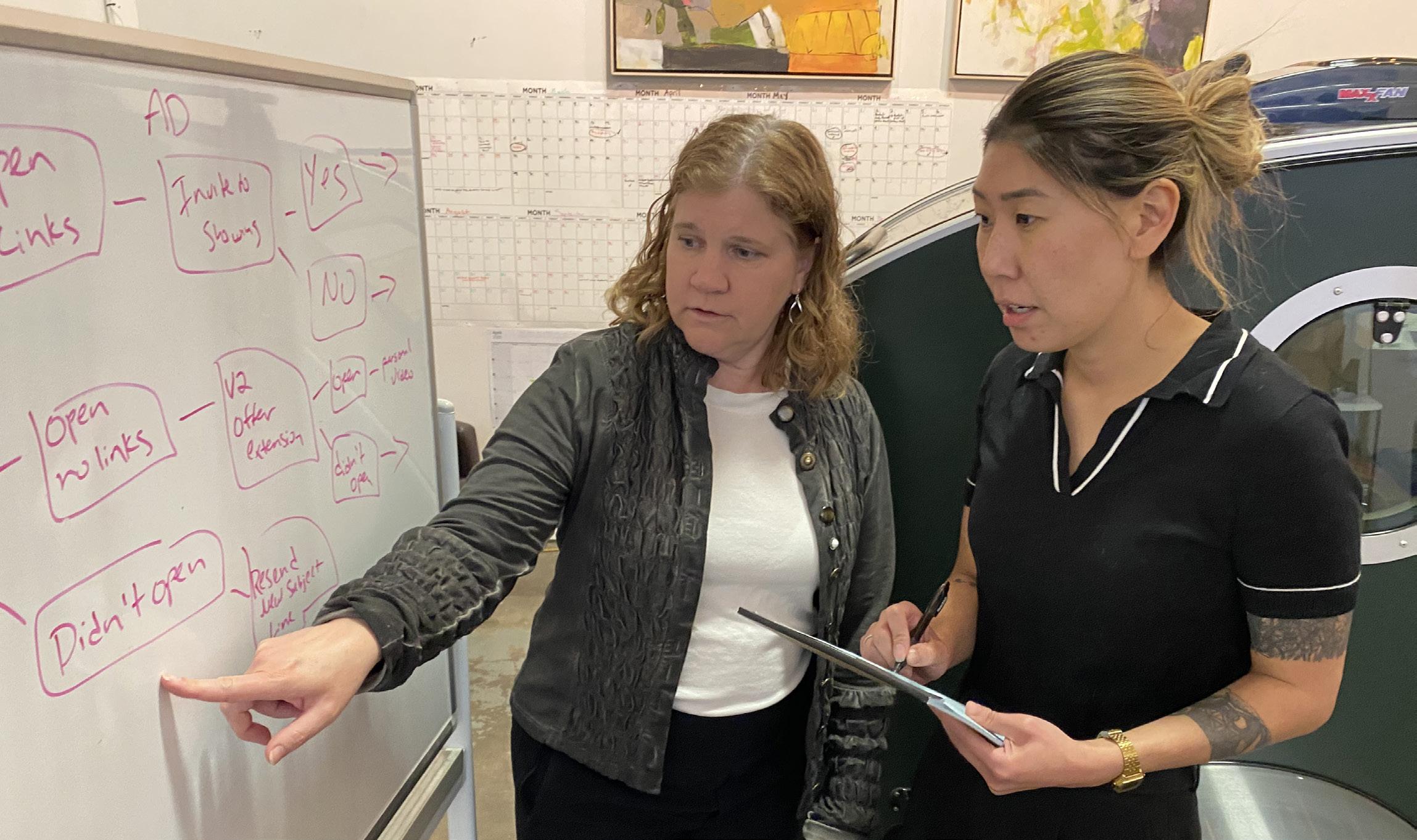
With Enterprise Minnesota’s fractional marketing services, companies of every size can gain big benefits.
The uncertainty and lockdowns during COVID-19 sent scores of people looking for more ways to get outside, and that provided a huge sales boost for St. Paul-based Vistabule, which designs and manufactures custom-built teardrop trailers. But just a few years later, sales seemed headed for a cliff.
“We were seeing a significant decline, and we weren’t sure what to do,” says Lily Taylor, Vistabule’s chief administrative officer. “The basic stuff like social media and attending RV trade shows wasn’t working, and we thought we might have to close our doors. Instead, we reached out to Amy Hubler at Enterprise Minnesota, and that truly made all the difference.”
As a business growth consultant, Hubler offers a fractional marketing service, where a portion of her time is given to work in a marketing role at a strategic level for an individual company. Unlike an agency that might focus on specific campaign tools such as email blasts or ad copy, the fractional marketing from Enterprise Minnesota takes a higher-level perspective, similar to what an in-house chief marketing officer would provide. That’s a considerable advantage for smaller companies like Vistabule, which often can’t afford a C-level hire and also struggle with seeing and executing marketing efforts in a big-picture way.
“We help ensure that the marketing
strategy gets developed, but also that it’s implemented properly and consistently,” says Hubler. “That involves putting an action plan in place, coming back to follow through, and making sure that the strategy we all came up with together is working.”
At Vistabule, that included understanding the scope of marketing and how it could drive sales. The company’s team met with Hubler to create a strategic marketing and communications plan, including a new website design, analytic tools, targeted ad placement, more strategic selection of trade shows, and a newsletter designed for maximum customer acquisition.
“It was great to have someone from outside the company come in and say: ‘This is what would help you. This is what you need to do,’” says Taylor. “We needed that to get us into gear and to keep us accountable.”
Meeting regularly and having an action plan made an enormous difference, she says. Website visits jumped, and sales became consistent — easing out of the nosedive that had been happening for too long. Having the fractional marketing service also helped morale, because the team was excited to work on the new projects and to see that they were getting traction.
“I really believe that if we didn’t call Amy, we’d be out of business,” says Taylor. “We went through a scary time, and now
everyone is enthusiastic about what’s going on. It was quite a turnaround.”
One of the main reasons Hubler and Enterprise Minnesota decided to start offering fractional marketing is because they saw many stories like Vistabule, says Hubler. Companies that had a certain level of customer engagement seemed to be hitting dead ends in terms of growth. Or worse, they were losing customers because marketing was an afterthought or poorly implemented, often due to lack of time or expertise.
“We were trying to learn through marketing podcasts or YouTube videos, and that doesn’t create a cohesive vision,” says Taylor.
Another important component is the built-in follow-up and accountability after a strategic marketing plan and resources are in place.
“What we’ve seen happen over and over is that there’s an agreed-upon plan, but then strategies don’t get executed,” Hubler says. “This service provides that missing link.”
The fractional marketing service can also help address specific marketing challenges, says Hubler. For example, a manufacturing company may understand that its customer base is home contractors — but they may not know how to reach them or what to say when they do connect. A larger marketing strategy can include those components in a way that’s targeted rather than scattershot, she adds. That’s similar to Vistabule making better choices about which trade shows to attend based on data about attendees, rather than trying to go to as many shows as possible.
Another advantage of the Enterprise Minnesota fractional marketing service is connection to ample resources. Hubler can tap into resources, from writing ad copy to implementing market research, through agencies that have done effective work for her clients in the past. Her role is to present the options and then oversee the work to make sure it’s getting done in a way that aligns with the strategic marketing plan.
“Many of our clients don’t need a fulltime or even part-time marketing leader in-house,” says Hubler. “But they do need guidance in terms of a comprehensive, sales-driven marketing plan that will steer their work and check in to make sure nothing is drifting or getting missed.”
Elizabeth Millard
We’re confident we’ll hold up to your specifications. Premier resources? Check. Local knowledge? Check. Customized solutions? Check. Bankers who care about your business? Double check.
Visit oldnational.com/commercial to connect. Where Relationships and Results Matter.®

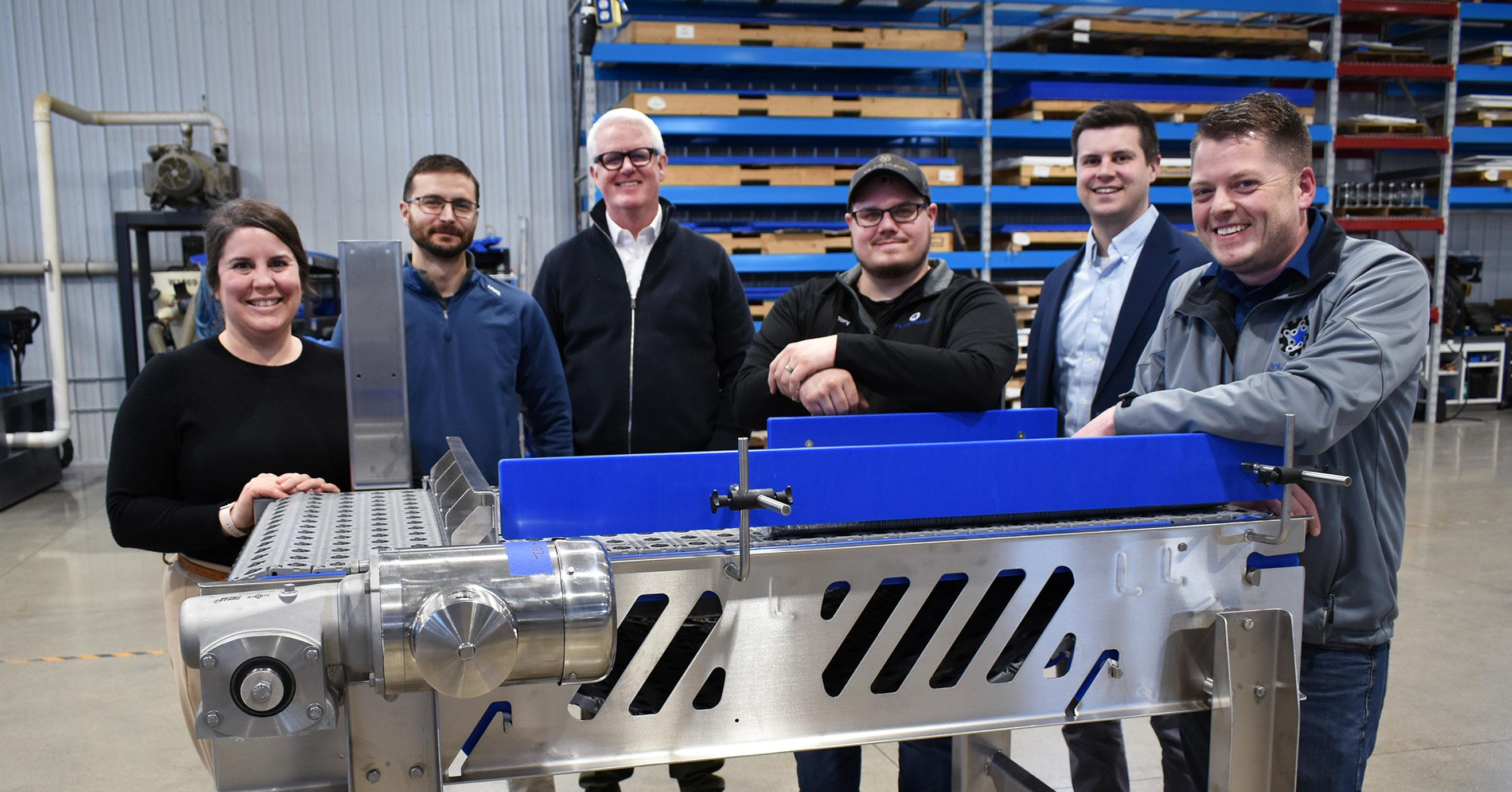
For the past year and a half, when Andrew Busta walked into manufacturing facilities in northwest Minnesota he knew there was a good chance he’d be met with puzzled looks.
“I’m Andrew with Enterprise Minnesota,” he’d say before clarifying. “I’m the new Bill.”
Busta — a business development consultant covering 19 counties across north central and northwest Minnesota — stepped into his role following the retirement of his predecessor, Bill Martinson, who spent decades building relationships across the region.
Busta is working to honor that legacy while establishing his own presence among rural manufacturers. His work as a business development consultant focuses on connecting manufacturers — many of them
small, rural employers — with resources, insights, and opportunities that can support growth.
“It’s definitely relationship-based,” Busta says. “A lot of what I do is getting to know people.”
During a six-month transition period, Martinson introduced Busta to many of his long-standing connections, bringing him to meetings and making sure key clients had the opportunity to get to know him face-to-face.
“I took him to everybody I thought he should have a relationship with,” Martinson says. “It was important to get him in front of people and let them see how he works.”
That people-centric approach reflects both the realities of rural business culture
and Busta’s own professional path, which gives him plenty of relationship-building experience.
Raised in Glyndon, Minn., near the Fargo-Moorhead area, Busta studied business economics at South Dakota State University without a fixed career plan.
“Sales was always kind of top of mind, but I was pretty open,” he says.
After college, he took a job as a freight conductor with the railroad, a role that brought him to Minot, N.D. In Minot, Busta launched and operated a pest-control business, building on experience he gained working for Cass County’s mosquito-control program during college summers. He scaled the business as a solo operator.
After the COVID-19 pandemic, Busta pivoted again, this time into agriculture. He became a farm manager, overseeing
operations that grew from roughly 2,000 acres to more than 10,000 acres during his tenure. The role included managing labor, including H-2A workers.
“It gave me a different perspective on operations, growth, and workforce challenges,” he says.
In 2021, Busta transitioned into outside sales with Acme Tools, selling capital equipment to farmers and construction businesses. The role marked his first formal entry into professional sales.
“Price matters, but relationships are what make or break the deal,” he says.
That philosophy continues to guide his work at Enterprise Minnesota, which he joined in 2024. Busta assumed responsibility for a broad and geographically dispersed territory that stretches from Clay and Crow Wing counties north to Roseau and Kittson.
“One of the biggest things up here is connection,” Busta says. “A lot of manufacturers might be the only employer
within 30 or 60 miles. Being able to share what’s happening in the industry, whether things are slowing down or picking up, can be really valuable.”
Busta also helps identify grant opportunities, provides referrals to third-party service providers, and serves as a sounding board for business owners navigating challenges.
“In my territory, we’re sometimes a networking resource, in addition to being a consulting resource,” he says. “Questions are always free. If they reach out, we’ll help them find answers or point them in the right direction.”
That role can be especially important for smaller companies that lack human resources or strategic planning expertise. Busta often connects them with vetted partners or shares insights from other manufacturers facing similar challenges.
Martinson says Busta brings a natural ability to build those connections.
“As he continues to build relationships and learn the industry, that really sets him up for success,” he says.
Strong vision for the future Busta’s goal is to strengthen the manufacturing ecosystem across Greater Minnesota, ensuring that rural companies remain competitive and connected. “I want to develop a really strong network where manufacturers continue to build relationships with each other, have access to resources, and don’t feel like they’re getting left behind,” he says.
“The Twin Cities might have the big, high-tech companies, but a lot of the suppliers are in rural Minnesota,” Busta adds. “There’s a lot of advanced manufacturing happening in small towns, and people should be proud of that.”
Now based in Baxter, he enjoys the region’s outdoor lifestyle — golfing, fishing, and spending time with his family — and values the opportunity to serve communities that mirror his own background.
“I grew up in a small town,” he says. “I understand how important these businesses are to their communities.”
Amanda Dyslin

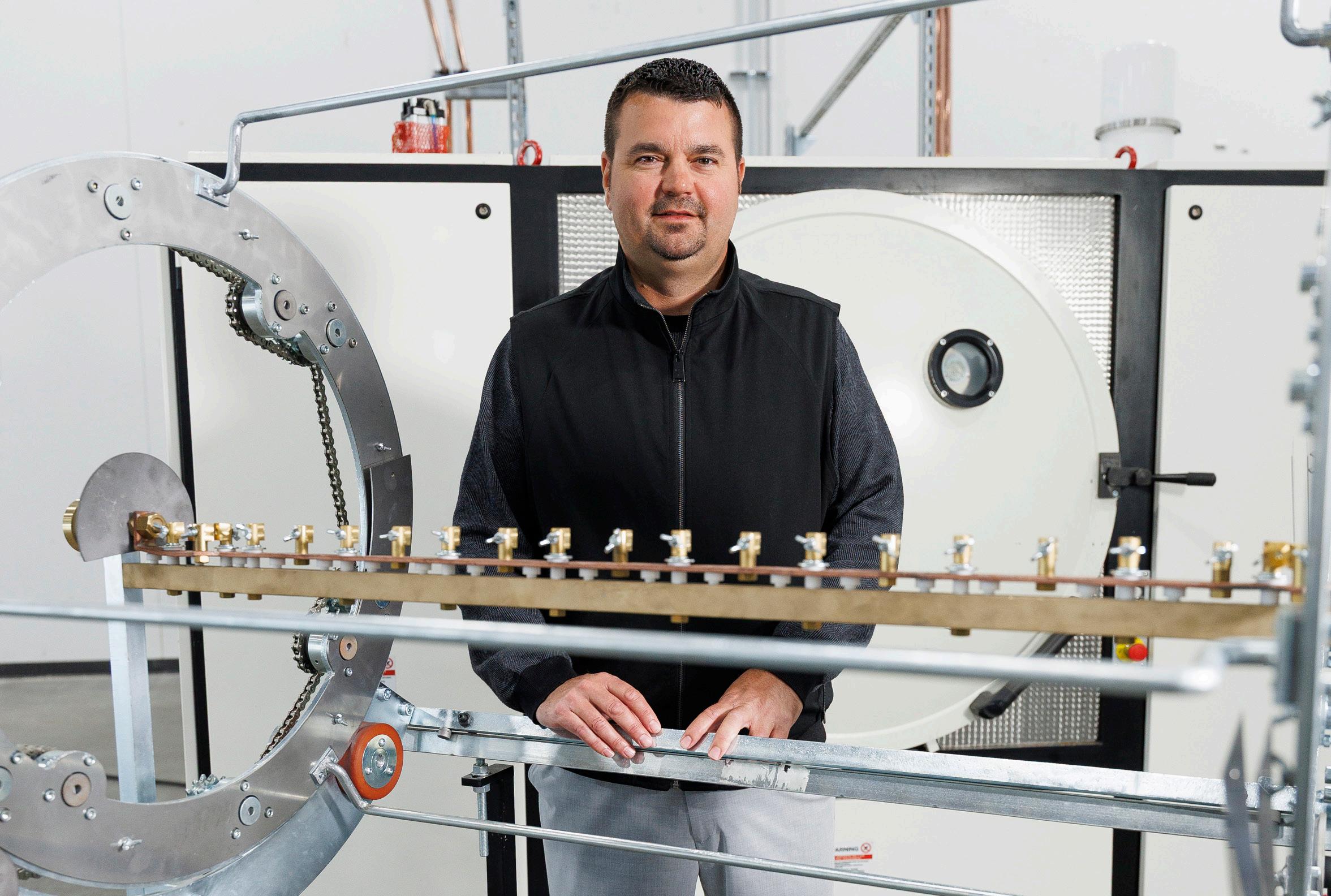
A new global alliance brings advanced coatings — and supply chain stability — to U.S. manufacturers.
n 2025, while many American manufacturers were wrestling with a shifting tariff landscape and the supply chain challenges it brought, manufacturing veteran Robert Doty and his partners were forging a connection with the owners of Kolzer, a Milanbased maker of industrial coating machinery. They aimed to bring Kolzer’s advanced products and services to U.S. manufacturers, noting the potential to stabilize supply and limit tariffs for American customers. Doty and three business partners negoti-
ated a joint ownership stake in the 70-yearold Italian company and began plotting its first foray into the American market in mid2025. Now operating as Kolzer International, the Maple Grove operation launched this spring, offering U.S. manufacturers expanded access to high-end physical vapor deposition (PVD) coating technology.
Compared to traditional coatings, PVD creates extremely thin but very dense and hard layers that are strongly bonded to the surface resulting in higher resistance to
wear, scratches, corrosion, and fading over time. These properties are especially attractive for manufacturers of fashion accessories, automotive components, consumer electronics, and household appliances. In the aerospace, medical, and defense sectors, PVD coating enhances critical properties such as surface hardness, wear resistance, low friction, and chemical stability.
As uncertainty about U.S. tariffs persists, manufacturers seeking specialized coating services may prefer a domestic supplier. But for Doty, the move wasn’t only a tariff and supply chain play; it was the next chapter in a long career in manufacturing.
Doty spent 26 years designing and building automation and manufacturing solutions for clients before exiting his previous company about two years ago. After a brief break, he was eager to jump back in, so he and his partners started the hunt for an established company to buy or join.
“As we searched for companies that may be for sale we found Kolzer and really liked the technology,” Doty says.
Founded seven decades ago, Kolzer built a strong reputation in Italy and across Europe by manufacturing machines that use the PVD process. The two brothers who own Kolzer were open to a partnership and ultimately struck a deal with Doty and his partners to bring them on board as coowners. In the new arrangement, the Italian operation continues as before; the Maple Grove facility represents an additional leg of the business.
Earlier this year, Kolzer International leased a 20,000-square-foot facility in Maple Grove, and a representative from Milan traveled to Minnesota to assist with setup of the first machine. A second machine is expected to be operational this summer.
The Minnesota location will serve three functions: research and development to help clients determine the right coating process for their application; machine manufacturing for U.S. customers; and coating as a service for manufacturers who want to outsource that work to Kolzer International directly. That last offering reaches beyond the Italian model, where the business has focused on
machine sales alone.
Staffing is still in the early stages. Currently, Doty and a business development manager are running operations, and the company is seeking a seasoned R&D engineer with PVD experience, a role that’s proving somewhat difficult to fill. Most candidates hold PhD credentials but lack hands-on industry background.
In the meantime, Kolzer International is leaning on Milan’s engineering team for technical support and routing the R&D efforts required to tailor PVD services to client specifications overseas while the Minnesota operation ramps up. Doty estimates the Maple Grove facility could eventually employ 15 to 30 people as the services side of the business scales.
Because the machines are largely manufactured in Italy, the ongoing tariff situation remains on Doty’s radar. The company is currently working through documentation from Milan to determine which compo-
nents might be sourced locally and which could be kitted and shipped from Italy for final assembly in Minnesota. Having even partial domestic manufacturing capability gives Kolzer International a degree of flexibility that a purely import-dependent operation wouldn’t have.
The longer-term vision extends well beyond Minnesota. Doty describes Kolzer’s growth plan as a three-pronged effort: maintain and strengthen the Italian base, expand manufacturing and services in the U.S., and continue developing its sales network in Asia.
In the meantime, leads are coming in through a mix of channels, from trade shows and referrals from the Italian side of the business to search engine optimization that drives traffic to the company’s website.
Demand for Kolzer International’s offerings is becoming clear. Doty says his team was on its fourth R&D project with prospective customers before setting up shop in Maple Grove. “We have American customers who want us to do it here now,” he says.
Kate Peterson
TRUSTED
BUSINESSES



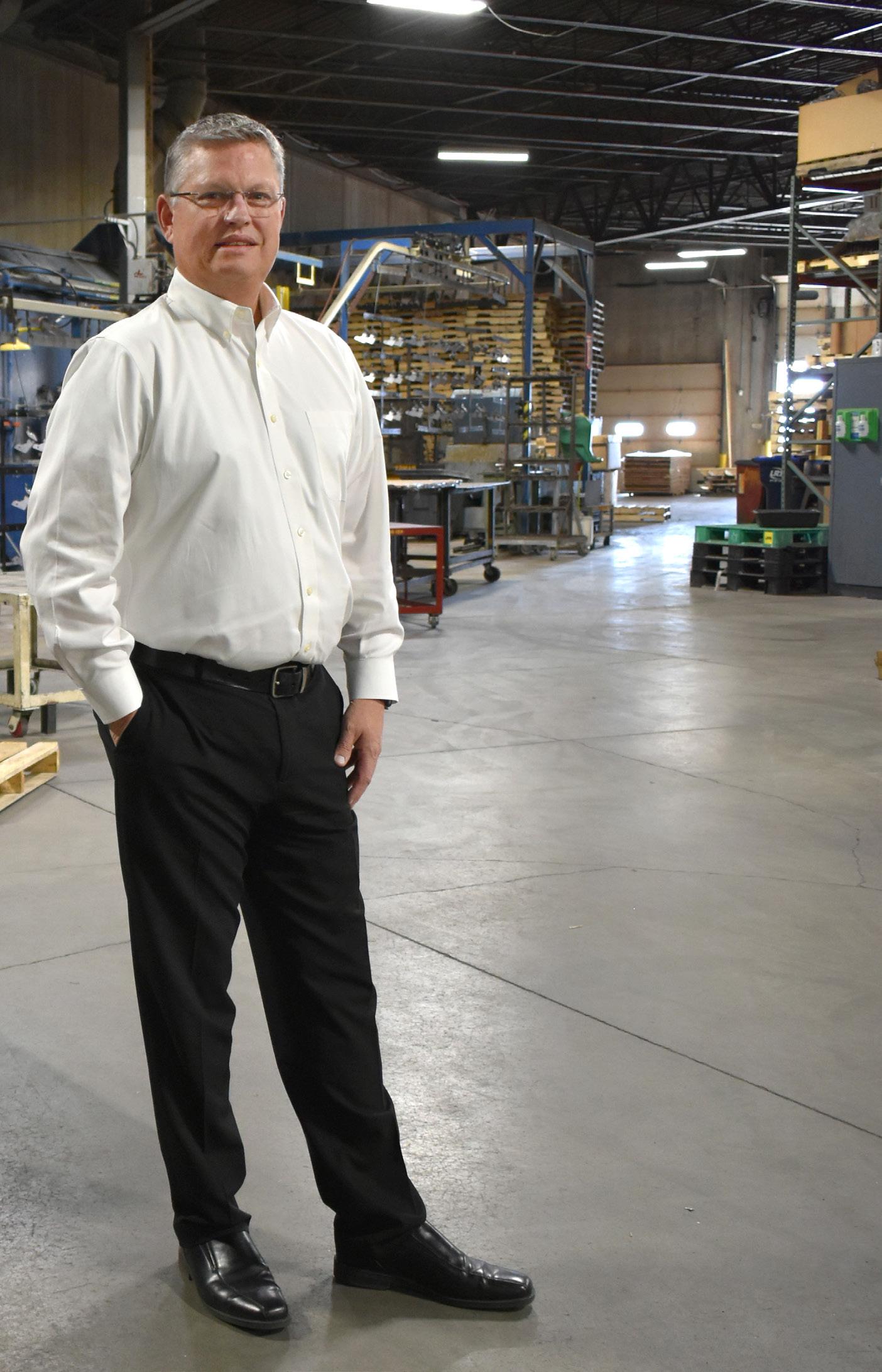
Mike Jensen, president and CEO of Gauthier Industries, an 85-employee Rochester-based custom metal fabricator, holds a big picture perspective on manufacturing. Since taking over as owner and leader of the company in 2007, Jensen has led Gauthier through the Great Recession, COVID-19 and the supply chain challenges that followed. He has also served on Enterprise Minnesota’s board, including as chair, and has advocated for manufacturing at the Minnesota Legislature. As a longterm and active peer council member, he understands the challenges other manufacturers face and offered his insight midway between the 2025 and 2026 State of Manufacturing® (SOM) results.
In the last State of Manufacturing® survey, a record number said the economy was flat, and smaller manufacturers were pessimistic about gross revenues and profitability. How is the outlook for Gauthier, what are you hearing from other manufacturers, and how does that compare to expectations from last fall?
I feel optimistic. We started the year with a strong first quarter, after finishing pretty strongly at the end of last year. There are economic concerns and challenges in front of us, but we try to stay fairly diverse with our customer base by
I feel good about things going forward. A lot of it depends on controlling our own destiny: keeping customers happy and our quality, lead times, and on-time delivery at or beyond expectations.
supporting a number of different industries. That helps balance us out; certain industries can be up while others are down, which helps keep an ebb and flow. I feel good about things going forward.
A lot of it depends on controlling our own destiny: keeping customers happy and our quality, lead times, and on-time delivery at or beyond expectations. That seems to make a big difference.
For other manufacturers I talk to, it tends to be reliant on the industry and the type of customer base they have, and how heavily they’re impacted by tariffs and other regulations coming into play in Minnesota. We’re not impacted
by tariffs very much; it’s mainly on smaller hardware. Aluminum can fluctuate from time to time, but we’re not in a position to jack up our prices because of tariffs. I’m more concerned about energy prices spiking because of the war. In my opinion, the war needs to end sooner rather than later so energy prices stabilize later this year. We’re seeing fuel surcharges again, and this impacts our deliveries along with diesel fuel consumed by our semi-tractor trailers.
The survey also revealed deep concerns about government regulations and the Minnesota business climate, including paid leave, which launched shortly after the survey results were published. How have paid leave and other regulatory changes impacted your business and others you know?
We’ve certainly been impacted by the sick and safe time, which took effect before paid leave did. We haven’t been affected quite as much by paid family leave yet, but it’s still early. I’m concerned about it because I think these regulations inhibit opportunities for business growth and reduce our capacity in manufacturing when people are out for an extended period. Our customers aren’t going to be interested in why we can’t get their work done on time — they’ll want to know what we can do to make it happen.
I haven’t seen a real big financial impact yet. We’re using a third party to conduct our paid family leave, so any claims that come through are handled by them.
There are probably 11 or 12 of us manufacturing owners in my Enterprise Minnesota peer council, and there are definitely others who are impacted way more than I am with paid family leave, and they’re frustrated.
And the regulations just keep coming. I just received a letter from the Minnesota Department of Commerce requiring us to comply with the new large building energy benchmarking program created by the legislature. Owners of properties with 50,000 square feet or larger must report their energy usage for Jan. 1 through Dec. 31, 2025, by June 1st. It’s a new annual requirement. I don’t understand what they do with it or whether it’s just another program to
funnel money into. Continued interference from our state is simply not helping our business.
As they have for years, manufacturers continue to identify workforce challenges as a top concern. Is Gauthier Industries facing the same shortage of qualified employees?
Finding qualified workers is really tough. You have to have a strong training group to onboard people, because the skills coming in are pretty limited. Whether someone’s coming from a different career path or it’s their first time
Cross-training is also important, so we have flexibility when certain areas are slower and can use those employees in other departments.
in manufacturing, we have to be ready to train them properly to give them a chance to succeed. Cross-training is also important, so we have flexibility when certain areas are slower and can use those employees in other departments.
Culture fit is really the key right off the bat. We’re fortunate to have real longevity here — our average tenure is around 14 years. We have family combinations working here: husband and wife, father and sons. That’s been a good thing. Some people might say equipment is your asset, and yes, equipment is on the balance sheet, but our employees are our major assets.
What are the biggest challenges you expect to face in the coming months?
Finding qualified workers is right at the top. Having to continue complying with state regulations is way up there too. Even though the impact has been somewhat minimal so far, I think it’s going to be more problematic in the future. Being able to obtain equipment financing at competitive rates is also a concern. We’re creating space for an additional machining center and other support equipment. Investing for growth is a key factor in strategic planning.

Private Client Services & Retirement Services. See how we can help your business go further at
BY SUZY FRISCH
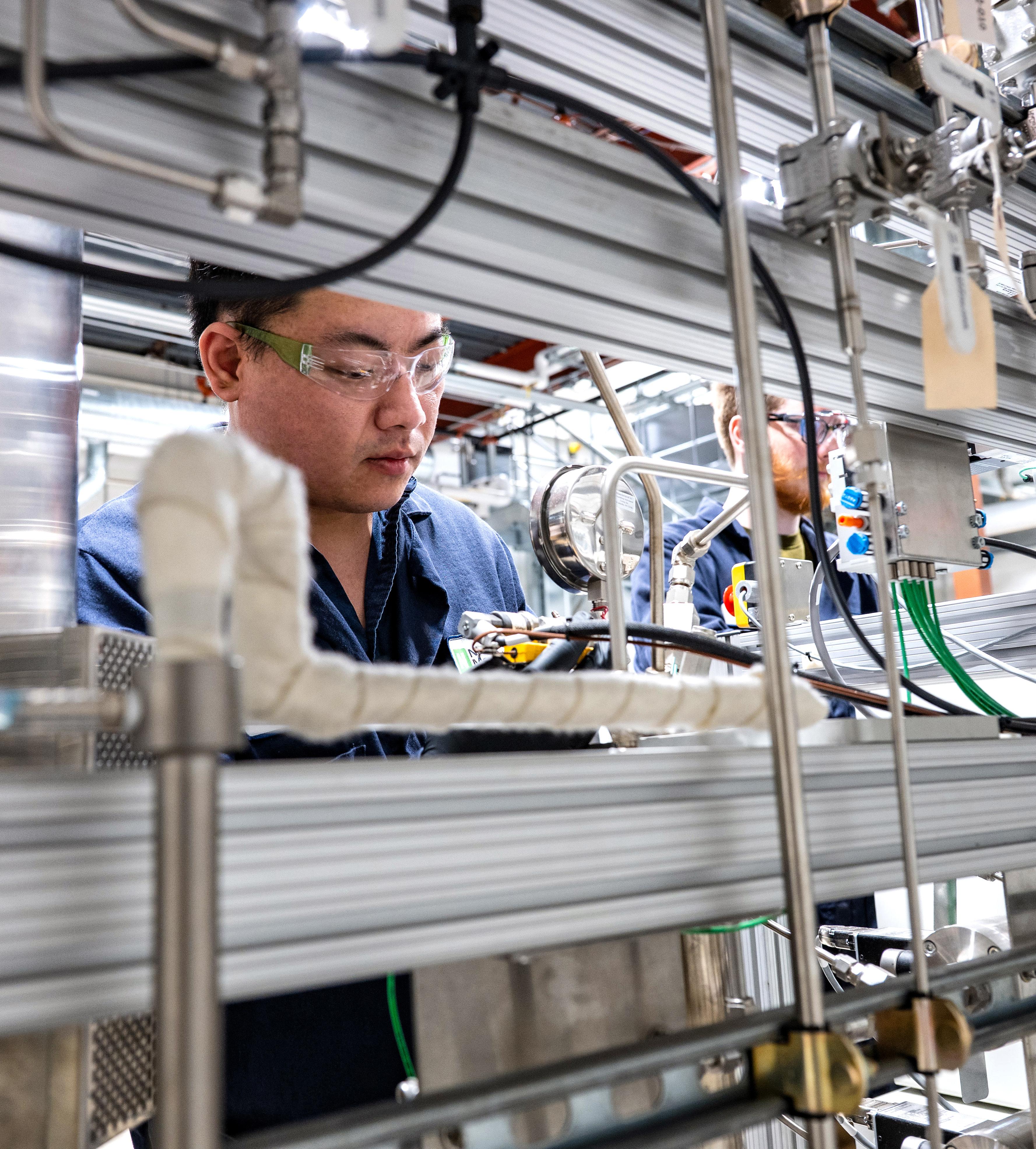
Niron Magnetics is scaling rapidly. Here’s how partnerships make that possible.
Minnesota soon will be able to add another innovation to its list of breakthroughs that have made a difference, joining the likes of pacemakers, home thermostats, and Scotch tape. Niron Magnetics of Minneapolis is on the cusp of commercializing a powerful permanent magnet, free of rare-earth minerals — a feat that could have broad economic and geopolitical implications.
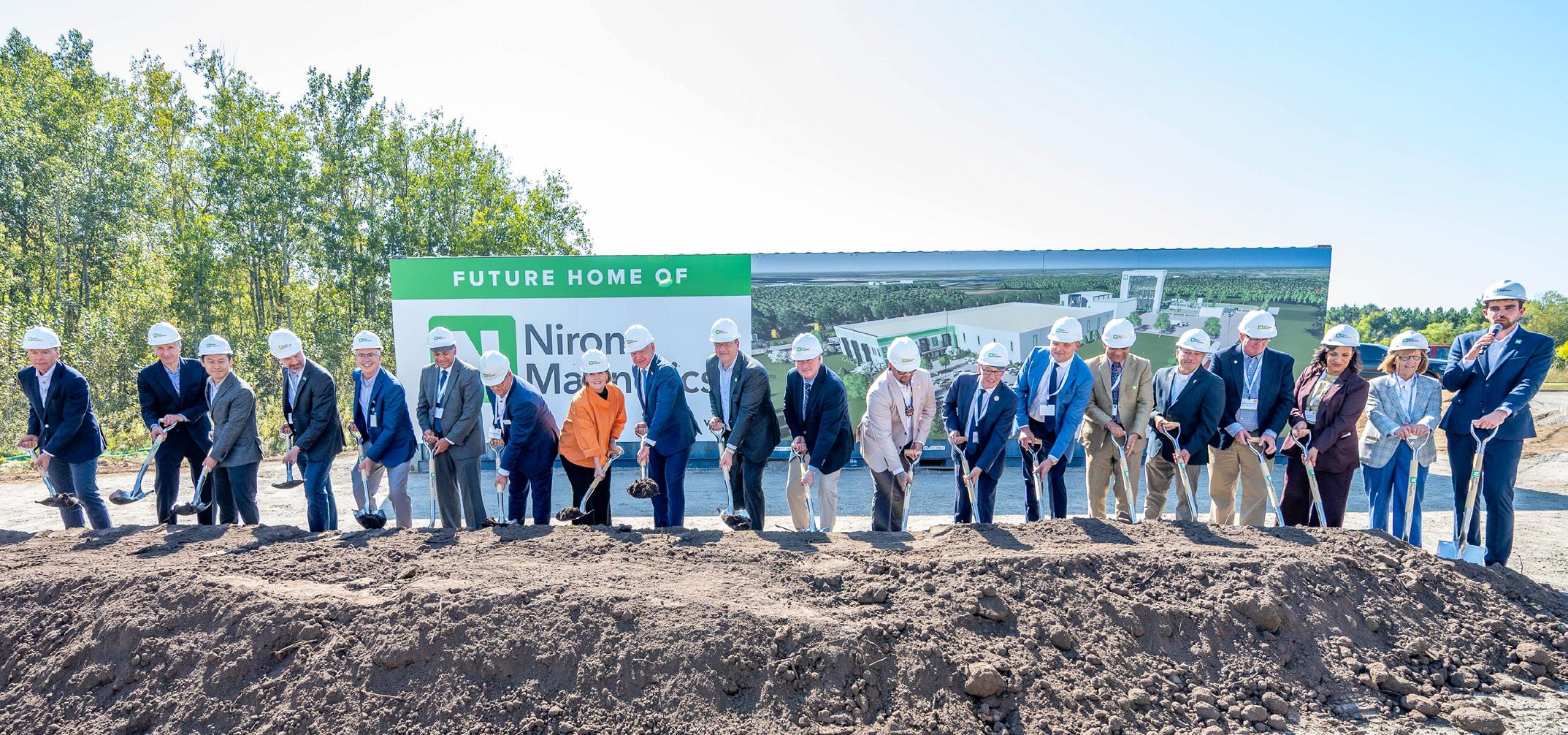
The business that began as a start-up in 2013 to bring University of Minnesota research to the market is now constructing its first full-scale facility in Sartell, Minn. When Niron powers up manufacturing in 2027, it will become the first company in the world to make iron nitride magnets without rare-earth minerals.
“If you don’t have magnets, you don’t have a modern economy,” Larson says. “Our magnets significantly solve the problems of supply chain, resilience, and the capability for high-powered magnets.”
There is much excitement about Niron and its growth for numerous reasons. Magnets power essential parts of the world we live in, from all types of vehicles and computers to cell phones, drones, and data centers. Niron’s iron nitride magnets, made from abundant and inexpensive iron and nitrogen, eliminate the need for costly rareearth minerals and their environmentally damaging production process, says John Larson, vice president of plant readiness and start-up. This is momentous because China currently controls about 95% of the world’s rare-earth supply. Dependence on rare-earth minerals for magnet production creates risks if they become unavailable.
“If you don’t have magnets, you don’t have a modern economy,” Larson says. “Our magnets significantly solve the problems of supply chain, resilience, and the capability for high-powered magnets.”
Launched in collaboration with the University of Minnesota, with initial
research work funded by the U.S. Department of Energy, Niron is commercializing technology developed by Jian-Ping Wang, a professor of electrical and computer engineering. Its patented processes manufacture powerful magnets that rival those made from rare-earth minerals, yet in a sustainable fashion. Accomplishing this manufacturing feat while also building an independent, domestic magnet supply chain is propelling Niron’s rapid growth.
Niron’s progress and potential for its permanent magnets has generated significant attention. It also prompted outside investment of more than $400 million from government programs and commercial partners like Stellantis and General Motors. After years of work that began when Niron opened its doors in 2013, it’s now go time.
That means making hundreds of decisions big and small, including selecting a location and building the plant, hiring and training an approximate 175-person team, and ensuring that operations are hitting scientific, volume, efficiency, and safety objectives. Niron already knows that this won’t be the first time it will be executing on rapid growth plans. That has led Niron to use the Sartell operation as a model for future expansions.
That future is already here. Niron announced in March that it will start building a second high-volume manufacturing plant in the United States, slated for 2028, with site selection underway. Niron anticipates opening additional sites as it plays a greater role in the permanent magnet market.
A production prototype
Niron’s management of its rapid expansion serves as a guide for other manufacturers going through quick growth. Keys to a successful execution include the partnerships Niron has developed and a blueprint approach for developing its future sites. The Sartell plant will serve as an engineering, design, and manufacturing model for its next facilities as Niron continues to grow its capacity and meet market demand. “Sartell is that next critical step forward in commercialization,” Larson says. “It’s a building block approach.”
He continues: “Sartell is the blueprint that we can rinse and repeat over and over. It’s a massive step forward for the business. When you are building out manufacturing, you can’t just go from zero miles an hour to 100 miles an hour in a second. You have
to accelerate and do it in a strategic and deliberate way.”
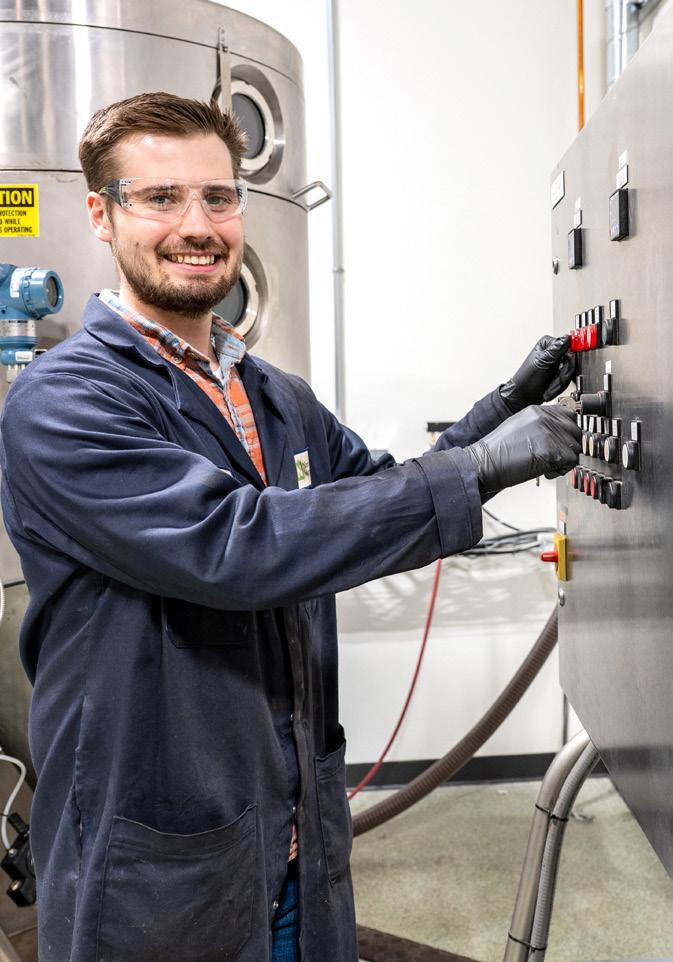
While Niron is making plans for Sartell and its next plant, it has been growing in parallel in Minneapolis. There, the company operates its research and development work and the pilot site for its manufacturing methods. It has taken significant resources and effort because Niron is developing a “new to the world” process for making its magnets, Larson says.
Niron is expected to expand in Minneapolis from 150 employees to close to 200 by the end of 2026, while simultaneously determining how to staff its Sartell plant, Larson says. When the new location is fully operational, it will offer 1,500 tons of capacity, with the ability to produce around 100 million magnets a year, or about 1,000 times more than the Minneapolis pilot plant. Employees focused on manufacturing, engineering, and operations will work in the new 280,000-square-foot facility.
Niron’s second full-scale plant will boast 10,000 tons of capacity. The 1.6 millionsquare-foot project is expected to have approximately 700 employees, who will be manufacturing 1-2% of the world’s permanent magnets, CEO Jonathan Rowntree recently announced. Over time, the company plans to exceed $1 billion in revenue, raise several hundred million additional investment dollars, and open more manufacturing plants globally.
Part of the pilot’s marching orders are to perfect Niron’s two-part manufacturing process. The initial manufacturing is grounded in chemical engineering, as it produces the magnetic powder from nitrogen and iron. The second phase turns that powder into magnet bricks, which can be cut into the forms that customers want, Larson says.
Perfecting these processes for Niron’s magnets and then scaling up the amount it produces is an accomplishment in itself. In its research and development phase, Niron made skinny magnets, about the size of a pen, that customers could test by running them through their own manufacturing equipment, Larson says. The company also succeeded in ensuring that its magnets could perform well in an expansive range of temperatures.
As Niron made progress with engineer-
ing and technology, it built bigger magnets with enhanced capacity and performance. This allowed the company to ship its magnets to industry leaders such as Stellantis, the company behind brands including Chrysler, Dodge, and Jeep. In mid-2025, Niron’s customers began testing the magnets in their own products to determine if they work as well as magnets made with rare-earth minerals — another proof point of Niron’s progress.
A big part of Niron’s growth story has been its work to develop trust with customers, notably that the company is delivering on its promises about the magnets’ strength and potential. Its Minneapolis pilot plant serves as the site where “we’re developing commercial reliability,” Larson says. “That will be so critical so that we can get preorders from customers as we develop the plant in Sartell. We want to sell magnets from that plant, and we need to have those relationships firmed up.”
During its rapid growth, Niron has sought to make decisions and execute on plans in a strategic fashion. Its answer: Don’t do it alone. Finding partners to help has been an integral way that the company is meeting this moment of growth, Larson says.
To develop its large-scale facility, Niron partnered with Wood Group, a global consulting, engineering, and operations services company with a major U.S. hub in Houston. It has rich experience in working with manufacturers that are transitioning from the pilot phase to full-fledged manufacturing. Wood Group is engaged in plant design, engineering, construction, and equipment set-up, including seamlessly incorporating systems like safety and electrical. This “single source of truth” approach
allows for a smooth integration between engineering and construction, Larson says.
“It’s a faster approach. We could hire people, train them internally, and develop the processes ourselves, versus hiring a global engineering firm with 33,000 employees who have done this countless times,” Larson adds. “They have experience and best practices they use to make it all work.”
Niron also leveraged partnerships as it
When Niron powers up manufacturing in 2027, it will become the first company in the world to make iron nitride magnets without rare-earth minerals.
selected its first plant site. It worked with the Minnesota Department of Employment and Economic Development (DEED) to complete and process its request for information from cities in the state. Initially, 75 cities responded. Niron narrowed that list to 12, then selected five finalists.
DEED helped Niron set up site visits and meetings with city councils and economic development agencies from Owatonna to the Iron Range and everywhere in between, Larson says. On top of evaluating the different sites, Niron also sought to gather insights about each area’s workforce, housing, and childcare availability, as well as the area’s capacity to supply the needed power for magnet manufacturing.
Partnerships played a role for Sartell, too. To show off the city and the St. Cloud
region, Sartell brought together the pillars of the area, including Greater St. Cloud, an economic development agency, St. Cloud Technical & Community College (SCTCC), the Sartell-St. Stephen School District and its award-winning robotics team, regional business leaders, and peer manufacturers. Overall, the group wanted to show Niron’s decision-makers that Sartell and the region provide a great quality of life and the workforce it needs to thrive, says Anna Gruber, Sartell city administrator.
“It was a unique opportunity for us to sell our community and show Niron that we do things differently. We have a long history of setting companies up to succeed, we’re progressive, and we’re not like most governments,” Gruber says. “We were confident that if we could build a relationship with them, we could help them realize there are some factors in Sartell that are different. It’s bigger than just utilities and roads and acreage and square footage. This is their future home. It’s about community and the people and the trust you build with the company.”
The effort won over Niron. “Sartell just popped off the page in terms of community engagement, the leadership there, and how they engaged with Niron during the search process,” Larson says. “They were fantastic, and that has been borne out through the more than two years that we’ve been working with these folks. There has been a partnership that really put them over the top.”
An example of that partnership came after Niron selected Sartell and the plot that used to be part of the Verso Paper Corporation footprint. This winter, Niron realized that it needed to complete an additional regulatory process that normally takes nine
months. Sartell jumped on the work, completing its obligations in just three months to keep the project on track, Larson says.
Another factor in Sartell’s favor was that its location opened the door for Niron to access a 30% tax credit worth $52.2 million. The federal Section 48C Advanced Energy Project Credit is designed to advance energy manufacturing development including critical materials in communities with retired coal plants. A note to expanding manufacturers: Look for all available tax credits to support your plans.
Another key strategy for Niron: tapping into the expertise of local economic development and workforce training partners. It needs to build a pipeline of immediate and future employees who can get the plant running and producing effectively. The company has designed a multifaceted strategy to attract young workers as well as those with manufacturing experience, Larson says.
Niron forged partnerships with leaders at SCTCC, St. Cloud State University, and the Sartell and St. Cloud Area School Districts. The company is developing internship and apprenticeship programs, as well as scholarships for college and training, Larson says. Niron has committed to funding two four-year scholarships for students to pursue degrees at a Minnesota college or university in manufacturing engineering, information technology, or supply chain management. It also is awarding three scholarships for students to attend SCTCC.
“We’re investing in the development of students, and maybe some will come back to Niron,” Larson says. “We’re trying to develop programs with the schools and the community where the rising tide lifts all boats, so that these programs help other businesses there as well.”
Seeds of Niron’s partnership with SCTCC were planted early, when the site selection team visited campus to learn about its advanced manufacturing lab, training opportunities, and other ways Niron could build its central Minnesota workforce, says Ken Matthews, vice president of academic affairs and institutional effectiveness at the college. Once Niron picked Sartell, Matthews and Sarah Hansen, director of customized training, visited the company’s Minneapolis plant to learn about the skills the company seeks in its new employees.
SCTCC leaders and Niron are working closely on different programs and approaches to help the company fill varied

jobs, as well as how to recruit people to pursue these fields. For example, some needs could be filled through existing degree programs or certificates like those focused on machining, robotics, automation, and mechanics. Other future employees might engage in customized training programs that the college develops, Hansen says. Some participants might already be in the workforce but want to upskill, while others might be entry-level learners like high school students or recent graduates.
“Our partnership with Niron reflects a shared commitment to investing in people and the long-term strength of our community,” says Lori Kloos, president of SCTCC. “By supporting scholarships, internships, and career pathways, Niron is helping students access transformative
education, leading to meaningful, family-sustaining careers.”
Because Niron needs to have its workforce ready when the Sartell plant opens its doors, it is teaming with SCTCC to start training employees in Minneapolis. This will help with employee readiness and get training programs established that ultimately can be delivered in Sartell, too, Hansen says.
Another component of Niron’s workforce development involves helping to launch new opportunities for apprenticeships in Minnesota. Rowntree, a National Association of Manufacturers board member, learned about the Federation for Advanced Manufacturing Education (FAME) program. That prompted Niron to partner with Greater St. Cloud to work on establishing a chapter in Minnesota. “FAME is employer-led, and it allows manufacturers to come together and co-design what training pipeline is needed in your particular region,” says NeTia Bauman, president and CEO of Greater St. Cloud.
Through FAME, 15 to 20 businesses each commit to hiring at least one high school graduate who gets paid to work three days at a company and attend community college the other two. Apprentices learn technical skills on the job that will benefit that area’s manufacturers. It’s a strong employment pathway as 95% of companies hire their apprentices, Larson says.
Greater St. Cloud also paves the way for economic development by providing information to companies and decision-makers. When businesses are looking to expand, it prepares an economic impact analysis that gives companies, city councils, state lawmakers, lenders, and investors a perspective on how its development would affect the region, Bauman says.
For example, the latest projections show Niron’s Sartell location is expected to result in approximately $500 million in capital investment and roughly $115 million in annual economic output when the plant is fully operational.
Niron is doing its own work to forge relationships in the area, joining the Central Minnesota Manufacturers Association in Sauk Rapids to develop potential partners and the company’s future business network. During this process, “one of the lessons I have learned is that if you are expanding or growing into new communities, make sure you find partners who are willing to work with you,” Larson says. “That hit home with Sartell and the engaged partners in the community.”

A conversation with two lawmakers who are important to Minnesota’s manufacturers.

Despite an off year in the Minnesota state budgeting cycle, lawmakers had their hands full during the 2026 legislative session. Among the key outcomes of this session for manufacturers include the Senate Jobs and Economic Development Committee approving $2 million for Enterprise Minnesota, a critical decision given future federal funding that supports work with manufacturers remains unclear. The bill was still moving through the legislative process as this magazine went into production. Still, inclusion in the bill signals recognition by key lawmakers of the value Enterprise
“The economic case really is just bread and butter when you lay it out plainly. Manufacturing wages in this state are significantly higher than the average wage.”
–Sen. Heather Gustafson
Minnesota brings to manufacturers and their employees across the state.
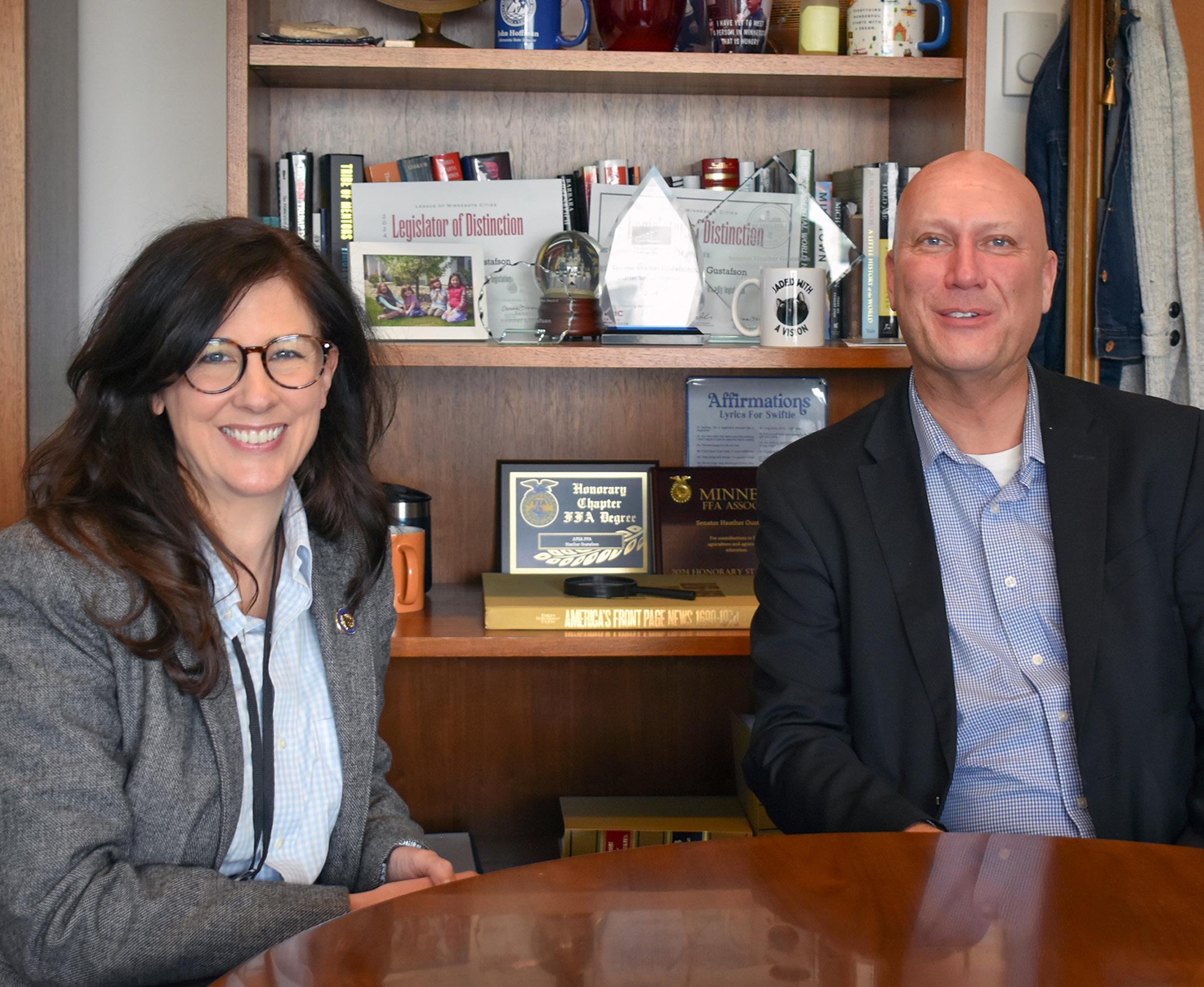
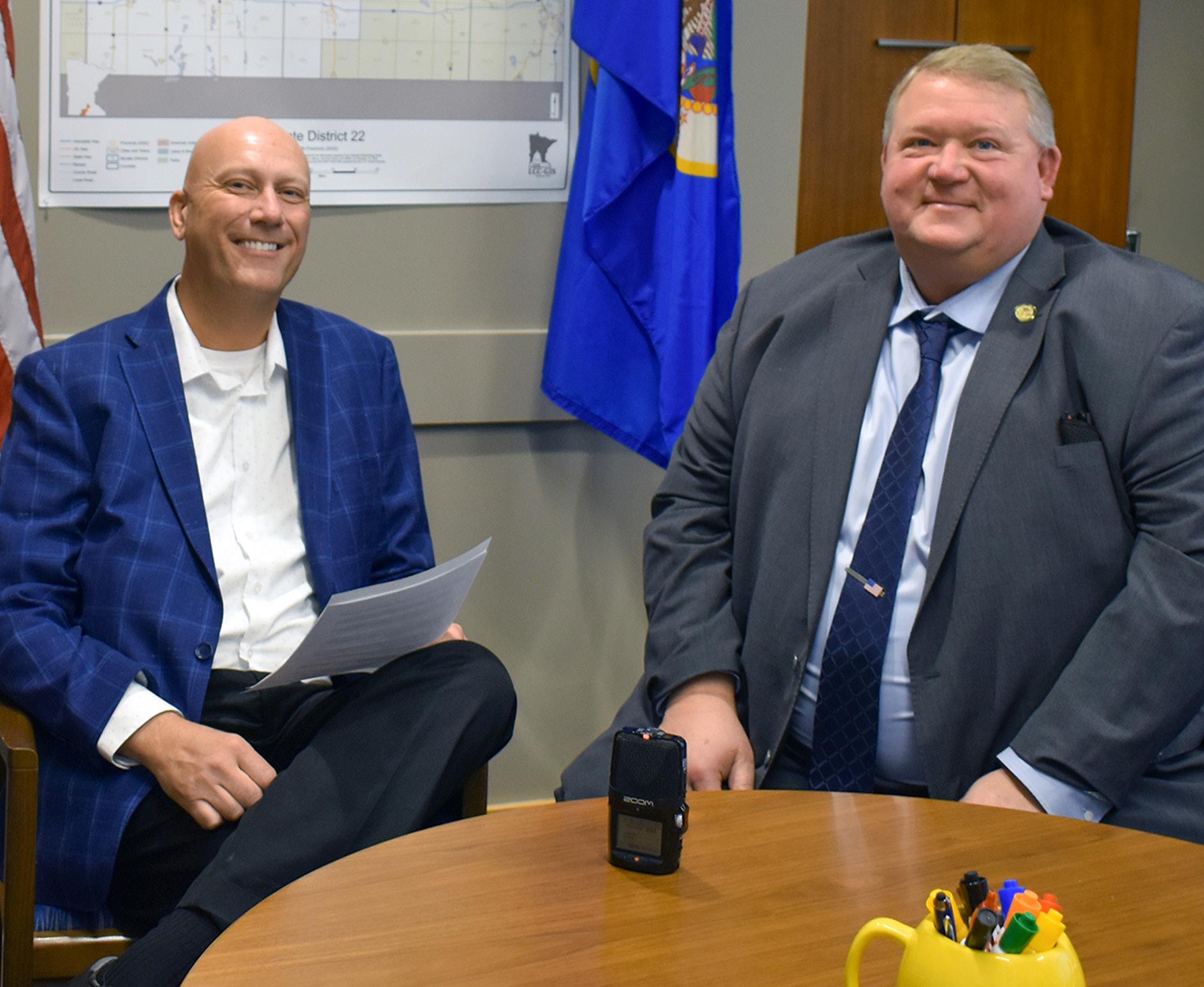
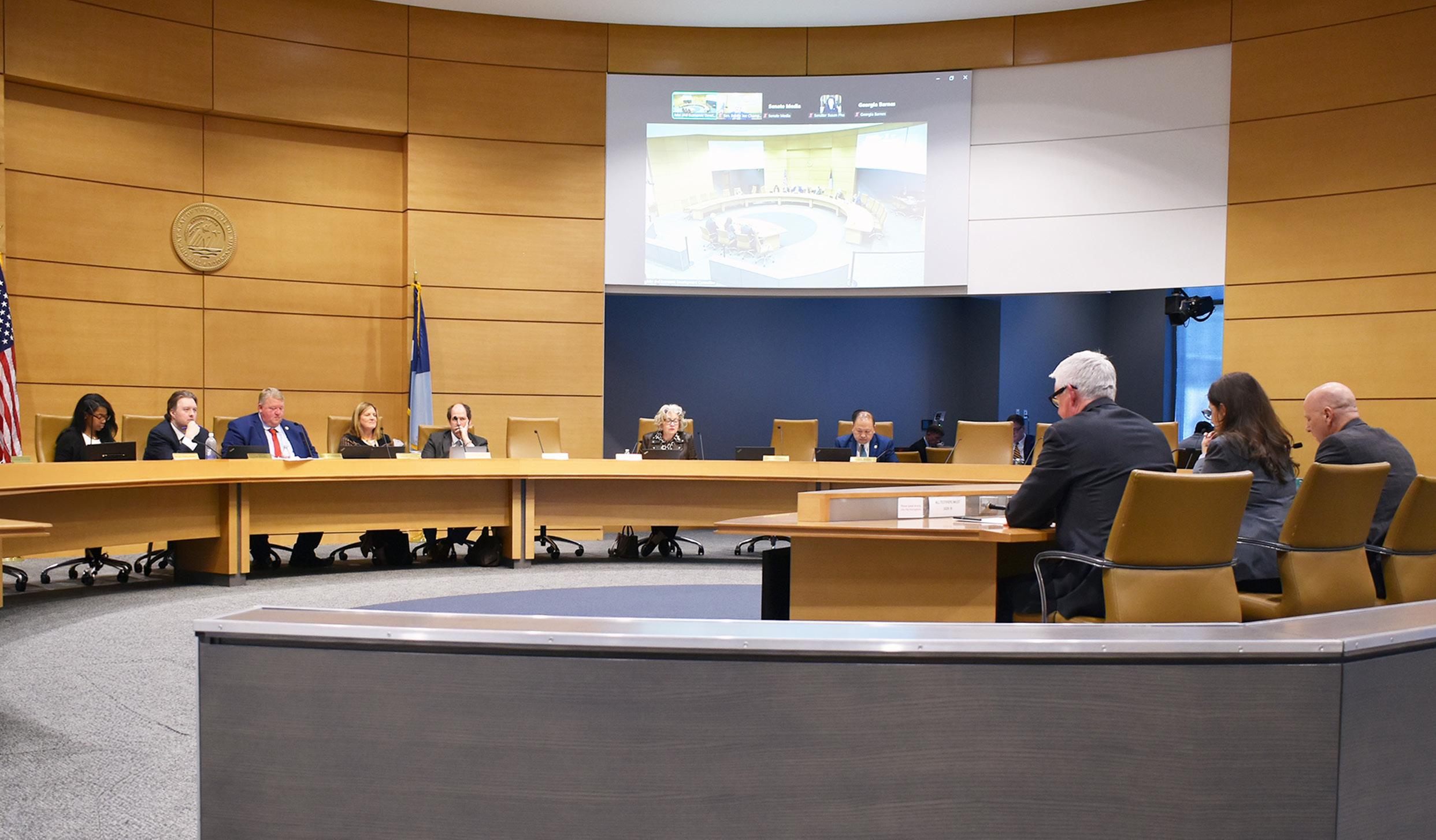
In the midst of the busy session, Marty Seifert, a lobbyist who works on behalf of Enterprise Minnesota, sat down with two leaders of the Senate Jobs and Economic Development Committee, Sen. Rich Draheim (R-22) and Sen. Heather Gustafson (DFL-36), to discuss manufacturing, its promises, and its challenges, and how lawmakers can improve the climate for manufacturers across Minnesota.
Marty Seifert: As leaders on the jobs committee, you know how critical manufacturing is to economic growth in our state. But seeing manufacturing in action offers a whole different perspective. When you’ve toured manufacturing facilities, what have you learned from those experiences?
Sen. Rich Draheim: I’ve had quite a few opportunities over the years, and I genuinely love trying to understand how things are built. I grew up around the John Deere industry, so seeing things being made is in my blood. What’s remarkable is the range — you can walk into a Medtronic facility and
see highly technical production where engineers with advanced degrees are building life-saving devices, and then drive an hour out of the metro and find a shop putting out precision agricultural components where guys with deep practical knowledge are doing extraordinary work.
Sen. Heather Gustafson: What really struck me on my tours was all the consideration that goes into the process before the final product even exists — the research and development, the quality assurance, the way facilities are actually run. You can tell when a manufacturer is putting employees first. There’s a genuine sense that they don’t just want workers to show up. They want them to buy in.
Sen. Draheim: Without manufacturing, we would have lost both World War I and World War II. I’ve often questioned what would happen if we had another incident like that — where we needed to bring manufacturing home quickly. And honestly, I don’t believe we have the capacity. We don’t have the skilled workforce, and we don’t have the square footage to build what we would need to compete.
Sen. Gustafson: My husband has been in manufacturing for many years, and he is still excited about it. He’s proud of what they’ve accomplished. Every time a new contract comes in, that means he’s doing his job the right way. There’s also something really meaningful about the team atmosphere. It is so project-based. You have to complete a project, and if it isn’t good, it won’t sell. They want it to be good, and that takes the whole team. The buildings themselves are also part of the story. You drive by these places every day and they just look like warehouses. There’s a small plaque, maybe a loading dock. You have no idea what’s happening inside until you walk in and see there’s a full paint shop, precision machining, and a team of people producing something remarkable.
Seifert: Let’s talk about what the legislature can do to support those businesses. What policies would make the most difference for manufacturers, especially the smaller ones across Greater Minnesota? Sen. Draheim: The idea I keep com-
ing back to is what I’d call a national defense tax break at the state level. Minnesota should be doing its part to ensure we have domestic production capacity in the sectors that matter most — health care, medicine, transportation, agriculture, food science. Look at COVID and how we got caught with our pants down a little bit with medical supplies and some of the basic food items and toiletries. That shouldn’t happen. The federal government already recognizes these sectors as critical, and I think the state should layer additional incentives on top of that to make Minnesota a destination for exactly that kind of manufacturing. On the smaller end, something modeled around investment incentives, allowing businesses to immediately expense equipment purchases, combined with better financing support for technology upgrades, would make a real day-to-day difference for the folks who aren’t giant corporations with armies of lobbyists.
Sen. Gustafson: I think about flexibility a lot when it comes to this question. One of the things manufacturers have told me is their inability to be nimble when a competitive contract opportunity becomes available Whether it means adjusting
“The goal should be simple — find a career path where you can provide for your family. Manufacturing does that across this state, no matter where you are.”
–Sen. Rich Draheim
rulemaking or giving DEED [Minnesota Department of Employment and Economic Development] the ability to maintain a more responsive fund for competitive opportunities, that kind of nimbleness is something we can actually build into the system. I will add that sometimes government just needs to stay out of the way. That’s maybe surprising coming from a legislator, but sometimes it’s the truest thing I can say.
Sen. Draheim: There’s an accumulated weight of regulation when you combine earned sick and safe
time, paid family and medical leave, and OSHA restrictions. Each one might sound reasonable in isolation but stacked together they create a climate where businesses don’t want to expand here, and in some cases they’re actively leaving. You look at our neighboring states and the ease there of permitting to start a facility or expand a facility. I represent a border district, so I see this directly. All of the states around have less regulation and lower taxes. We’re not even in the same conversation in some cases.
Sen. Gustafson: Balance is important, and I think there are absolutely places where the right government support makes a genuine difference — particularly around competitive federal grants and funding gaps. Our bill establishes an appropriation to try to address some of that. But we’re also realistic; Minnesota is never going to be able to fully backfill what’s been pulled at the federal level. That’s why we need our federal representatives to make the case right alongside us. It really does feel like an all-hands-on-deck moment. And I do think we need to explore more private-public partnerships than we currently do.
Sen. Draheim: You have to look at the spending side too. We’re addicted to spending money here in Minnesota — all the elected officials are — so we have a spending problem, which means a taxing problem. That makes life unaffordable for workers. You’ve also seen a lot of corporations leave
the state. A lot of expansions have not happened here that have happened in other states. And I think it will take someone at the top — a new governor — to instill a different corporate culture that genuinely values all jobs and understands that without these manufacturers and other blue-collar work, we wouldn’t have much of a tax base. That tax base is what pays for everything.
Seifert: The workforce pipeline is arguably the most urgent challenge manufacturers face right now. Minnesota used to have a sterling reputation for its workforce. Where do we stand today, and what needs to change?
Sen. Gustafson: I was a high school history teacher before the legislature, and I know students often think they only have two choices: get a job or go to the University of Minnesota. There are a thousand things in the middle. And as a teacher, I was talking about those paths all the time, because the last thing you want to do is leave a student without hope for a future. There are really good, dependable jobs in manufacturing that can’t be replaced by AI. And for every dollar that gets invested in manufacturing, $2.69 goes back into Minnesota communities.
Sen. Draheim: When I was younger and traveled for business, people across the country were genuinely jealous of Minnesota. We had a highly trained workforce that was very motivated, and that was a real competi-
tive advantage. Now you look at our education standings compared to the rest of the country and they’re falling rapidly. It’s very disappointing.
Sen. Gustafson: The economic case really is just bread and butter when you lay it out plainly. Manufacturing wages in this state are significantly higher than the average wage. If we can expand that base, purchasing a home stops being a far-off dream, and sending kids to college with minimal debt becomes realistic rather than a fantasy. It’s not complicated. People aren’t looking for anything fancy. They’re not looking for a handout. They just want a good job, a house, a dog, some paid benefits.
Sen. Draheim: Both of my grandfathers worked in factories their entire lives. They had a good life. They provided for their families, got their kids through college. We’ve lost that framing somewhere along the way. We started treating manufacturing jobs as something to escape rather than something to pursue, and we need to reevaluate how we talk about career paths to young people. All jobs are honorable. But we should be focusing on jobs that can actually provide for a family. And a lot of manufacturing jobs do exactly that.
Seifert: What about the systems we use to develop that workforce — the training programs, the schools, the technical colleges? What needs to structurally change?
Sen. Gustafson: High schools are
doing more than people realize, and I want to give them credit. Centennial High School in my district recently created a welding program that is genuinely substantial and impressive. I bring that up not just to praise the program, but to make a broader point: It isn’t just about training students in a trade. It also opens them up to the idea of a whole new world of employment. Manufacturing is one of those routes. And when a student discovers that pathway through hands-on experience, that changes their entire horizon.
Sen. Draheim: Exposure is everything at that age. To me, government should be in the business of preparing kids for a career path. We try to push kids in certain directions when we should really be pushing them in all directions. The goal should be simple — find a career path where you can provide for your family. Manufacturing does that across this state, no matter where you are.
Sen. Gustafson: The exposure piece really does start on a floor somewhere. You take a young person on a tour of a real facility, show them what’s actually being made, introduce them to the people doing the work. That makes it concrete and real in a way that a conversation with a career counselor cannot. Jobs that can’t be replaced by AI, jobs where you’re part of a team completing a real project — there’s something deeply satisfying about that, and young people respond to it when they see it.
Sen. Draheim: When a young person can stand on that floor and say, “I can help build that”— that’s a spark that lasts a long time. We just have to create those moments more deliberately and more systematically across the state.
Sen. Draheim: When it comes to education, we have 65 state-run campuses across Minnesota and hardly any programs left for agriculture or practical technical skills. I will be dropping a bill to have M State decide which campuses to close. That won’t make me popular on the way out the door, but we can’t afford to keep going the way we are. And on workforce development funding, I have a bill that would move a significant portion of what DEED does in that space over to M State. I also want to let corporations take some of the money they essentially pay in and use it to train their own
“The economic case really is just bread and butter when you lay it out plainly. Manufacturing wages in this state are significantly higher than the average wage.”
–Sen. Heather Gustafson
employees. If they have a worker who needs a new skill and they want to invest in that person, we should give them a tax break for that uptraining.
Seifert: With significant deficits on the horizon, organizations like Enterprise Minnesota face real budget pressure. How do you think legislators will view that investment going forward, and how do we make the case?
Sen. Draheim: I’ll be direct. I think you’ve got your hands full in the coming years. I say that not because the work isn’t valuable. It clearly is. But I don’t think most elected officials understand business. Not that their career choices are bad, but I get frustrated when colleagues don’t understand that you need a balanced economy, and part of that good balanced economy is manufacturing. They will be looking at anything they can quickly save a
few dollars on, and they will slash without understanding the impact across the state. When Enterprise Minnesota goes into a small manufacturer and does consulting, helps them improve workflow, adopt technology, and identify efficiencies, the downstream effect is jobs retained, productivity increased, and tax revenue generated. But that’s a diffuse benefit. It doesn’t appear neatly on a spreadsheet the way a line-item cut does. Sen. Gustafson: I think the solution is telling very specific, very human stories. This work has opened my eyes to a lot of possibilities precisely because the economic arguments become so much more powerful when you ground them in real examples. Manufacturing is the largest industry in Lino Lakes; it employs around 1,600 people in just one of my nine cities. When you put a number like that in front of a legislator and connect it to schools being funded, youth sports being sponsored, communities functioning, that’s when the abstract becomes tangible and the vote becomes easier to defend.
Sen. Draheim: The tours do that work better than any policy brief ever will. A lot of them have the perception that you need more white-collar jobs than blue-collar jobs, and they don’t understand that manufacturing can be very technical, with people with fancy degrees working alongside
people with no degrees, all building something together. Sen. Bobby Joe Champion toured a glass company and a drum manufacturer in his district — two completely different operations — and came away with a fundamentally different understanding of what manufacturing requires and what it contributes. You cannot replicate that experience with a report. Sen. Gustafson: We also have to
“I represent a border district, so I see this directly. All of the states around have less regulation and lower taxes. We’re not even in the same conversation in some cases.”
–Sen. Rich Draheim
make the fiscal argument more aggressively. We always want to take care of people, especially those who are underserved. I wonder if we’re missing an opportunity to create an economy where people can simply get back to basics: a wage you can afford to live on, a stable job, a path forward. That’s something manufacturing can actually provide. And if we expand that base,
we’re not just boosting the economy in the abstract, we’re boosting it for middle-class families specifically, which ripples outward into every other part of the state budget conversation. Sen. Draheim: And the retirements happening in the legislature right now are significant. A lot of the members who understood manufacturing, who had long relationships with businesses in their districts, and had been on those floors — they’re leaving. A lot of friends of manufacturing are retiring. The incoming class will need to be educated essentially from scratch. That’s not a distant challenge; it’s immediate. So, the education work, the tours, the storytelling, that has to start right now with the people coming in.
Seifert: As you both look ahead — whether toward future sessions or the longer arc of where Minnesota is heading — are you optimistic about this state as a place to build and grow a manufacturing business?
Sen. Gustafson: I am optimistic, genuinely. There are always budget discussions, and next year will be a full budget year, but I think there’s a growing recognition that you don’t have to choose between cutting spending and raising taxes if you’re actively growing the economy. Manufacturing is a core part of that argument. And I want to see more private-public partnerships than we have now. It is really another
way forward that we’re going to have to explore more seriously. Especially with larger manufacturers, there is a huge desire on their part to contribute to the communities they work in. They do it already without any prompting. If we can find ways to formalize and build on that, why wouldn’t we?
Sen. Draheim: I’d be dishonest if I said the current environment was encouraging. The neighboring states are less regulated and they’re competing aggressively. We’re losing expansions that should happen here. But here’s what keeps me from being entirely pessimistic — the people are still here. I’ve stood in facilities where guys are welding in 25-degree buildings all day, doing hard physical work, and they’re proud of it. They’re not asking for much. They just want to be left alone to run their business and raise their family. That spirit is alive in Minnesota, especially in Greater Minnesota. Manufacturers in small towns are the lifeblood of those communities. They pay for the local school. They donate to the Little League team and the basketball team. Their employees’ kids are in the church and the school.
Sen. Gustafson: That’s ultimately the message we need to carry into every budget conversation, every session, every tour we do with incoming legislators. This isn’t just an economic argument. It’s a community argument. It’s an argument about what kind of state we want to be.
Seifert: Sen. Draheim, you will be retiring after this session. Do you have any parting advice for manufacturers?
Sen. Draheim: We can turn this around. But it’s going to take an attitude change, a willingness to invest long-term rather than make short-term budget calculations, and leadership that values all work. That’s the Minnesota I believe in. And to Enterprise Minnesota specifically — keep doing what you’re doing. Keep bringing legislators to the production floor, keep telling the stories, keep making the case. Don’t assume anyone understands the stakes. Assume they need to be shown. Because these businesses need advocates, and so do the people who work in them.

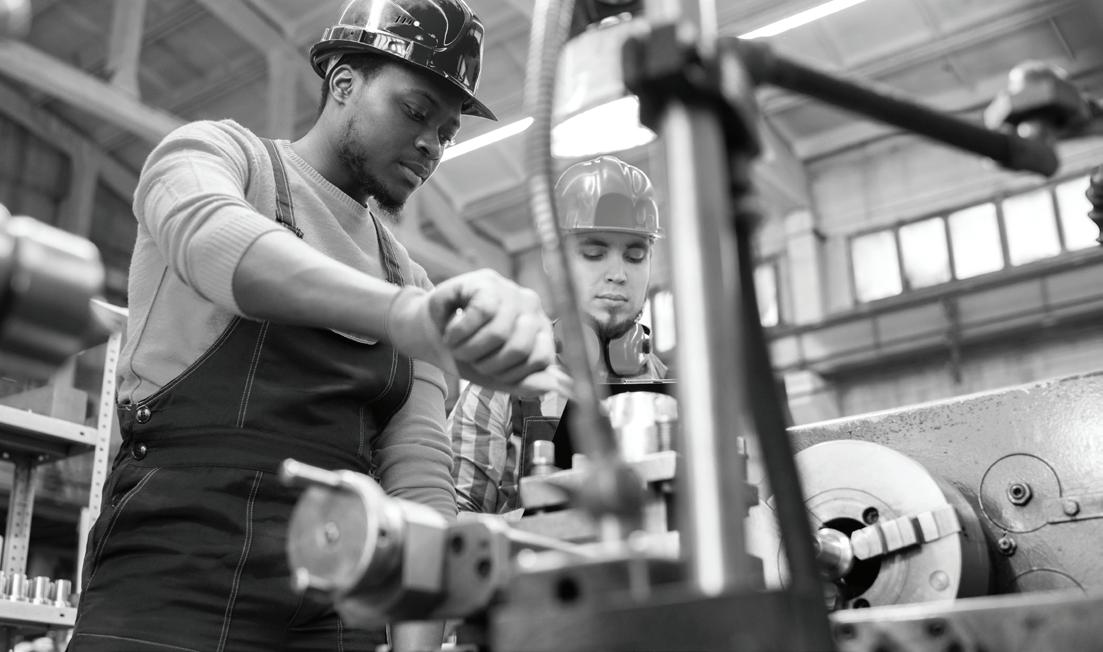
Our programs and services here at the Minnesota Department of Employment and Economic Development (DEED) can help you expand and succeed.
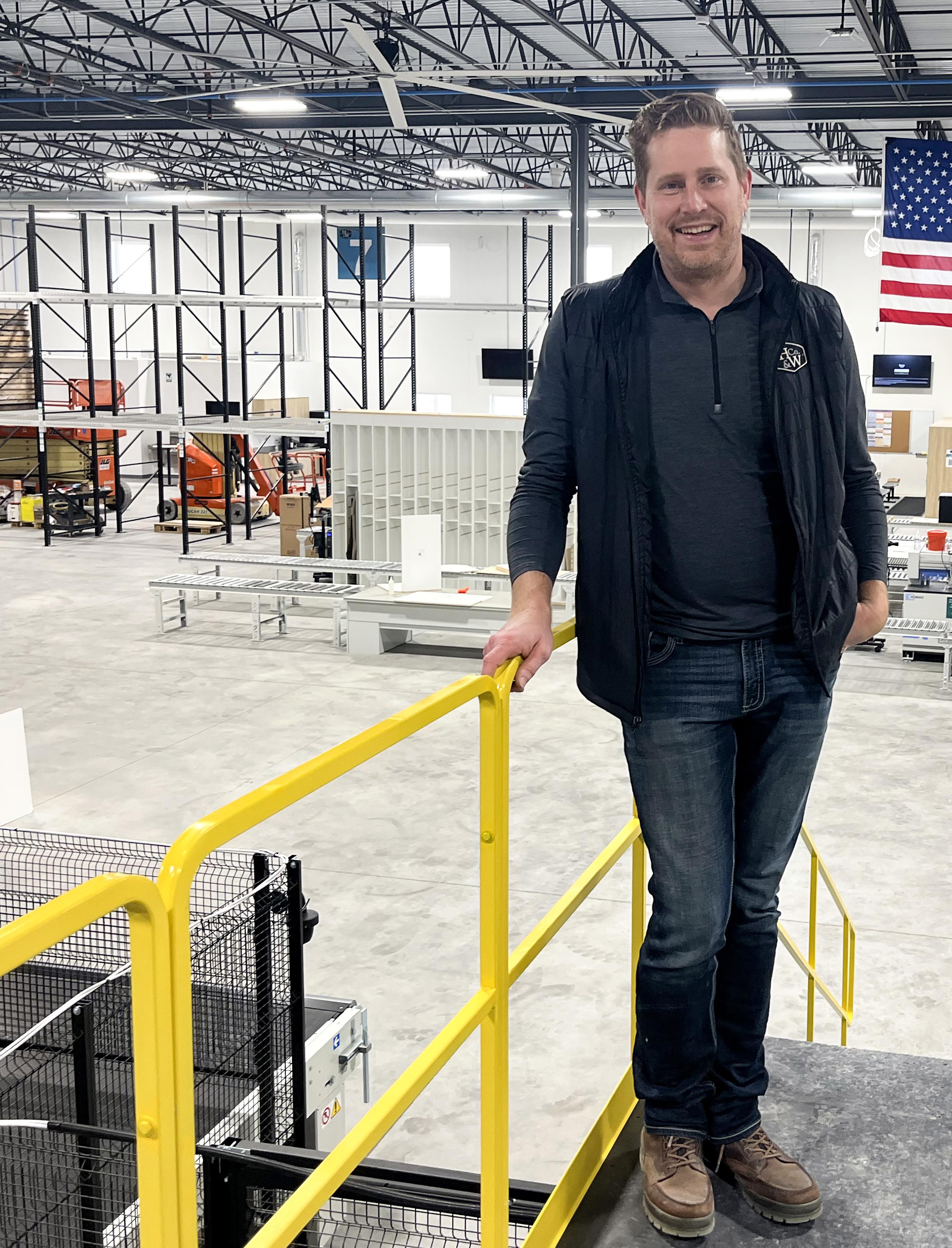
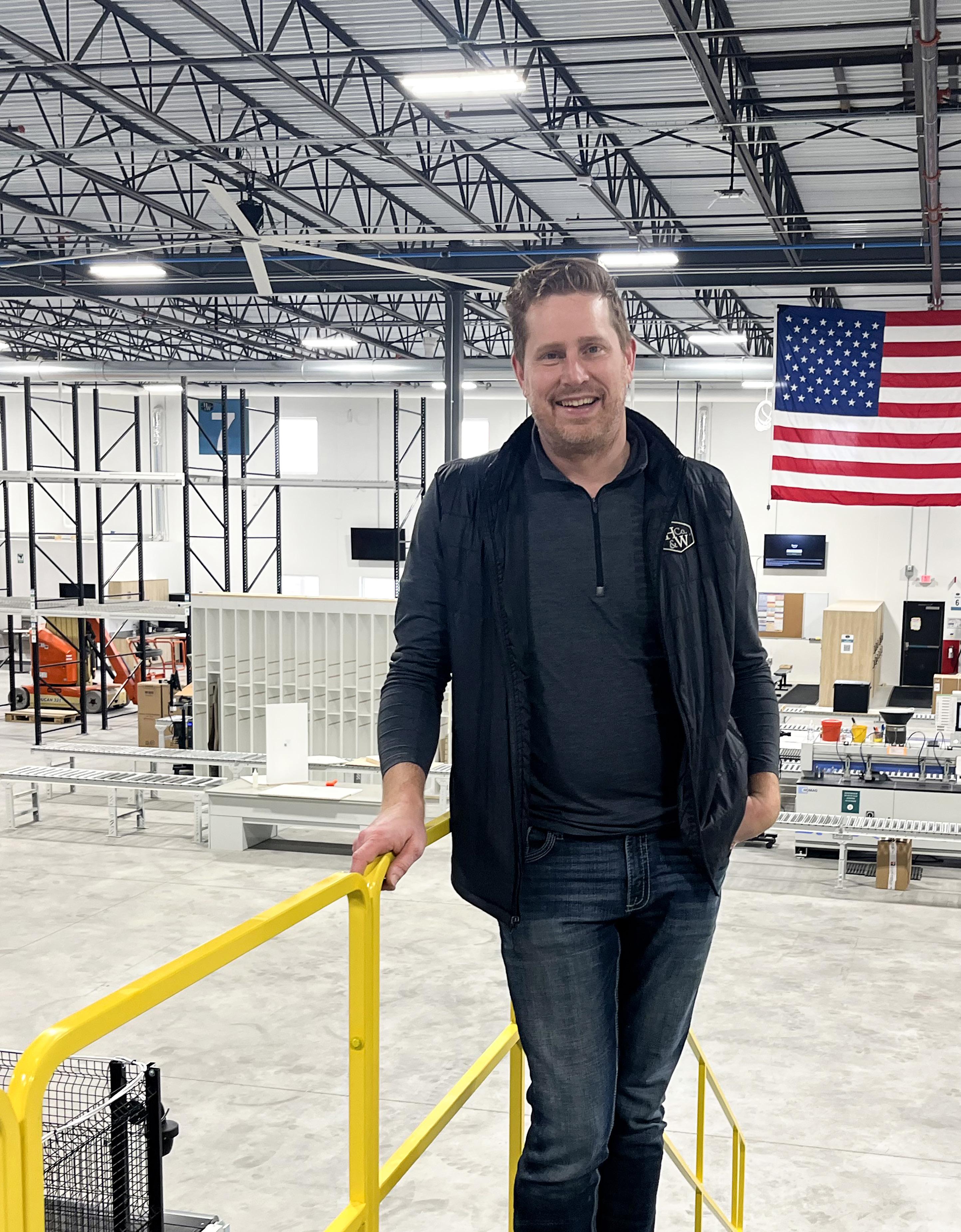
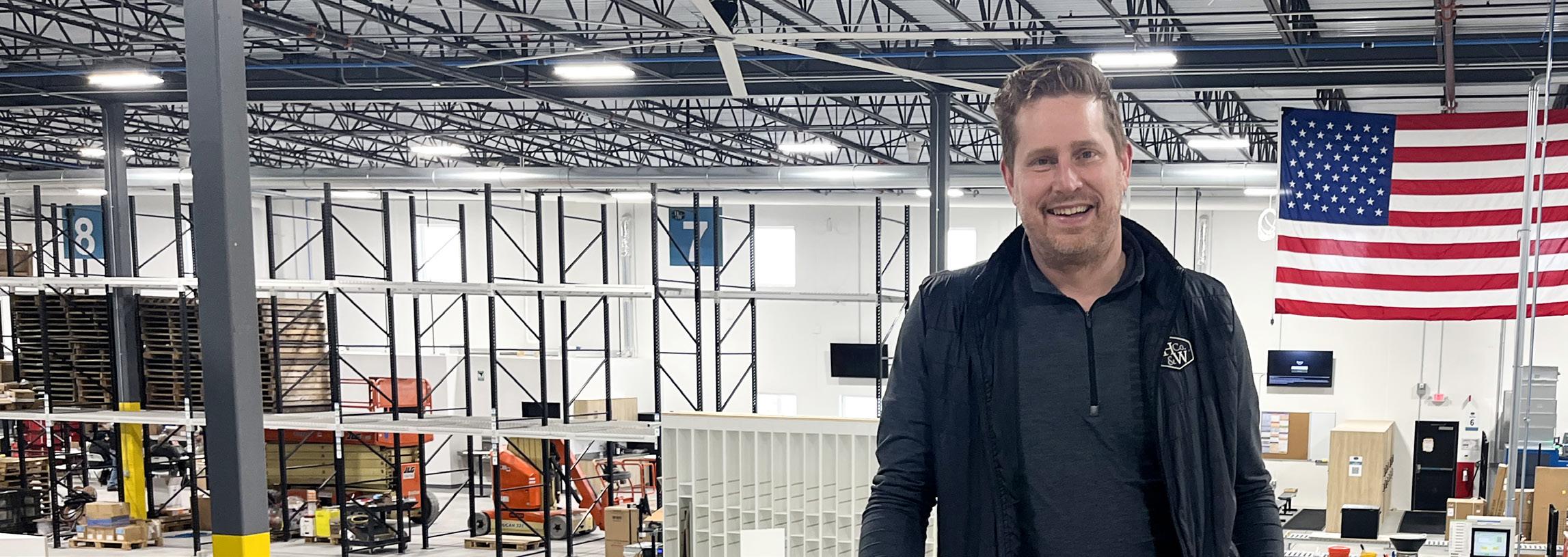
Robots and automation help Hansen & Co. Woodworks boost sales — and raise wages.
BY MARY LAHR SCHIER
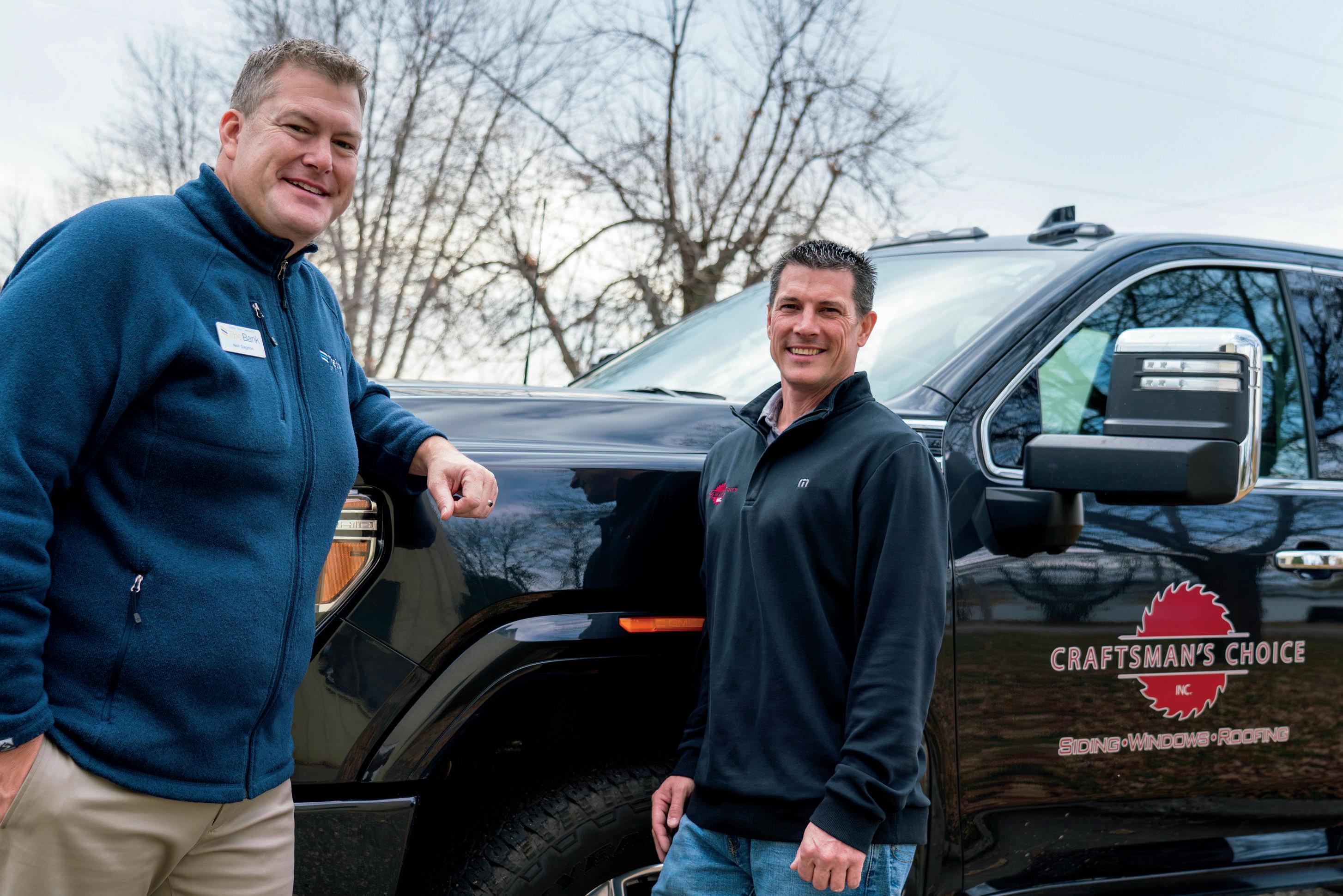
During a two-week, 3,000-mile journey through the back country of Xiamen, China in the mid-2010s, Adam Hansen came to the realization that manufacturers in the United States were going to lose — badly. Hansen, founder and president of St. Joseph-based cabinetmaker Hansen & Co. Woodworks (HCo), had visited several granite quarries and processing plants in China.
“I was just blown away by the sheer number of human beings they had working there,” he says. “On the way back home, I realized there was simply no way to compete against that — against a people-heavy, low-cost workforce on that scale. The only path forward was to make American
“My priority isn’t adding jobs for the sake of headcount,” Hansen says. “I care about the people we have.”
manufacturing something people would genuinely want to do — careers worth having, supported by real wages. And the only way to get there was through increased productivity by way of automation.”
The China trip was part of nearly 200 factory tours Hansen took in the past 10 years to learn how to better automate processes for making the cabinets and architectural millworks his company sells. He visited plants in the United States run by diverse companies, such as Ford and Adobe, as well as manufacturers in Europe where automation has been used more in cabinetry and woodworks.
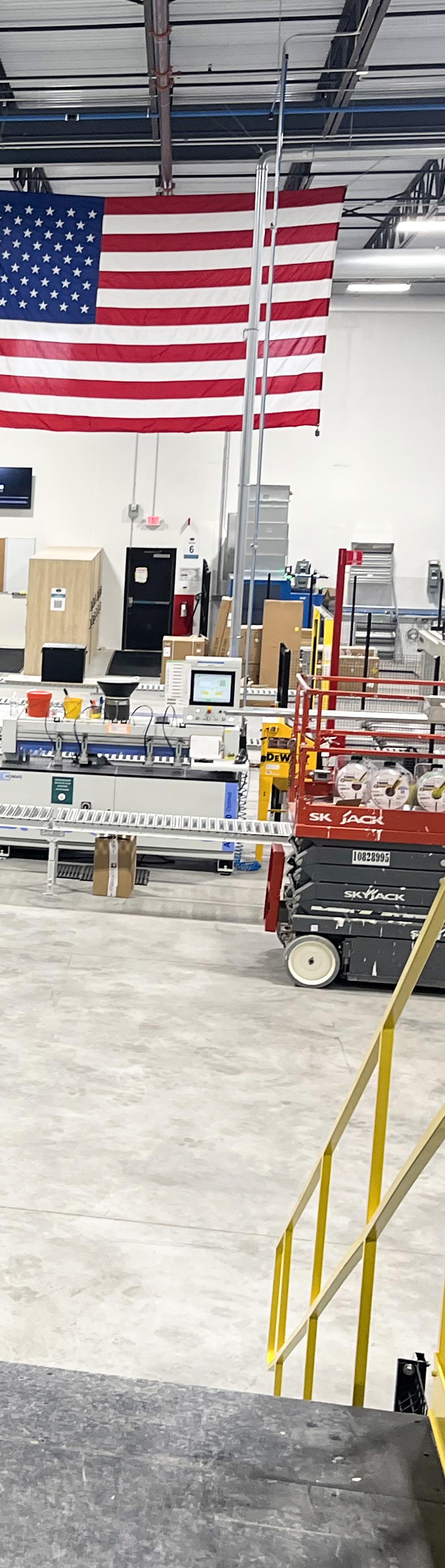
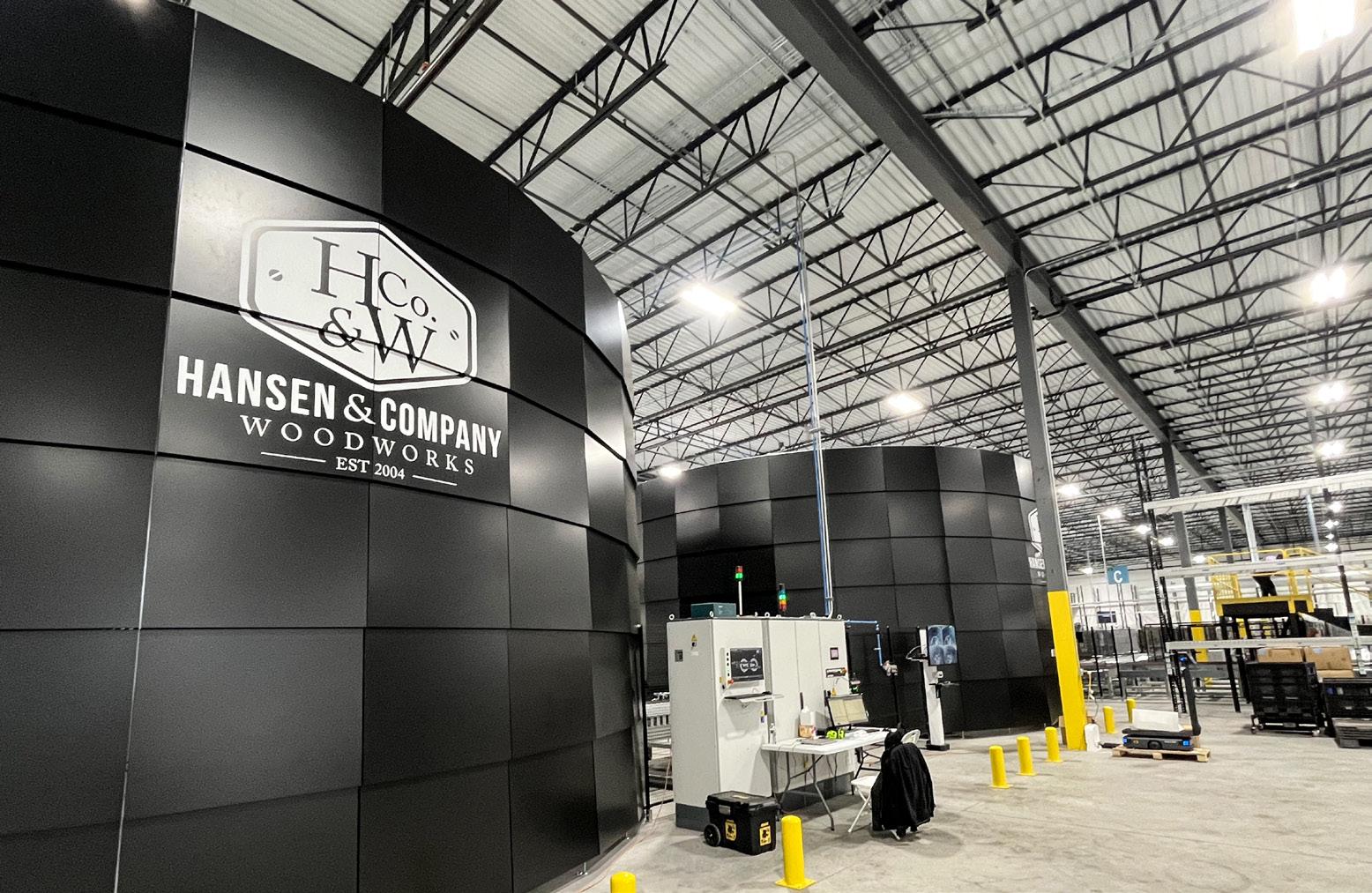
The result of his fascination with how to use automation to compete better came online in February 2026 — a 92,000-squarefoot facility that will increase his company’s manufacturing capacity by 400% with only a small increase in its current workforce of 55. It will allow HCo to produce custom, built-to-order cabinets for its commercial customers with most of the work done by machines and robots. Hansen broke ground in June 2024 and began a 20-month process encompassing construction, equipment installation, and commissioning. The company is expecting to reach
full production capacity by mid-2026. It cost about $25 million and will replace two smaller plants HCo operates outside of St. Joseph, Minn.
Hansen believes it is the most fully automated frameless cabinet line in North America. Because of the automation and related technology used in the plant, workers will need skills in industrial engineering, robotics, process engineering, and technical manufacturing. To accommodate the demand for highly skilled employees in its new facility, HCo has invested in a training partnership with nearby St. Cloud Technical & Community College.
“My priority isn’t adding jobs for the sake of headcount,” Hansen says. “I care about the people we have. How do they make more money? How do we take the stuff that is redundant and make that automated? And leave human beings doing what they are best at — that is, reasoning, intellect, observation, seeing things that are anomalies. So, you elevate the human experience.
“I don’t want a human being putting a door on a bumper,” he says. “We’re better than that.”
Like other manufacturers, Hansen understands the difficulties of hiring in today’s market and knows younger workers are less willing to stick with jobs that may be repetitive or dull. They also tend to have different skills than long-time workers in the field. “Workers are nimbler now,” he says. In that environment, employers need to challenge their employees, help them develop high-level skills, and give them as much job satisfaction as they can. “I’d like to keep someone 20 or 30 years, but we know they might move on. We still need to have a business that scales. We can get that with automation,” he says.
While the HCo plant is more automated than many manufacturers, more companies are turning to technology to improve wages and skills for workers as well as increasing productivity, says Rani Bhattacharyya, a University of Minnesota extension professor who studies workforce issues. A research project Bhattacharyya conducted in 2022 looked at why and how manufacturers introduced automation at seven facilities around Minnesota. Most manufacturers
added automation as a response to worker shortages, the study found. “Employers are looking to augment their workforces, not replace them,” Bhattacharyya says.
Enterprise Minnesota Business Growth Consultant Ryan Steinert says increased demand often forces manufacturers to make a choice. “You can meet growth with muscle or with finesse,” Steinert says. “Muscle is hiring more people. Finesse comes from employees improving the process so the business can scale more effectively. Hansen’s automation strategy is a perfect example of thinking about the whole manufacturing process from start to finish, driving out waste within the operations, and adding automation where it makes sense.”
According to Steinert, eliminating waste allows team members to focus more on where the value is created for the customer.
Besides elevating wages and scaling his business, Hansen’s goal in automating is to produce cabinets that are 97% fabricated in-house. “These two directives — expand
cabinets but with low variety. The HCo cabinets are designed for high levels of durability because most of them end up in high-use spaces, such as multi-family housing, healthcare facilities, and student housing. The new plant has certifications from both the Kitchen Cabinet Manufacturers Association and the Architectural Woodwork Institute, a selling point with the property managers and developers who are its customers.
While robotlike automation has been used in manufacturing since the 1960s, developments in data processing, artificial intelligence, and digital technologies have created new and more advanced ways to implement automation. The technologies that Hansen uses in the new plant were not available when he first began thinking about adding more automation less than 10 years ago.
“Everything would have needed to be
wages and keep fabrication in house — are the lenses we look through when making decisions,” he says. Unlike many cabinet manufacturers who purchase components like doors and drawer boxes from outside suppliers, HCo fabricates what it produces. Keeping manufacturing in-house was a point of principle for Hansen, not just an operational choice.
Hansen’s new factory allows the company to produce a wide variety of cabinet sizes and colors. Most American cabinet manufacturers produce large numbers of
custom made,” he says, “which would have doubled the price.” The majority of the automation and robotics were developed by two key partners: Italy-based Biesse, a global leader in woodworking technology, and Quebec-based Automatech Robotik, which specializes in robotic automation for the woodworking industry. Its robots can move and process multiple parts at a time, read and process CNC programs, and identify specific parts by QR code — capabilities that are central to the precision and flow of HCo’s batch-one production
line. Other equipment came from suppliers in Germany.
The process begins in the automatic storage and retrieval area, where up to 5,000 thermally fused laminate (TFL) panels are housed. The panels come in 5-by-12foot sheets in up to 400 colors and have a texture that gives them a high-quality appearance. Each panel is weighed, measured, and checked against the company’s database for accuracy. When it’s needed, each panel is transferred to the router, where it is cut, flipped, and drilled with a CNC machine. The robots are programmed to cut the largest number of parts possible from each panel, a process that has reduced waste significantly.
The panels are lifted and moved automatically, and a sheet can be cut and drilled every 2.5 minutes. Along the way, the part is labeled with its QR code, which will identify it throughout the process. A robot takes a photo of the part and checks the database to ensure it is the correct size and material. The part is nested with other parts (which may or may not belong to the same cabinet), sorted, and moved farther down the line where an edge is added and hardware installed.
Edge banding — that strip of laminate or veneer that covers the raw material on the sides of cabinets — was one of the first areas where Hansen moved into more automated processes. The new system can band up to 11 edges per minute. The company adheres the edges using a PUR glue, which creates a bond that is resistant to heat and water. “It’s trickier to use but provides a really good product for the consumer,” Hansen says. The edge bander reads the code on each part, then applies the correct color and thickness of edge.
After edge banding, the parts are scanned again and moved into one of two large silo-like containers called the library. “The libraries were our Kryptonite,” Hansen says. “We could not figure out how to bring in parts that are all cut chaotically and nested on sheets for best yields, then bring them all together and bring them out as a cabinet.”
Hansen saw the libraries at an industry show. The round interior of the libraries is able to store thousands of cut parts, which are placed in slots by robots operating inside of the library. They are held there until it is time to assemble a cabinet. The library robot then pulls the parts that make up a cabinet and sends them down the line in the precise order they will be needed for assembly — end panel first, then tops and bottoms, then shelves and faces.
Down the line, drawer slides and hinge
plates are installed by more robots. Glue and dowels are inserted automatically as needed, then a worker assembles the five panels of the box of the cabinet. This is the first time a worker touches the box. When the line is working at full speed, cabinets will move through it at a rate of one per minute. Once assembled, it moves down the line where it is then compacted by a machine to ensure it is square and the parts are firmly attached. Backs are stapled to the box, then the cabinet moves down the line farther, where it is eventually wrapped individually and wrapped again on pallets for shipping or storage in HCo’s warehouse area.
“The most challenging part of commissioning a system like this is the flow of part data from one automation center to the next,” Hansen says. Each machine in the line needs to know exactly what part is coming, in what sequence, and what to do with it. “Getting that data handoff to work seamlessly across every transition is where the complexity lives,” Hansen says. “As that communication tightens up, the line accelerates.” At full production, HCo expects to produce up to 500 cabinets a day, more than triple its
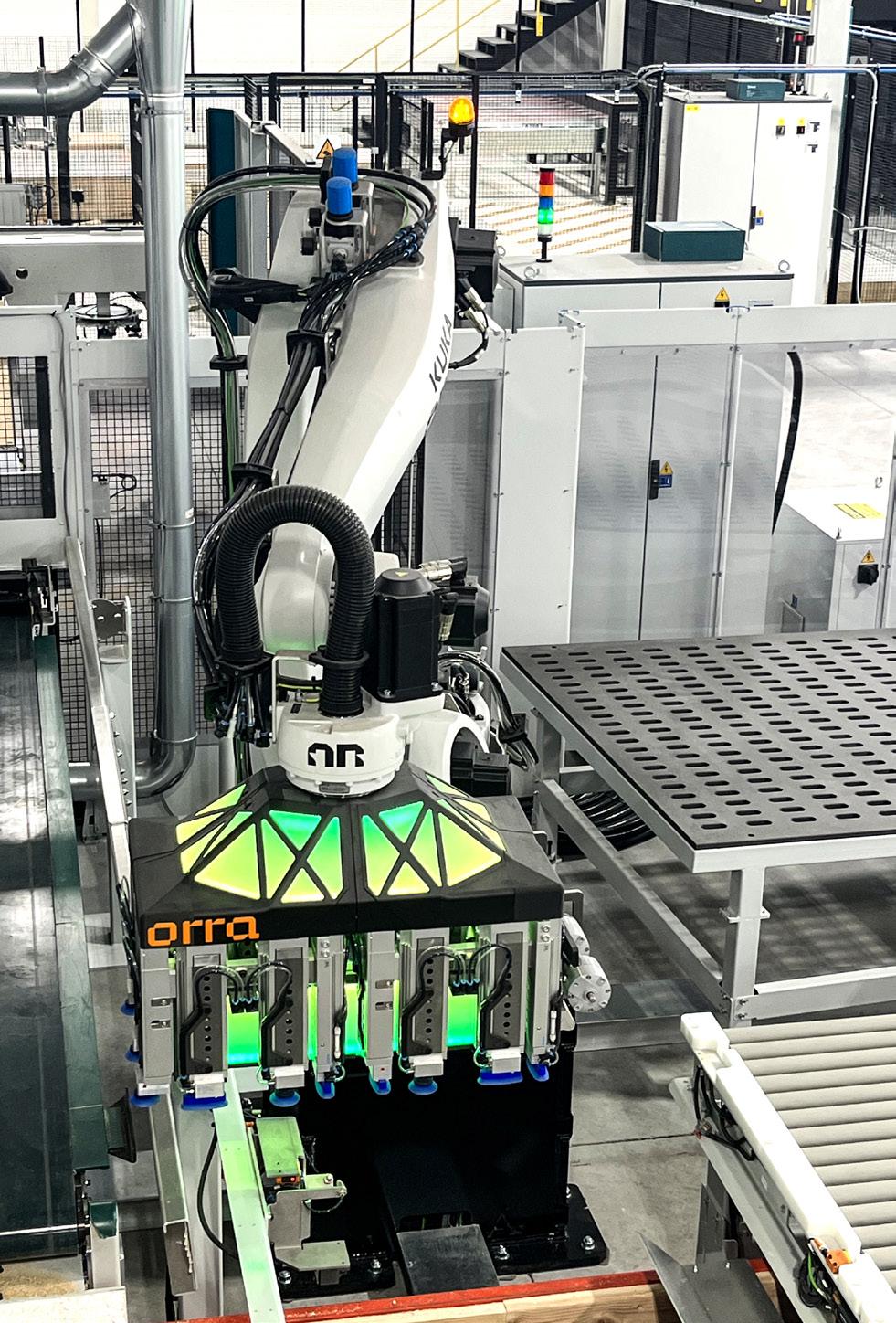
“…Hansen’s automation strategy is a perfect example of thinking about the whole manufacturing process from start to finish, driving out waste within the operations, and adding automation where it makes sense.”
–Ryan Steinert, Enterprise Minnesota
current output of about 140.
Everything in the HCo plant is designed to ensure a clean and efficient assembly line. An advanced vacuum system removes dust from the building to reduce any problems that might affect equipment performance. The walls and machinery are mostly painted bright white to enhance visibility, and most of the robots can be
viewed from the floor. “You don’t see that level of foresight often with automation,” says Steinert. “Hansen has set it up so that problems are easily identifiable, allowing team members to become more effective problem solvers so the automation can continue to do its job.”
Outside of three weeks working in sales, Hansen has always been his own boss. In 2004 at 21, he began making fireplace surrounds for a local developer who was building apartments in central Minnesota. Hansen had never worked with wood, but his father worked in the construction business and had a shop at home — and Hansen needed a job. He enjoyed building the surrounds and soon, he was making kitchen cabinets for condominiums, as well.
Then called A-Cab Custom Woodworking, the business grew until the recession of 2008. As residential building slumped, Hansen took on two investors to keep the company afloat and pivoted to building cabinetry for extended stay hotels housing oil workers in the North Dakota Bakken formation, often spending six days a week in the area. The hotel business kept the company going through the recession and gave Hansen insight into which customers could provide stability and help grow the business over the long term. In 2017,
the company moved completely to commercial work, building cabinets for multi-family housing projects, schools, offices, and medical facilities as well as creating architectural millwork, such as decorative walls, nurse stations, and reception desks. Eventually, Hansen bought out his two investors and is currently sole owner of the company.
“I just fell in love with manufacturing,” Hansen says. Because he’s learned so much from visiting other manufacturers, Hansen opens his plant up to tours whenever he can. The company also participates in Experience MFG, a program that brings high school students into manufacturing facilities to give them a sense of what manufacturing jobs are like. The company currently sends kits and videos to local industrial technology classes to give students a chance to build something on their own.
“We want kids to see that manufacturing is a great career,” he says. “We want them to go home and tell mom and dad, because sometimes they are the hardest to convince, that manufacturing is not some dirty, grungy job.”
Hansen encourages students to keep an open mind about career choices. Many students imagine that they have to find a job they love when they are 18 and that they’ll know what they want to do the rest of their lives. “That was not my experience,” he says. “You find a career that you thrive in by investing in the activities that you are doing. That’s how you build that passion for it. I think knowledge creates passion and passion sells. When I advise younger people, I tell them that sometimes you have to just stick with it, and you get momentum. Sometimes you have to decide that this is what you like to do, and do it.”
With the plant just coming online, Hansen is excited about his company’s growth possibilities. Currently, its products are sold “mountains to mountains” from Kansas to Minnesota, Wisconsin to Montana, but it’s working on finding more customers in the South where shipping costs would not be prohibitive.
“This has always been about two things,” he says, “to bring modern manufacturing back to America, and to build a system productive enough to give people a real opportunity to achieve their potential. The vision fuels the journey. The grind gets you there.”
At Wells Technology, workforce training and management aren’t just components of their success. They’re everything.
One of the most noted barriers to manufacturing growth, particularly in rural locations, is the workforce numbers game: Not enough skilled labor, more retirees than apprentices, and dwindling vocational program funding. That creates a ripple effect, where both new and established manufac-
turers are hesitant to establish or expand operations outside of metro areas, leading younger rural employees to move where there are more opportunities.
Leaders at Bemidji-based Wells
Technology are deeply aware of all the components of this challenge. They face these issues as a manufacturer as well, but they’re dedicated to changing the equation. That’s not just for their own opera-
BY ELIZABETH MILLARD
tions, either.
“Investing time and effort into training and supporting employees isn’t just about what drives our business and our bottom line,” says Andy Wells, Sr., CEO and founder of the company. “This is about community and even humanity. We try to see what’s good for all of us, and then ask ourselves, how can we expand that? We’re always looking at how to answer that question in new and meaningful ways.”
Wells’ 54,000-squarefoot production floor looks like many other precision CNC manufacturers, carefully creating components that will be used in the aerospace, medical device, automotive, industrial equipment, and electronics industries. The company specializes in complex geometries with tight tolerances as well as rigorous testing, and to do that, it has the latest machinery, including Star CNC machines and Makino DA300 5-axis machining centers.
attended Bemidji State University and majored in physics, followed by a number of roles including a stint as a designer at Polaris, and a supplier of innovative air-powered tools for the food processing industry. Along the way, he also taught as a professor at Bemidji State University for 17 years.

At one point during a tour, Wells holds up a part that’s so small and intricate, he jokes that it should be turned into jewelry. But he and others at the manufacturer never seem to lose sight of what the real treasure is here: The person who’s turning a slim rod of metal into this complex and beautiful object. Without that employee, and everyone else on the floor, these machines would just be extremely expensive decor.
Without that employee, and everyone else on the floor, these machines would just be extremely expensive decor.
Throughout his childhood and teen years, Wells would find discarded parts in junkyards and build go-carts and scooters, as well as tinker with potential inventions like small rockets. After high school, he
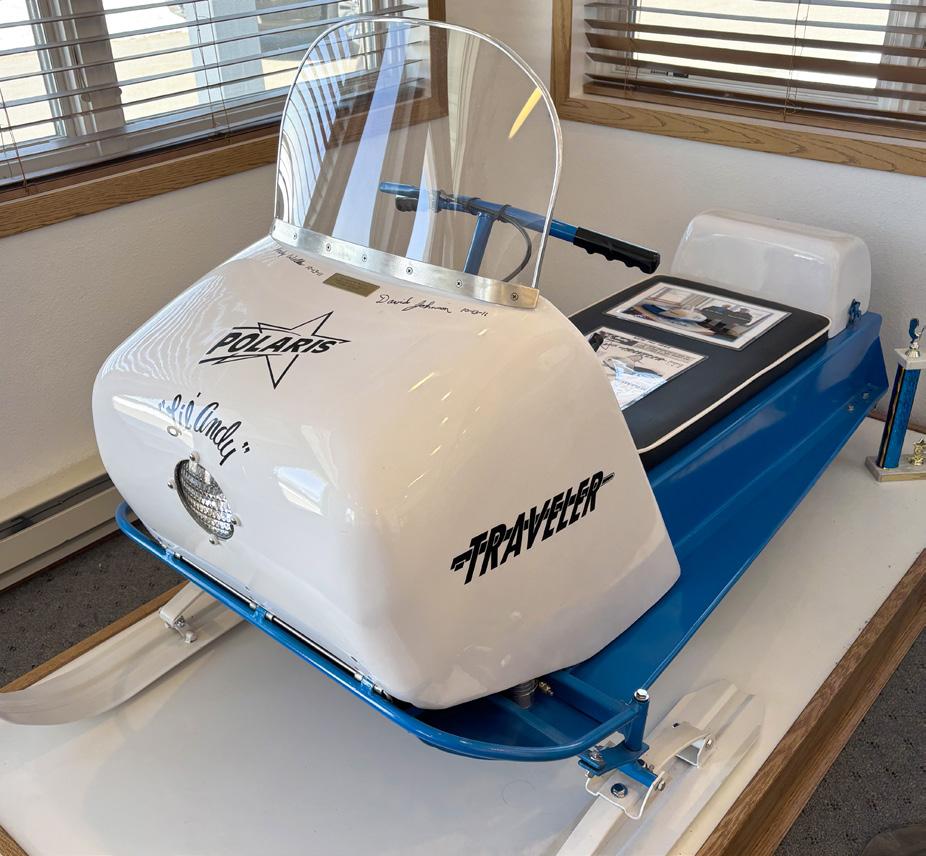
In 1989, at the age of 45, he decided to start his own company to manufacture precision components, and his work attracted notice from large firms like Fastenal, an industrial supplier based in Winona. Over the next several decades, he secured manufacturing contracts from clients like BAE Systems, NASA, and the Department of Defense, necessitating the construction of a much bigger manufacturing space and steady hiring. The company currently employs 54, but Wells says he anticipates growing that number since orders continue to come in at a steady pace.
In the vestibule of the company’s offices, next to a sizeable classroom and large manufacturing floor, Wells stands in front of a glass cabinet that showcases some of his notable inventions — a few date back to his early 20s — and above the tools are an assortment of U.S. patents he has received for those creative developments.
To his right is a small, lightweight snowmobile he designed while working at Polaris, and it’s marked as “Lil’ Andy” to recognize his contributions. A large
sculpture, as well as three shelves in the case, are awards granted for his design and manufacturing work. Outside the window is another creative endeavor for Wells and his team: One of many solar panel arrays that rotate throughout the day to capture sunlight, allowing most of the company’s production to run on solar power. And behind that is a small two-car garage, which would be modest even by city standards — it’s notable here for being the first manufacturing location for Wells, when he started the company with his wife and 12-year-old son as his team.
Tucked inside the case, on the secondto-bottom shelf, is a photo of an even smaller building, but this one is where Wells grew up, on the Red Lake Reservation. Like many of his neighbors at the time, Wells and his family dealt with poverty, which is still a significant issue for Native American reservations, he says. Much like now, the high school dropout rate was high, but his parents insisted he get his diploma, and that focus on persistence and accomplishment was not only part of what drove him, but also what continues to inform the mission of Wells Technology.
“Growing up where I did, so many people gave me encouragement and a chance,” Wells says. “There were opportunities at school and later at work to show what I could do, and having those helped in the creation of everything you see here.
I didn’t do this on my own, it is all due to the great team of employees we have and the opportunities we have received. So, I’ve made it my life’s work to give others their opportunities as our business grows.”
Nearly every company has a mission statement, often boiled down to a single line. For example, a manufacturer might claim something like, “Our mission is to deliver the highest quality, innovative products on time, offering service and value to customers.”
At Wells Technology, a simple mission statement didn’t seem like enough, so instead there are two large posters in the entrance to the manufacturing floor that detail the company vision, mission, and values plus the company’s strategy for successful management, manufacturing, and distribution, while also serving customers, suppliers, employees, and community.
Over the next decades, Wells secured manufacturing contracts from clients like BAE Systems, NASA, and the Department of Defense, necessitating the construction of a much bigger manufacturing space and steady hiring.
Wells points out the last section first, talking about the manufacturer’s commitment to providing job and career opportunities in rural communities where poverty is a notable factor, as well as serving on local and state boards for health, education, and economic development.
Next to the mission posters are photos of the company’s employees, some of whom are graduates of Wells Academy (see sidebar). Although most of the employees wear similar shirts with the company’s logo, Wells notes that there’s a strong focus on their individual needs — particularly when it comes to cultural factors.
For example, on the manufacturing floor, nestled among the numerous large machines is a spacious room that’s quiet compared to the rest of the busy indus-
The classroom inside the Wells Technology building can hold 30 students, but it’s often filled beyond capacity when high school groups drop in to learn about manufacturing for a day, says Andy Wells, Sr., CEO and founder of Wells Technology. Every year, about 400 high school students visit from all over the Midwest to get a sense of precision manufacturing and the careers it offers.
Wells playfully holds a small basketball and a hoop, then asks students to try to make a shot with their backs turned to him. Of all those hundreds of kids, only one has managed it, he says.
The point is to help them realize that without understanding where they’re aiming, they’re far less likely to reach specific professional achievements.
“This really opens their eyes to the fact that you need to see with your imagination what you want for your future and then you can work toward that,” he explains.
The main function for this room, though, is Wells Academy, a program started soon after the company’s founding when Wells realized that vocational training in the area was limited, particularly for those who couldn’t afford tuition.
A stack of binders by the door highlights some of the topics covered: aerial lifts, welding safety, compressed gas cylinders, rigging, OSHA recordkeeping, and forklift operation. A bank of filing cabinets along one wall stores handouts on everything from technical specs about highly complex machines to personal goal-setting worksheets.
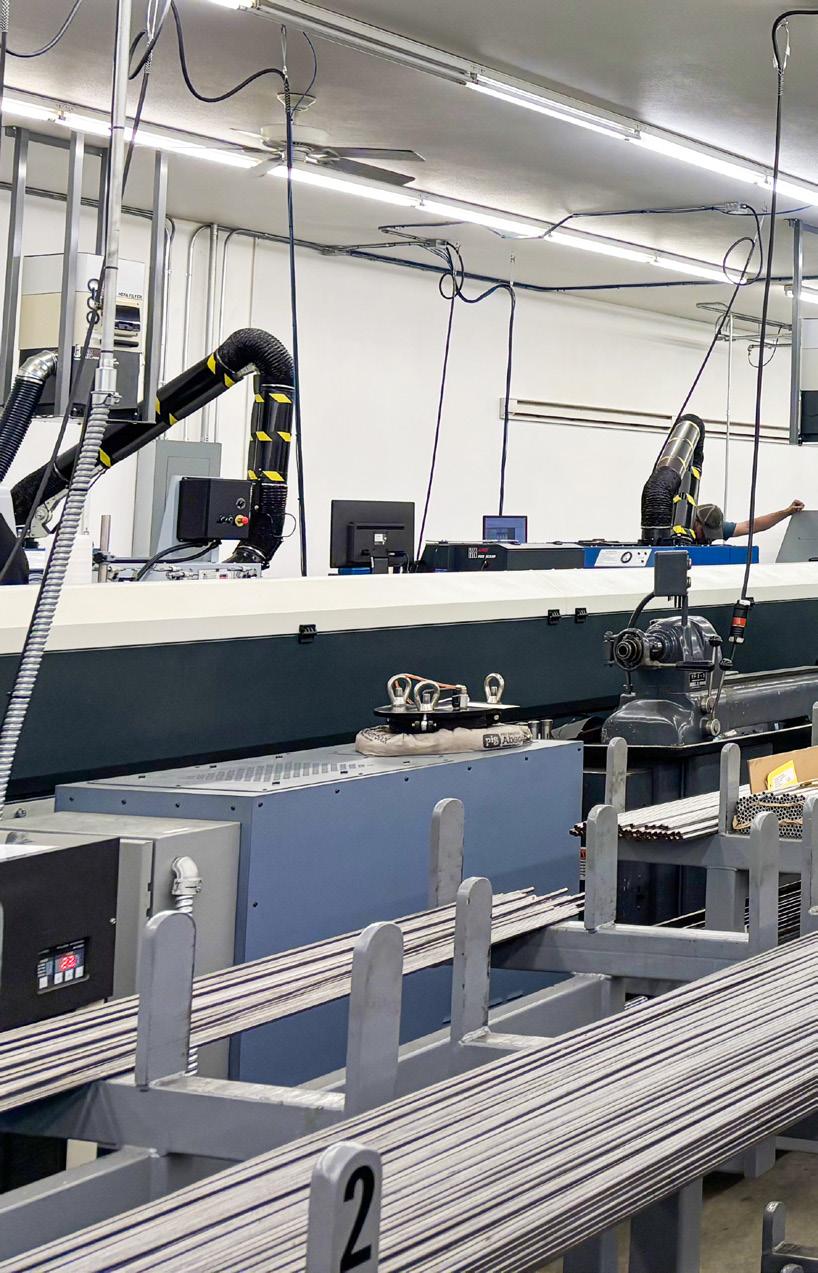
After formalizing Wells Academy as a nonprofit in 2004, Wells secured scholarship funding from individuals and businesses including Fastenal, a Wells Technology customer. The scholarships and other Academy funds help pay for an instructor and allow the students to also be paid while learning — which is significant, considering the program requires 2,000 hours of CNC operator machine training. Other companies have stepped up as well, and Wells Academy holds an annual golf event to help raise scholarship funds for its students.
The program also strives to give students a broader perspective of manufacturing than they might get at a vocational college. Each year they tour other large manufacturers and often meet with upper management to learn about their technology, responsibilities, and opportunities. Called “awareness tours,” these are designed to get the apprentices out of their comfort zones, says Tim Knudson, vice president of marketing at Wells Technology. If the students can see the breadth of different professional roles in manufacturing, they could choose to shoot for a specific goal they may not have envisioned otherwise, he says.
A high level of support extends after training as well. If a student is hired at Wells Technology, they’ll be assigned a mentor in the shop as they ease into apprenticeship. That effort is similar to Big Brothers and Big Sisters, he says, where they feel that someone is looking out for them, and has their best interests in mind.
Even those who choose not to stay with Wells Technology after completing Wells Academy get resources in the form of resume assistance, letters of support, and referrals to employers, says Wells.
“Building a stronger workforce benefits us, but it’s also important for the entire manufacturing community,” he adds. “Not everyone who trains here comes to work for us, but we still consider it an advantage because that means there are more skilled employees in the workforce as a whole and a little better economic stability in the community.”
trial space. It’s here that managers and supervisors meet with employees and apprentices so they can talk about expectations and concerns.
“With a non-traditional workforce, employees may not know what’s expected of them, and managers might not understand some of the challenges or trauma that these employees have faced and are still dealing with,” says Wells. “There
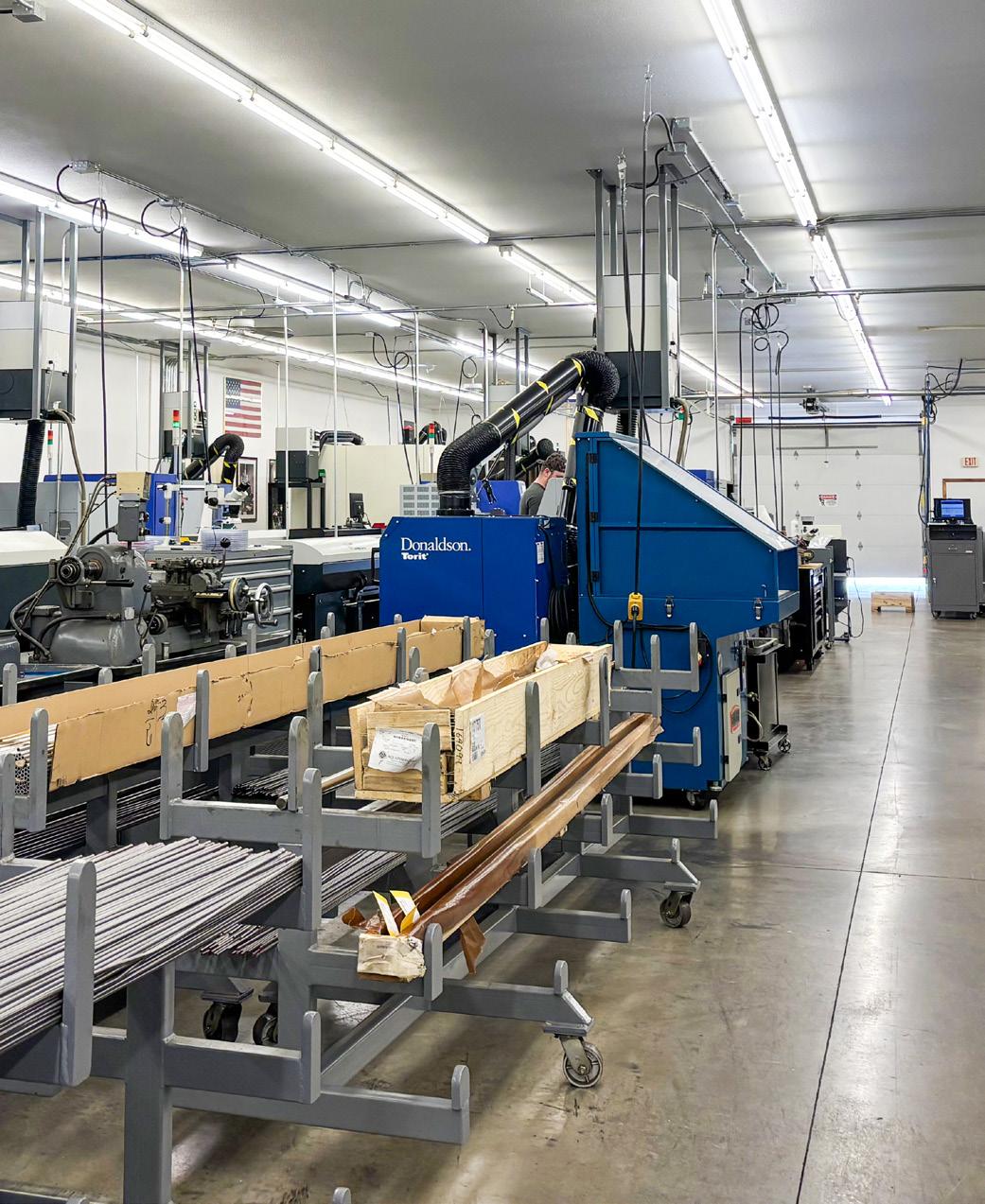
may not be an awareness of even subtle cultural factors.”
For example, he points toward an apprentice who has a neatly tied, single braid and explains for some people, there is a cultural significance of hairstyle, and each part of the braid may represent different phases in life, such as a marriage or other significant memory in their family.
Building more cultural sensitivity and
“Growing up where I did, so many people gave me encouragement and a chance,” Wells says.
camaraderie happens in the break room, too, says James King, a supervisor who grew up on the Red Lake Reservation and still lives in that community.
“Some of the Native apprentices can be a little shy and humble, and they might sit alone when they’re first here,” he explains. “I help get them out of their shell and encourage them to talk with others so they feel part of the team.”
In its formal training efforts through Wells Academy, the company focuses on predominantly non-traditional candidates, says Tim Knudson, vice president of marketing at Wells Technology, who helps recruit students and acts as a mentor.
Some of the students left high school without a diploma, for instance, or are
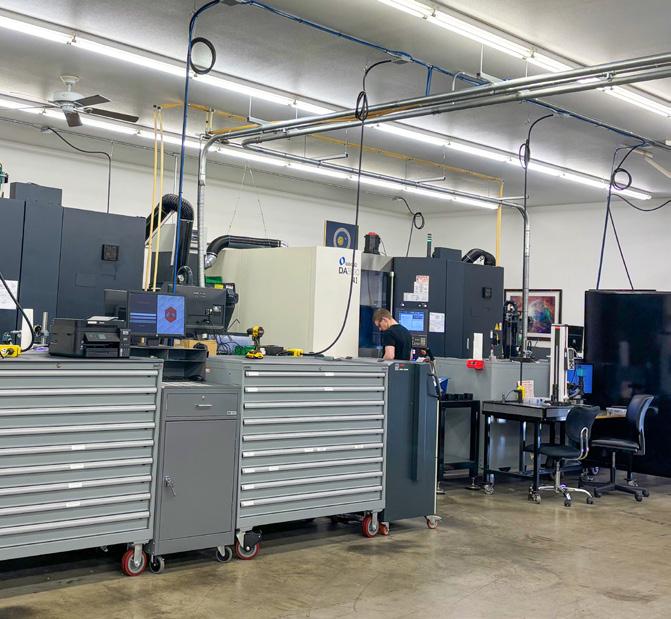
single mothers with young children. Others may have been incarcerated for a time or have dealt with addiction issues in the past. A large portion tend to come from one of the three local Native American reservations, where widespread poverty has significantly impacted their ability to pursue educational and professional opportunities.
“We don’t shut our doors to someone just because they’ve had challenges in life,” Knudson says. “We believe that with the right support and guidance, they can thrive and act on their desire to do better and to be productive.”
Sometimes, that support comes in the form of providing gas cards for those who can’t afford the cost of driving to class or finding resources such as childcare. In one instance, Knudson found out a student was walking six miles each way, because he didn’t have transportation, so Knudson started picking him up and dropping him off every day. This continued for six months until the weather improved, when Wells Technology bought him a bicycle.
“We really try to find out what their struggles might be, and what they need,” Knudson says. “For instance, when a student is only showing up part of the time,
that doesn’t mean an automatic dismissal, as it might at some schools or training programs. We find out why and work together on a solution.”
In a small conference room near the exit, Wells points to a large map of the United States, with pins representing specific customers. In some areas, it’s difficult to make out state boundaries, given the number of pins squeezed into the same space. Considering his travel schedule, it sounds like Wells is determined to visit every one of them.
That’s not just about maintaining sales numbers. Instead, as he does with employees, Wells consistently aims to show gratitude and engage in productive conversations, and he feels that making an effort to meet them in person rather than virtually says a great deal about how Wells and his team value their role in the company’s success.
In many ways, that effort is an analogy for everything that happens in the Wells Technology building: Acknowledge the contributions of others, try to meet people where they are, and show appreciation in a way that’s meaningful.
“When you focus on community, and that means the larger community in every sense of that word, then you are contributing to building a stronger, better world,” says Wells. “That’s the investment we’ve always made, our highest mission, and it will always be our priority.”
BOOSTING PERFORMANCE

THE Learning to see your processes, your workplace, and your work can unlock the continuous improvement your operation needs.
BY RYAN STEINERT
Ioften begin sessions with manufacturers by asking a simple question: When did you last really look at how work gets done inside your building? I’m not talking about a quick walkthrough or a glance at a production report. I mean, when was the last time you actually stopped, observed, and saw your processes the way your customers — and your employees — experience them?
The question tends to land differently than people expect. Most manufacturers have been inside their own four walls so long that they’ve stopped truly seeing what’s in front of them.
That’s the problem I want to solve.
I’ve visited 119 different manufacturers over the past three years as a business growth consultant with Enterprise Minnesota. Every day feels a little like being on a “How It’s Made” episode — high-powered equipment, remarkable processes, genuinely talented people. But here’s what I’ve learned: Even the best machines and the most skilled operators underperform when the system around them is chaotic. We have detours built
Before any tool gets deployed, manufacturers need to genuinely understand what their processes actually look like.
into our processes, creating workarounds in our systems, stop signs that create delays, and conflicting signals that create questions throughout the process. And most of the time, the waste that creeps into our processes each day is so common it becomes locked into the pattern of our daily routines.
When we miss a delivery, have a quality problem, or watch our costs creep up, it’s rarely because the people on the floor didn’t try hard enough. It’s because the flow of work was constantly interrupted by obstacles we stopped noticing.
This is why I begin my work with manufacturers with a discussion about seeing — specifically, three different kinds of seeing: seeing the process, seeing the workplace, and seeing the work.
Before getting into the how, it’s worth understanding the why. Manufacturers in Minnesota — and across the country — are facing a confluence of pressures that makes the ability to see and remove waste more urgent than ever.
Data from years of State of Manufacturing® surveys shows that attracting and retaining qualified workers remain among the top concerns for manufacturers. Combined, those two issues represent the single biggest worry in the industry, and they have for years, regardless of the state of the economy or the other challenges manufacturers have faced.
A 2025 Gallup poll found a closely related workforce issue. The survey revealed that only 31% of employees are actively engaged at work — and 17% are actively disengaged. That’s a staggering amount of untapped potential sitting inside your buildings right now.
Finally, whenever company leaders embark on a new initiative, they face a significant hurdle: the persistent failure rate of change initiatives. Research from Forbes puts it at roughly 70%. The common thread across all of these challenges is that tools, technology, and strategies don’t execute themselves. People do. And people can’t improve what they can’t see.
Most people, when asked what continuous improvement means to them, will immediately name a continuous improvement tool. “We do Kaizen,” or “we use 5S.” Those tools matter. They’re all part of what I think of as the “House of Continuous Improvement.” But those tools are useless without the foundation that holds them up — people. Regardless of the tools a manufacturer uses, the whole structure must be held up by a single foundation: getting the job done and developing your people — simultaneously. When those two efforts are separated, continuous improvement stalls.
The “and” is critical, but it’s often ignored. When manufacturers get busy — and they always get busy — getting the job done wins every single time. The product goes out the door, and people development gets pushed to next quarter. But that separation is exactly where improvement efforts die.
Before any tool gets deployed, manufacturers need to genuinely understand what their processes actually look like. But

Business development consultant Ryan Steinert begins work with manufacturers by asking them to see the process, see the workplace, and see the work.
here’s the catch: There are always at least three versions of any process. There’s the version you think exists. There’s the version that actually exists. And there’s the version you’d like to exist. The gap between the first two is what I call the hidden factory — all the workarounds, rework loops, and informal systems that have quietly accumulated because nobody went out to look.
One manufacturer I worked with discovered this the hard way when their largest customer called to say they planned to shift all their business to the company — effectively tripling the manufacturer’s volume overnight. The leadership team’s first instinct was capital expenditure: They needed six more robotic welding machines. Before they pulled the trigger, we did a value stream mapping exercise — walking the entire process from order to delivery, identifying where time was actually being spent.
What we found surprised everyone. Welding wasn’t the bottleneck; assembly was. Specifically, there was a curing wait time on a gasket during the assembly
process that, at tripled volume, would have brought the entire operation to a halt. On top of that, operators in the assembly area were spending 35% of their time simply moving parts around within the facility — not assembling anything, just moving material from place to place.
They didn’t need six welding machines. They needed one. The waste was somewhere else entirely.
This is the power of walking the value stream — physically following a product from start to finish and observing what actually happens, not what you believe happens. This exercise is particularly revealing with hot jobs or rush orders. When a job is expedited, everyone clears the path. Waste gets pushed out of the way. Questions get answered faster. You get to see what your process is capable of at its best — and you get a clear view of what’s normally in the way.
Even the best machines and the most skilled operators underperform when the system around them is chaotic.
Another technique I encourage is called “standing on the X.” Pick a spot on the floor, stand there, and just observe for 15 minutes. Don’t intervene. Don’t ask questions. Just watch. At one company, 15 minutes of standing on the X produced enough observations that the team was able to identify and eliminate roughly half the waste occurring in that area before they even left the floor.
There’s an analogy I love from football: The quarterbacks who win the most games aren’t always the ones who can throw the farthest. They’re the ones who can slow the game down, who see the field so clearly that they make better decisions faster. NFL commentators describe it as the ability to “process” the defense before the snap.
What if we could do that in manufacturing? What if our shops and facilities were organized so visually that problems became immediately obvious — like seeing a linebacker ready to blitz on a football field?
That’s what workplace organization tools like 5S are actually designed to do. And I want to be clear: 5S isn’t about cleaning. When people hear “shine,” they think we’re just tidying up. But sorting, setting in order,
shining, standardizing, and sustaining are all fundamentally about one thing — making problems visible before they become crises.
Here’s a real example. A manufacturer had a CNC machine with a mysterious recurring leak. Rather than track it down, they lined the floor underneath with mop pads to soak up the coolant. The machine kept going down, and cleaning up after the coolant leak became “part of the work.” As part of a 5S event, we removed the mop pads, painted the floor white, and cleaned the machine thoroughly. Within a day, the leak location was obvious. They fixed it, and the machine’s downtime disappeared.
The mop pads weren’t a solution. They were a way of hiding a problem in plain sight.
That’s what a well-organized workplace does for your operators. It reduces the cognitive load of finding things, identifying problems, and making decisions. It allows people to work faster and smarter without working harder.
Visibility also means keeping score. If an operator can’t look up from their station and tell within 10 seconds whether today is going well or poorly, they’re operating blind. A well-designed production scoreboard — showing target, actual, efficiency, and current downtime — gives people the information they need to take action before a bad hour becomes a bad day. And just like in a football game, when things aren’t going how we want, we call a timeout. Those timeouts become daily huddles, part of a Continuous Improvement tool called Daily Management. Daily huddles are intentional and focused activity where the team asks what’s going wrong and why, and what they should do differently right now. These are not status reports; they’re problem-solving sessions.
The third dimension of seeing is the most personal: seeing the work itself. That means understanding what’s actually required to do each job well, and making that visible so it can be trained, standardized, and improved. Think about how you learned to play a card game as a kid. If someone handed you the printed instructions, you probably set them aside after two minutes and gave up. But if your grandmother played with her cards face-up so you could see why she was making each decision — what she was thinking, what she was watching for — you learned the game almost immediately. That’s the model I use when I think about training inside manufacturing operations.
During a recent workshop breakout session, manufacturers shared examples of processes in their facilities that were hard to train or frequently reworked. The examples were familiar: learning to read a batch and
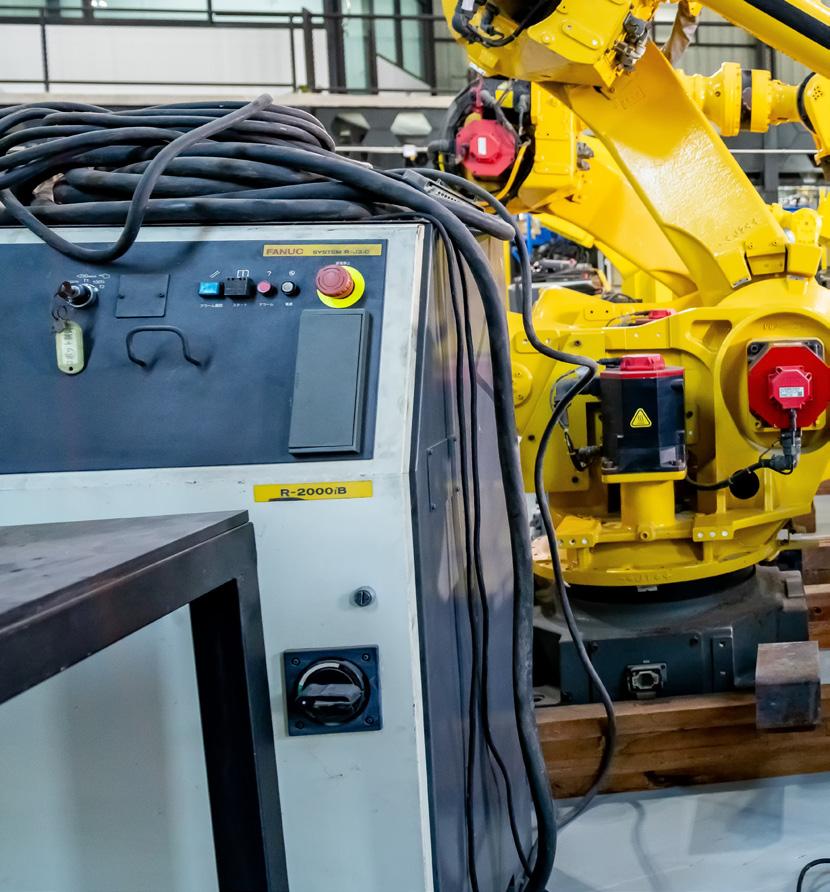
The common thread across all of these challenges is that tools, technology, and strategies don’t execute themselves. People do. And people can’t improve what they can’t see.
bin label correctly, screwing in certain components without damaging adjacent parts, scheduling custom orders in an ERP system that wasn’t quite smart enough to handle the nuances on its own. In each case, the knowledge lived in someone’s head. When that person was unavailable, the process got stuck. Undocumented knowledge continues to be a risk to our processes and our companies.
When I am working with manufacturers, retirements repeatedly come up as a concern. Roughly 25% of manufacturing employees are 55 or older. When someone with 30 or 40 years of experience retires, the company doesn’t just lose a person — it loses decades of hard-won process knowledge, embedded judgment, and institutional memory.
I’m skeptical when someone describes part of their process as “tips and tricks.” That phrase almost always means there’s no standard work and there’s no job instruction. The only way to learn the job is to shadow the one person who really knows it. That’s fragile, but it’s fixable.
Using tools like structured job instruction, we quickly learn that capturing knowledge and training on that knowledge doesn’t have to be complicated. It starts with three things: the major steps of the work, the key points within each step — the things that make or break the outcome — and the reasons for those key points. When people understand why something is done a certain way, they’re far more likely to do it correctly and to flag it when something seems off.
Toyota’s approach to knowledge capture and training is inspiring. I love a story I heard when touring one summer. When the
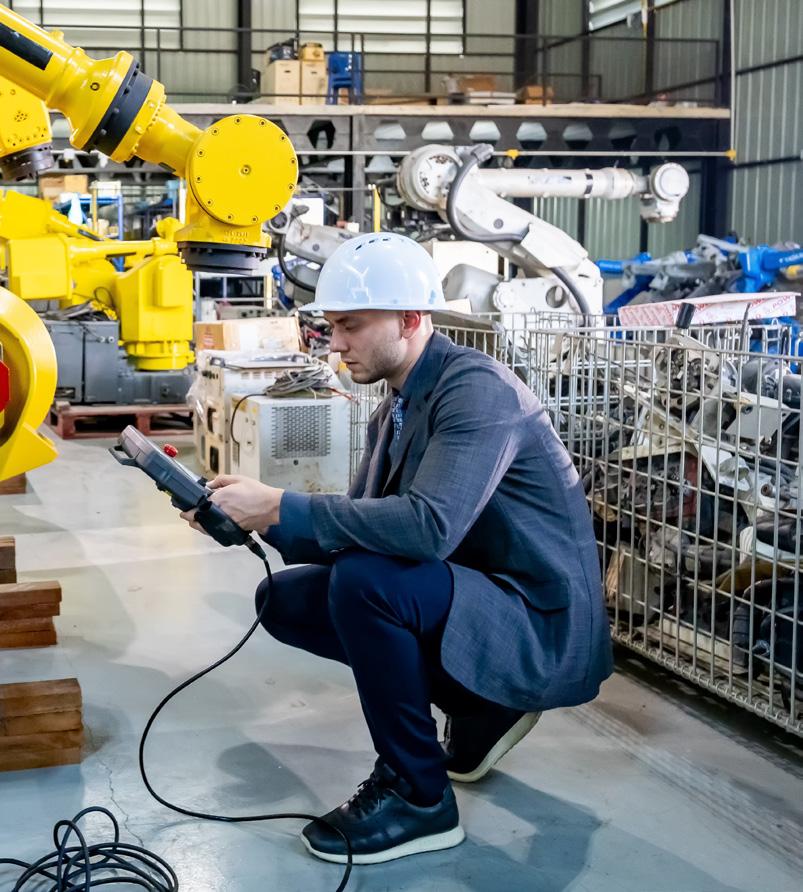
company opened its plant in Georgetown, Ky., executives went to Japan to learn the processes firsthand. During one assembly shift, a team leader pulled the andon cord — the cord anyone on the line can pull to stop production when they see a problem — because an executive wasn’t getting in and out of a vehicle the way he’d been trained. The executive, who was tall, explained that the standard had been built for people considerably shorter. So right there on the floor, team leaders from up and down the line gathered to watch, observe, and develop a new standard, which was then deployed across the entire operation before the line restarted.
That’s what it looks like when an organization takes standards seriously. Not as bureaucratic documents, but as recognized, flexible, baselines. These are the starting points from which every problem gets identified and every improvement gets measured.
Standards also create the conditions for learning. When employees talk about a problem — when they tell the story of what happened, share the root cause, and walk others through the solution — they’re teaching each other. That knowledge compounds. One improvement inspires another. Over time, a culture of continuous improvement doesn’t require a special project or an annual Kaizen event. It becomes the way people naturally do their work.
Continuous improvement is an iterative process. Research on learning and habit formation consistently shows that environments where people can try, fail, learn, and try again, without penalty, produce better outcomes than environments where failure is treated as a verdict. The manufacturers I work with who have built the strongest improvement cultures are the ones who’ve created the conditions for their people to surface problems without fear.
The goal isn’t perfection. The goal is to see more clearly — your processes, your workplace, your work — and to act on what you find.
The opportunity for major improvements doesn’t always lie in finding a bigger machine or a faster line. It’s learning to see all the wastes and opportunities and starting to chip away at them, one observa tion at a time.
What is one area that you’ll commit to seeing differently next week? An improvement opportunity is waiting to be uncovered! As
We’re proud to serve business owners and their unique financial needs.
Let’s plan your future together.

Four ways manufacturers benefit from ongoing consulting after a project is ‘completed.’
BY KATE PETERSON

Steve Haarstad, one of Enterprise Minnesota’s most experienced business growth consultants on strategy and exit planning, spent several months helping a client develop a strategic plan. With Haarstad’s guidance, company leaders collected data, conducted team sessions, and plotted a sharp, detailed strategy based on their longterm vision. They high-fived at its completion. And then, Haarstad says, “we were done.” And he really means done.
The plan went on a shelf, its well plotted tactics overwhelmed by day-to-day urgencies; the company went back to what he calls “growing by accident.”
That pattern repeated itself enough times
The key was to build execution into the engagement from the get-go.
that Enterprise Minnesota changed its approach to working with clients. The onetime project still has its place. But consultants who specialize in quality management and certification, strategic planning, and leadership development are increasingly structuring their work around a simple insight: The most meaningful work isn’t the initial engagement. It’s what comes next.
They call it sustainment. And for the manufacturers who’ve embraced it, the difference is transformational.
The result of too many one-time engagements, Haarstad says, was a big three-ring binder that collected dust.
The fix, he realized, wasn’t different tools or a better plan. Most of those binders contained excellent work. The key was to build execution into the engagement from the get-go. “With the new approach, we take time to put that plan together, get clear direction on where you’re trying to go, and decide how we want to assign and apply our precious resources of time, energy, and finance. We’re deliberate about actions we’re going to take right now,” he says.
He typically structures a project over a full year: roughly three months are devoted to developing the strategy. Then he schedules three quarterly check-ins to enable the company to review progress and set the next round of quarterly priorities.
“It becomes a 90-day rhythm,” he says. “We get into a cadence and never lose sight of the longer-term goals and priorities. Every three months we’re translating those goals into something we can do right now.”
At the end of that first year, the conversation turns to renewal. “Most clients want to maintain regular check-ins,” Haarstad says. “And among those who don’t, about half decline initially — only to call back six to nine months later saying, ‘We thought we could do it ourselves, but it’s not working. Will you come back?’”
The value in the ongoing connection comes from at least four sources.
“The plan is important. You’ve got to know where you’re headed,” Haarstad says. “But a mediocre plan that’s executed will outperform an outstanding plan that’s not executed every time.”
The execution component requires discipline. Reviewing progress every 90 days, resetting priorities, learning from what worked and what didn’t, and showing up to the next quarter with accumulated experience and knowledge demands time from leaders who are often pulled many directions.
“Bringing accountability to the process and to the client helps create that discipline,” Haarstad says. “They know we’re going to connect again in 90 days, and I’m going to ask how they did.”
Dan Ortloff, president of Falls Fabricating in Little Falls, Minn., knows the value of accountability first-hand. He came to
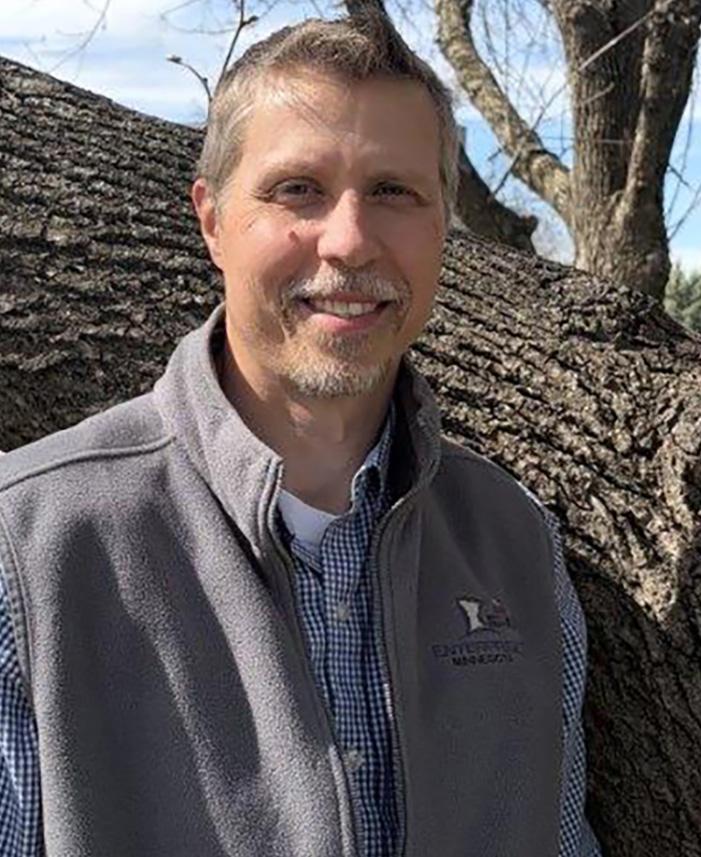
Haarstad when he and his partners bought the business, which offers engineering, sheet metal fabrication, machining, finishing, and assembly. Haarstad helped guide leaders of the 89-employee operation through a year of strategic planning, developing annual and quarterly objectives, a three- and five-year plan, and a mission and values statement. But when it came time for execution, Ortloff and his partners decided to go it alone.
“We thought we could handle the strategic objectives and ongoing planning amongst ourselves,” he says. “But we realized it was better to have someone from the outside coordinating and leading it.” After 18 months, they re-engaged Haarstad.
The team meets on its own every two to three weeks to discuss progress on quarterly objectives. But they’ve found the quarterly cadence and check-in with Haarstad creates accountability that internal meetings alone can’t replicate. They know he will be in the room at the end of each quarter, asking if they did what they said they’d do, and that changes how the work gets done. “You know that in three months Steve’s going to follow up,” Ortloff says.
Haarstad says internal discipline leads to achieving better results. “Clients stay focused and apply their resources in the right direction. They have a better sense of what they can accomplish, and how to achieve realistic goals.”
Keith Gadacz, an Enterprise Minnesota business growth consultant who helps manufacturers pursue ISO 9001 and other quality certifications, makes the same point with a simpler image. “You don’t ask

your trainer to help you the week before the marathon,” he says. “You ask for help months earlier because ongoing accountability builds over time.”
Having an objective outside voice ensures discipline never loses its value, he adds. “There are organizations who should graduate from our services yet don’t because they like the accountability.”
Two: Quality is a behavior, not an event
“The sustainment methodology is about behaviors. It’s about making sure the systems are functioning and healthy. It’s not about last minute cleaning up,” Gadacz says. And it applies across the services he provides, which can take several forms.
Some clients want third-party auditing at regular intervals — production audits, office audits, management system audits — so the certification reviews never present surprises. Others want a combination of audit support and engagement around management review, the structured process of analyzing operational data and making decisions based on it. Another portion wants Gadacz in the room for their management reviews simply to ask questions that push leaders to think rigorously about what their data is telling them.
“The plan is important. You’ve got to know where you’re headed,” Haarstad says. “But a mediocre plan that’s executed will outperform an outstanding plan that’s not executed every time.”
Larry Van Iseghem, founder and president of Van Technologies just north of Duluth, sought Gadacz’s assistance with creating a dynamic quality management system that included ISO 9001 certification. Van Iseghem had built quality systems from the ground up at his previous company, and when he started Van Technologies in 1991, a company that engineers liquid coatings for industrial manufacturers, he wove strong quality practices into operations from the beginning.
When Van Iseghem engaged Enterprise Minnesota to help prepare Van Technolo-
“You don’t ask your trainer to help you the week before the marathon,” Gadacz says. “You ask for help months earlier because ongoing accountability builds over time.”
gies for ISO certification, Gadacz found a company that was already well-positioned. They achieved certification in eight months, a quick turnaround by any standard.
But certification was not the end goal for Van Iseghem. “Keeping your quality program requires ongoing attention,” he says. “If you don’t stay current, you can lose your certification. Keith keeps us current and accountable.”
That’s by design. Quality management systems, Gadacz explains, are built on a continuous improvement model. The PlanDo-Check-Act cycle underpins the entire ISO framework. Using the same tools in the same ways year after year doesn’t satisfy that standard. “Without improvement, it’s hard to show that the QMS [quality management system] is healthy,” he says.
Gadacz also tracks changes in ISO requirements. “He stays current with the specifications and certification criteria,” says Van Iseghem. “The standards do change, and it would be difficult for me to hire someone internally for this. It wouldn’t be a full-time position, and you need a professional. When I can get those resources from Enterprise Minnesota, I have full confidence we’re in compliance and moving forward.”
Van Technologies connects with Gadacz three or four times a year. They maintain connection via email between meetings. It’s a low-key cadence that provides Van Iseghem with an outside set of eyes that isn’t embedded in the company’s day-to-day operations. “We are a better organization now, and we continue to get better every day,” he says. “Keith is a key support in that.”
Larry’s daughter Kristen Van Iseghem, who manages many of the company’s dayto-day operations, describes what the ISO system feels like from the inside. “The
beginning is a bit of a learning curve,” she says, “but once it’s built, you’re living in it day to day and you don’t feel it.”
Larry Van Iseghem puts it plainly: “There’s never a moment anymore where we feel we have to prepare. We’ll hear there’s an audit tomorrow and just say, ‘That’s fine, come on in.’”
Three: Businesses keep changing
Fountain, Minn.-based Valley Design is closing in on its 40th year. Co-founded by Butch Isensee in 1986, over the decades the company has pivoted from powder coating to fabrication, and ultimately to its focus on manufacturing commercial table bases. With 75 employees and 113,000 square feet of manufacturing space in southern Minnesota, it has a solid customer base, primarily in the Midwest.
As Butch Isensee moves toward retirement, the company is figuring out what the next chapter looks like. His son Luke Isensee, vice president of sales, has been with the company for eight years and is preparing to lead it at the same time the company’s leadership team is reviewing and determining its future.
“The strategic planning process helped us identify areas of organizational change and figure out what the next chapter is going to look like,” says Luke Isensee. If strategic planning had been a one-time event, he would not have understood the company as well, and the strategy might not have reflected ongoing changes the company faces, he says.
“By meeting at a single time, we would have taken the information we had at that point and basically made a path,” Isensee says. But companies are like living things. Employees come and go. Markets shift. Customers change course. A one-time
strategic plan, however excellent, is built on a snapshot. The sustainment relationship turns it into a live stream.
Haarstad has provided guidance and accountability at each step in Valley Design’s strategy development, allowing company leaders to develop a range of goals and timelines.
The 10-year horizon isn’t about specific revenue targets; it’s more about identity, a North Star. “What do we want this place to be? What do we want to be known for?” Isensee says.
Three years is where more concrete goals take shape, and the 90-day checkins guide the immediate action items that keep the long arc moving. That makes the quarterly perspective Haarstad provides even more valuable. “Having that outside person to keep pushing you to look at things from that high level is important,” Isensee says.
The process has been revelatory. “It took the first five years for me to feel like I understood the company,” he says. Working with Haarstad and company leaders to develop the company’s future path has given him even more insight. “These last two years as we’ve worked on strategy, I feel like the information and how I think about it changes every three to four months. I keep getting a deeper understanding or a different take on it.”
The sustainment approach also allows the company to progress in the midst of change. “Your goals can be adjusted, or at least you’re making progress toward them even though you might have setbacks,” Isensee says. “That’s the challenging but most rewarding part of the planning process.”
Four: Outsiders can ask the tough questions
There’s a dynamic that shows up in sustained consulting relationships that doesn’t get talked about as often as accountability or strategic alignment, but that clients say matters just as much: the ability to be challenged without the relationship becoming fragile.
When Ortloff was trying to run Falls Fabrication’s quarterly planning process himself, the dynamic became difficult. A president asking his team why they didn’t hit their objectives carried a heavier weight than when Haarstad asks the same question. “It’s a lot easier to be questioned by a consultant who knows us than me questioning a team member why they didn’t do their job,” Ortloff says. An outside facilitator creates an arm’s-
length relationship that’s close enough to know the business and its people and distant enough to ask hard questions without the personal stakes that come with daily working relationships. “People are comfortable talking to Steve,” Ortloff says. “He calls on you. He’ll ask you questions. He keeps the five of us communicating.”
That arm’s length applies in all directions. Haarstad doesn’t go easier on Ortloff than on anyone else in the room. “I’m a member of that team,” Ortloff says, “and he’s doing the exact same thing to me as president as he is to the director of HR or the director of quality. We are there as a team, trying to sort through our objectives and what we’re going to do.”
That equality — the consultant holding everyone to the same standard — is something Ortloff says he couldn’t replicate internally, no matter how well-intentioned. And it’s not just about avoiding awkward conversations. It’s about getting better
If strategic planning had been a one-time event, he would not have understood the company as well, and the strategy might not have reflected ongoing changes the company faces, Isensee says.
answers. When the person asking, “Did you do your job?” isn’t someone’s boss or business partner, people are more willing to say what they actually think.
Haarstad’s ability to do that, Ortloff says, comes directly from the sustained relationship. “Steve and the team become very comfortable. He knows our business and then challenges us.” A consultant dropping in once a year doesn’t build that knowledge. The sustained cadence does.
Gadacz frames it simply. “The reason you have a financial planner is that you need a trusted advisor,” he says. “The reason you have an insurance broker is the same. We’re trying to be the people who are looking out for the best interests of the customer.”
That trust can’t be built from a single project. It deepens with every check-in, every question asked, every piece of feedback.
Which is, of course, exactly the point.
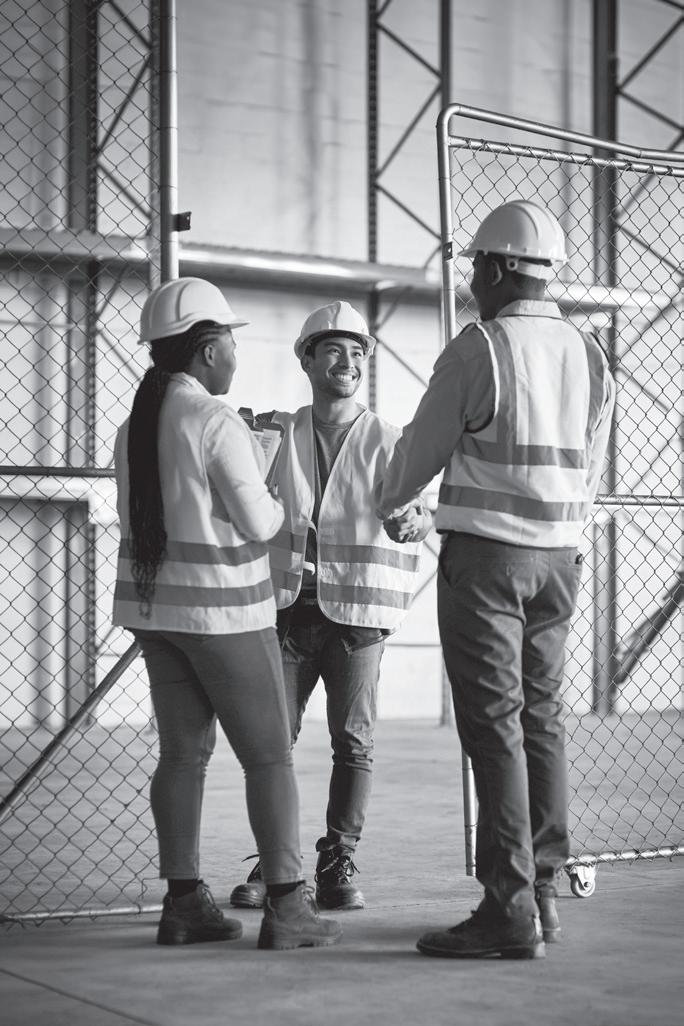
The innovation and success of Minnesota manufacturers keep providing terrific material for this magazine.

Years ago, someone asked how Enterprise Minnesota magazine could possibly maintain its pace of profiling successful small and medium manufacturers. Wouldn’t we run out of companies to feature in these pages? The answer could not be further from the truth.
We have an endless source of outstanding companies to showcase. Minnesota manufacturing remains robust because industry leaders keep developing new products and processes as they remain focused on employee skill development. It’s a powerful combination reflected in this issue’s featured visionary companies: Niron Magnetics (p. 14), Wells Technology (p. 28), and Hansen & Co. Woodworks (p. 24).
Niron Magnetics, a Minneapolis company born from University of Minnesota research in 2013, is on the verge of commercializing something the rest of the world hasn’t managed: a powerful permanent magnet made entirely without rare-earth
minerals. That matters because China controls roughly 95% of the global rare-earth supply, a vulnerability that touches every industry that uses motors and electronics.
Niron’s iron nitride magnets, made from abundant iron and nitrogen, sidestep that risk entirely. The company has attracted more than $400 million in investments from partners including General Motors and Stellantis. It is building its first full-scale facility in Sartell, set to open in 2027, with capacity to produce around 100 million magnets a year. Niron’s story offers a master class in deliberate, partnership-driven growth — from a rigorous community engagement process in selecting Sartell, to building workforce pipelines with St. Cloud Technical & Community College, to treating its pilot plant as a blueprint to replicate.
A very different kind of growth story is unfolding in Bemidji, home of Wells Technology. Founder Andy Wells, Sr. grew up in poverty on the Red Lake Reservation. After high school, he majored in physics at Bemidji State University, then played key roles in manufacturing, including working as a designer at Polaris.
At age 45, he started a precision CNC manufacturing company in a two-car garage with his wife and young son comprising his team. Wells Technology now employs 54 people who manufacture highly complex components for aerospace, medical device, automotive, and defense customers.
Wells’ backstory isn’t just inspiring. It drives how he operates the business today. What sets the company apart is its commitment to hiring people other employers often pass over: those without diplomas, single mothers, individuals with histories of addiction or incarceration, and workers from local Native American reservations.
Wells Academy, the nonprofit training program formalized in 2004, involves 2,000 hours of CNC training and pays participants as they learn. Students also tour other manufacturers, get paired with
mentors, and receive help with everything from childcare to transportation. Those who don’t end up working at Wells Technology take their well-honed skills with them as they strengthen the broader workforce. For Wells, investing in people isn’t a workforce strategy. It’s a moral one.
Adam Hansen shares that commitment to employees. Over the past decade, the founder of St. Joseph cabinet-maker Hansen & Co. Woodworks (HCo) visited nearly 200 factories around the world as he contemplated the future of American manufacturing. Armed with the knowledge he gathered, Hansen built a groundbreaking production facility with two objectives in mind: bringing the most advanced manufacturing practices to the United States and driving employee engagement and productivity.
In February 2026, his company brought online the new 92,000-square-foot facility that is, by his account, the most fully automated frameless cabinet line in North America. The $25 million plant can produce up to 500 cabinets a day, more than tripling HCo’s previous output, with only a modest increase in its 55-person workforce.
At HCo, employees focus on high level assignments, leaving the mundane to machines. Automation can handle repetitive, physically demanding work, freeing the workforce to focus on reasoning, problemsolving, and quality oversight. And they earn top wages doing it.
The common thread running through all three of these companies isn’t just technology or investment, though both play critical roles. It is the conviction that manufacturing done right is transformative — for workers, for communities, for Minnesota, and for the country.
Countless manufacturers like Niron, Wells Technology, and Hansen & Co. operate across the state. Manufacturing leaders are humble and oftentimes do not toot their own horns. That’s why we’re pleased to share their stories.





MINNCOR





Building skilled labor for a stronger tomorrow



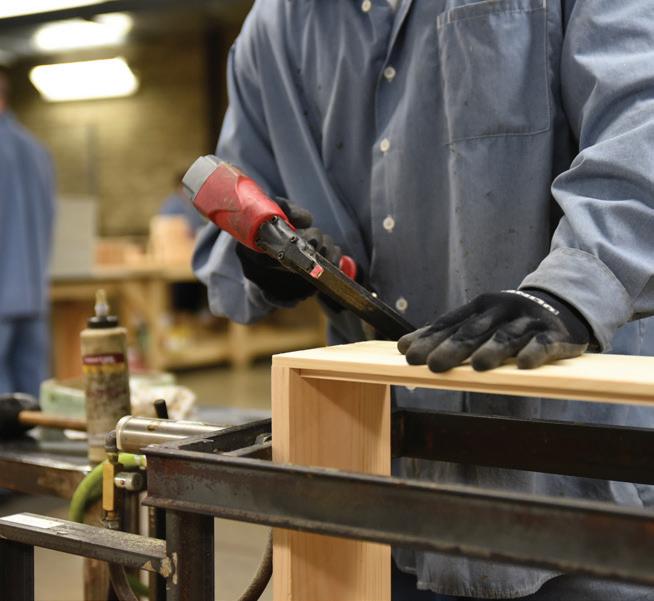


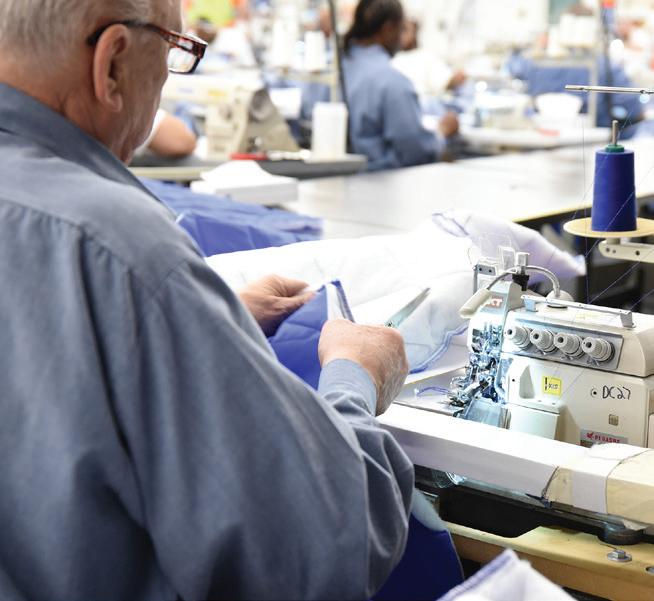

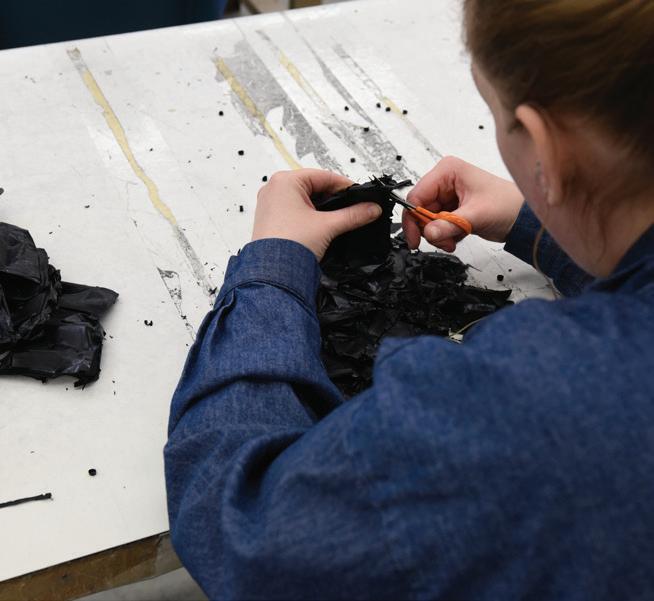




Granite Partners is a private investment and long-term holding company founded in 2002 in St. Cloud, Minnesota, with a mission to grow companies and create value for all stakeholders. We advance a culture of trust, innovation, and excellence as essential to 100-year sustainability, and we aspire to world-class wellbeing for everyone in the Granite community.