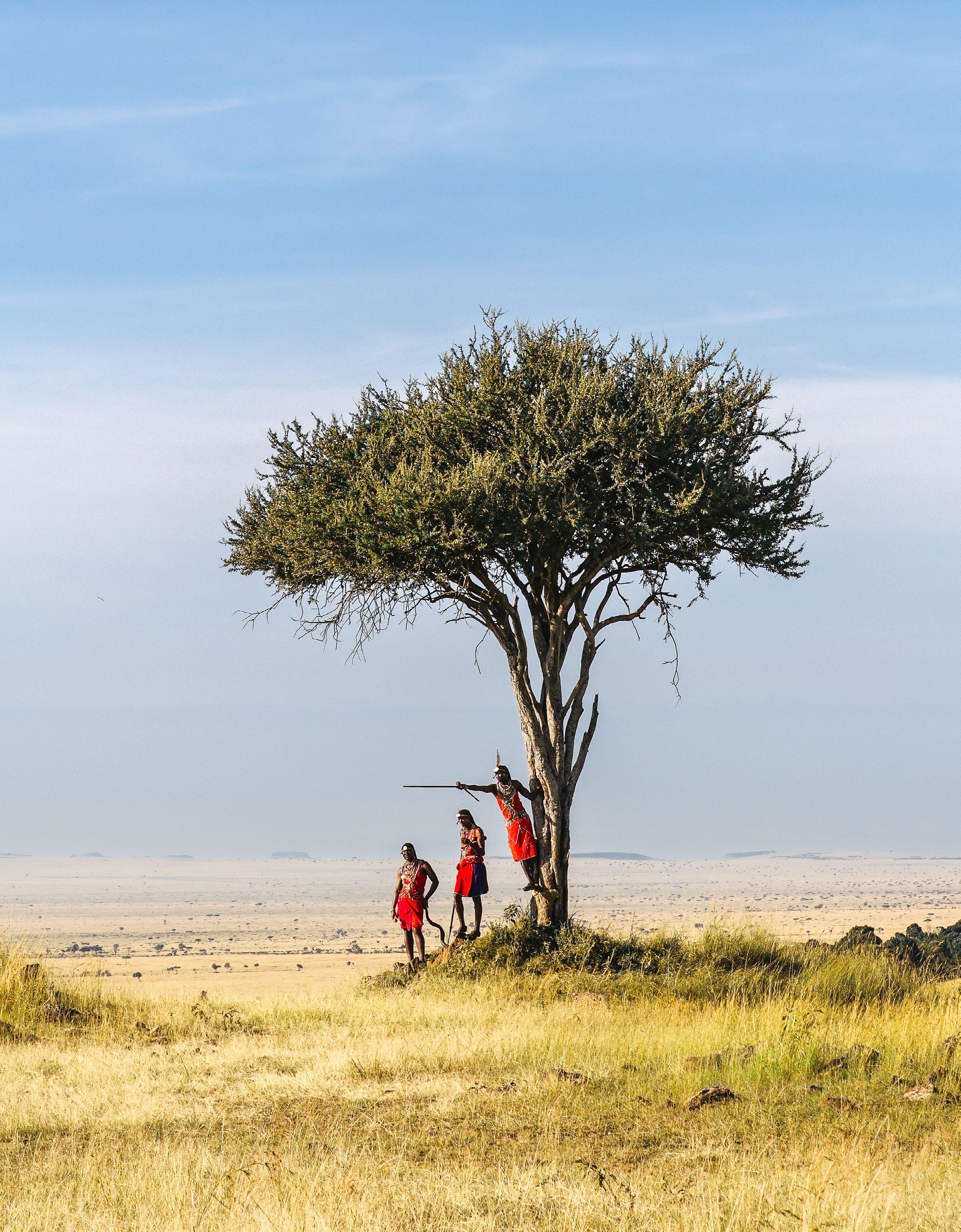
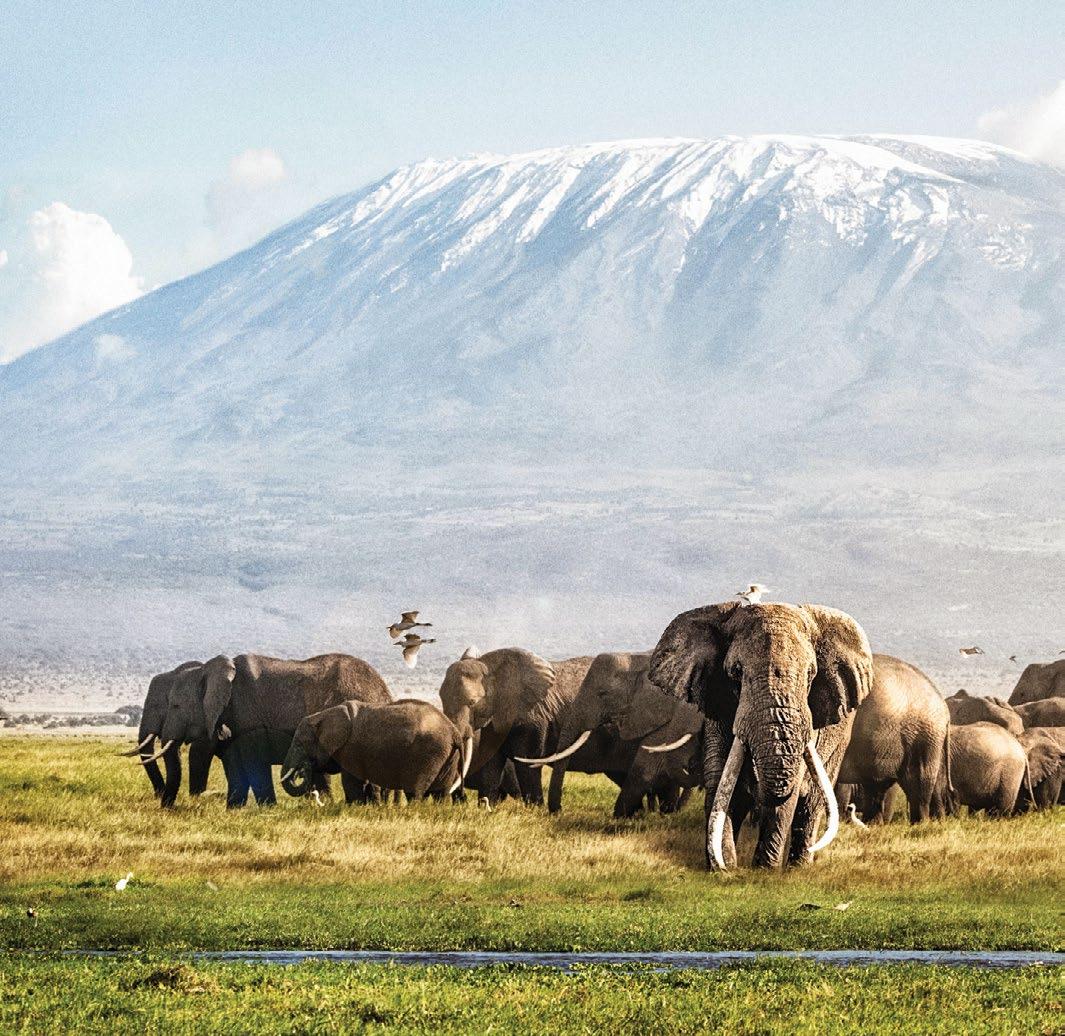
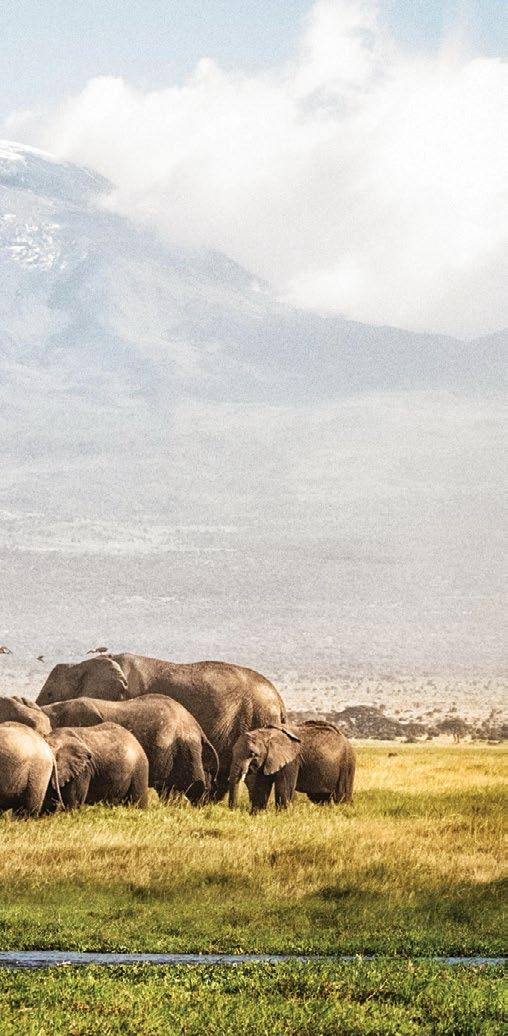
SERENE SAVANNA Experience the calm of a green-season safari in Kenya

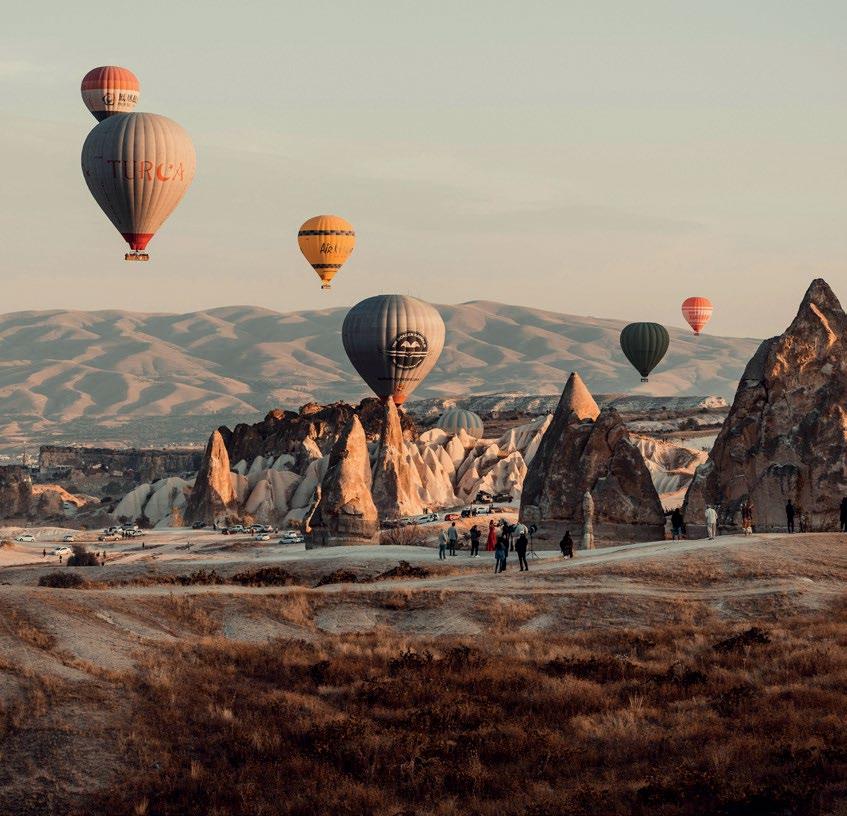
Step ashore with locals who transform every street, market and hidden corner into a full-on adventure. Princess’ Local Connections program brings you closer to each destination with experiences led by experts who share skills, stories and secrets. Cook in a garden, craft with an artisan or explore nature with a guide who knows the land like it’s their backyard… because it is. These immersive excursions turn every stop into moments you’ll carry with you long after the journey ends.
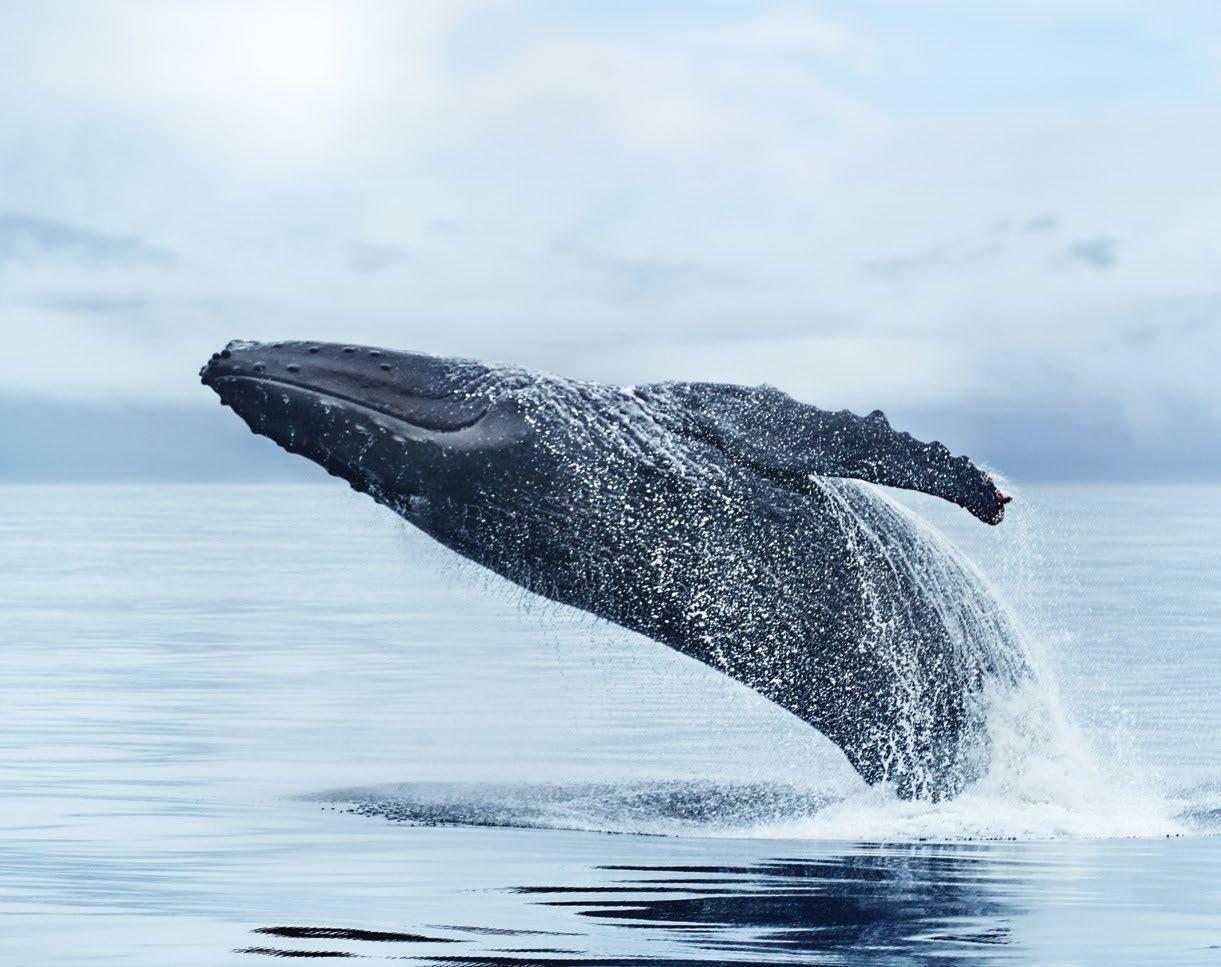
In Juneau, embark on a jet-powered catamaran ride through waters alive with migrating whales. These majestic giants aren’t the only wildlife you’ll spot — keep watch for Steller sea lions, Dall’s porpoises, bald eagles, Sitka blacktail deer and even brown bears! In Ketchikan, the Great Alaskan Lumberjack Show thrills as rugged rivals go head-to-head in springboard chopping, buck-sawing, log rolling and 50-foot tree climbs. Hear tales of lumberjack lore, then try axe throwing yourself. Alaska’s Local Connections blends untamed nature with hands-on adventure at every turn.
Feel the sun on your face as you harvest coffee beans high in the Dominican mountains, roast them over open flames and then sip a cup you helped craft. Paddle through mangrove lagoons in St. Thomas or sample rum and Creole treats at bustling markets. Roll cassava bread with artisans in St. Lucia and Dominica or take the helm of a former America’s Cup yacht in St. Maarten, racing across turquoise waters. Every adventure bursts with local flavor and is guided by the people who know the islands best.
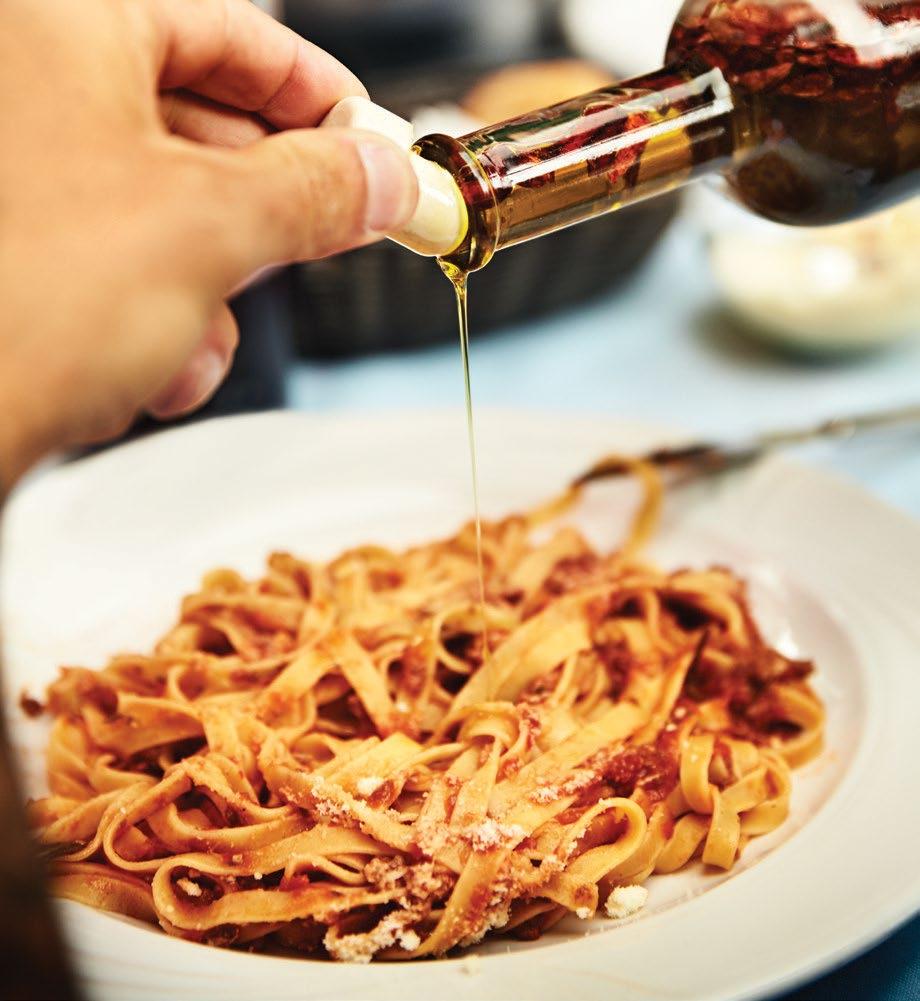
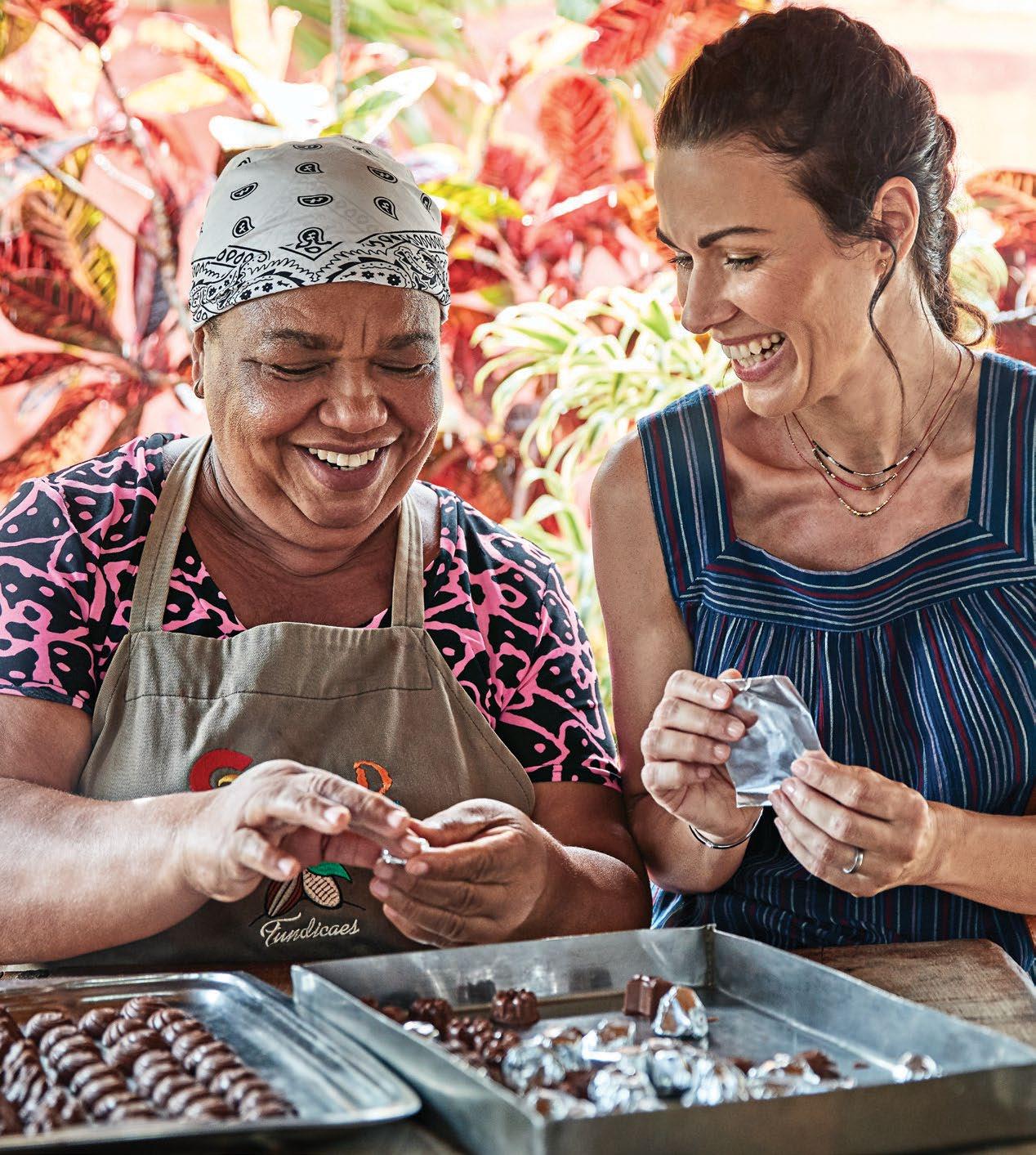
Bake thick pancakes and taste homemade jams at Norway’s Woldstad Farm while hearing stories passed down through generations. Stroll Provence’s olive groves and sample oils made with centuries-old care. In Tuscany, craft pasta from garden to table under the guidance of local farmers, then savor it alongside regional wines and finish with sweet biscotti. Normandy adds chef-led cooking in garden kitchens where every dish carries its own history. With Local Connections, Europe becomes a place you can touch, taste and truly know.
Every port is a doorway to discovery. From crafting colorful furafu flags and sipping sake in Japan to harvesting ingredients for farm-to-table lunches in Mexico, Local Connections takes you off the beaten path — whether in New Zealand, the Falkland Islands or anywhere Princess sails. Local experts unlock culture, cuisine and adventure, turning every experience into a personal story. Travel deeper, taste more and dive into life like a local.
PLEASE CONTACT YOUR ENSEMBLE TRAVEL ADVISOR FOR MORE DETAILS.


On a green-season safari in Kenya’s Maasai Mara, some wildlife is tricky to spot — but, as writer Jen Rose Smith finds, it’s worth it for the serene experience (and baby animals).
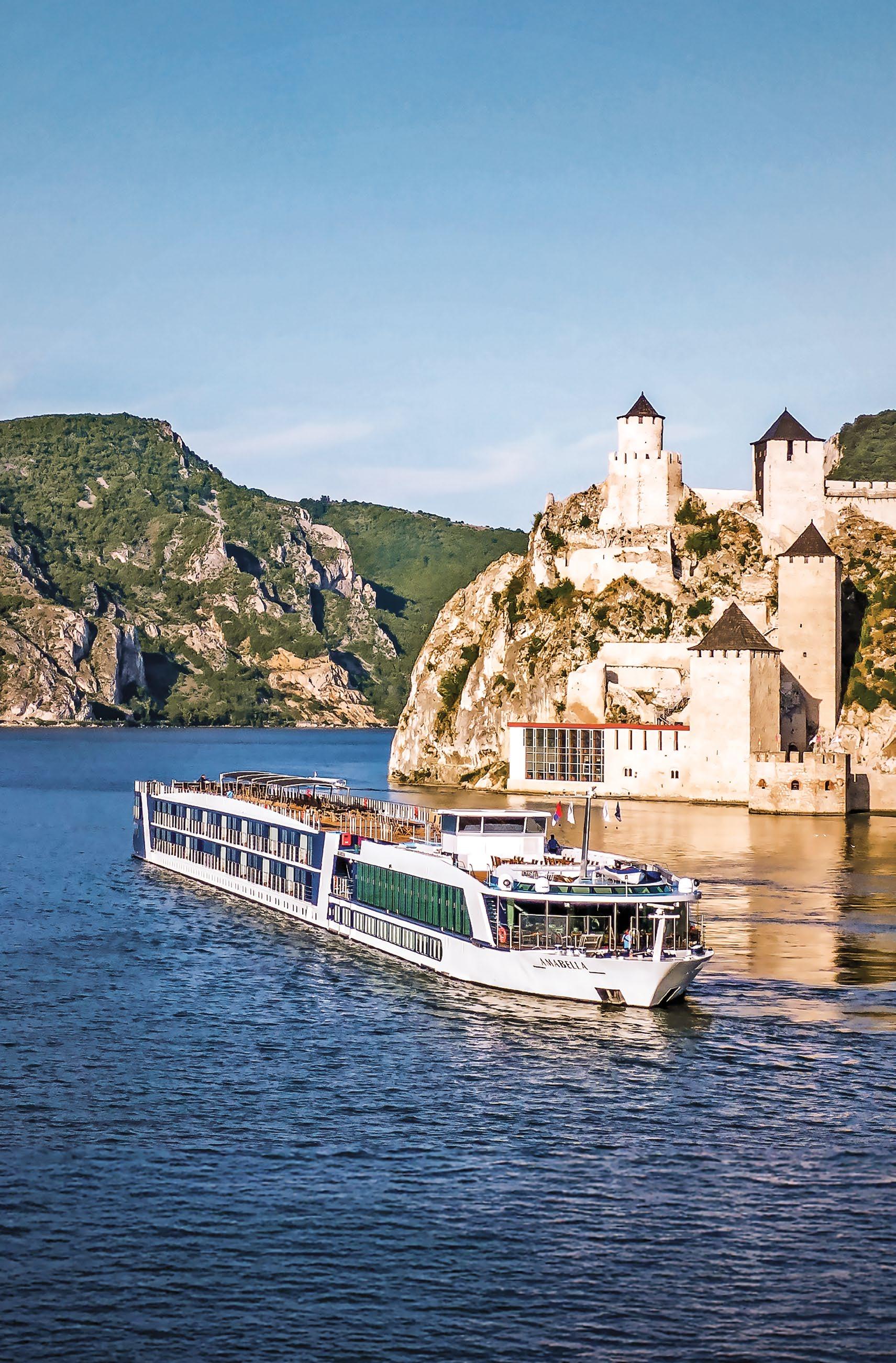
With new itineraries, expanded land experiences and a robust roster of specialty cruises, AmaWaterways creates journeys that move you.
38
Archery, horseback wrestling and kok boru (a.k.a. dead goat polo) are just a few events to witness at the biennial World Nomad Games, taking place this year in Kyrgyzstan.
On the east coast of Scotland, forgotten tidal pools are slowly being revived for a new generation of wild swimmers.
56
Here’s how to explore Helsinki, Finland’s quirky capital, from early morning to late night.
61
Learn to tango like an Argentine in Buenos Aires.
62 Port of Call
Everything you need to plan your pre- or post-cruise stay in Sydney.
67 Inspired Itineraries
Exclusive offers from Ensemble cruise partners.
72 Outtake
One more moment in travel.
EDITORIAL
Editorial Director
Dominique Lamberton
Contributing Editor
Andrew Elkin
Managing Editor Simone Olivero
Managing Editor, Digital
Robert Liwanag
ART
Creative Design Director
Stefanie Sosiak
Photography Director
Lori Morgan
CONTRIBUTORS
Karen Burshtein, Karen Gardiner, Ivy Lerner-Frank, Jessica Wynne Lockhart, Ben Roberts, Jen Rose Smith, Alex Crétey Systermans
RESEARCHERS
Tara Dupuis, Corinna Reeves
COPY EDITOR
Christopher Korchin
PROOFREADER
Diane Carlson
PRODUCTION
Senior Director, Brand & Marketing
Valerie Lenoir
Marketing Manager, Direct Mail & Range
Julia Maher
SALES
Senior Director, Partnership Marketing & Engagement
Danielle Clement
Director, Partnership Marketing (Land) Franca Iuele
Senior Account Manager (Cruise) Jocelyn Saldana
Account Manager, Cruise Partner Relations
Nicole Baker
Sustainable Practices
Range is printed by Ensemble’s business partner, which is an eco-friendly company that holds ISO 14001 (2015) certification, an internationally recognized standard for Environmental Management Systems (EMS), verifying that an organization identifies, manages and reduces its environmental impact. Ensemble’s print partner has also documented an annual negative carbon footprint continuously since 2011, and all paper used in the production of Range is both FSC- (Forest Stewardship Council) and SFI- (Sustainable Forestry Initiative) certified.
2 QUEEN STREET EAST, 20 TH FLOOR TORONTO, ON M5C 2G7
Publisher Jeff Willner
President
Michael Johnson
SVP, Marketing Shahla Lalani
SVP, Operations
Kristina Boyce
SVP, Commercial Daniel Finkel
VP, Cruise
Rachel Grogan
VP, Member Relations
Mark Stubbert
Ensemble is a leading travel organization comprised of top-tier travel agencies throughout the U.S. and Canada. As a valued client of one of our member agencies, you gain access to exclusive perks, amenities and experiences as well as expert advice and exceptional customer service from the foremost authorities in the travel industry. ensembletravel.com
Range (Volume 13). All rights reserved, Ensemble Travel Ltd.
No part of this publication may be reprinted or otherwise duplicated without the permission of the publisher. Range is published on behalf of Ensemble Travel Ltd. member agencies.
TICO: #50022140 | CST: 2141530-70
Registration numbers vary by agency. Advertising and marketing inquiries can be sent to marketing@ensembletravel.com
For editorial inquiries, please email range@ensembletravel.com.
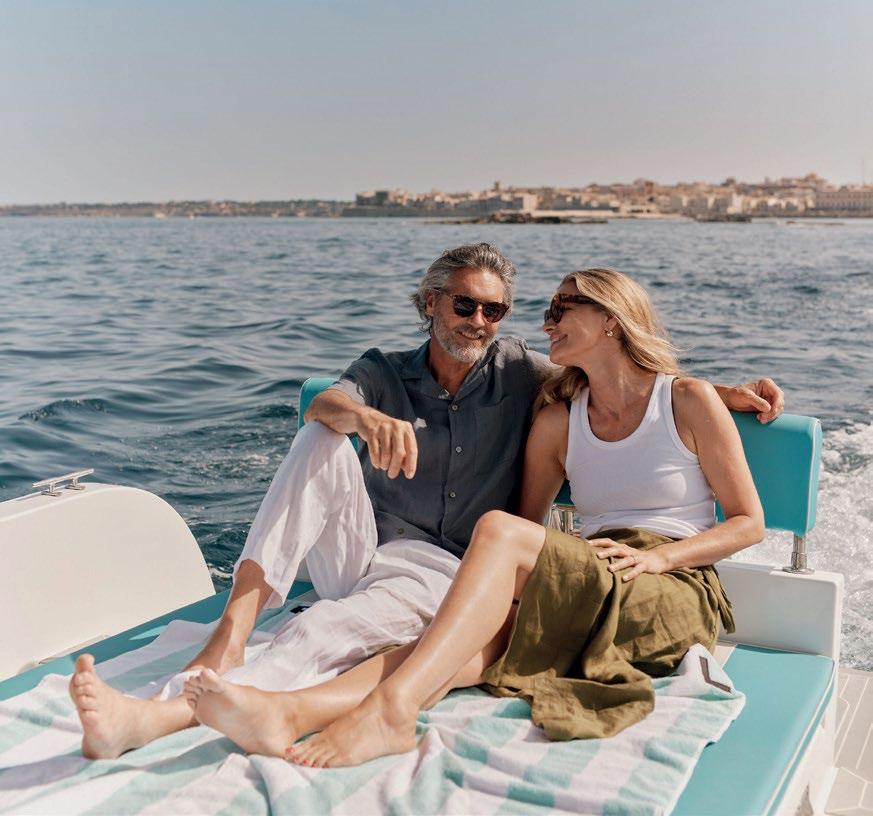
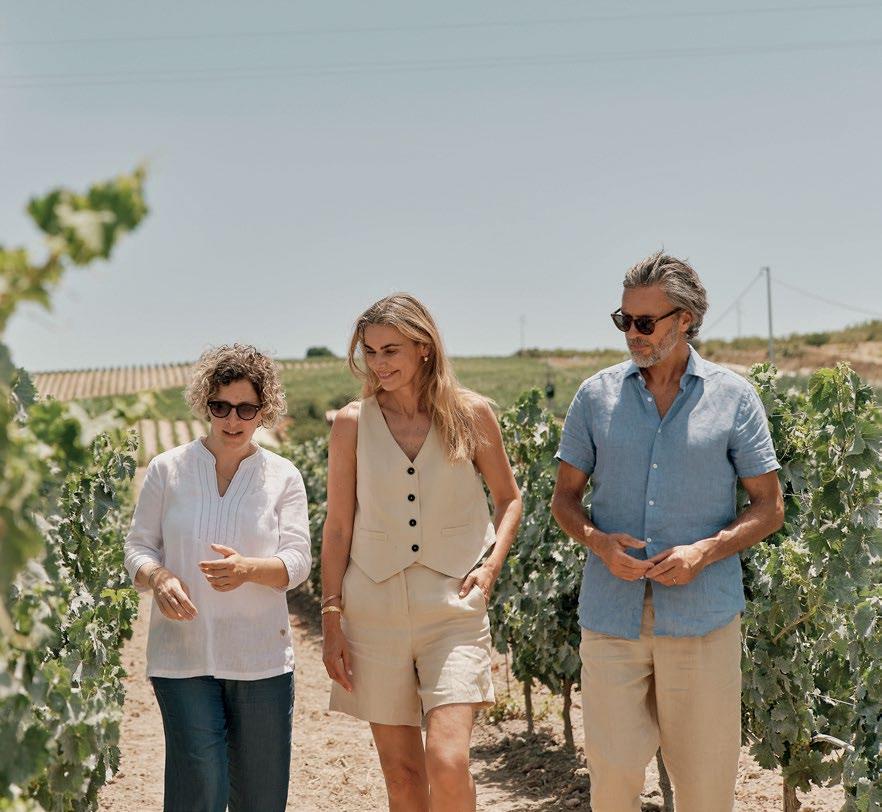
Waking to sweeping views of Stockholm’s island-dotted skyline or Berlin’s historic harbor from your private balcony. Spending your days exploring Northern Europe’s remarkable cities and coastlines, and your evenings savoring world-class cuisine — all with a crew devoted to every detail.
Unlimited Exploration | Heartfelt Hospitality™ | Spacious All-Suite Ships™ | Epicurean Perfection™

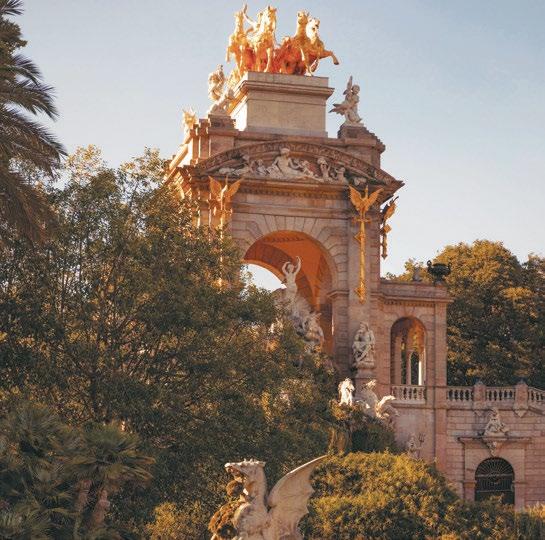
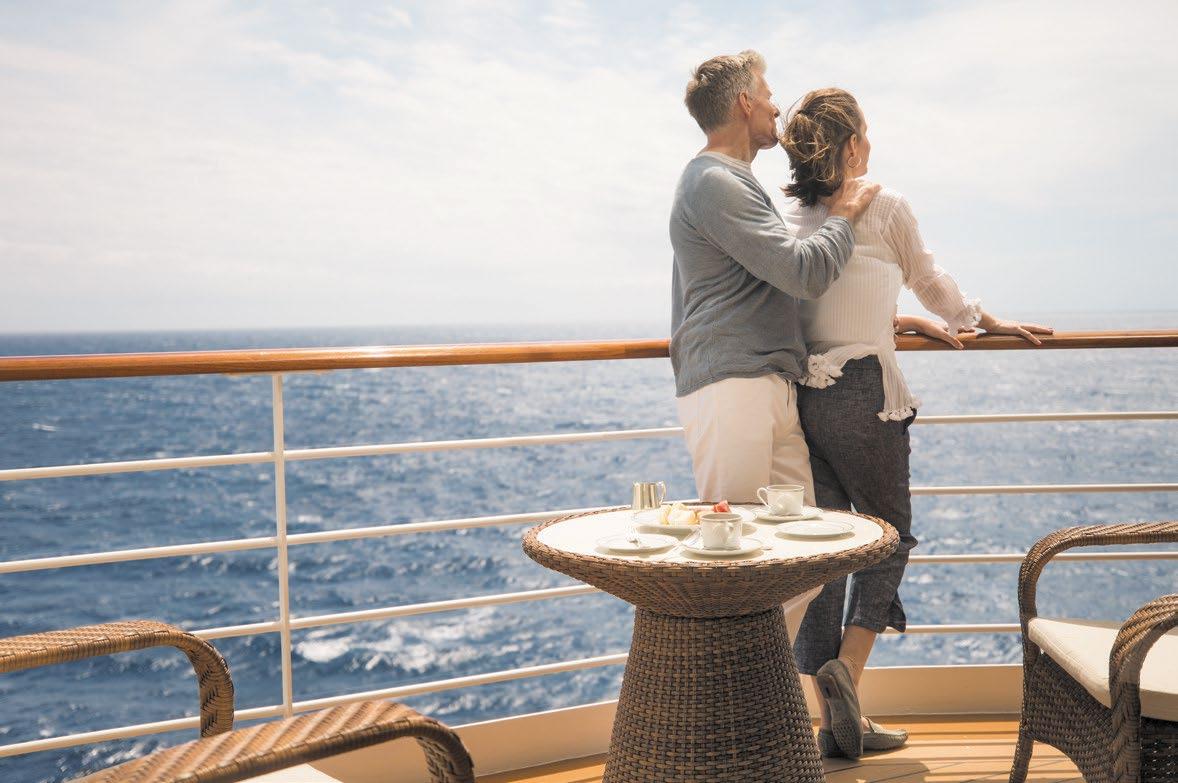
Aboard Regent Seven Seas Cruises®, your every want is always included. PLEASE
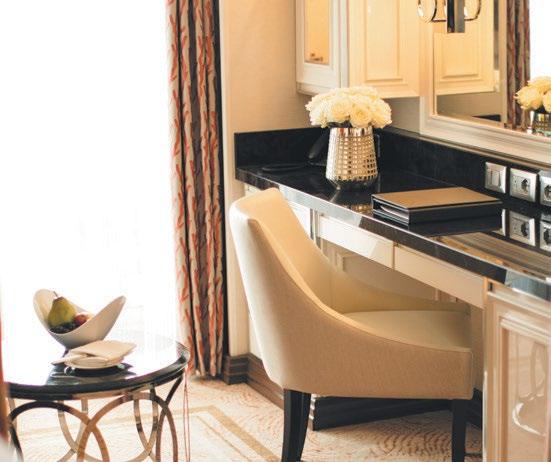

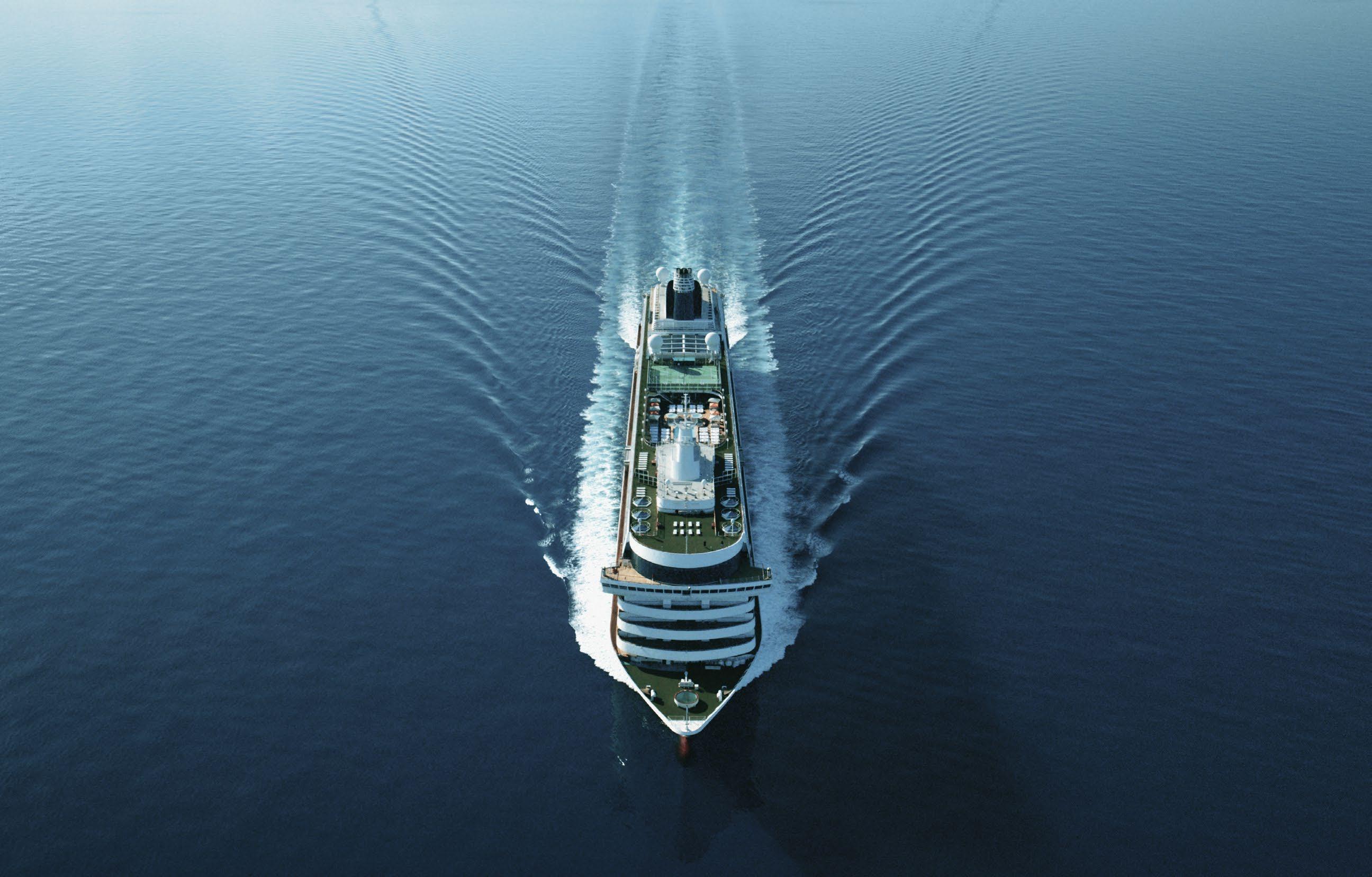

The only Nobu restaurant at sea, multi-award-winning service, elegant suites, and expert-led land experiences. That’s the Crystal difference.
B PLEASE CONTACT YOUR ENSE M B LE T RA VE L ADVISOR FOR MORE DETAILS.
In its 2026 Trends Report, released last fall, Hilton coined a new travel term: the “whycation.” The word captures how travelers are increasingly driven by the “why,” rather than the “where.” “It’s a global movement rooted in intentionality,” says Hilton president and CEO Chris Nassetta in the report, “where travel begins not with a destination, but with a motivation.”
Without knowing it, this idea was at the heart of our planning for a recent family trip. As I neared the end of my parental leave with my daughter, my husband and I wanted to get away, just the three of us, to relax, connect and have some fun (ideally, in the sun). We didn’t have a destination in mind, rather, a vision for the trip. We wanted a warm locale (it was December in Canada, after all), accommodation with a pool for our daughter and an interesting town nearby with some culture to take in between naps. We ended up in San José del Cabo, Mexico, where we wandered its colorful, surprisingly stroller-friendly streets, met locals who recommended restaurants outside the touristy center and had plenty of pool time. The trip allowed us to connect with one another and our surroundings, which was our aim at the outset.
The concept of the “whycation” is in step with travelers’ growing desire for immersive, local experiences that feel more meaningful than simply crossing sights off a list. It’s also in line with this issue of Range, which we’ve focused around experience-driven travel. In “All Quiet on the Savanna” (page 22), writer Jen Rose Smith transports us to Kenya’s Maasai Mara during the quieter green season, where she was able to fully immerse herself in the epic surrounds without the din of other safari vehicles around. And, as Kyrgyzstan prepares to host the World Nomad Games this year, photographer Ben Roberts drops us into the action (page 38). The biennial event is exactly the kind of experience that today’s travelers are drawn to: In another 2026 trends report, more than 50 percent of those surveyed said they are likely to attend a local sporting event on their travels — better yet if it’s one that spotlights cultural rituals and offers the chance for genuine connections.
So, what’s motivating your next trip? As the last line in Bon Voyage!, a board book I recited to my daughter countless times during my leave, reads: “Wherever you go, I hope it’s smooth sailing. Let your dreams take flight!”

Dominique Lamberton Editorial Director
Find more immersive stories, plus expertly curated travel guides and exclusive offers, at rangetravel.com
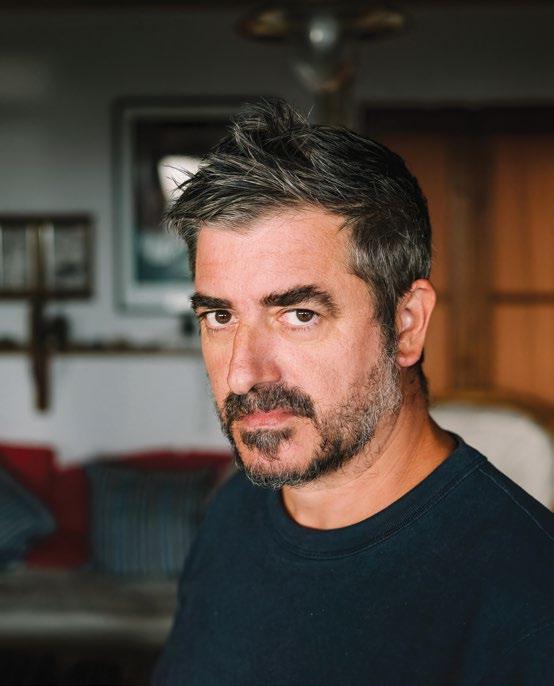
WRITER
Hometown Everett, Washington
Home base Richmond, Vermont
My top travel memory is landing by bush plane in Australia’s remote Arnhem Land region to see 30,000-year-old Aboriginal rock paintings that are part of humanity’s longest continuous artistic tradition.
When I’m not writing for Range, I report on remote places, traditional cultures and sustainable travel for outlets including The Wall Street Journal , The Washington Post , National Geographic and CNN.
All Quiet on the Savanna — page 22
PHOTOGRAPHER
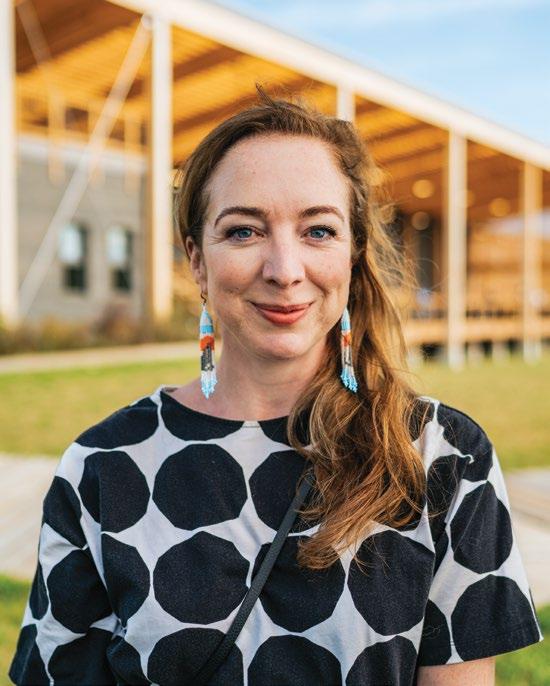
Hometown Caen, Normandy
Home base Paris
My favorite travel companion used to be my Mamiya 7II: a lightweight, easy-to-handle medium-format rangefinder camera designed for reporting. Today, my favorite companion is undoubtedly my lovely wife, who I try to travel with as much as possible.
When I’m not collaborating with Range , I contribute to publications such as The New York Times , The Financial Times and Monocle . I’m also working on several photography projects, including two centered on my family and one focused on remote island communities around the world.
All Quiet on the Savanna — page 22
WRITER
Home region Fife, Scotland
Home base Massena, New York
The trip that changed me was a months-long stay in the Shetland Islands around 10 years ago, including two weeks on tiny Fair Isle. This is where I learned to slow down, pay attention and connect deeply with place.
When I’m not writing for Range , I write about culture, craft and sustainable travel for Condé Nast Traveler , National Geographic and the BBC. I also enjoy hiking the Adirondacks with my handsome rescue husky, Mads Mikkelsen.
A Rising Tide — page 46

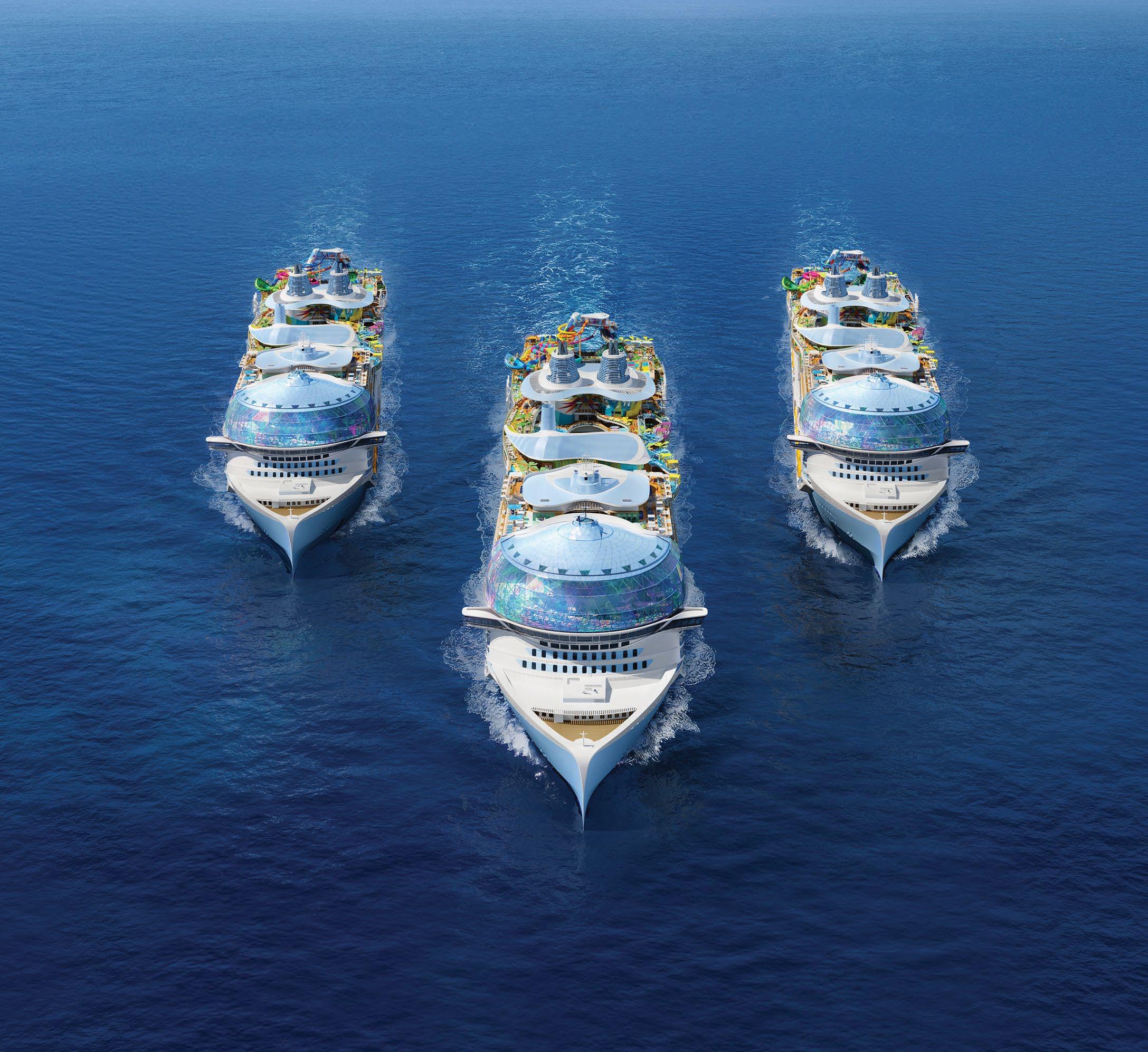
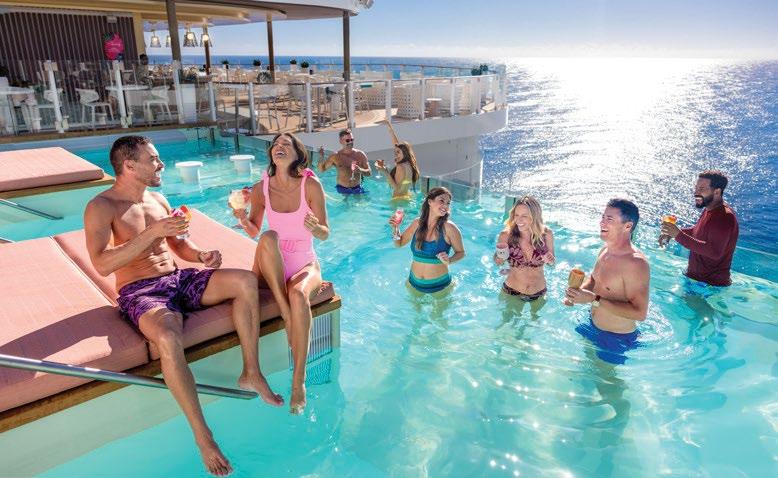
Meet the vacay that rewrites the family playbook. Icon Class is the biggest, boldest way to do together time, where every day brings more thrills, more chills and more “how is this even real?” moments than any vacation before it. Conquer record-breaking slides, kick back in serene hideaways, and fuel it all with maxed-out flavors made to please every palate. From sunrise adventures to all-night energy, Icon Class delivers nonstop wow for kids, teens and grown-ups alike.
Please contact your Ensemble travel advisor for more details or to book.



Why just go when you can truly discover?
On a Collette tour, you’ll go to search for the Northern Lights. But you’ll also sleep in glass igloos, the night sky full of aurora borealis promises.
You’ll go on game drives in Kenya to see your favorite animals. And you’ll come face-to-face with giraffes at a sanctuary that educates thousands of children each year.
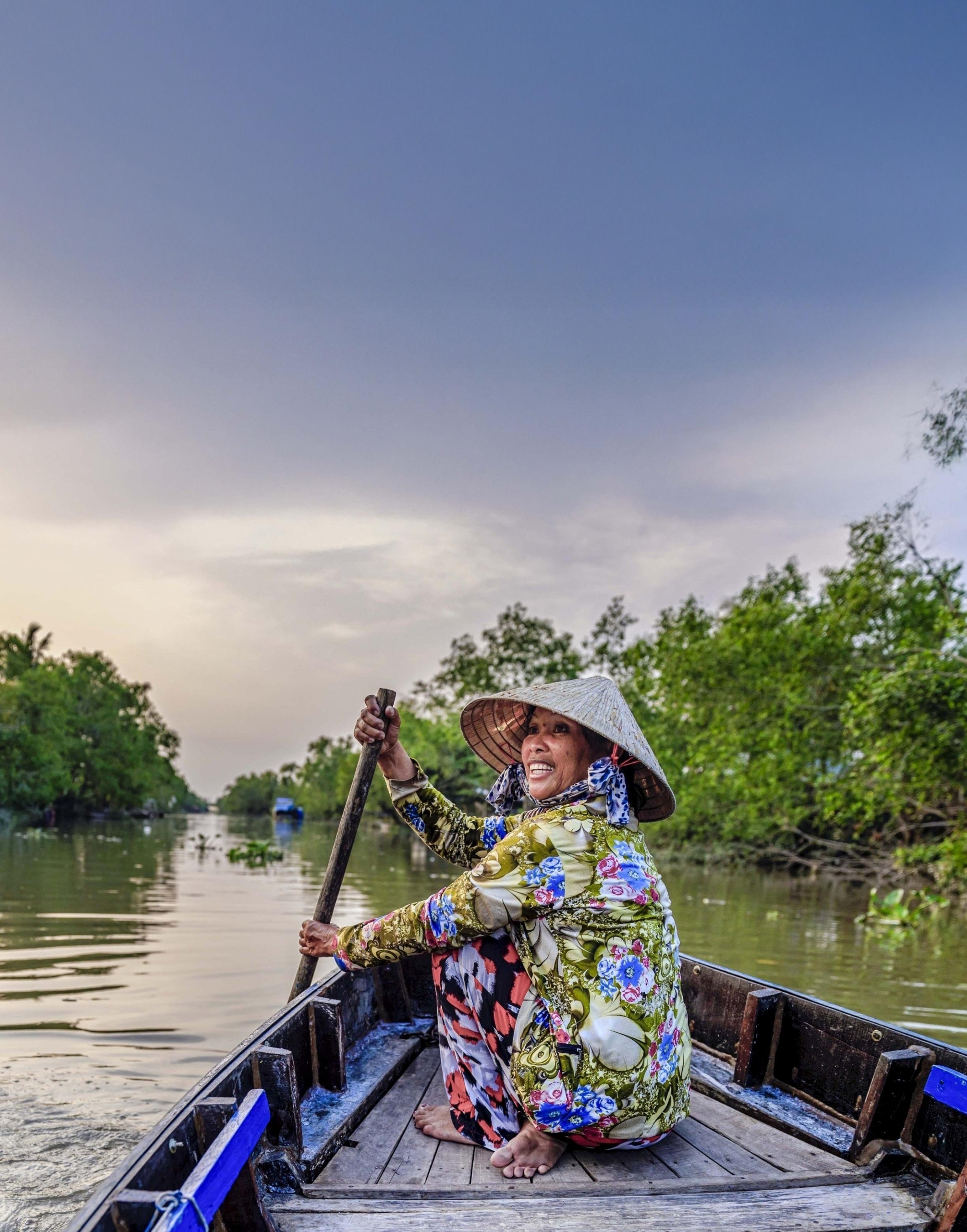
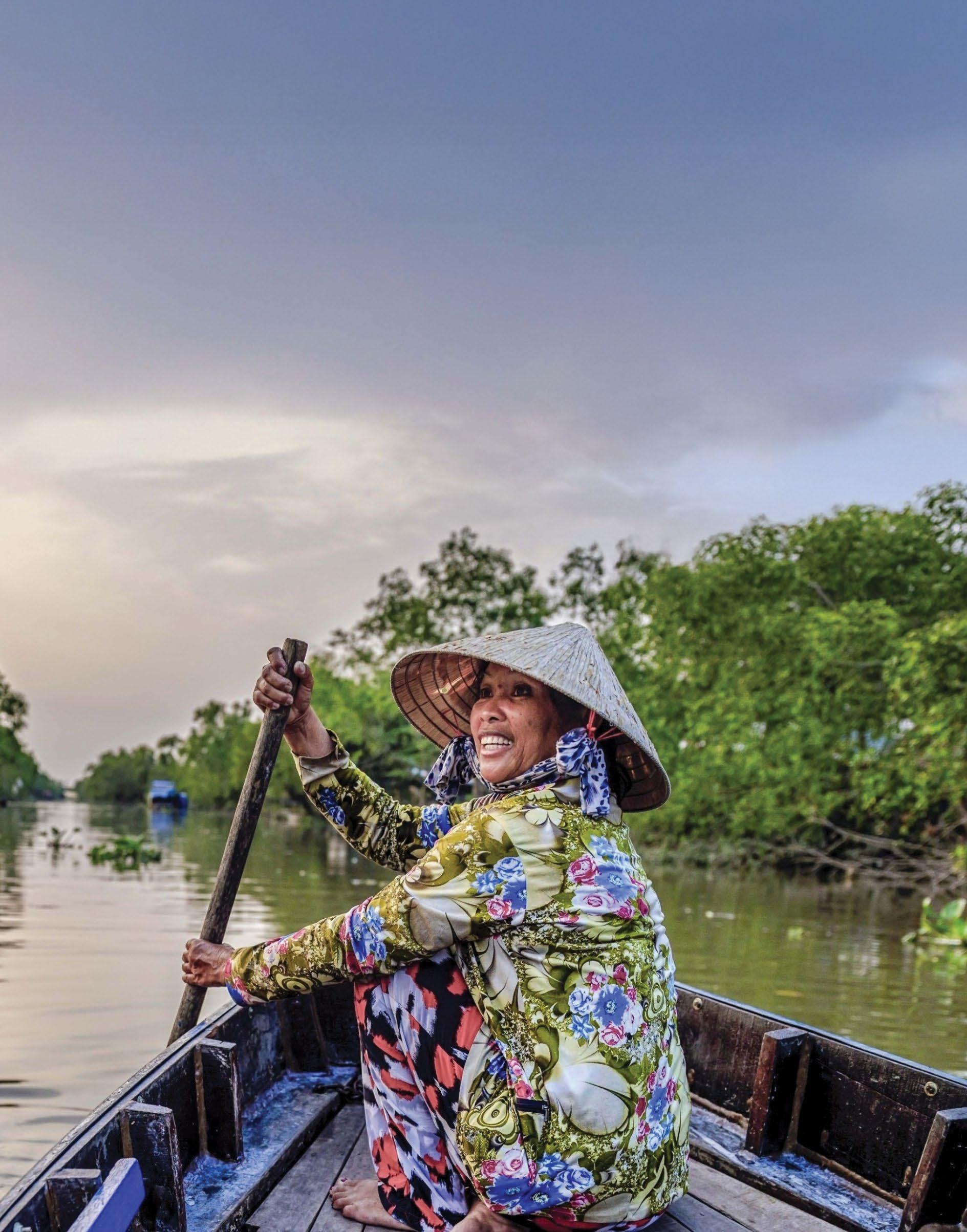
In Vietnam, you’ll sit down with a local in their home, and experience culture over fresh
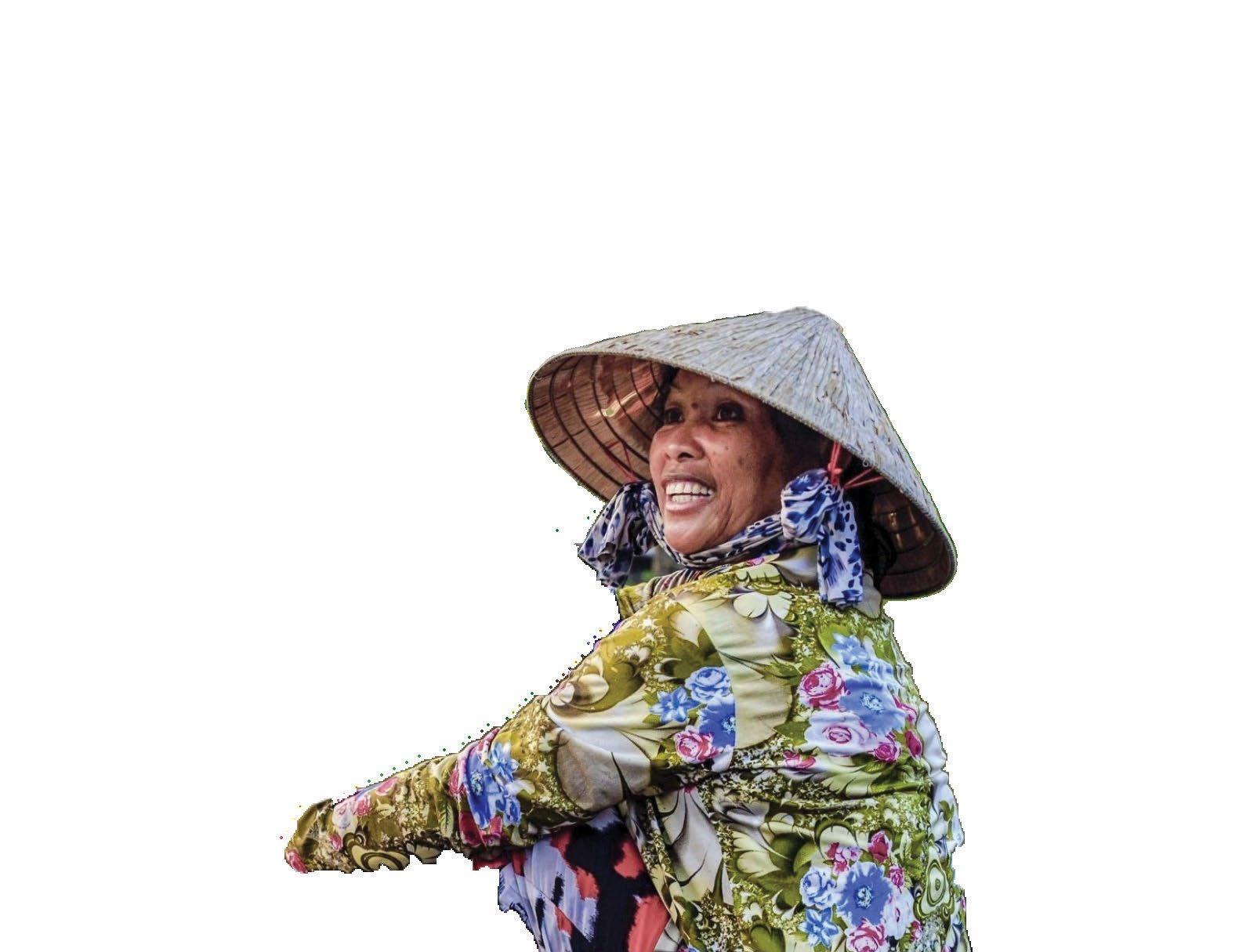
That’s why the modern traveler goes with Collette. Expertly guided tours dive even deeper

Contact your Ensemble travel advisor for more details.
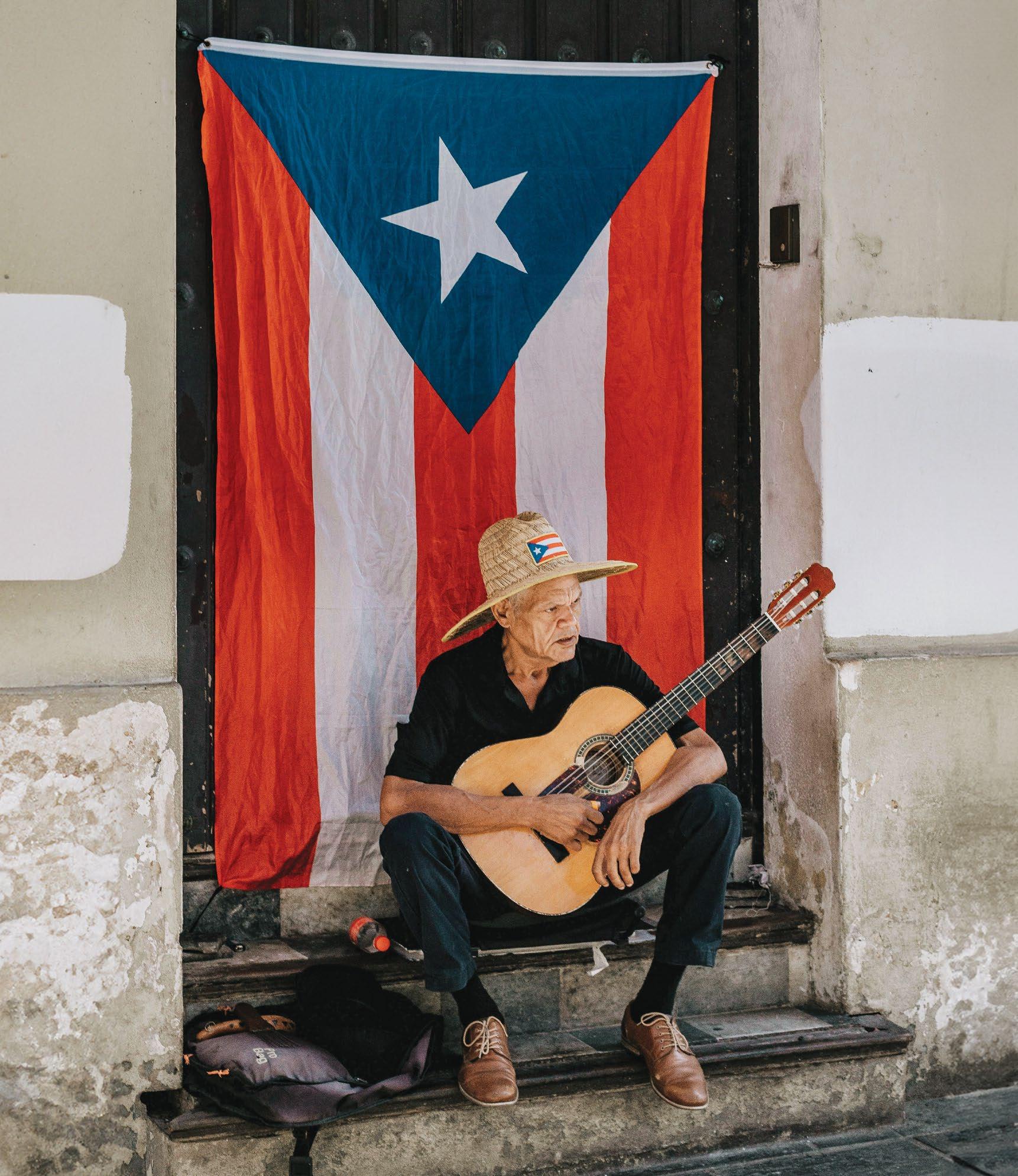
DESTINATION TO WATCH
Superstar Benito Antonio Martínez Ocasio, a.k.a. Bad Bunny, has always shone the spotlight on his home island, but it’s even brighter in 2026. Following his Grammy wins and Super Bowl LX halftime show performance, searches for Puerto Rico have surged, and the artist was recently announced as the lead of Porto Rico, a film from fellow Puerto Rican rapper Residente. The island is inviting visitors to come and “Live Boricua,” experiencing the rhythm of bomba, flavors of its traditional cuisine and beauty of its natural attractions, like Parque Nacional de las Cavernas del Río Camuy, a network of more than 220 limestone caves and caverns that will reopen this year following a major restoration project.

CAN’T MISS
If seeing the aurora borealis has been on your travel to-do list, slot it in this year. The sun’s 11-year solar cycle is currently at its peak — known as solar maximum — creating optimal conditions for northernlights activity. One of the best ways to view the spectacular natural wonder is from a cruise ship — when sailing northern waters, light pollution is minimal. On Cunard’s Norway and Northern Lights itinerary, talks from astronomy experts complement cozy deck viewings with hot chocolate, while Hurtigruten offers a “Northern Lights Promise” for its aurora cruises: If the dancing lights don’t appear on your voyage of at least 11 days, the cruise line will give you a six-day southbound sailing free of charge.
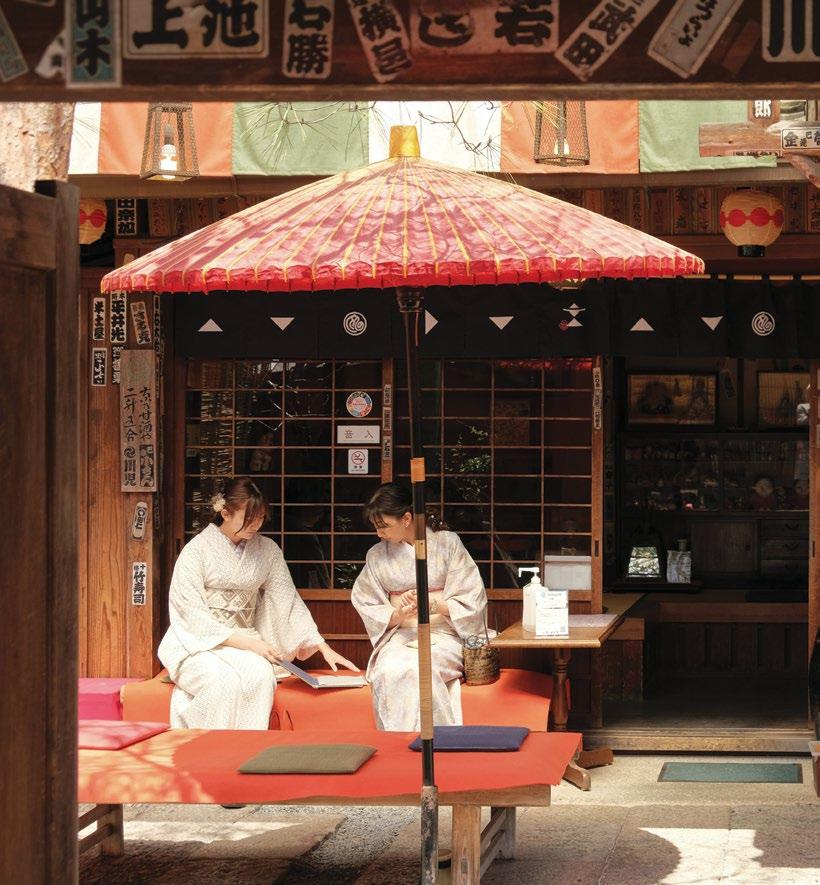
LINGO
In an increasingly digital world, the desire for real encounters has never been greater. Ichi-go ichi-e — Japanese for “one time, one meeting” — is a reminder to make every experience count, as it will never happen again. Rooted in the Japanese tea ceremony, where every sip is an opportunity to pause and be present, the concept stresses that even if you gather regularly with the same group of people, each time is distinct and can never be replicated — so, be sure to savor the moment.
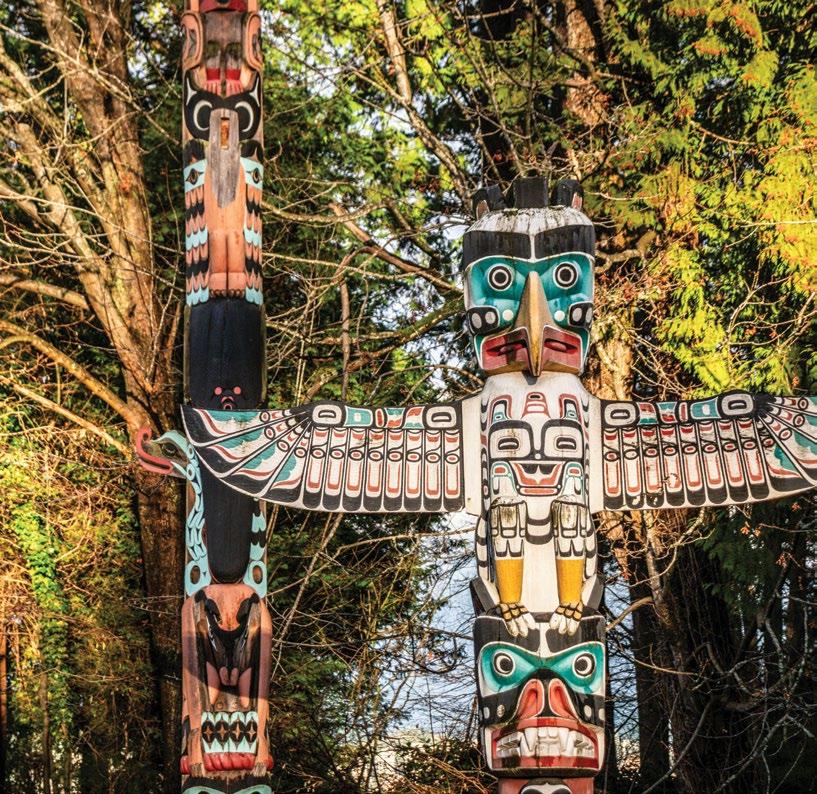
Intrepid Travel’s Canadian itineraries will soon include more Indigenous highlights. The adventure travel company has partnered with the Indigenous Tourism Association of Canada, pledging CA$500,000 over the next five years to grow Indigenous tourism across the country. By the end of 2026, three-quarters of all Intrepid’s Canadian tours will include at least one Indigenous experience, such as an evening of storytelling in a traditional longhouse at the HuronWendat Museum in Wendake, Quebec.
TRAVEL SIZE
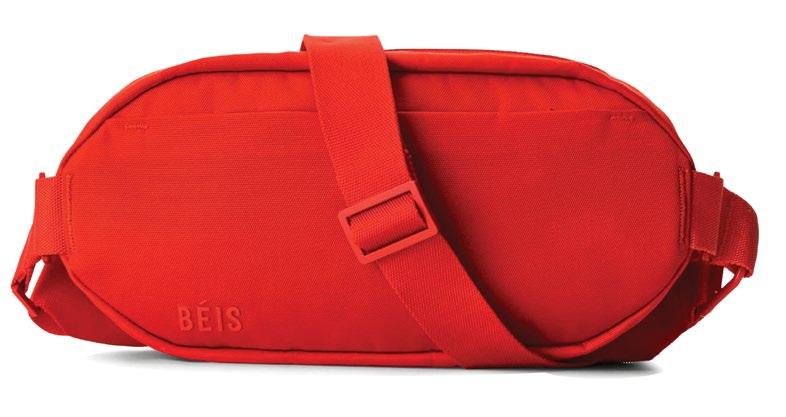
Savvy travelers will want to add this streamlined sling — part of the new minimalist, men’s-focused Pro Collection from luggage brand Béis — to their arsenal. Crafted from durable ballistic nylon with smart features like anti-theft lock zippers and a fleece-lined pocket to protect your phone screen and sunglasses, it’s a must-have for everything from travel days to chill hikes and city sightseeing.
The Pro Travel Sling, US$78, beistravel.com
WELLNESS
MIDNIGHT SUN
MARATHON
JUNE 20, 2026
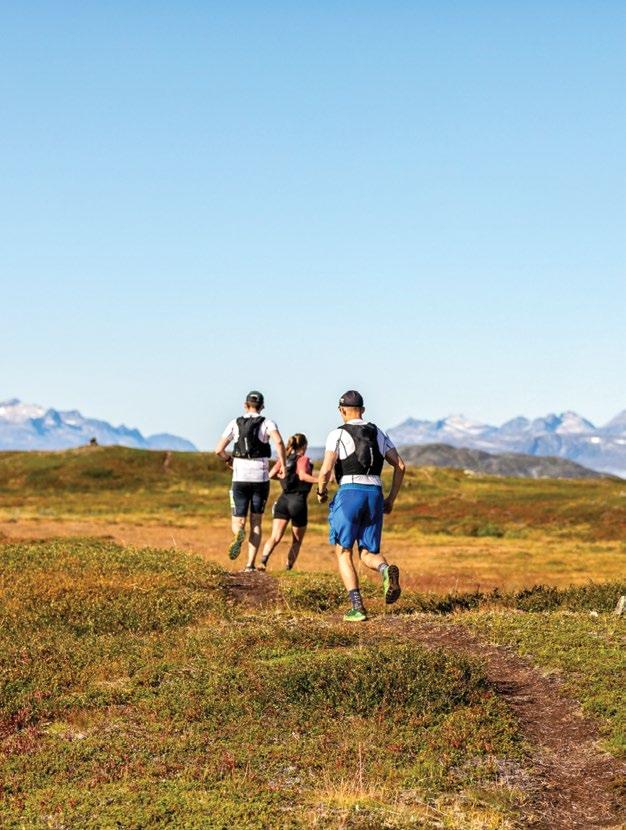
Run under the midnight sun — and against a backdrop of mountains and fjords — at one of the world’s northernmost races, in the “Arctic Capital” of Tromsø, Norway.
RUN THE FOREST
AUGUST 8, 2026
Take on seven-, 10- or 21-kilometre distances on scenic trails surrounded by towering redwoods, bubbling mud pools and geothermal geysers in Rotorua, on New Zealand’s North Island.
MARATHON DU MÉDOC
SEPTEMBER 9, 2026
In the heart of Bordeaux, France, this boisterous marathon’s route is interspersed with 20-plus winetasting stops, plus builtin breaks for oysters, steak and cheese.
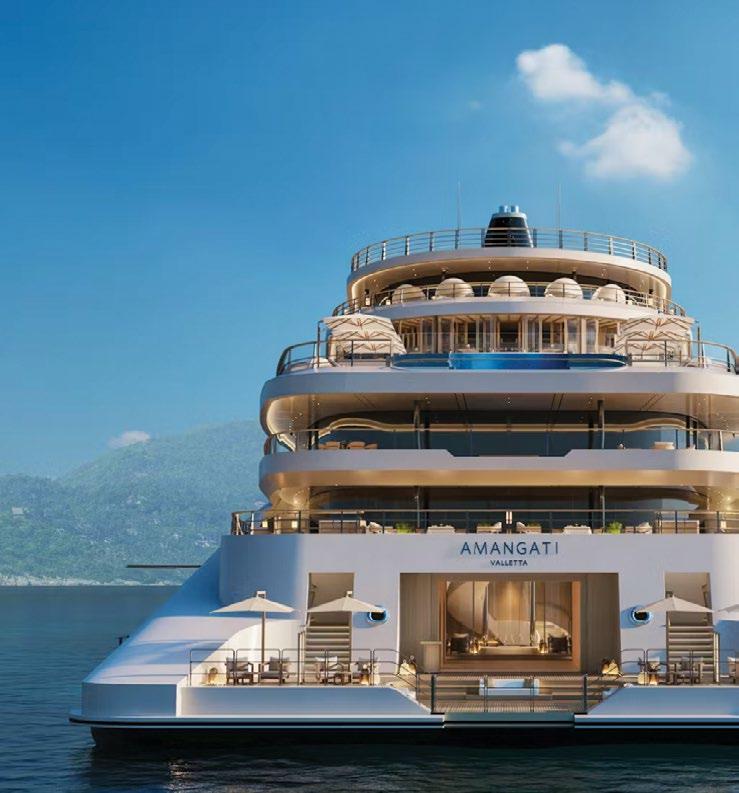
There’s luxury and then there’s Amangati . Set to sail in 2027, Aman at Sea’s next-level motor yacht is the consummate blend of Japanese minimalism and first-class hospitality. The ship’s name is Sanskrit for “peaceful motion,” and its purpose is clear: Quiet the noise. With just 47 suites, interiors are bathed in blond woods and an abundance of natural light, and the full-scale spa features a hammam and banya. At Akari, one of eight on-board dining and lounge venues, find Aman’s signature Japanese-inspired washoku , a UNESCO-recognized dining tradition that prizes fresh, local ingredients.
READING LIST
JOHN OF JOHN BY DOUGLAS STUART
Set against the striking backdrop of the Isle of Harris, in the remote Outer Hebrides, this deeply immersive novel follows John-Calum Macleod (Cal), a gay artschool graduate, as he returns home to the rural community of sheep farmers to live with his dad, John.
A FAR-FLUNG LIFE BY M.L. STEDMAN
When Phil MacBride swerves to avoid a kangaroo in the outback, his life changes in an instant. Tragedy, family secrets and a gutwrenching love story unfold across the arid landscape of Western Australia in this epic from the author of The Light Between Oceans
LAND BY MAGGIE O’FARRELL
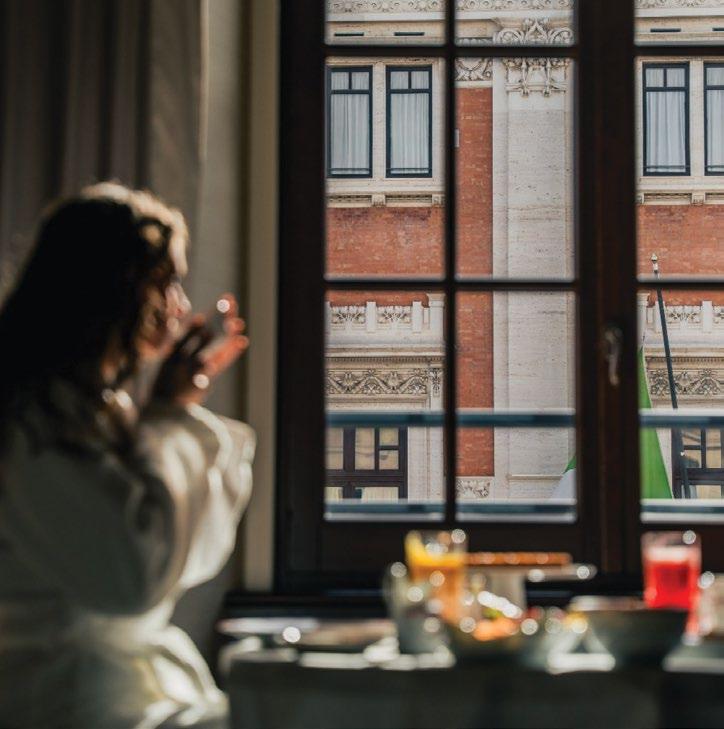
The latest from the author of Hamnet takes readers to a windswept Irish peninsula, where, shortly after the Great Hunger, a father and son make it their mission to map out the whole of Ireland. The story is as layered and nuanced as the landscape that inspired it.
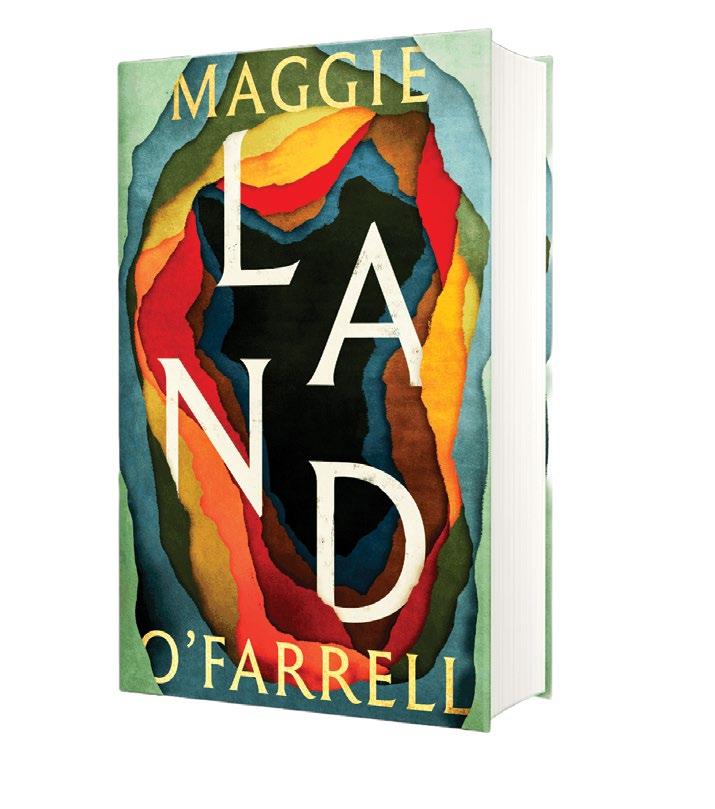
Can’t decide between a hotel downtown or one in a quieter quarter?
Book both: In a recent survey of 24,000 travelers, more than half were in favor of hotel hopping, a.k.a. booking multiple hotels in a single destination. So, on your next trip to Manhattan, stay close to Midtown sights at The Ritz-Carlton New York, Central Park, before moving to The Ludlow on the Lower East Side. Or, on your Roman holiday, book a few nights at Parco dei Principi Grand Hotel & Spa, a leafy urban resort, then move to Corinthia Rome, a short stroll from the Pantheon. Ask your Ensemble travel advisor about exclusive amenities at these properties.
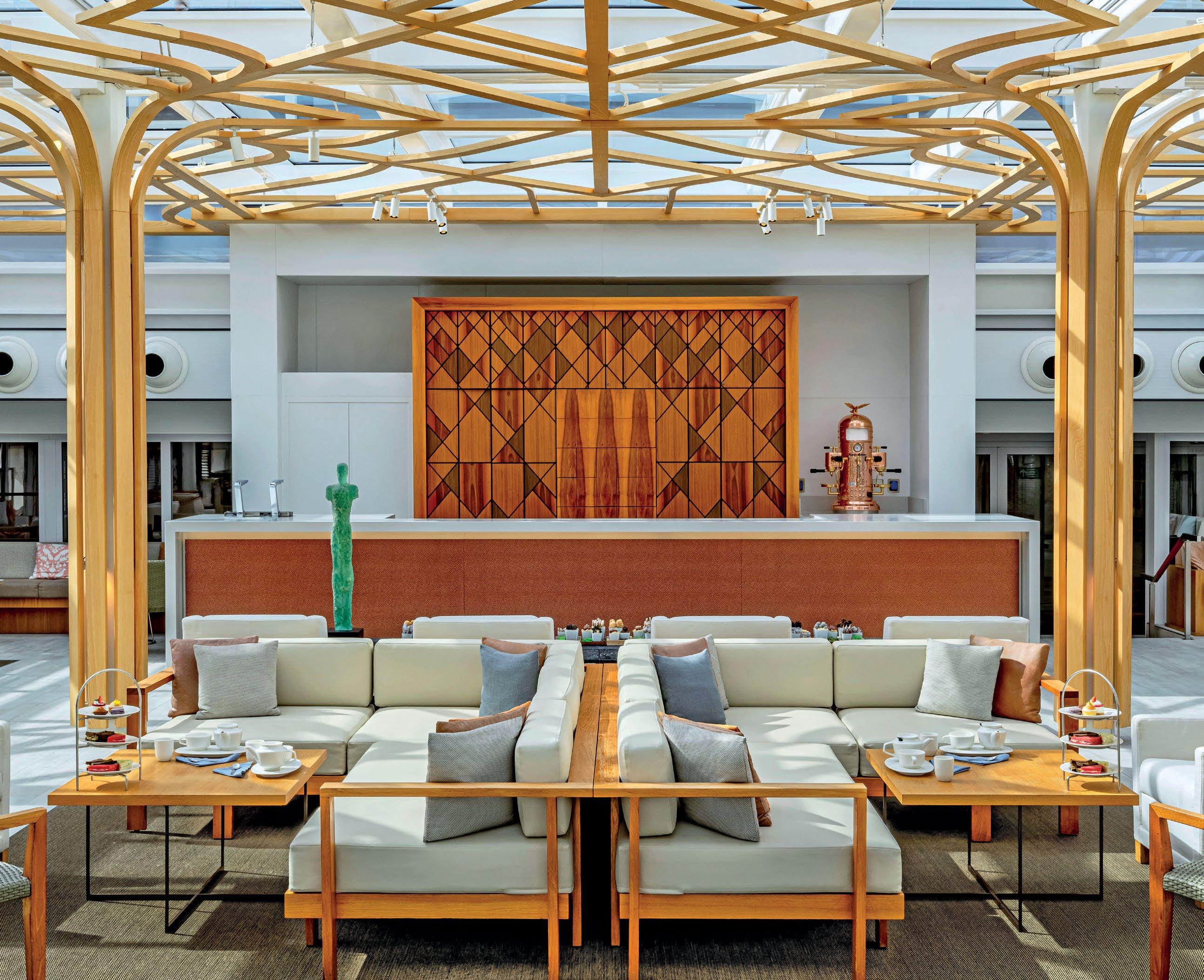


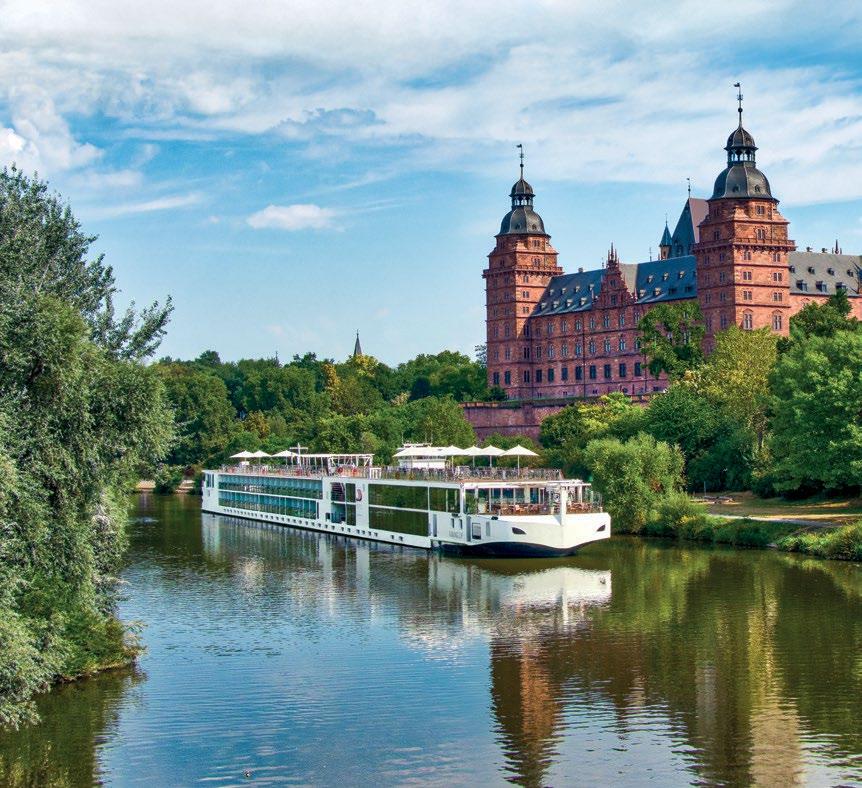


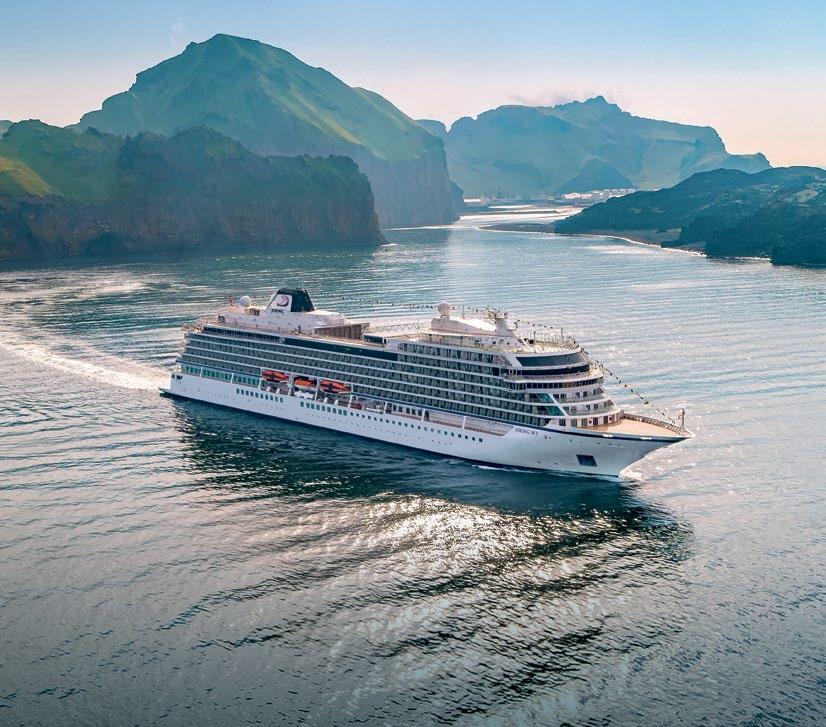
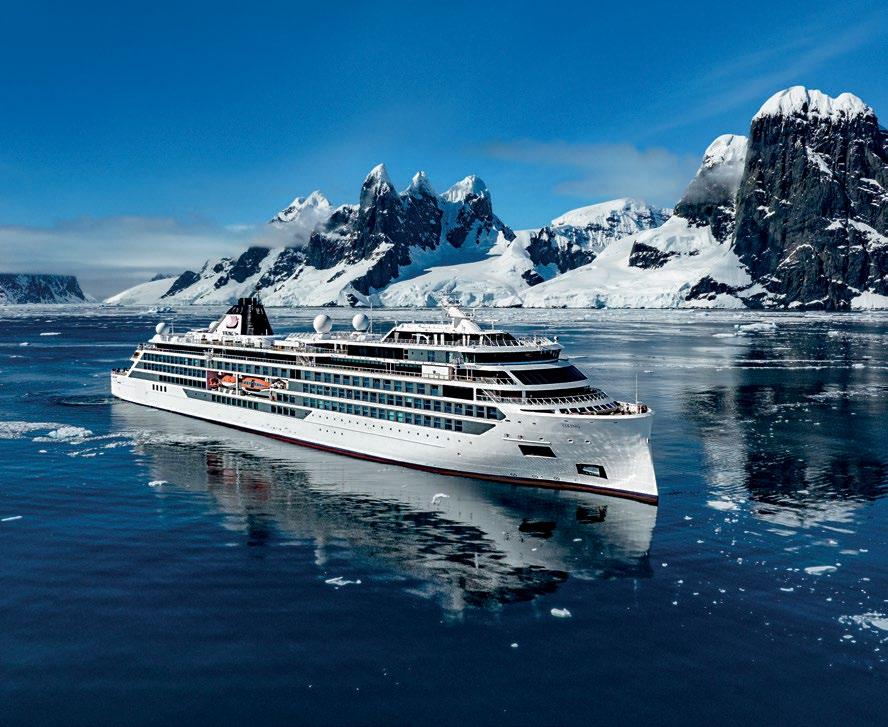

Exit (or enter) through the gift shop to find suitcase-size renditions of iconic pieces from some of the world’s top institutions.
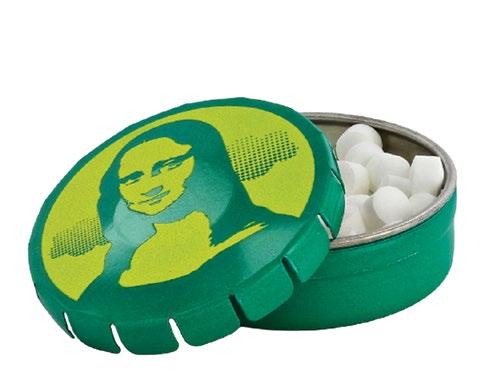
Take the Louvre’s most famous face with you: This container of mints features a pop-art portrayal of Leonardo da Vinci’s masterpiece. Strong Mint Candies in Mona Pop Green, €5, Louvre, Paris
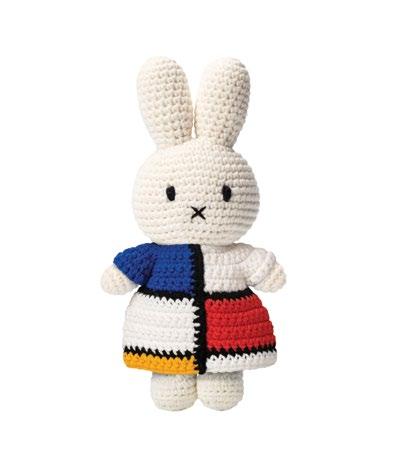
When two Dutch icons — artist Piet Mondrian and fictional rabbit Miffy — come together, the result is a crochet stuffie complete with a Composition with Red, Blue and Yellow dress. Miffy in Mondrian Dress, €27, Mondriaanhuis, Amersfoort
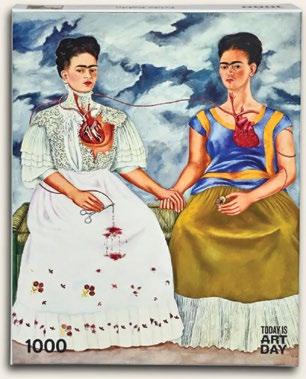
While you can’t see The Two Fridas at the Museo Frida Kahlo (it’s on display at the Museo de Arte Moderno), you can nab your own version of the painting on a 1,000-piece puzzle. The Two Fridas Puzzle, US$50, Museo Frida Kahlo, Mexico City
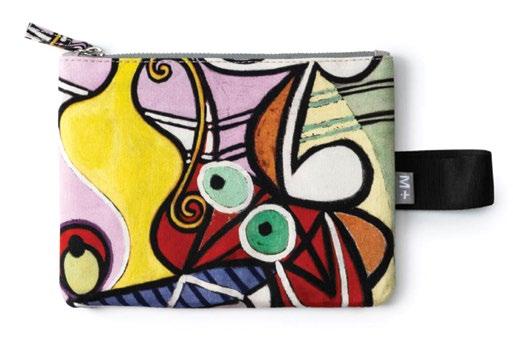
To celebrate a major Picasso exhibition, the M+ Shop launched a collection highlighting the Spanish artist’s works, including this Large Still Life with Pedestal Table pouch. Picasso for Asia — A Conversation Pouch, HK$280, M+, Hong Kong
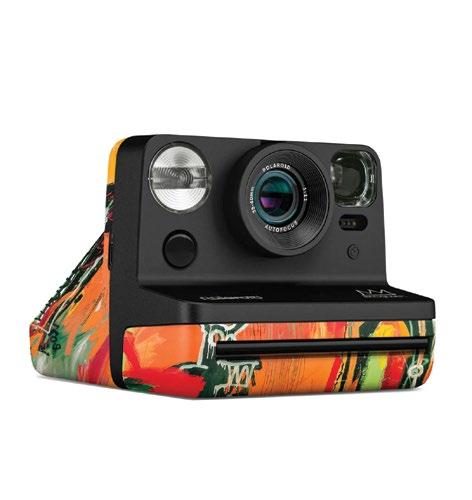
Feel inspired after seeing Jean-Michel Basquiat’s work? Channel that energy using your new Polaroid, featuring his famed Boy and Dog in a Johnnypump Basquiat Edition Polaroid Now Generation 2 Camera, US$240, MoMA, New York City
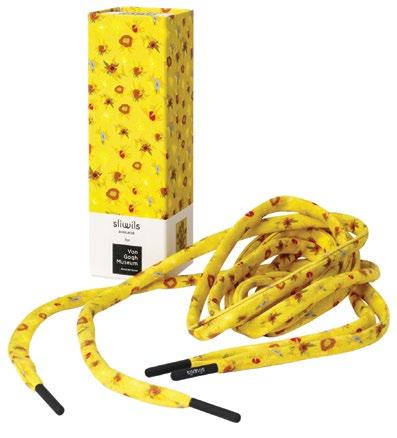
Add a little art to your outfit: Sliwils, maker of stylish and durable shoelaces, teamed up with the Van Gogh Museum for this set inspired by the Dutch artist’s Sunflowers Sunflowers Shoelaces, €13, Van Gogh Museum, Amsterdam
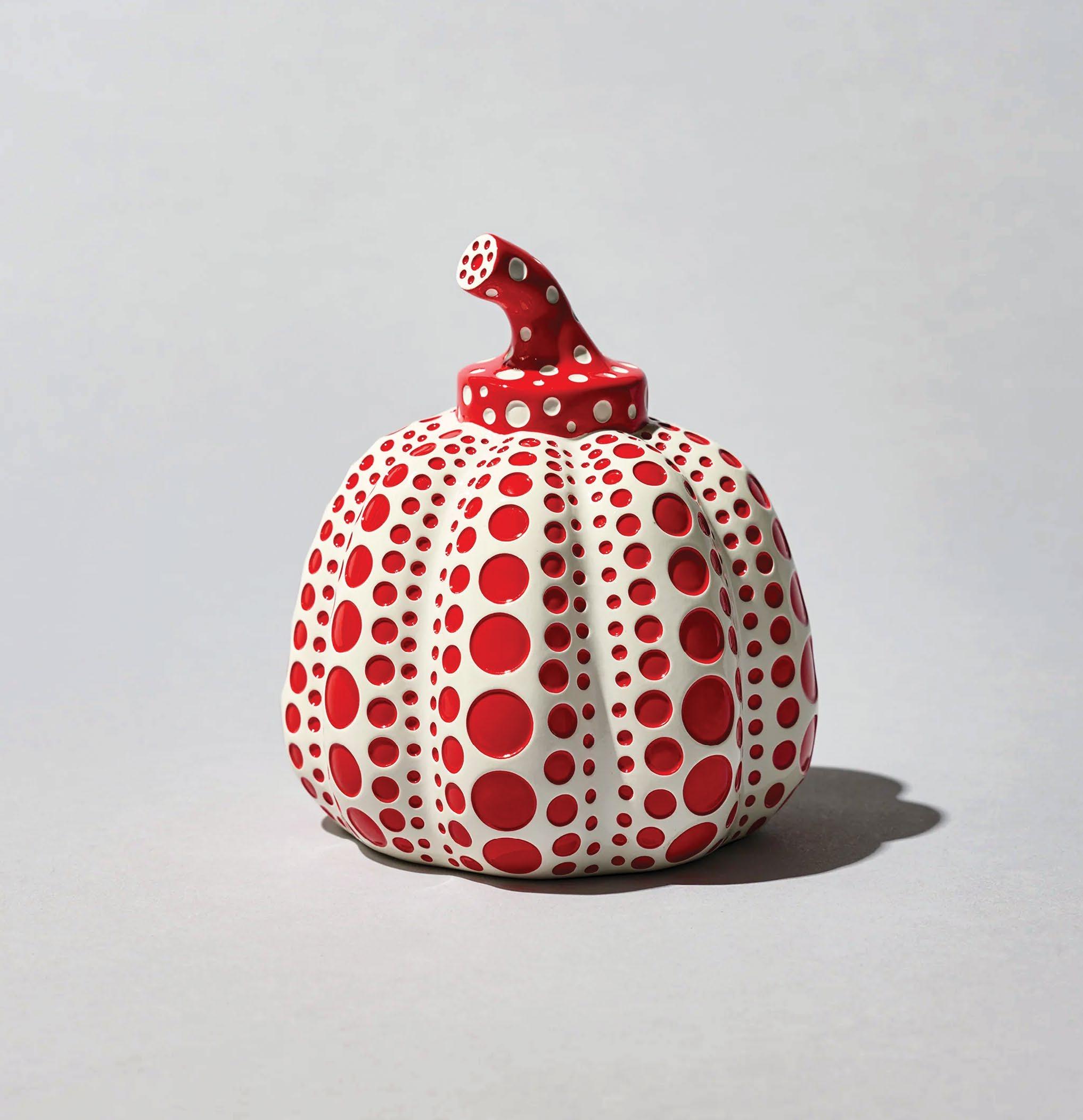
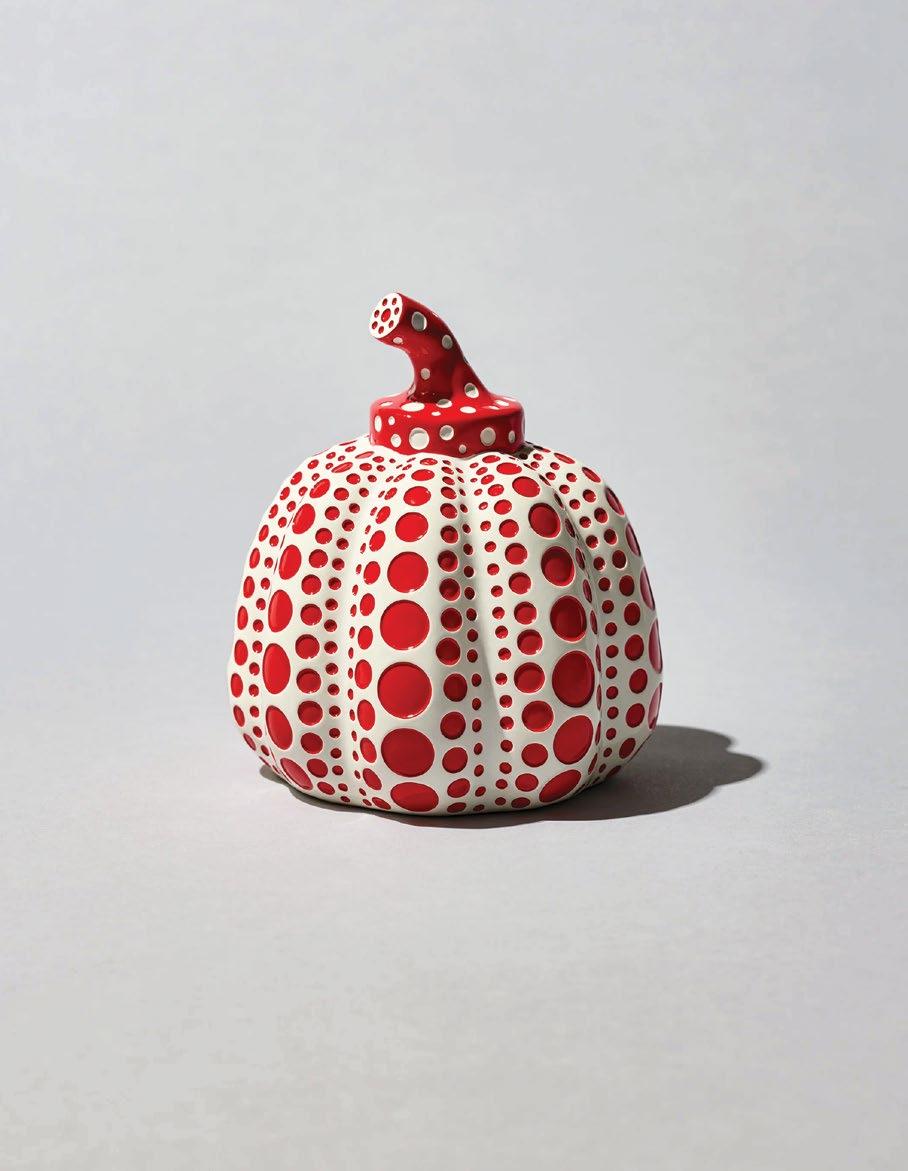
Since 1946, Yayoi Kusama has been sculpting and painting pumpkins in various shapes, sizes and colors, always starring her signature polka dots. Add this mini resin gourd to your own collection.
Pumpkin Object in White/Red, ¥38,500, Yayoi Kusama Museum, Tokyo

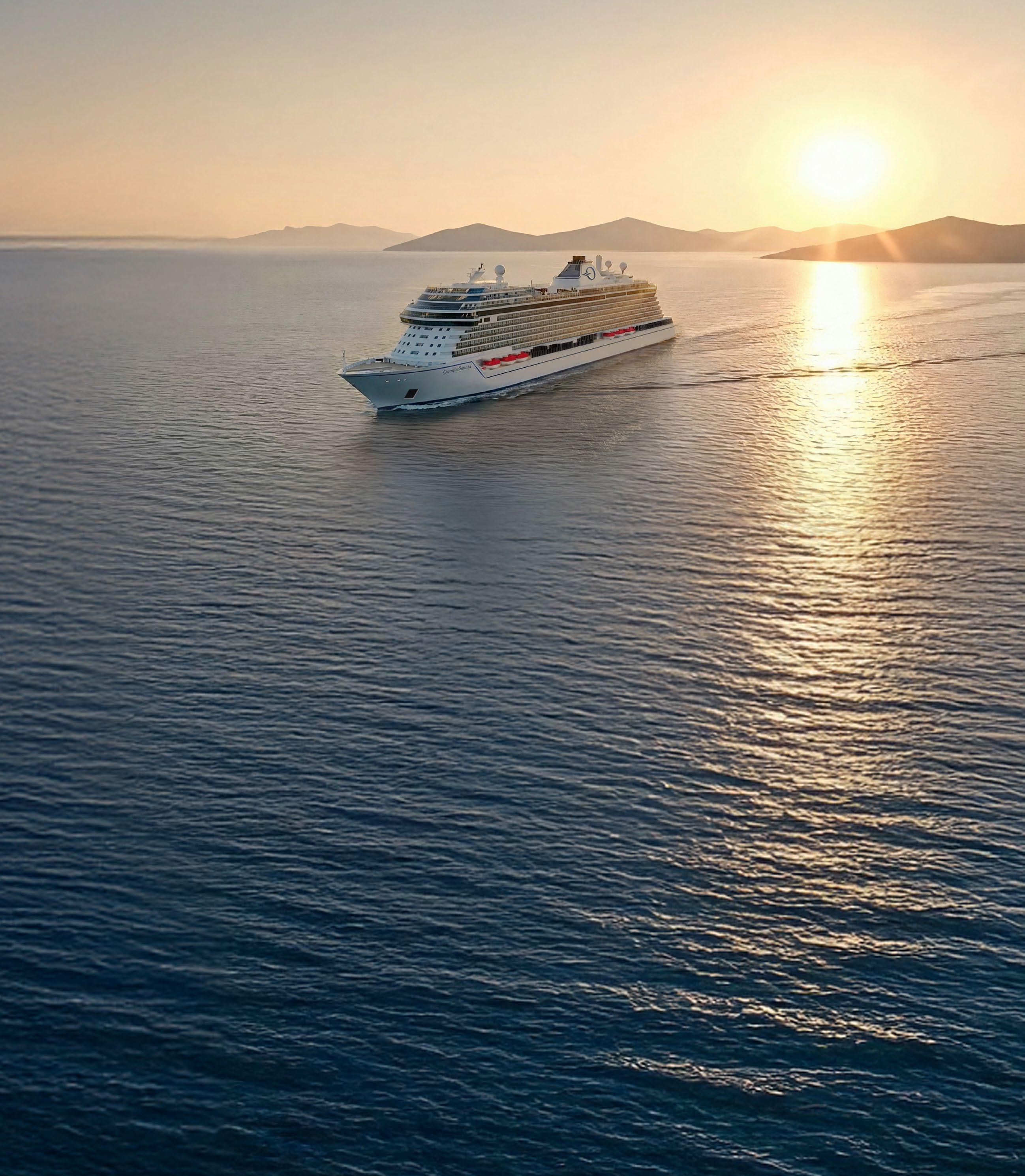
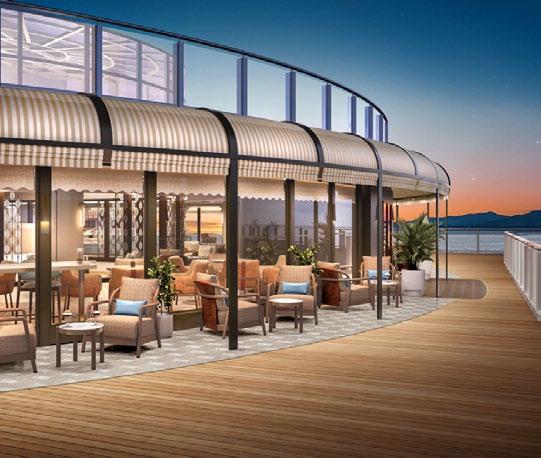
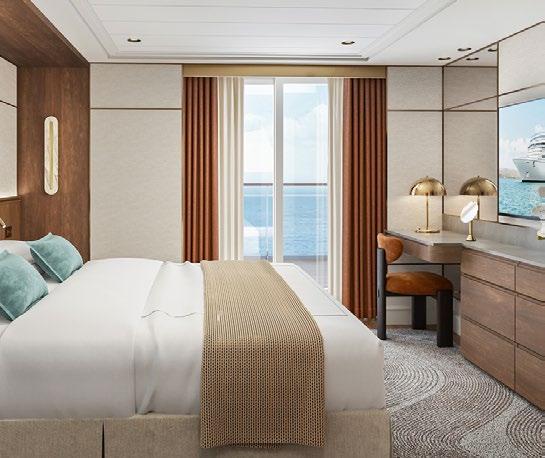
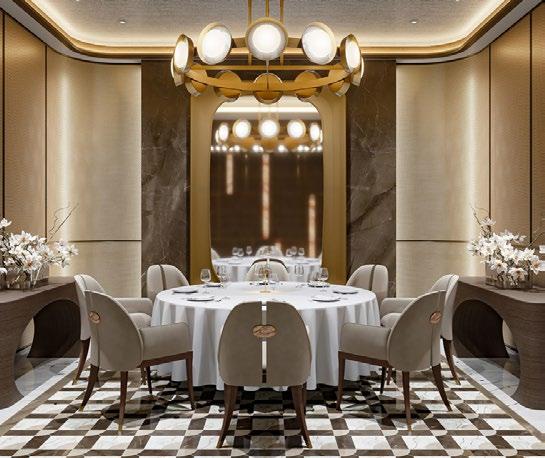
Oceania Sonata invites you to discover the world in perfect cadence. A true masterpiece of design, she will deliver a symphony of unforgettable experiences that captures the essence of refined seagoing luxury. Every detail considered. Every moment uniquely yours .

RESERVATION NOW OPEN
PLEASE CONTACT YOUR ENSEMBLE TRAVEL ADVISOR FOR MORE DETAILS.
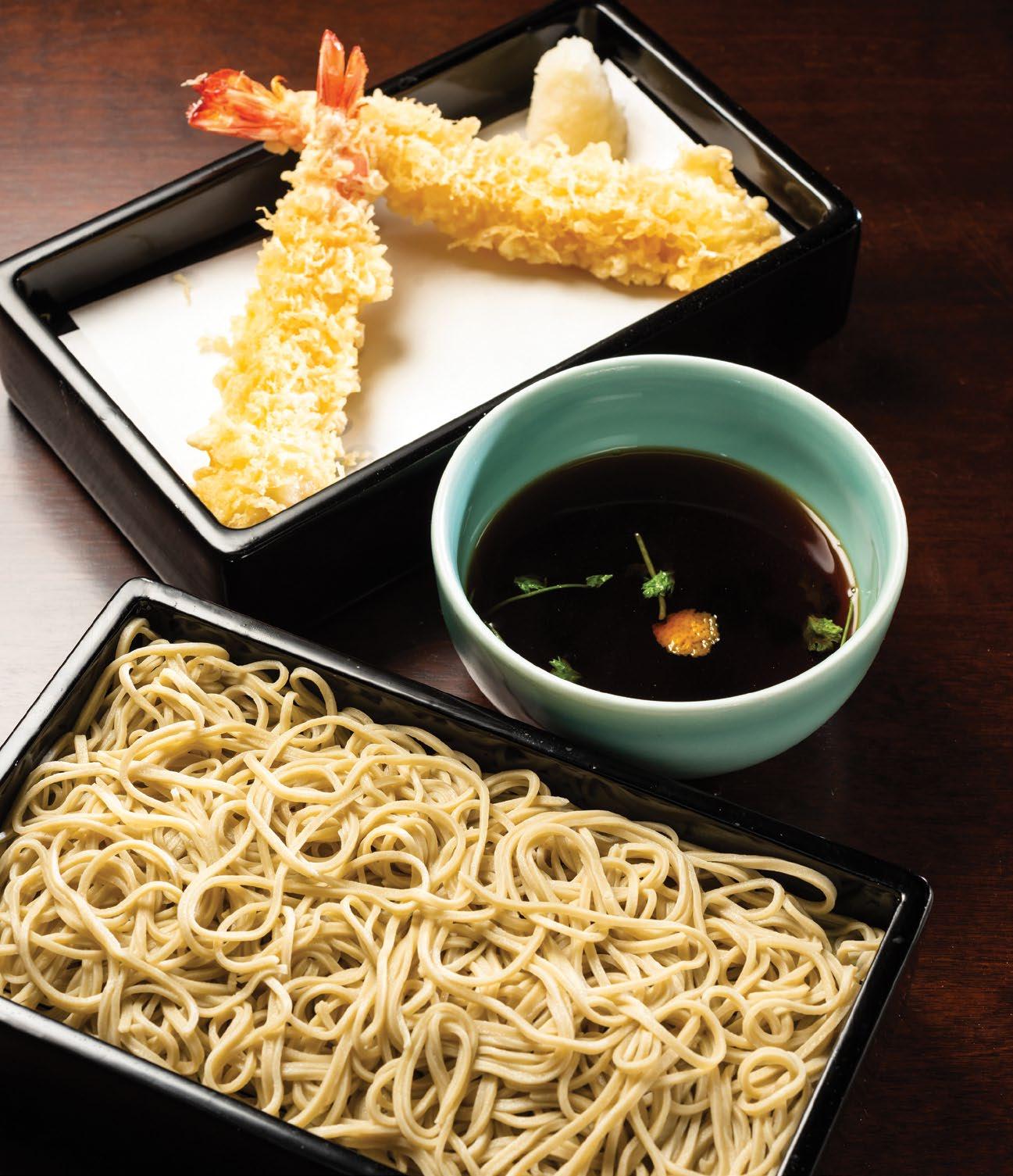
On her fifth trip to Kanda Matsuya, writer Ivy Lerner-Frank finds the handmade soba is as slurpable and satisfying as ever.
Don’t miss the silky yuba squares, dipped in soy sauce with a bit of wasabi, and off-skewer yakitori, with coarse salt and a dollop of mustard.
Try the sobagaki, a meltingly soft buckwheat dumpling shaped like a plump leaf, floating in soba-yu, the broth the noodles have been boiled in.
Eating noodles noisily in Japan is perfectly acceptable, but the appropriate response at Kanda Matsuya is reverence, not raucousness. Tokyo regulars and noodle-loving visitors alike have fallen under the spell of the restaurant’s chewy, flavorful buckwheat noodles, handmade the same way since 1884.
Kanda Matsuya’s home is a traditional two-storey building with a glassed-in kitchen. A tall young chef kneads a fresh batch of buckwheat dough inside on a floured wooden board, while servers wearing face masks and patterned aprons bustle between the tables, instructing us to take tiny bites of dark miso between sips of beer while we decide what to eat. The options are straightforward: hot or cold soba, dry or in soup. It’s tenmori for me — cold noodles with prawn tempura.
The soba noodles arrive entwined on a bamboo mat, a centuries-old tradition; on the left of the tray lie two long, battered shrimp covered with panko, a mound of grated daikon alongside. Delicious. But now it’s all about the soba. Finely sliced scallions and a tiny nugget of yuzu peel float in the tsuyu dipping sauce, fragrant. I dip my noodles in the sauce, close my eyes and gently draw them in. Conversation slows to a halt. They’re perfect. Nutty, with bounce. And gone too soon.
Kanda Matsuya 1-13 Kandasudacho Chiyoda-ku, Tokyo
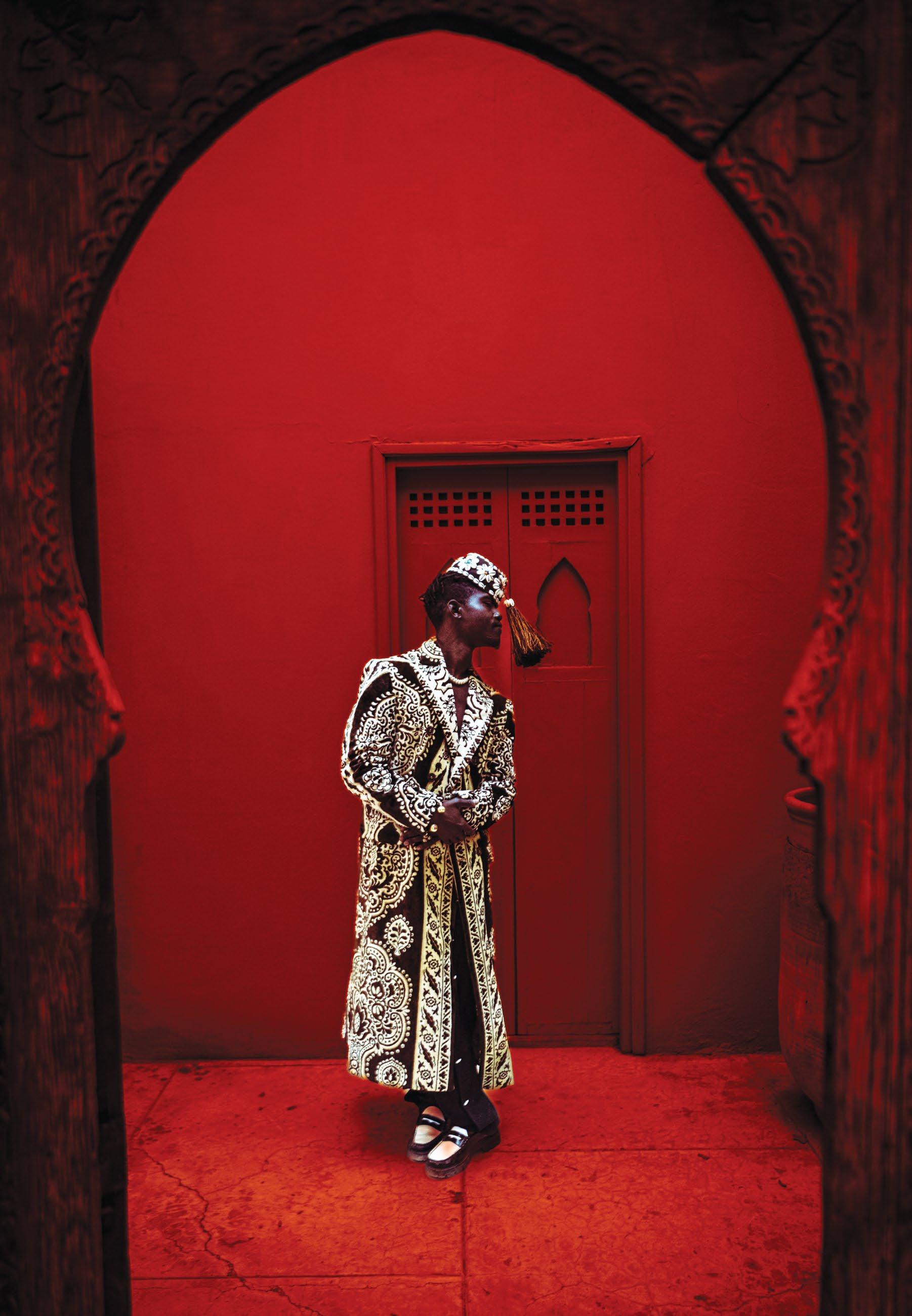
Through art exhibitions and short documentaries, photographer and filmmaker Lougè Delcy uses his camera to share the joy and vibrancy of the African diaspora.
By Simone Olivero
Atrip to Africa changed everything for Lougè Delcy.
As a Haitian American growing up in Brooklyn, New York, he’d always been curious about the continent, but it wasn’t until his first visit a decade ago that he felt something awaken inside him.
He returned two years later to Kenya with a clear purpose — to completely immerse himself in the culture and people, capturing each moment with his lens. “When I went back to shoot the Maasai, I dove into the culture with intention, and I started to see myself not only as an artist but an educator,” he says. “It was important to get their point of view.” The result was Delcy’s first solo exhibition and a documentary-style short film with National Geographic.
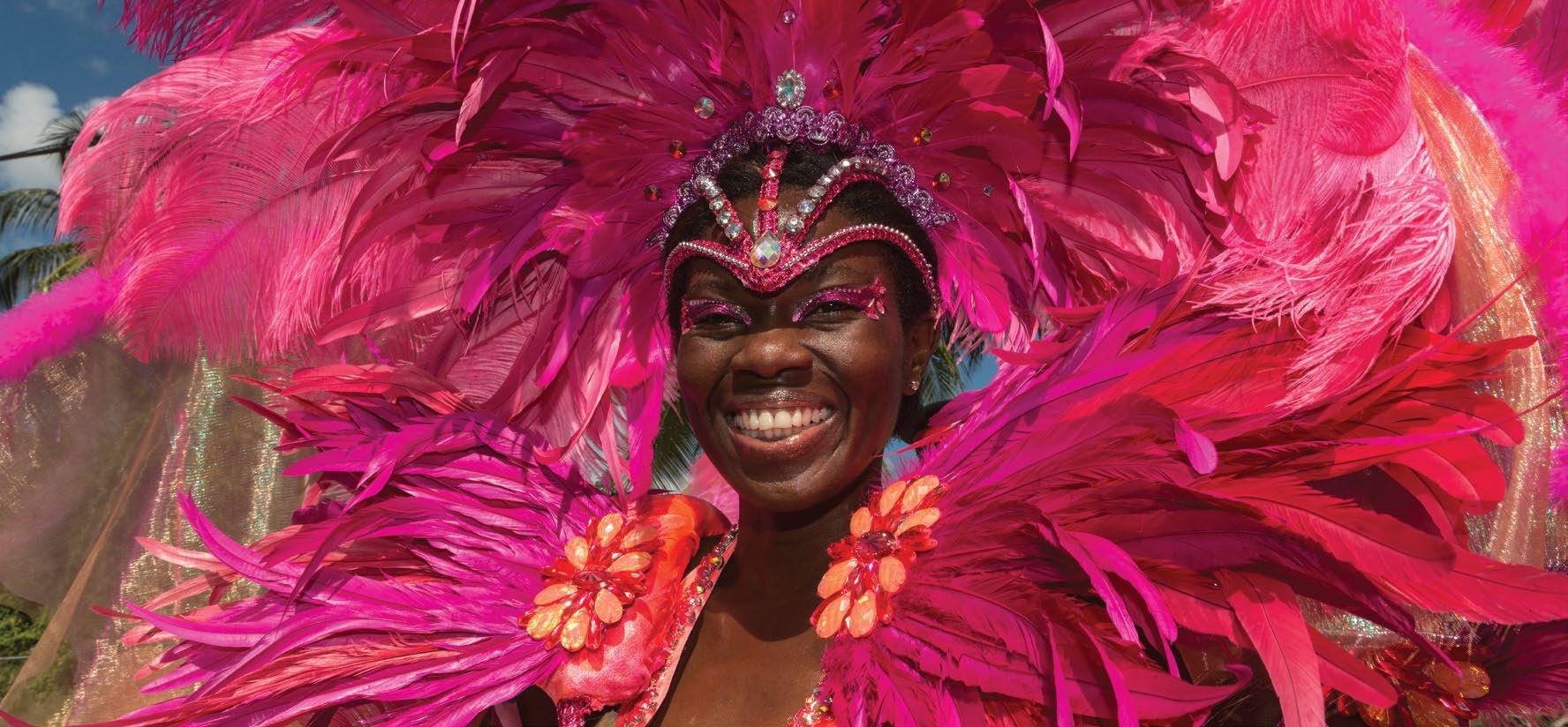
Since then, Delcy has continued to document people and places across the African diaspora, spending time in Brazil, the Bahamas and, most recently, Bermuda, where he shot his documentary short film Rhythm Family, chronicling the island’s Gombey dancers. The film showcases Delcy’s signature blend of bold hues and cinematic framing, drawing viewers into the world of the iconic folk tradition, which dates back to the 18th century before slavery was abolished. Like all of Delcy’s work, it’s a visual journey that is both imaginative and insightful — a feast for the eyes.
Range How do you immerse yourself when you travel?
Lougè Delcy I ask a lot of questions and try to gather different perspectives. Between all those points of view, I can formulate an idea of a place. I think it’s important to connect with locals and not be afraid to try things.
R Can you describe the style of your work?
LD I like to use color as a way to celebrate culture and people. My work blends fine art and documentation, but there’s also a surreal quality to it.
R Where did the concept for your recent film, Rhythm Family, come from?
LD I was invited to Bermuda by the Bermuda Tourism Authority in 2022 for the Cup Match, a popular cricket event, and that’s where I first saw the Gombeys perform. Gombey is about music and dance, but it’s also deeply rooted in history and family tradition, and it’s a part of Bermudian culture that most travelers don’t see. It was very striking and colorful, but I didn’t really understand what I was seeing. After some research, I knew I wanted to tell the story — but through a personal lens. Showande Butterfield comes from a family of Gombeys and is raising his children with Gombey culture. His mother helps make the costumes, which is an art in itself. Showande isn’t just a drummer, he’s an educator, and it was cool to learn from him and then share that experience through the film.
R Where do you call home?
LD I have my studio in Brooklyn, but for the past decade I’ve been traveling and spending time in different places. In 2023, I lived in Bahia, Brazil, for about five months to document Brazilian culture as it relates to the African diaspora, and that was the longest I’ve lived away from home. It opened my mind to the idea of a nomadic lifestyle with no fixed address. The world is my home and it’s more about building community. In November, I gave up my apartment and am now fully nomadic.
R So, what’s your next destination?
LD I’m going to Japan to wander and discover. It’s a place that’s been on my list for a long time because it has such a distinct culture.
Read the full interview at rangetravel.com.
By Jen Rose Smith
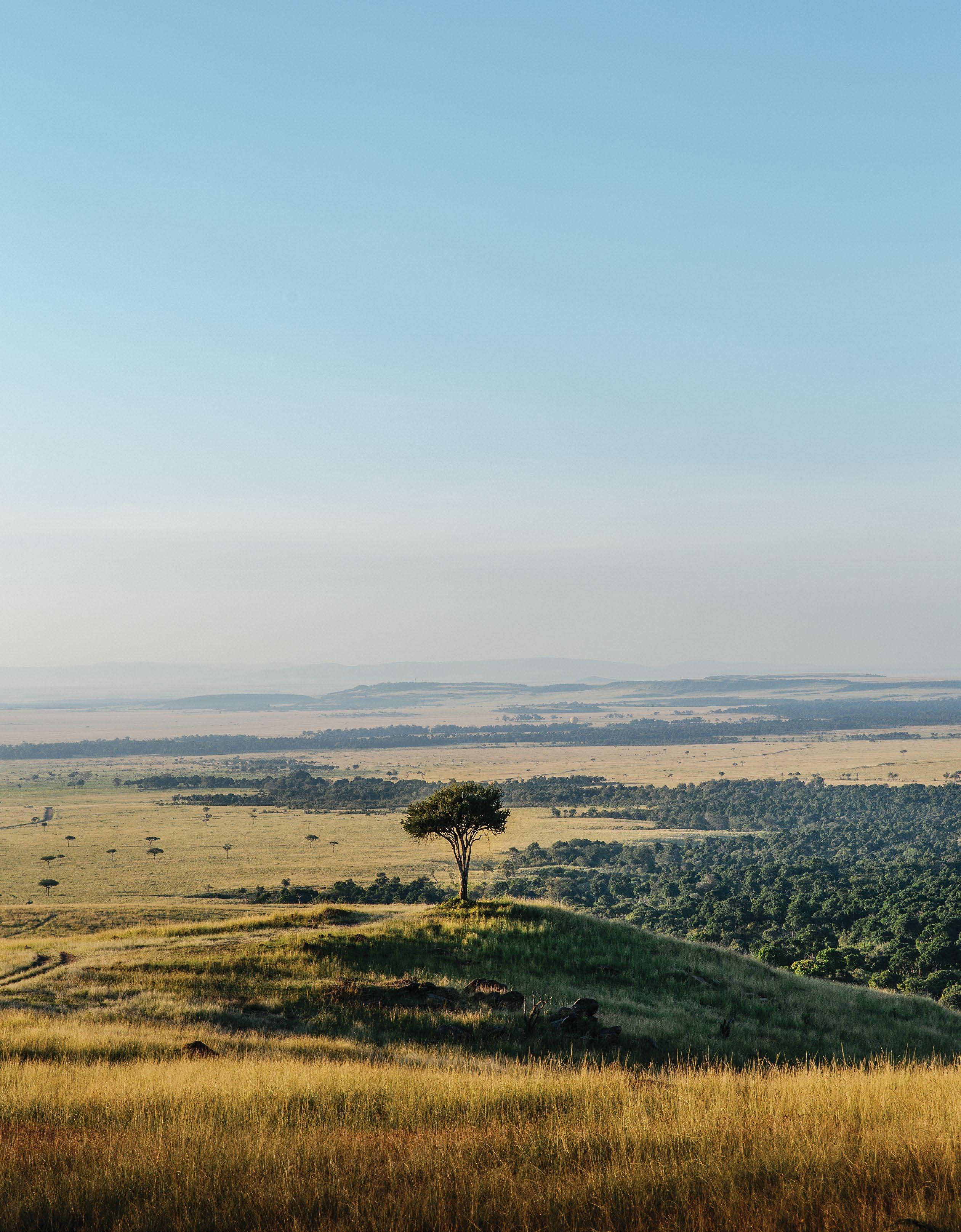
Verdant grasslands, dramatic skies, newborn wildlife and no other vehicles in sight: An off-season safari in Kenya’s Maasai Mara shows the luxury of solitude.

The tail hangs plumb from an acacia’s thorny cano py, swaying in the slantwise afternoon light — a sleepy metronome marking time for the Maasai Mara of southern Kenya with every switch of its speckled, golden fur. Its owner is invisible. And so, with binoculars perched on the dashboard of our open-sided safari truck, Wilson Omari and I settle in to watch and wait.
“We must be like the animals — patient,” whispers Omari, an aphorism-prone veteran safari guide at andBeyond’s Bateleur Camp, a remote cluster of forest-wrapped tents at the western edge of the Maasai Mara National Reserve. For long minutes, we scarcely breathe. The tail vanishes then reappears,
now attached to a leopard gnawing three-quarters of a gazelle — a partially eaten kill stashed in the tree for safekeeping, Omari explains. A considered leap brings the cat to the ground, prey dragging limp behind. Amber eyes flick our faces. Omari smiles, looking triumphant. “When you know how to wait, what you see is often something more,” he says.
Such moments explain why the Maasai Mara consumes travelers’ daydreams: of balletic impalas and gore-muzzled lions, of elephants grazing acacia woodlands, of wildebeest herds whose hooves drum dust from the thirsty savanna. You can practically hear the David Attenborough voice-over. Riverine forests, plains and woodlands jigsawed across the
OPENING SPREAD, FROM LEFT TO RIGHT
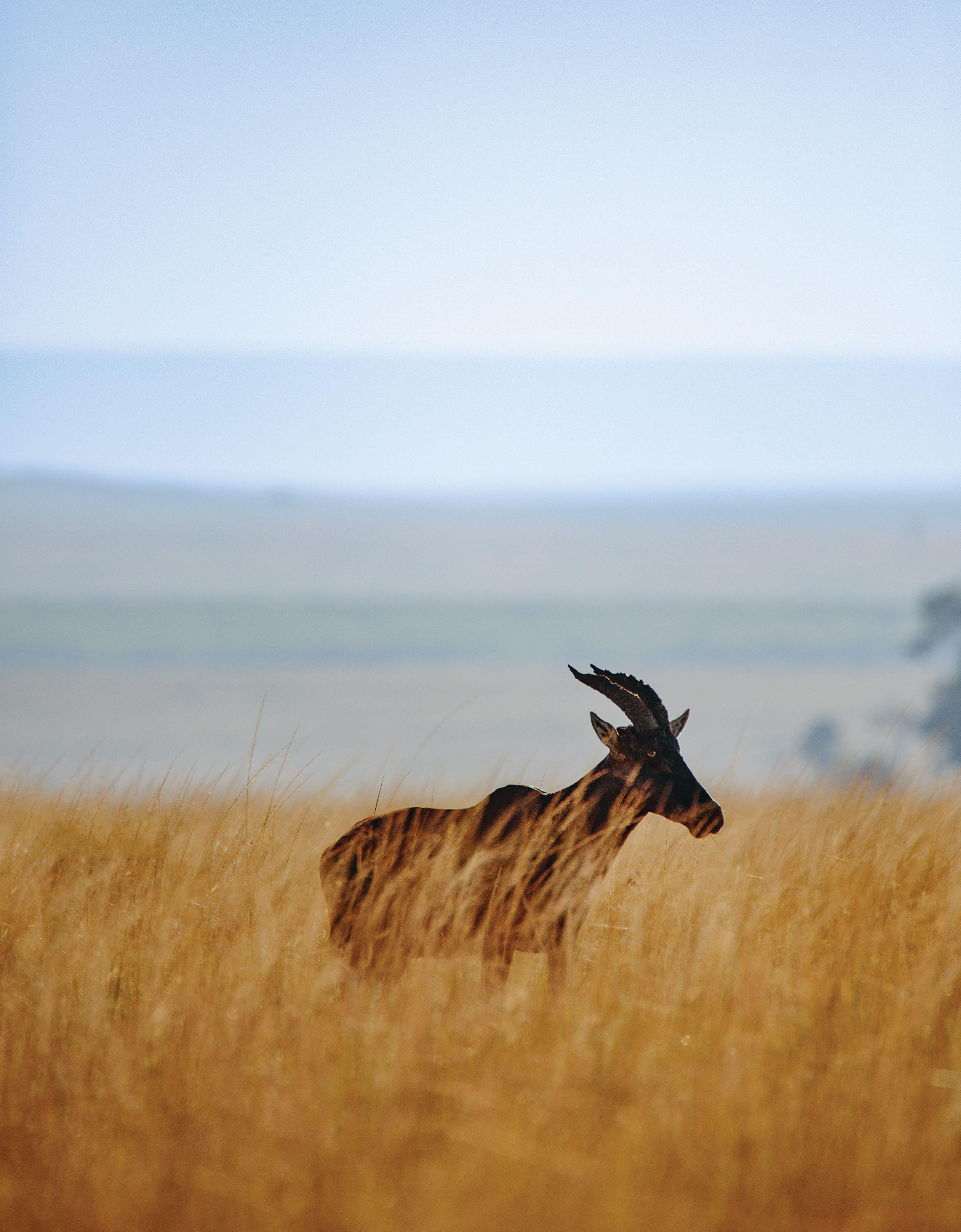
During the Maasai Mara’s season of “long rains,” afternoon showers are frequent, but the reward is a green savanna; a topi (medium-sized antelope) peeks out of the Mara’s tall grass.
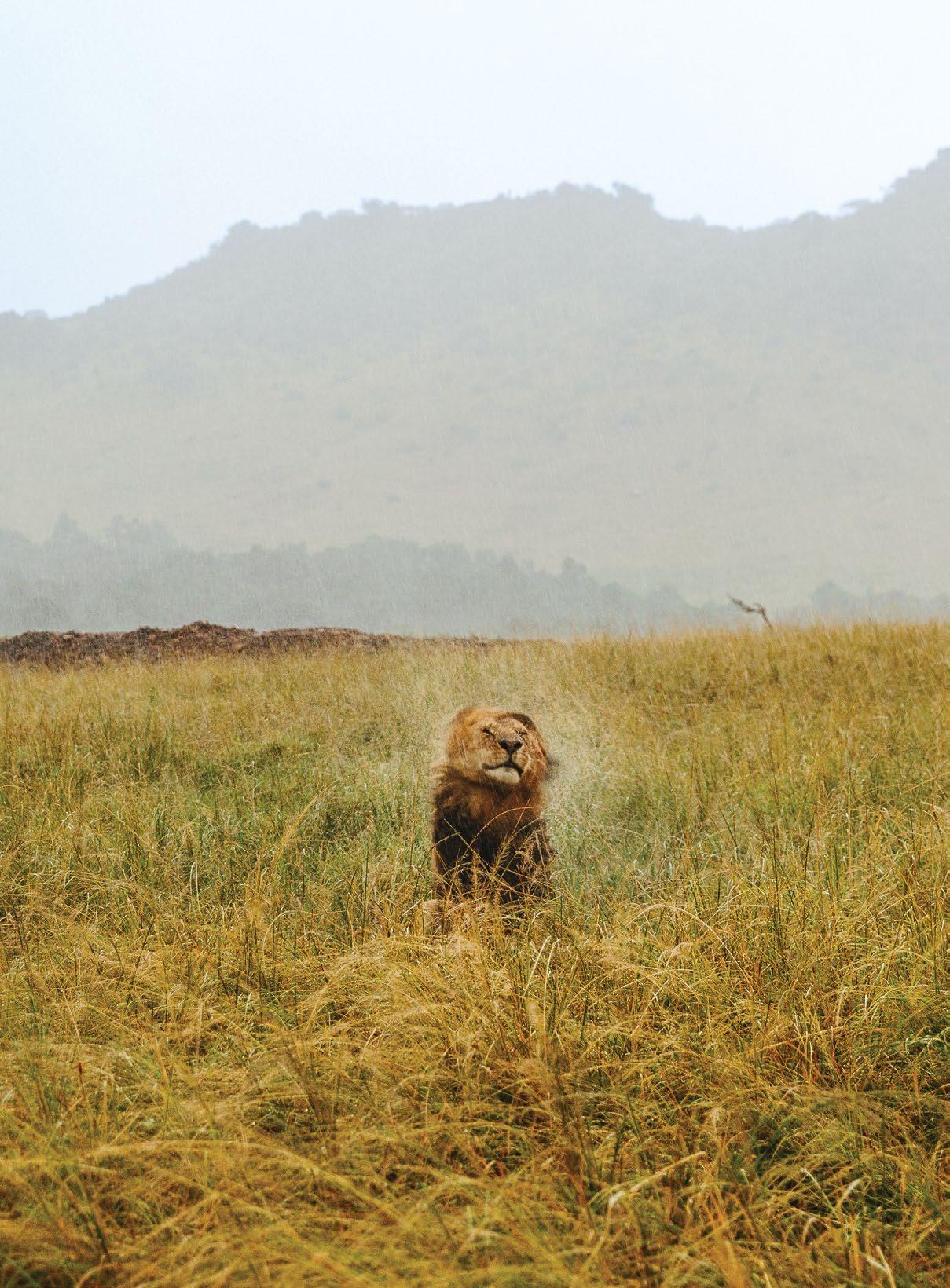
THIS SPREAD, FROM LEFT TO RIGHT
580-square-mile Maasai Mara National Reserve are a nexus for astonishing biodiversity. But it’s the herbivores that arrive by the millions for seasonal grazing from July through October — the annual Great Migration — that has made the Mara one of the world’s best-loved wildlife destinations and sheltered it from development.
“Tourism has really protected the land here,” says Jacob Lepatim Soit, a research assistant at the Mara Predator Conservation Programme, which studies threats to the region’s top predators. “If there was no tourism, everyone would have fenced his or her own land — wildlife movement would have stopped, and the entire ecosystem would have collapsed.”
Yet worries about high-season crowding have mounted in recent years. Dozens of vehicles might swarm a single rhino in the busy months of July and August, a paparazzi hive of flickering zoom lenses. “In peak season, there are a lot of cars around,” says Lepatim Soit, a Maasai raised in a nearby village. “It’s affecting the animals.” As crowding increases, fewer cheetah cubs reach adulthood, he says. Hunting patterns can transform, too. In 2025, a Maasai Mara leopard killed a mature cheetah that was surrounded by tourist vehicles, a rare event that disturbed experts. Lepatim Soit attributes the cheetah’s death to the distracting noise of radios and idling trucks, which made it difficult for her to detect the imminent danger.
In search of a quieter side of the Maasai Mara, I’m visiting in May, a month when tourism tumbles nearly 80 percent from its annual peak. May is the tail end of the “long rains” that begin in March, bringing operatic storms that green its grasslands. (The Mara’s “short rains” fall in November and December, another slow season, aside from the busy holiday-vacation weeks.) I’m the only passenger in the small plane that delivers me to the Mara from Nairobi. When we touch down on the rust-colored Kichwa Tembo airstrip, unflapped zebras graze on either side. Omari greets me, and we stand together to watch the twin-propeller plane depart. Lingering in the morning sun, we are lone figures in a sea of grass that stretches to the horizon.
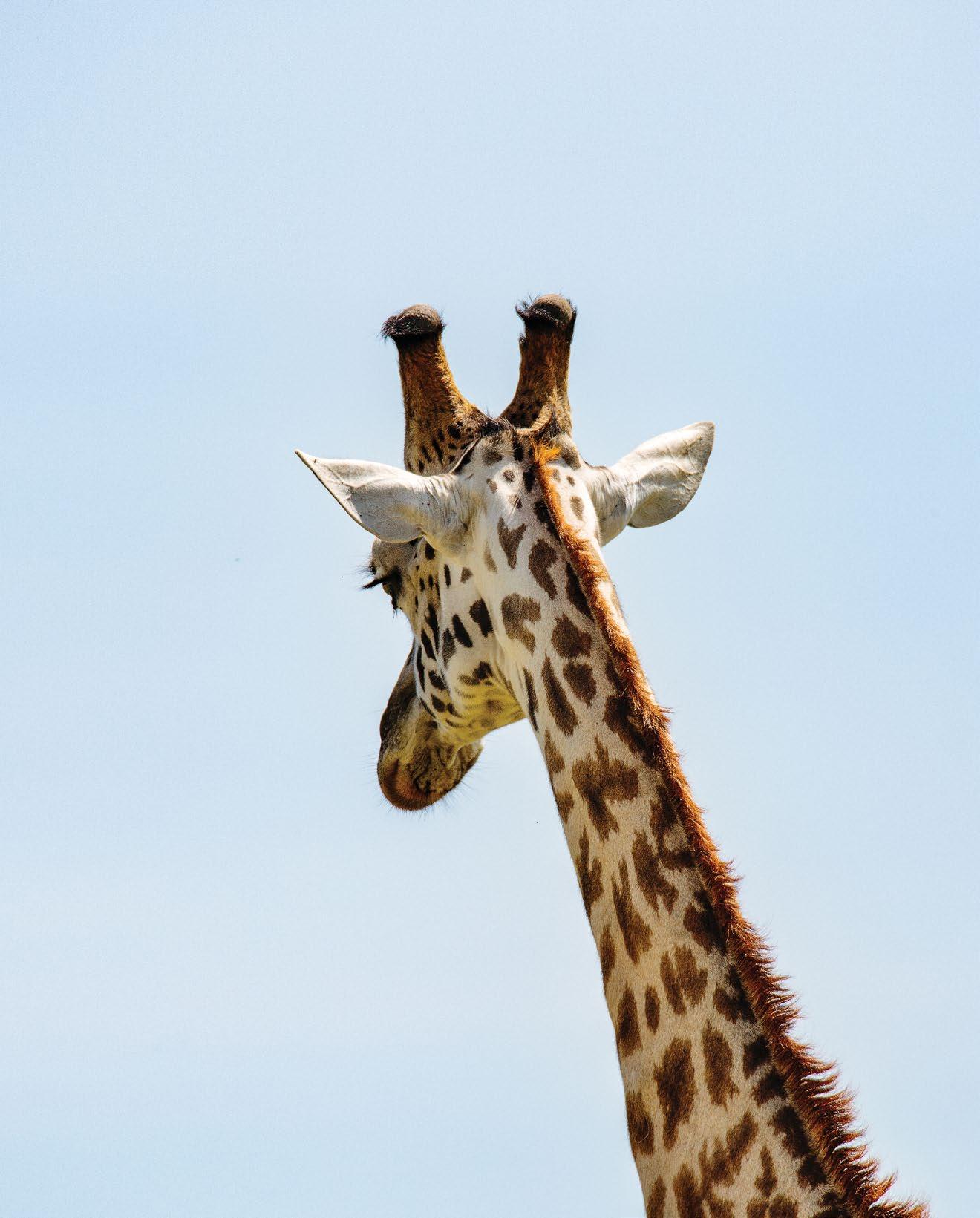
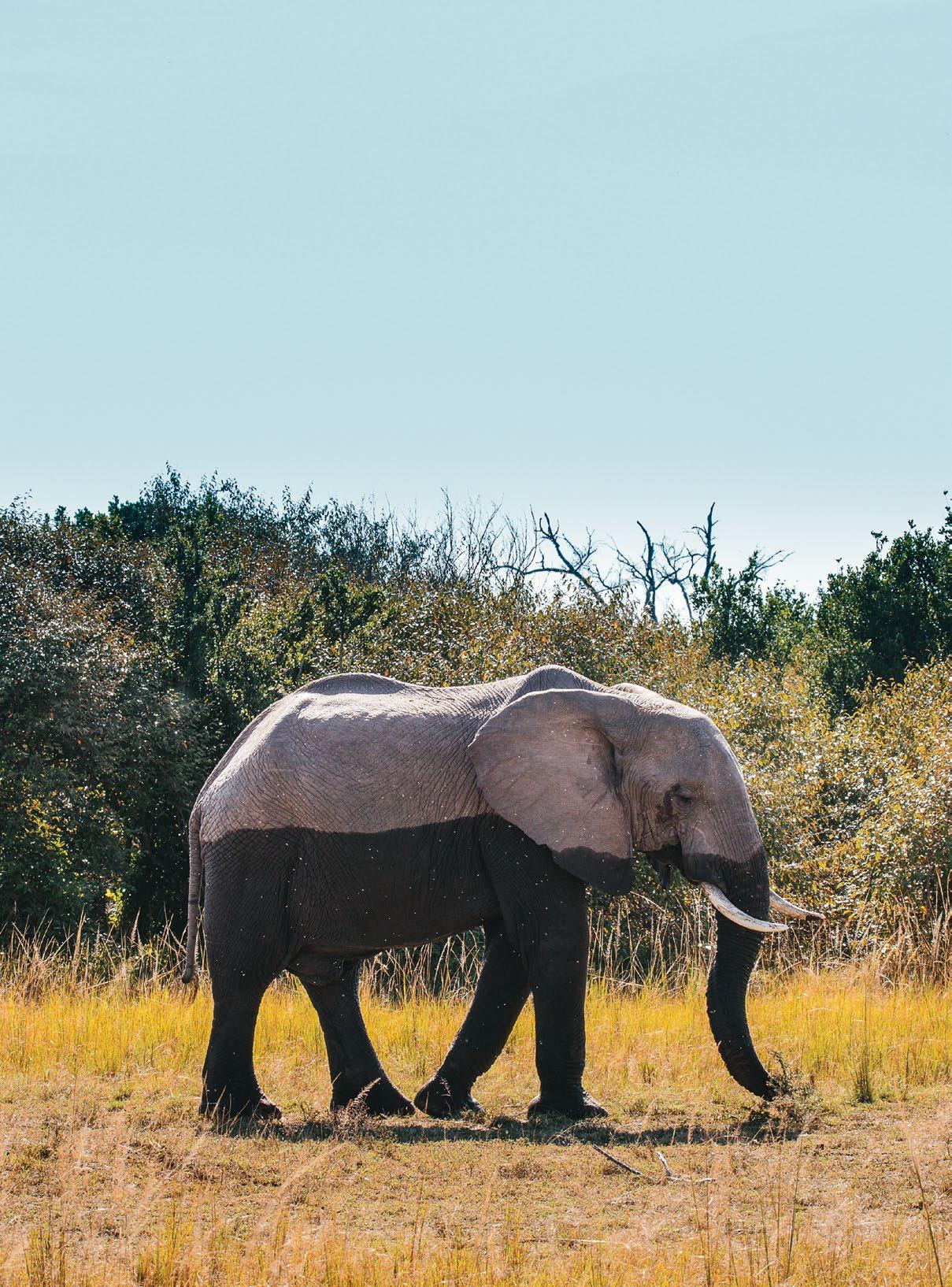
“My favorite season is right now — it’s very peaceful,” says Omari as we set out on our first game drive, winding slowly toward Bateleur Camp under a sky washed clean by overnight rains. In a roadside grove, we see Maasai giraffes browsing thorny treetops, heads swiveling on the slender stalks of their necks. A roundrumped rock hyrax stands sentinel on a stone outcropping. A family of elephants comes into view, and Omari stops in the middle of the empty dirt road. We listen to their huffing chorus as the herd overtakes us, enveloping our truck. One swings a bit wider, nudging a tiny calf in her lee. “A newborn,” Omari whispers. “No more than a few weeks old.” The baby sucks its trunk, wobbling slightly on Gumbyish legs.
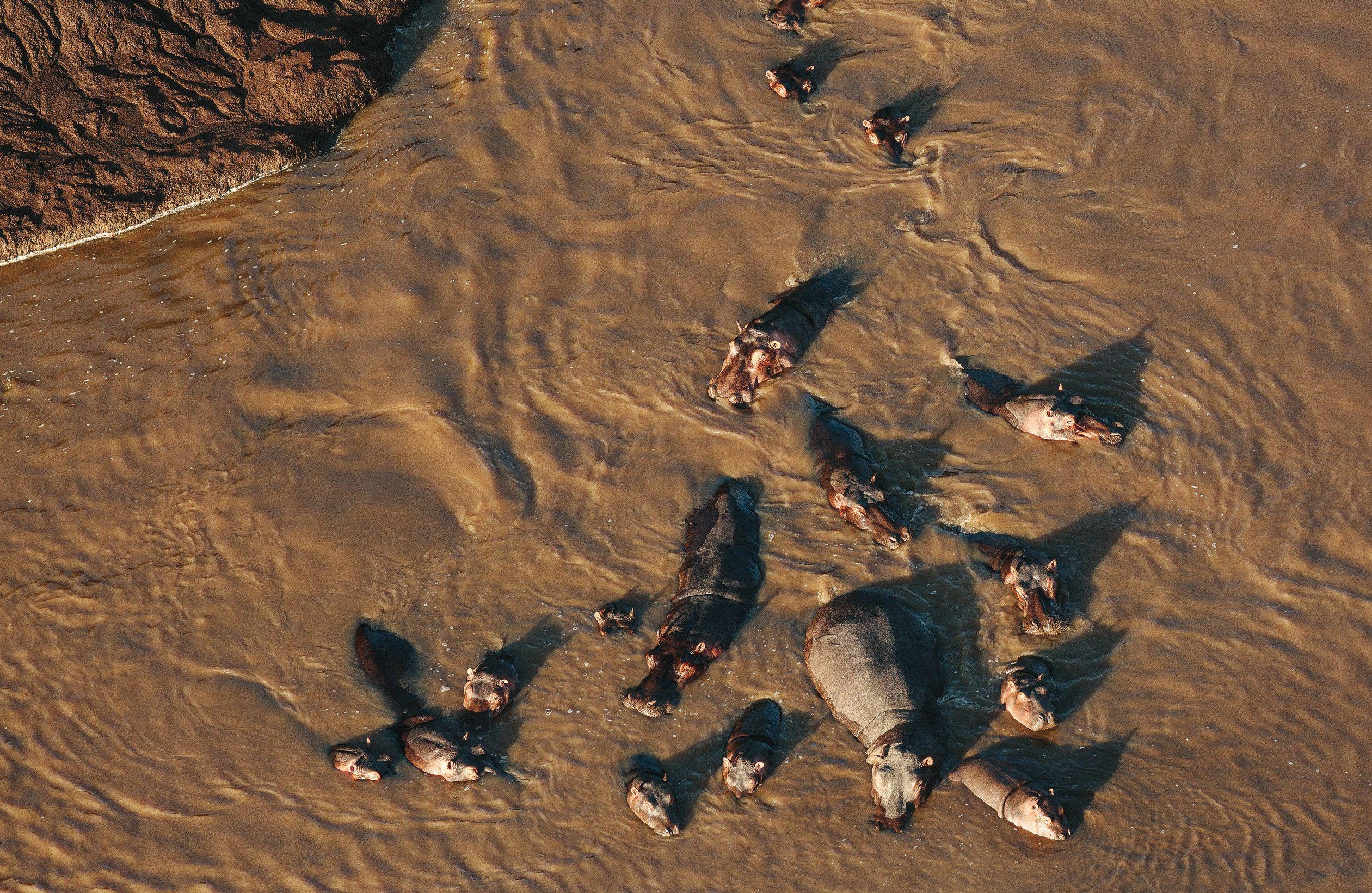
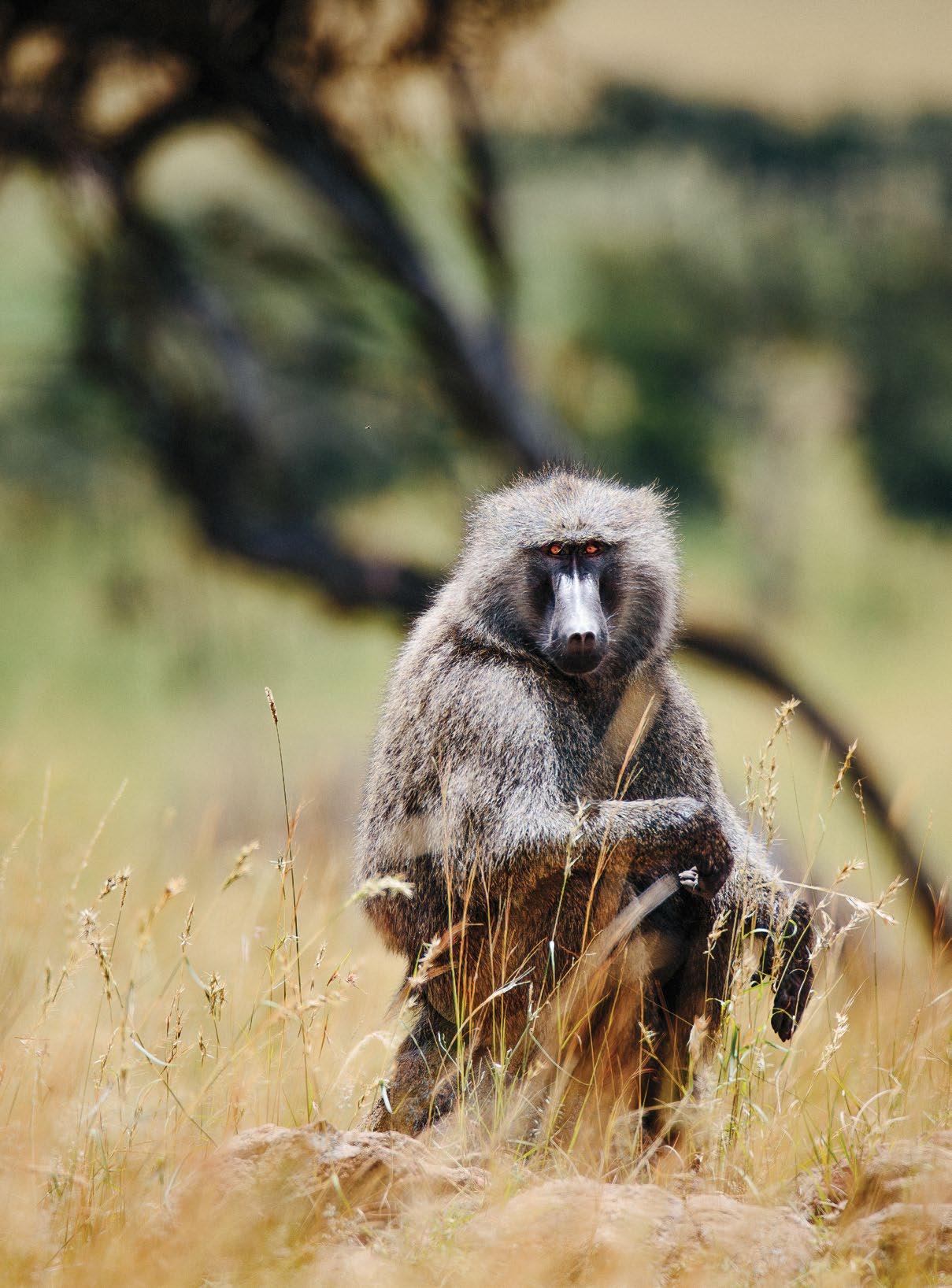
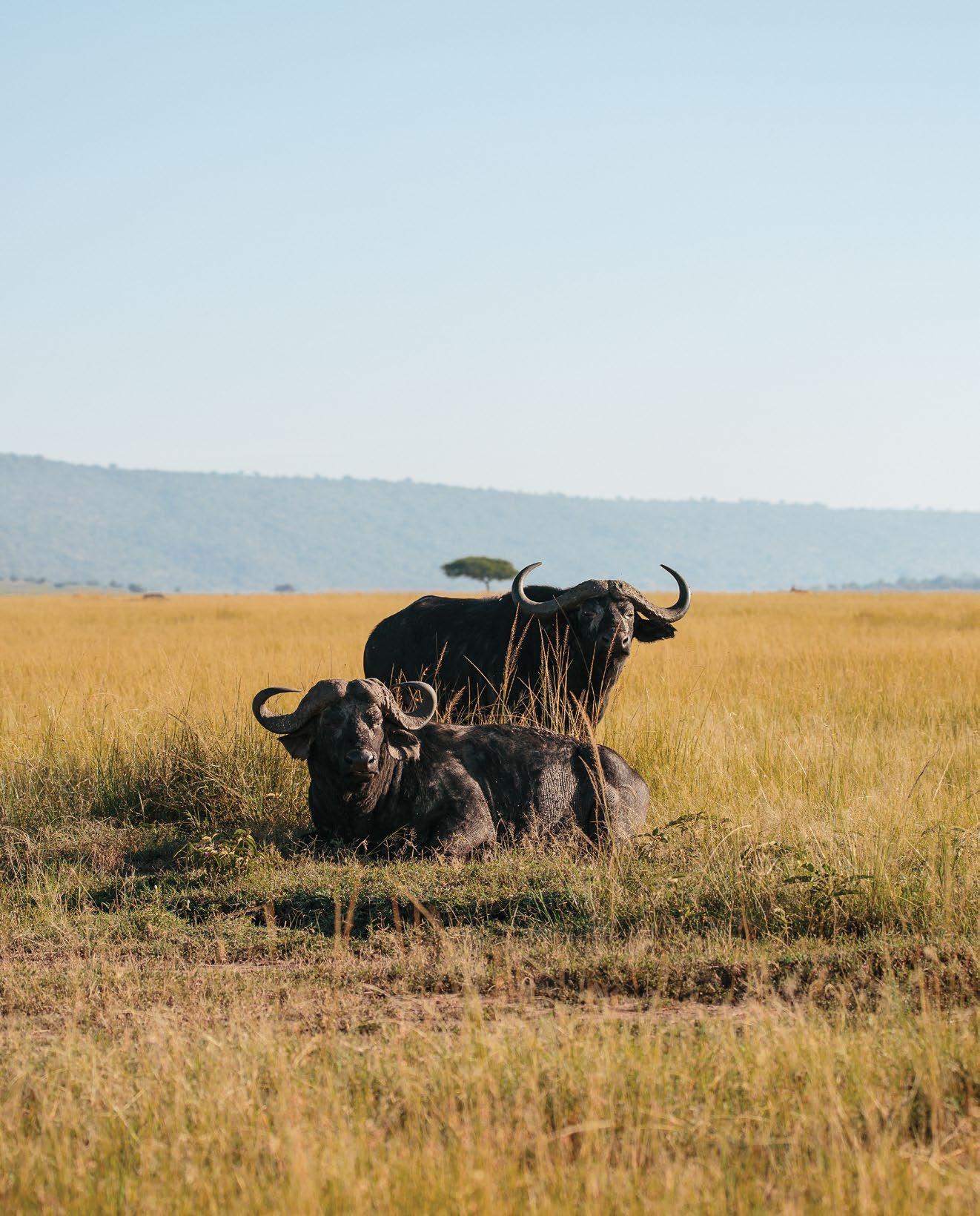
An olive baboon poses for the camera (the species is known for being social, curious and expressive); mighty and unpredictable, African buffalo are among the most dangerous animals in the Mara; for a different perspective on the savanna, take a hot-air balloon ride, where you might soar above a “bloat” of hippos in the Mara River.
Spotting baby animals is one reason Ashish Sanghrajka, president and CEO of Big Five Tours & Expeditions, prefers visiting the Mara in the winter and early spring; originally from Nairobi, he travels to East Africa regularly for quiet-season safaris. “In December you start seeing some of the newborns — the entire cycle starts changing,” he says. On a recent off-season trip to the neighboring Serengeti National Park, he found himself surrounded by more than a million wildebeest. “There were live births happening around us,” he says. “We were the only vehicle there.” Fewer vehicles on the savanna benefits both visitors and wildlife. Human presence increases stress hormones for some animals, says Femke Broekhuis,
an assistant professor at Wageningen University & Research and former director of the Mara Cheetah Project. Once, she counted 65 trucks approaching a Maasai Mara cheetah in the span of two hours; with too many people around, the cats are restless, torching precious energy stores. “They tend to be quite vigilant, and their feeding behavior changes,” Broekhuis says. She, too, prefers the off-season, and not just because it’s quieter. “You’ve got big open skies and these big stormy clouds,” she says. “It’s kind of dramatic.” At first, the skies open only at night. Downpours ripple the canvas roof of my tent as I sleep. By the time I carry a mug of strong coffee — slipped into an outside alcove by Simon, the butler — onto my veranda
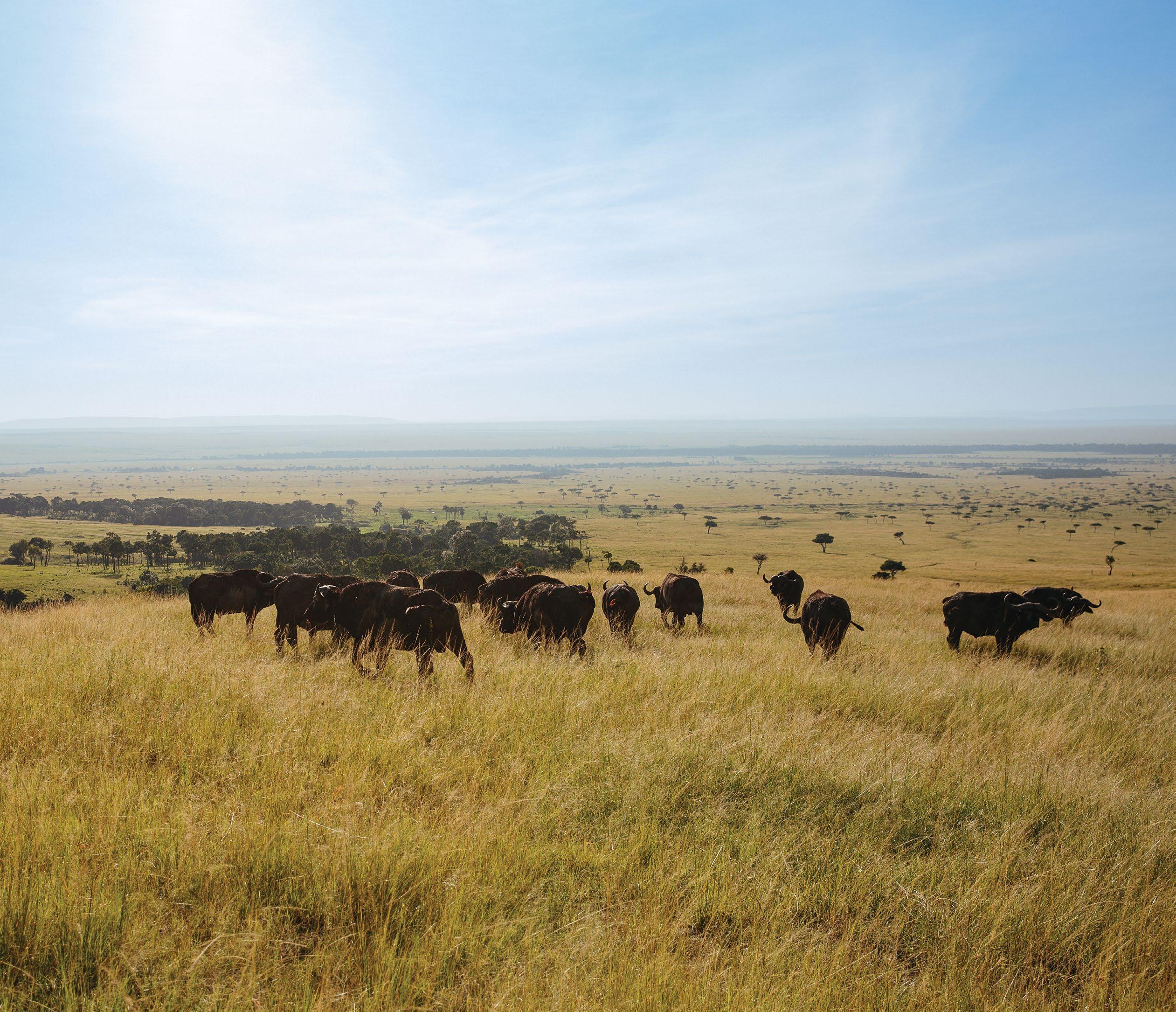
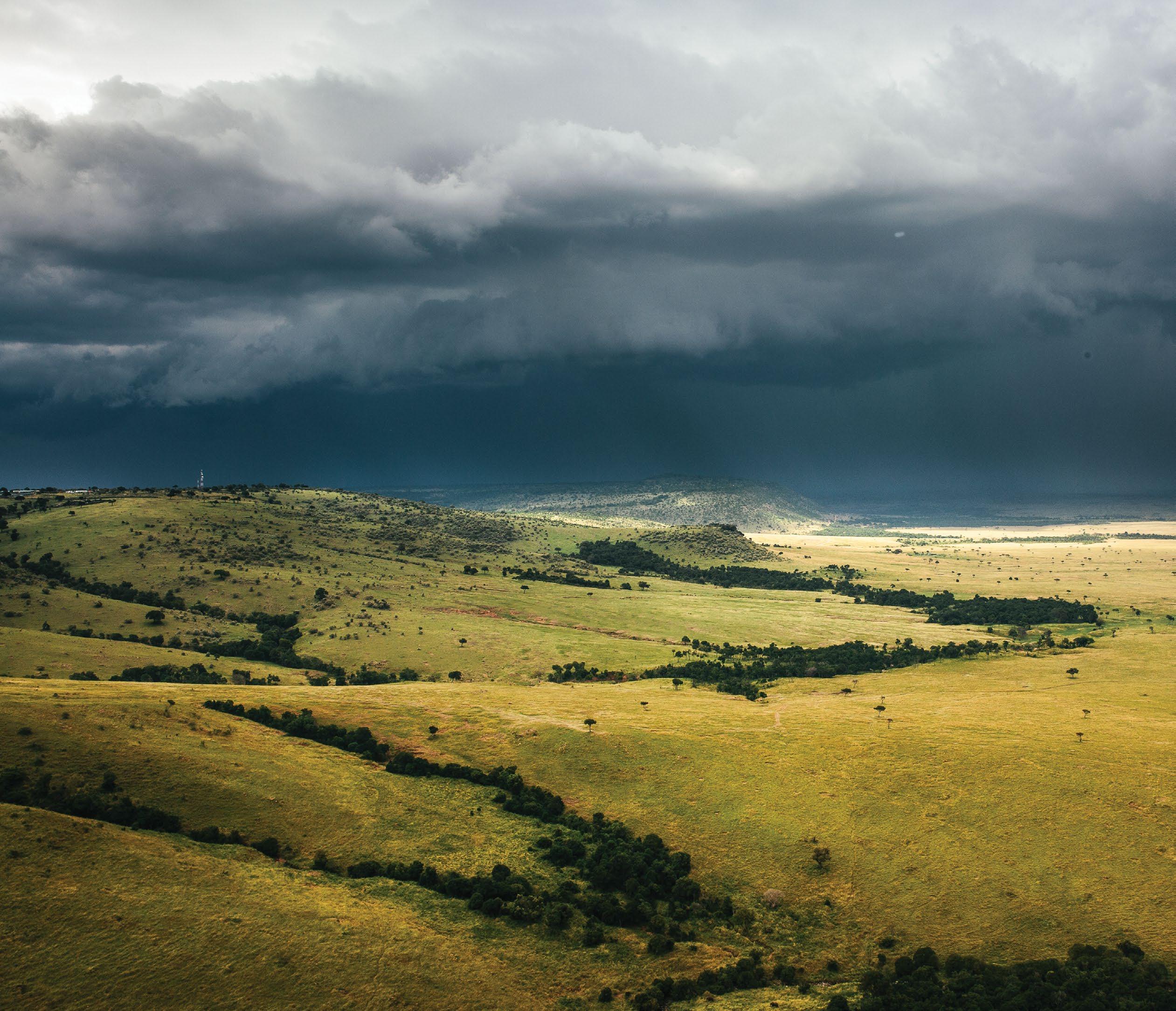
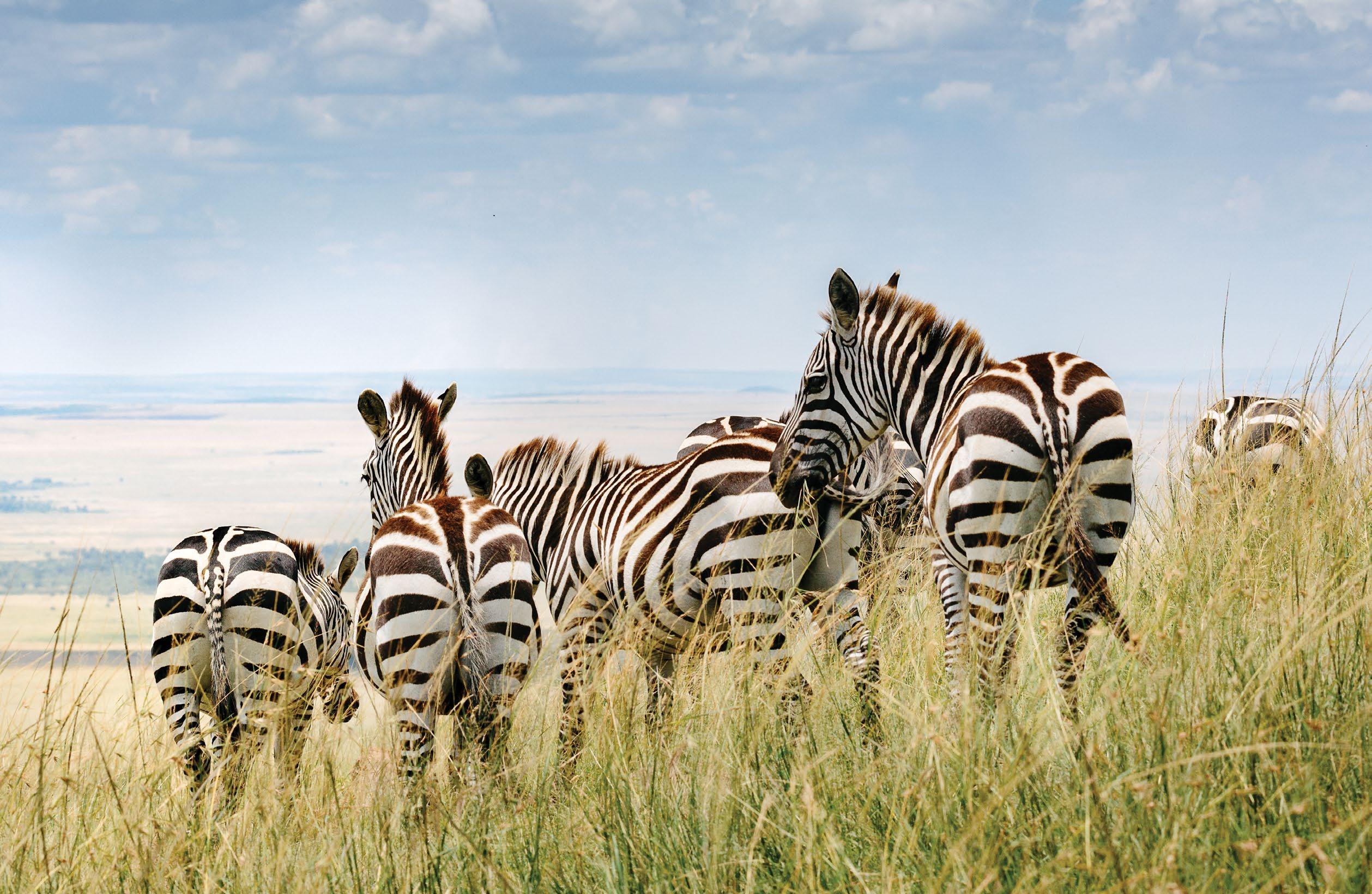
with views across nearby plains, the clear dawn silhouettes a long line of elephants. But on the third day of my trip, gray-bellied clouds bubble skyward in the early-afternoon heat. Omari and I are side by side, outside our truck above the mud wallows of the Mara River. An elephant bathes midstream, anointing itself with trunk-blasts of river water. Near the banks, hippos are submerged to their eyes. A young calf necklaced in fat rolls leans on its mother’s haunch.
The first spattering drops fall by the riverbank. At Bateleur Camp, the storm swells to a cool torrent. When I reach my tent, I find Simon has filled my handhammered copper tub to the brim, petals scattered across its steaming surface. Setting a brandy decanter
within arm’s reach, I slip into the water. The short and potent storm roars away outside, drumming at my tent’s glass atrium. Thinking of the hippos, I sink in to my eyeballs.
When I’d arrived, three days before, Omari had asked me what I hoped to see. I’d laughed at the question. I wanted to see everything, all of it — yet I could have contentedly passed the trip watching warthogs root up the grass by Bateleur Camp’s almond-shaped infinity pool, one of two on the property.
“Sometimes it’s not what you see, but how you see it,” agreed Omari. Safari’s richest pleasures are often the most minutely etched: the lazy twitch of a sleeping lion flicking flies, evening sun blazing on
PREVIOUS SPREAD, FROM LEFT TO RIGHT African buffalo are typically found in herds of 100 or more, often near water; dark, dramatic skies are a common sighting during the Mara’s green season.
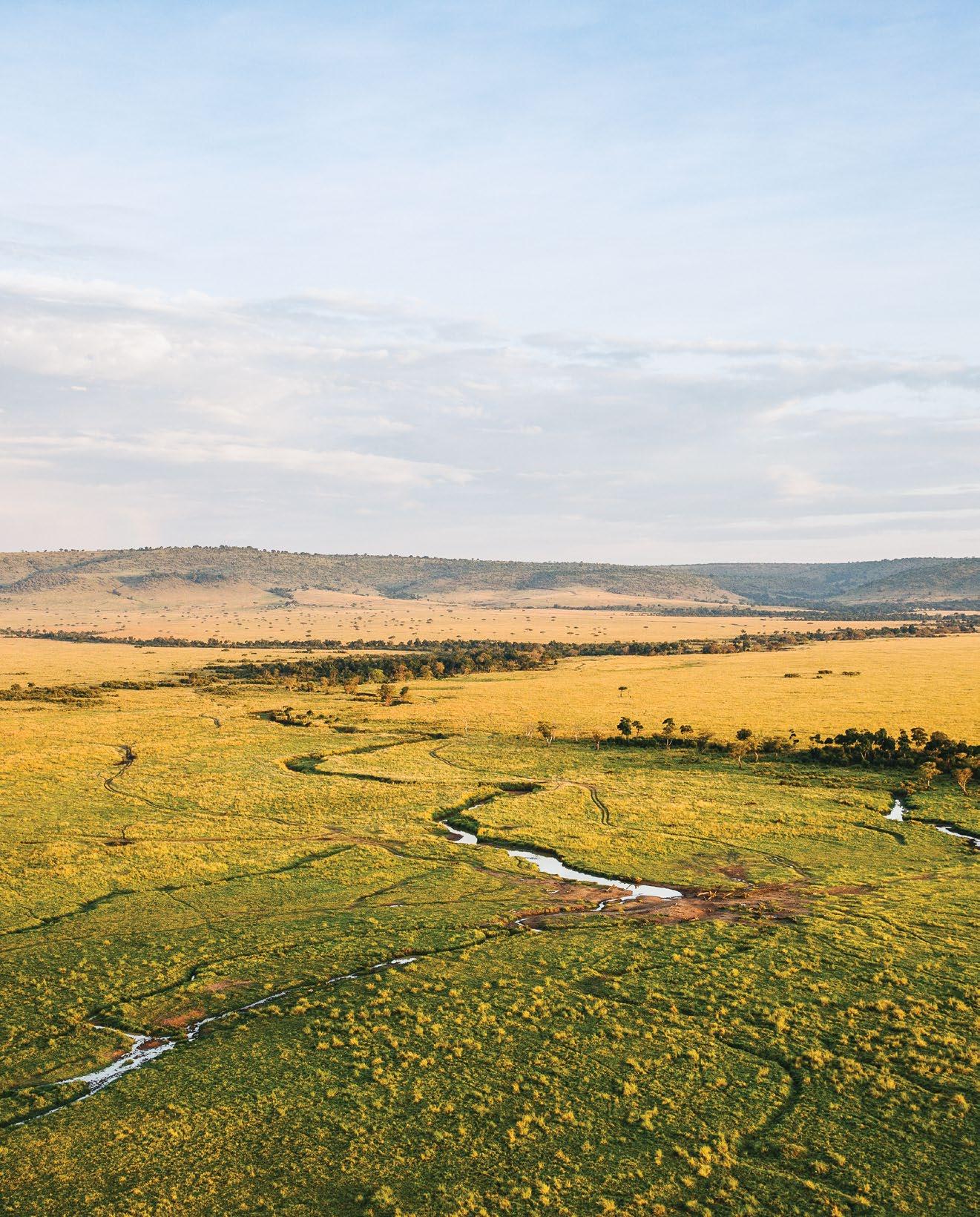
steep escarpments. So, on my final evening at Bateleur Camp, we set out at our ease, content, no checklist in mind. Then, Omari spots a telltale duo of horns in tall grass nearby: a critically endangered black rhino, all but unseen in the lush undergrowth.
Rains had draped the savanna in secrecy. The horns bob amid gold-tipped grass, inky masts on a dimly sunlit sea. “There’s a baby,” Omari breathes. He’s located a young calf, its tiny nub of horn a gray smudge. The pair steps into a clearing, and the calf appears. Snouty and small, it barely reaches its mother’s knee. We stay in silence as the sun slips lower, leaving the Mara as dusk darkens the eastern sky. “Are you happy?” Omari asks. I am, of course. The sudden outrush of
fragile beauty has left me humming, elated. The rainy season’s tall grass is a haven for those animals who crave a thicket’s privacy, which means they’re sometimes harder to spot. But the resulting encounters are electric with serendipity.
It’s dark as Omari drives toward Bateleur Camp. At the sides of the narrow road, the truck’s headlights — the beams a chaos of insects — illuminate long grassy hanks. Omari stops as a slender figure steps onto the dirt track. The serval cat has a spotted pelt, its ears an improbable batwing swoop. It looks poised as a pharaoh as it sits, giving us both a long look. Then it leaps, kittenish, into the grass once more. Omari grins at the rare sight. “Now I am happy, too!”
IN PARTNERSHIP WITH AMAWATERWAYS
Through meticulous planning and thoughtful collaboration, AmaWaterways crafts river journeys that resonate long after guests disembark.
FROM LEFT TO RIGHT
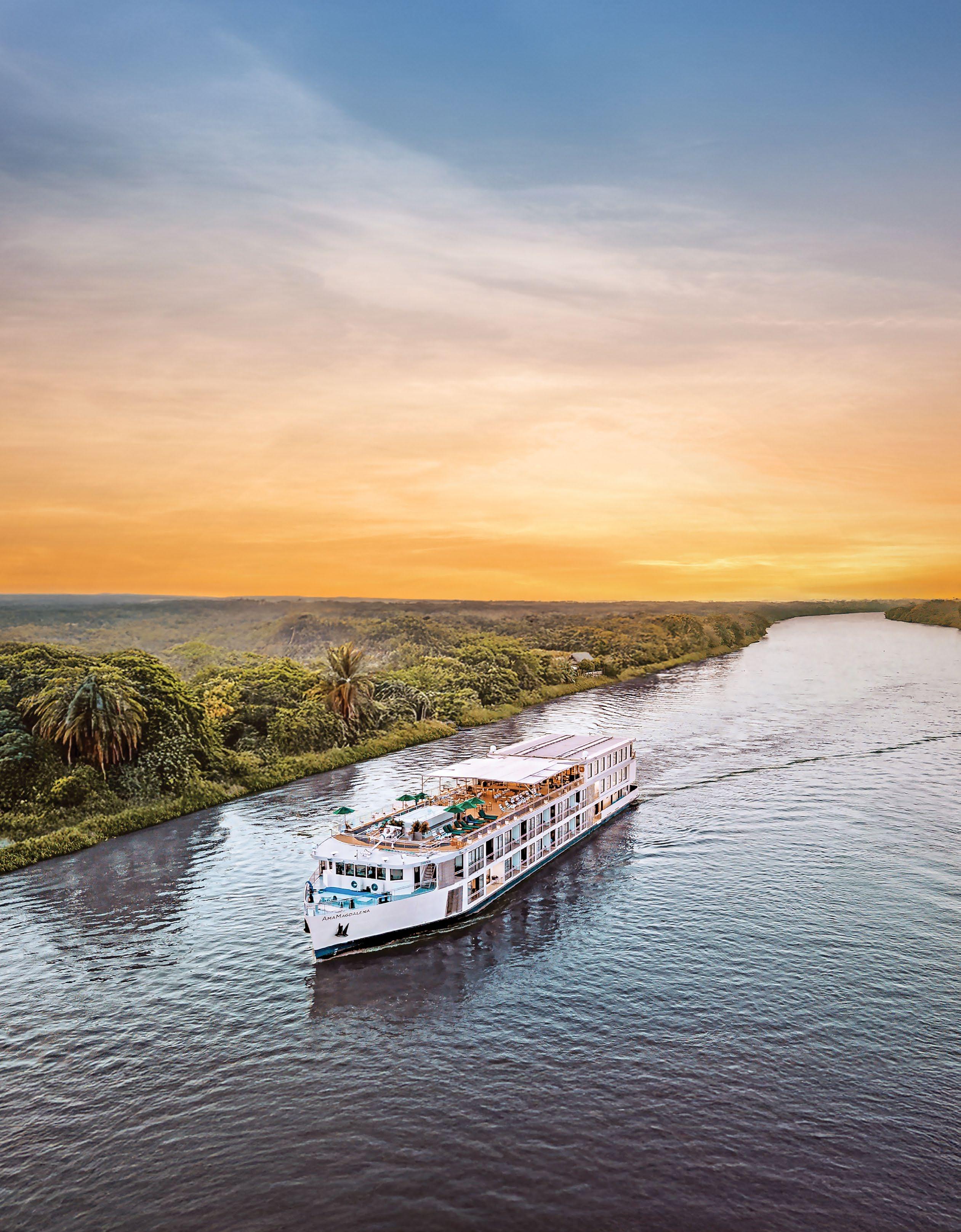
All 30 staterooms on the AmaMagdalena feature twin balconies for admiring the lush landscapes and riverside villages; AmaWaterways’ Colombia itineraries begin or end in Cartagena, where the colorful streets are alive with music and dancing.
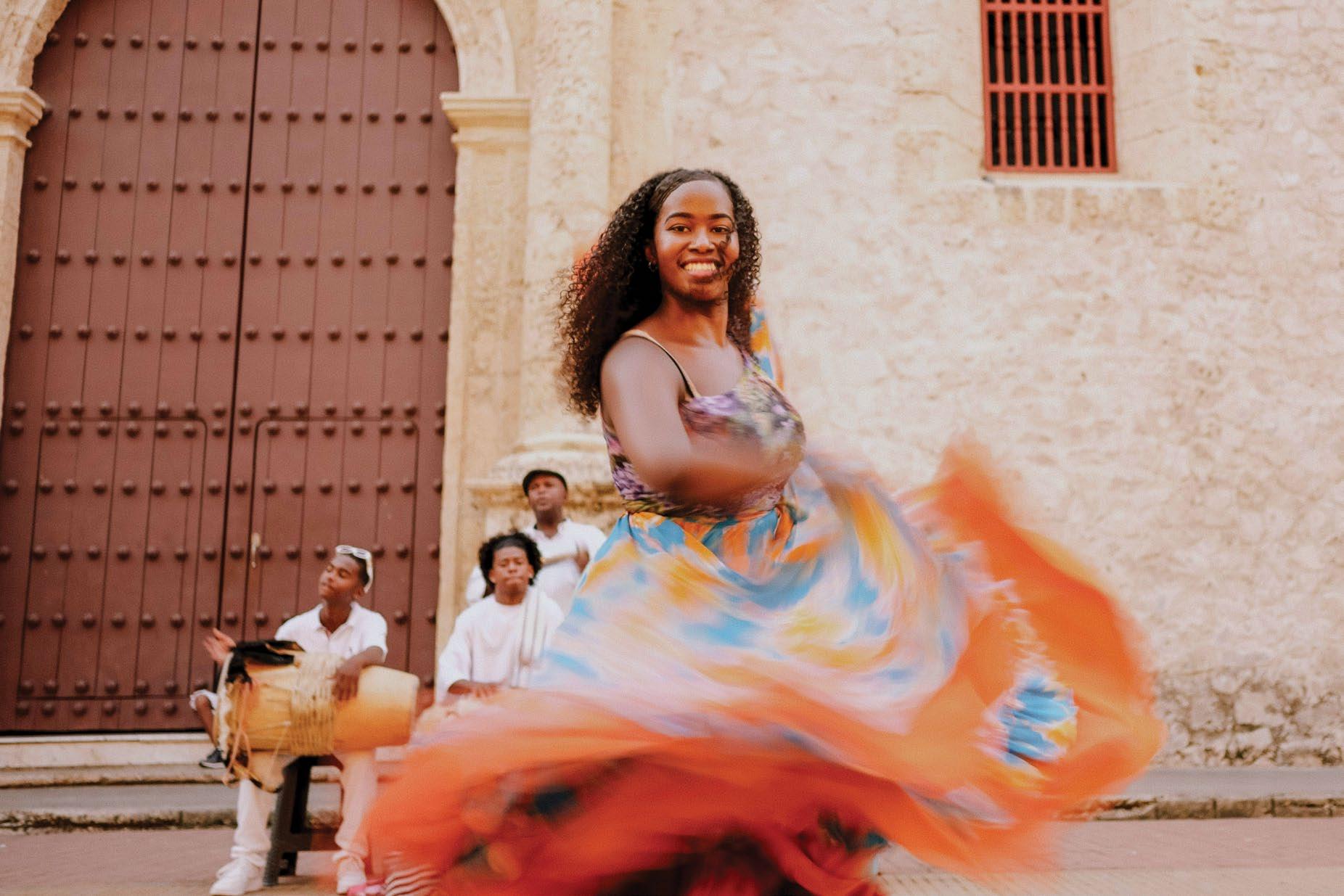
Five years ago, when AmaWaterways’ managing director of Colombia, Beno Atan, began scouting the Magdalena River for possible cruise expansion, it was a forgotten region of the world. Conflict, infrastructure decline and shifting trade routes had pushed the former main artery into obscurity, but it continued to carry the weight of history — as a source of inspiration for famed Colombian novelist Gabriel García Márquez, and as the birthplace of cumbia, a style of music and dance that blends African, Spanish and Indigenous influences.
Atan knew that responsible tourism could breathe new life into the region, so he lived along the river for two years, meeting with community leaders, fishermen, teachers and farmers to explore what a sustainable entry might look like. “A river route is not drawn — it’s earned,” says Atan. “Tourism, when done
carefully, can restore value to what was overlooked. It can make the river the main course again, not a forgotten side note.”
Rather than replicate European river-cruise models, Atan designed a cruise experience that was unique to the region and the rhythm of the river. “In Palenque, guests learn about the first free Black community in the Americas through living language and music,” he says. “In Santa Bárbara de Pinto, they meet a farmer who explains flood cycles and planting seasons. In Mompox, they witness filigree craftsmanship that dates back centuries.”
That’s the goal of every AmaWaterways itinerary: to create intimate and immersive journeys that tell a story, reveal the cultural heartbeat of a destination and help guests develop a deep emotional connection that stays with them. Today, that approach continues to
evolve through a thoughtful fleet expansion to reach more corners of the world, enriched land programs that add depth beyond the riverbanks, and a growing collection of specialty and themed cruises designed around shared passions.
Colombia is just one area where new ships have debuted, with the AmaMagdalena in April 2025 followed by the AmaMelodia in October. This spring, the AmaSofia will cruise down the Rhine and Danube Rivers. Next year, the AmaMaya will join the AmaDara on the Mekong River in Vietnam. By 2030, 11 more ships will launch with fresh designs and enhanced wellness spaces.
In the case of the AmaMagdalena and AmaMelodia, much more went into the builds than engineering.
“It required creating an entirely new river-cruise ecosystem from the ground up,” says Atan. This
The excursions go beyond classic safaris — though there’s plenty of wildlife — to explore cultures, cuisines and ways of life that many travelers may experience only once in a lifetime.
entailed procuring environmental permits, designing floating dock systems, developing hydrological studies, field-testing a prototype excursion boat and generating enhanced monitoring systems to make up for the lack of navigational data on the region. The result is two ships purpose-built to ferry guests to towns that would never otherwise receive international travelers. During last year’s inaugural season, Atan even spent three months on board to refine the experience. “A ship’s design does not end at launch,” he says. “It evolves through operation.”
This level of intense detail also went into the creation of AmaWaterways’ new Africa itineraries, to debut in August 2026. Developed by Todd Ney, AmaWaterways’ product manager for Egypt and Africa, who has visited the continent countless times, the itineraries are exceptional in that only about
FROM LEFT TO RIGHT
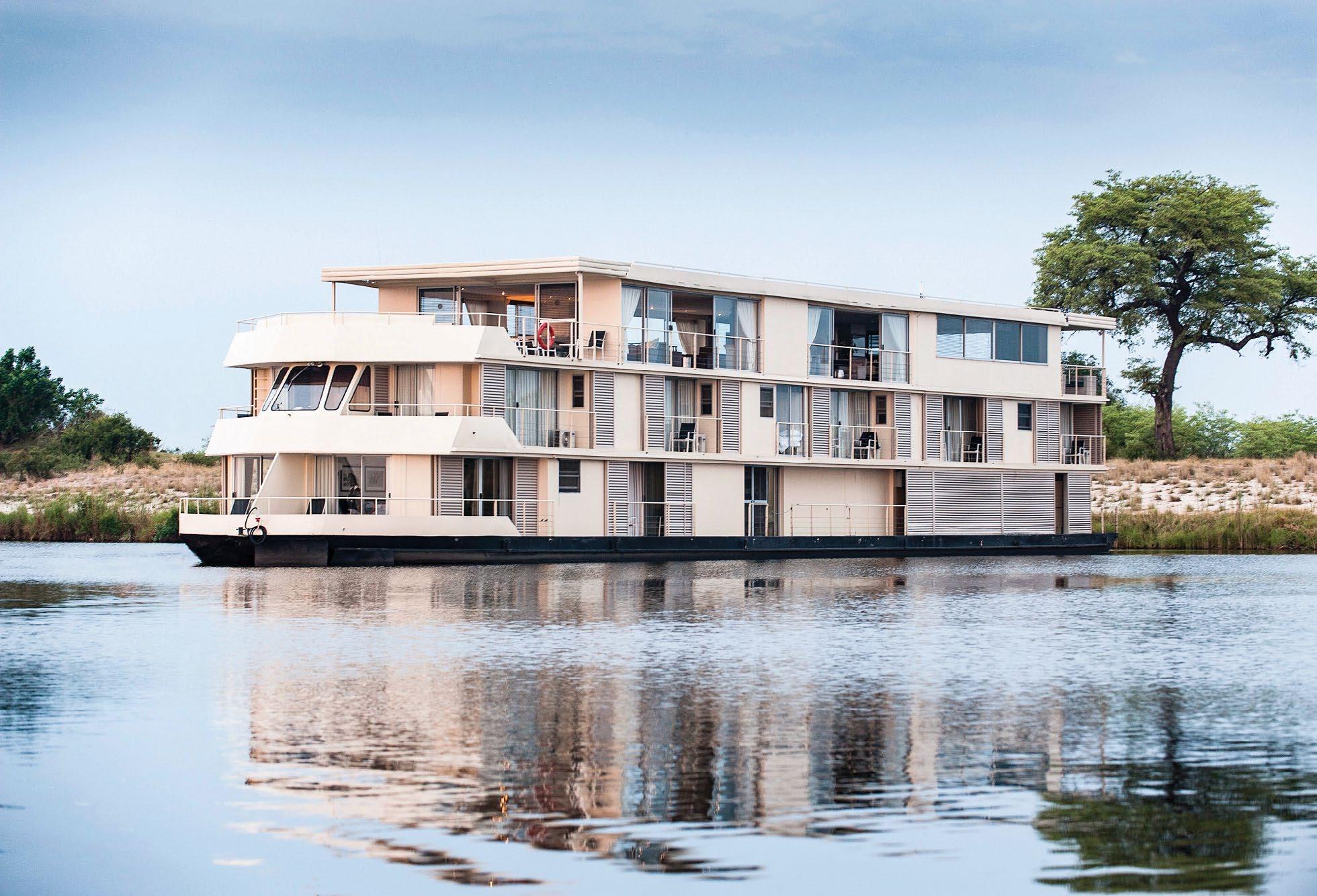
AmaWaterways’ Sun Decks offer the ultimate vantage point for taking in your destination’s sights; cross elephants — one of the Big Five — off your list on one of AmaWaterways’ new Africa itineraries; with just 14 staterooms, the Zambezi Queen is best described as a boutique floating lodge.
25 percent of each trip takes place on the ship. The excursions also go beyond classic safaris — though there’s plenty of wildlife — to explore cultures, cuisines and ways of life that many travelers may experience only once in a lifetime.
For the cruise portion, guests board the 28-passenger Zambezi Queen for three nights. “It’s not a cruise where every day is a new port of call,” says Ney. “It explores 15 square miles of the Chobe River. You get in these small safari boats and go up the tributaries and into the swamplands.” Along the river, guests see four of the Big Five: lions, leopards, elephants and African buffalo. To see rhinoceroses, they head to Victoria Falls National Park for a night safari — one of the land excursions on the itinerary — tracking the creatures after dark before a locally sourced four-course dinner under the light of the moon.
For Ney, one of the most meaningful stops is Soweto, the center of the uprising against apartheid in Johannesburg. When he first visited eight years ago, Ney asked his guide, Lucky, to show him somewhere tourists never go. Lucky introduced him to Thulani, who ran a modest school with just 30 students, a tin roof and an outhouse, and was determined to expand opportunities for local children. Ney was inspired and began sending guests to visit. Today, the school serves 800 students — thanks in part to a $1-million donation from an AmaWaterways patron. “Once Thulani tells his story, people want to help,” Ney says.
Life-changing adventures aren’t just part of AmaWaterways’ Africa itineraries. Around the globe, the line’s themed sailings cater to special interests, bringing exclusive experiences to lovers of wine, beer, golf, wellness and more. Music connoisseurs
Make the most of every moment — before, during and after your AmaWaterways cruise.
Thanks to a new Mandarin Oriental collaboration, you can add nights at a five-star hotel in select European cities before or after your river cruise. Every aspect of the stay is taken care of, from transportation with private drivers to custom excursions with experienced guides.
Travelers craving a deeper dive into history and culture can join a Smithsonian Journeys sailing — a new alliance with the Smithsonian Institution. Each cruise hosts expert professors and speakers, such as former Reuters foreign correspondent Adam Tanner, who delve into everything from the details of D-Day to the architecture of the castles along the Rhine.
Following a Chobe River itinerary, add four nights in Rwanda. The highlight of the extension is the small-group trek into the bamboo forests of Volcanoes National Park, where silverback gorillas make their homes.
can book a Celebration of Music sailing along the Danube, for example, and travel with a dedicated music host — typically a conductor or musician — to visit the birthplace of Mozart in Salzburg or take a backstage tour of the Hungarian State Opera House in Budapest.
For members of the Black community, there are Soulful Experience departures that celebrate Black history. On the Nile River, guests disembark at a Nubian island village to see homes and meet artisans. In France, a tour follows in the footsteps of singer and dancer Josephine Baker while exploring the local jazz scene. On the Mekong, travelers learn about Black soldiers’ contributions during the Vietnam War. Each sailing features a Juneteenth-inspired dinner to honor African and Black diaspora culinary traditions with dishes like hush puppies and sweet pickled shrimp.
There are also seasonal sailings that line up with tulip season, Easter and Christmas. “My favorites are
the Christmas-market cruises,” says Ann Chamberlin, director of key accounts at AmaWaterways, who booked a Budapest-to-Vienna trip for her family after her mother passed. “I told my brothers, ‘Christmas is going to be different this year. Let’s go on a river cruise.’ We knew she would want us to be together.”
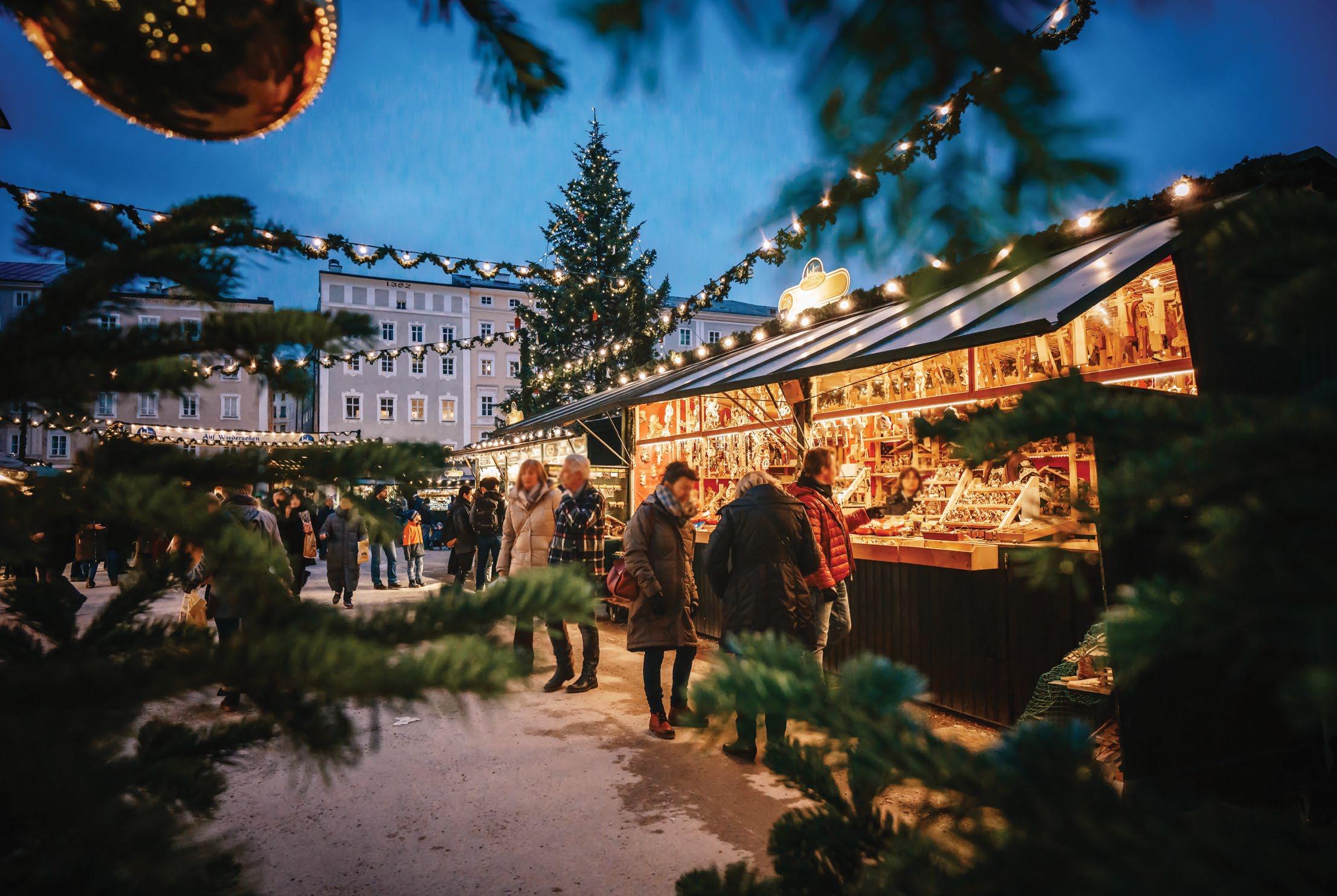
So, Chamberlin and her siblings boarded the AmaLea, which had wreaths on every door, cookies for decorating and a visit from Santa. “You get off the ship in Vienna at the largest Christmas market in the world, where you drink mulled wine and there’s music and chalets with arts and crafts,” she recalls. “It feels how Christmas is supposed to.”
That’s what AmaWaterways has built through diligent research and collaboration with both locals and patrons: experiences that feel unlike any other. Whether you sail down Colombia’s Magdalena, Southern Africa’s Chobe or Europe’s Danube, you’ll find yourself on a journey that moves you.
Ask your Ensemble travel advisor about exclusive amenities on AmaWaterways.
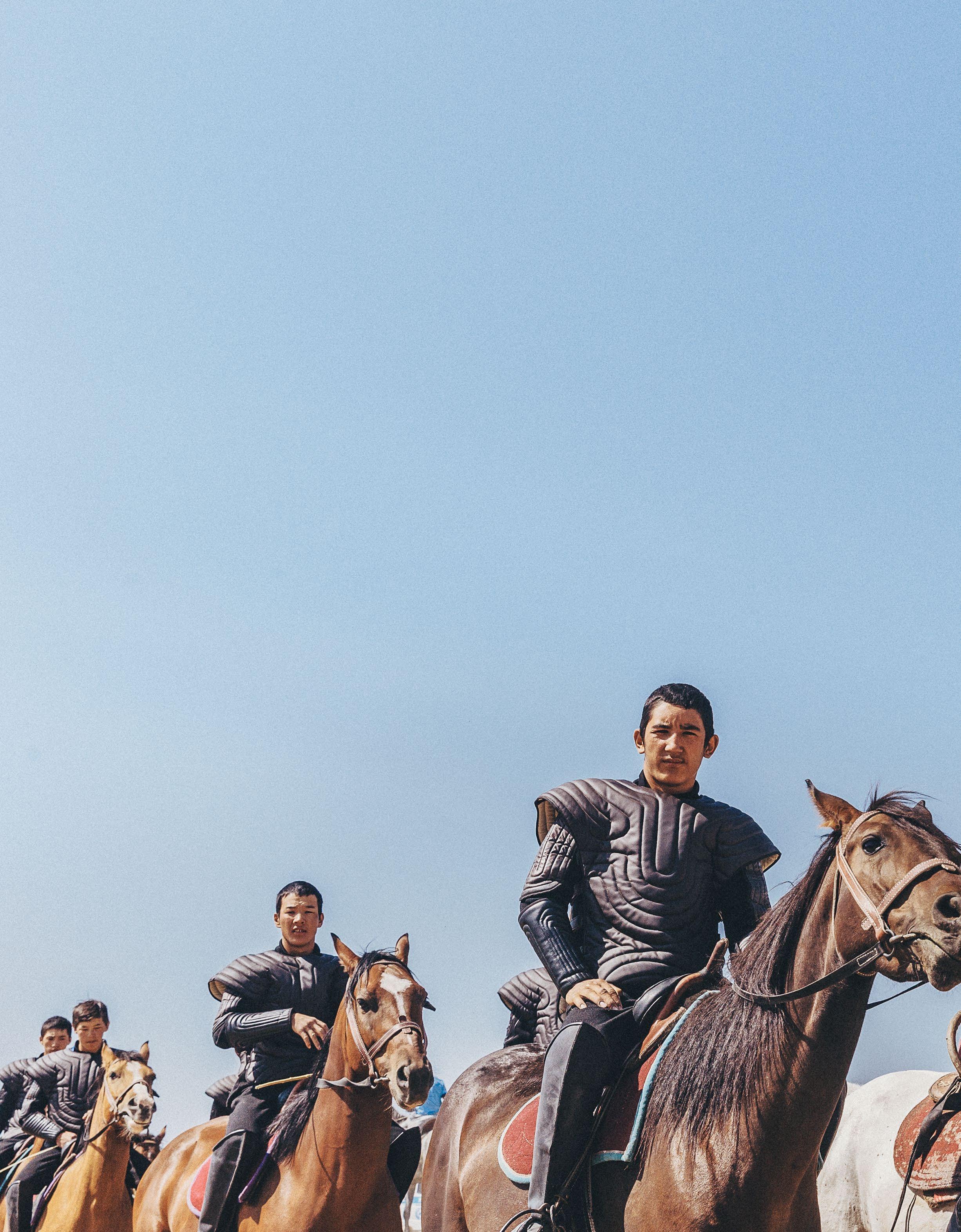
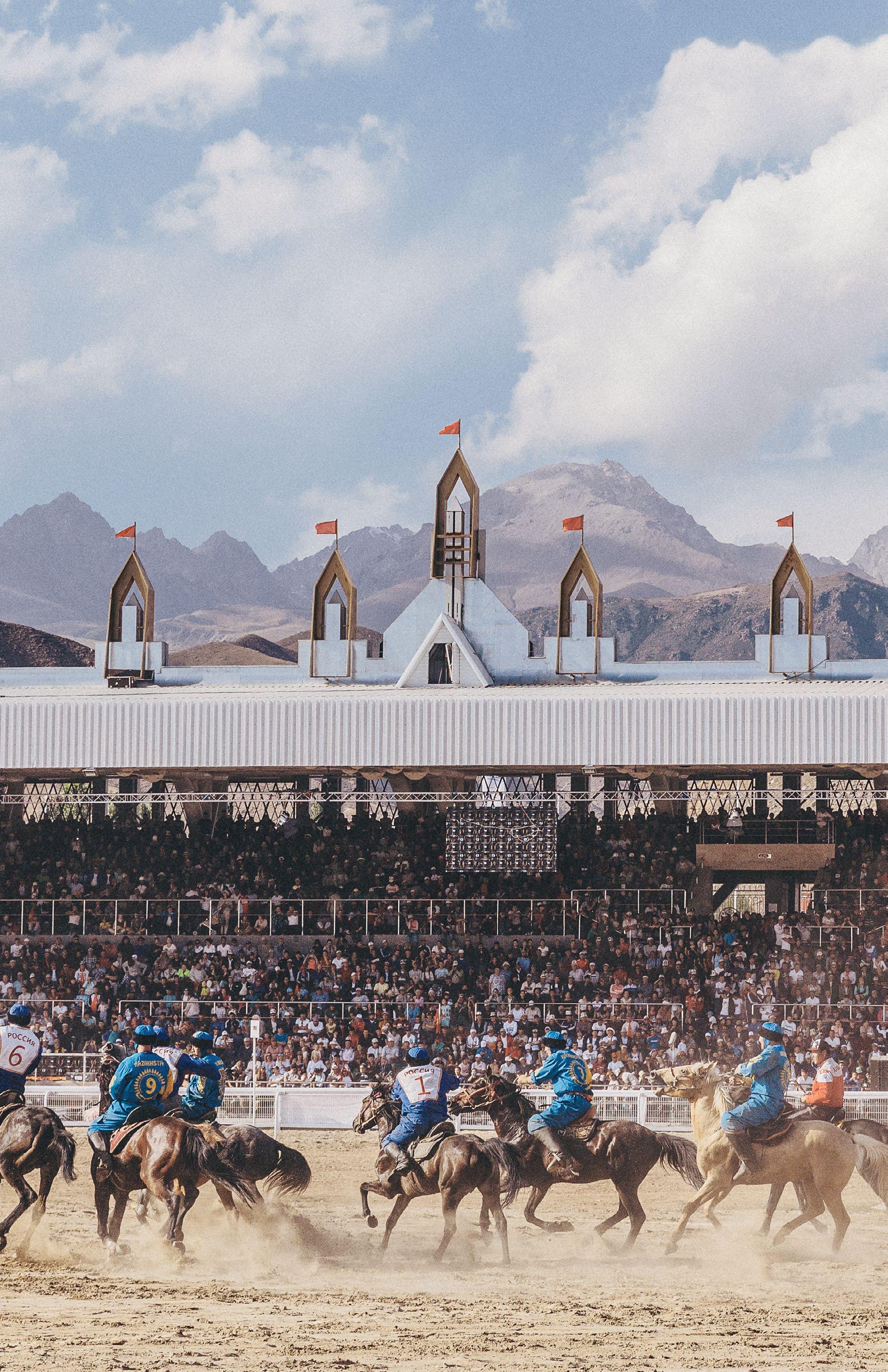
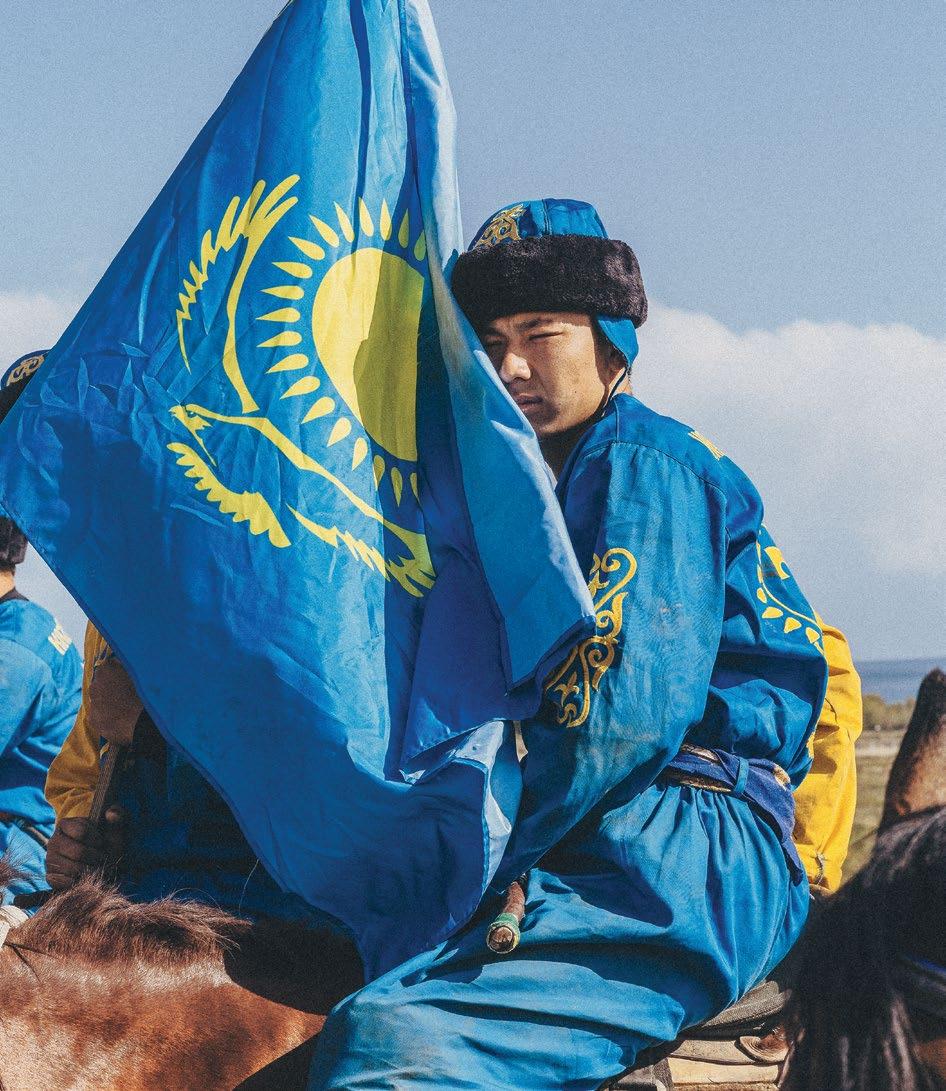
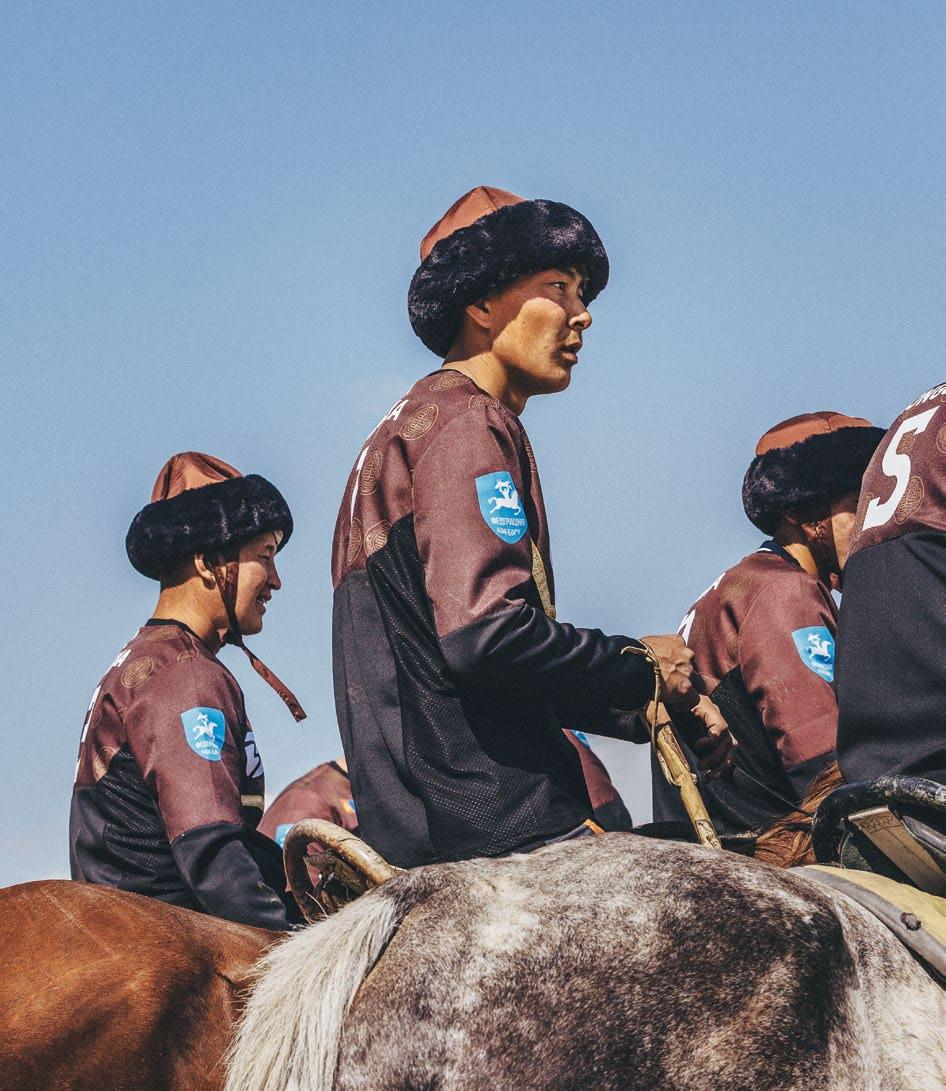
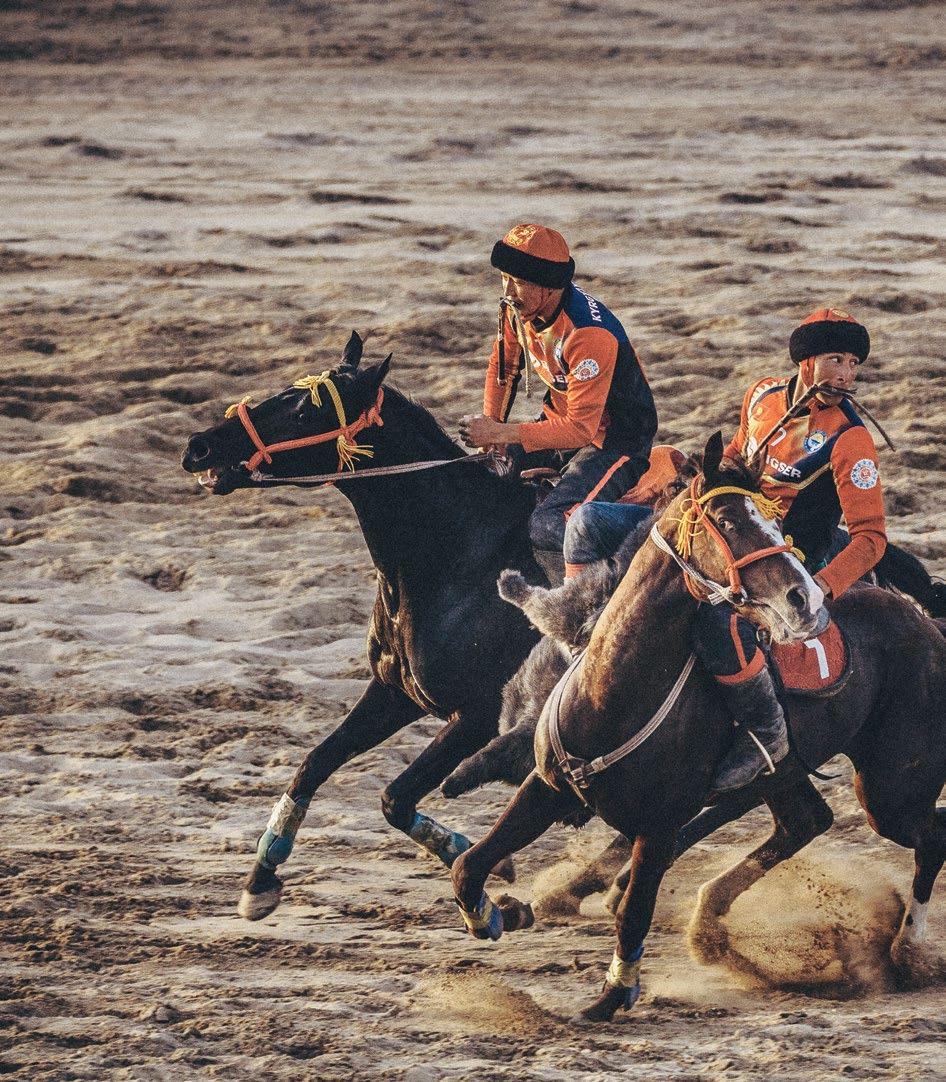
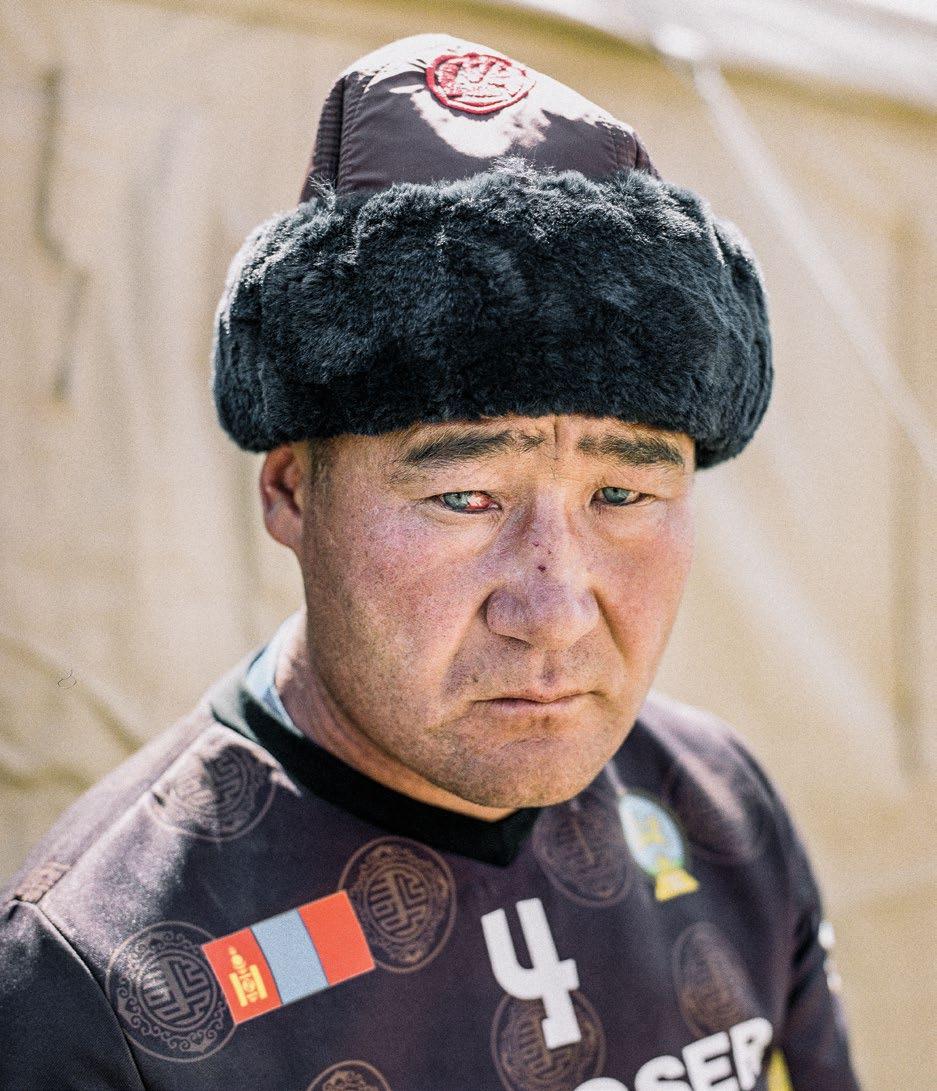
Hunting with a golden eagle. Tug-of-war. Horseback wrestling. Against the backdrop of the dramatic Tian Shan mountain range, 4,000 athletes and delegates from 90 countries will face off in 40-plus disciplines at the 2026 World Nomad Games. Launched in Kyrgyzstan in 2014, the biennial event combines thrilling sports competitions with a spirited celebration of nomadic culture at the Games’ ethno-village. This August, the Games return to their birthplace in Kyrgyzstan, kicking off with an opening ceremony that could rival that of any Olympic Games. The last time Kyrgyzstan hosted, in 2018, the opening ceremony featured dazzling dance numbers, equestrian performers (pictured) and a flag-filled parade of athletes. “One thousand people played the komuz, our national instrument, all together,” says Eliza Tynalieva, a Kyrgyz archer who competed at the 2018 Games. “It was a wonderful expression of our culture.”


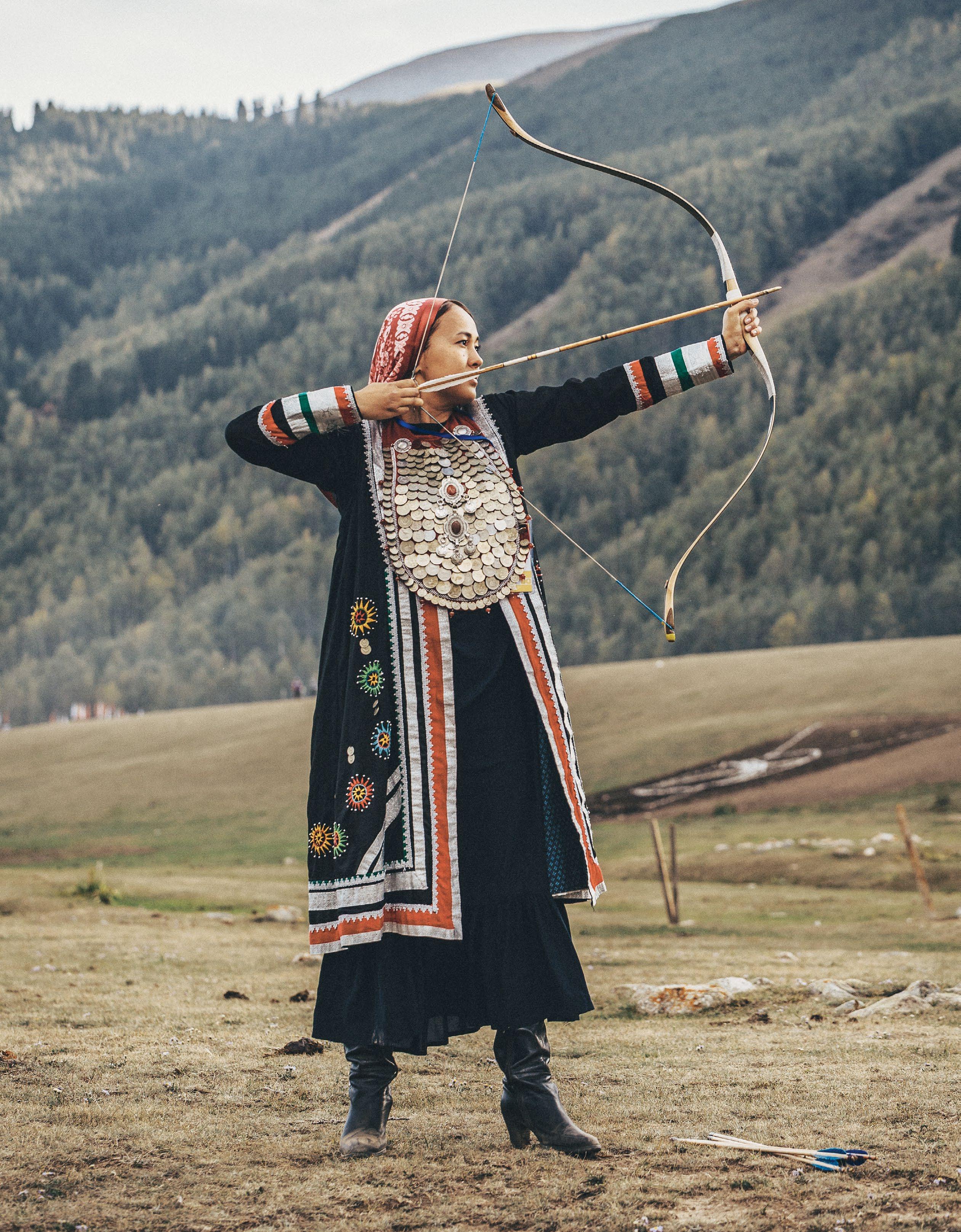
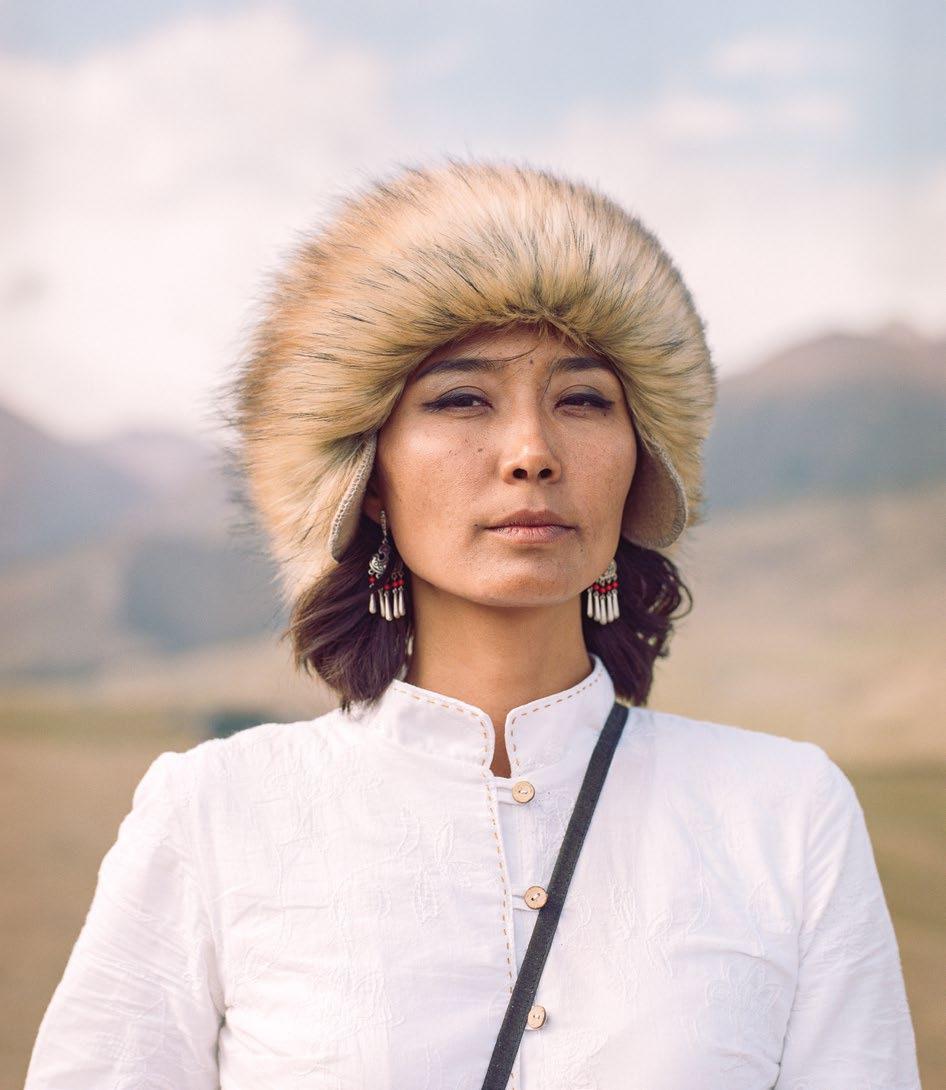
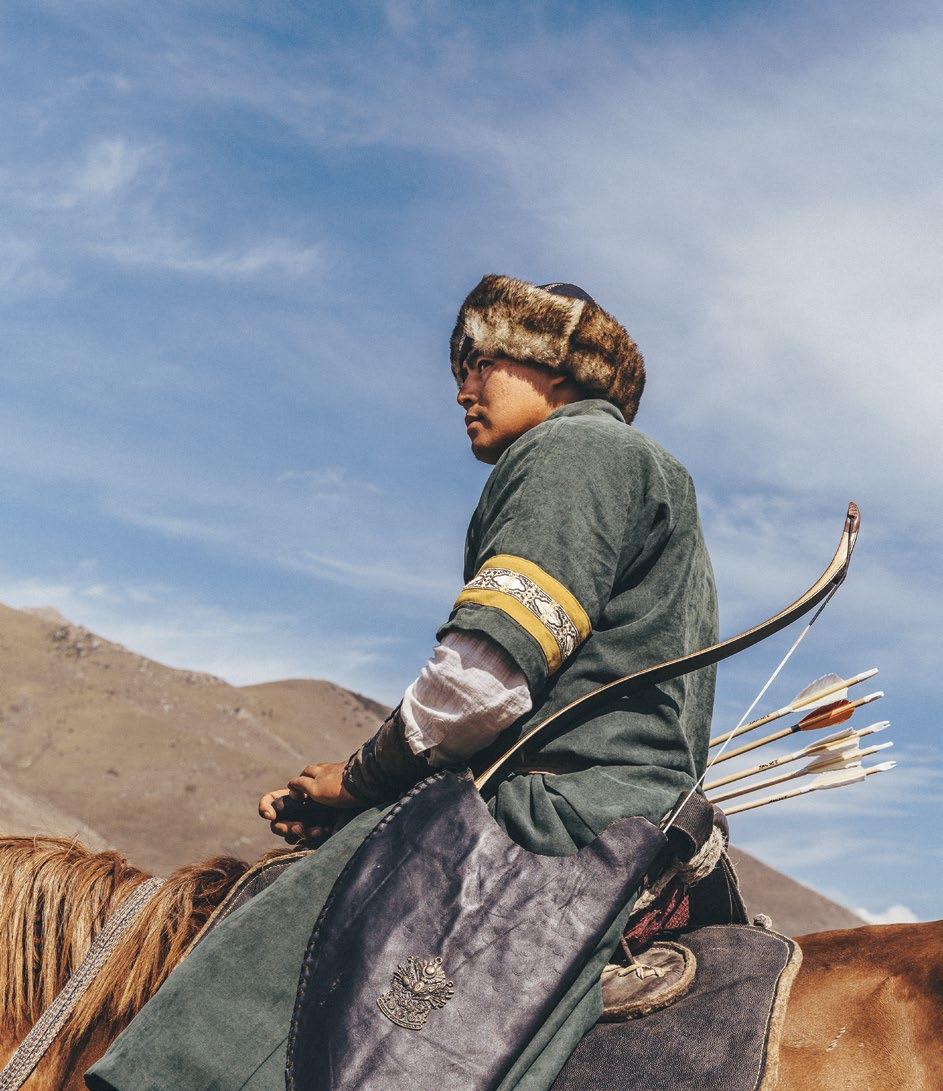
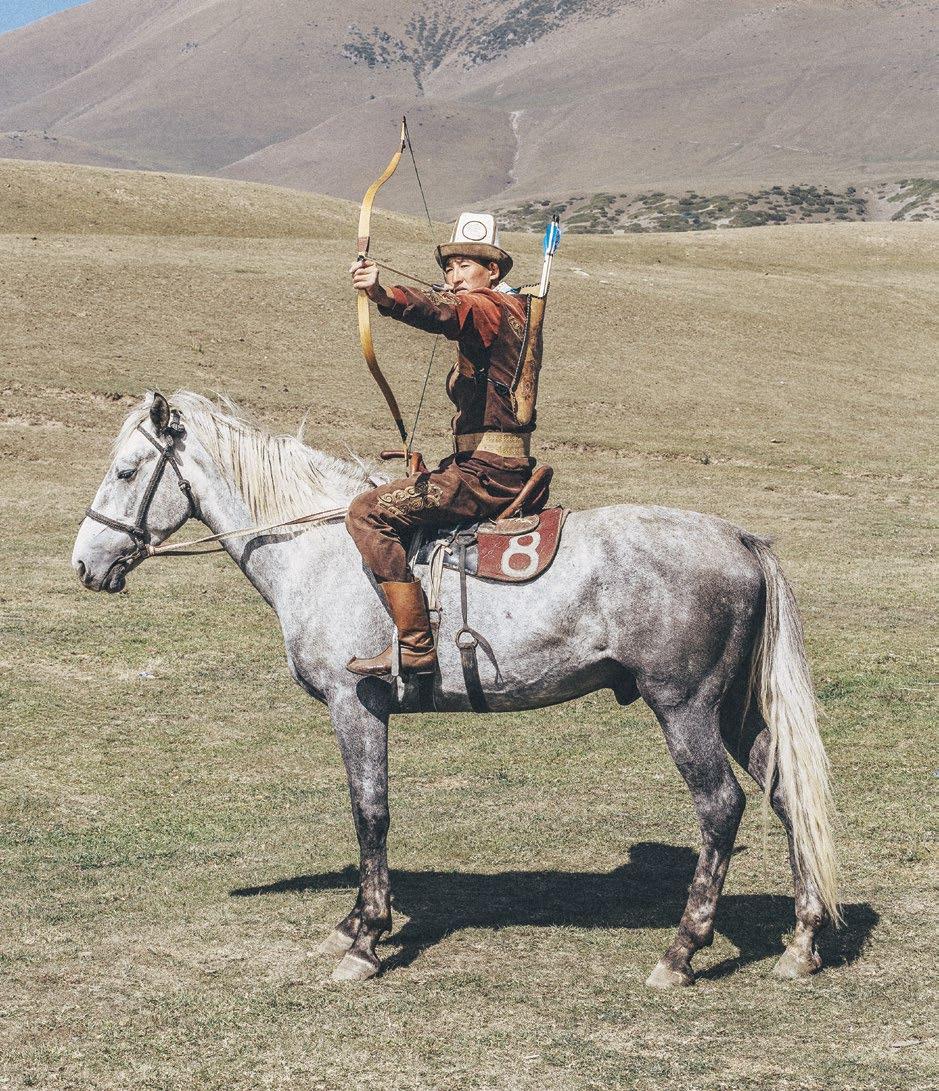
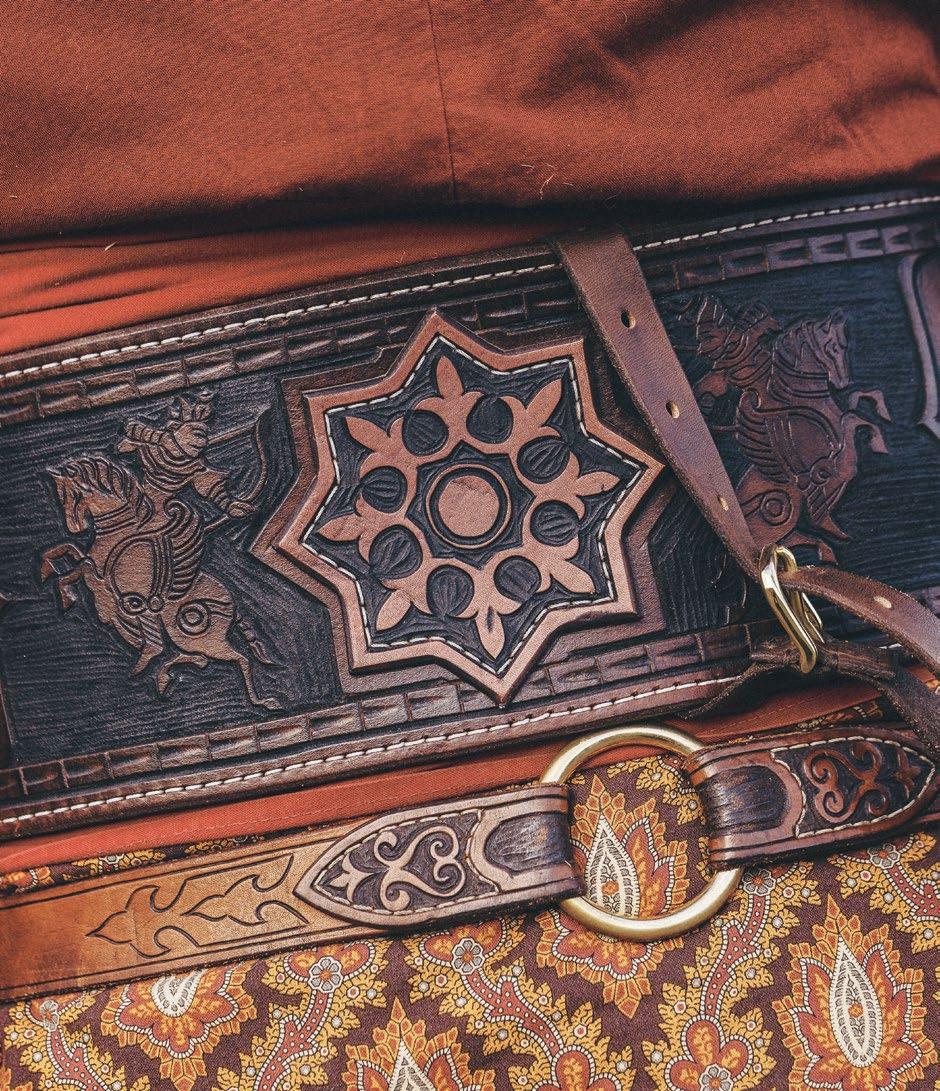
Archery is deeply rooted in nomadic heritage, which is one of the reasons Tynalieva was drawn to it. “It’s in our blood,” she says. The lifelong athlete (pictured, top left) first picked up a bow two years before the 2018 Games and only practiced with a wooden one for two weeks prior to the competition — and she wound up placing second in women’s traditional archery, Hungarian-style. While modern archery sees shooters using high-tech compound bows, archers at the World Nomad Games compete in traditional dress with wooden bows, on foot or on horseback.
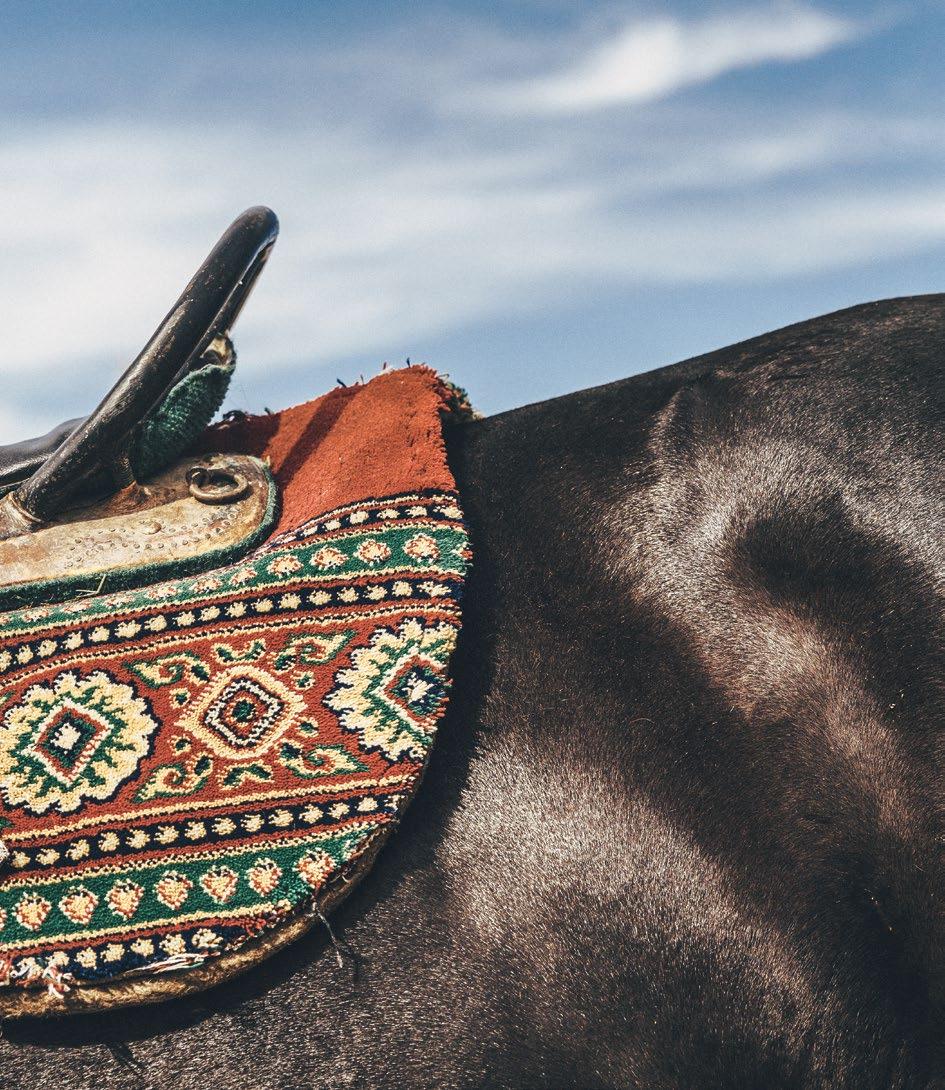
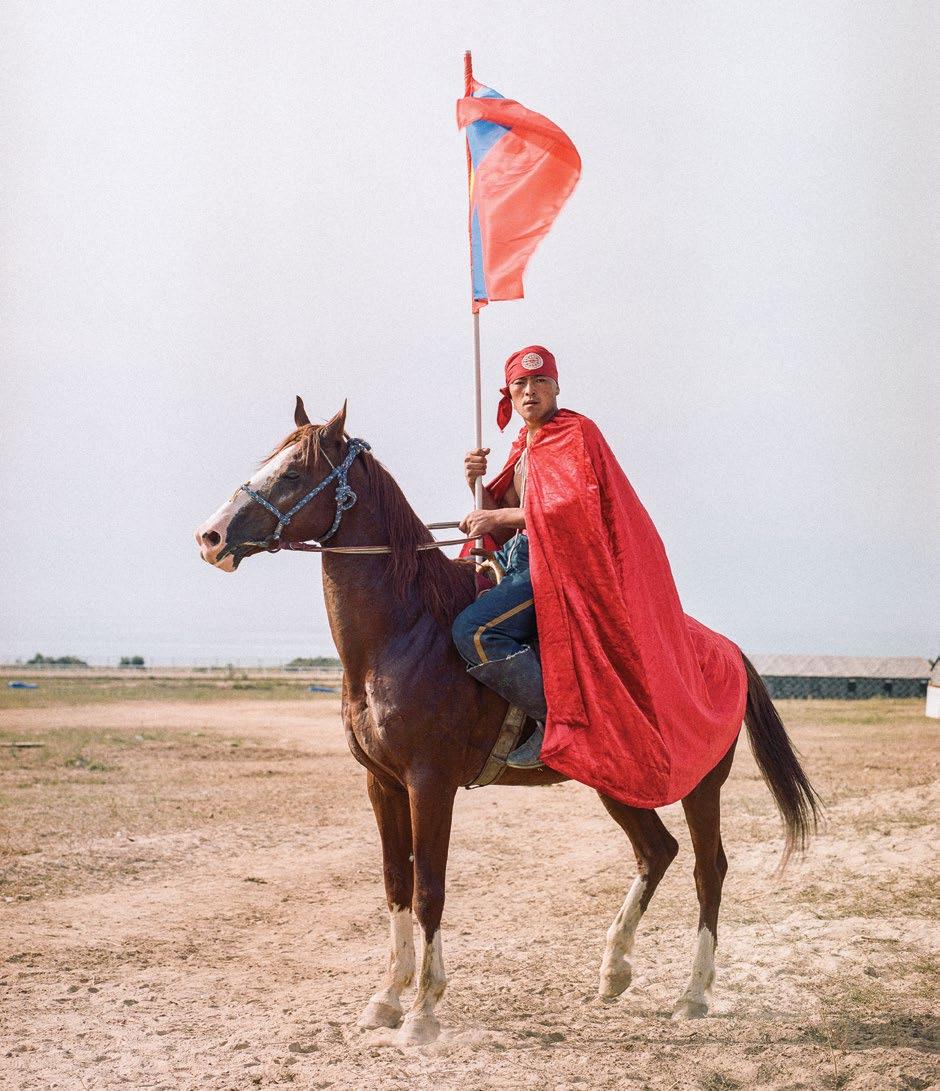
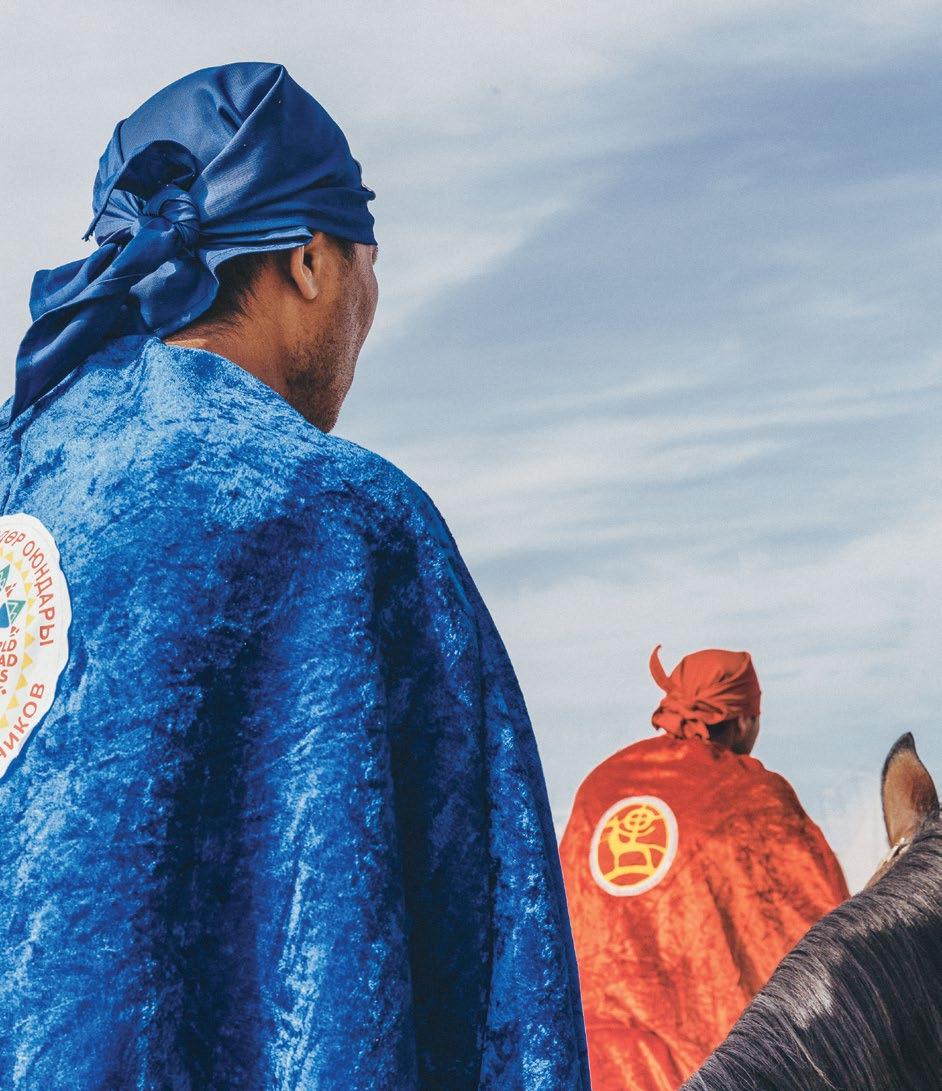
ER ENISH (HORSEBACK WRESTLING)
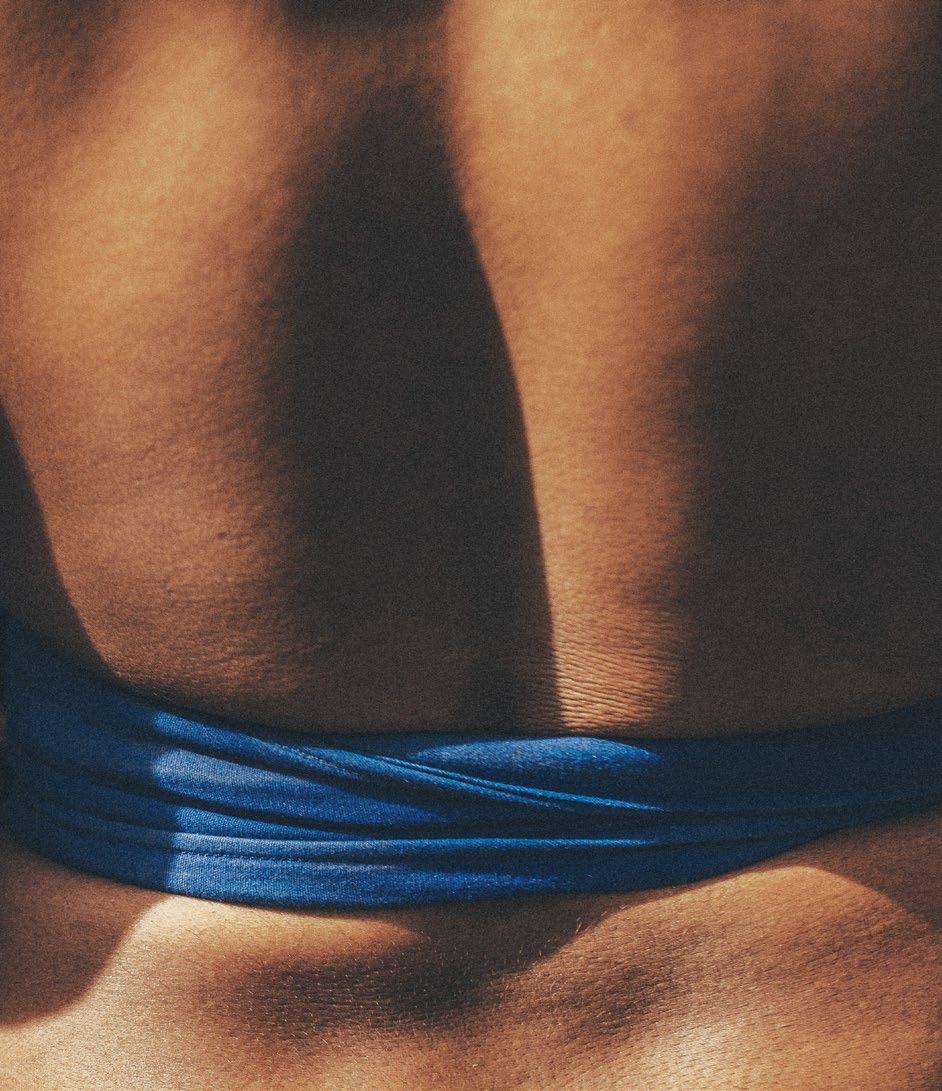
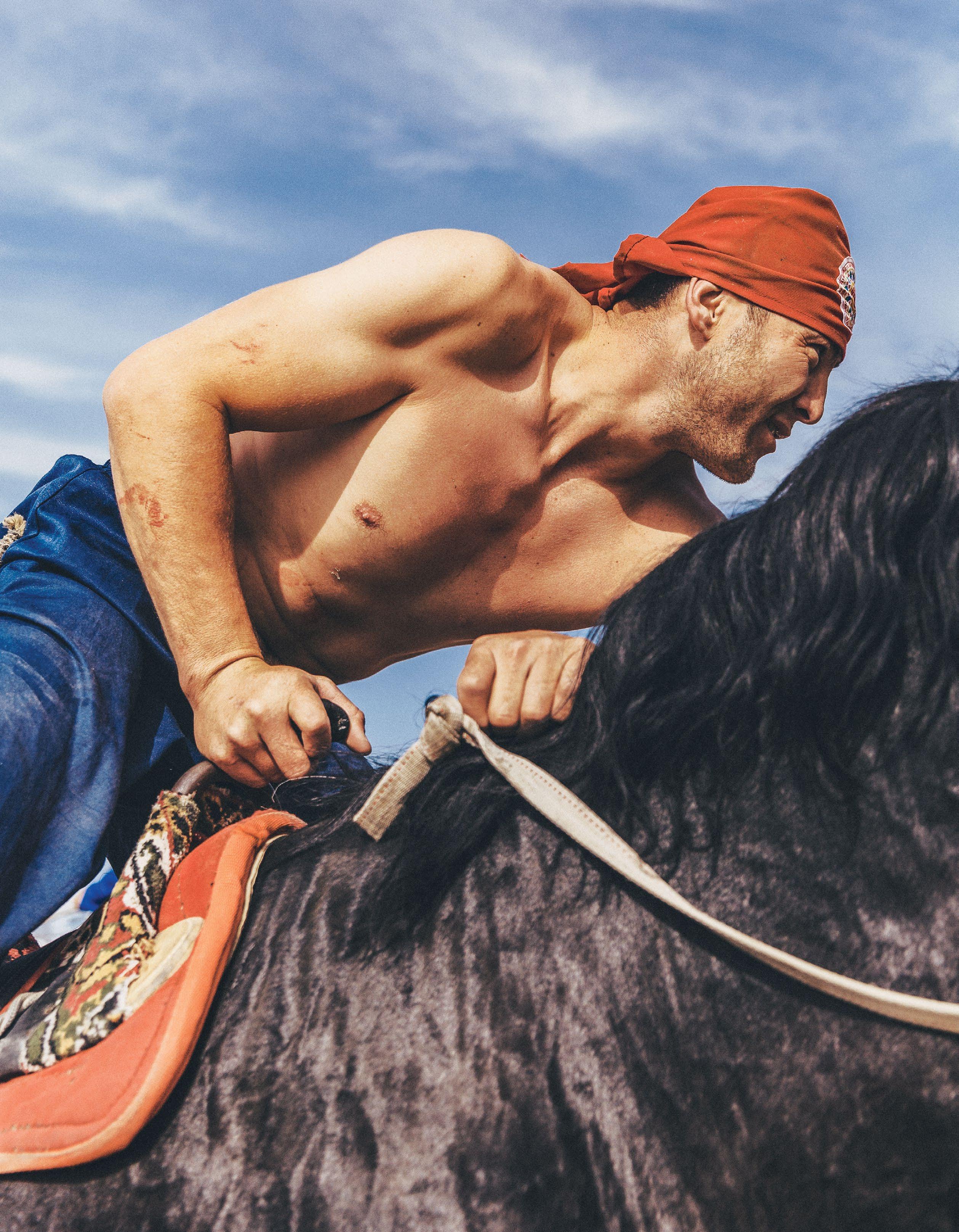
Another must-see, horseback wrestling (er enish in Kyrgyz) is one of several wrestling disciplines at the Games. The fierce competition between two mounted competitors takes place in a sandy, 50-foot-wide circular area. Opponents meet in the middle, facing off in a series of rounds, called bouts, each lasting until one of them is thrown from their horse and any part of their body touches the ground. The fabric sashes worn around the wrestlers’ waists (one dons red, the other blue) provide a helpful grip point to aid in hauling rivals off their steeds.
All you need to know before you go.
The sixth World Nomad Games begin on August 31 with the opening ceremony and run until September 6.
While the opening and closing ceremonies will be held in Kyrgyzstan’s capital, Bishkek, the center of the Games is Cholpon-Ata, a resort town on Issyk-Kul Lake, 160 miles east of Bishkek. The ethno-village will be assembled in Kyrchyn Gorge, a wide alpine valley an hour’s drive from Cholpon-Ata.
From the spectacular opening ceremonies and high-intensity stadium matches of kok boru, to intimate cultural performances and opportunities to meet nomadic people from all over Kyrgyzstan at the ethno-village, there is a wealth of experiences to take in.
KOK BORU
The star event is kok boru, which is like a mashup of polo and rugby — but instead of a ball, players on horseback pass a goat carcass, aiming to hurl it into the opposing team’s goal. (Kok boru is inscribed on the UNESCO Representative List of the Intangible Cultural Heritage of Humanity, which safeguards living traditions.) For Tynalieva, seeing people fill a stadium to watch her country’s national sport at the 2018 Games was momentous. “Our games tell about Kyrgyz people and our way of life,” she says. “When others watch and try to understand, it makes me happy.”
By Karen Gardiner
On Scotland’s east coast, the restoration of once-popular tidal pools has made the sea — and coastal culture — accessible to swimmers again.
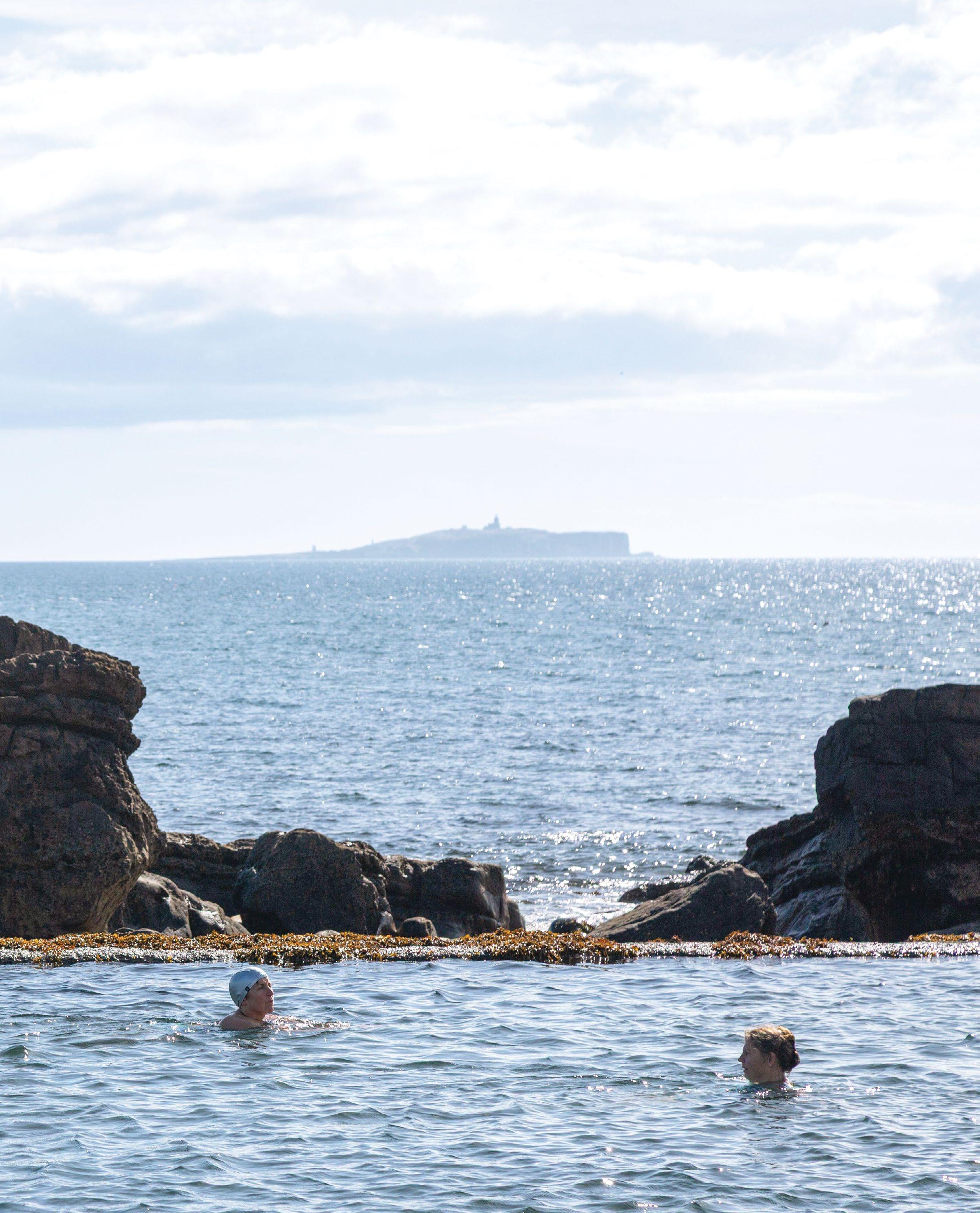
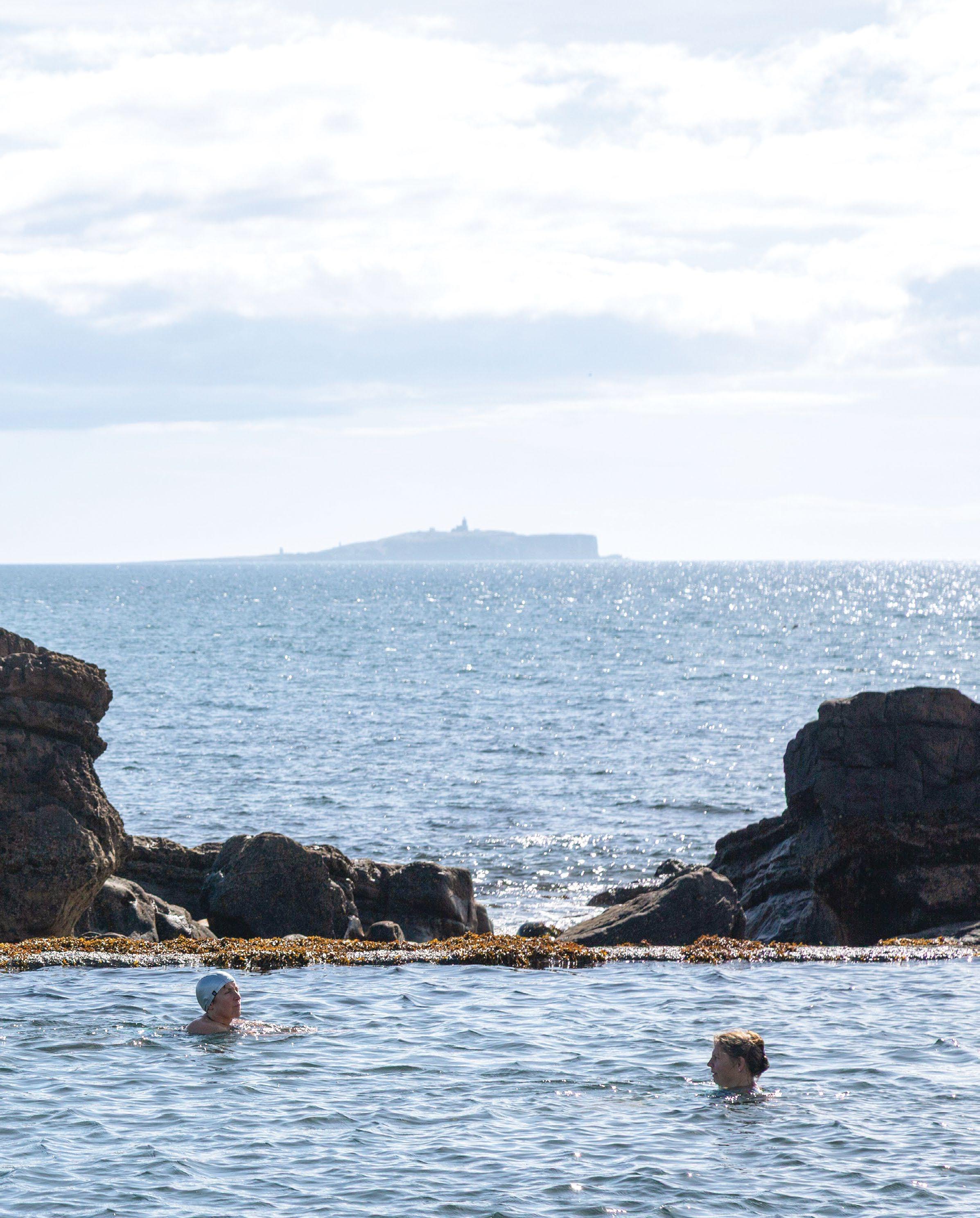
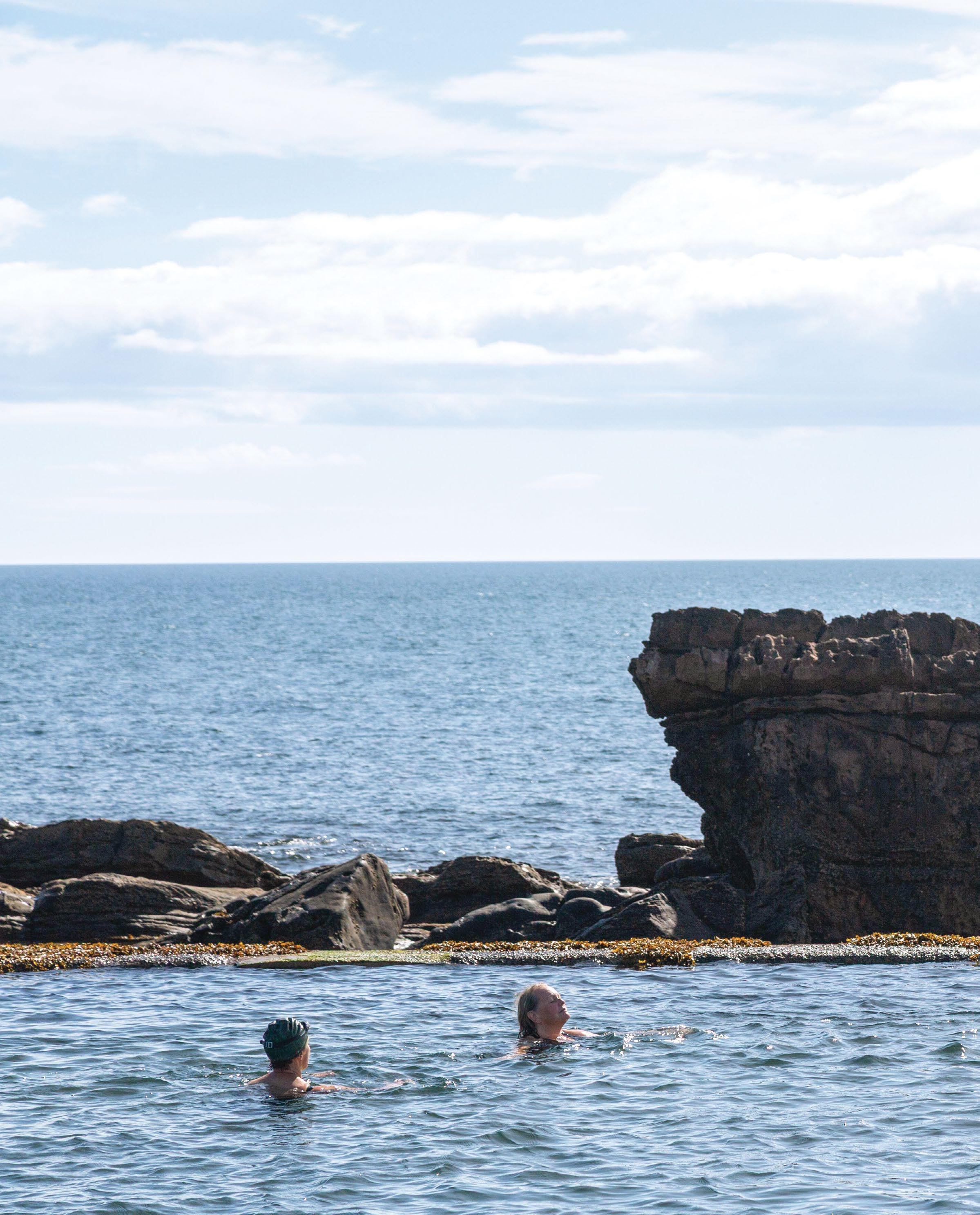
“You’ve just got to get up to your chest,” my sister Elaine calls out from the pool. “After that, you won’t notice the cold.” I’m up to my stomach and my legs feel like they’re burning. I’m a split second away from turning around. But, with a gasp, I push forward until I’m all the way in and buoyant. I kick hard, the force of the movement silent applause for a body whose strength I’d doubted, and I swim.
There are white-tipped waves rolling off the shore of St. Monans — one of the tiny fishing villages that make up the East Neuk in the Scottish county of Fife — but the penny-colored water I’m swimming in is flat. The open sea has been placated by the stone wall that cradles me as I swim up and down the length of the rectangular pool. The rhythmic movement of my breaststroke lulls me into a meditative state, but after about 15 minutes my teeth start chattering, so I head for the pool’s stone steps. Once I’m wrapped in a warm robe, the freezing sensation gives way to another: exhilaration. With one short dip I’ve become hooked on swimming in Fife’s tidal pools.
I grew up along this coastline, but I can only ever recall swimming indoors and in the occasional loch and river. The sea felt out of bounds in the 1980s and ’90s. Scotland is a watery land — a small country with an exceptionally long coastline that stretches more than 11,000 miles across 800 islands and a deeply creased mainland. You’re never more than 40 miles from the sea. But much of that coast is perilous, for sailors and swimmers alike. The sea’s treacherousness is in ample evidence in the East Neuk, where tucked among the neat, step-gabled, whitewashed cottages and fish-and-chips shops that line the shore are several memorials to the many lives lost, including a sculpture of a woman and child looking out to sea in Pittenweem. It’s because of that danger that tidal pools — man-made structures that trap seawater at low tide, offering controlled access to the sea — proliferate along the edges. In his 2023 book Sea Pools: 66 Salt Water Sanctuaries from Around the World, Chris Romer-Lee links the development of these coastal enclaves to the late-18th-century boom in sea bathing, when cold seawater was believed to strengthen
The freezing sensation gives way to another: exhilaration. With one short dip I’ve become hooked on swimming in Fife’s tidal pools.
OPENING SPREAD
Swimmers brave the frigid waters at Cellardyke Tidal Pool in Fife.
THIS SPREAD, FROM LEFT TO RIGHT
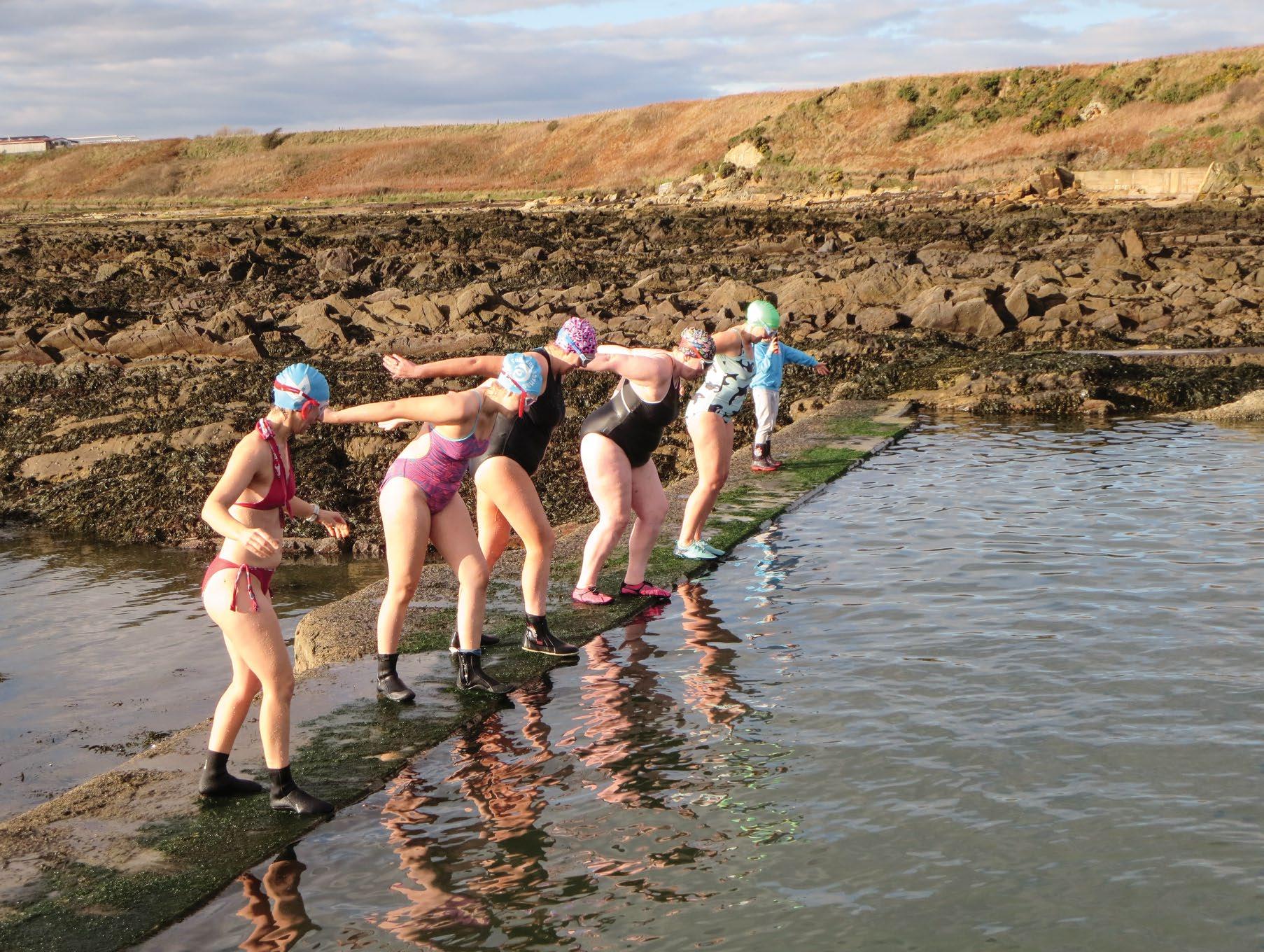
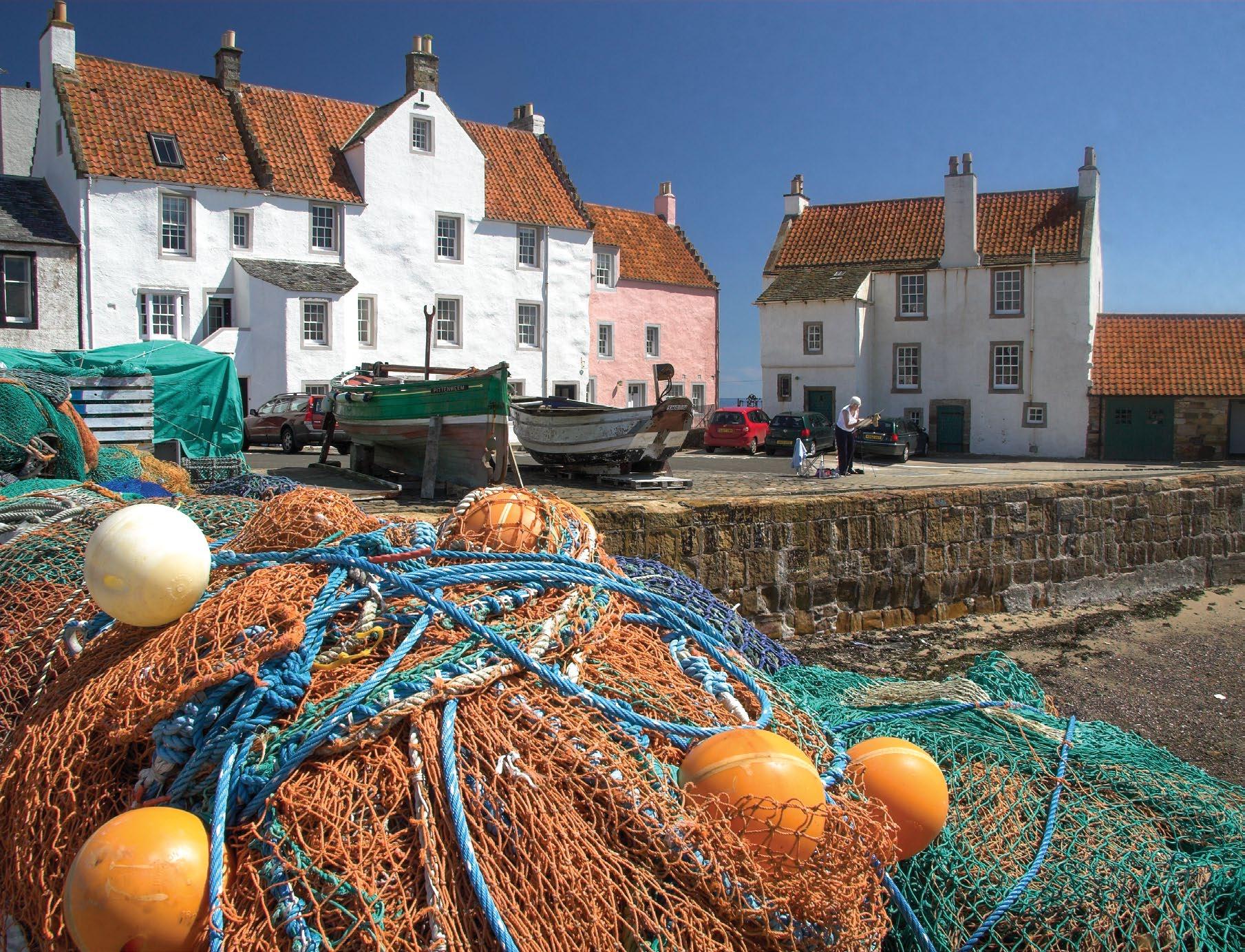
Women prepare to leap into the Pittenweem tidal pool, which was revived in 2021 by the West Braes Project; Pittenweem is a historic fishing town known for its picturesque working harbor.
I fall in love not just with the swimming, but the swimmers: mostly women, mostly hardy.
FROM LEFT TO RIGHT
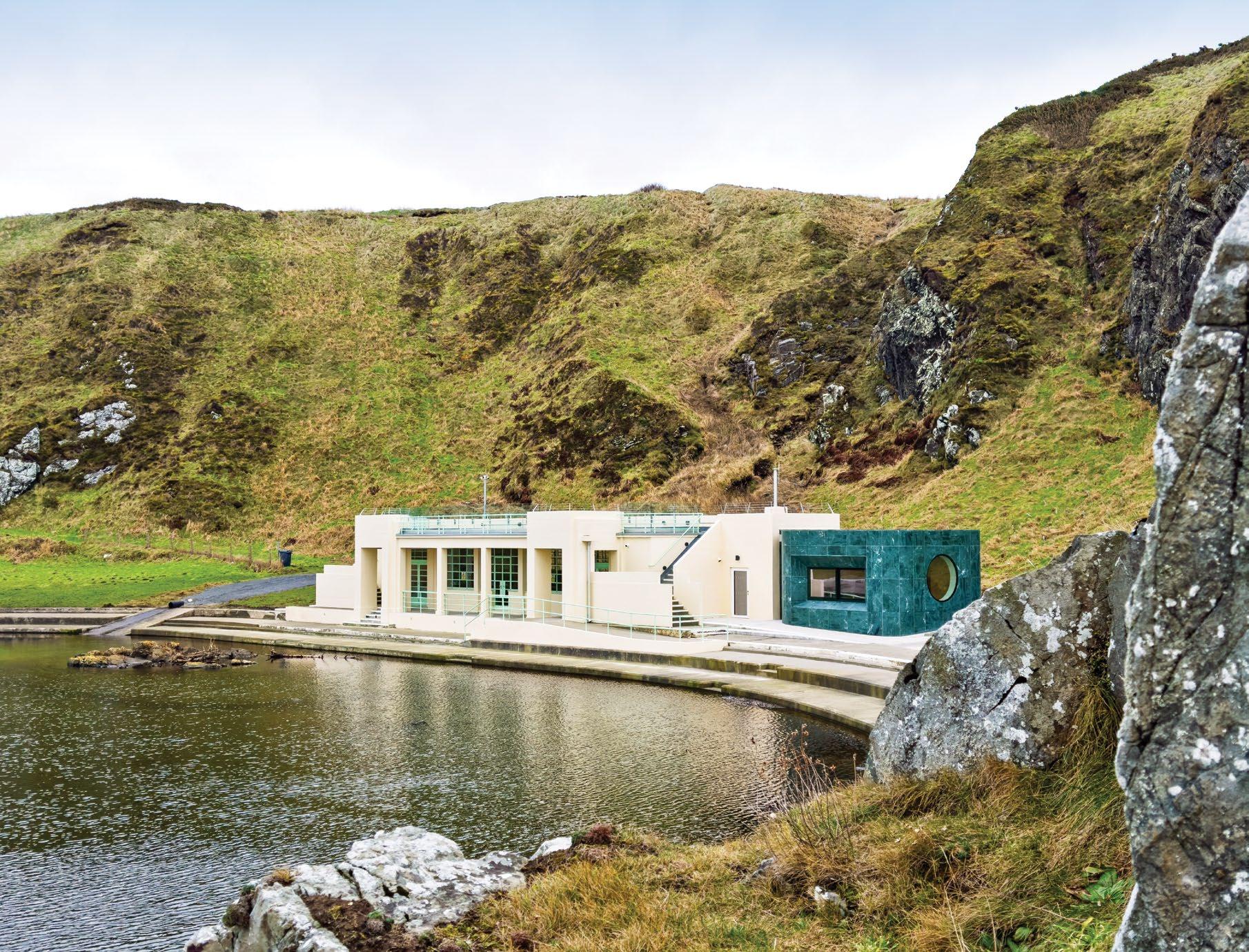
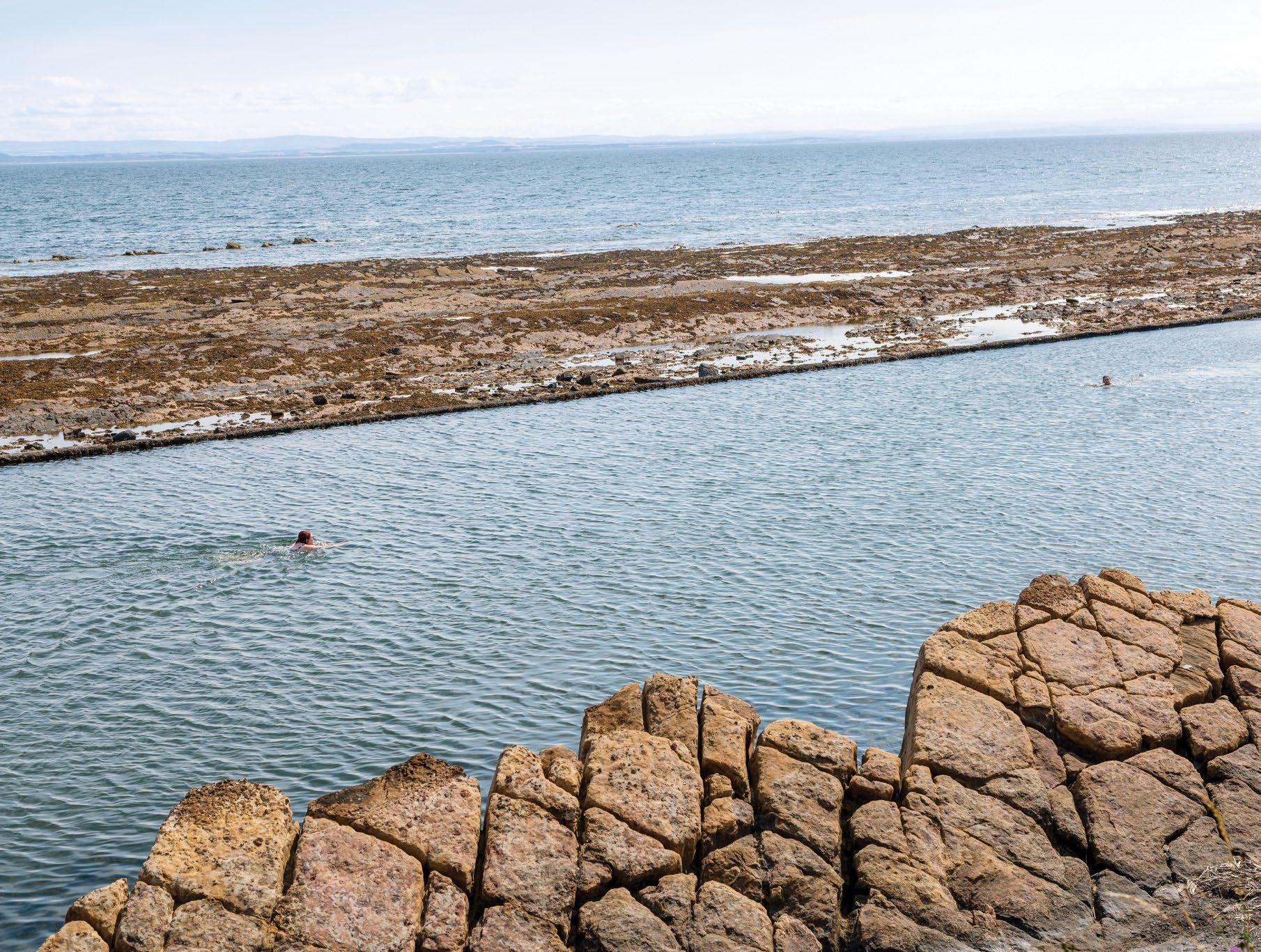
The newly renovated Tarlair Pavilion features a community workshop, event space and café; with its long stretch of uninterrupted water, St. Monans pool is ideal for swimming lengths.
health and character. As increased leisure time and public transport brought more vacationers to the coastline, demand grew for safer places to swim. By the early 1900s, dozens of tidal pools dotted the Scottish coast — four in Fife between St. Monans and St. Andrews alone.
By the 1970s, package holidays were luring workingclass vacationers away from Scotland’s bracing air toward sunnier European coasts. Once-thriving tidal pools were left to the elements and drifted into decline. But the tide is turning again. Up and down the coast, crumbling tidal pools are being restored, from Wick at the very top of the mainland to Port William in the south. This renewed interest, Romer-Lee tells me, started in step with the past decade’s boom in outdoor swimming and was accelerated by the Covid-19 pandemic. “When the indoor pools closed, the only place to go was to the coast or lakes. So, people rediscovered these places,” he says.
Fife’s pools are all at different stages of restoration. The Castle Sands pool in St. Andrews is at the beginning, with fundraising having just started. St. Monans’ efforts so far
have largely been limited to clearing debris from the pool’s bottom, a feat carried out entirely by locals’ hands. Inspired by the efforts of the West Braes Project, which in 2021 revived Pittenweem’s tidal pool, a nonprofit community organization restored Cellardyke’s pool in 2024 — that included repairing damage and creating safe access points.
Over the next few weeks in Fife, I build up a cold-water swimming kit (neoprene gloves and booties and a rash guard) because I want to be able to spend more time in the water, which is never not cold. I become obsessed with tidal pools. I wake up yearning for saltwater on my skin — just like the Nae Richters, a group that takes to the freezing waters of Cellardyke pool every morning — and check tide times as frequently as the weather. I fall in love not just with the swimming, but the swimmers: mostly women, mostly hardy. Taking a few hesitant strokes, I ask an older woman gliding toward me about the jellyfish rumored to be lurking in Pittenweem’s pool after a storm. “Och, dinnae worry about them!” she says. “They’re no bad.” Under a persistent drizzle, I swim below the 13th-century St. Andrews Castle,
off a pebble beach I last stepped on when I was in high school in the town. On a gloriously sunny afternoon in Cellardyke, I get chatting to a group of Glaswegian women in the mobile sauna perched on the edge of the pool. We heat up until our skin is pink, then cheer one another on as we each run into the water afterward.
The tide seems to pull Elaine and I, who grew up largely avoiding one another, together. Over three weeks, I see more of her in tidal pools than anywhere in years. For her, the swims are a moment to herself in a busy life as a midwife and mother of two young boys. For me, they’re a reconnection to a home that I find I’m missing more now than I have in any of the two decades since I left.
I start to feel that the tide that replenishes the pools is also filling a void. For some, that’s a sense of community; for others, a connection to something elemental in a reality that feels increasingly frictionless. “It’s exciting to be on the threshold of the man-made and the natural world,” Romer-Lee says. “There’s a real thrill to being held in the sea, protected, and still getting the rush of the water crashing around you.”
Romer-Lee helps organizations design and restore tidal pools and bathing places, and advocates for safe access to water. Studio Octopi, the architectural practice he cofounded, hopes to have Tarlair Swimming Pool, an art deco sea pool at the bottom of a cliff in Aberdeenshire, swimmable by 2028 — its pavilion renovation was honored in the 2025 Scottish Design Awards. It’s just one of five Scottish pools Romer-Lee is currently working on. “Scotland seems to be leading the way,” he says, adding that he doesn’t have to convince Scots that access to safe swimming benefits people’s health as well as the wider health-care system.
The day I fly back to my adopted home in America, I take one last dip in St. Monans. After a few lengths, I pause to watch people walking along the coastal path, turning their heads as if surprised to see life in the old pool. I wonder how many times I’d walked past, without a second glance, during all those years when the pool was dormant. It was always there. Perhaps it just took time for people to miss it — just like it took time away for me to miss Scotland. I stand in the water long enough for a chill to creep in and wonder if I should get out. Not yet, I think, and keep swimming.
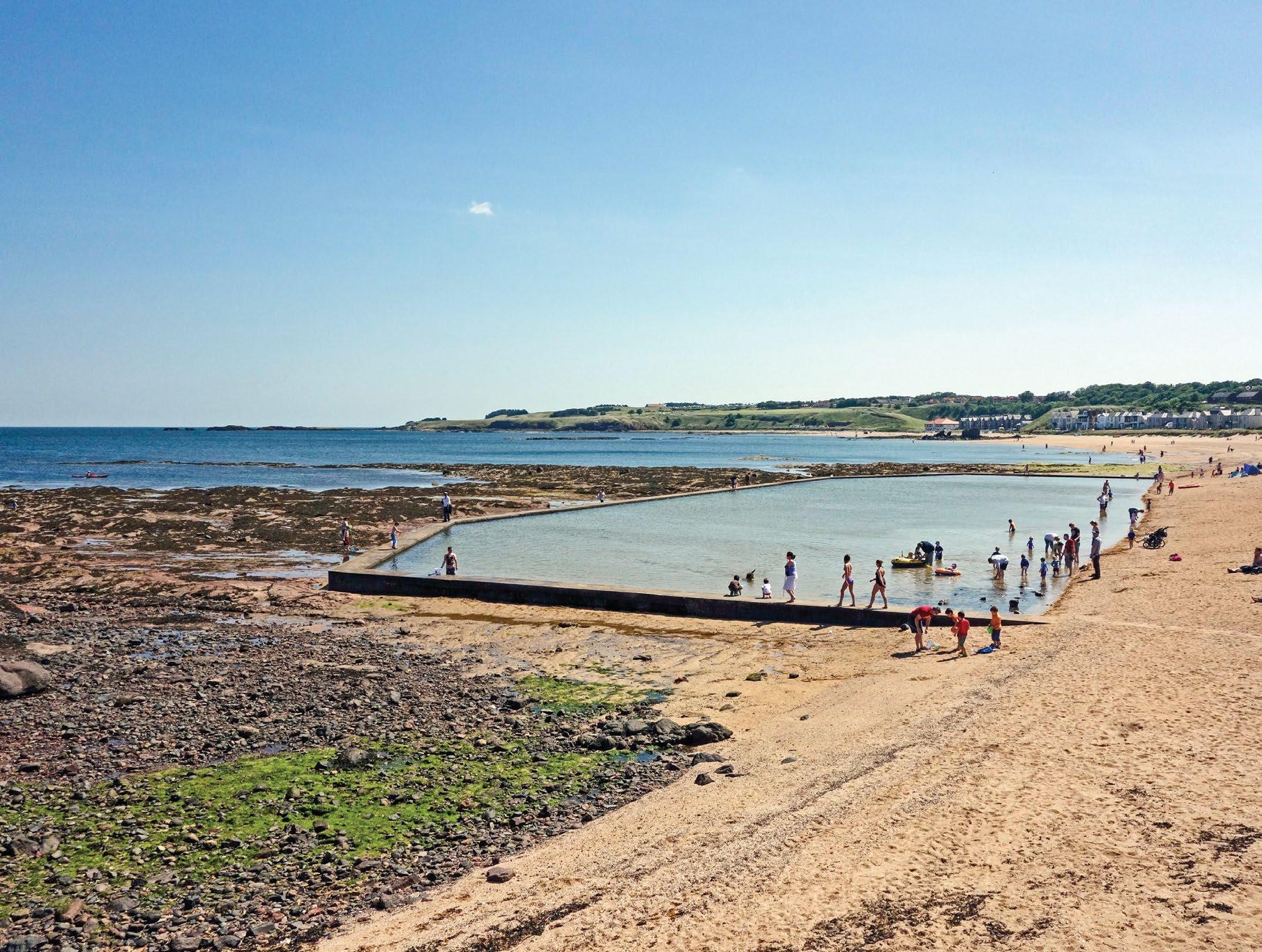
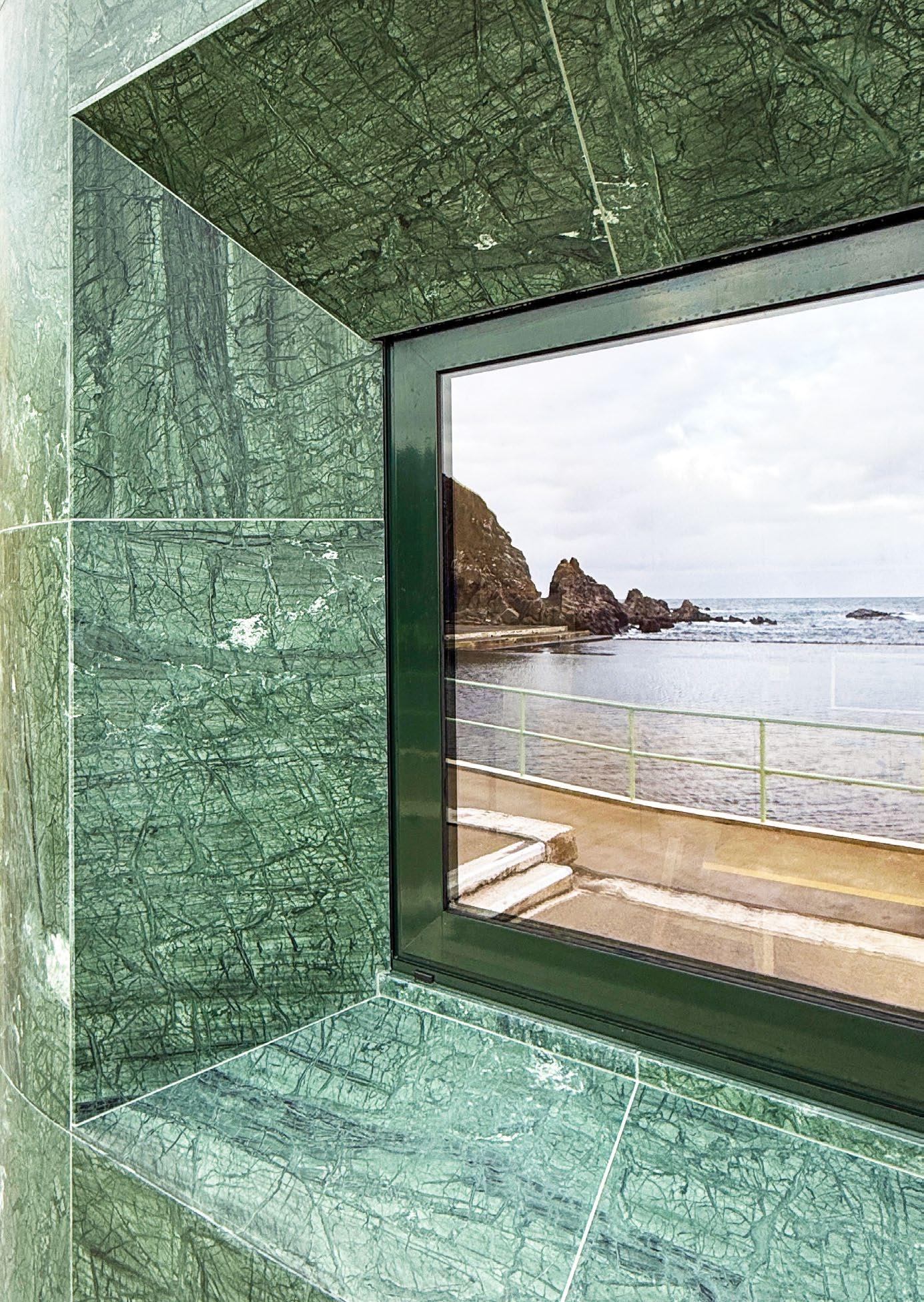
Families enjoy the shallow waters and sandy shores of the tidal pool in North Berwick, a 30-minute train ride from Edinburgh; green marble cladding was used on the Tarlair Pavilion to reflect the natural gorse and granite found nearby.
Next to a holiday park, kids’ playground and snack bar slinging wood-fired pizzas, Cellardyke Tidal Pool is a scene on sunny days when swimmers share the water with kayakers and kids on floats. For a more serene experience, take a dip at sunrise.
The 117-mile-long Fife Coastal Path runs alongside this no-frills pool, which is close to Bowhouse market hall, home to Baern café and Futtle organic brewery. Neoprene socks or water shoes are recommended for protection against the pool’s rocky bottom.
This tidal pool was restored in 2021, and proceeds from a snack hut and mini-golf course on the bluff above help fund its upkeep. Visit in August, when the Pittenweem Arts Festival transforms the village into an open-air gallery.
As North Sea waves batter the surrounding cliffs, you’ll be thankful for the concrete wall that protects the aquamarine waters of the rock poollike Trinkie. Wick, one of mainland Scotland’s most northerly towns, is also home to the North Baths. Warm up after a dip with a wee dram from Wick’s Old Pulteney distillery.

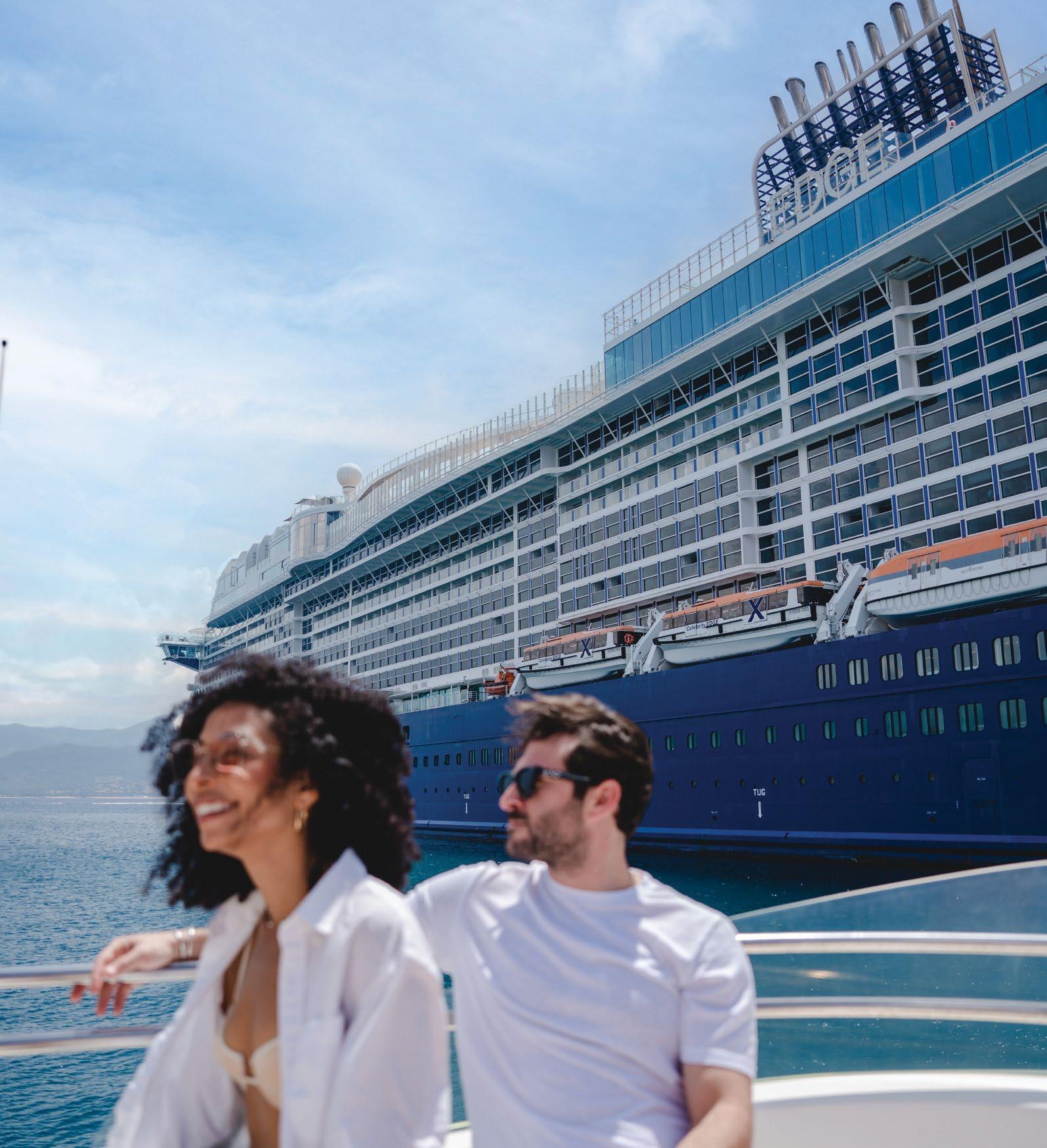
Sure, we can take you to more than 300 destinations on all seven continents. Yes, you’ll feel like a local on intimate and anything-but-ordinary excursions. But what really makes us different is that our ships are just as worthy of being on your bucket list as the places they take you. With so much to explore along the way, we’ve never heard anyone ask, “Are we there yet?”
When you plan your Celebrity Cruises voyage with your Ensemble travel advisor, you can expect personalized service, experienced and knowledgeable travel experts and, when booking a veranda or above, enjoy an exclusive US$100 onboard credit per stateroom.
Please contact your Ensemble travel advisor for more details.

Offer applies to 4-night and longer itineraries that depart Jan. 1st, 2026 through Open Deployment. Bookings must be made between Jan. 1st, 2026 and Dec. 31, 2026. Offer excludes Galapagos sailings. Offer is $100 onboard credit “OBC” per stateroom for standard Verandas, Infinite Veranda, Concierge, AquaClass and Suites. Offers are applicable to new individual bookings and to staterooms in non-contracted group bookings, which must be named and deposited. Guests’ stateroom folios will be credited with an onboard credit. Onboard credit has no cash value, is applicable to cruise only, non-transferable, not redeemable for cash, and will expire if not used by 10:00 PM on the final night of the cruise. Offer excludes interior and oceanview staterooms. Offer is not combinable with Exciting Deals, Net, TA Rates, Interline, or Galapagos sailings rates. Offer is combinable with prevailing group rates, group x, and onboard bookings. Single occupancy bookings are eligible for the Offer. Refer to Cruise Ticket Contract for additional terms and conditions. Celebrity reserves the right to cancel the Offer at any time, correct any errors, inaccuracies or omissions, and change or update fares, fees and surcharges at any time without prior notice. For more details, please contact your Ensemble travel agent. ©2026 Celebrity Cruises Inc. Ships’ registry: Malta and Ecuador. 2071750
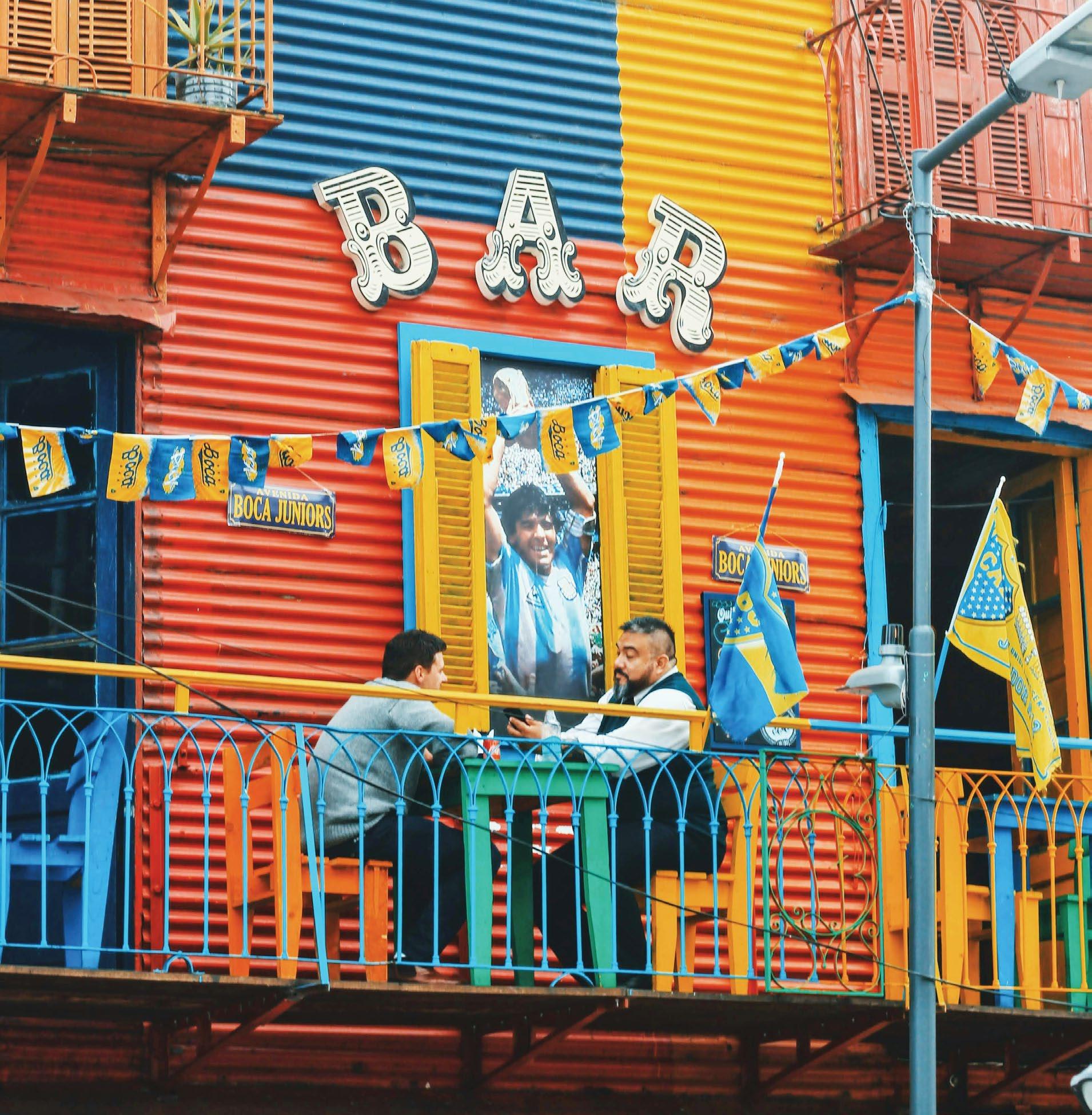
It’s believed that an alleyway in La Boca is what inspired Juan de Dios Filiberto’s 1926 composition of one of tango’s most famous songs, “Caminito.” Today, that alley is known as Caminito (“little path”), a vibrant 164-yard-long stretch dedicated to the works of artist Benito Quinquela Martín, with colorful murals and facades. Visitors come for the tango — the neighborhood is still a popular dance spot — but stay for the lively ambience and a chance to watch the Boca Juniors, one of Argentina’s premier football teams. For more ways to experience tango in Buenos Aires, turn to page 61.
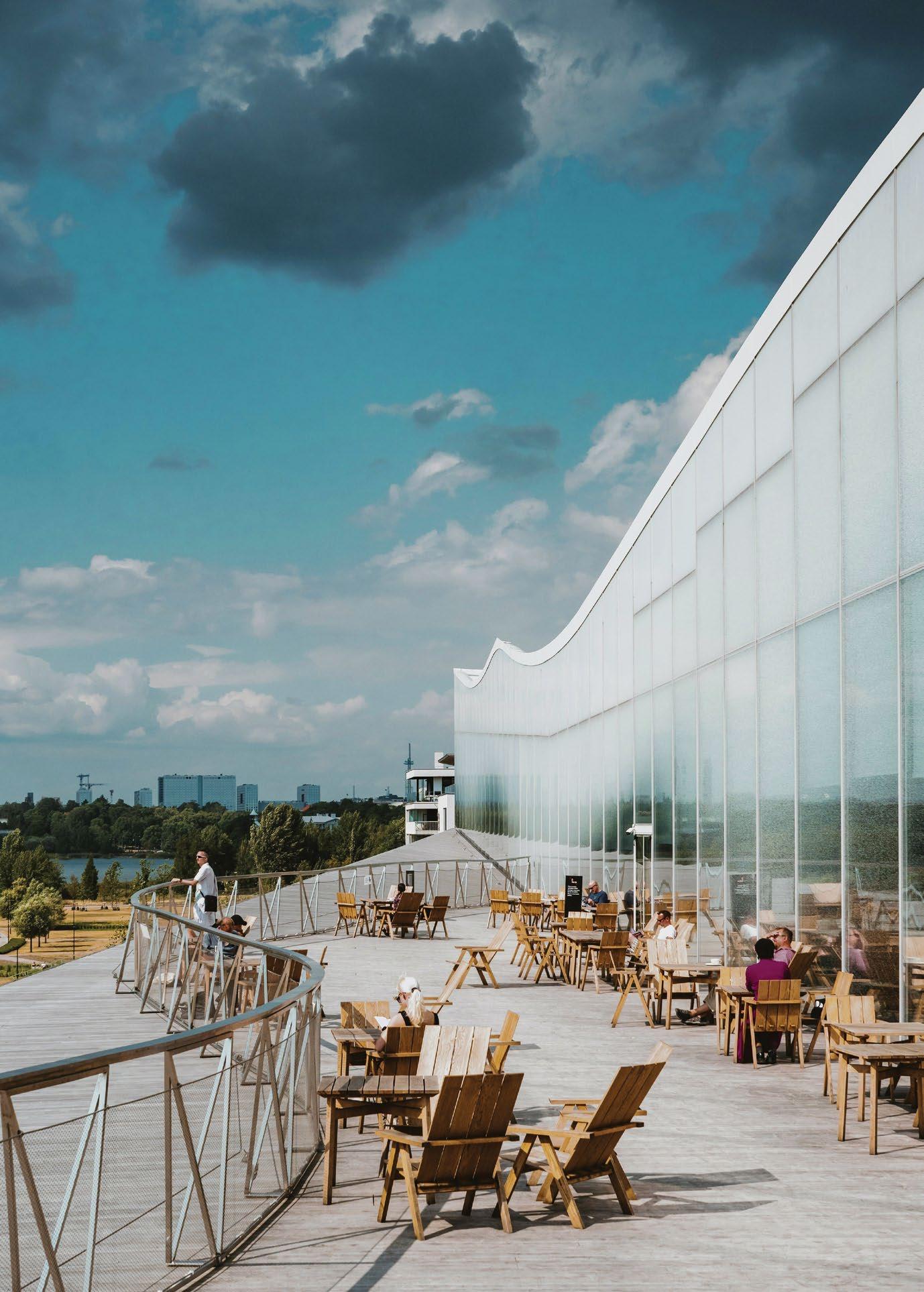
Finland’s compact, walkable capital offers a blend of bold Nordic design and breathtaking Baltic scenery — and, in summer, long sunlit days, vibrant markets and island-hopping.
By Karen Burshtein
Ifell in love with Helsinki in the month of December: It was cold, gray and dark at 3 p.m. The Christmas markets and coffee breaks with delicious star-shaped, plum jam-filled joulutorttu pastries were highlights, but it wasn’t the winter weather that drew me in. Though Helsinkiläiset may eschew small talk, locals are some of the most approachable people you’ll encounter anywhere. The city’s seamless mix of innovative design and accessible nature also hooked me: One minute you’re trying on sneakers made from coffee grounds, the next you’re picking wild raspberries in a forest. Helsinki’s independent spirit, fashioned by 500 years of Swedish rule and another century under the Russian Empire, sets it apart from other Nordic cities. An undercurrent of the offbeat — Finnish tango is a thing, and the country hosts an annual wife-carrying competition — is just enough to keep visitors wanting more.
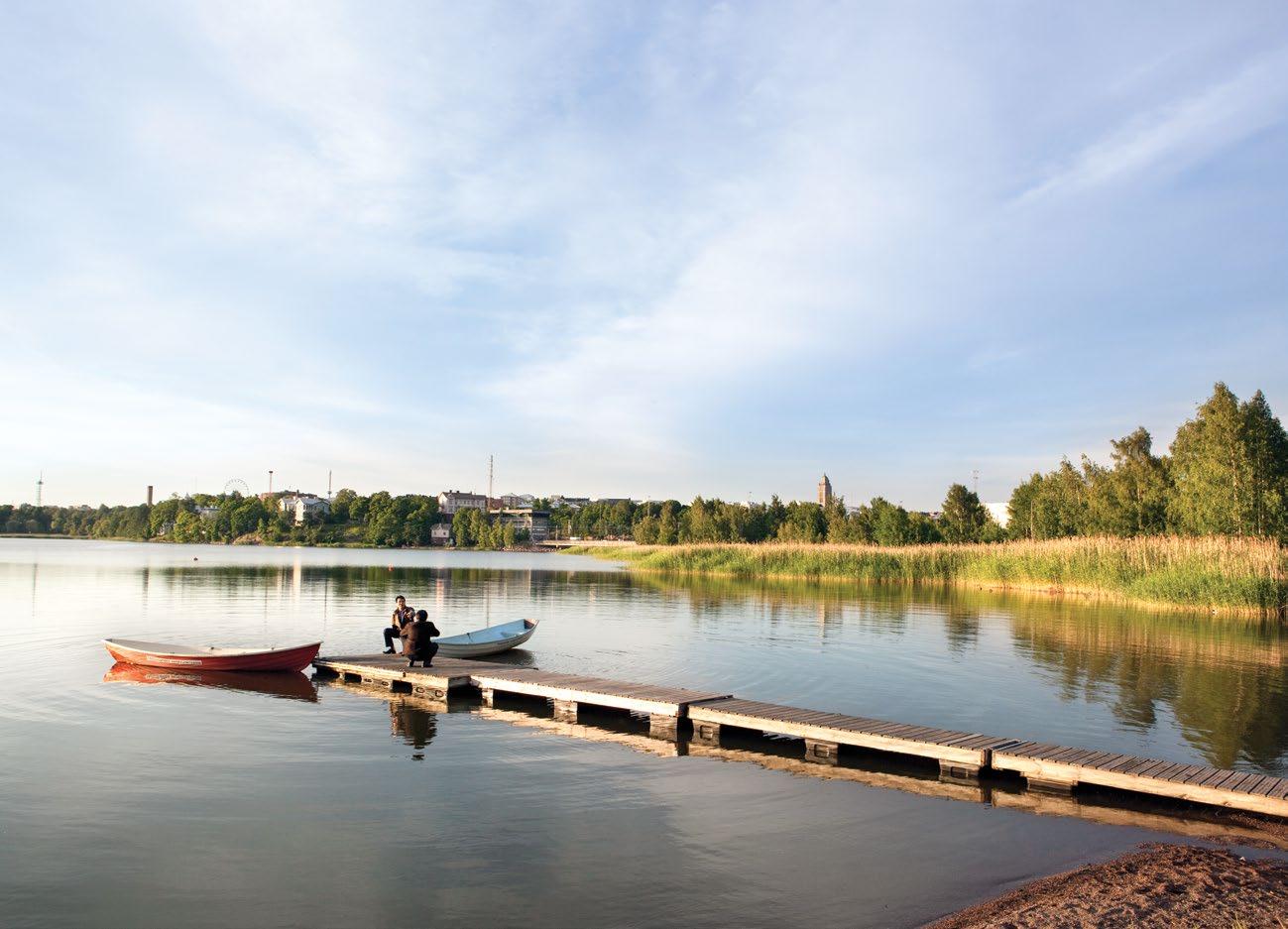
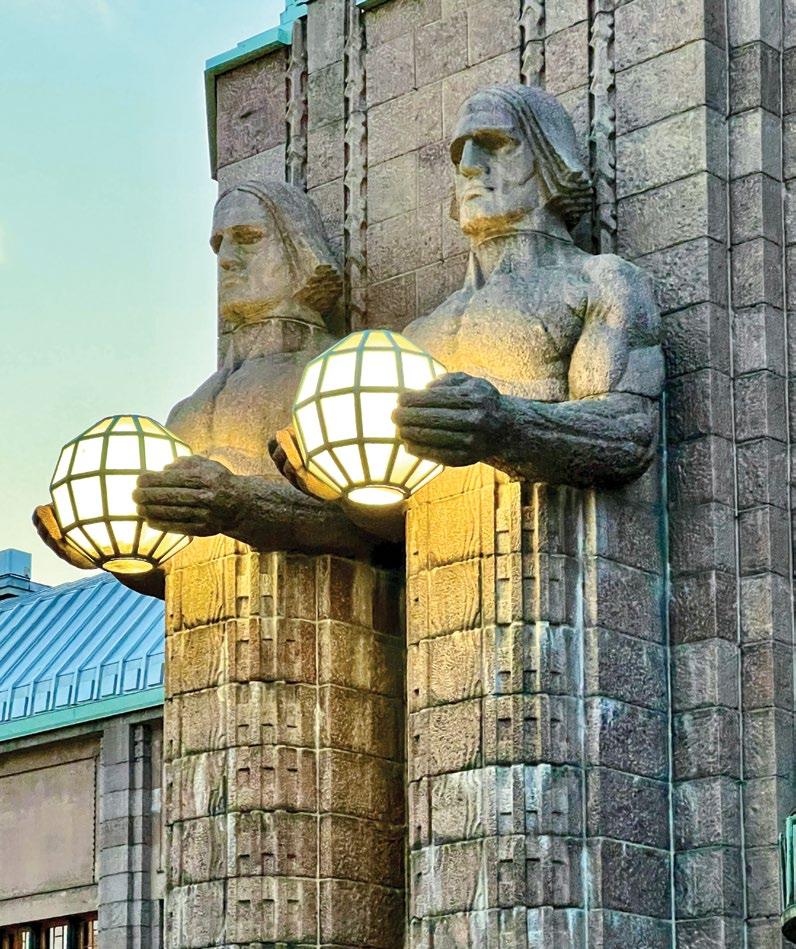
I’m back in town — my fifth visit — just after summer solstice, ready to see what the city has to offer during the warmer months. An airport train brings me to Helsinki Central railway station, one of the coolest train stations anywhere, with an entrance guarded by futuristic-looking stone men holding spherical lamps.
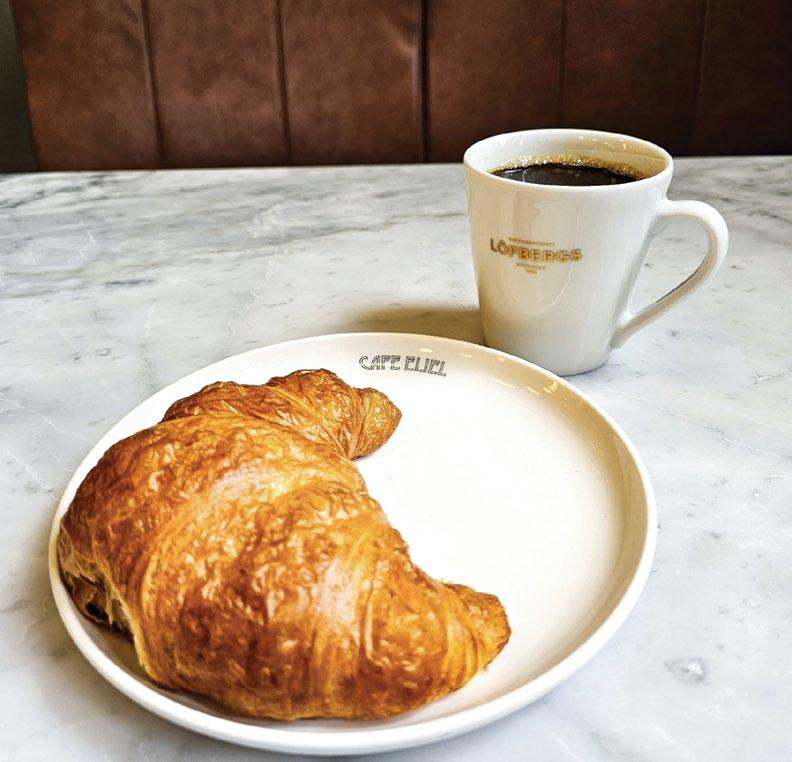
Finns are the world’s biggest consumers of coffee, and I’m in need. The station’s Café Eliel serves up a strong filter brew, which I sip while gazing at the craftsman detailing in the dramatic vaulted ceilings. The 1919 building by Finnish architect Eliel Saarinen represents a turning point in Helsinki’s history: Its pioneering mix of art deco and Finnish art nouveau style bridged the 19th and 20th centuries and immortalized Finnish independence. Just across from the station is the Ateneum Art Museum, a landmark neo-Renaissance building that houses Finland’s premier art collection. Finnish works from the 18th century to the present day are on display, along with a large international collection. If Helsinki Central railway station was the architectural calling card of a newly independent
Finland, the Ateneum played the important role of presenting how Finland saw itself in the late 19th century. I spend long moments in front of the quietly powerful portraits by the great Finnish modernist Helene Schjerfbeck.
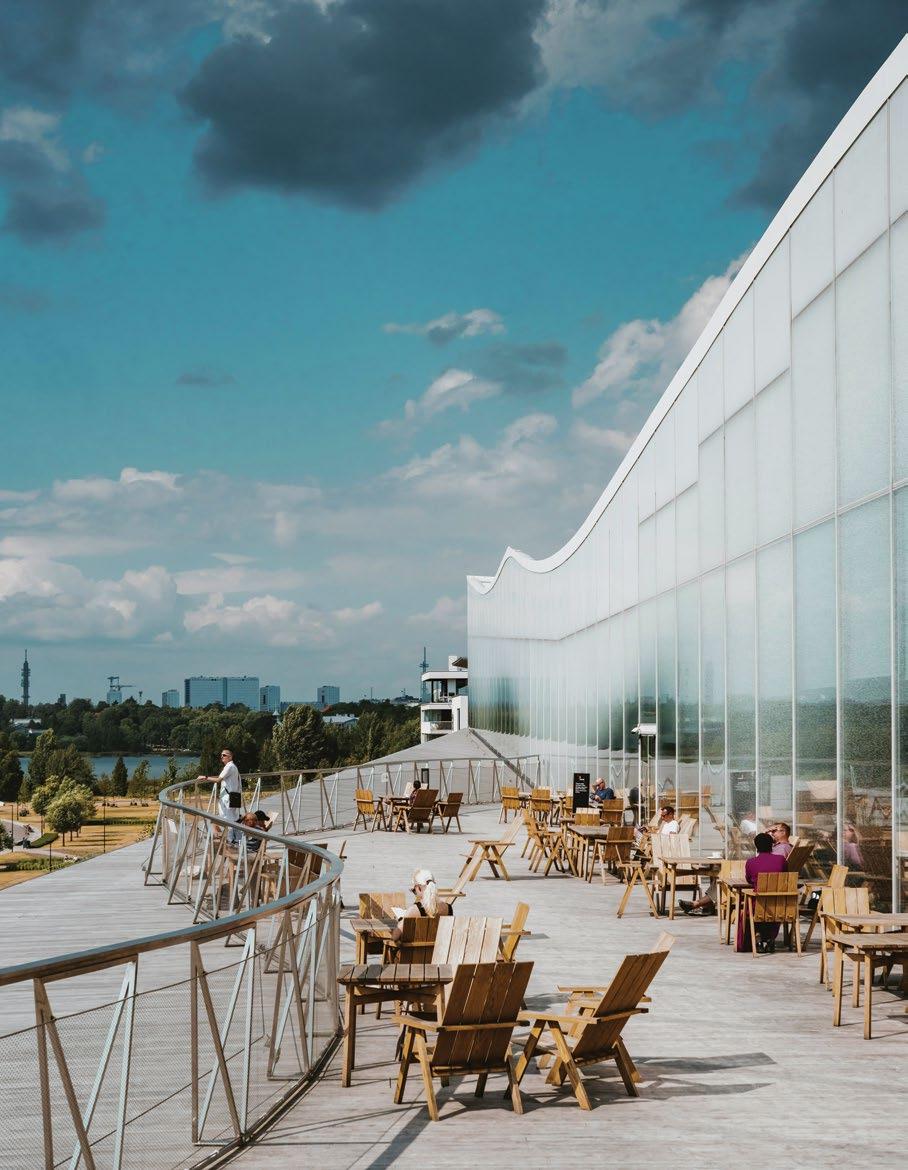
Helsinki is easily walkable. A 15minute stroll brings me to Töölö Bay, a lovely green space where runners jog around the bay and hikers disappear into a forest. Adjacent to all this nature are some of Helsinki’s most iconic buildings, including a sinuous, pale wood structure on the edge of the park. When Helsinki Central Library Oodi opened in 2018 it won raves for its design, but it also moved the needle on what a public library could be: Facilities include 3D printers, a full-scale recording studio and a book-transporting robot, and the rooftop terrace is a top spot for coffee and korvapuusti, the beloved Finnish cinnamon bun. I gaze across Töölö Bay at the white-marble Finlandia Hall, created by renowned mid-century architect Alvar Aalto. The concert and exhibition hall’s clean, natural lines embody Finnish modernism and reflect the Nordic sun like an iceberg.
01 A floating dock punctuates the calm waters of Töölö Bay.
02 Commuters flock to Café Eliel for its strong coffee and flaky pastries.
03 At the entrance of Helsinki Central railway station, the lyhdynkantajat, or “lantern bearers,” stand guard.
OPENING PAGE More than just a library, Oodi, with its sunny terrace, is the perfect spot to pause for a snack and take in the sights.
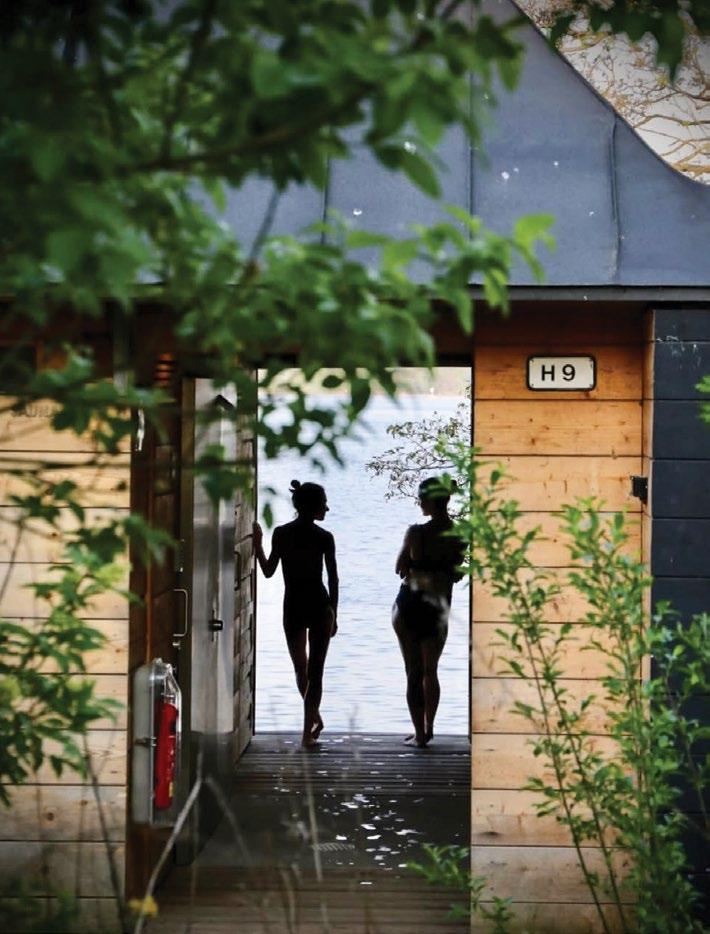
There’s a sauna in almost every home (and in Finland’s parliament), but public saunas are popular places to meet. My rainy-day favorite is Yrjönkatu swimming hall, an art deco gem with a wood-fired sauna that is swimsuit optional.
Today is sunny and warm, so I’m off to a sauna on one of the city’s many islands. They’re accessible via waterbus from Kauppatori, a market where vendors under orange tents sell seasonal produce and Finnish dishes. The day’s special is lohikeitto, a creamy soup full of summer vegetables and big chunks of salmon.
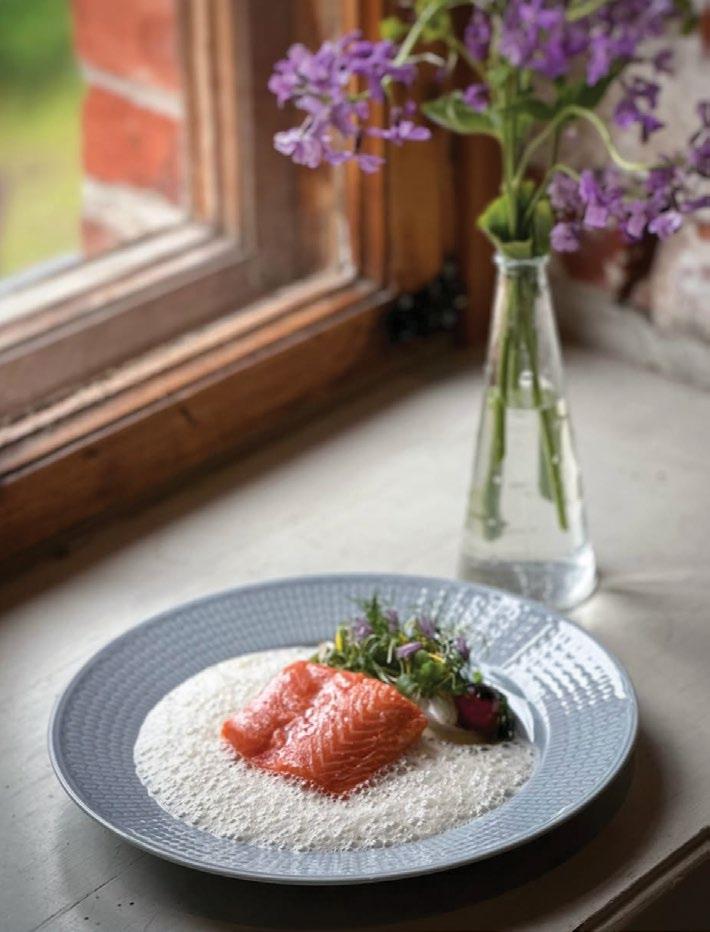
A quick waterbus ride brings me to tiny Lonna Island, just 500 feet long, once used to store naval mines. Today it’s home to a chic sauna and restaurant, where I lunch on arctic char with crayfish sauce and salty licorice ice cream with lingonberries for dessert. After a trek around the rocky shoreline, I am ready to hit the sauna.
Inside the wood-fired 12-seater, I sweat until I can’t bear the heat, then dip into the cool Baltic Sea. Locals relax on the sprawling wooden deck, soaking in the gentle heat and gazing out to the water. I notice the
05
06
and designer Alvar Aalto shouldn’t miss a visit to Artek 2nd Cycle.
absence of chatter, even among acquaintances — we’re all relishing the moment and the charm of the place.
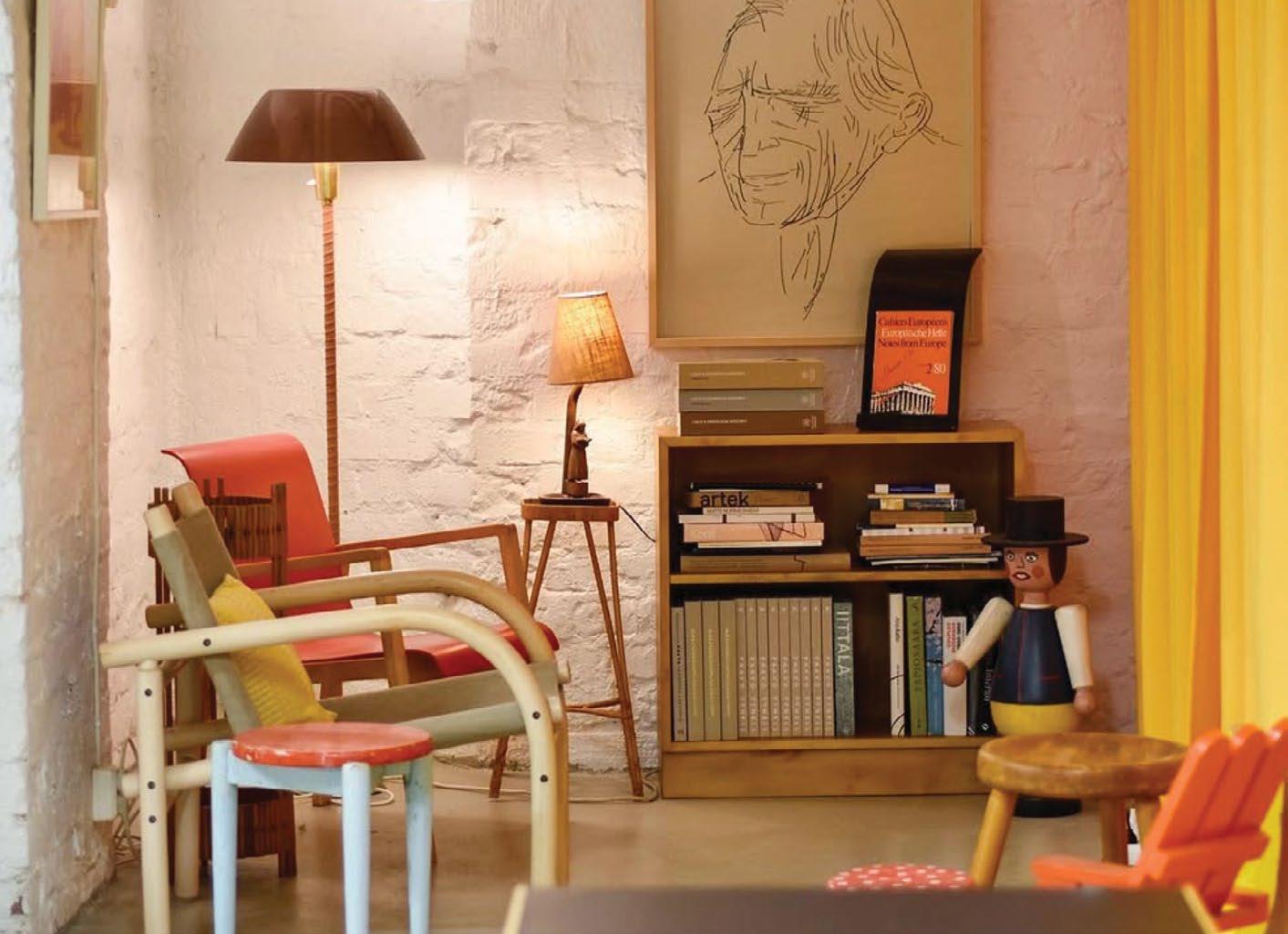
Back on the mainland, I walk over to the Design District to indulge in retail therapy and see some of the city’s defining architecture. Helsinki has one of Europe’s largest concentrations of art nouveau buildings, in a style known as kansallisromantiikka, or “national romanticism.” Huvilakatu street is lined with turreted apartment buildings painted in soft hues like pink and green, and facades adorned with stylized owls, trolls, ferns and junipers — drawn from the Finnish epic poem, The Kalevala. Helsinki has a top-notch secondhand and vintage scene. I stop in at Artek 2nd Cycle, which sells rediscovered furniture and design pieces from the early 20th century to today, including rare Aalto pieces. I wrestle with buying a small Aalto birchwood bookshelf and, after the store owner offers to carefully box it up for air travel, I’m out the door with my prize.
Across the street at Ritva’s Antik, treasure hunters browse Kaj Franck glass tumblers and Aalto wave vases. I’m excited when I find a rare vintage top by Marimekko — one of Finland’s best-known brands — with a colorful graphic print.
Sporting my new top, I hop on a green-andyellow tram to the Kallio neighborhood and head for nearby Linnanmäki, a vintage amusement park featuring a wooden roller coaster with brakemen — a must-ride. Once a working-class neighborhood, Kallio is now full of restaurants, bars, cafés and live-music venues. Bustling Vaasankatu street is lined with cozy Thai, Vietnamese and Sichuan spots and craft breweries like Solmu Pub, which invites you to order food from any restaurant on the street.
I dine at 305: the place for creative Nordic cuisine, with a casual yet refined menu underpinned by the skills of chef-owner Janne Keskevaari, honed at the Michelin-starred Grön across town. His deep respect for seasonal ingredients and his playfulness
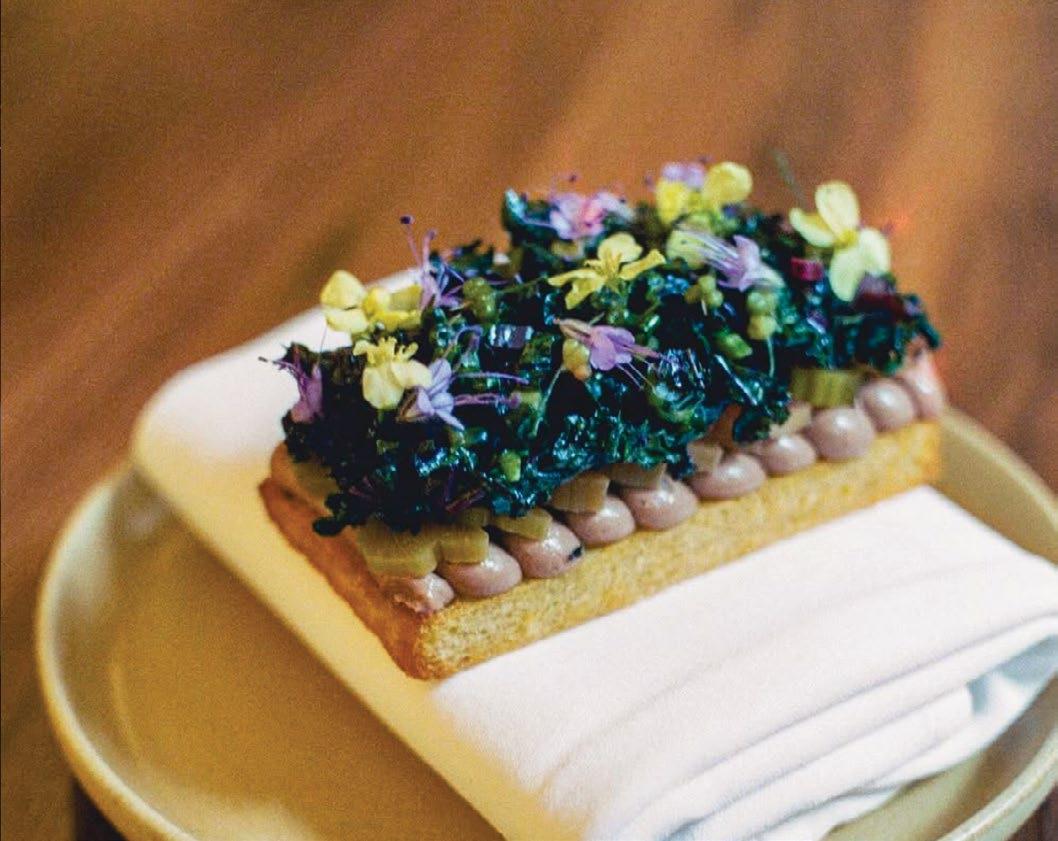
come through in dishes such as sweetcorn porridge with pickled daikon and fresh mushrooms.
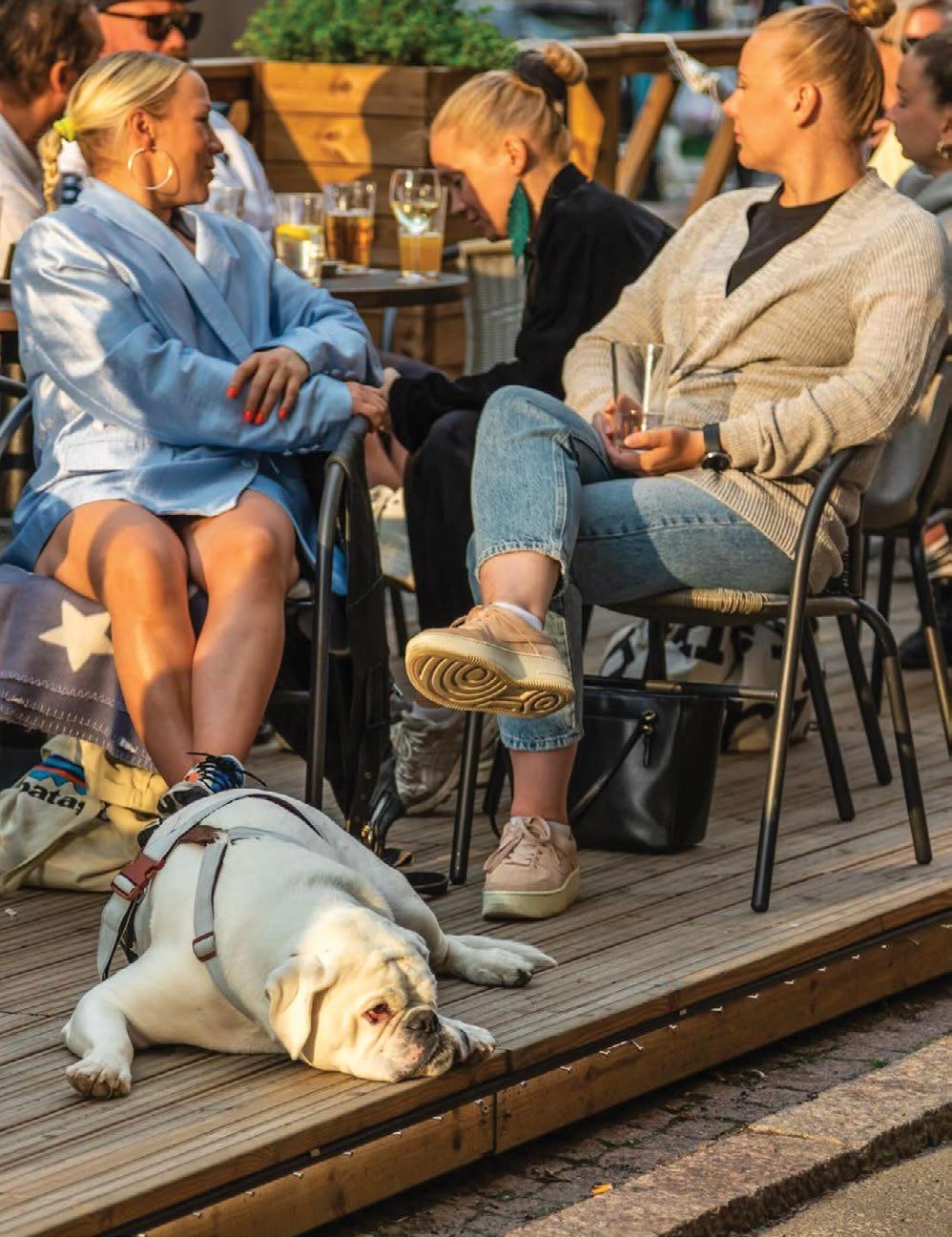
Summer days can stretch to nearly 24 hours and locals take advantage of the “white nights.” In the streets of Kallio, revelers fill an open-air dance floor, part of the city’s new summer streets initiative, where parking spots are replaced by planters, modular furniture and spaces for socializing and lingering. As I wander past couples tangoing and a crowd swaying to Balkan rap music, I realize Helsinki isn’t so offbeat after all — good city living is simple and accessible to everyone, whether it takes the form of a library that’s also a hip meeting place or a well-designed bench for soaking in the midnight sun.
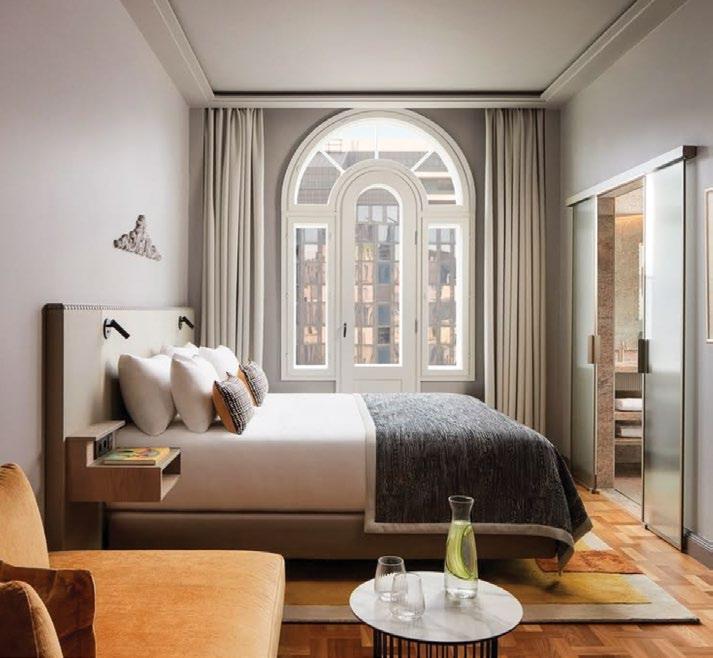
NH COLLECTION HELSINKI GRAND
Located near Helsinki Central railway station, the Grand Hansa’s 224 rooms are bright and airy with large windows and light wood accents. The expansive spa includes a Finnish sauna, steam bath and cold plunge, not to mention a 24-hour gym. The hotel comprises two historic buildings, and a dome-shaped tower, inspired by Paris’ Panthéon, hosts Kupoli, its popular rooftop bar.
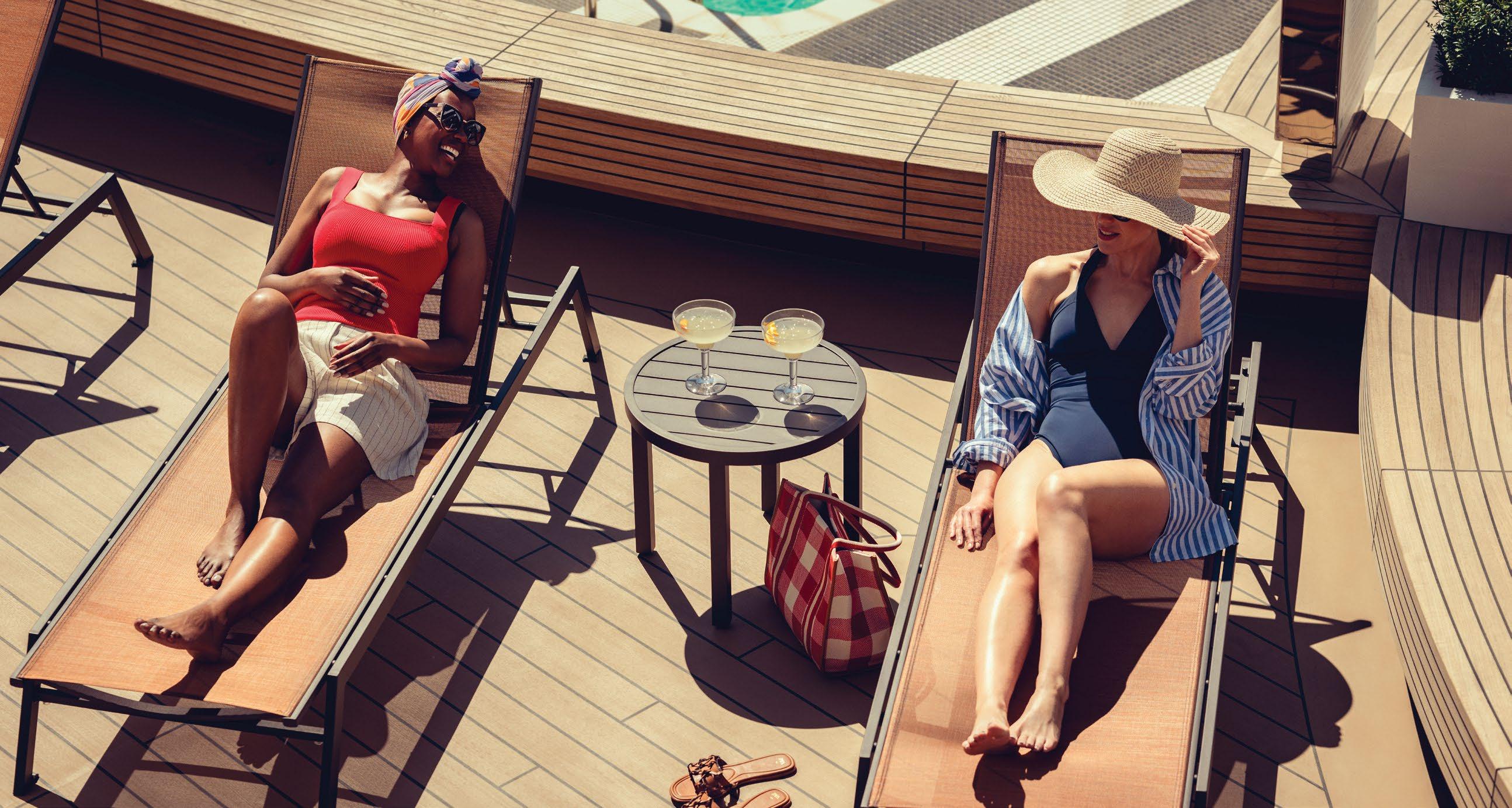
A Cunard® voyage through the Panama Canal blends discovery with distinguished comfort. From tropical jungles viewed from expansive decks to elegant evenings on board, every detail is designed for those who crave equal parts adventure and refinement. Immersive Shore Experiences, overnight stays, and illuminating Cunard Insights® enrichment promise a journey that stays with you long after you return home
Panama Canal
21 nights Seattle to Miami Sep 24, 2026 Q627
Balcony Fares from $3,199*

This voyage includes an Ensemble exclusive Shore Experience, a welcome aboard cocktail party, and the knowledge of an experienced Ensemble Host.
Master the walk, the ocho, the cross and other quintessential moves in a historic Buenos Aires studio.
By Robert Liwanag
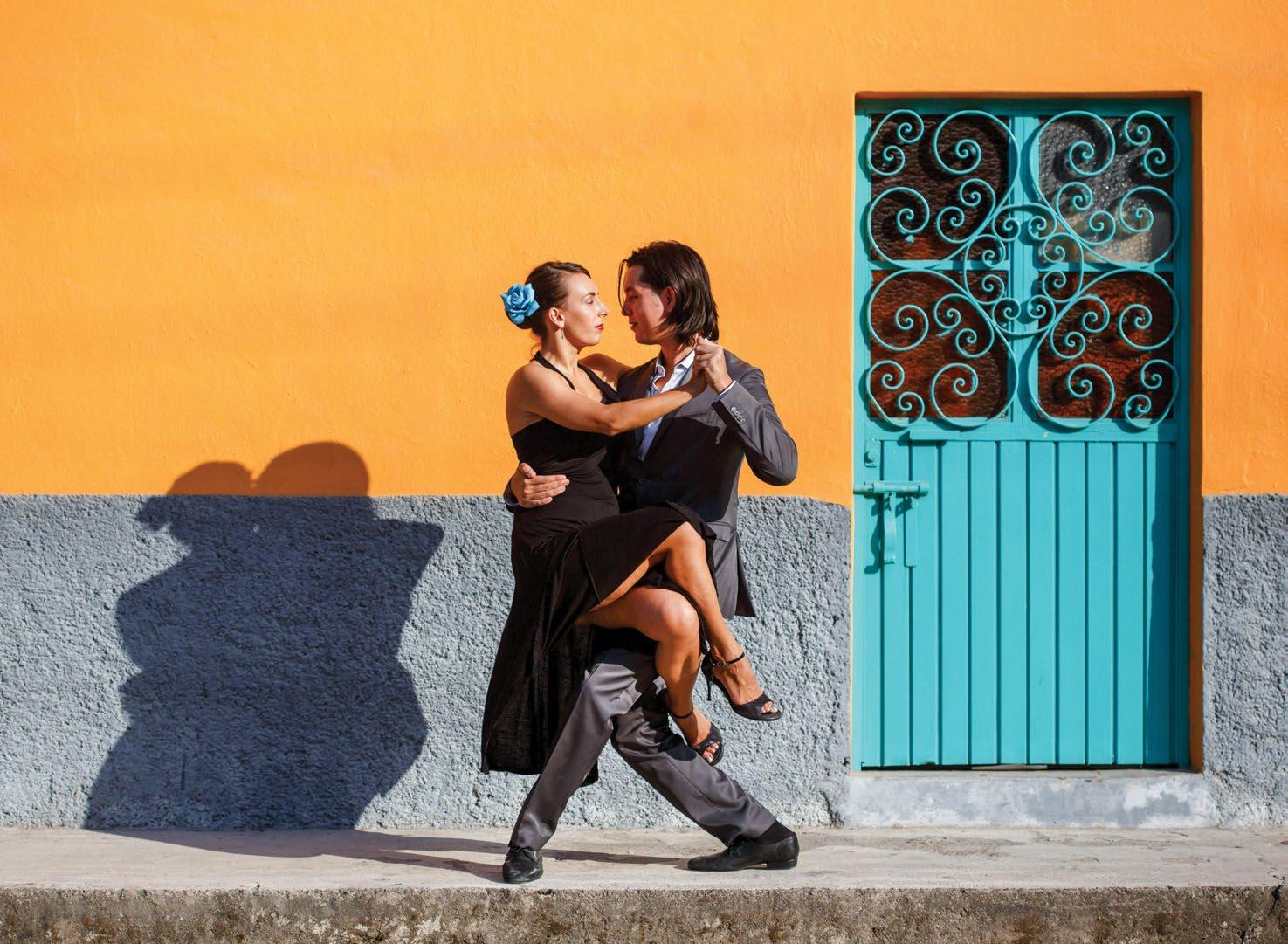
Between the French-inspired architecture of Recoleta and the technicolor streets of La Boca, visitors to Buenos Aires will inevitably encounter Argentina’s most enduring tradition: tango. For those eager to immerse themselves in the iconic dance, experiential travel company Latin Trails offers an opportunity to move from spectator to student. “Tango lessons are a great way to be part of something so representative of Argentine culture,” says Andrea Gonzalez, the company’s marketing coordinator. The activity mostly attracts couples, but solo travelers can join in, too.
In a traditional studio located in Palermo, San Telmo or Chacarita, a professional instructor introduces the fundamentals of the dance. Here, tango is more than just a performance — it’s part
of the city’s DNA, born in working-class neighborhoods and shaped by influences from both Europe and Africa. It’s expressed through the close embrace, the rhythmic walk and classic moves like the ocho. Participants are encouraged to wear loose, comfortable clothing so they can move freely, and while private lessons are designed for beginners, more experienced dancers are welcome to partake to hone their skills. Ready to hit the dance floor? Couples can debut their new moves in a real-life setting — or simply watch seasoned dancers glide across the floor to live music — by combining their lesson with a visit to a milonga : a dance hall where locals gather to practice tango. Throughout the evening, a guide shares insights into tango’s history, etiquette and cultural significance.
Latin Trails is based in Quito, Ecuador. Its Argentina itineraries also include empanada cooking classes, asado lessons and wine tastings in Mendoza. Exploring more of South America? Latin Trails offers experiences in Peru and the Galápagos.
Lessons last one hour, while the lesson combined with a milonga visit can last up to four hours.
Tango in Buenos Aires is a year-round affair, but avoid holidays like Christmas and New Year’s Day (as well as New Year’s Eve), when studios and milongas are usually closed.
UPGRADE
Not interested in a milonga? Opt for a tango performance with professional dancers instead.
Contact your Ensemble travel advisor to book this experience.
Equal parts coastal and cosmopolitan, Australia’s Harbour City is the ideal destination for a pre- or postcruise stay with its laid-back feel, iconic architecture, world-class restaurants and sun-drenched surf culture.
By Jessica Wynne Lockhart
Within minutes of sailing between the Sydney Heads, it becomes apparent why the city — known as Warrane in the Indigenous Gadigal language — is widely considered one of the world’s most jaw-dropping. Its sparkling water, gleaming Sydney Opera House (a UNESCO World Heritage Site) and lush Botanic Gardens are its most obvious attributes, but spend a few days here and you’ll discover that it has much more to offer. Wake up early for a morning wander and swim along the Bondi to Coogee Coastal Walk, spend your day shopping and exploring museums, and then settle into dinner at one of the country’s best restaurants. If you like your cities with a side of nature, this is where you’ll find the best of both worlds.
FAST FACTS
Currency
Australian dollar (AUD)
Language
English
Tipping
Not expected
Average daily highs range from 63°F/17°C in July to 80°F/26°C in January.
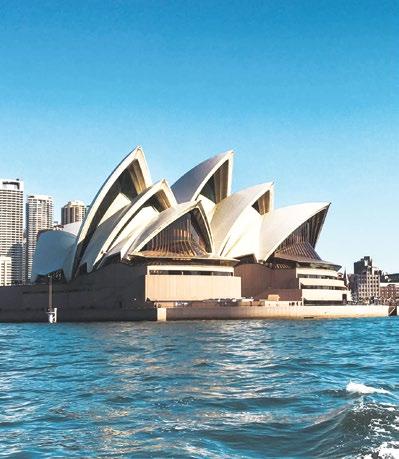
Construction of the Sydney Opera House took 14 years, including the placement of more than one million Swedish-made tiles on its 14 shells.
The Sydney area was inhabited by the Eora Nation for at least 30,000 years before the First Fleet arrived in 1788 and established Britain’s first penal colony.
At around 21 square miles, Sydney Harbour is one of the world’s largest natural harbors. With roughly 150 miles of shoreline, it’s home to more than 100 beaches, eight islands and some of the city’s biggest attractions, including Taronga Zoo and the Opera House.
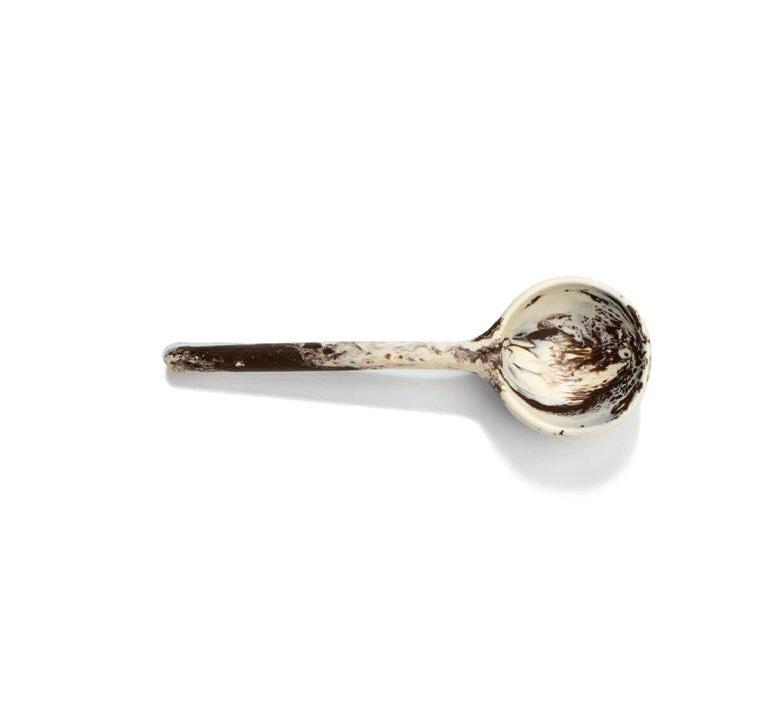
The colorful resin homewares and jewelry found at Dinosaur Designs’ three Sydney locations — including in the Victorian-era Strand shopping arcade — have become the ultimate Sydney status symbol. The well-heeled prefer the design studio’s asymmetrical bangles, but the stone serving spoon makes for a practical and surprising keepsake.
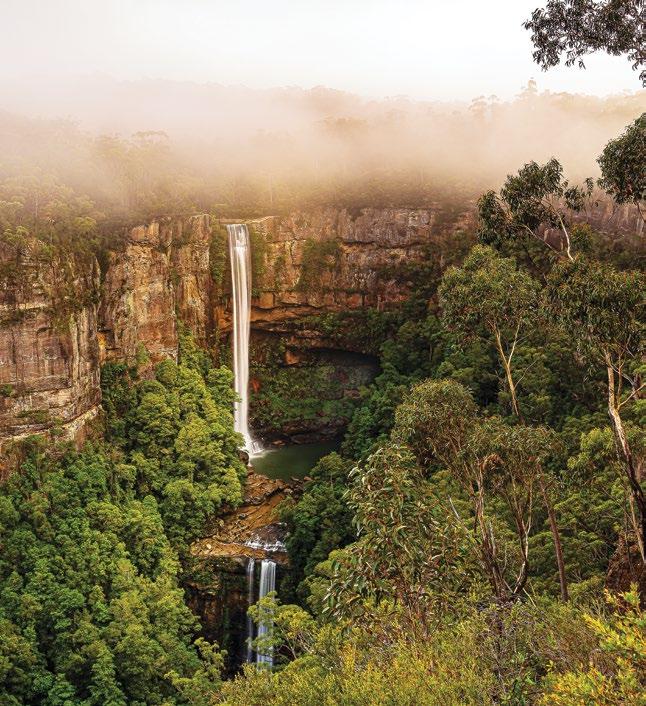
It takes less than two hours by car to reach the Southern Highlands, a region of rolling green hills and historic villages. Stop to sample a cool-climate wine at one of the 17 cellar doors, meander through the charming Georgian streets of Berrima or feel the mist on your face from the 266-foot-high Fitzroy Falls in Morton National Park.
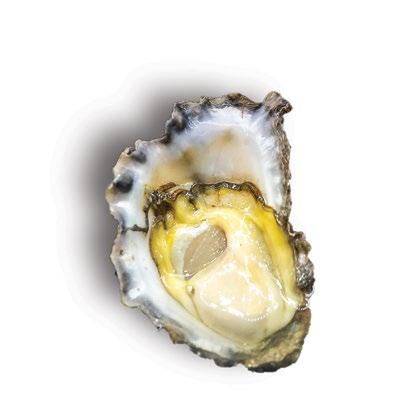
Seafood is synonymous with Sydney, where endemic rock oysters have been farmed since the 1870s. For the freshest fare, the new-in-2026 Sydney Fish Market on Blackwattle Bay serves up ready-toeat shellfish.
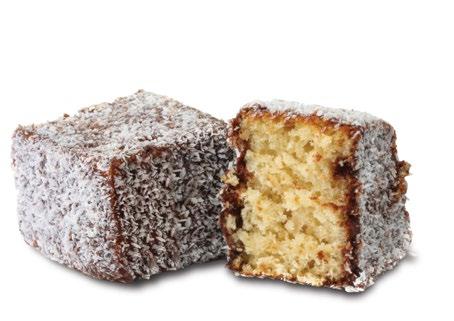
The lamington — a sponge cake dipped in chocolate and rolled in coconut — may have originated in Queensland, but it’s become a nationwide classic. You’ll find it at most bakeries, but Flour and Stone’s version is one of the most sought-after.
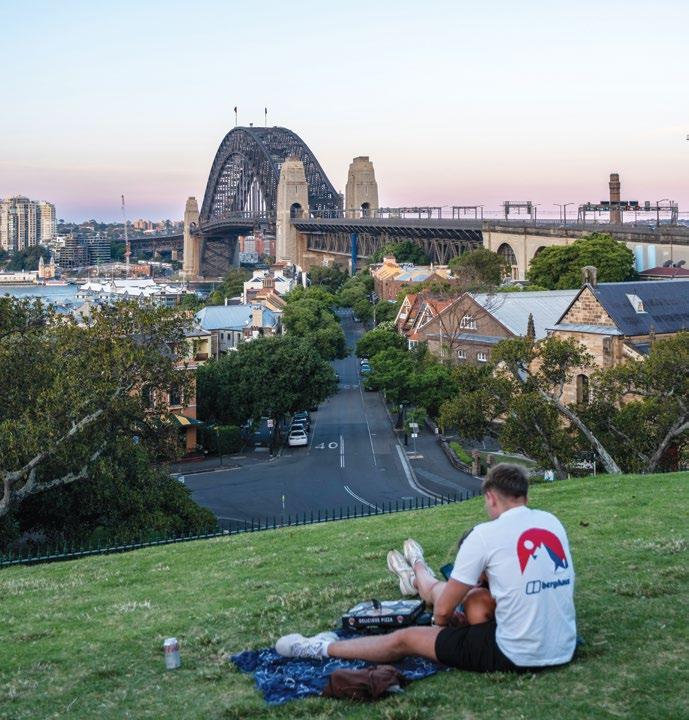
Make the short climb to the top of Observatory Hill, home to a circa-1859 meteorological station. The small public park is Sydney’s highest spot, making it the prime position for panoramic views of Sydney’s Harbour Bridge and city skyline. When the day turns to dusk, join a guided tour to peer through the observatory’s historic and modern telescopes.
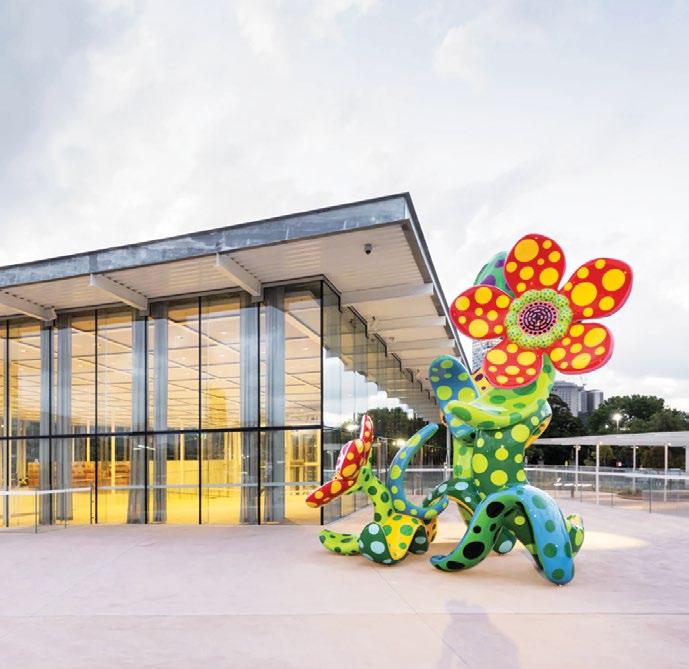
Slip inside the sanctuary of the Art Gallery of New South Wales and you’ll find one of the country’s most impressive collections of modern, Aboriginal and Torres Strait Islander artwork, spread over two buildings. Don’t miss the sculptures in the courtyard garden or the exhibitions buried deep within WWII naval fuel tanks.
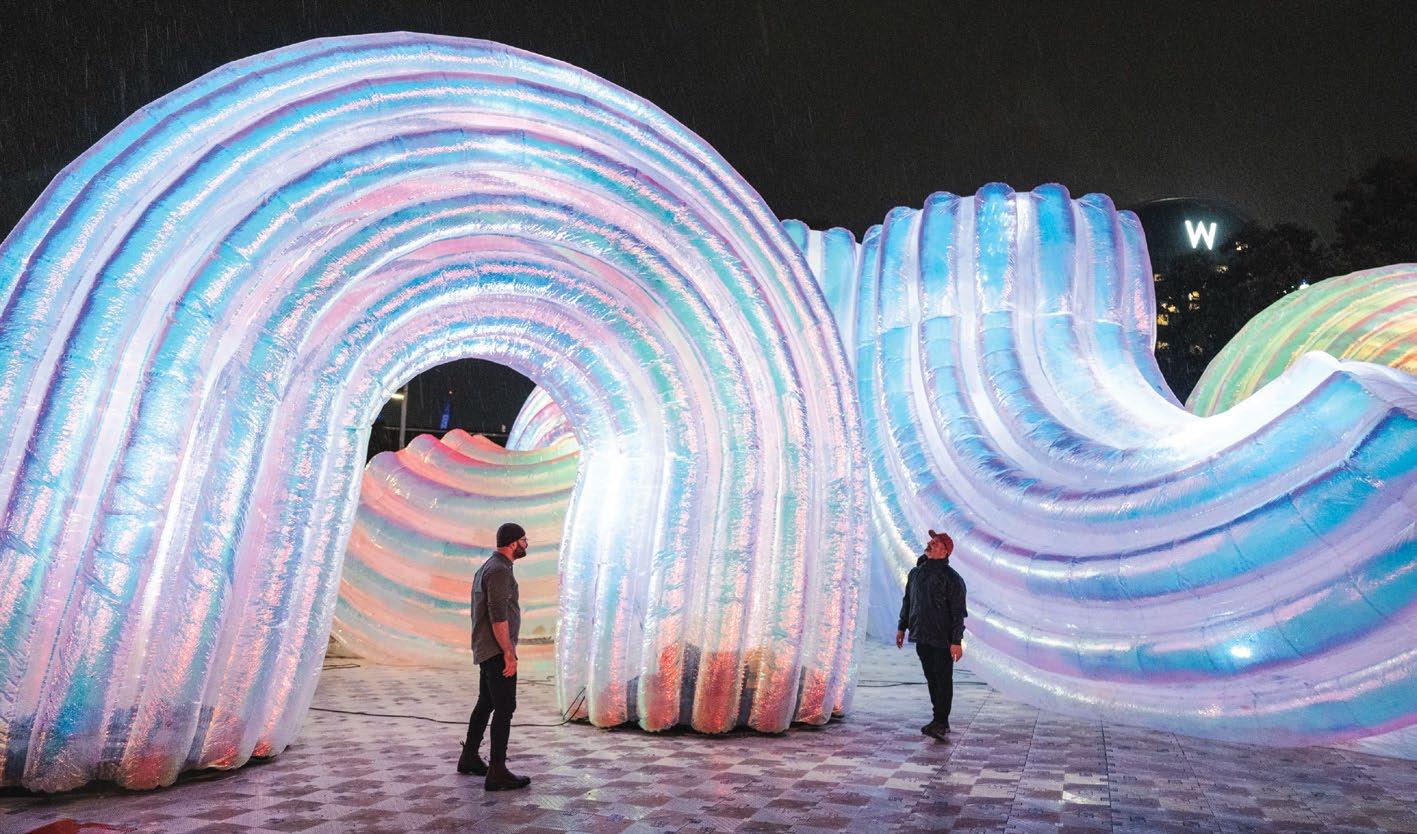
There are public art festivals — and then there’s Vivid Sydney. Held annually from late May until mid-June, the event features public talks, live music (past lineups have included Sigur Rós with the Sydney Symphony Orchestra, Aboriginal rapper Barkaa and Sydney-based songstress Meg Mac) and culinary experiences — but its massive outdoor light installation, with a nightly light show projected onto the Opera House, is not to be missed.
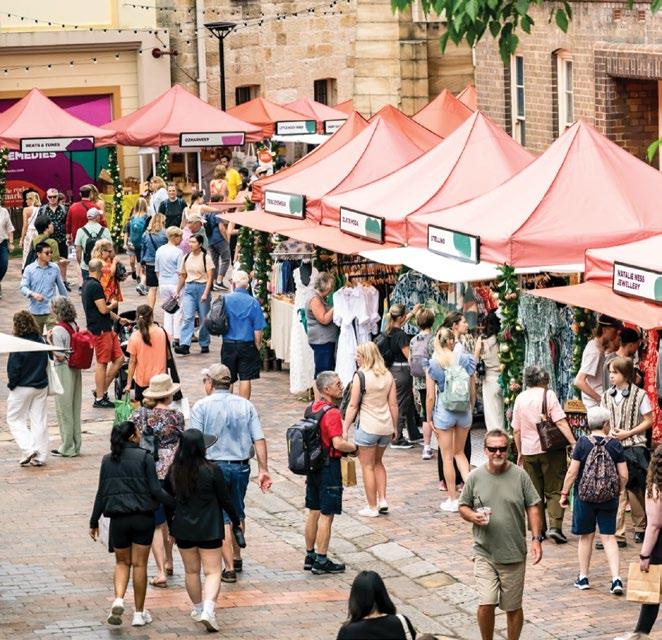
Every Friday, Saturday and Sunday, artisans showcase their wares in The Rocks’ cobblestone laneways. For tens of thousands of years, the area was home to the Gadigal people of the Eora Nation. In the late 1700s, it became the site of the country’s first marketplace, where livestock and sugar were sold. Today, you’re more likely to walk away with a handcrafted Huon pine cutting board, bottle of small-batch gin or a colorful kangaroo print.

DRINK LIKE A LOCAL
In the warehouses of Sydney’s Inner West, craft brewing is a serious business, with roughly 16 breweries in a threemile radius. For a deeply Australian experience, order a lager at The Bob Hawke Beer & Leisure Centre, named for one of the country’s most popular politicians.
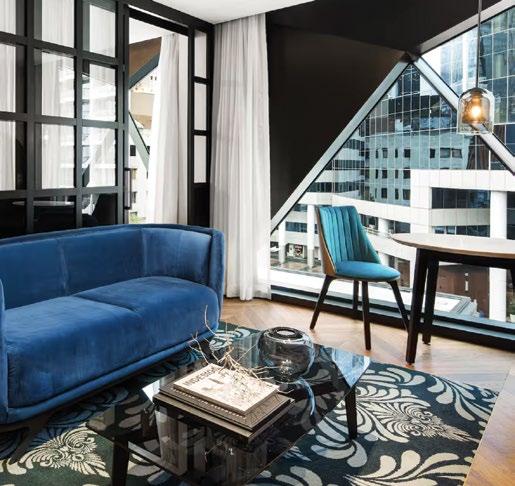
At the edge of Barangaroo — a buzzy waterfront precinct lined with restaurants and boutiques — you’ll find the plush contemporary rooms of West Hotel Sydney. An on-site fitness center and airy atrium filled with greenery round out the offerings.
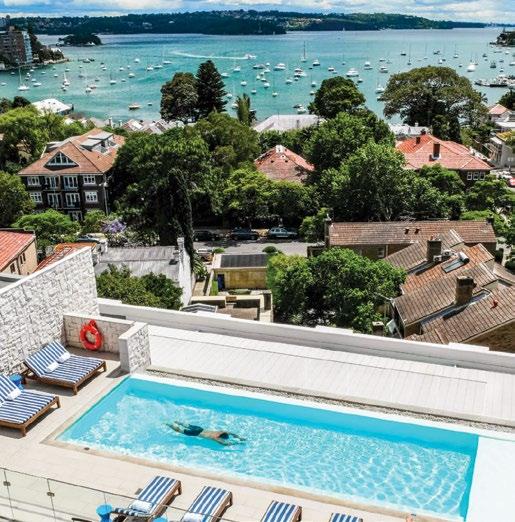
This luxurious escape is just far enough from the hum of Sydney’s busy business district while keeping within a 15-minute drive to major attractions. If you somehow manage to tire of the panoramic views from the rooftop pool, Redleaf Beach — favored by locals for an after-work dip — is a short stroll away.
Ask your Ensemble travel advisor about exclusive amenities at this property.








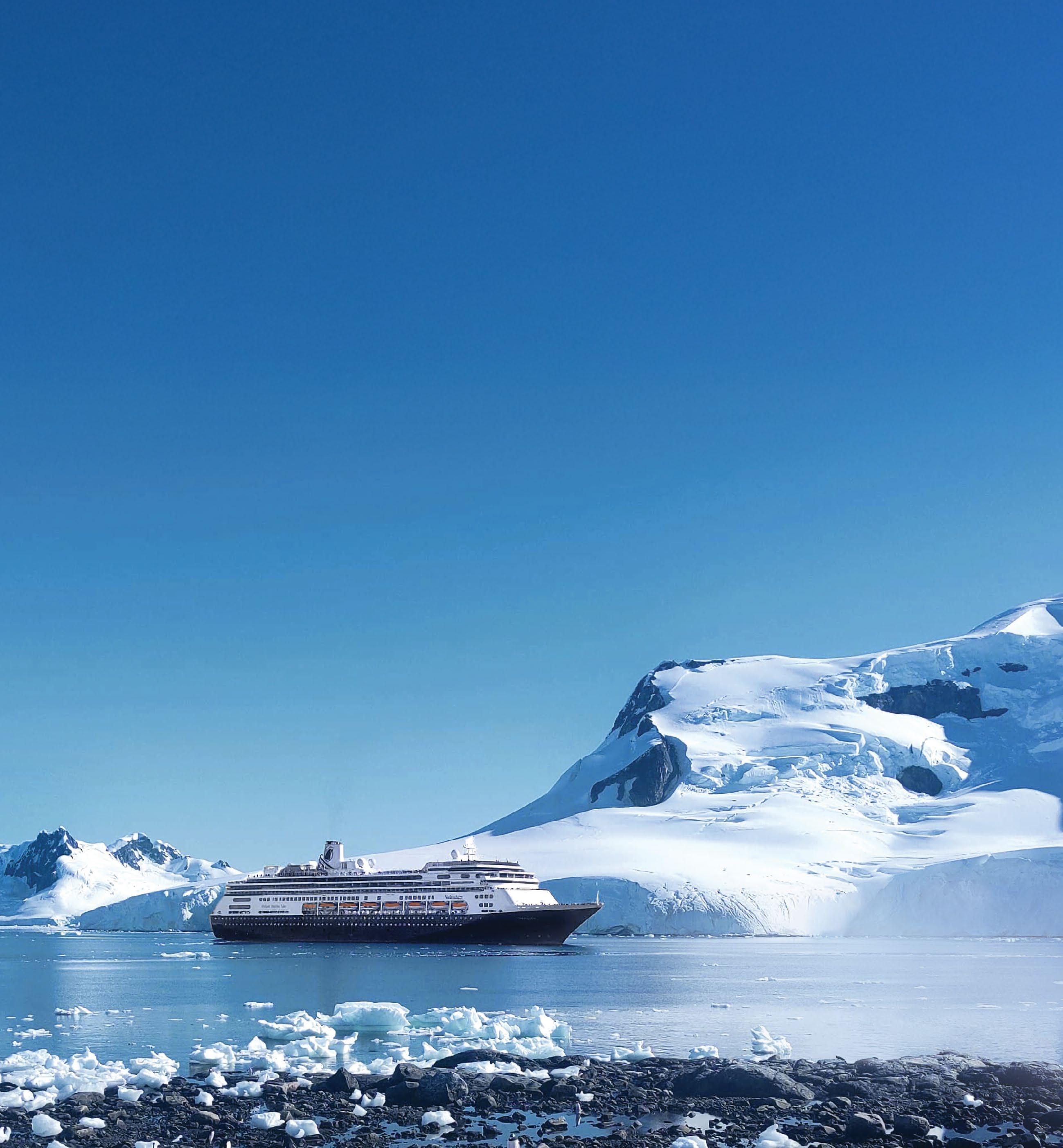
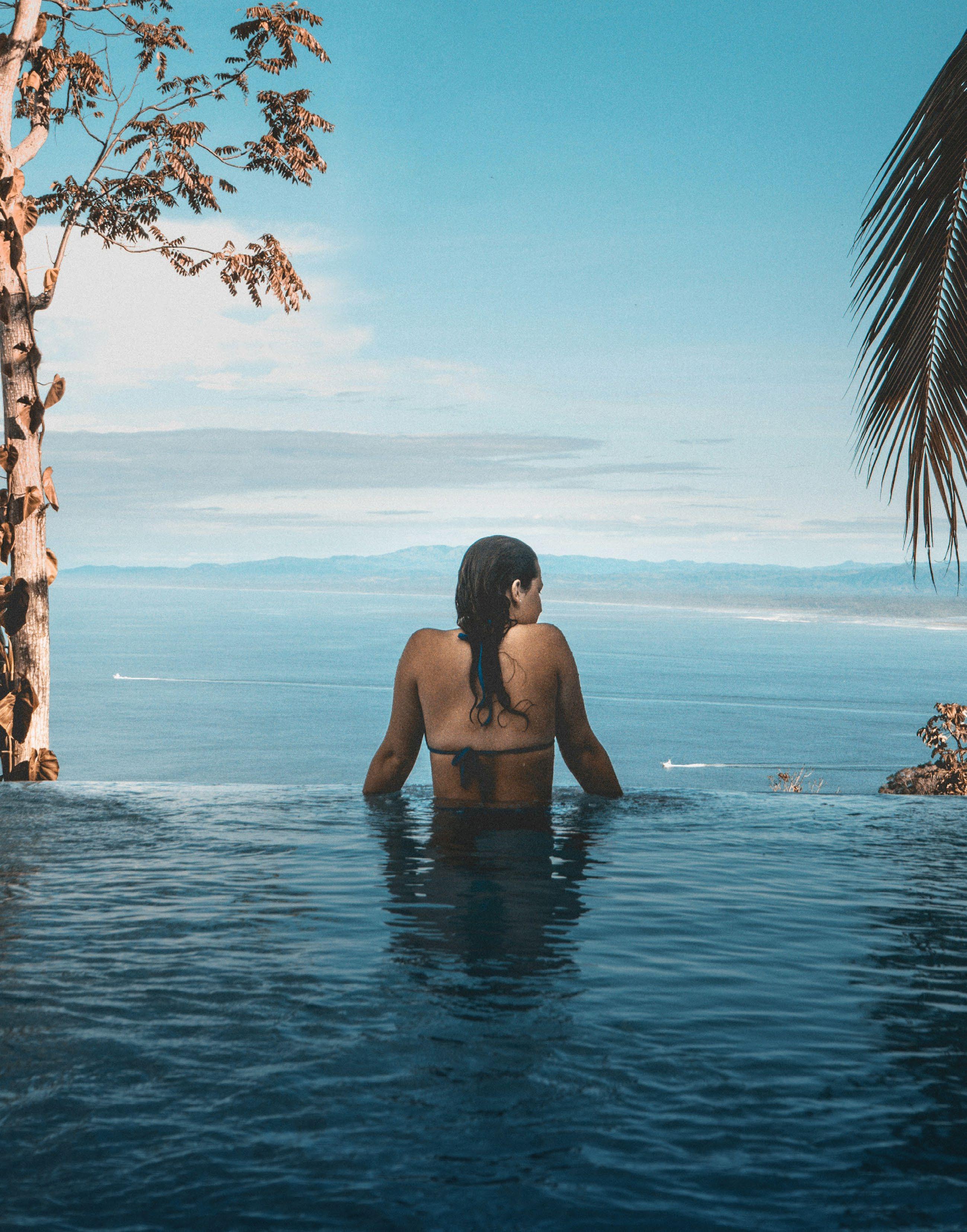
Upgrade your travels with Ensemble, a leading North American organization of top-tier travel agencies. Enjoy access to exclusive perks, exceptional amenities and extraordinary experiences, on land and at sea.
TO UNLOCK YOUR ACCESS TO THESE ENSEMBLE EXCLUSIVES, CONTACT YOUR ENSEMBLE TRAVEL ADVISOR.
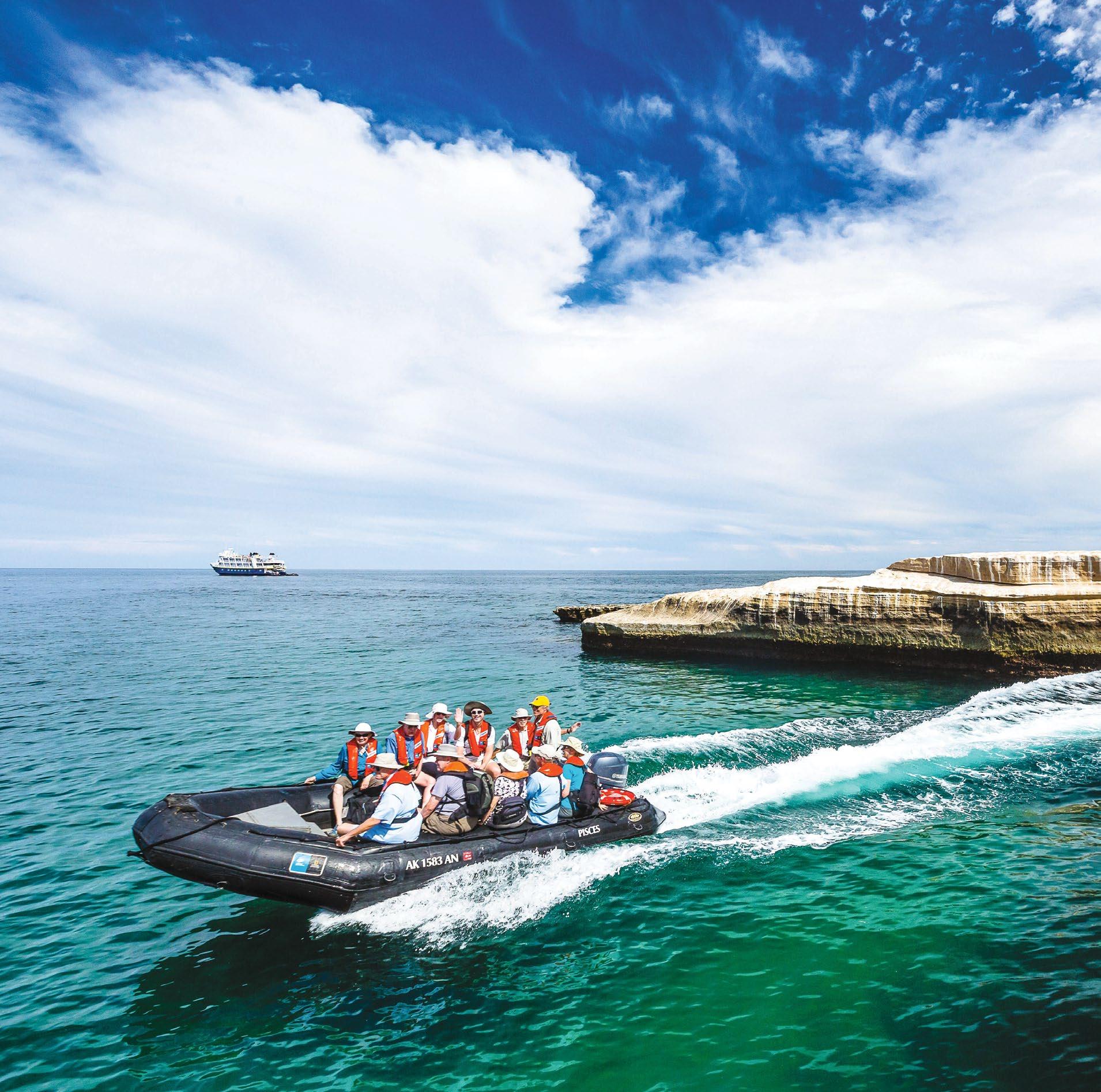
Discover a range of cruise journeys — from family-friendly Arctic expeditions to spectacular island escapes — and take advantage of exclusive offers only available when you book with your trusted Ensemble advisor.
Cunard’s experiential travel immerses guests in culture, ideas and places through iconic itineraries, expert speakers, refined cuisine and thoughtful days at sea — where the journey itself inspires discovery, connection and lasting memories.
DATE : September 26, 2026
SHIP : Queen Mary 2®
ITINERARY
New York, New York ê Days at Sea ê Boston, Massachusetts ê Day at Sea ê Sydney, Nova Scotia ê Day at Sea ê Quebec City, Quebec (overnights)
ê Saguenay, Quebec ê Sept-Îles, Quebec
ê Day at Sea ê Halifax, Nova Scotia
ê Day at Sea ê New York, New York
ENSEMBLE
EXCLUSIVE OFFER
From US$4,105 | CA$5,501 per person (Balcony Category BY), based on double occupancy. Fare includes taxes and fees.* Canada and New England 15 NIGHTS
Eastern Caribbean
12 NIGHTS
DATE : October 15, 2026
SHIP : Queen Elizabeth®
ITINERARY
Miami, Florida ê Day at Sea ê San Juan, Puerto Rico ê St. John’s, Antigua ê Castries, St. Lucia ê Bridgetown, Barbados ê Day at Sea ê Philipsburg, St. Maarten ê Road Town, Tortola ê Days at Sea ê Miami, Florida
ENSEMBLE
EXCLUSIVE OFFER
Enjoy a complimentary shore experience, traveler cocktail party and the company of a gracious onboard host.
Norway and the Northern Lights
12 NIGHTS
DATE : March 14, 2027
SHIP : Queen Mary 2®
ITINERARY
Southampton, England ê Days at Sea ê Trondheim, Norway ê Day at Sea ê Tromsø, Norway (overnight)
ê Day at Sea ê Åndalsnes, Norway
ê Bergen, Norway ê Days at Sea ê Southampton, England
ENSEMBLE
EXCLUSIVE OFFER
Enjoy a complimentary shore experience, traveler cocktail party and the company of a gracious onboard host.
Enjoy a complimentary shore experience, traveler cocktail party and the company of a gracious onboard host. Scan
From US$6,520 | CA$8,736
per person (Balcony Category BB), based on double occupancy. Fare includes taxes and fees.*
From US$3,435 | CA$4,328 per person (Balcony Category BY), based on double occupancy. Fare includes taxes and fees.*
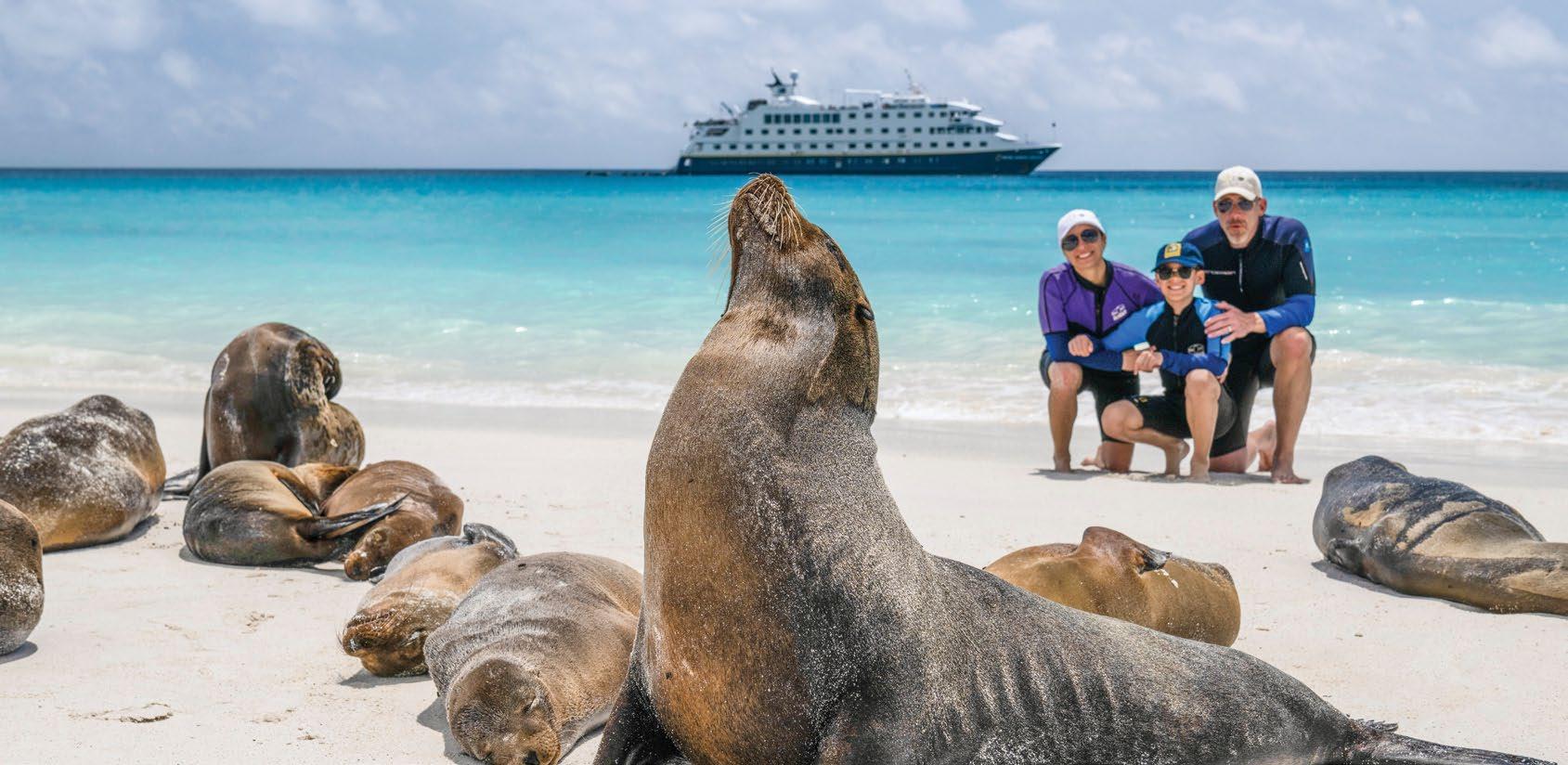
A voyage with National Geographic-Lindblad Expeditions is a wonderful fit for families — whether you are parents traveling with grade-schoolers or grandparents bringing the entire crew on a multigenerational adventure. Be sure to explore our kids’ program, Explorers-in-Training featured expeditions.
Arctic Edges: Iceland Westfjords to East Greenland
8 DAYS
DATE : July 26, 2026
SHIP : National Geographic Explorer
ITINERARY
Reykjavík, Iceland ê Djúpavík, Iceland ê Skagafjörður, Iceland ê Cruising the East Coast of Greenland (overnight)
ê Cruising the Westfjords of Iceland (overnight) ê Reykjavík, Iceland
ENSEMBLE
EXCLUSIVE OFFER
US$200 onboard credit per stateroom
Baja California Holiday: A Living Sea and Desert Isles
8 DAYS
DATE : December 19, 2026
SHIP : National Geographic Venture
ITINERARY
Loreto, Mexico ê Exploring the Gulf of California (days 2-7) ê Loreto, Mexico
ENSEMBLE
EXCLUSIVE OFFER
US$200 onboard credit per stateroom
Galápagos Escape
7 DAYS
DATE : July 6, 2027
SHIP : National Geographic Gemini
ITINERARY
Guayaquil or Quito, Ecuador (overnight)
ê Galápagos Islands (days 3-6)
ê Guayaquil or Quito, Ecuador
ENSEMBLE
EXCLUSIVE OFFER
US$200 onboard credit per stateroom
Scan for more information.
From US$10,888
per person (Category 4 Veranda Deck Oceanview), based on double occupancy. Fare includes taxes and fees.*
From US$7,384
per person (Category 4 Upper Deck Balcony), based on double occupancy. Fare includes taxes and fees.*
From US$11,340
per person (Category 4 Bridge Deck Balcony), based on double occupancy. Fare includes taxes and fees.*
Designed in partnership with Woods Hole Oceanographic Institution (WHOI) scientists, this PONANT EXPLORATIONS voyage to the Antarctic invites guests to experience the Southern Ocean as researchers do — as a dynamic system shaping global climate, circulation and life on Earth.
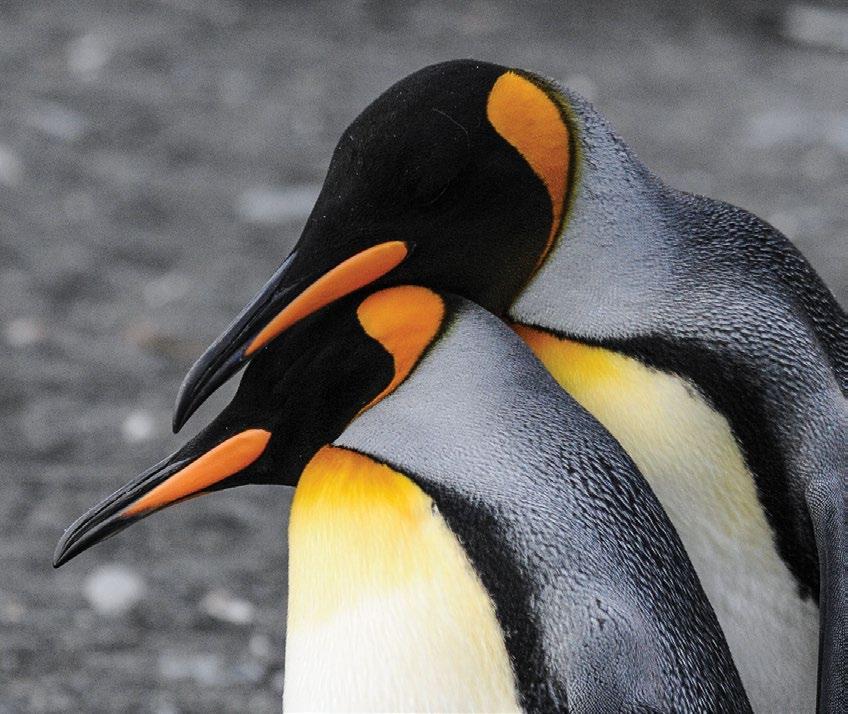
Antarctica: Ocean (Re)Imagined with Woods Hole Oceanographic Institution
10 NIGHTS
DATE : December 7, 2027
SHIP : Le Lyrial
ITINERARY
Ushuaia, Argentina ê Crossing the Drake Passage (overnight) ê Antarctic Peninsula (days 5-9) ê Crossing the Drake Passage (overnight) ê Ushuaia, Argentina
ENSEMBLE EXCLUSIVE OFFER
US$200 onboard credit per stateroom or suite
Scan for more information.
From US$15,570
per person (Balcony Deluxe Stateroom Category), based on double occupancy. Fare includes taxes and fees.*
Sail to the snow-white shores of Grand Turk, where turquoise waters and charming island streets invite you to unwind and explore. Then, spend a full day at our exclusive Beach Club at Bimini — sun, music and pure paradise await.
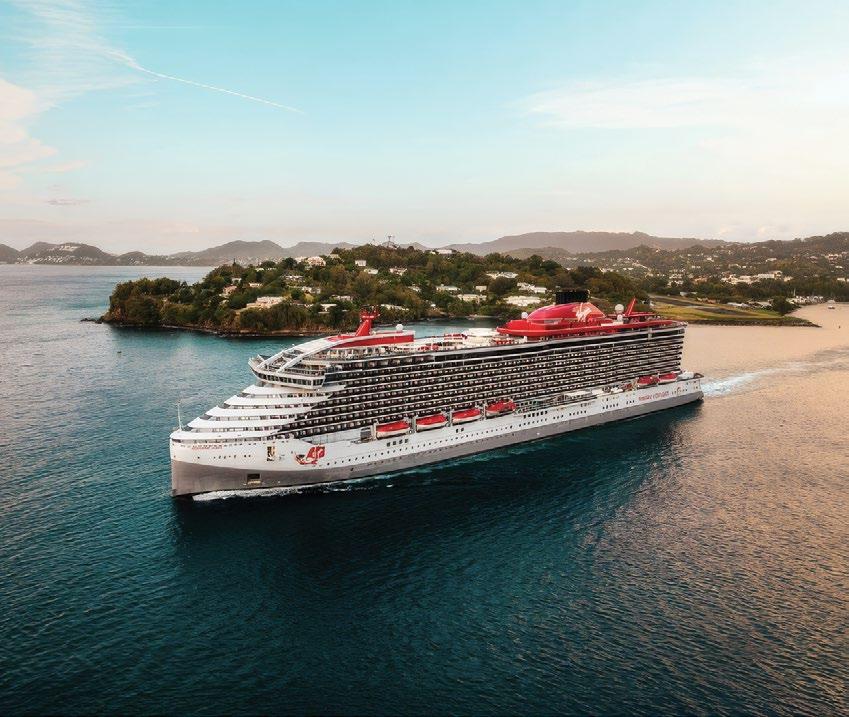
Grand Turk & Bimini Beach Club
5 NIGHTS
DATE : November 14, 2026
SHIP : Resilient Lady
ITINERARY
Miami, Florida ê Day at Sea ê Grand Turk, Turks and Caicos ê Day at Sea ê The Beach Club at Bimini, The Bahamas ê Miami, Florida
ENSEMBLE OFFER
70% off the second sailor, plus up to US$1,000 in instant savings
Scan for more information.
From US$985
per person (Sea Terrace), based on double occupancy. Fare includes taxes and fees.*
Norwegian Cruise Line’s private island in The Bahamas, Great Stirrup Cay, invites travelers to embrace the Great Life. Lounge beside the expansive 28,000-square-foot Great Life Lagoon, sip cocktails at swim-up bars and unwind on powdery beaches. Exciting new attractions debut throughout 2026, promising an even greater island escape.
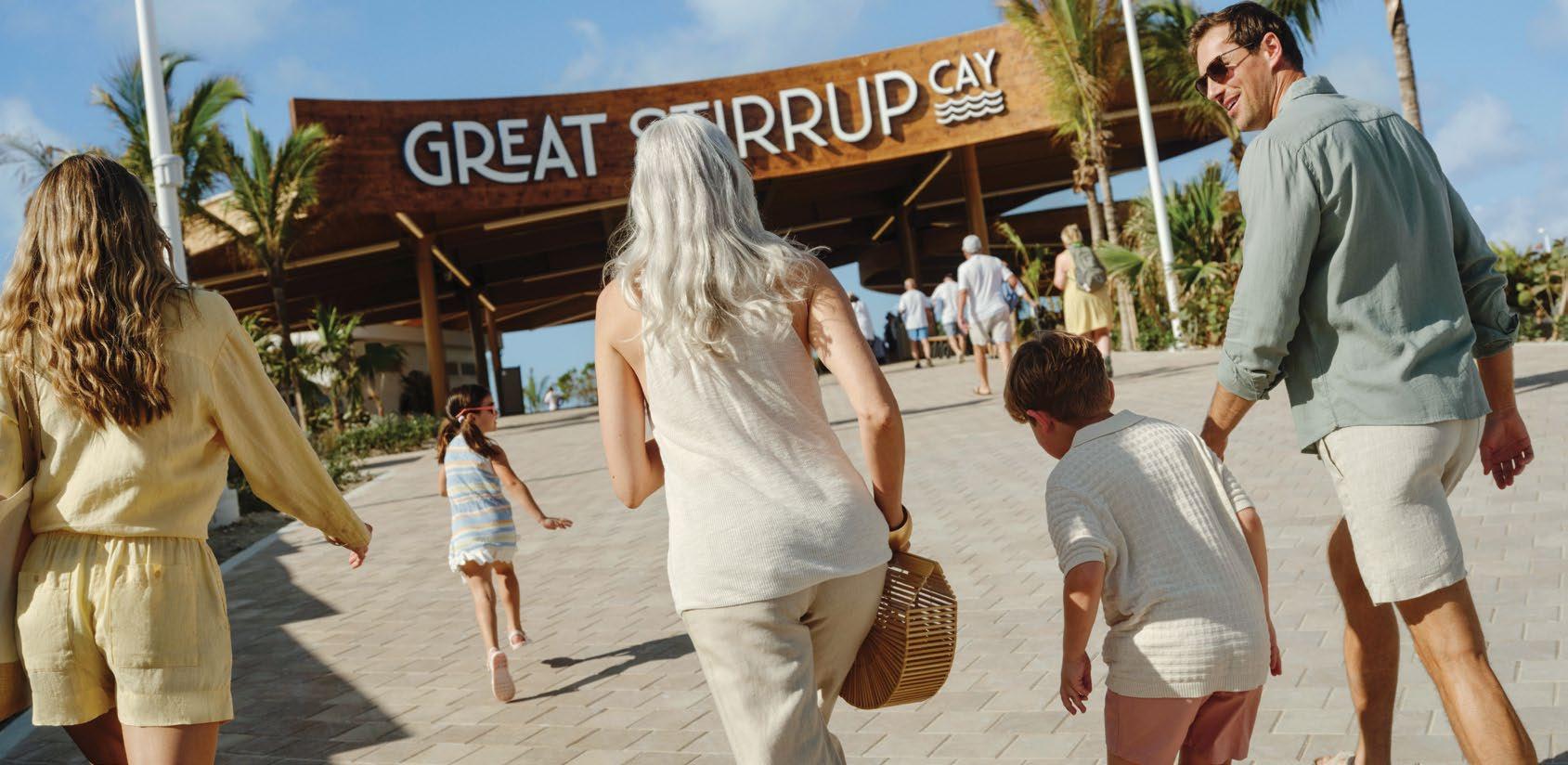
Eastern Caribbean: Great Stirrup Cay & Dominican Republic
7 DAYS
DATE : September 6, 2026
*more departures available SHIP : Norwegian Prima
ITINERARY
Port Canaveral (Orlando), Florida
ê Day at Sea ê Puerto Plata, Dominican Republic ê St. Thomas, U.S. Virgin Islands
ê Tortola, British Virgin Islands ê Day at Sea ê Great Stirrup Cay, The Bahamas
ê Port Canaveral (Orlando), Florida
ENSEMBLE
EXCLUSIVE OFFER
Up to US$100 onboard credit
From US$1,579 | CA$2,140
per person (Category BF-Balcony), based on double occupancy. Taxes and fees included.*
Eastern Caribbean: Great Stirrup Cay & Dominican Republic
7 DAYS
DATE : September 19, 2026
*more departures available SHIP : Norwegian Luna
ITINERARY
Miami, Florida ê Day at Sea ê Puerto Plata, Dominican Republic ê St. Thomas, U.S. Virgin Islands ê Tortola, British Virgin Islands ê Day at Sea ê Great Stirrup Cay, The Bahamas ê Miami, Florida
ENSEMBLE
EXCLUSIVE OFFER
Up to US$100 onboard credit
From US$1,699 | CA$2,303
per person (Category BF-Balcony), based on double occupancy. Taxes and fees included.*
Eastern Caribbean: Great Stirrup Cay & Dominican Republic
7 DAYS
DATE : December 4, 2026
*more departures available
SHIP : Norwegian Escape
ITINERARY
Port Canaveral (Orlando), Florida
ê Day at Sea ê Puerto Plata, Dominican Republic ê St. Thomas, U.S. Virgin Islands
ê Tortola, British Virgin Islands ê Day at Sea ê Great Stirrup Cay, The Bahamas
ê Port Canaveral (Orlando), Florida
ENSEMBLE
EXCLUSIVE OFFER
Up to US$100 onboard credit
From US$1,299 | CA$1,760 per person (Category BF-Balcony), based on double occupancy. Taxes and fees included.*
Scan for more information.
At the World Nomad Games’ ethno-village, dance performances, cooking demos and artisan workshops take place amid hundreds of yurts. For photographer Ben Roberts, wandering the site and meeting people from across Kyrgyzstan made his experience at the 2018 Games even more memorable: “To witness first-hand the pride people have in their nomadic heritage was truly a privilege.”
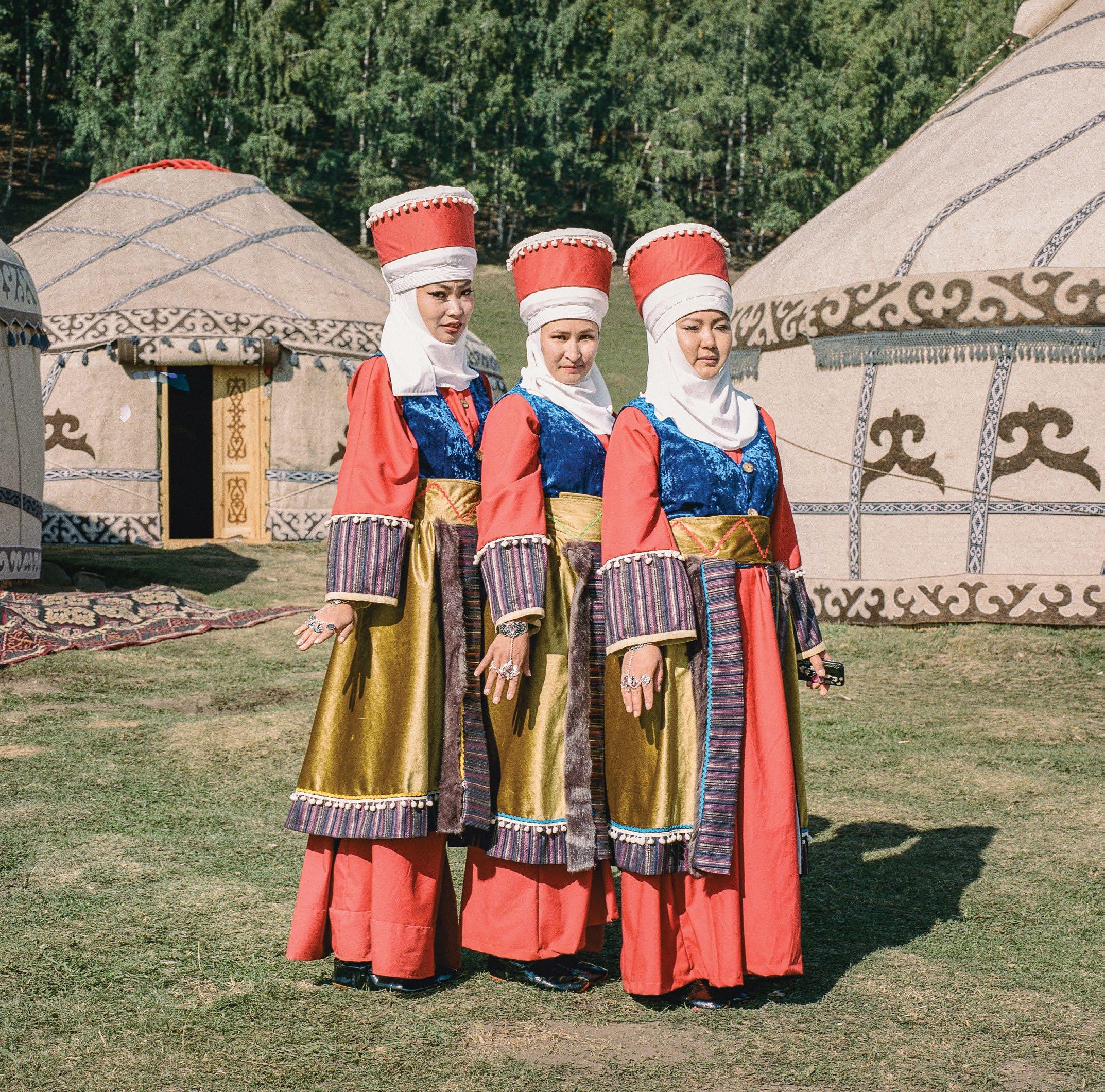















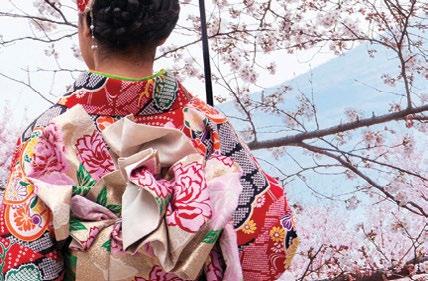




















Uncover stories passed down through generations across Asia. From forgotten dynasties to sacred temples, find wisdom in prevailing traditions. During Lunar New Year, the night sky is lit by fireworks and the glow of red lanterns. Spring paints the land in the blush hues of cherry blossoms,, lining roads and rivers in delicate pink. Across the continent, myths of the ancient world dwell in groves and legends stir in hidden shrines. Stand among stupas and look over the Andaman Sea in a floating village. Step into history and follow the thread that connects past to present.
Contact your Ensemble travel advisor to book your All-Inclusive Silversea Voyage.

Thank you for traveling with us in the latest issue of Range by Ensemble. Start planning your next journey — beyond these pages — with your trusted Ensemble travel advisor .