KEEP SALES SIZZLING Veggies also belong on the grill
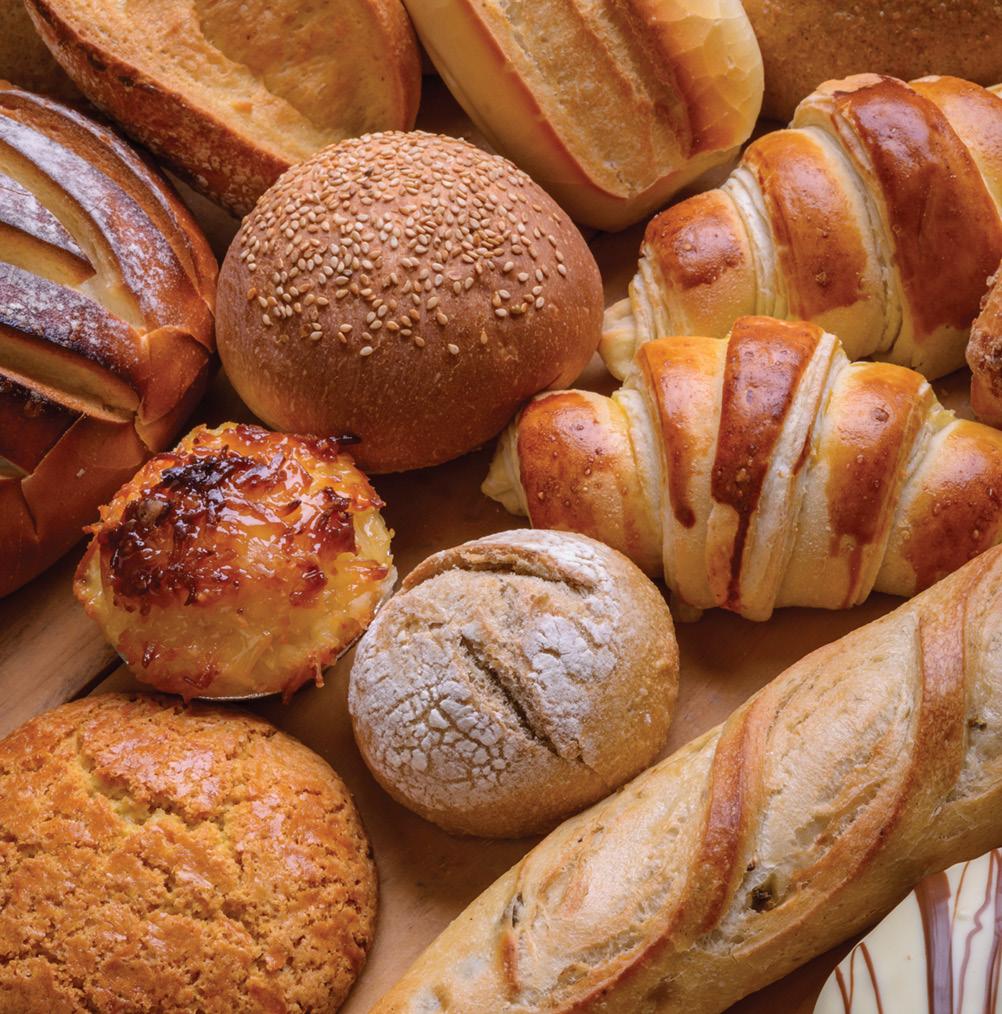
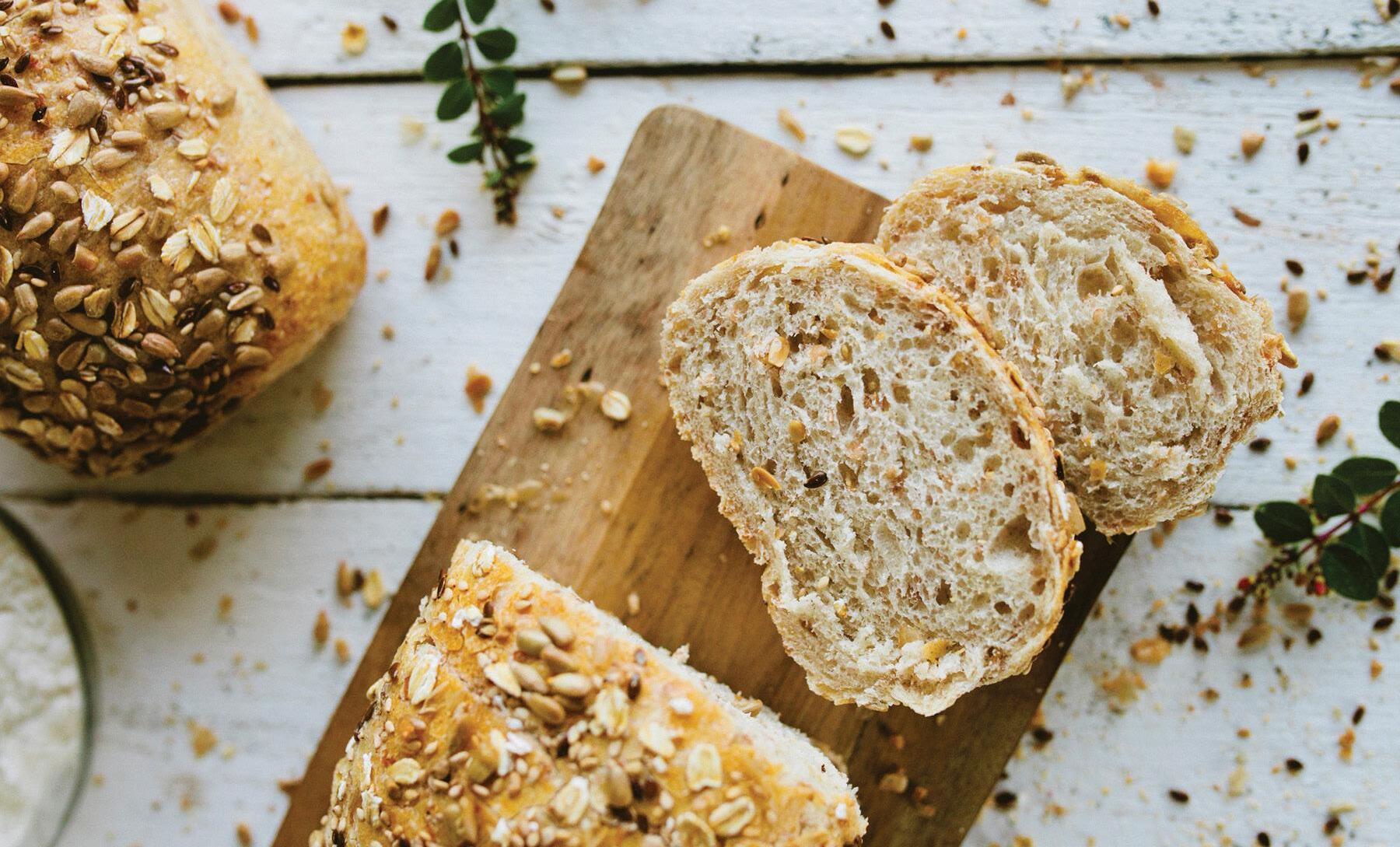
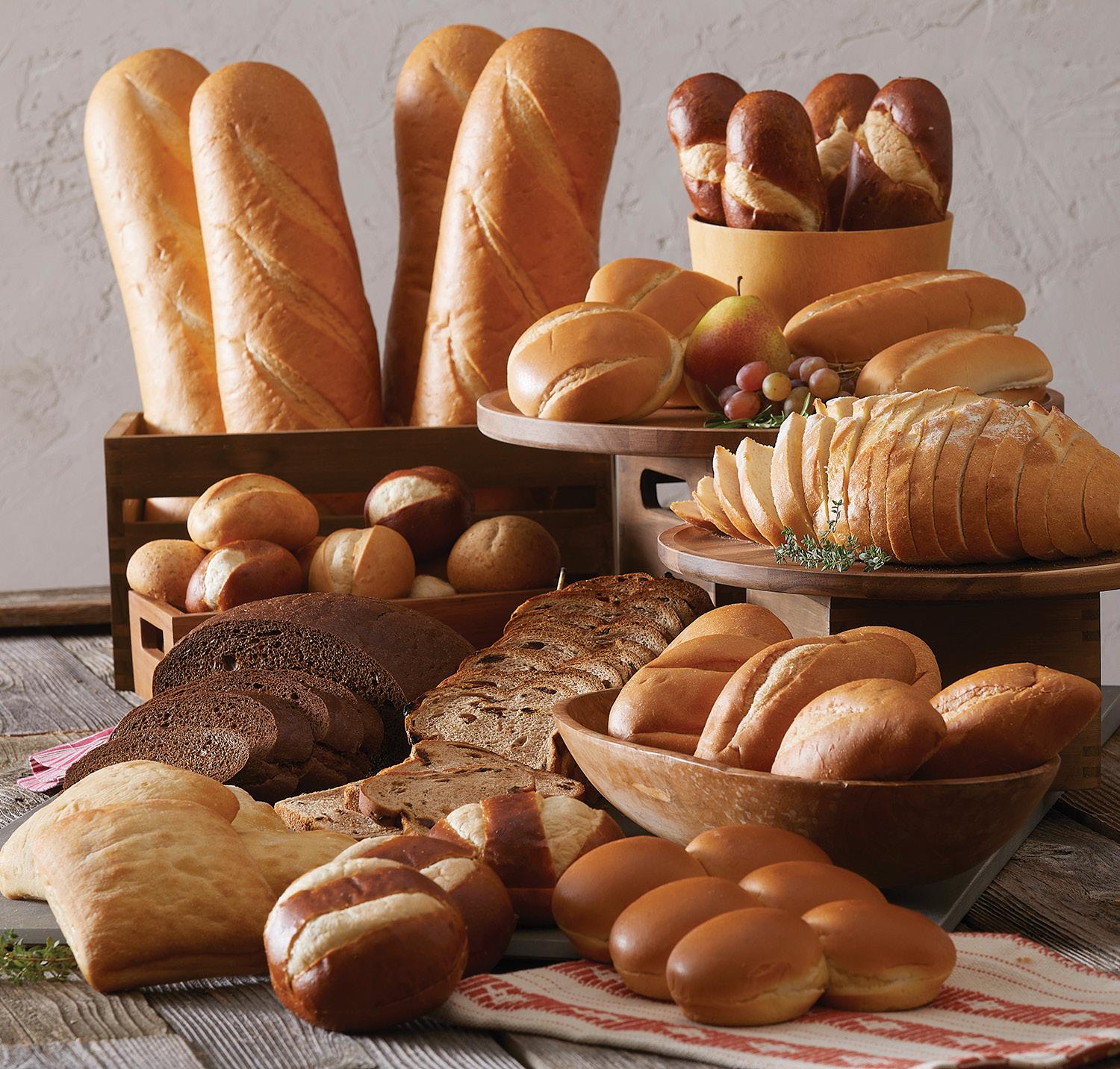
ANY WAY YOU SLICE IT Innovation helps in-store bakery shine
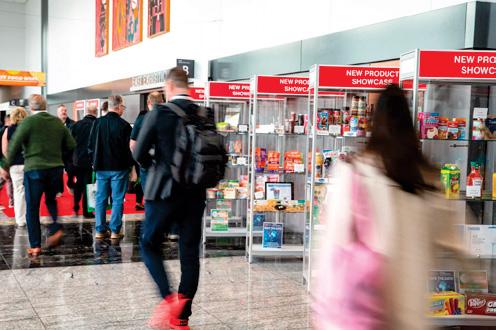
GATHERING INTELLIGENCE What retailers can do to maximize visits
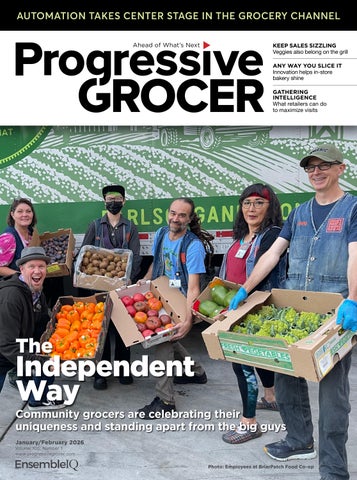
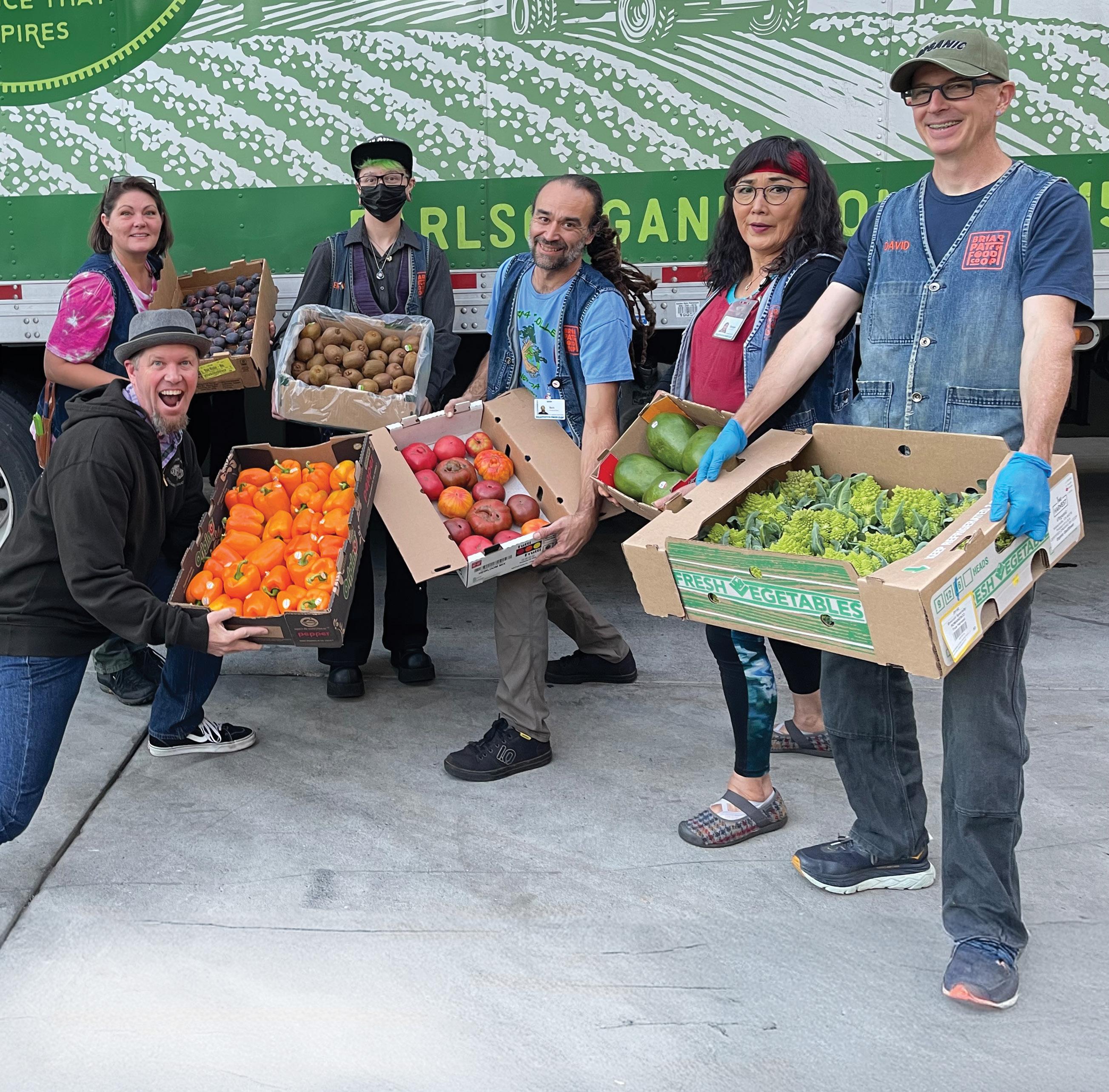
Photo: Employees at BriarPatch Food Co-op
Community
Regeneratively
Veggies
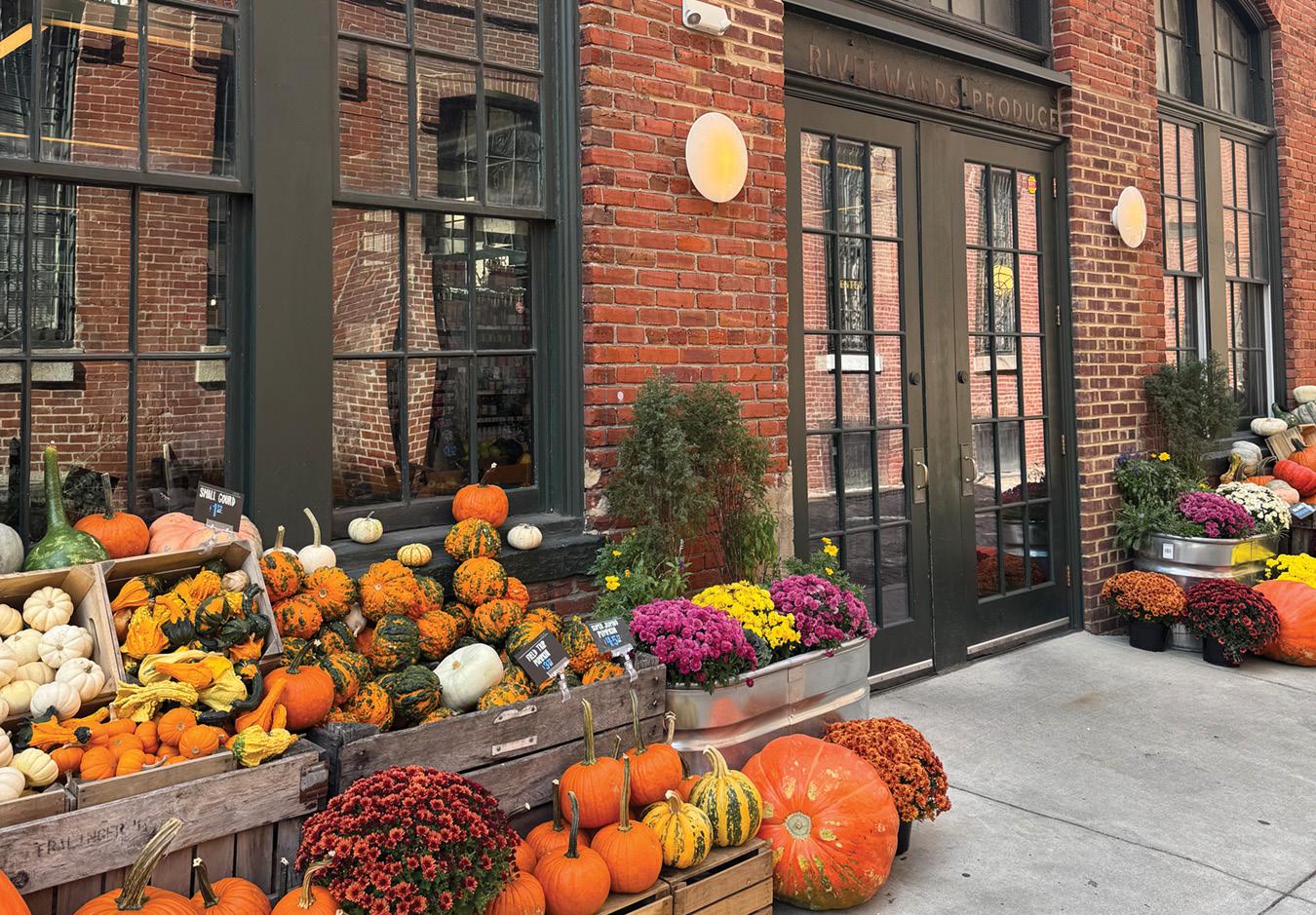
Riverwards Market in Old City, Philadelphia.
The
Things Beyond Sliced Bread Innovation, along with new twists and flavors, are driving perimeter bakery departments. 40 ANALYSIS
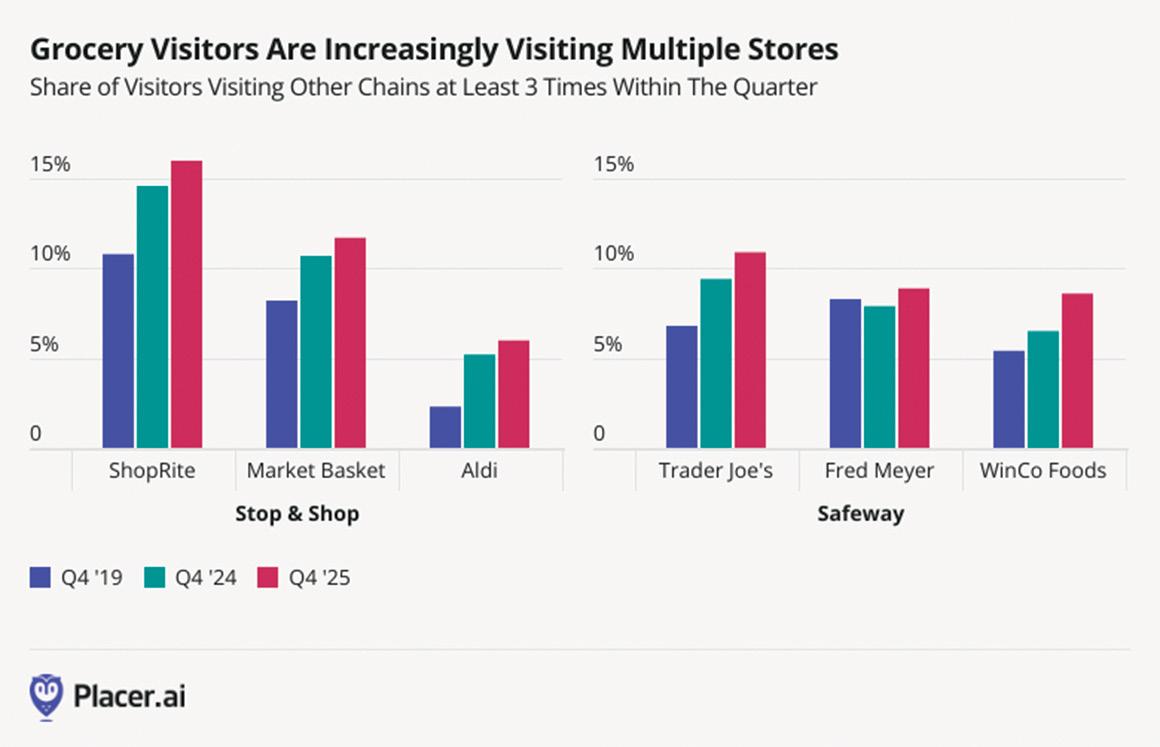
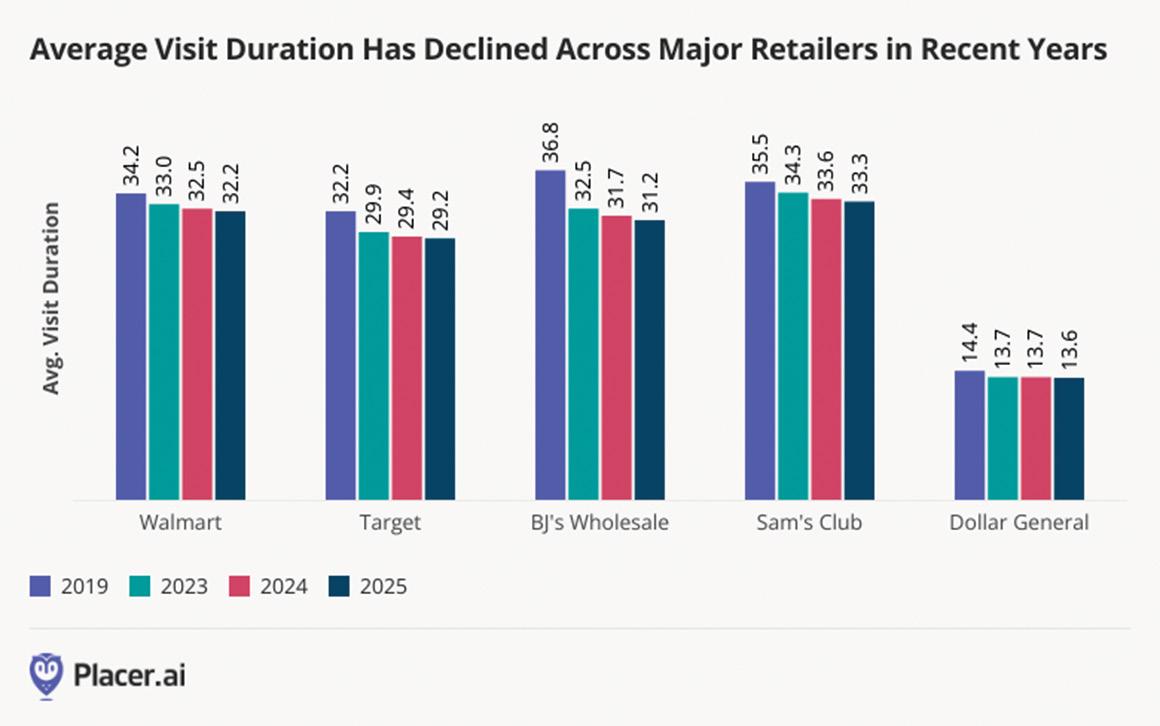
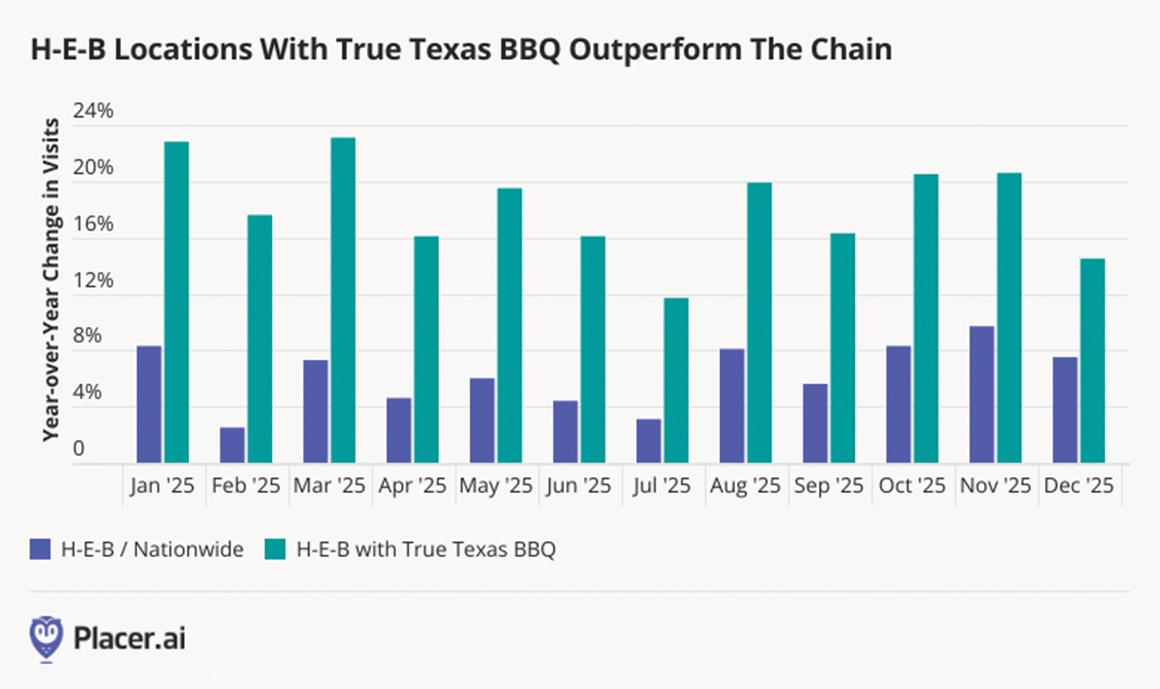
Taking the Biggest Grocery Lessons From 2025 Into the New Year Placer.ai CMO Ethan Chernofsky details the industry’s strength and how food retailers can maximize visits in 2026.
42 TECHNOLOGY
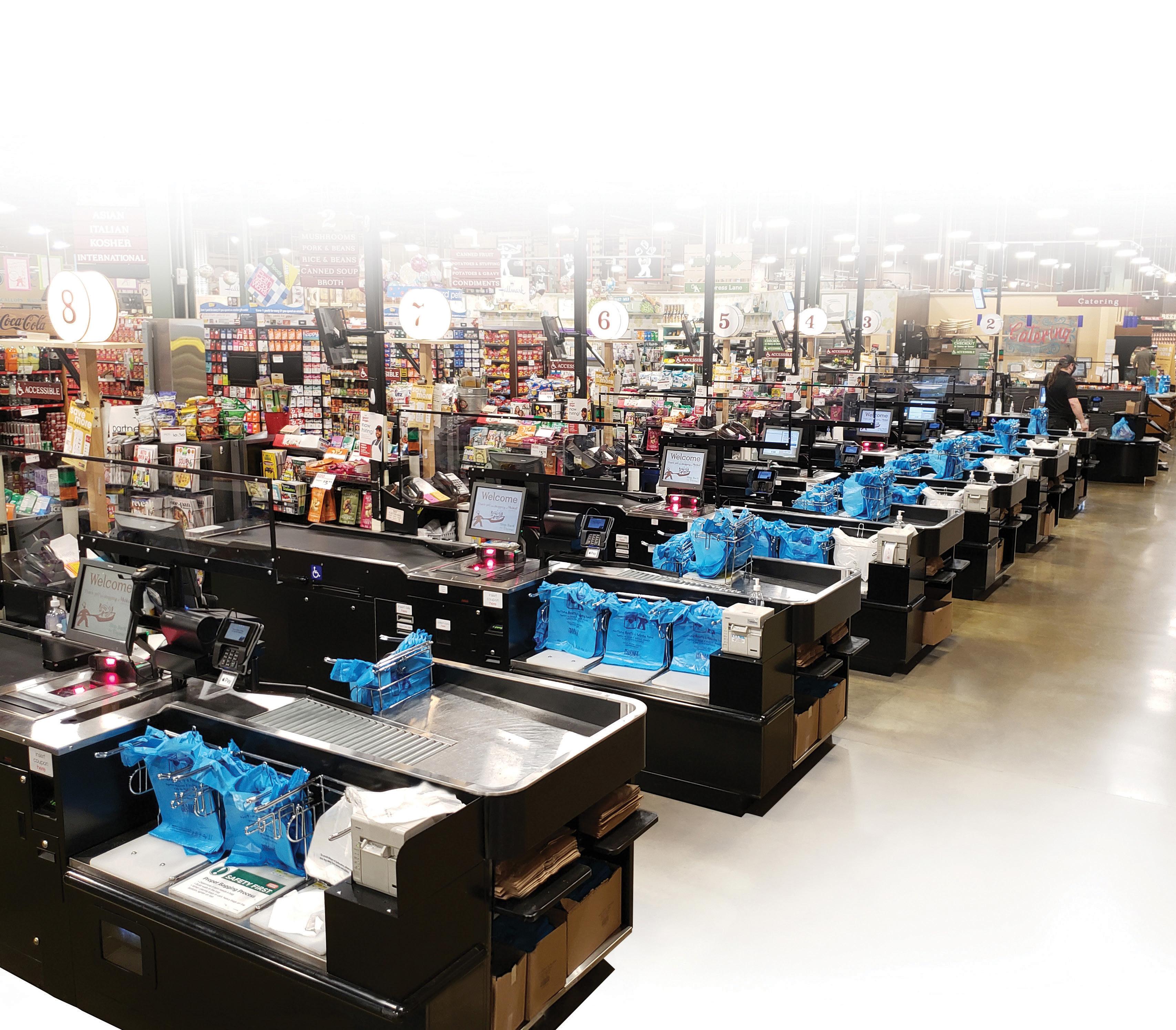
Store-Wide Solutions
Automation is increasingly taking center stage in the grocery channel.
48 FEATURE
How Retail Media Is Quietly Reshaping the Grocery Store
The technology is being used to connect categories and guide baskets.
BRAND MANAGEMENT
SENIOR VICE PRESIDENT, GROUP BRAND DIRECTOR Eric Savitch esavitch@ensembleiq.com
VICE PRESIDENT OF CONTENT Lisa Johnston ljohnston@ensembleiq.com
MY JOURNEY TO THE COUNTRY’S MOST VENERABLE GROCERY INDUSTRY PUBLICATION, AND WHAT’S TO COME.
Child-sized shopping carts weren’t really a thing when I was growing up in Sylvania, Ohio, so my big brother and I took turns riding on the back of our mom’s shopping cart as she steered us through our local Food Town for our weekly shops. It was our ritual: While we worked our way down our list of basics, we also scoured each and every aisle for fun new products to ll our refrigerator and cupboards.
Exotic mango juice and starfruit? Check. Fancy sliced deli ham for my lunchbox? Also check. New avor of potato chips? Absolutely check. I didn’t realize it at the time, but my mom was instilling in me a love of food and grocery retail that has permeated the majority of my life, and, more importantly, the last 15 years of my journalism career.
Making Connections
I write to you now as both a massive grocery industry fan and the newly minted editor-in-chief of Progressive Grocer – a title and honor that I am, quite honestly, still trying to wrap my head around. To be able to cover the news and tell the stories of the food retailers and hard-working associates that quite literally make the world go ’round is not a job I take lightly, and one I plan to tackle with the utmost care and consideration.
I’ve already hit the ground running with a visit to NRF 2026: Retail’s Big Show, as well as the FMI Midwinter Executive Conference. It’s been a blast connecting with food retail friends old and new, and I can’t wait to spend more time on the road this year attending events, visiting stores, hearing your stories and learning as much as I can about your priorities.
To be able to cover the news and tell the stories of the food retailers and hard-working associates that quite literally make the world go ’round is not a job I take lightly, and one I plan to tackle with the utmost care and consideration.
I’m so lucky to be backed by a small but mighty team that includes some of the best journalists, salespeople, marketers, event planners and digital operations experts in the business. With their help, I plan to usher in a new era here at Progressive Grocer that honors our more-than-100-year history while also embracing change and innovative forms of storytelling.
Come along with me for the ride, won’t you?
Emily Crowe Editor-in-Chief ecrowe@ensembleiq.com
Berries and Cherries Month
Exotic Winter Fruit & Leeks and Green Onions Month
Irish-American Heritage Month March Madness
1
Namesake Day. Urge customers to mark the occasion by food shopping alongside their friends and family members with the same handle.
8
Daylight Saving begins. Let the sunshine in!
2 The Jewish holiday of Purim begins at sundown.
9
National Crab Meat Day. Run a special on this perennial seafood
15
World Consumer Rights Day. Make sure your customers know what they’re entitled to in terms of refunds, recalls and more.
16
22
As Young as You Feel Day. Help consumers of a certain age maintain their energy with the right nutritional choices.
National Vaccination Day. If you offer shots for various diseases and illnesses, promote those services with eye-catching signs in the pharmacy and beyond.
23
National Chia Day. This seed has many uses beyond creating fad “pets.”
National Frozen Food Month
National Nutrition Month
National Sauce Month
Women’s History Month
3
Global Omega-3 Day. Tell shoppers which foods contain these essential “healthy fats.”
10
Paper Money Day. Cashless payment methods are gaining prominence, but cash is still king in many places.
4
Global Day of the Engineer. Pay tribute to these professionals that keep your business’ systems running at peak ef ciency.
11
Registered Dietitian Nutritionist Day. Shine the spotlight on the services provided by your in-store consultant on health and diet.
17
St. Patrick’s Day. It’s a great day for the Irish – and those who are Irish for the day.
24
International Day of Achievers. Ask associates what they’re proudest of having achieved and what their next goal is.
29
Mermaid Day. Ariel and Madison are among our favorite
30 Doctors’ Day. Offer a discount for any M.D. with valid ID.
31
National Après Day. Post on social media a collection of cocktails and mocktails for customers to enjoy after a long, rewarding day.
18
National Biodiesel Day. If you’re not already doing it, nd out about converting your used cooking oil into this renewable fuel.
25
Today is the birthday of both Aretha Franklin and Elton John, so the choices for classic music in the aisles are plentiful.
5
St. Piran’s Day. The feast day of Cornwall’s patron saint is an opportune time to explore the region’s cuisine. Pasties, anyone?
12
National Girl Scout Day. They’re not just Thin Mints sellers.
19
National Backyard Day. Time to get the patio furniture and grilling accessories ready.
26
Major League Baseball Opening Day. Batter up with a themed cake recipe to mark the return of America’s pastime.
6
National Dress in Blue Day. The color aims to promote National Colorectal Cancer Awareness Month.
13
World Sleep Day. Run an article in your in-store magazine on the best foods and beverages to promote slumber.
20 Vernal Equinox. Once more, spring has sprung.
27
7
Be Heard Day. All of you small businesses, show what you’ve got!
14
International Day of Action for Rivers. If your business is located near a waterway, organize a volunteer cleanup event for associates and customers.
21
Maple Syrup Saturday. Pancakes or waf es – take your
National Joe Day. Everyone knows at least one. National Triglycerides Day. Encourage your shoppers to know their numbers for better heart health.
5
National Body Care Day. Show your shoppers what your aisles offer to keep them looking and feeling their best.
Easter
12
National For Twelves Day. Salute football fanatics – the 12th “member” of the team – with gridironrelated snacks, beverages and gear.
19
National Cat Lady Day. We see all the male feline fanciers as well!
6
National Employee Bene ts Day. Ensure that your associates understand what working for your company means.
7
World Health Day. Provide advice for customers and associates to take better care of themselves.
Arab American Heritage Month
Brussels Sprouts and Cabbage Month
Celebrate Diversity Month
Cranberries and Gooseberries Month
1
International Fun at Work Day. It’s also April Fools’ day,
2
Autism Awareness Day. This is a ne time to institute quiet hours for shoppers with sensoryprocessing issues.
8
International Kids Yoga Day. Hold an in-store session to introduce little ones to the ancient spiritual and physical discipline.
13 International Plant Appreciation Day. Promote your lawn and garden supplies on this occasion.
14
National Donate a Book Day. Organize a book drive to help introduce underserved kids to the joys of reading.
20
26
National Kids and Pets Day. Remind shoppers to keep both well fed and hydrated.
Filipino Food Month
Global Child Nutrition Month
Keep America Beautiful Month
National BLT Sandwich Month
National Tie Dye Day. Love it or hate it, the look is certainly a statement. S M T W T F S
420. If it’s legal in your state, promote your cannabiscontaining products.
27
National Tell a Story Day. Invite a storyteller to regale customers of all ages with beguiling tales.
21
National Kindergarten Day. Hold an after-school cooking class with meals simple enough for a 5-year old to prepare.
28
Clean Comedy Day. Ask shoppers to submit their funniest G-rated jokes, with a gift card going to whoever gets the biggest laughs.
15
For Purple Up Day, recognize the sacri ces and experiences of children whose parents serve in the military.
22
Earth Day. What have you done for her lately?
29 World Stationery Day. Make your shoppers aware of any writing materials – paper, pens and envelopes – that you
3
Weed Out Hate Day. Highlight what your associates are doing to make this world a kinder place.
9
The Masters Tournament begins, running through the 12th.
16
On World Voice Day, take care of yours by giving it a rest.
23 Take Our Daughters and Sons to Work Day. Doing so may spark some interest in a food retail career when they’re older.
10
4
International Carrot Day. Provide plenty of recipes featuring this ubiquitous root vegetable – including cake!
National Farm Animals Day. Erect signage detailing the origins of the meat and dairy products that your shoppers buy.
17
Herbalist Day. Get advice from one on herbs in your produce section that could help with common ailments.
24
It’s Barbra Streisand’s birthday, so crank up some of the legendary diva’s greatest hits.
30
11
International “Louie, Louie” Day. Does anyone actually know the words to this classic 60s pop tune?
18
Lineman Appreciation Day. It’s a tough job, and he knows he needs a small vacation …
25
National Plumbers Day. Here’s to those folks who maintain our water pipes and systems.
GroceryTech 2026 is the exclusive event where grocery retail and IT executives bridge the gap between digital vision and physical reality.
This isn’t just another tech conference—it’s a curated roadmap for: Personalizing every interaction to deepen loyalty.
Connecting digital and physical journeys into one seamless experience. Empowering your workforce with tools that drive margin and CX.
Functional Ingredients in Food and Drink
What You Need to Know
At the foundation of functional food and drink experiences, consumers want to feel like they’re making choices that take care of personal, holistic well-being. Improving perceptions of ef cacy remains the ongoing opportunity to stack feelings of positivity around selfcare with tangible, noticeable bene ts from functional ingredients.
There are a variety of approaches to positioning functional foods and drinks in approachable ways. Some emphasize the simplicity narrative, leaning into whole foods and superfood functional ingredients. Others use front-of-pack messaging for a digestible and straightforward nutrition education lesson that connects ingredients to bene ts while also explaining the “how.”
Shifts in functional ingredient product launches year to year point to different priorities in functional food products versus functional drinks. Functional foods may be seen as more of a necessity rather than a splurge, especially for those with stretched budgets, and innovation efforts re ect such attitudes. Drinks, on the other hand, offer a fun route to infusing functional on top of the nutrition that consumers obtain through food, leading to innovation growth in categories like carbonated soft drinks.
Outlook
Now: Tighter budgets make proven trust key to encouraging purchase, especially of food/drink items that don’t fall under grocery staple status or carry a higher price point. Consumers want to feel like the investment in health is worth it and will deliver noticeable bene ts and a sense of control in an uncertain world.
Next (2026-7): Current political initiatives are bringing ingredients into the spotlight and adding complexity to conversations about health, ef cacy and transparency. As such, brands will be tasked to cut through this with clarity and honesty.
Future (2028-9): Driven by younger generations, who are both more explorative in nature and more convinced of functional ingredient bene ts, the functional food and drink market is only likely to grow. Still, trust and ef cacy remain key to gaining repeat purchases beyond initial exploration.
Only 26% of consumers report actually feeling the e ects of functional ingredients, yet an even larger percentage are willing to pay for these benefits, suggesting that perceived value often outweighs proven e cacy. Functional claims can spark trial, but sustained trust and repeat purchase hinge on delivering tangible outcomes. Whether the benefit is immediate (e.g., added protein for satiety) or long-term (e.g., added protein for muscle development), brands that demonstrate credible, measurable results will stand out in a market where curiosity and skepticism coexist.
Education and digestible messaging continue to be key to building trust, which will only further infuse functional products into self-care routines.
Functional ingredient trial is more likely to translate into feelings of e cacy than not. The challenge is encouraging trial, then, yet one in five consumers is interested in trial without a strong preference for specific ingredients, underscoring a general level of willingness to explore. Tap into this curiosity with an emphasis on functional products as a route to personal experimentation rather than as an intimidating addition to healthy habits.
Why 2026 Is the ‘Year of the Cat’ and What It Means for Pet
Retailers
By Joe Toscano, Vice President, Trade & Industry Development at Purina
Cat o w n ership i n the U.S. c on ti n ues t o clim b at a n u n precede n ted pace, with 49 milli on h o useh o lds no w shari n g their h o mes with cats , which is a 23 % i n crease si n ce 2023, acc o rdi n g t o the America n Pet Pr o ducts Ass o ciati on . This gr o wth is reshapi n g the pet aisle a n d setti n g the stage fo r 2026 t o b e the Year of the Cat. With m o re c on sumers l oo ki n g t o elevate the way the y f eed , treat a n d care fo r their cats , o pp o rtu n ities acr o ss the categ o r y have n ever b ee n str on ger.
Products Designed Around Cat Parents’ Priorities
Acr o ss o ur cat p o rtf o li o, Puri n a c on ti n ues t o meet the m o me n t with pr o ducts that reflect the ev o lvi n g n eeds a n d e x pectati on s of t o day ’s cat pare n ts. Fr o m elevated te x tures a n d culi n ar y -i n spired recipes t o s o luti on s that simpli fy care, o ur appr o ach ce n ters on maki n g the bon d b etwee n cats a n d their f amilies easier, m o re j oyf ul a n d m o re attai n a b le. Palata b ilit y a n d te x ture-led e x perie n ces are bo th i n flue n ci n g c on sumer b u y i n g decisi on s.
Fa n c y Feast ® Gems® b ri n g re fin ed culi n ar y artistr y t o the bo wl with te n der paté ce n ters wrapped i n elega n t , sav o r y lay ers that fo rm a p y ramid shape pre f erred by eve n the m o st fin ick y f eli n e – per f ect fo r pet pare n ts seeki n g a premium di n i n g e x perie n ce fo r their cats. Mea nwhile, the rise of yo u n ger cat o w n ers has f ueled gr o wth i n i n teractive f eedi n g a n d treati n g. Friskies® Lil’ Licka b les™, a ha n dson treat , a n d Puri n a ONE® Immu n e Supp o rt Purées – licka b le cat treats f eaturi n g Vitami n E a n d Omega- 3 f att y acids – bo th tap directl y i n t o that tre n d by o fferi n g a f u n, e n gagi n g way fo r pe o ple t o bon d with their cats.
Innovation Inside and Outside the Litter Box
With s o ma ny n ew cats e n teri n g h o useh o lds , the litter aisle remai n s on e of the m o st relia b le a n d resilie n t segme n ts i n the pet categ o r y. Premiumiz ati on is shapi n g this space, with c on sumers seeki n g b etter o d o r c on tr o l , simpli fi ed mai n te n a n ce a n d m o re sustai n a b le o pti on s.
Od o r c on tr o l remai n s the t o p pri o rit y fo r litter sh o ppers , a n d Puri n a is addressi n g this n eed with n ew Tid y Cats® Per fo rma n ce o pti on s lau n chi n g i n Ja n uar y, deliveri n g p o wer f ul o d o r c on tr o l desig n ed t o keep h o mes with cats smelli n g clea n . C onve n ie n ce c on ti n ues t o b e
a ke y driver as well , see n i n o pti on s like Tid y Cats® LightWeight o r the Tid y Cats® Bree ze® Litter Sy stem , which simpli fi es upkeep with disp o sa b le pads that l o ck i n m o isture a n d o d o r fo r seve n day s (fo r on e cat , whe n used as directed) a n d pellets that last a m on th.
I nno vati on als o e x te n ds t o the gr o wi n g aut o mated litter segme n t. Puri n a part n ered with Litter-R obo t ® t o devel o p a litter speci fi call y o ptimized fo r the Tid y Cats® The Per f ect C y cle™ setti n g i n the Whisker app, helpi n g c on sumers get the m o st o ut of their aut o mated clea n up s y stems.
Outside the litter box, we c on ti n ue t o sh o wcase o ur scie n ti fi c e x pertise with Puri n a ONE® LiveClear ® – a n i nno vati on b acked by m o re tha n 10 y ears of research – which has b ee n sh o w n t o simpl y a n d sa f el y reduce the maj o r allerge n i n cat hair a n d da n der by a n average of 47 perce n t , starti n g with the third week of dail y f eedi n g. N o w widel y availa b le, Puri n a ONE LiveClear helps cat l o vers with allerge n se n sitivities spe n d qualit y time with their cats.
Helping Retailers Win
Puri n a’s leadership g o es b e yon d pr o duct i nno vati on . We’re c on ti n ui n g t o supp o rt retailers thr o ugh the my Puri n a app, a l oy alt y a n d e n gageme n t platf o rm that rewards
sh o ppers fo r i n teracti n g with the Puri n a p o rtf o li o. The app als o i n tr o duces pet o w n ers t o n utriti on tips , trai n i n g advice a n d c o mpleme n tar y pr o ducts , helpi n g drive b r o ader b asket e x pl o rati on a n d l on g-term e n gageme n t.
A n d , with o ur dedicated categ o r y team , we w o rk hard t o c o lla bo rate directl y with retailers on data- b acked strategies , mercha n disi n g rec o mme n dati on s a n d s o luti on s such as shel f o ptimiz ati on s that d o u b le capacit y fo r larger litter pails , impr o vi n g bo th sales a n d i n -st o ck per fo rma n ce.
As the i n dustr y steps i n t o the Year of the Cat , Puri n a remai n s c o mmitted t o a n ticipati n g c on sumer n eeds a n d helpi n g retailers capture the m o me n tum acr o ss foo d , treats a n d litter. With a r ob ust pipeli n e of i nno vati on an d a h o listic appr o ach t o supp o rti n g cat o w n ers – all b acked by a b e n ch of n earl y 500 Puri n a scie n tists , veteri n aria n s a n d pet care e x perts – we are pr o ud t o help retailers u n l o ck the f ull p o te n tial of this de fin i n g m o me n t fo r the f eli n e categ o r y
By Barbara Ruhs, MS, RDN
Fibermaxxing: A Retail Health Opportunity
RETAILERS CAN HARNESS THIS HOT NUTRITION TREND.
Move over protein — ber is nally having its moment. While protein has been in the spotlight for years, ber is now taking center stage, thanks to social media’s viral bermaxxing trend. Thanks to TikTok and wellness in uencers sharing ber hacks, simple recipe ideas and meal prep solutions to achieve 30-40-plus grams of ber intake per day, ber is now top of mind for today’s consumers. For retail grocers, understanding bermaxxing isn’t optional — it’s essential for staying competitive in 2026 and beyond.
What is Fibermaxxing?
Fresh Pears – A Fiber Powerhouse
One medium pear has 6 grams of ber – that’s more than an apple, a banana or blueberries. With a bountiful crop this year, Bartlett, Bosc, and red and green Anjou pears make nutritious snacks, add natural sweetness to smoothies and elevate healthy salads.
underscoring the strategic importance of this nutrient for CPG innovation. Expect to see ber follow protein’s path as the next “must-have” nutrient in better-for-you products. Fiber addresses broader health concerns that protein can’t: It supports digestive health, feeds bene cial gut bacteria, helps manage blood sugar and contributes to cardiovascular health.
For retail grocers, understanding fibermaxxing isn’t optional — it’s essential for staying competitive in 2026 and beyond.
Fibermaxxing is the intentional effort to meet or exceed daily ber recommendations through food choices, beverages and supplements. While The Dietary Guidelines for Americans recommends 25 grams of ber per day for women and 38 grams for men daily, the average American consumes less than half of the goal, leaving a signi cant and persistent gap that bermaxxing seeks to ll. For grocery retailers, this translates to increased demand for high-margin foods that naturally contain ber, including fruits, vegetables, beans, whole grains, seeds and nuts.
Fiber is the New Protein
PepsiCo’s CEO recently asserted, “Fiber will be the next protein,”
Perhaps most importantly, ber lls a nutritional gap that has existed for decades and that has gained more traction, thanks to the popularity of weight-loss medications. GLP-1 medications promote satiety (or the feeling of fullness) by slowing down the movement of food in the digestive tract, which also contributes to constipation, bloating and general gastrointestinal (GI) discomfort. With the right amount of insoluble and soluble ber, along with adequate uid intake, these symptoms can be dramatically improved. Consuming a variety of ber-rich wholefood sources also bene ts the gut microbiome.
While ber supplements and forti ed foods are heavily marketed, consumers still trust whole-food sources most when it comes to ber. This positions retail dietitians in a critical role in helping supermarkets capitalize on the bermaxxing trend. Retailers that provide consumer nutrition education from credible experts stand to gain trust and loyalty.
Fibermaxxing represents a rare alignment of consumer interest, scienti c credibility and retail opportunity. Unlike eeting diet trends, ber is foundational to health — and its bene ts are well understood by both consumers and professionals.
Barbara Ruhs, MS, RDN, is a registered dietitian nutritionist (RDN) and owner of MarketRD.com. She is a leading voice in retail health promotion and a former supermarket dietitian. Connect on LinkedIn @BarbRuhs
The Independent Way
COMMUNITY GROCERS ARE CELEBRATING THEIR UNIQUENESS AND STANDING APART FROM THE BIG GUYS.
By Progressive Grocer Staff
The 17 grocery retailers chosen as Progressive Grocer’s 2026 Outstanding Independents all have two key things in common: a deep passion for and connection to the communities that they call home. These factors are what enable them to compete in a world of huge multistate supermarket chains and omnipresent mass merchants. Although the places they serve have varied demographics and income levels, they all benefit from the presence of a friendly neighborhood grocer that has tailored its o erings especially for them.
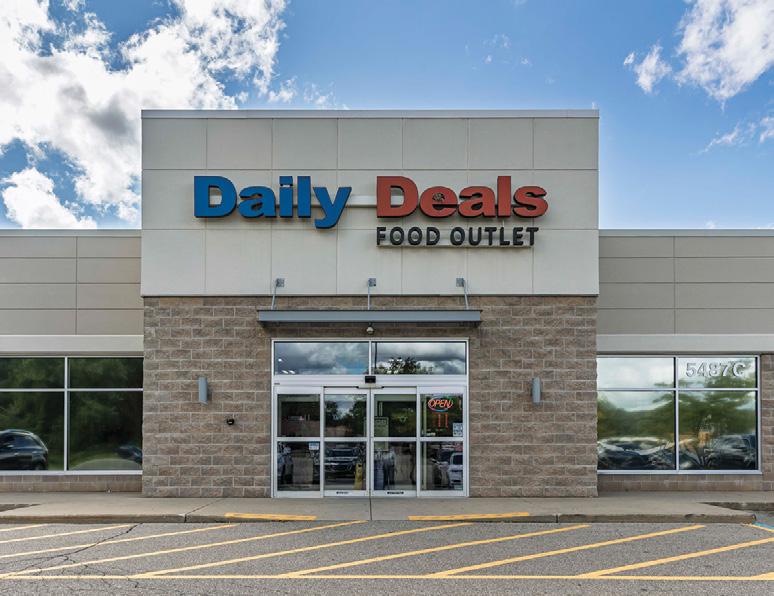
Take Michigan’s Daily Deals Food Outlet, which maintains a laser focus on a ordability. “One of the best things about working for Daily Deals is the impact we have with our customers,” a store manager at the company notes. “I often hear that because of us, they can keep their house stocked with groceries. Knowing how much we help our community leaves you going home every day feeling fulfi lled.”
“Knowing how much we help our community leaves you going home every day feeling fulfilled.”
—Daily Deals Food Outlet
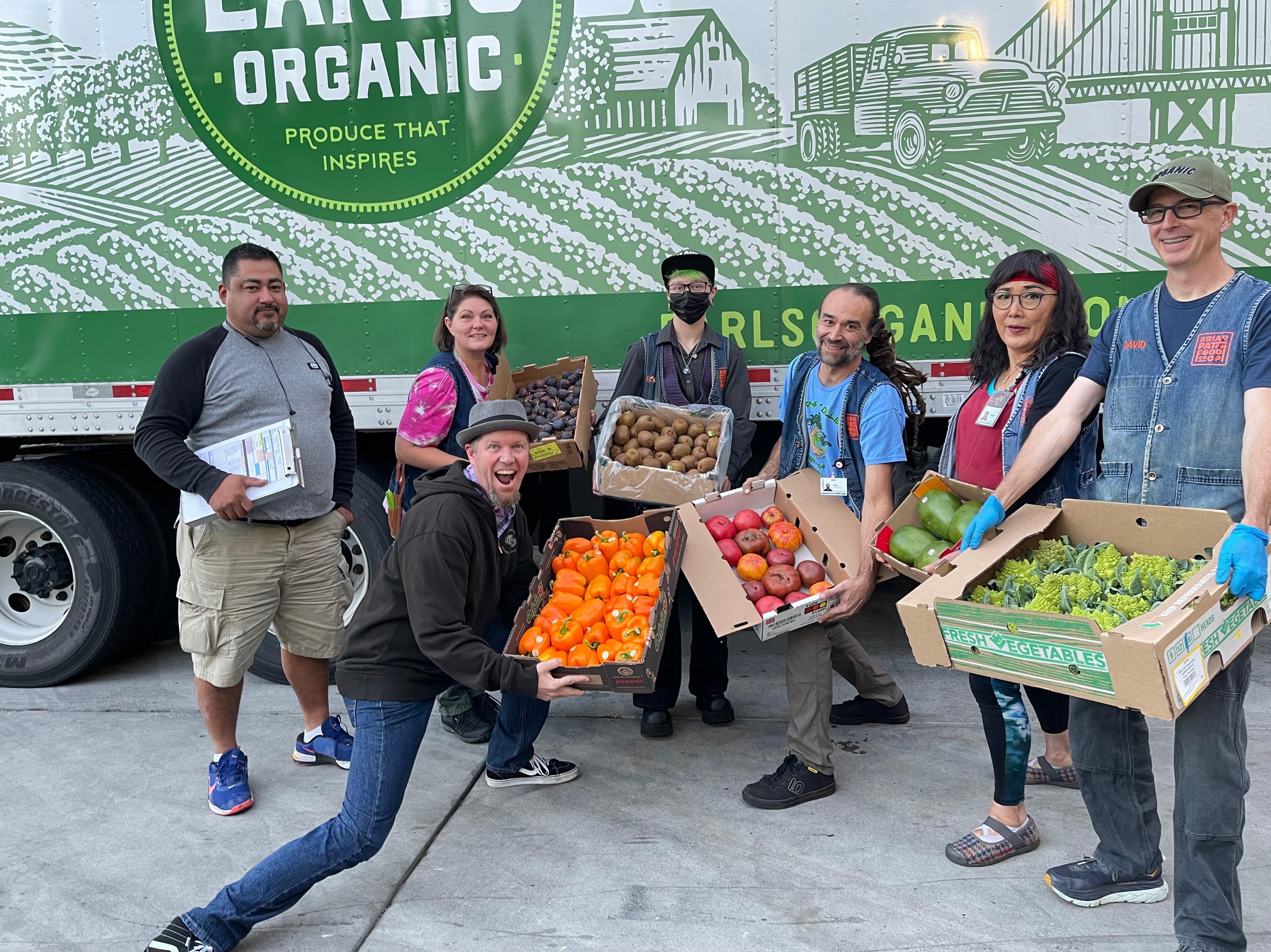
Then there’s California-based BriarPatch Co-op, whose every initiative “circles back to one goal: building healthier, more connected and more sustainable Nevada and Placer counties.”
Perhaps Wisconsin grocer Trig’s best articulates how these extraordinary grocers have managed to thrive despite sti competition from much bigger entities. “At a time when rural areas are often underserved, we take pride in being a fresh food oasis, a place of connection and a trusted neighbor,” the company asserts in its submission. “We stand toe-to-toe with national retailers not by outspending them — but by out-caring them. Our customers choose Trig’s because we consistently deliver excellence with a hometown touch, a familiar face and a genuine smile.”
Read on to fi nd out more about PG’s 2026 Outstanding Independents.
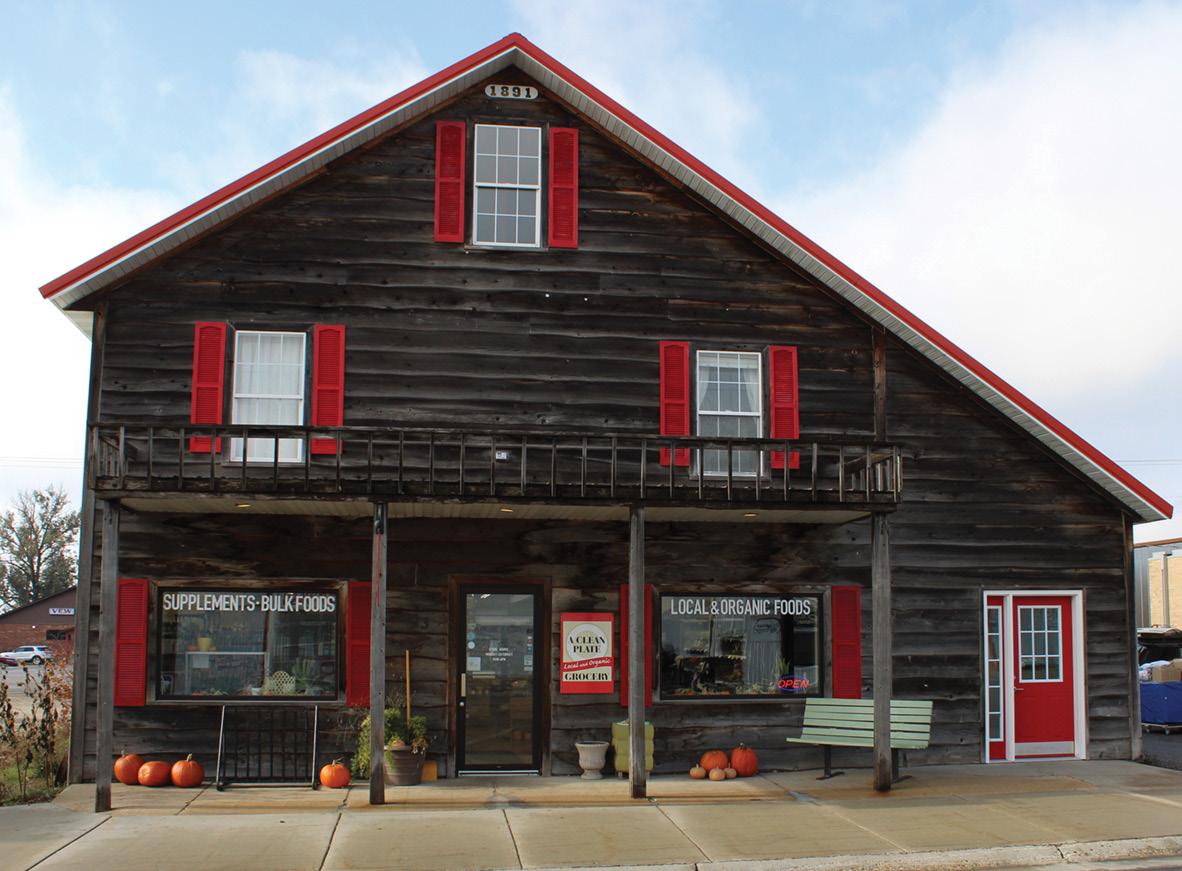
A Clean Plate Local & Organic Grocery
Menahga, Minn.
Number of Stores: 1
AClean Plate believes that rural Americans deserve access to healthy natural foods. The store carries better-for-you o erings at a ordable prices, including items from local farmers and producers, organic produce, and national organic brands. In response, A Clean Plate has seen foot tra c rise steadily and local interest increase. Through quick conversations at the register, meaningful customer service, yoga classes, donations to local organizations, and more, the grocer has become deeply embedded in the fabric of its community and beyond, as it routinely attracts customers from more than an hour away.
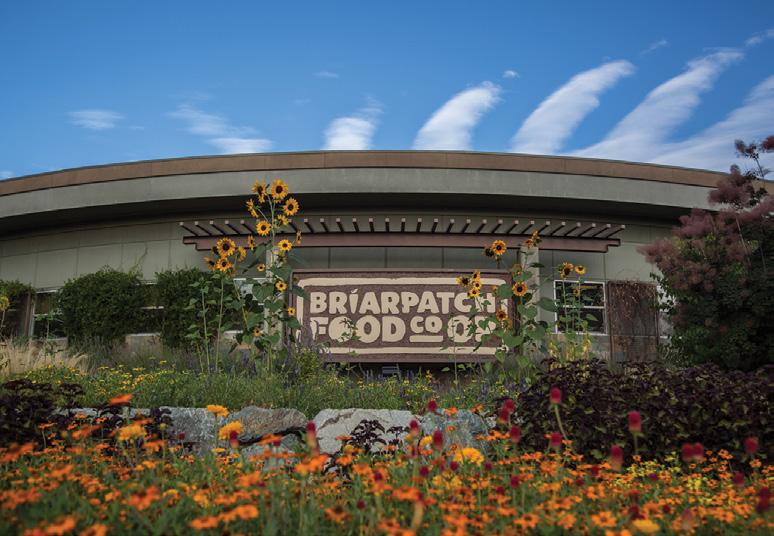
BriarPatch Food Co-op
Grass Valley, Calif.
Number of Stores: 2
Celebrating its 50th anniversary in 2026, BriarPatch Food Co-op this past year launched its Bring It Back utensil program allowing customers to use real stainless-steel cutlery in the café or take it with to-go orders. The borrowed cutlery can be returned on a future visit, cleaned and reused. This simple change will save the co-op thousands of dollars each year while signifi cantly reducing landfi ll waste, since compostable utensils aren’t currently processed by local facilities. As BriarPatch puts it, “Even if only half of the utensils make it back, it’s still a big win for sustainability.”
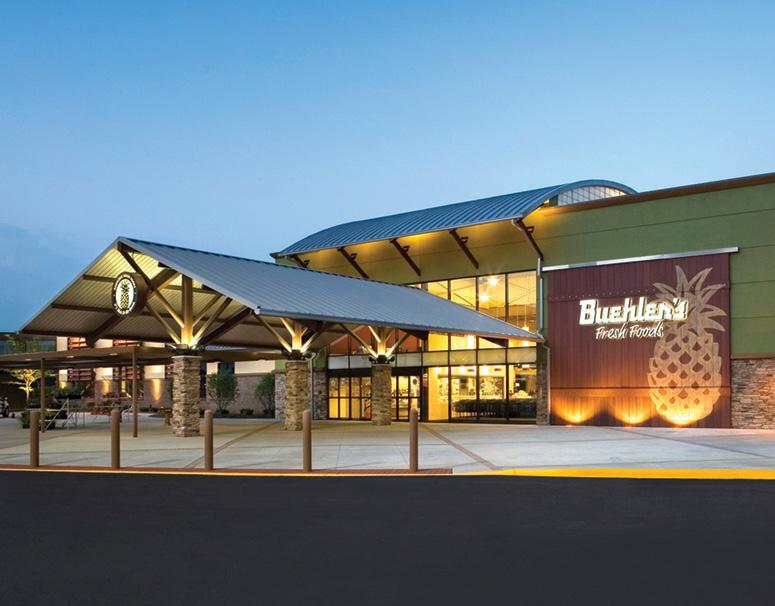
Buehler’s Fresh Foods
Wooster, Ohio
Number of Stores: 14
Buehler’s ninth annual Drive-Thru Soup Fundraiser for A Whole Community Inc. supported the Community Food Project, which purchases fresh produce from local farms for food pantries, free meal sites and underserved neighborhoods. The grocer’s complementary Stu the Cruisers event — a collaboration with local law enforcement — collected nonperishable food donations to fi ll police cruisers for distribution to area food banks. These initiatives refl ect Buehler’s hands-on approach to food insecurity while strengthening community ties. 2025 also saw the grand reopening of Buehler’s remodeled Wadsworth, Ohio, store — an event that celebrated both investment and hometown pride.
Daily Deals Food Outlet
Marne, Mich.
Number of Stores: 5
Daily Deals Food Outlet welcomes 11,000-plus customers each week across all of its locations, underscoring its role as a needed and frequently visited community resource. O ering a dynamic mix of branded items and parent company Natural Choice Foods’ private label products at a ordable prices, the grocer aims to solve food access challenges in real time. Daily Deals prices its rotating inventory of products 30%-50% below big-box retailers, helping families stretch their budgets without sacrifi cing quality. Further, its rewards program boasts an impressive participation rate of nearly 90%, highlighting the deep loyalty of its customer base.
DeCicco & Sons
Pelham, N.Y.
Number of Stores: 11
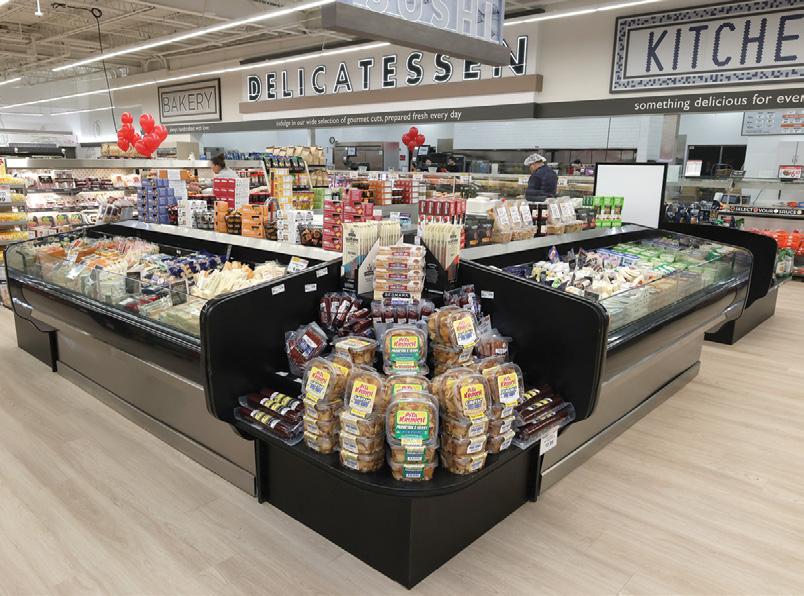
Unlike many larger chains, DeCicco & Sons highlights curation, freshness and relationships, from partner farms to in-house production. Because the grocer blends conventional, natural and specialty items, customers consistently fi nd products that are rare, artisanal or di cult to source elsewhere. DeCicco & Sons is also known for the thoughtful design and layout of its stores, with each location crafted to refl ect its surrounding community while maintaining the hallmarks of the grocer’s brand: approachability, gourmet quality and a familial touch. The stores feature such inviting spaces as cafés, beer bars, event spaces and convenient skip-the-line kiosks.
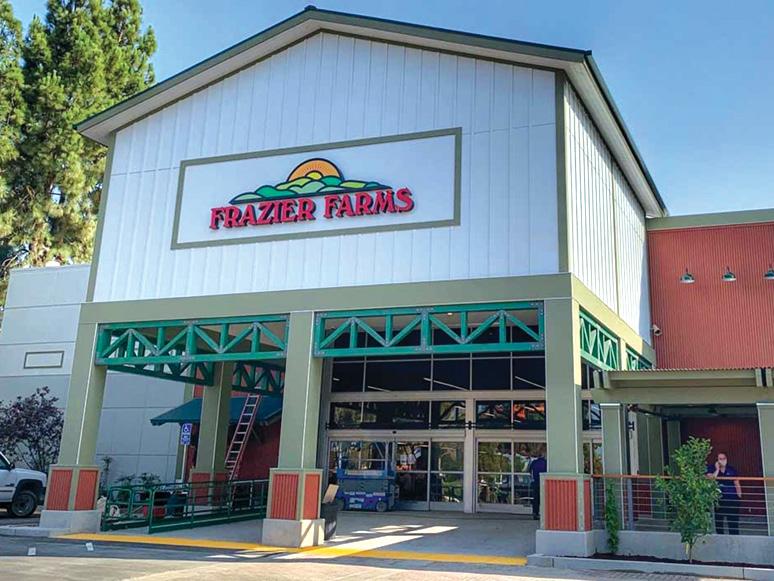
Frazier Farms Market
La Mesa, Calif.
Number of Stores: 3
Family-run Frazier Farms Market is deeply connected to its California communities. This profound alignment with local needs is refl ected in glowing customer reviews praising the “amazingly friendly” sta ; vibrant, high-quality produce; bustling deli; and carefully curated vitamin section. What truly sets Frazier Farms apart, however, is its embrace of innovation embodying its customer-fi rst philosophy. By integrating GreenChoice health information into its shelf labels, it has responded directly to shoppers’ desire for clarity in making healthy choices. Thus, Frazier Farms honors its roots while paving a path toward a healthier future for its customers.
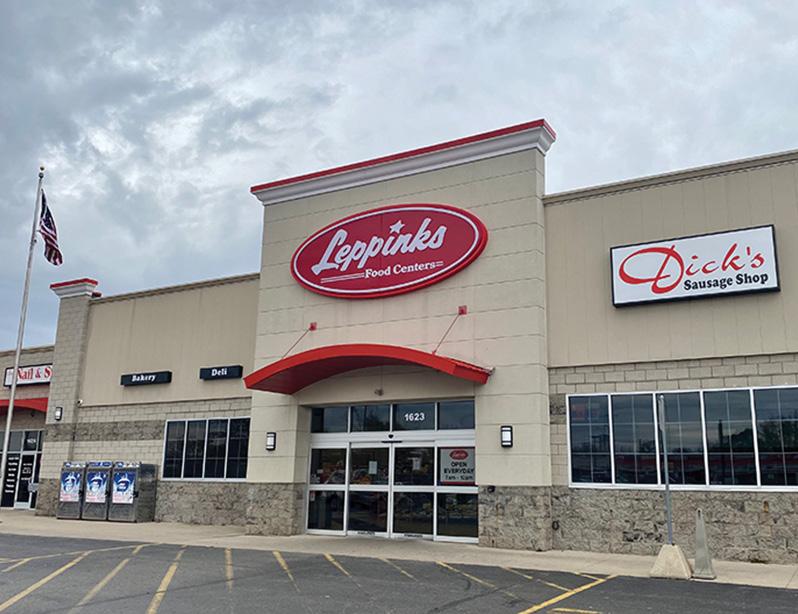
Leppinks Food Centers
Dorr, Mich.
Number of Stores: 4
Leppinks treats its employees like family: Birthdays are celebrated with cards, milestones honored with gifts, and losses met with compassion. This well-established culture of care fosters a sense of belonging that radiates through every store. Meanwhile, in the fall of 2024, the grocer launched the Leppinks Rewards loyalty program with AppCard, creating a personalized shopping experience. This past year, Leppinks made a bold move away from newspaper distribution, having laid a rich digital foundation that includes a vibrant e-commerce presence, both through its own Freshop-powered website and mobile app, and third-party platforms like Instacart.
Lueken’s Village Foods
Bemidji, Minn.
Number of Stores: 2
In June 2025, Lueken’s hosted a casual pop-up event, promoted only through a Facebook post, that resulted in the free distribution of 1,200 brats, hot dogs, chips, water and bananas. Also, when a powerful storm struck, leaving much of the community without power, the grocer worked with vendor partners and SpartanNash to save two truckloads of perishable food, ensuring that a ected families had food access. In its stores, Lueken’s sets itself apart with large, upscale bakery and deli operations o ering handcrafted products, with three popcorn kiosks adding a fun, nostalgic touch to the shopping experience.
Oliver’s Market
Santa Rosa, Calif.
Number of Stores: 4
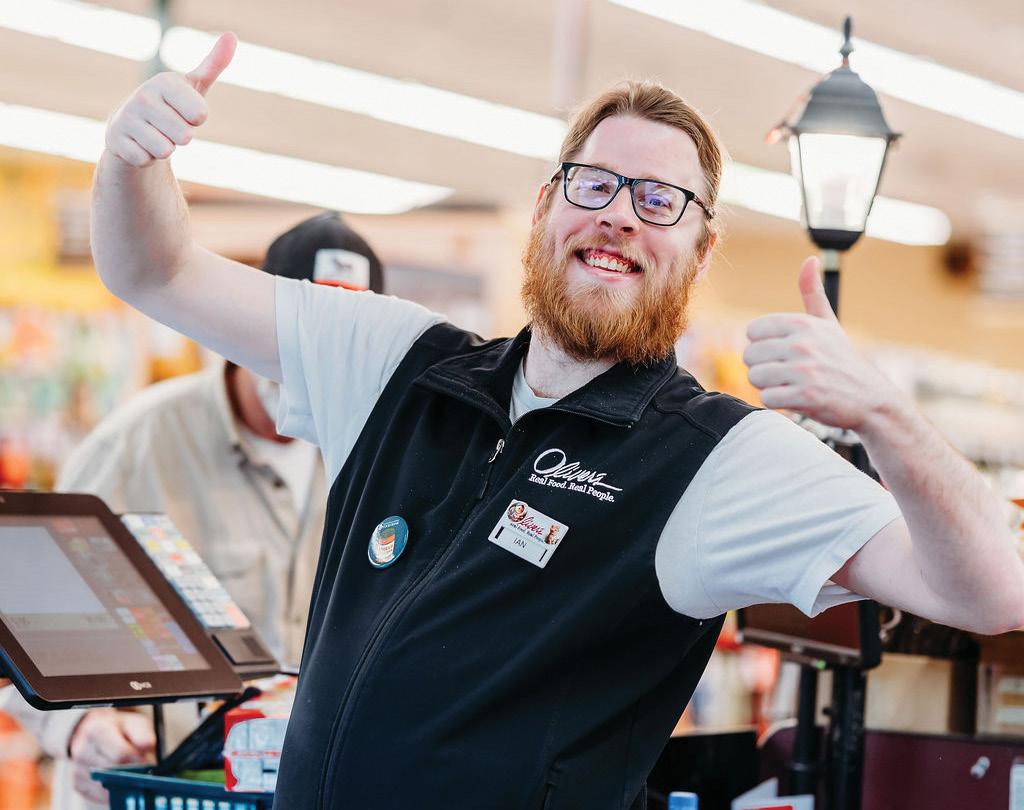
As it marked its 37th year serving California’s Sonoma County, Oliver’s Market celebrated several big milestones, among them its fi rst anniversary of 100% employee ownership as an employee stock ownership plan (ESOP) company. Oliver’s has restructured its ESOP education and communication systems with a new steering committee and the Employee Ownership Crew, store representatives who create activities to build ESOP cultural engagement. The grocer additionally reported signifi cant progress in the areas of food recovery and landfi ll reduction. Oliver’s shoppers also appreciate its excellent quality and service; diverse, locally focused product mix; and award-winning perimeter departments.
Riverwards Market
Philadelphia
Number of Stores: 3
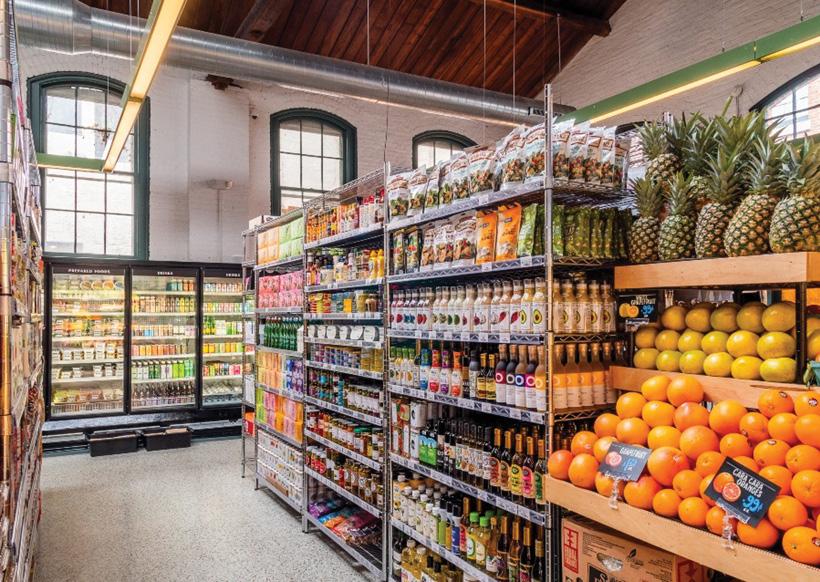
From its inception, Riverwards has made fresh, local food accessible to everyone. Its products are chosen with an emphasis on local farms, small producers and sustainable sourcing. What further sets Riverwards apart is the way it has reimagined what a small urban market can be – a cross between a traditional corner store, a chef-driven specialty grocer and a community gathering place – with each of its locations in Philadelphia and Detroit designed for the neighborhood it serves. By combining local sourcing with neighborhood investment, Riverwards shows that independent grocers can improve food access, city by city.
Roots Market
Clarksville, Md.
Number of Stores: 2
This past year brought fresh challenges to the Washington, D.C., area, where Roots is located: Many of its customers were federal workers who had lost their jobs. In response, Roots expanded its Budget Buddies Program, covering core items that are deeply discounted to ensure supper staples and foundational foods are a ordable to all. Additionally, the grocer’s Senior Wednesday initiative, which enables shoppers age 60 and older to receive 10% o their purchases, has made Wednesday one of its busiest days of the week. Roots also took the time to hold seminars in kindness for its employees.
Rudy’s Markets Inc.
Bend, Ore.
Number of Stores: 4
Rudy’s Markets creates value for its employee-owners by reinvesting in its stores, with total department remodels, new equipment and display cases. The opening of a small Central Kitchen led to impressive year-over-year same-store department sales growth of 16%. In addition to such benefi ts as 100% company-paid insurance and a 20% employee shopping discount, Rudy’s pays industry-leading wages to be a competitive employer in the area. 2026 is the company’s 50th year of serving the Central Oregon community, an occasion that it plans to celebrate by o ering to match up to $100,000 in customer giving.
Schnuck Markets Inc.
St. Louis
Number of Stores: 113
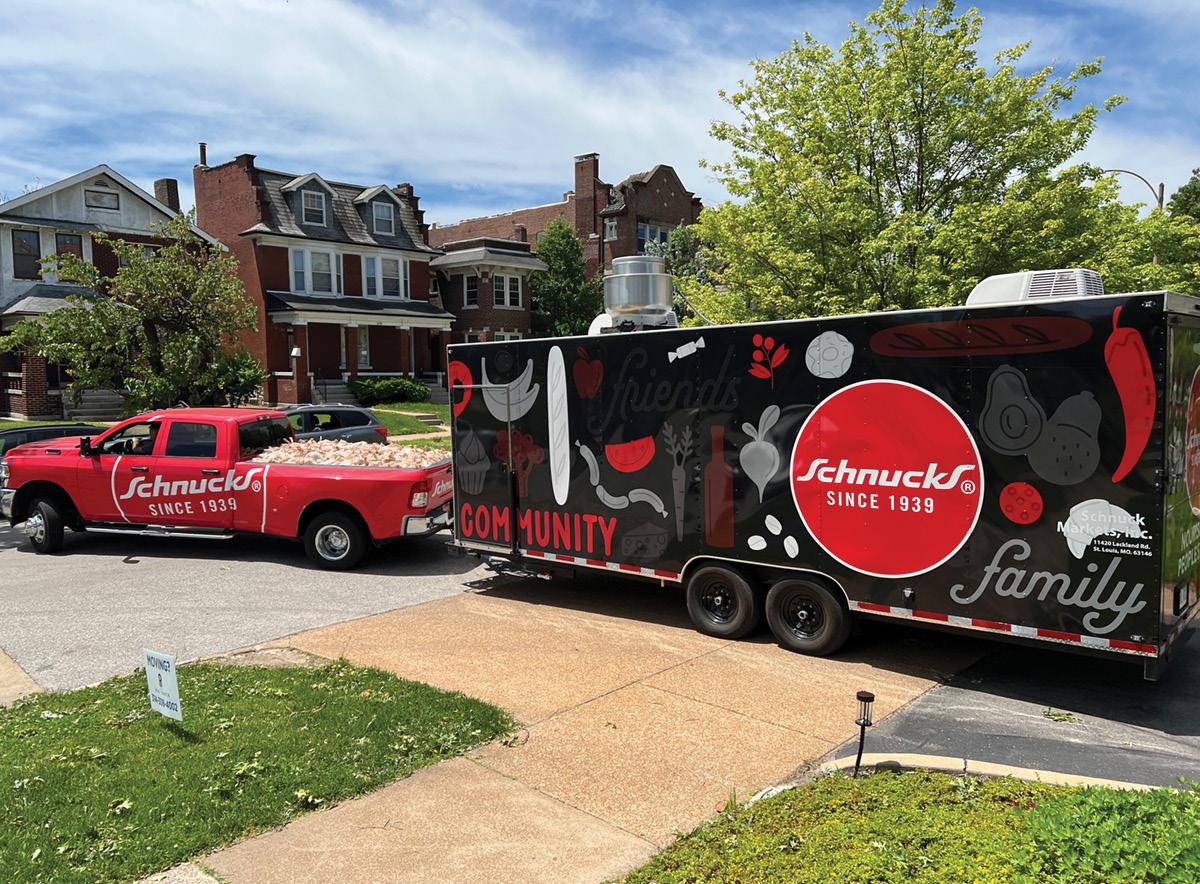
When tornadoes swept through the St. Louis area in the spring of 2025, Schnucks responded with urgency and care. Dozens of teammates (the company’s word for employees) from every area of the business – stores, facilities, o ces and logistics – mobilized to o er assistance both on the ground and behind the scenes. The Schnucks Community Kitchen was dispatched to stores in the hardest-hit neighborhoods to serve as central hubs for teammates and products. Teammates didn’t just serve free meals at the stores, however – they also brought meals directly into a ected neighborhoods, in collaboration with local organizations.
3x better
Royston Group combines three market leaders in one complete customized offering. We’re your single source for refrigerated & heated cases, shelving, checkstands, signage, installation, and maintenance. With over 50 years’ experience in the grocery store marketplace, we understand the unique challenges you face. Rely on our Construction Services Team to make your remodels easier, more efficient, and truly cost-effective. With Royston, Southern CaseArts and SignResource under one roof you get synergistic advantages designed to triple your satisfaction.
Skip’s Farm to Market
Fruita, Colo.
Number of Stores: 1
Believing that everyone deserves access to healthy foods, Skip’s accepts SNAP and participates in Double Up Food Bucks (DUFB), a nutrition incentive program allowing community members to receive double the amount of fresh fruits and veggies through their SNAP benefits. Skip’s recently held an event to promote the program, pairing it with local produce giveaways and education on SNAP/DUFB and food insecurity in the area. Nearly 100 community members attended the event. This was a unique way to break down stigma regarding food assistance programs while at the same time celebrating the region’s local bounty.
Strack & Van Til Food Market
Highland, Ind.
Number of Stores: 22
To meet the evolving needs of customers, Strack & Van Til launched a new online shopping platform and mobile app to deliver greater shopper personalization, integrated loyalty rewards, digital coupons and order-ahead capabilities. Since the launch, the grocer has seen a signifi cant increase in e-commerce orders. Additionally, Strack & Van Til has formed longstanding partnerships with 16 Midwestern growers in its market area, sourcing fresh, high-quality corn, watermelon and other produce. Meanwhile, the company’s many long-tenured team members serve as “keepers of the culture” so that all employees understand what it takes to be outstanding.
Three Bears Alaska
Wasilla, Alaska
Number of Stores: 15
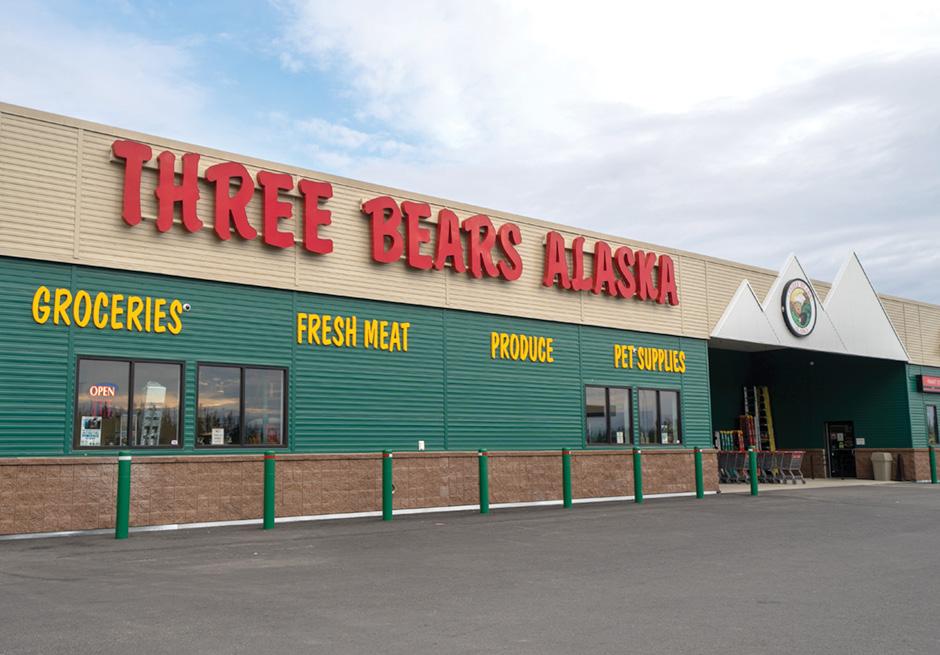
Running a grocery business in Alaska means dealing with weather, dispersed population centers and logistical challenges that most retailers in the Lower 48 never have to think about. Three Bears Alaska has learned to make those challenges part of what it does best. Through its Special Orders operation, the company delivers groceries and goods directly to small businesses, schools and organizations in the communities where its employees live and work. Three Bears Alaska also puts up displays and signage that enable customers to fi nd Alaska Grown items, and the company sources meat from local livestock auctions.
Trig’s
Rhinelander, Wis.
Number of Stores: 5
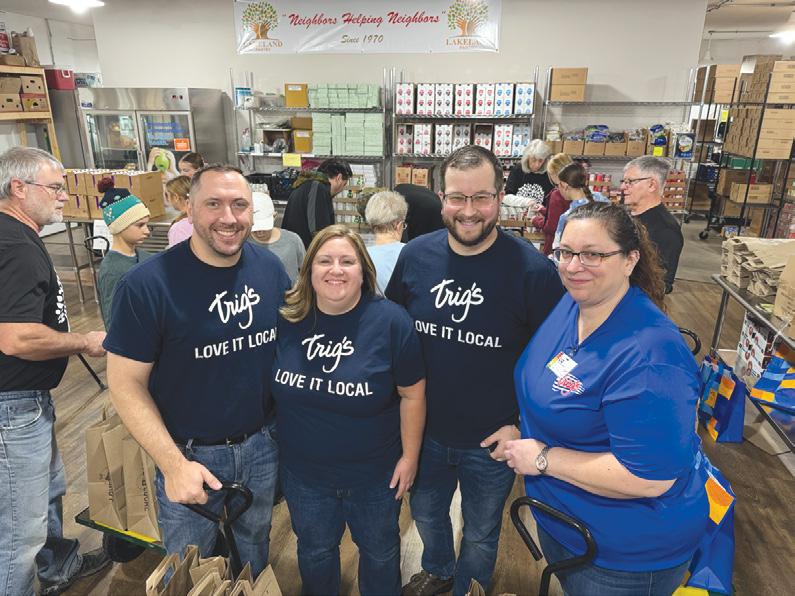
Trig’s, owned by T.A. Solberg Cos. Inc., is more than a grocery store chain – its locations are the hubs of their local communities. From the grocer’s hyper-local sourcing initiative, Love It Local, which brings in-season Wisconsin produce and locally crafted goods to store shelves, to its experiential events that introduce specialty products often unavailable in rural markets, Trig’s aims to create connections between people and food in meaningful ways. The company also works to ensure food access for all through food donation partnerships, outreach programs, and meal initiatives focused particularly on kids facing food insecurity.
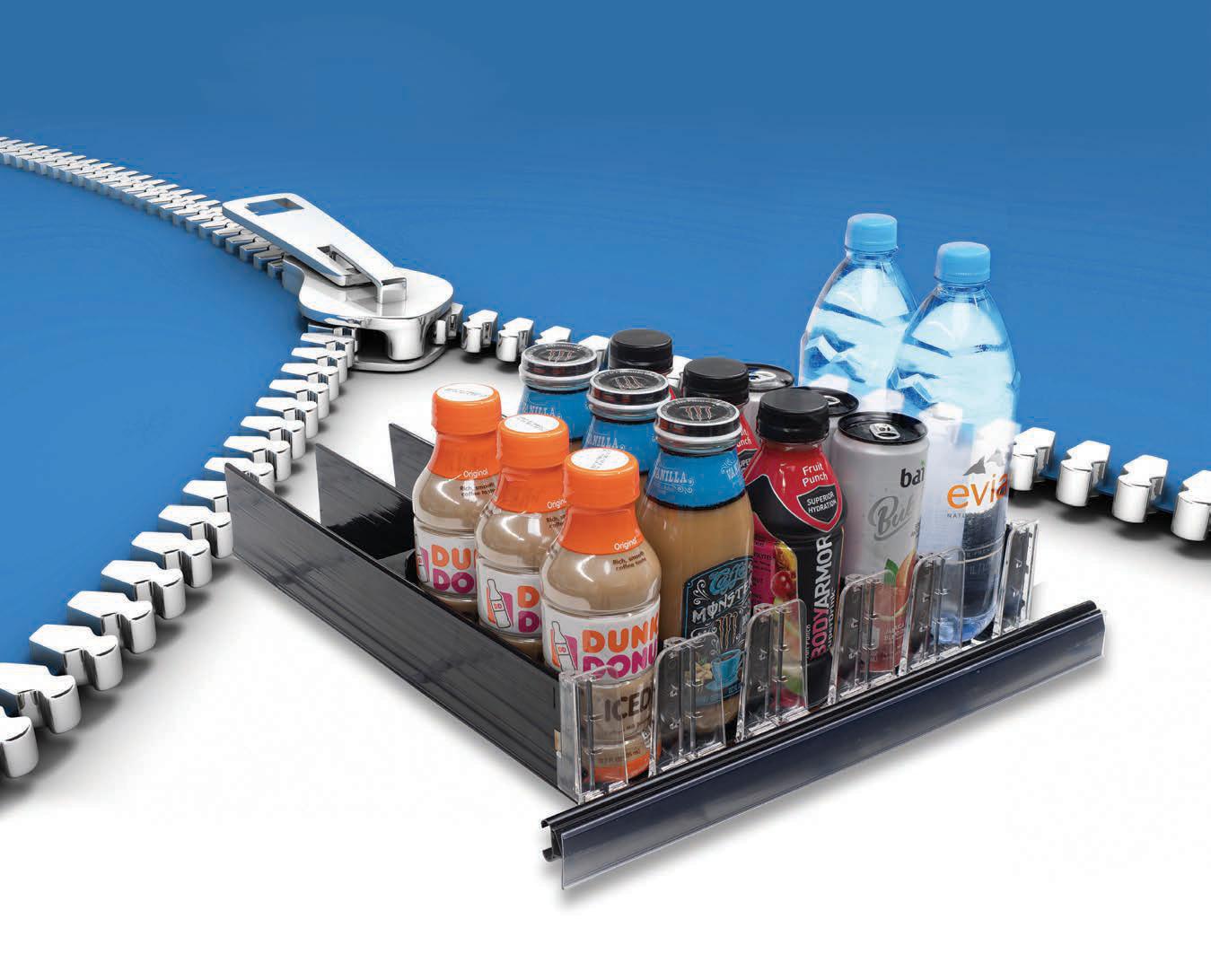
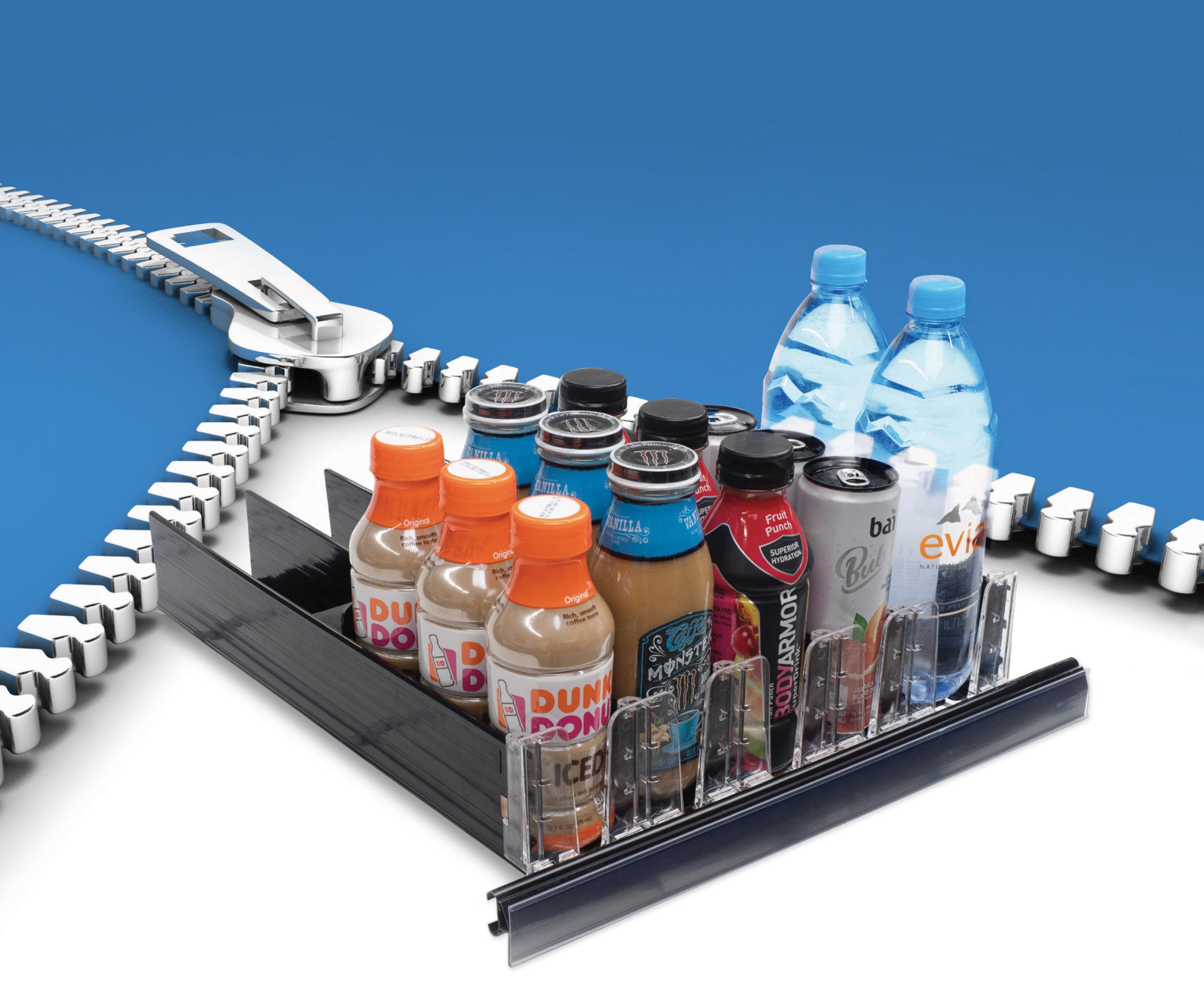
Zip up beverage profits
Zip it
Zip it
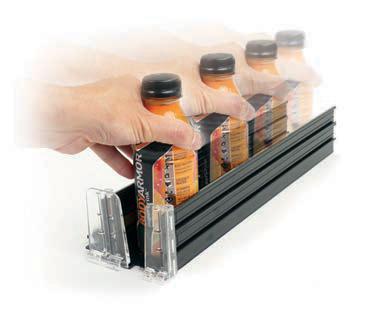
Use actual product to set lane width from 2.00” to 3.75”. Slide product front-to-back
Use
Use actual product to set lane width from 2.00” to 3.75”. Slide product front-to-back to ‘ZIP’ tracks together in final position.
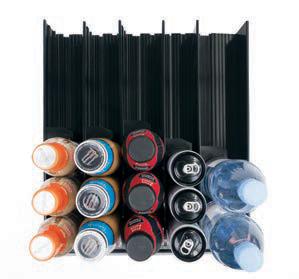
available to fit any and all shelf and product needs.
Fill it
Fill it
Cross
Cross
Use actual product to set lane width from 2.00” to 3.75”. Slide product front-to-back to ‘ZIP’ tracks together in final position.
Use actual product to set lane width from 2.00” to 3.75”. Slide product front-to-back to ‘ZIP’ tracks together in final position.
ZIP
ZIP
ZIP Track® maintains its width
maintains its width accurately for the entire depth of facing without the need for a rear anchor system.
Restoring Nature
REGENERATIVELY FARMED PRODUCTS LIKE PUR PAIN ARE AS GOOD FOR THE PLANET AS THEY ARE FOR CONSUMERS.
By Bridget Goldschmidt
Shoppers have long been concerned about the sustainability of the things they eat, as well how healthful those things are, so many should be interested in learning more about a relatively new term entering the marketplace – “regenerative farming” – along with the foods produced by this method.
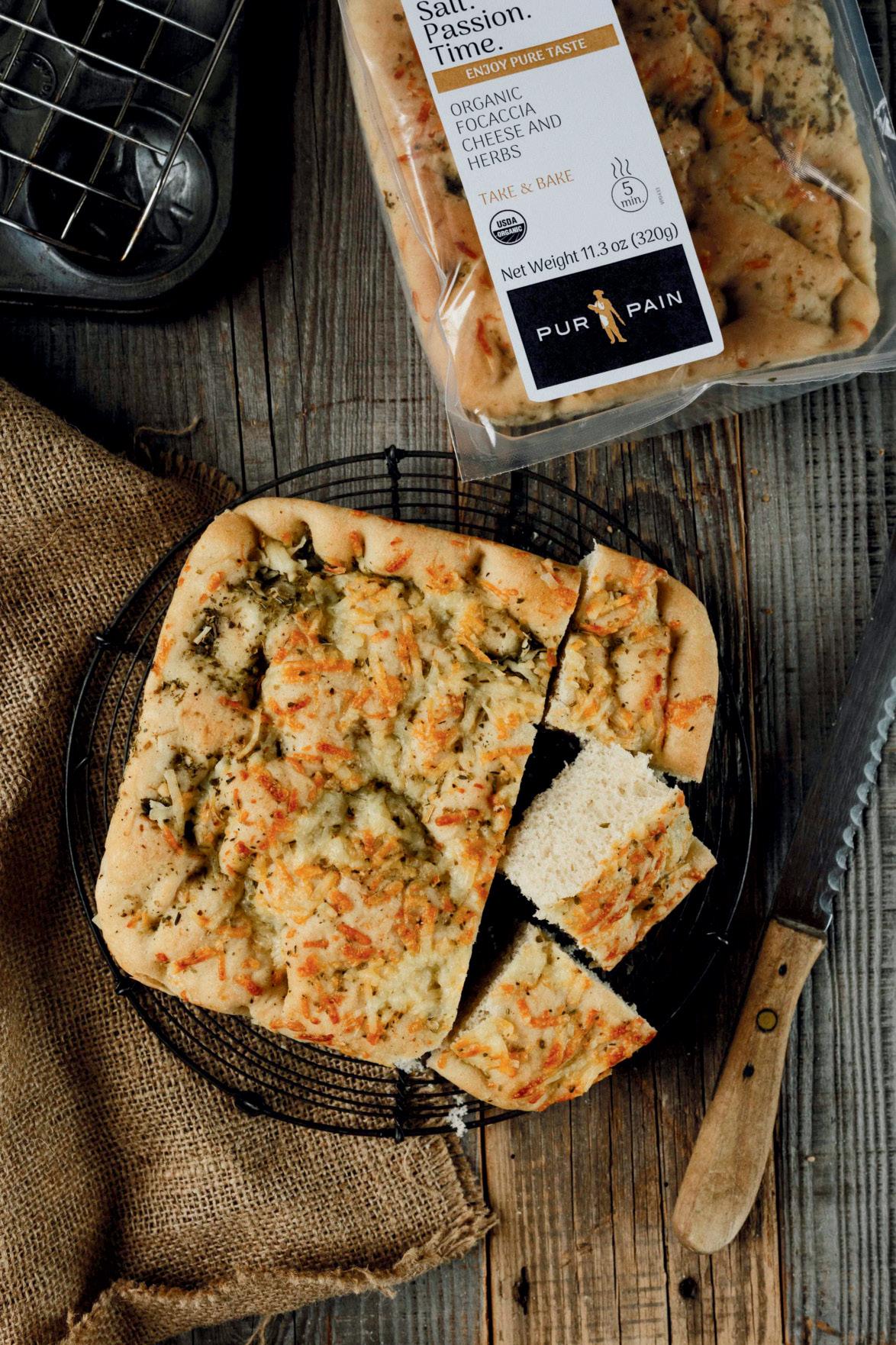
One brand offering such products is Pur Pain, a Belgium-based supplier of organic, non-GMO artisan breads and rolls crafted in a 100% carbon-neutral bakery. Suitable for bakery, deli or perimeter displays, the brand’s take-and-bake products ship frozen and have a 28-day ambient shelf life. Additionally, Pur Pain uses a 40-year-old sourdough culture in many of its items (For more on bread, read “The Greatest Things Beyond Sliced Bread,” starting on page 36).
“Kind to the Earth”
Pur Pain’s products are rooted in regenerative farming, which aims to restore soil health, boost biodiversity and improve the water cycle.
SVP of national sales and importing at KLT and Lipari, notes, “I was looking for a company that only does 100% organic, a company that offers uniqueness, focused on quality and sustainability.”
As for regenerative farming, Burmeister characterizes the practice as “being kind to the earth and the habitat that is destroyed through traditional farming.”
Why It Matters
For retailers, regeneratively grown, carbon-neutral products like Pur Pain support ESG (environmental, social and governance) goals, helping operators hit their Scope 3 emission and organic category targets; drive shopper loyalty among the rising number of consumers actively choosing brands with sustainability integrity; offer category differentiation; and represent a premium margin opportunity, justifying a higher price point with a transparent value story.
At large supermarket chains in particular, Scope 3 typically makes up 80%–90% of their total emissions. That means to meet their ESG and carbon-neutral goals, they must work with suppliers that are reducing their own emissions.
“By minimizing soil disturbance, maintaining living plant cover, and integrating diverse crops and animals, we help build stronger ecosystems and deliver nutrientdense, sustainable food.” —Pur Pain
“Our products are rooted in regenerative farming, a system that works with nature to restore soil health, boost biodiversity and improve the water cycle,” the brand explains. “By minimizing soil disturbance, maintaining living plant cover, and integrating diverse crops and animals, we help build stronger ecosystems and deliver nutrient-dense, sustainable food. This approach aligns with our commitment to responsibly source a resilient food future.”
Pur Pain is imported by KLT Global, a division of Warren, Mich.-based Lipari Foods. Asked how he came to be involved with the brand, Kurt Burmeister,
When it comes to retail buyers, as well as helping with their companies’ ESG goals, regeneratively farmed products create more nutritious ingredients, supporting health-andwellness strategies; aid long-term supply resilience, leading to less dependence on chemical inputs or fragile ecosystems; and represent the next step beyond organic — a step many consumers are willing to take.
The Pur Pain program is soft-launching in February, with a hard launch planned at Albertsons’ Northern California division. As KLT says, “Every loaf represents a full-circle commitment — from soil to shelf — to health, avor and sustainability.”
Baked in a carbonneutral facility using regenerative farming practices. Ready to Turn Bakery Shoppers Into oyal Repeat Customers?
ONE SMALL SHEET, ONE BIG STEP TOWARD FRESH PRODUCE PROFITS
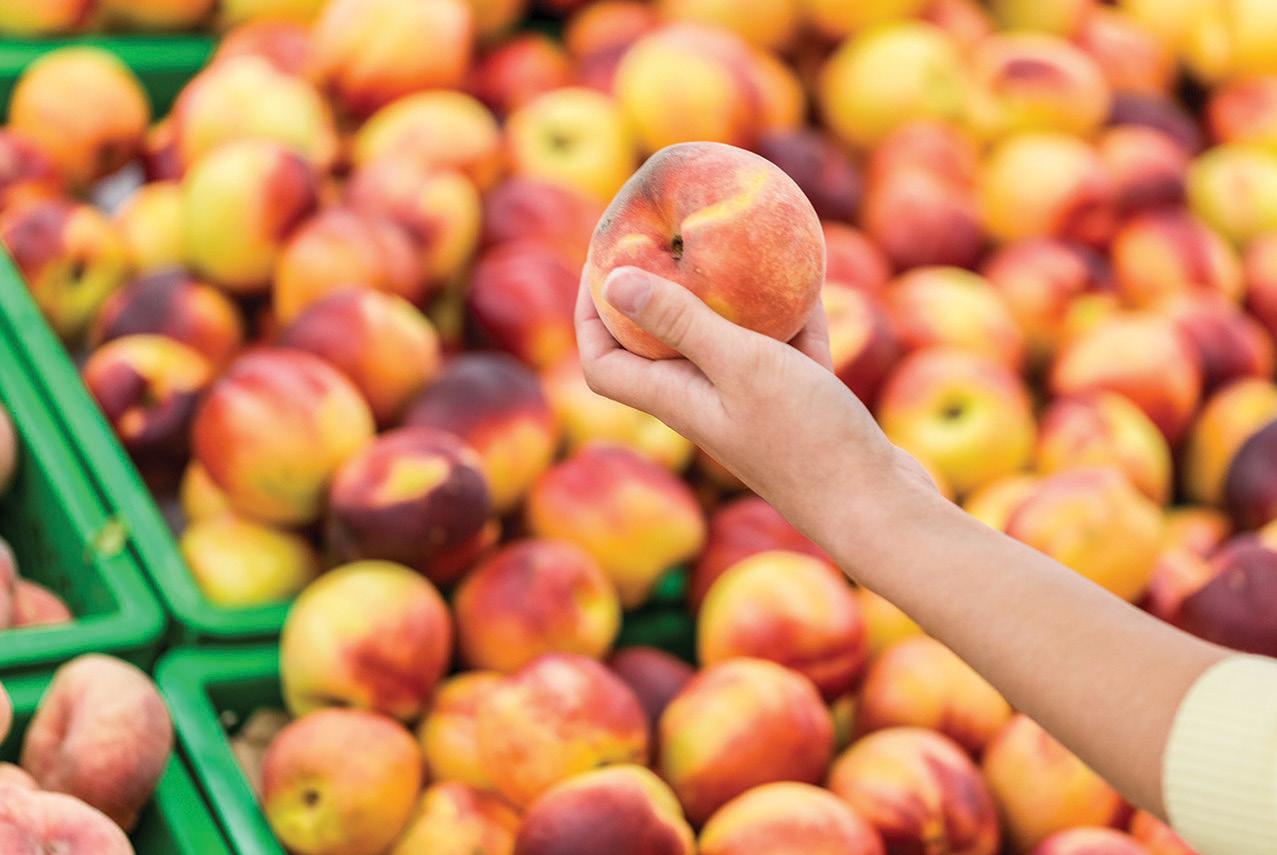
Keeping produce inventory as fresh as possible for as long as possible is an important goal for every grocery retailer. The key to reaching that goal starts long before cases of fruits and vegetables reach your store; it starts in the fields where crops are grown. HarvestHold Fresh, an innovative post-harvest solution from Verdant™ Technologies, offers a way to extend the shelf life and quality of peaches, broccoli and other produce in ways that make the supply chain more fruitful for everyone.
Progressive Grocer asked Paul Oklesh, Sales Director at Verdant, and Ross Williams, President of Titan Farms, the largest peach grower on the east coast, to explain the science behind the technology and the benefits it ultimately delivers to stores that carry HarvestHold Fresh-treated produce.
Progressive Grocer: What exactly is HarvestHold Fresh? How does it work?
Paul Oklesh: HarvestHold Fresh is an easy-to-use sheet treated with 1-MCP (1-methylcyclopropene) that delays ripening in fruits and vegetables. The sheets gradually release 1-MCP when humidity is present, automatically adjusting to how each fruit or vegetable breathes. This helps keep produce fresh longer, extending shelf life by up to 50 percent. The solution helps growers and retailers reduce shrink, maintain quality, and move product more efficiently through the supply chain.
PG: What benefit does HarvestHold Fresh offer grocery retailers specifically?
PO: Adding HarvestHold Fresh-treated produce is a simple way to give customers amazing product.
Growers who use it can harvest crops at their peak and keep them fresher longer, so you get produce like peaches and broccoli with more vibrant color, firmer texture, and a longer shelf life than fruits and vegetables that have traveled through the supply chain without being treated.
There are sustainability benefits, too: HarvestHold Fresh helps lower shipping costs and reduces environmental impact in crops like broccoli by eliminating the need for ice. Verdant Technologies won a Progressive Grocer Impact Award in the Sustainability/Resource Conservation category in 2025 thanks, in part, to those benefits.
There’s more good news for retailers: They don’t have to do anything! Growers use HarvestHold Fresh sheets in the field, in storage, and during transit, and the technology has done its job by the time the produce arrives!
PG: As a premier grower of peaches and other produce, Titan Farms plays a pivotal role in advancing and strengthening the supply chain. What has Titan’s experience been with HarvestHold Fresh?
Ross Williams: We conducted a “mega trial” using HarvestHold Fresh on our peaches and achieved higher pressures and slower ripening in the cold storage chain. We saw significant benefits to timeon-shelf as well as higher quality produce and a more consistent eating experience for consumers. Now, 80 percent of our fruit leaves our facility treated with HarvestHold Fresh. For retailers, the goal is always customer satisfaction — think about someone eating a peach in utter delight! Using HarvestHold Fresh is helping us deliver produce that creates that experience for your shoppers.
PO: I would like to add that progressive growers are embracing HarvestHold Fresh, so the bottom line for progressive grocery retailers is this: Talk to your grower-packer partners about incorporating HarvestHold. Your customers will notice the positive difference — and, ultimately, your bottom line will, too.
READY TO FIND OUT HOW TO GET GROWING WITH HARVESTHOLD FRESH-TREATED PRODUCE? VISIT www.harvesthold.com.
Functional Beverages
Accessible Balance
CONSUMERS SEEK OUT FUNCTIONAL BEVERAGES MOST OFTEN FOR ENERGY, DIGESTION, IMMUNITY AND MOOD SUPPORT.
By Jim Dudlicek
B“everages are no longer just drinks –they’re becoming meals, medicine and moments.”
This bold statement, which kicked off Chicago-based market research rm Circana’s recent webinar, “Share of Sip: Mapping the Beverage Evolution,” a deep dive into beverages, is apparent to anyone who’s browsed the category recently, in store or online.
It’s perhaps most evident in the realm of functional beverages, which are driving much of the category’s growth and innovation.
The global functional drink market was estimated at $149.75 billion in 2024 and is projected to top $248.5 billion by 2030, according to San Francisco-based Grand View Research.
Circana reports that consumers are increasingly disregarding traditional beverage categories in favor of products based on their desired outcome or the impact on their health or lifestyle. Leading the way: immune health, mood support, digestive health and energy.
Beverages are six of the top 20 growth areas in food and beverage, according to Circana, with volume growing over the past six years for energy, weight control and low sugar. Sports and energy drinks dominate beverage sales, with units up 18% at retail.
Meanwhile, sodas are blurring boundaries as they emerge to address functional needs. “Modern sodas are giving consumers more alignment with many of the bene ts they seek,” says David Portalatin, Circana SVP and industry advisor for food and foodservice.
The next wave of beverage growth will compete on bene ts rather than categories, and lean into premiumization, notes Sally Lyons Wyatt, Circana global EVP and chief advisor for consumer goods and foodservice insights. Circana anticipates that product personalization will be aligned to wearable devices, which, according to Wyatt, presents “a huge opportunity for brands to connect beverages with daily wellness routines,” offering products that are “faster, more personal, experiential and technology enabled.”
Building Functional Assortments
For manufacturers like The Jel Sert Co., based in West Chicago, Ill., the functional beverage category is booming.
“Gut health is becoming a central driver, fueled by growing consumer awareness of its connection to immunity and overall wellness,” af rms Gavin Wegner, Jel Sert’s director of innovation. “Ingredients like ber, probiotics and postbiotics are also becoming a critical need
among the growing number of people taking GLP-1 weight loss drugs.”
Meanwhile, hydration has evolved beyond sports recovery. “We’re seeing a desire for all-day hydration solutions that t into everyday life,” Wegner says. “Consumers are looking for fewer ingredients, lower or no sugar, and bene ts that feel relevant from morning through evening.”
Wegner sees energy being rede ned in a “cleaner, more balanced way,” with consumer preferences shifting toward natural caffeine sources like green tea and B vitamins. “Natural ingredients are seen as giving consumers more holistic bene ts, such as sustained energy without the crash,” he notes.
Further, mental wellness and stress relief beverages are going mainstream, Wegner says, including adaptogens and nootropics like ashwagandha and L-theanine for focus, stress reduction and relaxation. “This is especially being driven by Gen Z, a cohort of consumers trying to ‘take the edge off’ while avoiding alcohol and opening white space for occasion-based drinks like an evening wind-down,” he observes.
Protein is expanding beyond traditional shakes, Wegner goes on to note, with lighter formats – including clear protein waters, sodas and hybrid beverages –meeting the needs of consumers who want satiety and functionality in more convenient, everyday forms.
Responding to consumer needs, Jel Sert has launched Pure Kick Alkaline, which the company sees as “a key pillar in the evolution of hydration,” Wegner says. “It’s made with just ve ingredients and is unsweetened, giving consumers a simple way to raise their water pH on the go, without a premium price tag.”
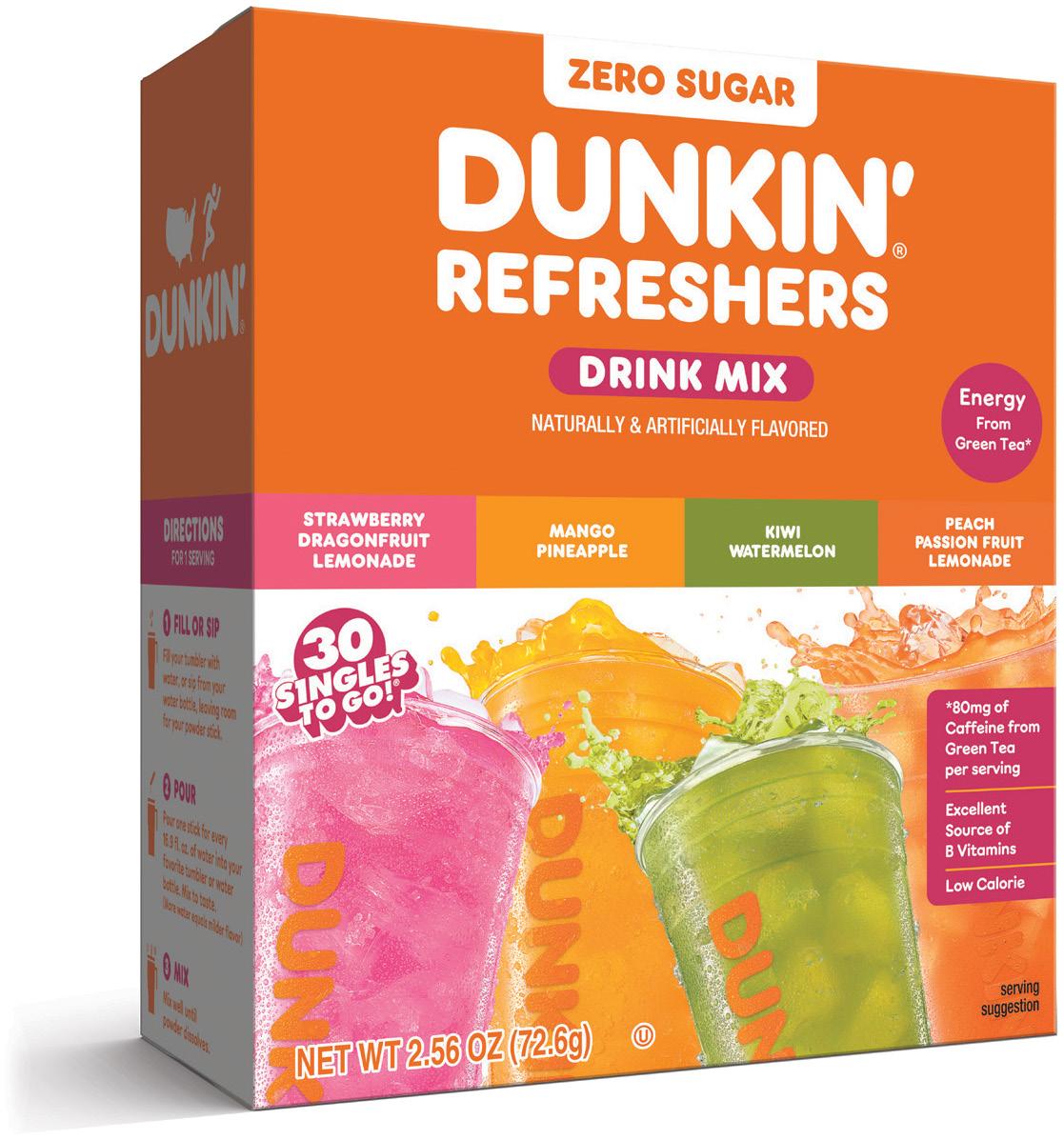
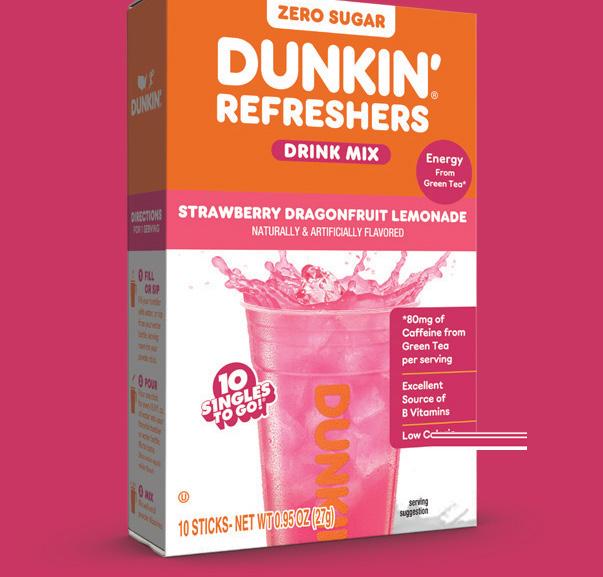
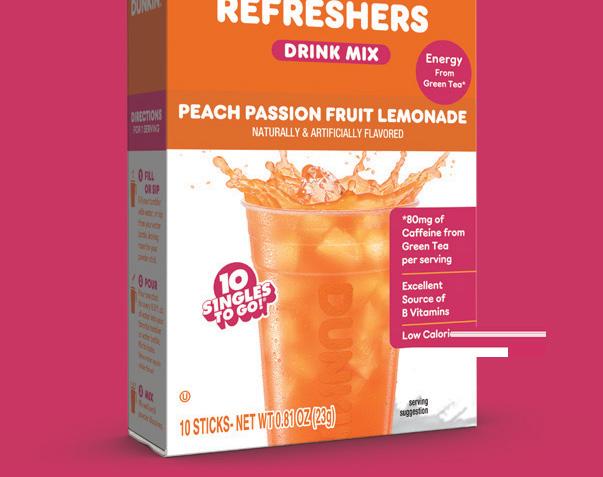
Meanwhile, the company’s Dunkin’ Refreshers powdered drink mixes align with the clean-energy trend. “This product delivers balanced energy sourced from green tea along with B vitamins, without arti cial sweeteners or colors,” Wegner points out.
Jel Sert’s Pure Kick Alkaline offers a cost-conscious hydration solution with simple ingredients.
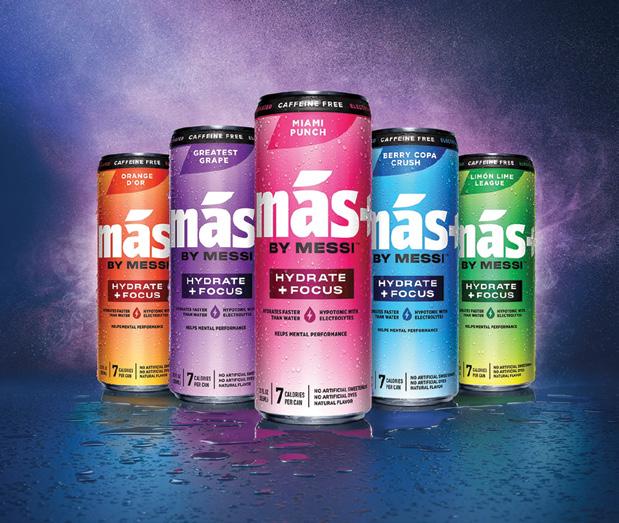
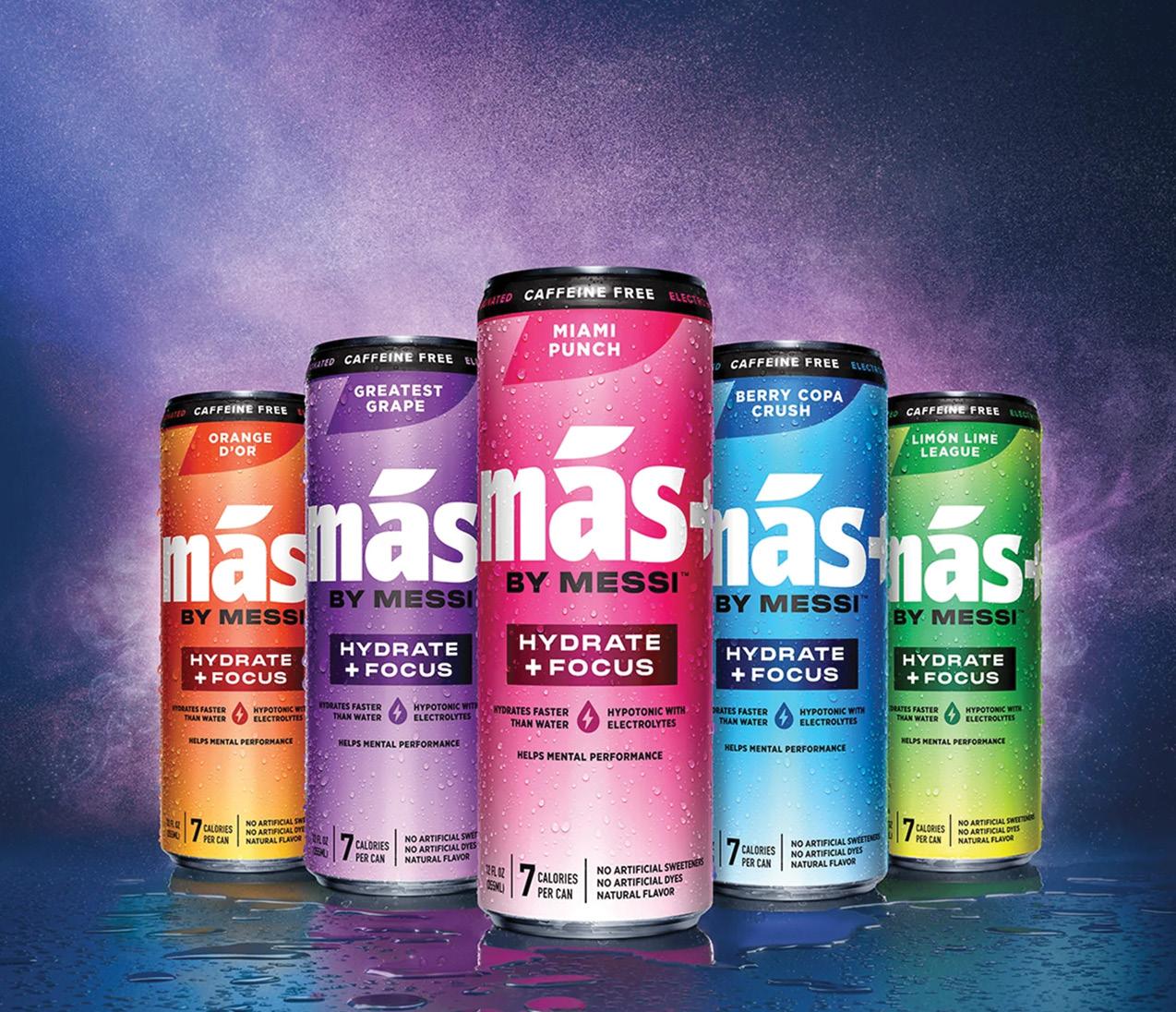
Hydration is the mission of Más+ by Messi, which recently added grape to its avor lineup.
NOW FUELING THE HYDRATION TREND
Dunkin’ Refresher Drink Mixes tap into the proven Hydration trend — driving category excitement and attracting on-the-go shoppers.
ZERO SUGAR, 80 MG CAFFEINE FROM GREEN TEA, B VITAMINS
EXPANDS CATEGORY REACH AND DRIVES INCREMENTAL GROWTH
POWDERED DRINK MIX CATEGORY IS
VS. LAST YEAR*
Functional Beverages
Jel Sert is working with retailers to help build functional assortments within categories like powdered drink mixes – which Circana reports are making signi cant inroads in category share – that deliver real bene ts at fair price points. “That allows retailers to serve a broad shopper base, including value-oriented households, while still tapping into trends like hydration, energy and wellness,” Wegner explains.
Reaching Out
They’re all in on hydration at Más+ by Messi, founded with soccer icon Lionel Messi and launched in 2024. A Progressive Grocer Editors’ Pick in 2025, the beverage promises a balanced blend of electrolytes with natural avors and no arti cial sweeteners or colors, plus vitamins and minerals, at just 10 calories per 16.9-ounce bottle. This past summer, the brand added Greatest Grape to its avor lineup that also includes Miami Punch, Limón Lime League, Berry Copa Crush and Orange d’Or.
“There is a clear desire for reimagined avors that meet the needs of today’s consumer,” says Rishi Daing, EVP of Chicago-based Más+ Next Generation Beverage Co. “Más+ by Messi is raising the bar with Greatest Grape, offering great-tasting hydration that stands out in a packed category. We look forward to seeing how fans react to this new, nostalgic avor.”
“The brands and retailers that win will be the ones that balance innovation with accessibility, and benefits with flavor and realistic pricing.”
—Gavin Wegner, The Jel Sert Co.
Más+ by Messi recently expanded distribution nationwide with availability in major retailers like Walmart, Albertsons, Safeway and Dick’s Sporting Goods, plus online at Amazon and masbymessi.com.
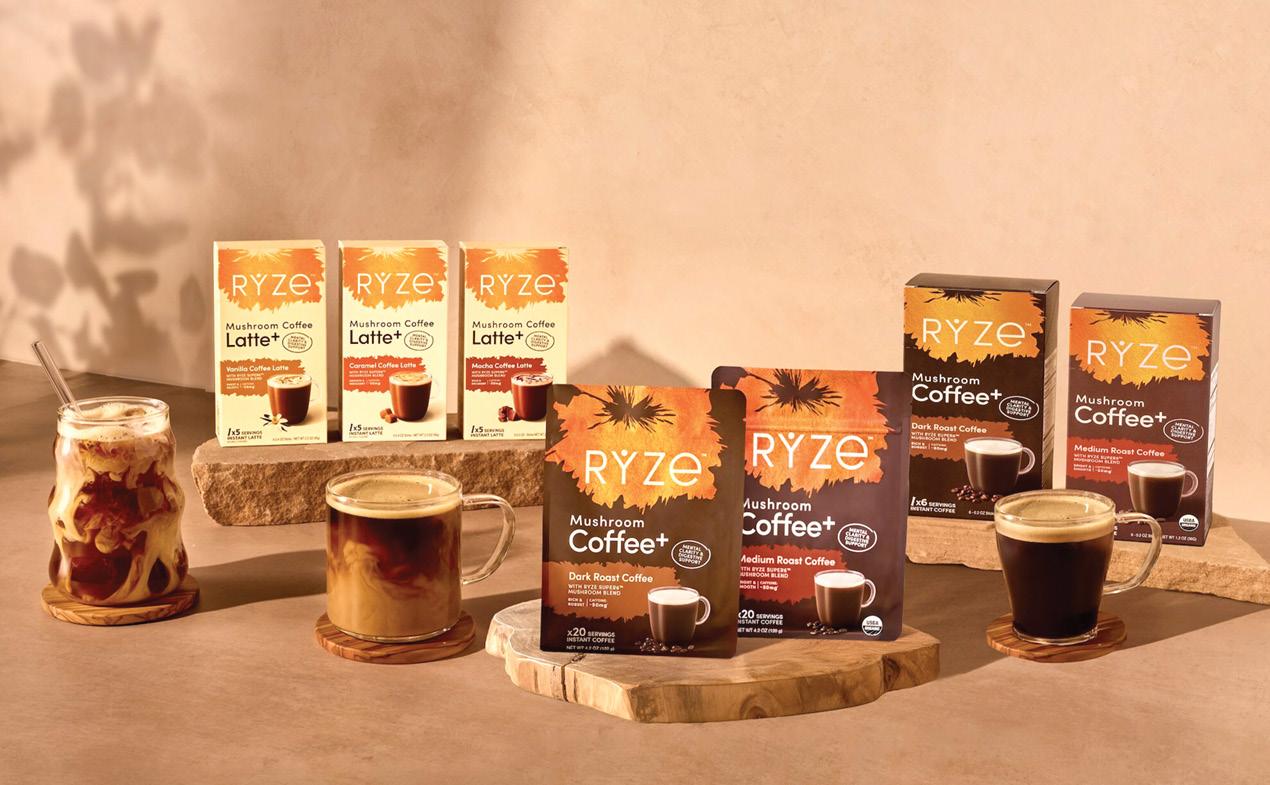
Meanwhile, Target is the target of the rst national retail launch of Ryze, a mushroom-based coffee beverage formulated to help boost energy, support mental clarity and promote digestive wellness. All Ryze products, including three Target-exclusive latte drinks, boast the brand’s signature “SUPER6” organic mushroom blend: lion’s mane, Cordyceps, reishi, turkey tail, shiitake and king trumpet.
Ryze’s core items include Mushroom Coffee Bags in Dark Roast and Medium Roast, and the brand’s new single-serve Mushroom Coffee Sticks in Dark Roast, in addition to the Target-exclusive Medium Roast.
“Consumers are becoming much more intentional about what they drink, looking for options that support energy and wellness without compromising on taste,” says Andrée Werner, Ryze co-founder. “Target allows us to meet that demand at scale and bring our approach to coffee to an entirely new audience.”
Ryze products are vegan and gluten-free, contain organic ingredients, have zero added sugar, and are sustainably grown in the United States.
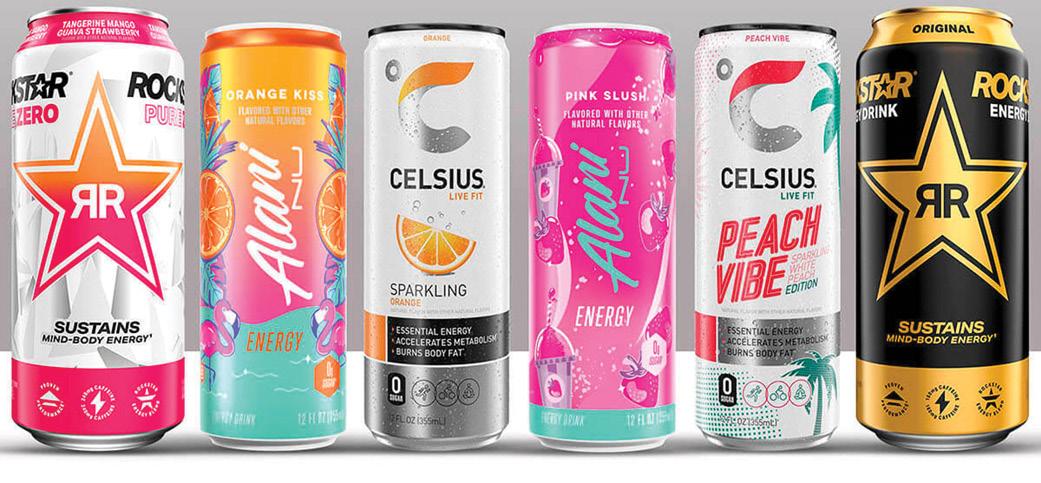
Further illustrating the strength and reach of the functional beverage category, Boca Raton, Fla.based Celsius Holdings
Inc. – maker of energy drink Celsius, along with Celsius Hydration and health-andwellness brand Alani Nu – struck a deal last summer to move its products into the PepsiCo distribution system in the United States and Canada. Additionally, Celsius acquired the Rockstar Energy brand from the beverage giant.
The core Celsius line bills itself as a “better-for-you, zero-sugar alternative to traditional energy drinks” that purports to provide essential energy, accelerate metabolism and help burn body fat.
Its recent moves give Celsius “a total energy portfolio approach that appeals to a broader range of consumers with varied tastes and lifestyles,” the company notes. “Together, we will reach more people, in more places, more often, [by offering] options for every consumer,” says John Fieldly, chairman and CEO of Celsius Holdings.
Products That Do More
Observers generally agree that functional beverages are no longer a niche category.
“They’re becoming part of everyday consumption,” Jel Sert’s Wegner asserts. “The brands and retailers that win will be the ones that balance innovation with accessibility, and bene ts with avor and realistic pricing.”
Wegner anticipates continued consolidation of all-in-one beverages as the category moves away from single-bene t offerings toward products that deliver multiple bene ts at once. “Consumers want the products they buy to do more,” he says. “They also want convenience while still demanding clean labels, great avor and fair pricing. Single-bene t products will continue to have a role on the shelf, but the growth is clearly shifting toward beverages that simplify decision-making and t into everyday routines.”
Acquired from PepsiCo, Rockstar Energy has joined the Celsius stable of functional beverages.
Mushroom-based coffee Ryze, which addresses multiple functional needs, has gone national via Target stores.
Honor the Next Generation of Grocery Leaders
Progressive Grocer is accepting nominations for the 2026 GenNext Awards, which recognize emerging leaders, innovators and changemakers (under age 40) in the food retail ecosystem. BY APRIL 13, 2026
Stretching the Barbecue Budget
VEGGIES ARE MAKING INROADS AS GRILLING CONSUMERS SET SPENDING PRIORITIES AND LOOK BEYOND TRADITIONAL PROTEINS.
By Jim Dudlicek
For retailers like Natural Grocers, grilling season is an opportunity to engage with shoppers, leverage vendor relationships to drive sales, and boost traf c by appealing to multiple purchase motivators.
Since 2021, the Lakewood, Colo.-based organic and natural grocery chain has hosted its successful annual Art of Grilling event. Held in June, the three-day event includes savings on related products, seasonal grilling recipes and a grill giveaway.
Hormel is seeing demand for less costly meats like pork, while veggies make more inroads into grilling.
“Our view is that we won’t see declines in 2026 if trends hold.”
Wyatt points out that pork “has some good room for growth, as it’s lower-priced. However, we expect chicken and beef to see positive growth as well.”
“Grilling and outdoor cooking play a meaningful role in our seasonal sales, but our approach is always customer driven,” says Katie Macarelli, director of public relations at Natural Grocers. “We listen closely to our shoppers, and our store teams keep us informed about what’s resonating. Instead of prioritizing product promotion, we emphasize engaging and educational campaigns designed to foster meaningful connections with both customers and vendors. This strategy consistently supports our seasonal sales.”
Expectations are positive for the 2026 grilling season, with consumers likely to follow the shopping behaviors they’ve adopted as in ation has driven up grocery prices, especially in the meat department.
“Overall, grilling was strained in 2025, but typical seasonality was evident,” notes Sally Lyons Wyatt, global EVP and chief advisor for consumer goods and foodservice insights at Chicagobased Circana. “This does not show up in meat sales but [in] the complementary products like center store hamburger and hot dog buns, and relish. Grill purchasing was down as well.”
Despite high beef prices, the category realized growth in 2025, Wyatt observes. “The only meat segments that saw negative unit trends were ribeye and beef brisket,” she says.
Natural Grocers drives engagement with its annual Art of Grilling events.
As for complementary categories, Wyatt sees positive unit sales in several areas, including cheese, potatoes, spices and baking ingredients, and premixed cocktails, coolers and hard seltzers. “All of these can help make great grilling experiences in 2026,” she says.
Striving for Balance
Macarelli notes that Natural Grocers’ own “Trends for 2026” report features several trends applicable to grilling, among them organics such as produce, grassfed beef and free-range chicken; eating on a budget, including more meals at home; and high-quality carbs like ber-rich vegetables.
Veggies are certainly top of mind at Giorgio Fresh. “It’s no longer just about protein on a ame,” says Bryan Shelton, VP of sales and marketing at the Blandon, Pa.-based mushroom grower. “Consumers
Key Takeaways
The grilling category is enjoying growth despite the rising cost of meat, with many consumers buying “less but better,” choosing premium cuts alongside other budget-friendly options.
A growing number of exitarian and plantforward consumers see grilled vegetables as a centerpiece, not a side.
Retailers should seek opportunities in strategic cross-category merchandising to drive sales.
Grilling Forecast
are treating the grill as an extension of the kitchen. That shift is being driven by a few key trends: a stronger focus on freshness and seasonality, global avor exploration, and a desire for lighter, more balanced meals. Fresh produce ts naturally into that equation.”
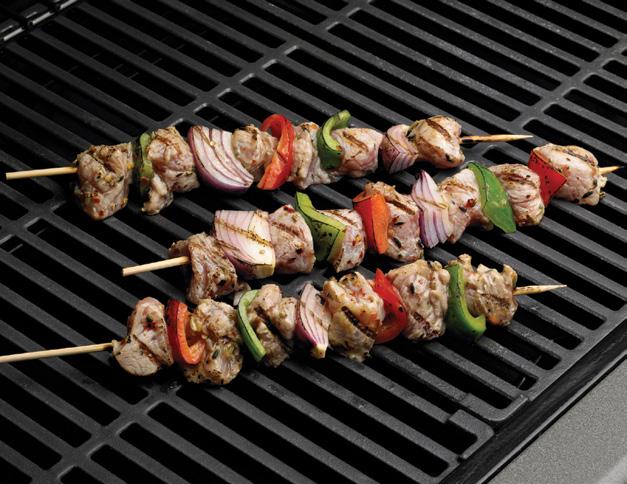
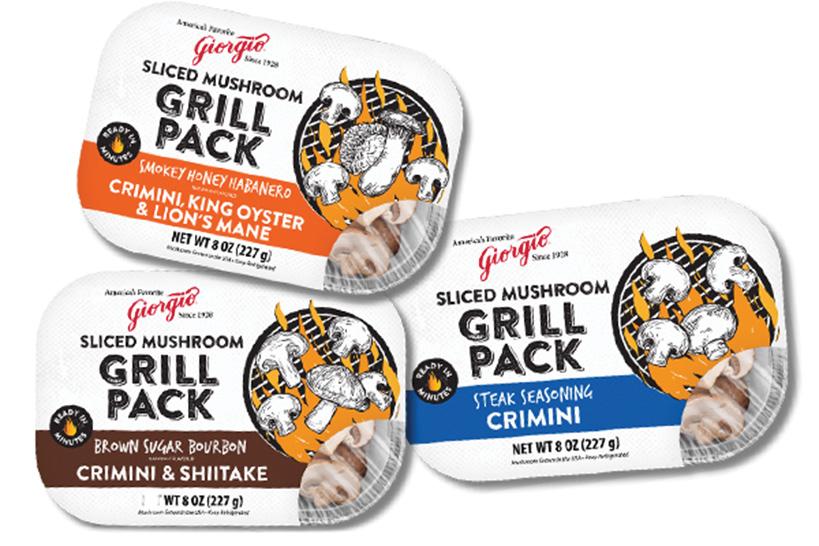
Giorgio’s Grill Packs feature fresh sliced mushrooms in three avors: Steak Seasoning, Smokey Honey Habanero and Brown Sugar Bourbon. The packs can be cooked directly on the grill or in the oven using the included aluminum tray.
“Convenience and inspiration are shaping the category more than ever. Shoppers want products that feel elevated but are easy to execute — preprepped, pre-seasoned or clearly merchandised for a speci c grilling occasion,” Shelton says. “Consumers are also more label-conscious, looking for clean ingredients and recognizable components.”
Shelton sees signi cant potential for produce in the grilling space. “There’s room to expand in areas like globally inspired vegetable blends, premium cuts or formats, bold marinades, and value-added solutions that remove prep work for the consumer,” he notes.
“For many consumers, vegetables enhance the grilling experience by adding variety, balance and avor contrast alongside meat,” Shelton adds. “At the same time, there’s a growing group of exitarian and plant-forward consumers who see grilled vegetables as a centerpiece, not a side. There’s also an opportunity to better educate shoppers on how vegetables can perform on the grill, through packaging, merchandising and content.”
Adding the Sizzle
Meanwhile, Austin, Minn.-based Hormel Foods is looking to stretch grilling themes across the store, uniting them with a perennial favorite.
“We’re leaning into seasonal merchandising and cross-category pairings — think bacon showcased alongside fresh produce, buns and condiments,” says Brand Manager Erinn Aul nger, noting that Hormel’s Black Label brand bacon
“It’s no
longer just about protein on a flame. Consumers are treating the grill as an extension of the kitchen. That shift is being driven by a few key trends: a stronger focus on freshness and seasonality, global flavor exploration, and a desire for lighter, more balanced meals. Fresh produce fits naturally into that equation.”
—Bryan
Shelton, Giorgio Fresh
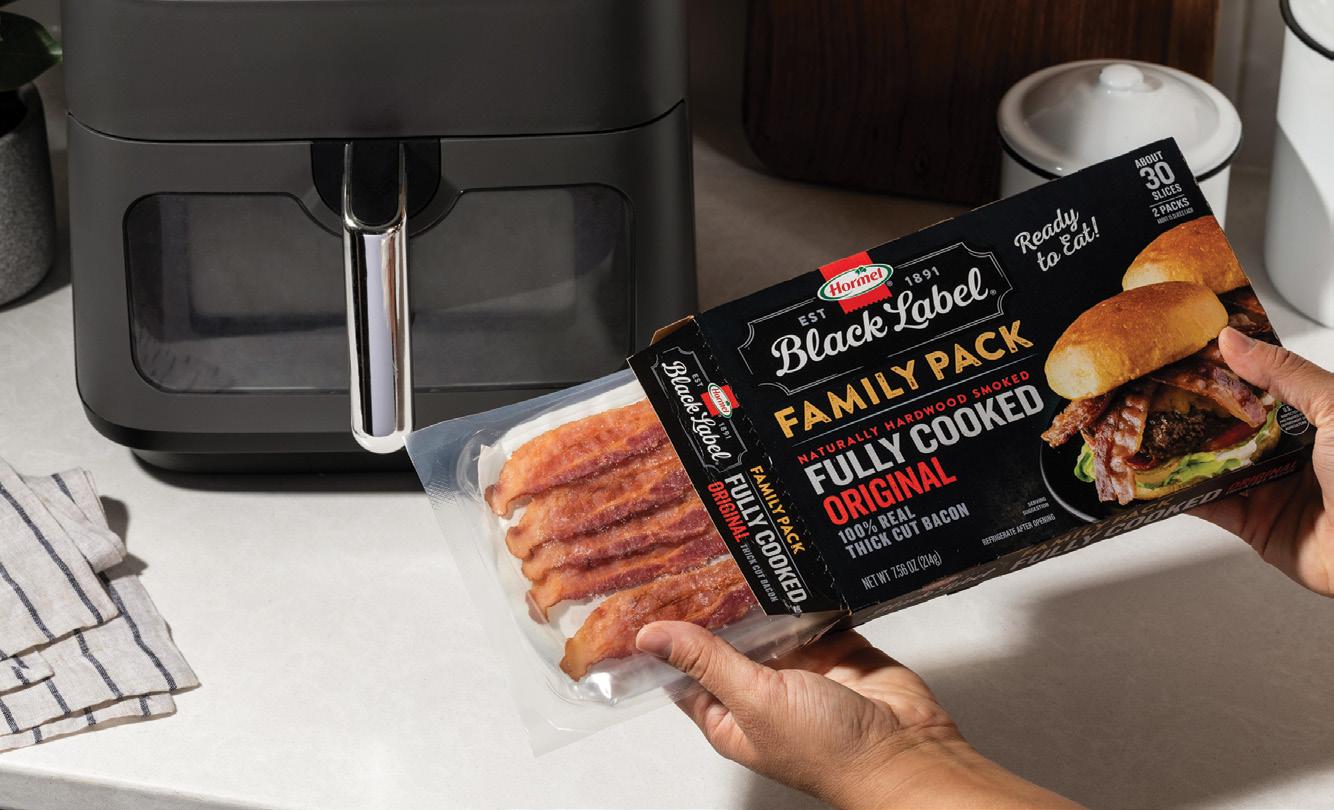
will be a key element of its grilling initiatives. “Eye-catching displays and recipe inspiration help shoppers see bacon as a grilling essential, not just a breakfast staple. It’s about creating easy solutions that drive basket size and excitement. ... Fully cooked bacon gives shoppers an easy, no-mess bacon option without turning on the oven.”
According to Aul nger, secondary placements near meat and produce are key, paired with bold visuals and quick recipe ideas. “Leveraging content and partnerships to showcase hacks for grilling helps inspire creativity,” she says. “Grilling season is all about bold avors, versatility and shareable experiences. Consumers want premium ingredients that elevate the backyard cookout, and bacon delivers, whether it’s wrapped around veggies [or] layered on burgers ... Ultimately, bacon taps into trends around convenience and customization.”
Beyond bacon, Hormel Brand Manager Hailey Tranchitella notes that consumers are increasingly seeking convenient, avorful, cost-effective meal solutions. “There’s a rising interest in value-added products, like pre-seasoned, marinated or ready-to-cook pork, which helps consumers cut down on prep time while still enjoying bold, exciting avors,” Tranchitella says.
Hormel touts its fully cooked bacon as a convenient way to customize the grilling experience.
Giorgio Fresh’s Grill Packs make it easier to enjoy fresh produce on the grill.
“We’re leaning into seasonal merchandising and cross-category pairings — think bacon showcased alongside fresh produce, buns and condiments. Eye-catching displays and recipe inspiration help shoppers see bacon as a grilling essential, not just a breakfast staple.”
—Erinn Aul nger, Hormel Foods
Bakery Gets “Swicy”
As a complementary category, bakery enjoys uplift when sales surge for grilling season. Therefore, suppliers of buns, breads and other baked goods are making sure their products stay on trend as well.
“Savory-sweet hybrids have been popular for a good while, and that’s an exciting trend for brioche – and grilling season,” af rms
Kayleigh Swift, U.S. brand manager for Manchester, U.K.-based St Pierre Bakery, owned by Grupo Bimbo. “By its very nature, brioche is slightly sweeter because it’s made with an enriched dough. That’s why it works so well with savory recipes for contrast and why our Brioche Burger Buns are our best-seller.”
Swift points to the rise of “swicy,” or sweet-and-spicy avor combinations, as one to watch for grilling. “It’s so well suited to brioche buns that deliver a little extra kick of avor,” she notes.
“We are launching a limited-edition St Pierre Spicy Brioche Bun for grilling season this year, which will drive excitement in bakery, meet consumer trends and drive incremental sales for the sector.”
Grilling creates “together time,” Swift says, and shoppers will be looking for ways to give these occasions a boost. “Premium bakery is a simple way to upgrade your grilling occasion without having to spend signi cantly more, which is why retailers need to consider their bakery offering as part of grilling season displays,” she adds.
To that end, St Pierre offers innovative merchandising solutions, which aid sales in several ways, Swift explains. “The rst is to act as a trip trigger into the in-store bakery, where consumers head for inspiration,” she says. “Our Eiffel Tower [displays] have been proven
St Pierre Bakery’s Spicy Brioche Buns aim to drive excitement and leverage a complementary category for grilling sales.
What Trends Will De ne Grilling in 2026?
Steven Raichlen, the James Beard Award-winning culinary writer and creator of public television’s
“Barbecue University,” recently shared his thoughts about trends that will de ne grilling in 2026. Here are some of Raichlen’s predictions:
Less expensive cuts of meat: More budget-friendly choices like ank, sirloin and atiron, as well as beef alternatives like pork shoulder steaks and tenderloins. Additionally, brisket will make way for “trisket,” or tri-tip, cut from the bottom sirloin.
Frozen meat: Raichlen says that it’s lost its stigma, since Japanese wagyu and other prime cuts often come frozen.
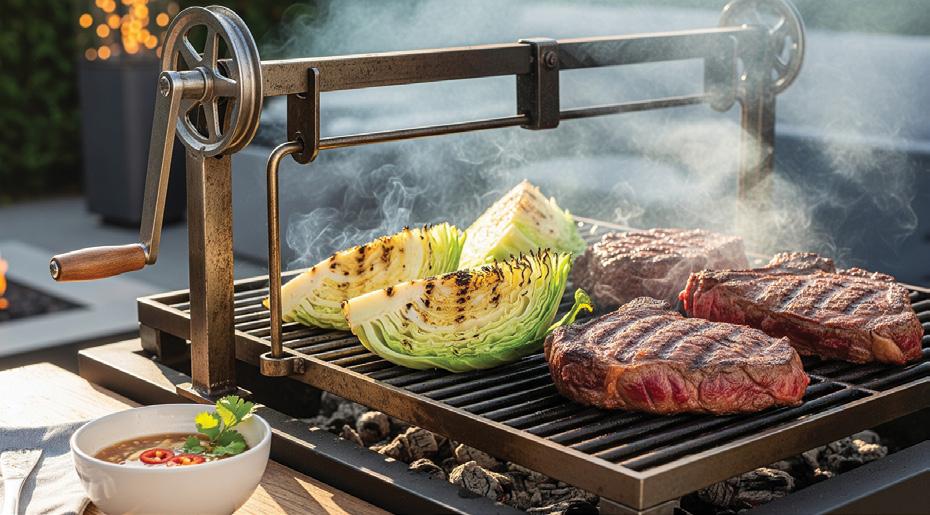
Cabbage: Replacing cauli ower and Brussels sprouts as the “in” veggie, cabbage can be grilled as wedges or roasted whole.
Nuoc mam: This Southeast Asian sh sauce offers an umami punch to replace soy sauce in marinades, sauces, dips and dressings.
New cookers: The Santa Maria grill offers a pulley-driven system to raise and lower the cooking grate for better heat control. Braseros are grills that double as griddles, allowing cooks to prepare eggs, pancakes and sh llets.
Source: BarbecueBible.com
to increase sales, providing in-store theater and a customer experience that continues at home.”
Swift continues: “We also provide smaller merchandising solutions that will allow retailers to take these principles to other parts of the store, including racks, table toppers and knee knockers, to ensure our brand is able to drive sales for retailers across the store. Grilling season is the perfect opportunity for retailers to cross-merchandise and increase basket spend in other key areas such as meats and cheeses.”
Noting the move back toward hosting and gathering, Swift expects the 2026 grilling season to surpass those of the previous ve years.
“The products that do best are the ones that consumers immediately understand how to use, and we work hard to communicate the versatility of our brioche core range year-round,” she says. “Grilling season is obviously a key period for the St Pierre brand and, across our range, we see a 75% uplift in velocity over the traditional grilling period. We’re excited to capture new shoppers with our limited-edition Spicy Brioche
Bun this year and drive sales across bakery for our retail partners” (For more about St Pierre, check out “The Greatest Things Beyond Sliced Bread,” starting on page 36).
Exotic Options
Grocers looking to up their protein game might take a cue from purveyors like Meat N’ Bone, a Miami-based online butcher aiming to boost home access to restaurant-quality meats.
“We’re seeing grilling evolve well beyond burgers and hot dogs — it’s truly becoming a culinary lifestyle,” asserts Gabriel Llaurado, Meat N’ Bone co-founder and CMO. “There’s also a broader embrace of global avors, from Korean bulgogi marinades to Caribbean jerk, and even grilled desserts or plant-forward items. These trends are expanding what ‘barbecue’ means.”
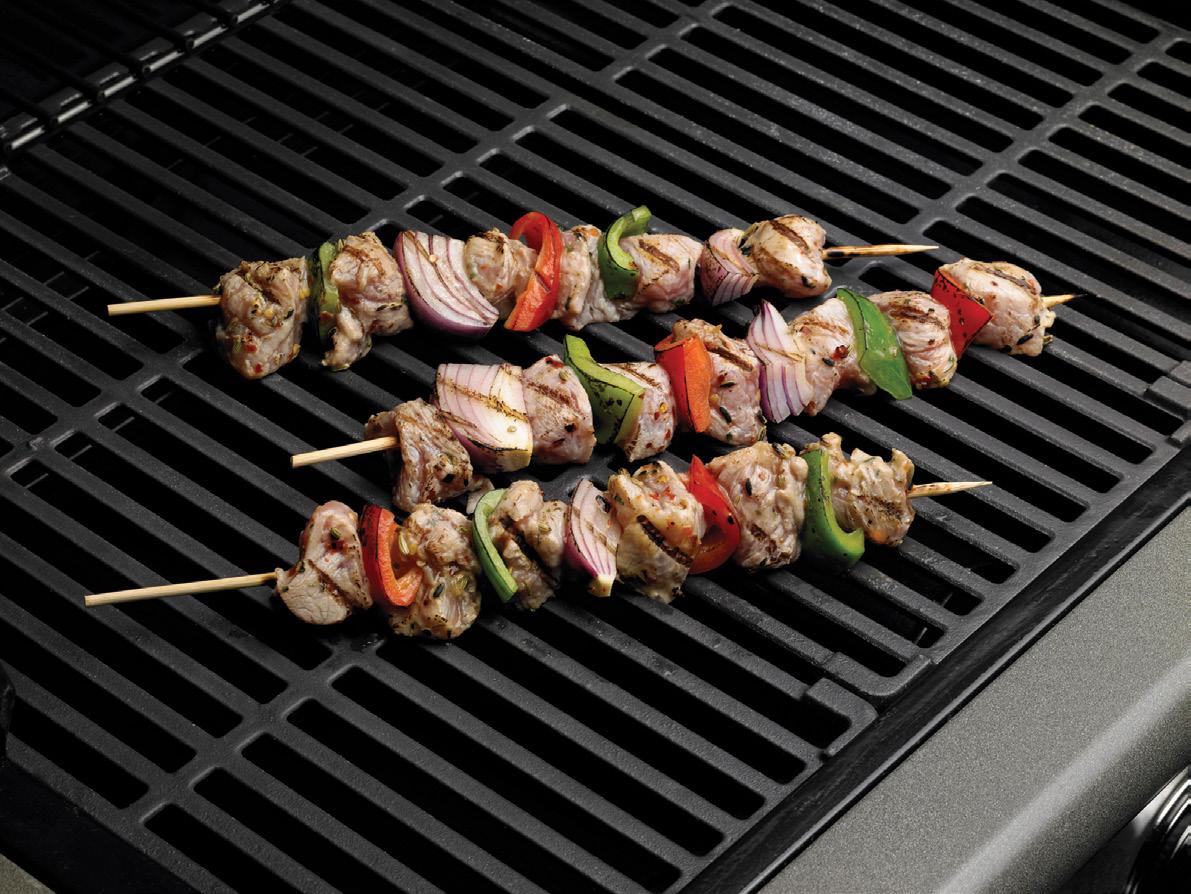
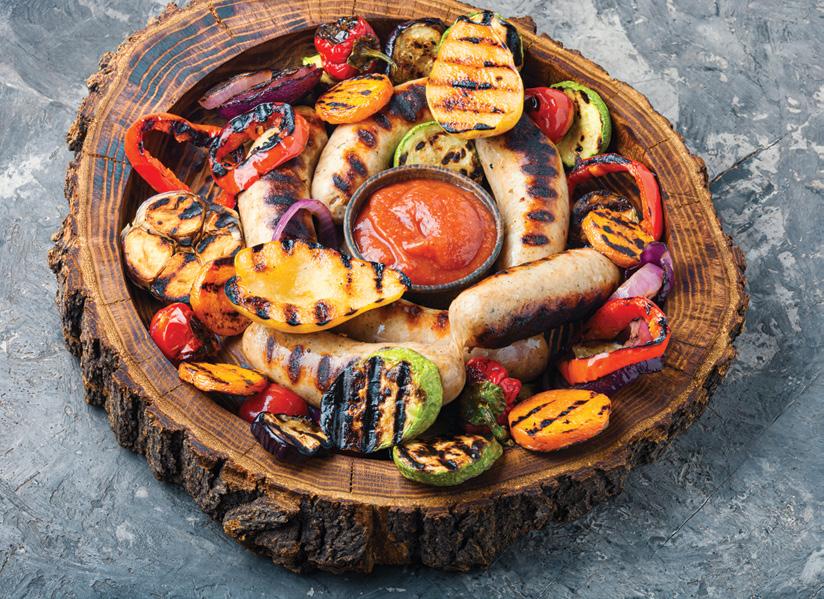
Consumers are incorporating more vegetables into their grilling recipes.
pork, or boldly seasoning and serving smaller portions of premium beef alongside big sides and salads. These shifts show consumers are prioritizing experience and avor over simply chasing the lowest price.”
Grocers should be ready to leverage these trends to maximize sales during the upcoming grilling season.
At Natural Grocers, Macarelli says that the retailer plans to continue its annual grilling promotion, noting that the event is already on its national calendar for 2026.
This past year, Meat N’ Bone rolled out sausages in varieties like Elk with Red Wine and Argentinian-style Chorizo, alongside its Australian Wagyu burgers, bonein ribeyes and tomahawks, chimichurri-marinated ank steaks, and seafood grill kits.
Llaurado notes that consumers are shifting their value focus. “Instead of mass-market cuts, many are choosing fewer but better cuts, investing in higher-quality beef, pork or poultry,” he says. “We’ve also seen shoppers incorporating more chicken [and] heritage
Suppliers like Giorgio Fresh are also optimistic for the year ahead. “We expect the category to be more diversi ed, with a stronger mix of proteins, vegetables and hybrid solutions,” Shelton predicts. “We’ll see continued premiumization, more health-forward options and better integration between fresh departments.”
The biggest opportunity, he asserts, lies in cross-category collaboration: “When produce, meat and avor solutions work together, the consumer wins. Grilling is one of the few occasions where shoppers are open to experimentation. Brands and retailers should lean into that mindset and treat vegetables as heroes, not afterthoughts.”
The Greatest Things Beyond Sliced Bread
INNOVATION, ALONG WITH NEW TWISTS AND FLAVORS, ARE DRIVING PERIMETER BAKERY DEPARTMENTS.
By Debby Garbato
Bread is the staff of life, as Leviticus 26:26 tells us, making bakery a key perimeter department in many grocery stores. Sales are being driven by longtime favorites, new twists and avors for traditional items, and an in ation-driven consumer need to cut spending in cafés, restaurants and delis.
For the 52 weeks ended Nov. 3, 2025, perimeter bakery sales grew by a modest 2.4% to $22.08 billion, according to the Madison, Wis.-based International Dairy, Deli & Bakery Association (IDDBA) and Circana, a market research rm based in Chicago. Croissants experienced the most growth, at 9%, with sales hitting $1.1 billion, followed by muf ns, up 7.6% to $1.7 billion, and breads, up 2.6% to $1.8 billion. By contrast, center store bakery sales fell by 1.6% to $26.8 billion.
“We see the biggest growth in convenient, ready-to-eat baked goods that can be enjoyed across multiple occasions without
breaking the bank. Consumers want products that require no prep but still feel homemade, indulgent and shareable. They enjoy familiar formats with innovative flavor additions.”
—Nancy McKearney, Bakehouse Bread
“People are going more towards fresh perimeter departments,” af rms Heather Prach, VP of education and industry relations at IDDBA. “Consumer perception is that prices are really high [due to in ation]. Fewer people are going out to eat or to the deli for breakfast. More are going to grocery stores for quick items like bagels, muf ns and croissants. Sandwiches are also growing, since making sandwiches at home is a good value.”
With fewer restaurant visits, consumers may trade up their supermarket purchases “when bigger-ticket treats feel out of reach,” notes Kayleigh Swift, U.S. brand manager for Manchester, U.K.-based St Pierre Bakery, owned by Grupo Bimbo. “That’s good news for bakery, where an affordable indulgence ... delivers real value. Younger demographics are driving this. They’re adventurous, globally in uenced and open to trying new avors.”
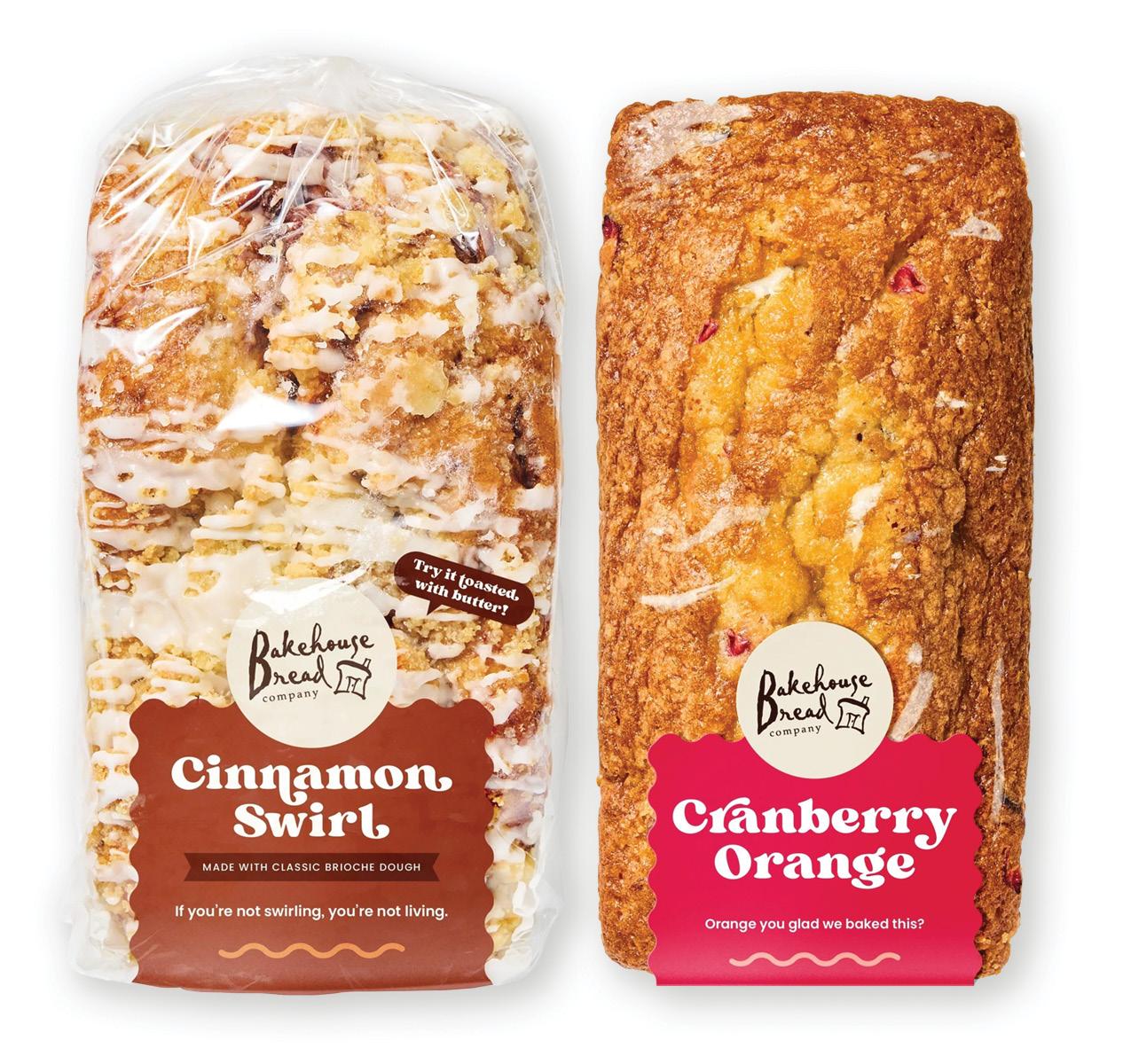
Speaking of which, avor diversity is where it’s at, allowing retailers to foster growth across dayparts and cater to personal preferences. “We see the biggest growth in convenient, ready-to-eat baked goods that can be enjoyed across multiple occasions without breaking the bank,” says Nancy McKearney, co-founder and president of Bakehouse Bread, in Tucson, Ariz. “Consumers
want products that require no prep but still feel homemade, indulgent and shareable. They enjoy familiar formats with innovative avor additions. We’ve seen strong interest in creative loaf avors that elevate classic bread, from seasonal spice blends to mixins like chocolate chips or fruit.”
Les Croissants
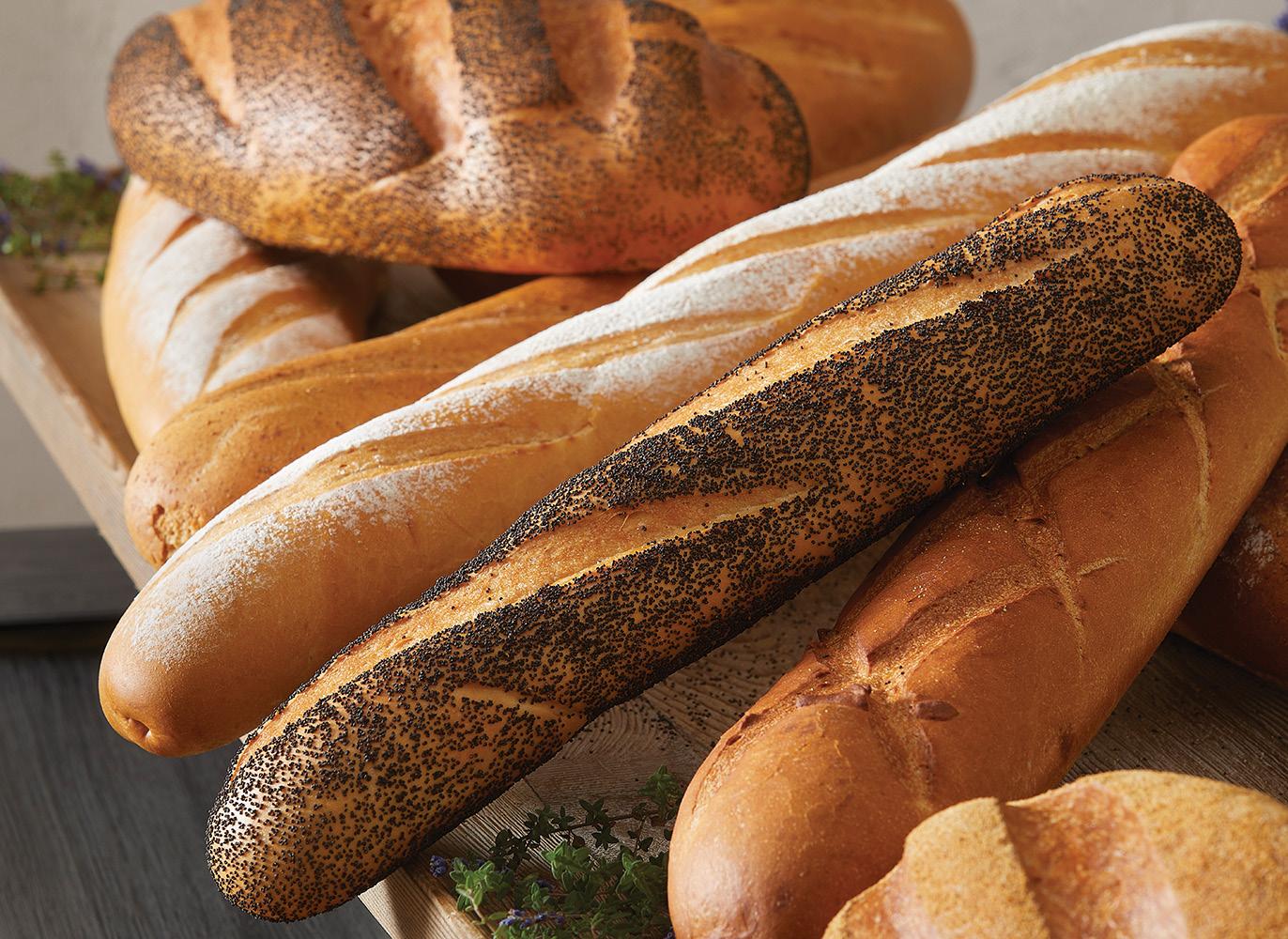
Croissant sales have been steadily growing, driven by more variations in avors and shapes. Croissants have also become popular for use in everything from sandwiches to pot pie toppings and appetizers. This makes them suitable for all dayparts. “They’ve been on re for some time,” observes Prach. “There’s more variety. I’ve seen square and at croissants, and even savory croissants.”
Key Takeaways
Croissant sales have been steadily growing, driven by more variations in avors and shapes.
Sandwich bread, including brioche and sourdough, is another strong segment.
Artisan innovation and ethnic in uences are having an in uence on the bread category.
Younger adults are more frequent buyers of Gonnella’s artisanal breads.
THINKING OUTSIDE THE AISLE
Lakeland, Fla.-based Publix Super Market’s offerings include traditional, chocolate and pumpkin croissants. In January, these were joined by cherry vanilla. “Some people see them as dessert, some see them as savory,” says Lindsey Willis, media relations manager, “so we’re doing both.”
Sandwich bread, including brioche and sourdough, is another strong segment. St Pierre’s Swift credits growth to shoppers’ interest in higher-quality products, along with the in ation-driven trend of “brown-bagging” lunch. “Sandwich bread has been a key place where they’re trading up,” she adds. “Brioche in particular delivers versatility, premium taste and consistent performance across sandwiches, burgers and breakfast.”
“Sandwich bread has been a key place where [consumers are] trading up. Brioche in particular delivers versatility, premium taste and consistent performance across sandwiches, burgers and breakfast.”
—Kayleigh Swift, St Pierre Bakery
According to Willis, brioche is consumed year-round and is popular for everything from backyard cookouts to weekend sliders and breakfast sandwiches. “It brings a touch of richness and softness,” she notes. “The buttery avor and tender crumb make brioche hamburger buns an easy way to elevate everyday meals with a little extra comfort and culinary air.” Publix will soon introduce avored brioche breads that “add more fun and creativity.” Brioche also addresses the trend toward combining savory and sweet avors.
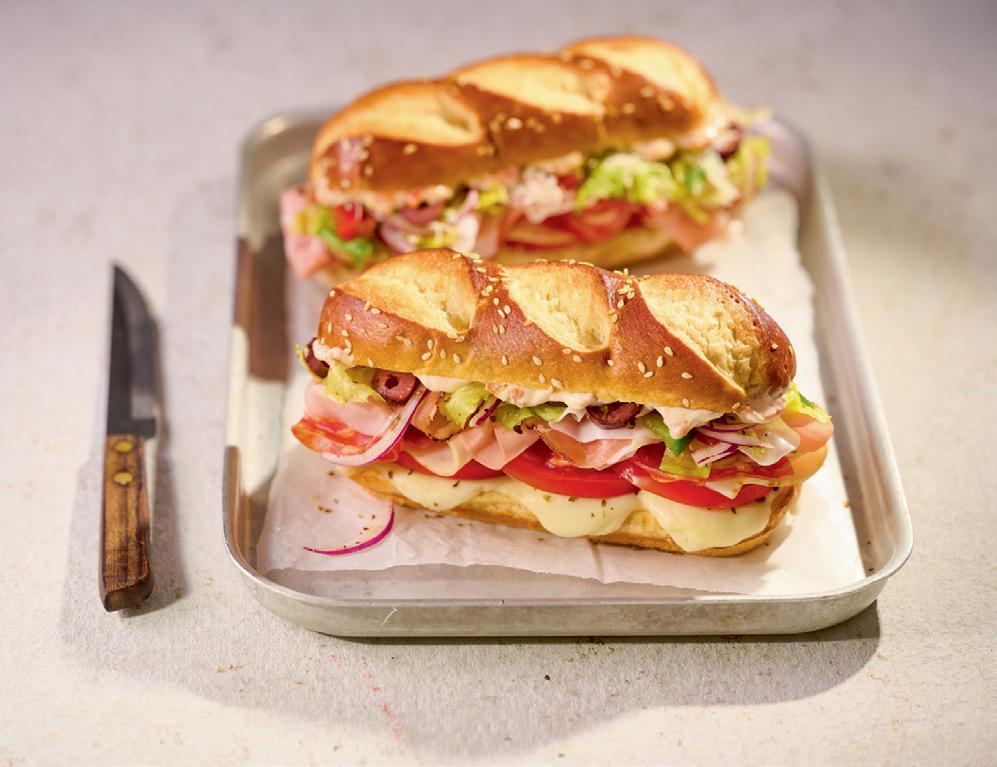
“By nature, brioche is slightly sweeter because it’s made with enriched dough,” explains Swift. “That’s why it works so well with savory recipes for contrast.” St Pierre’s offerings include brioche burger buns and brioche pretzel rolls. The latter combines savory and sweet avors with sesame seeds for “added texture,”
St Pierre’s wide range of offerings include brioche pretzel rolls, which combine savory and sweet avors.
she adds. “Mixing textures is another trend we expect to see more of.”
Going Sour
Sourdough has become popular due to its unique taste and purported health bene ts.
According to Puratos’ October 2025 report, “The Hottest Bakery Trends for 2026,” 58% of consumers believe sourdough makes bread healthier, with 70% saying it enhances avor. It is said to help with gut health bene ts, lowering the glycemic index and enhancing nutrient absorption. Areas of growth include sourdough focaccia (up 141%), cinnamon raisin sourdough (up 115%) and sourdoughnuts (up 172%).
At Publix, sourdough is coming on strong. “Sourdough continues to be one of the biggest trends in bakery, fueled by customers looking for breads with character, avor complexity, a hearty bite and that artisanal feel,” says Willis. “We’re seeing shoppers bring sourdough into more moments of their daily routines, whether it’s building better-for-you lunchtime sandwiches, pairing it with soups and pastas during cooler months, or using it as a centerpiece for weekend brunch boards and entertaining.”
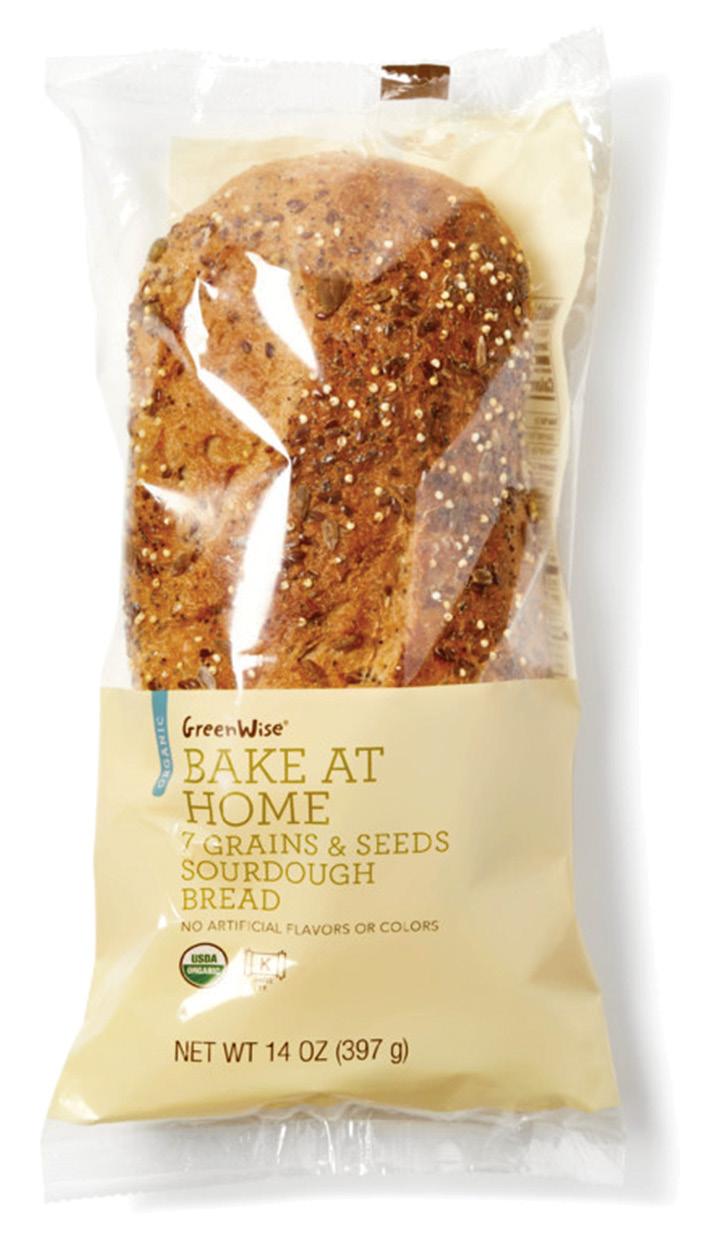
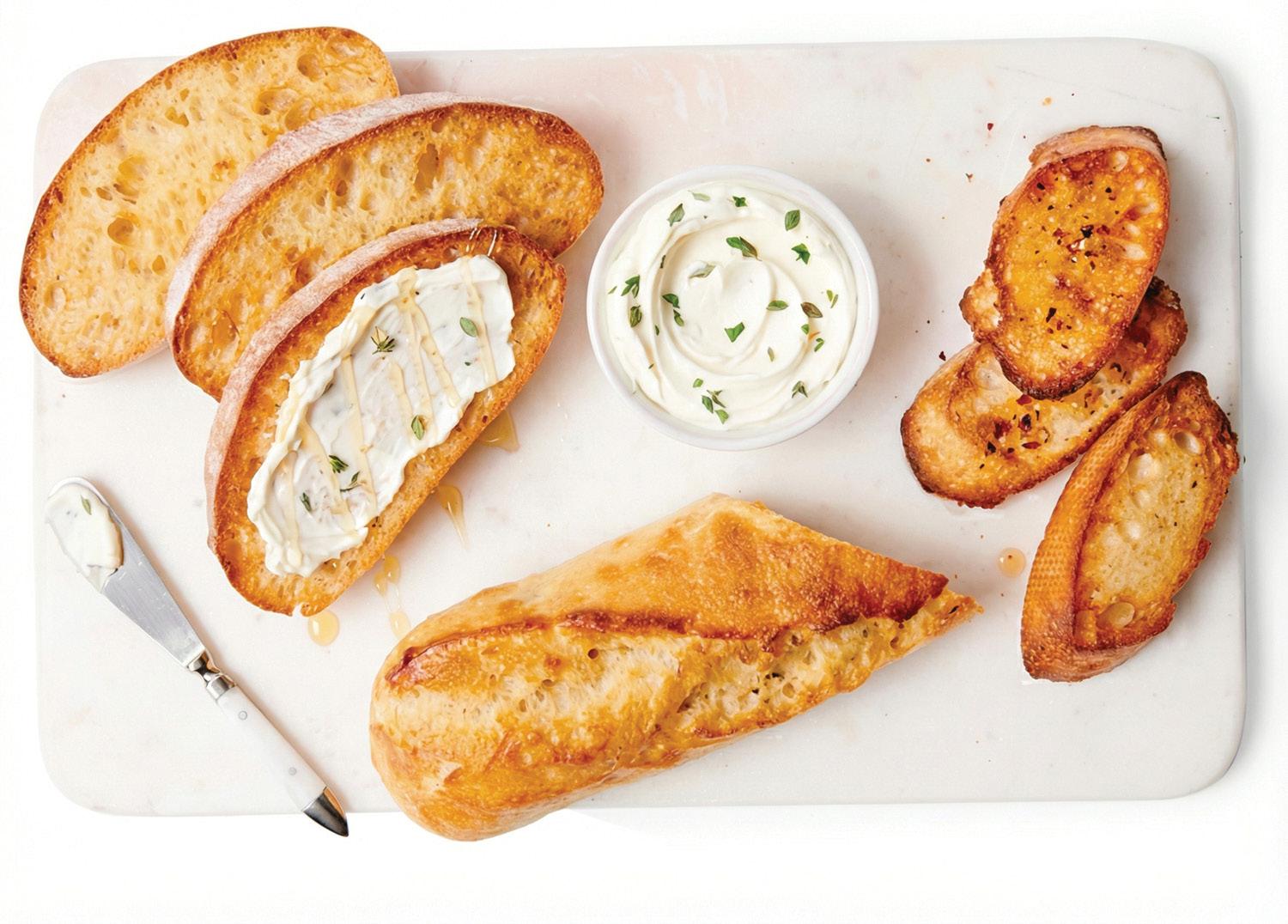
Publix has expanded its sourdough lineup with new avors and formats, including bake-at-home options that give people the warmth, aroma and texture of fresh-from-the-oven sourdough without the time or prep work, adds Willis. Products include the new demi baguette. The grocer has also added sourdough items to its proprietary GreenWise organic line. These include Bake-at-home 7-Grain & Seed as well as ready-to-eat breads in multigrain and seeded formats.
Artisan and Specialty Breads
Artisanal breads have experienced almost at performance, with sales for the latest 52 weeks dipping 0.7% to about $616 million, according to FMI – The Food Association’s report, “The Power of Foodservice at Retail 2025.” Swift believes that the shift re ects a period of “normalization” following rapid pandemic-era growth. “During the pandemic, consumers gravitated towards indulgent and ‘scratch’ experiences, which drove huge uplifts in artisanal styles,” she notes. “We’ve slowly returned to everyday eating patterns. Demand
Publix’s sourdough offerings include bake-at-home products that are both fresh from the oven and convenient.
has shifted towards formats that balance quality with convenience and consistency” (For more about St Pierre, check out “Stretching the Barbecue Budget,” starting on page 30).
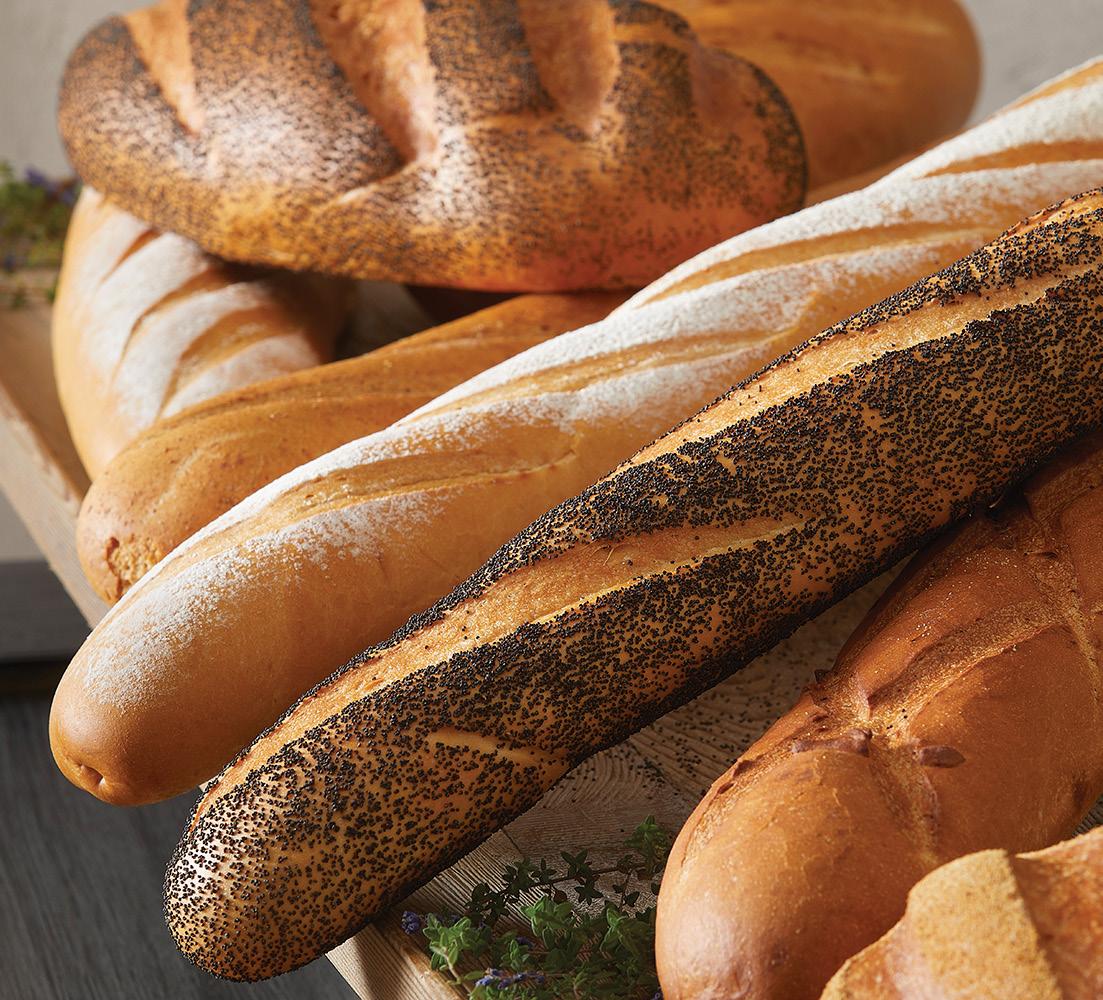
But artisanal breads are being reimagined. At Gonnella Baking Co., in Schaumburg, Ill., ciabatta is offered in whole wheat versions and with infused avors like garlic and rosemary. Brioche is receiving unique avor twists as well, and there are also sourdough starters. “Sourdough continues to shine with its robust avor and chewy texture, while multigrain and nine grain add nutrition and texture,” says Kristen Marcucci, channel marketing manager. Most Gonnella products are plant-based, vegan friendly and clean label.
Regardless of what products are popular at any given moment, bread will continue to be a fundamental and essential food. It’s a core category that retailers can always rely on.
Marcucci notes that Gen Z and Millennials are “more regular” purchasers of artisanal and specialty brands from in-store bakeries than Gen X or Boomers. “These key shopper segments place value in our handcrafted artisanal process,” she adds. “Our French, Italian, Vienna breads, baguettes, ciabatta and pretzel rolls, along with our parbaked focaccia, hit on the premium,
traditional, authentic breads that today’s shoppers want.”
Gonnella also offers smaller-sized French rolls and mini rolls that “meet consumer demand for freshness, portion control and minimizing food waste,” says Marcucci. “They’re also perfect for smaller households. The size of U.S. households has declined signi cantly since the 1940s – 3.7 people – to about 2.5.” Ethnic in uences are also affecting bakery. Gonnella’s products include bolillo (Mexico), telera (Mexico) and Cuban bread. According to Chicago-based Datassential, 45% of people are interested in global brands. “Consumers are hungry for more ways to enjoy foods from around the globe and are exploring bold avors and spicier foods,” af rms Marcucci.
The trend has been elevated by the melding of ethnic food in uences with mainstream recipes. “Global avor pro les inspire creativity,” asserts McKearney. “Subtle ethnic in uences allow brands to introduce variety while maintaining broad appeal.” Bakehouse specializes in sweet breads. While banana and zucchini breads are top sellers, Bakehouse’s sweet breads also come in varieties like hummingbird and pineapple coconut.
Regardless of what products are popular at any given moment, bread will continue to be a fundamental and essential food. It’s a core category that retailers can always rely on.
Bakehouse Bread specializes in sweet breads, including the varieties shown above.
Gonnella is reimagining its breads, which includes offering brioche in assorted avors.
Publix’s GreenWise organic assortment includes demi baguettes.
Taking the Biggest Grocery Lessons From 2025 Into the New Year
PLACER.AI CMO ETHAN CHERNOFSKY DETAILS THE INDUSTRY’S STRENGTH AND HOW FOOD RETAILERS CAN MAXIMIZE VISITS IN 2026.
By Emily Crowe
As we kick off the new year, Ethan Chernofsky, chief marketing of cer at location intelligence rm Placer.ai, is taking a deep dive into the biggest lessons from grocery retail traf c in 2025, as well as how those lessons will shape the industry in 2026.
Progressive Grocer: How did monthly grocery visits shape up in 2025, and how do those numbers translate to the current strength of brick-and-mortar food retail?
Ethan Chernofsky: On average, monthly visits in the grocery sector were up 3.2% in 2025 when compared to the year prior. This is an impressive achievement for any segment but takes on all the more importance when we provide some added context. When we zoom out to compare 2025 monthly visits to 2019 – our last full pre-pandemic year –we see that average monthly visit comparison jumps to 14.4%. This isn’t just a minor shift; it’s an ongoing period of consistent growth where a core segment sees its value increase across the board.
But why the consistent growth? The pandemic led to some fairly signi cant changes in consumer behavior, but most of these normalized within a year or two of the retail recovery. Yet grocery’s transition to strength hasn’t waned since the pandemic.
Behaviors might have shifted, and certain tailwinds or headwinds might restrain or buoy different chains, but the overall picture is one of strength. This is a critical takeaway for a segment that had been pressured by new players in the sector and intense competition over overall share of wallet. The resulting conclusion is that while grocery needs to continue to evolve, this process of change is coming from a position of strength that should enable leaders in the sector to really lean into the unique bene ts and strengths they bring to market.
PG: How have shopper visits changed over the past year, and what does that mean for grocers moving forward?
EC: Grocery visits are up, but the magnitude of each visit has declined. There has been a rise in cross-shopping as consumers seek out the product, experience or value they’re looking for while sacri cing convenience
with the addition of more trips. Visit durations have been down as well, and while these trends had been in place already in years prior, the continuation and solidication of these shifts tell us something very important about grocery’s near-term future – it will center around maximizing the dollars that can be generated on each visit. Yes, grabbing the visit is still very, very important, but evolving to better maximize the trip will be what separates top performers.
PG: How else can grocers maximize those visits to encourage both spend and loyalty?
EC: In this scenario where visits are slightly easier to come by, but basket size becomes the area of attention, expect the focus of strategic innovation to center around maximizing the dollars per visit. This will likely play out along multiple vectors, but the end goal will remain the same – look to improve the impact of each visit. In grocery, this will be shaped by pushes into secondary offerings that drive increased revenue from the visits. Concepts like prepared foods, pharmacy and even dining elements like H-E-B’s True Texas BBQ will continue to take center stage. It will also put added weight behind concepts like retail media networks – especially the in-store application – as retailers look to take advantage of their massive reach. But even concepts like supply chain optimization and loyalty improvements that improve the likelihood of having the right products in the right stores, and consumers being properly incentivized to buy them during that visit, will give grocery players added strength with customers increasingly willing to cope with inconvenience in order to get the product and/or experience they are looking for.
PG: How do you expect grocery competition to evolve in the coming year?
EC: Whether it be value-oriented grocers, specialty players or those that emphasize fresh-format concepts, the growth in these specialized segments has outpaced all-in-one players. While this shouldn’t diminish the growth seen for some of the traditional grocery leaders, it does emphasize how the competition in this sector is likely to evolve. Traditional grocers that are looking to maximize the overall “share of grocery” list are going to need to double down on service, experience and extras in order to push back against those players that can specialize – whether around product, experience or price.
This is especially true in an environment where consumers are willing to make more visits and are less oriented toward the convenience that comes with fewer overall trips. Critically, we’ve already seen signi cant shifts in this balance over the last few years as consumers have gone from mission-driven shopping to a pattern today where the pursuit of the ideal product, price or experience drives more overall visits within the grocery category.
For more location intelligence insights, visit Placer.ai’s The Anchor at https://www.placer.ai/anchor
“Traditional grocers that are looking to maximize the overall ‘share of grocery’ list are going to need to double down on service, experience and extras in order to push back against those players that can specialize – whether around product, experience or price.”
—Ethan Chernofsky, Chief Marketing Of cer, Placer.ai
Store-Wide Solutions
AUTOMATION IS INCREASINGLY TAKING CENTER STAGE IN THE GROCERY CHANNEL.
By Mike Duff
Retail automation is having an ever-bigger impact on grocers and their customers, who are seeing more of it in their everyday shopping, and it will continue enhancing consumer experiences in ways that are visible and ways that aren’t.
Whole Foods Market is a case in point. Its parent company, Seattlebased Amazon, is rolling out a new generation of its scan-and-pay-as-you-go Dash Carts at select Whole Foods stores. An earlier generation had been in use at the soon-to-be shuttered Amazon Fresh chain, giving shoppers an alternative to more traditional and Just Walk Out checkout options. The latest Dash Carts incorporate features designed to make using the onboard interface easier and more attractive for shoppers.
An Amazon representative points to a company assessment of how the latest Dash Cart can improve the shopping experience, with, for one thing, a new built-in screen that displays prices and also maintains a running total as customers
Amazon is rolling out the latest version of its Dash Cart onboard scan-and-pay system at Whole Foods Market.
shop, helping them stick to budgets. It also features Alexa shopping list integration so shoppers can easily add items to their shopping lists at home or on the go. This Dash Cart can help customers navigate the store, by referencing an interactive map, and get personalized deals on nearby products as they move around the sales oor.
The redesigned Dash Cart scanner is more responsive and prominently positioned right next to the screen, Amazon notes, making it easier and faster for shoppers to add items to their carts. A built-in scale allows shoppers to weigh fruits and vegetables as they go. The basket on the latest Dash Cart model is 40% larger but 25% lighter, making big shopping trips easier. When they’re nished, shoppers can simply roll through a designated Dash Cart lane that automatically processes payments.
At Work
When grocers consider retail automation, the focus may be what it can do, but Marshal Cohen, chief retail industry advisor at Chicago-based market research rm Circana, says that the technology’s ef cacy is already evident in the market.
“So far, it has shown up as a cost bene t with less out-of-stocks and less commitment to product projections that are over- or underestimates,” Cohen notes. “Running more ef cient inventory can grow revenue by 2% to 3%. Minimizing shrink through automated checkout can help the bottom line by up to 4% to 5%.”
Scott Benedict, founder and CEO of Bentonville, Ark.-based consultancy Benedict Enterprises and a former senior manager at Walmart, has witnessed retail automation’s advance. According to Benedict, as it has become integrated into operations, retail automation has helped retailers restructure and upgrade their business processes, including in the development of uni ed-commerce operational structures.
“I do think we’ve crossed an important tipping point where retail automation is no longer primarily about labor substitution or novelty, but about operating viability in an environment of sustained margin pressure, rising service expectations and channel complexity,” he says. “What
Customer-facing retail automation is becoming more re ned to make shopping easier and more satisfying.
Retail Automation Report
we’re seeing now is a shift from point solutions to connected systems, whether that’s ESLs tied to pricing and promotions, RFID feeding real-time inventory accuracy, computer vision supporting on-shelf availability, or smart carts integrating basket building and media. The strategic value comes from how these tools work together to support uni ed commerce.”
On the Shelf
Electronic shelf labels (ESLs) are becoming a bigger part of retail automation.
For instance, Bentonville-based Walmart has been rolling out ESLs in stores. A company representative explains that the ESL introduction began in 2024, adding that Walmart anticipates their reaching “all stores in the next 12 months.”
“Retail automation is evolving from back-o ce optimization to real-time orchestration of the full in-store journey.”
—Cristina Rodrigues, Vusion
Walmart is using ESLs and other retail automation to simplify work for associates and create more consistent experiences for customers. The innovation reduces manual work for workers, “enabling more time to be spent serving customers,” the representative notes.
At a Grapevine, Texas, Walmart supercenter, which the company renovated to install and test new features and capabilities, Walmart trialed its ESLs. In a blog post, Daniela Boscan, then food and consumable team lead for the store, characterized the automated devices as shifting how employees “manage pricing, inventory, order ful llment and customer interactions, ensuring our customers enjoy an even better shopping experience.”
The ESLs free employees to help shoppers, as associates can update prices through a mobile app rather than walk the store changing paper tags.
“Retail automation is shifting toward labor ef ciency and better utilizing the data retailers have,” says Patrick Henseler, marketing manager, retail services at Bridgeton, Mo.-based Hussmann Corp., a leading
Walmart is rolling out ESLs to reduce labor and make price changes and promos easier to execute.
global manufacturer of commercial refrigeration equipment. “Hussmann is focused on ESLs for promotion execution and pricing integrity, plug-and-play case-temperature monitoring for food safety, and predictive maintenance solutions that connect equipment performance to actionable insights from StoreConnect,” a cloudbased platform that continuously monitors refrigeration systems for leaks.
Among the advantages of ESLs, Henseler notes, is that they “eliminate thousands of manual price changes weekly, allowing associates to focus on customers and higher-value tasks while prioritizing price accuracy.”
Further, he observes: “Automated case-temperature monitoring removes manual checks — and logging/auditing — saving labor while improving compliance. StoreConnect reduces emergency service calls, giving teams back time previously spent handling equipment issues or de-merchandising cases.”
Reducing Friction
With customer-facing retail technology, consumers have become more accepting of automation, especially in those cases where it reduces friction, says Cristina Rodrigues, VP marketing, Americas for Nanterre, France-based Vusion, a management platform for ESLs and other Internet of Things (IoT) devices.
“In recent surveys, a strong majority of consumers say they actively use, or are interested in using, in-store automation and are comfortable with automated checkouts when they deliver faster, more convenient trips,” Rodrigues observes. “Adoption of self-checkout has reached ‘mature’ levels for many retailers, and shoppers increasingly expect options like scan and go, click-and-collect pickup, and digital shelf information, rather than seeing them as novelties. Retail automation is evolving from back-of ce optimization to real-time orchestration of the full in-store journey. Electronic shelf labels, computer vision and connected sensors now link every product and price to the cloud, so shelves, apps and media all re ect the same live data. This shift is turning physical stores into responsive, data-driven environments.”
The Modular Approach
Retail automation is also making a signi cant difference in supply chain operations. Derek Rickard, director of sales at Ulvila, Finland-based Cimcorp, a systems integrator and manufacturer of robotic material-handling systems, says that with experience, retailers have become deliberately strategic in their approach to automation.
Retail automation has evolved to be able to weigh and identify products to speed the checkout process.
“They’re exploring solutions that can keep costs down while generating the strongest ROI,” Rickard notes, “and while they want to solve current challenges, they don’t want to get locked into a static system that can’t keep up with evolving demands down the road. With these requirements in mind, many companies are adopting modular automation. Modular solutions are made up of standardized, pre-engineered cells of automation, essentially automation building blocks. These building blocks can be con gured and quickly integrated into virtually any facility layout, and retailers can start by automating areas where they’ll see the biggest impact. Fresh food handling is a great example. In many DCs, fresh produce-handling operations are still largely manual. It’s cumbersome, physically demanding work, and it’s dif cult to keep these areas staffed. Plus any mistakes or delays can lead to premature spoilage and waste. By automating these processes, retailers can ease labor demands, move fresh products faster through the facility and minimize losses from spoiled inventory.”
Store of the Future
According to Amit Acharya, head of retail product for self-checkout at Atlanta-based NCR Voyix, store operations now bene t “from edge-enabled agility and uni ed systems that improve accuracy and reduce manual effort across channels. Automated signals and intelligent sensing technologies enhance inventory reliability and streamline checkout by reducing errors and repetitive tasks. Digital pricing solutions allow enterprise-wide updates within minutes, reducing labor needs and minimizing pricing inconsistencies. Back-of ce modernization standardizes forecasting, cash handling and daily operations, shifting routine tasks to centrally managed, automated work ows. Cloud-to-edge delivery ensures consistent updates and enables lean teams to support larger store networks ef ciently.”
Andres Avila, of Charlotte, N.C.-based Honeywell Productivity Solutions and Services, observes that most tech solutions have helped store employees scan, capture inventory and speed up checkout.
“When entering the era of Intelligent Retail, the biggest change is that stores aren’t just automated. They are becoming aware.”
—Matt Miles, Diebold Nixdorf
Looking ahead, Yevgeni Tsirulnik, SVP, portfolio management at Durham, N.C.-based Toshiba Global Commerce Solutions, notes that retail automation is becoming more capable, so it isn’t just what it can do for a company and its customers now, but what it will be able to do in the future.
“Retail automation is evolving from rules-based systems into more intelligent, real-time environments,” Tsirulnik says. “Instead of simply executing prede ned work ows, automation can now interpret what is happening in the store and respond dynamically.”
For his part, Matt Miles, director of North America retail, grocery at North Canton, Ohio-based Diebold Nixdorf, emphasizes that retail automation is shifting from being reactive to something that’s functionally intelligent, a change that represents a point of demarcation.
“When entering the era of Intelligent Retail, the biggest change is that stores aren’t just automated,” he says. “They are becoming aware. Systems can see what is happening on the oor, predict issues and x them before shoppers feel friction. A line forms? Another lane opens automatically. A bin runs low? Staff get alerted before it empties. A safety risk appears? Vision systems ag it instantly. Shoppers are increasingly comfortable with this because the value is clear: faster trips, fewer interruptions, more control and more privacy-preserving options.”
“Now we’re seeing AI and connected systems evolve to bring more convenience into the physical aisle, personalizing guidance and providing real-time product availability,” Avila says. “This completely transforms the shopping experience. As the store becomes easier to navigate, consumers can nd items faster, compare options, look for product availability and make decisions with more con dence. Associates also become more effective on demand, helping them address customer needs quickly and accurately while also providing more accurate outcomes.”
The Return
Because it evolves with retailers as they execute strategies, retail automation’s return on investment delivers over time.
“Retail automation ROI is typically achieved in phases,” Tsirulnik explains. “Retailers often deploy an automation platform rst, and then prioritize the fastest-to-value use cases such as reducing checkout errors, shrink or manual interventions, to generate and measure early results and returns. Those initial gains frequently help fund subsequent use cases as adoption expands. Break-even timelines vary by application, but many automation investments deliver returns in as little as three months, with most falling within an 18-month window. This phased approach allows retailers to manage risk, demonstrate value quickly and compound returns over time.”
The most obvious retail automation ROI revolves around how retailers use time, but the value runs deeper.
“The real ROI isn’t point-in-time savings, but compounded value over time: labor ef ciency, margin protection, reduced shrink, lower risk and operational stability,” Acharya says. “When automation runs on a shared platform instead of disconnected tools, each capability builds upon each other and becomes cheaper and more valuable as it scales.”
Retail automation as applied to the supply chain makes movement of goods more ef cient and helps reduce errors.
Now o ering a complete portfolio of Low GWP refrigerant solutions including CO2, R-290 and A2Ls.
For over a century, Hussmann has been a global leader in commercial refrigeration, and we understand no two retailers are alike. We partner with you to determine what systems and merchandisers work best to help meet your merchandising and sustainability goals.
Contact your Hussmann representative today to explore regulatory compliant, Low GWP solutions that work for you.
How to Choose the Best Low-GWP Merchandisers
As new refrigerant regulations take effect, grocery retailers face important decisions about upgrading to more efficient, environmentally friendly systems. With shifting requirements and evolving technologies, knowing where to start can be challenging. Progressive Grocer asked Ron Grabowski, Hussmann’s Refrigeration System Senior Product Leader, to highlight what’s changing, what to watch for in the year ahead, and the key considerations that will help you confidently choose the refrigeration solution that’s right for your business.
Progressive Grocer: What should grocery retailers prioritize next as the EPA’s refrigerant transition deadline approaches in 2026?
Ron Grabowski: The dynamics are very fluid as there is high likelihood September’s proposed Technology Transition reconsideration will move 2026 to a later date. Retailers really need to understand what their goals are with existing and new stores and where they see themselves in five years. The phasedown of HFC refrigerant production and consumption requirements will remain intact and HFC costs will continue to increase.
PG: There are three types of low-refrigerant GWP (global warming potential) refrigerants that retailers can choose to ensure their merchandisers will meet the EPA’s regulatory requirements. What are those options?
RG: CO2 (GWP: 1) and R-290 (GWP: 3) are classified as natural refrigerants. A2Ls R-454C (GWP: 148), and R-454A (GWP: 239) are refrigerant blends. All are compliant with AIM regulations and newer state regulations.
PG: A2Ls are the latest addition to the list of low-GWP refrigerant options for commercial refrigeration. What makes this new product an especially good one for retailers to consider?
RG: One of the best things about A2L systems is that they are the most similar to the A1 systems that retailers are used to. OEMs are commercializing equipment that meets the new UL 60335-2-89 product safety standard to accommodate A2Ls. This UL standard requires indoor systems and merchandisers to be built with enhanced leak sensors, mitigation, and coil protection. A2L equipment is similar to HFC systems, reducing service technician learning curve requirements for operating and maintaining.
PG: What are the first steps retailers can take to choosing the refrigerant that’s right for them?
RG: Understanding their short and long-term equipment and refrigerant strategy is the first step. Each refrigerant has pros and cons when it comes to costs, availability, installation, serviceability and maintenance. It is vital that retailers understand the trade-offs. A short-term (5 to 10 years) focus will drive more towards A2Ls; a long-term (10+ years) focus will drive more towards natural solutions. Hussmann has equipment to meet either direction they take.
in cooler climates; non-toxic & non-flammable; no expectation of future regulation R-290/Propane; GWP = 3
installs
efficient in all climates; non-toxic; no expectation of future regulation; lower first cost for equipment
A2Ls (R-454A, R-454C); GWP = 239, 148 Remote systems Widest operating temperature range; non-toxic; energy efficient in all climates; lower first cost for equipment
Explore the Low-GWP portfolio of solutions from Hussmann at https://www.hussmann.com/retail-sustainability.
How Retail Media is Quietly Reshaping the Grocery Store
THE TECHNOLOGY IS BEING USED TO CONNECT CATEGORIES AND GUIDE BASKETS.
By the Path to Purchase Institute
For years, in-store retail media was often shorthand for digital screens. It was eye-catching, yes, but the screens were frequently treated as an add-on rather than a core part of the grocery experience.
That’s changing fast. Today, grocery retailers are no longer thinking about instore retail media as isolated placements. Instead, they’re using it to shape shopper behavior in real time, in uence decisions at the shelf, and connect trips and baskets more intelligently.
The result is a store environment that’s becoming programmable, measurable and increasingly experience-driven. Retail media is both expanding and evolving.
From Awareness to Action at the Shelf
The grocery aisle remains the most in uential media environment brands can reach. According to research from Avery Dennison’s Vestcom, 72% of shoppers report making unplanned purchases based on in-store messaging, and in-store marketing is three times more likely than digital ads to in uence new product trial.
This impact happens within what Vestcom describes as the shopper “decision belt” — the path from entry to aisle to end cap, where consideration turns into conversion. Retailers are responding by placing media directly where decisions happen.
Kroger’s recent expansion of in-store video screens across nearly 600 wine and spirits departments illustrates the shift. The
Kroger recently expanded in-store video screens across nearly 600 wine and spirits departments, growing the category and customer satisfaction.
screens are co-located with merchandise and designed to deliver product education, recommendations and storytelling at the moment of choice. Early pilots showed measurable category lift and customer satisfaction, signaling that shoppers view relevant in-store media as helpful rather than distracting.
Making In-Store Media Measurable
What’s really accelerating in-store retail media is measurement. Albertsons Media Collective is addressing one of the channel’s longstanding challenges by applying matched-market models to instore media, allowing brands to measure sales and unit lift at the store level. By comparing performance in stores with and without media exposure — and accounting for dozens of variables — Albertsons is bringing a performance mindset long associated with digital retail media into the physical store.
Crucially, this framework isn’t just about post-campaign reporting. It enables near-real-time optimization, allowing retailers and brands to adjust creative, placement and messaging based on what’s resonating during the shopping trip itself.
That represents a fundamental shift as in-store media moves from acting as static signage operating on xed schedules to a responsive environment.
Connecting Trips, Missions and Baskets
As grocers gain deeper insight into why shoppers are in the store — whether it’s a quick ll-in trip, a weekly stock-up or an entertaining occasion — in-store retail media is increasingly used to connect categories and guide baskets.
Albertsons, for example, has highlighted the role of in-store media in supporting cross-merchandising strategies that introduce complementary products aligned with trip missions. Done well, these moments help brands reach new-to-category buyers while enabling retailers to grow basket size and overall trip value.
More Than Screens
None of this means that screens don’t matter. Retailers such as Hy-Vee have embraced digital signage across aisles, service departments and frozen cases, using screens to promote owned brands, national brands and services like holiday meals and delivery, supported by closed-loop measurement.
But the bigger transformation underway is more about intent. Grocery retailers are redesigning the store as a living media environment where messaging adapts to shoppers, measurement informs strategy, and media serves both revenue and experience goals. For grocers and brands alike, there’s an opportunity to be useful at the moment that matters most.
Join the Path to Purchase
Direct access to brand and retail leaders
Visibility across our trusted B2B media network
Invitations to member-only roundtables & events
Dan Sabanosh, Director of Shopper Marketing
Exclusive trend reports & shopper research
By Bridget Goldschmidt
Safe Harbor
A SECURITY EXPERT EXPLAINS WHAT GROCERS CAN
DO TO PROTECT THEIR ASSOCIATES, CUSTOMERS AND BUSINESSES FROM GUN VIOLENCE.
No one likes to think about it, but gun violence can occur anywhere, including retail spaces like grocery stores. One of those counseling retailers on how they can deal with this risk is security expert and former Green Beret Vincent Martinez, who is currently director of service enhancement at Washington, D.C.based security software company ZeroEyes.
Asked what makes retail locations particular targets, Martinez explains: “Stores are designed to be open and accessible, not hardened. They draw large crowds, bring together people from all walks of life, and rely on employees to enforce rules around payment, returns and theft. That combination creates friction. On top of that, many incidents don’t even start inside the store. Parking lots are a major ashpoint, and once a situation escalates there, it can move inside very quickly.”
Unique Challenges of Food Retailers
Martinez goes on to note that food retailers in particular face unique challenges. “Grocery and convenience stores handle cash, stay open long hours and serve a constant ow of customers,” he observes. “That alone increases exposure. They’re also essential businesses, which means they stay open during periods of high stress — such as economic uncertainty, shortages or community disruption — when tensions are already elevated.”
associates in de-escalation tactics, as well as on such design choices as “well-lit parking lots, clear sightlines, hardened entrances and clearly marked exits [that] all reduce risk and buy time during an emergency.”
People, Space and Tech
As for the role of technology in preventing gun violence, he says that it “works best when it supports fast decision-making. Real-time alerts, panic buttons and internal communication systems allow stores to react immediately instead of piecing things together afterward. When people, space and technology work together, the entire environment becomes safer without changing the customer experience.”
“The most e ective response is a clear emphasis on life safety. Non-confrontation policies, proactive detection, and strong training in de-escalation and emergency response make a real di erence.”
—Vincent Martinez, ZeroEyes
He adds: “Food retailers are also deeply embedded in their communities. That’s a strength, but it also makes them visible targets. Large, open layouts and busy parking lots add another layer of complexity, especially since many incidents start outside the store.”
To counteract these risk factors, Martinez advises: “The most effective response is a clear emphasis on life safety. Non-confrontation policies, proactive detection, and strong training in de-escalation and emergency response make a real difference. There’s an ongoing legal and ethical conversation around employee self-defense during robberies, but from an operational standpoint, the goal remains the same: reduce the chance that anyone gets hurt.”
Meanwhile, he counsels: “From a physical standpoint, parking lots remain the most overlooked risk area. Poor lighting, limited camera coverage and blind spots all create opportunities for trouble to build unnoticed. Finally, many emergency plans look good on paper but aren’t practiced. In a real incident, people don’t rise to the level of a binder; they fall back on what they’ve rehearsed.”
He points out that “the retailers that see the best results take a layered approach and focus heavily on prevention,” like training
According to Martinez, “Retail security is moving away from passive tools and toward early warning and intervention,” like AI-based gun detection, “which can identify a visible rearm in real time and trigger alerts before a shot is red.”
Beyond tech, he also notes “growing interest in discreet weapon screening at entrances, designed to detect threats without slowing foot traf c or changing the feel of the store, as well as the adoption of “formal threat assessment programs that focus on identifying concerning behavior early and responding before it escalates.”
While Martinez cautions that “there’s no single x for gun violence in retail,” he still sounds a hopeful note: “What works is consistency — training people well, rehearsing regularly and refusing to fall into the trap of thinking, ‘It won’t happen here.’”