LEGENDS



















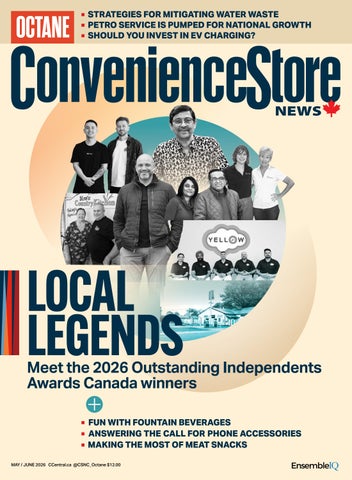


Meet the 2026
29 Category Check
Where’s the meat? Protein-hungry consumers, looking for functional foods to support health goals like weight loss, drive higher sales and innovation for meat snacks
32 Feature
What’s all the fizz about? From touchscreen soda machines to new retail programs, beverage companies are betting big on fountain drinks
35 Feature
Energy products level up: From better-for-you energy shots to caffeine-packed gummies, new products give retailers more ways to boost category sales
37 Consumer Corner
Double-digit growth, billion-dollar stakes: Now is the time to invest in foodservice as consumers crave value, speed, flexibility and fun in a challenging economy
38 What’s in Store?

MAY 28, 2026
43 Operator Profile
Pumped for national growth: By capitalizing on its most recent acquisition, Petro Service is enhancing its Western Canadian footprint and fast-tracking the development of next-generation, integrated service hubs
46 Feature
Plugged into profit: Mobile accessories are a valuable and growing category, as impulse buys and travel needs drive demand. Plus: Answering the call for prepaid phone cards
41 Leadership Perspective
Convenience is a great career, when we invest in people: Convenience stores aren’t just a temporary stop—they’re a place where people can grow, develop and succeed in building a long-term career
Comprised of leading retail executives and convenience operators, this volunteer group of industry champions offer advice, key insights and on-the-ground perspectives that serve as an invaluable resource to ensure content is relevant and meets the needs of the industry. Want to join? Reach out to Michelle Warren mwarren@ensembleiq.com
Robbie Broda, Quickie Convenience
Marc Goodman, 7-Eleven Canada
Leslie Gordon, Circle K
Laurie & Randy Ure, Ure’s Country Kitchen
Water wise: It’s getting easier for car wash operators to recycle water and mitigate waste. Plus: Green roofs
48 EV Feature
Beyond the plug: C-stores can prepare for the future and win the electric vehicle charging race with a holistic well-executed strategy, say the experts
50 The Convenience U CARWACS Show
Electrifying energy: Photo highlights from the 2026 event
The latest news, information, category trends, expert insights and more delivered to your inbox.
All Convenience: Mondays and Wednesdays
All OCTANE: Monthly, third Thursday New on Shelf: Monthly, first Thursday
Don’t miss out! Sign up today at CCentral.ca/signup


The monthly New on Shelf e-newsletter features products carefully selected by our editors, as well as sponsored product placement.
From confection to snacks, beverages, food items, novelties and more, we’re spotlighting product innovation.

Email product details and photos to the editorial team. For guaranteed sponsored product placement, reach out to your sales representative.
June 4
July 2
August 6
September 3
October 1
November 5
December 3



EnsembleIQ is the premier resource of actionable insights and connections powering business growth throughout the path to purchase. We help retail, technology, consumer goods, healthcare and hospitality professionals make informed decisions and gain a competitive advantage.
EnsembleIQ delivers the most trusted business intelligence from leading industry experts, creative marketing solutions and impactful event experiences that connect best-in-class suppliers and service providers with our vibrant business-building communities.


















2300 Yonge Street, Suite 2900, Toronto, ON M4P 1E4 416-256-9908 | (877) 687-7321 | Fax (888) 889-9522 www.CCentral.ca
BRAND MANAGEMENT
GROUP PUBLISHER/SVP, GROCERY & CONVENIENCE, CANADA Sandra Parente 416-271-4706 | sparente@ensembleiq.com
EDITORIAL
EDITOR & ASSOCIATE PUBLISHER Michelle Warren mwarren@ensembleiq.com
DIGITAL EDTOR Naomi Szeben nszeben@ensembleiq.com
ADVERTISING SALES AND BUSINESS
SALES DIRECTOR Julia Sokolova 647-407-8236 | jsokolova@ensembleiq.com
NATIONAL ACCOUNT MANAGER
Roberta Thomson 416-843-5534 | rthomson@ensembleiq.com
ACCOUNT MANAGER Holly Power 416-910-1085 | hpower@ensembleiq.com
DESIGN | PRODUCTION | MARKETING CREATIVE DIRECTOR Nancy Peterman npeterman@ensembleiq.com
ART DIRECTOR Jackie Shipley jshipley@ensembleiq.com
SENIOR PRODUCTION DIRECTOR Michael Kimpton mkimpton@ensembleiq.com
MARKETING MANAGER Jakob Wodnicki jwodnicki@ensembleiq.com
CORPORATE OFFICERS
CHIEF EXECUTIVE OFFICER Jennifer Litterick
CHIEF FINANCIAL OFFICER Jane Volland
CHIEF OPERATING OFFICER Derek Estey
CHIEF PEOPLE OFFICER Ann Jadown
SUBSCRIPTION SERVICES
Subscription Questions contactus@ccentral.ca
Subscriptions: Print $82.00 per year, 2 year $151.00, Digital $47.00 per year, 2 year $88.00, Single copy $15.40 Outside Canada $126.00 per year, 2 year $233.00, Single copy $20.50, Groups $57.96
Email: csnc@ccentral.ca
Phone: 1-877-687-7321, between 9 a.m. to 5 p.m. EST weekdays Fax: 1-888-520-3608 | Online: www.ccentral.ca/subscribe
Convenience Store News Canada | Octane is published 6 times a year by Ensembleiq. Convenience Store News Canada | Octane is circulated to managers, buyers and professionals working in Canada’s convenience, gas and wash channel. Please direct inquiries to the editorial offices. Contributions of articles, photographs and industry information are welcome, but cannot be acknowledged or returned. ©2026 All rights reserved. No part of this publication may be reproduced in any form, including photocopying and electronic retrieval/retransmission, without the permission of the publisher. Printed in Canada by Transcontinental Printing | PM42940023 CHANNEL ALLIANCES:


RESPONSE TO THE new Outstanding Independents Awards Canada (OIAC) program has been nothing short of extraordinary. When we launched this initiative in January, our mission was clear: to celebrate the resourceful entrepreneurs who serve as the backbone of the convenience industry. The sheer volume and high calibre of nominations we received confirm that this program has struck a deep chord across the sector. We extend a sincere thank you to everyone who participated; if your nominee wasn’t selected this year, we strongly encourage you to submit again next year.
We proudly profile 35 winners from across the country. Their stories (p. 10) serve as a powerful reminder that behind every storefront lies a bold vision and a tireless commitment to the community. We look forward to honouring these leaders during the OIAC Virtual Summit on May 28. In addition to the ceremony, this free event features business coach Pete Mohr, who will deliver a keynote titled “From operator to owner: Practical shifts for more freedom, clarity and control”—a must-watch for any growth-minded entrepreneur. All are welcome: Please join us!
While we take a moment to celebrate these achievements, we also remain focused on the practicalities of the upcoming peak season. In this issue, we tackle the essential “building blocks” of success for the summer months. From optimizing fountain beverage programs to stocking up for road trips, navigating the latest trends in energy, meat snacks and phone accessories, our features provide the insights you need to maximize your warm-weather margins.
Success, however, requires more than just the right product mix; it requires the right people. This is the central theme of Marc Goodman’s Leadership Perspective column (p. 41). Goodman champions the idea that in today’s competitive environment, investing in skilled, motivated teams is essential for survival and growth.
This spirit of leadership and community responsibility brings us to our next major milestone: the 2026 Impact Awards. Now celebrating its five-year anniversary, this program honours the retailers, suppliers and distributors who are #MakingAnImpact in areas like sustainability, employee engagement, DEI and community support.
We invite you to help us share these “good news” stories by submitting your nominations by May 29. Winners will be showcased in the September/October issue and celebrated via a dedicated digital campaign.
I look forward to hearing from you! CSNC

MICHELLE WARREN Editor & associate publisher
P.S. We are also gearing up to unveil the 2026 Star Women in Convenience winners on June 25. Make sure you subscribe to the newsletter to get a sneak peak at the winner announcement!



We are delighted to welcome Naomi Szeben to the CSNC OCTANE team as digital editor, overseeing the website, newsletters and social media. Please connect via nszeben@ensembleiq.com. FUN FACT
From zero to hero! Beverage alcohol is now a category for Ontario’s convenience-gas stores, according to NielsenIQ.
MILLION
CCA Car Wash for a Cure
May 8-9, 2026
Outstanding Independents Awards Canada Virtual Summit
May 28, 2026
Star Women in Convenience Awards Event
September 23, 2026
CICC Summit
September 23-25, 2026
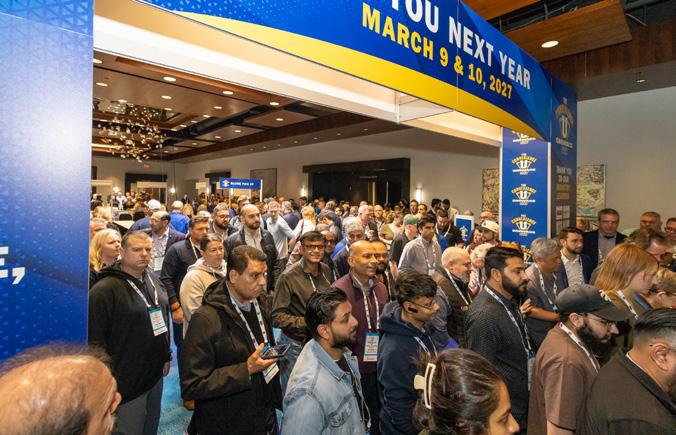
The Convenience U CARWACS Show March 9-10, 2027

Congratulations to the 2026 Future Leaders in Convenience + Car Wash winners, who were honoured at The Convenience U CARWACS Show Industry Dinner on March 10. 2027 nominations open August 19th.




Channel Check by Mike Ljubicic, NielsenIQ Canada: “How retailers and manufacturers can win in a value-driven market”
CICC Connects by Anne Kothawala, Convenience Industry Council of Canada: “When governments listen vs. when they don’t”
Operational Excellence by Wendy Kadlovski, Wise Strategic Management: “Prepare now for the 100 days of summer”
Workplace Wellness by Denise Lam, Workplace Safety & Prevention Services: “Five strategies to improve shift work for your employees”











100% European Premium Gummy Mix
leader,
Display the Kone leader, earn more margin
Top seller in C&G
Top seller in

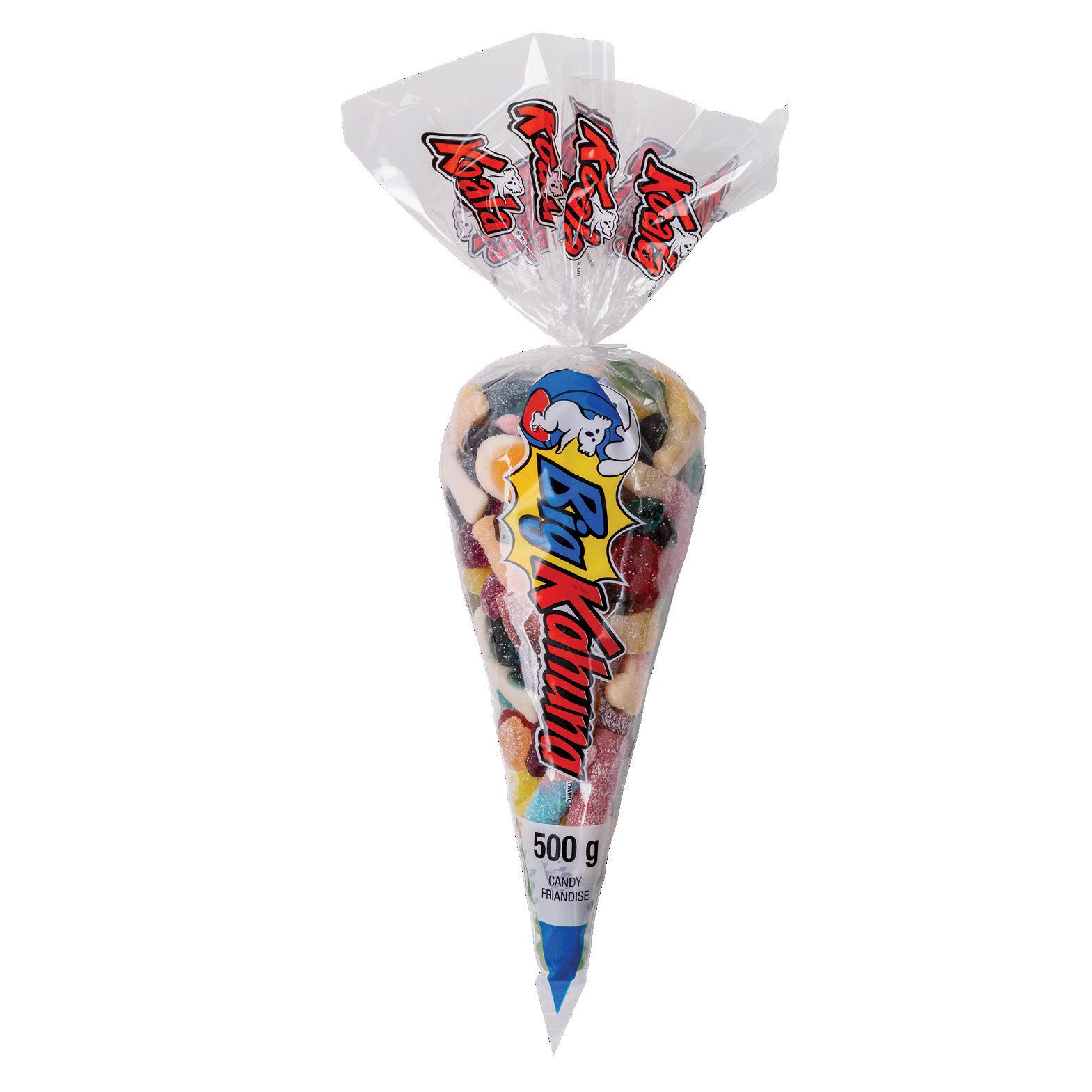



























Se 2026 FIFA World Cup kicks o June 11 in Mexico City and runs through July 19 and, for the rst time, is co-hosted by Canada, the United States and Mexico. In Canada, Toronto and Vancouver host a combined 13 matches, with games in those cities taking place from June 12 to July 7. is year, Canadian convenience stores are presented with a rare opportunity to tap into tournament-related excitement on home soil.
“For retailers, this summer’s success is only limited by their innovation and creativity,” says Anne Kothawala, President & CEO of the Convenience Industry Council of Canada. “C-stores can tap into the World Cup fever in Canada this year as a supercharged extension of regular summer sports excitement and the weekend ritual of heading to the cottage.”
Sweet packaged foods company Ferrero is leaning into that dual opportunity with a Canada Soccer partnership, contests, new innovative products and programs geared toward both the energy of the World Cup and the season’s more carefree, sponta-














ummer will soon arrive with its magical sense of possibility—family road trips mapped out, patios lling up, and friends gathering spontaneously for sunny days and light- lled evenings. For convenience retailers in 2026, that seasonal energy will be ampli ed by an unprecedented sporting event.












are packaged for summertime sharing, while features collectible soccer-themed toys.

neous consumer mindset. Ferrero’s Bonnie Brik, Sales Director, Out-of-Home, says the season should be viewed as a mix of World Cup excitement and what she calls “your regularly scheduled summer program”—the road trips, cottage weekends, family outings, other sporting events and watch parties that drive convenience tra c every year.
“Convenience is really about that impulse buy and getting visibility. Customers are only in the store for a few seconds and usually know what they want. e goal is to build the basket beyond that,” she says, and to make the most of impulse tra c and basket-building opportunities all summer. e World Cup, Brik notes, gives retailers another avenue to do that, especially if they cater to group snacking moments where people may be buying for more than just themselves.
“Most people likely won’t be able to attend games in person, so watch parties will dominate—but those extend to all kinds of activities, from watching sports on TV to kids’ games. It’s about providing treats and options like Nutella biscuits for di erent groups and occasions,” she says.
Ferrero is supporting summertime sharing with launches such as share-size formats of Kinder Bueno and Kinder in red and white tie into Canadian pride for summer 2026.




Chocolate, with individually wrapped pieces that suit group occasions. e company is also promoting a limited-time Tic Tac cherry and lime avour in red and white, tying to Canadian pride, as well as Kinder Surprise products featuring collectible soccer-themed toys.
Kothawala suggests retailers “tap into the Canadian spirit and pride and showcase Canadian-made products,” while remembering to “Pair, bundle, promote. ose are the three keys for impulse buys at the counter.” She also suggests operators o er “summer soccer” bundles (snacks, sunscreen, bug spray, drinks) and run simple contests, like “predict Canada’s score for a free slushie,” to build excitement and tra c.
Beyond promotions and launches, Brik notes summer success comes down to execution. “ e number one priority for convenience store operators is just the back-to-basics execution,” she says. at includes staying in stock, following planograms, ensuring promotional tags are up and keeping the store clean, easy to shop, and welcoming—so when those spontaneous summer moments strike, the store is ready to turn them into sales.
BY FIN SMART
CONVENIENCE STORES AND GAS STATIONS ARE ESSENTIAL LIFELINES across Canada. With 58% of the industry powered by independent entrepreneurs, these local heroes fuel commutes and anchor communities from coast to coast to coast.
The inaugural Outstanding Independents Awards Canada (OIAC) program was created to champion these resilient independent operators—including dealers and franchisees with up to 20 locations—who turn mounting pressures into monumental success.
Today, Convenience Store News Canada proudly celebrates 35 extraordinary pillars of the community. From mastering customer loyalty and responsible retailing to pioneering innovative business practices, these winners prove that the independent spirit is fundamental to the fabric of Canada. Join us in honouring the local legends who keep our country moving!
Thank you to Outstanding Independents Awards Canada’s Founding Partners


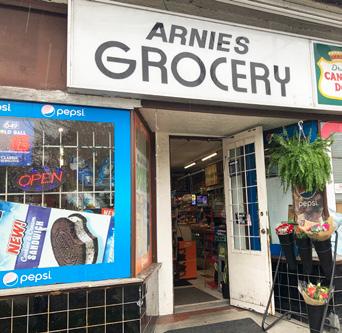
New Westminster, B.C.
Owners: Amy Zhang and Jack Liang
Arnie’s Grocery thrives as a neighbourhood staple, thanks to its strong customer relationships and dedication to reliable service. Owned and operated by husbandand-wife team Amy and Jack, the corner store has built a loyal base of regulars by focusing on the fundamentals of community retail. Reviews highlight the wide range of seasonal plants which not only add character to the space, but appeal to local gardeners and plant lovers. Shelves are consistently well stocked with the everyday essentials customers expect from a traditional neighbourhood grocery, with fair pricing and dependable service that keeps locals returning. Arnie’s Grocery is a neighbourhood staple; many reviews recall years of customer satisfaction. Despite the presence of larger chain retailers nearby, the spot has maintained steady business due to its warm environment. The store also offers practical services for the community, including a U-Haul rental hub. By keeping operations simple and prioritizing quality service, Arnie’s Grocery demonstrates how small businesses can remain competitive and successful. For many residents, the store is more than a place to shop, it is a trusted neighbourhood spot supported by owners who genuinely care about their community.
Invermere, B.C.
Owners: Tracey and Greg Urichuk and Melanie and Keith Irwin
Invermere is home to Crossroads Market, a community cornerstone and vibrant hub that perfectly reflects the spirit of the Columbia Valley. Owned by two dedicated couples, this family-run market has redefined the traditional retail experience by evolving into a premier hybrid fresh market and convenience store. Over the past five years, the retailer has achieved remarkable growth, balancing essential services with high-quality specialty offerings. Open 24 hours a day, 365 days a year, Crossroads Market is a one-stop destination featuring in-house custom-cut meats, fresh produce and an expansive selection of gluten-
Niverville, Man.
Owners: Rose and Pete Friesen
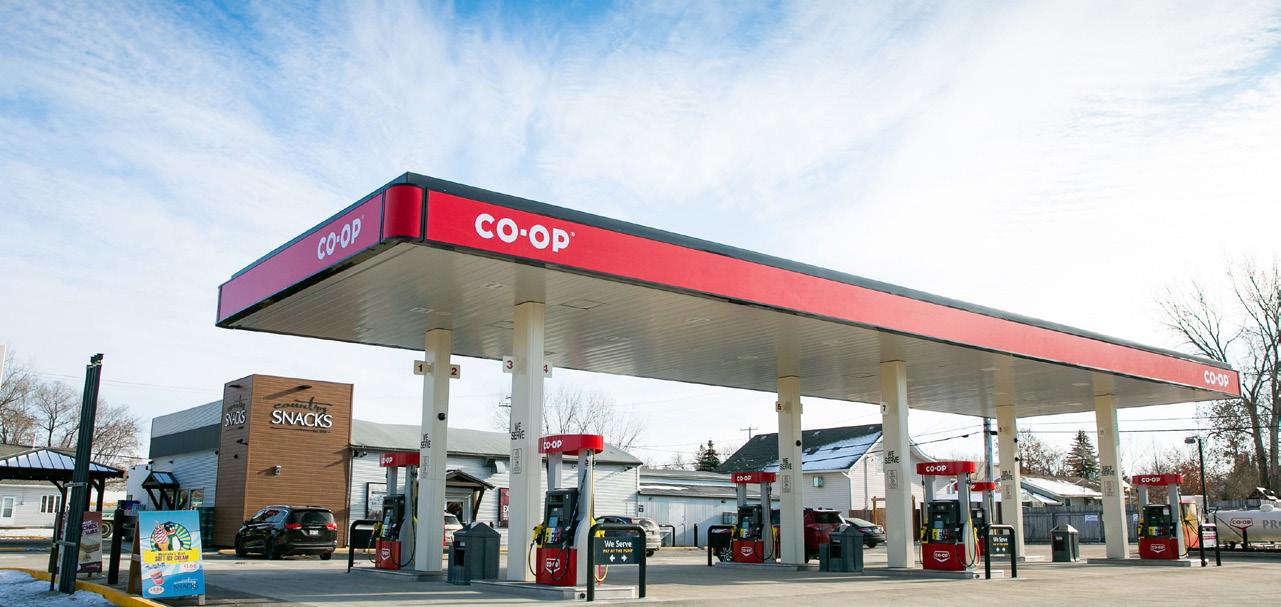
Country Snacks has grown from a small-town fuel stop into a thriving community hub through decades of dedication, family values and a simple guiding belief: it’s about the people. The husband-and-wife team have operated the business together for 35 years while raising four children, building a company culture centred on caring for both customers and employees. This philosophy has helped the independent business grow while maintaining strong loyalty within the community. Between 1995 and 2012, the couple completed five major renovations to expand the store and improve services. Along the way, they introduced several signature offerings, including “Manitoba’s Best” self-serve soft ice cream in 1999 and Papa Peppie’s Pizza in 2005, transforming the location into more than a typical gas station. In 2019, the business achieved what the owners call “The Big Dream,” expanding from two fuel pumps and lanes to a modern canopy design with six pumps and 12 lanes, significantly increasing capacity for customers. Family has always been central to the business. Rose’s children worked in the store while growing up, and today two daughters remain actively involved in operations. Even grandchildren and second-generation staff are now part of the team. Country Snacks also supports local sports teams, schools and community groups—they’ve sponsored the Niverville Fair for 30 years—while showcasing products from nearby businesses. With homemade food, strong community ties and a people-first approach, the business continues to serve as a gathering place for the town it proudly supports.
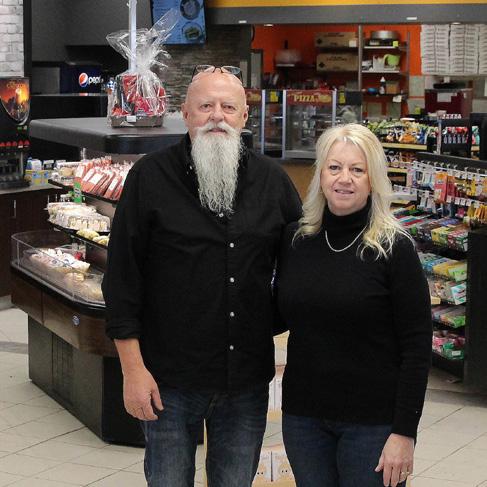
free meals and desserts. Its popular deli and bakery programs—complemented by custom-made sandwiches and fried chicken—ensure that locals and travelers are well-fed year-round. Community engagement is also a central aspect of the
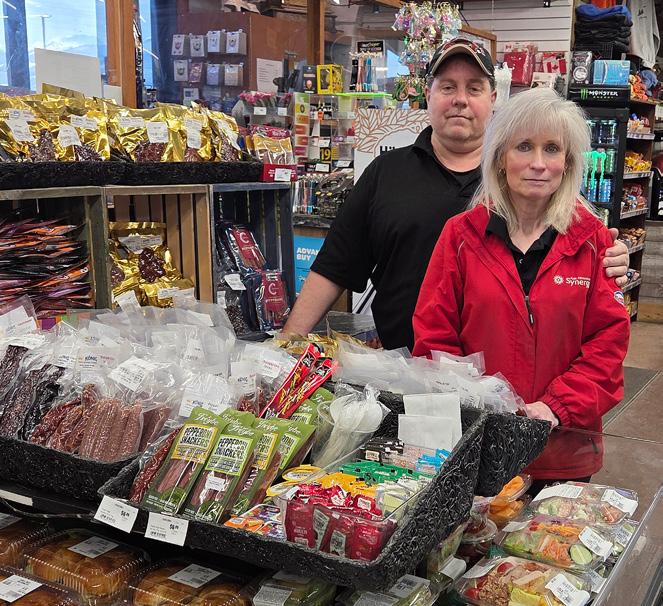
store’s identity. Seasonal promotions like a Halloween pumpkin giveaway with fuel purchase, as well as Halloween and Easter colouring contests, foster connection and fun for families, while creative incentives like bakery giveaways with fuel purchases reward customer loyalty. The market’s vision for the future is rooted in innovation and convenience. Boasting one of the largest EV charging facilities in the B.C. interior and the most fuel pumps in the area, Crossroads Market efficiently powers the modern traveller. This commitment to growth is further highlighted by the grand opening of a 2,800-sq.-ft. Starbucks, complete with a drive-thru and a scenic 600-sq.-ft. patio. By blending local heart with world-class amenities, Crossroads Market continues to set the standard for retail excellence in the region.
Ont.
Owners: Divya and Paraskumar Shah
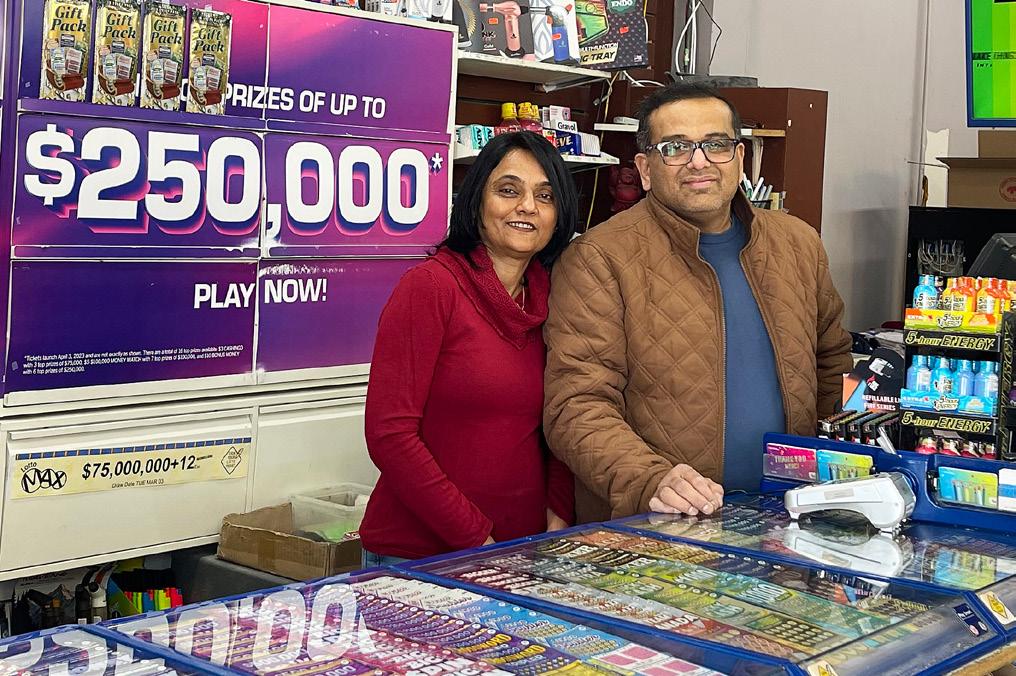
For nearly two decades, Daisy Mart has played an important role in the daily life of Belleville, Ont. Locally owned and operated for 18 years, the store has earned a loyal following by combining industry innovation with the friendly atmosphere of a reliable neighbourhood shop. The owners moved to Belleville after several years working in manufacturing in Toronto to pursue the opportunity to build a business rooted in community connection. Since then, they have focused on staying ahead of industry trends while ensuring customers continue to receive the personal service they expect. Over the years, the store has embraced new opportunities within the convenience channel. The owners advocated early for alcohol sales in convenience stores and were among the first in the region to invest when the program launched in 2024. Daisy Mart also moved quickly to introduce regulated vape products when legislation allowed, helping the store remain competitive in the modern market. Inside, customers will find a wide range of products, including specialty American snacks, chocolates and beverages that are difficult to find elsewhere in the city. Beyond retail, the business works with local charities such as the Humane Society and supports community members by stocking requested items and, at times, even delivering products to those unable to visit the store in person.
Vancouver, B.C.
Owners: Mike Smaill and Kevin Wong
Dank Mart has emerged as one of the country’s most distinctive independent retailers, redefining what a modern convenience store can be by blending global snack culture, creative branding and an immersive customer experience. Founded by a group of creative entrepreneurs, the shop has transformed the traditional corner-store model into a high-energy retail destination inspired by “hype culture.” By fostering a culture around collectible snacks and streetwear-style branding, they have built a loyal community of followers who see the store as a cultural hub. From limited-edition cereals to international beverages, Dank Mart is known for its
Victoria, B.C.
Owner: Daniel Tsai
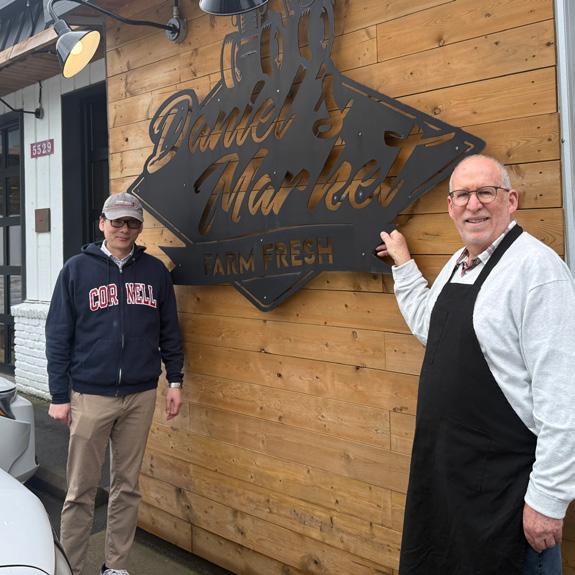
Daniel’s Market has successfully redefined the traditional station by transforming a former mechanic’s garage into a vibrant, year-round marketplace and essential community hub. By strategically reinventing its space, the retailer now offers a multifaceted shopping experience that blends high-quality fuel with a premium artisan market. The business stands out for its diverse selection of local and artisanal goods, including fresh produce, custom-cut meats, seafood and a dedicated bakery. Beyond groceries, customers can browse a curated gift shop featuring handmade chocolates and jewelry, as well as health and beauty products. This innovative model has turned a routine pit stop into a destination where guests discover locally made treasures and freshprepared foods at competitive prices. Innovation is central to the market’s success. Using an intuitive and analytical understanding of customer needs and a robust social media presence, the shop stays deeply connected to its loyal following. However, it is the retailer’s commitment to social responsibility that truly sets it apart. Through “Daniel’s Days” and various fundraisers, the market actively supports the Sooke Food Bank, local sports teams and schools—notably donating over 1,100 ice cream vouchers to students. By prioritizing exceptional service and community well-being, Daniel’s Market has broken the mold of convenience retail, proving that a local business can be both a commercial success and a vital civic partner.
curated selection of rare and viral snacks. The company has turned everyday shopping into a discovery-driven experience that attracts customers from across the region. The store’s vibrant design and playful aesthetic set it apart from conventional convenience outlets, creating an environment where customers come not just to buy a snack, but also to explore, connect and share the unique experience with friends. Social media has played a major role in the brand’s growth. Through strong digital engagement and creative marketing, Dank Mart has built a loyal community and cultivated a destination feel that drives consistent foot traffic. The shop has even become a celebrity stop for visitors to Vancouver, welcoming well-known personalities such as Angela Kinsey, Isiah Thomas, Mark McMorris and Aminé. By combining bold merchandising, creative marketing and

demonstrates how an independent retailer can innovate and thrive while shaping a new cultural space for its customers.

to the winners of the Outstanding Independent Awards.
Owners: Wendy and Deon Penney
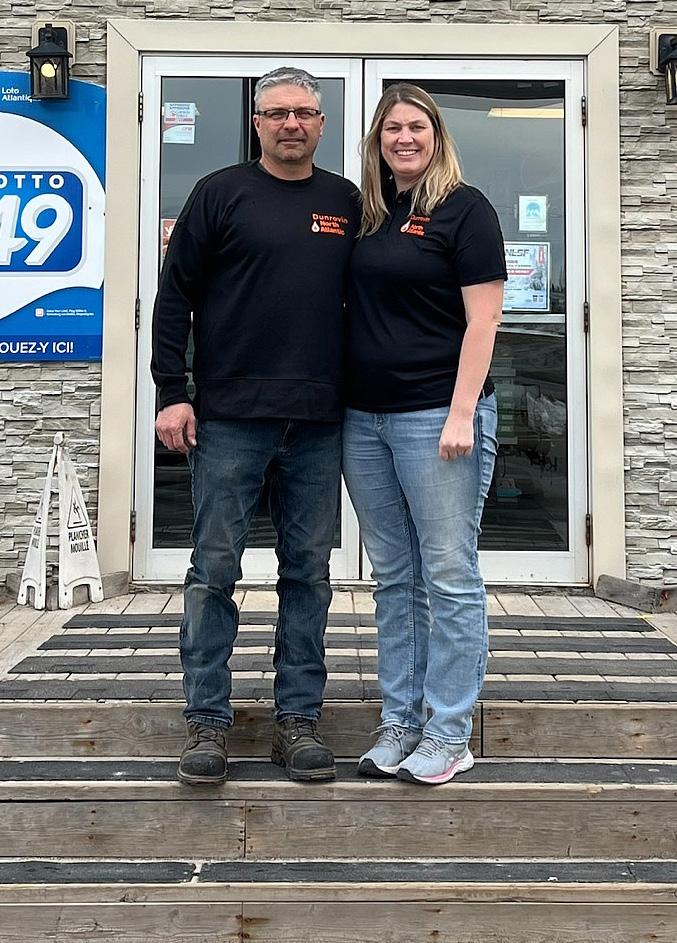
Dunrovin North Atlantic is a vital hub for residents and travellers on Newfoundland and Labrador’s Bonavista Peninsula, offering an innovative one-stop destination that combines essential services, hospitality and community support. Owned and operated by Wendy and Deon Penney, the family-run operation serves travellers, as well as a rural community of roughly 1,200 people. The operation includes a convenience store, gas bar, Liquor Express, takeout foodservice, RV park and cabin rentals. Its vast array of facilities makes it a standout location in the area by providing more than your typical number of services in one place. The modern facility is known for its clean, well-organized layout and carefully selected merchandise tailored to both locals and seasonal visitors. Customers frequently praise the property’s exceptional cleanliness and welcoming atmosphere—factors that have helped build strong customer loyalty. Hands-on leadership also plays a key role in the business’s success. The owners are passionately involved, ensuring customer needs are addressed quickly while maintaining high service standards and long-term staff relationships. Beyond daily operations, the business plays a significant role in supporting the community. During recent wildfires, the owners opened overnight to provide fuel, food and accommodations for emergency crews and residents. Through innovation, dependable service and ongoing support for schools, sports teams and local initiatives, Dunrovin North Atlantic continues to serve as a cornerstone business for the region.
Shawinigan, Que.
Operator: Éric Labranche
Community involvement has long been at the heart of the work of Éric Labranche, who runs the Voisin #995 store on behalf of the Baril Family in Quebec’s Mauricie region. During the pandemic, Labranche became known for his proactive efforts to support neighbours in need. Inspired by the message “Ça va bien aller,” which translates to “It’s going to be okay,” he produced rainbowcoloured flags and stickers carrying the slogan and sold them in his stores. Proceeds from the initiative raised $2,000 for local charities. He also collaborated with nearby businesses to launch a community food-
Owners: Brittany and Dave Huston
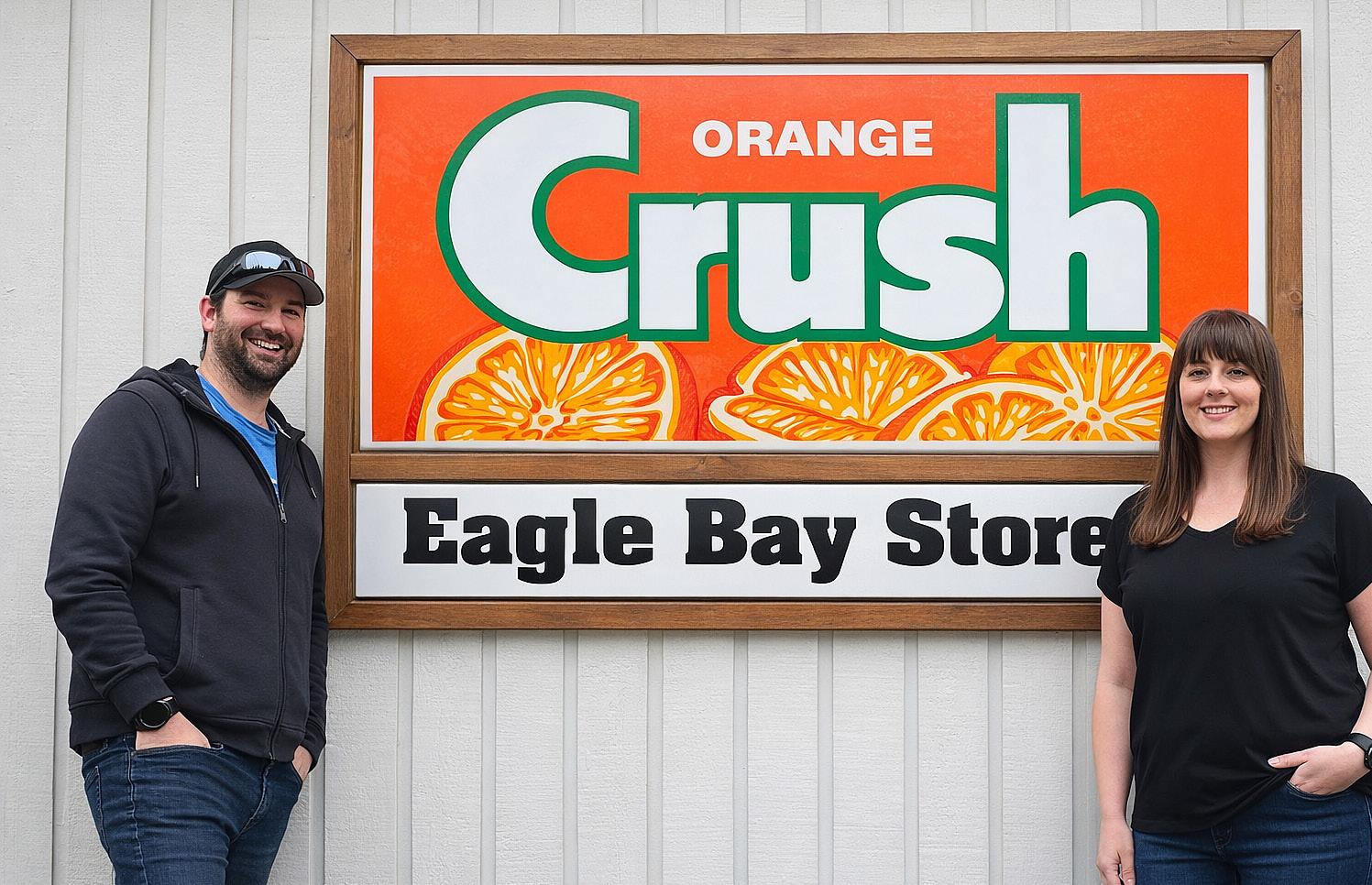
Eagle Bay Mercantile Inc. has grown steadily over the past decade, evolving from a small rural convenience store into a key service hub for residents of the Shuswap region. Founded in 2016 as a familyowned and locally operated business, Eagle Bay Mercantile combines community-focused leadership with a dedicated team committed to friendly service and reliable access to everyday essentials. The store offers a wide range of services in one location, including grocery and convenience items, a Rural Agency Liquor Store, lottery and tobacco sales, propane refills and one of the largest secure RV and boat storage facilities in the area. The business has continually reinvested in its operations to improve sustainability and efficiency. Upgrades across the property, including the installation of energy-efficient equipment, have reduced hydro usage while enhancing the overall customer experience. Known locally as the home of the “coldest beer in the Shuswap,” Eagle Bay Mercantile also hosts tastings with regional wineries and distilleries and organizes monthly giveaways that help build customer loyalty and strengthen ties with the community. This kind of community support remains central to the company’s mission. During the 2023 North Shuswap wildfires, the business provided free storage to residents in evacuation zones to help families protect their belongings in times of need. With plans to add a gas station in the future, Eagle Bay Mercantile continues to expand its role as a reliable destination for locals and visitors alike.
drive campaign through the sale of donation bags. The initiative generated an additional $10,000, benefiting organizations including Centre Roland-Bertrand and Artisans de Paix, helping support approximately 800 families facing hardship. Throughout the pandemic, Labranche ensured his stores remained open 24 hours a day to serve essential workers. His commitment to community continued in other ways, including volunteering staff support for local school events to ensure health measures could be maintained. In 2024, he further strengthened that mission by establishing the Baril Family Foundation, which provides clothing and food to schoolchildren in need across the region. In 2025, the Dépanneur Voisin holiday food drive raised close to $20,000 for the Baril Family Foundation. Today, Labranche continues to support his
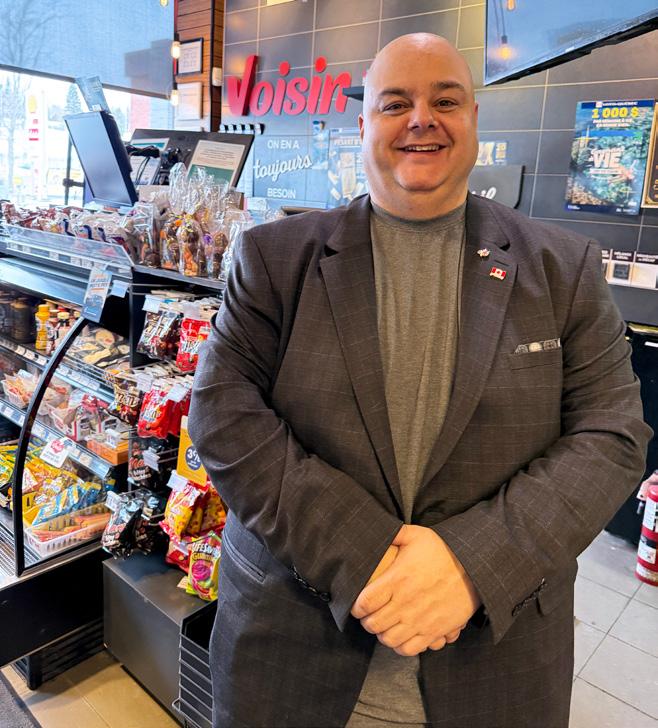
community by continuously seeking out ways to give back to the people his stores serve. He is also in the process of purchasing the site.
Your innovation and resilience set the standard for convenience retail across Canada.
We are proud to stand with you as a Founding Partner.
Swift Current, Sask.
Owners: Wendy and Eldon Campbell
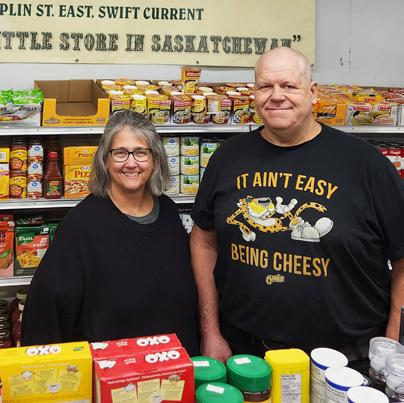
Elmwood Grocery serves as a cherished neighbourhood landmark, built on decades of customer loyalty and a strong commitment to personal service. The store reflects a long-standing tradition of communityfocused retail. Wendy Campbell worked in the business under its previous ownership, learning firsthand the values that sustain the store’s success. Today, she carries those principles forward by emphasizing genuine relationships with customers and creating a welcoming environment. Elmwood Grocery offers a wide selection of everyday essentials, from fresh fruit and vegetables to meats, canned goods and convenient meal options. The well-stocked shelves and dependable service make it a reliable destination for residents. What sets the business apart, however, is the friendly atmosphere. Employees are known for taking the time to chat with customers, listen to their stories and maintain the personal connections that define small-town retail. For many in Swift Current, Elmwood Grocery represents both convenience and continuity, ensuring its place as a trusted part of the community.
Seven locations, Alberta
Owners: The Morris Family
Gas King Oil Co. Ltd., which operates seven sites and another slated to open later this year, has built a strong reputation
Five locations, Ontario Owner: Thomas Sheehan
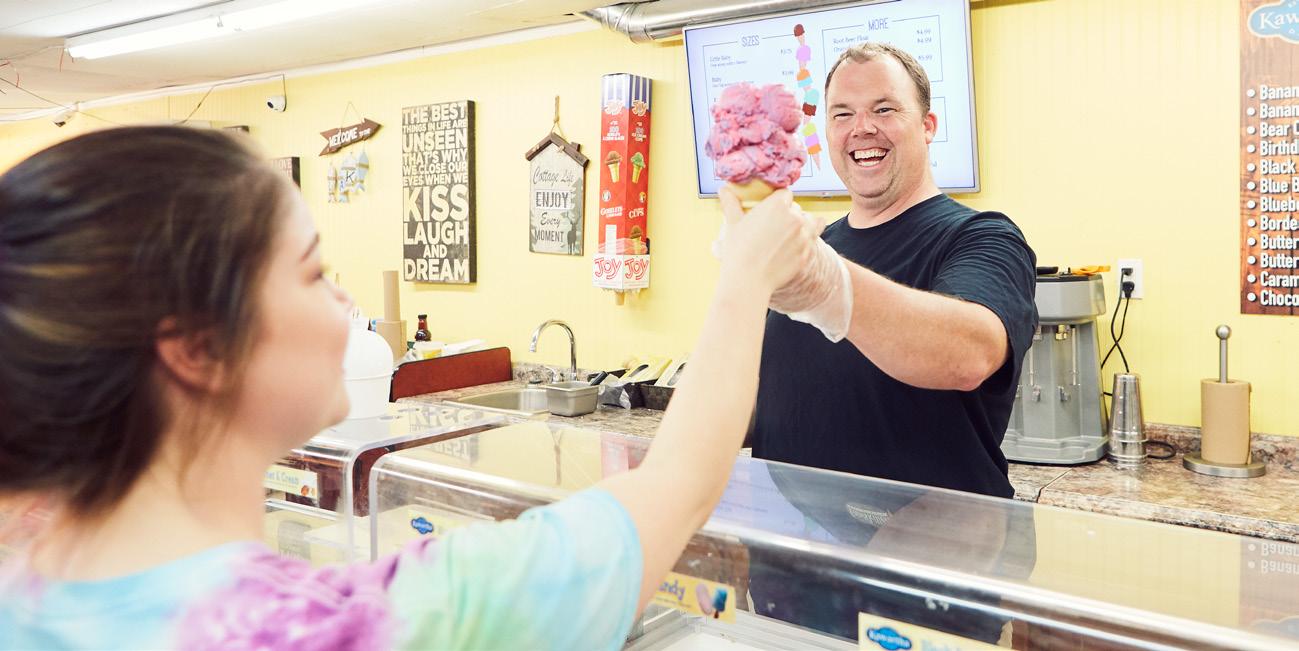
Enniskillen General Stores are a leading example of independent convenience retail, combining strong community values, innovative retail ideas and a focus on customer experience. Locally owned and family-operated, the retail brand has a long history, starting in 1840. It has grown to include five locations (Enniskillen, Bowmanville, Oshawa, Courtice and Peterborough) while maintaining the personal service and welcoming atmosphere of a neighbourhood store. Its continued success reflects an ability to adapt to the evolving needs of rural customers while upholding high standards in merchandising, cleanliness and product selection. A defining feature of the brand is its emphasis on ice cream, which has become a signature offering that draws customers of all ages. The stores have built a loyal following around the popular treat, turning a simple purchase into a memorable part of the customer experience. Community engagement also plays a central role in the company’s philosophy. Enniskillen General Stores regularly host and support community events and fundraisers, helping bring residents together while supporting local initiatives. The business also sponsors multiple youth sports teams and distributes thousands of free ice cream coupons each year to recognize and reward young athletes. Through steady growth, strong community ties and a commitment to friendly service, Enniskillen General Stores continue to demonstrate how independent retailers can thrive and expand, while remaining deeply connected to the communities they serve.
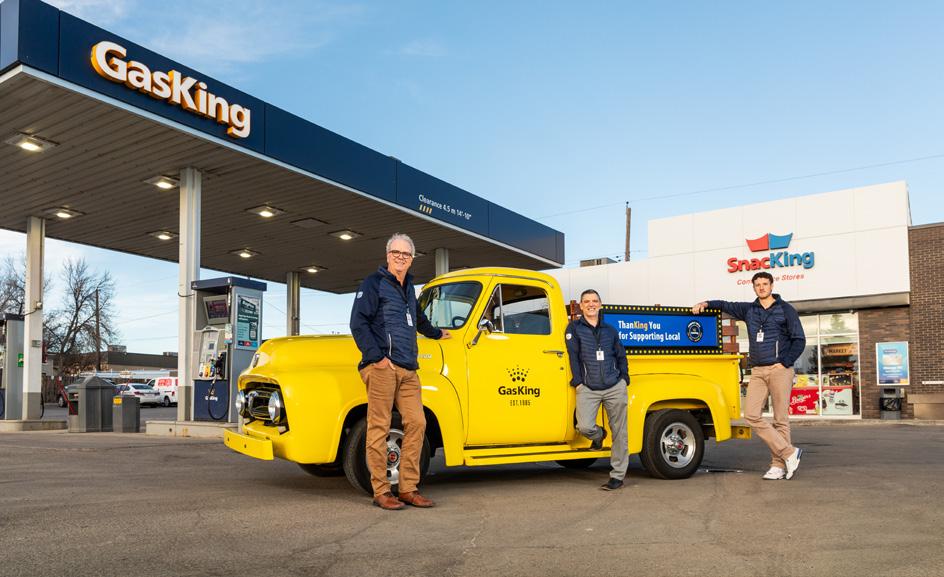
across southern Alberta by combining local ownership with decades of consistent community support. Operating gas stations, convenience stores and car washes throughout the region, the growing company has remained deeply connected to the communities it serves since its founding in 1985. That commitment is reflected in long-standing partnerships with local sports organizations, including the Lethbridge Hurricanes WHL team and the Lethbridge Bulls WCBL team through programs such as Gas King Family Fridays. Community fundraising is also a major focus. In 2000 the company introduced its Charity Care Wash program,
allowing organizations to use Gas King car washes free of charge to raise funds for various causes. In addition, the Don Morris/ Gas King Memorial Fund launched in 2003 to honour the company’s co-founder and father of the current president, Brent Morris. Through coin donations, which are then matched by Gas King, more than $75,000 has been distributed to community foundations. Gas King also supports numerous regional events and initiatives, including a local museum, nature centre and college. The owners of Gas King have been recognized as “Hometown Heroes” for their community involvement. Last year, they were honoured to serve as Whoop-Up Days parade marshals, demonstrating their dedication to philanthropy. Through partnerships and local leadership, Gas King continues to demonstrate how an independent business can thrive and innovate while remaining close to their community.
Hamilton, Ont.
Owners: Ketan Dave and Udayan Pandya
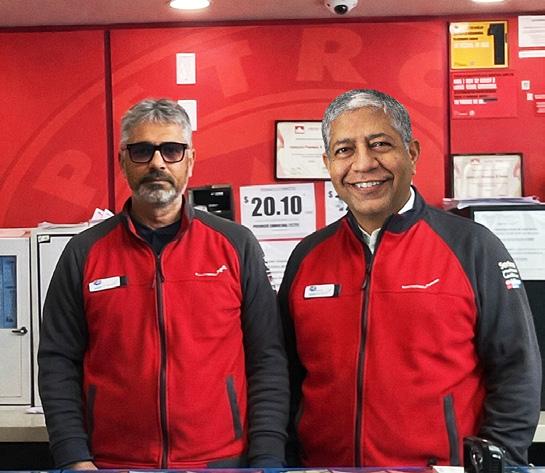
Site #10577 is one of the top-performing fuel and convenience locations in the region thanks to strong leadership, operational excellence and deep community engagement. Operated by independent area retail licensees, the site consistently delivers the standards of a corporate-run location, while maintaining the flexibility and personal connection of a locally operated business. That balance has helped build strong financial performance, high customer satisfaction and lasting loyalty among regular visitors. A key example of innovation came through Udayan Pandya’s leadership in piloting a corporate car wash program for more than two years before its broader rollout across the network. His approach ensured the program was operationally efficient and financially sustainable for both independent operators and Suncor Energy. Customer experience remains central to the operation. Staff greet many visitors by name and maintain a welcoming atmosphere that goes beyond simple transactions. The owners also prioritize convenience for customers, choosing to maintain an RBC-branded ATM to ensure the services customers expect remain available. Their leadership earned recognition as a 2025 territory winner of the Petro-Canada Operational Excellence Award. Beyond the business, the team actively supports local fundraising initiatives throughout Hamilton, reinforcing the PetroCanada site’s role as a trusted community partner.
Harbour Breton, N.L
Owners: Mary and Cliff Jackman
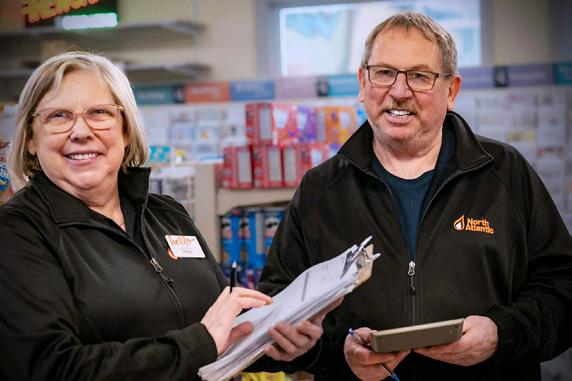
For more than three decades, Jackman’s One Stop has served as a reliable stop for customers seeking both essential goods and friendly service. Established in 1991, the independent business has steadily expanded its customer base by over 80% through a consistent focus on innovation, quality service and strong community ties. True to its name, Jackman’s One Stop offers a wide range of products and services designed to meet everyday needs in a single location. Customers can find fuel, propane services, hardware and automotive supplies alongside grocery items, fresh produce and frozen foods. As a Liquor Express outlet, the store also features a large walk-in cooler. In addition, it offers a fresh cookie program, self-serve coffee, hot food options and specialty treats, such as F’real milkshakes and smoothies. A state-ofthe-art water purification dispenser further enhances the location. Over the years, the owners have continuously invested in the store’s appearance and functionality, improving layout, lighting and signage to ensure a welcoming environment for customers. Community support remains central to the business philosophy. Jackman’s One Stop regularly contributes to local initiatives, including cancer support groups, sporting events and fundraising efforts that assist residents facing medical and travel expenses. The business maintains its competitive edge through modern retail strategies, including the Yay points loyalty program and a partnership with supplier Tra for weekly advertised savings. By utilizing Sage Accounting to drive data-based decisions, the company remains a model of small-business success. As the owners maintain, a business only survives through its customers and the specialized knowledge of its dedicated suppliers.
ARNIE’S GROCERY
New Westminster, British Columbia
COUNTRY SNACKS
Niverville, Manitoba
CROSSROADS MARKET
Invermere, British Columbia
DAISY MART
Belleville, Ontario
DANIEL’S MARKET
Victoria, British Columbia
DANK MART
Vancouver, British Columbia
DÉPANNEUR VOISIN
FAMILLE BARIL
Shawinigan, Quebec
DUNROVIN NORTH ATLANTIC
Lethbridge, Newfoundland and Labrador
EAGLE BAY MERCANTILE
Eagle Bay, British Columbia
ELMWOOD GROCERY
Swift Current, Saskatchewan
ENNISKILLEN GENERAL STORES
Five stores, Ontario
GAS KING
Sevens stores, Alberta
GREEN MOUNTAIN PETRO-CANADA
Hamilton, Ontario
JACKMAN’S ONE STOP
HARBOUR BRETON, Newfoundland and Labrador
KATIE’S KONVENIENCE
Halfway Point, Newfoundland and Labrador
KENNY’S STORE
Westmeath, Ontario
MADAAN’S COUNTRY MARKET
Cochrane, Alberta
MTM RETAIL GAS LIMITED | MASSTOWN PETRO-CANADA
Masstown, Nova Scotia
MEL’S
Prince Edward Island and Nova Scotia
MOUNTAIN MART
Golden, British Columbia
RED PINE CONVENIENCE | GOLDEN EAGLE CONVENIENCE
Lac Seul and Frenchman’s Head, Ontario
ROOTE’S GAS BAR
Southampton, Ontario
SEAFAIR SMOKE & MIXERS
Richmond, British Columbia
SEAL COVE GROCERY & LIQUOR EXPRESS
Conception Bay South, Newfoundland and Labrador
SHERRY’S
Williamsburg, Ontario
SILVER CREEK TRAVEL CENTRE
Hope, British Columbia
STATION-SERVICE PROXI EXTRA SAINT-ROCH-DE-MÉKINAC
St-Roch-de-Mékinac, Quebec
SWEETLEAF FUELS AND GENERAL STORE
Alderville First Nation, Ontario
THE WOODEN SHOE STORE & COFFEE SHOP
Gull Lake, Alberta
TJ’S CONVENIENCE STORE
Kentville, Nova Scotia
URE’S COUNTRY KITCHEN & MINI GOLF
Amherstburg, Ontario
VANI’S CONVENIENCE
Brampton, Ontario
WALSINGHAM FOOD MARKET, BUSY BEE
Walsingham, Ontario
WILLOW SMOKE AND CIGARS
GUELPH, ONTARIO
YELLOW STORES
Alberta and British Columbia
Halfway Point, N.L.
Owners: Linda and Larry Edmonds
Katie’s Konvenience has served as a dependable fixture in the Bay of Islands community for more than three decades, building a reputation for personal service, reliability and strong social bonds with neighbours. Located at what residents know as the “Halfway Point,” the familyrun business continues to reflect the values it was founded on in 1992: hard work, fairness and caring for the people it serves. Built from the ground up, the true “mom and pop” store has grown alongside the
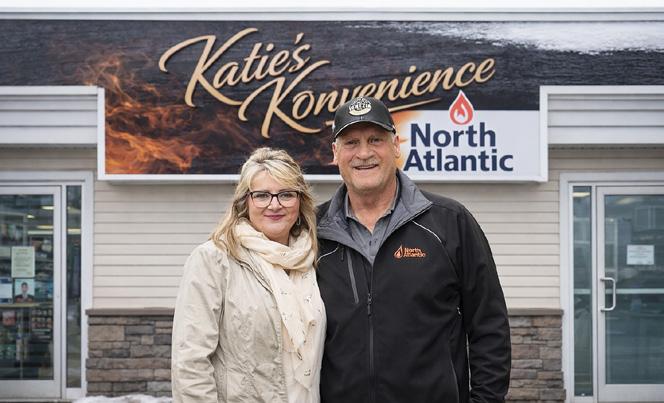
community while maintaining a welcoming, small-town atmosphere. The store’s layout is designed for convenience and practicality, offering everyday essentials along with items tailored to the needs of local customers. Its independence allows the business to respond quickly to community demand, adjusting
Westmeath, Ont.
Owners: Amanda and Derek Kenny
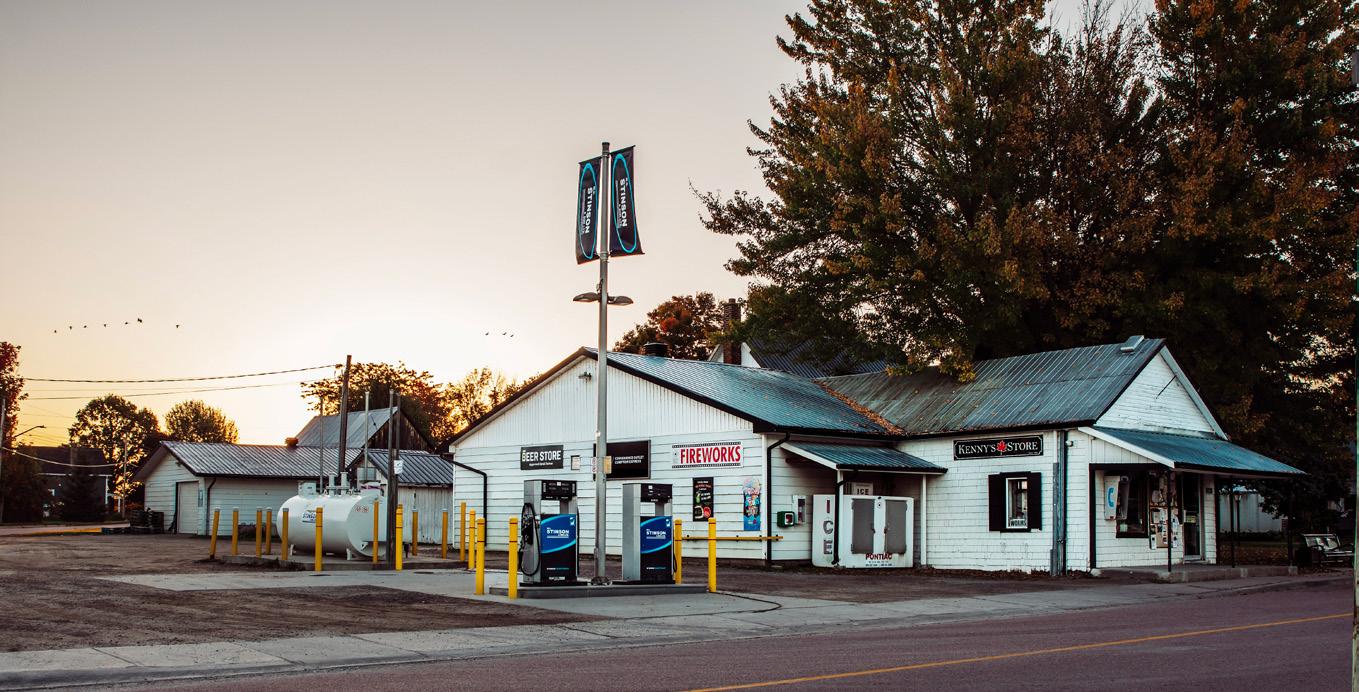
Kenny’s Store has remained a trusted small-town business for three generations, building its success on community values, dependable service and a strong family tradition. Operated by the Kenny family since 1969, the independent store has grown alongside the community while maintaining the warm atmosphere that customers associate with a classic village shop. Kenny’s Store offers a wide selection of products, from groceries and household items to specialty foods and fresh baked goods. With few alcohol retailers in the area, Kenny’s stands out as a longstanding LCBO Convenience Outlet. The location also operates a gas station, making it a convenient stop for both residents and travellers. Generations of residents and visitors have come to rely on the store not only for everyday items, but also for the friendly and familiar service that greets them each time they walk through the door. The Kenny family regularly sponsors local sports teams and events, contributes to school initiatives and lends support whenever neighbours are in need. This commitment has helped build strong customer loyalty and lasting relationships across the area. Customers frequently praise the clean environment, well-stocked shelves and helpful staff who take the time to assist shoppers and create a friendly experience. Through generations of dedication, Kenny’s Store continues to represent the enduring spirit of independent retail by leading with heart.

product selection to ensure residents have easy access to the goods they rely on. This kind of attention to shoppers’ specific needs perfectly demonstrates how customer loyalty remains one of the store’s greatest strengths. Many locals have visited regularly since the early days, drawn by the friendly environment and familiar faces behind the counter. Staff place strong emphasis on traditional customer service, taking the time to help customers, assist seniors and create a warm, familial atmosphere. Through fair pricing, attentive service and ongoing support for local initiatives and events, Katie’s Konvenience continues to play an important role in the life of the Bay of Islands community.
Cochrane, Alta.
Owners: Neelam Madan and Anil Madan
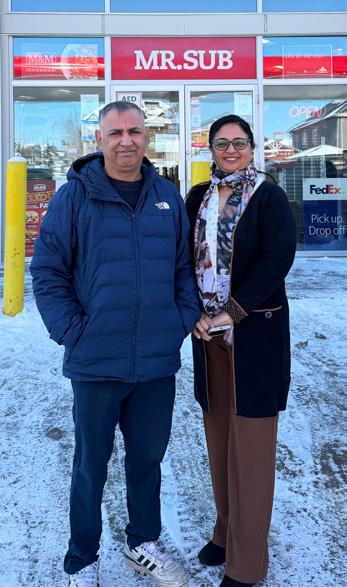
Madaan’s Country Market quickly became a standout neighbourhood business, earning strong community support through innovation, dedication and a customer-first approach. Since taking over the location four years ago, the owners have transformed the store into a well-stocked and welcoming destination for everyday essentials. Reviews praise the new owners for their vision and work ethic, which have helped turn the shop into one of the area’s most reliable convenience stops. They offer an impressive range of products that often exceed what customers expect from a convenience store. The store’s commitment to meeting customer needs is a key part of its success. Staff actively listen to requests and bring in new items, ensuring the shelves reflect what residents want and rely on. Many neighbourhood families have
been visiting the location for years, and longtime patrons say the store has reached a new level since reopening under its current ownership. Shoppers frequently praise the friendly, personable staff and the dependable selection that makes it easy to find lastminute essentials. Community support has also been evident in the recognition the business has received through a local award. Through hard work, thoughtful innovation and a genuine connection with customers, Madaan’s continues to build a reputation as a trusted and valued neighbourhood retailer.















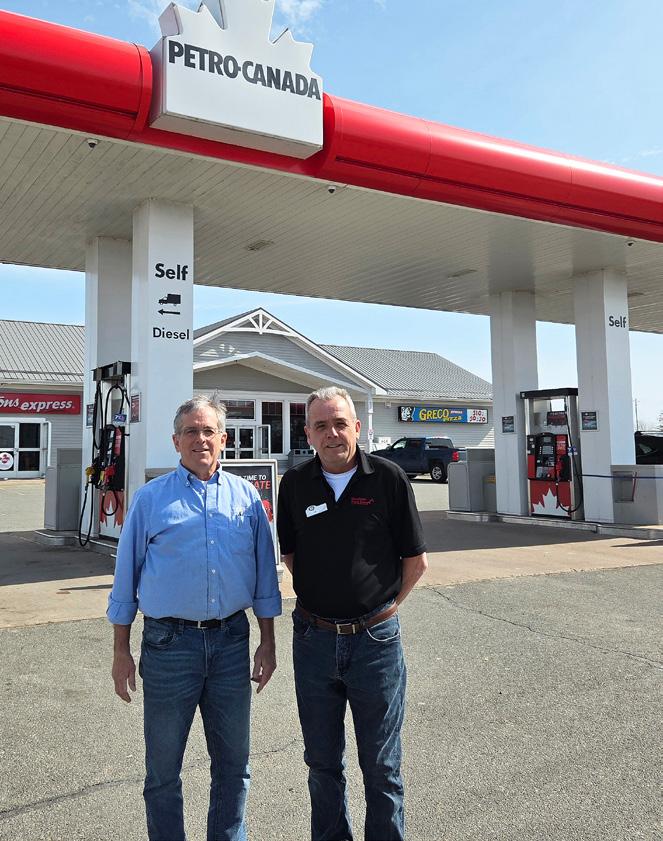
Masstown, N.S.
Owner: Laurie Jennings
Masstown Petro-Canada is a key destination for travellers and residents alike, reflecting more than 50 years of growth within the well-known Masstown Market family of businesses. Located at Exit 12 on Highway 104, the site is a true one-stop destination in rural Nova Scotia. Responding to customer demand, owners added the Petro-Canada fuel station 12 years ago, completing what visitors had long requested—a place where they could refuel both their vehicles and themselves in one convenient stop. Since then, the location has continued to expand with the addition of a butcher shop, creamery, pharmacy and medical clinic, creating a unique retail and service hub that supports both the local community and the travelling public. Customers are particularly drawn to the store’s distinctive food offerings, including made-on-site beef jerky, pepperoni and cheese, along with locally produced milk, fruit juices and specialty cheesecakes prepared on-site. These regional products have become popular travel treats for visitors passing through the area. Innovation and reliability also set the operation apart. The site features upgraded fuel pumps, expanded pump spacing for easier access and large-scale solar panels to improve energy efficiency. A powerful standby generator allows the station to remain operational during major storms and power outages, ensuring fuel, food and coffee remain available when communities need them most. Through ongoing investment, local employment and strong community support, Masstown Market Petro-Canada continues to strengthen its reputation as a vital service hub for the region.
16 locations, P.E.I. and N.S.
Owners: Dan MacIsaac and president Jeff Doucette
For more than 30 years, Mel’s Convenience and Gas has built a strong reputation across Atlantic Canada by blending innovation, local identity and community involvement. From the original site in Charlottetown, P.E.I., the team now operates 16 locations, with Petro-Canada and Shell pumps throughout Prince Edward Island and Nova Scotia. Its secret? The company has grown steadily while maintaining a flexible approach that allows each store to reflect the surrounding community. Rather than adopting a one-size-fitsall model, Mel’s empowers its location managers to tailor product selections and services to local customers. Stores feature a diverse assortment that goes well beyond traditional convenience items, including fresh baked goods, ready-to-eat meals, healthfocused snacks and an extensive beverage selection. Many locations also highlight local history and community figures through instore displays that celebrate regional pride. Foodservice innovation has been another driver of success, with quick-service restaurant partnerships such as Tim Hortons, A&W, Starbucks, McDonald’s, Thai Express, Taco Boyz and Robin’s Donuts. Most recently, the company introduced its own made-to-order concept, Mac & Melt. Community support remains central to the brand. Through partnerships with groups such as the Prince Edward Island Lions Clubs, Mel’s annual Gas-O-Rama fundraiser has helped generate more than $32,000 for cystic fibrosis research and support programs. By combining knowledgeable staff, diverse offerings and strong community connections, Mel’s has built a model for long-term success, proving that its promise that “there is so much more at Mel’s” extends far beyond the store shelves.

Golden, B.C.
Owner: Mark Baxendale
Since Mark Baxendale purchased and rebranded the operation in 2016, Mountain Mart has served as a cornerstone of independent retail in downtown Golden. Under Baxendale’s ownership, the business significantly evolved, transforming from a traditional convenience stop into a multifaceted community hub. A pivotal 2020 partnership with Centex Petroleum saw extensive upgrades to the store and forecourt equipment. The modernization continued that same year with the introduction of BC Lottery services, rounding out a suite of amenities that includes a high-traffic laundromat equipped with free Wi-Fi and coffee. Mountain Mart distinguishes itself through a diverse inventory tailored to both locals and explorers. Alongside standard snacks, the shop stocks fishing tackle, bait and farm-fresh eggs. For the regional traveller, the site offers essential infrastructure, including a sani-dump and potable water station. The business
has also proven its agility through local enterprise. In 2019, it launched a specialized venture servicing up to 40 short-term rental properties across the valley, stretching from the ski hill to the Yoho Park boundary. This expansion allows the company to employ up to 20 staff during peak seasons. Deeply rooted in the region, Mountain Mart remains a dedicated supporter of Golden’s youth and athletics. Through innovation and dependable service, it remains a vital fixture of daily life in the Rockies.


Lac Seul and Frenchman’s Head, Ont.
Owners: Tracey Bullock and Todd Nadon
Red Pine Convenience Store and Golden Eagle Convenience Store have become essential hubs for residents, cottagers and travellers in the region, offering far more than traditional convenience retail. Located in the Kejick Bay area, the stores are owned and operated by Todd Nadon and Tracey Bullock, who have built the businesses around the needs of the local community. In a region where access to goods and services can be limited, the stores provide dependable fuel, groceries and everyday essentials that residents rely on throughout the year. Foodservice is a standout feature of the locations. Hot lunch specials and breakfast offerings provide hearty meals for locals and visitors, while soft-serve ice cream adds a popular seasonal treat that draws families and travellers alike. These offerings help transform the stores into gathering places where customers stop not only to shop, but also to connect with neighbours. The owners place a strong emphasis on innovation and listening to customer feedback, regularly adjusting product selection to meet changing community needs. Red Pine and Golden Eagle also partner with local schools, sponsor the area’s hockey team and host customer appreciation barbecues. These barbecues create opportunities to give back and say thank you, turning a simple meal into a celebration of community spirit. Through reliable service, community involvement and a welcoming atmosphere, the stores continue to play a vital role in everyday life across the region.
Southampton, Ont.
Owners: Brenda and Randy Roote
Roote’s Gas Bar continues to grow as a customer-focused roadside destination by expanding its foodservice offerings and strengthening its family-run approach to community retail. Founded in 2016 by Randy and Brenda Roote, the business remains a proud Saugeen Ojibway–owned operation. The gas bar has steadily evolved to meet the needs of travellers and residents, offering fuel, a fully stocked retail store and a wide range of roadside amenities. In recent years, Roote’s Gas Bar has placed a strong emphasis
Richmond, B.C.
Owners: Youngmi and Sean Lee
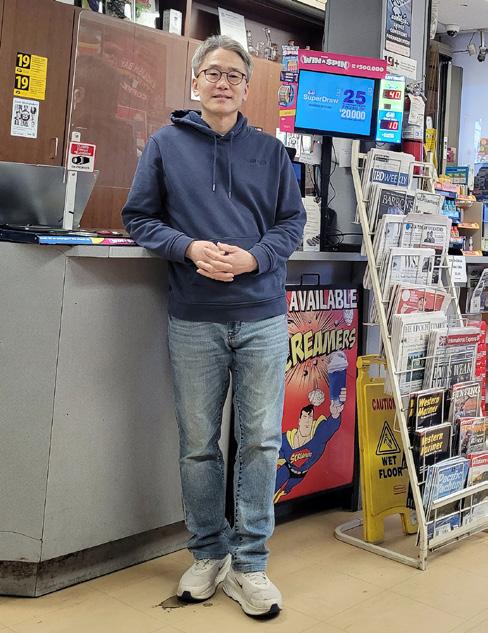
Seafair Smoke & Mixers has built a strong reputation as a trusted neighbourhood retailer by combining competitive pricing, specialized products and a strong focus on customer service. The store has evolved into a reliable destination for customers seeking both everyday convenience items and specialty products. While modest in size, the shop is carefully organized to highlight its wide assortment, including an extensive selection of tobacco and vape products, specialty coffees, unique candy offerings and international newspapers. One of the store’s most distinctive features is its curated cigar selection, offering both Cuban and nonCuban varieties that attract enthusiasts from across the area. Customers often note that the quality and range rival larger specialty shops, making the store a hidden gem within the community. Customer loyalty is driven by value and service. By closely monitoring local pricing and maximizing supplier programs, the owners maintain highly competitive prices while still offering premium selections. Customers often compliment their efficient service; they ensure a quick and positive shopping experience with multiple tills operating during busy periods. Equally important is the welcoming environment created by the staff, who are known for their product knowledge and willingness to help customers find exactly what they need. Through thoughtful merchandising, strong value and genuine customer care, Seafair Smoke & Mixers continues to stand out as a reliable retailer for its community.
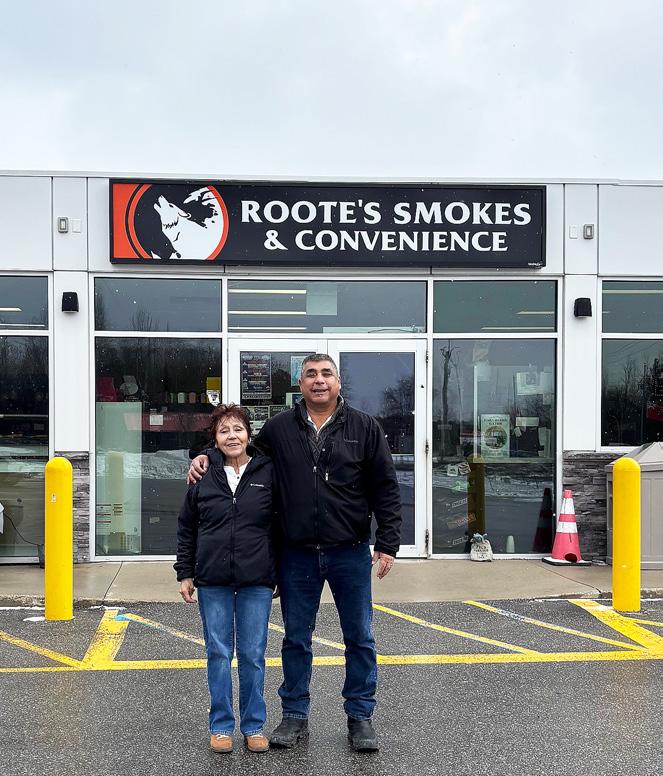
on expanding its foodservice program. After partnering with Core-Mark, the business completed a store reset and introduced sev-
eral new offerings designed to enhance the customer experience. Among the additions are a roller grill serving fresh hot dogs and Tornados, a daily selection of freshly baked cookies and an expanded grab-and-go cooler featuring ready-to-eat sandwiches. These improvements have helped transform the location into a convenient stop for quick meals and snacks, appealing to commuters and travellers alike. Customers have responded positively to the changes, with strong word-of-mouth support and increased sales reflecting the success of the updated foodservice program. Through thoughtful expansion, strong partnerships and a continued focus on customer needs, Roote’s Gas Bar is strengthening its reputation as a reliable stop for fuel, food and friendly service.

Conception Bay South, N.L.
Owners: Kristen and Thomas Dwyer
For nearly six decades, Seal Cove Grocery & Liquor Express has been a familiar fixture in its community. Five years ago, the business entered a new chapter when Thomas and Kristen, along with their son Brody, took over the classic corner store where history, hospitality and hard work come together. Despite having no previous retail experience, the family embraced the challenge and quickly built a reputation for attentive service, competitive pricing and strong community ties. Housed in a traditional “mom-and-pop” setup with the family home attached to the store, the business carries a surprisingly wide selection of products. In addition to everyday groceries, customers will find locally sourced meats and baked goods, fishing and hunting supplies, specialty candy and international foods. The store is also well known for its homemade subs and sandwiches, which have been voted the best in the St. John’s region four years in a row. The owners take a hands-on approach to keeping prices affordable, personally sourcing deals from wholesalers and suppliers. That effort often allows the store to offer prices comparable to and sometimes lower than larger retailers. Beyond the shelves, the business plays an active role in the community by supporting local fundraisers, sponsoring sports teams and assisting seniors with deliveries and groceries. For many residents, the shop is more than a place to buy essentials.It’s a gathering place where generations of customers continue to feel at home.
Williamsburg, Ont.
Owners: Kayla Helliker and Sherry Mowat
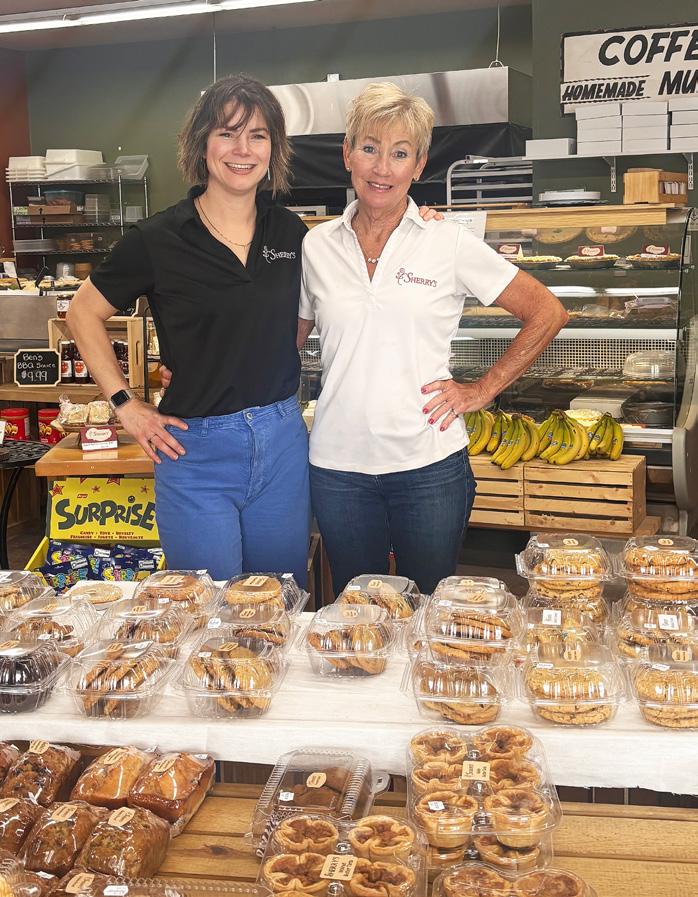
In the rural town of Williamsburg, Sherry’s is far more than a neighbourhood convenience store. It is a gathering place where food, service and community connection come together. The women-owned business has been operating for more than a decade and offers a true one-stop experience. Alongside everyday convenience items, customers will find a full in-house kitchen and bakery producing fresh meals, breads and desserts daily. From breakfast sandwiches and hot pizza to homemade soups and prepared dinners such as chicken pot pie, lasagna and shepherd’s pie, the business provides an affordable alternative for commuters, workers and families looking for relief from cooking at home. Its baking program has developed a loyal following, particularly the butter tarts and coconut cream pie that draw visitors from hours away. Holiday dessert trays and cookie platters have also become local favourites. Community involvement remains central to Sherry’s. The business maintains strong ties with organizations such as Dundas Manor and local social groups, while employing residents from the surrounding area. Many staff members have been with the company since it opened. By blending traditional convenience retail with a welcoming food destination, Sherry’s Convenience continues to strengthen its role as a valued hub in the Williamsburg community.
Hope, B.C.
Owner: Bill Miller
Silver Creek Travel Centre has earned recognition for innovation, spectacular service and community commitment in the area. This locally owned and operated travel centre has built a reputation among travellers for its exceptionally clean and welcoming atmosphere. The centre supports a variety of modern travel needs, including BC Hydro and Tesla electric vehicle charging stations. Reviews praise the stop for its friendly staff, wide range of amenities and pet-friendly policies. The centre even celebrates its four-legged visitors with a photo album on its Facebook page. Truck drivers frequently rank the facility’s showers among the best truck stops across Canada, citing their cleanliness and minimal wait times. Other services include a driver’s lounge with workstations and television, plus book and movie exchange programs.

Its food options include homemade fresh sandwiches, wraps, flatbreads, salads, baked goods and a choice of 16 different ice cream flavours. Music plays throughout the store, including washrooms and shower areas, a feature customers often compliment. It sponsors local events such as Brigade Days and Lions Bingo, contributes to programs like Coats for Kids at local schools and promotes Fraser Valley Tourism. The location also appeared in two film productions, with revenue from one project donated to a children’s hospital. The centre truly serves as a communal space; during the 2021 flooding, owner Bill Miller provided free laundry and showers for stranded travellers and even helped transport an infant to emergency medical care. When the small town of 6,600 people loses power, the centre’s massive generator keeps them running 24/7/365. This allows Silver Creek to serve the needs of the community, travellers and truckers. Silver Creek is not just a stop, but a trustworthy centre for logistics and travel.
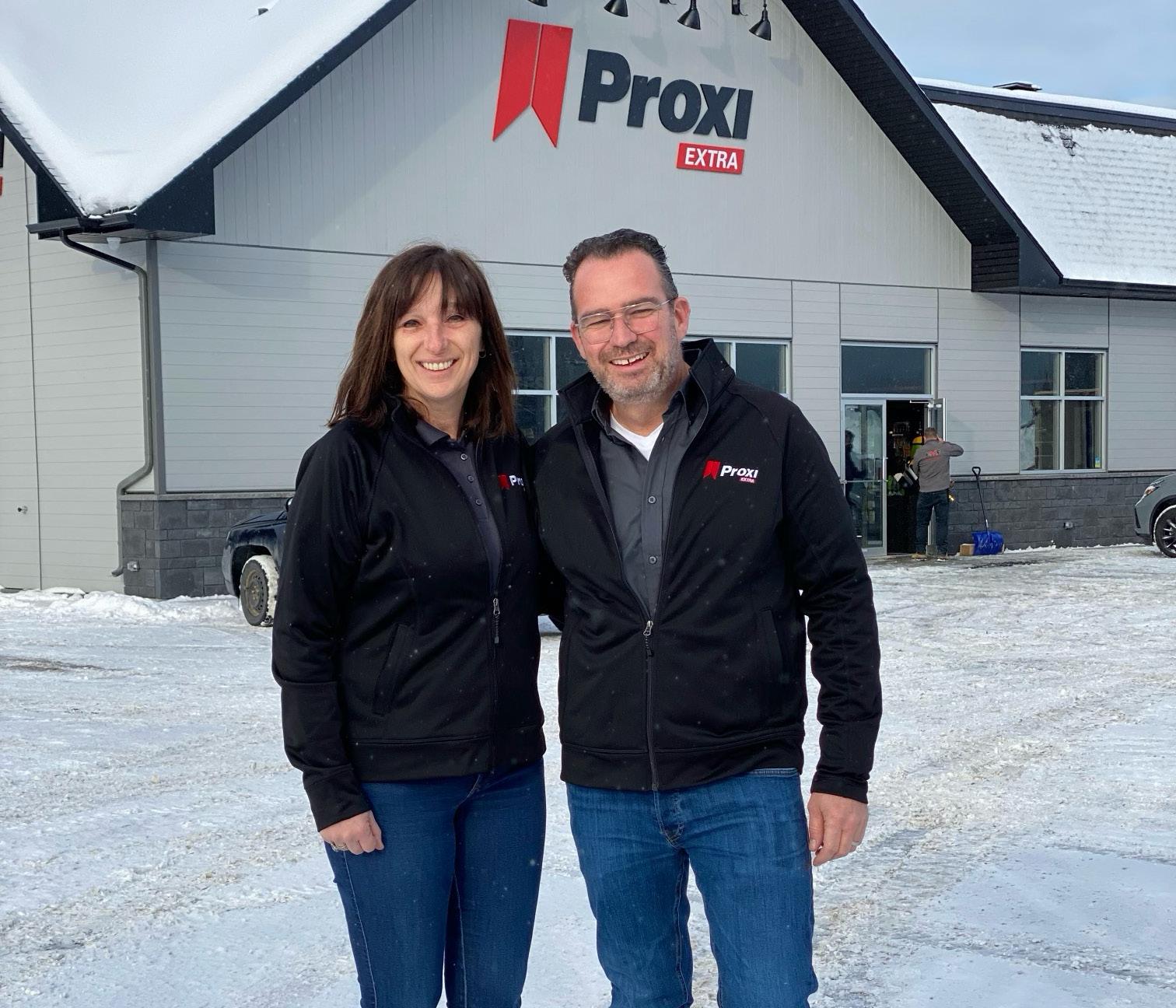
St-Roch-de-Mékinac, Que.
Owners: Patrick Duchesne and Chantal Lapointe
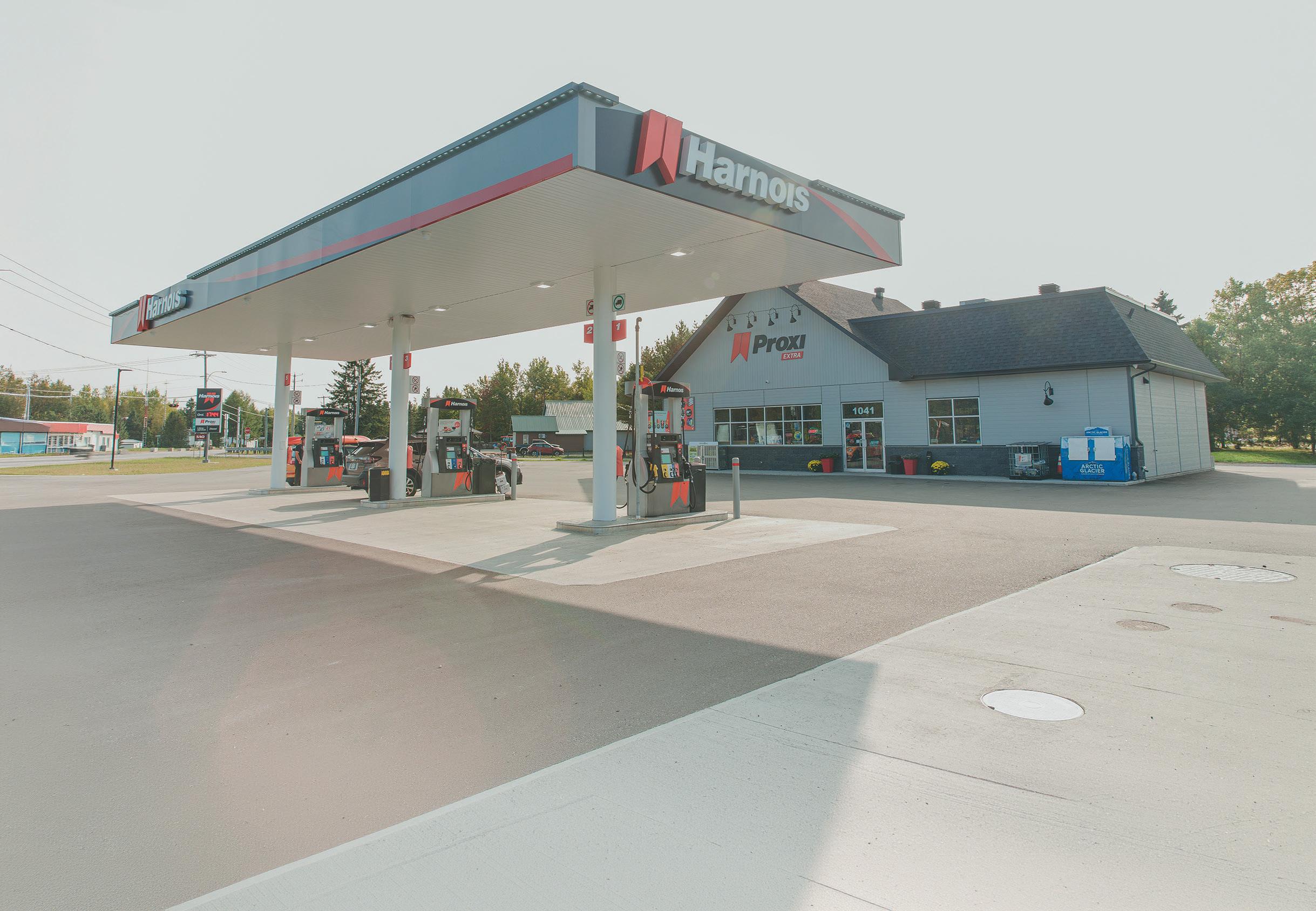
Opened in 2023 along Route 155, this independent location has quickly become an essential stop for both residents and travellers in the Mauricie region. Operating under the Harnois and Proxi banners, the site represents a significant investment in the local community. For years, the municipality had been without a gas station or convenience store. The new site has helped fill that gap, restoring access to essential services while revitalizing a key stop along the route. The store offers far more than fuel and basic groceries. Visitors will find a broad range of products, quick meal options, fresh snacks and locally sourced goods, along with an SAQ liquor outlet. Pizza and other ready-to-eat foods have also become popular with travellers looking for a quick, satisfying stop. Customer service is a defining feature of the business. Staff members are known for their friendly and attentive approach, regularly assisting visitors with everything from travel questions to unexpected vehicle issues. The site also provides amenities designed with modern travel in mind, including electric vehicle charging stations, clean washrooms and a welcoming space to stretch and recharge during long drives. By combining key services with a strong commitment to hospitality, the location has quickly established itself as a core spot for the surrounding community and highway visitors alike.
Gull Lake, Alta.
Owners: Christine Luymes and Val Van Aken
For nearly two decades, The Wooden Shoe Store and Coffee Shop has served as a welcoming stop for travellers and a trusted gathering place for residents in this small Alberta community. Founded and operated by two independent owners, the business has grown steadily through hard work, adaptability and a strong commitment to people. The women-run business combines a gas bar, restaurant and convenience shop,
Alderville First Nation, Ont.
Owner: Jason Marsden
Sweetleaf Fuels and General Store is an esteemed community hub for residents and visitors alike, offering essential services while celebrating innovative entrepreneurship. Proudly Indigenous-owned, the store in Alderville First Nation has grown into a vital destination for both everyday needs and tourism. Over time, the business expanded to include a large gas bar and convenience store, helping ensure that community members have reliable access to fuel, groceries and household essentials close to home. The Sweetleaf team continues to broaden its product selection to meet local demand, adding items such as fresh bread that were previously difficult for residents to obtain due to limited vendor support in the area. The store also offers fresh to-go meals, meat and dairy, along with seasonal favourites like Kawartha Dairy ice cream. Innovation and convenience are also part of the experience, with a drivethru coffee service designed to meet the needs of busy customers. Beyond retail, Sweetleaf General Store plays an active role in community life. The business regularly hosts prize draws and has recently launched the Local Love Project which gives back to local charities and causes. Known for its friendly service, strong community focus and growing list of five-star reviews online, Sweetleaf Fuels and General Store continues to make a positive impact while proudly serving Alderville First Nation.
creating a true one-stop destination for locals, campers and highway travellers passing through the area. Inside, visitors will find a distinctive mix of offerings, including Dutch and European imported foods, specialty snacks and condiments, along with everyday convenience items and camping supplies. The attached restaurant is a favourite for hearty meals, such as fish and chips, sandwiches and homemade dishes. The pies and cheesecakes have also developed a loyal following, spurring repeat visits from guest near and far. Equally important is the store’s dedication to its employees and
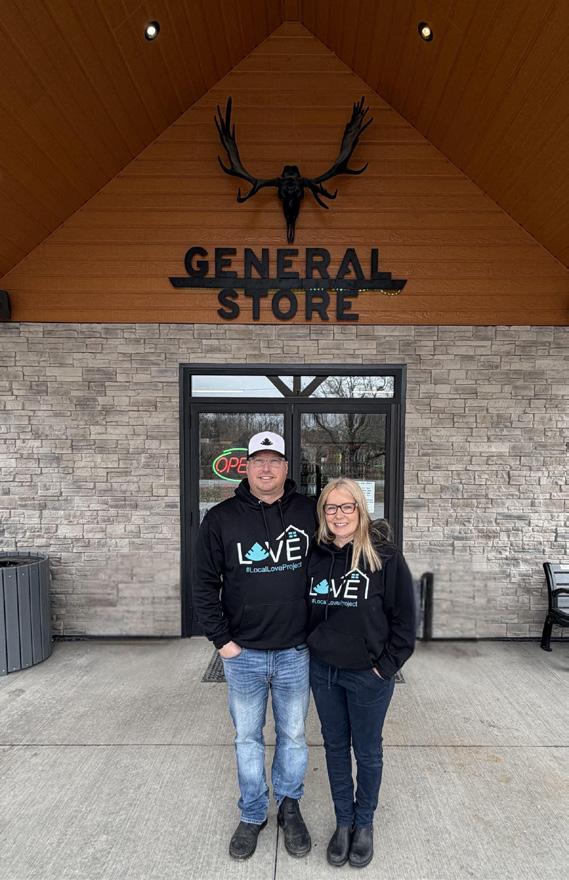

community. Many staff members began their first jobs there as teenagers and have remained for years, supported by stable hours and benefits for full-time team members. While the owners may not sponsor major events, the business consistently contributes to the happiness of the community through door prizes, gift certificates and local support initiatives. Through resilience, humour and genuine hospitality, The Wooden Shoe Store & Coffee Shop continues to strengthen its place as the heart of the Gull Lake community.
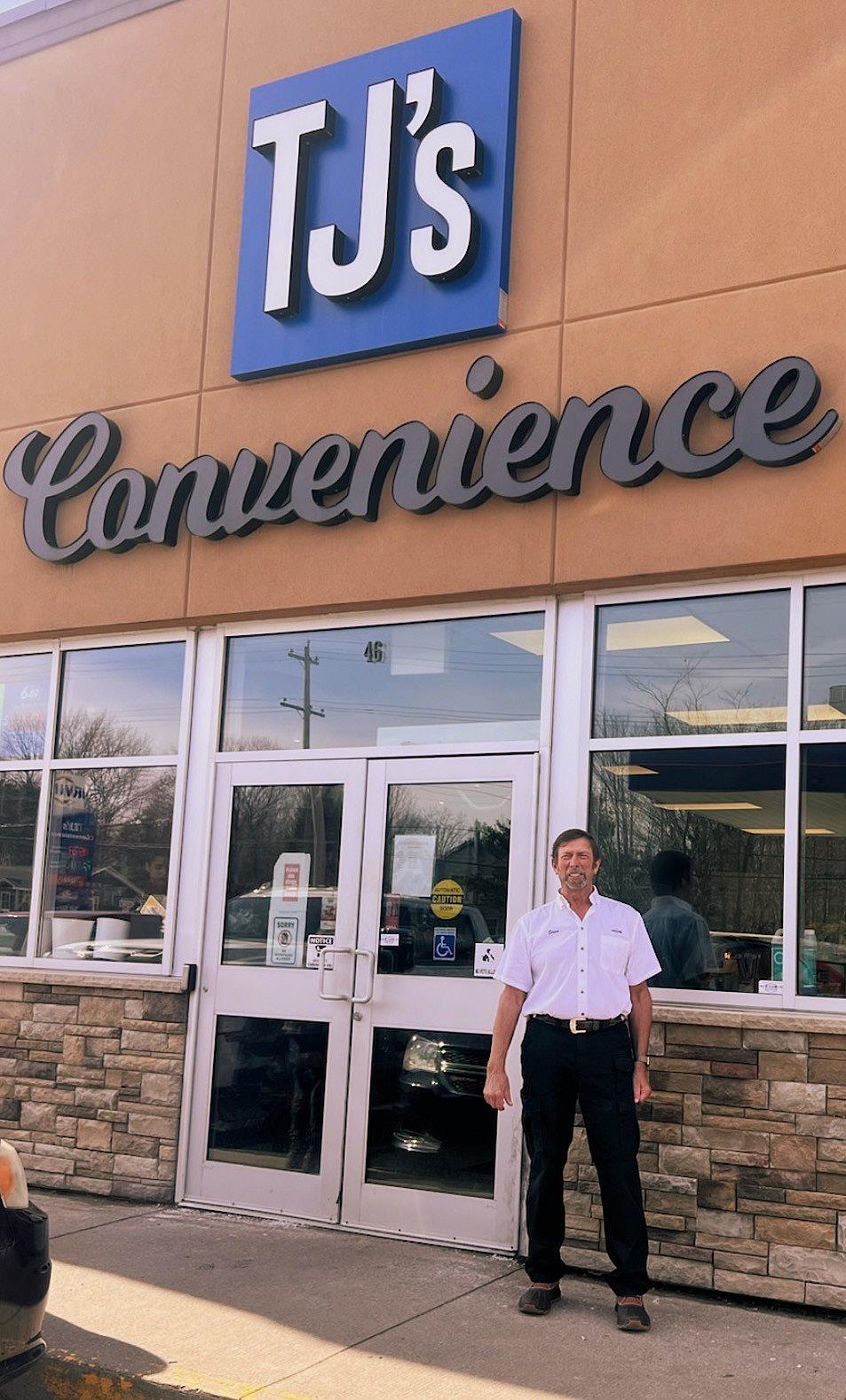
Kentville, N.S.
Owner: Stephen Morine
Serving its community with a blend of modern convenience and welcoming service, TJ’s Convenience Store is a destination for residents and travellers alike. Rebuilt in 2017, the business was carefully designed with customer comfort and accessibility in mind. The bright, contemporary space is well lit inside and out, with neatly organized merchandise and a layout that makes it easy for visitors to find what they need. A small seating area invites customers to pause and enjoy a coffee while connecting with neighbours. The store offers a wide range of services beyond traditional convenience retail. Food options include popular favourites such as Robin’s Donuts, Chester Fried Chicken and a deli program featuring freshly prepared items. A modern laundromat adds another layer of practicality, while self-serve furnace oil and multiple fuel options provide essential services for local households. Staff members are known for their attentive service, and management remains closely involved in day-today operations to ensure concerns are quickly addressed. The business also maintains strong ties with nearby organizations, including local schools, the regional hospital and the nearby military base, supporting them through regular donations and community involvement.
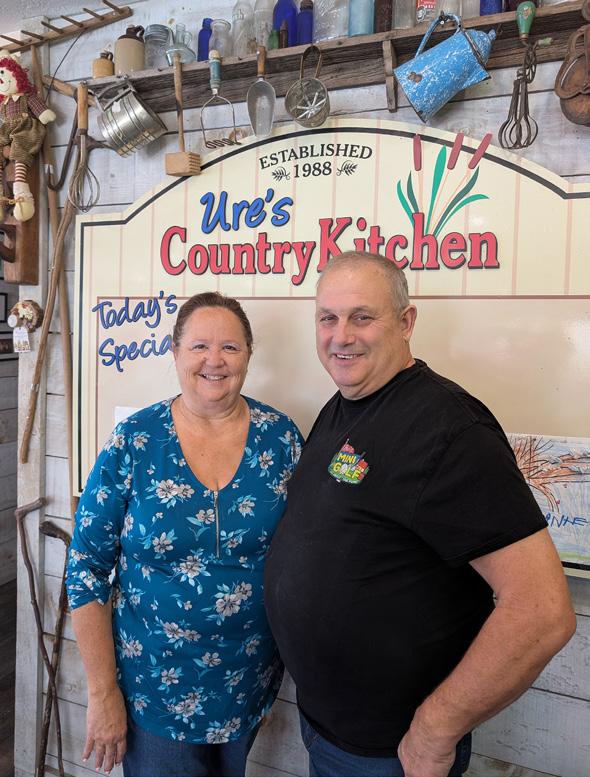
Amherstburg, Ont.
Owners: Laurie and Randy Ure
For nearly four decades, Ure’s Country Kitchen has been a distinctive destination where convenience, recreation and hospitality come together in one memorable stop. Close to popular lakeside cottages and campgrounds, the family-run business is a favourite stop for both residents and travellers exploring the county. What began as a local service station has evolved into a unique hub offering fuel, a convenience store, a restaurant and a popular 18-hole mini golf course. Guests are drawn by the welcoming atmosphere and diverse offerings. The restaurant serves homestyle breakfast and lunch favourites, while the ice cream parlour features products sourced from Ontario dairies. Inside the shop, visitors will also find a broad selection of snacks, beverages and recently expanded beer and wine options, including a walk-in beer cooler and wine chiller. The mini golf course is a signature attraction, providing family-friendly entertainment that keeps visitors returning throughout the season. Customer care remains central to the operation, with staff regularly assisting patrons by carrying purchases or providing full-service support at the gas pumps. Through ongoing improvements, community involvement and a commitment to fun, Ure’s Country Kitchen serves as a vibrant family-friendly gathering place for the surrounding region.
Brampton, Ont.
Owners: Vani and Manish Thakker
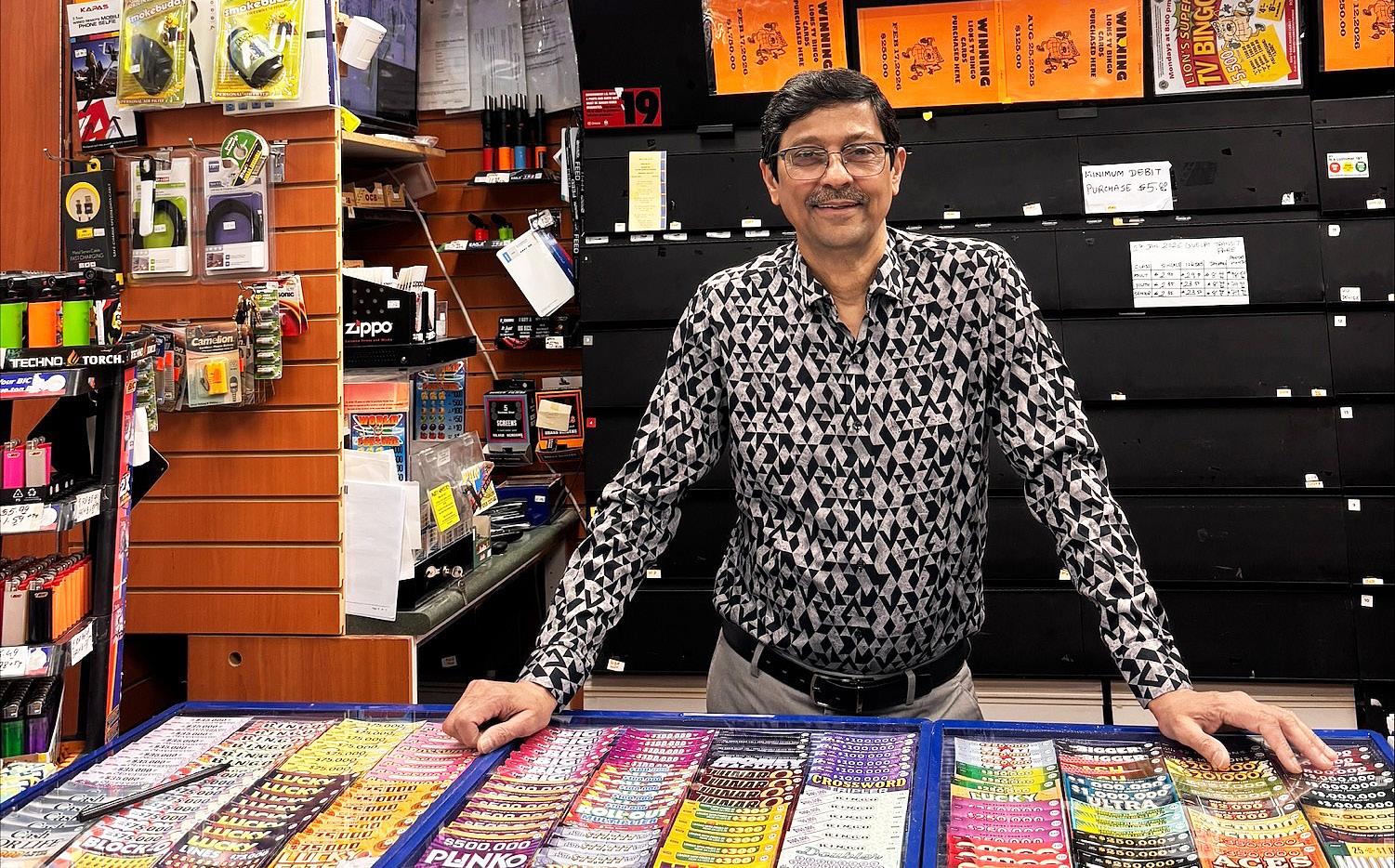
Serving its community for more than a decade, Vani’s Convenience has built a reputation as a multi-service retail hub that blends everyday convenience with modern innovation. Since acquiring the business in 2014, the owners have expanded the store far beyond the traditional corner shop model. Alongside a full range of convenience items, the location offers a diverse mix of services including Western Union and RIA money transfer services, phone chargers, gift cards and a Bitcoin ATM. Customers can also access passport photo services, printing and scanning, internet access and parcel pickup through Amazon Locker, PUDO and Purolator. The store’s merchandise selection is equally varied, with everything from playing cards and Pokémon cards to hats, belts, toys and a wide range of alcoholic beverages. An integrated vape shop, supported by a dedicated e-commerce platform, further expands the store’s reach. Innovation remains a priority, with technology such as self-service lottery terminals and mobile printing helping streamline the customer experience.
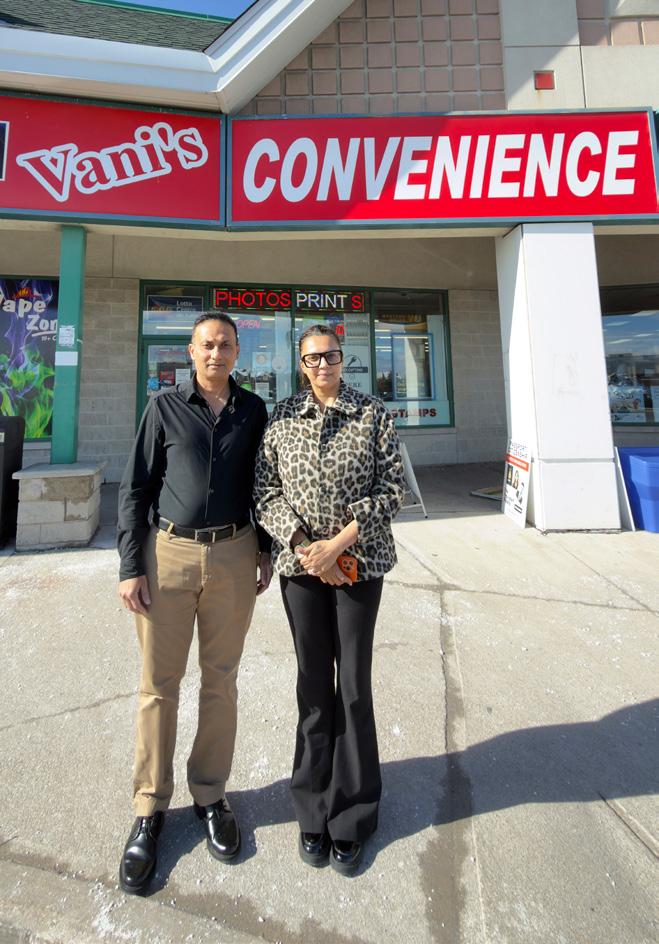
Cleanliness and friendly service are also central to Vani’s, creating a welcoming environment where regular visitors feel at home. Beyond retail, the business contributes to the community through charitable initiatives, including annual fundraising efforts supporting SickKids hospital in partnership with The Brick store in Orangeville, Ont.
Walsingham, Ont.
Owners: Vijay Parekh, Gautam Patel and Pragnesh Patel
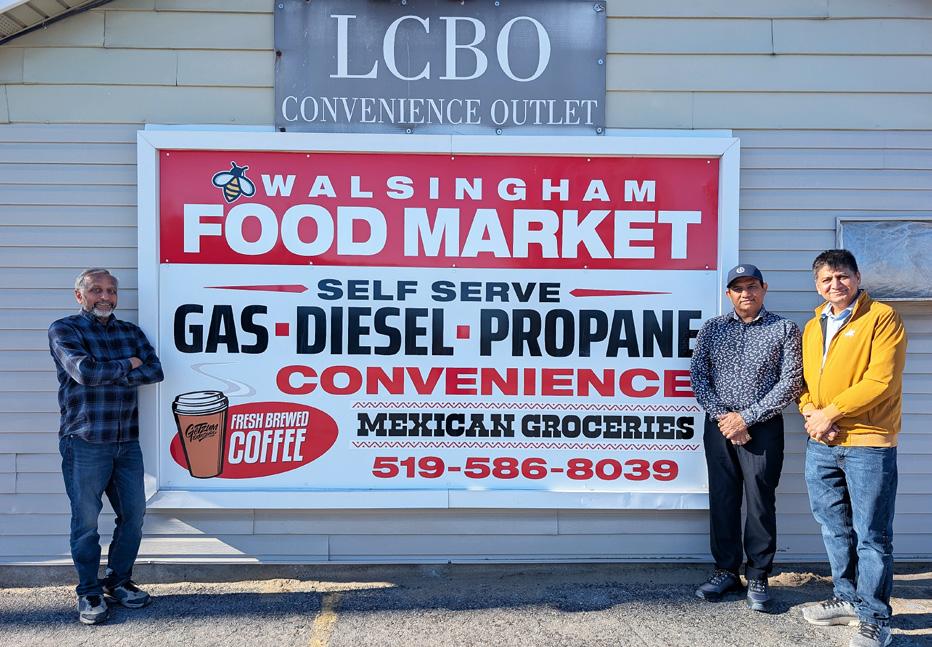
In its small town, Walsingham Food Market, Busy Bee is a cornerstone of local life. Serving a community of 800–900 residents, the store has a reputation for exceptional service, thoughtful care and genuine community engagement. The family-owned business goes above and beyond to ensure every visitor feels welcome. With many migrant workers from Mexico and Jamaica frequenting the store, the owners and staff make an effort to learn key phrases to ease communication and make customers feel at home. The market offers a carefully curated selection of local artisanal products, everyday essentials, specialty finds and practical necessities. Since taking over four years ago, the ownership team introduced a walk-in beer cooler, which is a favourite among residents. The store emphasizes value over volume, providing fair pricing and high-quality products while maintaining a friendly, personal shopping experience. Beyond retail, the owners actively supports local events, charitable initiatives and projects. For its heartfelt service, innovative offerings and dedication, Walsingham Food Market, Busy Bee stands out as a true model of small-town entrepreneurship.
Guelph, Ont.
Owner: Jay Modi
Since opening its doors in 2011, Willow Smoke and Cigars has grown into a well-known destination for convenience retail under the leadership of Jay Modi. Built on strong relationships and attentive service, the store offers a wide assortment of products ranging from snacks, lottery tickets and beverages to tobacco, cigars, alcohol and popular gaming items such as Magic: The Gathering and Pokémon cards. The business has become the highest-volume independent retailer for tobacco sales in the Guelph market, reflecting its loyal customer base and consistent demand. Despite overseeing multiple ventures, Modi is a responsible retailer and actively involved in day-to-day operations. His hands-on approach allows him to connect with customers personally and respond quickly to changing preferences. Retailers throughout the Greater Toronto Area also look to him for advice on product selection and industry trends due to his vast knowledge. Innovation has played a key role in the company’s growth. When Ontario expanded alcohol sales in convenience stores, Modi worked with regional brewers to showcase local products. He also expanded the business by renovating the site to introduce a dedicated vape shop. Alongside business success, Modi supports community initiatives through regular donations to the local food bank, reinforcing the store’s place as a valued neighbourhood retailer in the Guelph area.
Several locations, Alta. and B.C. Owners: Vikram Bhown and Tejbir Singh
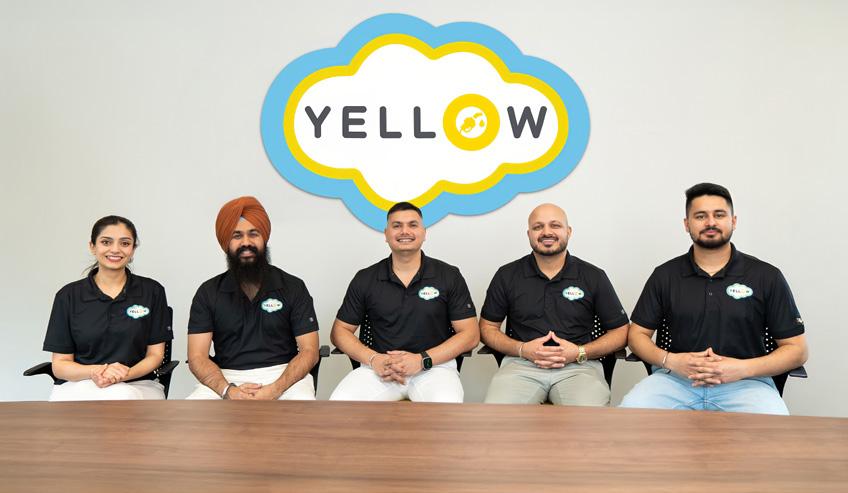
Built on years of frontline experience in fuel retail, Yellow Stores is emerging as a distinctive independent brand focused on people, service and community connection. Headquartered in Whiterock, B.C., the company was created in 2022 when the founders, Vikram Bhown and Tejbir Singh, identified a gap in the industry: a need for fuel brands that prioritize people while offering a clear and recognizable identity. The owners began their careers as gas jockeys, gaining firsthand experience serving customers on the forecourt before advancing through supervisory and management roles. That background helped shape the company’s leadership style in which owners and managers are encouraged to work alongside their teams rather than directing from a distance. At Yellow Stores, employees are trained to focus fully on each customer interaction, reinforcing a service culture where visitors feel respected and valued. The brand also emphasizes competitive fuel pricing, a seamless convenience experience and a commitment to quality across its locations. Drawing on more than a decade of industry knowledge, the founders built Yellow as more than just a place to refuel. The company aims to create welcoming spaces where customers can rely on friendly service and dependable essentials. Today, Yellow Stores continues to grow while maintaining the values that inspired its creation—community, trust and exceptional customer care CSNC



















BY MICHELE SPONAGLE
Protein-hungry Canadian consumers, looking for functional foods to support health goals like weight loss, drive higher sales and innovation for meat snacks
COFFEE, candy, tortilla chips and ramen? Their growing availability shows just how focused Canadians have become on boosting their protein intake to support their health and weight-loss goals. The trend has created a sweet spot for the snack category—especially meat snacks.
Kevin Lacey, senior vice-president of sales, CPG and pharma at Environics Analytics, has taken a deep dive into snacking and beverage consumption through the lens of GLP-1 usage. He cites data from the Dalhousie University Agri-Food Analytics Lab showing that about two million Canadians are currently using the prescription medications for weight loss.
That number is expected to soar. By 2030, as many as 40% of Canadian households could include a GLP-1 user.
The shift is already reshaping on-the-go snacking occasions. As consumers restrict calories, they are increasingly reaching for foods with high-density nutrition.
To capitalize on the protein trend, Lacey says convenience stores should pay close attention to their product mix, fine-tuning their selection of functional foods to match

the demographics of each location.
GLP-1 users tend to fall into three groups: suburban seniors in lower- and middleincome households, single urban dwellers in younger, smaller households and suburban high-income families.
“The key for c-stores is to communicate their offerings effectively to consumers,” he says. “They’re willing to pay more for snacks with nutritional benefits, while still spending on intentionally indulgent ones.”
The outlook bodes well for meat snacks. In Canada, the category is forecast to grow at a compound annual growth rate of 5.5% between 2021 and 2026.
“For Jack Link’s, protein isn’t a trend,” says Curtis Davison, vicepresident and general manager for Canada. “It’s what we’ve been offering consumers for more than 40 years and it’s what we’ve built our entire business on.”
Davison says demand for protein continues to grow as consumers
seek products that deliver health, taste and convenience.
“We’re glad consumers have become more interested in not only consuming the right amount of protein but doing it in the right way with the right products,” he says. “That’s why Jack Link’s continues to offer a wide variety of products, flavours and formats to meet consumers wherever they are on their portable protein snacking journey.”
He has also seen meat snack shoppers become more informed and curious about the foods they choose for themselves and their families. Increasingly, they gravitate toward transparency—real ingredients and products they feel good about eating.

“Brand trust continues to be a huge deciding factor at the shelf,” he says. “With so many choices, consumers are leaning toward brands they believe are honest, consistent and authentic.
“Great taste still matters, but it must come with quality and credibility baked in. The bar
has been raised and it’s reshaping how we all show up in the market.”
Jack Link’s has grown into a leader in the Canadian meat snack category. The company produces more than 800 million meat snacks annually for customers in more than 50 countries.
Part of its success stems from a steady pipeline of innovation, including zerosugar beef stick products and convenient multipacks designed for Canadians seeking snacks for an on-the-go lifestyle.
The brand is also leaning into transparency. A new threeingredient line includes beef sticks and air-dried beef slices made with just vinegar, salt and grass-fed beef.
free turkey and chicken sticks, antibiotic-free turkey jerky and zero-sugar, 100% grass-fed beef jerky.
“At Jack Link’s, our commitment goes far beyond placing the word ‘protein’ on a package,” Davison says. “Our products have always been rooted in real, authentic meat protein—long before it became such a soughtafter nutritional benefit.”

In early 2027, the brand plans to expand the offering with a better-for-you lineup that includes antibiotic-
Eric Smith, president of sales and marketing at Glenwood Snacks, says diet trends such as carnivore, low-carb and high-protein eating are significantly shaping sales.
“Consumers are drawn to meat snacks for their health benefits, and the category continues to trend positively,” he says.
“We differentiate ourselves through innovation, quality and a commitment
to uncompromised ingredients and customer service. Our team works diligently to remain competitive in every aspect of the business.”
Founded in Oregon in 1975, the company has made innovation and quality key priorities. Last year it launched two new flavours in Canada—Maui Sweet Onion and Sweet Bourbon—in 80 g and 230 g formats.
“Achieving these flavour profiles required meeting challenging ingredient criteria, but our team succeeded in creating these offerings to support performance and growth,” Smith says.
He adds that convenience stores can boost sales by highlighting the brand’s new flavours, varied pack sizes and merchandising strategies to create space for the full product lineup.
“Primary growth is being driven by millennials and generation Z consumers, who account for 34% of the protein snack category,” says Dion Comba, national convenience channel
development consultant at Atwood Heritage.
He adds that shoppers aged 25 to 40 seeking healthier, proteinfocused snacks—predominantly men—are driving growth, while female purchases are also rising as healthier options expand.
Consumer preferences are evolving as well.

Dion Comba
“Consumers are more aware and educated about what’s in their food and gravitate toward ingredient transparency and clean labels,” he says.
“Smaller, bite-size grab-and-go formats and innovative flavour profiles are also helping maintain engagement and drive adoption.”
A range of price points helps satisfy valueconscious shoppers, while some consumers remain willing to pay a premium for higher-end attributes.
Comba says the biggest driver remains demand for high-protein meat snacks.
“Consumers are seeking cleaner ingredient lists and functional snacks that align with GLP-1 use and keto or paleo dietary preferences,” he says.
Another emerging trend is protein diversity, with game meats such as bison, elk, venison and wild boar appearing more frequently in products aimed at a broader range of consumers.
Innovation also remains critical. Bite-size formats grew by 19% last year, while meat sticks increased by 11%. Traditional jerky remains stable but is growing more slowly.
New products increasingly draw inspiration from global flavours, including spicy chipotle.
According to Pete Vanslyke, CEO of Great Canadian Meat Company, the made-in-Canada movement has become one of the biggest drivers in the meat snack category.
“Tariffs, trade and politics continue to keep this top of mind for consumers,” he says.
affordability.
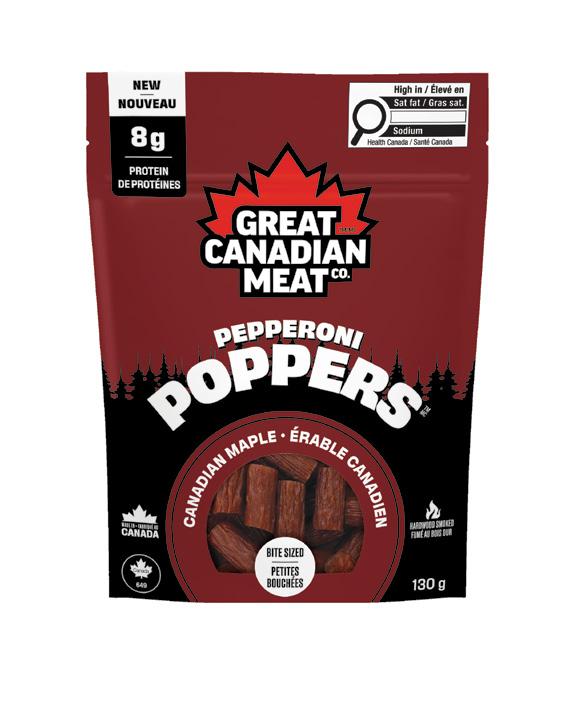
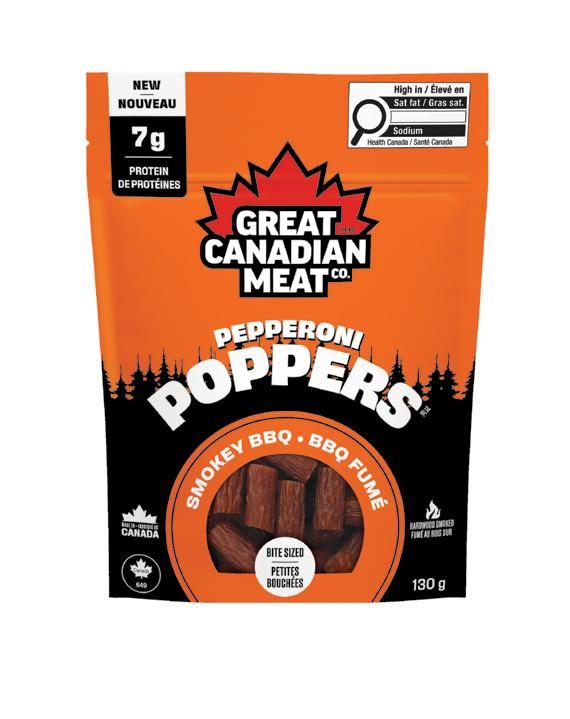
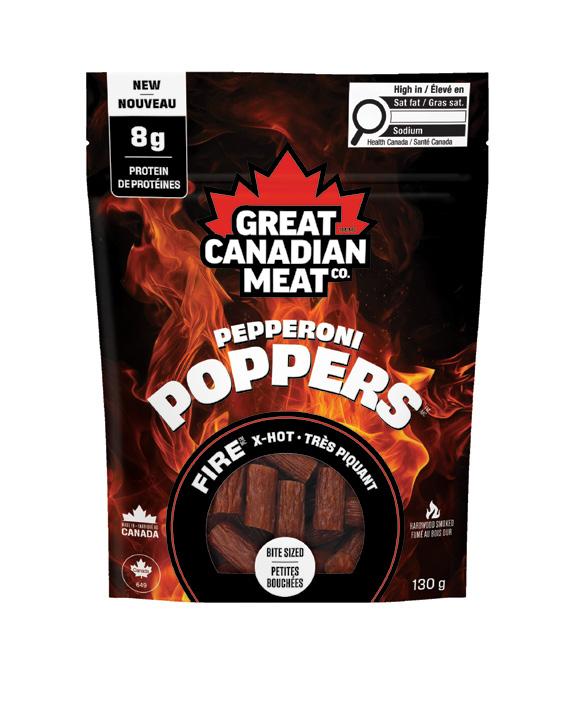
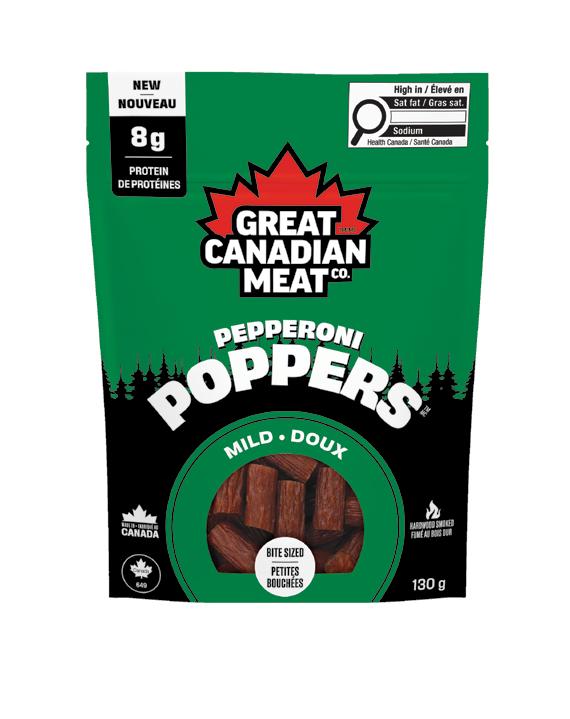
Vanslyke says meat stick sales are now outpacing jerky two to one. Great Canadian Meat offers a full lineup of single sticks and says it is the convenience store category leader in large-format meat sticks—more than 100 g— including Great Canadian Meat Mini Pepperoni, Six Pac and Pepperoni Poppers.
As snacking replaces traditional meal occasions, demand for portable protein continues to grow.
“Snackable protein is surging, and proteinforward snacks are among the fastest-growing categories, with meat snacks outpacing chips and bars in dollar growth,” Vanslyke says.
Flavour remains a key driver of trial as consumers gravitate toward bolder and hotter profiles, according to Ipsos.
Smaller formats are also gaining traction. Mini or bite-size snack launches have grown 18% year over year across North America, according to Euromonitor International.
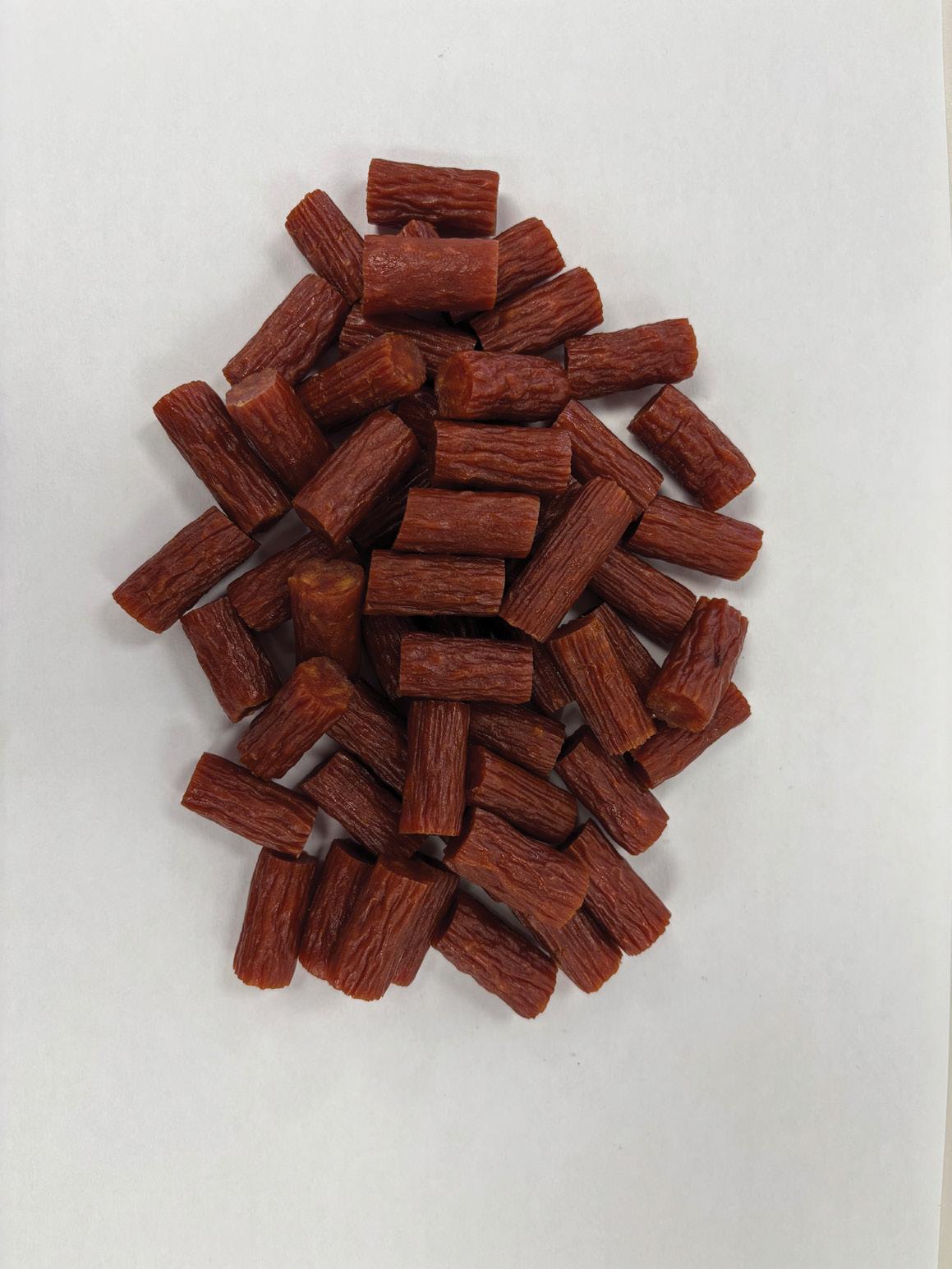
Great Canadian Meat Co.’s new Pepperoni Poppers—available in Fire X-Hot, Canadian Maple, Mild and Smokey BBQ varieties—aim to deliver those bold flavours.
To maximize sales, Vanslyke says convenience stores should highlight “Made in Canada” messaging in their planograms, as shoppers actively look for domestic products.
Retailers should also capitalize on impulse buying with displays at checkout and position products near beverages—particularly beer— to increase basket size and profit.
Finally, he recommends keeping planograms updated with the latest innovations to maintain consumer excitement.

In 2025, NIQ identified that 45% of Canadian consumers in fast-moving consumer goods categories are either Canadian loyalists (13%) or American avoiders (32%).
Pete Vanslyke
At the same time, rising beef costs are pushing up jerky prices and affecting
The traditional core meat snack buyer remains bluecollar men aged 25 to 54 seeking convenient, savoury and filling snacks.
“Younger gen Z and millennial consumers are important for the long-term health of the category and tend to be more snack- and protein-oriented,” Vanslyke says.
“Women have historically under-indexed in the meat snack category, but protein content, portion-controlled meat sticks and clean ingredient labels are helping attract more female shoppers.”
Though beef might be top of mind when it comes to meat snacks, other types of protein are carving out a niche of their own in the market. Maple Leaf Foods offers Mighty Protein Chicken, while bison is the star from Alberta producer Rangeland Bison.
It’s part of the premiumization trend. “People are looking beyond traditional beef jerky and sticks and exploring different proteins, cleaner ingredients and more transparent sourcing,” says Dean Andres, manager, Rangeland Bison. “That’s where bison really stands out. It’s lean, nutrientdense and offers something different in a category that has been dominated by beef for decades.”
Consumers are willing to pay more for quality products that meet their nutritional needs. High-protein eating has become mainstream.
“Whether it’s people following a carnivorestyle diet, focusing on fitness, or even consumers using GLP-1 medications who are prioritizing nutrient-dense foods in smaller portions, protein is front and centre,” Andres notes. “Meat snacks fit perfectly because they’re naturally high in protein and low in carbs. Bison takes that a step further because it’s one of the cleanest meats available, so you’re getting protein without the antibiotics and hormones used in many other protein sources.”
C-store owners will find that consumers are much more intentional about what they eat. They’re reading labels. They’re asking where their food comes from and paying attention to ingredients.
Andres feels that, in the meat snack space, that means greater appeal of cleaner ingredient lists, fewer additives and higherquality proteins: “People want something that feels both healthier and more premium, and bison checks both of those boxes.”
Who’s eating meat snacks now is worth paying attention to. Historically, meat snacks were marketed heavily toward men and outdoor lifestyles, but that’s changed dramatically, says Andres. “Today the audience is much broader. We’re seeing strong interest from health-conscious consumers, busy professionals, parents looking for better snacks for their families, and a growing number of women who are focused on protein as part of their nutrition and fitness routines. What ties these groups together is that they want snacks that are convenient but still align with their health goals. That’s where bison bites fit really well. They’re simple, nutritious and easy to take anywhere.”
CSNC

BY CHRIS DANIELS
CANADIANS ARE THIRSTY—for fountain pop. In the 12 months ending December 2025, they drank 427 million fountain soft drinks, according to the Ipsos Foodservice Monitor. That’s up 6% from the previous year, making fountain drinks the top-selling cold beverage in foodservice.
The surge hasn’t gone unnoticed at Tim Hortons, the country’s largest quick-service restaurant chain, which is rolling out fountain drink dispensers at select locations nationwide. Using Coca-Cola Freestyle units, customers will be able to choose from flavour combinations of Coca-Cola, Diet Coke, Fuze and other brands via touchscreen.
Speaking on the company’s fourth-quarter and year-end earnings call in mid-February, Axel Schwan, president of Tim Hortons Canada and U.S., said the machines will “play a key role” in driving more combo sales.
He also noted that cold beverages are taking a bigger share of the chain’s drink business. They accounted for 27% of beverage sales in the fourth quarter of 2025—up 8.6% year over year despite colder-than-usual December weather, and the highest fourth-quarter share on record.
“In the world of foodservice, beverages are having a bit of a comeback,” says Emma Balment, director in the food and beverage group for market strategy and understanding at Ipsos.
Despite high inflation, she says, “2025 saw beverages bought for immediate consumption grow across most foodservice segments: convenience, grocery, full-service and quick-service restaurants.” Coffee shops were the outlier.
“The immediate-consumption beverage customer is driving growth for the convenience channel across a variety of categories, including luring the loyal coffee consumer away from those coffee shops,” Balment adds.
While quick-service restaurants account for most fountain soft-drink growth, convenience stores have been moving further into foodservice. Still, fountain drinks are lagging behind other cold beverage formats in that channel.
“Fountain soft drinks are not keeping up with the trend at c-stores, where customers are flocking to their more preferred formats for cold beverages: bottled, slush or canned—in that order,” she says.
Balment suspects this is partly because many convenience stores have focused on promotions pairing canned and bottled drinks with snacks such as potato chips and chocolate bars.
“C-store beverage customers are increasingly deal-conscious, jumping their deal rates up by five points versus a year ago,” she says. “Those can-and-bottle bundle deals flagged across coolers may be having an impact.”
As convenience stores continue innovating to compete with quick-service restaurants for the “cheap and cheerful” occasion, she says retailers may want to reassess
their fountain programs.
Beverage manufacturers are also stepping up their fountain initiatives in Canada.
Keurig Dr Pepper Canada (KDP Canada) has launched a new program, though its main focus for convenience stores lies elsewhere (see sidebar).
PepsiCo Canada is also investing in fountain drinks, highlighting their ability to reach a broad customer base.

“Fountain beverages play an important role in meeting the needs of a broad and diverse consumer base,” says Emily Sweet Kretz, general manager of away-from-home operations at PepsiCo Beverages Canada.
“Zero-sugar options resonate strongly with generation Z and millennials, while diet beverages continue to hold relevance with older consumers,” she says. “Our diverse flavour portfolio—across brands like Mountain Dew, Brisk, 7UP, Crush and Mug—also supports strong food pairings.”
That’s an important consideration as convenience stores expand their foodservice offerings and compete as a destination for meals and beverages.
PepsiCo is counting on fountain drinks as a driver of overall beverage growth.
“We see strong alignment between fountain preferences and bottle and can innovation, with taste, refreshment and flavour being the top drivers across both,” says Sweet Kretz.
“It also allows consumers to sample flavours and build affinity, which can drive purchases of other formats in channels such as grocery.”
In partnership with convenience retailers, PepsiCo provides “a range of merchandising and promotional tools,” she says.
These include digital screen takeovers in stores, social media assets highlighting exclusive flavour launches, and signage around fountain or frozen beverage machines.
“In select cases, we also collaborate on custom or limited-edition cups tied to broader brand programs or product launches to help elevate the in-store experience,” she adds.
For convenience retailers, the opportunity is to align with this foodservice trend and expand retail offerings to include high-margin fountain beverage programs.
In summer 2025, Keurig Dr Pepper Canada (KDP Canada) launched a new fountain platform.
The maker of beverages including Dr Pepper, Canada Dry, Crush and Nestea is rolling it out nationally, though the main focus is restaurants and the service sector. In the convenience and gas channel, fountain products are still distributed through agreements with various partners.
But the company isn’t sitting out the cold beverage boom.
KDP Canada is rolling out a new Nestea-branded cooler program for the convenience and gas channel nationwide following what it describes as a successful test-and-learn pilot in Atlantic Canada.

“We partnered with convenience retailers to evaluate how branded equipment could enhance product visibility and stimulate impulse purchases,” says Justin Wellwood, manager of enterprise strategy at Van Houtte Coffee Services, the company’s commercial coffee division. “The results were very encouraging.”
The platform features compact Nestea-branded mini fridges designed to create a clear destination for cold beverages in store while showcasing ready-to-drink products.
Wellwood says the coolers also make it easier for retailers to introduce additional beverages from the KDRP Canada portfolio, including Electrolit, Snapple and Bai.
The program will continue to expand, he adds, including plans to introduce C4 Energy-branded coolers in 2026.
Fountain drinks are among the most profitable items in convenience stores, with margins around 80 to 82%. They also help boost combo sales. Earlier this year, Circle K introduced $5 meal deals that include a 20-ounce Polar Pop fountain drink.
Customization isn’t just about mixing flavours or adjusting ice levels: Drinks also lend themselves to refillable branded cups such as Polar Pop.
The cups have even sparked some creative DIY energy.
Rhinestone artist @ellazartists bedazzled her cup and shared it online. Circle K later reposted the design on its social channels— tapping into a broader trend of consumers turning drinkware into art.
Citing the convenience sector as a key growth driver, Verified Market Reports estimates Canada’s soda
fountain dispenser market will reach US$1.84 billion by 2033, up from US$1.29 billion in 2024—an annual growth rate of about 4.1%.
Retailers are increasingly upgrading to next-generation dispensers with digital touchscreens, remote monitoring, energy-efficient refrigeration, touchless dispensing and self-cleaning systems. Some newer platforms can also handle a broader range of beverages, from soft drinks and flavoured waters to teas and energy drinks. CSNC





From better-for-you energy shots to caffeine-packed gummies, new products give retailers more ways to boost category sales
BY REBECCA HARRIS
CONVENIENCE STORES HAVE long been the go-to spot for a quick pick-me-up, and energy drinks remain a top seller. But the category is evolving, as shoppers seek functional benefits, new flavours and novel formats that go beyond the traditional energy drink can.
“More shoppers are looking for clean energy options with simple ingredients and no sugar crash, and retailers that carry these products are seeing strong interest,” says Glen Pratt, director of sales at Nuvona, which distributes Proper Wild energy shots in Canada.
“Functional energy is also bringing new shoppers into the category, who may not traditionally reach for a large energy drink.”
Founded in 2018, New York-based Proper Wild offers a line of energy shots made with simple, all-natural ingredients. Each 74 mL serving contains 100 mg of caffeine derived from green tea and 120 mg of amino acid L-Theanine. The shots are made with natural juices and contain no artificial sweeteners or flavours. They’re also vegan, GMO-free, dairy-free, soy-free and stevia-free, and come in three flavours: Peach Mango, Blackberry and Strawberry Kiwi.
Vincent Bradley, co-founder and CEO of Proper Wild, describes the development of his company as a personal project. Looking for an alternative to coffee, he found that many energy drinks are loaded with gut-harming, artificial, ultra-processed ingredients and preservatives.
“I gravitated towards matcha and learned that the best form of caffeine is often from green tea because of the polymers that encapsulate the caffeine,” Bradley says. “The other key element is L-Theanine, a natural amino acid that supercharges the caffeine, helping to enhance focus and energy. It also reduces negative side effects like jitters and the subsequent crash. They really are synergistic ingredients.”

Proper Wild’s target audience skews slightly female—around 55% to 60%, says Bradley. “When you look at the historical data around energy, the main consumer is male, and all the branding is very masculine. We wanted to be an energy product for everyone.”
In addition to its energy shot lineup, Proper Wild offers strawberry clean-energy gummies, which also contain caffeine and L-Theanine. They’re currently sold in the U.S., with plans to launch the gummies in Canada. Bradley says big selling points for gummies are convenience and familiarity. “Everyone grew up eating gummies and fruit snacks, and the format is exploding within the dietary supplement space.”
Another emerging player in the functional energy space is Ryde, which sells Energize—a 60 mL energy shot containing caffeine, ginseng extract and vitamins B1 and B6. The brand, owned by BAT’s Water Street Collective, sells two other functional shots—Relax, which contains chamomile, L-Theanine and ginseng extract, and Focus, which contains L-Theanine, caffeine and ginseng extract. All three varieties have no sugar and no calories.
“Ryde Energize has 120 mg of caffeine and it’s beautifully mixed with B vitamins and the objective is to help you fight fatigue with no sugar crash,” Kervy Diaz, country manager Canada at Water Street Collective. “All three products are designed to be portable, fast-acting and easy—basically offering well-being in one shot.”
Pasquale Bufo, vice-president of customer management BAT, adds the wellness market is booming. “Consumers want quick but credible benefits. Yes, there’s the better-for-you market with the pills, powders and long routines, but there’s a clear shift toward functional beverages that are easy to use and provide immediate, science-backed benefits.”

For convenience and gas retailers, this represents a huge growth opportunity, adds Bufo. “These are consumers who are on the go. They’re either tired, distracted, or transitioning between moments, and they want to be able to go in and pick the product that’s right for them—an ideal functional shot. And C&G answers to that need incredibly well.”
5-Hour Energy, which pioneered the energy shot category more
than 20 years ago, remains a category giant. Its three core flavours—Berry, Grape and Blue Raspberry—remain top sellers in convenience stores. Today, 5-Hour Energy is investing in new flavour development, as flavour innovation is one of the most notable trends in the category, says Yvon Bourgeois, VP of sales at Hilary’s Salesmaster Inc., which distributes 5-Hour Energy in Canada.
“Consumers are increasingly interested in new taste experiences, and the category is responding with a broader range of flavour profiles, including sweeter and more adventurous options,” he says. “Flavour variety has become an important driver of both trial and repeat purchase.”

Convenience and efficiency are also key trends. “Consumers are looking for products that deliver functional benefits quickly and without complexity,” says Bourgeois. “Energy shots remain uniquely positioned in this regard because they provide a simple, fast solution that fits easily into busy lifestyles.”
Keurig Dr Pepper Canada (KDP Canada) recently enter the betterfor-you energy space, inking a deal with Nutrabolt Distribution to launch Bloom Sparkling Energy. The launch prioritizes the convenience channel, according to a release: “This market entry reflects KDP Canada’s approach to building emerging brands with focus and precision, prioritizing the convenience channel, where energy beverages are most frequently purchased and where new products gain traction quickly through immediate consumption occasions.”
Jean Gagnon, VP cold beverages, KDP Canada, says, “People are increasingly looking for healthier options that don’t compromise on taste or experience. Bloom Sparkling Energy fits squarely at the intersection of taste and function, and it perfectly complements our energy platform with a female focus offering. Bringing an option for a crowd that is underrepresented in the category.”
between energy and tea. “A lot of energy drinks in the market today are developed in a lab, whereas yerba mate is developed in a field.”
Yerba Madre, which rebranded in 2025 from Guayaki Yerba Mate, is working to carve out a new category in Canada. Globally, the yerba mate market is expected to grow from US$2 billion in 2025 to US$3.46 billion by 2035, and Clark says momentum is building in Canada.
“People are a lot more aware of what they’re consuming and they’re realizing that the food and drink they consume throughout the day can affect their mood and can fuel their lifestyle—and you don’t have to do it in an unhealthy way,” Clark says.
For retailers, the biggest opportunity is that functional energy products and hybrid brands like Yerba Madre are high-revenue, highprofit items. Clark says while larger beverage brands tend to dominate planograms, it makes sense for retailers to carve out a section for an alternative offering. “Consumers are looking for something that adds function, not just quenching thirst or hitting on one specific need state. You want to offer products that offer a variety of need states—both refreshment and energy, or refreshment and mood support.”

Though not marketed as an energy drink, Yerba Madre sells organic, shade-grown yerba mate beverages in a variety of flavours. The brewed and sparkling drinks contain yerba mate extract, sourced from the naturally caffeinated leaves of the yerba mate tree native to South America. “It’s not your traditional energy drink,” says Eric Clark, VP, GM of International, at Yerba Madre, who describes it as a hybrid
Energy is also expanding into the gum category. Sunii Energy Gum delivers 50 mg of caffeine, along with taurine and B vitamins. CEO and founder Marie Thiffault says Sunii is based on the same concept as nicotine gum. “It’s your regular gum base that you chew on—it tastes like mint—and then you add active ingredients… And because it’s buccal absorption, it will kick in quicker than a coffee.”
Though Sunii initially targeted extreme athletes, Thiffault says the brand now has a much broader audience. “I started very niche, but it’s definitely snowballing. It’s anyone who wants the energy from coffee but doesn’t feel that it’s a convenient moment to have one—that’s when Sunii comes in.”
For retailers, Thiffault says Sunii is a fun, appealing addition—and that’s true for many innovative energy products. “You get to create some curiosity with existing customers because you have something new to offer.”
1
While innovation is driving the energy category, success at retail comes down to the fundamentals. Glen Pratt from Nuvona (Proper Wild) advises retailers to keep the approach simple: visibility at the front end and the right assortment. “First, checkout merchandising at the front counter is critical,” he says. “Energy shots are impulse products. When they are part of the checkout set, they naturally become an easy add-on purchase. Second, make sure the assortment reflects where consumer demand is going.”
2
Since energy shots are impulsedriven products, Yvon Bourgeois from Hilary’s Salesmaster (5-Hour Energy) says the most effective placement remains a dedicated rack at the front counter where customers naturally make purchasing decisions. Strategic pricing and periodic promotions also help encourage trial. “This allows retailers to grow the energy shot category while also expanding overall energy sales,” says Bourgeois.
3
Educated employees who can help explain the product and its betterfor-you benefits are also key, notes Pasquale Bufo from BAT (Ryde). “Because our products are sciencebacked, we’re working significantly outside of store to build awareness and bring consumers into store,” he says. “But when they’re in store, the educated staff of our C&G partners is a must-have. CSNC

BY EMMA BALMENT
Now is the time to invest in foodservice as consumers crave value, speed, flexibility and fun in a challenging economy
2026 COULD BE the year convenience stores’ contribution to the Canadian foodservice industry surpasses $4 billion. Customers seeking fully prepared foods and beverages for immediate consumption have driven double-digit growth in convenience stores over the past three years, according to the latest data from Ipsos Foodservice Monitor (FSM). This growth is not limited to quick beverage or snack occasions, but extends to breakfast, lunch and dinner.
Each spring, Ipsos releases its foodservice trends in the Vantage Report, and this year convenience stores are playing a heroic role in the story of “Adapt and Endure.” Consumers are coping with what Ipsos calls an “endurance economy.” As the name suggests, consumers are expected to remain financially pessimistic for the long haul, making it the “design brief of the decade.” The Vantage Report explores the most impactful ways consumers, operators and suppliers are adapting to drive growth and keep customers coming through the doors of foodservice establishments. Convenience is both driving and benefiting from these trends.
Foodservice stakeholders may be nervous when they hear consumers declare, “I should make more food at home and visit restaurants less.” Indeed, some Canadians have acted on those intentions or have had no other choice. And yet foodservice traffic and spending continue to eke out modest growth as boomers and zoomers (generation Z) pick up the slack.
Young consumers have long favoured c-store foodservice, and the channel is benefiting from their loyalty. Gen Z has led a trade-down behaviour, choosing convenience foodservice over quick-service restaurants (QSRs). Even middle-aged Canadians have caught on to this “hack.” Convenience stores’ ability to win share has been made possible by
years spent developing foodservice offerings that are truly competitive with QSRs.
There is a lot to unpack in this trend, but the focus here is on how consumers are purchasing from convenience stores in new ways and for new reasons. A new standard for convenience in foodservice allows consumers to complete the shopping and decision-making process off-site via digital access. For 7% of customers, opportunities to influence purchases are happening in an app. For brands without proprietary apps, partnerships with thirdparty aggregators—and how those platforms represent the brand—are essential.
In a foodservice market where “I’m hungry” is no longer a sufficient reason to spend, growth is increasingly tied to emotional and social occasions. Consumers looking for an operator to help facilitate gatherings with friends and family are helping keep the industry afloat. In this climate of adaptation, they are also looking beyond the traditional restaurant dining room. Gen Z is the most likely to choose a convenience store to source food and beverages for social occasions, driving growth in the channel.
One of Ipsos’s more provocative thought leaders, Paul Acerbi, is known for declaring, “The affordability crisis is over!” That is only because the high cost of living has shifted from an acute crisis to a chronic condition. Price is now the deciding factor for many Canadians. Compared with QSRs, convenience stores are competitively priced for meals and have become a new “cheap and cheerful” option.
To save money and justify a visit, more foodservice customers are seeking deals— such as coupons, points, value menus or combos—or limited-time offers (LTOs).
These, in turn, tap into another emotional driver: exploration.
Foodservice operators have been more effective in drawing customers out of the home by appealing to a desire to explore culture through cuisine and try something new— something restaurants often do better than a home-cooked meal. Even c-stores benefit from this trend, as more global flavours and novelty items are on offer. The combination of a deal or LTO tied to an exploratory menu item is particularly compelling to today’s customer.
Consumers are finding it easier to forgo out-of-home purchases for snacks, baked goods and brewed coffee—items they can more easily prepare at home. The best-performing foodservice items tend to be hot comfort-food classics. Convenience stores are seeing this trend drive sales of hot dogs, breakfast sandwiches and fried chicken sandwiches. At QSRs, cold sandwiches are not competing as well with packed lunches, but simple and affordable options such as egg salad and delimeat sandwiches from convenience stores remain compelling.
Growing interest in cold beverages is not just about their suitability for pairing with entrées. The shift toward cold beverages and away from hot ones is a long-term trend occurring both within and across generations. Iced coffee, carbonated soft drinks, energy drinks and health-oriented beverages are all gaining share over hot coffee and tea. Convenience stores that serve younger consumers are on the front lines of these trends.
Foodservice customers are more open than ever to choosing convenience stores, but there is still room for more players. Currently, half of all convenience foodservice traffic goes to the top two chains. Gas station brands and independent operators are not capturing their share of this growth. Now is the time to consider investing in fresh foodservice solutions at your store. CSNC
Emma Balment is director of Ipsos, market strategy and understanding, Food and Beverage Group. Leveraging a team of industry experts and powerful syndicated data sets such as the FIVE Consumption Tracker, and the Foodservice Monitor, Emma specializes in uncovering growth opportunities for manufacturers, retailers and foodservice operators. emma.balment@ipsos.com
BY CHRIS DANIELS
Mobile accessories are a valuable and growing category, as impulse buys and travel needs drive demand
IT’S A FAMILIAR scene at Ure’s Country Kitchen: a customer rushes in, desperate to see if they carry phone chargers.
“Everyone seems to lose or forget where their phone charger is, and then their phone dies,” says Laurie Ure. She and her husband, Randy, own and operate the convenience store alongside a restaurant, ice cream parlour and mini-golf course near the scenic Lake Erie North Shore.
In addition to wall plug-in chargers, the store stocks USB cables and car chargers (12-volt adapters). Car chargers are especially popular in the summer, when travellers pass through on road trips to nearby cottages and campgrounds.
“We don’t sell a phone charger every day, but the chargers move consistently,” says Ure, adding that margins are solid, too.
Mobile phone accessories have overtaken prepaid phone cards in shopper demand.
According to CSNC’s 2026 C-Store IQ National Shopper Study, 8% of consumers bought an electronic or mobile accessory in the past month—two percentage points more than those who purchased a prepaid phone card (more on that below). Accessories include chargers, phone cases, Bluetooth earbuds, USB sticks, power banks and more.
“Everyone’s got a phone on them,” notes Steven Horvath, sales manager at 10K Distribution. While prepaid phone card customers often come in specifically to purchase them, accessories are frequently impulse buys.
“Customers will come in for some other reason but then see an item and think, ‘Oh, yeah, I need some earbuds or a new case for my phone.’ That’s why it’s important to place phone accessories in a high-traffic area or by the cash register,” he says.
That impulse buying can spike in the summer, “with several high-impulse accessory opportunities tied to travel, outdoor activities and heat,” notes Leena Halim, director of marketing at SRP Canada, a Richmond Hill, Ont.-based product supplier.
She points to accessories such as waterproof phone pouches, MagSafe and magnetic mounts for car dashboards on long road
trips, and power banks for when outlets aren’t available. She also highlights multi-tip charging cables.
“When your phone needs an eight-pin charger, your kid’s tablet is USB-C and the portable gaming console requires micro-USB.”
Horvath agrees, adding mini tripods to the
list—ideal for capturing summer concerts (he uses one himself) or setting up shots during outdoor gatherings.
He also stresses the importance of watching new innovations and major Android and Apple device launches, which often signal fresh accessory opportunities.
“Sometimes it’s trial and error,” he says, referring to sales in the category. Wireless chargers, for example, haven’t really taken off.
“This is a business that is always changing, innovating and surprising.”
CSNC reached out to several operators, some of whom said that while phone cards—prepaid cards that allow customers to add credit or service to their mobile phones—once sold like hotcakes, they have since phased them out of inventory.
Experts say this reflects a broader trend: Canada’s prepaid mobile market has been consolidating. Bell and Rogers now each offer prepaid service under a single brand—Lucky Mobile for Bell and Chatr for Rogers—after previously operating multiple options.
“Some mobile carriers are adjusting their prepaid offerings to move more customers to postpaid options,” says Phillip Pidoux-Koronya, director of content, wireless and long distance at InComm Payments.
Still, he says there remains ample opportunity in the segment for many c-stores. That’s reflected in the 2026 C-Store IQ National Shopper Study, which found that 6% of consumers purchased a phone card for their device.
Major c-store chains—including Hasty Market, Canadian Tire Gas+ stores and Circle K—carry both Lucky Mobile and Chatr, according to the brands’ websites.
Pidoux-Koronya adds that some stores could boost sales by expanding their inventory and promoting prepaid mobile products more aggressively.
“One mistake retailers can make is believing they can set up a gift card display once and forget about it,” he says.
“But a well-timed promotion or
awareness campaign can capture nearby shoppers who don’t realize their local store carries phone cards,” he adds, noting the market spans multiple consumer demographics.
“These shoppers come from a variety of income levels but prefer cash for reasons like privacy or budgeting,” PidouxKoronya explains. “They value phone cards so they don’t have to attach a credit card or bank account to pay for service.”
But he clarifies that these shoppers aren’t necessarily unbanked or underbanked.
“They simply prefer cash to manage their expenses. For those who do, having reliable places to regularly purchase the cards they need also creates opportunities for other in-store purchases.”
As with any gift card category, merchants should watch holidays and occasions when consumers seek phone cards.
Spring, for example, brings high school and post-secondary graduations.
“Families may look for a meaningful gift on the way to the party, such as a phone card to help the graduate pay for service as they enter the workforce or leave home for college,” Pidoux-Koronya says.
“Our teams at InComm Payments work with merchants to ensure promotional calendars and in-store displays feature timely messaging that captures consumer attention when they’re looking for specific cards.” CSNC



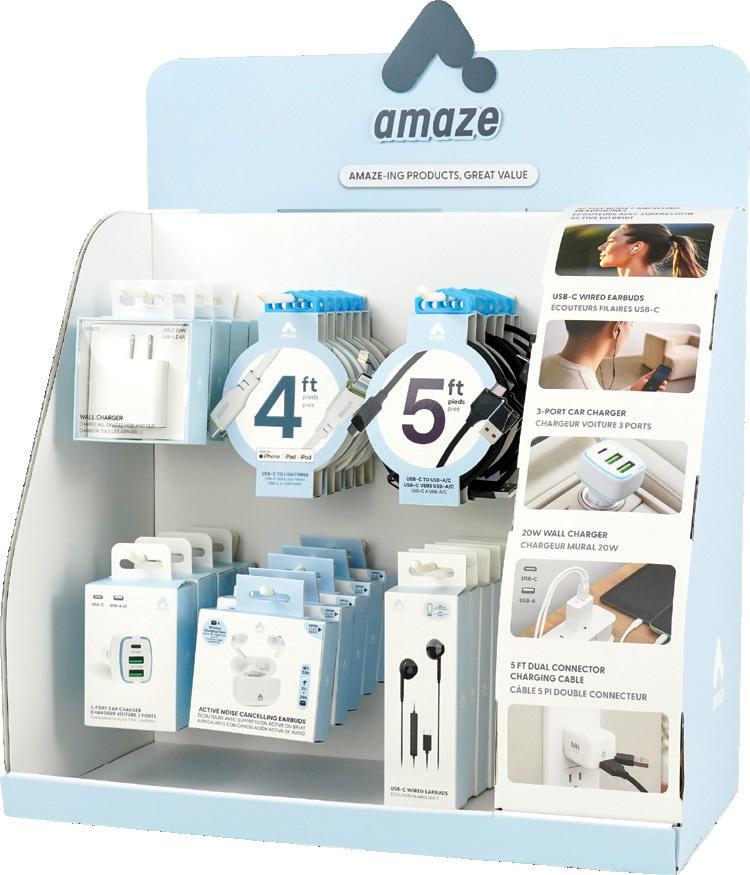



The Convenience Store News Canada Impact Awards are back for a milestone 5th year. We are on a mission to honour the retailers, manufacturers and solution providers who are moving the needle and making a difference in our industry.
Big or small, your initiatives matter. We are looking for difference-makers in four categories:
• Sustainability (initiatives around food waste, ethical sourcing, energy efficiency etc.)
• Diversity, Equity & Inclusion
• Supporting Employees
• Community Service/Local Impact/Giving Back
Submit a nomination for your company in one or multiple categories at no cost to join the ranks of our industry’s most influential change-makers. Selected honourees will earn national prestige with a featured profile in Convenience Store News Canada magazine and across our digital platforms this fall.
Don’t let your hard work go unnoticed.





Join us for a morning featuring: Peter Mohr
Business coach, speaker, retailer and podcast host
And the presentation honouring the 35 Inaugural Outstanding Independents Awards Canada Winners
Date: May 28, 2026
Time: 10 am to 11 am EST
Location: Virtual Event (Open to all Canadian Operators)
Cost: Free
From Operator to Owner: Practical Shifts for More Freedom, Clarity and Control
Running an independent business can easily pull you into every problem, every decision and every detail. In this session for independent convenience and gas operators, retailer, coach and speaker Pete Mohr shares practical ways to step back from the chaos, lead more effectively and build a business that works better without relying on you for everything. You’ll leave with clear, useful ideas to help you reduce frustration, improve focus and create a stronger business. The Inaugural

Thank you to Outstanding Independents Awards Canada’s Founding Partners



BY MARC GOODMAN
Convenience stores aren’t just a temporary stop— they’re a place where people can grow, develop and succeed in building a long-term career
JOBS IN THE convenience industry have often been treated like a stop along the journey; a first job or a short stint until the ‘real’ opportunity comes along. It’s time to reset this narrative so we stop selling our industry and our people short.
For many young Canadians, that first job sets the tone for what work can be. It shapes confidence and habits that stick. Working in convenience, our employees learn valuable skills including sales, merchandising, accountability, how to be part of a team, financial literacy and customer service skills.
The difference between convenience retail being a starting point versus a career opportunity depends on how retailers choose to invest in their people.
Across Canada, workforce challenges are top-of-mind for business leaders. Youth unemployment is at a 15-year high. Economists cite that young workers are facing intensified competition, as hiring slows and more experienced workers move into traditionally entry-level roles.
Further, population growth in Canada has stalled after years of rapid acceleration. Reduced immigration levels have tightened labour supply in many regions. An RBC economist described this as “a structural recalibration of Canada’s labour market,” one that requires employers to rethink how they attract and retain talent.
In a strained environment like the one we’re in, the focus must shift inward, to building a resilient internal talent pipeline. We might not have influence over external conditions, but there’s one thing we can control: how we
invest in our people. And we can give them a place to grow, develop and succeed.
It starts with fundamentals
Research supports what many retailers already know. PwC’s 2025 Global Workforce Hopes and Fears Survey found that retention is increasingly driven by fundamentals, like predictability and trust in direct managers.
At 7-Eleven Canada, we are laser-focused on getting those fundamentals right. But our secret formula is even simpler. It’s all about how we care about our people, and how we invest in their development so they can build a successful long-term career with us.
In practice, this means recognizing talent at all levels and creating a path for them to grow. From sales associates, to store managers, to jobs in category management, logistics and marketing, there is no shortage of excellent roles in the sector waiting to be filled by employees who are looking to grow with their company. It is up to business leaders to invest in their people.
We don’t forget that work should be enjoyable, too. Having fun is a core belief at 7-Eleven Canada, reflected in a positive culture and teams that support each other through the day-to-day.
7-Eleven Canada attracts talent with its competitive wages and benefits program, and we continue to invest in our people in practical ways. Our employee meal program ensures team members working long shifts have access to food onsite, helping them stay energized and supported.
Convenience retail offers something many
industries cannot. From day one, employees engage with customers, handle payments and contribute directly to store performance. They learn how to make snap decisions in a fastpaced environment.
Mastering these transferable skills is one way to become a candidate for promotion, but career growth is rarely a straight vertical climb. More often, it zigzags across functions and levels, with someone moving from store operations into category management, back into operations in a leadership role, and then into areas be it marketing, logistics or even maintenance. Where else can you have a career where you can be exposed to so many disciplines?
You don’t have to master everything, but you need to exhibit excellence in some areas where you have control. We tell our teams that ‘practice doesn’t make perfect; rather, perfect practice makes perfect.’
When employees see someone who started in a similar role move up, the idea of it happening for them becomes less far-fetched. The more success stories we can amplify from within, the more convenience retail becomes a viable career path. This visibility strengthens retention and attracts new candidates who want to continuously learn and grow, develop and succeed.
To become a place to grow one’s career, retailers must set the right conditions, including clear promotion pathways. If the conditions are consistent, people settle in, improve faster and perform better overall.
The average person spends 90,000 hours at work over a lifetime. For some, it’s how you get food on the table, support a family or pay for school. For others, it’s a social environment where lifelong friendships and connections form. For many, it’s a source of pride and belonging.
Front-line convenience jobs are essential. They keep small communities running. They serve customers at all hours, often under pressure.
As an industry, we need to set the conditions that help our employees grow, develop and succeed. That’s how convenience becomes more than a first job. It becomes a career worth staying for. CSNC
Marc Goodman is the vice-president and general manager of 7-Eleven Canada.



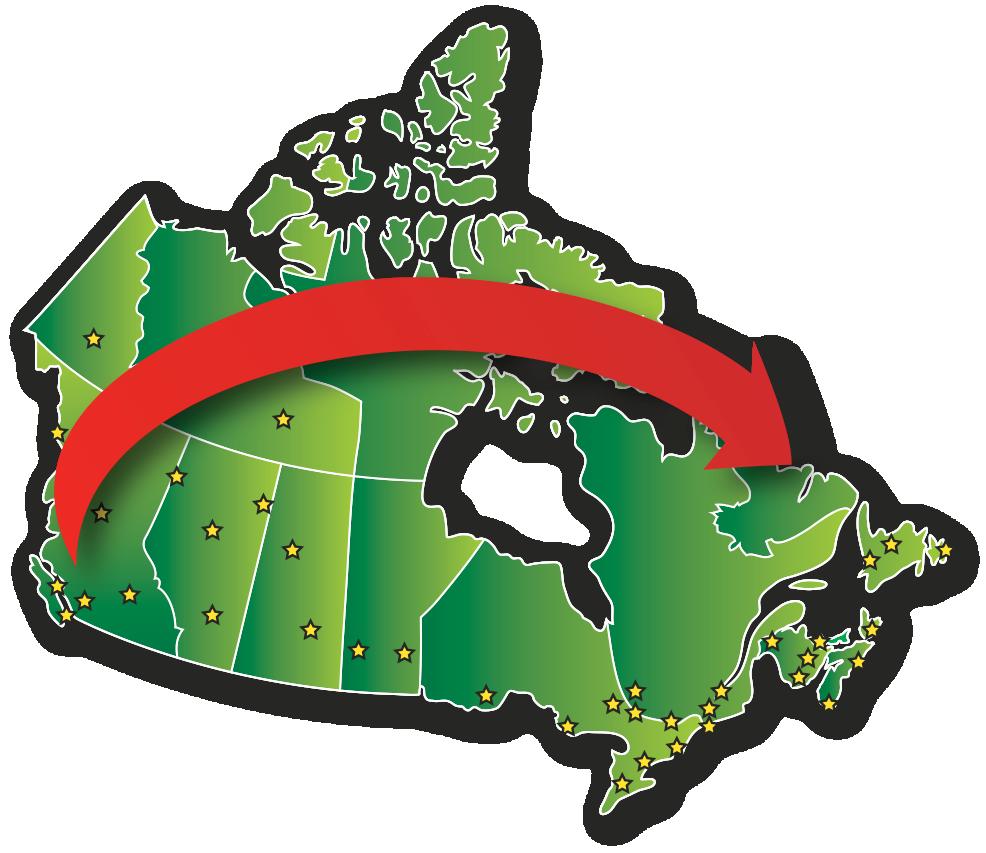






















By capitalizing on its most recent acquisition, Petro Service is enhancing its Western Canadian footprint and fast-tracking the development of next-generation, integrated service hubs
BY LOUISE LEGER
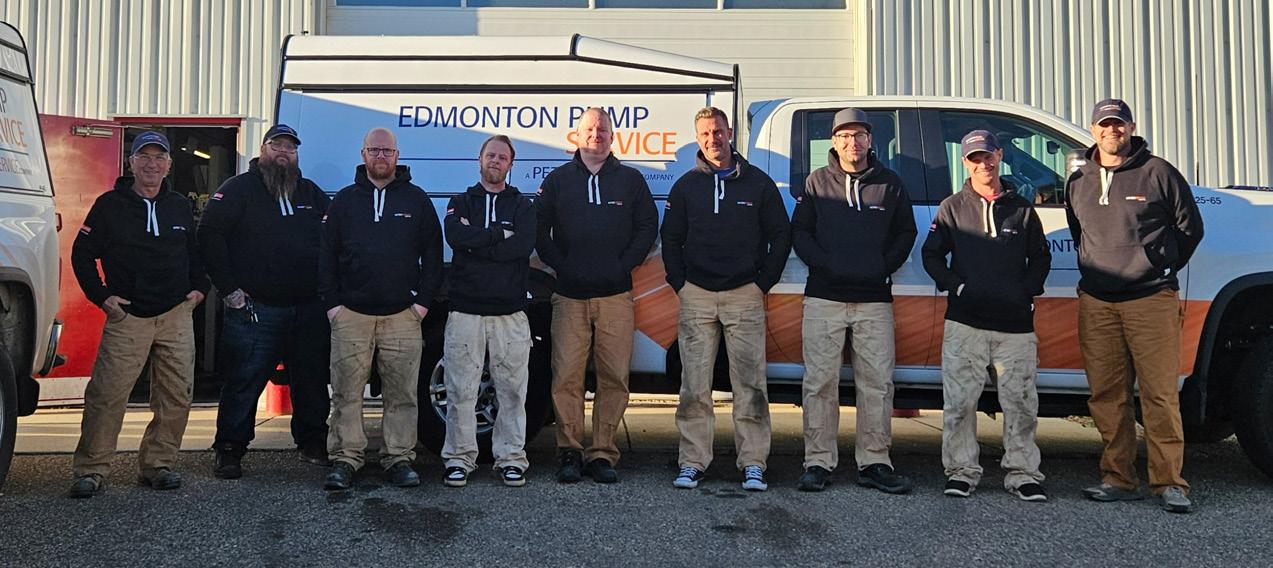
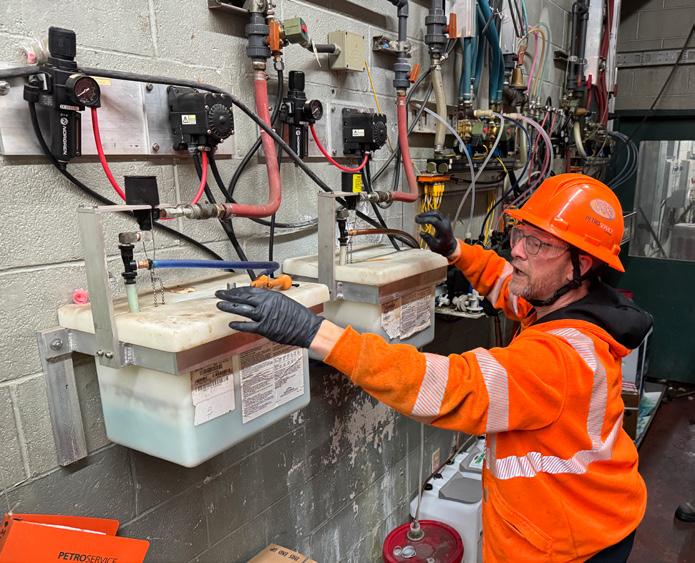
PETRO SERVICE LIMITED is expanding its footprint across Canada at a time when the very definition of a fuelling site is being rewritten.
With its February 2026 acquisition of Calgary-based MI Petro, the Saint John, N.B.-based company is strengthening its Western presence and accelerating its push toward a fully national service platform—one designed to support a new generation of retail “hubs” that combine fuel, EV charging, foodservice, car wash and convenience under one roof.
For Josh Ferguson, general manager of Western operations and director of sales and marketing, the move reflects both where the company has been and where the industry is heading.
“This acquisition is a natural next step as Petro Service continues building a coast-to-coast platform,” he says. “MI Petro further strengthens our ability to serve customers consistently across Canada.”
It’s a long way from the company’s modest beginnings.
Equipment. At the time, it was a team of just four employees, focused on building technical expertise in the field.
By 1992, the company had opened its first dedicated facility in Saint John, serving as a base for rebuilding gas pumps, distributing equipment and supporting field technicians. That foundation set the stage for its next phase: In 1998, the business formally became Petro Service Limited.

Petro Service traces its roots back to 1985, when it operated as a small business unit within what was then known as Commercial
From there, growth came steadily and strategically.
In the early 2000s, the company expanded its capabilities to include project management and construction, allowing it to take on more complex site builds. It also secured accreditation from Measurement Canada to perform inspections under the Weights and Measures Act, further strengthening its role with fuel retailers.
Over the past decade, that expansion has increasingly focused westward.
A series of acquisitions—including J.A. Robinson Pump Service in Winnipeg in 2017, Edmonton Pump Service in 2019 and K.W. Petroleum Services in Saskatchewan later that same year—extended Petro Service’s reach into Manitoba, Northern Ontario, Alberta and Saskatchewan.
The addition of MI Petro now fills a key gap, expanding operations in Alberta and British Columbia along with a highly experienced technical team and long-standing customer relationships.
“MI Petro brought deep-rooted relationships in Western Canada, along with a highly experienced technical team,” Ferguson says. “This acquisition strengthens our national capabilities and reach.”
With new branches in Calgary and Vancouver and expanded distribution rights for Gilbarco Veeder-Root products across Western Canada and the Territories, Petro Service is now positioned to support national customers with greater consistency from coast to coast.
That national reach is supported by a growing network of technicians positioned across the country to respond quickly when issues arise.
In addition to its services in major centres, Petro Service has placed remote technicians in markets ranging from Brandon, Man., to Thunder Bay, Ont., and Miramichi, N.B., helping ensure support is never far from the site. Equipped with onboard inventory, these technicians can diagnose issues and complete repairs on the first visit, reducing downtime and minimizing costs for operators.
For retailers, that kind of responsiveness is critical—particularly as sites become more complex and downtime affects multiple revenue streams, from fuel and EV charging to car wash and in-store sales.
This level of national service comes as fuel and convenience retailers rethink what their sites need to deliver.
“We’re supporting sites that bring together fuel, EV charging, car wash and convenience retail in one place,” Ferguson says. “The focus is on supplying, installing and maintaining sites that are easy for customers to navigate and efficient for operators to manage.”
That shift is reshaping Petro Service’s role from a traditional equipment and service provider to a broader infrastructure partner.
This expanded role extends across the full lifecycle of a site. Petro Service offers turnkey petroleum solutions that include project management, equipment distribution, installation, service and construction—capabilities it has been building for more than 15 years.
The company works with operators on everything from single-site installations to multi-site upgrades and full site planning, bringing together expertise in forecourt and canopy design with on-theground execution.
As sites become more complex, that end-to-end approach is increasingly valuable, allowing operators to move from concept to construction to ongoing service with a single partner.
The rise of EV charging is a key part of that evolution, but not a replacement for what came before.
“The shift toward EVs is expanding our service mix rather than replacing traditional fuelling,” Ferguson says. “Retailers are looking for partners who understand both conventional petroleum infrastructure and emerging EV solutions.”
That shift is also changing what retailers expect from their service partners. Beyond installation, there is growing demand for guidance on how to plan and integrate EV infrastructure into existing sites—everything from layout and traffic flow to power capacity and long-term scalability.
“There’s no one-size-fits-all answer,” Ferguson says. “The right
investment depends on the local market, customer patterns and where operators see their business heading.”
To meet that demand, Petro Service has been building out its capabilities in EV infrastructure, investing in both technology and talent. The company has expanded training for its existing technicians and brought on licensed electricians to support customers exploring EV solutions, while also ensuring it has equipment ready to deploy as projects move forward.
It has also partnered with established providers such as ChargePoint and FLO, giving customers access to proven equipment and ensuring Petro Service teams are trained to install and maintain those systems with confidence.
The result is a more integrated approach—one that mirrors the company’s long-standing role in petroleum and car wash infrastructure while extending it into emerging energy solutions.
While EV-related work is growing, traditional fuelling infrastructure continues to make up a significant share of PetroService’s business, and it’s expected to remain a core component for years to come.
At the same time, other parts of the site are becoming more important to overall profitability—particularly car wash operations, which are increasingly central to the modern fuel and convenience offer.
“Car washes have become an important part of the business for many fuel and convenience retailers,” Ferguson says. “They help drive steady revenue and repeat visits, making them a strong complement to fuel sales.” He adds that in North America, “Car wash is the fastest growing revenue stream for site operators.”
That growth is being supported by changes in customer behaviour, with more consistent, year-round usage and rising interest in premium wash options that prioritize speed, quality and convenience.
Technology is also reshaping the category. Advances in automation, water efficiency and payment systems are helping operators run more efficiently while improving the overall customer experience. Tools such as remote monitoring and detailed reporting on water and chemical usage are giving operators greater visibility into performance, while larger tunnel systems are enabling higher throughput at busy locations.
Environmental considerations are also influencing investment decisions, as operators look for systems that reduce water and energy use while still meeting customer expectations.
All of this reinforces the growing role of car washes within the broader hub model.
“As sites become more than just places to fuel up, car washes help bring in traffic and keep customers on site longer,” Ferguson says. “They’ve become an important part of the overall business mix.”
Longer term, he says the company will continue to evaluate opportunities for further growth—both geographically and across service lines.
After four decades of steady expansion, Petro Service is entering its next phase with a stronger national footprint and an expanded role in supporting modern fuel and convenience sites.
As fuelling locations evolve into multi-service destinations, the company is positioning itself not just to keep pace, but to help shape what comes next. OCTANE

BOARD OF DIRECTORS - 2026
PRESIDENT: Michael Saunders
- Mark VII Equipment
TREASURER: Matt Verity
- Matt Verity Consulting
VICE PRESIDENT: Jason Hands - Sunoco LP
VICE PRESIDENT: Rudy van Woerkom
- Belvedere Technical Services
PAST PRESIDENT: Karen Smith
- Valet Car Wash
Travis Braithwaite - ClearWater CarWash
Jeremy Enns - Enns Wash and Shine
Steve Hebb - Kilworth Car Wash
Michael Howe - WashLinks
Katar ina Popovic - Suncor Energy Inc
NATIONAL OFFICE
Heidi Loney Executive Director
Brynne Wrigley Director of Events
Constance Wrigley-Thomas, CAE Director of Operations Contact Info

4th Annual Car Wash for a Cure
The Canadian Carwash Association, in partnership with the Canadian Spinal Research Organization, is pleased to announce the launch of the 4th Annual Car Wash for a Cure, a Canada-wide initiative that encourages car washes to fundraise over two days to benefit spinal cord research.
On May 8 and May 9, 2026, Canadian car washes from coast to coast will participate in this initiative through a variety of activities that promote community building, philanthropy and contributing to a great cause Activities may include:
Car wash owner/operators asking their customers to donate spare change;
Donating a portion of their sales over the two days; Inviting their community leaders to participate and promote to their constituents;
BOARD OF DIRECTORS - 2025/2026
3228 South Service Road, Suite 109 Burlington, ON L7N 3H8 (905) 331-1768 office@canadiancarwash ca
S C A N M E
PRESIDENT: Michael Saunders - Mark VII Equipment
Creating a fun/interactive activity that engages their customers in the fundraiser;
Raising awareness of the Canadian Spinal Research Organization.
TREASURER: Matt Verity - Matt Verity Consulting
VICE PRESIDENT: Jason Hands - Sunoco LP
The Canadian Carwash Association encourages its members and stakeholders to participate in this initiative to not only give back but to help contribute to a strong and resilient car wash industry.
VICE PRESIDENT: Rudy van Woerkom - Belvedere Technical Services
There is no fee to register.
PAST PRESIDENT: Karen Smith - Valet Car Wash
Travis Braithwaite - ClearWater CarWash
Jeremy Enns - Enns Wash and Shine
Steve Hebb - Kilworth Car Wash
Michael Howe - WashLinks
Ayaaz Jamal - Express Auto Wash
Katarina Popovic - Suncor Energy Inc.
Thank you to our Sponsor:
Interested in supporting this event? Become a Sponsor

It’s getting easier for car wash operators to recycle water and mitigate waste
BY WENDY HELFENBAUM
CAR WASH AND auto detailing bring in $1.7 billion annually, and the sector is expected to grow 9.4% in 2026, according to a recent Ibis World report. However, automated car wash tunnels use up to 450 litres of water per vehicle. Rising water and sewer costs are driving innovation in the commercial car wash space as operators lean towards efficiency, sustainability and profitability.
Over the past decade, there have been advancements in water reclamation systems, including UV disinfection, ozone treatment, advanced filtration and gravity settling tanks to separate solid particles from water.
Water reclamation technology reduces water consumption while also lowering operating costs and mitigating waste. Plus, it’s a great way to promote your car wash facility as eco-friendly.
While older systems could only recycle about half the water being used, today’s systems can reduce freshwater consumption by 90 to 98%. It’s impossible to reclaim 100% of car wash water.
“That’s because when a car is going through a car wash, there’s evaporation of water in the system, and carry-off from the vehicle that drives through even though the blowers blow a bunch of the water off,” explains Russ Blanco of Winnipeg-based Point Blanc Agency, the Canadian distributor for Vortex CHC.
Here are some common pain points and what to consider when upgrading or installing a water reclamation system.
The growing focus on water reclaim in the car wash industry is also due to government regulations in many regions across North America, notes Mack Ewing, senior director of sales and marketing for OPW Vehicle Wash Solutions.
“The modern car wash is very efficient but still uses a lot of water—which is getting more expensive every year, so reclaim is critical,” says Ewing.
“One of the biggest challenges with reclaim systems is that they can be very difficult to install into existing car washes because they’re often large systems that require settling tanks that go underground, which is a significant project that requires a sufficient amount of space.”
If you’re starting from scratch and integrating water reclamation into your system, it’s quite easy, says Blanco.
“It’s great if it’s a new build because we can work with your engineering team to do the layout and have piping in-ground instead of out on the surface like with a retrofit car wash. We determine the number of cars, your peak flow rate and how much water your car wash system uses on a per car basis to determine the size of equipment,” he explains.
Thanks to the growth of anaerobic bacteria, used carwash water smells bad, says Craig Wood, president of Aquadetox North America.



“If stagnant water sits without enough oxygen, it’ll smell like rotten eggs,” says Wood. “To combat odour, we promote the use of good bacteria, which means the water’s always moving, and we introduce oxygen to help promote it.”
Using a biological process to transform wastewater into clean water, Aquadetox’s water reclamation and water treatment can save operators more than 90% in usage costs. Treated water can be used throughout the entire car wash process, so there’s less need for holding tanks.
“It’s a closed loop system: the water that’s collected is continually cleaned in our system and reused throughout the car wash,” explains Wood.
“We don’t have any additives or any enzymes added to our system; we use the existing bacteria in the water and provide a place for it to grow and thrive, which helps break down the chemicals in the soap, so the water is clean and keeps recirculating.”
In the past, a lot of systems have been high maintenance or troublesome, says Wood, noting that operators had no idea if things were operating correctly.
“Lots of people are moving towards smart monitoring. We can monitor our system remotely 24/7, 365 days a year, and we’ve got people available 24/7/365 to help operators,” he says.
“If something happens, we can usually go in and correct it before they even know they have a problem.”
The simplicity of OPW’s ClearWash system helps it stand out, adds Ewing.
“A lot of reclaim systems are quite complex; we focused on stripping down the system to the most basic
component to be as effective as possible while being extremely simple to maintain so you don’t require someone with car wash equipment expertise to maintain it,” he explains.
Over time, the soap, dirt and grime that gets washed off a car fills water reclamation tanks up with sludge, requiring regular pumpouts and haul-aways.
A Denmark company, Transform af 1994, hopes to decrease sludge by bringing its Rootzone technology to Canada. Comprised of layered soil and plants in five-cubic-metre tubs, the system enables closed-loop water reuse while reducing sludge accumulation to under 5% of its original volume.
“We’ve been practising this naturebased solution in Europe for 30 years,” explains business development manager Oliver von Bahner.

Rootzone’s chemical-free water treatment system acts as a self-regulating biological ecosystem, recirculating up to 95% of the water. Because it consumes little to no energy and has few moving parts, the system’s operating costs are usually 10 to 20% less than conventional treatment systems.
“We analyze what kind of water and contaminants we need to filter, then we tailor a soil filter of four or five different types of soil together with a plant called Phragmites australis, which absorbs oil, residues and chemicals.”
The sludge gets crystalized in the roots of the plant and filters only need changing every 15 years. Buffer tanks and pumps are buried underground; above ground, the large plants beautify the property and capture carbon dioxide in the air.
“Implementing the system takes one day and the maintenance is non-existent,” says von Bahner.
As regulatory requirements increase, car wash operators will need to invest in effective water reclamation systems. Due diligence when vetting suppliers is key.
Blanco suggests finding out if a reclaim system can handle the entire wash from initial spray down to final rinse.
“Ask what sort of maintenance is involved, how do I know if my system is operating properly and what support do you have?” adds Wood.
Ewing advises checking you have sufficient space, and whether you’ll need to excavate.
“Also, if you’re using chemicals with inorganic compounds or harmful acids that aren’t biodegradable, that can lead to issues that are extremely hard for a reclaimed system to overcome,” he cautions.
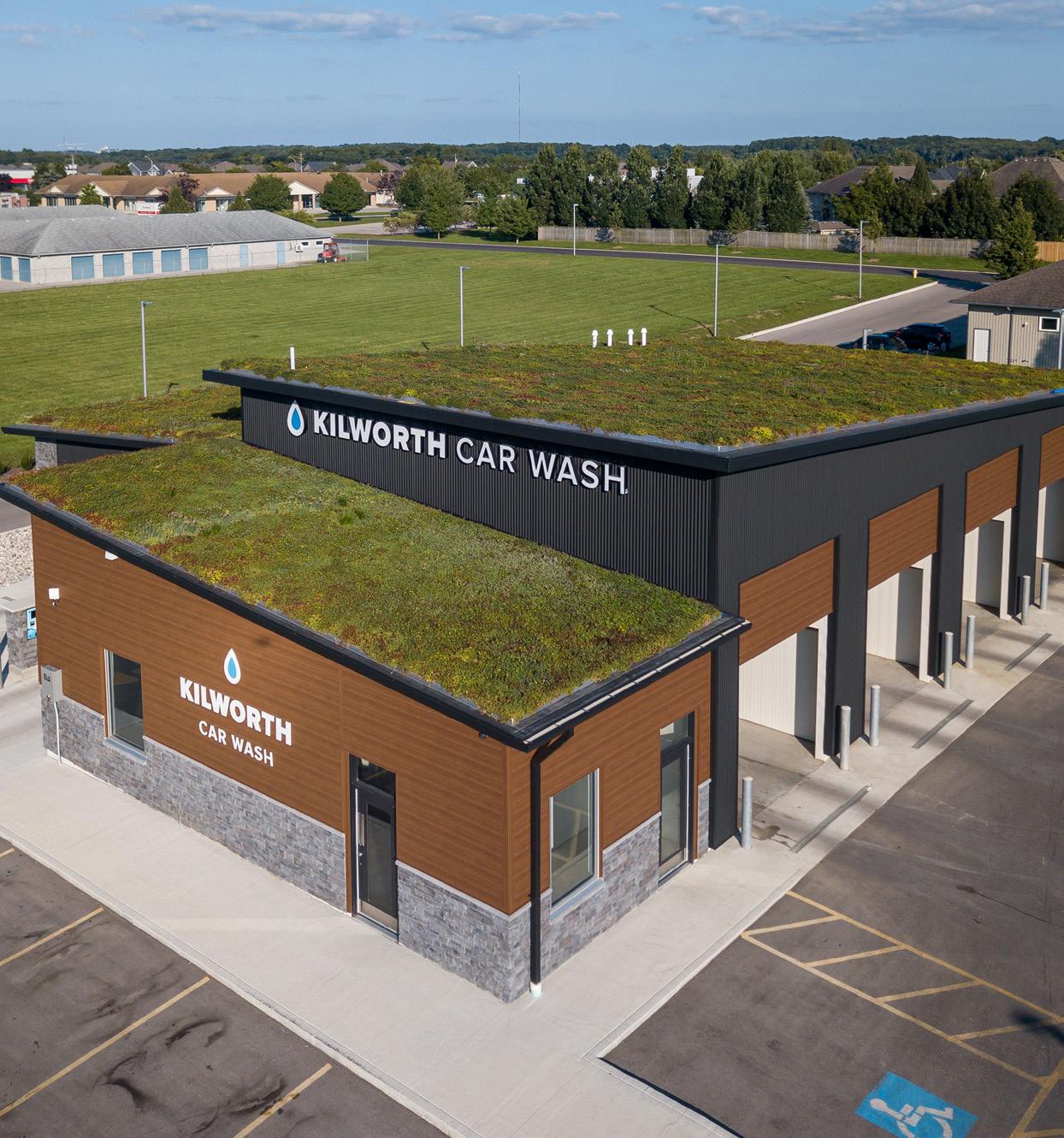
Kilworth Car Wash owners Steve and Lisa Hebb use a state-of-the-art water reclamation system while also tackling stormwater with a green roof. The vegetation’s root barrier allows plants to grow while absorbing rainwater that would otherwise run to city sewers. Green roofs also insulate the building, reducing heating and air conditioning costs. Their new storage facility will have one, too.
Startup fees run between $30 to $40 per square foot but the investment offers big ROI, says Kees Govers, technical sales manager for LiveRoof Ontario.
“The car wash has about 5,000 sq. ft. of green roof on it and we’re diverting about 250,000 litres of water annually,” explains Govers. “The membrane’s lifespan underneath the green roof gets tripled or quadrupled; you’ll be replacing the innards of a car wash long before the roof is replaced.” OCTANE
Operators can prepare for the future and win the electric vehicle charging race with a holistic, well-executed strategy, say the experts
BY NAOMI SZEBEN
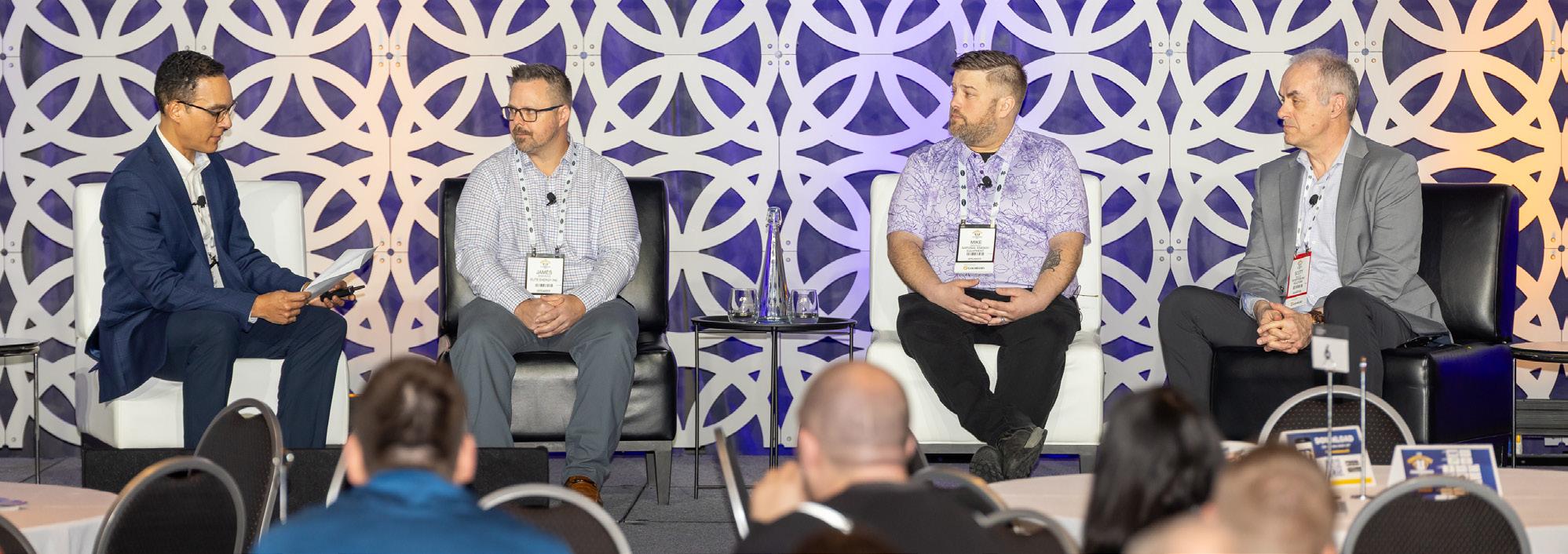
CONVENIENCE OPERATORS PREPARING for Canada’s electric vehicle future are warned against simply “setting up charging stations.” An expert panel at the 2026 Convenience U CARWACS Show stressed that successful EV adoption requires a wellthought-out, holistic approach, focusing on market research, integrating loyalty programs, planning for electrical capacity and securing reliable vendors.
César Nivar, a leading expert in helping organizations strengthen their networks, elevate performance and prepare for the future of energy and mobility, led the valuable discussion with James Jennings, master electrician/operator, Elite Energy; Mike MacKay, EV charging specialist with National Energy Equipment; and Scott Negley, senior director, product management, Wayne Fueling Systems and Dover Fueling Solutions
The panel highlighted that success relies on infrastructure readiness, scalable solutions and leveraging the 15-to-20-minute customer “dwell time” to generate new ancillary revenue through advertising and in-store sales.
The discussion on March 11, 2026, at the Toronto Congress Centre, covered the challenges of infrastructure readiness, the importance of scalable solutions and the potential for additional revenue through advertising and customer engagement. The experts emphasized the importance of integrating loyalty programs, understanding market dynamics and planning for future electrical capacity, while highlighting the impact of federal incentives and the need for reliable vendors.
Nivar opened the panel with news of Canada’s new auto strategy aiming for 75% EV sales by 2035 and 90% by 2040 while also introducing a major affordability initiative and expanding national charging infrastructure.
MacKay observed that retailers are watching for the transition, noting that most drivers have a preferred gas station. “When you switch to EV, there are not a lot of options out there. You’re not necessarily going to stick with the loyalties that you had in retail petroleum.” He emphasized the importance of integrating loyalty programs and building out a full network, rather than putting one or two spots in to re-establish those ties as they transition. “A transition to that new technology could really shift where those loyalties lie,” MacKay added.
Negley cautioned against the “if you build it, they will come” mentality, saying that mandates and legislation are subject to change. “It’s going to be different, situation to situation, demographic to demographic. So many factors are out there about utilization rates and the number of EV registrations in your particular market.”
With federal incentives, Chinese imports and provincial adoption rates shifting the landscape, the panel was asked, “What’s one thing you believe is clear right now for operators trying to make smart, paced decisions?”
Negley stressed the importance of market research prior to adding
EV chargers. “I think the thing that you have to be very prepared for is to understand what your potential available market is for customers, and know what your charges and your utility plans are going to be.” He added that operators should ask if they will be allowed to charge for the power.
Most of the time, operators think it’s going to be quick and easy, but there’s quite a process as EV chargers draw a significant amount of power. Jennings cautioned that most convenience stores do not have that available power. “There’s quite a bit of lead time and communication that has to happen between the local utilities and engineering and planning. The best thing is to contact someone who is very familiar with that industry, and then they can help you along that process and get you the right people.”
Smart decisions can lead to sales opportunities
While many EV drivers will most often charge at home, MacKay added that EV chargers still can be a boon for convenience stores, noting that many EV urban-area owners may not have charging available in their homes, as Vancouver experienced in the early days of EV rollout.
“So now what you’re doing is you’re drawing additional new customers to your location. You’re getting people that are travelling to your site and they’re seeking EV charging stations. You will have your local fuel people, but you’re also bringing in EV drivers that aren’t from the usual area: it’s a different customer base, and it can drive increased traffic to your convenience store, so make sure you’re doing integration to drive them in while they’re charging. Dwell time is 15 to 20 minutes while they’re charging.”
and site-specific factors to consider
Jennings added if operators are building new stations, they have that ability to plan and to be able to put the infrastructure in at that time. “But if not, you’re pushing to try to get a separate service so you’re not coming off of your existing infrastructure. And the Ontario Energy Board is working with the local utilities to try to make that more readily available.”
What should retailers prioritize when selecting hardware to stay future-proof?
Negley said that a lot of new suppliers have come and gone, due to poor planning at the infrastructure stage. “Make sure that when you’re talking to vendors, check their reliability, check their history. How have they been able to supply, and are they able to support the product? Are your equipment suppliers going to be able to offer the features that your customers have traditionally come to expect—such as payment type, technology, and a consistent site experience—that’s always going to be an important consideration.”
How can retailers integrate EV charging with existing customer experience?
MacKay emphasized that early adoption gives convenience store and gas station operators a clear edge. He noted that investing in battery buffering and systems that support grid resilience can make
sites more attractive to utilities. This also increases the chances of being prioritized for setup. “There are other ways to build revenue, other than just charging money for charging batteries.”
He recommended that operators look beyond energy transactions and explore marketing opportunities, noting that many of the chargers his company offers now feature big advertising screens. By integrating loyalty programs, he said operators can use the screens in the same way ‘pay at the pump’ programs work at gas stations. “You can run all that advertising at the EV chargers while they’re sitting there, hooking up their car, and then [clients] head into the store, grab some food and look for clean washrooms.”
What are the key actions for operators to make smart EV charging decisions?
Signs that operators should watch to know the timing is right to invest will be very regional and site specific, according to MacKay. He suggested looking at locations within the inner city, where commuters would search for chargers. Investors should also consider looking for regions with apartments and new condos that might not have infrastructure availability, but will be inhabited by people who want to buy EVs.
MacKay added that investors should also consider tourists and destination locations. “Watch for EVs that are coming from out of town,” he suggested. “A lot of our EV infrastructure is needed because of tourism, not because of local [traffic.] You can’t just look at the EVs that are purchased in that location.”
What’s the single smartest action to take this year to stay competitive and future-ready?
MacKay reminded operators that cleanliness and safety are huge considerations for customers. Some EV drivers might leave a station dissatisfied and look for another if there was no canopy on hot days, nor any garbage cans in sight. “There’s a garbage can now that has a LiDAR on the top of it to detect when it’s full. So even if it is in a location that isn’t attended as much, you can still put garbage cans there and not have to have somebody there all the time watching it.”
Negley added that mindfulness must be a part of the investment process, and to consider each visit to the station from the customer’s point of view. “You have chargers that are put at the edge of properties, way out, far from the store. They’re on different networks, and so would you want to offer your EV customer the Taco Tuesday special that you’re offering your gas customer? Probably. Wouldn’t you want to offer them the same sense of security and lighting and element protection that you offer your gas customers?”
MacKay added that some sites already have vacuuming options nearby the charging stations, creating more revenue opportunities.
Investors should consider their region’s seasonal/weather impacts affecting usage and equipment (cold climates, snow removal) and local labour and construction costs, as well as expected timelines for upgrades.
The panel concluded that EV charging is a long-term investment requiring careful planning and market understanding. There are many opportunities for incremental scalability such as modular chargers and ancillary revenue potential like in-store offerings, advertising screens and amenities to capture dwell-time spending. OCTANE

The energy was palpable and the action non-stop March 10-11 at Canada’s premier event for the convenience, forecourt and car wash community. With a record-breaking 6,000+ registrants, the 2026 show brought together an unprecedented wave of exhibitors and attendees for an experience that was truly high-octane.
From the engaging morning conferences to a sold-out Industry Dinner featuring the 2026 Future Leaders in Convenience + Car Wash Awards and a packed Trade Show floor, the atmosphere was buzzing with innovation. Industry leaders and decision-makers from across the country converged to network, discover cutting-edge products and celebrate excellence.
This two-day powerhouse event provided the vital insights and connections needed to fuel success for the remainder of 2026 and beyond.
Thank you to everyone who helped make the 2026 event a success!
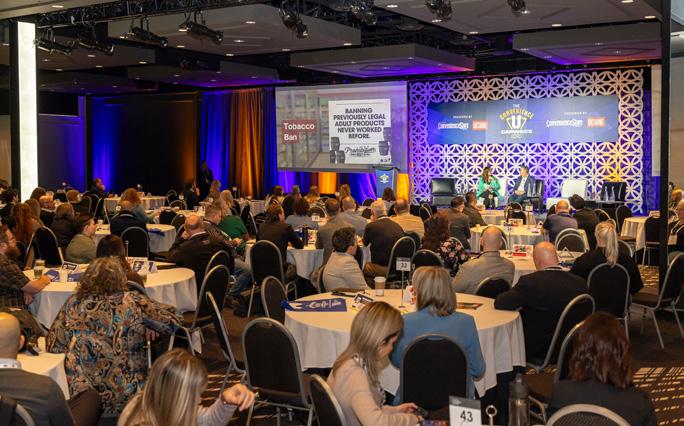

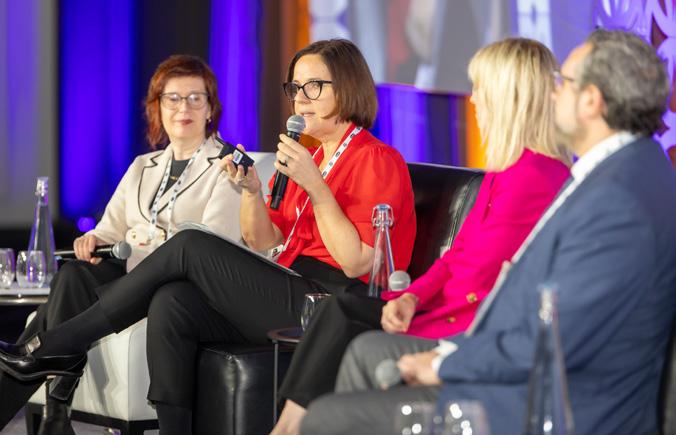
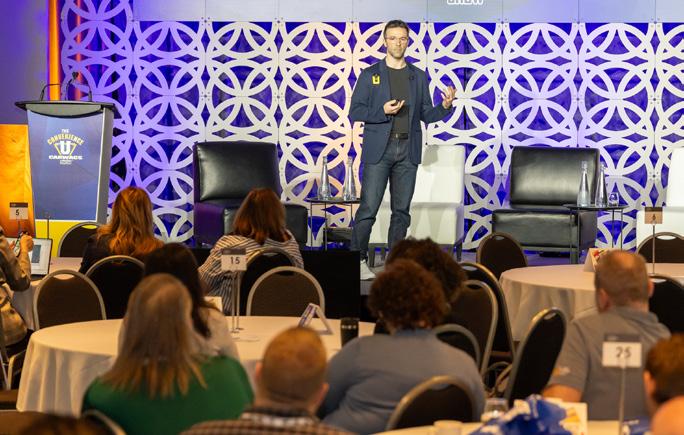
Scan the QR code for full coverage, exclusive highlights and our 2026 photo galleries!