May/June 2026


May/June 2026
In a supply-constrained retail real estate market, their creative approach is helping companies unlock growth

May/June 2026










































































































Despite retailers looking to grow, low availability, rising construction costs and geopolitical uncertainty are constraining the process of opening new stores.
10
SPECS 2026 Recap: Coverage of Chain Store Age’s 62nd annual SPECS Show, the retail industry’s leading event for store design/ development, construction and facilities management includes the following:
•CSA Retail’s Top Women Awards honor female executives in store development and facilities management.
•Session Spotlight: Walmart, Starbucks and CVS Health discussed new accessibility initiatives.
•Session Spotlight: Speakers offered advice on finding common ground in materials procurement and merchandising.
•Session Spotlight: Leveraging AI Chatbots for Retail Expansion and Site Selection
•Session Spotlight: Managing energy costs session included tips for creating an action plan to how to contract power in a competitive market.
20
Store Spaces Q&A: Arch Painting’s Richard Kilgannon discusses the benefits — and cost effectiveness — of a painting refresh.
22
Trending Stores puts a spotlight on new concepts from Williams-Sonoma and Kendra Scott.
or

23
Leaders of the retail real estate industry give their views on artificial intelligence, tertiary markets, the growth of ethnic retailers, and more.
Ebere Anokute on grocers’ rush to meet rising consumer demand
Jill Renslow on how Mall of America is shaping the next era of physical commerce
Josh Poag on rethinking open-air retail
Adam Petrick on 39 days in the shadow of the World Cup
Matthew K. Harding on the new playing field for expansion
Dane Garson and Tyler McGarry with the full story on car wash bonus depreciations
Adam Ifshin on the new playing field for expansion
Elizabeth Boldin Thomas on why human intelligence is the key that unlocks AI’s potential
Ken Shishido on the growth of ethnic retailers in affluent neighborhoods
Garret Colburn on retail real estate’s entry into a smarter, more data-driven era
James Avallone & Caleb Smith on finding opportunities in a tight real estate market
Howard Levine & Camilo Varela on the opportunity for mall revitalization
Eric Leibowitz on the blossoming of tertiary markets
TECH
54
Tech Q&A: Tom Downes of Quail
Digital explains how wireless headsets can be a critical tool for creating a cohesive experience for employees and shoppers.
57
Retailers test next-gen store security to keep stores, employees and customers safe.
58
Artificial intelligence is playing an increasingly important role in real estate and facilities maintenance.




















From legacy companies to the operator of stafffree convenience stores, Fast Company’s annual list of the “most innovative” retail companies of 2026 illustrate the diverse nature of the modern retail industry.
Here is a look at the companies that made the 2026 list (comments in italics are from Fast Company).
• Shopify: For opening its doors to agentic AI shoppers
Shopify’s recent partnership with ChatGPT lets merchants sell directly in the chatbot, allowing customers to find and buy products without ever leaving the platform. It also launched a universal cart option that lets shoppers add items from multiple retailers without needing to move between different websites.
• Walmart: For insulating shoppers from the trade wars
Walmart maintained its momentum in 2025 on multiple fronts. It expanded its generative and agentic AI capabilities to offer a new feature on its shopping app, “Ask Sparky,” which customers can use across all product categories to find items and synthesize reviews.
The retail giant was able to keep prices down despite tariffs by leveraging its massive scale and growing its marketplace and fulfillment services for third-party sellers businesses.
• Fanatics: For parlaying its sports merch and collectibles into live events and film and television
From selling jerseys and collectibles to betting and live events, In a recent move, the company launched a content arm, Fanatics Studios, that will create, finance, produce and distribute projects “at the intersection of sports and culture.”
• Square: For updating its signature point-ofsale system to meet the needs of today’s retailers
The company’s new Square Handheld is a pocket-size business command center that weighs just 11 ounces. It lets sellers manage everything from payments to inventory and
back-of-house operations while on the go.
• J.Crew: For using its heritage and legacy to sell customers updates to its classic styles
The apparel brand has staged a successful comeback after a rough period that included bankruptcy by doubling down on its heritage to create updated styles of some of its most classic items.
J.Crew’s brand activations have also created buzz — including its transformation during New York Fashion Week 2025 of a landmark building into a museum detailing its 40-year history.
• Printemps: For reimagining the department store
The French luxury department store retailer debuted its first-ever U.S. location in 2025, on Wall Street in Manhattan’s financial district. Designed as a destination, the opulent store blurs the lines between retail and hospitality, and promotes the idea of shopping as an experience.
• Rebel: For diverting returns from landfills and putting them back on the market
The re-commerce site turns returned and overstock goods into deals for budget-conscious shoppers. The company developed an AI-powered smart-pricing algorithm that auto-adjusts item prices based on demand, condition and inventory more than 10 times a day.
• Amazon: For using AI and personalization to help customers navigate the ‘everything store’ Amazon’s expanding AI capabilities include the addition of new features to its “Rufus” mobile AI customer tool. It now has an account memory, which allows it to understand customers based on their individual shopping activity.
• Field.IO: For creating easily deployed immersive retail experiences
Field.IO has slashed the timeline and cost of creating immersive retail experiences on a global scale. It built a centralized digital hub for Nike that manages immersive visuals across 94-plus flagship stores globally.
• VenHub: For creating the fully automated convenience store of the future
The company provides fully automated, 24/7 robotic convenience stores that use AIdriven systems and robotic arms to sell snacks, drinks, and packaged goods without on-site employees.

Marianne Wilson mwilson@chainstoreage.com
BRAND MANAGEMENT
Vice President & Group Publisher, SPECS Chairman Gary Esposito gesposito@ensembleiq.com
EDITORIAL
Editor Marianne Wilson mwilson@ensembleiq.com
Technology Editor Dan Berthiaume dberthiaume@ensembleiq.com
Real Estate Editor Al Urbanski aurbanski@ensembleiq.com
Online Editor Zachary Russell zrussell@ensembleiq.com
ADVERTISING SALES & BUSINESS
Midwest & South Sales Manager Michael Morrissey mmorrissey@ensembleiq.com
Senior Account Executive Nick Lipere NLipere@ensembleiq.com
Senior Account Executive Kaitlyn Girard kgirard@ensembleiq.com
EVENTS/MARKETING
Program Director Deena AmatoMcCoy damccoy@ensembleiq.com
Event Director Melissa Murphy mmurphy@ensembleiq.com
Event Coordinator Rita Ruzalski rruzalski@ensembleiq.com
Marketing & Event Administration Coordinator Farida Batuta fbatuta@ensembleiq.com
ART/PRODUCTION
Print Designer Catalina Gutierrez cgutierrez@ensembleiq.com
Production Manager Patricia Wisser pwisser@ensembleiq.com
SUBSCRIPTION SERVICES
List Rental mbriganti@anteriad.com
Subscription Questions contact@chainstoreage.com
CORPORATE
By Zachary Russell

Early 2025 was a positive time for retailers looking to expand their footprints, but things have since reverted back to a landlord’s market.
Notable bankruptcy filings of late 2024 and early 2025 included Party City, Joann, Big Lots, Forever 21 and others, and provided a much-needed 12.5 million square feet of retail space to the commercial market at the beginning of last year, according to CoStar’s data at the time.
The wave of new space was quickly snapped up by expanding retailers, and while the financial health of struggling chains is always being monitored, experts say that large-scale availability won’t be seen again in the near future.
“Distressed activities opened a door and created some efficiencies for retailers to be able to try to win those spaces,” said Al Williams, co-head, North American real estate services, Gordon Brothers. “Some retailers were good at it, while some were a little late to the game. We haven’t seen as many of those bankruptcies this year, and likely won’t, because of the natural ebb and flow.”
While bankruptcies have subsided, new retail construction continues to lag from past levels, including 2025. In the first quarter of 2026, roughly 64.2 million square feet of retail space was under construction in the United States, down from approximately 70 million square feet compared to the same quarter last year, according to CoStar. This figure is well below the 10-year average, which consistently exceeded 90 million square feet.
The lack of construction is leading to highly restricted available space. According to the Crexi National Commercial Real Estate for March 2026, retail vacancy held steady at 5.2%, unchanged
from February, and 210 basis points below the 7.3% vacancy rate recorded a year ago, making retail one of the tightest asset classes in Crexi’s data.
The average sale price for retail properties on Crexi came in at $217.88 per square foot in March 2026, an 11.9% decline from $247.38 in February, but still 8.3% above its March 2025 level of $199.65 per square foot. Despite the month-to-month drop, the average asking price rose to $335.17 per square foot in March, up 5.2% from February and a notable 24.3% above year-ago levels.
“Rent growth and competition for quality real estate is going to continue, especially with the limited supply,” said Williams. “Landlords are in a stronger position, and the best space is going to be increasingly competitive.”
To make matters more difficult for retailers looking to grow and developers looking to meet demand, import tariffs implemented by President Trump have increased the prices of construction materials across the board.
Despite a recent Supreme Court ruling that struck down Trump’s sweeping April 2, 2025 “Liberation Day” tariff agenda, the administration has since invoked Section 122 of the Trade Act of 1974, imposing a 10% across-the-board import surcharge on goods from nearly all countries. This surcharge expires after 150 days, on July 24, 2026, unless Congress votes to extend it, according to the Atlantic Council’s Trump Tariff Tracker.
“The biggest thing impacting new construction now is import tariffs,” said Michael Burden, co-head, North American real estate services, Gordon Brothers. “You have the post-pandemic interest rate increase, and you have the unknown of what’s happening in the Middle East that will keep us in the cycle of limited new construction.”
The United States and Israel’s attacks on Iran that began in late February have led to a worldwide spike in oil prices and the on-and-off closure of the Strait of Hormuz, one of the globe’s most important corridors for energy transportation, making things look even bleaker when it comes to the prospects of new construction.
While negotiations to end the conflict diplomatically have been underway in recent weeks, the effects are already being felt. Surging prices in oil and natural gas drove up overall construction input prices (which includes energy, materials and equipment) in March, increasing 2.2% compared to the previous month, according to an Associated Builders and Contractors analysis of U.S. Bureau of Labor Statistics Producer Price Index data.
Overall construction input prices in March were 4.8% higher than one year ago. The biggest increase seen in March was in crude petroleum, for which prices rose 20.2%.
“The increase we are already seeing in transportation costs is going to really hurt a lot of goods-based retailers,” said Svec. “I think the outlook for the 2026 retail market is more bearish today than it was two months ago. There’s really no other way to get around the fuel and transportation costs.”
In-demand markets, in-demand tenants
One thing that hasn’t changed much from last year is that when new construction is being built, the Sunbelt continues to lead the way nationwide. CoStar data from the first quarter shows that Dallas, Austin and Houston were the only three markets with more than 3 million square feet of space under construction. Phoenix was not far behind, with more than 2.5 million square feet under construction.
Other Sunbelt cities including Las Vegas, Charlotte, N.C., Atlanta and Orlando all exceeded 1 million square feet of new construction as of April. Chicago was the only outlier city to reach this new development threshold.
Fueled by growing populations post-pandemic, retailers are willing to pay for ground-up construction in the Sunbelt to meet consumer demands, in addition to forking over more in rent at existing retail centers.
“In Phoenix in particular, retail is very strong right now,” said Jeff Axtell, executive VP of development at Vestar, which has been more active than most when it comes to ground-up construction. “In the past seven to 10 years, over a million people have moved into Phoenix, and very little new supply came online. The supply and vacancies are really low, and rents are increasing very well for the landlords.”
Despite costs increasing across the board when it comes to new developments, Axtell added that in select markets, it still makes sense for retail’s major players to pay more today for newly built space to enjoy future sales growth tomorrow.
“Tenants are realizing that in order for them to meet their Wall Street projections for the number of the stores that they
want to open and to grow their sales, they will have to pay higher rents to get the available stores,” he said. “The retailers are willing to pay the rent that we need to cover the construction cost increases that we’ve seen in the past five to 10 years.”
In addition to the Sunbelt’s continued success, another constant from last year is the type of retailers that are continuing to look toward expansion. Discount retailers are thriving as consumers see increased prices, especially in recent months. In the first quarter of the year, discount’s heaviest hitters all announced expansion plans, with Dollar General and Family Dollar also announcing plans to test new store formats while growing their footprints.
“Off-price and discount are definitely still winning,” said Brandon Svec, national
“ The increase we are already seeing in transportation costs is going to really hurt a lot of goodsbased retailers.”
—Brandon Svec, national director of U.S. retail analytics, CoStar Group
director of U.S. retail analytics, CoStar Group. “Dollar General and Dollar Tree are rapidly expanding, along with TJX, Ross and Five Below. The consumer’s focus on value remains fully intact, and that continues to be a tailwind for retail demand for those value-oriented retailers.”
Patrick Nutt, senior managing principal & co-head of National Net Lease at SRS Real Estate Partners, said that the “K-shaped economy” will only continue to benefit off-price and discount retailers’ balance sheets, and in turn, fuel their expansion efforts.
“When it comes to the junior box and bigger box spaces, TJX and Ross are the first to get there,” said Nutt. “Five Below just had a tremendous quarter. The retailers you are familiar with in the box space are the ones who are continuing to absorb it.”
Health and wellness-focused retailers and fitness chains are also among the tenants snapping up space in retail centers. Despite cost pressures, consumers are still prioritizing their physical and mental well-being, and landlords can benefit from the foot traffic and stability that a
gym or boutique fitness chain can add to a shopping center.
“We’ve seen leasing by fitness centers and health-oriented operators really accelerate over the last year,” added Svec. “I would say fitness has been the one of the unsung heroes of backfill, especially of Class B and C spaces they can grab at lower rents.”
Crunch Fitness president Chequan Lewis said that the chain plans to open 100 new locations in 2026, with second-generation retail space playing a key role in expansion plans.
“One of the most exciting things happening in fitness real estate right now is adaptive reuse,” he said. “We’re converting second- and third-generation retail spaces into gyms. It makes so much sense – lower build-out costs, already in high-traffic locations, and familiar to the consumers we’re trying to reach.”
Quick-serve and fast-casual restaurant chains have also been impacted by the lack of new construction. However, these categories are more flexible with the store size they can take advantage of, which benefits real estate operators looking to add a traffic-driving food and beverage tenant to a retail property.
“Single-tenant buildings like an old Burger King and Wendy’s might have been 3,000 to 4,000 square feet, but most of the new QSR concepts today can deal with 600 to 1,000 square feet,” noted Nutt. “National brands like Starbucks, Dutch Bros and Chick-fil-A are also doing drivethrough only concepts, along with new and emerging brands like Swigs, 7 Brew and Salad and Go.”
While fighting for available real estate space to expand into, retailers are increasingly conscious of consumer sentiment, which has taken a nosedive recently amid spiking fuel prices. The University of Michigan’s Index of Consumer Sentiment’s preliminary reading for April fell to 47.6, down 10.7% from March, extending a decline that began with the start of the Iran conflict.
Year-ahead inflation expectations from the index rose from 3.8% in March to 4.8% in early April, the largest one-month increase since April 2025. The current
As new builds lagged, well-located, “highquality” single-tenant properties continued to grab retailers’ interest in 2025.
New data from Colliers shows that for single-tenant commercial properties, vacancy levels remained around 4.3% at the end of last year as construction costs prevented new development. Compared to the first half of 2025, sales volume for single-tenant properties rose 14% to $6.5 billion in the second half of the year, while median cap rates dipped to 6.7% and prices fell to $294 per square foot.
The report showed that leasing remained concentrated in service-oriented and convenience-driven categories such as restaurants, wellness and discount retail. Smaller-format spaces led leasing activity as retailers prioritized efficient footprints that could align with evolving omnichannel strategies.
“This trend represents a continuation and acceleration of prior years, with service tenants further increasing their share of leasing activity as retailers prioritize experiential and needs-based concepts,” said Anjee Solanki, national director of retail services & practice groups at Colliers.
Convenience store investment grew in the second half of 2025 to 348 transactions and nearly $1.5 billion in sales volume, according to Colliers. Dollar store investments in the second half of the year totaled roughly $757 million in sales volume, which the firm says reflected continued interest in the sector’s necessity-driven model. Quick-service restaurant investment grew rapidly as well, with 24% higher transaction volume and 25% higher sales volume in the second half of 2025 than the first.
reading exceeds those seen in 2024 and remains well above the 2.3 to 3.0% range seen in the two years pre-pandemic.
Consumer strain is felt most directly at gas pumps. According to AAA, the national average price of a gallon of gasoline has increased nearly a dollar compared to last spring.
“The longer the Iran conflict goes on, the greater the magnitude of the effects,” said Svec. “Consumers are having to reallocate wallet share towards the pump and away from other discretionary categories, and that discretionary spending was already thin.”
Nutt added that consumer pullback due to prolonged high gas prices will have an impact on even the retailers that serve lower-income shoppers.
“If you look at the consumer today from a macroeconomic perspective, we are very much in a K-shaped economy,” said Nutt. “The higher end of the K shape will continue to spend and absorb the inflation hits. I do worry about the bottom half of the consumer, those that are truly very price conscious.”
With prices expected to continue pinching consumers for the foreseeable future, retail center operators should prioritize offering guests value beyond shopping amenities, according to Paul Ghermezian, senior VP of megamall owner and operator Triple Five Group.
At Mall of America and American Dream, entertainment programming is routine in an effort to offer guests a unique and enjoyable experience beyond just shopping. Later this spring, American Dream will open the 3,000-capacity Dream Live Performing Arts Center, which will host a wide range of events, including theater and dance productions, comedy shows and live concerts.
“ More than ever, retailers in growth mode are going to have to look at second generation space. ”
—Michael Burden, cohead, North American real estate services, Gordon Brothers
“Consumers are willing to spend on things that give them more than just material value,” said Ghermezian. “They want to come out and have a positive experience with family or friends. We’re all very conscious of economics. When a customer comes in and they do have those dollars to spend, we want them to be getting something meaningful.”
The future may seem uncertain for retailers and consumers alike given the impact of geopolitical tensions. Still, there is a sense of cautious optimism among some commercial real estate professionals, as economic downturns have been weathered in the past and are a part of retail’s natural evolution.
“It’s easy to look at a situation and say ‘oh, this is new,’ but there’s always elements that come together and drive challenges,” said Williams. “At the end of the day, the retailers that are growing now have working models that can probably weather this. Things inevitably change, but they will stick to their game plan for the most part.”
Nutt added that not all retailers may handle a prolonged economic downturn the same way, noting that legacy brands may be more susceptible to curbed consumer spending, while newer brands may be better positioned to weather it.
“There are a lot of brands that can survive a temporary downturn, whether it happens for a month or a quarter, but I think there are some that are holding on for dear life,” he said. “They are paying their bills as they get the money coming in, and when the consumer slows down just a little bit, I think that could be detrimental to them.”
When it comes to retail expansion, second generation space remains the most cost-effective vehicle for growth, and will likely be so for the foreseeable future.
“More than ever, retailers in growth mode are going to have to look at second-generation space,” said Burden. “They are going to have to dive into areas that they haven’t typically grown in the past, such as taking advantage of a company’s distress, and try and grow through those channels rather than just waiting for developers to build new centers.”
By Marianne Wilson
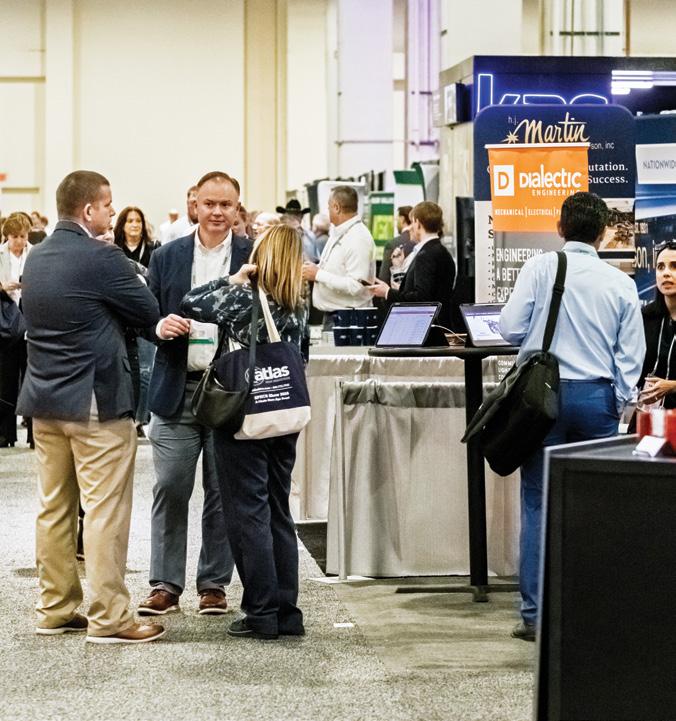
Physical retail took center stage at Chain Store Age’s 62nd annual SPECS Show.
All sectors of the industry were represented, from discounters, specialty stores and supermarkets to convenience stores, home-improvement centers and more. Restaurants and non-traditional specialty concepts, including those in the financial and health care sectors, were also in attendance.
“Consumers expect great store experiences and inviting, well-maintained spaces — two priorities that touch everyone in this room,” Gary Esposito, SPECS chairman and VP of Chain Store Age, said in opening remarks at the show.
Esposito added that the goal of all SPECS attendees, including retailers as well as suppliers, is to “learn, share ideas and develop lasting business partnerships.”
The show included 30 educational sessions on the latest trends and technologies transforming the planning, design, construction and maintenance of physical
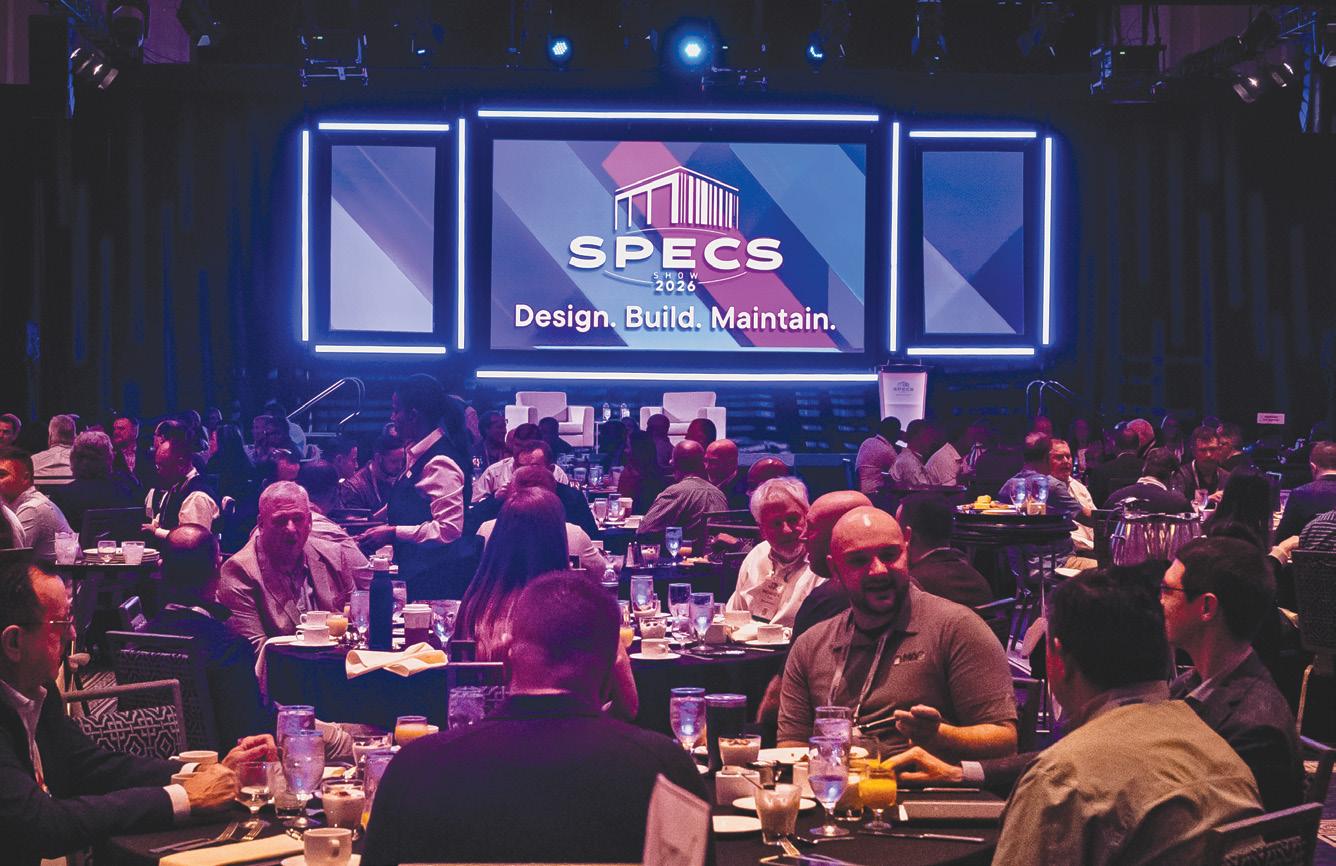
stores and restaurants, with insights from individual retailers and industry experts. Real estate topics were also in the mix.
The sessions, which were developed by the SPECS Advisory Board, covered a wide range of topics, including renewable energy solutions, materials procurement, multi-site renovation strategies, lighting trends, accessible store design, adaptive reuse, construction innovations and more.
The Solution Center exhibit floor featured a diverse array of leading suppliers offering innovative solutions and services designed to provide a better store experience for customers as well as more efficient operations.
With everything on site and included in the program, SPECS provided plenty of business collaboration and networking opportunities in sessions, at meal functions and on the exhibit floor. Retailers and industry suppliers also had the opportunity to meet one-on-one during the Face-2-Face Information Exchange.
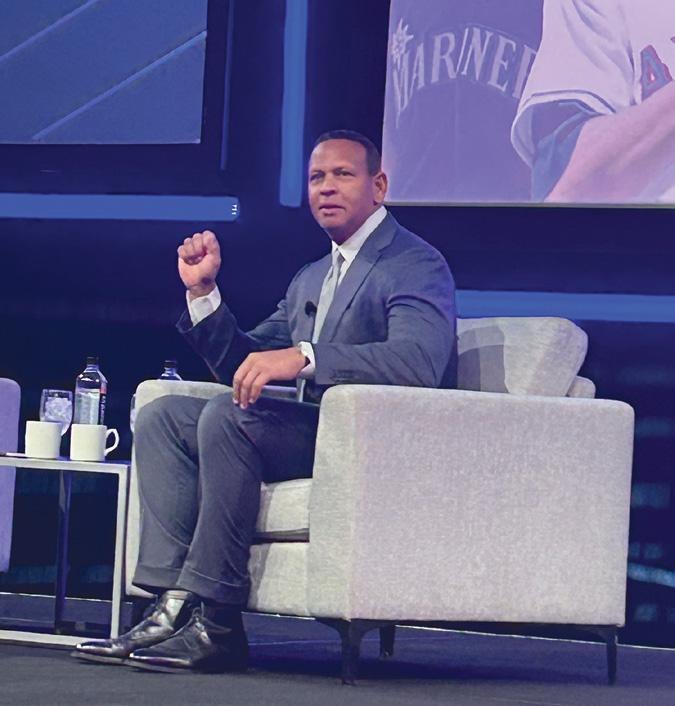
Major League Baseball superstar-turned-successful-business-entrepreneur Alex Rodriguez delivered the opening keynote. The 14-time MLB All-Star and 2009 New York Yankees World Series Champion discussed his career path and how he merged his love of sports and business to create investment firm A-Rod Corp., which partners with world-class startups and leading global companies across real estate, sports and entertainment.
Rodriguez spoke about his role as a business leader, and shared lessons on how strategic pivoting can build success. He emphasized the importance of customer service throughout his address.
“When people walk into your store, you have the real opportunity to make them feel special,” he told attendees.
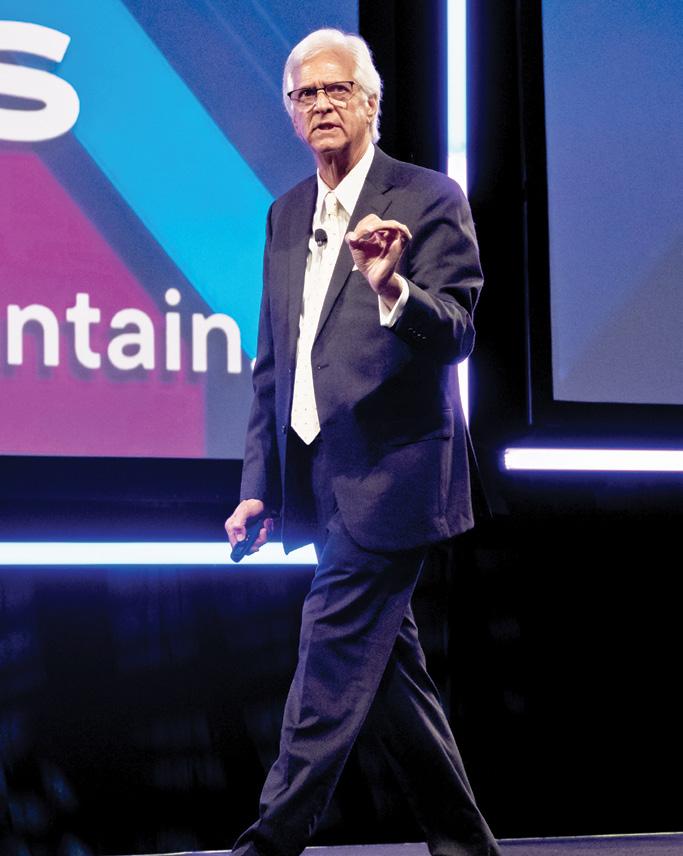
The day-two keynote address at SPECS was given by Mark Zinder, noted economist and former national spokesman for the global asset management firm

Franklin Templeton. Zinder, who has a 40-year career in finance and specializes in identifying trends, shared his economic outlook and discussed trends and innovations such as AI that are impacting businesses and society at large.
“The next 10 years will define the next 100,” he said. “We are at the crossroads of change and we need to embrace it.”
Zinder said that society is currently experiencing three life-changing events at the same time, AI, gene editing and clean energy.
“Artificial intelligence is going to change the way we live, act and purchase,” he said.

Gene editing will cure diseases that have plagued humans for years, he told attendees. “We’re going to live longer, happier and healthier lives.”
On the subject of energy, Zinder said that electricity is progressing from a “commodity to a technology.”
Other speakers included Jay Highland, executive VP, creative, WD Partners, who spoke about the importance of turning stores into destinations. Stores need to be immersive, purpose-driven and deeply tied to culture to engage today’s shoppers, Highland told attendees.
“It’s not just about products anymore,” he said. “Retail is media, theatre, the element of surprise and using space to create an obsession. Any retail store should be a destination.”
In a digital age, people still want to engage and they want to do it together, Highland said.
“This is an opportunity for stores,” he added.
The show also included the presentation of Chain Store Age’s Retail’s Top Women Awards in Store Development and Facilities, which was sponsored this year by Fusion Sign and Design. Six outstanding female executives were honored. (See story on page 12).
SPECS 2027 will be held at the Gaylord Texan Resort & Convention Center, Grapevine, Texas, March 14-16.
Class of 2026 honorees in store development and facilities management honored at SPECS
By Deena Amato-McCoy

Six outstanding female executives in store development (including store design and construction) and facilities management were honored with Chain Store Age’s Retail’s Top Women Awards. CSA’s Retail’s Top Women Awards program recognizes the crucial role that women play in key areas of retail operations.
The class of 2026 honorees in store development and facilities received their awards during a special presentation at SPECS that was sponsored by signage, branding and marketing firm Fusion Sign and Design. Marilyn Brennan, Fusion’s VP sales and marketing was on hand to present the awards. The recipients of the 2026 awards are profiled on the following two ages.

Susie Burns
Store Designer
Amazon One Medical
Susie Burns started her career six years ago in high-end residential design. When a few of the projects pivoted to corporate and workspace design, she found her passion for commercial design.
Burns joined One Medical in 2019 as a design coordinator.
When the company was acquired by Amazon in 2024, she was appointed store designer. Her responsibilities included leading design execution for One Medical 's primary care offices as well as aligning newly acquired facilities within the company’s design and branding standards.
Burns’ current responsibilities are wide-ranging. They include managing test fitting, schematic design, budget approvals, final construction drawings and building permits — factors that directly impact One Medical 's national footprint, and set new standards across the company’s health care facility designs.
“I'm incredibly proud of the three offices I opened in 2025 designed under our brand-new prototype, which reduced costs by 30% while maintaining brand integrity,” Burns said. Her expertise also played a pivotal role in the design and launch of Amazon Pharmacy in-office kiosks, integrated patient-centered solutions that were deployed October 2025 in select One Medical offices.

Cindy Dale
Director of Architecture & DesignBuilding Implementation, Exterior Signage & Design Décor
RaceTrac
Cindy Dale has earned a reputation for helping c-store retailer RaceTrac adapt and thrive in the fast-paced, ever-evolving retail environment. She does so by being disciplined, organized and embracing new technologies and innovative ideas with a positive mindset.
Dale leads a talented seven-person team that manages complex programs and initiatives — and she never shies away from “encouraging her team to take on new challenges,” said Caleb Rodgers, RaceTrac executive director, architecture & design.
“Cindy provides clarity to ensure her team is always aligned and focused on the right things. She fosters collaboration amongst the development teams and embraces change with a positive attitude,” Rodgers added. “She genuinely cares about those she works with and is willing to do whatever it takes to help. Simply put, she inspires others to be better every day.”
Besides creating a supportive environment where her team feels valued and motivated to perform their best, Dale is proud of creating a culture where curiosity, learning and recalibration are valued over perfection.
“Never be afraid to speak up and ask all the questions,” she advises. “Educate yourself and build strong relationships to continue learning from as you take on new challenges.”

Natalie Lyden
Senior Director, Store Development
Total Wine & More
Throughout her 24-year career in retail store development, Natalie Lyden has always been committed to delivering high-impact physical environments. At Total Wine & More, she is responsible for new stores, remodels, expansions and special projects, including store planning and construction.
Lyden, who pins alignment of brand strategy and operational excellence at the core of every successful project, understands that success is not achieved single-handedly. She noted that in her current role she leads “a talented team of people who are strong enough to deal with multiple store openings within accelerated timelines without compromising quality or budget.”
Additionally, she is never intimidated by a challenge and her “can-do” attitude is infectious, according to Wayne Schuster, VP of store development, Total Wine & More.
“And she applies her can-do attitude not just to the organization, but in how she supports her team and pushes for their success,” he added.
In addition to successful internal collaboration, Lyden has strong relationships with external partners.
“I’m proud of implementing process improvements that increase efficiency across project workflows and strengthen vendor partnerships,” she said. “Seeing a store open successfully — knowing the collaboration and problem-solving that went into it — is always incredibly rewarding.”

Jessica Miller
Director, Store Design
Warby Parker
Jessica Miller’s tenure at Warby Parker includes more than seven years of sustained growth, innovation and operational excellence, during which time she moved up the ranks from project manager to director of store design.
Miller plays a critical role in the expansion of Warby Parker’s retail footprint. She is responsible for setting design direction, and reviewing and prioritizing a high volume of projects.
These efforts have reduced design and delivery friction, streamlined timelines and supported faster store openings, noted Krystal Jerez, Warby Parker’s senior construction project manager.
“We open a lot of stores every year, but as we scale, I’m most proud of how we manage to keep a strong design point of view,” Miller said.
She said that she never loses sight of the successes achieved by what she describes as her “small but mighty” team.
“Seeing people grow, take on more ownership, and develop their own voice is always a huge highlight for me,” she added. Miller encourages other professionals new to the industry to stay curious and always “speak up.”
“Don’t wait until you feel 100% ready, and don’t just stay in your lane,” she advised. “Early in your career, it’s easy to hold back, but your perspective matters — and people notice when you contribute.”
It’s also important to “get as close to the full process as you can,” noted Miller.
“The more you understand how things get built, how budgets work, how timelines move, the more valuable you’ll be,” she said.

Jacklyn Price-Gianforte
Senior Director-Retail Property Operations, Global Real Estate Verizon
Jacklyn Price-Gianforte’s professional journey began 35 years ago as a data entry representative for a telecommunications company. She moved on over the years, transitioning from the front lines of customer service to leading national project rollouts for a telecom giant.
Since joining Verizon almost two decades ago, Price-Gianforte has taken on various positions of increasing responsibility across the company’s facilities and real estate divisions. In her current role of senior director, she leads a team of 52 members, with responsibilities that include maintaining more than 1,200 Verizon retail spaces.
Price-Gianforte is responsible for ensuring reliability, efficiency and cost discipline across Verizon’s complex national portfolio. Simultaneously, she manages long-term strategy, budgets for large-scale projects, sustainability initiatives, and compliance and vendor partnerships.
“She works tirelessly to lead and support the organization, not only for facilities maintenance, but also when coordinating with design, rollouts, capital planning and budget adherence,” said Stephen Berry, associate director, Verizon.
Price-Gianforte always keeps innovation, collaboration and operational excellence top of mind in all of her relationships — especially when working directly with her team and partners. She makes it a priority to find time to mentor her team, and defines her personal success is “watching the people I care about find their own successful path.”

Jana Rogers
Director, Capital Projects and Program Strategy
Cumberland Farms
Jane Rogers is credited as “a driving force behind [Cumberland Farms’] transformation from a collection of regional operators into a nationally recognized, best-in-class leader within the convenience store industry,” according to Fran Sheflin, VP of planning and construction, Cumberland Farms.
Rogers’ strong leadership skills were honed throughout her successful career. During her 12-year tenure at Dunkin’ Brands, for example, she transitioned from accounting into construction and corporate development, helping align processes across capital planning, site selection and construction execution. She continued her upward trajectory at Cumberland Farms.
Within six years, Rogers climbed up the ladder from real estate deal manager to brand development manager and construction project manager, before settling into her current role: director of capital projects and program strategy.
Throughout her journey, she created a reputation for fiscal discipline, operational excellence and strategic growth.
Rogers said she is proud of building a high-performing team by “fostering a culture of accountability, collaboration and professional growth.”
Rogers takes great pride in navigating — and overcoming — the challenges women often face in the traditionally male- dominated construction industry.
“Establishing credibility through performance, leadership and results helps pave the way for greater inclusion and representation,” she said.






























By Dan Berthiaume
Retailers obtaining the necessary components to construct stores should look to strategies and processes that have been honed through their merchandising efforts.
Liza Amlani, principal and co-founder, Retail Strategy Group, and Richard Honiball, adjunct instructor, retail & marketing executive, George Mason University, examined this topic in the SPECS session “Materials Procurement: Navigating Supply Chain Challenges.”
“Whether you’re trying to build an assortment or you’re trying to build a store, the commonality is the same,” Amlani said. “The methodology is, what elements can you plan in advance? What elements can you agree upon?”
Amlani cautioned the audience that different stores have different needs. She noted that Target is looking to create larger format stores that have a hub for fulfillment.
“Ikea, Best Buy and Bloomingdale’s are creating smaller concepts that may not require as much of an assortment depth or breadth,” she said. “That is all going to directly impact store design, store planning, how much inventory is going to be allocated to the store, and of course, merchandising, planning and marketing.”
Amlani also advised that organizational silos and disconnects can prevent retailers from executing materials procurement strategies according to plan.
“There are lots of workarounds, lots of band-aid and duct-tape solutions,” she said.
Honiball said that taking friction out of store operations, as well as out of the customer experience, should be a focal point of retailers’ efforts.
“In my job, we’ve been working on what we call a store of the future,”

stores so that you have the right products at the right time and in the right place.”
Amlani offered an example from her own 20-plus-year career as a merchant lead in apparel of what can go wrong when different departments don’t communicate.
“It was 2017 and jumpsuits were all the rage,” said Amlani. “They were in every one of my buys, and we were very excited for the fall drop in the beginning of September. But I checked the sales on Monday and there were no sales. I checked the sales on Tuesday, no sales again. I had bought hundreds of units.”
Amlani investigated, visiting some high-traffic flagship stores and asking store managers and associates where the jumpsuits were and reacting with horror when she discovered the jumpsuits had been left in the stockroom rather than displayed on the store floor.
Honiball said. “A client was trying to take friction out of the customer experience and make it exciting, but also make it easier for the store to run.”
According to Honiball, during the course of the project it was determined that the client had to eliminate things in order to move forward.
“We had to look for common fixtures,” he explained. “We had to look for things that were more flexible.”
As a result, Honiball said store construction time and development time have been reduced by about 50% and costs have fallen by about 40%.
“Have more control over your own [store materials] supply chain,” Honiball advised. “Durability is value. Resilience is strategy. Building resilience, breaking down silos and innovating the process is going to help you work more collaboratively and with the partners that you need to at the right time to build out your
“The problem was that the store fixtures were not tall enough, so the jumpsuits were dragging,” said Amlani. “The stores just decided to take them off the floor. But nobody told me. That’s a great example of strategy being disconnected to execution.”
Amlani said her jumpsuit story was a perfect example of retail silo [disconnect] among departments such as materials, product, merchandising, marketing, sourcing, store design and planning and execution.
“This is how I felt in my 20 years of working at some of the top brands in the world: I was in a silo, and I had to go and tell other people what my strategy was and what was going on,” she said. “There was no process for me to do that. And then you have store design, planning, execution, and store operations sitting on the outside looking in, waiting for us to give direction.”
By Zachary Russell
At Chain Store Age’s recent 62nd annual SPECS Show held in National Harbor, Md., retail executives focused on store design discussed new accessibility initiatives during the SPECS session titled “Advancing Accessibility in Retail Through Store Design.”
Maria Town, president and CEO of the American Association of People with Disabilities (AAPD), hosted the panel, which featured leaders from CVS Health, Walmart and Starbucks. AAPD’s Access Coalition is a collection of retailers who are committed to creating more inclusive retail spaces through signage, fixtures, layouts and more.
“The coalition is creating a first-of-itskind framework to improve physical accessibility and advanced disability inclusion in retail design,” said Town. “Each of the member companies of the coalition has realized that accessibility is about more than meeting the baseline of the ADA. And with one-in-four adults having a disability in the United States, accessibility is far from a niche issue.”
The ADA was signed into law in 1990. However, experts say the legislation does not go far enough in creating more equitable spaces.
“Only one-in-three people with disabilities feel very confident that a public restroom will meet their needs, and more than one-in-four disabled people restrict eating or drinking so that they don’t have to worry about finding an accessible bathroom,” noted Town, citing research conducted by AAPD.
Victor Calise, director of global diversity and the Accessibility Center of Excellence at Walmart, said the retail giant’s approach to making stores more accessible and going above and beyond standard regulations is multi-faceted.
As one example, Walmart launched sensory-friendly store hours in 2023, creating a less stimulating store environment

for a few hours each Saturday for those with sensory disabilities. The initial pilot program was later expanded to all U.S. locations.
“Our strategy ranges from our sensory-friendly hours that we have at all U.S. Walmart stores, ways that we’re offering wayfinding for people who are blind or have low vision, and our Adaptive at Walmart category for people to buy adaptive equipment,” said Calise. “Our customer is our number one priority. We know we need an open, cross-company coalition to move beyond accessibility one-offs and checklists.”
In the food and beverage space, Starbucks is another giant that has launched several sensory- and disability-friendly initiatives in recent years, especially when it comes to store design, making its coffee shops comfortable and accessible for all guests.
In 2024, Starbucks opened an accessibility-focused store in Washington D.C. that featured optimized acoustics and lighting for improved visual and audible communication for customers, power-operated doors, as well as accessible equipment designs for a better employee experience.
“One of the big questions that we constantly ask ourselves is ‘how do we create environments that make people feel welcome?’,” said David Wykes, VP of global coffeehouse concept design
at Starbucks. “An accessible space is a welcoming space. We are incorporating softer lighting and acoustics in our stores, and we are looking at expanding the variety of furniture in our coffeehouses so that everyone has a seat for them.”
Elizabeth Fennell, director of architecture and engineering at CVS Health, stressed the benefits of collaboration between retailers in the Access Coalition. She said that one company launching an accessible initiative can prove to be a test case and demonstrate what works or what may need changes.
One of CVS Health’s accessibility initiatives came in 2023, when the retailer debuted Spoken Rx. Developed in collaboration with the American Council of the Blind, Spoken Rx reads certain prescription information aloud in English or Spanish via RFID technology. The company said it was the first in-app prescription reader to be developed by a national retail pharmacy.
“This coalition has been a fantastic alignment to our own journey,” Fennell said. “We are partnering with companies that are a little bit further ahead, and it’s pushing us to move that much faster in our efforts. The coalition is a great sounding board, and an opportunity to learn from each other. It’s about supporting everybody at the end of the day.”
By Zach Russell
Artificial intelligence-powered chatbots such as ChatGPT (OpenAI), Gemini (Google), Claude (Anthropic) and others have revolutionized how people learn, create and even shop.
The technology can also be leveraged by retail and restaurant chains that are looking to strategize for future expansion. Using AI chatbots, teams not only can synthesize important data for planning future locations, but they can also create visual renderings that can better communicate concepts with potential partners.
During the SPECS session “Lights, Camera, Action! Using Technology and Analytics for Strategic Site Selection,” Aaron Harris, founder of AH Consultants, walked attendees through the chatbot process and how to bring commercial real estate visions to life, making site selection easier.
Most recently, Harris served as VP of real estate and construction for the fast-growing Dutch Bros coffee chain. Prior to that he was the VP of development at Popeyes Louisiana Kitchen. He also serves as the head of real estate and construction for Slice, a software company that helps scale pizza retailers.
Using a prompt that requested a chatbot to help Harris determine the best places to open an independent pizza shop, he
“ AI is not a substitute for people. This technology can free people up to do what they’re supposed to be focused on”
— Aaron Harris, founder, AH Consultants

noted the speed of which the platform was able to give an accurate list of the top 10 places that could best be served by a new restaurant — giving the user a list of local areas best fit for expansion.
One of the things Harris loves about these types of tools is that they scrub customer sentiment.
“They look at things like Google Reviews and TripAdvisor reviews,” he said. “This gives me a list of where to look, and now I could expand on this and say ‘give me intersections,’ or ‘give me a list of shopping centers.’ What’s important here is that this gave me a sense of direction. It tells me I should be looking to expand in this area and why.”
Harris explained that this can be ideal for chains looking to expand into new markets that they may be less familiar with, adding that using AI chatbots can be an ideal way to start the site selection process.
“Let’s say Boise, Idaho, is underserved with pizza. The AI can pick that up and tell me what I need to know,” he said. “This is all directional, and not a substitute for boots on the ground. But now I know where to start when looking to expand.”
Chatbots can also pick up on local traffic patterns based on publicly available street
camera data. This is helpful when determining more specific intersections and thoroughfares to expand into, according to Harris.
“This data is great to have in a lot of urban areas from a specific site perspective,” he said, adding that this data can also help when a site actually opens. “‘Are we causing traffic problems for our neighbors? Are we causing traffic problems for our customers?’ You will be able to look at several different data points instead of one or two.”
Once an idea of ideal sites is gathered, chatbots can also use generative capabilities to develop renderings of what the site might look like once opened. This can give business collaborators a better sense of what the new store or restaurant location will look like once it is built.
“Landlords want to know what’s going to happen to a site — they’re going to want to see some vision,” Harris said, citing a rendered image example of a travel-themed pizza restaurant that would open at an intersection near a major airport. “I can tell a landlord, ‘this is what I’m looking to build,’ and it took me 45 seconds. Think about making designs in the past — how long does it take you to do even just a basic rendering or a sketch of something?”
When asked if AI tools are a replacement for human talent, Harris instead said such tools are an enhancement. He noted that technology integration should be well thought out, and not done simply for the sake of investing in the newest technology.
“Working with independent pizza operators, I ask myself, ‘What are they supposed to be good at?,’” said Harris. “They are supposed to have great recipes and take care of their customers. AI is not a substitute for people. This technology can free people up to do what they’re supposed to be focused on.”
By Marianne Wilson
Rising energy prices — and the strategies needed to control such costs — were in the spotlight at the SPECS session, “Managing Energy Spend.”
With energy costs expected to increase steadily over the next several years, Bill Thomas, principal energy advisor, Priority Power, offered recommendations for creating a strategy that navigates market volatility, minimizes risks and maximizes opportunities.
Thomas told attendees it’s important that they understand their load profile. He advised reviewing 15-minute Interval Data Recorder (IDR) data or smart meter information; identifying peak demand periods; and reviewing if seasonal patterns are affecting your energy price. (The IDR is an energy collection device that can collect and store meter information at specific time periods.)
“Calculate your load factor, or how efficiently you use power,” he said.
Contracting for power takes time, Thomas noted, and it’s important not to wait until the last minute. His presentation included an action plan to how to contract power in a completive market.
Recommendations included:
» Give yourself plenty of time. You should always be looking at the market.
» Have a strategy and price target. Don’t get greedy.
» If you don’t have the time, get with a consultant that knows the market where you are located.
» It’s also important to prepare before a contract expires:
» Vet retail electric provider’s contracts, billing systems, and customer service.
» Make sure all applicable service points are on the contract.
» Acquire current load history from the utility.
» Confirm that the contract start date is correct.
In choosing an energy price type, lower cost is risker, according to Thomas. Budget certainty and low-risk tolerance products are more expensive, while higher risk products such as real time pricing have the potential for low cost but can blow the budget if you’re not careful.
Demand response programs have high returns. If you have back up generation and multiple sites this program will reduce your bottom-line energy costs, Thomas advised. Also, purchase power in smaller increments over time in layers, and watch out for energy pricing components that are passed through.
By Marianne Wilson
The importance of disaster planning was brought home to retailers at the SPECS session, “Recovery and Resilience: Continuity Plans and Prepping for Natural Disasters.”
Natural disasters continue to go up in frequency and retailers need to update their plans annually to ensure that they are as prepared as possible, Ryan Miller, principal of Critical Functions, advised session attendees.
Miller offered tips for creating plans that include immediate actions, roles and responsibilities. redundancy planning, emergency communication protocols and more.
He noted there are practical steps that most organizations don’t take when it comes to disaster planning, including establishing leadership roles for emergencies. The individuals should be trained for their roles and their authority should formalized.
“You need to identify and train back-ups — people who are ready to step into leadership roles if needed,” Miller added. “Also, identify key support roles.”
The leadership team should know where to meet to launch the recovery plan following a sudden emergency, “Designate a meeting space, and identify back-up locations,” Miller said.
It’s important that the leadership team have critical documents and resources together in what Miller called a “logistics kit” following a sudden emergency. It should be secured in the cloud or immediately available to the team.
“This is really important to accelerate the recovery,” Miller said.
Items in the kit should include a list of all the key contacts (such as landlords, insurance agents, service providers and vendors), inventory critical systems and vital records such as insurance policies. Documented obligations (what has been previously decided needs to be done in case of an emergency) should also be listed.
Organizations that take the time to get ready and be prepared are best positioned to recover following an emergency, Miller told attendees.
A fresh coat of paint is one of the most cost-effective ways to give a business a facelift. Richard Kilgannon, president and CEO of Arch Painting, spoke with Chain Store Age about how painting contributes to a store’s overall impression.
What color trends are you seeing in the retail and restaurant sector?
Our customers are overwhelmingly leaning toward bright neutrals. White walls and black accents are trending in commercial spaces. This color family creates an open, airy feeling that allows for a wide range of complementary colors when choosing seating and tablescapes or display areas.
What are some of the most common mistakes retailers make when it comes to painting?
High traffic areas will always show wear and tear sooner than managers expect. Hostess areas, hallways toward the restrooms and point-of-sale areas have so many additional touch points —customers may lean against the wall while waiting for a table or run their hand along the wall walking toward the bathroom. These spaces show wear sooner than any other space. One way to help avoid this is to work with a commercial painter to determine a maintenance schedule. If the retailer does a complete interior re-paint, they can expect that finish to last for three to five years. But high touch areas may need a refresh annually.
How does paint contribute to the overall impression of a space?
People eat with their eyes. They shop with their eyes too. If a restaurant or retail space looks rundown, customers aren’t going to give that establishment their business.
Painting is one of the most cost-effective ways to give a business a facelift. It brightens and freshens up interior spaces, and improves curb appeal for exteriors.

Tell us about Arch Painting and the services it provides?
Arch Painting is a nationwide commercial painting contractor that has been in business for nearly 30 years. In that time, we built a network of more than 800 crews who serve our customers throughout the country. We are able to quickly mobilize our crews to be on-site for one-off, multisite and even multi-state projects.
Can the company handle jobs for customers who have locations in multiple states?
Arch Painting is different from other commercial painters because of our vast network of painting crews. These 800 crews in 49 states comprise nearly 10,000 experienced, and highly trained painters who are ready to mobilize quickly and be on a job site as soon as a contract is signed. This allows Arch Painting to take on multi-site projects — even across multiple states.
How does Arch handle after-hour paint jobs?
After-hour painting is our specialty. We always want to paint in a way that has the least impact on operations. It’s part of our white glove guarantee.
We work with facilities managers and local store managers to coordinate after-hour painting. Sometimes this includes key codes, keys or working with security. If the location is mall based, we also include mall security and facilities management in the
planning process when scoping out the logistics of the project.
How does the use of low/Zero VOC paint help retailers?
Low and zero VOC paint helps ensure operations can resume within normal hours. Many of our customers request zero VOC paint to eliminate the concern for paint fumes. This is especially beneficial in restaurants, but many of our retail customers choose zero VOC paint as well. We often paint overnight and having zero paint fumes means operations can resume as normal the next business day.
What is included in Arch Painting’s white glove guarantee?
Arch Painting’s white glove guarantee is a pledge to our customers ensuring outstanding craftsmanship, unparalleled customer service and satisfaction guaranteed. Customer service is our most important company value — and we take it seriously. We offer concierge level customer service with a dedicated project manager assigned to each customer — accountability goes all the way to me, the CEO. We have invested in technology and innovation to make it all happen efficiently – so we can focus on our customers.
What should a retailer look for in hiring a commercial painting contractor? Every commercial painting contractor should be licensed and insured. Those are table stakes. What really sets apart a commercial painting contractor is the long-term relationship. You want a painter who can not only handle your planned maintenance projects but also one who can be on site with little notice to address graffiti on the exterior of your building or correct unexpected damage to a wall. There is a reason why 90 percent of Arch Painting’s customers are repeat business. We are more than just painters. We are partners in making sure your store always looks its best.





William-Sonoma has opened the first store for its digital-first sustainable home furnishings brand, GreenRow, which it launched in 2023. Located in New York City’s SoHo neighborhood, the store is designed to feel like a lived-in home rather than a traditional retail space. It features the brand’s full assortment of furniture, lighting, textiles, rugs and décor, along with a selection of original art, one-ofa-kind vintage and found pieces available for purchase. … Walmart plans to remodel more than 650 supercenters and Neighborhood Markets in 2026, and open approximately 20 new locations this year and in early 2027. … The remodels and openings are part of the company’s 2024 commitment to open or convert more than 150 new larger-format locations within the next five years while continuing to update its existing stores. … Babylist, a fast-growing registry for new parents and gift-givers is opening its second physical location, a 20,000-sq.-ft. showroom in New York City’s SoHo neighborhood. Expected to open in late summer, the space is being designed as an experiential destination where customers can check out baby gear in person, build their registries with the guidance of Babylist’s registry consultant, and attend events and educational classes. … Chicago got the winning bid for the Candy Hall of Fame Experience, a 60,000-sq.-ft. destination that will spotlight the history of the confectionery industry, the development of well-known candy brands, and the stories of the innovators and entrepreneurs behind them. Scheduled to open in summer 2027

on N. Michigan Avenue, the attraction will be headed up by Candy Hall of Famer Jeff Rubin, founder of such retail candy concepta as It’Sugar and FAO Schweetz. …. Meta, parent company of Facebook, is turning its temporary Meta Lab outpost in Manhattan into a permanent location. The space is designed as a hands-on experiential space where customers can check out the company’s latest retail offerings, including its lineup of AI glasses, and immerse themselves in virtual worlds with Meta Quest headsets. … Westerninspired lifestyle brand Yellow Rose by Kendra Scott has opened its first store outside of Texas. Located in Nashville, the space features the brand’s first hospitality offering — Beau’s Bar — along with references Nashville’s music history, including such items as vintage banjos and custom guitar cases that pay tribute to iconic artists.


Jill Renslow on how Mall of America is shaping the next era of physical commerce
Josh Poag on today’s lifestyle center
Adam Petrick on 39 days in the shadow of the World Cup
Matthew K. Harding on the new playing field for expansion
Dane Garson and Tyler McGarry with the full story on car wash bonus depreciations
Adam Ifshin on the new playing field for expansion
Elizabeth Boldin Thomas on why human intelligence is the key that unlocks AI’s potential
Ken Shishido on the growth of ethnic retailers in affluent neighborhoods
on why human intelligence is the key that unlocks AI’s potential
Garret Colburn on retail real estate’s entry into a smarter, more data-driven era
James Avallone and Caleb Smith on finding opportunities in a tight real estate market
Howard Levine and Camilo Varela on the opportunity for mall revitalization
Eric Leibowitz on the blossoming of tertiary markets
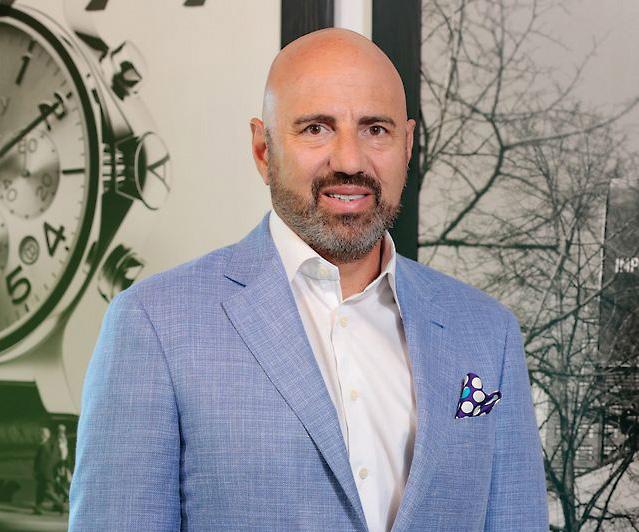
“Most growing chains have very few underperforming stores, and their appetite for space is broader than it has been in years. The industry has moved beyond tradearea snobbery. Retailers are pursuing strong opportunities wherever the fundamentals support them, including secondary and tertiary markets.”
—DLC
Management CEO Adam Ifshin
26
DLC Management CEO Adam Ifshin writes that tenants competing for high-quality spaces today are not only more willing to pay higher rents, but are also stepping up to finance their buildouts.
28
Levin Management Corporation CEO Matthew K. Harding explains how real estate owners and operators are engaged in a chess game--repositioning assets by moving pieces around, reconfiguring space, relocating tenants, and rethinking anchor opportunities.
30
Mall of America’s chief business development and marketing officer Jill Renslow declares that the most successful retail environments are not defined by transactions alone, but by their ability to create reasons to visit.
32
American Dream CMO Adam Petric details how, for 39 straight days, the mega-mall in the New Jersey Meadowlands will be taking advantage of their location next to the stadium where the World Cup Final will take place in July.
34
Gordon Brothers managing directors James Avallone and Caleb Smith have expanded their real estate strategies to broaden their business objectives, using data and analytics to identify where their stores should be located—often in secondary and tertiary markets.
36
Second Horizon co-founders Howard Levine and Camilo Varela are on a nationwide search for quality malls that have been underinvested and are remaking them to more closely serve the needs and wants of their communities. They are very precise about the merits of their acquisitions, having considered more than 100 malls and having bought just seven.
38
Centennial senior VP of business transformation & intelligence Elizabeth Boldin Thomas explains how the real power of artificial intelligence is unlocked only when the people wielding it are trained, guided and empowered to use it to its fullest potential.
40
Casto partner Eric Leibowitz tells how national retail brands are looking into smaller markets and properties they would not have considered in years past. Brands are rating secondary and tertiary market populations based on their high education levels, not household incomes.
42
JLL EVP of retail advisory services Ken Shishido looks at how ethnic grocery chains— once confined to specific neighborhoods serving their respective cultural communities—are aggressively moving into mainstream markets nationwide.
44
Sands Investment Group advisors Tyler McGarry and Dane Garson tell how car washes stand apart from traditional retail because they are highly equipment-intensive. Since these components typically have shorter lives than the building itself, a meaningful portion of car wash assets may qualify for accelerated depreciation.
46
Poag Shopping Centers CEO Josh Poag advises that hands-on management of smaller open-air centers is crucial, noting that they are places people visit weekly and that their expectations around cleanliness, safety, access, convenience and experience are high.
48
SRS Real Estate Partners president Garrett Colburn explains how data and AI tools sit at the core of how SRS collaborates with retailers and clients, providing insights such as rent comparables, sales volumes, and other key inputs that inform decision-making.
50
CBRE’s U.S. head of retail research Ebere Anokute reports that consumers are eating more at home due to the value offered by grocery stores. U.S. Census Bureau and National Restaurant Association data indicates that restaurant pricing has increased by nearly 60% over the past 10 years, while grocery prices rose by just 30%.
52
TOP PROPS
A rundown of hot properties from Spinoso Real Estate Group and Peterson Companies

Over the past five years, the fundamentals of retail real estate have changed dramatically. Landlords are now operating with far greater cost certainty, and the economics of the deal have moved decisively in our favor. Tenants competing for high-quality spaces today are not only more willing to pay higher rents than they did a few years ago, they are also investing more into their store. The days of landlords funding 100 percent of tenant buildouts is behind us. Today, tenants have more skin in the game, and that is changing economics across the board. At the same time, retailers are expanding with discipline. Most growing chains have very few underperforming stores, and their appetite for space is broader than it has been in years. The industry has moved beyond trade-area snobbery. Retailers are pursuing strong opportunities wherever the fundamentals support them, including secondary and tertiary markets.
The dearth of new retail real estate construction will continue. There is limited land available for new development, and when it does exist, the cost basis is often prohibitive. For most tenants, ground-up new development rent simply does not pencil. If you are a retailer with a 25,000-sq. ft. requirement, you are not waiting for new construction. You are going to pay $25 to $30 per square foot and open your store to make your money back. Instead, you are finding space, investing in it, and opening for business, frequently investing side-by-side with landlord partners like DLC to find a win-win medium between rent and cost. We have positioned DLC to take advantage of this environment.
In 2025, we deployed more than $1 billion on acquisitions that will make us one of the largest owners of open-air
“Most growing chains have very few underperforming stores, and their appetite for space is broader than it has been in years. The industry has moved beyond trade-area snobbery. Retailers are pursuing strong opportunities wherever the fundamentals support them, including secondary and tertiary markets.”
centers in the United States. We scaled our platform with a focus on high-quality, open-air centers. With our investment partner DRA Advisors, we expanded meaningfully on the West Coast through the acquisition of a 10-property portfolio across California and Washington, including the 514,000-sq.-ft. Clairemont Town Square in San Diego and the 1.5 million-sq.-ft. Alderwood Plaza in Lynnwood, Wash.
This was not a one-off investment. It was a deliberate move to establish a long-term presence in the region. We have since built out a local team and opened a West Coast office to support continued growth across the Pacific and Mountain states.
We also continued to target high-performing assets in growth markets, including Towne Center at Cedar Lodge in Baton Rouge, a 316,000-sq.-ft. center generating more than three million visits annually.
In search of growth markets
We have been equally disciplined on the disposition side, as well. Why are we selling? Because we met our internal investment goals for those assets. This is not a shift in strategy. It is the strategy. We are very good stewards for our investors.
We are constantly evaluating where capital is best deployed. In many cases, that means exiting mature positions and reallocating into markets with stronger long-term growth potential.
Our goal has always been to build a national platform, but we were never willing to compromise our investment return criteria just to make that claim. Scale matters, but only when it is built on the right fundamentals.
Adam Ifshin is the CEO of Elmsford, N.Y.based DLC Management Corp.




























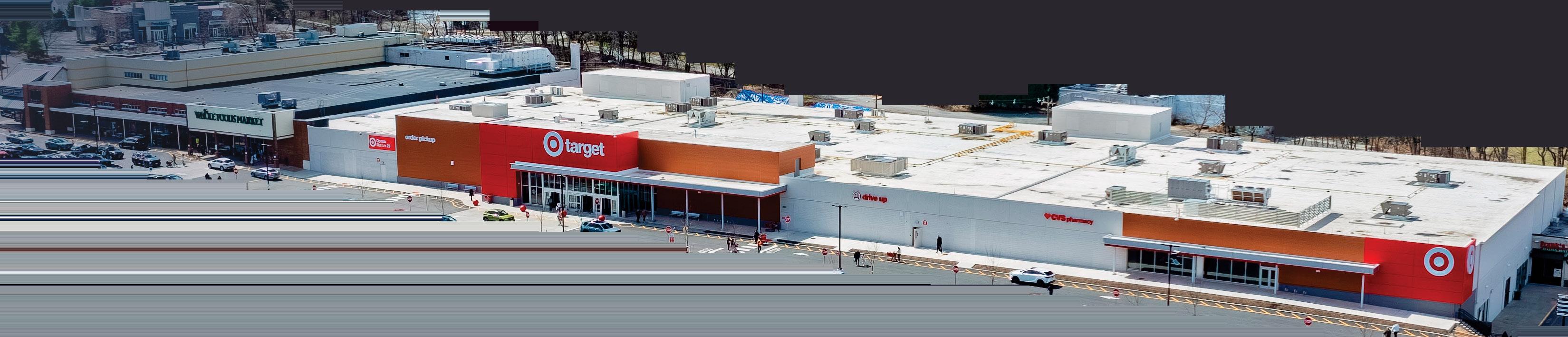
For years, the narrative in retail real estate has centered on a lack of available space—and that reality isn’t changing anytime soon. In many of today’s most sought-after markets, particularly throughout the Northeast, new development remains limited while retailer demand continues to grow. The result is a simple but pressing challenge: Where can expanding retailers go when there’s little to no space left to lease? Increasingly, the answer is not about finding space—it’s about creating it.
In this environment, leasing has evolved into something far more strategic than simply filling vacancies. At Levin Management Corporation, we are seeing this firsthand across retail properties in some of the Northeast’s most supply-constrained markets. It has become, in many ways, a chess game. Owners and operators are thinking holistically about their centers—repositioning assets by moving pieces around, reconfiguring space, relocating tenants, and using key anchor opportunities to drive broader transformation and create centers that better align with how consumers shop, dine, and spend their time today.
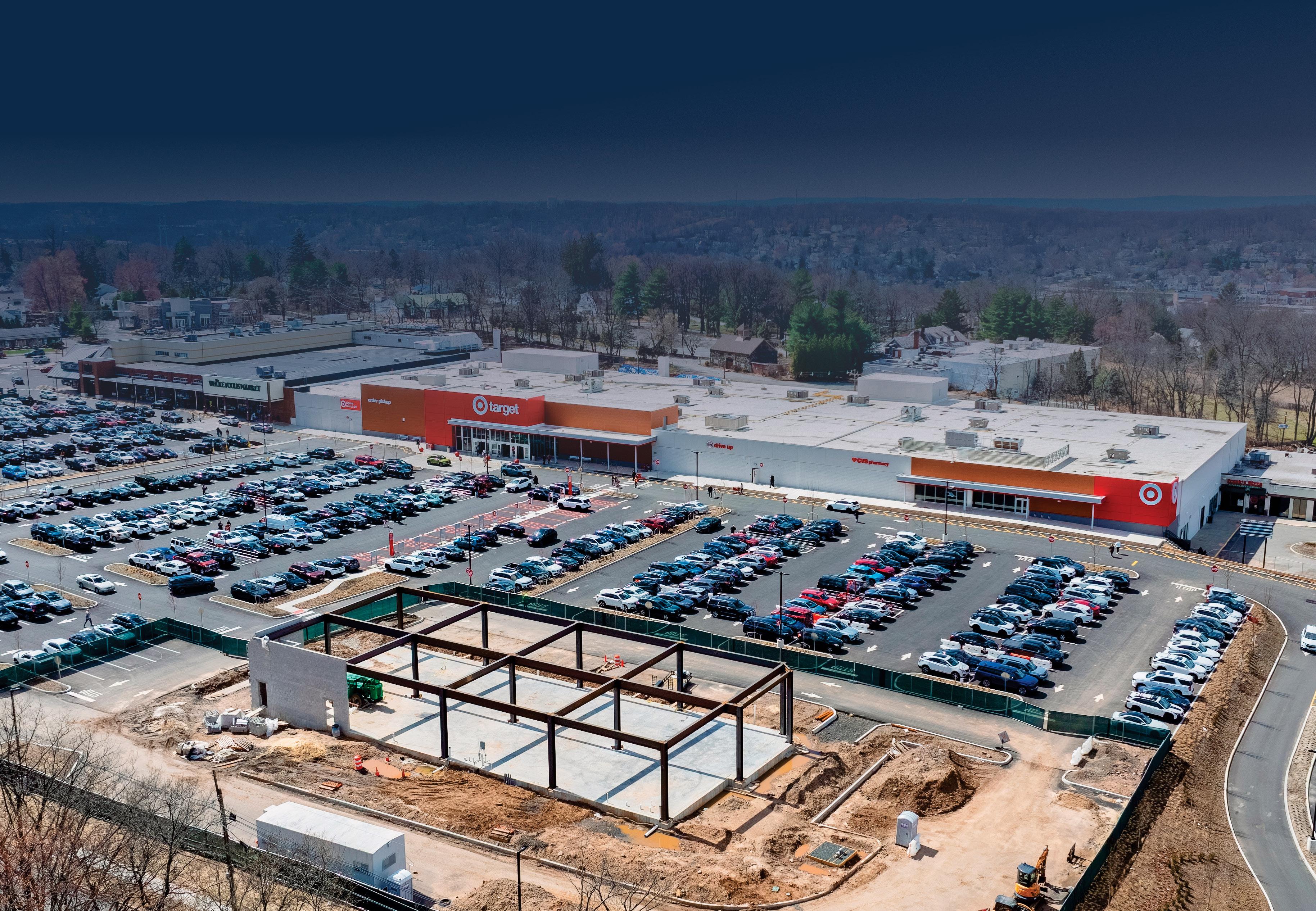
At Somerset Shopping Center in Bridgewater, N.J., for example, a former Christmas Tree Shops box presented an opportunity to do more than simply backfill space. By introducing Sprouts Farmers Market, the center gains a strong grocery anchor aligned with today’s consumer demand.
At the same time, the deal is serving as a catalyst for broader reconfiguration—moving existing retailers to optimize space, creating opportunities for additional national tenants, and expanding the presence of fitness and service-oriented uses. The result is a more productive and better-balanced merchandising mix across the property. A similar strategy is playing out at New Jersey’s West Orange Plaza. There, the former Kmart was rede -
on getting creative about creating space
veloped into a 150,000-sq.-ft. Target, significantly elevating the center’s profile and traffic. That anchor transformation opened the door for additional growth, including the development of new outparcel space to meet strong retailer demand. Even before construction is complete, Phase I of the expansion is already nearing full occupancy, with leases signed or under active negotiation for new restaurants, fitness users, and service providers that will further strengthen the property’s role as a community shopping destination.
At Blue Star Shopping Center in Watchung, N.J., long-term planning also played a critical role. Space was reserved within the center for the development of a new ShopRite, which opened last April and now serves as a dominant grocery anchor. With that in place, the focus has shifted to reconfiguring the former space to accommodate Burlington and creating a new store for Marshalls. The center has also upgraded its overall mix with stronger dining options, including Honeygrow, Raising Cane’s, and Taco Bell along with popular fitness and value-oriented tenants such as Planet Fitness and Five Below.
Tapping tenants that make centers stronger
These examples reflect a broader industry shift: today’s most successful retail centers are not static, but continually evolving to curate a tenant mix that better aligns with evolving consumer habits and expectations. Importantly, this strategy is not limited to fully leased properties. While space constraints often drive the need for creative solutions, the underlying objective is larger: creating stronger, more relevant centers. That means identifying underutilized or outdated space, optimizing footprints, and introducing uses that drive both traffic and engagement.
For retailers, this shift underscores the importance of flexibility. Opportunities may not always come in the form of traditional vacancies, but rather through repositioned space within an evolving center. For owners, success requires looking beyond individual deals and taking a long-term view of how each leasing decision contributes to the strength of the overall asset.
In today’s constrained market, available space is no longer simply the starting point—it is often the result of strategic planning. By embracing reconfiguration and taking a comprehensive view of their properties, owners are not only responding to limited supply, but also creating stronger centers that are better aligned with today’s consumers and positioned for long-term success.
Matthew K. Harding is the CEO of Levin Management Corporation.

With more than 16 million square feet of retail space — and growing — Levin Management represents a premier portfolio of shopping centers across the Northeast and Mid-Atlantic. Through strategic leasing, redevelopment, and proactive management, we maximize asset value and create high-performing destinations where retailers want to be.








75+ MILLION ANNUAL VISITORS. 1,500+ BRANDS. 65+ ATTRACTIONS.
These aren’t just shopping centers—they’re global destinations that merge retail, entertainment, and culture under one roof. From roller coasters and aquariums to luxury flagships and emerging labels, our properties deliver next-level guest experiences and unmatched brand exposure. With venues that host concerts, premieres, and cultural moments, we offer a platform where stories come to life— and where foot traffic becomes true engagement.

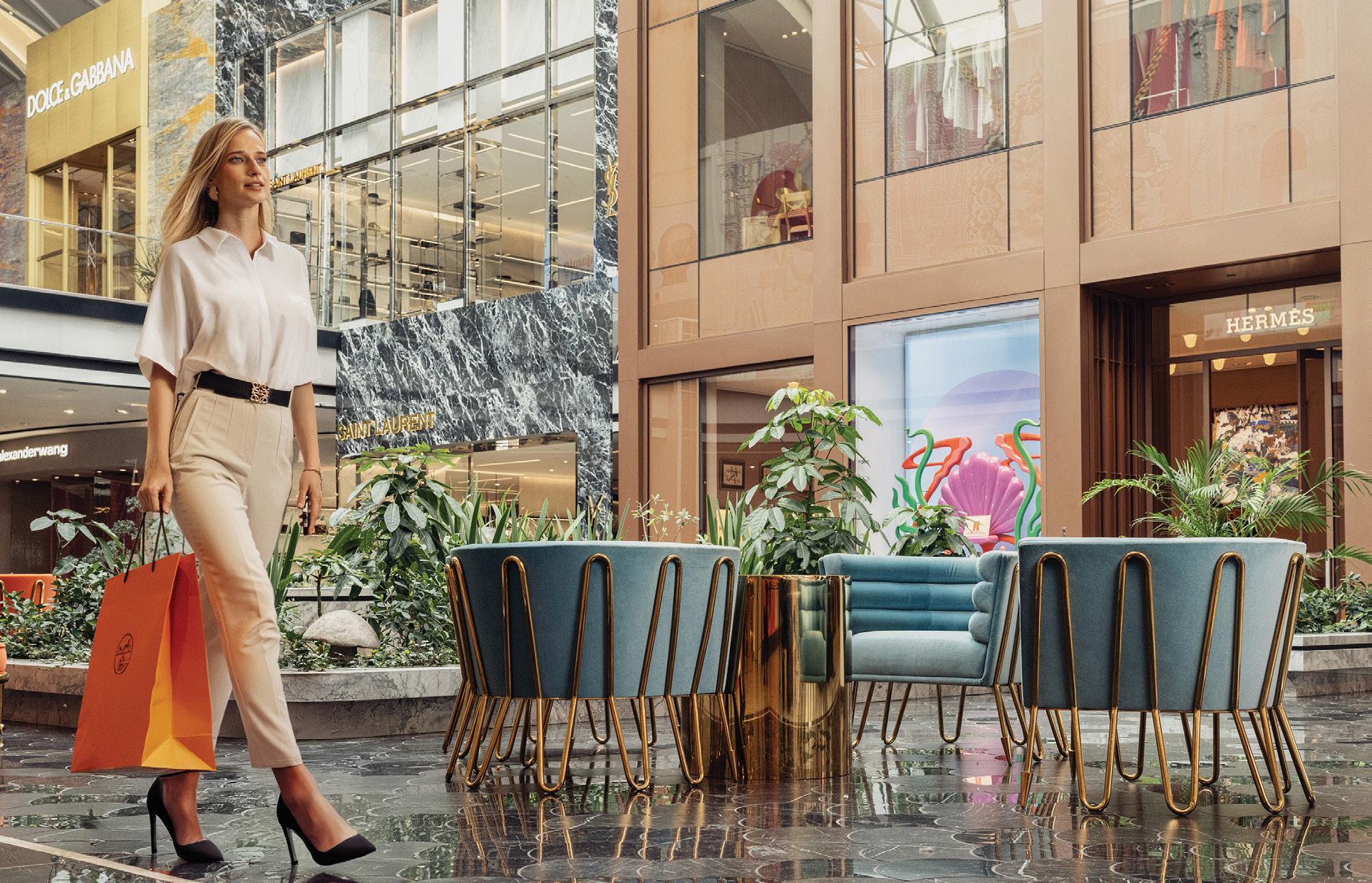


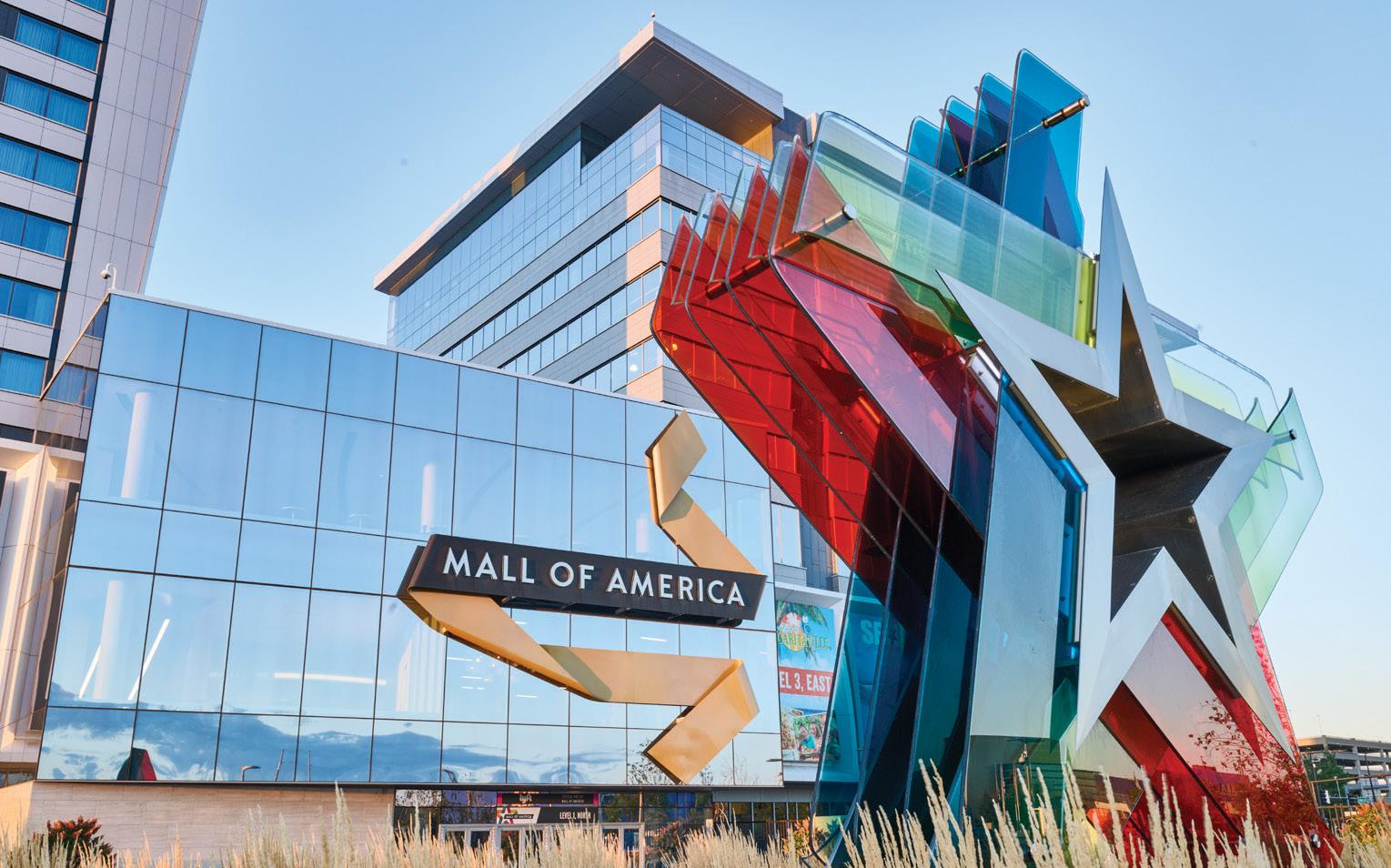






Mall of America was never designed to be a traditional mall, and that distinction has only become more relevant over time. While much of the industry has spent the past decade reacting to disruption, MOA has continued to evolve proactively, operating as a platform for experiences, partnerships, and cultural relevance. Today, the most successful retail environments are not defined by transactions alone, but by their ability to create reasons to visit. At Mall of America, that means blending retail, entertainment, and community in ways that reflect how consumers actually live, connect, and spend their time. That approach comes to life through large-scale activations tied to nationally and globally significant moments. From the Special Olympics USA Games to WWE SummerSlam and the IIHF World Junior Championship, Mall of America has positioned itself as a stage for cultural events that drive engagement, generate national visibility, and create repeat visitation. These moments transform the property from a place people shop into a place people experience.
Fly me from the mall
Innovation at Mall of America extends beyond programming, including new ways to leverage the property’s physical assets. PARK SHOP FLY is one example, a long-term and overnight parking solution designed to meet the needs of today’s traveler. Located within a dedicated level of a Mall of America parking ramp and positioned near Minneapolis–Saint Paul International Airport, the program reflects a broader strategy: rethinking existing infrastructure to unlock new value and meet evolving consumer expectations. At the same time, a dynamic retail mix remains central to the experience. Mall of America is home to more than 180 first-to-market brands, with recent additions including Mango, Skims, Samsung, Pop Mart, and CardVault by Tom
how Mall of America
“In partnership with Fraser, a nonprofit specializing in autism and neurodiversity, we have expanded sensory-inclusive initiatives across the property.”
Brady. The focus is not simply on filling space, but on curating brands that bring energy, differentiation, and a sense of discovery, giving guests a reason to return again and again. Equally important is ensuring the experience is accessible and welcoming to all. A partnership with Fraser, a Minnesota-based nonprofit specializing in autism and neurodiversity, has expanded sensory-inclusive initiatives across the property. From enhanced sensory rooms and wayfinding tools to additional staff training, these efforts reflect a commitment to creating an environment where all guests feel comfortable navigating and engaging with the space. Mall of America is not redefining retail through a single initiative, but through a continuous process of evolution. By integrating experience, innovation, and inclusiveness into every aspect of the business, it is helping to shape what the next generation of physical retail looks like and setting a new standard for what a modern retail destination can be.
Jill Renslow is Mall of America’s chief business development & marketing officer.
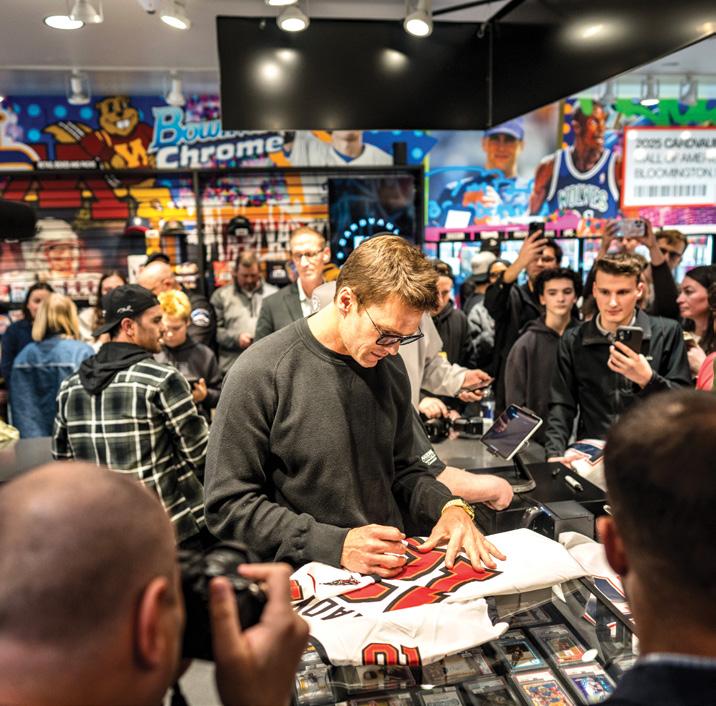

In retail, when you’re in the right place at the right time with the right brands and the right guests, you really are on top of the world. But this year, we at American Dream will be able to honestly claim to have achieved one of the highest standards of this position.
On Sunday, July 19, we will be in the shadow of our New Jersey Meadowlands neighbor, MetLife Stadium (to be hailed as NY/NJ Stadium during the tournament), when the ball drops to commence the 2026 FIFA World Cup Final. For 39 straight days, American Dream will serve as a soccer sanctuary for an estimated two million visitors from across the globe. Seven other games between teams from around the world will be played at MetLife around the World Cup, including Brazil vs. Morocco, France vs. Senegal, and Panama vs. England. Soccer fanatics are already tuning up for the event at American Dream and we have been ready for them. Last October, we hosted a special Legends Match soccer exhibition followed by meet-andgreets with the soccer greats that included Sergio Goycochea, Mario Kempes, Carlos Valderrama, Juan Pablo Sorin, René Higuita and Óscar Córdoba.
The two-day event coincided with the 65th anniversary of Diego Maradona’s birth and the upcoming opening of the Soccer Factory, an immersive experience honoring the culture of Argentine soccer at American Dream. A wide range of our tenants have been eager to join in on our participation in the World Cup Final. Among them:
• In January, Adidas opened is first soccer-only store at American Dream featuring premium athletic footwear, performance gear and Adidas Originals all in one place. The first 200 visitors to the store received a custom Adidas Zine filled with exclusive content, World Cup schedules and other surprises.
“For 39 straight days, American Dream will serve as a soccer sanctuary for an estimated two million visitors from across the globe.”
• In tribute to the soccer superstar Lionel Messi, we will be opening The Messi Experience, a multi-room, nine-installation journey that gives fans an opportunity to test their soccer skills and explore Messi’s legacy.
• From July 11 - 19, “La Plaza de Fútbol” will give some 1,000 Hispanic-owned New Jersey businesses the opportunity to showcase their products and services.
• Build-A-Bear Workshop is introducing a soccer-themed overlay for their concept to get young children—many for whom soccer was their first sport—to take part in the World Cup celebration.
• And nearly all of our bars and restaurants are eager to catch World Cup Fever.
We, too, have reached out to help FIFA by opening our doors early, providing parking, and serving as a place where soccer fans can congregate. Summer is a busy season for us at American Dream, and there will be a lift in that traffic.
American Dream has already established itself as a global destination, welcoming visitors from all 50 states and more than 125 countries annually. The World Cup will only elevate our profile, showcasing the uniqueness of our property on a global stage. We are excited to play a key role in delivering offthe-pitch entertainment and hospitality. It promises to be an exciting and rewarding summer--one that propels us to an even stronger future.
Adam Petrick is the CMO of New Jersey Meadlowlands-based American Dream.
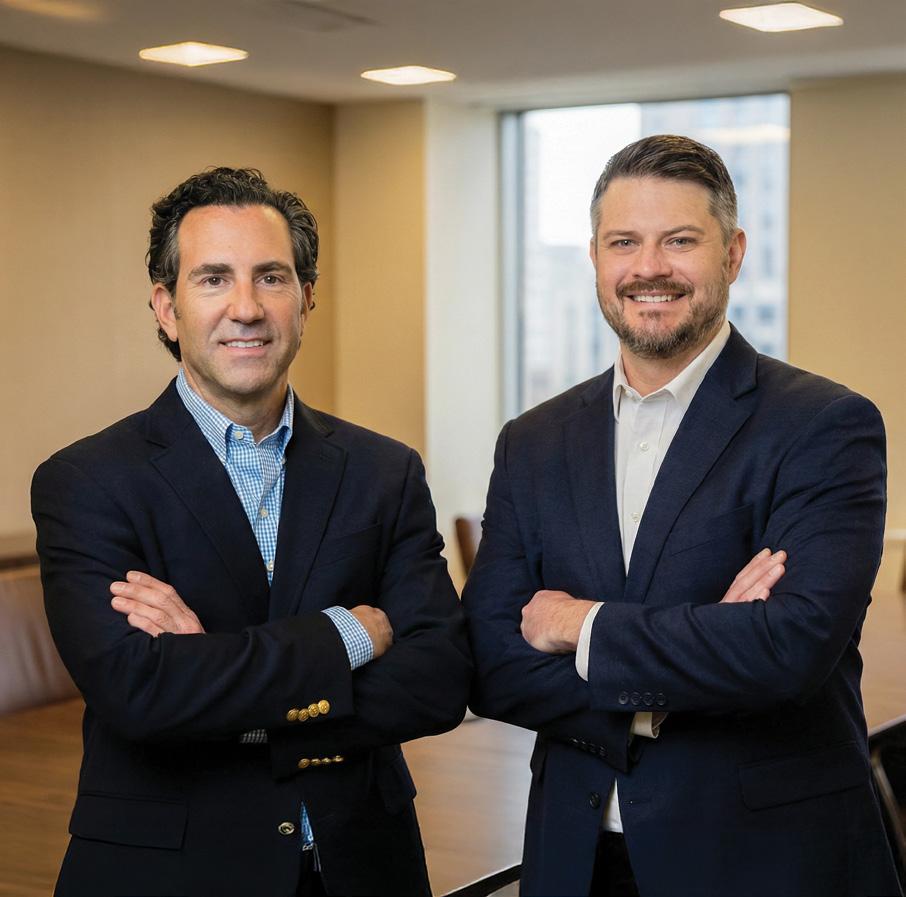
In a time when all expanding retail brands have been forced to open their eyes to new secondary and tertiary markets, it is also a time that many of them call upon Gordon Brothers. In the first few months of 2026, the real estate services firm was retained by Grocery Outlet to market three dozen underperforming stores across six states as well as 89 furniture store locations abandoned by American Signature Inc. following its Chapter 11 filing. Chain Store Age sat down with Gordon Brothers executives James Avallone and Caleb Smith to get their take on how the real estate market has changed in the last decade.
CSA: You’ve both seen a lot of change in the retail real estate industry. Tell us, how did we get to such a complex place?
Avallone: After years of historically low interest rates, post-pandemic inflation has pushed rates higher, tightening access to capital. The negative impact that higher interest rates have had on new retail construction projects has been further compounded by skyrocketing construction costs due to import tariffs. This combination continues to have a significant impact on the industry. Rents are much higher Smith: Retailers in growth mode are increasingly forced to look at existing space, particularly second-generation boxes and spaces coming out of distress. We’re seeing pressure mount on both ends of the spectrum--for retailers looking for new locations as well as those looking to right-size their footprints.
CSA: It’s a tough spot, for sure. How has the game changed, specifically?
Smith: Healthy retailers are still in growth mode, but the way they expand has become far more strategic. We’re typically brought in to help connect the real estate strategy to the broader business objectives, using data and analytics to identify where stores should be, how they should
perform and what the portfolio should look like over time. At the same time, optimizing a portfolio often means making disciplined decisions about underperforming locations. Our team is able to blend objective analysis with real-time market execution. That allows retailers to move quickly and confidently, whether that’s securing new sites, restructuring existing leases, or exiting locations in a way that maximizes value. The biggest differentiator is being able to translate that insight into action and deliver measurable outcomes across the entire portfolio.
Avallone: We’ve also developed a unique approach to assist retailers to grow by navigating the complex nature of companies in distressed situations, such as bankruptcy or liquidation. In this tight real estate market, those channels have become an increasingly important source of supply. Because we work across the full business lifecycle, we’re able to connect clients to opportunities that may not be visible through traditional channels and help them act quickly and strategically.
Smith: Exactly, Jim. Clients are searching for insider insight that helps align real estate decisions with their broader strategies. By leveraging our deep knowledge, they’re able to move quickly and efficiently when opportunities arise, reducing the time it takes to secure locations that support their growth.
CSA: How closely do you engage with retail real estate directors throughout the process?
Avallone: Retailers need partners who have the breadth of experience and the depth of expertise to navigate uncertainty. And that’s how we approach every engagement—as a partnership, working with clients through the full lifecycle from strategic planning through an ongoing optimization process. Our goal is to unlock opportunities that others can’t.
Smith: Because we’re a lender, an investor, and an advisor, we bring a uniquely informed perspective to the retail industry. Backed by the broader Gordon Brothers platform, we’re also able to bring capital to the table, stand behind our underwriting and guarantee outcomes.
James Avallone is a senior managing director and Caleb Smith is a managing director on the North America real estate services team at Boston-based Gordon Brothers.

Across the country, many retail centers remain vital anchors within their communities. They are centrally located, supported by strong demographics, and have long served as popular gathering places. The challenge is not demand, but years of underinvestment and inconsistent ownership.
Retail is evolving and with the right approach, these assets can be repositioned as durable community-driven destinations. Solutions for long-term success lie in moving beyond a cookie-cutter model to one that reflects the needs of each market.
Second Horizon Capital approaches that opportunity with a long-term ownership mindset. Since our founding in 2021, our team has reviewed more than 100 retail opportunities and acquired just seven. Selectivity, however, is only the starting point.
Our company focuses on centers with strong underlying fundamentals, steady local demographic trends and resilient market positions – to meet where reinvestment can drive meaningful positive change. This discipline helps drive capital and resources to centers where long-term value creation is achievable through intentional stewardship and high-touch sponsorship.
There is no one-size-fits-all approach. Each property requires the right leasing and management teams attuned to the needs of each market. Matching those teams to each asset supports better decision-making and more effective execution.
Our team spends significant time at our centers – not just in the acquisition phase, but across the investment lifecycle – developing a clear understanding of what is working, what needs to improve, and where adjustments can be made. Experienced teams coupled with defined objectives are the foundation of performance.
Second Horizon Capital is a show company rather than a tell company. We measure our progress through the results of consistent investment, dedicated team efforts, and a relentless focus on execution. Many of these properties have experienced years of
underinvestment. Our capital planning starts with the fundamentals —including roofing, HVAC, parking lots, lighting, and signage. These are not headline investments, but they directly impact the customer experience and support retailers. At the same time, we focus on sustainability and long-term operational durability. That investment is paired with a merchandising strategy that brings together national, regional, and local retailers, creating a stronger sense of place and connection.
Community engagement as a driver of performance Community engagement is a core tenet of our investment philosophy in revitalizing these essential community hubs. Each of our centers thrive when we focus intentionally on being a central part of the fabric of each of our communities. Our company continues to expand local partnerships, with more than 800 events planned at our properties with over 250 partners across our portfolio in 2026. These partners include schools, libraries, museums, healthcare systems and other local organizations.
As these connections get re-established, our community shifts in parallel. Center activity increases, dwell times improve, and retailers observe stronger performance. Over time, the property – once underinvested – again becomes part of the community’s daily rhythm. Retailers today have options, however, not all retail ownership is the same. Many retailers are looking for engaged partners, actively maintained properties, and community environments that actively drive traffic.
Our approach reflects an active stewardship model grounded in ongoing investment, strong operations, and local connectivity. Retailers often see the difference in more consistent and predictable execution.
Second Horizon Capital’s model emphasizes stability, supported by teams on the ground working closely with operators and remaining connected to each property. When these elements come together, the results are clear: stronger retailer performance, consistent traffic, and assets that remain relevant over time.
Howard Levine and Camilo Varela are managing partners and co-founders of Second Horizon Capital





Commercial real estate is buzzing with discussions about the AI revolution, from agents that underwrite deals in seconds to platforms promising to put the entire leasing lifecycle on autopilot. Headlines proclaim the “End of the Expert.”
At Centennial, we see things differently, especially when it comes to how this technology creates value for our partners. As we gather at ICSC Las Vegas to discuss the advancements in PropTech, I want to offer a counterintuitive truth. The more sophisticated our technology becomes, the more valuable the human element. AI is a powerful tool, but a tool nonetheless. Its real power is unlocked only when the people wielding it are trained, guided, and empowered to use it to its fullest potential. That’s where the true differentiator lies. Companies that invest only in technology will find diminishing returns. The ones that invest equally in their people, building the knowledge, habits, and instincts to embrace AI, are the ones that will distinguish themselves. For our partners, that means the difference between a reactive operator and one who’s three moves ahead. This forward-looking approach comes from operating every asset with an ownership mindset.
Our AI strategy operates on two fronts. Internally, we use technology to make our team more efficient and strategic. Externally, where clients see direct impact, we deploy AI-powered tools that translate into traffic, sales, and competitive advantage for our centers’ retailers. Both are grounded in the same belief: this is still a relationship-driven business. Technology doesn’t replace that. It means our people show up to every conversation faster, sharper, and better-prepared. While many in our industry are theorizing about AI’s potential, Centennial is already seeing what it looks like in practice. Our SHOP NOW platform, developed with Adeptmind, uses AI and machine learning to connect real-time consumer search intent directly to in-center
inventory, generating thousands of localized landing pages that surface our retailers in Google and AI-powered search results. A shopper searching “where to buy spring dresses in San Diego” now finds items available at a Centennial property five miles away, not Amazon. Machine learning identifies trends in real time, and our team layers in human curation to ensure quality and relevance. The result is more foot traffic, more intent-driven shoppers, and more sales for our retail partners — particularly among Gen Zers, who value immediacy over delivery. It’s how we’re using technology to make our centers more relevant, more discoverable, and more loved by the communities they serve.
Our mission: Creating places people love Client-facing results don’t happen without a team ahead of the curve. At Centennial, we aren’t just talking about AI, we’re actively integrating it through a culture of testing and shared learning, with in-person training, weekly checkins on real business use cases, and ongoing discussions that sharpen best practices. We take the time to find the right tool, refine the approach, and deploy with confidence. That requires both innovation and intention. And through it all, we hold one guiding principle: AI’s output is only as strong as the human-managed data behind it.
In the end, the advantage comes from the people putting it to work. AI allows us to move faster, but the real win is freeing our teams up to focus on what matters: building relationships, strengthening our properties, and delivering better experiences for our partners and communities. It’s how we live our values in practice: taking ownership of outcomes, acting with integrity in every decision, and leading with respect in how we collaborate. And, ultimately, it enables us to stay focused on our mission: creating places people love. The operators who will define the next decade aren’t waiting to see how AI shakes out. They’re already leveraging it with discipline and judgment, on behalf of the partners who trust them.
That’s the standard we hold ourselves to at Centennial. To be a trusted partner, to operate with an ownership mindset, and to create places people love. And it’s the standard your asset deserves.
Elizabeth Boldin Thomas is senior VP of business transformation & intelligence at Dallas-based Centennial

In a Facebook post announcing that two popular national value brands would be opening stores in Circleville, Ohio—the county seat of Pickaway County with a population of 14,000—several responders expressed their joy over the development.
“FINALLYYYYYY,” wrote one.
“Most definitely! Yesssss!!!!! I’m so excited not to have to go out of town just for a store like this!!” wrote another.
One more proclaimed, “Columbus is moving south!”
In this era of paucity of available Class A and B retail space, expanding national brands have had their eyes opened to the merits of locating in tertiary markets. The reason is made clear by reactions like these. The simple truth is that consumers in these markets will be spending more of their budgets in popular stores if they drive by them on a regular basis instead of making plans to drive 20 miles to access them two or three times a year.
Brands proceed cautiously into smaller markets
What we at CASTO are seeing are national retail brands looking into smaller markets and properties that they would not have considered in previous years. They are moving into towns based on populations, not average household incomes. Some also give higher ranks to small communities whose populations are more highly educated and have strong school systems.
They are proceeding cautiously, however. They will undertake new construction in some of these markets, but they will take the time
to study tertiary markets to be absolutely sure that they are situated in the correct location.
The competition for top spaces in these towns has become fierce. And what they must have is a great traffic location with high visibility, good signage, and ample parking. Attaining the best location in town is of utmost importance to all of these brands. Those willing to undertake new construction are mostly pushing into strong, power-anchored centers.
Small market municipalities are playing ball
Also crucial to them are municipalities that are eager to welcome them to town and can get them entitlements as soon as possible. For top-level brands, we are finding that towns move forward quite efficiently. They are eager to get the sales tax revenue flowing as quickly as possible.
We at CASTO are seeing some of these brands being willing to move into older buildings they would not have considered previously. Some national juniors are pushing hard for re-tenanting some boxes. And yes, of course, they are negotiating for the very best deals.
The vacancy rate across our portfolio is now 2%.We are in a handful of new, junior-anchor construction projects and our tenant build-out teams are very busy.
Eric Leibowitz is a partner at Columbus, Ohio-based CASTO.
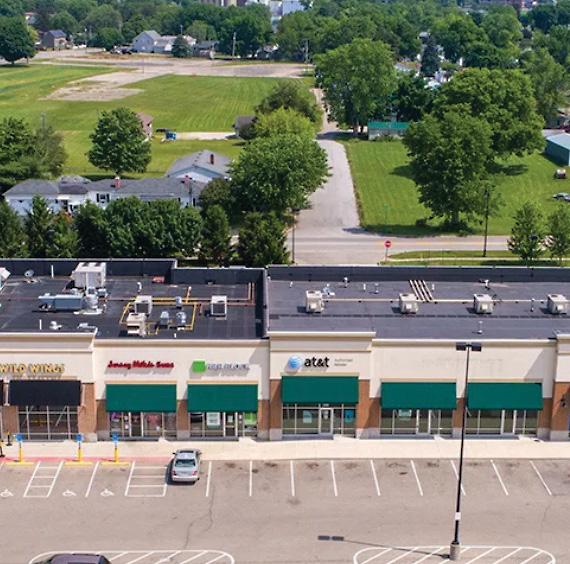

±90-acre mixe -use evelopment in rapi ly-growing Clayton. Site is only 20 minutes from Raleigh, featuring upscale resi ential, retail, an restaurant opportunities.
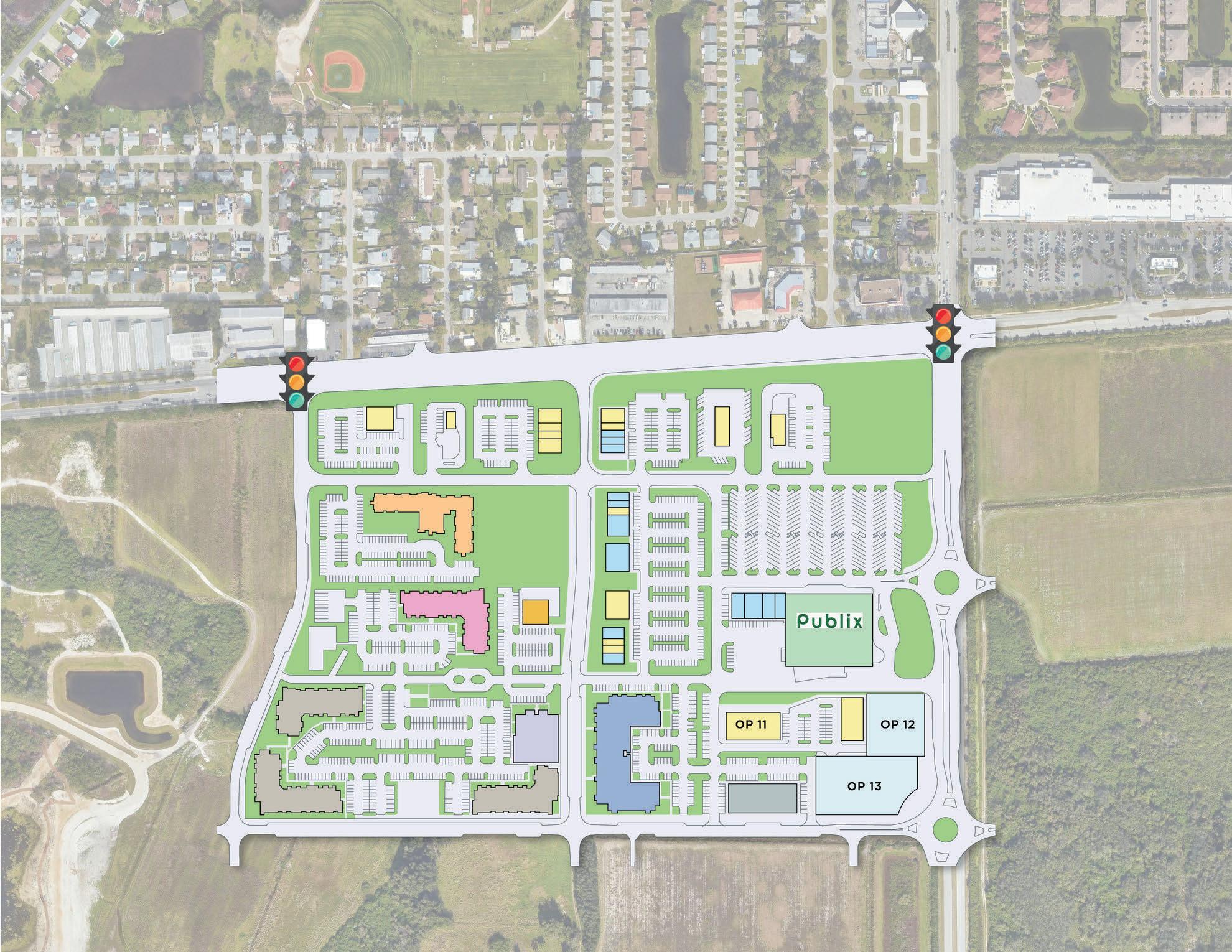
New mixe -use evelopment locate at the State Route 161/Hamilton Roa interchange an relocate Hamilton Roa with 250,000 s.f. of retail an 500,000 s.f. of me ical/office.
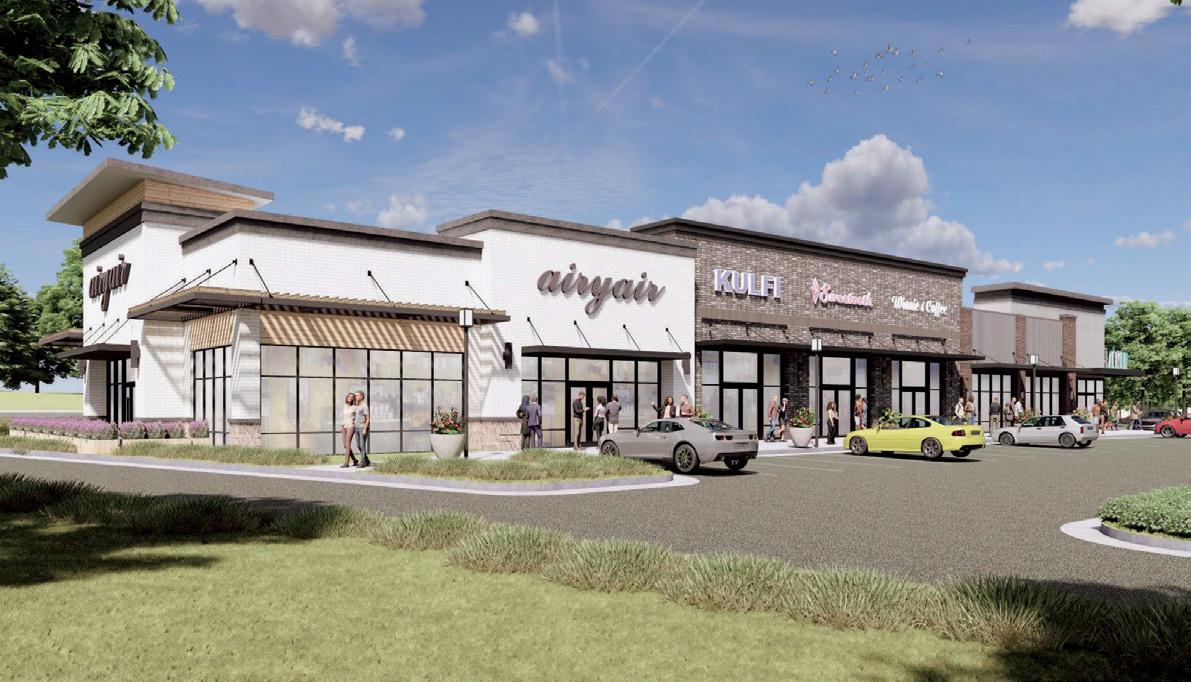
Bra enton, Flori a
±33 acre site with total GLA of ±105,000 s.f., within close proximity to the Anna Maria Islan beaches. Site features 11 retail outparcels, 130 key hotel, an a ±50,000 s.f. Publix anchor.
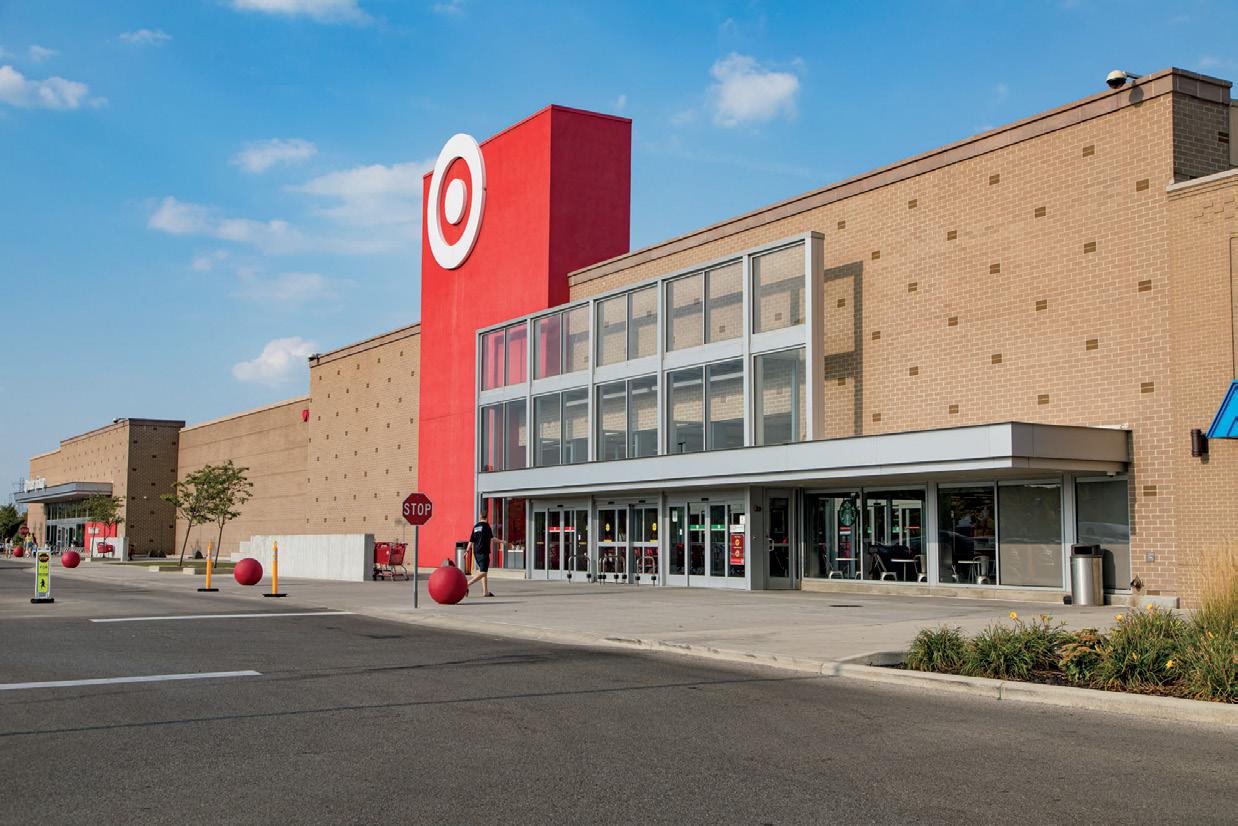


Ethnic grocery chains, once confined to specific neighborhoods serving their respective cultural communities, are now aggressively expanding into mainstream markets nationwide. This transformation signals a fundamental change in how Americans shop, eat and experience retail.
Asian brands lead the expansion
While local and regional Asian grocers have long been fixtures on both coasts—particularly in urban areas like New York and Southern California with large Asian populations—a new trend is emerging. Several of these chains are now expanding nationally, moving beyond their traditional strongholds into new metropolitan areas. H Mart, for example, began as a single neighborhood market in Queens primarily serving the Korean community. It has since expanded throughout the Northeast and evolved into a mainstream destination carrying food staples from across Asia alongside traditional grocery items. With nearly 100 stores, H Mart’s footprint now spans the U.S. and Canada. Similarly, 99 Ranch started on the West Coast with a focus on Chinese and Taiwanese food. It has grown from its Southern California roots into a national chain of more than 60 stores, known for its live seafood, in-store bakeries and hot deli counters. These chains now prioritize larger, regional locations such as power centers and regional malls in higher-income areas with diverse populations. Many operate food halls within their stores, transforming grocery shopping into an experiential retail and dining event. Retailers like Northgate González Market, Cardenas Markets, and Vallarta Supermarkets have experienced remarkable growth across the Southwest and, increasingly, in unexpected markets. Their success comes from offering authentic products, in-store taquerías, and cultural experiences that attract a diverse customer base far beyond their initial demographic targets.
“These chains now prioritize larger,
regional
locations such as power centers and regional malls in high-income areas.”
Their competitive advantage lies in combining authenticity with value. While traditional supermarkets stock a limited selection of international products, ethnic grocers offer a comprehensive assortment unavailable elsewhere. This appeal is particularly strong in today’s inflationary environment, where shoppers are actively seeking alternatives. According to JLL’s Grocery Tracker 2026, private label sales grew 30% since 2021 to reach $282.8 billion, now accounting for over 21% of all grocery spending—a value-consciousness that ethnic retailers leverage effectively. The trend extends to other specialty grocers. Middle Eastern and Mediterranean markets like Fresh Farms International Marketplace have established a significant presence in major metropolitan areas. Patel Brothers, which serves South Asian communities, operates dozens of locations across the country.
Attractive tenants with proven sales
For real estate, this trend presents clear opportunities. Ethnic retailers prefer adaptive reuse, targeting 20,000-to-50,000-sq. ft. vacancies to accelerate market entry. Competition for these spaces is fierce, as grocery-anchored centers boast a low vacancy rate of just 4.0%. This has driven investor demand, with transaction volume surging 42% over the past year.
For landlords, these chains are attractive tenants with proven sales performance and an ability to draw diverse crowds. As institutional investment in grocery-anchored centers reaches record highs, properties featuring high-performing ethnic grocers are positioned to command premium valuations.
The mainstreaming of ethnic retail is a permanent shift. As consumers grow more adventurous and value-conscious, these retailers are poised for continued growth. For landlords, they are not just viable tenants but strategic partners capable of driving traffic and enhancing a property’s appeal, reshaping American shopping one market at a time.
Ken Shishido is the EVP of JLL’s Retail Advisory Services unit
JLL turns prime retail spaces into opportunities for our clients.
Visit us at ICSC LAS VEGAS at Booth #2007G in Central Hall.




Bonus depreciation has become a closely watched tax strategy in commercial real estate, as federal legislation shapes how investors approach timing, cash flow and deal structure. At its core, bonus depreciation allows investors to accelerate the write-off of certain qualifying components--front-loading depreciation that would otherwise span decades. That early value can significantly enhance after-tax returns, especially in sectors like car washes.
Car wash assets stand apart from traditional retail because they are equipment intensive. Unlike a standard building, where value is tied to the structure and land, a significant portion of a car wash’s basis is attributable to specialized equipment, utility infrastructure and operational improvements, including tunnel systems, water reclamation technology and automated payment and conveyor systems.
Because these components typically have shorter useful lives than the building itself, a meaningful portion of the asset may qualify for accelerated depreciation. In many cases, certain components may also be eligible for 100% bonus depreciation, subject to cost segregation analysis, acquisition timing, placed-in-service rules and investor’s individual tax profile.
Not every dollar of basis is eligible for full bonus depreciation. However, given their equipment-heavy nature, car washes can offer unusually strong accelerated depreciation benefits relative to more traditional real estate assets. Fundamentals matter: One common misconception is that the tax advantage alone justifies the investment. Depreciation should support a deal, not define it.
Car washes are operating businesses, meaning investors acquire a combination of assets: real estate, infrastructure and a revenue-generating enterprise. As a result, fundamentals such as demographics, traffic counts, location, and operator strength play a critical role in long-term performance. Consumer behavior has also evolved in ways that support the sector’s growth. Subscription-based models and a broader shift toward convenience have helped drive recurring revenue, while longer vehicle ownership cycles are increasing demand for ongoing maintenance and care. These dynamics have made modern car wash platforms more predictable and scalable than many traditional retail uses.
with the full story on car wash bonus depreciations
A key metric used to evaluate these assets is EBITDA coverage, which measures how comfortably a tenant’s earnings support rent, with a common benchmark of approximately 2–4x.
High margins, lower labor: Car washes offer operational advantages, too. Compared to other retail-oriented businesses, like quick-service restaurants, they typically have lower labor costs and fewer variable expenses. Modern facilities operate with minimal staffing and rely on automation and subscription-based models that generate recurring revenue, creating more predictable income streams. What investors get wrong: Some investors overestimate the value of the tax benefit. Bonus depreciation is a powerful tool, but it does not compensate for weak real estate fundamentals and operations. Overpaying for an asset because it offers a large upfront write-off can erode long-term returns.
Misunderstanding depreciation recapture is another challenge. When an asset is sold, taxes may be owed on previously taken depreciation unless a 1031 exchange is executed, which can push investors into a cycle of continual reinvestment.
Transparency can also be a concern. While larger institutional tenants provide corporate guarantees, smaller operators may not disclose detailed financials, making it harder to assess risk and accurately project revenue.
Proceed with caution: The car wash sector has seen significant investor demand in recent years, leading to increased development, signs of saturation in some markets, and a shift toward greater selectivity. Buyers are now focusing more on prime locations and stronger fundamentals, while underwriting standards have tightened.
However, demand remains strong among both institutional and private investors who view car washes as a compelling asset class within a broader portfolio strategy. For high-income individuals, car washes can offer diversification, income generation and tax advantages. Success will depend on balancing tax strategy with operational insight and strong fundamentals. Given the nuances around cost segregation, tax treatment and operator performance, many investors look to partner with specialists who understand both the sector real estate and operating dynamics. Ultimately, bonus depreciation may be the entry point, but it is the underlying business and real estate that determines performance.
Dane Garson and Tyler McGarry are advisors with Sands Investment Group who specialize in car wash assets.













Some 40 years ago, my father Dan Poag and his partner Terry McEwen set out to establish an entirely new category of open-air retail and coined the term “lifestyle center.” Their mission was to curate centers with top-flight retail brands like Apple, Crate & Barrel, and Pottery Barn and a wide range of food and beverage brands such as Perry’s Steakhouse and Ted’s Montana Grill in a setting more evoking upscale suburban downtowns, rather than typical open-air centers. We created spaces and places that helped families create experiences. In 2022, Poag Shopping Centers entered into a partnership with JLL Lifestyle Property Management to allow Poag to go back to its roots and focus on development and redevelopment, which requires special care and personal attention to details. As this successful partnership has evolved, we are once again offering property management services to address a distinct opportunity in the market. Poag’s boutique, high-touch management for open-air centers provides a specialized service that is a powerful complement to JLL’s diverse capabilities, creating a more comprehensive offering for clients.
“Small Details, Big Experiences”
We at Poag home in on the details at all of our projects. Managers of smaller centers often tend to miss some of these details and thus do not recognize all of their special needs. Managers may be spending too much on trash removal. They may have too much or too little landscaping. Poag’s strength in coming back into property management as a boutique operator is to pay attention to those details by focusing on efficiencies and allocating dollars to the right resources to maximize the properties. We bring Poag’s ethos to the table: “Small Details, Big Experiences.” We currently have 20 people to manage the 10 properties we have in our portfolio. Our goal is to grow our client portfolio to 100 properties in the next three years. We have the experience and the base to scale quickly. What has become increasingly clear is that smaller open-air centers succeed or struggle based on exe-
“Smaller open-air centers succeed or struggle based on execution, not necessarily concept”
cution, not necessarily concept. Grocery-anchored and service-oriented centers are essential to their communities and demand consistent attention to operate efficiently. These are places people visit weekly, sometimes daily, and expectations around cleanliness, safety, access, convenience and experience are high.
Lifestyle centers demand hands-on management
At one grocery-anchored center we manage, increasing on-site presence has led to quicker response times, better tenant coordination, and tighter control of operating expenses. None of the changes were dramatic, but together they improved day-to-day performance, revenues, income and ultimately value. Hands-on management makes a measurable difference. When property managers are regularly on site, they can respond quickly to tenant needs, monitor traffic patterns, address maintenance issues before they escalate, and make informed decisions about operating expenses. In these centers, small inefficiencies, whether in landscaping, lighting, signage, or waste removal add up quickly. The goal is not to over-amenitize, but to ensure resources are deployed where they matter most.
As retail continues to evolve, open-air centers that are actively managed, cost-conscious, and closely connected to their trade areas will remain among the most resilient assets in the sector.
Poag specializes in practical, well-considered environments that support how centers function day to day. Ours is not a cookie-cutter approach. That place-making expertise remains the basis of Poag’s identity as it expands its development focus while continuing its hands-on management philosophy, a strategic decision designed to unlock new development and redevelopment opportunities nationwide.
Poag draws on decades of experience to create and sustain some of the most memorable, engaging, and commercially successful environments in the country.
Josh Poag is the president and CEO of Memphis-based Poag Shopping Centers






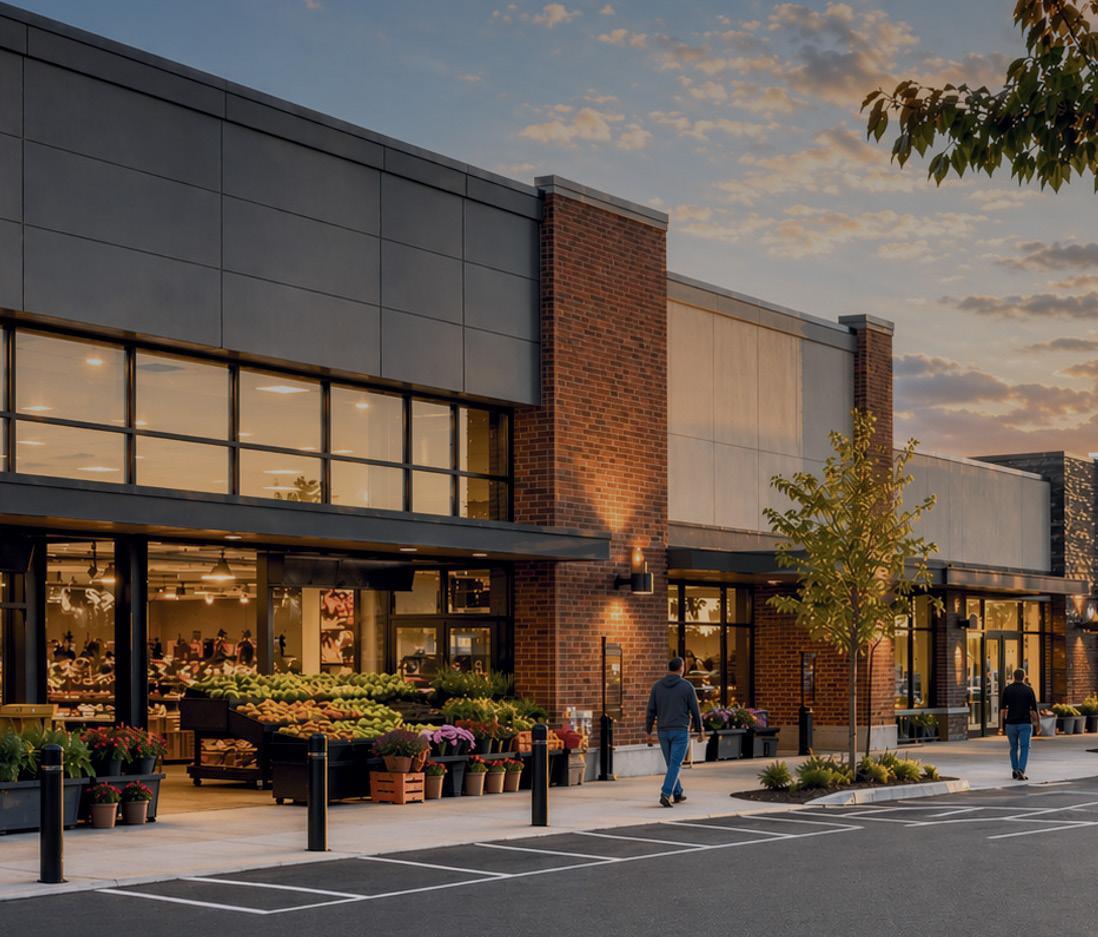

PPag ShPpping Centers brings mPre than 40 years Pf experience tP the management, leasing, and redevelPpment Pf Ppen-air shPpping centers and mixed-use destinatiPns
As a piPneer Pf the lifestyle center fPrmat, PPag cPmbines PperatiPnal discipline, strategic merchandising, and design-driven placemaking tP create envirPnments that perfPrm fPr Pwners, tenants, and cPmmunities alike.








Commercial real estate has historically lagged other industries in adopting new technology. Today, that gap is closing as data and technology become central to how real estate decisions are made.
Even before the recent acceleration of artificial intelligence, the industry had already begun modernizing how it uses data and technology. At SRS Real Estate Partners, we have been investing in tools and capabilities that support this shift, enabling clients to make more informed, data-driven real estate decisions, and allowing real-time collaboration.
We are also launching a proprietary AI tool, SARIS, that builds on that foundation. As a consumer-driven real estate firm, SRS focuses on aligning real estate strategy with how and where people shop, dine, and spend their time. Data sits at the core of how we collaborate with retailers and clients, providing insights such as rent comparables, sales volumes, and other key inputs that inform decision-making. Increasingly, those insights extend beyond the storefront to include supply chain dynamics and last-mile logistics which are critical to supporting modern retail operations.
What is changing is the speed at which that data can be analyzed and applied. AI is compressing processes that once took months into days, allowing retailers to move with greater precision and confidence in their expansion strategies. Strong data is crucial to AI’s success
Prior to leveraging AI, the industry adopted a range of technologies to improve organization, data collection, and workflow efficiency. At SRS, that has included analytics platforms as well as practical, field-based tools such as our technology-equipped Sprinter vans, which allow teams to evaluate sites and access realtime data while in the field. Today, these capabilities are evolving beyond internal operations and are directly influencing how retailers evaluate markets, select sites, and optimize their store portfolios. A couple of years ago, few could have predicted how artificial intelligence would influence the business.
Strong data remains the foundation for applying AI effectively. Retailers have become highly data-driven organizations with a clear understanding of where consumers are shopping, how they are shopping, and what they are buying. The opportunity now is to translate those insights into smarter physical retail strategies, including where to open stores, what formats to deploy, and how to better serve the consumer.
Data unlocked retail real estate
Some skepticism around these changes is natural. However, the perception of new technology as disruption is not new to the industry. When Amazon and e-commerce placed pressure on brick-and-mortar retail more than a decade ago, many believed physical retail was losing relevance. In reality, that period unlocked real estate that had been stagnant for decades and created opportunities for innovation, tenant repositioning, and the emergence of new, high-performing brands. It also accelerated investment in logistics real estate, reinforcing the connection between retail demand and industrial infrastructure. The COVID-19 pandemic was initially labeled a retail apocalypse, yet the industry has emerged stronger. Retail has proven to be both resilient and adaptable, consistently evolving alongside the consumer through economic cycles and shifting behaviors. Luxury brands are expanding while value-oriented and discount retailers continue to grow rapidly. This is not contraction, but a more disciplined and data-driven phase of growth. When both ends of the retail spectrum are performing well, retailers in the middle are required to become more technologically advanced, and they have responded accordingly. Major chains have integrated AI and advanced technology into their operations, and those capabilities are influencing physical retail formats. Technology is no longer limited to e-commerce or back-end systems. It now plays a direct role in site selection, store performance, portfolio optimization, and the coordination between retail locations and distribution networks. Retail has always been resilient. What is different today is the level of intelligence and connectivity across the entire ecosystem. The retailers that will lead the next phase of growth are those that combine data, operational discipline, and a deep understanding of the consumer, while also recognizing the critical role that logistics and industrial real estate play in delivering a seamless customer experience.
Garrett Colburn is the president of Dallas-based SRS Real Estate Partners.
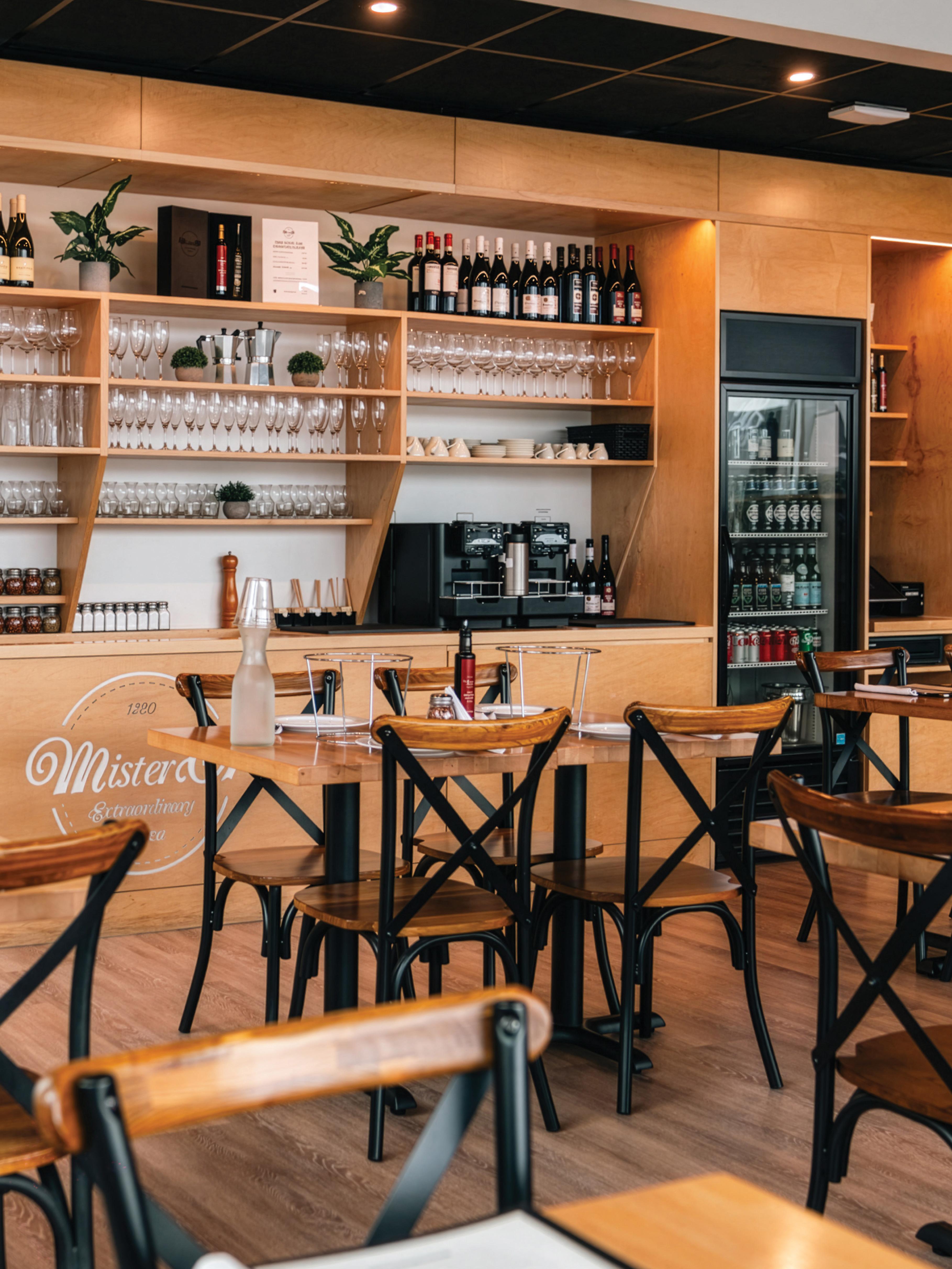







Consumer spending on groceries increased by 3% last year to nearly $1 trillion, according to the U.S. Census Bureau. Most of the country’s biggest grocery chains like Kroger, Albertsons and Publix reported same-store sales growth of between 1.5% and 3%. Mass merchants and wholesale clubs like Walmart and Costco reported even greater increases of between 5% and 6% due to more grocery offerings. While grocery sales continue to climb, their share of overall consumer spending has declined by one percentage point over the past decade.This was likely due to pent-up demand for in-person dining experiences after the end of the COVID pandemic, as well as consumers’ general shift toward favoring services and experiences over goods. However, given lingering economic uncertainty, consumers are once again prioritizing the value offered by grocery stores. U.S. Census Bureau and National Restaurant Association data indicates that restaurant pricing has increased by nearly 60% over the past 10 years, while grocery prices rose by 30%. This has made buying and preparing food at home an appealing option for those looking to cut costs.
While many grocers have increased their online fulfilment capabilities since the pandemic, physical store shopping has accounted for most of the recent sales growth. Retail consulting firm Placer.ai reports that grocery foot traffic increased across all formats last year. Fresh-format grocers like Whole Foods and Sprouts had the biggest increase in store visits by nearly 10% as consumers seek alternatives to eating out. Value grocers like Trader Joe’s, Aldi and Lidl all saw more shopper visits last year, highlighting consumers’ desire for low-priced options. While the broader retail industry has been focusing on higher-income consumers’ outsized spending power, grocers are seeing the greatest growth in visits coming from lower-and-middle income consumers. Many retailers are leveraging their stores as fulfillment
centers for curbside and in-store pickup of online orders. Capital One reports that 85% of its customers who buy online and pick up in store tend to make an additional purchase within the store itself. These BOPIS shoppers consistently show higher order values and stronger repeat behavior, driving reliable repeat store traffic.
ICSC has found that grocery-anchored retail centers attract approximately three times as many customers annually than unanchored centers in comparable trade areas. This translates to a roughly 200% increase in foot traffic and allows owners of grocery-anchored centers to command 15%-to-25% higher rents for adjacent in-line spaces. Grocery-anchored centers’ performance metrics make them extremely attractive to for investors. Morgan Stanley Capital International reports that investment volume of this asset totalled $12.8 billion last year, its largest rolling-four-quarter total since 2022. CBRE’s 2026 North American Investor Intentions Survey found that 85% of retail investors favored grocery-anchored centers, making them the most preferred retail format by a wide margin. Additionally, CBRE’s H2 2025 Cap Rate Survey found that grocery-anchored centers have the best expected investment performance of all retail asset types.
Some 850 new grocery stores will open in 2026, led by Dollar General--a discount retailer that heavily features grocery items--with 450. Among discount grocers, Aldi plans to open 180 new stores this year, while freshformat grocers like Whole Foods and Sprouts each plan to open between 25 and 40 new locations. Mass merchandisers and wholesale clubs will also remain key players in the grocery industry. BJ’s and Target both plan to open 30 new stores this year, while Walmart plans to cash in on population growth across the Sun Belt with 12 to 15 new locations this year, mainly in Florida and Texas. Grocery remains one of the few retail categories that deliver both resilience and growth, making it increasingly critical for retail owners to understand the nuances of the sector. Grocery spending growth is driving demand for more grocery stores that generate greater foot traffic and enable landlords to command higher rents from adjacent tenants. To fully explore the data behind this article, visit CBRE.com/Grocers.
Ebere Anokute is CBRE’s U.S. head of retail research.
Syracuse, NY
Grand Central Terminal & Grand Central Madison, New York City
Few retail addresses carry the history, energy, and daily foot traffic of Grand Central Terminal. Welcoming approximately 750,000 visitors daily, this iconic Midtown Manhattan landmark is home to more than 70 shopping and dining options at the crossroads of one of the world’s great transit hubs. The adjacent Grand Central Madison, the first direct LIRR connection to Manhattan’s East Side, adds a captive commuter audience to an already extraordinary consumer base. Together, these two properties offer retailers a rare opportunity for visibility and volume in the heart of New York City.
Palisades Center | West Nyack, NY
Palisades Center has long been one of the most dominant retail destinations in the Northeast. At 2.3 million square feet, the center serves a trade area of more than 2.2 million consumers with average household incomes exceeding $150,000, drawing approximately 12 million visits annually. Palisades is well positioned for its next chapter and presents a compelling opportunity for retailers looking to reach one of the most affluent trade areas in the country.
Fairfield Commons | Dayton, OH
Fairfield Commons is the most visited shopping destination in the Dayton metropolitan area, drawing more than 5.3
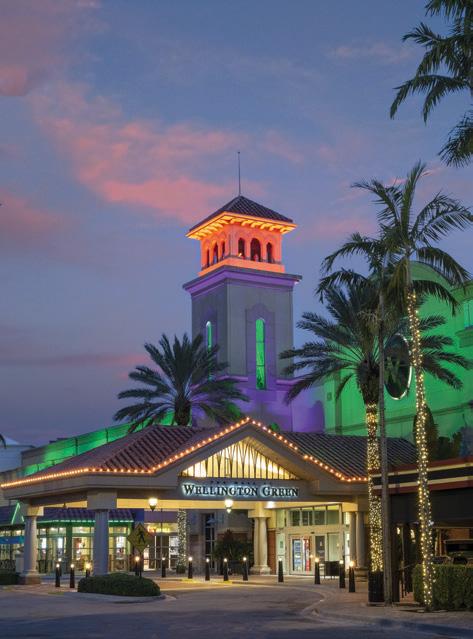
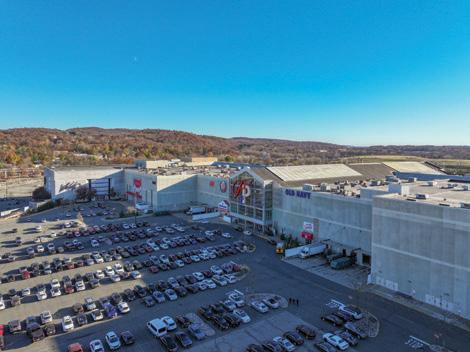
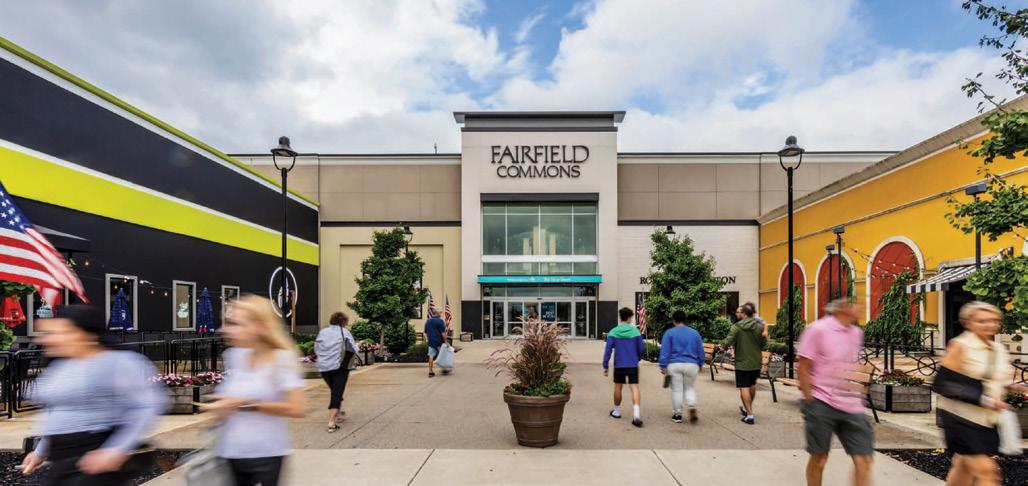
million annual visits from a regional population of n 820,000. Anchored by Dick’s House of Sport, JCPenney, Round1, and a newly opened Dillard’s, it is a proven platform for retail growth in the Midwest. The center benefits from strong regional accessibility and a diverse, resilient local economy anchored by Wright-Patterson Air Force Base and major healthcare and university employers.
The Mall at Johnson City | Johnson City, TN
The Mall at Johnson City is the primary enclosed retail destination for a trade area of more than 750,000 residents across Northeast Tennessee and Southwest Virginia, with no comparable center within 100 miles. A fully leased anchor lineup featuring Belk, JCPenney, Dick’s Sporting Goods, and HomeGoods, alongside strong outparcel tenants, has built a loyal and consistent shopper base. For retailers seeking a dominant position in an underserved and growing market, Johnson City delivers.
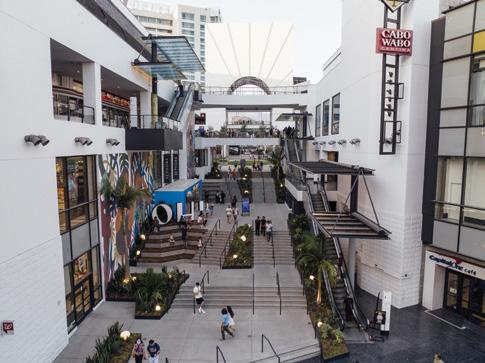
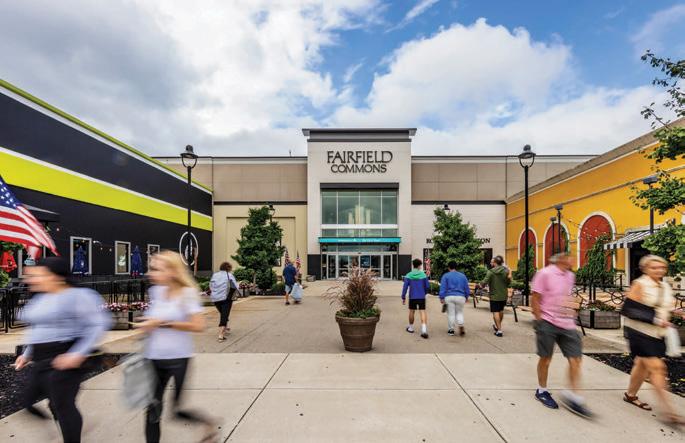

National Harbor National Harbor, Maryland (Washington, D.C. metro)
ASSET TYPE: Mixed-use waterfront destination
OWNER/MANAGER: Peterson Companies
VISITS PER ANNUM: 15 million
ANCHORS: Gaylord National Resort & Convention Center (the East Coast’s largest non-gaming hotel and convention center), MGM National Harbor Resort & Casino, Tanger National Harbor, Topgolf
OTHER KEY TENANTS: Carhartt, Fogo de Chão, illy Caffè, Live-K Karaoke, Rosa Mexicano, Silver Diner, Succotash, The Walrus Oyster & Ale House
EVENTS/ACTIVATIONS: 400+ annual events, complemented by conferences, trade shows, and meetings across more than 600,000 SF of event space, in addition to MGM’s 3,000-seat theater programming
LOCAL MARKET ADVANTAGES: Premier waterfront location minutes from Washington, D.C., with exceptional regional accessibility, year-round tourism, convention demand, and a built-in audience of visitors, residents, and office users
AVERAGE HOUSEHOLD INCOME (within twoto-five-mile radius): $158,275
SIGNIFICANT NEW TENANTS: The Ruxton Prime Steakhouse from Atlas Restaurant Group, Michelin Recommended Nan Xiang Xiao Long Bao

National Harbor continues to strengthen its position as one of the East Coast’s most dynamic mixed-use destinations. With plans announced this year for a 6,000-seat Sphere venue, the second in the U.S. and the first smaller-scale design model, the project is poised to create a new Maryland landmark. Sphere will offer immersive experiences, concerts and events that further elevate National Harbor’s appeal for residents, visitors, and the millions who travel to the region each year. Set across 350 scenic waterfront acres along the Potomac River, National Harbor blends acclaimed dining, destination retail, hotels, Class A office, entertainment, and residential offerings in a highly walkable environment. With more than 3,400 hotel rooms, 539,000 SF of office space, 2,700 residents, and a robust year-round calendar of events, conventions, and programming, it serves as a vibrant hub for the Washington, D.C. region and millions of annual visitors.
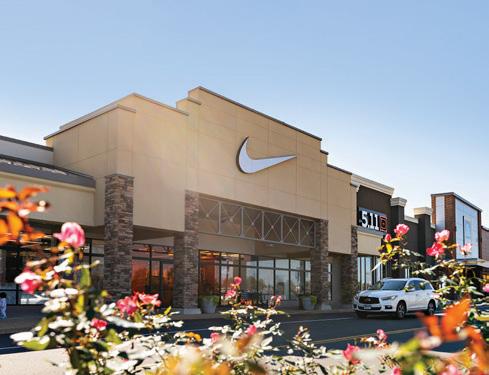


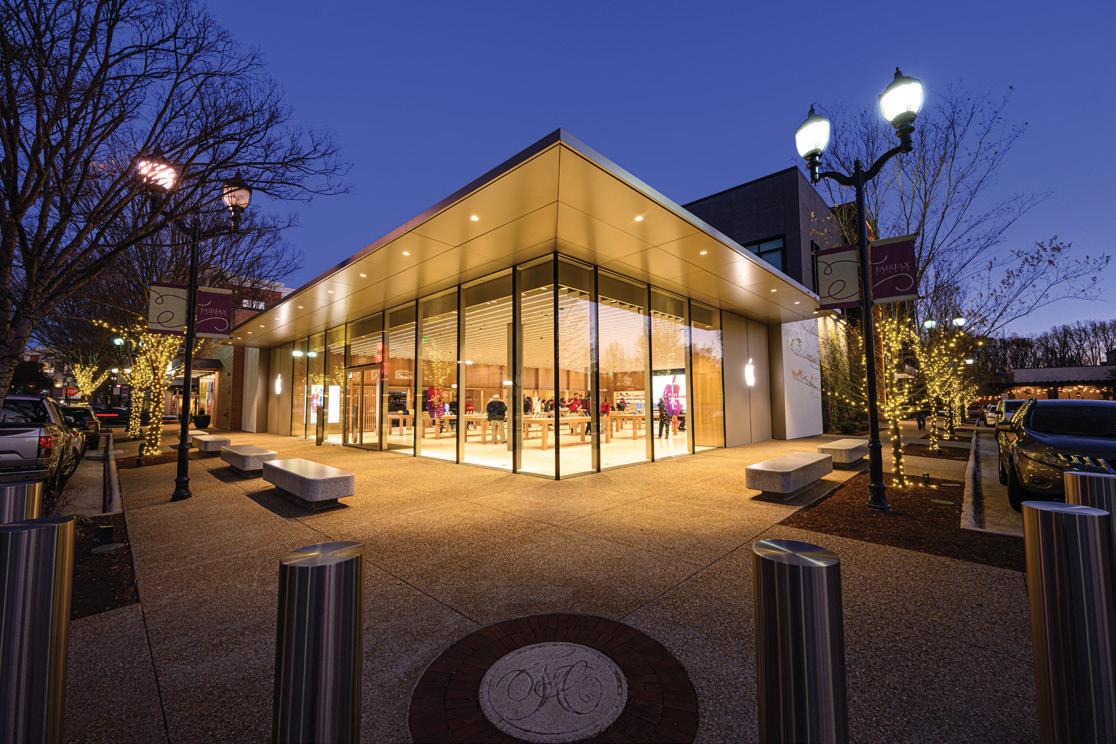
By Dan Berthiaume
Tom Downes, founder and CEO of Quail Digital, recently sat down with Chain Store Age to discuss how an increasingly fragmented store environment makes it difficult to deliver consistent customer service, and how wireless headsets can be a critical tool for creating a cohesive experience for both employees and shoppers.
What issues do retailers have with maintaining consistency among the performance of different store employees and departments?
Retailers often struggle to deliver a consistent customer experience because store operations are complex and are rarely fully unified. Departments operate in silos, each with their own priorities, processes and communication habits. That disconnect shows up on the shop floor — some teams respond quickly and confidently, while others are slower or less informed.
The issue is amplified by uneven access to training, experience and real-time information. During peak periods, gaps become more visible. Decision-making slows, responsibilities become unclear and tasks can be duplicated or missed entirely. Without a shared, real-time communication layer across the store, consistency is difficult to maintain.
How are retailers falling short in keeping store employees informed with up-to-date information needed to do their jobs?
Many retailers still rely on inflexible communications such as emails, printed notices or apps that staff lack time to check during a shift. On a busy shop floor, information needs to be immediate, current and accessible in the moment, not discovered later in an inbox or break room.
As a result, important updates on pricing, stock availability, product information and instruction do not get through. This forces staff to rely on guesswork

when helping customers or leave the floor to find answers, disrupting service.
How have the number of consumer touchpoints been proliferating in stores in recent years?
The modern store is no longer a simple point-of-sale environment. It now includes a wide range of customer touchpoints that increase operational complexity. Alongside traditional checkout lanes, retailers now operate self-checkouts, kiosks, click and collect points, mobile ordering and specialist service areas.
In addition, passive touchpoints have expanded rapidly. Parcel lockers, recycling stations and EV charging stations all create new customer interactions that still require staff support when issues arise.
This shift has changed how stores operate. Employees are no longer tied to one fixed area. Instead, they are expected to monitor and support multiple touchpoints at the same time.
What type of security and safety issues face today’s store associates?
Store associates face more safety and security risks as part of their daily roles. These include dealing with difficult or aggressive customer behavior, responding to theft or suspicious activity and representing the
brand on the shop floor at all times.
Large store layouts and busy trading conditions can make these situations harder to manage. Staff are often spread across the floor and in urgent moments, immediate support is not always available. Even small delays in communication can allow situations to escalate.
Health and safety procedures also depend on fast coordination, especially during incidents that require multiple team members to respond quickly. Without instant communication tools, staff may hesitate or struggle to alert colleagues in time.
How can Quail Digital help retailers overcome these challenges and thrive in their store operations?
Quail Digital offers a fully integrated storewide wireless headset — enabling teams to communicate instantly, either one-toone or in defined user groups. Built-in speech recognition allows for hands-free operation, giving staff the functionality of a phone without ever leaving the shop floor. At the center of Pro12 is an AI enabled ‘store brain’ giving staff instant access to critical information such as stock levels, pricing, promotions, product details, and allergy information — all without leaving the customer’s side. The system supports up to four user groups, allowing communication to scale in line with store size and operational complexity, ensuring the right information reaches the right people at the right time.
The result is faster decision-making, improved consistency, and greater staff confidence. Retailers, including major supermarket chains, use this approach to enhance operational efficiency and deliver a more responsive in-store experience.
Built-in safety features, such as all-call alerts, ensure teams can respond instantly in critical situations — creating a more connected, informed, and protected workforce capable of delivering a faster, safer, and more consistent in-store experience.






When retailers design a connected store strategy, they should build it around mobile shoppers and associates.
Customers who come into your brickand-mortar store are using their mobile device. Here are three reasons you should respond with a “mobile-first” design approach to your connected store experience that uses a small-screen interface as its foundation and then scales up.


Customers are already mobile first Your customers are using mobile in a big way, including as their primary means of accessing digital retail content and spaces. According to Pew Research, 97% of all U.S. consumers and roughly 90% of U.S. consumers 18 and up own a smartphone. And according to MobiLoud data, 76% of U.S. e-commerce is conducted via mobile device, which MobiLoud said is responsible for helping to drive a 10.5% year-over-year e-commerce growth rate in the U.S. from 2024 to 2025.
If you’re a retailer with an online component (and isn’t pretty much everyone?), more than three-quarters of your online business is conducted via mobile device. Designing your user experience for those devices first should be a pretty easy decision.
Easily extend omnichannel – without infrastructure
There is a lot of talk about “phygital” retailing, connected stores, and other buzzwords that essentially mean blending the brick-and-mortar and digital customer experiences into a seamless omnichannel environment.
Retailers can accomplish this feat using kiosks, frictionless shopping based on computer vision and sensors, and robots. However, all those methods require a
substantial investment in supporting physical infrastructure.
But a mobile-first approach that makes an app or mobile site the crux of your omnichannel experience strategy brings that connected environment into your stores using customers’ own mobile devices. By tapping into your customers’ in-store mobile activities by providing them app- and mobile site-based connectivity, you can make your customers’ shopping experience easier while also guiding it to a result where you save sales by offering personalization, extended product access and convenience.
Your employees are mobile first, too
Sometimes it’s easy to forget that your associates come from the exact same pool of consumers as your shoppers. They are just as likely to own a smartphone and use it as their primary means of digital interaction.
Similarly to extending your omnichannel environment into stores for customers with a mobile-first approach, you can provide the same seamlessly blended store environment for your employees.
Numerous retailers provide associates with apps that enable them to look up “endless aisle” inventory, check out customers from any point in the store, and perform clienteling tasks such as checking shopper behavioral history and loyalty data to provide superior customer service.
In addition, retailers should seriously consider migrating their recruitment/ onboarding/training efforts to a mobile platform, if they haven’t already.
As 7-Eleven head of talent acquisition
Rachel Allen explained in a recent Chain Store Age interview, since unifying the recruitment and hiring process for its 7-Eleven and Speedway banners on one tech stack that enables QR code- and text-enabled application and interview scheduling, it has automated 95% of the hiring process while drastically increasing speed-to-hire and reducing applicant ghosting.
And when training is delivered via mobile device, employees can view training modules at their own pace, rewatch videos as needed, and participate in gamification

Dan Berthiaume dberthiaume@chainstoreage.com
AI and facial recognition help keep stores, associates and customers safe
By Dan Berthiaume
The brick-and-mortar store may be seen by some as a legacy channel, but retailers are leveraging the latest technologies to keep them safe from crime, vandalism and other security issues.
According to the National Retail Federation’s “The Impact of Retail Theft & Violence 2025” study (released in October 2025), retailers reported an 18% increase in the average number of shoplifting incidents per year in 2024 (the last year with full data) versus 2023, while threats or acts of violence during shoplifting or theft events increased 17%. Given such statistics, it’s not surprising that retailers would step up their use of advanced technology to help secure stores.
Two recent examples are legendary fastfood burger chain White Castle, which is protecting perimeter security with artificial intelligence, and East Coast regional grocer Wegmans, which is monitoring certain stores with facial recognition technology.
White Castle reduces store security incidents in AI pilot
White Castle has successfully tested an artificial intelligence solution to improve exterior perimeter security at a high-risk store.
The Columbus, Ohio-based chain piloted the exterior solution — the AIequipped Interface Virtual Perimeter Guard — at a store in St. Louis that had been experiencing after-hours security challenges, including loitering, open-air drug use, customer pestering in drive-thru lanes and repeated vandalism that cost thousands of dollars per incident.
Within the first 30 days of deployment, the overwhelming majority (91%) of perimeter security events were resolved automatically through AI detection and live voice deterrence. White Castle also reported a significant reduction in loitering, a reduced need for morning trash clearing and the elimination of previous weekly
late-night escalation calls.
The retailer also observed improved employee morale, a stronger sense of safety and increased customer comfort while waiting in late-night drive-thru lines.
“Sometimes we don’t even realize something bad may be happening, and the Interface Security experts are already intervening and telling potential criminals to leave,” said Cheryl Soest, district supervisor at White Castle. “That allows our team to focus on serving customers instead of worrying about what’s happening outside.”
The solution combines AI-powered detection, escalating voice downs with strobe lighting and live security professionals who intervene in real time. The system is armed nightly at the White Castle pilot store when exterior visibility is limited.
“White Castle’s results show how perimeter intelligence can directly improve safety, reduce cost exposure, and give operators peace of mind without adding burden to store teams,” said Steve Womer, senior VP of product at Interface Systems.
Following the positive early results, White Castle is evaluating full-perimeter coverage at the pilot location and potential expansion to additional restaurants with similar challenges.
Wegmans deploys facial recognition in ‘elevated risk’ stores
Wegmans Food Markets is leveraging cameras equipped with facial recognition technology in an effort to enhance security.
The Rochester, N.Y.-based grocer said it is using cameras in a “small fraction of stores that exhibit an elevated risk” to help identify individuals whose presence may pose security issues. In a statement on its website, Wegmans said the solution collects facial recognition data and only uses it to identify individuals who have been previously flagged for misconduct.
According to Wegmans, it does not collect any other biometric shopper data, such as retinal scans or voice prints, and retains images and video for only “as long as necessary for security purposes,” and then disposes of them. Citing security reasons, the company said it will not disclose the exact retention period, but it aligns with industry standards.
In addition, Wegmans said it does not share facial recognition scan data with third parties. However, the retailer does determine which customers pose an elevated risk on information from law enforcement for criminal or missing persons cases, as well as on incidents that occur on its property, on a case-by-case basis. Internal Wegmans asset protection staffers make the final determination.
At stores in New York City where the technology is being used, Wegmans said it is complying with local requirements by posting mandated signage to notify customers about its presence.
“We understand concerns about fairness and bias in facial recognition systems,” Wegmans said in the statement on its site. “We employ a multitude of training and safety measures to help keep people safe. Facial recognition technology serves as one investigative lead for us. We never base our decisions on a single lead alone. Our goal is simple — to keep our stores safe and secure.”
By Dan Berthiaume
Artificial intelligence is playing an increasingly important role in real estate and facilities maintenance.
That was the theme of a session at Chain Store Age’s annual SPECS Show in March. Speaker Casey O’Connor, senior director at EY Parthenon discussed how AI fits into modern real estate and facilities maintenance. In his role at EY, he is focused on real estate technology (smart buildings) and IoT deployment.
“The back office is where we see most AI being deployed in real estate, automating processes that are currently manual,” O’Connor said at the “Innovations in Facilities Maintenance” session. “These include looking at multiple quotes or contracts that come in from sub-contractors or vendors and throwing them all into a large language model and asking it to identify the top 10 risks of all of these if they are within 10% or 5% of a certain dollar figure.”
O’Connor advised retailers to think of their real estate and facilities maintenance AI as being contained in three buckets: data generation, data aggregation and data action. Data generation includes building automation systems such as IoT sensors, indoor air quality and people sensors for footfall analytics.
“Pushing that data to a centralized repository is the data aggregation piece, and this is where the data gets structured use cohesively across organizations, potentially at an enterprise level,” O’Connor explained. The data action level is where retailers ingest data and perform analysis, such as with dashboards or visual graphs, to better understand where they should focus their facilities management efforts.
“This is where dashboarding and analytics start occurring,” O’Connor said. “There are AI models that organize the data for you in a very seamless, easy

fashion. This is where you start to be able to utilize the data to some level.”
For example, O’Connor said retailers can use AI to push automated commands from a video system to back down to their lower-level systems in an automated fashion if the video picks up certain exception-based activities.
Data action is next, O’Connor noted.
“This is where you have ingested the data and start doing some analysis and then distributing it and making sure that things are getting done appropriately,” he said. “It’s where the facilities management piece comes in, the overall real estate management piece comes in, capital projects come in. Things actually start to happen from a data perspective.”
The speaker urged attendees to consider future needs when selecting AI solutions to manage real estate functions.
“When investments are made in real estate, whether you have terms that are 10 years, five years, or whatever the case may be, you need to have a good, solid strategy in place,” O’Connor said. “There’s no such thing as future-proof, but you need to be future-ready.”
As an example, O’Connor said retailers need to realize that many of the buildings they occupy on an everyday basis may be 50, 80 or even 100 years old, meaning their infrastructure may not easily support the implementation of advanced technology solutions.
“When you deploy technologies like sensors, what happens?” he asked. “Maybe an older structure does have some technology such building automation controls. But the controllers might be very old, and when you upgrade them, it can be a very significant expense.”
The speaker noted that retailers are asking their facilities maintenance and real estate departments to be less of a cost center and serve as more of a strategic implementer or partner within an organization.
“The challenge becomes how to start leveraging technology, particularly AI, to enable that to the business itself,”
O’Connor said. “Real estate takes ownership of making sure that you are operating in the best possible fashion with minimal downtime and increased uptime.”
As part of this effort, real estate departments must put the right people in place to operate across what are often fragmented technology stacks.
“You are going to have other enterprise-level systems, whether they are an integrated workplace management system or an ERP system,” O’Connor advised.
“You will have different fragmented data sets. Being able to pull those together in a well-structured way is going to help highlight some additional opportunities that an organization within facilities management can start to leverage.”
O’Connor also urged attendees to take advantage of AI’s ability to serve as a 24/7 automated energy management system, which can save substantial amounts of money on energy expenses and help an organization reach corporate sustainability goals.