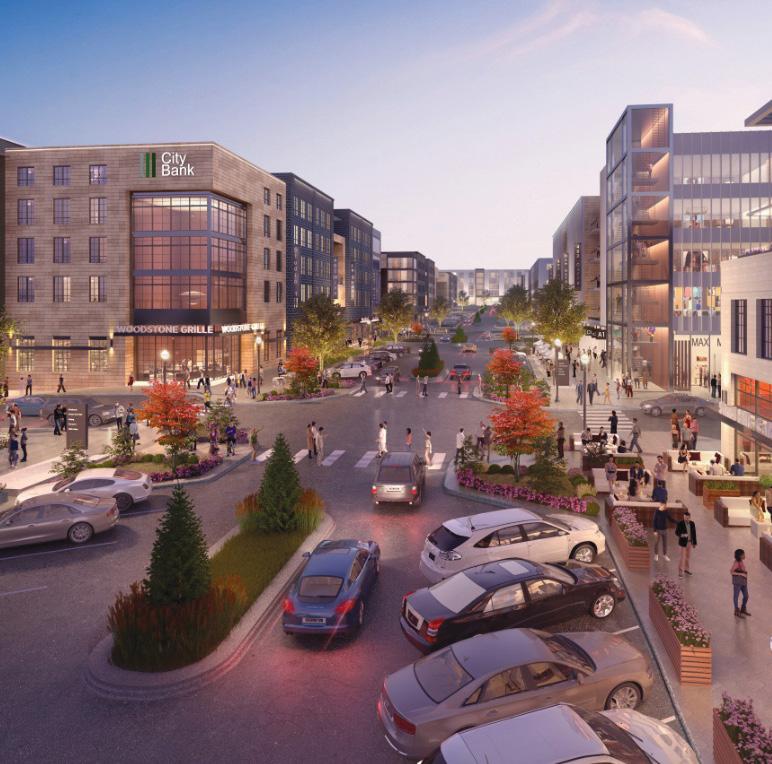
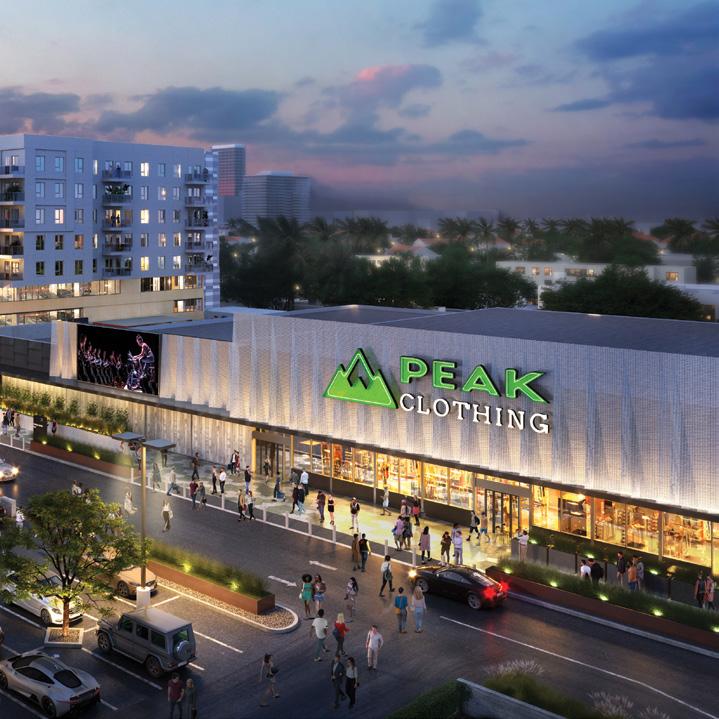
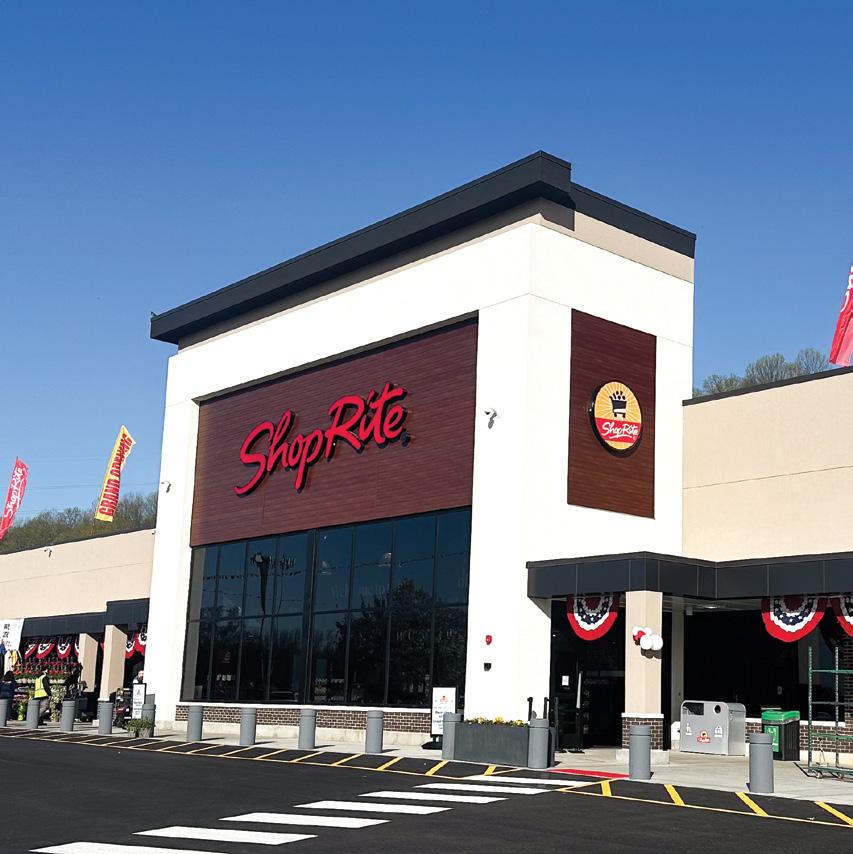
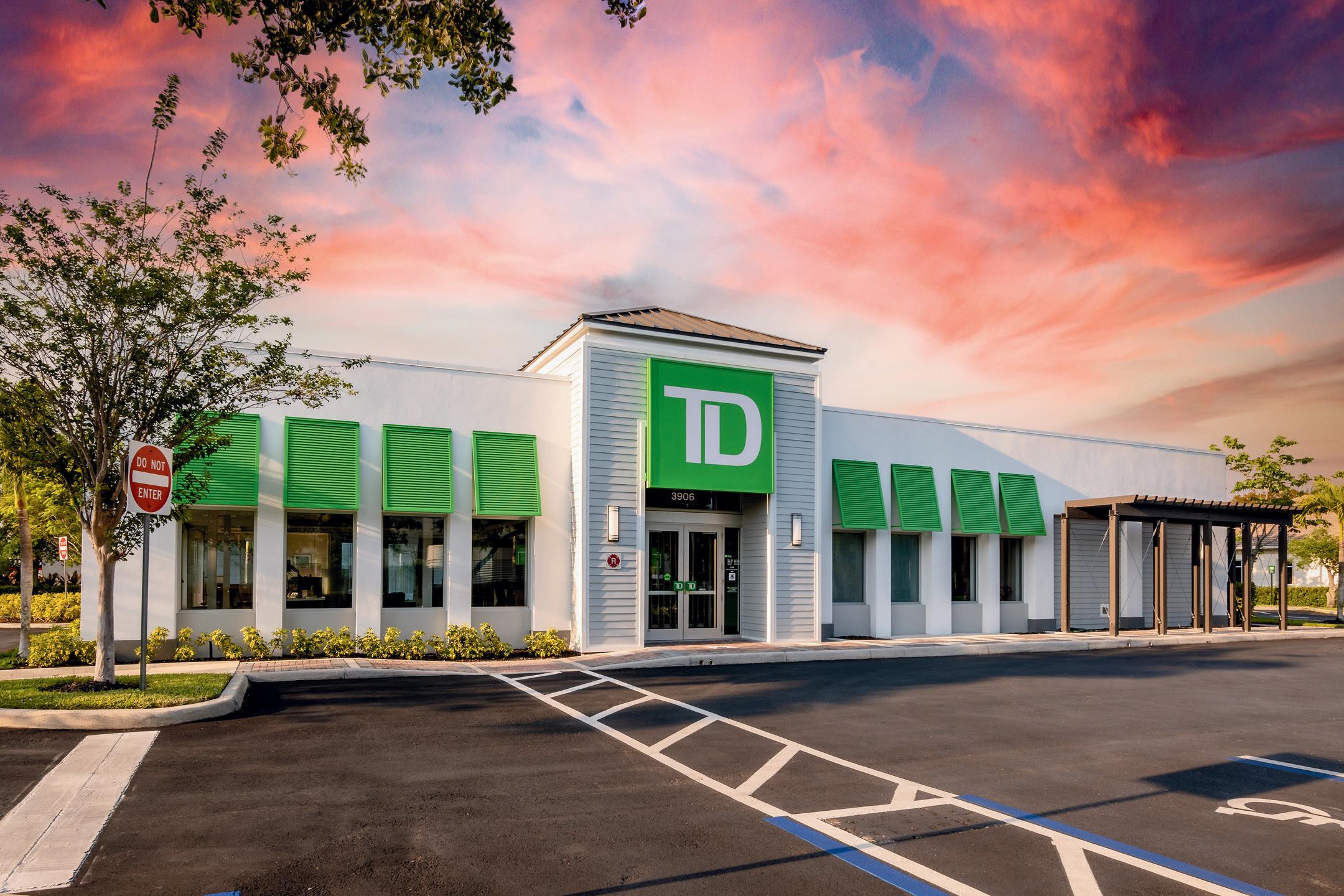
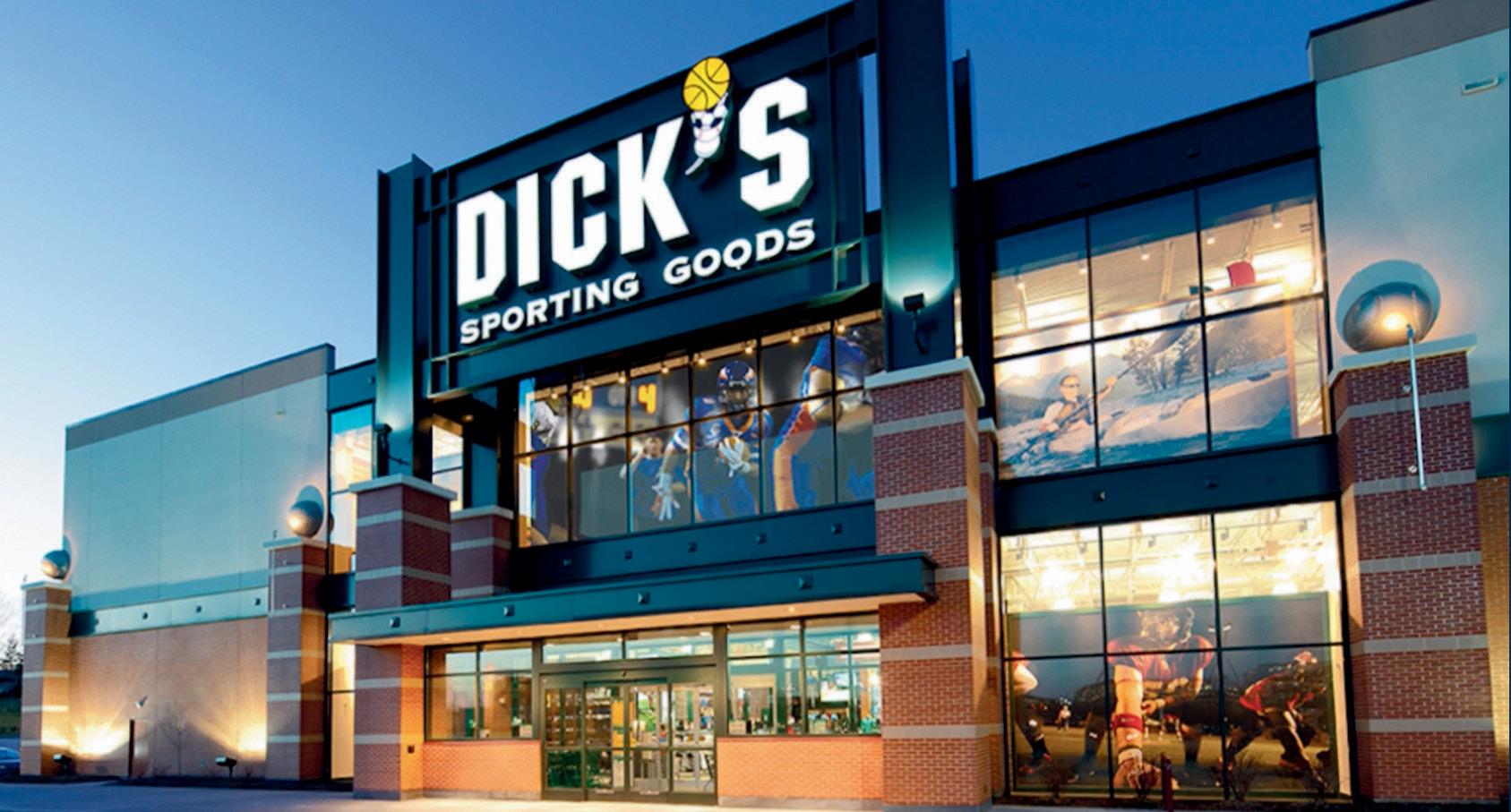
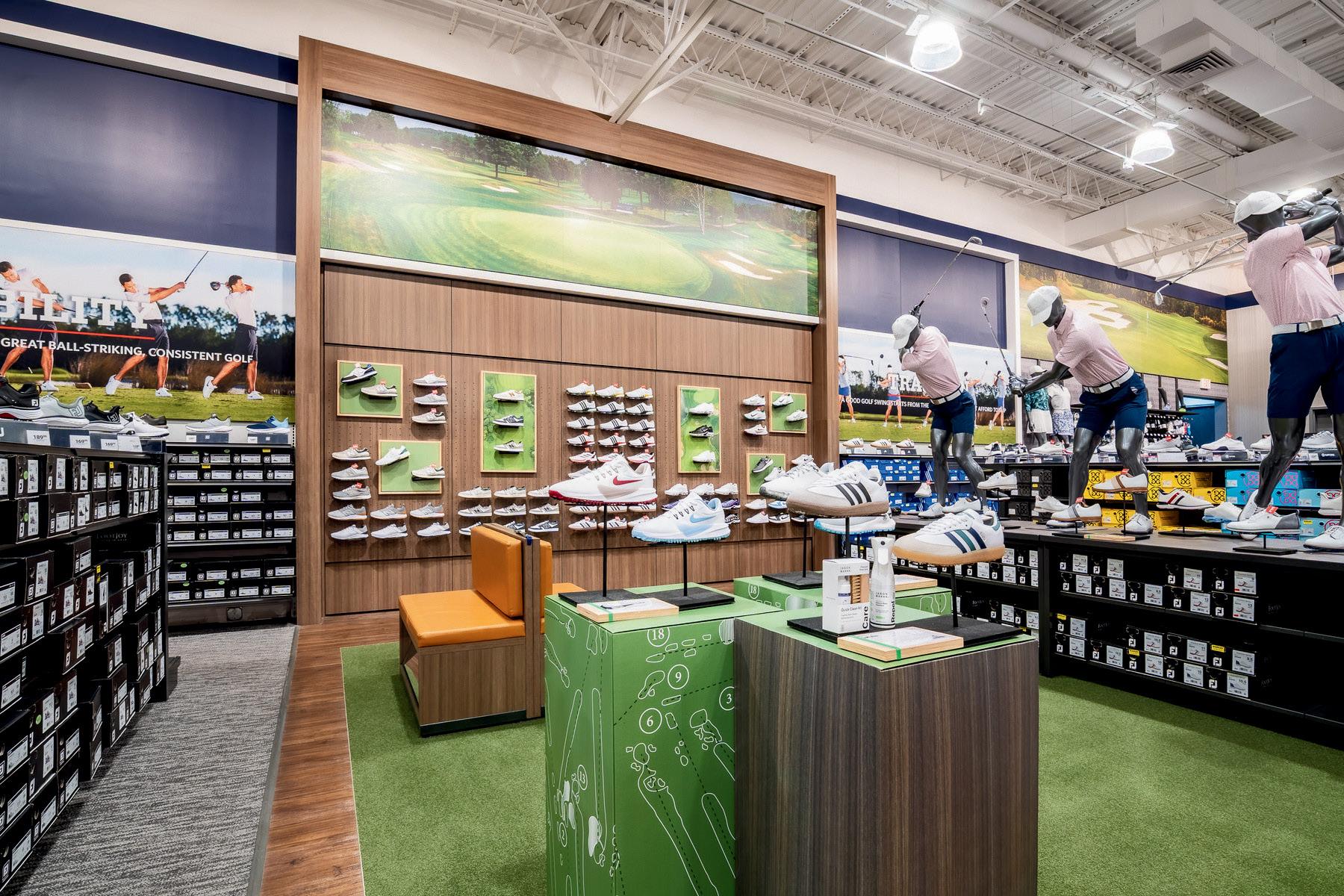
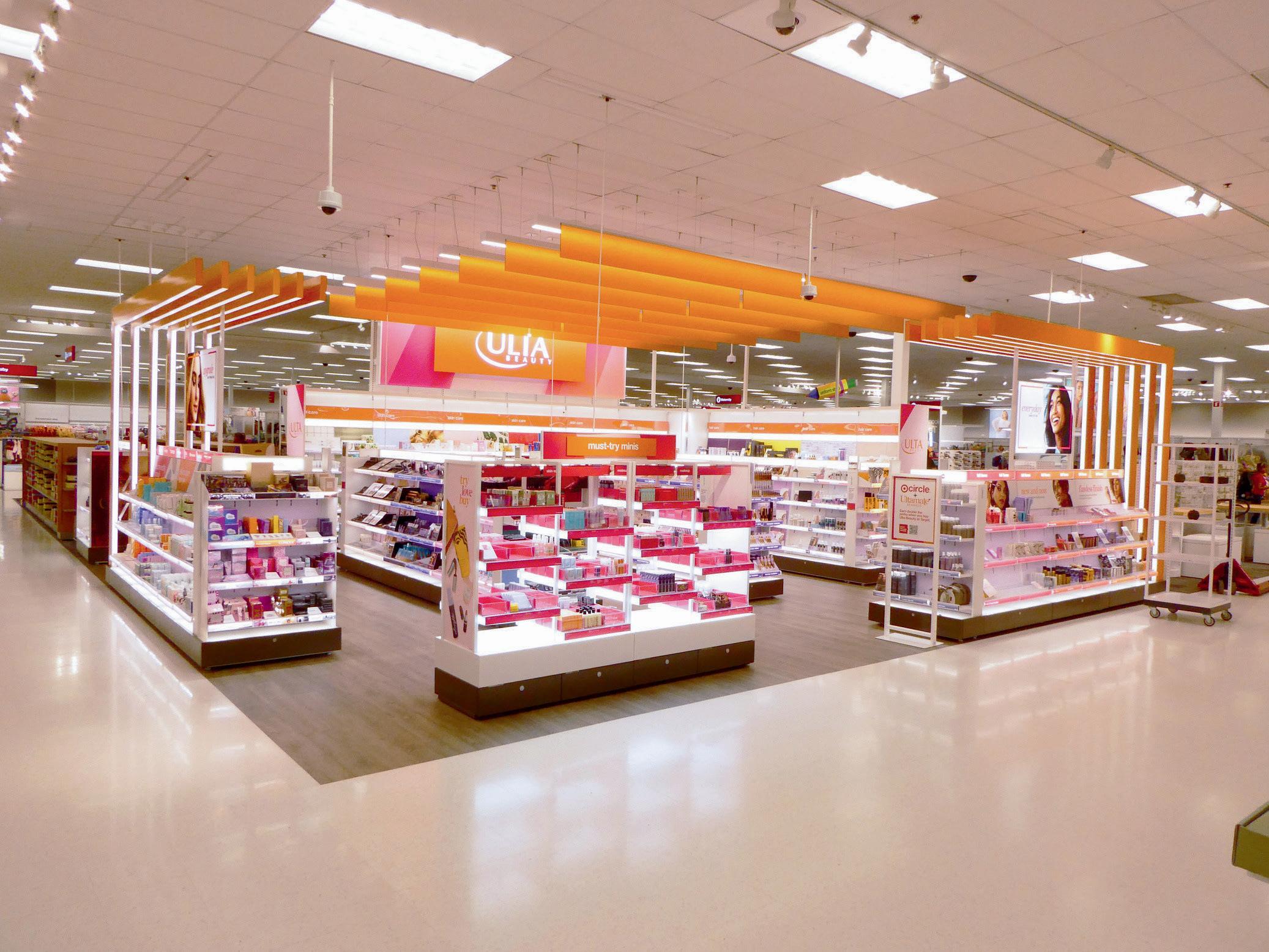
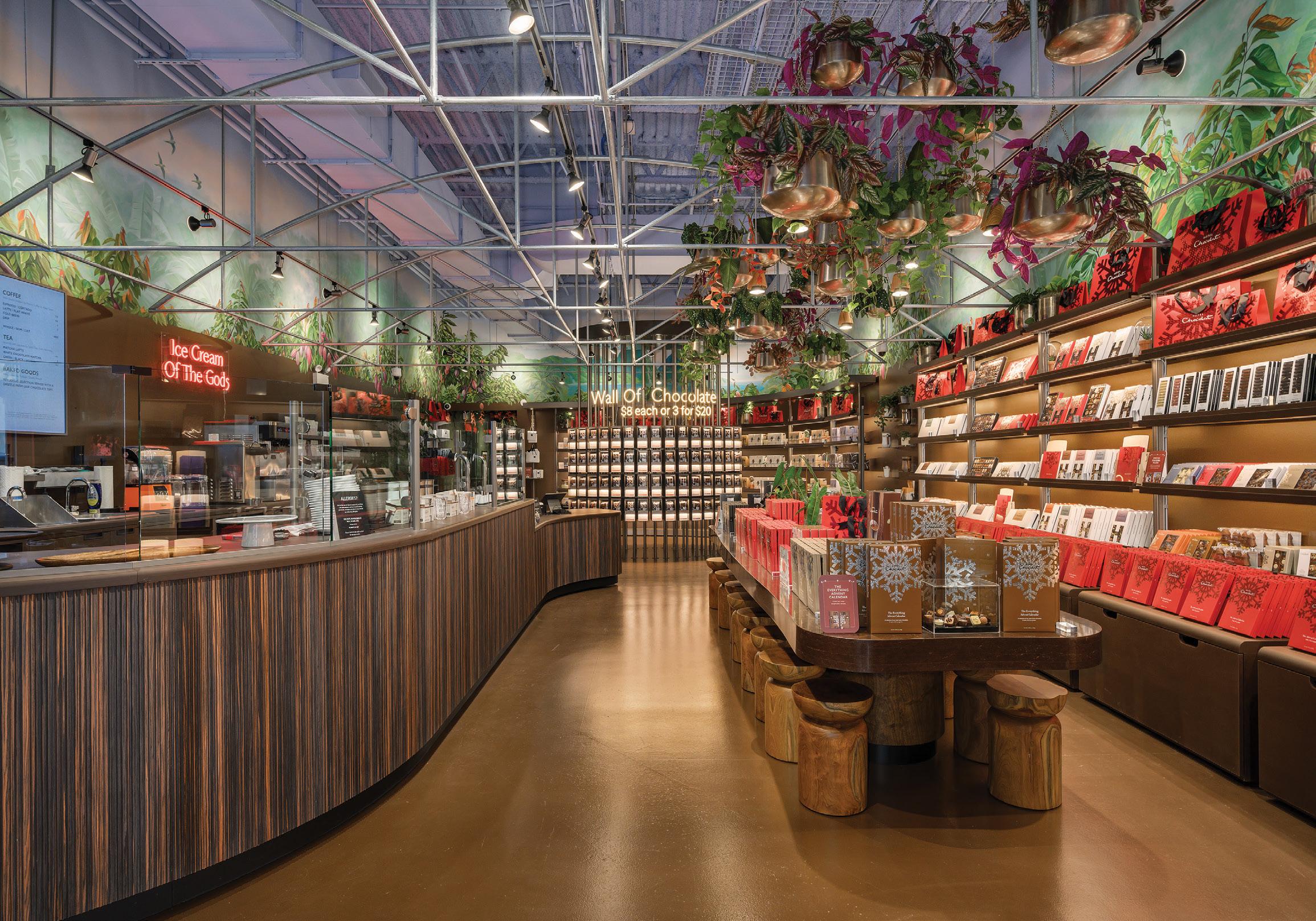
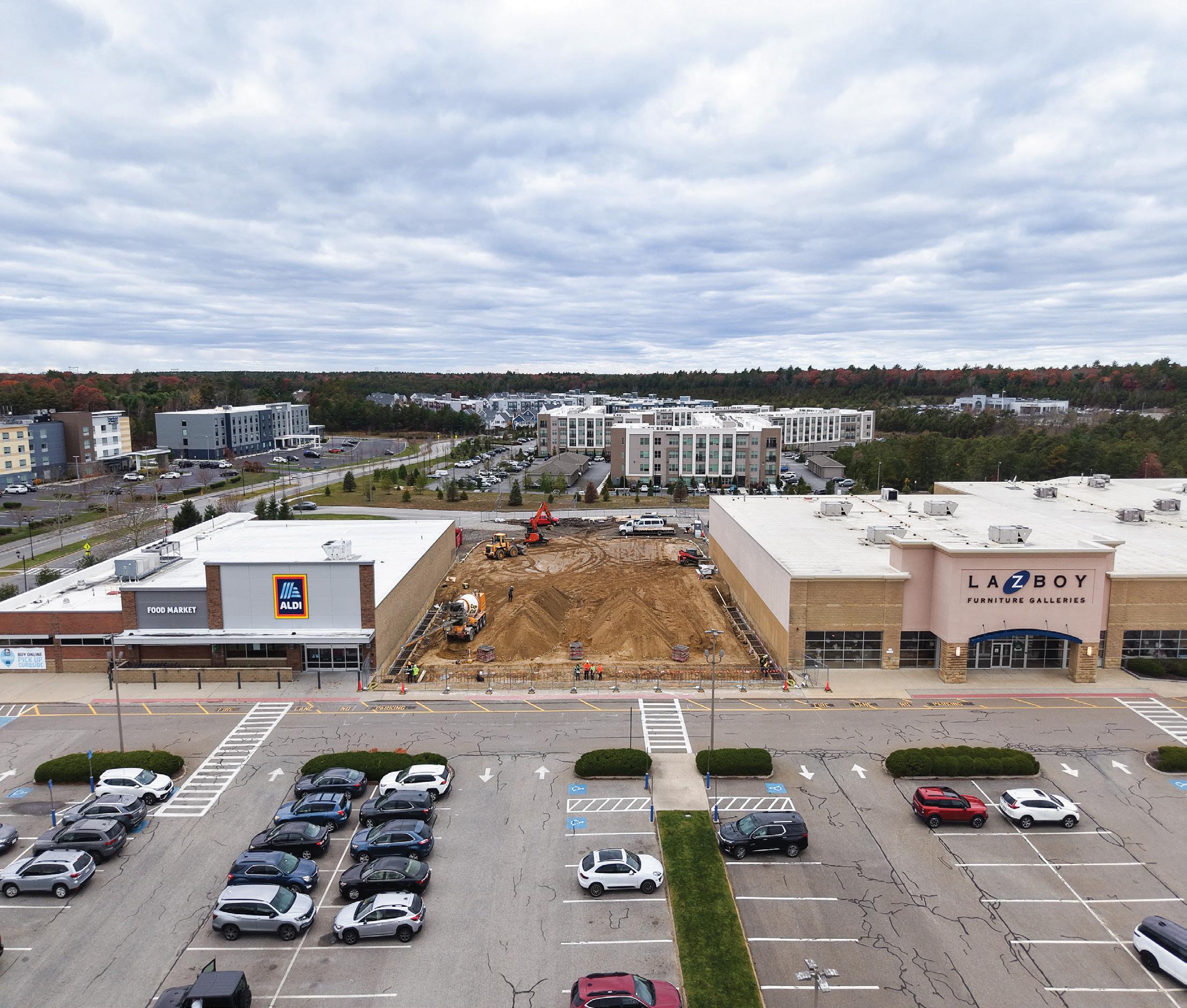
Physical retail continues to evolve with new formats, new concepts and new players
14
Nespresso’s new retail concept blends retail with experience and discovery, complete with a hidden coffee bar
16
Modular construction prioritizes speed, consistency and repeatability at scale
18
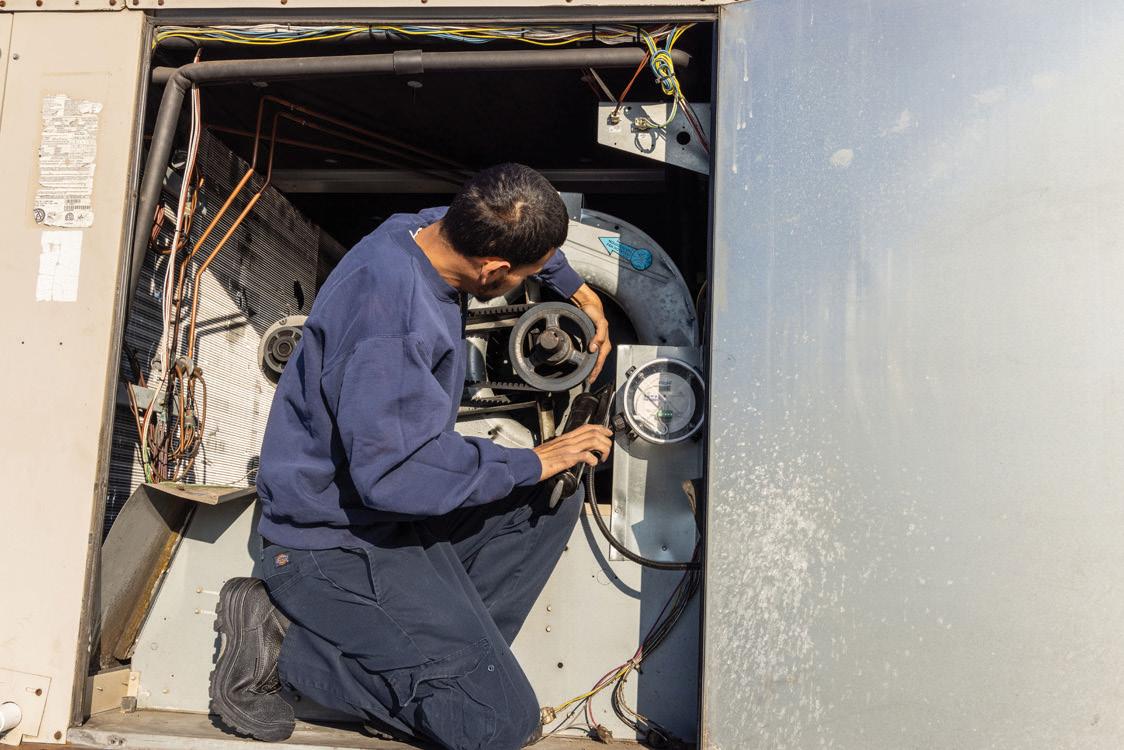
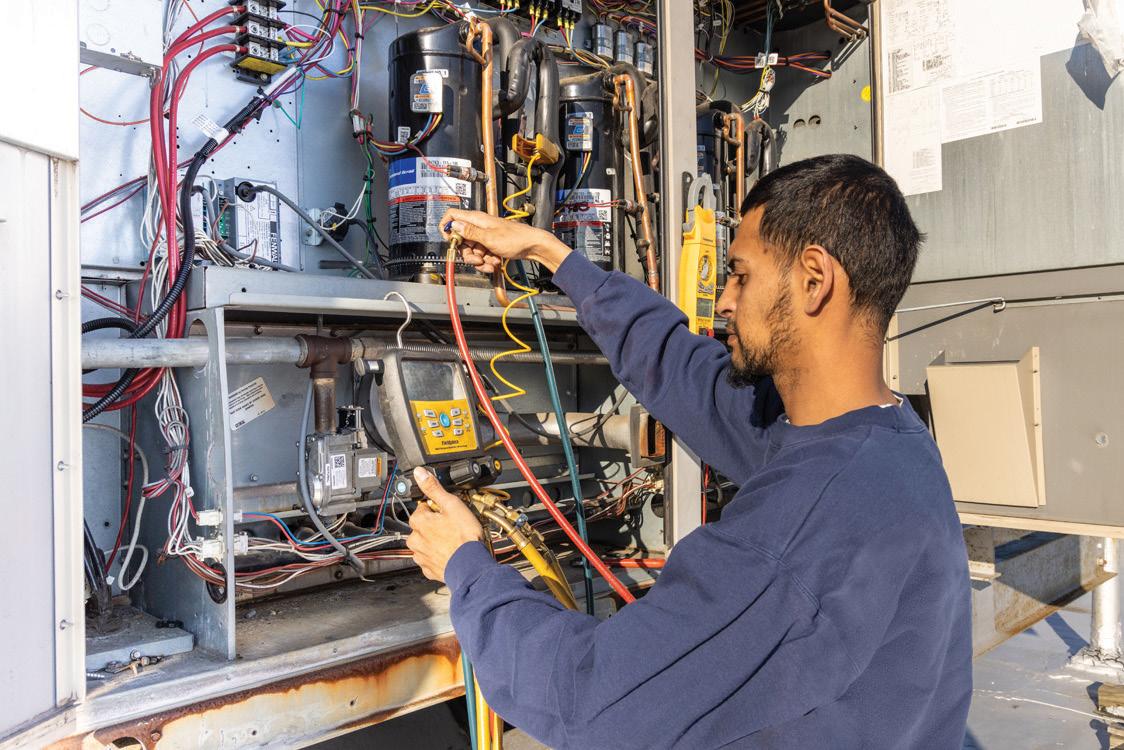
Facilities management emerges as a core driver of customer experience and competitive differentiation, with upkeep now inseparable from brand perception.
19
On-site energy generation and storage solutions can provide retailers with energy resilience. 20
Q&A with CGP’s Construction’s Neil McQuiston 21
Trending Stores: Cult-fave U.K. brand Gymshark unveils first-ever U.S. flagship; Netflix House opens second location
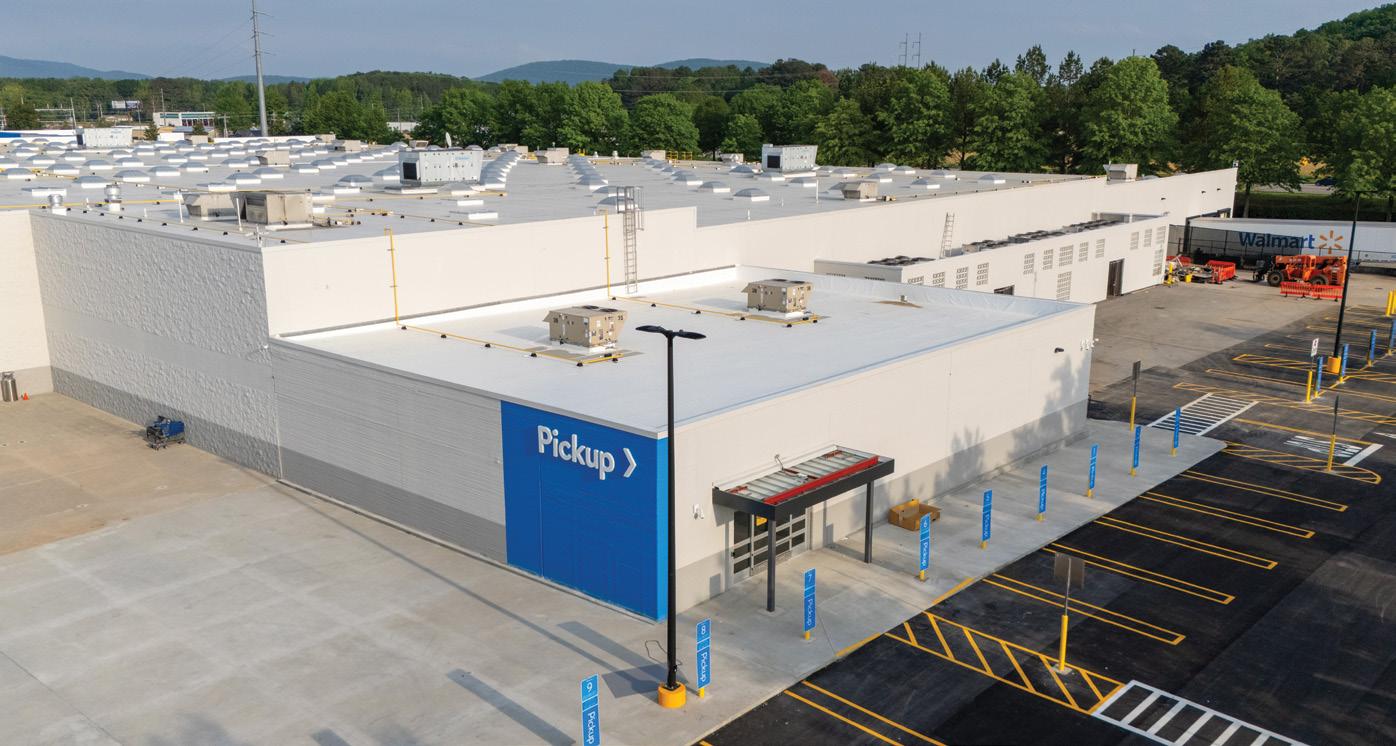
22 Walmart uses 3D concrete-printing technology to build additions to supercenters.
23
Special section on Chain Store’s Age’s 62nd annual SPECS Show includes agenda and listing of exhibitors.
36
Q&A with 7-Eleven head of talent acquisition Rachel Allen on how the company unified hiring across its namesake and Speedway store banners.
37
30
Q&A: Is this the year of the landlord?
32
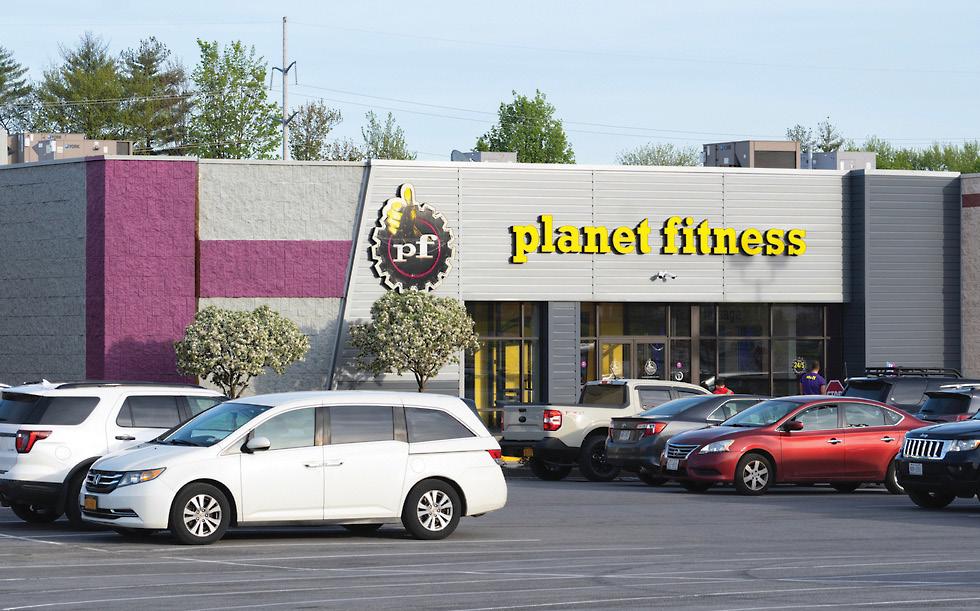
Fitness chains beef up at retail centers.
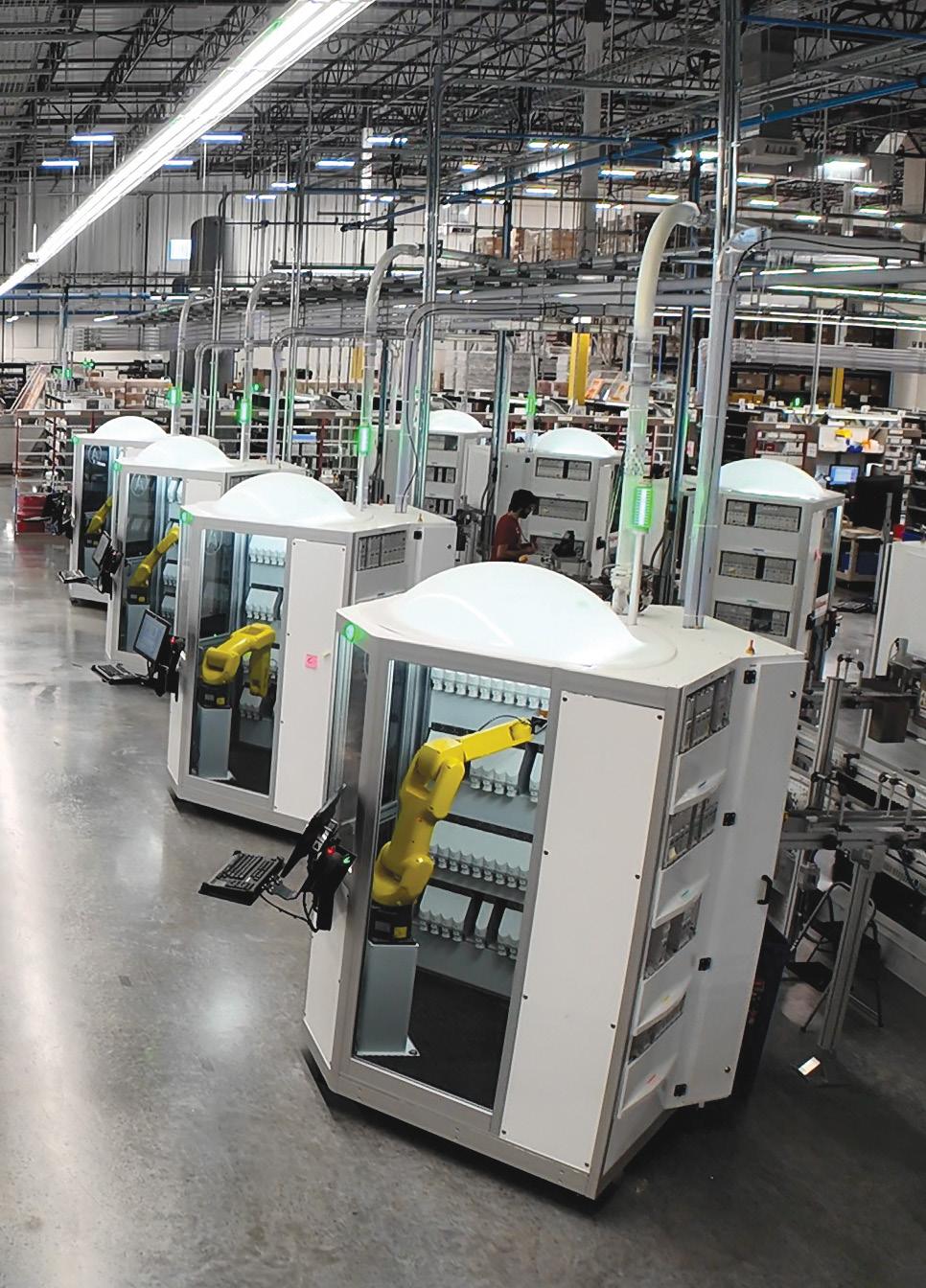
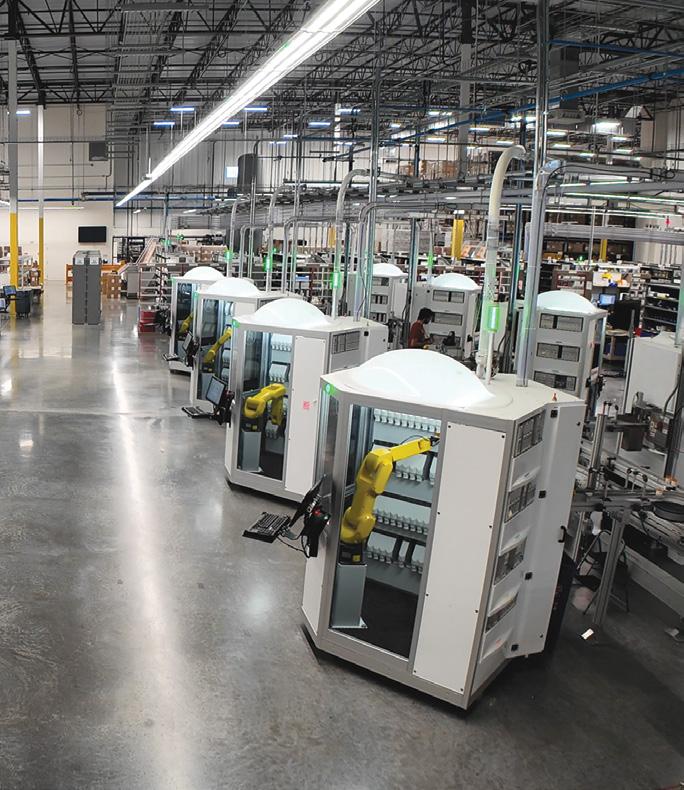
Walgreens, Kroger and Walmart expand supply chain automation efforts. 38
Volatile trade policy marked by onagain, off-again tariffs has whipsawed supply chains.
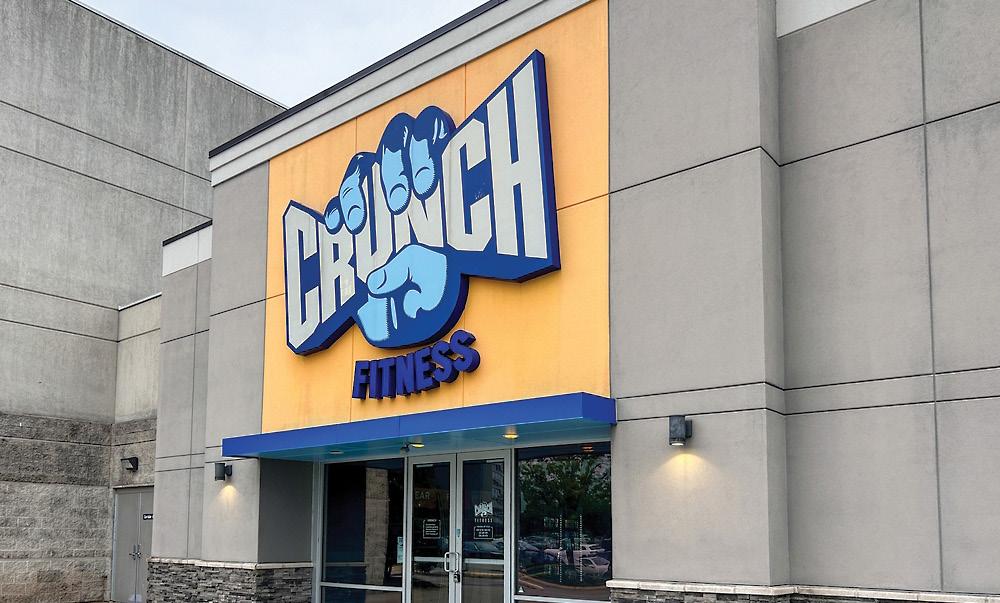
Crunch Fitness
Retailers Still in Expansion Mode
Store closings may continue to grab the headlines, but the news doesn’t always tell the full story — at least when it comes to physical retail.
Coresight Research estimates that U.S. retailers will open about 5,500 new stores this year, which represents a 4.4% increase year over year. It would be the lowest number of store closures in the past three years.
As has been the case for the past several years, the retailers with the biggest expansion plans for 2026 come from the discount sectors along with coffee chains. Leading the charge is Dollar General, with plans to open 450 stores (and remodel 4,250 others).
Other retailers with big store opening plans for the year include Aldi (180-plus stores), Dutch Bros (“at least” 180 sites), Starbucks (150 to 175 stores) and Tractor Supply Co. (100 locations).
Off-pricer Burlington Stores is ramping up to 110 net new stores. And TJX Cos. is expected to accelerate its rapid expansion after adding 129 stores in 2025.
And while Five Below has not released its official plans, the tween and teen fave is expected to continue its aggressive expansion as it enters new markets. Expect Ross Stores, which added 90 locations in 2025, to also keep expanding at a steady pace.
Here’s a look at other retailers that are investing in brick-and-mortar growth (all plans are for 2026 except where noted):
• Barnes & Noble: Amid a resurgence in brick-and-mortar bookstores, the bookseller is looking to open 60 new locations.
• Sprouts Farmers Market: The Phoenixbased natural and organic grocer plans to open more than 40 new stores, with nearly
all openings in its existing footprint. Looking to 2027 and beyond, the company is approving sites in both the Midwest and the Northeast.
• Target: The discounter plans to open 30plus stores, with most of the openings in its larger format.
• Loblaw Cos.: North of the border, Canada’s leading food and pharmacy retailer is opening 70 stores in 2026, including 34 Shoppers Drug Mart and Pharmaprix pharmacies and care clinics, and 31 “hard discount” No Frills and Maxi stores.
• PayMore: The resale electronics retailer plans to open 96 new stores across the United States and Canada.
• Academy Sports + Outdoors: The Texas-based sporting goods and outdoor recreation retailer plans to open 20 to 25 new locations.
• Pop Mart: The popular Asian toy and collectibles retailer will open at more than 20 Simon and outlet centers across the country.
• Nordstrom Rack: The off-price retailer keeps adding new locations to its lineup — at least 10 stores are expected to open.
• Pacsun: Twenty to 35 new stores are planned over the next three years, with nine leases already signed for 2026. In the restaurant sector, growth continues to be led by quick-serve and casual dining chains:
• Chipotle Mexican Grill: The Mexican quick-serve eatery, which owns and operates all its U.S. restaurants, is continuing its rapid growth, with plans to open 350 to 370 locations.
• Insomnia Cookies: The fast-growing late-night bakery chain expects to open more than 75 new locations, surpassing its previous record for annual openings.
• Paris Baguette: The global bakery cafe brand expects to open 150 new cafés, with expansion planned for 10 new U.S. states, Canadian provinces and territories.
• Smoothie King: The smoothie chain plans to open more than 90 new stores.
BRAND MANAGEMENT
Vice President & Group Publisher, SPECS Chairman Gary Esposito gesposito@ensembleiq.com
EDITORIAL
Editor Marianne Wilson mwilson@ensembleiq.com
Technology Editor Dan Berthiaume dberthiaume@ensembleiq.com
Real Estate Editor Al Urbanski aurbanski@ensembleiq.com
Online Editor Zachary Russell zrussell@ensembleiq.com
ADVERTISING SALES & BUSINESS
Midwest & South Sales Manager Michael Morrissey mmorrissey@ensembleiq.com
East & West Sales Manager Lise Slaviero Groh lgroh@ensembleiq.com
Real Estate Sales Manager Al Urbanski aurbanski@ensembleiq.com
Senior Account Executive Nick Lipere NLipere@chainstoreage.com
EVENTS/MARKETING
Program Director Deena AmatoMcCoy damccoy@ensembleiq.com
Event Director Melissa Murphy mmurphy@ensembleiq.com
Production Manager Patricia Wisser pwisser@ensembleiq.com
SUBSCRIPTION SERVICES
List Rental mbriganti@anteriad.com
Subscription Questions contact@chainstoreage.com
Marianne Wilson mwilson@chainstoreage.com
EXCITING NEW BUILDS
Chain Store Age’s preview of dynamic new projects in construction across the nation.
By Al Urbanski
Avenue One
West Omaha, Neb.
Poag Development Group is getting “right to the heart of matters” in Omaha, as the Counting Crows tribute to the Nebraska town goes.
Under construction along the West Dodge Road retail corridor in West Omaha, Avenue One will emerge as the 233,000-sq.-ft. retail center of a 200-acre mixed-use development undertaken by Omaha-based Stone Partners.
Poag’s tenant curation will introduce to the market a batch of first-in-Omaha brands such as Perry’s Steakhouse & Grille, Arhaus, and West Elm.
Other notable names on the Avenue One tenant list include Pottery Barn, Barnes & Noble, and Williams Sonoma.
To date, 112,000 square feet has been leased, with an additional 63,000 square feet under negotiation. Phase I is scheduled to open in 2027.
“Retailers are eager to grow, but access to high-quality new development is limited. The leasing momentum at Avenue One reflects both the strength of the West Omaha trade area and the quality of the project,” said Josh Poag, President and CEO of Poag Development Group. “The early tenant commitments— including several first-to-market brands—validate our longterm confidence in this corridor.”
Bloom on Third
Los Angeles
Regency Centers, operators of nearly 500 centers covering some nearly 60 million square feet, is creating what it considers to be one of its most ambitious redevelopments in the heart of Los Angeles.
In a joint venture with the Arba Group in 2018, Regency acquired the Town and Country Center on the corner of 3rd and Fairfax, which sits across from The Grove, The Original Farmer’s Market and Park La Brea.
In 2027, it will emerge as Bloom on Third, anchored by a 63,000-sq.-ft. Whole Foods Market, with additional retail space totaling 84,000 square feet. Some 18,000 square feet of that space will be located along 3rd Street.
After Whole Foods moves into its new building on the property, what Regency for now calls “an exciting new tenant” will fill the vacated supermarket space.
“We are transforming the center into a modern mixed-use destination that reflects the evolving needs of both retailers and residents in this iconic, high-barrier-to-entry trade area,” according to Regency’s managing director of investments John Mehigan.
Rising above the retail spaces will be The Daphne, a residential space that will be filled with more than 3,000 apartments being developed by Holland Partner Group.
The total gross leasable area of Bloom on Third will top 140,000 square feet.
Regency estimates that more than 400,000 people reside in Bloom onThird’s neighborhood, where average household incomes top $130,000 and the average home value is $2.3 million.
“Bloom on Third represents a significant reinvestment in one of Los Angeles’ most dynamic corners,” Mehigan said.
Blue Star Shopping Center
Watchung, N.J.
When ShopRite decided to leave its previous site at the Blue Star for a larger 72,000-sq.-ft. space created there, operator Levin Management Corp. (LMC) was left with some prime space to fill.
So LMC undertook a game of tenant hopscotch to carve more space out of the center on the highly developed stretch of U.S. Route 22 in Watchung, some 30 miles from New York City.
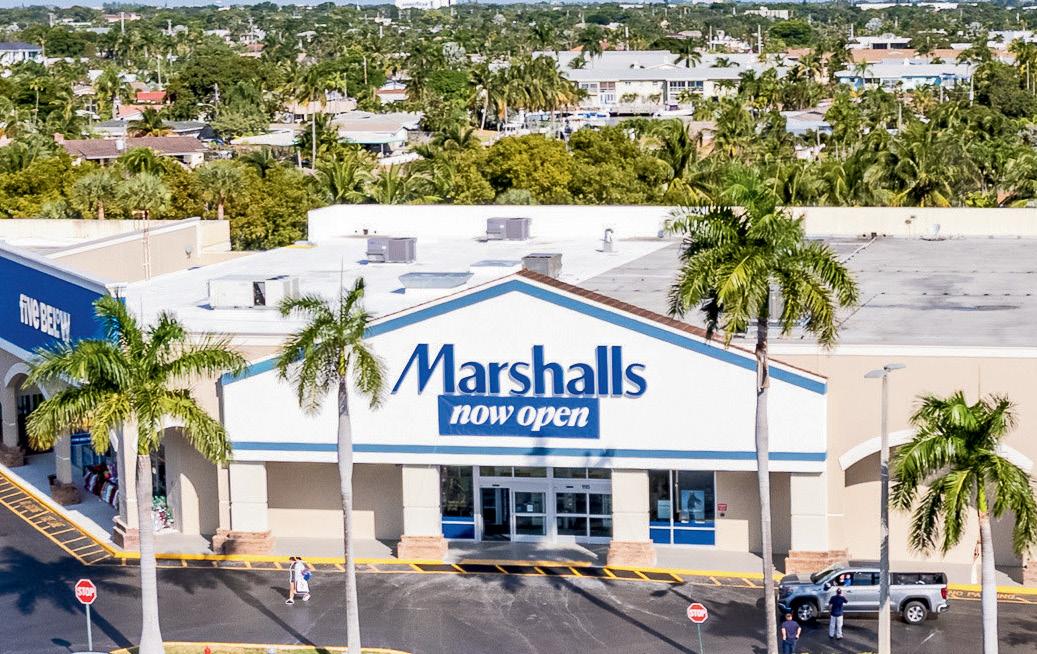
LMC rebuilt the spot vacated by ShopRite and filled it with current tenant Marshalls in a 27,000-sq.-ft. space along with new tenants Nails Spa & Beyond in a 5,800-sq.-ft. space and Taco Bell in a 2,900-sq.-ft location.
More than a quarter-million people reside within a fivemile radius of Blue Star in an area where average household incomes exceed $200,000. Annual visits have increased from 2.9 million to 3.4 million at Blue Star following the redevelopment.
“These leases reflect strong demand for well-positioned retail space in this market,” said E.J. Moawad, a senior leasing representative at LMC. “With more than 62,000 square feet of new commitments and additional deals in the pipeline, Blue Star continues to build meaningful momentum.”
Other new tenants opened at Blue Star include Planet Fitness and KidStrong. Soon to arrive will be Five Below, Raising Cane’s, honeygrow, and Back Nine Golf. New upgrades include a central courtyard and an outdoor public gathering space to increase dwell time.
Medley
Johns Creek, Ga.
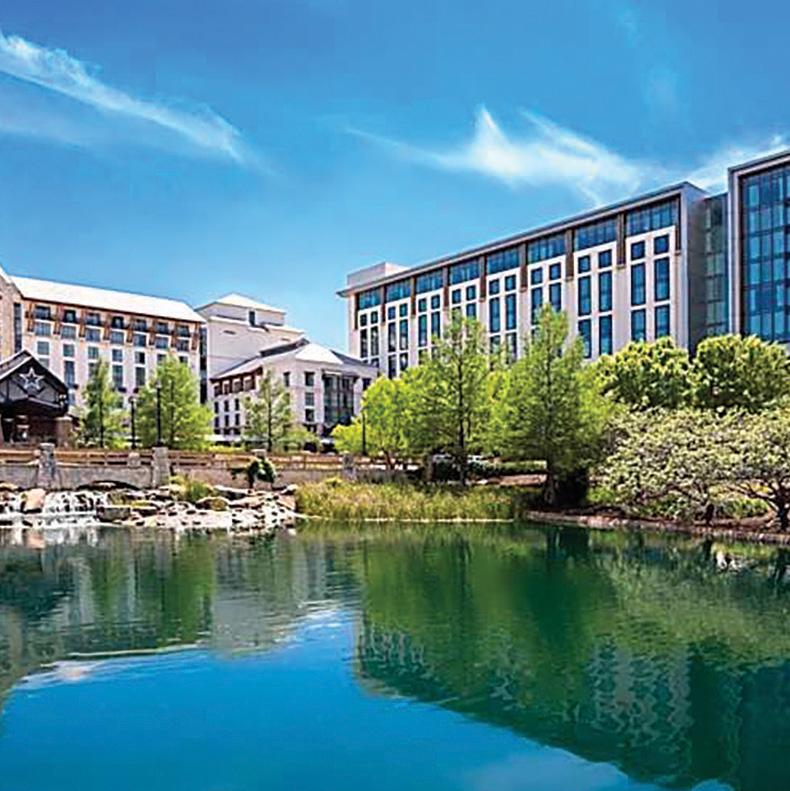
Mark Toro was the driving force behind Atlanta area centers such as Avalon and Atlantic Station when he was the chairman of North American Properties’ Atlanta division. In 2022, he struck out on his own and founded the Toro Development Company.
The company’s first project is a doozy.
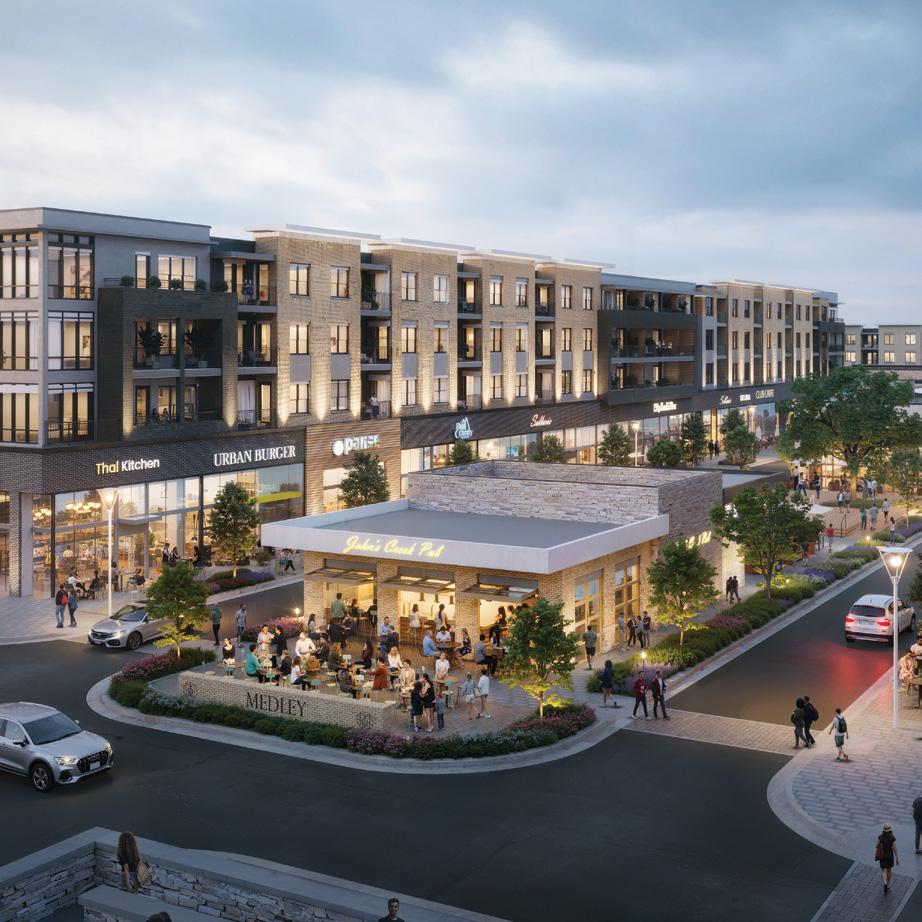
Medley is a $560 million, 43-acre mixed-use development in St. John’s Creek, Ga., an affluent suburb some 30 miles from downtown Atlanta via Interstate 85. Still under construction, it is set to open in October.
Located at the intersection of Johns Creek Parkway and McGinnis Ferry Road, Medley will encompass 164,000 square feet of retail, restaurant, and entertainment space situated throughout the project’s public realm.
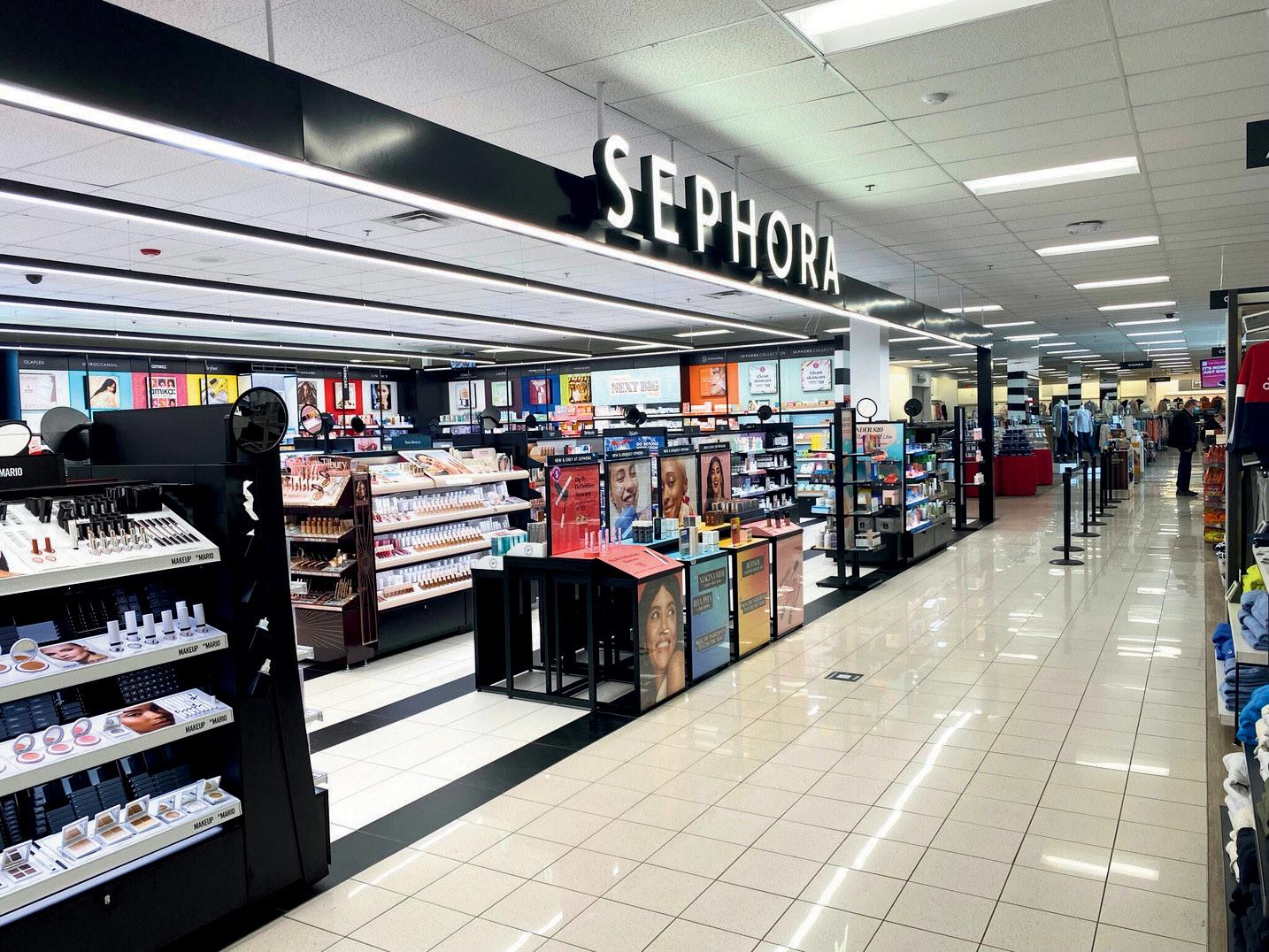
Among those on board at the development are a wide range of brands that include Trader Joe’s, Sephora, Shake Shack, Stir and Tonic House, Cru Food & Wine Bar, High Country Outfitters, Fogon and Lions, Fadó Irish Pub, Drybar, and Bodyrok.
The mixed-use project will also contain 833 luxury residences; a 150-key boutique hotel; 110,000 square feet of lifestyle office space, and a 25,000-sq.-ft. plaza.
“Medley represents the radical reimagining of a dying suburban office park into a dense, walkable, mixed-use community,” Toro remarked. “We have been hard at work curating an extraordinary retail, dining and entertainment experience.”
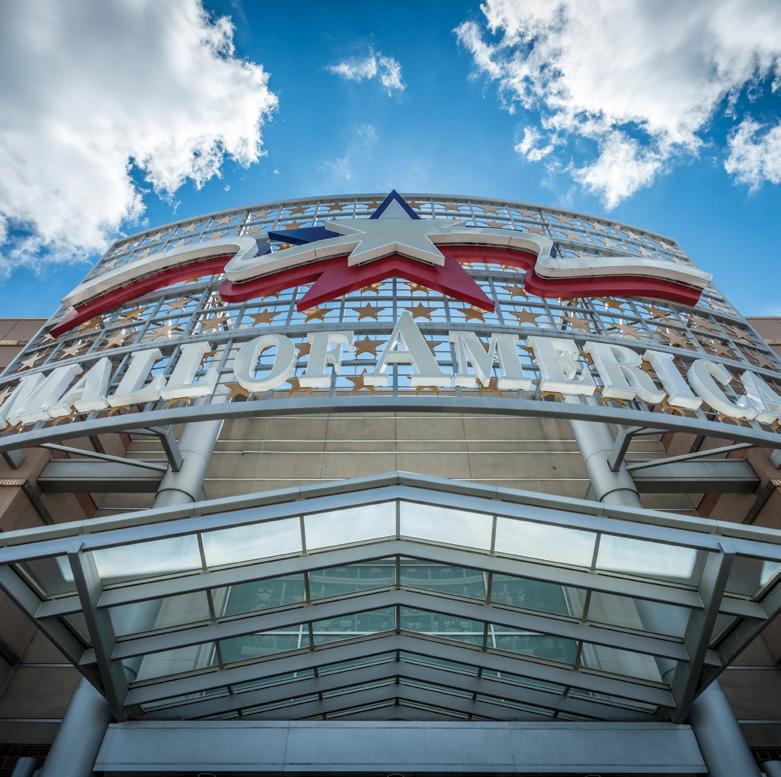
Mall of America
Bloomington, Minn.
Mall of America is a retail destination that doesn’t sleep. As it strives to draw compelling new brands and popular vintage brands to its massive 5.6 million square feet, saws and hammers are nearly always busy inside America’s largest shopping space.
“We work closely with each brand to guide them through our design criteria and approval process, ensuring every space reflects both the retailer’s unique vision and the mall’s overall standard of excellence,” said Carrie Charleston, The behemoth mall’s head of leasing.
In 2025, Mall of America reworked the South portion of its Level 1 West Market to focus on attracting next-generation, high-performing brands. The transformation reflects Mall of America’s continued investment in premium, experiential retail.
All spaces in the construction area were fully demolished in preparation for this totally remade retail zone. Construction crews created new storefronts. interiors and fixtures.
Infrastructures and framing were also updated.
Alo Yoga’s 6,045-sq.-ft. space was designed around well-being and community with an emphasis on natural light and open flow.
Columbia Sportswear’s downsized 5,425-sq.-ft. store was installed with natural wood elements and updated fixtures to create a modern, rustic aesthetic.
And Skims’ 8,000-sq.-ft. store—a first-to-market tenant— featured an open, uncluttered layout bathed in immersive, soft lighting to imbue the space with a boutique feeling.
Each build-out took approximately 150 days to complete.
“While tenants are responsible for managing and executing their individual build-outs,” said Charleston, “Our team partners with them throughout the process—from initial concept review through final design approvals—to ensure quality and a seamless execution.”
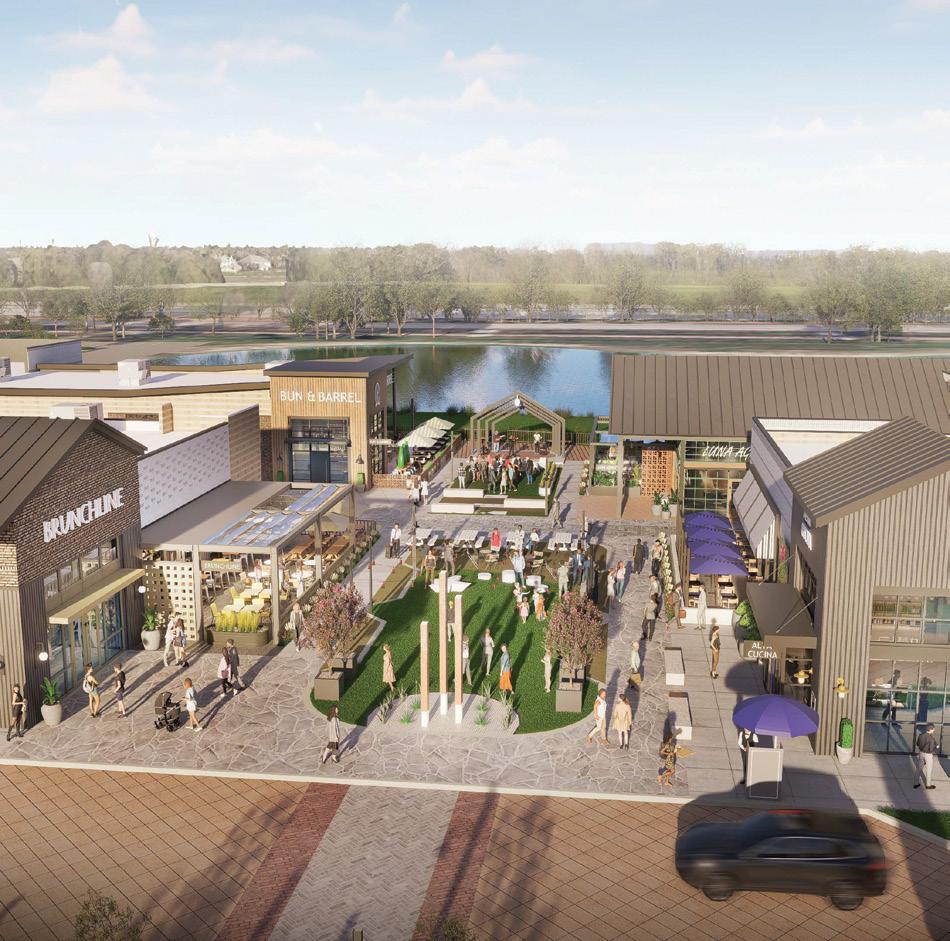
Dunham Pointe
Cypress, Texas
Trademark Property Company’s founder Terry Montesi has made a good living breathing new life into traditional malls at centers such as Galleria Dallas and Market Street in the Houston suburb of The Woodlands.
But he’s not afraid to break out the bulldozers when he sees the opportunity.
Such is the case with Trademark’s planned retail and entertainment center at Dunham Pointe, a 1,300-acre planned community in the fast-growing suburb Houston suburb of Cypress, where the Fort Worth-based developer is building what will be the project’s downtown.
Nearly 50 retail, restaurant, and entertainment brands have submitted letters of intent for space at the center, which will contain 250,000 to 275,000 square feet of retail and restaurant space.
“Alongside high interest from national retailers, we are also focused on merchandising the property with local operators, particularly in the F&B space,” said Blake Bickmore, Trademark’s VP of development.
Trademark noted that it will collaborate with the developers of the master planned project – along with residential builders — to create a highly connected and walkable community that delivers an elevated lifestyle for residents.
“With every new market, we come as listeners first, and we look forward to engaging with the Cypress community to learn about the kinds of experiences they’d like to see here,” noted Jeff Johnson, Trademark’s managing director of development.
Vineyard Towne Center
Queen Creek, Ariz.
Vestar, one of the largest privately held shopping center owners in the western United States, has been very busy in the Phoenix suburb of Queen Creek of late.
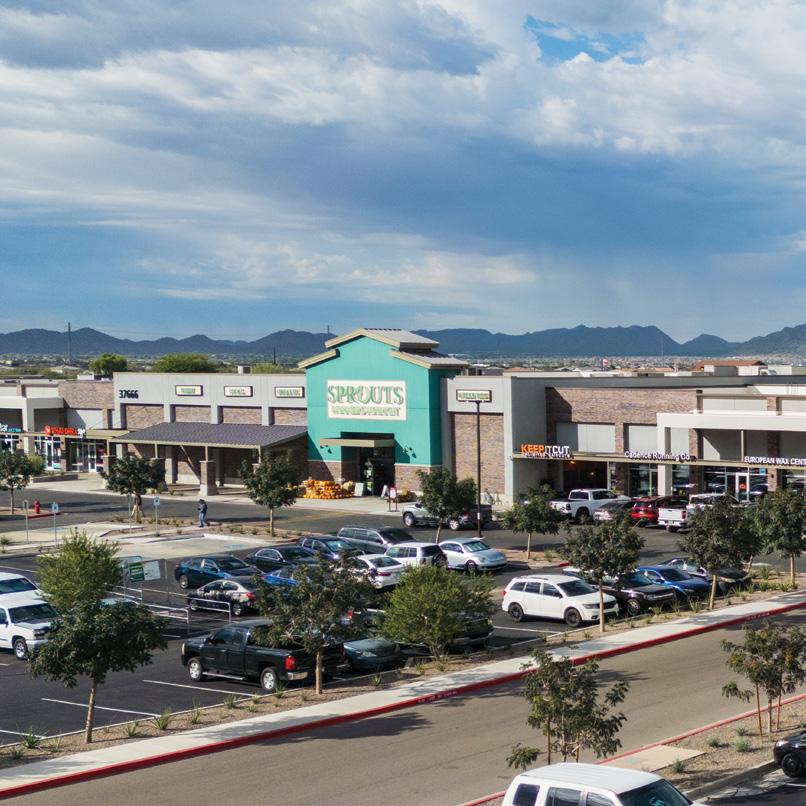
In the past few years, it has opened the 900,000-sq.-ft. Queen Creek Marketplace and the 400,000-sq.-ft. Queen Creek Crossing. In January, it cut the ribbon on its $100 million-dollar, 260,000-sq.-ft. Vineyard Town Center.
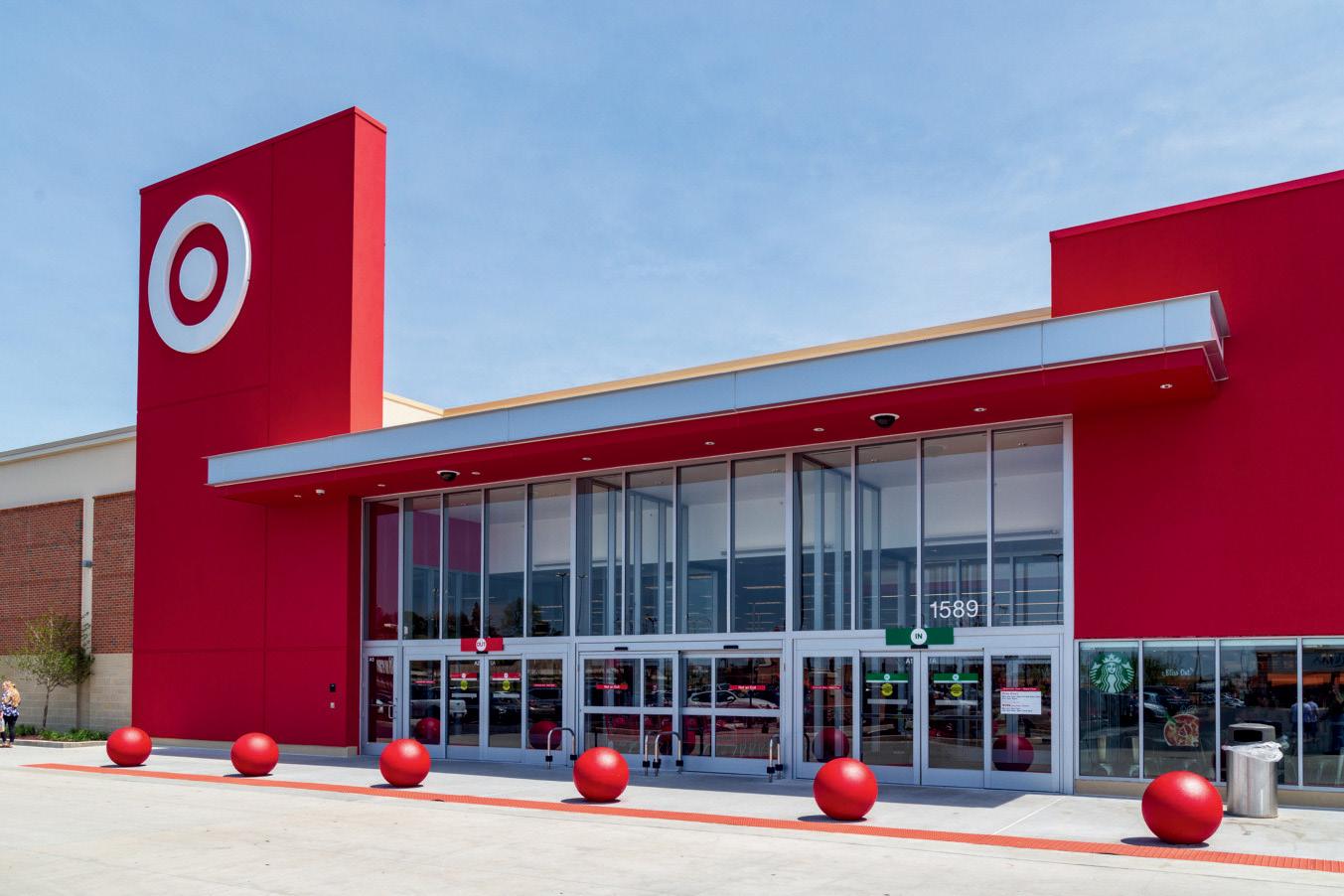
Target moved into its 145,000-sq.-ft. space last October and was followed by a wide range of brands that include Sprouts Farmers Market, McDonald’s, Mattress Firm, Zara Nail Bar, Thai Chili 2Go, Dentists of Queen Creek, and Crown One Beauty Supply.
“Completing Vineyard Towne Center marks another exciting milestone in our long-term commitment to the Queen Creek community,“said Vestar’s executive VP of development Jeffrey Axtell. “This center has seen incredible leasing momentum. The strong response from both tenants and residents underscores the demand for high-quality destinations that blend convenience, variety, and an elevated sense of place.”
Vestar is not done in Arizona. Axtell said that the company has more than 3.5 million square feet of new development in its pipeline over the next five years.
Crossgates Mall
Albany, N.Y.
In 1958, recent Fordham University graduate Robert J. Congel borrowed $175 from his grandfather to start a construction company. He grew the business by developing warehouses and small retail centers and, in 1970, when enclosed shopping malls began to compete with traditional downtown retail, he founded The Pyramid Companies.
The Syracuse-based Pyramid grew to be a premier builder of malls in the Northeast, with nine super-regional properties
encompassing some 26 million sq. ft. of commercial space in Massachusetts and New York. Its Destiny USA is one of the 10 largest shopping and entertainment centers in the United States.
In its home base of Syracuse, for instance, it will soon be carving out space for the first Ikea store in Upstate New York. And at Crossgates Mall, it has invested more than a quarter of a billion dollars to refresh its tenant roster fresh.
“After several years of collaboration, Costco will open this August, alongside New York Oncology Hematology, which is currently under construction at Crossgates,” said Pyramid CEO Stepehen Congel, Robert’s son.
Pyramid’s most recent build-out was done for REI Co-Op and features soft seating, new lighting, and skylights. Also recently constructed at Crossgates is The Flats, a 222-unit residential complex with apartments and townhomes.
“Within the shopping center, we have welcomed premier brands that include REI Co-Op as well as Primark and Crunch Fitness. Ashley and Barnes & Noble are set to open later this year, ” Congel noted. “The level of site densification and reinvestment at Crossgates Mall has been truly remarkable.”
CoStar: Disciplined growth expected in 2026
In its “2026 Retail Outlook,” real estate analytics provider CoStar foresees disciplined retail expansion from retail chains in this era of limited space supply. The toplines:
Store openings and closings: Most bankruptcydriven closures have already worked their way through the system. At the same time, store openings are poised to accelerate. The net effect is a healthier mix of openings and closures, with backfilling activity improving materially in welllocated centers and high-quality corridors.
Demand for Retail Space: Tenant demand is stabilizing and, in many markets, quietly strengthening. Retailers remain cautious, but that caution is now translating into targeted expansion rather than outright retrenchment. Smaller-format, in-line, and freestanding spaces continue to dominate demand, while interest in larger boxes has begun to re-emerge as availability tightens.
Rent Growth: Asking rents may appear flat on the surface as older and functionally obsolete space weighs on market averages, but effective rents for new and well-located space continue to move higher. Landlords with high-quality assets are retaining pricing power, supported by faster lease-up times and limited competitive supply.
New Stores, New Formats
By Marianne Wilson
From established players to brick-and-mortar newcomers, the retail landscape continues to evolve with new formats, new concepts and updated designs.
Here’s a look at some of the newest entries.
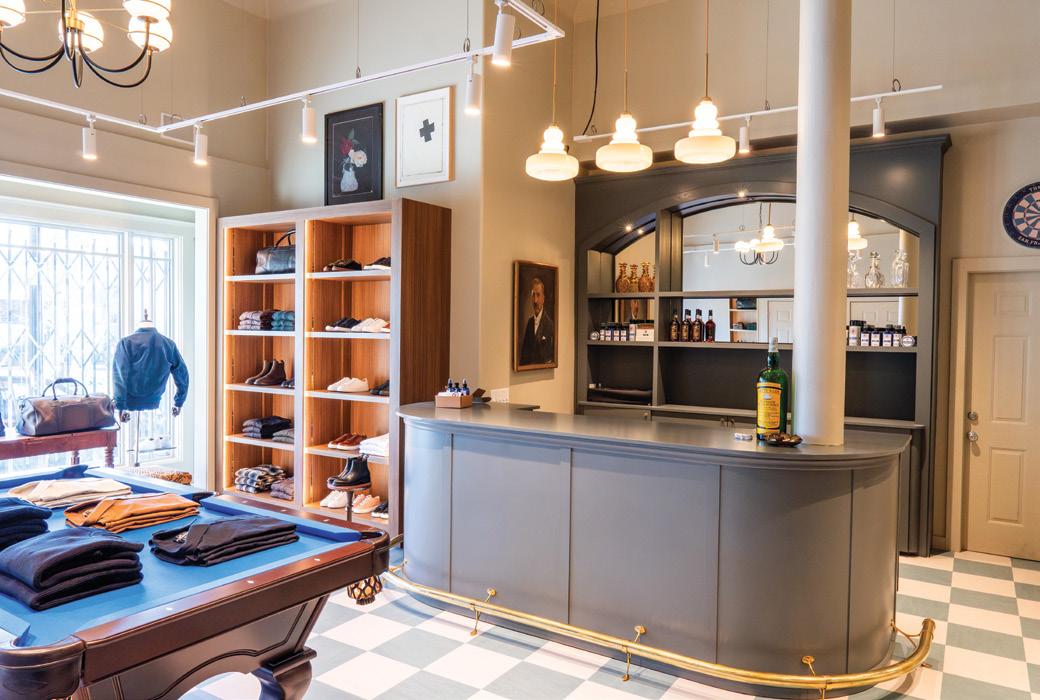
Thursday Boot Company
Direct-to-consumer footwear brand Thursday Boot Company is entering its next phase of growth as it looks to accelerate brick-and-mortar growth. The company said it spent years perfecting its product, supply chain and customer experience, including vertically integrating with its owned-and-operated factory, before embarking on retail expansion.
Thursday Boot recently opened its fifth store, in San Francisco’s Hays Valley neighborhood. More locations are slated to open in 2026 in cities across the U.S., with each one designed to reflect the community while staying true to the company’s heritage.
Featuring Thursday Boot’s full collection of men’s and women’s footwear, leather goods and accessories, the San Francisco store is designed to reflect the area’s blend of historic character and modern creativity.
In keeping with the company’s values, most store elements were sourced and built locally, highlighting Bay Area fabricators, artisans and tradespeople. Vintage furnishings were sourced from iconic local destinations.
In a nod to Thursday Boot’s early days (it started out selling boots out of bars), design details take cues from well-loved dive bars, with subtle references such as a dartboard, pool table accents, curated vintage barware and a brass seal.
(Thursday Boot Company’s San Francisco outpost was designed and completed in partnership with CHB Designs and All Day.)
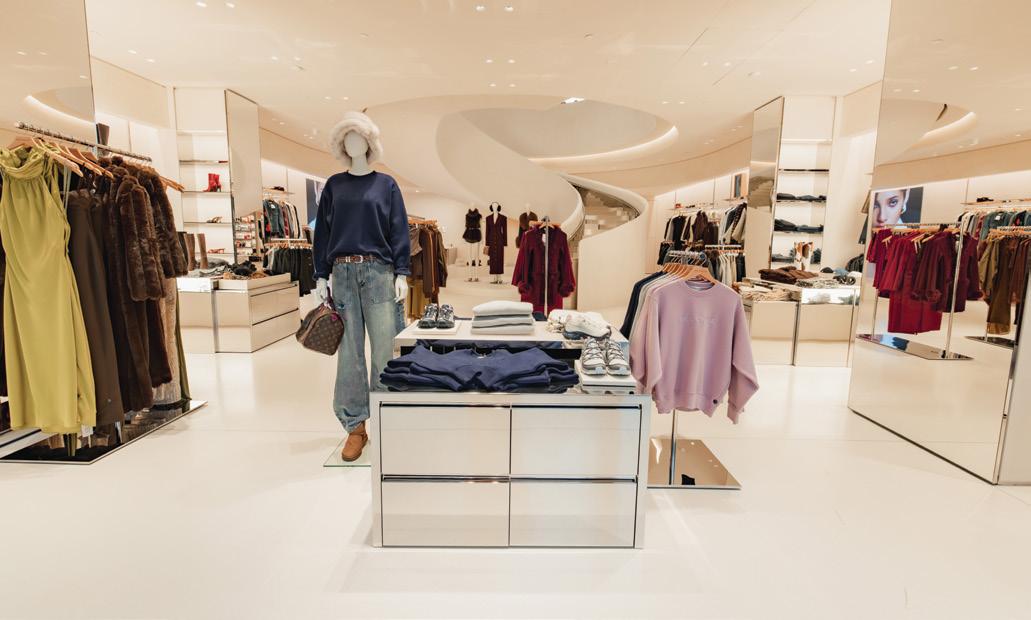
Revolve
Millennial and Gen Z favorite Revolve Group is entering its next chapter as it expands into physical retail. The digitally native global fashion retailer opened an 8,450-sq.-ft. store at outdoor retail and entertainment center The Grove in Los Angeles. With a streamlined, minimalist look, the two-level store features open, flexible floor areas that support evolving merchandising needs. Revolve Group sells merchandise through two segments — Revolve and Fwrd — that span apparel, beauty, men’s, accessories, footwear and home, and leverage one platform.
The main floor showcases the Revolve brand, with a curated selection of emerging, established and owned brands. The second level is designed as an intimate in-store boutique that immerses shoppers in the Fwrd luxury environment.
(Revolve was designed by Montalba Architects.)
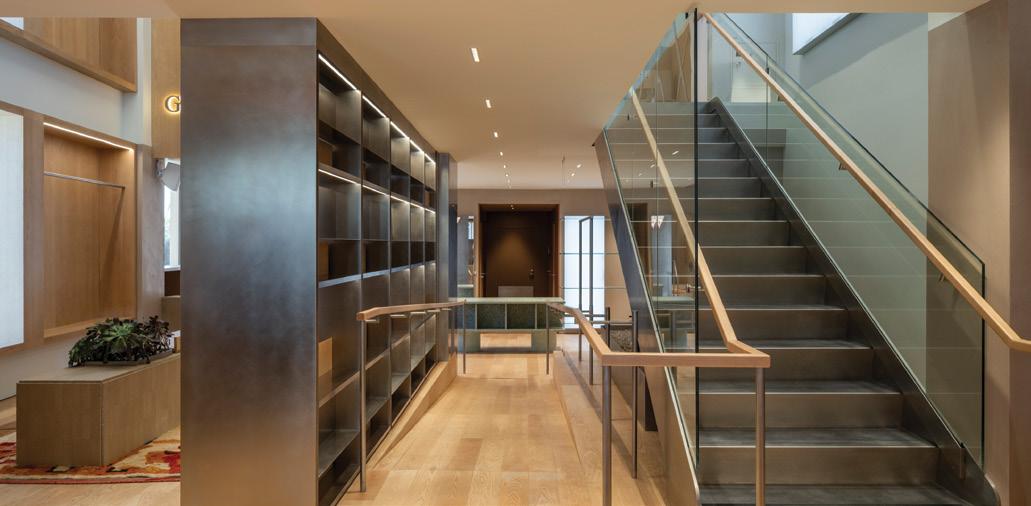
Guess Jeans
Guess Jeans returned to its LA hometown with a two-story flagship that brings personalization directly to the shop floor. Envisioned as both a retail store and cultural/community hub, the space blends Guess’ Southern California heritage with striking architectural design, on-site customization, curated collections and a rotating slate of creative collaborations and programming.
The 3,000-sq.-ft. store features a curved, stone-powder brick façade made made from recycled marble dust. On the interior, green-tinted terrazzo floors, brushed stainless steel and modular wooden fixtures combine for a cool, contemporary feel.
The store’s defining elements include a central staircase that doubles as a visual spine for campaign imagery and large-scale visuals. A dedicated workshop and full-service customization space serves as a living laboratory for design and collaboration.
The upper floor houses a dedicated Guess USA section focused on Americana-inspired premium apparel. The space is accented with images from early Guess campaigns and the brand’s 45-year archive.
(The Guess Jeans flagship was conceived under the creative direction of Guess’ Nicolai MarcianoMarciano and executed by ASA Architecture Firm.)
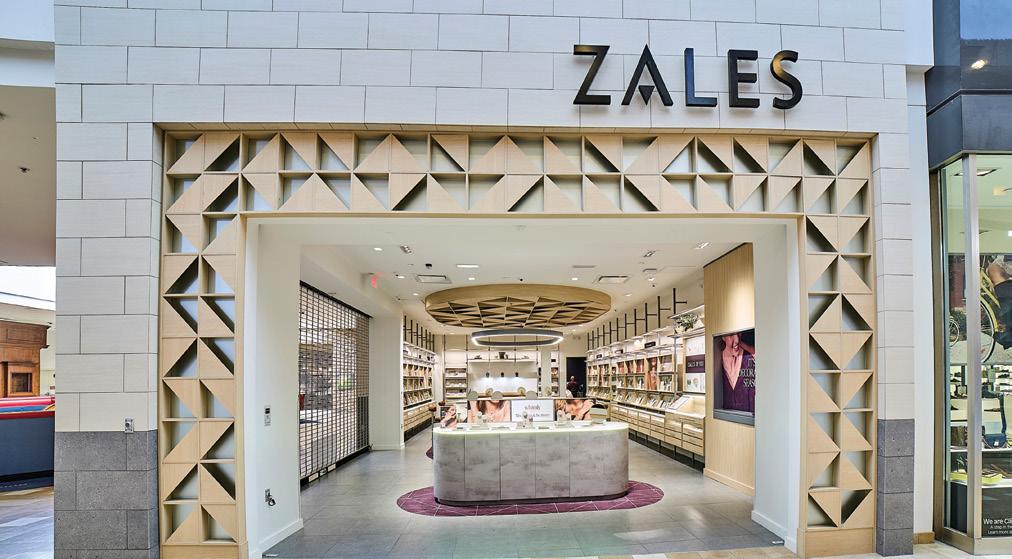
Zales
The jewelry retailer unveiled a new concept, which it refers to as The Edit, in four locations — with plans for continued expansion in 2026. The format blends style, storytelling and personalization, and is designed for the “modern customer who embraces the joy of gifting themselves.”
The concept includes a dedicated area for customization, allowing customers to personalize pieces and create one-ofa-kind designs. The store also features an area spotlighting rotating seasonal collections, interactive storytelling displays and a charm bar for customizable styling.
A digital companion tool lets shoppers scan product QR codes, build virtual trays of favorites, and seamlessly explore Zales’ full in-store assortment.
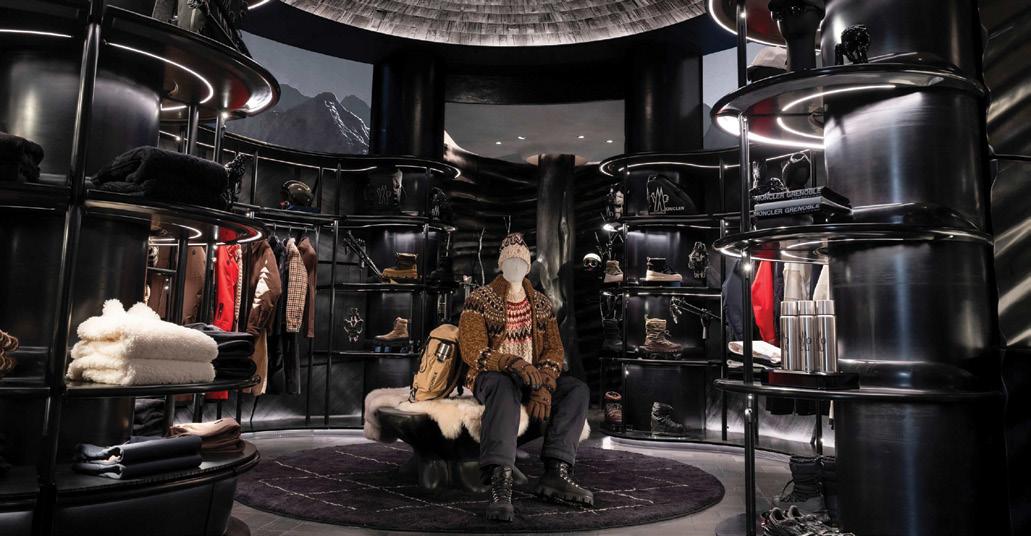
Italian luxury outerwear brand Moncler chose Aspen, Colo., as the site of the first Moncler Grenoble U.S. flagship for its Moncler Grenoble brand, a high-performance skiwear and lifestyle collection.
The approximate 2,700-sq.-ft. store offers an immersive environment inspired by the Rocky Mountains, incorporating natural materials and architectural features inspired by alpine terrain. Customers enter through a striking, cave-like entrance that evokes Moncler’s mountaineering heritage and sets the tone for the journey inside. A sculptural, majestic tree is the focal point of the space, anchoring the layout and offering both seating and a platform for
display through a circular bench integrated around its base. Apparel is displayed in circular, dome-topped bays. Accessories are featured on sculptural metal branches. Custom furniture pieces in wood and stone furniture mirror the rugged local landscape.
(Moncler Grenoble was designed by Küchel Architects.)
Adidas
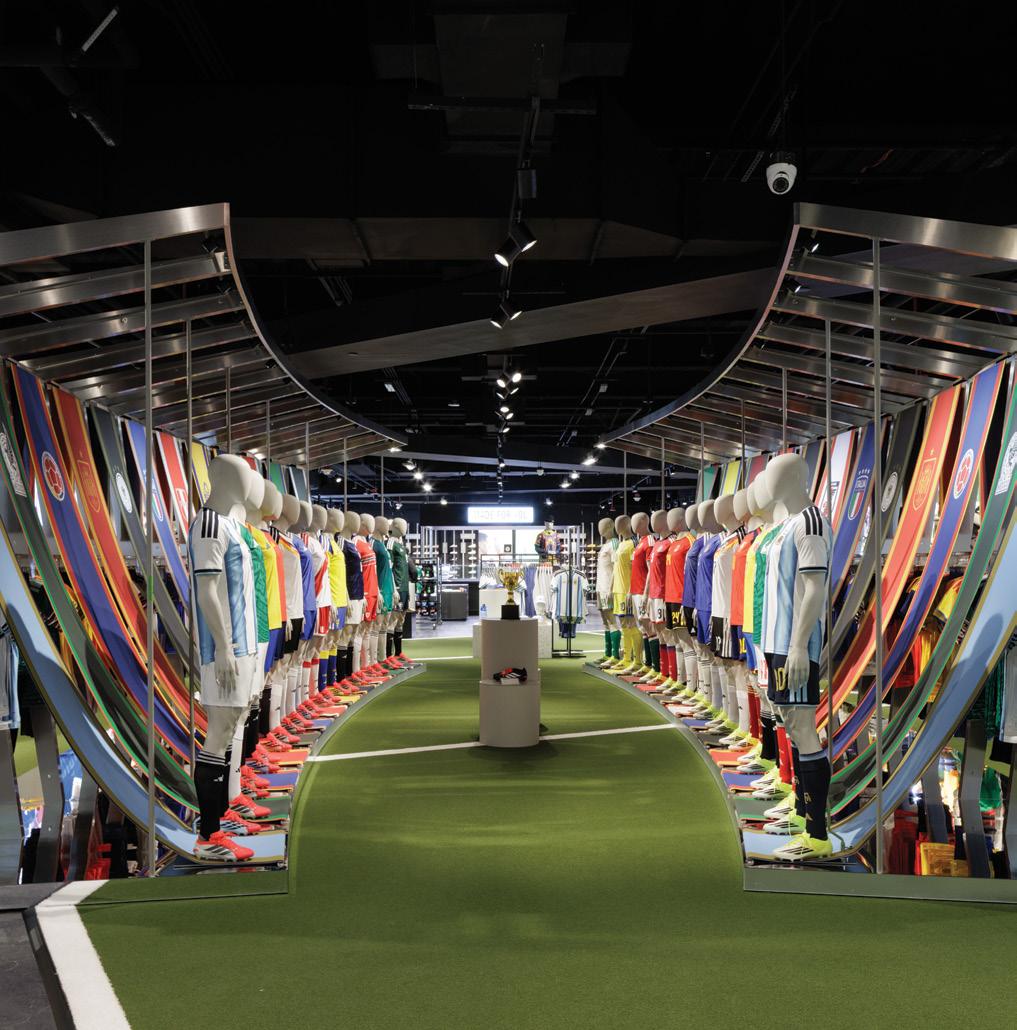
Adidas has opened its first-ever store in the U.S. dedicated entirely to soccer. Located at mega retail/entertainment center American Dream in East Rutherford, N.J., its opening comes ahead of the FIFA’s World Cup Finals this summer, which will be held at the center’s neighboring MetLife Stadium.
Billed as “World of Soccer,” the store offers premium athletic footwear, performance apparel and exclusive collections, along with national team kits from every Adidas-sponsored country competing in the tournament. On-site customized gear is also available.
The fitting rooms are themed with international teams, including a large mural of soccer great Lionel Messi. The history of the World Cup is highlighted throughout the space, which includes a soccer ball wall featuring balls from past tournaments.
Moncler Grenoble
Nespresso Goes Big in New York City
By Deena Amato-McCoy
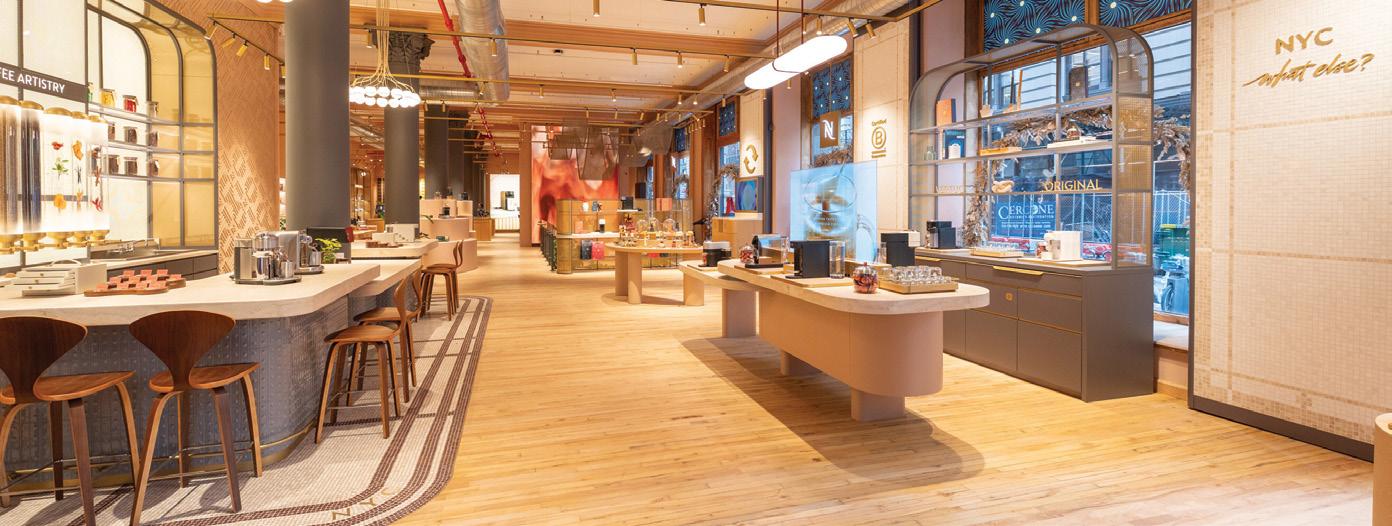
Nespresso has opened an experiential store in New York City that encourages discovery and is designed as a destination for modern coffee culture.
Described as a first-of-its-kind flagship and spanning a whopping 13,900 sq. ft., the two-level, concept store is located in Manhattan’s Flatiron district. It features traditional and non-conventional offerings that invite shoppers to sip, socialize and participate in Nespresso’s real-life “coffee theatre.”
“We target locations where shoppers like to be and can more easily discover a new brand,” said Susanna Forteleoni, director of retail, Nespresso USA, which has retail network of more than 800 shops, including 39 U.S. locations.
The flagship, which is housed in a historic building, is the culmination of the Swiss brand’s reimagined retail strategy. According to Forteleoni, it is different than any other location Nespresso operates — even on a global level.
“The oversized space really allows us to enhance and elevate our retail experience, while paying homage to the importance of this Manhattan real estate,” she said. “Each of its two levels has its own distinct theme.”
The store leverages sensorial experiences that bring coffee culture to life. Interactive activations throughout the space are designed to create a “coffee theatre.”
“Every inch [of the store] tells a story that increases customers’ awareness of our brand,” Forteleoni said.
The ground floor serves as the hub for visitors to first experience the brand. One of the first displays customers see upon entering is “Taste and Discover,” which features an assortment of Nespresso coffee machines. In addition to trying the machines, shoppers can explore flavors and take advantage of assisted and self-guided tastings.
Other displays include an“Aroma Bar” featuring vintage-inspired perfume
atomizers. By squeezing the attached pumps, customers discover different scents infused in Nespresso’s coffee blends.
A “Coffee Theatre” coffee bar features employee-led master classes throughout the day.
“Our ‘coffee bards,’ or baristas, bring our flavors to life through tastings, storytelling and education,” Forteleoni explained.
The ground floor also houses traditional retail and sales, including Nespresso’s full line of machines, coffees and accessories. There is also a wrapping station and engraving station where shoppers can personalize gifts.
Lower Level: Nespresso leaned into locality and authenticity to bring the lower space to life. It boasts two custom-curated spaces, both with local artists’ pieces and design materials, that enable customers to experience the brand in new ways.
In the “Nespresso Lounge,” visitors can relax on couches and club chairs, sip a coffee and catch up with friends over a game of chess or Scrabble — or even use a turntable to spin some tunes from Nespresso’s vinyl collection. They can also test their barista skills with self-service coffee machines found throughout the space.
Visitors can order drinks inspired by coffee trends in the “Hidden Cup Coffee Bar.” A New York City-inspired painting conceals a passageway to the speakeasy-like area where mixologists serve exclusive mocktails inspired by coffee trends and Nespresso favorites.
Technology: The store offers four self-checkout stations. Customers drop their items into a Nespresso-branded bag as they shop and, when ready to check out, place the bag into a special slot where a RFID scanner reads the tags on the items.
Digital signage is prominent throughout the space, with the largest digital screen being an interactive “Crema Wall.” Named after Nespresso’s iconic cream coffee foam, the screen features 150 LED modules and megapixel camera technology. Sensors are integrated throughout the stairwell to the store’s lower level. As shoppers move past the sensors, movements are detected and change the flow of the digital “foam.”
Expansion: When it comes to expansion, Nespresso is playing the long game, Forteleoni said.
“We believe it is more important to wait for spaces that offer the right location and size,” she explained. “We don’t want to force expansion.”
Short-term, Nespresso’s biggest goal is to get its spaces and experiences right, which means bringing elements of the flagship concept into existing locations.
“Moving forward, we will take a holistic look at our locations, from employee experiences, back-of-the house and customer journey points of view,” Forteleoni said. “It is most important for us to build spaces that are inviting and welcoming for new guests. “Ideally, we want to create stores where they will feel inspired, excited and want to spend time exploring.”
The Nespresso flagship is described as a destination for modern coffee culture.
Modular BY Design
Practice prioritizes speed, consistency and repeatability at scale
By Eric Price
Retail expansion today is increasingly defined by one question: “how fast can we open?” Whether replacing an aging location, rebuilding after a closure or executing a multi-store rollout, extended construction timelines carry real risk to the bottom line.
Every additional week of construction is more site cost and less revenue. Traditional site-built projects often struggle to meet aggressive schedules, particularly when labor coordination is challenged and site mobility is compromised.
Volumetric modular and panelized construction are gaining traction because they directly address these pressures. When applied early, modular design becomes more than a construction approach — it becomes a delivery strategy that prioritizes speed, consistency and repeatability at scale.
Modular methodologies
One of the most common misconceptions about modular construction is that it is a shortcut. The reality is that modular projects often require more upfront planning than traditional builds.
Design decisions are made earlier, coordination is tighter and alignment across teams happens sooner. All parties on board, all hands on deck. The front-loaded effort is exactly what makes faster delivery possible.
By shifting a significant portion of construction offsite into a factory environment, modular delivery allows fabrication to happen at the same time as site preparation. Foundations and utilities can move forward while building components are being produced.
When modules arrive onsite, installation is fast and predictable. ”Nested” construction, which might include panelized walls, volumetric rooms and HVAC/ equipment “cassettes,” offer deeper time and cost savings by leveraging specialized
offsite manufacturing partners and reducing reliance on traditional general contractor labor.
For example, on one of our recent projects, the building went from a concrete slab to a fully assembled structure in a matter of days. The steel-building framework was constructed and inspected in the factory and fitted out with QSR kitchen equipment, anchored and ready to serve. This approach allows multiple subs to complete their work offsite, reducing the construction timeline from many months to roughly a week, except for the finishing touches and startup.
For reconstruction and replacement projects, the compressed onsite timeline can make a meaningful difference by dodging the rainy season or capturing key sales dates. With the right site conditions, it’s possible to keep an existing store operational while a new building is constructed, an approach that limits downtime and helps mitigate customer loss. Speed is not about convenience speed is a necessity.
Evaluate Site Considerations Early
Modular delivery places specific demands on site selection that need to be understood upfront. Sites must be large enough to accommodate delivery and installation of oversized building components.
Volumetric modules are transported by semi-truck. Road restrictions, turning radii and staging space all affect whether modular delivery is feasible. In some markets, truck access alone can rule out otherwise attractive sites. If a location cannot safely or legally accommodate large delivery vehicles, modular construction may not be the right solution. Space is also a factor. Modular reconstruction works best when there is enough room to build a new structure while an existing store remains open. Without that flexibility, some of the speed advantage can be reduced.
These realities do not diminish the value of modular delivery, but they do reinforce the need to evaluate site feasibility early, alongside design and rollout planning.
Scale
Modular delivery is not a universal solution. It works best when there is a clear commitment to scale.
Developing a modular prototype requires investment. The first project will carry a high cost because it includes prototype adaptation, buy-in from operational partners, vendors and quite possibly some deviations from brand standards. Once the modular design team works through the upfront challenges, the reward is a prototype ready for deployment across multiple locations. At scale, modular systems create predictability. Construction timelines become more predictable, and costs controlled. Each successive project benefits from lessons learned on the previous one. This repeatability allows teams to focus less on starting new projects again and again and more on executing a singular proven approach. Over time, that consistency reduces risk and supports faster rollout schedules across portfolios.
Designing for Consistency
As retail portfolios grow, inconsistency can become a real challenge. Small variations in layout or planning decisions can add up, especially when projects are delivered one at a time.
Modular planning addresses this by standardizing the core elements of the store prototype. Circulation paths, service zones and operational adjacencies are designed as repeatable components rather than reworked for every site.
Maintaining that discipline is essential. The underlying system needs to stay consistent so that speed and predictability are not lost as rollouts accelerate.
Integrate Design and Manufacturing Early
Modular projects benefit from early coordination among designers, manufacturers and operators. Bringing these groups together earlier in the process helps reduce uncertainty and improves execution.
Early coordination allows architects to design with fabrication, logistics and installation sequencing in mind. Understanding delivery constraints and tolerances upfront leads to clearer decisions and fewer adjustments later.
Operator input also needs to be part of the conversation early on. Retail workflows, staffing patterns and customer sequencing should inform modular components from the beginning so they function as intended once stores open. This approach works best when teams agree early on the prototype and remain committed to executing it consistently. Modular design requires organizations to commit early, make decisions sooner and limit deviation over time. In return, it offers faster delivery, greater predictability and the ability to scale without starting from scratch each time.
Maximizing these benefits depends heavily on experience. Working with designers and planners who understand modular delivery, site constraints and rollout strategy helps avoid mistakes that can erode speed and cost advantages.
Early guidance on feasibility, prototype discipline and coordination is often what separates successful modular programs from those that struggle to deliver on their promise.
When applied thoughtfully, at the right scale and with the right partners, modular design becomes a strategic asset, allowing retailers to move faster, rebuild with more certainty and protect revenue in an increasingly demanding environment.
Eric Price is commercial studio director at multi-disciplinary practice Lowney Architecture.
ADVANCE DOCK LIFTS ARE FAST, SAFE, EFFICIENT & VERSATILE
DOCK LIFTS VERSUS NOTHING:
Unloading trucks without any equipment is ver y slow and puts dock personnel at risk for shoulder, back and metatarsal injuries. Also, goods may be damaged.
DOCK LIFTS VERSUS CONVEYOR UNLOADING: Conveyor unloading is 2 to 3 times slower than using a dock lift It leaves personnel at risk of shoulder, back and metatarsal injuries and goods are at risk
DOCK LIFTS VERSUS TRUCK TAILGATES: Tailgates and their maintenance are more expensive than dock lifts Tailgates reduce truck payload and increase vehicle wear Tailgate platfor ms are smaller and do not offer handrail protection available on dock lifts, more risk for operators and cargo.
DOCK LIFTS VERSUS DOCK LEVELERS: Dock levelers can only ser ve a limited range of truck heights (usually 8”) so they cannot ser ve all size trucks An Advance dock lift can ser vice any size truck without limitations
Spotlight on Facilities Management
Clean, well-maintained stores drive traffic and customer loyalty
By Dave Harrington
For years, analysts predicted that malls would fade into history. But new consumer data suggests the opposite. The American mall is adapting, not disappearing, as shoppers seek experiences that online retail cannot provide.
According to Accruent’s 2025 Retail Survey, malls are once again becoming gathering places where people explore new brands, meet friends and create experiences. They are also being reshaped into lifestyle destinations that reflect community culture and convenience. This trend aligns with a wider return to in-person connection. A Harris Poll and Quad study found that more than three-quarters of Americans say physical retail experiences help them feel closer to people and brands. These findings reveal a clear opportunity: Retailers that create welcoming spaces are meeting an emotional need as well as a practical one.
Cleanliness and Care Define the Experience
While many retailers focus on digital innovation, consumers are prioritizing the basics. Clean, safe and well-maintained spaces now rank among the top factors influencing where people shop. Accruent’s research shows that 39% of shoppers notice store cleanliness first, more than layout, lighting or displays.
More than half (54%) have left a store because of cleanliness issues, and 42% have walked out due to unpleasant odors. In total, nearly four in five shoppers have exited a store because of poor conditions. The connection between upkeep and loyalty is equally strong. Most (86%) of consumers say store maintenance influences whether they stay loyal to a brand. For almost half, the impact is significant. Shoppers interpret a clean and organized space as a sign that a retailer values quality and customer care. When standards slip, trust weakens quickly.
Retailers often assume convenience drives every decision, but the data tells
a different story. Eighty-five percent of consumers would travel beyond the nearest grocery store if another location was better maintained. Even 64% of convenience-store customers, whose visits are usually based on proximity, say they would go farther for a cleaner, better-kept store.
This willingness to travel highlights the new class of shopper priorities. Product availability and price still matter, but operational excellence now sits alongside them. When stores are bright, organized and comfortable, they become destinations rather than quick stops. Facilities management is therefore emerging as a core driver of customer experience and competitive differentiation.
Role of Maintenance
A consumer’s perception of a brand begins the moment they enter the physical space. Floors, lighting, air quality and restroom upkeep all communicate care before a single product interaction occurs. If those elements are neglected, the experience cannot recover through marketing or pricing alone.
This reality places facility teams at the heart of retail strategy. They maintain the systems and environments that shape each customer’s first impression. Their ability to respond quickly to maintenance requests or proactively manage equipment determines whether the environment feels inviting or neglected. In many cases, these teams are also tasked with balancing sustainability goals and cost efficiency across multiple platforms.
When retailers integrate facilities data with broader store operations, they can make smarter decisions about upkeep, energy use and repairs.
Consumers Want Fresh Formats
Modern shoppers are eager for variety and originality in their retail experiences. Fifty-nine percent of respondents in Accruent’s survey said they have visited
a retailer specifically to experience a store-in-store.
Consumers also want more local flavor in traditional malls, with 34% saying they would visit malls more often if they featured local shops rather than national chains. And 39% would go more frequently if unique restaurants were available.
These findings indicate that consumers still value the convenience and excitement of in-person shopping, but they want something that feels curated and cared for. Experience is driving the trend. Retailers that align design, facilities, and maintenance around this expectation will be best positioned to win repeat customer visits.
Looking Ahead
The evolution of the mall is not about returning to the past. Designing spaces that meet modern expectations for comfort, cleanliness and connection is especially important. Physical retail provides something online shopping cannot replicate: a sense of place and shared experience. As digital options continue to expand, the quality of the physical environment becomes even more important.
As the Accruent survey reveals, upkeep is now inseparable from brand perception. Every shining floor and fresh scent communicates reliability. Every light that stays on and every repaired fixture signals attention to detail. When consumers associate those qualities with a brand, they come back.
Retailers who view facilities management as a strategic function rather than a background operation will gain a lasting edge. Clean, comfortable and consistently maintained environments keep shoppers engaged and loyal. In a market defined by choice, the simplest details are proving to be the strongest differentiators.
Dave Harrington is the global retail solutions Architect at Accruent.
New Solutions for Uncertain Energy Future
Making the case for on-site energy generation and storage
By Scott Childers
The U.S. power grid is under growing strain, with blackouts increasing in both frequency and duration. The Department of Energy has warned that, without meaningful additions of firm generation capacity, outages could become up to 100 times more common. This is an escalation that would have far-reaching consequences for U.S. businesses.
For retailers, especially those dependent on refrigeration, fueling and EV charging, these reliability challenges translate into financial risk. As a result, energy reliability has become as essential to daily operations as inventory management or workforce scheduling.
In response, today’s infrastructure pressures are accelerating a new era of on-site energy innovation in retail as businesses look for resilient, cost-effective solutions that ensure continuity regardless of how the broader grid evolves.
Understanding the Grid Challenge
The national grid was built for centralized power generation with one plant serving thousands of customers. Today, much of the nation’s infrastructure is decades old and no longer equipped to support modern demands, such as renewable energy integration and widespread electrification.
As transmission lines approach the end of their expected lifespan, communities face growing risks that span from outages and cyber vulnerabilities to infrastructure-related emergencies. These pressures are compounded by severe weather events and rapidly rising electricity demand driven by EVs, data centers and AI.
Achieving Energy Resiliency
Grocers, convenience chains and big-box stores face high stakes when outages occur. Traditionally, the only backup power options were diesel and natural gas generators that could bridge these gaps. Today, there are more backup
power options that can support a retailer’s sustainability and resiliency goals.
Battery energy storage systems (BESS) combined with on-site solar energy generation are emerging as a viable solution for providing reliable, resilient backup power for mission-critical operations.
One advantage of solar plus storage systems is that batteries, for instance, offer immediate responsiveness to load changes, something conventional generators cannot match. This makes them a more efficient source of backup power. When paired with solar photovoltaics (PV), a BESS provides consistent, reliable power that keeps critical operations running during outages.
Real-world pilots are already demonstrating the viability of these solutions. Costco’s off-grid pilot shows the potential for large-scale adoption, while Chick-fil-A’s PV-plus-storage projects in the West illustrate how retailers are beginning to test more resilient, energy-independent models.
Microgrids and distributed energy sources (DERs) like solar and BESS can scale from individual stores to entire multi-site networks, positioning retail as an increasingly influential player in the nation’s evolving energy landscape.
Retailers’ warehouses and distribution centers represent an additional promising opportunity, as their proximity to transportation hubs and logistics networks makes them strategic sites for resilience and distributed energy integration, strengthening both local operations and the broader grid during disruptions.
Energy Resilience
While the ROI for on-site energy generation and storage is still improving day-by-day, the technology’s strategic value reaches far beyond direct financial returns. Retailers benefit from reduced generator runtime, lower fuel costs, strengthened sustainability performance, improved safety and increased community support during crises.
Costco Goes Off-Grid
By Marianne Wilson
Costco Wholesale has made a big step toward energy independence at its distribution centers in Mira Loma, Calif., and Ontario, Calif. (The Mira Loma facility is one of its largest DCs.)
The centers now feature fully integrated, off-grid solar and battery systems, along with an EV charging infrastructure to support the electrification of their yard truck fleets. Together, the two sites will power 20 electric yard trucks. The tailored, integrated system at the centers was designed and implemented by Washington-based Trinity Energy. Costco and Trinity also recently collaborated on an off-grid electrified energy system at the retailer’s location in Norwalk, Conn. The microgrid system is designed to fully power Costco’s standalone tire center. It uses a modular solar and battery microgrid that generates, stores and delivers clean, reliable energy on-site.
The installation is capable of delivering up to 2 MWh of power per day without relying on the grid.
Costco’s off-grid systems will help the company meet its sustainability goals. Costco has committed to operating with 100% clean energy by 2035.
Early adopters also stand to shape the future market and capture the advantages of incentive programs and cost declines as the technology becomes more widely adopted. As a result, energy resilience is quickly becoming a fundamental component of operational excellence and a key driver of brand reputation.
Grid instability has become a significant operational challenge for retailers, making on-site energy generation and BESS essential tools for ensuring power reliability and business continuity.
Scott Childers is VP of essential power at Stryten Energy, a leading provider of stored energy solutions.
One-Stop Shopping for FM & Construction Services
Neil McQuiston of CGP Maintenance & Construction Services spoke with Chain Store Age about the challenges retailers face in facility maintenance and construction, and the benefits of the self-performing model.
What trends are you seeing in retail facility maintenance?
One of the biggest trends we are seeing right now is retailers prioritizing vendors that self-perform and have a strong local presence. Large national providers still play a role, but retailers increasingly want partners that can execute work with their own in-house teams rather than relying entirely on subcontractors.
Self-performing vendors provide more control over quality, scheduling and accountability. When a contractor owns the process from dispatch to completion, there is less room for miscommunication and fewer layers between the retailer and the technician in the field.
What are the most common challenges that retailers face when it comes to facility maintenance?
One of the biggest challenges right now is the lack of real-time communication and thorough close-out documentation from vendors.
Retailers operate at scale, often managing dozens, hundreds or even thousands of locations. Without accurate and timely updates, it becomes extremely difficult for facilities teams to track progress, justify expenses or report internally.
What about construction — what trends are you seeing there? Are retailers still prioritizing remodels? The biggest construction trend we are seeing right now is a shift from full remodels to store refreshes.
Tell us a little about CGP.
CGP is a self-performing general contractor that has been serving the facility maintenance and construction industry for over 40 years. With decades of
experience, we understand the operational demands retailers face and the importance of responsiveness, communication and consistency.
We operate two offices in California, one in Pleasanton and one in San Diego, along with our corporate headquarters in Phoenix. From these locations, we support nationwide construction projects and provide facility maintenance services throughout the Western and Southern regions.
Our longevity in the industry reflects our commitment to building long-term relationships and delivering dependable service across multiple trades.
What types of construction services does the company provide?
CGP provides a wide range of construction services, including buildouts, tenant improvements, remodels, refreshes and rollouts. Whether a retailer is launching a new concept, upgrading existing locations or implementing a multi-store program, we have the internal resources and field teams to execute efficiently and consistently.
Our self-performing model allows us to maintain control over timelines and quality, which is especially important for multi-location programs that require standardization across markets.
What about facility maintenance and plumbing services?
On the facility maintenance side, we self perform plumbing, electrical and
handyman services. Being a one-stop shop allows our clients to streamline vendor management and reduce the complexity of coordinating multiple contractors.
For trades that we do not self-perform, we maintain a network of vetted subcontractors that meet our standards for quality and responsiveness. We manage those relationships directly so our clients still experience a single point of accountability.
Does CGP provide emergency services?
Yes, we provide 24-hour emergency services supported by an after-hours dispatch team. Retail doesn’t operate on a traditional 9 a.m. to 5 p.m. five schedule, and urgent issues such as plumbing leaks or electrical failures can’t wait until the next business day.
Our ability to respond quickly, including completing work after hours when necessary, ensures that repairs are handled with minimal disruption to store operations and customer experience.
How does CGP give back to the community?
CGP gives back by supporting charities focused on homelessness and sobriety, and by serving as a second-chance employer for individuals with legal challenges.
We believe steady employment creates stability and long-term change, and we’re proud to provide career opportunities to those committed to rebuilding their lives.
What should a retailer look for when hiring for CG services?
When hiring a general contractor, retailers should look for a single-source solution that can self-perform key trades, communicate in real time and consistently meet deadlines.
Most importantly, they should seek a true partner — one that understands their brand, prioritizes accountability and is focused on long-term success, not just completing a project.
Neil McQuiston is director of business development for CGP Maintenance & Construction Services
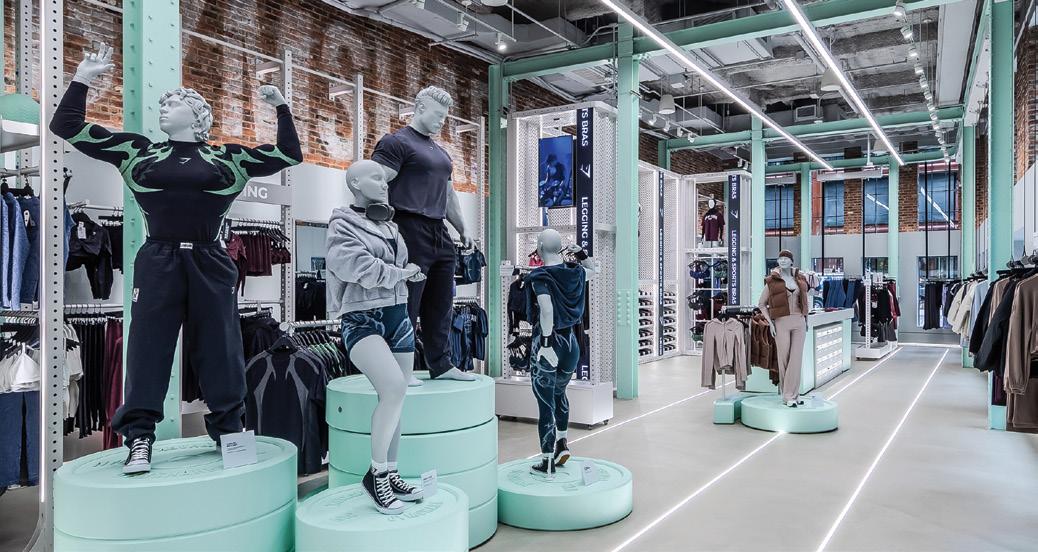
Popular U.K. athleticwear retailer Gymshark opened its first U.S. flagship in New York City’s SoHo neighborhood. The three-floor, 13,000-sq.-ft. store features the cult-fave gymwear brand’s latest collections, with mannequins that are 3D-printed versions of real members of the Gymshark community and its iconic athletes. The third floor features dedicated space for panel discussions, athlete meet-andgreets, live podcasts and more. The SoHo space is the brand’s second U.S. outpost, following its November debut at Roosevelt Square Mall, Garden City, N.Y. … CardVault by Tom Brady keeps expanding its footprint. The sports cards, memorabilia and collectibles chain opened a 2,800-plus sq.-ft. store in San Francisco, across from Oracle Park, home of the San Francisco Giants. It’s the brand first flagship and largest space yet. Customers can buy, sell, trade and submit cards for grading on-site at the store, which also features authenticated memorabilia, sealed packs, assorted cards and exclusive limited-edition collectibles across all major sports and trading card games. … Netflix House opened its second location, at the Galleria Dallas. (The first is at King of Prussia mall in the Philadelphia suburb of King of Prussia.)
Spanning more than 100,000 sq. ft., the immersive entertainment/retail concept is designed as a destination where fans can “explore, taste, play and shop” their favorite shows and movies in real life. The space is packed with all sorts of
attractions (some ticketed). It includes a casual, full-service restaurant whose menu items play off popular Netflix shows and movies. The retail shop features exclusive Netflixbranded local merchandise, along with collectibles, apparel and lifestyle items inspired by popular shows on Netflix. A third Netflix House is scheduled to open in 2027, at BLVD on the Las Vegas Strip. …. Amazon received approval to build its first big-box store, in the Chicago suburb of Village Park, Ill. It’s described as a “mass physical store format that brings customers distinctive selection, value and convenience.” … TJ Maxx signed a lease for a 40,000-sq.-ft. space at Herald Towers in New York City, across the street from the Macy’s flagship and Madison Square Garden. It’s the first lease the retailer has signed in the city in 10 years.
Gymshark (Photo: TDM.Space)
Walmart Expands Use of 3D-Printing for Construction
Pickup addition to Alabama supercenter completed in one week
By Marianne Wilson
Walmart is doubling down on an innovative construction method that, until very recently, has not used very widely — if at all — in retail projects.
The retail giant is deepening its partnership with Alquist 3D after first partnering with the construction technology company in 2024 to print a nearly 8,000-sq.-ft., 20-foot-high addition to its store in Athens, Tenn. The space was used to support online online pickup at the location.
The project marked the first time Walmart utilized 3D concrete-printing technology at this scale and was also one of the largest commercial 3D printing efforts in the country at the time. It was followed by a second project, a 5,000-sq.-ft. pickup addition to the Walmart supercenter in Owens Cross Roads, Ala., which was completed in 2025. Robots and 3D concrete printing by Alquist built the 16-foot walls of the expansion of the Owens Cross Roads supercenter. The addition was completed 50% faster than normal construction methods and was part of an overall store remodel.
The walls of the new addition in Alabama were completed in one week — significantly faster than traditional building methods — and addressed two of the construction industry’s biggest challenges: “takes too long” and “costs too much,” according to Alquist. The company’s robotic arm layered concrete to build the walls cheaper and three times stronger than normal construction methods.
The general contractor on the site, FMGI, provided on-site coordination, ensuring the advanced 3D printing process worked seamlessly with conventional construction tasks.
Other companies working on the Alabama addition included Sika USA, which supplied customized concrete mixes formulated to address varying environmental conditions. In addition, Alquist’s robotics partner RIC
Technology furnished robotic systems designed to achieve high-precision printing with reduced labor requirements.
“These tests aim to evaluate alternative techniques to traditional construction, while maximizing sustainability,” said LB Johnson, VP of construction at Walmart. “Our approach to innovation is designed to optimize processes and simplify field operations – leading to reductions in project costs and timelines. This will enable speed to market for our customers and help accelerate evolution in the construction industry.”
New Project
Alquist, which is based in Greeley, Colo., recently announced a “landmark scale” in the technology with Walmart and other commercial retailers to deliver more than a dozen construction projects across the United States. Its third project with Walmart was set to kick off in December, in Lamar, Mo.
Alquist said it has launched a “first of its kind” partnership model with construction and equipment rental dealer Hugg & Hall and full-service general contractor FMGI. Under the model, FMGI owns and will lease Alquist A1X printers, financed and serviced by Hugg & Hall, to execute large-scale 3D-printed projects nationwide. Walmart Lamar will be the first project under the new model.
Starbucks Opens 3D-Printed Store
Starbucks Coffee Co. has opened a first-of-kind location for the coffee giant.
In April, the company opened its first 3D-printed store in the U.S., a drive-thru and walk-up only location in Brownsville, Texas.
The 1,400-sq.-ft. rectangular-shaped building was a collaboration between Starbucks, Germany-based Peri 3D Construction and Denmark-based Cobod International. By using 3D concrete printing, the store’s outer shell was constructed directly on-site in just six days.
In a video that was shared on Instagram, construction crews were seen working next to a robotic arm as it methodically lays layers of concrete to build the structure. The store features a textured, curved façade, along with shaded drive-thru lanes and a walk-up window.
The Brownsville location is Starbucks’ first 3D- printed build, but it isn’t the company’s first foray into 3D printing. Its Reserve Roastery in Shanghai features a 25-ft.-long Teavana bar, which is described as the first tea bar created from recycled materials using a 3-D printer.
The project is a collaboration between Starbucks, Peri 3D Construction and Cobod International
Robots and 3D concrete printing built the walls of the 5,000-sq.-ft. addition to Walmart’s supercenter in Owens Cross Roads, Ala
SPECS AGENDA AT-A-GLANCE
SUNDAY, MARCH 8
1:00pm - 2:00pm Exhibitor Welcome Luncheon and Orientation Panel Discussion Potomac Ballroom C
2:30pm - 3:00pm Retailer Orientation Panel Discussion National Harbor 3
3:00pm - 4:00pm Retailer-Only Networking Reception Prince George’s Exhibit Hall A Foyer
3:00pm - 4:00pm Exhibitor-Only Networking Reception Prince George’s Exhibit Hall B-C
4:15pm - 5:45pm Solution Center/Exhibit Hall Open (Refreshments Served) Prince George’s Exhibit Hall B-C
8:00am - 9:00am KEYNOTE ADDRESS — Alex Rodriguez, 14-time MLB All-Star, 2009 NY Yankees World Series Champion, MLB analyst and entrepreneur Potomac Ballroom A-B
9:20am - 10:20am THE MAIN STAGE presentation: Reigniting Retail through Energized Experiences Potomac Ballroom C
9:20am - 11:00am Face2Face: Retailer/Exhibitor Information Exchange Prince George’s Exhibit Hall A
11:00am - 2:00pm Solution Center/Exhibit Hall Open - Lunch (12:00pm - 1:00pm) & Refreshments Served Prince George’s Exhibit Hall B-C
2:20-3:10pm
Remodel in Motion: Navigating Open Store Construction Innovations in Facilities Maintenance Accessibility and Inclusivity at Starbucks and Beyond Trends in Real Estate Development Costs
4:20-5:10pm Avoiding Construction Liability Landmines
Accelerating Retail Rollouts: Strategies for Efficient Multi-Site Renovations
Recovery and Resilience: Continuity Plans and Prepping for Natural Disasters What is Old is New (And Valuable): Adaptive Reuse Strategies Dark Space Management: Avoiding Lease Liabilities Managing Energy Spend
Waste and Stormwater Management: Impact on Facilities Maintenance
Lighting Trends: What You Need to Know
Lights, Cameras, Action! Using Technology and Analytics for Strategic Site Selection The Franchise Edge: Smarter Remodels, Stronger Brands
5:30-6:30pm Women in Retail Networking Reception Potomac Ballroom C
8:00-8:15am SPECS Retail’s Top Women in Store Development and Facilities Potomac Ballroom A-B
8:15-9:10am KEYNOTE ADDRESS — Mark Zinder, economist and former national spokesman for global asset management firm Franklin Templeton Potomac Ballroom A-B
9:30-10:45am THE MAIN STAGE presentation: Transformation Among Disruption Potomac Ballroom C
9:30-11:10am Face2Face: Retailer/Exhibitor Information Exchange Prince George’s Exhibit Hall A
11:15-1:45pm Solution Center/Exhibit Hall Open - Lunch (12:00pm - 1:00pm) & Refreshments Served Prince George’s Exhibit Hall B-C
2:00-2:50pm
3:00-3:50pm
Cities as Store Development Partners: What Retailers Are Missing
Cutting-Edge Trends in HVAC Systems
Construction Innovations in Current and Future Technologies
Technology and Data-Driven Design: Strategies, Benefits and Best Practices
Renewable Energy Trends: Emerging Technologies
Beyond the Boutique: Crafting the Future of Coffee Culture
Top Retail Center Experiences
Challenges and Best Practices in Small Box Retail Real Estate
6:30-10:00pm SPECS 2026 Appreciation Party Bobby McKey’s Dueling Piano Bar (offsite)
EXHIBITOR LISTING
Q&A: Is this the year of the landlord?
Ressa: “This is the year of upward price movement.”
Three years ago, Elmsford, N.Y.-based DLC Management acquired capitalization and went on a buying spree aimed at doubling the size of its open-air center portfolio. Its acquisitions haven’t ceased. Last October, it acquired 10 centers in California and Washington in a single deal, giving it its first major presence on the West Coast.
Chain Store Age sat down with DLC’s COO, Chris Ressa, to learn why his company has been so bullishly carving out wide swaths of retail real estate.
At the New York ICSC in December, what we heard from nearly all developers was that good space for 2026 was pretty much all snapped up and chains were doing deals for 2027. What’s the near future look like for expanding retail brands?
This is the year of upward price movement. For the first time in a long while, pricing power has shifted to landlords in a way that is both real and sustainable. Occupancy continues to maintain record highs, tenant demand remains at an alltime high, consumers remain resilient, and new supply remains limited. When you combine all of that, the economics are clear. Rents are moving higher.
Has the balance of power in the lease negotiation process shifted from the retailer to the developer?
These shifts never happen overnight. In 2021, vacancy rates were higher than today’s market. But mature retailers gained confidence in their ability to be successful long-term. At the same time, entrepreneurship and new business formation was growing rapidly, creating new uses filling up shopping center space. I believe this is the year when rent growth truly shows up across the board.
From 2008 through 2019, the narrative was that e-commerce would kill retail. Several brands failed, but the industry still leased a significant amount of space. During that period, the balance of power sat squarely with retailers, and landlords often accepted aggressive terms to keep centers full. Today, landlords are asking retailers to share in the costs needed to open a new store. Sometimes that is showing up in higher rents, sometimes less concessions, sometimes less landlord-provided capital, and sometimes a combination of all of it. That recalibration is well underway.
Aside from developments going up in growing markets in the Sun Belt, no significant new centers are being built, and it is the opinion of most people in the retail real estate industry that very few will be started for another decade. Why no new builds?
Over the course of the last 15 years, construction cost increases have outpaced rent increases. The returns for many are simply not there to build new shopping centers at scale across the United States. The unlock to new development is a continued balance of power shift with tenants
Chris Ressa
willing to pay more rent, or contribute more capital to deals.
Starting in 2023, DLC raised significant capital to increase the pace at which it was acquiring shopping centers. We believed the fundamentals of open-air retail were already strong and poised to get stronger. Occupancy was growing. Rent growth was visible. Cap rates were attractive compared to other institutionally invested asset classes. We viewed that period as an attractive vintage to be buying.
And, for at least the last two years, retail real estate properties have become the prime target of private investors.
We agree. The investment case for retail real estate is exceptionally strong, and every indicator suggests that strength will continue.
High occupancy and rent growth are powerful drivers. When investors have confidence that those dynamics will persist, the sector remains very attractive. For retailers, the message is clear. Brands that have been rigid about location and deal structure will need to become more flexible. What we saw at the most recent ICSC show is that many of them already are doing so.
Fitness Chains Beef Up at Retail Centers
Gym chains and other fitness tenants are flexing their muscle when it comes to taking available retail space and driving visits to shopping centers
By Zachary Russell
While the COVID-19 pandemic is in the rearview, its effects are still being felt in the consumer and retail trends of 2026.
Perhaps chief among them is a renewed shift towards health and wellness from consumers. According to data released last year by McKinsey & Company, a large majority (84%) of American consumers now consider wellness a “top or important priority” in their everyday lives, while around 50% of gym-goers say that fitness is a “core part” of their identity.
McKinsey’s report also noted that millennials and Gen Zers are especially keen on wellness and physical fitness, outspending the average consumer when it comes to gym and studio club memberships and wearable fitness devices.
Jack deVilliers, managing director at Regency Centers, has seen this trend play out in the commercial real estate industry firsthand. Since 2020, its number of fitness tenants has nearly doubled, showcasing both the consumer shift towards wellness and shopping centers increasingly becoming destinations for all daily needs. Of the nearly 500 centers that Regency has in its portfolio, more than 90% of them are grocery-anchored.
“Grocery remains our anchor, but we’ve seen health, wellness and fitness adding to the ecosystem of the community shopping center,” said deVilliers, who oversees Regency’s Northeast portfolio, spanning approximately 10 million square feet. “Fitness
alone is about 5% of our average base rent across the entire country, but it has grown, and I think we will continue to see that.”
Fitness buffs are round-the-clock visitors
DeVilliers said one of the benefits of fitness chains being located inside a grocery-anchored center is that they allow for the property to serve customers at more times of the day.
“Whether it’s getting your groceries or doing your fitness class and getting your smoothie or cup of coffee afterwards, you’ve got people coming in and out of the center throughout the day,” he noted. “The fitness traffic blends into it.”
At Levin Management’ Corp.’s (LMC) portfolio of centers across New Jersey, New York, Pennsylvania and Virginia, some 40% of them have a fitness tenant, totaling nearly 330,000 square feet – a testament to the category’s growing role in attracting consumers.
Recent fitness deals in the LMC portfolio have included both large gym brands and boutique fitness chains, as well as pickleball facilities as the sport continues to grow.
“Fitness is a huge category that is continuing to expand into neighborhood and community shopping centers,” said CEO Matthew Harding. “They bring good traffic to the properties and are a great fit for us.”
“ We signed approximately 4.3 million square feet of retail space in 2025. That’s an increase of about 48% from 2024.”
— John D’Anna, chief development officer, Crunch Fitness
Gyms work out in wide range of assets
Crunch Fitness is one of the many fitness chains in aggressive expansion mode. The company operates approximately 550 clubs and is eyeing more than 100 new openings in 2026. John D’Anna, chief development officer at Crunch, says that shopping centers are prime destinations for future gyms because of the “synergies” between tenants.
“We signed approximately 4.3 million square feet of retail space in 2025. That’s an increase of about 48% from 2024,” noted D’Anna. “Grocery-anchored centers and stores that are tried and true are key factors in a site selection. Our peak times are very complementary to other retailers, which helps attract steady and shared customer traffic that we and our co-tenants benefit from.”
While the larger fitness franchises are still being selective about where to expand, looking at demographics, median income and more, Harding noted that the chains are flexible with the properties they are choosing to expand into. Of three recent deals that LMC did with Planet Fitness, each is located in a different type of shopping center, located alongside a variety of co-tenants.
“One Planet Fitness location is 25,000 square feet – a little bit of a smaller space – and we’re negotiating a national retailer adjacent to them with a McDonald’s on a pad,” said Harding. “Another location is on a busy state highway, but in a medium-sized neighborhood shopping center without a grocery anchor. Visibility and access are important. Fitness chains want to find spots that don’t overlap too much on their other locations, and spots that fit them demographically.”
D’Anna noted that while Crunch’s typical square footage is on the larger side, the company isn’t shying away from smaller spaces. The chain debuted its Crunch 3.0 format last year, which features new training and group fitness spaces, recovery areas and more, allowing for a more creative approach to opening a new location.
“We’re nimble enough with respect to our designs where some of our criteria are changing, and we’re able to repurpose some of the studios within a club in order to have two or three different functions,” he said. “In certain markets, based upon the demographics, there may be less cardio equipment and more strength equipment. It’s very dependent upon the demographic, but then box size comes into play as well.”
Hunting for available spaces through 2029
Commercial real estate availability has been at a well-documented standstill. However, due to a spate of high-level retail bankruptcies in recent years, fitness chains are finding new opportunities to expand into shopping centers.
“Bigger fitness chains are generally taking some sort of second-gen space, whether that’s an old Party City or Bed Bath & Beyond, or maybe an old grocery store that went out of business,” said deVilliers. “Occupancy is at a record high in our sector. Fitness chains are monitoring bankruptcies and looking at filling their pipelines in ‘27, ‘28 and maybe even ‘29, because they are seeing real growth in health and wellness.”
“ This category [fitness] is trying to grab good space that’s a fit for them while they can.”
— Matthew Harding, CEO, Levin Management Corp.
D’Anna, who noted that Crunch is eyeing “consistent” expansion over the next four to five years, said the chain is eyeing any and all available properties for new growth.
“There are a number of second-generation prospects that are out there that we can capitalize on,” he said. “The pharmacy boxes are challenging primarily because of the parking, but they are usually 12,000 to 14,000 square feet. If that ceiling height is sufficient enough to throw a mezzanine in there, we’re all over it. We want to take a look at every single opportunity that’s out there, within reason.”
The “fitness collection”
While larger chains like Planet Fitness, Crunch Fitness and LA Fitness are snatching up the larger spaces at neighborhood centers, boutique fitness tenants are also adding diversity to properties.
Citing recently-opened or soon-to-open centers in Old Bridge, N.J. (anchored by a Target and a ShopRite), Cheshire, Conn. and Holbrook, N.Y. (each anchored by a Whole Foods), deVilliers said that fitness tenants such as Club Pilates, SoulCycle and others that have smaller square footage requirements are important in bringing a property to full occupancy.
“Regency is active with ground-up development and redevelopment, and I would say that as we’re merchandising a center, we are paying a lot of attention to fitness,” he noted. “We are geared towards a little bit smaller of a shopping center with an average size of around 130,000 to 140,000 square feet. Sometimes you want to lean in more to the boutique chains. Three of those tenants can kind of act as a ‘collection’ of fitness.”
With health and wellness emerging as a top priority for consumers—especially younger ones with growing spending power—fitness chains are expected to continue snatching up retail space that becomes available.
“This category is trying to grab good space that’s a fit for them while they can,” said Harding. “We’re seeing focused, steady expansion from gyms and other similar uses.”
Planet Fitness’ sees ongoing visit ‘gains’
With approximately 2,700 locations in North America and beyond, Planet Fitness’ stands as one of the largest fitness chains. Recent data from Placer.ai shows that visits are up at the chain, as well as other lower-budget gyms in the category.
With the exception of January and February, visits per location to Planet Fitness’ outpaced the overall gym category in every month of 2025. June (14.5%), July (12.5%) and September (11.8%) were the months with the largest year-over-year increase in visits for the chain. In the fourth quarter, visits to Planet Fitness’ grew 8.9% year over year.
Zooming out to the category at large, visits to budget-friendly gym chains (monthly fees under $30) have consistently outpaced mid-tier ($30-$60) and premium competitors ($60+) since the start of 2024. In the final quarter of 2025, visits to budgetfriendly gyms were up 10.3% year over year, while mid-tier (-1.0%) and premium chains (-0.5%) remained more or less flat.
In January of this year, visitor frequency to Planet Fitness’ held steady, with 38.7% of members visiting a location four or more times in the month, even as several other gym chains saw slight declines. While Placer.ai noted that the dip elsewhere may be partly attributable to Winter Storm Fern that impacted large swaths of the country in January, Planet Fitness’ stable frequency stands out as a testament to its success in the category.
“Planet Fitness’ ability to grow visits, sustain per-location demand and hold visitor frequency steady early in 2026 suggests the brand is benefiting from both internal strategy and favorable category-level tailwinds,” said Ezra Carmel, content writer at Placer.ai. “While it remains early in the year, the underlying trends indicate that low-cost fitness models – and Planet Fitness’ in particular – are well-positioned as consumers prioritize cost-effective ways to stay active.”
The ‘Three Ps’ Can Help Beat Retail Uncertainty
By Dan Berthiaume
This year is shaping up to be another hard-to-predict one for retailers, but strategies and solutions exist to mitigate any unexpected issues.
The retail industry has started the new year in a bit of a holding pattern from 2025. Uncertainties and disruptions loom in areas such as consumer spending, inflation, tariffs and supply chain.
While there is no way to fully prepare for the impact of shocks to the industry from larger outside forces, retailers can greatly enhance their ability to survive and even thrive in the face of crisis by leveraging the “Three Ps” of pricing, personalization and performance.
Let’s take a closer look at each:
Pricing
Thanks to the emergence of agentic AI shopping assistants that can quickly scour the Internet for the best prices and even automatically make purchases based on parameters such as lowest cost, the need for competitive pricing is more urgent than ever.
To ensure that they can offer consumers the lowest price possible while also maintaining margins, retailers need to shift from manual pricing practices to optimized workflows that granularly manage prices at levels such as product, category and key value item group.
This helps not only keep prices competitive, but also to better set initial price levels to minimize markdowns as well as inventory backlogs. Retailers should also investigate solutions and strategies that enable dynamic pricing – the practice of businesses adjusting prices up or down to account for supply and demand factors that can include supply chain disruptions as well as weather events.
However, retailers would be wise to avoid any overt use of “surge pricing” – or conspicuous increasing of prices during peak demand periods – as consumers have generally negative views of this type of dynamic pricing.
Personalization
No matter how good a retailer’s pricing optimization program is, it cannot always be the price leader for every product in every category. However, low price is not the only motivator retailers can offer to encourage consumer purchases.
A strong personalization program goes a long way toward driving repeat visits and purchases and maintaining customer loyalty.
The emergence of AI as both a customer engagement tool and as an analytical solution offers retailers the chance to amplify their personalization efforts considerably. Agentic shopping and customer service tools enable shoppers to describe what they are looking for by event or occasion in conversational language, giving retailers a much deeper understanding of their lifestyles and underlying product needs. In addition, advanced AI analysis creates the opportunity to mine shopper data at a more granular level than ever before, uncovering previously hidden patterns and tendencies that can be used to help formulate tailored promotions. Retailers can even use AI to personalize the online product descriptions an online shopper sees.
Performance
Finally, retailers can apply optimization strategies and solutions at the enterprise level to improve overall performance, cutting costs and boosting margins in a time of unpredictable socioeconomic developments.
Performance optimization can encompass everything from automating employee onboarding, training and scheduling, to diversifying sourcing and eliminating less-than-truckload shipments. Retailers should carefully evaluate their entire enterprise to locate inefficiencies and outdated practices, then deploy modern solutions and processes to replace them.
Dan Berthiaume dberthiaume@chainstoreage.com
C-Store Giant Unifies Frontline Hiring Across Two Banners
Q&A with Rachel Allen, head of talent acquisition at 7-Eleven
By Dan Berthiaume
Chain Store Age recently spoke with Rachel Allen, head of talent acquisition at 7-Eleven, about how the convenience store giant has standardized management of applicant tracking and hiring across its 7-Eleven and Speedway store brands.
What issues was 7-Eleven facing with hiring practices and systems?
After acquiring Speedway in 2021, 7-Eleven had to deal with both legacy 7-Eleven and legacy Speedway solutions running on multiple technology stacks and hiring models. Speedway was already running Workday hiring technology.
In addition, frontline hiring models were different at Speedway, which has 100% corporate locations, compared to 7-Eleven, which was mostly franchised. Speedway had 200 to 300 recruiters in the field that helped to support store-level associate recruitment, while 7-Eleven had store leaders in charge of the hiring. First, we added recruiters on the 7-Eleven side to mimic how Speedway was hiring for the frontline. We added about 100 recruiting contractors. But then a business decision was made to have our store leaders be held accountable to their labor optimization as a whole, including the hiring and staffing of their locations. That decision was made before any technology decisions. We were already taking a journey to use Workday as our human capital management platform to unify us as one company. But instead of waiting for that to happen, we went forward with Workday Paradox Candidate Experience and Paradox Conversational Applicant Tracking Software (Editor’s note –Workday acquired Paradox in 2025) and turned that on when it was still being powered by two different tech stacks.
Today we have Paradox as our applicant tracking system and use Workday for human capital management and workflows like scheduling and shift management.
What benefits has 7-Eleven achieved since unifying hiring processes on one tech stack?
Our biggest challenge was speed-to-candidate. We were losing applicants to our competitors. It was taking 10 days or more to hire a new employee. We were also challenged by ghosting — hires never showing up.
Once we moved to the unified hiring system we have today, we went from taking close to two weeks to under three days to hire someone. By becoming the first to the candidate we saw an improvement in the quality of our hires as well as in our retention.
Even the ghosting went down because we have a conversational AI tool that walks candidates through the whole process, as well as an in-person interview. With that, we dramatically lessened the amount of ghosting. People show up to the interviews and to the first day, because when we were taking too long before there was too much time for them to get other offers and then not show up
because they found something else.
We have saved our store leaders about more than 40,000 hours a week, which is over 2 million hours a year, in time saved by automating 95% of the hiring process for them, which was a huge win. 7-Eleven is also now able to be more strategic in where we put our recruitment marketing dollars to the level of an individual store, as far as where we may have some needs.
How does the hiring process work for a candidate?
There are a few ways applicants can start to connect with us. We have QR codes at our stores and on our website that they can scan to start texting with our assistant named Rita, which stands for recruiting individuals through automation.
Rita will then start the conversation with them to initially do things like share their name and what store they are interested in applying to. Then we need to collect some information specific to being authorized to work and having an application on file which Rita helps accomplish through text.
Once all this information is established, Rita is able to automatically schedule an interview. If the interview goes well and the store leader decides that they want to move forward with that candidate, they let Rita know and then Rita texts the candidate. Applicants can receive and accept offers through text with Rita, as well.
How has store management responded?
Response from store management has been very positive, but we intentionally included them from the get-go to make sure that we had their stamp of approval throughout the whole process.
7-Eleven is mobile-enabling employee acquisition.
Supply Chain Automation: Full speed ahead in 2026
Retailers keep expanding automated centers and solutions
By Dan Berthiaume
Walgreens, The Kroger Co. and Walmart are all building on supply chain automation efforts in 2026. The three Tier I giants have long been involved in initiatives to automate their supply chains, and this year should see an escalation of these efforts.
Walgreens — Micro-fulfillment
Walgreens is opening a new facility as part of a continuing initiative to streamline the fulfillment of prescription medications. In a recent email toChain Store Age, the pharmacy giant said it isadding to its existing network of12robotic micro-fulfillment centersspread across the U.S.with the opening of a new facility in West Jordan, Utah.
The micro-fulfillment center (MFC) will support nearly 96 Walgreens stores across the region, including 48 in Utah, by automating prescription dispensing. The MFCs are a network of facilities using robotic technology in a central pharmacy environment in an effort to more efficiently dispense and ship prescriptions to Walgreens locations nationwide.
The West Jordan facility brings Walgreens’ total MFC count to 13 across the U.S. that support more than5,000 storesand fulfill approximately18 million prescriptions nationwide per month.
Its opening follows theMay 2025 launchof a Walgreens MFC inBrooklyn Park, Minn. Walgreens initially launched its prescription micro-fulfillment program in 2021 at an automated facility in the Dallas areaspecifically focused on rapid fulfillment of customer prescription orders.
The Kroger Co. — Warehouse automation
The Kroger Co. continues to plan new automated fulfillment facilities. The grocery giantwill spend $391 million to establish a new distribution center in Simpson County, Ky., and anticipates creating about 430 new jobs there. The hub will serve as a full-line distribution
center, featuring scalable and automated operations.
While the center will include automation, it is unclear whether it follows Kroger’sleading-edge automated warehouse concept known as a customer fulfillment center (CFC). Introduced in2018 inpartnershipwith U.K.-based online grocerOcado Group, the CFC modelcombines vertical integration, machine learning and robotics with affordable and fast-delivery service for fresh food.
In January 2026, Kroger optimized its fulfillment network by closing CFC facilities in Pleasant Prairie, Wis.; Frederick, Md.; and Groveland, Fla., while monitoring remaining facilities’ performance and not proceeding with the opening of a CFC in Charlotte, N.C., previously planned for 2026.
The grocery store giantpreviously closedthree CFC cross-docking facilities in March 2024. According to Ocado, it will continue cooperating with Kroger to operate thefive currently live CFCs in Monroe, Ohio; Atlanta; Denver; and Detroit, with Kroger ordering further capacity to be utilized in the Detroit facility this year.
In addition, Kroger still plans to open a new CFC in Phoenix that will include Ocado’s new “AutoFreezer” solution which automatically load empty totes into a freezer and places them in a waiting area for picking by robots. Totes are then re-loaded into a chilled area once full to be kept cool until delivery.
Walmart — IoT
Walmart is integrating Internet of Things (IoT) devices into its supply chain to obtain a real-time view of pallets at scale. The discounter is deploying Wiliot IoT Pixel ambient technology throughout its supply chain.
Connecting millions of Pixel devices, which rely on “ambient” power sources such as radio waves rather than batteries for power, to its AI supply chain technology, Walmart seeks to obtain real-time
insight intoexactly what merchandise is owned and where it is at any moment. Walmart is using IoT capabilities to track pallets at scale, with a goal of reaching 90 million by the end of 2026 while providing a new source of supply chain data for its expanding use of AI in its supply chain.
According to Walmart, its IoT supply chain integration is already making a significant impact by eliminating manual tasks and delivering automated alerts. The retailer said enhanced pallet-level visibility has also helped resolve inventory discrepancies, ensuring smoother operations and improved customer experiences.
The collaborative solution is currently deployed across 500 Walmart locations, with plans for national expansion in 2026. The rollout will cover 4,600 Walmart Supercenters, Neighborhood Markets, and more than 40 distribution centers. As a result, Walmart seeks to dramatically enhance supply chain efficiency, inventory accuracy, andcold chain compliance.
Walmart is not a stranger to IoT technology. The discounter hasmanaged temperature, operating functions and energy use in stores using a network ofconnected IoT devicessince 2021 and also leverages IoT to help monitor temperature levels in thesmart coolersused for its InHome grocery delivery service.
Inside a Walgreens micro-fulfillment center.
Supply Chains Under Strain
By John Lash
For a year, U.S. businesses and consumers have been adjusting to changes in tariff policy.
Tariffs have long been used in trade negotiations, but they now play a larger role in cost structures across multiple industries. To date, many companies have attempted to limit consumer price increases by pre-purchasing inventory, negotiating with suppliers and absorbing higher costs internally.
Those measures are becoming less effective. Inventory purchased ahead of tariff increases is largely depleted and new shipments reflect higher tariff rates. As a result, the cost of imported goods is rising.
In 2026, the effects of tariffs will be more directly reflected in prices. Companies with limited margins are increasingly passing costs on to consumers, while larger firms have absorbed what they can. These approaches have practical limits.
Uncertainty remains a key factor. Tariff rates have fluctuated repeatedly over the past year, and it remains unclear whether the current rates will remain in place. The pending Supreme Court could alter existing duties, but companies cannot plan on policy changes occurring in time to affect near-term decisions.
Volatile trade policy, marked by onagain, off-again tariffs, has whipsawed supply chains and made it challenging for businesses to operate. With tariff swings in the 30% to 40% range, it can make the difference between a profitable business and one that’s no longer viable.
In addition, many manufacturers are subject to multiple overlapping tariffs, including reciprocal tariffs of up to 40%, industry-specific duties of 25% or more and additional national security tariffs of 25-50% on materials such as steel, aluminum and copper. In some cases, tariffs account for more than half of the product’s cost.
Tariffs are taxes paid by American businesses and consumers, creating
“Volatile trade policy, marked by on-again, off-again tariffs, has whipsawed supply chains and made it challenging for businesses to operate.”
In 2025, most companies employed a combination of these approaches, often in conjunction with adjacent strategies to soften the blow to consumers and protect demand. A common approach for industries with non-perishable goods is to pre-position inventory ahead of tariffs to temporarily buffer consumers from price shocks.
Another is shrinkflation, which creates the illusion of price stability by reducing package sizes.
downward pressure on profitability and affordability. As tariff levels of 20% to 50% on imports make their way through the supply chain, consumers will ultimately face double-digit price increases.
Who’s
Absorbing Costs?
Tariffs are paid by importers, not the exporting nations. This means that American businesses such as manufacturers, distributors and retailers are on the hook for paying duties as goods cross into the country. But what happens next, on how these costs are handled, varies. Importers have a few options:
• Pass costs to consumers: Businesses with thin margins, like retailers or manufacturers of high-volume commodities, often have little choice but to increase prices to maintain financial viability.
• Absorb costs internally: Some manufacturers take a hit to margins and keep prices stable to protect consumer demand, though this reduces profitability and is often a short-term strategy.
• Negotiate with suppliers: For many small buyers with limited purchasing power, this proved ineffective. Even large buyers had limited success as global suppliers face their own financial pressures.
But eventually, the pre-tariff stocks run out, customers resist further shrinkflation sleight-of-hand, and tariffs finally work their way through the supply chain. As this happens, more costs will be passed on to consumers or absorbed by businesses, and the full force of the double-digit tariff policy will begin to be felt.
Outlook
In 2026, the effects of tariffs are expected to be more fully reflected in business costs and consumer prices — and it won’t be pretty.
The true story of tariffs in 2026 will be less about policy than about strategy. How companies navigate this volatile environment with on-again, off-again tariffs can make the difference between turning a profit or running a loss. It starts by accessing real-time trade information to make confident decisions, and then connecting this to the planning and execution systems so you can act quickly when an opportunity arises.
Simply put, if your industry relies on imported goods, tariffs are a financial headwind that affects everyone. Those who can act quickly and confidently when opportunities arise will consistently gain a competitive advantage over their peers. In this bumpy environment, CEOs can use every advantage they can get.
John Lash is group VP of connected supply chain software platform e2 open, part of WiseTech.