Artificial intelligence’s expanding role in successful store expansion
8
Five shifts that will redefine retail in 2026
10
Economic factors to watch in 2026 include inflation, employment and tariff policy
STORE SPACES
12
Target opens “one-of-a-kind” concept store in NYC.
14
Amazon innovates in sustainability — at home and abroad.
16
Pipp Mobile Storage Systems’ Shawn Moraca discusses how retailers can maximize their backroom storage space with mobile shelving systems.
18
Trending Stores: Fabletics unveils “nextgeneration” store featuring AI systems that manage everything from inventory optimization to real-time employee coaching.
19
Aldi doubles down on U.S. store expansion and will also expand its distribution center footprint.
20
Top AI Real Estate Tech Tools: How AI-based technology is being utilized by commercial real estate teams as they expand store footprints.
24
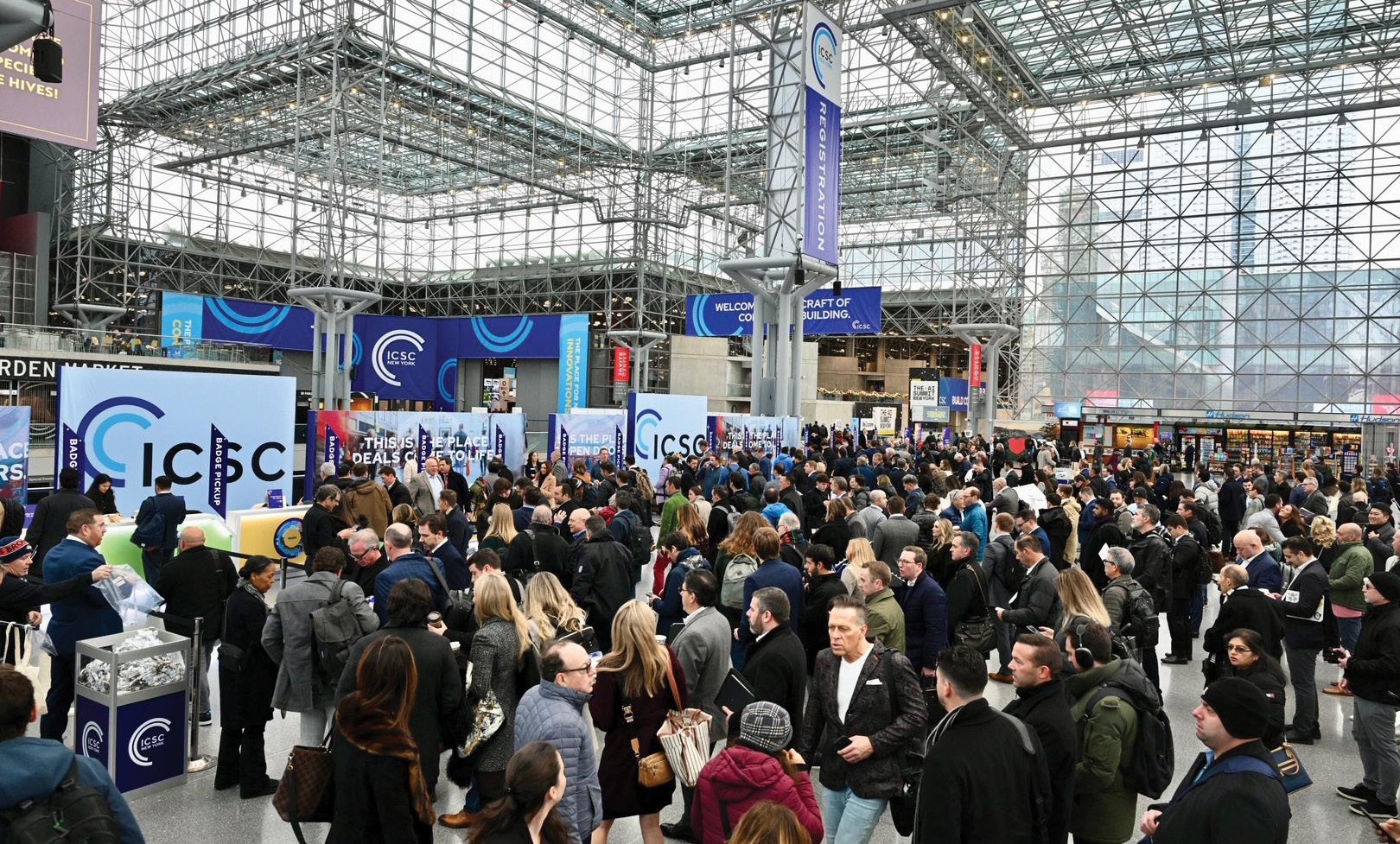
The Race for Space: Eagerly expanding retailers fought it out for open space for 2026 at ICSC’s New York show. Many were told they’d need to wait until ’27.
30
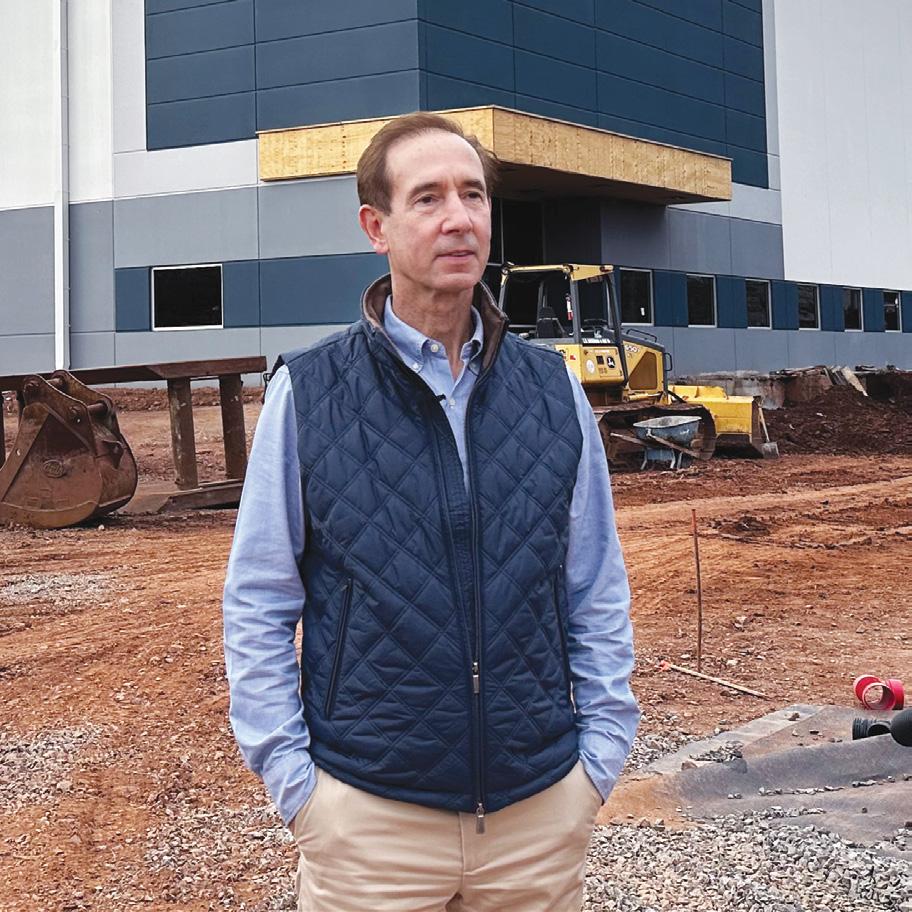
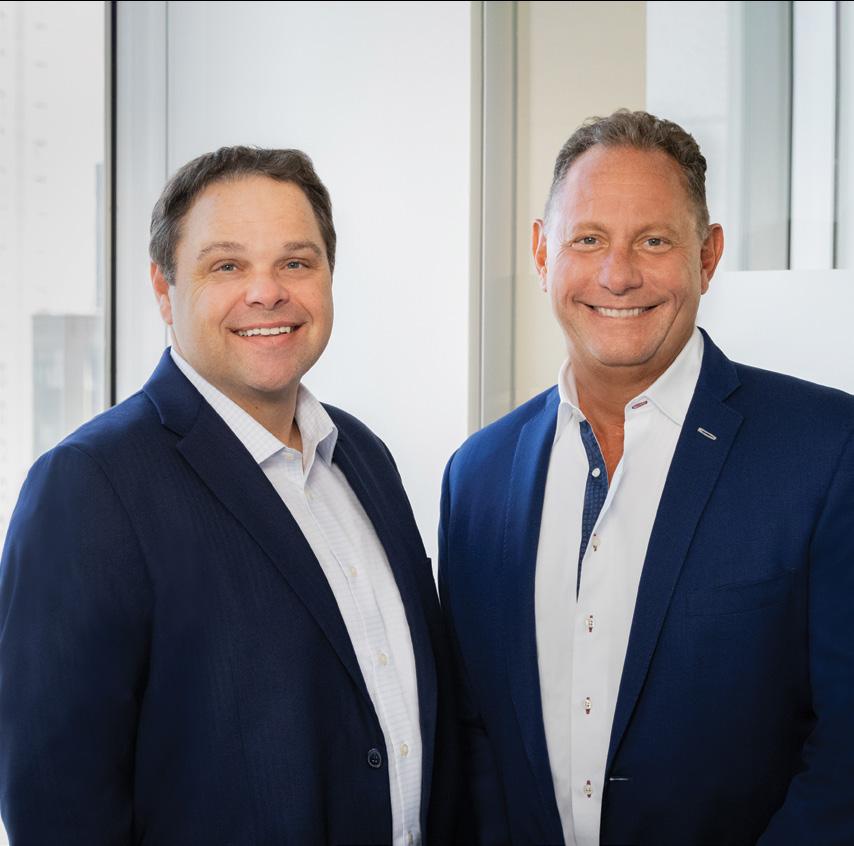
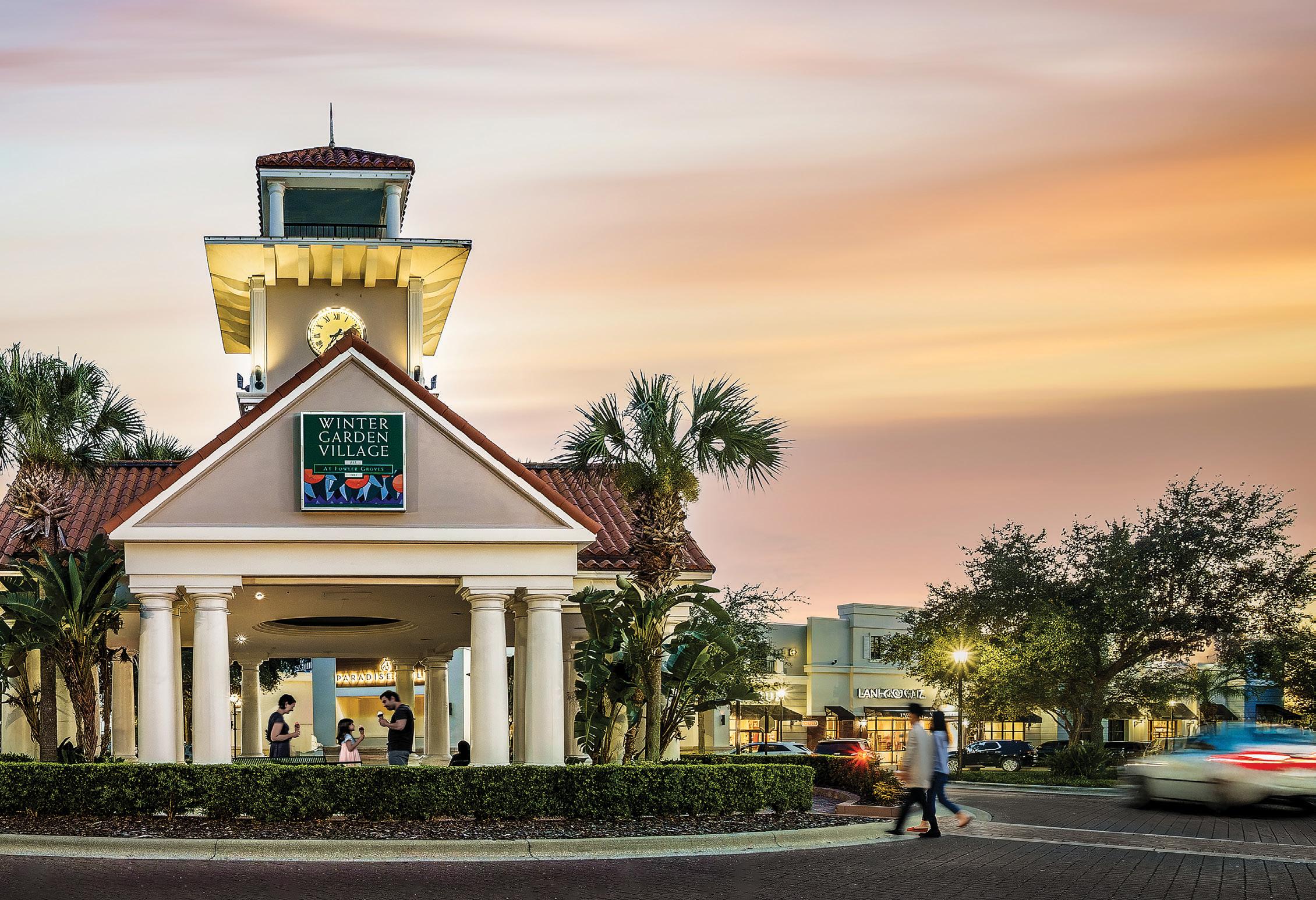
Mixed-use Q&A: Developers of The Crossing at Coal Mountain in north Georgia detail how the 140-acre was crafted for a burgeoning community
Big Brand Tire & Service pilots AI-enabled perimeter monitoring solution designed to reduce property crimes.
33
Agentic AI, workforce augmentation and ultrafast delivery among top tech trends for 2026.
35
Q & A with Neelima Sharma, senior VP, omnichannel and e-commerce technology at Lowe’s Cos.
ICSC New York, held at Jacob K. Javits in December, attracted nearly 8,000 retail real estate professionals.
Brands to Watch in 2026
A diverse lineup of retailers has one thing in common: They are especially well positioned to win in 2026.
That’s according to foot traffic data and analytics firm Placer.ai’s “10 Top Brands to Watch in 2026” report. Here’s a brief recap of the brands — with comments by Placer.ai — that the firm says will set the pace for this year.
• H-E-B: The Texas grocery powerhouse exemplifies the single most important trend in retail: the need for a brand to have authenticity and a clear reason for being. H-E-B understands its audience, and as a result, it’s able to optimize its merchandising, promotions and experience to best serve that loyal customer base.
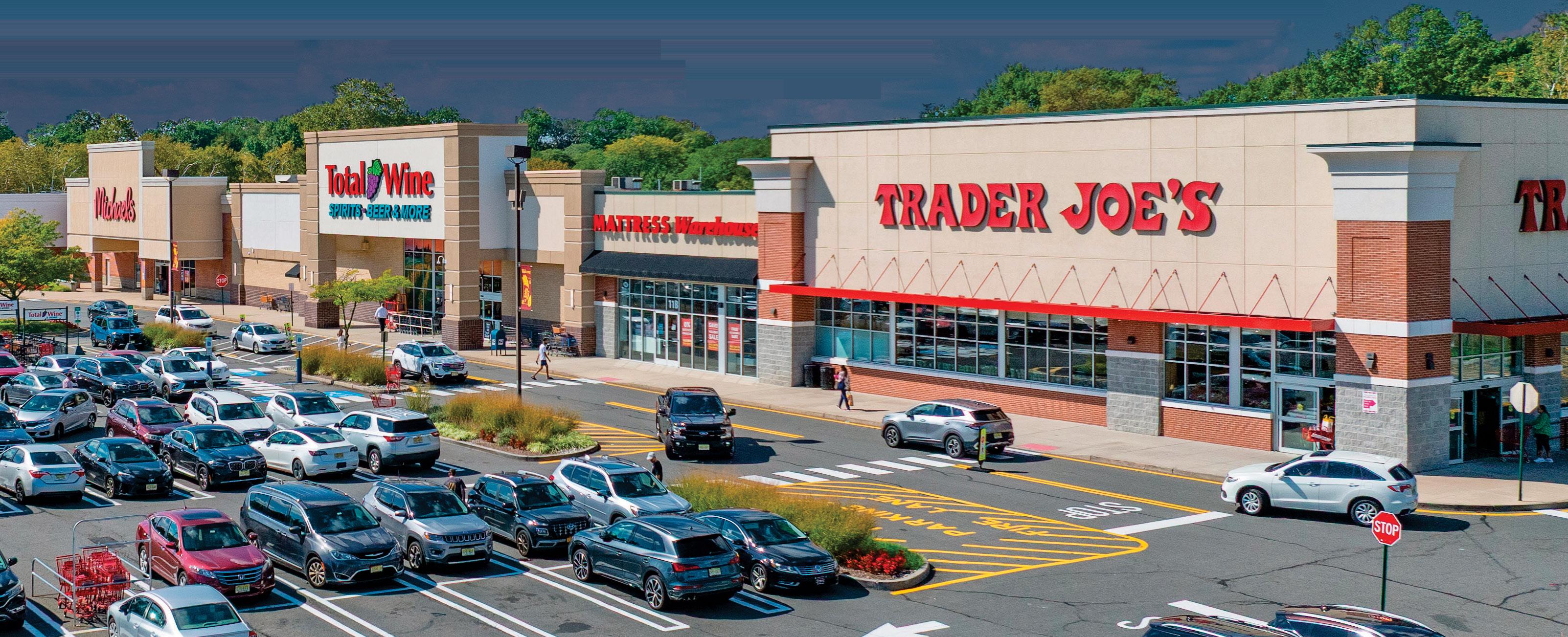
• Michaels: The closure of key competitors Joanne and Party City has accelerated the chain’s traffic gain, but other factors are also at work. From 10-minute custom framing to the launch of a new marketplace, Michaels is making all the right moves to take full advantage of its improved positioning.
• Walmart: As the dominant player in physical retail, Walmart is leveraging its position to push forward new offerings that extend revenue potential while maximizing per-store impact. The chain is among the savviest players in all of retail in identifying the ideal approach to omnichannel, using its massive physical footprint to improve its reach via BOPIS and store-fulfilled e-commerce.
• Dillard’s: The chain has consistently outperformed the wider department store category. It stands at a unique point somewhere between a mid-tier and luxury department store — and that distinction may be its secret to success.
• Pop Mart: Consumers are all-in on cool collectible items that make life more
fun – a trend Pop Mart, whose stores are strategically located in high-traffic malls popular with younger shoppers, is uniquely positioned to ride. Amid times of economic uncertainty, consumers crave small ways to indulge, and affordable collectibles that are cute, cuddly and fun have worked their way into the American zeitgeist.
• HomeGoods & Homesense: The two TJX Cos. brands had an exceptional 2025 and are well-positioned to repeat this success in 2026. Accumulated housing wear-and-tear, and the enduring appeal of the treasure hunt retail model have all reinforced the brands’ momentum.
• 7 Brew: Expanding from its Arkansas roots, this coffee chain has been strategic about market entry and site selection for its double-drive-thru format. It has become a go-to destination for rural and small-town communities, while also maintaining solid reach among more traditional coffee segments like wealthy suburbanites and urban singles.
• Dave’s Hot Chicken: Its wide assortment of sauces and flavor profiles has resonated with U.S. consumers who are increasingly seeking spicier products, while Dave’s ‘rebel’ brand positioning has successfully attracted younger audiences.
• Chuck E. Cheese: Nearly 50 years old, this evergreen children’s entertainment concept now boasts about 500 venues nationwide. Its perennial tagline – “where a kid can be a kid” – still resonates with today’s children and with the parents who grew up with the brand. Its offer of unlimited-play subscriptions per month sparked a dramatic boost in customer loyalty and proved so successful that the company extended it year-round with a family pass as low as $7.99 per month.
• EōS Fitness: EōS’s motto, “High Value, Low Price,” appears to be resonating strongly, evidenced by outsized traffic growth in 2025. Longer-than-average dwell times suggest its amenities, including pools, saunas, basketball courts and equipment assortments typically found in higher-priced gyms, are connecting with visitors.
Marianne Wilson mwilson@chainstoreage.com
BRAND MANAGEMENT
Vice President & Group Publisher, SPECS Chairman Gary Esposito gesposito@ensembleiq.com
EDITORIAL
Editor Marianne Wilson mwilson@ensembleiq.com
Technology Editor Dan Berthiaume dberthiaume@ensembleiq.com
Real Estate Editor Al Urbanski aurbanski@ensembleiq.com
Online Editor Zachary Russell zrussell@ensembleiq.com
ADVERTISING SALES & BUSINESS
Midwest & South Sales Manager Michael Morrissey mmorrissey@ensembleiq.com
East & West Sales Manager Lise Slaviero Groh lgroh@ensembleiq.com
Real Estate Sales Manager Al Urbanski aurbanski@ensembleiq.com
Senior Account Executive Nick Lipere NLipere@chainstoreage.com
EVENTS/MARKETING
Program Director Deena AmatoMcCoy damccoy@ensembleiq.com
Event Director Melissa Murphy mmurphy@ensembleiq.com
The Federal Reserve’s interest rate policy balances its desire to maintain a robust economy and full employment with its desire to limit inflation. The Fed cut interest rates three times for a total of 75 bps in 2025, on top of three cuts for 100 bps in 2024.
These cuts do not appear to have stoked a meaningful change in inflation to date. But as tariffs become permanent and the government continues to spend trillions more than it collects in revenue, the threat of inflation remains constant.One of the greatest weapons against inflation will be productivity growth. Today, business leaders and economic experts seem to be pinning their hopes on new AI technologies to usher in an age of automation and rapid productivity growth. History has proven that new technologies take years to work their way into business processes, so we do not expect a silver bullet cure for inflationary pressure.
However, we do believe in the power of new AI technologies to streamline work and eliminate both blue- and white-collar jobs. In fact, we believe we are at the beginning of a workforce transformation that will lead to the elimination of many existing jobs and hopefully the creation of many new roles as the economy evolves
The unemployment rate rose in 2025 from 4% in January to 4.6% in November and we expect it to continue growing in 2026, despite a reduction in the immigrant labor pool. Unemployment is especially high for younger Americans with less experience, and we see entry level jobs being the first jobs being automated away by AI. We can only hope that the dynamism of the U.S, economy is able to create new, inspiring roles for those being displaced by automation.
• Tariff Policy/Political Environment
The Trump Administration entered office in January 2025 determined to deliver on its promise of lower taxes, less regulation, smaller government, higher tariffs, tighter
immigration and a reduction in the undocumented population. Objectively speaking, it has delivered on most of these goals.
It remains to be seen, however, whether these policies will deliver the growth, low inflation and improved employment prospects for the middle class that were promised along with these policies. Early indications are mixed.
What we do believe is that the tariff increases of 2025 are here to stay. We do not expect the Supreme Court to rule against the Administration’s ability to impose tariffs in a way that would meaningfully reduce their impact going forward or cause the money collected to date to be repaid.
We expect current economic policy to remain in place through the swearing in of a new Congress in January 2027, with a bend toward higher tariffs and lower interest rates. The combination of these policies has the potential to drive inflation higher while the unemployment rate continues to rise.
• Retail
With the possible exception of agriculture, no industry was hit harder by tariffs in 2025 than the retail sector. We expect this pain to continue in 2026 as retailers who had be holding off raising prices succumb to the economic realities of the modern tariff economy.
We also expect online retail sales to continue growing faster than bricks and mortar. In 2025, online retail sales grew at over 5% annually, while bricks and mortar sales grew at around 4%. This gap was likely diminished by the elimination of the de minimums rule which allowed manufacturers abroad to ship items valued at less than $800 to U.S. consumers tariff-free.
The elimination of de minimus made online retailers that source items direct from overseas manufacturers less competitive. In total, online retail sales accounted for a little over 16% of domestic retail sales in 2025.
Ben Johnston is COO of financial firm Kapitus.
Immigration and Labor
The crackdown on undocumented immigration and moves to limit applications for legal immigration is expected to put further constraints on the overall size of the U.S. labor pool, according to industry experts.
“Immigration has historically helped fill the gap between economic demands for labor and the available labor supply from naturally born U.S. citizens,” said Ben Johnston, COO, Kapitus. “Restrictions on immigration would curtail this supply, driving up the cost of labor for business owners and wages for employees.”
In a presentation in January at NRF 2026: Retail’s Big Show, Ira Kalish, chief global economist for Deloitte, noted that a “disproportionate” share of innovation and entrepreneurship has come from immigrants.
If the current policy stands in place long term, and given the backdrop of an aging population, Kalish said the policy could cause fiscal problems and labor shortages in select industries, which could limit output and raise prices, giving a boost to inflation.
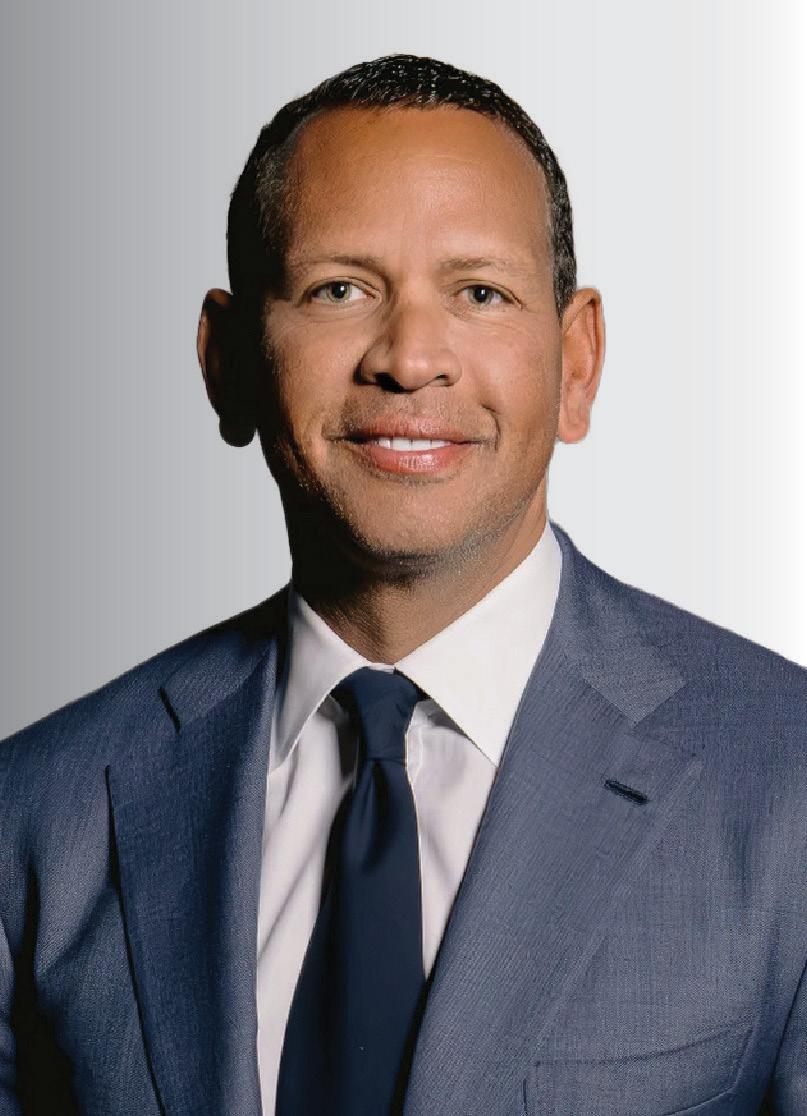
ALEX RODRIGUEZ, one of Major League Baseball’s biggest superstars, will discuss his pivotal journey from professional athlete to successful entrepreneur — only at SPECS!
National Resort, National Harbor, MD
The 14-time MLB All-Star and 2009 New York Yankees World Series Champion merged his love of sports and business to create the investment rm A-Rod Corp. As chairman and CEO, Rodriguez partners with world-class startups and leading global companies across real estate, sports and entertainment.
He also founded A-Rod Media, which o ers multimedia capabilities across all marketing platforms.
Alex Rodriguez recently became co-chairman of the National Basketball Association’s Minnesota Timberwolves and the Women’s National Basketball Association’s Minnesota Lynx.
In addition to being an Emmy Award-winning MLB analyst for Fox Sports, Rodriguez has been a guest investor on ABC’s Shark Tank, and mentored nancially-distressed ex-athletes on CNBC’s Back in the Game.
He also co-hosts the video series The Deal, interviewing CEOs, entrepreneurs and sports legends. And he recently wrapped his seventh year as a guest lecturer at Stanford Graduate School of Business, where he teaches a class called Strategic Pivoting.
Committed to creating opportunities for young people, Rodriguez serves on the Board of the Boys and Girls Club of America and is in the National Alumni Hall of Fame, and the Boards of Trustees of the University of Miami. His gifts to the University of Miami and Florida International University have provided scholarships to dozens of students.
On Monday, March 9, Rodriguez will discuss his journey in sports, his role as business leader — and share lessons on how strategic pivoting can build success.
Five Shifts That Will Redefine Retail in
By Sudip Mazumde
Retail is entering a new chapter. After years of rapid digitization, the sector is now moving toward the “Autonomous Era,” a period in which sophisticated AI, real-time decision-making and intelligent automation are set to transform the way customers shop and how retailers operate. These changes are not five or 10 years out. They are already taking shape and will accelerate meaningfully in 2026.
Here are the five forces that will have the biggest impact in 2026.
1. AI Will Push Retail Toward “Searchless Shopping”
Consumers are beginning to shop in a new way. Instead of typing queries into a website or app, many will rely on AI powered shopping agents that understand their preferences and make selections on their behalf. “Searchless shopping” will become a defining behavior in 2026.
AI agents will analyze structured product data, reviews, availability, sustainability information and price in seconds. If AI cannot interpret a brand’s product data, those products will not appear in AI-driven recommendations. To stay competitive, retailers must invest in Generative Engine Optimization, or GEO, which ensures that LLM (large language model) platforms like ChatGPT can fully understand and surface their catalog.
The retailers who succeed will show up in every customer’s AI-powered journey, which will soon be the primary discovery channel.
2. Stores Will Become Powerful Media Channels
One of the most important shifts in 2026 will be the transformation of physical stores into powerful media channels. Retail media networks are moving far beyond retailers’ websites and apps, and the store is becoming a fully monetizable environment where brands can reach shoppers with targeted, in-the-moment advertising.
Digital screens, connected devices, and context aware messaging will turn the store into a measurable advertising platform that drives high margin revenue and gives brands entirely new ways to influence purchasing decisions.
This evolution reframes the store’s economic value. Instead of being viewed
primarily as a cost center, the store becomes an engine of profitable media inventory that is enhanced by rich first party data. For many retailers, this opportunity will be comparable to the commercial impact of their online media networks. In-store fulfillment and experience will still matter. Stores will continue to function as hyperlocal fulfillment hubs that enable rapid delivery, and as spaces where customers can explore products, interact with associates and receive hightouch service.Intelligent automation with the help of Agentic AI will help make these functions more efficient through robotics, smart inventory systems and clienteling tools.
3. Merchandising Will Become a Real Time, AI-Driven Operation
Merchandising has traditionally been a slow and calendar-based process. Teams planned assortments months in advance, made manual adjustments, and waited for the next cycle to make meaningful changes. In 2026, that model will feel increasingly outdated.
Agentic AI will turn merchandising into a constantly evolving operating system. Instead of quarterly updates, algorithms will evaluate demand signals, supply chain conditions, and pricing trends throughout the day. Inventory, promotions, and assortment decisions will adjust automatically in real-time to meet consumer needs.
4. Loyalty Will Depend on Value, Not Emotion
Amid tighter budgets and rising costs, value will become the strongest driver of loyalty in 2026. Shoppers will prioritize retailers that consistently deliver high quality products at competitive prices with a frictionless experience.
Private label will continue to expand because it allows retailers to differentiate while offering strong value. Loyalty programs will also become more important and more exclusive. Many retailers will reserve their best deals, perks, and early access opportunities for loyalty members. Retailers that can provide clear and reliable value will be the ones that grow share of wallet in the coming year.
5. Sustainability Will Shift from Messaging to a Business Model
Sustainability has become an expectation, especially among younger shoppers who want greater transparency about how products are sourced and produced.
Circular retail models, including resale, rental and refurbishment, will continue gaining momentum. AI will help accelerate this shift by streamlining authentication, grading, pricing and logistics, which makes circularity far easier to scale. What is changing most is the perception. Sustainability is not a cost center anymore. It is emerging as a meaningful source of growth and a driver of longterm customer loyalty.
In Closing
The trends above point to a fundamental shift in how retail will operate and compete in 2026 and the years that follow. Agentic AI powered experiences and supply chain, media-enabled stores, AI-driven merchandizing, value driven loyalty, and sustainable business models will shape the next phase of growth. The retailers that win will rethink their operating models and invest aggressively in new capabilities. .
Sudip Mazumder is senior VP and retail industry lead of North America at Publicis Sapient.
CEO Shakeups: Who’s In, Who’s Out in 2026
Retail industry rocked by departure of several longstanding leaders
By Marianne Wilson
The list of retail companies that underwent leadership changes in 2025 — or were about to as the new year kicked in — includes some of the biggest players in the industry. From Walmart to Kroger to Lululemon, the changes cut across all sectors of retailing. Here’s a look at some of the shakeups that made headlines in 2025. (The changes are listed in the month they were announced.)
DECEMBER
⪧ Joe DePinto, who served as CEO of 7-Eleven Inc. (SEI) for more than 20 years, retired at the end of 2025. Stanley Reynolds, president of SEI, and Douglas Rosencrans, executive VP and COO of SEI, are serving as interim co-CEOs.
⪧ Calvin McDonald is stepping down as CEO and board member of Lululemon Athletica Inc., effective January 31. Lululemon CFO Meghan Frank and chief commercial officer André Maestrini are serving as interim co-CEOs.
⪧ Gerry Smith, CEO of Office Depot parent company, The ODP. Corp., exited the company following its acquisition by Atlas Holdings. He is succeeded by Craig Gunckel, the former CEO of Iconex,
NOVEMBER
⪧ Kohl’s Corp. named board chair Michael J. Bender as CEO. Bender had served as the interim chief since May, following the termination of Ashley Buchanan for cause,” after an investigation found that he violated company policies.
⪧ John Furner, CEO of Walmart U.S., takes the reins of Walmart Inc. on Feb. 1. He succeeds Doug McMillon, who is retiring after leading the retail giant as president and CEO since 2014.
AUGUST
⪧ Mike Motz was named CEO of Walgreens following Sycamore Partners’ $10 billion acquisition of Walgreens Boots Alliance. Previously, he was CEO of Staples U.S. Retail. Before that, he spent 14 years at Canada’s Shoppers Drug Mart.
⪧ Target Corp. tapped 20-year company veteran and COO Michael Fiddelke as CEO, effective Feb. 1, succeeding Brian Cornell, who held the role since since 2014.
JULY
⪧ Troy Rice was named CEO of PGA Tour Superstore. He succeeds longtime leader Dick Sullivan, who is retiring. Rice join the retailer from Total Wine & More, which he had led for the past three and a half years.
⪧ L.L.Bean president and CEO Stephen Smith will depart the outdoor gear and apparel company in spring 2026 following decade of leadership.
JUNE
⪧ Tailored Brands, parent company of Men’s Wearhouse and Jos. A. Bank, named its president, John Tighe, as CEO, succeeding Peter Sachse, who was named executive chairman.
MAY
⪧ Sharon Leite, who previously served as CEO of The Vitamin Shoppe from 2018 to 2023, returned as chief executive on the heels of the company’s acquisition by Kingswood Capital Management and Performance Investment Partners.
⪧ Bath & Body Works appointed Daniel Heaf as CEO, replacing Gina Boswell, who “stepped down” from the role and as board member. Most recently, he
served as chief strategy and transformation officer for Nike.
⪧ Boot Barn appointed John Hazen as CEO. Hazen, who joined the retailer in 2018 as chief digital officer, had been serving as interim chief basis since November 2024, following the departure of Jim Conroy, who left to become the CEO of Ross Stores.
MARCH
⪧ David’s Bridal promoted Kelly Cook, president of brand, technology and finance, to CEO, succeeding Jim Marcum, who has become executive chairman.
⪧ Susan Morris, executive VP and COO of Albertsons Cos., was tapped as CEO, effective in May, following the planned retirement of current CEO Vivek Sankaran.
⪧ Rodney McMullen, chairman and CEO of The Kroger Company, resigned following a board investigation of his personal conduct that was unrelated to the business but “inconsistent” with Kroger’s policy on business ethics. Lead director Ronald “Ron” Sargent is serving as chairman and interim CEO.
FEBRUARY
⪧ The Michaels Cos. tapped David Boone as CEO, succeeding Ashley Buchanan, who left in January to take the top job at Kohl’s. Boone formerly served as CEO of Staples Canada.
JANUARY
⪧ Ulta Beauty named president and COO Kecia Steelman as CEO. She succeeds Dave Kimbell, who is retiring.
Target Opens Design-Forward ‘One-of-a-Kind’ Concept Store
By Marianne Wilson
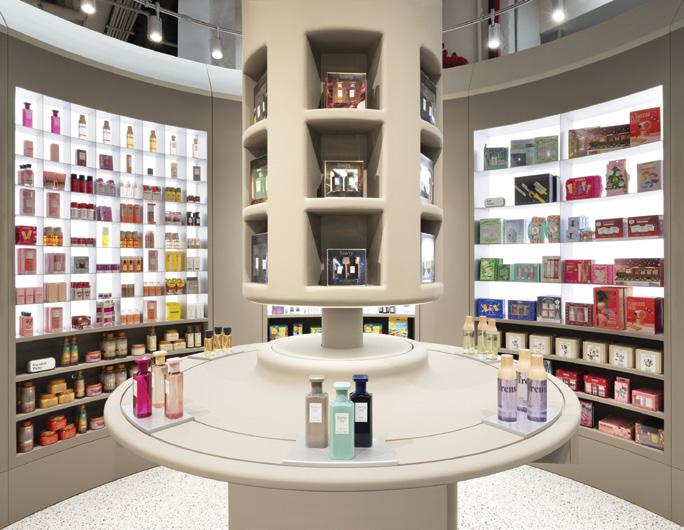
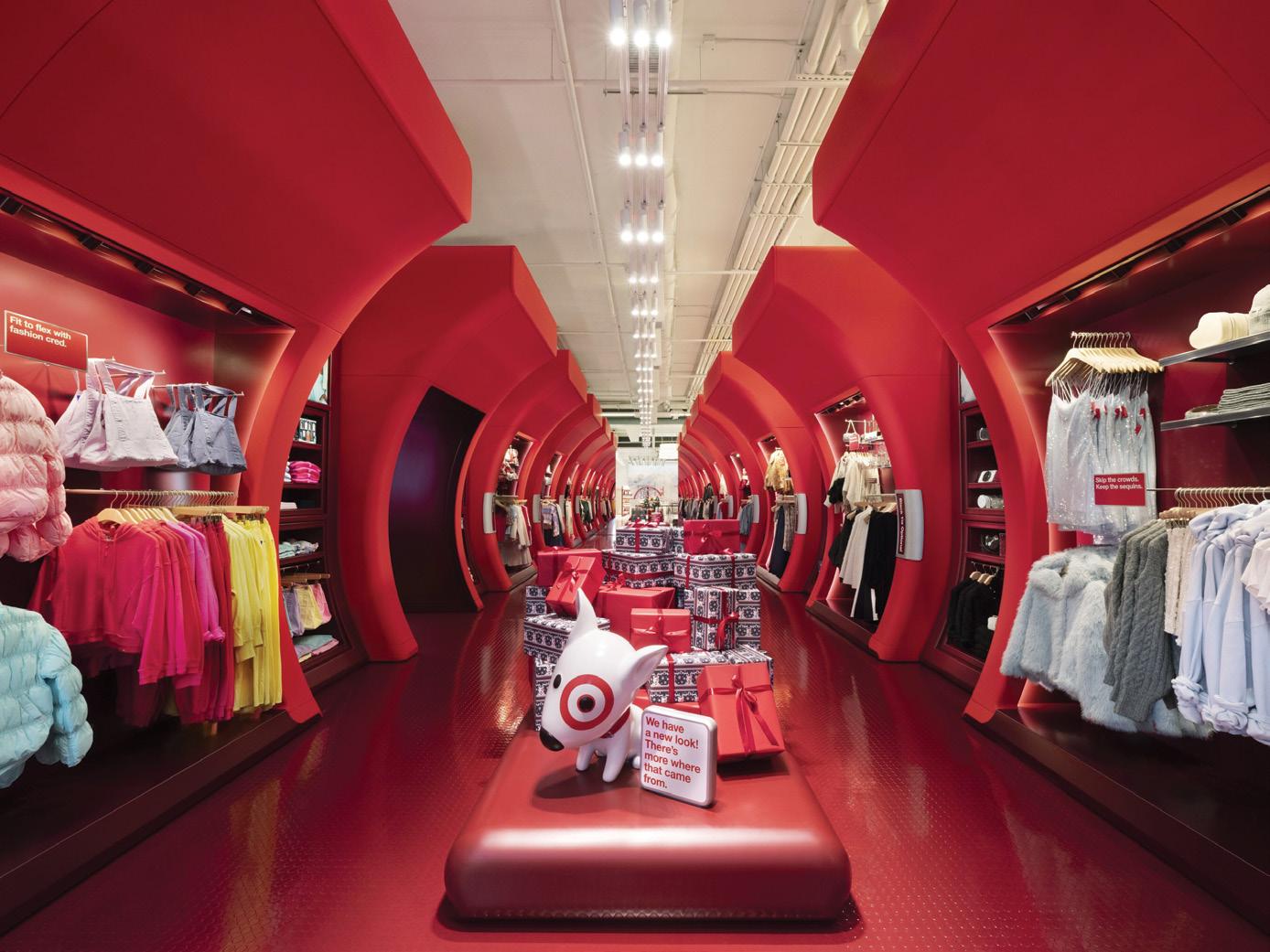
Target Corp. has opened an immersive, experiential format in New York City focused on style, design and fashion.
The discounter transformed its 26,000-sq.-ft., two-level store in Manhattan’s SoHo neigborhood into what it described as a “one-of-a-kind concept store where everyday shopping meets play, discovery and style.”
The outpost features curated displays of fashion and beauty items chosen by influencers and celebrities, seasonal drops and a continuously evolving assortment designed to keep pace with the latest styles and trends.
“We put aside everything we knew regarding our playbook, in terms of what curation and presentation of product look like, and led with style first,” said Cristina Rizzuto, senior styling manager, apparel & accessories, Target. “The SoHo store flips the script, offering guests an inspiring, elevated experience that’s as much about style and culture as it is about shopping.”
Target SoHo is defined by its stylish interiors, curated zones that will evolve regularly with fresh curations, seasonal themes and new product drops. It reflects CEO Michael Fiddelke’s vision to put style and design at the company’s forefront, the retailer said. (Fiddelke took the reins from Brian Cornell on Feb. 1.)
“We are a design-led company,” Fiddelke said during Target’s
third-quarter earnings call in November. “And that starts with our authority and merchandising.”
Below are the store’s main curated areas.
The Drop: A front-of-store experience, “The Drop” is a monthly capsule of trend-driven fashion, home and lifestyle finds. For December, it was divided into the key themes of cozy, gifting and holiday party.
Curated By: The rotating collection is intended to connect customers to influential voices in fashion and lifestyle, offering a personal glimpse into their favorite Target finds across fashion, beauty and home.
Broadway Beauty Bar: Described as a beauty playground designed for experimentation, creativity and social sharing, this area will offer a curation of Target’s best beauty picks, hand-selected by top talent in the beauty space. Customers can explore trending products, try samples and capture content in the “Viral Vanity” studio. Gifting Gondola: This photo-ready
installation is designed for playful discovery and gifting inspiration. Complete with a convex mirror for capturing festive reflections, the Gifting Gondola will showcase an assortment of exclusive Target-branded merchandise.
“With Target SoHo, we’re bringing together the best of Target and the best of New York — elevated products, immersive storytelling and an experience that invites guests to explore, express and get inspired,” said Cara Sylvester, executive VP and chief guest experience officer, Target. “This store is a bold reflection of our commitment to style, and it’s just one part of our larger investment in Target’s design-driven future that grows our roots even deeper in New York City.”
Target said the store will adapt and evolve through 2026 and beyond as it explores how different concepts and products resonate with consumers. Customers can expect new experiential zones, seasonal activations, a café and event programming.
The entry leads to a tunnel-like space based on Target’s bullseye logo (photo: Target).
Shoppers can test products in the Beauty Bar (photo: Target).
Inside Amazon’s ‘Wooden Wonder’
Delivery station doubles as test ground for sustainable building strategies
Amazon is putting an array of sustainability strategies to the test in its new delivery station in Elkhart, Ind.
The station, mostly built from wood and lower-carbon materials, is part of Amazon’s Climate Pledge to operate more sustainably and be net zero carbon across its entire business by 2040. (Packages are shipped to Amazon delivery stations from neighboring fulfillment and sortation centers, loaded into delivery vehicles, and delivered to customers.)
The facility, dubbed “DII5,” and also referred to as the “wooden wonder,” wasn’t built only to delivery packages. It is doubling as an exercise in sustainability, with systems and technologies designed to reduce its resource usage and shrink its carbon footprint.
“D115 challenges the idea of what a logistics facility can be,” said Marty Brennan, principal at ZGF Architects, which served as design architect and sustainability lead for the project.
Amazon prioritized bio-based materials for the station’s construction, with wood studs instead of metal ones at interior partitions, wood fiber insulation instead of fiberglass, and an ultra-light, lower-carbon alternative to standard drywall. Lowercarbon, bio-based finishes were used for the acoustic ceilings and flooring. Salvaged wood was used for 43 desks used by the site operations team.
Heat pumps reduce carbon emissions and don’t require burning fossil fuels on-site, while “air curtains,” which prevent outdoor air from entering the building, are intended to reduce air-conditioning usage and boost employee comfort.
In addition, Amazon says the clerestory windows in the warehouse and the glazed glass in the office block bring in enough daylight to allow for less electrical lighting and the interior LED lighting is designed to reduce power usage.
Other sustainable features include a water reclamation system and more than 170 electric-vehicle charging stalls located outside. In total, Amazon says the facility features more than 40 technologies designed to reduce resource usage and shrink its carbon footprint.
“We have experimented with and implemented a lot of sustainability initiatives over the years,” said Daniel Mallory, VP of global realty, Amazon, in a corporate blog post. “DII5 continues that effort by taking a culmination of a lot of big ideas not just in how we operate our facilities, but in how we build them. And it’s going to help us as we steadily climb toward our sustainability goals.”
According to Amazon, its ultimate goal with D115 is to identify the approaches that are most effective and best suited to be implemented across its building network. The retailer is currently scaling up some of these strategies in other buildings.
In addition to ZGF, Amazon’s other partners in developing the facility included general contractor Graycor, Atlantic AE (architect of record), Sterling Structural, Ozinga, TimberHP and local manufacturer Arborwood. Climate Pledge Fund company CarbonPure provided the lower-carbon concrete technology.
Amazon Innovates in Energy
Amazon is taking a new step in its efforts to operate sustainably.
The online giant plans to open a fulfillment center in Nagoya, Japan that will use geothermal technology known as geoexchange for heating and cooling. Amazon will harness underground temperatures to regulate the indoor climate of the building more efficiently compared to traditional systems.
The facility will also be the first Amazon building globally to feature vertical solar panels on the walls, and will be the company’s largest onsite solar project outside of the U.S. This effort is part of Amazon’s Climate Pledge to operate more sustainably and be net zero carbon across its entire business by 2040.
How It Works
When temperatures rise in the summer, a geothermal heat pump will move water through 200 bores drilled more than 300 feet deep to absorb the Earth’s naturally stable temperature. It will then bring that coolness back to the building’s first floor to keep indoor temperatures comfortable.
In the winter, the process will be reversed, as the ground at a depth of 300-plus feet stays relatively warm. The circulating water will absorb heat and bring it back up to warm the building. Compared to regular air conditioning systems, Amazon says the geothermal cooling technology will use 30% less energy.
In addition, this fulfillment center will have solar panels installed on the roof, as well as in the parking lot and vertically on the building’s south-facing walls. The panels will absorb extra sunlight early in the morning and late in the afternoon as the sun moves across the sky and can also act as a giant heat shield for the building, helping to keep it cooler during hot summer days.
The solar panels have a combined capacity of 5.5MW, making it one of the largest onsite solar power systems at a logistics facility in Japan, and the largest onsite solar project by capacity in Amazon’s portfolio outside of the U.S. The fulfillment center will also be equipped with a 2.9 megawatt-hour battery storage system, which will supply carbon-free energy to the building when the sun isn’t shining.
DESIGN. BUILD. MAINTAIN.
Gaylord National Resort, National Harbor, MD
Discover what the buzz is about: Join your peers this March!
JENNIFER JUDD
Store Maintenance
Technical Director
Gap Inc.
“Attending the SPECS Conference is always an excellent experience! The event is meticulously organized, and features a diverse lineup of speakers who are leaders in their respective elds. The sessions are not only informative but also highly engaging, providing insights into the latest trends and innovations in the industry. Networking opportunities are abundant, allowing me to connect with like-minded professionals and industry experts.”
ANDY DOSS
Director – Real Estate Construction Services
Whataburger
“ SPECS is a well-run, informative conference that strikes a great balance between education, networking and fun. The sessions are engaging and relevant for construction, architectural, engineering and facilities professionals, and the vendor interactions are purposeful and easy to navigate. The social events are a highlight—fun, relaxed and genuinely effective at helping people connect beyond business cards. I leave SPECS with new insights, new relationships and a strong appreciation for how thoughtfully the conference is put together.”
CHIP NEWSOME
Director, Construction & Facilities
PGA Tour Superstore
“SPECS is an excellent event to connect with industry peers, strengthen existing relationships, and explore the latest innovations and products.”
DAN GARNEAU
Site Development Manager
Maverik
“I always enjoy attending SPECS because it’s a great opportunity to network with my peers and learn about new products and services — experiences that I use to help make my company better.”
Maximizing Stockroom Space: Mobile Storage Solutions
As more and more store backrooms turn into micro-distribution centers, retailers are looking to maximize the space of their storage rooms. Shawn Moraca of Pipp Mobile Storage Systems spoke with Chain Store Age about how mobile shelving systems can allow retailers to increase their storage space.
What do retailers need to consider when planning for storage systems?
There are many items that need to be factored into the planning of a space, including work flow capabilities, stock capacities, accessories and building code requirements.
What are the advantages of mobile systems vs. stationary ones? Mobile systems allow retailers to store more stock in less space than a typical stationary setup would allow for. Stationary storage setup requires an aisle space be left between each rack to allow the store teams to access the stock from each side of the rack.
With a mobile system, however, retailers can eliminate the need for multiple aisles for access and reduce the space down to one working aisle that can increase capacity by upwards of 80% at times.
Tell us about Pipp Mobile and its product offerings.
Pipp Mobile is the leading provider of high-density mobile storage systems and accessories to retailers throughout North America. Combined with our IRSG Division, we offer different mobile system capacities depending on the specific needs of a particular retailer. Pipp can guide a customer from the initial planning stages of layout creation all the way through the project, closing out when final inspections are finished up.
We also offer an extensive line of stockroom accessories, including lockers, dry erase boards and manager’s desks, as well as front-of-house accessories such as hanger management, processing tables
and carts through∂ IRSG. Pipp is truly the ultimate one stop shop for all of your stockroom needs.
What are the most common mistakes retailers make when it comes to storage systems?
One of the most common mistakes occurs in the initial planning stages of the space. Many retailers depend on architects or their own internal design teams to come up with the storage layouts of their spaces out of convenience or to help keep costs down.
Every square foot matters in these spaces and if the exact sizes and specs that our mobile system takes up are not factored in there can be issues during final inspections. Items such as ADA clearances and sprinkler heights need to be planned for ahead of time.
Another common mistake is not factoring in SKU sizes during the initial planning. With the size of our racks varying, it is important to consider SKU dimensions because the size selected for the storage racking may not be optimized to store stocked items as efficiently as possible if these are not planned for.
At Pipp, we offer complimentary design services that assist retailers in maximizing their spaces with a storage system that will allow store teams to have efficient, day to day work flow.
Can stationary shelving that is already in place be made mobile?
Depending on the style of shelving, absolutely. Pipp’s mobile system can be manufactured to fit existing shelving systems that are in place which helps reduce costs and eliminate wasted material.
Are there specific floor requirements and floor types for mobile storage?
Mobile systems can be installed on any type of flooring, but depending on the type of flooring, the types of anchors used to secure the tracks to the floor may differ. This is something that we confirm prior to producing an order to ensure that the system can be installed properly once it is delivered on site.
What is the capacity of a Pipp mobile system?
Pipp Mobile storage systems have a weight capacity of 1,000 lbs. per linear foot of carriage length. When these larger weights are used, we incorporate a mechanical drive unit with a rotating handle that allows for these units to be moved from side to side with no issues at all.
Who is responsible for the installation of the Pipp system?
It depends. Pipp has a network of approved installers throughout North America that we utilize to install roughly 1,300 mobile systems per year at customers’ request. While we recommend using one of these many contractors to handle the installation scope, many retailers choose to have their GC install the systems.
What type of maintenance do mobile systems require?
The recommended maintenance for mobile systems is fairly simple. The floor mounted tracks need to be swept out weekly to prevent debris from building up over time. Provided this is done, the system will be able to roll free and without issue.
Shawn Moraca, retail storage specialist, Pipp Mobile Storage Systems
National account programs establish fir m equipment prices with 2 ways to administer them Single point centralized purchasing where all of the dock lifts are purchased and coordinated through a single distributor. Or, dispersed contractor purchasing where the company specifies an Advance dock lift and the actual purchasing is done through contractors or individual locations using local distributors We do both
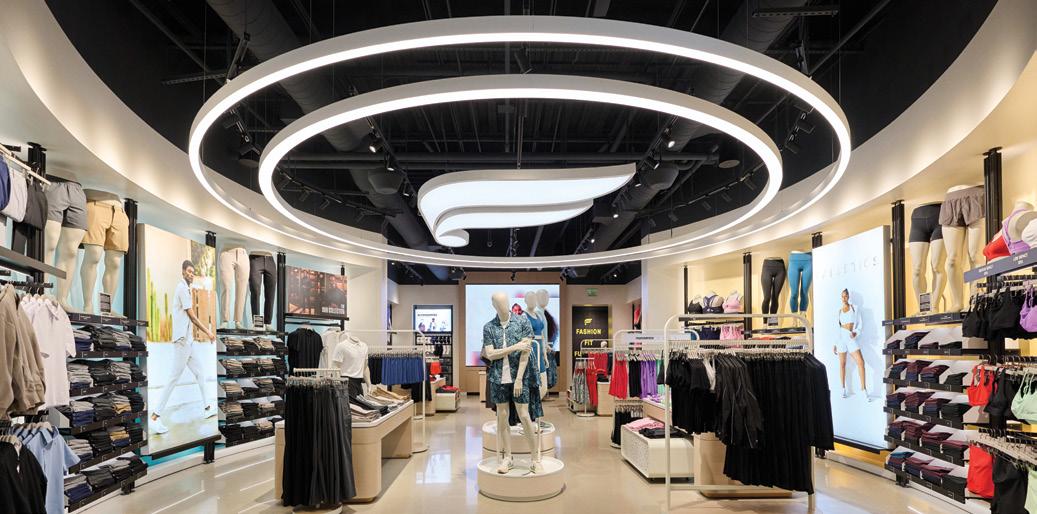
Fabletics’ new “next-generation” store (photo, right), is designed to create a hyper-personalized and curated customer experience. Located at Westfield Century City in Los Angeles, the 3,000-sq.-ft. outpost is powered by the company’s proprietary technology and AI. Highlights include smart fitting rooms with “first-of-its-kind” technology that automatically logs items into customer profiles, tracks preferences and offers tailored product suggestions based on in-store availability. The store also deploys AI systems that manage everything from inventory optimization to real-time employee coaching, with heat mapping and productivity analytics to maximize efficiency. Modular and movable fixtures enable the space to easily transform into a hub for interactive community events, workout classes and more. Fabletis plans to expand its retail footprint with more next-generation stores, while also modernizing existing locations to enhance the in-store experience.… Pacsun plans to add 20 to 35 new stores over the next three years. The brand is also expanding globally and will open its first international location in its 40-year history in spring 2026 at the Mall of the Emirates in Dubai. … U.K.-based footwear brand Clarks opened the first U.S. outpost of it new retail concept, Cloudsteppers, at La Palmera in Corpus Christi, Texas. Along with the brand’s signature Breeze Sea flip-flops and sandals, the store features casual lifestyle essentials, all designed
with relaxed, easy-wear details that reflect the brand’s comfort-first aesthetic. Two additional stores will open in Florida and North Carolina in the first half of 2026, with more locations to come.… Z Gallerie has started its store comeback under its new ownership. The modern furniture and home décor retailer, which was acquired out of bankruptcy in January 2024, opened a pop-up featuring merchandise from its fall/winter portfolio at Galleria Dallas in Dallas. It follows a warehouse outlet in Gardenia, Calif., that opened last year. Z Galleria plans to open stores nationwide in 2026.… Barnes & Noble launched a “first of its kind” in-store partnership with indie film studio and entertainment company A24 Select Barnes & Noble stores nationwide have opened an “A24 Shop” experience, a custom-designed branded space curated by the studio, with more locations to launch in 2026.
Aldi Doubles Down on Store Expansion
Discount grocer to open 180 stores across U.S. in 2026
By Marianne Wilson
Aldi U.S. has big plans for 2026 and beyond as it enters its 50th year in the United States.
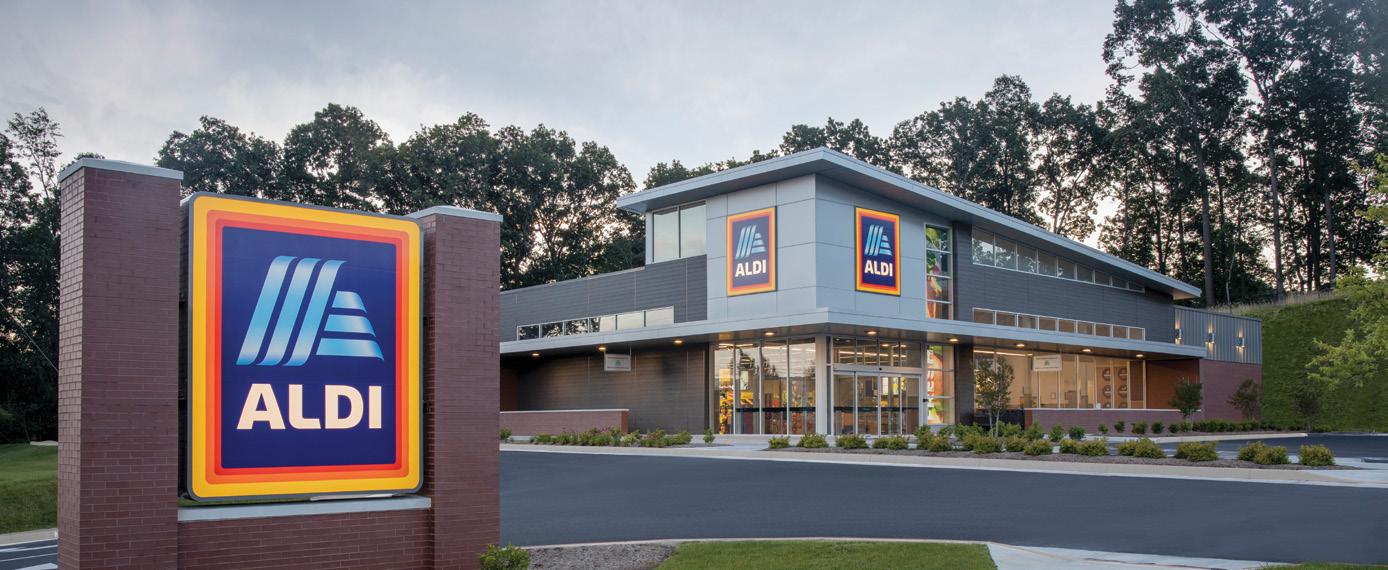
The German discount grocer is accelerating into growth into new markets, expanding its distribution center network and modernizing its online shopping experience. Aldi plans to expand its footprint with more than 180 new stores across 31 states this year, moving it closer to its goal of 3,200 locations by the end of 2028. (The company currently operates approximately 2,600 stores nationwide.)
“One in three U.S. households shopped at Aldi this past year,* and in 2026 we’re focused on making it even easier for customers to shop our aisles first,” said Atty McGrath, CEO, Aldi U.S. “That means bringing Aldi to even more neighborhoods, upgrading our website and planning additional distribution centers to keep our shelves stocked with the products our shoppers love.”
Aldi’s newest round of expansion in U.S. markets includes:
Maine: As part of its 2026 growth, Aldi will enter its 40th U.S. state — Maine — opening in the city of Portland.
Colorado: The company plans to expand into Colorado within the next five years, with more than 50 stores planned for the Denver and Colorado Springs markets.
Phoenix: As part of its ongoing westward expansion, Aldi will open 10 outposts in the Phoenix area this year, with a total of 40 new stores in the market planned by the end of 2030.
Las Vegas: After making its debut in Las Vegas in 2025 with four stores, the grocer plans to double its store count in the fast-growing market by 2023.
Southeast: As part of its Southeast expansion, Aldi will convert nearly 80 Southeastern Grocers locations to the Aldi format in 2026. Since acquiring Southeastern Grocers in 2024, Aldi has converted and opened nearly 90 stores, with plans to convert more than 200 in total by the end of 2027.
Aldi is also expanding in New York City. The company is on track to open its second location in Manhattan, a 25,000-sq.-ft. store on the edge of Times Square.
To support its growing store network, Aldi is increasing its operational capacity. It will open three new distribution centers in the next three years, with locations in Baldwin, Fla. (expected to open in 2027); Goodyear, Ariz. (expected to open in 2028); and Aurora, Colo. (expected to open in 2029).
In addition, the grocer is expanding its distribution center in Haines City, Fla., to include a new chilled center for perishable foods.
E-commerce
In other initiatives, Aldi is updating is updating its digital experiences. The grocer said it is redesigning its website to deliver a seamless online experience that matches the ease of in-store shopping.
The new website, launching in early 2026, includes tailored product recommendations for easy re-ordering, expanded nutritional information, shoppable recipes and built-in tools to support shoppers in meal planning for their weekly shop.Through the new site, customers can also choose home delivery in addition to curbside pickup.
By 2028, Aldi will have invested $9 billion over five years to expand its store footprint, strengthen its supply chain, and upgrade its online shopping experience.
Packaging Refresh
Aldi is putting its name on every private label product it sells.
In what is says is direct response to customer feedback, the rapidly-expanding discount grocery chain is unveiling its largest private label branding and packaging refresh to date. This includes the introduction of the first-ever Aldi namesake private label brand, as well as the addition of “an Aldi original” endorsement to the packaging of all other private label brands it sells.
The new packaging has started rolling out to store shelves. Over the next few years, every product will be refreshed to feature the Aldi name and a modernized look.
More than 90% of Aldi products are private label. Among 20 of the largest U.S. retailers, Numerator data indicates that Aldi relies the second-most-heavily on private label products, with its owned-brands accounting for 77% of its overall sales volume (Trader Joe’s is ranked first).
With global headquarters in Essen, Germany, Aldi operates more than 7,200 locations around the world.
Aldi is targeting 3,200 U.S. locations by the end of 2028
TOP AI RETAIL TECH TOOLS
By Zachary Russell
The emergence of artificial intelligence has been one of the biggest stories of the 2020s.
While modern machine learning began to take shape in the early 2000s, recent investments and developments have propelled AI to new heights. The technology is now used by consumers to do everything ranging from making shopping lists to finding more precise answers to difficult questions.
Retailers, of course, have taken major steps toward implementing AI in one aspect of their business or another. A recent survey from AI technology provider Nvidia found that 91% of retailers and CPG companies are either actively using or assessing AI. Companies noted that AI is helping decrease annual costs (95%) and increase annual revenue (89%).
GreenLite
Due to economic headwinds including labor constraints and the cost of materials, new commercial real estate construction is at a well-documented standstill. Factor in complying with local building code regulations, and retail brands can be stuck waiting extended periods for shovels to make it into the ground for new builds.
That’s where GreenLite comes in to help. Launched in 2022 with AI at the forefront, the company leverages the technology to streamline the permitting process for new construction, making it easier for developers to meet local regulations and to have permits issued as quickly and as efficiently as possible.
Founded by James Gallagher and Ben Allen, GreenLite seeks to streamline what is often thought of as a complicated, laborious process using archaic software for retailers, as well as fitness chains, banks and other brands looking to expand their physical footprints.
The commercial real estate world is also beginning to utilize the emerging technology in a number of ways –with only more integration expected in the coming years as AI continues to evolve and become more precise.
“What AI means today and into the future is being able to make better, smarter decisions quicker,” said Stephen Polanski, global business director at retail intelligence firm Kalibrate, speaking at a panel at the recent ICSC show in New York City. “Adoption will be key, and we still need human interaction to be able to maximize those decision making processes.”
For Chain Store Age’s latest Top Tech Tools feature, we spoke to four companies using AI to make life easier for commercial real estate teams in a challenging macroeconomic environment.
“Building code review is a necessary compliance process,” said Gallagher, who serves as the CEO of the company. “What has happened over the last couple of decades, and has been exacerbated post pandemic, is that there is a major talent gap and shortage of people working in the public sector for cities and development agencies. This has impacted the speed to which developers meet demand.”
GreenLite serves as a private regulatory agency and allows retailers and developers to directly apply for permits through the platform. A retailer’s project team will start the process with GreenLite with an intake procedure that includes the architectural specs of the new build. GreenLite’s AI then “ingests and categorizes” the building plans, extracts the key data and generates city-specific checklists. The up-to-code building designs are then analyzed and approved by the company’s inhouse experts.
“The difference between us and the city process is we do that in about five days, versus 45, 60 or 90 days,” said Gallagher. “Once the necessary corrections are made to the building plans, we will approve the permit for issuance. GreenLite sells not only speed, but predictability and transparency.”
With the permitting process for new builds sped up, retailers can get a faster start on the construction and related hiring processes, as well as the in-store labor hiring for when the location opens. GreenLite also works with chains, including quick-serve restaurants, to remodel spaces and update store fleets to modern standards.
Looking ahead, GreenLite expects its use of AI to only expand in the future. In particular, Gallagher noted that the company’s tools can be integrated directly into a retailer’s design process so that they are up to code from the start, streamlining the approval process even further.
James Gallagher
Kolena
Just as local regulations can tie up a retailer when expanding, synthesizing and analyzing lease agreements can be a burdensome process for commercial real estate operators and managers when acquiring a new retail property. With the help of Kolena’s AI-powered platform, companies can review, validate, generate and act on claims, leases, financial packages and more.
Founded in 2021 by three AI engineers, Kolena set out to “100% automate” document workflow. The company published a list of use cases on where AI can best be adopted, with the lease abstraction process, often outsourced to third-party companies, consistently being mentioned as a sticking point for commercial real estate players.
“There is cost and time spent on the lease abstraction process, and real estate firms lose opportunities by taking weeks on that process,” said Mohamed Elgendy, co-founder and CEO of Kolena. “Even with a standard AI assistant, firms would still spend time uploading the lease documents and asking it questions.”
With Kolena, hundreds of lease agreements from a property can be uploaded onto the platform, and with the help of AI, the data, including rental rates, renewal terms, maintenance responsibilities and more, is synthesized into an abstract, greatly speeding up the investment cycle.
Kolena’s proprietary AI model works alongside existing tools, benchmarking prompts and tasks that specific AI tools excel at, such as understanding legal terms, mathematics or converting text into data. Notably, Kolena assigns what it calls an AI architect to each customer, in addition to a customer success professional, meaning that users have a hands-on, AI expert to support them when navigating the automation process.
Elgendy says that Kolena’s accuracy, transparency and ability to make citations of key data points are the features that set it apart from other workflow documentation platforms.
“We make sure that whatever the user’s workflow looks like, including what documents they are uploading, that the process is 100% automated,” he said. “Users don’t need to jump between tools or tasks. They also don’t need to know anything about the AI.”
Outside of store development, retailers and restaurant chains are continuing to expand the use of AI to both enhance store operations and better meet customers’ needs. Recent AI developments include the following:
• Papa Johns is partnering with Par Technology Corporation to deploy the Par POS and Par OPS platforms at its U.S. restaurants to build a “faster, more intelligent and connected” restaurant and digital ordering experience for guests, operators and franchisees. Through the partnership, Papa Johns will transition from its legacy on-premise systems to Par’s enterprise solutions.
• Stater Bros. Markets is building on a partnership it launched with Afresh in January 2025 which saw the grocer implement the AI-based store ordering solution across the produce departments in all of its 169 stores, following a successful pilot. The grocer will now extend AI-driven fresh replenishment beyond produce into additional fresh departments and upstream into distribution center forecasting.
• Albertsons Companies has released a new agentic AI-based shopping assistant based on models from research and deployment company OpenAI. The assistant can complete shopping tasks for customers, such as reordering weekly and frequent purchases, generating a weekly meal plan and more.
• Home Depot has rolled out a new AI solution called Blueprint Takeoffs, which is designed to provide professional renovators, remodelers and builders with faster, more accurate and cost-effective material lists and estimates. The Blueprint Takeoffs tool leverages AI to deliver a complete material list and quote for an entire single-family project within days, a process that used to take weeks to complete.
Mohamed Elgendy
Buxton
Founded in 1994, site selection firm Buxton has long sought to help retailers better understand their customers, with the goal of providing precise data sets that guide expansion. But times have changed since the mid-90s, and now, the company puts AI at the center of its offerings, giving clients an advanced location intelligence outlook.
“Buxton has been using machine learning for 20 years, and obviously we have evolved that as the methodologies have changed and improved, but it has drastically accelerated in this modern era of the large language model,” said Phillip Crow, senior VP of product strategy at Buxton.
“Today, we have had a very intense focus on embedding AI in our internal processes as a company to make us more efficient. Whether it’s how we build software or how we train sales people, we have embedded AI into just about everything we do.”
AI is directly integrated into Buxton’s platforms both in the form of support tools like chat bots, as well as in strengthened analytical capabilities that give the user an advanced view of a specific data set.
At the core of its platform, Buxton uses AI to compile first- and third-party data from thousands of in-store and online transactions, which are then interpreted into a massive consumer profile that gives insights into key demographic information. From there, retailers can learn more about their target customers, and better optimize their store footprints as a result.
As an example, on Buxton’s Scout platform, a user might try and run 10 different reports for one site, including the demographics and psychographics of a trade area, and then compare the location against their existing network of stores. With AI
integrated into the platform, the most valuable insights from each report can be highlighted and synthesized into a comprehensive report that otherwise would have been a labor-intensive process.
“AI is only as good as what you feed it,” said Crow. “It requires input and data, and we sit at the intersection of those two things – and did even before AI existed. Our data sits on top of AI layers that add additional analytical capabilities that maybe in the past would have required weeks of an analyst’s time to go do on behalf of a customer. Now, the customer can get answers instantly.”
Crow added that Buxton’s AI advancements were largely focused on improving internal processes until last summer, when the company shifted towards focusing on how the technology can best be offered to its customers. This came as AI models continued to become more advanced in just a short period of time.
“The technology has shifted from ‘help me understand this’ to ‘go do this for me,’” said Crow. “We’ve made a lot of advancements, and have really tried to focus on increasing the efficiency for our users.”
Kalibrate
Kalibrate is another location intelligence platform that leverages AI to give its users – whether they be in the retail, hospitality, banking or fuel industries – the most accurate customer data set possible. Using survey data from 2024, Kalibrate developed its proprietary AI model to offer insights and analysis faster results, speeding up development timelines and decision making.
“We heard overwhelmingly from executives that AI isn’t just expected from their team members, it’s going to be expected from their vendors as well,” said Dustin Stancil, senior VP of location intelligence at Kalibrate. “We have been leveraging AI tools for quite a while now. But while traditional geospatial analytics tools are effective, what our end users wanted was to reduce the number of clicks it takes to find an answer. We wanted to slowly put AI into our intelligence tools to make them easy to grasp, and then take feedback from there and build on top of that.”
To meet customer needs, Kalibrate introduced the K.AI chatbot companion to assist with the data search process, as well as AI summaries of a trade are based on specific attributes, such as demographics like income, age or education. Using the chatbot, users can compare locations and ask which would be the best location for a new store or restaurant.
Kalibrate also uses AI to summarize sales forecast reports, giving users a better sense of the financial prospects for a future location. By utilizing advanced technology, Kalibrate clients can get the best insights available when making real estate decisions, whether it be expansion or rightsizing a portfolio, either on a DMA, state-wide or nationwide level.
“Through forecasting capabilities that we build for customers, we can run projections on potential sites to see what will be a good fit for the brand,” said Stancil. “Guests can ask us ‘how many locations could we fit in Palm Beach County, or the greater Los Angeles area?’ We help come up with those answers and target opportunities.”
In the future, Kalibrate aims to continue using new developments in AI to hone in even further on location intelligence.
“AI has moved at such a rapid pace,” said Stancil. “We want to be able to shift more towards the agentic side, which includes asking specific questions like ‘can you suggest three store locations for me in Dallas, Texas, or in Wilson, N.C.,’ and have it be able to spit out an answer for you that is logical and that takes into account both internal data and third-party data.”
Phillip Crow
Dustin Stancil
THE RACE FOR SPACE
Brands at New York’s ICSC Show confronted two-year waits for available space.
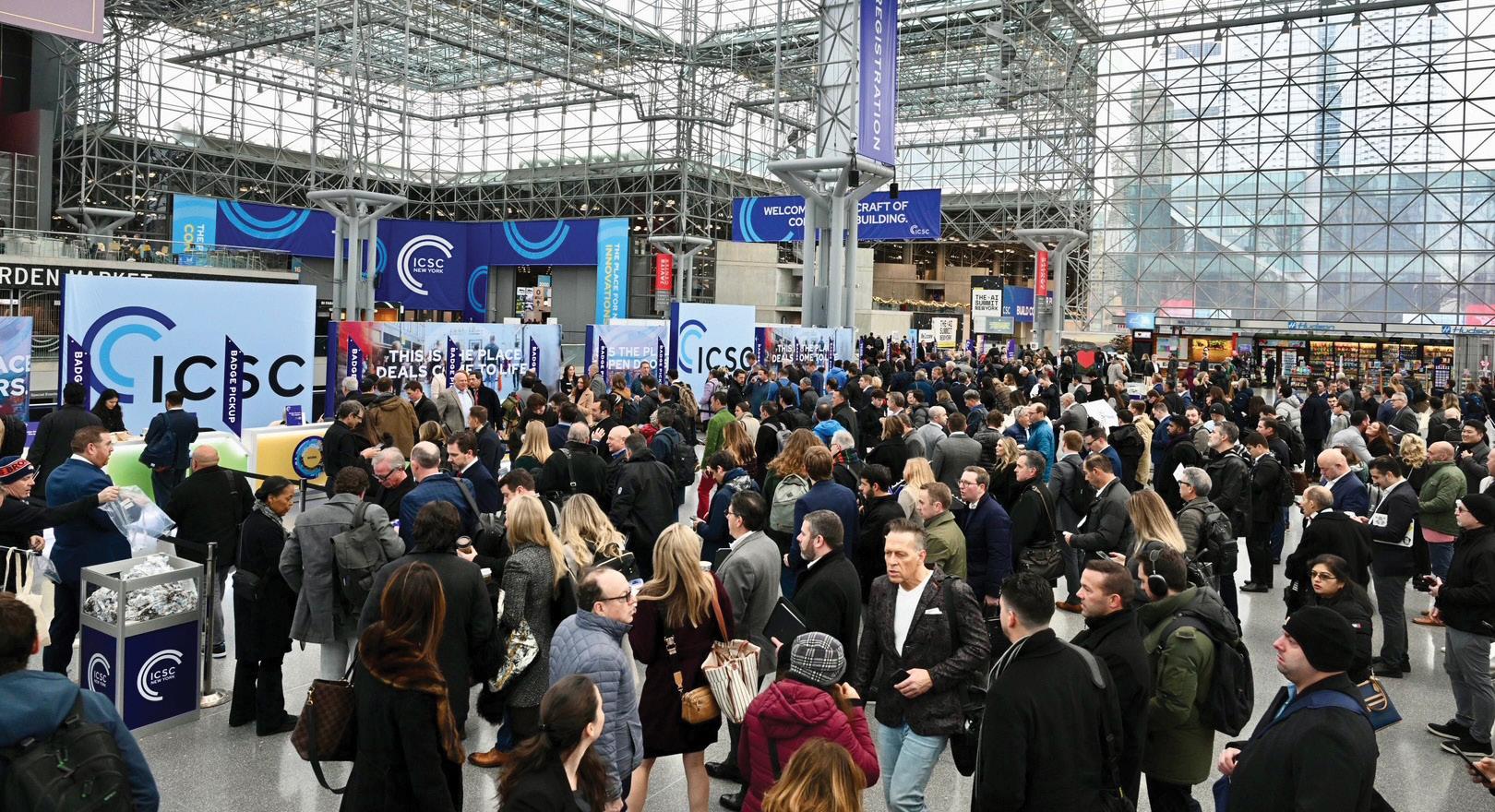
At 10:30 a.m. on the first day of the ICSC show at the Javits Center in New York, the steady stream of attendees flowing into the lobby resembled the rush one might witness a mile north at Madison Square Garden on the night of a Springsteen concert.
“It’s been a really difficult number of years for tenants that want to grow. The tenant wants to expand, but the developer doesn’t want to do the project if they don’t see the liquidity on the back end to be able the monetize the project or monetize it at the right number,” said Patrick Nutt, senior managing principal and co-head of national net lease at SRS Real Estate Partners.
“Now everyone has a larger allocation for 2026 and 2027, and they are eager to spend the money.”
High activity at the show was demonstrated by brands ranging from discount stores to longtime mall tenants to luxury brands.
Stephen Lebovitz, the CEO of mall developer CBL, told Chain Store Age that some of his biggest wins at the show were posted by legacy retailers.
“The Gap, American Eagle, Victoria’s Secret—some of our most tried and true retailers--are posting really strong results,” he said. “JCrew, Barnes & Noble, and Old Navy are doing several new deals. Barnes opened at our Sunrise Mall in Brownsville, Texas, and we had 500 people waiting to get into the store.”
At the Newmark booth, chairman of global retail Mark
Masinter told us he had one meeting after another--some of the most interesting of which were representatives of luxury brands.
“From Hermes to Lulu to Cartier—every one of them are on a growth trajectory,” Masinter observed. “Not growth at any cost, but very thoughtful, targeted growth. They’re all trying to fill holes where they’re not meeting market demand.”
The luxe brands are not adding to their store counts, however. They are actually closing some stores and moving into downtown locations.
“They’re considering sites they wouldn’t think to go into 10 years ago,” Masinter noted. “And they’re going with standalone street locations in places like Houston, Nashville, and Austin. The mall isn’t the only place they’re going to go. In some cases, the street is the best place to express themselves.”
On the other side of the retail brand spectrum, discount stores like Burlington, T.J. Maxx, and Marshalls, too, have their expansion pedals to the metal.
“If they can find spaces that work for them, they need to get them. Half of our new leases are for discount and value brands,” said Levin Management Corporation CEO Matthew Harding. “It’s expensive to build out a Burlington store, to build out a Michael’s store. Cost and capital and, therefore, credit is important.”
Retailers came to ICSC New York in December in search of available locations.
“ If retailers can find spaces that work for them, they need to get them.”
—Levin Management Corporation’s Matthew Harding
Wait till next year
JLL’s president of retail advisory services Naveen Jaggi noted that the stampede of space-needy retail chain executives at the show were shopping for spaces they are looking to open in 2027, not 2026.
“Space deals for 2026 are done, and retail brands are about halfway through 2027 in terms of getting their pipelines filled,” said Jaggi. “Say you’re a non-credit retailer looking for a 5,000-square-foot space for a dress shop or a 3,000-square-foot space for a sandwich shop that wants to open as soon as possible. What’s the competition for that? It’s pretty stiff.”
Jaggi noted that the 50 million square feet of new retail space constructed in 2025 was 75% pre-leased.
“We’re expecting about the same amount of new space will be constructed this year, and we expect about the same amount of it to be pre-leased,” he noted. “And international retailers looking to come to the U.S.—and there are quite a few of them, by the way—are doing their due diligence two to three years out and are looking to tie up space for ’27 and ’28.”
Colliers’ manager of national retail research Nicole Larson said her studies indicate that many brands are playing it safe and staying away from markets they had planned to enter earlier due to rising rents and landlords holding all the aces in open spaces.
“Landlords will tell a brand, ‘You want a store in Chicago? Well, first you’re going to open a store in our property in Salt Lake City. Then we can do that deal in Chicago,’” Larson said.
Tertiary market? Sign me up.
Nearly all expanding retailers are establishing their brands in markets they had previously shunned according to Scott Schnuckel, the managing director of Americas Retail at CBRE who spent 19 years at Kohl’s, ending up as its head of real estate.
“Retailers are rushing into tertiary markets like crazy to attain affordable rents, though rents in those locations are a little higher than they used to be,” he said.
“You used to hear retailers saying, ‘Next year we’ll do X amount of stores in this market and that market.’ Now you’re hearing them say, ‘Here’s what we’ll be doing over the next three-to-five years.’”
Consumer spending remains strong in smaller markets as well as big ones, he noted.
“It’s hard to look at the economic data and say everything is okay. Saving rates are down. Credit card debt is higher. All these things stacking up makes you want to say maybe we’re going to undergo some pain,” Schuckel observed. “But then you have a Q3 that was by all accounts one of the best retail quarters in a while.”
“ Every retailer has a larger allocation for 2026 and 2027, and they are eager to spend the money.”
—SRS
Real Estate’s co-head of national net lease Patrick
Nutt
Mall makeovers
Malls that were diagnosed as being on their last legs, too, are being refreshed with vital brands that raise traffic and spending.
Terry Montesi, the founder and CEO of the Trademark Property Company, has remade malls to serve the needs of active consumers for more than 30 years.
Recently, Trademark and its investment partner PGIM sold the Annapolis Town Center in Maryland following a yearslong repositioning that brought in tenants such as Pottery Barn, Williams Sonoma, Sephora, Lifetime Fitness, and True Food Kitchen.
And last year at Galleria Dallas (one of Chain Store Age’s Top 10 Retail Center Experiences in 2025), Trademark opened one of the first Netflix House entertainment centers in the space of a vacated anchor.
When Netflix House opened, traffic in the mall went up five to eight percent.
“Traffic has been up slightly overall, and sales are up more than traffic,” Montesi said. “What we’re hearing is that things are generally positive.”
A little over a year ago, Paul Kurzawa took over operations at Centennial, another renovator of regional malls, and has been very busy at both acquiring malls and signing management contracts with them.
“ Growth through bankrupt retail chain acquisition is a unique platform.”
—Gordon Brothers’ Michael Burden
Gordon Brothers’ Al Williams and Michael Burden (r.)
In the second half of 2025, Centennial took over property management at Galleria Fort Lauderdale, Trumbull Mall in Connecticut, and The Greenwood Mall in Kentucky.
Property management now makes up more than half of the company’s business, though it continues to buy malls backed by its investment partner, the Lincoln Property Company.
“Lincoln has given us a new pipeline to acquire more properties,” Kurzawa said.
He also brought in former JLL CEO Greg Maloney to help build upon Centennial’s growing portfolio of partnership investment opportunities as well as its third-party management business.
“What’s really interesting coming out of holiday shopping is that electronics and apparel did really well,” Kurzawa said. “Home goods were a little soft, but we were kind of surprised that apparel was strong. We’d been expecting less apparel.”
Bankruptcy’s not all bad
What’s the best way for retailers to acquire much-needed space?
Keep their eyes open for retail Chapter 11 filings.
When Big Lots filed for Chapter 11 bankruptcy last year, the global real estate asset company Gordon Brothers acquired the chain and sold hundreds of its stores to Variety Wholesalers.
“We have two billion dollars of capital at our disposal, so we can work with retailers that are growth-minded to acquire sites without the headaches that come with buying a company,” said Michael Burden, co-head of Gordon Brothers’ real estate services division.
“We will also negotiate lease renewals and show landlords how filling a space will increase their property values,” he said.
Al Williams, the other co-head of real estate services at the company, claims that no other asset management company operates in the way Gordon Brothers does.
“We put our money where our mouth is. We invest in these businesses,” Williams said. “If a retailer wants to go from twenty stores to a hundred or from a hundred to a thousand, we can be there at any time in their lifecycle.”
“Growth through acquisition,” Burden added. “A very unique platform.”
To land great spaces in great centers, JLL’s Jaggi counsels retail brands to make sure they have a tried-and-true concept and a mind to be more forward-thinking.
“They can’t be committed anymore to ‘I need a deal this year,’” he said. “If an asset owner tells you that he or she can give you a deal in ’27, ’28, ’29, you gotta go with it. You gotta go with it.”
Phillips Edison’s Bob Myers on the pulse of groceryanchored centers
Bob Myers knows more about grocery-anchored centers than, perhaps, anybody should. The president of Phillips Edison & Company, which owns and operates more than 300 centers nationwide, has spent a quarter century developing and curating neighborhood centers, and the business has never been better. We spoke with him at ICSC New York to get an update on retail’s widest-ranging asset category.
Bob, grocery-anchored centers were one of the most active asset classes in retail real estate during the pandemic. Still the same? Yes. We’re still in one of the strongest environments for leasing that I’ve seen in 25 years in the business. We had retention rates of 90% last quarter with renewal spreads of 22%, so it speaks to the health and profitability of the retailers. Demand has been through the roof.
So space is very tight, we’re guessing. We don’t have much vacancy left. Our overall occupancy is 97.7%. Our anchor occupancy is 99%. We have pricing power. We have leverage. What uses do we want in? What retailers do we want in? We will still, however, continue to see fast casual, health and beauty, and med services being very active in this space.
How’s the development pace in new neighborhood centers?
We don’t expect to see any new development coming in for another eight years. But merchandising drives real estate valuations and cap rates. So the key thing is, what’s recession proof? For every fast casual restaurant that closes, there are one or two in the wings waiting for it.
Visits to grocery-anchored centers were especially brisk during pandemic. Has traffic slowed down at all with people back at the office?
You will continue to see this migration from urban to suburban. Retailers want to be close to the neighborhoods. Close to the customers. The grocer brings in traffic and other tenants reap that benefit.
So what tenant classes are you focusing on?
It’s services, it’s medical, it’s fast casual and health and beauty that will be at the center of our merchandising efforts. Guests come in for groceries and, while they’re at the center, they may want to get a workout, grab a smoothie, get a haircut…that’s a win.
Shaping the Future of Retail — Together.
With more than 16 million square feet of retail space — and growing — Levin Management represents a premier portfolio of shopping centers across the Northeast. We elevate our clients’ assets through strategic leasing, redevelopment, and proactive management — creating destinations where retailers thrive.
How retail shapes mixed-use success
Developers of The Crossing at Coal Mountain blended both local and national tenants.
The Crossing at Coal Mountain—a new 140-acre, retail-anchored mixed-use development in Georgia’s North Forsyth County—combines a mix of national and local retailers, restaurants, and luxury homes in North Georgia. Richard Aaronson, co-founder of its developer, Atlantic Residential, and its development chief Kecia Tomlin spoke with Chain Store Age about the vital placemaking role retail plays in the success of such projects in growing, high-income locations.
What are the underpinnings of such a bold development in a tertiary market in North Forsyth County?
Aaronson: A true town-center environment isn’t the old school style mall or strip retail.
It is a place that is intentionally designed, is pedestrian friendly, has active green spaces and year-round events and public areas that encourage people to stay and linger.
Balancing this vision with municipal expectations can be tricky. The key is to show municipalities how residential density fuels these restaurants, retailers, and public spaces and supports the broader community.
When you can accomplish this, it becomes much easier to move proposals across the finish line.
How difficult is it to design a project that meets the needs and wants of both local officials and residents?
Aaronson: Having conversations with municipalities regarding density is important, especially in markets where they may resist it. The goal is for developers to show how adding multifamily or townhomes support the amenities that residents of the surrounding community say they want. We had to communicate
to the municipality how such a project generates the tax base that can help improve local infrastructure, parks, and public schools.
How did you satisfy local officials yet still meet the density and economics that are required to secure those tenants?
Aaronson: At The Crossing at Coal Mountain, the development team is prioritizing anchoring the project in local identity in a close-knit, tertiary market, which is an area where residents can often be skeptical of growth.
Actively courting well-established local restaurateurs matters.
Think of the restaurants that have owners who live in and have deep ties to the community. They bring familiarity and a sense of continuity to the project. That said, national brands also play a big role in attracting visitors from outside the immediate area to the destination.
Tomlin: Yes. That can help soften concerns about “outsider” development and can also strengthen long-term community connections. When cities understand that blending local concepts with
national operators requires a certain level of density, they are often more receptive to approving the mixed-use residential components.
How do you create a place that belays local concerns about population growth and traffic that can attract more retail tenants?
Tomlin: Think of it in phases. The first phase of any mixed-use environment must consider the daily needs of its users. That means the wellness concepts, the service retail, the boutique fitness options, or family friendly dining options--uses that the local population can support right away.
Developers have to think about designing a project in a way that sets the stage for those higher-end tenants as the market matures. Are they prioritizing pedestrian-oriented layouts? Making sure there is enough residential density to grow the trade area?
In emerging markets, which types of retail and restaurant concepts are gaining the most traction?
Aaronson: Wellness-focused concepts such as boutique fitness studios, pilates, med spas, and other similar service-based businesses, continue to perform well. The reason for this is because of how often they are used as well as their ability to draw local — often repeat — traffic and not rely on one-off visits. Another trend is fast-casual and health-forward dining options.
Tomlin: Developers are also seeing a continued interest in experiential concepts ranging from golf simulators to game show attractions and escape rooms. Experiential food-and-beverage concepts, like breweries for example, are also resonating, especially in family-oriented suburbs with outdoor spaces and community events.
Richard Aaronson
Big Brand Tire Eliminates After-Hours Break-Ins
Chain pilots AI-enabled perimeter monitoring solution
By Dan Berthiaume
Atire and automotive services retailer is preventing burglaries and reducing property crimes at a high-risk location with help from artificial intelligence.
Operating more than 320 stores, Big Brand Tire & Service faces persistent after-hours security challenges at several sites, including trespassing, illegal encampments and theft of high-value items such as tires and tools. Incidents also include repeated vandalism, such as broken windows and property damage.
In response, the retailer has deployed an AI-based solution from Interface Systems — the Virtual Perimeter Guard — at one high-risk store, significantly reducing trespassing and vandalism at the location.
“We constantly had people in the back alley, and our managers had to regularly deal with transients on the property, some of whom became hostile,” said Johnny Wedell, retail commercial operations representative, Big Brand Tire & Service. “Some of our locations were facing frequent break-ins, and someone would have to come in the middle of the night to often board up a broken window.”
Even minor incidents, such as a broken window, could cost more than $1,000 to repair, while a single break-in led to damages exceeding $15,000. These events not only drove up costs but also raised safety concerns, diverted staff time and disrupted day-to-day operations.
The company determined that reactive security measures were no longer sufficient and began looking for a proactive security solution that could deter threats before incidents occurred.
Big Brand Tire decided to implement the Interface solution at the store using the existing network infrastructure, allowing the solution to be implemented without interrupting daily operations.
During an initial calibration phase, the system learned the site’s environment and activity patterns to improve detection accuracy. When suspicious activity is
detected, the system activates visible and audible deterrents, including strobe lights and pre-recorded audio warnings instructing individuals to leave the property.
If activity persists, alerts escalate to Interface’s U.S.-based Interactive Security Operations Center, where security personnel issue live voice-down interventions and coordinate with law enforcement when necessary.
Following deployment at the site, Big Brand Tire says break-ins stopped entirely after installation, and monitoring reports showed a significant decline in trespassing and loitering as repeat offenders stopped returning.
Ninety-one percent of events were resolved through automated deterrence without human intervention, and overall security activations were reduced by 65% within weeks.
“The biggest benefit is the peace of mind that comes from knowing we’re no longer facing overnight break-ins.”
The efficiency also extended to daily operations. Employees ended their shifts without lingering anxiety, and the reduction in nighttime alerts eliminated late-night trips to secure the property.
“The Virtual Perimeter Guard has resolved many of the security issues we were dealing with at this location,” said Tim Handel, loss prevention and risk management manager, Big Brand Tire & Service.
“The biggest benefit is the peace of mind that comes from knowing we’re no longer facing overnight break-ins.”
Based on the success of the initial deployment, Big Brand Tire & Service is now evaluating a broader rollout of Virtual Perimeter Guard to additional locations as part of its perimeter security strategy.
Optimizing Replenishment With AI
Big Brand Tire & Service transforming how it replenishes stock across its stores and distribution centers.
The California-based company, which operates more than 320 stores and is actively planning to expand, wants to ensure its replenishment capability scales with its growth. As a solution, it is leveraging the Invent. ai agentic platform to replace manual, reactive replenishment processes and provide AI-driven, intelligent recommendations across its stores and DCs.
Using the platform, Big Brand Tire intelligently adjusts inventory across stores and DCs, and continuously evaluates demand, supply and cost to optimize inventory. In addition, it integrates new locations and brands into its replenishment workflows while maintaining consistent replenishment and operational control, and delivers AI dashboards with alerts and actionable insights to users.
By analyzing real-time demand, inventory levels and supply constraints, Big Brand Tire & Service intends to respond dynamically to market changes, optimize inventory transfers, balance inventory investment with service goals and provide management full visibility into network performance.
“We needed a partner that can move fast with us as we grow,” said Glen Mone, VP of supply chain at Big Brand Tire & Service, which is based in Moorpark, Calif.
“Invent.ai clearly understands how to scale replenishment and transfer logic across a distributed network — and we appreciate how easy the process has been so far.”
NRF 2026 – Retail’s Big Show: It’s the data, stupid
Artificial intelligence is only as “smart” as the data supporting it.
The annual National Retail Federation conference and exposition took place January 11-13 at the Jacob K. Javits Convention Center in New York City. This year’s event was one of the most practical NRF conferences I’ve ever attended, dating back to 1999.
Of course, Agentic AI was on everyone’s mind. But to sum up the theme of the show as simply being “agentic AI” would be oversimplifying matters.
Instead, exhibitors and attendees alike focused on how retailers can ensure they achieve ROI from agentic AI investments and make the most of this still-emerging smart computing model.
To put it briefly, the answer is, “It’s the data, stupid.” Agentic AI solutions are only useful if the right data is fed into them and then used to perform the correct tasks. Let’s take a deeper look at what this means in practice:
Garbage in, garbage out
“Garbage in, garbage out” (or GIGO) is a phrase that goes all the way back to military computer programmers in the 1950s. Quite simply, it means that a computer is only as good as the information flowing into it, and poor data leads to poor calculations, recommendations and decisions. Next-gen AI solutions are a lot more advanced than the vacuum tube-based mechanical behemoths that occupied entire rooms in the 1950s. But they still are completely reliant on the data fueling their algorithms, calculations, decisions and actions.
No matter how sophisticated or “smart” a retail AI solution may be, if it is provided incorrect, outdated, irrelevant or otherwise faulty data, its output will be unhelpful at best and harmful to the business at worst. Before deploying an AI solution, retailers need to first determine what types of data they will need to process, where that data is being sourced, and how it will be reviewed, filtered, organized and synthesized for further AI analysis and operationalization.
Respect your workflows
Once you have established a secure, steady flow of high-quality data, you need to ensure that any AI solution you implement fits into your established workflows.
All too frequently, businesses will see a “shiny, new” technology such as generative or agentic AI and decide they need to implement it within their enterprise as soon as possible to get a jump on their competitors. But this approach to AI is self-defeating. Instead, you should evaluate any AI solution from the perspective of how your organization already operates and see how it would make existing workflows faster, more accurate, more efficient, or more productive.
If implementing AI would require changing core processes or not really fit into your existing architecture, find a different solution (or don’t implement one at all).
Make the results matter
Finally, even when an AI solution fits into your enterprise and your workflows, it will not produce ROI unless you can take its output and achieve something useful. The results need to matter.
Results that matter can take many forms. They might be more accurate supply chain forecasts, or higher resolution rates for customer service inquiries, or stores that are optimally staffed at all times of day.
In addition, “phygital” retailers seeking to seamlessly blend brick-and-mortar and virtual channels can effectively unite all the different data streams required to provide a unified shopper experience using leading-edge AI.
Dan Berthiaume dberthiaume@chainstoreage.com
Tech Trends to Watch in 2026
By Dan Berthiaume
For the coming year, retailers should keep their eyes on agentic AI, workforce augmentation and ultrafast delivery.
It’s time for retailers to shake off the post-holiday doldrums and get back to business. Of course, in 2026 a big part of getting back to business means evaluating, implementing and utilizing technology solutions in every area of the enterprise to help ensure maximum operational effectiveness and efficiency.
As part of that effort, let’s gaze into our crystal balls at three solutions likely to have a big impact on retail this year.
Agentic AI Everywhere
Agentic AI builds upon the prescriptive capabilities of generative AI to streamline enterprise workflows even further by analyzing massive amounts of data in near-real-time, and then automatically taking action based on the results.
Agentic AI has become a prominent feature in all types of retail solutions that streamline and manage workflows in every part of the enterprise. My expectation for 2026 is that it will become a universal feature of retail technology, with agentic AI capabilities as assumed as Internet connectivity.
This will result in workers and customers being able to express their needs in conversational language, which should create higher levels of customer satisfaction as well as employee efficiency.
In addition, it potentially means that a large percentage of lower-level tasks across the enterprise will be performed automatically — with no human input. Retailers need to carefully establish detailed rules and guidelines for agentic systems to follow, with exception reporting for unusual situations that defy normal operations and some level of human oversight.
Workforce Augmentation
The year 2025 was the one in which retailers such as Amazon publicly admitted AI and automation will in fact result in
staffing reductions. In some cases, these reductions may be significant.
However, retailers still face significant shortages in available frontline and warehouse labor, and humans are still very much part of the retail workforce equation. That is why retailers in 2026 will continue utilizing solutions such as AI, automation and mobile apps to help employees not only be more productive, but work more accurately and more efficiently.
Part of this effort is streamlining employee HR processes so they have more time to dedicate to tasks that benefit the bottom line. A prime example of this is Dollar Tree’s deployment of the Legion workforce management platform across its North American fleet of stores and distribution centers.
With access to the Legion app, associates can request schedule adjustments, swap shifts, communicate with their managers and gain access to their performance rewards and feedback through a single interface.
In other deployments, Gap Inc. is using Google AI to integrate AI agents and human employees. And since 2022, Walmart and its Sam’s Club subsidiary have been leaders in providing associates with apps that streamline and automate various workflows. Walmart has also recently been seamlessly integrating Scandit’s smart data capture software into several of those apps.
In addition, Walmart is working to optimize operational tasks such as order fulfillment, stock replenishment, out-of-stock detection, product information look-up and receipt checks for self-checkout customers.
Delivery — the Quick and the Dead
During 2025, the use of solutions such as drones, sidewalk robots and self-driving vehicles to perform last-mile delivery kept growing, along with customer expectations for same-day delivery.
This year, expect automation to be part of a larger trend where retailers leverage every available solution and strategy to get deliveries to customers as soon after they click “buy” as possible.
Industry experts say that more retailers are likely to follow in the ultrafast delivery footsteps of Tier I leaders such as Amazon. The online giant is testing its fastest delivery service to date in parts of Seattle and Philadelphia. Called Amazon Now, in Seattle and Philadelphia, it delivers household essential items and groceries to customers’ doorsteps in about 30 minutes or less.
To support delivery in a compressed time slot, Amazon is utilizing specialized smaller facilities designed for efficient order fulfillment, strategically placed close to where customers in eligible markets live and work.
Meanwhile, Target Corp. is running an overnight delivery pilot in Cleveland that involves a dedicated sortation center and freelance delivery drivers.
In another key trend, more and more retailers are embracing drone delivery. Walmart is leading the charge as it continues expanding the availability of its drone-based delivery service, with orders arriving in as little as five minutes. The retailer expects to have a network of more than 270 drone delivery locations by the end of 2027. The network will stretch from Los Angeles to Miami and service about 40 million U.S. consumers.
This year will be the year that retailers will fall into categories when it comes to delivery — the quick and the dead. Any method that enables quickness will be part of the mix.
Agentic AI will continue to be a dominant trend in retail technology this year.
Lowe’s Exec Talks AI, Tech Trends and More
Q&A with Neelima Sharma, senior VP, omnichannel and e-commerce technology
By Dan Berthiaume
Home improvement giant Lowe’s Companies Inc. is fitting artificial intelligence into its broader enterprise strategy.
Chain Store Age recently had a conversation with Lowe’s Neelima Sharma, senior VP, omnichannel and e-commerce technology. (Sharma was a receipent of CSA Retail’s Top Women Awards in the technology category in 2024.)
Below are highlights from the discussion.
What has Lowe’s experience with AI been in the past year?
We have been thoughtful and strategic about how we’re going to go into the AI journey and how we want to be able to leverage AI. We have categorized AI into three pillars: how we shop, how we sell and how we work.
Can you tell us more about the three pillars?
How we shop is all about the customer and the customer experience, and how it plays a role in helping the customer make better decisions.
How we sell is about our store associates. How do we make them into ‘super associates’ so that they can support and enable customers asking for help with their home improvement needs?
How we work is simply how we work, whether it’s in our corporate offices or distribution centers. Under each of these pillars, we’ve come up with some anchor initiatives that have allowed us to enable the outcomes that we expect.
For example, the MyLow AI consumer app is one of the initiatives included in how we shop, because we think our customers are going to be shopping more conversationally. They need their advice and support enabled by AI. Home improvement is complex.
Home improvement execution is even more complex, from inspiration to installation, for our customers and associates. Sometimes a customer needs help, and there’s no associate in that aisle, so we want to make sure that another associate feels as comfortable in supporting that customer in that aisle with their specific need.
MyLow Companion, which is a sister product to MyLow for associates, has allowed us to do that. And then there is our corporate office, which we call our Store Support Center (SSC). We are building an SSC Companion app.
From a customer standpoint, visualization is a big area for us. We just launched an end-to-end kitchen journey. Kitchens are infrequent, high-consideration purchases. Often customers don’t know exactly what they’re looking for. They just want a new kitchen.
Now, customers can take a picture of their kitchen and upload a picture, and Lowe’s will give them all kinds of ideas using AI-generated images which are grounded in our own catalog. We will take their space and convert it into the style that they are aspiring to.
From there, a person goes into the customer’s house to take measures and then they receive a text with a code. They can buy it if they’re comfortable right then and there.
Customers can also go to a local Lowe’s store and ask questions. We can show them in Apple Vision Pro what their future kitchen will look like.
What are the latest developments with Lowe’s Marketplace?
We haven’t really started advertising and marketing it yet. However, Lowe’s is finding that the majority of marketplace sales come in because customers are looking for something specific and we are able to surface products that we originally didn’t have but now have as an offering. The demand is there.
Lowe’s Marketplace has been amazing because we are now able to solve customer problems. Our mission is to solve problems and fulfill dreams at home, and that is another tool in the toolbox that having a third-party marketplace has given us – being able to meet the customers where they are with what they want.
What do you see as the major retail technology trends for 2026? The biggest trend that I see is how much trust customers are starting to place in AI agents. We believe we are going to see more questions for MyLow around things like what to gift your husband, because we were getting so many holiday gift questions.
It used to be that a consumer would search for something on Google, then go to YouTube to watch a video about it, then find a retailer who would sell it. All that is going to happen in one session. We want the process to be automated, frictionless and easy for the customer with an agent that tells them it’s time to replace their water heater, and the agent will then place the order and get it delivered. That kind of thing.
Editor’s Note: Neelima Sharma was a Chain Store Age Retail’s Top Women Awards recipient in the technology category in 2024.
Neelima Sharma, senior VP, omnichannel and e-commerce technology, Lowe’s.