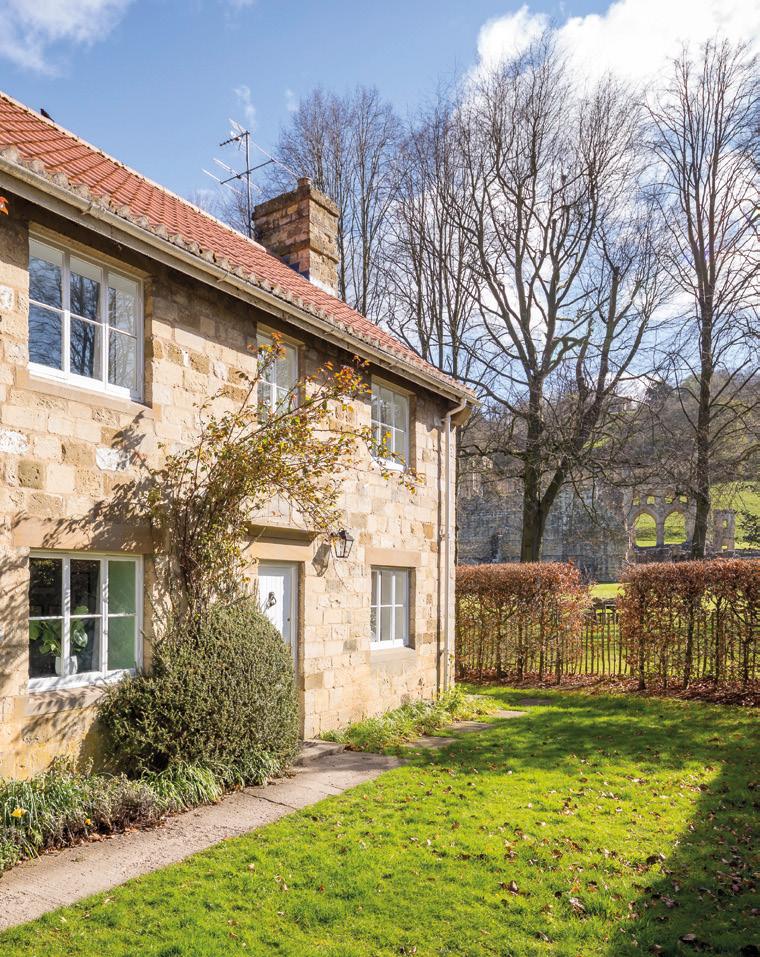
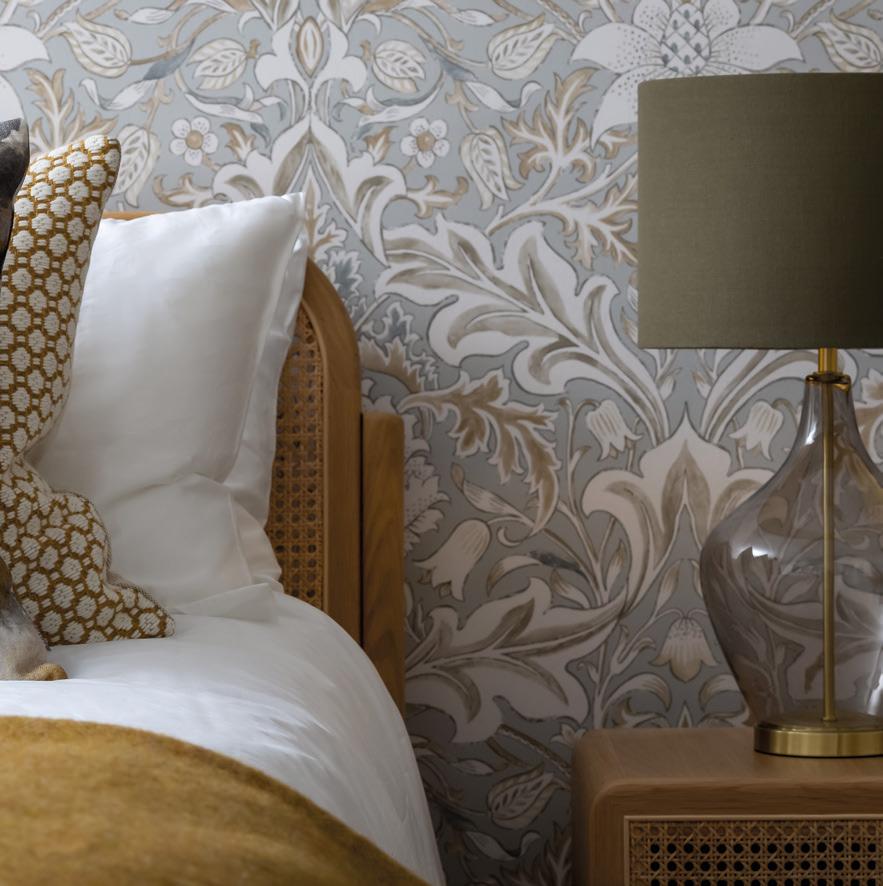
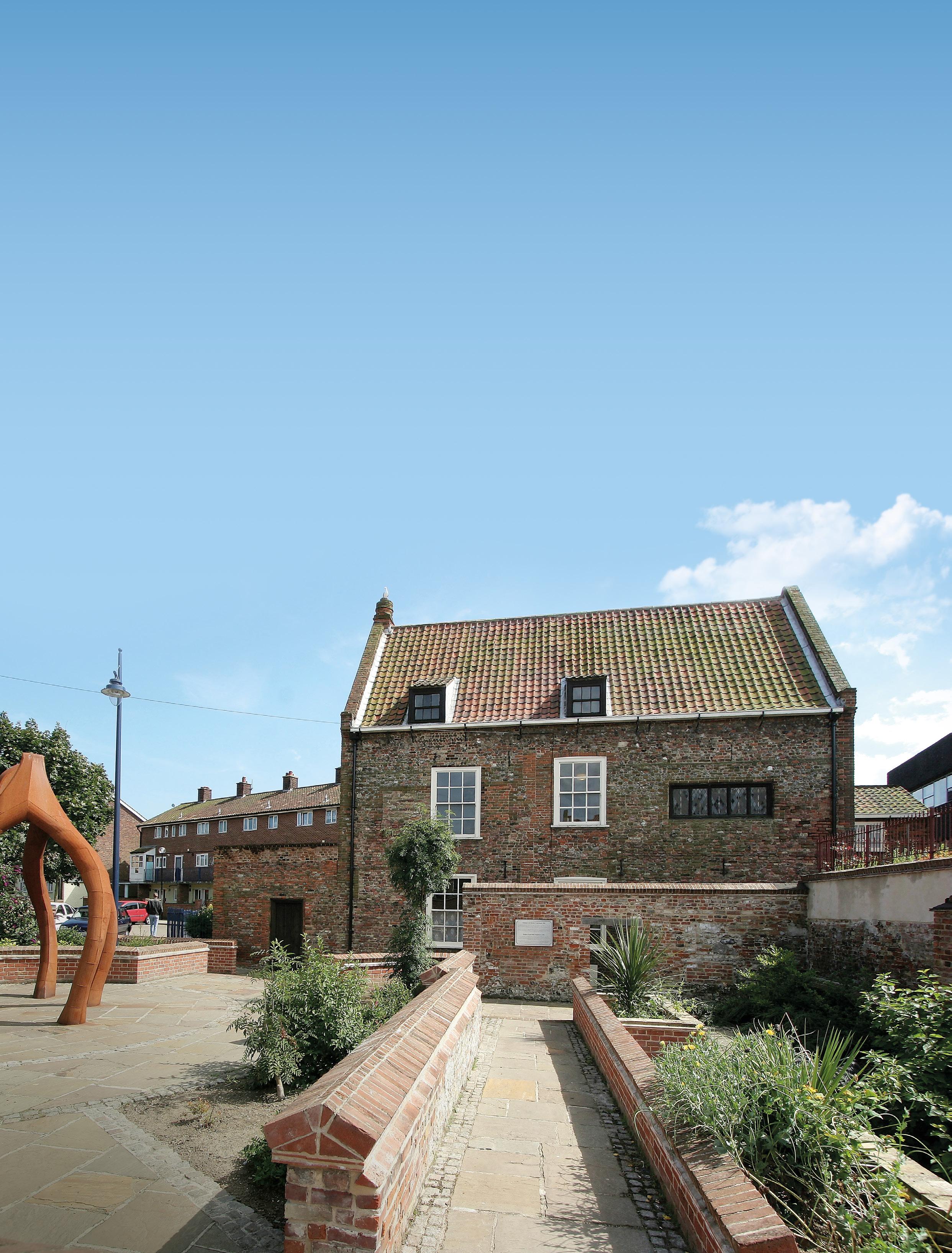
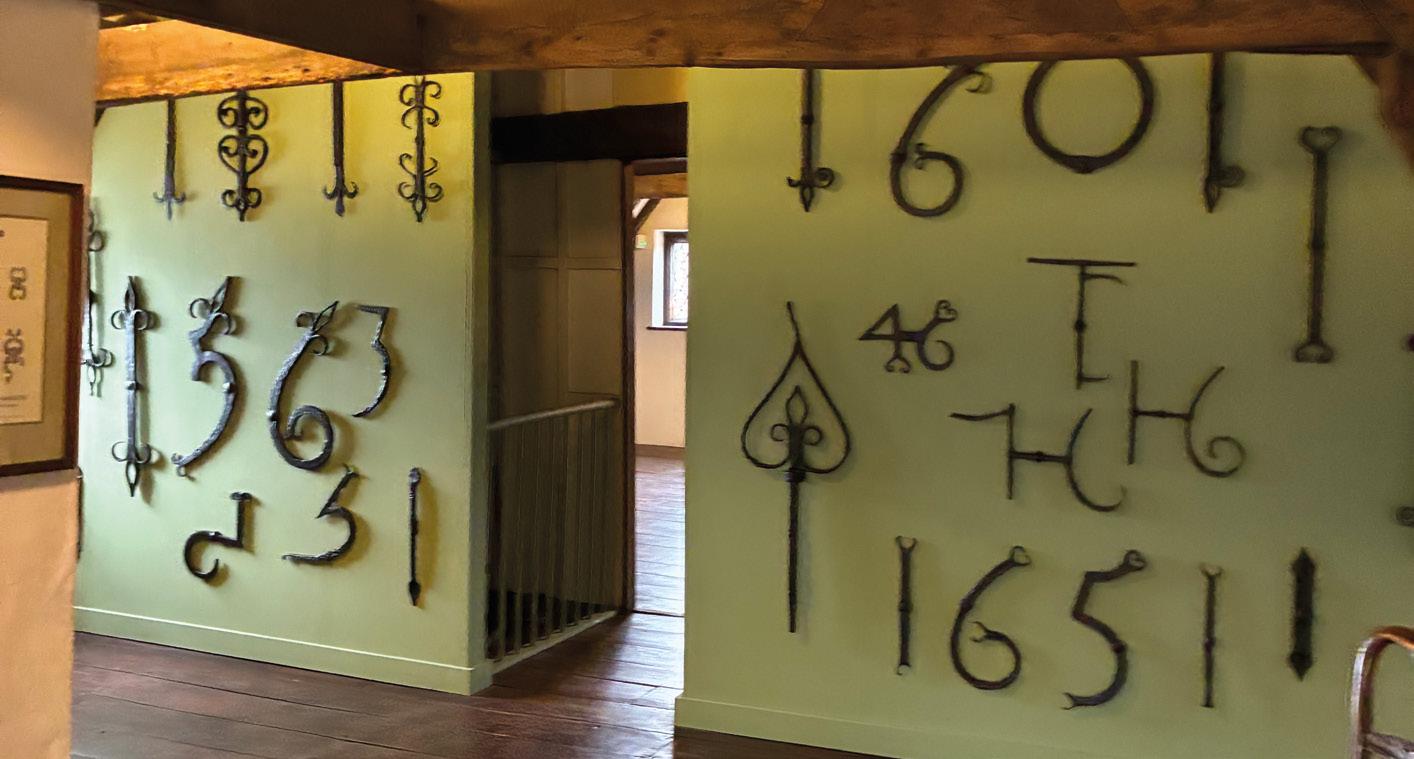
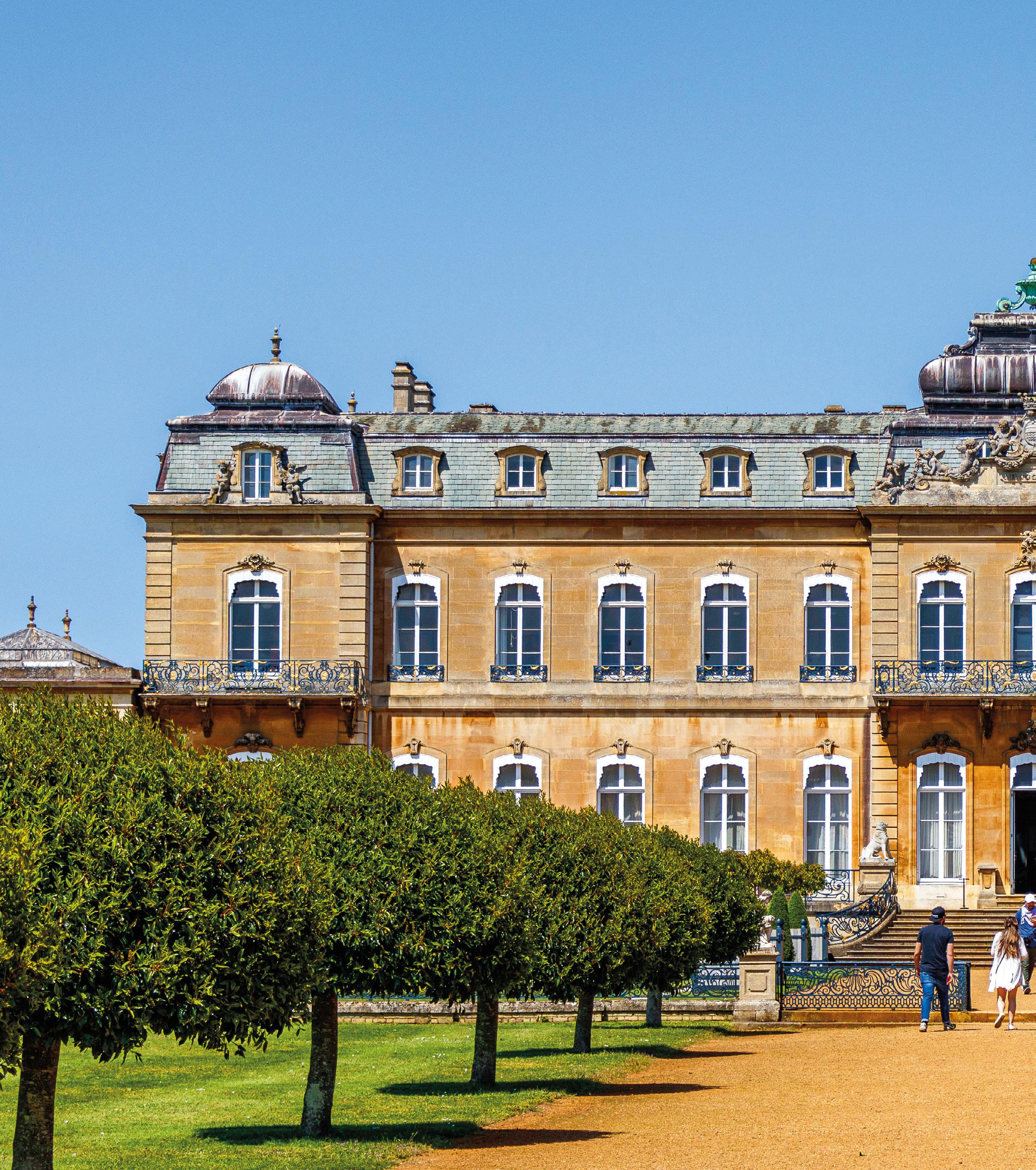
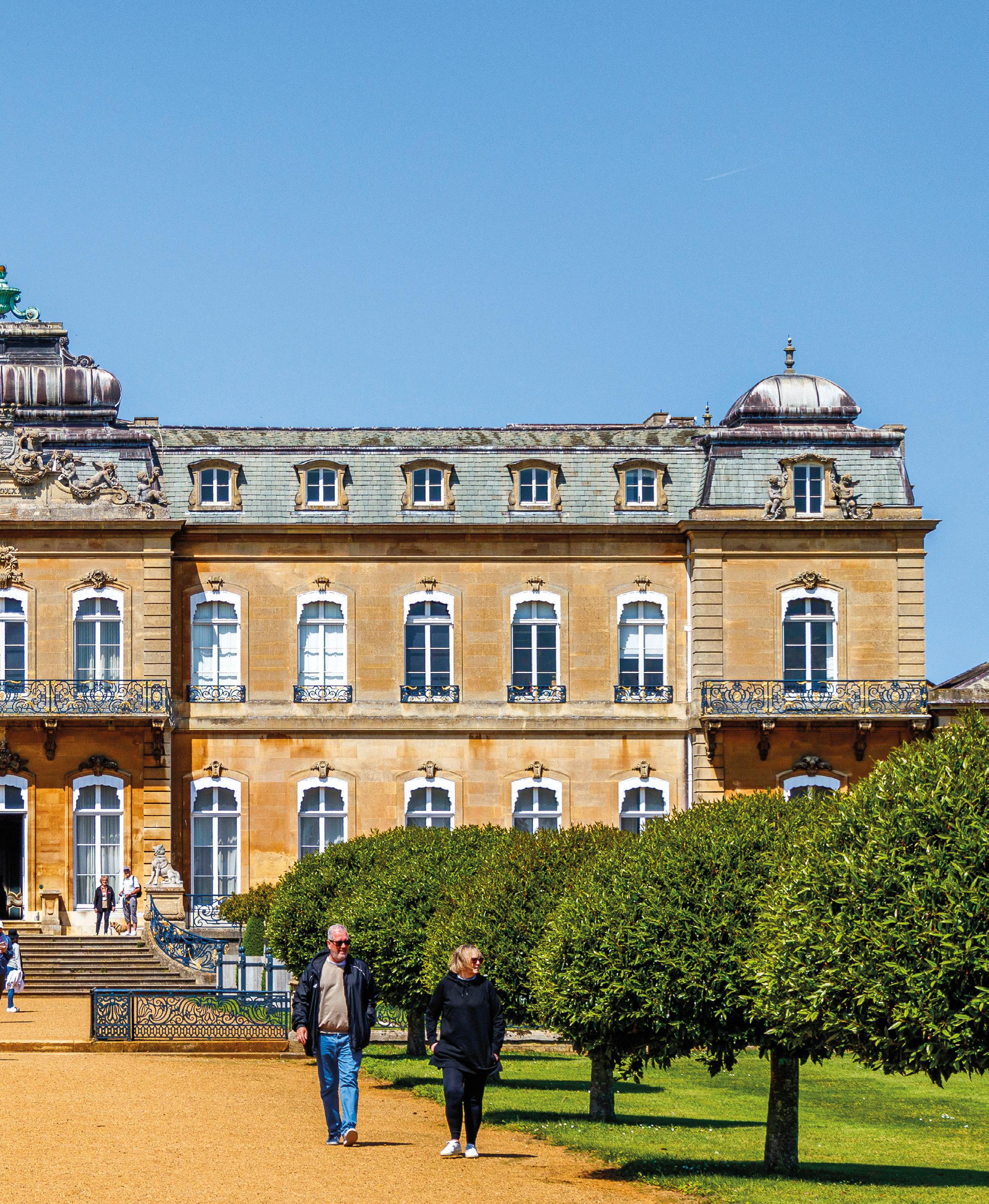
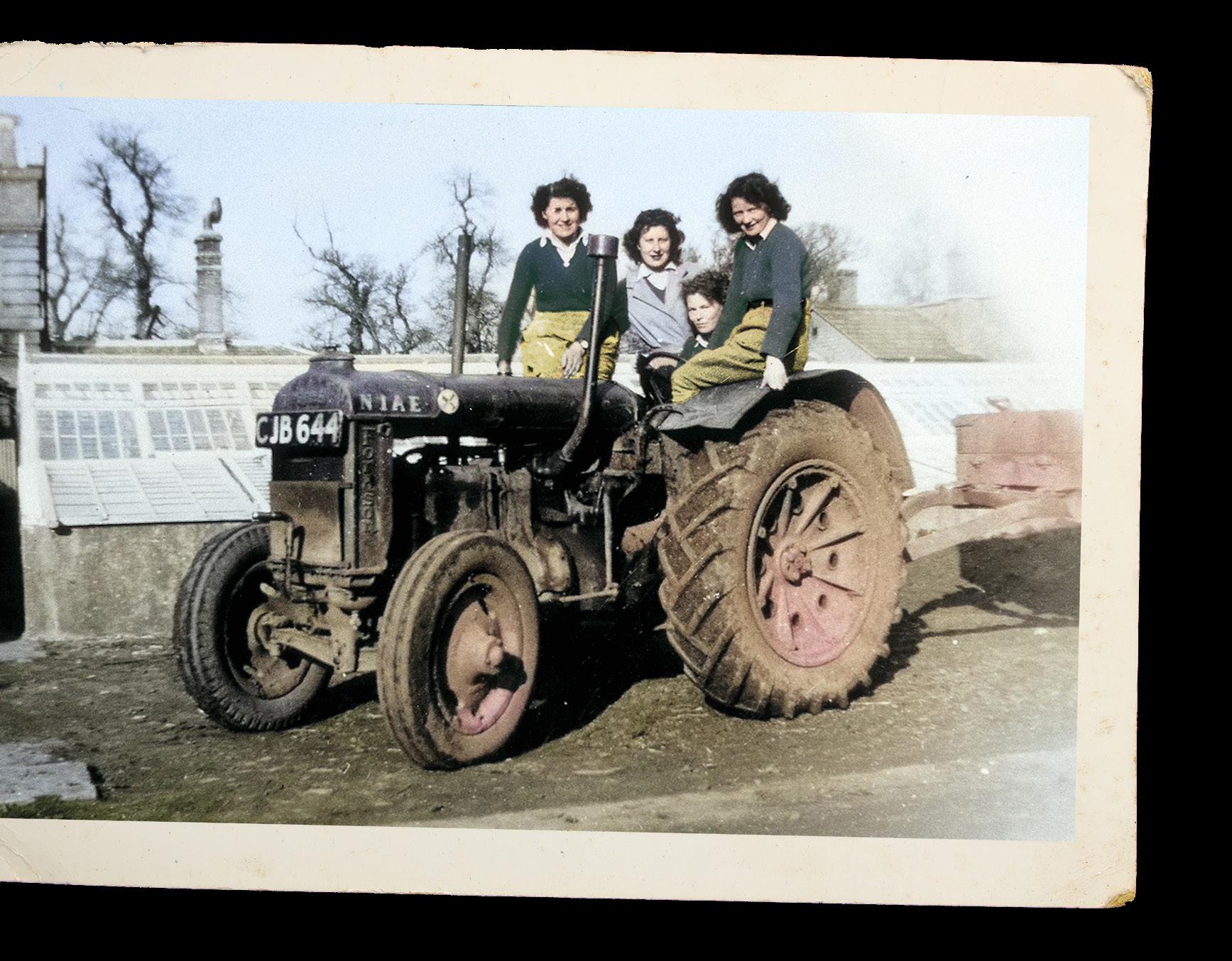
The Head Gardener’s House at Audley End House and Gardens, Essex
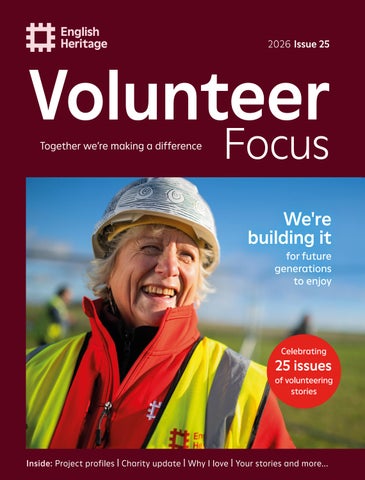
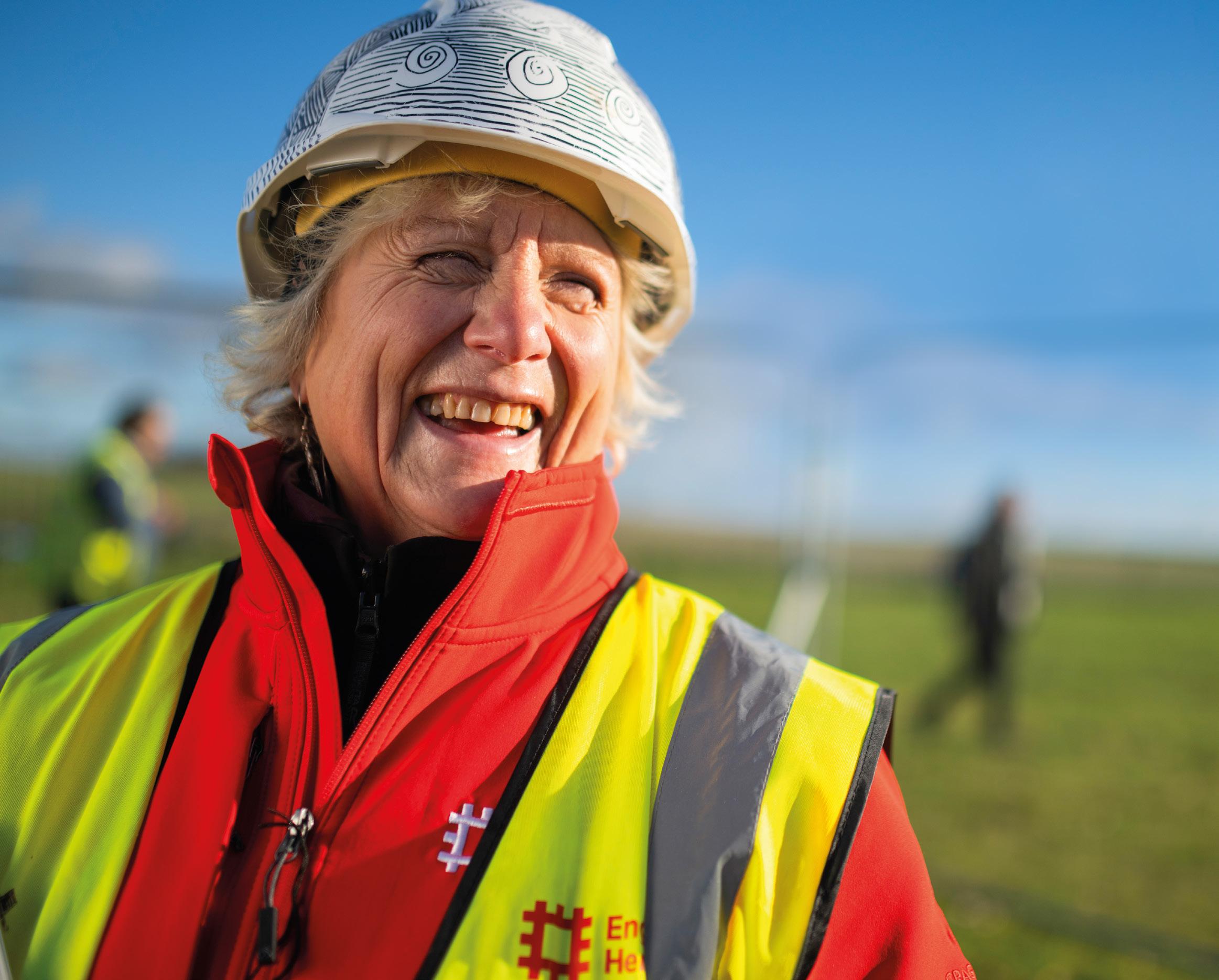
On the cover:
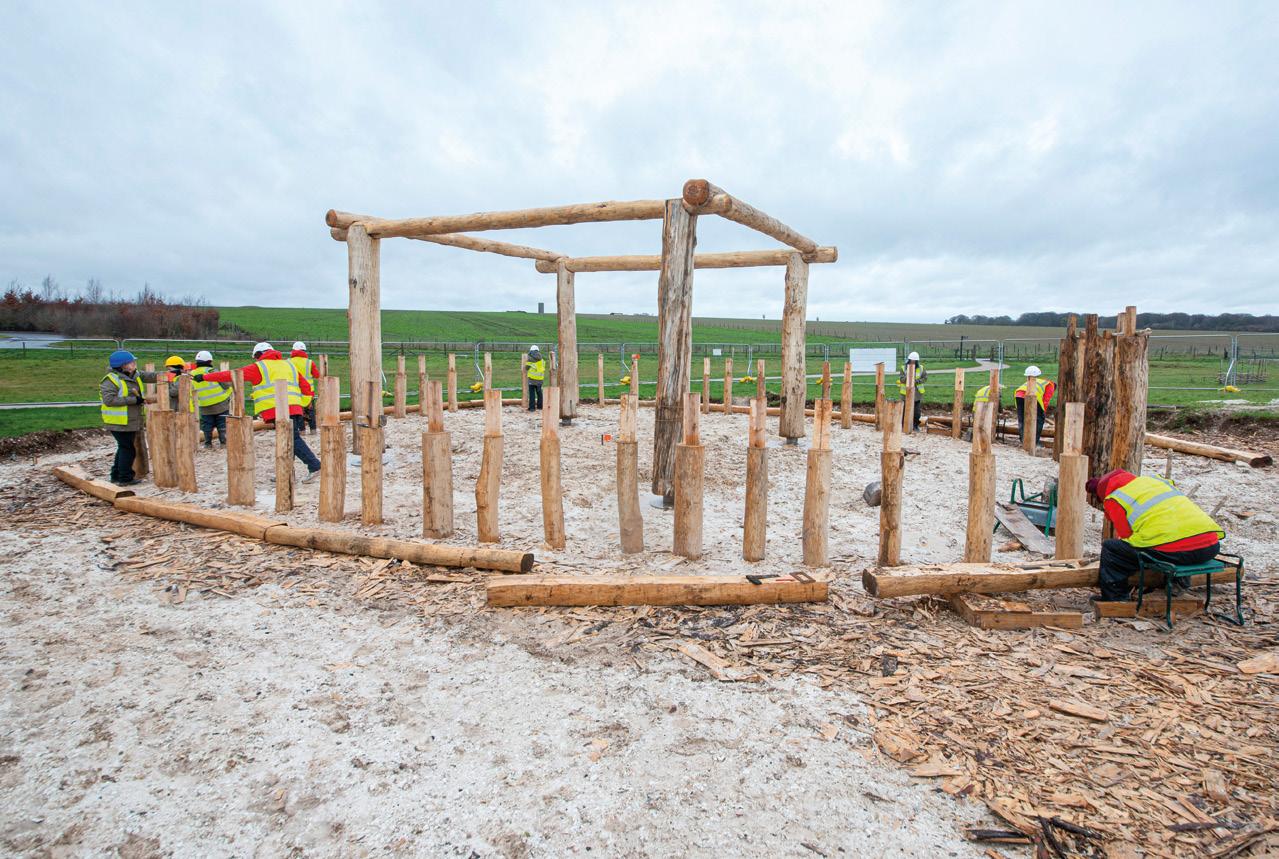
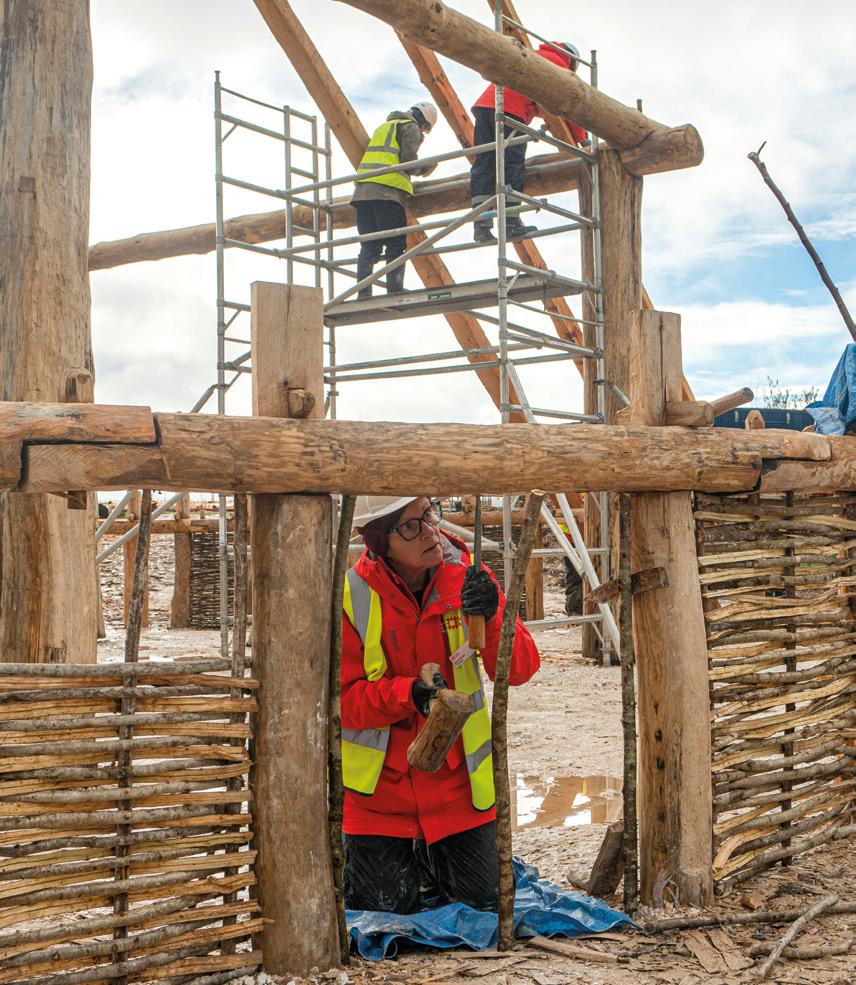
Edrys Lupprian, a volunteer working on the Kusuma Neolithic Hall, part of the new learning centre at Stonehenge.
If you’d like to contribute to the next edition of Volunteer Focus we’d love to hear from you:
e. volunteerfocus@english-heritage.org.uk
t. 0370 333 1185
www.english-heritage.org.uk/volunteer
If you would like this document in a different format, or would like to share with us ways we can make our magazine more accessible, please email:
e. volunteerfocus@english-heritage.org.uk
t. 0370 333 1181
Editor Sophie Robertson
Assistant editor Anneka Coleman
Designer Bronwen Reeves
With thanks to copy editor volunteers
Ann Mateo and Jane Heaton, and all of our contributing volunteers.
Hello and welcome
Welcome to the 25th issue of Volunteer Focus.
In this issue we celebrate the spirit of community and what can be achieved when we come together. From supporting wildlife around Dover Castle and remembering wartime life at Wrest Park, to building a Neolithic Hall at Stonehenge and riding a 'Highway to History', your teamwork has turned inspired ideas into fantastic realities.
Your stories show that history is not preserved by individuals alone, but by teams united by passion, care and camaraderie. Thanks to all of your efforts, English Heritage can continue its dedicated work, preserving the past for the future.
If you have a story you would love to share please do get in touch.
Matt Huggins
Communications Volunteer
An alt text version of this magazine is available to download as a PDF from our website. Scan the code or visit: www.english-heritage.org.uk/support-us/ volunteer/volunteer-focus-magazine BM9391_05/26
Charity update
Interim chief executive Geoff Parkin looks ahead to the year to come.
Thank you for everything you do.
Iwould like to start by saying thank you. English Heritage simply could not achieve all we do without the support of our volunteers.
It is thanks to you that our sites come to life, whether you are welcoming visitors, leading guided tours, caring for gardens, supporting events and school visits, or contributing to conservation work and carrying out maintenance tasks. Your time, energy and commitment make a real and lasting difference.
At the start of June, we celebrate Volunteers’ Week –a national moment to recognise the contribution volunteers make across society. It’s an opportunity for us to say thank you and celebrate the incredible work you support across our sites.
Our volunteer community is continuing to grow, with more people than ever choosing to give their time to English Heritage. Last year alone, volunteers gave over 329,000 hours. That is an extraordinary contribution, and one we never take for granted.
We are continually looking at
how we can offer a wider range of opportunities – whether at sites or from home – so that volunteering here is flexible, rewarding and accessible to as many people as possible.
A year of stories and discovery
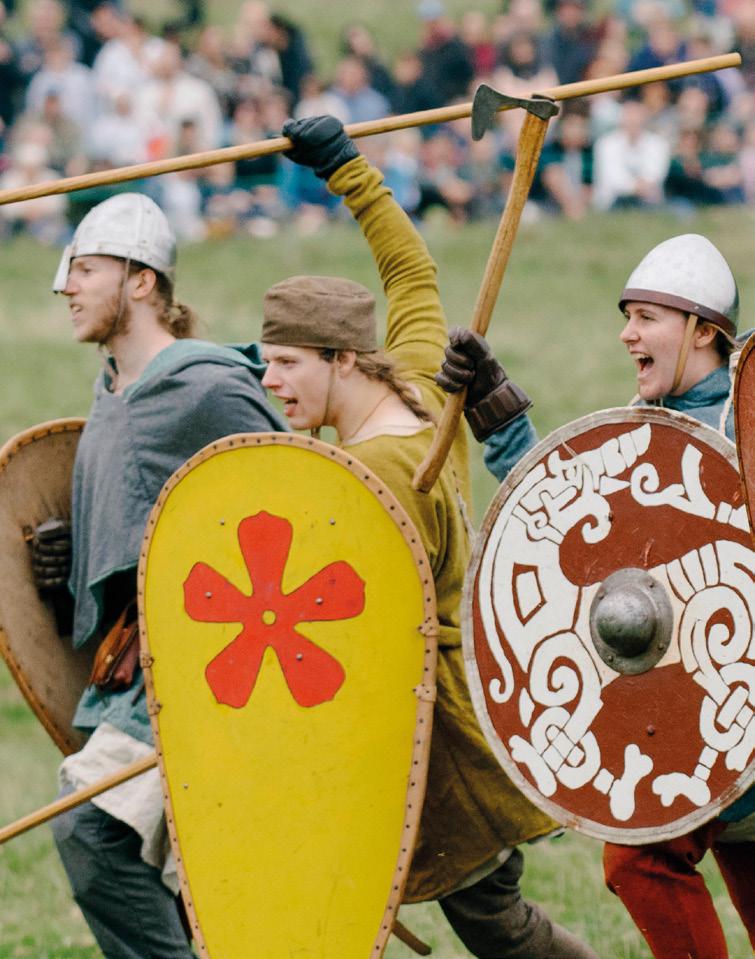
As we look ahead, volunteers will continue to play a vital role in helping us share stories and connect people with our historic places. This year marks the 960th anniversary of the Battle of Hastings, and the Bayeux Tapestry is coming to London for the first time. We are planning a series of events to commemorate the conquest, with Battle Abbey at the heart of the programme and a whole host of other Norman sites also in the spotlight.
Inspiring the next generation remains central to our mission. At Stonehenge, we are preparing to open a new Learning Centre later this year, which will transform how we bring prehistory to life for young people. The new facilities will include an accessible learning centre with discovery
lab and digital studio, alongside a unique classroom in the form of the Kusuma Neolithic Hall.
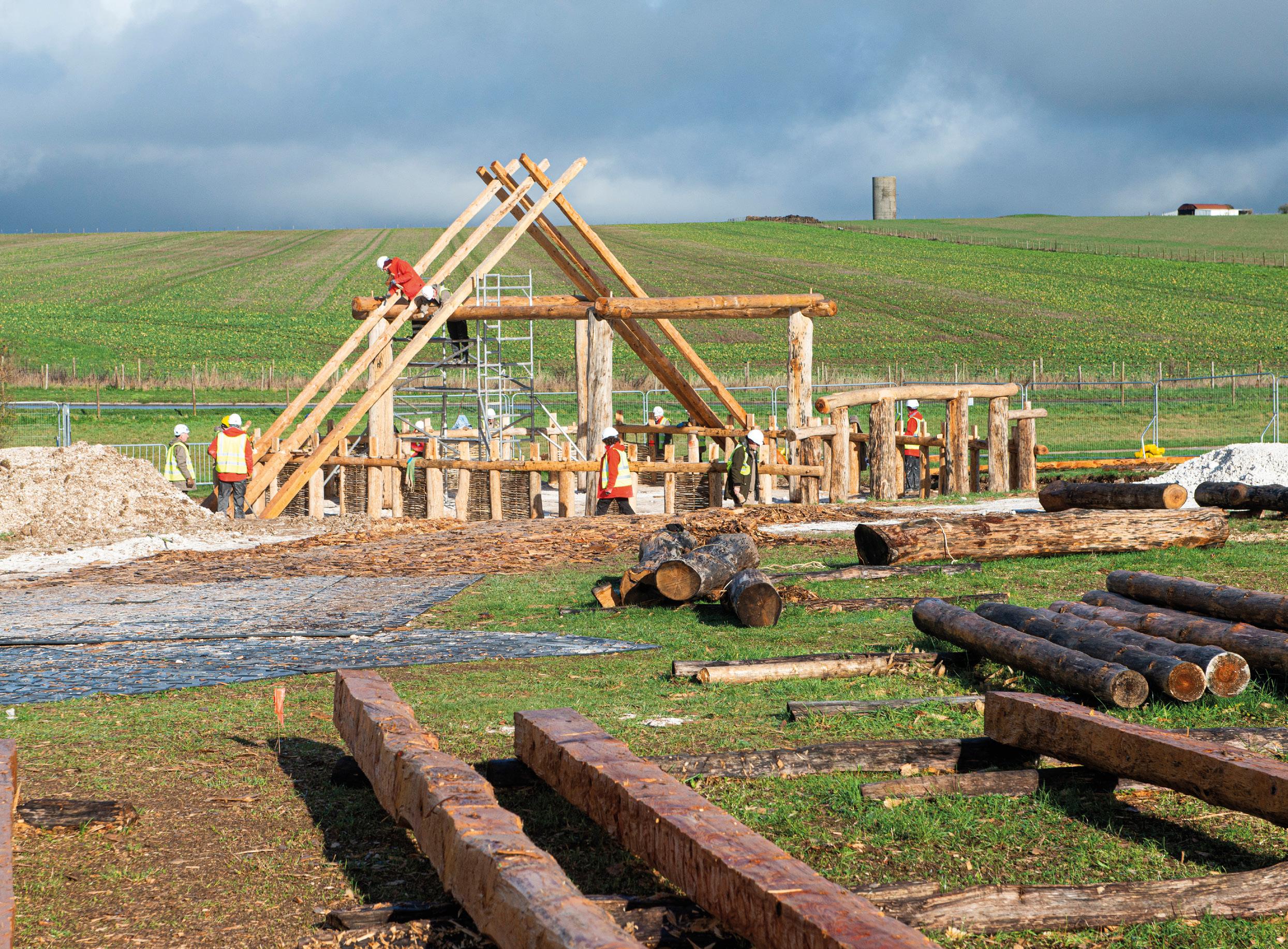
This remarkable structure is being built by a team of volunteers, using traditional methods and materials. When complete, it will transport learners back 5,000 years, offering a hands-on experience of Neolithic life. You can read more about this work on pages 18 to 23.
It is thanks to you that our sites come to life
Meanwhile, in Berwick-uponTweed, work continues to transform the town’s historic barracks. The Living Barracks project is restoring the site as a vibrant cultural and community space, with volunteers playing an important role. Turn to pages 14 to 15 to find out more about the impact this work is having.
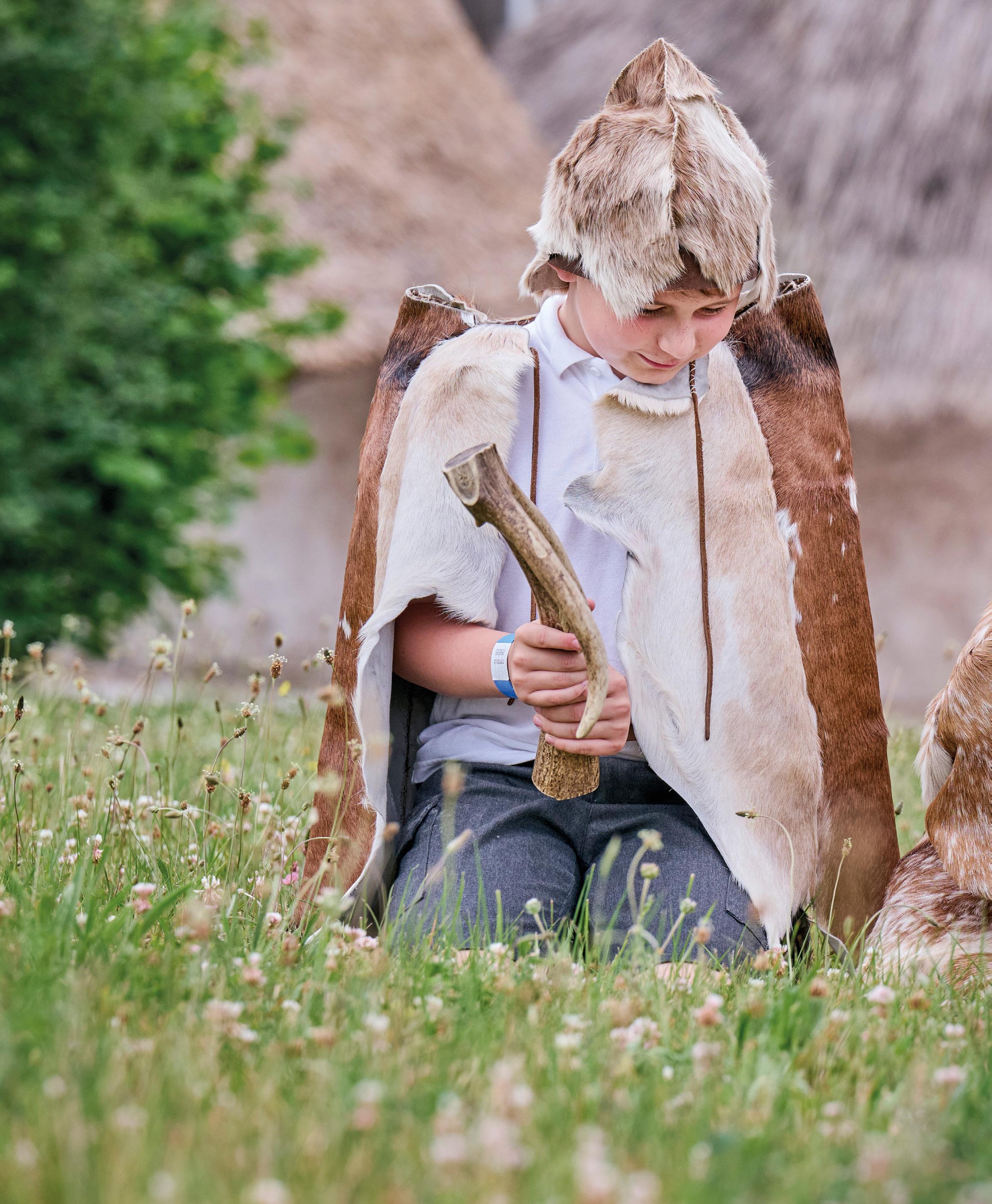
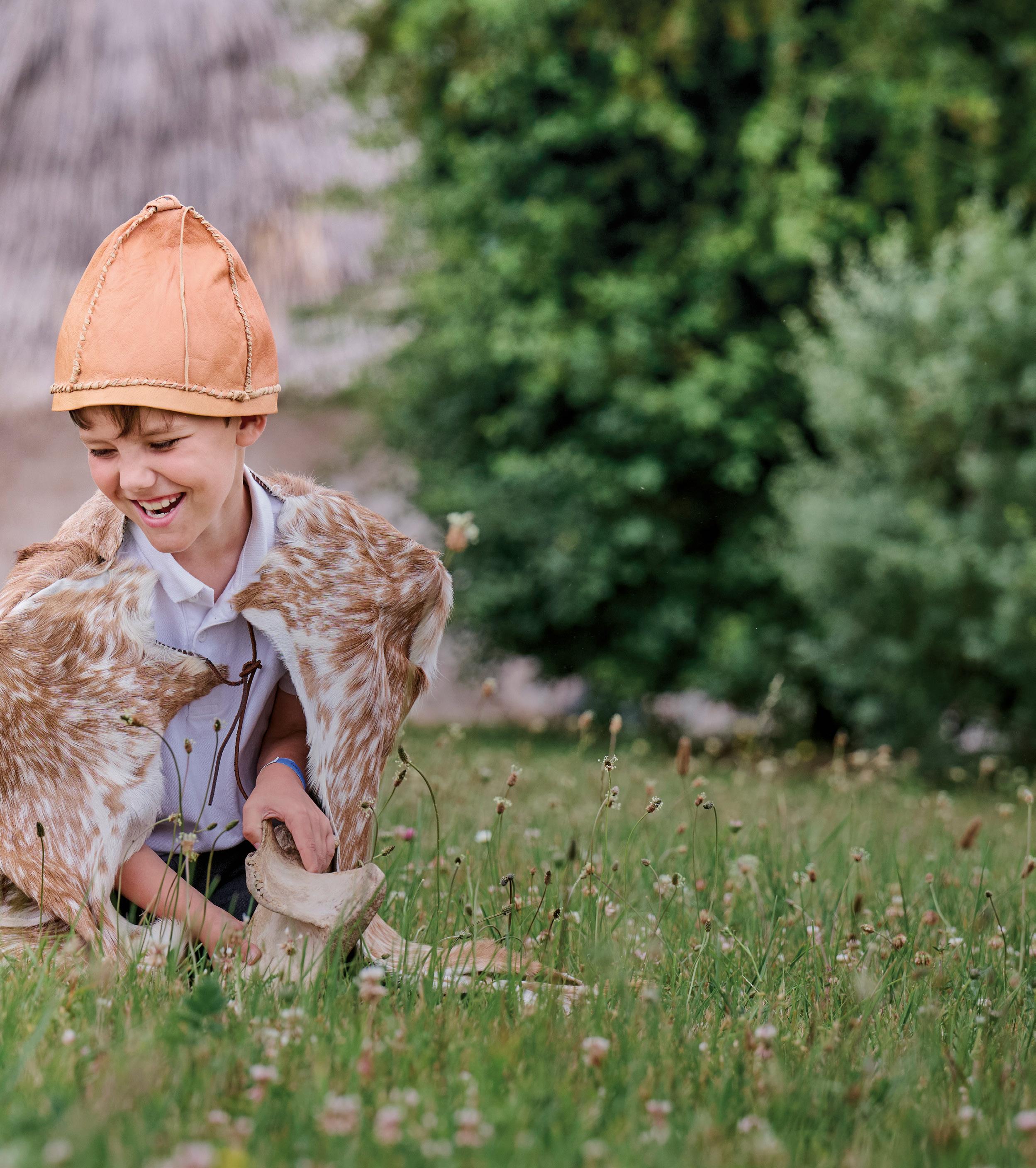
Left Education visit ahead of the launch of the new learning centre.
Opposite page, clockwise from top left
;
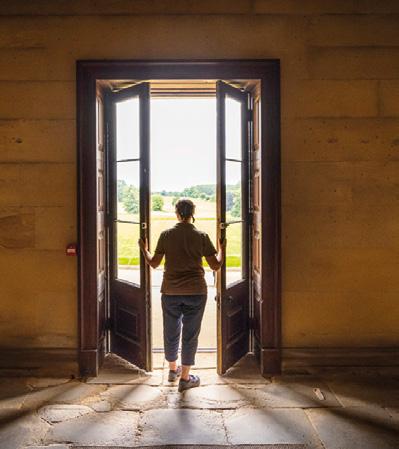
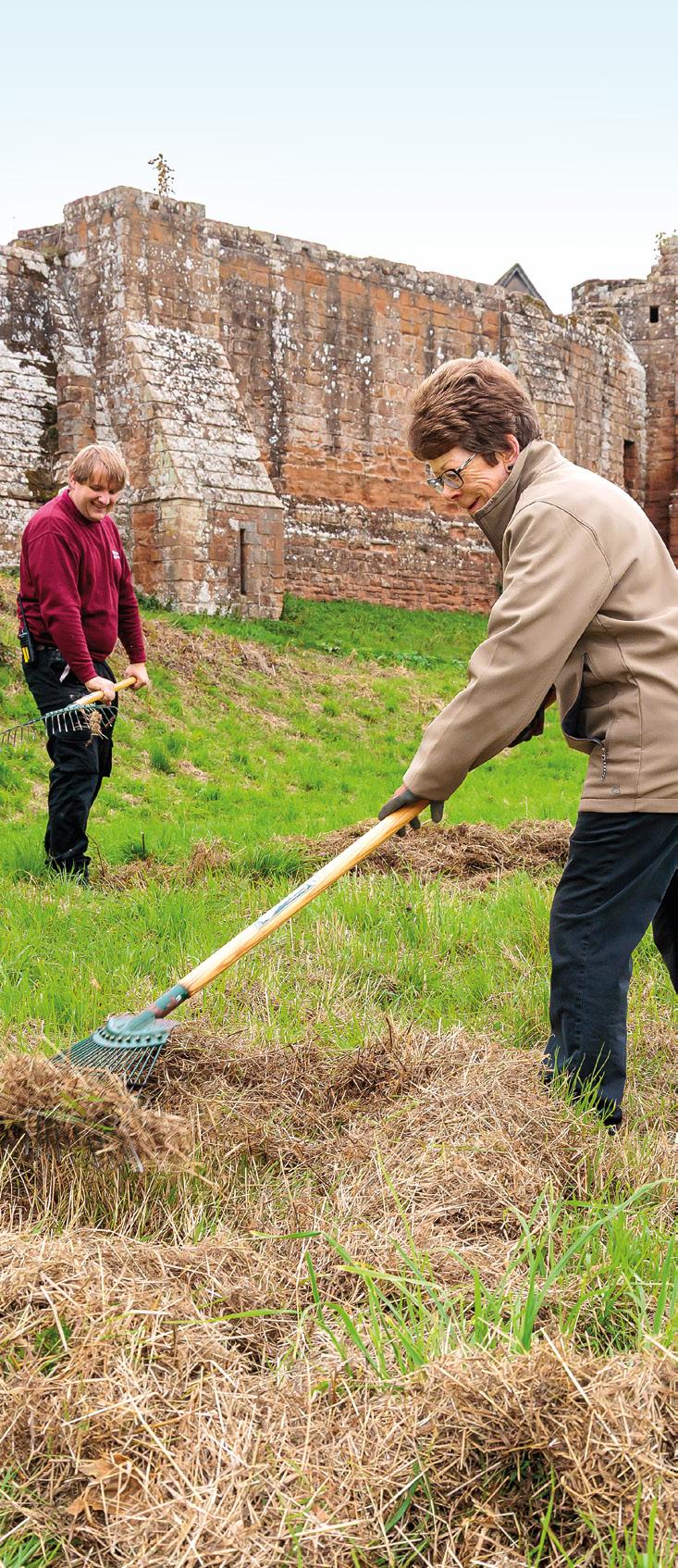
Previous page Garden volunteer at Kenilworth Castle and Elizabethan Garden. Photo by Martyn Blair, photography volunteer.
Sibsey Trader Windmill in Lincolnshire; volunteers at Shrewsbury Flaxmill Maltings. Photo by Paul Burton, photography volunteer
last year's Battle of Hastings event.
Bringing sites to life
Alongside these major projects, it is the everyday contribution of volunteers that makes such a difference across the country.
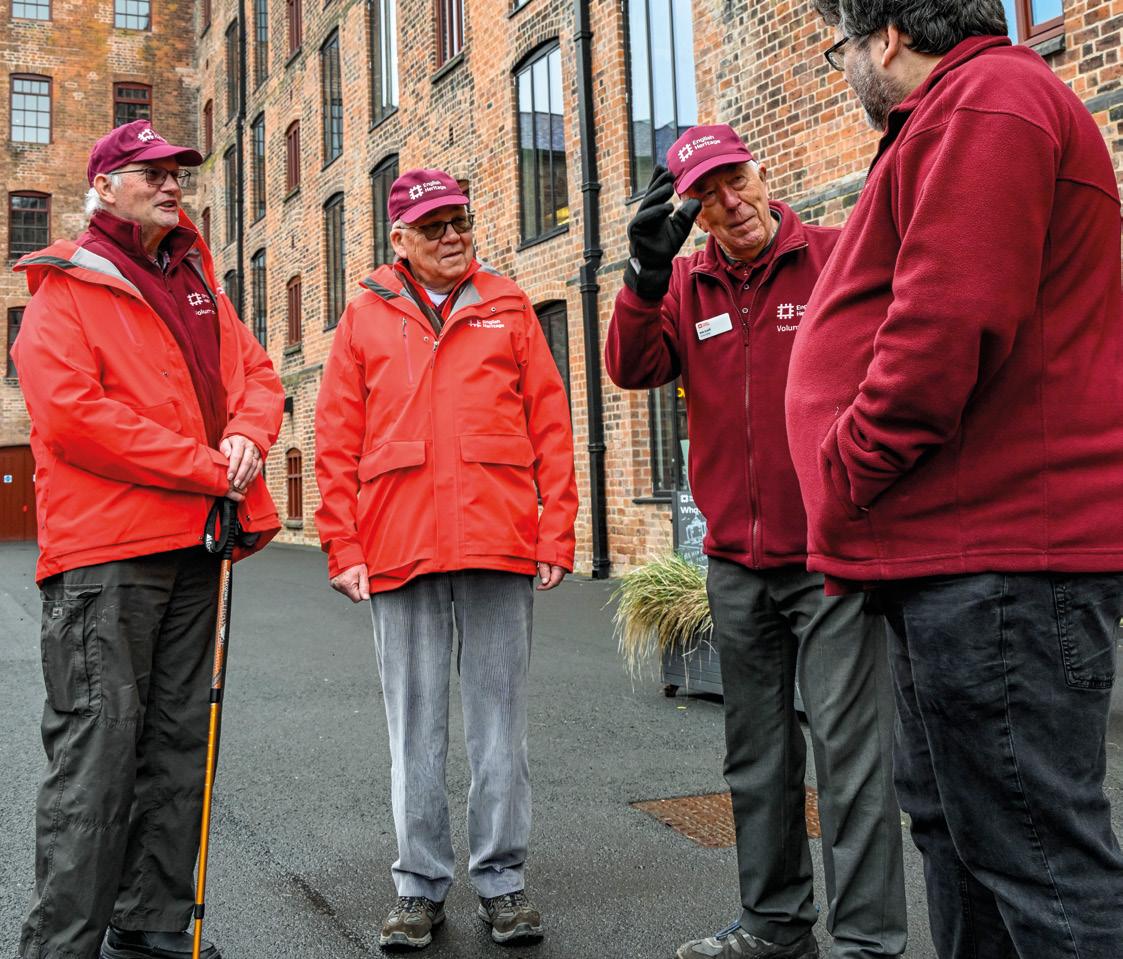
This is also true where volunteer guides bring history to life at sites in our care with enthusiasm, knowledge and great storytelling that stays with visitors long after they leave. Read more on pages 10 to 13.
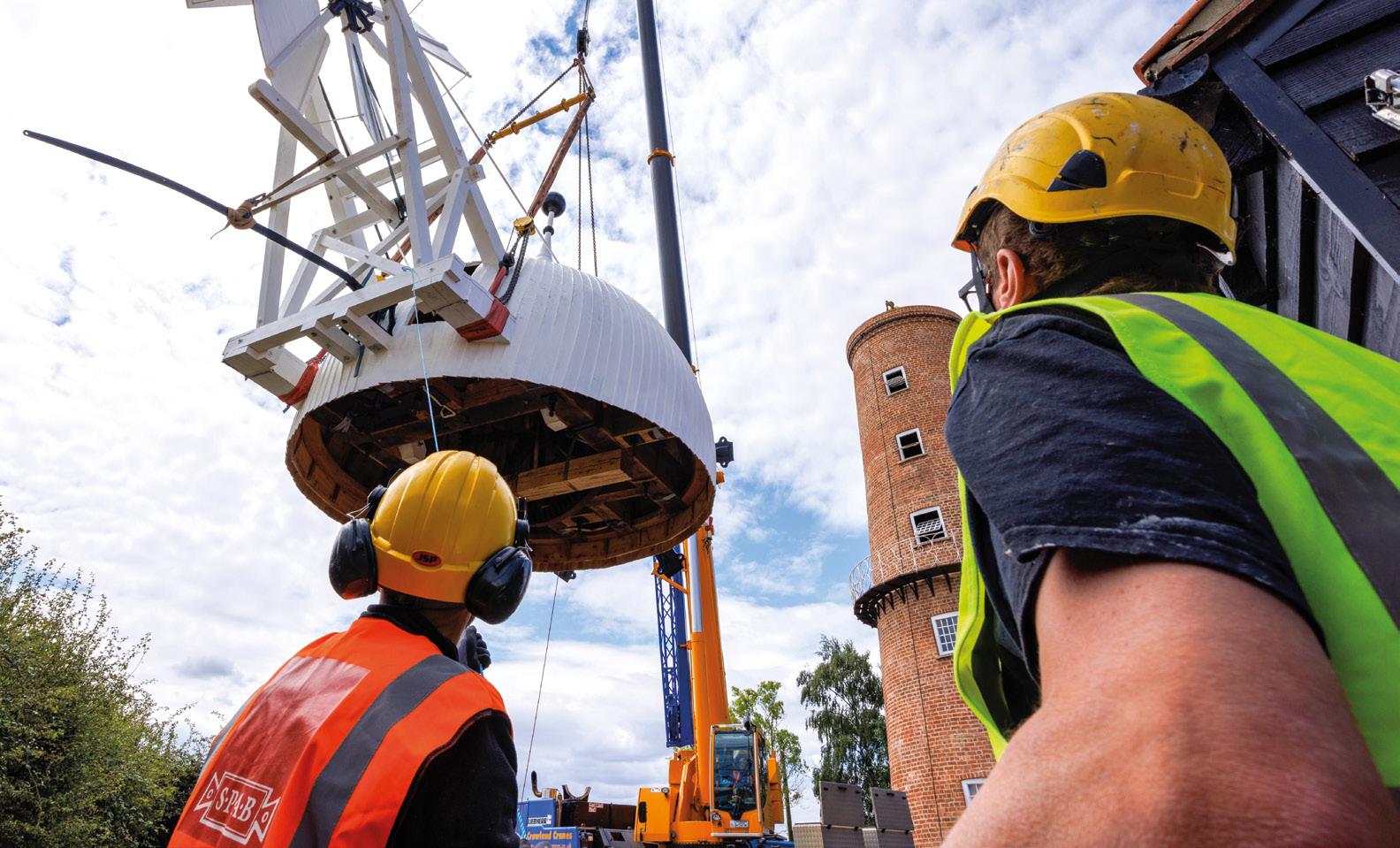
At Sibsey Trader Windmill in Lincolnshire, one of England’s last remaining six-sailed mills, we’ve just completed a painstaking five-year conservation project. The mill has been restored to full working order, with rebuilt cap and sails, and is now open for guided tour visits.
A new team of local volunteer millers are helping to bring the site to life, offering visitors a hands-on experience. It’s a great example of how conservation, community and volunteering come together to keep our heritage alive.
Continuing to improve your experience
We are committed to making English Heritage a place where you feel valued, supported and able to make a difference. This means offering a clear and well-organised volunteering experience, with the right induction, training and opportunities to learn new skills, build confidence and connect with others.
Over the past year, we have made improvements to the Volunteer Hub, making it easier to find and apply for opportunities and manage your preferences. We have also added an online rota system, which will give you greater flexibility to choose shifts that fit around your other commitments.
We know there is more to do, and listening to your feedback is essential. I, and other members of the Senior Leadership Team, have been visiting sites to hold open conversations with colleagues and volunteers, and we’ll be continuing these visits over the next couple of months.
These discussions are invaluable in helping us understand what’s working well and where we can improve. Later in the year we will be launching our Volunteer Survey, which is another fantastic opportunity for you to let us know how you’re getting on.
Thank you
Thank you for everything you do as part of the English Heritage family. The care, enthusiasm and dedication you bring makes a real difference – not only to the places we look after, but to the millions of people who enjoy them each year.
I am looking forward to meeting many more of you as I visit sites in the months ahead. ■
The care, enthusiasm and dedication you bring makes a real difference
Be part of
it
There are a wide variety of volunteering roles across the country. To find out how you can get involved visit english-heritage.org.uk/volunteer
Keeping connected
Updates and offers for you
Introducing the Volunteer Hub rota
We’re excited to share the Volunteer Hub rota – a new way to sign up to your volunteer sessions and record your volunteer activity. So far, the Volunteer Hub rota has been introduced at 59 sites.
The rota has a huge number of benefits:
• You save time by inputting your activity into the system instead of keeping a personal record to email or text over.
• You only need to use one system to book onto sessions and record activity across all the roles or sites you support.
• You’re now able to see your activity totals on your Hub homepage.
• You can access it all from the app, meaning you can manage your volunteering bookings from anywhere.
If your team hasn’t already started using the rota, don’t worry, we are working with each site to understand when the right time is to roll out rotas. You'll be given all the training and resources you'll need to get going.
For questions or help using the rota, email Volunteer.Hub@english-heritage.org.uk
Share your news
We’d love to hear from you by email at volunteerfocus@english-heritage.org.uk
Meet the Volunteer Hub team
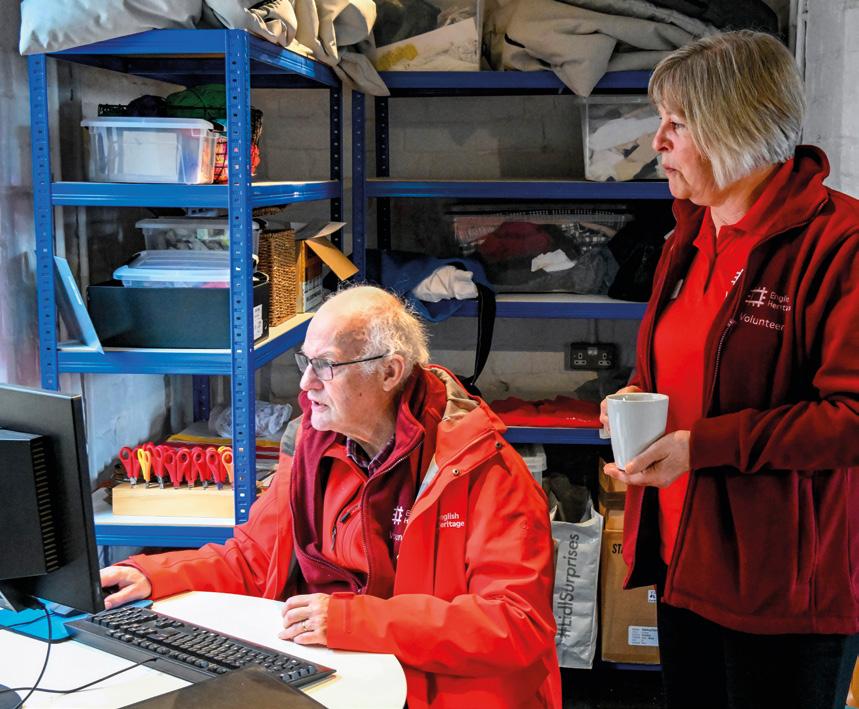
Our systems support volunteers are the friendly faces behind the Volunteer.Hub@english-heritage.org.uk mailbox. They’re happy to help answer your queries about the Volunteer Hub, expenses and Fuse.
One of those volunteers is Elise Orford. She says, ‘I really wanted to meet new people, learn new skills and help those who volunteer and work on our beautiful sites.’ Amongst other things, Elise helps volunteers with their expenses queries, creates training documents for our managers and supports our data reporting. ‘Solving queries is very rewarding. It’s very geeky but I enjoy it when we have worked on data in the Hub. Knowing everything is organised is very satisfying.’
Get 25% off at English Heritage shops and cafés with your pass or quote code 025EHVOL26 to get the discount in our online shop.
Elise Orford.
Guardians make history
Become a Guardian and make history
England’s heritage is irreplaceable and it needs people to protect it. That's why we've launched our Guardian scheme, a group of like-minded supporters dedicated to keeping that legacy alive. Supporters choose from three Guardian tiers: Tudor, Roman and Neolithic. Each tier offers different benefits, including unrivalled insight and access with special events and behind-the-scenes tours. Support from our Guardians is helping us to:
• unlock heritage learning for every schoolchild by helping to fund free school trips and inclusive new facilities, like the cutting-edge Learning Centre at Stonehenge in Wiltshire
• make heritage climate resilient as extreme weather intensifies
• celebrate London’s history with a dozen new blue plaques each year.
• fund urgent conservation work and repairs at sites across the country
• fund free entry for people in need, like those who use Trussell Trust foodbanks.
To find out more about the Guardians scheme, scan the code or visit english-heritage.org.uk/ support-us/donate-now/guardians or email us at guardians@english-heritage.org.uk
Volunteering with style
We're distributing new uniforms when old items are worn out or need to be replaced. The new uniform is a reflection of our refreshed branding, and makes you instantly recognisable as part of the English Heritage team. It reflects our core brand colours, is vibrant, fresh and we hope you enjoy wearing it. You can use the Volunteer Hub to order items of uniform when you need them by going to My Profile and selecting Uniform
Don't forget
Your volunteer pass is our way of recognising the contribution you give. It gives free entry for you and up to six friends or family to all English Heritage sites. We hope you enjoy using it to learn more about the other sites in English Heritage’s care. Just show your pass when you arrive, or book online using code EHT2026
Get 10% off your stay at an English Heritage holiday cottage. Use discount code EHVOL26 when you book online or call 0370 333 1187.
The new uniform being modelled by volunteers at Shrewsbury Flaxmill Maltings.
Photo by Paul Burton, photography volunteer.
Guiding the way
Sophie Robertson, volunteering and participation officer, hears from volunteers who are bringing our guided tours to life.
English Heritage has continued to evolve in its 11 years as a charity. This includes finding different ways of sharing our sites and stories with our visitors and members. Now, more sites
then ever offer immersive pre-bookable tours delivered by knowledgeable volunteers. We caught up with some of the volunteer teams to find out more.
Great Yarmouth Row Houses
These houses were built during Great Yarmouth’s boom years of the early 17th century. Back then, the town had over one thousand ships, and the houses were part of a bustling network of over 145 narrow streets known as the Great Yarmouth Rows. The buildings are known as Old Merchant’s House and Row 111 House.
Bringing the past to life
Both are unfurnished, providing an exciting challenge for volunteer guides to bring to life the rooms and the wider history of the town and its rows. Brian Bridges was volunteering at Framlingham Castle when the opportunity to lead tours at Great Yarmouth Row Houses came along: ‘I was very keen to get involved as it was so different from Framlingham.’ To prepare for the role, Brian researched extensively and visited Norfolk Museums. ‘I begin tours with a short history of Great Yarmouth from its Roman beginnings up to the end of the Second World War to provide some context and then we tour the rooms. I encourage exploration and questions and how much interaction I have varies between groups.’
Both Old Merchant’s House and Row 111 House were able to change with the times. The houses were divided into tenements in the 19th century, and as the
Second World War loomed, the rows were condemned as slums and earmarked for demolition. Great Yarmouth suffered heavy bombing during the war, and many buildings were lost.
Former
residents
A team of archaeologists rescued what period objects, fixtures and fittings they could find. Over a thousand of them are now in the care of English Heritage, with some on display in the Row Houses. ‘Although not complete, we do have details of some of the people who owned, rented or were landlords of the houses, from mayors to fishermen, giving wonderful "imaginings" as to what life must have been like’ Brian muses. ‘Until 1804 the rows were not numbered but known by the name of the person whose house fronted the row. These would change as the ownership changed. Old Merchant’s House was on Row 117 and started as 'Joshua Pearson Row', then 'The George Row' then as 'Ballast Keel Row' then 'Gallon Can Row'.
‘Some visitors are knowledgeable already and keen to see the houses, and some come with no prior knowledge. Either way we can normally surprise and delight them. It’s great to show that Great Yarmouth is more than just amusement arcades and rides, but that it has a wide and hugely interesting history.’ ►
It’s great to show that Great Yarmouth has a wide and hugely interesting history
Find out more
Find out more about the history of Great Yarmouth and its famous Row Houses at english-heritage.org.uk/visit/ places/great-yarmouth-rowhouses-and-greyfriars-cloisters
Above left Inside Great Yarmouth Row Houses. Photo by Brian Bridges.
Above Brian Bridges.
Bessie Surtees House
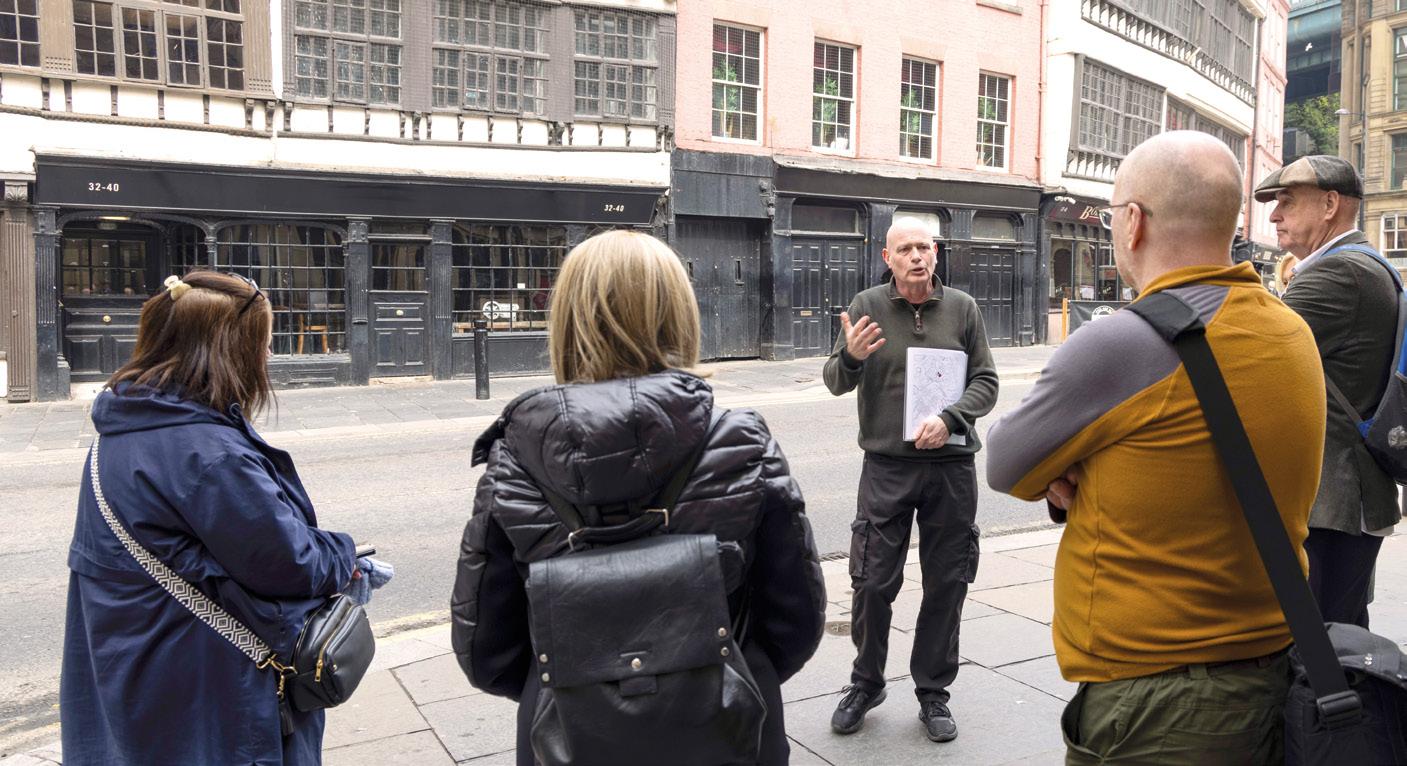
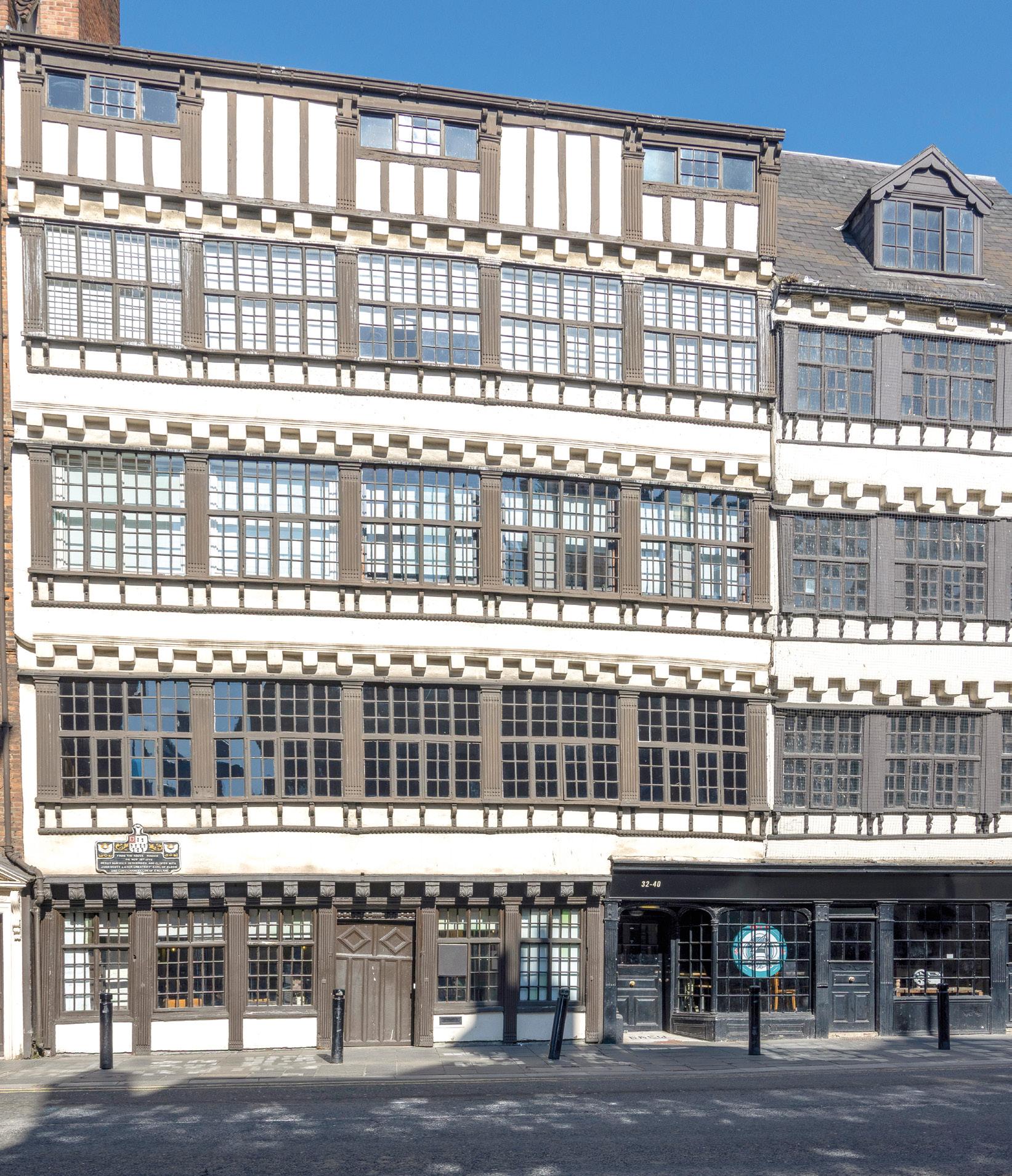
Over 260 miles to the north is another fascinating merchants’ house. This five-storey Jacobean building on Newcastle’s quayside offers a fascinating glimpse into the city’s past. It’s actually three houses in one: Milbank, Surtees and Maddison House, and each has a story to tell. Volunteers Tony Stephenson, Miranda Pemberton and Claudia Tarnai have delivered guided tours since spring 2025.
‘As a history student at university, I began volunteering to learn more about the city I live in and I love to tell the story of Newcastle through the house’, says Miranda.
Social history
It's the social history of Newcastle in one building
For Tony, ‘it's the social history of Newcastle in one building. We talk about the merchants who lived here and the influence they had on the wider city, painting a picture of the quayside through time’.
The eye-catching exterior showcases the iconic jettied upper stories. Inside, the upper floors are a maze of higgledy-piggledy corridors and undulating floors, which make up Historic England's North East office. The panelled
Plan your visit
To book your tour of Bessie Surtees House visit english-heritage.org.uk/ visit/places/bessiesurtees-house
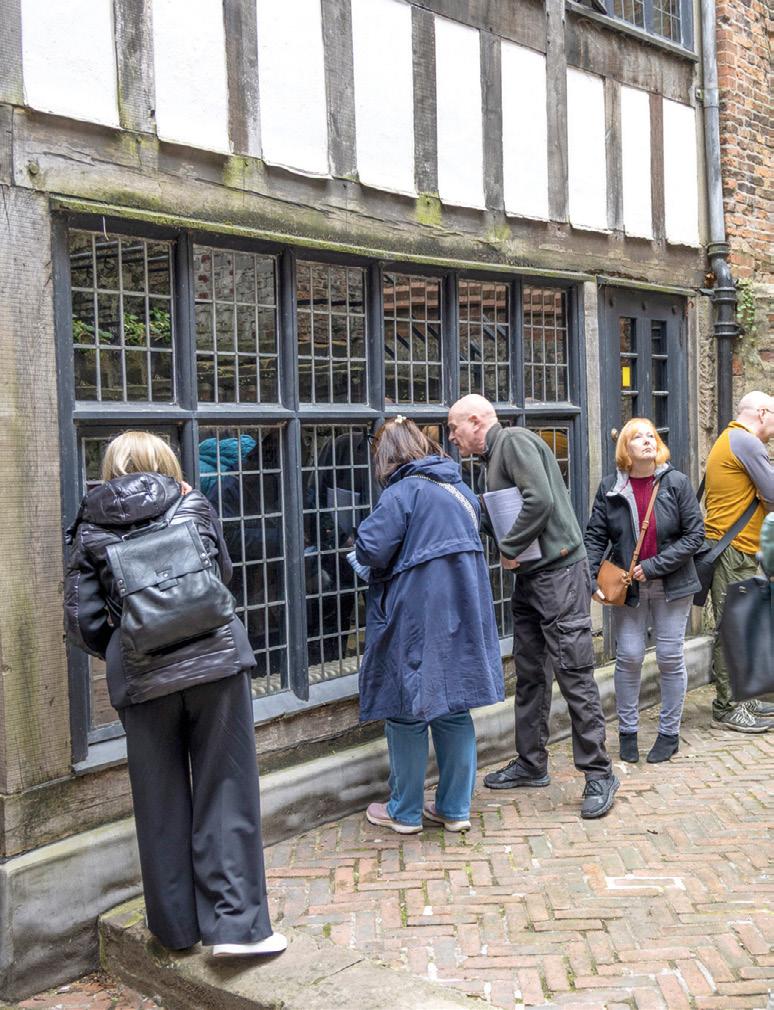
public rooms on the first floor contain the best examples of the building’s elaborate ceilings and intricately carved fireplaces. It's these public rooms, along with the courtyard, that visitors explore as part of the tour.
The houses’ appearance is the result of work begun by Lord Gort in the 1930s, who set out to restore their Tudor and Jacobean interiors. Miranda explains, ‘he introduced items he found in other period buildings and this is the favourite part of the story for me – visualising how the houses have changed over time’.
Tony adds, ‘one of the floors upstairs was once a ship’s deck’recycling in action in the 1930’s!'
‘Lord Gort’s wife was a descendant of the Surtees family – I like that little link through the generations,’ says Miranda.
The Surtees family
The Surtees family, the building’s namesake, are central to the tour. In 1772, Bessie Surtees lived in the house with her family, who were renting the property. According to legend, her father, Auborne Surtees, a merchant and Mayor of Newcastle forbade her to marry
her ‘true love’. Bessie created her own destiny and jumped from the first-floor window to elope with her love, John Scott. They eloped to Scotland and married. Years later, John became Chancellor of England and Lord Eldon, eventually giving his own name to Newcastle streets and a shopping centre! However, all is not as romantic as it may seem, the volunteers cautioned. Tony explains, ‘Lord Eldon was a controversial figure both then and now. He was against the abolition of slavery and the Great Reform Act, inciting Charles Dickens to make digs about him in his novel Bleak House.’
Inspirational tours
Claudia adds ‘on the tours, we invite visitors to see beyond the romance and consider the whole person.'
‘One visitor told me that they were so inspired by the tour they started to write a play about Bessie Surtees House,’ smiles Claudia.
‘I also got talking to another visitor about history. I complimented a lovely brooch she was wearing and found she had made it herself. A few weeks later, she gifted me a brooch as a thank you for the tour which I was incredibly touched by. It’s lovely to have one-to-one exchanges with visitors –it makes it all worthwhile.’ ■
It’s lovely to have one-toone exchanges with visitors –it makes it all worthwhile
Opposite, top Miranda Pemberton. Opposite, middle Claudia Tarnai.
Left Bessie Surtees House.
Below and opposite, bottom Tour group led by Tony Stephenson. Photo by Brian Morris, photography volunteer.
Our Medal Monday group
Penny Edwards, documentation officer, tells us about the valuable conservation activity volunteers are undertaking as part of the Living Barracks project.
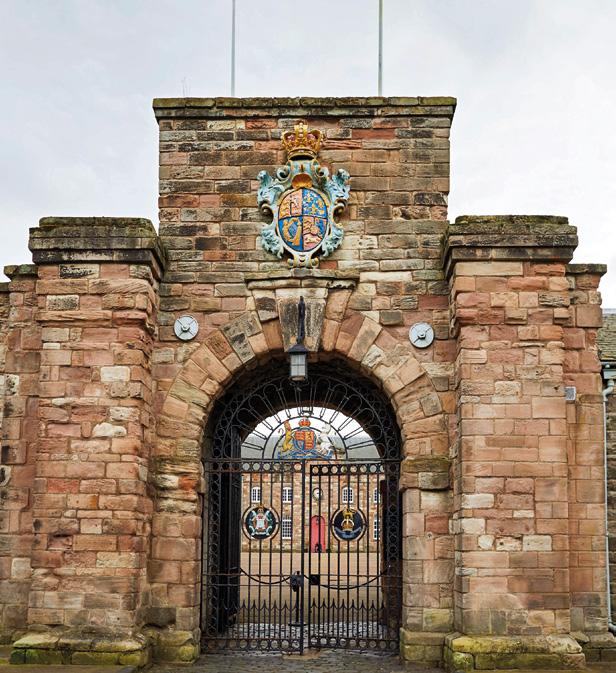
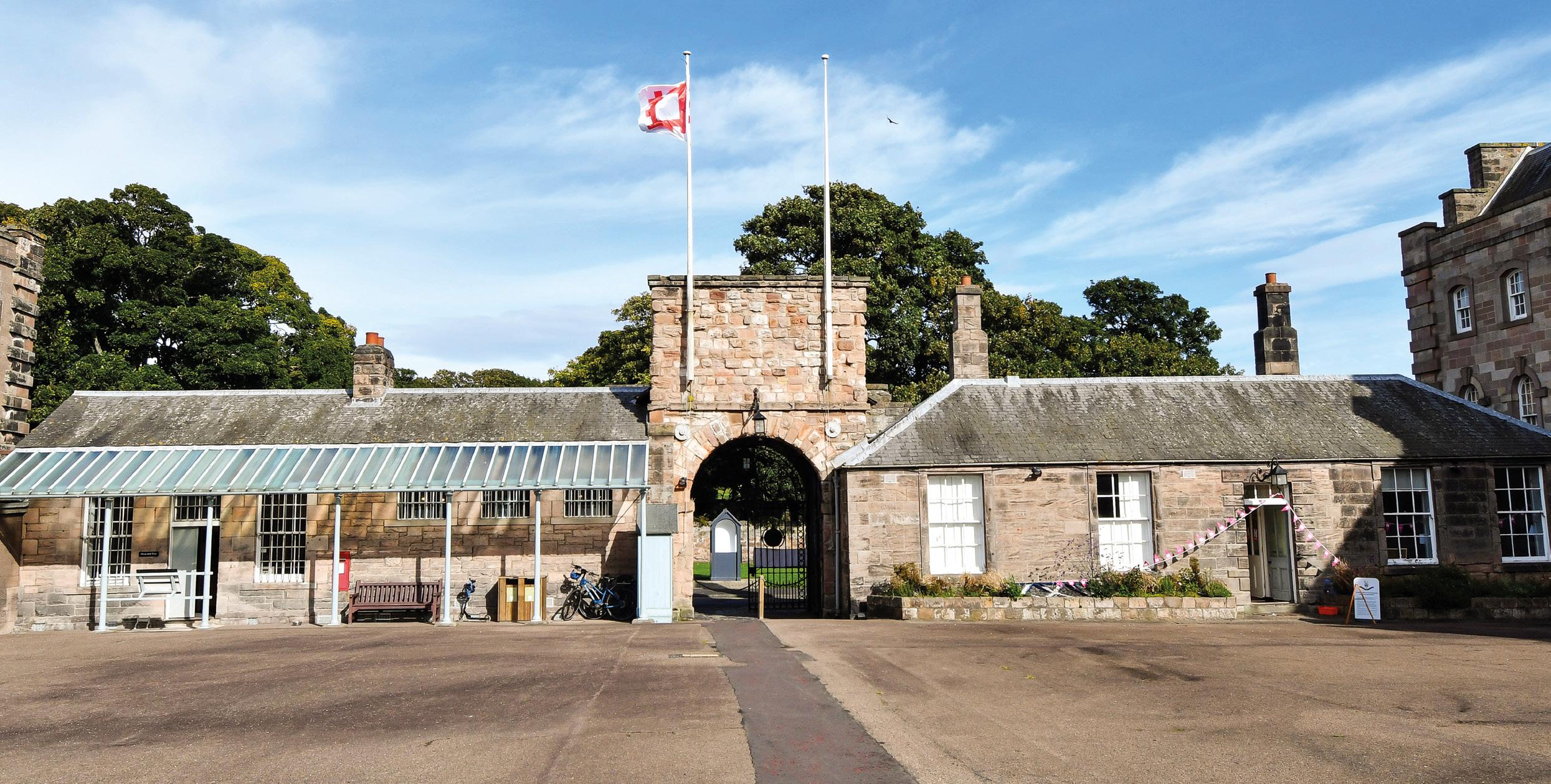
There's a lot going on in Berwick-upon-Tweed right now. The beautiful Georgian barracks that have nestled within the formidable town ramparts for 300 years are the subject of a major redevelopment project. The plan is to re-energise the space into a fascinating museum complex and vibrant cultural hub, bringing empty buildings and spaces back into use to support tourism and the local economy.
English Heritage is a partner in this project, along with Berwick Barracks Heritage Trust, The King’s Own Scottish Borderers Association (KOSB), Maltings (Berwick) Trust and Northumberland County Council, proudly supported by the Arts Council England’s Cultural Development Fund, The National Lottery Heritage Fund and Northumberland County Council, amongst other generous supporters. Together, the partners are creating a range of volunteering opportunities and activities.
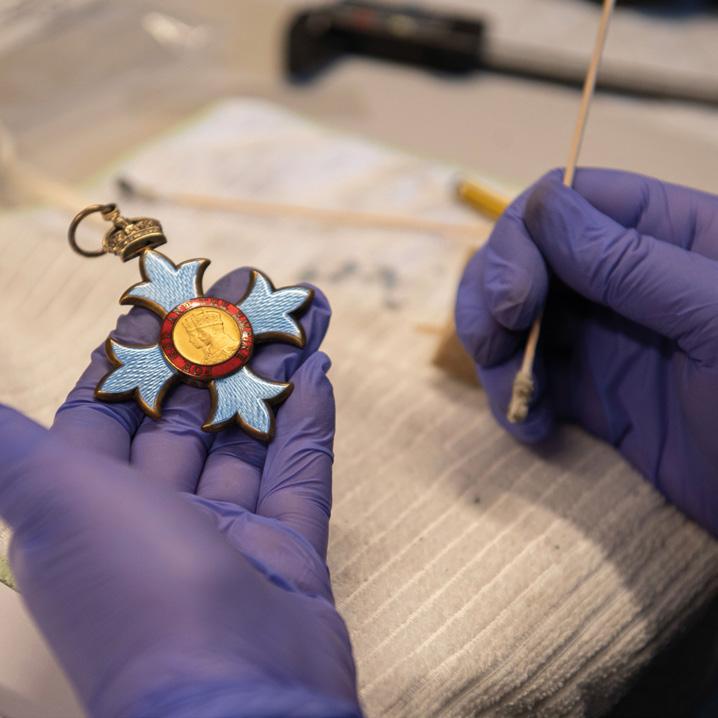
One such activity is the weekly Medal Monday group. A team of 12 volunteers have taken on the daunting task of meticulously cleaning 850 medals so that they are ready to take pride of place on
display in the new KOSB Regimental Museum, which is currently being designed as part of the project.
Learning new skills together English Heritage’s Izabella GillBrown, project conservator, has provided the group with all the necessary skills to carefully remove any accumulated dirt on the medals without harming them.
Who knew that ‘smoke sponges’, hogs-hair brushes, whiting mix and Renaissance Wax could restore the lustre of a one-hundred-year-old medal?
So far, an impressive 622 items have been beautifully polished, focussing initially on those made of bronze. The more delicate silver medals and awards will then be cleaned. Finally, attention will be given to the ribbons, as some are currently too fragile to be displayed.
In addition to gaining conservation techniques, volunteers have seized the opportunity to ‘buff up’ on their medal knowledge and are now skilled in medal identification and history. There are many conversations about medals spotted in period dramas or on TV antique programmes over the weekend!
Without the dedication of the volunteers, the volume of work would be unmanageable
In the run up to Christmas, the group enjoyed a Merry Medal Monday where KOSB curator Susan Higgins opened the regimental archive to share with the team some of the fine cards sent in Christmases past. The nitrile gloves then came off for a round of mince pies.
Beyond the medals
When the new museum opens its doors, volunteers will have the pleasure of being able to track down specific objects they have cleaned on display in the new medal gallery. However, the KOSB collection extends far beyond medals. Other volunteer opportunities include working on the regiment’s archive material by cataloguing and transcribing letters, finding personal stories that have been buried in these handwritten texts for many years. In addition, photographs will be analysed and dated, all of which will enrich the records held on site. Photography volunteers will capture images of the uniform held in stores so that these can be added to a database too. As with any museum, only a small proportion
of the collection will be available for display, but these activities will make it possible for so much more of the collection to be shared.
Other floors of the new museum complex will feature items from the Berwick Town Collection, which is currently housed within the barracks. These too require conservation before the new displays can be assembled, so an army of volunteers is being put to work. Those with a delicate touch have been repacking a large collection of fossils, and there is soon to be a programme of packaging textile items to conform with museum standards. There will be more tasks as this project unfolds, and staff and volunteers will work together to prepare for the new exhibitions.
Without the help of these volunteers, the volume of work would be unmanageable. They are key to the success of the project, and will continue to be once the project is completed. Fortunately, they seem to be enjoying the activities so much that they are already asking about the roles they may pursue when the barracks is brought fully back to life. ■
If you're interested in volunteering, please email TheLivingBarracks @english-heritage.org.uk
Top Berwick-upon-Tweed Barracks.
Photo by Brian Morris, photography volunteer.
Above Medals being cleaned.
Charlton Photography.
Highway to history
Volunteer and engagement coordinator Victoria Giles tells us about volunteer Martin Andrew's idea to combine motorcycling with history.
Volunteers often bring fresh ideas, energy and creativity to our sites –and that’s exactly what Martin Andrew is doing in Suffolk. Martin’s enthusiasm for heritage is matched by his passion for motorcycling, and through his involvement with the Suffolk Advanced Motorcyclists Group (SAM), he found an innovative way to combine the two.
SAM is a charity operating across the whole of Suffolk and has an excellent track record in improving riding standards and supporting new members as they work towards passing the IAM RoadSmart Advanced Motorcycle Test. Alongside its training and development focus, the group also has a strong social side, offering event and evening programmes.
The challenge
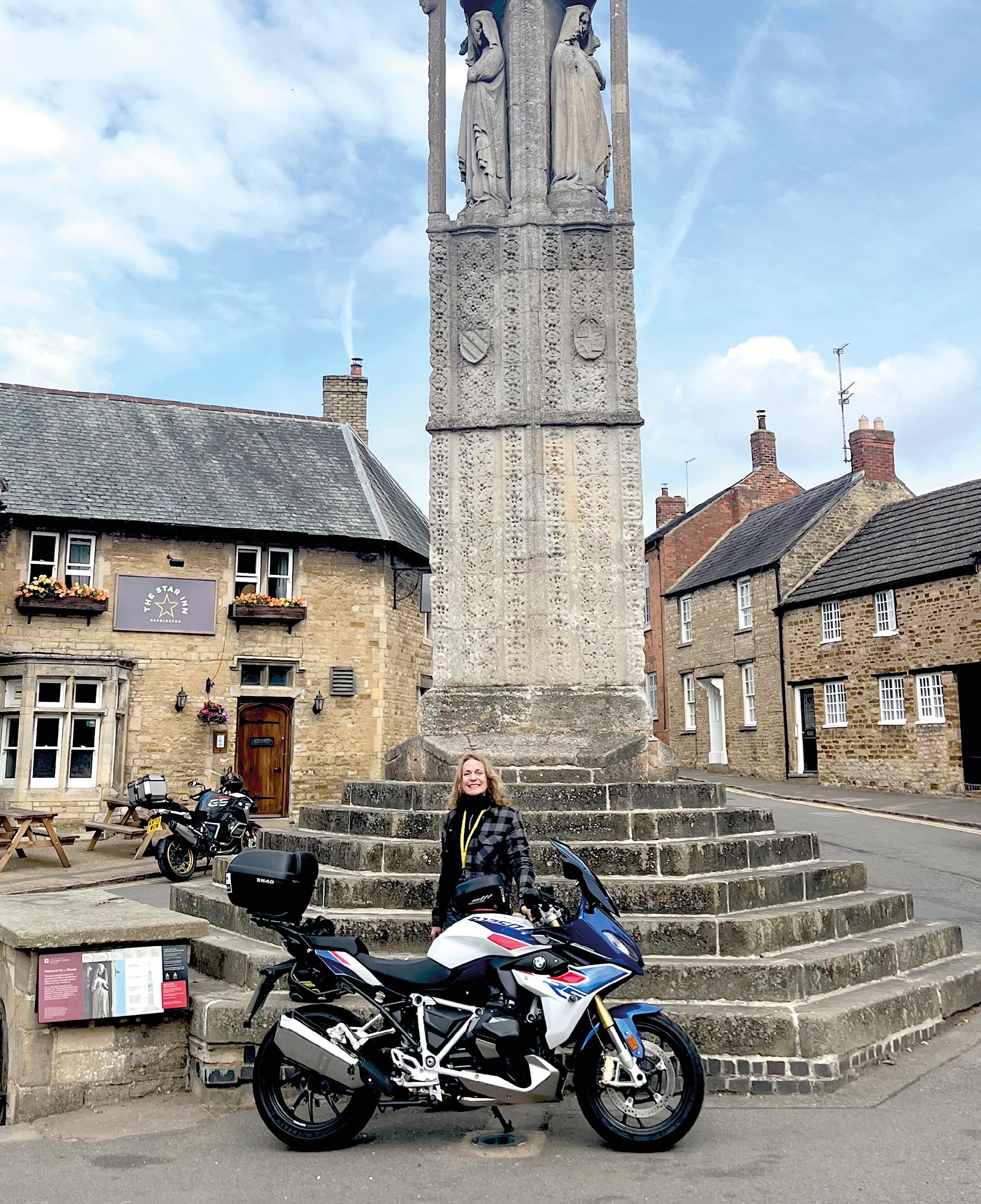
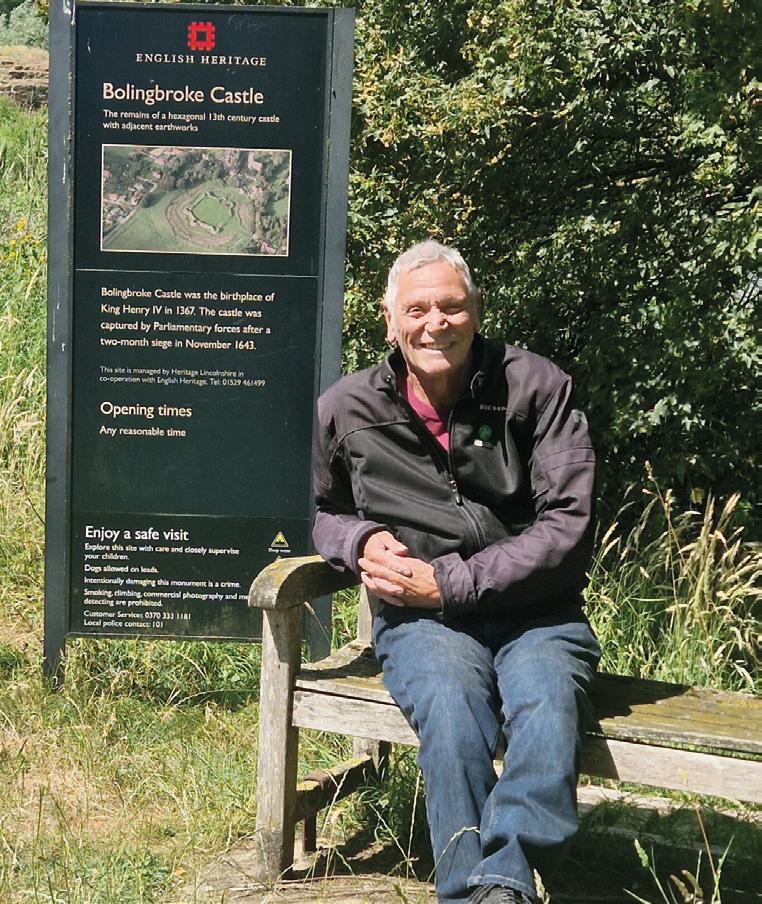
For this wellness challenge, SAM members were encouraged to get on their motorbikes and visit 21 free-to-enter English Heritage sites across the south region. Sites included Eleanor Cross, Geddington, Saxtead Green Post Mill, Moulton Packhorse Bridge and Bolingbroke Castle.
Participants earned points based on both the number of sites they visited and the distance travelled. The further they went and the more sites they visited, the more points they received. It was a great success: 30 SAM members took part in the challenge, with 9 visiting all 21 sites. Photos were taken, experiences were shared, new places were discovered and longlasting memories were made.
Winning idea
To celebrate the success of the challenge, an awards ceremony was held at Kesgrave Community Hall. Participants received a souvenir mug in recognition of their efforts, and they were all entered into a prize draw – they got one entry for each English Heritage site they’d visited.
Looking Ahead
'I hope to see more visitors to all sites arriving by motorcycle this year,' Martin explained, 'I was particularly happy to see that English Heritage has provided dedicated motorcycle parking spaces at Stonehenge.' As for Martin's next challenge, that would be riding from Land's End to John O'Groats by motorcycle. ■
Volunteers often bring fresh ideas, energy and creativity to our sites
Above Geoff Scott at Bolingbroke Castle. Main image Leanda Hoyland-Linch at Eleanor Cross, Geddington.
Feeling inspired?
Inspired to take on your own challenge? Find a free-to-enter site in your area at english-heritage.org.uk/visit
We're building it for future generations to enjoy
Sue Martindale, volunteer manager, explains how Stonehenge volunteers are building a replica Neolithic Hall by hand.
The Kusuma Neolithic Hall is one half of a new education initiative at Stonehenge, the other half being a state of the art, purpose-built centre to allow a wider range of schools’ workshops to be delivered, with a focus on STEM (Science, Technology, Engineering, and Maths) subjects.
The hall has been designed by experimental archaeologist Luke Winter, based on original finds at Durrington Walls made by Maud Cunnington in 1928 and subsequent work in 2007 as part of the Riverside Project led by Professor Mike Parker Pearson. It will provide students with the chance to step into
the past, experiencing what life may have been like for people at the time when the Stonehenge monument was being finished.
When not being used by schools, the hall will facilitate community events, such as talks and workshops.
Who are the builders?
The age-old question ‘who built Stonehenge?’ can now be mirrored by ‘who built the Kusuma Neolithic Hall?’
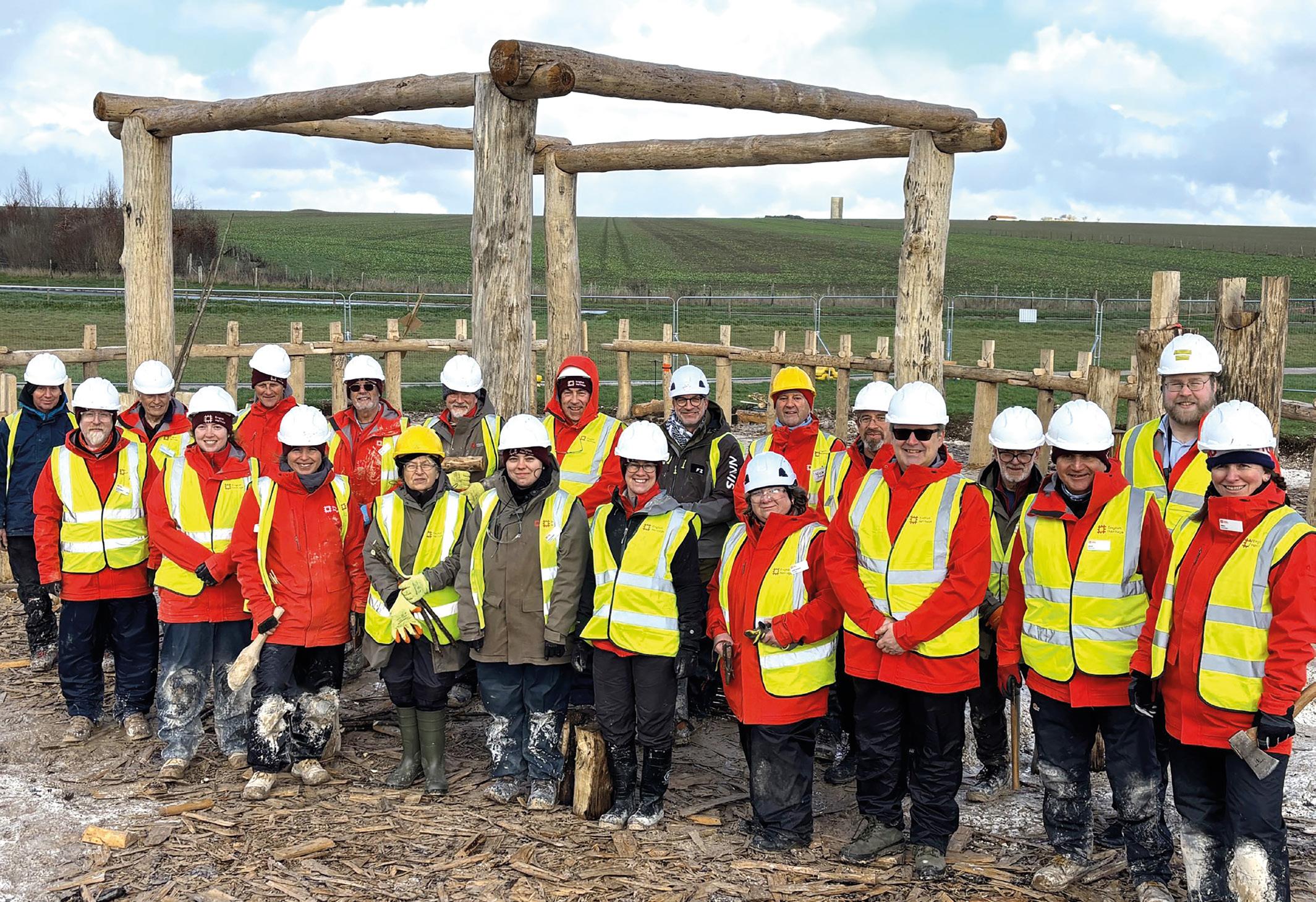
The answer: a volunteer team made up of former teachers, police officers, solicitors, a vet, a musician, building and quantity surveyors, a tour guide, university lecturers, scientists, an accountant, bushcraft trainers, students and archaeologists.
In June 2025 we started our quest to recruit 60-80 volunteers to make the project happen. Following social media mentions and promoting the opportunity at shows and events over summer, we had over 200 expressions of interest. The furthest was from Tasmania.
We looked for a real interest in working with others as part of a team, as all the practical skills can be taught. We now have a mix of regular and occasional volunteers, and all play a vital part in the team. The build started at the beginning of October 2025, and we hope to be finished by midsummer 2026, weather permitting.
For me this build has been an opportunity to have a small part of an incredible project
An unforgettable experience Volunteer Janice Ballard describes her experience. 'Wide open skies, the dull thud of stone axe on wood, lark song and the muffled sound of conversations from fellow workers across the field - this is an experience I’ll never forget.
'The original builders working a couple of kilometres away at Durrington over 4,000 years ago would have been used to these sounds as well.
'As I sat on my pine log removing the bark and preparing the wood to become one of the rafters, we often talked about those people. What were they talking about as they worked? How many more words did they have for the weather and
materials that they were working on than we do now? They would have seen the same wide skies and weather conditions, seeing the rain clouds approaching and stopping to look at the rainbows, just as we are. Did they cheer as we have when they saw a glimpse of sun on a rainy day?
'With all these sights and sounds around me I felt an affinity with those people who built the original structures. Individually, and as a team, we evolved and adapted our methods as we worked. In just a few weeks we were working more efficiently. Imagine the refinements that would be made over decades, passing on this knowledge down the generations.
'As a Neolithic house volunteer we are asked a lot of questions, to which the answer often ends in, ‘…. but we really don’t know for sure ….’!
'Using a polished stone axe and small flint scraper were revelations - just how easy and comfortable they felt to use. Using my own experience of the stone tools will be another topic that I can talk about to our visitors, now I’ll be able to say that I know a lot more about how they can be used and just how well they worked in practice.'
'For me this build has been an opportunity to have a small part of an incredible project. It’s enabling me to have a real insight into the people who were the original builders.' ►
Previous spread Students will be able to delve deeper into the Stonehenge story.
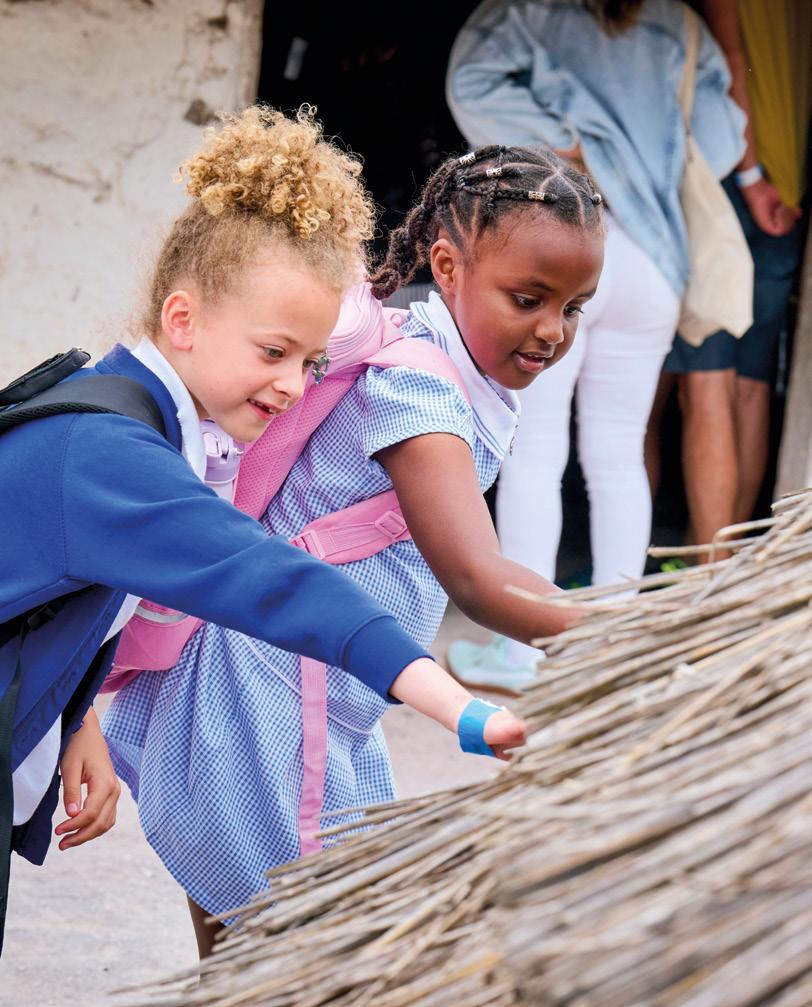
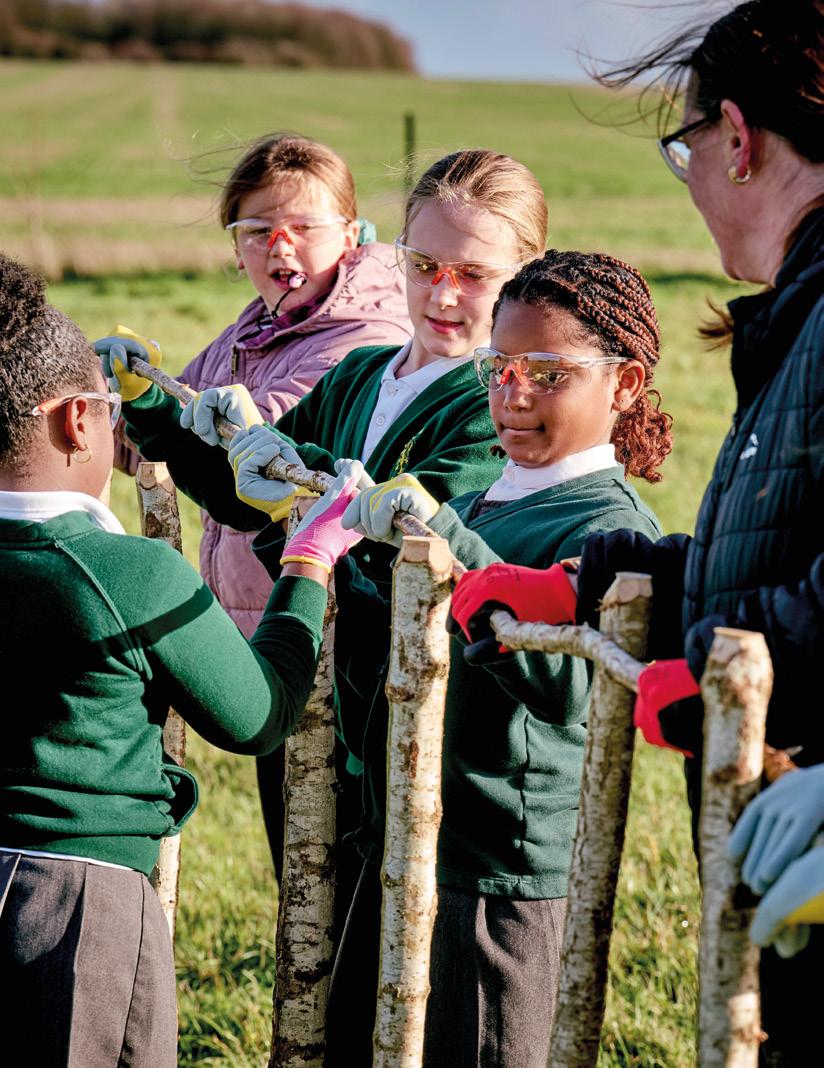
Opposite page Students exploring the Neolithic houses.
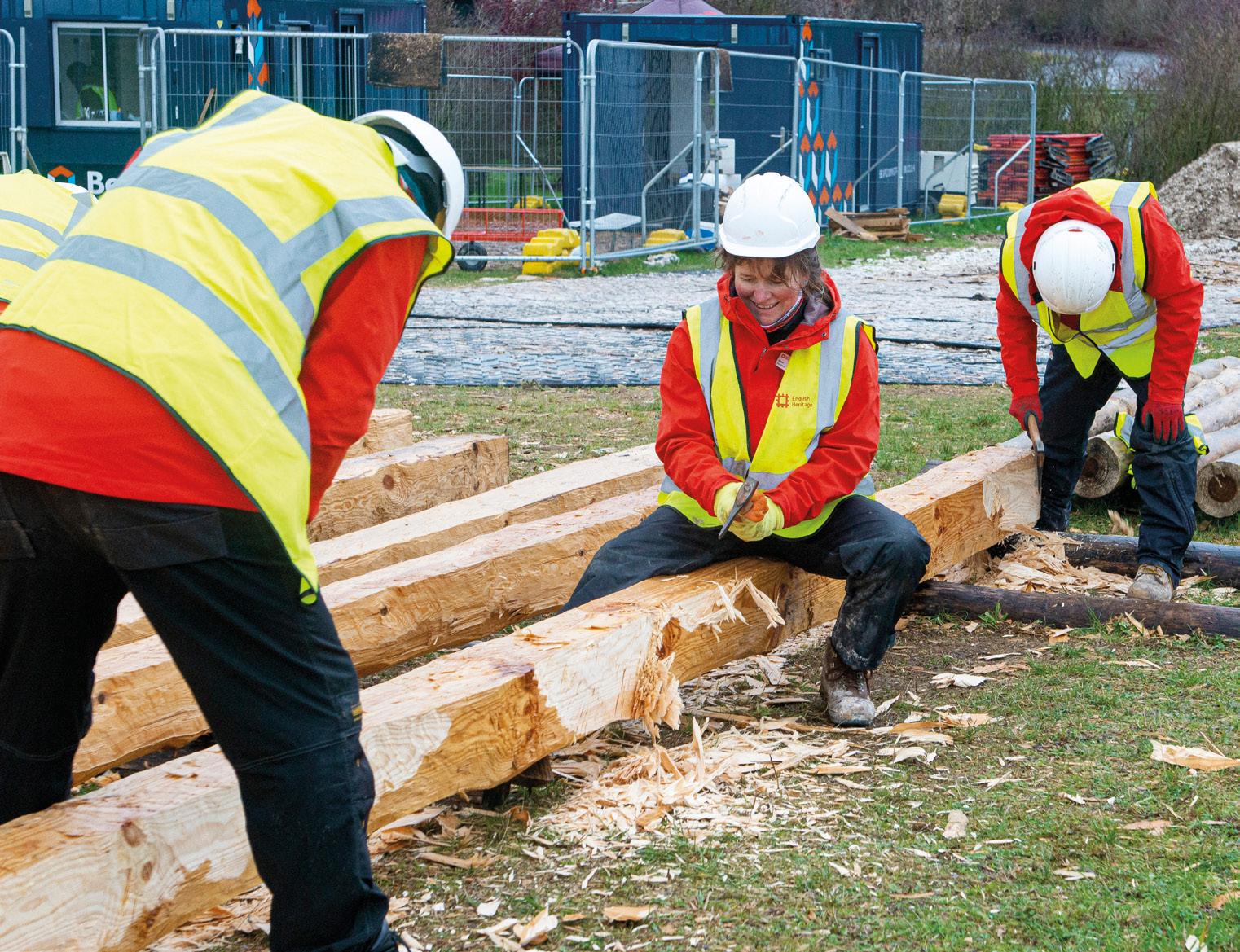
This page Volunteers work on the Kusuma Neolithic Hall, part of the new learning centre. Photos by Tim Rubidge, photography volunteer.
Working outside regardless of weather conditions improves your mental health
Volunteering is good for you Verity tells us why volunteering helps her wellbeing. 'The volunteer team consists of a range of experience and ages, making it ever interesting. There’s a real sense of community where people look out for each other and appreciate the time and effort that goes into each task.
'It's really helped with my physical health and mood. Being outside, even in less-thanideal weather, and being able to see visible progress in both the build and my own skills has been particularly good for me.
'I’ve particularly enjoyed the refining tasks – working with the wood to achieve a beautiful finish is just so satisfying. Sometimes, I close my eyes and see wood shavings – very bizarre!'
Using stone tools
Volunteer Rachel Dawes says 'I’d never worked on this type of project before, but having spent a lot of time looking at axes in museums, and wondering how it would feel to use them, I jumped at the chance to see what I’d actually be able to do with one.
'There are so many things I’ve enjoyed about being part of the team! Other people’s enthusiasm really helps to maintain a lot of positive energy, motivating me to finish the task. I’ve learnt so many new things both from Luke and from others in the team; how to use steel and stone axes and adzes, to use chisels and how to square off a tree trunk with side axing. The fact that everyone comes from different backgrounds and experiences
makes the team even more united. Working outside regardless of weather conditions improves your mental health. I find I import so much of myself into the wood, zoning in on the work in hand and becoming oblivious to the rain, cold or wind. I’ve been surprised by how enormous the project is, and how long it takes to finish a job.
'What will I take away from this? Without a doubt, making new friends and the absolute joy I get from discovering the craftsmanship you can create using stone tools. I also love that it brings me closer to understanding the Neolithic people’s lives. Being part of this has taught me that I can achieve anything I want if I put my mind to it.'
Team spirit
Geoff Parkin, interim chief executive, sums up the project.
'This is a truly remarkable project, offering a fascinating insight into the world of building design and construction as it existed thousands of years ago. To see Neolithic techniques brought back to life with such care, curiosity and ambition is a powerful reminder
of just how sophisticated these early builders were.
'What struck me most when I visited the build was the spirit of the team. There is an infectious sense of enthusiasm and shared purpose among the volunteers, and it is deeply impressive to witness the skills they have learned entirely from scratch in such a short period of time. The confidence, craftsmanship and collaboration on display speak volumes about what people can achieve when given the chance to learn by doing.
'This was my first experience of experimental archaeology, and I must admit it left me wondering whether I chose the wrong career path! I am genuinely envious of the volunteers who can learn ancient skills, work with their hands, and to be part of something that will almost certainly prove to be a life changing experience.
'Projects like this remind us why heritage matters, it is not just something to preserve, but something to actively engage with, learn from, and feel connected to.' ■
What struck me most when I visited the build was the spirit of the team
Find out more
For information and updates on the 'Inspiring the future at Stonehenge' project, visit english-heritage.org.uk/visit/ places/stonehenge/schoolvisits/schools---inspiring-thefuture/inspiring-the-futureproject-updates
Far left The volunteer team pictured during Geoff Parkin’s visit.
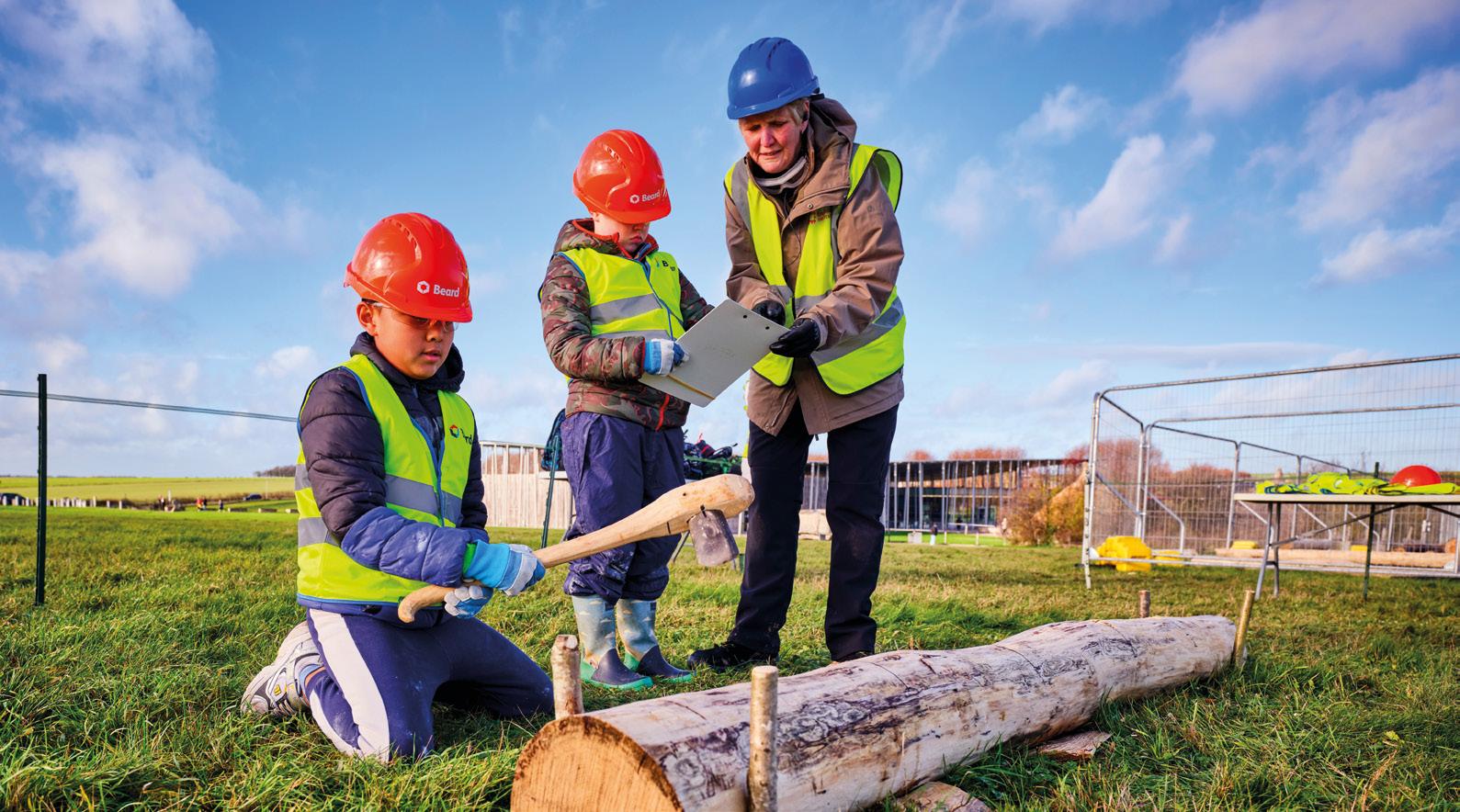
Above Education visit ahead of the launch of the new learning centre.
Left Volunteers working on the new learning centre. Photo by Tim Rubidge, photography volunteer.
Why I love
A hidden gem
Andrew Hooper, visitor volunteer, shares his favourite Osborne
treasure.
There's a lot of art at Osborne. Many pieces were commissioned by Queen Victoria herself, or were gifts from family or other fellow royals. The artworks remain part of the Royal Collection, held in trust by The King for his successors and the nation. Whilst every room holds many treats, the greatest concentration of art is in the connected drawing and billiard rooms. Amongst a cacophony of artistic splendours hangs my favourite piece in the Osborne collection.
Tuscan Court muse
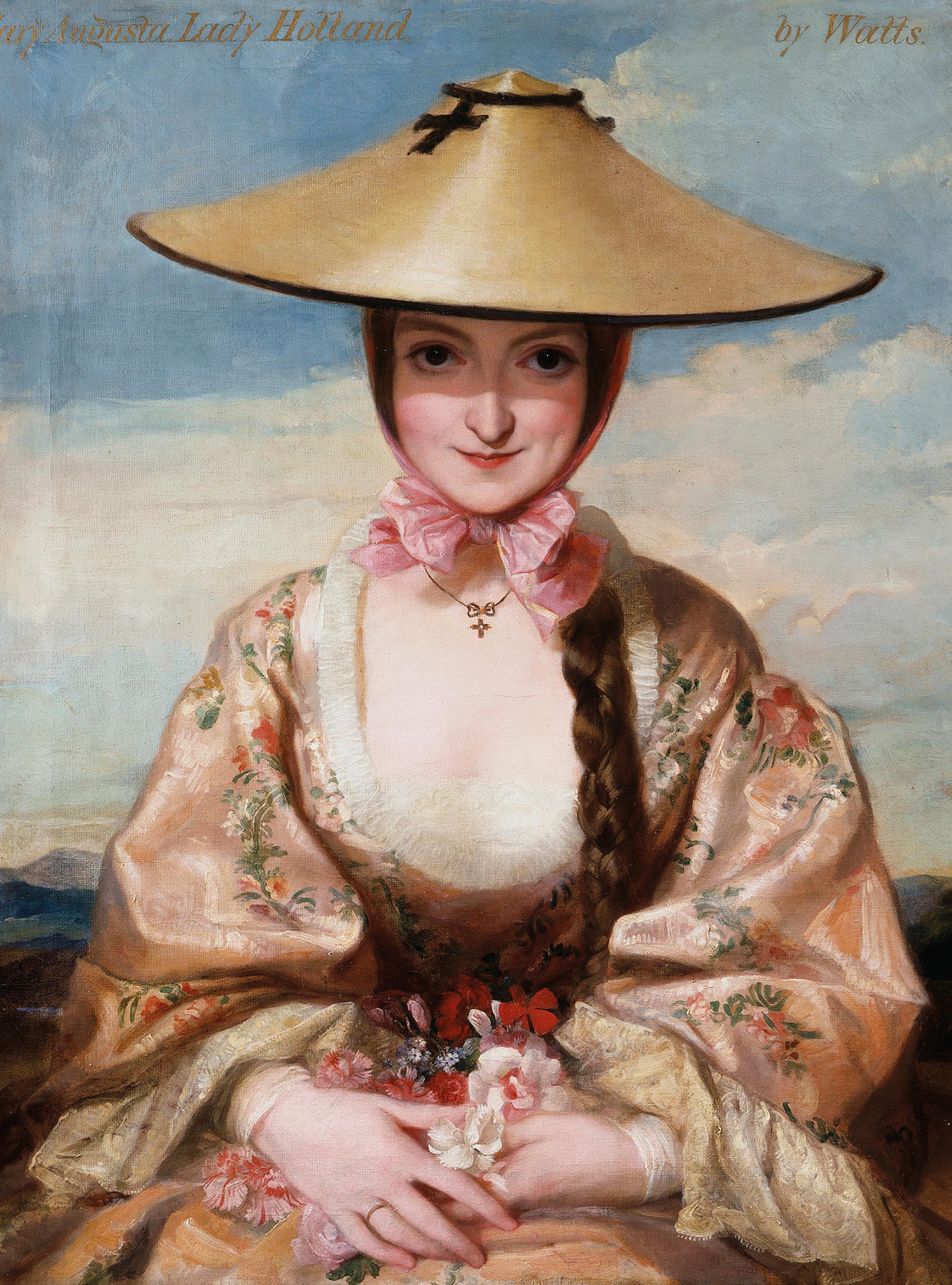
It is quite easy to miss a smallish portrait on the wall, just inside the billiard room and partly obscured by a painted pillar, as your attention is drawn by Prince Albert’s extraordinary Irish slate billiard table. Dwarfed by Charles Cope’s enormous scene of Cardinal Wolsey collapsing on the steps of Leicester Abbey on the same wall, below a view of Cairo, hangs the delightful portrait of Mary Augusta, Lady Holland by George Watts. Lord Holland was the British Minister to the Tuscan Court in 1843 when George Watts came to stay at Casa Feroni. He stayed for three years and painted several portraits of the minister’s wife. In her summer dress and cappelli hat, with hair held in a long plait, Lady Holland is holding
a small bunch of flowers. She looks straight out at you, fixing you in her gaze, her mouth almost, but not quite drawn into a smile. Her expression is enigmatic.
Understated charm
I have walked past or stood near Lady Holland's portrait many times. At first, like most visitors, I paid little heed to her; being dazzled by everything else in the room, it was just another picture on a wall. But, as familiarity diminished the awe of grander objects, I found myself drawn ever more towards this beautiful, slightly understated, charming painting. I'm always pleased to see her.
There is something about Lady Holland's portrait that feels out of place here. Maybe it's her odd hat, or her cheeky expression, the style of the painting, or that she's not a royal – somehow she looks like she doesn't quite belong at Osborne. Which, of course, she doesn't.
Lady Holland bequeathed her portrait to the Prince of Wales in 1889, who hung it who knows where. By the early 1900s it was recorded in Buckingham Palace. Sometime in the 1920s her portrait ventured across the Solent to Osborne.
She was not here in Queen Victoria’s time so, by some measures, she shouldn't be at Osborne at all, but I'm rather glad she is. ■
She shouldn't be at Osborne at all, but I'm rather glad she is
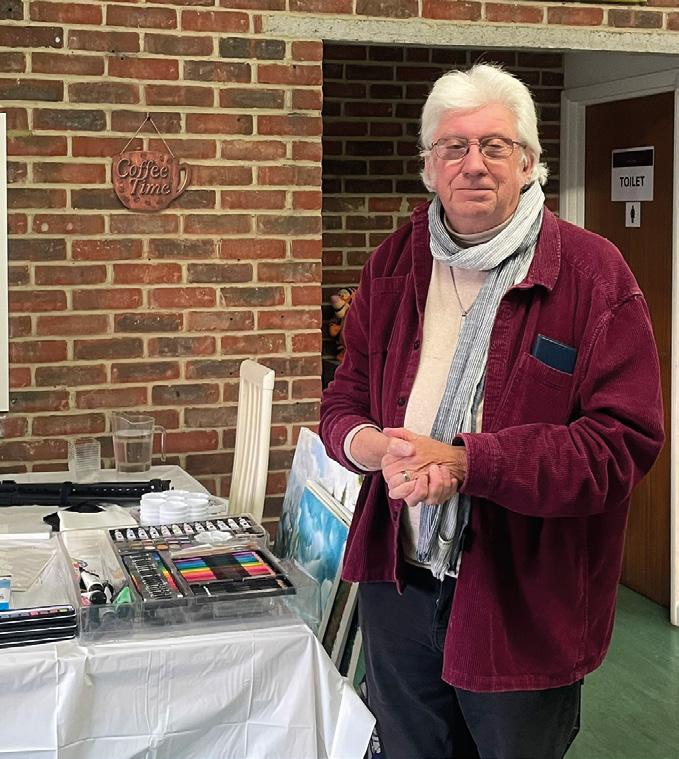
Above Andrew Hooper
Find out more
Delve deeper into the highlights of the Osborne collection. Visit english-heritage.org.uk/osborne
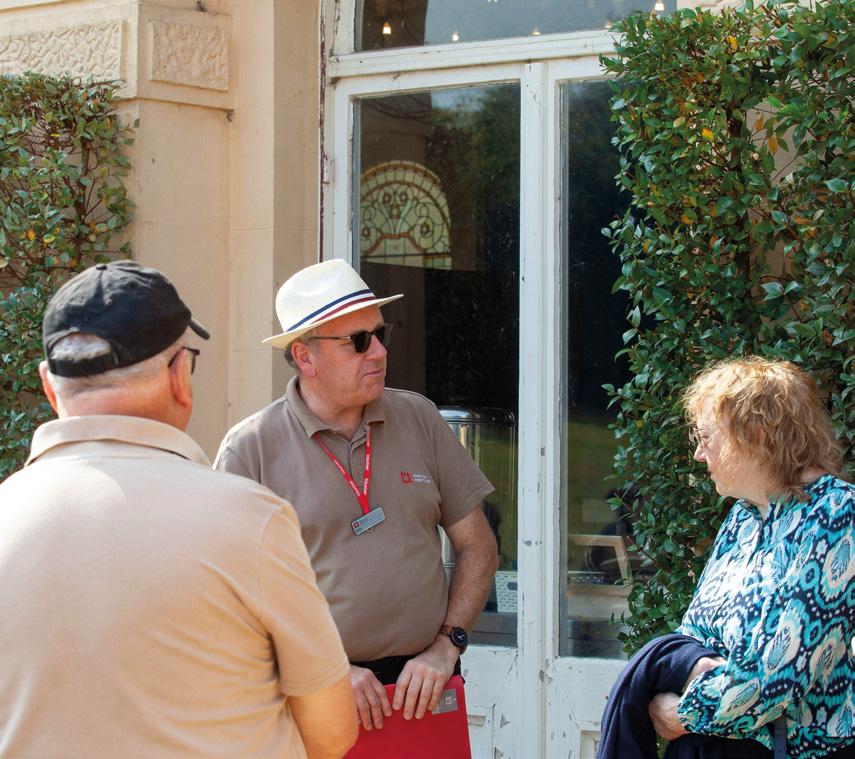
delivering his Unexpected Osborne tour. Photo by Debs Allan, photography volunteer.
Let's go to
Shrewsbury Flaxmill Maltings
It’s a happy family and the building has a real story to tell
Adam Caress, communications volunteer, helps you plan your next trip to Shrewsbury Flaxmill Maltings, regarded as the grandparent of skyscrapers.
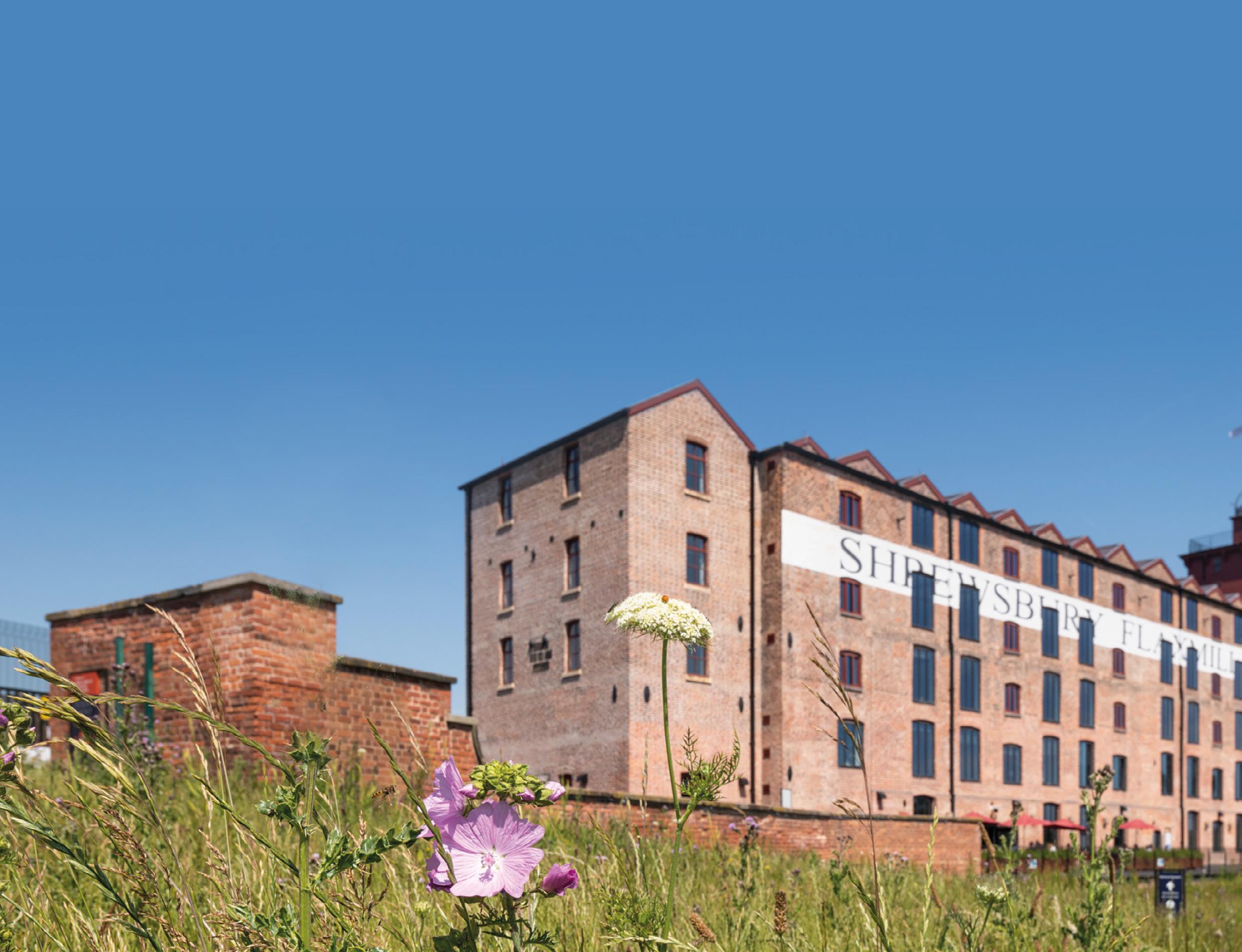
Shrewsbury Flaxmill Maltings came into the care of English Heritage in 2025 after a major restoration project. With stories of industry, innovation and working life, it’s well worth a visit.
Once you’ve said hello to the visitor welcome volunteers in reception you enter the exhibition, which brings to life the history of this iconic landmark.
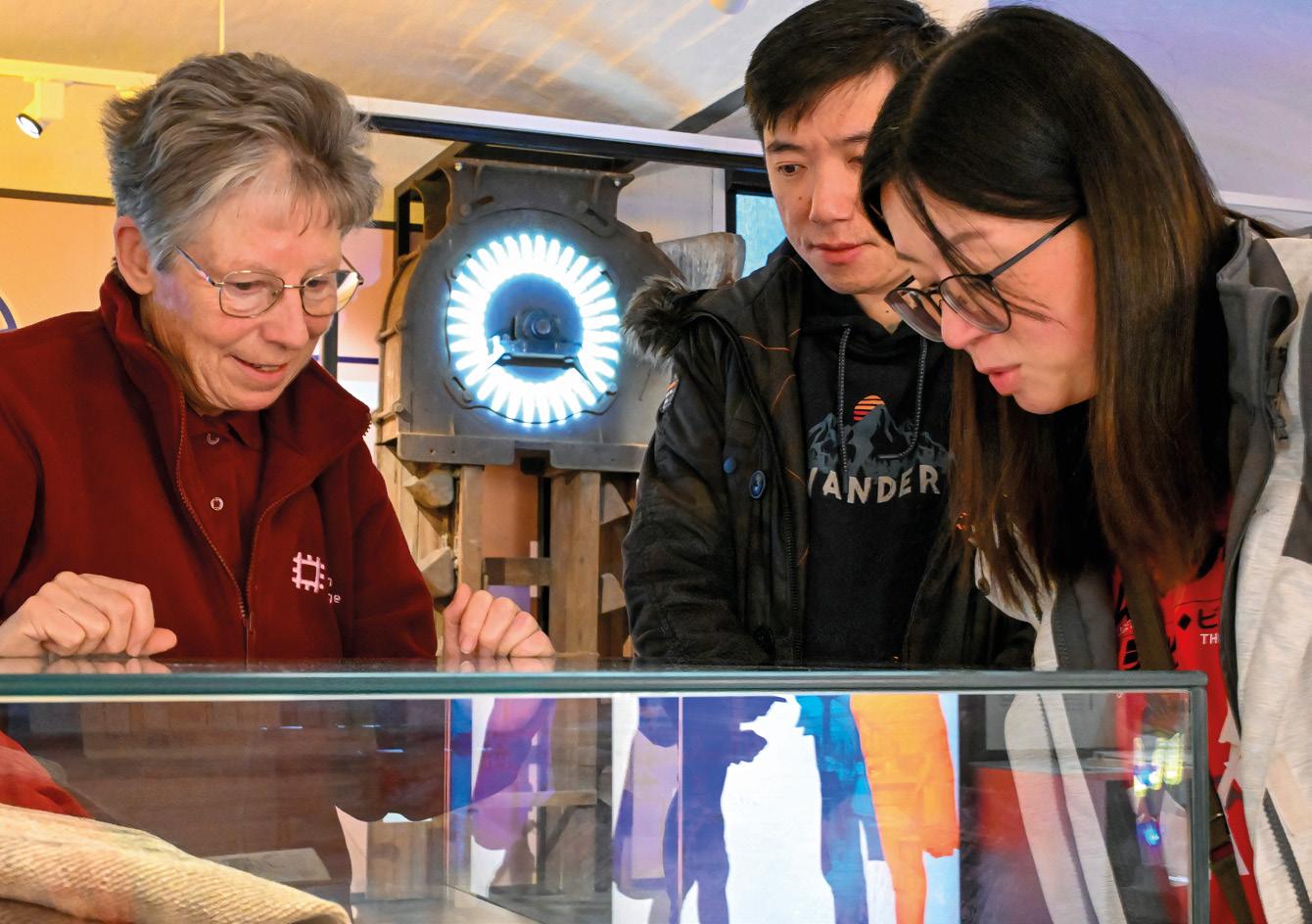
Exhibition volunteers like Rebecca and Jayne are on hand to help visitors discover every grain of history on offer. Rebecca also helps lead craft activities, and she particularly enjoys the making sessions with families and school groups. According to Jayne, ‘it’s a happy family and the building has a real story to tell.’
Fire to flax
That story starts in 1793, when the Benyon brothers, formerly wool merchants in Shrewsbury, invested in the pioneering flax-spinning business of John Marshall of Leeds. The partners built a second mill to expand their capacity, but it was damaged by fire in 1796. Although quickly repaired, the men were keen to make their next mill fireproof. They brought in a new partner, Charles Bage, to help. Charles was a wine merchant and land surveyor with mathematical flair, connections with other Shropshire engineers like Thomas Telford, and a great understanding of the
structural use of cast iron. The goal was to construct a fireproof mill, which became Shrewsbury Flaxmill. The main mill, which opened in 1797, was the world’s first building to have a structural frame made of iron.
After 90 years, the mill ceased operations. It was 10 years before it became a maltings, taking barley grain through the germination process in preparation as malt for brewing.
Production was interrupted during the Second World War when the site was requisitioned by the army as a barracks for trainee soldiers. After the war, it went back to producing malt, until finally closing in 1987.
The building subsequently
fell into disrepair, but intervention by Historic England with support from The National Lottery Heritage Fund enabled the site to be regenerated. The public have been able to visit the mill since 2022, and it joined the English Heritage family in April 2025.
Want to dig deeper?
If you do make your way to the mill, you can hop onto one of the volunteer-led guided tours, which include exclusive access to significant features of the restored buildings. If you’ve got a head for heights you can sign up for their Jubilee Tower tour and climb the 56 wooden steps to see picturesque views of Shrewsbury, Shropshire and beyond to Wales. ■
Plan your visit
The Flaxmill hosts events throughout the year. To see the event calendar visit english-heritage.org.uk/ visit/places/shrewsburyflaxmill-maltings
Main image Shrewsbury Flaxmill Maltings, showing the Main Mill, Jubilee Tower and Kiln.
Above A volunteer gives visitors a guided tour. Photo by Paul Burton, photography volunteer.
Reaching greater heights
Robyn Johnson, community engagement assistant tells us how the Reaching Greater Heights project is restoring ancient landscapes and connecting people and place on Dover’s iconic white cliffs.
The Reaching Greater Heights project focuses on restoring over 80 hectares of historic chalk grassland around Dover Castle and the Western Heights fortifications, connecting local communities with each other and the landscape that defines the area. Made possible by funding from The National Lottery Heritage Fund, English Heritage is pioneering a new approach to partnership working in Dover, bringing together Kent Wildlife Trust, White Cliffs Countryside Partnership, Dover District Council, and Western Heights Preservation Society. Of course, for local people, it doesn’t matter who manages which part of the landscape, only that it’s cared for and that local voices shape its future – so it’s vital that we work closely and collaboratively with all our partners.
What is the project doing? Teams are working together
to clear overgrown scrub and reveal historic features in the landscape, some of which date back 2,000 years. Sheep and cattle will then maintain the land in a wildlife-friendly way – a technique known as ‘conservation grazing’.
The restored chalk grassland will support rare species of wildlife, such as Kent’s magnificent Choughs and the Adonis Blue butterfly, and help them adapt to climate change. The flora and fauna are being monitored by dedicated environmental monitoring volunteers, with data directly contributing to national databases and local forward planning.
We’re also improving access and creating inclusive opportunities for learning and engagement. This will give more people than ever before the chance to benefit from Dover’s historic and natural environments.►
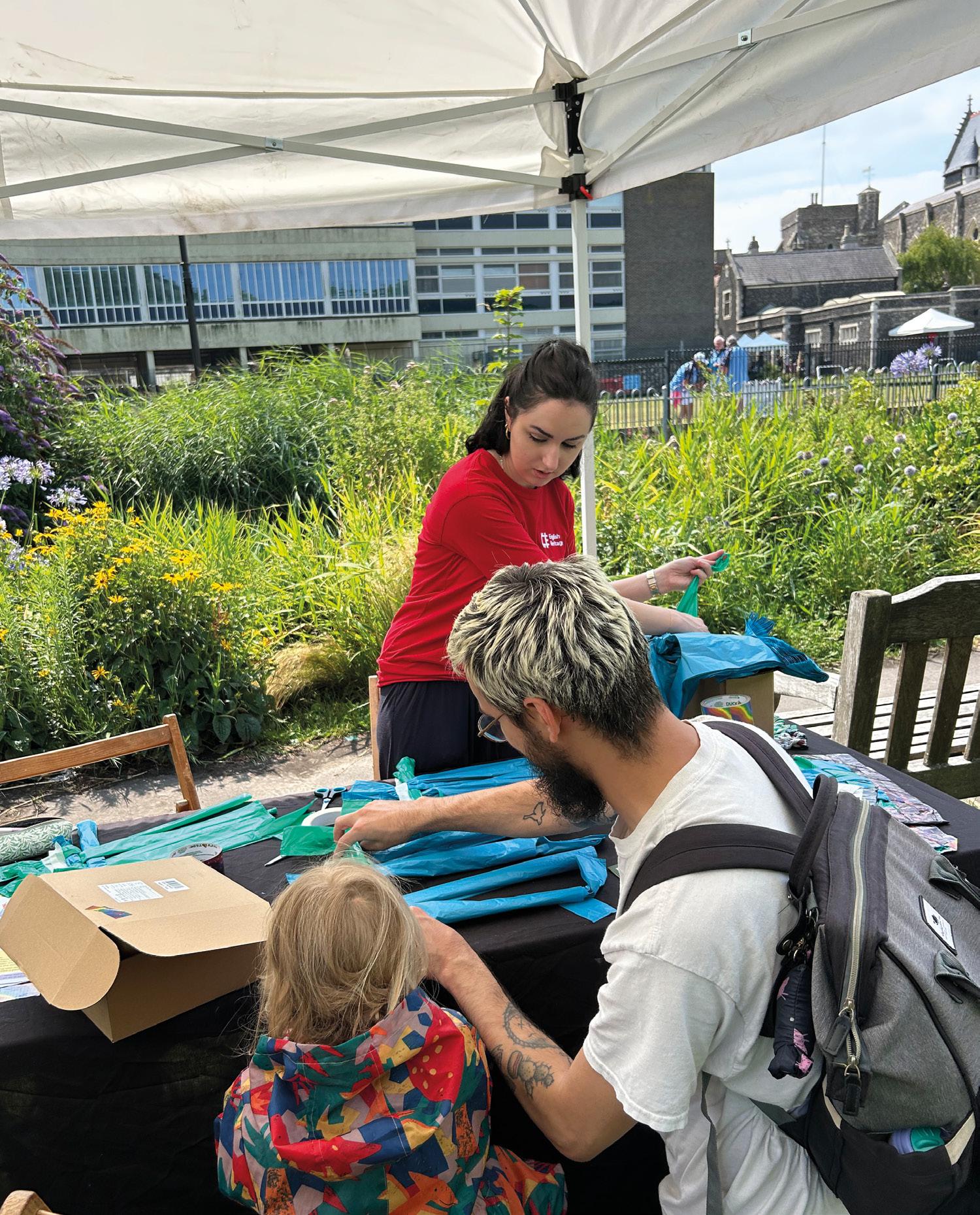
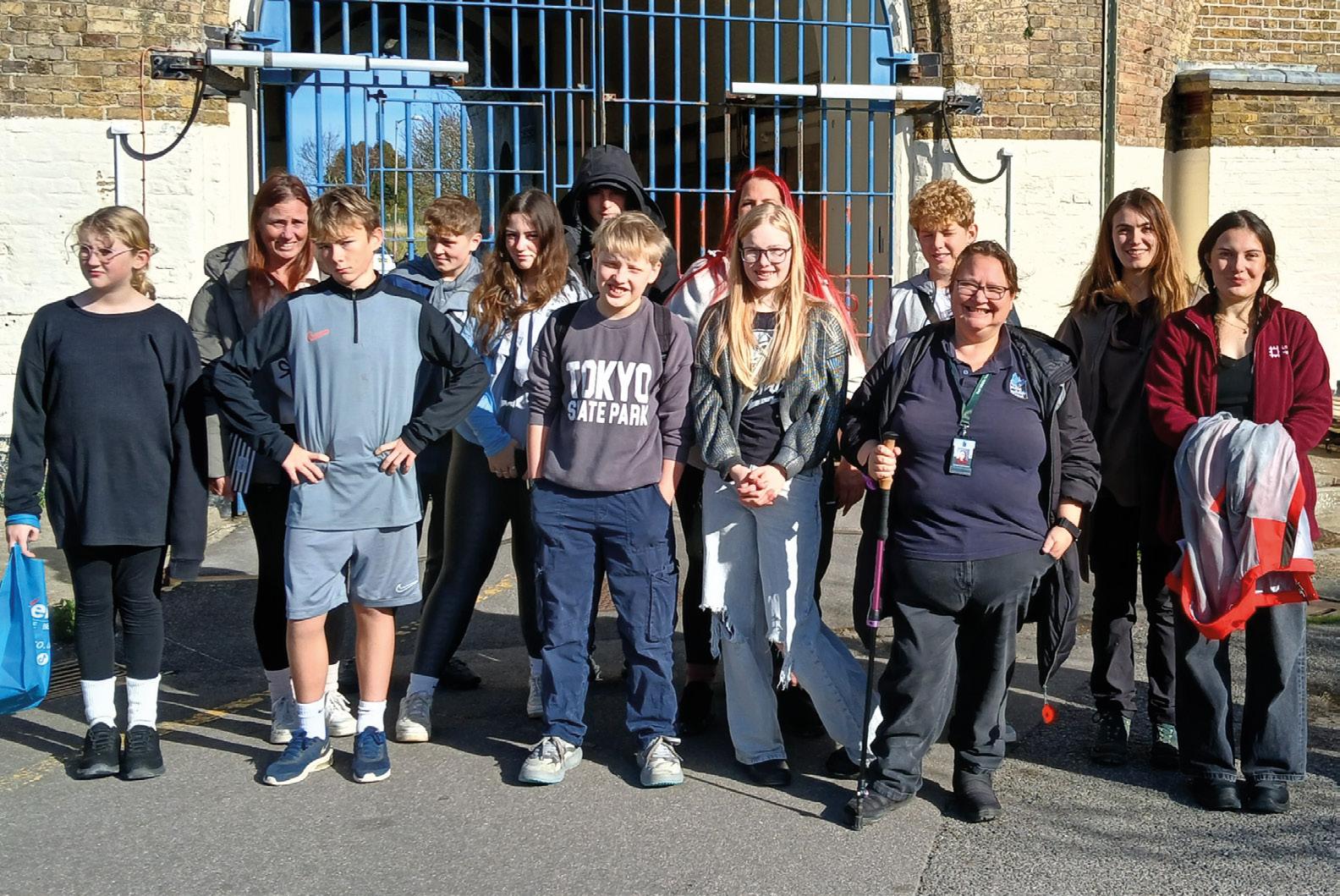
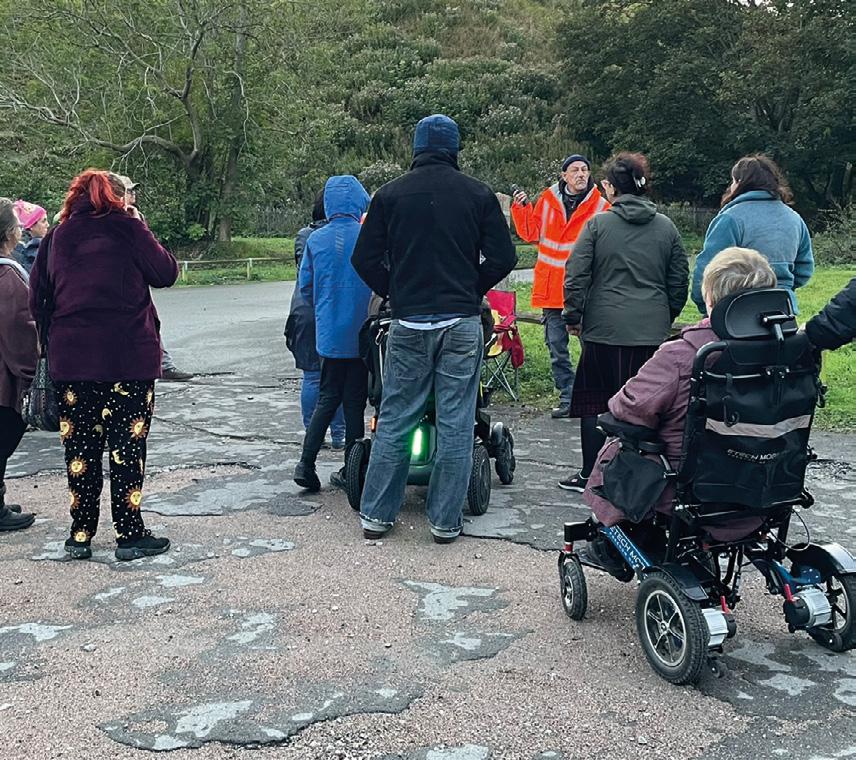
lead a community art workshop for the Citadel Sessions; Southeast Ecology lead an accessible bat walk.
People at its heart
We have a wonderful team of volunteers and community partners whose energy and dedication have turned ambitious ideas into real action.
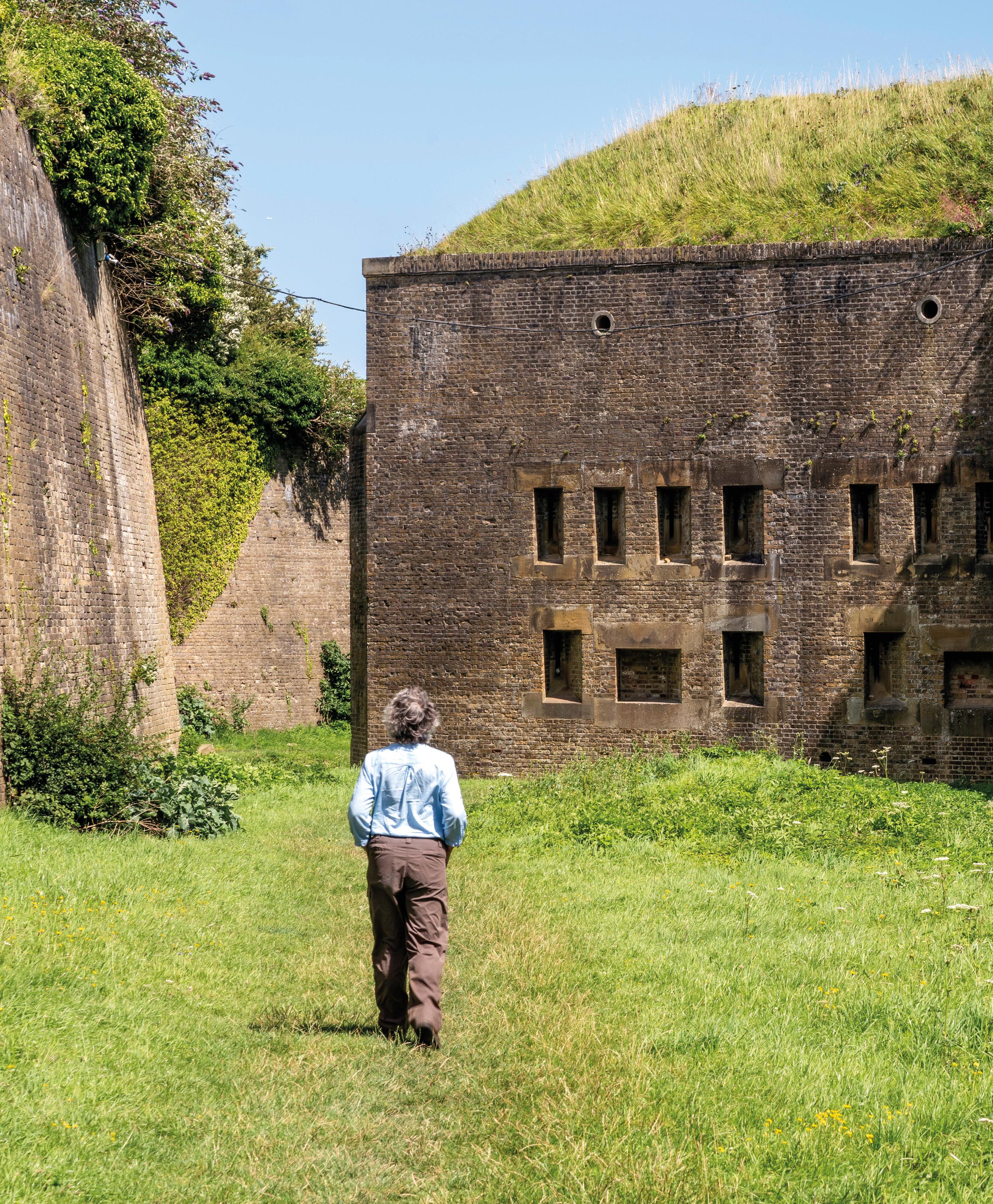
Volunteers support the project partners with everything from landscape maintenance and livestock care to environmental monitoring and community engagement. The Western Heights Preservation Society, an entirely volunteer-led organisation, helps English Heritage manage Drop Redoubt, a part of the Western Heights fortifications, carrying out vital maintenance and welcoming hundreds of visitors every year through open days and tours.
Community groups including Future Foundry, Dover Big Local and Access Arts and Adventures have also thrown their support behind the project, helping to make nature and heritage accessible for the whole community.
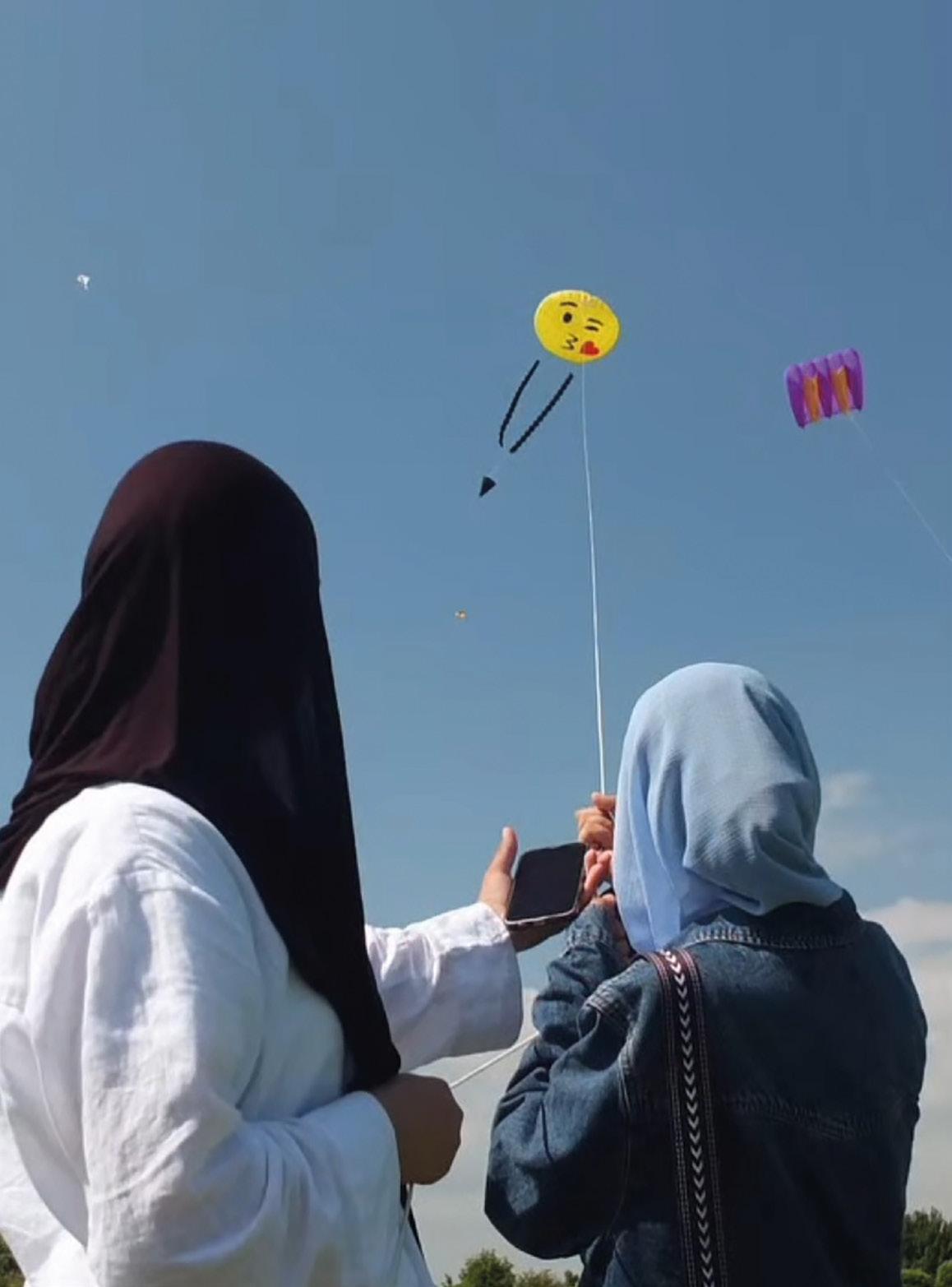
The Western Heights Family Kite Day in August 2025 was a shining example of how partners, volunteers and community groups have come together to bring the chalk grasslands to life. Led by volunteers from the Western Heights Preservation Society with support from all project partners, the event welcomed around 400 people who enjoyed a showcase of
rich kite-flying traditions from the UK and Afghanistan. Organisations such as The Samphire Project helped connect with Afghan people living locally, and Future Foundry offered activities for families from all backgrounds and cultures. Local businesses offered delicious refreshments, and Kent Kite Flyers put on spectacular displays that could be seen throughout the town.
Meet the volunteers
A community engagement and outreach volunteer role was developed to help deliver project activities. Volunteers Eleanor Williams and Krishna keenly
Volunteering has helped me develop my communication with people of all ages
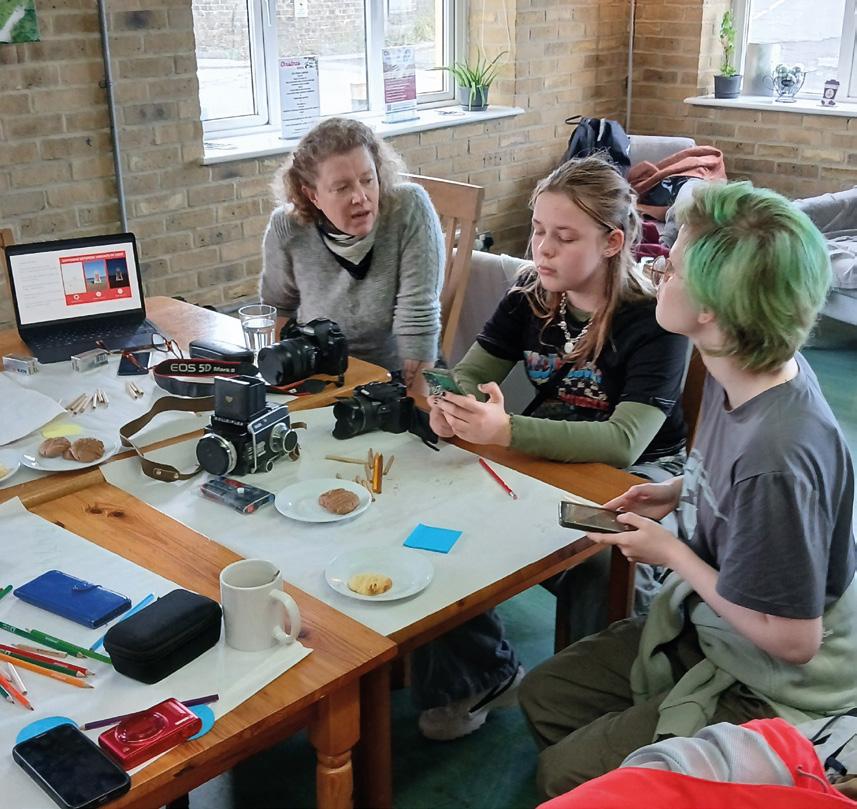
Previous page Exploring Dover Heights. Photo by Chas Bedford, photography volunteer. This page, clockwise from right Volunteer Eleanor Williams at Little Artlings’ Big Ideas Festival; The Legit Explorers Club gathers for a tour of the Citadel fortifications; The Legit Explorers Club with photographer Emma Khan; Volunteer Krishna ready to welcome the community; Volunteer Dave Cooper prepares to
took up the challenge in 2025, and have been instrumental in delivering a range of activities to the local community ever since. They've supported activities such as the Citadel Sessions, a series of talks and creative workshops designed to help people living on and around the Western Heights connect to the area in new ways, and attended events including the Little Artlings’ Big Ideas and Geopark festivals, as well as hosted local young people for a pizza party at Dover Castle. Being a community engagement and outreach volunteer is all about connecting with people and empowering
them to take part, so they can make the most of the opportunities on offer.
Eleanor and Krishna have achieved this by approaching every interaction with positivity, warmth and encouragement as they break down barriers to make sure everyone feels welcome. Volunteering, says Eleanor, ‘has helped me develop my communication with people of all ages and given me a deeper insight into my local area and what it has to offer. The people involved with the project are amazing and I look forward to continuing.’ ■
Get involved
You can find out more about the Reaching Greater Heights project and associated English Heritage volunteering opportunities at english-heritage.org.uk/visit/ places/western-heights-dover
Remembering Wrest Park during the Second World
War
Sue Cochrane, volunteer manager, tells us about the work of the Wrest Park volunteer history research team and their tribute to those who called Wrest Park home during the war.
History comes alive when we tell stories. For many of our visitors, tales of the Second World War still resonate through family generations. To commemorate 80 years since the end of the war, volunteers decided to bring the wartime stories of Wrest Park to life and to invite our visitors to share their own.
The exhibition
Our volunteer history research team had been hard at work
since early summer 2025. They contacted experts, pored over primary sources and assembled the engaging display boards at the heart of a three week exhibition in October and November, telling the story of Wrest Park at war. The event was a huge success, with visitors absorbed by the boards in the drawing room and many taking up the option to enjoy a 'Ration Tin Cream Tea' in the dining room. Stories covered the war in Bedfordshire, The Sun Insurance
Volunteers decided to bring the wartime stories of Wrest Park to life
company (which relocated to Wrest Park during the war), the Home Guard, Women's Land Army, Women's Auxiliary Air Force and prisoners of war, all of whom lived and worked at Wrest Park during the war years.
The research team reached out to family members who had contributed memories and photographs over the years to see if they would like to be involved. Previously unknown descendants also came to light and were invited to contribute.
One family, who shared information about their grandmother in the Women's Land Army, came to see her images on display. Another lady was born at Wrest and shared family anecdotes of The Sun staff pushing her pram and nicknaming her 'The Sun Baby'.
Standing room only
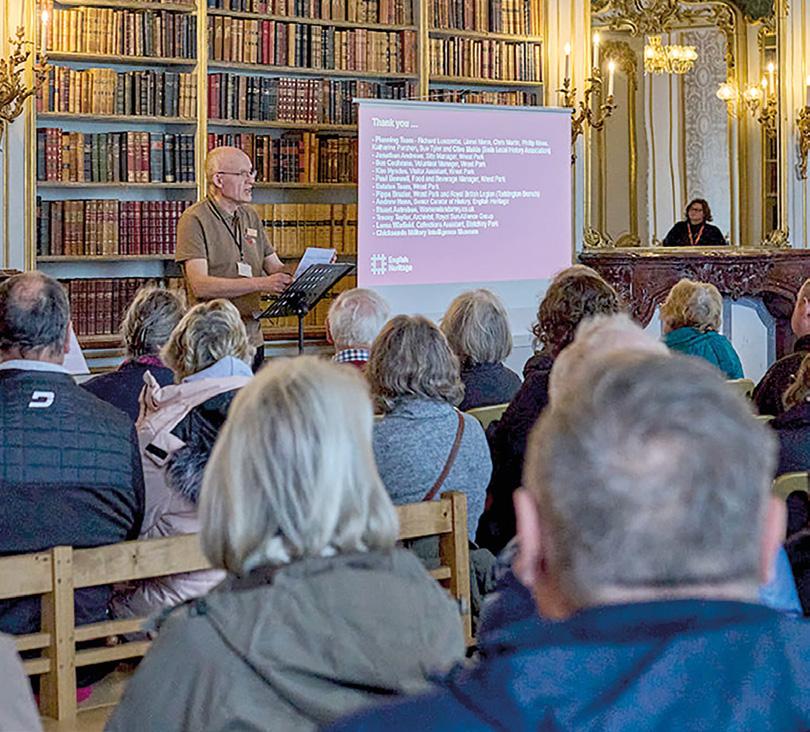
Volunteers Richard Luscombe and Sue Tyler also gave informative talks as part of the project. They were hugely popular, with standing room only.
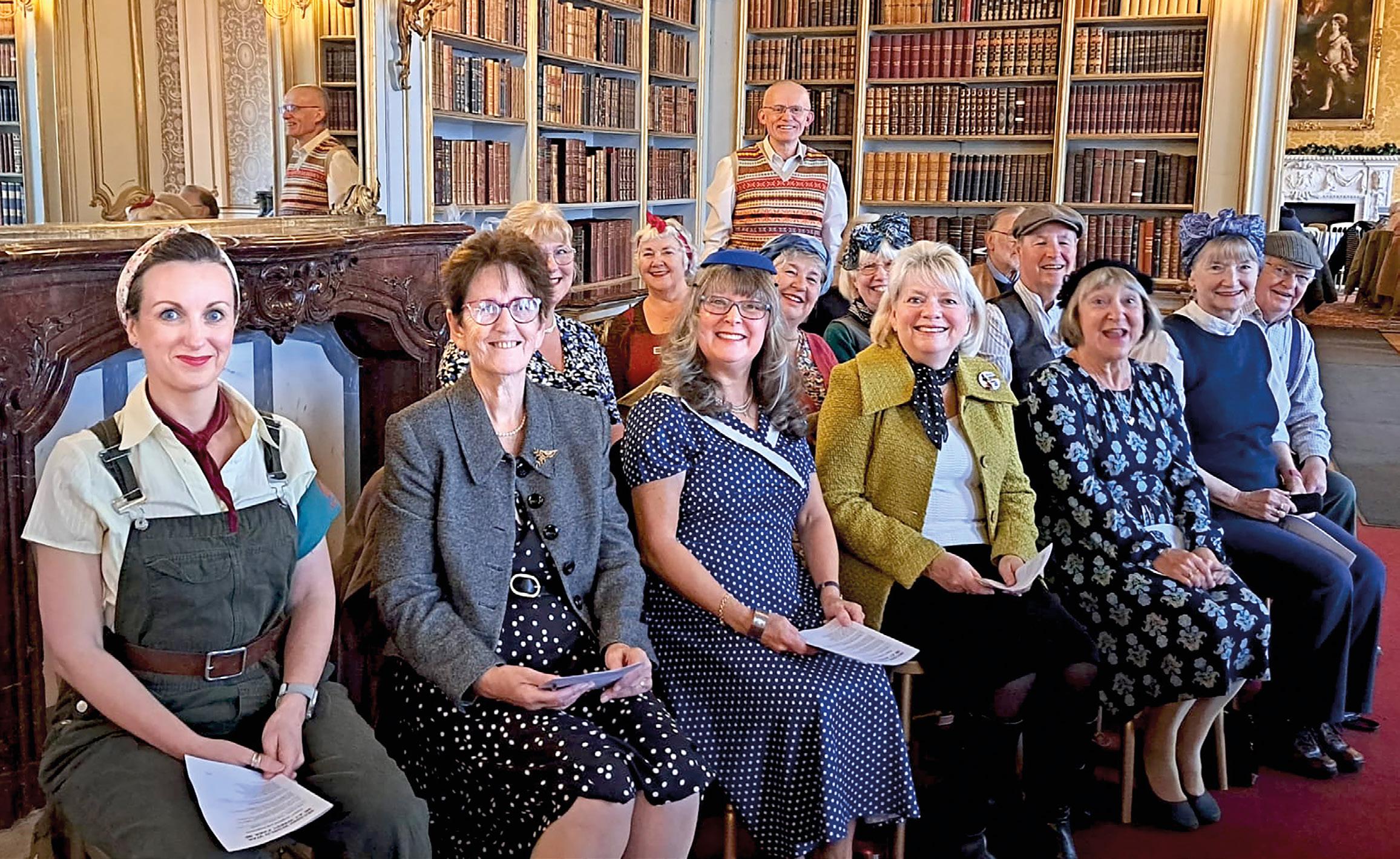
To close the commemorations we held a sing-along from our choir of volunteers and staff. The story of Wrest at war was interwoven with familiar songs, from 'Run Rabbit Run' to 'We'll Meet Again'. The choir, dressed in 1940s-style clothes, then led a community sing-along for 130 people.
Thank you to the volunteer history research team, Richard Luscombe, Lionel Mann, Phillip Moss, Katharine Purchon, Sue Tyler, Clive Makin from the Bedfordshire Local History Association, and to so many others at Wrest Park who played a huge part in making the commemorations possible. ■
Find out more
Discover more about Wrest Park and the people who lived there during the war years at english-heritage.org.uk/wrest
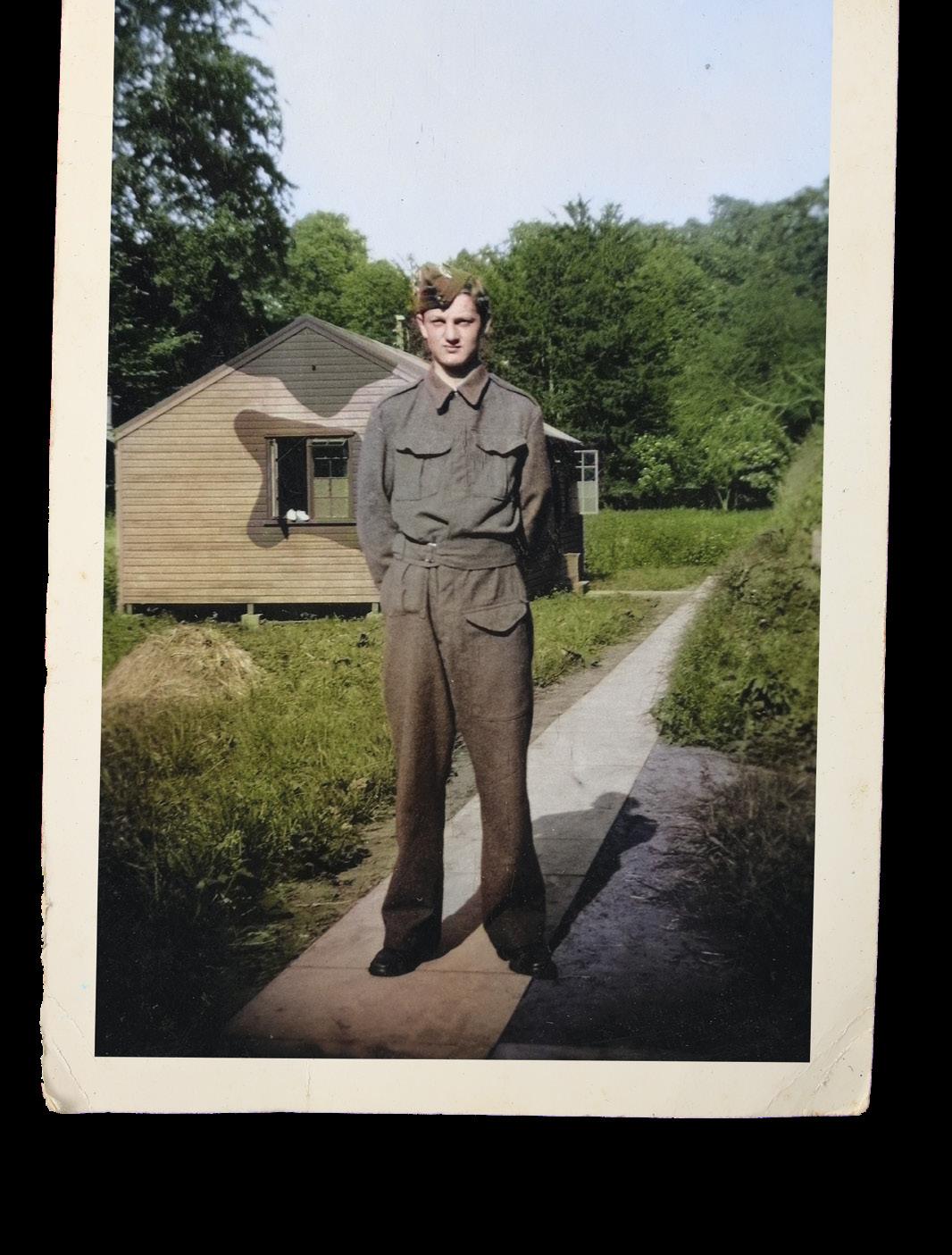
Clockwise from opposite page English Heritage Sing-along choir. Photo by Sue Luscombe; Memories of Wrest Park. Photo provided by Martin Nellist ; Peter Hoare home guard. Photo provided by Peter and Eunice Hoar e; Richard Luscombe delivering one of the packed-out talks. Photo by David Turner
Over to you
A space just for you Over to you
Revealing Witley Court
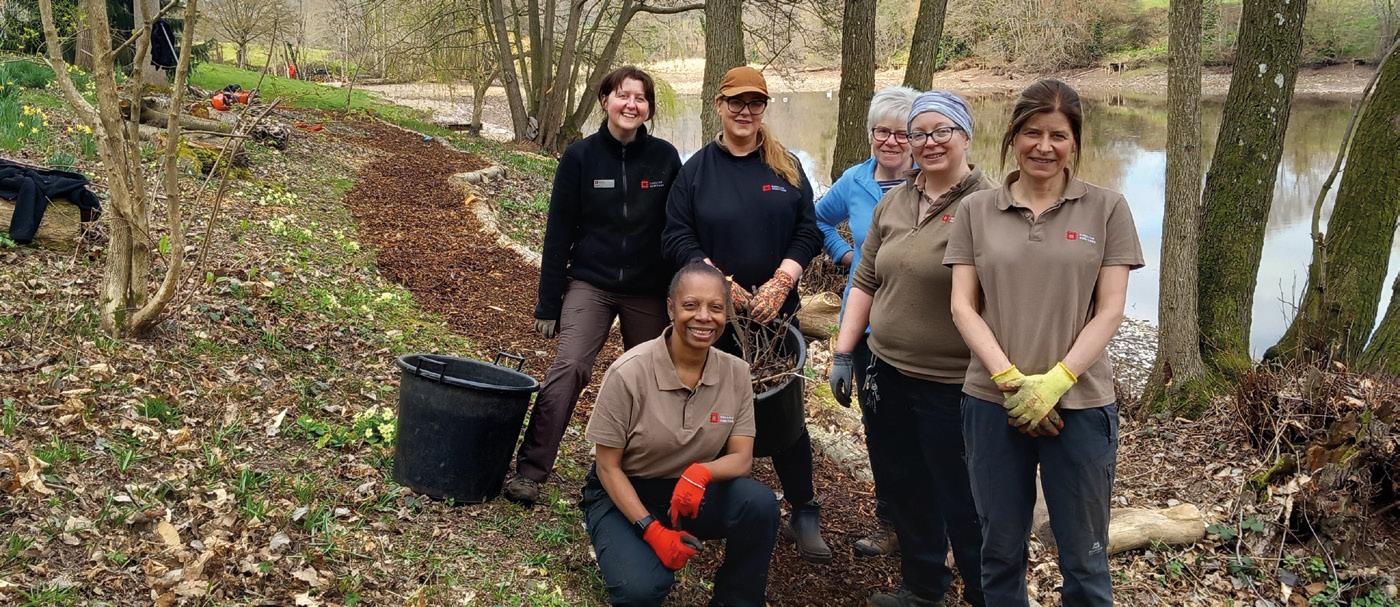
Volunteers have been busy revealing layers of history at Witley Court. The garden team care for the formal gardens, woodlands and meadows. They have restored long-lost sight lines by pruning the rhododendrons for the first time in nearly a decade. They’re now back to the size they would have been in the early Victorian period, when
Handmade crafts at Chester Castle
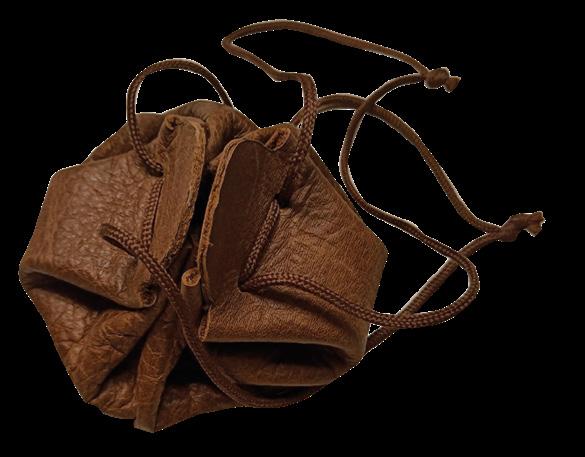
At Chester Castle, lead volunteer Rebecca Smith had kind words to share about her team, saying that she feels blessed to work with so many talented people. Amongst this brilliant bunch is artist and leatherworker Jeff Chadwick, who recently crafted Rebecca
these exotic plants were at the height of their popularity. Similarly, conservation maintenance volunteers have been hard at work uncovering historic surfaces within the stable yards and around the court ruins. This progress opens up the possibility of the areas becoming accessible to visitors in the near future.
a beautiful leather purse, and popped a coin in for good luck too – what kind-hearted volunteers we have!
Check out our volunteers’ Facebook group - a great space for you to connect with others. With nearly 900 members already, it’s a friendly, welcoming space where everyone is invited to join the conversation.
Search English Heritage volunteers on Facebook.
Hibernating at Kirkham House
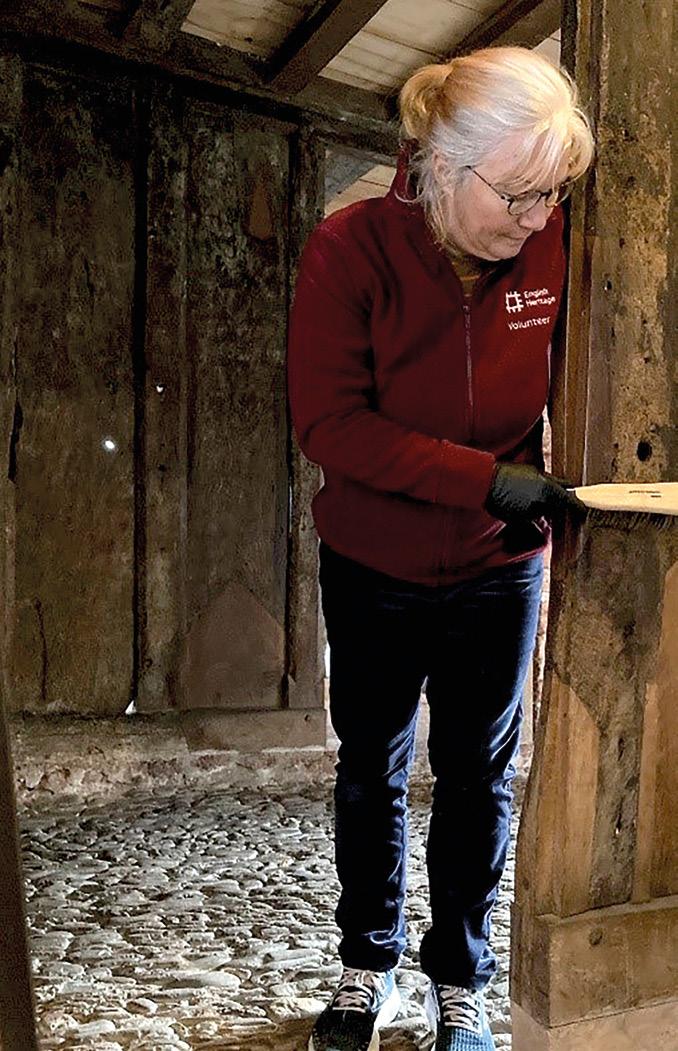
The team at Kirkham House welcomed volunteers Zoe and Noah to help with conservation cleaning. Charlotte Willson, volunteer and community engagement manager, explains that the pair ‘will be helping to look after the site while it's closed to the public in winter. Cobwebs will be swept away, windows will be wiped and made sparklingly and floors will be made squeaky clean.’
A big thanks to Osborne volunteer Andrew Hooper for the crossword. (Answers at the bottom of previous page).
Across
3. English Heritage castle where paintings and sculpture sit between two deltas (9)
8. Gentlemen at 4 might wear one that covers old people initially (3,3)
10. English Heritage has many such players left before the start of Easter (6)
11. Untidy morose rot kept here (9)
12 Very untidy place where soldiers hang out (4)
13. Young man? Yes. Or a woman (4)
14. The point is to dispose of rubbish (3)
16. Legless simple mathematician? (5)
18. Part of regicide allows for perfection (5)
19. At last, pertinent book concerning the actual facts (5)
21. Weak, untidy flower bed (5)
24. Desire for Japanese bread (3)
25. Keep quiet about number in informal collective (4)
26. English Heritage site in renovated dale (4)
29. Veg from watery part of Norfolk, sounds like you went there (5,4)
30. X marks the spot where these folk make their choice (6)
31. No score over English Heritage site (6)
32. English Heritage site for Brontë hero (9)
Down
1. English Heritage site left at sea, not the sea (8)
2. Coy about mistake or missing aperitif, maybe (6)
4. Meeting place for jockeys, or one jock? (5)
5. In Samoa tourists often sat around 10. (4)
6. Set free, United turn it round (6)
7. EH backing the big easy golfer in glamorous footwear (5)
9. Line of conversation, head over right after talking begins (6)
14. Family connections found among theatre enthusiasts (4)
15. Religious observance without drug is a shame (4)
16. Helpful friend of everyone, yes? (4)
17. Not across this clue (4)
20. A touch of colour with a leg over at this English Heritage site! (8)
22. Remove part of body to make unable to fight (6)
23. Diplomacy before I conclude start of plan (6)
25. Malevolent little creature can't see the day out after race starting instruction (6)
26. English Heritage site is a good place to see bluebirds? (5)
27. Relocated livestock with right move at 26 Down (5)
28. Charge about right, no charge (4)
Get in touch
Send your letters, news, photos, puzzles, jokes or anything else you’d like to share to volunteerfocus@englishheritage.org.uk
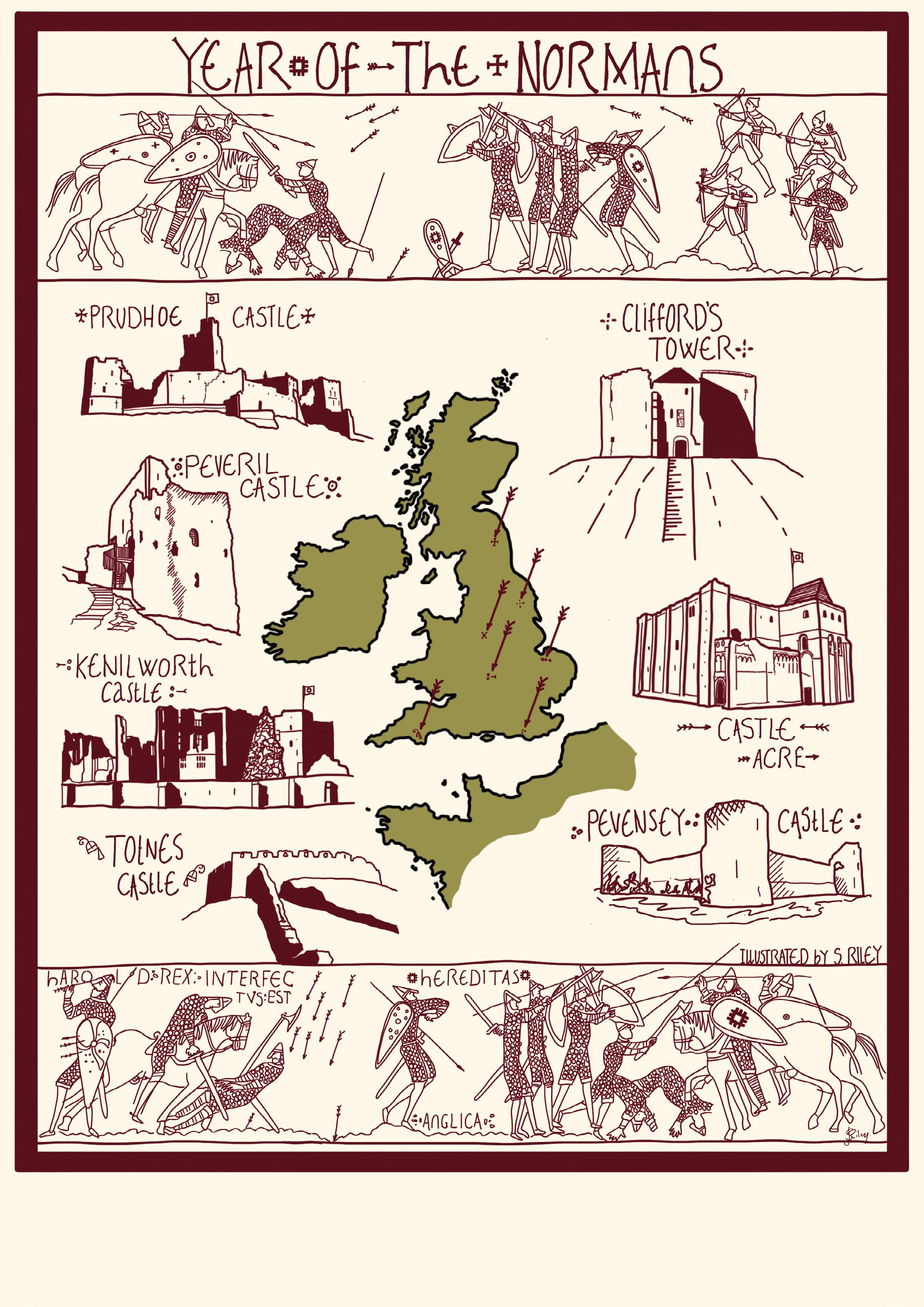
Thank you to volunteer Sam Riley for his illustration spotlighting some of the Norman castles in the care of English Heritage. In 2027, we’ll be celebrating 1,000 years since the birth of William the Conqueror.
Have you filled out your details on the Volunteer Hub?
We’re committed to making English Heritage a more inclusive, equitable and diverse place to volunteer. To do that, we need to find out more about our volunteers – and that’s where you come in.
By telling us a bit more about yourself, you can help us get a better picture of who our volunteers are. And that will help us to make sure that everybody feels able to volunteer with us.
The information won’t be shared with your volunteer manager. We’ll only use it for statistical analysis, and it will be anonymised. Within each of the sections there’s a ‘prefer not to say’ option.
To fill out your details, log on to My Profile on the Volunteer Hub and complete the About You section.
Thank you to our heritage heroes
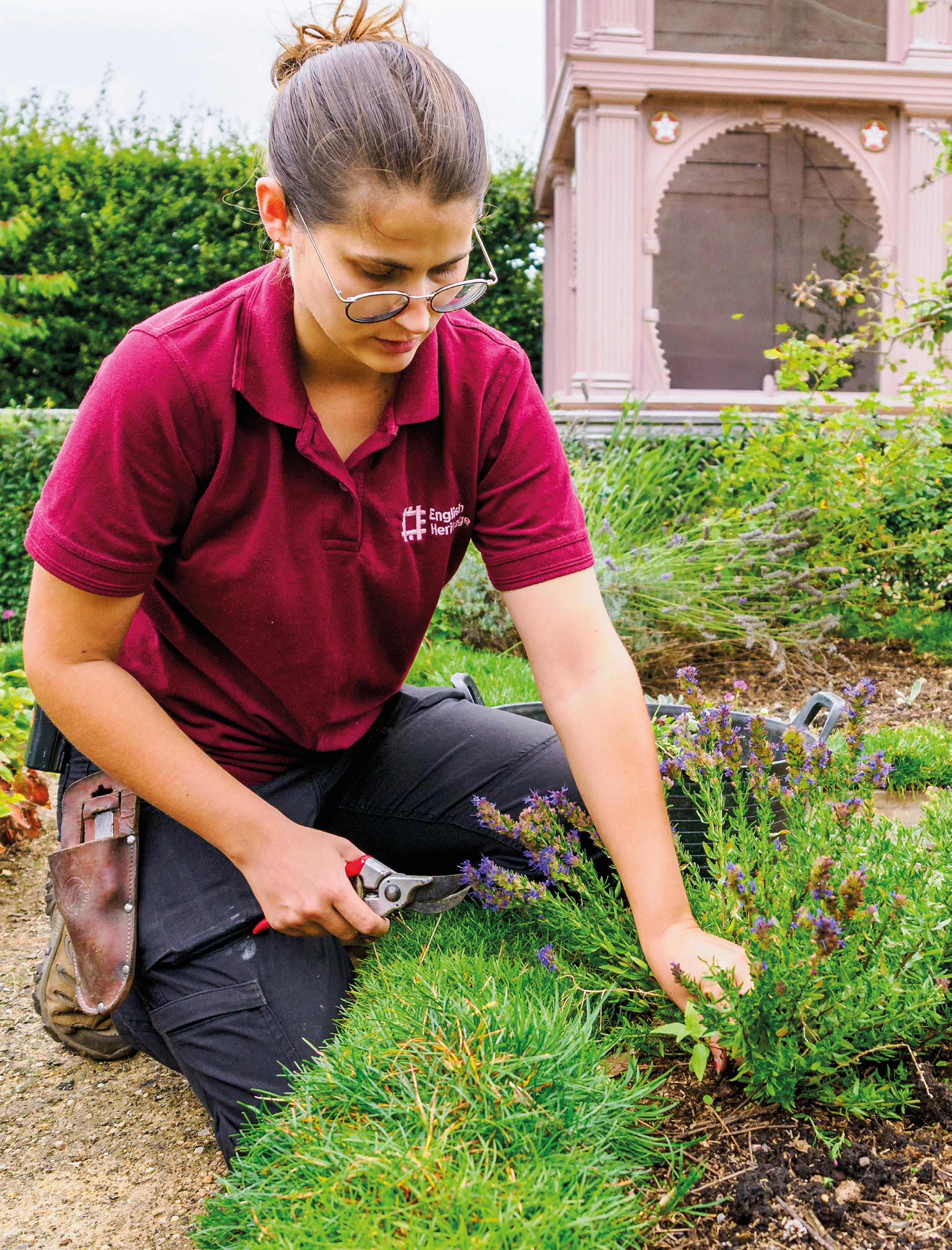
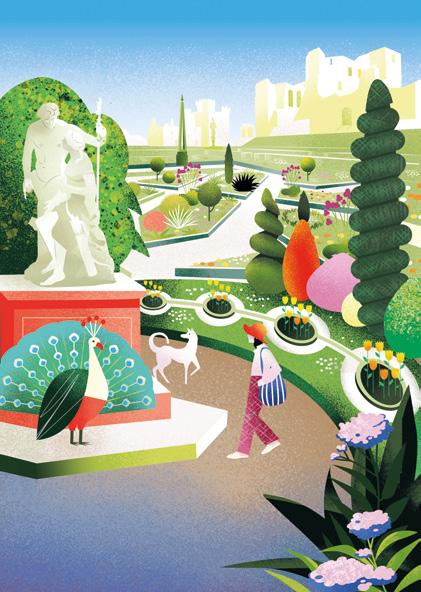
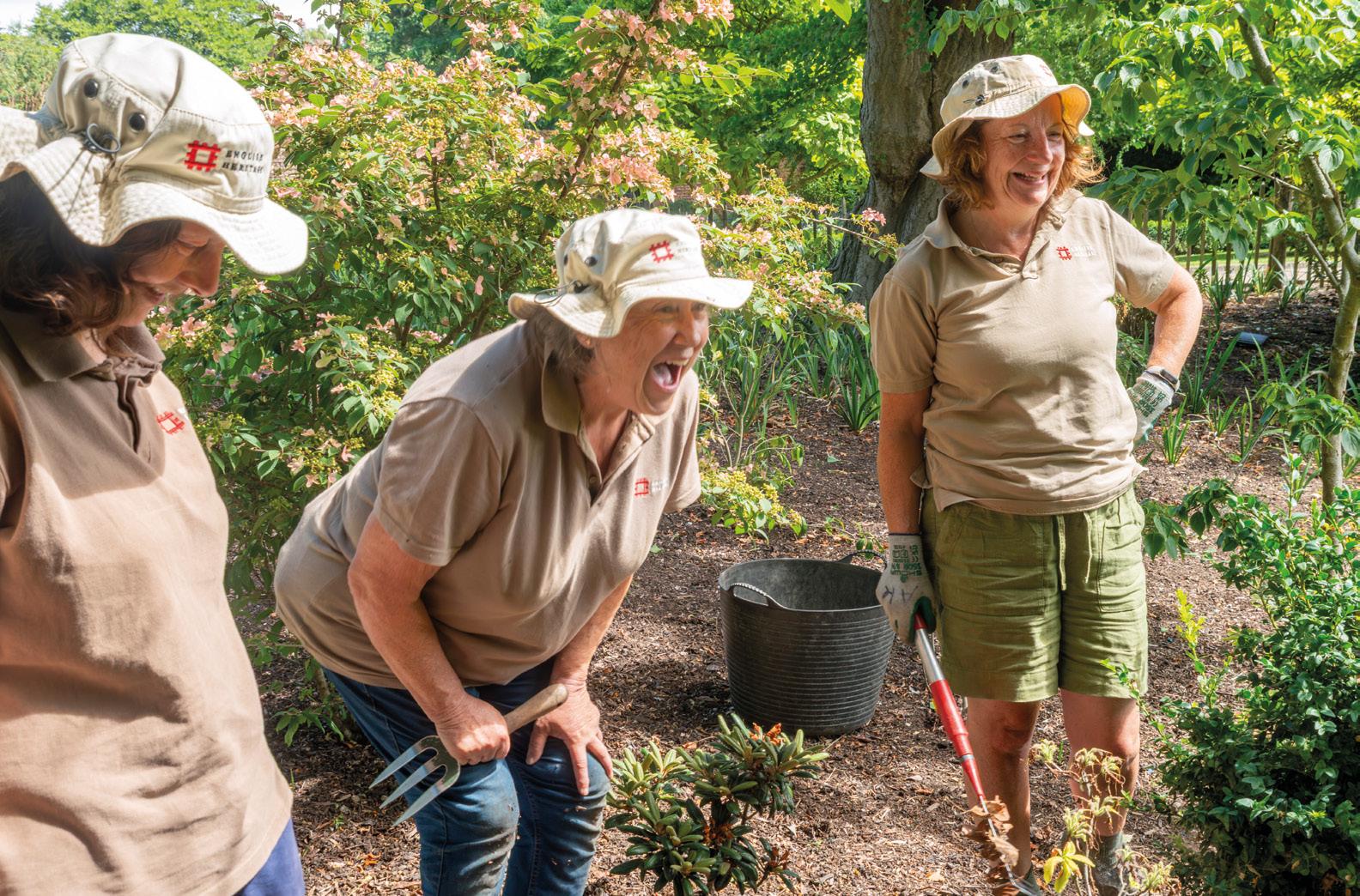
The variety of roles you do continues to grow. This time we're celebrating our garden volunteers, whose care for our gardens helps them to flourish and be open for everyone to enjoy.
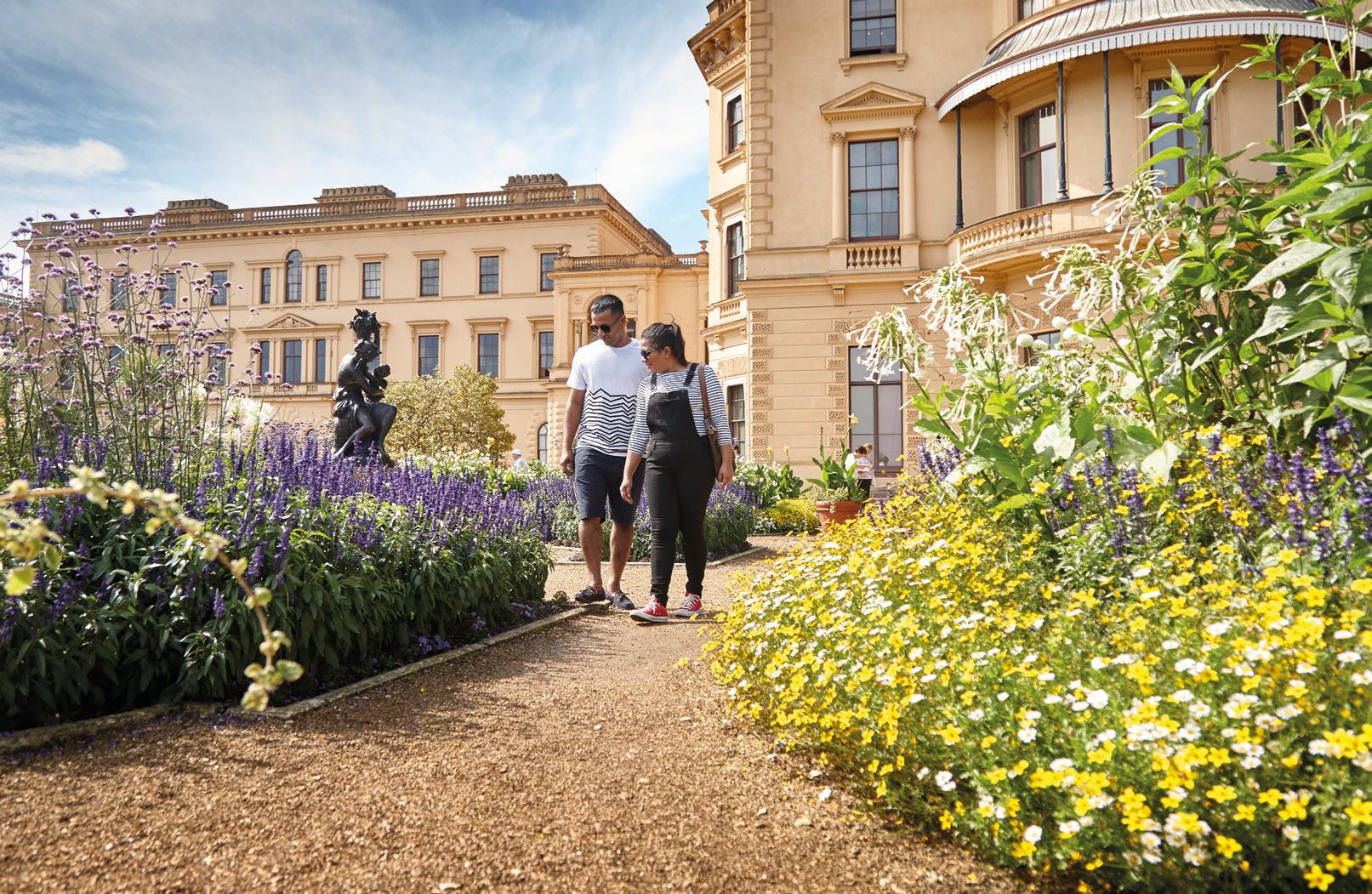
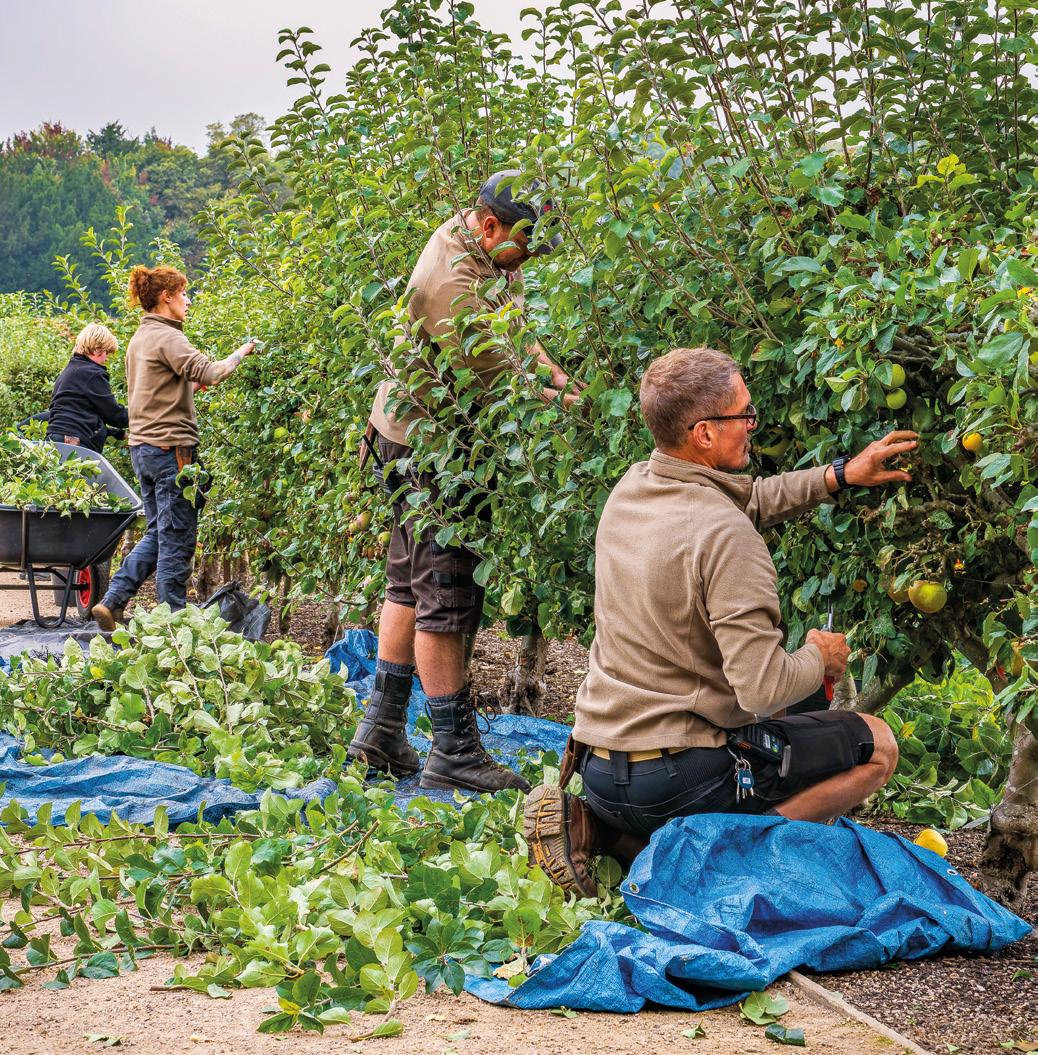
Pruning the apple trees in the walled garden of Audley End House and Gardens.