TKC, Shostakovich's Eighth Abduraimov plays Tchaikovsky, January 2026
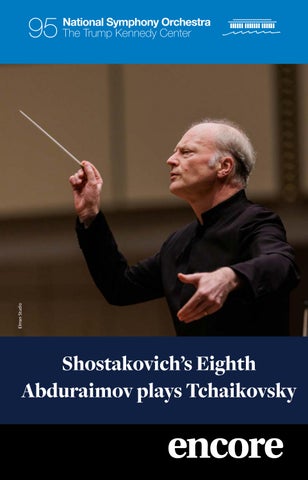
Shostakovich’s Eighth Abduraimov plays Tchaikovsky
Elman Studio
The Keys give you a show above and below the surface. From art galleries to museums and live music, no place inspires more freedom of expression. In The Keys, you’re part of the performance.
VisitFloridaKeys.com/arts-culture 1.800.Fla.Keys
THE DONALD J. TRUMP AND THE JOHN F. KENNEDY
MEMORIAL CENTER FOR THE PERFORMING ARTS, FEBRUARY 5, 2026 AT 7 P.M.; FEBRUARY 6, 2026 AT 11:30 A.M.; FEBRUARY 7, 2026 AT 8 P.M. | CONCERT HALL
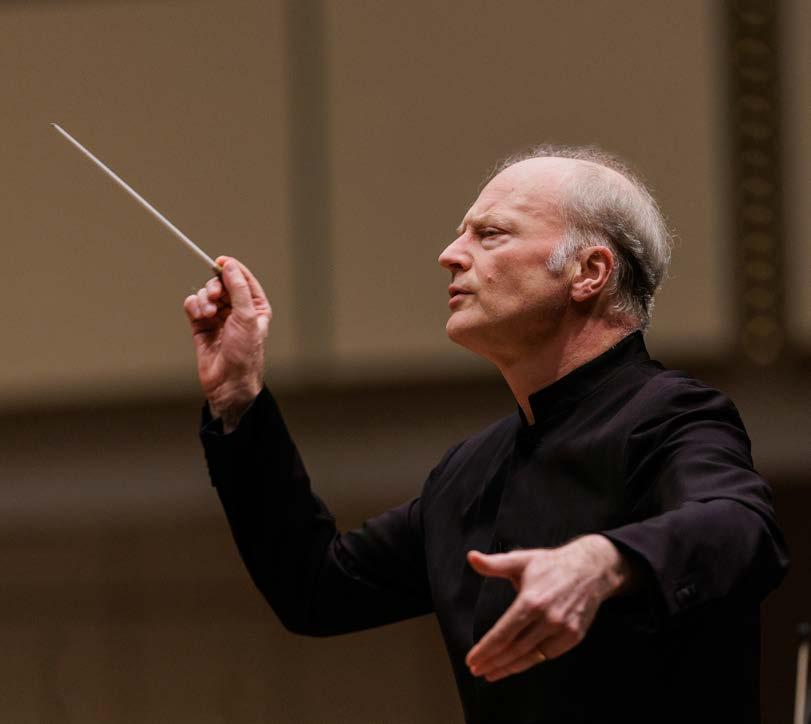
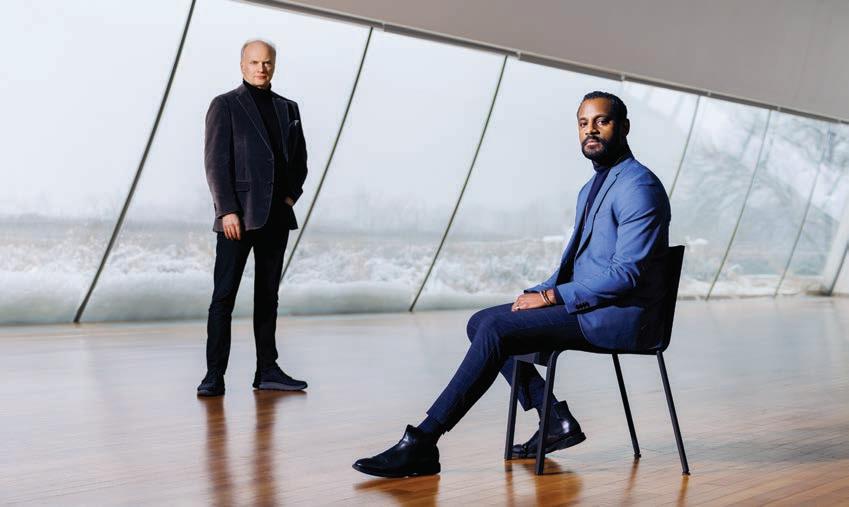
Gianandrea Noseda, conductor Behzod Abduraimov, piano
PIOTR ILYICH TCHAIKOVSKY (1840–1893)
DMITRI SHOSTAKOVICH (1906–1975)
Piano Concerto No. 1 in B-flat minor, Op. 23 (1874–1875)
i. Allegro non troppo e molto maestoso – Allegro con spirito
ii. Andantino semplice – Prestissimo – Tempo I
iii. Allegro con fuoco – Molto meno mosso – Allegro vivo Behzod Abduraimov
INTERMISSION
Symphony No. 8 in C minor, Op. 65 (1943)
i. Adagio – Allegro non troppo
ii. Allegretto
iii. Allegro non troppo
iv. Largo
v. Allegretto
THANK YOU TO OUR SEASON SPONSORS
The NSO Music Director Chair is generously endowed by Roger Sant and Congresswoman Doris Matsui Noseda Era Fund Supporters The Amici di Gianandrea
Patrons are requested to turn off cell phones and other electronic devices during the performance. Any video and/or audio recording of this production is strictly prohibited.
Welcome
Dear Friends,
As we celebrate the National Symphony Orchestra’s 95th season, I want to take a moment to express my heartfelt thanks to you—our devoted patrons, supporters, and friends. Your presence this evening, and your unwavering support throughout the year, mean more than words can convey. It is your love of music, your generosity, and your steadfast belief in the arts that delight this remarkable orchestra.
In 1931, Hans Kindler founded the NSO with a bold vision: to build a world-class symphony orchestra in the heart of our nation’s capital. Nearly a century later, that vision continues to be our driving force. Today, under the dynamic artistic leadership of Gianandrea Noseda, we are more inspired than ever to share powerful performances with our audiences. The NSO is not simply an orchestra; it is a family of artists joined together through a shared love of music, unity of purpose, and commitment to something greater than us.
The NSO is more than what you see on stage—it is a living, breathing institution devoted to enriching lives. Our robust education and community engagement programs reach thousands of students, educators, and families each year. Between our Youth Fellowship Program and Summer Music Institute, to Young People’s Concerts, we strive to make music accessible to everyone—especially the next generation.
This commitment to connect with broader audiences is also seen through our vibrant, genre-defying series, led by the remarkable Steven Reineke, our Principal Conductor and Artistic Advisor. Steven brings a wide-reaching musical vision to the NSO, bridging genres and generations. His programming has opened the door for new audiences to discover a love for orchestral music, while continuing to captivate longtime fans with the highest levels of artistry.
As we embark on this milestone season, we are reminded that our journey would not be possible without you. Thank you for being an essential part of this vibrant and enduring musical community.
With deepest gratitude and warmest regards,
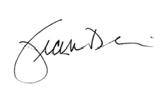
Jean Davidson Executive Director National Symphony Orchestra
From the Music Director
Cari amici,
It is with immense joy and anticipation that I welcome you to the National Symphony Orchestra’s 95th anniversary season. This moment is more than a milestone—it is a celebration of our deep musical legacy and a renewed commitment to bringing powerful, moving performances to our community and beyond. This is only the beginning. The 95th season is filled with musical discovery, celebrated artists, and unforgettable experiences.
This season features iconic works that have stood the test of time, from classic masterpieces to thrilling contemporary music. The NSO also has the opportunity to share the stage with an exceptional lineup of guest artists and conductors—beloved icons and rising stars alike. Performing new music is something the NSO truly believes in. Make history with us as we present innovative new works, including five world premieres.
It is with immense joy and anticipation that I welcome you to the National Symphony Orchestra’s 95th anniversary season. This moment is more than a milestone—it is a celebration of our deep musical legacy and a renewed commitment to bringing powerful, moving performances to our community and beyond. This is only the beginning. The 95th season is filled with musical discovery, celebrated artists, and unforgettable experiences.
I am deeply grateful to share this journey with you. Your presence in the Concert Hall is what brings our music fully to life. Thank you for being a part of the NSO family—for your passion, your applause, and your unwavering support.
I am deeply grateful to share this journey with you. Your presence in the Concert Hall is what brings our music fully to life. Thank you for being a part of the NSO family—for your passion, your applause, and your unwavering support.
Con tutto il cuore,
Con tutto il cuore,
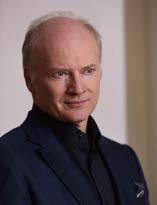
Gianandrea Noseda
Gianandrea Noseda
Music
Music Director, National Symphony Orchestra
Director, National Symphony Orchestra
Che la musica vi porti gioia e ispirazione—may music bring you joy and inspiration.
Che la musica vi porti gioia e ispirazione—may music bring you joy and inspiration.
Notes on the Program
Piano Concerto No. 1 in B-flat minor, Op. 23
PIOTR ILYICH TCHAIKOVSKY
Born May 7, 1840, in Votkinsk, Russia
Died November 6, 1893, in Saint Petersburg, Russia
In the 150 years since the premiere of Piotr Ilyich Tchaikovsky’s First Piano Concerto in 1875, analyses have been almost as eclectic as the piece itself. Weaving together diverse source material, Tchaikovsky becomes, at once, a vulgar thief, a Russian nationalist, a Ukrainian in artistic spirit, a lowercase “r” romantic, an uppercase “R” Romantic, and an amateur cryptographer. (As scholar David Brown observed, the notes D-flat and A begin one of the Concerto’s dreamier themes. In German nomenclature, D-flat translates to “des,” leaving “des A”—a supposed reference to Tchaikovsky’s ex-fiancée, Désirée Artôt.) What is it about the First Piano Concerto that has cultivated such rich grounds for interpretation?
Born in 1840, Tchaikovsky rose to prominence at the fringes of one of Russia’s slipperiest intellectual conflicts. The Slavophiles supported a Russian Empire carved from its distant past, while the Westernizers looked to their European neighbors for industrial, artistic, and political inspiration. So rose The Five: Mily Balakirev, Alexander Borodin, César Cui, Modest Mussorgsky, and Nikolai Rimsky-Korsakov. Through novel compositional techniques and folk motifs, the group set out to form a distinctly Russian musical style, free from the Conservatory influence that so affected students like Tchaikovsky.
Whether or not he was attempting to break from such influence, Tchaikovsky’s First Piano Concerto pairs European compositional structures with regional, homespun melodies. Popularized in England and Central Europe, a piano concerto is a musical form wherein a large ensemble supports a soloing master pianist. The fantastical vignettes of his First Piano Concerto race through a series of urgent fantasies—nostalgia, violence, whimsy, romance, and power.
The grand, almost operatic intro is something of a tease, though Tchaikovsky lightly quotes his horn call throughout the piece. Drawing on a quick-paced melody popular among Ukrainian traveling musicians, the first movement spins off into racing octaves and lilting phrases. Roguish and roving, the piano keeps the ensemble wide awake through each false ending.
Flute and oboe ease the second movement into a lullaby’s reprieve. A playful expansion on the French ditty “Il faut s’amuser, danser et rire” (One must have fun, dance and laugh) follows behind. The third movement takes its momentum from both a lyrical Russian anthem and a Ukrainian tune for springtime. Thus, the piece bounds to a finish with a bloom of adrenaline-inducing double octaves, triumphantly returning to the main key.
Owing to this crosshatched geographical history, the Concerto has continued to generate wide discussion from those who would variously claim or reject the piece along nationalist lines. Following a state-sponsored doping scandal, Russian symbols like the national anthem were banned from the 2020 and 2022 Olympics. When Russian goldmedalists took the podium, speakers instead blared the forceful, weighty introduction to Tchaikovsky’s First Piano Concerto. Initially, the Russian Olympic Committee had submitted the lyrical Soviet song “Katyusha” as a replacement, but the piece was struck down. On the decision to approve Tchaikovsky’s Concerto, scholar Lena Leson attributes it to “the perceived lack of representational function in music… particularly untexted classical music.”
In place of text, Tchaikovsky’s life and lineage serve as analytical footholds. To some, he stands as a proud descendant of a Ukrainian great-grandfather. To others, he provides an entry point for Russian pride. Hardly available to defend himself against any contemporary claims, Tchaikovsky speaks loudest through his work. To pianists, he levels a maestoso—majestic—challenge teeming with technical feats and emotional depths. And, when all the false endings and dark crescendos are through, he quiets.
— Sarina Benezra Bell
Symphony No. 8 in C minor, Op. 65
DMITRI SHOSTAKOVICH
Born September 25, 1906, in Saint Petersburg, Russia
Died August 9, 1975, in Moscow, Soviet Union
Dmitri Shostakovich wrote his Eighth Symphony between July and August of 1943. In February of that year, the Soviet Union had successfully beaten back the advance of Nazi forces in the brutal Battle of Stalingrad, which marked a major turning point in World War II. Shostakovich and his family spent that summer at Ivanovo, an artistic retreat close to Moscow, and, though they were far from the front, the conflict was inevitably on the composer’s mind. The Eighth is full of allusions to military topics: an endless supply of marches, piercing trumpet calls, tight snare-drum licks, or even the wailing of warning sirens. Shostakovich was pleased with this piece, considering it the equal of his celebrated Fifth Symphony (1937), and later in his life he lamented that it was not performed as often as that earlier work. Initially, the symphony was not particularly well-received by the Soviet arts administration. Critics admired it on a formal level, but they deemed it insufficiently accessible and lacking a clear, triumphal narrative about the war. Mikhail Khrapchenko, the minister of culture and a member of the committee for the Stalin Prize, argued against the symphony for the award, stating, “Shostakovich is speaking on his own behalf here, rather than on behalf of the many. His work is… too individual.”
Many writers, researchers, and musicians have found a tangle of double meanings in Shostakovich’s music. For conductor Kurt Sanderling, who knew Shostakovich and attended early performances of the Eighth Symphony, this piece covertly depicted the impossible position of the independent artist and intellectual in Stalin’s Russia. A program note à la Sanderling might describe a thoughtful soldier-poet who struggles to subsume his identity into that of the mass. The awe-inspiring contrapuntal lines that open the symphony build an edifice of tyranny, with monumental construction projects underway and troops deployed prominently on the streets. The main themes developed over the course of the massive, down-tempo first movement reveal the subject’s wide-ranging thoughts on his place under an authoritarian government.
The boisterous second movement, described as a “march-scherzo” by the composer, conjures the image of a pompous and incompetent military commander waffling about in front of the troops, making absurd pronouncements about policy and battle plans. Cackling, contrasting wind solos suggest soldiers mocking their brash leader. In the terrifying third movement, another march that to Sanderling expressed “the crushing of the individual,” string ostinatos create a machine-like motor, while large descents heard first in the winds recall the cry of air-raid signals. In the middle of the movement, a grotesque trumpet solo based on what can only be described as a nasty scale heralds a foolhardy charge into battle. In the Largo—for Sanderling, “the individual in a state of solitary helplessness,”—a long, funereal bassline repeats twelve times. Each cycle suggests the possibility that the harmony could go somewhere new, yet it never wavers. The flute and clarinet enter with rhythmically loose lines, trying to pull away from the confining formal structure, but never managing to get away.
‘Shostakovich vs. The Regime’ narratives like this one have been roundly critiqued by scholars in recent years. Musicologists like Richard Taruskin, Marina Frolova-Walker, and Daniel Elphick have argued that, at times, Shostakovich gladly and organically modulated elements of his style to align with the expectations of the administration, as well as that, at other points in history, the administration was quite open to his formal idiosyncrasies. Obsessively mining secret symbols of resistance from instrumental music can be a tenuous and ultimately tiresome exercise, and such exegeses can obscure the reality that some pieces, or some parts of a piece, might have had covert implications contained in them, while other works or sections were written with more sincere, or with more strictly musical, ends in mind.
Attempts at storytelling tend to break down in the finale of the Eighth Symphony. He writes a whimsical romp full of labile bassoon lines, Tchaikovsky-esque cello waltzing, and
Notes on the Program
chirping violin and flute solos, creating a pastoral mood that is interrupted only once for an echo of the opening movement’s menace. According to a 1943 interview, Shostakovich wanted the work to show how “life is beautiful. Everything that is dark and gloomy will rot away, vanish, and the beautiful will triumph.”
Such public, state-sanctioned explanations must be taken with a grain of salt. The closing movement could be read as an ironic twist—we hear the individual tragically resign himself to bucolic oblivion rather than face the terror presented in the Symphony’s first half. But it is equally possible that, while spending the summer in rustic seclusion with his children, Shostakovich saw genuine glimpses of hope for a more tranquil future, and he poured those sentiments into his eccentric final Allegretto.
— Nicholas Swett
Meet the Artists
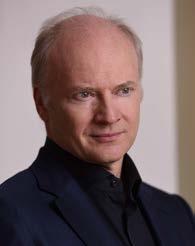
Gianandrea Noseda, conductor
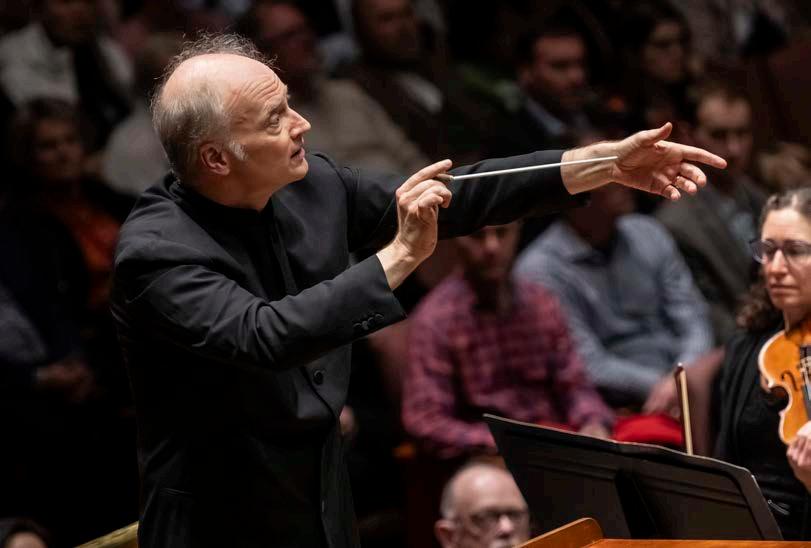
Gianandrea Noseda is one of the world’s most sought-after conductors, equally recognized for his artistry in both the concert hall and opera house. The 2025–2026 season marks his ninth as music director of the National Symphony Orchestra. Noseda’s leadership has inspired and reinvigorated the National Symphony Orchestra, which makes its home at the Kennedy Center. The renewed artistic recognition and critical acclaim have led to invitations to Carnegie Hall and international concert halls, as well as digital streaming and a record label distributed by LSO Live, for which Noseda also records as principal guest conductor of the London Symphony Orchestra. Noseda’s discography of over 80 recordings includes dozens of critically acclaimed albums with a wide range of orchestras and repertoire for various labels, including Deutsche Grammophon and Chandos.
Noseda became General Music Director of the Zurich Opera House in September 2021 and reached an important milestone in May 2024, conducting two highly praised complete Ring Cycles. He was recognized as “Best Conductor” by the jury of the German OPER! AWARDS, specifically for his Wagner interpretations.
From 2007 to 2018, Noseda served as Music Director of the Teatro Regio Torino, where his leadership marked the opera house’s golden era. Noseda has conducted the most important international orchestras, opera houses, and festivals, and had significant roles at the BBC Philharmonic (chief conductor), Israel Philharmonic Orchestra (principal guest conductor), Mariinsky Theatre (principal guest conductor), Orchestra Sinfonica Nazionale della RAI (principal guest conductor), Pittsburgh Symphony Orchestra (Victor de Sabata Chair), Rotterdam Philharmonic (principal guest conductor), and Stresa Festival (artistic director).
Working with the next generation of musicians is important to Noseda, and in the summer of 2025, he led a tour of major concert halls in China, Korea, and Japan with Carnegie Hall’s National Youth Orchestra of the USA. In 2019, he was appointed the founding Music Director of the Tsinandali Festival and Pan-Caucasian Youth Orchestra in the village of Tsinandali, Georgia. A native of Milan, Noseda is Commendatore al Merito della Repubblica Italiana, marking his
contribution to the artistic life of Italy. He has been honored as Conductor of the Year by both Musical America and the International Opera Awards. He is also a recipient of the Puccini Award, whose past recipients include legendary opera stars Maria Callas, Birgit Nilsson, and Luciano Pavarotti.
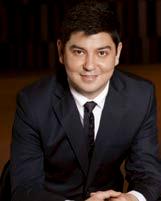
Behzod Abduraimov, piano
“It takes only a handful of bars into Romeo and Juliet’s opening ‘Folk Dance’ to recognise that we are listening to a pianist who simply transcends his instrument.” — Gramophone
Behzod Abduraimov’s performances combine an immense depth of musicality with phenomenal technique and delicacy. He performs with many of the world’s leading orchestras and conductors, and his critically acclaimed recordings have set a new standard for the piano repertoire.
Behzod has a number of notable debuts in the 2025–2026 season, including with the New York Philharmonic and National Symphony Orchestra, both with Gianandrea Noseda. Other concerto performances include the Houston Symphony and Pittsburgh Symphony Orchestra, as well as the Orchestra dell’Accademia Nazionale di Santa Cecilia, Frankfurt Opernund Museumsorchester, and Hong Kong Philharmonic Orchestra.
Behzod has performed with leading orchestras including The Cleveland Orchestra, Chicago Symphony Orchestra, Royal Concertgebouw Orchestra, Bamberger Symphoniker, Czech Philharmonic, Deutsches Symphonie-Orchester Berlin, Los Angeles Philharmonic, NHK Symphony Orchestra, Philharmonia Orchestra, Rundfunk-Sinfonieorchester Berlin, San Francisco Symphony, and Wiener Symphoniker. Conductor collaborations include Semyon Bychkov, Constantinos Carydis, Gustavo Dudamel, Edward Gardner, Gustavo Gimeno, Jakub Hrůša, Stanislav Kochanovsky, Vasily Petrenko, Aziz Shokhakimov, Juraj Valčuha, and Long Yu.
Behzod’s critically acclaimed recordings have won numerous international awards, including the Choc de Classica and Diapason Dé couverte. He records for Alpha Classics. Shadows of My Ancestors, his second recital recording for Alpha Classics, released in January 2024, features works by Ravel, Prokofiev, and Uzbek composer Dilorom Saidaminova. It was recognized as a Gramophone Editor’s Choice, shortlisted for a
Meet the Artists
Gramophone Award, and named one of Apple Music’s 10 Classical Albums You Must Hear This Month. His first recital album for Alpha Classics in 2021 includes Mussorgsky’s Pictures at an Exhibition. In 2020, two of his albums were nominated for the 2020 Opus Klassik awards in multiple categories: Rachmaninoff’s Rhapsody on a Theme of Paganini with the Lucerne Symphony Orchestra under James Gaffigan, recorded on the composer’s own piano from Villa Senar for Sony Classical, and Rachmaninoff’s Piano Concerto No.3 with the Royal Concertgebouw Orchestra, for the RCO live label.
Behzod’s recitals have been streamed and broadcast on international channels, including medici .tv, and a DVD of his 2016 BBC Proms debut with the Mü nchner Philharmoniker was released in 2018.
Born in Tashkent, Uzbekistan, in 1990, Behzod began playing the piano at age five as a pupil of Tamara Popovich at Uspensky State Central Lyceum in Tashkent. In 2009, he won first prize at the London International Piano Competition with Prokofiev’s Piano Concerto No.3. He is Artist-in-Residence at the International Center for Music at Park University, where he studied with Stanislav Ioudenitch.
National Symphony Orchestra
The 2025–2026 season is the National Symphony Orchestra’s 95th and Music Director Gianandrea Noseda’s ninth season. Gianandrea Noseda serves as the orchestra’s seventh music director, joining the NSO’s legacy of distinguished leaders: Christoph Eschenbach, Leonard Slatkin, Mstislav Rostropovich, Antal Doráti, Howard Mitchell, and Hans Kindler. Its artistic leadership also includes Principal Conductor and Artistic Advisor Steven Reineke.
Since its founding in 1931, the NSO has been committed to performances that enrich the lives of its audience and community members. In 1986, the National Symphony became an artistic affiliate of the John F. Kennedy Center for the Performing Arts, where it has performed since the Center opened in 1971. The 96-member NSO participates in events of national and international importance, including the annual nationally televised concerts on the lawn of the U.S. Capitol, live-streamed performances on medici.tv, and local radio broadcasts on WETA Classical 90.9 FM.
Since launching its eponymous recording label in 2020, the NSO has embarked on ambitious recording projects, including its first complete Beethoven Symphony cycle and the release of the first-ever cycle of George Walker’s Sinfonias, both led by Noseda. Recent projects include Four Symphonic Works by Kennedy Center Composerin-Residence Carlos Simon conducted by
Noseda, and William Shatner’s So Fragile, So Blue, recorded live in the Concert Hall with the NSO under Steven Reineke. Forthcoming releases with Gianandrea Noseda include music by Gustav Mahler and William Grant Still, as well as Samuel Barber’s opera Vanessa. The NSO’s community engagement and education projects are nationally recognized, and career development opportunities for young musicians include the NSO Youth Fellowship Program and its acclaimed, tuition-free Summer Music Institute.
Symphony
Loud and Clear
Terms to know in the Concert Hall, loosely defined.
An extended work with multiple sections—typically four movements.
A “symphonic” piece is a long piece with multiple interpretations of a musical idea. A repeated, transformed musical idea is called a theme.
Orchestra
A group of musicians who play together.
In the Western European tradition, an orchestra often includes the four major instrument families—brass, woodwinds, strings, and percussion. An especially large orchestra is called a symphony orchestra. A smaller orchestra is called a chamber orchestra.
Movement
A section of a musical work. Movements are often separated by silences, and they typically differ in tempo—speed.
Concerto
A piece pairing a technically advanced soloist with the support of an orchestra, usually in three movements. Though there may be multiple soloists, the contrast between a larger ensemble and a soloing group defines a concerto.
Suite
Multiple pieces intended to be performed together. Suites may take from larger works such as an opera or a ballet. For 17th- and 18th-century works, “suite” often refers to a sequence of dances in the same key.
Sonata
Originally, a musical composition played on instruments. In modern usage, “sonata” can mean a piece for a soloist or an ensemble, often with two to four movements.
If a work or a movement is written in sonata form, it is structured in three sections: exposition, development, and recapitulation.
Overture
An orchestral instrumental introduction to a dramatic musical work, such as an opera or a ballet. Composers, particularly those of the Romantic Period, sometimes composed independent concert overtures, intended to begin a larger musical program.
Romantic music
Works associated with the 19th-century Romantic Period. Building off the intellectual innovation of the Romanticism movement, Romantic music emphasizes self-expression, emotion, and experimentation.
Tempo Markings
Largo - slow, broad
Adagio - slow, at ease
Andante - moderately slow, walking pace
Andantino - slightly faster than andante
Moderato - moderate
Allegretto - slightly slower than allegro
Allegro - fast, bright
Vivace - fast, lively
Presto - very fast
Prestissimo - rapidly
Additional Markings
Pochettino - very little
Poco - a little
Meno - less
Ma non troppo - but not too much
Più - more
Molto - very
Assai - very
Quasi - almost, as if Maestoso - majestically
Semplice - simply
Con fuoco - with fire
Mosso - with motion and speed
Tranquillo - peacefully
Misterioso - mysteriously
Ritenuto - abruptly slowed
National Symphony Orchestra
GIANANDREA NOSEDA , MUSIC DIRECTOR
The Roger Sant and Congresswoman Doris Matsui Chair
STEVEN REINEKE , PRINCIPAL CONDUCTOR AND ARTISTIC ADVISOR
VIOLINS
Nurit Bar-Josef, Concertmaster
Ying Fu, Associate Concertmaster, The Jeanne Weaver Ruesch Chair
Ricardo Cyncynates, Assistant Concertmaster
Xiaoxuan Shi, Second Assistant Concertmaster
Jane Bowyer Stewart
Heather LeDoux Green
Lisa-Beth Lambert
Jing Qiao
Marina Aikawa
Peiming Lin
Derek Powell
Regino Madrid**
Meredith Riley**
Marissa Regni, Principal
Dayna Hepler, Assistant Principal
Cynthia R. Finks
Deanna Lee Bien
Glenn Donnellan
Natasha Bogachek
Carole Tafoya Evans
Jae-Yeon Kim
Wanzhen Li
Hanna Lee
Benjamin Scott
Malorie Blake Shin
Angelia Cho
Kei Sugiyama**
VIOLAS
Daniel Foster, Principal, The Mrs. John Dimick Chair
Dana Kelley, Assistant Principal
Denise Wilkinson
Nancy Thomas
Jennifer Mondie
Tsuna Sakamoto
Ruth Wicker
Mahoko Eguchi
Abigail Evans Kreuzer
Rebecca Epperson
Chiara Dieguez**
Jacob Shack**
CELLOS
David Hardy, Principal, The Hans Kindler Chair, The Strong Family and the Hattie M. Strong Foundation
Raymond Tsai, Assistant Principal
David Teie
James Lee
Rachel Young
Mark Evans
Eugena Chang Riley
Loewi Lin
Britton Riley
Noah Krauss
BASSES
Robert Oppelt, Principal
Richard Barber, Assistant Principal
Jeffrey Weisner
Ira Gold
Paul DeNola
Charles Nilles
Alexander Jacobsen
Michael Marks
HARP
Adriana Horne, Principal
FLUTES
Aaron Goldman, Principal
Leah Arsenault Barrick, Assistant Principal
Matthew Ross
Carole Bean, Piccolo
OBOES
Nicholas Stovall, Principal, The Volunteer Council Chair
Jamie Roberts, Assistant Principal
Harrison Linsey***
Kathryn Meany Wilson***, English Horn
CLARINETS
Lin Ma, Principal
Eugene Mondie, Assistant Principal
Paul Cigan
Peter Cain, Bass Clarinet
BASSOONS
Sue Heineman, Principal
David Young, Assistant Principal
Steven Wilson
Sean Gordon, Contrabassoon
HORNS
Abel Pereira, Principal, The National Trustees’ Chair
James Nickel, Acting Associate Principal
Markus Osterlund***
Scott Fearing
Robert Rearden
Geoffrey Pilkington**
TRUMPETS
William Gerlach, Principal, The Howard Mitchell Chair, The Strong Family and the Hattie M. Strong Foundation
Michael Harper, Assistant Principal
Michail Thompson
Tom Cupples
TROMBONES
Craig Mulcahy, Principal
Evan Williams, Assistant Principal
David Murray
Matthew Guilford, Bass Trombone
TUBA
Stephen Dumaine, Principal, The James V. Kimsey Chair
TIMPANI
Jauvon Gilliam, Principal, The Marion E. Glover Chair
Scott Christian, Assistant Principal
PERCUSSION
Eric Shin, Principal, The Hechinger Foundation Chair
Erin Dowrey, Assistant Principal
Scott Christian
Jason Niehoff*
KEYBOARD
Lambert Orkis, Principal
Lisa Emenheiser*
ORGAN
William Neil*
LIBRARIANS
Elizabeth Cusato Schnobrick, Principal
Zen Stokdyk, Associate
Karen Lee, Assistant
PERSONNEL
Karyn Garvin, Director
Sufyan Naaman**, Coordinator
STAGE MANAGERS
David Langrell, Manager
N. Christian Bottorff, Assistant Manager
The National Symphony Orchestra uses a system of revolving strings. In each string section, untitled members are listed in order of length of service.
*Regularly Engaged Extra Musician
** Temporary Position
***Leave of Absence
National Symphony Orchestra Staff
ADMINISTRATION
Jean Davidson, Executive Director
Sabryn McDonald, Executive Assistant
EXECUTIVE TEAM
Kasama Apfelbaum, Vice President, Financial Planning & Analysis
Nigel Boon, Vice President, Artistic Planning
John Roloff, Vice President, Orchestra Operations
ARTISTIC PLANNING
Justin Ellis, Senior Producing Director
Ana Vashakmadze, Assistant Artistic Administrator
DEVELOPMENT
Laney Pleasanton, Manager, NSO Individual Giving
Pamela Wardell, Senior Director of Development
EDUCATION
Vanessa Thomas, Director of Education Activation & Engagements
FINANCE AND ADMINISTRATION
Eric Rubio, Director of Finance & Administration
HUMAN RESOURCES
Tony Amato, Director, Total Rewards
Chanel Kemp, Talent Acquisition Manager
Patrice McNeill, Director, HR Operations
Lisa Motti, HRIS Coordinator
Ericka Parham, Benefits Analyst
John Sanford, Senior Business Partner
MARKETING & ADVERTISING
Scott Bushnell, Senior Director, Creative and Brand Strategy
Elizabeth Stoltz, Advertising Production & Special Projects Assistant Manager
Derek Younger, Director, Sales & Ticketing Service
ORCHESTRA OPERATIONS & CONCERT PRODUCTION
Brooke Bartolome, Orchestra Personnel and Operations Manager
Joseph Benitez, Media & OPAS Support Coordinator
N. Christian Bottorff, Assistant Stage Manager
Cayley Carroll, Director, Production & Orchestra Operations
Karyn Garvin, Director of Orchestra Personnel
David Langrell, Stage Manager
Sufyan Naaman, Personnel and Auditions Coordinator
Ava Yap, Operations Assistant
PUBLIC RELATIONS
Amanda Fischer, Deputy Director of Public Relations
Kennedy Center Staff
Kennedy Center Staff
Kennedy Center Staff
Kennedy Center Staff
Kennedy Center Staff
Trump Kennedy Center Staff
KENNEDY CENTER EXECUTIVE LEADERSHIP
KENNEDY CENTER EXECUTIVE LEADERSHIP
KENNEDY CENTER EXECUTIVE LEADERSHIP
TRUMP KENNEDY CENTER EXECUTIVE LEADERSHIP
KENNEDY CENTER EXECUTIVE LEADERSHIP
KENNEDY CENTER EXECUTIVE LEADERSHIP
President, John F. Kennedy Center for the Performing Arts
President, John F. Kennedy Center for the Performing
President, John F. Kennedy Center for the Performing Arts
President, John F. Kennedy Center for the Performing
President, John F. Kennedy Center for the Performing Arts
Chief Financial Officer
Ambassador Richard Grenell
Ambassador Richard Grenell
Ambassador Richard Grenell Chief Financial Officer
Ambassador Richard Grenell Chief Financial Officer
Ambassador Richard Grenell Chief Financial Officer
Donna Arduin
Ambassador Richard Grenell Financial Officer
General Counsel
Donna Arduin
Donna Arduin
Chief Financial Officer Donna Arduin
Donna Arduin General Counsel
General Counsel
General Counsel
Berke
Berke
General Counsel Elliot Berke
Berke
Berke
Donna Arduin General Counsel
Berke
Senior Vice President, Development
Senior Vice President, Development
Dale
Senior Vice President, Development
Senior Vice President, Development
Senior Vice President, Development
Vice President of Human
Dale
Senior Vice President, Marketing
Senior Vice President, Marketing
Senior Vice President, Marketing
Senior Vice President, Marketing
Senior Vice President,
Osborne
Osborne
Osborne
Senior Vice President, Marketing������������������������������������������������������������������������������������������������������������������������������� Robin Osborne
Osborne
Senior Vice President, Special
Senior Vice President, Special
Senior Vice President, Special Events
Senior Vice President, Special Events
Senior Vice President, Special Events
Donlon
Donlon
Donlon
Senior Vice President, Development Lisa Dale
Donlon
Vice President, Human
Vice President, Human
Vice President, Human
Vice President, Human
Vice President, Human Ta’Sha Bowens
Vice President, Public Relations Roma Daravi
Vice President, Operations
Vice President, Operations
Vice President, Operations
Vice President, Operations
Vice President, Operations
Executive Director, National Symphony Orchestra Jean Davidson
Vice President, Education
Vice President,
Vice President, Education
Vice President, Education
Vice President, Special Events
Vice President, Education
Bronagh Donlon
Vice
Vice President, Public
Vice President, Public Relations
Vice President, Public Relations
Vice President, Facilities Matt Floca
Vice President, Public Relations
Chief Information Officer
Chief Information Officer
Chief
Chief Information Officer
Vice President, Education Jordan LaSalle
Chief Information Officer
Executive Director, National Symphony Orchestra
Executive Director, National Symphony
Executive Director, National
Executive Director, National Symphony Orchestra
Executive Director, National Symphony
Chief Information Officer Bob Sellappan
General Director, Washington National
General Director, Washington
General Director, Washington National
General Director, Washington National
General Director, Washington
Concert Hall Staff
Concert Hall Staff
Concert Hall Staff
Concert Hall Staff
Concert Hall Staff
Concert Hall Staff
Theater Manager
Theater Manager Allen V. McCallum Jr.
Theater Manager
Theater Manager
Theater Manager Allen V. McCallum Jr.
Box Office Treasurer
Box Office Treasurer
Allen V. McCallum Jr.
Theater Manager Allen V. McCallum Jr.
Allen V. McCallum Jr.
Deborah Glover
Box Office Treasurer Deborah Glover
Deborah Glover
Box Office Treasurer
Deborah Glover
Box Office Treasurer Deborah Glover
Box Office Treasurer Deborah Glover
Head Usher
Head Usher
Head Usher Cathy Crocker
Head Usher
Stage Crew
Cathy Crocker
Head Usher Cathy Crocker
Cathy Crocker
Head Usher Cathy Crocker
Stage Crew Zach Boutilier, Michael Buchman, Paul Johannes, April King, John Ottaviano, and Arielle Qorb
Boutilier, Michael Buchman, Paul Johannes, April King, John Ottaviano, and Arielle Qorb
Stage Crew Zach Boutilier, Michael Buchman, Paul Johannes, April King, John Ottaviano, and Arielle Qorb
Stage Crew Zach Boutilier, Michael Buchman, Paul Johannes, April King, John Ottaviano, and Arielle Qorb
Zach Boutilier, Michael Buchman, Paul Johannes, April King, John Ottaviano, and Arielle Qorb
Stage Crew Zach Boutilier, Michael Buchman, Paul Johannes, April King, John Ottaviano, and Arielle Qorb
*Represented by ATPAM, the Association of Theatrical Press Agents and Managers.
*Represented by ATPAM, the Association of Theatrical Press Agents and Managers.
*Represented by ATPAM, the Association of Theatrical Press Agents and Managers.
*Represented by ATPAM, the Association of Theatrical Press Agents and Managers.
*Represented by ATPAM, the Association of Theatrical Press Agents and Managers.
*Represented by ATPAM, the Association of Theatrical Press Agents and Managers.
Steinway Piano Gallery is the exclusive area representative of Steinway & Sons and Boston pianos, the official pianos of the Kennedy Center.
Steinway Piano Gallery is the exclusive area representative of Steinway & Sons and Boston pianos, the official pianos of the Kennedy Center.
Steinway Piano Gallery is the exclusive area representative of Steinway & Sons and Boston pianos, the official pianos of the Kennedy Center.
Steinway Piano Gallery is the exclusive area representative of Steinway & Sons and Boston pianos, the official pianos of the Kennedy Center.
Steinway Piano Gallery is the exclusive area representative of Steinway & Sons and Boston pianos, the official pianos of the Trump Kennedy Center.
Steinway Gallery is the exclusive area representative of Steinway & Sons and Boston pianos, the official pianos of the Kennedy Center.
The box office at the Kennedy Center is represented by I.A.T.S.E, Local #868.
The box office at the Kennedy Center is represented by I.A.T.S.E, Local #868.
The box office at the Trump Kennedy Center is represented by I.A.T.S.E, Local #868.
The box office at the Kennedy Center is represented by I.A.T.S.E, Local #868.
The box office at the Kennedy Center is represented by I.A.T.S.E, Local #868.
The box office at the Kennedy Center is represented by I.A.T.S.E, Local #868.
The technicians at the Kennedy Center are represented by Local #22, Local #772, and Local #798 I.A.T.S.E.
The technicians at the Kennedy Center are represented by Local #22, Local #772, and Local #798 I.A.T.S.E.
The technicians at the Trump Kennedy Center are represented by Local #22, Local #772, and Local #798 I.A.T.S.E.
The technicians at the Kennedy Center are represented by Local #22, Local #772, and Local #798 I.A.T.S.E.
The technicians at the Kennedy Center are represented by Local #22, Local #772, and Local #798 I.A.T.S.E.
AFL-CIO-CLC, the professional union of theatrical technicians.
The technicians at the Kennedy Center are represented by Local #22, Local #772, and Local #798 I.A.T.S.E. AFL-CIO-CLC, the professional union of theatrical technicians.
AFL-CIO-CLC, the professional union of theatrical technicians.
AFL-CIO-CLC, the professional union of theatrical technicians.
AFL-CIO-CLC, the professional union of theatrical technicians.
AFL-CIO-CLC, the professional union of theatrical technicians.
The American Guild of Musical Artists, the union of professional singers, dancers and production personnel in opera, ballet and concert, affiliated with the AFL-CIO, represents the Artists and Staging Staff for the purposes of collective bargaining.
The American Guild of Musical Artists, the union of professional singers, dancers and production personnel in opera, ballet and concert, affiliated with the AFL-CIO, represents the Artists and Staging Staff for the purposes of collective bargaining.
The American Guild of Musical Artists, the union of professional singers, dancers and production personnel in opera, ballet and concert, affiliated with the AFL-CIO, represents the Artists and Staging Staff for the purposes of collective bargaining.
The American Guild Musical Artists, the union of professional singers, dancers and production personnel in opera, ballet and concert, affiliated with the AFL-CIO, represents the Artists and Staging Staff for the purposes of collective bargaining.
The American Guild of Musical Artists, the union of professional singers, dancers and production personnel in opera, ballet and concert, affiliated with the AFL-CIO, represents the Artists and Staging Staff for the purposes of collective bargaining.
The American Guild of Musical Artists, the union of professional singers, dancers and production personnel in opera, ballet and concert, affiliated with the AFL-CIO, represents the Artists and Staging Staff for the purposes of collective bargaining.
National Symphony Orchestra musicians are represented by the Metropolitan Washington, D.C. Federation of Musicians, AFM Local 161-710.
National Symphony Orchestra musicians are represented by the Metropolitan Washington, D.C. Federation of Musicians, AFM Local 161-710.
National Symphony Orchestra musicians are represented by the Metropolitan Washington, D.C. Federation of Musicians, Local 161-710.
National Symphony Orchestra musicians are represented by the Metropolitan Washington,
National Symphony Orchestra musicians are represented by the Metropolitan Washington, D.C. Federation of Musicians, AFM Local 161-710.
National Symphony Orchestra musicians are represented by the Metropolitan Washington, D.C. Federation of Musicians, AFM Local 161-710.
Orchestrated Lives
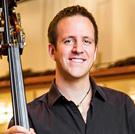
Each month, the National Symphony Orchestra (NSO) spotlights a different staff member. For this program, bass player Charles Nilles discusses Bassgiving, bassist stereotypes, and the true meaning of bass face.
Name: Charles Nilles
Hometown: Chicago, Illinois
Role: Bass
Years with the NSO: 15
Is there a stereotypical bassist personality, and, if so, do you think you fit it? I think so. I think our whole bass section fits that personality. Bass players tend to be pretty laid back and silly, and our section in particular gets along so well. That dynamic goes beyond a performance or a rehearsal day—we’ve got this awesome text thread, we have bass hangs…. We actually started this thing called Bassgiving. There’s always a Pops concert the day after Thanksgiving, and we’ll bring a big plate of leftovers and a bottle of something and have a potluck between the rehearsal and the concert. Anyone’s invited.
Would you say the bass section has the most fun? Well, we’re kind of sitting in the back of the bus. Where the violins are in a long row, spread out across the stage, we’re just in this blob in the back. That allows us to get away with more than people may realize: there’s some of us that will provide a little more commentary under our breath throughout the happenings of rehearsal. You’ll see someone giggling silently—“shoulder wiggles,” we call it. And whenever the bass players have stuff on the low extension (an added mechanism for playing lower notes), the trombone players will look over like prairie dogs, and we’ll make faces back. We have some inter-section shenanigans.
In your own words, what is bass face? Bass face is an angry yet satisfied acknowledgement of what is going on—disgusted, but nodding in approval. It usually happens when we’re playing a famous bass lick or something very loud. Jauvon Gilliam, our principal timpani, and I share a mutual timpani-bass face; oftentimes, there are unison timpani and double bass parts, like in a Bruckner symphony. Even in the concerts, when we’re done playing, Jauvon and I will look at each other and flex the guns—give our biceps a kiss.
What’s one favorite backstage memory at the NSO? My kids adore our stage door security gal, Ms. B. She’s always like, “Where are my babies at?” Once, when we were working with the children’s book author Mo Willems, I was backstage with my son Steven. Mo saw me with my son, and he’s such a nice, approachable guy, so we stopped. I said, “Steven, this is Mo Willems. He drew and wrote the Elephant & Piggie books.” Steven was holding my hand, and he looked at Mo, then he looked at me, and he said, “Can we go see Ms. B now?”
What’s your favorite part of your life outside of the NSO? My family, first of all. I’m lucky that we work lots of nights and weekends, so I have a lot of daytime availability. I like camping, hiking, biking, target sports—outside stuff. I just started winter league trap and skeet, and I’ve been doing compound archery for over a decade now. I like to hunt and grow my own food; I haven’t bought four-legged animal meat more than a handful of times in the last five years. A sub-hobby from that is sausage-making—that’s a worldwide culture in itself.
If you could say one thing to NSO audiences, what would it be? Watch the bass section, and you’ll see how much fun we’re having. And thank you. Because you’re all here, I’m allowed to have my dream job.
This interview has been edited for length and clarity.
Support your ORCHESTRA
The mission of the National Symphony Orchestra is to engage audiences locally, across the country, and around the world through excellence in performance and education. Each year, the NSO offers approximately 150 concerts as well as some of the country’s most extensive community and educational programming. It regularly participates in events of national and international importance, including performances for state occasions, highlevel government events, and regularly televised holiday appearances for Capitol Concerts and local radio broadcasts on WETA, making the NSO one of the most-heard orchestras in the country.
Give your support in this 95th season by becoming a Member, joining the NSO Circles, or pledging a Legacy Gift. Visit tkc.co/SupportNSO or scan the QR code.
Thank You to Our Supporters
The Trump Kennedy Center Board of Trustees
National Symphony Orchestra Board of Directors
The Trump Kennedy Center President’s Council
The Trump Kennedy Center International Committee on the Arts
President’s Advisory Committee on the Arts
National Committee for the Performing Arts
National Symphony Orchestra National Trustees
The Trump Kennedy Center Circles Board
The Trump Kennedy Center Community Advisory Board
The Trump Kennedy Center Corporate Fund Board
The Trump Kennedy Center 50th Anniversary Committee
Corporate Donors
Individual and Foundation Donors
Endowment Gifts, Bequests, and Legacy Donors
Building the Future Campaign Donors
Visit tkc.co/Support for a full listing of donors and to learn how you can join us by becoming a Member.
Brahms X Radiohead
Created and conducted by visionary composer Steve Hackman, Brahms X Radiohead fuses elements of Brahms’ lush Symphony No. 1 with Radiohead’s landmark album OK Computer. Composed for full orchestra and three solo vocalists, this symphonic synthesis offers a reconceptualized experience of each track. Note: Radiohead does not appear in this concert.
February 10 & 11, 2026 at 8 p.m.
American Promise
We’re celebrating the sounds of America, including the world premiere of an NSO commission by Karen LeFrak! In commemoration of the 250th anniversary of the signing of the Declaration of Independence, conductor Enrico Lopez-Yañez leads the NSO in a blend of new compositions and timeless orchestral works.
February 13 & 14, 2026 at 8 p.m.
American Mosaic
Thomas Wilkins leads a true celebration of American music! The NSO presents the world premiere of Peter Boyer and Joseph Sohm’s American Mosaic, an NSO co-commission featuring stunning video imagery, live narration, and American melodies to celebrate the spirit of the United States for its 250th birthday.
February 19, 2026 at 7 p.m.
February 21, 2026 at 8 p.m.
February 22, 2026 at 3 p.m.
2025–2026 CLASSICAL SEASON PERFORMANCE CALENDAR
Shostakovich’s Eighth Abduraimov plays Tchaikovsky
Thu., Feb. 5, 2026 at 7 p.m.
Fri., Feb. 6, 2026 at 11:30 a.m.
Sat., Feb. 7, 2026 at 8 p.m.
American Mosaic
Thu., Feb. 19, 2026 at 7 p.m.
Sat., Feb. 21, 2026 at 8 p.m.
Sun., Feb. 22, 2026 at 3 p.m.
Shaham & Shaham play Reena Esmail
Robertson conducts Sibelius’ Fifth
Thu., Feb. 26, 2026 at 7 p.m.
Fri., Feb. 27, 2026 at 11:30 a.m.
Sat., Feb. 28, 2026 at 8 p.m.
Winter Daydreams: Noseda conducts Tchaikovsky’s First Trpčeski plays Saint-Saëns
Fri., Mar. 6 at 11:30 a.m.
Sat., Mar. 7 at 8 p.m.
Hahn & Woods play
Carlos Simon
Brahms’ Third
Thu., Mar. 12, 2026 at 7 p.m.
Fri., Mar. 13, 2026 at 8 p.m.
Sat., Mar. 14, 2026 at 8 p.m.
NSO Presents*
Alexandra Dovgan
Sat., Mar. 14, 2026 at 3 p.m.
Death and Transfiguration
Khachatryan plays Sibelius
Thu., Apr. 2, 2026 at 7 p.m.
Fri., Apr. 3, 2026 at 11:30 a.m.
Sat., Apr. 4, 2026 at 8 p.m.
Bruckner’s Seventh Gerlach plays Haydn Fri., Apr. 10, 2026 at 8 p.m.
Renée Fleming’s Voice of Nature: The Anthropocene Fri., May 29, 2026 at 8 p.m. Sat., May 30, 2026 at 8 p.m.
Cann plays Coleman Fri., June 5, 2026 at 8 p.m. Sat., June 6, 2026 at 8 p.m.
Philip Glass’ “Lincoln”
Dalene plays Barber
Fri., June 12, 2026 at 8 p.m. Sat., June 13, 2026 at 8 p.m.
*Please note: The National Symphony Orchestra does not perform in these concerts.
A look back at our history
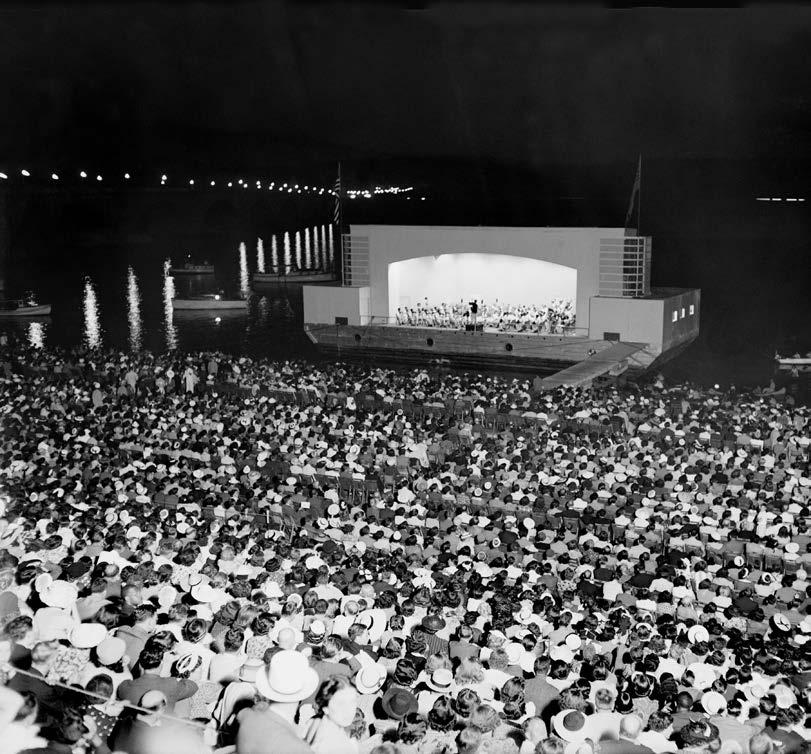
1939
NSO Music Director Hans Kindler leads the Orchestra in a summer outdoor concert on a floating barge anchored at the foot of the stone steps below the Lincoln Memorial.
Harris & Ewing Collection, Library of Congress
A look back at our history
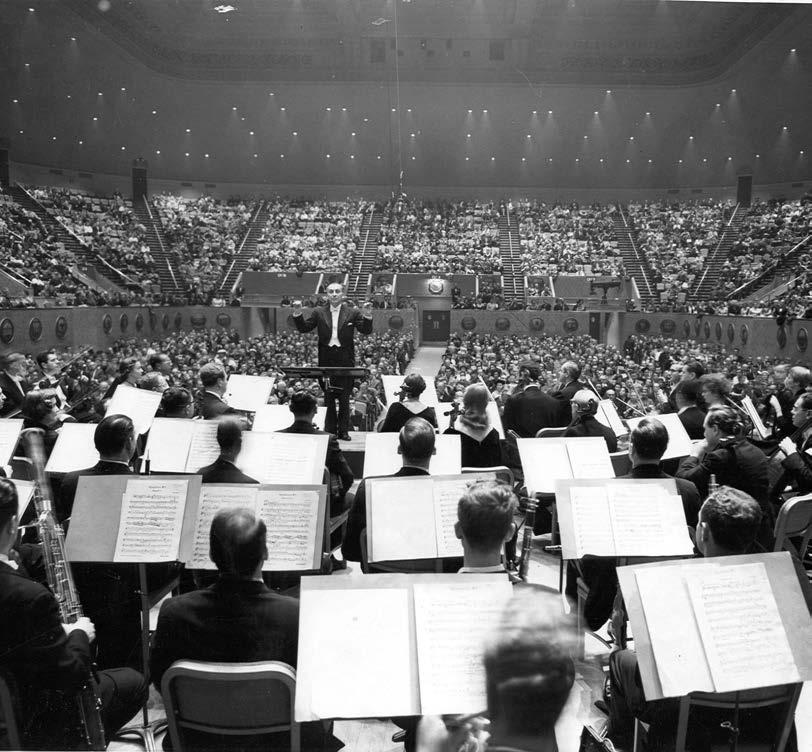
1958
Music Director Howard Mitchell conducts the NSO at Constitution Hall. Photographer unknown, Courtesy of the Kennedy Center Archives
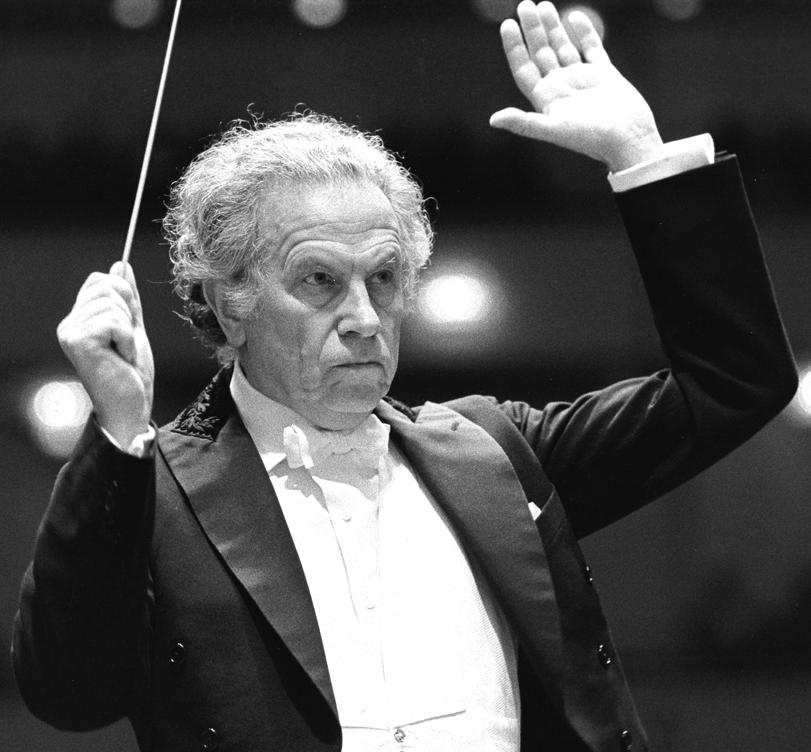
1970s A look back at our history
NSO Music Director Antal Doráti conducts the NSO.
Photo by Richard Braaten, Courtesy of the Kennedy Center Archives
A look back at our history
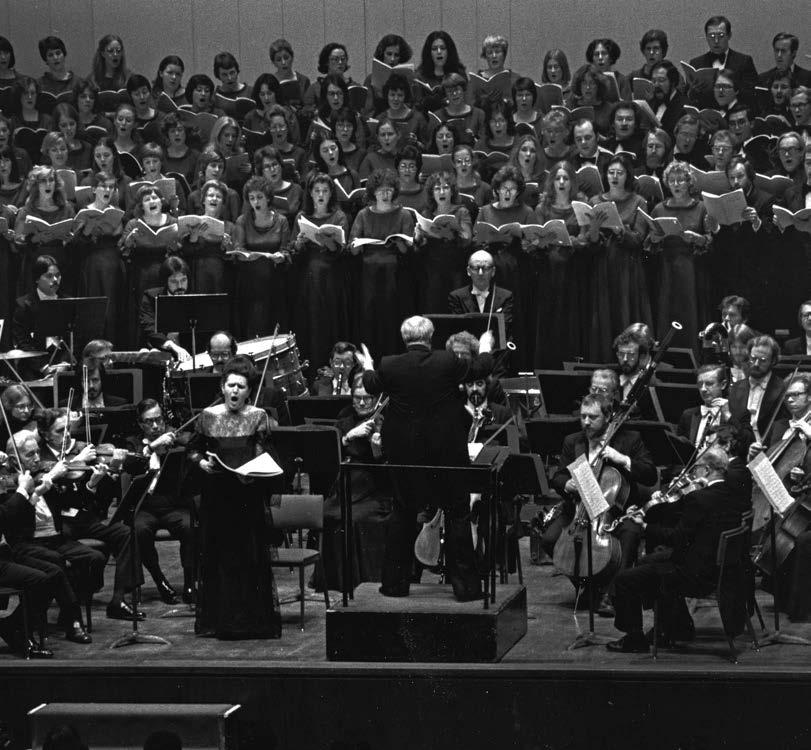
1987
NSO Music Director Mstislav Rostropovich conducts the NSO with guest soloist soprano Galina Vishnevskaya, his wife.
Photo by Joan Marcus, Courtesy of the Kennedy Center Archives
A look back at our history
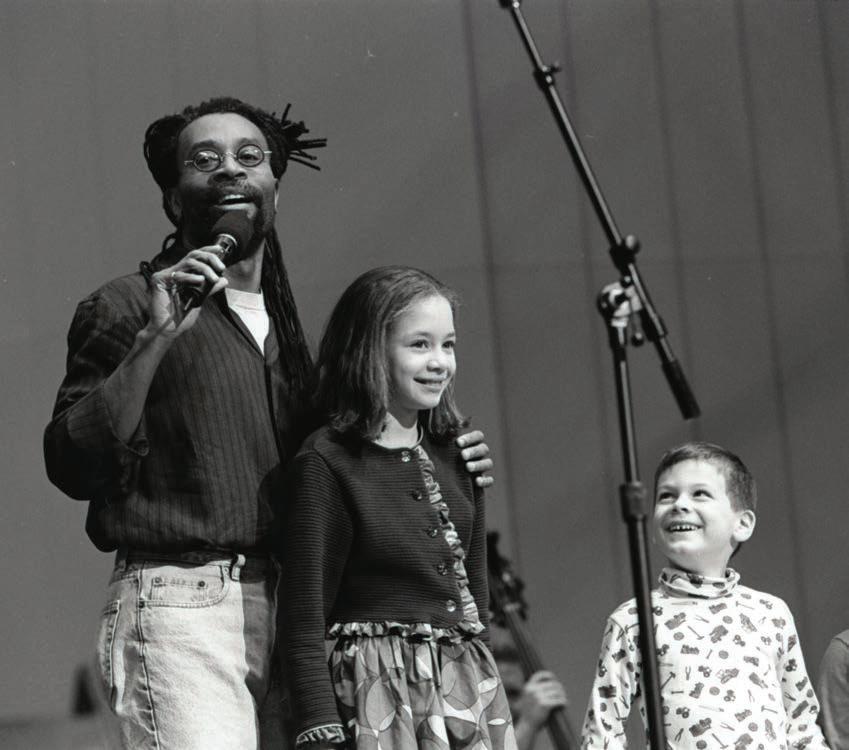
1996
Music man Bobby McFerrin wowed Washingtonians when he conducted the National Symphony Orchestra concerts for families and school children.
Photo by Carol Pratt, Courtesy of the Kennedy Center Archives
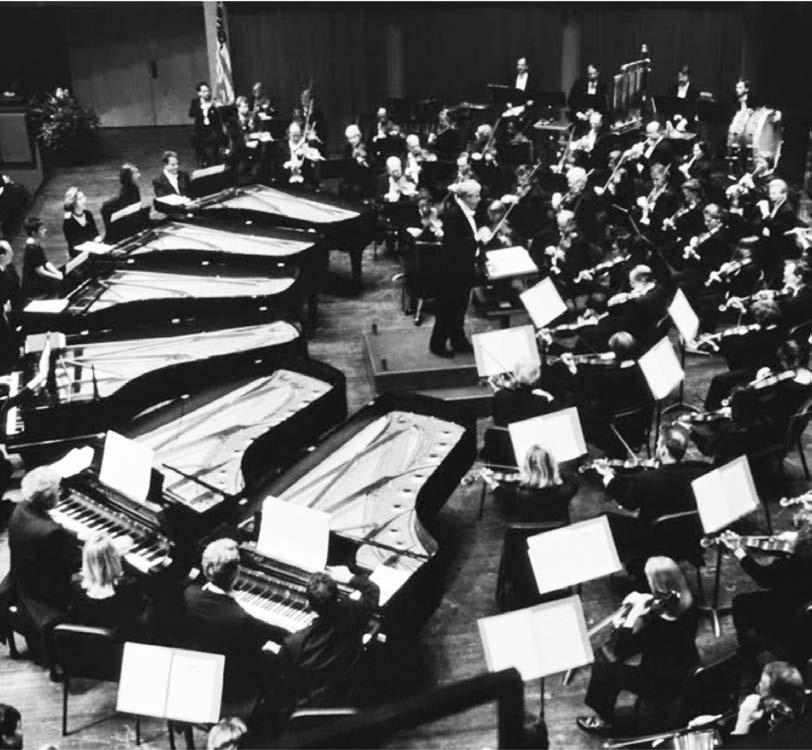
2000 A look back at our history
Pianists John Browning, Sara Davis Buechner, Brian Ganz, Joseph Kalichstein, Lambert Orkis, and Jeffrey Siegel play Franz Liszt’s Hexameron with the National Symphony Orchestra conducted by Music Director Leonard Slatkin for the Piano 2000 festival.
Photo by Carol Pratt, Courtesy of the Kennedy Center Archives
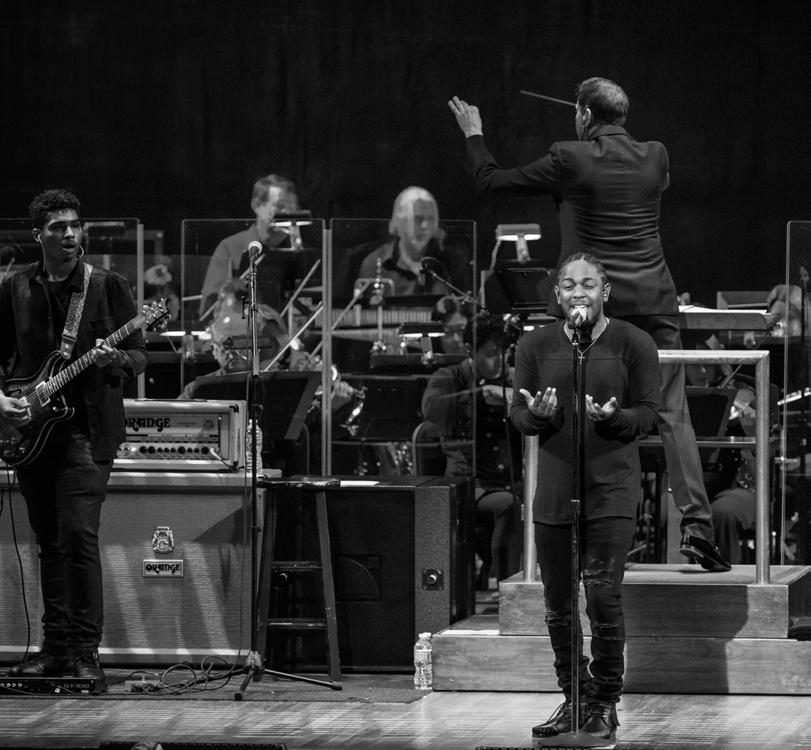
2015 A look back at our history
Kendrick Lamar and the NSO led by Principal Pops Conductor Steven Reineke delivered a one-night-only performance featuring some of Lamar’s biggest hits and the first-ever live performances of music from his lyrical masterpiece “To Pimp a Butterfly.”
Photo by Elman Studio, Courtesy of the Kennedy Center Archives
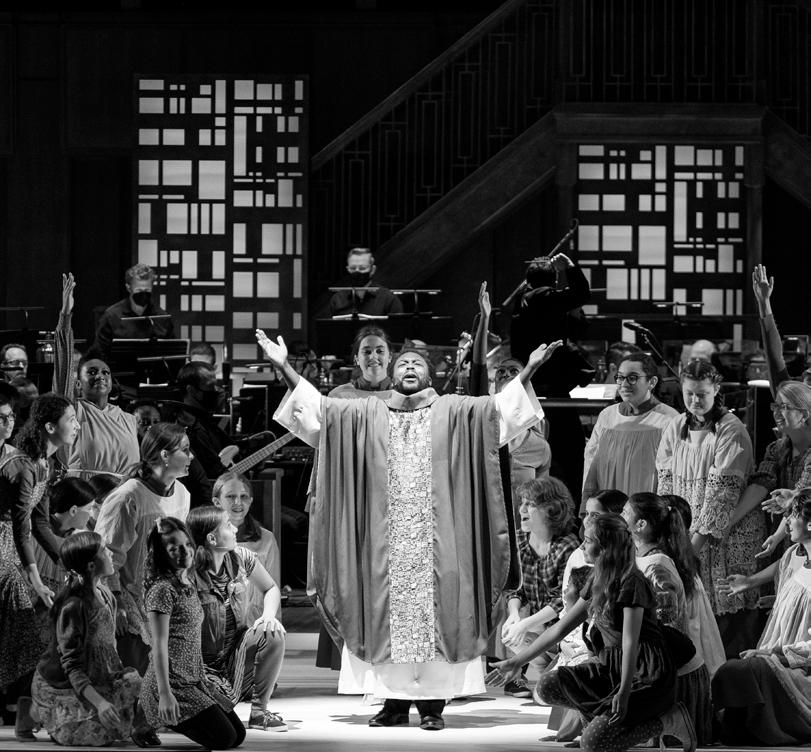
2022 A look back at our history
As the concluding event of Kennedy Center’s 50th Anniversary celebration, Leonard Bernstein’s MASS returned 51 years after its world premiere at the Center in a dynamic staging featuring the NSO, guest conductor James Gaffigan, and baritone Will Liverman in the role of Celebrant.
Photo by Scott Suchman, Courtesy of the Kennedy Center Archives
Take home... a musical memory.
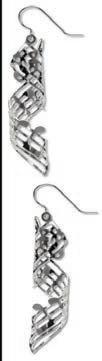
Mozart Magic Flute Earrings
These exquisite earrings bring Mozart’s masterpiece to life with fluteinspired details that create a visual symphony. $42
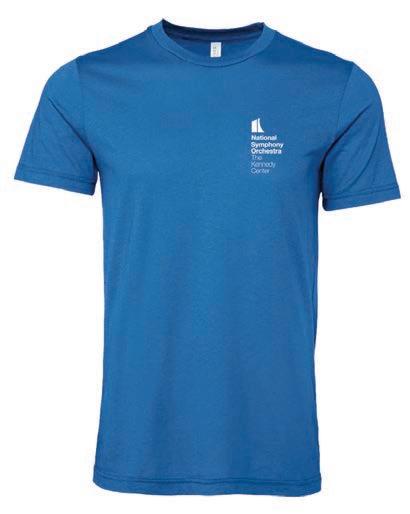
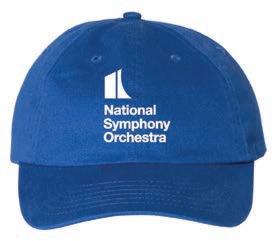
NSO Cap and T-shirt
Our new National Symphony Orchestra cap and tee let you show your pride in our world-class symphony. $30 each
Make Your Own Music Mug
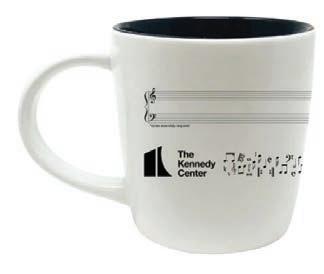
No better way to start your day than with a coffee mug imprinted with blank sheet music and sticker notes so you can compose your own melody. $20
Visit our two gift shops on Level A and in the Hall of States. Shop online 24/7 at tkc.co/shop
For 250 years, America’s story has been told through the voices of its artists, the rhythm of its music, the words of its writers, and the movement of its dancers. It is a story of resilience and reinvention, of dreams daring enough to redefine what was possible, and of creativity that has not only shaped a nation, but the world.
As the nation marks 250 years since the signing of the Declaration of Independence, the Center invites Americans everywhere to take part in 250 Years of US, a yearlong exploration of who we are, where we’ve been, and where we’re going. Through music, theater, dance, and visual art, 250 Years of US celebrates the boundless imagination of a people united by creativity.