Le Poème Divin Brahms’ Double

THE DONALD J. TRUMP AND THE JOHN F. KENNEDY
MEMORIAL CENTER FOR THE PERFORMING ARTS
JANUARY 29, 2026 AT 7 P.M.; JANUARY 30, 2026 AT 11:30 A.M.; JANUARY 31, 2026 AT 8 P.M. | CONCERT HALL
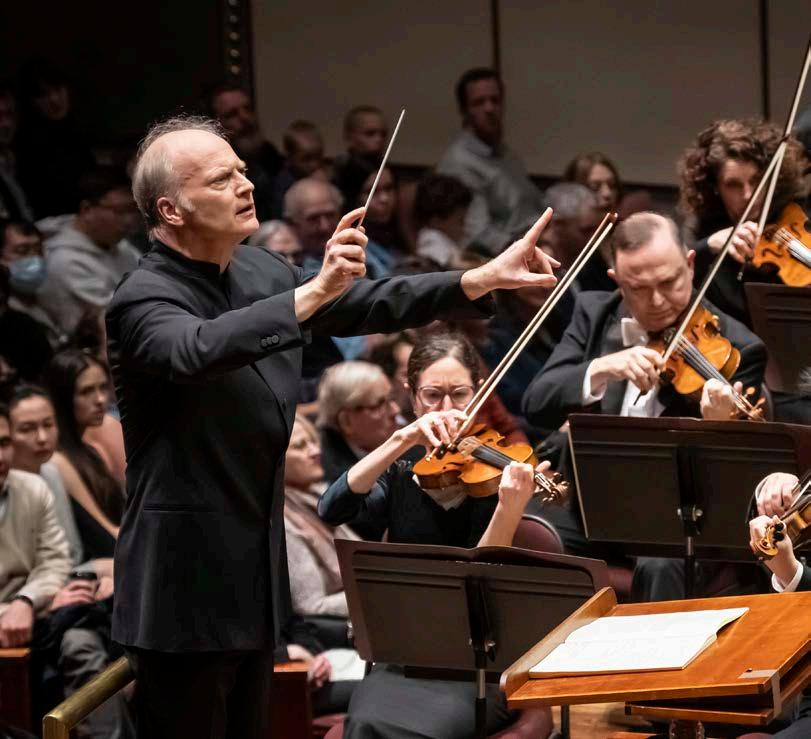
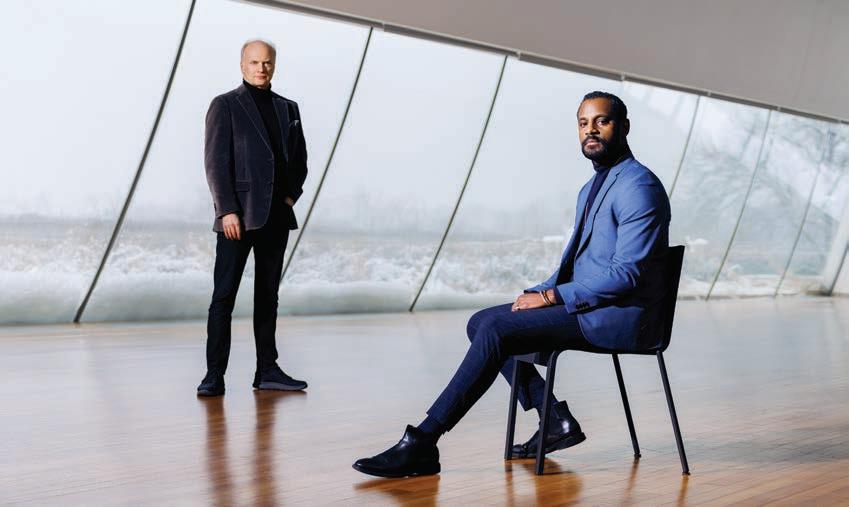
Gianandrea Noseda, conductor
Nurit Bar-Josef, violin
David Hardy, cello
JOHANNES BRAHMS (1833–1897)
ALEXANDER SCRIABIN (1872–1915)
Double Concerto in A minor, Op. 102 (1887)
i. Allegro
ii. Andante
iii. Vivace non troppo
Nurit Bar-Josef
David Hardy
INTERMISSION
Symphony No. 3 in C minor, “Le Poème Divin,” Op. 43 (1902–1904)
Introduction
i. Luttes (Struggles)
ii. Voluptés (Delights)
iii. Jeu divin (Divine Play)
THANK YOU TO OUR SEASON SPONSORS
The NSO Music Director Chair is generously endowed by Roger Sant and Congresswoman Doris Matsui Noseda Era Fund Supporters The Amici di Gianandrea
Patrons are requested to turn off cell phones and other electronic devices during the performance. Any video and/or audio recording of this production is strictly prohibited.
Welcome
Dear Friends,
As we celebrate the National Symphony Orchestra’s 95th season, I want to take a moment to express my heartfelt thanks to you—our devoted patrons, supporters, and friends. Your presence this evening, and your unwavering support throughout the year, mean more than words can convey. It is your love of music, your generosity, and your steadfast belief in the arts that delight this remarkable orchestra.
In 1931, Hans Kindler founded the NSO with a bold vision: to build a world-class symphony orchestra in the heart of our nation’s capital. Nearly a century later, that vision continues to be our driving force. Today, under the dynamic artistic leadership of Gianandrea Noseda, we are more inspired than ever to share powerful performances with our audiences. The NSO is not simply an orchestra; it is a family of artists joined together through a shared love of music, unity of purpose, and commitment to something greater than us.
The NSO is more than what you see on stage—it is a living, breathing institution devoted to enriching lives. Our robust education and community engagement programs reach thousands of students, educators, and families each year. Between our Youth Fellowship Program and Summer Music Institute, to Young People’s Concerts, we strive to make music accessible to everyone—especially the next generation.
This commitment to connect with broader audiences is also seen through our vibrant, genre-defying series, led by the remarkable Steven Reineke, our Principal Conductor and Artistic Advisor. Steven brings a wide-reaching musical vision to the NSO, bridging genres and generations. His programming has opened the door for new audiences to discover a love for orchestral music, while continuing to captivate longtime fans with the highest levels of artistry.
As we embark on this milestone season, we are reminded that our journey would not be possible without you. Thank you for being an essential part of this vibrant and enduring musical community.
With deepest gratitude and warmest regards,
Jean Davidson Executive Director National Symphony Orchestra
From the Music Director
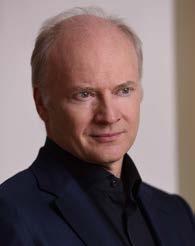
Cari amici,
It is with immense joy and anticipation that I welcome you to the National Symphony Orchestra’s 95th anniversary season. This moment is more than a milestone—it is a celebration of our deep musical legacy and a renewed commitment to bringing powerful, moving performances to our community and beyond. This is only the beginning. The 95th season is filled with musical discovery, celebrated artists, and unforgettable experiences.
This season features iconic works that have stood the test of time, from classic masterpieces to thrilling contemporary music. The NSO also has the opportunity to share the stage with an exceptional lineup of guest artists and conductors—beloved icons and rising stars alike. Performing new music is something the NSO truly believes in. Make history with us as we present innovative new works, including five world premieres.
It is with immense joy and anticipation that I welcome you to the National Symphony Orchestra’s 95th anniversary season. This moment is more than a milestone—it is a celebration of our deep musical legacy and a renewed commitment to bringing powerful, moving performances to our community and beyond. This is only the beginning. The 95th season is filled with musical discovery, celebrated artists, and unforgettable experiences.
I am deeply grateful to share this journey with you. Your presence in the Concert Hall is what brings our music fully to life. Thank you for being a part of the NSO family—for your passion, your applause, and your unwavering support.
I am deeply grateful to share this journey with you. Your presence in the Concert Hall is what brings our music fully to life. Thank you for being a part of the NSO family—for your passion, your applause, and your unwavering support.
Con tutto il cuore,
Con tutto il cuore,
Gianandrea Noseda
Gianandrea Noseda
Music
Music Director, National Symphony Orchestra
Director, National Symphony Orchestra
Che la musica vi porti gioia e ispirazione—may music bring you joy and inspiration.
Che la musica vi porti gioia e ispirazione—may music bring you joy and inspiration.
Notes on the Program
Double Concerto in A minor, Op. 102
JOHANNES BRAHMS
Born May 7, 1833, in Hamburg, Germany
Died April 3, 1897, in Vienna, Austria-Hungary
Johannes Brahms first met the violinist Joseph Joachim in 1853, and they quickly became close friends and musical allies—Brahms’ Violin Concerto was not only written for Joachim in 1878, but also benefited from his careful advice in many matters of string technique. Joachim was a faithful champion of Brahms’ music, playing it at every possible occasion and doing much to help establish the young composer’s reputation across Europe. In 1880, however, when Joachim sued his wife for divorce over an alleged infidelity, Brahms took it upon himself to meddle in the family’s domestic affairs; he believed that Frau Joachim was innocent of the charges. Joachim was, understandably, enraged and broke off his personal relationship with Brahms (the alleged affair was with his publisher, Fritz Simrock; the marriage was ultimately dissolved). Though he continued to play his music, the two did not speak for years.
On July 19, 1887, when he was 54, Brahms, a curmudgeonly bachelor who found it difficult to make friends, sent Joachim a terse postcard from Thun, Switzerland, where the composer was summering that year: “I should like to send you some news of an artistic nature which I heartily hope might more or less interest you.” Joachim replied immediately: “I hope that you are going to tell me about a new work, for I have read and played your latest works with real delight.” Brahms sent his news: “I have been unable to resist the ideas that have been occurring to me for a concerto for violin and cello, much as I have tried to talk myself out of it. Now, the only thing that really interests me about this is the question of what your attitude toward it may be. Would you consider trying the work over somewhere with [Robert] Hausmann [the cellist in Joachim’s Quartet] and me at the piano?”
Joachim agreed to Brahms’ proposals. On July 26, Brahms sent him the solo parts and asked for his advice. Five days later, the violinist replied: “Herewith I am posting you the parts with some proposed minor alterations with which I hope you will agree. It is very playable, generally. What’s to be done now? Hausmann and I are most anxious to go on with it.” As he had with the Violin Concerto, Brahms accepted only a few of Joachim’s suggestions, though he did rework some passages on his own after the violinist had pointed out their difficulties. Brahms had a fair copy of the score and parts made, and arranged to have the formal premiere given by the Gürzenich Orchestra in Cologne in October. Though it has come to be regarded as a worthy equal to his other masterworks for soloist and orchestra, the “Double Concerto,” Brahms’ last composition for orchestra, was initially given a cool reception. Concerning the personal relationship between the composer and the violinist, however, it was an unqualified success. Brahms’ dear friend Clara Schumann noted with pleasure in her diary that “this Concerto was in a way a work of reconciliation—Joachim and Brahms have spoken to each other again after years of silence.”
The opening movement largely follows Classical concerto-sonata form, though Brahms prefaced it with a bold paragraph introducing the soloists. The main theme, given by the entire orchestra, is a somber but majestic strain that mixes duple and triple rhythms. The second theme is a tender, sighing phrase introduced by the woodwind choir. The soloists then join the orchestra for their elaborated re-presentation of the themes. A development section (begun by the soloists in unison) and a full recapitulation and coda round out the movement. Two quiet summons from horns and woodwinds mark the beginning of the Andante. The principal theme of the movement’s three-part form is a warmly lyrical melody for violin and cello in unison; parallel harmonies in the woodwinds usher in the central section. The finale is a playful rondo heavily influenced by the melodic leadings and vibrant rhythms of Romani music.
Symphony No. 3 in C minor, “Le Poème Divin”
ALEXANDER SCRIABIN
Born January 6, 1872, in Moscow, Russia
Died April 27, 1915, in Moscow, Russia
“The Muscovite seer”; “the Russian musical mystic”; “the clearest case of artistic egomania in the chronicles of music:” Alexander Scriabin was one of the most unusual of all composers. Living in the generation between Tchaikovsky and Prokofiev, Scriabin’s life was shaken by several significant changes around 1902, when he resigned from the faculty of the Moscow Conservatory to devote himself to composition and rumination, and left his first wife to take up with another woman. Scriabin believed that mankind was approaching a final cataclysm from which a nobler race would emerge, with himself playing some exalted but ill-defined Messianic role in the new order. From that time on, he bent his music ever more forcibly to expressing his dizzying world vision.
“Oh God, what music it was! Time after time the symphony tumbled down and was destroyed like a town under artillery fire, again and again it was rebuilt, and grew out of the ruins and leftovers. It was overflowing with content, as fantastically worked out and new as the forest in spring that breathes life and freshness.” Those striking words about the creation of Scriabin’s Symphony No. 3—“Le Divin Poème”—are from the memoirs of Russian writer and poet Boris Pasternak. The work was premiered on May 29, 1905, at the Théâtre du Châtelet in Paris.
Scriabin had not just a general subject in mind as inspiration for “Le Divin Poème” but a visionary philosophical trajectory, suggested by his second wife, Tatiana de Schlözer, and her brother Boris, a music critic. Producer and music scholar Ateş Orga summarized the concept: “‘the battle between the enslaved and the liberated human’ and the latter’s victory, whose willpower has to become still stronger before he will be able to free himself from the ‘constraints’ of the ‘material’ world.” Scriabin, in a feverish creative state, summoned the most powerfully expressive musical language he could muster to trace this transformation allegory across an introduction and three large movements (Struggles, Delights, and Divine Play), lasting 45 minutes and requiring a massive orchestra— quadruple woodwinds, eight horns, five trumpets, three trombones, tuba, timpani, percussion, two harps, organ, and six dozen string instruments.
Bassoons, bass trombone, tuba, and low strings present the work’s muscular motto theme at the outset (“Divin, grandiose,” instructs the score), answered immediately by a stark, repeated-note fanfare from the trumpets that returns throughout the work. Woodwinds and strings reply with a soft, gleaming halo of sound, immediately juxtaposing the Symphony’s expressive poles of “enslaved” and “liberated.” The music passes directly into the sonata-form first movement, “Luttes” (Struggles), where the Introduction’s motto is sped up, compressed, and developed. Strings and woodwinds present a long, lyrical passage as the second theme, which is terminated by disruptive, hammered chords for full orchestra.
“Voluptés” (Delights) is, technically, a three-part form (A–B–A), but, in its expressive progression, creates a tableaux in three scenes. The outer sections are openly sensual, even suggestive, as indicated by Scriabin’s performance directions: “Sublime — Volúptueux — Avec une ivresse débordante (‘with increasing intoxication/rapture’) — Élan sublime (‘with sublime impulse’).” The central panel, with its remarkable facsimiles of bird songs, suggests a love scene with a woodland setting: “Limpide — Pâmé (‘swooning’) — Avec une ivresse toujours croissante (‘with ever-increasing intoxication’).”
The performance instruction for the closing “Jeu divin” (Divine Play)—“Avec un joie éclatante (‘with radiant joy’)”—summarizes its character and ardor. The trumpet call from the Introduction sounds repeatedly throughout the movement, as do fragments of the first movement’s motives. Gentler contrasting passages recall the radiant halo of sound for woodwinds and strings from the Introduction. The Divine Play (“haletant, ailér (‘breathless, winged’) — avec ravissement et transport (‘with delight and transport’) — joie sublime extatique)” ends in overwhelming triumph.
Meet the Artists
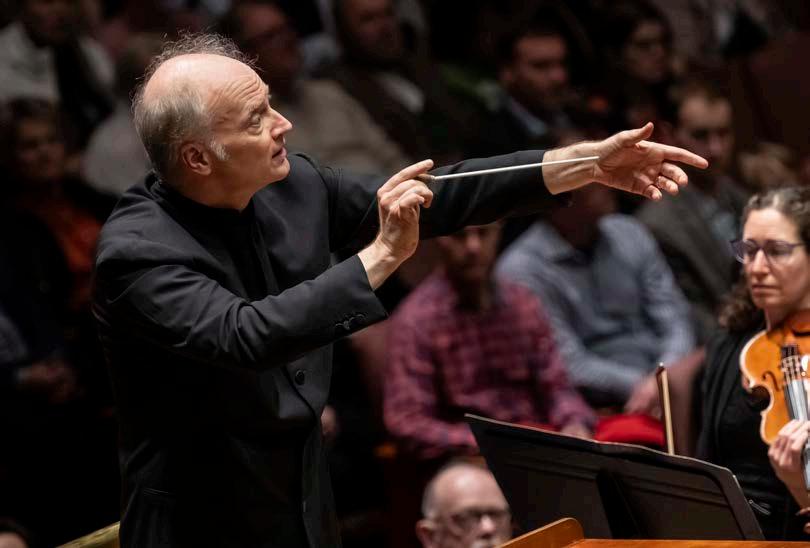
Gianandrea Noseda, conductor
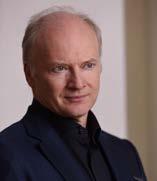
Gianandrea Noseda is one of the world’s most sought-after conductors, equally recognized for his artistry in both the concert hall and opera house.
The 2025–2026 season marks his ninth as music director of the National Symphony Orchestra. Noseda’s leadership has inspired and reinvigorated the National Symphony Orchestra, which makes its home at the Kennedy Center. The renewed artistic recognition and critical acclaim have led to invitations to Carnegie Hall and international concert halls, as well as digital streaming and a record label distributed by LSO Live, for which Noseda also records as principal guest conductor of the London Symphony Orchestra. Noseda’s discography of over 80 recordings includes dozens of critically acclaimed albums with a wide range of orchestras and repertoire for various labels, including Deutsche Grammophon and Chandos.
Noseda became General Music Director of the Zurich Opera House in September 2021 and reached an important milestone in May 2024, conducting two highly praised complete Ring Cycles. He was recognized as “Best Conductor” by the jury of the German OPER! AWARDS, specifically for his Wagner interpretations.
From 2007 to 2018, Noseda served as Music Director of the Teatro Regio Torino, where his leadership marked the opera house’s golden era.
Noseda has conducted the most important international orchestras, opera houses, and festivals, and had significant roles at the BBC Philharmonic (chief conductor), Israel Philharmonic Orchestra (principal guest conductor), Mariinsky Theatre (principal guest conductor), Orchestra Sinfonica Nazionale della RAI (principal guest conductor), Pittsburgh Symphony Orchestra (Victor de Sabata Chair), Rotterdam Philharmonic (principal guest conductor), and Stresa Festival (artistic director).
Working with the next generation of musicians is important to Noseda, and in the summer of 2025, he led a tour of major concert halls in China, Korea, and Japan with Carnegie Hall’s National Youth Orchestra of the USA. In 2019, he was appointed the founding Music Director of the Tsinandali Festival and PanCaucasian Youth Orchestra in the village of Tsinandali, Georgia.
A native of Milan, Noseda is Commendatore al Merito della Repubblica Italiana, marking his contribution to the artistic life of Italy. He has been honored as Conductor of the Year by both Musical America and the International Opera Awards. He is also a recipient of the Puccini Award, whose past recipients include legendary opera stars Maria Callas, Birgit Nilsson, and Luciano Pavarotti.
Nurit Bar-Josef, violin
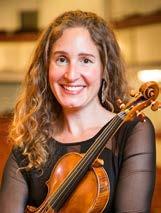
Nurit Bar-Josef was appointed concertmaster of the National Symphony Orchestra in 2001 (then the youngest such appointee to a major U.S. orchestra) by thenMusic Director Leonard Slatkin. She was previously assistant concertmaster of the Boston Symphony Orchestra and Boston Pops from 1998 to 2001 and assistant principal second violin of the St. Louis Symphony Orchestra from 1997 to 1998.
Bar-Josef studied with Aaron Rosand at The Curtis Institute of Music and continued her studies at The Juilliard School with Robert Mann. Her solo appearances have included the National Symphony, Boston Symphony, Boston Pops, St. Louis Symphony, National Philharmonic, and Britt Festival Orchestras, among others. She has been guest concertmaster for the Seattle Symphony, Houston Symphony, Arizona Fest Orchestra, and Grand Teton Music Festival Orchestra.
An active chamber musician, she has since performed at the Seattle Chamber Music Festival, Bay Chamber Festival (ME),
and Aspen Music Festival, and festivals in Tanglewood, Portland (ME), Kingston (RI), Steamboat Springs, Garth Newel, and Caramoor, where she performed piano quartets with André Previn at his Rising Stars Festival.
She was a founding member of the Kennedy Center Chamber Players for nine years and is a founding member of the Dryden Quartet. Bar-Josef has been a featured guest on National Public Radio’s Weekend Edition and has had the honor of performing at the White House with Maestro Christoph Eschenbach. She is currently playing on a G.B. Guadagnini, 1773, the ex-Grumiaux, ex-Silverstein.
David Hardy, cello
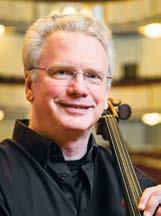
David Hardy, principal cello of the National Symphony Orchestra, achieved international recognition in 1982 as the top American prize winner at the seventh International Tchaikovsky Cello Competition in Moscow. Mr. Hardy won a special prize for the best performance of the Suite for Solo Cello by Victoria Yagling, commissioned for the competition. Tass particularly praised Mr. Hardy's performance of the Dvořák Cello Concerto. A native of Baltimore, Maryland, David Hardy began his cello studies there at the age of eight. He was 16 when he made his debut as soloist with the Baltimore Symphony Orchestra. When he was 21 years old, Mr. Hardy won the certificate in the prestigious Geneva International Cello Competition. The next year, he was graduated from the Peabody Conservatory of Music, where he studied with Laurence Lesser, Stephen Kates, and Berl Senofsky. In 1981, he was appointed to the National Symphony Orchestra as associate principal cello by its then-music director, Mstislav Rostropovich. In 1994, Mr. Hardy was named principal cello of the NSO by its next music director, Leonard Slatkin. Mr. Hardy made his solo debut with the National Symphony Orchestra
in 1986 with Mstislav Rostropovich conducting. A regular soloist with the NSO, Mr. Hardy, in 2004, gave the world premiere performance, with Leonard Slatkin conducting, of Stephen Jaffe's Concerto for Cello and Orchestra, which was commissioned by the John and June Hechinger Fund for New Orchestral Works. Mr. Hardy gave the European premiere of the Jaffe concerto in Slovenia in 2007. Bridge Records released the premiere recording of the Concerto with Mr. Hardy and the Odense Symphony of Denmark.
The National Symphony Orchestra recording of John Corigliano's Symphony No. 1 featuring Mr. Hardy's solo cello performance won the 1996 Grammy Award® for Best Classical Album. Another recent recording—in collaboration with NSO principal keyboard Lambert Orkis—is Beethoven Past & Present, consisting of two complete performances of Beethoven's eight works for piano and cello, performed on both modern and period instruments. Mr. Hardy is a founding member of the Opus 3 Trio with violinist Charles Wetherbee and pianist Lisa Emenheiser. The Opus 3 Trio has since performed to critical acclaim across the country and has commissioned, premiered, and recorded many new works. Mr. Hardy is also a founding member of the Kennedy Center Chamber Players. Additionally, Mr. Hardy was cellist of the 20th Century Consort in Washington, D.C., where he premiered works by Stephen Albert, Nicholas Maw, and Joseph Schwantner. Mr. Hardy's playing can be heard on recordings under the Melodyia, Educo, RCA, London, Centaur, and Delos labels.
Critics in Washington and beyond have praised his virtuosic technique and deep musical sensitivity. Mr. Hardy's instruments were made by Carlo Giuseppe Testore in 1694 and Raymond Hardy in 2000.
In addition to his performing schedule, Mr. Hardy is professor of cello at the Peabody Conservatory of Music in Baltimore, Maryland.
Meet the Artists
National Symphony Orchestra
The 2025–2026 season is the National Symphony Orchestra’s 95th and Music Director Gianandrea Noseda’s ninth season. Gianandrea Noseda serves as the orchestra’s seventh music director, joining the NSO’s legacy of distinguished leaders: Christoph Eschenbach, Leonard Slatkin, Mstislav Rostropovich, Antal Doráti, Howard Mitchell, and Hans Kindler. Its artistic leadership also includes Principal Conductor and Artistic Advisor Steven Reineke.
Since its founding in 1931, the NSO has been committed to performances that enrich the lives of its audience and community members. In 1986, the National Symphony became an artistic affiliate of the John F. Kennedy Center for the Performing Arts, where it has performed since the Center opened in 1971. The 96-member NSO participates in events of national and international importance, including the annual nationally televised concerts on the lawn of the U.S. Capitol,live-streamed performances on medici.tv, and local radio broadcasts on WETA Classical 90.9 FM. Since launching its eponymous recording label in 2020, the NSO has embarked on ambitious recording projects, including its first complete Beethoven Symphony cycle and the release of the first-ever cycle of George Walker’s Sinfonias, both led by Noseda. Recent projects include Four Symphonic Works by Kennedy Center Composer-in-Residence Carlos Simon conducted by Noseda, and William Shatner’s So Fragile, So Blue, recorded live in the Concert Hall with the NSO under Steven Reineke. Forthcoming releases with Gianandrea Noseda include music by Gustav Mahler and William Grant Still, as well as Samuel Barber’s opera Vanessa. The NSO’s community engagement and education projects are nationally recognized, and career development opportunities for young musicians include the NSO Youth Fellowship Program and its acclaimed, tuition-free Summer Music Institute.
Symphony

Loud and Clear
Terms to know in the Concert Hall, loosely defined.
An extended work with multiple sections—typically four movements.
A “symphonic” piece is a long piece with multiple interpretations of a musical idea. A repeated, transformed musical idea is called a theme.
Orchestra
A group of musicians who play together.
In the Western European tradition, an orchestra often includes the four major instrument families—brass, woodwinds, strings, and percussion. An especially large orchestra is called a symphony orchestra. A smaller orchestra is called a chamber orchestra
Movement
A section of a musical work. Movements are often separated by silences, and they typically differ in tempo—speed.
Sonata
Originally, a musical composition played on instruments. In modern usage, “sonata” can mean a piece for a soloist or an ensemble, often with two to four movements.
If a work or a movement is written in sonata form, it is structured in three sections: exposition, development, and recapitulation.
Concerto
A piece pairing a technically advanced soloist with the support of an orchestra, usually in three movements. Though there may be multiple soloists, the contrast between a larger ensemble and a soloing group defines a concerto.
Romantic music
Works associated with the 19th-century Romantic Period. Building off the intellectual innovation of the Romanticism movement, Romantic music emphasizes self-expression, emotion, and experimentation.
Uppercase “C” Classical music
Works associated with the 18th-century Classical Period. Characteristics include an emphasis on formal structures, balance, and clear-cut melodies. Lowercase “c” classical music refers to formal compositions invested in technical depth, usually derived from the European tradition.
Chorale
A congregational piece sung by a chorus, especially in the Lutheran tradition. The term can also refer to the chorus itself.
Sinfonia
Italian for “symphony,” though often used to refer to an overture or shorter symphonic work.
Tempo Markings
Adagio - slow, at ease
Andante - moderately slow, walking pace
Allegro - fast, bright
Vivace - fast, lively
Additional Markings
Poco - a little
Ma non troppo - but not too much
Molto - very Assai - very
Sostenuto - sustained Espressivo - expressively Maestoso - majestically
National Symphony Orchestra
GIANANDREA NOSEDA , MUSIC DIRECTOR
The Roger Sant and Congresswoman Doris Matsui Chair
STEVEN REINEKE , PRINCIPAL CONDUCTOR AND ARTISTIC ADVISOR
VIOLINS
Nurit Bar-Josef, Concertmaster
Ying Fu, Associate Concertmaster, The Jeanne Weaver Ruesch Chair
Ricardo Cyncynates, Assistant Concertmaster
Xiaoxuan Shi, Second Assistant Concertmaster
Jane Bowyer Stewart
Heather LeDoux Green
Lisa-Beth Lambert
Jing Qiao
Marina Aikawa
Peiming Lin
Derek Powell
Regino Madrid**
Meredith Riley**
Marissa Regni, Principal
Dayna Hepler, Assistant Principal
Cynthia R. Finks
Deanna Lee Bien
Glenn Donnellan
Natasha Bogachek
Carole Tafoya Evans
Jae-Yeon Kim
Wanzhen Li
Hanna Lee
Benjamin Scott
Malorie Blake Shin
Angelia Cho
Kei Sugiyama**
VIOLAS
Daniel Foster, Principal, The Mrs. John Dimick Chair
Dana Kelley, Assistant Principal
Denise Wilkinson
Nancy Thomas
Jennifer Mondie
Tsuna Sakamoto
Ruth Wicker
Mahoko Eguchi
Abigail Evans Kreuzer
Rebecca Epperson
Chiara Dieguez**
Jacob Shack**
CELLOS
David Hardy, Principal, The Hans Kindler Chair, The Strong Family and the Hattie M. Strong Foundation
Raymond Tsai, Assistant Principal
David Teie
James Lee
Rachel Young
Mark Evans
Eugena Chang Riley
Loewi Lin
Britton Riley
Noah Krauss
BASSES
Robert Oppelt, Principal
Richard Barber, Assistant Principal
Jeffrey Weisner
Ira Gold
Paul DeNola
Charles Nilles
Alexander Jacobsen
Michael Marks
HARP
Adriana Horne, Principal
FLUTES
Aaron Goldman, Principal
Leah Arsenault Barrick, Assistant Principal
Matthew Ross
Carole Bean, Piccolo
OBOES
Nicholas Stovall, Principal, The Volunteer Council Chair
Jamie Roberts, Assistant Principal
Harrison Linsey***
Kathryn Meany Wilson***, English Horn
CLARINETS
Lin Ma, Principal
Eugene Mondie, Assistant Principal
Paul Cigan
Peter Cain, Bass Clarinet
BASSOONS
Sue Heineman, Principal
David Young, Assistant Principal
Steven Wilson
Sean Gordon, Contrabassoon
HORNS
Abel Pereira, Principal, The National Trustees’ Chair
James Nickel, Acting Associate Principal
Markus Osterlund***
Scott Fearing
Robert Rearden
Geoffrey Pilkington**
TRUMPETS
William Gerlach, Principal, The Howard Mitchell Chair, The Strong Family and the Hattie M. Strong Foundation
Michael Harper, Assistant Principal
Michail Thompson
Tom Cupples
TROMBONES
Craig Mulcahy, Principal
Evan Williams, Assistant Principal
David Murray
Matthew Guilford, Bass Trombone
TUBA
Stephen Dumaine, Principal, The James V. Kimsey Chair
TIMPANI
Jauvon Gilliam, Principal, The Marion E. Glover Chair
Scott Christian, Assistant Principal
PERCUSSION
Eric Shin, Principal, The Hechinger Foundation Chair
Erin Dowrey, Assistant Principal
Scott Christian
Jason Niehoff*
KEYBOARD
Lambert Orkis, Principal
Lisa Emenheiser*
ORGAN
William Neil*
LIBRARIANS
Elizabeth Cusato Schnobrick, Principal
Zen Stokdyk, Associate
Karen Lee, Assistant
PERSONNEL
Karyn Garvin, Director
Sufyan Naaman**, Coordinator
STAGE MANAGERS
David Langrell, Manager
N. Christian Bottorff, Assistant Manager
The National Symphony Orchestra uses a system of revolving strings. In each string section, untitled members are listed in order of length of service.
*Regularly Engaged Extra Musician
** Temporary Position
***Leave of Absence
National Symphony Orchestra Staff
ADMINISTRATION
Jean Davidson, Executive Director
Sabryn McDonald, Executive Assistant
EXECUTIVE TEAM
Kasama Apfelbaum, Vice President, Financial Planning & Analysis
Nigel Boon, Vice President, Artistic Planning
John Roloff, Vice President, Orchestra Operations
ARTISTIC PLANNING
Justin Ellis, Senior Producing Director
Ana Vashakmadze, Assistant Artistic Administrator
DEVELOPMENT
Laney Pleasanton, Manager, NSO Individual Giving
Pamela Wardell, Senior Director of Development
EDUCATION
Vanessa Thomas, Director of Education Activation & Engagements
FINANCE AND ADMINISTRATION
Eric Rubio, Director of Finance & Administration
HUMAN RESOURCES
Tony Amato, Director, Total Rewards
Chanel Kemp, Talent Acquisition Manager
Patrice McNeill, Director, HR Operations
Lisa Motti, HRIS Coordinator
Ericka Parham, Benefits Analyst
John Sanford, Senior Business Partner
MARKETING & ADVERTISING
Scott Bushnell, Senior Director, Creative and Brand Strategy
Lily Maroni, Senior Manager, Advertising Communications
Elizabeth Stoltz, Advertising Production & Special Projects Assistant Manager
Derek Younger, Director, Sales & Ticketing Service
ORCHESTRA OPERATIONS & CONCERT PRODUCTION
Brooke Bartolome, Orchestra Personnel and Operations Manager
Joseph Benitez, Media & OPAS Support Coordinator
N. Christian Bottorff, Assistant Stage Manager
Cayley Carroll, Director, Production & Orchestra Operations
Karyn Garvin, Director of Orchestra Personnel
David Langrell, Stage Manager
Sufyan Naaman, Personnel and Auditions Coordinator
Ava Yap, Operations Assistant
PUBLIC RELATIONS
Amanda Fischer, Deputy Director of Public Relations
Kennedy Center Staff
Kennedy Center Staff
Kennedy Center Staff
Kennedy Center Staff
Kennedy Center Staff
Trump Kennedy Center Staff
KENNEDY CENTER EXECUTIVE LEADERSHIP
KENNEDY CENTER EXECUTIVE LEADERSHIP
KENNEDY CENTER EXECUTIVE LEADERSHIP
TRUMP KENNEDY CENTER EXECUTIVE LEADERSHIP
KENNEDY CENTER EXECUTIVE LEADERSHIP
KENNEDY CENTER EXECUTIVE LEADERSHIP
President, John F. Kennedy Center for the Performing Arts
President, John F. Kennedy Center for the Performing
President, John F. Kennedy Center for the Performing Arts
President, John F. Kennedy Center for the Performing
President, John F. Kennedy Center for the Performing Arts
Chief Financial Officer
Ambassador Richard Grenell
Ambassador Richard Grenell
Ambassador Richard Grenell Chief Financial Officer
Ambassador Richard Grenell Chief Financial Officer
Ambassador Richard Grenell Chief Financial Officer
Donna Arduin
Ambassador Richard Grenell Financial Officer
General Counsel
Donna Arduin
Donna Arduin
Chief Financial Officer Donna Arduin
Donna Arduin General Counsel
General Counsel
General Counsel
Berke
Berke
General Counsel Elliot Berke
Berke
Berke
Donna Arduin General Counsel
Berke
Senior Vice President, Development
Senior Vice President, Development
Dale
Senior Vice President, Development
Senior Vice President, Development
Senior Vice President, Development
Vice President of Human
Dale
Senior Vice President, Marketing
Senior Vice President, Marketing
Senior Vice President, Marketing
Senior Vice President, Marketing
Senior Vice President,
Osborne
Osborne
Osborne
Senior Vice President, Marketing������������������������������������������������������������������������������������������������������������������������������� Robin Osborne
Osborne
Senior Vice President, Special
Senior Vice President, Special
Senior Vice President, Special Events
Senior Vice President, Special Events
Senior Vice President, Special Events
Donlon
Donlon
Donlon
Senior Vice President, Development Lisa Dale
Donlon
Vice President, Human
Vice President, Human
Vice President, Human
Vice President, Human
Vice President, Human Ta’Sha Bowens
Vice President, Public Relations Roma Daravi
Vice President, Operations
Vice President, Operations
Vice President, Operations
Vice President, Operations
Vice President, Operations
Executive Director, National Symphony Orchestra Jean Davidson
Vice President, Education
Vice President,
Vice President, Education
Vice President, Education
Vice President, Special Events
Vice President, Education
Bronagh Donlon
Vice
Vice President, Public
Vice President, Public Relations
Vice President, Public Relations
Vice President, Facilities Matt Floca
Vice President, Public Relations
Chief Information Officer
Chief Information Officer
Chief
Chief Information Officer
Vice President, Education Jordan LaSalle
Chief Information Officer
Executive Director, National Symphony Orchestra
Executive Director, National Symphony
Executive Director, National
Executive Director, National Symphony Orchestra
Executive Director, National Symphony
Chief Information Officer Bob Sellappan
General Director, Washington National
General Director, Washington
General Director, Washington National
General Director, Washington National
General Director, Washington
Concert Hall Staff
Concert Hall Staff
Concert Hall Staff
Concert Hall Staff
Concert Hall Staff
Concert Hall Staff
Theater Manager
Theater Manager Allen V. McCallum Jr.
Theater Manager
Theater Manager
Theater Manager Allen V. McCallum Jr.
Box Office Treasurer
Box Office Treasurer
Allen V. McCallum Jr.
Theater Manager Allen V. McCallum Jr.
Allen V. McCallum Jr.
Deborah Glover
Box Office Treasurer Deborah Glover
Deborah Glover
Box Office Treasurer
Deborah Glover
Box Office Treasurer Deborah Glover
Box Office Treasurer Deborah Glover
Head Usher
Head Usher
Head Usher Cathy Crocker
Head Usher
Stage Crew
Cathy Crocker
Head Usher Cathy Crocker
Cathy Crocker
Head Usher Cathy Crocker
Stage Crew Zach Boutilier, Michael Buchman, Paul Johannes, April King, John Ottaviano, and Arielle Qorb
Boutilier, Michael Buchman, Paul Johannes, April King, John Ottaviano, and Arielle Qorb
Stage Crew Zach Boutilier, Michael Buchman, Paul Johannes, April King, John Ottaviano, and Arielle Qorb
Stage Crew Zach Boutilier, Michael Buchman, Paul Johannes, April King, John Ottaviano, and Arielle Qorb

Zach Boutilier, Michael Buchman, Paul Johannes, April King, John Ottaviano, and Arielle Qorb
Stage Crew Zach Boutilier, Michael Buchman, Paul Johannes, April King, John Ottaviano, and Arielle Qorb
*Represented by ATPAM, the Association of Theatrical Press Agents and Managers.
*Represented by ATPAM, the Association of Theatrical Press Agents and Managers.
*Represented by ATPAM, the Association of Theatrical Press Agents and Managers.
*Represented by ATPAM, the Association of Theatrical Press Agents and Managers.
*Represented by ATPAM, the Association of Theatrical Press Agents and Managers.
*Represented by ATPAM, the Association of Theatrical Press Agents and Managers.


Steinway Piano Gallery is the exclusive area representative of Steinway & Sons and Boston pianos, the official pianos of the Kennedy Center.
Steinway Piano Gallery is the exclusive area representative of Steinway & Sons and Boston pianos, the official pianos of the Kennedy Center.
Steinway Piano Gallery is the exclusive area representative of Steinway & Sons and Boston pianos, the official pianos of the Kennedy Center.
Steinway Piano Gallery is the exclusive area representative of Steinway & Sons and Boston pianos, the official pianos of the Kennedy Center.
Steinway Piano Gallery is the exclusive area representative of Steinway & Sons and Boston pianos, the official pianos of the Trump Kennedy Center.
Steinway Gallery is the exclusive area representative of Steinway & Sons and Boston pianos, the official pianos of the Kennedy Center.


The box office at the Kennedy Center is represented by I.A.T.S.E, Local #868.
The box office at the Kennedy Center is represented by I.A.T.S.E, Local #868.
The box office at the Trump Kennedy Center is represented by I.A.T.S.E, Local #868.
The box office at the Kennedy Center is represented by I.A.T.S.E, Local #868.
The box office at the Kennedy Center is represented by I.A.T.S.E, Local #868.
The box office at the Kennedy Center is represented by I.A.T.S.E, Local #868.
The technicians at the Kennedy Center are represented by Local #22, Local #772, and Local #798 I.A.T.S.E.
The technicians at the Kennedy Center are represented by Local #22, Local #772, and Local #798 I.A.T.S.E.
The technicians at the Trump Kennedy Center are represented by Local #22, Local #772, and Local #798 I.A.T.S.E.
The technicians at the Kennedy Center are represented by Local #22, Local #772, and Local #798 I.A.T.S.E.
The technicians at the Kennedy Center are represented by Local #22, Local #772, and Local #798 I.A.T.S.E.
AFL-CIO-CLC, the professional union of theatrical technicians.
The technicians at the Kennedy Center are represented by Local #22, Local #772, and Local #798 I.A.T.S.E. AFL-CIO-CLC, the professional union of theatrical technicians.
AFL-CIO-CLC, the professional union of theatrical technicians.
AFL-CIO-CLC, the professional union of theatrical technicians.
AFL-CIO-CLC, the professional union of theatrical technicians.
AFL-CIO-CLC, the professional union of theatrical technicians.
The American Guild of Musical Artists, the union of professional singers, dancers and production personnel in opera, ballet and concert, affiliated with the AFL-CIO, represents the Artists and Staging Staff for the purposes of collective bargaining.
The American Guild of Musical Artists, the union of professional singers, dancers and production personnel in opera, ballet and concert, affiliated with the AFL-CIO, represents the Artists and Staging Staff for the purposes of collective bargaining.
The American Guild of Musical Artists, the union of professional singers, dancers and production personnel in opera, ballet and concert, affiliated with the AFL-CIO, represents the Artists and Staging Staff for the purposes of collective bargaining.
The American Guild Musical Artists, the union of professional singers, dancers and production personnel in opera, ballet and concert, affiliated with the AFL-CIO, represents the Artists and Staging Staff for the purposes of collective bargaining.
The American Guild of Musical Artists, the union of professional singers, dancers and production personnel in opera, ballet and concert, affiliated with the AFL-CIO, represents the Artists and Staging Staff for the purposes of collective bargaining.
The American Guild of Musical Artists, the union of professional singers, dancers and production personnel in opera, ballet and concert, affiliated with the AFL-CIO, represents the Artists and Staging Staff for the purposes of collective bargaining.
National Symphony Orchestra musicians are represented by the Metropolitan Washington, D.C. Federation of Musicians, AFM Local 161-710.
National Symphony Orchestra musicians are represented by the Metropolitan Washington, D.C. Federation of Musicians, AFM Local 161-710.
National Symphony Orchestra musicians are represented by the Metropolitan Washington, D.C. Federation of Musicians, Local 161-710.
National Symphony Orchestra musicians are represented by the Metropolitan Washington,
National Symphony Orchestra musicians are represented by the Metropolitan Washington, D.C. Federation of Musicians, AFM Local 161-710.
National Symphony Orchestra musicians are represented by the Metropolitan Washington, D.C. Federation of Musicians, AFM Local 161-710.
Orchestrated Lives
Each month, the National Symphony Orchestra (NSO) spotlights a different staff member. For this program, Stage Manager David Langrell discusses backstage mishaps, his family connection to the Orchestra, and the real terrors of The Rite of Spring
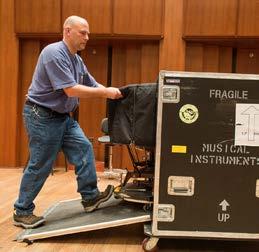
Name: David Langrell
Hometown: Wilmington, Delaware
Role: Stage Manager
Years with the NSO: 25
How did you find your way into stage work? I loved theater, but I didn’t think it was going to be a very good career. I went to school for agriculture—I wanted to be a forest ranger when I grew up—but I always kept my hand in the arts in college. In 1983, I moved to D.C. to work at Folger Theatre. My first union job at the Kennedy Center was in 2000 for Honors. I became a full-time stagehand in July 2011, and I became stage manager in 2018.
What does an average day of work look like for you? Let’s call it a rehearsal day. The strings, woodwinds, and brass bring their own instruments, but we have to go down to the store rooms and pull all the big percussion pieces—the marimba, xylophone, glockenspiel, bass drums, timpani…. It’s usually a couple of large freight elevators of gear. If there’s a piano soloist, we’ll bring both pianos out during a break, and they’ll play them to see which one they want to use for the concert. Gianandrea Noseda loves his strings very tight to him. Sometimes he’ll come in and say, “Can you move everybody 2.5 centimeters?” He constantly thanks the crew for how well the stage is set up, because he can’t do his best if we don’t do our best.
What else do the musicians need? We have what we call “accessories,” something like 140 pieces—seat cushions, trays for the winds, pencil trays for violins, bassoon stands, contrabassoon stands, and personal stools. I keep cough drops and little sewing kits backstage in case somebody pops a button.
Which pieces are particularly problematic to set up? In January, we’re doing The Rite of Spring, and we’re putting up a six-foot stage extension. It doesn’t sound like a lot, but there are two tubas and double timpani, and each timpanist has five drums. That’s 8 feet by 16 feet right there. The piece also has nine (eight plus an assistant) French horns; typically, we only have around four.
What’s a memorable time that things have gone wrong backstage? Several years ago, a very famous pianist was playing a concerto on Thursday night at seven o’clock, and on Friday and Saturday night at eight o’clock. (He always deals with his own transportation. I don’t think he wants people to know where he is.) The pianist doesn’t show up for the seven o’clock show, and we can’t get a hold of him. Typically, we have the soloist in the concerto before intermission, but they had to do the second piece first. When he finally showed up, he was so apologetic. He’s been here since, and we always joke, “Seven o’clock Thursday, right?”
Can you speak a bit about your son’s involvement with the NSO Youth Fellowship Program? My son’s always been around the symphony, and he’s been playing the tuba since fourth grade. Our tuba player Stephen [Dumaine] gave us the name of someone in the Army Band for lessons, and by his senior year, he was a full-fledged Youth Fellow. He ended up taking lessons with Seth Cook, the tuba player from the Opera House. He’s a junior at Eastman now, which is pretty cool. The musicians who helped coach him still ask how my son’s doing in school.
This interview has been edited for length and clarity.
Support your ORCHESTRA
The mission of the National Symphony Orchestra is to engage audiences locally, across the country, and around the world through excellence in performance and education. Each year, the NSO offers approximately 150 concerts as well as some of the country’s most extensive community and educational programming. It regularly participates in events of national and international importance, including performances for state occasions, highlevel government events, and regularly televised holiday appearances for Capitol Concerts and local radio broadcasts on WETA, making the NSO one of the most-heard orchestras in the country.
Give your support in this 95th season by becoming a Member, joining the NSO Circles, or pledging a Legacy Gift. Visit tkc.co/SupportNSO or scan the QR code.

Thank You to Our Supporters
The Trump Kennedy Center Board of Trustees
National Symphony Orchestra Board of Directors
The Trump Kennedy Center President’s Council
The Trump Kennedy Center International Committee on the Arts
President’s Advisory Committee on the Arts
National Committee for the Performing Arts
National Symphony Orchestra National Trustees
The Trump Kennedy Center Circles Board
The Trump Kennedy Center Community Advisory Board
The Trump Kennedy Center Corporate Fund Board
The Trump Kennedy Center 50th Anniversary Committee
Corporate Donors
Individual and Foundation Donors
Endowment Gifts, Bequests, and Legacy Donors
Building the Future Campaign Donors
Visit tkc.co/Support for a full listing of donors and to learn how you can join us by becoming a Member.
Concerts this Season!
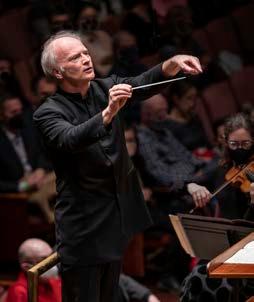
Shostakovich’s Eighth Abduraimov plays Tchaikovsky
Behzod Abduraimov makes his NSO debut in Tchaikovsky’s thundering Piano Concerto No. 1. Gianandrea Noseda closes the concert with Shostakovich’s Symphony No. 8, an unflinching response to war.
February 5, 2026 at 7 p.m.
February 6, 2026 at 11:30 a.m.
February 7, 2026 at 8 p.m.
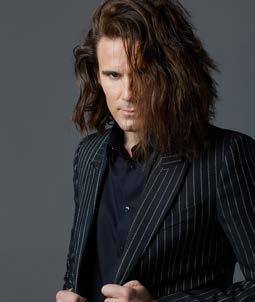
Brahms X Radiohead
Created and conducted by visionary composer Steve Hackman, Brahms X Radiohead fuses elements of Brahms’ lush Symphony No. 1 with Radiohead’s landmark album OK Computer. Composed for full orchestra and three solo vocalists, this symphonic synthesis offers a reconceptualized experience of each track. Note: Radiohead does not appear in this concert.
February 10 & 11, 2026 at 8 p.m.
American Promise
We’re celebrating the sounds of America, including the world premiere of an NSO commission by Karen LeFrak! In commemoration of the 250th anniversary of the signing of the Declaration of Independence, conductor Enrico Lopez-Yañez leads the NSO in a blend of new compositions and timeless orchestral works.
February 13 & 14, 2026 at 8 p.m.
2025–2026 CLASSICAL SEASON PERFORMANCE CALENDAR
Shostakovich’s Eighth Abduraimov plays Tchaikovsky
Thu., Feb. 5, 2026 at 7 p.m.
Fri., Feb. 6, 2026 at 11:30 a.m.
Sat., Feb. 7, 2026 at 8 p.m.
American Mosaic
Thu., Feb. 19, 2026 at 7 p.m.
Sat., Feb. 21, 2026 at 8 p.m.
Sun., Feb. 22, 2026 at 3 p.m.
Shaham & Shaham play Reena Esmail Robertson conducts Sibelius’ Fifth
Thu., Feb. 26, 2026 at 7 p.m.
Fri., Feb. 27, 2026 at 11:30 a.m.
Sat., Feb. 28, 2026 at 8 p.m.
Winter Daydreams: Noseda conducts Tchaikovsky’s First Trpčeski plays Saint-Saëns
Fri., Mar. 6 at 11:30 a.m.
Sat., Mar. 7 at 8 p.m.
Hahn & Woods play
Carlos Simon
Brahms’ Third
Thu., Mar. 12, 2026 at 7 p.m.
Fri., Mar. 13, 2026 at 8 p.m.
Sat., Mar. 14, 2026 at 8 p.m.
NSO Presents*
Alexandra Dovgan
Sat., Mar. 14, 2026 at 3 p.m.
Death and Transfiguration
Khachatryan plays Sibelius
Thu., Apr. 2, 2026 at 7 p.m.
Fri., Apr. 3, 2026 at 11:30 a.m.
Sat., Apr. 4, 2026 at 8 p.m.
Bruckner’s Seventh Gerlach plays Haydn
Fri., Apr. 10, 2026 at 8 p.m.
Sat., Apr. 11, 2026 at 8 p.m.
Mozart’s “Jupiter” & Bach’s Brandenburg No. 1
Wed., Apr. 15, 2026 at 7 p.m.
Thu., Apr. 16, 2026 at 7 p.m.
Fri., Apr. 17, 2026 at 8 p.m.
NSO Presents*
Khatia Buniatishvili
Fri., Apr. 24, 2026 at 8 p.m.
Opera in Concert
Puccini’s Il trittico
Wed., Apr. 29, 2026 at 7 p.m.
Fri., May 1, 2026 at 7 p.m.
Renée Fleming’s Voice of Nature: The Anthropocene
Fri., May 29, 2026 at 8 p.m.
Sat., May 30, 2026 at 8 p.m.
Cann plays Coleman
Fri., June 5, 2026 at 8 p.m.
Sat., June 6, 2026 at 8 p.m.
Philip Glass’ “Lincoln”
Dalene plays Barber
Fri., June 12, 2026 at 8 p.m.
Sat., June 13, 2026 at 8 p.m.
*Please note: The National Symphony Orchestra does not perform in these concerts.
A look back at our history
1939
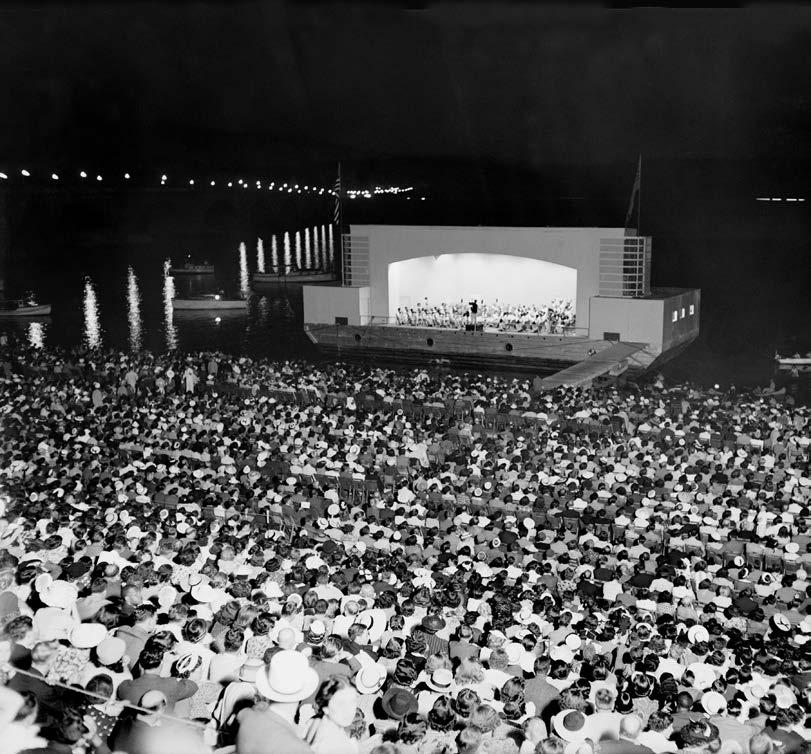
NSO Music Director Hans Kindler leads the Orchestra in a summer outdoor concert on a floating barge anchored at the foot of the stone steps below the Lincoln Memorial.
Harris & Ewing Collection, Library of Congress
A look back at our history
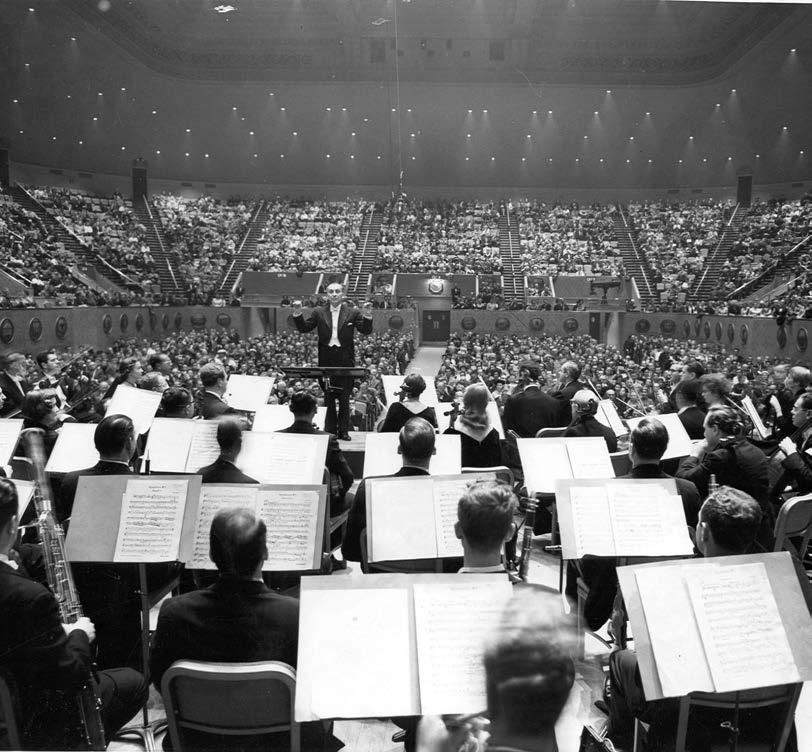
1958
Music Director Howard Mitchell conducts the NSO at Constitution Hall. Photographer unknown, Courtesy of the Kennedy Center Archives
1970s A look back at our history
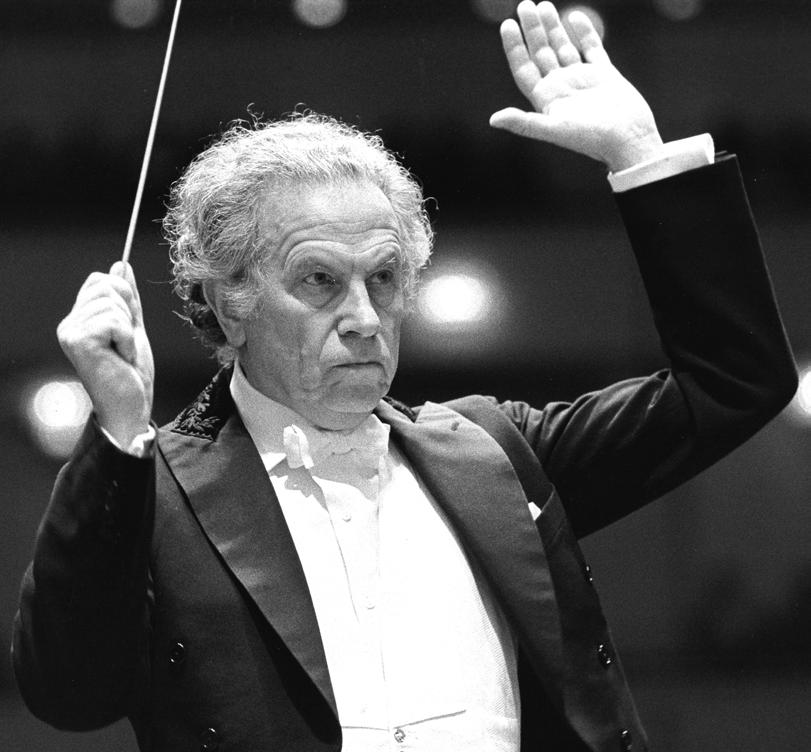
NSO Music Director Antal Doráti conducts the NSO.
Photo by Richard Braaten, Courtesy of the Kennedy Center Archives
A look back at our history
1987
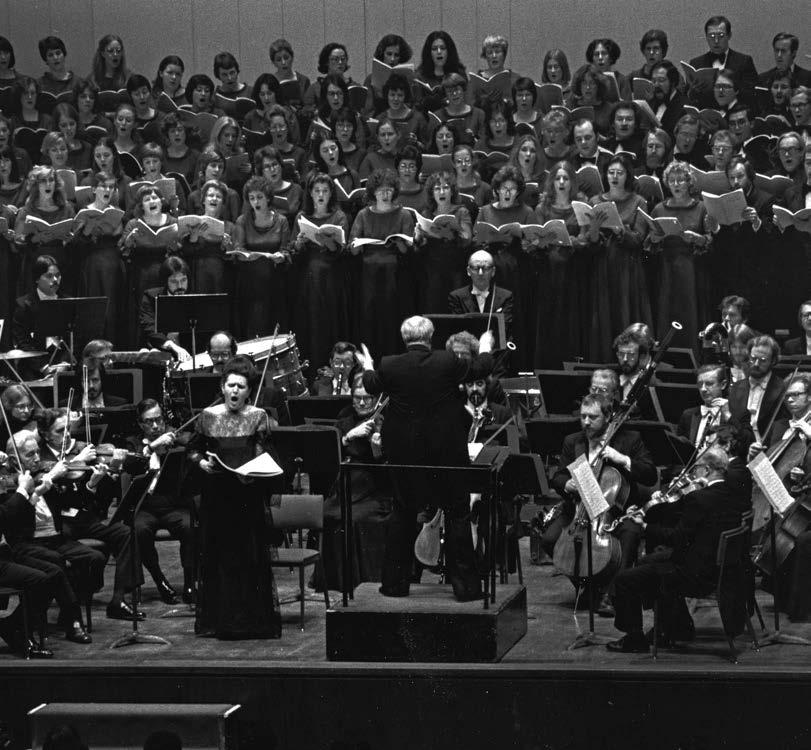
NSO Music Director Mstislav Rostropovich conducts the NSO with guest soloist soprano Galina Vishnevskaya, his wife.
Photo by Joan Marcus, Courtesy of the Kennedy Center Archives
A look back at our history
1996
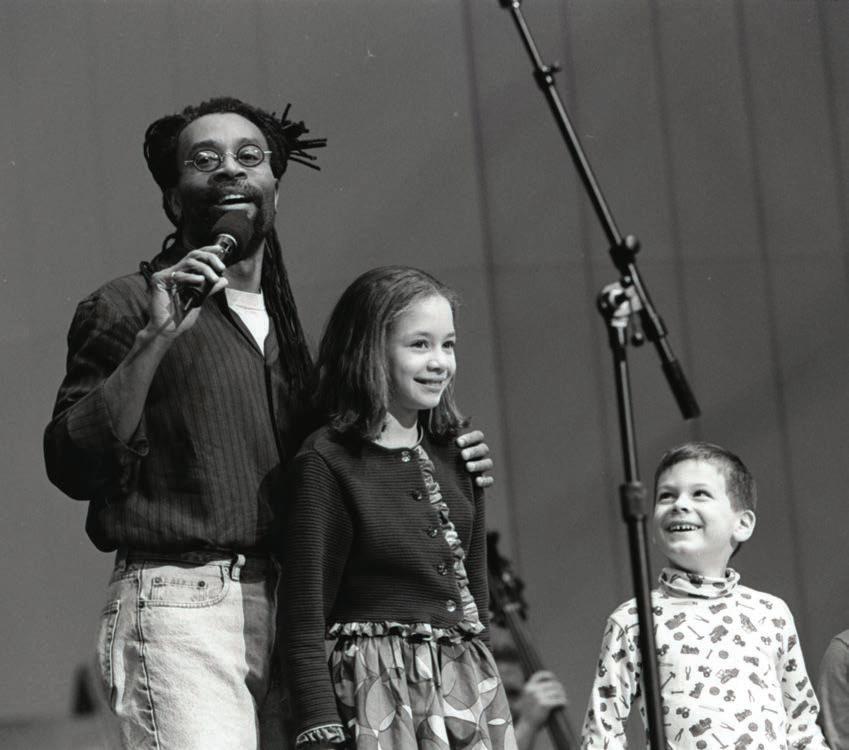
Music man Bobby McFerrin wowed Washingtonians when he conducted the National Symphony Orchestra concerts for families and school children.
Photo by Carol Pratt, Courtesy of the Kennedy Center Archives
2000 A look back at our history
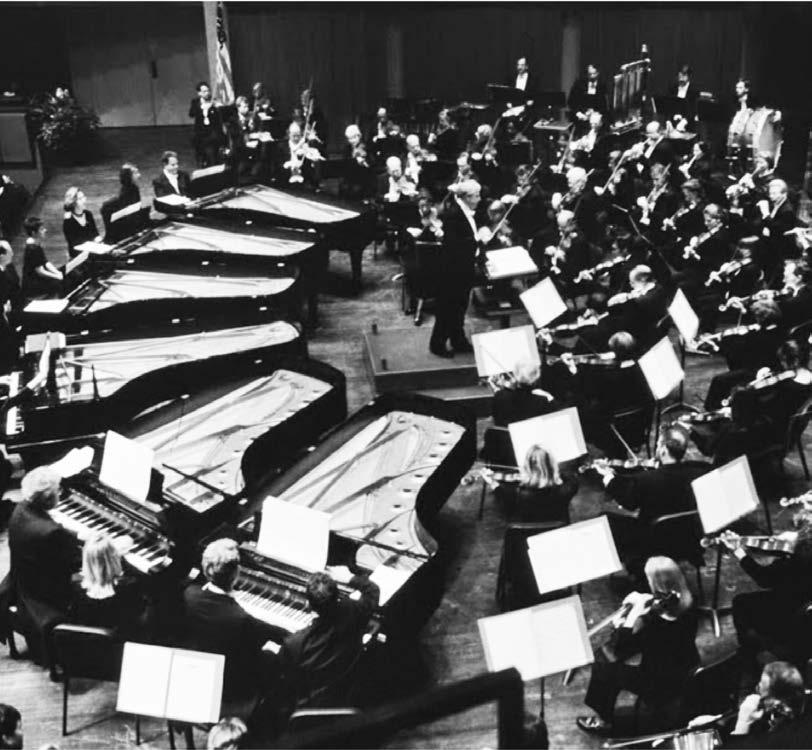
Pianists John Browning, Sara Davis Buechner, Brian Ganz, Joseph Kalichstein, Lambert Orkis, and Jeffrey Siegel play Franz Liszt’s Hexameron with the National Symphony Orchestra conducted by Music Director Leonard Slatkin for the Piano 2000 festival.
Photo by Carol Pratt, Courtesy of the Kennedy Center Archives
2015 A look back at our history
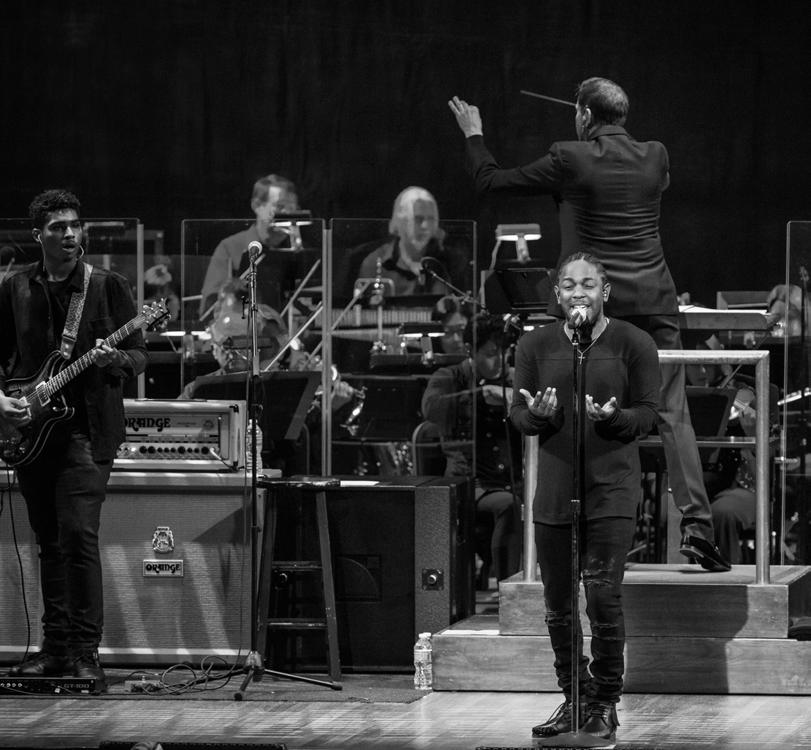
Kendrick Lamar and the NSO led by Principal Pops Conductor Steven Reineke delivered a one-night-only performance featuring some of Lamar’s biggest hits and the first-ever live performances of music from his lyrical masterpiece “To Pimp a Butterfly.”
Photo by Elman Studio, Courtesy of the Kennedy Center Archives
2022 A look back at our history
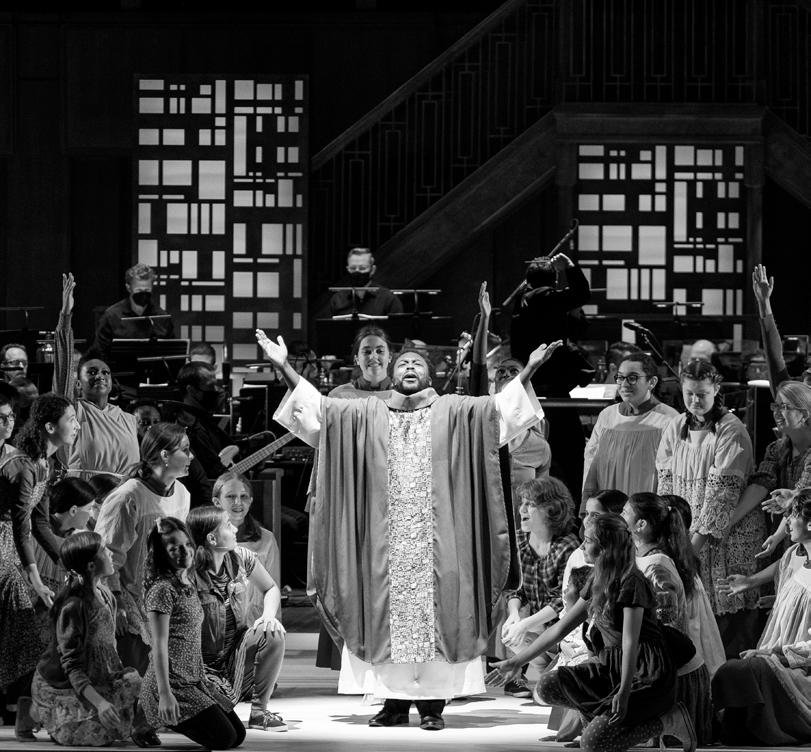
As the concluding event of Kennedy Center’s 50th Anniversary celebration, Leonard Bernstein’s MASS returned 51 years after its world premiere at the Center in a dynamic staging featuring the NSO, guest conductor James Gaffigan, and baritone Will Liverman in the role of Celebrant.
Photo by Scott Suchman, Courtesy of the Kennedy Center Archives



Take home... a musical memory.
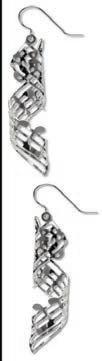
Mozart Magic Flute Earrings
These exquisite earrings bring Mozart’s masterpiece to life with fluteinspired details that create a visual symphony. $42
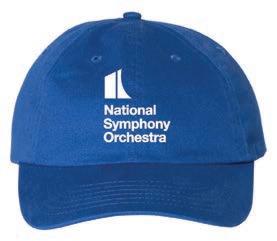
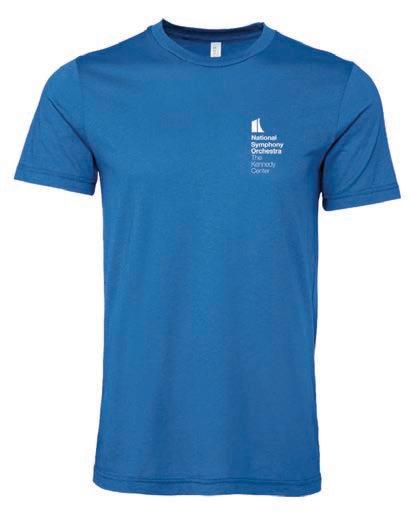
NSO Cap and T-shirt
Our new National Symphony Orchestra cap and tee let you show your pride in our world-class symphony. $30 each
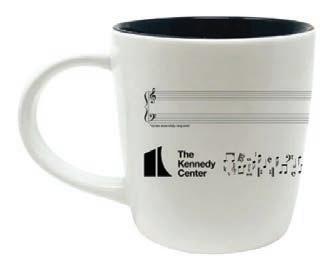
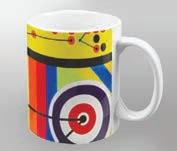
Make Your Own Music Mug
No better way to start your day than with a coffee mug imprinted with blank sheet music and sticker notes so you can compose your own melody. $20
Visit our two gift shops on Level A and in the Hall of States. Shop online 24/7 at tkc.co/shop
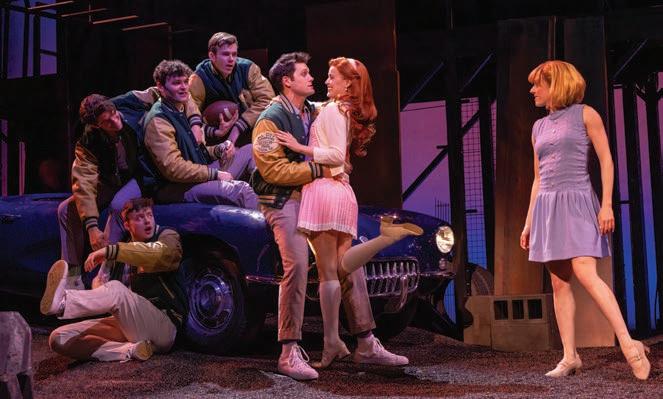
For 250 years, America’s story has been told through the voices of its artists, the rhythm of its music, the words of its writers, and the movement of its dancers. It is a story of resilience and reinvention, of dreams daring enough to redefine what was possible, and of creativity that has not only shaped a nation, but the world.
As the nation marks 250 years since the signing of the Declaration of Independence, the Center invites Americans everywhere to take part in 250 Years of US, a yearlong exploration of who we are, where we’ve been, and where we’re going. Through music, theater, dance, and visual art, 250 Years of US celebrates the boundless imagination of a people united by creativity.




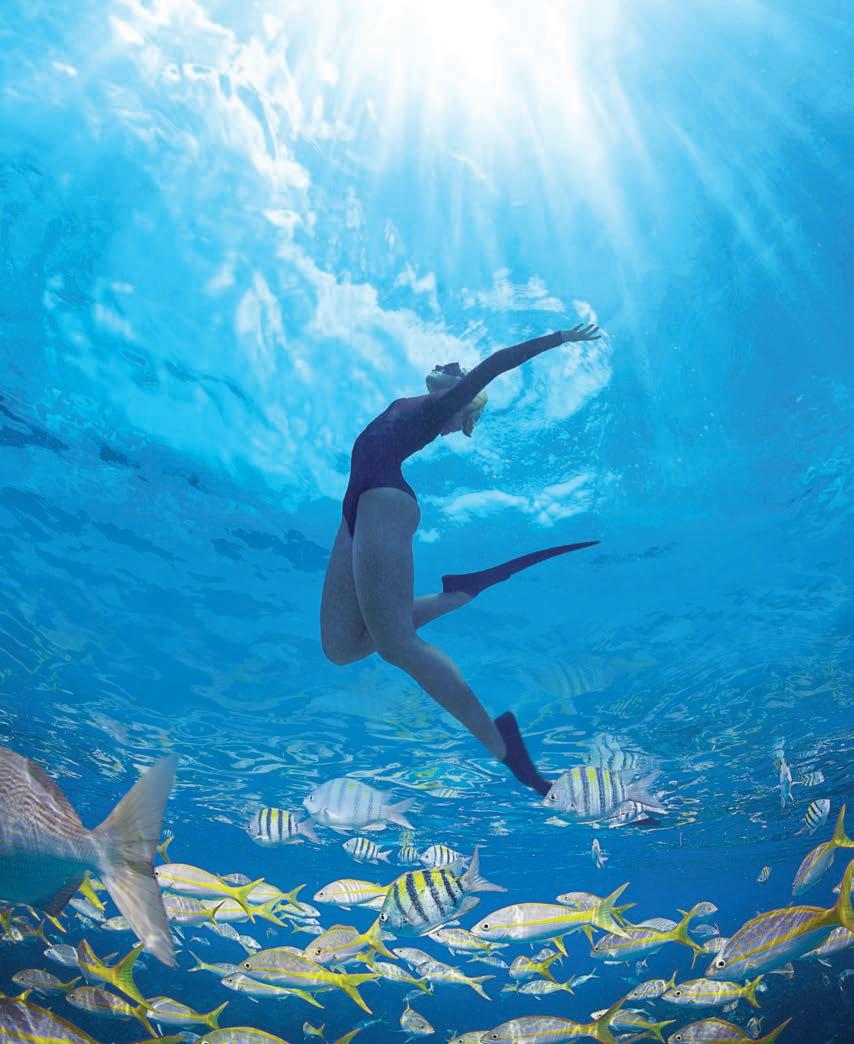
The Keys give you a show above and below the surface. From art galleries to museums and live music, no place inspires more freedom of expression. In The Keys, you’re part of the performance.
VisitFloridaKeys.com/arts-culture 1.800.Fla.Keys