Noseda Conducts Brahms / Carlos Simon World Premiere, March 2026
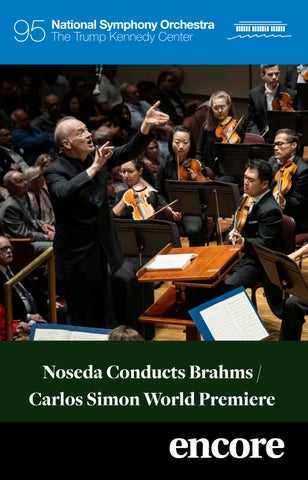
Noseda Conducts Brahms / Carlos Simon World Premiere
The Keys give you a show above and below the surface. From art galleries to museums and live music, no place inspires more freedom of expression. In The Keys, you’re part of the performance.
VisitFloridaKeys.com/arts-culture 1.800.Fla.Keys
THE DONALD J. TRUMP AND JOHN F. KENNEDY CENTER FOR THE PERFORMING ARTS
MARCH 12, 2026 AT 7 P.M.; MARCH 13 & 14, 2026 AT 8 P.M. | CONCERT HALL
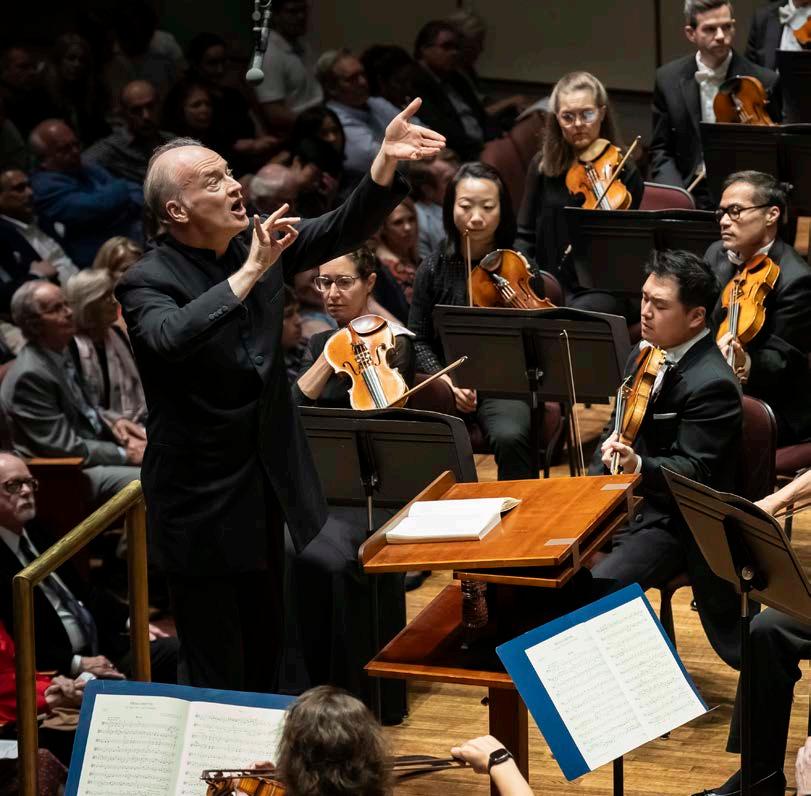
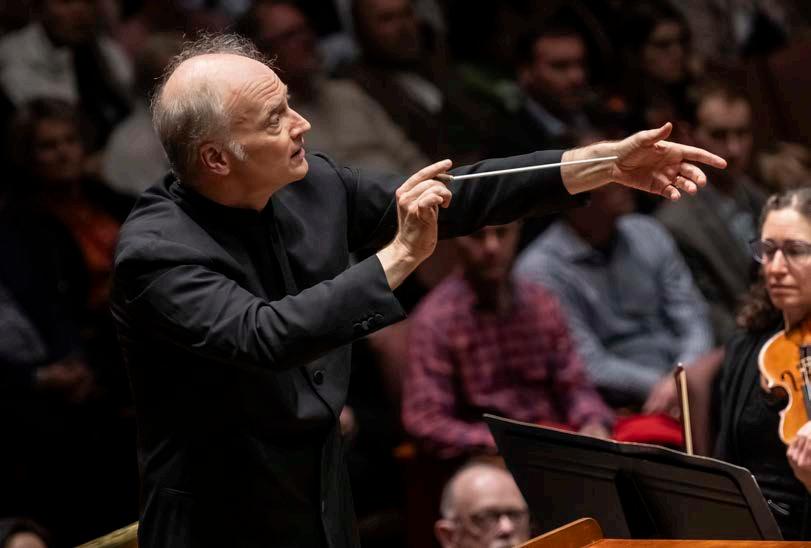
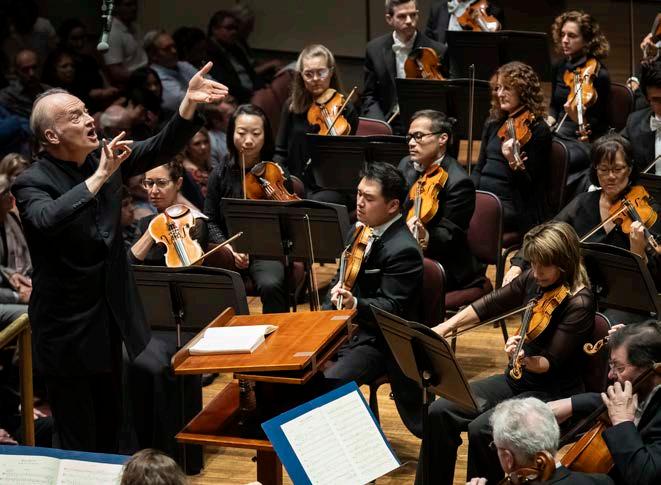
Gianandrea Noseda, conductor
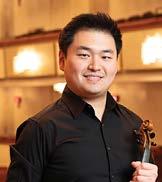
Ying Fu, violin
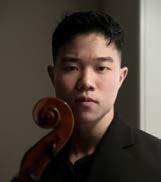
Raymond Tsai, cello
ROBERT SCHUMANN (1810–1856)
CARLOS SIMON (1986–)
JOHANNES BRAHMS (1833–1897)
Ω NSO Principal Musician
Manfred Overture, Op. 115 (1848)
Double Concerto Suite for Violin, Cello, and Orchestra, World Premiere (2025)
Ying Fu, violin Ω
Raymond Tsai, cello Ω
INTERMISSION
Symphony No. 3 in F Major, Op. 90 (1883)
i. Allegro con brio
ii. Andante
iii. Poco allegretto
iv. Allegro – Un poco sostenuto
THANK YOU TO OUR SEASON SPONSORS
The NSO Music Director Chair is generously endowed by Roger Sant and Congresswoman Doris Matsui Noseda Era Fund Supporters The Amici di Gianandrea
Patrons are requested to turn off cell phones and other electronic devices during the performance. Any video and/or audio recording of this production is strictly prohibited.
Welcome
Dear Friends,
As we celebrate the National Symphony Orchestra’s 95th season, I want to take a moment to express my heartfelt thanks to you—our devoted patrons, supporters, and friends. Your presence this evening, and your unwavering support throughout the year, mean more than words can convey. It is your love of music, your generosity, and your steadfast belief in the arts that delight this remarkable orchestra.
In 1931, Hans Kindler founded the NSO with a bold vision: to build a world-class symphony orchestra in the heart of our nation’s capital. Nearly a century later, that vision continues to be our driving force. Today, under the dynamic artistic leadership of Gianandrea Noseda, we are more inspired than ever to share powerful performances with our audiences. The NSO is not simply an orchestra; it is a family of artists joined together through a shared love of music, unity of purpose, and commitment to something greater than us.
The NSO is more than what you see on stage—it is a living, breathing institution devoted to enriching lives. Our robust education and community engagement programs reach thousands of students, educators, and families each year. Between our Youth Fellowship Program and Summer Music Institute, to Young People’s Concerts, we strive to make music accessible to everyone—especially the next generation.
This commitment to connect with broader audiences is also seen through our vibrant, genre-defying series, led by the remarkable Steven Reineke, our Principal Conductor and Artistic Advisor. Steven brings a wide-reaching musical vision to the NSO, bridging genres and generations. His programming has opened the door for new audiences to discover a love for orchestral music, while continuing to captivate longtime fans with the highest levels of artistry.
As we embark on this milestone season, we are reminded that our journey would not be possible without you. Thank you for being an essential part of this vibrant and enduring musical community.
With deepest gratitude and warmest regards,
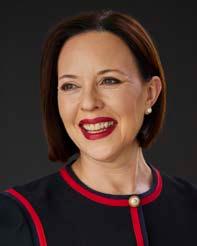
Jean Davidson Executive Director National Symphony Orchestra
From the Music Director
Cari amici,
It is with immense joy and anticipation that I welcome you to the National Symphony Orchestra’s 95th anniversary season. This moment is more than a milestone—it is a celebration of our deep musical legacy and a renewed commitment to bringing powerful, moving performances to our community and beyond. This is only the beginning. The 95th season is filled with musical discovery, celebrated artists, and unforgettable experiences.
This season features iconic works that have stood the test of time, from classic masterpieces to thrilling contemporary music. The NSO also has the opportunity to share the stage with an exceptional lineup of guest artists and conductors—beloved icons and rising stars alike. Performing new music is something the NSO truly believes in. Make history with us as we present innovative new works, including five world premieres.
It is with immense joy and anticipation that I welcome you to the National Symphony Orchestra’s 95th anniversary season. This moment is more than a milestone—it is a celebration of our deep musical legacy and a renewed commitment to bringing powerful, moving performances to our community and beyond. This is only the beginning. The 95th season is filled with musical discovery, celebrated artists, and unforgettable experiences.
I am deeply grateful to share this journey with you. Your presence in the Concert Hall is what brings our music fully to life. Thank you for being a part of the NSO family—for your passion, your applause, and your unwavering support.
I am deeply grateful to share this journey with you. Your presence in the Concert Hall is what brings our music fully to life. Thank you for being a part of the NSO family—for your passion, your applause, and your unwavering support.
Con tutto il cuore,
Con tutto il cuore,
Gianandrea Noseda
Gianandrea Noseda
Music
Music Director, National Symphony Orchestra
Director, National Symphony Orchestra
Che la musica vi porti gioia e ispirazione—may music bring you joy and inspiration.
Che la musica vi porti gioia e ispirazione—may music bring you joy and inspiration.
Notes on the Program
Manfred Overture, Op. 115
ROBERT SCHUMANN
Born June 8, 1810, in Zwickau, Germany
Died July 29, 1856, in Endenich, Germany
Robert Schumann’s Manfred Overture is the opening of a giant dramatic work based on a “dramatic poem” by Lord Byron. Even though Schumann began composing this piece in 1848, he had been familiar with the poem since his adolescence. Byron conceived of the Manfred character during the same summer trip that Mary Shelley created Dr. Frankenstein, and his Manfred, an anti-hero who summons the spirit of his sister on his quest to die, is psychologically similar to Dr. Frankenstein. Yet, while these figures captured the literary imaginations of many, Schumann was fascinated by Byron’s character development as well as the structure and philosophy of his poem. Manfred is a poem in three acts, but Byron confessed that it was impossible to stage due to its psychological nature. When Schumann started composing with this text (in a German translation by Karl Adolf Suckow), he was, like Manfred, experiencing a period of deep depression and auditory hallucination. Schumann’s attempt to translate this new approach to literature into a musical treatment was successful, yet it resulted in a work that is difficult initially for most to understand. Both Brahms and Liszt—who conducted its full premiere— considered Schumann’s Manfred, in its entirety, to be amongst his best works. Today, the entire piece receives few performances. However, the Overture remains a solid work in the orchestral canon.
The Overture opens with a loud, fast statement. Suddenly, slow, poetic, brooding harmonies appear and develop with an air of mystery. Surprise orchestral hits then spark a quickening that transforms into a musical fury. This anger, however, contains music that is just as poetic as the opening, but from a completely different emotional approach. A slowing down paves the way for a calming brass chord that permits a moment of contemplation. Halfway through the Overture, the “fury music” returns, marked by violin swells, low registral rumblings, and a gorgeous tenor melody played by the violas and the cellos. Familiar music enters, foreshadowing a return to the mysterious texture of the Overture’s opening. As the music waxes and wanes in tempi, the work settles into the slow, poetic, brooding environment that begins the coming orchestral masterpiece. Schumann places this Overture in the dark, mysterious key of E-flat minor, a key that can cause tuning difficulties across the orchestra. Two years later, Schumann’s declining mental state compelled him to attempt suicide by jumping into the River Rhine. After being saved, he was taken to a private sanatorium, where he died in 1856 from pneumonia.
—Anthony R. Green
Double Concerto Suite for Violin, Cello, and Orchestra
CARLOS SIMON
Born April 13, 1986, in Washington, D.C.
This double concerto for violin and cello has no associated programmatic concept. For the first time in my compositional career, I have decided to write a piece that allows listeners to assign their own meaning and understanding of the work. It is truly absolute music— that is music for music’s sake. The composition is, however, inspired by a wide range of genres, including Baroque dance forms like the passacaglia and the gavotte to Delta Blues. My hope with this work is to allow the soloists to express themselves through a variety of orchestral colors and musical styles.
—Carlos Simon
Symphony No. 3 in F Major, Op. 90
JOHANNES BRAHMS
Born May 7, 1833, in Hamburg, Germany
Died April 3, 1897, in Vienna, Austria-Hungary
Much of the music of Johannes Brahms is a reflection of his self-recognized duality. In the same vein as Schumann’s self-coined moody “Eusebius” and outgoing “Florestan” personalities, Brahms often referred to himself as “Kreisler,” referencing a fictional, temperamental conductor created by the German romantic writer E.T.A. Hoffmann. His friend Joseph Joachim—violinist, conductor, and composer—also recognized this duality, describing his personalities as “eine kindlich, genial, vorwiegend … eine dämonische auflauernde” (one kind, genial, chiefly … one demonically waiting).
Perhaps part of this duality sprang from the pressure Brahms felt from history. When he was only 20, Schumann deemed Brahms the true successor of Beethoven, and Brahms felt that weight acutely in the ensuing decades. He also had a frustrating relationship with women. Brahms and Joachim both chose the life of “echte Musikanten” (true musicians) as described by the fictional Kreisler—a life where one can be inspired by women, but never enter into an intimate relationship with them. Where Joachim adopted the F.A.E.—“frei aber einsam” (free, but lonely)—motto as a summation of this life, Brahms responded with F.A.F—“frei aber froh” (free but happy).
Three decades after Schumann’s lofty declamation—30 years of struggle, frustration, experimentation, study, and growth—Brahms seemed to have found a voice that liberated him from his self-inflicted pressures in his Third Symphony. Instead of “kind” and “demonic” dualities, the symphony expresses more nuanced oppositions. The outer two movements are quite heroic and liberating, while the middle two are reflective and longing. In a nod to Joachim, Brahms opens the symphony with an F-A ♭-F rising melodic statement, solidifying his newly affirmed freedom (“freiheit”) and happiness (“fröhlichkeit”).
Despite referencing Schumann’s “Rhenish” Symphony—and despite moments in the fourth movement which sound eerily similar to Beethoven’s work—the Third Symphony is the most innovative of Brahms’ four. It is also the most compact. Brahms was known to have often sought advice and critique from Clara Schumann, but then to have ignored it after it was given. Yet, when Clara first experienced the Third Symphony, she exclaimed, “All the movements seem to be of one piece, one beat of the heart, each one a jewel!”
Not only does Brahms recycle themes, harmonies, and contrapuntal developments with economic restraint (creating the uniformity which Clara immediately recognized), but each movement ends quietly—a departure from symphonic structure at the time. Not all appreciated this quality, however. Among some of the negative critiques received after early performances, an 1884 review in The Boston Gazette states, “… the Third Symphony of Brahms is painfully dry, deliberate, and ungenial … The Finale we could not understand, and it ends in a quiet and unimpressive manner that makes it an anticlimax after the fuss and noisiness that precede it.” Despite such criticism, Brahms established a path forward with this new, streamlined approach to the symphony. He was finally truly happy and free to continue composing works that would eventually be cherished beyond his years.
—Anthony R. Green
Meet the Artists
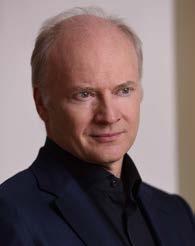
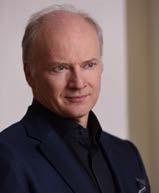
Gianandrea Noseda, conductor
Gianandrea Noseda is one of the world’s most soughtafter conductors, equally recognized for his artistry in both the concert hall and opera house. The 2025–2026 season marks his ninth as music director of the National Symphony Orchestra. Noseda’s leadership has inspired and reinvigorated the National Symphony Orchestra, which makes its home at the Kennedy Center. The renewed artistic recognition and critical acclaim have led to invitations to Carnegie Hall and international concert halls, as well as digital streaming and a record label distributed by LSO Live, for which Noseda also records as principal guest conductor of the London Symphony Orchestra. Noseda’s discography of over 80 recordings includes dozens of critically acclaimed albums with a wide range of orchestras and repertoire for various labels, including Deutsche Grammophon and Chandos.
Noseda became General Music Director of the Zurich Opera House in September 2021 and reached an important milestone in May 2024, conducting two highly praised complete Ring Cycles. He was recognized as “Best Conductor” by the jury of the German OPER! AWARDS, specifically for his Wagner interpretations.
From 2007 to 2018, Noseda served as Music Director of the Teatro Regio Torino, where his leadership marked the opera house’s golden era. Noseda has conducted the most important international orchestras, opera houses, and festivals, and had significant roles at the BBC
Philharmonic (chief conductor), Israel Philharmonic Orchestra (principal guest conductor), Mariinsky Theatre (principal guest conductor), Orchestra Sinfonica Nazionale della RAI (principal guest conductor), Pittsburgh Symphony Orchestra (Victor de Sabata Chair), Rotterdam Philharmonic (principal guest conductor), and Stresa Festival (artistic director).
Working with the next generation of musicians is important to Noseda, and in the summer of 2025, he led a tour of major concert halls in China, Korea, and Japan with Carnegie Hall’s National Youth Orchestra of the USA. In 2019, he was appointed the founding Music Director of the Tsinandali Festival and Pan-Caucasian Youth Orchestra in the village of Tsinandali, Georgia.
A native of Milan, Noseda is Commendatore al Merito della Repubblica Italiana, marking his contribution to the artistic life of Italy. He has been honored as Conductor of the Year by both Musical America and the International Opera Awards. He is also a recipient of the Puccini Award, whose past recipients include legendary opera stars Maria Callas, Birgit Nilsson, and Luciano Pavarotti.
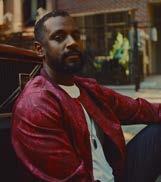
Carlos Simon, composer
“My dad, he always gets on me. He wants me to be a preacher, but I always tell him, ‘Music is my pulpit. That’s where I preach,’”
Carlos Simon reflected for The Washington Post. Having grown up in Atlanta, with a long lineage of preachers and connections to gospel music to inspire him, Grammy®nominated Simon proves that a
well-composed song can indeed be a sermon. His music ranges from concert music for large and small ensembles to film scores with influences of jazz, gospel, and neo-romanticism.
Simon is the current Composer-inResidence for the Trump Kennedy Center and frequently writes for the National Symphony Orchestra and Washington National Opera. Simon also holds the position of inaugural Composer Chair of the Boston Symphony Orchestra, the first in the institution’s 143-year history.
A highlight of the 2025–2026 season is the world premiere of Simon’s Double Concerto Suite for Violin, Cello, and Orchestra, which will be premiered by the National Symphony Orchestra followed by the St. Louis Symphony Orchestra, and performed by further co-commissioners in future seasons. Additional world premieres include Lamentations for String Orchestra (commissioned by New World Symphony / Miami City Ballet), a symphonic soundtrack to The Unspoken Elegance of Stillness (directed by Simon Frederick), and works for the Boston Symphony Chamber Players and Augustin Hadelich, commissioned by the Boston Symphony Orchestra. Previously, Simon has been commissioned by the likes of the Los Angeles Philharmonic, San Diego Symphony, Washington National Opera (in collaboration with Mo Willems), New York Philharmonic, Bravo! Vail, Minnesota Orchestra, American Ballet Theatre, Detroit Symphony Orchestra, Jacksonville Symphony, Cincinnati Pops Orchestra, Carnegie Hall for the National Youth Orchestra of the USA, and BBC Symphony Orchestra for the Last Night of the Proms.
As well as his composition work, Simon frequently curates concert programmes, which often highlight his own music as well as that of close collaborators. Curation concerts
have recently been programmed by the Atlanta Symphony Orchestra, Boston Symphony Chamber Players, Tanglewood Festival of Contemporary Music, and the Trump Kennedy Center. Simon also curated and arranged Coltrane: Legacy for Orchestra, a new project co-commissioned by TO Live (for the Toronto Symphony Orchestra) and the San Francisco Conservatory of Music, in partnership with the Coltrane Estate.
August 2024 saw the release of Simon’s first full-length orchestral album, Four Symphonic Works, comprised of live concert recordings by the National Symphony Orchestra from the Trump Kennedy Center Concert Hall, conducted by Gianandrea Noseda. Simon also composed the original soundtrack for the PBS documentary Shame of Chicago: Shame of the Nation, which was released as a digital album in April 2024.
Simon also released the live premiere recording of brea(d)th, a landmark work commissioned by Minnesota Orchestra and written in collaboration with Marc Bamuthi Joseph, conducted by Jonathan Taylor Rush. “Arguably the most important commission of Simon’s career so far” (The New York Times), brea(d)th was written following George Floyd’s murder as a direct response to America’s unfulfilled promises and history of systemic oppression against Black Americans.
Simon earned his doctorate degree at the University of Michigan, where he studied with Michael Daugherty and Evan Chambers. He has also received degrees from Georgia State University and Morehouse College. He is an honorary member of Phi Mu Alpha Music Sinfonia Fraternity and a member of the National Association of Negro Musicians, Society of Composers International, and Pi Kappa Lambda Music Honor Society. He has served as a member of the music faculty at Spelman College and
Meet the Artists
Morehouse College in Atlanta, Georgia, and now serves as Associate Professor at Georgetown University. Simon was also a recipient of the 2021 Sphinx Medal of Excellence, the highest honor bestowed by the Sphinx Organization to recognize extraordinary classical Black and Latinx musicians, and was named a Sundance/ Time Warner Composer Fellow for his work for film and moving image.
Ying Fu, violin
Ying Fu is currently the associate concertmaster of the National Symphony Orchestra in Washington, D.C. Prior to this appointment in January 2019, Fu was the associate concertmaster of the Philadelphia Orchestra for six years, as well as a member of the first violin section in the Cleveland Orchestra for two years. He is also a frequent guest concertmaster for the Shanghai Philharmonic Orchestra and a visiting professor at the Shanghai Conservatory of Music in China. In 2012, Fu won the First Prize in the 31st Rodolfo Lipizer International Violin Competition in Italy as well as four Special Prizes. He also holds the top prizes from the 2011 Schmidbauer International Competition, the 2009 Washington International Competition, and the 2008 HAMS Violin Competition in Chicago. His music-making includes performances in many major cities in the United States, Europe, and Asia. Originally from Shanghai, China, Fu started to play violin at the age of three. He went on to earn his Bachelor of Music from the Shanghai Conservatory of Music in China and earned his Master of Music
from the Shepherd School of Music with Professor Sergiu Luca at Rice University. After two years of a doctoral program with Professor ChoLiang Lin and Professor Luca, he joined the renowned Cleveland Orchestra in August of 2011.
With his great enthusiasm for chamber music, Fu has participated in many renowned summer music festivals, including Marlboro Music Festival, Schleswig-Holstein Music Festival in Germany, and the Taos Chamber Music Festival in which he has worked and performed with many great musicians, including pianists Richard Goode and Mitsuko Uchida; cellist Peter Wiley; violists Kim Kashkashian, Samuel Rhodes, and Michael Tree; and the Shanghai Quartet, Borromeo String Quartet, St. Lawrence String Quartet, and the Brentano String Quartet with pianist Robert McDonald.
Distinguished by his talents and leadership, Fu has served as the concertmaster of Schleswig-Holstein Symphony Orchestra in Germany, where he performed under Maestro Christoph Eschenbach and Valery Gergiev. He has also served as the guest concertmaster for the Houston Symphony and the Indianapolis Symphony Orchestra. Fu has served as a jury member for many young artist music competitions, including the Greenfield Competition, and as a faculty member for the Calvin String Summit in Michigan, the Philadelphia International Music Festival, the National Symphony Orchestra Summer Music Institute at the Trump Kennedy Center, and the National Youth Orchestra of the United States of America.
Fu has been an active violin teacher since 2002. Fu was a teaching assistant while pursuing his master’s and doctoral degrees at Rice University in Houston. During this time, he formed his own studio of 18 students, ranging from four-year-old children to adults.
During his six years in Philadelphia, Fu focused on helping young violinists become professionals. His students have been accepted by such renowned institutions as the Curtis Institute of Music in Philadelphia, the New England Conservatory in Boston, the Julliard School in New York City, and Indiana University. Fu has given many master classes all over the world. As he describes, teaching others is a fantastic way to teach himself. He currently lives in McLean, Virginia.
Raymond Tsai, cello
Alabama native Raymond Tsai began with the National Symphony Orchestra as assistant principal cellist in September 2025. Prior to joining the NSO, Raymond studied with Richard Aaron and pursued his bachelor’s degree at the University of Michigan. Beginning cello studies at eight years old, Raymond discovered his love of orchestra playing during fellowships at the Pacific and Tanglewood music festivals. Outside of classical music, Raymond enjoys athletic activities and noodling around on the guitar.
National
Symphony Orchestra
The 2025–2026 season is the National Symphony Orchestra’s 95th and Music Director Gianandrea Noseda’s ninth season. Gianandrea Noseda serves as the orchestra’s seventh music director, joining the NSO’s legacy of distinguished leaders: Christoph Eschenbach, Leonard Slatkin, Mstislav Rostropovich, Antal Doráti, Howard Mitchell, and Hans Kindler. Its artistic
leadership also includes Principal Conductor and Artistic Advisor Steven Reineke.
Since its founding in 1931, the NSO has been committed to performances that enrich the lives of its audience and community members. In 1986, the National Symphony became an artistic affiliate of the John F. Kennedy Center for the Performing Arts, where it has performed since the Center opened in 1971. The 96-member NSO participates in events of national and international importance, including the annual nationally televised concerts on the lawn of the U.S. Capitol, livestreamed performances on medici.tv, and local radio broadcasts on WETA Classical 90.9 FM.
Since launching its eponymous recording label in 2020, the NSO has embarked on ambitious recording projects, including its first complete Beethoven Symphony cycle and the release of the first-ever cycle of George Walker’s Sinfonias, both led by Noseda. Recent projects include Four Symphonic Works by Kennedy Center Composerin-Residence Carlos Simon conducted by Noseda, and William Shatner’s So Fragile, So Blue, recorded live in the Concert Hall with the NSO under Steven Reineke. Forthcoming releases with Gianandrea Noseda include music by Gustav Mahler and William Grant Still, as well as Samuel Barber’s opera Vanessa.
The NSO’s community engagement and education projects are nationally recognized, and career development opportunities for young musicians include the NSO Youth Fellowship Program and its acclaimed, tuition-free Summer Music Institute.
Symphony
Loud and Clear
Terms to know in the Concert Hall, loosely defined.
An extended work with multiple sections—typically four movements.
A “symphonic” piece is a long piece with multiple interpretations of a musical idea. A repeated, transformed musical idea is called a theme.
Orchestra
A group of musicians who play together.
In the Western European tradition, an orchestra often includes the four major instrument families—brass, woodwinds, strings, and percussion. An especially large orchestra is called a symphony orchestra. A smaller orchestra is called a chamber orchestra
Movement
A section of a musical work. Movements are often separated by silences, and they typically differ in tempo—speed.
Sonata
Originally, a musical composition played on instruments. In modern usage, “sonata” can mean a piece for a soloist or an ensemble, often with two to four movements. If a work or a movement is written in sonata form, it is structured in three sections: exposition, development, and recapitulation.
Concerto
A piece pairing a technically advanced soloist with the support of an orchestra, usually in three movements. Though there may be multiple soloists, the contrast between a larger ensemble and a soloing group defines a concerto.
Chorale
A congregational piece sung by a chorus, or an instrumental piece in the harmonic style of a hymn.
Overture
An orchestral instrumental introduction to a dramatic musical work, such as an opera or a ballet. Composers, particularly those of the Romantic Period, sometimes composed independent concert overtures, intended to begin a larger musical program.
Suite
Multiple pieces intended to be performed together. Suites may take from larger works, such as an opera or a ballet.
Fugue
An often brief work with multiple melodic lines interpreting a single, recurring theme. J.S. Bach popularized the practice of pairing fugues with introductory preludes.
Tempo Markings
Largo - slow, broad
Lento - slow
Andante - moderately slow, walking pace
Moderato - moderate
Allegretto - slightly slower than allegro
Allegro - fast, bright
Vivace - fast, lively
Presto - very fast
Additional Markings
Poco - a little Meno - less Non tanto - not as much
Ma non troppo - but not too much
Più - more
Molto - very Animato - animated
Sostenuto - sustained Maestoso - majestically
Marcato - marked, accented
Mosso - with motion and speed
Con brio - with liveliness
Scherzo - a fast, playful section
National Symphony Orchestra
GIANANDREA NOSEDA , MUSIC DIRECTOR
The Roger Sant and Congresswoman Doris Matsui Chair
STEVEN REINEKE , PRINCIPAL CONDUCTOR AND ARTISTIC ADVISOR
VIOLINS
Nurit Bar-Josef, Concertmaster
Ying Fu, Associate Concertmaster, The Jeanne Weaver Ruesch Chair
Ricardo Cyncynates, Assistant Concertmaster
Xiaoxuan Shi, Second Assistant Concertmaster
Jane Bowyer Stewart
Heather LeDoux Green
Lisa-Beth Lambert
Jing Qiao
Marina Aikawa
Peiming Lin
Derek Powell
Regino Madrid**
Meredith Riley**
Marissa Regni, Principal
Dayna Hepler, Assistant Principal
Cynthia R. Finks
Deanna Lee Bien
Glenn Donnellan
Natasha Bogachek
Carole Tafoya Evans
Jae-Yeon Kim
Wanzhen Li
Hanna Lee
Benjamin Scott
Malorie Blake Shin
Angelia Cho
Kei Sugiyama**
VIOLAS
Daniel Foster, Principal, The Mrs. John Dimick Chair
Dana Kelley, Assistant Principal
Denise Wilkinson
Nancy Thomas
Jennifer Mondie
Tsuna Sakamoto
Ruth Wicker
Mahoko Eguchi
Abigail Evans Kreuzer
Rebecca Epperson
Chiara Dieguez**
Jacob Shack**
CELLOS
David Hardy, Principal, The Hans Kindler Chair, The Strong Family and the Hattie M. Strong Foundation
Raymond Tsai, Assistant Principal
David Teie
James Lee
Rachel Young
Mark Evans
Eugena Chang Riley
Loewi Lin
Britton Riley
Noah Krauss
BASSES
Robert Oppelt, Principal
Richard Barber, Assistant Principal
Jeffrey Weisner
Ira Gold
Paul DeNola
Charles Nilles
Alexander Jacobsen
Michael Marks
HARP
Adriana Horne, Principal
FLUTES
Aaron Goldman, Principal
Leah Arsenault Barrick, Assistant Principal
Matthew Ross
Carole Bean, Piccolo
OBOES
Nicholas Stovall, Principal, The Volunteer Council Chair
Jamie Roberts, Assistant Principal
Harrison Linsey***
Kathryn Meany Wilson***, English Horn
CLARINETS
Lin Ma, Principal
Eugene Mondie, Assistant Principal
Paul Cigan
Peter Cain, Bass Clarinet
BASSOONS
Sue Heineman, Principal
David Young, Assistant Principal
Steven Wilson
Sean Gordon, Contrabassoon
HORNS
Abel Pereira, Principal, The National Trustees’ Chair
James Nickel, Acting Associate Principal
Markus Osterlund***
Scott Fearing
Robert Rearden
Geoffrey Pilkington**
TRUMPETS
William Gerlach, Principal, The Howard Mitchell Chair, The Strong Family and the Hattie M. Strong Foundation
Michael Harper, Assistant Principal
Michail Thompson
Tom Cupples
TROMBONES
Craig Mulcahy, Principal
Evan Williams, Assistant Principal
David Murray
Matthew Guilford, Bass Trombone
TUBA
Stephen Dumaine, Principal, The James V. Kimsey Chair
TIMPANI
Jauvon Gilliam, Principal, The Marion E. Glover Chair
Scott Christian, Assistant Principal
PERCUSSION
Eric Shin, Principal, The Hechinger Foundation Chair
Erin Dowrey, Assistant Principal
Scott Christian
Jason Niehoff*
KEYBOARD
Lambert Orkis, Principal
Lisa Emenheiser*
ORGAN
William Neil*
LIBRARIANS
Elizabeth Cusato Schnobrick, Principal
Zen Stokdyk, Associate
Karen Lee, Assistant
PERSONNEL
Karyn Garvin, Director
Sufyan Naaman**, Coordinator
STAGE MANAGERS
David Langrell, Manager
N. Christian Bottorff, Assistant Manager
The National Symphony Orchestra uses a system of revolving strings. In each string section, untitled members are listed in order of length of service.
*Regularly Engaged Extra Musician
** Temporary Position
***Leave of Absence
National Symphony Orchestra Staff
ADMINISTRATION
Jean Davidson, Executive Director
Sabryn McDonald, Executive Assistant
EXECUTIVE TEAM
Kasama Apfelbaum, Vice President, Financial Planning & Analysis
Nigel Boon, Vice President, Artistic Planning
John Roloff, Vice President, Orchestra Operations
ARTISTIC PLANNING
Justin Ellis, Senior Producing Director
Ana Vashakmadze, Assistant Artistic Administrator
DEVELOPMENT
Laney Pleasanton, Manager, NSO Individual Giving
Pamela Wardell, Senior Director of Development
EDUCATION
Vanessa Thomas, Director of Education Activation & Engagements
FINANCE AND ADMINISTRATION
Eric Rubio, Director of Finance & Administration
HUMAN RESOURCES
Tony Amato, Director, Total Rewards
Chanel Kemp, Talent Acquisition Manager
Patrice McNeill, Director, HR Operations
Lisa Motti, HRIS Coordinator
Ericka Parham, Benefits Analyst
John Sanford, Senior Business Partner
MARKETING & ADVERTISING
Michael Granados, Marketing Manager, NSO, Fortas & New Music
Elizabeth Stoltz, Advertising Production & Special Projects Assistant Manager
Derek Younger, Director, Sales & Ticketing Service
ORCHESTRA OPERATIONS & CONCERT PRODUCTION
Brooke Bartolome, Orchestra Personnel and Operations Manager
Joseph Benitez, Media & OPAS Support Coordinator
N. Christian Bottorff, Assistant Stage Manager
Cayley Carroll, Director, Production & Orchestra Operations
Karyn Garvin, Director of Orchestra Personnel
David Langrell, Stage Manager
Sufyan Naaman, Personnel and Auditions Coordinator
Ava Yap, Operations Assistant
PUBLIC RELATIONS
Amanda Fischer, Deputy Director of Public Relations
Kennedy Center Staff
Kennedy Center Staff
Kennedy Center Staff
Kennedy Center Staff
Kennedy Center Staff
Trump Kennedy Center Staff
KENNEDY CENTER EXECUTIVE LEADERSHIP
KENNEDY CENTER EXECUTIVE LEADERSHIP
KENNEDY CENTER EXECUTIVE LEADERSHIP
TRUMP KENNEDY CENTER EXECUTIVE LEADERSHIP
KENNEDY CENTER EXECUTIVE LEADERSHIP
KENNEDY CENTER EXECUTIVE LEADERSHIP
President, John F. Kennedy Center for the Performing Arts
President, John F. Kennedy Center for the Performing
President, John F. Kennedy Center for the Performing Arts
President, John F. Kennedy Center for the Performing Arts
President, John F. Kennedy Center for the Performing
Chief Financial Officer
Ambassador Richard Grenell
Ambassador Richard Grenell
Ambassador Richard Grenell Chief Financial Officer
Ambassador Richard Grenell Chief Financial Officer
Ambassador Richard Grenell Chief Financial Officer
Donna Arduin
Ambassador Richard Grenell Financial Officer
General Counsel
Donna Arduin
Donna Arduin
Chief Financial Officer Donna Arduin
Donna Arduin General Counsel
General Counsel
General Counsel
Berke
Berke
Berke
General Counsel Elliot Berke
Berke
Berke
Donna Arduin General Counsel
Senior Vice President, Development
Senior Vice President, Development
Dale
Senior Vice President, Development
Senior Vice President, Development
Senior Vice President, Development
Vice President of Human
Dale
Senior Vice President, Marketing
Senior Vice President,
Senior Vice President, Marketing
Senior Vice President, Marketing
Senior Vice President,
Osborne
Osborne
Osborne
Senior Vice President, Marketing������������������������������������������������������������������������������������������������������������������������������� Robin Osborne
Senior Vice President, Special
Senior Vice President, Special
Senior Vice President, Special Events
Donlon
Senior Vice President, Special Events
Senior Vice President, Special Events
Donlon
Senior Vice President, Development Lisa Dale
Vice President, Human
Vice President, Human
Vice President, Human
Vice President, Human Ta’Sha Bowens
Vice President, Public Relations Roma Daravi
Vice President, Human
Vice President, Operations
Vice President, Operations
Vice President, Operations
Vice President, Operations
Vice President, Operations
Executive Director, National Symphony Orchestra Jean Davidson
Vice President,
Vice President, Education
Vice President, Education
Vice President, Education
Vice President, Education
Vice President, Special Events
Bronagh Donlon
Vice President, Public
Vice President, Public Relations
Vice
Vice President, Public Relations
Vice President, Facilities Matt Floca
Vice President, Public Relations
Chief
Chief Information Officer
Chief Information Officer
Chief Information
Vice President, Education Jordan LaSalle
Chief Information Officer
Executive Director, National Symphony
Executive Director, National Symphony Orchestra
Executive Director, National
Executive Director, National Symphony Orchestra
Executive Director, National Symphony
Chief Information Officer Bob Sellappan
General Director, Washington National
General Director, Washington
General Director, Washington National
General Director, Washington National
General Director, Washington
Concert Hall Staff
Concert Hall Staff
Concert Hall Staff
Concert Hall Staff
Concert Hall Staff
Concert Hall Staff
Theater Manager Allen V. McCallum Jr.
Theater Manager
Theater Manager
Theater Manager
Theater Manager Allen V. McCallum Jr.
Box Office Treasurer
Box Office Treasurer
Allen V. McCallum Jr.
Allen V. McCallum Jr.
Theater Manager Allen V. McCallum Jr.
Deborah Glover
Box Office Treasurer Deborah Glover
Deborah Glover
Box Office Treasurer
Deborah Glover
Box Office Treasurer Deborah Glover
Box Office Treasurer Deborah Glover
Head Usher
Head Usher
Head Usher Cathy Crocker
Head Usher
Stage Crew
Cathy Crocker
Head Usher Cathy Crocker
Cathy Crocker
Head Usher Cathy Crocker
Stage Crew Zach Boutilier, Michael Buchman, Paul Johannes, April King, John Ottaviano, and Arielle Qorb
Boutilier, Michael Buchman, Paul Johannes, April King, John Ottaviano, and Arielle Qorb
Stage Crew Zach Boutilier, Michael Buchman, Paul Johannes, April King, John Ottaviano, and Arielle Qorb
Stage Crew Zach Boutilier, Michael Buchman, Paul Johannes, April King, John Ottaviano, and Arielle Qorb
Zach Boutilier, Michael Buchman, Paul Johannes, April King, John Ottaviano, and Arielle Qorb
Stage Crew Zach Boutilier, Michael Buchman, Paul Johannes, April King, John Ottaviano, and Arielle Qorb
*Represented by ATPAM, the Association of Theatrical Press Agents and Managers.
*Represented by ATPAM, the Association of Theatrical Press Agents and Managers.
*Represented by ATPAM, the Association of Theatrical Press Agents and Managers.
*Represented by ATPAM, the Association of Theatrical Press Agents and Managers.
*Represented by ATPAM, the Association of Theatrical Press Agents and Managers.
*Represented by ATPAM, the Association of Theatrical Press Agents and Managers.
Steinway Piano Gallery is the exclusive area representative of Steinway & Sons and Boston pianos, the official pianos of the Kennedy Center.
Steinway Piano Gallery is the exclusive area representative of Steinway & Sons and Boston pianos, the official pianos of the Kennedy Center.
Steinway Gallery is the exclusive area representative of Steinway & Sons and Boston pianos, the official pianos of the Kennedy Center.
Steinway Piano Gallery is the exclusive area representative of Steinway & Sons and Boston pianos, the official pianos of the Kennedy Center.
Steinway Piano Gallery is the exclusive area representative of Steinway & Sons and Boston pianos, the official pianos of the Trump Kennedy Center.
Steinway Piano Gallery is the exclusive area representative of Steinway & Sons and Boston pianos, the official pianos of the Kennedy Center.
The box office at the Kennedy Center is represented by I.A.T.S.E, Local #868.
The box office at the Kennedy Center is represented by I.A.T.S.E, Local #868.
The box office at the Trump Kennedy Center is represented by I.A.T.S.E, Local #868.
The box office at the Kennedy Center is represented by I.A.T.S.E, Local #868.
The box office at the Kennedy Center is represented by I.A.T.S.E, Local #868.
The box office at the Kennedy Center is represented by I.A.T.S.E, Local #868.
The technicians at the Kennedy Center are represented by Local #22, Local #772, and Local #798 I.A.T.S.E.
The technicians at the Kennedy Center are represented by Local #22, Local #772, and Local #798 I.A.T.S.E.
The technicians at the Trump Kennedy Center are represented by Local #22, Local #772, and Local #798 I.A.T.S.E.
The technicians at the Kennedy Center are represented by Local #22, Local #772, and Local #798 I.A.T.S.E.
The technicians at the Kennedy Center are represented by Local #22, Local #772, and Local #798 I.A.T.S.E.
AFL-CIO-CLC, the professional union of theatrical technicians.
The technicians at the Kennedy Center are represented by Local #22, Local #772, and Local #798 I.A.T.S.E. AFL-CIO-CLC, the professional union of theatrical technicians.
AFL-CIO-CLC, the professional union of theatrical technicians.
AFL-CIO-CLC, the professional union of theatrical technicians.
AFL-CIO-CLC, the professional union of theatrical technicians.
AFL-CIO-CLC, the professional union of theatrical technicians.
The American Guild of Musical Artists, the union of professional singers, dancers and production personnel in opera, ballet and concert, affiliated with the AFL-CIO, represents the Artists and Staging Staff for the purposes of collective bargaining.
The American Guild of Musical Artists, the union of professional singers, dancers and production personnel in opera, ballet and concert, affiliated with the AFL-CIO, represents the Artists and Staging Staff for the purposes of collective bargaining.
The American Guild of Musical Artists, the union of professional singers, dancers and production personnel in opera, ballet and concert, affiliated with the AFL-CIO, represents the Artists and Staging Staff for the purposes of collective bargaining.
The American Guild Musical Artists, the union of professional singers, dancers and production personnel in opera, ballet and concert, affiliated with the AFL-CIO, represents the Artists and Staging Staff for the purposes of collective bargaining.
The American Guild of Musical Artists, the union of professional singers, dancers and production personnel in opera, ballet and concert, affiliated with the AFL-CIO, represents the Artists and Staging Staff for the purposes of collective bargaining.
The American Guild of Musical Artists, the union of professional singers, dancers and production personnel in opera, ballet and concert, affiliated with the AFL-CIO, represents the Artists and Staging Staff for the purposes of collective bargaining.
National Symphony Orchestra musicians are represented by the Metropolitan Washington, D.C. Federation of Musicians, AFM Local 161-710.
National Symphony Orchestra musicians are represented by the Metropolitan Washington, D.C. Federation of Musicians, AFM Local 161-710.
National Symphony Orchestra musicians are represented by the Metropolitan Washington, D.C. Federation of Musicians, AFM Local 161-710.
National Symphony Orchestra musicians are represented by the Metropolitan Washington, D.C. Federation of Musicians, AFM Local 161-710.
National Symphony Orchestra musicians are represented by the Metropolitan Washington, D.C. Federation of Musicians, Local 161-710.
National Symphony Orchestra musicians are represented by the Metropolitan Washington,
Thank You to Our Supporters
National Symphony Orchestra Board of Directors
Officers
Joan Bialek, Chair
Ashley Davis, Vice Chair
Stanley Pierre-Louis, Treasurer
Brian Boyle, Secretary
Executive Committee
Carl Bergeron, Chair, Pension Committee
Brian Boyle, Co-Chair, Development Committee
Ashley Davis, Chair, Nominating and Governance Committee
Shannon McCormick Davis, Co-Chair, Development Committee
Ronald D. Abramson
Anne K. Altman
Michael F. Brewer
Jean Davidson, ex officio
Barbara H. Franklin
Directors
Ernest Abbott
Andrita J. Andreas
Jane Lipton Cafritz
Ronya Corey
Pierre de Lucy
Debbie Driesman
Larry Driver
William Finnerty
Brian L. Gevry
David Ginsberg
Cindy Green
Thomas C. Green
Kathryn Jones
Christina Co Mather
Michael Mayton
Richard Moxley
Stephanie Guyett
Dana Hearn
Helen Jackson
Ann D. Jordan, Lifetime Dir.
Vlad Khomenko
Gerald L. Kohlenberger, ex officio
Michael Lipsitz
Jan M. Lodal
Timothy R. Lowery
Heidi Narang
David B. Novy
Michael Salzberg
Roger W. Sant
Susan Silverstein Scott
Tina B. Small
Cathy McCulloch
Sarah Mills
Jeanne Weaver Ruesch
Sheryl Schwartz
Jeffrey M. Senger
Jeff Shockey
Raghu Srinivasan
Courtney Straus
Stuart Winston
National Symphony Orchestra National Trustees
Officers
Gerald L. Kohlenberger, VA, Chairman
Ross Ain, DC, Vice Chairman
Ken Leibowitz, DC, Vice President of Membership
Purvi Patel Albers, TX, Vice President of Development
Jeannette J. Segel, AZ, Vice President of Special Events & Meetings
Ex-Officio Positions
Michael Mayton, AR, Past Chairman
Jessine Monaghan, DC, Past Chairman
Mary K. Abercrombie, ID, Past Chairman
Members
Susan Ain, FL
Ralph Baxter, WV
Jeri Crawford, NV
Nancy Jean Davis, FL
Gail Charnley Elliott, CT
Glenn Finch, VA
Mary Galvin, IL
Larry Kellogg, FL
Laura Kerr-Engstrom, OK
Tom Mims, FL
Theresa Thompson, VA
James Ward, NM
John Wohlstetter, SC
Stephen T. Young, GA
Thank You to Our Donors
Individual and Foundation donors contributing $1,800 or more to the National Symphony Orchestra annually are recognized in the following lists. For a full listing of Trump Kennedy Center supporters, please visit: tkc.co/Support
$500,000+
Anonymous
The Morris and Gwendolyn Cafritz Foundation
$100,000-499,999
Mr. Martin K. Alloy and Mrs. Daris M. Clifton-Alloy
Paul M. Angell Family Foundation
The Galena-Yorktown Foundation
$50,000-99,999
Anonymous (2)
Mrs. Byrle M. Abbin
The Andreas Family Foundation
Eve E. Bachrach
Joan Bialek and Louis Levitt, MD
$25,000-49,999
Anonymous
Ernest and Catherine Abbott
Ms. Anne K. Altman
Bender Foundation, Inc.
Brian and Sheila Boyle
Michael Brewer and Janet Brown
Shannon and Jim Davis
Pierre de Lucy and Jodie McLean
Ms. Kirby Heller and Mr. Stephen Dennett
Dr. Christine A. Dingivan
The Honorable Barbara H. Franklin
Ann and Tom Friedman
Mary B. Galvin
Brian and Kendra Gevry
David and Ellen Ginsberg
Cindy and Andy Green
Greg and Stephanie Guyett
Daniel Heider
$10,000-14,999
Anonymous (2)
Mary K. Abercrombie
Ross and Judy Ain
Mr. and Mrs. Michael Baly, III
Ralph H. Baxter, Jr.
Mr. and Mrs. Richard T. Crawford
Gail Charnley and E. Donald Elliott
Mr. and Mrs. Glenn Finch
$6,000-9,999
Janice and Larry Clark
Phil and Joan Currie
Mr. and Mrs. Dennis de Tray
Mr. Edward A. Farquhar
Henrietta “Etta” Fielek
Drs. Jorge R. Gallardo-García and Viviana Vélez-Grajales
Mr. Woolf P. Gross
Dr. Elaine S. Jaffe and Mr. Michael Evan Jaffe
The Dallas Morse Coors Foundation for the Performing Arts
Dr. Gary Mather† and Ms. Christina Co Mather
Dana A. Hearn and Kevin J. McCloskey
Thelma Z. Lenkin
Jacqueline Badger Mars
Eric Shin
Larry Driver
Tom and Pamela Green
Janet and Jerry Kohlenberger
The Honorable Jan M. Lodal
Stella Boyle Smith Trust, Catherine and Michael Mayton, Trustees
Ms. Judy Honig and Mr. Stephen Robb
Mr. Frank F. Islam and Ms. Debbie Driesman
Helen Jackson and Joseph Sassoon
Admiral Jay L. Johnson and Sydney McNiff Johnson
Kathryn and J. Stephen Jones MD
Michael and Terri Lipsitz
Cathy and Scot McCulloch
Kathe and Bill McDaniels
Mr. Devon McFadden and Ms. Ronya Corey
Sarah and Christopher Mills
Jessine A. Monaghan
RJ and Heidi Narang
David Novy
Melanie and Larry† Nussdorf
Stanley Pierre-Louis and Natalie Williams
Josh Harris
Frederic Harwood and Nedda di Montezemolo
Sarosh Khan
The Kiplinger Foundation
Richard S. and Karen LeFrak
Charitable Foundation
Ken Leibowitz
Glen M. Johnson
Helen and David Kenney
Jane Mary Kwass
Sharon and Alan Levy
Heidi and Bill Maloni
RADM Dan and Jackie March, USN Ret
Joan and John McAvoy
Leah Chang and Ryan Naftulin
Mr. Robert K. Oaks
Mellon Foundation
Roger Sant and Doris Matsui
The Leonard and Elaine Silverstein Family Foundation Fund for the National Symphony Orchestra
The Volgenau Foundation
The Moxley Family Foundation
Jeanne Weaver Ruesch
Jeffrey Shockey
Tina and Albert Small, Jr.
Drs. Robert and Gail† Wilensky
Howard and Geraldine Polinger Family Foundation
Steven Portnoy and Ryan Manning
Mrs. Harriet Rogers
Michael and Deborah Salzberg
Brad and Sheryl Schwartz
Susan Silverstein Scott
Jeffrey and Leigh Senger
Dr. Heather Turnbow and Mr. Raghu Srinivasan
John and Eunice Thomas
Nina Totenberg and David Reines
Jerry and Carol Trautschold
Mr. John C. Wohlstetter
Mr. Georges Markow-Totevy
Jeannette J. Segel
Fredda S. Sparks
The Linda and Isaac Stern Charitable Foundation
Theresa Thompson
Steve and Jena Young
Mr. Joseph A. Page and Ms. Martha Gil-Montero
Ashley Rose and Jerry Horak
Justin A. Shirk
Claire and Jack Tozier
Michael and Alice Weinreb
Dr. and Mrs. Peter L. Willson
Thank You to Our Donors
$4,000-5,999
Anonymous (2)
Pennie and Gary Abramson
Ken and Liz Babby
David M. Bachman, M.D.
Dr. Mark Cinnamon and Ms. Doreen Kelly
George and Phyllis† Cohen
Helen Darling and Brad Gray
Gretchen and Douglas Davies
Tom Ehrgood
Robert Fahs
Jack Firestone
Alma Gildenhorn
Maggie Givens
Mr. and Mrs. Jurgen O. Gobien
Mr. and Mrs. Rolf Graage
Richard and Pamela Hinds
Joe† and Lynne Horning
$1,800-3,999
Anonymous (4)
Anja Allen
Mr. John Ausink and Ms. Elaine S. Simmons
Ann and Russel Bantham
Mr. and Mrs. Mitchell J. Bassman
Herschel V. Beazley
John† and Priscilla Becker
Elaine and Richard Binder
Robert Bleimann and May Chin
Jane B. Boynton
Mary Breiner
Ms. Linda Bunce
Mr. Vincent Careatti
Frank and Victoria Chang
Helen Chason
Susan Christie
Donna Christy
Robin Rowan Clarke
Robert M. Coffelt, Jr.
Mr. and Mrs. Anthony C. Collins
Sandra Cummins-Haid and Allen Haid
Col. and Mrs. James Dandridge II, Ret
Justin W. Danowski
Mr. Michael J. Dean
The Charles Delmar Foundation
Dr. Darrin and Mrs. April DeReus
Tracy Dietz
Peter and Sally DiGiovanni
Dr. Earl W. Donaldson
Aaron and Jackie Epstein
John Evans
Anita Fendrock
Ms. Nina M. Fite
Charles and Mita Forsyth
Dr. Stanley and Ronna Foster
Catherine French
Richard L. Gaiani
Carol Galaty and Kenneth Shuck
Ms. Pamela J. Garvie
Professor Joseph L. Gastwirth
Laura Genero, in memory of Elizabeth H. Genero
Brenda A. Pommerenke and Dr. Larry George
Karyn C. Gill and George M. Gill, MD
Dr. and Mrs. Michael Gold
Mr. Barry D. Goldberg
Jesse Goodman and Nicole Lurie
Thomas Graves and Jennifer Eubanks
Marianne Gustafson
Brian and Kaitlin Haggerty
Mr. and Mrs. Kevin Kampschroer
Isabelle Katzer
Henry B. & Jessie W. Keiser Foundation, Inc.
Erna and Michael Kerst
SooJung Kim
Edward Lenkin and Roselin Atzwanger
John and Jaime Martinez
Catherine McGuire
Sis and Jim McKay
In Honor of Jenny Mondie
Beret and Homer Moyer
Ronald Mueller and Larry Anthony
Ms. Madeline C. Nelson
Elise and Dennis Reeder
Jane† and David Reese
Admiral William Roberts and Patricia Roberts
Ms. Susan Z. Haller
Dr. and Mrs. H. Keith Hellems
Virginia Hendrickson
Lenese C. Herbert
Daniel Hicks and John McCall
Mr. and Mrs. J. Paul Horne
Christiane B. Huff
Stephen and Neda Humenik
Brian Hunter
Dr. Brian M. Ilfeld
Ms. Nancy E. Johnson
Ann L. Jones
Dr. Rachel Kaiser and Dr. Yves Konigshofer
Dr. Martha Kanter
Peter and Carol Kaplan
Irene and Louis Katz
Diane and Brian Keller
Stephanie Smith Kinney
Mr. and Mrs. William H. Kirchhoff
Jennifer Knoops
Mr. Michael and Young Hee Kreps
Janet Platt Lambert
Dr. and Mrs. Keith M. Lindgren
Michael Long
Judge and Mrs. Alan D. Lourie
Dr. Joyce S. Lowenstein
Mr. and Mrs. Frank Maddox
Hon. and Mrs. Kenneth L. Marcus
Dan and Karen Mayers
Ms. Kathleen T. McCollom
Mary Kay and Dorn McGrath
Susan McGrath
Alan and Ruth Melvin
Catherine Michaels
Mr. Jim Miller
Mr. Joseph J. Minarik
Arthur Mitchell
Clara Montanez
Susan and Fred Morhart
James Morris
Ms. Sakura Namioka
Kara Nath
Bruce and Son Young Nelson
Anna Nichols
Rich Oakley
David O’Connor
David and Marina Ottaway
Michael Pasich
Michael and Barbara Phillips
Tracy Pless
Mr. and Mrs. James J. Pohlman
Ellen and Roy Rosenthal
MG (Ret) and Mrs. Alan B. Salisbury
Steven and Donna Shriver
Christine J. Steiner
Dr. Barbara S. and Dr. Howard D. Stowe
Ms. Mary K. Sturtevant and Mr. Alan V. Asay
Paul and Chandler Tagliabue
Marilyn Walz Taylor
Charles Trozzo and Gail Rothrock
Mr. and Mrs. James G. Vaughter
Gloria M. Weissberg, PhD
Dr. Linda E. Wetzel
Kathleen G. Wicks
Mr. Christopher Wolf and Mr. James L. Beller, Jr.
David Worby
Mahy Polymeropoulos
George and Virginia Potts
Ms. Shannon Quill and Mr. Brian Miller
Jane Evans Ramsay
Mrs. Barbara Rapaport
William Reed
In Memory of Jane Reese
Henry & Anne Reich Family Foundation, Lee G. Rubenstein, Co-President
Thomas Richardson and Kyra Cheremeteff
Gerd and Duncan Ritchie
Mr. and Mrs. James P. Roach
Mr. and Mrs. William Ronsaville
Mr. and Mrs. Harry Rosen
Dr. Shirley Ross and Mr. Joseph Pinciaro
Robert and Fran Rubin
Mr. Charles A. Rubio, Jr.
Enric Sala
Ms. Patricia A. Sarcone
Mr. Ronald J. and Mrs. Rise F. Schlesinger
The Honorable Carol L. Schwartz
Cheryl L. Sharp
Byron and Elva Siliezar
Patricia L. Sims, Esq. and David M. Sims, Esq.
Ronald and Margaret Stehman
Douglas Struck
Evelyn A. Sweet
Kathy Szot
Kathleen M. Thies
Pauline Labbé Thompson
Kenneth Timmer
Steven and Prudence Traut
Raya Bakalov Treiser and Max Johnson
Capt. and Mrs. Eric Vanderpoel II, USN, Ret.
Laura and Kirk Wade
Pearl Y. Wang
Judy Ann and Richard Webster
Judith Weintraub
Ms. Rebecca Welch
Ms. Carla Wheeler and Mr. Jeffrey P. Naimon
Lawrence Wilkerson
Leslie-Ann Williams
Al Wilson
Dr. Ursula R. Wolfman
Robert Woodward and Elsa Walsh
Clinton B. Wright
Daniel Zak
Orchestrated Lives
Each month, the National Symphony Orchestra (NSO) spotlights a different musician. For this program, orchestra librarian Elizabeth Cusato Schnobrick discusses her team’s @NSO_Librarians Instagram page, the necessity of bowings, and what it takes to prepare a piece for performance.
Name: Elizabeth Cusato Schnobrick
Hometown: Anchorage, Alaska
Role: Principal Librarian
Years with the NSO: 17
How did you find your way to working as a professional music librarian?
I taught band and orchestra for eight years, and I was looking for something temporary to do as a sabbatical. I ended up doing an internship with the Philadelphia Orchestra that I thought would last for one year, but it became a career.
Could you explain the work of a music librarian in your own words?
We are tasked with getting the right music to the right place at the right time, so we work with Artistic Planning and conductors to figure out what editions they want to use and whether they have any specific markings or that need to be added to the parts. We work with Personnel to make sure that everybody knows how many musicians are needed, and with Operations to help them with information about what needs to fit on the stage. Every sheet of music that goes onto the stage is bespoke; it is for that specific moment in time. Even though a Beethoven symphony has been around for a really long time and there aren’t significant changes being made to it, if we pull a Beethoven out of the library, we still check every single page. Orchestra librarians need to have had performing experience to understand what a player sitting on the stage is experiencing and give them what they need to be successful.
What does it mean to “mark the bowings?”
To put it simply, string players either move their bow up or down, and there’s a specific notation for each of those two motions. Our string principals examine each piece of music and either create bowings from scratch or confirm that the bowings already in the part feel right to them. We then compare the principal parts against every part in their section to make sure that the penciled markings on each page are identical.
Can you tell me about the origin of the @NSO_Librarians Instagram page?
We were sitting around as a trio, talking about how people always have questions about what we do and who we are, and we had this idea that we would start an Instagram page to share what it’s like to be an orchestral librarian. In the initial stages, we thought it would be very how-to, but it has turned out to be more whimsical, which has been delightful. We really enjoy what we do and who we do it with, and I think that comes out in the posts.
If you could say one thing to NSO audiences, what would it be?
I think that music has the power to be life-changing. I think it finds us in the liminal spaces. I think that it is unifying and inspiring. Through the shared experience of live music, we can all become bigger and better than we were. I hope, when audiences come to our concerts, that is their experience.
This interview has been edited for length and clarity.
Support your ORCHESTRA
The mission of the National Symphony Orchestra is to engage audiences locally, across the country, and around the world through excellence in performance and education. Each year, the NSO offers approximately 150 concerts as well as some of the country’s most extensive community and educational programming. It regularly participates in events of national and international importance, including performances for state occasions, highlevel government events, and regularly televised holiday appearances for Capitol Concerts and local radio broadcasts on WETA, making the NSO one of the most-heard orchestras in the country.
Give your support in this 95th season by becoming a Member, joining the NSO Circles, or pledging a Legacy Gift. Visit tkc.co/SupportNSO or scan the QR code.
Thank You to Our Supporters
The Trump Kennedy Center Board of Trustees
National Symphony Orchestra Board of Directors
The Trump Kennedy Center President’s Council
The Trump Kennedy Center International Committee on the Arts
President’s Advisory Committee on the Arts
National Committee for the Performing Arts
National Symphony Orchestra National Trustees
The Trump Kennedy Center Circles Board
The Trump Kennedy Center Community Advisory Board
The Trump Kennedy Center Corporate Fund Board
The Trump Kennedy Center 50th Anniversary Committee
Corporate Donors
Individual and Foundation Donors
Endowment Gifts, Bequests, and Legacy Donors
Building the Future Campaign Donors
Visit tkc.co/Support for a full listing of donors and to learn how you can join us by becoming a Member.
Andrew Geraci
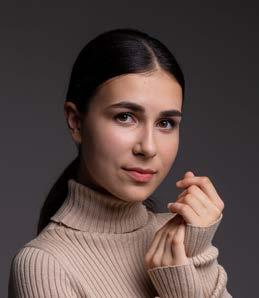
NSO Presents: Alexandra Dovgan
Alexandra Dovgan has become a teenage piano phenomenon with sold-out concerts worldwide. Witness her extraordinary talent in a performance of Chopin’s passionate Piano Sonata No. 3, Prokofiev’s complex Piano Sonata No. 2, and more. Please note: the NSO does not perform on this program.
March 14, 2026 at 3 p.m.
NSO Family Concert
Philharmonia Fantastique: The Making of the Orchestra
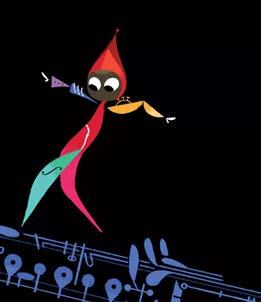
Told through a mesmerizing hybrid of animated and live action filming, a magical Sprite embarks on a musical journey through the inner workings of an orchestra! Violin strings vibrate, brass valves slice air, and drumheads resonate like you’ve never seen before—all set to live music from the National Symphony Orchestra.
March 29, 2026 at 2 p.m.
Death and Transfiguration | Khachatryan plays Sibelius
Strauss traces the final moments of a life: memories surface, struggles fade, and a soul wins its final release. Under the baton of Simone Young, the NSO displays the full scope of Strauss’ vision. Sergey Khachatryan brings fire to Sibelius’ Violin Concerto.
April 2, 2026 at 7 p.m.
April 3, 2026 at 11:30 a.m.
April 4, 2026 at 8 p.m.
2025–2026 CLASSICAL SEASON PERFORMANCE CALENDAR
NSO Presents*
Alexandra Dovgan
Sat., Mar. 14, 2026 at 3 p.m.
Death and Transfiguration
Khachatryan plays Sibelius
Thu., Apr. 2, 2026 at 7 p.m.
Fri., Apr. 3, 2026 at 11:30 a.m.
Sat., Apr. 4, 2026 at 8 p.m.
Bruckner’s Seventh Gerlach plays Haydn
Fri., Apr. 10, 2026 at 8 p.m.
Sat., Apr. 11, 2026 at 8 p.m.
Mozart’s “Jupiter” & Bach’s Brandenburg No. 1
Wed., Apr. 15, 2026 at 7 p.m.
Thu., Apr. 16, 2026 at 7 p.m.
Fri., Apr. 17, 2026 at 8 p.m.
NSO Presents*
Khatia Buniatishvili
Fri., Apr. 24, 2026 at 8 p.m.
Opera in Concert
Puccini’s Il trittico
Wed., Apr. 29, 2026 at 7 p.m.
Fri., May 1, 2026 at 7 p.m.
Gaffigan conducts Ives and Copland
Fri., May 29, 2026 at 8 p.m.
Sat., May 30, 2026 at 8 p.m.
Cann plays Coleman
Fri., June 5, 2026 at 8 p.m.
Sat., June 6, 2026 at 8 p.m.
Dalene plays Barber
Fri., June 12, 2026 at 8 p.m.
Sat., June 13, 2026 at 8 p.m.
*Please note: The National Symphony Orchestra does not perform in these concerts.
For 250 years, America’s story has been told through the voices of its artists, the rhythm of its music, the words of its writers, and the movement of its dancers. It is a story of resilience and reinvention, of dreams daring enough to redefine what was possible, and of creativity that has not only shaped a nation, but the world.
As the nation marks 250 years since the signing of the Declaration of Independence, the Center invites Americans everywhere to take part in 250 Years of US, a yearlong exploration of who we are, where we’ve been, and where we’re going. Through music, theater, dance, and visual art, 250 Years of US celebrates the boundless imagination of a people united by creativity.
SHARE THE JOY of the ARTS
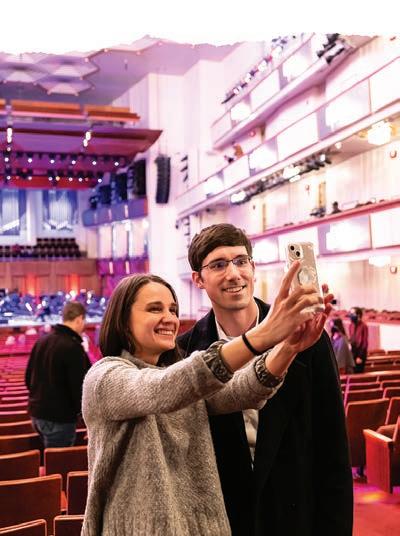
A toast before the show. A meal with a view. A selfie in the foyer. At the Trump Kennedy Center, it’s not just about the performance, it’s the moments you share before and after the curtain rises.
Here, you’ll find joy and awe, surprise and wonder. When you come for a performance, you’ll leave with something more. Because what you feel—and who you feel it with— becomes the memory you both carry.
CURTAIN UP
Patrons share their first experiences at the Center.
Louisa and Savanah
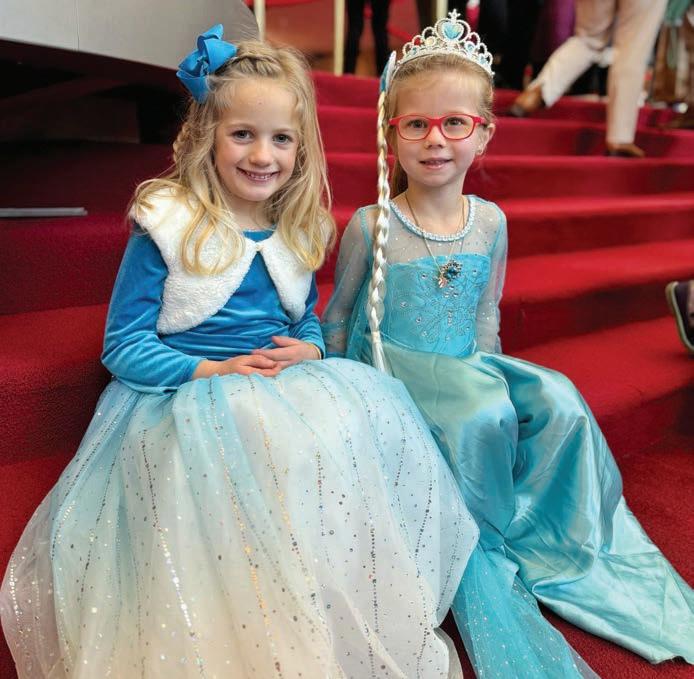
My daughter Louisa went to her first Center performance in January 2024 at age five. It was a mother-daughter date with her friend Eliza and Eliza’s mom Joy. The girls both dressed as Elsa, and it happened to be a snowy day in D.C. The magic of Frozen, along with the wonder created by the atmosphere made for an unforgettable first experience!
Maka
I remember the first time I saw the Center. It was a tapestry of rainbow lights, holding its own in the vast D.C. skyline. I gaped as my mom drove us right up next to it. It was big, but somehow more welcoming than intimidating.
The grand hall led into yet another equally grand one, where I felt as if I were walking the red carpet, with imported
Louisa and friend Eliza, both dressed as Elsa, wait outside the Opera House to see Frozen.
crystal chandeliers far overhead. I thought that this in and of itself was magical, but the real magic was inside the theater. I whipped out my phone to take a picture of the illuminated ceiling, but as soon as the lights dimmed and the show started, I forgot phones existed. My mom and I were there to see & Juliet, and we were blown away by the acting, music, and lights that went into the production. At the end, my face hurt from smiling and my hands hurt from clapping, and it was worth it.
Diann
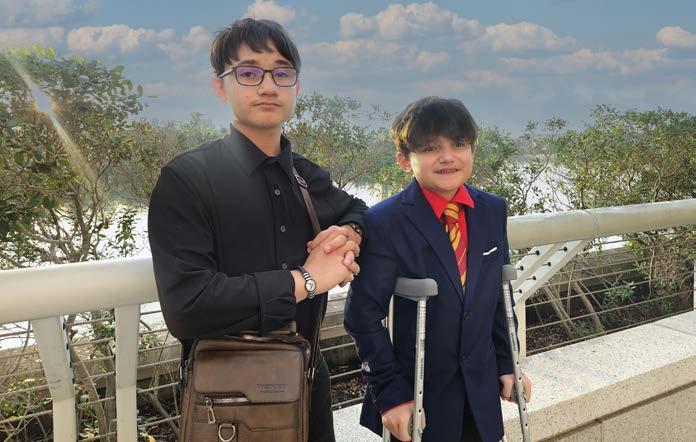
My family and I came to see The Princess Bride in Concert with the National Symphony Orchestra. Both of our boys play viola, and The Princess Bride is a very loved movie in our family so it was meant to be…
The best thing is, I have a service dog, Eugene, and we were welcomed without issue. The kindness started when I first emailed to see what seating was like to make sure that Eugene would fit under the chair. In the response to my email, I received kindness, dimensions, photos, and was asked to reach out to book my seats if I needed any assistance.
Overall, I was highly impressed with the hospitality of this venue. 10/10 will be attending another event!
Benjamin
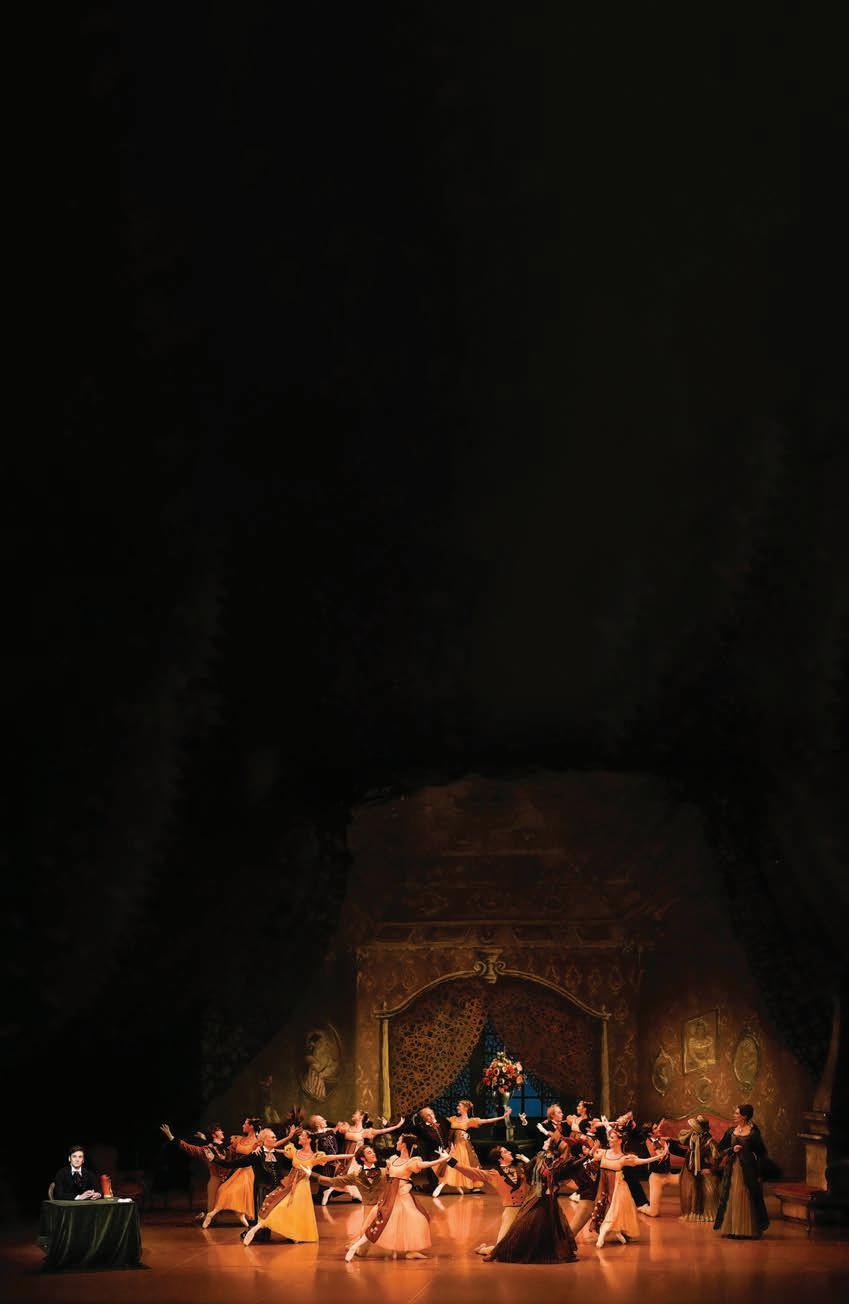
As I watched the curtain rise on the opening night of the Stuttgart Ballet’s performance of Onegin, I felt a great sense of excitement swell within me. The sheer beauty of the dancers, sets, and costumes was almost overwhelming and reminded me that beauty truly is something objective, because that is the best way to describe this ballet: beautiful.
Following the bows, I could not get Onegin out of my head; something about it was so magnetic and hypnotic that I ended up returning twice more to witness the spectacle. Each night I sat in a different location around the Opera House, giving me a unique experience each performance, and each night, I picked up on new details and nuances that I had not been keen enough to see before.
While it would be impossible to name one scene as my favorite, the finale was so gut-wrenching and emotional that I will never forget what true passion looks like.
Diann’s children pose by the riverfront before The Princess Bride in Concert.
Take home... a musical memory.
Mozart Magic Flute Earrings
These exquisite earrings bring Mozart’s masterpiece to life with fluteinspired details that create a visual symphony. $42
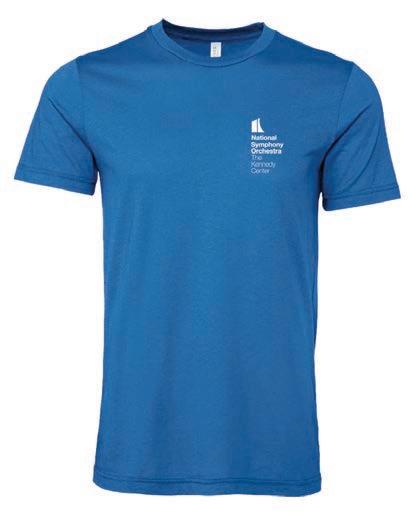
NSO Cap and T-shirt
Our new National Symphony Orchestra cap and tee let you show your pride in our world-class symphony. $30 each
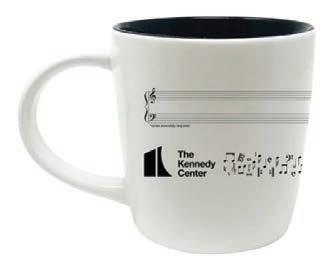
Make Your Own Music Mug
No better way to start your day than with a coffee mug imprinted with blank sheet music and sticker notes so you can compose your own melody. $20
Visit our two gift shops on Level A and in the Hall of States. Shop online 24/7 at tkc.co/shop
Create an experience... that will last a lifetime.
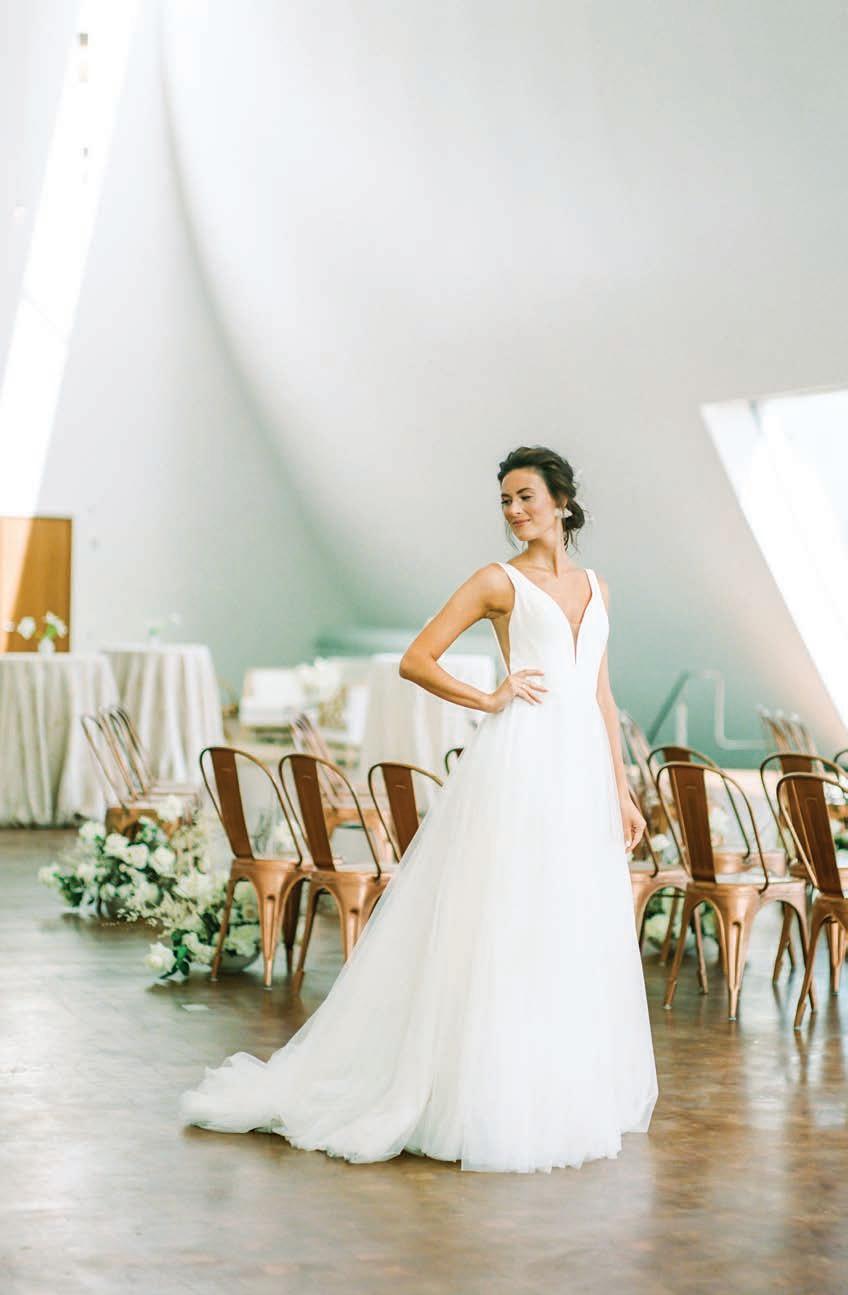
WEDDINGS AT THE REACH
REACH wedding rentals offer a variety of indoor and outdoor venues to create an unforgettable celebration of love. Situated on the south end of the Trump Kennedy Center Campus, the REACH is a premier Washington, D.C. event venue. With stunning views of the Potomac River, the largest green roof in D.C., and multifunctional event spaces, the REACH provides new elegance with a modern aesthetic.
Visit tkc.co/weddings or scan the QR code for more information.
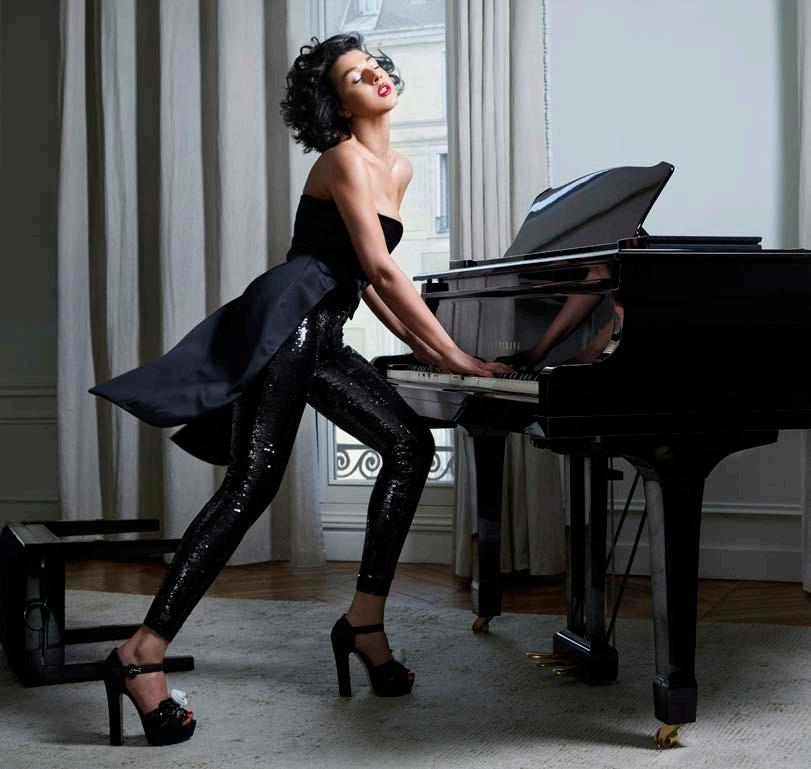
NSO Presents: Khatia Buniatishvili
Pianist Khatia Buniatishvili, “a rock star in the classical music world” (New York Post), explores the full range of Franz Liszt’s music, from lyrical intimacy to high-voltage power�
Please note: the NSO does not perform on this program
April 24, 2026 | Concert Hall
When life doesn’t stick to the script, we’re here for you.
From our connected urgent care network and on-demand 24/7 telehealth to lifesaving specialty care, we’re here when and where you need us.
Behind every visit at MedStar Health is a team of top-rated providers, who together make up one of the region’s most respected health systems.
It’s how we treat every patient…with the best of our hearts, and the best of our minds.