Soaring museum in Moriarty showcases the sport and why local weather makes the area a hotspot Page 4
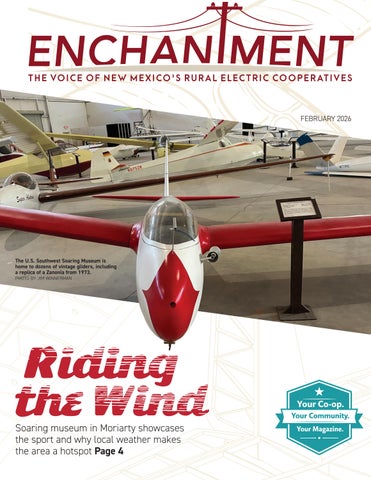
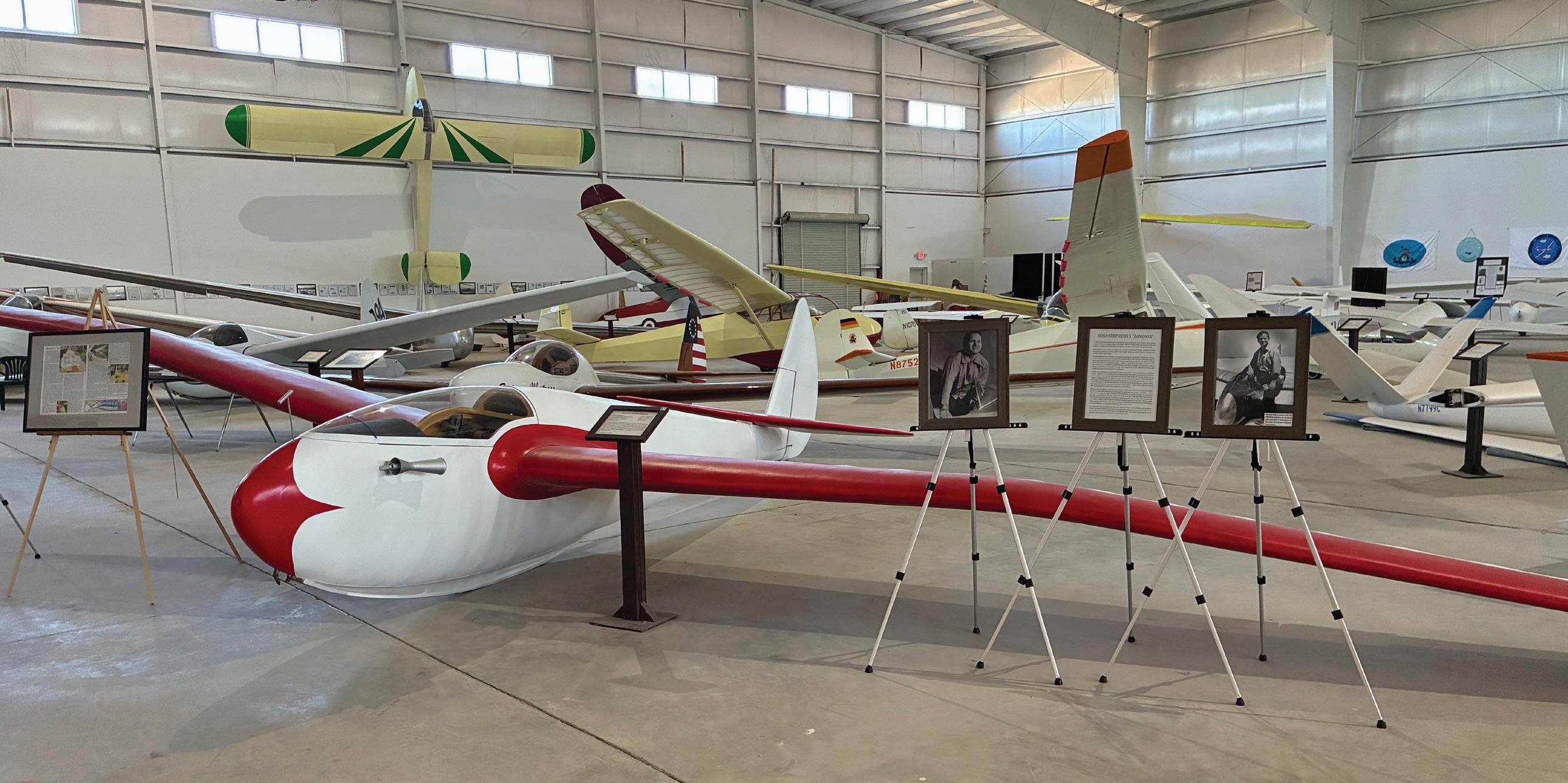
The U.S. Southwest Soaring Museum is home to dozens of vintage gliders, including a replica of a Zanonia from 1973.
PHOTO BY JIM WINNERMAN
Feb. 1, 2026 • Vol. 78, No. 2
USPS 175-880 • ISSN 0046-1946
Enchantment (ISSN 0046-1946) is published 10 times a year—every month except June and December—by the New Mexico Rural Electric Cooperative Association, 614 Don Gaspar Ave., Santa Fe, NM 87505. Enchantment provides reliable, helpful information on rural living and energy use to electric cooperative members and customers.
More than 113,000 families and businesses receive Enchantment magazine as electric cooperative members. Nonmember subscriptions are available at $12 a year or $18 for two years, payable to NMRECA. Allow four to eight weeks for first delivery.
PERIODICAL POSTAGE paid at Santa Fe, NM 87501-9998 and additional mailing offices.
CHANGE OF ADDRESS: Postmaster, please send address changes to 614 Don Gaspar Ave., Santa Fe, NM 87505-4428. Readers who receive the publication through their electric cooperative membership should report address changes to their local electric cooperative office.
THE NEW MEXICO RURAL ELECTRIC COOPERATIVE ASSOCIATION provides legislative and educational services to the cooperatives that are members of the association and deliver electric power to New Mexico’s rural areas and small communities. The mission of the New Mexico Rural Electric Cooperative Association is to strengthen, support, unify and represent cooperative member interests at the local, state and national levels. Each cooperative has a representative on the association’s board of directors, which controls the editorial content and advertising policy of Enchantment through its Publications Committee.
OFFICERS OF THE BOARD OF DIRECTORS
Tim Morrow, President, Springer Electric Co-op, Springer; Charles G. Wagner, Vice President, Western Farmers’ Electric Co-op, Anadarko, Oklahoma; Preston Stone, Secretary-Treasurer, Otero County Electric Co-op, Cloudcroft.
BOARD OF DIRECTORS
Rusty Gwynne, Central Valley Electric Co-op, Artesia; Bill King, Central NM Electric Co-op, Mountainair; Chris Martinez, Columbus Electric Co-op, Deming; Keith Gottlieb, Continental Divide Electric Co-op, Grants; Antonio Sanchez, Farmers’ Electric Co-op, Clovis; Manny Bustos, Jemez Mountains Electric, Española; Bobby Ferris, Lea County Electric Co-op, Lovington; James Ortiz, Mora-San Miguel Electric Cooperative, Mora; Thomas G. Rivas, Northern Río Arriba Electric Co-op, Chama; Eric Segovia, Roosevelt County Electric Co-op, Portales; Raymond Ruffini, Sierra Electric Co-op, Elephant Butte; Manny Gonzales, Socorro Electric Cooperative; Joe Reeser, Southwestern Electric Co-op, Clayton; Wayne Connell, Tri-State G&T Association, Westminster, Colorado.
NEW MEXICO RURAL ELECTRIC COOPERATIVE ASSOCIATION
614 Don Gaspar Ave. Phone: 505-982-4671 Santa Fe, NM 87505 Fax: 505-982-0153 nmelectric.coop Enchantment.coop
Vince Martinez, CEO
Tom Condit, Editor & Director of Communications
DISPLAY ADVERTISING: Rates available upon request. Co-op members and New Mexico display advertisers, email Ryan Ferguson at Enchantmentads@nmelectric. coop or call 409-313-3142. National representative: American MainStreet Publications, 800-626-1181. Advertisements in Enchantment are paid solicitations and are not endorsed by the publisher or the electric cooperatives that are members of the New Mexico Rural Electric Cooperative Association. PRODUCT SATISFACTION, COMPLAINCE WITH APPLICABLE ADVERTISING RULES AND REGULATIONS, AND DELIVERY RESPONSIBILITY LIE SOLELY WITH THE ADVERTISER.
Thank you for the positive feedback we received on January’s issue of Enchantment. Hearing that the stories resonated—and that readers enjoyed the direction and local focus—means a great deal.
February’s issue continues that momentum with stories rooted in innovation and community. You may read about Roosevelt County Electric Cooperative member services adviser and safety coordinator Tillman Stevens, whose experience playing professional football in Europe helps him lead and serve back home in Roosevelt. We’re also highlighting Sunnyside Laundromat, a longtime staple in the community of Springer—a reminder that small, locally owned businesses often play an outsized role in rural towns.
You may also notice something new on the cover, a small badge that reads: Your Co-op. Your Community. Your Magazine.
We added this as a reminder of whom this magazine serves. Enchantment belongs to the members of New Mexico’s electric cooperatives. That means you have a voice in what appears on these pages. From co-op projects and local businesses to youth programs and community stories, your ideas and input help shape the content we share.
As always, I’m here to listen. If there’s a story from your cooperative or community you’d like to see featured, I encourage you to reach out.
Thank you for reading. I hope you enjoy the February issue and the stories that help define our cooperative communities.
Warmly,
Tom Condit Editor & Director of Communications New Mexico Rural Electric Cooperative Association
Monthly Photo Contest Winner
Congratulations to Gary and Karen Owens, members of Jemez Mountains Electric Cooperative. They read their Enchantment while visiting temples in Japan.
Gary and Karen win $20!
Take a photo of yourself or someone else with the magazine, and email it with a few words about the photo. Include your name, mailing address and co-op name.
One lucky member will win $20. Submitting your photos gives us permission to publish or post the photos in Enchantment, on Facebook and in other media outlets. Email tcondit@nmelectric.coop.
Your Co-op’s Page
Your Co-op’s Page
Making The Law
By Vince Martinez, NMRECA CEO
As you read this, the 2026 New Mexico Legislature is well underway. One of our primary duties here at the New Mexico Rural Electric Cooperative Association is to ensure the best interests of rural electric cooperatives and their members are enhanced, maintained, and protected at the legislature.
I am often asked what I mean when I say we helped pass or kill a bill. A bill is legislation proposed by a legislator, who is called the sponsor. The sponsor
A committee is specific to a broad area of interest. Depending on what the bill proposes, it is sent to the committees that best cover that topic or area. For example, a bill with an appropriation goes to the appropriations committee. If a bill passes all assigned committees, it goes to the floor of the House or Senate
ADOBE STOCK PHOTO BY ARAMYAN
“
My Appliance? Should I Upgrade
By Miranda Boutelle
Buying a new appliance can feel daunting. Before you hand over your hard-earned money, here’s how to choose an appliance that will help you save money over time.
When shopping, keep in mind not all new appliances are highly efficient, and not all old appliances are inefficient. The less efficient your current appliance is, the more you will save with an upgrade.
The yellow EnergyGuide on new appliances shows the yearly energy cost, kilowatt-hour electricity use and Energy Star logo, if certified. Let’s look at some appliance examples to see how the costs and savings stack up.
Refrigerators have seen major efficiency improvements over the years. New refrigerators use up to 73% less energy than a 1970s model and one-third less than 20-year-old models.
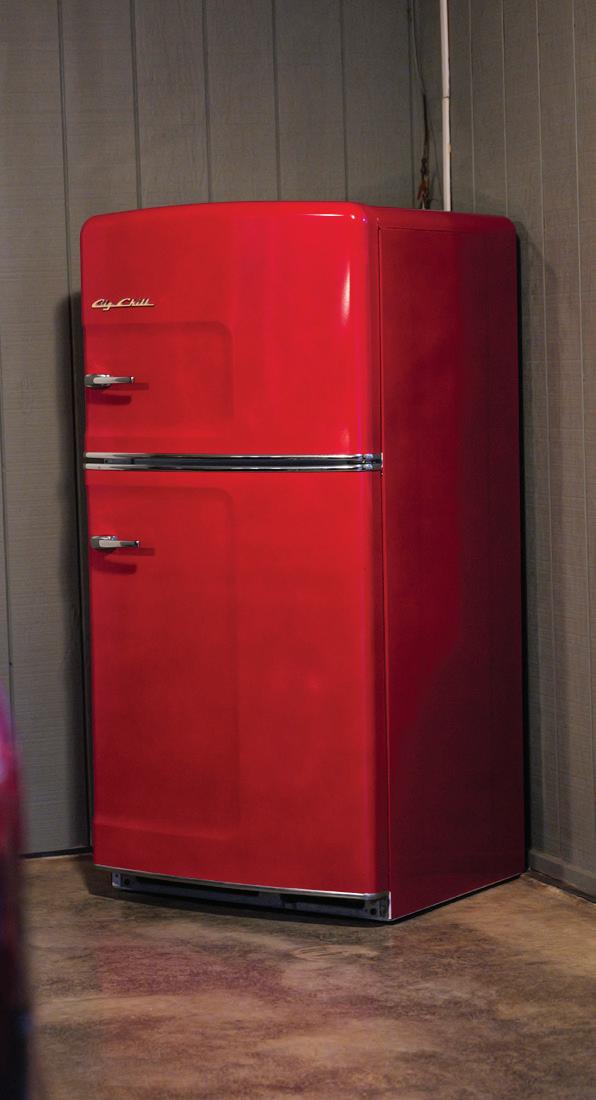
While visiting my mom, she proudly showed off her 1980s refrigerator she bought when her 1970s harvest gold model died. If her 1980s fridge uses 2,000 kWh per year, at 14 cents per kWh, it costs $280 per year to operate. New Energy Star-certified refrigerator prices start at $500, with yearly energy costs ranging from $38 to $122. If mom buys a new Energy Star-certified refrigerator for $1,000 with $100 in yearly energy costs—saving her $180 per year—it will pay for itself in 51/2 years.
If you intend to keep your old appliance, be sure to weigh the additional energy costs. Maximize efficiency and keep your food safe by setting your refrigerator to 37 degrees and your freezer at zero degrees.
New Energy Star-certified clothes washers and dryers are also more efficient than older models. Use the Energy Star Product Finder at energystar.gov to compare products. Integrated Modified Energy Factor measures the washer’s energy efficiency. A higher number is better. Integrated Water Factor measures water efficiency. A lower number is better.
I recently bought a new washing machine when my old front-load machine died, and I was considering a top-load machine. When
I compared Energy Star-certified top loaders to front loaders, I changed my mind. Energy Star-certified front loaders use about 50% less energy and water than top-load agitator washers, and they use about 25% less energy and water than top-load impeller washers that don’t have an agitator.
My new washer was $698. Based on six loads of laundry a week and an electricity cost of 14 cents per kWh, the yearly energy cost is $15, according to the appliance’s EnergyGuide. Similar non-Energy Star-certified models were $48 per year. Mine didn’t cost much more than non-Energy Star models and will help me save over time.
Then I had to decide whether to buy the matching dryer. My old dryer is functional, but it has features I don’t like and racks up energy costs of $131.04 per year, based on running roughly six loads a week for an hour each at 14 cents per kWh.
The new matching Energy Star-certified dryer cost $698, and its annual energy use was listed at 607 kWh, which is $84.98 per year at 14 cents per kWh. With an estimated savings of $46 per year, the dryer would take 15 years for the savings to cover the price. That’s a long time and not worth the cost.
To improve your washer and dryer efficiency, wash in cold water, don’t overdry clothes and clean your lint trap between every load.
Just like the light bulbs in your home, LED televisions offer increased efficiency. Energy Star-certified televisions are 34% more efficient than conventional models. If you have a working LED television, swapping to an Energy Star model is more efficient but may not make up for the cost of a new TV. Instead, check the efficiency settings on your TV or buy a smart power strip that turns off other connected devices when not in use.
Whatever appliance you are upgrading or replacing, make an informed decision by comparing the cost of operation and shopping Energy Star models to help lower your electric bill. e
Buying a new Energy Star-certified refrigerator and putting the old one out in the garage won’t save energy. However, sometimes the secondary fridge or freezer allows you to save on groceries by stocking up on sales, preserving your own food and saving gas with fewer trips to the store. It’s all a balance.
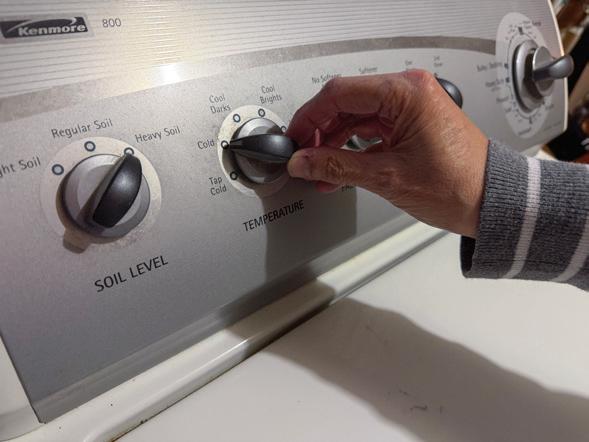
To improve the efficiency of your washer, set it to wash in cold water. PHOTOS BY MARK GILLILAND/PIONEER UTILITY RESOURCES
Miranda Boutelle has more than 20 years of experience helping people save energy. She has worked on energyefficiency projects from the Midwest to the West Coast. Today, Miranda is chief operating officer at Efficiency Services Group in Oregon, a cooperatively owned energyefficiency company.
This content was originally created by Efficiency Services Group LLC under contract with NRECA. NRECA retains ownership of this content. NRECA does not endorse Efficiency Services Group, its views herein expressed, nor any products or services it offers.
How a Safe Step Walk-In Tub can change your life
Remember when…
Think about the things you loved to do that are dif cult today — going for a walk or just sitting comfortably while reading a book. And remember the last time you got a great night’s sleep?
As we get older, health issues or even everyday aches, pains and stress can prevent us from enjoying life.
So what’s keeping you from having a better quality of life?
Check all the conditions that apply to you.
Personal Checklist:
Arthritis Dry Skin
Insomnia Anxiety
Diabetes Mobility Issues
Lower Back Poor Pain Circulation
Then read on to learn how a Safe Step Walk-In Tub can help. Feel better, sleep better, live better
A Safe Step Walk-In Tub lets you indulge in a warm, relaxing bath that can help relieve life’s aches, pains and worries.
A Safe Step Tub can help increase mobility, boost energy and improve sleep.
It’s got everything you should look for in a walk-in tub:
• Heated Seat – Providing soothing warmth from start to nish.
• MicroSoothe ® Air Therapy System – helps oxygenate and soften skin while offering therapeutic bene ts.
• Safety features –Low step-in, grab bars and more can help you bathe safely and maintain your independence.
• Free Toilet
HALE TO THE STARS |
By Alan Hale
Venus, Mercury Share Twilight
After passing on the far side of the sun from Earth early last month, Venus gradually emerges into our evening sky during February. It remains low in the dusk throughout most of the month.
Our solar system’s other inner planet, Mercury, is higher than Venus and can be seen low in the Western evening sky during the latter half of February. On the evening of Wednesday, Feb. 18, the thin crescent moon lies close to Mercury. From the southernmost parts of New Mexico—and points south—it occults, or passes in front of, that world.
The ringed planet, Saturn, is visible in our Western skies during February and, by the end of the month, will set around the end of dusk. Right after midmonth, Saturn will pass close by—as seen from our perspective—the distant world Neptune. For a few nights, the two worlds will be visible in the same field of view of low-power telescopes. Because they will be fairly close to the horizon during this time, they will not be easy to see.
Our most-visible planet this month is Jupiter, which shines brightly high overhead during midevening hours. It eventually sets about an hour before the beginning of dawn.
Uranus is also visible this month and can be easily found high in our Western evening sky slightly to the south of the Pleiades star cluster in the constellation Taurus. Uranus can be easily detected with binoculars and even with the unaided eye from dark rural sites.
An annular solar eclipse, or ring eclipse, takes place Tuesday, Feb. 17. However, few people will see this event, because it will only be visible from portions of Antarctica and the Antarctic Ocean. Even the partial phases of this eclipse can only be seen from far southeastern Africa and the southwestern Indian Ocean.
Fortunately, there are three other eclipses taking place during 2026: one solar eclipse
The joint ESA/JAXA BepiColombo mission captured this view of Mercury during its Jan. 8, 2025, flyby. It will enter orbit later this year.
COURTESY OF ESA/BEPICOLOMBO/MTM
and two lunar eclipses. Both lunar eclipses—during March and August—will be visible from New Mexico.
NASA’s Artemis II mission is scheduled for launch between early February and no later than April. Artemis II will carry a crew of four astronauts. The 10-day mission is a free-return trajectory around the moon, where astronauts on their first flight aboard NASA’s Orion spacecraft will confirm all the spacecraft’s systems operate as designed with crew aboard in the actual environment of deep space. If all goes to plan, this will be the first crewed visit to the moon—the first crewed mission anywhere beyond low-Earth orbit—in more than 50 years. e
“I never expected it to be so beautiful that it takes your breath away.”
— Kaya C., on Stauer Opals
In a quaint village, nestled between rolling hills, lived a young woman with a deep appreciation for gemstones. Her grandmother gifted her a delicate cross pendant adorned with opals. The opals shimmered with a mesmerizing play of colors, reflecting hues of blues, greens, and fiery oranges. Her grandmother shared the legend of the opals, believed to bring hope, purity, and luck to those who wore them.
Using this story as inspiration, Stauer brings you the Opal Spirit Cross Pendant. With over 2 total carats of Kyocera lab-created opals set in .925 sterling silver encased in yellow gold, this pendant is a radiant celebration of beauty and craftsmanship. Each opal captivates with a kaleidoscopic dance of fiery oranges blending into oceanic blues, streaked with flashes of vibrant green that seem to come alive with every movement. The shimmering opals are skillfully arranged to create an enchanting, otherworldly glow, embodying the spirit of hope and harmony.
This breathtaking combination of color and craftsmanship is available as a limited availability of only
Roosevelt County Electric Cooperative’s TILLMAN STEVENS
By Tom Condit
Electric cooperatives are built on people— people who live in the communities they serve, understand the rhythms of rural life and show up every day to keep the lights on safely and reliably. Behind every restored outage, every safety program and every member interaction, are individuals whose work often happens quietly but carries tremendous impact.
Tillman Stevens is one of those individuals.
As member services adviser and safety coordinator at Roosevelt County Electric Cooperative, Tillman serves as a bridge between the cooperative and its members while helping ensure the safety of the employees who work on the front lines. His path to the cooperative world, however, was anything but typical.
Tillman grew up in Baytown, Texas, just east of Houston. His biggest influences early in life were his two older siblings, Leana and Termaine, along with several coaches who helped shape his discipline and work ethic. Football became a major part of Tillman’s life early on.
“I played every year from the age of 6 to 25,” he says.
By high school, Tillman had distinguished himself on the football field. As a sophomore, he was moved from junior varsity to varsity midseason and became an instant
starter—the only underclassman on the team. He went on to play collegiate ball at Eastern New Mexico University in Portales.
“My time at ENMU had a huge impact on the man that I am today,” Tillman says. “Expectations were set, and everyone was held accountable.”
After college, football opened an unexpected door overseas. A phone call led to a professional contract in Austria with the Vienna Vikings.
“This was honestly one of the best experiences I have ever had,” Tillman says.
Living and competing internationally exposed him to new cultures, new leadership expectations and new responsibilities. As one of the team’s American import players, he was expected not only to perform but to elevate those around him—coaching youth teams and helping grow the organization as a whole.
Following his playing career, Tillman returned to New Mexico to be closer to family. He also returned to a familiar worksite— Roosevelt County Electric Cooperative. Tillman had worked multiple summers and winters with the line department during college.
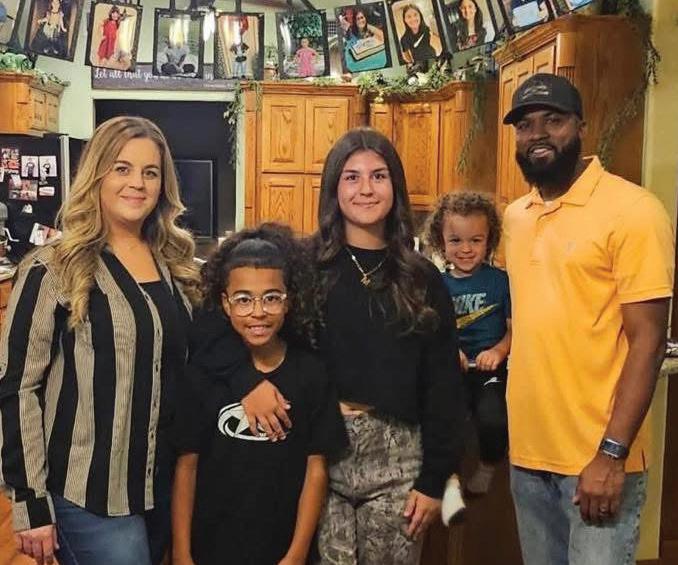
After his football career ended, Tillman returned to New Mexico and rejoined Roosevelt County Electric Cooperative, where he had worked multiple summers and winters during college. He now lives in Portales with his wife, Sarah, and children, from left, Trayden, Maddison and Tyce. PHOTOS COURTESY OF TILLMAN STEVENS
Tillman Stevens
“I wasn’t looking for a specific position,” he says. “I just knew this was the place I wanted to work.”
Over time, Tillman advanced through several roles, including staking technician, safety coordinator and planning supervisor. Today, he serves as both member services adviser and safety coordinator.
“These two roles mean a lot to me,” Tillman says. “It lets me know that I am trusted with two of the most important aspects of the cooperative—the safety of our employees and our relationship with our members.”
Tillman’s approach to safety emphasizes trust, presence and communication.
“Nobody likes a ‘safety cop,’ so I try to be present and listen,” he says.
Working directly with members is one of the most rewarding parts of his job.
“Our members are the backbone of the co-op,” Tillman says. “Without them, we are nothing.”
Tillman describes the RCEC community as family, with relationships that carry into everyday life. Teamwork is central to his philosophy of building and maintaining those relationships.
“We have to communicate and work together if we want to reach our goals,” he says.
Outside of work, Tillman stays deeply involved in sports— coaching youth teams, supporting ENMU athletics and
participating in community organizations. Most importantly, he values time spent with his wife and children.
“My happy place is always with them,” he says.
Tillman hopes members understand the dedication behind cooperative service.
“We are not just your local electric cooperative,” he says. “We are your neighbors and your friends.”
For young people dreaming big, Tillman’s advice is grounded and encouraging.
“Have a plan,” he says. “That plan may change, but have another plan after that. Nothing is given—only earned.”
Check out Tillman’s football highlights by visiting: ENMU 2010: https://tinyurl.com/2brc63n4 Vienna Vikings 2012: https://tinyurl.com/mb4jmr26
Get to Know Your Co-op
This series shines a light on leaders and difference-makers who form our statewide cooperative family. Each profile shares the experiences, leadership philosophies and community connections that shape the work of delivering safe, reliable and affordable electricity. By understanding the people behind the system, we gain a deeper appreciation for the mission of our cooperatives.
Tillman played professional football in Austria for the Vienna Vikings.
Soaring museum in Moriarty showcases why local weather
makes the area a
hotspot for the sport
Story and photos by Jim Winnerman
One of only two museums in the nation devoted entirely to the sport of soaring in a glider, the U.S. Southwest Soaring Museum in Moriarty houses a vast collection of vintage sailplanes and related displays.
Soaring is the sport of flying engineless planes, known as gliders. These planes are designed to use natural currents of rising air to maintain or gain altitude.
“The winds coming across the mountains around Moriarty provide some of the best year-round weather conditions in the nation for a glider,” museum President Bob Hudson says.
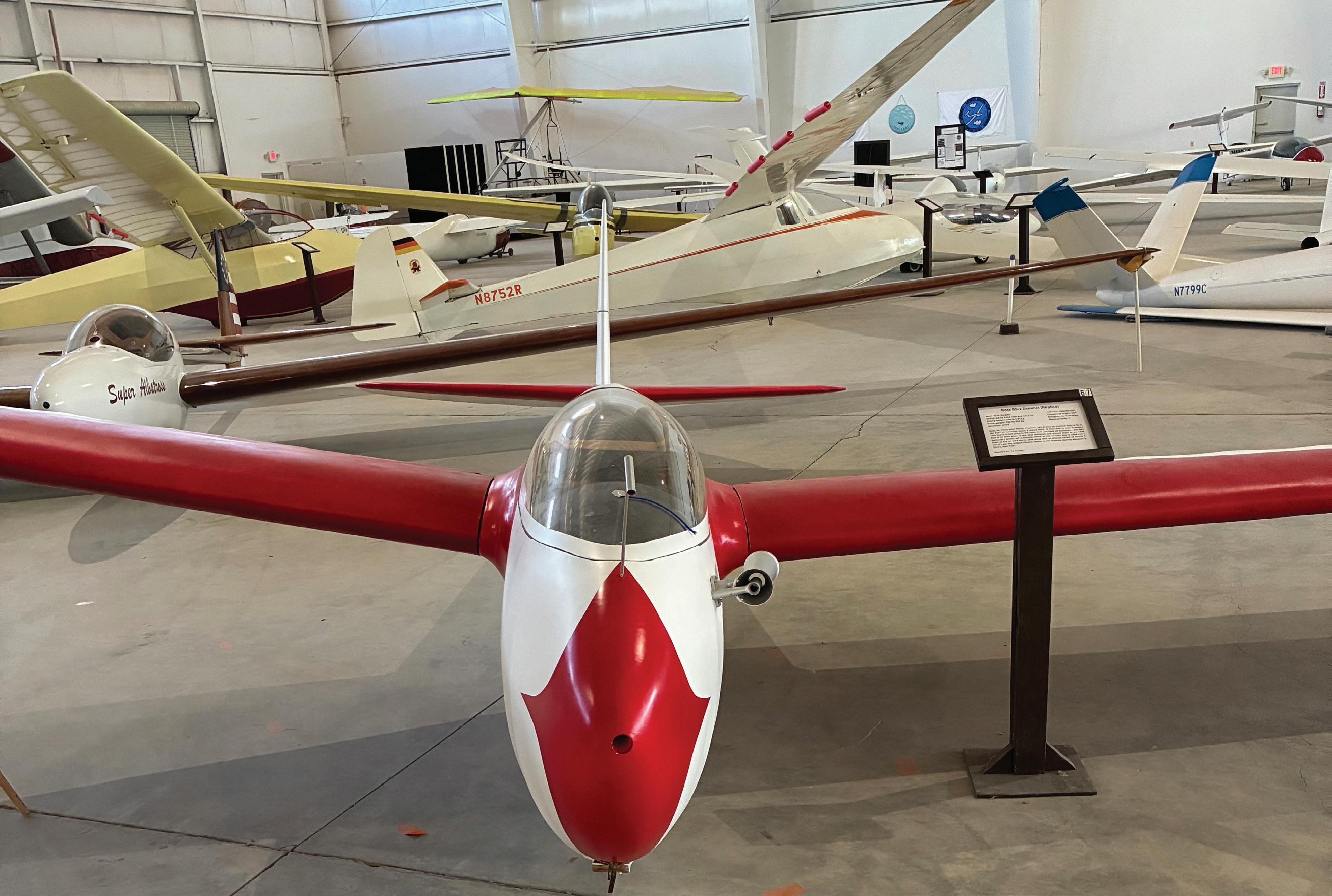
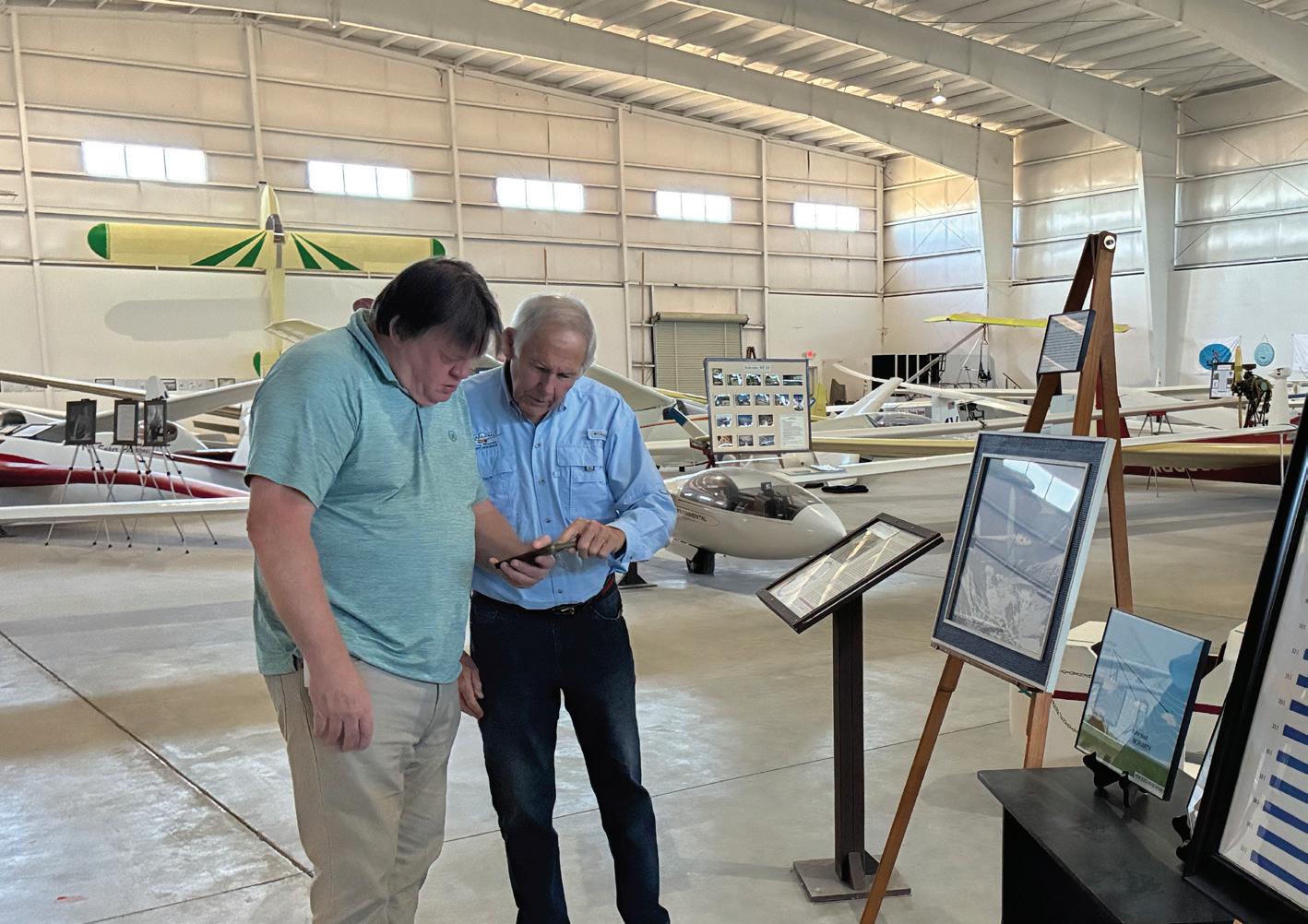
The museum, which is served by Central New Mexico Electric Cooperative, has 77 gliders in its collection. All are older than 30 years and marked with
placards explaining their histories and significance. Gliders on display are made from many materials, ranging from metal to carbon fiber, fiberglass and fabric stretched over wooden frames.
One guilder on display, known as the Zuni, was designed and built by late museum founder and Moriarty resident George Applebay. A respected glider pilot responsible for many varied sailplane designs, George considered the area the soaring capital of the Southwest and started the museum in 1990 out of a small hangar at Moriarty Municipal Airport. George died in 2015.
Because of George’s efforts, the soaring museum expanded into the 39,000-square-foot freestanding building it occupies today, which was built specifically for the museum.
“In February 2015, the New Mexico State Legislature named the Zuni the official state
glider, making New Mexico the only state to have an official plane,” Bob says.
Also on display is a replica of the famous sailplane, Zanonia, which won numerous soaring competitions in the 1940s. The glider was named after the seed of the Zanonia plant, which has aerodynamic properties that allow it to gain height in wind.
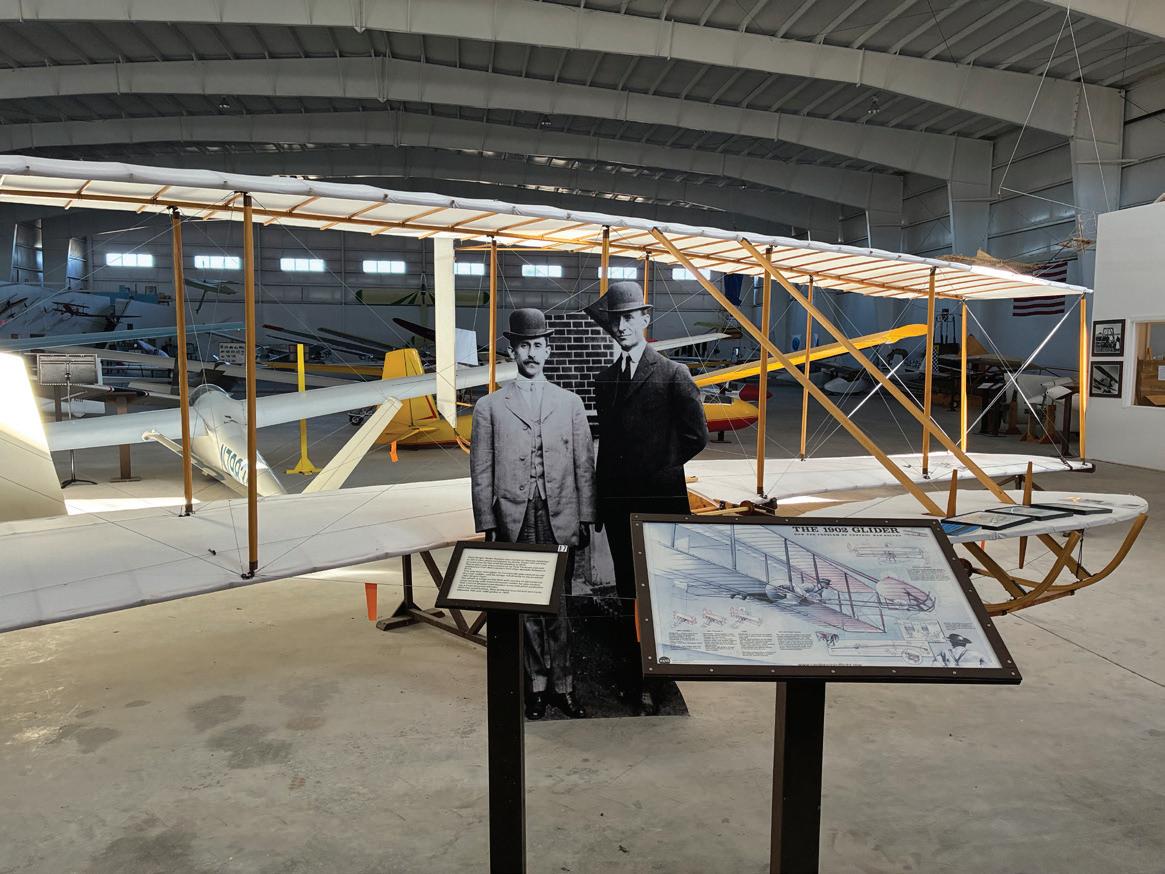
The museum is also home to a replica of the first Wright brothers’ glider, flown in 1902. This replica was built using the brothers’ original plans.
While most gliders become airborne after being towed aloft by a propeller-driven plane, some gliders have motors that allow them to get airborne on their own. Once in the air, the engine retracts into the fuselage to reduce drag.
“We display five that have engines,” says docent Ridge Moreland, who has flown gliders since he was a teenager.
Many gliders have detachable wings
to allow easy transport in trailers. This is especially useful if a pilot cannot return to an airport and requires a trailer to retrieve a glider from wherever it safely lands.
Although most gliders flying today carry one or two people, a museum exhibit explains how large gliders were used during World War II to silently deliver troops and equipment behind enemy lines. These gliders, known as “whisper ships,” could carry 20 to 40 troops and vehicles and artillery too heavy to drop by parachute.
“They were used extensively as an unconventional weapon in the D-Day invasion and other critical engagements of the war,” Bob says. “When they landed, they had to be abandoned.”
Other museum exhibits highlight the history of notable female glider pilots and how natural air currents above New Mexico are ideally suited for soaring. The museum has a library with glider books and technical manuals dating back to 1937.
“People come from throughout the
GLIDER FACTS
country to use our library,” Bob says.
The museum averages about 7,500 visitors annually, with about half from New Mexico. The museum has had visitors from every state and from countries around the world.
“I have never had anyone say they were disappointed,” Ridge says.
The museum does not have its own runway or towplane to launch gliders and is not directly affiliated with Albuquerque Soaring Club, which operates at the nearby Moriarty Municipal Airport. But Bob, who is also the airport manager, says the facility primarily functions as a glider port.
“There are no scheduled flights at the airport, and out of the 176 planes there, 77 are gliders,” he says.
Because of the perfect glider weather conditions around Moriarty, the club hosts glider pilots from around the world who come to fly the club planes. Yearly, pilots arrive from New Zealand, Germany and Brazil to soar above Moriarty.
The club hosts an annual championship race in which pilots are judged and scored by the speed at which they complete a predetermined course. Points are earned over five days, and flight recorders verify pilots properly flew the course. The overall champion is the pilot with the highest cumulative score.
“It is a sport that requires skill, alertness and good judgment to return to the airport,” Bob says. “Pilots who cannot make it back and land away from an airport must be alert for telephone wires and fences. Above all else, you do not want to hit a cow.”
X Most gliders have wingspans of 50 feet, with some high-performance models having wingspans as long as 99 feet.
X New glider prices start at $35,000, but can be as much as $300,000.
X Gliders use the same movable sections of the wing and tail found on conventional planes to control the direction of flight. Ailerons on the edges of wings are controlled using a control stick between the pilot’s legs, while the tail rudder is controlled using foot pedals.
X To land, gliders typically require a landing distance of 300 to 400 feet.
X Under ideal conditions, glider pilots can remain aloft for up to eight hours and reach altitudes of 18,000 feet.
X Paper airplanes are gliders, as are most space shuttles during reentry.
One exhibit features a World War II TG-4A glider used to train military
The museum is home to a replica of the Wright brothers’ 1902 glider.
For more than 60 years, the Nordman family ran Sunnyside Hardware and Laundry in Springer, providing a range of services to the community
By Annie Nordman, Velma Nordman, Vickie Vargas and Rene Rosa
A decades-long chapter in Springer’s history began with Cleo and Henry Nordman. In 1959, Henry and Cleo Nordman—who everyone called Mrs. N—bought the Abbott 1909 building on Third Street and opened Sunnyside Hardware and Grocery. The business had two sides. The grocery was on the west side, with the hardware store on the east.
As customers walked into the grocery, they could marvel at the west wall stacked with boxes of penny candy. Where the counter is now was a fridge with ice cream. The east wall was filled with boxed goodies and candy bars.
The hardware store sold nails, screws and all manner of building supplies left over from Henry’s contractor jobs. Henry had been a flight instructor during World War II, training U.S. Army Air Forces pilots. A well-known contractor, builder and skilled carpenter, “Daddy” Nordman built Springer’s Junior High School, the old hospital, Springer’s Masonic Temple and more.
At Sunnyside, he repaired tools, sharpened saws and offered every service a good hardware store could for a community in the old days. His excellent carpentry handiwork can still be found throughout the store.
Henry and Cleo’s daughter, Annie, was 10 years old when she began working at Sunnyside. When the Nordmans divorced, Cleo received the building and business, and she and Annie ran the stores. In 1977, Annie’s older sister, Velma, joined the business. Annie ran the grocery store, and Velma ran the hardware store.
Facing stiff competition with Springer’s other grocery stores and the high cost of utilities, the grocery half of the business closed in 1989. But Sunnyside Hardware and Grocery carried on. The two sisters expanded hardware to the entire building. They built the stillstanding islands in the store. If you couldn't find a specific item at a big-box conglomerate, you might just have been lucky to find what you were looking for at Sunnyside. One would often see Springer Electric Cooperative trucks parked outside the store, with lineworkers inside buying supplies.
The east side of the building became the much-needed and much-appreciated Springer laundromat, which did much more than launder clothes. Drop off decent clothing, canned goods, toys and artifacts, take what you need or can use—all for free. Often, and especially in the winter, visitors will see people reading in one of the laundromat’s chairs, staying warm when their own furnace or wood-burner is not functioning.
In 2010, Annie’s son, Hank, and his fiancee, Bernadette, joined the Sunnyside team. Hank and Bernadette drove from Raton round-trip every day the store was open. People walking through the doorway at Sunnyside were always greeted cordially with twinkly eyes, a smile,
and a how-do-you-do, what can we get you, how many quarters do you need?
Hank assisted customers at the hardware store with what they needed to accomplish their tasks. The store is stocked with everything for any job, from crafts to plumbing, gardening to painting, tools to concrete and more.
Hank and Bernadette worked side by side for years, each day serving the community. One customer stated that without this store, the town wouldn’t be here and that it would be difficult to do anything with our homes and properties without Sunnyside.
Then, early this past summer, Hank began to feel inexplicably weak. His hands were not working properly, and his fingers were kind of cramped up. “Oh, it will go away,” Hank would say.
One day, he said, “It would be grand to sell the store for a million bucks and go sit in the sun on a beautiful beach.”
Unfortunately, it was as if an invisible force was taking over Hank’s motor control. It seemed every day, whatever the problem was, it got worse. After months of medical testing, Hank was told he had ALS, also known as Lou Gehrig’s disease.
After 66 years, the inevitable time had come for the family-owned and run business to be sold. Fortunately for the community, a local resident who wanted to see the store continue purchased Sunnyside. Those who depend upon the laundromat hope it will remain open to serve the appreciative community.
As the sisters say, “It truly is the end of an era.”
This article, which started as a simple thank-you note for all the years the regional community was assisted and enhanced by the “Sunnyside family,” was compiled as a joint effort by Annie, Velma, Vickie Vargas and Rene Rosa.
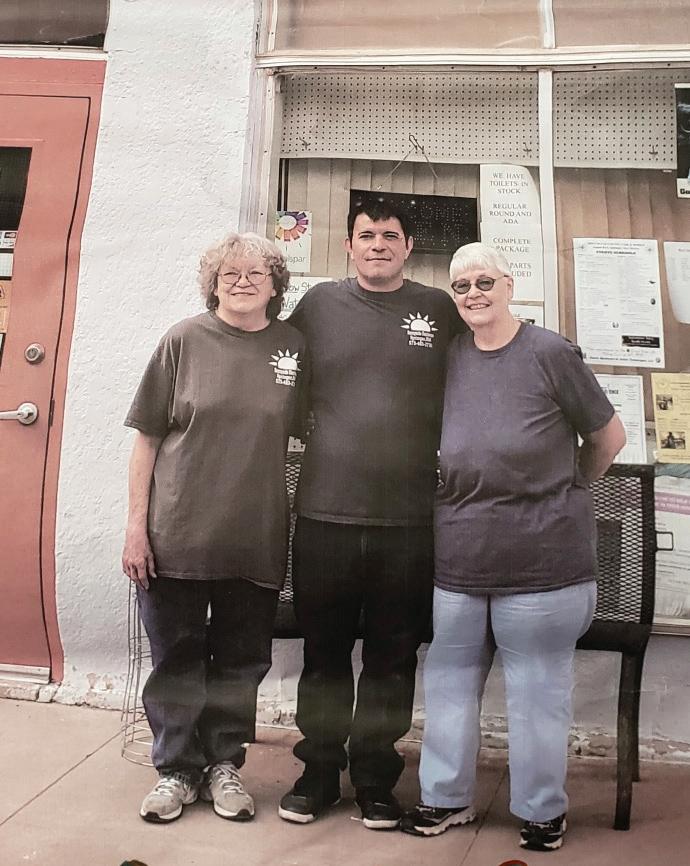
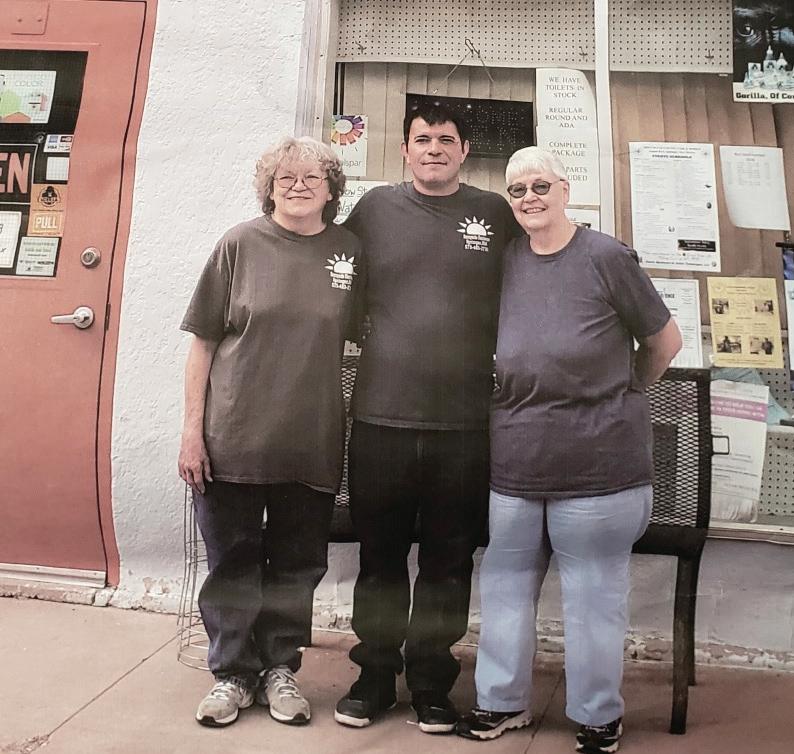
ABOVE: From left, Annie Nordman, Hank Sandoval Velma Crawford worked together to run Sunnyside Hardware and Laundry. RIGHT: Hank and his wife, Bernadette, began working at Sunnyside in 2010. PHOTOS COURTESY OF ANNIE, HANK AND VELMA
to SmarterYour Guide Electronics
By Scott Flood
Imagine waking up, saying “Good morning, house,” and standing back as light fixtures flash on, the coffeemaker starts, the outdoor security lighting switches off and the toaster oven starts heating for your frozen pastry. That may sound like something from science fiction, but today’s smart home electronics make it possible.
Smart devices use digital technology and Wi-Fi to take your home to a new level of convenience and comfort. They can also help you make better use of your electricity so you can reduce waste and lower your energy bills.
If you already put the many advantages of smart electronics to work for your home or you’re in the beginning stages of exploring new smart options, you might be surprised by some of the newer devices with potential to change your daily life.
Smart Thermostats
Heating and cooling use more energy than anything else in your home. Replacing your
home’s standard thermostat with a smart model can lower your monthly electric bills while keeping you comfortable.
Smart thermostats learn your daily habits and take over for you. You don’t have to lower your thermostat every evening, because it happens automatically. As smart thermostats learn exactly when you need electricity and when you don’t, they use less energy.
Smart Appliances
The second-biggest share of your home’s electricity powers appliances—from your refrigerator to your water heater. Smart appliances use Wi-Fi and high-tech sensors to operate more efficiently.
A smart washer can sense the size of your load and adjust the water and cycle times accordingly. Smart refrigerators can warn you when someone leaves the door open. Smart water heaters don’t waste energy by heating water while you’re asleep.
Smart Plugs and Power Strips
An easy and affordable way to explore smart
technology is with smart plugs for your outlets. You can plug lighting, appliances and other devices directly into them. You can control those devices through an app, so you can tell the coffeemaker when to start brewing, turn off your exterior lighting at dawn or have music streaming as you walk in the door.
Smart power strips look like their ordinary cousins but use smart plugs. They’re particularly helpful at eliminating waste caused by what’s known as phantom load. One example is leaving your phone charger plugged in when it’s not charging.
Smart Shades
You may wish your family room didn’t face south, because it’s always warm during the day. Smart shades and blinds can help. You can set them to automatically open or close depending on the time of day, year or your home’s indoor temperature. They can help your air conditioner keep you cooler in summer by blocking the sun and benefit your home heating by staying open to allow the sun to warm your home in winter.
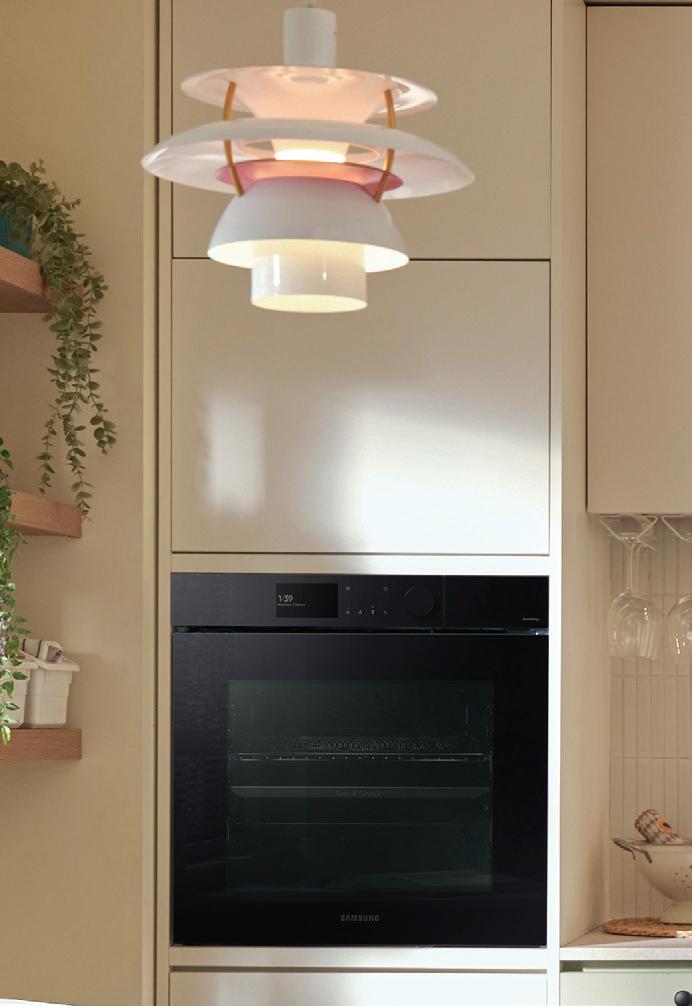
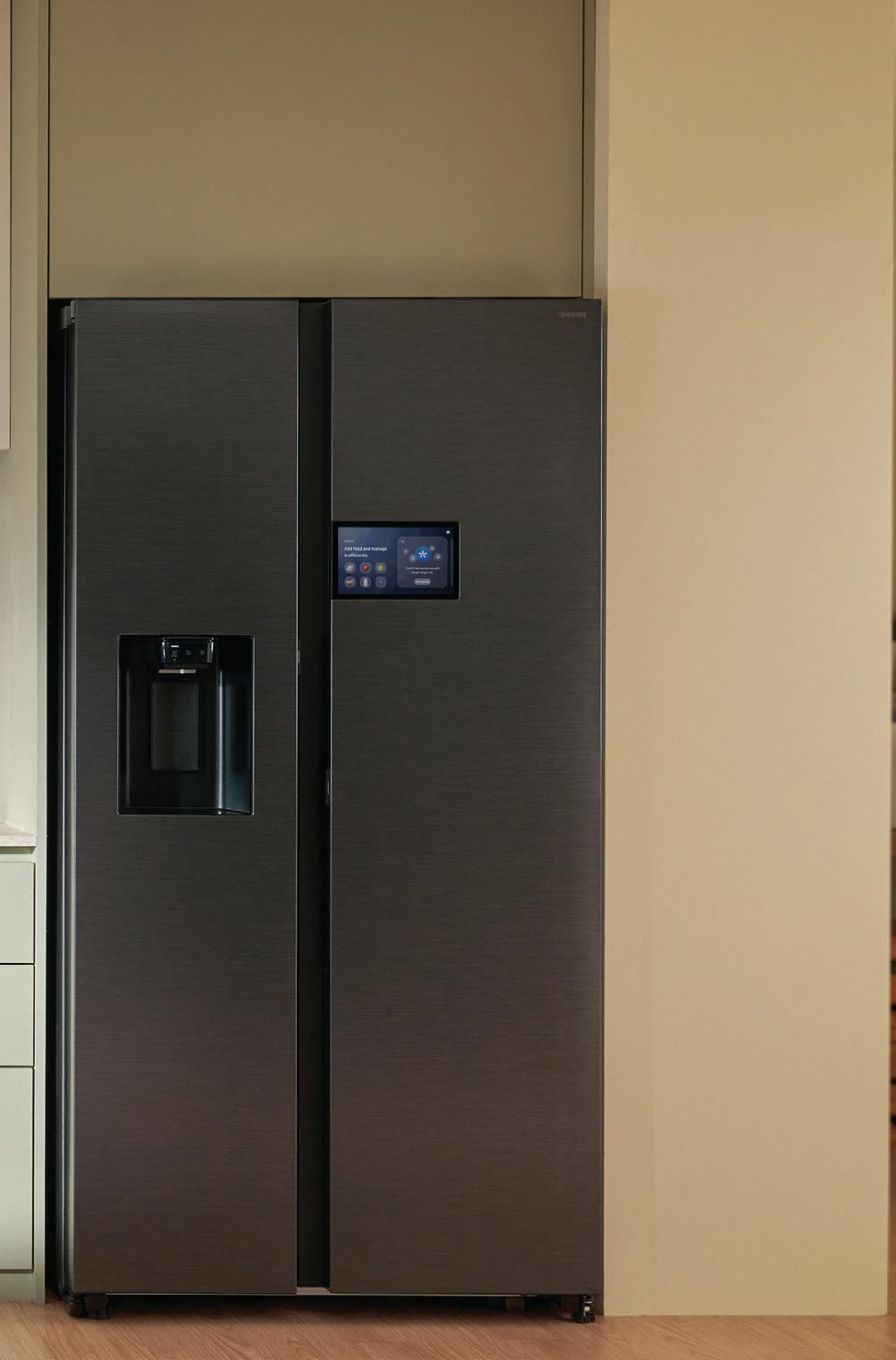
Smart appliances use Wi-Fi and sensors to operate efficiently. PHOTO COURTESY OF SAMSUNG
Smart Assistants
When combining the capabilities of individual smart home electronics with voice assistants or whole-home smart energy management systems, they become more powerful.
You can teach voice assistants to carry out multiple tasks that make up your daily routines, such as the “Good morning, house” message. Energy management systems simplify control of all aspects of your home’s energy use, and some offer specific tips to help you save even more.
Be Smart With Your Smart Devices
While smart devices may be able to make your home more energy efficient and your life more comfortable, they’re not perfect. Most require an internet connection, so if your service is down, your smart devices don’t work.
Smart devices typically don’t receive frequent system updates like your smart phone or laptop, so be aware of potential security issues. Before you choose any smart home devices, make sure it’s completely secure and compatible with your other smart devices and smart energy systems. Then prepare to be amazed by what smart home electronics will do for you.
Battery Disposal and Recycling
By Steph Joven
Batteries are part of everyday life—from powering our TV remotes to our electric vehicles. However, when batteries are disposed of the wrong way, they can leak harmful chemicals and catch fire.
Globally, electronic waste—also known as e-waste—is one of the fastest-growing types of trash. In 2022, people worldwide threw away more than 68 million tons of it. In the United States, that adds up to about 46 pounds of e-waste per person each year. Only 22% of that waste is recycled properly.
The good news is that safe disposal and recycling options are available.
How To Dispose of Them
Not all batteries are the same, and how you dispose of them depends on their components. Some batteries can be recycled easily, while others can leak toxic chemicals or start fires if tossed in the wrong place. The U.S. Environmental Protection Agency recommends following local rules or using collection programs—such as Call2Recycle, Earth911 or drop-off bins at hardware stores.
Single-use batteries are designed to be used once, then replaced. These include alkaline and zinc-carbon batteries—the common AA, AAA, C, D and 9-volt sizes. Some areas allow these batteries to go in household trash, but recycling is always better.
Button or coin batteries used in watches, hearing aids and car key fobs are often lithium-based. These should never be thrown away in regular trash or recycling bins, because they can spark fires. Instead, cover the battery terminals with tape or seal them in small bags, and take them to a certified recycling facility or drop-off location.
Rechargeable batteries power many of our everyday devices— cordless tools, phones, laptops and scooters. Types include nickel-cadmium, lithium-ion, nickel-metal hydride, nickel-zinc and small sealed lead-acid batteries.
While these look different, they share one rule: Never throw them in the trash. They must go to a recycling facility. For devices with built-in batteries, recycle the entire device, making sure the battery ends are taped or bagged to prevent sparks.
Automotive and large batteries are more powerful and require special care. Batteries found in vehicles, boats, motorcycles, and ATVs contain hazardous lead and acid. These should always be returned to a retailer, repair shop or hazardous waste program.
Larger lithium-ion batteries—such as those in electric vehicles and home energy storage systems—are even more complex. They should only be handled by dealers, repair shops or the manufacturer.
By properly disposing of batteries, we can recover valuable materials, reduce waste, and keep our community cleaner and safer.
If you have questions about battery disposal, visit call2recycle.org or earth911.com.
Tender Chicken & Creamy Beans
In the co-op kitchen, good things take time—whether it’s building infrastructure or feeding a community.
Breaker Box Skillet Chile Chicken is a one-pan meal built for shared kitchens and long days. This dish reflects the way cooperative systems work. Everything connects in one place, each part supporting the whole.
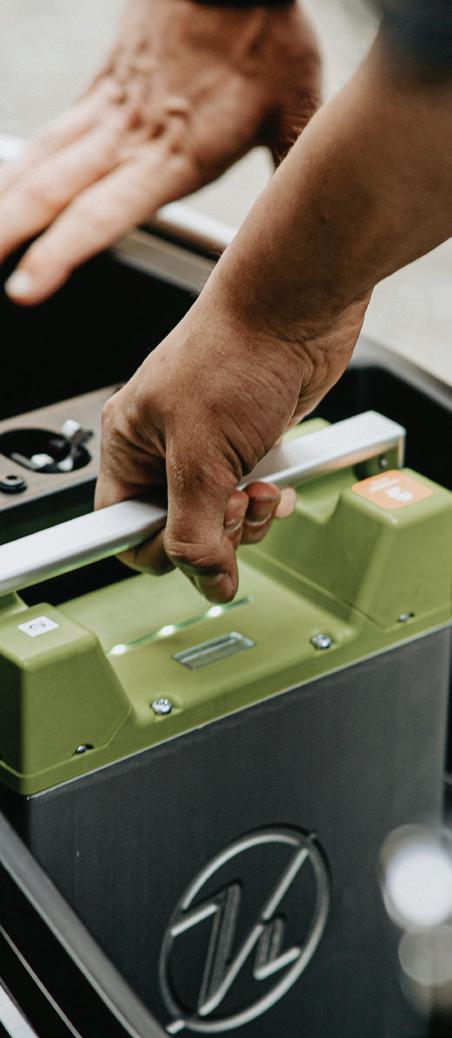
Ranch Hand Red Chile Bean Bake is a slow, dependable dish meant to feed many. This recipe was created for long conversations, shared tables and gatherings where food stays warm and welcoming. It mirrors cooperative values—patience, reliability and community benefit. e
Breaker Box Skillet Chile Chicken
4 bone-in chicken thighs
2 tablespoons neutral oil
1 small yellow onion, thinly sliced
2 cups roasted New Mexico green chile, chopped
1 cup small-diced potatoes (skin on)
1/2 cup chicken broth
1 teaspoon ground cumin
1/2 teaspoon smoked paprika
Salt and black pepper, to taste
• Heat oil in a heavy skillet over medium heat.
• Season chicken thighs generously with salt and pepper.
• Place chicken skin-side down in the skillet, and cook until
browned, about 6-7 minutes. Flip and cook an additional 3 minutes. Remove and set aside.
• In the same skillet, add onions and potatoes. Stir to coat in the rendered fat and cook until onions soften.
• Add green chile, cumin and smoked paprika. Stir until fragrant.
• Nestle chicken back into the skillet. Pour broth around the chicken, not directly over it.
• Cover and simmer on low heat for 30-35 minutes, until potatoes are tender and chicken is fully cooked.
• Remove the lid for the final 5 minutes to slightly thicken the sauce before serving.
Ranch Hand Red Chile Bean Bake
2 cups dried pinto beans, soaked overnight
1 tablespoon neutral oil
1 small onion, finely chopped
2 cloves garlic, minced
1 tablespoon New Mexico red chile powder
1/2 teaspoon ground coriander
1 teaspoon salt (adjust to taste)
31/2 cups water or light broth
• Preheat oven to 325 F.
• Drain soaked beans and rinse well.
• In a heavy, oven-safe pot or Dutch
oven, heat oil over medium heat. Add onion and cook until translucent. Add garlic and cook until fragrant.
• Stir in red chile powder and coriander, cooking until fragrant.
• Add beans, salt and liquid. Stir once to combine.
• Bring to a low boil, cover and transfer to the preheated oven.
• Bake for 21/2 to 3 hours, stirring halfway through, until beans are creamy and tender.
• Uncover for the final 15 minutes if a thicker consistency is desired.
ADOBE STOCK PHOTO BY FUDIO
THE MARKET PLACE
Animals
MEAT RAMS AND EWES FOR SALE. Raise your own meat! This breed, called ‘Rocky Mountain Big’ are very large cross bred Rambouillet/Suffolk sheep specifically bred for raising meat instead of wool. Rams are quite gentle weighing about 350+ pound and with right nutition produce single 7-8 pound lamb at birth, also twins. Lincoln, NM 575 808 2711 (text only).
HORSES NEEDING HOMES. Mustang rescue has tamed animals to place into adoption. Many companion animals and a few ready to be trained to ride. www.MustangCamp.org or call Patricia 505-419-2575
BLACK ANGUS BULLS FOR SALE. Thick, Easy Fleshing ,Low Maintenance ,Raised at high elevation.Trich and fertility tested. Top quality herd and heifer bulls available. Yearlings starting at $ 3400.00. 2yr old starting at $3600.00 Call/Text Bobby Salvo at Y Ranch, 575-642-0962. Datil, New Mexico.
Help Wanted
HOUSEKEEPING SERVICES NEEDED for a private member 4,000 sqft, 7-bedroom ranch lodge located in Pecos, New Mexico, upper Cow Creek area. Services needed include general cleaning including linens after member stays and two deep cleanings of the entire lodge per year. Contact Karen @505316-1759 for more information.
Real Estate
TUCUMCARI-1120 S SARATOGA, (Also next to US 54/Mountain Road) $20,000. City water close by. Big Mesa Realty, 575-4562000, Paul Stout, Broker 17843, 575-760-5461. www.bigmesarealty.com.
TUCUMCARI-1516 S SECOND STREET, Three bedroom, two bathroom home with garage and carport. $70,000. Big Mesa Realty, 575-456-2000, Paul Stout, Broker 17843, 575760-5461. www.bigmesarealty.com.
Snow capped mountains at sunset near Albuquerque. ADOBE STOCK PHOTO BY AQUAMARINE4
CANADIAN RIVER-WEST UTE LAKE- SIX 40 ACRE +/- PARCELS. Lake and Mesalands view. Call for showing and pricing. Owner Financing Available. Big Mesa Realty, 575-4562000, Paul Stout, Broker 17843, 575-760-5461. www.bigmesarealty.com.
MILAGRO- 0000 PECOS SPUR, PORTILLO CREEK RANCH SUBDIVISION. Tract 6, 164 acres. Partial fencing. Wide open space. $80,000. Big Mesa Realty, 575-456-2000, Paul Stout, Broker 17843, 575-760-5461. www.bigmesarealty.com.
MAGDALENA-0000 TBD STATE ROAD 169, 1.28 ACRES. Great mountain views 15 miles from Magdalena. Borders Cibola National Forest. Hunting potential. $15,000. Big Mesa Realty, 575-456-2000, Paul Stout, Broker 17843, 575-760-5461. www.bigmesarealty.com.
DATIL/PIE TOWN AREA- 0000 3
HERRINGTON CANYON ROAD. 40+/- acres west of Herrington Canyon Road. North of Sawtooth Mountains and Cibola National Forest. $19,000. Big Mesa Realty, 575-456-2000, Paul Stout, Broker 17843, 575-760-5461. www.bigmesarealty.com.
DATIL/PIE TOWN AREA- 0000 4
HERRINGTON CANYON ROAD, 20+/- acres east of Herrington Canyon Road. North of Sawtooth Mountains and Cibola National Forest. $12,000. Big Mesa Realty, 575-456-2000, Paul Stout, Broker 17843, 575-760-5461. www.bigmesarealty.com.
PIE TOWN- 78 E SAWTOOTH DRIVE, SAWTOOTH MOUNTAIN SUBDIVISION LOT 41. 14.43 acres vacant land. Views of Sawtooth Mountains. Close to Pie Town. $35,000. Big Mesa Realty, 575-456-2000, Paul Stout, Broker 17843, 575-760-5461. www.bigmesarealty.com.
To Place a Classified Ad
1. Visit www.enchantment.coop/classifieds and complete form. You will be contacted by email with price and deadline to submit check or money order.
2. Ads will not be accepted over the phone.
3. Or, complete form and select category.
4. Write ad on another sheet of paper.
5. Price: $1.25 per word. For example:
40 word ads are $50
80 word ads are $100
To Send and Pay Your Classified Ad
1. Mail ad and payment (Payable to NMRECA)
NMRECA • enchantment
614 Don Gaspar Ave. Santa Fe, NM 87505
SOCORRO, SAN MARCIAL-SOUTH OF SAN ANTONIO-WILLOW SPRINGS SUBDIVISION- 16A WINCHESTER, 161 ACRES. Great views in the Chupadera Mountain foothills. $105,000. Big Mesa Realty, 575-456-2000, Paul Stout, Broker 17843, 575760-5461. www.bigmesarealty.com.
EASTERN NEW MEXICO- Let us sell your large acreage working farm or ranch. Broker is farm owner/operator and lifetime New Mexico resident. Big Mesa Realty, 575-456-2000, Paul Stout, Broker 17843, 575-760-5461. www.bigmesarealty.com.
OPPORTUNITY TO OWN HISTORIC TIERRA AMARILLA PROPERTY. 2-story traditional adobe 1881 Garcia House w/tin roof, with original interior adobe walls & wood floors in most of house. Zoned commercial & residential. Room in back was used as a stage. $200,000. Laurie Frantz, Real Broker LLC, 505920-1346, lauriefrantz@gmail.com.
80 GLORIOUS HILLY ACRES 3 MILES SOUTH OF MADRID OFF TURQUOISE TRAIL. Stupendous views of surrounding hills & valley. Many building sites, good dirt road to top of lower 40 acres; no graded road beyond that. Shipping container on large level spot on lower 40 acres is great building spot. No utilities in place; no electric in area. Laurie Frantz, Real Broker LLC, 505-920-1346, lauriefrantz@gmail.com.
LIGHTLY LIVED IN TOWNHOUSE OFF 4TH IN ALBUQUERQUE NORTH VALLEY. Open floor plan living/dining room & kitchen. Slider leads to patio & walled backyard. First floor primary 1b1bath, laundry room. Second floor 2b1b. 1-car garage. Energy efficient central heat/cooling, programmable thermostat, low E windows. Laurie Frantz, Real Broker LLC, 505920-1346, lauriefrantz@gmail.com
Deadline
1. Due the 7th, one month prior. Ads due Feb. 7 for the March issue. Good to Know
1. Only members of New Mexico electric cooperatives may place ads.
2. We reserve the right to reject any ad.
4. Advertisements in enchantment are paid solicitations and are not endorsed by the publisher or the electric cooperatives of New Mexico.
5. PRODUCT SATISFACTION, COMPLAINCE WITH APPLICABLE ADVERTISING RULES AND REGULATIONS, AND DELIVERY RESPONSIBILITY LIE SOLELY WITH THE ADVERTISER.
6. Enchantment prints monthly, except for June and December. Questions? Call: 505-982-4671.
FASCINATING GEODESIC DOME HOME ON 5 FENCED ACRES WHICH CAN BE SUBDIVIDED INTO 2½ ACRE LOTS. Home features 2 primary suites w/adjoining living areas. Downstairs suite has Jacuzzi tub & new Andersen window w/eastern exposure. Sunsets illuminate upstairs suite has 2 more new Andersen windows w/unobstructed view of Hermit’s Peak & beyond. Enclosed carport & workshop. Laurie Frantz, Real Broker LLC, 505-920-1346, lauriefrantz@gmail.com
10 ACRE LOTS WITH POWER AND WATER, GOOD ACCESS, SECURITY GATE. Beautiful views. 3 miles north of Villanueva, NM. Owner financed. Contact Doug Baltzley @505-690-0308.
SINGLE-WIDE MANUFACTURED HOME IN CHARMING DILIA, FREQUENTED IN OLD WEST TIMES BY BILLY THE KID & PAT GARRETT. The home is cozy & tidy & great for full-time occupation or as a get-away home. It sits on two tracts of land totaling about 4.666 acres. Location is near US 84, which runs between I-25 and I-40, so easy access to northern & southern New Mexico. Laurie Frantz, Real Broker LLC, 505-920-1346, lauriefrantz@gmail.com.
Vehicles
CAMPER FOR SALE. 2007 Fleetwood Pioneer. 21ft long. Pull type one slide out 16ft awning. New roof in 2024. $7,000. Also have 30 livestock panels of different lenghts. 575-416-3284.
Name:
Address: City: State: ZIP:
Phone:
Cooperative: Select Category Below
Animals Great Finds
Business Real Estate Equipment Vehicles
AROUND NEW MEXICO
New Mexico’s rural communities, served by electric cooperatives across the state, are surrounded by breathtaking deserts, mountain ranges, and more than 50 national and state parks. From quiet villages to historic cities such as Santa Fe and Taos, the Land of Enchantment blends Native American, Mexican and Spanish cultures into something truly unique. Here are upcoming local events happening in the co-op areas and beyond:
Bosque del Apache Winter Birding Programs
When: Throughout February
Where: Bosque del Apache National Wildlife Refuge, near San Antonio, N
Guided walks and wildlife programs highligh wintering birds and the ecology of the refuge. www.fws.gov/refuge/bosque-del-apache
Carlsbad Caverns Ranger-Led Winter Programs
When: Throughout February
Where: Carlsbad Caverns National Park, Carlsbad, NM.
Seasonal ranger programs focus on cave science, desert night skies and winter wildlife. These programs are designed to be accessible for families.
www.nps.gov/cave
Mardi Gras in the Mountains
When: Feb. 12–17
Where: Red River, NM
A long-running mountain-town Mardi Gras celebration featuring parades, costumes, live music and family-friendly events throughout the week.
redriver.org/events/mardi-gras-in-the-mountains
Crackling Embers at Fort Union National Monument
When: Feb. 14
Where: Fort Union National Monument, near Watrous, NM
The tradition of storytelling around the campfire continues with your National Park Service. Experience this half-hour program of fire making
with historic tales, an intriguing story or a spooky yarn along with a park ranger. Seating available.
Sponsored by the Colfax County Fair Association, this Valentine’s Day dinner and dance features live music by the Yarborough Band from Las Cruces, a silent auction, a live auction and numerous door prizes. Celebrating its 11th year, the Cowboy Sweetheart Ball is a family-oriented evening and a longtime community tradition. www.exploreraton.com; 575-447-7108
Include Your Upcoming Event
Send your event details to eventcalendar@nmelectric.coop. Include the event title, date, town and a summary of the event. Include the event website address so readers can get additional event information. Submit the event notification at least 60 days before the event to meet our press deadline. Space is limited, and events are published at the discretion of the editor.
Sandhill cranes and snow geese take off at Bosque del Apache Nature Preserve.
ADOBE STOCK PHOTO BY LINDSEY
Score Big with Energy Savings!
Every Super Bowl MVP makes big plays—and you can too! Use the clues below to fill in the blanks and learn how you can help save energy at home by making smart, efficient plays. Double-check your work in the answer key.
1. Spend time outdoors or unplugged to reduce your ________________________ time and save energy.
2. Turn off the ________________________ while brushing your teeth.
3. When it’s cold, wear an extra layer of ________________________ instead of turning up the thermostat.
4. Keep doors and ________________________ closed when your home’s heating/cooling system is turned on.
5. Unplug smaller electronics like ________________________ when you’re not using them.
6. Turn off ________________________ when you leave a room.
Win A Trip
WASHINGTON, D.C. WASHINGTON, D.C.
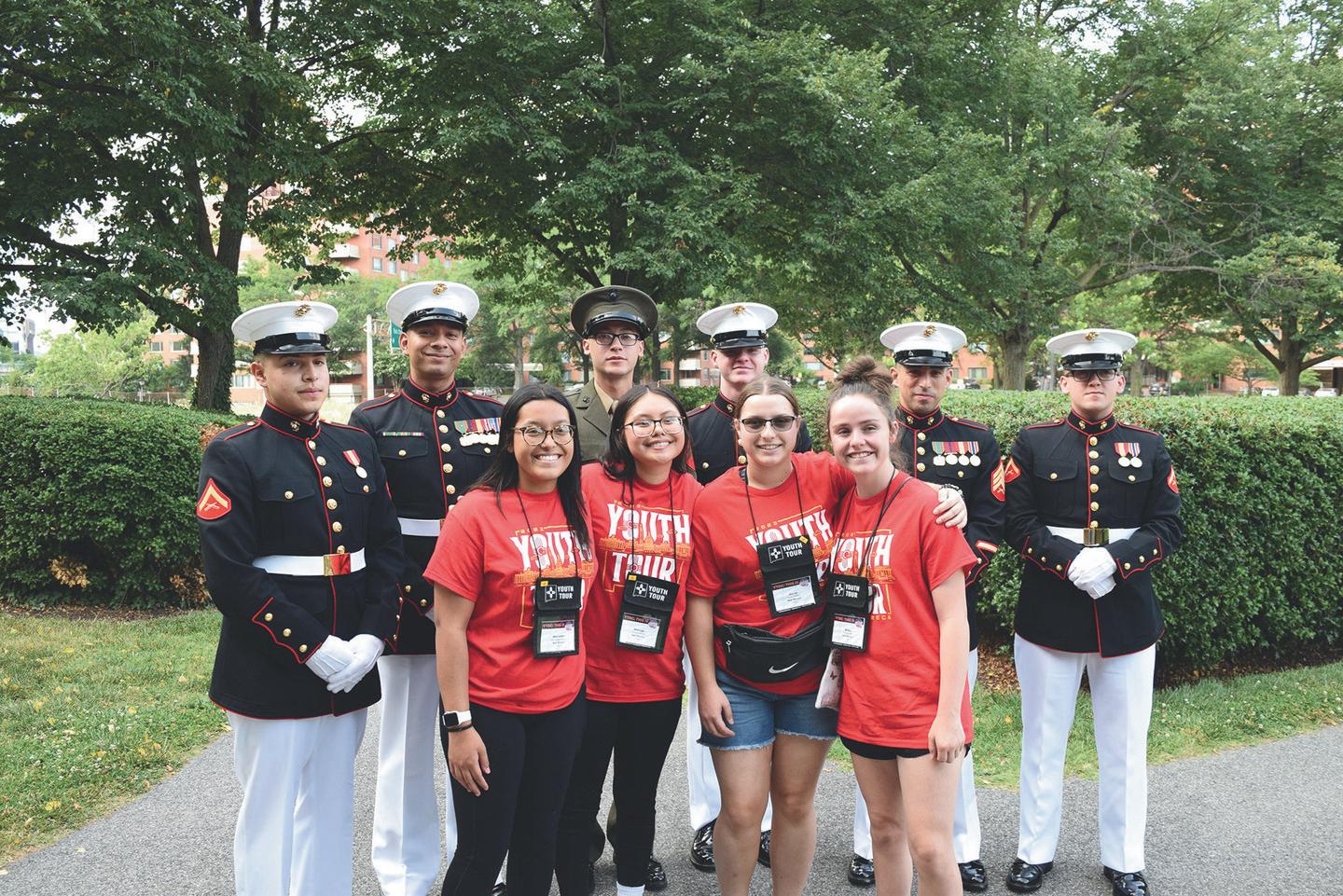
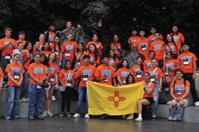
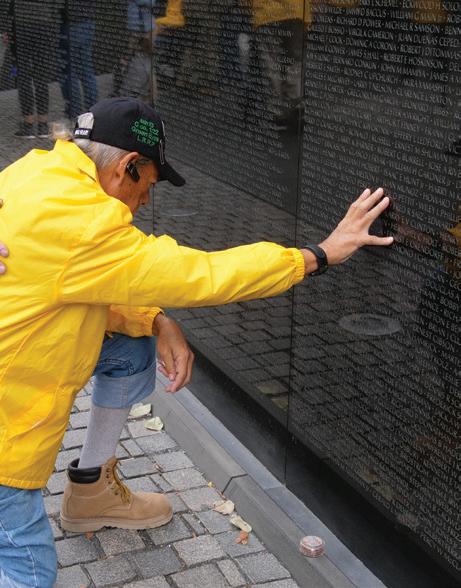
High school juniors or seniors from around New Mexico will head out on an allexpense-paid trip to Washington, D.C., for the Government-in-Action Youth Tour.
Students will travel with other students from around New Mexico and get to explore some of our nation’s capital’s most historic sites. The Youth Tour is scheduled from June 15 to 21.
Contact your local electric cooperative for information on applications and eligibility.
Co-op Coloring
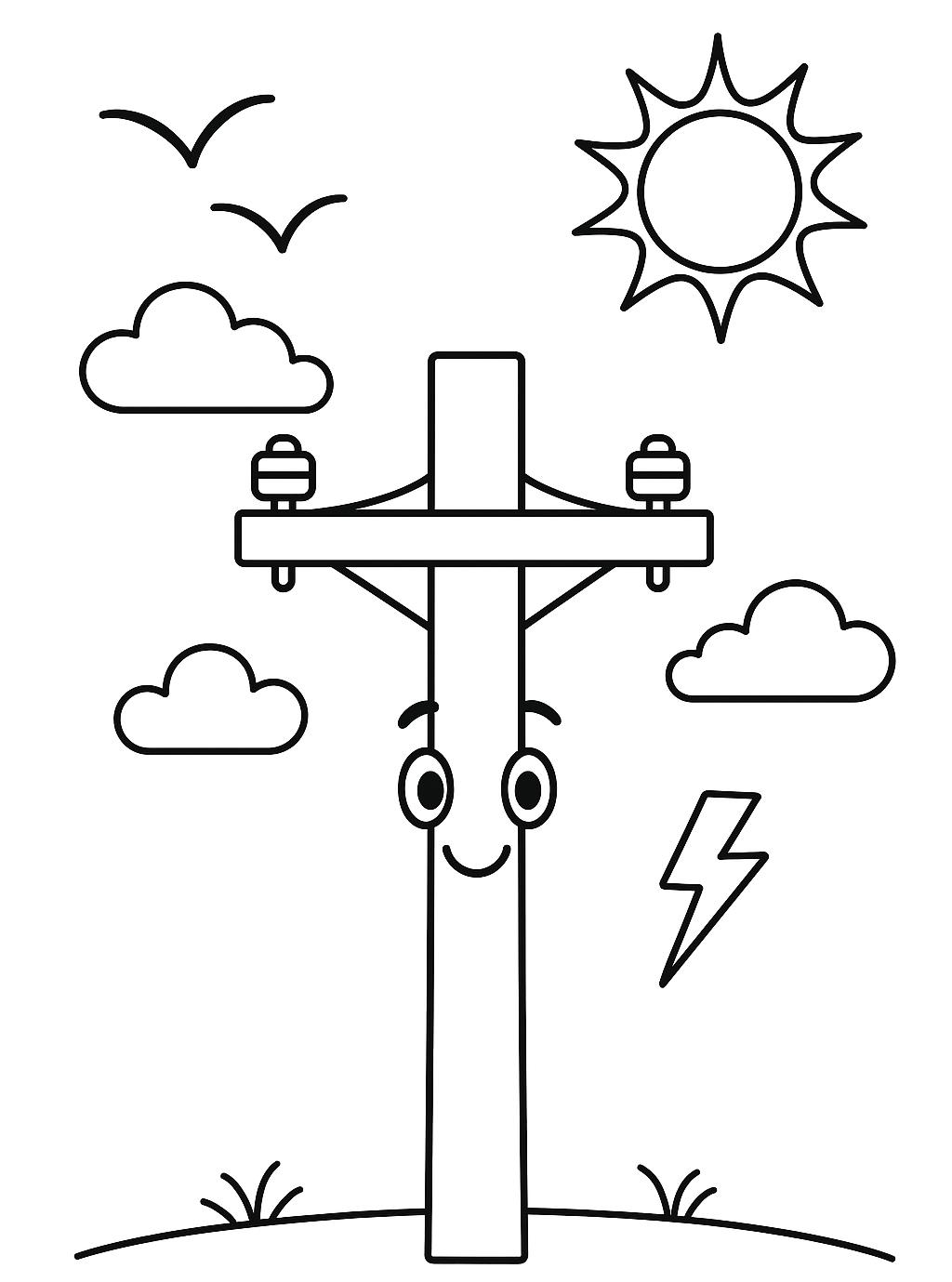
Power poles and power lines are an important part of bringing electricity to all of our families. Pick your colors, draw away and bring this scene to life!
Bring Back the Lights
Electric utilities work hard to prevent power outages, but when one occurs, there is a clear plan to restore power quickly and efficiently
1
TRANSMISSION LINES
When the power goes out, utility staff springs into action to bring back the lights as quickly as safely possible. Office staff determine the extent of the outage, while line crews brave the elements to check damage to the grid and make repairs.
Restoring power can be complex. The North American power grid— comprised of multiple regional grids—is arguably the world’s largest machine, with substations, power lines and other infrastructure webbing out across the landscape to bring electricity to homes and businesses. To efficiently restore power across the grid, utilities typically start with the equipment that serves the most people and work down the line until all the lights are back on.
Transmission lines deliver power from electricity generators to a local utility’s grid. Serving as the highways of our electric grid, high-voltage transmission lines cover huge distances. They often are controlled gy generation and transmission utilities, such as Western Farmers Electrical Cooperative and Tri-State G&T.
These large towers and their lines rarely fail—typically only in the most severe weather. If they do, many communities will lose power. Transmission lines must be repaired before power can be restored locally.
2
SUBSTATIONS
Substations are distribution hubs where utilities receive and send electricity. Substations typically serve local communities.
When there is an outage, utilities check to see if the issue is with transmission lines bringing in electricity, with the substation itself or with the power lines moving electricity to homes and businesses.
Create and Maintain a Safety Kit
Prepare a safety kit to help you get through an outage. Your emergency kit should include:
X Bottled water (1 gallon per person per day for several days)
X Nonperishable, easy-to-prepare food
X Battery-powered or hand-crank radio
X Flashlight
X Multipurpose tool
X First-aid kit
3
DISTRIBUTION LINES
Branching out like local roads, distribution lines take electricity from substations to towns, neighborhoods and other small groups of consumers.
Because distribution lines spread out like a web, rather than being condensed in one place like a substation, finding the cause of an outage along a distribution line can take more time. Often, utility line crews must patrol the lines to find the cause of the outage, such as a fallen tree that knocked down power lines.
X Extra batteries
X Moist towelettes, garbage bags and plastic ties for personal sanitation
X Manual can opener
X Cellphone with chargers and a backup battery
X Seasonal clothing or blankets
SERVICE LINES
During an outage, substations and distribution lines serving full communities are prioritized before repairs to individual service lines. 4
Service lines connect distribution lines to transformers that serve individual houses, businesses and other consumers.
If one home lacks power while lights are on in the rest of the neighborhood, the issue could be with the service line. If multiple homes have issues, it could be an issue with a transformer or distribution line.
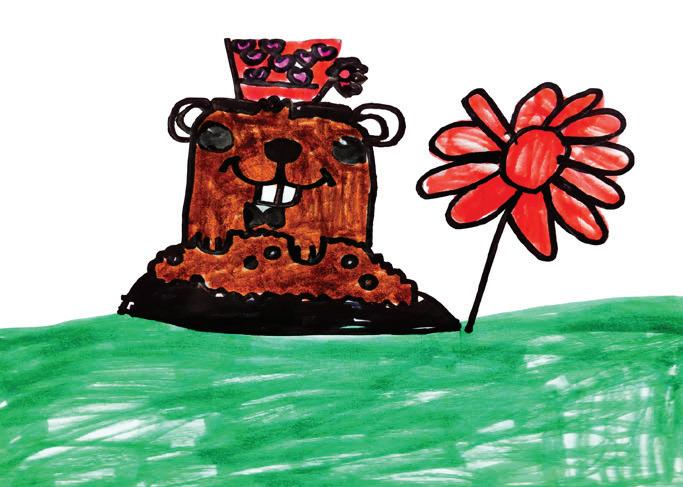
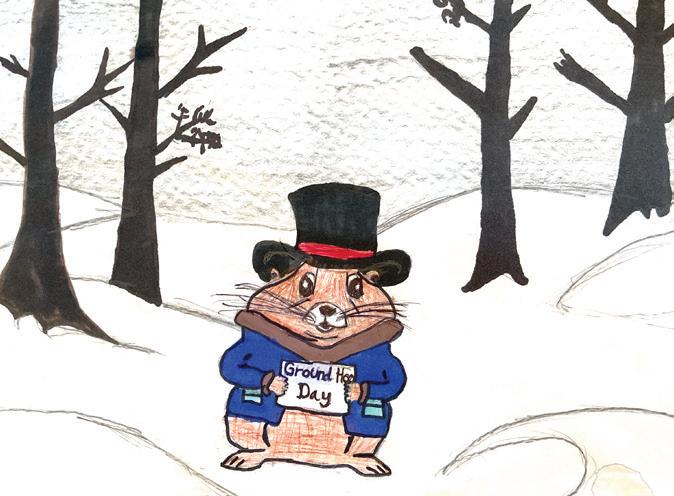
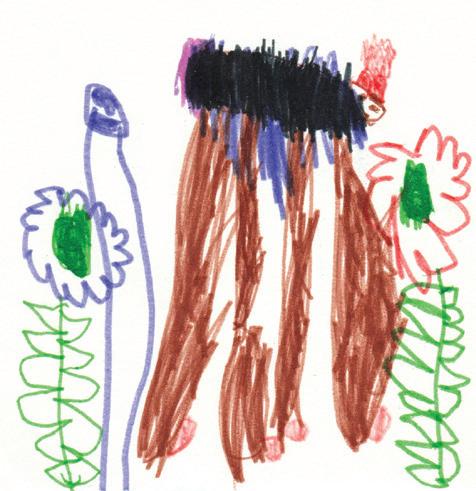
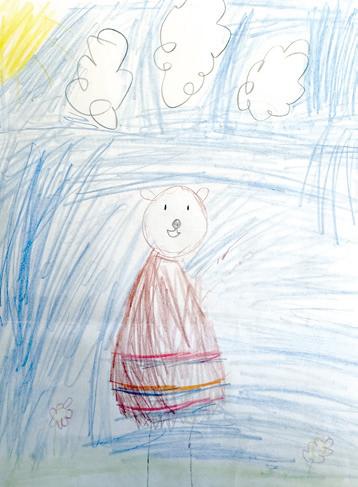
Cooperative Youth Art
Congratulations to the winning artists who drew a groundhog in his finest spring wear!
Sebastian De La Cruz • Age 7
Lea County Electric Cooperative Lovington
Nevaeh Abeyta • Age 6
Central New Mexico Electric Cooperative Edgewood
March topic: Spring has come! Draw a garden blooming with your favorite flowers, buzzing with bees or even a friendly ladybug.
Send your drawing to:
By mail: Youth Editor
614 Don Gaspar Ave.
Santa Fe, NM 87505
By email: tcondit@nmelectric.coop
Tatiana Ledezma • Age 11
Central Valley Electric Cooperative Dexter
Yanes • Age 11
Jemez Mountains Electric Cooperative Santa Fe
Deadline: Submit by the 9th, one month prior to publication. Winners receive a $15 gift card and are featured in the magazine.
Have a Youth Art topic?
Email or mail to the addresses at left, or call 505-982-4671.
Jeanne Morrissey • Age 6
Sierra Electric Cooperative Caballo
Checklist
Include the following five items on the back of your drawing, otherwise you are disqualified:
First and last name
Age
Mailing address
Phone number
Electric co-op
Artwork accepted up to age 13.
Marcelina
Roman Gonzales • Age 8 Lea County Electric Cooperative Plains
We’d Love to Spotlight
Do you know a student who has big dreams, fun hobbies or a great smile?
Our Youth Spotlight is a place for young people to share a photo and tell us a little about themselves—what school they attend, what they enjoy doing and what they want to be when they grow up.
This magazine belongs to our members. That includes our youngest ones. If your child, grandchild or student would like to be featured, we’d love to hear from you.
If you’d like to nominate someone to be featured in an upcoming Youth Spotlight, send their name, contact information, and their interests and acheivements to tcondit@nmelectric.coop.
Advertising in Enchantment is both effective and a great
We can accommodate just about any display ad size, and significant discounts apply for multi-edition and larger ad buys. Enchantment is distributed monthly to more than 113,000 homes and businesses covering about 80% of the state’s landmass. Independent reader research estimates monthly readership of more than 339,000.
for more information.
Electrifying NM Since 1935
Tri-State Generation & Transmission
Western Farmers Electric Cooperative
Associate Member
RELIABILITY
Co-ops and IOUs
New Mexico’s electric cooperatives are member-owned, not-for-profit organizations focused on providing reliable, affordable power to rural areas. Unlike IOUs, which prioritize shareholders, co-ops reinvest profits locally, improving infrastructure and keeping rates fair.
Living in the rural West comes with undeniable wildfire risk, but it’s a fight we’re facing head-on.
+ IMPROVEYOURHOME’SAIRQUALITY
Delivering reliable energy is our top priority
Distribution Co-opand G&T’s
At Tri-State G&T, our energy mix is as diverse as the landscapes we serve. With renewables, natural gas, battery storage, and more, we’re delivering reliable, affordable power with an electric system that’s built for the long haul. Whether increasing storm resilience or meeting the growing energy demand, the decisions we’re making now will help safeguard reliability in the rural West for years to come.
Natural gas and propane furnaces generate heat by burning a mixture of fossil-fuel and air. Heat pumps don’t use combustible fuel to create heat which eliminates potential exposure to dangerous combustion byproducts such as carbon monoxide.
+ AFLEXIBLECOOLINGSOLUTION
Distribution co-ops deliver electricity directly to homes and businesses, maintaining local lines and customer service. Generation and Transmission providers supply power to distribution co-ops, managing large-scale generation and bulk transmission. New Mexico’s Renewable PortfolioStandard requires utilities to increase renewable energy use, shaping how co-ops manage electricity demand. Co-ops balance integrating clean energy with providing reliable, affordable power to rural communities.
WHATEVER THE FUTURE HOLDS, WE’LL POWER IT.®
There’s a reason reliability is the first thing we reference in our mission statement. When individuals, businesses and communities are counting on it, the power must be on. This means we have to ensure we have the power supply to meet our member requirements. It’s a constant process of measuring, evaluating, planning and responding.
THE TRUSTED CHOICE SINCE
We stock the area’s largest supply of all things pertaining to water!
Ductless heat pumps also known as mini-splits, provide efficient HVAC solutions for new homes and additions, renovations or adding air conditioning without adding ductwork. The slim, outdoor air handler also allows for flexible placement.
• Solar well systems • Full septic systems • Plumbing fittings • Poly pipe • Water storage tanks • PVC pipe •Pressure tanks• Fencing supplies
Built by and for our members, we power what matters to you.
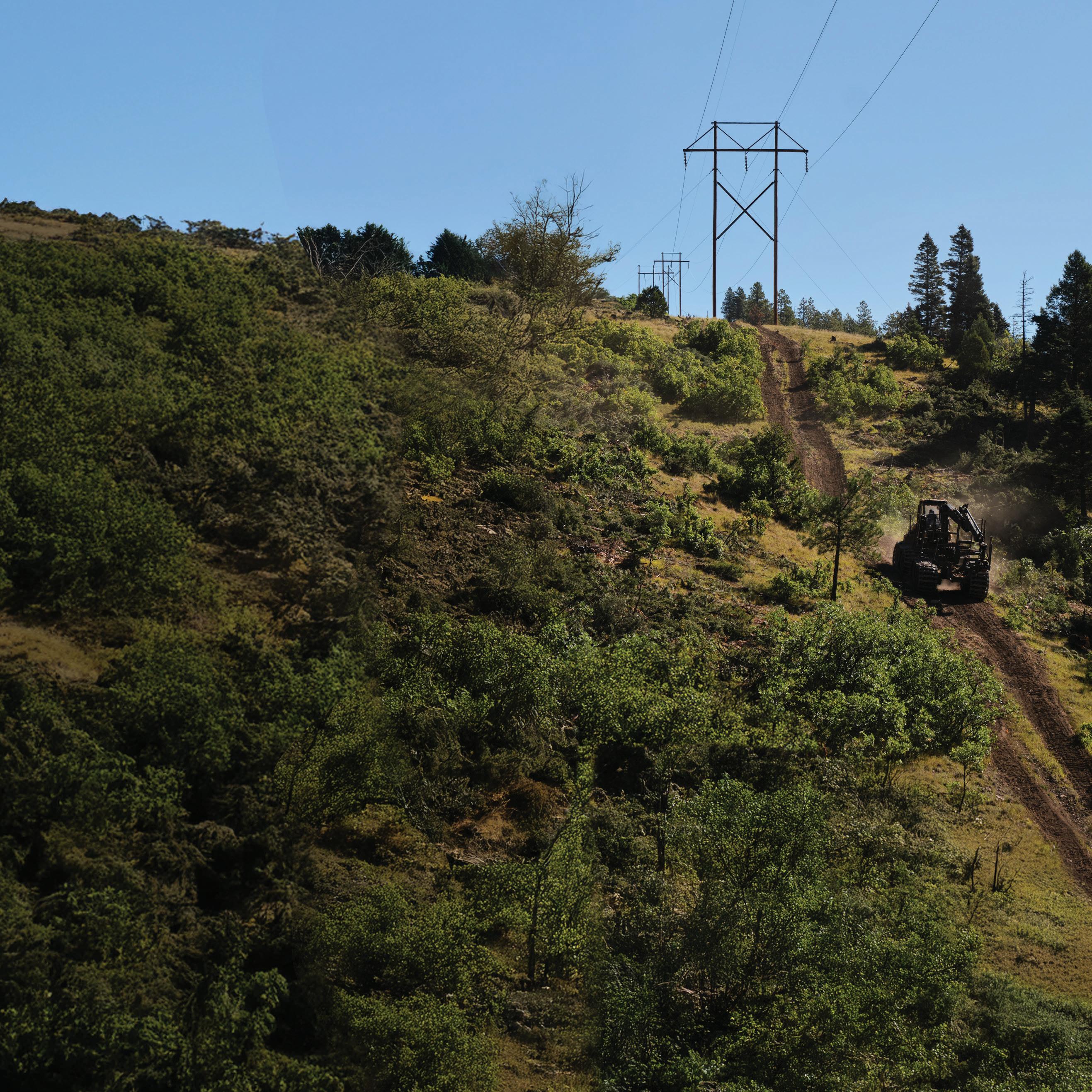
At Tri-State G&T, we deploy data-driven monitoring and wildfire mitigation strategies to identify and mitigate risk to protect our communities and the critical infrastructure they rely on. We’ll do anything within our power to protect the people and places our members call home. WHATEVER THE FUTURE HOLDS, WE’LL POWER IT.
VISITUSAT
www.tristate.coop/electrifyandsave
RPS and Loads
That’s the value of our cooperative family. To learn how we’re delivering on our mission, visit www.tristate.coop
are proud to
Scan to learn more or visit www.tristate.coop/wildfire