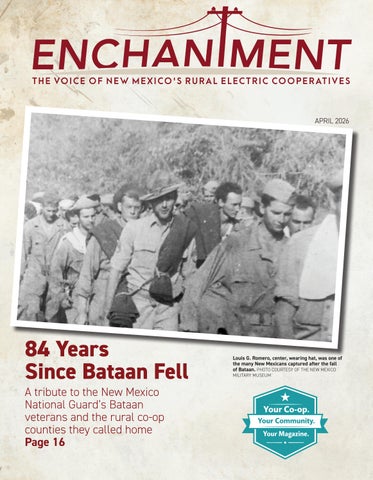
Since Bataan Fell
A tribute to the New Mexico National Guard’s Bataan veterans and the rural co-op counties they called home
Page 16

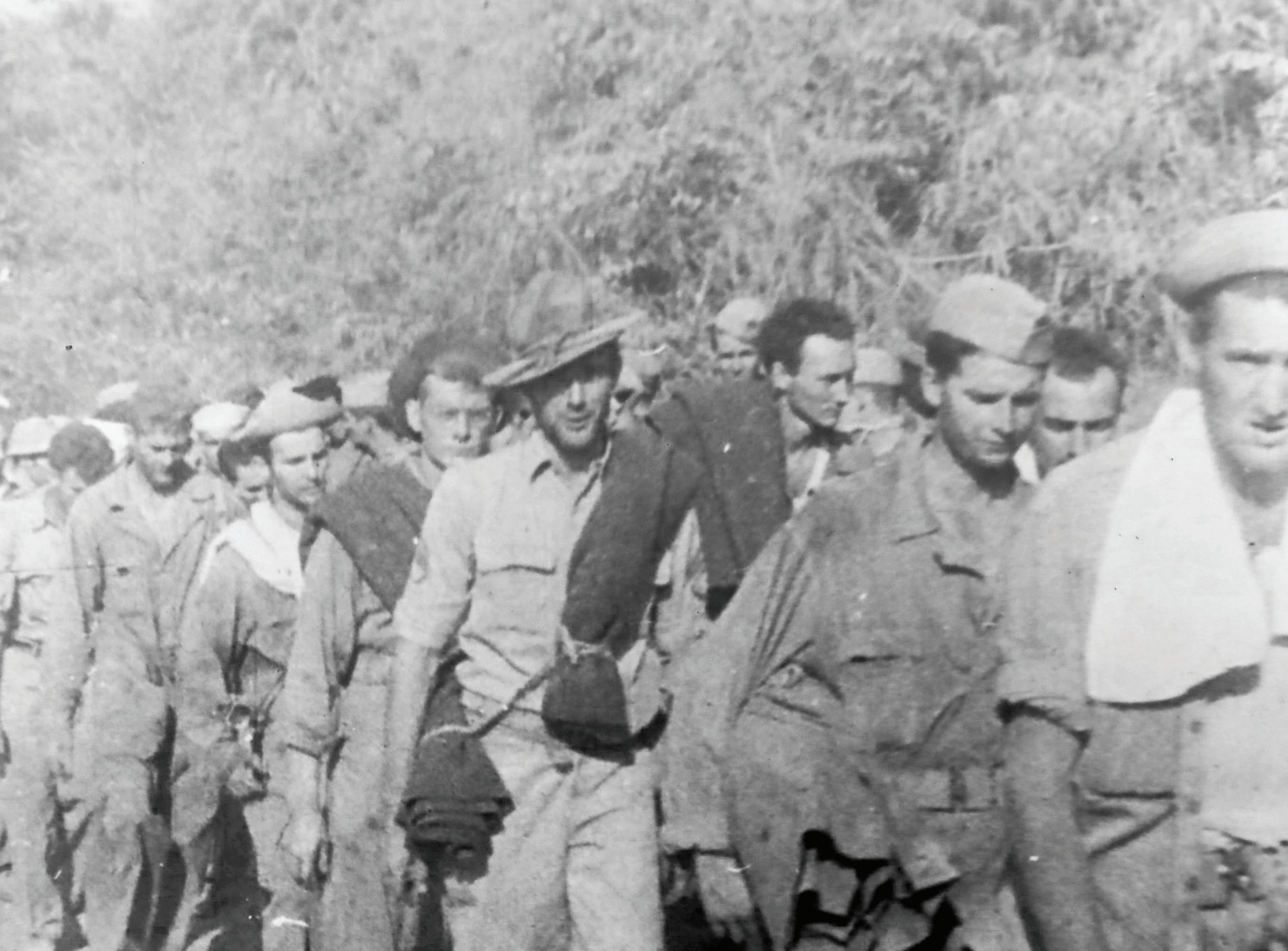
Louis G. Romero, center, wearing hat, was one of the many New Mexicans captured after the fall of Bataan. PHOTO COURTESY OF THE NEW MEXICO MILITARY MUSEUM


e Gold Rush of 2024
ImpossiblePriceWas $299, Now
Glimmering 24k gold in a tungsten setting
A h, my dear compatriots, allow me to share a tale of intrigue and fortune. Picture this: a venture into the heart of a South American goldmine, where the earth yields its treasures to the daring and the cunning. With every step as we follow Diego, our mining master, the air thickens with anticipation, the scent of wealth mingling with the thrill of the unknown.

ere, amidst the darkness, lies the prize we seek — veins of gold, glimmering like stars in the night sky.
“Been a
—M.L. Port St. Lucie, FL

Yanacocha Gold Mine, located near Lima, Peru, is the largest gold mine in South America and the fourth largest in the world.


Now picture this: a ring, not just any ring, mind you, but a masterpiece crafted to adorn the fingers of the discerning. Crafted with meticulous care, each piece encasing ribbons of 24 karat gold in a Tungsten setting, whispering tales of luxury and prestige.
Meticulously crafted and amazingly comfortable, you will not find anything like this in a jewelry store. As gold prices skyrocket, we have been able to craft this and hold the price under $100 making it exclusively available with only 495 reserved for this ad. And of course we offer a 30 day no questions asked guarantee.


A symbol of power and sophistication. is isn’t just a ring, it’s a statement. On any adventure, let this ring be your companion, a silent witness to your every triumph. Ahhh… the rush of a gold rush.
Jewelry Speci cations:

• 24k gold embedded in black-finished tungsten
• Whole Size 8 -14
Men’s Gold Rush Ring
$299 $99* + S&P Save $200
*You must use Insider Offer Code GRR219-01 to get this price.



April 1, 2026 • Vol. 78, No. 4 USPS 175-880 • ISSN 0046-1946
Enchantment (ISSN 0046-1946) is published 10 times a year—every month except June and December—by the New Mexico Rural Electric Cooperative Association, 614 Don Gaspar Ave., Santa Fe, NM 87505. Enchantment provides reliable, helpful information on rural living and energy use to electric cooperative members and customers.
More than 113,000 families and businesses receive Enchantment magazine as electric cooperative members. Nonmember subscriptions are available at $12 a year or $18 for two years, payable to NMRECA. Allow four to eight weeks for first delivery.
PERIODICAL POSTAGE paid at Santa Fe, NM 87501-9998 and additional mailing offices.
CHANGE OF ADDRESS: Postmaster, please send address changes to 614 Don Gaspar Ave., Santa Fe, NM 87505-4428. Readers who receive the publication through their electric cooperative membership should report address changes to their local electric cooperative office.
THE NEW MEXICO RURAL ELECTRIC COOPERATIVE ASSOCIATION provides legislative and educational services to the cooperatives that are members of the association and deliver electric power to New Mexico’s rural areas and small communities. The mission of the New Mexico Rural Electric Cooperative Association is to strengthen, support, unify and represent cooperative member interests at the local, state and national levels. Each cooperative has a representative on the association’s board of directors, which controls the editorial content and advertising policy of Enchantment through its Publications Committee.
OFFICERS OF THE BOARD OF DIRECTORS
Tim Morrow, President, Springer Electric Co-op, Springer; Charles G. Wagner, Vice President, Western Farmers Electric Co-op, Anadarko, Oklahoma; Preston Stone, Secretary-Treasurer, Otero County Electric Co-op, Cloudcroft.
BOARD OF DIRECTORS
Rusty Gwynne, Central Valley Electric Co-op, Artesia; Bill King, Central NM Electric Co-op, Mountainair; Chris Martinez, Columbus Electric Co-op, Deming; Keith Gottlieb, Continental Divide Electric Co-op, Grants; Antonio Sanchez, Farmers’ Electric Co-op, Clovis; Manny Bustos, Jemez Mountains Electric, Española; Bobby Ferris, Lea County Electric Co-op, Lovington; James Ortiz, Mora-San Miguel Electric Cooperative, Mora; Thomas G. Rivas, Northern Río Arriba Electric Co-op, Chama; Eric Segovia, Roosevelt County Electric Co-op, Portales; Raymond Ruffini, Sierra Electric Co-op, Elephant Butte; Manny Gonzales, Socorro Electric Cooperative; Joe Reeser, Southwestern Electric Co-op, Clayton; Wayne Connell, Tri-State G&T Association, Westminster, Colorado.
NEW MEXICO RURAL ELECTRIC COOPERATIVE ASSOCIATION
614 Don Gaspar Ave. Phone: 505-982-4671 Santa Fe, NM 87505 Fax: 505-982-0153 nmelectric.coop Enchantment.coop
Vince Martinez, CEO
Tom Condit, Editor & Director of Communications
DISPLAY ADVERTISING: Rates available upon request. Co-op members and New Mexico display advertisers, email Ryan Ferguson at Enchantmentads@nmelectric. coop or call 409-313-3142. National representative: American MainStreet Publications, 800-626-1181. Advertisements in Enchantment are paid solicitations and are not endorsed by the publisher or the electric cooperatives that are members of the New Mexico Rural Electric Cooperative Association. PRODUCT SATISFACTION, COMPLIANCE WITH APPLICABLE ADVERTISING RULES AND REGULATIONS, AND DELIVERY RESPONSIBILITY LIE SOLELY WITH THE ADVERTISER.
© 2026 New Mexico Rural Electric Cooperative Association, in partnership with Pioneer Utility Resources. Reproduction prohibited without written permission of the publisher.

6

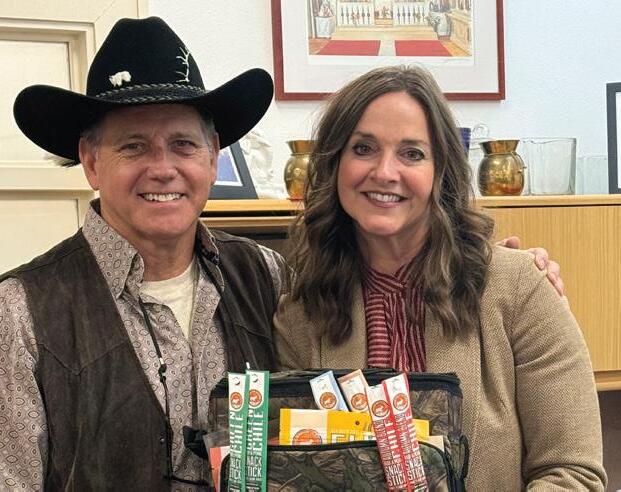
Monthly Photo Contest Winner
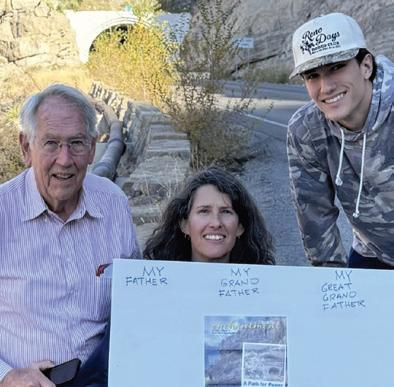
Congratulations to Tom Mann! Tom’s father worked to build the Cloudcroft Tunnel, the
10
Correction: The March Enchantment incorrectly identified Rep. Rebecca Dow, right, as Rep. Meredith Dixon.
12

16
18 30

Your Co-op’s Page
Your Co-op’s Page

Spring Is Here ENCHANTED CEO
By Vince Martinez, NMRECA CEO
You know spring has sprung in New Mexico when the tulips and daffodils are in bloom. There are new calves on the ground, your allergies are back, the high school basketball championships are in full swing, the wind is blowing like mad, and the legislature has adjourned.

The 2026 legislative 30-day session came to an end at noon on Feb. 19. Although our effort to pass wildfire legislation that would have limited co-ops’ liability and exposure came up short, we were able to build a broad base of support and draft strong language for next year.
We were able to contribute to the defeat of other proposed legislation that could have added additional fees and burdens on rural co-ops and their members.
Next year’s session will include a new governor and, more than likely, a few new House members. The Senate is not up for reelection until 2028.
High winds are always on your co-ops’ minds this time of year. With dry conditions, high winds can break poles and snap electrical lines, regardless of how well they are installed and maintained. Please be mindful of downed power lines on windy days. If you come upon them, please call your co-op as soon as possible and report them.
April 9, 1942, is a solemn day in New Mexico’s history. It marks the 84th anniversary of the fall of the Philippines at the beginning of World War II and the capture of 1,800 New Mexicans serving in the 200th and 515th coast artilleries of the New Mexico National Guard. Only 900 of those brave New Mexicans came home after enduring the Bataan Death March and three years of captivity.
Growing up in Santa Fe, many of the Bataan veterans were friends of my father, also a WWII veteran. I saw firsthand how resilient they were and how much they enjoyed each other’s company and their lifelong bond.
On Page 16, you will read about some of these men in an article written by retired Maj. Gen. Ken Nava with excerpts from the book “Beyond Courage: One Regiment Against Japan, 1941-1945” by Dorothy Cave. I hope you appreciate it.
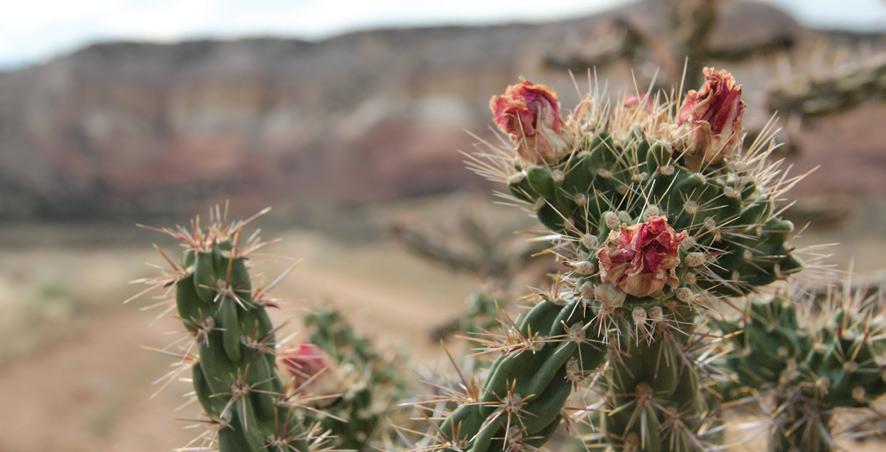
Cactuses bloom in the desert outside of Abiquiu. ADOBE STOCK PHOTO BY FOLKTOGRAPHY BY TOM
















Get your prescription oxygen without the tank.

















































Inogen® Portable Oxygen Concentrators are used by over 1 million patients worldwide to get their oxygen therapy on-the-go. Their compact size and long battery life help you stay active and engaged in life. CALL NOW for a FREE Doctor Discussion Guide and see if your insurance would cover our device.
USES: The Inogen Portable Oxygen Concentrator provides a high concentration of supplemental oxygen to patients requiring respiratory therapy on a prescriptive basis. It may be used in home, institution, vehicle, and various mobile environments. DO NOT USE IF: This device is not intended to be used in any way other than described in the indications for use. Do not use in parallel or series with other oxygen concentrators or oxygen therapy devices. This device is to be used as an oxygen supplement and is not intended to be life sustaining or life supporting. ONLY use this product if the patient is capable of spontaneous breath, able to inhale and exhale without the use of a machine. The conserving, or pulse dose, oxygen delivery technique used by this device is contraindicated in persons whose breathing during normal resting would be unable to trigger the device. Proper device triggering, setup and operation must be confirmed by an experienced clinician or other respiratory professional. Not for pediatric use. Not for use by tracheotomized patients. WARNINGS: The device produces enriched oxygen gas, which accelerates combustion. Do not allow smoking or open flames within 2m (6.56ft) of this device while in use. If you feel ill or uncomfortable, or if the concentrator does not signal an oxygen pulse and you are unable to hear and/or feel the oxygen pulse, consult your equipment provider and/or your physician immediately. If you are unable to communicate discomfort, you may require additional monitoring and or a distributed alarm system to convey the information about the discomfort and or the medical urgency to your responsible caregiver to avoid harm. Use only spare parts recommended by the manufacturer to ensure proper function and to avoid the risk of fire and burns. To avoid danger of choking or strangulation hazard, keep cords away from children and pets. TALK TO YOUR HEALTH CARE PROVIDER: The oxygen flow setting must be determined and recorded for each patient individually by the prescriber, including the configuration of the device, its parts, and the accessories. It is the responsibility of the patient to periodically reassess the setting(s) of the therapy for effectiveness. The proper placement and positioning of the prongs of the nasal cannula in the nose is critical for oxygen to be delivered.
Your Lawn Care Electrify
By Miranda Boutelle
Electric lawn equipment has seen drastic improvements in cost, motor efficiency and battery power in recent years. From hedge and string trimmers to leaf blowers, chain saws, and push and riding mowers, there are lots of options for electric lawn equipment.
Electric equipment is quieter than its gas-powered counterpart and typically needs less maintenance. There’s no more mixing fuel, changing spark plugs or worrying about gas going bad over the winter. Advances in rechargeable battery technology eliminate having to lug around a heavy extension cord to get your work done. Just pop in a battery and go.
Most popular lawn equipment brands offer battery-powered options, along with newer brands that specialize in electric tools. If you need multiple tools, buying the same brand with the same battery type allows you to swap batteries among different pieces of equipment. That also means fewer battery chargers to store or keep on your workbench.
Opt for equipment with brushless motors. They are more efficient, more powerful and have a longer lifespan than traditional brushed motors.
A brushed motor transfers electricity using physical brushes, which can wear down over time. The friction caused by the

brushes makes equipment run hotter and noisier. A brushless motor uses electronic commutation with less friction, which makes it more powerful, extends the lifespan and allows you to get more done on a single charge.
A brushless motor typically costs more but is worth the improved efficiency.
Just as gas-powered lawnmowers require safe storage and handling of gas and oil, battery-powered equipment requires proper maintenance, charging and disposal. Always use the manufacturer’s original charging equipment. Charge batteries on hard surfaces away from anything flammable, and store chargers in a cool, dry place.
Most manufacturers recommend charging batteries only until they reach full capacity instead of leaving them on the
charger until you are ready to use them. This helps prevent damage to the battery from overcharging and heat buildup and reduces potential fire hazards. Unplug chargers when not in use to avoid wasting energy.
Similar to gas and oil, old or damaged batteries should not end up in household garbage and landfills, where they can ignite fires and leak toxic chemicals into soil and groundwater. Instead, recycle them at a big-box store or at a waste management site.
If you’re looking for a quieter, more efficient, lower maintenance lawn care routine, rethink your equipment options and consider electric models. If you decide to make the switch, check with your electric utility or state agency for electric lawn equipment rebates.
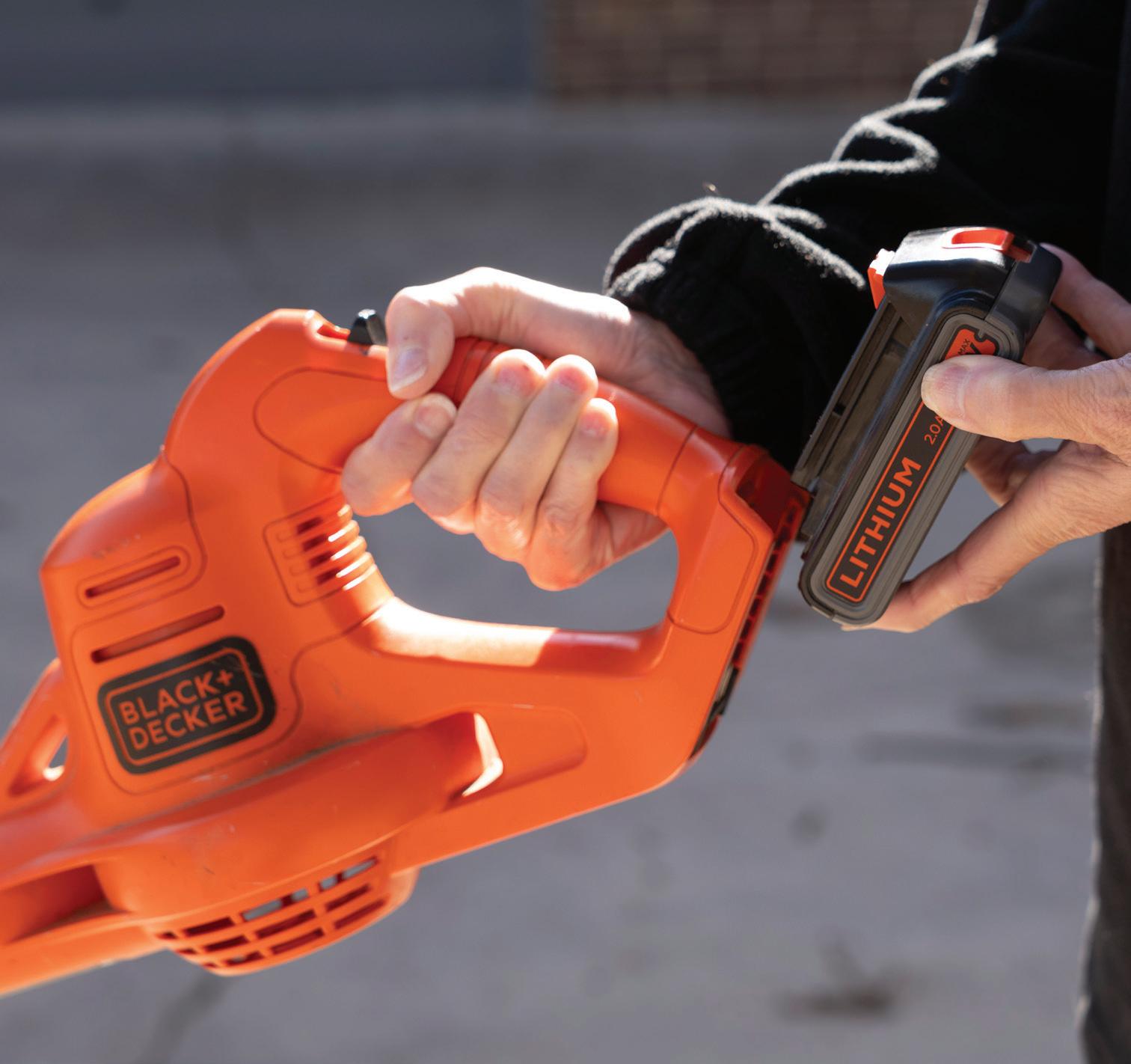
Improved battery technology makes it easy to get more done on a single charge and avoid hauling around a cord. PHOTO BY MARK GILLILAND/PIONEER UTILITY RESOURCES
Boutelle has more than 20 years of experience helping people save energy. She has worked on energy-efficiency projects from the Midwest to the West Coast. Today, Miranda is chief operating officer at Efficiency Services Group in Oregon, a cooperatively owned energy-efficiency company.




































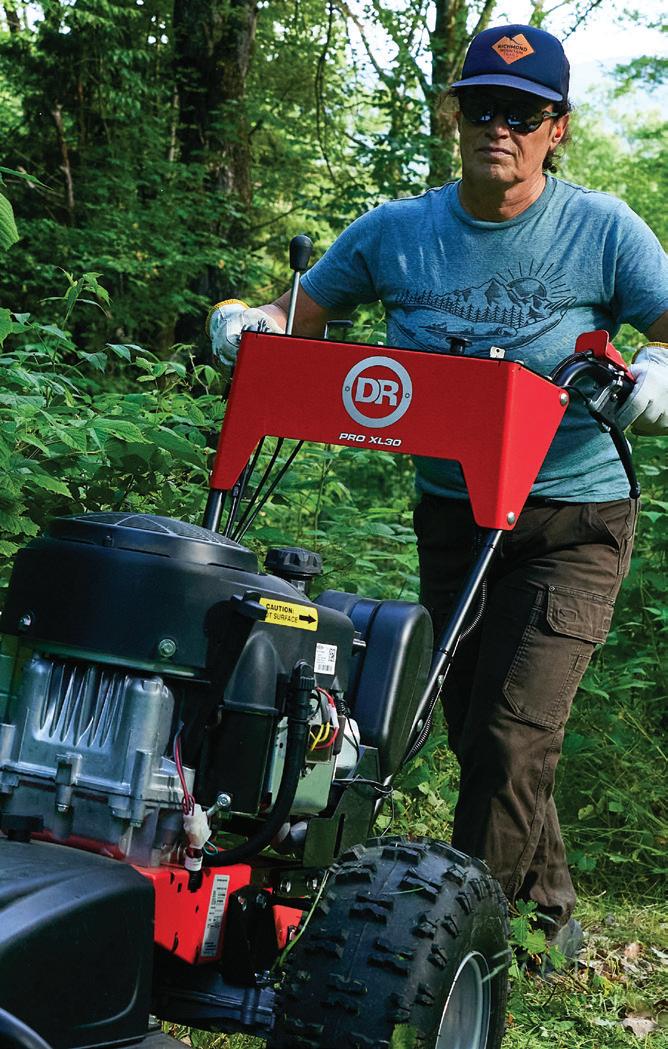
AMERICA’S #1 FIELD & BRUSH MOWER

POWER PACKED with engines up to 27 HP




CUT DOWN ALMOST ANYTHING, from 3" thick saplings to 8' weeds
LARGEST SELECTION of walk and tow-behind models
Get More Power and Selection with a DR Shop

















PRO XL30
By Alan Hale
Flying Close to the Sun
Our solar system’s two brightest planets shine in April’s evening sky. Venus continues its slow and gradual climb into the western sky and sets slightly after the end of dusk. On the evening of April 23, it appears near the Pleiades star cluster in Taurus. Meanwhile, Jupiter is high in the western sky as darkness falls and sets in the west one to two hours after midnight.
For all practical purposes, our morning sky is devoid of planets this month. Mercury is low in the dawn throughout most of the month, and it is joined by Mars and Saturn as they begin making their respective climbs into the morning sky. The three worlds have a series of conjunctions with each other between April 19-21, but it takes place deep in morning twilight and will not be easy to see.
The Lyrid meteor shower should peak around Wednesday morning, April 22, and may produce 10 to 15 meteors per hour. The moon will be a couple of days before its first quarter phase and will set in the late evening. It won’t interfere with viewing.
With April comes not one, but two potentially bright comets in our sky. Comet MAPS, discovered in January by a quartet of French amateur astronomers using a remote-controlled telescope in Chile, is a type of comet known as a Kreutz sungrazer. These are believed to
be fragments of a larger comet that broke apart many centuries ago. As the term sungrazer implies, these comets pass extremely close to the sun. Some of the brightest comets in recorded history have been such objects.
Comet MAPS will be closest to the sun Saturday, April 4, and before that date will be approaching the sun in the evening sky. If it survives its close brush by the sun, it will again appear in the evening sky, low in the Southwest, in subsequent days.
It is difficult to predict just how bright Comet MAPS might become. In theory, it could become a brilliant object—although the show will likely be fairly brief. On the other hand, it might disintegrate entirely, and there won’t be anything at all significant to see.
Meanwhile, a comet discovered in September by the Pan-STARRS program in Hawaii will be visible low in our morning sky during April. For about a week and a half around mid-month, it crosses west-to-east across the southern part of the “Great Square” of the constellation Pegasus. It then disappears into the dawn within the next week.
It should be easily detectable with a pair of binoculars, and may become bright enough to be dimly visible to the unaided eye.

The last bright Kreutz sungrazing comet visible from Earth was Comet Lovejoy, photographed Dec. 26, 2011, by astronaut Dan Burbank aboard the International Space Station. PHOTO COURTESY OF NASA



When someone’s in crisis, help. s





A Comet, A Calling, A Form of Immortality
Dr. Alan Hale reflects on Hale-Bopp discovery and a lifetime under the stars
By Tom Condit
This is part one of a two-part feature on Dr. Alan Hale. In this issue, we explore his early life, lifelong pursuit of the night sky and the remarkable events leading to the discovery of Comet Hale-Bopp.
“Most people who know me well will say that I haven’t grown up yet.”
Dr. Alan Hale says that with humor, but it reveals something essential: his life has been guided by curiosity—and by a willingness to look up long enough to notice what others might miss.
Born in Tachikawa, Japan, outside Tokyo, while his father was stationed there as a career Air Force officer, Alan moved to Holloman Air Force Base near Alamogordo just months later.
Two years after the move, his father retired from the Air Force and continued working in civil service at the base, allowing the family to remain in Alamogordo for the rest of Alan’s childhood. Alan graduated from Alamogordo High School in 1976.
His childhood had both joy and hardship. His parents divorced when he was 5, remarried when he was 8 and separated again during his teenage years.
He had two older brothers: Wayne, who was killed in a car accident in 1968 at age 20, and Barry, who now resides in Arizona. Both served in the military—Wayne in the Army and Barry in the Navy.
Alan describes himself as heavyset as a child— “and still am”—but athletics became part of his life in junior high and high school. He played football as a backup offensive lineman and threw discus and shot put, winning a few ribbons along the way.
But the defining influence came early.
Hooked Almost Immediately
When Alan was in first grade, his father checked out astronomy books from the Holloman library,
In 1995,
hoping to channel his son’s scholastic promise into outside interests.
“I was hooked almost immediately,” Alan says.
He read about various phenomena— including comets—and wanted to observe them all. Shortly after getting his first telescope, he read an article in Sky & Telescope about the bright comet TagoSato-Kosaka that would be visible in late January and early February 1970. Incidentally, it would be the first comet ever observed from space by an artificial spacecraft.
On the evening of Feb. 2, Alan’s friend Mark Bakke came over with his telescope. Armed with the information from the article, they soon spotted it: a “fuzzball” in binoculars and their telescopes, dimly visible to the unaided eye. Hale followed it every night for the next week.
A month and a half later, the very bright comet Bennett appeared as a splendid naked-eye object in the morning sky. With two bright comets appearing in such quick succession after he first started observing, Alan got the idea that bright comets came by quite frequently.
Comets are not frequent. Alan had simply begun observing at a very fortuitous time for bright comets. But by the time he learned that, though, he was already hooked.
From that point on, he tried to observe every comet bright enough to see with the equipment he had. He thought it would be
“cool” to discover a comet, especially since, by tradition, comets are named for their discoverers.
Alan and Mark shared an interest in astronomy and the two often observed together—including witnessing a total solar eclipse in Manitoba in 1979. Tragically, Mark was killed in a gunshot accident in 1984 at age 27, a loss that stayed with Alan.
The Long Hunt
Alan began his systematic search for new comets during his graduate school years from 1986-1992, as part of his broader observing program.
Many people spend years, even decades, searching for comets and never find
anything. But some—including a couple of Alan’s friends—made multiple discoveries. The fact that some individuals did succeed helped keep him going.
Alan recalls one major disappointment in early 1989 when clouds moved in at
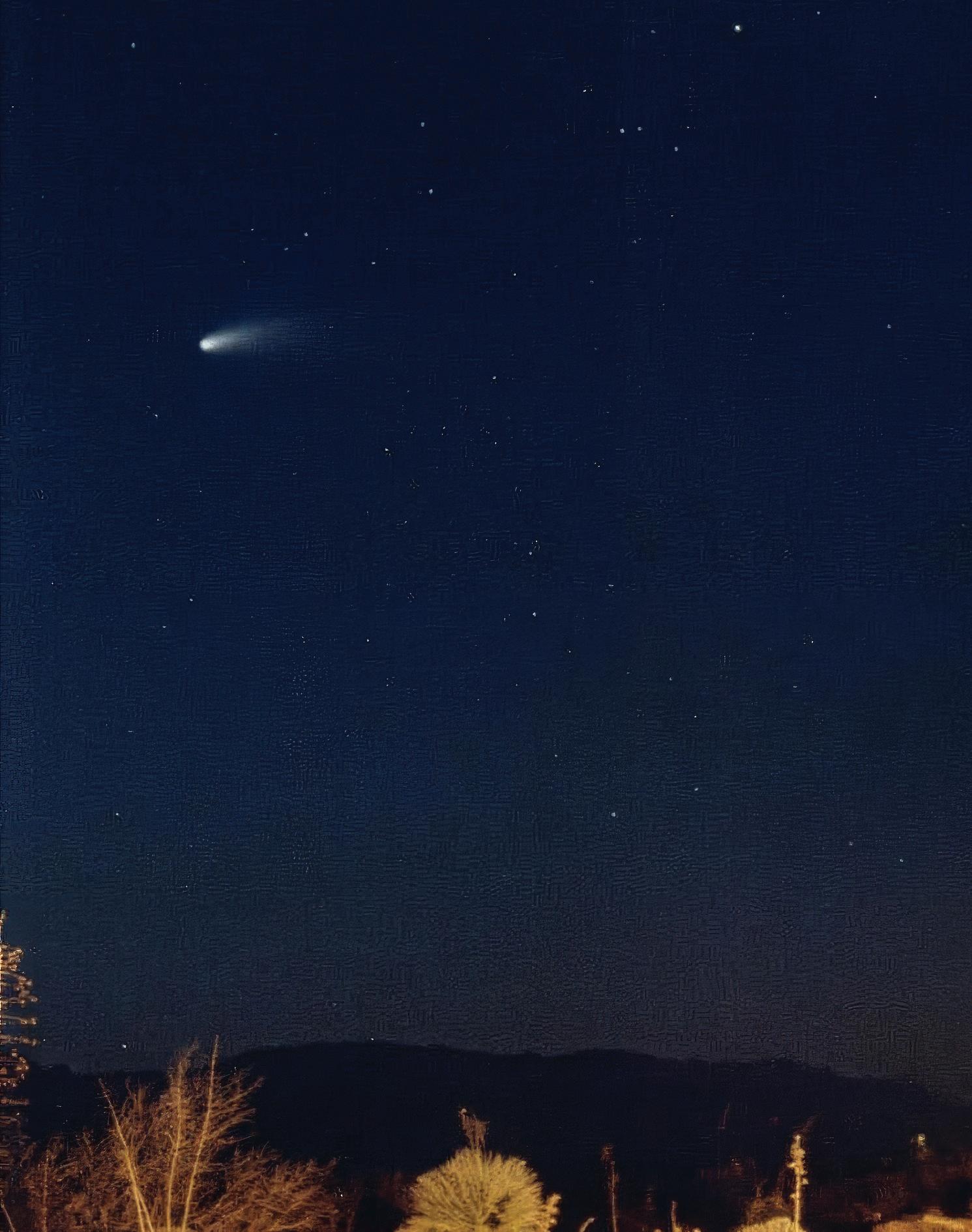
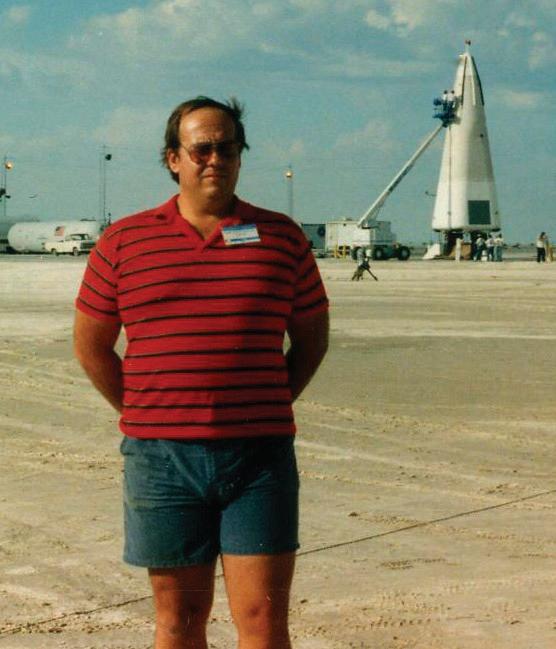
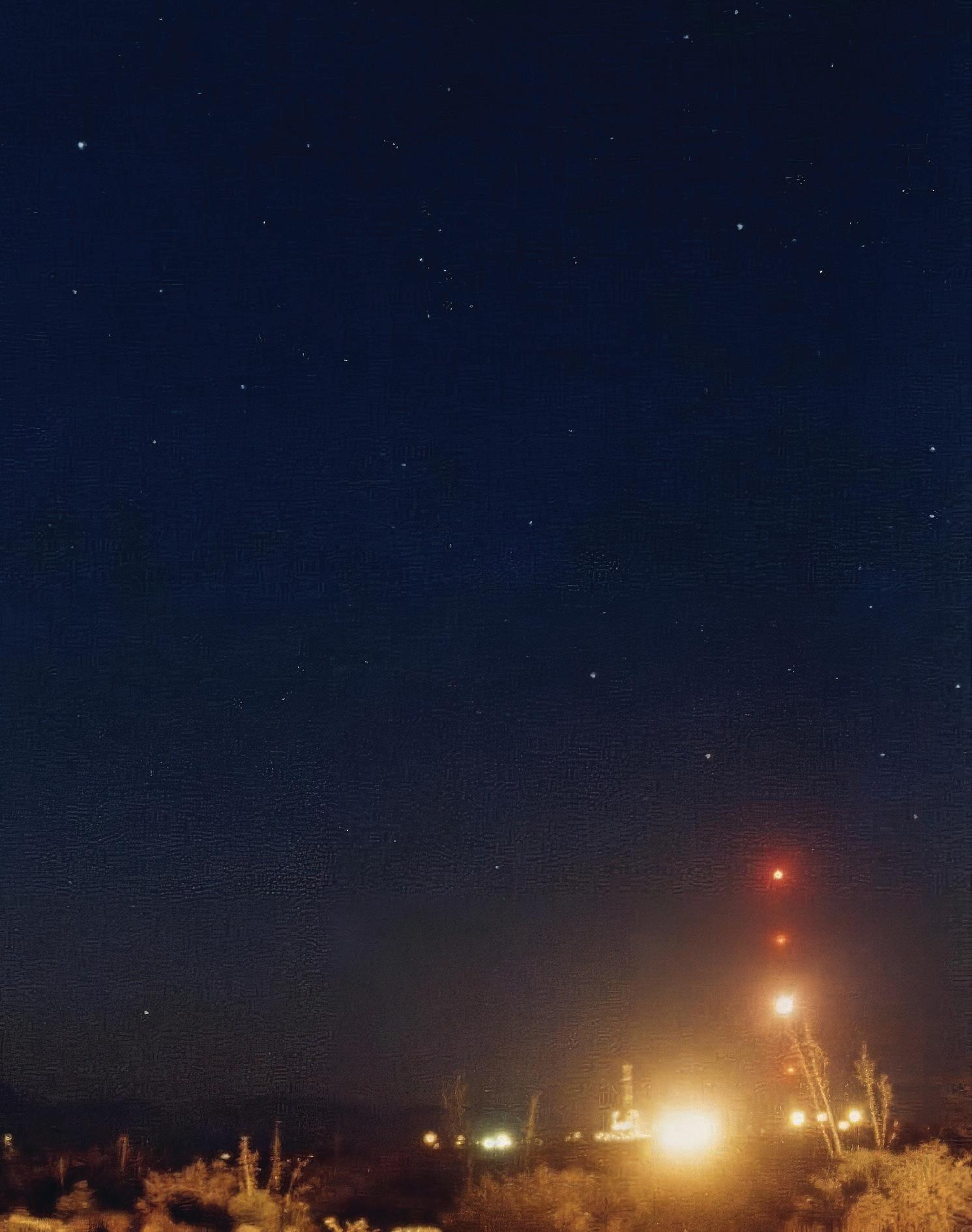
RIGHT: Alan Hale, who writes Enchantment’s Hale to the Stars column, began searching for comets as a child and carried that passion into his career.
BACKGROUND:
Alan discovered a previously unknown comet from his home in Cloudcroft.
PHOTOS COURTESY OF ALAN HALE
exactly the wrong time. He would have been hunting in a region of the sky where a comet was discovered just hours later by an observer in Japan.
In early 1992, after several hundred hours of unsuccessful searching—and in light of increasing workload and family responsibilities—Alan ceased his comet hunting efforts.
Then came July 1995.
During New Mexico’s monsoon season, clear nights can be scarce. Alan’s family had moved into their residence near Cloudcroft in March of that year. He had been following known comets for many years as part of his regular observing program, and his standard practice was to try to observe them about once a week. That July, he was following two comets.
On Friday, July 21, he spent the day in Albuquerque attending a meeting of the Space and Robotics ’96 conference organizing committee. Afterward, Alan made the long drive back to Cloudcroft, arriving around midnight. The sky was surprisingly clear, and he hurriedly
prepared to observe—only to see the sky cloud over within those few minutes.
Saturday, July 22, was dry and clear all day, and he planned to observe that night.
At the time, he was writing a weekly column on astronomy and space for the Alamogordo Daily News and planned to write about one of the two comets the following week.
Little did he know he was about to walk into history.
The Discovery Night
Alan initially observed the first of the two known comets he was following and finished just before midnight. He had an hour or so to wait before the second rose high enough above the house to observe. Since the night was gorgeously clear, he decided to pass the time by observing objects in and around the constellation Sagittarius.
When he turned the telescope toward the star cluster M70, he immediately saw a dimmer, fuzzy object within the same field of view. Alan had observed M70

under somewhat similar circumstances a couple of weeks earlier and had not noticed any such object nearby, so this was attention-worthy.
He confirmed he was indeed observing M70—he was. He checked the star atlas— no known object was shown in that location. After quickly sketching the object relative to the surrounding star field, he went inside and checked various catalogs. There were no known objects in that location.
Alan logged onto the International Astronomical Union’s Central Bureau for Astronomical Telegrams and ran its comet identification program. There were no known comets in that location.
Alan was almost—but not entirely— sure he had found an unknown comet. He emailed the director and assistant director of the Central Bureau. Alan already had a relationship with the directors: over the previous few years, he had worked with them and had confirmed and disconfirmed several reported comet discoveries. He was a trusted, known quantity.
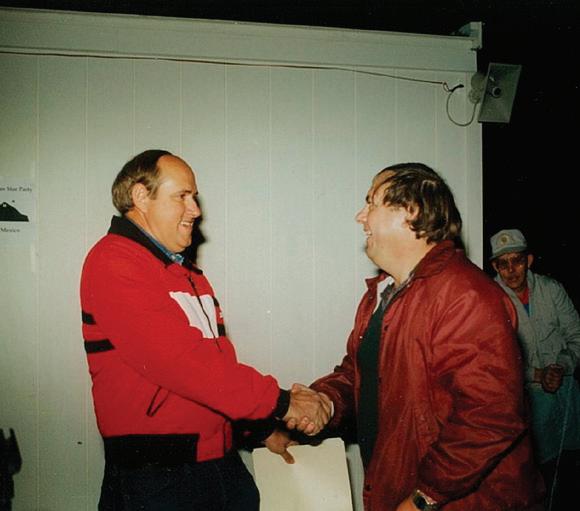
Alan and Thomas Bopp discovered Comet HaleBopp at almost exactly the same time. PHOTO COURTESY OF ENCHANTED SKIES STAR PARTY
After sending those emails, he went back outside to check the object. It had been roughly 45 minutes since he’d first seen the object. When viewing it again, it had clearly moved against the background stars.
It was undoubtedly a previously unknown comet.
After sending a second email to the Central Bureau, he woke his then-wife and asked if she wanted to take a look at “Comet Hale.” She did, and also woke her sister Alice, who was visiting at the time.
When his wife woke his 8-year-old son, Zachary, to ask whether he wanted to see “Daddy’s comet,” he muttered something about “Dad and his spacey stuff again” and went back to sleep.
Alan followed the comet for three more hours before it set behind the trees in the southwest. He also took time to observe the second of the known comets he had initially set out to observe.
Before heading inside, he looked up and said a quick but sincere “Thank you!” to the sky.
With three hours of positional measurements, he emailed them to the Central Bureau, went inside to write a fresh-in-his-mind account of the discovery for posterity and then tried—rather unsuccessfully—to get some sleep.
Meeting Thomas Bopp
When he rolled out of bed around 8 a.m., Alan checked his email and found a note of

congratulations from Brian Marsden, then director of the Central Bureau, along with the question: “Did you ask Thomas Boppe [sic] in Glendale to confirm it for you? He seems to have done so.”
Alan replied that he didn’t know any such person.
He was not surprised that someone else had picked up the comet around the same time—anyone observing M70 should have noticed it. Alan later learned other individuals claimed to have come across it around that time, but either never followed up or found it after he and Tom reported it.
Alan and Tom made several joint appearances. At the Enchanted Skies Star Party in Socorro in September 1995, they held their first public meeting. They remained in occasional touch after the Hale-Bopp comet faded from view, and Hale saw Tom for the last time at a conference in Tucson in mid-2016. Tom passed away a year and a half later.
It is unclear which one of them saw Hale-Bopp first. Neither noted the exact time he first spotted it, and, by comparing notes, they determined their discoveries were within 5 minutes of each other. Alan’s report reached the Central Bureau first, but he had an advantage: He could email from home, whereas Tom was in the desert 90 miles away and had to drive back before he could report it.
Alan is clear on one point.
“Our names both belonged on it, and I am completely comfortable with that.”
Songs of the Moment
While getting ready to observe the sky on the night he discovered Comet Hale-Bopp, Alan Hale listened to two songs from the band R.E.M.’s album “Automatic for the People”—“Everybody Hurts” and “Man on the Moon.”
Last year, after writing a 30-yearanniversary reminiscence of the discovery, Alan found someone who knew the band’s members. That individual contacted the band on his behalf. Alan learned they were unaware of the role they played in the Hale-Bopp discovery and were delighted to learn of it.
Next Month:
In part two of this story, we explore the scientific breakthroughs of Hale-Bopp, the global attention it generated, Alan’s experiences navigating international media and science diplomacy and his reflections on his legacy—including what it means to know that 2,400 years from now, people may still speak his name when a bright comet returns. ARTISTIC
84 Years Since Bataan Fell
A tribute to the New Mexico National Guard’s Bataan veterans and the rural co-op counties they called home
By Ret. Gen. Kenneth A. Nava
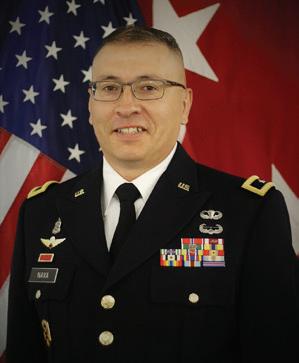
This month marks 84 years since the fall of Bataan in the Philippines. What is now known as the Bataan Death March, one of the most brutal forced marches in modern military history, began April 9, 1942. Thousands of American and Filipino defenders—already weakened by months of hunger and disease—were taken prisoner by Japanese forces, and many were driven into the march.
Two of New Mexico’s National Guard units, the 200th and 515th coast artillery regiments, paid a staggering price. The stories that survived are not just military history. They are community history.
Many of the men who fought on Bataan and suffered in Japanese captivity came from the same rural counties co-ops serve today. The cooperative spirit was not a slogan for them. It was how they stayed alive. They shared what they had, they carried each other, and they refused to leave one another behind.
Some of their stories were shared in “Beyond Courage: One Regiment Against Japan, 1941-1945,” a book by Dorothy Cave. A few of these stories are highlighted on the following page.
When you read these accounts side by side, the overlap with co-op country goes beyond geography. Rural New Mexico was home to citizens accustomed to making do, sharing what they have and relying on neighbors. On Bataan and in the camps, those habits became life-or-death decisions—giving away rations, stealing food to share, carrying the weak and staying with the unit when escape was possible.
That same community DNA later built New Mexico’s electric cooperatives—member-owned organizations that exist because rural communities chose to organize, invest together and not leave one another behind.
In 2026, commemorating the 84th year since Bataan’s fall is an opportunity to remember the cooperative spirit is not abstract. In New Mexico, it has a face, a hometown and, in too many cases, a grave.


Major General Kenneth A. Nava served as the 44th Adjutant General of the New Mexico National Guard from July 2017 until his retirement on December 31, 2021.
Dorothy Cave’s “Beyond Courage: The Men of the 200th Coast Artillery” can be found at many book stores and on Amazon.

Where Bataan History Overlaps with Today’s Co-op Counties
Central Valley Electric Cooperative Chaves and Surrounding Counties
Central Valley Electric serves members in Chaves, Eddy, Lea and Otero counties. Chaves County—and Roswell in particular—sent many soldiers who would endure Bataan and captivity under conditions that rewarded only one thing: loyalty to the man next to them.
Capt. Frederick B. Ted Howden Jr., 200th Coast Artillery, Roswell / Chaves County Frederick, a chaplain attached to the New Mexico National Guard, refused an opportunity to evacuate from Bataan, saying, “They are my boys, and I will stay with them.” After capture, he repeatedly gave his already meager rations to other prisoners of war.
A passage in “Beyond Courage: One Regiment Against Japan, 1941-1945,” reads: “Howden died sharing his food with others who he insisted needed it more. His old friend, an honorary member of the regiment, Father Albert Braun, nursed him, administered last rites, and read the funeral service. Someone sounded ‘Taps.’ The New Mexicans buried their own.”
Farmers’ Electric Cooperative
Curry, DeBaca, Guadalupe, Harding, Quay, Roosevelt and San Miguel Counties
Farmers’ Electric serves a wide sweep of Eastern and North-Central rural New Mexico, including Harding and San Miguel counties. Bataan veterans from these areas have accounts describing comrades literally carrying one another to keep moving.
José Fuljencio Martinez, 200th Coast Artillery, Mosquero (Harding County) / Las Vegas (San Miguel County)
José was born in Mosquero and spent part of his youth in Las Vegas. He recounts prisoners trying to keep an exhausted comrade from sitting down during the march because everyone understood what sitting down could mean. When the man finally sat, a Japanese guard bayoneted him in front of the formation.
José’s account captures a recurring theme: men taking risks and spending their own strength to keep others on their feet.
Santa Fe County - Served in rural areas by Central New Mexico Electric Cooperative, Jemez Mountains Electric Cooperative and Mora-San Miguel Electric Cooperative
Santa Fe County is a reminder that Bataan’s story is not confined to one corner of the state. Multiple co-ops serve rural areas of Santa Fe County today, and Santa Fe produced Bataan veterans whose survival depended on high-risk sharing.
Arthur B. Smith, 200th Coast Artillery, Santa Fe
Arthur described how prisoners inside Japanese camps stole and shared food. Starvation was constant, and official rations were not enough to live on. “That’s how we would help each other out,” he explained.
In a place where theft could lead to severe beatings or worse, sharing food was both a survival tactic and a moral choice.
Jemez Mountains Electric Cooperative
JMEC serves members across several of New Mexico’s northern counties, including San Juan County. National guardsmen from the northern half of the state, distant from major installations, faced captivity and years of brutal confinement in Bataan.
Sgt. Joe Lee Kieyoomia, 200th Coast Artillery, San Juan County
Joe, a Navajo soldier in New Mexico’s 200th, survived the Bataan Death March and years of imprisonment marked by interrogation and harsh punishment. His story underscores how New Mexico’s Bataan experience spanned the state, including Native communities in the northwest.

Soldiers who suffered in captivity after the fall of Bataan celebrate being liberated. PHOTO COURTESY OF THE NEW MEXICO MILITARY MUSEUM
Smokey Bear Historical Park celebrates its 50th
anniversary 50 Years in the Making celebration A
Smokey Bear Historical Park is a 3-acre state park in Capitan, named for the world’s most recognizable bear and the living symbol of wildfire prevention.
In 2026, the Smokey Bear Historical Park celebrates its 50th anniversary. That’s 50 years of:
• Telling the story of the orphaned bear cub found in the Lincoln National Forest. Partnering with one of the most recognizable images in the world (second only to Santa Claus). Educating the public in wildfire prevention, fire ecology, forestry, restoration and conservation principles. Serving as a recreation and tourism hub for thousands of annual visitors on their way to explore nearby forests and woodlands.
Sparking Ideas

Smokey Bear was created as part of the Cooperative Forest Fire Prevention program—aka the Smokey Bear program—during World War II. This public awareness campaign aimed to reduce the number of human-caused wildfires that burned every year.
Shortly after the United States entered the war, protecting natural resources at home became a priority. Back then, all written correspondence was on paper. Army gun stocks and bed frames were still made of wood. Wood and paper products—timber— were valuable resources in the war effort, second only to ammunition.
Small Beginnings, Big Results
This new campaign needed a figurehead, someone—or something—that would be eye-catching, inspirational and have enough influence to make people sit up and listen. Several
animal characters were considered at first, including a squirrel. The 1942 movie “Bambi” was a huge success and sparked the idea of using Bambi as the first animal icon of the CFFP program.
However, copyright concerns with Disney and the public’s lack of confidence that a deer could convincingly fight wildfires prompted CFFP and advertising staff to search for another animal to become the symbol of wildfire prevention. Someone suggested a bear. Bears are big and strong, can stand on two legs and, if a bear tells you something, you listen.
On Aug. 9, 1944, the icon, Smokey Bear, was born. As years passed, the Smokey Bear program became a huge success resulting in a steep decline in humancaused wildfires.
Discovering the Living Symbol
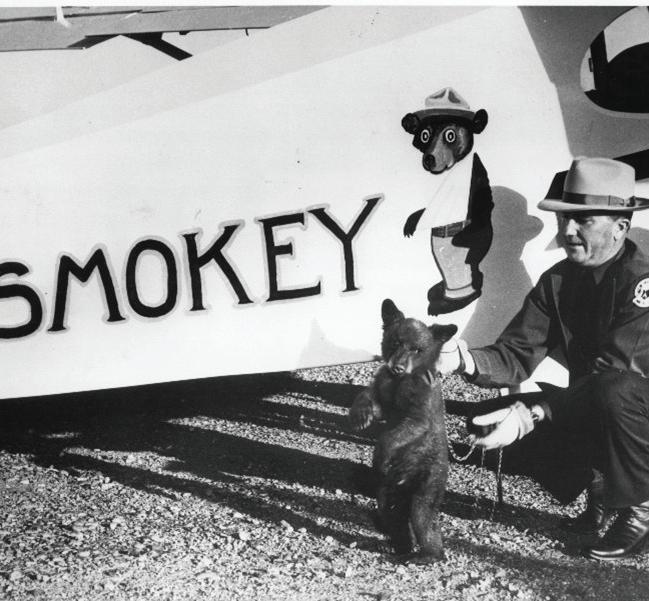
On May 9, 1950, firefighters discovered a badly burned bear cub in the aftermath of a devastating wildfire in the Capitan Mountains of New Mexico. After being nursed back to health, the cub was named Smokey Bear after the national icon created just a few years earlier.
By July 1950, this little bear officially became the living symbol of the national wildfire prevention campaign and traveled to live at the National Zoo in Washington, D.C. During his lifetime, Smokey Bear served as a wildfire prevention ambassador to millions of people who visited the zoo and marveled at his story.
Smokey’s Final Days
Smokey lived at the National Zoo for more than 25 years, but as he grew older,
his health declined. The folks of Capitan wanted Smokey Bear returned home once he passed away. More than 3 acres of land were donated to New Mexico State Parks to create a space that could honor his memory and continue telling his story of wildfire prevention.
The Smokey Bear Historical Park was dedicated May 15, 1976.
Smokey Bear died later that year on Nov. 9. His body was flown from Washington, D.C., to Capitan the following day and buried on park grounds at 3 a.m.— but that’s another story.
Smokey Bear Historical Park’s Mission
Since 1976, Smokey Bear Historical Park has shared Smokey’s message of preventing human-caused wildfires through its museum exhibits and outdoor interpretive
gardens, while not forgetting there are other stories to tell as well.
The park’s mission is big: Staff continue to share the true story of Smokey Bear via educational programs and by talking with guests about wildfire science, ecology, resource conservation, sustainable forestry practices and hazardous fuels management.
Museum exhibits explore how visitors can work, live and play safely in the wildland-urban interface, which is where forested areas bump up against humans and their homes and neighborhoods.
Interpretive displays explain the importance of protecting and restoring watersheds in Southwestern ecosystems, and how practices, such as the traditional use of fire by Indigenous people and prescribed burns, can play a part in reducing hazardous fuels and restoring New Mexico’s landscapes.
Smokey Bear Days
Since 2005, Smokey Bear Historical Park has partnered with a nonprofit friends group, the Smokey Bear’s Hometown Association, to host an annual two-day conservation education event called Smokey Bear Days.
The 2026 Smokey Bear Days event is a special occasion that honors the park’s 50th anniversary. This fun-filled, family-friendly event boasts plenty of fire prevention and natural resource exhibits and conservation presentations, as well as a hometown parade and the annual firefighter challenge. It wouldn’t be complete without food, vendors, family-friendly games and more.
To learn more about Smokey Bear’s story, the 2026 Smokey Bear Days event, park hours of operation and entrance fees, visit www.emnrd.nm.gov/sfd/ smokey-bear-historical-park.
“Thanks for listening and remember:
Only you can prevent wildfires!”
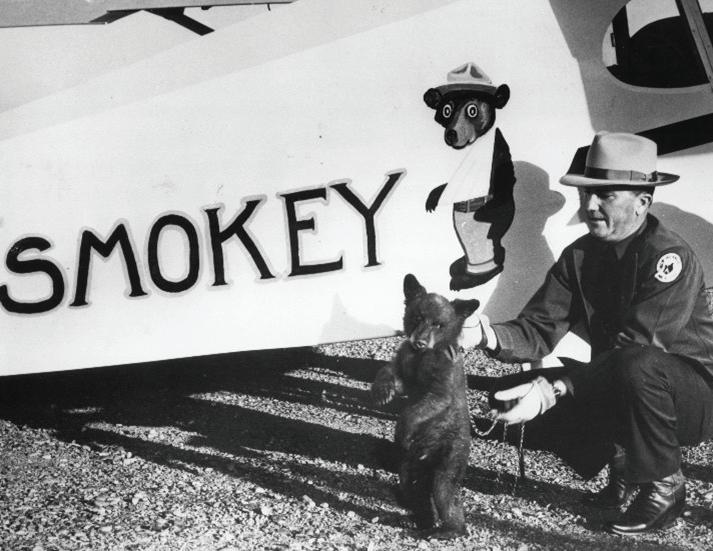
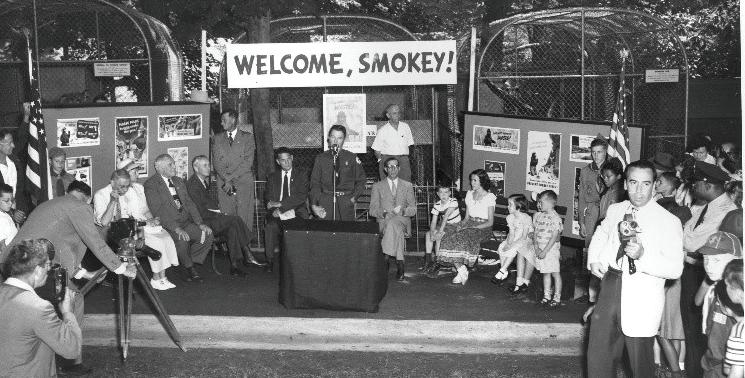
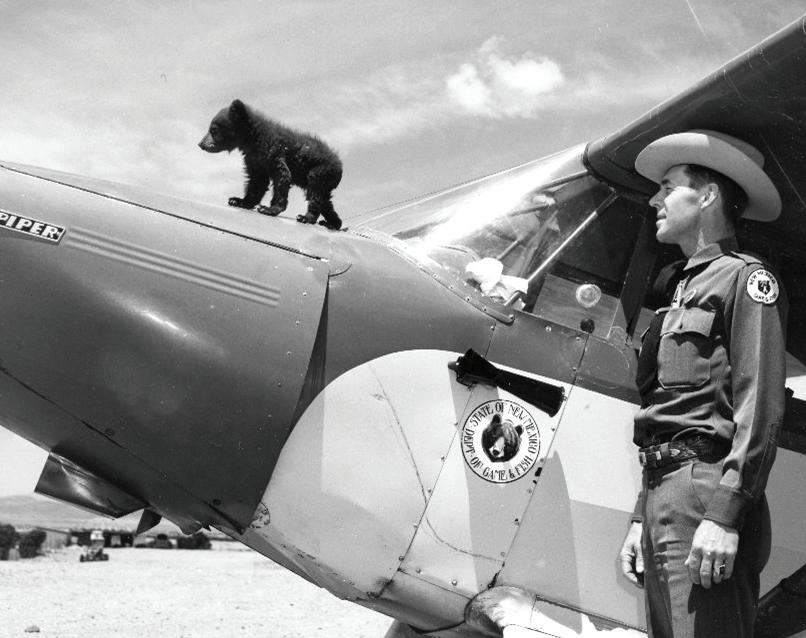
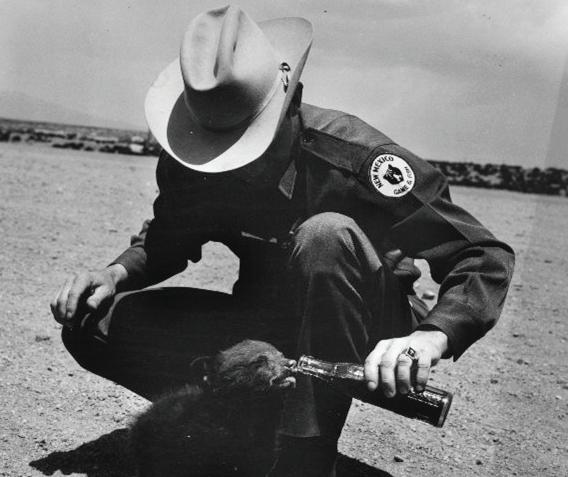
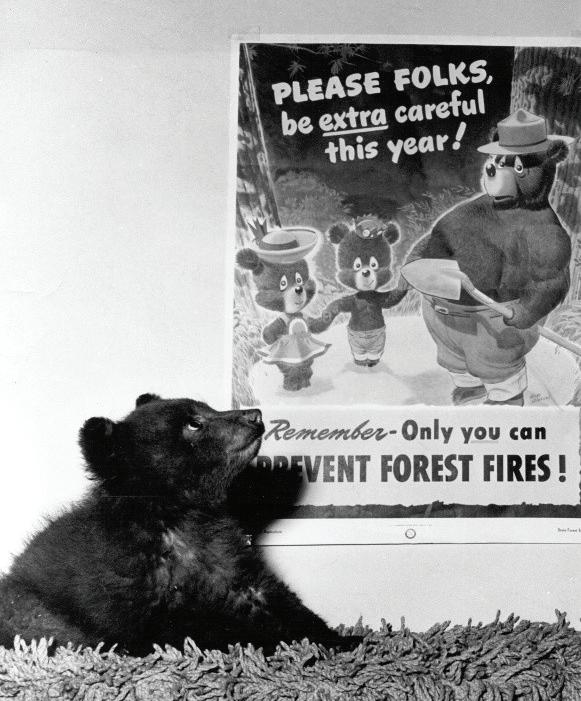
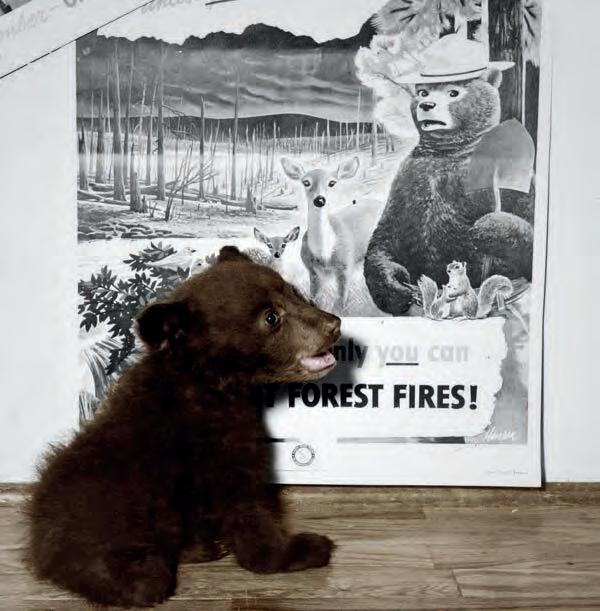
CLOCKWISE FROM TOP LEFT: Smokey and Homer Pickens, assistant warden at New Mexico Department of Game and Fish, pose in June 1950 next to the specially painted Piper Pacer airplane that would fly them to the nation’s capital and Smokey’s new home at the National Zoo. Smokey Bear walks on the fuselage of a New Mexico Department of Game and Fish airplane in May 1950. Young Smokey Bear poses under a CFFP campaign poster. Warden Ray Bell gives Smokey a refreshing drink. Homer and Smokey are welcomed June 30, 1950, with a reception at the National Zoo in Washington, D.C.
PHOTOS COURTESY OF THE FOREST HISTORY SOCIETY
Celebrate Smokey Bear’s birthday and the Park’s 50th anniversary!
May 1 - 2, 2026
10 a.m.-4 p.m.

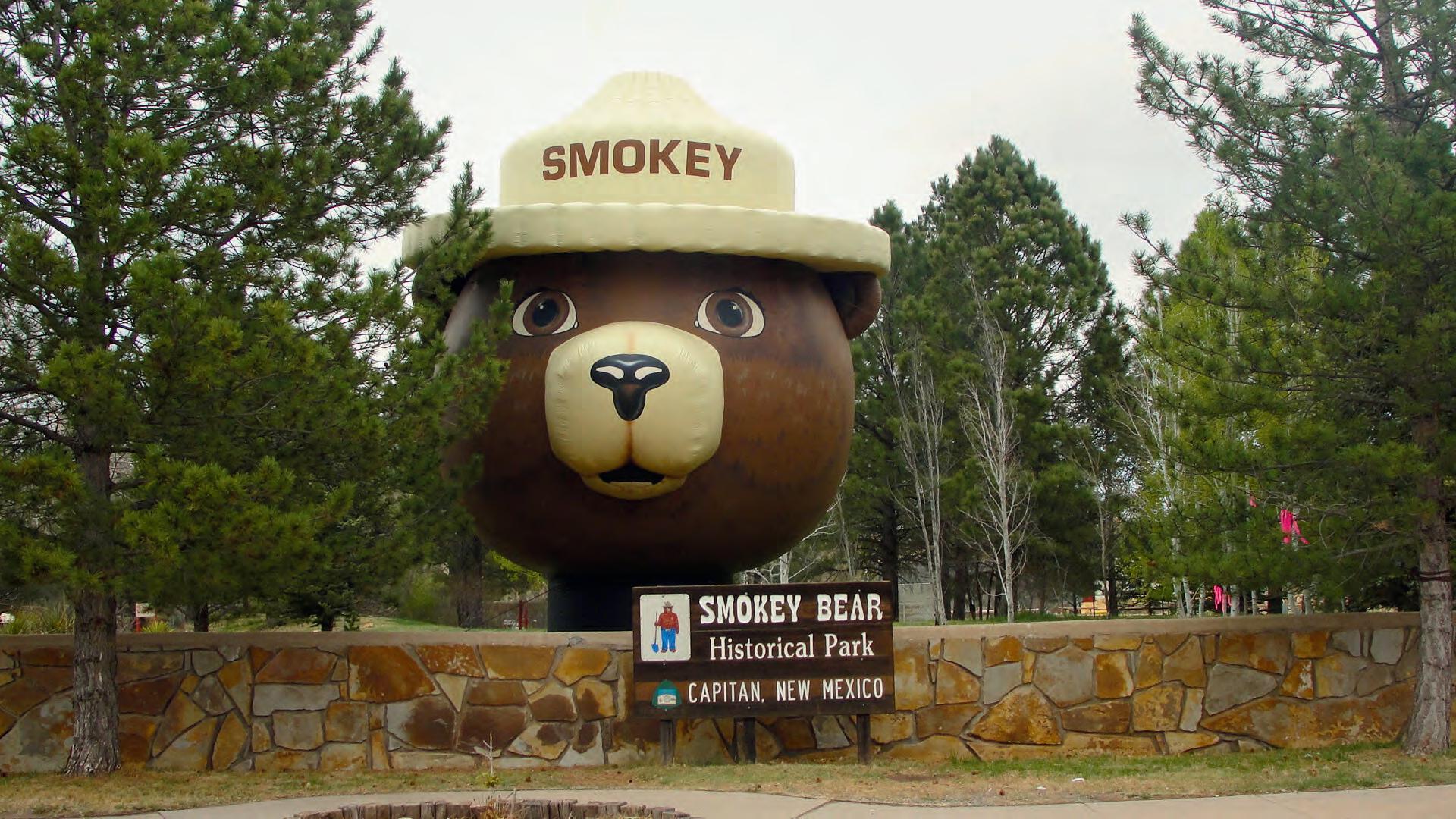
Smokey Bear Historical Park 118 Smokey Bear Blvd. Capitan, NM | 575-354-2748

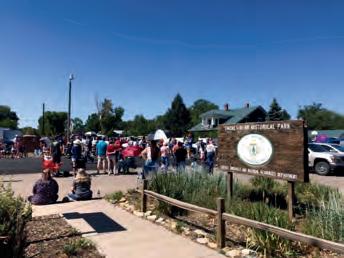
Visit Smokey Bear Historical Park online at emnrd.nm.gov/sfd/smokey-bear-historical-park
Join in on the fun, including a hometown parade, the annual firefighter challenge, food, vendors, family-friendly activities, games, fire prevention & conservation tables, and more! Scan for event info:













Selling Walk-In Tub
✓ Heated seat providing warmth from beginning to end





















The best walk-in tub just got better with breakthrough technology! Presenting the all new Safe Step Walk-In Tub featuring MicroSoothe. ® An air system so revolutionary, it oxygenates, softens and exfoliates skin, turning your bath into a spa-like experience. Constructed and built right here in America for safety and durability from the ground up, and with more standard features than any other tub.
✓ Carefully engineered hydro-massage jets strategically placed to target sore muscles and joints
✓ High-quality tub complete with a comprehensive lifetime warranty on the entire tub
✓ Top-of-the-line installation and service, all included at one low, affordable price
You’ll agree – there just isn’t a better, more affordable walk-in tub on the market.
THE MARKET PLACE
Animals
MEAT RAMS AND EWES FOR SALE. RAISE YOUR OWN MEAT! This breed, called ‘Rocky Mountain Big’ are very large cross bred Rambouillet/Suffolk sheep specifically bred for raising meat instead of wool. Rams are quite gentle weighing about 350+ pound and with right nutition produce single 7-8 pound lamb at birth, also twins. Lincoln, NM 575-808-2711 (text only).
BLACK ANGUS BULLS FOR SALE. Thick, Easy Fleshing ,Low Maintenance ,Raised at high elevation.Trich and fertility tested. Top quality herd and heifer bulls available. Yearlings starting at $ 3400.00. 2yr old starting at $3600.00 Call/Text Bobby Salvo at Y Ranch, 575-642-0962. Datil, New Mexico.
TWO 7 MONTH OLD BLUE HEELER/ AUSTRALIAN SHEPARD MIXES FOR SALE. Brother and sister, have all shots, neutered. Great personalities only selling because our daughter no longer has a good home for them. Dog house, leashes, etc. included $200. Call 575-649-2211 or 575-649-2213.
Equipment
IRRIGATION PIPE FOR SALE. Used PVC and Aluminum gated and non gated pipe for half price of new. Butterfly Valves, T’s, Elbows, plugs, Bonnets, ETC. Delivery Available. Call Sierra (575)770-8441.
SUPERIOR WATER STORAGE TANKS FOR PEOPLE, CATTLE, RAINWATER, FIRE PREVENTION. Many sizes. Best Prices. 575-682-2308
3/4 TON ALFALFA BALES FOR SALE. CALL 505-681-8545.
Great Finds
BUYING OLD GAS PUMPS, PUMP PARTS, OIL CANS, GLOBES, ADVERTISING SIGNS THERMOMETERS CLOCKS, OLD LICENSE PLATES, OLD NEON SIGNS. Call the Gas Guy in Embudo 505-852-2995. Have TruckWill Travel.
FREE COMPOSTED HORSE MANURE! I can load it in open pickups and trailers, also FREE. Ten miles north of Las Vegas, NM off Highway 518. Call Leslie at 505-690-8987 for more information.
Real Estate
TUCUMCARI-1120 S SARATOGA, (Also next to US 54/Mountain Road) $20,000. City water close by. Big Mesa Realty, 575-4562000, Paul Stout, Broker 17843, 575-760-5461. www.bigmesarealty.com.
CANADIAN RIVER-WEST UTE LAKE- SIX 40 ACRE +/- PARCELS. Lake and Mesalands view. Call for showing and pricing. Owner Financing Available. Big Mesa Realty, 575456-2000, Paul Stout, Broker 17843, 575-7605461.
www.bigmesarealty.com.
CONCHAS-615 BULLHEAD, Three bedroom, two bathroom home with four bay boat storage/garage on three lots totaling just over one acre. $245,000. Big Mesa Realty, 575456-2000, Paul Stout, Broker 17843, 575-7605461. www.bigmesarealty.com.
SUMNER LAKE- 225 INDIAN PLACE, Two bedroom, two bathroom home on 20 acres in River Ranches Subdivision. Spectacular views of Pecos River valley. $307,500. Big Mesa Realty, 575-456-2000, Paul Stout, Broker 17843, 575-760-5461. www.bigmesarealty.com.
MILAGRO- 0000 PECOS SPUR, PORTILLO CREEK RANCH SUBDIVISION. Tract 6, 164 acres. Partial fencing. Wide open space. $80,000. Big Mesa Realty, 575-456-2000, Paul Stout, Broker 17843, 575-760-5461. www. bigmesarealty.com.
TUCUMCARI-1516 S SECOND STREET, Three bedroom, two bathroom home with garage and carport. $70,000. Big Mesa Realty, 575-456-2000, Paul Stout, Broker 17843, 575760-5461. www.bigmesarealty.com.
MAGDALENA-0000 TBD STATE ROAD 169, 1.28 ACRES. Great mountain views 15 miles from Magdalena. Borders Cibola National Forest. Hunting potential. $15,000. Big Mesa Realty, 575-456-2000, Paul Stout, Broker 17843, 575-760-5461. www. bigmesarealty.com.
DATIL/PIE TOWN AREA- 0000 3
HERRINGTON CANYON ROAD. 40+/acres west of Herrington Canyon Road. North of Sawtooth Mountains and Cibola National Forest. $19,000. Big Mesa Realty, 575-4562000, Paul Stout, Broker 17843, 575-760-5461. www.bigmesarealty.com.
DATIL/PIE TOWN AREA- 0000 4
HERRINGTON CANYON ROAD, 20+/acres east of Herrington Canyon Road. North of Sawtooth Mountains and Cibola National Forest. $12,000. Big Mesa Realty, 575-4562000, Paul Stout, Broker 17843, 575-760-5461. www.bigmesarealty.com.

PIE TOWN- 78 E SAWTOOTH DRIVE, SAWTOOTH MOUNTAIN SUBDIVISION LOT 41. 14.43 acres vacant land. Views of Sawtooth Mountains. Close to Pie Town. $35,000. Big Mesa Realty, 575-456-2000, Paul Stout, Broker 17843, 575-760-5461. www. bigmesarealty.com.
SOCORRO, SAN MARCIAL-SOUTH OF SAN ANTONIO-WILLOW SPRINGS SUBDIVISION- 16A WINCHESTER, 161 ACRES. Great views in the Chupadera Mountain foothills. $105,000. Big Mesa Realty, 575-456-2000, Paul Stout, Broker 17843, 575760-5461. www.bigmesarealty.com.
HILLSBORO-10841 STATE ROAD 152, Over 5000 square foot home with three bedrooms and three bathrooms on just over six acres. Has fourth room that can be used as a bedroom. Pool and hot tub. $699,000. Big Mesa Realty, 575-456-2000, Paul Stout, Broker 17843, 575760-5461. www.bigmesarealty.com.
EASTERN NEW MEXICO- LET US SELL YOUR LARGE ACREAGE WORKING FARM OR RANCH. Broker is farm owner/operator and lifetime New Mexico resident. Big Mesa Realty, 575-456-2000, Paul Stout, Broker 17843, 575-760-5461. www.bigmesarealty.com.
PRIME BUSINESS LOCATION ON HISTORIC BRIDGE STREET STEPS FROM LAS VEGAS’ HISTORIC PLAZA. Surrounded by beautiful historic commercial establishments, this 1988 building was built in the style of its neighbors. Downstairs retail; upstairs residential or 3 separate offices w/kitchen, dining area, & full bath w/ laundry. New roof 2024; central heat & air; security system; parking in back & on-street. Laurie Frantz, Real Broker, 505-920-1346, lauriefrantz@gmail.com.
MULTIPLE BEAUTIFUL, PONDEROSA PINE-FORESTED LOTS IN PENDARIES SUBDIVISION. Lots available for purchase individually; prices as low as $5,000. Community water access & views. Laurie Frantz, Real Broker LLC, 505-920-1346, lauriefrantz@gmail.com
To Place a Classified Ad
1. Visit www.enchantment.coop/classifieds and complete form. You will be contacted by email with price and deadline to submit check or money order.
2. Ads will not be accepted over the phone.
3. Or, complete form and select category.
4. Write ad on another sheet of paper.
5. Price: $1.25 per word. For example:
40 word ads are $50
80 word ads are $100
To Send and Pay Your Classified Ad
1. Mail ad and payment (Payable to NMRECA)
NMRECA • enchantment
614 Don Gaspar Ave. Santa Fe, NM 87505
OPPORTUNITY TO OWN HISTORIC TIERRA AMARILLA PROPERTY. 2-story traditional adobe 1881 Garcia House w/tin roof, with original interior adobe walls & wood floors in most of house. Zoned commercial & residential. Room in back was used as a stage. $200,000. Laurie Frantz, Real Broker LLC, 505-9201346, lauriefrantz@ gmail.com.
80 GLORIOUS HILLY ACRES 3 MILES SOUTH OF MADRID OFF TURQUOISE
TRAIL. Stupendous views of surrounding hills & valley. Many building sites, good dirt road to top of lower 40 acres; no graded road beyond that. Shipping container on large level spot on lower 40 acres is great building spot. No utilities in place; no electric in area. Laurie Frantz, Real Broker LLC, 505920-1346, lauriefrantz@gmail.com.

Vehicles
LIGHTLY LIVED IN TOWNHOUSE OFF 4TH IN ALBUQUERQUE NORTH VALLEY. Open floor plan living/dining room & kitchen. Slider leads to patio & walled backyard. First floor primary 1b1bath, laundry room. Second floor 2b1b. 1-car garage. Energy efficient central heat/cooling, programmable thermostat, low E windows. Laurie Frantz, Real Broker LLC, 505-920-1346, lauriefrantz@gmail.com
Deadline
1. Due the 7th, one month prior. Ads due April 7 for the May issue. Good to Know
1. Only members of New Mexico electric cooperatives may place ads.
2. We reserve the right to reject any ad.
4. Advertisements in enchantment are paid solicitations and are not endorsed by the publisher or the electric cooperatives of New Mexico.
5. PRODUCT SATISFACTION, COMPLAINCE WITH APPLICABLE ADVERTISING RULES AND REGULATIONS, AND DELIVERY RESPONSIBILITY LIE SOLELY WITH THE ADVERTISER.
6. Enchantment prints monthly, except for June and December. Questions? Call: 505-982-4671.
383 - DODGE ENGINE REBUILT. 383DODGE ENGINE CORE. 455 OLDS ENGINE REBUILT. ALUMIN HEADS. INTAKE ROLLER ROCKER A LOT MORE. 455 OLDS ENGINE REBUILT W/600 LIFT CAM. 1996 454 CHEV. SHORT BLOCK REBUILT. 1993 700 R4 FOR CORVETTE REBUILT. Logan, NM. 719-289-1151.
Name: Address: City: State: ZIP: Phone:
Cooperative:
Select Category Below
Animals Great Finds
Business Real Estate Equipment Vehicles
Survive Just About Anything for Under $30
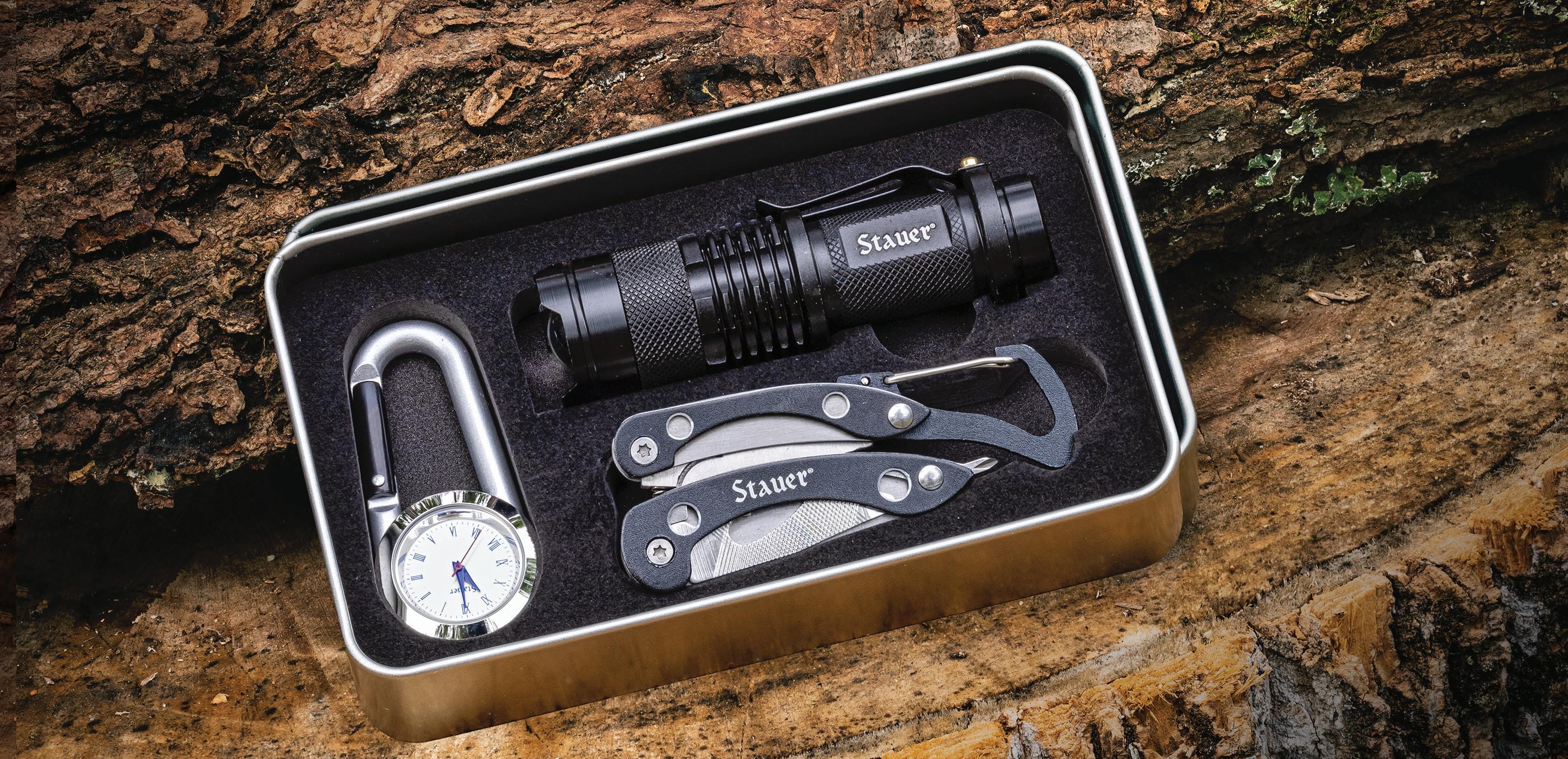
On any outdoor adventure, Mother Nature’s job is to present you with challenges. Some days she’s more demanding than others. And on those days, you’d better come prepared. The Stauer Survival Box is a near-guarantee you’ll be up to the challenge. The stainless steel multitool offers wire cutters, knife, bottle opener, file, a set of screwdrivers, a pair of pliers and much more. The powerful flashlight has three different settings, and the tactical loop watch is a reliable, water-resistant timepiece that clips to your hip and never leaves your side. All told, opening the Survival Box gives you instant access to nine different tools for JUST $29.
Regularly sold for $99, we’re offering this collection of survival essentials to you for A FIFTH OF THE NORMAL PRICE! Why? Because we’ve had an incredible year and we feel like giving back to our valued customers. As this kit has proven to be one of our all-time best sellers, we can only extend this offer while supplies last. Of our initial run of 1,737, more than half have already sold. Your move, Mother Nature.
Survival Box Specifications:
• Multitool: 3 1/4" x 1" folded
• Flashlight: 3 1/2" x 1", 260 lumens, takes AA batteries (not included), three LED light modes: strong, medium and caution flashing
• Watch: 2 3/4" x 1", battery type SR626SW (included)
Survival Box $99 $29* + S+P Save $70
*You must use Insider Offer Code: SVB329-02 to get this price. California residents please call regarding Proposition 65 regulations before purchasing this product.

Regularly priced at $99, take advantage of this special offer while supplies last!
Praise for Stauer’s Survival Box “[It] has everything!” — Carol T., Anaheim, CA
Box includes flashlight, watch and multitool with wire cutters, knife, bottle opener, file, screwdrivers, pliers and more!
LunchtheonGo
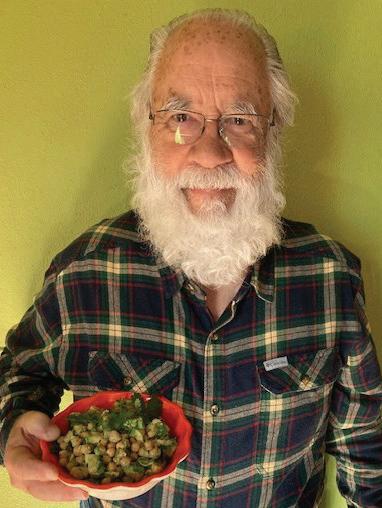
Some of the best recipes don’t come from cookbooks—they come from family recipe boxes, handwritten cards tucked in kitchen drawers and meals shared with neighbors. That’s exactly the kind of recipe we love to feature in Enchantment.
Our latest submission comes from Rex Myers in Socorro, who shares a salad that has been part of his family’s recipe collection for years. Although the recipe’s origins are unknown, it has stood the test of time. For Rex and his family, it’s a warm-weather favorite. It is quick to make, easy to pack for picnics or lunch boxes, and especially good when served over fresh spinach from their raised-bed garden in the backyard.
It’s a perfect example of the simple, delicious dishes that bring people together across rural New Mexico. After all, great food—like great communities—is meant to be shared.
Chickpea Salad
1 large avocado
4 teaspoons lime juice
1 can chickpeas, drained and rinsed
4 cloves garlic, minced
3 tablespoons chopped cilantro
• Mash avocado in a bowl. Stir in chickpeas, cilantro, garlic and lime juice. Season with black pepper to taste.
• The salad can be served over fresh spinach leaves and/or with sour cream on top.

Share Your Recipes with Enchantment
Do you have a favorite family recipe you’d love to share with fellow co-op members? We’re always looking for recipes that bring a taste of rural New Mexico to the table. Whether it’s a family classic passed down for generations, a child-approved favorite, a potluck staple or a quick weeknight meal, we’d love to feature it in an upcoming issue of Enchantment.
To submit your recipe, include:
X The recipe name and ingredients.
X Step-by-step instructions.
X A short story or background about the recipe, such as where it came from.
X A photo of the finished dish if you have one.
Send your recipe to: tcondit@nmelectric.coop
Your recipe could be featured in a future issue and shared with more than 113,000 readers across New Mexico’s electric cooperative communities.
Pull out those recipe cards, handwritten notes and family favorites—and help us celebrate the flavors of rural New Mexico.


Rooted in
Rural Life
Kyler Bowerman goes the extra mile as a Central Valley Electric
Cooperative member services representative
By Tom Condit
To Kyler Bowerman, rural life isn’t just a backdrop. it’s a foundation.
“Rural life to me means hard work, respect for others and wide-open spaces,” she says. “Growing up around the ranching industry taught me the value of hard work, resilience and taking care of those around you.”
Those values came from family, from 4-H and FFA show barns, from early mornings alongside her dad, and from time spent hunting and fishing across Southeastern New Mexico. Through these experiences, Kyler says she learned the importance of honesty, adaptability and a strong work ethic—qualities that shape who she is today.
She says her parents are her biggest influence.
“They taught me the value of life and how to be independent and responsible in everything that I do,” she says.
Finding Her Path
Kyler graduated from Artesia High School before heading to New Mexico State University. Like many students with their courses of study, she had a winding journey toward her major.
“Growing up, I always knew I wanted to be involved in the agriculture industry,” she says.
She started in animal science, then switched to agricultural business—but neither felt quite right.
Everything changed when Shannon Norris Parish, whom Kyler knew from her years in FFA, returned to NMSU to launch an ag communications program.
“She took me under her wing,” Kyler says. “For the first time, I truly found my passion.”
While still in college, Kyler launched a leather business and a photography business.
“Starting both businesses while in college taught me a lot about entrepreneurship at a young age,” she says. “I had to learn how to manage my time, balance school and work, and discipline myself. It taught me how to communicate clearly, handle feedback and solve problems.”
Coming Home to Serve
For Kyler, returning to Southeastern New Mexico was about community.
“My family and I have lived in the Artesia area for most of my life, and it is the place we call home,” she says. “After the passing of my brother, our community was there for my family and me. It made me grow closer to this community, and for that I will always be thankful.”
She stepped into her role as a member services representative at Central Valley Electric Cooperative immediately after graduation.
“I’m not going to lie, it was a big adjustment going straight into my career right after graduation,” she says.
Kyler says her first few months were “a mix of excitement and information overload,” as she learned about her role as well as how the co-op operates as a whole. Working for a cooperative changed how she sees the electric industry.
“A cooperative exists to serve its members, who are also the owners,” Kyler says. “We operate as a not-for-profit electric utility. That changes the mindset behind every decision.”
Wearing Many Hats
There is no true “typical” day in member services. Kyler’s days include managing CVE’s social media, website and monthly publications. She also handles member inquiries, which range from reserving the co-op office’s community room to providing energy-efficiency rebate information.
Some days take her out of the office entirely. She attends career fairs, photographs employees in the field and participates in community events.
“The part of my job that energizes me the most is getting out into the field or into the communities we serve,” she says. One of Kyler’s most impactful
responsibilities is helping deliver CVE’s electrical safety demonstrations.
Each year, CVE presents its tabletop electrical safety demonstration to fifthgrade students at roughly 25 schools across its service area. Kyler operates the demonstration board and leads presentations showing how everyday situations—such as flying a kite near power lines, climbing trees close to electrical lines or encountering downed wires—can quickly become dangerous. Students also learn what to do if a vehicle comes into contact with a power line and receive practical indoor electrical safety tips.
CVE also conducts a large arcing safety demonstration mounted on a trailer, which is typically presented for oilfield workers, first responders and other organizations interested in learning more about electrical hazards.
The lessons can leave a lasting impact.
“A few years ago, a high school student came up to us at a career fair to tell us he had crashed into a power line,” Kyler says. “Because of our fifth-grade presentation, he remembered that the safest place for him was inside the vehicle until help arrived. It validated how crucial it is to engage with students and families and help them understand electricity, safety and the value of the cooperative.”
Introducing Future Lineworkers
At several career fairs, Kyler saw how curious and engaged students were with the work line crews perform. She started thinking about how CVE could do more.
After researching and planning, she proposed the idea for what is now CVE’s annual Lineman Camp. CVE hosted its first camp in May 2024.
The camp gives students ages 17–22 a hands-on opportunity to learn about linework. Participants rotate through stations that include climbing and working on deenergized practice poles with CVE linemen, touring the cooperative’s meter shop, learning how drones are used in electric utility work and completing hands-on activities with the staking engineering department.
“Some leave inspired to pursue the
path, while others gain clarity that it may not be the right fit,” Kyler says. “Either way, they leave with respect for the work, a strong work ethic and valuable insight into the industry.”
Telling the Co-op Story
Two of the most impactful things Kyler has seen during her time at CVE are the damage caused by storms and the incredible perseverance of the co-op’s lineworkers as they restore power.
“Restoring power isn’t as simple as flipping a switch,” she says. “It requires skill, coordination and long hours in challenging conditions.”
Her photography and communications work helps co-op members gain insight into the hard work that goes into keeping the power flowing.
“One thing I’ve learned from social media and publications is that people respond to faces,” she says. “Posts and stories about our employees, members and the community consistently get the most engagement.”
She adds that building relationships with the community and sharing the hard work cooperatives do is important.
“Our co-op isn’t just about electricity— it’s about the people we serve and the people who make it happen,” she says.
Leadership and Vision
In January, Kyler stepped into the role of president of the New Mexico Marketing & Member Services Association. Her goal is to help both the organization’s members and the state’s co-ops thrive in a changing industry.
“Sharing ideas and resources helps improve all our cooperatives,” Kyler says.
“In the end, collaboration ensures that every co-op serves its members more effectively.”
When it comes to the cooperative mission, she keeps the mission simple and focused on service.
“To me, service means putting others first—showing up with integrity, empathy and a willingness to go the extra mile,” she says. “I’m committed to continual improvement and learning in everything that I do.”
AROUND NEW MEXICO
New Mexico’s rural communities, served by electric cooperatives across the state, are surrounded by breathtaking deserts, mountain ranges, and more than 50 national and state parks. From quiet villages to historic cities such as Santa Fe and Taos, the Land of Enchantment blends Native American, Mexican and Spanish cultures into something truly unique. Here are upcoming local events happening in co-op areas and beyond:
Wine Down
When: Every Wednesday in April
Where: Noisy Water Winery, Red River Escape the hustle and bustle and join in a relaxing evening at Noisy Water Winery in Red River. Wine Down Night is your invitation to enjoy the tranquil atmosphere, superb wines and the company of fellow wine enthusiasts. redriver.org/events/wine-down
Truth or Consequences Second Saturday Art Hop
When: 6-9 p.m. April 11
Where: Downtown Truth or Consequences
Local galleries, studios and shops open their doors for an evening of art, music and community. Visitors can explore the historic downtown while meeting artists and enjoying a relaxed small-town atmosphere. torcmainstreet.org/second-saturday-art-hop
Dinosaur World Live
When: April 12
Where: Farmington Civic Center, Farmington Discover a prehistoric world of astonishing—and remarkably lifelike—dinosaurs. Meet a host of impressive creatures, including a triceratops, giraffatitan, microraptor, segnosaurus and every child’s favorite flesh-eating giant, the Tyrannosaurus rex. fmtn.org/civiccenter
Include Your Upcoming Event
Gathering of Nations Pow Wow
When: April 24-25
Where: Expo New Mexico, Albuquerque
The largest powwow in North America features competition dancing, cultural performances and a large traders’ market celebrating Indigenous culture. gatheringofnations.com
Bosque del Apache Spring Bird Walk
When: April 30 to May 3
Where: Bosque del Apache National Wildlife Refuge, near San Antonio
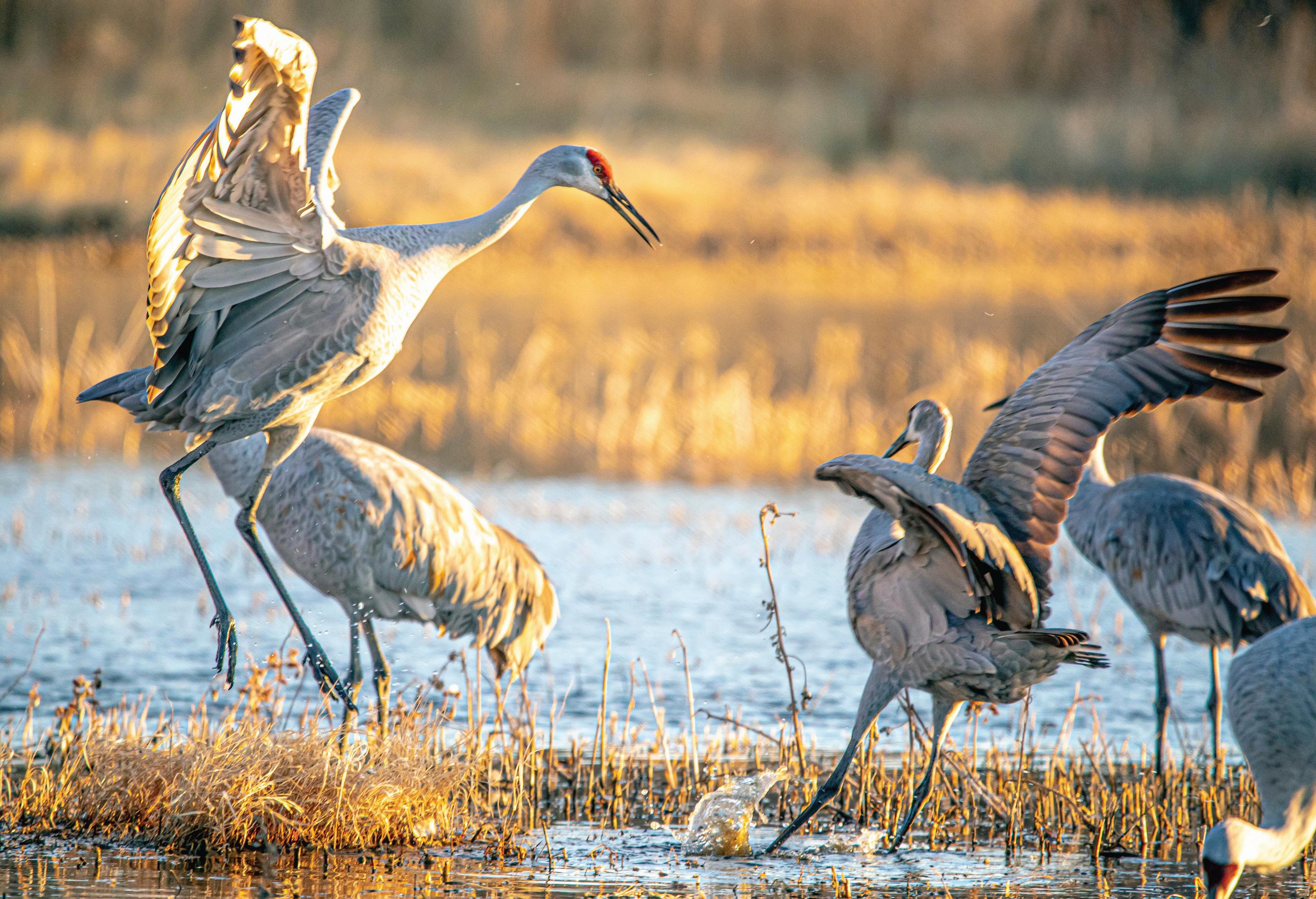
Join us for a four-day event celebrating spring migration at Bosque del Apache and learn about the amazing species spending the season here. Holly Merker and Alex Harper will guide inperson birding identification field trips. friendsofbosquedelapache.org
Send your event details to eventcalendar@nmelectric.coop. Include the event title, date, town and a summary of the event. Include the event website address so readers can get additional event information. Submit the event notification at least 60 days before the event to meet our press deadline. Space is limited, and events are published at the discretion of the editor.

Co-op Coloring

Cooperative Youth Art
Congratulations to the winning artists who drew what they found while out on their walks in nature.

Janna Herndon • Age 12 Continental Divide Ramah

Sonia Coucke • Age 6
Central New Mexico Electric Cooperative Edgewood
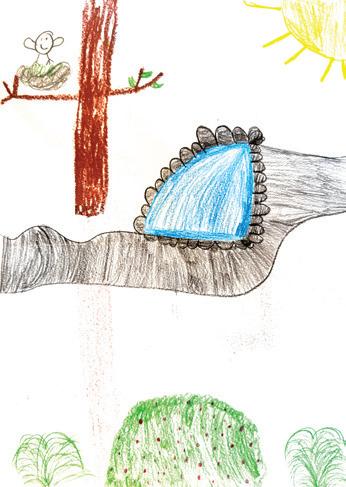
Macy Martinez • Age 9 Springer Electric Cooperative Springer
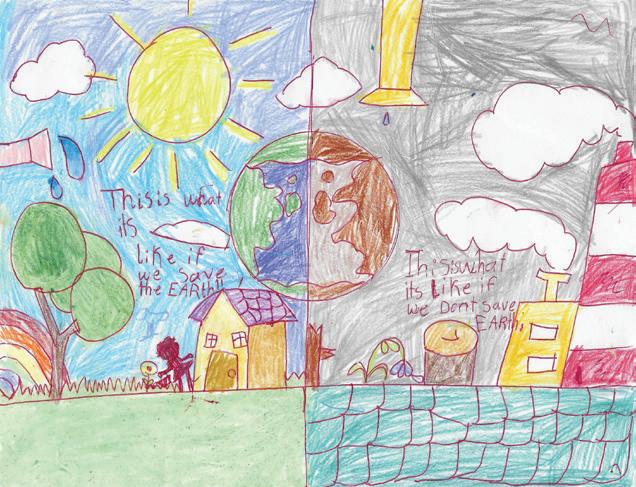
Alice Reyes • Age 8
Jemez Mountains Electric Cooperative Arroyo Seco

Veronica Mitchell • Age 6 Farmers' Electric Cooperative Melrose
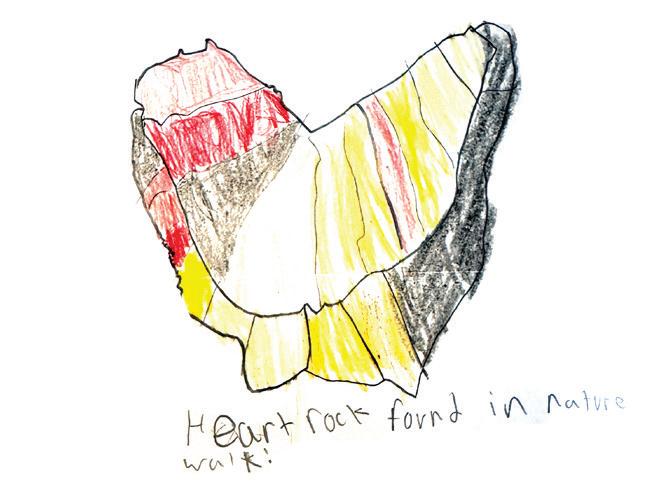
Cooper Simon • Age 10 Columbus Electric Cooperative Deming
Checklist
May topic: Happy Cinco de Mayo! Draw a scene that represents how you celebrate—a meal shared at home, festive parades or cheerful decorations.
Send your drawing to:
By mail: Youth Editor 614 Don Gaspar Ave. Santa Fe, NM 87505
By email: tcondit@nmelectric.coop
Deadline: Submit by the 9th, one month prior to publication. Winners receive a $15 gift card and are featured in the magazine.
Have a Youth Art topic? Email or mail to the addresses at left or call 505-982-4671.

Include the following five items on the back of your drawing, otherwise you are disqualified:
First and last name
Age
Mailing address
Phone number
Electric co-op
Artwork accepted up to age 13.
Drinking Drinking Water Water Storage Storage Storage Storage Tanks Tanks Tanks Tanks




Electrifying NM Since 1935
UPGRADEYOUR HVACANDSAVE
Tri-State Generation & Transmission
Western Farmers Electric Cooperative
Associate Member
RELIABILITY
FOR EVERY MILE
Co-ops and IOUs
WE WORK YEAR-ROUND
+ EFFICIENTLYCOOLANDHEATYOURHOME
New Mexico’s electric cooperatives are member-owned, not-for-profit organizations focused on providing reliable, affordable power to rural areas. Unlike IOUs, which prioritize shareholders, co-ops reinvest profits locally, improving infrastructure and keeping rates fair.
At Tri-State G&T, our energy mix is as diverse as the landscapes we serve. With renewables, natural gas, battery storage, and more, we’re delivering reliable, affordable power with an electric system that’s built for the long haul. Whether increasing storm resilience or meeting the growing energy demand, the decisions we’re making now will help safeguard reliability in the rural West for years to come.
THE POWER OF WORKING TOGETHER
Delivering reliable energy is our top priority
TO REDUCE WILDFIRE RISK
A properly maintained, high-quality heat pump will last at least 15-20 years and eliminate the need to have two separate systems to perform heating and cooling.
+ IMPROVEYOURHOME’SAIRQUALITY
Why do we show up before the sun rises?
Living in the rural West comes with undeniable wildfire risk, but it’s a fight we’re facing head-on.
Plan for tomorrow while keeping today running strong? And stand shoulder to shoulder when the path gets challenging?
Distribution Co-opand G&T’s
Natural gas and propane furnaces generate heat by burning a mixture of fossil-fuel and air. Heat pumps don’t use combustible fuel to create heat which eliminates potential exposure to dangerous combustion byproducts such as carbon monoxide.
+ AFLEXIBLECOOLINGSOLUTION
Distribution co-ops deliver electricity directly to homes and businesses, maintaining local lines and customer service. Generation and Transmission providers supply power to distribution co-ops, managing large-scale generation and bulk transmission.

There’s a reason reliability is the first thing we reference in our mission statement. When individuals, businesses and communities are counting on it, the power must be on. This means we have to ensure we have the power supply to meet our member requirements. It’s a constant process of measuring, evaluating, planning and responding.
At Tri-State G&T, we deploy data-driven monitoring and wildfire mitigation strategies to identify and mitigate risk to protect our communities and the critical infrastructure they rely on. We’ll do anything within our power to protect the people and places our members call home.
WHATEVER THE FUTURE HOLDS, WE’LL POWER IT.®
Because every community our members serve deserves power they can count on. From energy planning to system reliability, we work as one connected cooperative family—sharing resources, expertise, and the strength that only comes from standing together.
THE TRUSTED CHOICE SINCE 1976!
Ductless heat pumps also known as mini-splits, provide efficient HVAC solutions for new homes and additions, renovations or adding air conditioning without adding ductwork. The slim, outdoor air handler also allows for flexible placement.
We stock the area’s largest supply of all things pertaining to water!
• Solar well systems • Full septic systems • Plumbing fittings • Poly pipe • Water storage tanks • PVC pipe
Built by and for our members, we power what matters to you. That’s the value of our cooperative family. To learn how we’re delivering on our mission, visit www.tristate.coop
So your co-op can deliver what matters most: reliable, affordable electricity that empowers every moment of life.
• Pressure tanks • Fencing supplies
RPS and Loads
WHATEVER THE FUTURE HOLDS, Scan to learn more or visit www.tristate.coop/wildfire
Learn more about Tri-State’s energy mix
New Mexico’s Renewable PortfolioStandard requires utilities to increase renewable energy use, shaping how co-ops manage electricity demand. Co-ops balance integrating clean energy with providing reliable, affordable power to rural communities. Vegetation management is critical for
WE ARE BRIGHTER, STRONGER, AND
We are proud to serve our local community and provide cost-effective solutions for any water or well project. On behalf of everyone at Williams Windmill, we want to thank all our customers for their patronage and look forward to serving the Southwest for many more years to come!


SIPC