EASY LISTENING, SMARTER SPENDING THE GIRL MATH GUIDE
Financial podcasts perfect for easy listening
Behind the TikTokpopularized “Girl Math”
TARIFFS HIT HOME
New tariffs drive up price on everyday goods
Siena Ebert & Aneeka
Tansen Editors-in-Chiefs
Isabella Luo CoManaging Editor
Yolanda Pan CoManaging Editor
Vivian Zhou Chief Operations Officer
Maya Menon Chief Design Editor
Kaitlyn Ouyang Staff Writer
Motivated by our passion for business, we created a publication covering news, information and inspirational stories about women leaders in the global world of business and nonprofit organizations. With this inclusive publication platform, we continue to build a community that explores issues, exchanges ideas and shares voices.
Financial podcasts perfect for easy
Behind the TikTok-popularized “Girl
Math” trend
How to spot and avoid financial scams
when traveling abroad
Browse the Emporio content below!
Why you splurge the minute the plane lands
Debunking popular financial assumptions
Teens struggle to find summer jobs
How
EDITORS’LETTER
The Finance Bro: the typical character associated with the high-stakes world of investment, banking and hedge funds. The American Psycho Harvard graduate who pulls into work in his open sky roof Mercedes Benz According to movies with numerous accolades, men have made the big discoveries: they predicted the housing crisis, they earned billions off investing while women serve as the behind the doors, dim-light pleasure. This is not the blueprint of success in the finance, business or economics world, or any field of work for that matter. In fact, it may be quite the opposite. The traits exhibited by male characters celebrated on the screen risk-taking, aggressive and proud are often the ones that undermine decision-making in real markets. Behavioral research today shows that men display a stronger sunk cost bias, or the tendency to persist in a high-risk situation, when abandoning it would be the more logical decision. Women, conversely, are more likely to rethink and choose strategically.
Beyond theory, women continue to demonstrate remarkable performance in business and economics. Several studies have shown that gender diversity in leadership has been correlated with heavily improved financial performance. A study from Personal Finance Club revealed that of the 500 S&P companies, the 32 companies with female CEO’s significantly outperformed the rest of the male CEO companies with a 10-year return of 384 percent compared to 261 percent. Women clearly bring measurable strengths in participative leadership and strategic vision. Yet, finance and economics remain male dominated, with roughly 73 percent of professionals in these fields being men While steps towards gender equity have been made, ingrained cultural barriers persist and remind us of the work left to do
This summer edition of Emporio’s Newsletter Series explores the themes of awareness and opportunity. It is about challenging the stereotypes assigned to women and uncovering the biases that shape financial decisions, while recognizing that habits and skills are not defined by gender. It is about providing readers with a roadmap to navigate spaces historically not designed for them. Above all, it is about excelling on your own terms.
As Co-Editors-in-Chiefs, we want to thank our inspiring writers: Isabella Luo, Yolanda Pan, Vivian Zhou, Maya Menon and Kaitlyn Ouyang Without their dedication, we wouldn’t be able to usher in a new era for Emporio, one that is unapologetically ambitious.
Here’s to redefining what success looks like.
Aneeka Tansen and Siena Ebert
Easy Listening, Smarter Spending
Financial podcasts perfect for easy learning
Isabella Luo, Managing Editor
From a cozy crime podcast to one with life advice, the podcast industry has exploded within the past few years, covering a varying range of topics Podcasts enable an easy way for listeners to learn new information with minimal effort
For listeners looking for quick financial tips and information, below are some financial podcast recommendations perfect for a relaxing yet educational time.
Friends that Invest
Formally named Girls That Invest, Friends That Invest is led by Sim Kaur, a Forbes 30 under 30 investor Kaur breaks down the intimidating world of investment, especially for women who still face an immense wealth gap. From venture capital to public markets, Friends That Invest reveals all the tips to a successful investment journey.
Planet Money (NPR)
Started in 2008, Planet Money explains the current economy, including episodes covering trade deficits, tariffs and even bitcoin. This economic and personal finance podcast breaks down complex money problems into bi-weekly, fifteen to thirty minute episodes Taking a narrative, story-driven route,
episodes are both entertaining and informative. For a more quick listen, Planet Money also has a daily spin-off show, “The Indicator” Hosted on NPR News, Planet Money can be found on Spotify, Apple Podcasts and Amazon Music.
The Ramsey Show
Following a more advice-based style, The Ramsey Show is a callin radio show where listeners can ask questions live. Dave Ramsey, founder of Ramsey Solutions and New York Times bestseller, provides tips on personal finance, including planning or budgeting for the future and debt avoidance. Listeners can tune in live on over 600 stations across the U S or rewatch old videos on the official Ramsey Network YouTube channel
Money with Katie
For a more laid-back vibe, Katie Gatti Tassin, a previous user experience designer at Dell Technologies and Meta, covers budgeting, lifestyle inflation, investing and personal finance tips with a relatable tone. Her upbeat podcast invites guests for conversations that explore the intersections between the current economy and practical financial education
Emporio: Let’s Get Down to Business
Featuring interviews with business and finance leaders, our in-house podcast offers a chance to gain unique insights into the business world through their experiences. Whether you are looking to dive deeper into potential careers or just for a fun and entertaining time, this monthly podcast, found on Spotify, checks all the marks.
The Girl Math Guide
Behind the TikTok popularized “Girl Math”
Isabella Luo, Managing Editor
From a seven dollar cup of iced matcha to an online cart with three bikinis in slightly different shades of pink, Gen Z summer spending is now being justified under a popularized trend, “Girl Math.” First trending on TikTok, Girl Math is a humorous logic use to justify spending and splurging.
Prepaid = Free
The first logic of Girl Math is that money spent in advance means that the result is free Concert tickets, flights or even pre-orders of artist albums are paid for months in advance of the actual event. By the time of the actual event, since the money already left the bank account, Girl Math has declared the event free.
Cash Doesn’t Count as Real Money
As card usage becomes more widespread, Girl Math says spending cash doesn’t count the way digital card swipes do. Since your account balance isn’t changing, then you aren’t spending money Using cash for a matcha means that you just treated yourself to a free drink!
Sales Are the Same as Savings
If a dress is discounted from $100 to $60, buying it would mean saving $40. In Girl Math, your total isn’t about how much you spend, it is about how much you save.
Returns Mean Earning Money
If you buy a purse for $50 last month, but you return it, then that means you have just made yourself $50. Since the money has already left your account, the return means new money to spend and use.
Is Sexist?
It’s a trend that stereotypes women. For some, Girl Math reinforces the stereotype of women recklessly spending in an overly extravagant manner “The concept of Girl Math, whether it means to or not, suggests that women lack mathematical skills, further undermining the intelligence of women in general,” Tanvi Joshi, senior at the Hockaday School, said. Although the concept can be exchanged as a joke, the widespread use of the online trend has reinforced sexist standards about women
It’s just for fun!
For others, Girl Math is nothing more than light-hearted humor.
“I understand the importance of saving money and actually thinking before spending, but Girl Math is just a way to joke about my own habits,” Sharika Mandyam, senior at the Hockaday School, said. Her perspective is similar to many of those online who view the overall trend as a way of laughing at common thought patterns While the trend can be misused, at its simplest form, Girl Math is a playful joke, shared as a way for girls to connect.
TRAVEL Scam-Proof Summer
How to spot and avoid financial scams when traveling abroad
Yolanda Pan, Managing Editor
You’re pacing along the unfamiliar sidewalks of a city to be explored. A faint breeze relieves the sweltering summer heat, and you admire the hues swirling together, aweing at the monuments towering overhead Suddenly, it happens so quickly you can’t even process it: someone bumps into you, and their iced coffee spills all over your carefully curated outfit You look down amidst the confusion, struggling to choke out a foreign language you barely know your purse is gone!
Even if you think you are a pro-traveler, you should still pack some scam knowledge along with your excitement as you head off into the travel season. Travelers tend to believe that scams are easily spotted and avoided. However, data from the Federal Trade Commission shows that in 2024, roughly 69 percent of all scams were travel-related. Mastercard’s internal data displays that fraud rates during the summer travel season increase by up to 18 percent. Travel scams can happen anywhere and can be executed by anybody. Being aware of common travel scams and how to avoid them can prevent you from falling into a frustrating situation
tips
The Flirt & Flee
An attractive local casually strikes up a conversation and asks to get a drink or food with you. When it is time to pay, they run off with your bag or disappear, leaving you with a hefty bill.
How to Avoid!
Be cautious of people who you do not know
If you do talk to them, keep your valuable possessions by your side at all times
The MeterCheater
While you are driving around the city, a taxi driver uses a broken meter, takes detours and refuses to give change
How to Avoid!
Use recognized ride-share apps, keep track of your location, pay with smaller bills and stay aware at all times during the ride.
The Scamera Man
Someone offers to take your group photo. As you hand them your phone, they run off with it or demand payment after they’re done.
How to Avoid!
If you need a group photo, approach someone who looks like a tourist rather than accepting an offer from someone who approaches you
The AirportAmbush
Someone approaches you at the airport and asks you to watch their luggage as they run to the restroom They return with someone posing as law-enforcement, and there are illegal items in the bags They demand that you pay to avoid an arrest.
How to Avoid!
Tell strangers with this request to leave their bag with airport security or the help desk.
Want More From Emporio?
Browse the Emporio content below!
Watch our Financial Literacy Video Series on YouTube at Emporio Publication
Tune into conversations with industry experts in business, finance and economics on our podcast Emporio: Let’s Get Down to Business on Spotify
Explore our publications for fresh perspectives and stories that make finance simple and relevant
Follow us on our socials @emporio org to stay updated with quick tips on saving money, navigating through your future and more
Vacation Brain
Why you splurge the moment the plane lands
There’s something about a vacation that flips a switch in our brains. Suddenly, a $15 Shirley Temple feels like a necessity, an overpriced airport souvenir feels sentimental and all budget constraints vanish into thin air. It’s not just bad math it’s psychology From the illusion of escape to the “you only live once” mindset, vacations are a perfect breeding ground for careless spending habits.
Aneeka Tansen, Co-Editor-in-Chief
Markman, who now teaches at UT Austin, has an extensive career, including being published in more than 150 journals, teaching at Columbia and authoring his highly rated book “Smart Thinking.”
“When any resource is scarce, its psychological value increases,” Markman said “Limited time, like the time on a brief vacation, is felt to be of more value. A brief vacation, for example, may lead people to want to spend a lot on a meal or an experience in order to make the best use of the time.”
“Hotels and resorts will often have high-end fashion shops in them to encourage people to buy expensive clothing that may make people feel like they are having a deluxe experience on their trip,” Markman said “Those shops often have attentive shoppers who also give travelers the sense that they are getting a special experience they do not typically have at home.”
Compiled data from Expedia and Merchant Machine reveal that Americans take the least amount of vacation time in comparison to other North American countries, but the average American traveler spends the most per vacation abroad ($1,323). The more monotonous everyday life becomes, the more tempting it is to splurge when away.
When any resource is scarce, its psychological value increases
-Art Markman
Vacations are a high-risk zone for poor budget decisions, according to cognitive scientist and author Dr. Art Markman.
The issue doesn’t just liewithin yourself. Com travelers encounter w vacation often aim t consumers fall into t spend money. Many these businesses or scammers exploit common psychological biases when targeting travelers.
When shopping at Target, you might see a $50 water bottle and decide against buying it because its above your budget. However, a $100 massage on a vacation might be justified as “part of the experience ”
TRAVEL
Markman said “They organize their shopping for necessities in ways that fit their income, but vacations often don’t have a strict budget.”
Well, if I rarely get a day off, why shouldn’t I spend crazy when I go on a vacation?
Markman’s Discretionary Budget
1.Subtract travel & lodging expenses
2. Take the remainder and decrease - by 20%
3. Divide by the number of travel . days
Splurging can actually be worse for you when you return back to the real world If you experience a sudden shift in routine, from spending without a care in the world to a regimented budget, post-holiday blues can kick in. The answer to this is moderation. Don’t go from army-like orkdays to spending galore stead, find a healthy balance here you have a reasonable dget regardless of where you go, everyday becomes a vacation. When developing a budget on cation, Markman provides a reliable formula.
“Think about the maximum amount of money you can afford to spend on the trip,” Markman said “Subtract what you’re already spending on travel and lodging. Then, take the amount left and decrease it by 20 percent to account for unexpected expenses.”
The value you have left is what Markman calls the “discretionary budget ” Simply divide that value by the number of days you are travelling to keep track of your expenses.
“By having a budget, it can help you when you’re faced with an impulse purchase,” Markman said. “Knowing that purchase will put you over your daily budget might just give you enough energy to walk away from buying something you don’t really need at a price you can’t really afford.”
Vacations are meant to be freeing, but that doesn’t mean your spending should run wild. By understanding the psychology behind your spending habits, you can stop yourself from being tricked into trading long-term peace of mind for short-term indulgence. The next time a souvenir calls your name or a luxury meal tempts your wallet, check your budget and remember: the best memories often cost nothing at all
Dr. Art Markman is a premier cognitive scientist, published in over 150 journals Prior to his time as Senior Vice Provost of Academic Affairs at UT Austin, Markman taught at Northwestern and Columbia University. Today, he regularly writes for Psychology Today, Huffington Post and the Harvard Business Review. Markman also explores different aspects of human behavior and the brain, cohosting the popular podcast Two Guys on Your Brain, along with Dr. Bob Duke.
Money Myths
Debunking popular financial assumptions
Siena Ebert, Co-Editor-in-Chief
Whether you're booking travel, budgeting for a summer trip or trying to save on your energy bill, you've probably heard of a few "money hacks" that promise to save you time and cash. But not everything you hear on TikTok or from your cousin's college roommate is actually true. Some of these so-called “money hacks” prove to be true, while others fall apart when placed under a microscope.
Flights are always cheapest on Tuesdays
With summer in full swing, flight booking sites are buzzing with travelers eager to snag the best deals on airfare One long-standing myth claims that Tuesday is the best day to book airline tickets While this may have been true in the past, airfare pricing has become far more dynamic Today, prices are controlled by complex algorithms that shift constantly based on demand, season, location and even your browsing history. Fares can rise or fall at any time regardless of the day of the week. Instead of relying on outdated tricks, tools like Google Flights and Hopper offer real-time tracking and alerts, helping you book smarter.
Driving is always cheaper than flying
Everyone loves a good trip, but not necessarily the travel expenses that come with it. At first glance, road trips may seem cheaper with no baggage fees, no airport snacks and no overpriced tickets But once you factor in gas prices, tolls, wear-and-tear on your car and overnight hotel stays, flying can become the more cost-effective option. Before traveling anywhere, always compare total costs before assuming one option is cheaper than the other
You save more money by shutting off the A/C when you leave home
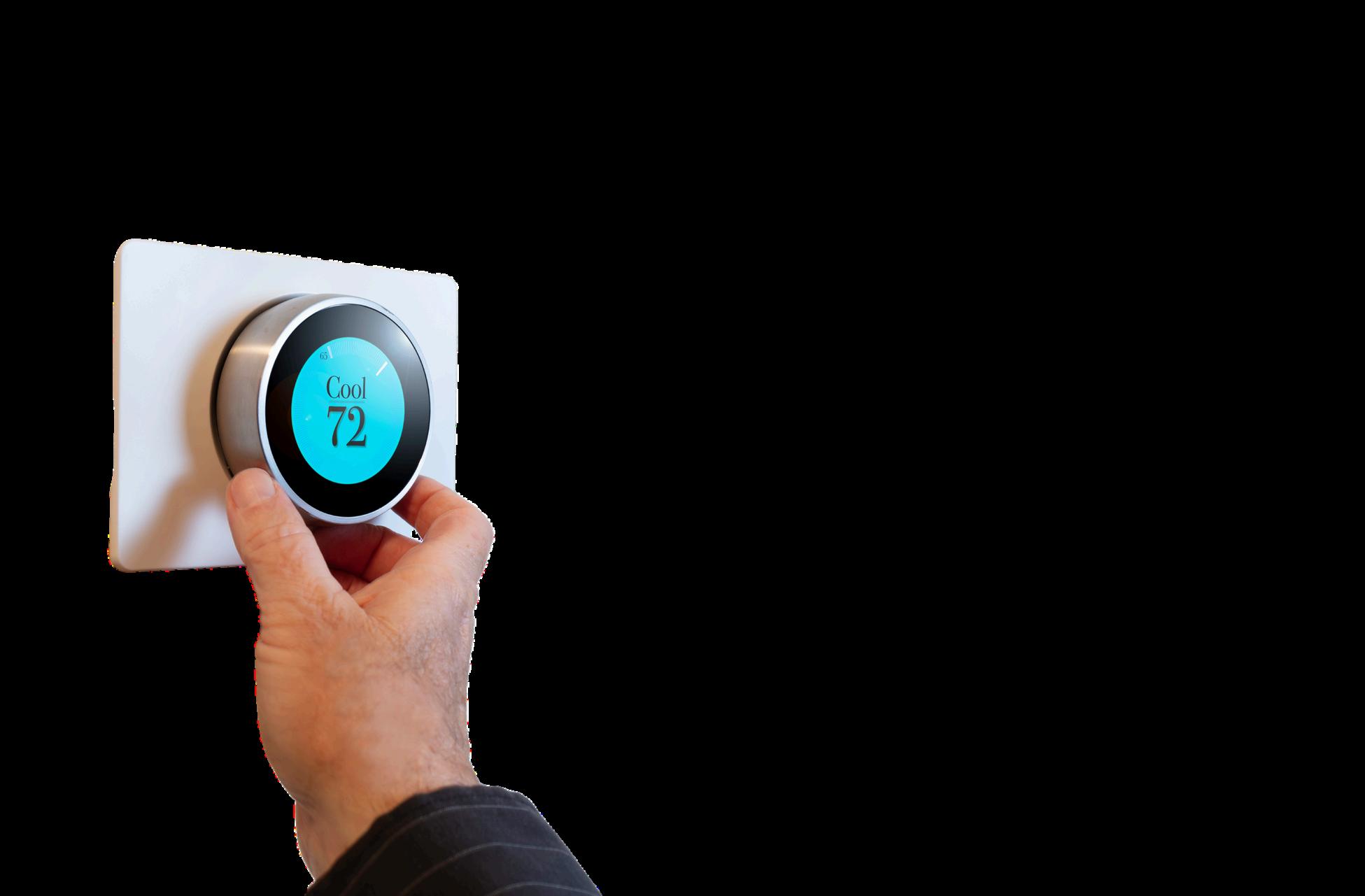
Returning to a cool house after a hot day in the sun is every person’s summer dream. But many stand by the assumption that they can save money by completely turning off their A/C completely when they leave home. While it sounds logical to turn off your air conditioning at first, doing so in the middle of a hot summer can backfire Your system has to work much harder to cool things back down when you return, thus using more energy which cranks up your electrical bill According to the U S Department of Energy, raising your thermostat by just 7–10 degrees for 8 hours a day can save you up to 10 percent on cooling costs annually. So, while you are away, consider turning the thermostat up a few degrees, to around 78–80°F, or use a programmable thermostat to keep things energy-efficient without overworking your unit.
Hiring Troubles
Teens struggle to find summer jobs
Kaitlyn Ouyang, Staff Writer
This summer, teenagers are fresh out of school and looking to be employed, whether it be at La-La-Land Kind Café, Chickfil-A or Barnes and Noble. However, many encounter difficulties as the unstable economic climate continues to severely impact businesses’ hiring capabilities and willingness to do so.
Inherently, teens are at a disadvantage when applying to jobs. Because school and extracurriculars limit time to commit to jobs during the school year, most students are only able to take on jobs during the summer Thus, employers looking for long-term commitment to decrease costs of training or constant turnover are uninterested in teens when hiring.
older people because they are generally more experienced.”
Some employers often are slow or unwilling to respond to teens’ emails or communication, limiting teens' abilities to get in touch or express interest in jobs.
Impacted by inefficient response times, Vollbrecht was unable to establish communication before the job was full.
“By the time I applied to this job, it was already full and the administration was not very organized, so they had a hard time getting back to me on time,” Vollbrecht said.
Increased minimum wages have also made teens unfavorable in comparison to more experienced workers with degrees or extensive previous work experience.
The problem lies in the fact that less jobs are available, especially as structured federal jobs (Americorps, public-sector youth hires, etc.) decline. Some adults work multiple jobs in order to survive in the current economic atmosphere.
Another problem is that most high school teenagers are younger than 18 years old. Many jobs are only available to legal adults because of legal or liability reasons No matter how robust a resumé, employers hesitate to hire teenagers based on their age.
Lily Vollbrecht, junior at the Hockaday School, like many other teens, struggled to secure a job this summer, even though she found one last year Vollbrecht applied to be a gymnastics camp counselor at her local Jewish Community Center (JCC), a position in which she already had prior experience, but was not hired.
Getting a job has been harder and harder,” Vollbrecht said.
“There are less jobs available for those of us under 18, and employers usually default to
Many economic factors contribute to the steep decline in teen hiring For one, current rising tariffs under the Trump administration has led businesses to shoulder increased financial burdens. As a result, hiring as a whole has decreased across the nation. For teens in particular, businesses have been prompted to limit seasonal hiring to curb costs as much as possible
Tariffs have also decreased customer demand for products. Specifically, small businesses have become hesitant to expand.
“Because of the economy right now, many people need to work multiple jobs and that means that there are less jobs available,” Vollbrecht said
As jobs become increasingly difficult to find, people are less likely to leave or quit their jobs because of the fear that they will not be able to find another. This has led to decreased turnover in many entry-level jobs, leading to less availability overall.
Although there are difficulties, teens can take several steps to increase their chances of being hired.
Matcha Hype and Market Meltdowns
How seasonal
trends drive supply and demand
Vivian Zhou, Chief Operations Officer
From viral matcha drinks to Starbucks’s summer specials, behind every trending product is a complex network of supply chains, forecasting models and strategic timing. To uncover how companies ride seasonal waves and viral trends to maximize profits, Rezzan Ebert, an Information Technology and Operations Management Professor at the Cox School of Business at Southern Methodist University, broke down supply and demand in today's fast-moving consumer market.
AI, Machine Learning and Web Analytics, collaboration with suppliers and customers and operational agility which [results from an optimized global] footprint of supply and distribution networks.”
Social media trends are a perfect opportunity for corporations to advertise their products
The goal is to ensure the right products are available at the right time and place.
“In recent years, web analytics and social media monitoring have become major areas of research and practice, as firms seek to extract actionable insights from platforms
Dr Rezzan Canan Savaskan-Ebert
“Matching supply and demand is a core challenge in supply chain management,” Ebert said “The goal is to ensure that the right products are available at the right time and place, minimizing both shortages, or stockouts and excess inventory, or overstocks, both of which can lead to financial losses and reduced customer satisfaction.”
“Companies implement a variety of strategies to streamline the matching of demand and supply,” Ebert said “These strategies require a variety of capabilities such [as] advanced analytics like
like Instagram, Facebook and X to benefit their business,” Ebert said.
One product that has tested these supply chain strategies in real time is matcha. Originating from Japan, matcha’s popularity surged in 2025 as a result of social media trends and celebrity influence, with stars like Zendaya and Dua Lipa frequently spotted with matcha drinks in hand. The green tea powder boasts a variety of health benefits and offers a gentler caffeine boost compared to tea or coffee On TikTok alone, the hashtag #matcha has amassed over 720,000 videos, featuring aesthetic morning routines and recipes. This
trend illustrates the basic principles of supply and demand: as consumer interest in matcha skyrockets, the market responds with a wave of new products. Matcha quickly moved beyond traditional tea and lattes, appearing in pancakes, ice cream, smoothies and even skincare products.
With cafes and brands racing to meet demand, matcha’s rise reflects how viral trends can rapidly shape what is offered in stores, menus and online platforms. Brands often release limited edition products that fit the summer theme
Starbucks's limited edition summer products such as their Summer-Berry Refreshers, as well as newly-introduced products like their Strawberries and Cream Cake Pop and Iced Horchata Oatmilk Shaken Espresso, are only available seasonally.
This market strategy creates a sense of urgency and excitement among customers and is an opportunity for companies to capitalize on seasonality to drive demand, boost sales and keep their product offerings feeling fresh and timely throughout the year.
ECONOMY
lower than predicted, the expenses can become quite costly.
While limited edition products seem appealing, it can be quite the gamble for companies to invest in.
“To address these challenges, many firms strive for design commonality across products using similar ingredients, components or parts,”
Ebert said “This way, if demand for one product drops, the company can still use its inventory for other products, reducing waste and cost.”
Not only does Zara constantly rotate their style of clothing, they also create urgency among consumers. “Unlike many retailers, Zara deliberately limits the quantity of each style in stores This scarcity effect pressures consumers to make purchases on the spot, as they know the item may not be available on their next visit and is unlikely to be discounted later,”
Ebert said
“Seasonality makes planning for a product much more challenging especially when dealing with limited supplies or brand-new products that lack historical data for accurate demand forecasting,” Ebert said.
Oftentimes, it requires companies to purchase exclusive ingredients from suppliers in advance in order to build safety stocks of critical materials. If actual demand ends up turning out to be
Because of these risks, companies rely on marketing strategies to ensure that they can attract consumers to buy the products. While my research and teaching primarily focus on the supply side rather than pure marketing strategies, it’s clear that supply availability can be a powerful tool for capturing consumer attention,” Ebert said “Take Zara, the Spanish fashion retailer, as a prime example. [They encourage] customers to visit their stores frequently, often multiple times a season, because shoppers know they’ll find new collections and products with each visit ”
Ultimately, in a world where consumer interest can shift with a single viral video or seasonal craving, businesses continue to improve their agility and maintain data-driven decisions for the benefit of their sales.
drinks or Zara rotating styles weekly, the intersection of technology, marketing and supply chain strategy is what turns fleeting fads into lasting business success.
Tariffs Hit Home
New tariffs drive up price on everyday goods
Vivian Zhou, Chief Operations Officer
With summer under way, new trends and seasonal spending habits have begun to emerge. However, this year’s summer economy is facing the new addition of tariffs. Introduced in early April by the Trump administration, just months before the season began, these tariffs have already started to make waves But what exactly are tariffs, and why do they matter?
Tariffs are governmentimposed taxes on foreignimported goods. When a product is imported, the importing company must pay a fee, or tariff, to the U.S. government. However, as companies increase the price of their goods
first presidency in 2018, tariffs against China were implemented during the trade war and upheld until his current presidency to hold them accountable for intellectual property theft and trade imbalances
In response, China retaliated with its own tariffs, sparking a prolonged economic conflict that disrupted global supply chains
manufacturing and restore economic sovereignty within the nation.
On April 5, 2025, Trump imposed a blanket 10 percent riff on imports from all ountries indefinitely On April 9, ven higher tariffs were mplemented on countries with he largest trade deficits with the nited States.
As prices of essential goods ontinue to rise, tariffs are hitting veryday consumers hardest For stance, from April to early June, he combined cost of top baby roducts like car seats, bassinets, rollers, high chairs and baby onitors increased by 24 percent nce many of these products are anufactured in foreign ountries, with 97 percent of
HighChairs
strollers and 87 percent of car seats being made in China, they a especially vulnerable to the steep tariffs.
As a result, major retailers, like Best Buy, Walmart, Costco and Target, have reported sharp price increases. New parents find themselves facing inflated prices for necessities.
ECONOMY
However, the ripple effects of existing tariffs have already xtended deep into the operations of retailers, businesses and, of course, impacted the lives of the average consumer.
TheSalemtwins’ businesslogo
Sophia and Natalia Salem, juniors at Hockaday, founded a non-profit macaron business called Lena Serene, dedicating their time to help those in need through their love of baking.
prioritize purchases that have been produced in the United States or are otherwise unaffected by tariffs,” Natalia Salem said. Ultimately, the sisters fundamentally disagree with the implementation of tariffs.
“While there are many reasons behind tariff implementation, we mostly oppose extreme tariffs that target common goods or ingredients used by small businesses,” Natalia Salem said.
The economic effects of these policies have already begun to show, with annual inflation rising by 2.4 percent. Because goods are so deeply interconnected, even tariffs on raw materials, like imported steel, can increase the cost of seemingly unrelated goods, like canned foods, which use steel for packaging. When Trump enacted the the goal was that consume would shift to domestic go increasing the manufacturi them. However, U.S. manufacturing has actually decreased for the third consecutive time to make u the gaps in goods provided other nations, causing shor in raw materials.
In response to such effec the economy, the White Ho has paused several of the m aggressive tariffs until July
When asked about the impact of tariffs on their small business, they mentioned that many of their supplies are based domestically.
“Most [of] the ingredients we use for our business are from the U.S. and not imported, and we haven’t really seen a change in [the] price,” Sophia Salem said. “However, we use dyes imported from France to avoid the artificial colors in the U S and while the prices haven’t
As the summer economy unfolds, it’s clear that the recent wave of tariffs is making longterm impacts While intended to protect domestic industry and promote economic independence, the reality is that businesses and consumers have to bear the burden of additional costs in imports Whether tariffs will ultimately benefit the U.S. economy or backfire remains to be seen, but for now, their impact is evident across the country.