
NEWMAN REGIONAL HEALTH RECOGNIZED AMONG NATION’S TOP CRITICAL ACCESS HOSPITALS
Emporia hospital named to Becker’s list of 100 critical access hospitals to know in 2026
By The Emporia Gazette
Newman Regional Health has been recognized as one of the nation’s top rural healthcare providers after being named to Becker’s Hospital Review’s list of “100 Critical Access Hospitals to Know in 2026.”
The Emporia-based hospital was one of six Kansas hospitals selected for the list, which highlights critical access hospitals across the country for leadership, patient care, innovation and community impact. Nearly 1,400 critical access hospitals operate nationwide.
According to Becker’s Hospital Review, Newman Regional Health was recognized for its investments in healthcare technology, specialty services and rural healthcare access initiatives.
Newman Regional Health is a 25-bed,
locally owned and governed hospital serving residents across seven counties.
Becker’s noted the hospital became the first critical access hospital in the United States in 2023 to receive accreditation for its cardiac catheterization laboratory from the American College of Cardiology.
The publication also highlighted several recent advancements at the hospital, including a $1 million high-speed CT scanner installed in September 2025 that allows for cardiac scoring and CT brain perfusion imaging used in stroke evaluations. Additional imaging technology added to the cardiovascular lab enables cardiologists to assess blockages and verify stent placement during procedures.
In January, the hospital also received reaccreditation for percutaneous coro -


nary intervention from the American College of Cardiology.
Becker’s additionally cited Newman Regional Health’s efforts to expand access to care through telemedicine. The hospital secured a $485,000 grant through the Telehealth for Rural Health Equity initiative aimed at expanding and modernizing telehealth capabilities in inpatient, outpatient and emergency settings.
Community health initiatives also played a role in the recognition. Beck-
er’s highlighted the hospital’s use of social determinants of health screenings within patient electronic health records to connect individuals with community resources and services. The publication also noted the hospital’s participation in the “Laundry Love” program, which provides free laundry services to lowincome residents.
Becker’s said Newman Regional Health also provided more than $8 million in charitable care in 2025.
The publication further recognized the hospital’s strategic affiliation with The University of Kansas Health System and LMH Health, which supports expanded local healthcare services while allowing Newman Regional Health to maintain independent governance.
The complete Becker’s Hospital Review list is available online.


EMPORIA SENIOR CENTER PROMOTES HEALTHY AGING THROUGH MEALS, FITNESS AND SOCIAL CONNECTION
By Jessie Wagoner
The Emporia Gazette
Healthy living involves more than doctor visits and medications. At the Emporia Senior Center, wellness is taking shape through nutritious meals, exercise classes, mental stimulation and opportunities for social connection.
Located at 603 E. 12th Ave., the center offers programs intended to support seniors’ physical, emotional and mental health while creating a place for community members to remain active and engaged.
One of the center’s most visible healthfocused offerings is its community lunch program, served from 11 a.m. to 12:30 p.m. Mondays, Wednesdays and Fridays. Meals provide seniors with access to affordable food while also encouraging social interaction, an important factor in maintaining overall health and reducing isolation.
The center also offers wellness activi-
ties aimed at helping seniors stay physically active. Stretching and Strength classes are held at 9 a.m. Mondays, Wednesdays and Fridays and focus on maintaining mobility, flexibility and strength.
Mental wellness is also part of the equation. Brain Break activities, offered at 10 a.m. on the same days, are designed to help keep minds active through exercises and activities intended to stimulate memory and cognitive function.
Additional activities at the center, including Coffee and Chat gatherings, games and other recurring programs, provide seniors with opportunities to remain socially connected. Studies have shown that regular social interaction can play a key role in healthy aging, helping reduce loneliness and supporting emotional wellbeing.
The center also periodically hosts special events, guest speakers and live entertainment, adding another layer of engagement beyond daily activities.
As communities continue to place
greater emphasis on preventive health and quality of life, the Emporia Senior Center serves as a reminder that healthy living often extends beyond medical care. Exercise, nutrition, mental stimulation and friendships all contribute to overall wellness.
For many participants, the center is more than a place to spend time — it is a community built around helping people remain active and healthy as they age.

For more information on activities and schedules, contact the Emporia Senior Center at 620-343-3160 or visit the center at 603 E. 12th Ave.

CAREARC PROGRAM OFFERS SUPPORT, EDUCATION FOR NEW PARENTS IN LYON COUNTY
Universal home visiting services connect families with resources and guidance during pregnancy and early childhood
By Jessie Wagoner
The Emporia Gazette
A CareArc program aimed at helping families navigate the challenges of pregnancy and early parenthood is providing support and education to parents throughout Lyon County, offering everything from breastfeeding guidance to community resource connections.
Brittney DeWitt, CareArc's family outreach coordinator, said the program is designed to support not only mothers, but entire families as they adjust to life with a new baby.
"I say I help new moms, but it's really for the whole family," DeWitt said. "Moms and dads — they both have to do things, not just the moms."
The program provides educational support on a wide range of topics, including breastfeeding, infant nutrition, swaddling, bathing and postpartum concerns. DeWitt also helps connect families with local services and resources, such as food assistance programs, churches and other community support organizations.
DeWitt said one of the program's goals is to provide parents with someone they can reach out to during difficult moments.
"If it's 2 a.m. and they're depressed and struggling,
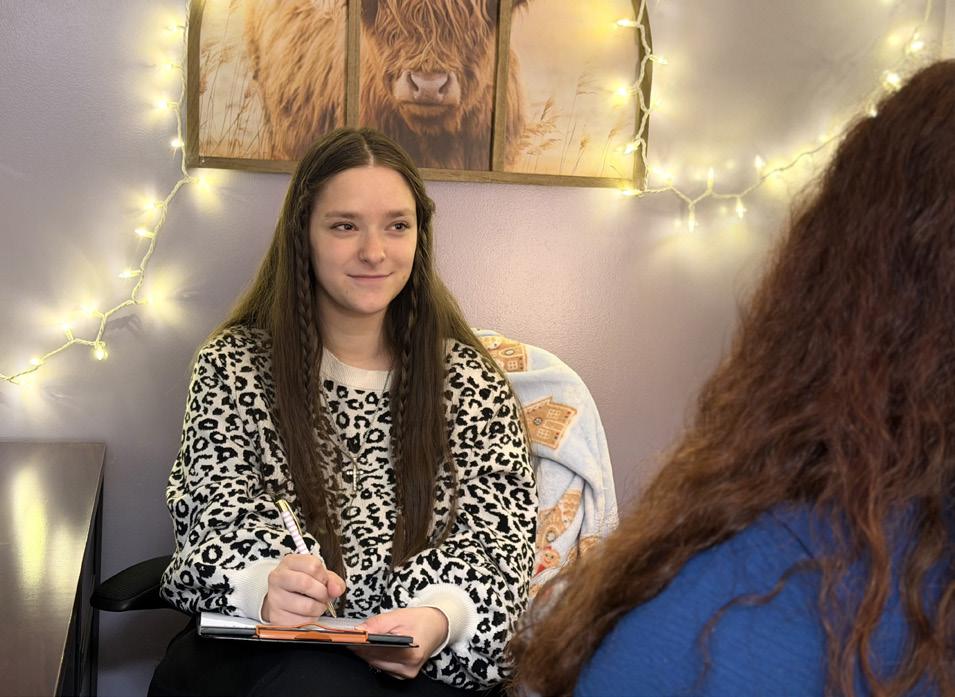
Parents can choose locations where they feel most comfortable, whether that is a home, office, public park or another setting.
"We can go to McDonald's. We can go to a public park — anywhere that mom or dad or the whole family is comfortable," DeWitt said.
The program is available to families across Lyon County and is intended to help parents feel more confident and connected during what can often be an overwhelming time.
DeWitt, who began her role in December, said she understands the value of having support systems in place during the early stages of parenting. She said many parents can feel isolated or unsure of themselves, particularly when raising their first child.
She said one of the most rewarding parts of her job is building relationships with families and helping parents gain confidence.
The program also works to encourage healthy starts for both children and parents by identifying needs early and connecting families with available resources.
you can call me," she said. "I'm there for support."
Unlike traditional home-visiting programs, DeWitt said families are not limited to meeting in their homes.
Families interested in learning more about CareArc's family outreach services can contact CareArc directly for information on enrollment and available support options.


PROVIDED PHOTO
Family Outreach Coordinator Brittney DeWitt meets with new parents to offer support, education and more. The service is free for all new parents in Lyon County.
SLEEP MATTERS: WHY REST MAY BE ONE OF THE MOST IMPORTANT HEALTH HABITS
Experts say consistent sleep affects everything from heart health and stress levels to focus, mood and overall well-being.
By Jessie Wagoner
The Emporia Gazette
For many people, sleep is often the first thing sacrificed during busy weeks. Between work schedules, family responsibilities, school activities and endless distractions from phones and television screens, getting enough rest can feel like a luxury rather than a necessity.
Health experts say sleep should be viewed as a basic component of health — just as important as eating nutritious foods and staying physically active.
Adults generally need between seven and nine hours of sleep each night, according to health experts, though many people regularly fall short of that goal. Lack of sleep does more than simply leave people feeling tired the next day.
Research has linked insufficient sleep to a wide range of health concerns, including increased stress, difficulty concentrating, weakened immune function and increased risk for chronic conditions such as high blood pressure, heart disease and diabetes.
Sleep also plays a significant role in mental health.
People who consistently miss out on sleep may experience irritability, mood changes and greater difficulty managing stress. Over time, sleep deprivation can contribute to anxiety and depression symptoms and can make existing mental health challenges feel more difficult to manage.
For children and teenagers, adequate sleep is equally important. Sleep supports healthy growth and development and can influence school performance, attention span and emotional well-being.
While many people assume they can “catch up” on sleep after a few restless nights, experts say maintaining a consistent sleep schedule is more effective than relying on weekend recovery sleep.
Creating healthy sleep habits does not necessarily require major lifestyle changes. Small adjustments can make a noticeable difference.
Maintaining a regular bedtime and wake-up time, even on weekends, can help the body establish a routine. Limiting screen time before bed may also help improve sleep quality because the blue light emitted by phones, tablets and televisions can interfere with the body's natural sleep cycle.
Other strategies include avoiding large amounts of caffeine later in the day, creating a comfortable sleep environment and developing relaxing nighttime routines.
Simple activities such as reading a book, listening to calming music or reducing household distractions can help signal to the body that it is time to rest.
Sleep can sometimes become difficult despite good habits. Persistent insomnia, loud snoring, breathing interruptions during sleep or excessive daytime fatigue may be signs of an underlying health condition and could warrant a discussion with a healthcare provider.
Health experts say quality sleep should not be considered unproductive time. Instead, it serves as an investment in overall health and daily performance.
For people looking to improve their well-being, the answer may not always involve complicated diets or intense exercise plans.
Sometimes it starts with simply getting a good night's sleep.
Sleep Tips for Better Rest
• Aim for seven to nine hours of sleep each night
• Go to bed and wake up at the same time daily
• Limit phone and screen use before bed
• Reduce caffeine late in the day
• Keep bedrooms cool, dark and quiet
• Develop a relaxing bedtime routine
Stormont Vail Health in Emporia offers bilingual services to help you and your family feel comfortable and confident in your care.
From primary and pediatric care to preventive services and ongoing treatment, we’re here for you— en inglés y en español.
Look for team members wearing the “Yo Puedo Ayudar” badge, so you know support is always close by.

LOW WAGES, EMPTY PLATES, HEAVY TOLL: RETHINKING SUICIDE PREVENTION
By aneri Pattani KFF Health News
As a teenager, Rei Scott spent several weeks living out of a car with four family members and their dog. Each day, Scott worried about where they would spend the following night.
One day at school, Scott snuck away to the bathroom and called the national suicide hotline.
Scott, who is transgender and nonbinary, explained to the hotline counselor that the family had struggled with poverty for years. They had lived in crumbling homes with water leaks, or a family member's basement with no privacy. Sometimes the family worried about having enough food. The stress and anxiety were constant, and Scott had been suicidal many times.
The counselor seemed shocked into silence, Scott said. Eventually, the person provided reassurance and kindness.
But what Scott really needed that day a decade ago and many times since was a fix for the economic difficulties that had become an unbearable weight.
"It can definitely help to have someone who can listen, but when you're struggling to eat and you don't have a roof to be under, I honestly don't think words can go as far as you need them to," said Scott, who now studies social work at Capital University in Columbus, Ohio.
Over the years, Scott has been directed to hospitals and therapists. But those generally don't address core problems, such as a brokendown car or an eviction notice.
"There's so many times in my life where I've thought if I had $5,000, I wouldn't even be suicidal right now," Scott said.
People don't typically think of suicide as an issue of economics, but it often is.
Decades of research shows that unemployment, low income, high debt, unstable housing, and food insecurity make people more likely to kill themselves. Conversely, things that bring down people's cost of living — such as increasing the minimum wage, providing food assistance, offering tax credits, and expanding health insurance coverage — are linked to lower suicide rates.
It makes sense. If someone can cover their basic needs, their life will feel better.
Other countries have been incorporating this understanding into their efforts for some time. But because suicide prevention in the U.S. has historically been seen as a medical issue — the responsibility of clinicians who can provide medication or therapy — economic solutions are frequently left out of the equation.
Some advocates and people with suicidal experiences, like Scott, are trying to change that. They say traditional approaches to suicide pre -
vention haven't succeeded. For decades, the U.S. has had one of the highest suicide rates among high-income countries.
To move the needle, "we all need to be challenged to broaden our aperture, to broaden the lens of what is mental health," said Benjamin Miller, a national expert in mental health policy and an adjunct professor at the Stanford University School of Medicine.
The highest-impact interventions may not be adding crisis lines or screening more people in emergency rooms, Miller said, though those can be helpful. If he had to pick one strategy, it would be alleviating poverty.
That "allows us to reconcile and solve for these conditions that put people in places of despair," he said. "I don't know what stronger intervention one could possibly have."
To be sure, suicides also occur among wealthy people. It's a complex issue and almost never boils down to one reason. For most people, the decision to hurt themselves results from an intricate interplay of biological factors, relationship concerns, finances, trauma or abuse, and access to lethal means. That means suicide prevention requires a variety of approaches.
The argument for including economic policy as one of those approaches, many advocates and researchers say, is that policies affect entire popu-
lations. So even a small effect can save a significant number of lives.
'Economic Uncertainty' Builds
However, the push for an economic lens on suicide prevention is encountering gale-force headwinds from Trump administration policies.
Unpredictable tariff actions and the war with Iran have contributed to economic pressures. Meanwhile, the administration has increased hurdles for safety net programs such as the Supplemental Nutrition Assistance Program, often called food stamps, and Medicaid, the statefederal health insurance program for low-income people. Experts estimate millions of people will lose these benefits over the coming years.
The administration has also objected to certain housing programs, saying people who are homeless should have to enter treatment or get jobs to receive support. The president's 2027 budget request, which signals his priorities, calls for cutting a program that helps low-income people pay for heat and air conditioning.
Research suggests these types of conditions increase people's risk for suicide.
Please see Suicide, Page 7
SUICIDE
"Anytime there is economic uncertainty, people will fear for their future and livelihood," Miller said, and "this last few months have been terrifying."
Notably, the administration's actions directly contradict strategies that the Centers for Disease Control and Prevention's website promotes as having "the best available evidence to reduce suicide." No. 1 on the page is "Strengthen economic supports." It lists SNAP benefits and housingfirst policies as examples.
Allison Arwady, director of the CDC's injury center, said the agency doesn't work on economic policy directly but encourages state and local governments to look at the relationship between health and economics.
The Department of Health and Human Services supports suicide prevention through the 988 national crisis hotline, investments in treatment, and the Rural Health Transformation Program, which states can use to expand mental health care in rural areas, HHS spokesperson Emily Hilliard said.
Alec Varsamis, a spokesperson for the Agriculture Department, said the agency is providing states guidance on SNAP changes and "remains deeply committed to supporting the health and mental well-being of all Americans."
It's too soon to tell how recent actions may affect suicide rates. And given the unique combi-
nation of factors at play in each death, it's challenging to draw direct causal links.
The most recent data available shows nearly 49,000 people died by suicide in 2024 — a slight dip from previous years but still among the highest tolls since the late 1990s.
The concept of suicide prevention writ large has historically drawn bipartisan support, said Jonathan Purtle, a New York University researcher who published a paper last year highlighting public policies shown to reduce suicide.
The details are where things get murky. For example, strong evidence suggests that increasing the minimum wage reduces suicides. (The federal minimum wage is $7.25 per hour, with higher rates in certain states.) But such increases are often a hard sell for lawmakers facing the realities of balancing a budget and small-business owners struggling to stay afloat.
Closely tying suicide prevention initiatives to such politically charged and complicated issues could undermine their chances, Purtle said, adding, "We'll see suicide get polarized."
That's why the focus often stays on areas of agreement, such as funding crisis hotlines.
View From a Crisis Line
Kacy Maitland is the chief clinical officer at Samaritans, a Boston-based nonprofit that has operated a suicide crisis hotline for more than 50 years and fields upward of 10,000 calls a month, including local calls to 988.
Although people might assume every call is an imminent crisis, Maitland said, many callers
are struggling with everyday needs — financial problems, housing concerns, or unemployment.
"Whatever is going on in the world, we absolutely hear about that in real time," Maitland said.
In November, when SNAP benefits were delayed during a government shutdown, people affected called Samaritans.
"That in and of itself was a hit to suicide prevention," Maitland said. "If people don't have access to eat, to feed their children, to be alive, quite frankly, how are they able to move further through anything else?"
Samaritans volunteers are trained to listen with compassion and make callers feel less alone in what they're going through. That validation and caring are powerful, Maitland said.
But she often wants to do more, to "dig in and fix" the root issue.
Research supports her instincts. One study found that increasing the number of people who receive SNAP benefits by 5% could have prevented nearly 32,000 suicides over 15 years. And a $1 increase in minimum wage has been linked to roughly 8,000 fewer suicide deaths over a decade.
Although Maitland can't change federal welfare policies, she and her co-workers are applying this approach locally. They recently started an initiative to provide blankets, socks, and water to people living on the streets of Boston.
"Suicide prevention doesn't always look like a crisis helpline," she said. "That's what we imagine it as." But "having your basic needs is also a form of suicide prevention."
Continuing To Live
In the years since calling the suicide hotline in high school, Scott has turned to a number of resources to help overcome recurring thoughts of suicide. Crisis lines, hospitalization, medication, and therapy have all played a role.
But, Scott said, the biggest impact came from programs that helped fulfill daily needs — for example, a housing program for LGBTQ+ youths and another for former foster care children attending college.
Scott, who now lives close to campus because of the foster care program, said the ability not to "worry about 'Where am I going to sleep tomorrow night?'" has provided a significant mental health boost.
Although some programs like those are under threat from the Trump administration, Scott is hopeful they will persist and rebuild.
Surviving difficult times has given Scott confidence to persist through more potential challenges ahead.
Despite "the policies and legislation that harm us, we continue to live, and I think that's really important," Scott said. "It gives me a lot of hope that things can be different."
(KFF Health News is a national newsroom that produces in-depth journalism about health issues and is one of the core operating programs of KFF — the independent source for health policy research, polling and journalism.)

SPORTS THAT CAN COMPEL SENIORS TO GET UP AND MOVE

Discussions about the benefits of sports participation are often rooted in how much young people can gain from playing a team sport. Older adults have much to gain from playing sports as well, and that's something retirees can keep in mind as they look for activities to fill their time.
A 2018 study published in the journal Biochemistry Research International found that physical activity can be a protective factor for noncommunicable diseases, including heart disease and diabetes, and can even help to delay the onset of dementia. The study also linked physical activity to improved quality of life and mental health. Sports require players to be physically active, so seniors who decide to dust off their athletic gear and play the following sports can reap all the rewards that getting up and moving has to offer.
· Pickleball: The popularity of pickleball has skyrocketed in recent years, with the Sports & Fitness Industry Association estimating there are now roughly nine million pickleball players in the United States. The organization Pickleball Canada reports that nearly 1.4 million Canadians played pickleball at least once per month in 2023, proving that this popular sport transcends borders and offers a great way to socialize with fellow seniors.
· Walking: Accessibility is one of the major benefits of walking. Even seniors with limited mobility can look to walking as a less demanding physical activity that compels them to get out of the house. And the benefits of walking may be more profound than people realize. Preliminary research presented at an American Heart
Association gathering in 2023 estimated that walking an additional 500 steps per day, which is equivalent to roughly a quarter of a mile, was associated with a 14 percent lower risk for heart disease, stroke or heart failure.
· Softball: Baseball was the first love of many a sports fan over the years, and senior softball provides a way to maintain or even reignite that passion, all the while reaping the health benefits of sports play. Softball can help seniors maintain their hand-eye coordination and improve their flexibility. But perhaps the most notable benefit of playing senior softball involves socialization. Senior softball requires being on a team, and the benefits of socialization for seniors are numerous, particularly when they play in leagues featuring players from outside their immediate social circle. A 2019 study published in The Journals of Gerontology found that older adults who socialize with people outside their typical social circle were more likely to have higher levels of physical activity and a more positive mood. Such individuals also had fewer negative feelings.
· Golf: Golf provides a range of health benefits that committed players are well aware of. Seniors who play golf, particularly those who walk the course instead of using a cart to get around, can reap the rewards of walking, including improved cardiovascular health, and even the benefits of strength-training, as carrying a golf bag around nine or 18 holes can build strength that protects bones and reduces the risk of fractures. Traversing a course also helps to burn calories, which can help seniors maintain a healthy weight.