Winship Magazine Winter 2026

Page 1


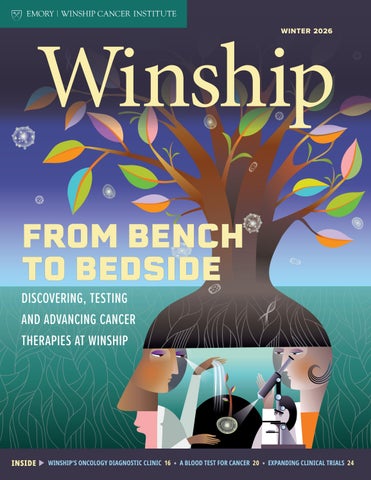
FROM BENCH TO BEDSIDE

DISCOVERING, TESTING AND ADVANCING CANCER

THERAPIES AT WINSHIP

SNEAK PREVIEW

10

Winship's home within a major medical research university means potential cancer drugs can move seamlessly from the lab into human trials.

24

Widening access to clinical trials offers more treatment options with less inconvenience.

16

Winship's Oncology Diagnostic Clinic helps people know if they have cancer and get into treatment sooner.

34

Stratton Leopold reclaims his “lost year,” one step at a time

20

Scientists strive for the 'holy grail' of cancer screens: one blood test to predict risk for a variety of cancers.

magazine

From the Executive Director 2

Pioneering Perspective 3

RAVI B. PARIKH

How AI is transforming cancer care

Trailblazers 5

COVER STORY

From Bench to Bedside 10

Discovering, testing and advancing cancer therapies at Winship.

FEATURES From Uncertainty to Understanding 16

Winship’s Oncology Diagnostic Clinic gets patients into care quicker.

Research for the Holy Grail 20

Expanding Opportunities to Join Clinical Trials 24

Changing regulations and technology will offer more patients chances to participate.

PATIENT PROFILE | Stratton Leopold reclaims his “lost year,” one step at a time 34

AROUND WINSHIP

PHILANTHROPY

Taking Prostate Cancer Screening Into the Community 40

15th Annual Winship 5K Raises Hope 42

INSPIRING HOPE

Q&A with Winship’s chief surgical officer for the cancer service line Tari A. King 44

EDITORIAL

Editor

John-Manuel Andriote

Art Director

Linda Dobson

Lead Photographer

Jenni Girtman

Contributors

Andrea Clement

Susannah Conroy

Javier De Jesus

Heitor De Paula

Marian Dezelan

Jenny Owen

Denise Ribeiro

Michelle Varraveto

GET IN TOUCH

john.manuel.andriote@emory.edu

CHECK OUT OUR ONLINE VERSION

ON THE COVER: Winship researchers describe how new drugs begin as ideas in the lab and move on to become standard-of-care cancer therapies.

ILLUSTRATION BY CHRISTIANE BEAUREGARD

Emory | Winship Magazine is published by the communications office of Winship Cancer Institute, a part of the Woodruff Health Sciences Center of Emory University, emoryhealthsciences.org. Articles may be reprinted in full or in part if source is acknowledged. If you have story ideas or feedback, please contact john.manuel.andriote@emory.edu. © Emory University

Emory is an equal opportunity employer, and qualified applicants will receive consideration for employment without regard to race, color, religion, sex, national origin, disability, protected veteran status or other characteristics protected by state or federal law. Inquiries should be directed to the Department of Equity and Civil Rights Compliance, 201 Dowman Drive, Administration Bldg, Atlanta, GA 30322. Telephone: 404-727-9867 (V) | 404-712-2049 (TDD).

Website: winshipcancer.emory.edu. To view past magazine issues, go to winshipcancer.emory.edu/magazine.

FROM THE EXECUTIVE DIRECTOR

DISCOVERY AND EXPANDING OPPORTUNITIES IN GEORGIA

Welcome to the Winter 2026 issue of Winship Magazine.

The issue’s theme of “discovery” is ideal for this season of new growth and development. We begin with a guest “Pioneering Perspective” commentary on how artificial intelligence (AI) is transforming just about every aspect of cancer care—from risk assessment to prevention, surgery to targeted chemotherapy. Adding to this transformation, we spotlight four of Winship’s trailblazing research scientists whose work is improving the lives of people living with cancer.

Our cover story explores the journey of new cancer therapies, from scientific ideas to potentially becoming new standards of care. Winship’s unique position within a major medical research university allows us to play an important role in making sure Winship patients have access to the very latest therapies, devices and procedures. For many who come to us, Winship’s Oncology Diagnostic Clinic is the starting place to move from symptoms of “something” to receiving a diagnosis and, importantly, connecting quickly to excellent care and support.

Cancer researchers long have pursued what they consider the “holy grail” of diagnostics, a single blood test that can accurately assess cancer risk and even predict possible outcomes. We offer a fascinating look in “Research for the Holy Grail” at the work underway to achieve this goal and consider the tremendous benefits it will offer. On the topic of “tremendous benefits” we look at the ways that changing regulations and technology provide more opportunities than ever for Winship patients to participate in clinical trials—often right in their local community.

Anyone who has visited Savannah, Georgia’s oldest city, is likely to have heard of—and enjoyed the opportunity to visit—Leopold’s Ice Cream shop on East Broughton Street. Opened in 1919, Leopold’s owner today is Stratton Leopold, youngest son of the shop’s founder. Far beyond his hometown, Leopold built his own career as a movie producer in Hollywood. When he faced a cancer diagnosis, Leopold had to decide where in the world to be treated. He chose Winship-and not only because it was here in Georgia, but because he was sure he would receive world-class cancer care.

In September, Winship introduced our new Mobile Prostate Cancer Screening Clinic. The specially equipped bus is able to roll into towns and neighborhoods across Georgia to offer free PSA testing for men who may not yet have had the chance to assess their risk for one of the most common types of cancer affecting men. The new mobile clinic was made possible with the generous support of the Arthur

M. Blank Family Foundation and in collaboration with Mount Sinai Health System, which pioneered the mobile prostate cancer screening clinic. A month later, Winship hosted our 15th annual Winship 5K. More than 4,000 participants in the sold-out run/walk raised more than $1.3 million for cancer research.

We close out the issue in our “Inspiring Hope” spot with Tari A. King, Winship’s chief surgical officer for the cancer service line. King, a renowned breast cancer surgeon, joined us last summer from Dana-Farber Cancer Institute in Boston. She discusses her work and what she is enjoying in Atlanta.

HOW AI IS TRANSFORMING CANCER CARE: FROM DIAGNOSIS TO CLINICAL TRIALS

THE PROMISE OF PRECISION TIMING

Cancer care has always been about timing— catching disease early, initiating treatment at the right moment, having difficult conversations when patients are ready to hear them. Now, artificial intelligence is revolutionizing how we identify these critical moments, making cancer care more proactive, personalized and accessible than ever before. From algorithms that predict when patients need palliative care consultations to AI systems that match patients to clinical trials at precisely the right moment, machine learning is transforming the cancer experience. These tools don't replace human judgment—they enhance it, ensuring no patient falls through the cracks of our increasingly complex health care system. Below are two examples that illustrate the significant potential of AI in cancer care delivery.

CONVERSATIONS THAT MATTER: AI-GUIDED PALLIATIVE CARE

For patients with advanced cancer, serious illness conversations about goals and treatment preferences can dramatically improve quality of life and reduce unwanted aggressive care at the end of a person’s life. Yet many patients die without ever having these critical discussions.

Researchers at Winship Cancer Institute, the University of Pennsylvania and Tennessee Oncology have pioneered an innovative solution: using machine learning algorithms to identify patients at high risk of incurring an adverse event, then automatically

generating "nudges" to oncologists to initiate palliative care consultations. The results have been striking—palliative care consultation rates jumped from 8% to 44% in community oncology settings where the vast majority of patients with cancer receive care.

What makes this approach particularly powerful is its use of behavioral economics principles. Rather than requiring oncologists to actively order palliative care, the system creates default orders that physicians must opt out of if they disagree. This simple shift—from opt-in to opt-out—has profound effects, increasing consultations fivefold while reducing end-of-life chemotherapy and even reducing expenses for the patient.

artificial intelligence handles the time-consuming task of extracting eligibility criteria from thousands of pages of medical records while research coordinators make nuanced judgments about patient suitability.

THE PATH FORWARD: AUGMENTATION, NOT REPLACEMENT

"Despite the critical importance of clinical trials for advancing cancer treatment, fewer than 10% of adults with cancer ever enroll in one."
—RAVI B. PARIKH

The AI doesn't just identify high-risk patients; it helps ensure these conversations happen at the right time, when patients can still benefit from palliative support rather than in the final days of life. Text message reminders arrive on the morning of appointments, peer comparison reports show clinicians how their referral rates compare to colleagues and the system learns from each interaction to improve its predictions.

OPENING DOORS TO CLINICAL TRIALS

Despite the critical importance of clinical trials for advancing cancer treatment, fewer than 10% of adults with cancer ever enroll in one. The challenge isn't just finding eligible patients—it's finding them at the precise moment when they need new treatment options.

Dana-Farber Cancer Institute has developed AI systems that continuously monitor imaging reports to detect disease progression and predict when patients are likely to change treatment. When these two signals align—progression plus high probability of treatment change—the system automatically alerts oncologists about genomically matched clinical trials.

But even sophisticated AI faces real-world challenges. In a large, randomized trial of more than 20,000 patients, these automated notifications didn't significantly increase trial enrollment, highlighting that information alone isn't enough. The most promising results come from human–AI collaboration, where

These hybrid teams are proving more accurate than either humans or AI alone. In prescreening for clinical trials— the process of determining which patients meet basic eligibility criteria—human–AI teams achieved 76% accuracy compared to 72% for humans alone and just 60% for AI alone. The technology excels at extracting objective data like biomarker results and staging information, while humans provide crucial context about performance status and treatment history.

As these technologies mature, we're seeing a shift from reactive to proactive cancer care. Instead of waiting for patients to deteriorate before discussing palliative care, AI helps identify the optimal window for these conversations. Rather than manually screening thousands of patients for clinical trials, algorithms continuously monitor for eligibility moments. This isn't just about efficiency—it's about equity, ensuring that all patients, regardless of their oncologist's experience or their treatment location, have access to the full spectrum of cancer care options.

The next frontier will be integrating these various AI applications into seamless systems that support patients throughout their cancer experience—from early detection through treatment selection to end-of-life care. As we build these systems, the goal isn't to remove human judgment but to ensure it's applied where it matters most: in the moments that define compassionate, personalized cancer care. WM

RAVI B. PARIKH is a boardcertified medical oncologist. He is the medical director of the Winship Data and Technology Applications Shared Resource at Winship Cancer Institute and an associate professor in the Department of Hematology and Medical Oncology at Emory University School of Medicine. Parikh works closely with Winship’s leadership to develop and integrate AI applications to improve the care of Winship patients with cancer.

TRAILBLAZERS

Meet four of Winship's outstanding research scientists whose day-to-day work is changing the game in important ways for people with cancer.

KELLY C. GOLDSMITH co-leads Winship’s Discovery and Development Therapeutics Research Program. She is a professor in the Department of Pediatrics and the Curing Kids Cancer Professor of Pediatric Oncology at Emory University School of Medicine. Goldsmith is a board-certified pediatric hematologist and oncologist specializing in treating neuroblastoma, Wilms tumor and other renal tumors of childhood. She is the clinical director of Winship’s Refractory and Recurrent Neuroblastoma Program and is also the clinical director of the Aflac Precision Medicine Program at the Aflac Cancer and Blood Disorders Center of Children's Healthcare of Atlanta. Goldsmith’s lab investigates the molecular mechanisms of chemotherapy resistance in pediatric neuroblastoma, focusing on experimental therapeutics that restore therapy sensitivity.

WM: HOW COMMON ARE RECURRENT SOLID TUMORS OF CHILDHOOD, AND HOW DO YOU TREAT THEM EFFECTIVELY?

KG: Neuroblastoma, the tumor I specialize in, is the most common extracranial solid tumor of childhood, with about 750 new cases each year. Half of the patients present with high-risk, metastatic disease. Despite aggressive therapy— including chemotherapy, surgery, radiation, stem cell transplant and immunotherapy—only about 50% of these patients are cured. The rest relapse or are refractory, and those tumors are highly resistant to standard treatments.

Fortunately, neuroblastomas express GD2, a target for anti-GD2 antibodies. Combining anti-GD2

KELLY C. GOLDSMITH

WM: WHAT ARE YOU MOST EXCITED ABOUT IN YOUR RESEARCH RIGHT NOW?

KG: I am most excited to have pioneered a novel T-cell therapy, called gamma delta (γδ) T-cell therapy, from bench to bedside for children with cancer. My lab, together with Dr. Trent Spencer’s, was the first to show that γδ T cells can be expanded from healthy donors to clinical levels, and when combined with dinutuximab and chemotherapy, can cure neuroblastoma tumors in mice.

This work led to the first-in-human trial of allogeneic γδ T cells plus dinutuximab and chemotherapy for relapsed/ refractory neuroblastoma and osteosarcoma patients, which I am leading at Children’s Healthcare of Atlanta. We are the only center in the U.S. currently offering this therapy for pediatric cancer, and so far, it has been safe and tolerable.

antibody (dinutuximab) with chemotherapy has produced the best response rates we’ve seen in this aggressive disease. Based on this success, the Children’s Oncology Group is moving chemoimmunotherapy regimen upfront to improve cure rates and prevent relapse. I serve on the trial committee, where my laboratory evaluates patient blood and tumor samples to identify immune biomarkers of response to GD2 immunotherapy.

Even more exciting, this trial has opened the door to engineering next-generation γδ T cells with tumor-targeting CARs, bispecific engagers, or cytokine secretion to boost potency, activity and persistence, which we hope to translate into the clinic soon. It is deeply rewarding to bring discoveries from the lab into the clinic and to learn from patient samples how to improve future cell therapies. WM

NEIL M. IYENGAR is Winship’s director of survivorship services. A breast medical oncologist and translational researcher, he explores ways to improve metabolic health to reduce breast cancer risk and mortality. One of his signature contributions to the field before joining Winship in 2025 was developing and leading the Healthy Living Program while at Memorial Sloan Kettering. The program is an evidence-based survivorship model that creates personal lifestyle plans to support the overall well-being of people with cancer during and after treatment.

WM: WHAT DO YOU SEE AHEAD AS WE REDEFINE SURVIVORSHIP WITH THE SAME INNOVATION AND INTENTIONALITY THAT HAVE TRANSFORMED CANCER TREATMENT?

NI: What I see ahead is the emergence of precision survivorship: an approach that is individualized, riskstratified and evidence-based. Just as oncologists tailor treatment regimens based on tumor biology, we will tailor survivorship care plans based on a patient’s physiology, metabolic health status, psychosocial profile and lived circumstances.

This requires integrating not only cancer surveillance, but also interventions that target cardiometabolic health, mental well-being, functional capacity and social determinants of health. A modern survivorship model cannot succeed unless it addresses disparities and ensures that all survivors, across diverse backgrounds, benefit from innovation.

WM: DESCRIBE THE HEALTHY LIVING PROGRAM YOU DEVELOPED. HOW ARE YOU ADAPTING IT AT WINSHIP—AND WHY IS IT SO HELPFUL IN SUPPORTING THE OVERALL WELL-BEING OF PATIENTS WITH BREAST CANCER DURING AND AFTER THEIR TREATMENT?

NI: I developed the Healthy Living Program as a model for comprehensive, individualized survivorship care. The premise was simple but transformative: rather than offering generic recommendations, we systematically evaluate each patient’s risk profile and align them with interventions that are both evidence-based and feasible for their unique context.

The program incorporates multidimensional risk stratification— not only assessing tumor and treatment history, but also metabolic health, physical activity, diet quality, psychosocial well-being, financial hardship and more. Based on this assessment, survivors are guided toward targeted services such as supervised exercise programs, nutrition counseling, behavioral health resources, cardiometabolic optimization and social support. Another key feature is cultural relevance and accessibility—including offering bilingual educational tools, screening for financial hardship and connecting patients to appropriate resources and recognizing that structural barriers must be addressed if lifestyle recommendations are to succeed.

I am now building upon this

foundation with three major enhancements: (1) using digital platforms, including digital exercise intervention and AI-supported nutrition counseling, to reach survivors outside of traditional clinic walls; (2) embedding clinical trials into the program so every survivor encounter not only provides care but also generates new data on efficacy, biomarkers and outcomes; (3) creating structured care pathways that standardize risk assessment and intervention selection, elevate quality of care and alleviate provider burden while still allowing personalization and optimized patient engagement.

WM: WHAT ARE YOU MOST EXCITED ABOUT IN YOUR RESEARCH?

NI: What excites me most is the opportunity to apply the precision of oncology drug development—dose finding, biomarker discovery, specific targeting—to the field of lifestyle interventions. A prime example is our Phase 1 exercise trial in metastatic breast cancer. This was the first study, to my knowledge, to apply a dose-escalation design to exercise, identifying a recommended “Phase 2 dose.” This step is essential if exercise is to be tested as a true therapeutic strategy. Alongside feasibility and safety, we collected biomarker data—examining how exercise impacts systemic inflammation, metabolic regulation and tumor biology. WM

NEIL M. IYENGAR

TRAILBLAZERS

ANTHONY B. LAW is an assistant professor in the Department of Otolaryngology at Emory University School of Medicine and a member of Winship’s Cancer Prevention and Control Research Program. He joined the Emory Voice Center in 2020. His clinical interests include diagnosis and treatment of diseases and pathology of the upper aerodigestive tract, particularly laryngeal cancer. He treats disorders involving voice, airway and swallowing using a wide array of techniques including open surgery, endoscopic minimally invasive surgery and laser surgery. Law's research primarily involves modeling complex biology and clinical systems. He is currently focused on applying machine learning (artificial intelligence) to characterize and categorize the pathology of the larynx.

WM: HOW HAS AI EXPANDED OR ENHANCED YOUR ABILITY TO CHARACTERIZE AND CATEGORIZE THE PATHOLOGY OF THE LARYNX?

AL: Voice is one of the most intriguing biomarkers in medicine as it is non-invasive, easy to obtain and is affected by over 50 different diseases. The problem has always been its complexity: The range of “normal” voice is so broad that subtle disease signals are often lost and differentiating between one specific pathology and the “sea” of abnormal voices has been nearly impossible with traditional methods. AI has fundamentally changed this. With advanced algorithms, we can now capture and model the subtle, multidimensional patterns in voice that would otherwise be invisible to the human ear or simple acoustic analysis. This allows us not only to detect when a voice is abnormal, but to begin classifying the type of abnormality in ways that map directly to laryngeal pathology.

WM: HOW HAS THIS USE OF AI IMPROVED CLINICAL CARE FOR PATIENTS WITH LARYNGEAL CANCERS?

AL: For laryngeal cancer, timing is everything. If caught early, the disease can often be cured with a straightforward, same-day surgery or a short course of radiation—preserving both life and voice. If caught late, treatment requires chemotherapy or removal of the voice box, with dramatically worse survival outcomes. Despite these undesirable outcomes, most patients are diagnosed late because early voice changes are highly sensitive but

very nonspecific. Primary care providers face the impossible task of distinguishing whether hoarseness is due to something benign, like reflux or a cold, versus something life-threatening, like cancer. Our AI tools are designed to bridge that gap. By embedding AI-driven voice analysis into a simple smartphone application, we can give primary care clinicians a decision-support tool that flags when a patient’s voice changes are more consistent with possible cancer. This has the potential to accelerate referrals, shorten time to diagnosis and most importantly, save lives while preserving quality of life.

WM: WHAT ARE YOU MOST EXCITED ABOUT IN YOUR RESEARCH RIGHT NOW?

AL: I’m most excited about the convergence of three fields— artificial intelligence, cancer care and primary care delivery. We’re standing at a point where decades of voice science can finally be translated into a practical, accessible clinical tool. WM

ANTHONY B. LAW
ANTHONY B. LAW

YUAN LIU is a research associate professor in the Department of Biostatistics and Bioinformatics at Rollins School of Public Health. As a member of Winship’s Biostatistics Shared Resource, Liu collaborates extensively with Winship investigators on breast cancer, lung cancer, pancreatic cancer, prostate cancer, head and neck cancer, hematology and radiation oncology. She is an expert in study design, data management and analysis for retrospective studies, prognostic biomarker validation, survival/recurrence data analysis and propensity score approach.

WM: HOW DO YOU DEVELOP AND VALIDATE CANCER PROGNOSTIC BIOMARKERS—AND WHY ARE THEY SO IMPORTANT IN CANCER CARE?

YL: Cancer biomarker development and validation are essential pathways that lead us to precision medicine. Screening biomarkers assist in identifying potential populations that are at greater risk of developing cancer so that active surveillance or early prevention can kick in. Diagnosis biomarkers help improve sensitivity in early cancer detection in a cost-effective and non-invasive manner. Prognostic biomarkers can predict how well a patient will respond to treatment, thereby avoiding either over-treatment or under-treatment, and provide meaningful guidance for clinical management to slow down tumor progression. Predictive biomarkers help doctors and patients determine the most effective treatment plan when multiple options are available. Despite their different applications, validated biomarkers are handy tools to support informed and personalized decision-making in clinical practice, with the goal of improving patients’ quality of life and survival.

The development and validation of cancer prognostic biomarkers typically involve four phases: the discovery phase will identify outcome-correlated features/measurements from a variety of sources (e.g., gene, protein

or metabolites from body fluid or tumor tissue, CT/MRI/ pathological images); technical validation is to confirm that we can capture those features reliably and reproducibly; clinical validation is to test the prediction performance (e.g., discrimination and calibration) to a patient’s outcome using a large and independent group of cohorts, referred to as external validation, and to evaluate its generalizability to a broader population; clinical utility and implementation are to test whether or not embedding biomarkers into clinical practice can actually improve patient outcomes, commonly by a prospective and randomized study design.

WM: HOW ARE SURVIVAL AND RECURRENCE DATA USEFUL FOR CLINICIANS IN TREATING THEIR PATIENTS WITH CANCER?

YL: Survival and recurrence data are vital benchmarks used to quantify how well cancer patients respond to a treatment (e.g., overall response rate) or to inform the course of disease prognostics/development in the long run (e.g., five-year survival rate or 1-year recurrence-free survival). In Phase 2 or 3 clinical trials, they are typically set as primary endpoints to hypothesize the efficacy of an intervention. With knowledge and/or experience about them on hand, doctors can create informed and customized treatment plans, manage post-treatment follow-up and monitor disease progression, among other tasks. The prognostic and predictive biomarkers mentioned above, if fully validated, can accurately estimate patients’ risk of recurrence or death and hence assist

in the treatment planning and disease management at the individual patient’s level.

WM: WHAT ARE YOU MOST EXCITED ABOUT IN YOUR RESEARCH RIGHT NOW?

YL: I am very excited about the emerging application of AI in combination with statistical prediction modeling for developing and validating novel cancer prognostic and predictive biomarkers. AI serves as a powerful tool to extract and identify novel outcome-related patterns or features hidden in large, complex and unstructured data generated from a variety of technologies. It expedites the discovery phase. The framework of rigor, as offered by statistical prediction modeling, guides success in the phases of clinical validation and utility and implementation, in terms of study design, statistical power, performance evaluation, model generalizability and presentation, as well as user-friendly prediction tool development. I see abundant new and exciting opportunities on the horizon to push the boundaries of precision medicine. Still, the journey requires an excellent team with the expertise needed to build it together. WM

YUAN LIU

Discovering, testing, and advancing cancer therapies at Winship

FROM BENCH

TO BEDSIDE

In 2023, Atlanta philanthropist

Bernard “Bernie” Gray endowed a Catalyst Fund at Winship to help support researchers in moving discoveries from bench to bedside. “Winship put out a request for proposals, saying, ‘Do you have a drug that you invented and are you trying to move it into clinical trials?’ And I said, yes, we do,” recalls Edmund K. “Ned” Waller, the Rein Saral, MD, Professor in Cancer Medicine at Winship Cancer Institute of Emory University. Waller also holds appointments at Emory University School of Medicine and is director of the Center for Regenerative Engineering and Medicine at Emory, Georgia Tech and the University of Georgia.

The drug candidate Waller had in mind works as an antagonist on vasoactive intestinal peptide (VIP), an immunosuppressive protein that cancer cells produce to help them elude the body’s natural defenses. Inhibiting VIP gives more space for a patient’s own immune system to help fight invaders. “What our drug does,” Waller says, “is it gives a little more gas when you’re already driving, and you go a little bit faster. That little bit of increased activity in the immune system is often enough to overcome cancer.”

Fast forward a few years and that drug candidate— imagined at Winship back in 2016 when Waller reviewed a paper with an adjacent mechanism—is being developed practically in-house through Cambium Oncology, the company Waller founded in 2018 to develop first-in-class immunotherapies that improve outcomes for patients with cancer.

The company is currently funded by startup seed money and a Small Business Innovation Research (SBIR) grant from the U.S. Small Business Administration that Waller won along with collaborator Sarwish Rafiq,

assistant professor in the Department of Hematology and Medical Oncology at Emory University School of Medicine. Rafiq specializes in chimeric antigen receptor T-cell therapy (CAR-T).

Together, Waller and Rafiq devised a way to harness CAR-T by using viruses to genetically modify a patient’s immune cells to increase the efficacy of VIP antagonist cells. The research partners are senior authors of a forthcoming paper describing this novel method’s apparent ability to work against solid tumors, a prior shortcoming of CAR-T. Although CAR-T has been a game-changing innovation in cancer care in the past decade, it has been more effective to date in fighting blood cancers. “We are at a point where we have the funding to try and bring it to the clinic,” Rafiq says. “From an idea, hopefully, we can get it into patients here at Emory.”

MOVING FORWARD TOWARD A CLINICAL TRIAL

Obtaining FDA authorization to start a clinical trial in humans at Winship would come closer to completing the arc of drug development, from idea to pharmacy-ready product. It’s a goal writ large at the institution: Winship is involved in a host of university centers and initiatives aimed at supporting researchers through the process. This also keeps more intellectual property—and profits from patented discoveries—in-house. This cycle then allows for investment in more early-stage work.

These efforts provide varied supportive infrastructure to Winship faculty working on all manner of cancer therapies, including harnessing indigenous botany knowledge, splicing microscopic matter and finding new ways for medicines to interact with each patient’s specific malignancy.

In the quest to discover new medicines—or new uses for older medicines—the journey from bench to bedside tends to happen in iterative increments. One lab discovers evidence that some group of molecules manipulated a certain way might quell some aspect of disease progression. That lab publishes a paper, and another group of scientists, often someplace else, takes the insight and hones it. Their lab in turn—or yet another one—competes to execute clinical trials, often in partnership with a biotech company, which gambles that its investment in the development process will pay off when it gets to sell a blockbuster new drug to the public.

This piecemeal precedent doesn’t always lead to the most efficiency and collaboration due to the competitive nature of the academic sciences. A drug development holy grail is to own the entire process in one place. “Nobody discovers a drug and takes it through every step of that process, though every cancer center would like to do that,” Waller says.

Emory’s broader medical center has had great success in recent years doing this with molnupiravir, the first antiviral pill shown to minimize COVID symptoms. The drug,

SARWISH RAFIQ
NED WALLER

developed through Emory’s Drug Innovation Ventures at Emory (DRIVE) program for early-stage development, received emergency FDA authorization for use in 2021, at the height of the pandemic. Molnupiravir’s success contributed to the university earning $266.7 million in licensing agreement income the following fiscal year, part of some $500 million in profits that medication alone has brought into the institution.

Molnupiravir was co-developed by George Painter, a professor in the Department of Pharmacology and Chemical Biology at Emory University School of Medicine and director of DRIVE, and by Dennis Liotta, a member of Winship’s Discovery and Developmental Therapeutics Research Program, Samuel Candler Dobbs Professor in Emory University’s Department of Chemistry and chair of the advisory committee for DRIVE. As Liotta, an HIV drug development pioneer, puts it, “There are a lot of great things going on in Winship.”

Eric Miller, one of Liotta’s former postdoctoral mentees, is another Winship researcher with “great things” in the hopper. A member of Winship’s Discovery and Developmental Therapeutics Research Program and an assistant professor in the Department of Pharmacology and Chemical Biology at Emory University School of Medicine, Miller was another grant recipient of Bernard Gray’s Catalyst Fund. His current cancer research focuses on decreasing chemotherapy toxicity and directing immune cells to migrate toward high-need

“Bench to bedside is not just unidirectional...Whatever we learn from the development effort will come back to the laboratory so we can try to understand nuances that will emerge in a clinical trial.”—ERIC MILLER
GEORGE PAINTER
DENNIS LIOTTA

areas by modifying the DNA building blocks of drug delivery mechanisms to make them easier for the body to absorb. “Bench to bedside is not just unidirectional,” Miller says. “Whatever we learn from the development effort will come back to the laboratory so we can try to understand nuances that will emerge in a clinical trial.”

THE EMORY CENTER FOR NEW MEDICINES

A key new driver for Winship’s current bench-to-bedside efforts lies in Emory’s Center for New Medicines (CNM), an accelerator formed in 2024 that, from the start, has partnered with Winship to help expedite the pipeline for new cancer therapies. Liotta, the center’s co-leader, explains that, “The Center for New Medicines is kind of positioned to get something where there’s some interesting potential and get it to a proof-of-concept stage, where we understand that there’s much more preclinical work to do, and then clinical work, but we’ve demonstrated safety and efficacy in animal models.” When CNM announced its first cohort of funded research projects, at the end of summer 2024, the majority of recipients were researchers with Winship affiliations.

The CNM works by adhering to more of a startup incubator ethos than an academic one, according to Haian Fu, who co-leads both CNM and Winship’s Discovery and Developmental Therapeutics Research Program. Fu, a professor and chair of the Department of Pharmacology and Chemical Biology at Emory University School of

Medicine and the Winship Partner in Research Endowed Chair, also oversees a lab researching protein-protein interactions, in which cancer’s gene-level mutations form the basis for targeted therapeutics. “CNM projects are evaluated in a milestone-driven fashion,” he says.

The milestone mentality focuses on keeping intellectual property within the institution. Instead of following the established academic mantra to “publish or perish”— leading researchers to author papers with minute updates in the service of claiming more squares of intellectual turf—CNM-funded researchers might be counseled to publish more conservatively to prevent others from monetizing their innovations first. They are also advised, in consultation with lawyers in Emory’s Office of Technology Transfer, to file patents in tandem, another layer of protection for intellectual property.

“Each project is building assets for Winship,” Fu says, both financially and in terms of the Center becoming an even more vital local resource. In short, a track record of success via the CNM can potentially increase Winship patients’ access to cutting-edge trials and treatments.

Fu says that the foundation of this growing ability to keep more of the drug development cycle within Winship has been laid, brick by brick, for decades. The CNM uses the school’s Chemical Biology Discovery Center, first created in 2003 and part of the National Cancer Institute’s Chemical Biology Consortium, as an idea source for potential projects.

"We believe we are at the forefront of cancer genomics-based discovery."—HAIAN FU
KELLY GOLDSMITH

“All this built up to where we are today,” Fu says. “It didn’t just pop up last year.” He adds, “We believe we are at the forefront of cancer genomics-based drug discovery.”

Another resource for Winship scientists and clinicians is the Discovery and Developmental Therapeutics Research Program (DDT), which Fu co-leads along with Kelly Goldsmith, director of the Neuroblastoma/MIBG Therapy Program, clinical director of Aflac Precision Medicine Program at the Aflac Cancer and Blood Disorders Center of Children's Healthcare of Atlanta, and professor in the Department of Pediatrics and the Curing Kids Cancer Professor of Pediatric Oncology at Emory University School of Medicine. “DDT is a main engine at Winship for drug discovery and development,” Fu says. The DDT Program focuses on discovery, cancer imaging and developmental therapeutics, with a goal of pushing more cancer innovation from bench to bedside to benefit patients in Georgia. In other words, it’s yet another resource dedicated to translational research at Winship.

Cassandra Quave is one of some 200 faculty members affiliated with the DDT Program. Quave holds a joint appointment as a professor of dermatology in the Emory University School of Medicine and Emory Center for the Study of Human Health. She also leads the Emory University Herbarium—those interested can visit it in the former Dental School Building on Clifton Road—full of “medicinal plants that are used in traditional medicine, specifically in infectious and inflammatory disease,” she explains. “I think it’s so important to really support the early stages of the pipeline so we can build that pipeline and keep the toolbox full for physicians to have choices,” Quave says. Her DDT Programrelated work involves seeking plant-derived treatments for melanomas and for cutaneous T-cell lymphoma, a rare cancer in which immune cells attack a person’s skin—“applying our drug discovery pipeline to looking for new solutions to deal with these cutaneous cancers.”

Quave sums up what could be called the driving force behind Winship’s bench-to-bedside development of cancer therapies—and how it differs from the usual drive for publication and professional recognition that dominates academic medical research. “I’m at this period in my career where publishing another paper is always great,” she says, “but my real passion is trying to push through some of these discoveries.” Referencing her personal loss of friends and relatives to cancer, she says what really propels her and other Winship scientists is finding answers to the question behind all their research: “How can we move these discoveries from the benchtop into the hands of clinicians to better help patients?” WM

KIRA GOLDENBERG is a writer and psychotherapist in San Francisco.

"It’s so important to really support the early stages of the pipeline so we can build that pipeline and keep the toolbox full for physicians to have choices."
—CASSANDRA QUAVE

From uncertainty to understanding

Winship’s Oncology

Diagnostic Clinic gets patients into care quicker

Illustration by Stephan

When Chris Jenkins began feeling severe sciatic and back pain early last year, he assumed he’d injured himself during one of his wilderness excursions. A lifelong nature explorer and wildlife conservationist, Jenkins leads The Orianne Society, a nonprofit he describes as “the Audubon Society, but for snakes and reptiles.”

His pain worsened to the extent that even sitting or standing became unbearable. “At first, I thought it was just an old back injury flaring up,” Jenkins says. “I tried to push through it, but the pain just kept getting worse. I never imagined it would turn out to be something this serious.”

When his insurance required physical therapy before approving an MRI, Jenkins decided he couldn’t wait. He paid out of pocket for imaging, and the scan revealed a tumor pressing on his spinal cord.

A colleague urged him to contact Winship Cancer Institute of Emory University. Within two days, he had an appointment at Winship’s Oncology Diagnostic Clinic

(ODC), where he met Jessica Guadagno, a physician assistant who coordinated his consult, lab work and imaging that same day.

“The thing that stood out to me most about Winship’s Oncology Diagnostic Clinic is that I made a friend,” Jenkins says. Everyone at the Diagnostic Clinic was kind and helpful. The staff were straightforward and all-business in their roles, but they did it with a subtle kindness that helped ease the anxiety of the unknown.”

Because of the tumor’s delicate location, surgery was required to obtain a biopsy. The procedure confirmed follicular lymphoma, a type of non-Hodgkin lymphoma. His surgical team successfully removed the tumor and quickly began treatment planning with hematologist Jason Romancik and radiation oncologist Zachary S. Buchwald. While the pain, the surgery and the recovery were

CHRIS JENKINS LEADS THE ORIANNE SOCIETY, A NONPROFIT HE DESCRIBES AS "THE AUDUBON SOCIETY, BUT FOR SNAKES AND REPTILES."
ZACHARY S. BUCHWALD

intense, the team were able to identify the primary tumor and start treatment early. "If I was going to get cancer," Jenkins says, "this is the one I'm most suited to handle. It's not curable right now, but it's very treatable. I joke that I was built for it. Bring it on."

He credits Guadagno and the ODC team with helping him stay grounded and confident through those first overwhelming days. “I really appreciate Jessica,” he says. “She has a straightforward way of dealing with reality, but it’s comforting. I think about cancer and shout, ‘Let’s go!’ and I can picture Jessica right beside me saying it, too. Above all, she’s just a kind, good person who cares. I’m thankful for her.”

Jenkins’ positive experience was so profound that his wife, who had previously been receiving treatment for uveal melanoma in another state, decided to transfer her care to Winship as well. “The answer was simple,” Jenkins says. “We realized very quickly that the care Emory provides

is unparalleled in the region. We know Emory gives both of us the greatest opportunity to live the longest, highestquality life possible.”

He now encourages others to be active participants in their own care. “This is the first time I’ve really been a patient in my life, but instead of putting up barriers that force me to advocate for myself, the staff at Emory advocate with me,” he says. “With my career I can live anywhere in the world, but I’ll never again live more than three hours from Emory.”

A CLINIC DESIGNED FOR SPEED AND SUPPORT

For Guadagno, who helps lead the diagnostic process for many first-time Winship patients, the clinic’s mission is simple: provide rapid, accurate diagnosis and compassionate guidance from the very start.

“Our focus is on efficiency and accuracy. We order the right tests, whether it’s labs, imaging or procedures, to quickly establish a diagnosis,” Guadagno explains. “If we do identify a malignancy, we streamline the process so patients transition seamlessly to the treating oncologist and care team.”

Unlike most cancer clinics, which see patients after a confirmed diagnosis, Winship’s ODC is specifically designed for those in the uncertain stage before diagnosis, such as patients who are facing suspicious findings, abnormal scans or symptoms that could indicate cancer.

“Time is of the essence in cancer care,” Guadagno says. “Getting to a diagnosis quickly sets the foundation for everything that follows. Even when patients arrive anxious and overwhelmed, by the end of that first visit much of that anxiety is lifted. They leave feeling more in control and empowered.”

COMPASSION IN ACTION

That compassion is what Vivian Kim and her son, David, say they’ll never forget. Vivian came to Winship after an alarming MRI and soon met Guadagno, who helped guide her through the diagnostic process.

“The first appointment was gutting but also hopeful and warm,” Vivian recalls. “Jessica was both honest and kind and offered help 24/7.”

JESSICA GUADAGNO AND SHAHID AHMED

David, who served as his mother’s caregiver, says the clinic’s communication and empathy made all the difference in the diagnostic process and the transition to treatment for colon cancer which was confirmed in the process.

“Without the kindness of the Winship people, from check-in to oncologist, I don’t think anyone would make it,” he says. “Chemo is just that hard. No one can get through that alone.” The responsiveness and compassion they received from the entire team stood out to the Kim family. David says his family continues to be grateful for the care provided by Lindsay Hannan, Vivian’s oncologist.

“Jessica was both honest and kind and offered help 24/7. ”
—VIVIAN KIM, PATIENT

“We’ve been so impressed with her knowledge and touched by her concern,” he says. “How does an oncologist care that much about a patient,” especially under such challenging circumstances? “Dr. Hannan is a miracle on legs.”

He adds, “I feel for people who aren’t near an NCIdesignated Cancer Center and can’t access the best minds in the world. The only thing bigger than their expertise is their hearts.”

LEADERSHIP PERSPECTIVE: BUILDING A FASTER PATH TO CARE

Shahid Ahmed, medical director of the Oncology Diagnostic Clinic, says the program was created to fill a critical gap in the spectrum of cancer care.

“Navigating a potential cancer diagnosis can be a challenging time for patients,” Ahmed says. “Delays are unfortunately common because of how complex the health care system can be. The Oncology Diagnostic Clinic was established so we can use all the resources available—quickly—to get patients a diagnosis sooner.”

Ahmed emphasizes that the ODC model is unique because it gives patients access to oncologytrained clinicians at the very beginning of their cancer care experience.

cancer specialists and the full resources of Emory. That collaboration is particularly valuable in complex cases.”

As referrals continue to grow, Ahmed says the clinic is expanding to accommodate more patients and further reduce diagnostic wait times.

“Our goal is to get patients from suspicion to treatment as quickly as possible,” he says. “We hope that improving waiting times ultimately improves outcomes—and reduces anxiety during what is often one of the most uncertain times in a person’s life.”

FROM UNCERTAINTY TO UNDERSTANDING

For patients like Chris Jenkins and Vivian Kim, the Oncology Diagnostic Clinic turned fear and uncertainty into clarity and connection.

“Our providers are singularly focused on establishing a diagnosis,” he explains. “Because they’re part of Winship, they have direct access to our

“The staff were amazing,” Jenkins says. “They were straightforward and professional, but they did it with kindness that made all the difference. Even in the middle of something scary, there was so much hope.” Through its combination of timely diagnosis, compassionate care and multidisciplinary teamwork, Winship’s Oncology Diagnostic Clinic embodies the institute’s mission: delivering cutting-edge cancer care while walking beside every patient, and their loved ones, every step of the way. WM

ANDREA CLEMENT, a longtime writer and health care media professional, serves as Winship’s associate director of public relations.

Research for the holy grail

Gabe Kwong imagines a world where a delicious cup of enhanced yogurt followed by a routine blood test at the local clinic could signal the presence of cancer long before symptoms arise.

It isn’t a far-fetched fantasy, either, thanks to investigators like Kwong and his colleagues at Winship Cancer Institute of Emory University, Georgia Tech and beyond. Their research in a diverse range of disciplines— including biomedical engineering, immunology, computation and artificial intelligence (AI)—is edging us toward a future in which clinicians can screen for multiple cancers earlier than ever, leading to better treatment outcomes, longer lives and a more robust health care system.

While companies raise billions of dollars to advance cancer detection blood tests, Kwong and fellow Winship researcher Philip Santangelo are leading ongoing multimilliondollar federal efforts, launched by the Biden Administration, to drastically reduce the cancer mortality rate.

“It’s challenging to detect cancer at its earliest stages, but that is the objective,” says Kwong, a member of Winship’s Cancer Immunology Research Program and an assistant professor in the Wallace H. Coulter Department of Biomedical Engineering at Emory and Georgia Tech. “That’s the dream, and it’s within reach.”

HAYSTACK NEEDLE

Finding the earliest traces of cancer in the blood is absurdly difficult, like searching for the proverbial needle in a haystack. Although tumors shed mutated DNA and enzymes into the bloodstream, it’s in tiny, almost invisible amounts. “That’s the core challenge,” says Kwong, who leads the Laboratory for Synthetic Immunity, where his team engineers immunebased medicines to intercept and treat disease. This includes the development of synthetic antigen “flags” that train immune cells to recognize tumors, and ultra-sensitive sensors designed to quickly detect cancers—which is about as easy as hearing a whisper in a stadium of people. “The most promising approaches so far have been focused on sequencing circulating tumor DNA,” Kwong explains. “The challenge is sensitivity—being able to pick up one molecule of DNA in a 10-milliliter blood draw.”

Even the most advanced companies in this space have struggled. Silicon Valley biotech firm GRAIL completed a first trial of its Galleri test in 15,000 patients with stage one cancer. The test had a sensitivity level of just 17%.

“That’s the sobering reality,” says Kwong, whose own lab is taking this approach: Instead of just listening for stray tumor DNA, he wants to amplify the signal.

So, Kwong and his team are building synthetic biosensors that act like tracers, an approach that has been guided by advances in imaging technology, “where you give a patient a contrast agent that reacts in some way to produce a disease contrast,” he says. “Our sensors use tumor proteases [enzymes] to turn on the signal, creating contrast between healthy and diseased tissue.”

They use nanoparticles adorned with special peptides, which respond to enzymes that are secreted by tumors. After they’re injected, the

nanoparticles circulate in the body until encountering those enzymes, which cleave the peptides (essential building blocks of proteins), releasing detectable fragments in blood or urine. “Our sensors use tumor proteases that turn on the signal,” Kwong says. “And that creates the contrast between healthy and diseased tissue.” The system proactively coaxes tumors into revealing themselves, rather than passively waiting for them to shed DNA.

THE MOONSHOT

Kwong and fellow biomedical engineering researcher Santangelo are leading ambitious initiatives supported by the Advanced Research Projects Agency for Health, or ARPA-H. Modeled on DARPA, the defense research agency that helped create the Internet, ARPA-H aims to cut the cancer death rate in half within 25 years.

Santangelo’s $24 million piece of former President Biden’s “cancer moonshot” isn’t focused on detection but on treatment. His lab develops

PHILIP SANTANGELO

RNA-based therapeutics—think of cancer vaccines. “These are cancer therapeutics that act like vaccines,” says Santangelo, a professor in the Coulter Department of Biomedical Engineering and a member of Winship’s Cancer Immunology Research Program. “They elicit an immune response or manipulate genes in immune cells to enhance tumor killing.”

While his immediate goal is therapy, Santangelo sees a bridge to early detection. “Part of our goal is to understand the immune response in patients and, ultimately, use RNA probes to detect pre-cancerous tissue changes,” he says. For now, though, his work sits squarely in treatment: reducing the tumor burden, extending lives, laying the groundwork for personalized cancer immunology. “If we keep trying to do the same old thing over and over again, we’re not going to get better results,” he says. “We need new platforms.”

For Kwong, ARPA-H is like a dream accelerator—his biosensor program is at least 10 years old, and he’s described the federal program as a mechanism to implement his vision, “and go at light speed.” He adds, “That's pretty exciting.” He’s leading a $50 million effort with a team of collaborators from multiple institutions, which includes the development of some amped up, high tech yogurt.

Kwong’s ARPA-H team includes Tal Danino, a researcher at Columbia University who engineers probiotics as living sensors. It’s the kind of work that may lead to Star Trek medicine. “What we found is that these probiotics can live in the center of a tumor, going undetected by the body’s immune system, basically colonizing the center of tumors,” Kwong says. “So, imagine these safe, engineered probiotics that don’t survive very long inside the body.”

The idea is, a patient would eat the yogurt then wait 24 to 48 hours before having his blood or urine tested. The probiotics would be designed to release a signal if early-stage cancer or pre-cancerous evidence is detected. “In patients without tumors, there would be no signal,” Kwong says.

COMPUTATIONAL INTERPRETATION

Even the best, most accurate biosensors are useless without someone or some way to interpret their signals. That’s where Peng Qiu, one of Kwong’s ARPA-H collaborators, comes in.

Qiu, an associate professor in the Coulter Department of Biomedical Engineering and a member of Winship’s Discovery and Developmental Therapeutics Research Program, is a computational biologist whose lab leverages its expertise in machine learning and bioinformatics to make biomedical discoveries. His job is to basically turn raw experimental data into reliable insights. “We combine single-cell data, high-throughput experimental screening and computational analysis to identify synthetic biomarkers for early cancer detection,” he explains.

If you think of Kwong as the conductor directing the instruments, then Qiu is the composer, writing the sheet music. His models show how sensors behave, cross-check the results and integrate complex datasets into patterns that can guide clinical decisions, which are made by human beings.

“AI may be powerful for making some specific predictions, like cancer recurrence risk,” Qiu says. “But progress in biomedicine comes in small, incremental steps made by people.”

He stresses the human side of collaboration. “Scientific projects take a village—experimentalists, computational researchers and people to communicate with the broader community,” says Qiu, who is cautious, pragmatic and realistic, but nonetheless calls early detection, “one of the potential holy grails out there.”

He adds, “A simple blood screen can have a huge impact, and that fuels my passion for this work. Because if we can catch cancer early, then a more positive patient outcome is almost always guaranteed.”

THE AI OPPORTUNITY

Anant Madabhushi, executive director of the Emory Empathetic AI for Health Institute (AI Health) and a member of Winship’s Cancer Immunology Research Program, is using AI to search for cancer clues in data that already exist. Instead of designing new sensors, he builds algorithms to dig up routine clinical information—like imaging scans or even photographs of the eye.

Recently, Madabhushi led a multi-institutional effort to develop an AI system called RetHemo, which can analyze retinal scans and spot subtle changes in blood vessels. These

PENG QIU
“A simple blood screen can have a huge impact, and that fuels my passion for this work. Because if we can catch cancer early, then a more positive patient outcome is almost always guaranteed.”—PENG QIU

early warning signs tied to chronic inflammation often precede blood cancers like leukemia, myeloma and lymphoma.

In a study of more than 1,200 patients, RetHemo predicted the future development of cancer—up to 10 years before diagnosis—and performed better than traditional clinical predictors. “A simple eye photo, meant to screen for glaucoma, can hint at your cancer risk long before the disease takes hold,” says Madabhushi. “This is opportunistic AI—finding hidden patterns in data that were collected for other purposes. The integration of multiple data types—imaging, circulating tumor DNA, liquid biopsies—could enable a predictive, multi-modal early warning system.”

If paired with the right algorithms, ordinary medical exams—such as an eye test, a chest X-ray or a blood panel—could double as cancer screening. In his study, Madabhushi learned through RetHemo that the retina can serve as an early marker of systemic disease. This approach could allow clinicians to screen for blood cancers with a simple, non-invasive eye exam, opening yet another door to earlier interventions and better outcomes. "We're not simply saying, 'Well, we found the cancer,’” Madabhushi says. “There's an opportunity to prognosticate the onset of these cancers and therefore start to build interventional strategies, lifestyle changes, modifiable risk factors. That’s where I think the real big opportunities are.”

BIG BLOOD BET

All this work exists against the backdrop of GRAIL. The biotech giant’s Galleri multi-cancer early detection (MCED) blood test looks for DNA “fingerprints” shed by more than 50 cancers. The test, which is prescriptiononly, is aimed at older adults (50 and over) or those at elevated risk. In the U.S., the PATHFINDER 2 study has enrolled more than 35,000 participants at 30 institutions, including Morehouse School of Medicine. In the U.K., the trial has completed its final study visits with more than 140,000 participants, with results due in 2026.

ANANT MADABHUSHI

Galleri isn’t FDA-approved, but it has “breakthrough device designation,” and findings from these trials will support the test’s premarket approval application. Kwong is rooting for success. “I think what GRAIL is doing is enormously important,” he says. “If they succeed, it’s a game-changer. And if they don’t, that teaches us something, too. Either way, it pushes the field forward. We need both the big companies and the academic labs to be trying everything we can.” WM

JERRY

GRILLO is a veteran journalist and two-time Georgia Author of the Year nominee.

Expanding opportunities to join clinical trials

Changing regulations and technology will offer more patients chances to participate.

Clinical trials are a cornerstone of academic medicine and quality of care. They drive advances in clinical care and prevention of disease. But despite their essential role in increasing understanding, preventing, treating and surviving cancer, a number of obstacles impede access to clinical trials for many people who could potentially benefit from them. Fortunately, new technologies and new ways of thinking are helping to reduce these barriers and give more people living with cancer in the state of Georgia the ability to participate in clinical trials that can potentially benefit them and advance cancer care for others too.

Data suggests that more patients are willing to participate in clinical trials than actually do. Despite offering a robust portfolio of clinical trials—more than 600 clinical trials with a total annual enrollment of about 1,000 participants—Winship faces the same obstacles in recruiting and retaining participants as every other research institution sponsoring clinical trials.

“It’s become increasingly clear—not just here at Winship but nationwide—that there is a pretty big gap in the type of patients that enroll on a clinical trial at a place like Winship versus those who don’t, both including the patients who come to Winship but don’t go on a study as well as people who never make it to Winship,” says Jonathon Cohen, co-director of Winship’s Lymphoma Program, chair of the Data and Safety Monitoring Committee and professor in the Department of Hematology and Medical Oncology at Emory University School of Medicine. “The overwhelming majority of

people in the state of Georgia who have cancer will not have the opportunity to participate in a study due to lack of easy access to clinical trials.”

Since joining Winship in 2013, Cohen has focused on growing the clinical trials program in lymphomas. Today, he leads the clinical trials working group for lymphoma. Cohen mentions that Winship is one of six sites nationwide that received a grant from Blood Cancers United (formerly The Leukemia & Lymphoma Society) which he utilized to create the Georgia Blood Cancer Trials Network, aimed at encouraging participation in community-based clinical trials for people with blood cancers administered at local cancer centers or hospitals.

Participants still sometimes have to come to Winship if they need a higher level of monitoring—for example, if it’s a brand-new drug and there is limited experience in administering it. But for other trials—those requiring limited monitoring and day-to-day care, or using already

AJAY K. NOOKA

available drugs that are being tested in a different way or setting—Cohen says they “very much fit” into what Winship is trying to do in expanding clinical trial access.

OVERCOMING THE BARRIERS

One of the biggest barriers to participation in a clinical trial is the misunderstanding that they represent a “last resort,” a final thread of hope when nothing else works. “People come with a stigma that clinical trials are ‘experimental,’” says Ajay K. Nooka, Winship’s associate director of clinical research, director of the Myeloma Program and professor in the Department of Hematology and Medical Oncology at Emory University School of Medicine. But he says, “You have to understand that not all clinical trials are the same. This is not experimenting on anything.” He stresses that today’s

standard-of-care treatments also started out in clinical trials, proving superior to what was then available. Nooka says that in clinical trials, “we are evaluating a newer treatment which has the potential to be more potent in this space. However, we do not know that yet. That’s exactly why the clinical trial is being done.” He says that participating in a clinical trial is a “win–win situation” because, “even in a randomized trial, you’re not getting anything less” than the standard-of-care treatment you normally get, whether you fall into the investigational arm or experimental arm receiving the treatment being tested. He adds, “There is a potential that you could get better than the standard of care.” Participants also receive a higher level of care. Medical oncologist Mehmet Asim Bilen, director of Winship’s Genitourinary Medical Oncology Program and professor in the Department of Hematology and Medical Oncology at Emory University School of Medicine, says,

JONATHON COHEN
TICIANA LEAL

“When someone is in a clinical trial, there is a lot of monitoring, a lot of eyes and ears that are part of patient care.” Besides that, he says, “We also need to document everything because the results we obtain from a clinical trial are going to be applied to many patients with a similar diagnosis.”

Another obstacle to greater participation in clinical trials is the traditional model itself, which requires participants to travel to a medical research center for nearly every aspect of the study, even routine bloodwork or imaging. For many patients, the logistics can be overwhelming. Transportation, lodging, time off from work both for the participant and a caregiver who may need to accompany them, can quickly add up to significant expenses. While medical insurance typically covers the standard of care treatment and the trial may cover additional study-related visits, travel and lodging costs are rarely included, creating a substantial barrier for many patients. “Not everyone who might be interested in a trial can afford the extra expense and time,” Nooka says. “Access becomes such a huge issue, and those patients who are able to come here, spend time with us and go through all this process to get those drugs in the clinical trial are the ones who are able to afford it. Unfortunately, not everyone can do that.”

There are also regulations that all clinical trials must follow. For instance, all research must be conducted by properly trained staff, an important requirement that demands significant time and effort to meet. And if the study is testing a new treatment, the drug has to be properly stored and the patient is required to come to Winship for vital signs and to have lab work and safety panels done. Nooka says, “What is overlooked is the convenience and cost to the patient.” As the state of Georgia’s only National Cancer Institute-designated Comprehensive Cancer Center, Winship also faces the challenge to serve residents of not only the city of Atlanta, but of the entire state. This means many potential patients and clinical trial participants have limited resources and may live in rural areas, making it difficult to get to one of the Winship locations offering clinical trials in Atlanta—especially for potentially multiple visits in a week or overnight stays.

Theresa Wicklin Gillespie, Winship’s associate director for cancer health equity and community engagement and the Looney Family Professor of Cancer Research at Emory University School of Medicine, points to data collected on more than 1,000 Winship patients that is helping to gain access to patients in the Metro Atlanta area as well as in

TYPES OF CLINICAL TRIALS

TREATMENT TRIALS

Testing new treatments or procedures, such as drugs, surgery or radiation therapy, to see if they work better than current standard treatments or to look for better ways to prevent cancer in people who have either never had the disease or are trying to prevent a recurrence.

PREVENTION TRIALS

Exploring ways to prevent cancer from

developing in people who have not been diagnosed with it but may be at risk.

DIAGNOSTIC TRIALS

Evaluating new methods for detecting cancer early when it is more treatable or before it causes symptoms.

QUALITY OF LIFE TRIALS

Focusing on improving the comfort and quality of life for people with cancer by addressing symptoms and side effects.

rural areas. “We have been working diligently for more than a year to try to increase access to people who are seen at Emory sites that are not Clifton Road or Midtown,” she says, “but also people who want to stay in their own communities but participate in a clinical trial.”

While Winship is the only NCI-designated

Comprehensive Cancer Center in Georgia, the NCI also supports community-based clinical research programs that offer clinical trials, through the NCI Community Oncology Research Program (NCORP). Through NCORP, multiple community-based health care systems throughout the state may also offer NCI-sponsored clinical trials that might be more accessible to patients, especially in rural areas distant from Atlanta. Gillespie works closely with community partners and the NCORP networks to facilitate access to NCI trials that might be closer to patients who fit the trial criteria.

For those other Winship sites, Gillespie explains that a portfolio committee for clinical trials looks at the population they serve in an effort to select trials that fit the population. “We look at the cancer registry for each site area, the population in the service area, and we try to target the clinical trials to match the population. So

CLINICAL TRIAL PHASES | Clinical trials take place in "phases," and each phase helps researchers answer specific questions.

PHASE 1 | Test brand new drugs, new combinations of two or more drugs, and devices or procedures to find out how safe they are, what the best dose is and to identify possible side effects.

PHASE 2 | Further evaluate the effectiveness and safety of a drug, device or procedure. Researchers keep track of any medical benefits as well as side effects.

PHASE 3 | Compare a new treatment or procedure with a standard current treatment or procedure to figure out which works best. Evaluation of side effects and effectiveness continues.

PHASE 4 | These trials, typically conducted by a pharmaceutical company, continue to study the safety of a drug or procedure after it is approved by the U.S. Food and Drug Administration (FDA) and made available to the public.

if the population includes a lot of women, maybe we want to have a greater number of breast and gynecologic cancer trials.” She stresses that the main goal is to make sure we have the right trials for Winship's patient population.

EXPANDING CLINICAL TRIALS CLOSER TO WHERE PATIENTS LIVE

In the interest of making clinical trials as widely accessible as possible, Winship at the end of 2024 began to examine the Winship sites that don’t offer clinical trials to find out why they don’t and what they would need to do so. Many people prefer to receive their treatment within their own communities and closer to home. For this reason, Winship is focusing on understanding the needs of its patient population with the goal of bringing trials to them so they don't have to travel into the city. This allows patients to access innovative care where they already receive treatment.

To that end, Winship has expanded clinical trials to Winship at Emory Midtown, Emory Johns Creek Hospital, Emory Decatur Hospital, Emory Saint Joseph’s Hospital, Grady Memorial Hospital and the Atlanta VA Medical Center. Efforts also are underway to work with Winship’s network sites to expand clinical trials

into rural Georgia. The Clinical Trials Office provides guidance to the sites conducting the trials, helping to select trials, meet regulatory requirements and offer training and education for their staff. This helps ensure they have the tools and resources needed to run clinical trials successfully.

Sheryl M. Bluestein, senior vice president for Winship’s cancer service line, points to Winship network sites at Hamilton Medical Center in North Georgia and Archbold Memorial Hospital in South Georgia as examples of how Winship is expanding clinical trial access beyond Atlanta. She says that Emory’s recent acquisition of hospitals in Warner Robins and Perry, Georgia, will expand trial offerings to those locations as well.

Besides offering the most robust portfolio of clinical trials in Georgia, Bluestein notes that the unique model of patient-centric, multidisciplinary care pioneered in Winship at Emory Midtown integrates the clinical trials team within the facility’s care communities. Says Bluestein, “As part of the care team, they’re able to go and speak with patients about clinical trials offerings and make sure that our patients are getting the most up-to-date information on what clinical trials are available. I think that having that connectivity to the team is unique to Emory as well.”

And it’s paying off: “I think we’ve almost doubled our enrollment for clinical trials at Winship at Emory Midtown,” Bluestein says. “It was a key part of the building’s very design that clinical trials and research were integrated within the care model. I think we’ve successfully accomplished that, and we’re now working to make sure to spread that to our other sites too.”

LOOKING AHEAD

“The next thing I think is coming down the pipeline in terms of access to trials is to create decentralized trials,” says medical oncologist Ticiana Leal, medical director of Winship’s Clinical Trials Office and professor and director of the Thoracic Oncology Program in the Department of Hematology and Medical Oncology at Emory University School of Medicine. Compared to traditional clinical trials that require participants to come to one central site, she says that decentralized trials enable some clinical trial activities to be done at locations other than the traditional clinical trial site. “That may be at a local health care facility or allowing telemedicine visits, remote data collection and communication where you can provide more access and convenience.”

By reducing barriers like transportation and frequent visits, and integrating the use of technologies such as telehealth, wearable devices and mobile apps, Leal says decentralized trials will let more underrepresented populations participate in clinical trials. She also recommends focusing more on the patient's experience. “That means that when you’re creating or designing clinical trials, you have a patient advocate on the planning panel to provide input that would make it easier for a patient to engage in or have access to a clinical trial.”

Patient-centered, pragmatic trials can safely reduce the number of tests and procedures, thereby allowing more patients to have access. Leal says the challenge with decentralized trials is always keeping the balance because patient safety is of utmost importance. “We would like to facilitate patient access to these trials and to bring them closer to home.” To do that, safety must be maintained, and ethical considerations need to be reviewed.

Beyond safety and ethics, regulations need to change, according to board-certified oncology pharmacist R. Donald Harvey, vice president of clinical research and executive director of Woodruff Industry Sponsored Clinical Trials at

SHERYL M. BLUESTEIN

the Woodruff Health Sciences Center. Harvey previously served as director of Winship’s Phase 1 Clinical Trials Unit. He suggests five regulatory changes that need to be made “to build the framework for helping to keep patients closer to where they are, yet still coming onto the trials that are run by our Emory investigators.”

Harvey says one useful regulatory change would be minimizing the number of visits clinical trial participants are required to make. “That doesn’t necessarily take the trial closer to where they are, but it does reduce the burden on patients when we ask them to come to Emory.” A simplified protocol “can go a long way in terms of helping people not only in remote areas but also locally.”

Another regulatory change that would help is the ability to perform the informed consent process via telemedicine and telehealth. “Usually that’s done through writing,” Harvey says, “but there are tools that allow us to do it over a video platform that are supported by our electronic medical record vendor and others out there.” A third change would be having the ability to send investigational products to patients where they are. “That is easier when it’s a tablet or a capsule, or something that a patient takes orally. It’s more difficult if it’s an injectable. That becomes more challenging to get to patients where they are.”

Good communication with a participant’s local care team can help monitor how they are responding in terms of safety and efficacy. A fourth change Harvey recommends is being able to accept labs done locally. This would be an important change from the current approach where many pharmaceutical company sponsors of clinical trials want to have a single place where participants get their labs, whether at a central lab or at one of Emory’s network sites. “But we also want to have the ability to access labs from patients who might get them done at a facility outside of the Emory network,” Harvey says.

Finally, Harvey says it would be an important step forward to be able to use scans not performed at Emory—to assess disease response and understand whether or not the investigational drug or drugs are working for a participant. “Historically, we’ve had to have them come back to Emory to do that. But there are movements afoot at the national level for companies to accept the data on a radiographic machine, a CT scan or an MRI done where the patient is and then have those images uploaded to a central database to be reviewed and compared to pre-treatment scans.” Harvey notes that there are public–private partnerships with companies that can assess scans and images that can be uploaded into the cloud and compliant with the Health

Insurance Portability and Accountability Act (HIPAA).

Even if all these changes are made, Harvey explains that certain types of clinical trials, or phases of trials, lend themselves more readily to being decentralized and conducted closer to patients—Phase 2 or 3 trials, for example. “Those would be trials that are very reasonably done in the community,” he says, adding that they are “more straightforward than Phase 1 trials.” In Phase 1 trials, a lot of blood is collected, and the drug’s safety profile isn’t yet known because this is the first time it’s being used in humans. “So those trials probably need to be done in specialized centers like Winship and other places across the country and the world that do Phase 1 studies. However, Phase 2 and 3 trials, where we know a little bit more about the drug, and we’ve got some comfort level with it, lend themselves to having more of a decentralized approach.”

Change takes time and intentionality. But the effort to make clinical trials more widely available and accessible is clearly underway at Winship. New approaches and new technologies are central to this effort. “The future is very bright,” Nooka says. “We can use the centers and our network to do most of the research requirements close to home rather than requiring patients to come here. Ten years ago, it was not even possible.”

In her role directing Winship’s efforts on cancer health equity and engagement, Gillespie provides vision and oversight for Winship’s community-facing activities, including recruitment of underserved populations to clinical trials. “We want to enroll patients on clinical trials,” she says, “because we believe clinical trials are important, and it’s beneficial for the patient to have the opportunity to participate.” She adds, “To make the findings of any trial truly generalizable to the greater population, we need sufficient representation of patients, including by age, geography and socioeconomic status.” Gillespie stresses that not every patient needs or wants to be on a clinical trial. There may not be a clinical trial available for their particular disease or stage. “But when there are opportunities,” she says, “it’s vitally important that patients at least be given the chance to choose and to hear about it and have access to it.” Whether the obstacle is distance from Winship, insurance, being underinsured or other structural barriers, Gillespie says, “We just need to be creative and innovative and find ways to overcome the barriers so that everyone has equitable access to clinical trials.” WM

DONALD HARVEY

ASK THESE QUESTIONS IF YOU ARE CONSIDERING A CLINICAL TRIAL

Is there a clinical trial that is specific to my cancer?

Is a clinical trial better than the standard of care?

What are the additional advantages? What would it mean for the number of visits compared to the standard of care?

What will my insurance pay for versus what will the clinical trial pay for?

How does the clinical trial treatment work?

What is the treatment schedule to participate in the clinical trial?

Are there potential side effects and, if so, what are they?

WHERE TO FIND OUT ABOUT CLINICAL TRIALS

WINSHIP’S CLINICAL TRIALS

https://winshipcancer.emory.edu/clinical-trials

INFUSION NURSE ALICE CARRERAS LOPEZ TREATS A PATIENT AT WINSHIP'S CLIFTON LOCATION.
Stratton Leopold reclaims his “lost year,” one step at a time

Back to His Regularly Scheduled Program

“My mother was a tough cookie,” says Savannah native and Hollywood film producer Stratton Leopold, owner of the city’s famous Leopold’s Ice Cream shop on East Broughton Street.

Over an authentic Greek dinner at Savannah’s Olympia Cafe, Leopold recalls his mother’s (Marika) grandchildren dedicating a book they’d written to her with the ancient saying from his parents’ native Sparta, Greece: “Come back with your shield, or on it.” Spartan mothers commanded their sons going to war that they must return victorious, carrying their shield, or be carried back dead upon it—dying an honorable death instead of retreating and losing their shield, seen as cowardice and abandonment of comrades in the Spartan army.

Leopold learned a strong work ethic from his father, Peter (Panagiotis)—cofounder of Leopold’s Ice Cream in 1919 with his brother George (Giorgios). “I was always amazed by how hard he worked,” he says. From his dad, Leopold says he learned about putting his shoulder to the grindstone. “He worked his tail off.” As with the father, so the son.

You would be correct, then, if you expect a hard-working man of Spartan descent—whose name in Greek (Efstratios) translates to “army,” and whose father hailed from a military family (one nephew was a general in the Greek army)—would bring his own one-man force to beat whatever challenge might try to stop him from moving, always, forward—even at 82.

“THE LOST YEAR”

It started with an unexplainable lump in his chest he thought might somehow be connected to his lifelong workout and fitness habit. When a physician friend in Savannah did a CT scan, it indicated “possible lymphoma.”

That Spartan drive and a powerful determination to prevail against a lethal foe has most assuredly fueled Leopold’s approach to living with cancer—just as it has fueled his long career in the film industry and general passion for life. As he puts it, “When people hear ‘cancer,’ their first thought is ‘I’m going to die.’ Yeah, you might. It’s possible. But I’m not like that.”

Leopold knew right away he wanted to follow up and pursue treatment at one of the very best cancer centers in the country. He could go anywhere. For him, it came down to either M.D. Anderson Cancer Center in Houston or Winship Cancer Institute of Emory University in Atlanta. He was already being treated at Emory for “an eye thing,” glaucoma. He chose Winship because he knew people there and had a supportive network of friends and colleagues in Atlanta from his years there as a regional location manager and casting director. He didn’t have that in Texas. Besides, Atlanta is much closer to his home in Savannah.

When Leopold’s first scan “lit up like a Christmas tree” and he was diagnosed with cancer, he says his doctor at Winship told him he needed to begin treatment immediately STRATTON

“Whether it’s exercise, working, spirituality—whatever fuels people, whatever their passions are—it’s incredibly helpful to their therapeutic journey to continue these during treatment.”

—MARY JO LECHOWICZ

or “you’ll be dead in three months.” His response: “Fix it. That’s your job.” He added, “I’ll do my part.”

Leopold’s doctor, medical oncologist Mary Jo Lechowicz is the Margaret H. Rollins Chair in Cancer for Winship and professor and vice chair for education in the Department of Hematology and Medical Oncology at Emory University School of Medicine. “I was impressed by him because not everybody could do what he did,” she says. “He does sort of bring life along in his own direction.”

In July 2024, Leopold was diagnosed with what Lechowicz describes as a double-hit, high-grade large B-cell lymphoma—an aggressive form of the cancer not as responsive to standard therapies. Instead, she says he got “an aggressive regimen, even more so for a man his age.”

Leopold recalls, “I would check into the hospital for five days, and I had chemo constantly 24/7. Then they’d send me back to the hotel for two, three weeks.” He repeated this six times. This went on for five months or so but its impact stretched into what he calls “the lost year.” Leopold’s wife Mary was there the entire time, offering support and encouragement from her own experience as a cancer survivor.

Even in the hospital, Leopold continued to exercise— and work. He and co-producer Lori Berlanga hashed out a

pitch for a TV series and a script as they clocked mile-long walks in the corridors, rolling his chemotherapy IV pole with them. “I kept asking for weights and they had some little eight-pound things,” he says. “I said that’s not going to do it. So I started bringing weights into the hospital. Finally they said don’t do more than 15 pounds on dumbbells.”

Lechowicz says Leopold’s “performance status” is outstanding—not surprising given his commitment to fitness. She explains that an individual’s ability to care for themselves and perform their activities of daily living (such as showering and toileting) is considered a prognostic determinant for treatment choices and overall outcomes for people with cancer. “He is an incredibly healthy guy. Lots of other people, by the time they’re his age, have multiple other comorbidities, other diseases. He doesn’t have any. That in itself is rare.”

More than a year after finishing treatment, Lechowicz says Leopold is doing “extraordinarily well.” He continues to have regular bloodwork and scans to monitor his alreadyimpressive progress. The journey from receiving a diagnosis to heading out on a weeklong road trip as this was being written in September 2025 is the kind of story movies are made of. And Leopold knows a lot about making movies.

STEPPING OUT IN FRONT OF THE CAMERA

Lechowicz sees the irony for Leopold as a behind-thescenes producer, bringing others’ stories to the big screen—“now being the one who has his own story to tell.” Referencing his acting credits, in addition to producing, she says, “This has given him a chance to come back in front of the camera, so to speak.” This time he had to choose how to tell his own story.

Leopold’s starting point is to be “a champion for his own health,” Lechowicz says. She explains that it was because he knows himself as well as he does—his need for exercise, for example, or his desire to understand the scientific reasons for doing something—that he was able to shape his experience of cancer treatment to suit his needs. She describes him as “respectfully inquisitive,” asking questions—should I do this? Should I not do this? “It doesn’t mean he said yes to everything I said, either. But he took it under advisement and then, at the end of the day, it is his life.”

This ongoing inquisitiveness and clarification are a healthy part of the cancer experience, Lechowicz says. “The magnitude of the life change from a lifealtering diagnosis is not understood unless you have gone through it. In each journey, there’s a deeper level of understanding as the journey goes by. We have to recognize that part of the healing process is to empower our patients with information about their treatment and health. It’s an ongoing process rather than a one-time deal. As people continue on their journey, and there’s more experience, there’s naturally new questions, or a new lens, to ask questions.”

Instead of trying to control uncontrollable outcomes, Lechowicz advises focusing on things that stimulate motivation and offer a sense of accomplishment. “Whether it’s exercise, working, spirituality—whatever fuels people, whatever their passions are—it’s incredibly helpful to their therapeutic journey to continue these during treatment.”

For his part, Leopold says, “Truth be known, I was concerned. I knew this could not go down well. But I also knew that I’m putting total faith in Mary Jo because I was told she’s the best. I said, ‘Okay, go for it. Fix it, whatever you’ve got to do. I mean, I was saying prayers every night. It’s not like I was cavalier about it—not at all. But I wouldn’t let it define me.”

NOW BACK TO OUR REGULARLY SCHEDULED PROGRAM ALREADY IN PROGRESS

By doing what he had to do as it was needed, Leopold is at a point in his cancer experience that he is able to fully engage in the life he clearly enjoys. In speaking about the time “when I was having cancer” it’s clear: Cancer wasn’t having him and it never got the best of him. Even during his chemotherapy treatment, he would say, “Chemo’s not fun, but hell, it will be over soon.”

Another important part of a healing journey, even if there is no cure per se, is trusting the treatment process and not trying to control it. Lechowicz says, “There are so many people that are used to being in such control that they try to control the situation at the risk of their own emotional and spiritual health.” But Leopold “didn’t lose himself in the process. He knew himself well enough and what brought him joy and health and the like, and that he was going to rely on his own good habits without going to an extreme. Some people go to an extreme in an effort to control what’s uncontrollable.”

Quoting a popular phrase used in older TV shows after commercial breaks, Lechowicz says for Leopold it’s now a matter of getting “back to your regularly scheduled program already in progress.” He was “already living his best life in the way he wanted to.” Despite needing to continue with regularly scheduled scans and blood work to make sure the cancer is still in remission, Lechowicz says that an important outcome of Leopold’s cancer experience is “reaffirming his love of the life he has.”

What a life it has been! Leopold got hooked on the idea of making movies in 1963, watching as Robert Mitchum was filmed in “Cape Fear” in Savannah. He had been involved in community theater and was interested in the arts. The rebellious young Leopold at the time was still at the Benedictine Military School. He left Savannah in his twenties for New York, setting out to pursue what he hoped would be a career in the film industry—ultimately producing movies. While Leopold was living back in Atlanta after his time in New York, to help set up a relative’s business,

His personal trainer told him, “You’re going to hit 100.” Leopold’s response: “I said no, I want 120. I’m dead serious. We’re going to go for it. Why not? Why not?!”

a phone call from a casting director he’d met in New York led to his first gigs in 1974, as a location manager and casting director for low-budget movies. The timing couldn’t have been better: then-Gov. Jimmy Carter had just created the Georgia Film Office in 1973, launching the state’s film industry.

The young man’s gregariousness helped build his professional network, eventually sending him out to Los Angeles, where in time he became an executive producer at Paramount—and married his wife, Mary. Leopold has nearly 60 film and TV credits to his name, and is best known for his work as a producer or executive producer of several high-budget, commercially successful films, such as “The General’s Daughter,” “The Sum of All Fears,” “Paycheck,” “Mission: Impossible III” and, most recently, “The Neon Highway,” which premiered on Netflix.

Leopold is already working on his next film project, an adaptation of the 2009 New York Times bestselling memoir “In the Sanctuary of Outcasts.” Based on his own

story, author Neil White recounts his time in a Louisiana federal prison that operated on the grounds of the nation’s last leper colony. A successful media executive sent there for bank fraud, he initially obsesses over his lost status. But gradually he learns from the patients—people forced into isolation by the stigma attached to Hansen’s disease— whose grace and resilience reshape his perspective. The memoir becomes a story of humility, redemption and discovering humanity among society’s so-called outcasts. Clearly Leopold has no plans to stop working. When he’s not collaborating with longtime colleagues on new film or TV projects, or working out with his personal trainer—Ousemane Diarra, a three-time Olympic sprinter from Mali—chances are Leopold can be found behind the counter at Leopold’s Ice Cream, helping to serve up cups and cones of the frozen confections the shop first offered more than a century ago. He tells “the kids”—the young people who work in the shop—“Enjoy what you’re doing. It’s hard work. Have fun!” Of his own work, he says, “If

STRATTON LEOPOLD

you enjoy your work, it’s not work.”

Leopold has been sharing his cheerful approach to work and life with young people throughout his career and life. Even now, he says it “floors” him when someone tells him how much he has positively influenced them. This generosity grew out of a pivotal early moment when he witnessed a middleaged stage actor in New York waiting for an audition. The man had a hungry, ambitious, “I’m going to be a star” look that Leopold says frightened him. He carried a satchel full of sheet music and had clearly been in theater for a long time. And yet the man’s career was still totally dependent on others’ choosing to give him breaks. “He had no control over his career,” Leopold says. Leopold knew he wanted to have more control over his own career—which he certainly accomplished. He has been helping others overcome their fears and reach for their own dreams ever since.

When cancer showed up, he knew he would do all he could to overcome it. He also realized he had to accept that even his and his doctor’s best efforts and prayers might not be enough against this particular opponent. But he pressed on, calling on that Spartan perseverance and persistence—and joyful Greek spirit.

Although he didn’t allow cancer to define him, Leopold is clear that the experience has affected him. “It changed me,” he says. “For instance, my dad was a bird hunter, and I used to go; I won’t do that now. Even fishing is different now.” Now, that is, since he confronted a real threat to his own life. Every day, and all life, is more precious than ever now.

“The other thing cancer did,” Leopold says, is that he is back in shape, almost where he was before “the lost year.” His personal trainer told him, “You’re going to hit 100.” Leopold’s response: “I said no, I want 120. I’m dead serious. We’re going to go for it. Why not? Why not?!”

Why not indeed. Talk about a tough cookie. WM

JOHN-MANUEL ANDRIOTE, an author and seasoned health/medical journalist, is Winship’s senior writer and editor of Winship Magazine.

PRODUCER

The Neon Highway

The Big One

Doorman

EXECUTIVE

PRODUCER

Parker

Mission: Impossible III Paycheck

The Sum of All Fears Born Yesterday Bound by Honor

SUPERVISING

PRODUCER

The Adventures of Baron Munchausen

COPRODUCER

The Wolfman Bless the Child

The General’s Daughter

The Rose and the Jackal

PRODUCTION MANAGER

Tango and Cash

Prince of Darkness

They Live

The Mosquito Coast

STRATTON LEOPOLD

Film & Television Credits

Illegally Yours

Man Outside Door to Door

Mr. Griffin and Me

PRODUCTION

SUPERVISOR

Hamburger Hill War Party

ASSISTANT

PRODUCTION Manager Wise Blood

ASSISTANT DIRECTOR

Great White

Scared to Death

The Long Run

LOCATION MANAGER

The Big Chill East of Eden

Hopscotch

All My Children

Orphan Train For Ladies Only Six Pack

Kelsey & Son

The Ordeal of Dr. Mudd

A Time for Miracles

When the Circus Came to Town

One Terrific Guy

CASTING DIRECTOR

Greased Lightning

Judge Horton and the Scottsboro Boys

Roll of Thunder

Hear My Cry Summer of My German Soldier

The Dukes of Hazzard

The Baron

Murder in Coweta County

Little Darlings

I Know Why the Caged Bird Sings

The Visitor

The Lady and the Lynchings

The Great Bank Hoax

The Displaced Person

The Gold Bug

Our Winning Season

The Coward of the County

Stroker Ace The Sender

Tank

Taking Prostate Cancer Screening Into the Community

Winship Cancer Institute of Emory University on Sept. 2, 2025, introduced its new Winship Mobile Prostate Cancer Screening Program at a festive event inside Atlanta’s MercedesBenz Stadium with health care leaders, city officials and local celebrities The mobile clinic is made possible through the generous support of the Arthur M. Blank Family Foundation and in collaboration with Mount Sinai Health System.

The initiative aims to bring accessible initial screenings to men across Georgia at no cost to them, with a focus on

addressing disparities in prostate cancer among those at highest risk, including Black men.

Prostate cancer is the most common cancer among men in the United States, and in Georgia, with Black men facing some of the highest incidence and mortality rates. Early detection can dramatically improve survival rates, yet screening participation remains uneven across demographic groups.

“As a prostate cancer survivor, I know firsthand the life-saving impact and peace of mind that screenings can have on men,” said Arthur M. Blank, owner and chairman, Blank Family of Businesses, in his dedication remarks. “It is an honor for our Family Foundation to

Emory leaders, VIP guests and speakers participate in a ribbon-cutting ceremony for the Winship Mobile Prostate Cancer Screening launch event held at Mercedes-Benz Stadium.

partner with Mount Sinai and Winship Cancer Institute of Emory University on this incredible initiative. Our hope is that this mobile unit will stand as a symbol of trust, access and equity in our community. I pray for all my brothers who face this disease and encourage all men to get screened.”

QUICK, EASY AND FREE

The mobile screening clinic is equipped to provide quick and convenient PSA blood tests—often the first step in detecting prostate cancer—without the need for a full clinical visit. By bringing this service directly into communities, the program aims to reach men who may not otherwise seek care due to work schedules, lack of transportation or misconceptions about screening.

“Bringing prostate cancer screening directly into neighborhoods helps break down the barriers that too often keep men from getting tested,” said Martin Sanda, the Louis McDonald Orr Distinguished Professor of Urology at Emory University School of Medicine and director of Winship’s Prostate Cancer Program, who leads the team running the screening initiative. “By making prostate cancer screening more convenient and accessible, we can find the disease earlier, when it’s most treatable, and ultimately save more lives.”

BRINGING

PROSTATE

CANCER SCREENING WHERE IT’S MOST NEEDED

The original mobile prostate screening initiative at Mount Sinai was developed by Ash Tewari, the Kyung Hyun Kim, MD Professor and Chair of the Milton and Carroll Petrie Department of Urology at the Icahn School of Medicine at Mount Sinai. At the Winship event, Tewari said, “I founded this initiative to bring prostate cancer screening directly to the communities that need it most.”

Tewari noted that since launching its first mobile unit in New York, Mount Sinai has screened more than 11,000 men—“about 20 percent of whom, importantly, required follow-up.” With the initiative now expanded to Georgia communities, Tewari said, “Every screening is a step toward increasing

access, raising awareness and advancing toward our longterm goal of screening one million men. Here’s to the next million miles and the million lives we hope to reach.”

Suresh S. Ramalingam, Winship’s executive director, credited the collaboration that made the mobile clinic possible. “This initiative reflects the best of what can be achieved when health systems, community leaders and philanthropy come together for a common cause,” he said. “This bus will conceivably be a beacon of hope on wheels, traveling out into communities, providing vital health information to more Georgians so they can make informed decisions to get treatment sooner, while still treatable and manageable.” He adds, “Our goal is simple: We aim to ensure that every man in Georgia has the opportunity for early detection and timely treatment, regardless of location or circumstance.” WM

TO INQUIRE ABOUT MAKING A PLANNED GIFT, please contact the Office of Gift Planning at giftplanning@emory.edu or call 404-727-8875. For more information about giving options, visit giftplanning.emory.edu.

TO SUPPORT WINSHIP CANCER INSTITUTE, contact Jennifer Daly, senior director of development, at jdaly@emory.edu or 404-778-4270.

15th Annual Winship 5K Raises Hope—and More than $1.3M for Cancer Research

More than 4,300 people registered to run and walk in the 2025 Winship 5K Run/Walk on Saturday, Oct. 4. The 15th annual event for the second time sold out at full capacity. Participants raised more than $1.3 million, adding to the more than $11.4 million raised in previous years to support cancer research and care at Winship Cancer Institute of Emory University, the state’s only National Cancer Institute-designated Comprehensive Cancer Center.

Participants included survivors and families of patients and survivors, as well as members of the community, corporate supporters and Emory employees. Suresh S. Ramalingam, Winship’s executive director, attended the event and expressed his gratitude to

everyone who supported the event: “We are grateful to everyone who made this year's sold-out Winship 5K such a remarkable success. To see more than 4,300 participants come together and raise over $1.3 million for cancer research is truly inspiring.”

Donations continued to be accepted through Dec. 31 at winship5k.emory.edu.

Besides being sold-out, Ramalingam also noted something else that was new at the event. “This year we were also proud to feature our new mobile prostate cancer screening clinic at the event, which represents an important step in expanding access to early detection and care for men in our community.”

Winners of the race included Juarez Delfino, age 22, with a time of 16:42. The top female finisher was Angela Smith, 48, with a finish time of 19:35.

The 16th annual Winship 5K is set for Saturday, October 3, 2026. WM

We asked participants, supporters and sponsors to tell us "Why do you 5K?”

“All you have to do is talk with Winship patients. Talk to the physicians. Talk to the researchers. The caregivers. And when you see that passion, that drive to find a cure, you want to be a part of it. When we cross the finish line… it’s great. Not only are you seeing the participants experience something positive from an accomplishment perspective, but you are seeing everyone who is celebrating the participants excited about it. You’re seeing patients. Their families, co-workers, friends. It’s an uplifting experience. Candidly, it’s what our world needs more of today.” Rick Reynolds, Winship Advisory Board member and president of Peach State Truck Centers, a 15-year corporate lead sponsor of the Winship 5K

"I 5K because we as an organization have benefited so much from the Atlanta community that it is the way we at Costar Group can give back to the city.” Daniel Galenkamp, vice president, product management and development of Winship 5K sponsor, Costar Real Estate Manager

"I 5K because I'm a survivor. Winship saved my life and I 5K for all the people right now that are not able to 5K, the ones that are watching from the [hospital] tower.” Kimi Cottmeyer, captain of Winship 5K team Guten Tag Y'all

"The Winship 5K served as a signal of support and hope for me as a patient. Now, 10 years after my diagnosis and treatment, it was amazing to have a team run the 5K with me and raise

funds to transform science into possibilities for the patients in the Emory community.” Emily Kuipe, of team From Marrow to Miles: A 10 Year Celebration

“We have been privileged to witness the stories that define the Winship 5K, from celebrating survivors to honoring caregivers and supporting life-changing research. Each year deepens our connection to this incredible community of resilience and hope. The Winship 5K represents everything we stand for: courage, community and the relentless pursuit of healing. It has been our honor to walk and run alongside Winship for 15 years.”

Randi Zelcer, of team Cancer Crushers

“The Winship 5K is a great reminder of how personal cancer care is. It’s filled with thousands of patients, caregivers, family, friends, healthcare providers and staff. With all that help and support, we can find joy being together while dealing with a horrible disease.” Ed and Lory Steinman, of Lorymac Myeloma Team

TARI A. KING serves as chief surgical officer for the cancer service line at Winship Cancer Institute of Emory University and Emory Healthcare. She is also a professor and chief of the Division of Breast Surgery in the Department of Surgery at Emory University School of Medicine and co-director of Winship’s Glenn Family Breast Center.

INSPIRING

HOPE - Q&A with Winship’s chief surgical officer for the cancer service line Tari A. King

WINSHIP MAGAZINE: You have been a breast cancer surgeon and researcher in top U.S. cancer centers, including Memorial Sloan Kettering and DanaFarber. What appealed to you about coming to Winship?

As a breast surgeon, I enjoy guiding patients through their treatment options and supporting them through their surgical care; yet I equally enjoy educating unaffected women about their risk, helping them understand what they can do to modify (or reduce) their risk, and importantly investigating new strategies for risk reduction spanning from lifestyle interventions to medications. The opportunity to join Winship Cancer Institute and Emory Healthcare at a time of significant growth and expansion was particularly exciting when I considered the impact that a strong breast cancer program, focused on achieving both the highest level of research-informed cancer care and prevention, could have for the greater population of women in Atlanta and more broadly in Georgia and the Southeast region of the U.S.

Your work has spanned from breast cancer prevention to the molecular genetics of tumor progression—while always making the most of multidisciplinary treatment strategies to improve patient outcomes. How do you balance your scientific, clinical and educational work?

None of us ever truly have balance when we consider all of the roles and responsibilities we strive to fulfill in our personal and professional lives. There are only 24 hours in a day. I try to optimize time management and focus on prioritizing tasks (big and small) to keep the myriad of initiatives that are important for clinical care and scientific advancement moving forward. It’s critical to have strong colleagues and team members so that we can all work together to advance clinical care, education and research. This is also a great opportunity for mentorship and career development for junior colleagues. Engaging all team members in broader program and research initiatives increases the likelihood of success. Sharing your passion and goals with others, giving them opportunities to drive appropriate initiatives and incorporating their feedback are incredibly important for my growth as a leader and ultimately lead to better results for everyone.

From Boston to Atlanta is a big move. What will you miss in Boston, and what are you enjoying so far in Atlanta?

Yes, the move to Atlanta, after spending 25 years in the Northeast, was certainly a big move, yet one that both my husband and I were ready for. I grew up in rural Colorado and completed both my undergraduate studies and my general surgery residency in New Orleans (where my husband was raised) before moving to New York City in 2001. We then moved to Boston in 2015. Returning to the South has felt very comfortable, and we have appreciated the warm welcome. We will miss long walks along the Charles River, and our restaurant friends—the owners, managers, chefs and staff—from our favorite places in the South End and Back Bay. In Atlanta, we are enjoying Piedmont Park and the Beltline and have made a few new restaurant friends in our Midtown neighborhood WM

1365-C Clifton Road N.E.

Atlanta, GA 30322

winshipcancer.emory.edu 1-888-Winship

Printed by an FSC-certified printer using sustainable methods that reduce waste and volatile organic compound (VOC) emissions. Paper is a 50% PCW recycled sheet, sourced from a certified managed forest.

Turn static files into dynamic content formats.

Create a flipbook