
POR TFO LIO
Emily Ackland
Selected Works 2021-2026

Part 1 Architecture
Graduate UCL Architecture MArch Application 2026
Emily Ackland


07597 815905
emilyackland@hotmail.co.uk
Bath, United Kingdom
https://www.linkedin.com/in/ emily-isobel-ackland
Personal Profile
I am a recent Part 1 architectural graduate from the University of Bath, currently working as a Part 1 Architectural Assistant at Stantec, with 12 months’ priorexperienceatRM+Pinconservationandheritage consulting.
I bringaresearch-ledandthoughtfuldesignapproach that understands space as socially produced, environmentally mediated and materially driven, treating sustainability and construction as generative design tools. My background has strengthened my ability to communicate ideas clearly, collaborate effectively within multidisciplinary teams and adapt flexibly to evolving design challenges. I am highly motivated, detail-oriented and committed to delivering architecture that is contextually sensitive, environmentallyresponsibleandpeople-focused.
Techinical Proficiencies


Revit
AutoCAD
Vectorworks
SketchUp
Rhino7 3D
Enscape
Lumion
V-Ray
AffinitySuite
InDesign
Photoshop
Illustrator
MicrosoftOffice
Activities
ACE Society
BathUniversity Hockey
Drawingand Painting
Participating in their events and attend additional lectures.
Recreationally playing with friends, creating a work-life balance.
Using a variety of mediums. Realism, technical, line and perspective.
Architectural Interests
Conservation
Retrofitting
RegenerativeDesign
Education
2021 - 2025
BSc (Hons) Architecture
The University of Bath Bath, UK
First-ClassHonours
2014 - 2021
Buckingham Palace Reservicing Project:
• Produced Vectorworks drawings, Rhino models, andV-Rayrenders,coordinatingarchitecturaland structural intent.
• Prepared and presented design and finishes updates to stakeholders; attended site meetings withconsultantsandcontractors.
• Ledweeklydesignteammeetingsandmaintained an Excel tracker to manage progress, issues and timelydelivery.
Conservation is extremely prevalent for both social and environmentalsustainability.
In order to address the Climate Crisis, retrofitting and reuse of buildings will help to reduce embodied carbon.
Where new construction is needed, designing in such a way that limits or mitigates the building’s carbon emissions for generations to come.
Kenilworth Secondary School & Sixth Form Kenilworth, UK
FineArt(A*), Maths(A), EarlyModernHistory(A) 12 GCSEs, Grade8+withEnglish(9), Maths(8) A-Levels & GCSEs
Work Experience
2025- now
Part 1 Architectural Assistant
Stantec Bristol, UK
Currently, I am undertaking a 12-month placement working within the architectural consultancy sector, which allows me to assist collaboratively within multidisciplinary teams. Differing from my prior industry experience, this opportunity allows me to explore the contemporary and commercial side of architectural design, providing a well-rounded architecturalfoundationformyPart2studies.
Wixams Open Spaces:
• Collaborated with a multidisciplinary team of architects, landscape architects, planners and engineers to deliver 4 new sports pavilions and communityhubsacrossWixams.
• Produced 2D and 3D GA drawings in Revit to communicate site constraints, spatial zoning, massingand materiality.
Albert Road Feasibility, London
• Produced a feasibility study for a brownfield corner site, proposing an 8 unit mixed use residentialscheme.
• Developed context responsive proposals using Revit, SketchUp, Lumion and Adobe, addressing floodriskandaccessibilityinlinewiththeLondon Plan(2021).
2023 & 2024
Part 1 Architectural Assistant
Rodney Melville and Partners Leamington Spa, UK
During my undergraduatedegree, I undertook two 6month placements working within the conservation and heritage sector of architecture, assisting architects, engineers, contractors and consultants. I wasinvolvedinprojectsrangingfromLocalListingsto Listed Monuments.
• Interviewed on projectcontributions forNational ApprenticeshipWeek2025:https://www.youtube. com/watch?v=sy_Wm2O_s�
Willow Court Farmhouse Affordable Housing:
• Delivered 6 affordable flats through the adaptive reuseof amedievalfarmhouseinDroitwich.
• Analysed construction methods and material degradationtodatephasesof thebuilding.
• Rapidly learned Vectorworks, Rhino 7 and V-Ray tosupportprojectdelivery.
Professional Development
Carbon Literacy Certification
TheCarbonLiteracyProject
2024
• Made me aware of the urgency of the Climate Crisis, helping to focus courseworks on tackling carbon emissions by incorporating sustainable, active and passive techniques to reduce energy usage, lossandoverallembodiedcarbon. Bath, UK
Paperspace Magazine
TheUniversityof Bath
2024
• Contributed an article to Issue 21: Spectre. ‘Contemporary Ghost Towns’ delves into the issues and corruption surrounding New-Build housing in Britain, touching upon topics such as theHousing-Crisis,sustainabilityandquality. Bath, UK
Contents
// Academic Projects

01 Ciderworks
BSc Year 4 Final Project
02 The Galleries
BSc Year 4 TED Project
// Professional Projects

03 Wixams: Village Hall
Stantec Part 1 Work Experience
04 St. James Church
RM+P Part 1 Work Experience
// Personal Projects

05 Model Making & Sketches
Project and Extracurricular Activities
01 CIDERWORKS
A community cider centre at the core of Bristol.
Project Type: Individual Research Cidery
Completed: May 2025, 4th Year Design Studio
Location: Waterfront Square, Bristol, UK


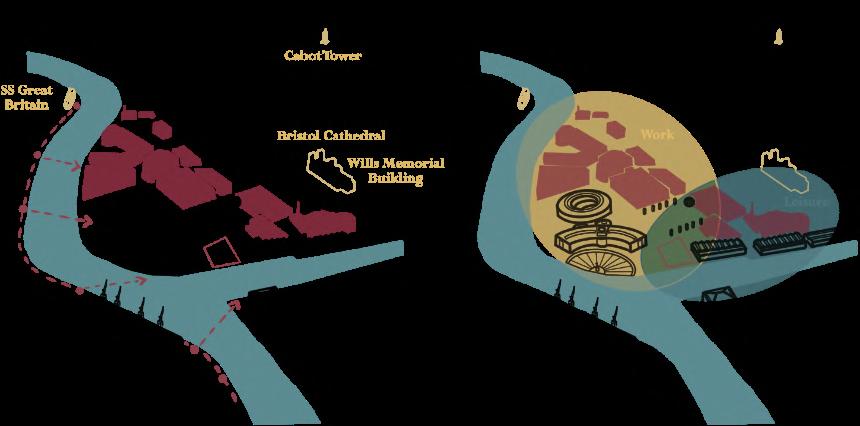
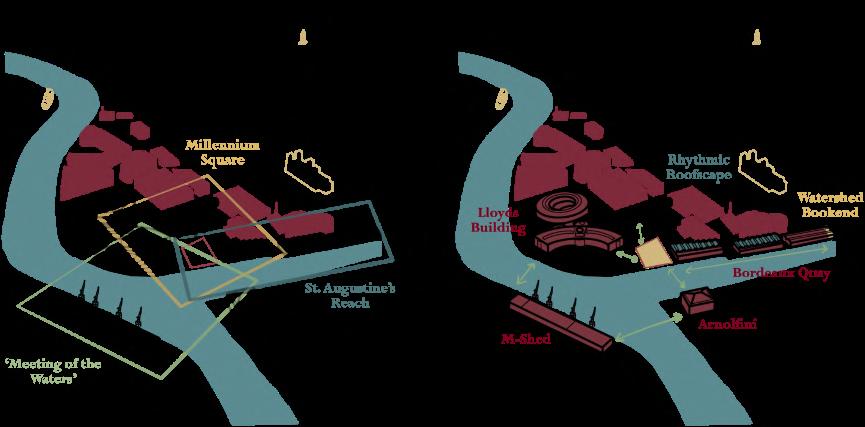
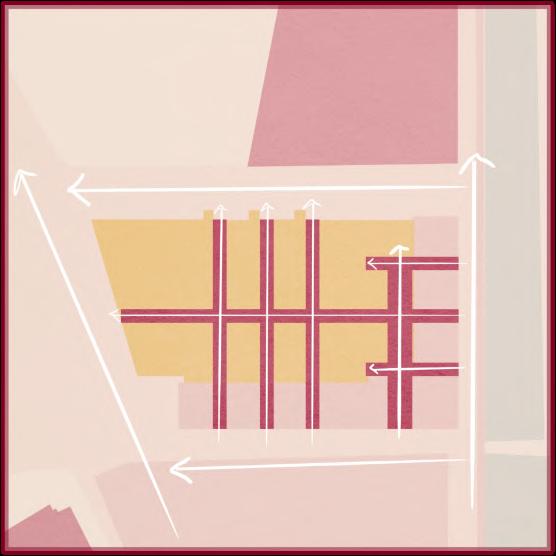
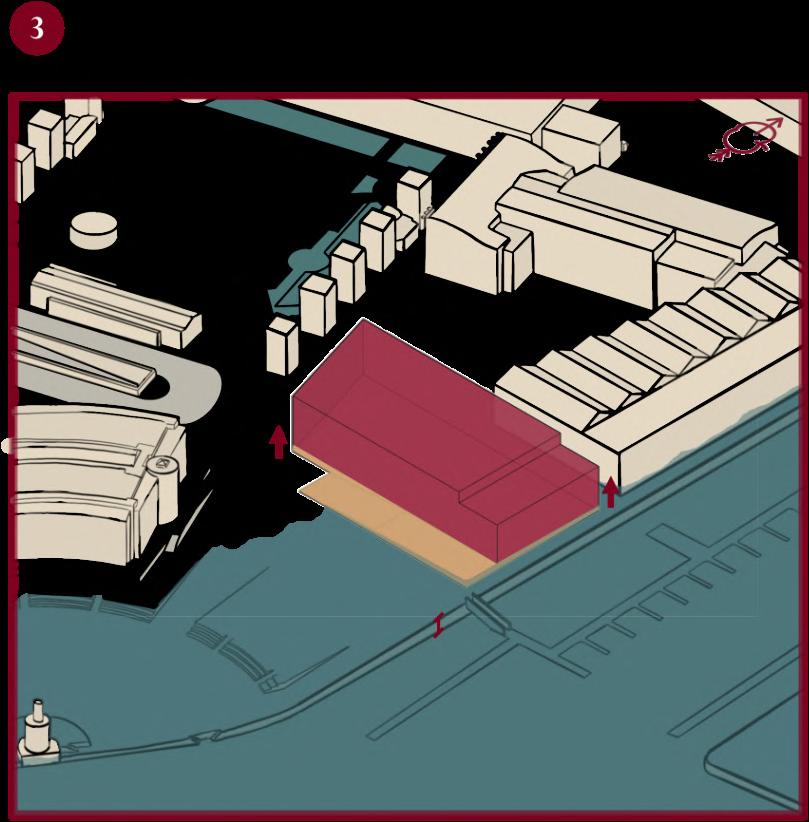
site design drivers.


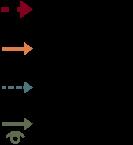
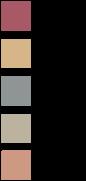


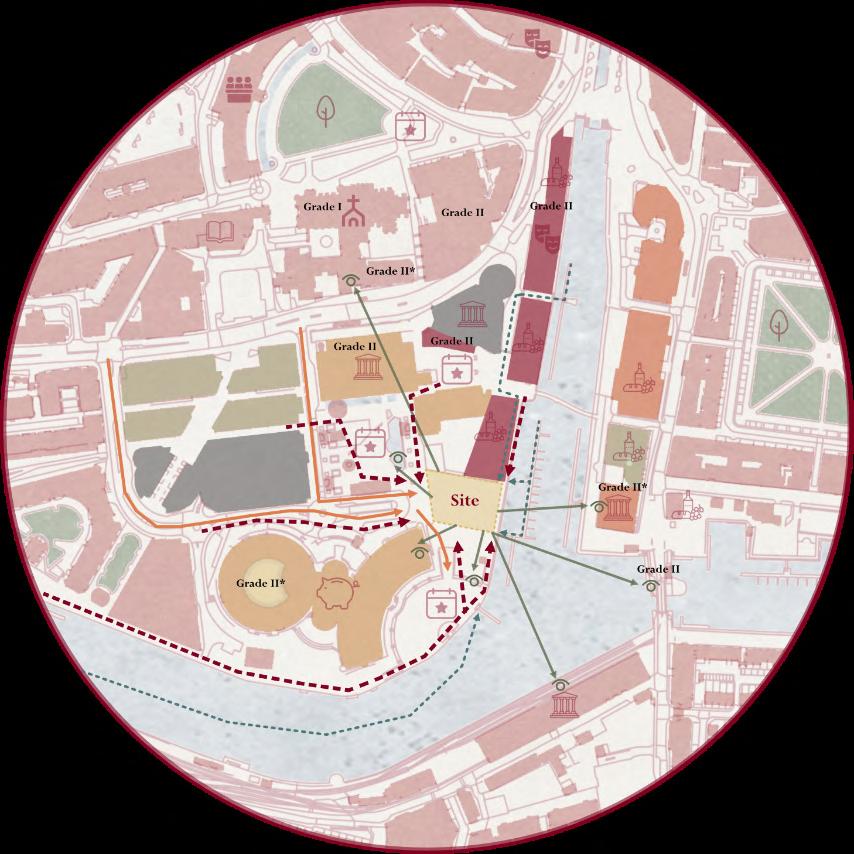
Site context plan showing opportunities and constraints.


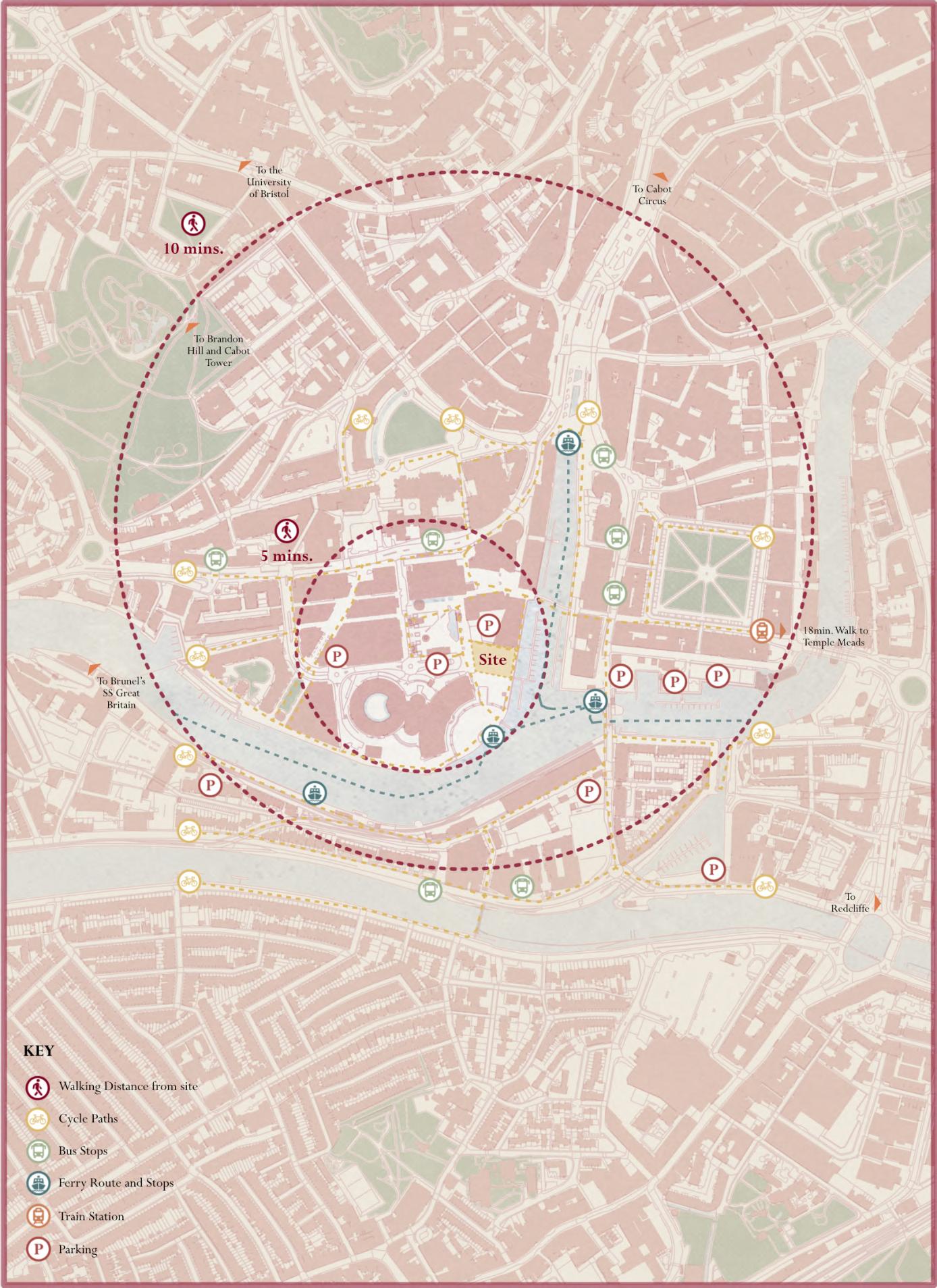
Site location plan showing circulation, transport links and access.
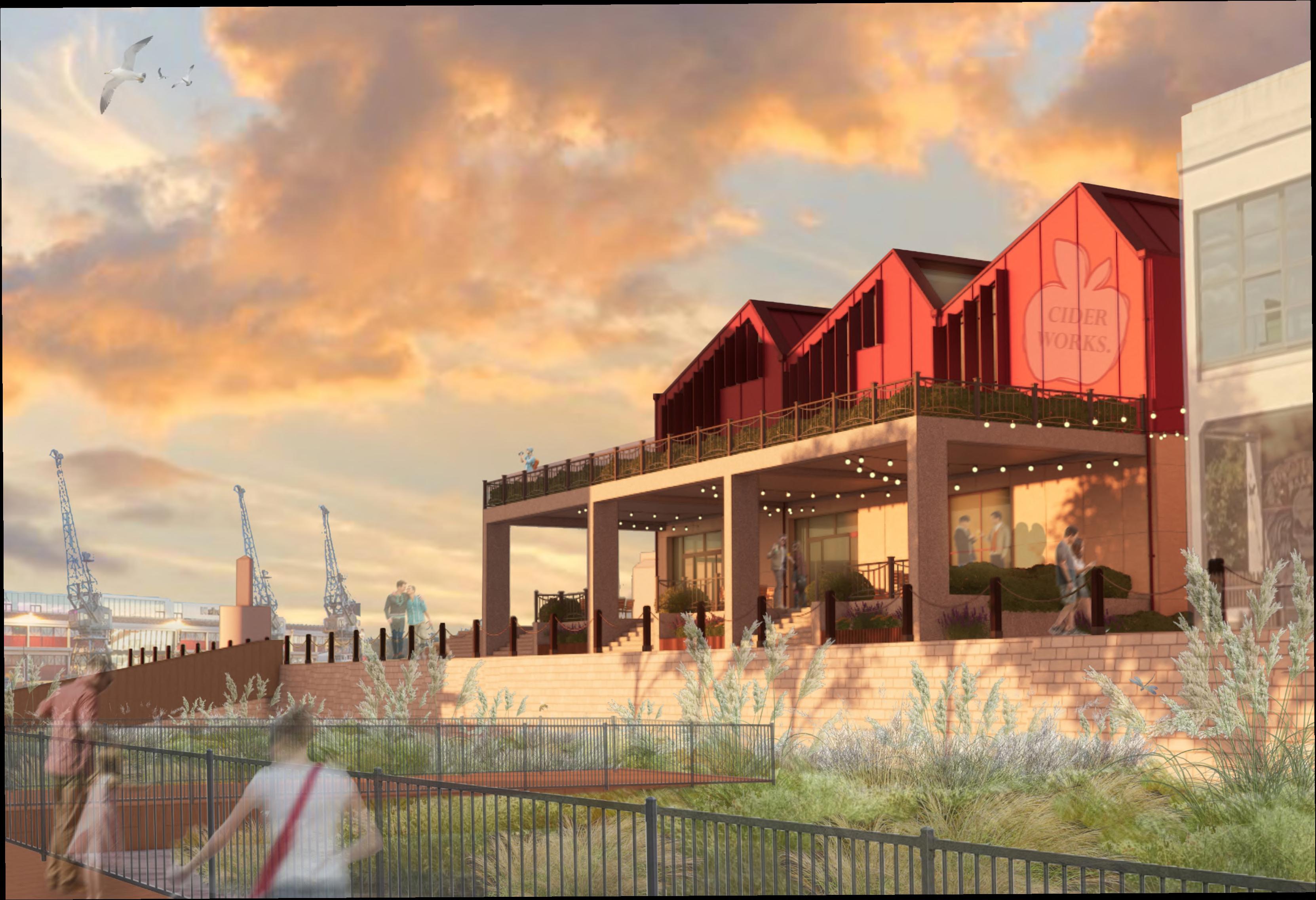
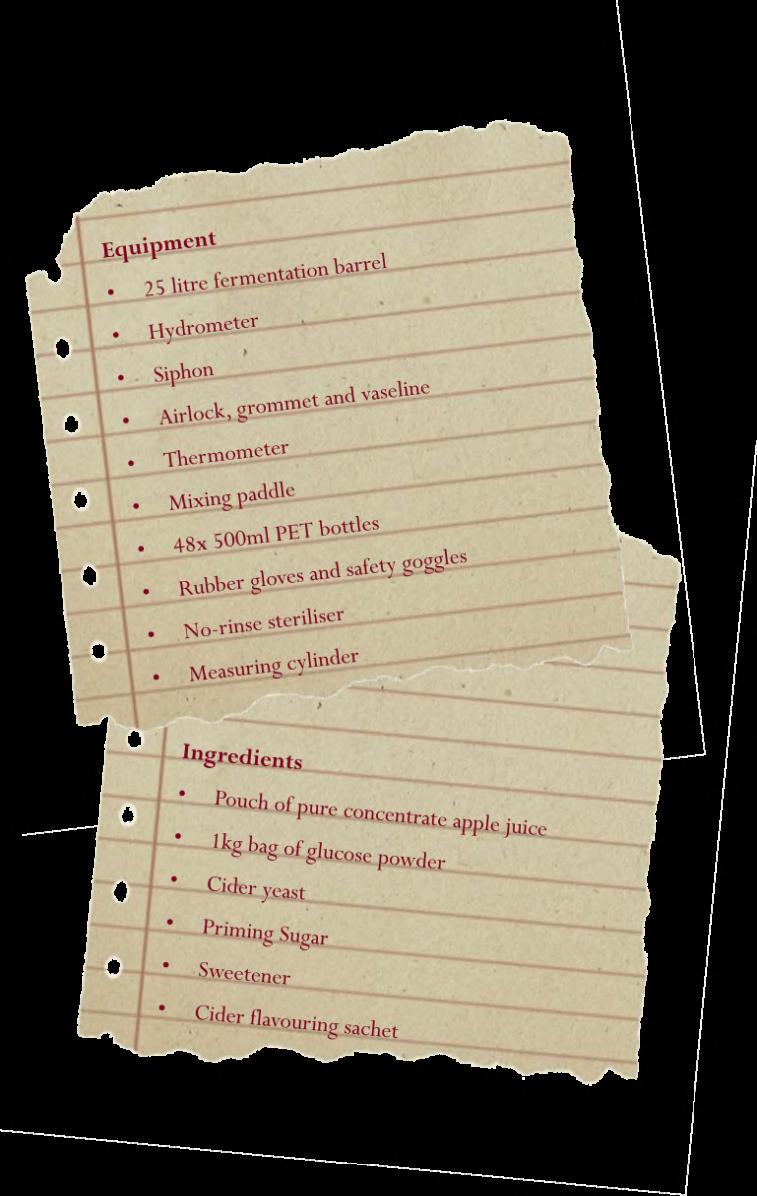
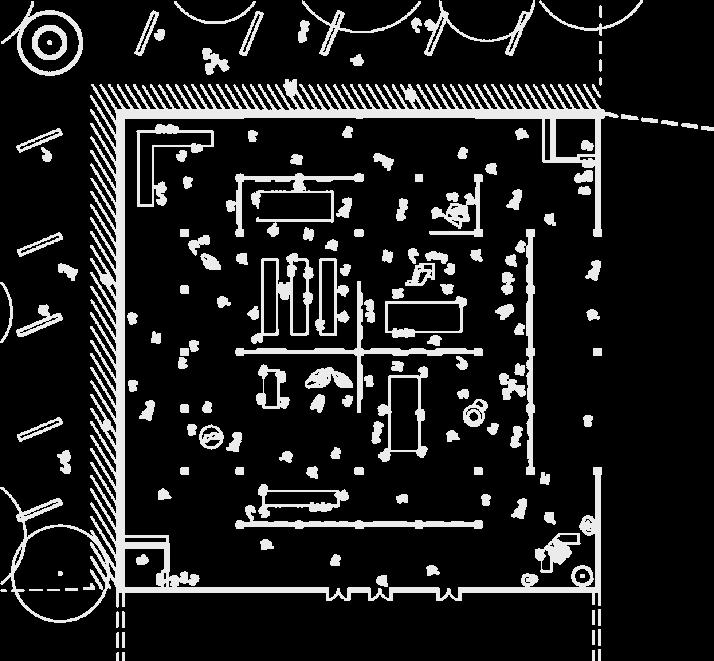
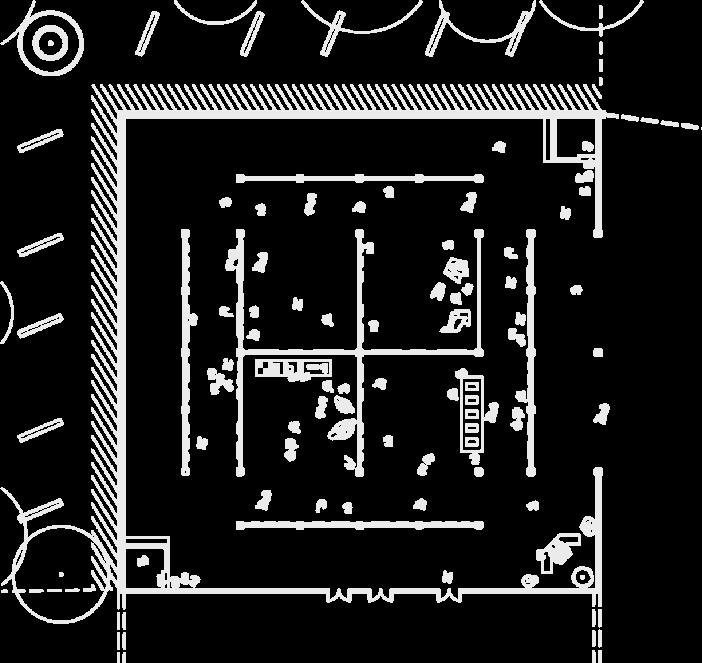
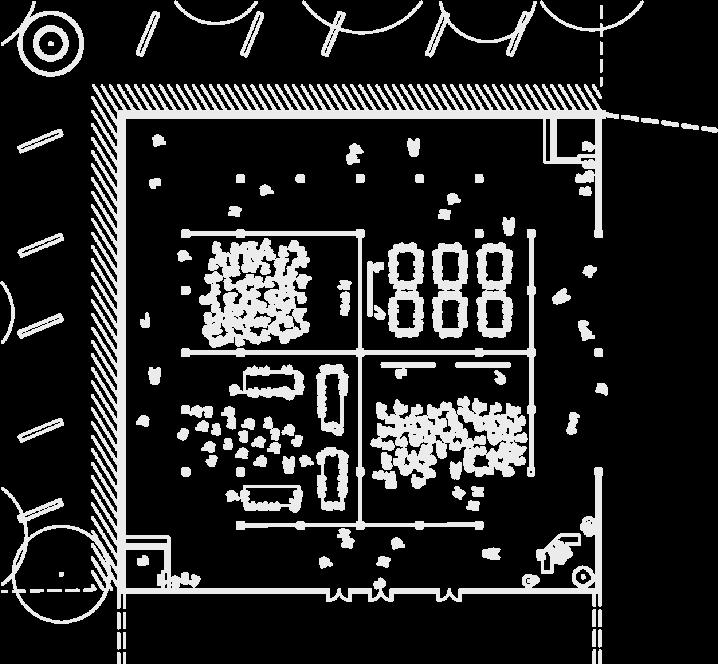
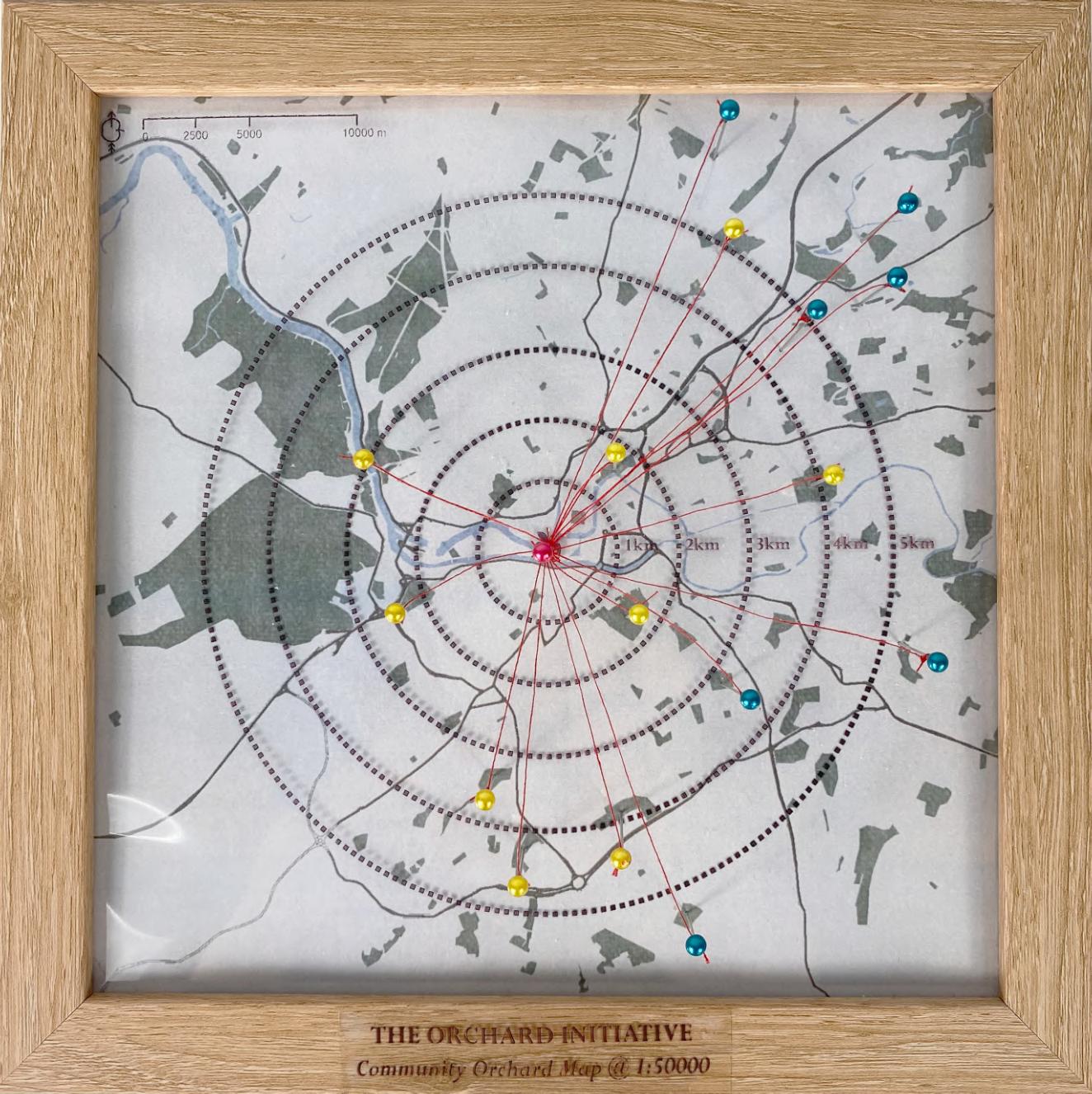
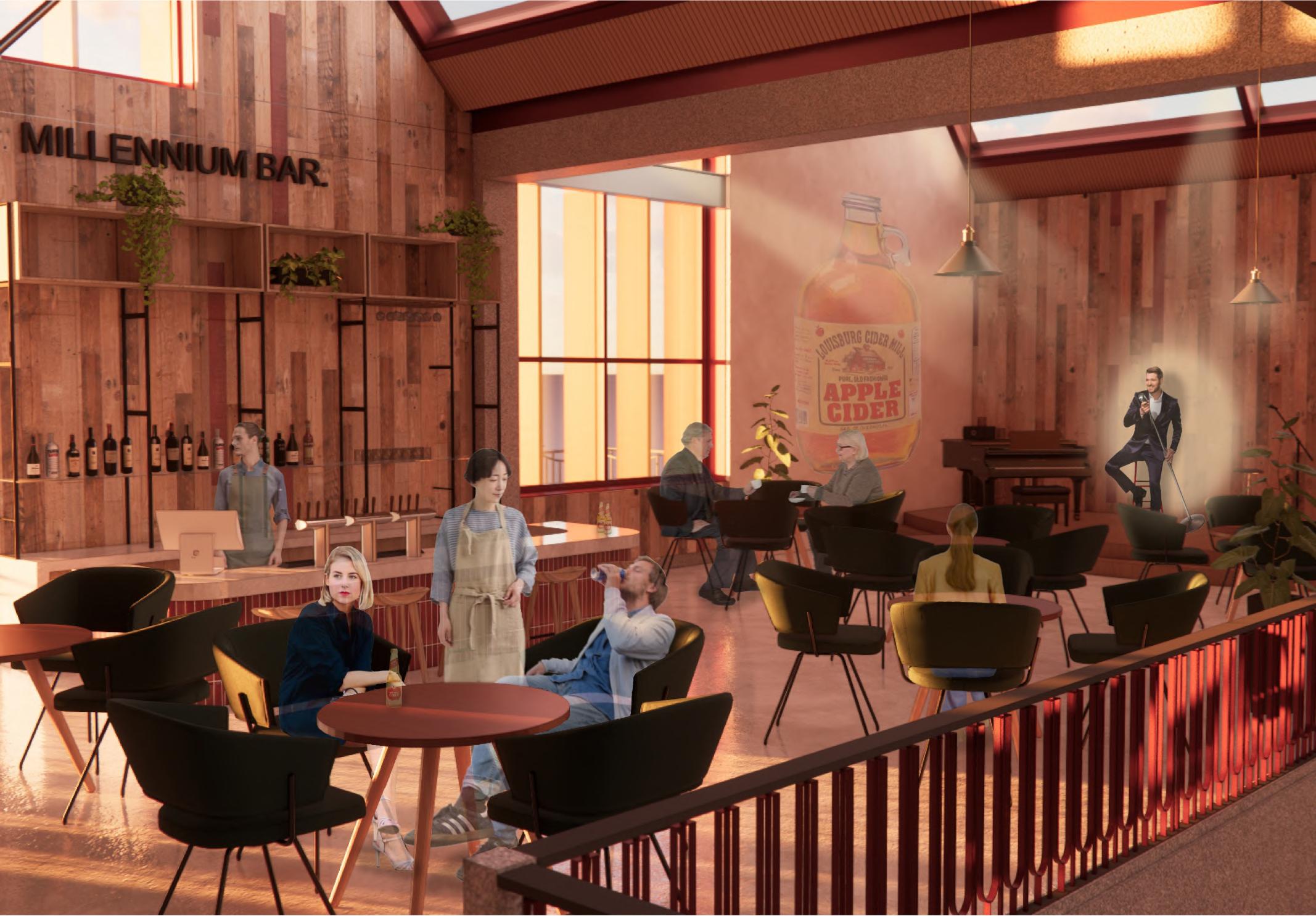
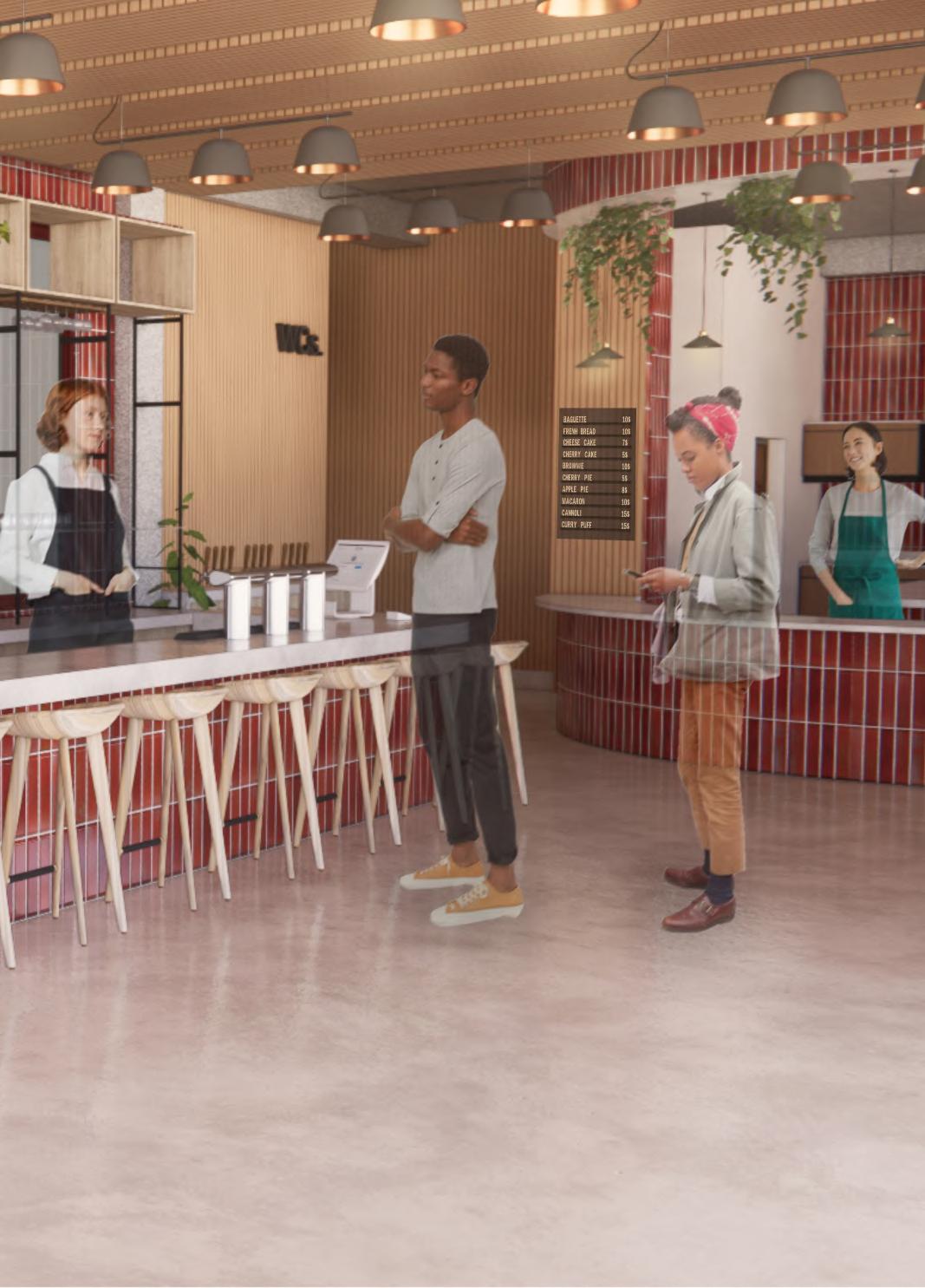
Ciderworks is a pioneering centre dedicated to the revival and survival of the UK cider industry, situated in the heart of the South West. Designed as both a functional production facility and a community hub, the scheme offers aspiring cider-makers the opportunity to learn traditional and modern techniques, equipping them with the skills to launch their own ventures. Through a rich programme of tours, tastings, traditional events, and the cultivation of community orchards via the Orchard Initiative, Ciderworks creates a deep sense of connection to the region’s cultural heritage and encourages the exchange of knowledge across generations.
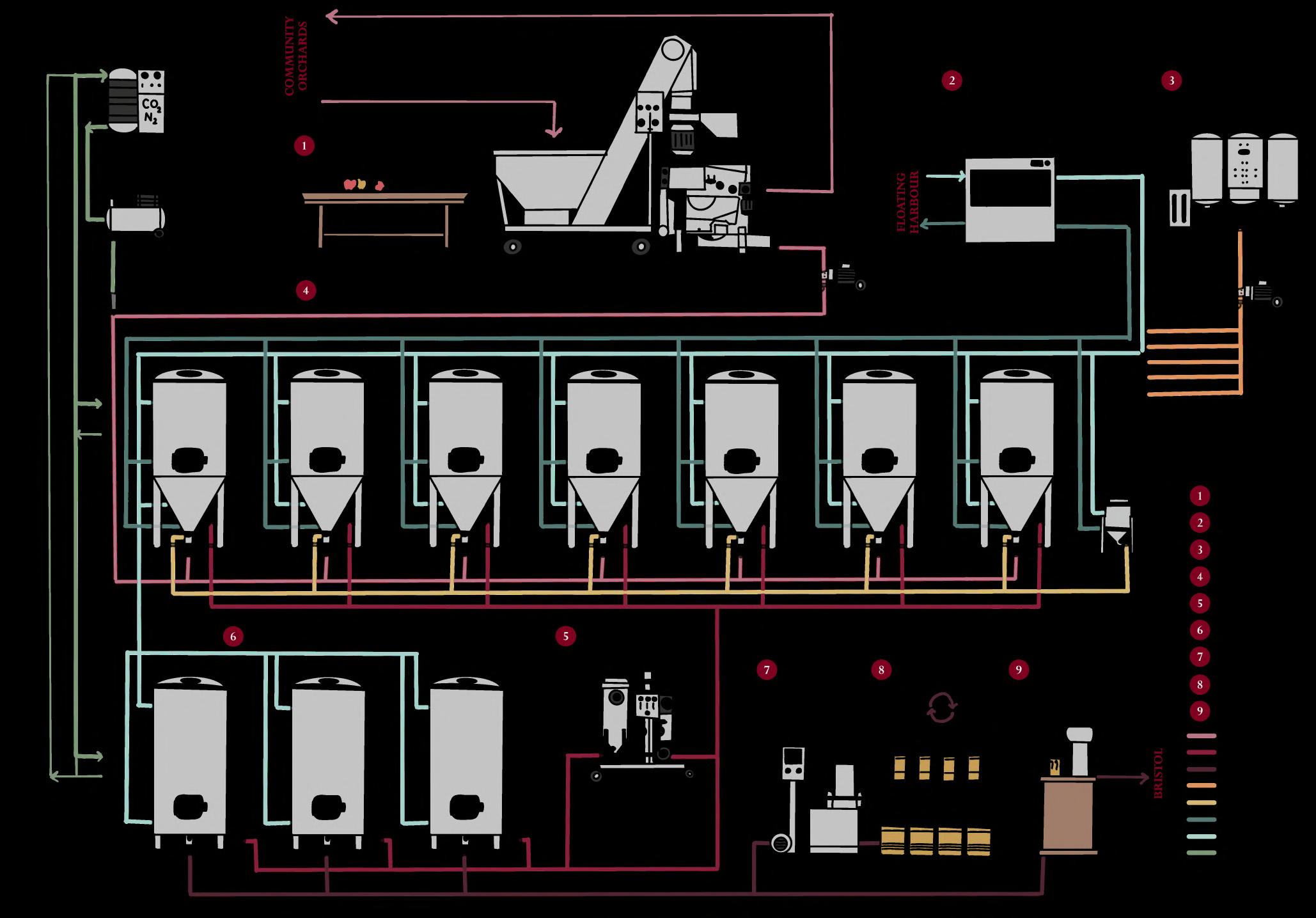
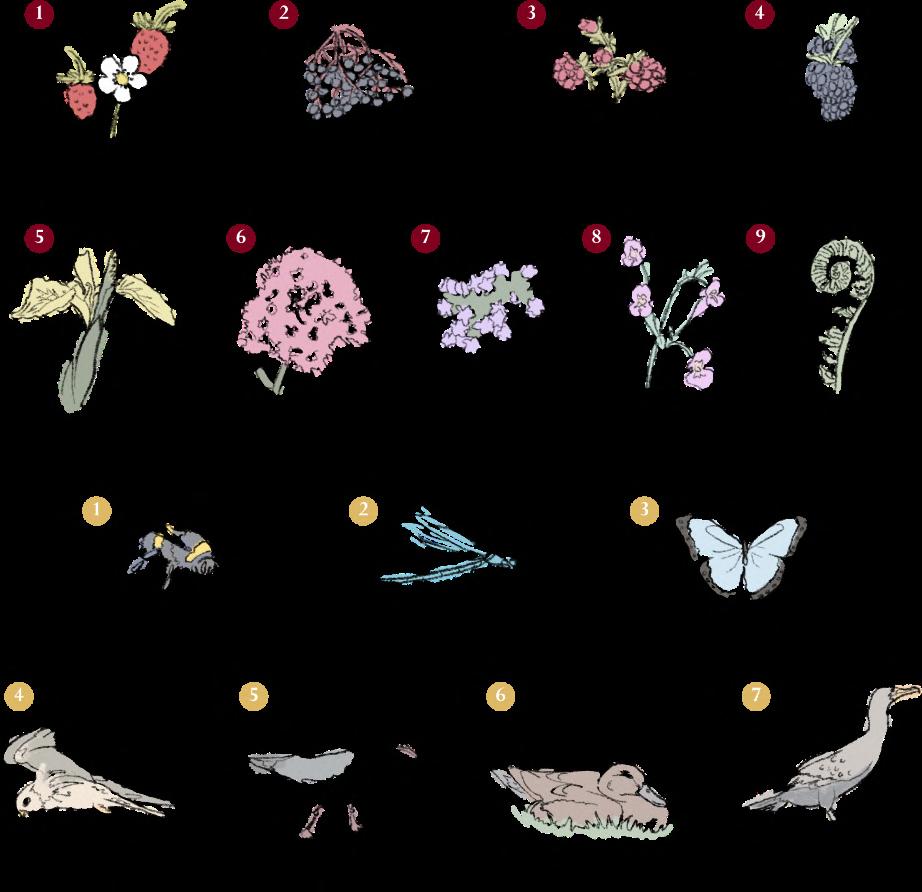
The project is underpinned by a strong commitment to holistic sustainability and research-led innovation. In collaboration with the University of Bristol, Ciderworks provides a platform for advancing sustainable practices in cider production, promoting biodiversity, and preserving endangered cider apple varieties. By establishing new local orchards and supporting a circular economy, the initiative not only enhances cider’s environmental credentials but also reinforces Bristol’s community and ecological cohesion.
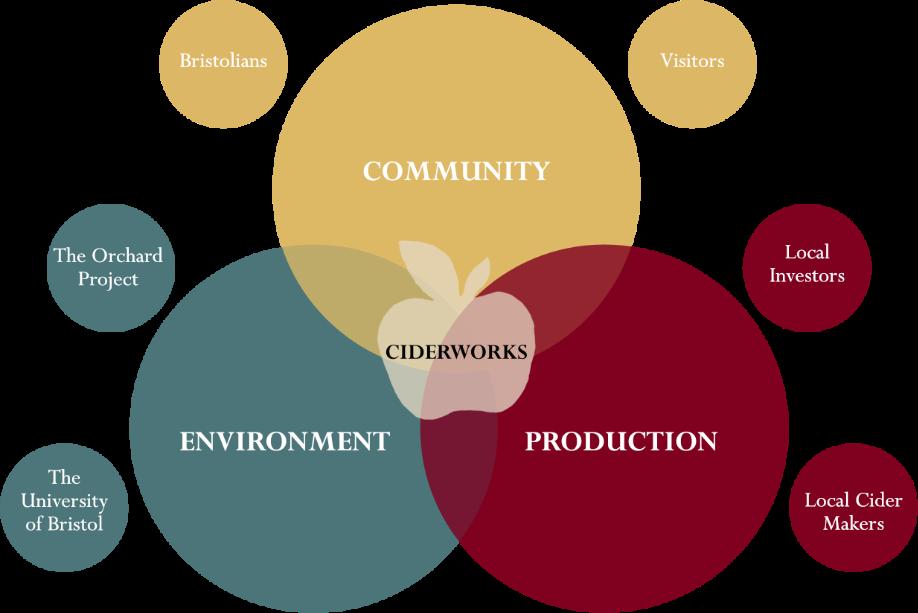
At its core, Ciderworks is a vibrant convergence of community, environment and production. It embodies a forward-thinking approach to rural enterprise, ensuring that the legacy of cider-making remains accessible, resilient and relevant for future generations.


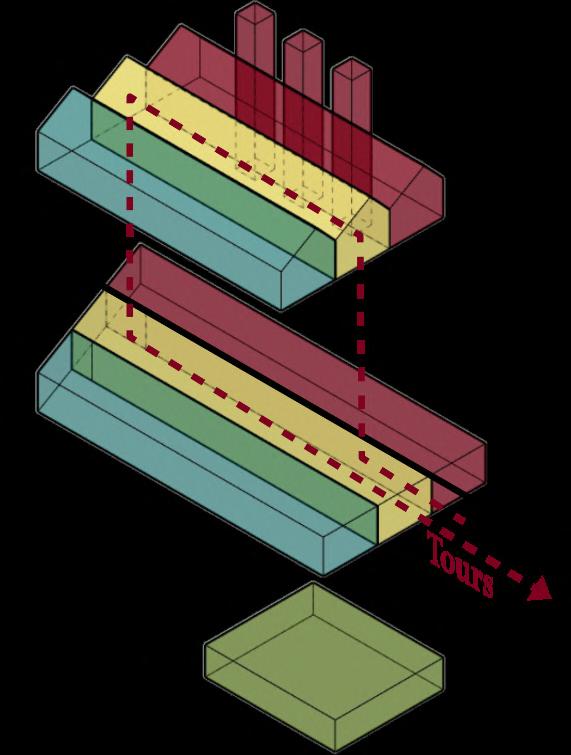
Ciderworks’ key concepts.
Ciderworks’ circular cider production.
Map showing the locations and distance (km) from site of existing and proposed orchards and community gardens in Bristol.
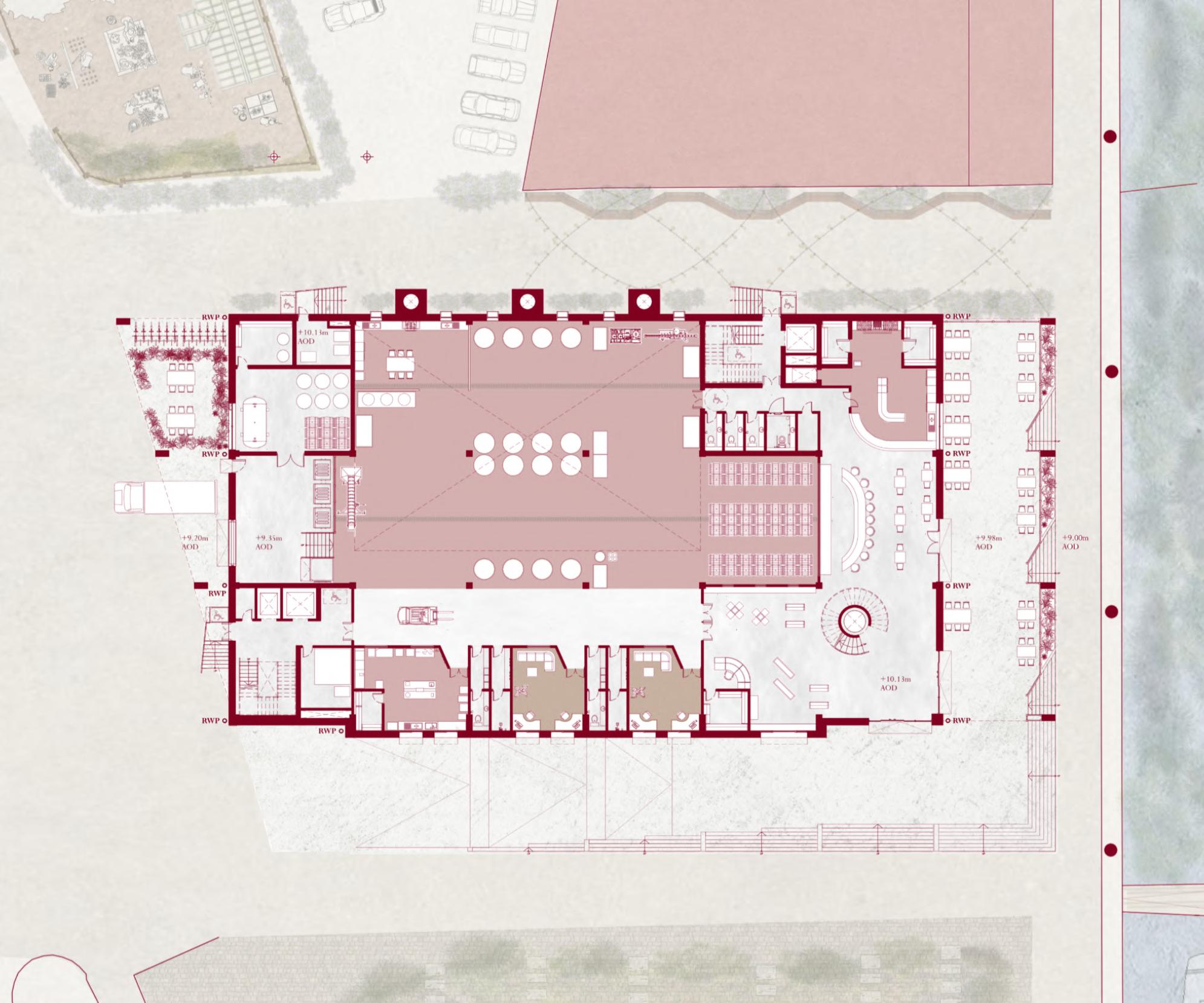
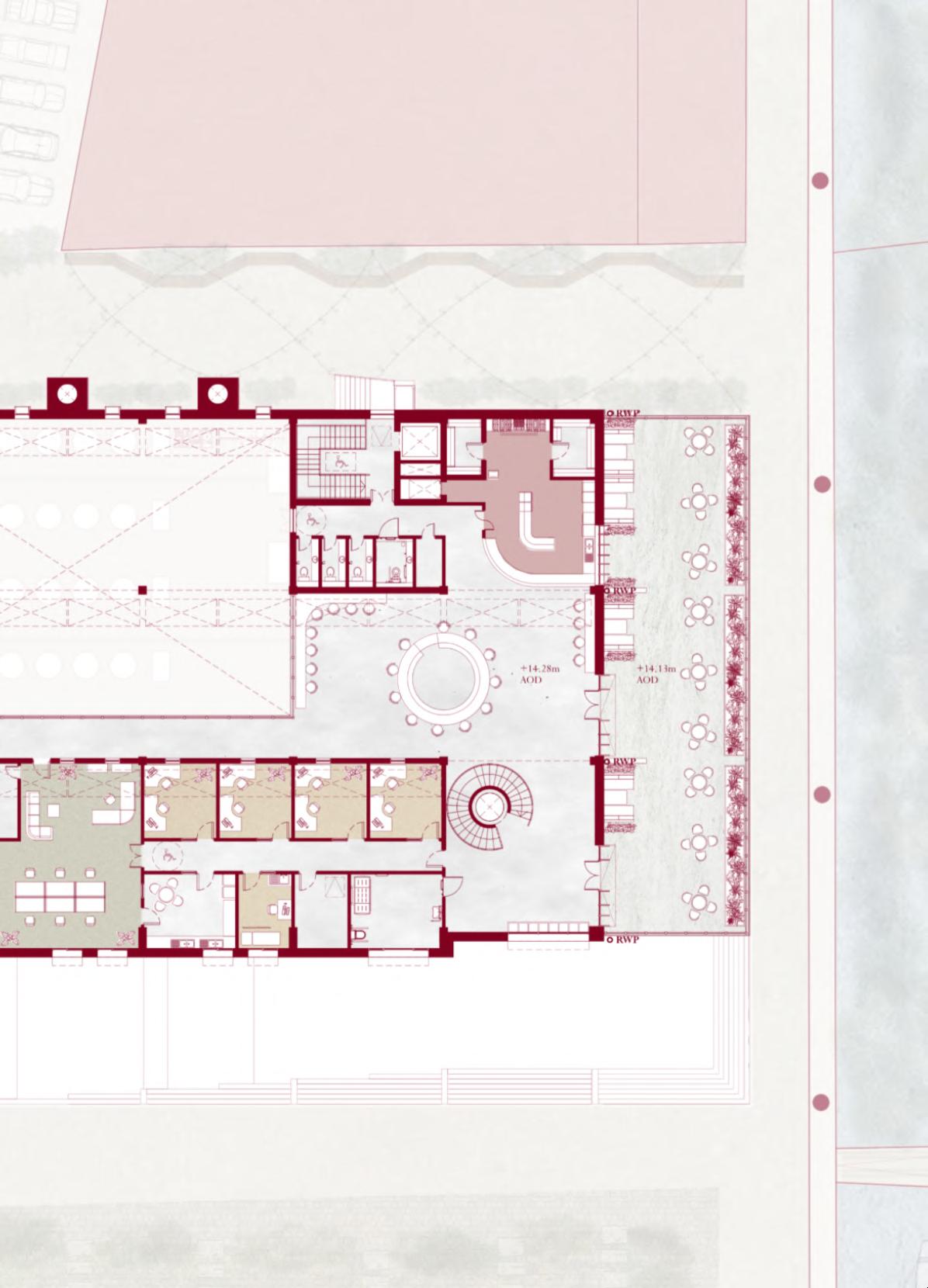
Ground Floor Plan.
CIRCULATION CONTROL SIGHT LINES
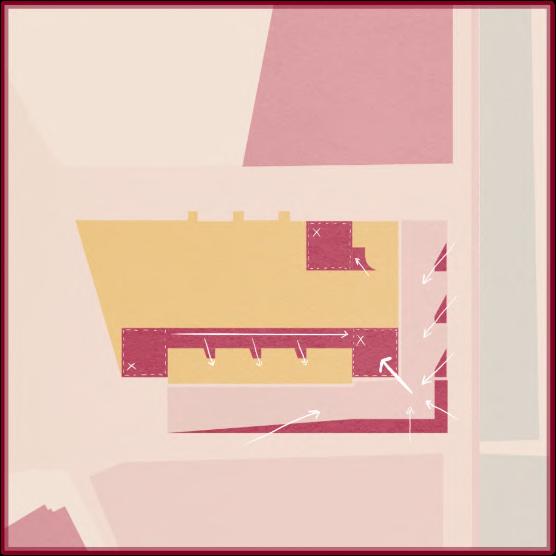
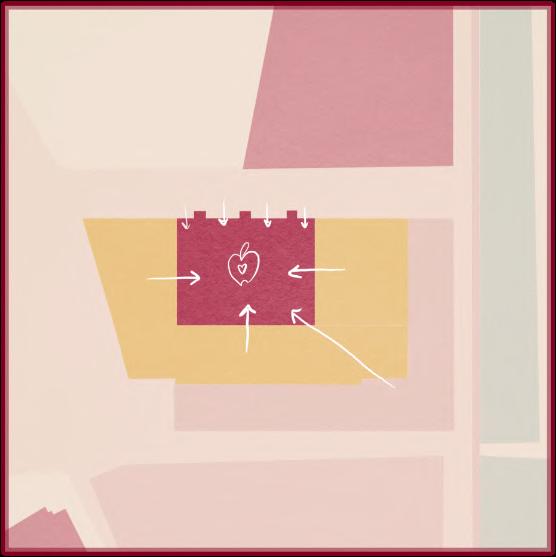
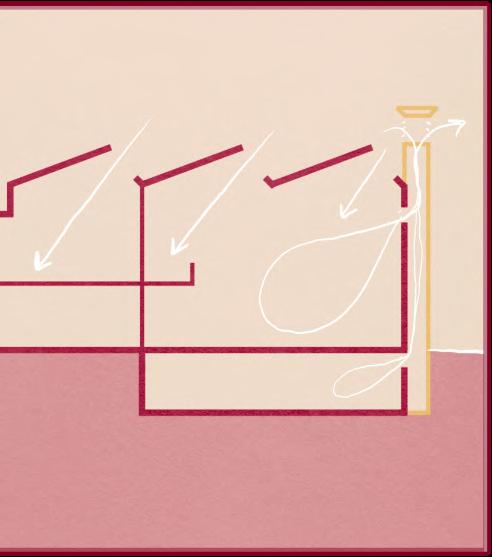
Key Parti diagrams.
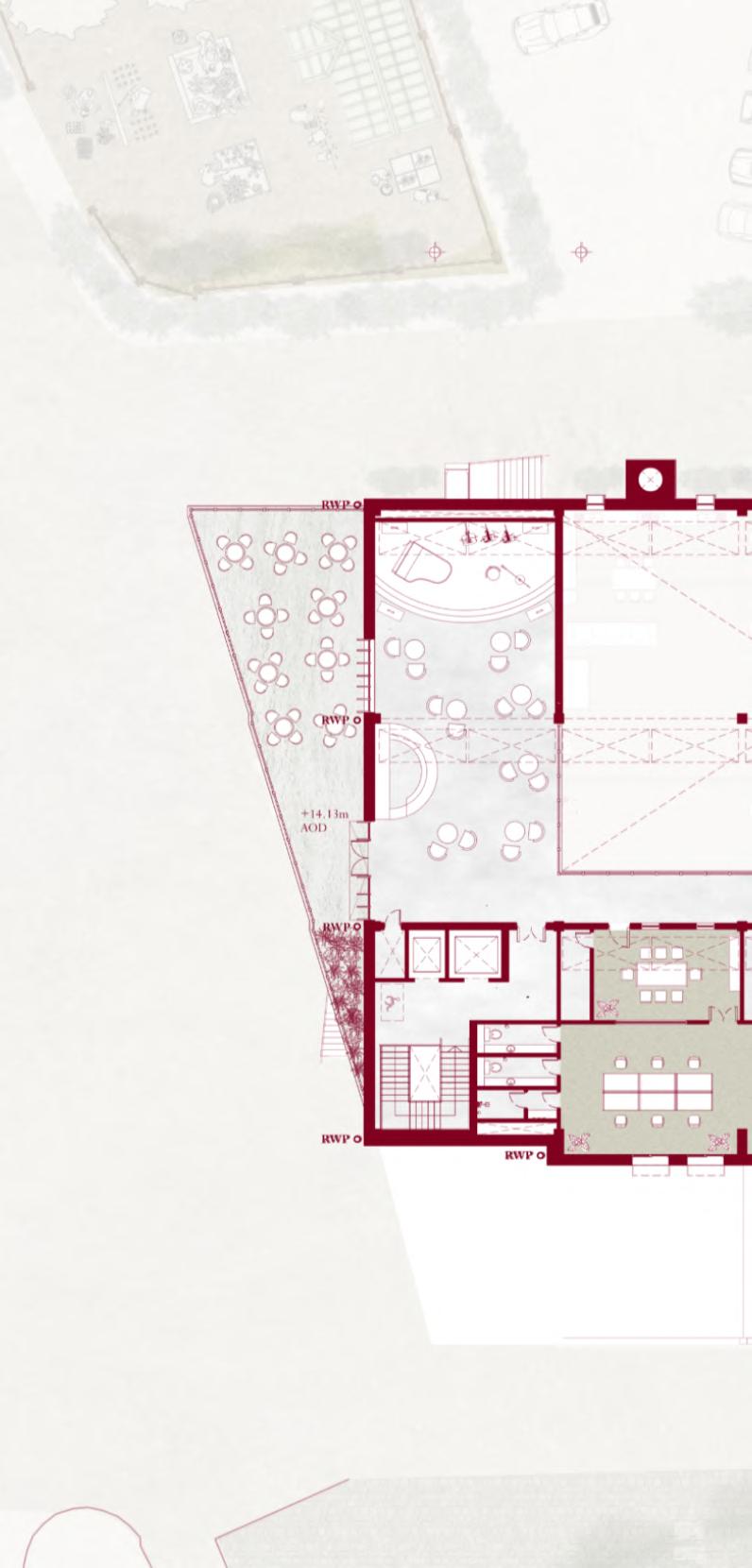
CENTRALITY OF CIDER BOOKEND First Floor Plan.
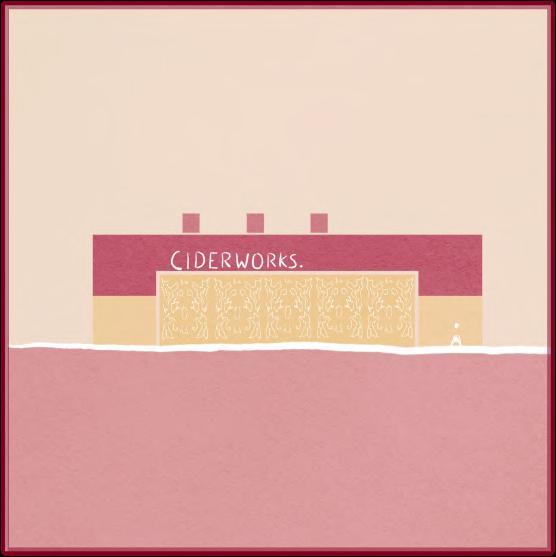
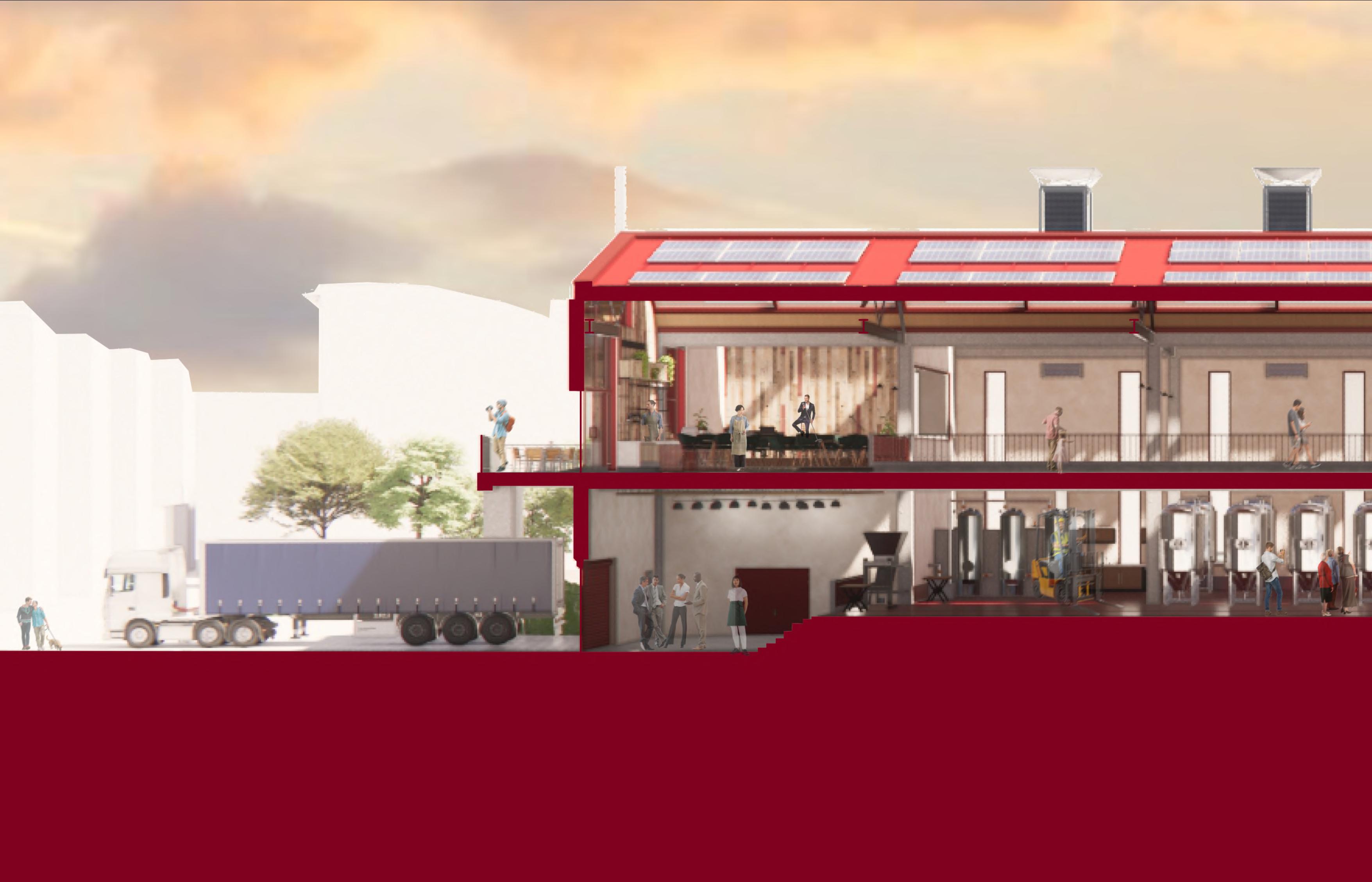
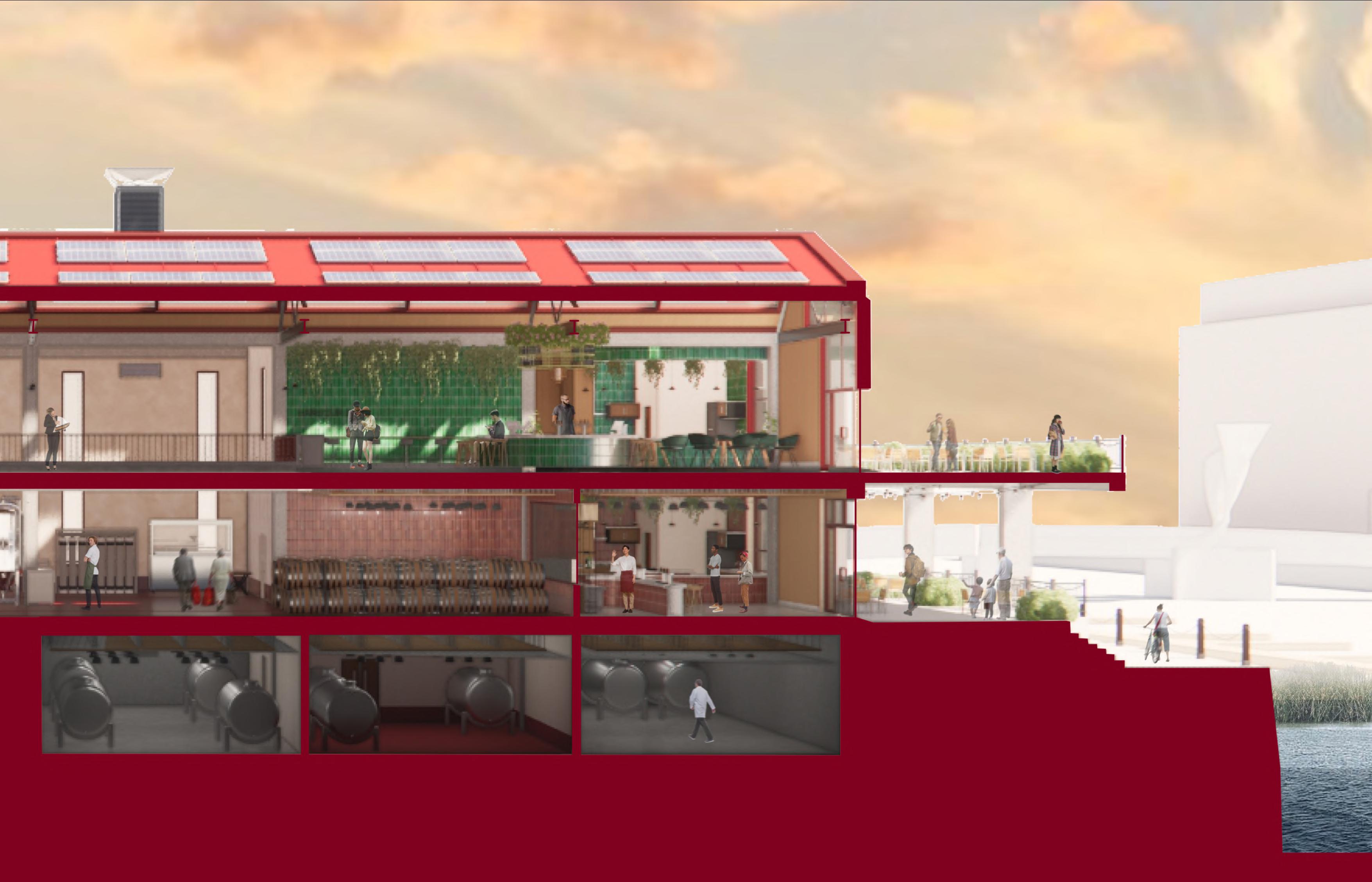
Rendered long section through the entire building, showing its relation to the floating harbour and surrounding built context.
LIGHT & AIR VISUAL PERMEABILITY
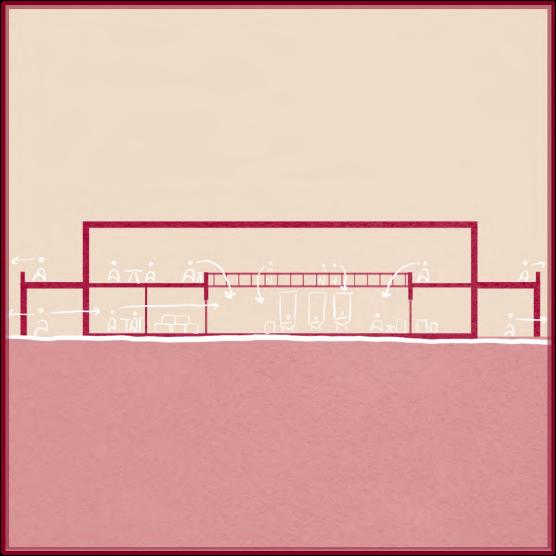
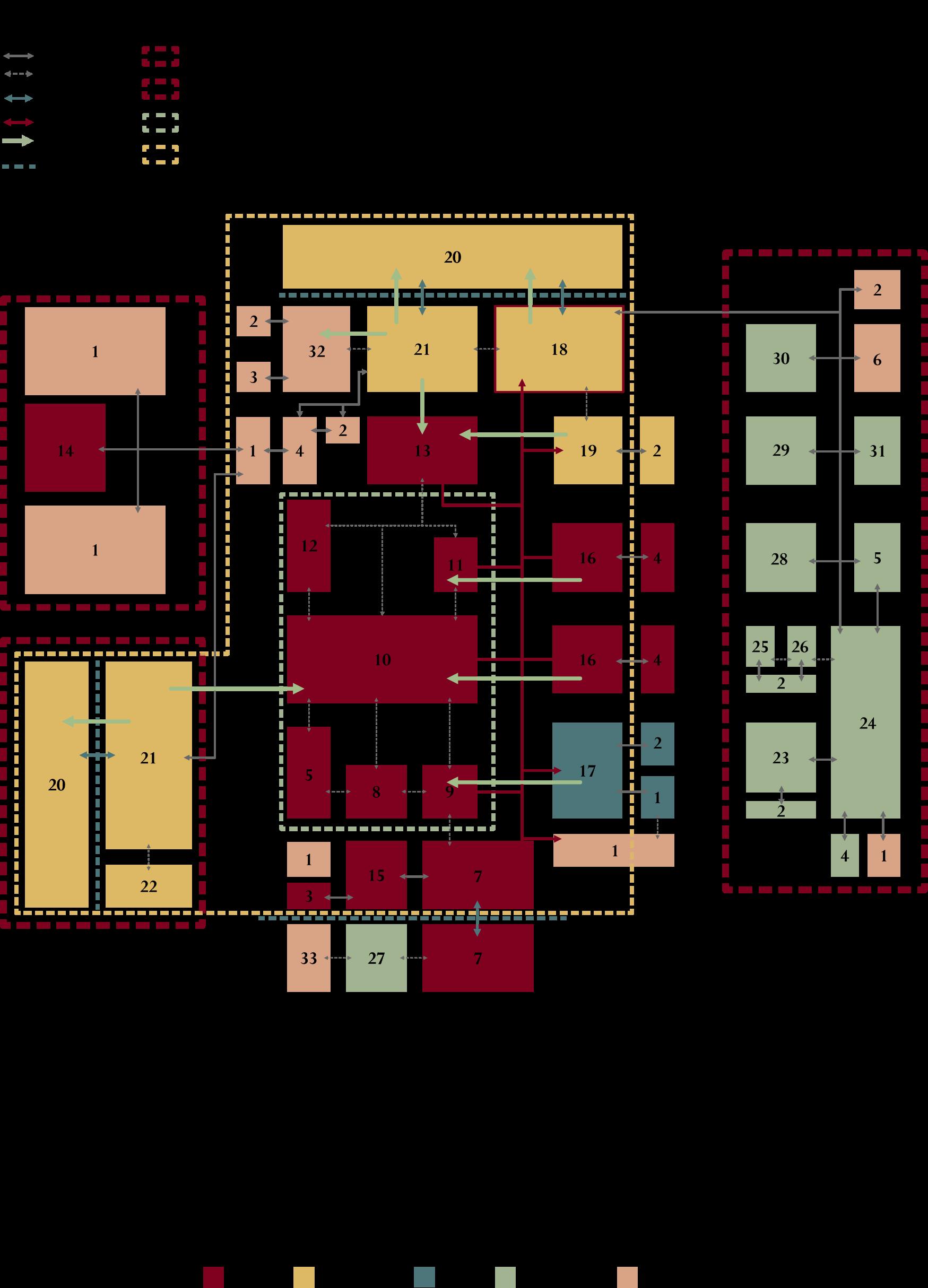
Spatial Arrangement diagram from the schedule of accommodation.
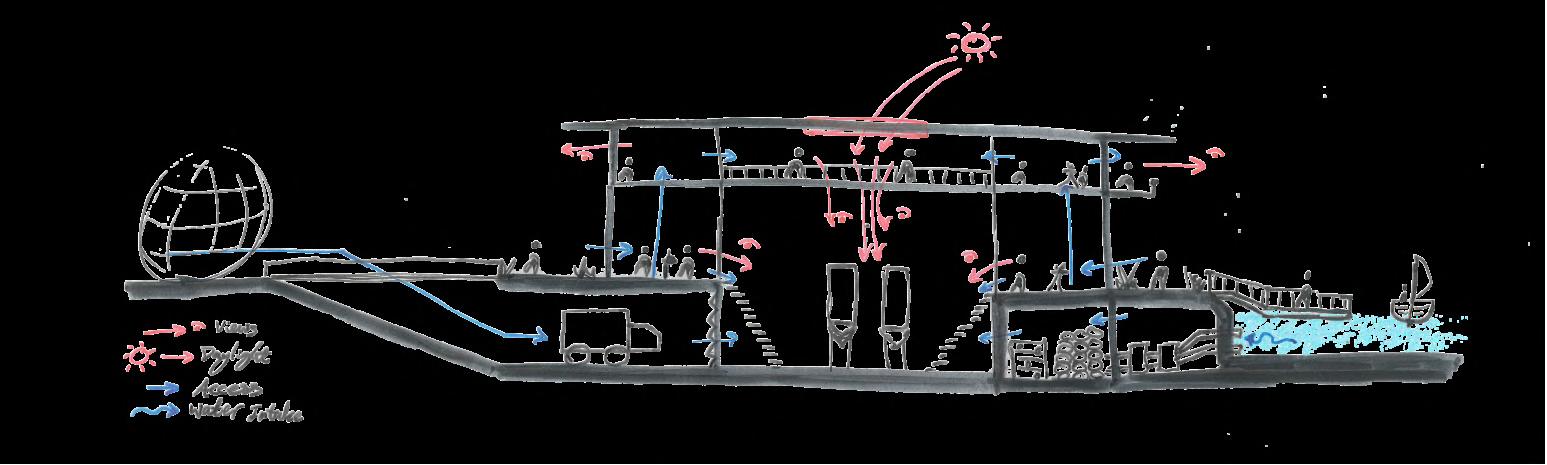
Week 1 initial sketch section.
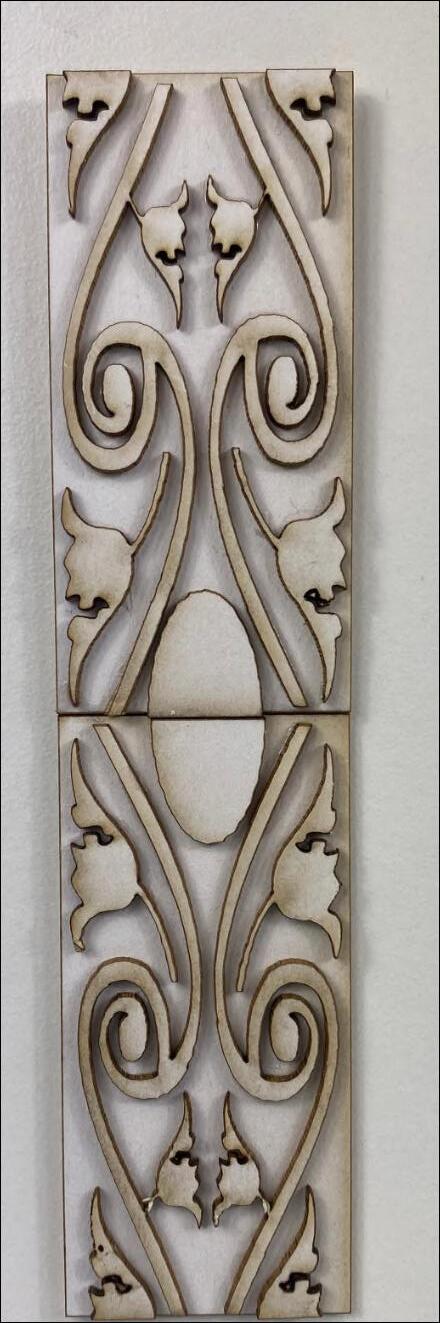
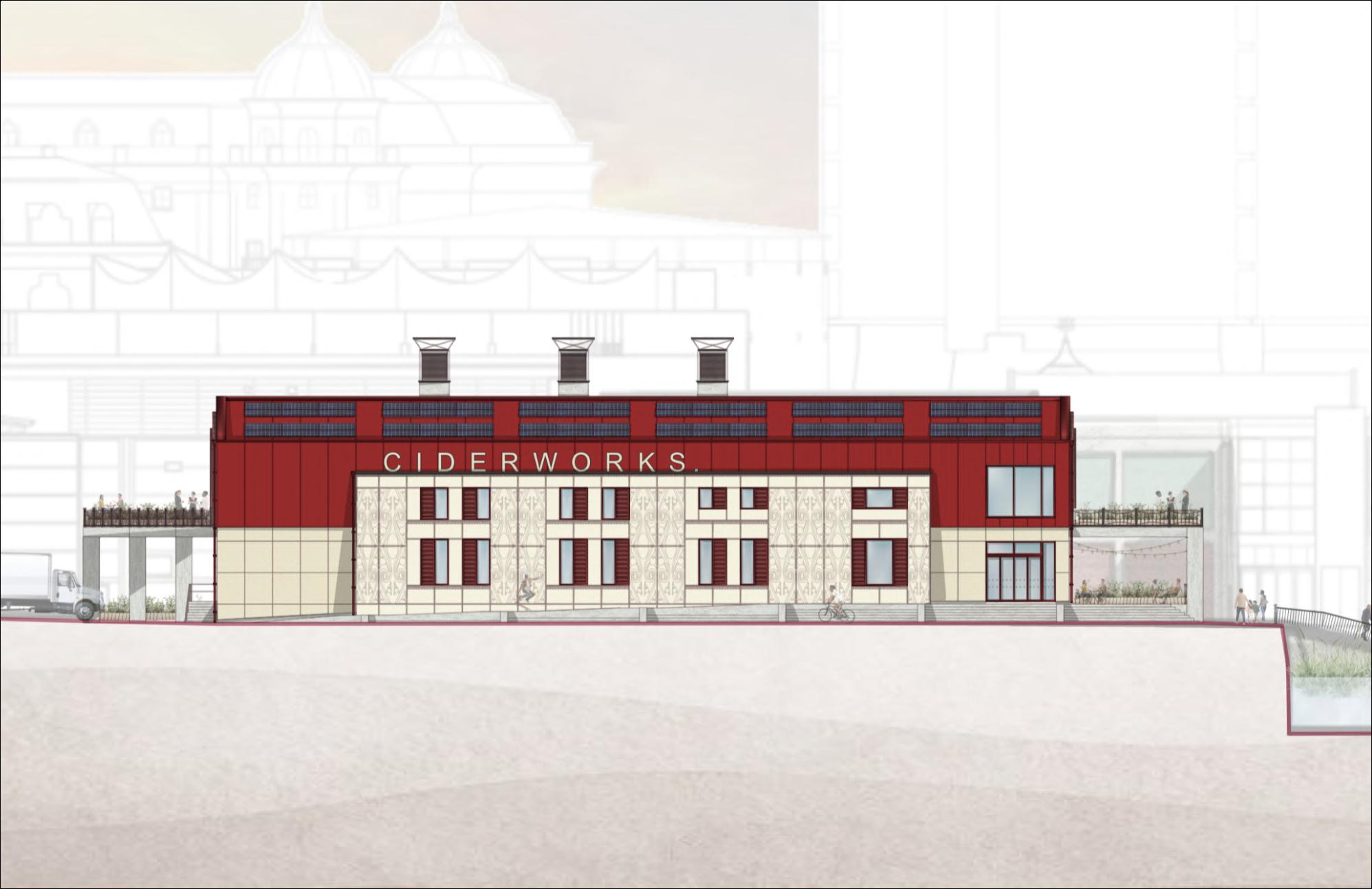



Precast concrete moulding material experiment based off Bristol Byzantine entablature. South Elevation.
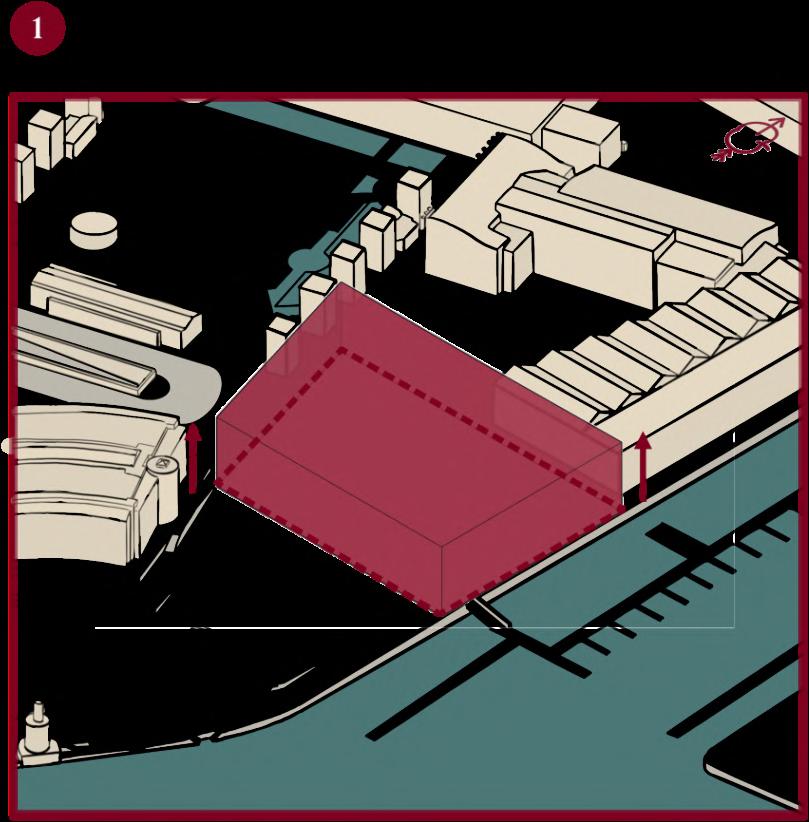
SITE BOUNDARY
SIGHT & SITE AXIS
FLOODING
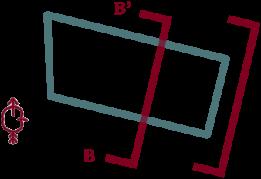

HARBOUR SIDE RHYTHM
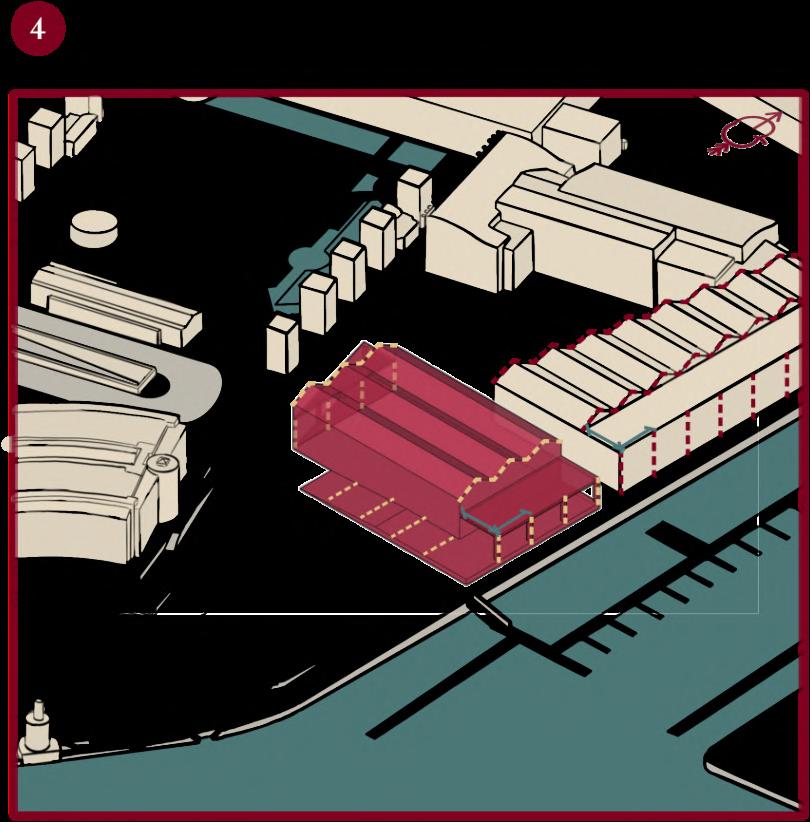
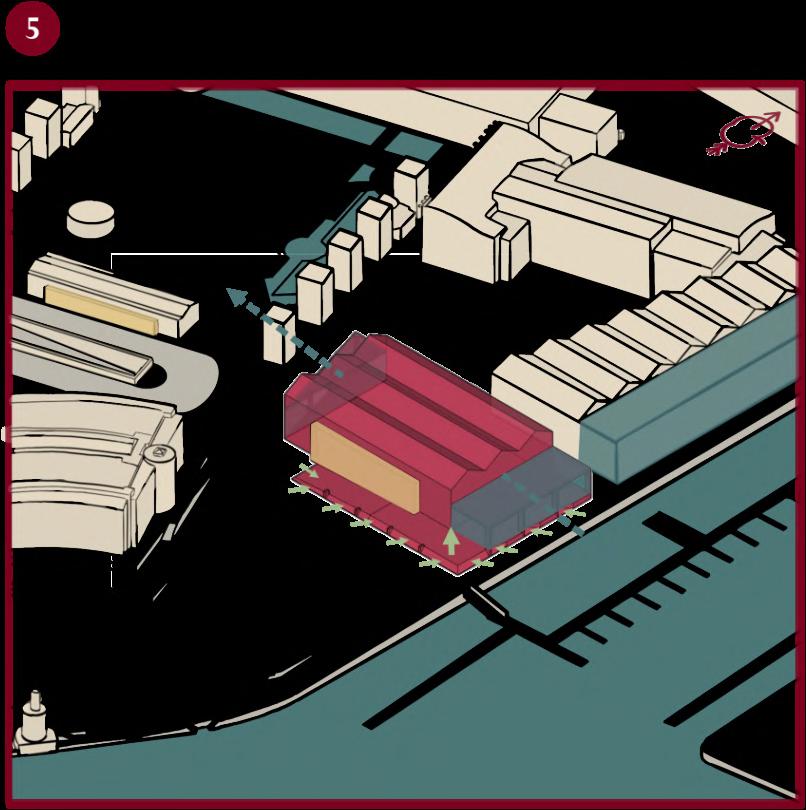
ACTIVATING FRONTAGES ENVIRONMENTAL
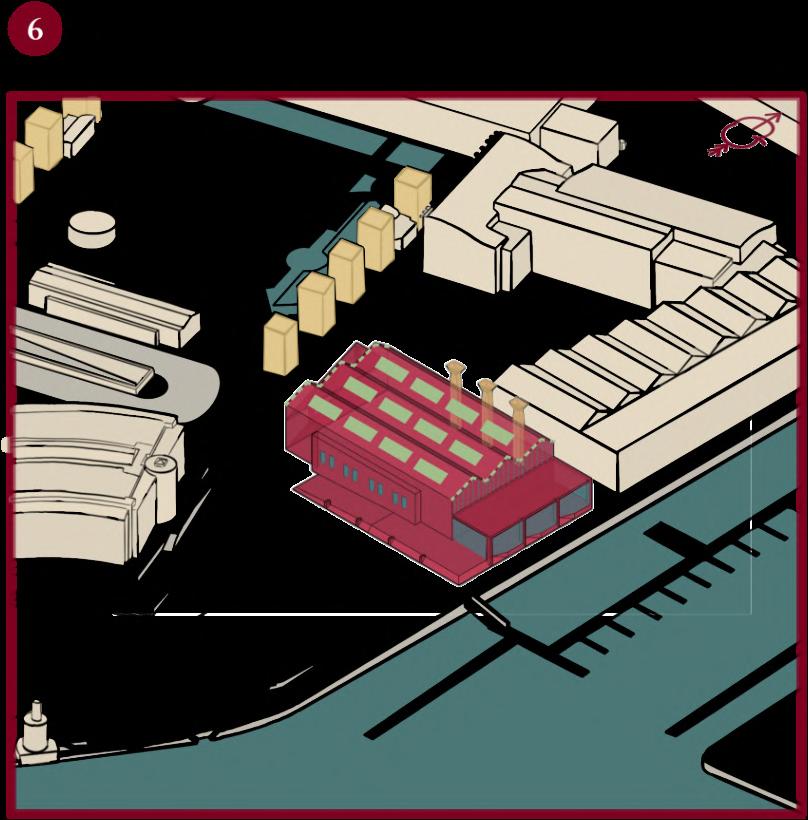
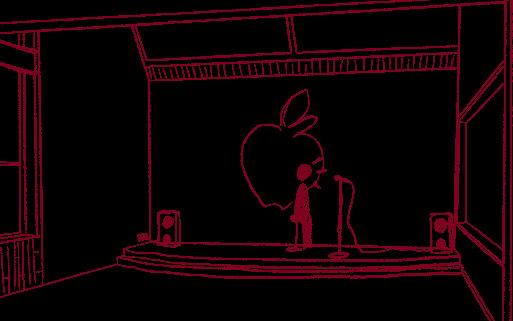
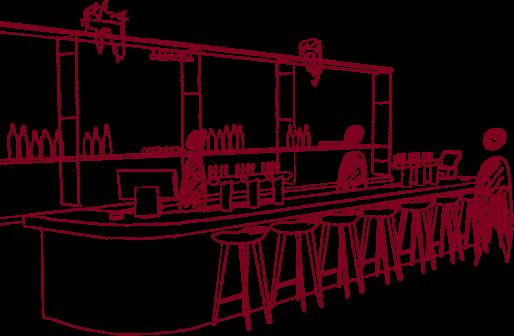
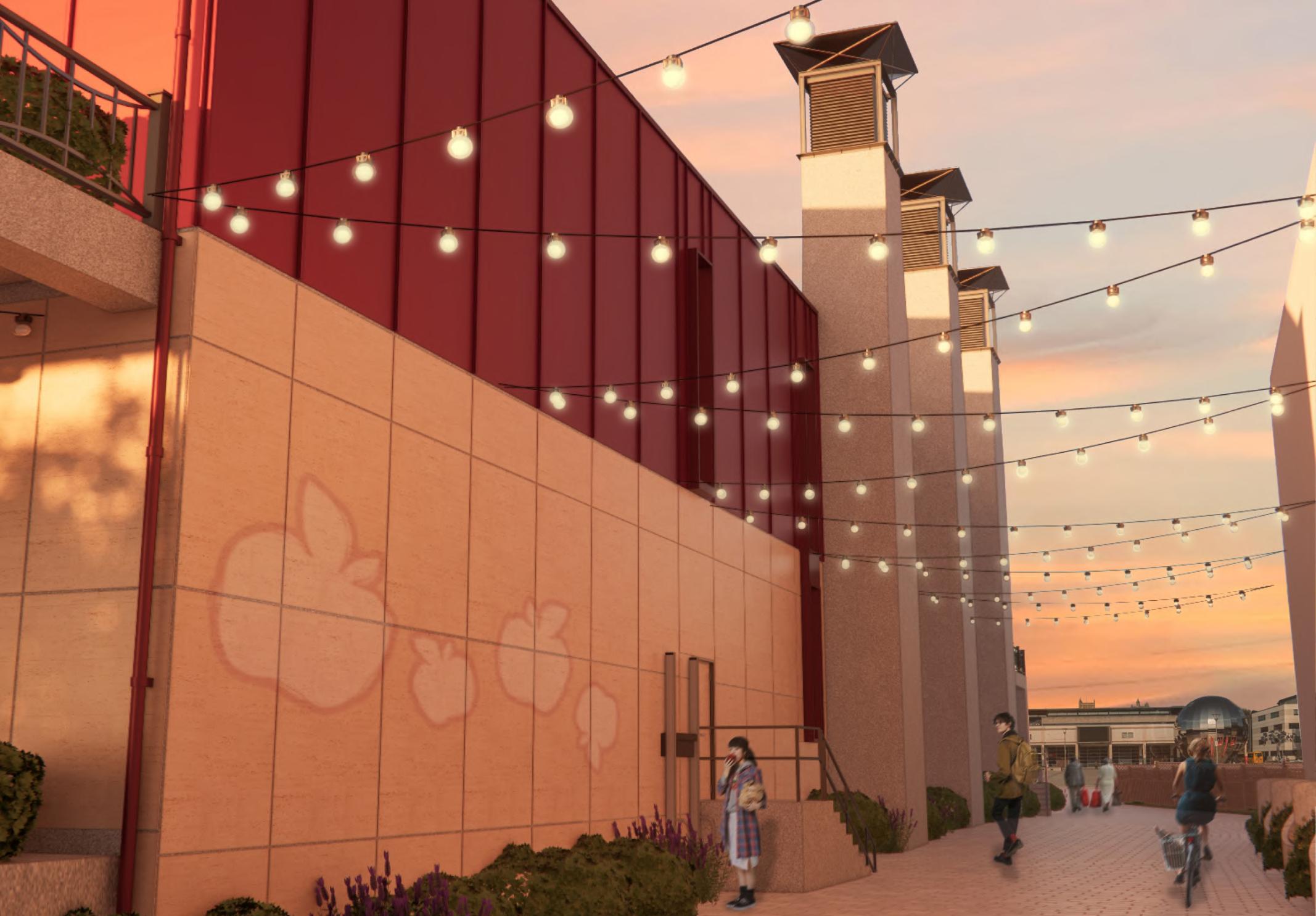
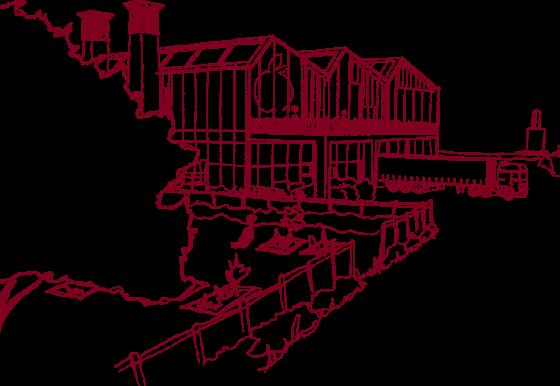
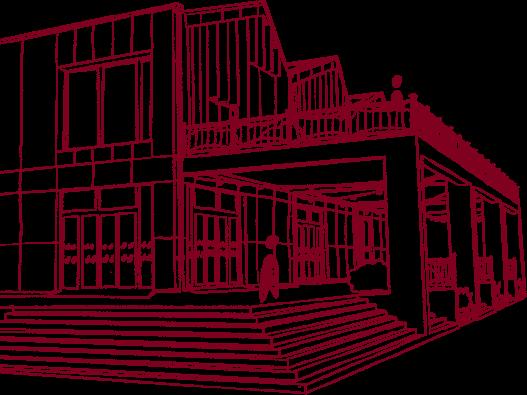
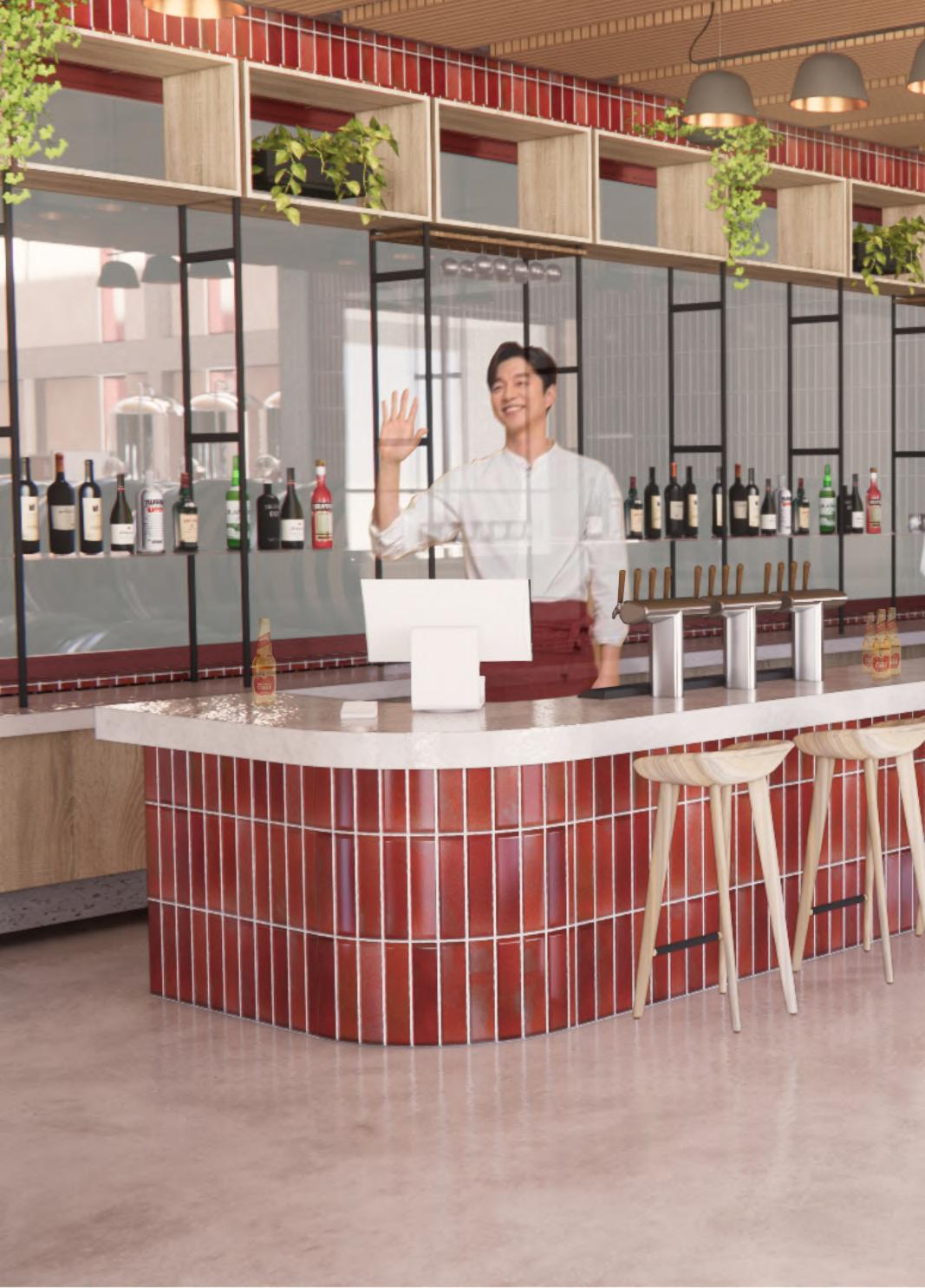
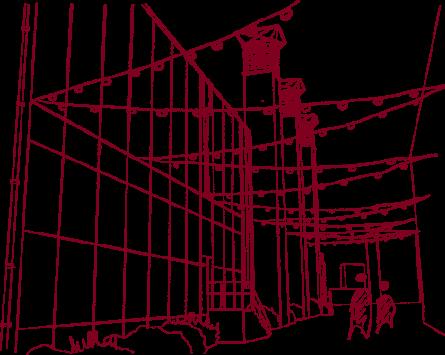
Massing and form diagrams explaining key design drivers. Hand sketches of key moments within Ciderworks.
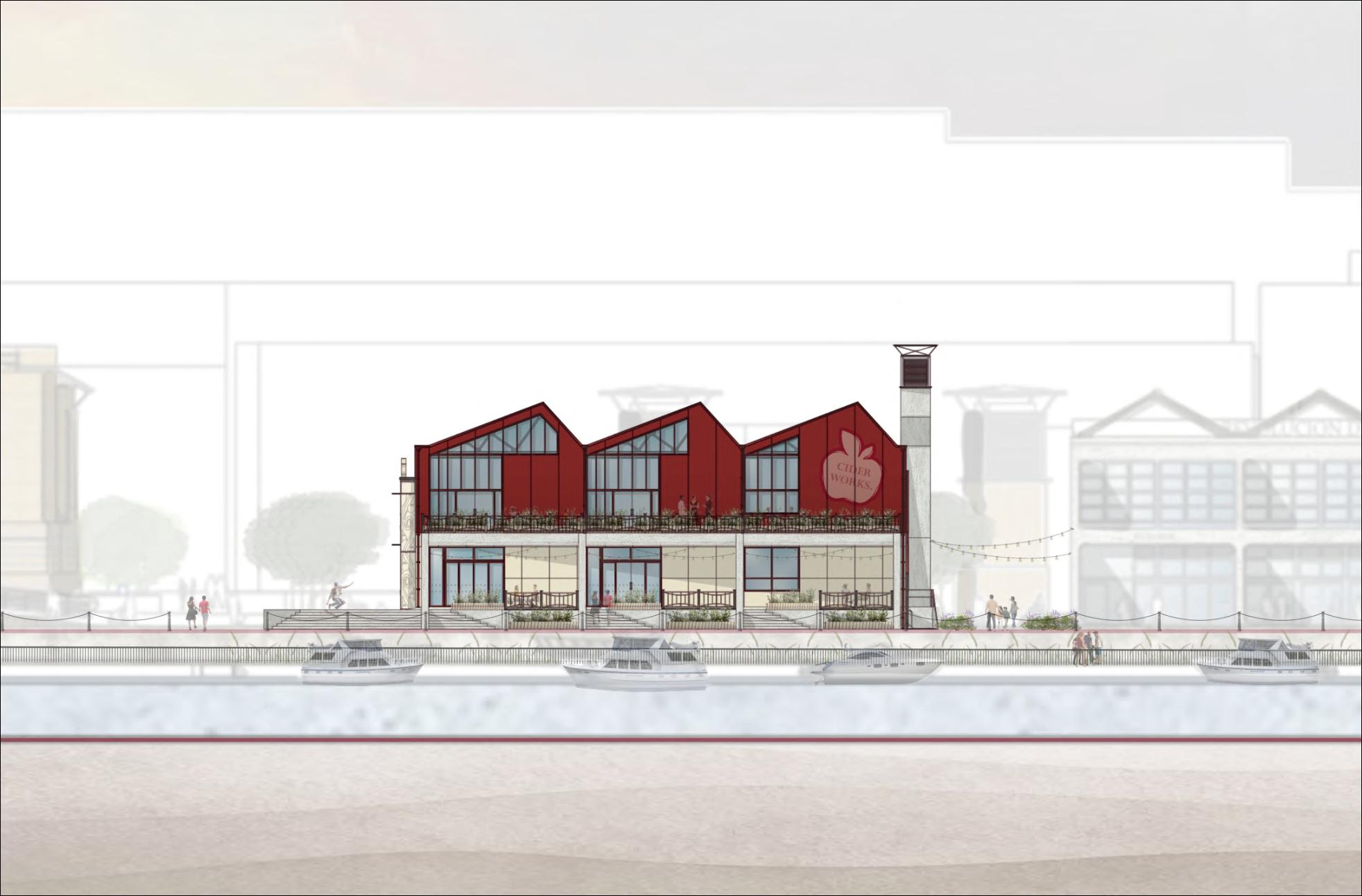
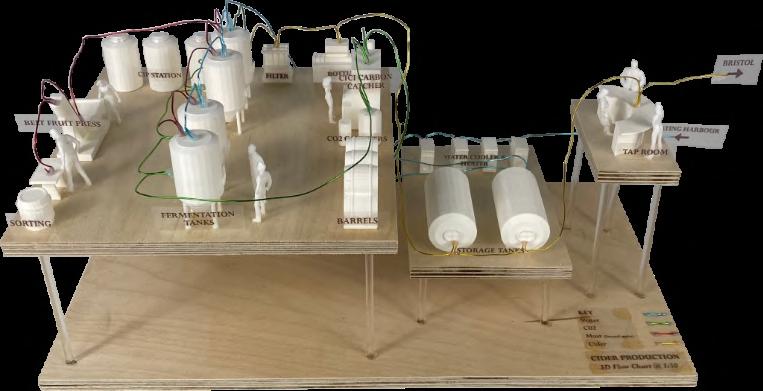
3D model showing area zoning, the flow of cider and circulation. East Elevation.
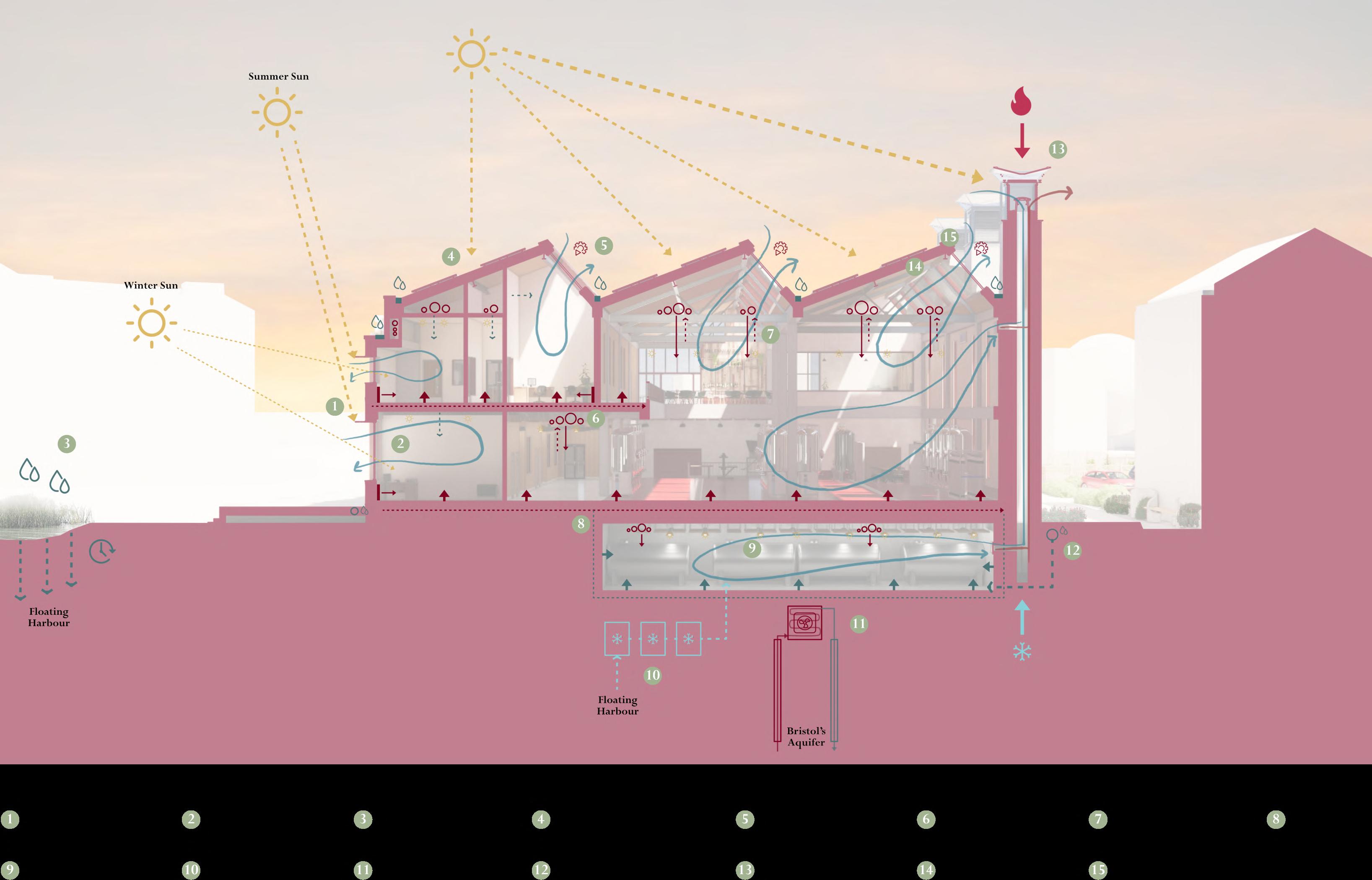

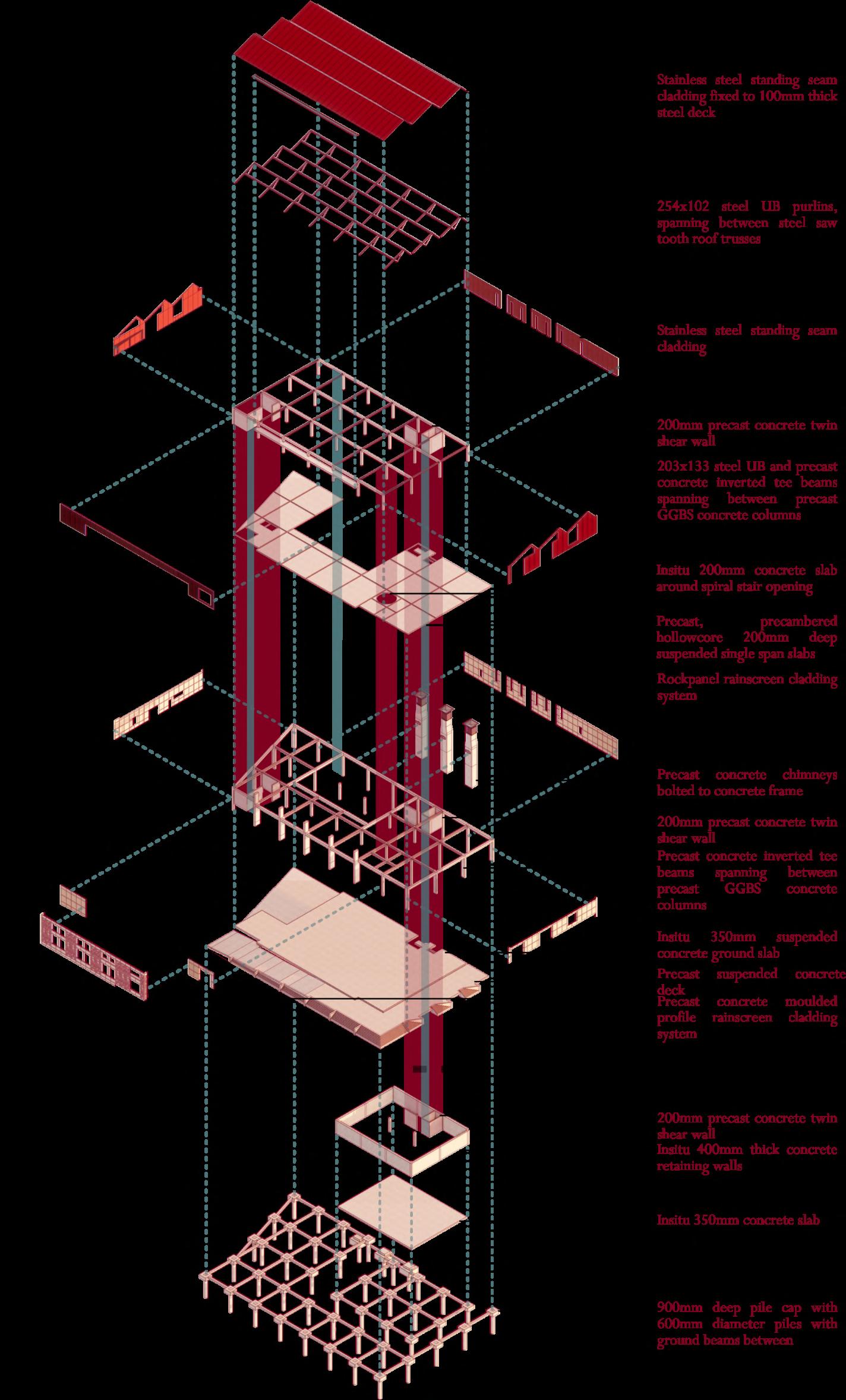

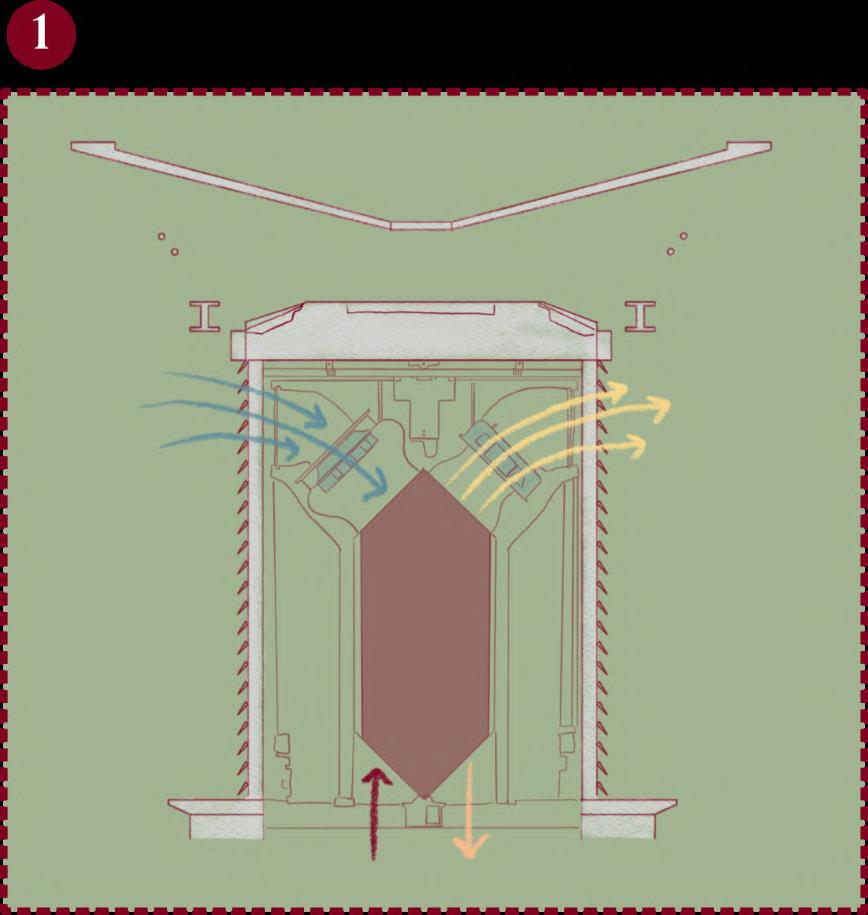
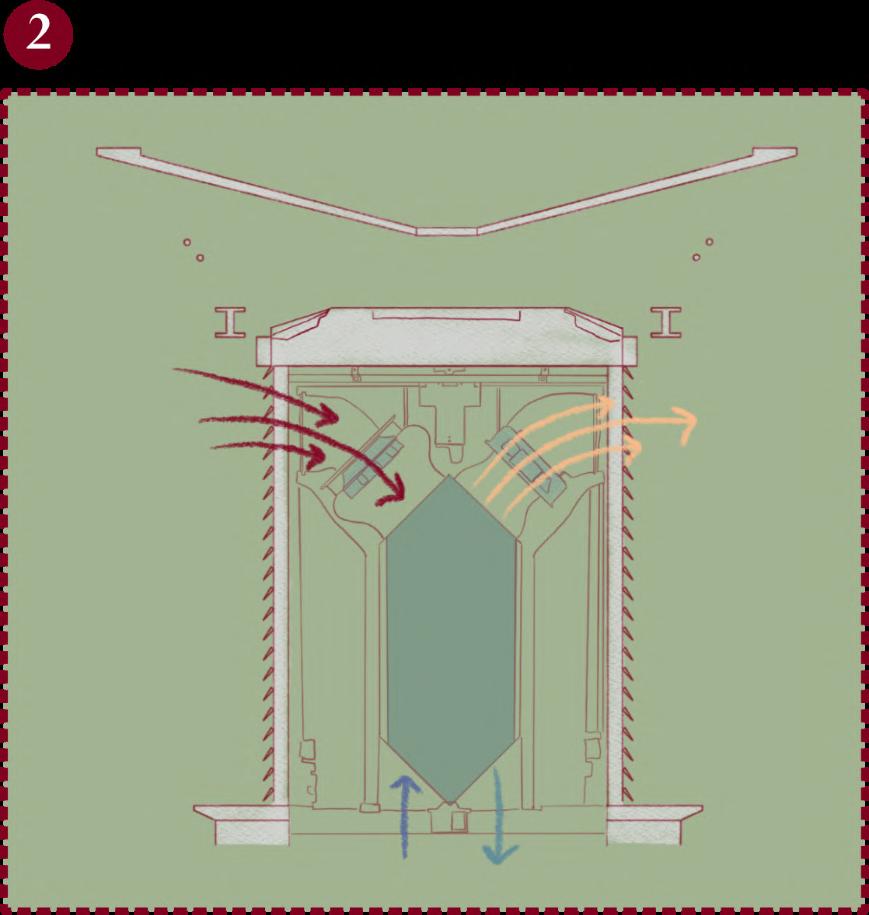
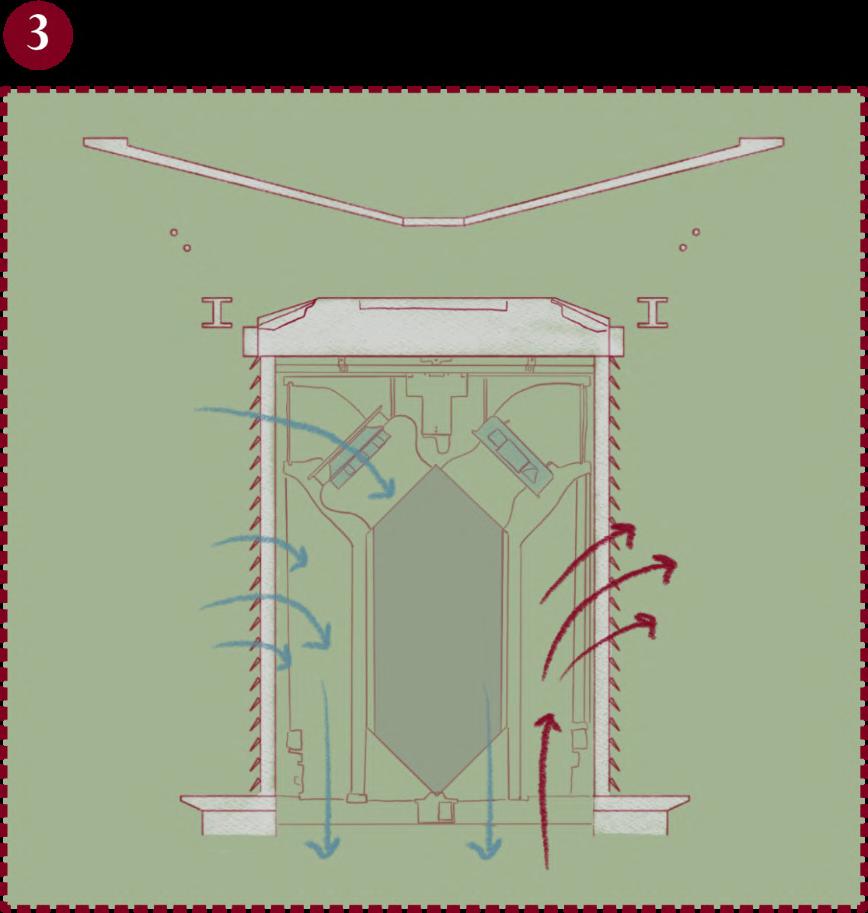
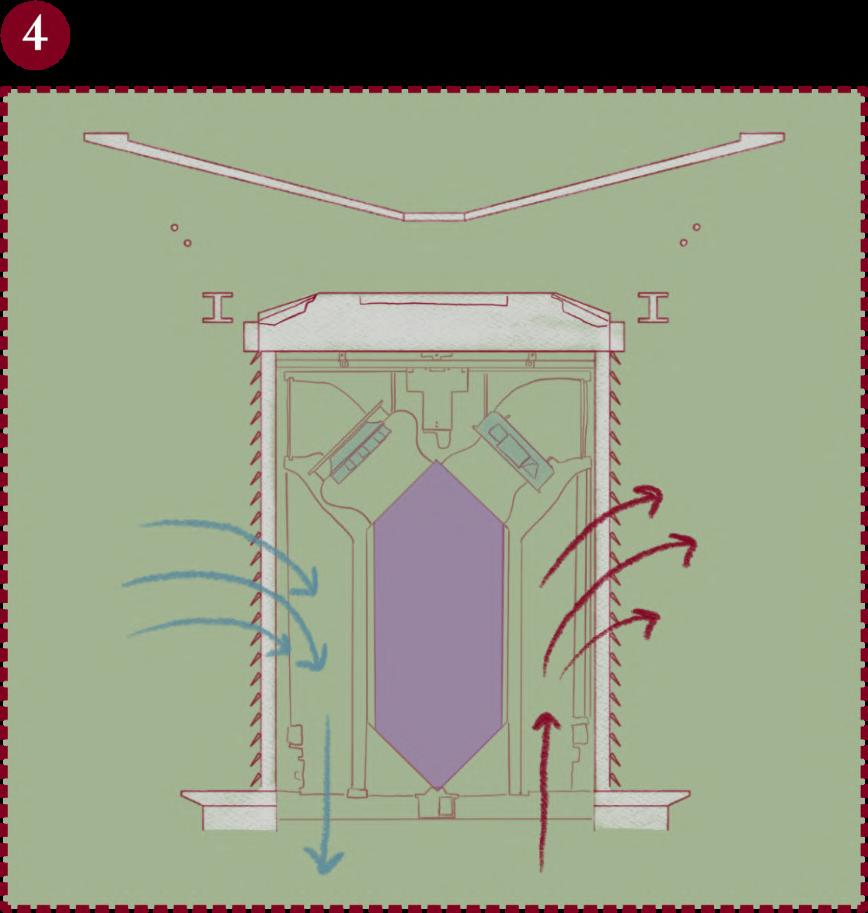
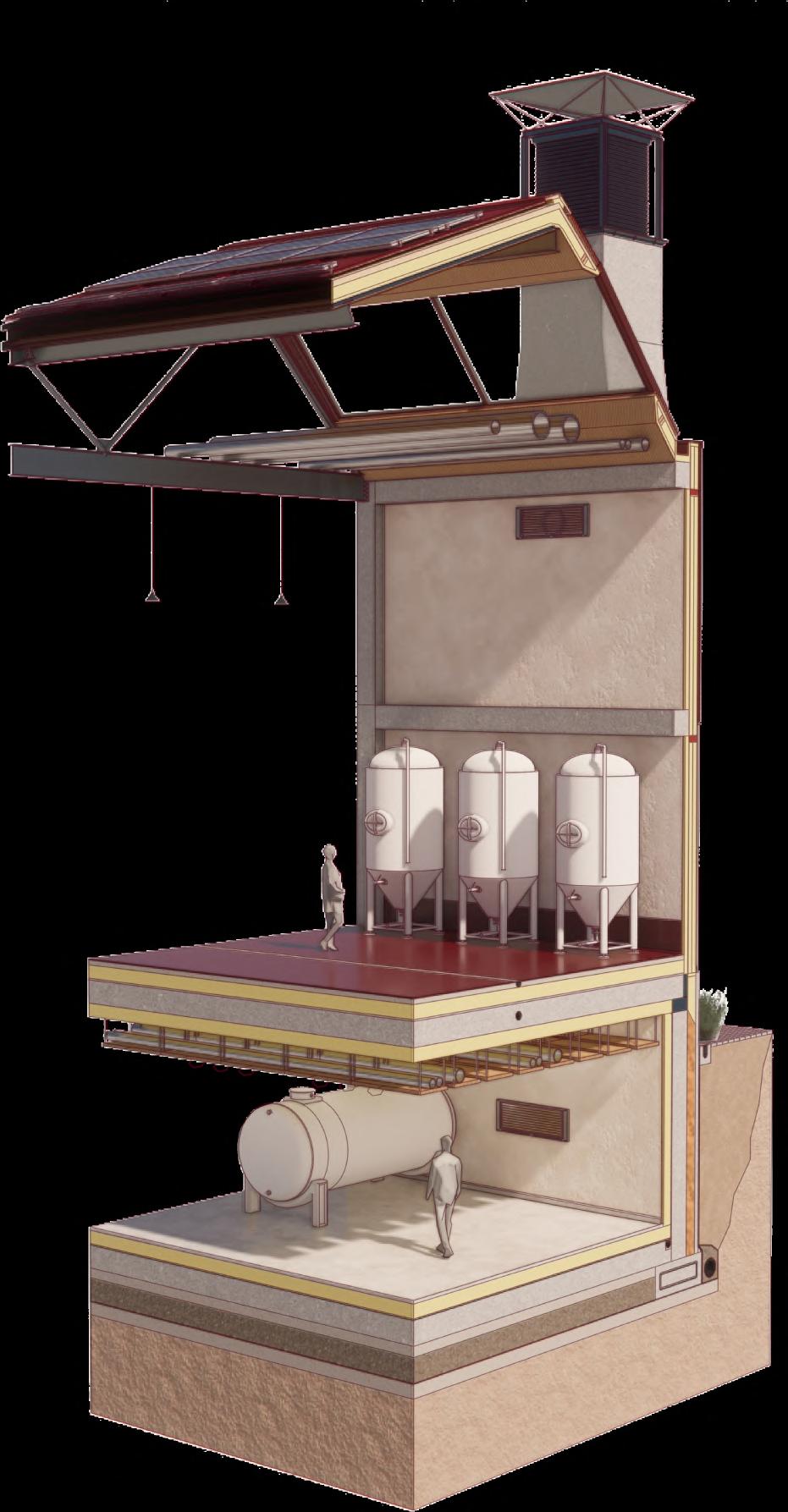
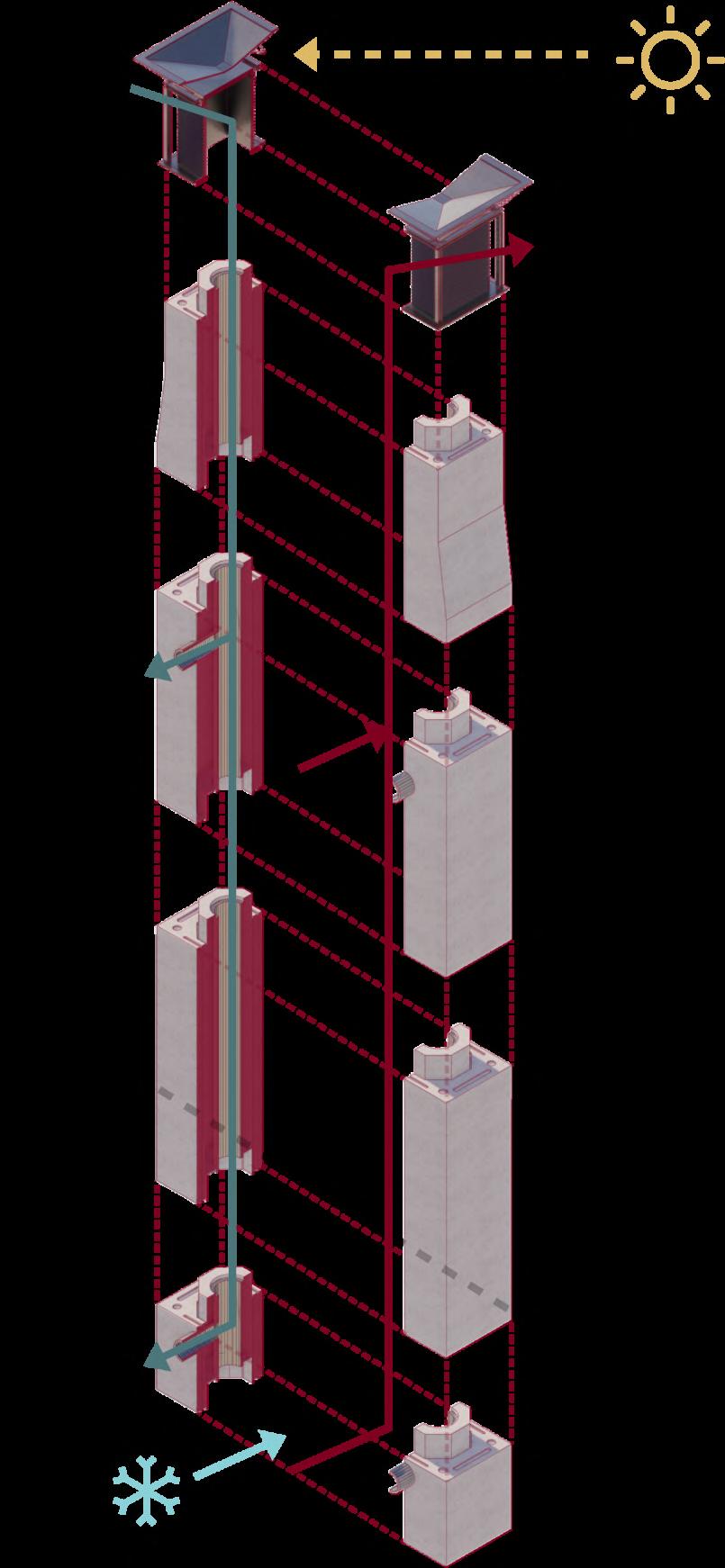
Overall environmental strategy section.
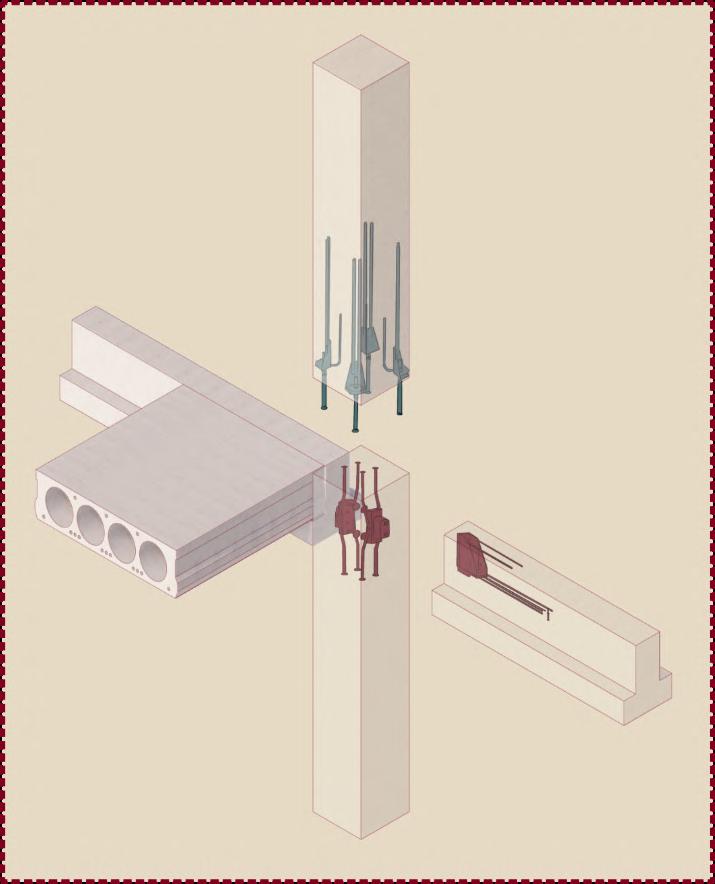
Exploded
corbel connection.
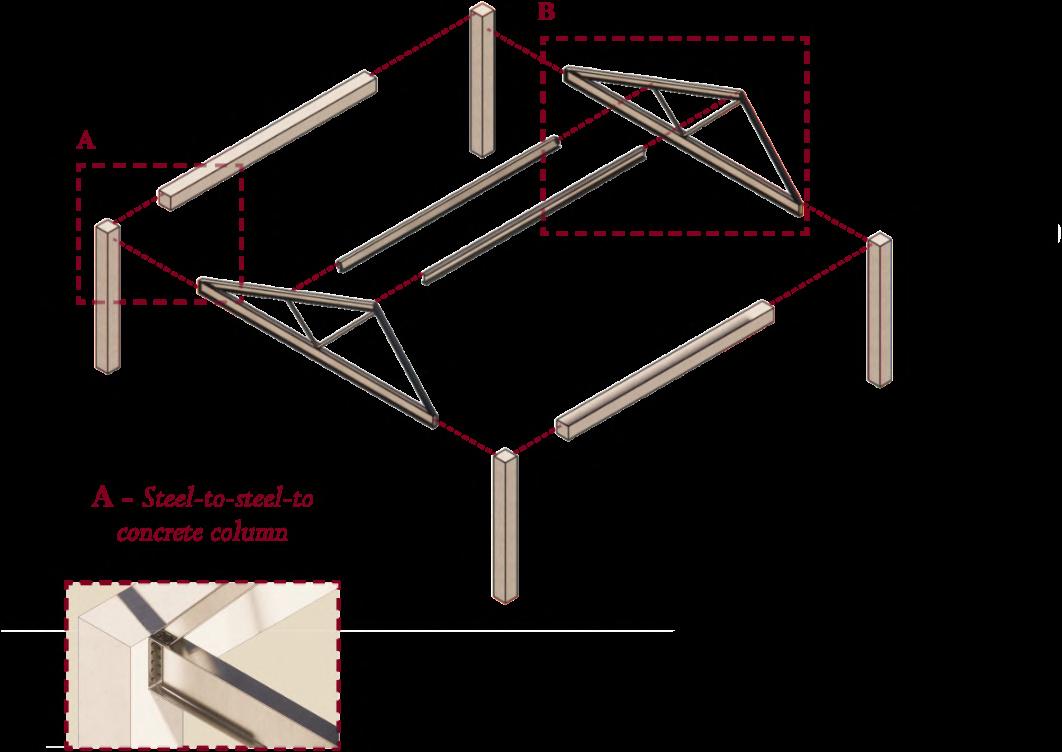
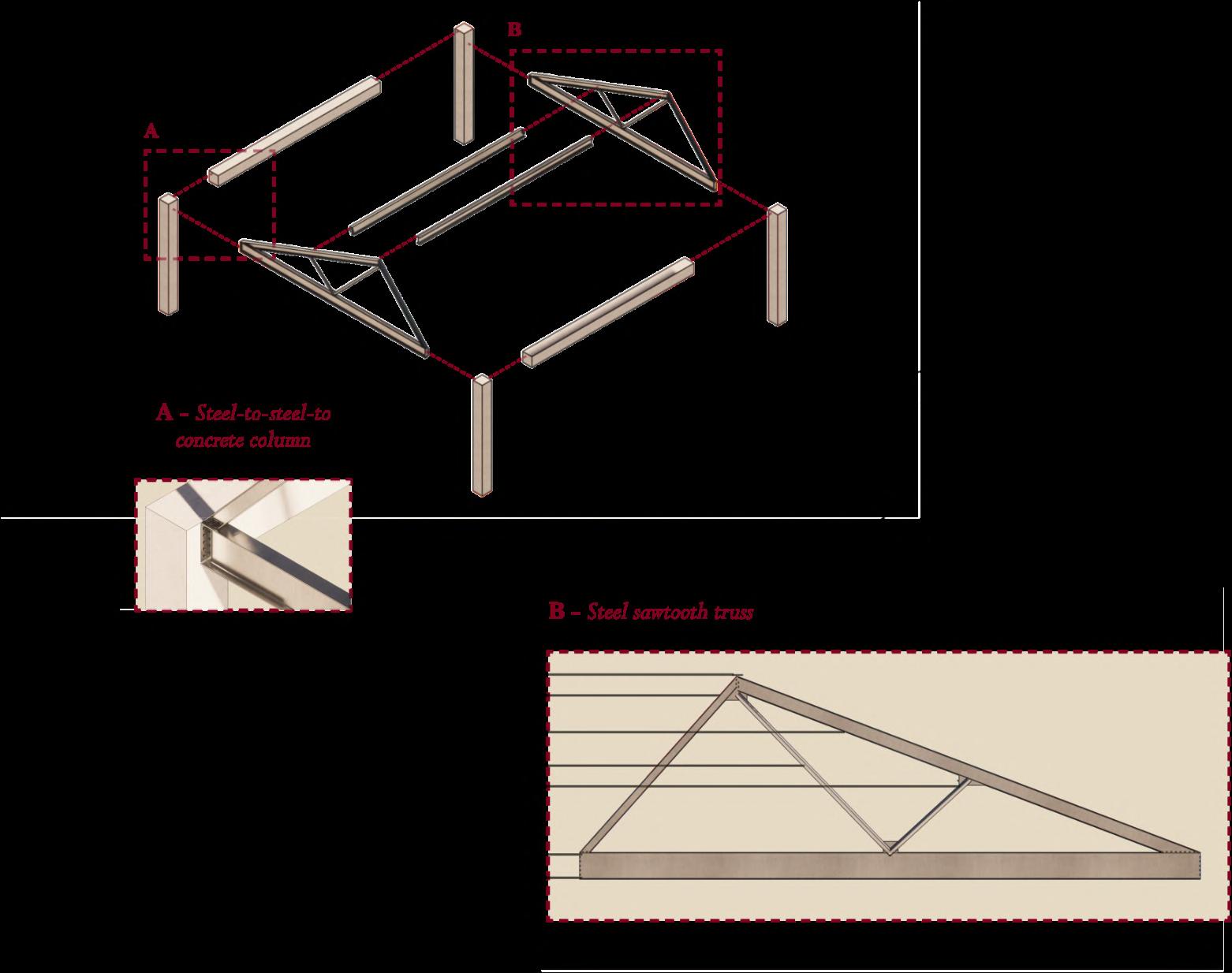
Steel sawtooth roof truss structure.
Precast concrete frame, hidden corbel connection.
ProductionTectonic Model
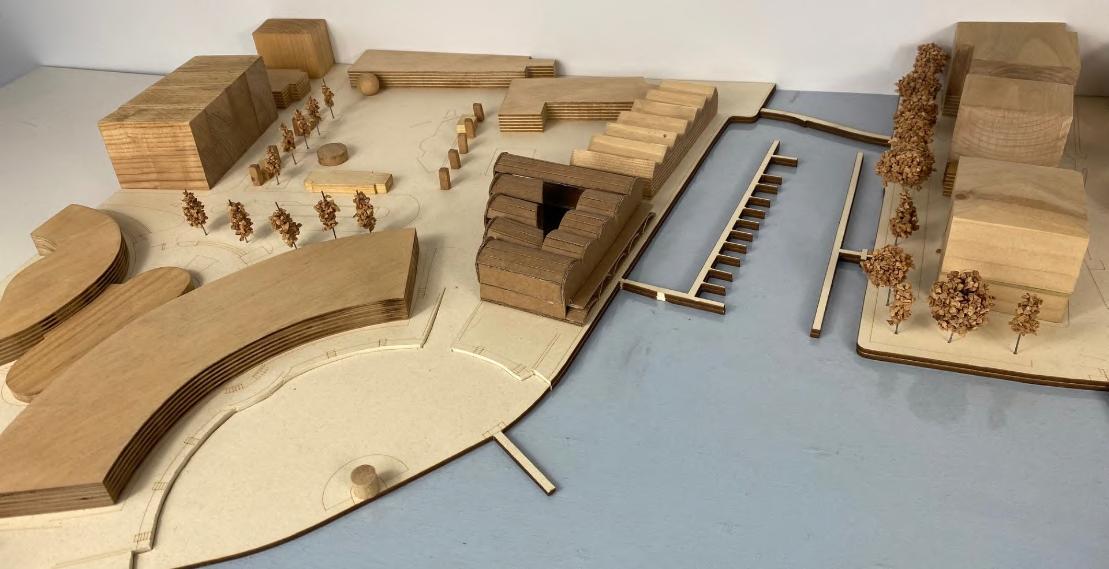
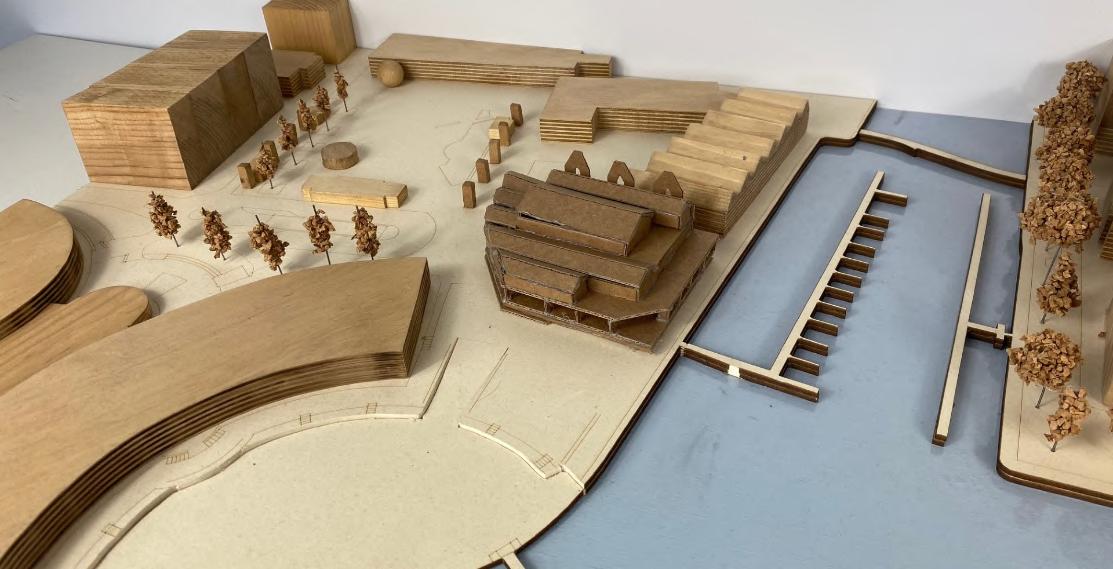
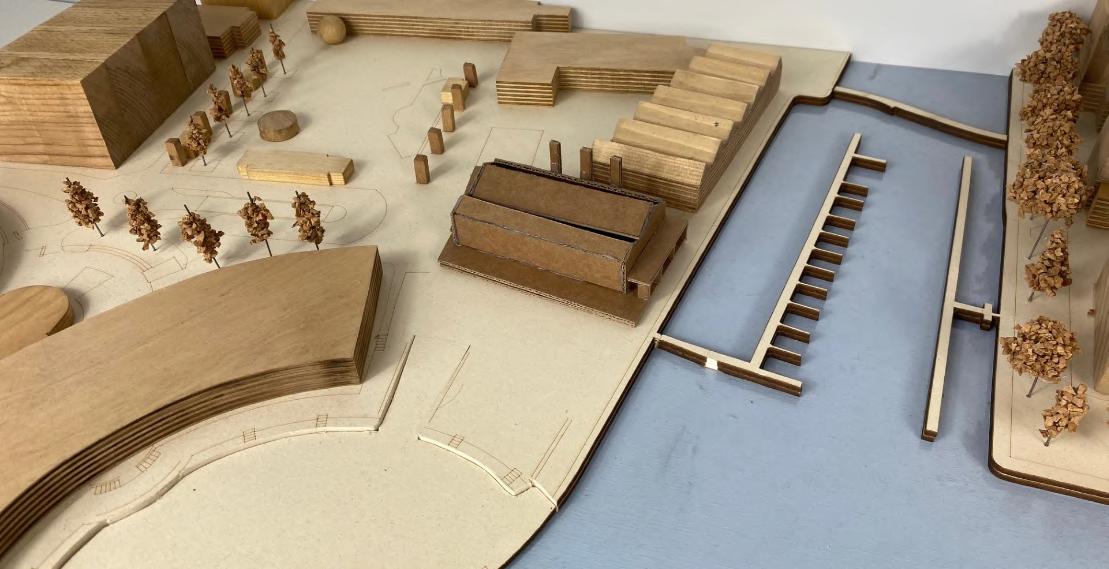
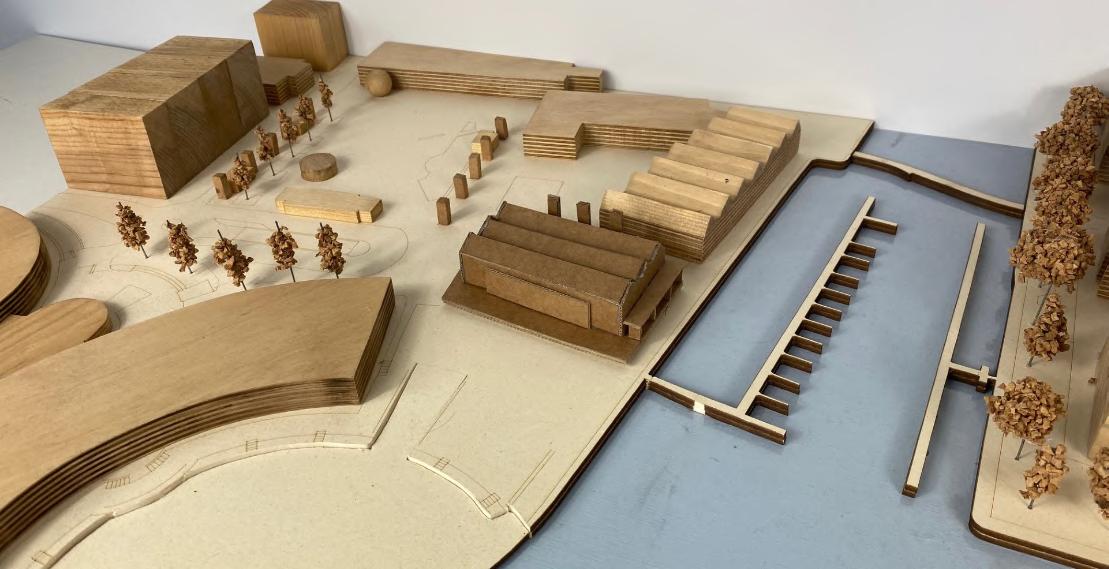
Week 5 Design model.
Week 6 Design model.
Week 2 Design model.
Week 4 Design model.
02 THE GALLERIES
A communicative temporary House of Commons.
Project Type: A 5 Person Group Temporary House of Commons
Group Project Responsibilities: Leading Architect side of the project and technically collaborating with Civil Engineer team
Completed: Dec 2024, 4th Year Design Studio
Location: Cattle Market Road, Bristol, UK


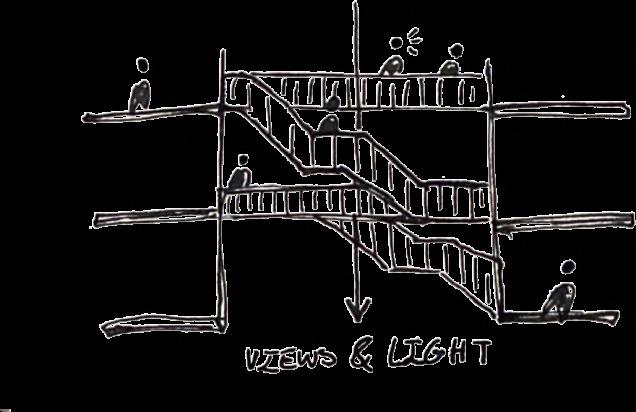


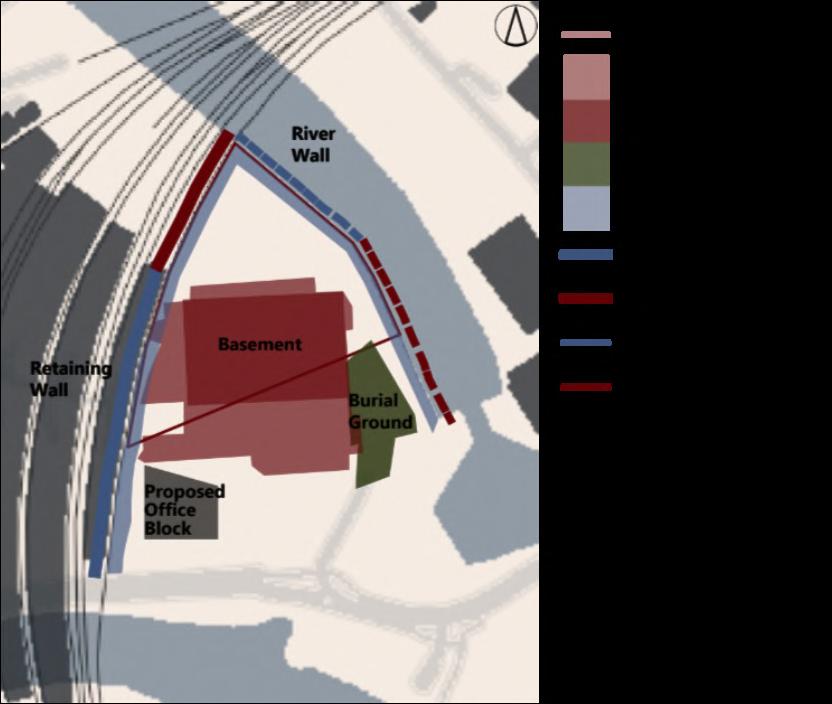
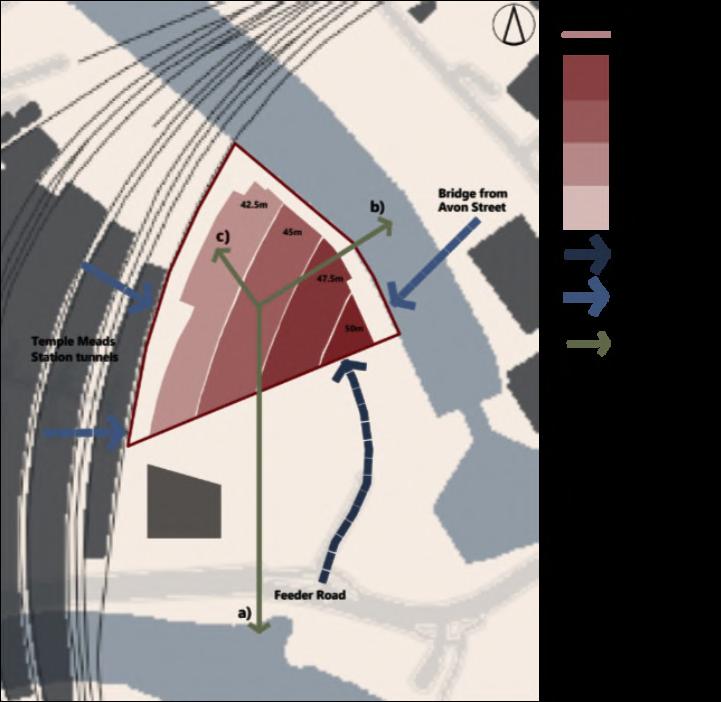
The Galleries re-imagines Parliament as a driver for transformation in the UK and Bristol over its 25-year tenure, helping to promote change and inclusivity before evolving into a community art college. Embracing temporality as an overarching principle allows the scheme to fully encompass this aspect of the brief in an operational, visual and functional way, seamlessly integrating it throughout every decision of the design process.
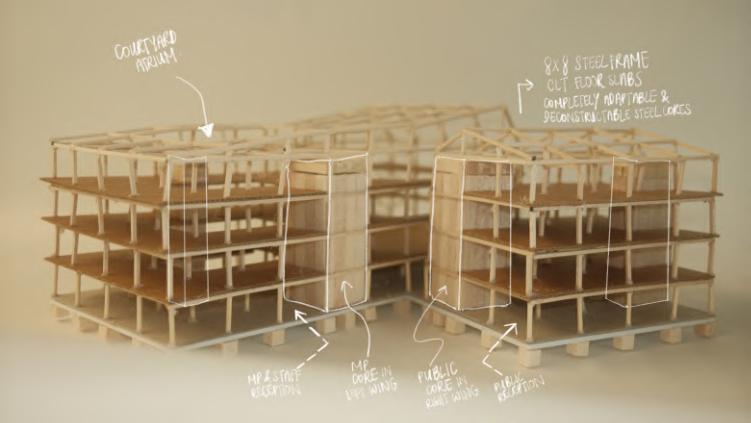
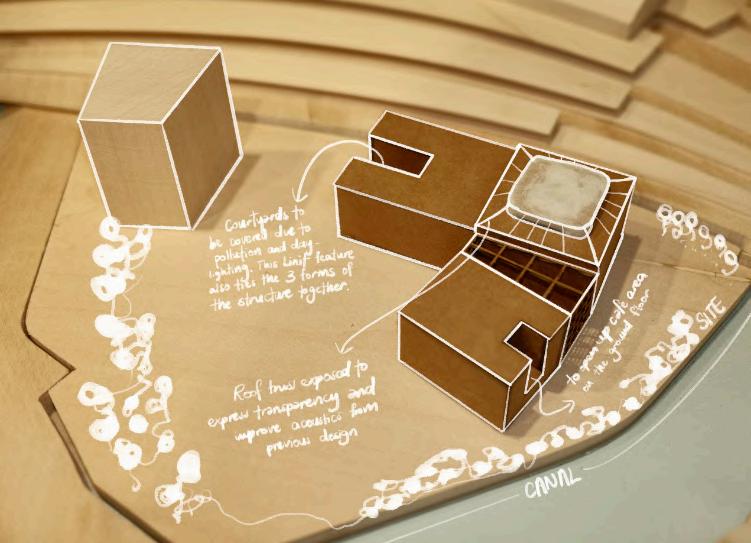
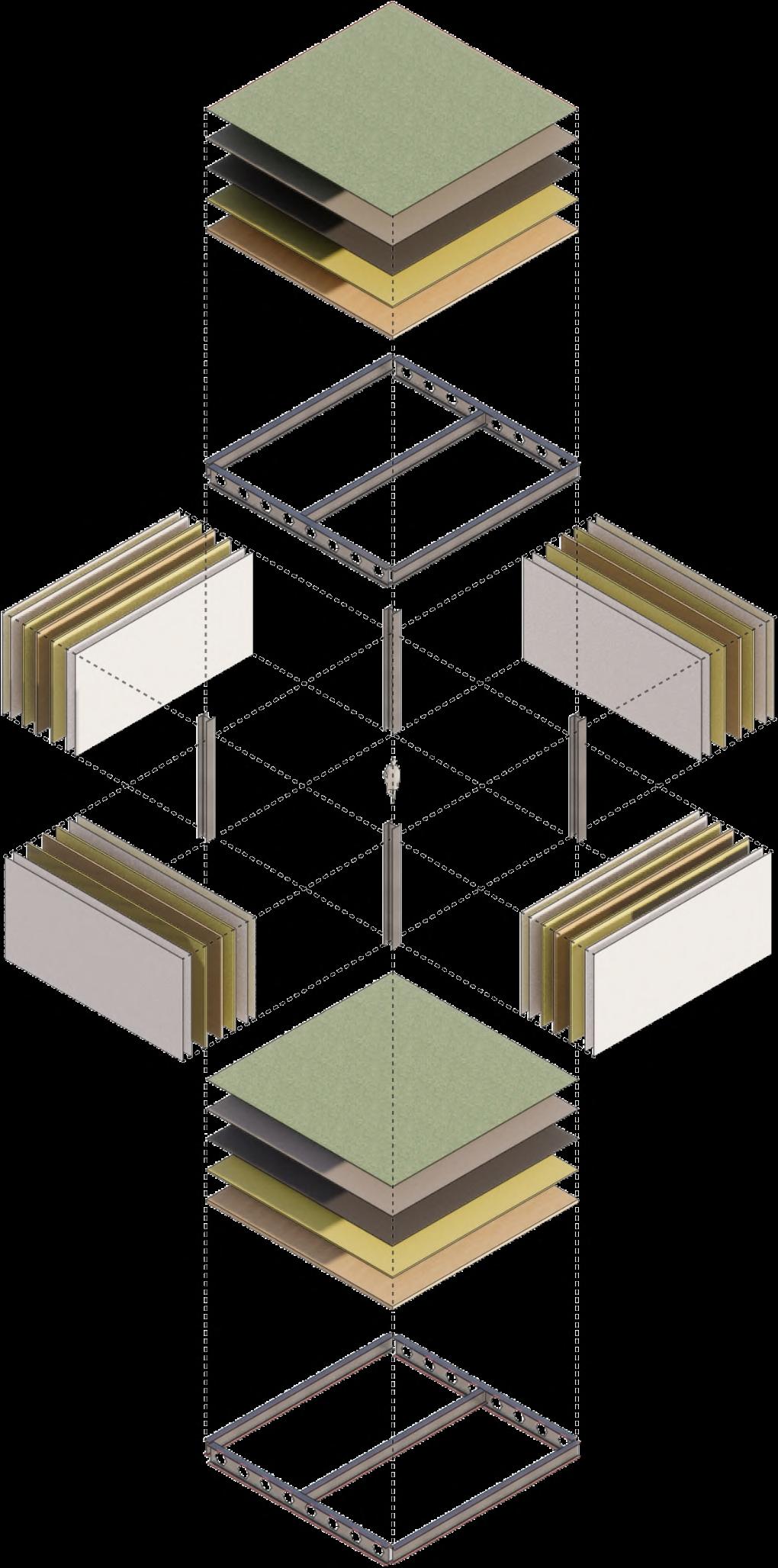
The temporary structure reflects adaptability utilising modular and deconstructable components, designed to respond to ever evolving societal needs. Drawing inspiration from Bristol’s art culture, the building incorporates art as a central element to offer a platform for expression and communication. This conversing and transparency of democracy can be seen through the spaces designed to break down barriers between Parliament and the public. Publicly accessible areas allow for interaction, debate and artistic expression, hence creating a welcoming environment for collaboration, bridging the gap between Parliament and its citizens.
Being transparent and accessible, the structure invites people to engage with the building and the governance within; adaptable, sustainable, connected design serves as a model for a more inclusive and progressive future for the UK.
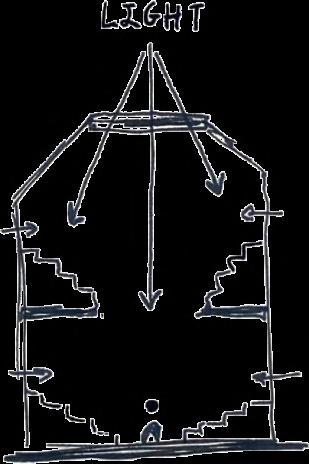
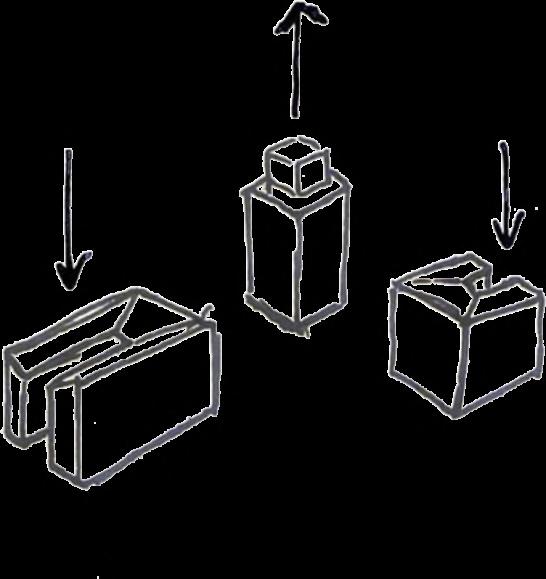
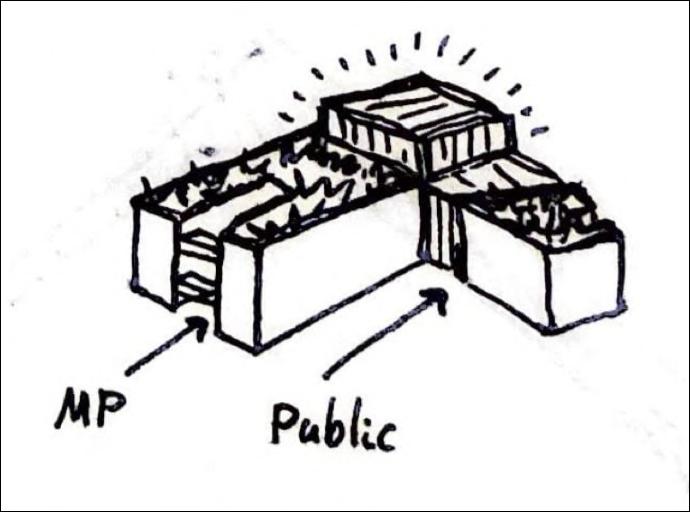
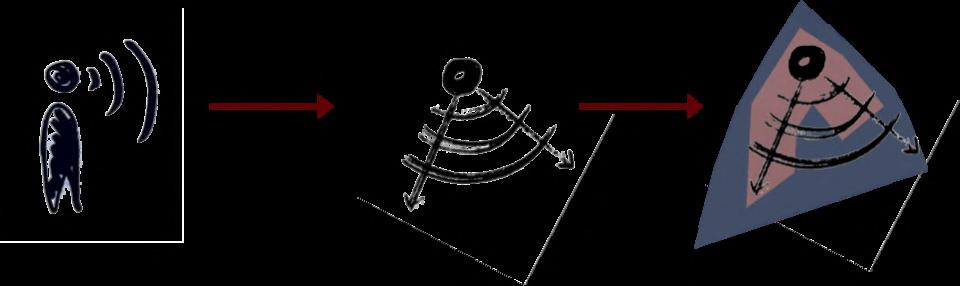
Hand drawn parti diagrams conveying key design drivers and aspects of the Temporary House of Commons. Key Design Drivers.
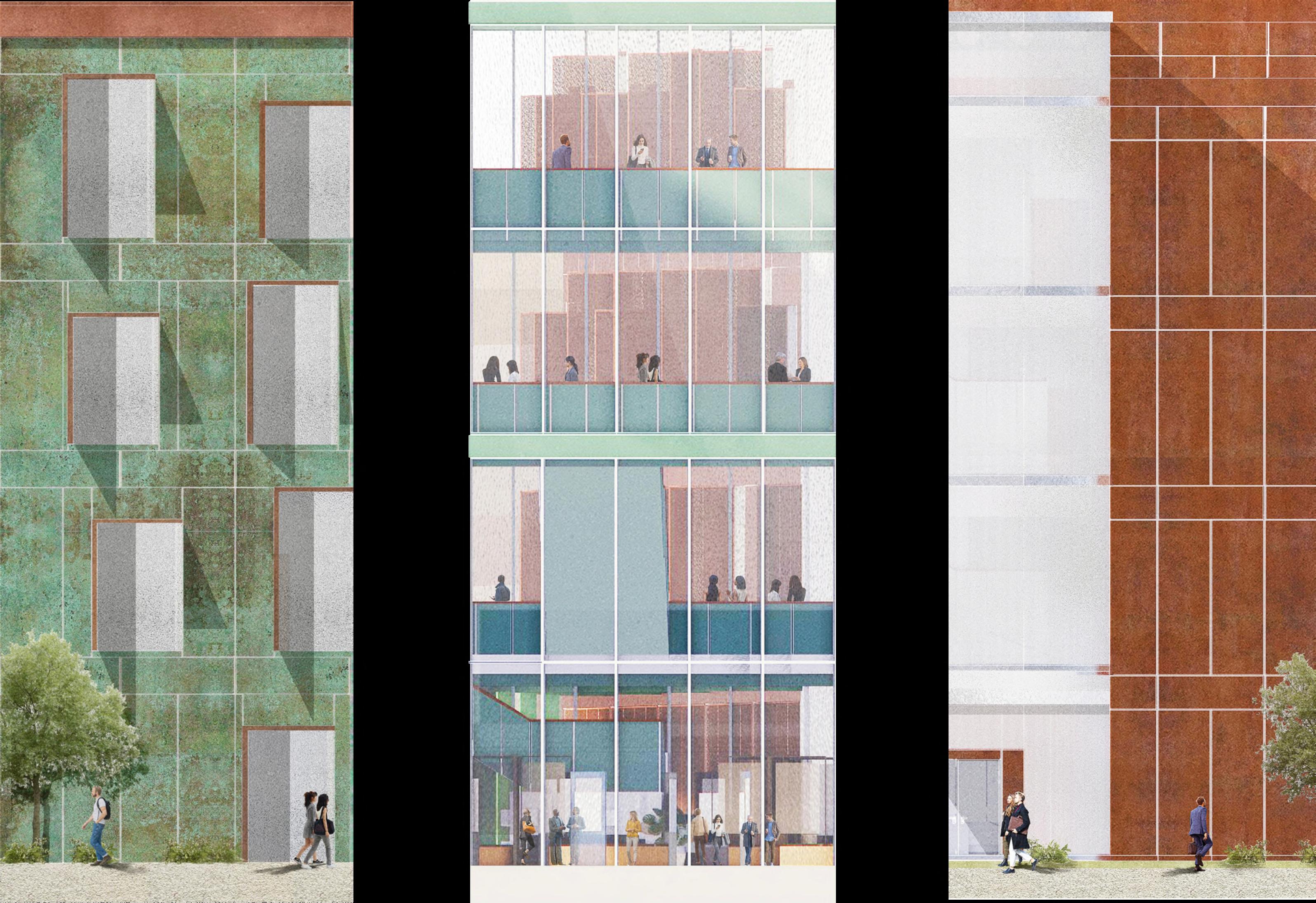
Detailed elevation slithers showing the Public Block (Left), the Atrium (Middle) and the MP Block (Right).
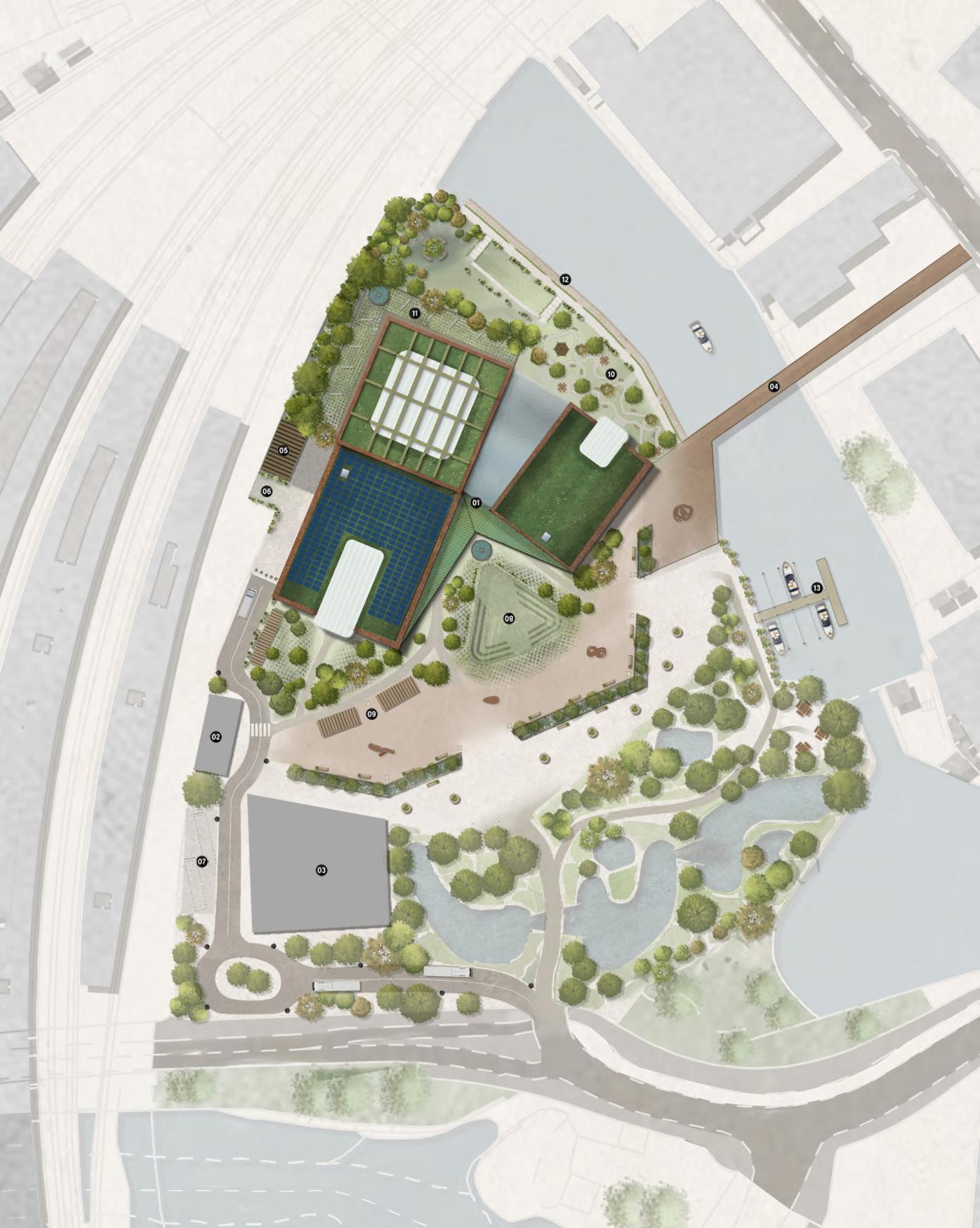
Overall masterplan of the Cattle Market site and roof plan of the Galleries.
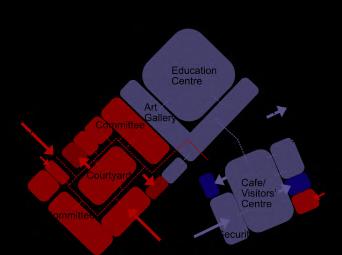
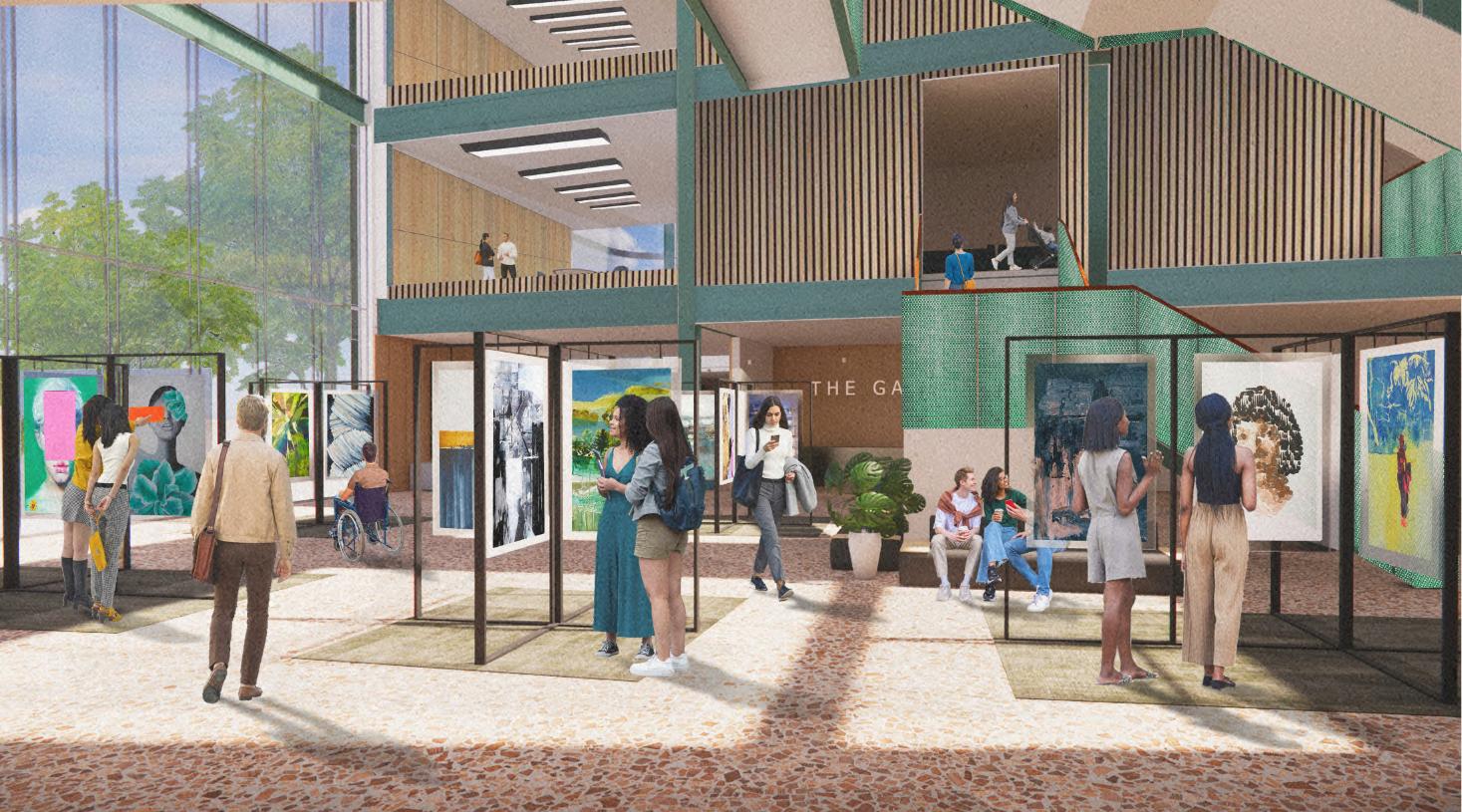


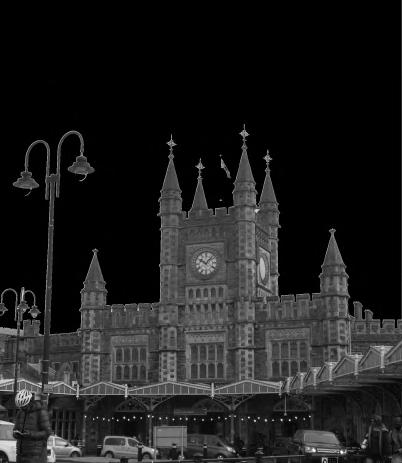
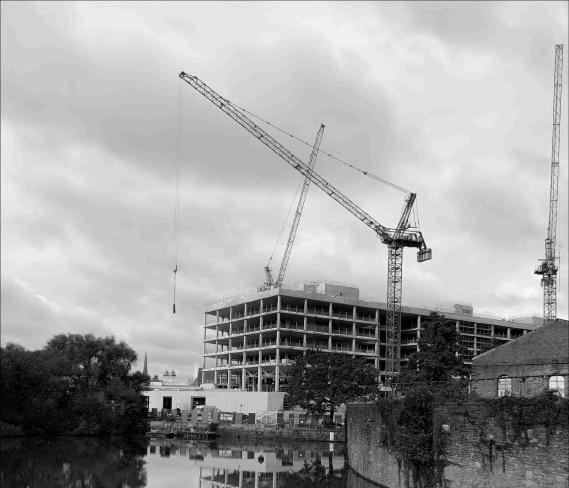


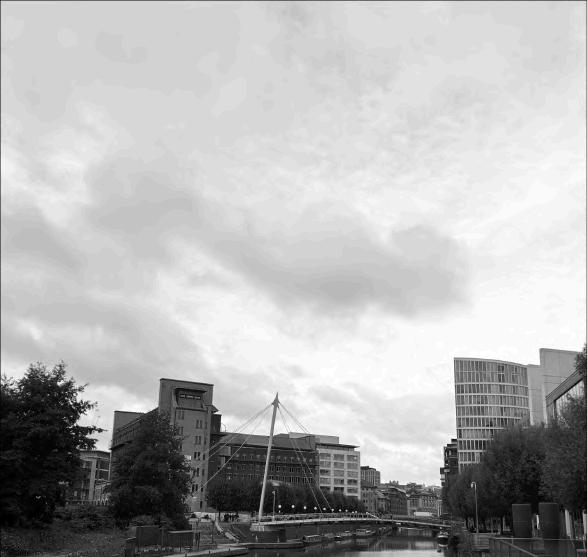

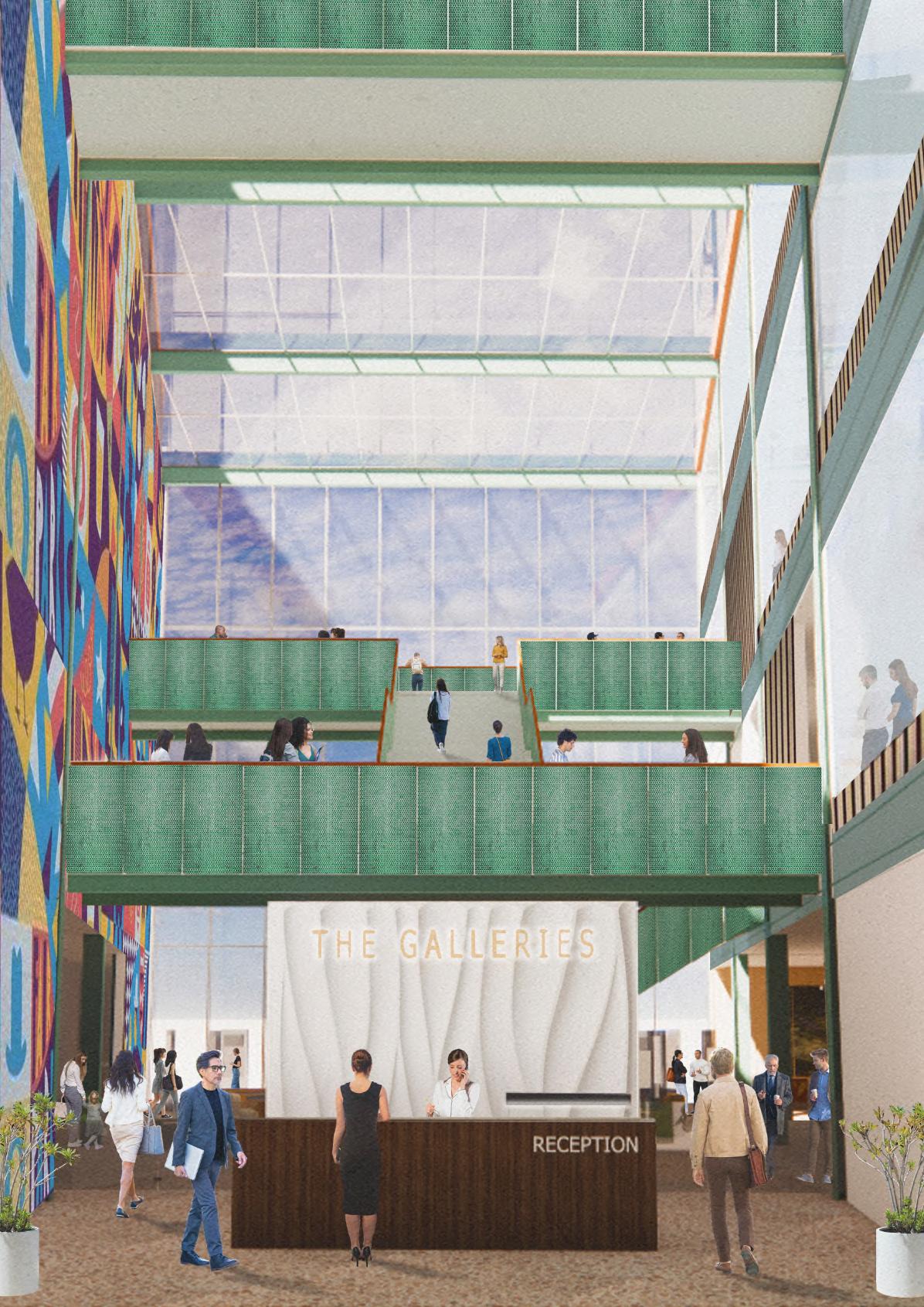
Internal visualisation of the central atrium depicting an internal art gallery.
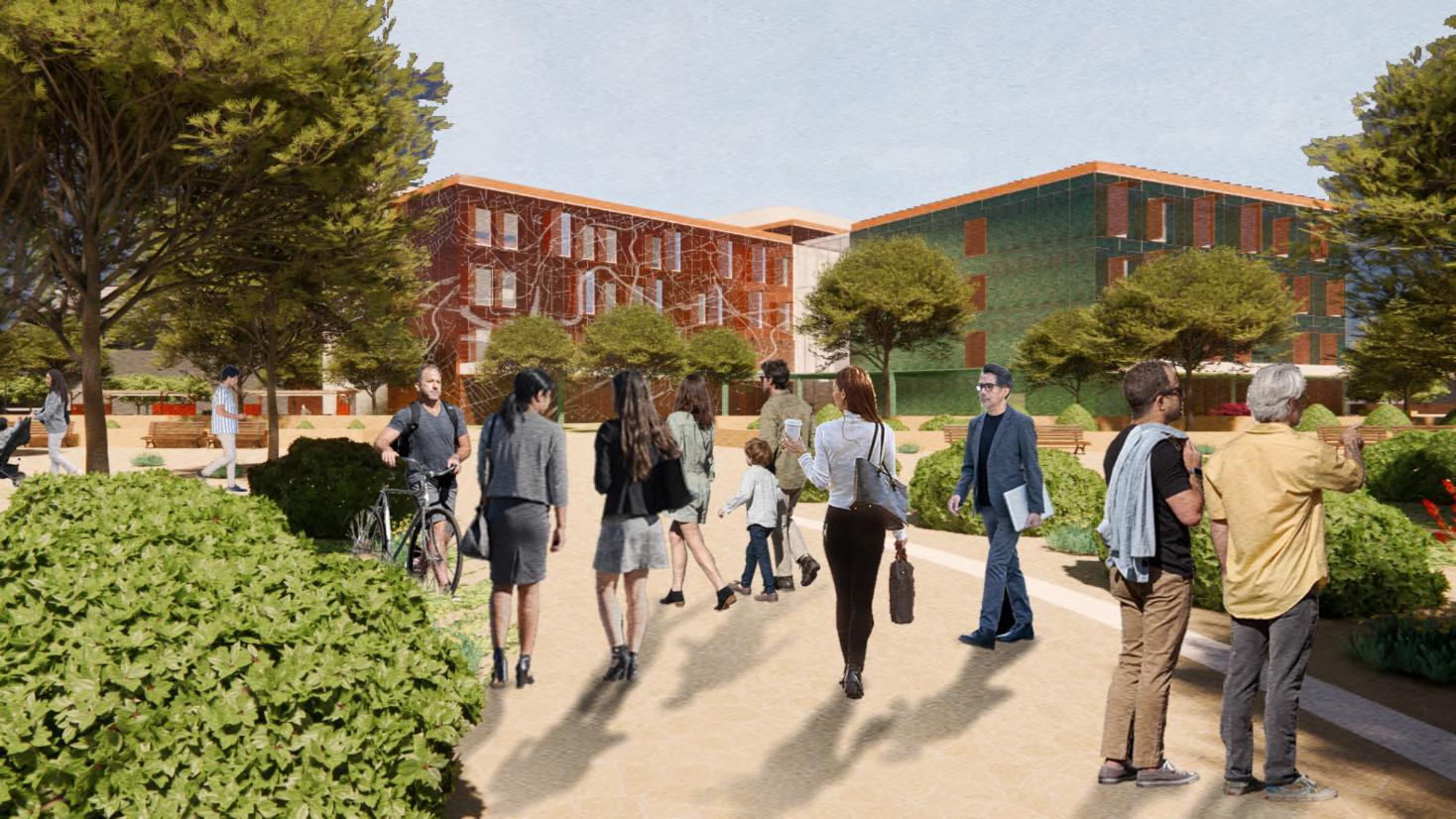
External visualisation of the main entrance showing the variation in elevation between blocks.
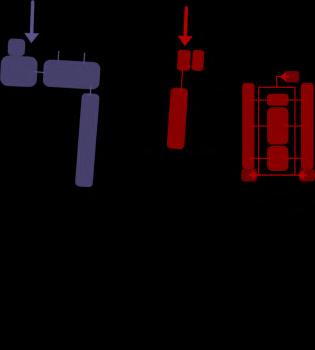
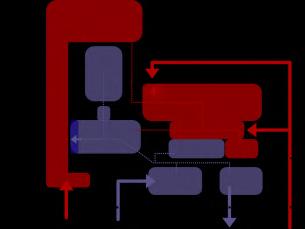
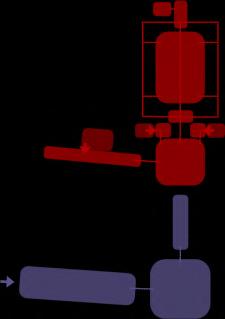
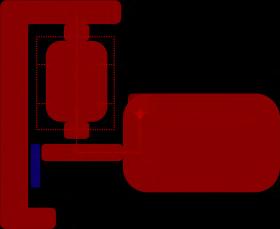
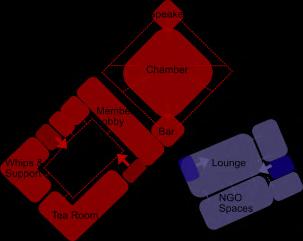
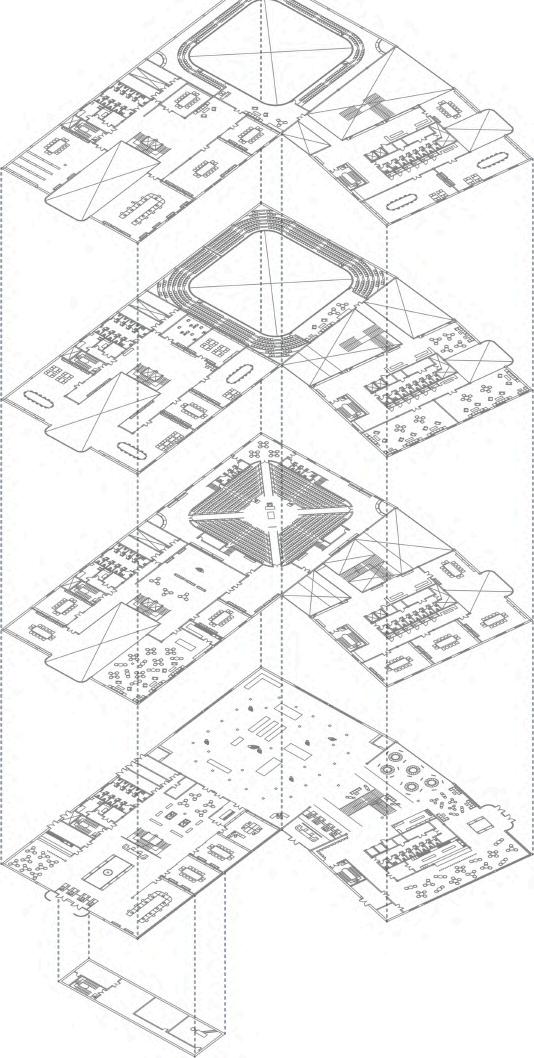
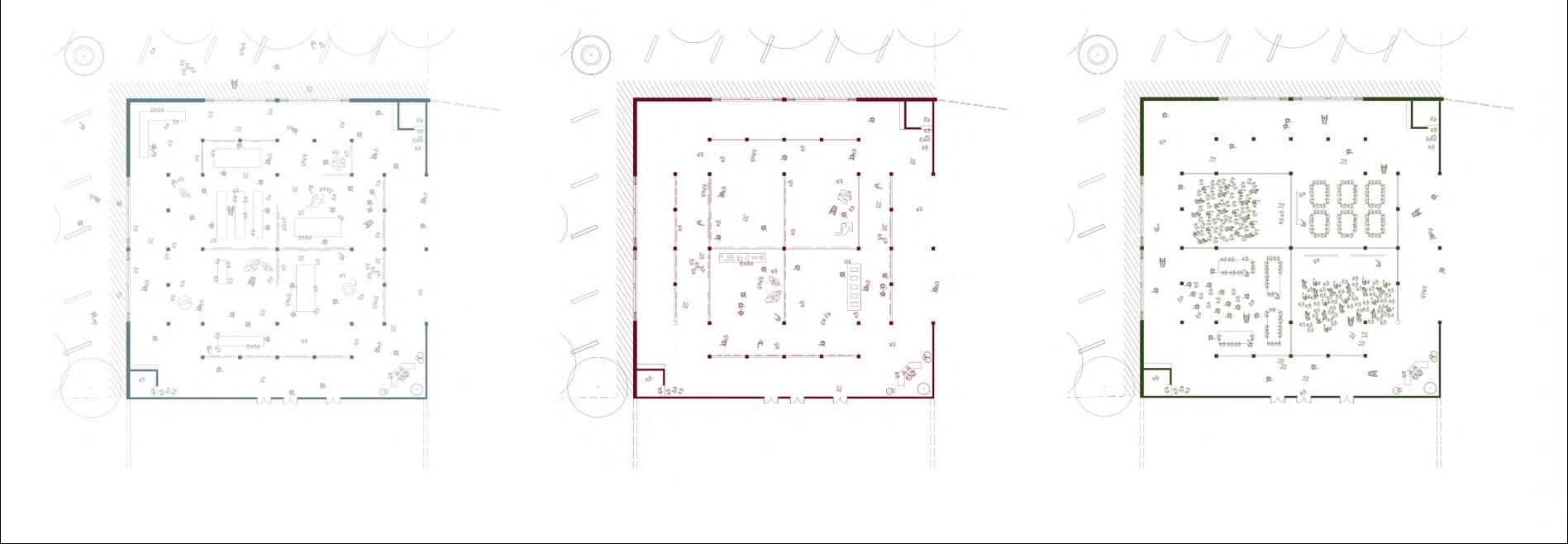
Spatial arrangement study of the current House of Commons (Left), proposed AHMM temporary House of Commons (Middle) and the Galleries (Right). Ground Floor (Left), First Floor (Right).
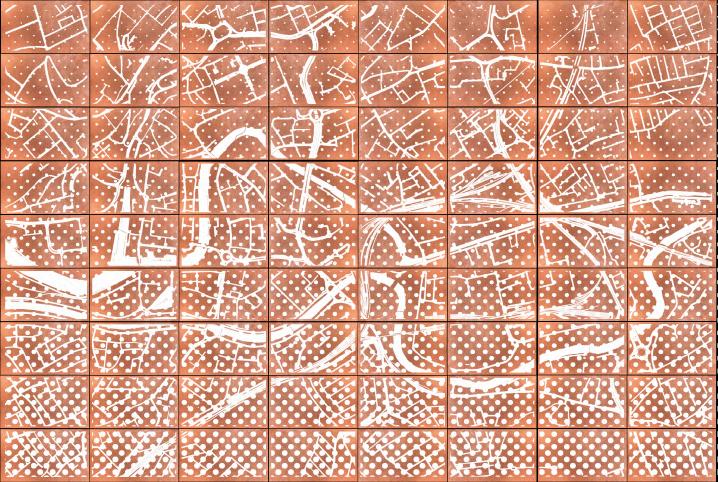
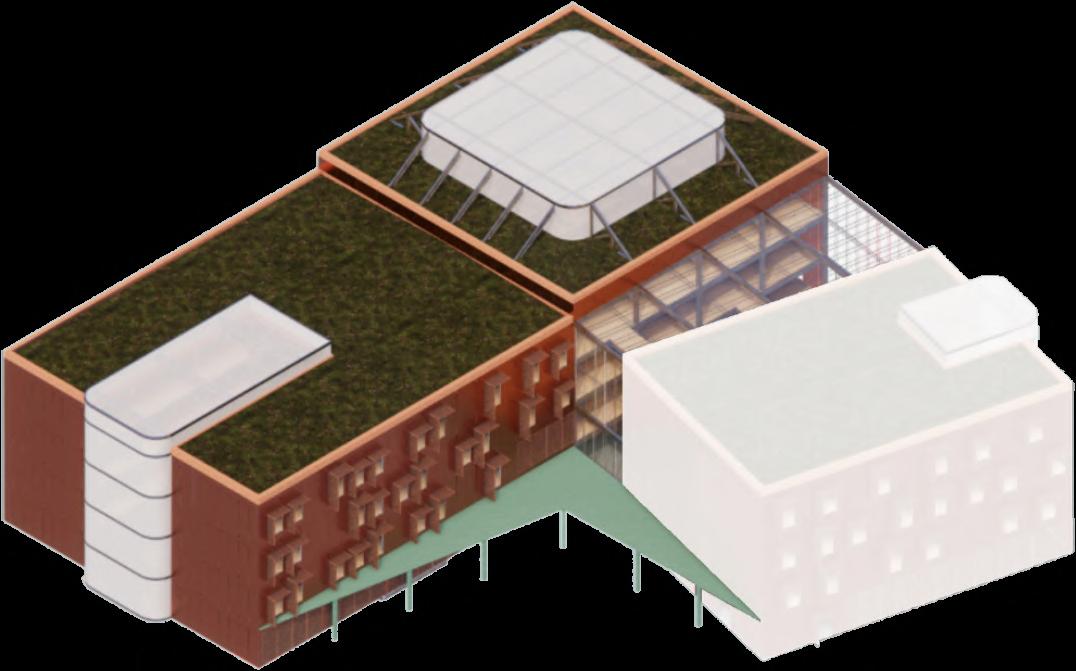
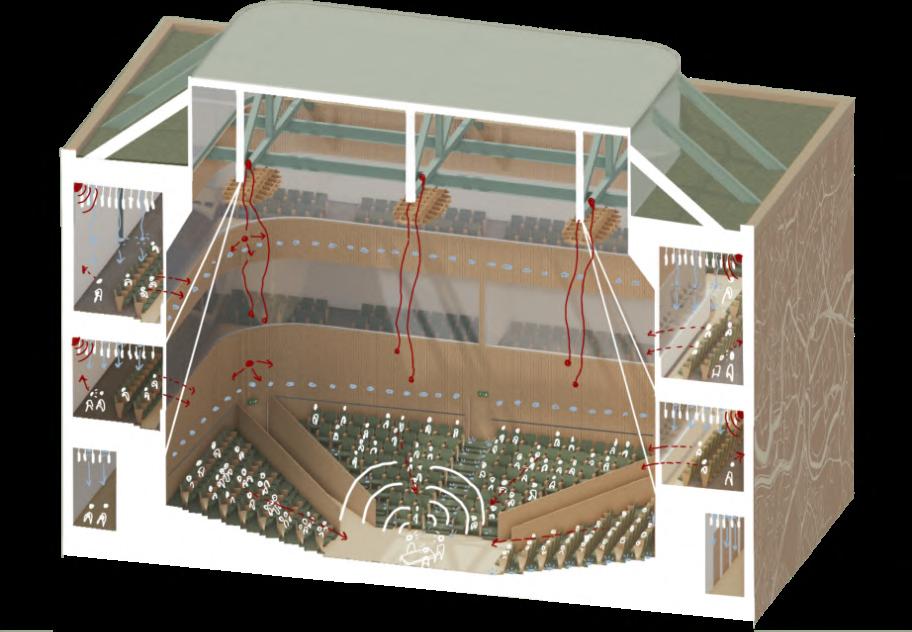
Material experiment with Rockpanel etching of a map of Bristol with the site at the centre. 3D Iso of the Galleries showing the non-ageing materials. 3D section of the Chamber and surrounding galleries.

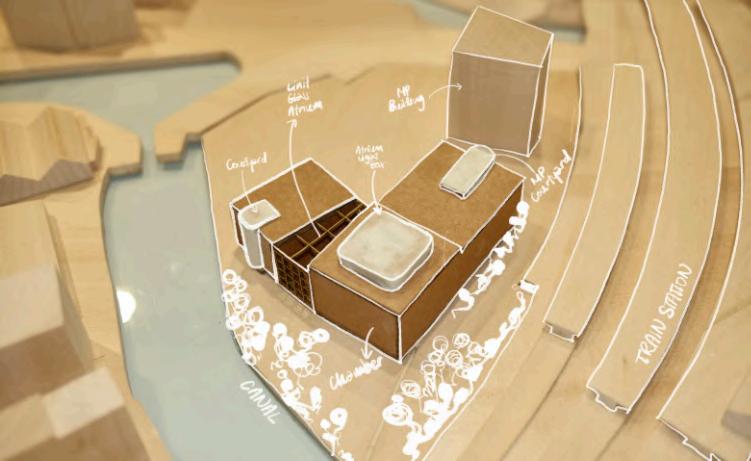





















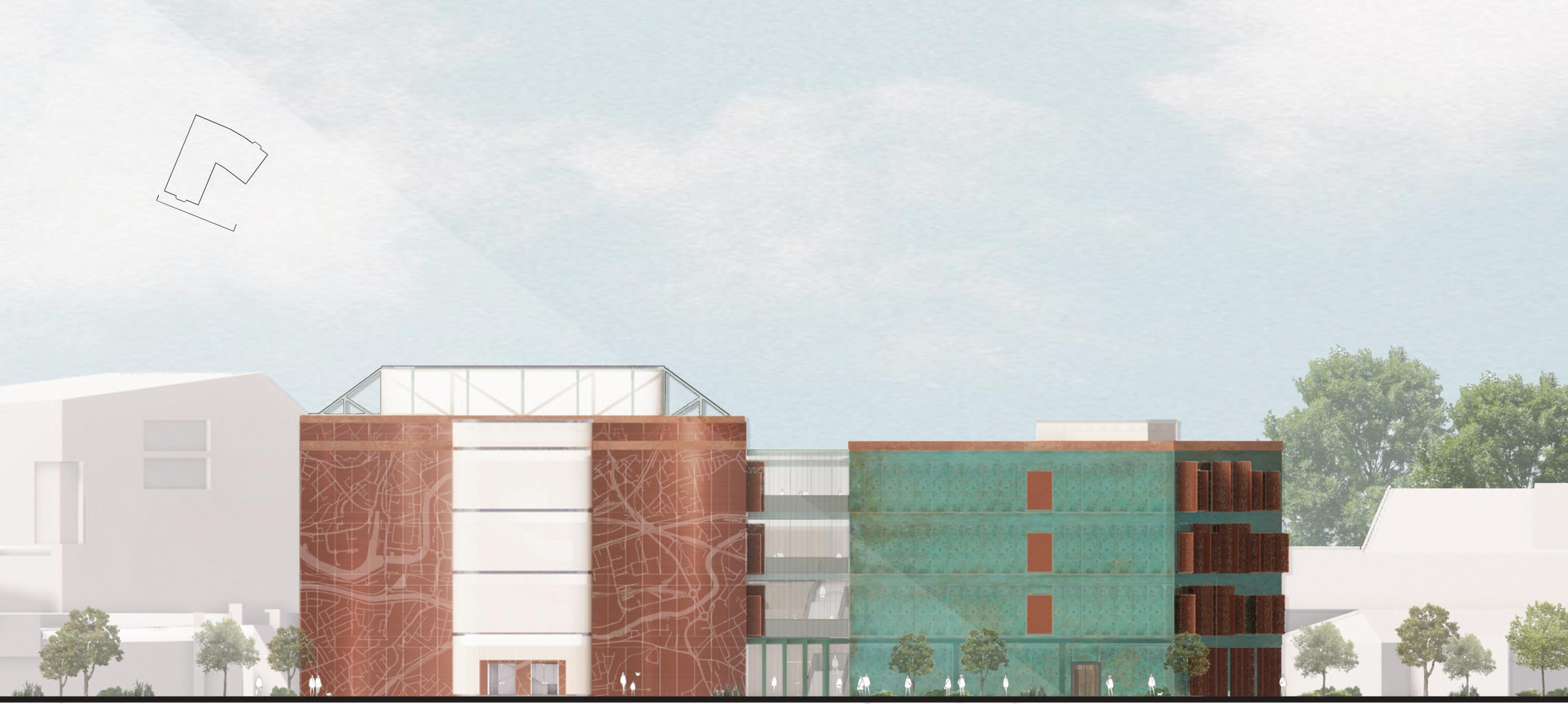
South Elevation showing the elevational difference between the MP Block (Left etched copper Rockpanel), central atrium (Middle curtain wall) and Public Block (Right patinated copper).
The ageing timeline of the copper panels on the Public facade, highlighting the temporality of the Galleries through physical material.
Week 4 Structural model.
Week 5 Design model.
Week 8 Design model.

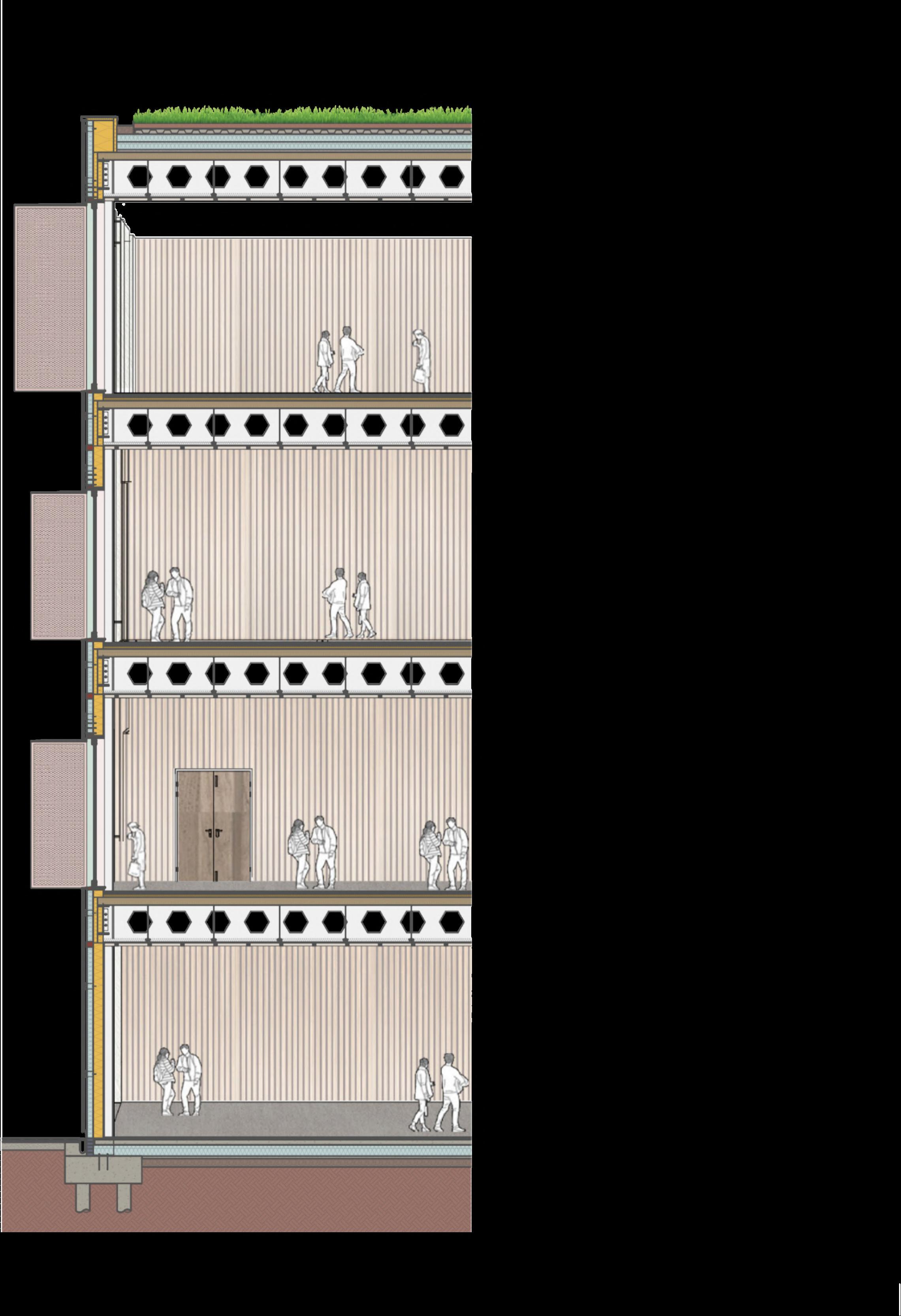
1. Lightvegetation
100mmgrowing 3. Waterproofmembrane 4. 100mmdrainage element,waterreservoir androotbarrier
2x140mmofrigid mineralwoolinsulation 7. 50mmscreedtofalls
8. 140mm(5layers)CLT
9. Retentiontrimand filterfleece
10. 300mmwidesmooth graveledgechannel 150mmfromparapet head
11. Waterproofmembrane lappedunderzinc parapetflashing
12. 380mmmineralwool insulation
13. 10mmsheathingboard
14. 100mmrigidmineral woolinsulation betweensteelstudwall @500mmcentres
15. Weatherresistant membrane
1. Mineralwool intumescentcavity
2. Sealantatbackof
3. Zincflashingoversill withcompressible fillerandweather resistantmembrane lappedunder
4. 180mmmineral woolinsulationhalf exposing 356x369x129mm steelUCwith intumescentpaint
5. 10mmsheathing boardandVCL
6. 100mmrigid mineralwool insulationbetween steelstudwall@ 500mmcentres
7. Rainscreensupport bracketfixedtostud
8. Weatherresistant membrane
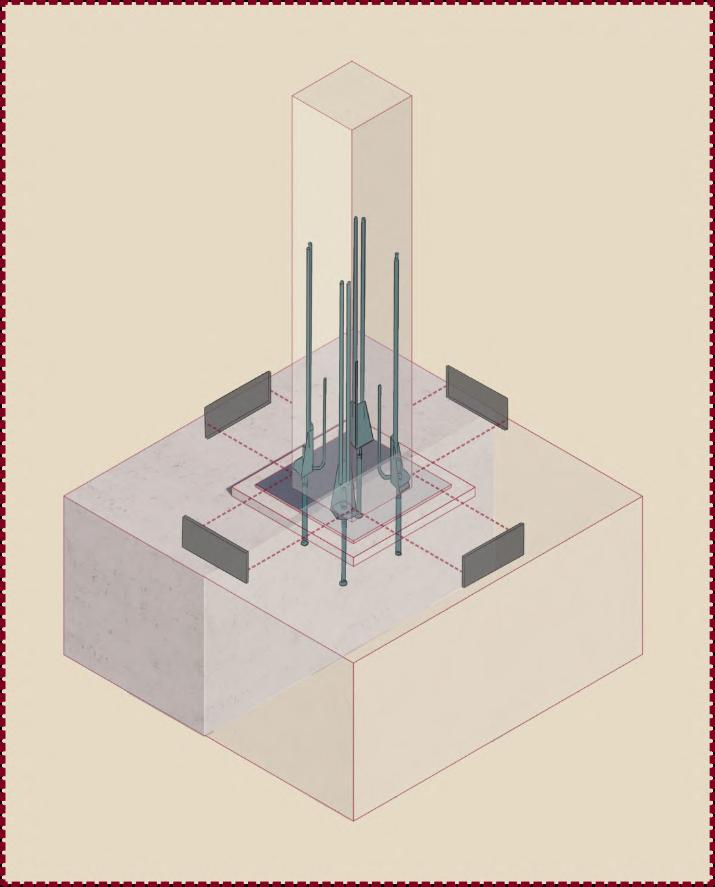
1. 4no.250mm diametermicropiles 10.7mdeep,spaced
2. 1400x1400x500mm reinforcedconcrete
3. 500x500mm embeddedsteel baseplate
4. 100mmhardcore
5. 50mmsand
7. 200mmrigid
9. 50mmcavity drainedandvented withinsectmeshto base
10. 9mmCopper claddingrainscreen fixedtocladdingrail
11. 18mmwoolcarpet withunderlay
12. 25mmdryscreed
13. 12mmrecycled rubbersound absorptionlayer
14. 60mmflooring graderigidwood fibreinsulation
15. 140mm(5layer)CLT slab
16. Rondo274 suspensionrod bracketfixedtoside ofsteelbeamand suspensionrod
17. RondoDuomain andcrosstees@ 1200mmand
mineralwool insulation,tightly abutswall
8. VCL
9. 100mmconcrete groundbearingslab
10. 25mmscreed
11. 18mmwoolcarpet andunderlay
12. Perimeterinsulation upstandtoprevent thermalbridging
13. Thermoblocksto preventthermal bridging
16. Rainscreensupport bracketfixedtostud wall
17. 50mmcavitydrained andvented,insectmesh atbase
18. 9mmRockpanel rainscreenfixedto claddingrail 19. SecondaryUB 533x210x109mmwith insulationbetweento preventthermal bridging 20. Mineralwool intumescentcavity barrier
600mmcentres respectively
18. 60mmmineralwool insulation
19. 30mmfire protectionboarding
20. 60mmacousticcork suspendedceiling panel
21. 2x12.5mmfire resistant plasterboardwith 3mmpaintfinish
22. Fixedbracket
23. 100mmaluminium frame,tripleglazed window3x4mm glasspanewith 2x18mmcavity between
24. Copperperforated windowshroud
14. Levelthreshold 100mmdrain, 150mmfrom rainscreencavity
15. Externalpavingwith polymermodified mortarjoint betweendrainto allowforthermal movement
16. Beddingsandand compressedbase
17. Insulatedrender andzincflashing under50mm rainscreencavity drainedandvented, insectmeshtobase
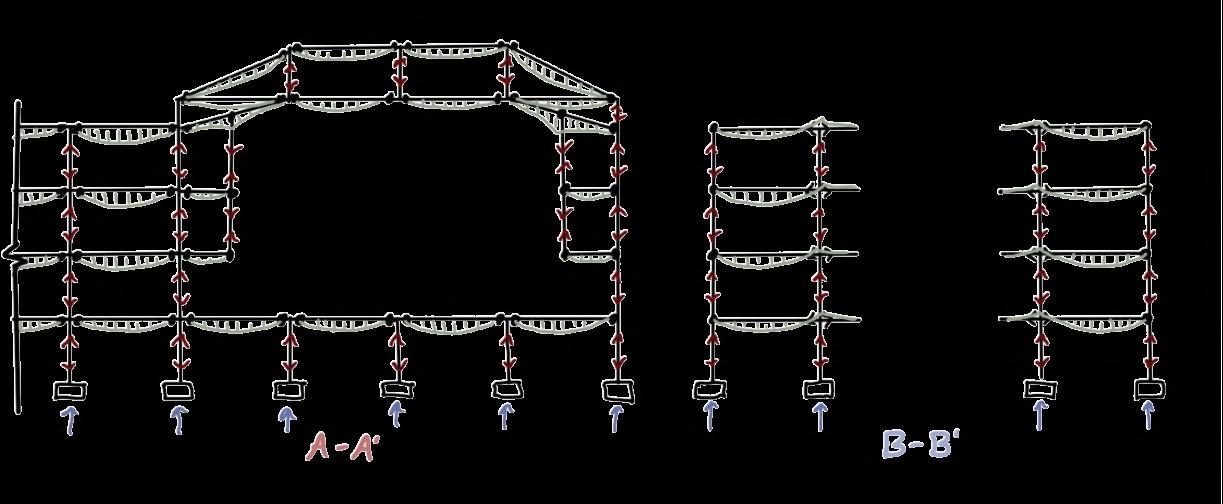
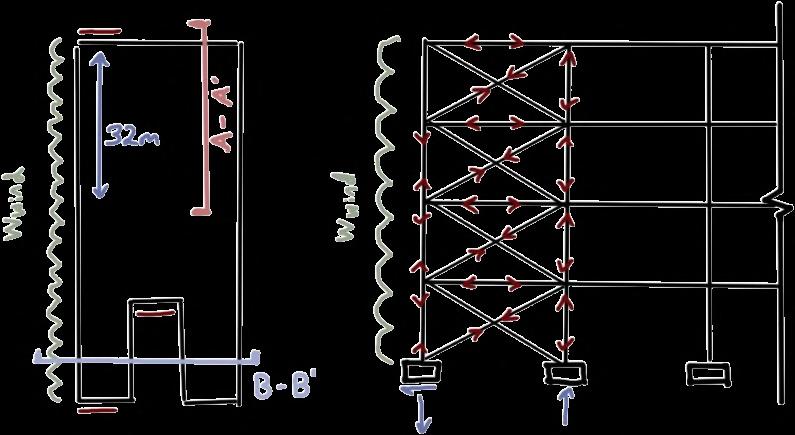
Bracing and loading hand sketch diagram of the Chamber and MP Block.
Detailed section of the public block.
03 WIXAMS: VILLAGE HALL
A new community hub within Wixams’ Open Space scheme.


PROPOSED SITE LOCATION PLAN


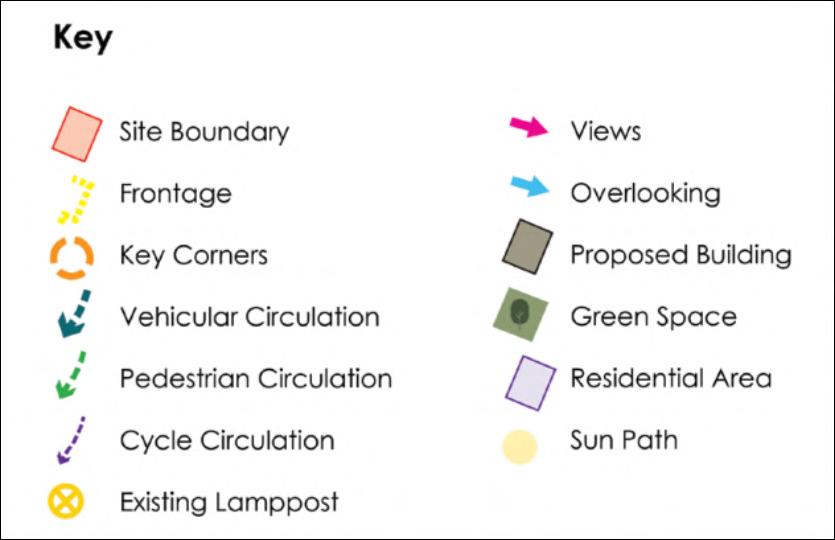
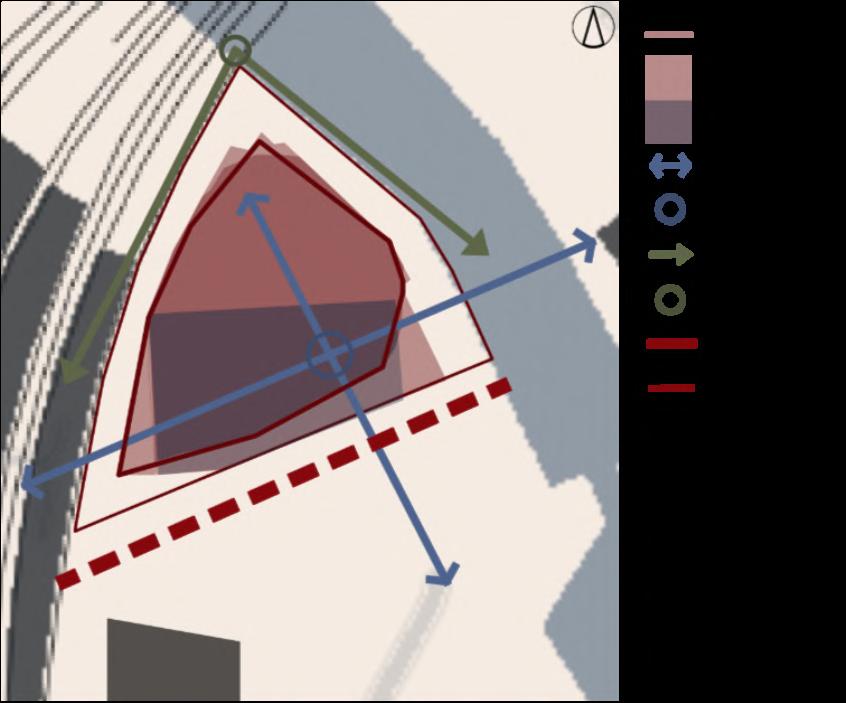
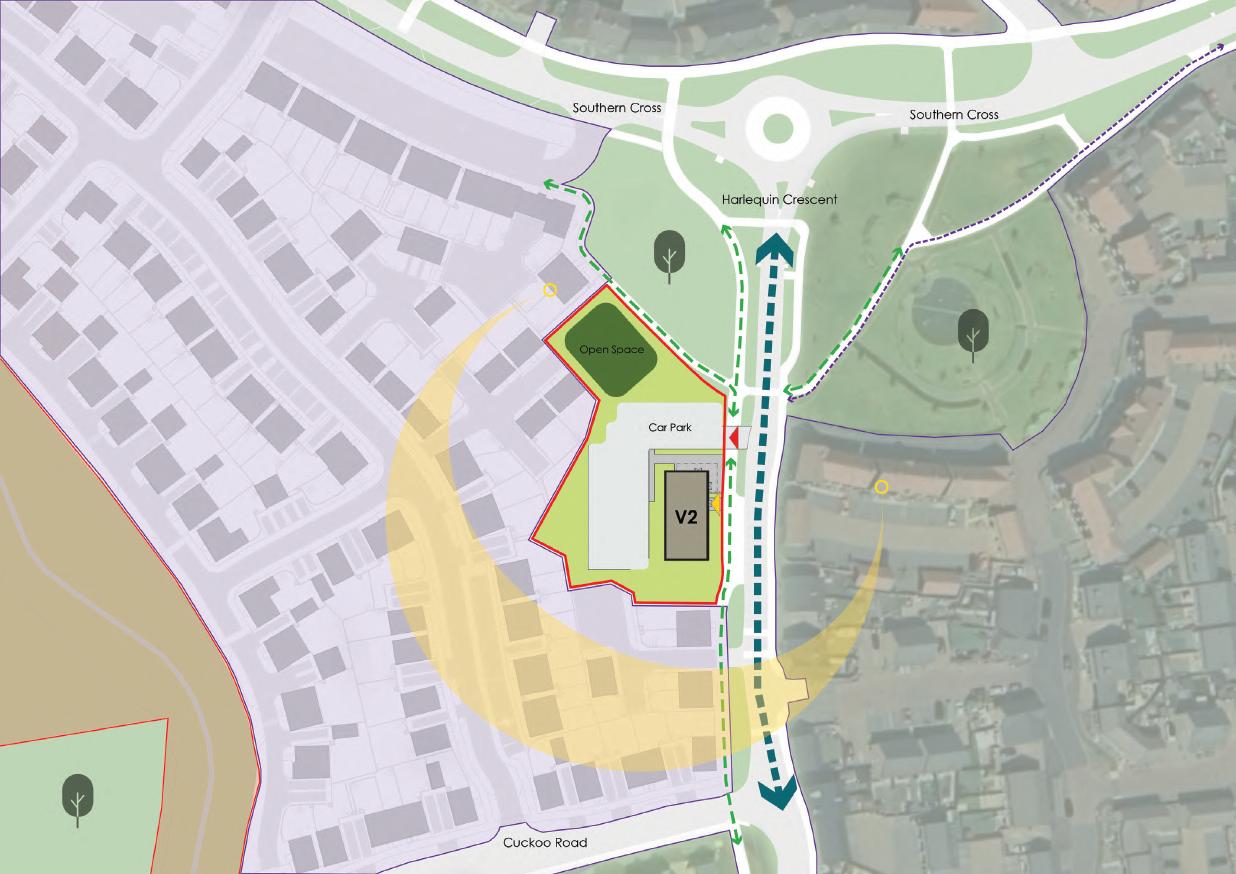
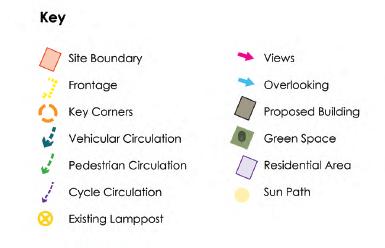
Site analysis and Opportunities and Constrains diagram, evaluating the site and surrounding context to inform design.
PROPOSED OPPORTUNITIES AND CONSTRAINTS
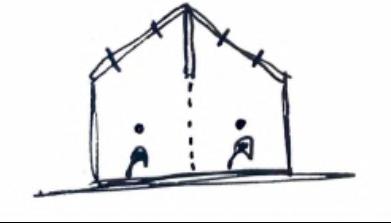

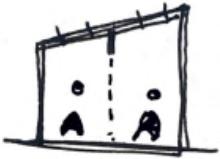
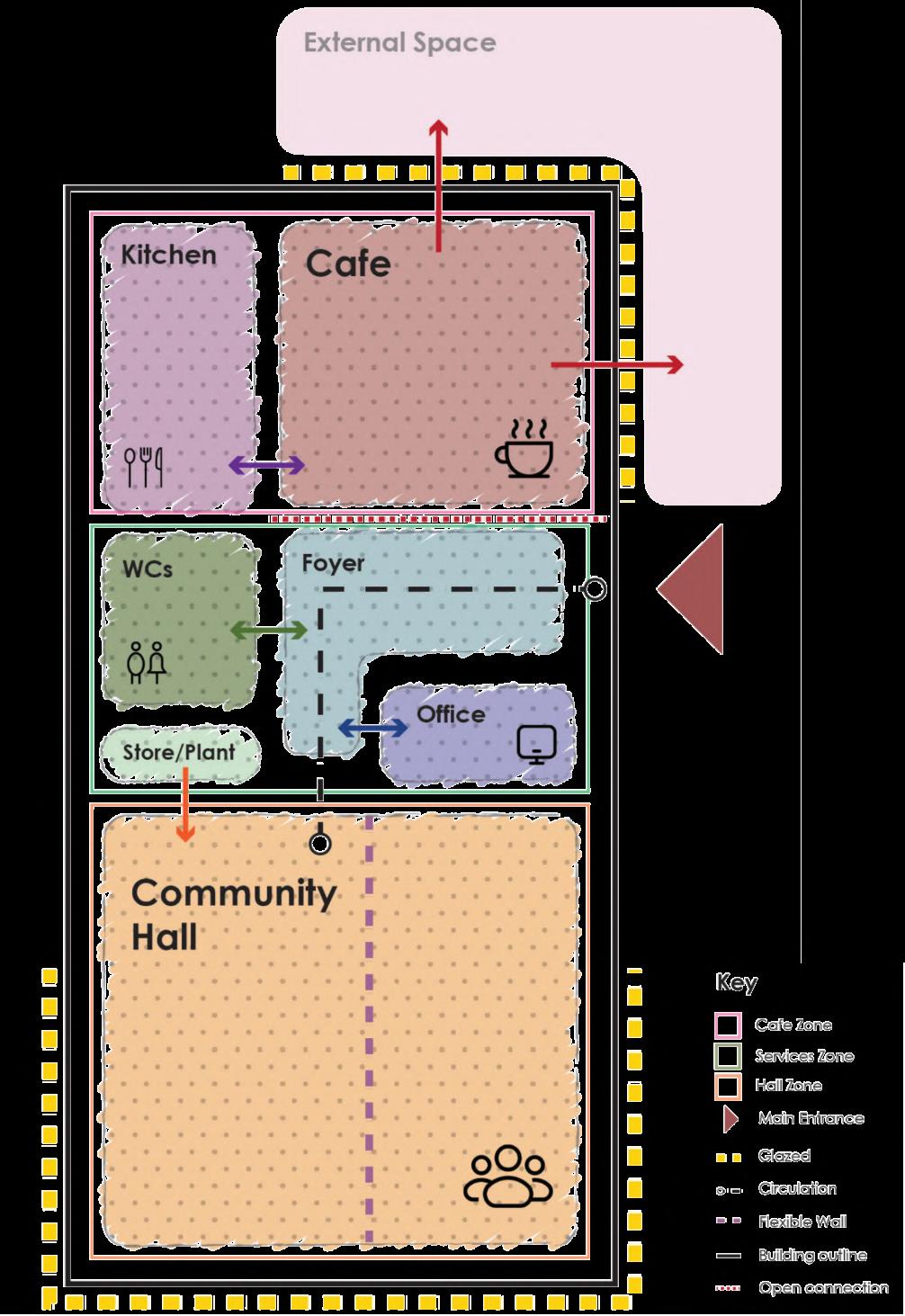
access, constraints, circulation, frontage, views and context, helping to inform zoning and massing diagrams. My experimentation with roofscape options helped to respond to the residential scale, daylighting and sustainability considerations, along with refining window arrangements to address privacy, solar shading and daylighting constraints. 9
The green-field site is situated along Harlequin Crescent, leading to the roundabout at Southern Cross, neighbouring Tawny Avenue Play Area. Along with easy vehicular access, there are both pedestrian and cycle access from the South-East and North-East of the site, making this the prime location for the site entrance. Due to the building’s orientation, it will not be overshadowed and will provide key frontage and corners on its North and Eastern facades. Existing lampposts provide safe, lit pathways and entrances into the site. Views out and inward should be preserved on the building’s East facade, centralising the community hall and cafe spaces in this zone.
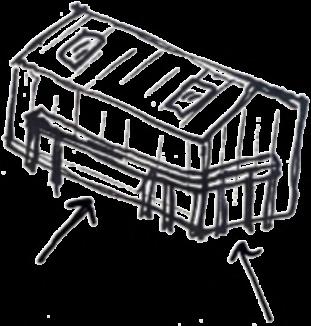
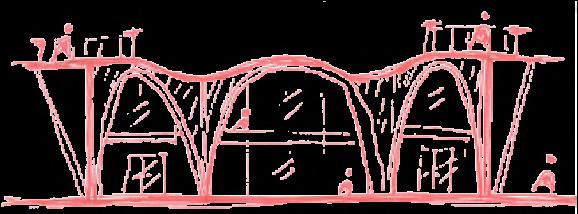
Hand drawn roof option, servicing and sliding partition wall experimentation in section.

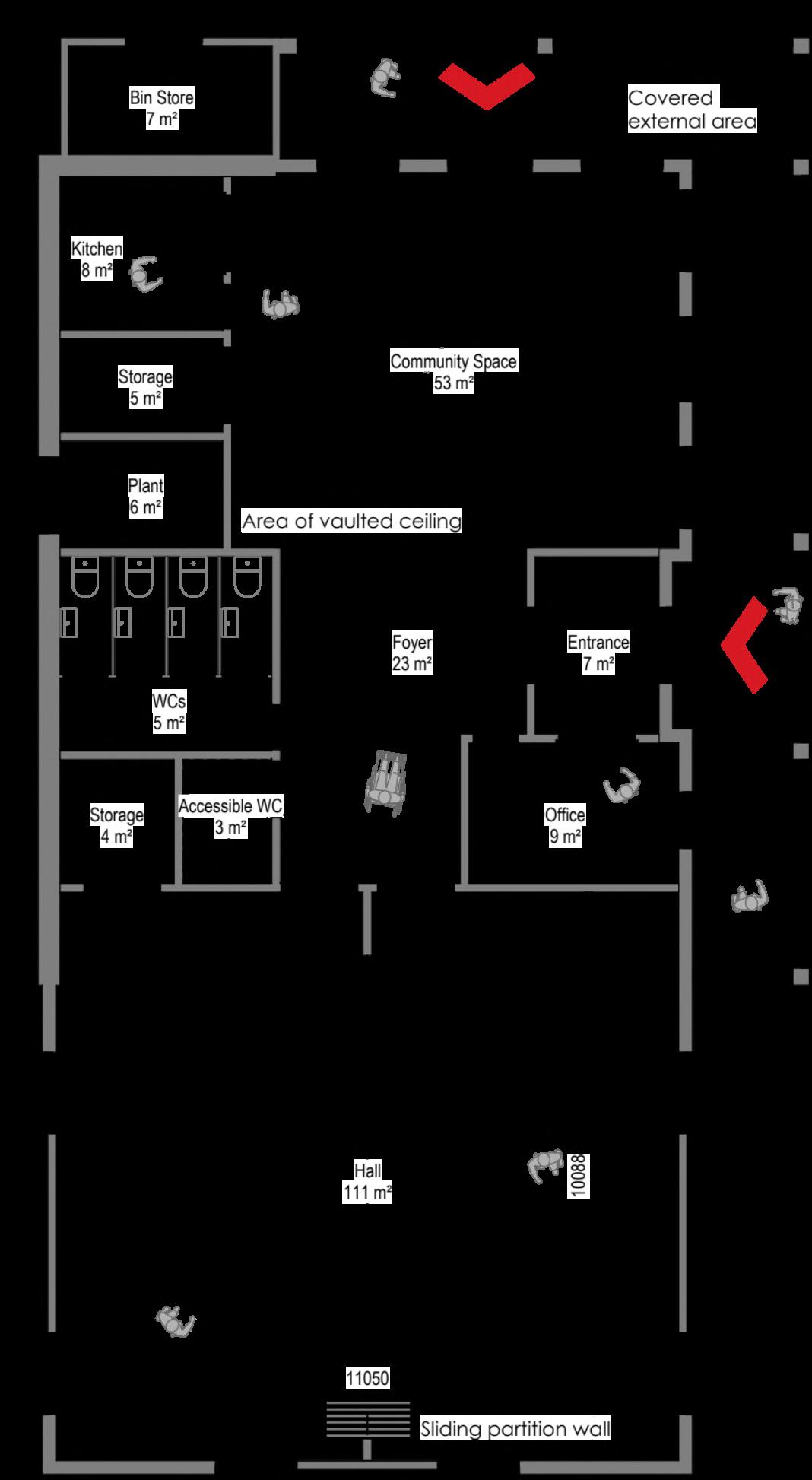

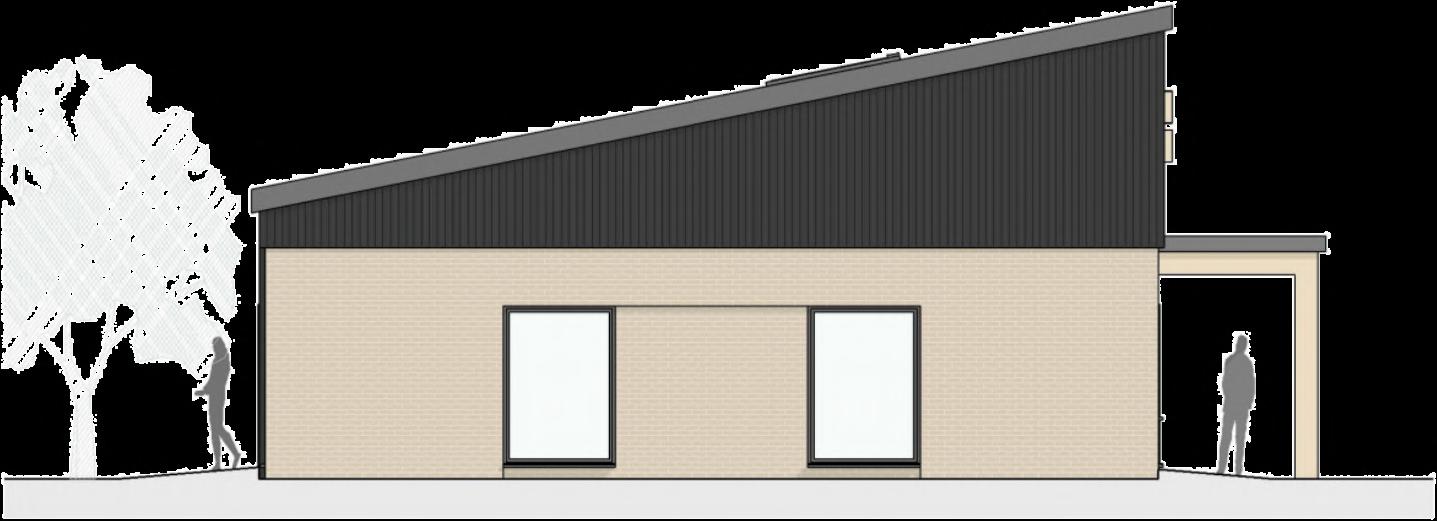
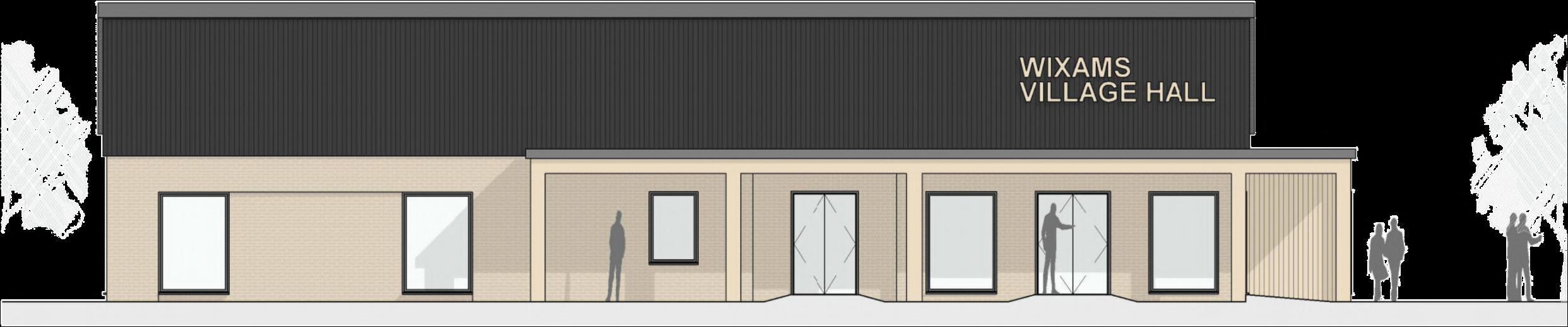

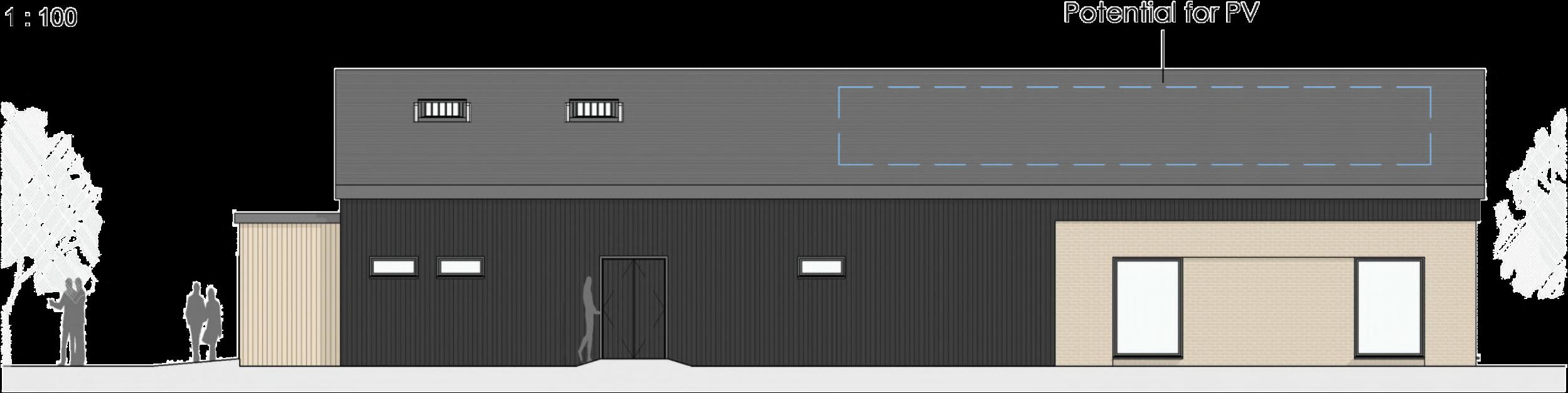
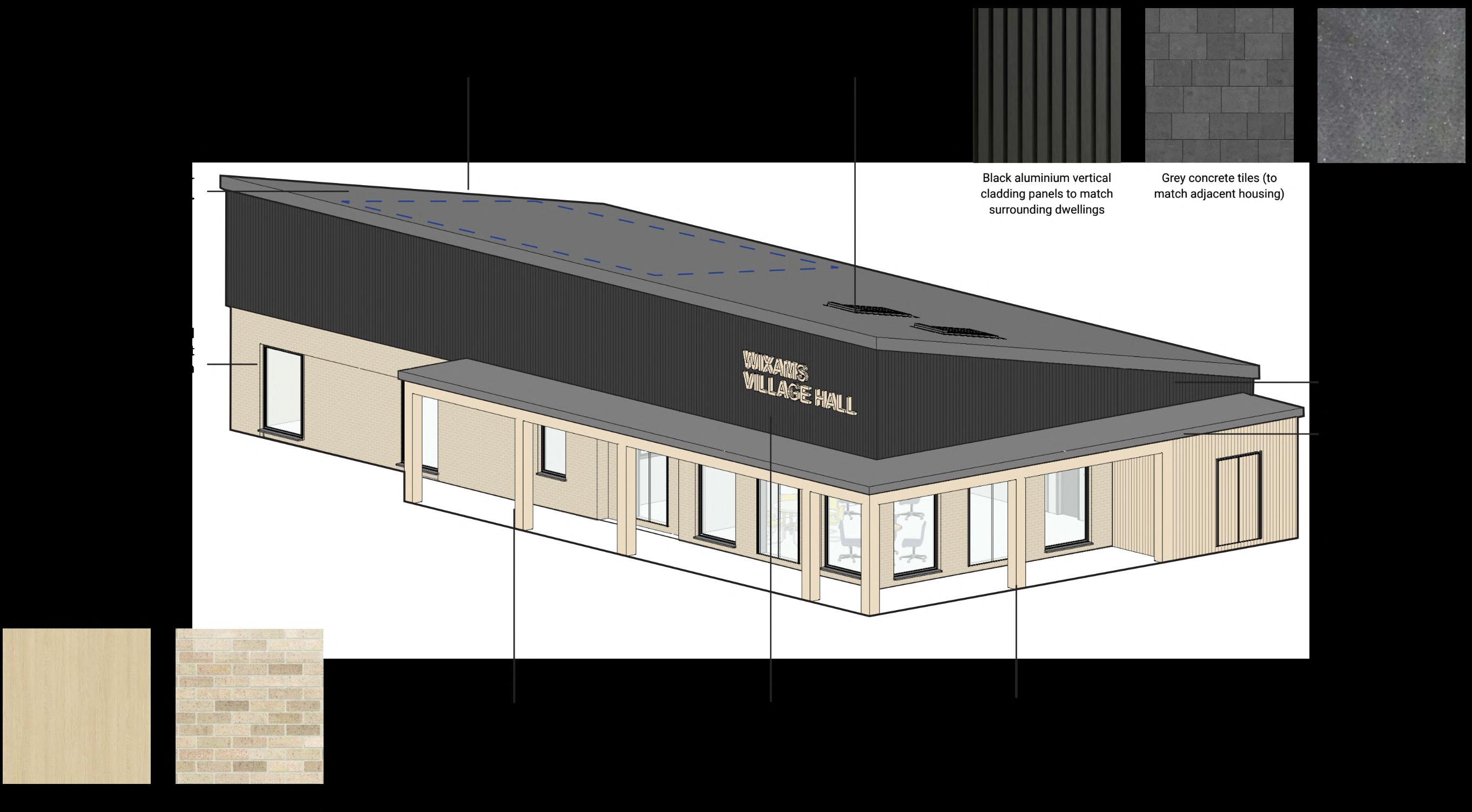
Revit North Elevation.
Revit South Elevation.
Elevation key.
Revit West Elevation.
Revit East Elevation.
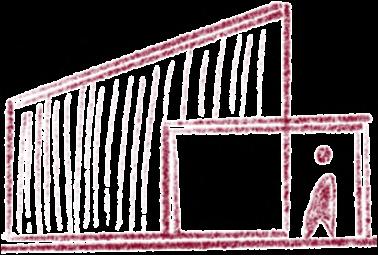
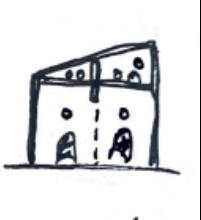
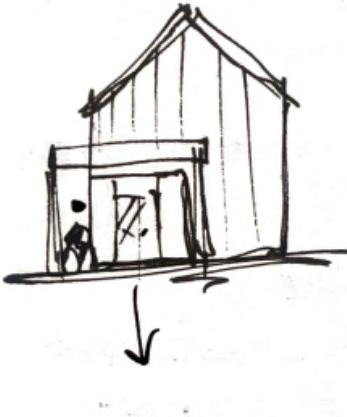
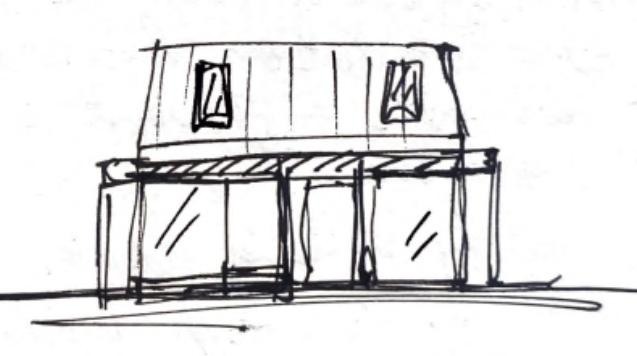
Hand drawn elevational, massing and materiality composition experimentation, showing potential access and fenestration.
04 ST. JAMES CHURCH
Sympathetic extension of an existing Anglo Saxon church.
Project Type: Ecclesiastical extension
Completed: RM+P, Part 1 Placement 2023-2024
Location: St. James Church, Old Milverton, UK


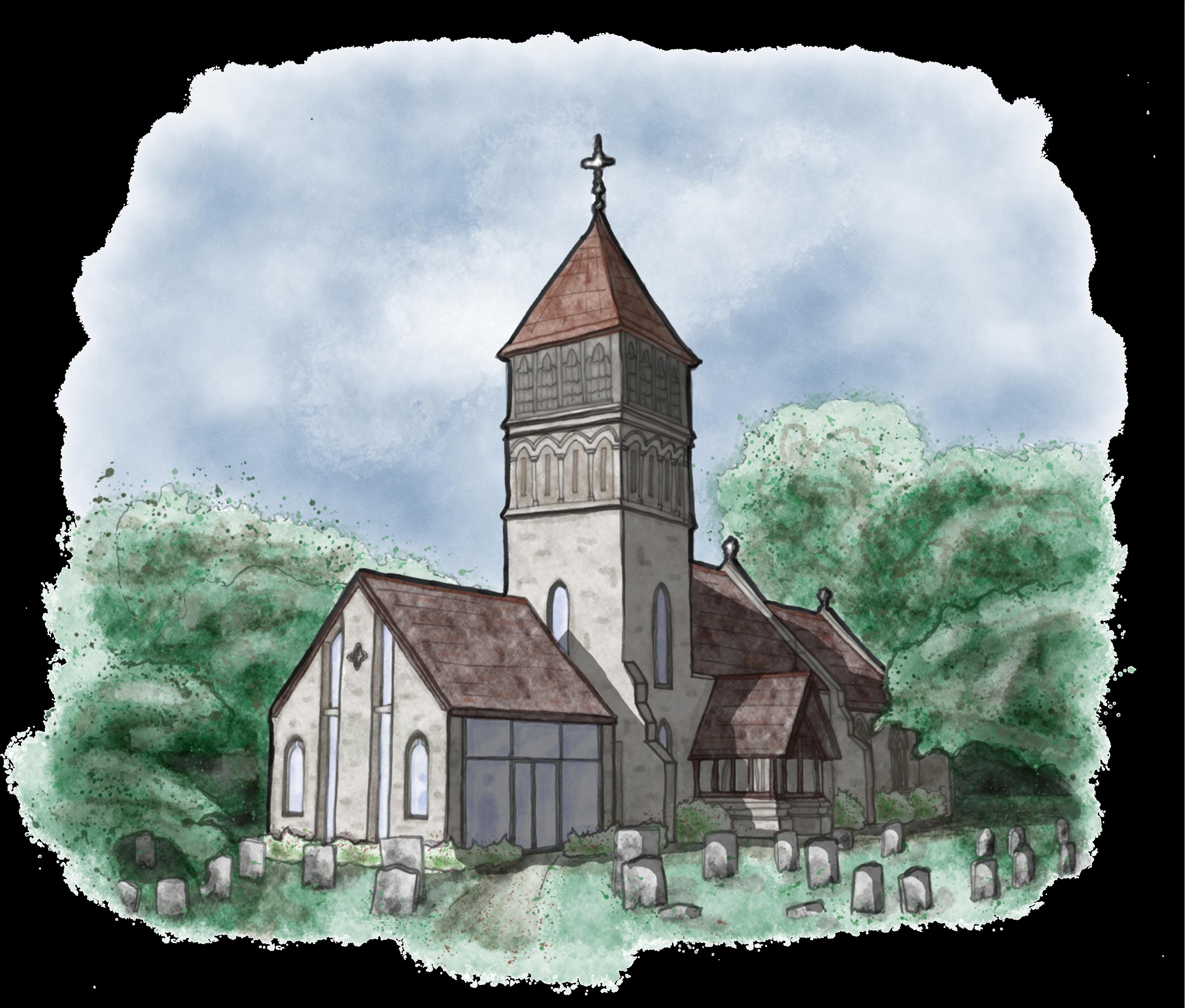
To contextually respond to the site and the heritage of the existing Grade II St. James Church, I conducted material and precedent analysis and met with the client through site visits and selfconducted surveys to discuss their vision. From here and using survey measurements, I began modelling and creating massing analysis on SketchUp, to generate potential forms that worked within the site constraints.
I presented my research and concepts to the office architects and reviewed my work, helping me further generate concept sketches and models.
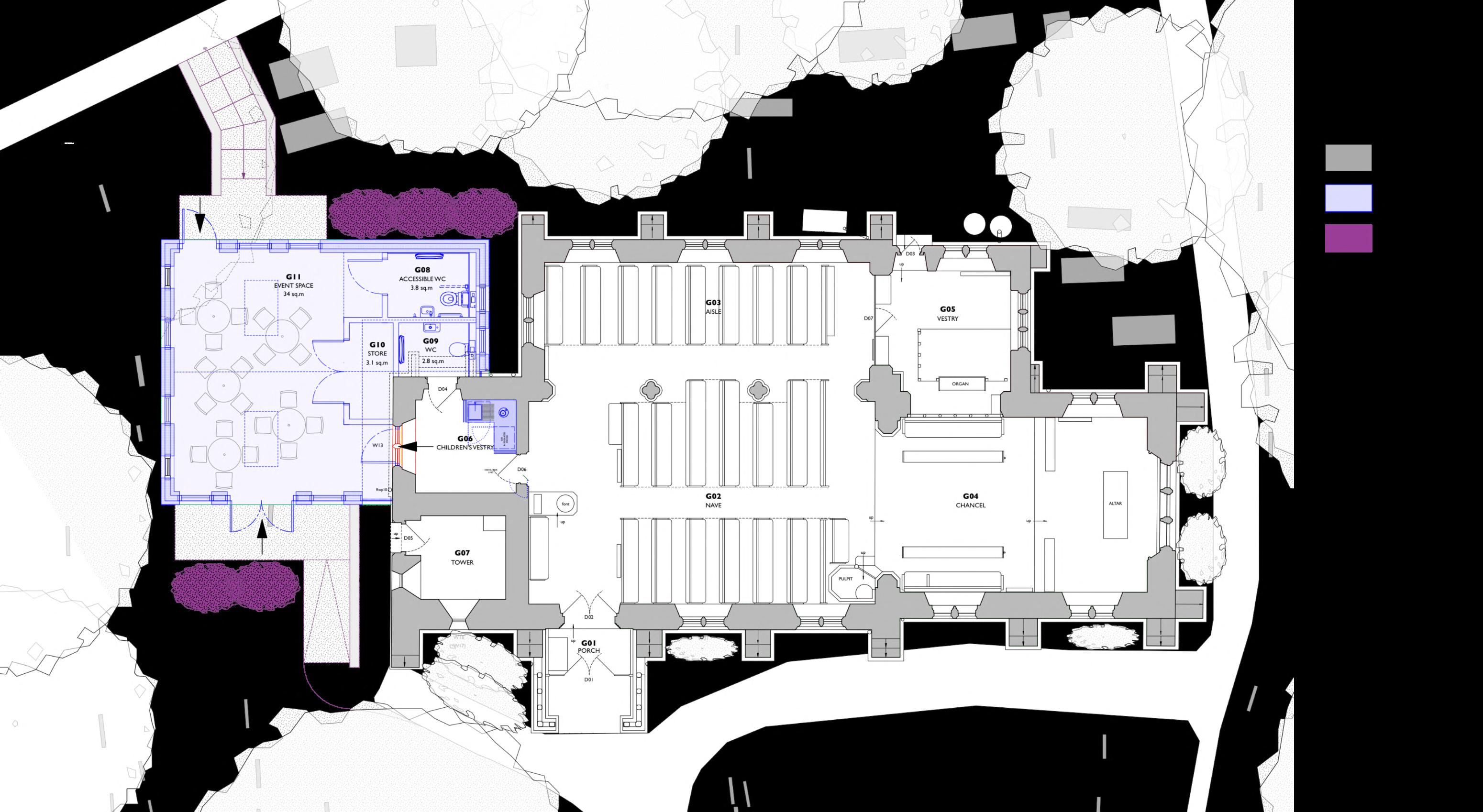
A significant request from the client was the incorporation of the existing feature window within the extension; we decided to split it into its lancelets and oculus, highlighting its importance on the West facade.
From many reviews and iterations, I was able to create a final concept sketch approved by the client and two option sets of preliminary plans and elevations issued to both the client, the QS and the heritage consultant for review.
After a meeting with the QS over the Feasibility Cost Report of the designs, we agreed to split the work into two phases to allow for the church to gather sufficient funding for each phase.
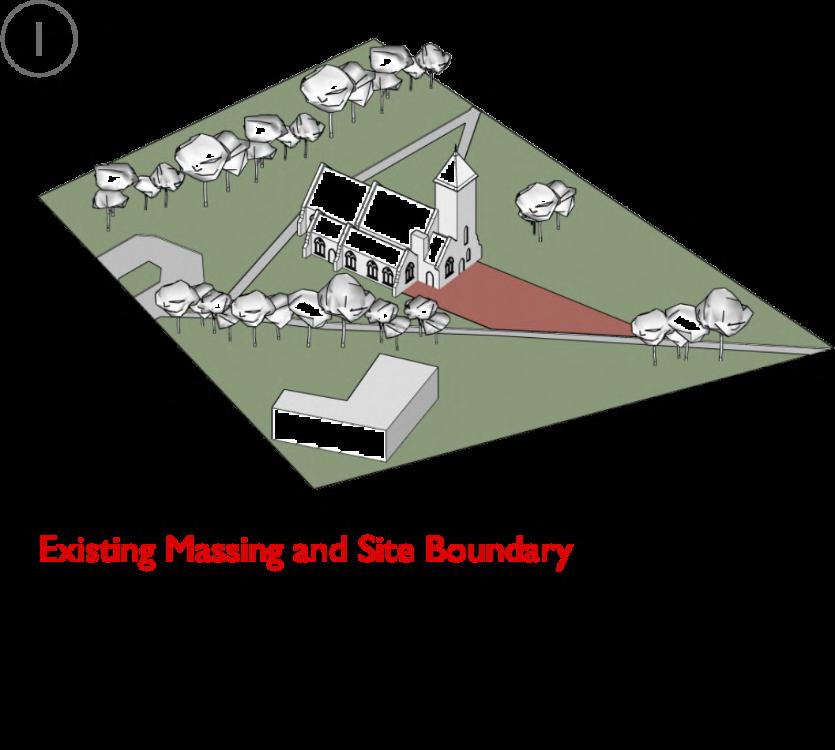
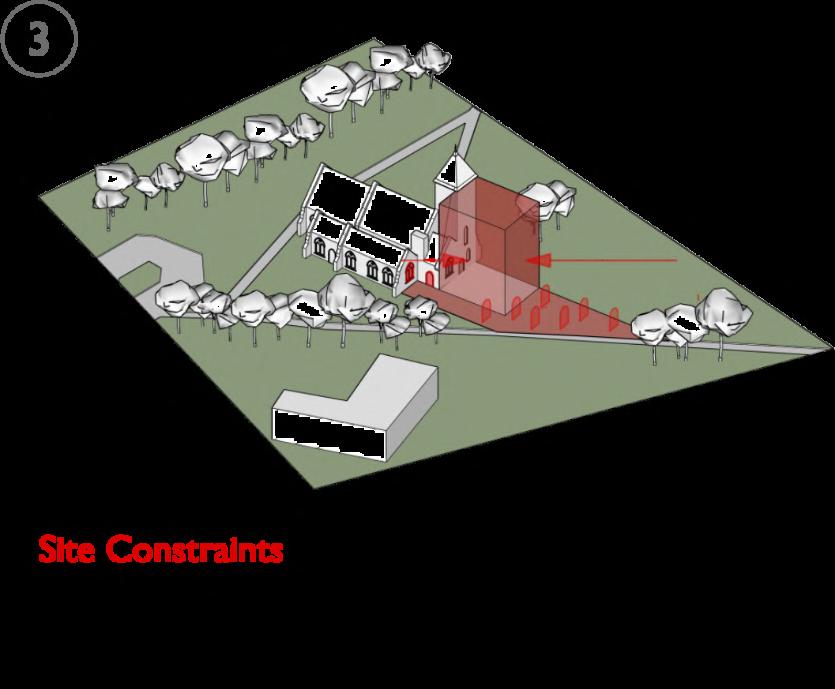
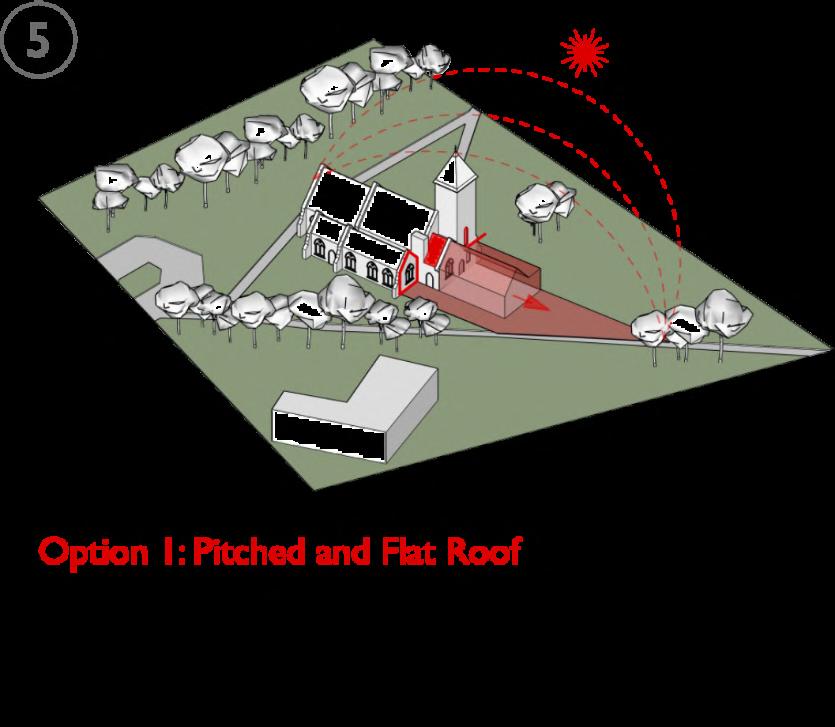
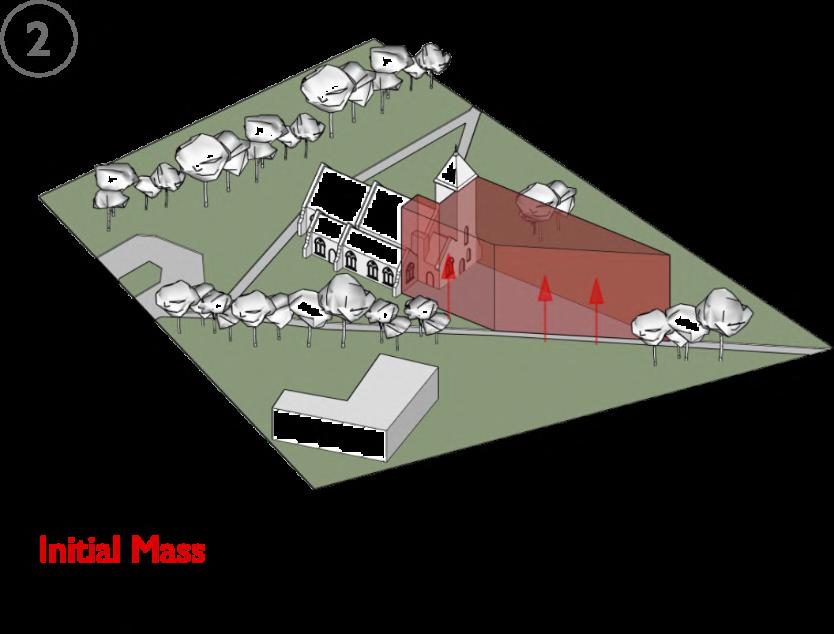
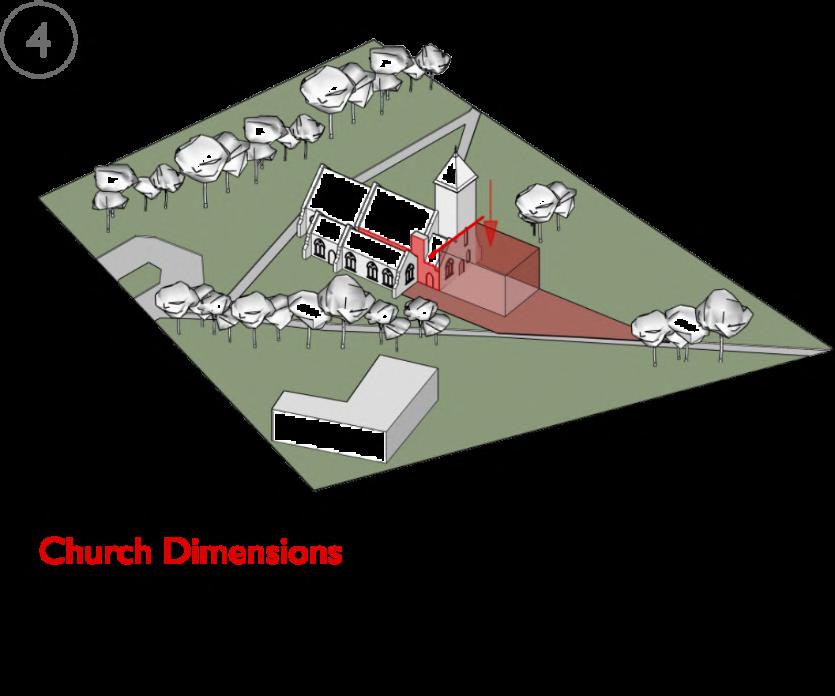
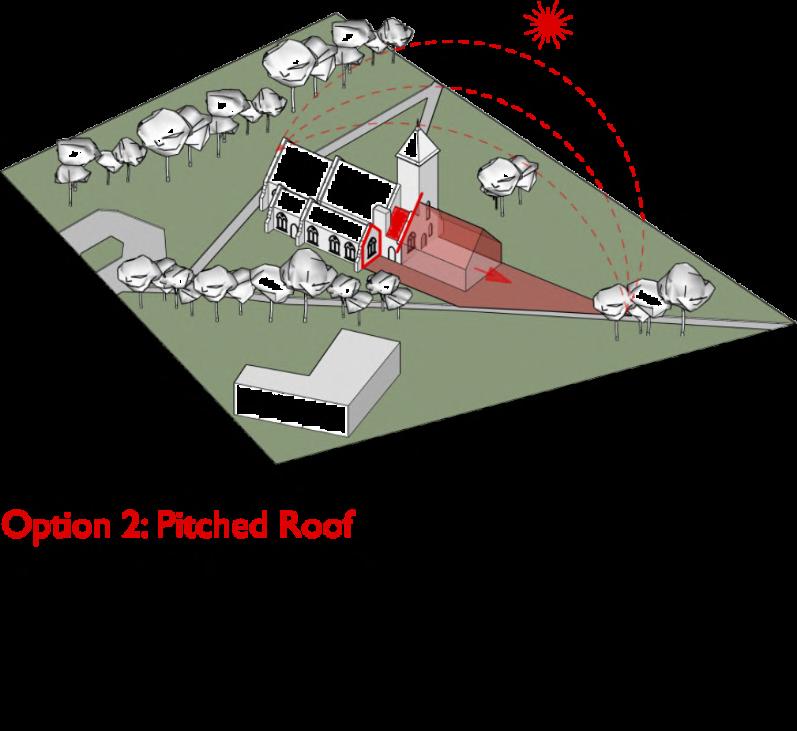
Extension massing experimentation using SketchUp.
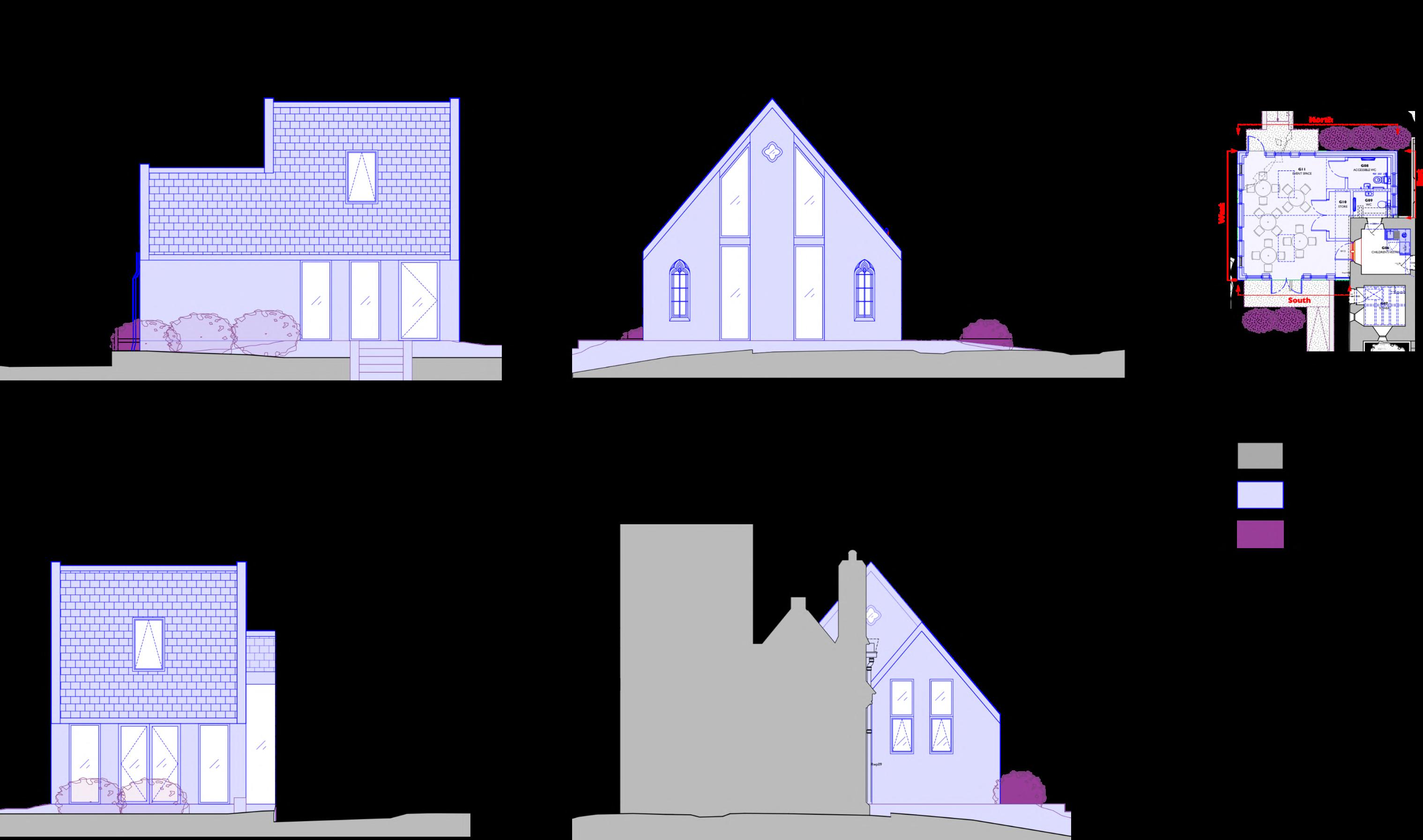
Proposed North elevation with existing church.
Proposed West elevation with existing church. Key plan.
Proposed South elevation with existing church.
Proposed East elevation with existing church.
Proposed extension sketch using Affinity Photo and SketchUp.
05 PERSONAL PROJECTS
Project and extracurricular activities.
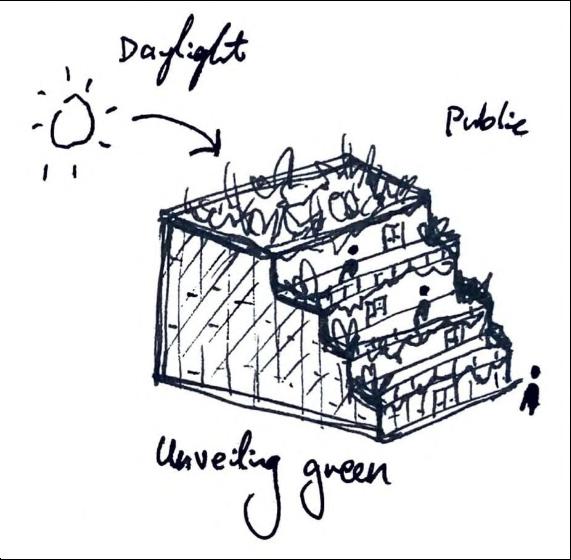
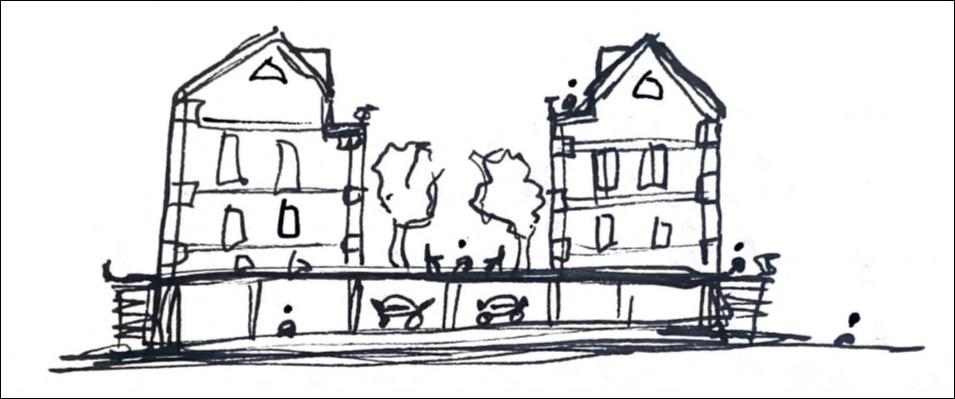
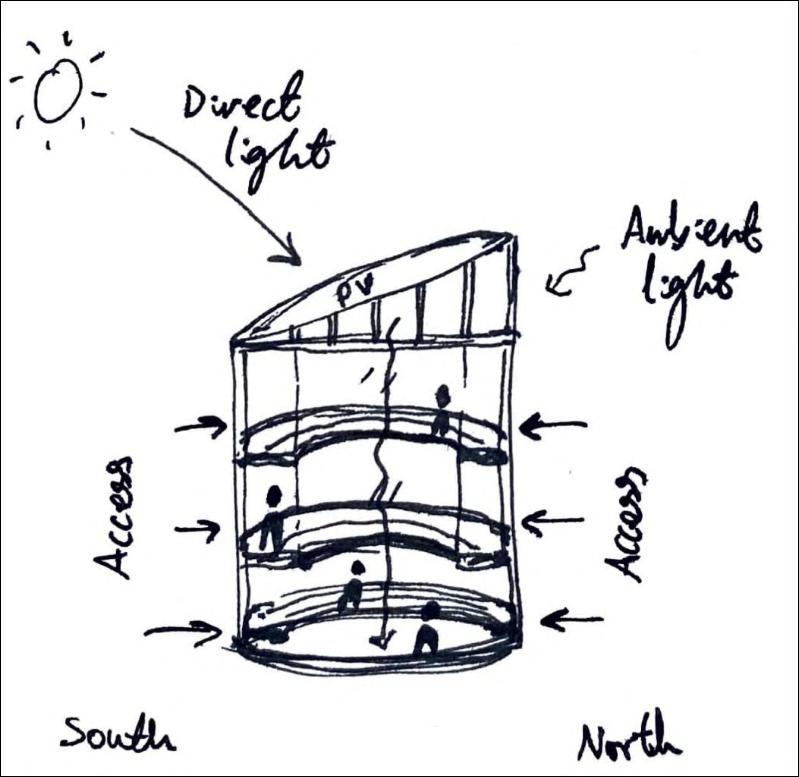
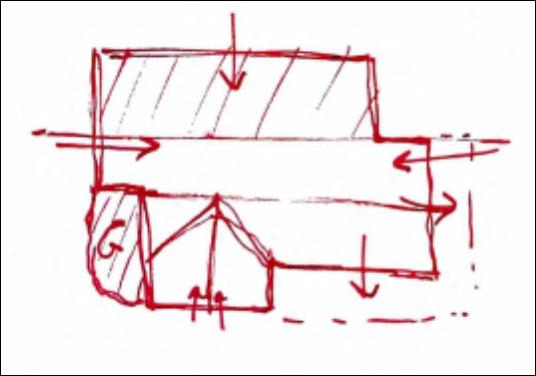
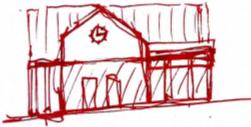
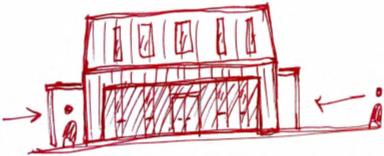
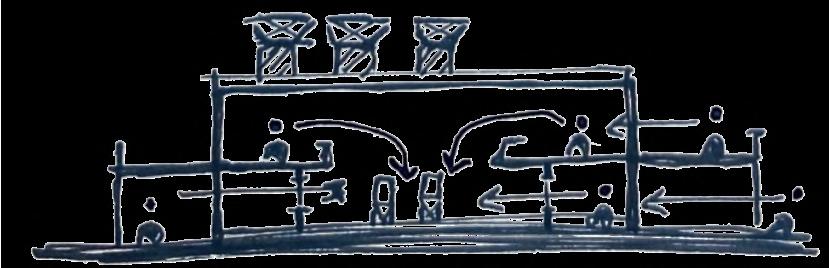
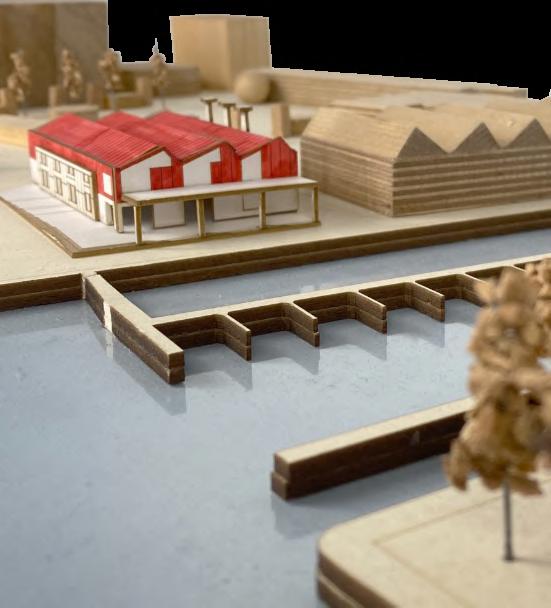
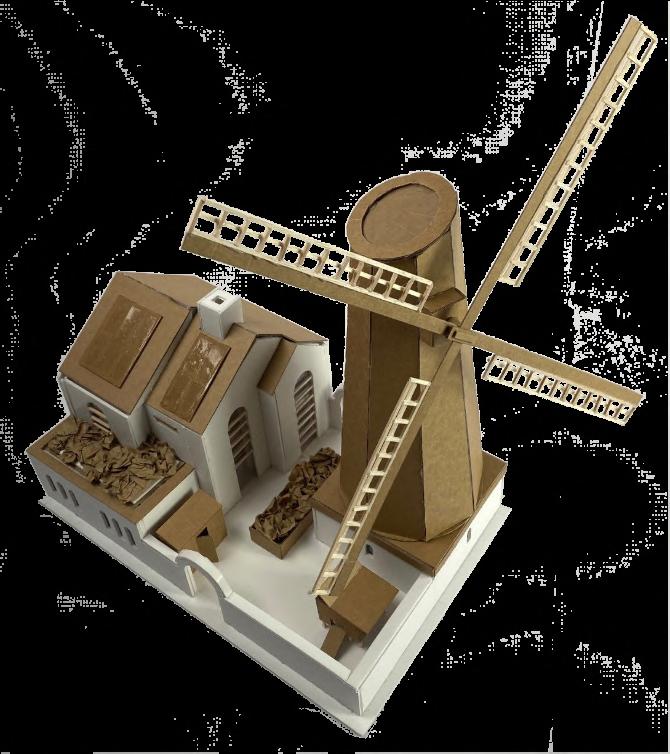
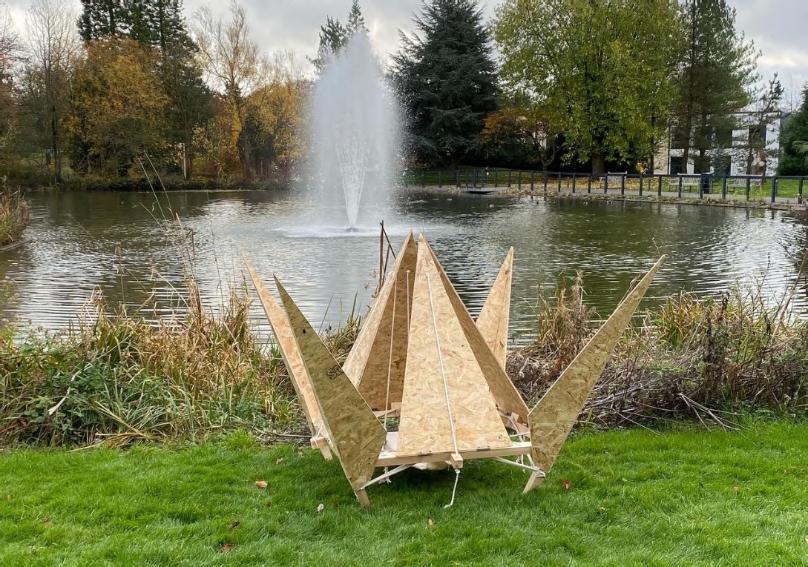
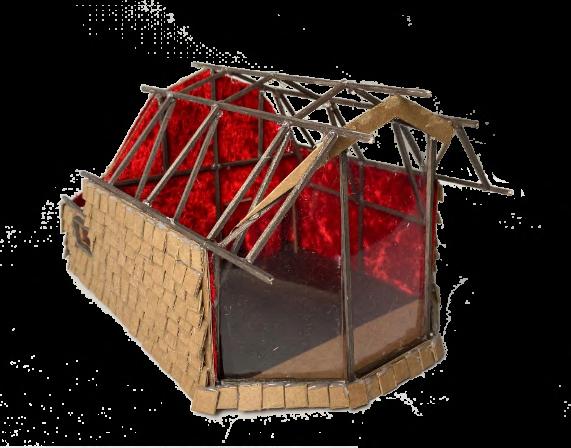
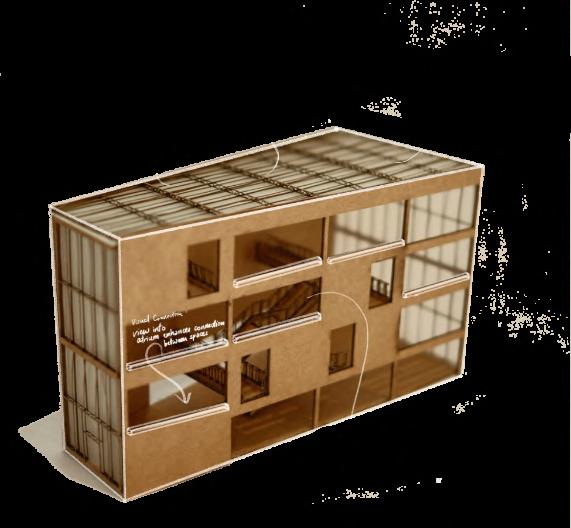
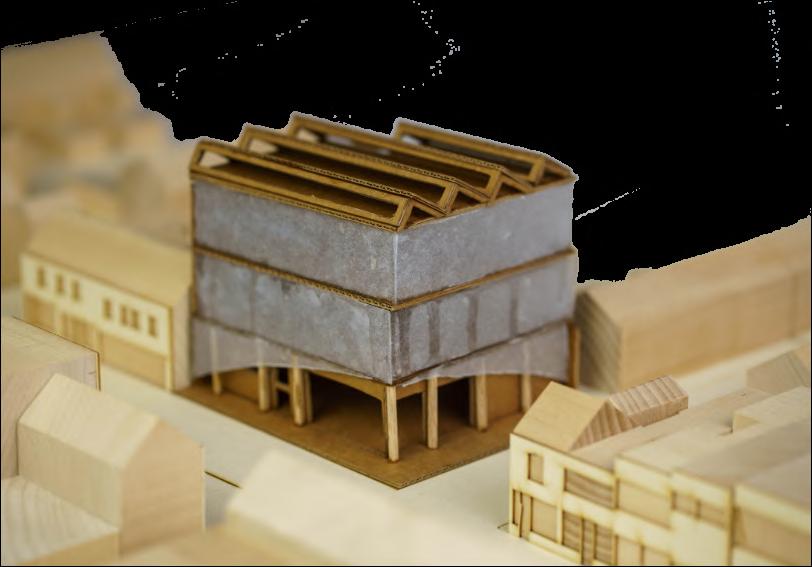
Wihtin both my academic and professional projects, I use both physical model making and hand sketching to help explore, experiement and express new and resolved ideas before delving into CAD, as I find it helps to highlight possible flaws and faults in the design or help to convey key concepts to external viewers.
Within my free time, I enjoy sketching and painting recreationally to help express my emotions and fully appreciate nature and architecture at a different level. I find theactof drawing at high level allows me to full understand the subject on various different levels.
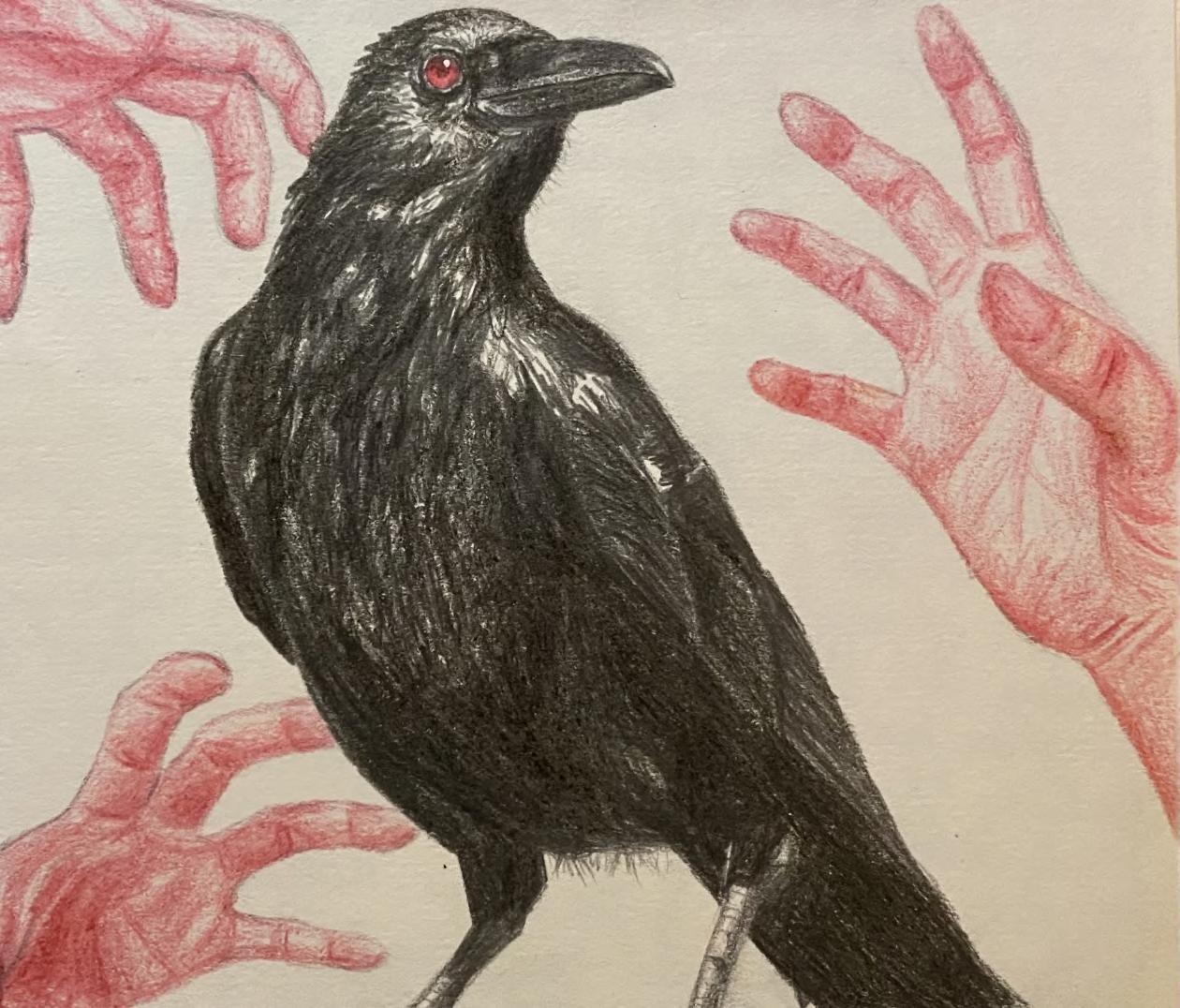
For my A-Level Fine Art project, and with the theme ‘Cursed’, I was able to explore surrealism, the macabre and nature. I experimented and developed my art style using cyanotype, biro, pencil, acrylic and watercolour to name a few mediums.



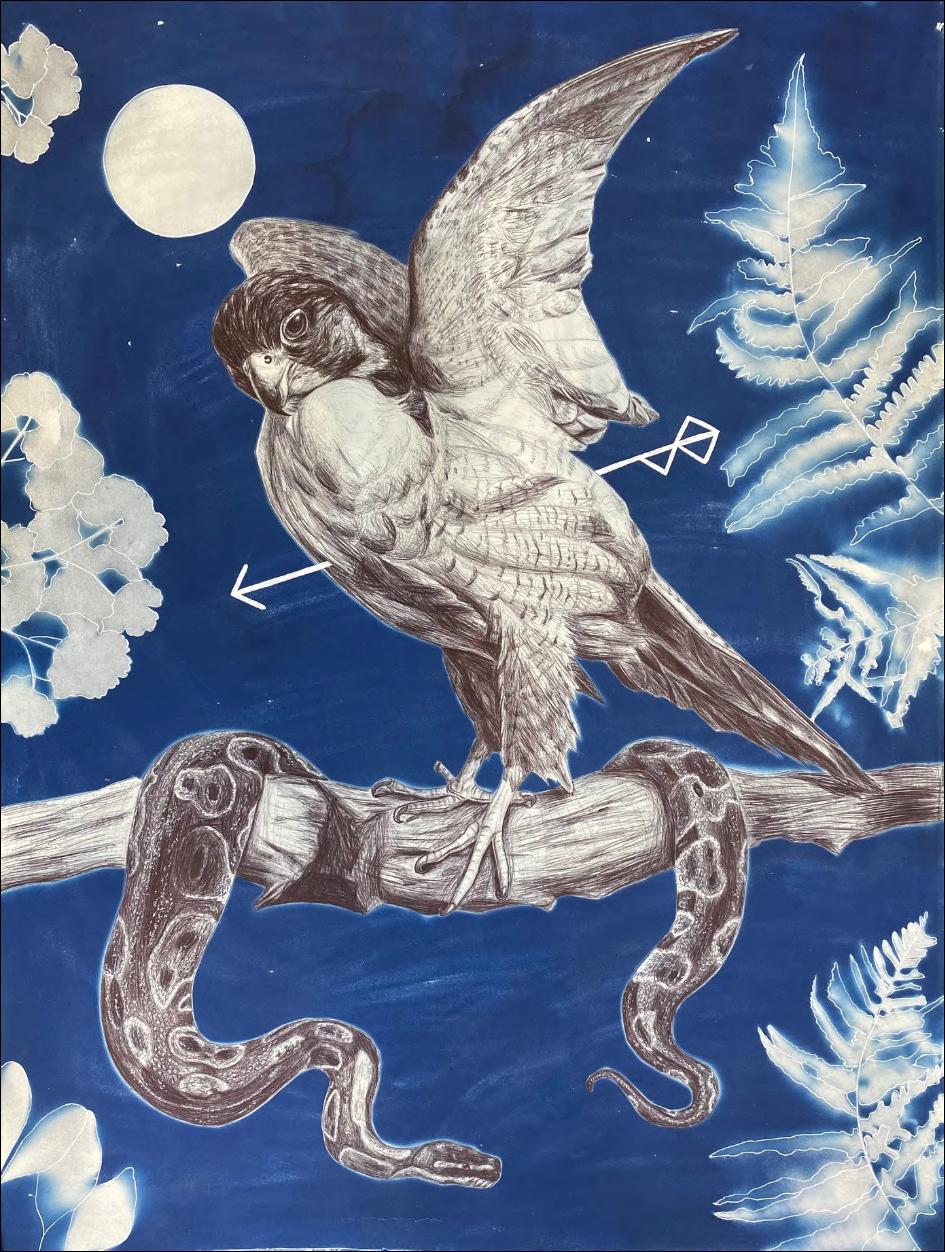
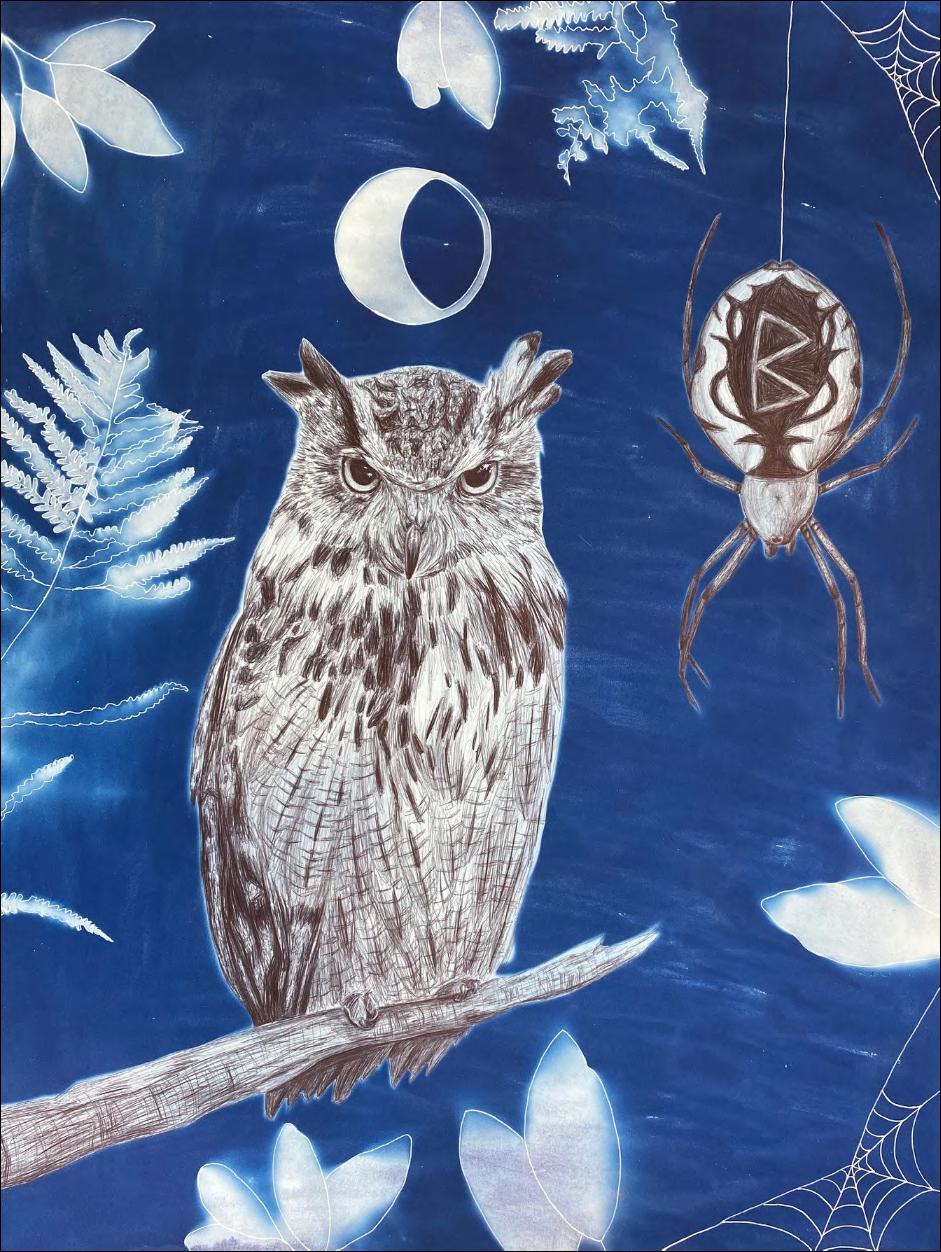
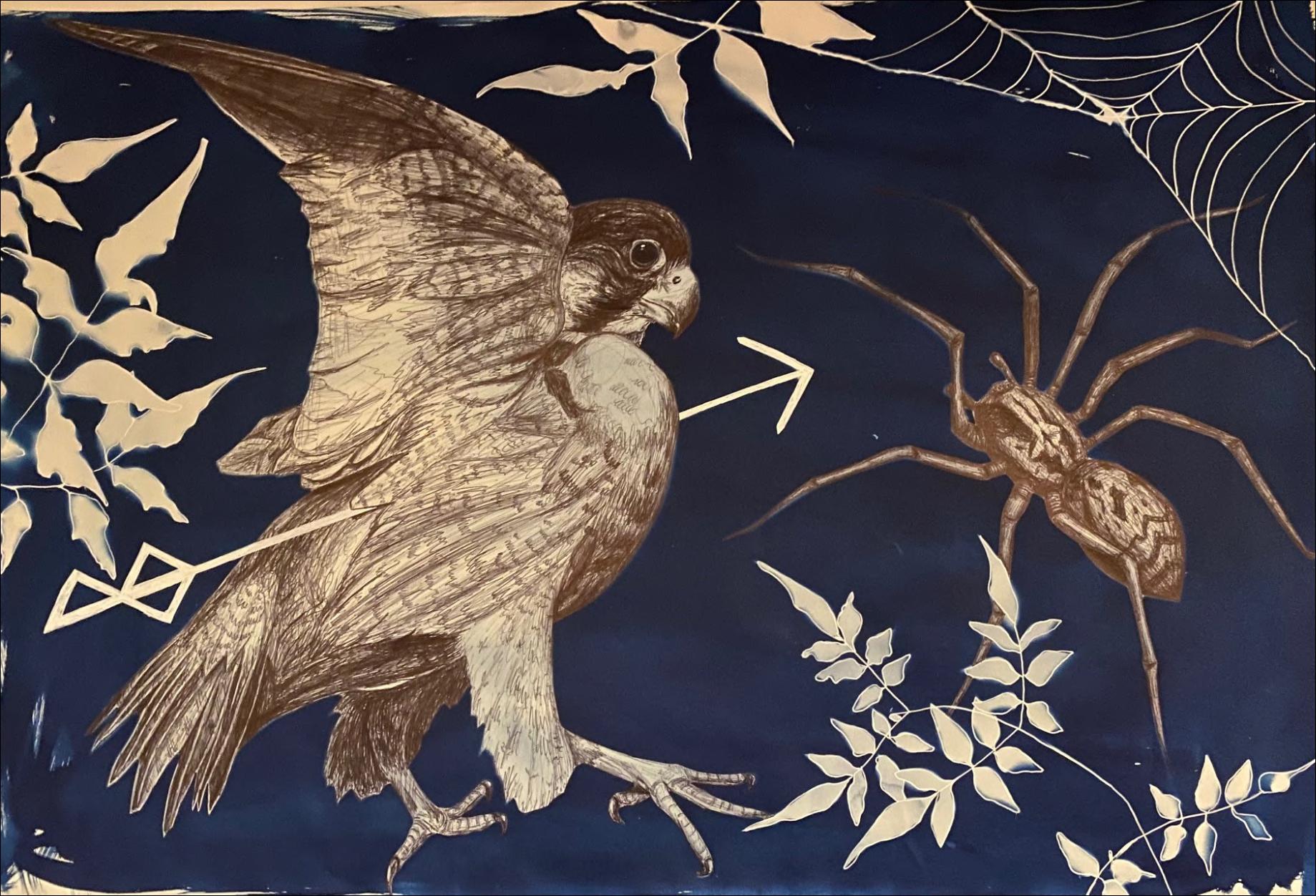
Cyanotype and biro A3 drawing.
Cyanotype and biro A1 drawing.
Cyanotype and biro A1 drawing.
Coloured pencil A5 drawing.
Various sketchbook drawings of building designs.
Various physical models from 1:1 to 1:500 from projects spanning 1-4th year of university.