
Co-Creating Power Electronics with Eltwin
Our co-creation process and how it shapes the right solution for your application
Since 1976

Co-creating power electronics together so the solution fits the application
The strongest solutions are created together. That belief shapes how we work at Eltwin.
Co-creation is a partnership where your insight into the application meets our experience with HVAC control, integration, and power electronics. Instead of starting with an off-the-shelf product, we focus on understanding what your system needs and why.
Your knowledge of the application and the market sets the direction. Our engineering
teams build on that foundation and develop a solution that matches the technical requirements and the way the product will be used later on.
When both perspectives guide the process, the result fits the application more precisely and integrates more naturally into the system.
In this catalog, you can explore how our co-creation process works and how each step contributes to shaping a solution built for your application.
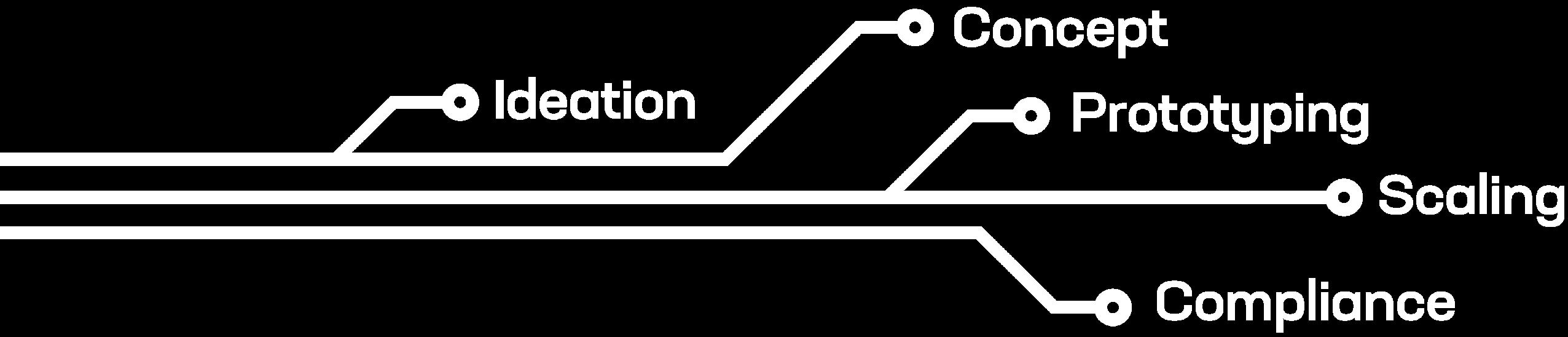
Our 5-step co-creation process
1. Understanding needs and defining goals
2. Concept development and design
3. Prototyping and testing
4. Documentation and compliance
5. Production and scaling

What happens when knowledge is combined?
Co-creation works because it brings two kinds of expertise into the same process. You understand the application, the system around it, and the demands it must meet.
We at Eltwin understand how to design, integrate, and qualify power electronics so they perform in those conditions. When these perspectives are brought together, the pro-
cess becomes easier to steer. The technical direction reflects the real use case, and every decision is grounded in facts rather than assumptions.
The result is a development flow where the solution stays connected to the real conditions it must handle. The value grows naturally as we move forward together, as prototypes are tested, and as learnings from production help refine the design.
Are you curious about what we can create together?
If you are planning a new development project, we would be happy to explore it with you and see what we could co-create together.

How we move from insight to a finished solution through co-creation
Step 1. Understanding needs and defining goals
A good partnership begins with a clear understanding of what the application must achieve and what can be done.
Before we discuss specifications or features, we focus on the system itself, how it behaves, and where it falls short today.
We sit down with your development team, often in a workshop format. We explore simple but important questions, such as what
Case: Argoclima x Eltwin
“Why not think about designing a common product together? Instead of just manufacturing our drivers, we could combine our strengths to create something entirely new for the market.”
With that mindset, Marco Di Giulio, R&D Manager at Argoclima, helped set the direction for a partnership built on shared expertise.
What began as a simple supplier relationship quickly turned into a collaborative process where both teams contributed with insights, challenged ideas, and improved each other’s work.
The result is stronger, more refined solutions shaped through co-creation.
the system is expected to do and where it creates challenges for you or your end users.
These conversations often uncover needs that were not part of the initial request.
When we both share the same understanding of the problem, the direction becomes clearer. The development moves with purpose, and the solution grows stronger because everyone is working toward the same goals.


Step 2. Concept development and design
Once the purpose is clear, we begin turning insights into concrete design ideas.
This is where your application knowledge and our engineering experience come together to shape the concept.
We look at the architecture of the solution, the interfaces it must support, the components it should rely on, and the mechanical layout that allows it to fit the application. Throughout this phase, the dialogue stays open. Both teams bring something to the table, such as challenge assumptions, raise

questions, and refine ideas, so the concept reflects the real conditions the product will face in the end.
We evaluate potential risks early, using tools such as DFMEA and SFMEA to keep the design flexible while ensuring it remains technically solid. This helps avoid surprises later on.
When the concept supports the goals defined in the first phase and matches both the technical and commercial demands, we are ready to move it into prototyping.
Step 3. Prototyping and testing
The prototyping stage is where all the early work finally takes form, and you can see how the solution behaves in reality.
Prototypes are built and tested in Aarhus, close to the engineering teams. In our EMC lab, we put the prototype through the same kinds of conditions it will meet in the production stage. Some tests confirm that the design is on track. Others uncover details you simply cannot spot on a drawing or in a simulation.
That is why this stage matters.
The real progress comes when our engineers and your team sit down together and look at the results. You bring the application insight. We bring the technical perspective. When those viewpoints meet, the adjustments become sharp, relevant, and actually move the solution forward.
What
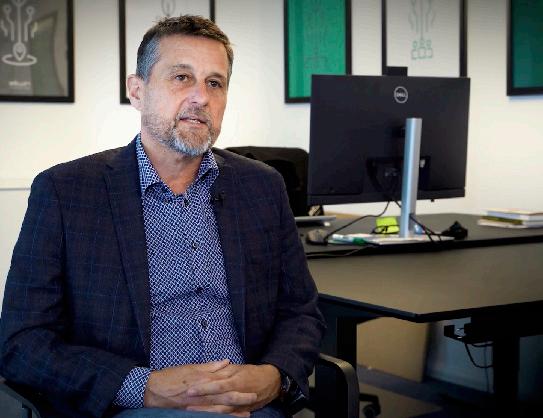
are our own words on co-creation?
We give you a look inside our approach, told by the people who work with customers and solutions every day.
WATCH THE VIDEO →

What are our own words on co-creation?
Step 4. Documentation and compliance
Documentation is a crucial aspect of the project. This is where we collect the test results, the choices made along the way, and the adjustments from both teams, so it is easy to understand how the solution is built and why it performs as it does.
It is needed for CE, UL and EMC approvals, but it also gives the people who will work with the product later a solid starting point.
When the documentation is straightforward, certification runs more smoothly, scaling is easier to plan, and the insight created during development stays in the project instead of getting lost.

Step 5. Production and scaling
Now we are ready for production. But production is not the end of our co-creation partnership. Far from it.
It is where the collaboration continues in a more hands-on way.
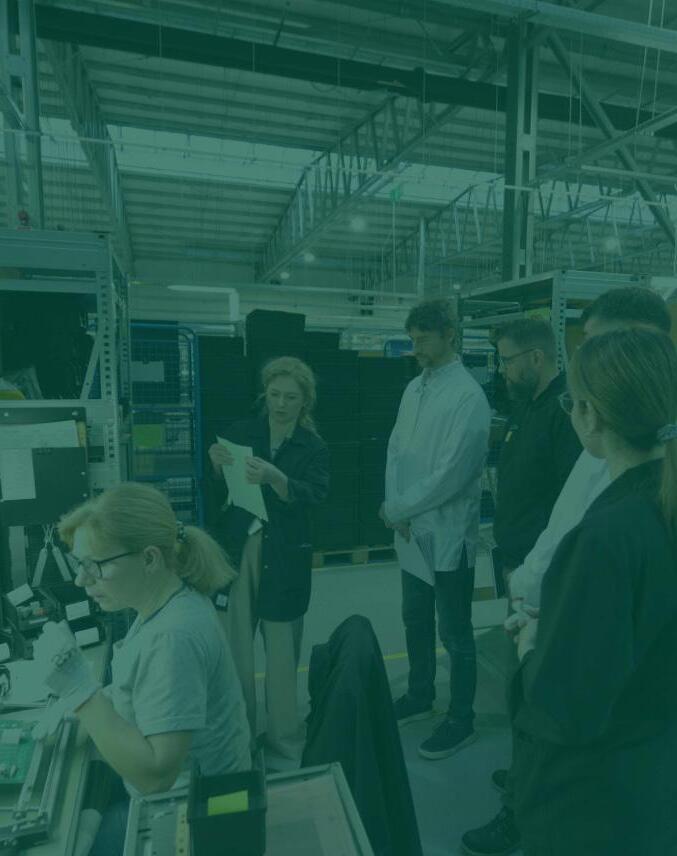
Our engineers stay close to the production line, observing how the design behaves in assembly and testing. This creates valuable insight into tolerances, material choices, and opportunities for efficiency or improvement.
Each production run generates new knowledge that is brought back to R&D. This creates a continuous loop where the product evolves and
Case: Exodraft x Eltwin
“By working together, we can continue to innovate and deliver the best products to our customers.”
For René Ibsen, Sourcing and Logistics Manager at Exodraft, the partnership with Eltwin works because both sides stay open, meet up regularly, and solve challenges together.
Exodraft focuses on the core products, while Eltwin delivers the control systems that support performance and reliability.
The result is a long-standing partnership built on trust and shared commitment.
where lessons from the field and the supply chain help shape the next production launch.
With production in both Aarhus and Poland, we can balance proximity, flexibility, and volume. This also gives you faster access to samples, testing, and engineering support.
This is how long-term partnerships grow and why production plays a central role in creating solutions that are reliable and manufacturable.



About Eltwin
For more than fifty years, Eltwin has developed power electronics together with customers who needed solutions shaped for their specific applications.
Our teams in R&D, engineering, and business development bring deep knowledge of HVAC control, integration and long-term performance. This allows us to solve complex electrical and application challenges in close partnership with our customers.
Eltwin Group brings together specialist competencies across Eltwin, Eltwin Hyper, and
Eltwin IC. Each company contributes with expertise within automation controls, giving our customers access to a broad and experienced team.
If you want to explore a potential co-creation project, we are eager to discuss your application and see how we can shape the right solution together.
Eltwin Group
Torsøvej 1B 8240 Risskov

Denmark Phone: +45 8621 6100
