Un Periódico Diferente / A Different Kind of Newspaper
Un Periódico Diferente / A Different Kind of Newspaper
Un Periódico Diferente / A Different Kind of Newspaper
Un Periódico Diferente / A Different Kind of Newspaper
Un Periódico Diferente / A Different Kind of Newspaper
Un Periódico Diferente / A Different Kind of Newspaper March 2026




The impact of COVID-19 has been especially devastating for communities of color. Now, more than ever, independent, local journalism needs your support.
2 Foto del Mes /Photo of the Month
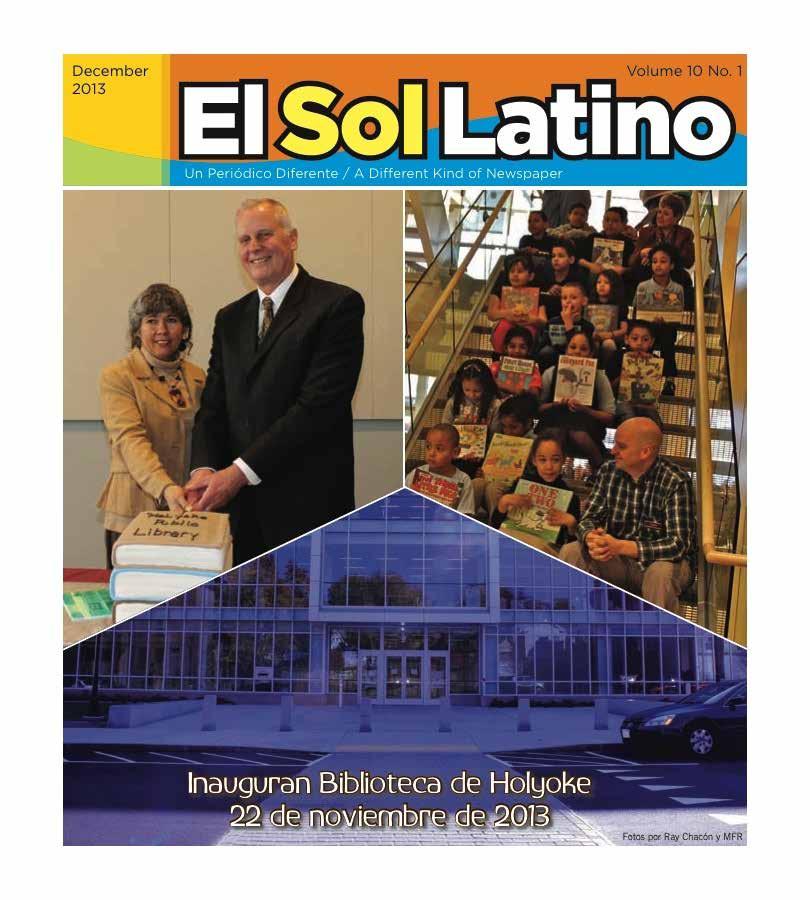
Remembering our December 2013 Edition
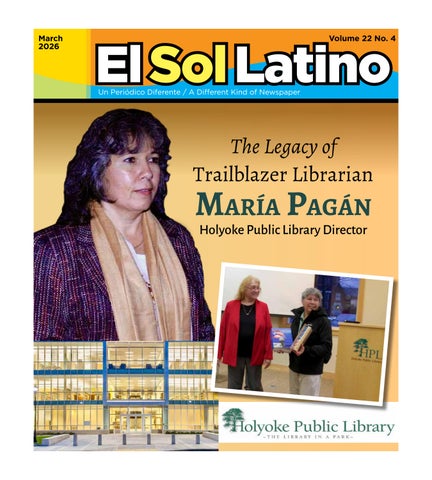
3 Portada / Front Page
The Legacy of Trailblazer Librarian María Pagán: Holyoke Public Library Director
4 Izan la Bandera de la República Dominicana en Springfield
5 Dominicans Among Highest Health Insured in U.S., According to new CUNY DSI Study
6 Belief in Students Defines Our Way Forward
7 15th Year of the Carlos Vega Fund for Social Justice mini grants.
8 Opinión / Opinion
Longing to Matter and Mattering
10 Literatura / Literature Calzado par mi
13 Sugarcane Bad Bunny Memorias—Writing Myself Back to My Childhood in Guayama, Puerto Rico
14 Libros / Books
Interrogating the Future of Puerto Rican Studies
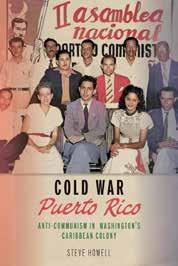
Cold War Puerto Rico
15 DE PUERTO RICO A LA CASA BLANCA
16 Educación / Education
RUM Recibe Subvención de $1 Millón para Impulsar la Radioastronomía en Puerto Rico
17 Deportes / Sports
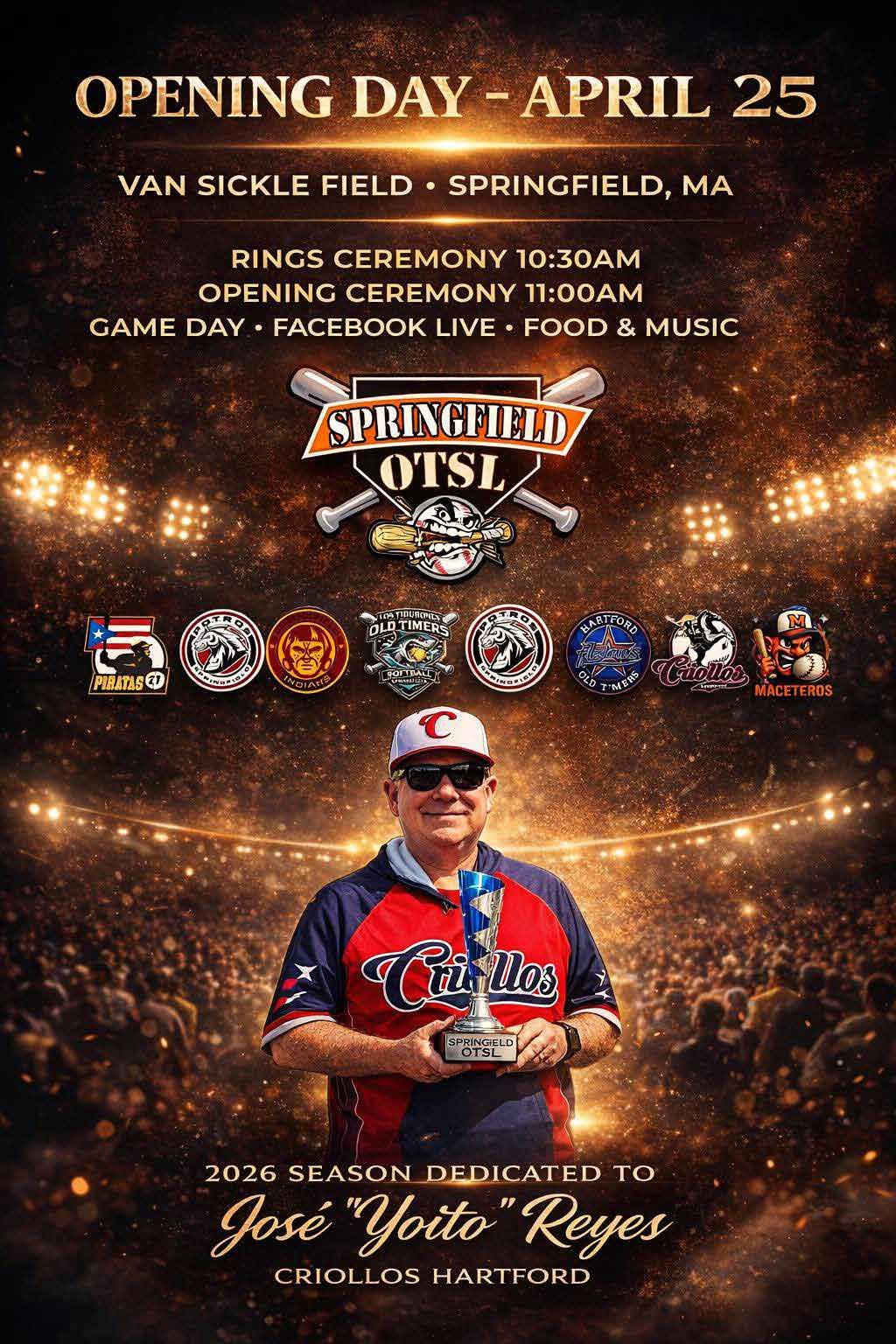
Springfield OTSL Opening Day
Editor Manuel Frau Ramos manuelfrau@gmail.com 413-320-3826
Assistant Editor Ingrid Estrany-Frau
Art Director Tennessee Media Design
Business Address El Sol Latino P.O Box 572 Amherst, MA 01004-0572
Editorial Policy
El Sol Latino acepta colaboraciones tanto en español como en inglés. Nos comprometemos a examinarlas, pero no necesariamente a publicarlas. Nos reservamos el derecho de editar los textos y hacer correcciones por razones de espacio y/o estilo. Las colaboraciones pueden ser enviadas a nuestra dirección postal o a través de correo electrónico a: info@elsollatino.net.
El Sol Latino welcomes submissions in either English or Spanish. We consider and review all submissions but reserve the right to not publish them. We reserve the right to edit texts and make corrections for reasons of space and/or style. Submissions may be sent to our postal address or via electronic mail to: info@elsollatino.net.
El Sol Latino is published monthly by Coquí Media Group. El Sol Latino es publicado mensualmente por Coquí Media Group, P.O Box 572, Amherst, MA 01004-0572.
by MANUEL FRAU-RAMOS*
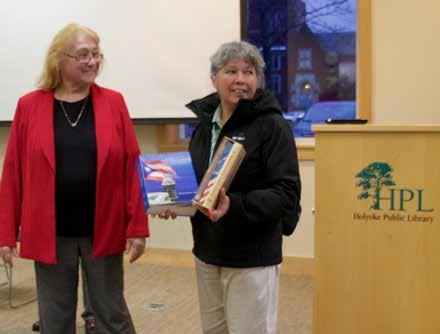
In 1996, María Pagán became the first Puerto Rican to serve as Director of the Holyoke Public Library. She worked at the library since 1985, providing over 40 years of service at the time of her retirement in December 2025.
María, natural of Cayey, Puerto Rico has a Master’s Degree in Library & Information Science from the University of Rhode Island, and a Bachelor’s Degree in Natural Science from the Universidad de Puerto Rico - Colegio Universitario de Cayey.
Following in the footsteps of Pura Belpré, a bilingual educator who was the first Afro-Puerto Rican librarian in New York City, María shattered institutional barriers in many ways. Becoming director of a city public library in the Commonwealth of Massachusetts was in itself a noteworthy achievement. There is a notable underrepresentation of Latino/Puerto Rican librarians, and directors of city public libraries across the Commonwealth.
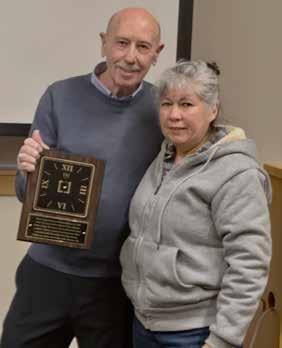
Throughout her remarkable career, María’s contributions to the Library, the City of Holyoke, and the Puerto Rican community, have been truly immeasurable. She made it her life’s work to make sure library services were available to the entire community, making the Library a vibrant, inclusive learning haven for all city residents. This takes particular significance given the fact that Holyoke is currently the city with the highest per capita Puerto Rican population of any city in the United States outside of Puerto Rico, with nearly 50% of its residents identifying as Puerto Rican.
As Belpré broke barriers that had led the Spanish-speaking community to believe the libraries were only for people using the English language, María worked and advocated tirelessly for
diversity, inclusion, and community engagement, ensuring that the library reflected and served the rich cultural and linguistic fabric of Holyoke, particularly its Puerto Rican community. Her commitment to accessibility, education, and public service for all city residents strengthened the library’s role as a cornerstone of the community. She broke down language and other barriers that maintained the city’s Spanish speaking population away from services and resources available at the Library. The institutional reform initiated and maintained by María made Holyoke’s Spanish-speaking community feel that they truly belonged.
In addition to helping transform the Library into a fully bilingual (Spanish and English) educational institution, María became an indispensable collaborator and key connection between the Holyoke Public Library (HPL) and the Puerto Rican Cultural Project (PRCP). Organized on November 26, 2017, this HPL adjunct group of professional Puerto Rican educators, artists and journalists came together to help the Library improve their outreach to the diverse demographic groups in the Holyoke area, especially the Puerto Rican community. The PRCP fulfills its mission by supporting the Holyoke Public Library’s outreach program efforts to promote the services and resources available to the Hispanic community. It has sponsored numerous events that highlight the importance of the rich culture and history of Puerto Ricans in Holyoke and the region.
She has been a steady and trusted presence during tough times and changes, and she also played a key role in helping the library grow and expand its building, ensuring it remained a friendly and lively place for everyone. The library’s renovation and expansion took a long time. For many years, library directors discussed various options for the old building. They considered three options: renovating the old building, replacing it with a new one, or building a new library in another part of the city. Maria always strongly believed in the Holyoke Public Library’s mission and opposed moving the library out of downtown, where the Puerto Rican community lived.
María, you have left an enduring legacy—one that will continue to guide and inspire staff, patrons, and future leaders for generations to come. Gracias María, for your years of hard work and dedicated service. We deeply appreciate your loving investment in our Library. The Holyoke Public Library community and the City of Holyoke will not be the same without you.
*Manuel Frau-Ramos is a member of the HPL Board of Directors.


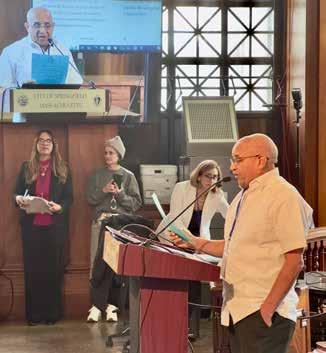
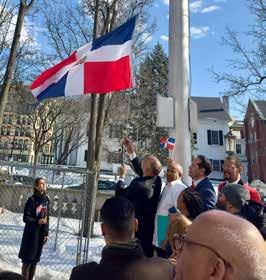
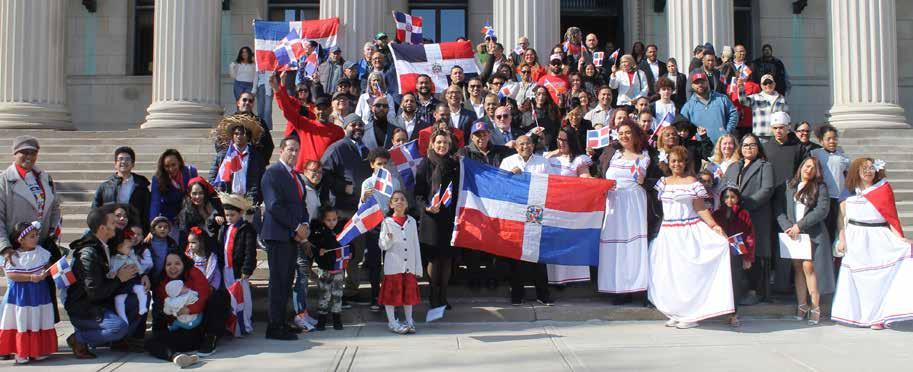
El Centro Cultural y Deportivo Dominicano (CCDD) de Springfield, MA celebró el izamiento de la bandera de la República Dominicana en la alcaldía de Springfield el pasado 28 de febrero de 2026. Esta ceremonia marca el 182 Aniversario de la Independencia de la República Dominicana.
La comunidad dominicana del área se reunió para honrar la bandera que sirve como símbolo de libertad, unidad y honrar la rica historia cultural de la República Dominicana y los logros alcanzados por los dominicanos en los Estados Unidos.
El programa del evento incluyó unas palabras de bienvenida de parte del presidente del centro (CCDD), Donald Saillant. También estuvo presente Bethania Rodríguez, vicecónsul de la República Dominicana en Boston.
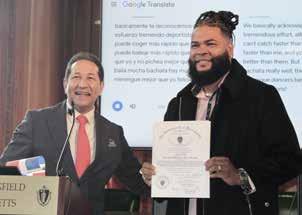
Los reconocimientos a sobresalientes miembros de la comunidad Dominicana de Springfield en diferentes categorías durante el año 2025 son los siguientes: Figura de Impacto Comunitario, Dr. José Teodoro de la Rosa Done; Comerciante del Año, José Luis Rodríguez y María Valerio, dueños de la empresa 413 Multi Service; Figura Deportiva, José Puello; Emprendedora, Anyelina Checo; Liderazgo Juvenil, Carlos Castillo; Aportes a la Cultura Dominicana, Domingo Burgos. Se reconoció como Miembro Honorífico y Aliado de la Diáspora Dominicana al Representante Estatal Carlos González. La maestra de ceremonia lo fue Nildia Vargas.
Entre los participantes en la ceremonia se encontraban el senador estatal Adam Gómez, el representante estatal Carlos González y los concejales de la ciudad de Springfield José Delgado, Víctor Dávila, María Pérez y Kateri Walsh. Miembros del Comité Escolar presentes: Ayanna Crawford, Gumersindo Gómez y Rosa Valentín.
PRESS RELEASE | February 10, 2026
In a landmark nationwide study, the City College of New Yorkbased CUNY Dominican Studies Institute reports that Dominicans have among the highest health insurance coverage rates among Hispanics/Latinos. This is largely due to their significant reliance on public health insurance and publicly supported plans.

The report constitutes the first detailed national study focused specifically on the health insurance status of Dominicans in the United States.
It was co-authored by:
• Ramona Hernández, Director of CUNY DSI and professor of sociology in CCNY’s Colin Powell for Civic and Global Leadership;
• Francisco L. Rivera-Batiz, adjunct research associate at CUNY DSI and Professor Emeritus at Columbia University; and
• Sidie S. Sisay, research associate at CUNY DSI.
“The study shows that access to health coverage varies markedly across groups, with Dominicans relying overwhelmingly on publicly funded insurance as their primary and often only source of coverage,” said Hernández. “Any budget cuts in this area would have severe and disproportionate consequences for this community, placing Dominicans among the Latino groups most at risk of losing access to essential health services.”
Drawing on the latest American Community Survey data, the study shows that Dominicans have sharply reduced their uninsured rate over the last 15 years, cutting it by more than half. The outcome today is a demographic with one of the lowest uninsured rates among Hispanics/Latinos nationwide.
• Dominicans have reduced their uninsured rate by more than half over the past 15 years—dropping from over 20% (20082013) to 9.9% in 2024.
• In 2024, only 9.9% of Dominicans were uninsured, compared to 17.2% of Hispanics/Latinos overall, giving Dominicans one of the lowest uninsured rates among Latino groups.
• 44.5% of Dominicans rely exclusively on public health insurance, compared to 27.1% of the overall U.S. population.
• Nearly 50% of insured Dominicans receive some form of public support (Medicaid, Medicare, CHIP, or Marketplace subsidies), compared to about 30% nationally.
• In New York City, home to nearly 691,000 Dominicans, the uninsured rate among Dominicans is just 5.4%, significantly lower than the national Dominican uninsured rate of 9.9%.
While the uninsured rate among Dominicans is slightly above that
of the overall U.S. population, it is substantially lower than that of Hispanics/Latinos overall.
The report also identifies significant state-level variation. Massachusetts shows some of the lowest uninsured rates for both its overall population and Dominicans, while Texas has among the highest uninsured rates, affecting Dominicans and the general population alike.
New York City, home to the largest Dominican population in the United States, mirrors New York State’s comparatively low uninsured rate. Dominicans in New York City have even lower uninsured rates than Dominicans nationwide, reflecting the importance of state-level policy environments.
A central finding of the study is the heavy adoption of public health insurance among Dominicans. A significantly larger share of insured Dominicans rely exclusively on public insurance plans compared to the overall U.S. population. Additionally, nearly half of insured Dominicans benefit from some form of public support, whether through direct participation in programs such as Medicaid, Medicare, and the Children’s Health Insurance Program (CHIP), or through public subsidies that help purchase private insurance plans.
This reliance on public support places the community in a vulnerable position amid ongoing policy debates and proposed reductions in Medicaid and other government programs. The scheduled expiration in 2025 of extended Marketplace subsidies for the purchase of private insurance is also likely to have a severe
continued on page 7
Un podcast sobre la historia del archipiélago de Puerto Rico y el Caribe
Conversaciones con expertos sobre el tema y personalidades de interés.
Con el historiador público Ramón A. González-Arango López.
¡Nuevo episodio todos los jueves!
¡Comparte y disfrútalo!

Por CARLIANY RUIZ RAMOS| Estudiante PEAF- Oficina de Comunicaciones UPR-RP • Fotos por DANIEL A. VIDOT LARRIUZ
PIEDRAS | 6 de febrero de 2026 - La doctora Sarah Rosario Vásquez, coordinadora de Planificación Estratégica y Avalúo de la Efectividad Institucional del Recinto de Río Piedras de la Universidad de Puerto Rico (RRP-UPR) y egresada de la Facultad de Educación, fue reconocida como finalista del Premio Nacional de la Juventud 2026 en el renglón Joven Dominicano Destacado en el Exterior.
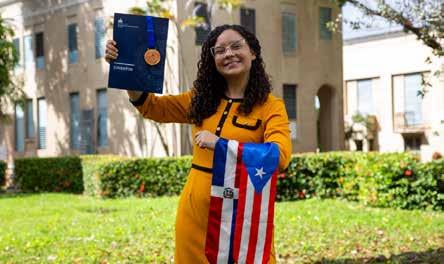
La doctora Sarah Rosario Vásquez fue reconocida como finalista del Premio Nacional de la Juventud 2026, que otorga el gobierno dominicano. El reconocimiento se otorgó durante la cuarta entrega del Premio Nacional de la Juventud, celebrada en la ciudad de Nueva York y organizada por el Ministerio de la Juventud de la República Dominicana, en colaboración con el Consulado General
Dominicano en Nueva York y el Instituto de los Dominicanos y Dominicanas en el Exterior (INDEX). En esta edición, más de 40 jóvenes dominicanos que laboran en Estados Unidos y Puerto Rico fueron distinguidos por sus sobresalientes aportes a la diáspora.
Como profesional dominicana que ejerce su labor en Puerto Rico, la doctora Rosario forma parte de una generación de jóvenes que contribuyen activamente al desarrollo académico e institucional fuera de su país de origen. Su trayectoria refleja el compromiso de la diáspora con el progreso social y educativo, a la vez que demuestra un profundo orgullo por sus raíces al demostrar gran entusiasmo de representar a ambos países, Puerto Rico y República Dominica por igual.
Este premio es considerado el máximo reconocimiento otorgado por el gobierno dominicano a la juventud, ya que busca resaltar el trabajo, el compromiso social y las contribuciones significativas de jóvenes que fortalecen la presencia dominicana en el exterior y ayuda a proyectar una imagen positiva del país más allá de sus fronteras. Asimismo, distingue a quienes evidencian un fuerte sentido de pertenencia y contribuyen al desarrollo social, académico y cultural desde espacios foráneos.
Durante la ceremonia se homenajearon a jóvenes destacados en áreas como docencia, comunicación, deporte de alto rendimiento, liderazgo religioso, comunitario y político, así como ciencia y estudios universitarios. El evento contó con la presencia de importantes autoridades y líderes, entre ellos, Eridenia Lora, coordinadora general del evento; Celinés Toribio, embajadora y viceministra del INDEX; el cónsul general de la República Dominicana en Nueva York, Jesús Vásquez; y el ministro de la Juventud, Carlos Valdéz, junto a representantes de instituciones públicas y privadas, y líderes comunitarios dominicanos residentes en la ciudad neoyorkina.
Este reconocimiento reafirma el impacto del talento joven dominicano en la diáspora y destaca la labor profesional de la doctora Rosario Vásquez en el ámbito académico e institucional. Su logro sirve de inspiración para otras generaciones de profesionales dominicanos que, desde el exterior, continúan aportando al fortalecimiento de sus comunidades.
HOLYOKE, MA | February 20, 2026 - The Carlos Vega Fund for Social Justice advisory committee we are excited to announce this years grant cycle.
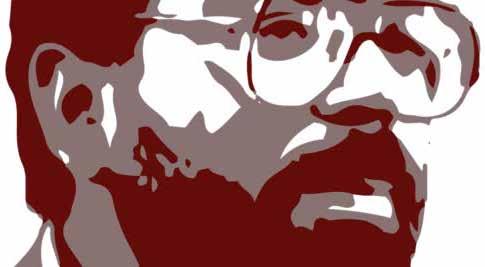
2026 marks the 15th year of The Carlos Vega Fund for Social Justice mini grants.
Local non-profits and individuals are invited to apply for funding between March 9th and the April 20th deadline, by completing the application form available at www.carlosvegafund.org. All applicants must have either 501(c)(3) status or be fiscally sponsored by a 501(c)(3) organization.
For more than 40 years, Carlos Vega fought for social justice in the Greater Holyoke area. In 2010, a small group of family and friends started the Fund to support the kind of social justice initiatives that were important to Carlos.
This year the Carlos Vega Fund for Social Justice will provide grants amounting up to $2,000 to be used for one-time programing or project that focuses on the fundamental primary causes of injustice, fosters change, and promotes self-help and empowerment.
The purpose of the grants is to support the efforts of those who are addressing issues of poverty and oppression, and involve people who are socially and economically marginalized in the Greater Holyoke area.
Previous mini grants have supported a variety of organizations including: Girls Inc. of the Valley, Granby Public Schools, The Gray House, Holyoke Public Schools, Holyoke Safe Neighborhood Initiative, Holyoke Senior Center, Home City Development, OneHolyoke CDC, The Performance Project, Lorraine’s Kitchen in Chicopee, Common Wealth Murals, Seeds of a Father, The Care Center, Eagle Eye Institute, Wellspring Cooperative and Wistariahurst Museum.
The Carlos Vega Fund for Social Justice is administered through the Community Foundation of Western Massachusetts and is overseen by an advisory committee. Since 2012, the Fund has awarded more than $90,000 to more than 50 organizations in the greater Holyoke area.
Grant Awardees and the 2026 Social Justice Award recipient will be publicly announced at an event on May 28th.
For further information and/or to obtain an application, please visit the Carlos Vega Fund for Social Justice website at http://www. carlosvegafund.org/
continued from page 5
impact on Dominicans and other populations who depend on public assistance to secure coverage.
The authors conclude that public health insurance functions as an essential lifejacket for accessing health care in the United States, particularly for Dominicans, and warn that threats to government support for health insurance place both Dominicans and the broader population at risk.
For more information, to obtain the complete report, or to request interviews, please contact: Martha Borish mborish@ccny.cuny.edu.
About the CUNY Dominican Studies Institute - Founded in 1992 at The City College of New York, the CUNY Dominican Studies Institute (CUNY DSI) is the nation’s first university-based research institute devoted to the study of people of Dominican descent in the United States and around the globe. CUNY DSI’s mission is to advance and share scholarship about Dominicans and the Dominican Republic through cutting-edge research, publications, and public programming.
The Institute is home to the Dominican Archives, the first and only
of its kind outside the Dominican Republic, and the Dominican Library, the largest repository of bibliographic resources in the U.S. on Dominican Studies. Together, these unique institutions preserve and provide access to primary and secondary source materials documenting the Dominican experience. CUNY DSI also curates art exhibitions, lectures, and conferences, creating vital spaces for dialogue on culture, history, and identity. Under the leadership of renowned sociologist and public intellectual Dr. Ramona Hernández, CUNY DSI continues to be a national leader in shaping understanding of Dominican and Latino communities. About The City College of New York - Since 1847, The City College of New York has provided a high-quality and affordable education to generations of New Yorkers in a wide variety of disciplines. CCNY embraces its position at the forefront of social change. It is ranked #1 by the Harvard-based Opportunity Insights out of 369 selective public colleges in the United States on the overall mobility index. This measure reflects both access and outcomes, representing the likelihood that a student at CCNY can move up two or more income quintiles.
JOSÉ P. ARCE and MIGUEL L. ARCE
Our importance to others, being loved by family, having meaningful employment, making consequential contributions to the community and possibly to society at large, do not mean we will move forward with optimism. Inevitably, we question our relative value in a vast and incomprehensible universe. How can we believe in our significance and in the value of our words and actions in an apparently indecipherable existence; or for that matter, the ultimate importance of the words and actions of others? Even our friends and loved ones appear to be always swimming upstream. In contradistinction, Rebecca Newberger Goldstein in The Mattering Instinct: How Our Deepest Longing Drives Us and Divides Us explains in great detail that a self-exploration for meaning tethers us in place within a perplexing universe. All face the turbulent headwinds of life; thus, transforming our anxiety about insignificance into a deeper inquiry into what it means to “matter”. Of this the authors of this editorial are certain, humans are vitally important to their family, religion, and community.
An additional concern, too many people worldwide courageously struggle to survive the brutal existence in poverty and, thus, struggle to understand their lives in comparison to those who live in the lap of comfort. Can it be that a privileged few deserve the riches and power that they greedily horde? Worse, the wealthy use their considerable power to hold back those who would climb out of a marginalized existence—they then have to overcome barricades created by the wealthy. Is it self-indulgent to seek meaning in our existence while others suffer? We—the authors of this editorial—trust it is not: such self-exploration matters to family, religion, and community.
Goldstein contends that unlike other animals, we possess a unique capacity for self-reflection that creates an “existential dimension”, which is a deep and fundamental need in our existence. We have an innate need to justify the monumental attention we give our lives. This links directly to the sense of unease about our place in the universe. The very fact that we can question our significance is, itself, a defining human trait. We do not merely experience hunger, pain, or pleasure; we step outside ourselves and ask what these experiences mean and what they add up to. This longing is not just about survival or status, but about a deep psychological yearning. It is an existential need to feel our life is warranted and deserving of attention. To be human is, in part, to wrestle with the question of whether our story has any worth. We believe that people matter and make a difference if given the opportunity.
This longing to matter, which springs from a self-awareness, has extraordinary creative potential. When people feel their lives have weight and purpose, they can endure hardship, pursue excellence, and contribute to something larger than themselves. It fuels acts of courage, sacrifice, and innovation. It motivates us to build communities, institutions, and cultures where individuals are seen, valued, and woven into a shared narrative. In this way, the need to matter can foster social integration, encouraging
cooperation, mutual recognition, and the affirmation of each person’s place in the broader human tapestry. What begins as an individual struggle with insignificance becomes a powerful social force shaping how we live together as family, with religious beliefs, and in a community. Yet, the same need that inspires greatness can just as easily fuel division, revealing a darker side of the very instinct that can also sustain us. When our sense of mattering feels threatened, we may cling to groups, identities, and ideologies that promise significance by elevating “us” over “them.” This is the danger of tribalism: the belief that our worth depends on the exclusion, diminishment, or even dehumanization of others. Instead of finding meaning through contribution, we seek it through domination or moral superiority. Thus, the human longing to matter stands at a crossroads—capable of binding us together in shared purpose or tearing us apart in battles over whose existence counts. Goldstein shows how a single psychological drive can lead either to solidarity or strife. It is a dilemma that currently challenges humanity globally.
Goldstein contends that the fundamental human motivation is the longing to matter, a drive that shapes our identity, culture, conflicts, and potential for progress. Others also yearn to count. She offers a unified framework for understanding the tensions of personal struggle, self-reflection and social consequences. Drawing on biology, psychology, and philosophy, she explores how this instinct manifests in various ways, from altruism to violence. She asserts that our hope for a more humane future depends on learning to satisfy our need to matter without denying the mattering of others.
In The Mattering Instinct, she maintains that humans are driven not just to survive, but to feel that our lives “matter”—that our existence is justified and significant. Family, religion, and community are three of the main arenas where we construct what she calls “mattering projects”. These are ongoing efforts to secure a sense that we count, that we’re seen, and that our lives have purpose. Each of these—family, religion and community—anchors a different drive to matter and can manifest in spiritual, social, and intimate forms.
Family represents the earliest and most intimate arena in which the mattering instinct is either nourished or damaged. A child’s first sense of mattering arises from the care, attention, and responsiveness of parents or caregivers. This begins as a survival-based dependence but gradually evolves into the adult quest for existential significance. Family also offers a sense of legacy: one belongs to a lineage that existed before one’s birth and will continue after one’s death, providing a built-in narrative of continuity. Caring for family members—raising children, supporting aging parents, or engaging in selfless caregiving— becomes one of the most powerful “mattering projects”. We transform raw biological survival into moral purpose that embeds the mattering instinct within everyday acts of devotion
continued on next page
continued from page 8 and responsibility. Family matters and we matter to our family. Psychology Today (August 5, 2025) agrees that family matters. Mattering means feeling valued and knowing we make a difference in others’ lives. Small daily family moments, such as listening, offering choices and shared rituals, build “mattering”. According to the article, “mattering” goes beyond belonging; it shapes identity, resilience, and lifelong well-being.
Religion is one of the strongest sources of “transcendent mattering” and offers a framework in which we are purposefully created by a higher power and given a role in an eternal, cosmic narrative. This answers the threat of life not having meaning. In this framework we matter because a “cosmic observer”—God or some higher intelligence—takes a benevolent attitude toward us. Our value is, thus, grounded beyond the fluctuations of worldly status or approval. Religion directly channels the mattering instinct into a story where our lives register on a cosmic scale. There are countless stories of heroines who have a higher calling and thus have faith that their actions matter. Personality and Social Psychological Bulletin (2021) supports that religiousness may foster a sense of significance, importance, or “mattering” in the grand scheme of the universe. Simply put, “Religion offers us a cure for the plague of loneliness … [It] also satisfies another, even deeper human need— perhaps the most fundamental human need of all. That is the need to know that somehow we matter, that our lives mean something, count as something more than just a momentary blip in the universe” (Kushner, 1987, p. 93 [pmc.ncbi.nlm.nih] as cited in the Bulletin).
Community, in contrast, means being seen, recognized, and valued by others. Community satisfies the drive to “count” in a social world. Shared projects and common causes amplify this sense. Belonging to a community is one of the single catalysts for change, both individually and collectively. Community makes people feel that their contributions have real impact beyond the self. But Goldstein also warns that when the need to matter is thwarted—when people feel invisible, disrespected, or expendable—this same drive can be redirected into polarizing and extremist “mattering projects”. In economicterms, one person’s profit is made at the expense of another’s loss. In politics, in an electoral contest, only one candidate wins. However, we persist in our insistence that community matters. The economy and political outcomes are valuable mattering projects—and not detrimental—as long as they fortify the people, that is the public.
It is essentially human to open our eyes and hearts to those who need a hand up. When the dark vacuum of the universe appears to overwhelm us, it might lead us to doubt our own worth and the significance of our neighbors. This might result in closing our ears to the lamentations of foreigners and strangers. We must remember the power
that love and kind words have in our own lives. When we look closely at those with whom we walk, we begin to encounter a deeper mystery. In the eyes of our children and our neighbors’ children, we can perceive universes of hope and possibility. Let’s not permit a world that frequently appears beyond redemption to keep us from stepping out of our protective shells in order to shelter the defenseless. Every person around us contains an unexplored universe, within which exist countless intellectual giants, valiant heroes, transcendent saints, and stalwart defenders of justice. We must not let the indifference and greed of a privileged few dull our sensitivity to the pain and hurt of others. Let’s not be convinced that we cannot make a difference in a seemingly heartless world. Each of us matters. By joining our hands and our energies, we can positively shape the world that we inhabit. Let’s acknowledge the brave souls who went before us, and honor them with our actions. Engaging others with hope is a powerful driver for civic action and societal transformation that is needed now more than ever.
Calzado par mi
por JOSÉ EDGARDO CRUZ FIGUEROA
Después de leer “Calzada”, de Vanessa Vilches, Arturo Martínez decidió escribir un cuento en el que iba a Plaza Las Américas. El viaje al centro comercial era una excusa para apropiarse y cambiar la historia de ella. Decidió que iba a ser una variación en la cual él era un personaje. Para que sus lectores no se confundieran por el doble protagonismo, firmó el cuento con otro nombre.
Era necesario que explicara lo que había hecho para que no lo acusaran de plagio. En algunas partes usaba las palabras de “Calzada” y como no las identificaba como tal era importante que el lector supiera que en la narrativa había una estratagema. Su idea era peculiar pero tenía precedentes. En otro cuento había resignificado una historia de Borges y lo había publicado sin consecuencias. De Flannery O’Connor había tomado palabras prestadas. Si lo podía hacer con Borges y con O’Connor, ¿por qué no con la Vilches? A fin de cuentas, aunque inusual, era una forma de reconocimiento.
Arturo odiaba ir a Plaza Las Américas. El sitio era una bestia. Cuando iba, al momento de meterse en el parking, se estacionaba en el primer espacio que encontrara en la parte que da al Macaroni Grill. De ahí caminaba la seca y la meca para llegar a Modernica, mirando con énfasis los comercios que tenía que recordar para regresar al estacionamiento. Sin esas coordenadas terminaba dando vueltas por el mall como un juey bizco, incómodo y desamparado. Como en Modernica no había dónde sentarse, se parqueó en el Starbucks cercano. Mientras esperaba notó que la gente se fijaba en él. Eran miradas inquisitivas, preguntando qué se trae éste entre manos. Me cago en la madre, pensó, y se cambió de mesa cosa de que su lado derecho estuviera contra la pared.
Cuando trabajaba en Las Tres Monjitas, Plaza Las Américas era nomás una idea. Luego se hizo realidad y antes de convertirse en el monstruo elefantiásico de ahora, era un mall acogedor al que llevó a su abuela a cenar después de que su madre rechazó su invitación. No se le olvidaba lo fascinada que estuvo con el lugar, con la comida—una langosta deliciosa—, con el bullicio de la clientela, con el decorado de efectos marinos. Era la primera vez en su larga vida que había puesto pies en un restaurante, la primera vez después de setenta y pico de años que se sentaba a la mesa para que una le sirviera lo que otro había cocinado.
En esa época era fácil llegar. Ahora, sin Google Maps no sabía cómo hacerlo a pesar de que Google Maps lo tiraba siempre por la misma ruta. Se rehusaba a recordar el camino que a la tercera vez ya debía ser familiar. ¿Rebeldía? ¿Una forma pendeja de protesta por tener que ir a ese puñetero centro comercial? Si podía depender del celular para llegar, ¿para qué invertir esfuerzo gris en retener las direcciones? Usaba la memoria para cosas más importantes, aunque a veces lamentaba no poder expulsar del recuerdo experiencias y personas que le agobiaban: la muerte de su hermano, el abandono de Sofía Morelli, el fracaso del
movimiento pro independencia en Puerto Rico y del socialismo a nivel mundial.
Después que pasó frente al Macaroni Grill viró a la izquierda frente a los cines y al mirar hacia la derecha no pudo contener su sorpresa. Parpadeó varias veces para asegurarse de que lo que veía era cierto, no un holograma, no una visión, no un fantasma, no una alucinación. Vio a Vanessa Vilches entrar con una amiga a una tienda de zapatos. La reconoció por la foto en uno de sus libros, a pesar de que en la foto era más joven, tenía el pelo más largo y rizado, no sabía si natural o gracias a un permanente, un pelo de un negro salvaje, ensordecedor. Su cuello era alargado como el de una garza. Al reirse, la piel de las mejillas se plegaba formando unas zanjitas agradables. Los ojos se le achinaban un poco denotando una tranquila felicidad. Su hilera de dientes estaba alineada de forma impecable.
Había leído algunas de sus cosas pues su amiga Ileana se empeñaba en prestarle las que tenía cada vez que la visitaba. No le quedaba claro por qué lo hacía. Tenían la costumbre de intercambiar lecturas así que quizás singularizar a Vilches no era nada especial. A lo mejor Ileana pensaba que entre ellos habían desarrollos narrativos similares. Sin duda ambos se inspiraban en experiencias cotidianas y de familia, en ambos estaban muy claras la presencia de recuerdos y añoranzas parecidas, la reflexión que sigue a la pérdida de seres que se aman. De otra parte, en Geografías de lo perdido Arturo creía notar, quizás sí y quizás no, la influencia de Cristina Rivera Garza y él decía que no estaba influenciado por nadie, que era un saltimbanqui, poseedor de un estilo inquieto que lo calificaba de vampiro literario. Por un segundo Arturo se preguntó si Ileana también le recomendaba a otros sus libros y rechazó la pregunta por considerarla infantil, reflejo de una inseguridad que no le hacía falta.
Siguiendo un impulso irracional e irresistible Arturo entró a la tienda en pos de la Vilches. Arriesgaba llegar tarde a su cita en Modernica pero no le importó. Pensó que era comportamiento de acoso y rápido descartó la idea por inconveniente. No era acoso, era tentación, un deseo muy fuerte de regodearse en la presencia de alguien a quien admiraba. Le siguió los pasos mirándola de reojo mientras pretendía examinar unas botas aquí, unos zapatos de vestir allá. Arturo no posó como empleado; simplemente fue discreto. No me digan que no es posible que un hombre pasara desapercibido en una tienda de zapatos de mujer pues esto es un cuento y aquí todo puede suceder.
—Ay Vanessa, creo que esos no son, escuchó a la amiga decirle cuando examinaba unas botitas.
—Sí es verdad, me quedan fatal, contestó, pero los tuyos no te sientan tan bien que digamos. Voy a mirar otros.
Vanessa pensaba que buscaba lo que no le hacía falta, que cada par de zapatos que tocaba era un proyecto de felicidad, una ilusión en forma de calzado. Tenía muchos pues sucumbía ante el protocolo que obliga a las mujeres a combinar la ropa con los zapatos, haciendo necesario tener tantos como tantas faldas o continued on next page
trajes. No era Imelda Marcos ni nada por el estilo, pero en su closet reposaban al menos cuarenta pares. En la tienda, cada vez que admiraba uno, su mente de cuentista se agitaba. Arturo seguía mirándola y se reía en silencio, satisfecho de disfrutar del privilegio de saber lo que le pasaba por la mente. Ese era otro de sus talentos literarios. Entonces ella viró la cara en su dirección y por poco lo detecta. A tono con la lógica de este relato, no se cuestionó que un hombre estuviera cerca de ella auscultando zapatos de taco alto, un poco como el que acaricia un objeto que le recuerda a su amante.
—Amparo, dijo Vanessa de repente, ¿dónde están mis zapatos?
—¿Ah?, dijo la amiga. No veía los zapatos con los que había entrado a la tienda. Miró a lo largo del pasillo donde estaban y tampoco. Caminó por todos los corredores del local y nada. Para contrarrestar su pánico pensó en la época en que andaba feliz descalza por el patio de su casa, sintiendo el frescor de la grama en la mañana. La imagen fue fugaz. Hizo una mueca al verse en la posición inverosímil, posible solo en la ficción, de salir de la tienda exhibiendo los dedos horribles que le avergonzaban, atravesar el estacionamiento pisando piedrecitas que la puyaban, sufriendo las miradas atónitas de los que pensarían que era una hippie o que estaba loca.
—Eso te pasa por la mala costumbre de dejar los zapatos dondequiera, le reprochó la amiga. Olvídate, alguien te

The impact of COVID-19 has been especially devastating for communities of color. Now, more than ever, independent, local journalism needs your support
El Sol Latino is your local Latinx-owned, independent news source that brings to the front lines diverse Latino voices, perspectives, news and stories. SUPPORT EL SOL LATINO
los robó así que cómprate unas tenis o unas chancletas para salir del paso.
Vanessa imaginó que con la ayuda de un empleado encontraba los zapatos, pero transformados. Se habían convertido en zapatillas de color azul plomizo, con tacos de cristal escarchado. Ella misma había cambiado. Ahora era la reina de Inglaterra pero sin sombreros fastuosos. Le daba órdenes al príncipe Charles, humillándolo. Lo asediaba con recriminaciones y jugaba el papel de racista con afán de actriz de teatro: “Diana no te merecía pero tampoco debiste serle infiel. Su affair con el Dodi ese fue vergonzoso, un vulgar productor de películas y egipcio para rematar”. Creyó ser una mezcla de Letizia Ortiz y Scarlett Johansson. Después fue modelo. Se hizo vedette, bailando a la vez que tiraba los zapatos al aire, como La Lupe. La amiga la sacó de su ensueño.
—Llévate este par. No lo pienses mucho que ya es tarde. Hemos mojoneado bastante. Si quieres yo los pago. Será mi regalo de navidad. Luego se los puedes dar a tu criada si te place.
Mirando a su amiga pagar las zapatillas, Vanessa se las puso. Amparo le agarró la mano con fuerza, halándola en dirección de la puerta hacia el enjambre del centro comercial. Con lo que me gusta estar descalza, Vanessa pensó. Recordó que antes de entrar a la tienda se había preguntado qué hacer con los zapatos que ya no le gustaban. No sabía si dárselos a su criada sería un gesto generoso o condescendiente. A ella las zapatillas de seguro no le harían falta; apreciaría (quizás) algo más cómodo, más práctico. Pero si no le servían podía pasárselas a una hermana o prima o sobrina en la República Dominicana. En los pasillos de La Plaza las masas seguían su curso. Algunos entraban a las tiendas. Era evidente que la mayoría estaba allí para novelerear, para mirar los escaparates y aprovechar el aire acondicionado. A las tiendas de lujo, que no eran tantas como en el Mall de San Juan, no entraba nadie. Muchos sospechaban que eran frentes para el lavado de dinero producto del narcotráfico. Algunas madres arrastraban a sus nenes, negándoles sus peticiones chillonas de dulces y juguetes. En el food court las mesas estaban repletas, los comensales indiferentes a los futuros ataques al corazón, la diabetes y el colesterol alto. La obesidad era rampante. Algunos viejos jugaban dominó, mirando furtivamente hacia los lados, ansiosos ante la posibilidad de que un guardia de seguridad se apareciera para desalojarlos. Arturo odiaba esa escena tanto o más que ir a la Plaza, pero su sentir era como el de la señora que visitaba una exhibición de fotos de Robert Mapplethorpe y decía que cada vez que regresaba le parecían más y más repugnantes.
Salió de Modernica con su ordenador reparado y no dio más de veinte pasos y empezó a sentirse molesto por la forma en que la gente lo seguía observando. Se fue dando tumbos de vidriera en vidriera, siguiendo la pista de fachadas que lo conducirían al parking. Miraba extasiado los culos grandes de las mujeres que le
Calzado par mi continued from page 11
pasaban por el lado, virando todo el cuerpo para echarles un buen vistazo. Cada ojeada conllevaba una rotación completa, como hacen los patinadores sobre hielo, pero con los pies plantados en la tierra, como el que baila una guaracha. Consideró parar en Casa Norberto para ver si se habían vendido sus libros y cotejar qué tenían de la Vilches. Descartó la idea pues si alteraba su trayecto se iba a perder sin remedio. Caminaba cauteloso como con miedo de encontrarse con alguien de antaño: un deudor, una mujer despechada, un marido a quien su esposa le puso cuernos con él, un ex-militante socialista todavía fanático de Albizu y creyente en la Revolución Cubana. Esos fantasmas no se materializaron. Arturo siguió su paso rozando las vitrinas que le indicaban hacia dónde encaminarse. Quería salir de allí con celeridad antes de que alguien lo detuviera para cuestionarlo. Sobre él caían los ojos curiosos e insistentes de la gente que se fijaba en los zapatos de mujer que llevaba en la mano.
JOSÉ EDGARDO CRUZ FIGUEROA (cruzjose5319@gmail.com) es natural de San Juan y criado en El Fanguito y Barrio Obrero en Santurce, Puerto Rico. Es profesor emérito de ciencias políticas en la Universidad del Estado de Nueva York en Albany

Publish your bilingual ad in El SolLatino! Call us today at (413) 320-3826.

ubicaciones y servicios continuos de CSA
Servicios que ofrecemos
Apoyo centrado en la familia

Nuevas ubicaciones de CSA

Brockton



Orientación por personal capacitado y supervisores con licencia

Ayuda a afrontar los desafíos con compasión y cuidado

Servicios continuos en: Springfield/Holyoke Worcester

Pittsfield


Boston


New Bedford


Fitchburg

Código QR Lawrence



by ALVILDA SOPHIA ANAYA-ALEGRÍA
Now I know the moment that broke me, but I felt the warmth and sweat on my body when I arrived instead. Now I was in a different landing.
Finally I thought.
I smelled the sweet ocean but didn’t know what the sweet and salty smells were.
But I wanted to eat them anyway.
An hour later, I could see the sugarcane roaring as its sweet black molasses were taking form.
And my life was also taking form!
El cañaveral y sus surcos ardiendo in flames was mesmerizing. The ocean air a mile away would fuel the fire intensity. The air charged the sky’s colors with reds, blues, oranges and royal purple’s. The heat of the fire and heat of the Caribbean tropics danced in unison and never bothered me. Rather,they were a sweet embrace. They meant home and a secure job, a safe place to live, where I could breathe and listen to the ocean waves. Although I didn’t understand what any of this atmospheric pressure meant, We—Us—them, always, prayed to the gods that it wouldn’t rain from the school classrooms so that the farmers would not be sent home for a lack of a workload. Harvasting sugarcane lasted only six months of a year, the rest of the year was called tiempo—muerto. If you will my translation is dead— zone. We would begin counting the money deducting—against the food, electricity and water bills that we had to pay. We had to pick one or another so we shared with our neighbors, to pay for one thing or another, every two weeks. We would share a long extension to use each other’s electricity, carry water from each other’s home, and share the crops of limones , panas, gandules, lechoza, even some sugar molasses that we could bring home to eat or cook.
Watching tv was a luxury to one or two people in our village so we went without needing electricity for that. We got the first television in Puerto Rico in 1954.
The ashes were part of our currency, food resources, they meant food solace, money to pay la costurera to make our community children’s blue with white stripes uniforms; it was much easier to spend.
At home, we didn’t notice that we didn’t have as much as other people because my mother Ana Victoria Anaya—Soto made miracles happen. Her struggles during 1968 to 1984 in Guayama, Puerto Rico raising us was paramount. Getting la tela, textile, made our livelihood more joyful. The new textile brought with it happiness and excitement. In that era it meant that we would be
taught by la costurera how to cut and sew patterns. We were taught what matched our pale and brown skin tones, curly short hair, dark brown eyes, and pear shaped bodies. And we lived, the warmth, and sweat on our bodies, as we listened to the ocean roar in still contemplation as we grew up on our land.
ALVILDA SOPHIA ANAYAALEGRÍA, born and raised Guayama, Puerto Rico. She has Master of Science degree in Economics, Writer, Urban-Fine Art Artist.
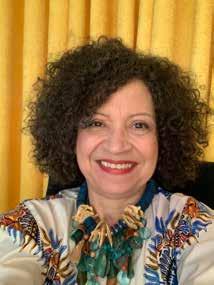
Anaya-Alegría has taught Economics, Finance, and Statistics at Springfield College, as well as Theater Playwriting, Theatre Performance, and Studio Art: Painting at Cambridge College in Springfield, MA.
Her poetry has appeared in Puerto Rico’s Antología Poética Musas en Arresto Cuartelario, the Anthology by María Arroyo (with essays), El Sol Latino Newspaper (edited by Dr. Frau) in Amherst, and the Republican Newspaper in Springfield, MA.
Grant recipient, 2023-2026: 1. “Alvilda Sophia Anaya Alegría y su Junte de Escritoras Latinas”; 2. “Groundwork SeeingT he Words of Deafness: Clever. Gorgeous Writing. Performance”; 3. Six scholarships from The Fine Arts Work Center, Provincetown, MA, 2024-2026; 4. Three grants from Springfield Cultural Council and one Massachusetts Cultural Council Teaching Artist Fellowship. Member, Straw Dogs Writers Guild, Northampton, MA.
For more information, you can contact the author via email at alvilda173guayama@gmail.com.

Editors: AURORA SANTIAGO ORTIZ and JORELL A. MELÉNDEZ-BADILLO
DURHAM, NC |
DUKE
UNIVERSITY PRESS | April 21, 2026 | 360 pages
Fundamental tenets of colonial historiography are challenged by showing that US capital investment into this colony did not lead to the disappearance of the small farmer. Contrary to well-established narratives, quantitative data show that the increasing integration of rural producers within the US market led to differential outcomes, depending on pre-existing land tenure structures, capital requirements to initiate production, and demographics. These new data suggest that the colonial economy was not polarized into landless Puerto Rican rural workers on one side and corporate US capitalists on the other. The persistence of Puerto Rican small farmers in some regions and the expansion of local property ownership and production disprove this socioeconomic model. Other aspects of extant Puerto Rican historiography are confronted in order to make room for thorough analyses and new conclusions on the economy of colonial Puerto Rico during the early twentieth century.
Contributors. José Atiles, Bárbara Abadía Rexach, Yarimar Bonilla, daniela crespo-miró, Marie Cruz Soto, Yomaira Figueroa-Vásquez, Marcela Guerrero, Gustavo García López, Mónica Jiménez, Lawrence LaFountain Stokes, Marisol LeBrón, Pedro Lebrón Ortiz, Beatriz Llenín Figueroa, Jorell Meléndez-Badillo, Sarah Molinari, Marisel Moreno, Daniel Nevárez Araújo, Aurora Santiago Ortiz, Karrieann Soto Vega, Daniel Vázquez Sanabria, Roberto Vélez-Vélez, Joaquín Villanueva, Jacqueline Villarrubia-Mendoza
ABOUT THE EDITORS
AURORA SANTIAGO ORTIZ is Assistant Professor of Gender & Women Studies and Chicane/Latine Studies at the University of
by STEVE HOWELL • AMHERST, MA | UNIVERSITY OF MASSACHUSETTS PRESS | May 1, 2026 | 280 pages
DESCRIPTION
In the 1940s, with the construction of a naval base and a bombing range, Puerto Rico became a major geo-political military outpost for the United States. For a power claiming global leadership in a decolonizing world, however, the archipelago’s colonial condition underscored the dissonance between American democratic rhetoric and its imperial reality. The solution was a deal that, in 1952, gave Puerto Rico a degree of self-government without changing its legal status as an “unincorporated” US territory. The US then publicly claimed Puerto Rico was now more autonomous while using repressive tactics such as FBI surveillance, arrests, destabilization, and other methods developed in Washington to silence activists and political parties pushing for full independence. In Cold War Puerto Rico, Steve Howell examines how J. Edgar Hoover and the FBI targeted Puerto Rican communists as part of an offensive against pro-independence parties and activists
Wisconsin-Madison. JORELL A.
MELÉNDEZ-BADILLO is Associate Professor of Latin American and Caribbean History at the University of Wisconsin-Madison and is the author, most recently, of Puerto Rico: A National History.
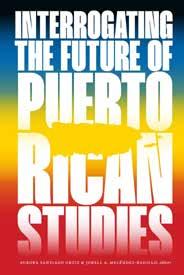
Interrogating the Future of Puerto Rican Studies is a work of both substantial scholarship and moral urgency. A multi-faceted examination of Puerto Ricans’ past and present, it is a call to challenge the silencing, a call that surfaces many questions. Students, journalists and activist networks will use it in thinking through the truths—and lies—about racial capitalism and imperial domination, as well as meanings of resistance and belonging.”
- Arcadio Díaz-Quiñones, Emeritus Professor, Princeton University
“Interrogating the Future of Puerto Rican Studies marks a pivotal moment in the field, emerging amid deepening colonial crises in Puerto Rico and rising cultural pride. It centers Puerto Rico to examine U.S. empire, colonialism, and racial capitalism. This collection rightfully pushes Blackness and Queerness to the center of the field, and demands that Puerto Rican Studies be central to American and ethnic studies. Both timely and transformative, this collection is essential reading for understanding the evolving scope and stakes of the Puerto Rican Studies.” - Vanessa Díaz, author of Manufacturing Celebrity: Latino Paparazzi and Women Reporters in Hollywood
generally. Howell’s US-born father, who fell afoul of Hoover for producing radical cartoons while working in San Juan in the 1940s, remained on the FBI’s watch list long after exiling himself in Britain. His close friends, the Puerto Rican author César Andreu Iglesias and Jane Speed de Andreu, were meanwhile arrested and imprisoned three times during the 1950s. Drawing on a wealth of new sources, including interviews and FBI files, Howell tells their stories along with those of other activists who battled indictment in 1954 under the Smith Act, challenged the jurisdiction of the House Un-American Activities Committee in San Juan in 1959, and revived the Puerto Rican independence movement in the 1960s, despite the FBI deploying the covert tactics of COINTELPRO against them. Puerto Rico is virtually invisible in histories of what is generally called McCarthyism, yet anti-communist repression was in many
continued on next page
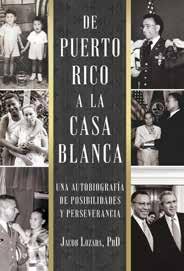
por| JACOB LOZADA • PLANTATION, FL | BORICUA LEGACY BOOKS |
SINOPSIS
Criado en un caserío en San Lorenzo, Puerto Rico, el Dr. Jacob Lozada alcanzó el sueño americano a través de la disciplina, la fe y la determinación inquebrantable.
Nombrado segundo teniente por el ROTC en 1966, Lozada sirvió durante veintisiete años en el Cuerpo Médico del Ejército de los Estados Unidos y se retiró con el rango de coronel. A lo largo de su carrera, obtuvo un bachillerato en Ciencias, una maestría en Administración de Servicios de la Salud y un doctorado en Educación.
Habiendo ocupado puestos de mando militar en Texas, California, Corea del Sur y Maryland ―incluyendo roles importantes en el Comando de Servicios de la Salud del Ejército y el Comando de Investigación y Desarrollo Médico―y habiendo trabajado en el sector privado como consultor de gestión en EDS, la vida de Lozada es una historia de servicio, adaptación y excelencia. En 2001, el Presidente George W. Bush lo nombró subsecretario de Recursos Humanos y Administración del Departamento de Asuntos de los Veteranos. En 2003, fue nombrado asesor especial para la estrategia de la diversidad en la Oficina de Gestión de Personal del Gobierno federal, en donde desarrolló iniciativas con organizaciones nacionales.
Escrito con franqueza y convicción, De Puerto Rico a la Casa Blanca es un libro sobre la perseverancia inquebrantable, la identidad
ways more intense there than in the mainland US. Now, with Puerto Rico’s future currently hanging in the balance, Howell’s compelling history demonstrates why we need to understand the long enforcement of its colonial status.
AUTHOR
STEVE HOWELL is an Anglo-American journalist, author, and former communications consultant. He has appeared as a political commentator on the BBC, ITV, Sky News, and various podcasts, and has contributed opinion pieces to publications such as The Nation, Big Issue, and The Guardian. His books include Game Changer: Eight Weeks That Transformed British Politics, which was a Guardian best book of the year.
EDITORIAL REVIEWS
“Steve Howell’s book stresses the geopolitical dimensions of Puerto Rico’s colonial history and focuses on the overlooked subject of how the preservation of colonial domination shaped the Cold War persecution of communists in Puerto Rico. It offers an extraordinary combination of detailed scholarly work in deciphering FBI files and other contemporaneous documents with insights into
Octubre 6, 2025 | 246 páginas
cultural y el servicio público. Es una obra dirigida a cualquiera que busca un propósito o un entendimiento más profundo del deber hacia la comunidad y la nación.
SOBRE el AUTOR
DR. JACOB LOZADA fue nombrado uno de los 100 hispanos más influyentes por la revista Hispanic Business Magazine y uno de los responsables de toma de decisiones más influyentes en Washington por la revista National Journal. Además, fue subsecretario del Departamento de Asuntos de los Veteranos, director del Consejo para la Excelencia en el Gobierno y profesor adjunto en la Universidad George Washington.
Ha recibido numerosos premios, entre los cuales se encuentran la Medalla de Honor de Ellis Island y la Mención Presidencial de la Liga de Ciudadanos Latinoamericanos Unidos. Le han otorgado honores como el Premio a los Alumnos Distinguidos del Programa del Ejército de los Estados Unidos y la Universidad de Baylor, y de la Universidad de Puerto Rico en Humacao. Entre sus condecoraciones militares figuran la Legión al Mérito, seis Medallas al Mérito en el Servicio, la Medalla al Mérito en el Servicio de Defensa y la Insignia de Experto en Medicina de Campo. Hombre de fe, Lozada valora a Dios, a su familia, a su nación y a sus amigos. Atribuye su éxito a sus padres, quienes le inculcaron los valores del esfuerzo, la perseverancia y la responsabilidad. Dedicado a la tutoría de los jóvenes, Jacob ha recaudado fondos para becas y ha apoyado programas educativos de verano para jóvenes en Puerto Rico. A Lozada le gusta viajar, hacer senderismo y animar a su nieto, Luca, durante sus partidos de baloncesto. Vive en Austin, Texas, con su esposa, Clary, y mantiene vínculos estrechos con su familia y amigos.
the role of friendship in political life as the men and women portrayed suffered the traumas of persecution, incarceration or exile.”―Arcadio Díaz-Quiñones, former director of the Program in Latin American Studies, Princeton University
“Most histories of McCarthyism ignore Puerto Rico. Most histories of the Puerto Rico independence movement focus on the Nationalist current. Steve Howell’s book makes a major contribution to filling these gaps. His investigation unearths new material and brings to memory significant events, such as the House Committee on Un-American Activities hearings in Puerto Rico in 1959, a spectacular confrontation that until now has not received the attention it merits in the literature on McCarthyism or in Puerto Rican historiography.”―Rafael Bernabe, author of Obstinate Star: a History of the Puerto Rico Independence Movement
“Howell narrates the history of solidarity between a network of Puerto Rican and U.S. communists who faced repression from the developing US imperialist state during the early years of the Cold War. An engaging and important historical contribution.”―Sandy Plácido, Associate Professor, Rutgers-Newark
MAYAGÜEZ, PR | UNIVERSIDAD DE PUERTO RICO - RUM | 25 de febrero de 2026 - El Recinto Universitario de Mayagüez (RUM) de la Universidad de Puerto Rico (UPR) recibió una subvención de $1 millón por parte de la Fundación Heising-Simons, que permitirá el desarrollo de un programa de investigación y educación en radioastronomía con alcance en toda la isla.
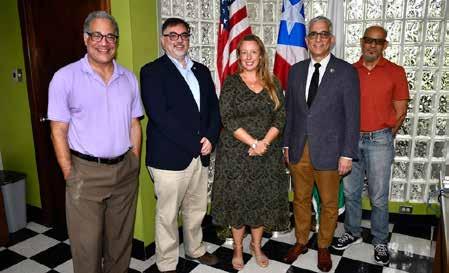
Desde la izquierda: los doctores Erick A. Roura Dávila, director asociado del Departamento de Física; Matías J. Cafaro, decano asociado en Investigación de Artes y Ciencias; Allison J. Smith, investigadora principal; Agustín Rullán Toro, rector; y Rafael A. Rodríguez Solís, catedrático de Ingeniería Eléctrica y director de CARSE. (Foto por Carlos Díaz/Prensa RUM)
La iniciativa, liderada por la doctora Allison J. Smith, catedrática auxiliar del Departamento de Física, busca capacitar a estudiantes de nivel subgraduado y graduado en proyectos de vanguardia, utilizando datos recopilados con la antena de 12 metros del antiguo Observatorio de Arecibo.
“Estamos muy agradecidos por el apoyo de la Fundación HeisingSimons, que está entusiasmada por ofrecer esta oportunidad a estudiantes, específicamente en Puerto Rico. Es la primera vez que el RUM recibe una subvención de esta fundación, y eso tiene un significado especial. La mayoría del financiamiento está destinado a apoyar la investigación estudiantil y fomentar la colaboración entre nuestros recintos”, afirmó Smith.
“Esta dádiva es muy importante por dos razones principales: la posibilidad de trabajar con los datos del Observatorio y brindar capacitación de primer nivel a la próxima generación de científicos e ingenieros aquí en Puerto Rico”, puntualizó.
En la propuesta colaboran también investigadores de los Recintos de Río Piedras, Utuado y Arecibo de la UPR, así como de la Universidad de Florida Central (UCF) y la Universidad de Yale.
“Esta colaboración abrirá un nuevo capítulo para la investigación y la educación en astronomía en Puerto Rico”, dijo el profesor Abel Méndez, director del Laboratorio de Habitabilidad Planetaria de la UPR en Arecibo.
“El nuevo financiamiento de la Fundación Heising-Simons permitirá que esta iniciativa a nivel isla ofrezca capacitación práctica y completa en investigación en ciencias y tecnología de radio a estudiantes de Puerto Rico. Este esfuerzo colaborativo entre múltiples instituciones no solo fomentará conexiones entre científicos locales y sus colegas en Estados Unidos, sino que también elevará la
posición de Puerto Rico en el campo de las ciencias astronómicas”, sostuvo el doctor Héctor Arce, profesor de astronomía en la Universidad de Yale, quien también participa en la propuesta.
La subvención, que tendrá una duración mínima de tres años, financiará becas para estudiantes durante los semestres regulares y el verano, además de cubrir viajes a congresos internacionales, talleres anuales y visitas intercampus. Los participantes aprenderán sobre radiotelescopios, conceptos astrofísicos, programación computacional y técnicas de observación y procesamiento de señales.
“Nuestro grupo guiará a los alumnos en proyectos de radioastronomía y mitigación de interferencias de radio utilizando datos de este instrumento de vanguardia. Esta es una de las muchas iniciativas recientes de nuestras instituciones para mejorar el acceso a oportunidades de investigación de alta calidad en astrofísica”, agregó Smith.
Por su parte, la doctora Gabriele Betancourt Martínez, de la Fundación Heising-Simons, expresó su entusiasmo por la iniciativa.
“Este programa permitirá a la próxima generación de astrónomos, físicos y radiocientíficos de Puerto Rico recibir capacitación práctica y de vanguardia en proyectos científicos que no se puede lograr fácilmente en otros lugares. Reconocemos que tener acceso a oportunidades de investigación al inicio de la carrera, así como experimentar mentoría significativa y conexiones con colegas, son clave para la permanencia en los campos científicos, y este programa ofrece ambas cosas a los estudiantes de la UPR”, indicó.
Mientras, el doctor Agustín Rullán Toro, rector del RUM, destacó el impacto de esta novel dádiva.
“Esta es una subvención que abre nuevas brechas para nuestra institución. Es un gran logro del Departamento de Física y, particularmente, de la doctora Smith, quien es de reciente contratación. En un tiempo muy corto ya ha conseguido una subvención de un millón de dólares que incluye colaboración con otros recintos de la Universidad de Puerto Rico y universidades en Estados Unidos. Esto nos encamina hacia la clasificación R1 de la Fundación Carnegie”, afirmó. El Rector también resaltó el interés estudiantil por la astronomía. aquí en el RUM tienen interés en el espacio. Esta iniciativa nos da la oportunidad de entrar fuertemente en la exploración del universo, en este caso con el espectro no visible, utilizando la antena de Arecibo. El sueño es volver a recomisionarla en algún momento. Mientras tanto, este proyecto nos permite avanzar en la investigación con los datos ya recopilados”, añadió.
Asimismo, la doctora Zayira Jordán Conde, presidenta de la UPR, subrayó la trascendencia de este logro para la educación superior en la isla.
“Este proyecto refleja la capacidad de nuestra Universidad para liderar iniciativas científicas de gran impacto. Nos enorgullece que el Recinto Universitario de Mayagüez, bajo la dirección de la doctora Allison J. Smith, encabece esta propuesta que integra el talento de otros recintos de la UPR y de instituciones de prestigio en Estados Unidos. Esta colaboración fortalece nuestra misión de ofrecer experiencias académicas únicas y posiciona a Puerto Rico como un referente en la investigación astronómica. Felicitamos al equipo del RUM y a todos los socios por este importante paso hacia la innovación y la excelencia “, expresó Jordán Conde.