August 2026
Un Periódico Diferente / A Different Kind of Newspaper
Dedicadas al pueblo de Naranjito
e / A Different Kind of Ne
Un Periódico Diferente / A Differ

August 2026
Un Periódico Diferente / A Different Kind of Newspaper
e / A Different Kind of Ne
Un Periódico Diferente / A Differ

The impact of COVID-19 has been especially devastating for communities of color. Now, more than ever, independent, local journalism needs your support.
El Sol Latino is your local Latinx-owned, independent news source that brings to the front lines diverse Latino voices, perspectives, news and stories. SUPPORT EL SOL LATINO
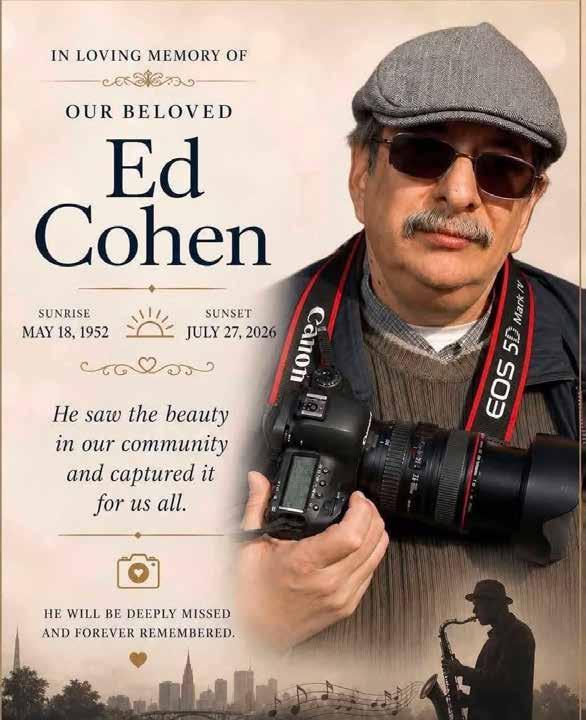
2 Foto del Mes /Photo of the Month In Loving Memory of Ed Cohen
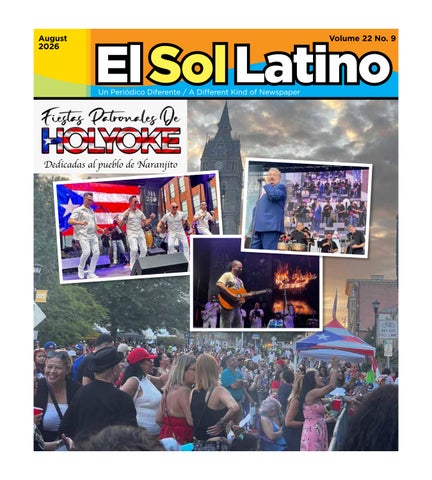
3 Portada / Front Page Fiestas Patronales de Holyoke 2026
5 New Gastón Institute Report on Latinos in Massachusetts: Puerto Ricans
7 Clara Rodríguez’s Imprint on Latino Representation and Culture
8 OneHolyoke CDC Announces Promotion of Nayroby Rosa as Executive Director
9 Opinión / Opinion
Impediments for Voting Rights in 2026
12 Literatura / Literature
Una esencia innegable
17 Libros / Books
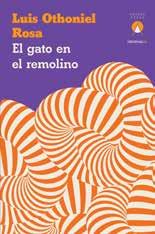
El gato en el remolino
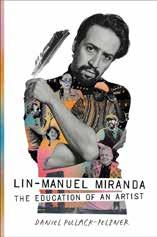
Lin-Manuel Miranda
The Education of an Artist
18 Salud / Health
Mejora tu Bienestar a Través de Actos de Bondad y Gratitud
19 Deportes / Sports
Holyoke Triumphs Over Salinas Once Again
20 International Volleyball Hall of Fame Celebrates Puerto Rico’s Vibrant Volleyball Heritage with New Exhibit
Editor Manuel Frau Ramos manuelfrau@gmail.com 413-320-3826
Assistant Editor Ingrid Estrany-Frau
Art Director Tennessee Media Design
Business Address El Sol Latino P.O Box 572 Amherst, MA 01004-0572
Editorial Policy
El Sol Latino acepta colaboraciones tanto en español como en inglés. Nos comprometemos a examinarlas, pero no necesariamente a publicarlas. Nos reservamos el derecho de editar los textos y hacer correcciones por razones de espacio y/o estilo. Las colaboraciones pueden ser enviadas a nuestra dirección postal o a través de correo electrónico a: info@elsollatino.net.
El Sol Latino welcomes submissions in either English or Spanish. We consider and review all submissions but reserve the right to not publish them. We reserve the right to edit texts and make corrections for reasons of space and/or style. Submissions may be sent to our postal address or via electronic mail to: info@elsollatino.net.
El Sol Latino is published monthly by Coquí Media Group. El Sol Latino es publicado mensualmente por Coquí Media Group, P.O Box 572, Amherst, MA 01004-0572.
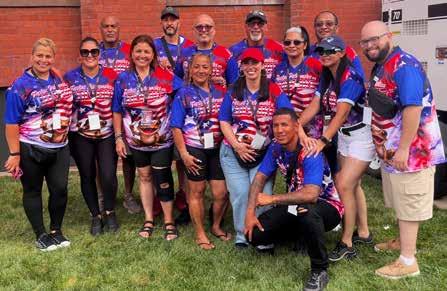
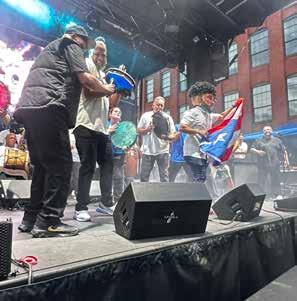
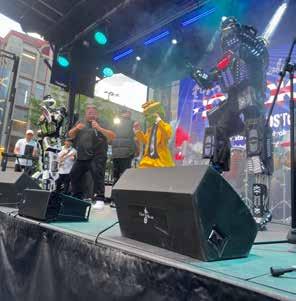
Dedicadas al pueblO de NaranjitO JuliO 30 -AgostO 2
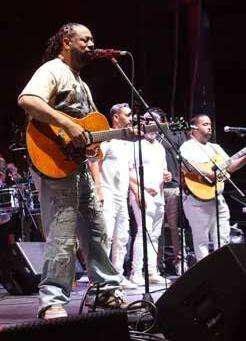
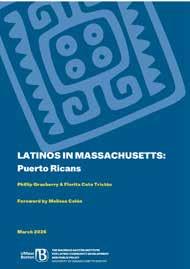
Editor’s Note - We have summarized the Gastón Institute’s latest report on Puerto Ricans living in Massachusetts. The report shows economic and social facts that go against the common belief that the Puerto Rican community is doing very well financially and socially because they are U.S. citizens by birth. The introduction was written by one of the report authors, Melissa Colón, PhD.
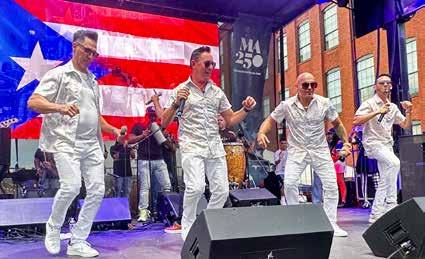
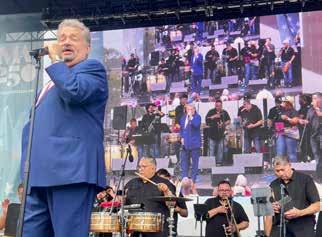
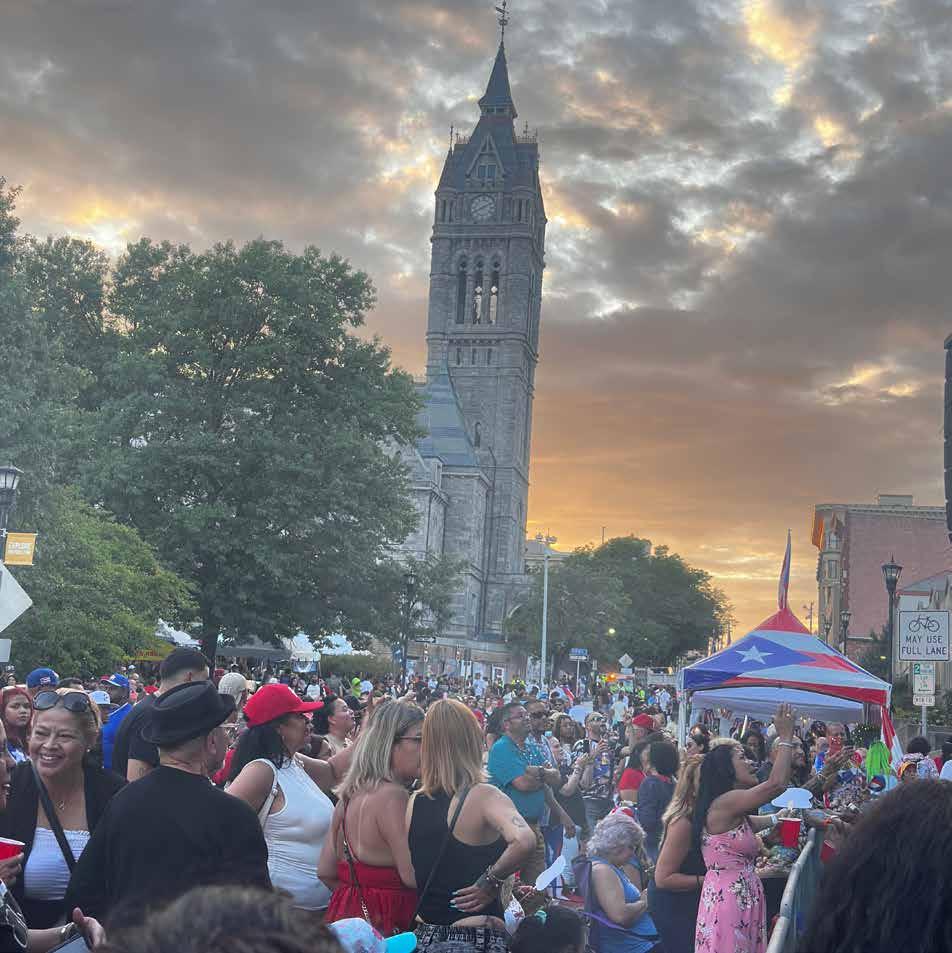
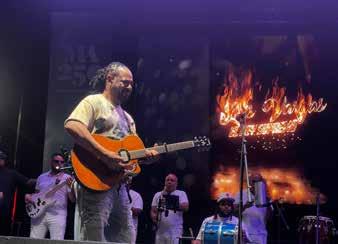
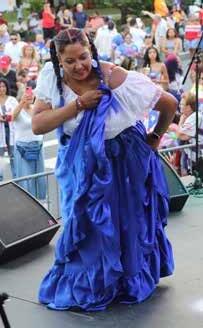
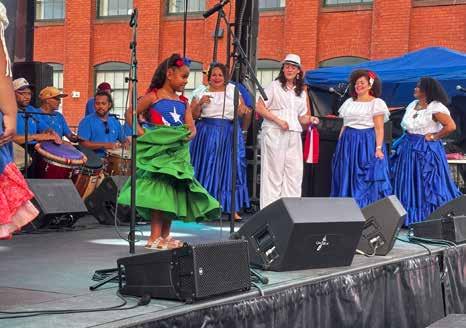
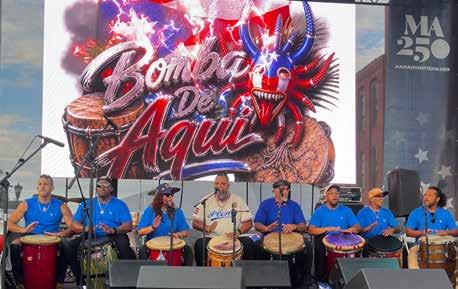
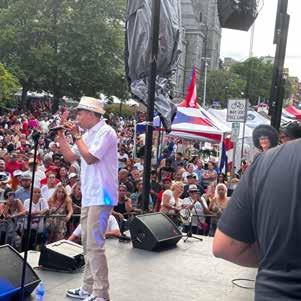
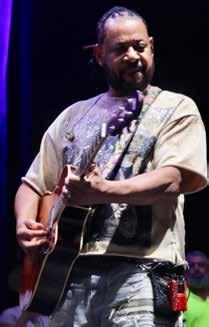
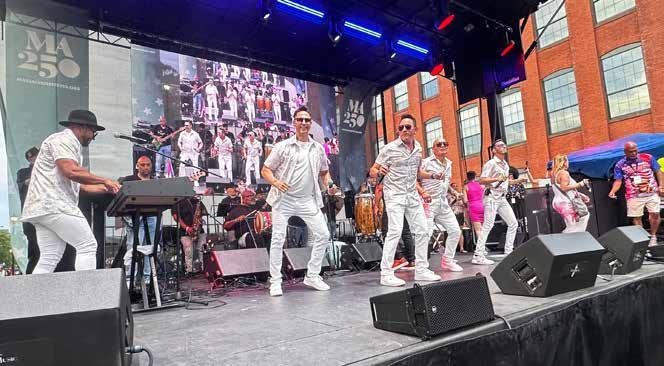
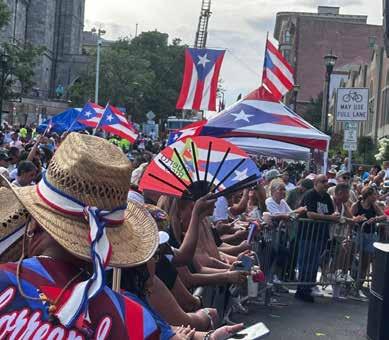
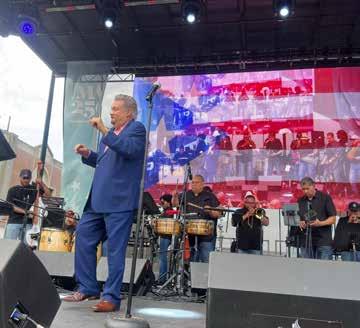
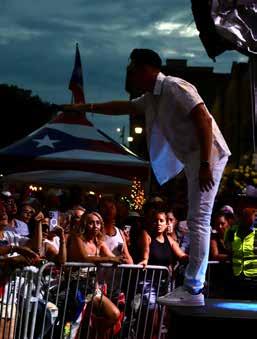
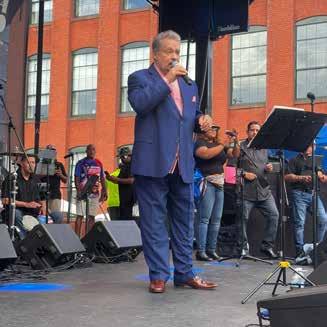
From July 31 to August 1, 2025, thousands gathered in Holyoke for the annual Fiestas Patronales, celebrating Puerto Rican culture with music, food, dance, and art. Massachusetts, especially Holyoke, hosts one of the largest Puerto Rican populations in the U.S. and the nation’s first Puerto Rican Cultural District (Nueva Esperanza Inc., 2025).
These vibrant celebrations are not unique to Holyoke; across Massachusetts, similar events highlight the century-long legacy and impact of Puerto Rican communities. Examining the demographics behind these gatherings further reveals the depth of their experiences and ongoing contributions.
Using data from the 2023 American Community Survey, the Mauricio Gastón Institute’s research team shares new, easyto-understand, and thoughtful insights about the Puerto Rican community in their report, Latinos in Massachusetts: Puerto Ricans. This overview compares Puerto Ricans, other Latinos, and non-Latinos across several categories: population size and growth, age, educational attainment, employment, income, housing stability, and health insurance access. The report finds that Puerto Rican communities make significant contributions to the Massachusetts economy, culture, and civic life, forming an integral part of the Commonwealth. However, it also highlights three key challenges: lower educational attainment, lower average wages, and a significantly lower rate of homeownership among Puerto Ricans compared to both other Latinos and non-Latinos. Understanding these disparities requires examining the history, context, and systems shaping Puerto Rican experiences.
Given this context, we encourage readers to approach the report with open minds, examining the data carefully and guided by curiosity rather than negative assumptions.
Building on these findings, Torres-Ardila and colleagues (2025) remind us that quantitative data are essential for understanding and questioning complex social patterns. Disparities emerge from enduring structures—colonialism, migration, discrimination, labor stratification, and unequal opportunities—not just individual characteristics (Colón & Frau-Ramos, 2025). Recognizing this broader context points to ways to improve equity policies,
programs, and practices. Ultimately, the report demonstrates that Massachusetts’ future depends on the full inclusion and flourishing of Puerto Rican communities. Policymakers, advocates, educators, community leaders, and others all have roles in honoring Puerto Rican visions and advancing real, structural change for a stronger Commonwealth.
POPULATION - Puerto Ricans are the biggest Latino group in the state. In 2023, Massachusetts had 942,225 Latinos. About one-third (336,972) were Puerto Rican. The state has the fifthlargest Puerto Rican population in the U.S., after Florida, New York, Pennsylvania, and New Jersey. Springfield has the biggest Puerto Rican community. Worcester, Boston, Holyoke, and Lawrence come next. These five cities have almost half (45.7%) of the state’s Puerto Ricans. The Puerto Rican population in Massachusetts grew by 10.3% from 2014 to 2023. During the same time, the overall Latino population grew by 25.9%. In comparison, the state’s total population grew by only 3.8%.
NATIVITY - A little over one-third (34.7%) of Puerto Ricans in Massachusetts in 2023 were born in Puerto Rico. This does not affect their citizenship. The Jones Act of 1917 granted Puerto Ricans citizenship at birth, regardless of where they were born. Almost all Puerto Ricans in Massachusetts are U.S. citizens. They are not counted as foreign-born. For comparison, 49.7% of other Latinos in 2023 were born outside the U.S., and 71.0% were citizens. Among non-Latinos, 15.9% were born outside the U.S., and 93.2% were citizens.
Only 5.1% of Puerto Rican children in Massachusetts had at least one foreign-born parent in 2023. This contrasts with 69.7% for other Latino children and 30.2% for non-Latino children. These percentages specifically compare the presence of foreign-born parents within each group.
AGE DISTRIBUTION AND MARITAL STATUS - In 2023, the median age of Puerto Ricans in Massachusetts was 30 years, the same as that of other Latinos. Non-Latinos had a median age of 42. Figure 2 shows that 42.8% of Puerto Ricans were 24 or younger. For other Latinos, 41.2% were 24 or younger. Only 27.0% of Non-Latinos were in this age group.
The main working-age groups, 25-44 and 45-64, accounted for a smaller share of Puerto Ricans (48.7%) than of other Latinos (52.2%) or non-Latinos (52.8%). Non-Latinos accounted for a much larger share of people aged 65 and older. Puerto Ricans and Other Latinos had similar, smaller portions.
EDUCATION - Latinos in Massachusetts generally have low education levels, with Puerto Ricans among the lowest. In 2023, 27.0% of Puerto Ricans aged 25 and older had not finished high school, compared to 25.5% for other Latinos and 6.4% for non-Latinos. Puerto Ricans also had fewer people with at least a Bachelor’s degree (16.8%) than Other Latinos (29.9%) and NonLatinos (50.8%).
continued on next page
The 18 to 24-year-old age group is especially important for college education. In 2023, only 28.3% of Puerto Ricans in this group without a bachelor’s degree attended college, compared to 36.5% for other Latinos and 55.6% for Non-Latinos.
Difficulty with English is often cited as a reason for lower educational attainment. However, in 2023, more than threequarters (77.4%) of Puerto Ricans age 5 and older spoke only English or spoke it very well. This placed Puerto Ricans closer to Non-Latinos (93.4%) than to Other Latinos (63.0%).
LABOR FORCE PARTICIPATION - In 2023, 58.8% of Puerto Ricans were employed or actively seeking employment. This was lower than among other Latinos (75.9%) and non-Latinos (66.7%). Among Puerto Ricans, men participated slightly more (61.9%) than women (56.1%). Younger Puerto Ricans aged 25-44 had a higher rate at 76.2%. However, this was still lower than that of other Latinos (88.0%) and non-Latinos (88.6%) in that age group.
UNEMPLOYMENT- In 2023, the ACS estimated Massachusetts unemployment at 4.0% overall but 6.9% for Puerto Ricans. This high unemployment rate during a growing economy suggests that many Puerto Rican workers may lose hope due to limited job options. As a result, they may stop looking
OCCUPATIONS - About half (49.8%) of employed Puerto Ricans and an even larger share of other Latinos (52.2%) worked in service and manual labor jobs in 2023, compared to less than 28.9% of non-Latinos. On the other hand, 16% of Puerto Ricans, 19.6% of other Latinos, and 41.8% of non-Latinos had managerial and professional jobs. These differences in job distribution are partly due to lower average education levels among Puerto Ricans and other Latinos, which limit access to higher-skilled occupations compared to non-Latinos.
WAGES—Based on earlier job market data, it is not surprising that Puerto Ricans earn relatively low wages. In 2023, full-time Puerto Rican workers had a median personal income of $50,976, about $2,000 lower than that of other Latinos and $3,000 lower than that of non-Latinos. The wage gap between Latinos and nonLatinos, specifically the difference in median income, remained unchanged when controlling for birthplace, age, and education. This shows that wage differences are steady across many factors, highlighting a lasting income gap between Puerto Ricans and other groups. These lower wages, along with other economic challenges, have wider effects.
Because of these ongoing income differences and other economic problems like higher unemployment and lower wages, about onethird of Puerto Ricans (30.4%) lived below the poverty line. This rate was much higher than for other Latinos (14.2%) and nonLatinos (8.9%), indicating the broader effects of ongoing wage inequality.
STANDARD OF LIVING - The final measures of Puerto Ricans’ status in Massachusetts are projected to identify how they are
rewarded for their economic, social, and political participation. We look at homeownership, household income, housing costs, and medical insurance.
Homeownership - Puerto Ricans in 2023 had a very low rate of homeownership: 25.4%, meaning that 74.6% of Puerto Rican households were renter-occupied. Their homeownership rate was much lower than the rate for Other Latinos (36/5%) and less than a third of the rate for Non-Latinos (65.9%).
HOUSEHOLD INCOME - Household income includes the earnings of all people aged 15 or older living in the same home, no matter their relationship. In 2023, the median household income for Puerto Ricans was $41,800. This was much lower than that of other Latino households ($76,158) and of non-Latino households ($103,991). This measure shows more inequality than the personal income of full-time workers. Fewer Puerto Ricans earn income for their households because fewer are working and more are unemployed, leading to a much lower median household income.
MEDICAL INSURANCE - Puerto Ricans have better access to health insurance than other Latinos. In 2023, fewer than 3.9% of Puerto Ricans lacked medical insurance, which is closer to the nonLatino rate (2.3%) than to the other Latino rate (5.8%). Among children, only 1.4% of Puerto Ricans were without insurance, compared to 2.0% of other Latinos and 1.4% of non-Latinos.
PHILLIP GRANBERRY (phillip.granberry@umb.edu). Works at the Gastón Institute and Economics Department at UMass Boston, and is a Senior Researcher studying population trends for the City of Boston’s Planning Department. FLORITA COTO TRISTÁN (f.cototristan001@umb.edu) is a Research Fellow at the Gastón Institute and a statistician with experience in both government and private companies. MELISSA COLÓN (melissa.colon@umb. edu) is an Assistant Professor at the College of Education and Human Development at the University of Massachusetts Boston in the School of Education. She is also a Research Associate at the Gastón Institute.
This research report is brought to you for free and open access (scholarworks.umb.edu/gaston_pubs/343) by the Gastón Institute for Latino Community Development and Public Policy Publications at ScholarWorks at UMass Boston.

This article originally appeared on the INSIDE FORDHAM (Fordham University) on June 12, 20256.
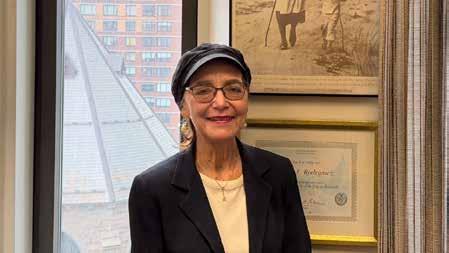
CLARA RODRÍGUEZ in her office in Lowenstein.
Photos
by
Nicole Davis
From the U.S. Census Bureau to Sesame Street, Clara Rodríguez, PhD, has often been consulted for her expertise on the Latino American experience and Latino representation in the media.
Now, after teaching two dozen courses, authoring 11 books, and receiving multiple awards, fellowships, and appointments for her work, she is retiring this summer as professor emerita of sociology after 50 years at Fordham.
Rodríguez discussed her influential research on Latino identity and its far-reaching impacts on Dora the Explorer, the census, and more.
Rodríguez’s parents came to Morningside Heights from Puerto Rico. Though her father had a fourth-grade education, he learned to speak six languages and was considered “the family communicator,” said Rodríguez. In his memory, she created the Angelo Rodríguez Research Award, a scholarship fund for undergraduates doing work in Latin American and Latino Studies.
At a meeting of the American Sociological Association (ASA) this summer, she will present her recent paper on the positive, professional outcomes of its recipients.
“I’m very proud of starting that,” she said.
Rodríguez is the first U.S.-born Latina to earn a PhD in sociology. She is also the first Hispanic dean at Fordham and the first woman dean at the Rose Hill campus, serving from 1976 to 1981 as dean of the School of General Studies (now the School of Professional and Continuing Studies).

by NICOLE DAVIS
But she doesn’t dwell on her trailblazing achievements. “I just go in and do the job,” she said.
As Rodríguez explains in her book, Changing Race: Latinos, the U.S. Census, and the History of Ethnicity, many Latinos see race as fluid and primarily cultural—not fixed or binary as it’s commonly understood in the U.S. As a result, the U.S. census has historically struggled to categorize the Latino population.
For instance, in 1980 the Census Bureau added a question on all census forms that asked people to note their ethnicity separately from their race (“Is this person of Spanish/Hispanic descent?”).
Rodríguez found that in that census, when asked to choose their race, nearly 40 percent of Latinos chose “other race” because many did not see themselves in the survey’s limited racial categories.
Rodríguez presented these findings to the Census Bureau in 1995, helping to prompt the organization to refine the way it collects demographic data. Afterward, she said, one of the statisticians told her, “‘I really appreciated your presentation because we had all assumed it was a misunderstanding on their part.’”
“My work contributed to them reviewing and ultimately changing the way they ask questions about race and ethnicity,” she said.
In 2030, the Census Bureau plans to combine its two separate questions about race and ethnicity into an easier, more inclusive one to answer: “What is your race and/or ethnicity?” It will also allow respondents to choose multiple racial and/or ethnic categories.
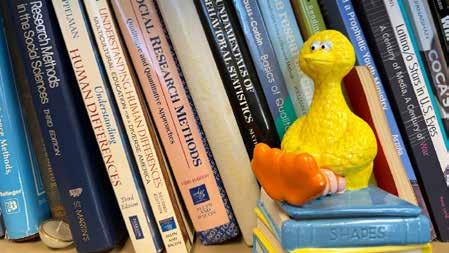
A Sesame Street illustration on Rodríguez’s desk and a Big Bird figurine on her shelf are mementos of her time consulting for Sesame Street as an expert on Latino culture and language. This continued on next page

Clara Rodríguez’s Imprint
led to her work on another popular children’s show, Dora the Explorer. (IMDb credits her as a cultural and Spanish language consultant on 49 episodes, from 2000 to 2008.)
Should Dora be from Latin America? That was one of the questions the creators asked Rodríguez to weigh in on. “My own feeling was no, she should be a Latina here in the United States,” she said. Ultimately the creators made her pan-Latina, so children of all Hispanic backgrounds can identify with her.
Watching West Side Story as a teen, Rodríguez remembers thinking, “‘Those are not like the Puerto Ricans I know.’” Their portrayal was very negative, she said. The white gang was the Jets, she noted, and the Puerto Rican gang was the Sharks—“that tells you how it was communicated.”
Latino representation in film later became one of her areas of expertise. Working on her book Heroes, Lovers, and Others, about the history of Latino and Latina actors in American films, she discovered that “in the Silent Era, Latins were in.” American actors recast themselves as “Latin Lovers.” “I found that portrayals of Latinos in the media varied a lot with the political and economic times of the United States,” she said.
and Culture continued from page 7
Her later book, America, as Seen on TV, looked at global audiences’ perception of America through its television shows. “The most surprising thing was hearing [the research subjects] say, ‘I came to New York, and it wasn’t like Friends.’ You have all this diversity here that wasn’t being viewed by these people.”
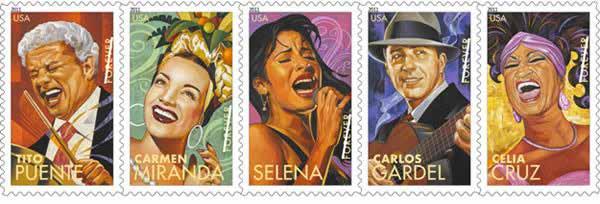
Alongside scholars such as Henry Louis Gates Jr., Rodríguez served on the Citizens’ Stamp Advisory Committee from 2008 to 2011. Based on her recommendations, José Ferrer, Tito Puente, Carmen Miranda, Selena, Celia Cruz, Carlos Gardel, and Julia de Burgos all received their own commemorative stamps. “It felt good to see these folks being acknowledged in this way,” she said.
Nicole Davis is Assistant Director of Internal Communications at Fordham. She can be reached at ndavis35@fordham.edu.
HOLYOKE, MA | OneHolyoke CDC | July 2, 2026 — OneHolyoke Community Development Corporation (OneHolyoke CDC) recently hosted its second annual “Building & Sustaining Livable Communities” event that featured a keynote address by Lieutenant Governor Kim Driscoll. The announcement of Nayrobny Rosa becoming Executive Director of OneHolyoke was made by outgoing Executive Director Michael Moriarty, who has been at the helm of the organization since 2013. Moriarty, who is a lawyer, will continue to serve OneHolyoke as legal counsel going forward.
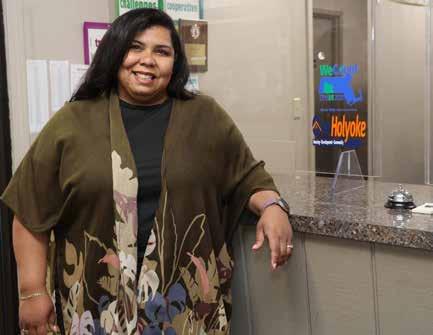
Rosa, who has been at OneHolyoke since 2018, previously served as Director of Community Engagement and Resident Services, and most recently as Chief Operating Officer for the organization. A longtime community leader and advocate, Rosa brings more than 15 years of experience in nonprofit leadership, community engagement, and organizational development. Her promotion reflects OneHolyoke CDC’s commitment to developing strong internal leadership and investing in leaders who are deeply rooted in the community.
The symposium, held on June 29 at Wyckoff Country Club, centered around Innovations in Public Safety and convened community leaders, public safety officials and community members to explore collaborative approaches to safer, stronger neighborhoods. Holyoke Mayor Joshua Garcia welcomed attendees and State Senator John Velis was also present, along with Holyoke City Council members.
OneHolyoke CDC kicked off the event with a video that shared the organization’s vision for a safer and revitalized Churchill neighborhood in Holyoke. In addition to Lt. Governor Driscoll giving the keynote address, she also recognized Moriarty for his years of service to OneHolyoke and as a leader in early literacy advocacy with a citation from Governor Maura Healey.
The symposium also featured a presentation by Matt Perkins and James Stark from the Local Initiatives Support Corporation (LISC). LISC is the home of recognized experts on Crime Prevention Through Environmental Design (CPTED). The
continued on next page
by JOSÉ P. ARCE and MIGUEL L. ARCE
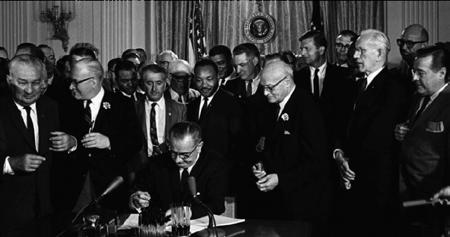
The Civil Rights Movement of the United States was an effort to bring equality under the law to all Americans. The Voting Rights Act of 1965, a landmark piece of legislation, was designed to ensure equal access to the ballot for all citizens. In 1975, the United States Commission on Civil Rights reported the status of minority voting rights in jurisdictions covered by the Voting Rights Act of 1965, as amended in 1970, ten years after its passage. It acknowledged that while the Act had been effective, systemic and structural barriers to full political equality remained. While the 1975 Commission report celebrated the Act’s role in expanding minority voting, it stressed that continued federal enforcement and policy reform were essential to achieve full political equality. The commission reported while there was a substantial increase in minority political participation over the decade. Its existence and specific remedies provided critical support to minority citizens exercising their constitutional right to vote. Despite gains, the report concluded that racial discrimination still existed in the political process. Discriminatory practices—both old and new—remained a problem. Some barriers identified by the 1975 report detailed were: registration obstacles, voter barriers, candidacy hurdles, and physical and economic subordination. It did, however, report some representation gains. In some states, like Alabama, the Act had enabled African Americans to achieve representation in state legislatures and local offices for the first time in decades (United States Commission on Civil Rights, 1975).
As in 1965, we live in turbulent times, marked by ever-growing attacks on voters’ rights. There are renewed efforts to erode the constitutional foundations of our democracy. It is harder for American citizens to vote—particularly voters of color, voters with limited English proficiency, voters with disabilities, older voters, and other marginalized communities. Trump has continued to spread false and debunked theories designed to undermine confidence in the integrity of our voting system (American Civil Liberties Union, 2026). He is following the Project 2025 agenda,
representatives shared their expertise on community engagements and improvement planning, and their upcoming work with OneHolyoke CDC to develop a neighborhood blueprint based on CPTED principles.
Ed Caisse was also recognized for his impact through the Holyoke Safe Neighborhood Initiative (HSNI), and OneHolyoke announced that one of their residential properties is now named in his honor, located at 589-591 South Bridge Street, next to Morgan School in South Holyoke. Caisse retired earlier this year after more than three decades with the Hampden County Sheriff’s Department and HSNI.
Prior to serving as Executive Director of OneHolyoke CDC, Moriarty attended law school and taught in Holyoke for five years, teaching Latin, English, and social studies. As an attorney, he has also taught at Middlesex and Holyoke Community Colleges. A lifelong resident of Holyoke, Moriarty also served for
a conservative guide to “reforming” government and policymaking (The Fulcrum, August 9, 2024). Project 2025 has put forth several reactionary ideas to remake the census and disrupt a fair count. According to the American Civil Liberty Union (ACLU), “Project 2025 stands as the antithesis of the spirit of the Voting Rights Act. It seeks to fundamentally alter the federal government and reshape every aspect of Americans’ lives by implementing an anti-democratic, far-right agenda aimed at taking away our fundamental rights and freedoms” (ACLU, n.d.).
The House passed the SAVE America Act, which critics warn could block millions of people from voting in November (Forbes, February 14, 2026; The Nation, February 26, 2026). However, the bill has repeatedly stalled in the Senate due to procedural hurdles and opposition from Democrats and some Republicans (USA Today, July 20, 2026). The SAVE America Act is a federal bill that would require documentary proof of United States citizenship and photo identification for all voters in federal
continued on next page
13 years on the school committee and was instrumental in the formation of the Holyoke Early Literacy Initiative (HELI). He has also been a vocal advocate for arts education.
Moriarty also served on the Massachusetts State Board of Education for 10 years, during which he chaired the state’s Early Literacy Subcommittee, and was a member of the budget subcommittee and commissioner evaluation committee. Moriarty was also an active member of NASBE’s Early Literacy Working Group.
OneHolyoke CDC is the only certified Community Development Corporation based in the City of Holyoke. Founded in 1971, OneHolyoke CDC has created over 160 new homes in the Flats, Churchill and South Holyoke neighborhoods, rehabilitated hundreds of apartments and provided thousands of home improvement grants to homeowners through the Neighborhood Improvement Program.
continued from page 9
elections, significantly altering voter registration and ballot access (Congress.gov, 119th Congress, H.R. 7296). Critics argue that the bill is designed to impede voting by targeted populations. Its three major components collectively aim to centralize voter eligibility verification, strengthen election integrity measures, and impose federal standards on state election administration. Supporters claim that the bill would prevent ineligible voting, while critics argue that it could create barriers for eligible voters. Although claims of widespread voter fraud have not been proven, disinformation about voter fraud has circulated widely (University of Southern California, October 28, 2024; George Washington University, November 6, 2024).
The Act requires individuals registering to vote in federal elections to provide (1) documentary proof of United States citizenship Acceptable documents include a valid United States passport, a military identification card with a record of United States birth, a government-issued photo identification document listing birthplace, or a combination of photo identification and additional documentation, such as a birth certificate or naturalization certificate. States must also establish alternative processes for applicants who cannot provide standard documentation, including the use of affidavits or other evidence of citizenship under penalty of perjury (GOVTRACK.US, accessed July 11, 2026).
Further, voters must present (2) eligible photo identification to cast a ballot in federal elections, whether voting in person or by mail. For absentee ballots, a copy of the identification must accompany both the ballot request and the ballot submission. This provision aims to ensure that only eligible voters participate in federal elections and adds a layer of verification beyond current state practices (Brennan Center for Justice, October 22, 2024).
Finally, the Act mandates (3) that states actively verify voter eligibility and remove noncitizens from voter rolls. States are required to use federal and state databases to identify individuals who are not United States citizens and to take steps to remove them after providing notice and an opportunity to demonstrate citizenship. The legislation also establishes criminal penalties and a private right of action for certain violations, emphasizing enforcement and accountability (National Conference of State Legislatures, March 23, 2026).
While the stated goal of the SAVE America Act is to prevent noncitizens from voting and to enhance election integrity, it hinders voter rights (Bipartisan Policy Center, February 2, 2026). Sponsors of the Act argue that stricter documentation requirements will ensure that only eligible citizens participate in federal elections (ABC News, February 11, 2026). However, there is no credible evidence of widespread fraud or substantiated claims that elections in the United States have been rigged. The Center for Election Innovation and Research (CEIR) investigated elections in all fifty states (CEIR, December 31, 2025) and continues to find that sweeping allegations about noncitizen registration or voting appear to arise from misunderstandings, mischaracterizations, or outright fabrications involving complex voter data. Critics further
note that instances of noncitizen voting are extremely rare, citing studies such as Utah’s review of more than two million voters, which found only one confirmed noncitizen registration and no noncitizen votes (Salt Lake Tribune, January 23, 2026).
Citizenship documents required by the proposed SAVE America Act include:
• A valid United States passport
• A Real ID that has to indicate Unted State citizenship (all 50 states offer REAL ID, but only five states issue identifications that denote citizenship on the cards -- mainly to assist residents likely to cross the Canadian border by land)
• A birth certificate
• United States military identification card, together with a record of service showing that the applicant’s place of birth was in the United States
• Federal, state or tribal government identification card showing the applicants place of birth (ABC News, February 11, 2026).
Trump used a primetime address to the nation on July 17, 2026, to elevate his yearslong push to raise doubts about the legitimacy of United States elections and dispute his 2020 losses, appealing for more restrictive voting laws ahead of the midterms (AP, July 17, 2026). Trump’s Department of Justice and other emboldened allies have used manufactured voter fraud narratives to stir fear, doubt, and confusion among voters as a pretext for aggressive voter purges.
The United States Supreme Court
The Voting Rights Act was hard-won. The law was created to
continued on next page
continued from page 10
protect people’s ability to vote. It also required corrective action when voting practices were discriminatory (Stacey Abrams speech, April 30, 2026). Under federal law, local and state governments were required to protect voting rights. These protections affected who represents communities at the local level. The way elections are structured can allow for districts in which people of color have a fair opportunity to elect representatives of their choice. In June of 2026, the Supreme Court gutted the Voting Rights Act, the landmark 1965 law, long celebrated as the crown jewel of the Civil Rights era. The Court’s conservative majority issued a cruel ruling that dismantled the remaining protections guaranteeing equal opportunity for fair representation (KQED, May 5, 2026). The six conservative justices on the Court ruled that Louisiana’s map “relied too heavily on race” and unfairly favored Black voters over white voters (Democracy Now, April 30, 2026). Trump’s conservative majority on the Supreme Court made it more difficult to design districts that prevent racial communities from being diluted or blocked from building political coalitions.
What do The New York Times, CNN, USA Today, AP, Politico, NBC News, The Hill, Common Cause, legal journals, ABC News, and various other institutions have in common? They have all published articles debunking false claims about voting and citizenship. They have also explored the right of every voter to cast a ballot free from intimidation or coercion as a foundational principle of a free and democratic society. In addition, they have examined the possibility that people could be removed from voter rolls. Former President Barack Obama said in a statement that the voting rights decision was the work of a Supreme Court that “seems intent on abandoning its vital role in ensuring equal participation in our democracy and protecting the rights of minority groups.” Obama said that “such setbacks can be overcome,” but only if “citizens across the country who cherish our democratic ideals continue to mobilize and vote in record numbers” in the midterms and in lower-profile elections (The Grio, April 29, 2026).
Election deniers are laying the groundwork to contest election results if their preferred candidates do not win. Their false claims have been used as a pretext to purge substantial numbers of voters from the rolls and to enact restrictive voting laws that risk disenfranchising voters of color, low-income voters, and other marginalized groups.
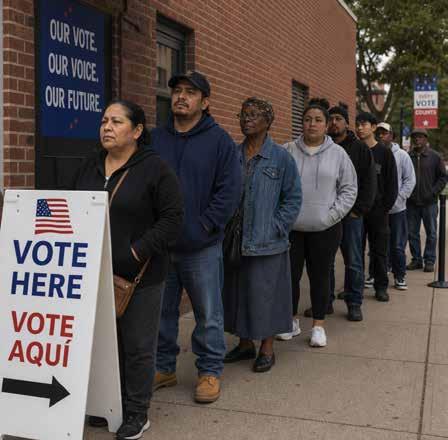
Voter intimidation is also reportedly occurring in the 2026 elections, according to the Institute for Constitutional Advocacy and Protection at Georgetown Law (n.d.). This includes the alleged use of Immigration and Customs Enforcement to intimidate voters, as well as efforts to gain access to voter rolls. There have also been allegations that undocumented immigrants are stealing votes, despite the lack of evidence supporting such claims. Department of Homeland Security Secretary Markwayne Mullin recently told Cable News Network, Immigration and Custom Enforcement agents will be at the polls “to flex if we need to” (Inequality Media Civic Action, July 24, 2026).
Implications for Democracy and Voting Rights
American democracy has experienced sustained assaults that continue to test the strength of its foundations. President Donald Trump used a primetime address to the nation on July 17, 2026, to elevate his yearslong push to raise doubts about the legitimacy of United States elections and dispute his 2020 loss, appealing for more restrictive voting laws ahead of the midterms (AP, July 17, 2026). Trump has continued efforts to undermine the vote (Brennan Center for Justice, July 14, 2026).
Trump’s authoritarian and anti-voter policies have been profoundly anti-democratic. The President is abusing his executive power in service of the relentless attacks on our election system. His goals are to disenfranchise, criminalize, and intimidate voters, as well as local election administrators. Sham commissions and executive actions fuel the false narrative of widespread voter fraud. Trump’s nonstop, baseless claims about illegal voting are being used to justify aggressive attempts to purge voters from the rolls. Allegations of voter fraud are also being used to deploy the Department of Justice and other federal agencies to launch bad-faith investigations and prosecutions of voters and election officials, while encouraging state and local allies to do the same. Trump may also make good on earlier promises to send law enforcement officers to polling places. Latino voters and other immigrant communities, for example, may view the presence of Immigration and Customs Enforcement officers at polling places as a form of intimidation, and we suspect that this is precisely why they would be deployed.
Protect our country by protecting our rights. Be sure to vote and encourage neighbors and friends to do the same.
por JOSÉ EDGARDO CRUZ FIGUEROA
En su obra Anclado en tierra de nadie (Trilogía sucia de la Habana), Pedro Juan Gutiérrez dice que cada escritor se construye a sí mismo como puede. Él solo. Sin atender a nadie Que mucho sentido tiene eso. Gutiérrez se copia de mí. Pero no me quejo. Esa idea se me ocurrió antes de leerlo y primero que a los dos a otro en el siglo 17. Lo que importa es que lo que dice es útil como el pie forzado que me permite continuar. Este me parece el momento apropiado para revelar mi movida estratégica.
Antes, haciéndome pasar por Descartes (ver “Sabiduría y soledad”, Trasdemar.com), he dicho que la soledad es el principio y el fin de las cosas. Dije que es solo en la quietud del espacio inerte, sombrío y silencioso, donde verdaderamente aprendemos. Pero mucha gente ha malinterpretado mis palabras. Posiblemente por mi impostura. No quiero que piensen que me voy a contradecir. Lo que quiero es aclarar mi posición, matizarla, darle la vuelta para que quede claro lo que me traigo entre manos. Y ahora quiero que se sepa que soy yo mismo el que habla—Arturo Martínez— que estas palabras surgen desde mi propio centro. Ya no necesito el nombre de Descartes, que solo fue un seudónimo conveniente, un momento de personalidad alterna. Ahora puedo decir que mis ideas son las suyas extendidas a través del tiempo y el espacio.
La soledad es una ilusión necesaria. Un engaño que nos permite entender lo que nos aterra, lo que nos preocupa, lo que le da sentido a nuestra experiencia. Lo que pasa es que, como ya he dicho, cuando nos llega la hora, nadie sabe lo que conocemos y sentimos. Y en ese momento clave es que queda demostrada cuán fuerte es la soledad. Si para construirnos tuviéramos que depender de otros estaríamos expuestos a dilaciones, artimañas, desmanes y quién sabe qué otros inconvenientes. En el momento de la muerte no necesitamos a nadie, pero no es porque esa falta de necesidad sea constituyente si no todo lo contrario. En ese momento no necesitamos a nadie porque no somos nada. Depender o no depender, ese es el dilema.
Pensándolo bien, en toda mi vida la soledad ha sido una ocurrencia rara. Recuerdo momentos callados sin compañía pero eran solo momentos. Digamos que al final de un día de trabajo o de actividad política, cuando escuchaba música antes de irme a la cama. También en las mañanas mientras desayunaba leyendo el periódico. O cuando iba al cine y me tiraba tres películas una detrás de la otra, durante la época en que por setenta y cinco centavos uno podía pasar el día entero en la oscuridad del cine Imperial o disfrutando del festival de nudismo en el Holiday. Lo hacía mientras mis compañeros miraban Cuba Satélite 13 en el Matienzo, fiebrús que eran con la política, o mis amigos cantaban con Julie Andrews en el Metropolitan mirando The Sound of Music
Otros momentos de soledad eran cuando iba a ver películas como Las momias de Guanajuato o El padrecito, pues tanto compañeros como amigos preferían cosas como Amor en el aire para cantar con Rocío Durcal o Digan lo que digan para cantar con Raphael. A mí la mera mención de esas películas me daban ganas de vomitar, otro acto solitario, excepto la vez que vomité en medio de
una sala de baile después de tomarme una botella de ron. A veces comparaba esas experiencias con las de los días de mi estadía en Francia, donde conocí a Sofía Morelli, solo para darme cuenta de inmediato que el contraste era injusto e inadecuado. Nunca me he sentido más solo que cuando me separé de la mujer que fue mi primer amor. La dejé a regañadientes y no fue porque no quería estar solo. En ese momento de juventud imprudente no le temía a la soledad, pero tampoco entendía que la soledad y la sabiduría siempre andan de la mano. Por eso fue que dejé a Marina Fuentes sin querer pues no veía cómo estar sin ella pudiera beneficiarme en ese momento o a la larga. Fue una soledad intensa, corta, pero de una dimensión vasta, sin fronteras. Por un año estuve a su merced. A los dos meses de que Marina se mudara de nuestro apartamento en los Condominios Quintana, me junté con Mariasol González pero la verdad es que la bendita Mariasol fue un premio de consolación, una distracción erótica que me permitió sobrellevar ese año de soledad profunda sin Marina. Ella lo sabía pero no le importaba porque ella también estaba muy sola y yo era la distracción que le permitía soportar el vacío en que se encontraba. Sufriendo la ausencia de Marina y viendo el hueco en el que se había sumido Mariasol comprendí que tenía razón cuando decía que la materia no admite el vacío. Otro momento de soledad aleccionadora fue cuando fui a Cuba en el 1977. Recuerdo ese viaje porque resulta que me quedé en el Hotel Deauville, que da la casualidad que Pedro Juan Gutiérrez lo menciona un par de veces en la Trilogía sucia de la Habana. Yo estaba leyendo su libro en la cama una noche de desvelo, no en 1977 sino en el 2021, durante una de tantas de mis noches de soledad acompañada, cuando vi la mención del hotel por segunda vez y me vino el recuerdo de Cuba en el 1977. Aunque era la una de la mañana, no pude resistir el impulso de levantarme para pensar en ese viaje. Recordé que de camino a Cuba el avión hizo parada en Jamaica y allí se montaron George C. Scott y Harry Belafonte. En ese año los cines cubanos proyectaban las películas de Belafonte, unas películas miserables de vaqueros que no se veían en ninguna otra parte. A la misma vez, la película más popular en la Habana era Jaws. Fui solo a Cuba, estuve solo en el Deauville por dos semanas, sin libros ni televisor. Estaba encerrado en mi cuarto, descartando todo lo que había creído hasta la fecha, excepto que en mi caso las creencias que deseché fueron las que ensalzaban a la Revolución Cubana. Fuera de mi cuarto noté que en una librería de la Habana lo único que había eran las obras completas de Martí, impresas en una edición super cafre, con una portada sin mérito y un papel de baja calidad. Junto a las ediciones de Martí habían, como el insulto que sigue a la herida, copias infinitas de una antología de poemas de Leonid Breshnev. Eso daban ganas de reir para no llorar. Yo me rei sin ganas y sin hacer comentarios en voz alta por temor a que el empleado de la librería me dijera algo. Su mirada impasiva y su silencio ocultaban su bochorno. Era posible que fuera otro de los muchos que se enorgullecen de Martí sin haber leído de él ni una letra o que no tuviera ni puta idea de quién era Breshnev.
continued on next page
Literatura / Literature
Una esencia innegable continued from page 12
En la calle un cubano me pidió que le comprara unos jeans en la tienda del hotel y no hizo más que abrir la boca y dos agentes de la inteligencia cubana saltaron de un carro pequeñito, lo agarraron y se lo llevaron no sé dónde, pero estoy seguro de que no fue a su casa. Los agentes empujaron al pobre cubano sin molestarse en bajarle la cabeza para que no se achocara con el techo del carro. Al tipo se le cayeron los espejuelos en la calle y uno de los agentes los espacharró por accidente pero con una sonrisa malévola de sadismo revolucionario. El cubano me miró con una expresión de espanto, quizás sin saber cómo había reaccionado porque ahora sin espejuelos no podía ver nada.
Eso pasó en menos de treinta segundos. Mi acompañante, una militante llamada Julissa, se quedó con la boca más abierta que la mía mirando al carro salir disparao con aquel infeliz que lo único que dijo fue compañero ¿se está quedando en el Deauville?
A ver si me podría comprar unos jeans... y ahí quedó. Recordar ese incidente nunca me agrada. En ese momento el cubano estuvo más solo que yo, aunque yo no me quedaba atrás pues estando con Julissa me sentía como si estuviera flotando en una atmósfera negra salpicada de puntitos brillantes.
La soledad es tolerable siempre y cuando sea la antesala de algo interesante. Ese día en Cuba, Julissa y yo mirábamos las ruinas de la Habana todavía pensando que la culpa era del embargo. Me sentía solo porque entre nosotros había una distancia muy grande. Ella me hacía recordar a otra en sus momentos de afán religioso pues aunque Julissa no era Católica, estaba forrada de puritanismo revolucionario. En lo que ya era el devenir de la tarde, ella era para mí un cuerpo con pulso y respiración y más nada. A su lado yo me sentía hastiado, aburrido, hasta que se llevaron preso al cubano. Entonces me alegré de estar con ella, aunque solo durante un instante. Cuando el carro policial se perdió en la bruma urbana, ella pasó a otro plano y yo me quedé pensando en lo que había pasado sin prestarle atención a sus palabras. Con Marina fue otra historia. Entre ella y yo el aburrimiento era inconcebible. La palabra hastío no existía en nuestro vernáculo. Pero miren qué cosa: aun así, lo nuestro terminó y no de la mejor manera. Dejarla no fue un desastre total porque su ausencia me llevó a los brazos de Mariasol. Cuando Mariasol se marchó de Puerto Rico, me junté con Karina Moritz y después de Karina se me apareció Lizabeth Bronstein. Eso fue un-clavo-saca-a-otroclavo, lo que no me dio tiempo a hundirme en el pantano de la autocompasión, que es el peor sitio de soledad en el que uno puede estar.
De Karina me enamoré (aunque quizás exagero al usar esa palabra) separado de ella por un océano, en contravención al conocido refrán que denigra al amor de lejos. Ambos cultivamos una pasión profunda desde la soledad. Comenzamos intercambiando cartas y luego nos enviábamos largos mensajes grabados usando la tecnología del momento. Su voz era chillona pero sus palabras dulces y fogosas contrarrestaban el rechinar agudo y lacerante de sus tonos. Así estuvimos meses hasta que decidimos que era hora de consumar nuestros sentimientos.
Durante la semana que pasamos juntos, ella no fue al trabajo y yo no escribí ni una oración. Al sexto día hicimos una pausa, todavía sobrecogidos y cubiertos por una capa de seda, eléctrica y palpitante, y luego yo recogí mis motetes, regresé a mi casa y no la volví a ver más. Mantuvimos nuestra correspondencia por un tiempo pero poco a poco nuestro entusiasmo se fue desgastando. Ella se envolvió con otro y yo conocí a Lizabeth. Después supe que había fallecido en un accidente de tránsito. Según los informes que recibí ella manejaba a altas velocidades gritando “¡este es el resultado de cinco años de psicoterapia!” y terminó estrellandose contra otro auto. Karina murió al impacto y su pasajero vivió para contarlo.
Con Lizabeth disfutaba de intérvalos de compañía y soledad, muy parecidos a los hiatos entre deseo y sexo que marcaron mi relación con Mariasol. Mariasol se aparecía en mi apartamento todos los viernes sin fallar y yo sorprendía a Lizabeth con menos regularidad pero con el mismo efecto. Con Lizabeth retomaba la conversación justo donde la habíamos dejado y era igual con el sexo. Quizás nuestra familiaridad erótica, la facilidad con la que nos enroscábamos en cada encuentro, era precisamente el resultado de la soledad mutua que nos precedía. Yo no puedo hablar por Lizabeth, pero en lo que a mí respecta, no hay duda de que podía sobrellevar al vacío que seguía a nuestras despedidas porque sabía que no iba a ser prolongado. Otras experiencias no se comparaban. Todas las mujeres que tuve se quedaban cortas en contraste con la que es la verdadera, Sofía Morelli, oriunda de Francia, la que es indivisible como el alma, de quien Marina fue la antesala y todas las demás un simulacro.
¿Quién fue Sofía Morelli? Fue la mujer que más he querido y la que me causó más daño. Su apellido era italiano porque se cambió el original. Su país natal era Hungría, pero se crio en Francia. En muchas cosas no podía ser más distinta que yo: proveniente de un país diferente al mío, versada en más idiomas, fanática de la literatura española cuando yo solo leía escritores norteamericanos, conocedora de una amplia geografía mientras que yo había viajado casi nada. En ella quedaba demostrada una idea que para algunos era la negación de lo que se vino a conocer como el dualismo Cartesiano: la reconocía en el pensamiento como extensión de su cuerpo a la vez que sentía algo nuevo para mí hasta ese momento, algo distinguible del cuerpo y el alma pero íntimamente ligado a ambos, como si cuerpo y alma no pudiesen existir por separado.
Cuando la conocí, de inmediato supe que era la mujer que llevaba toda una vida deseando. Durante años de soledad había construído un arquetipo que en ella reconocí al instante. Esa no fue la base más adecuada del conocimiento que supuse tener de ella, pero fue sin duda la base que me llevó a la proyección que hice al verla y que me ayudó a confeccionar mi método. Al hacerlo me corría el riesgo de terminar desilusionado. Sofía nunca perdió su encanto, pero sus miedos vencieron a nuestras posibilidades y terminé abandonado.
continued on next page
Mi encuentro con ella fue un buen ejemplo del mejor tipo de soledad que uno puede soñar. Con ella seguí en una burbuja hermética, protegido de todas las intervenciones o ataques posibles, exento de vientos fuertes, temblores de tierra o tsunamis. Fuera de ella y yo no existía nada y disfruté de ese aislamiento temporero y artificial como si me estuviera comiendo un arroz con leche con coco y pasas en la oscuridad a las tres de la mañana, como si estuviera escribiendo un tratado de filosofía existencial. Ahora sigo en una burbuja pero ésta no tiene ningún encanto. Aquí estoy atrapado, a veces con desespero, la mayor parte del tiempo sumido en un silencio tenebroso y prolongado, a partir del cual puedo asumir otra personalidad. Así, un día escribí como si fuese Descartes para luego regresar a mí mismo, a este momento. Recuerdo que para llegar al sitio donde nos habíamos citado tuve que subir una escalera de cincuenta escalones, cincuenta escalones me cago en Dios. A pesar de mi artritis prematura en los tobillos, subí al compás de cuatro por cuatro, lo que me forzó a pisar dos escalones en el primer intento, primero contando como si fuera a empezar a tocar —un, dos, pausa, un, dos, tres, cuatro—contando los primeros dos para disponerme a subir y los otros cuatro rápidamente para empezar, subiendo en picado, marcando el pulso para no perder mi empuje. Después de cada cuarto escalón hacía una pausa, equivalente a una nota fantasma, que era el intérvalo que necesitaba para no marearme. No porque fuera propenso a mareos pero por si acaso.
Hola, me dijo llanamente con una sonrisa que le acentuó unas patas de gallo impresionantes. Esas marcas me dejaron atónito pues eran zurcos que se le habían hecho muy pero que muy antes del tiempo en que uno esperaría tal cosa en una mujer de su edad. Había comprado dos cafés y todavía estaban olorosos y humeantes. A mí me dio un ataque de nervios que oculté lo mejor que pude, excepto que al sentarme le di un cantazo a la mesa que por poco derrama una de las tazas en su falda. Ella volvió a reirse, esta vez emitiendo un sonido de trompa francesa. El gesto le acentuó las patas de gallo y yo por poco me tapo la cara para no mirarlas. Ella era bella pero esas arrugas eran un asalto a mano armada.
Hablamos por más de dos horas: de literatura y filosofía, ella preguntándome si yo creía que la pasión romántica podía ser eterna, que si era posible amar sin querer poseer al otro, que si era posible estar con el otro todo el tiempo sin terminar jalándose las greñas y yo a todo le decía que sí o que no, dependiendo de lo que estimaba sería la posición de ella, para complacerla en todo sin necesariamente dar la impresión de que era un pajuato. Creo que llegué a decirle, sin creerlo, que la única forma de lograr algo era creyendo que se podía lograr. Lo que no le dije fue que solo a priori puede demostrarse que la pasión romántica puede ser eterna, es decir, solo en tanto sea una mera posibilidad. Quería impresionarla con mi encanto y estaba dispuesto hasta a pretender que me gustaba tomar café en vez de té con tal de apoderarme de su gracia. De lo único que no hablamos fue de los discursos que di en reuniones de teólogos cuando asumía la
persona de Descartes. Tampoco le mencioné mis aventuras militares. Pensé que era mejor no decirle que pretendía superar la obra de Aristóteles para que no terminara ridiculizándome; no quería decirle que Santo Tomás de Aquino me paralizaba. Pero no pude resistir mi impulso y se lo dije, confesando que no me sentía seguro de poder superarlos. Total que ella no quería saber de Aristóteles pues lo despreciaba. No te preocupes por Santo Tomás de Aquino, sentenció, en la filosofía todavía hay mucha tela de dónde cortar.
Me morí de la risa cuando me dijo que leer a Isabel Allende era como tener sexo con una muñeca de plástico y ella quedó encantada cuando le dije que ella era prueba de la verdad del mito del eterno retorno. Lo de la muñeca de plástico yo lo había oído de boca de un escritor pero no le cuestioné su mención. No quería confirmar que era un plagio. A ella le gustó mi referencia, pero fue curioso que no me presionara para que especificara mi razón. Lo que pensé fue que ella era la prueba de que el amor siempre vuelve después de que se acaba. Luego se marchó y ahora llevo diez años esperando.
Claro, fue mejor que no le diera explicación pues en mi caso el retorno del amor que yo vislumbraba con ella era el que yo había sentido antes por Marina. Así, resultó que yo no la amaba a ella por ser ella si no porque revivió la imagen y el recuerdo de la otra. La verdad es que conmigo siempre ha sido así. Yo sabía que podía superar ese estancamiento, que podía amarla por sus méritos, que el recuerdo de Marina era solo una chispa que luego se perdería en un fuego nuevo, a menos que más tarde me enterara que el encanto de Sofía era una cortina que ocultaba a una mujer hipocondríaca, sicótica y despiadada.
Llegué a quererla tanto que pensé que era la única mujer a la que jamás le sería infiel. Pero claro, pensaba así pues al ella abandonarme nunca me dio la oportunidad de demostrarle lo contrario, lo que siempre había pasado conmigo, que a la primera oportunidad me acostaba con cualquiera, después de que no fuera mi mujer o mi amante. Lo hacía porque siempre terminaba mis relaciones con un mejor conocimiento de mi pareja, que era lo mismo que empezar en compañía y terminar acompañado en soledad. La sabiduría y la compañía nunca compaginaban. Me sentía más sabio cuando me encontraba solo buscando una forma nueva de ser con otra, buscando mayor conocimiento, una mejor manera de existir en esa sociedad de dos que es el amor. Podría decirse que en ese contexto limitado de sociedad fue que surgió la idea que vengo elaborando. Pero no fue así. Sofía estuvo conmigo, es cierto, pero no fue a partir de su compañía que descubrí el efecto de la soledad en mi sistema pues eso sería una contradicción. De otra parte, no hay duda de que la verificación de Sofía fue un producto feliz de mi método. En primer lugar ella fue una intuición, un esbozo de realidad tomando forma en mi mente de modo espontáneo. Luego le seguí los pasos derribando una a una las paredes que encerraban su generalidad. Desde ahí la reconstituí como una verdad pura, hecha de partes simples y continued on next page
complejas hasta el punto de poder deducir del conjunto de sus partes esta proposición: aunque estuviese destinado al fracaso mi amor por ella sería real. Ella era la confirmación de que en el efecto de una causa hay tanta realidad como en la causa que lo provoca y porque ella existía fuera de mí yo podía imaginarla como la representación objetiva de mis sentimientos. Marina era la causa, Sofía el efecto que la confirmaba en mi mente, pendiente solo del sonido seco de una idea innata y permanente. Entre mis primeras aventuras y ésta mis circunstancias cambiaron dramáticamente y yo diría que en el reparto de bienes la soledad se sirvió con la cuchara grande. De eso están conscientes mejor que nadie, si es que puede así decirse, las cuatro paredes que me mantienen encerrado. Son paredes uniformes, contra las que me puedo restrallar sin hacerme daño. A mi no me interesa achocarme y por eso la precaución de los colchones me parece innecesaria. Entonces regresé a un momento en Madrid que me hizo recordar a Sofía, que sin proponérselo fue el eco de Marina para después de varias vibraciones en el aire, emitir un sonido que se tornó único y especial.
Caminando por Hortaleza, justo antes de llegar a la Gran Vía, decidí entrar a la librería Pérez Galdós para ver si encontraba los Retratos contemporáneos de Gómez de la Serna. Una mención de ese libro en un artículo del que ya no me acuerdo me incitó a buscarlo. Esa librería era uno de mis sitios favoritos en Madrid. En ese rincón pequeño de la ciudad, iluminado en claroscuro y atiborrado de libros por todos sus recovecos, uno podía encontrar tesoros. Ahí había comprado una edición muy linda en español de El arte de amar de Ovidio, en la cual pude identificar el origen de una frase usada por Marx en El capital, y en otro momento había adquirido la edición, también traducida, de On Love de Stendhal. Mi único motivo era encontrar el libro de Gómez de la Serna pero justo mientras le preguntaba a la dependiente si lo tenían, con el rabo del ojo vi, en el tope de una pila de libros, como una cherry en la cumbre azucarada de un mantecado de vainilla, una antología poética de Miguel Hernández. Era una edición de carpeta dura muy elegante. De inmediato pensé en Sofía, que era fanática de Hernández. Con la imagen de Sofía reposada en su cama leyendo los poemas de Hernández, salí de la librería con dos libros en vez de uno. Le envié la antología el mismo día en que la compré. Después de un mes de silencio recibí su mensaje: Chacho, ¡Recibí tu regalo! ¡Preciado y atesorado! Sabes que después de Corretjer, Hernández es mi otro poeta favorito. ¡Te acordaste! ¡Precioso este ejemplar! ¡Gracias! Fue como recibir la caricia fresca de la brisa del este, especialmente en medio de esta oleada de calor pesado y pegajoso que nos encharca hasta el alma. ¡Gracias, gracias y gracias!
Solo Sofía era capaz de pensar que la frescura de la poesía podía superar el calor más grande. Entonces supe que al perderla había perdido lo más preciado que jamás habría de tener y justo al llegar a ese momento de claridad me sentí más solo que nunca. Para colmo, no era la primera ni la única vez que la sensación me
avasallaba y en mi soledad escuchaba una voz pequeña diciéndome en tono burlón que al que no quiere caldo le dan tres tazas. Después de eso no volví a saber de ella. También recordé lo poco que había viajado y eso me hizo dudar de que alguna vez había estado en España y mucho menos en Francia. Puede ser que durante el tiempo que llevo confinado haya tratado de saber de mí, de hablar conmigo, pero aquí me tienen en un estado de aislamiento que a otro podría resultarle insoportable. En mi estante vi la antología de Miguel Hernández y al desplegar sus páginas de ellas salió volando la nota que yo le adjudiqué a Sofía, escrita con la caligrafía inconfundible de mi propia mano. La nota tenía fecha de hace diez años.
Ahora me planteo que quizás represento un peligro muy grande que mi enfermedad me impide valorar. No sé cuál es el caso. Solo sé que desde aquí puedo ver algunas cosas con más claridad que si estuviera rodeado de gente, pero eso es así nada más que cuando pienso en las veces en que estuve acompañado de otros o cuando después de un encuentro social salía disparado huyendo del ritual subsiguiente y me retiraba a procesar lo acontecido en el encuentro o cuando en un momento de soledad me llegaba el recuerdo de una situación memorable o de un amor como el de Sofía, que una vez me hizo feliz.
Lo que queda es la pregunta, ¿me construyo a mí mismo con este recuento? ¿Es cierto que a lo largo de este trayecto he estado solo, por mi cuenta, sin ayuda de nadie, como dijo Gutiérrez después de que yo lo pensara? Todo lo he escrito en un cuarto pequeño con poca ventilación en el silencio de mi propia compañía. “Escrito” es un decir pues todo está en mi mente y puede que sea no más que un enjambre de ideas que construyen una realidad que añoro. Ese silencio ha sido casi total, rasgado de mil en ciento por el beep intermitente de un camión en reversa o por las máquinas infernales de cortar grama que se oyen en la distancia. A veces, si pierdo la concentración que me ayuda a pensar en Sofía, oigo el aleteo agonizante de las polillas dentro del cristal cóncavo que cubre una de las bombillas de mi cuarto. Durante el tiempo que he estado encerrado he logrado deshacerme de muchas ideas que fueron mi sustento durante los años que estuve esperando por ella, deseando a diario que por fin resolviera su dilema y comenzara a vivir conmigo la promesa que me mantuvo en vilo, como si caminara por una calle de aire, por seis años. Pienso que la soledad de los años de su ausencia—que ya van siendo muchos más que los años que pasé esperando—ha sido aleccionadora aunque solo en un sentido poético, más figurado que real. Puede ser que lo único real sea mi encierro. Esta construcción de mí mismo la hice lo mejor que pude, solo, lleno de recuerdos, pensando en algo muy singular que lleva un nombre querido y que se sitúa frente a mí como algo externo, como un escenario ocupado por una sola persona, con sus ojos fijos en mí a punto de decirme algo importante. Concluyo que Gutiérrez está en lo correcto y no me importa que se haya copiado de mí.
continued on next page
Estoy convencido de que mi fabricación es perfecta pues cuadra con mi conclusión respecto a la relación entre lo que existe y lo que es. Para esclarecer la naturaleza de esa relación Descartes escribió lo siguiente:
Cuando imagino a un triángulo, aún cuando esa forma no exista más allá de mi mente, la forma tiene una naturaleza o esencia de triángulo que es inmutable y eterna e independiente de mi pensamiento. Esto queda claro en el hecho de que las propiedades del triángulo pueden ser demostradas. Por ejemplo, que sus tres ángulos son iguales a sus dos ángulos rectos, que su lado mayor subtiende su ángulo mayor y así por el estilo; y toda vez que yo puedo reconocer estas propiedades quiéralo o no, aun cuando no las piense cuando imagino a un triángulo, de ello se deduce que no pueden haber sido inventadas por mí.
Sustituída la palabra “triángulo” con el nombre de Sofía, sus propiedades descritas de forma humana, me queda clara la naturaleza de ella y sé de modo “claro y distinguible” que es y que existe conmigo y sin mí. Su nombre querido me mantiene alerta. Es Sofía por aquí y Sofía por allá, retumbando como un eco despiadado por todas las paredes de mi cuarto. Mariasol, Karina, Lizabeth puede que sean la alucinación de un pretérito. Sofía Morelli, la que una vez fue Marina Fuentes, es mi punto de referencia primario, la duda indubitable de mi proceso. Ella existe
más allá de mi mente y al imaginarla concluyo que jamás pude inventarla. Solo la realidad indiscutible de su existencia puede lograr que su imagen quede impresa en mi mente sin la presencia de su cuerpo; solo así puedo verla desde mi soledad, con las ventanas cerradas al mundo externo. Esa es mi sabiduría. Es la imagen de su cuerpo oscuro, simple como un pensamiento solitario, la que atiza la esperanza de terminar mis días viviendo por encima de lo que mi cabeza circunscrita se limita a escudriñar. Quizás lo que hago es más sencillo: imaginar desde este encierro lo que sería volver a vivir día tras día con su nombre en mis labios, pendiente de todo, con las puertas abiertas de par en par. Para lograr eso, no importa que me llame Arturo Martínez o Descartes. No importa que esté loco o cuerdo. No importa que Pedro Juan Gutiérrez haya escrito lo que yo pensé antes de que él lo publicara. Más que un anhelo, lo que imagino es una proposición filosófica que se deriva de una esencia innegable.
JOSÉ EDGARDO CRUZ FIGUEROA (cruzjose5319@gmail.com) es natural de San Juan y criado en El Fanguito y Barrio Obrero en Santurce
DESCRIPCIÓN
Una novela experimental y utópica que narra el nacimiento, la vida y la muerte de una conciencia colectiva.
“Lo que quiero decir es que la locura es un derecho”. Así comienza
El Gato en el remolino, una novela experimental y utópica que relata la historia del surgimiento, desarrollo y extinción de una conciencia colectiva conocida como el Animal.
El libro cuenta la historia de un mundo que resulta a la vez deseable y aterrador a lo largo de los próximos 377 años. Comienza en medio del relato. En el Caribe. Avanza lentamente, siguiendo con rigor la forma de un espiral narrativo a través de ciclos de destrucción. Luego regresa a nuestro presente, para que podamos contemplar cómo nuestro mundo se transforma en aquel otro. Su protagonista es una conciencia colectiva: el Animal. Nace. Crece y aprende. Muere. Es llorado por diosas cibernéticas. También grita: ¡La soledad es una enfermedad colectiva! ¡Defendamos nuestro derecho a la locura!
¡Valientes no son quienes resisten, sino quienes se atreven a soltar!
AUTOR
Luis Othoniel Rosa es un escritor puertorriqueño de Bayamón. Estudió en la Universidad de Puerto Rico y tiene un doctorado por la
Universidad de Princeton, y su trabajo aborda cuestiones de literatura, política y forma.
RESEÑAS
Curativa, regeneradora e indispensable, El gato en el remolino, de Luis Othoniel Rosa, es una novela brillante y delirante, un catalizador extático para reimaginaciones radicales, una obra maestra descolonizadora de estremecimiento y tacto. Al indagar en nuestros supuestos sociopolíticos más fundamentales para romper las cadenas del petrocolonialismo y la misoginia, El gato en el remolino da a luz un nuevo y exuberante mundo.” —Joy Castro, autora de
“Algo está pasando en Puerto Rico. En un mundo que los poderosos insisten en avasallar, se alza la imaginación crítica y desatada. Esto no es otra narrativa del fin del mundo sino de su continuación por otros medios. De una inteligencia salvaje, delirante, El gato en el remolino es una ficción visionaria que busca construir, sobre la base de la conexión carnal y entera, un más allá que reverdece en la colectividad y la muerte del individuo.” —Cristina Rivera Garza, autora de NADIE ME VERÁ LLORAR
by DANIEL POLLACK- PELZNER • NEW YORK, NY | SIMON
DESCRIPTION
A “valuable, comprehensive” (Quiara Alegría Hudes, Pulitzer Prize–winning playwright), captivating exploration of Lin-Manuel Miranda’s artistic journey, revealing how the creator of the Broadway musicals Hamilton and In the Heights found his unique voice through bold collaborations, redefining the world of musical theater.
How did Lin-Manuel Miranda, the sweet, sensitive son of Puerto Rican parents from an immigrant neighborhood in Manhattan, rise to become the preeminent musical storyteller of the 21st century?
Lin-Manuel Miranda: The Education of an Artist is his incredible story as never told before, tracing Miranda’s path from an often isolated child to the winner of multiple Tonys and Grammys for his Broadway hits Hamilton and In the Heights; a global chart-topping sensation for his songs in Disney’s Moana and Encanto; and the recipient of a Pulitzer Prize and a MacArthur Genius Grant.
Miranda’s journey is a testament to the power of creativity, collaboration, and cultural synthesis. He was not a musical prodigy, but an insatiable drive to create art and learn from those around him propelled him to fuse his Latino heritage with pop, hip-hop, and the musical styles of Broadway. His was a new way of telling American stories, and of speaking to new audiences.
Drawing on interviews with Miranda’s family, friends, and mentors— and many conversations with Miranda himself—Daniel Pollack-
&
SCHUSTER
| September 9, 2025 | 400 pages
Pelzner delves into the formative experiences that shaped Miranda as an artist, from his early musicals in high school and college to the creation of his Broadway and Hollywood triumphs. With full access to Miranda’s inner circle, this behind-the-scenes origin story is sure to captivate his legions of fans and beyond.
AUTHOR
Daniel Pollack-Pelzner has written about theater and contemporary culture for The New Yorker, The Atlantic, and The New York Times Born and raised in Oregon, he teaches theater history at Portland State University and is the scholar-in-residence at the Portland Shakespeare Project. He lives in Portland with his wife, whom he met in a fifth-grade production of A Midsummer Night’s Dream, and their two children.
EDITORIAL REVIEWS
“This compelling biography provides a profound and inspiring glimpse into the life and creative evolution of Lin-Manuel Miranda, one of the most influential figures in contemporary entertainment. From his early childhood to his rise as a cultural icon, the book captures not just the milestones of his career but the heart, hustle, and humanity behind them. A rich and engaging read for both fans and creatives.” —Library Journal (Starred Review)
“A valuable, comprehensive look at an artist who keeps coming of age, growing with every project. Pollack-Pelzner pulls back the curtain on one of the great, exuberant creative minds of our time. LinManuel’s work has expanded our national spirit; his collaborative and creative processes—revealed in captivating close-up here—will blow you away.”—Quiara Alegría Hudes, Pulitzer Prize winner for Drama
por ENRIQUE VARGAS GONZÁLEZ - MA, LADC1, MAPGS-II Director de Diversidad, Equidad, Inclusión y Rertenencia (DEIB) de Gándara Center
Cuando las personas me preguntan sobre las formas más efectivas de mejorar el bienestar, siempre respondo que no existe una formula general. El bienestar se define como un estado de equilibrio en diferentes áreas de la vida, que permiten que una persona viva plena, satisfecha y capaz de manejar el estrés. Sin embargo, la plenitud, satisfacción y las cosas que nos causan estrés, varían de persona a persona.
Mi nombre es Enrique Vargas, y actualmente trabajo en Gándara Center como el director de diversidad, equidad, inclusión y pertenencia (DEIB, por sus siglas en inglés). Hace más de 20 años que trabajo en espacios de salud mental y recuperación de adicciones. Las personas con quienes he trabajado me han enseñado que los pequeños pasos son los más importantes. Levantarse por las mañanas y dedicar un momento a reconocer nuestro cuerpo, respirar profundamente y apreciar la luz del sol. Salir a caminar y despejar la mente mientras se observa la naturaleza y se escuchan los sonidos de los pájaros.
El bienestar incluye varias categorías, emocional, físico, intelectual, social, ambiental, económico y espiritual. Cada una de estas áreas depende de nuestras experiencias y necesidades individuales. Un buen paso para empezar a mejorar nuestro
bienestar es reconocer nuestras prioridades y nuestros recursos. Hablar con nuestros amigos y familia sobre nuestros planes y dedicar tiempo a fortalecer esas relaciones. Cuando pienso en mi bienestar trato de identificar cuáles son las áreas que están más descuidadas. Califico cada área del uno al diez, y me enfoco en las tres más bajas. El otro día me di cuenta de que hacía mucho que no pasaba tiempo con mis amigos, decidí enviarles un mensaje y organizar una pequeña reunión. Fue a propósito que dediqué tiempo y esfuerzo para
continued on next page

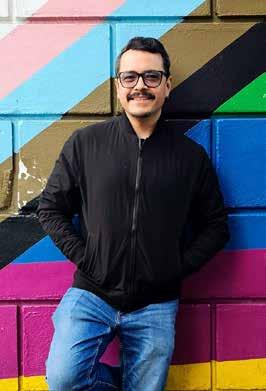
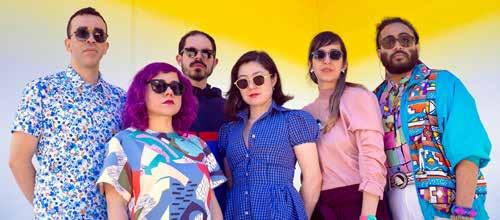
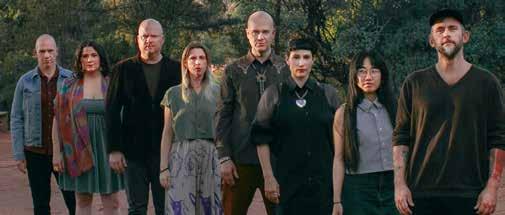
Ven a escuchar *The Puerto Rico Experiment*, de la compositora Angélica Negrón, junto a la banda transnacional de *indie* electrónica Balún y el conjunto vocal Roomful of Teeth.
*The Puerto Rico Experiment* entrelaza voces, ritmos caribeños reinventados y paisajes electrónicos para imaginar, cuestionar y recontar la historia de Puerto Rico. Un viaje sonoro que cruza la memoria, el presente y los futuros que aún podemos imaginar.
Friday, August 21, 2026 7:00PM Hunter Center


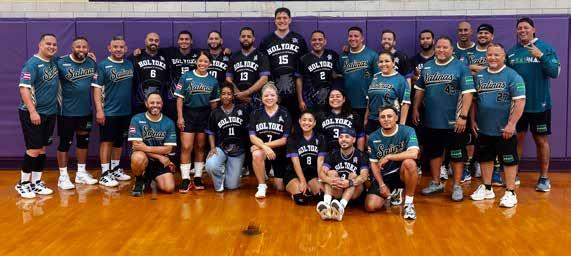
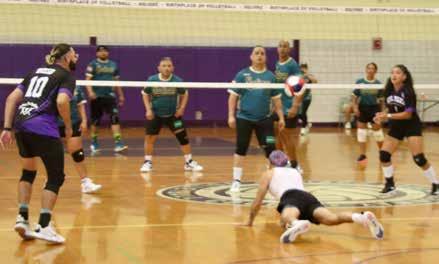
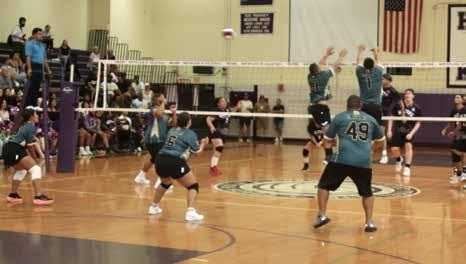
The Holyoke team once again claimed victory in the “Sister Cities Volleyball Challenge,” a spirited contest uniting the Municipality of Salinas, Puerto Rico and the city of Holyoke, Massachusetts.
The volleyball match took place on July 30, 2026 at Holyoke High School.
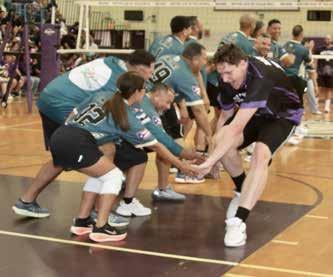
Holyoke faced off against Salinas in the eagerly anticipated second round of what many hope becomes an annual tradition. Last September, Explore Holyoke’s delegation, led by Mayor Joshua García, bested Salinas on their home turf at the Ángel Cholo Espada field. This year, Holyoke delighted hometown fans by repeating their victory on Massachusetts soil.
lograr esta meta; cuando la reunión terminó, me sentí satisfecho, contento y conectado con el exterior.
En mi trabajo, hago presentaciones y charlas donde hablo de diferentes temas. Uno de ellos tiene que ver con las relaciones humanas y lo que nos conecta. Siempre llegamos al acuerdo de que los actos de bondad y la gratitud son de las formas más simples y accesibles para mejorar el bienestar. Ofrecer algo positivo a alguien más tiene un efecto doble, para la persona que recibe el acto de bondad y para uno mismo. ¡Es gratis y es gratificante!
Un ejemplo de que las pequeñas cosas pueden cambiar nuestra calidad de vida se encuentra en las personas en recuperación. He tenido la posibilidad de trabajar con personas que viven esta experiencia y para quienes todos los días enfrentan un reto
continued from page 18
diferente. Entre las formas en que mejoran su bienestar incluyen aprender a reconocer pensamientos negativos, comportamientos dañinos y hábitos que pueden llevar a usar alguna sustancia. También incluir rutinas simples de cuidado personal, salir a caminar, iniciar un pasatiempo, visitar a un médico o profesional de la salud y celebrar sus logros. En Julio se reconoce la importancia del bienestar. Es una invitación y un recordatorio de que tenemos el derecho de vivir plenamente, de que las cosas simples y las pequeñas acciones son las que nos pueden llevar a un mejor lugar. Te invito a que te des el tiempo de reconocer aquello por lo que estás agradecido, y que pienses cuáles son las áreas donde puedes hacer un cambio positivo. Recuerda que dedicar tiempo a tu bienestar es mejorar tu presente y tu futuro, lo mereces y lo puedes lograr.
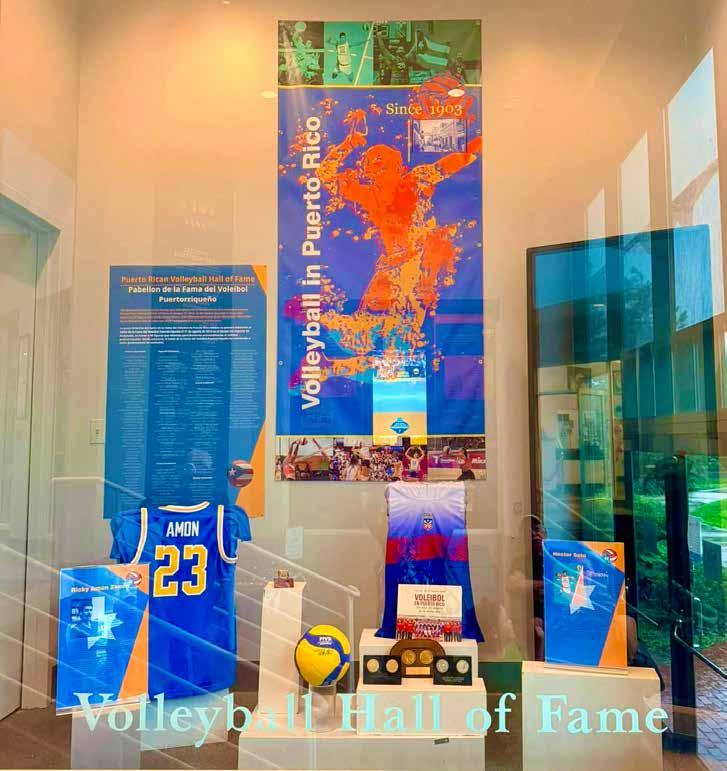
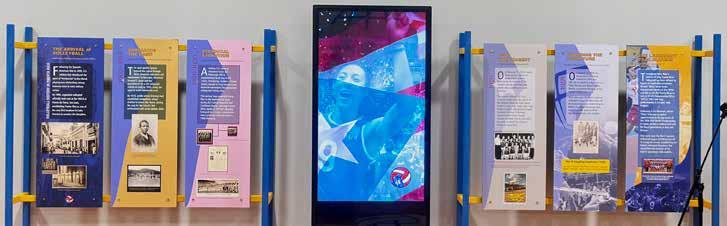
The International Volleyball Hall of Fame (IVHF), located in Holyoke, Massachusetts, birthplace of this sport, unveiled its new exhibition, Puerto Rico Volleyball Exhibition, on Thursday, July 30. The exhibition highlights the development of volleyball in Puerto Rico and acknowledges the significant contributions of Puerto Rican volleyball players in the United States.
On August 1, 2025, the Puerto Rico Volleyball Exhibition held its first soft opening at the International Volleyball Hall of Fame. The exhibition is located at the pavilion’s main entrance. The Holyoke Tourism Advisory Committee funded the exhibition as part of the city’s plan to promote Holyoke as a cultural and sports destination. Today’s official Grand Opening Exhibition is the finished version of last year’s soft opening.
This historic exhibition highlighted IVHF’s dedication to honoring Puerto Rico’s volleyball legacy. At the grand opening, the Mayor of Holyoke Joshua García offered the welcoming remarks. George Mulry, Executive Director of the International Volleyball Hall of Fame, welcomed representatives from the Salón de la Fama del Voleibol de Puerto Rico, including Pedro “Pedrito” Rodríguez Morales, and Rafael “Raful” Rodríguez, president and vice president, respectively. David Alemán and José Luis “Nitro” Díaz—players inducted into the Puerto Rico Volleyball Hall of Fame—were present at the event along with guests from the municipalities of Naranjito and Salinas.
George Mulry stated, “This exhibit represents far more than volleyball. It tells the story of a people whose passion for the sport has inspired generations. Puerto Rico has produced world-class athletes, unforgettable moments, legendary clubs, and a unique volleyball culture. We are honored to preserve this history in Holyoke, the birthplace of volleyball, and to celebrate the strong friendship between our communities.”
Pedrito thanked Jimmy Camacho, event organizer, and George Mulry for initiating and maintaining collaboration between the Salón de la Fama del Voleibol de Puerto Rico, and IHVF. Frequent and direct communication among Pedrito, Raful, George, and Jimmy established the foundation not only for the exhibition ceremony invitation but for future joint events in both Puerto Rico and Holyoke, Massachusetts.
Jimmy Camacho’s opening remarks, “¡Por fin Holyoke y Puerto Rico! ¡Lo Logramos!” brilliantly captured the significance and scope of the exhibition: years of dedication to preserving a vital chapter in volleyball history.
Gaddier Rosario, a contemporary Caribbean visual artist and designer from Puerto Rico, served as curator and exhibition designer. He is known for his diverse work in graphic design, editorial illustration, multimedia painting, digital art, 3D visualizations, and virtual reality models.
by MANUEL FRAU RAMOS
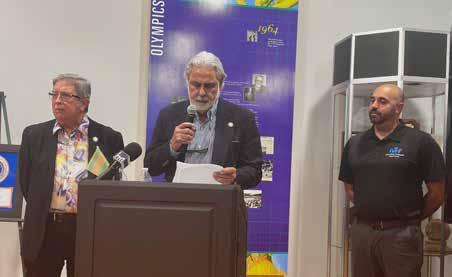
Rafael “Raful” Rodríguez, Pedro “Pedrito” Rodríguez Morales, and George Mulry Jimmy Camacho was recognized by Zulmalee Rivera-Delgado, Madrina of the 2026 Springfield Puerto Rican Parade, and Zaida Govan, Springfield City Councilor, following the Springfield City Council’s proclamation honoring his dedication and achievement. The event concluded with a panel of former and current volleyball players, sport historians, and members of Puerto Rico’s Hall of Fame delegation, among others, who discussed the current state of Puerto Rican volleyball. Jimmy Camacho, George Murley, and Pedrito Rodríguez participated in the panel, emphasizing the importance of the new partnership that has been established between Puerto Rico’s and Holyoke’s volleyball organizations. Miguel Gallardo, a New York City-based freelance photographer, video producer, editor, and filmmaker, presented a preview of the UP! Volleyball Documentary Series: Puerto Rico Trailer. The documentary honors athletes who have shaped Puerto Rico’s volleyball community.
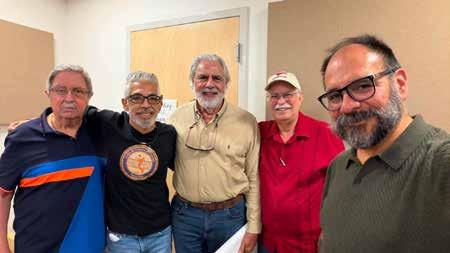
Prior to the exhibition, the Puerto Rican delegation visited the Holyoke Public Library. Pedro “Pedrito” Rodríguez Morales and Rafael “Raful” Rodríguez donated two copies of “Voleibol en Puerto Rico: 116 años de deportes de la malla alta” authored by historian Julio “Buyín” Camacho, to the Library, with a copy signed by the author.
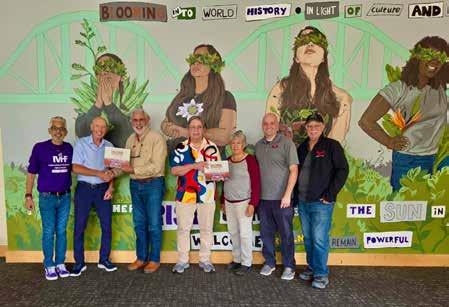
VicePresident of the HPL Board of Director.
The exhibition and grand opening were supported by Set to Serve, USA International Sports Group, El Sol Latino, Fiesta Café, Enlace de Familias, Holyoke Public Library, Explore Holyoke, the City of Holyoke, and Holyoke Media.
Guests delighted in the bold Puerto Rican flavors from Boricua Bites, moved to the infectious rhythms of Bomba de Aquí, and stayed connected with live updates from Audacy Radio (WEEI) throughout the day.
A group of talented youth attended the event as media partners. The students are part of a cohort at Holyoke Media’s Summer
Signal Program. Through a partnership with MassHire Holyoke, Holyoke Media is opening doors to summer job opportunities.
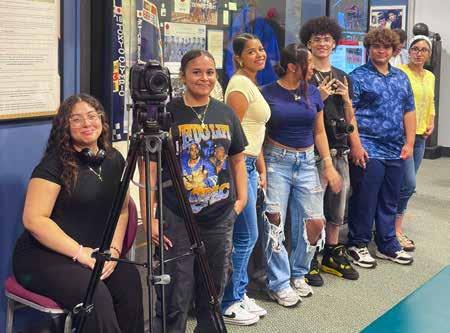
L-R: Yaneliz López, Cyennah Santana, Ayanna Cruz, Azariah Bermúdez, Josiah Pagán, Ryan Pérez, and Adriana Díaz
For more information about Puerto Rican volleyball, please refer to the March 2023 edition of El Sol Latino (Puerto Rican Volleyball Player Héctor ‘Picky’ Soto Honored with Inaugural IVHF Mayoral Award of Excellence), and the March 2024 edition (Anuncian Planes para Nuevo Complejo Deportivo en Holyoke). Both are available online at Issuu.com/elsollatino or on our Facebook page facebook.com/ElSollatino413.
Additional audiovisual resources on the history of Puerto Rican Volleyball are available in episodes 88 and 89 of El Sol Latino Podcast 413, featuring interviews with Jimmy Camacho, Pedro “Pedrito” Rodríguez Morales, and Rafael “Raful” Rodríguez. The opening day ceremonies program can be accessed on the Holyoke Media website (https://holyokemedia.org) and their YouTube channel.
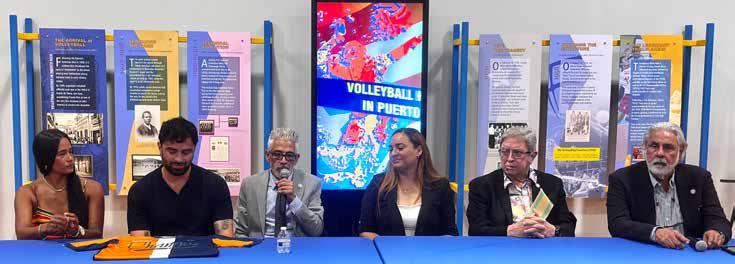
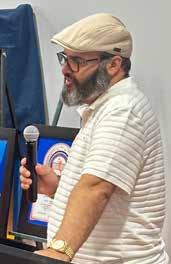
International Volleyball Hall of Fame Celebrates Puerto Rico’s Vibrant Volleyball Heritage with New Exhibit