January 2026
Volume 22 No. 2
Un Periódico Diferente / A Different Kind of Newspaper
Un Periódico Diferente / A Different Kind of Newspaper
Un Periódico Diferente / A Different Kind of Newspaper
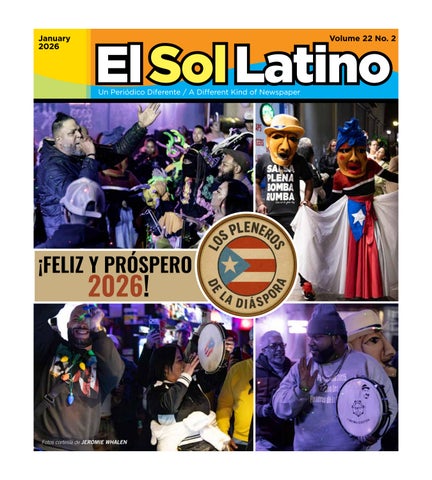
¡Feliz y Próspero
2026!
Un Periódico Diferente / A Different Kind of Newspaper
Fotos cortesía de JEROMIE WHALEN
2
Foto del Mes /Photo of the Month Remembering our January 2008 Edition
contents
2 Foto del Mes /Photo of the Month Remembering our January 2008 Edition 3 Portada / Front Page Parrandón Navideño de Holyoke 4 Matutino por la Ciudad @ Holyoke Mall 6 UW’s Puerto Rican Studies Hub explores the archipelago’s culture and history from a new point of view 7 Bad Bunny is the latest product of political rage — how pop culture became the front line of American politics 8 Opinión / Opinion Concerns Regarding Holyoke Public Schools (HPS) Contract Negotiations 9 Affordability and Equity Interconnected to Systemic Barriers 11 Literatura/ Literature Cuando ya no me quieras 13 Libros / Books Cruzando aguas 14 UPR Para El Pueblo: las huelgas estudiantiles de 2010-2011 15 Lamento en Felices Días 16 Finanzas / Finances Tips To Save Money 17 Deportes / Sports HCC Volleyball Team Honored by Holyoke City Council
Founded in 2004 n Volume 22, No. 2 n January 2026
Latinx Journalism Matters Support Publishers of Color The impact of COVID-19 has been especially devastating for communities of color. Now, more than ever, independent, local journalism needs your support. El Sol Latino is your local Latinx-owned, independent news source that brings to the front lines diverse Latino voices, perspectives, news and stories.
SUPPORT EL SOL LATINO
Editor Manuel Frau Ramos manuelfrau@gmail.com 413-320-3826 Assistant Editor Ingrid Estrany-Frau Art Director Tennessee Media Design Business Address El Sol Latino P.O Box 572 Amherst, MA 01004-0572
Editorial Policy
El Sol Latino acepta colaboraciones tanto en español como en inglés. Nos comprometemos a examinarlas, pero no necesariamente a publicarlas. Nos reservamos el derecho de editar los textos y hacer correcciones por razones de espacio y/o estilo. Las colaboraciones pueden ser enviadas a nuestra dirección postal o a través de correo electrónico a: info@elsollatino.net. El Sol Latino welcomes submissions in either English or Spanish. We consider and review all submissions but reserve the right to not publish them. We reserve the right to edit texts and make corrections for reasons of space and/or style. Submissions may be sent to our postal address or via electronic mail to: info@elsollatino.net. El Sol Latino is published monthly by Coquí Media Group. El Sol Latino es publicado mensualmente por Coquí Media Group, P.O Box 572, Amherst, MA 01004-0572.
Portada / Front Page
El Sol Latino January 2026
3
Parrandón Navideño de Holyoke 29 de noviembre de 2025
Crédito: Fiesta Café, Juan Montano, Jimmy Camacho, Brendaliz Cepeda, Saúl El Pulpo Peñaloza, Los Pleneros de la Diáspora, Pedro de Valle y Vejigante Ponce. Fotos cortesía de JEROMIE WHALEN
4
Portada / Front Page
El Sol Latino January 2026
Matutino por la Ciudad @ Holyoke Mall 14 de diciembre de 2025
Crédito: Czar Adorno, Angel León & Roberto Tito Martínez. Fotos cortesía de TRILOGIA PHOTO AND MEDIA - Pastor Daniel Lantigua & ARROYO VISUALS - Rubén M. Arroyo
Portada / Front Page
El Sol Latino January 2026
5
Matutino por la Ciudad @ Holyoke Mall 14 de diciembre de 2025
Crédito: Czar Adorno, Angel León & Roberto Tito Martínez. Fotos cortesía de TRILOGIA PHOTO AND MEDIA - Pastor Daniel Lantigua & ARROYO VISUALS - Rubén M. Arroyo
6
Portada / Front Page
El Sol Latino January 2026
UW’s Puerto Rican Studies Hub explores the archipelago’s culture and history from a new point of view by GAYLE WORLAND | photo by ALTHEA DOTZOUR
This article originally appeared on the NEWS. WISC.EDU (University of Wisconsin-Madison) on December 16, 2025.
communities but also the fact that they are living throughout the Midwest. And as ethnic studies programs are being threatened all over the country, we firmly believe in the field of Puerto Rican studies. At a time when society is very fractured, we want people to come together, to enjoy and learn at the same time.”
‘We are often invisible’
The field also has broad appeal. In a recent course Meléndez-Badillo taught, a majority of the students were not Puerto Rican history scholars, he says. “But one of the things the course provided for them was a lens to understand broader processes. The history of Puerto Rico is part of Latin American history, of Caribbean history; it’s also U.S. history,” he says.
UW–Madison Professors Aurora Santiago Ortiz (left) and Jorell Meléndez-Badillo are spearheading the new Puerto Rican Studies Hub as “an extension of the Wisconsin Idea.”
The first-of-its-kind center in the Midwest aims to put ‘UW–Madison at the forefront’ of an academic field with growing reach. UW–Madison’s new Puerto Rican Studies Hub, which launched in October as the first of its kind in the Midwest, is already becoming a center for outreach and scholarship focused on Puerto Rico’s rich culture and history. The hub, made possible by a $3 million grant from the Andrew W. Mellon Foundation, kicked off with a musical performance and storytelling by the group Los Pleneros de la Cresta from Ciales, Puerto Rico, in Memorial Union’s Great Hall. “I was really surprised by the turnout. That event had more than 200 people in attendance,” says Aurora Santiago Ortiz, assistant professor of gender and women’s studies and Chicanx/e & Latinx/e studies, who along with associate history professor Jorell Meléndez-Badillo is spearheading the hub. “We were just really happy that we were able to build that community space,” says Santiago Ortiz. A lecture by UW–Madison Professor Emeritus Francisco Scarano, a leading historian of Puerto Rico and the Caribbean, followed in late October. Those inaugural events — from music to scholarship — reflect the academic breadth and community-centered goals of the new hub. More public programming is planned for March 2026, followed by an “Interrogating the Future of Puerto Rican Studies” symposium scheduled for April 23-24 at the Pyle Center on the UW–Madison campus. The symposium title is also the name of an upcoming scholarly anthology co-edited by Santiago Ortiz and MeléndezBadillo, to be released this spring by Duke University Press. The hub’s founding is timely, Santiago Ortiz says. “We see changes in migration patterns, in that there are many Puerto Rican communities outside the major metropolitan centers like Chicago and Milwaukee. There are Puerto Rican communities in other places in Wisconsin, but also in Iowa and Illinois,” she says. “Why is this important now? Because we want to highlight those
Meléndez-Badillo’s research stepped into an international spotlight earlier this year through his connection to the music superstar Bad Bunny (Benito Antonio Martínez Ocasio), whose Grammy Awardwinning work is steeped in the history and culture of his native Puerto Rico. The rapper’s team reached out to Meléndez-Badillo to write historical narratives to accompany YouTube videos for the 2025 Bad Bunny album “DeBÍ TiRAR MáS FOToS.” Sales of Meléndez-Badillo’s book “Puerto Rico: A National History” soared. On Feb. 8, Bad Bunny will headline the halftime show at the 2026 Super Bowl, performing on the largest entertainment stage in the world. Will that event have the potential to highlight Puerto Rico even more? “One thing that happens with Puerto Rico is that we are often invisible, or else hyper-visible, in U.S. media narratives,” MeléndezBadillo explains. “But often that hyper-visibility comes with the silencing of Puerto Rican voices and our agency. With Bad Bunny that is changing, as he uses the stage to speak on behalf of Puerto Rico as a Puerto Rican person.” That connection with pop culture “has opened new spaces for me to talk about the history of Puerto Rico and Puerto Rican politics,” Meléndez-Badillo says. “What we really want to do with the hub is to put UW–Madison at the forefront of these conversations, and to make the argument that we can think about these things outside of Puerto Rico, but also outside of New York and traditional centers of Puerto Rican studies.”
‘An extension of the Wisconsin Idea’
The Puerto Rican Studies Hub at UW–Madison will fund a pair of postdoctoral fellowships, one focused on Chicanx/e & Latinx/e studies and the other in the field of Spanish and Portuguese. Applications for the two-year postdocs will be accepted through early January. This spring, the hub will announce El Taller, a new mentorship program for three emerging scholars, and will launch a cohort of six hybrid scholars, one creative writer and one artist. It also plans to grant $10,000 each cycle to five community-based, cultural, scholarly and artistic initiatives connected to Puerto Rico and its diasporas, in a program designed to strengthen partnerships beyond the university. “In this first year, we are just building the hub,” Santiago Ortiz says, noting that eventually the organizers hope to find some physical space on campus for students to gather. continued on page 8
Portada / Front Page
El Sol Latino January 2026
7
Bad Bunny is the latest product of political rage — how pop culture became the front line of American politics by ADAM G. KLEIN This article was originally published in The Conversation | November 12, 2025 When the NFL in September 2025 announced that Bad Bunny would headline the next Super Bowl halftime show, it took only hours for the political outrage machine to roar to life. The Puerto Rican performer, known for mixing pop stardom with outspoken ADAM G. KLEIN politics, was swiftly recast by conservative influencers as the latest symbol of America’s “woke” decline. Homeland Security Secretary Kristi Noem joined the critics on conservative commentator Benny Johnson’s podcast. “Well, they suck, and we’ll win,” she said, speaking of the NFL’s choice. “And they’re so weak, we’ll fix it.” President Donald Trump called Bad Bunny’s selection “absolutely ridiculous” on the right-wing media outlet Newsmax. And far-right radio host and prominent conspiracy theorist Alex Jones fanned the flames of anti-NFL sentiment online. Hashtags like #BoycottBadBunny spread on the social platform X, where the performer was branded a “demonic Marxist” by right-wing influencers. Then it was Bad Bunny’s turn. Hosting “Saturday Night Live,” he embraced the controversy, defending his heritage and answering his critics in Spanish before declaring, “If you didn’t understand what I just said, you have four months to learn.” By the time NFL Commissioner Roger Goodell addressed the backlash, the outrage had already served its purpose. The story had become another front in the culture war between left and right, complete with nationalism, identity politics, media spectacle and performative anger. As a researcher of propaganda, I’ve spent the past three years tracking these cycles of outrage across social platforms and partisan media, studying how they hijack the national conversation and spill into local politics. My recent book, ““Populism, Propaganda, and Political Extremism,” is guided by a single question: How much of our political outrage is really our own? Outrage before the event Culture wars have long shaped American politics, from battles over gun rights to disputes over prayer in schools, book bans and historical monuments. Sociologist James Davison Hunter coined the term “culture wars” to describe a recurring struggle, not just over social issues but over “the meaning of America.” These battles once arose from spontaneous events that struck a cultural nerve. An American flag is set ablaze, and citizens quickly take sides as the political world responds in kind. But today that order has reversed. Culture wars now begin in the political sector, where professional partisans introduce them into the public discourse, then watch them take hold. They’re marketed to media audiences as storylines, designed to spark outrage and turn disengaged voters into angry ones. One clear sign that outrage is being manufactured is when the backlash begins long before the designated “controversial event” even occurs.
In 2022, American audiences were urged by conservative influencers to condemn Pixar’s film “Lightyear” months before it reached theaters. A same-sex kiss turned the film into a vessel for accusations of Hollywood’s “culture agenda.” Driven by partisan efforts, the outrage spread online, mixing with darker elements and eventually culminating in neo-Nazi protests outside Disney World. This primed outrage appears across the political spectrum. Last spring, when President Donald Trump announced a military parade in Washington, leading Democrats quickly framed it as an unmistakable show of authoritarianism. By the time the parade arrived months later, it was met with dueling “No Kings” demonstrations across the country. And when HBO host Bill Maher said in March that he would be dining with Trump, the comedian faced a preemptive backlash, which escalated into vocal criticism from the political left before either of the men raised a fork. Today, few things are marketed as aggressively as political anger, as seen in the recent firestorm against Bad Bunny. It’s promoted daily through podcasts, hashtags, memes and merchandise. Increasingly, these fiery narratives originate not in politics but in popular culture, providing an enticing hook for stories about the left’s control over culture or the right’s claims to real America. In recent months alone, outrage among America’s polarized political bases has flared over a Cracker Barrel logo change, “woke Superman,” Sydney Sweeney’s American Eagle ad and, with Bad Bunny, the NFL’s Super Bowl performer. Platforms like X and TikTok deliver the next diatribes, amplified by partisan influencers and spread by algorithms. From there, they become national stories, often marked by headlines promising the latest “liberal meltdown” or “MAGA tantrum.” But manufactured outrage doesn’t stop at the national level. It surfaces in local politics, where these stories play out in protests and town halls. The local echo I wanted to understand how these narratives reach communities and how politically active citizens see themselves within this cycle. Over the past year, I interviewed liberal and conservative activists, beginning in my hometown, where opposing protesters have faced off every Saturday for two decades. Their signs echo the same narratives that dominate national politics: warnings about the left’s “woke agenda” and charges of “Trump fascism.” When asked about the opposition, protesters reached for familiar caricatures. Conservatives often described the left as “radical” and “socialist,” while those on the left saw the right as “cultlike” and “extremist.” Yet beneath the anger, both sides recognized something larger at play – the sense that outrage itself is being engineered. “The media constantly fan the flames of division for more views,” one protester said. Across the street, his counterpart agreed: “Politics is being pushed into previously nonpolitical areas.” continued on page 12
8
Opinión / Opinion
El Sol Latino January 2026
Concerns Regarding Holyoke Public Schools (HPS) Contract Negotiations por LUIS MIGUEL PAGÁN, MSW, LCSW
Asunto: Preocupaciones sobre las negociaciones contractuales de las Escuelas Públicas de Holyoke (HPS)
I am writing to share my concerns regarding the current status of negotiations with Holyoke Public Schools (HPS). There is a significant disconnect between the professional commitment shown by the Holyoke Teachers Association (HTA) and the response from the HPS negotiating team. While the educators approach these sessions with the seriousness the situation demands, the district’s counterproposals appear inadequate and fail to address the critical needs of our school community.
Le escribo para expresar mi preocupación sobre el estado actual de las negociaciones con las Escuelas Públicas de Holyoke (HPS). Existe una desconexión significativa entre el compromiso profesional mostrado por la Asociación de Maestros de Holyoke (HTA) y la respuesta del equipo negociador de HPS. Mientras que los educadores abordan estas sesiones con la seriedad que la situación exige, las contrapropuestas del distrito parecen inadecuadas y no abordan las necesidades críticas de nuestra comunidad escolar.
Consider these facts: • Demographics: Holyoke has the highest Puerto Rican population per capita of any U.S. city outside of Puerto Rico.
Considere estos hechos: • Demografía: Holyoke tiene la población puertorriqueña per cápita más alta de cualquier ciudad de los EE. UU. fuera de Puerto Rico.
• Economic Reality: Approximately 23.7% of our population lives in poverty. • Competitive Disadvantage: Surrounding districts offer significantly better compensation, which ensures their staffing remains consistent and reliable. Consequently, Holyoke’s skilled educators are forced to leave for neighboring cities to provide for their families. The current situation sends a troubling message: that the education of our Hispanic children is less a priority than that of students in wealthier, neighboring towns. This is a matter of equity. Our children deserve the same stability and opportunities as their peers in other districts. The HTA has proposed a compensation and working conditions package that matches surrounding towns to foster stability. Despite this, the district continues to present proposals nearly identical to those rejected in August, showing a lack of urgency in resolving these systemic issues
Federal Funding Cuts… continued from page 6 Beyond the local impact, “one of the things we are really adamant about is that we want to be a place for connecting folks, not only in the Midwest, but nationally and internationally,” Meléndez-Badillo says. “Aurora and I have been working on expanding the field of Puerto Rican studies for many years now. In 2018 we founded the Puerto Rican section within the Latin American Studies Association, the largest Latin American studies association in the world. And ever since, we’ve worked tirelessly to expand the field.” “There is a tradition of Puerto Rican studies here at UW–Madison that we want to continue and honor,” says Meléndez-Badillo, who along with Santiago Ortiz came to the university in 2022. “Thirty years ago, students and faculty demanded these Puerto Rican studies programs. So we’re tapping into that broader history,” he says. “And we’re also seeing an extension of the Wisconsin Idea, which is accumulating knowledge in service of the broader community outside of the university.” To contact the Puerto Rican Studies Hub, email prstudies. hub@wisc.edu, or sign up for the hub’s newsletter at linktr.ee/ prstudies.hub.
• Realidad económica: Aproximadamente el 23.7% de nuestra población vive en la pobreza. • Desventaja competitiva: Los distritos circundantes ofrecen una compensación significativamente mejor, lo que garantiza que su personal sea constante y confiable. Como resultado, los educadores capacitados de Holyoke se ven obligados a irse a ciudades vecinas para poder sustentar a sus familias. El punto actual envía un mensaje preocupante: que la educación de nuestros niños hispanos es menos prioritaria que la de los estudiantes de los pueblos vecinos con más dinero. Esto es una cuestión de equidad. Nuestros niños merecen la misma estabilidad y oportunidades que sus compañeros en otros distritos. La HTA ha propuesto un paquete de compensación y condiciones laborales que iguala a los pueblos circundantes para fomentar la estabilidad. A pesar de esto, el distrito continúa presentando propuestas casi idénticas a las rechazadas en agosto, mostrando una falta de urgencia para resolver estos problemas sistémicos.
Un podcast sobre la historia del archipiélago de Puerto Rico y el Caribe Conversaciones con expertos sobre el tema y personalidades de interés.
Con el historiador público Ramón A. González-Arango López. ¡Nuevo episodio todos los jueves! ¡Comparte y disfrútalo!
Opinión / Opinion
El Sol Latino January 2026
9
Affordability and Equity Interconnected to Systemic Barriers bv JOSÉ P. ARCE and MIGUEL L. ARCE Affordability and equity are deeply intertwined with political and social barriers affecting housing, healthcare, and food access. These obstacles stem from policies and practices that favor certain groups at the expense of marginalized communities. Affordability and equity are growing concerns for wage earners and should, therefore, be of concern for both Democrats and Republicans. While working-class and poor populations have long faced affordability issues, these problems are now increasingly straining “middle-class” families. As a result, affordability has become a concern for politicians across the political spectrum. Policymakers should be thinking both about how to overcome barriers for those left behind and how to make greater opportunity translate into more mobility (National Library of Medicine, 2018). Zohran Mamdani, a New York representative who was recently elected as Mayor of New York City, on January 1, 2026. He won the election largely because he has been a leading voice in the movement for affordability and equity. When New Yorkers elected Zohran Mamdani on his platform of affordability, they weren’t just demanding lower costs—they were seeking relief from the skyrocketing costs of housing, healthcare, and food access. Other politicians looking to future success, in their bids for office, have taken notice of the support he received and, ultimately, his success in a competitive mayoral race. Wealth is a means of accessing services, goods, and resources. Zohran Mamdani has promised to increase taxes on the millionaires of the City. Critical concerns of affordability and equity involve systemic barriers like wage stagnation, exacerbated by rising income inequality and policy choices that favor the wealthy. Discriminatory practices have disproportionately burdened low-income individuals and marginalized communities. This has led to unequal access to basic necessities, wealth building, and stable living conditions, despite multiple efforts to provide support through subsidies and programs. In general, the stagnation of wages is a complex problem that affects individual livelihoods and the broader economy. It has gotten worse (CNN, December 16, 2025). Housing Rents and home prices—driven by restrictive zoning, supply shortages, high construction costs, and unfair landlord practices—have made housing increasingly unaffordable. Peter Lawrence notes in the State of the Nation’s 2025 Housing Report (June 25, 2025), “As housing affordability continues to decrease, households are facing increasing housing cost burdens, which are complicated by a significant shortage of adequate housing coupled with potential decreasing federal housing support.” Examples of federal support include public housing, tenant-based vouchers, and other programs administered by the United States (U.S.) Department of Housing and Urban Development (HUD) (Congressional Research Services, 2019). Affordability is closely tied to equity across the country’s diverse communities. The federal government has been involved in providing housing assistance to lower-income households since the 1930s. Federal assistance to veterans, struggling seniors, people with disabilities, and working families has helped them keep a roof over their heads—often by enabling them to purchase their first home (which our World War II veteran father was entitled to) and to afford rental units in the private market. About ten million people in roughly
five million low-income households receive federal rental assistance (Center on Budget and Policy Priorities, 2025). PBS (January 2024) and CBS (June 2024) reported the exact same findings: there was a double-digit surge in homeless individuals in 2024 and an even bigger jump for families. The same coverage stated that over 770,000 individuals remain unhoused in the U.S. The scale of these numbers underscores how deeply the affordability crisis negatively influences a broad swath of the U.S. population and why equity must be central to any policy response. Healthcare Healthcare affordability means having enough to cover medical expenses—such as premiums, deductibles, copays, and the cost of care—which are a major challenge for millions of Americans. The impact of the end to the enhanced federal subsidies on healthcare affordability is expected to harm 15.7 million Americans starting January 1, 2026 (Healthcare Innovation, May 27, 2025). High costs limit access to services and lead people to delay or skip needed care. This burden falls especially hard on lower-income individuals, uninsured people, and racial and ethnic minorities, even though legislation like the Affordable Care Act (ACA) was designed to improve access and reduce costs. And now tragically, the benefits and reduced costs afforded from policies through the expiration of ACA were lost by millions (Center on Budget and Policy Priorities, November 3, 2025). High premiums, deductibles, and out-of-pocket costs lead to significant medical debt and worry, including for people who have insurance coverage. High costs limit access to services, causing people to delay or skip needed care. This burden falls especially hard on lower-income individuals, uninsured people, and racial and ethnic minorities, despite legislation and policies designed to improve access and reduce costs. The critical issues of affordability for the poor to manage persist, even for people who are firmly entrenched in the middle class. The ACA benefited millions by expanding health coverage and strengthening consumer protections. It was especially valuable for low‑income individuals, people with pre‑existing conditions, young adults, and numerous minority communities. It is through marketplace subsidies, Medicaid, insurance reforms, (and previously the ACA) that denials have been greatly reduced based on health status, and also by the plans that were required to include essential benefits such as preventive care. Significant beneficiaries included gig workers, the self‑employed, employees of small businesses, and people who needed coverage after leaving a job or retiring before they qualified for Medicare. For these historically uninsured or underinsured groups, the ACA made health insurance more accessible and more affordable. Nutritious Food Despite claims by the current President, concerns about food affordability are not a partisan hoax; they are a real and disturbing experience for parents searching for produce and goods that fit their budgets. Parents seek affordable, healthy food for their families. Navigating the cost of healthy food is demanding, especially for lowincome families who have to prioritize essential expenses such as continued on next page
10
Opinión / Opinion
El Sol Latino January 2026
Affordability and Equity Interconnected to Systemic Barriers continued from page 9 housing and healthcare. These families disproportionately spend about 16% of their income on food, while higher-income families spend around 8% (Center for Disease Control and Prevention, 2025). The cost of putting food on the table is rising faster than many families can keep up with. Grocery prices have surged, making basic staples unaffordable for millions of households. Food affordability is a critical component of food security—that is, having consistent, reliable access to enough healthy food that can be purchased within one’s budget. Affordability specifically refers to the economic capacity to buy food, shaped by income, food prices, and public assistance programs. When affordability is compromised, food insecurity occurs. This condition often affects lower-income households and single-parent families and, perhaps not surprisingly, is now increasingly impacting the middle class. Food insecurity can lead to reduced food intake and disrupted eating patterns due to limited resources. Important contributors to problems of food affordability include low wages, high housing costs, limited transportation options, and insufficient food assistance. These factors significantly influence access to nutritious food, particularly in rural communities and low-income urban neighborhoods that are considered food deserts. As a result, food banks and pantries are being overwhelmed by ever-growing demand. Illustrating the point, in November 2025, 41 million Americans were utilizing food banks and pantries (U.S. Department of Agriculture, 2025). Undeniably, addressing these disparities is essential to ensuring that everyone has the ability both to access and afford healthy food. Policy Solutions: Housing, Health, and Nutrition In primary school, we learn that food, water, and shelter are necessary to sustain life. All three have long been a cornerstone of public health and interest. Ensuring access to these basic needs is essential to the well-being of the individual and the community; they contribute to a stable social environment. The problems we currently face are man-made; therefore, policy and practice can undo manmade, unwelcome situations harming our populace. Important policy goals to create and sustain affordable housing solutions include increasing the supply of homes, that is to say, building more diverse housing types. Research shows that access to affordable housing has wide-ranging, positive effects when families are stable. Community input is critical to imagine and develop effective solutions. Affordable, decent and secure housing delivers broad benefits; reliable and safe homes help families keep jobs, boost school performance, and improve health and overall, well‑being (National Low-Income Housing Coalition, n.d.). Affordable, nationwide healthcare solutions should include: (1) policy changes, (2) technological adoption, (3) individual actions focused on lowering drug costs; (4) expanded subsidies, such as those that were supported in the ACA, to promote preventive
care through telehealth, wellness programs, and Electronic Health Records (EHRs); (5) increased price transparency; (6) reduced administrative burdens (such as prior authorization); and (7) greater competition through anti-consolidation measures to manage rising costs and improve access. All these systemic policy shifts aim to control underlying price growth, while short-term fixes like subsidies help with immediate affordability (Transactions of the American Clinical and Climatological Association, 2024). Healthcare , which includes community involvement, can be transformed by policy and would be within reach if there were a willingness by the healthcare industry and policy-makers. Creating programs that make affordable, nutritious food solutions provide massive benefits, including significantly reduced medical costs (billions would be saved) and fewer diet-related diseases, such as heart disease, diabetes, and cancers. All told, these superior health outcomes lead to stronger local economies. Better food systems and increased food security empower communities with more robust nutrition choices, leading to a healthier, more productive populace. Consequently, this shifts the focus from costly disease management to preventive health measures, thus saving money for individuals, health systems, and governments (National Institutes of Health, 2019). There needs to be retail changes that bring new, affordable options to underserved areas, including mobile markets and urban gardens. Stores need to be incentivized to stock produce by improving public transport to supermarkets, expanding food assistance, and offering nutrition education. Illustrating the point, Mayor Zohran Mamdani’s community-driven planning includes tackling geographic, economic, and knowledge barriers to achieve healthy eating. Decisions must be made to impact affordability and equity. We are morally obligated to recognize and address systemic barriers to equity that make housing, healthcare, and food unaffordable and unavailable. Public and political momentum can unite policymakers across the spectrum when the elimination of systemic barriers is framed as essential to economic stability and greater opportunity for all. Centering equity and measuring results ensure resources reach those most harmed and also deliver broad public benefits: decent, affordable housing; better healthcare; and, sufficient nutrition. Making the right public-benefit policy choices is urgent; we must invest in affordability to build a more just and healthier future for all. Compassion, interwoven with wisdom, can fuel the needed change by fostering ethical decision-making and empathy. Public-interest policies can significantly improve housing, healthcare, and food availability and affordability. Millions of families and friends, both those we know and those we don’t, are hanging on by the thinnest of threads; it is vital to promote and create necessary policy changes for the public good.
Literatura / Literature Cuando ya no me quieras por JOSÉ EDGARDO CRUZ FIGUEROA Era delgada y morena. Su pelo estaba recogido con un nudo firme en la nuca, pero suelto y suave en su frente y sienes lo que hacía visible varias hilachas de un marrón brillante; llevaba un sombrero de paja redondo cercado por un lazo. Vestía una chaqueta corta azul marino y una falda sencilla de tela ligeramente gris. La piel morena de su cara sutilmente formada como un óvalo lucia fresca en el aire de la mañana; sus rasgos más atractivos eran sus largos y estrechos ojos, cuyos casi invisibles irises eran negros y brillantes, sobre los cuales reposaban cejas arqueadas de modo tan simétrico que parecían haber sido dibujadas. Su nariz era un tanto larga y la boca podía haber sido más pequeña, aunque sus labios estaban finamente tallados. Era un encanto mirar sus dientes blancos y perfectamente alineados sobre la parte superior de su quijada, los cuales, en su esfuerzo por controlar los caballos inquietos, mordían su labio inferior mientras ella alzaba el mentón, que era casi tan redondo como el de un niño. Al principio Arturo Martínez creyó que estaba soñando. Era una descripción fiel de Sofía Morelli, montada en un carruaje tirado por caballos. Pensó que estaba equivocado pues Sofía había muerto hacía diez años. Además, ¿en dónde fuera de Nueva York se veían carruajes tirados por caballos? Ese modo de transporte era un vestigio de un tiempo pasado, una atracción turística anacrónica y ridícula. Se frotó los ojos y volvió a leer la descripción. Entonces comprendió que la imagen no era la de Sofía. Por un instante había alucinado, transformando en recuerdo un pasaje del cuento El diletante de Thomas Mann. Su lectura se había tornado desvarío. Con un poco de esfuerzo dejó de pensar en Sofía pero regresó a la canción que flotando con insistencia en su mente lo había sacado de la cama: Sé que ya no me quieres, me lo han dicho tus ojos... No era la primera vez. Ya había perdido la cuenta de las veces en que un estímulo cualquiera—un Jeep Cherokee rojo, una película italiana, pasar frente a Whole Foods o el Garlic Lovers—le hacía recordar. La memoria infinita sería una monstruosidad, había dicho Borges, pero no se refería a la capacidad de recordarlo todo sino a la insistencia de un recuerdo. La suya era monstruosa porque estaba infinitamente atascada en ese recuerdo revivido por la descripción de Mann. A veces el atasco cedía y lograba pensar en otras cosas. Pero cuando creía que por fin se había liberado, un estímulo nuevo le recordaba que seguía atado a un recuerdo que no podía olvidar. Solo cuando viajaba a Puerto Rico se distraía lo suficiente para sacar a la dichosa Sofía de su pensamiento. Pero en la isla, otras memorias lo asediaban, buenas y malas, en una mezcla de añoranza y tormento. En el sexto grado en la Matienzo había aprendido a besar jugando a la botella en la casa de dos hermanas gemelas que estaban en su clase. En la Asenjo se unía a los estudiantes que se mofaban del maestro de francés y se babeaba al mirar el culo grande de la maestra de biología. En la Einstein, ya portando pantalones largos, era parte de los conservativos, un grupo que se distinguía por sus camisas almidonadas y sus pantalones bien planchados, con un filo que cortaba carne. Los mejores recuerdos de la isla eran las noches que había pasado con María Cristina Acevedo en su apartamento del Viejo San Juan, con Lizabeth Bronstein en Villa Palmeras, con Marina Fuentes en la casa de su mamá en Villa Prades, con Lucía Nevarez en Country Club y con Irene Sullivan en un motel en Caguas.
El Sol Latino January 2026
11
Esas buenas memorias se empañaban al recordar las malas: las pelas que le daba su madre por no ser bueno en matemáticas, la ausencia de su padre, la muerte de su hermano, su abuela y su tía Palmira, que fue su tercera madre; la pérdida de Marina Fuentes, el daño que le hizo a Irene Sullivan y a Lucía Nevarez, el fracaso del movimiento pro independencia después de diez años de militancia abnegada. Cuando pasaba frente a la Muñoz Rivera recordaba haber visto un piojo caminando tranquilo por la cabeza de una compañera de clase. Décadas después la imagen seguía revolviéndole el estómago. Al mirar a la Matienzo Cintrón, se veía en el patio tirándole un puño a un estudiante de pelo rubio un poco más alto que él. El tipo esquivaba el puño y le metía uno a él en el estómago. Por suerte, en el balance entre lo bueno y lo malo, lo bueno sobrepasaba a lo malo y lo malo no era tan malo. Fue de casualidad que vio a Sofía, poco antes de morir, después de un hiato de cinco años, en un concierto en Bellas Artes dedicado a la memoria de Tito Rodríguez. Acababa de tomar su asiento en uno de los balcones y la reconoció por su pelo negro azabache. Cuando movía la cabeza el pelo emitía destellos brillantes que iluminaban la sala. A su lado estaba un hombre medio canoso, con una calva como la de un monje tonsurado, con el brazo izquierdo echado sobre sus hombros. Quedó sorprendido por la sensación que sintió, una mezcla de incomodo porque todavía sangraba por la herida de su abandono y de alivio al ver que estaba acompañada. Desvió su mirada para pensar y poco antes de que comenzara el concierto resolvió mirarlos fijamente, como tratando de leer sus pensamientos. El hombre de pelo canoso no era un viejo. Las canas eran prematuras pues se veía joven aunque obviamente mayor que ella pero solo quizás por dos o tres años. Vestía una guayabera azul de manga larga. La guayabera era de hilo. Estaba erguido en su silla mostrando un aire medio aristocrático, pasándose la mano derecha por la barba. Sofía estaba inclinada un poco hacia el frente con sus manos en la baranda del balcón. De cuando en vez se reclinaba hacia atrás mientras se recogía el pelo detrás de la oreja. Su blusa era amarillo-verdosa con botones de nácar. Sus ojos reflejaban la luz de la sala y al sonreir sus patas de gallo resaltaban. Sus dientes mordían su labio inferior, tal como en la descripción de Mann que hizo que Arturo la recordara. Las canciones de Rodríguez en su época de bolerista, sentimentales y melancólicas, iban a la par con la historia de Arturo y Sofía. Escuchándolas deseó que alguien le echara un sortilegio de amor, pero al revés, con cintas y nudos que hicieran volver a la mujer que había sido su amante. El embrujo del concierto se quebrantó con Vuela la paloma y Cara de payaso y retomó su aura sombría con Ya son las doce e Inolvidable. Al sonar Cuando ya no me quieras Arturo se volvió un garabato. Sintió que los huesos se le desboronaban y con ojos desorbitados vio como su cuerpo informe se deslizaba lentamente de la silla, quedando desparramado en el piso como un vómito desamparado. En la penumbra de la sala, observó con pesar el comportamiento de Sofía. Sus rasgos eran ahora indefinidos pero podía atisbar sus movimientos. Durante Alma con alma apoyó la cabeza en el hombro de su acompañante. Estaba seguro de que su mano derecha estaba entrelazada con la mano izquierda de él, reposando sobre la baranda del balcón, cuando sonó Tiemblas. Una de las canciones movidas le continued on next page
12
Literatura / Literature
El Sol Latino January 2026
Cuando ya no me quieras continued from page 11 puso los hombros a bailar. Al llegar al intermedio, al prenderse las luces, vio que se besaban. Como el protagonista del cuento de Mann pensó que era “excluido, ignorado, descualificado, desconocido, hors ligne-déclassé, un paria, objeto de lástima incluso para si mismo”. Al final del concierto, esperó a que se vaciara la sala antes de salir. No obstante, se tropezó con ellos en el parking. Quiso ocultarse pero no fue necesario. Afuera llovía y no había estrellas en el cielo. Sofía se veía feliz y era obvio que su acompañante la adoraba. Motivado por un impulso incierto, Arturo los siguió. El trayecto fue corto. En la avenida Magdalena del Condado se detuvieron frente a una casa majestuosa con una fachada impresionante. La lluvia había cesado pero la noche seguía acompañada de rayos y truenos amenazantes. Él le abrió la puerta del carro y cuando ella se bajó volvieron a besarse. De la acera a la entrada de la casa caminaron apenas unos veinte pasos. Antes de que él pusiera la llave en la cerradura se besaron una vez más. Arturo se sentía un poco como Mann describió a su protagonista, que se quejaba de ser superficial, cubierto por un varniz que ocultaba su naturaleza insustancial. El tipo pensó matarse por amor pero no lo hizo al reconocer que era una idea estúpida. Eso sí, era un alma perdida, atormentada como Arturo por la nostalgia y el recuerdo. Su felicidad y confianza en sí mismo habían quedado hecho trizas al enterarse de que la mujer de la cual se había prendado se iba a casar con otro. En ese momento fue cuando pensó matarse. Arturo trató de expatriar esas ideas de su mente pensando en las hermanas gemelas del sexto grado, en todas las otras que lo habían hecho feliz, en todas las que él había abandonado, que debían servir de contrapeso al abandono de Sofía, pero era en vano. La memoria le atormentaba y viajar a Puerto Rico no le resolvía el problema de modo permanente. La isla era un oasis, pero ya se sabe que todo oasis está rodeado por un desierto cuya aridez es más vasta que la frescura del pequeño cuerpo de agua. Cuando Sofía se enfermó muchas veces pensó visitarla. Nunca lo hizo pues no estaba seguro si su presencia habría sido un consuelo o una oportunidad para recriminarla, para decirle que la quería tanto
como la odiaba. Se había ido por miedo y ahora era consumida por el cáncer que en momentos de desesperación tanto había deseado. Para él, su recuerdo era un tumor que en vez de matarlo lo atormentaba. Su amiga Ileana le había dicho varias veces que la olvidara y en un momento de exasperación le dijo que no le interesaba seguir escuchando cuentos que la mencionaran. Arturo no le hizo caso. Seguía escribiendo sobre ella pero no se lo decía. Después de leer El diletante volvió a la carga. Sofía estaba presente. Diez años después de su muerte, su nombre no lo abandonaba y decía constantemente, hablando para sí pero como si la tuviera de frente, cuando ya no me quieras, te seguiré pensando. Ileana se enteró por un tercero. Un chismoso que no sabía cómo guardar un secreto. Cuando Arturo la visitó le dijo que estaba al tanto, que sabía que había ignorado su mandato. No creí que hablaras en serio, dijo Arturo. ¿Leíste el cuento? Ay sí, y lo encontré patético. Bueno no del todo pero es que tanta Sofía ya me tiene harta. Arturo la miró callado. Notó que sus ojos verdes brillaban. Emitían una luz seca, como un signo de interrogación. Como siempre, en la casa había un reguero de esculturas, dibujos y cuadros. Una araña se tiró desde una de las celosías en la ventana que daba a la marquesina, bajando suspendida de su hilo invisible hasta llegar al piso. En el patio de la casa aledaña dos gatos maullaban. Ileana dijo esos gatos me tienen harta y se movió a la cocina para colar café. Él abrió la nevera buscando leche sin grasa. Ya sé lo que buscas, dijo ella, y no hay. Arturo cerró la nevera, se le acercó sonriendo y le dio un abrazo. JOSÉ EDGARDO CRUZ FIGUEROA (cruzjose5319@gmail.com) es natural de San Juan y criado en El Fanguito y Barrio Obrero en Santurce, Puerto Rico. Es profesor emérito de ciencias políticas en la Universidad del Estado de Nueva York en JOSÉ EDGARDO CRUZ ‰FIGUEROA Albany
Bad Bunny is the latest product of political rage — continued from page 7 Both camps pointed to the media as the primary culprit, the force that “causes and benefits from the outrage.” A liberal activist observed, “Media tend to focus on whoever shouts the loudest.” A conservative demonstrator agreed: “I feel like the media promotes extreme idealists. The loudest voice gets the most coverage.” “It’s been a crazy few years, moving further to the extremes, and tensions are always rising,” one protester reflected. “But I think people are realizing that now.” Across the divide, protesters understood that they were participants in something larger than their weekly standoffs, a system that converts every political difference into a national spectacle. They saw it, resented it and yet couldn’t escape it. That brings us back to Bad Bunny. The anger that Americans are encouraged to feel over his selection – or in defense of it – keeps the country locked in its corners. Studies show that as a result of
these cycles, Americans on the left and right have developed an exaggerated sense of the other side’s hostility, exactly as some political demagogues intend. It has created a split screen of the country, literally in the case of Bad Bunny. On Super Bowl night, there will be dueling halftime shows. On one screen, Bad Bunny will perform for approving viewers. On the other, the conservative nonprofit Turning Point USA will host its “AllAmerican Halftime Show” for those intent on tuning Bad Bunny out. Two screens. Two Americas. ADAM KLEIN is Associate Professor of Communication and Media Studies at Pace University, NYC campus. His work often explores how extremist narratives and movements infiltrate American media and politics. Research areas include propaganda; political communication; global conflict and communication; political extremism; hate speech.
Libros / Books
El Sol Latino January 2026
13
Cruzando aguas
La migración indocumentada en la literatura y las artes visuales del Caribe hispanohablante y su diáspora por MARISEL C. MORENO • traducida por BEATRIZ LLENÍN FIGUEROA TOA BAJA, PR | EDITORA EDUCACIÓN EMERGENTE | Junio 9, 2025 | 330 páginas SINOPSIS La detallada, extraordinaria e interdisciplinaria discusión de Marisel C. Moreno sobre nuestra experiencia en el Caribe se vincula finalmente con preguntas sobre migración, raza y Latinidad en tanto ideología blanqueadora, así como con los debates y exploraciones en curso sobre qué cuenta y qué no como “literatura y arte caribeños”. Espero que este libro fortalezca la conexión entre lo que nunca debió dispersarse, el Caribe y sus diásporas, lugar donde nacieron las repúblicas negras en las Américas y también la trata trasatlántica de las identidades modernas racializadas, donde nuestro futuro comenzó y aún está forjándose, ojalá que para la materialización de la justicia, la equidad y la libertad de toda/os nosotra/os. (Mayra Santos Febres) Con esta traducción al español de Cruzando aguas: la migración indocumentada en la literatura y las artes visuales del Caribe hispanohablante y su diáspora, nuestra serie Otra Universidad continúa aportando al archivo imprescindible de miradas, saberes y métodos contrahegemónicos sobre nuestra imaginación y producción artísticas, así como sobre las intrínsecas conexiones entre Puerto Rico y la región caribeña a la que pertenece, específicamente los archipiélagos hispanohablantes de Cuba y República Dominicana, y todas nuestras diásporas. Además, este libro nos ofrece una novedosa y transformadora puesta en diálogo del arte de la palabra en diversos géneros (ensayo, cuento, poesía, drama) con las artes visuales y plásticas que abordan el urgente asunto de la migración marítima e “indocumentada” (desde la perspectiva del Estado moderno, capitalista, racista y colonial). El resultado es una afirmación regional de la extraordinaria persistencia
de nuestros pueblos caribeños Afrodescendientes, pese a la descarnada y continua persecución del poder. SOBRE la AUTORA MARISEL MORENO es profesora de español en la Universidad de Notre Dame, donde imparte clases de literatura latina/o/x de Estados Unidos. Es autora de Family Matters: Puerto Rican Women Authors on the Island and the Mainland (University of Virginia Press, 2012) y Crossing Waters: Undocumented Migration in Hispanophone Caribbean and Latinx Literature and Art (que forma parte de la serie “Latinx: The Future is Now” de la University of Texas Press, publicada en julio de 2022). Servicio Exterior de los Estados Unidos. Graduada de la Universidad de Georgetown. Alborada es su novela debut.
14
Libros / Books
El Sol Latino January 2026
UPR Para El Pueblo: las huelgas estudiantiles de 2010-2011 por GIOVANNI ROBERTO CÁEZ • TOA BAJA, PR EDITORA EDUCACIÓN EMERGENTE | Diciembre 29, 2025 | 260 páginas SINOPSIS GIOVANNI ROBERTO CÁEZ ha sido uno de los actores y portavoces más consecuentes del movimiento estudiantil puertorriqueño en tiempos recientes. Transcurrida más de una década desde las huelgas estudiantiles de 2010 y 2011 en la UPR, y desde su actual posición como fuerza motriz de los Comedores Sociales, Giovanni nos regala un recuento de su formación política, así como su versión ponderada de los hechos, justipreciando una lucha que marcó el devenir contemporáneo de nuestro país, así como el complejo espectro de las izquierdas del patio contra la embestida neoliberal colonial. El autor hilvana sus reflexiones en entrevistas, artículos y ensayos – revisados y ampliados para la presente publicación– con la participación de muchas otras personas líderes y militantes estudiantiles, incluida la prologuista, Xiomara Caro Díaz. También conjuga una robusta cronología de las huelgas con las voces de las
consignas –una suerte de tratado político en sí mismas– y variadas imágenes de una lucha descamisada, referencia de voluntad, ingenio, madurez y alegría políticas en el escenario puertorriqueño. “Sirva este libro para recordar que luchamos todo el tiempo y que ganamos, que a veces ganamos. Sirva también para la memoria de nuestras personas luchadoras, que afortunadamente, son muchas. Que sirva para que haya más lucha y organización”, escribe Giovanni con sobrada razón. Nuestra serie Otra universidad, a la que se suma este título, no ha hecho hasta ahora mejor honor a su nombre. SOBRE la AUTOR GIOVANNI ROBERTO CÁEZ, portavoz coordinador, cocinero principal y fundador de la organización Comedores Sociales, que opera un Centro de Apoyo Mutúo y el Super Solidario, en Caguas, una organización sin fines de lucro de base social que busca erradicar el hambre en Puerto Rico. Comedores Sociales de Puerto Rico es una organización sin fines de lucro de base social que busca erradicar el hambre en Puerto Rico. Nuestro trabajo va orientado hacia la transformación del sistema alimentario en Puerto Rico mediante estrategias de organización de la gente.
Libros / Books
El Sol Latino January 2026
15
Lamento en Felices Días por WANDA RAMOS • RÍO PIEDRAS, PR | PUBLICACIONES GAVIOTA | 2025 | 278 páginas SINOPSIS Nacida en Mayaguez, Puerto Rico, y actualmente residente en Massachusetts, WANDA RAMOS es una artista plástica cuya trayectoria creativa inició en 2010. Su obra visual se distingue por un enfoque profundo en la identidad, la cultura y la experiencia cotidiana de los sectores marginados, reflejando
en sus composiciones la resiliencia y la esperanza en medio de la adversidad. En 2024, Ramos expandid su expresión artística al incursionar en la literatura con la publicación de su primera obra, “Iris en la ventana de Felices Días”. Con “Lamento en Felices Días”, reafirma su compromiso con la exploración de la superación, la resiliencia y la empatía. Este libro busca ayudar a identificar patrones en el abuso de menores, resaltando la importancia de protegerlos y proveerles el bienestar que merecen. De esta manera, Ramos consolida su voz tanto en el mundo literario como en el artístico
Latinx Journalism Matters Support Publishers of Color The impact of COVID-19 has been especially devastating for communities of color. Now, more than ever, independent, local journalism needs your support. El Sol Latino is your local Latinx-owned, independent news source that brings to the front lines diverse Latino voices, perspectives, news and stories.
SUPPORT EL SOL LATINO
16
Finanzas / Finances
El Sol Latino January 2026
TIPS TO SAVE MONEY by J. DAVID MARTINEZ Smart Saving: Navigating Uncertainty and Price Hikes The current economic landscape demands a proactive approach to your personal finances. With prices rising and the future feeling uncertain, financial resilience is built on disciplined saving and smart money management.
•
Boost Your Cushion: While three months of living expenses is standard, aim for six to nine months of expenses during uncertain times to provide a wider margin of safety.
•
Maximize Returns: Move this liquid cash into a High-Yield Savings Account (HYSA) or a short-term Certificate of Deposit (CD) to earn a competitive return that helps combat inflation’s erosion of value.
Here are the three pillars of a secure financial plan in today’s economy: 1. Control Your Spending with a Rigorous Budget
3. Eliminate Costly Debt
In an inflationary environment, simply tracking expenses isn’t enough—you must control them.
Rising interest rates make variable-rate and high-interest debt, particularly credit card balances, exponentially more expensive.
•
Audit Your Cash Flow: Review the last three months of spending. Categorize everything into Needs (housing, groceries), Wants (dining out, streaming), and Savings/Debt.
•
Cut High-Value ‘Wants’: Identify unnecessary expenses like unused subscriptions or excessive takeout, and immediately reallocate that money to savings. Every dollar must have a defined job.
2. Fortify Your Financial Safety Net Your emergency fund is the crucial buffer against economic shock, like a job loss or unexpected expense.
•
Prioritize High-APR Debt: Focus on aggressively paying down any debt with an interest rate above 10%. The guaranteed return from avoiding that interest far outweighs most investment returns.
•
Stay Invested (Long-Term): For retirement savings, resist the urge to panic-sell during market volatility. Continue consistent contributions through dollar-cost averaging to buy shares at lower prices and benefit from the eventual market recovery.
By budgeting strictly, building a robust emergency fund, and eliminating high-interest liabilities, you can stabilize your finances and turn economic uncertainty into an opportunity for greater longterm security.
at https://www.facebook.com/ El-Sol-Latino-280862535259910
Deportes / Sports
El Sol Latino January 2026
17
HCC Volleyball Team Honored by Holyoke City Council HOLYOKE, MA | HOLYOKE COMMUNITY COLLEGE | December 22, 2025 — The Holyoke Community College volleyball team’s historic season may have ended in November with a loss in the national tournament, but the accolades continue. The team was invited to attend the Holyoke City Council meeting on Dec. 16, where they were recognized for this season’s achievements. The Cougars made their first-ever appearance in a national championship tournament after winning their first New England championship in 11 years. To open the meeting, city councilors invited the team, HCC President George Timmons, and Athletic Director Tom Stewart up on the dais where they presented coach Ju’wan Collins with an official proclamation of congratulations. “Thank you to our president and our athletic director for their unwavering support throughout the entire season, for allowing us to go to nationals, and to represent the birthplace of volleyball out in Iowa,” Collins said. “These girls played hard. They had an amazing season. Just hard work and dedication – trust, cover, commit – on and off the court.” The Cougars lost to Finger Lakes Community College in the consolation bracket of the National Junior College Athletic Association Division III Volleyball Championship on Nov. 14 after losing their opening game to the Dallas College Eastfield Harvester Bees, who won the tournament for the third consecutive year. “They’re still one of the top 16 teams in the country. That’s pretty good,” said Stewart, who accompanied the team to Cedar Rapids, Iowa, for the three-day tournament. “The trip was a great experience for the team and a great experience
for the players,” he said. “Some of our kids had never been on a plane before. But that’s the epitome of what HCC is all about—giving opportunities to kids who might not get them elsewhere.” The Cougars got to Cedar Rapids after compiling a record of 19 and 6, losing only two games to regional opponents on the way to winning the Division III New England Championship. Some of the credit for the team’s success goes to freshman Caidence White from Springfield, who was named a third-team All-American in NJCAA Division III. White is the first All-American volleyball player in HCC history. On top of that, White was named New England Player of the Year. “She works hard. She’s focused,” said Collins. “She knew she had sophomore leaders that were in front of her who were going to help guide her. She played her role—outside hitter – “and did it very, very well.” White’s freshman teammate Jaylanie Nieves of Holyoke received first-team All New England honors, while sophomore Isabelle Garutti of Springfield and freshman Serymar Santos of Santo Domingo, Dominican Republic, received second-team All New England honors. “Everybody knew what they could bring to this team,” said Collins. “The main part of having good team chemistry is everybody understanding their roles. Our motto is ‘trust, cover, and commit,’ and do it with discipline. That’s exactly what they did.” Also playing on the team this year were Khimorah Aria of Springfield, Sehkinah Delvalle of Manati, Puerto Rico, Alianiz Bonilla of Springfield, Brittany Sumba of Northampton, Aldene Scott of Springfield, Nyvaeh Fisher of Springfield, Desirae Robinson of Springfield, Shaliyah Toledo-Cruz of Springfield, and Yohadlie Pabon of Puerto Rico.
Photo credit: HCC. The 2025 HCC women’s volleyball team celebrates at City Hall after being honored by the Holyoke City Council.