COMMUNITY CONNECTIONS
“At Elmhurst District 205, we created our elementary teacher leader roles to sustain and build on the momentum around our district and school improvement goals,” said Katie Lyons, Assistant Superintendent of Learning and Teaching. “We know that meaningful change doesn’t come from a single initiative. It happens when strong, expert instructional leadership lives within each school and is driven by the people closest to the work.” CONTINUED FROM PAGE 1
The goal is to strengthen instructional leadership by placing it in the hands of educators who are closest to daily classroom practice.
Teachers applied for the roles, and district leaders reviewed applications alongside principals. By the end of the school year, teacher leaders were selected for the 2025–2026 school year. Now, each school’s teacher leaders serve on instructional leadership teams, facilitate gradelevel professional learning communities, partner with instructional coaches, and help ensure curriculum implementation remains aligned to district priorities.
Unlike traditional leadership roles that move educators out of the classroom, District 205’s teacher leaders continue teaching full time.
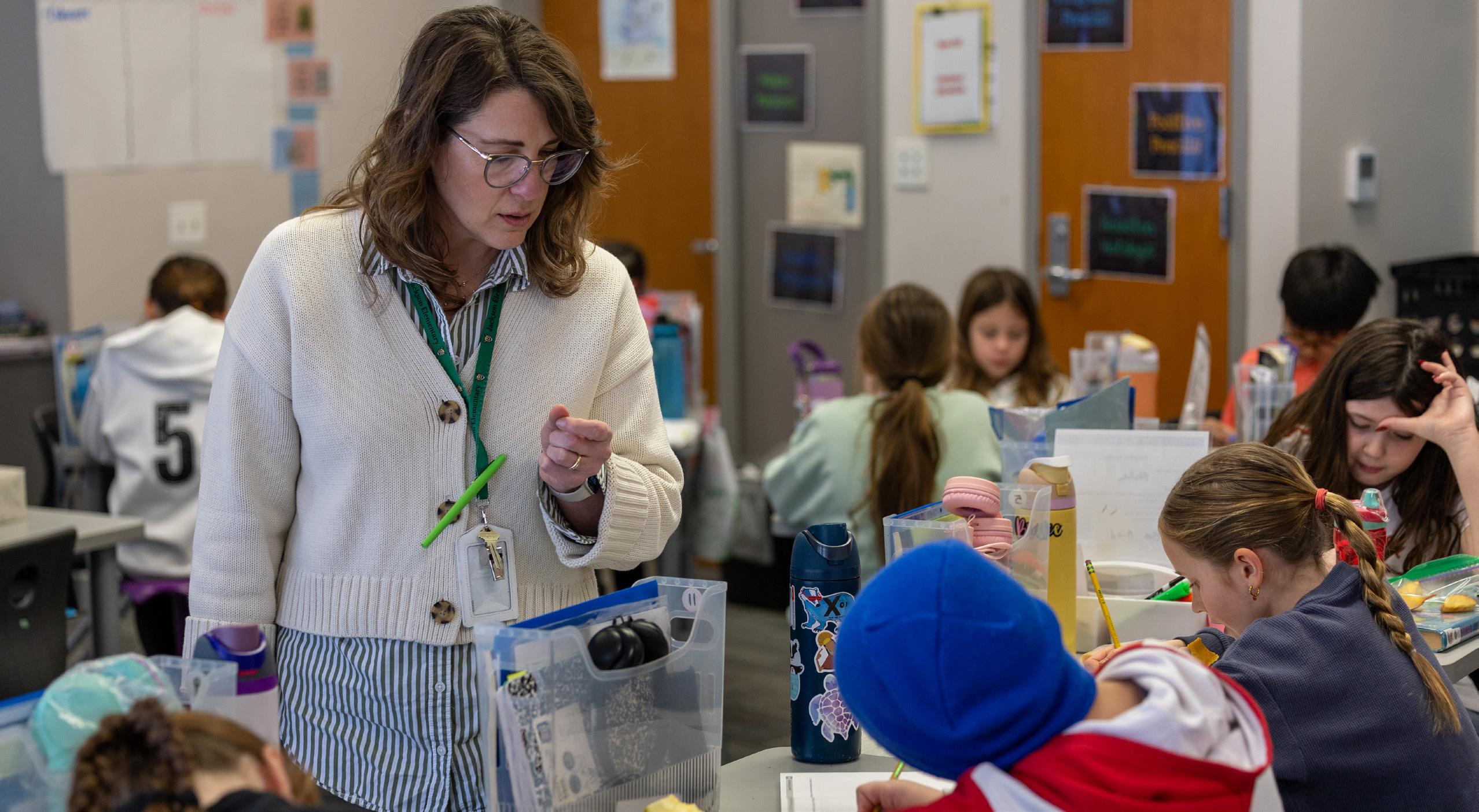


“In practice, I am still teaching,” said Kori Pitaro, Jackson Elementary’s Math Teacher Leader. “This allows me to reflect on my own practice and share my experiences. Instead of having administrators who maybe haven’t been in the classroom recently sharing practices, I get to experience it myself and then share that with everyone.”
That real-time classroom perspective adds credibility and immediacy to professional learning conversations.
“A teacher leader is someone who has demonstrated exemplary teaching and also has the ability to help their peers push their practice forward,” said Dr. Krista Rajanen, Principal of Jackson Elementary. “Having people who are currently in the classroom who can speak to how changes in practice impact student learning is incredibly valuable.”
Teacher leaders play an active role in analyzing student work and classroom evidence to guide instructional decisions.
“We often look at student writing samples and evaluate the effectiveness of our instruction,” said Nicole Noverini, Jackson’s ELA Teacher Leader. “We look for trends that show what students are having success with and where we need to be more supportive.”
That work does not happen in isolation. Teacher leaders collaborate closely with instructional coaches to design professional learning experiences that are responsive to teachers’ needs.
“There’s no one better to know what teachers need than our teacher leaders who are day in and day out teaching our curriculum,” said Mary Liston, Instructional Coach at Jackson. “They help us create professional learning that’s truly grounded in classroom practice.”

The collaboration also expands teachers’ understanding of how instruction progresses from grade to grade.
“This role has allowed me to see the progression of our math curriculum across all grade levels,” Pitaro said. “Understanding that entire progression helps us support students more effectively and identify where we may need to strengthen instruction.”
Beyond curriculum and strategy, school leaders say the initiative is strengthening collaboration across buildings.
At the elementary level, teachers often spend most of their day within their own classrooms or grade-level teams. Teacher leaders help break down those silos.
“This has facilitated collaboration not just within teams, but across the whole school,” Rajanen said. “It supports a culture of continuous improvement.”
That culture includes openness, reflection, and shared responsibility for student growth.
“I think when you hear from someone who has been in your shoes, you’re more likely to gain new insights,” Noverini said. “We’re continually learning and growing together.”
While much of the work happens behind the scenes, district leaders see teacher leadership as a long-term investment in instructional excellence.



“Our teacher leaders are trusted mentors, collaborative partners, and true content experts,” Lyons said. “They elevate practices beyond their own classrooms and model high expectations for both teachers and students.”
By embedding leadership within classrooms, District 205 is building a sustainable structure for improvement, one that empowers teachers, strengthens collaboration, and keeps student learning at the center of every conversation. At its core, this work helps ensure every student experiences high-quality instruction, high expectations, and the support they need to thrive.
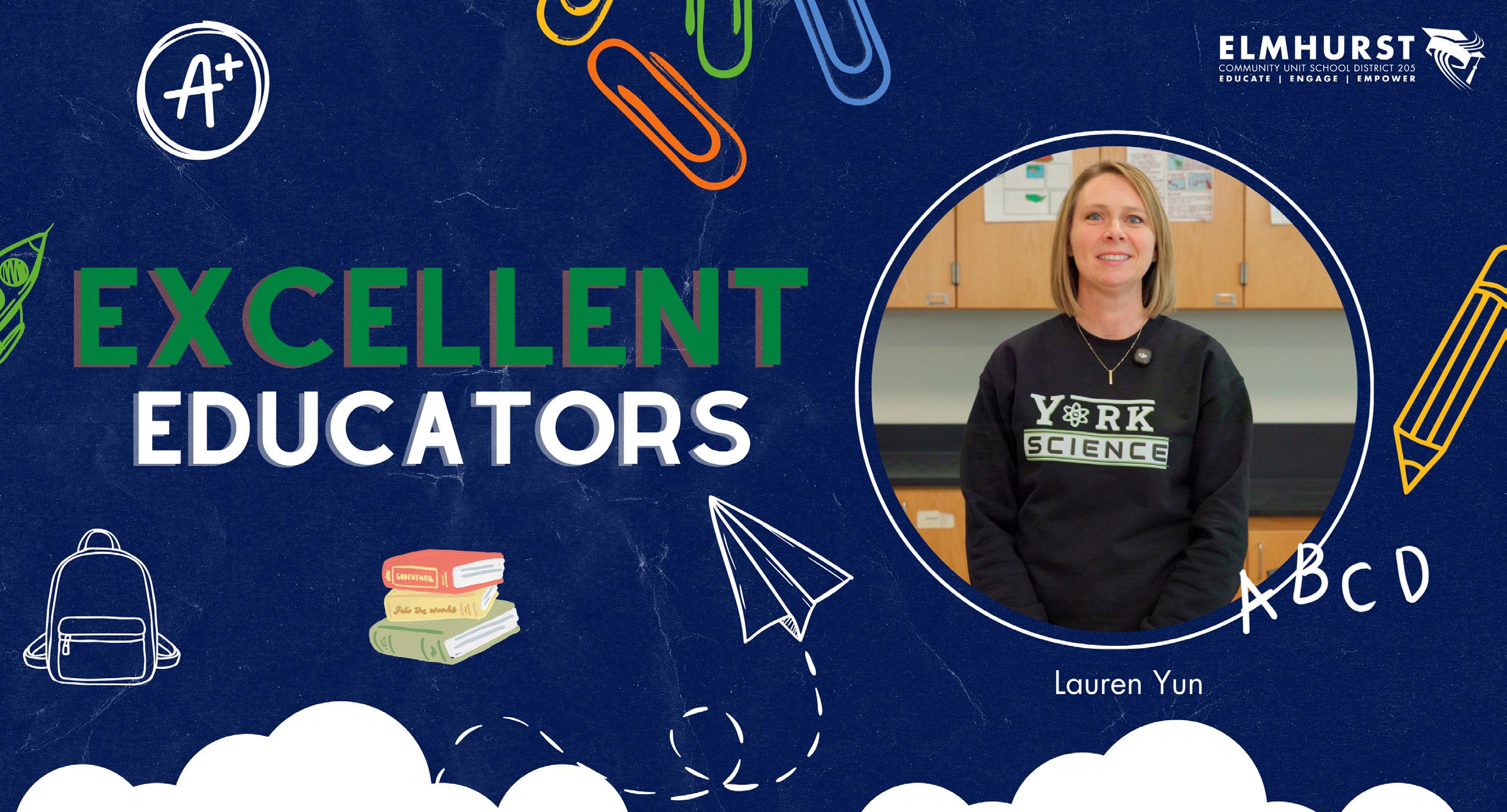

Lauren Yun has been named our most recent Excellent Educator! Lauren has taught in Elmhurst Community Unit School District 205 for 21 years. One of her favorite parts of teaching is working with freshmen in Honors Biology and then having the opportunity to reconnect with many of those same students later when they take AP Environmental Science as juniors and seniors.
On select late start Wednesdays, before the school day begins across Elmhurst District 205, a group of students from across the district makes its way to the District Office for a different kind of school morning.
Inside Superintendent Dr. Keisha Campbell’s office, middle school students, high school students, and students from the Bridges Transition Center gather around, often beginning with an icebreaker before moving into conversations focused on their experiences in school, what they are seeing inside classrooms, and how district leaders can better understand student perspectives.
The Superintendent’s Student Advisory Council, launched this school year, was created to engage a diverse group of students in meaningful conversation with district leadership while ensuring student perspectives help inform district decision making. The council includes representatives from all three District 205 middle schools, York Community High School York High School, and the district’s transition program, creating a setting where students from different schools and learning pathways can learn from one another while helping shape district conversations.
The council’s mission is to provide a platform for student voice by sharing ideas, feedback, and experiences that promote an inclusive, engaging, and student centered learning environment while strengthening school spirit and a sense of belonging across District 205 schools. Its vision is rooted in shared leadership, giving students opportunities to contribute ideas that reflect their needs, strengths, and aspirations.
For Dr. Campbell, the council grew directly out of the district’s strategic planning work and a desire to intentionally elevate student voice into district conversations.
“Coming into District 205 and starting with a strategic plan, we really elicited feedback from all stakeholders, and students were part of that,” Campbell said. “Now that we’re in year three of the strategic plan, it felt like the right time to bring student voice and student perspective back into the fold and hear from them about how we’re doing around some of our priority areas.”
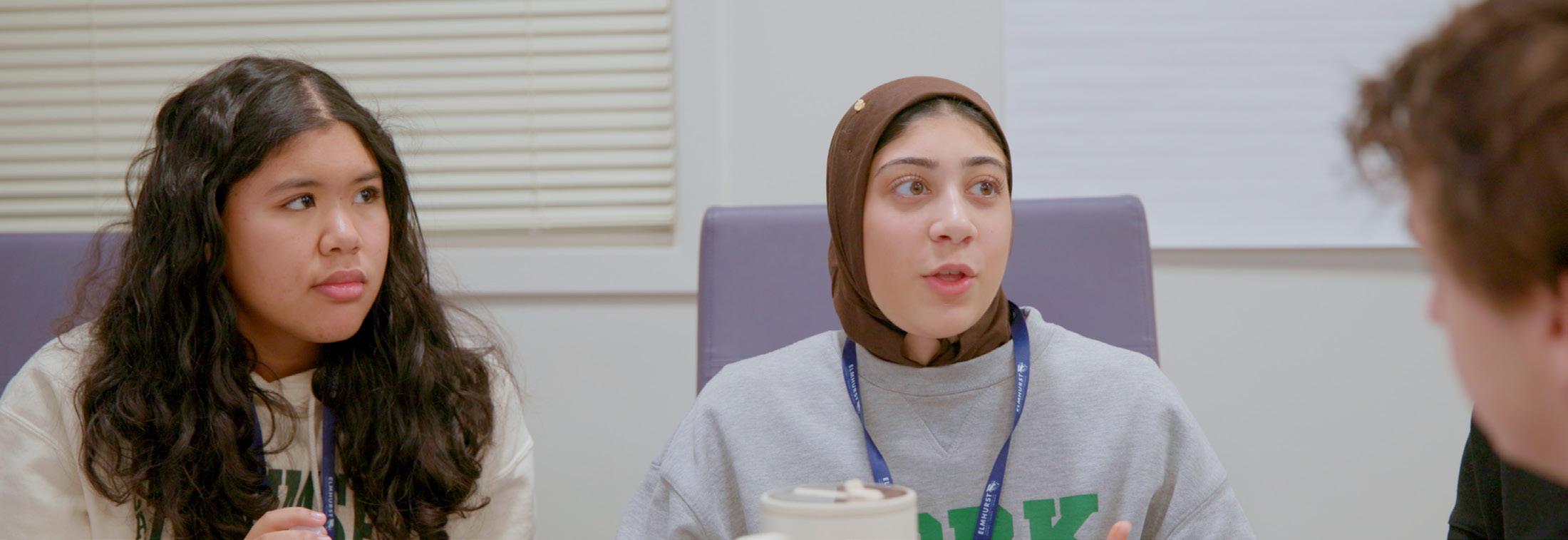
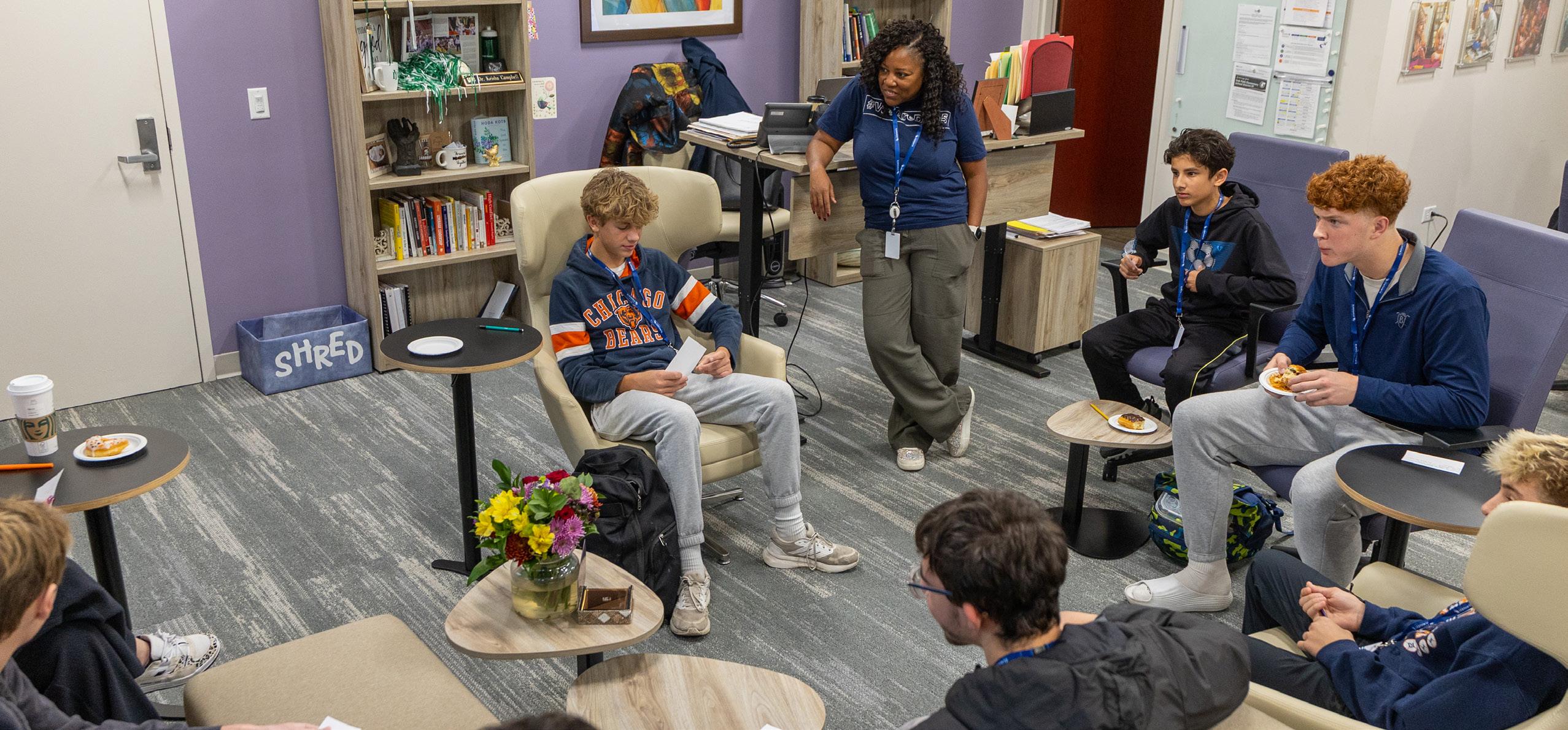
That timing, she said, matters because the district is now at a point where it is reflecting on what has been implemented over the past several years and thinking ahead to what comes next.
“I think now is the perfect time because we’ve implemented the strategic plan for a couple of years and we’re starting to think about what the next iteration will be,” Campbell said. “Elevating student voice is so important as part of that continuous improvement process.”
Each meeting is purposefully designed to feel welcoming and conversational. Students often begin with an activity that helps break the ice before shifting into district topics, survey results, and questions that ask them to reflect honestly on school life.
Cecilia Lehman, an eighth grader at Bryan Middle School, said that format helps students settle in quickly and speak openly.
“Usually a meeting starts with an icebreaker, and sometimes it has something to do with what we’re talking about, other times it doesn’t,” Lehman said. “Then we get talking about certain questions from a student perspective, and we come up with ways we think we could improve a problem or solutions for it.”
For Lehman, one of the most memorable conversations this year came when students reviewed district 5Essentials survey data, something she had completed herself for years as a student.
“My favorite topic was getting to see the 5Essentials results,” Lehman said. “I’ve taken it for so long, so it was cool to see how they’re taking in those answers and thinking about how we can make those results better or just seeing what students think.”
During that meeting, students examined survey categories connected to student teacher trust, supportive relationships, and expectations. Rather than simply reviewing scores, they were asked to help explain what the numbers might mean through their own experiences.
That type of student interpretation is exactly what district leaders hoped the council would provide.
“We’re able to utilize that information as actual qualitative data,” Campbell said. “It gives us insight into whether our programming, strategies, and strategic planning work are really having a positive impact on student experiences.”
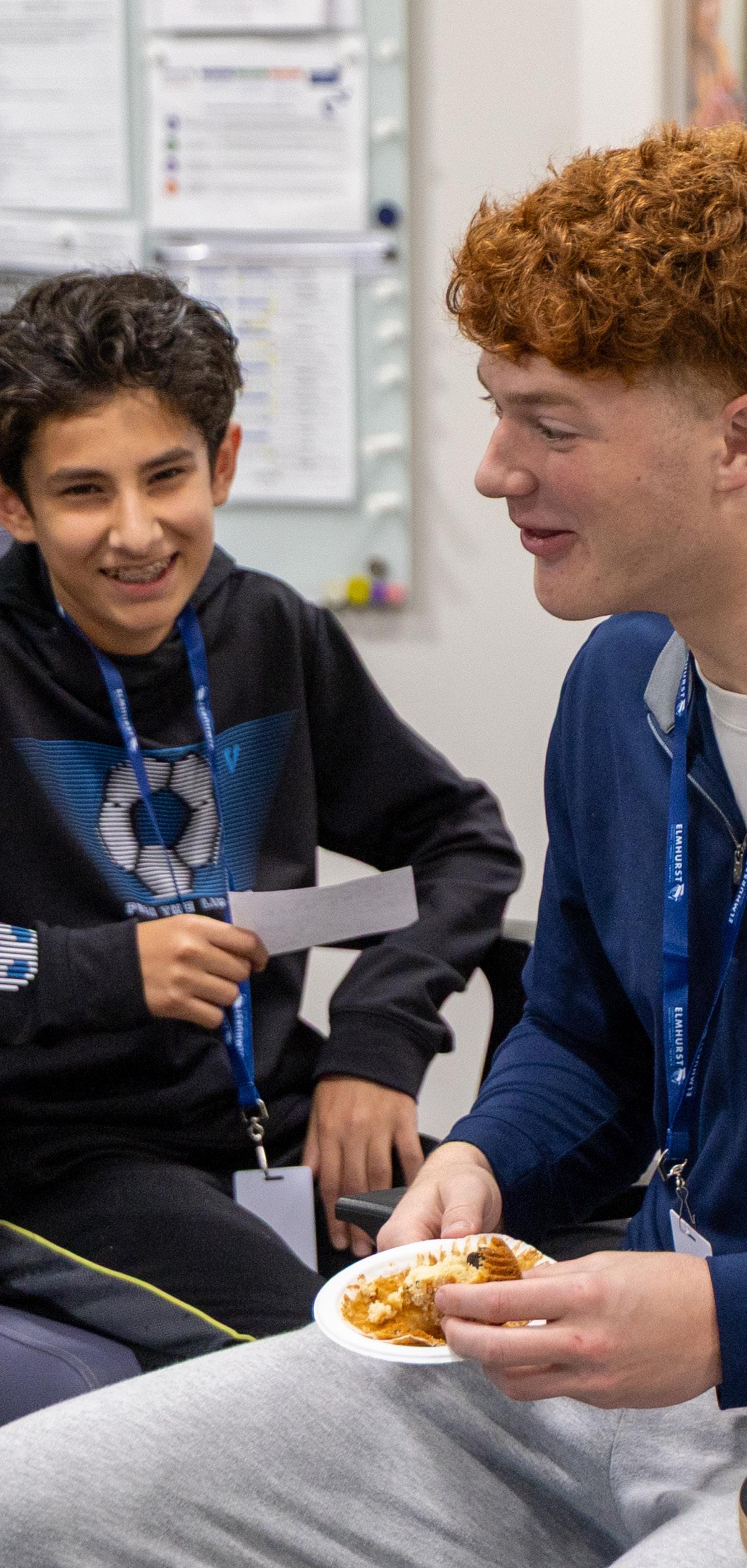
For Katie Day, a senior at York, those conversations show why student voice matters when district leaders review data.
“The way adults or administrators interpret data may vary from the way kids might,” Day said. “Getting to hear students break it down from their own perspectives helps explain why students may have responded the way they did.”
Day said one of the most meaningful discussions so far focused on teacher student relationships and whether students feel genuinely known when they walk into class each day.
“We talked a lot about how students enter the classroom every day and hear, ‘Hi, hello, how are you?’ but sometimes it feels more like a formality,” Day said. “We talked about what can be done to improve that and what teachers had done that made students feel appreciated and valued.”
Those conversations often lead students to build off one another’s ideas, creating dialogue that crosses grade levels and school experiences.
Leo Nardini, a senior at York, said hearing perspectives outside his own experience has been one of the most valuable parts of the council.
“I’m a pretty extroverted person, and hearing perspectives from middle school students that I completely would not have thought of has been really interesting,” Nardini said. “Everyone’s in that room with the one goal to help the district move in the right direction, and hearing all those perspectives shows that goal can work.”
That mix of voices was intentional from the start. Campbell said bringing together students from middle school, high school, and the Bridges Transition Center helps district leaders hear how students experience District 205 across different stages of their journey.
“To see students come together and have this common experience of being a D205 student, but through different pathways, has been really enlightening,” Campbell said. “One student can share a personal experience, and very quickly that leads to other students building off that idea.”

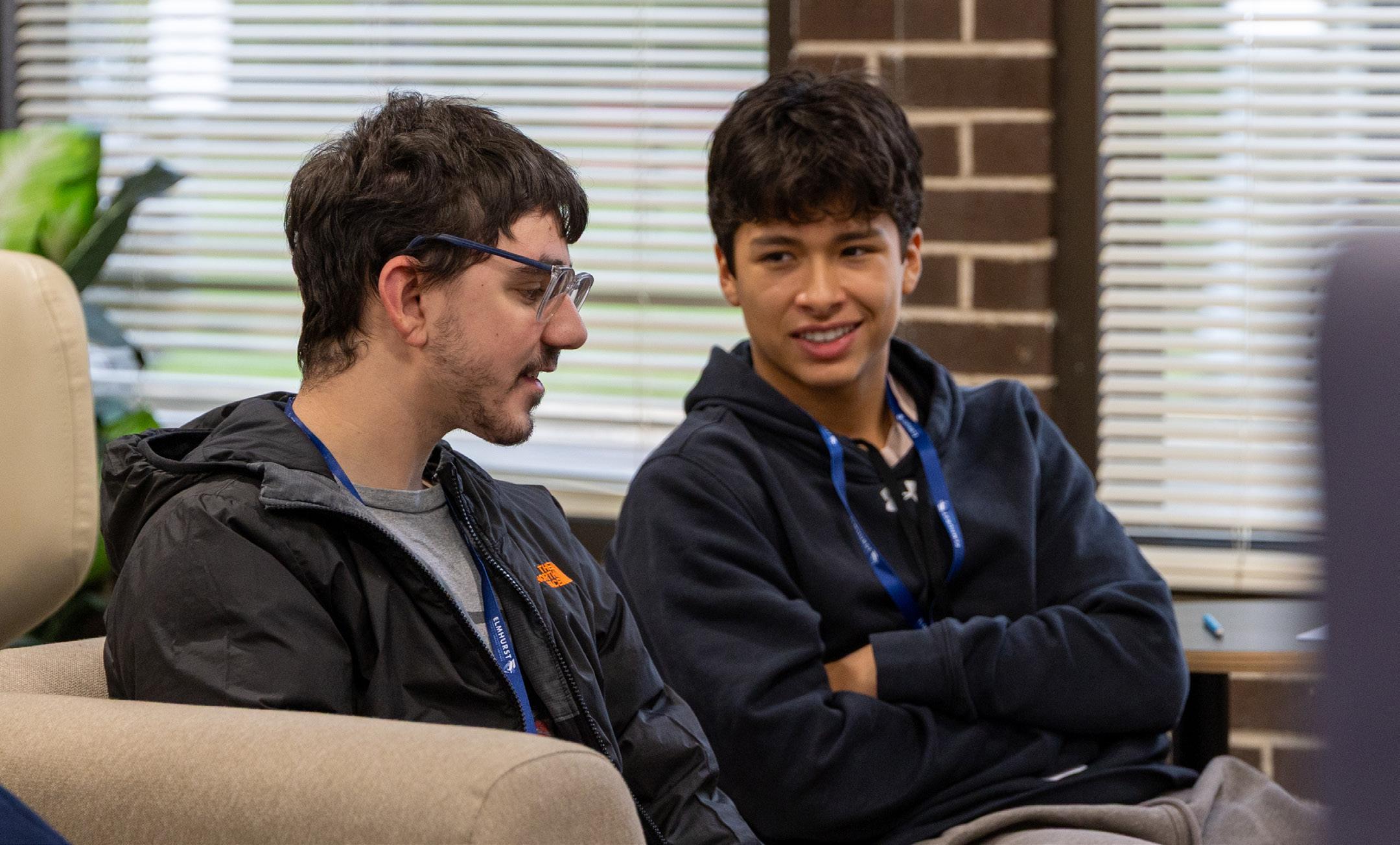
For Elijah Badeaux, a student at the Bridges Transition Center, the council reinforces something simple but important.
“Different kids should have their own opinions, and their opinions should be heard,” Badeaux said.
Badeaux said one of the strongest parts of the experience is how students are welcomed into the room and encouraged to contribute.
“I like that she makes kids feel included, and she helps students feel heard,” Badeaux said.
“She’s just a really nice person in general.”
That sense of encouragement has stood out to many students in the room.
“She makes students feel so heard,” Day said.
“You feel very empowered. You could say the most random thing, and she would make you feel like it was the most revolutionary idea ever.”
For Campbell, those mornings have become one of the most energizing parts of her work.
“I’m an educator at heart, and what gives me the most joy is being with students,” Campbell said. “One of the highlights of my month is knowing I’m going to be meeting with the Superintendent’s Student Advisory Council.”
The conversations may happen once each quarter, but their purpose reaches beyond a single meeting. As District 205 continues its work around student success, learning environments, and strategic planning, the council is helping ensure student voice is not simply gathered through surveys, but heard directly, discussed openly, and considered as part of the district’s path forward.