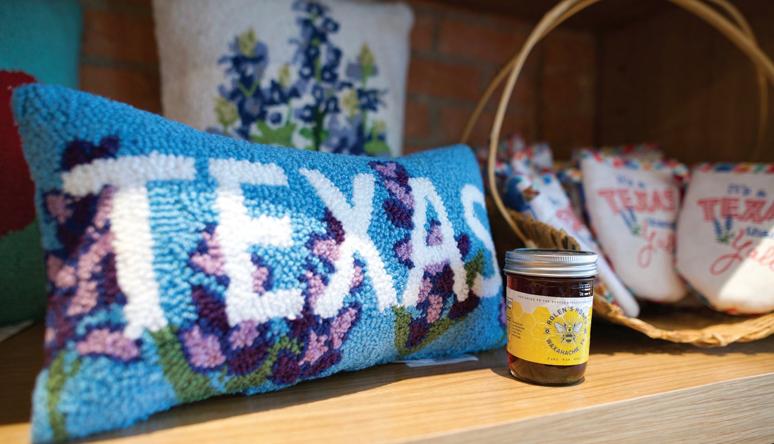
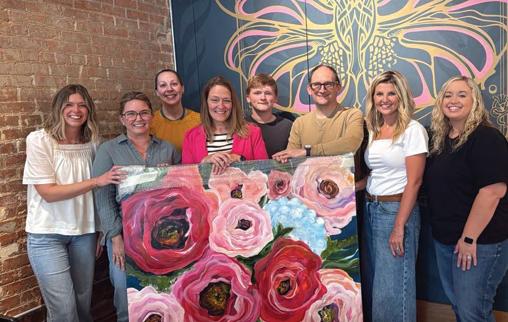
Join us for three days of fun, holiday shopping! With 100+ merchants to shop with, you’re sure to find lots of new, unique, and One-of-A-Kind gifts all in one place to have you ready for all your festive events!
Grab your girlfriends, mom, or daughter, and come enjoy the fun, while shopping and supporting some of the cutest shops at Hollydays Market of Waxahachie!
‘First Call Shopping’ Hours
Friday 9:00 am - 12:00 pm
General Admission Hours
Friday 12:00 pm - 5:00 pm
Saturday 9:00 am-5:00 pm
Sunday 11:00 am-4:00 pm
Tickets:
‘First Call Shopping’: $10
General Admission: $7
Tickets valid for re-admission with wristband & email confirmation!
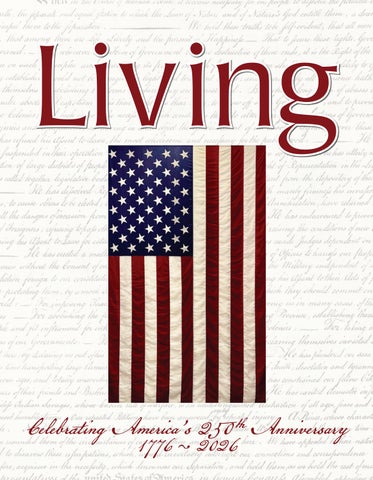
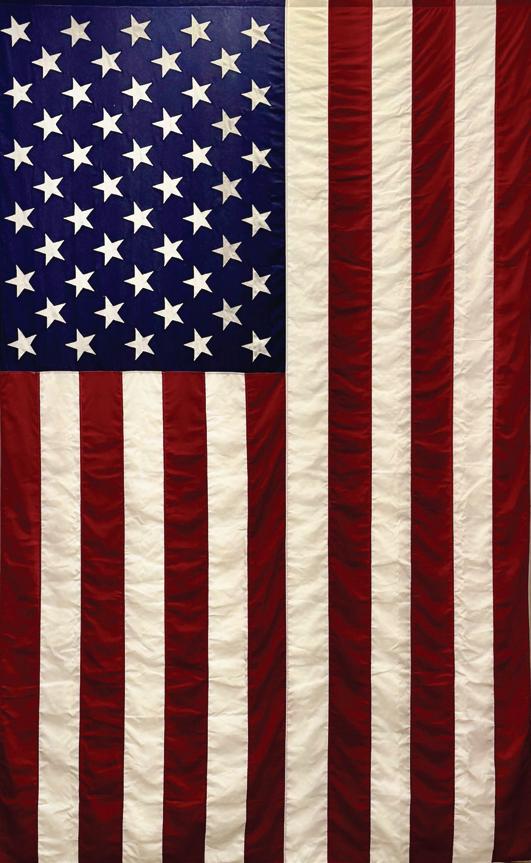
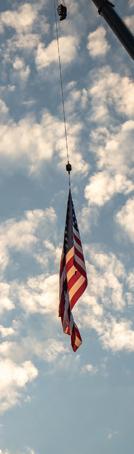
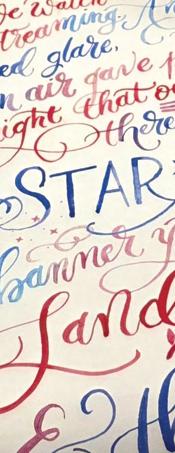
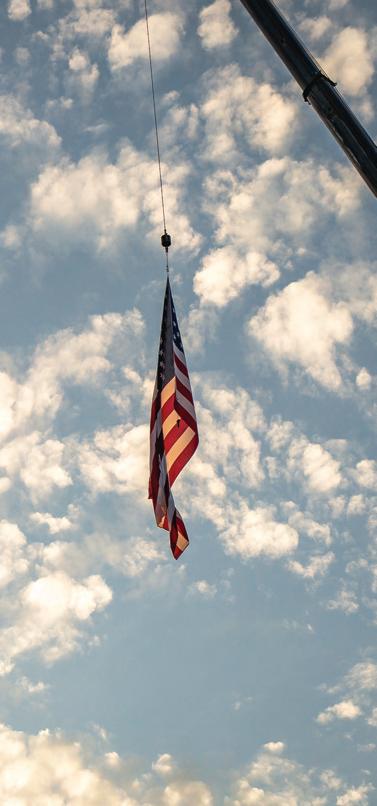
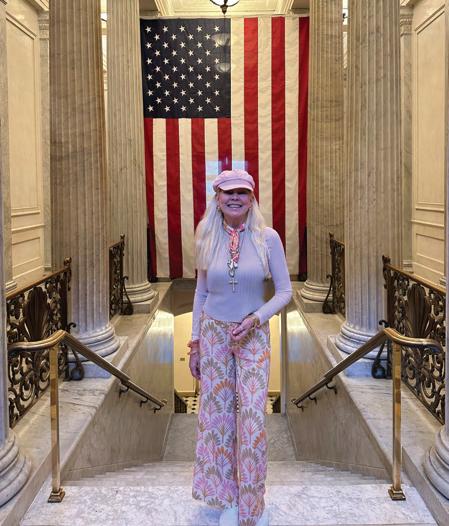
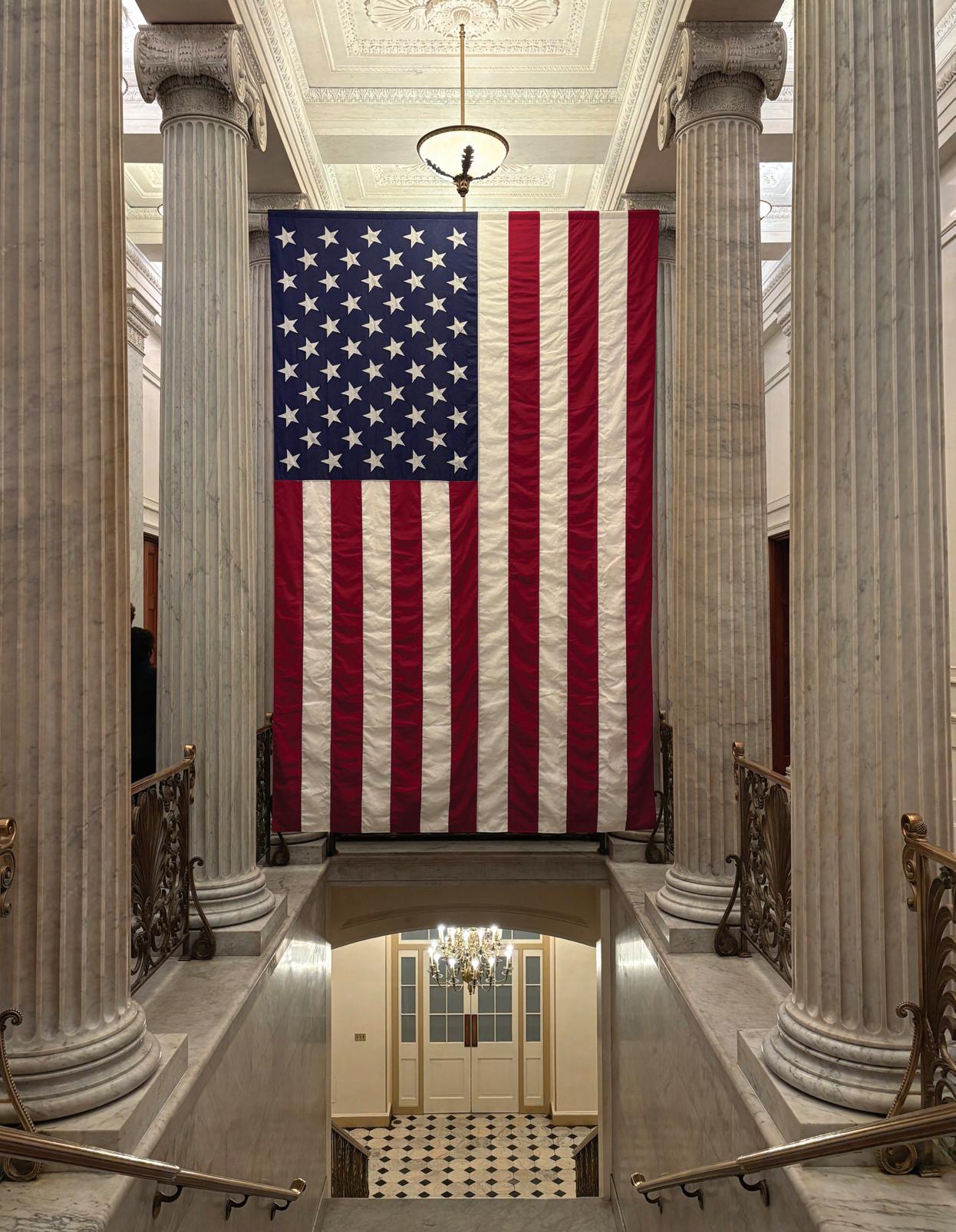
Stars, stripes, and the birth of a nation! This commemorative cover unites two enduring symbols of American history: the American flag, photographed in the U.S. Capitol Rotunda by Waxahachie native Owen Bartosh during his Washington, D.C., internship, and an official image of the Declaration of Independence courtesy of the National Archives. Together, they honor America's 250th anniversary as we celebrate the enduring ideals of freedom and liberty that have defined our nation since 1776.
42 RED, WHITE & WELCOME
Creating a Home that's Welcome for Summer Gatherings with Mary
46 BRINGING NEW ENERGY TO ELLIS COUNTY with Bluebonnet Federated Republican Women 48 CINDY BURCH
Apathy Has Consequences: A Call to Ellis County
Pull Up a Chair.
FERN’S HAS ALWAYS BEEN MORE THAN A RESTAURANT.
IT’S A GATHERING PLACE. A SMALL BUSINESS. A LABOR OF LOVE BUILT BY A COMMUNITY THAT CONTINUES TO SHOW UP FOR US.
THE FOUNDERS CLUB IS OUR WAY OF SAYING THANK YOU WHILE HELPING SUPPORT WHAT’S NEXT.
JOIN FOR A CHANCE TO WIN EXCLUSIVE EXPERIENCES, GIFTS, AND ONE-OF-A-KIND FERN’S FAVORITES. WHEN YOU SUPPORT FERN’S, YOU’RE SUPPORTING LOCAL FARMERS, LOCAL ARTISTS, LOCAL MAKERS, AND A LOCAL DREAM.
Join Fern’s Founders Club
TICKETS AVAILABLE IN-STORE OR ONLINE. PRIZES INCLUDE:
• PRIVATE DINNER FOR 8 • BRUNCH FOR 2 FOR A YEAR • COFFEE FOR A YEAR • $500 FERN’S GIFT CARD
Celebrating America's 250th...
As America celebrates its 250th Anniversary, we’re honored to spend the summer highlighting local stories, traditions, and people who embody the spirit of our great nation.
Years ago, when I first watched Steel Magnolias, I hoped to one day be part of a community that celebrates life in a big way—through seasons and local festivities—while still holding onto the heart of a small town: a place where neighbors know one another, families share generations of history, and traditions matter. This issue reflects that dream and offers a glimpse into our local Americana spirit.
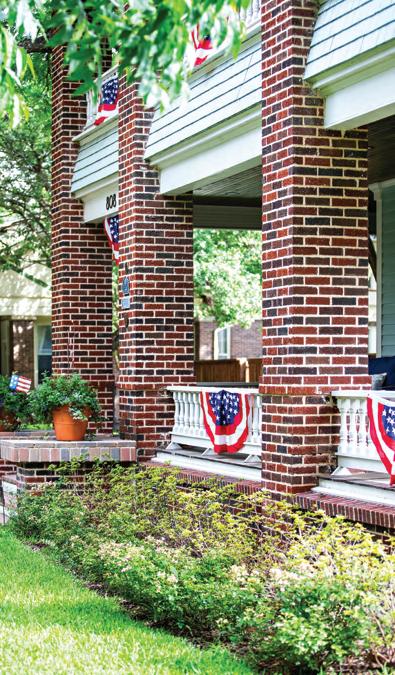
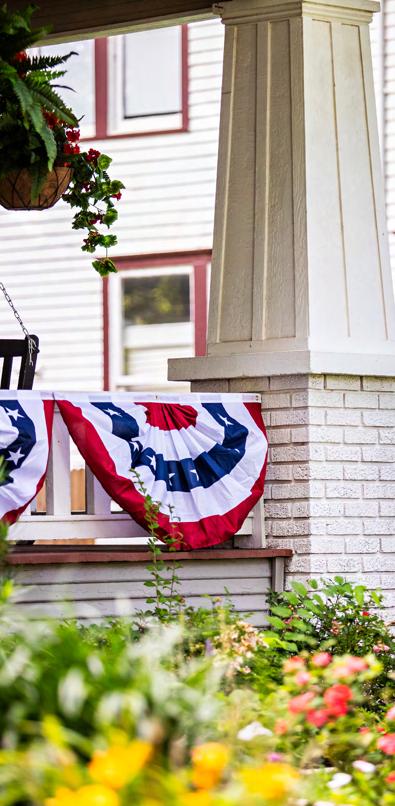
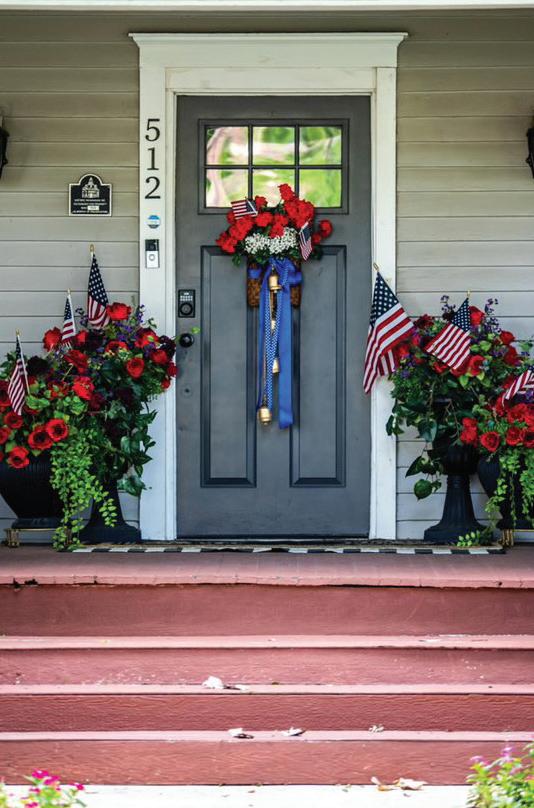
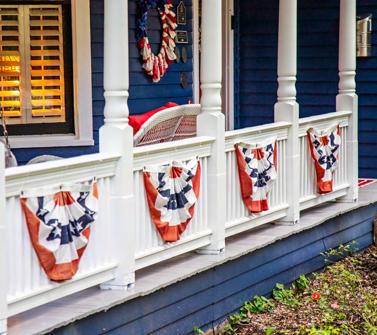
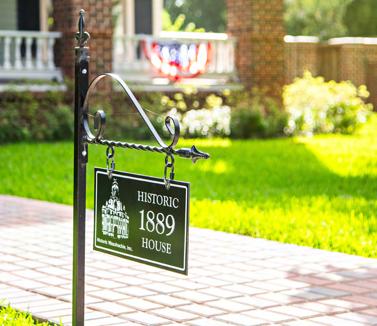
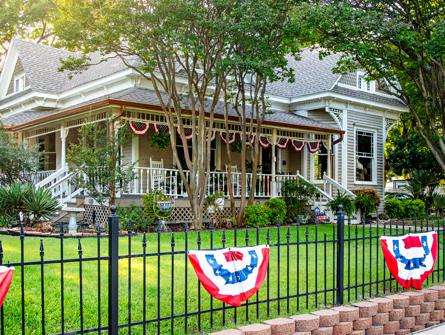
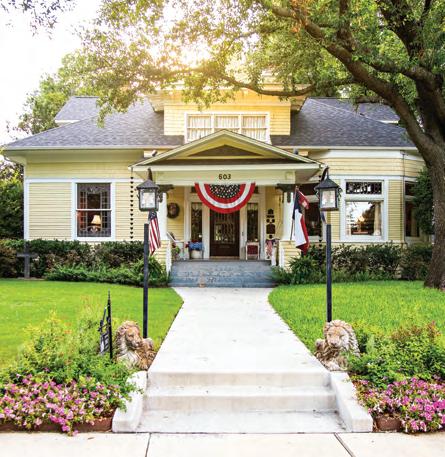
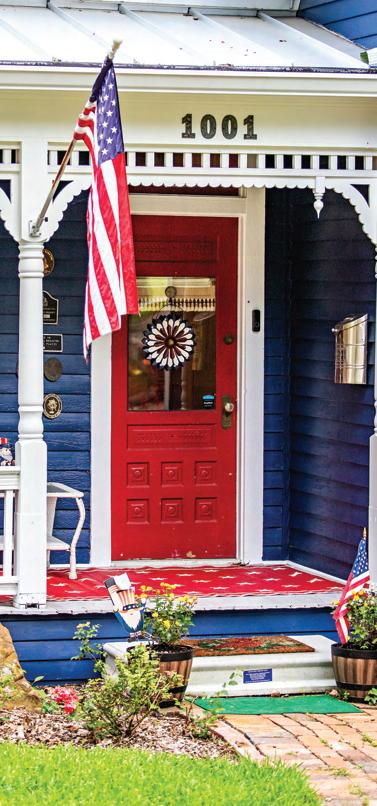
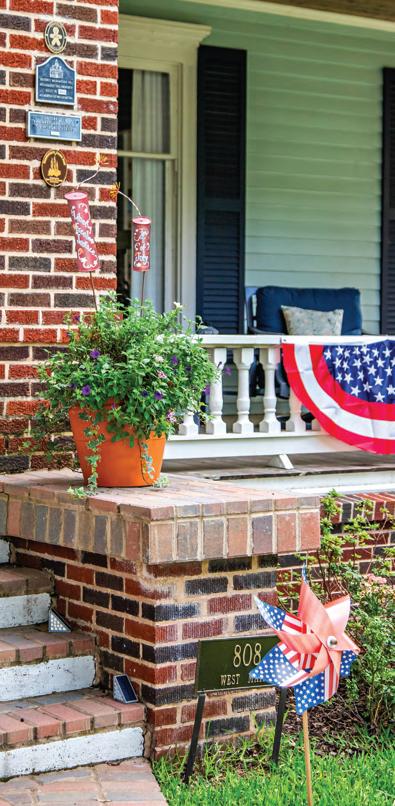
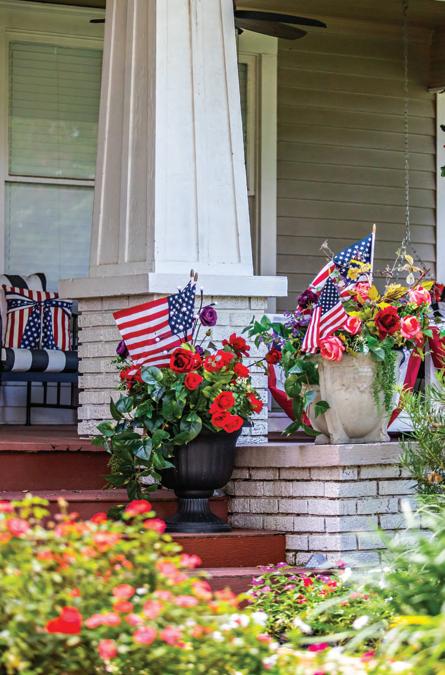
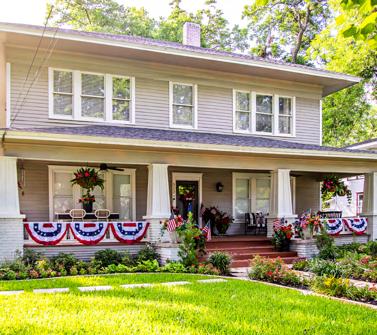
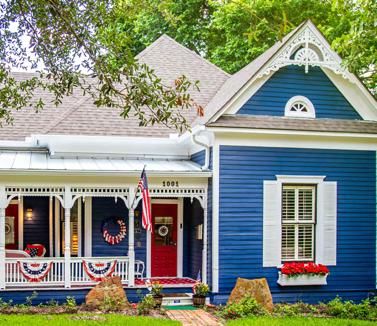
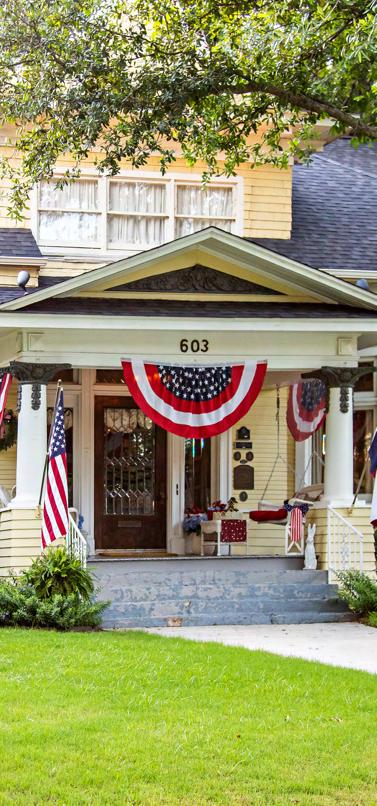
Historic Waxahachie Inc. shares beautiful historical homes adorned with festive red, white, and blue bunting, and patriotic elegance that fills our streets. Jason Wilson of Meat Therapy, a proud Army veteran, shares a heartfelt perspective on what it means to be an American. Emily and Ron Finch trace their family roots back to the Mayflower, while J.J. Brookshire takes us on a remarkable journey through generations of service to our country. You’ll also hear from Owen Bartosh, who reflects on his internship in Washington, D.C., while The Wander Edit offers helpful tips for visiting the U.S. Capitol. Cindy Burch shares her involvement with the Bluebonnet Federated Republican Women and her experience as a delegate at the GOP convention in Houston. Beyond Ellis County, we are following the exciting progress of the Elissa, the Official Tall Ship of Texas, as she sails from Galveston up the East Coast. Closer to home, Mary the Realtor extends a warm “red, white, and welcome” with inviting home tips and a refreshing porch punch recipe perfect for summer gatherings!
Most of all, this issue celebrates the people, stories, and values that make America—and our community—strong. Thank you for allowing us to share these stories and for being part of a county that honors its heritage, celebrates its freedoms, and looks toward the future with faith, gratitude, kindness, and peace.
God Bless America!
“The Lord bless you and keep you; the Lord make His face shine upon you and be gracious to you; the Lord lift up His countenance upon you and give you peace.”
No portion of EllisCountyLivingMagazineshall be reprinted in any other publication without permission. The views expressed herein should not be construed as medical advice. Please consult your physician.
Mary Crook | Art Director | Mary@living-magazine.com
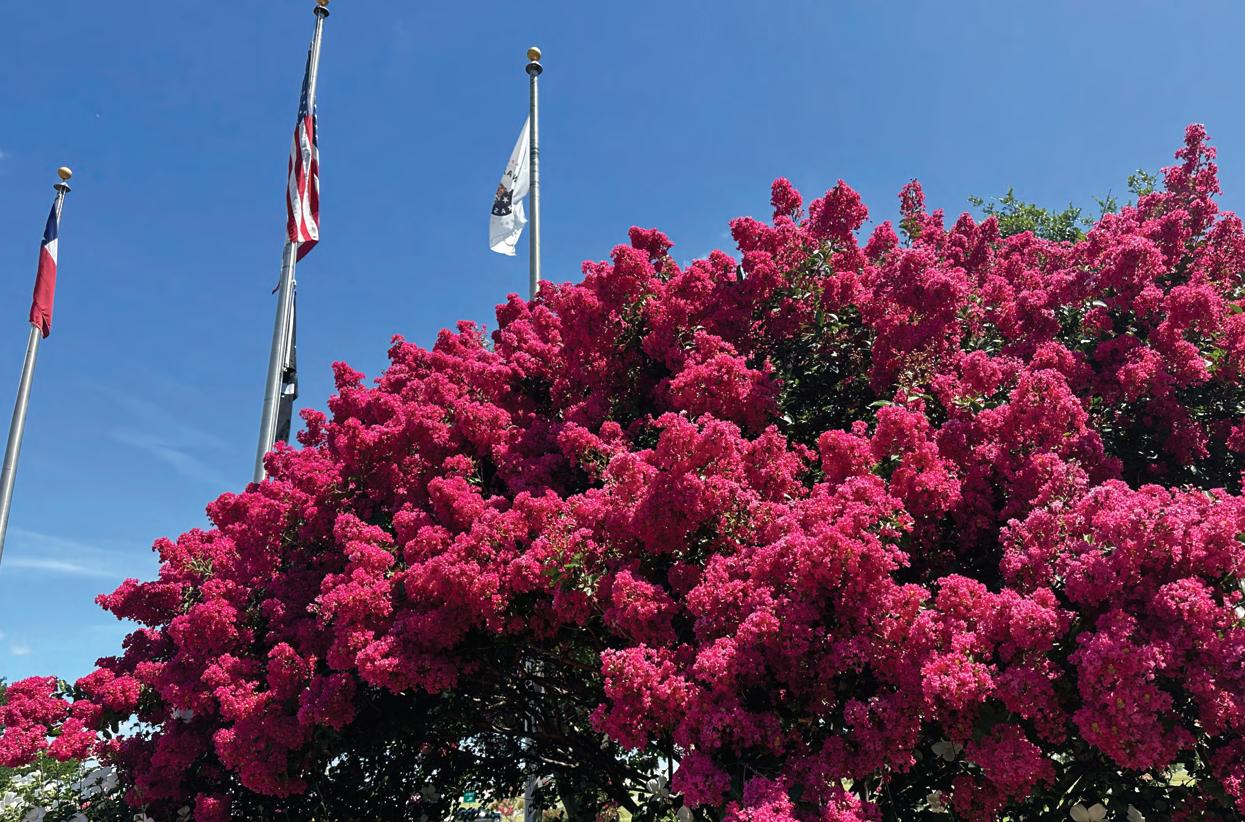
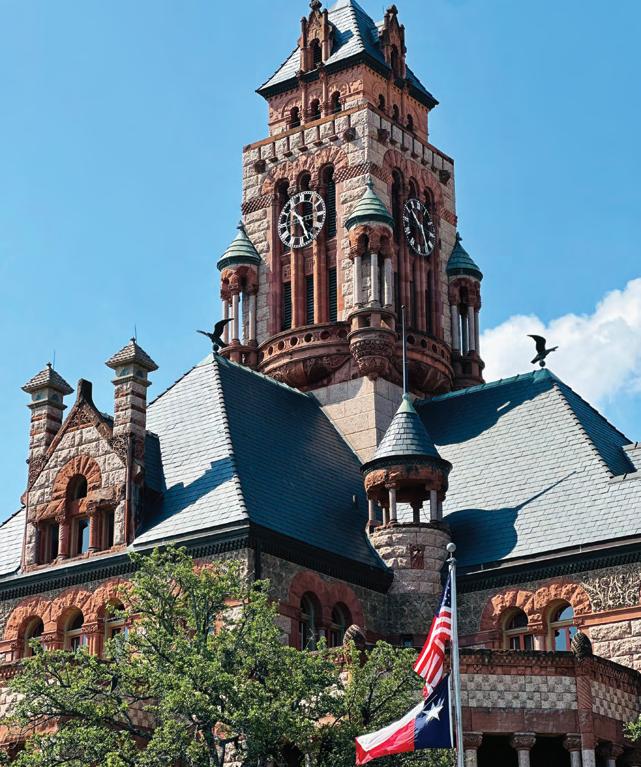
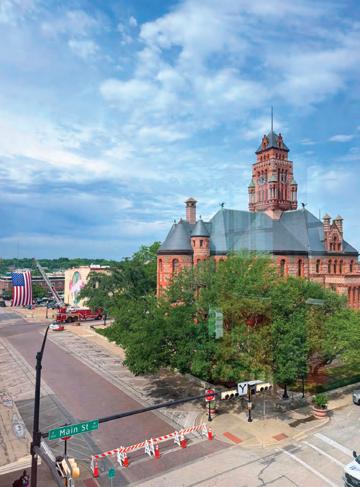
This season, Waxahachie offers an inviting backdrop to celebrate the enduring spirit of America’s 250th anniversary. Across the nation, communities are honoring this historic milestone, and Waxahachie joins in with a vibrant blend of patriotic pride, family-friendly festivals, live music, and the timeless charm that has made it one of North Texas’ most beloved destinations. Anchoring the city’s historic downtown is the iconic Ellis County Courthouse — one of the most photographed courthouses in Texas. Surrounding the square, visitors will find an inviting mix of locally owned boutiques, specialty shops, restaurants, museums, and tree-lined streets accented by the city’s signature blooming crape myrtles, a hallmark that has earned Waxahachie the title of the “Crape Myrtle Capital of Texas.”
While Independence Day has long served as a paramount cornerstone of summer celebrations, Waxahachie’s spirit of community continues well beyond the Fourth of July, with a full calendar of events that bring together residents and visitors from across Texas and beyond.
Around the World Tour: Waxahachie Giving Cup
Through July 19th, Downtown Waxahachie invites visitors on an exciting global adventure with the Around the World Tour: Waxahachie Giving Cup. Participating restaurants and bars represent different countries through themed food, drinks, and décor, all while supporting local nonprofit C.A.R.E. Services.
Summer Soul Affair
Railyard Park comes alive July 18th for the 3rd Annual Summer Soul Affair Music Festival. Beginning at 6 p.m., this free community event features live music, food vendors, artisan shopping, and performances by DJ Mieko and K. Avett, creating the perfect soundtrack for a summer evening in Waxahachie.
Looking Ahead to the Fall...
as summer gives way to fall, Waxahachie’s event calendar continues with some of its most anticipated signature traditions, including C10s in the Park, Stampede of Speed, and the Crossroads of Texas Country Festival.
C10's in the Park
Classic truck enthusiasts won’t want to miss the 11th Annual C10's in the Park on September 19th at Getzendaner Park. Featuring more than 1,000 classic GM trucks, food vendors, live music, and free admission, the event has earned its reputation as “C10ville U.S.A.” Be sure to catch the Cruise-In and Party on the Square festivities happening throughout the weekend.
Stampede of Speed
From October 9th - 18th, the Stampede of Speed roars back to the Texas Motorplex in Ennis for ten days of drag racing, concerts, and family-friendly entertainment.
Favorite highlights include a Downtown Waxahachie cattle drive, performances by Aaron Watson, Brad Paisley, and Travis Tritt, plus the always-popular Fan Fest at Railyard Park.
Crossroads of Texas Country Festival
Downtown Waxahachie transforms into a celebration of Texas culture on October 24th for the Crossroads of Texas Country Festival. With hundreds of Texas artists, makers, food vendors, and live music performances filling the historic courthouse square, it’s one of the region’s most beloved fall traditions.
As America reflects on 250 years of independence, Waxahachie continues to offer a place where history, hospitality, and community seamlessly come together in meaningful ways. Visitors are invited to experience the traditions, events, and welcoming spirit that define this special Texas destination.
For more details & a complete list of upcoming events, shopping, dining, and lodging information, visit VISITWAXAHACHIE.COM
Celebrating250 YEARS of American Heritage
"As I stroll through Waxahachie this summer, I am filled with a deep sense of pride seeing our historic homes adorned in red, white, and blue. By preserving these architectural treasures, we honor not only our local heritage but also the enduring spirit and history of our nation."
— Jaclyn Wilson President , Historic Waxahachie Inc.
PHOTO CREDITS TODD GARDNER
The Lifestyle Shift:
Helping Active Adults Live Better Lives
As lifestyles evolve and priorities change, many seniors are discovering that bigger isn’t always better. Across the country, older adults are leaving behind large family homes in favor of maintenance-free rental cottage communities designed to simplify daily life, reduce stress, and support healthier aging.
What once felt like the dream home can eventually become physically demanding and time-consuming. Yardwork, home repairs, cleaning gutters, climbing ladders, and routine maintenance often require significant effort and can increase the risk of injury. As a result, many retirees are seeking something different: freedom, convenience, connection, and peace of mind.
Today’s active adults are redefining retirement. Rather than spending their time managing a house, they want the flexibility to focus on family, travel, hobbies, wellness, and the experiences that bring them joy. Maintenance-free cottage communities offer the comfort and privacy of a home without the ongoing responsibilities of homeownership. Lawn care, landscaping, exterior maintenance, and repairs are handled professionally, allowing residents to spend less time worrying about chores and more time enjoying life.
Simplifying life doesn’t mean sacrificing independence. In fact, many seniors find that downsizing enhances it. Without the physical
and financial demands of maintaining a large property, residents often enjoy greater freedom and flexibility. Newer cottage-style communities are thoughtfully designed with accessibility, safety, and convenience in mind, creating environments that support active, independent living.
A major benefit of these communities is their emphasis on wellness. Staying physically active plays a critical role in maintaining strength, balance, mobility, and overall health as we age. Many active adult communities feature walking trails, fitness centers, pickleball courts, and group exercise opportunities that make healthy living both accessible and enjoyable.
Pickleball, one of the fastest-growing sports among older adults, offers a fun, low-impact way to stay active while building friendships. Fitness programs, walking groups, and recreational activities encourage residents to maintain healthy routines without the inconvenience of traveling to a gym or recreation center.
Equally important is the sense of community these neighborhoods provide. One of the greatest challenges facing many seniors today is isolation. As families become busier and longtime neighbors move away, opportunities for social interaction can diminish. Yet meaningful connections remain essential to emotional and physical well-being.
Active adult cottage communities help foster those connections naturally. Whether it’s meeting neighbors during a morning walk, joining a fitness class, attending community events, or gathering for coffee with friends, social engagement becomes part of everyday life. These simple interactions can have a profound impact on happiness, confidence, and overall quality of life.
What makes today’s cottage communities especially appealing is their balance of independence and belonging. Residents enjoy the privacy of their own home while benefiting from a supportive neighborhood filled with people in similar stages of life. It’s a lifestyle that promotes both personal freedom and meaningful connection.
Ultimately, this lifestyle shift is about more than downsizing—it’s about upgrading the way we live. By letting go of unnecessary stress and embracing environments designed for wellness, activity, and community, many seniors are discovering greater freedom, improved health, and renewed enjoyment in everyday life.
Retirement should be about making the most of each day—not maintaining a house. For a growing number of active adults, maintenancefree cottage living is opening the door to a simpler, healthier, and more fulfilling next chapter.
Retirement living made simple!
250 YEARS OF Family History Celebrating
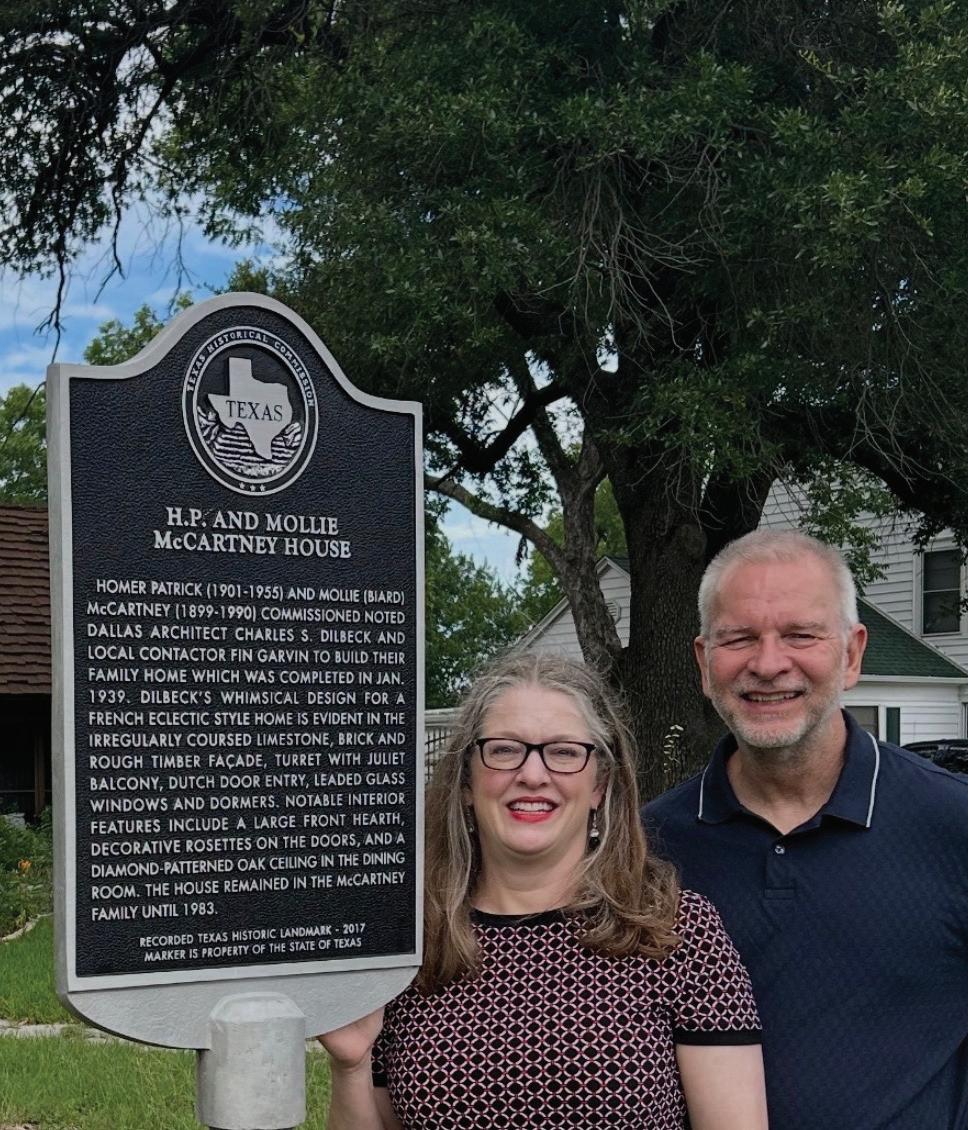
Emily and Ron Finch
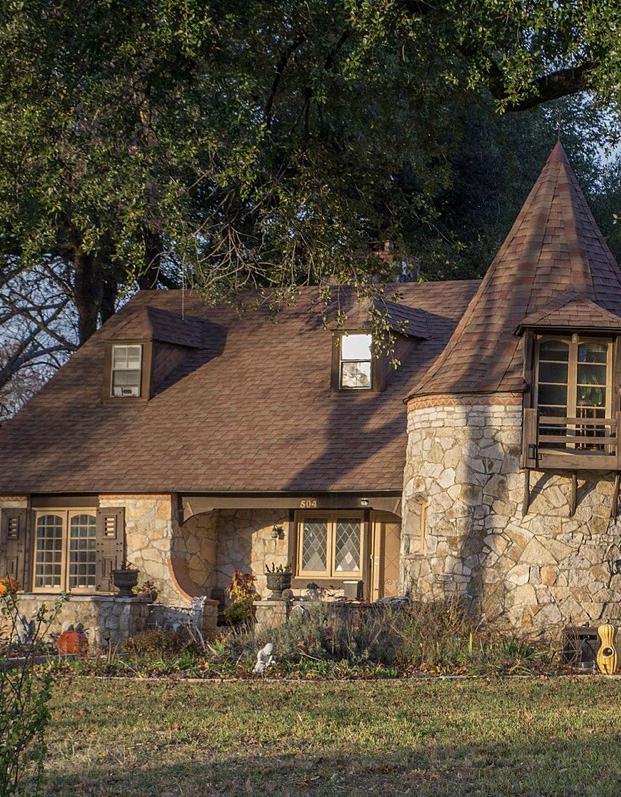
share an appreciation for old stuff, including historical buildings, places, and people. Similar thinking about history and preservation brought the couple together and led them to a historical home, the H.P. and Mollie McCartney House, 11 years ago at 504 Sycamore Street.
Ron began doing genealogy more than 25 years ago. Over time, his interest evolved from trying to get a better understanding of his own family legacy, to being applied towards artifacts and historical places to better appreciate the challenges people overcame. Most of the genealogy research he does is on behalf of others. He has created around 325 trees on Ancestry.com.
Ron’s research topics are wide-ranging. For instance, a Latino father and son from South Texas didn’t know how they acquired their Anglo name, so Ron found their ancestor George Atkinson of England served in the Republic of Texas army in 1837, and married a widow, Mary Anna Cisneros-Cavazos, who had their children baptized in the Catholic Church in Old Mexico. A research project for an African American man uncovered details in the life of his absent father, who danced for Harlem entertainer Cab Calloway, started his own entertainment club in California, and gave comedian Red Fox his start.
Over the last half-dozen years, Ron has written biographical sketches for property owners of historical homes shown on the annual Gingerbread and Christmas Tour of Homes. A USC film producer plans to use some of Ron’s research in an upcoming work about the black female aviatrix Bessie Coleman.
In regard to his own family history, Ron’s direct ancestor John Finch arrived on this continent nearly 400 years ago aboard the flagship Arabella in Governor John Winthrop’s fleet. Ron ascends directly from Colonial Governors; Benedict Arnold (Rhode Island), Thomas Dudley (Massachusetts), the first published American poet Anne (née Dudley) Bradstreet, two key figures in the Salem Witch Trials; Dudley Bradstreet (Magistrate), Job Tyler (accuser), and many Revolutionary Patriots. He has also taken his German mother’s ancestry back into the 17th century. More recently, Ron has focused on proving ancestry to individuals with Revolutionary War service in order to join the relatively new Ellis County chapter of The Sons of the American Revolution.
Family heritage was a tradition on Emily’s mother’s side. Her grandfather, Joe Gordon Simmons, made inquiries of distant family members from his desk at the First National Bank of Miles, where he was President. Joe was proud of his family’s accomplishments. The Simmonses and Warnocks (Mother and Uncle) left Arkansas for Coleman County about 1880, with high hopes and not much else. After toiling on the farm for many years, Joe’s father bought a Sears & Roebuck home that was shipped to Valera via rail. His parents, six brothers, and two sisters lived in that small home. Several Simmons’ boys became successful bankers. Joe hadn’t quite figured out his Revolutionary War ancestor, Charles Simmons, who served as a Lieutenant after the fall of Charleston. Joe’s grandmother was a Barmore, and from this line is kept a diary of crossing the country by covered wagon. How appropriate that Emily’s ancestor, James Barmore, was a wagoner for the Continental Army in Virginia.
Joe’s better half was Jane Ferris Damon. Through this connection, Emily is related to a Hollywood star named Matt from Cambridge. She is also a descendant of the Bennett for whom the street in Dallas is named. Ron delivered a presentation about the Damon and Bennett families to the Dallas County Pioneer Association in March. A great-uncle, and War of 1812 veteran, Major Joseph Anthony was murdered in the Arkansas State Assembly. His father, Rev. Joseph Anthony, was a cantankerous Baptist preacher in Virginia who left his bible at home to fight with the Patriots.
Emily’s ancestry in North America goes back to Plymouth Rock. Through her mother, Carolyn, she descends from Mayflower passengers Henry Samson, John Howland, and Elizabeth Tilley, and is likely descended from Mayflower Compact signer Edward Winslow or one of his brothers. Emily’s father, Robert William Glidewell, was a U.S. Marine who fought in the South Pacific. An exceptional swimmer, Bob trained in Honolulu with U.D.T., then known as “frog men”, which later became the Navy Seals. Emily has an equally fascinating family history through her father, going back to her Patriot ancestor William Glidewell, and early settlers of New Amsterdam (Cossart/Cozad). W.P.D. officer
O.T. Glidewell is a distant relation, their trees diverging in the Revolutionary era.
VERY GENERATION HAS INHERITED THE RESPONSIBILITY TO LEAVE AMERICA STRONGER THAN IT FOUND IT. "
WHAT AMERICA'S BIRTHDAY MEANS TO ME 250th
IN
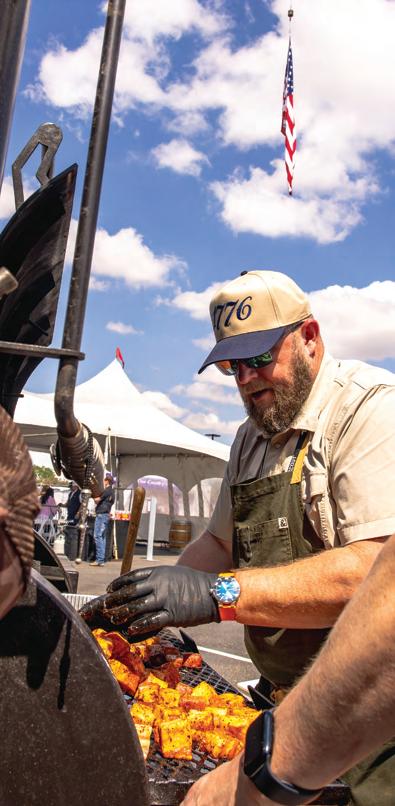
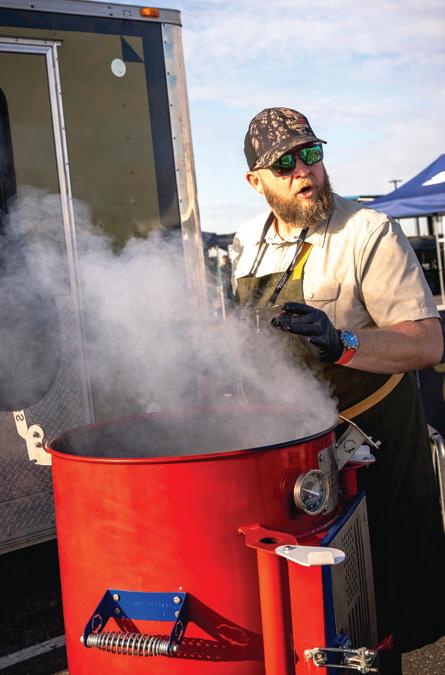
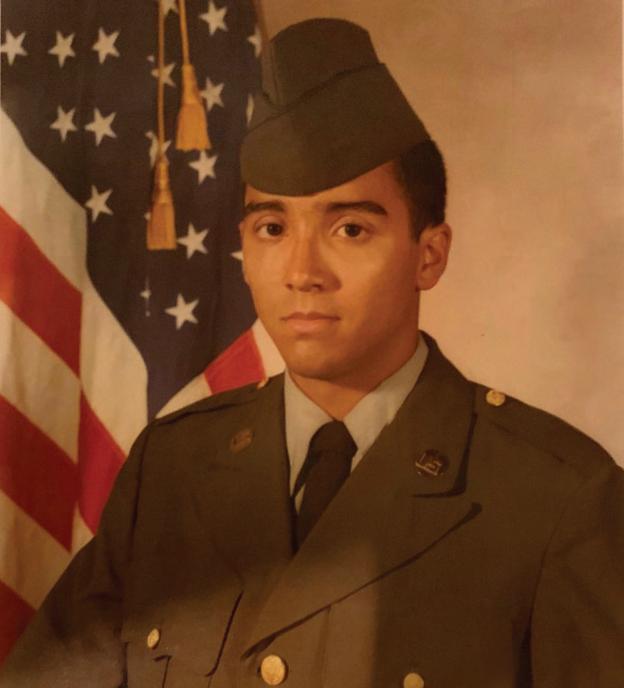
On July 4, 2026, the United States of America will celebrate its 250th birthday. Across the nation, there will be fireworks, parades, ceremonies, and celebrations marking a quarter millennium since a group of determined patriots declared that liberty was worth fighting for. For many Americans, it will be a day of pride and reflection. For me, as an Army veteran who served during Operation Iraqi Freedom and Operation Enduring Freedom, it carries an even deeper meaning.
When I raised my right hand and swore an oath to support and defend the Constitution of the United States, I wasn't pledging allegiance to a political party, a president, or a moment in history. I was committing myself to the enduring ideals that have guided this nation since its founding: freedom, self-government, individual liberty, and the belief that ordinary citizens can shape their own destiny.
Those ideals are what connect today’s America to the courageous men and women of 1776. As veterans, we often gain a unique perspective on our country. We have seen the American flag flying over distant deserts and remote outposts thousands of miles from home. We have experienced firsthand how precious freedom is and how many people around the world long for the rights and opportunities that Americans sometimes take for granted.
During my deployments, there were moments when home felt very far away. Yet even in those difficult environments, thoughts of family, community, and country remained constant. The small-town values that define places like Ellis County became reminders of what we were serving to protect. It wasn't an abstract concept. It was our neighbors, our schools, our churches, our businesses, and our way of life. The approaching 250th anniversary offers an opportunity to reflect on just how remarkable America’s story has been.
Our nation has never been perfect. The past 250 years have included triumphs and failures, progress and setbacks, unity and division. We have preserved through civil war, economic hardship, terrorist attacks, and countless challenges that tested the strength of our republic. Yet through it all, the American experiment has endured.
Generation after generation has answered the call to preserve and improve this nation. Farmers, teachers, factory workers, entrepreneurs, first responders, and service members have all contributed to a story far greater than themselves. Every generation has inherited the responsibility to leave America stronger than it found it.
Under the Dome of Democracy
A Glimpse into the Living History, Architecture & Art of the U.S. Capitol
STORY & PHOTOS BY MELISSA MCBRIDE
Planning a U.S. Capitol Tour
Stepping into the U.S. Capitol is especially meaningful—an experience that begins at the Capitol Visitor Center. It is best planned ahead with advance reservations, particularly during high-interest periods such as America 250 celebrations and other major Washington, D.C. events.
For visitors from Texas, assistance and tour reservations can be coordinated through the offices of U.S. Representative Jake Ellzey and U.S. Senators John Cornyn and Ted Cruz. If you’re hoping to access the Senate Galleries—a highly recommended experience separate from the standard Capitol tour—you must request those passes well in advance directly through congressional offices; they are not included with general admission which is completely free.
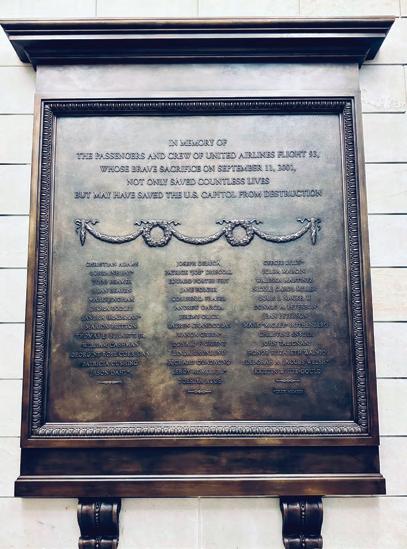
Because the Capitol remains a fully functioning workplace for Congress, security screening is required for all guests. Arrive a little early to move through the process with ease. Once inside, visitors must be mindful of the building’s dual role as both a working seat of government and a national historic landmark; respectful, quiet conduct is expected throughout. Photography is generally permitted in public areas unless otherwise posted, offering plenty of opportunities to capture the Capitol’s remarkable interiors. The following personal tips, highlights and images reflect that same spirit, focusing solely on what might assist visitors in knowing beforehand what they will typically see and capture as they move through its halls of history, architecture, and art. The statues, paintings, and sculptures throughout the U.S. Capitol are part of its federal art collections, preserved and conserved by the Architect of the Capitol in coordination with congressional oversight entities, maintaining an extraordinary visual record of the nation’s history.
This is a walk through history, so comfort matters. Expect plenty of walking and standing, and choose supportive shoes that can keep up with the day. Business-casual attire is appropriate, though there’s no formal dress code. Bring a government-issued photo ID, your tour confirmation, and a fully charged phone or camera. Small bags are allowed but will be screened, and check online beforehand for prohibited items. Washington, D.C. weather can change quickly, so layers are key to comfortably enjoying the Capitol from start to finish.
The Capitol Dome: A Defining Silhouette
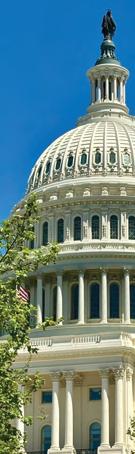
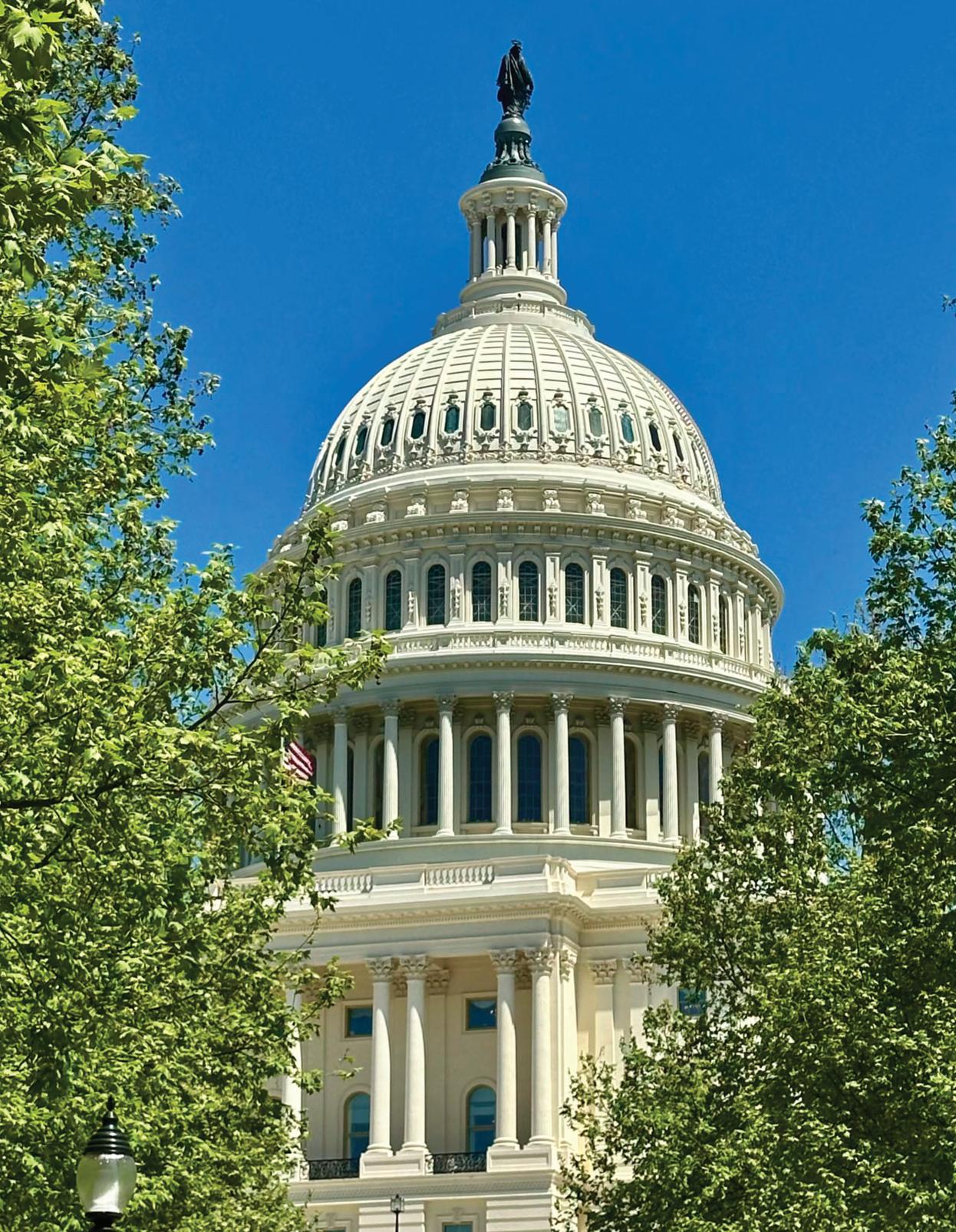
Rising above the Washington skyline, the U.S. Capitol dome is one of the nation’s most recognizable architectural landmarks. Designed by architect Thomas U. Walter and completed during the Civil War era, the current dome replaced an earlier sandstone structure as the Capitol expanded. Now constructed from millions of pounds of cast iron, it remains a powerful symbol of American democracy.
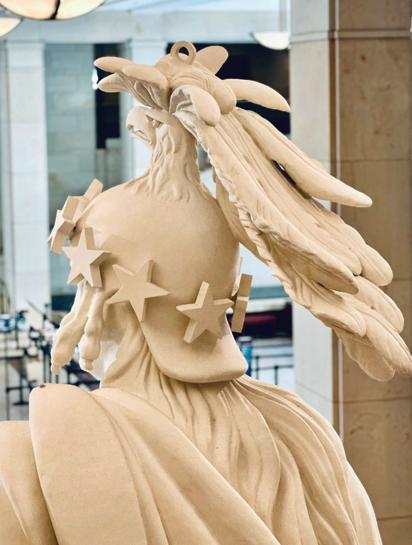
At its peak stands the Statue of Freedom, a bronze female figure sculpted by Thomas Crawford and installed in 1863. The statue rises 19½ feet as the crowning feature to the dome. Her flowing hair is topped with a military-style helmet adorned with an eagle's head, nine stars, and a crest of feathers, drawing on classical and allegorical symbolism associated with liberty, honor, strength, and freedom. Her ten arrows double as lightning rods. The original plaster model is displayed in Emancipation Hall at the Capitol Visitor Center, offering a rare close look at its artistry and detail.
The Rotunda: The Capitol’s Ceremonial Heart
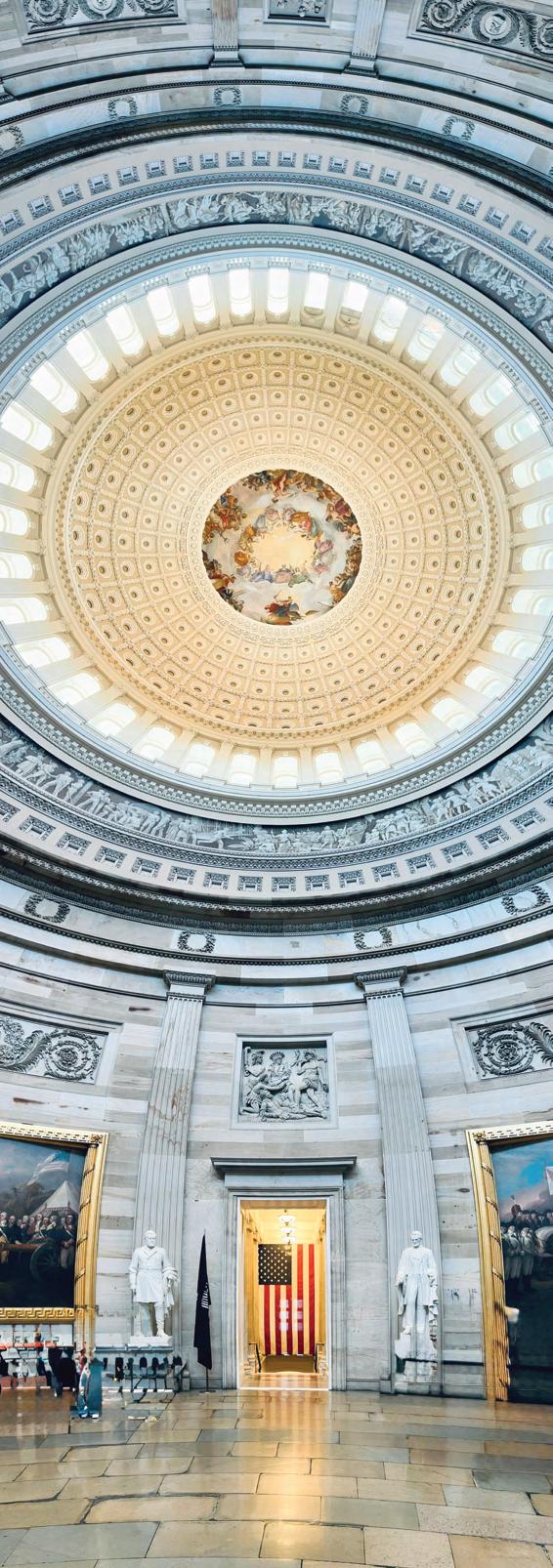
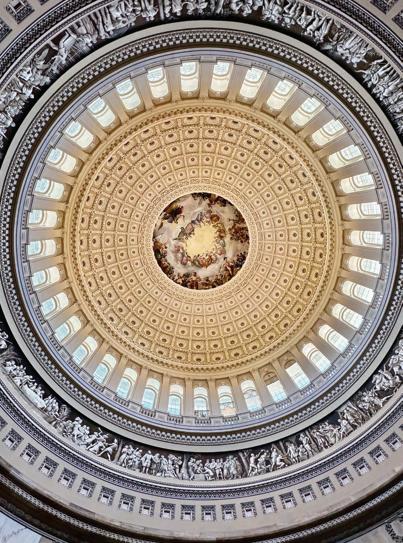
The Capitol Rotunda is the ceremonial heart of the building and a breathtaking sanctuary of American history and ambition. Beneath the soaring dome, visitors are surrounded by monumental paintings and historic sculptures that depict defining moments in American history, creating a space that feels both grand and deeply reflective. Standing in the center of the rotunda and looking up to the dome's 180-foot apex, 36 massive windows flood the profoundly illuminated fresco The Apotheosis of Washington with light creating sky-blue tones.
The Crypt: A Quiet Chamber Beneath the Dome
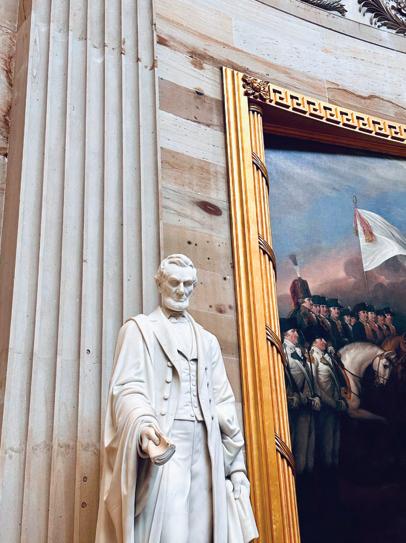
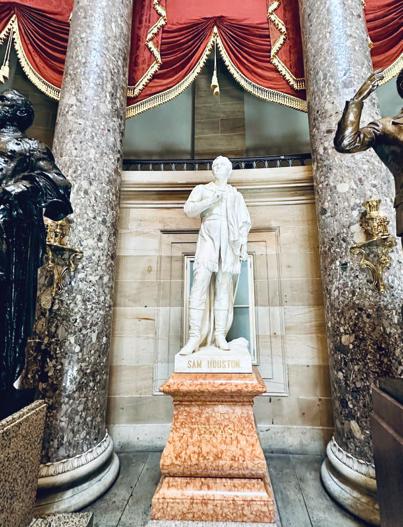
Directly below the Rotunda lies the Crypt, a circular chamber originally intended as the burial site of George Washington. Following his family’s wishes to be interred at Mount Vernon, no one is actually buried here. The space is supported by massive 40 Doric columns and remains one of the Capitol’s most architecturally striking interior rooms. Today, the Crypt displays statues from the National Statuary Hall Collection, including Abraham Lincoln and Sam Houston. For Texas visitors, Houston’s presence offers a meaningful connection to the state’s origins and its role in the American story.
A Small Stone with a City’s Blueprint
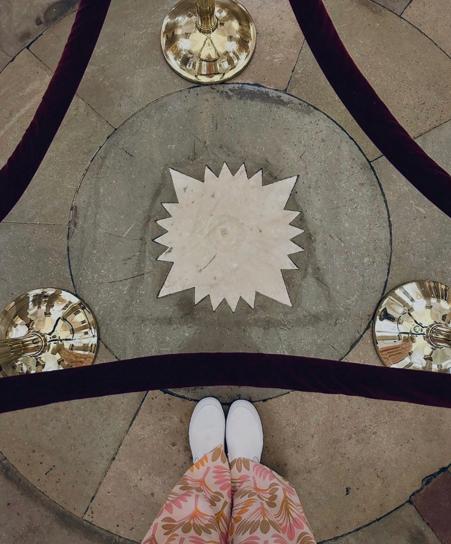
At the center of the Crypt floor sits the Compass Stone, a white marble marker that holds deep geographic and symbolic significance, identifying the original reference point used to divide Washington, D.C.into its four quadrants. Though modest in scale, it carries such historical importance that it is carefully roped off to protect and preserve its surface.
The Old Senate Chamber: Where the Senate Shaped a Nation
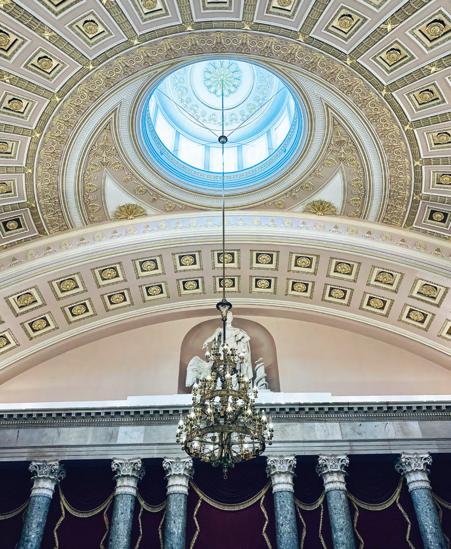
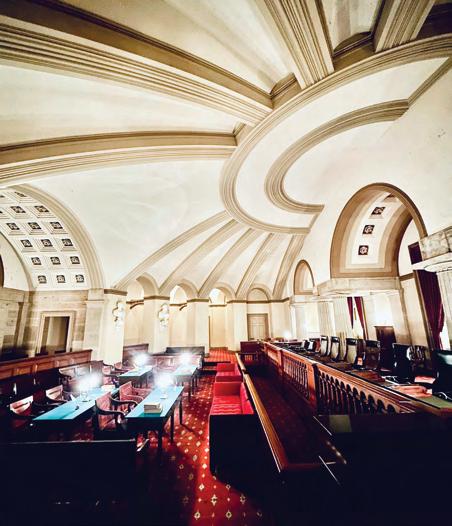
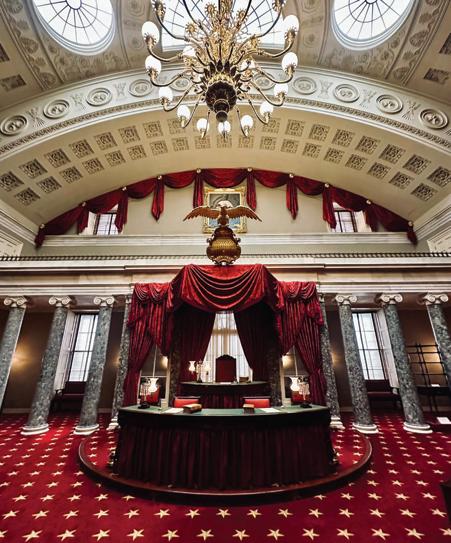
One of the Capitol’s most beautifully preserved historic rooms, the Old Senate Chamber is where the Senate met from 1810 to 1859, a period that included some of the nation’s most defining pre–Civil War debates. The room later served as the U.S. Supreme Court chamber, adding another chapter to its layered history. Its richly decorated walls, crimson draperies, and distinctive red carpet patterned with gold stars create a vivid sense of 19th-century grandeur. While photography is permitted here, it is not allowed in the current Senate Chamber, making this space an opportunity to capture a room in lawmaking history.
Detail and Design: Built with Purpose; Finished with Artistry
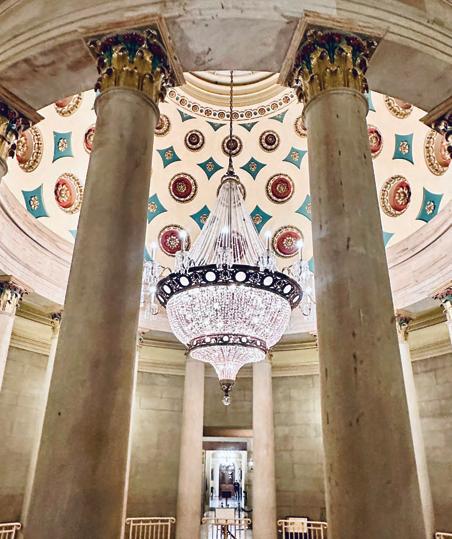
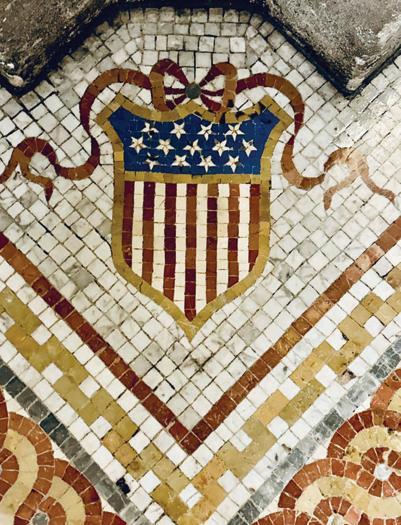
Beyond the grand ceremonial spaces, the Capitol reveals its brilliance in the details. Ornate bronze and crystal chandeliers, carved stone columns, intricate plasterwork, murals, stately fabrics and richly patterned floors reflect extraordinary craftsmanship. Every material—marble, sandstone, bronze, and cast iron—was chosen with intention as an expression of permanence, dignity, and the ideals of a young republic rendered in architecture.
As America approaches its 250th anniversary, a visit to the U.S. Capitol is more than a tour. It is a walk through lawmaking, living history, and architecture—where design, democracy, and storytelling meet beneath one remarkable dome. It is a place where history is preserved yet continually written, and where every chamber and corridor reflects the enduring ideals of a republic still in motion.
The Extraordinary Power of Ordinary Patriots
STORY & PHOTOS BY OWEN BARTOSH
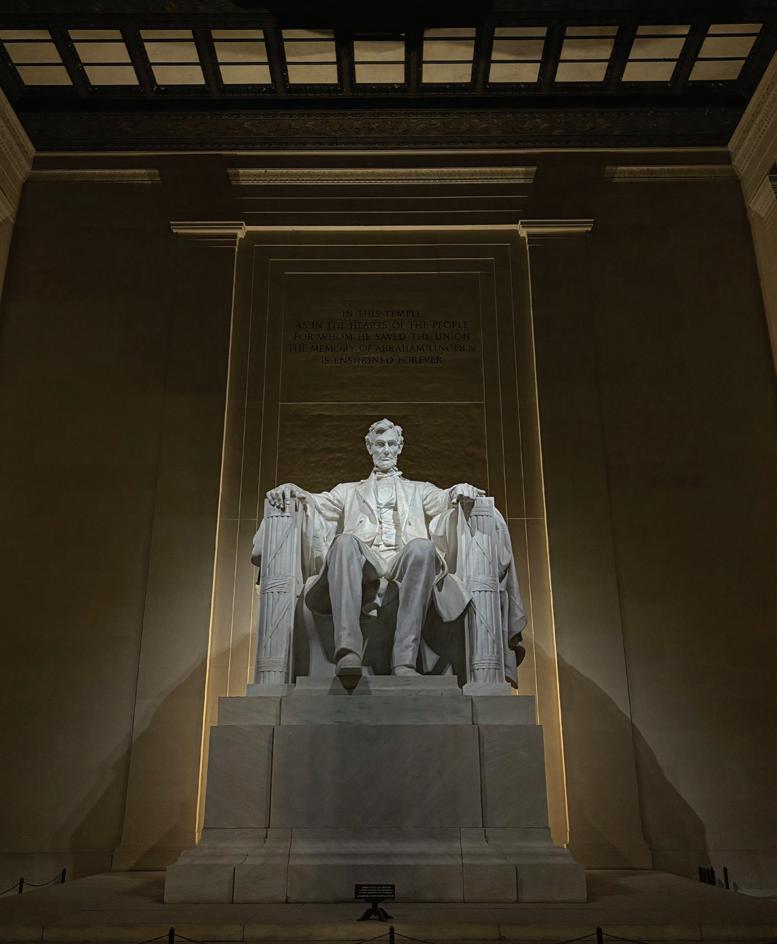
I arrived in Washington DC only a month ago... a young man from Waxahachie, Texas, to take on the nation’s Capital as one of thousands of summer interns. After exploring the city, I arrived at the end of the National Mall and saw him: Abraham Lincoln, one of the most intelligent and capable leaders in the history of the world, staring right back at me. I felt small. Amid marble statues and temples, I reflected on that feeling. How could any regular person measure up to the sacrifices of the men before me? Most everyone I know will never lead troops like Washington, face the decisions of Lincoln, or change the nation like Susan B. Anthony. The truth is, however, in the 250 years since 1776, the fabric of our nation was held together by the extraordinary power of ordinary patriots.
The Courageous Printer
During the Revolutionary War, Mary Katharine Goddard operated a colonial printing press, masking her identity as "M.K. Goddard" to publish fierce anti-British editorials and pro-revolution pamphlets like Thomas Paine’s Common Sense. By January 1777, the Continental Congress needed to distribute the Declaration of Independence around the colonies to inspire revolution, but few printers dared touch such a treasonous document. Mary stepped forward. For the first time, she revealed her full identity, boldly printing "Printed by Mary Katharine Goddard" at the bottom of the page, right below the Founders' signatures. Knowing the penalty was death, she chose courage over fear. She survived the war and became America's first female postmaster, a patriot through and through.
The Principled Future-President
In March 1770, British soldiers opened fire on a rowdy crowd in Boston, killing several in an incident known as the Boston Massacre. Angry colonists wanted these soldiers hung, but they had to go to trial first. In a stunning move, future president John Adams took up the defense case for the accused. His neighbors and friends were outraged, political allies turned against him, and it seemed for a time that this trial would be his last. But Adams believed above all else in the right to a fair trial and its importance for a free society. He risked his career as an attorney and future as a politician for a profound and radical adherence to justice, no matter who was on trial. He successfully defended the soldiers, and in doing so, earned the respect of his community as a man of true principle. 27 years later, he became the second president of our great nation.
The Steadfast Rider
On July 2, 1776, Caesar Rodney lay in a Delaware sickbed while a thunderstorm raged outside, resting with confidence in his friends at the Continental Congress as they discussed independence. That rest was shattered when a messenger burst in with urgent news: the Delaware delegation was deadlocked on independence, and without a tie-breaking vote, unanimity would fail and the Declaration would be off the table. Summoning every ounce of strength, Rodney rose and mounted his horse. He rode eighty grueling miles through pouring rain and crashing thunder, arriving in Philadelphia by morning. Soaking wet and caked in mud, he walked into the room and cast the decisive vote for freedom. Two days later, the Declaration was signed.
Patriotism EveryDay
When I remember these ordinary people and their outsized impact on our country, I no longer feel so small. We may never lead armies into battle like George Washington, but we can have the courage to be proud of our nation when so many feel disappointment or despair. We may never face the agonizing decisions of Abraham Lincoln, but we can champion our principles just the same in our workplaces, our communities, and our homes. We may never be called to conquer the wilderness like Lewis and Clark, but we can serve our country by giving our time and effort to our churches, our non-profits, and our neighbors. This is what patriotism looks like. For 250 years, small acts of courage have strengthened our bond and created a place unlike anywhere else on Earth. The tapestry of American history is woven by our individual threads: the choices we make to write our names boldly, to stand firmly for what is right, and to ride with passion through the storm. Every ordinary sacrifice carries extraordinary significance. That is who we are, and 250 years later, that is who we must strive to be.
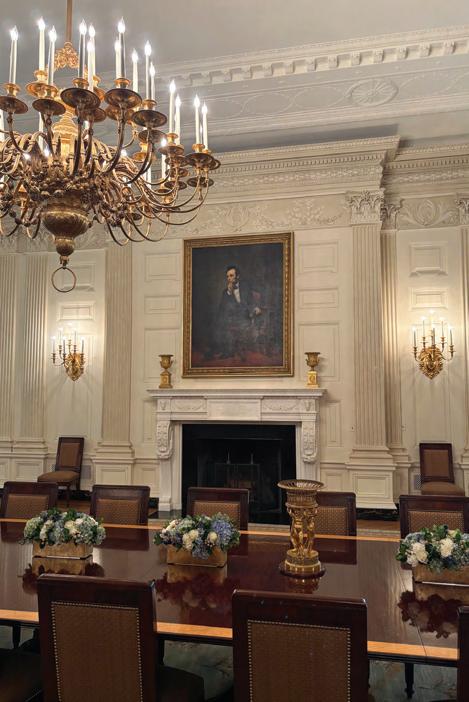
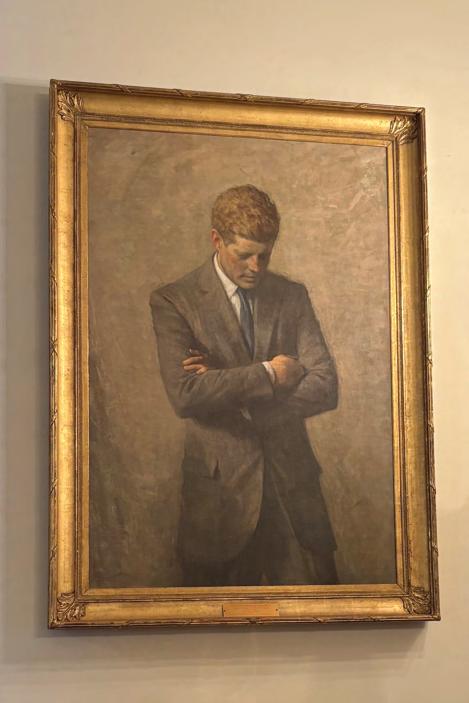
One of the greatest benefits of interning in Washington DC is the proximity to the history, culture, and monuments that shaped our national identity. In June of this year, I had the opportunity to tour the White House and witness some of the most incredible portraits of our leaders, including the 1869 George Peter Alexander Healy portrait of Lincoln above the State Dining Room fireplace. When I ventured into the main foyer, I saw the famous Kennedy painting by Aaron Shikler. I was suddenly struck by the gravity of the place I walked. For over two centuries, the most powerful leaders of the free world walked these same halls, stood where I stood, and more recently, gazed upon the same painting of a thinking president. What an honor it was to see such masterful art capturing the unique personalities of our presidents for free of charge; photos do not serve them justice.
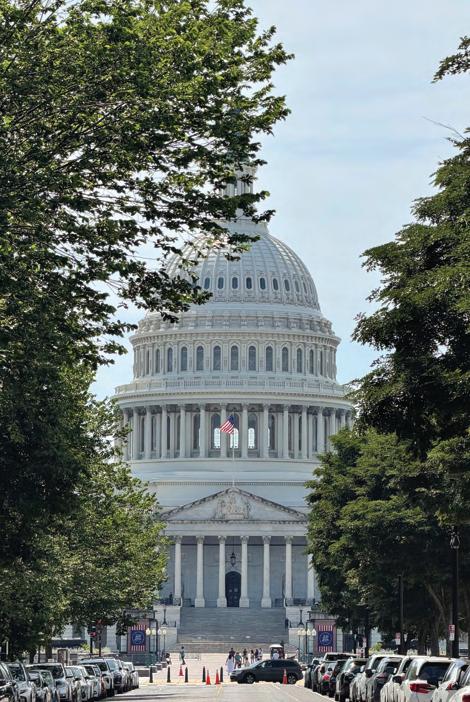
On the streets of the city, I passed by the Capitol Building and into its halls of influence, viewing Old
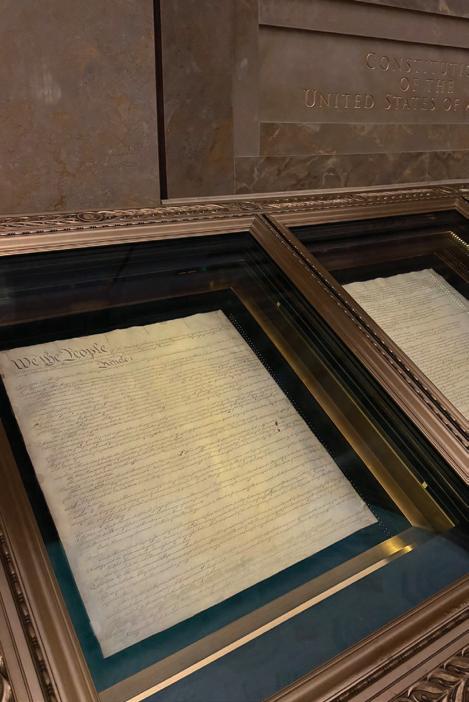
Glory as it hangs outside the Speaker of the House’s office. I stumbled into the National Archives viewed the founding documents, cracking manuscripts with faded letters that altered the course of history. I saw the powerful Washington Monument, radient in the reflecting pool and the Library of Congress. But the most powerful statue was the Lincoln Memorial, where the champion of our Union rests in a throne not made to worship, but to respect his sacrifice so that the America experiment may continue for hundreds of years to come.
These experiences will forever shape me, and in the year of our 250th , I encourage everyone to take advantage of these places, all of which are open and free to the public. In this way, we preserve our heritage and history for generations. If you cannot make the trek to our capital, I hope you enjoy this as an educational editorial and pictures from my time, a small tribute of the celebration for my family, friends, and neighbors.
Threads of Service
ONE FAMILY'S JOURNEY ACROSS 250 YEARS OF SERVICE
STORY & PHOTOS PROVIDED BY J.J. BROOKSHIRE
As we continue to celebrate America 250, this story traces one family’s path through the nation’s unfolding history—from colonial arrival and frontier settlement to modern military service across every major American conflict. It is a reflection of continuity: sacrifice, movement, duty, and the quiet strength of generations bound to the evolving story of the United States.
1679: Foundations in the New World
In 1679, James and Mary Brookshaw (later Brookshire, due to a scrivener’s misspelling) arrived in colonial Maryland aboard the barque Friendship as indentured servants. Illiterate but determined, they labored to earn their freedom and establish roots in the New World. From these beginnings, their descendants moved south and eventually west, carrying forward the early American drive for opportunity and land.
The American Revolution (1775–1783)
John Stirham Brookshire (5th great-grandfather), born in 1759 in Randolph County, North Carolina, came of age as revolution stirred the colonies. Around age 20, he joined the Patriot cause, serving first in Colonel Collier’s North Carolina militia regiment and later in Captain Brittain Fuller’s Troop of Horse (cavalry) within the Randolph County Regiment. These mounted troops performed reconnaissance and rapid-response operations in the Southern Campaign during intense guerrilla warfare between Patriot and Loyalist forces. Brookshire was discharged on January 2, 1781. After later relocating to South Carolina’s Greenville District, he successfully applied for a federal pension in 1833 for his Revolutionary War service.
Westward Expansion and Early Texas
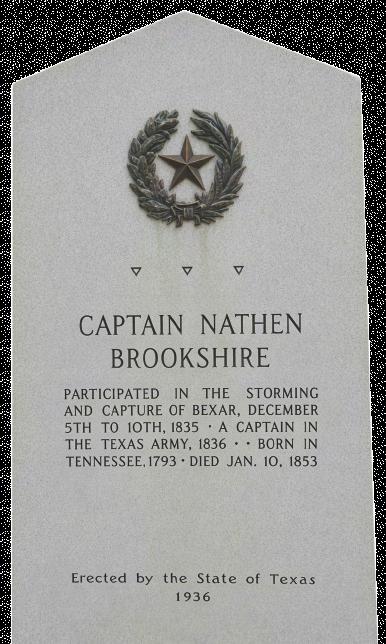
Nathan Brookshire (4th great-granduncle), born circa 1793 in Rutherford County, Tennessee, served in the U.S. Army during both the War of 1812 and the Creek War against the Red Sticks faction. Between 1832 and 1835, he joined Stephen F. Austin’s Fifth Colony as an early Anglo settler in Mexican Texas, receiving a headright league of land (approximately 4,428 acres) in what is now Waller and Fort Bend Counties along the Brazos River. He later fought in the Siege and Storming of Béxar in December 1835, when Texian forces captured San Antonio de Béxar from Mexican troops under General Martín Perfecto de Cos. In May 1839, serving as a Texas Ranger and second-in-command under Captain John Bird with roughly 40 troopers, Nathan engaged a much larger force of Comanche, Kickapoo, and Caddo warriors near present-day Temple along the Brazos River. When Captain Bird fell in battle, Nathan assumed command and led the surviving Rangers to victory against superior numbers. He later became a prominent landowner and farmer until his death on January 10, 1853. The town of Brookshire, Texas, in Waller County, stands on land originally associated with his holdings and was named in his honor.
World War I: The Hindenburg Line
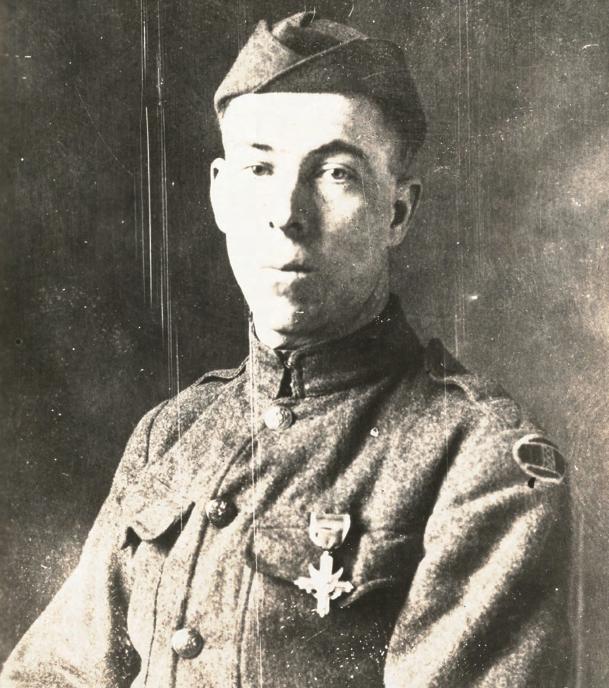
Wilson DeWitt Brookshire (great-granduncle) served as a Private in Company G, 120th Infantry Regiment, 30th Division, U.S. Army. On September 29, 1918, near Bellicourt, France, he took part in the assault on the Hindenburg Line. Under heavy machine-gun fire, Brookshire advanced alone, neutralized an enemy machine-gun nest with grenades, and enabled his platoon’s advance. His extraordinary bravery and initiative became a defining example of frontline courage during one of the war’s decisive offensives.
World War II: The Pacific Submarine War
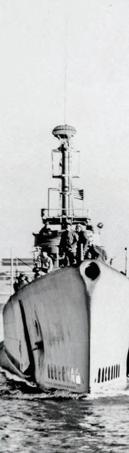
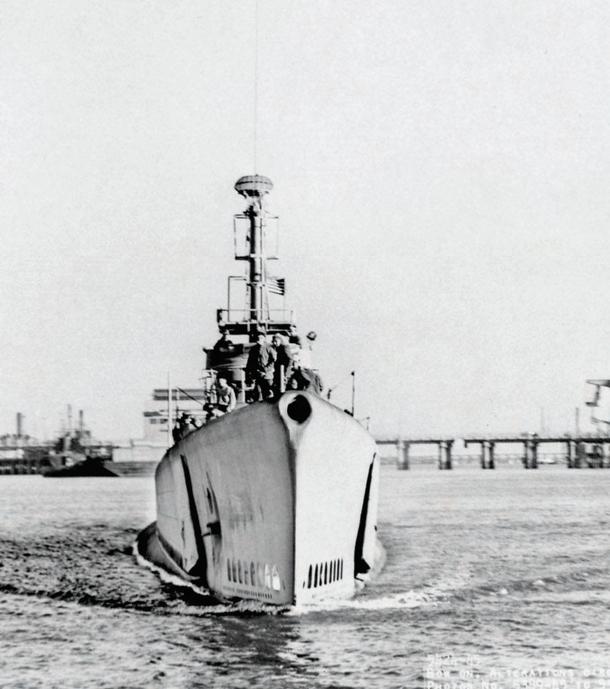
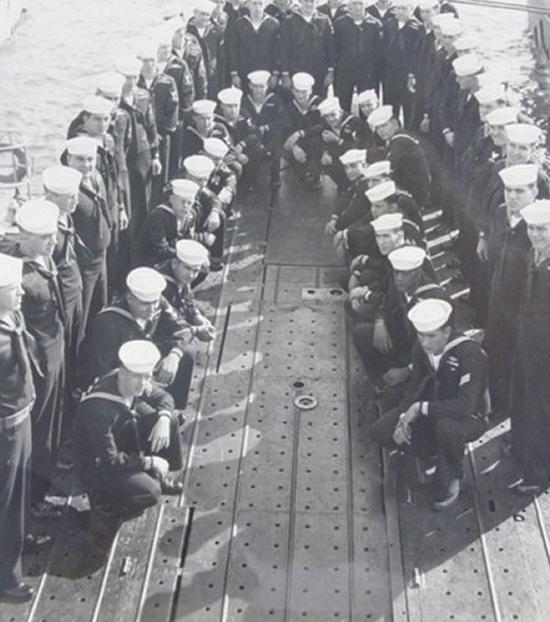
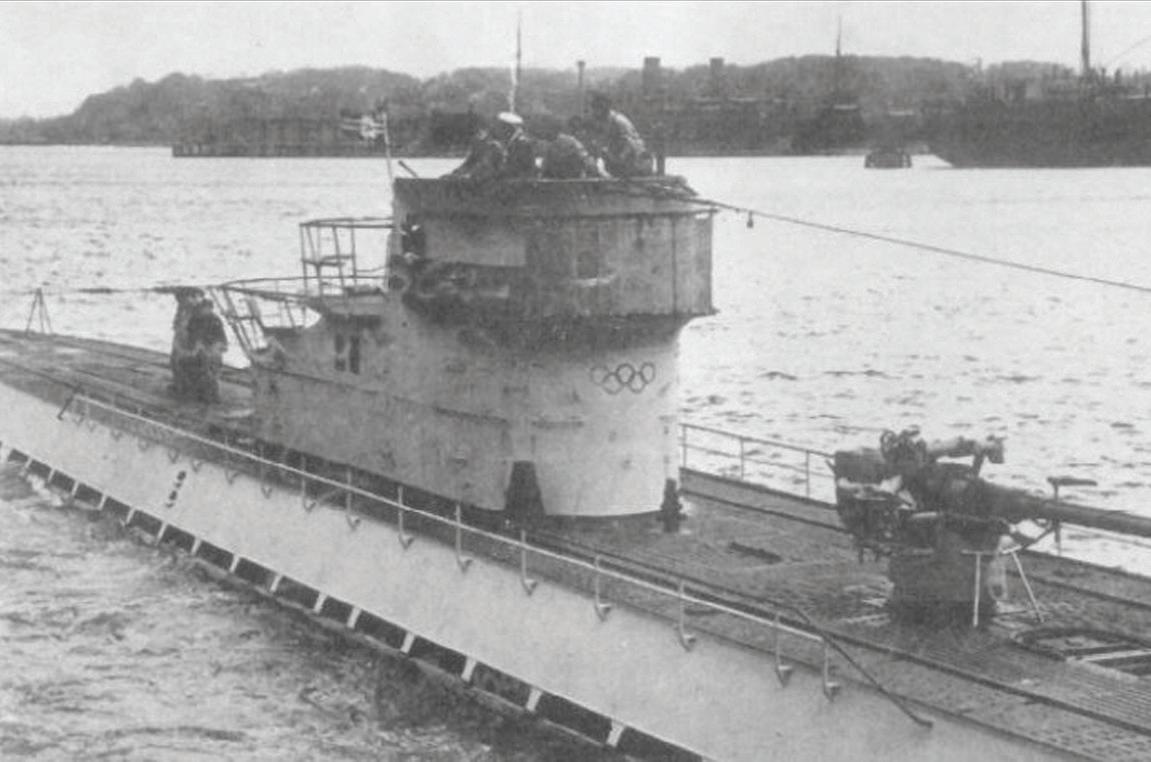
Joseph Clinton “J.C.” Brookshire (grandfather) served as Motor Machinist’s Mate 3rd Class aboard USS Flounder (SS-251), a Gatoclass submarine operating in the Pacific Theater. On November 10, 1944, in the Java Sea east of Surabaya (07°13'S, 115°17'E), Flounder encountered a surfaced German U-boat during its fourth war patrol. After confirming the contact, the submarine submerged and fired a spread of torpedoes, striking and sinking U-537. All 58 crew members were lost. This engagement remains the only confirmed instance of a U.S. submarine sinking a German U-boat in the Pacific or Indian Ocean theater during World War II.
Vietnam: The Big Red One
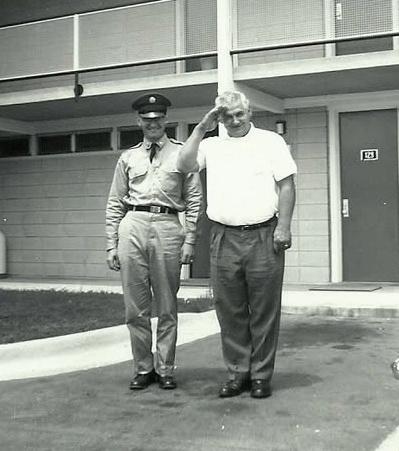
In October 1965, Specialist Donald Lee Brookshire (father) deployed from Oakland Army Terminal aboard USNS W.S. Gordon as part of Headquarters Battery, 6th Battalion, 27th Artillery Regiment, 1st Infantry Division. During the 33-day Pacific crossing, the ship stopped in Okinawa, where a soldier died of smoke inhalation following an onboard fire. Upon arrival in Vietnam, he was stationed at Phuoc Vinh near the Cambodian border. His duties included medical support for U.S. forces and participation in MEDCAP missions—civilian medical outreach programs that operated clinics for Vietnamese civilians in contested regions as part of early pacification efforts in War Zone C.
My Turn: Four Decades of Service
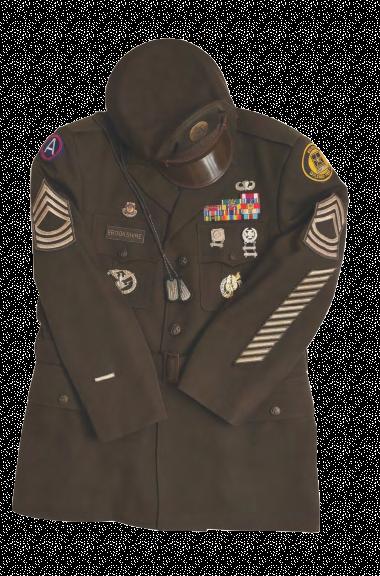
In May 1983, at age 17, I enlisted in the U.S. Army Reserve and swore to support and defend the Constitution of the United States. Over more than 42 years, spanning from the Reagan administration into the second term of Donald Trump, I served roughly half that time on active duty. My roles included legal clerk, court reporter, small arms instructor, recruiter, counterintelligence agent (airborne), career counselor, senior operations NCO, special missions NCO, theater retention NCO, and area leader, among others.
Across decades of service, I witnessed not only the evolution of the Army but also the growing integration of technology into warfare and logistics. In one recent example, autonomous drone systems played a critical role in the rescue of two downed Apache pilots in the Persian Gulf—an operation connected to innovation efforts supported through Army Reserve and joint-service research channels. A particularly meaningful moment in my career came through mentorship of a young soldier who later became a U.S. Navy Research and Development Program Manager and Army Reserve captain through the 75th Innovation Command’s Autonomy and Robotics initiatives. From initial counseling to later commission, his trajectory reflected the long arc of mentorship, persistence, and transformation within military service. Among the many awards and mementos collected over a career, the most meaningful remains a worn Susan B. Anthony silver dollar gifted by him during his first salute—a reminder that the most enduring measures of service are often personal rather than ceremonial.
Acknowledgment
This article honors not only the men who served in uniform across generations but also the countless wives, mothers, and children whose quiet strength, unwavering support, and sacrifices at home made that service possible. Their resilience sustained families through long deployments, uncertainty, and hardship, weaving their own essential threads into the fabric of American history.
I am especially grateful to my wife, Toni, and our daughter, Abby, for standing beside me. Their love, encouragement, and steadfast presence are the foundation that allows me to answer the call of duty time and again. This story of service belongs to them as much as it does to any of us who wore the uniform.
J.J. Brookshire
MSG (Retired) J.J. Brookshire
J.J. Brookshire is a retired U.S. Army Master Sergeant. Use of his military rank, job title, or photographs in uniform does not imply endorsement by the U.S. Department of War or the U.S. Army.
Texas' Legendary 1877 Tall Ship of Texas Has Set Sail
E L I S S A
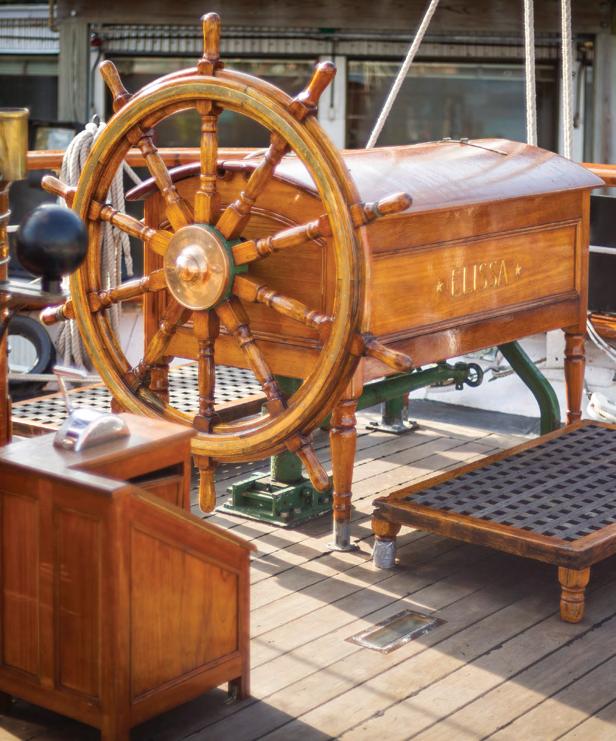
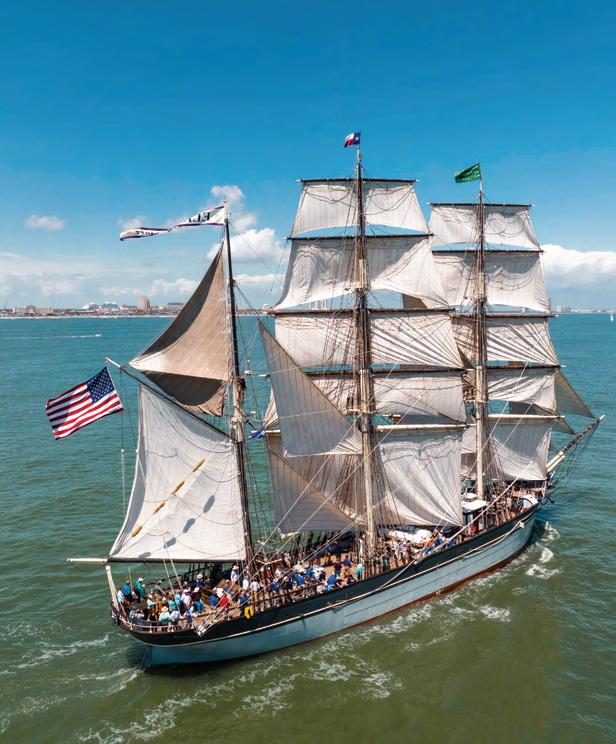
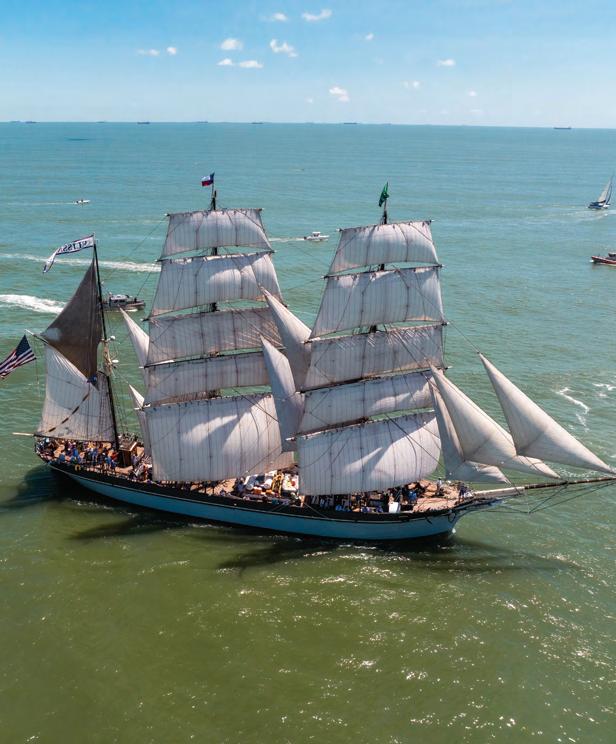
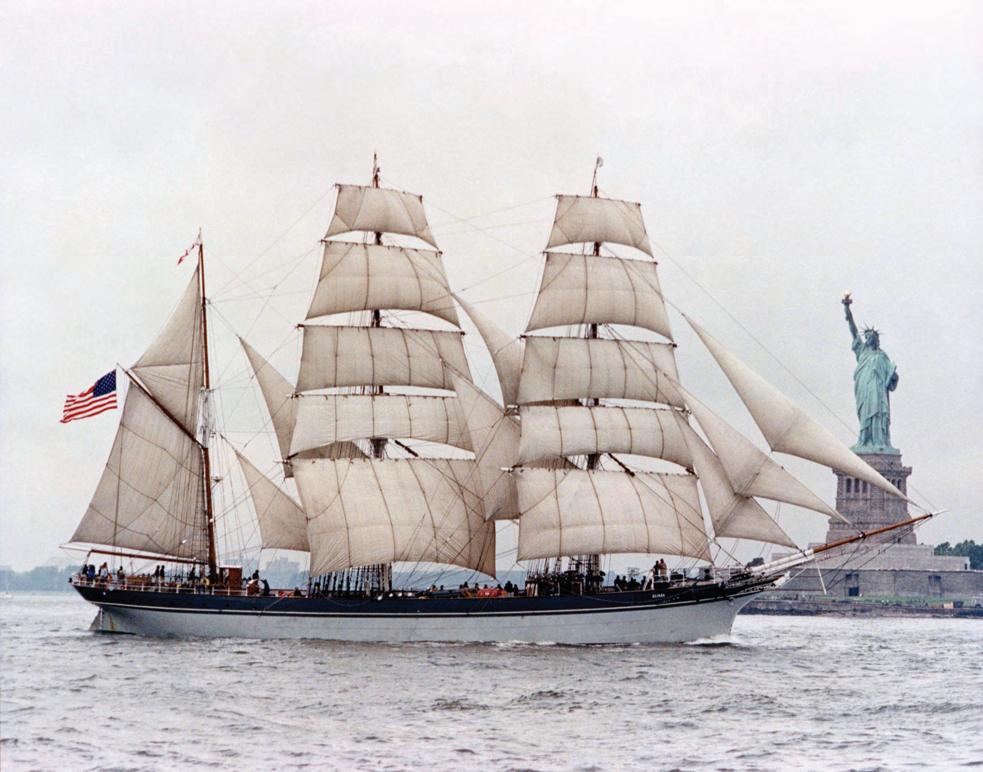
The 1877 tall ship Elissa has returned to the water for an ambitious summer voyage to the Port of New York for Sail 250—an international gathering of tall ships timed with America’s 250th anniversary celebrations on July 4. Elissa will be among the Class A tall ships, bringing a rare national-stage moment for the Official Tall Ship of Texas. This will be Elissa’s first return to New York since 1986. Before and after the July 4th events, she will make six port calls, bringing her story, her crew, and an authentic 19th-century square-rigged sailing experience to communities along the route.
Elissa is a centerpiece of Galveston’s maritime heritage and tourism. Sail 250 offers a once-in-a-generation platform to elevate Galveston’s national profile and reinforce why preserving authentic historic vessels matters— keeping them active as experiential storytellers that link past innovation, resilience, and international exchange with today’s audiences.
The Ship's Background
Elissa is a three-masted, iron-hulled sailing ship built in 1877 in Aberdeen, Scotland by Alexander Hall & Company. She is a barque (square sails on the fore and main masts, fore-and-aft sails on the mizzen). From stern to the tip of her jibboom, she measures 205 feet; the main mast rises 99 feet 9 inches. Unlike some tall ships today, Elissa is not a replica.
Built during the decline of the Age of Sail, she spent nearly 90 years in commercial service carrying cargoes worldwide before preservationists rescued her from the scrapyard in Piraeus Harbor, Greece.
Harbors on the Horizon
Track Elissa on Galveston250.com and watch her progress on the Atlantic! If you would like to be a part of her journey you can get on board by becoming a volunteer, join the crew, meet at the ports or support the mission. You'll find tickets and maritime-themed merchandise for history buffs and sailing enthusiasts on the website.
July 3-7 New York City , NY
July 11-15 Boston, MA
July 23-26. Savannah, GA
August 6-9 Pensacola, FL
A Living Museum In Galveston, Texas
Today, Elissa is the Official Tall Ship of Texas and a designated National Historic Landmark. Representing Texas maritime heritage and a fully functional vessel, and trained volunteers, keeps Elissa seaworthy and sustains the art of 19th-century square-rigged sailing. Supported by dedicated staff, board members, and trained volunteers, the Galveston Historical Foundation (GHF) keeps the ELISSA seaworthy and helps sustain the art of 19th-century squarerigged sailing.
Continuing a Maritime Legacy
GHF leaders describe the Sail250 voyage as both a commemorative journey and an extension of ELISSA’s original purpose—connecting modern audiences with living maritime heritage as she continues to sail historic coastal routes.
New Hospital Tower Meets Health Care Needs of a Growing Ellis County
Baylor Scott & White Waxahachie expansion adds beds, advanced care services
Ellis County continues to experience rapid population growth, and with it comes the need for better access to health care for all stages of life. One health system in Waxahachie seeks to meet those needs with its next expansion.
In August, Baylor Scott & White Medical Center - Waxahachie will open a six-story patient tower in order to provide compassionate, highquality care that is close to home for patients throughout the community. The east tower will feature new labor and delivery rooms, an expanded neonatal intensive care unit space, an endoscopy suite, advanced specialty care, and 59 new beds.
“We see this expansion as a significant step forward in growing alongside the community and meeting their needs,” said Will Turner, president of Baylor Scott & White – Waxahachie.
Since opening 11 years ago, Baylor Scott & White – Waxahachie has continued to expand well beyond its original footprint to keep pace with population growth and the evolving health care needs of the community. In fact, the opening of the east tower is part of a broader, $240 million comprehensive expansion project the health system has been rolling out for several years. These expansions have included a new heart hospital, an expanded intensive care unit, and a new parking garage.
The opening of the east tower will also allow Baylor Scott & White – Waxahachie to provide
advanced specialty care to its patients.
“We understand the needs of our patients, so with this opening our team will have more room and facilities to provide the best care possible,” Turner said.
Specifically, the new east tower will house advanced cardiac services, cancer services, comprehensive women’s services, and expanded trauma care. With these additions, patients needing advanced care can remain close to home for their treatments, without needing to drive to Dallas.
The expansion will add 150 team members to the 1,000 employees currently working at Baylor Scott & White – Waxahachie. Additionally, a family practice residency program has been established to ensure the community will always have easy access to medical care, close to home.
“We are very blessed to have the strong support of the community, and we’re excited to expand our services and provide a new tower that will meet the health care needs of Ellis County,” Turner said.
Red, White & Welcome
Creating a Home That's Ready for Summer Gatherings
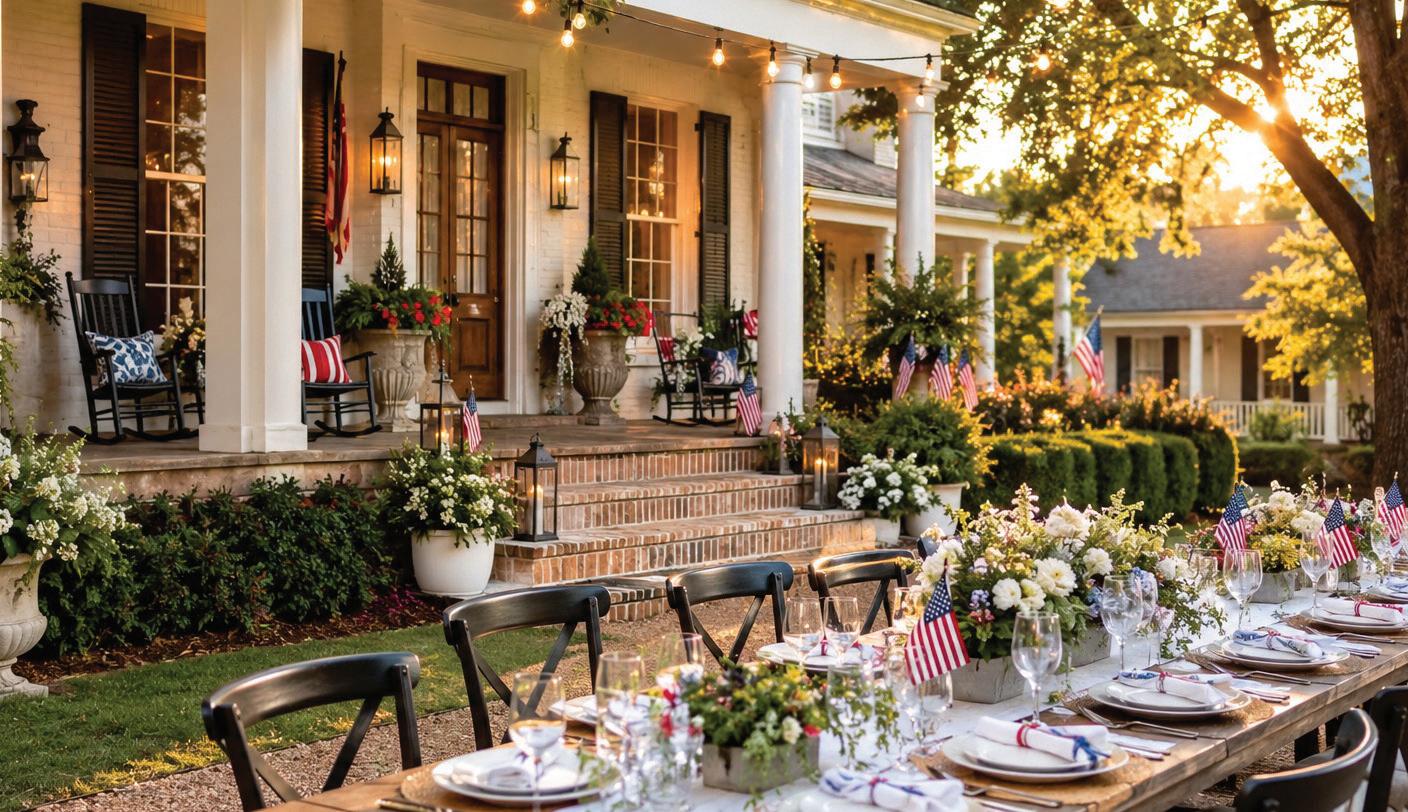
There is something special about a home that makes people want to stay awhile. Summer is the perfect time to create inviting spaces for gathering, whether you're hosting a Fourth of July celebration, a casual backyard dinner, or simply welcoming neighbors for a glass of sweet tea on the porch. The best entertaining spaces don't have to be elaborate. A few fresh flowers, comfortable seating, soft outdoor lighting, and a thoughtfully set table can instantly create a warm and welcoming atmosphere. I always encourage homeowners to think about how their spaces feel rather than how they look. Guests rarely remember the decorations—they remember how comfortable, relaxed, and welcomed they felt.
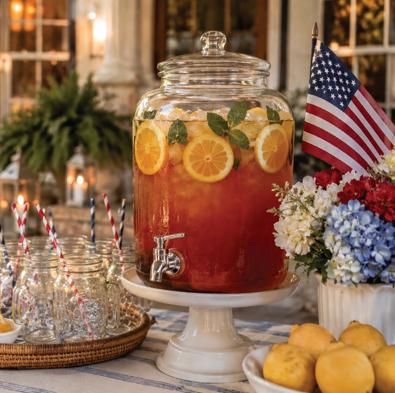
This summer, consider adding a few simple touches: lanterns along a walkway, colorful outdoor pillows, fresh greenery, or a self-serve drink station that encourages guests to help themselves.
At the heart of every memorable gathering is a home that invites connection. And sometimes, the most beautiful spaces are simply the ones filled with conversation, laughter, and people you enjoy sharing them with. As a Realtor, I've learned that what makes a house special isn't always found in a listing description. It's found in the moments that happen there.
After all, hospitality never goes out of style.
...because Southern hospitality starts with something cold in your hand.
MIX TOGETHER:
1 gallon sweet tea
2 cups lemonade
Fresh lemon slices
Fresh mint
Serve over ice in a drink dispenser on the porch.
STORY & PHOTOS BY MARY CROOK
Porch Punch
FEDERATED REPUBLICAN
BLUEBONNET Women
BRINGING NEW ENERGY TO ELLIS COUNTY
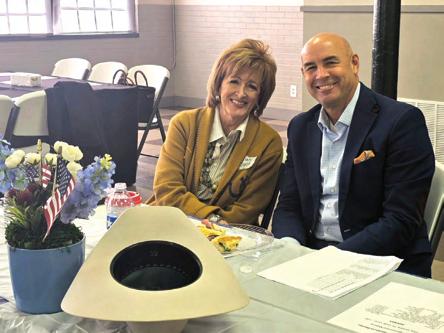
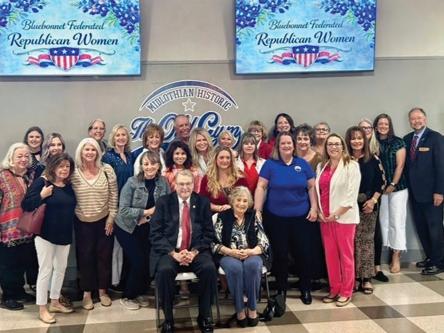
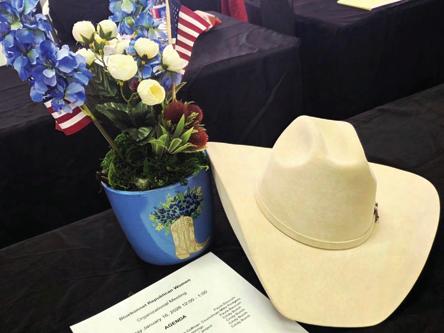
Founded under the umbrella of the Texas Federation of Republican Women, Ellis County’s newly formed Bluebonnet Federated Republican Women is already building momentum among local conservative women. The organization held its first meeting in January and is scheduled to receive its official charter in July, joining one of the nation’s largest networks of Republican women’s organizations.
The new club was founded by Ellis County resident Paula Baucum, who recognized the need for an additional Republican women’s organization as the county continues to grow. “Creating another opportunity for women to become involved in grassroots politics and community service was my goal for getting this group formed,” Baucum said.
Unlike the county’s original Republican women’s club, established in 1982 with monthly evening meetings, Bluebonnet Federated Republican Women offers lunchtime meetings on the third Friday of each month in Midlothian at the historic Old Gym. Men are also encouraged to join as affiliate non-voting members, further expanding opportunities for community involvement and support.
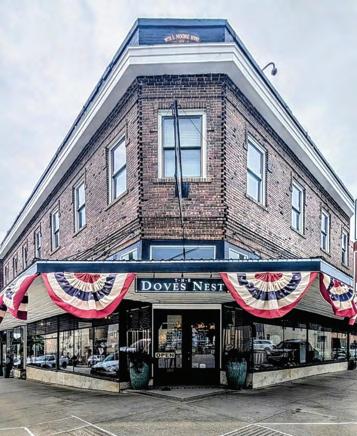
Serving as president is Cindy Burch, former owner of The Dove’s Nest in downtown Waxahachie for more than 30 years and a longtime volunteer on numerous Republican campaigns. Under her leadership, the organization is focused on promoting political education, civic engagement, and volunteerism throughout Ellis County. Vice President is Kelly Cruzan, Secretary Cindy Ann Stouff, and Treasurer Cheree Barrett. “In Ellis County, we are seeing tremendous growth and increasing interest from women who want to become more engaged in the political process,” Burch said. “Bluebonnet Federated Republican Women was created to provide another avenue for conservative women to connect, learn, serve, and make a meaningful difference in our communities.”
In its first few months, the club has already hosted notable speakers, including Congressman Jake Ellzey, Senator Brian Birdwell, and David Stein, president of the Texas Republican County Chairmen’s Association (TRCCA).
Founded in 1955, the Texas Federation of Republican Women began when more than 300 women gathered in San Antonio with the vision of building a strong grassroots movement across Texas. Today, TFRW remains one of the nation’s largest and most influential women’s political organizations, focusing on political education, election involvement, community service, and empowering women to pursue public office.
“As an affiliate of TFRW, we are proud to stand alongside women across Texas who are committed to supporting Republican candidates and advancing conservative principles,” Burch said. “Through strength, unity, and purposeful action, we hope to encourage informed leadership and active community involvement.”
As Ellis County continues to expand, Bluebonnet Federated Republican Women reflects a growing desire among conservatives to connect, serve their communities, and help shape the future of local and state government.
For additional information, visit Bluebonnet Federated Republican Women at bluebonnetFRW.org or follow the organization on Facebook and Instagram.
“We want every member to know there is a place for them...”
...Burch added, “Whether you are a poll worker, campaign volunteer, precinct chair, or simply someone who wants to stay informed and involved, your contribution matters.”
APATHY HAS CONSEQUENCES : A CALL TO ACTION FOR ELLIS COUNTY
Having recently returned from the Texas GOP Convention in Houston, where I had the honor of serving as a delegate, I found myself having the same conversation with delegates from across our state. Regardless of where they lived, nearly everyone shared a common concern: getting voters to the polls in November may be the most important challenge we face.
Many described our country as divisive, dysfunctional, and polarized. Given the constant stream of negative headlines, partisan battles, and political scandals, it is understandable why some citizens choose to tune out. I have friends who have become so disillusioned that they have stopped voting entirely. Yet political apathy carries consequences. When thoughtful, reasonable citizens withdraw from civic participation, they leave the future increasingly in the hands of the loudest voices and the most ideologically driven activists.
Historically, Americans were far more engaged in political life. In recent decades, however, distrust in government, political scandals, sensationalized media coverage, and growing polarization have contributed to declining civic participation. Many Americans believe their vote does not matter, feel elected officials are not listening, or are simply exhausted by the negativity.
Sitting out an election does not solve the problems that frustrate us. Every vote not cast and every voice not heard weakens representative government. Decisions about education, public safety, economic opportunity, taxes, and infrastructure are ultimately shaped by those who participate—not by those who stay home. History teaches us that meaningful change happens when citizens get involved. The answer to frustration is not to abandon the process but to improve it through participation.
Here in Ellis County, we are fortunate to live in a community filled with hardworking people who care deeply about their families, faith, businesses, and neighborhoods. But caring is not enough. Concern without action changes nothing. As our county continues to grow, the decisions being made today will affect future generations.
My challenge to every Ellis County resident is simple: don't just be a spectator. Vote. Learn about the issues. Attend local meetings. Volunteer in your community. Hold elected officials accountable. This November, and in every election that follows, let's prove that Ellis County is not a community that sits on the sidelines. Let's show up, speak up, and participate.