AMISH GUIDE















by Marcie Schellhammer
Rural areas of Pennsylvania are attracting residents who are seeking what the region has to offer — available land and a lower cost of living.
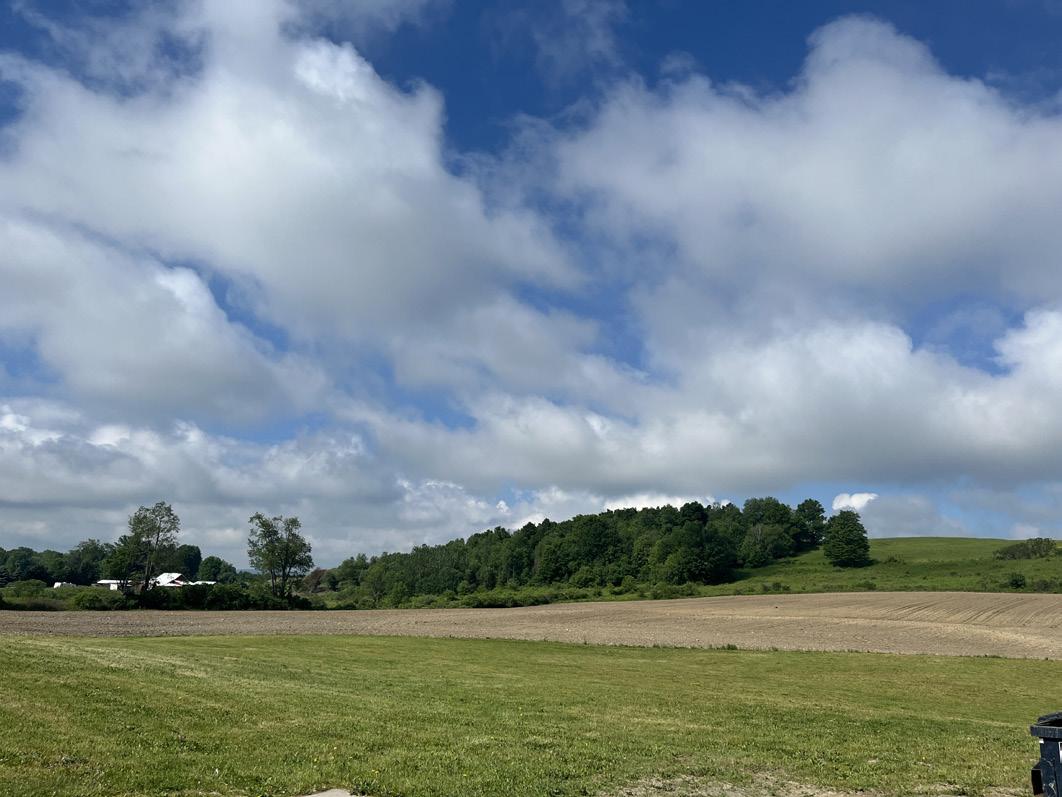
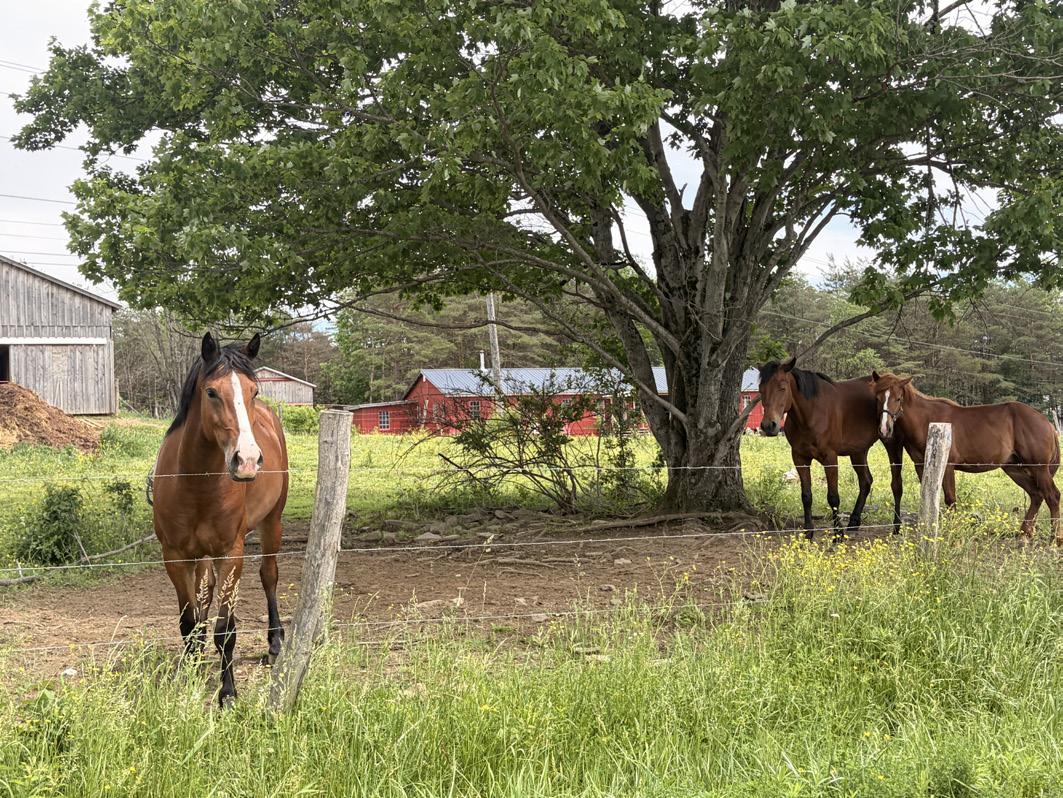
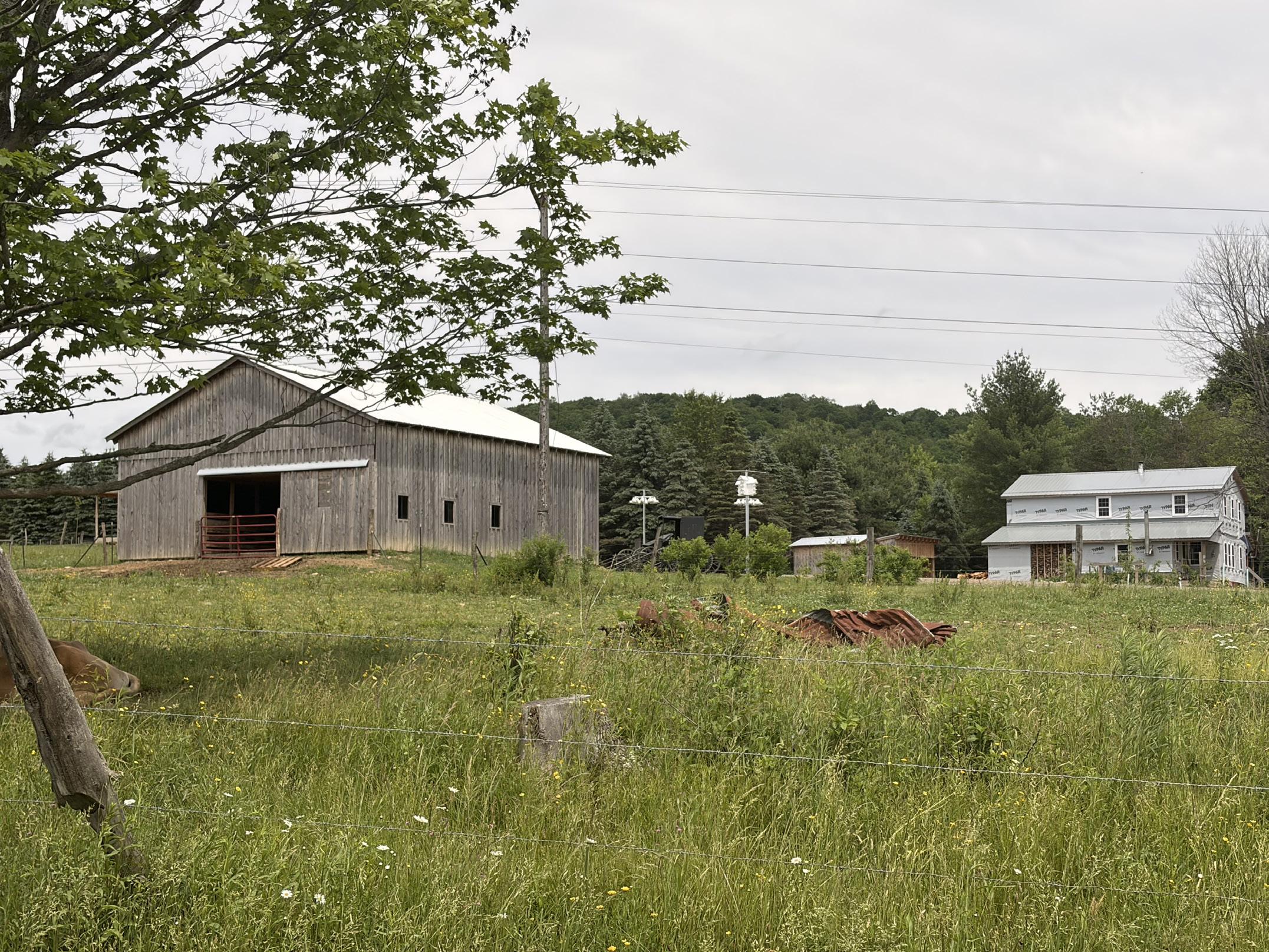
Quietly and steadily, over the past several years, Amish populations from elsewhere in the state have been relocating to the region, in areas like Annin Township, Ceres Township, Mount Jewett, the Eldred area and more. They’ve bought “fixer upper” residences in the region and have brought them back to life, in many cases putting on additions for their large families. Some properties have come not only with a house, but also with acres of land that weren’t maintained by the former owners. The new Amish owners have cleared away the brush around the land and set to work.
“I think it’s wonderful,” said a local man, who declined to be named. He’s a friend of many in the Amish community in Annin Township, where he
goods are sold at farmers markets, their furniture is sought after for its quality and durability. And while maintaining their own religious beliefs, lifestyle and even language, the Amish folk have been friendly and neighborly.
estimates about 60 families live. “They work hard.”
Their construction crews work steadily throughout the region, their produce and baked
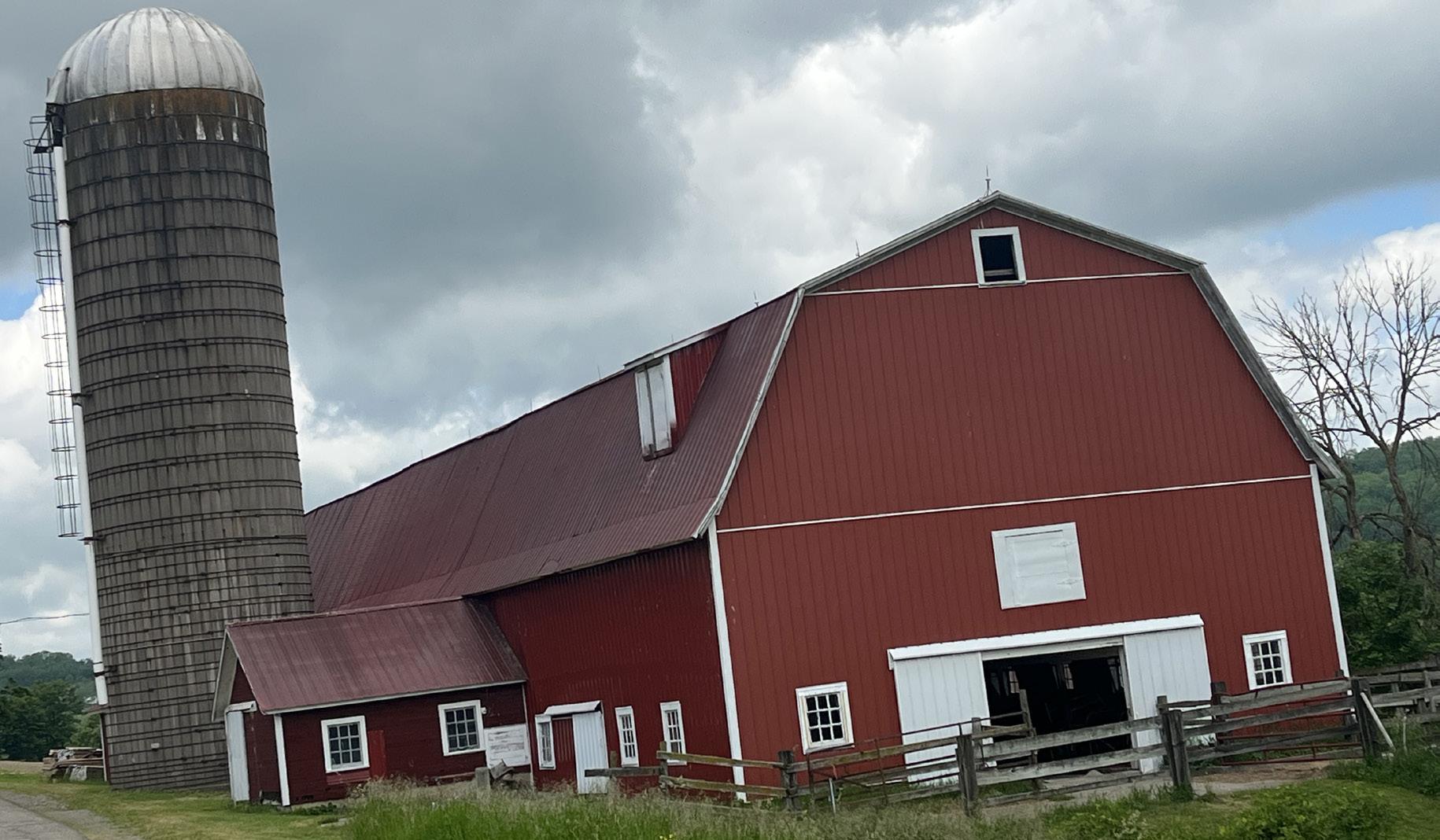
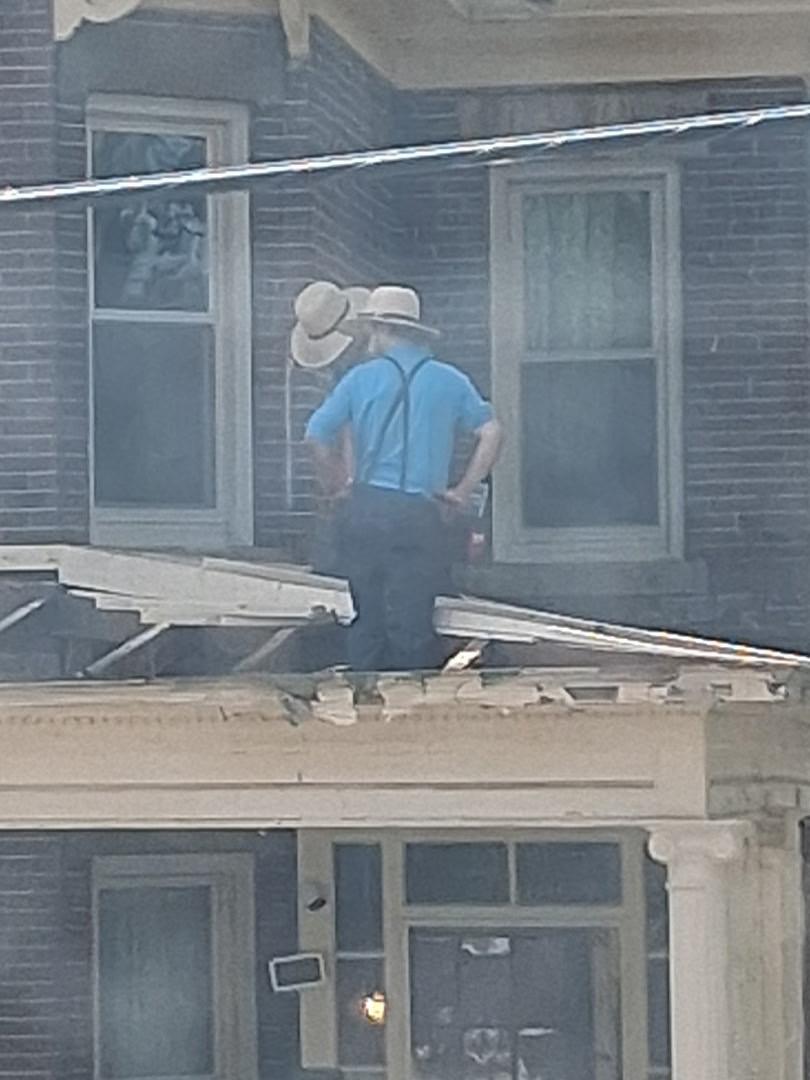
Throughout the summer, Amish construction crews — which stand out not only for their work ethic but also for their simple clothing, hats and beards — have been seen throughout the county, including in Bradford, putting roofs on houses, and building or renovating properties. State Rep. Marty Causer, R-Turtlepoint, said with a laugh, “I think I’m surrounded by Amish families here in Turtlepoint.”
And he’s happy to see it. “It’s growth and development. They are paying property tax like
...continued on page 4
everyone else and they are contributing to the community.”
The legislator added, “I think we as a community have welcomed them.”
The population of Amish folk in Annin Township is continuing to grow. Younger families continue to move to McKean County, and continue to have children.
“I think Turtlepoint and Annin Township have been the center of it,” Causer said of the population growth.
“They have three schools set up,” he said,
explaining one is on Route 155 at Turtlepoint, one is on Pine Grove Road and another is on Newell Creek Road by St. Mary Catholic Church.
“That demonstrates how many kids they are educating,” Causer said.
“The population, I can say it’s sizable and growing.”
Annin Township has been sparsely populated in the past, and when members of the Amish community come in,
“They’ve bought up old farms and areas that were, in some cases, dilapidated and really fixed them up.
“They’re contributing to the community in a definite way,” he said.
“I see it all as positive. My interactions with them have been very positive. I think they’re a great addition to the community.”
Many have the impression that Amish are farmers by trade, but Causer said that isn’t really the case.
“A lot of people have sawmills and are working in the forest production realm,” he said. “Many of them have farm animals, too, but I have
noticed many of them are involved in forestry and forest products.”
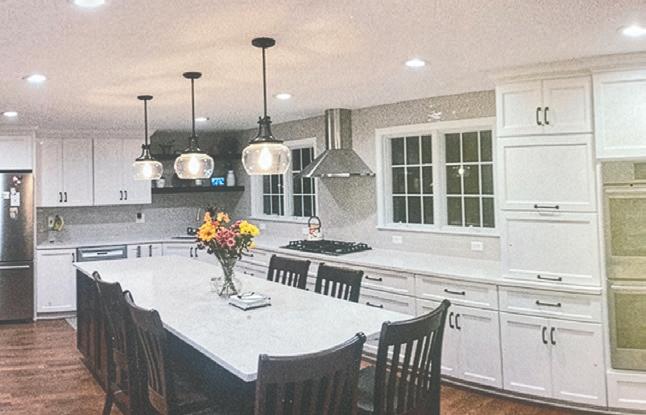
Carpentry is a common trade, with many of them working as contractors in the area. “They often bring a lot of people with them and many people can make work go quickly in getting projects completed,” Causer said, referring to the speed with which projects are completed.
“We’ve seen how fast they’ve put up houses and barns,” he added.
...continued on page 5
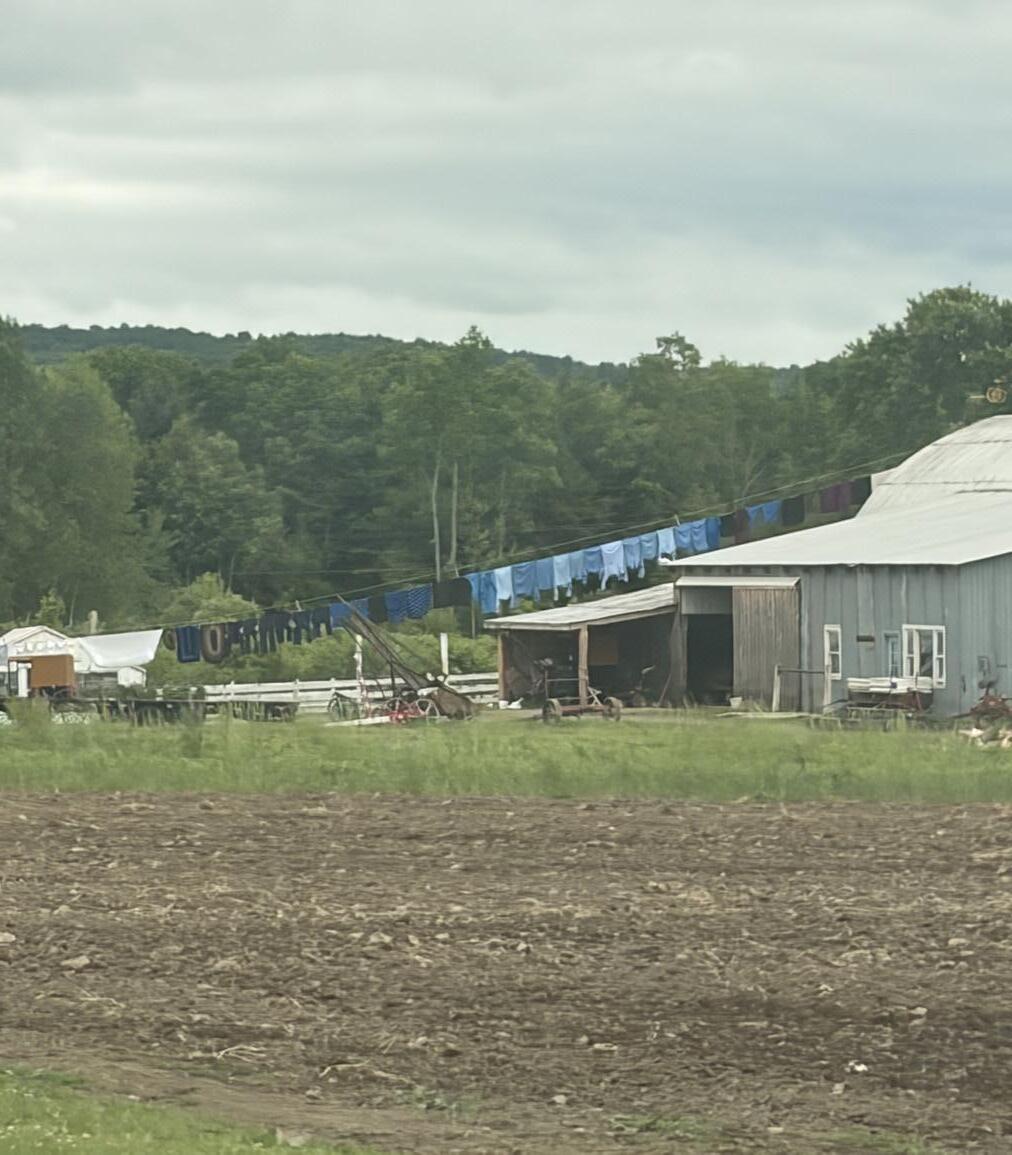
While the local community is traditional, in that they do not have electricity or drive vehicles, they do use natural gas for lighting and cooking. Wood and coal are used for heat.
“Between burning wood and natural gas they were utilizing those resources,” Causer said. “A lot of these old farms had natural gas wells on their property.”
The local resident described his Amish friends as being very family connected.
“A lot of them came from Smicksburg, near Punxsutawney,” he said. “If the parents move, the kids move with them.”
The settlement in Smicksburg was from
New Wilmington, a settlement that was established in 1847.
Causer said he had spoken to some families when they arrived in Turtlepoint, and asked why they had left the
Punxsutawney area. “They said it was growing up too fast down there.”
The Amish are one of the fastest growing populations in the United States, and possibly in McKean County, too.
“I think there will be more as long as there is adequate property available,” the local man said. “Some have come and gone already. As a rule they seem to be satisfied with the area. They are spending money like they are going to stay.”
9648

• 1525 (The Anabaptist Movement): Radical Reformation begins in Switzerland, emphasizing adult baptism and a strict separation of church and state.
• 1693 (The Amish Schism): Leader Jacob Ammann leads a conservative split from the Swiss-Mennonites, advocating for stricter adherence to traditional rules and church discipline.
• 1730s (Arrival in America): The first major waves of Amish immigrants arrive in Pennsylvania, seeking religious freedom and fertile farming soils.
• 1949 (The New York Pioneer Era): The Troyer Amish establish the Conewango Valley settlement, officially cementing the modern Amish presence in Western New York
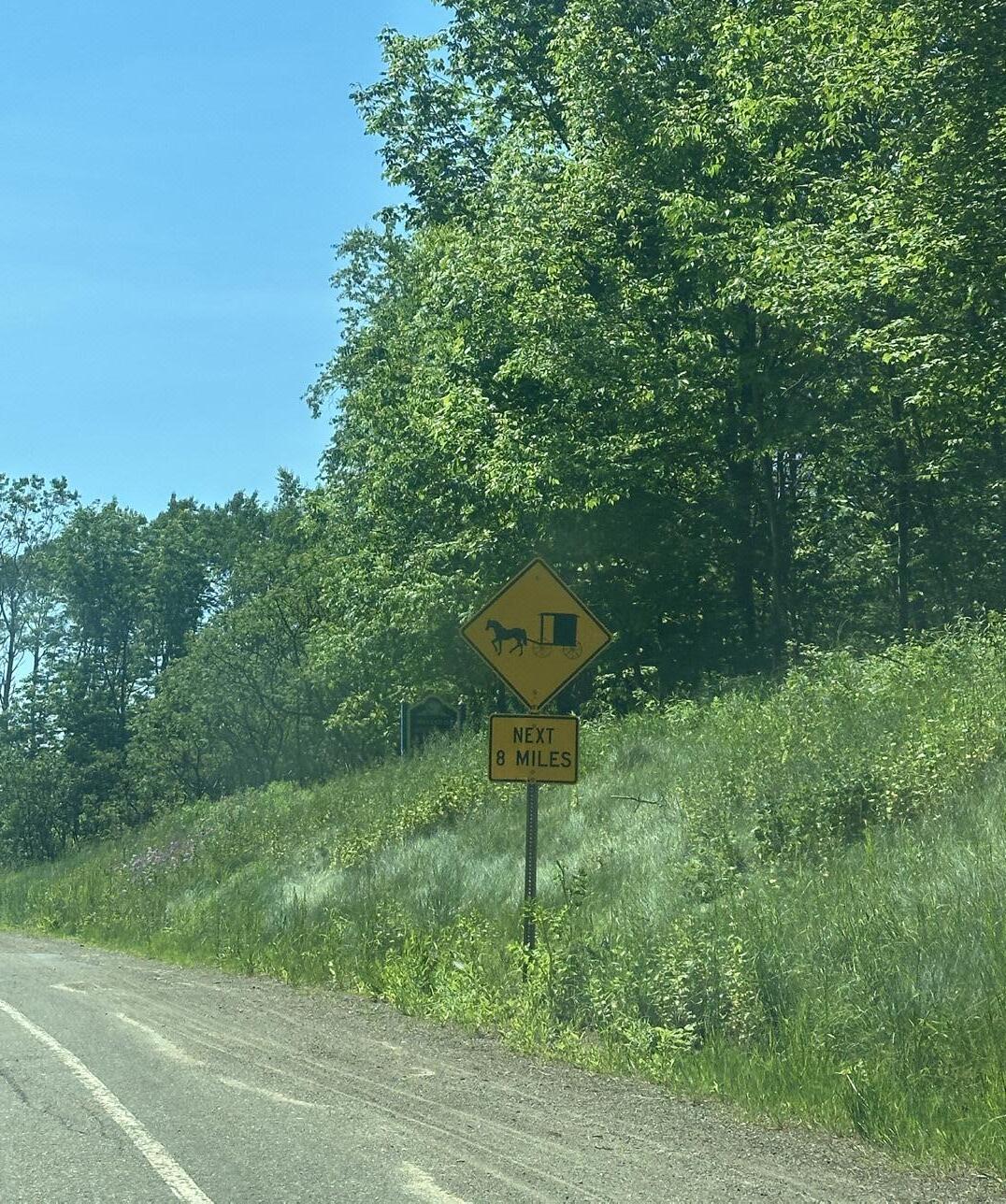
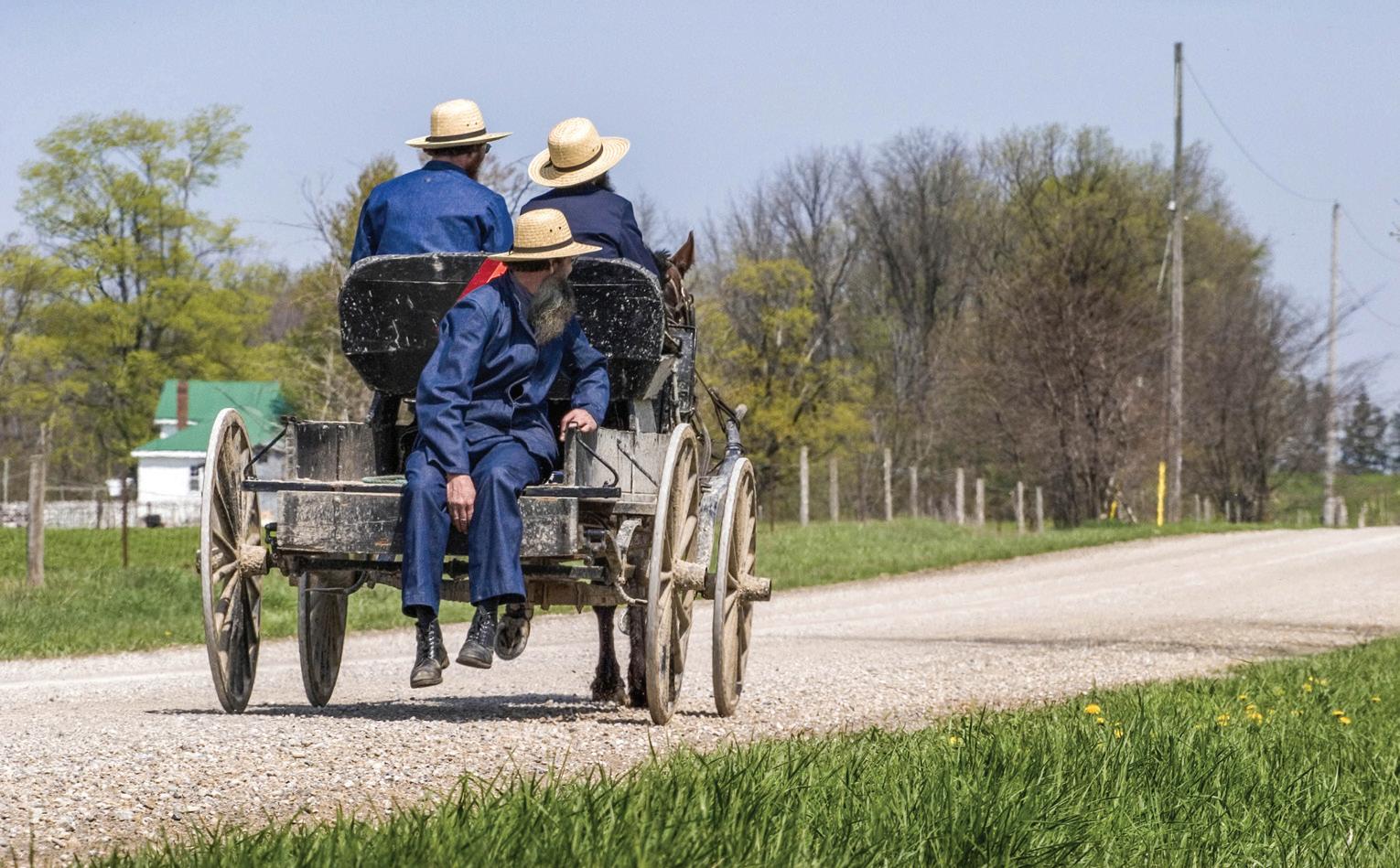
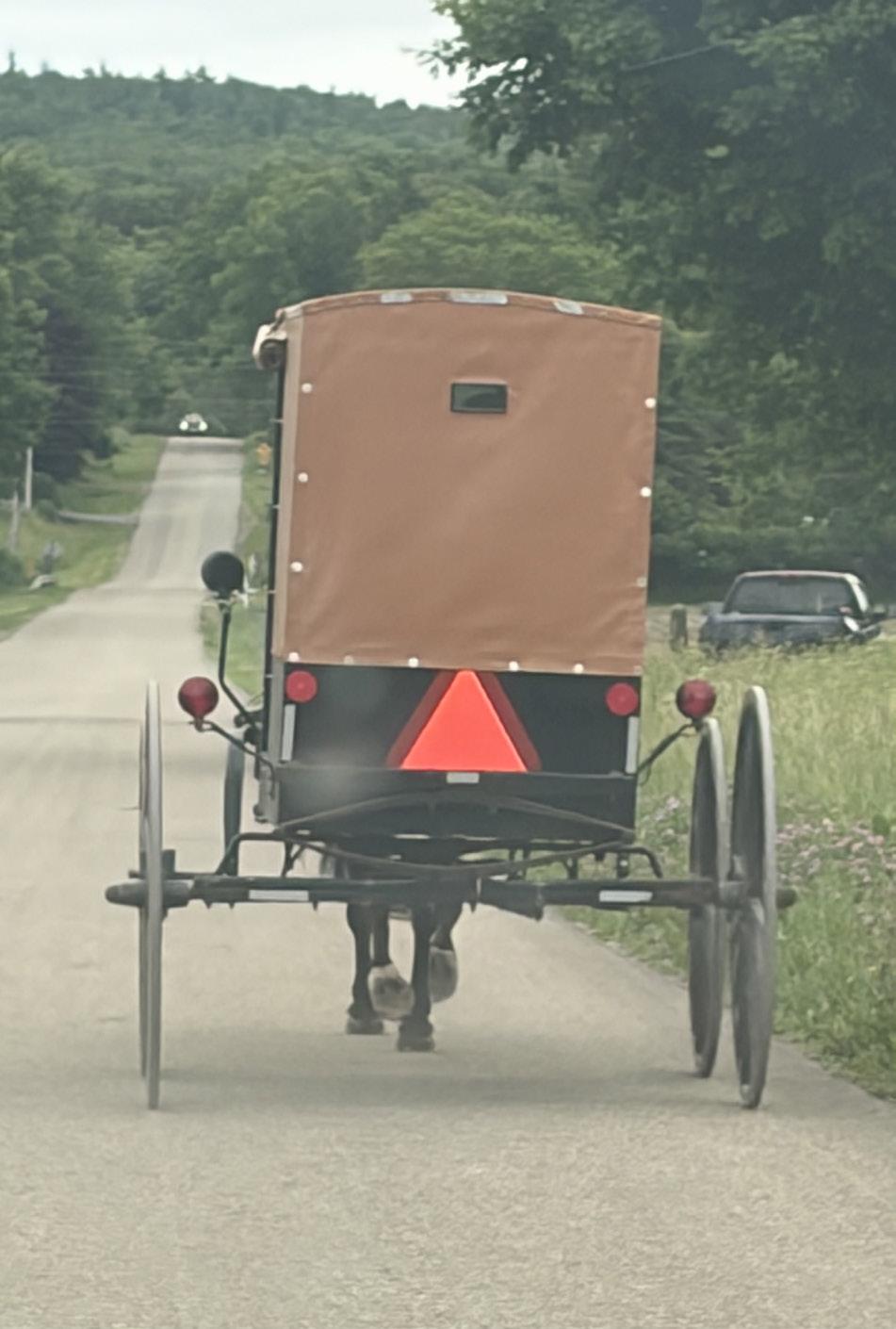
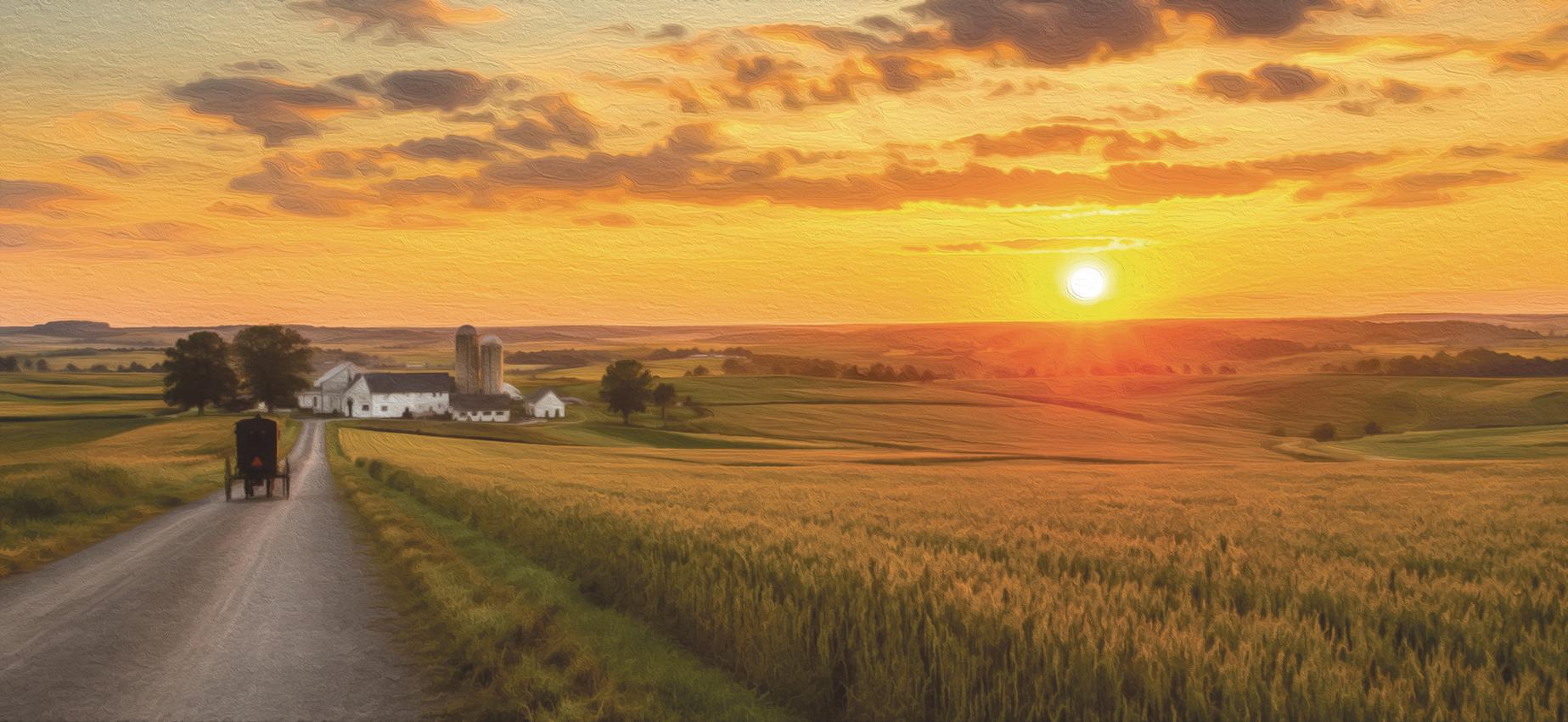
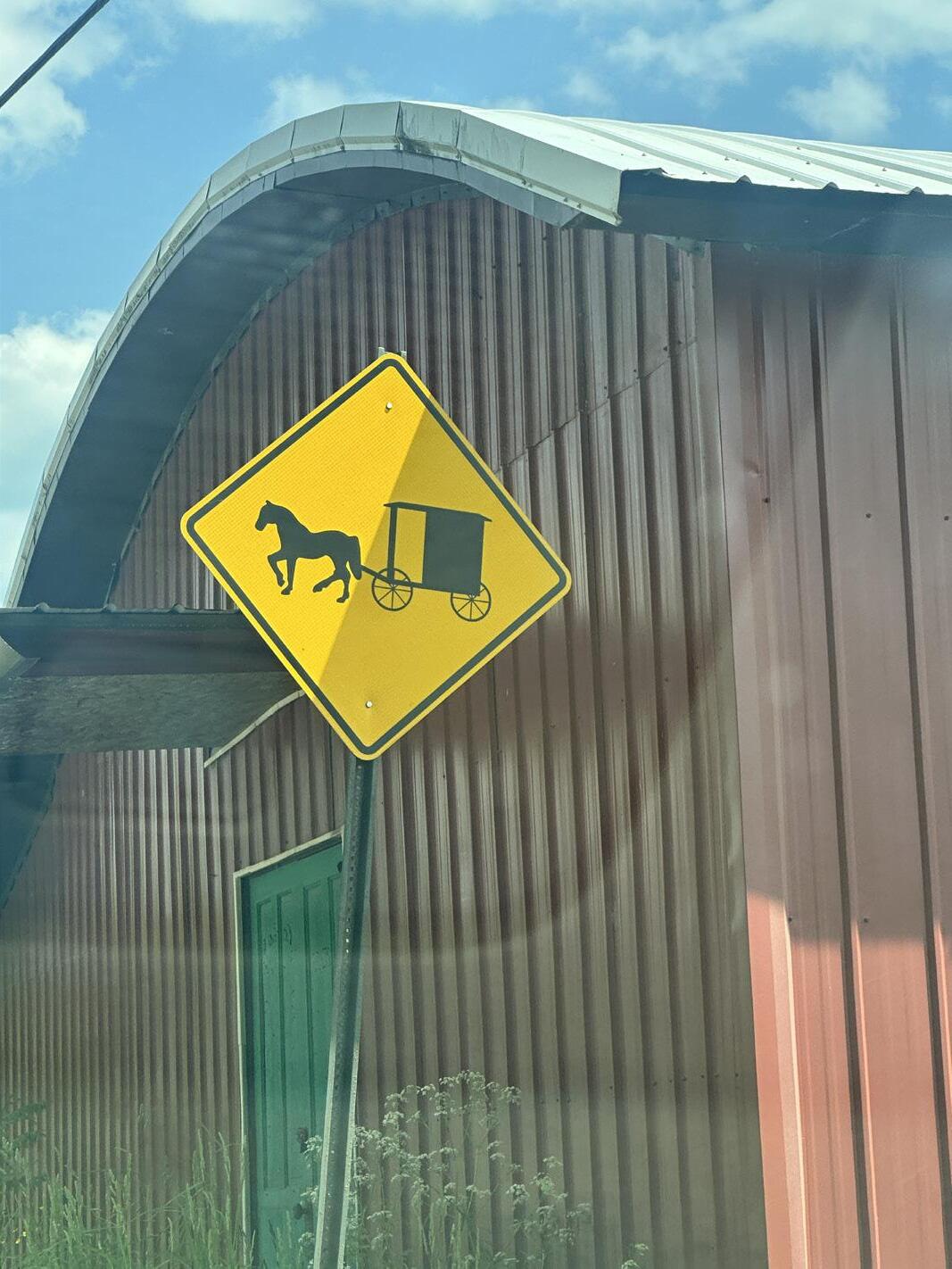
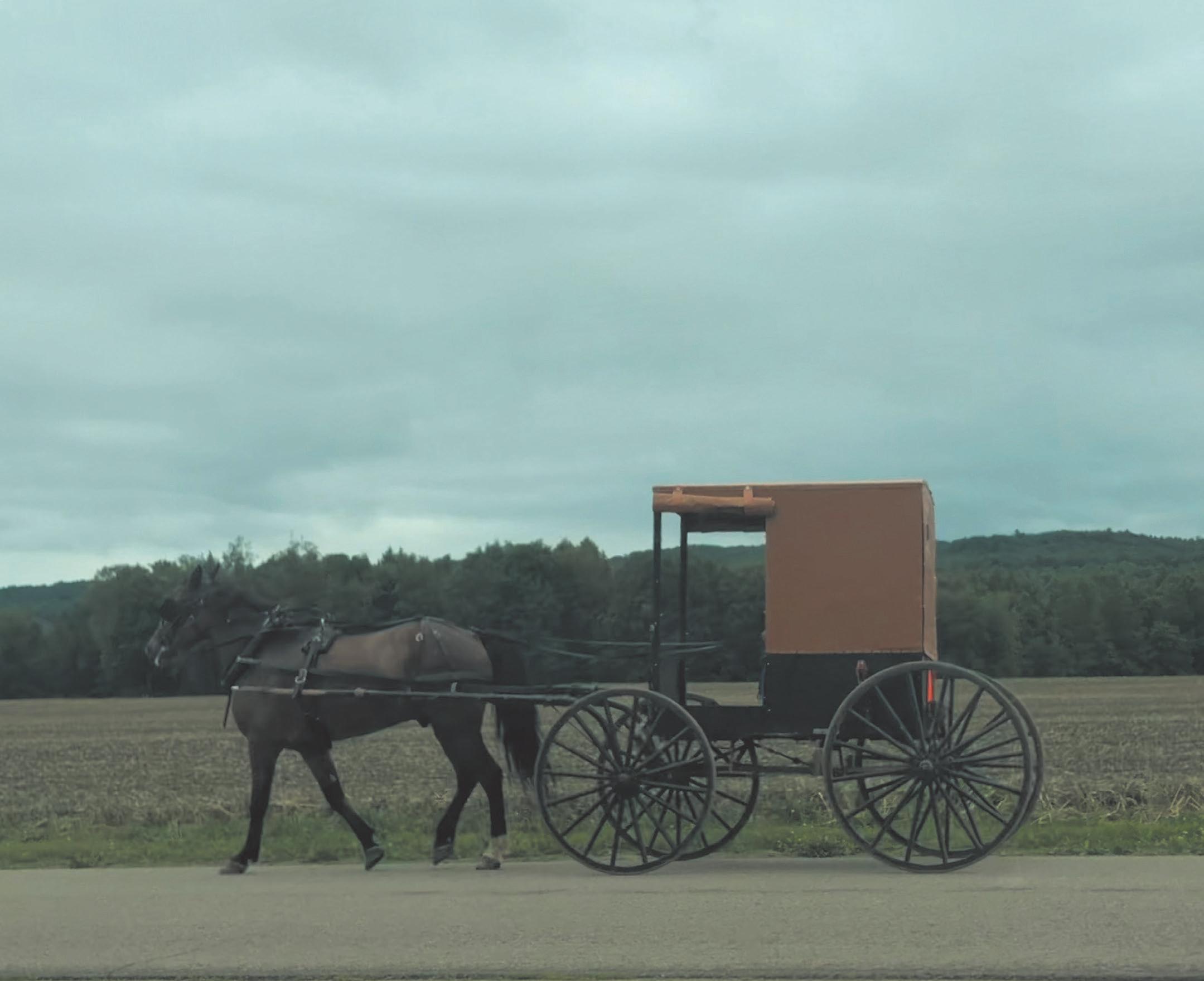
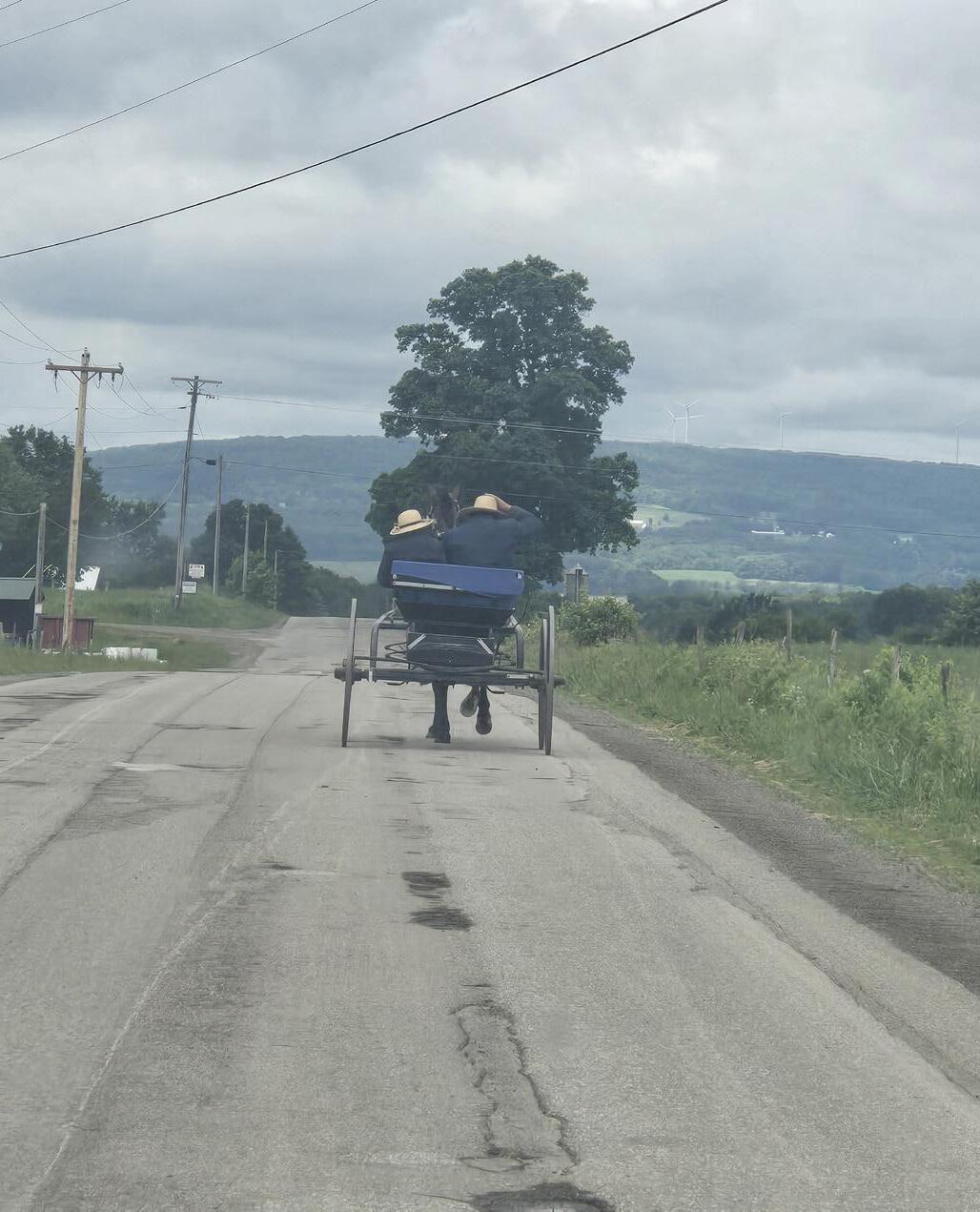
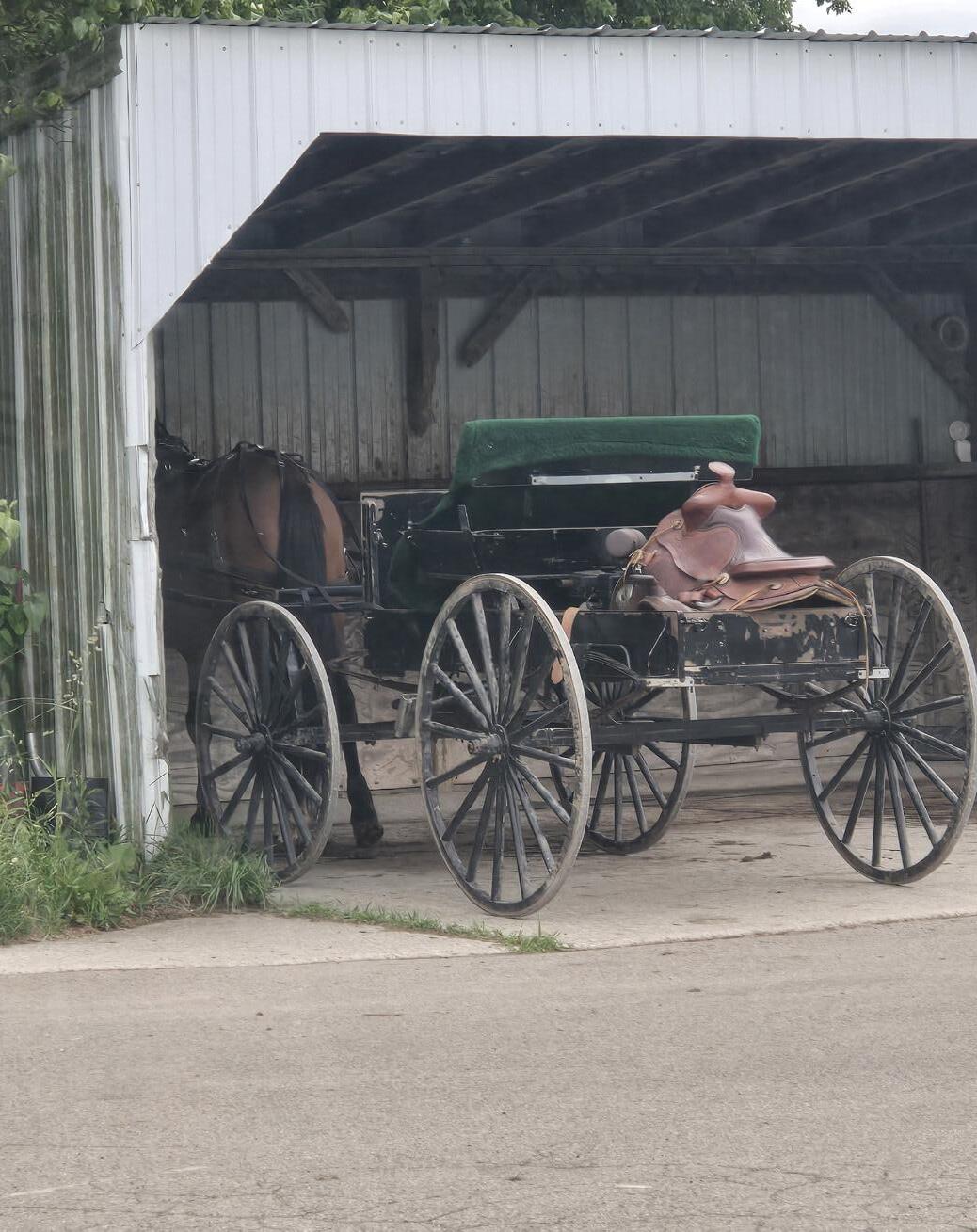
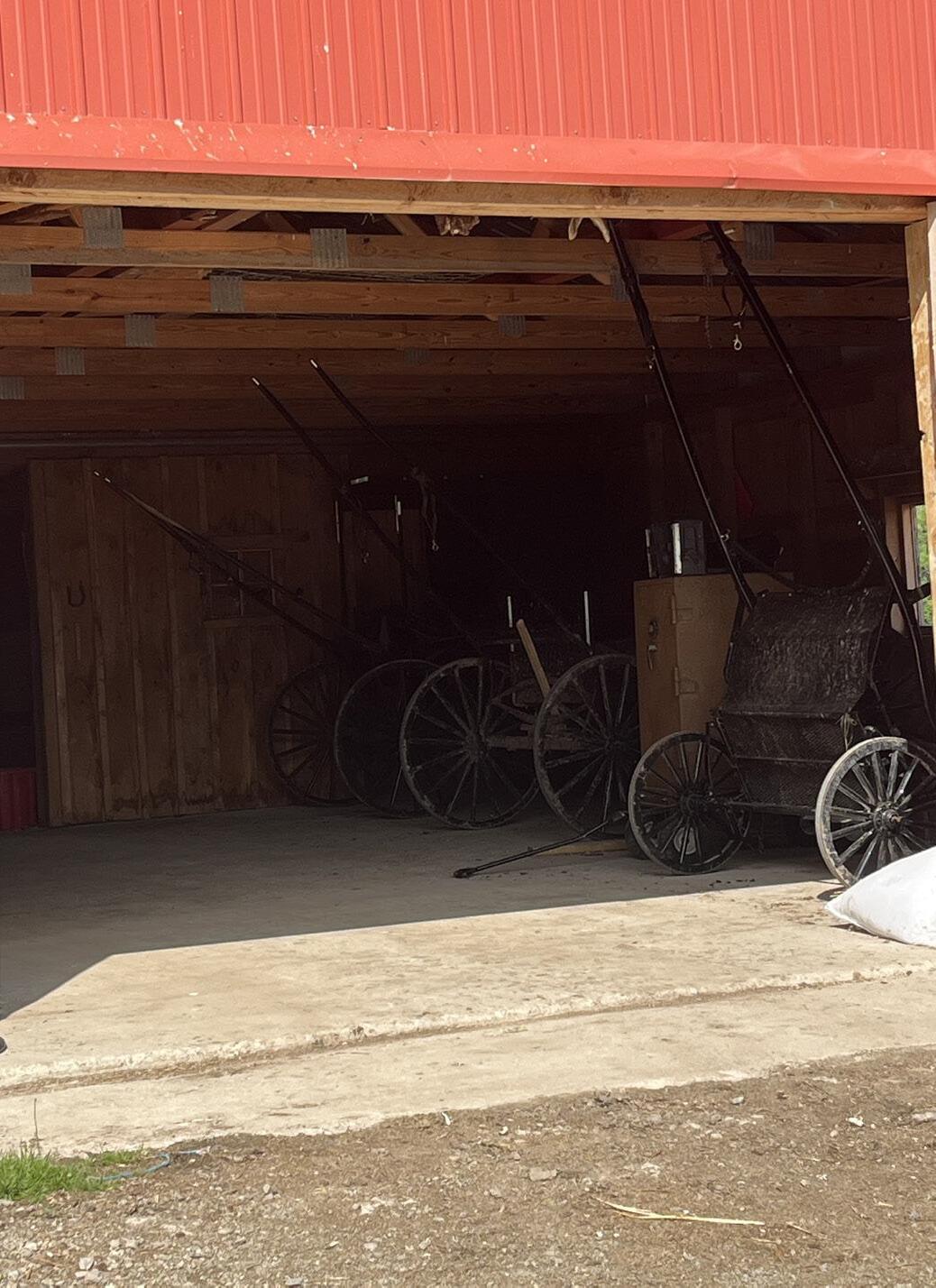
The horse-drawn buggy is the most visible symbol of a plain community’s commitment to a slower, localized pace of life. Far from being simple wooden boxes, the modern buggy is a carefully engineered piece of transportation equipment designed to balance historical tradition with the realities of sharing high-speed asphalt highways with modern motor vehicles.
Standard buggies






are built around a lightweight, hightensile steel or fiberglass chassis, resting on heavyduty leaf spring suspension systems designed to absorb the ruts of rural gravel roads. The classic
wooden wheels are wrapped in a thin layer of durable rubber to reduce road noise and vibration. The enclosed cab is traditionally crafted from lightweight poplars, marine


plywood, or fiberglass sheets, painted a uniform color determined strictly by the local church district. While some communities mandate sharp black cabs, others utilize distinct gray, yellow, or white finishes, serving as an immediate visual identifier of that specific community’s theological lineage.
As rural highways have become faster and more congested, buggy design has evolved to
incorporate advanced safety features. Modern buggies are outfitted with deep-cycle 12-volt marine batteries hidden beneath the passenger seat. This battery powers a complete electrical system, including bright LED headlights, amber turn signals, brake lights, and high-visibility hazards controlled by switches on the dashboard.The most critical safety feature is the federally
mandated SlowMoving Vehicle (SMV) triangle. This reflective, bright orange and red emblem is mounted directly to the rear of the cab to alert overtaking motorists from a distance. To further enhance visibility during heavy lake-effect snowstorms or fog, many buggies are also wrapped in highly reflective silver conspicuity tape along the sides and rear borders. Despite these
modern additions, sharing the road remains a delicate balance. A standard horse and buggy travels at an average speed of five to eight miles per hour, meaning a vehicle traveling at fifty-five miles per hour will close a football-fieldlength gap in less than five seconds, making highvisibility equipment and motorist awareness a matter of literal life and death.
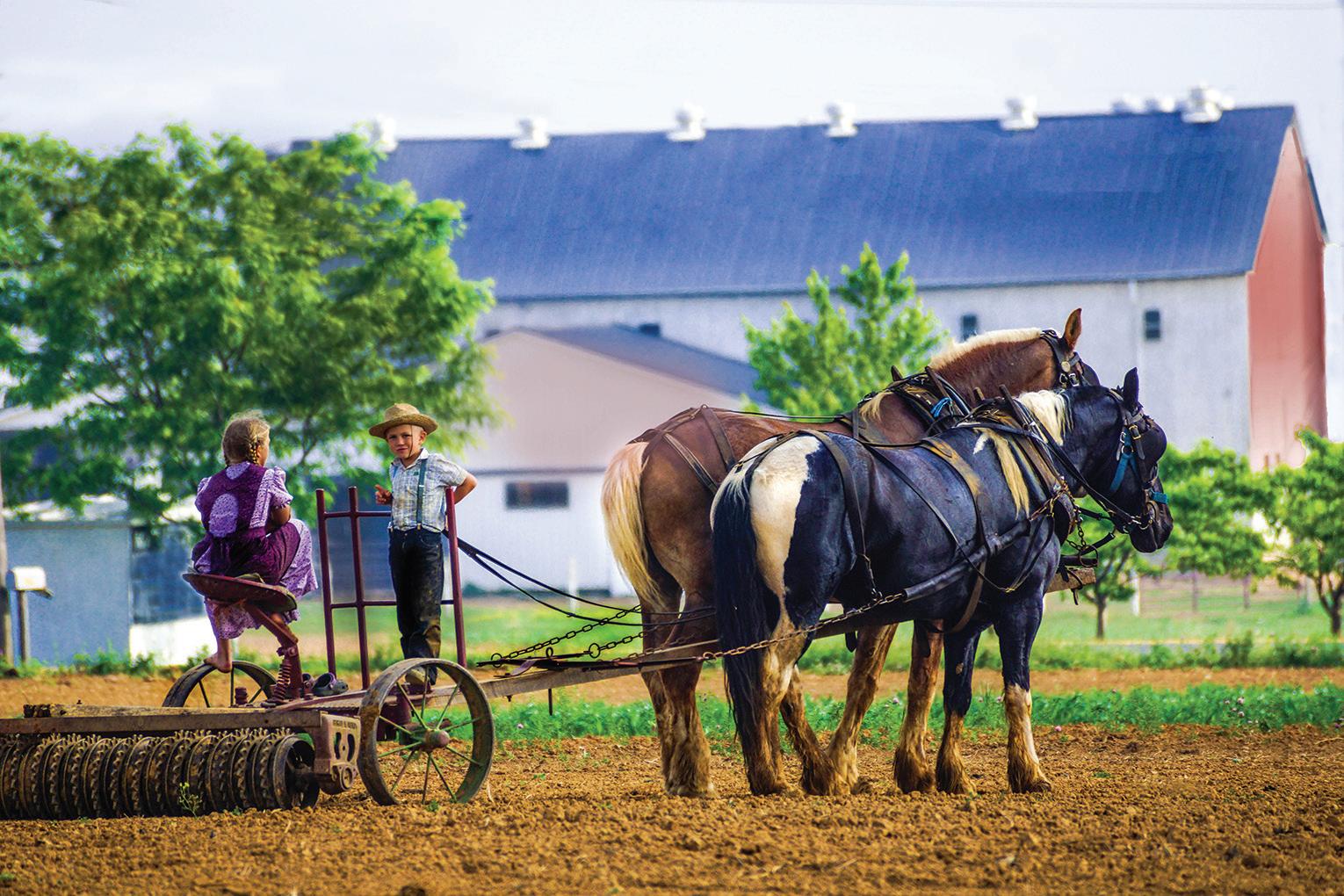
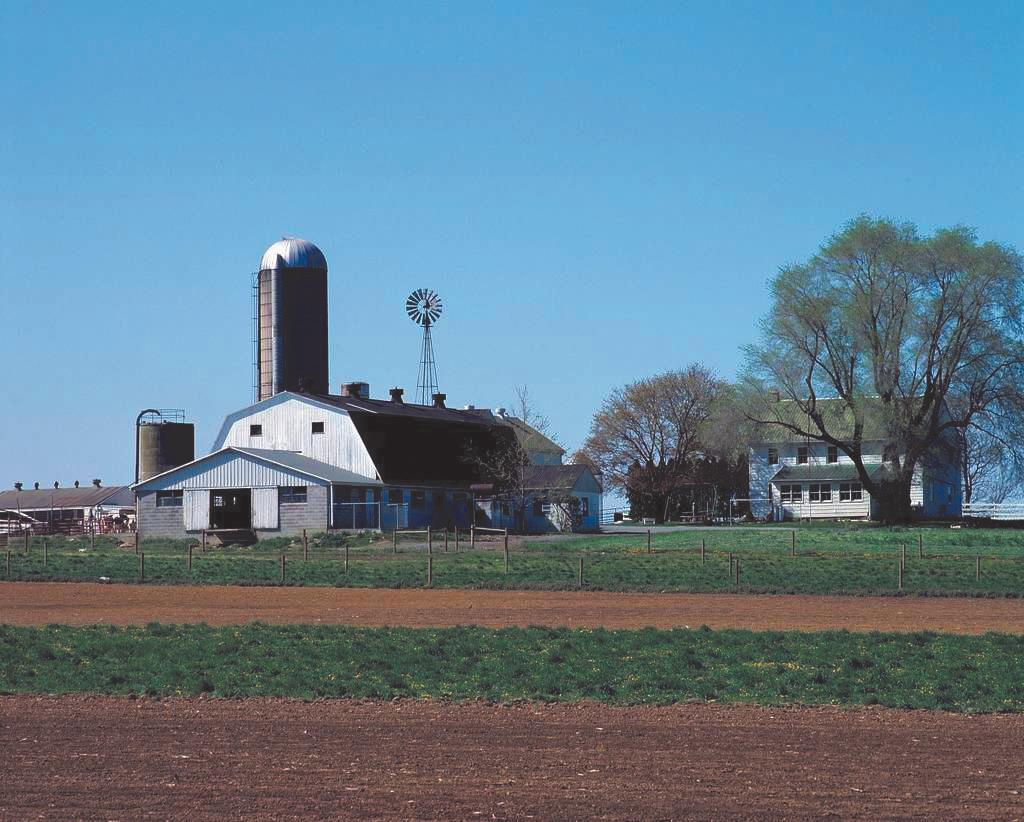
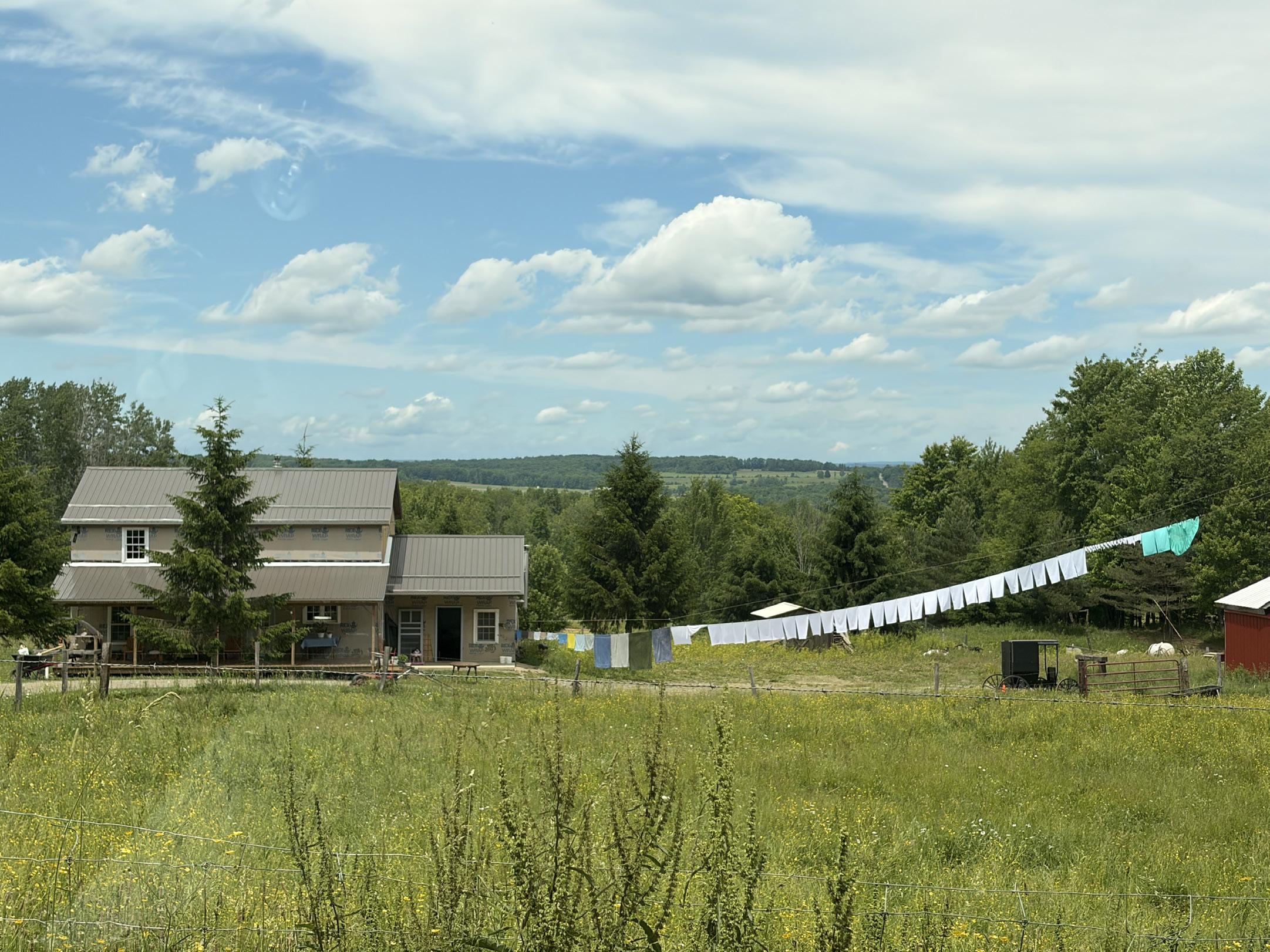
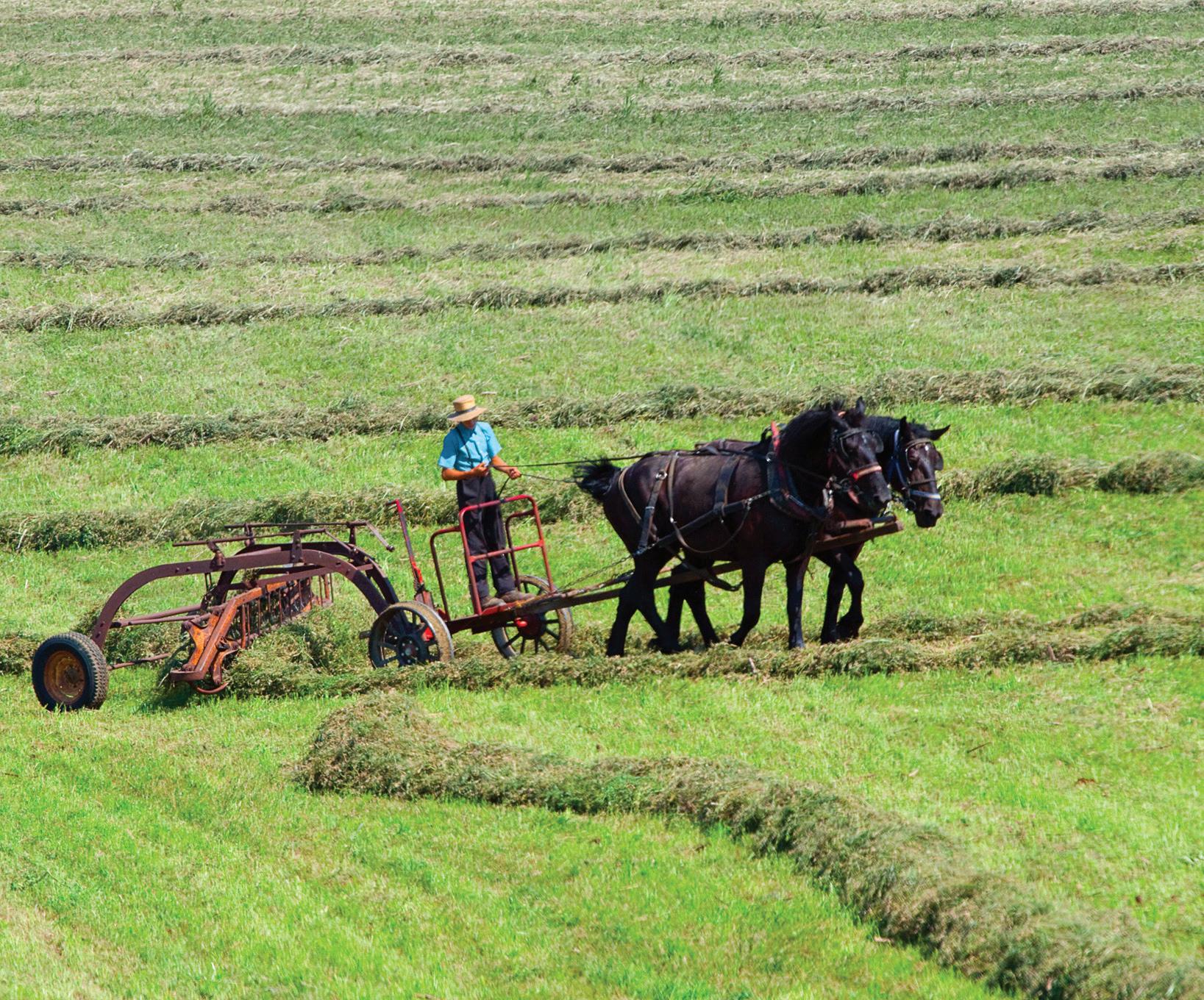
For plain communities, working the land is far more than a practical livelihood; it is a foundational component of their spiritual worldview. Farming is viewed as a sacred stewardship, keeping the family unit anchored together in the soil and physically isolated from the industrial, fast-paced distractions of urban environments. By engaging in manual labor alongside their children, families ensure that lessons of humility, shared effort, and reliance on nature are passed directly to the next generation.The visual hallmark of this agricultural lifestyle is the reliance on real horse-power.
Instead of modern tractors, fields are tilled, planted, and
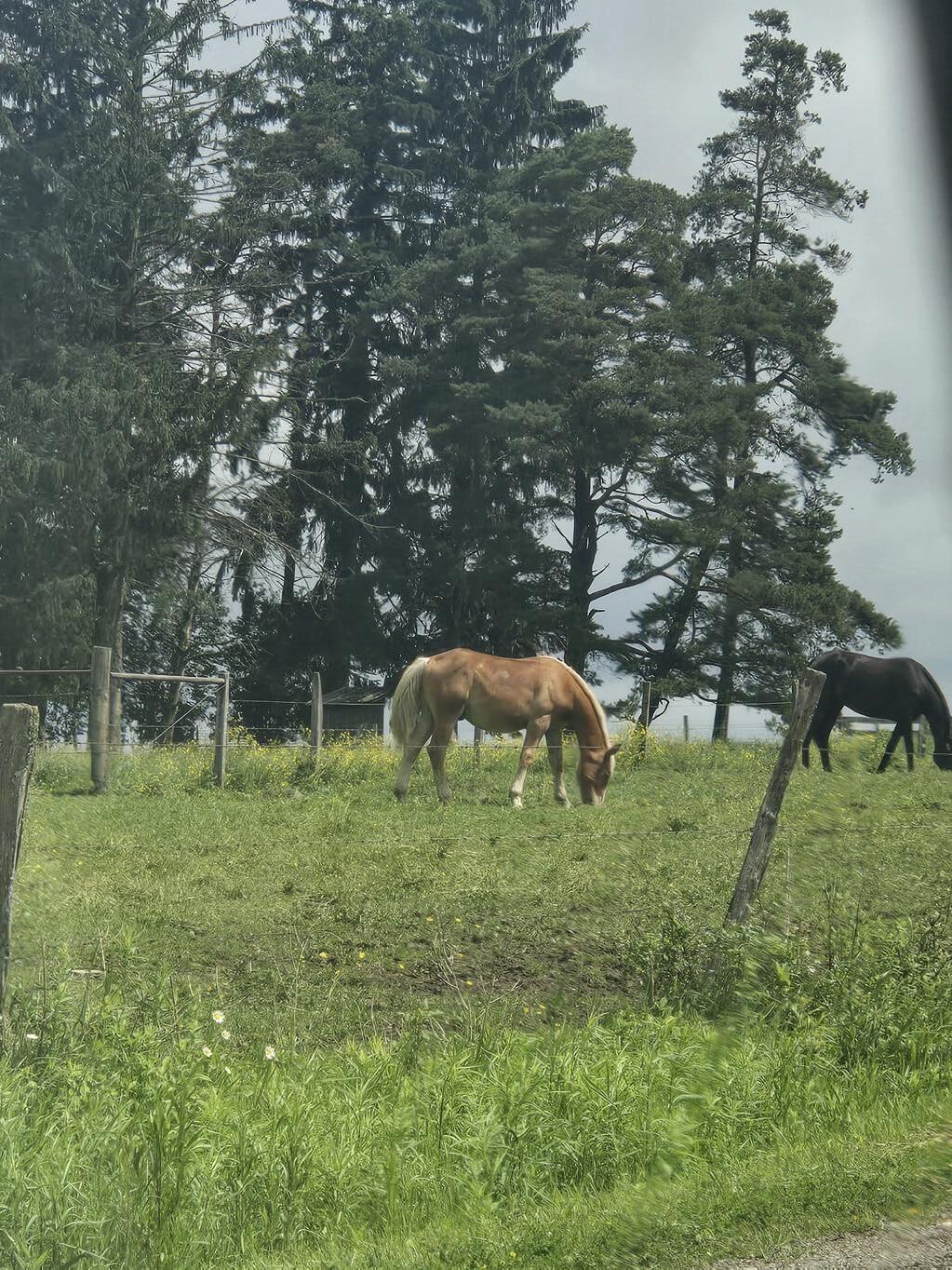
harvested using teams of draft horses— typically heavy Belgian or Percheron breeds. These powerful animals pull traditional machinery, such as ground-driven plows, disc harrows, and specialized grain binders that have been meticulously restored or retrofitted with small auxiliary engines to run the internal moving parts.
While this method


requires significantly more physical time and manual effort, it prevents the severe soil compaction caused by multi-ton modern machinery and naturally limits the scale of the farm, keeping operations manageable for a single family without requiring corporate expansion.In an era dominated by large-
...continued on page 13
from page 11
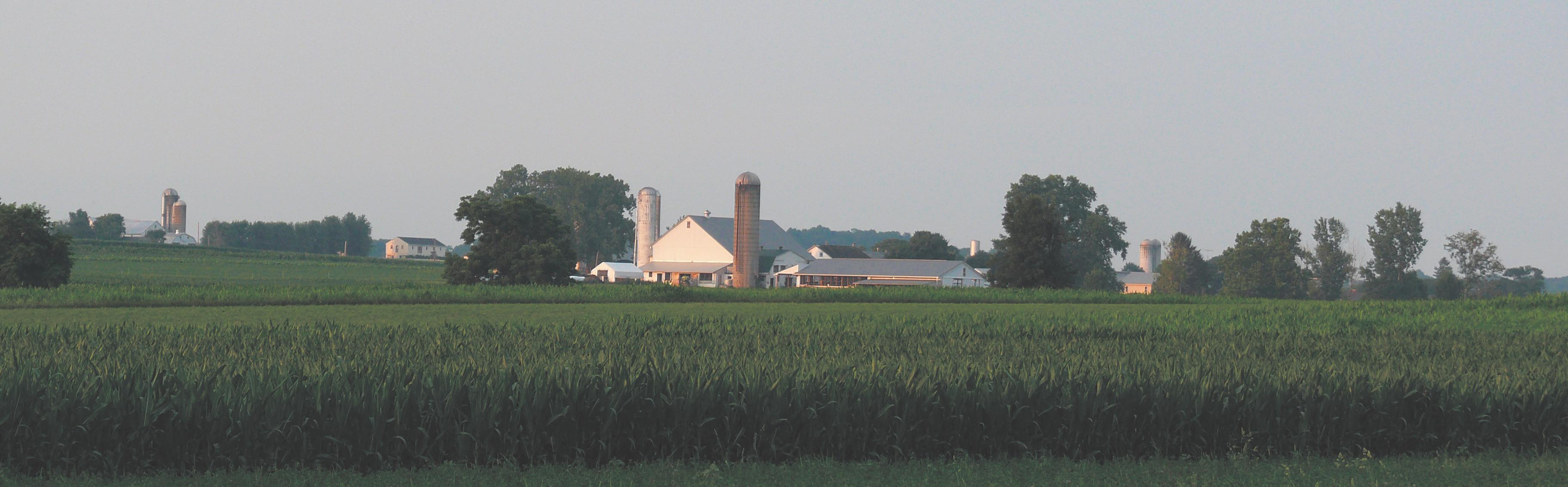
scale commercial agribusiness, plain farms remain remarkably diverse and resilient.
A typical homestead operates a mixed-use model, combining a small dairy herd, a flock of laying hens, several acres of field crops like corn and alfalfa, and an extensive family vegetable
garden. Crop rotation is practiced with meticulous care, utilizing natural clover crops and livestock manure to rebuild nitrogen levels in the soil rather than relying on expensive chemical fertilizers.
Furthermore, as regional dairy prices fluctuate, many communities have
pivoted toward intensive produce farming. Through cooperative produce auctions, families combine their seasonal yields— ranging from earlyspring rhubarb and sweet corn to fall pumpkins and gourds—to sell in bulk to regional supermarkets and local distributors.
This collective approach allows even a tiny five-acre plot to generate enough sustainable income to support a large household, preserving the rural landscape and ensuring that the generational connection to the soil remains unbroken.
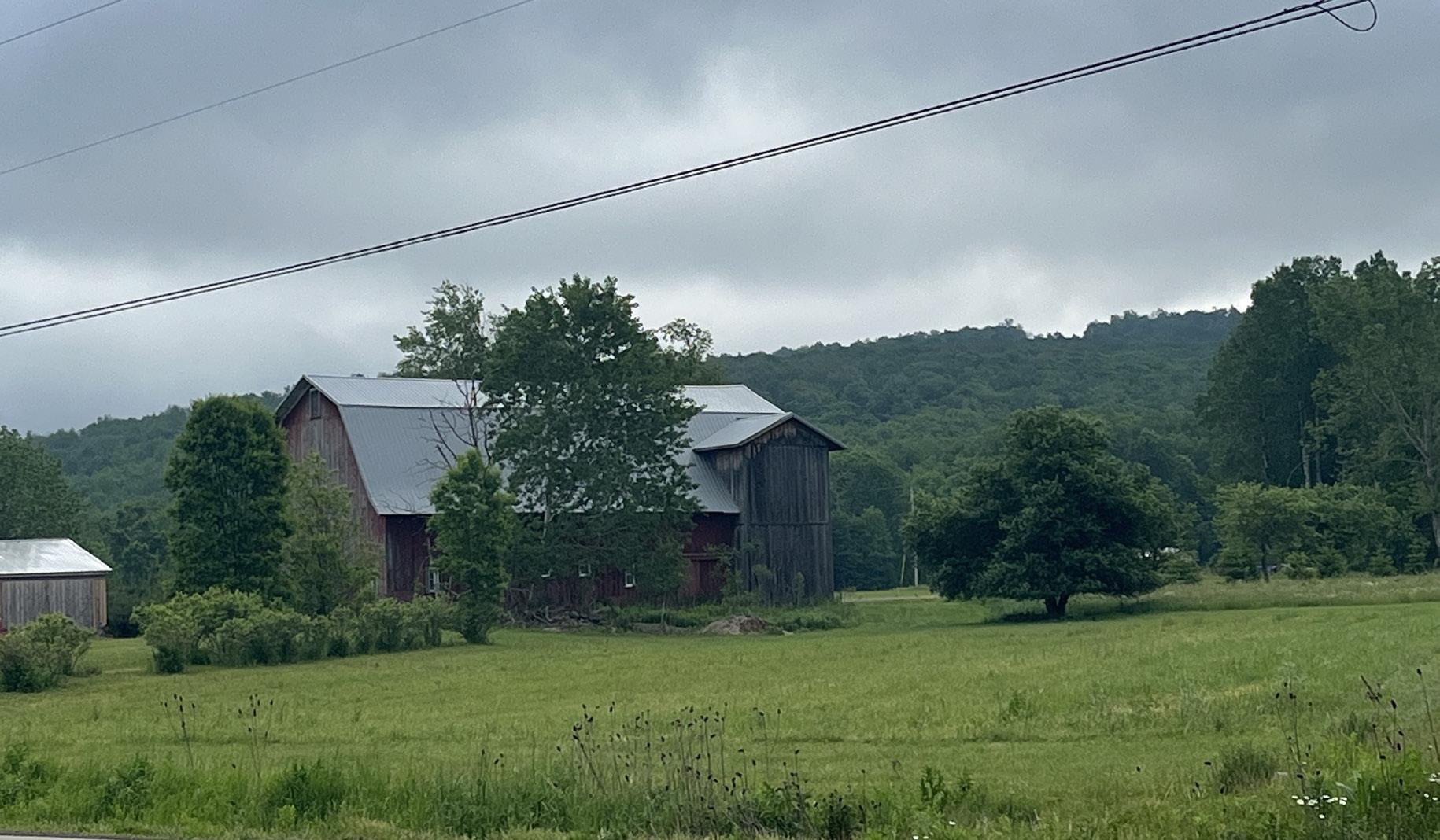
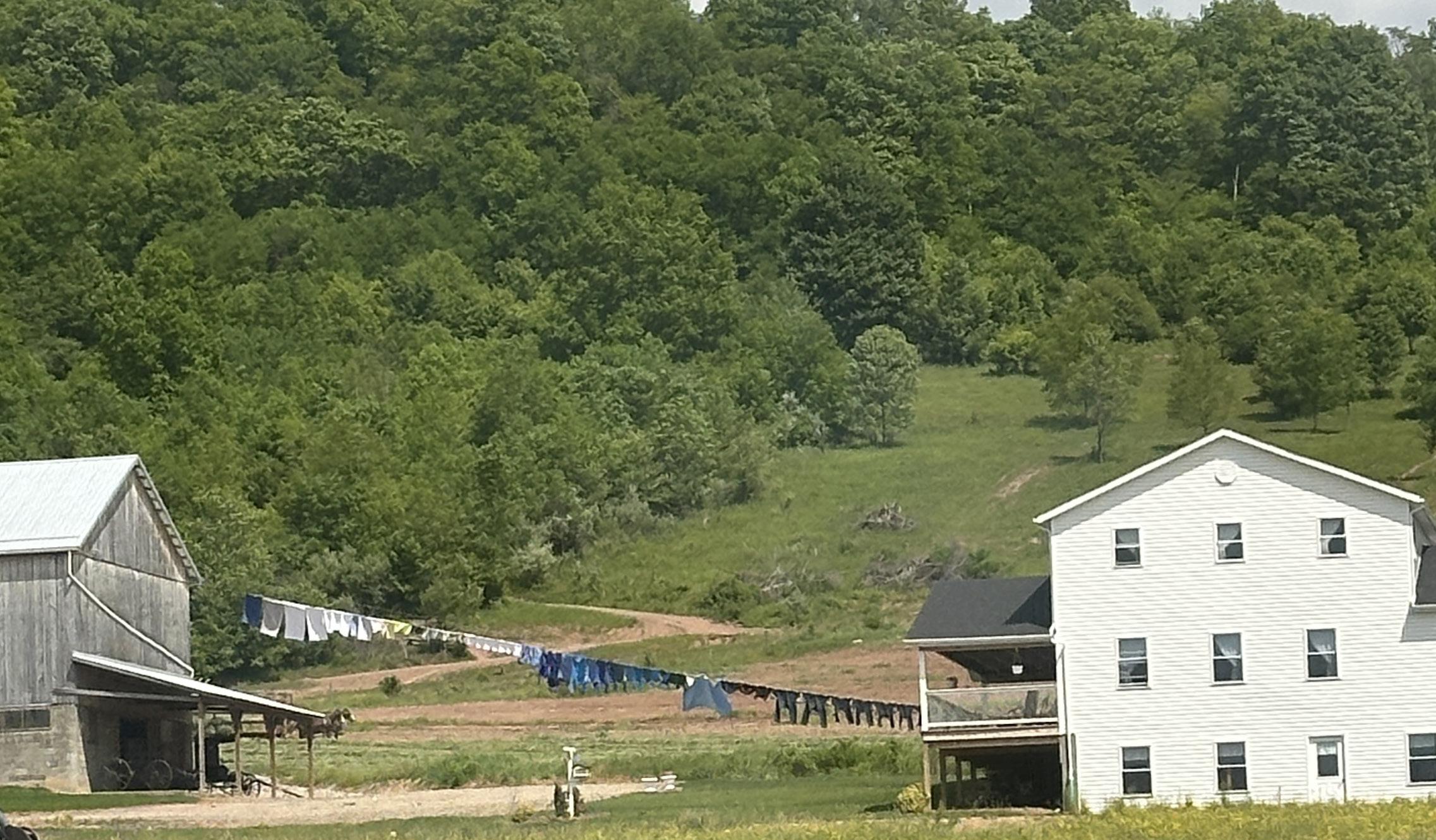
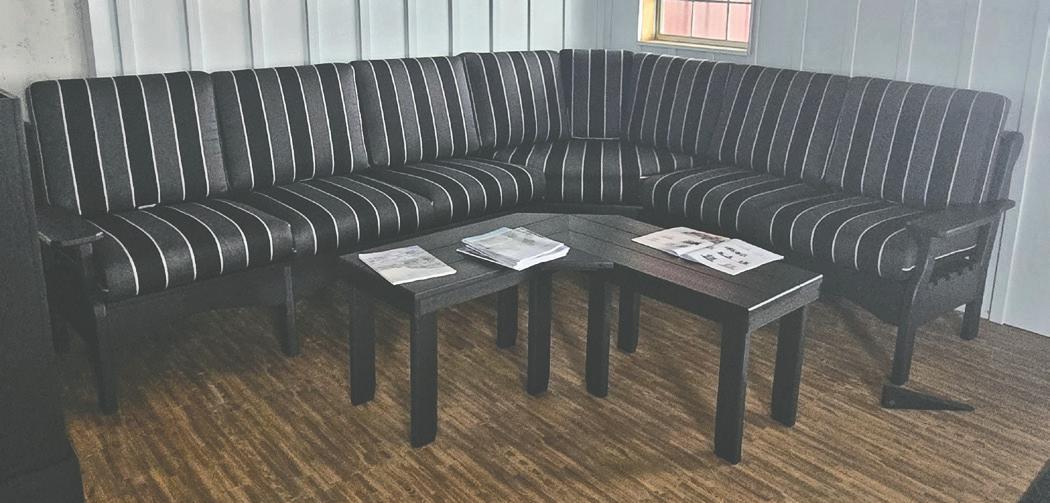
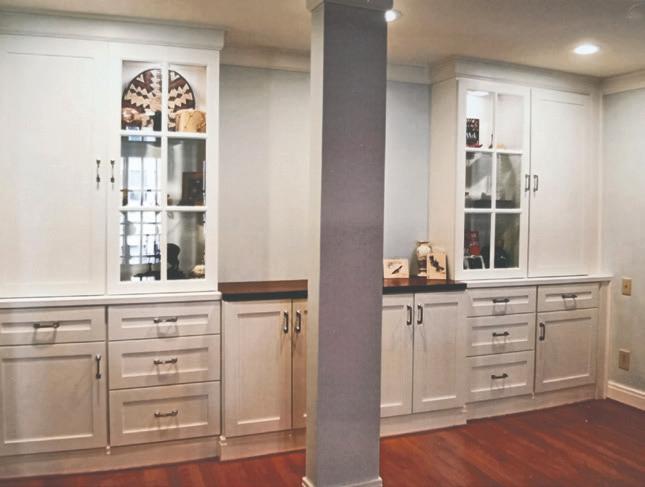
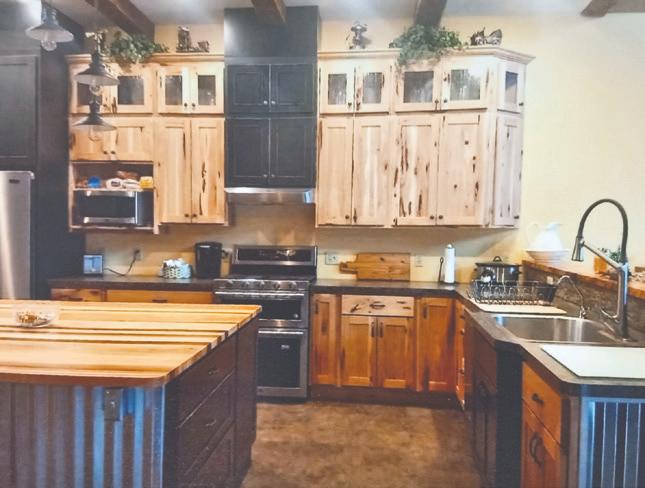
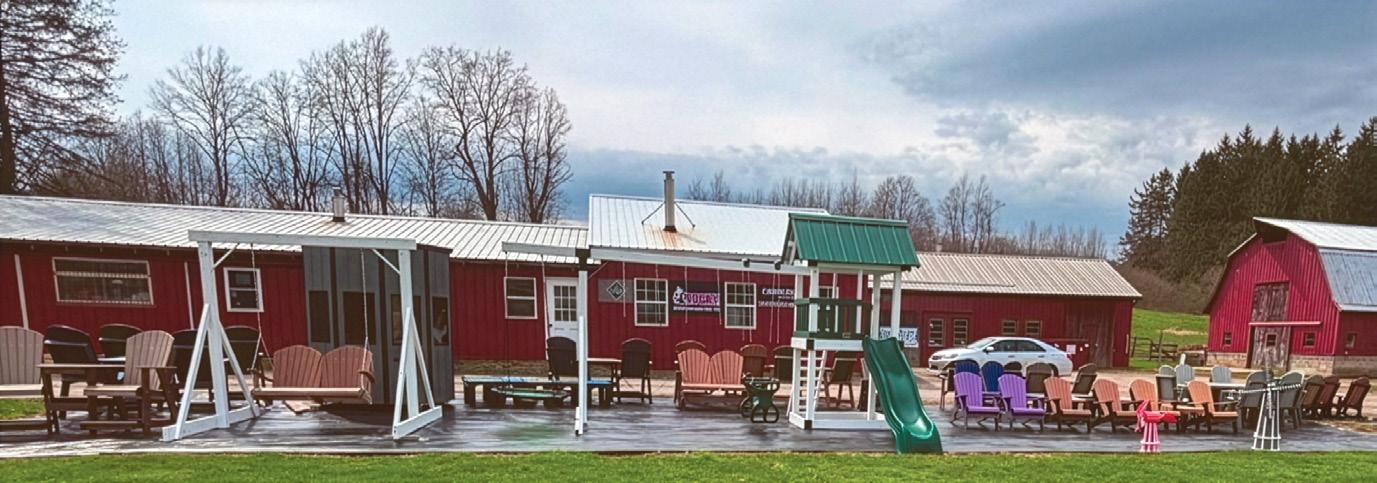
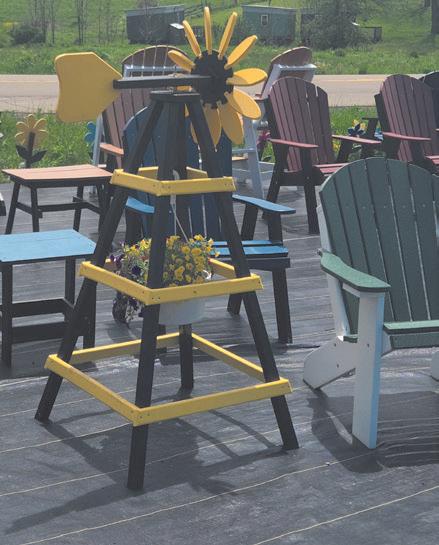
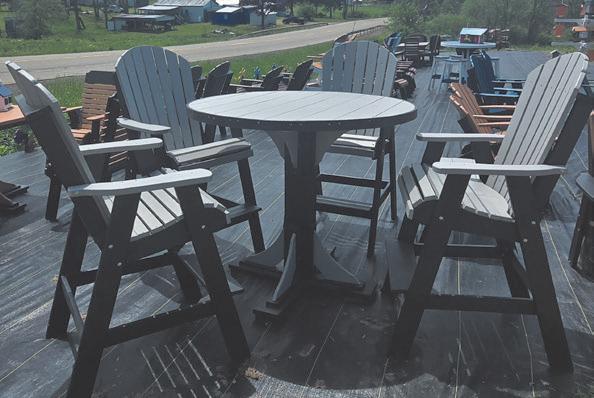
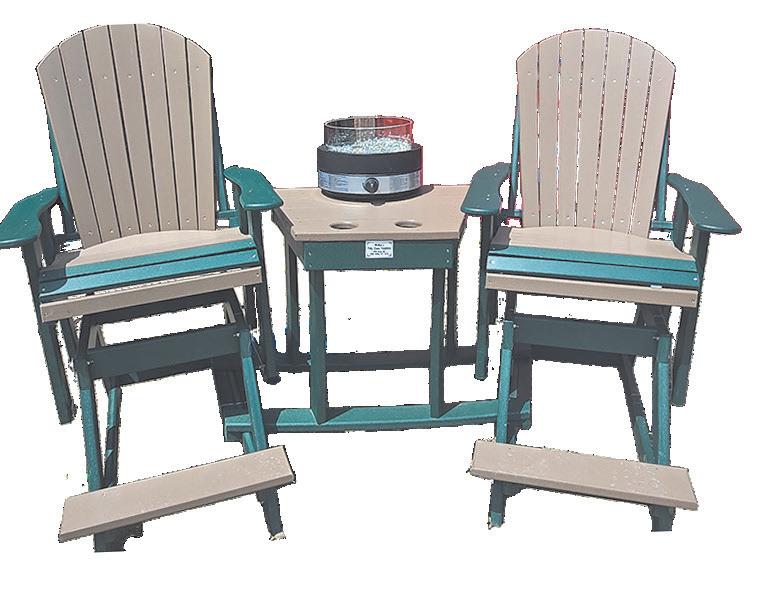
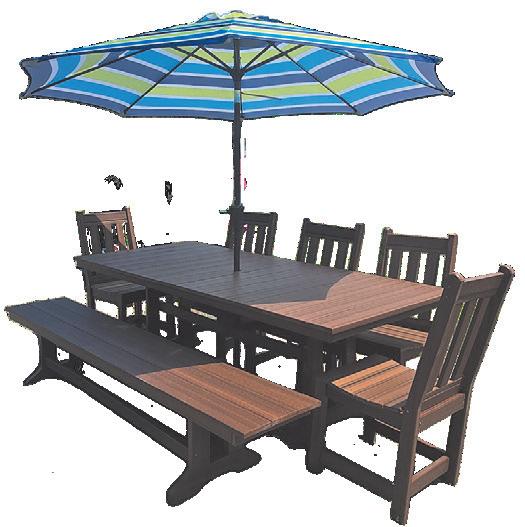
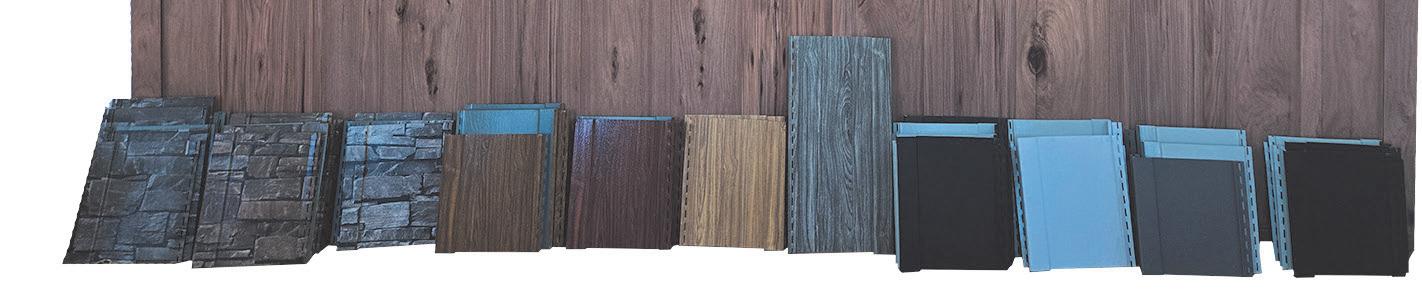
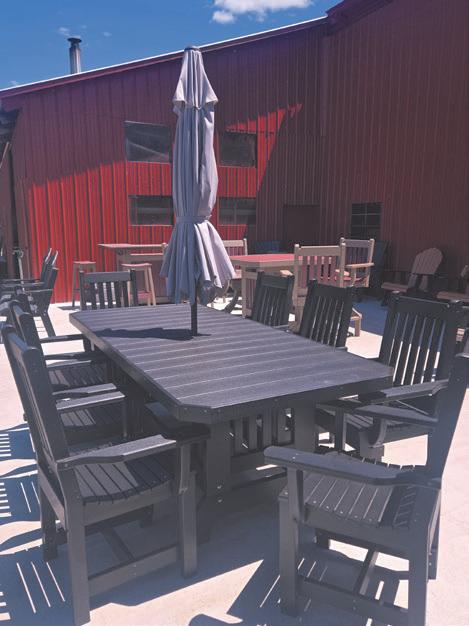
In a consumer market often dominated by massproduced, flat-packed furniture made from synthetic particleboard, traditional plaincommunity woodwork stands as a testament to durability, patience, and timeless engineering. For decades, furniture building has grown from a necessary domestic skill into a vital economic pillar for rural settlements. This shift allows families to generate sustainable, high-value income directly on the homestead, keeping fathers and sons working together in workshops just steps away from the family home rather than commuting to external commercial jobs.
The defining characteristic of this furniture is the absolute commitment to 100% solid North American hardwoods. Craftsmen meticulously select premium lumber—such as northern red oak, quartersawn white oak, cherry, hard maple, and walnut—matching the natural grain patterns to ensure structural balance and visual harmony. Because wood naturally expands and contracts with changes in seasonal humidity, these builders utilize time-tested, centuries-old joinery techniques instead of relying on cheap metallic screws, staples, or chemical wood glues.
A look inside a finished piece reveals master-level engineering: precision dovetail joints anchoring
drawer boxes, mortiseand-tenon frames ensuring table leg stability, and floating panels designed to breathe without cracking. Every surface is sanded by hand through multiple progressively finer grits before a specialized, multistage catalyzed conversion varnish is applied. This highly durable finish cures into an impermeable shield, protecting the natural wood from water rings, household chemicals, and everyday wear, ensuring the piece transforms into a multi-generational family heirloom.Operating these workshops requires a creative approach to technology. To adhere strictly to community guidelines regarding grid electricity, craftsmen engineer highly sophisticated, localized power networks. Large, stationary diesel engines housed in outbuildings drive central hydraulic pumps or complex pneumatic air compressors. This pressure is piped directly through the workshop walls to power heavy-duty industrial table saws, planers, shapers, and sanders, proving that a devotion to simplicity does not require a compromise in industrial precision. By blending this innovative mechanical power with an unyielding standard of handfinished excellence, local woodworkers continue to create pieces that are celebrated nationwide for their beauty, strength, and structural integrity.
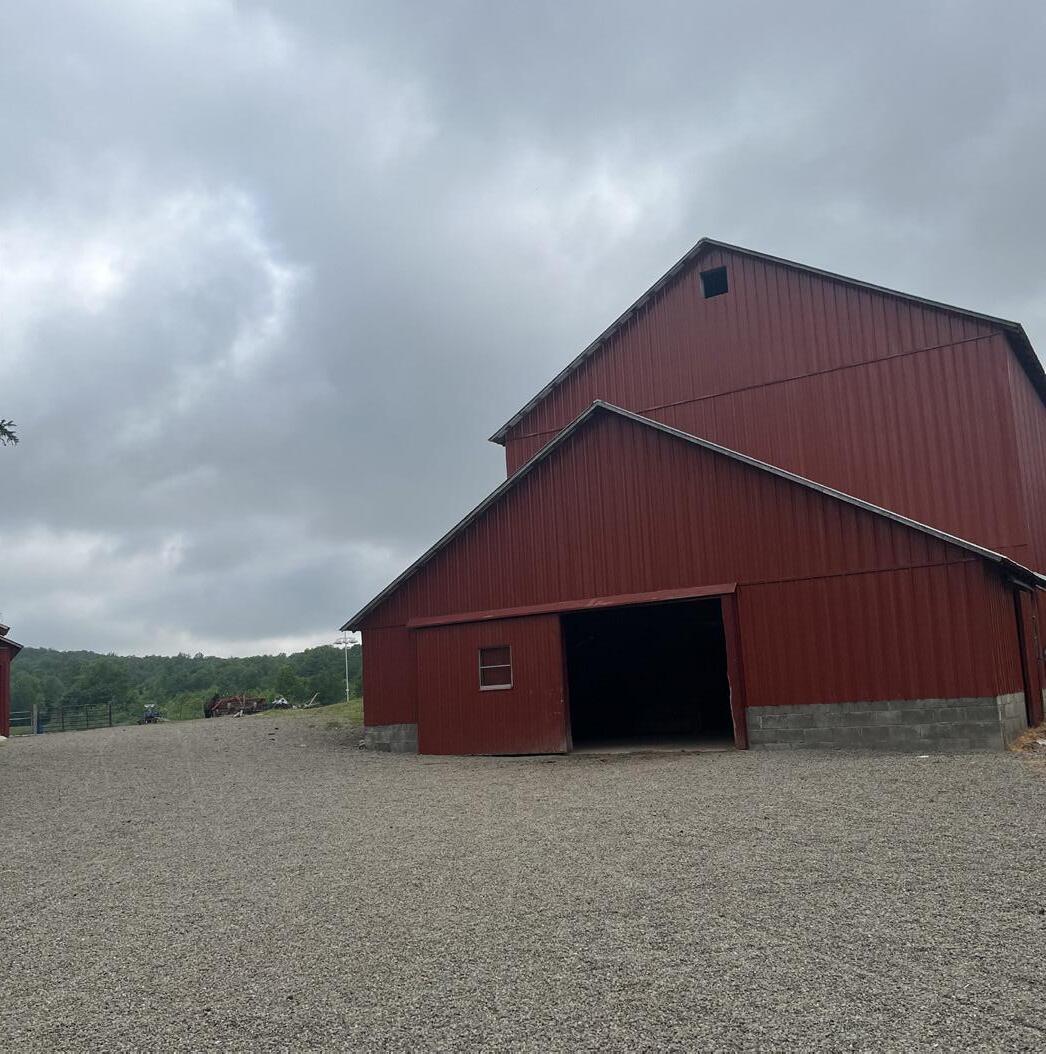
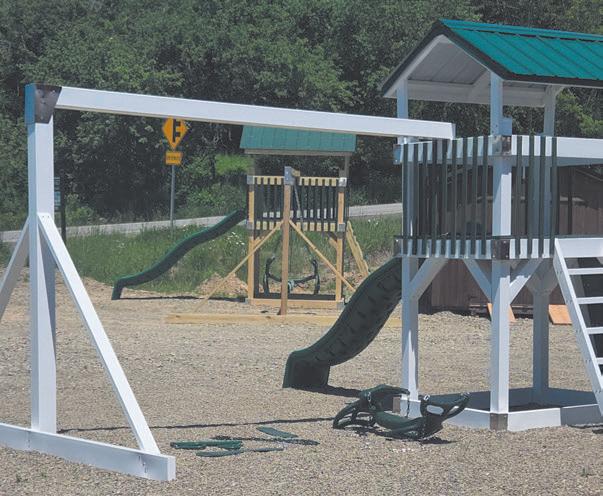
The Amish adhere to a Christian faith and belief system that values community, unity, family, faith, and hard work. The Amish in our area are Old Order, a very conservative and traditional community living without electricity, phones, cars and other modern conveniences.
Most commonly recognized by their plain dress, horse and buggy transportation, and old fashioned farming practices, the Amish live an intentional lifestyle that separates them from the modern world and is centered around their families and community. They make a
living from farming and handcrafting products for sale.
• Everyone in the community is accountable to God.
• The virtue of humility is shown through respect for God and others.
• All persons are worthy of dignity and respect.
• Communities are made stronger when individuals do not use personal desire as their supreme criteria for making decisions.
• Traditions are more important than progress.
• Accumulated wisdom is better than an individual’s ideas.
• Authority in all of its various forms is to be obeyed. Ministers submit to bishops, members to leaders, wives to husbands, children to parents, students to teachers, younger to elder, and so on.
Amish church leadership includes three positions: Bishop, Minister, and Deacon. These leaders serve at the District Level, which is where the ulti-
mate authority lies within the Amish Faith. They work individually and together to guide the actions of their District. The Bishop is the Primary Spiritual Leader, the Minister is under the Bishop, and the Deacon performs duties.
A common misconception about Pennsylvania Dutch is that it is a variant of the Dutch Language. This is not true. The German is Deutsch, which sounds a lot like Dutch, and one theory holds that over the years, the term for Pennsylvania German,
...continued on page 17

or Pennsylvania Deutsch began to be pronounced Pennsylvania Dutch.
Amish children attend school in a one room school house. They are large enough for 25-30 children of various grade levels. They start school at 6 years-old in the 1st grade and go until 8th grade.
What do the Amish Make and Sell?
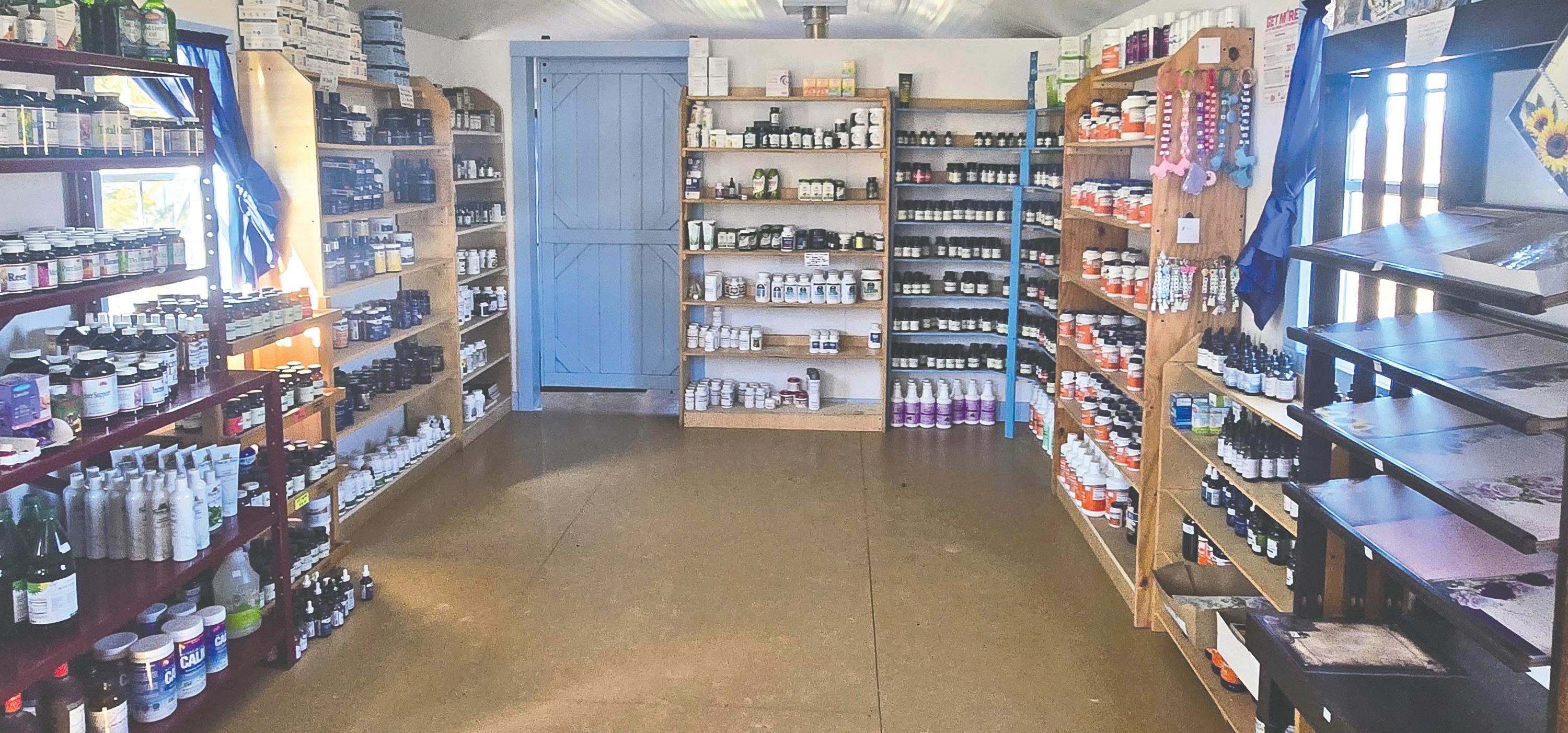
They produce a variety of goods including quilts, rugs, baked goods, candy, furniture, toys, baskets, eggs, homegrown fruits & vegetables, jams, woodworking, leather, lumber, iron works and more.
Where are the Amish Shops?
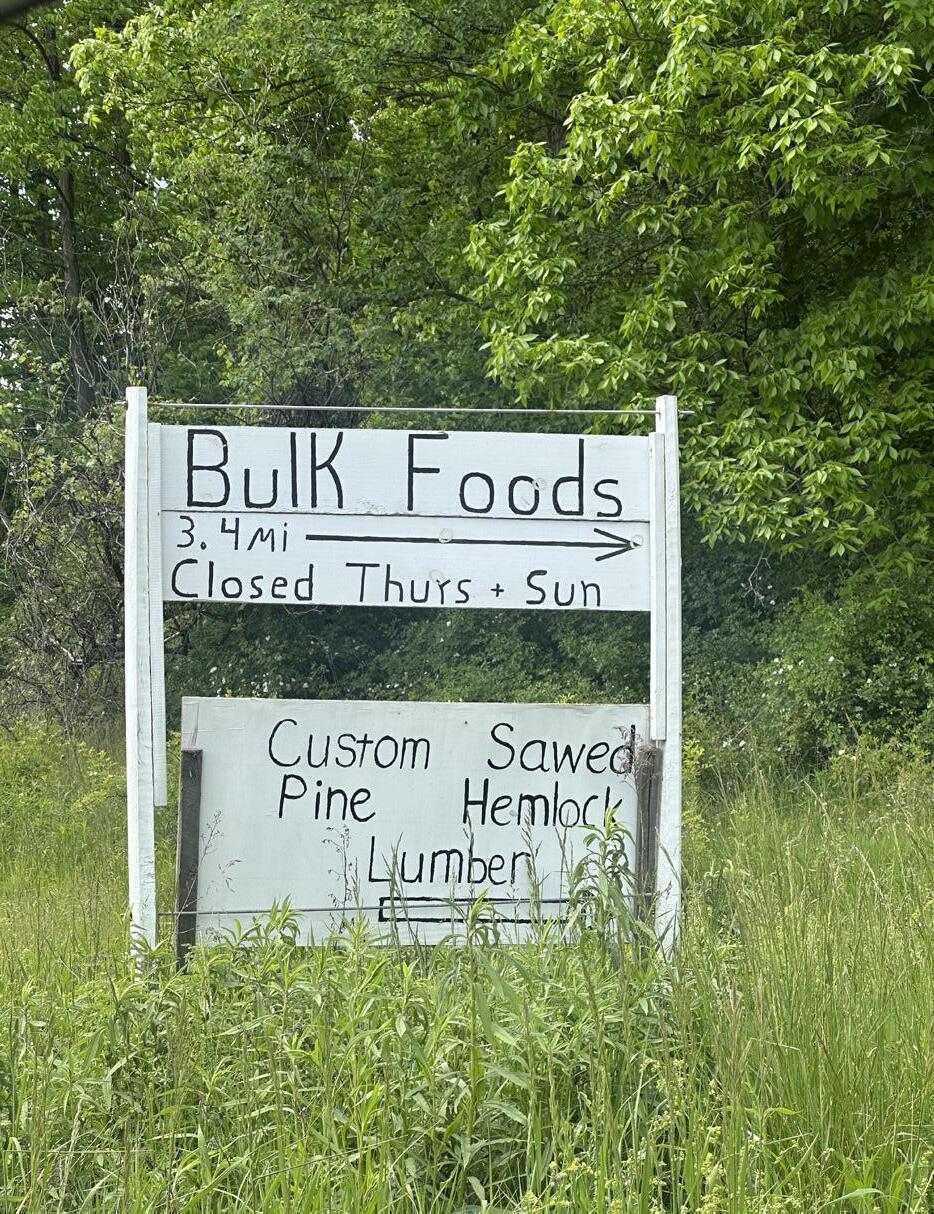
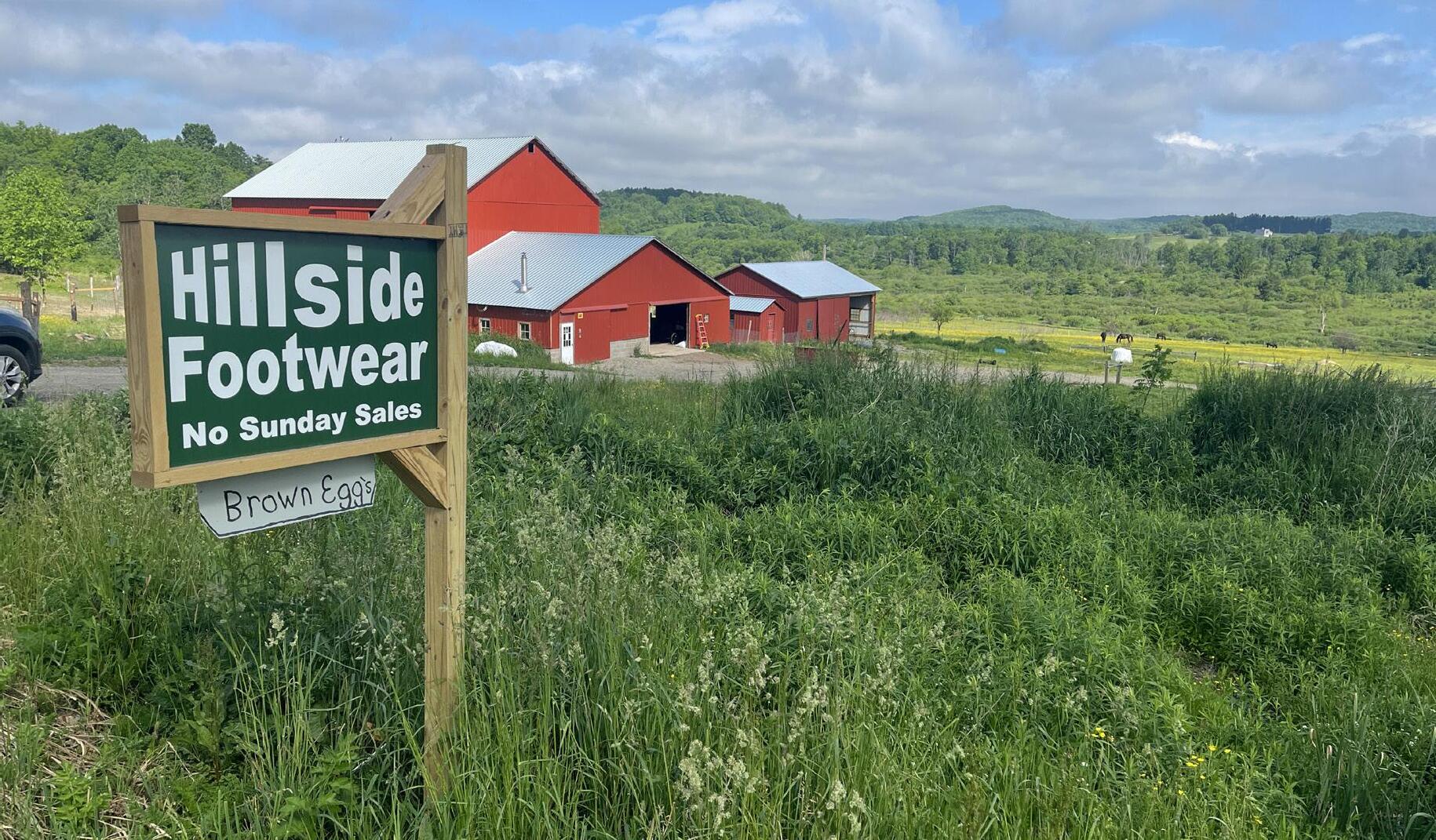
The Amish sell their products from their homes—the Amish Trail map will help you locate their businesses. Look for a sign in their front yard and an open sign to direct you. You will not find any large Amish stores or commercialized Amish shopping areas or attrac-
tions. Their shops can be in their homes, attached to their homes, or in a separate building next to their homes. Rural, small town, personal and friendly is what characterizes this area.
Do not take photos of the Amish. It is against their beliefs. Photos of buildings and scenery are allowed.
Respect their privacy and personal property. What else is in the area?
Besides the Amish shops there are many other local shops and businesses. Be sure to check out the Amish Trail map & visitor’s guide for more information on all the great shops, restaurants, accommodations, and attractions that are part of NY’s Amish Trail.
Amish Shops Hours
What else do I need to know?
Amish do not accept credit cards.
Slow down and drive with caution around Amish horse and buggies.
Amish Shops are closed every Sunday, Saints Day (Nov. 1), Ascension Day, Good Friday, Thanksgiving, and Christmas. Shops may also be closed for various reasons such as a wedding, funeral, or family obligation.
-Courtesy of the Cattaraugus County Economic Development



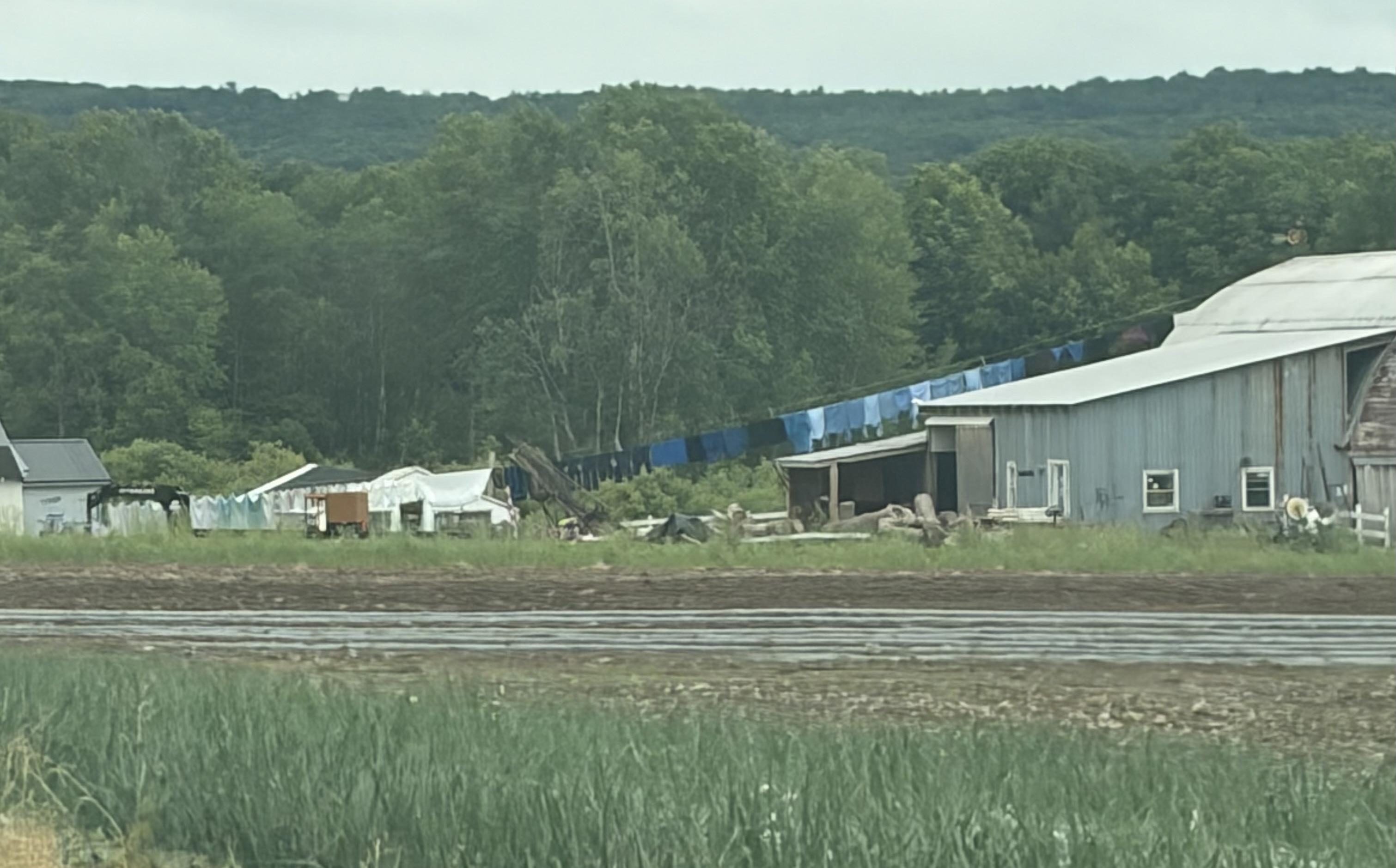
Within plain communities, quilting is far more than a practical method for staying warm; it represents a deep social tradition, a highly technical craft, and a subtle canvas for creative expression. Because home decor is heavily regulated by community standards, quilts serve as one of the few acceptable outlets for visual design in the home. However, like all aspects of daily life, the textiles are deeply influenced by the local Ordnung (community rules).
Traditional quilts utilize solid, plain-weave fabrics—such as light-
weight wools, cottons, and sateens—completely avoiding printed patterns, floral designs, or synthetic materials. The structural design of these quilts is instantly recognizable by its bold geometric simplicity.
Classic patterns feature names like “Center Diamond,” “Sunshine and Shadow,” “Log Cabin,” and “Bars.”
Rather than using a wide palette of bright colors, traditional plain quilts rely on deep, rich tones: navy blue, forest green, dark plum, charcoal gray, and deep burgundy, often set against a stark black background. This high-con-
trast color theory creates a striking, modern aesthetic that has made vintage community quilts highly prized by global art collectors.Beyond the visual design, the true artistry lies in the intricate, hand-stitched quilting patterns that hold the fabric layers together.
Working without frames or computerized sewing machines, women piece the tops together using treadle-powered sewing machines, then quilt the details entirely by hand. Common stitching patterns include feathers, wreaths, tulips, and dense grids, often aver-
aging twelve to fourteen tiny, uniform stitches per inch.Quilting is also a fundamentally cooperative social event. When a young woman prepares to marry, or a family loses a home to a fire, women from the entire church district gather around a large wooden frame suspended from the ceiling. Working together over a single afternoon, they can finish a complex quilt that would take an individual months to complete, transforming a rigorous domestic chore into a vital space for community connection, storytelling, and mutual aid.





• Ordnung: The unwritten community blueprint and code of conduct that regulates technology, dress, and daily behavior within a church district.
• Ausbund: The traditional hymnbook used during worship services. First published in Europe in 1564, it is the oldest continuously used hymnal in the Western world.
• Anabaptist: A theological movement born during the 16th-century Reformation advocating for adult baptism, non-violence, and a strict separation of church and state.
• English: The universal term used by plain


communities to describe any person, neighbor, or tourist who is not a member of an Amish or conservative Mennonite church.
• Rumspringa: Translating to “running around,” this term refers to the adolescent period beginning at age 16 when youth experience greater social freedom before deciding whether to join the church through adult baptism.
• Meidung: The formal practice of shunning or social avoidance applied to individuals who break their baptismal vows, used as a last resort to encourage spiritual restoration.