

Area communities are making this Fourth of July special on this 250th anniversary year with red, white, blue — and lavender — and a special remembrance.
The largest July 4 celebration in the county will once again take place on the streets of Andover. This decades-old celebration features a grand parade and fireworks display.
On its Main Street lined with flags from all 50 states, one of the biggest highlights is the Andover Fourth of July Committee’s giant United States flag. It takes a crew of a dozen volunteers to carry the huge flag down the street — so many, in fact, that the planning committee put out a call for volunteers a few weeks ago.
One of the organizers, Heather Perkins, said volunteers stepped up to carry the flag.


The celebration starts with the parade at 10 a.m. Saturday on Main Street where the crowd will line the street two to three people deep. After the parade the fun moves to the school yard where a variety of vendors and bounce houses will be set up.
From noon to 4 p.m. at 7 Church St., Baker-Swan Appreciation Days will take place where free Freedom Sundaes will
BELMONT — At-
torney Dawn A. Wildrick-Cole of Almond won Tuesday’s Republican primary election for Allegany County judge over two other candidates and, barring a write-in, she will be unopposed for election in the fall.
A native of Cuba, Wildrick-Cole received 787 votes while Allison Carrow, the county attorney, received 507 votes and attorney Ger-








be served. Back at the schoolgrounds from 2 to 5 p.m., Ballad at Midnight will perform followed by The Meat Cutters Union from 6 to 9 p.m.
A massive fireworks display will take place at dusk.
Lavender Festival in Angelica
For the last 18 years, Angelica has celebrated its Lavender Festival on or around July 4. This year the event falls
ald M. Driscoll received 359. The vote totals were unofficial. Wildrick-Cole has 26 years of legal experience, more than 15 of which have been as an attorney in the Allegany County courts. She has worked for local judges, preparing files, drafting decisions and orders, and presiding over certain court appearances. In addition to her full-time job, she also serves as justice of the
directly on the nation’s birthday.
Originally planned by the Lavender Project to encourage the growing of lavender and the development of a cottage industry around the plant, it is now planned by a group of dedicated volunteers spearheaded by Marika Kaake one of the original founders.
The 18th Lavender Festival will take place rain or shine from 9 a.m. to 4 p.m. on Park Circle in the center of the village. It will feature more than 100 vendors, food, music and downtown merchants. In the Project Lavender tent there will be a “Pat’s Patches” quilt raffle.
The Festival will feature everything from lavender-inspired jewelry, lotions, soaps, honey, quilting, paper, crafts, crocheting, stained
Almond Town Court. Since 2022, she has presided over proceedings involving misdemeanors, small claims, evictions, traffic infractions and preliminary hearings on felony matters.
Wildrick-Cole has also served on the Almond Town Board for two terms and she has served as supervisor for three terms. She lives in Almond with her husband and two sons.




glass, wood working, pottery, art, food, bread, sweets, and much more and all with a lavender theme. There will also be demonstrations and kids’ activities.
July 4 celebration in Belmont In Belmont on Sat-
County Judge Terrence Parker is retiring at the end of this year, opening the way for this year’s election.
In other primary elections results in the county:
• Cuba: In a Democratic primary for town board, Lance Tronetti won over Jonathan Enzinna, 76 votes to 40.
There were also four Republican primaries








urday, and in cooperation with American Legion Post 808, at 9 a.m. the Daughters of the American Revolution will kick off its 250 Celebration by planting a Liberty Tree in American Legion Park (on the north side of the bridge adjacent to the Genesee River) in Belmont.
A continental breakfast served from 9:30 to 11 a.m. at the American Legion (29 Schuyler St.) will follow the dedication. The event is free and open to the public. Small America 250 flags will be given out while supplies last.
A vendors market from noon to 6 p.m. will take place in the Legion parking lot.
On a dusty street in Iraq, on April 14, 2004, a 22-year-old U.S. Marine from Scio threw
for town justice. Allen: Dominic Barone topped Bill Murphy, 6 votes to 3.
• Friendship: David M. Szucs, 45 votes; Edward Yagger, 24.
• Hume: Karen Stroud, 84 votes; Richard Bentley 50 votes.
• Rushford: Cal Champlin, 70 votes; Dominic Barone, 8 votes.
BY KATHRYN ROSS
BELMONT — Two Liberty Trees will be planted in Allegany County as part of the America 250 celebration, and to remember an original meeting place of colonial patriots.
On July 4, members of the Catherine Schuyler Chapter of the Daughters of the American Revolution will plant a Liberty Tree in Belmont and the Wellsville 250 Committee will plant a Liberty Tree in Wellsville as part of its Aug. 15 celebration.
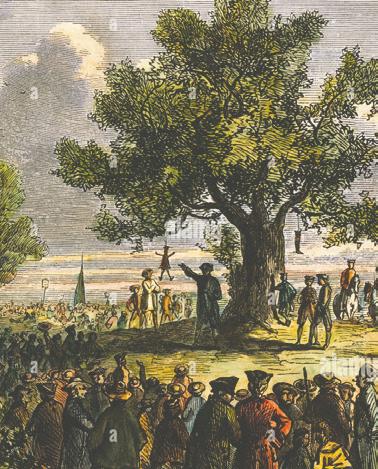
According to Smithsonian magazine, “The Liberty Tree was a famous Elm tree in Boston that became a central symbol of colonial resistance against British rule, inspiring protests and revolutionary sentiment across the American colonies.”
The Liberty Tree was planted in 1646, just 16 years after Boston’s founding on the main road out of the city, making it a prominent landmark. By the mid18th century, the tree had grown into a stately elm, nearly 120 years

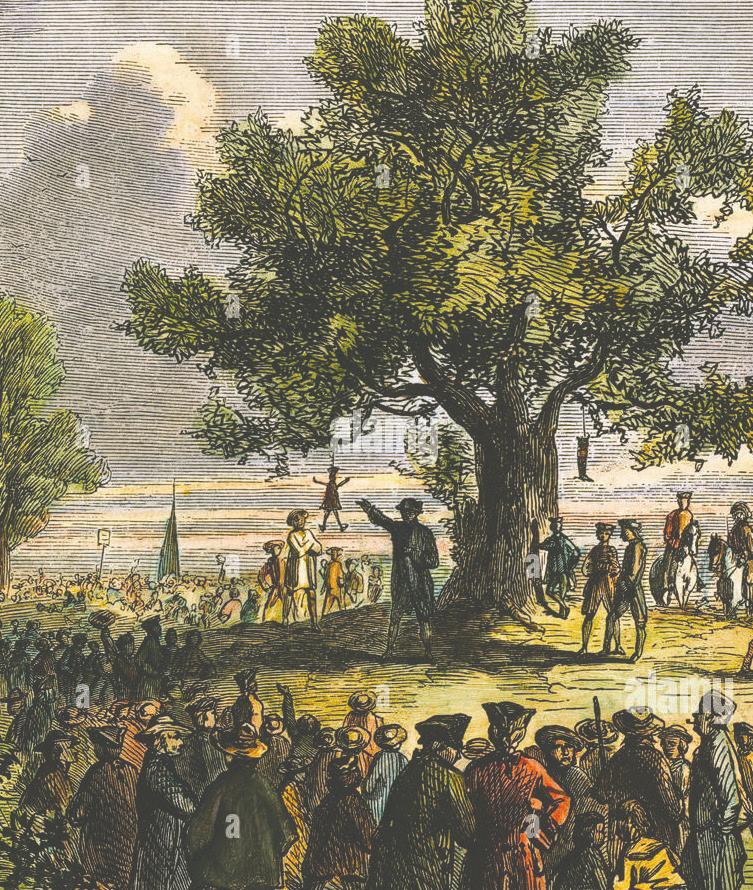
old by 1765, with lofty branches that became a natural gathering place for the community.
The tree gained historical prominence in 1765 during protests against the Stamp Act.
Members of a secret society known as the Loyal Nine, composed of Boston merchants and artisans, organized the first acts of defiance
under the tree.
On Aug. 14, 1765, effigies of symbolic figures representing British officials, were hung from its branches, accompanied by a sign mocking the Stamp Act. This event marked the Liberty Tree as a rallying point for resistance, later
hosting speeches, protests, and acts of public defiance, including tarring and feathering of loyalists.
In 1775, loyalists cut down the Liberty Tree during the Siege of Boston, viewing it as a symbol of rebellion.
“Despite its destruction, the tree’s legacy endured,” the Smithsonian article reads. “Patriots erected a Liberty Pole in its place. The Liberty Tree became a powerful emblem of resistance and freedom.”
In partnership with the Belmont American Legion, Post 808, on July 4 at 9 a.m., the DAR will kick off its 250th celebration by planting a Liberty Tree in American Legion Park (on the north side of the bridge adjacent to the Genesee River).
A continental breakfast served from 9:30 to 11 a.m. at the Legion (29 Schuyler St.) will follow the dedication. The event is free and open to the public. Small America 250 flags will be given out while
supplies last. Joan Sinclair, DAR Regent Emeritus and cochair of the local DAR America 250 Committee, explained the 250th DAR Liberty Tree Program was announced at the 2023 Leadership meeting by the NSDAR History 250 Committee its goal of planting 250 Liberty Trees for the 250th Anniversary with at least one tree in each state on or before July 4, 2026.
“They have a list of trees that are appropriate for every (planting) zone across the nation, so we picked a White Oak to plant,” Sinclair said.
Dutch elm disease destroyed millions of American elms by the mid-20th century; the elms grew predominately in the Northeast.
“We feel by planting a Liberty Tree it will help educate the public to the importance of the American Revolution and the sacrifices that were made to become our nation,” Sinclair said. The DAR trees will have a dedication plaque.
Today the elm tree has rebounded and several species, including the American elm, have been developed as resistant to the devastating disease. The American elm is a deciduous tree which can grow to heights of 69 to 115 feet. The trunk may have a diameter of 4 feet supporting an umbrella-like canopy. Its leaves turn yellow in the fall.
The Wellsville 250 Committee also has plans to plant a Liberty Tree during its celebration on Aug. 15. It is working to obtain an American elm to plant on the library lawn, where the celebration is scheduled to take place, or in Island Park.
Other locations are also being discussed. The main event is scheduled to take place from noon to 4 p.m. and will include a reading of the Declaration of Independence, colonial artisans, the Genesee Valley Chorus and other activities.








BOLIVAR — Bolivar-Richburg Central School honored its graduating Class of 2026 at commencement exercises held Sunday in the Norene Crowley Ferris Auditorium.




Secondary Principal Jessica Talbot delivered the commencement address, reflecting on the mark the Class of 2026 had left on her.













“These graduates are the hope and inspiration for us,” Talbot said. “They are bold, confident, self-assured, and passionate. This group of graduates is going to make an impact on the world, just like they’ve made an impact on me.”


moves pretty fast — if you don’t stop and look around once in a while, you could miss it.”

guidance have played such a valuable role in my life and without it, I would not be where I am today,” she said. “We are here with all of the people who believed in us, long before we believed in ourselves.”





Valedictorian Danika Loucks also took a moment to recognize the families and loved ones who supported the class along the way.
“Your love and
Salutatorian Starlyn Kisel echoed that sentiment, closing her address with a challenge to everyone in the room to pause and take in the moment.
Drawing on the film
“Ferris Bueller’s Day Off,” Kisel reminded the graduates that “life
Board of Education President Amanda McDonnell presented the annual Board of Education Award to Azakadelia Mitchell and Starlyn Kisel. Secondary Principal Jessica Talbot along with members of the Board of Education presented diplomas to the 45 members of the graduating class.
Graduates
Adam James Torrey, Adalyn Rae Griswold,













Alexander Charles Lebrecht, Alexis Lynn Copenhaver, Allyson Marie Appleby, Azkadellia Leota Mitchell, Ayden Jacob Music, Blake Joseph Scroggie, Braden Michael Zilker, Brennan Robert Thomas, Colton David Skinner, Conner Eugene Blankenship, Danika Ryan Loucks, Dolson James Shelley, Dylan Michael Green, Elizabeth Haze Learn, Ethan Lee Dann, Hailey LeeAnn Copenhaver, Jacoda William VanNatter, Jamie Lee Charlette Werner, Jayna Eileen Thomas, Karson Keith Baker, Kelcy Lynn Bryant, Kingston Jacob Loucks, Kya Margaret Lutes, Landen Blane Rhodes, Logan Thomas Michael Shreve, Lyla Jacklyn Fanton, Maleya Rae Ayers, Max Rose Morrison, Miranda Lyn Jandrew, Owen Michael Lewis, Owen Patrick Unfus, Riley James Lewis, Ryleigh Ray Kemp, Rylee Marie Whiting, Shawn Patrick Murphy Jr., Starlyn Grace Kisel, Tristan Tyler Music, Trinity Ann Marie Button, Tyler James Bryant, Westin James Nease, Alana Rae Lynn Tompkins, Alex Ryan Clark, Olivia Sue Walters
























































BY JIM ECKSTROM
Olean resident Aaron Gies easily won the June 23 Democratic primary election in the 23rd Congressional District, setting up a run against incumbent Rep. Nick Langworthy, a two-term Republican, in the fall. Gies, a Democratic and Working Families candidate, defeated his primary opponent, Kevin Stocker, a Buffalo-area personal injury attorney. With more than 95% of the results in Wednesday morning, Gies had taken more than 71% of the vote — and carried each county in the Southern Tier by at least 50 points. In his home county of Cattaraugus, Gies won by more than 80 points — unofficial totals showed he received 1,209 votes to 284 for Stocker. In Allegany County, Gies received 966 votes to Stocker’s 127 — a more than 88% to less than 12% difference.
Across the district, unofficial returns showed Gies had received 13,703 votes (71.6%) to Stocker’s 5,376 (28%). There are about 144,000 active Democratic voters in the 23rd District, according to the most recent numbers from the New York State Board of Elections, which shows roughly 13% cast ballots in Tuesday’s primary.
Gies said he spent election day traveling across the district, thanking volunteers and poll workers. He ended the day at a watch party
in Erie County where he delivered his victory speech.
“Tonight, we proved that this race has momentum, that Western New York Democrats have not given in to cynicism,” he said. “There is a fierce love that still drives us to the streets … to protest, to donate, to canvass, and to vote.”
Looking ahead to the race against Langworthy, Gies said, “We all know what we’re up against. The ultra-wealthy in this country control the social media algorithms that keep us angry and divided, the AI data centers sucking up our natural resources and raising our power bills, the crooked politicians getting rich off insider trading, who cut taxes for the wealthy and the corporations they control while they cut Medicare, Medicaid, SNAP and VA benefits.

Gies was aso critical of the congressman for not appearing at open events or town halls to hear from his constituents.
A spokesperson for Langworthy said Wednesday he is focused on “governing and delivering results for hardworking Americans, including securing the largest tax cut for working and middle-class families in history, lowering energy costs by stopping radical green new deal policies and passing a historic housing bill to make home ownership more affordable.”








[caption id=”attachment_1645109” align=”alignleft” width=”200”] Rep. Nick Langworthy[/ caption]











Langworthy, also endorsed by the Conservative Party, received 246,969 votes to Democrat Tom Carle’s 128,397 in the 2024 election, a nearly 66%-34% difference. The 23rd District includes all of Cattaraugus, Allegany, Chautauqua, Chemung and Tioga counties, as well as parts of Erie, Niagara, Schuyler and Steuben counties.
Voter registration favors Republicans in the district, which has a total of nearly 551,000 on the voting rolls. According to the state Board of Elections, there are 209,390 voting Republicans and more than 14,821 voting Conservatives in the 23rd, while there are 144,342 voting Democrats and about 2,800 Working Family party voters. Listed as “other” are more than 19,000 active voters.
Meanwhile, there are 132,000 unaffiliated voters in the district, a bloc that Gies sees as critical in his effort to flip the seat.
saying he was compelled to run by what he saw as the excesses of the Trump administration and the unwillingness of Republicans in Congress to stand up to the president. Also endorsed by the Working Families party, Gies cast his ballot early Tuesday morning with his wife, Katie, and son, James, at Bethany Lutheran Church in Olean.
“It’s surreal,” Gies said Tuesday. “I never imagined I would be in the position of voting for myself. As someone who has spent his life serving communities, I always answered the calls of service as they presented themselves.”


















“Nick Langworthy works for them,” Gies continued. “He supports their agenda of extraction. He makes excuses for policies that hurt this district: that hurt farmers, that hurt teachers and students, that hurt seniors, veterans and small businesses.”
Jessica Proud, a senior adviser to the congressman, added, “He’s proud to have won his re-election with the most votes of any candidate in New York history, and he looks forward to putting up his record of results against Democrats’ extreme socialist ideology again this November.”
Gies, a professor of theology and Franciscan studies on unpaid leave from St. Bonaventure University during the duration of the campaign, has been campaigning for nearly a year. He announced his bid to challenge Langworthy last summer,































































BELMONT — Gen-
esee Valley Central School honored its graduating Class of 2026 at the 30th annual commencement ceremony on Saturday, with 41 receiving their diplomas.
Abbygail Meigs delivered the senior commencement address, taking a moment to honor the teachers and staff who shaped the class throughout their time at Genesee Valley.
“There is a certain kind of person who looks at a room full of young people and sees not just who they are, but who they are capable of becoming,” Meigs said. “You were those people for us. And whether you knew it or not, that made all the difference.”
Jacey Davis delivered the memory speech,

painting a picture of a class defined less by tests and homework than by the moments in between — a chaotic trip to Boston, a Youth and Government road trip that turned into a traveling karaoke concert, a D.C. adventure, and the kind of everyday moments that somehow
himself on a grenade, saving the lives of two Marines under his command. Cpl. Jason Dunham died eight days later in Bethesda Hospital, Maryland. He was posthumously awarded the Medal of Honor by President George W. Bush in 2007. As part the Belmont July 4 celebration, Dunham will be honored with a sand sculpture created by local artist Eric Jones. The sculpture will be located in Memorial
Park on the left side of the Lion Fountain, opposite the 250th sculpture. The sculpture has been paid for through local donations and sponsorships. It will be presented following the Veteran’s Parade when there will also be a flag ceremony. The veteran’s parade will take place at 3:30 p.m. and will include floats, recreational vehicles, classic cars, motorcycles and more. Prizes will be awarded.
become the ones you remember longest.
Whitney Young offered the class farewell, capturing the bittersweet nature of the moment.
“I’m proud of all of us,” Young said. “Proud of how far we’ve come, proud of who we’ve become, and proud to graduate beside all of you today.”
Kenton Shultz pre-
sented the class gift — a contribution toward a bronze jaguar statue to be placed at the front of the school, continuing a tradition supported by several previous graduating classes.
Six graduates were recognized as members of the National Honor Society: Jacey Davis, Ryker Holmes, Nolan Hunter, Meara Kelley, Lannden Tilton, and
Whitney Young. The ceremony also recognized honor graduates across three classifications. Whitney Young graduated Summa Cum Laude. Graduating Magna Cum Laude were Jacey Davis, Ryker Holmes, Nolan Hunter, Meara Kelley, Tristan Metatos, Kenton Shultz, and Lannden Tilton. Graduating Cum Laude were Bryce Davis, Tayla Brenna, Cree Bulkley, Logan Callahan, Cole Cochran, Ethan Davenport, Mason Fanton, Ian MacKenzie, and Christina McAuley.
Retirees Paula Roberts, Linda Warner, Darla Babbitt and Chris Horton were honored during the ceremony for their years of service to the Genesee Valley community.
Diplomas were presented by Dr. Paige Kinnaird, superintendent, and Board of Edu-
cation president Heath Gordon.
Full list of graduates: Ayeron Bentley, Graham Bradt, Tayla Brenna, Cree Bulkley, Logan Callahan, Cole Cochran, Ethan Davenport, Bryce Davis, Jacey Davis, Zachary Davis, Mason Fanton, Byron France, Joseph Frawley, Kasey Ganoung, Larry Geffers III, Brady Hamilton, Ryker Holmes, Kaden Huffer, Nolan Hunter, Izak Hutchison, McKenna Jefferds, Meara Kelley, D’Andre LaClair, Raymond Lance III, Ian MacKenzie, Christina McAuley, Abbygail Meigs, Charlotte Mejla, Tristan Metatos, Rylee Ordway, Roy Osgood, Logan Rice, Riley Rogers, Jasmine Rounds, Jade Sallazzo, CayLeigh Shipman, Kenton Shultz, Lannden Tilton, Justine Wilson, Madolyn Young, Whitney Young.
BY DARLA INDRALINGAM
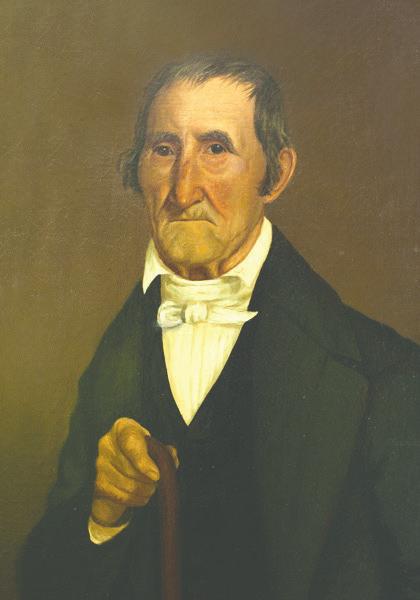
Survivor, patriot, explorer, pioneer, brave and, through his own words — “I was nurtured in the school of the rifle and the tomahawk.”
These words just begin to touch on the character and life of Moses Van Campen. Van Campen was born Jan. 21, 1757, in
Hunterdon County, New Jersey. His early years were spent in Pennsylvania near the Susquehanna River. Like many young men of his day, he is eager to serve and in 1775, at the age of 18, he is chosen as captain of a group of young militiamen as hostilities with the British escalated.
At the Council at Oswego four of the six
nations of the Iroquois Confederacy — the Seneca, Cayuga, Onondaga and Mohawk — declared they would fight for the British. Van Campen enlisted in a regiment of Pennsylvania militia commanded by Col. John Kelly, in the company of Thomas Gaskins. They took
BY WADE ROBERTSON
The lake was shimmering, its oily surface as smooth as glass.
Scattered patches of fog hung randomly here and there as floating misty phantoms in the growing light. It wasn’t 5 a.m. yet, the cabins nearby silent. Nothing disturbed the all-encompassing peace surrounding me. A few small birds peeped and, then, far across the lake, a loon called — the eerie, haunting sound echoing, reawakening deep in my soul emotions where peace, solitude and mystery merged in harmony. If any one sound captures the essence of the wilderness it’s the cry of the loon. Once heard, no human can ever forget that poignant, melancholy wail, so mysterious and haunting, touching every soul, pulling at every heart.
Another loon closer at hand answered, then another and yet another. Their chorus rose, changed in cadence, seemingly laughing, mocking me, holding their secrets close, taunting this frail human, perhaps contemptuous



of what I could never understand. Climbing carefully into the 17-foot canoe I paddled silently out of the docking area and flipped the choke on the Mercury 4-horse, giving it a pull. The little motor fired instantly, purring smoothly. Once on the open lake a twist of the throttle opened the little motor up, the canoe coming alive, hissing through the water,



throwing a fine spray aside, hardly leaving any wake, the motor’s muted drone barely disturbing the serenity of the morning. Not another craft was in sight. It felt good, just the lake and me, along with a growing anticipation of what the morning might bring. Swinging around the far point, Pickerel Cove appeared. My grandson named it after catching an
impressive pickerel there on our first visit. The cove isn’t large, 50 yards across and maybe 100 long, filled with lily pads, floating grass and cabbage weeds, seldom 4 feet deep.
Killing the motor, the canoe’s momentum carried me into the mouth of the cove.
Fastening a Berkley chrome Choppo surface lure on, I fan-cast the cove entrance. Nothing. Hmm, this little bay usually holds fish.
Deeper in the cove the cover grew thicker and accurate casting was needed to stay in the clearer lanes and pockets. Surprisingly, the right side didn’t produce a hit.
Back-paddling, I spun the canoe and quietly approached the left side where several boulders stuck up. Making a long cast, the Choppo hit the water, barely traveling 3 feet when the surface erupted in white spray as a fish smashed the lure.
The hookset felt solid, always a good sign, then the fish shot to the right, pulling drag. Oh, what a sweet sound! A flash of white appeared underneath the surface and it appeared the fish
might be a pickerel or pike; it certainly had some muscle. The water bulged up several times but the fish didn’t jump. The canoe bow swerved in whichever direction the fish ran, this was so exciting! Drawing closer to the canoe the fish buried itself in the weeds. Raising the rod high and pulling as hard as I dared brought the fish reluctantly up, the water boiled and then a beautiful bass exploded out of the water, shaking his head violently, the plug rattling in the hard mouth. Wow!
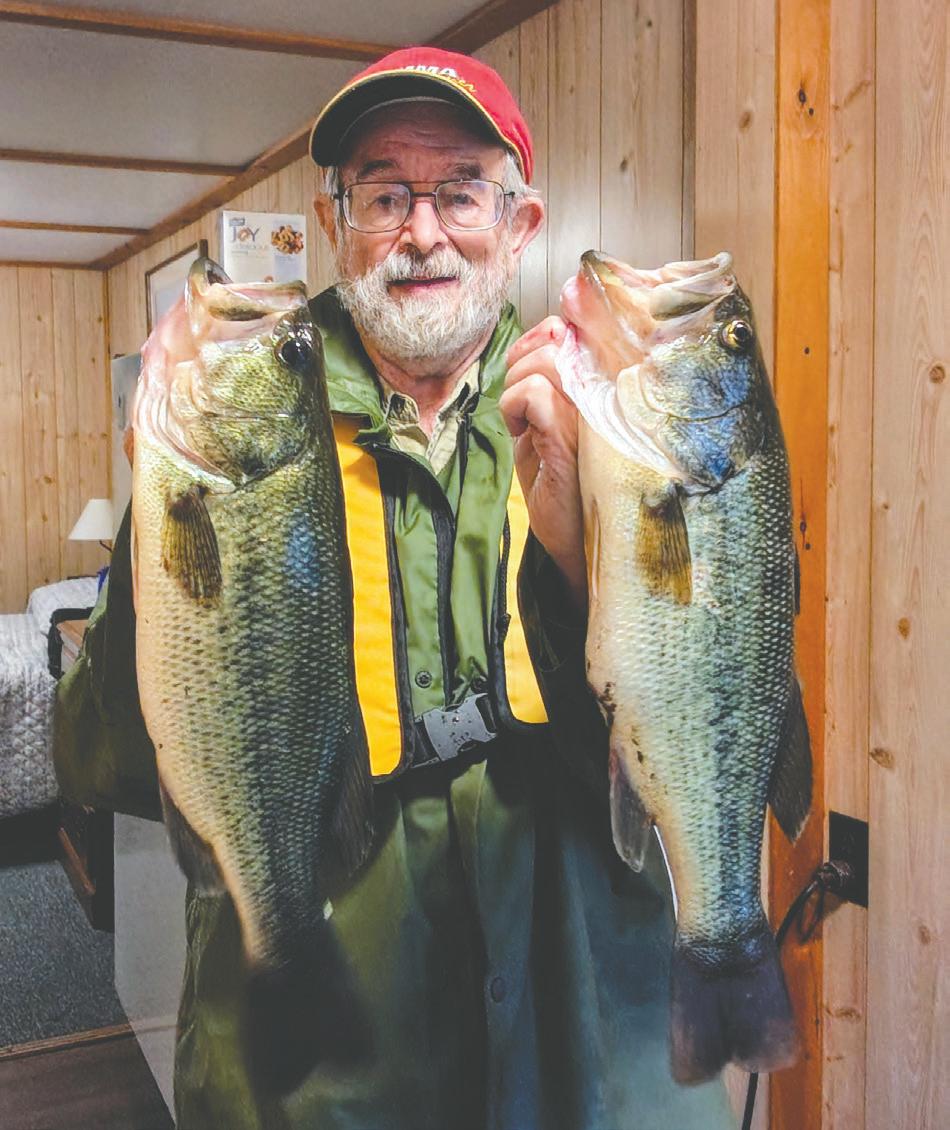
I love and hate it when fish jump. True, they’re a beautiful sight but many times that jump allows them to throw the lure. As if sensing this the bass jumped again, putting my heart in my mouth. The bass was tiring now; I grabbed the net and swept her up. What a beautiful bass, over 3 pounds. The morning was really looking up.
bay and as the cover thinned, I changed back to the Choppo. After an accurate cast the lure gurgled through a narrow, clear channel when a deer snorted so close and loudly it startled me. As I instinctively glanced at the deer, a fish struck.
Caught off guard again, the fish escaped. Darn deer, anyway! Several casts later an open, deeper pocket appeared. The Choppo chugged to its center and vanished in a violent swirl. This time I set the hook properly. Another hefty bass. Time for breakfast. When I docked the canoe, the sun was just peeking through the trees. A well-dressed gentleman walked onto the dock and looked over my setup. He spoke: “For $50,000 you can buy a bass boat and another $50,000 will purchase a truck to haul it.”
He made a vague gesture at the expensive bass boats, huge engines surrounding me. “Then, you’d fit right in.”
Pointing at the lake, the islands, the sky overhead, the bass in the canoe, I answered, “I do fit in, perhaps more than you think.”























Near the back of the bay the grass and pads were almost solid. Switching to a weedless frog was necessary. Despite the prime conditions nothing seemed interested until a short cast drew a sudden strike. The water boiled, my line shot to the right and it took me a second to react as I’d been watching a great blue heron.
Darn, missed the strike through inattention. Back down the
He caught the challenge in my voice, looked at me intently, searching my face, then smiled, eyes twinkling, and nodded.
There was nothing more to say, we understood one another perfectly.
(Email Wade Robertson at wadewrites3006@gmail.com.)
BY W. BROOKE HARRIS
When people think about economic development, they often picture a new business opening its doors, a hotel breaking ground, or families moving into new homes. What they don’t

always see are the miles of waterline beneath the ground, the wastewater systems that make development possible, or the water towers that provide the water pressure, reliability, and fire protection every community depends on.
$1.25 million in Federal Community Project Funding is a critical piece of a much larger vision. Combined with a $740,000 federal ARC IIJA grant, a $500,000 State County Infrastructure Grant, and a $3 million Empire State Development Pro-Housing Grant, these investments demonstrate what can be accomplished when all levels of government work together to support locally driven priorities.
future Department of Public Works facility.
• Construction of the new County Road 51, improving access to key development sites and enhancing long-term economic opportunities along the corridor.
investments, creating jobs, increasing visitor spending, and providing amenities that benefit both residents and visitors while making Allegany County an even more attractive place to live, work, and invest.



• The utility backbone needed to support an approximately 80-room hotel project currently moving through the ACIDA process.
• Capacity to support future restaurants, retail, and commercial services that often follow new lodging and housing


• Capacity to support a significant new private market-rate housing development that will help address regional housing needs and provide attractive housing options for current and future residents.






















In response to U.S. Rep. Nick Langworthy’s announcement last week, Allegany County extends its sincere gratitude for his steadfast support and dedicated advocacy in championing this project through the federal appropriations process and helping secure its inclusion in the federal budget. We also recognize the important partnership and support of Sens. Chuck Schumer and Kirsten Gillibrand, whose continued commitment to investing in rural infrastructure strengthens communities across New York.
Together with years of planning and collaboration among local, state, and federal partners, these efforts are helping lay the foundation for the next generation of economic growth, business investment, housing development, and community prosperity in Allegany County. This achievement reflects what is possible when leaders at every level work together toward a shared vision for the future.
The recently awarded
They also reflect years of strategic planning and the County’s commitment to positioning Allegany County for sustainable growth and long-term success.
Together, these funding sources support a transformational infrastructure initiative that includes:
• Construction of a new water tower to provide reliable drinking water capacity and critical fire suppression.
• Expansion of water infrastructure designed to support long-term, phased growth. Development of a new wastewater treatment package plant and collection system extending from County Road 20 in Friendship to Route 19 in Belmont.
• Infrastructure that enables construction of Allegany County’s

5685 Tuckers Corners Road Belmont, NY 14813 (585) 268-8077 www.precisionautochoice.com Monday–Friday 8am–5pm Compact & Utility Tractors — Zero Turn Mowers Servicing Cars & Light Duty Trucks both Foreign & Domestic



















































Home renovations are a significant part of homeownership. Naturally, people want to make their own personal marks on the homes they buy and ensure that their properties fit their needs and wants.
While many renovations add value to a home, some offer more value than others. When allocating dollars to renovations, particularly when finances are tight, homeowners may want to direct their efforts to those projects that will offer the highest rate of return on investment. Each year Zonda Home,
in conjunction with Remodeling magazine, puts together a list of high-return projects. Exterior projects drive the most value for owners who are selling their homes, and they consistently top the list of high-ROI improvements. Here are five projects offering a strong ROI that homeowners may want to consider.
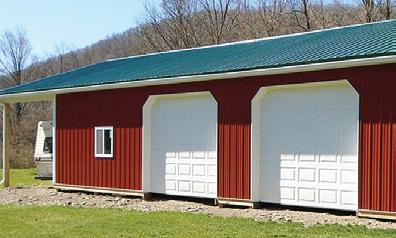
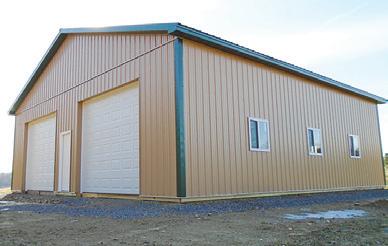
1. Garage door replacement: A garage door replacement is part of the curb appeal improvements homeowners can consider. At an av-
erage cost of $4,672, it offers a recouped cost of 267.7 percent according to the 2025 Zonda report.
2. Steel door replacement: Also boasting an ROI north of 200 percent, a steel door installation is a wise choice for homeowners who want to drive up the value of their homes.
3. Manufactured stone veneer: Manufactured stone veneer is a manmade masonry product
































Perhaps most importantly, these improvements create opportunities that extend well beyond the projects already on the horizon. For Allegany County, these infrastructure investments represent one of our most powerful business attraction tools.
One of the first questions companies ask when evaluating a new location is: Can this community support our operations and future growth? The answer depends on more than just available land. Reliable water and wastewater
that looks like natural stone but is lightweight and easier to install. It can offer a recouped cost of 207.9 percent on the $11,702 investment.
infrastructure, dependable utility capacity, transportation access, proximity to interstate highways and rail corridors, and efficient access to regional markets all play a critical role in site selection.
Together, these assets often determine whether a project moves forward in a community — or moves elsewhere. These investments will allow us to actively recruit businesses that complement our existing employers, strengthen local supply chains, diversify our economy,
4. Fiber-cement siding replacement: Homeowners in the market for new siding can consider fiber-cement siding, which will see the investment recoup slightly more than 100 percent of its cost.
5. Minor kitchen remodel: Kitchens are the heart of a home, and a minor remodel offers a 113 percent return.




and create quality jobs while supporting the manufacturers, agricultural producers, and small businesses that already call Allegany County home.
What makes this achievement especially meaningful is the collaboration behind it. No single grant or funding source could have brought this vision to life. Rather, it is the result of years of planning, responsible local investment, and the successful alignment of federal, state, and county resources. By strate-
gically earmarking local dollars and pursuing complementary funding opportunities, Allegany County is now able to leverage outside investments to close critical funding gaps and move these transformational projects from concept to reality.
The result is infrastructure that will drive economic opportunity, support future development, and enhance the quality of life for residents for years to come.
The strongest economies are built on strong infrastructure, strategic partnerships, and a willingness to invest in the future before oppor-
Inside the home the golden rule is to keep things simple. Minor remodels tend to offer a better rate of return than major ones. Buyers will pay for move-in ready and updated, but sellers likely will not recoup the costs for luxury upgrades or over-thetop renovations. It’s important to note that 2025 was the first time a practical backup generator made the list
of top improvements. Falling into the number seven spot, the generator averaged a return of 95.3 percent, which underscores how homeowners are gearing improvements toward the changing climate and unpredictable weather. Those remodeling primarily to increase equity for future sales may want to consider exterior projects and basic kitchen improvements.
tunity arrives. We are proud to be investing in all three. To businesses looking for a location where they can grow, innovate, and become part of a collaborative community, now is the time to take a closer look at Allegany County. With expanding infrastructure, access to interstate and rail corridors, a skilled workforce, and a commitment to support business success, we are building the foundation for your next chapter.
We’re not just preparing for growth; we’re making it possible. Allegany County is open to opportunity and ready to welcome businesses, entrepreneurs, developers, and investors who want to build the future with us. For more information about development opportunities, available sites, or economic development initiatives, please contact the Office of Economic Development: Ashley A. Smith, director of economic development, development@alleganyco.gov, (585) 268-7471, or at alleganyco.gov/economic-development/ (W. Brooke Harris is chairman of the Allegany County Board of Legislators.)


















































































































































































































































station at Reid’s Fort on the West Branch of the Susquehanna near present-day Lock Haven, Pa.
As the Revolutiodnary War widened, Van Campen took part in building Fort Wheeler in 1778 on the bank of Fishing Creek. The fort was attacked by the Iroquois in May of that year, with no loss of life.
Returning in June 1778, the Iroquois attacked the fort again with Van Campen killing the leader of the attacking party.
In 1779, Van Campen was a quartermaster in Gen. John Sullivan’s exdpedition, but on March 29, 1780, tragedy engulfed him as his father, Cornelius, and his brother, Nicholas, were killed in an attack by the Senecas — and Moses was captured.
Van Campen, along with three others, was bound and marched away. Having witnessed the horrific outcomes of being a captive, he knew they needed to escape — and that is exactly what they did, overpowering their captors as they slept.
As often was the case in the brutal reality of the frontier, Van Camp en took the scalps of his captors and hung them
from his belt. Among the Senecas, Van Campen became known as “the one to kill Indians” — and this was known all the way to Fort Niagara. Van Campen returned to Pennsylvania and ordered to serve as adjutant (administrative assistant to a commanding officer) by the Pennsylvania Line of the Continental Army. He was placed in charge of a Hessian prisoner camp until March 1782.

AGAIN A CAPTIVE
Once again, on April 16, 1782, Van Campen found himself captured
by Tory and Seneca forces. He and other Continental prisoners were stripped of their uniforms and, seated in a circle, faced trial.

A Seneca orator explained that their lives would be spared and the captives were marched north, finding themselves on the upper Genesee River, in territory of the Senecas. They continued to follow the Genesee north. Van Campen eventually found himself separated from his group and taken to a Seneca hunting village, where he was interrogated about the Conti-
nental forces. He became the center of attention. During his interrogation he exaggerated his answers in hopes of deterring them from further activities. As part of these interrogations, he was asked to draw a map showing the locations of settlements. This may very well have been a test to see how truthful Van Campen was.
The hunting party under Shongo continued north until it reached Caneadea where a long house was located. Upon arriving, the party was met with much celebration. It was decided that the prisoners would be adopted into the tribe after successfully running the gauntlet.
As leader of the prisoners, Van Campen went first — the gauntlet was lined across a meadow near the council house. While being whipped and bludgeoned, when he reached a section with women, he leaped into the air, startling the women and sending spectators into fits of laughter.
Van Campen successfully completed the gauntlet.
He was then sent to Fort Niagara by the Sen-
ecas and adopted by the British commander, Col. John Butler, who lost his son in a battle with the Americans. However, Van Campen refused to pledge allegiance to the Crown and in November 1782, he was freed in a prisoner exchange.
Returning to Pennsylvania, Van Campen was discharged from duty at the rank of major. He married, started a family and began surveying the Genesee Vellay for Philip Church.
Van Campen relocated his family to McHenry Valley (near Almond) and as Allegany County began to grow, so did his presence and contributions to the area.
Some of these include serving as highway overseer, judge of common pleas and lead judge — he charged the grand jury at the first Court in Allegany County. He established the Masonic Lodge in Angelica and was commissioned, along with John Gibson and William Higgins, to build the Allegany County Courthouse and Jail on one of the public lots near the square in Angelica.
Van Campen also
served as commissioner of excise, constable, assessor, election inspector and justice of the peace. Van Campen died in Angelica at the age of 92 and 9 months, being laid to rest in Angelica.
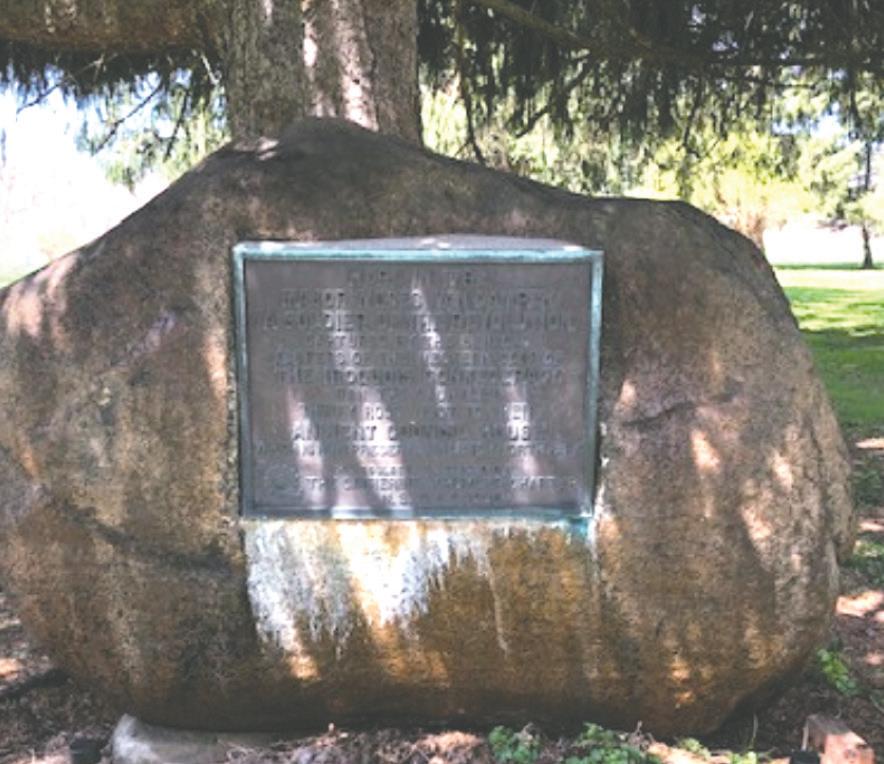
In 1908, the Catherine Schuyer Chapter of the Daughter’s of the American Revolution placed a boulder marker and plaque noting the site where, in 1782, Van Campen was forced to run the gauntlet.
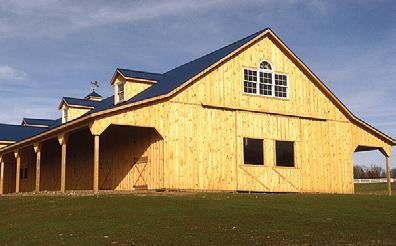
The plaque reads, “Here in 1782, Major Moses Van Campen, a soldier of the revolution, captured by the Seneca’s, keepers of the western door of the Iroquois confederacy, ran the gauntlet thirty rods west to their ancient Council House, which is now preserved in Letchworth Park. This boulder was placed by the Catherine Schuyler Chapter N.S. D.A.R. 1908.” The house Van Campen built in 1809 — the first brick house to be built in Allegany County and listed on the National Register of Historic Places — was sold (the listed asking price was $499,900). The house, with a barn and 46 acres, is located on County Route 16 in Angelica.