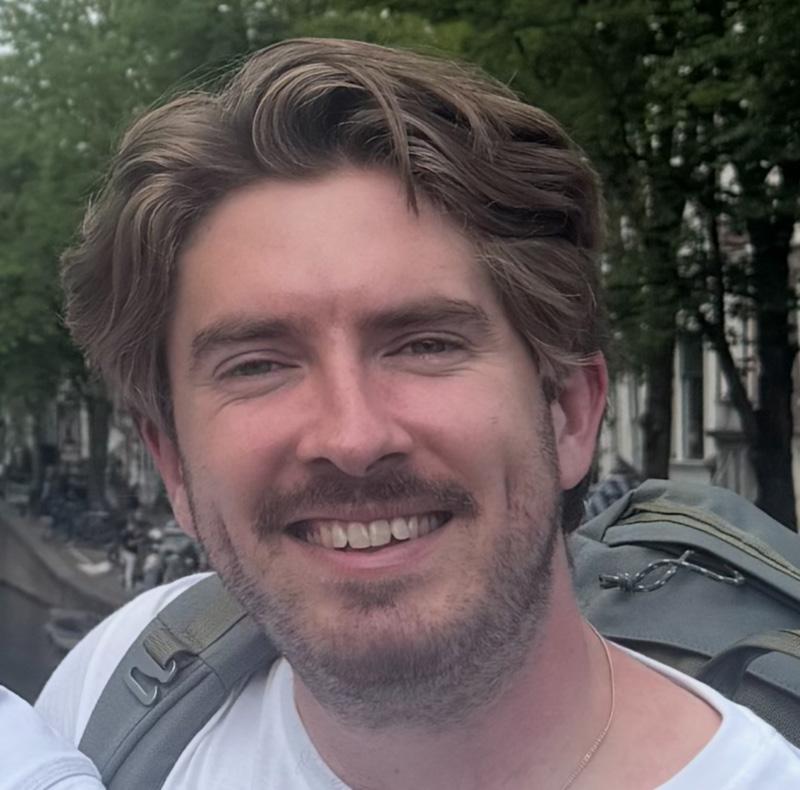
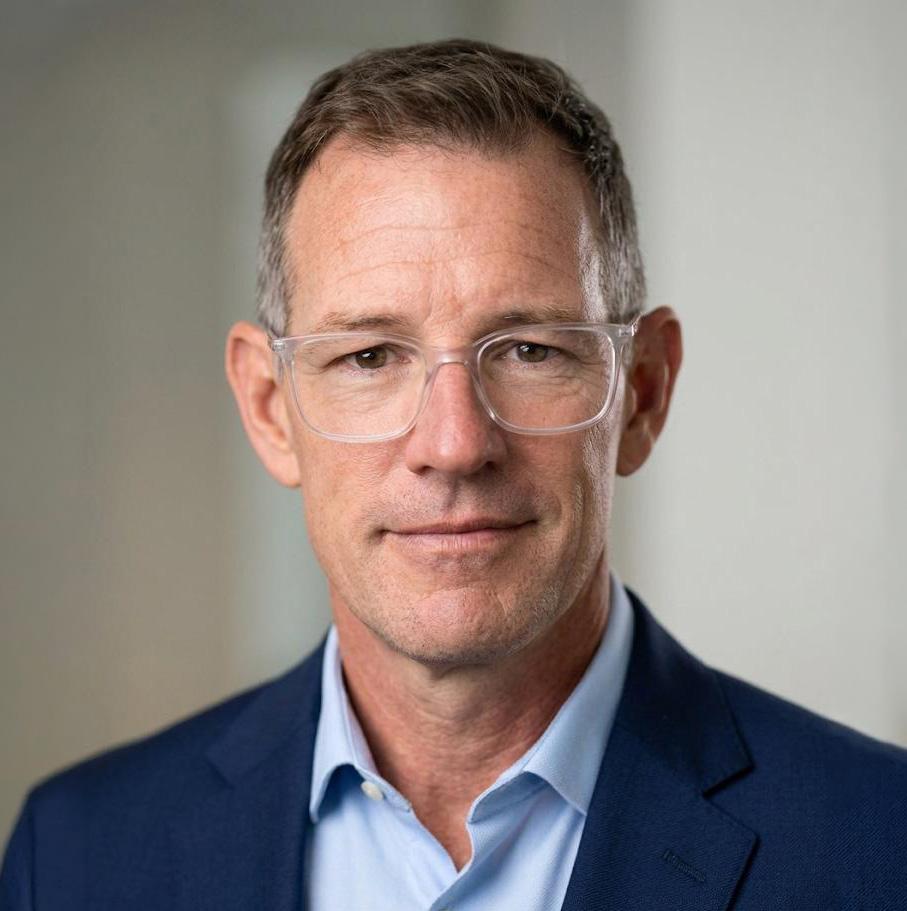
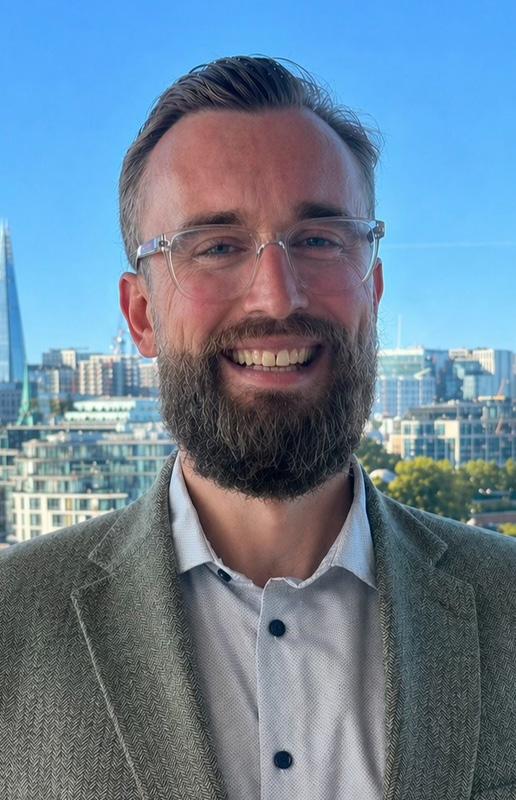
Featuring exclusive interviews, personal stories and behindthe-scenes insight from the people behind the progress
Welcome
TO THE CIRCULAR 100 | 2026 EDITION
This special preview edition offers a first look at the Circular 100, a group of people working hard to drive practical, meaningful progress across the circular technology space.
The full Circular 100 group will be announced live at Circular Tech Expo, taking place at Farnborough International on 13–14 October 2026, where recognised individuals will receive glass awards and be invited to a very exclusive after-show celebration.
Working on the Circular 100 has honestly been a real privilege. There are so many talented people in this space, and so much innovation happening across every part of the technology lifecycle. From reuse, repair and refurbishment to ITAD, data centres, materials recovery, compliance, sustainability and digital innovation, it has been genuinely exciting to see how many individuals are pushing this industry forward in practical, commercial and creative ways.
This magazine is designed to give you a small insight into some of those people — the ones working every day to turn circularity from a conversation into real action. At a time when technology is growing faster than ever, nothing feels more important than accelerating change and progress while still caring for the world around us, and helping to build a more sustainable future for the generations to come.
I hope you enjoy reading this preview edition as much as I have enjoyed learning about the people featured in it.
If you would like to find out more about the Circular 100, please do drop me a line.
What are the biggest challenges facing your industry currently?
One of the biggest challenges in healthcare is structural fragmentation. The NHS is not a single organisation, but it’s made up of thousands of organisations delivering care across trusts, primary care, local authorities, voluntary organisations and private providers, each with their own funding, governance, technology and incentives.
Often, no single organisation owns the end-to-end service. That makes service design difficult, because journeys cut across multiple boundaries. It also makes reuse harder, because solutions are often built to solve local problems rather than shared ones.
Teams repeatedly design, build and run similar digital capabilities in different places, even when the underlying need is the same. From a sustainability perspective, that duplication creates waste: multiple systems doing similar jobs, duplicated infrastructure, short system lifecycles, and significant time and effort spent reinventing solutions that already exist elsewhere in the system.
Digital services are not built once and left alone. They require ongoing review against evolving needs and requirements, improvements, and replacement. When reuse is low and reinvention is high, sustainability suffers by default.
If we want systems that can survive
and adapt, we have to design for reuse, longevity, modular design, and effective knowledge sharing across organisational boundaries.
Addressing this is not about stopping local innovation. It is about creating shared foundations that make reuse easier than rebuilding, so teams can focus on what genuinely needs to be different rather than repeatedly solving the same problems.
What professional accomplishment are you most proud of?
I’m proud to have led the strengthening of the NHS Design System. The NHS Design System helps teams avoid rebuilding the basics by providing shared, accessible components and patterns. It supports consistency across services, improves accessibility, and reduces unnecessary rework across the system.
For people who can access and use digital services, well-designed digital journeys can reduce reliance on paper processes, for example replacing letters with text messages for reminders, updates or administrative tasks. Good digital access can also reduce avoidable travel for appointments or information.
Building on this, in 2023 our design community introduced a new NHS digital design principle, “Design to protect the environment”. It was a
collective effort by the sustainable design working group and the wider design community. The principle starts from a simple point, that the climate crisis is a health crisis, and helps teams consider reuse, longevity and environmental impact as part of everyday design decisions. My role was to support and lead that work. The same thinking connects to wider public-sector efforts to reuse components, service patterns and guidance, helping teams build on what already works rather than starting from scratch.
I also sit on the NHS England Responsible AI Adoption Committee. The committee advises teams on responsible AI use, including accessibility and digital inclusion, and on understanding the environmental and economic costs of AI technologies in relation to the value they provide.
What future predictions do you have for your Industry?
In healthcare, digital services are longlived. Needs evolve, policies change, and services must adapt continuously. The NHS also operates under sustained financial and time pressure, which shapes how change happens in practice.
The 10 Year Health Plan for England sets out a shift from analogue to digital. More services, processes
and interactions are moving into digital form. We can already see this in areas like digital-first patient communications, where app notifications and messages can replace large volumes of paper letters when appropriate. At national scale, even these changes have significant operational, financial and sustainability implications.
If we digitise without addressing duplication and fragmentation, we risk locking in cost and complexity rather than reducing them.
That is why my focus has expanded into Enterprise Architecture.
Enterprise Architecture creates alignment across England’s health and care ecosystem through shared principles, standards, policies and patterns, enabling teams to reuse proven approaches rather than repeatedly rebuilding the basics.
In parallel, we are developing service patterns, repeatable, researchbased parts of services such as booking or checking eligibility. They help teams reuse what works and focus limited time and effort on what is genuinely different locally.
Overall, sustainability depends on reuse at different levels: systemlevel alignment through Enterprise Architecture, service-level reuse through service patterns, componentlevel reuse through design systems, and reuse of learning through shared guidance. When any one of these is missing, teams reinvent solutions under pressure, and sustainability suffers
What does it mean to you to be recognised as part of The Circular 100?
I see this recognition less as a personal achievement and more as recognition of a large community of people doing this work every day. Any contribution I make builds on the foundations laid by others, particularly colleagues across
NHS England sustainability teams who are leading the long-term work required to meet the Greener NHS commitments. I see my role as helping to support and amplify that collective effort.
For me, this is an opportunity to bring greater visibility to the less visible but essential work that underpins sustainable digital delivery in the NHS. That includes the reusable and repeatable patterns in the NHS Design System, the guidance and support provided through the NHS Service Manual, and the work of Enterprise Architecture teams to bring coherence and shared standards across a highly fragmented system. This work matters because it changes how quickly and responsibly we can deliver services. We know from our own case studies that using the NHS Design System can reduce delivery times by around 25% to 50%. That means getting potentially lifechanging services to the public faster, while also reducing duplication and waste. It demonstrates why sustained investment in shared foundations pays back across the system, not just in efficiency, but in resilience, sustainability and outcomes at scale.
infrastructure, supply chains, hardware, data centres and services designed and run by other sectors. Learning from across that wider landscape is essential if digital health services are to be sustainable.
The Expo also provides a valuable space to understand how organisations make reuse work in real settings, particularly where safety, regulation and risk matter. Seeing how others approach reuse in complex, regulated environments can help healthcare teams understand what is possible, what needs adapting, and where the real constraints sit.
For me, circularity in digital means designing for reuse and longevity, building shared foundations, sharing learning, and enabling faster delivery, so the system does not have to keep solving the same problems again and again.
What benefits do you think there are to attending The Circular Tech Expo?
One of the main benefits of an event like Circular Tech Expo is the chance to see how different industries are tackling circular design in practice. Even as services become more digital, health and care depend on physical
Finally, bringing together people from design, engineering, operations, risk and sustainability helps align decisions across the full lifecycle of technology and services. That kind of shared understanding is what turns circularity from an aspiration into something that can be delivered consistently.
The NHS Design System helps teams avoid rebuilding the basics by providing shared, accessible components and patterns
Leon Van Der Merwe
VICE PRESIDENT CIRCULAR ECONOMY & ENERGY BUSINESS | TOYOTA MOTOR EUROPE
What are the biggest challenges facing your industry currently?
(Critical) Raw material supply chain security is vital for modern industries profit safeguarding and the green transition. This is best demonstrated by the 2022 semi-conductor crisis or the impact the closure of the Strait of Hormuz has had on plastics and aluminium or that the extraction and processing of materials like lithium, rare earths, and cobalt are highly concentrated in a few countries, vulnerabilities to geopolitical shocks, trade restrictions, and price volatility run high.
To mitigate these geopolitical vulnerabilities, single-country dependencies, and market volatility, organizations need to achieve a diversified sourcing strategy, boost domestic extraction and increase the usage of recycling to reinforce material substitution.
What professional accomplishment are you most proud of?
There is no single accomplishment, but rather an accumulation of many small steps, starting with having learnt how I built my career using my dyslexia as a superpower giving me a strategic decision-making advantage. This has taken my career through many interesting steps from the independent aftermarket to the world’s leading OEM. Here I have been tasked to change Toyota’s business model to move from
a linear to circular business model. This has cumulated in the opening of Toyota’s globally first circular factory. This has allowed us to create an end-of-life vehicle dismantling line using Toyota Production Systems in reverse order ultimately allowing us to reintegrate aluminium extracted from the ELV’s into the engines used in the Toyota Corolla manufactured in our TMUK Burnaston factory within a 100 mile radius closed loop environment.
What future predictions do you have for your Industry?
The automotive industry is undergoing a profound transformation shaped by shifting consumer preferences, technological innovation, regulatory pressures, and geopolitical dynamics. To succeed in this new world, the industry needs to follow a holistic and adaptive strategy, build circular practices, sustainable technology, connect mobility, human-centred manufacturing and global adaptability. I envision the next decade as
To succeed in this new world, the industry needs to follow a holistic and adaptive strategy
transformative rather than incremental. Its approach is not limited to developing eco-friendly vehicles but extends to:
• Digitally enhanced manufacturing
• Next-generation mobility services
• Inclusive, sustainable, and resilient global mobility systems.
What does it mean to you to be recognised as part of The Circular 100?
Toyota Circular Factory was established as our “university” for us to learn the fundamentals of circularity, allowing us to create our first pilot of a closed loop system. The Circular 100 is an initiative, that recognises that Toyota’s circularity strategy is moving in the right direction. The members of the Circular Economy team have worked tirelessly to make this happen and therefore it is them that are the true heroes in this story and this recognition is for them.
What benefits do you think there are to attending The Circular Tech Expo?
For me the biggest benefit is the ability to talk and learn from like minded individuals, allowing me to learn from bench mark activities across all industries and grow as a sustainability leader, additionally as already shared it also allows us to challenge our strategies, broaden our horizons and accelerate our progress into this new world.
Matt Manning
What are the biggest challenges facing your industry currently?
One of the biggest challenges is moving from circular ambition to scaled delivery. Many organisations now recognise the value of circularity, but embedding it into core business models particularly across complex global supply chains remains difficult. In telecoms and technology specifically, the challenge sits in three areas:
Supply chain engagement: influencing upstream partners to design for longevity, reuse and lower embodied carbon
Commercial alignment: making refurbishment, repair and reuse commercially competitive at scale Data and transparency: improving visibility of product lifecycles, materials and emissions to enable better decisions
Ultimately, the transition requires collaboration across the ecosystem no single organisation can deliver a circular economy in isolation.
What professional accomplishment are you most proud of?
I’m particularly proud of the role I’ve played in piloting and scaling the ‘Cash for Trash’ proposition with Currys turning what is traditionally seen as waste into something that delivers clear value for both customers and the business. But scaling it required aligning commercial, operational and
sustainability priorities ensuring it worked not just environmentally, but as a compelling retail proposition. Today, it has become a core offer, significantly increasing e-waste collection volumes while driving customer engagement and footfall.
What I’m most proud of is demonstrating that circular economy solutions can be both impactful and commercially viable shifting the conversation from doing “the right thing” to building propositions that customers actively want to participate in.
What future predictions do you have for your Industry?
Circularity will increasingly become a core lever for decarbonisation particularly as organisations look beyond operational emissions and focus more on Scope 3. Three shifts stand out:
Circularity as standard practice: designing for longevity, repair and reuse will become expected, not optional
Greater regulatory and customer pressure: driving transparency on product lifecycles, right to repair, and material use
Integration with digital and AI: using data to optimise asset utilisation, predict failure, and enable new circular business models
I also expect to see a stronger link between circular economy and wider
sustainability challenges, including nature, critical materials and supply chain resilience
What does it mean to you to be recognised as part of The Circular 100?
It’s a real privilege to be recognised alongside a group of people who are actively shaping the transition to a circular economy. For me, it reflects the collective effort behind the work across teams, partners and suppliers rather than individual achievement. It also provides an opportunity to share practical insights, learn from others, and continue pushing the boundaries of what ‘good’ looks like in this space. Recognition like this helps elevate circular economy from a specialist topic to a mainstream business priority, which is exactly where it needs to be.
What benefits do you think there are to attending The Circular Tech Expo?
Events like the Circular Tech Expo are critical for turning ideas into action. They bring together the full ecosystem industry, innovators, policymakers and academia in a way that accelerates progress. The key benefits are:
Practical insight: real-world case studies and lessons learned
Collaboration opportunities building the partnerships needed to scale
circular solutions
Innovation exposure: seeing emerging technologies and business models in action
Momentum and inspiration: reinforcing that this is both an urgent challenge and a significant opportunity
In a space that depends on collaboration, these forums play an essential role in connecting ambition with deliver
I’m particularly proud of the role I’ve played in piloting and scaling the ‘Cash for Trash’ proposition with Currys turning what is traditionally seen as waste into something that delivers clear value for both customers and the business.
Alice Chave
DIRECTOR AND CO FOUNDER | INCADOR JEWELLERY
What are the biggest challenges facing your industry currently?
One of the biggest challenges we’re noticing in both the jewellery and precious metals industry today is the lack of transparency across supply chains. Despite the fact consumer awareness has grown significantly, the systems behind sourcing are still very opaque and fragmented. This stems from decades of established practices and limited traceability infrastructure. There is also a challenge of perception, where recycled gold is viewed as less than, despite being chemically identical to newly mined gold. Part of this comes from the fact that circular models are still relatively new to the industry, which invites a level of resistance or bias towards anything that challenges traditional sourcing. Shifting this narrative requires both technological investment in traceability, but more importantly a cultural shift, repositioning recycled materials as not only responsible, but desirable.
What professional accomplishment are you most proud of?
I’m most proud of building Incador alongside my sister Karen, where we have combined our engineering backgrounds with design to create fine jewellery exclusively from
electronics-derived gold. In under a year, we designed over 50 pieces and launched multiple collections, all whilst bootstrapping the business from day one. What feels most meaningful is the impact behind the work. The jewellery we’ve created represents the equivalent of over 3,500 discarded mobile phones, transforming waste into something enduring and timeless. Besides our work in jewellery, we’re actively raising awareness of the electronic waste crisis and, most importantly, the different applications of recycling.Through our Tech for Treasure campaign in collaboration with UCL, we’ve begun our journey of raising awareness around electronic waste, helping shift how people perceive value. It’s been a very empowering journey where we’re not just building a brand, but challenging an entire system.
What future predictions do you have for your Industry?
We believe the industry is moving towards a future defined by traceability, circular sourcing and greater accountability, particularly across the UK and Europe where both regulation and consumer expectations are accelerating. Brands that are able to combine transparency with strong design and storytelling will come out as leaders and those relying on opaque supply chains will struggle to maintain trust with their customers. Globally, electronic waste will increasingly be recognised as a valuable resource, with advancements in recovery technologies unlocking new supply streams. The goal is that over time, recycled materials will no longer be seen as an alternative, but as the standard and reshaping of what modern luxury represents.
What does it mean to you to be recognised as part of The Circular 100?
We are honoured to be recognised as part of The Circular 100, as it represents a collective of individuals and businesses actively working to redefine industries. For us, being part of the Circular 100 is an opportunity to contribute to a wider ecosystem where collaboration can accelerate meaningful change. This group has
the potential to influence policy, shift consumer behaviour and drive innovation across the UK and Ireland, helping to move circularity from a niche concept into a widely adopted standard.
What benefits do you think there are to attending The Circular Tech Expo?
For businesses, attending The Circular Tech Expo provides exposure to
We believe the industry is moving towards a future defined by traceability, circular sourcing and greater accountability
emerging technologies, potential partners and regulatory landscapes. As engineers, Karen and I are always looking to collaborate with companies across the electronics industry to explore how we can work together. While electronics are the source of our materials, we also see jewellery as a compelling vehicle to amplify the conversation around electronic waste. Through collaboration, this becomes a mutually beneficial way to engage audiences and bring greater visibility to the issue.
As founders, it is also an excellent opportunity to connect with likeminded innovators and gain visibility within a highly relevant network. It’s events like this that help make our circular solutions more tangible and scalable across industries.
Lydia Tabbron
DIGITAL SUSTAINABILITY LEAD | DEFRA
What are the biggest challenges facing your industry currently?
In government we experience many challenges and barrier to sustainability and circular ICT. This includes from the way we operate - each department is like its on mini business and therefore aggregate procurements, sharing of systems and data is nearly impossible. AI is also a huge challenge right how. How do we increase government efficiency and productivity by using its tools, but avoiding the environmental and social impacts. We can only resolve this through educating its users and working with suppliers to minimise impacts in our supply chain. another challenge is the branding of sustainability and net zero at the moment. Many people see it as a “nice to have” and therefore dont integrate sustainability sufficiently from the onset. therefore we are working hard to rebrand sustainability as efficiency, resilience and innovation
What professional accomplishment are you most proud of?
The GDSA Summit - personally curating the whole event from choosing the topics for each panel, hand selecting the speakers, designing the logo and social media comms plans and launching the first ever GDSA awards. I am also immensely proud of embedding sustainability into Defras
digital procurements, setting it out as a world leader in these areas. these procurements included switching to esims in all our work phones and tablets, and making refurbished and remanufactured devices the default for our 31,000 staff, rather than buying new. other departments, governments and businesses are now looking at us, asking how we did it, so they can do the same
What future predictions do you have for your Industry?
Circularity will continue to become more mainstream as we battle with geopolitical and supply chain issues, especially the supply of critical minerals and other key components in a battle with those required for data centres
What does it mean to you to be recognised as part of The Circular 100?
Very proud to see circular ICT becoming mainstream and being recognised in awards like this. Also
great to see public sector bodies and government departments, like Defra, being recognised for the role they play in introducing circular technology
In government we experience many challenges and barrier to sustainability and circular ICT
Simon Howatson
CEO | BORNGOOD LTD & BORNGOOD CIC
What are the biggest challenges facing your industry currently?
The ITAD industry is at a crossroads and if we’re honest, parts of it are still behaving like it’s 2015. It’s that the industry hasn’t fully accepted what it has become.
We are no longer in the business of disposal. We are in the business of data risk, environmental accountability, and lifecycle control. Too many providers are still competing on price per tonne or resale yield, while their customers are facing board-level scrutiny on ESG, cyber risk, and supply chain transparency. That disconnect is where the real problem lies.
Data security is unforgiving, there is no margin for error. One missed drive, one weak process, and the consequences are existential. Yet not every operator behaves like they’re part of the cybersecurity chain.
True reuse is hard. It requires operational discipline, investment, and a willingness to prioritise longterm value over short-term gain. If we’re serious about sustainability, then refurbishment and reuse have to be the default, not the exception.
Clients are asking harder questions: Where did my assets go? Who handled them? What was the actual impact? If you can’t answer that with evidence, not assumptions, you’re not a partner, you’re a risk.
Pure ITAD is being commoditised. The future sits in owning more of the lifecycle, integrating ITAD with ITAM,
embedding into operations, and delivering measurable outcomes, not just services. Raising standards. Driving transparency. Making circular IT commercially viable, not just aspirational.
What professional accomplishment are you most proud of?
When I founded BornGood in 2017, the industry was largely transactional. Devices were wiped, resold, or scrapped. I believed we could do more, treat technology as an asset with extended life, measurable environmental benefit, and real social impact.
Supply chains stalled, demand shifted, and uncertainty was constant. We chose to double down, investing in refurbishment, lifecycle extension, and the capability to operate at scale. We’ve connected public sector, private enterprise, and community partners into a single model. Devices that would have been retired are refurbished to Grade A, redeployed into organisations, or donated into communities facing digital exclusion.
My role was to set that direction and stay relentless on it, driving higher standards, building the right partnerships, and ensuring we could evidence impact, not just claim it. Thousands of devices processed with a zero-landfill approach. Hundreds
donated into the voluntary sector, supporting access to education, services, and employment for thousands of people.
What future predictions do you have for your Industry?
For years, it’s operated as a backend service. In the UK, Ireland and globally, ITAD now sits at the intersection of cyber risk, ESG accountability, and cost pressure. That pulls it into board-level focus. The first shift is transparency. Organisations will demand full traceability, auditable data destruction, and clear evidence of environmental impact.
The second shift is lifecycle ownership. Standalone ITAD will be commoditised. The winners will control more of the journey, ITAM, provisioning, refurbishment, redeployment and endof-life. We’re building a circular model connecting enterprise, public sector and community partners. Devices are refurbished to Grade A, redeployed, or donated, supported by clear ESG and impact reporting.
Demand for refurbished technology will grow, driven by cost and sustainability. Winners will be those who invest in transparency, reuse, and integrated services. Losers will be those still competing on price per tonne or treating ITAD as logistics.
For those working in the sector,
expectations are rising. This is no longer about moving equipment, it’s about managing risk, delivering sustainability outcomes, and proving value.
What does it mean to you to be recognised as part of The Circular 100?
Being recognised as part of The Circular 100 matters because it signals that circularity in technology is no longer a fringe idea—it’s becoming a serious, collective movement.
For me, it’s not about recognition in isolation. It’s about being part of a group that is actively challenging the linear “buy, use, dispose” mindset that has dominated our industry for too long. In the UK and Ireland especially, we have a real opportunity to lead here—because the policy direction, public sector demand, and commercial pressure are all aligning.
What I’m proud of is the intent behind the group. This isn’t just discussion—it’s about practical change. Extending device lifecycles, normalising refurbishment, embedding reuse into procurement, and making circular models commercially viable at scale.
That’s where real progress can be made.
If this group works as it should, it can help standardise expectations—around quality, reporting, and accountability. It can give buyers the confidence to choose refurbished over new. It can push suppliers to evidence their impact properly, not just talk about it. And importantly, it can connect the dots between sustainability and social value, particularly around digital inclusion.
There’s also a leadership role. The UK and Ireland can set a benchmark for how circular technology is delivered— combining strong compliance, credible ESG reporting, and scalable commercial models. If we get that right,
it becomes a blueprint others will follow.
For BornGood, it aligns directly with what we’ve been building—proving that circular technology can reduce cost, lower carbon, and deliver meaningful social impact at the same time.
So being part of The Circular 100 isn’t just something to be proud of—it’s something to contribute to. Because the real value of this group will be measured by what it changes, not what it represents.
What benefits do you think there are to attending The Circular Tech Expo?
The real benefit of attending The Circular Tech Expo is that it brings together the entire ecosystem in one place—policy, procurement, technology, and delivery. That doesn’t happen often, and it’s where real progress is made.
Too many conversations around circularity happen in silos. This kind of event forces alignment. You’ve got public sector buyers looking for credible solutions, private sector organisations under pressure to improve ESG performance, and suppliers who are trying to turn circular models into something commercially viable. Getting those groups in the same room accelerates understanding—and decision-making.
From a practical perspective, it’s about cutting through the noise. There’s a lot of “green” messaging in the market, but not all of it stands up. Events like this allow you to see what’s real—who can actually deliver at scale, who has the operational capability, and who can evidence impact properly.
It’s also a place where partnerships are formed. Circular technology
doesn’t work in isolation—it requires collaboration across the lifecycle. Whether that’s ITAD, refurbishment, logistics, software platforms, or community delivery, the model only works when those pieces connect.
For organisations attending, the benefit is clarity. What does good look like? What are others doing? How do you move from ambition to implementation?
And for those of us in the industry, it’s an opportunity—and a responsibility—to raise standards. To be transparent about what works and what doesn’t, and to help shape a more mature, credible market.
Ultimately, the value of the event isn’t just in the conversations—it’s in what happens afterwards. The decisions made, the partnerships formed, and the progress that follows.
The biggest challenge isn’t just regulation, e-waste, or margin pressure. It’s that the industry hasn’t fully accepted what it has become.
Andrew Eady
VP SUSTAINABILITY | ROLLS-ROYCE
What are the biggest challenges facing your industry currently?
The aerospace and defence sector faces a convergence of pressures that are simultaneously structural, geopolitical, and environmental.
The most acute that we see today is critical mineral supply vulnerability. Our products rely on advanced superalloys containing materials such as Rhenium, Hafnium and other rare earth elements that are scarce, geopolitically concentrated, and increasingly price-volatile. Hafnium alone rose from approximately £1,500/kg in 2020 to £12,000/kg in early 2026. This isn’t a short term trend. It’s a structural shift driven by nations simultaneously stockpiling strategic materials and restricting export to competitors.
The second challenge is product lifecycle length. Engines designed today could operate well until the 2070s. The supply chains, climate conditions, and regulatory environments of that era will look nothing like today’s. We are making design decisions now that will either embed resilience or create vulnerability decades into the future.
The third challenge is cultural. Circular economy is a brave new world that requires collaboration across procurement, engineering, commercial, and government functions that traditionally operate in silos. Sharing material recovery value, understanding how, where and when we can use recycled material, declassifying
sensitive components for recycling, and embedding end-of-life thinking into early design, none of this happens without organisational change.
Resolution requires three things: digital tools that make material risk visible at the design stage; commercial models that make circular economy financially attractive across the supply chain; and governmentindustry partnerships that align sovereign material security with industrial sustainability strategy.
What professional accomplishment are you most proud of?
The project I’m most proud of is Tornado 2 Tempest — a UK Government-backed circular economy pilot including ourselves Rolls-Royce working with the MoD’s Defence Recycling and Disposals Team, the FCAS programme, and Additive Manufacturing Solutions ltd.
The challenge: could we take retired RAF Tornado components, recover their material value, and manufacture new engine parts? We atomised titanium compressor blades into powder feedstock, 3D-printed a nose cone for our Orpheus small engine demonstrator which we then installed and ran as part of an engine test. We also developed what I believe was a first for our industry — a Digital Product
Passport capturing full material provenance and lifecycle data for the recovered components.
The impact was significant. The project demonstrated that defence can operate a credible closed-loop material recovery model, when considering “spiral downgrading” of material. It reshaped how the MoD’s Defence Recycling and Disposals Team thinks about industry partnerships. And it directly shaped Project Sayer — our vision for a successor programme — which aims to build and test an Orpheus engine from up to 100% recycled material sourced from retired EJ200 engines. This is very much inspired by the “pots and pans for Spitfires” appeal adopted in WW2.
What future predictions do you have for your Industry?
The industries that thrive will be those treating their material estate as a strategic asset. Three predictions: First, circular economy will become a sovereign security imperative. Nations are already restricting exports of critical minerals. Organisations that have built domestic recovery and recycling capability — recovering Hafnium from a retired engine rather than buying it from a geopolitically hostile supplier — will have a structural advantage that compounds over time. The 21st century equivalent of the
Spitfire aluminium appeal is recovering rare earth elements from end-of-life defence platforms to keep nextgeneration ones in production.
Second, Digital Product Passports will eventually become contractual requirements, perhaps even in Defence. The ability to track material provenance, composition, and lifecycle history will underpin both circular economy decision-making and regulatory compliance. Organisations building this data infrastructure now will be years ahead.
Third, sustainability will bifurcate between leaders and laggards. Winners will have embedded circular economy into design governance — changed their engineering standards and procurement processes before regulation forces them to. Losers will treat sustainability as merely a reporting obligation. In aerospace and defence, the stakes of getting this wrong are not just commercial, they are operational and national.
What does it mean to you to be recognised as part of The Circular 100?
Being part of The Circular 100 matters because it connects work largely done within Defence programmes to a broader community solving the same fundamental problem: how do we keep valuable materials in productive use?
Recognition like this is an opportunity to say: defence and aerospace is doing serious, pioneering work on circular economy, and it matters beyond our industry.
It also matters because the UK and Ireland are well-positioned to lead on circular economy in complex, high-value manufacturing. We have the engineering talent,
the policy ambition — the Critical Minerals Strategy, the Defence Industrial Strategy — and increasingly the government-industry partnerships to make it real. But that leadership requires people across sectors talking to each other and building on each other’s work.
The progress this group can make is accelerating the translation of circular economy from concept to industrial practice — demonstrating it works at scale, in complex regulated environments, not just in pilot conditions.
What benefits do you think there are to attending The Circular Tech Expo?
The most valuable thing about The Circular Tech Expo is the density of practical expertise in one room.
For me, the benefits are threefold. First, technology discovery — understanding what digital traceability, material recovery, and remanufacturing technologies are mature enough to deploy in a regulated, safety-critical environment. The gap between what’s technically possible and what’s certifiable is significant in aerospace and defence, and events like this help close it by surfacing solutions that have already navigated that challenge.
Second,
commercial model exchange. The hardest part of circular economy in our industry isn’t the engineering — it’s the commercial architecture. Who owns the recovered material? How is value shared? How do you create incentives for end-of-life recovery across different organisations? Learning how other industries have solved this is directly applicable to what we’re building.
Third, relationships. The circular economy challenges facing aerospace and defence cannot be solved within a single organisation. They require certified recycling partners, secure logistics providers, government collaboration, and cross-industry data standards. The connections made at an event like this are the starting point for the partnerships that make it real.
The progress this group can make is accelerating the translation of circular economy from concept to industrial practicedemonstrating it works at scale, in complex regulated environments, not just in pilot conditions.
What are the biggest challenges facing your industry currently?
From a logistics and lifecycle perspective, the biggest challenges are less about ambition and more about execution at scale. First is reverse logistics complexity: getting devices back efficiently from millions of customers, through stores, couriers, and mail, while keeping costs and carbon down. Second is data security and trust, customers’ confidence that their data will be wiped properly still affects return rates. Third is quality variability: devices arrive in unpredictable condition, which creates friction for grading, routing, and repair decisions, and ultimately impacts resale value. Fourth is parts and repair constraints: access to components, consistent standards, and repair capacity can limit how many devices we can put back into market quickly. Fifth is economics, refurb margins are sensitive to labour, transport, testing, and warranty costs, and volatile residual values. Finally there’s a behavioural challenge: people hold onto old devices “just in case,” so we lose circulation volume unless the proposition is easy, fast, and rewarding.
What professional accomplishment are you most proud of?
I’m most proud of the work I’ve led to make circularity operational, not just aspirational. Specifically, building a more joined-up end-to-end
lifecycle flow, from customer returns, to secure handling, to grading, refurbishment routing, and redeployment, so we can recover more value and reduce waste. The achievement isn’t a single moment; it’s the cumulative impact of tightening processes, improving turnaround times, and reducing exceptions. I’m proud when I see fewer devices stuck in limbo because we’ve improved scanning, chain-of-custody, and decision rules. I’m also proud of the partnerships and cross-functional alignment it took, retail, customer care, fraud, refurb, and compliance, because circularity only works when the whole system works. If I had to summarise it: I’m proud of turning “returns” into a reliable supply chain for second life.
What future predictions do you have for your Industry?
I expect three major shifts. First, circularity will become default: trade-in and return flows will be embedded in every upgrade journey, with fewer “optional extras.” Second, the industry will get smarter about triage and routing, using better diagnostics to decide early whether a device should be refurbished, repaired, harvested for parts, or responsibly recycled. Third, we’ll see stronger
policy and standardisation, more consistent grading, better repairability expectations, and tighter reporting requirements, which will push maturity across the market. I also think the “circular customer proposition” will evolve: more guaranteed buy-back values, more device-as-a-service style options, and stronger warranties that make refurbished feel like a normal choice. Operationally, we’ll need more UK/EU-based capability to reduce lead times and footprint. The winners will be the players who build efficient reverse networks and treat used devices as strategic inventory.
What does it mean to you to be recognised as part of The Circular 100?
To me, being part of The Circular 100 is recognition that the unglamorous work, process design, prevention of leakage, secure handling, and operational discipline, really matters in achieving circular outcomes. It’s also
To me, being part of The Circular 100 is recognition that the unglamorous work, process design, prevention of leakage, secure handling, and operational discipline, really matters in achieving circular outcomes
a responsibility: if you’re recognised, you’re expected to share what works, be transparent about what doesn’t, and help accelerate progress beyond your own business. I see it as a community of people focused on system change, not individual heroics. Personally, it’s encouraging because circularity can feel like fighting inertia; being part of a cohort says the direction of travel is right and there are others solving similar challenges. It’s a platform to learn, collaborate, and raise the bar across the industry.
What benefits do you think there are to attending The Circular Tech Expo?
The Circular Tech Expo is valuable because it brings the whole ecosystem into one room, operators, OEMs, refurbishers, recyclers, logistics providers, and policy voices. For my role, that’s gold: you can benchmark what “good” looks like in reverse logistics, tracking, testing, and chainof-custody. It’s also where you see practical innovation, packaging, diagnostics, tamper prevention, repair
automation, and new models for takeback. The other benefit is relationship building: circularity depends on trusted partners, and events like this accelerate those connections. Finally, it’s a reality check: you can sense where regulation, consumer expectations, and market economics are heading, and take that insight back into operational planning.
Jordan Richards
REFURB LEAD | VODAFONETHREE
What are the biggest challenges facing your industry currently?
In refurbishment, the hardest reality is turning “used” into “like new” at scale with consistency. The first challenge is unpredictable device condition, cosmetic damage, hidden faults, water ingress, and missing parts make throughput and cost hard to plan. Second is parts availability and quality: without reliable access to components, turnaround times stretch and some devices become uneconomical to recover. Third is standardisation: grading and testing must be repeatable and trustworthy, because one bad experience can undermine confidence in refurbished as a category. Fourth is warranty and aftercare economics, customers expect reassurance, but that adds cost and requires robust QA. Fifth is the constant push to reduce carbon and waste within the refurb process itself, packaging, transport, and energy use matter too. The opportunity is huge, but the craft is in delivering consistent outcomes, fast..
What professional accomplishment are you most proud of?
I’m most proud of raising refurbishment quality and throughput at the same time, a tricky balance. I’ve focused on tightening test protocols, improving fault triage, and building feedback loops so we learn quickly from returns and recurring issues. When
refurbishment is done well, customers don’t feel they’ve compromised; they feel they got a great device and made a better choice. I’m proud when we hit higher pass rates, fewer repeat repairs, and shorter cycle times, because that increases reuse and reduces waste. I’m also proud of the team culture, refurb is hands-on, detail-heavy work, and building pride in quality is essential. For me, accomplishment equals the number of devices we successfully put back into people’s hands with confidence.
What future predictions do you have for your Industry?
Refurb will become more techenabled and modular. I expect better automated diagnostics, more data-driven triage, and smarter decisioning on repair vs parts harvest. I also think we’ll see growing alignment with repairability, design choices, right-to-repair momentum, and more accessible component supply chains will improve outcomes, even if progress is uneven. Customer expectations will rise: refurbished will need clearer grading, stronger warranties, and better aesthetic standards.
I also predict growth in “premium refurbished” tiers and certified programmes that feel close to OEMlevel assurance. Finally, circularity reporting will get more rigorous, so refurbishment won’t just be about volume, it will be about verified reuse
outcomes, material recovery, and measurable carbon benefits.
What does it mean to you to be recognised as part of The Circular 100?
It feels like recognition of the practical expertise behind circularity. Refurb teams sit at the point where circular ambition meets physical reality, what can actually be repaired, what can be renewed, and what must be responsibly recycled. Being part of The Circular 100 tells me that craftsmanship, quality systems, and operational excellence are valued alongside strategy. It’s also energising: it connects you with others who are solving similar problems, experimenting with new methods, and raising standards. Personally, it’s a reminder that refurbishment is not “second best”; it’s a professional discipline that delivers real environmental and customer value.
What benefits do you think there are to attending The Circular Tech Expo?
The Expo is useful because refurbishment evolves quickly, new tools, new standards, new partner capabilities. I’d attend to see innovations in diagnostics, testing, parts assurance, cosmetic restoration, and battery health solutions. It’s also a place to compare grading and warranty practices, which is key to customer trust. Equally important
is networking: refurb performance depends on suppliers, logistics, and downstream channels, and the Expo accelerates those relationships. And finally, it’s motivating, seeing the broader movement helps translate day-to-day operational challenges into a bigger mission: keeping devices in use for longer, at higher quality, with less waste.
It feels like recognition of the practical expertise behind circularity. Refurb teams sit at the point where circular ambition meets physical reality, what can actually be repaired, what can be renewed, and what must be responsibly recycled.
David Watson
FOUNDER | CIRCULAR CONNECT
What are the biggest challenges facing your industry currently?
One of the biggest challenges facing the circular economy and reverse logistics industry today is fragmentation. Across reuse, repair, refurbishment, recycling, IT asset disposition, reverse logistics and broader lifecycle services, there are thousands of highly capable businesses operating globally, but the market still lacks the visibility, connectivity and commercial infrastructure needed to scale efficiently.
In many cases, organisations looking to implement circular initiatives simply do not know which providers exist, which solutions are credible, or how to navigate an increasingly complex ecosystem.
What professional accomplishment are you most proud of?
One of the professional accomplishments I’m most proud of is helping build RL People into a globally recognised recruitment and search business within the reverse logistics and circular economy sector, while also launching Circular Connect to address a major gap in market connectivity across the industry.
The Circular Connect platform was created to help connect fragmented parts of the circular economy through a combination of media, industry intelligence, directory infrastructure
and strategic introductions.
Since launch, Circular Connect has grown into a rapidly expanding platform supporting thousands of industry professionals globally. The directory now features more than 1,000 companies spanning reverse logistics, reuse, repair, refurbishment, recycling and sustainability services, while the newsletter has developed a highly engaged international subscriber base and strong industry reach through LinkedIn and strategic partnerships.
Regarding RL People, what started as a 2-person specialist recruitment business, has evolved into a highly respected global partner supporting many of the industry’s leading organisations with commercial, operational and leadership hiring.
What future predictions do you have for your Industry?
Over the next decade, I believe the circular economy and reverse logistics industry will undergo a major shift driven by two key forces: consolidation and innovation.
As demand for circularity accelerates, larger organisations will increasingly look to build broader end-to-end capabilities through acquisition, strategic partnerships and international expansion.
Businesses are investing heavily
in automation, AI-driven decision making, traceability systems, digital product passports, robotics, grading technology and data visibility platforms designed to improve operational efficiency and maximise asset recovery value.
Increasing pressure around ESG reporting, waste reduction, right-torepair legislation, critical material recovery and supply chain transparency will continue pushing organisations towards circular operating models rather than purely linear consumption.
The winners will be businesses capable of scaling internationally, embracing technology, proving measurable commercial outcomes and building strong strategic partnerships across the supply chain.
What does it mean to you to be recognised as part of The Circular 100?
Being recognised as part of The Circular 100 is something I’m incredibly proud of, both personally and professionally. The circular economy remains a rapidly evolving industry, and to be included alongside so many individuals and organisations helping shape its future across the UK and Ireland is a genuine privilege.
What makes groups like The Circular 100 particularly important
is the role they play in strengthening connectivity across the ecosystem. One of the biggest challenges within the circular economy is that innovation is often happening in silos across technology providers, recyclers, logistics businesses, manufacturers, investors, policymakers and sustainability leaders. Bringing those perspectives together creates far greater opportunities for collaboration, knowledge sharing and commercial progress.
The UK and Ireland are already producing some incredibly innovative businesses across reverse logistics, reuse infrastructure, repair technology, material recovery, traceability systems and broader circular supply chain solutions. Groups such as The Circular 100 can help amplify that momentum by increasing visibility for innovation, encouraging strategic partnerships and helping connect the right people across the industry.
What benefits do you think there are to attending The Circular Tech Expo?
One of the biggest benefits of attending The Circular Tech Expo is the opportunity to bring together multiple parts of the circular economy ecosystem under one roof. Events like this create a far more efficient environment for collaboration, relationship building and commercial discovery than can typically be achieved through isolated conversations or digital engagement alone.
For exhibitors and sponsors, the event offers strong visibility into a highly targeted audience actively looking for innovation, operational improvements and strategic partnerships. For attendees, it creates an opportunity to gain direct insight into emerging technologies, market trends and commercial challenges shaping the future of circularity both in the UK and internationally.
I also think events like The Circular
Tech Expo play an important role in accelerating industry maturity. As circularity moves further into mainstream business strategy, there is growing demand for greater operational understanding, stronger market connectivity and more practical implementation knowledge. Bringing together industry leaders, technology providers and operational experts helps drive those conversations forward much faster.
Perhaps most importantly, these events help create momentum. Many of the most valuable opportunities within the circular economy begin
through conversations, introductions and shared challenges discussed in person. The more we can strengthen collaboration across the ecosystem, the faster the industry will continue to evolve and scale.
Over the next decade I believe the circular economy and reverse logistics industry will undergo a major shift
Harry Benham
CHAIRMAN | DSA CONNECT
What are the biggest challenges facing your industry currently?
One of the biggest challenges facing the ITAD industry today is data security, and that’s something we’ve built our business around from day one. With the rise in cybercrime, data breaches, and increasingly strict regulations around data protection, organisations are far more aware of the risks associated with retired IT equipment. Devices can still hold sensitive company, customer, and employee data long after they’ve been taken out of service, and if that data isn’t handled properly, the consequences can be significantboth financially and reputationally.
We tackle that by providing fully certified data destruction services, complete transparency throughout the process, and a fully auditable chain of custody.
The other major challenge is the growing demand for sustainability and ESG accountability. Businesses are under increasing pressure to demonstrate responsible environmental practices, and ITAD plays a much bigger role in that conversation now than it did even a few years ago. Our approach is always reuse-first wherever possible, helping clients extend the lifecycle of their technology, reduce unnecessary e-waste, and support circular economy goals. Alongside that, we provide clear reporting so organisations can see
both the security and environmental outcomes of their IT disposition strategy.
Ultimately, we see ITAD as far more than disposal. It’s about protecting data, maximising value, and helping organisations meet both their security and sustainability commitments with complete confidence.
What professional accomplishment are you most proud of?
One of the professional accomplishments I’m most proud of is the work we’ve done through our prison workshops and the impact they’ve had on the people involved.
From the beginning, the goal was never just to create an operational partnership - it was about creating genuine opportunities for rehabilitation, skills development, and long-term employment prospects.
Through the workshops, we’ve been able to give individuals hands-on experience, structure, and practical skills within a real working environment. For many, it’s their first opportunity to build confidence, gain responsibility, and develop experience that can translate into employment after release. What’s especially rewarding is seeing the outcomes beyond the workshop itself. Not only have we
directly employed individuals who have come through the programme, but others have gone on to secure jobs elsewhere because of the skills, work ethic, and experience they gained with us.
Knowing that the work we do has helped people rebuild confidence, find employment, and create better opportunities for themselves is something I’m incredibly proud of.
What future predictions do you have for your Industry?
I think the biggest shift we’ll see in the ITAD industry over the next few years is its move from being viewed as an operational service to becoming a much more strategic business function. As I mentioned earlier, security and compliance will continue to be hugely important, but I think the conversation will increasingly centre around value, sustainability, and lifecycle management rather than simply disposal.
More organisations are starting to recognise that retired IT assets still hold both financial and environmental value. Because of that, there will be a much stronger focus on refurbishment, reuse, and extending the lifecycle of technology wherever possible.
ITAD providers will play a bigger role in helping businesses support their circular economy goals and reduce unnecessary waste, rather than just managing end-of-life equipment.
Clients will expect real-time
reporting, clearer asset visibility, and more data-driven insights around their IT estates. The companies that invest in transparency, operational efficiency, and strong customer experience will be the ones that lead the market.
Another important development will be the social impact side of the industry. There’s growing recognition that businesses should contribute positively beyond just profit, whether that’s through sustainability initiatives, community programmes, or employment opportunities. For us, that’s something we already strongly believe in through the work we’ve done with our prison workshops and skills programmes.
Overall, I see the future of ITAD becoming far more focused on partnership, accountability, and longterm value creation for clients, rather than being seen purely as a disposal service.
What does it mean to you to be recognised as part of The Circular 100?
Being recognised as part of The Circular 100 is something we’re incredibly proud of because it reflects the direction the industry is moving in. One that values not only environmental responsibility, but also social impact and long-term sustainability. For us, circularity has always been about more than just technology reuse and recycling. It’s about creating value at every stage of the process, whether that’s extending the life of IT equipment, reducing waste, or creating opportunities for people. That’s why the recognition is particularly meaningful
in relation to the work we’ve done through our prison workshops. Those programmes demonstrate that circular business practices can also deliver genuine social value by helping individuals gain skills, experience, confidence, and ultimately employment opportunities.
I think it’s really encouraging to see organisations like The Circular 100 recognising that wider impact within the industry. It shows that the conversation around circular technology in the UK and Ireland is evolving beyond environmental targets alone and starting to focus on people, communities, and responsible business practices as well.
The real progress this group can make is through collaboration and shared standards. Bringing together businesses that are focused on circular technology creates an opportunity to share ideas, improve best practices, and push the industry forward collectively. Whether that’s advancing reuse and refurbishment, improving transparency, driving innovation, or increasing the focus on social value, groups like this can help accelerate meaningful change across the sector.
Ultimately, being part of The Circular 100 is recognition that circularity isn’t just about what happens to technology - it’s about the wider positive impact businesses can have environmentally, socially, and economically.
What benefits do you think there are to attending The Circular Tech Expo?
The biggest shift we’ll see in the ITAD industry over the next few years is its move from being viewed as an operational service to becoming a much more strategic business function
For me, it’s really about the people you meet and the conversations you have. Bringing together businesses from across the industry creates opportunities to network, share ideas, learn from each other, and build new partnerships. The circular technology and ITAD sectors are evolving quickly, so having those discussions face-to-face is incredibly valuable.
It’s also a chance to talk openly about the challenges the industry is facing and how we can move things forward together, whether that’s around sustainability, reuse, innovation, or social value. We’ve seen ourselves how much impact businesses can have beyond just technology, particularly through initiatives like our prison workshops. We’re incredibly proud of the work we’ve done there so far, and one of our goals moving forward is to expand those programmes further, so events like this are a great opportunity to connect with potential partners who share those values and want to be part of that journey.
Ultimately, The Circular Tech Expo provides a platform for the industry to come together with a shared goal - creating a more sustainable, responsible, and forward-thinking future for technology
ALL-IN-ONE B2B MARKETPLAC FOR USED ELECTRONICS
BrokerShark safely connects IT brokers, ITADs, resellers, and refurbisher platform Manage deals, conversations, and orders in one place inst scattered across emails and spreadsheets Built by industry veterans to m trading and cut admin with integrated ERP tools.
Broadcasts & Auctions
Post want-to-buy and want-to-sell requests instantly with uploaded images and asset reports or host live auctions with real-time bidding for bulk IT equipment.
Logistics & Shipping Quotes
Get pricing on your shipment through our logistics portal where logistics companies will bid on your shipment and handle all the admin.
RMA Management Tool
Handle RMA claims directly on the platform with a standardized workflow that ensures greater transparency, communication and efficiency.
Direct Messenger
Communicate directly with traders through built-in messaging to negotiate and close deals faster — all in one place, without the email chaos.
Offer feature in chat
Exchange formal offers directly within conversations to streamline negotiations. Once accepted, offers automatically convert into orders.
//
Order Management & Collaboration
Manage the entire order flow from offer to delivery — including status updates, invoices, shipping labels, references, packaging, and delivery details. Work together on each order in one shared workspace.