of marketers found that creating higher quality content less often is far more effective than publishing lower quality content m
$107 billion
the revenue Content Marketing is expected to reach by 2026.
Fromtheeditor
An editor's letter is a message written for a variety of purposes, from friendly to formal. They can help the reader understand the content and creative direction of a certain issue, they can give the reader and idea of what they can find in the magazine, or they can explain the issue's theme and how it can resonate with them
If you’re thinking of writing an editor's letter yourself, make your intentions clear from the start You can be fun and creative or straightforward, depending on your needs. For the main content of your letter, there are often three main parts: the introduction, main paragraph, and conclusion.
Your letter’s introduction can be a brief greeting, a few polite statements, or a background of why you’re writing The main paragraph is the bulk of your letter, containing the most important parts of your message. Finally, the conclusion sums up all your ideas It can also include a closing statement or salutation. No matter what reason you have behind writing, it’s best to be organized and plan the contents of your letter before publishing the magazine
Head of Content
Team
In My Earphones: ‘How to Win Friends and Influence People’ and welling up at ‘Father Forgets’ which WILL make you cry.
Reading: Paul Arden’s ‘It's Not How Good You Are, It's How Good You Want To Be’ for probably the eighth time!
Contributors
Linda Teehan Creative Production Analyst
Listening on 2x Speed: ‘To Die For’ a podcast based on the first-hand story of a female seduction
Never Not Opening: The Sheerluxe newsletter it’s my daily dose of fashion, beauty, and culture (read escapism)
An interview with Christoph Trappe, prominent content marketing expert, author and host of The Business Storytelling Show podcast.
The world of content marketing tends to attract talent from diverse backgrounds and experiences “I grew up in journalism,” Christoph says “I did it for a few years, and then moved into marketing, and then content marketing became a thing.” The transition was a natural next step. “I joke that I still do journalism, just for companies,” he says “We interview people, get their ideas and thoughts, and then I write content from that, or create podcasts, video clips, whatever. The core skills from back in the day are still relevant, but today, everything is way more data-driven, way more analytical.”
Content has a ‘trailing effect’
It’s a discipline that has changed hugely since Christoph started out And one that keeps evolving, with a growing demand for more authentic and valuable brand interactions CMOs are taking note and moving budgets towards developing intentional content to build trust and demonstrate expertise. “I think people see the value more and more because from a business perspective – if you do good content marketing, that’s going to work for a long time, even if you stop at some point. It still has a trailing effect,” he says. “You have to have leaders who understand it so they can go to bat for it and push it forward There’s long-term value that doesn’t go away, but you have to be strategic about it ”
The pressure to capture immediate attention in today’s fastpaced digital environment is undeniable Christoph sees the need to balance quick wins with long-term strategy. “When companies get started, you have to have some quick successes. How do you find some of those? Sometimes it’s about updating existing content, making it better. And you can show some success really quickly ”
But really, it’s about the long game, says Christoph “I think in the B2B space you have to see the value in bringing thought leadership to people who are actually not ready to buy People need to be braver in the B2B world, especially in B2B Tech. I get you want to win the current quarter, but you have to think more long term,” he says “If nobody knows about you, how do you get them to know about you? And how do you build that relationship?”
High-quality content continues to attract and engage audiences over time, providing a better return on investment but he stresses consistency to get real return on effort “If you don’t publish the content, it’s not going to perform. Podcasting is a great way to get content out, and to get content for articles because people say things they wouldn’t write down necessarily ”
Cultivating the right content culture
For content to thrive, Christoph says culture is paramount. “If you want to create good content, you have to have the right culture Yes, you should collaborate with the team, the clients, the CEO – whoever you're talking to. But you need to have the time to think about it, to create the content. And that actually takes – believe it or not – more work You also have to create psychological safety ”
He agrees on the importance of collaboration, but warns against overly rigid rules “You want some governance, and you want some light rules and guidelines, but you also don’t want to totally shut the door Sometimes companies send out these huge manuals of rules, and nobody participates anymore because it’s way too much work. So, you’ve got to balance how to get people involved and who should be involved.”
It's also important to have the right team in place. “You have to get the right people in the right seats. When they're not in the right seats, you get them out of the seats, or you need to put them into other seats. I also think soft skills are super important You have to be able to talk to people You have to be able to learn constantly. I think many people underestimate the creativity involved You're strategising, obviously, but there's so much creative energy that's needed for creating good content.”
The need to create unique content
When it comes to AI and content creation, Christoph has some reservations “If you go to these tools and say, ‘Write me an article on the five steps to financial freedom,’ and even if it passes plagiarism checks, it’s not going to be unique content. The people who use AI to write stuff from scratch that’s not strategic content It’s never going to have a unique perspective.”
There’s also the pressing concern of AI and copyright with several regulatory developments in the U.S. recently. “I would argue that some companies couldn't care less about the copyright. Christopher Penn is a really good source for this kind of stuff, and I'm pretty sure he explains like this; if there is no human involvement in the creative process, it can't be copyrighted. But if you use AI as a co-pilot, 10% of the way, you can certainly copyright it So I think that's where the fine line is, how do you prove it, if push came to shove in court?”
Christoph Trappe is a content marketer who helps companies move their marketing content from happening to performing. He has authored a series of marketing strategy books, including ‘Is Marketing a Good Career?’, ‘Content Performance Culture’ and ‘Going Live'. He is currently content director at growth marketing agency Growgetter.
In conversation with
Richard Armitage, Accenture’s GTM EMEA Lead for Content Supply Chain
Q: How do you see the role of AI evolving in the content supply chain over the next few years?
At Accenture, we are investing $3bn in Gen AI and currently, our SONG teams use it extensively for what we could call ‘must do’ use cases across the E2E content supply chain It’s changing the way we approach core tasks, but in the next couple of years, we can expect a more strategic use of AI and automation to disrupt core business value creation It's the ‘at scale’ benefits that we are looking to support customers to unlock with AI
Say, you are a tourism organisation and your success hinges on reaching niche audiences with personalised content That’s not new, but being
able to do that at a high quality and in more new formats than ever imagined will be. It's these ‘at scale’ benefits that we are looking to support customers to unlock with AI.
Q: What are some challenges clients face when integrating creative processes with technology and operations?
This answer assumes you have already invested in fantastic creative talent… otherwise, you’re just amplifying mediocrity. The stand-out challenge is the operating model, or lack of Think disjointed teams, lack of a standard E2E process to orchestrate the various stakeholders, such as agency of record, marketing operations teams, strategic players etc
Q:What strategies do you use to align content operations with broader business objectives, particularly in complex enterprises?
The overall strategy is to align brand architecture, desired operating model (centralised, decentralised or hybrid for example) with your technology architecture. This starts with a fundamental change in how strategic functions are arranged versus operational ones. Ideally, leadership will support the strategy, as that will ensure an investment in new ways of working and organisational change Some simple tactical ways to start include a content audit, operating model design session, and Gen AI exploration and education at board and practitioner level too
Q: What role does data-driven decision-making play in optimising the content supply chain, and how do you best leverage it?
In best-in-class marketing operations, teams use data to make decisions There are two overarching types of data; Operational data and Marketing Performance data and both are critical to optimising the content supply chain Operationally, you need sight of how the content supply chain is running, how many campaigns, requests, budget actual versus planned, performance on SLA’s, quality rates, etc All fundamentals. Then, it’s the usage data how assets are performing combined with audience data. When you close the loop on both types of data, you start to build an intelligent content supply chain that is more about guiding the organisation what to create and for whom Rather than blindly churning out the campaign du jour.
Q: How does Accenture’s partnership with Adobe influence your approach to content supply chain management, and what advantages does this collaboration bring?
Accenture has been a partner to Adobe for over 20 years and is both a client, advisor and partner. As a client, we are using Adobe’s Creative Cloud and Marketing Cloud to transform our content supply chain We also underpin our marketing operations centers with Adobe technology, mostly notably our workflow, planning and content orchestration platform built on Workfront Currently, we are cocreating industry specific solutions for Adobe’s Gen AI, Firefly and developing customer models and enterprise features that can help bring benefits to large teams and complex enterprises. So, this gives our content supply chain work with customers a significant advantage.
Q: What are some emerging trends in content supply chain management that you believe will significantly impact the industry?
Outside of ‘Gen AI for images, video, audio and text, i.e. Adobe Firefly, Mid Journey, Writer and Sora etc.', one area to watch is the rise of ‘synthetic data’ It’s doing mind blowing things for customer research, customer needs spotting, testing out new product concepts (sometimes themselves generated by Gen AI initially) on a large synthetic audience to shorten time to market from years to weeks
Q: What advice would you give organisations looking to modernise their content supply chain with AI and automation, while maintaining creative excellence?
Set a clear vision, define a specific end state Take it step by step, build in phases and get ROI from each phase Don’t reinvent the wheel, leverage existing capabilities, processes and expertise wherever possible. Respect the process, spend as much time as needed on the organisational design, roles, and ways of working as much as the tech
Quick fire qs choose one piece of tech:
impactful piece of content that’s stuck with you :
most rewarding aspect of your job:
My first Ted Talk was with Sir Ken Robinson 2006 on ‘ Do Schools Kill Creativity’. This way of telling stories was quite revolutionary at the time I
love being around people who know fundamentally different things to
me
and look at things differently!
Curated.
For some brands, content isn’t just King – it is King, Queen and the whole royal court It is ambitious, data-driven, rich with emotion and storytelling-led. It is not an afterthought, but at the heart of their brand and content that people actively seek out, rather than simply publishing it and hoping it gets found.
Our top 5 prove that interesting content comes in many guises.
BRANDEDSTORYTELLING -ANENGAGING EXPERIENCE
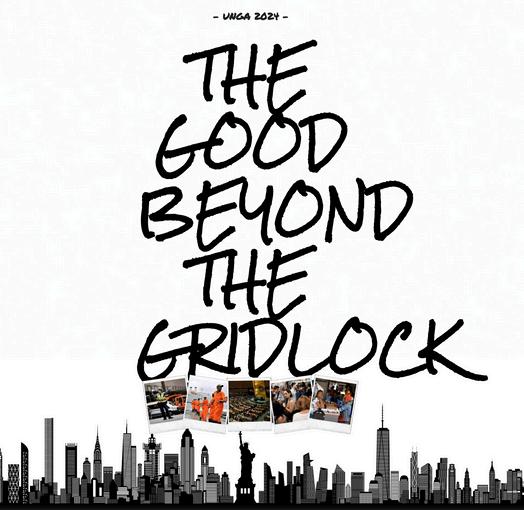
When it’s done well, branded storytelling offers so much more than a sales pitch it creates a narrative that connects with the audience on a deep, more human level. ‘The Good Beyond the Gridlock’ is a story by the UN General Assembly via the Shorthand platform that delivers a compelling blend of emotive storytelling, striking visuals, and thoughtful content design elements, like a seamless scroll and dynamic transitions captivating visual stories It communicates the UNGA’s initiatives while incorporating aesthetics and functionality to prove that how you tell your story really matters
ONSITE CONTENT -EVERY.DETAIL.CONSIDERED.
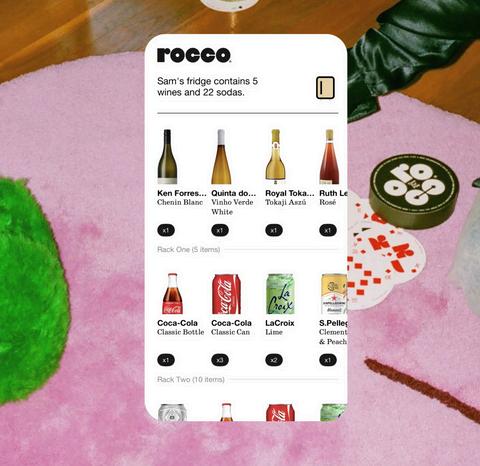
How sexy can home appliances be? Surprisingly sexy actually, if you’re Rocco. The blended aesthetic of the (self proclaimed) ‘World’s Smartest Drinks Fridge’ alone is something to behold part retro, part modern but the Rocco site is a culmination of the brand in a warm and inviting space Think art direction that mixes high and low, with ordered product imagery showcasing the tech, alongside candid, lo-fi lifestyle imagery displaying the fridge in real homes. Scroll-triggered interactive videos highlight the fridge's unique features, while product pages go deep in detail with a 'best bits' moment, design specs and UGC social content Space for customer satisfaction and publisher recognition completes a full picture, so prospectives aren’t left out in the cold.
FASHION-CRAFT TOTHECORE
Loewe, a luxury label renowned for its humble workshop beginnings, creates transferable content by weaving its core narrative of artisanal expertise across all brand touch points. Whether through digital campaigns, its magazine or on social, the brand emphasises the meticulous craftsmanship that defines its identity. Loewe’s storytelling transcends individual products, celebrating the creative process itself Their content extends the dialogue of craftsmanship into art, culture, and fashion, allowing consumers to engage deeply with the brand’s values. By maintaining consistency across everything they do advertising, owned channels, and in-store experiences Loewe ensures its commitment to craft remains central to its global message.
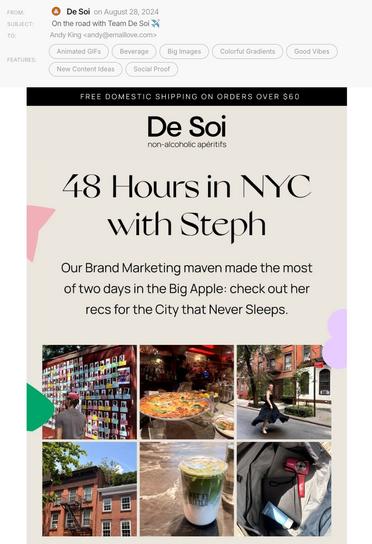
Technology has made every aspect of email marketing easier than it used to be, and that’s a great thing. It also means email marketers need to elevate what they are doing in terms of design, content, and strategy, and nonalcoholic apéritifs brand De Soi are doing that exceptionally well. Like a mini travel blog right in your inbox, the vibrant collage layout paired with candid snapshots gives it a personal, relatable feel, while the curated picks and bold calls-to-action keep it engaging and shoppable The lifestyle, narrative-driven approach is entirely on-brand, but almost product-agnostic.
Video content, when done right, grabs attention, entertains, and keeps the audience engaged. One standout brand video is The Client a clever parody from Teamwork. It pokes fun at the over-the-top demands clients can make while nodding to the iconic Joker-Batman dynamic Through humour, The Client effortlessly showcases how Teamwork's platform unifies teams and clients in a user-friendly workspace. It's memorable, informative, and highlights how Teamwork.com boosts productivity. Breaking the typical B2B mould, it connects with the audience on a deeper level It was such a hit that Teamwork has already released a follow-up
B A R O M E
Onthe up
Zero Click Content
Think of Zero-Click content as teasing of your longform content whether it’s a blog, video, podcast, or webinar by sharing the key takeaways. While it might feel odd to give away value upfront, trust the process! Be generous with your insights offer quick, helpful tips that save your audience time and energy Even if you can’t measure clicks, you're still building trust and staying top of mind
‘Old School’ Research
In a sea of bland, copypaste content, in-depth original research makes you stand out as a person who actually reads the instructions before assembling furniture It shows you ’ ve put in the work, have real insights to share, and aren't just parroting what everyone else is saying
EmployeeGenerated Content
Companies across industries are encouraging employees to create content and leverage it in innovative ways from sharing a wholesome team video on their ‘About’ page to giving potential hires a taste of their unique work culture on a podcast Often, the EGC has less to do with the actual product or service, but skyrockets a company's charisma by being inherently more trustworthy
Man + Machine
Great content marketing now is marrying AI’s efficiency with deeply human creativity to engage audiences in new and meaningful ways If AI is doing the heavy lifting in terms of productivity gains and sharper data insights, humans are bringing the magic that bots just can’t mimic
Going down
Era of Less
On one side of the coin, the buzz around AI implies there will be explosive growth in tech adoption. Yet on the other, marketing budgets are down globally, as is the share of the budget dedicated to
martech It’s forcing content marketers to do more with less, but expectations? Still sky-high!
Watery Values
Purpose-driven content needs to go beyond just talking about values like sustainability, diversity or social causes brands need to prove their commitment to customers through real initiatives, partnerships, and results Otherwise, it’s just noise!
SEO Tricks
Search has shifted thanks to evolving algorithms, AI, and changing consumer habits
With Gen AI flooding search engines with more content than ever, the SEO industry is being pushed towards more ethical practices, meaning keyword stuffing, backlink schemes, and sneaky tactics are out
Opaquenesses
With Google joining the C2PA Steering Committee, content transparency is about to level up It means consumers will be able to trace the full history of any piece of content who created it, how it’s been modified, and and whether it’s authentic Basically, it’s like giving every image, article, or video a digital ‘ paper trail’