New York Amsterdam News Rev. Jessie Jackson Special February 19 - 25, 2026
Hope stays alive: The life of Rev. Jesse Jackson and the legacy he leaves
By HERB BOYD Special to the AmNews
franchised, and free innocent prisoners around the world.”
Destined to Lead
opted him. He was given his stepfather's name but maintained a relationship with Robinson.
Jackson grew up under the taunts of other children who
fiance of the Jim Crow racism that permeated the South. He attended a racially segregated high school, Sterling, in Greenville, where he was elected student class president,
quiring a scholarship to college at the University of Illinois, but his transfer may have come as a result of racism that would not let him perform as quarterback on the football team, though other lished for his continuing his education at North
Not only did he iron as quarterback at A&T, he was also elected president of the student body. Along with earning a B.S. in sociology, cal activism, joining other students in campus protests and in the city. In 1964, he attended the Chicago Theological Seminary and traveled in 1965 with a group of students to Selma, Alabama, to participate in the voting rights demonstrations that became known as “Bloody Sunday.” This gave him the exposure to King that
nizing skills, leading him to hire Jackson to work at the Chicago office of the Southern Christian Leadership Conference (SCLC). He wound up leaving the seminary after his second year to devote himself full-time to the Civil Rights Movement, principally under the tutelage of the Rev. James Lawson. From there he grew into a crusader for equality and justice and
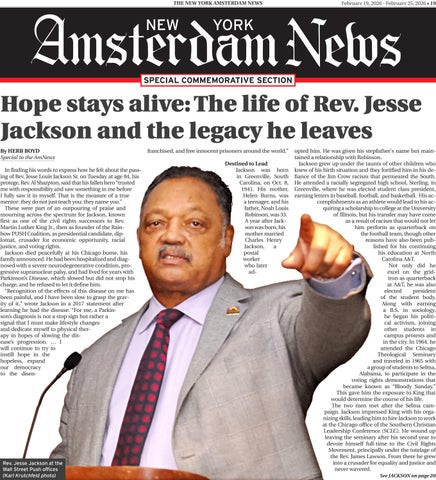
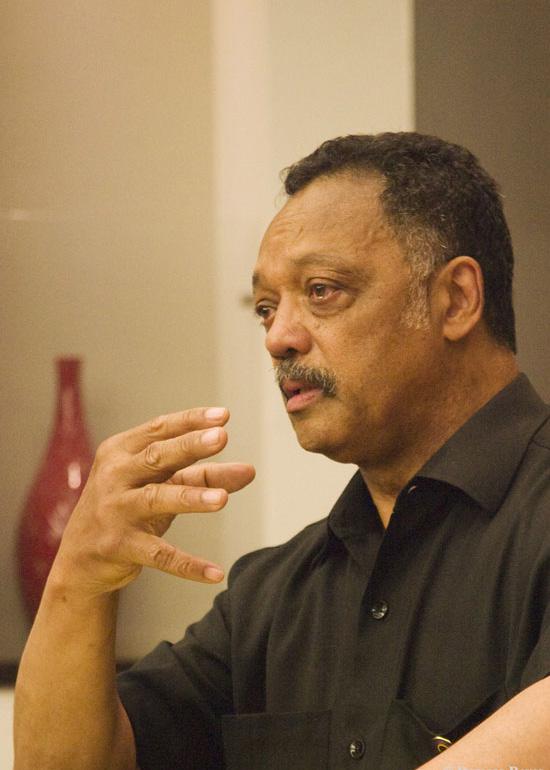
Rev. Jesse Jackson at the Wall Street Push offices
Krutchfeld photo)
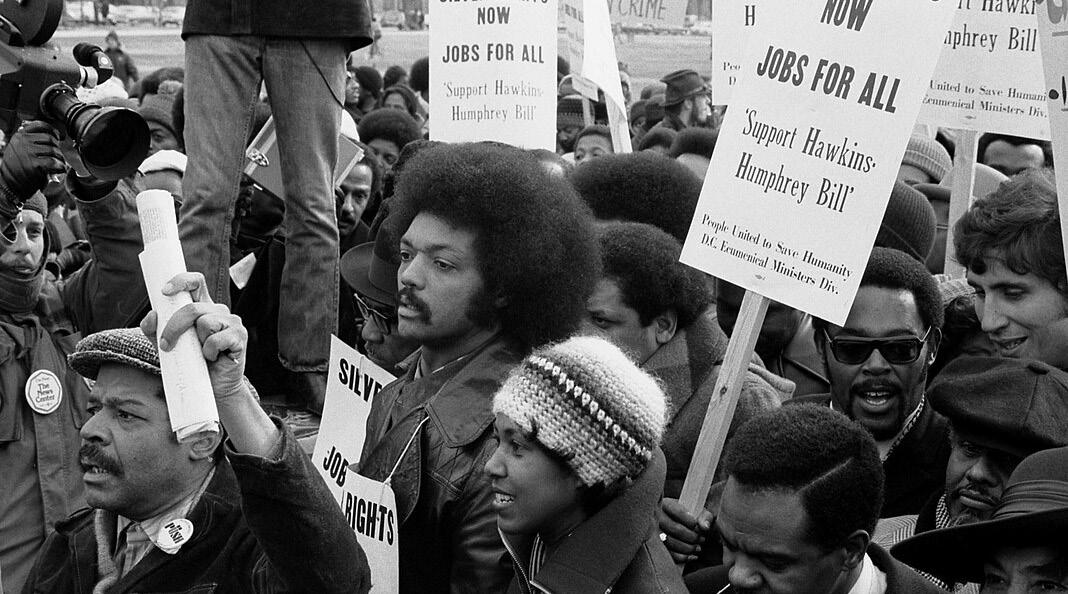
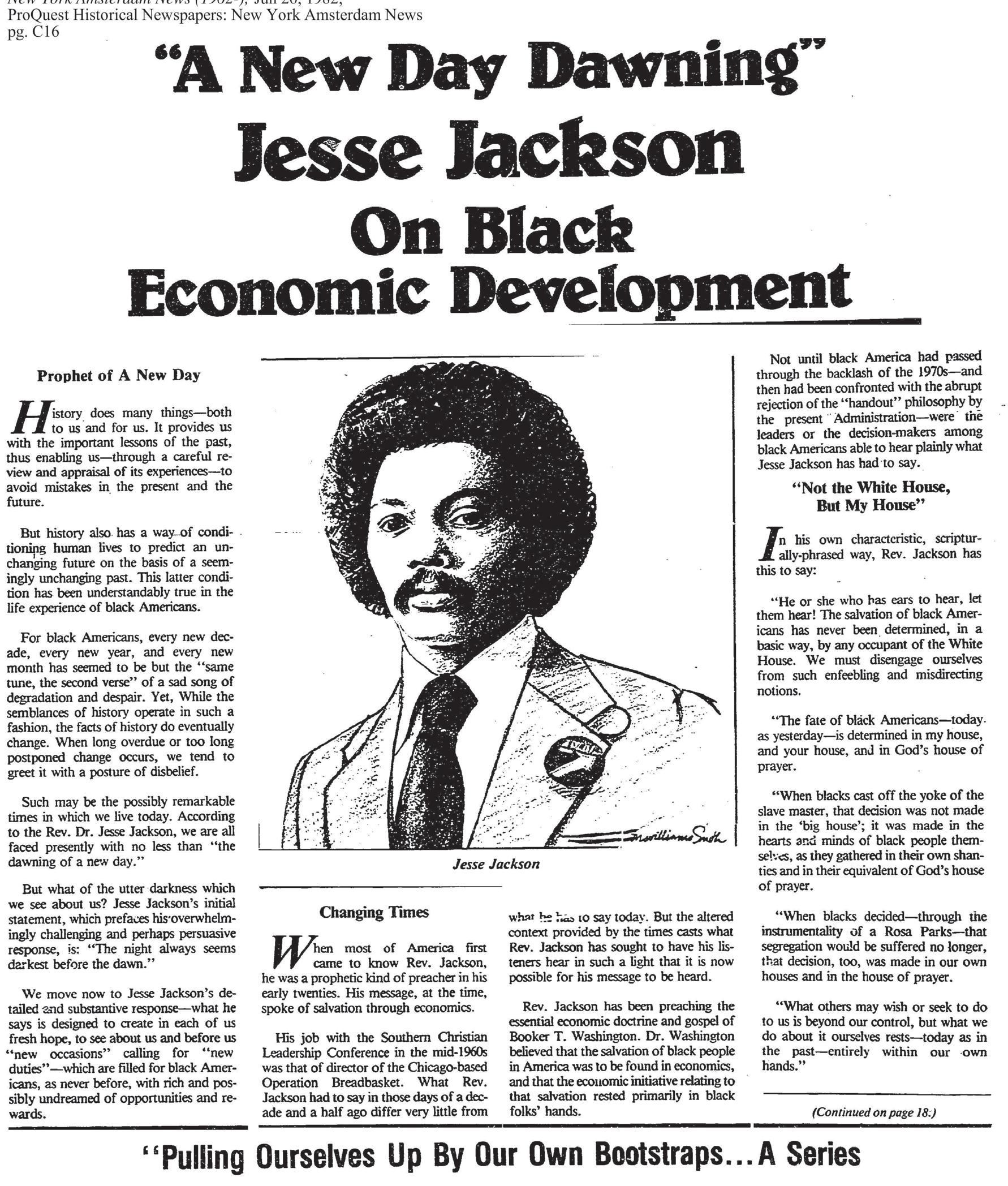
Jackson’s charismatic presence was always prominent in nearly every civic or political event concerning racial justice or civil rights, beginning with his being on the balcony of the Lorraine Motel in Memphis, where King was assassinated in 1968. But that did not end his Civil Rights career. Instead he took up King’s mantle. During these years, he also continued his affiliation with SCLC's Poor People's Crusade in D.C., establishing an office in Chicago. His relationship with SCLC and Operation Breadbasket ended after several clashes with the Rev. Ralph Abernathy. Undaunted, Jackson founded Rainbow PUSH (People United to Save Humanity), a merger of two nonprofit organizations in 1971. That was the catalyst for him leading the Civil Rights Movement of the 50s and 60s into the Black Identity movement of the 70s. He opened the historic Los Angeles Wattstax music festival in 1972, with his famous “I Am Somebody” speech. That same year, he organized the National Black Political Convention in Gary, Indiana, which, at that time, was the largest Black political gathering that had ever taken place, convening numerous political figures that went on to prominent positions in U.S. politics and resulting in the “National Black Agenda.”
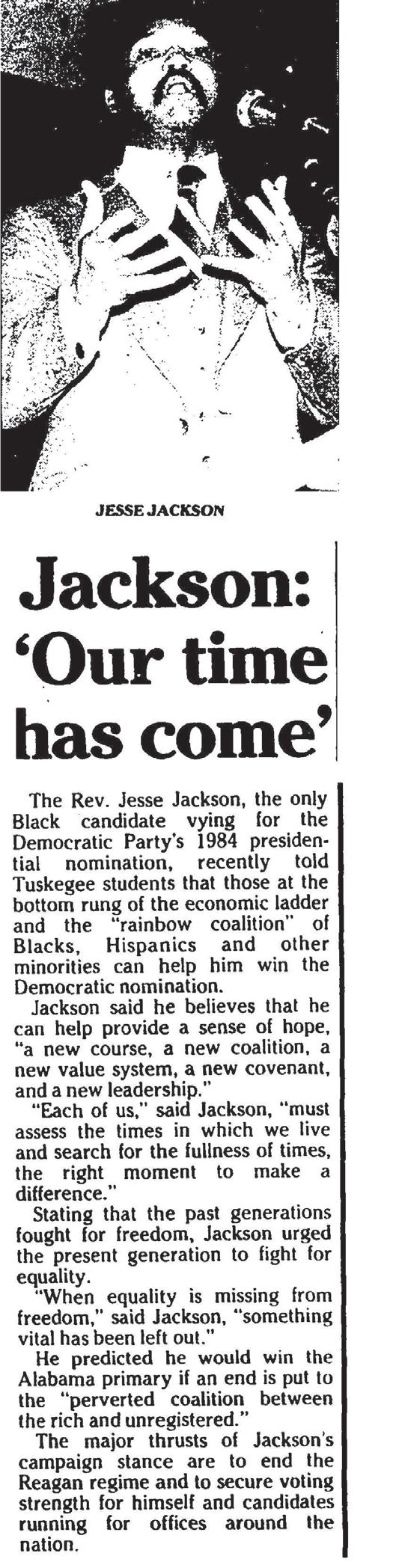
In 1984, he founded the Rainbow Coalition, which was an outgrowth of his presidential political campaign. He launched his presidential run to challenge Reaganomics, which, in campaign literature, charged the president with neglecting voting rights, affirmative action, and other social programs. It was at the Democratic National Convention that year in San Francisco that he delivered a speech entitled "The Rainbow Coalition."
Toward the end of this powerful piece of oration, Jackson said, “Our time has come. Suffering breeds character. Character breeds faith. In the end, faith will not disappoint. Our time has come. Our faith, hope, and dreams will prevail. Our time has come. Weeping has endured for nights, but now joy cometh in the morning.”
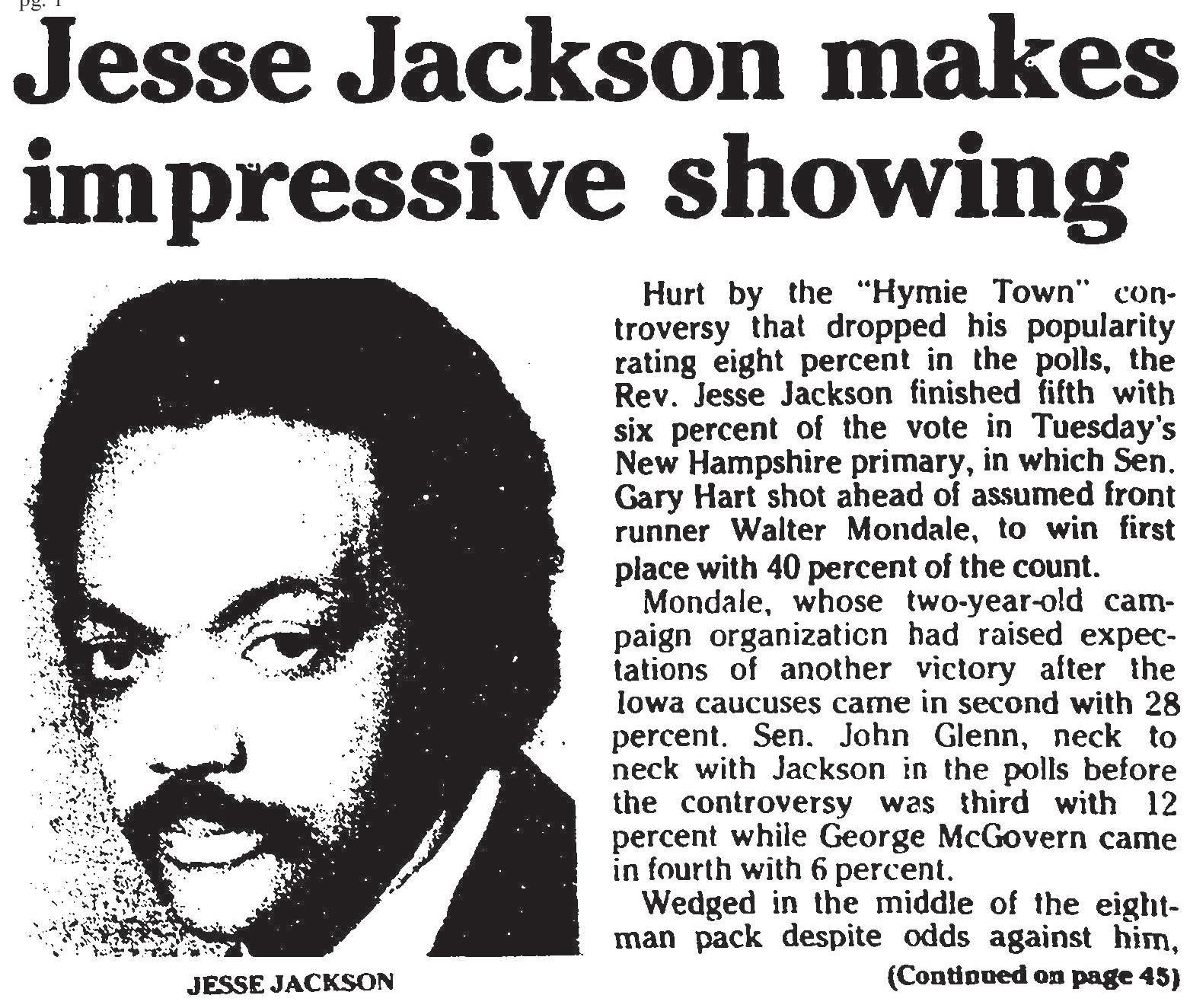
He finished in third place for the Democratic nomination, trailing former Vice President Walter Mondale and Sen. Gary Hart. Four years later, he was once again on the presidential campaign trail, and though he did very well in the race, winning several states and a number of delegates, he finished behind the runner-up, Gov. Michael Dukakis of Massachusetts.
In his 1988 speech, he challenged all who listened to him to be more than what they thought they could be. It became the mantra he was known for by an emerging generation, the children of those who had marched in the Civil Rights years.
“I was born in the slum, but the slum was not born in me. And it wasn't born in you, and you can make it.
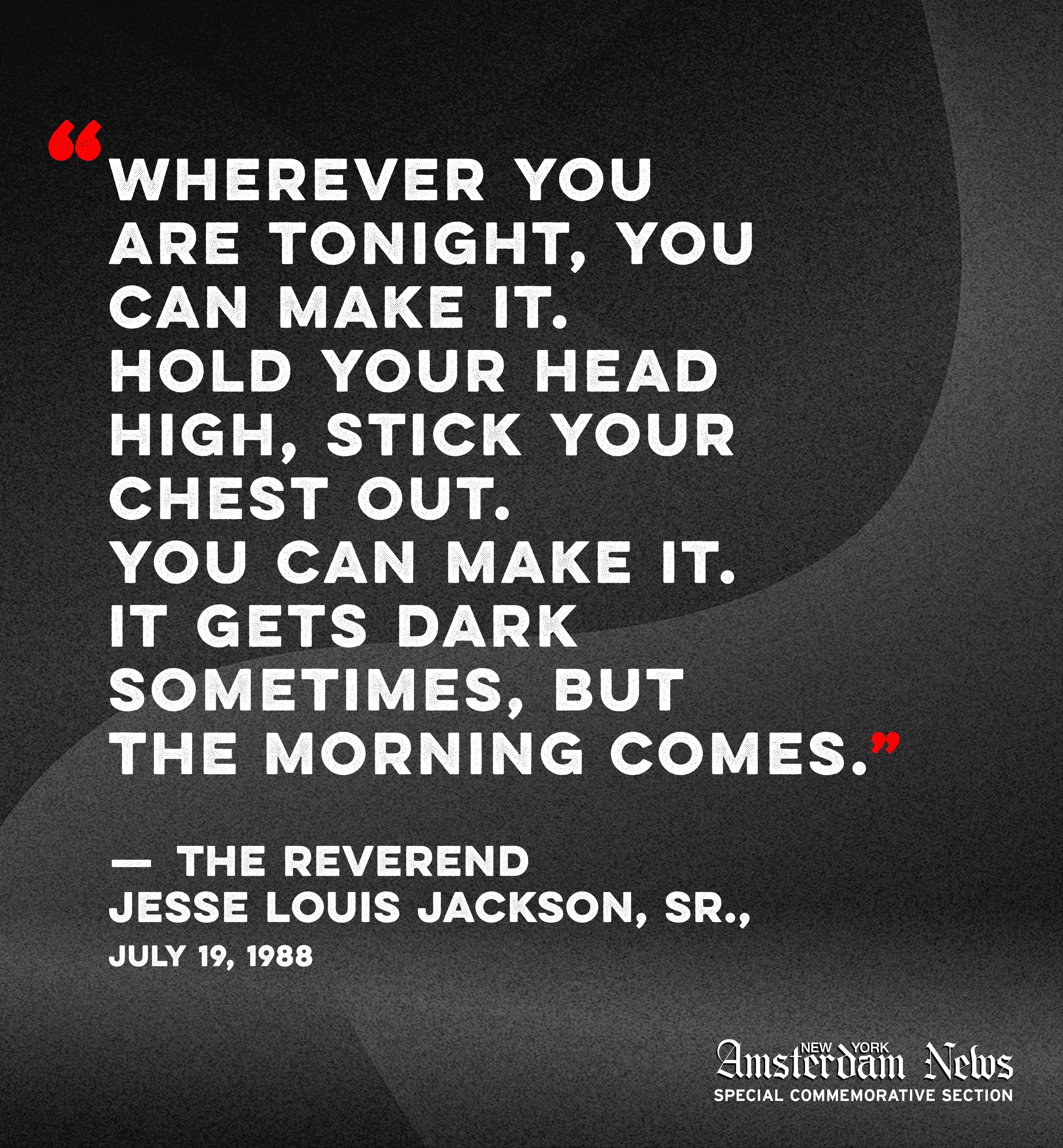
Wherever you are tonight, you can make it. Hold your head high, stick your chest out. You can make it. It gets dark sometimes, but
the morning comes. Don't you surrender. Suffering breeds character, character breeds faith. In the end faith will not disappoint. You must not surrender. You may or may not get there but just know that you're qualified. And you hold on, and hold out. We must never surrender. America will get better and better.
Keep hope alive. Keep hope alive. Keep hope alive. On tomorrow night and beyond, keep hope alive!”
“Rev. Jackson’s electrifying presidential campaign in 1988 changed the course of history in America,” Dr. Ron Daniels, who served as Jackson’s deputy campaign manager that year, told the Amsterdam News.
“Without the change to proportional allocation of delegates in presidential primaries, Barack Obama would not have become the first Black president of the U.S. and the “Jackson bump” in Black registered voters inspired by his campaign were the margin of victory in the historic election of David Dinkins as the first Black Mayor of New York City; two signature achievements directly attributable to the genius of Rev. Jesse L. Jackson.”
In 1991, he moved from Chicago to D.C., where he served as a shadow delegate and senator for D.C. from 1991 to 1997. He also made a mark on the economy by continuing King’s vision for economic equality by founding the Wall Street Project to end a multibillion dollar trade gap between American business and minority vendors. The result was large corporations to commit billions of dollars to the cause of diversity and equality.
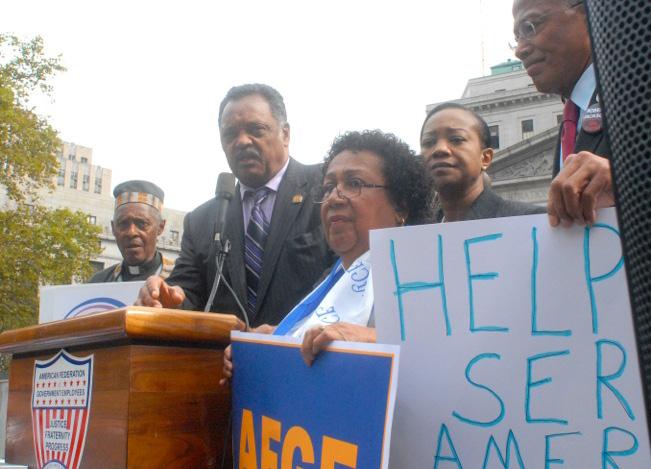
His activism never wavered and he was often invited to speak at protests and labor union events, where he lent his voice to political abuse and issues of foreign diplomacy. In 1997, much in the manner of his role in the release of Navy Lt. Robert Goodman,
a captured U.S. pilot held in Syria, served as special envoy for President Bill Clinton to Kenya, promoting free and fair elections.
Two years later, he helped to negotiate the release of three prisoners of war in Yugoslavia during the Kosovo War. He was again on the diplomatic trail in 2005, this time to Venezuela, to meet with President Hugo Chavez, to tamp down the controversial remarks of televangelist Pat Robertson, who called for Chavez's assassination. In 2009, he was a keynote speaker at the International Peace Foundation, where the focus was building culture and peace development.
Probably one of the most poignant images in Civil Rights history, however, was the night of Nov. 4, 2008, when Barack Obama, an Illinois senator, was elected President of the United States, the first time a Black person had ever ascended to the office. Cameras caught him in literal tears as Obama gave his victory speech to a crowd of thousands at Chicago’s Grant Park.
“I thought about those who suffered to make it possible,” he told CBS News the next morning. “The marches, the murdered, the martyrs, many who were nameless and faceless, but in some sense their suffering was redeemed last night with that victory.”
Obama, now years out of the White House, acknowledged the impact Jackson had on his career, and that of many, many others.
“Reverend Jackson also created opportunities for generations of African Americans and inspired countless more, including us,” said Obama in a statement. “Michelle got her first glimpse of political organizing at the Jacksons’ kitchen table when she was a teenager. And in his two historic runs for president, he laid the foundation for my own campaign to the highest office of the land.”
Still Moving
Though ailing and barely able to get around as Parkinson’s continued to affect him, Rev. Jackson was still on the ramparts for justice. He had stepped down from his leadership in Rainbow PUSH, leaving it to a new generation of leaders. But he wasn’t done. In 2024, spearheading a summit in his hometown to address the escalating humanitarian crisis in Gaza. One of the main issues discussed at the summit was a permanent ceasefire and relief efforts for the badly devastated cities. “We are faith leaders and advocates, united in this moment of moral reckoning to affirm the sanctity of all human life,” Jackson declared.
But probably the most important gift Jackson left was his legacy, which can be seen in the thousands of people inspired by his political campaign to run for office themselves, and in his own family, which has produced two U.S. Congressmen: Jesse Jackson Jr. who served in the House of Representatives for 17 years and Rep. Jonathan Jackson, who currently serves as Representative for Illinois’ 1st Congressional District.
“He was a freedom fighter,” an emotional Jonathan Jackson told Chicago’s WGN. “He fought to make America better. He first got arrested trying to use a public library, but he ran for president…he brought back prisoners of war in Iraq and in Syria…the fight now, it continues. The mantle is now passed for another generation to bring more humane priorities at home.”
Right to his final days, his final breath, the freedom fighter was raising his voice for the oppressed and downtrodden. “We gather to build upon the historical legacy and current global movements for peace, justice, and liberation,” Jackson emphasized, before adding what he said in Lebanon some 40-plus years earlier. “We do not seek to exchange sufferers, but rather to stop suffering.”
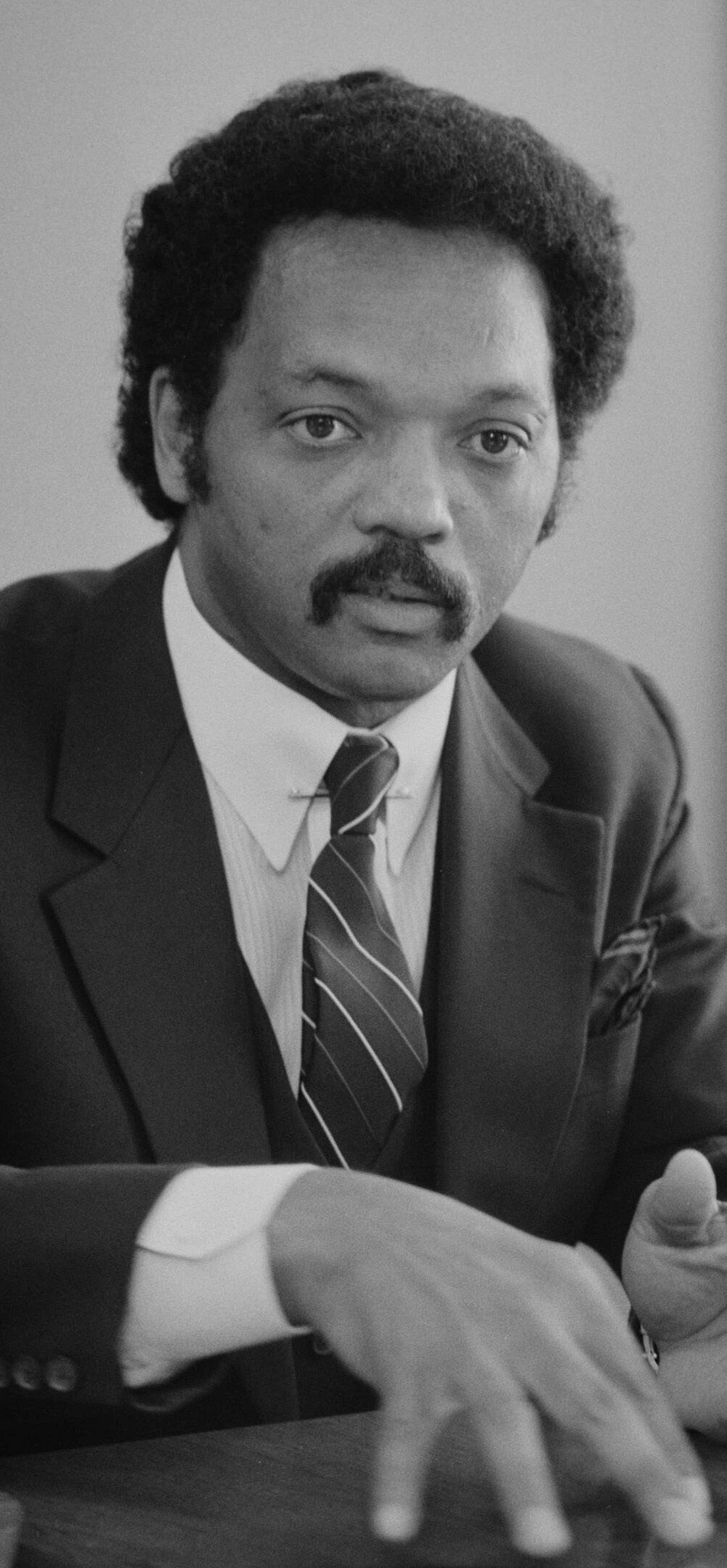
(Public Domain photo)
How Rev. Jesse Jackson helped me and so many of us to find our voices
By REV. AL SHARPTON
A giant has returned home. Words cannot fully capture the life, legacy, and complete impact of the Rev. Jesse Jackson. Today, the nation and the world lost a civil rights icon, a champion for justice, and a righteous fighter who was always on the correct side of history. It’s strange to speak of Rev. Jackson in the past tense; someone who was a fierce force of nature who embodied the qualities of true leadership and was a foot soldier for justice. He kept the dream alive and taught young children from broken homes, like me, that we don’t have broken spirits. He told us we were somebody and made us believe. He first called me into purpose when I was just 12 years old.
My mother introduced me to civil rights leader Rev. William Augustus Jones Jr., who then brought me to Rev. Jackson when he was in his 20s and I was barely a teenager. He instantly became a mentor. I was immediately drawn to him; he was born into a family situation similar to mine, and was not of the elitist crowd that a lot of the ministers were of that day. During those transformative years of my life, his guidance helped steer me toward my own activism and find my voice. I knew Rev. Jackson before he was a national figure, before he became a household name. He was always hard on me, told me repeatedly that I needed to study and be more disciplined. He was, in short, the taskmaster of my life. Rev. Jackson appointed me as youth director of the Brooklyn branch of Operation Breadbasket, the economic arm of the Southern Christian Leadership Conference, which was founded by Rev. Martin Luther King Jr. He entrusted me with that great responsibility at such a young age, and saw something in me before I fully saw it myself. That is the true measure of a mentor: They don’t just teach you; they name you.
Years later, after I started the National Action Network, it was Rev. Jackson who named our headquarters in Harlem the House of Justice, as a reminder that movements must always be anchored in moral purpose.
Throughout his life, Rev. Jackson called for inclusivity — a multiracial alliance that was composed of every group, regardless of their socio-economic, gender, or ethnic background. He carried Dr. King’s teachings into future generations and spent decades fighting for equality across the board, for the betterment of our communities and our nation as a whole. Through Operation PUSH and the Rainbow Coalition, he expanded the political imagination of the country, and in turn, the world.
He twice ran for president, breaking down barriers and allowing us to see
that such a goal was possible. He opened doors that many of us, me included, followed through and walked in his footsteps, and ran for president as well. “Keep hope alive!” was his signature line during his second run for president. Despite the open racism he received on the campaign trail and the institutional barriers in place, Rev. Jackson never lost hope and encouraged all of us to keep pushing forward for a better tomorrow.
When Barack Obama was elected as the first Black president of the United States in 2008, Rev. Jackson had literal tears in his eyes — tears of joy and tears for all the sacrifices of our ancestors that led to that historic moment.
On the global stage, Rev. Jackson was a respected figure who helped negotiate the release of dozens of American hostages and prisoners in the 1980s and 1990s. In 1984, he secured the release of a captured Navy lieutenant from Syria, as well as the release of 48 Cuban and Cuban-American prisoners in Cuba. In 1990, he helped secure the release of prisoners held by Saddam Hussein, and later that decade helped negotiate the release of U.S. soldiers held in Kosovo. The list of his international and diplomatic work goes on and on.
Today, the nation and the world are in mourning. Throughout most of my life, I had the privilege of watching, observing, and learning from Rev. Jackson. He broadened and democratized America, including the corporate world, which then led to the opening of boardrooms and the expansion of business contracts. He continuously fought for the protection of voting rights and the inclusion and acceptance of all, including members of the LGBTQIA community and marginalized communities. When the Civil Rights Act of ’64 and the Voting Rights Act of ’65 had to be renewed, it was Rev. Jackson who took that fight and kept it going through the Ronald Reagan years and years of backlash.
He was a fighter until the very end. I visited and prayed with his family when he was in the hospital, and after learning of the tragic news of his passing, I prayed with his family once again by phone. He was more than a public figure to me — he was a mentor and even godfather to my own children. He prayed over my two daughters when they were just infants; he spoke life into them as young girls. We stood in his home not as a headline, but as family. We now feel the immense loss of a beloved family member who helped push this nation on a progres-
sive trajectory. I will always cherish the fact that he took me under his wing and will forever try to do my part to keep hope alive. Leaders are defined by their character and the mark they leave on this world. Rev. Jackson’s legacy lives on through his children and those of us lucky to have known him personally. It also continues through his activism, political and diplomatic work, and all of his efforts to unite us and create a better society. It is now up to everyone to continue that work and carry the torch forward as he did.
In these trying times, let us remember these poignant words from Rev. Jackson’s speech in 1988:
“If an issue is morally right, it will eventually be political. It may be political and never be right. Fanny Lou Hamer didn’t have the most votes in Atlantic City, but her principles have outlasted the life of every delegate who voted to lock her out. Rosa Parks did not have the most votes, but she was morally right. Dr. King didn’t have the most votes about the Vietnam War, but he was morally right. If we are principled first, our politics will fall in place.”
Rev. Al Sharpton is president and founder of the National Action Network.
(Bill Moore Photo)
Rev. Jackson lifted all of us higher
By BEN JEALOUS
One of the great strengths of our movement is that our leaders do more than inspire young people — they keep the door open for them. The leaders who carried forward the legacy of Dr. Martin Luther King Jr. understood that movements survive only when the next generation is welcomed in. Leaders like Joseph Lowery, Rev. Orange, Rev. Earl Shinholster, Andrew Young, and many others lived that commitment.
Rev. Jesse Jackson carried it farther than most. He gave time — minutes, hours, and sometimes days — to younger people trying to find their way.
When I first raised my hand to volunteer, I was 14. I was short for my age and had a bad stutter, but when I heard that a man who had taken risks alongside Dr. King was running for president, I wanted to help.
I helped lead Youth for Jackson in my county. We registered voters. We believed we could change things. And while I was giving my stump speech around my county on his behalf, I decided I had to conquer my stutter. I set my mind to it until I figured it out.
He asked to meet me when he came to speak at Stanford University and he treated young organizers like we belonged in the room.
In my early 20s, after I had been kicked out of college for organizing protests, I walked into his home in Washington, D.C., where he was serving as shadow senator. The topic was winning voting rights for Washington, D.C. — a perennial and yet always urgent battle. We talked strategy. He listened more than he spoke.
Years later, when the pressure mounted while I was leading the NAACP, he was still the person I would turn to first for advice and quiet moments. And when things got especially hot, he would just look and say: “Flood rules. Eyes open. Mouth shut. Keep stepping forward.”
In Rockford, Illinois, we drove out together because we heard that three-year-old girls who had witnessed a police shooting were losing their hair from trauma. We arrived from the funeral of a Black teenager beaten to death with two-by-fours in the streets of Chicago, some said for crossing into the wrong territory, others because hateful people believed he was gay. Rev. Jackson went where the pain was — to help
people heal, to help them find their power to move forward, and to push all of us forward again.
When voting rights came under assault, he did the same. When immigrant rights came under attack, he did the same. When working people of any color came under attack, he did the same.
In my 50s, Dave Chappelle and I sat on either side of Rev. Jackson as we watched Kamala Harris, a Black woman, accept our party’s nomination for president of the United States. It felt more than appropriate that that moment, like President Obama accepting victory on election night years earlier, happened in Rev. Jackson’s town of Chicago.
Across every chapter, he was there. Not as a symbol. As a worker in the struggle.
The lesson was simple. Show up. Keep going. Hold the door open for others. That is how movements are reborn and rebuilt, even after setbacks and even when the odds feel like they are mounting against us. That is how freedom moves forward.
Ben Jealous is a professor of practice at the University of Pennsylvania and former president and CEO of the NAACP.
We are all somebody … because Jesse Jackson told us we are
By CHRISTINA GREER, PH.D.
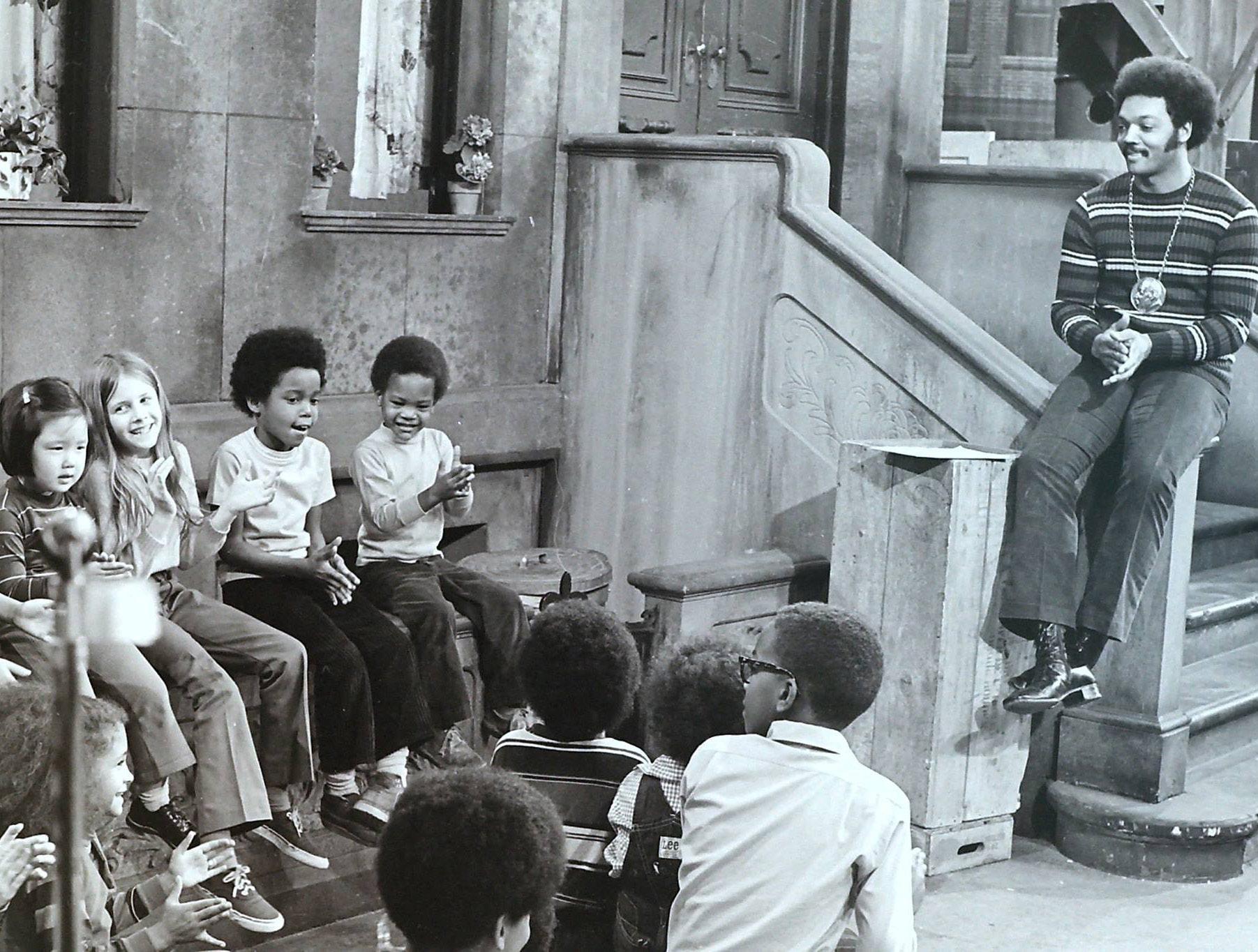
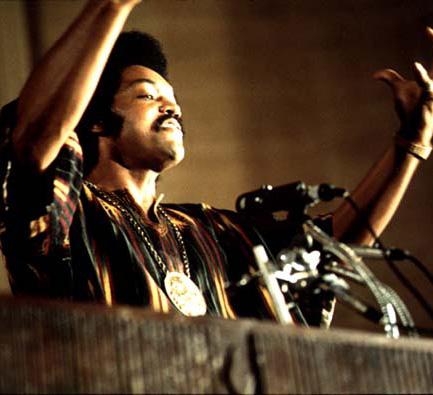
Whenever I need a pick-me-up, I rewatch Rev. Jesse Jackson’s “I Am Somebody” speech from his 1972 visit to Sesame Street. There’s something so bold and Black and beautiful seeing Rev. Jackson surrounded by young children having them recite that they are somebody worthy of protection and respect. That they are God’s children, no matter their race or economic status. They may be on welfare, but they are still somebody. They make a mistake, but they are still somebody. Every now and again, I need that reminder, even when sitting in my office as a tenured professor. There will be lots of reflections about the life of Rev. Jackson and his contributions to local, state, national, and international politics. There will be thought pieces about his revolutionary 1984 and 1998 presidential runs that served as a continuation of Shirley Chisholm’s legacy, which also helped deliver Barack Obama to the presidency and Black mayors to executive office in cities from New York to Philadelphia to Baltimore and to Houston, to name just a few. His contributions could fill a stadium, and his oratory skills should be placed among the giants like Barbara Jordan and Fannie Lou Hamer.
But it is his “I Am Somebody” speech, which he gave in multiple settings through the years, that I always return
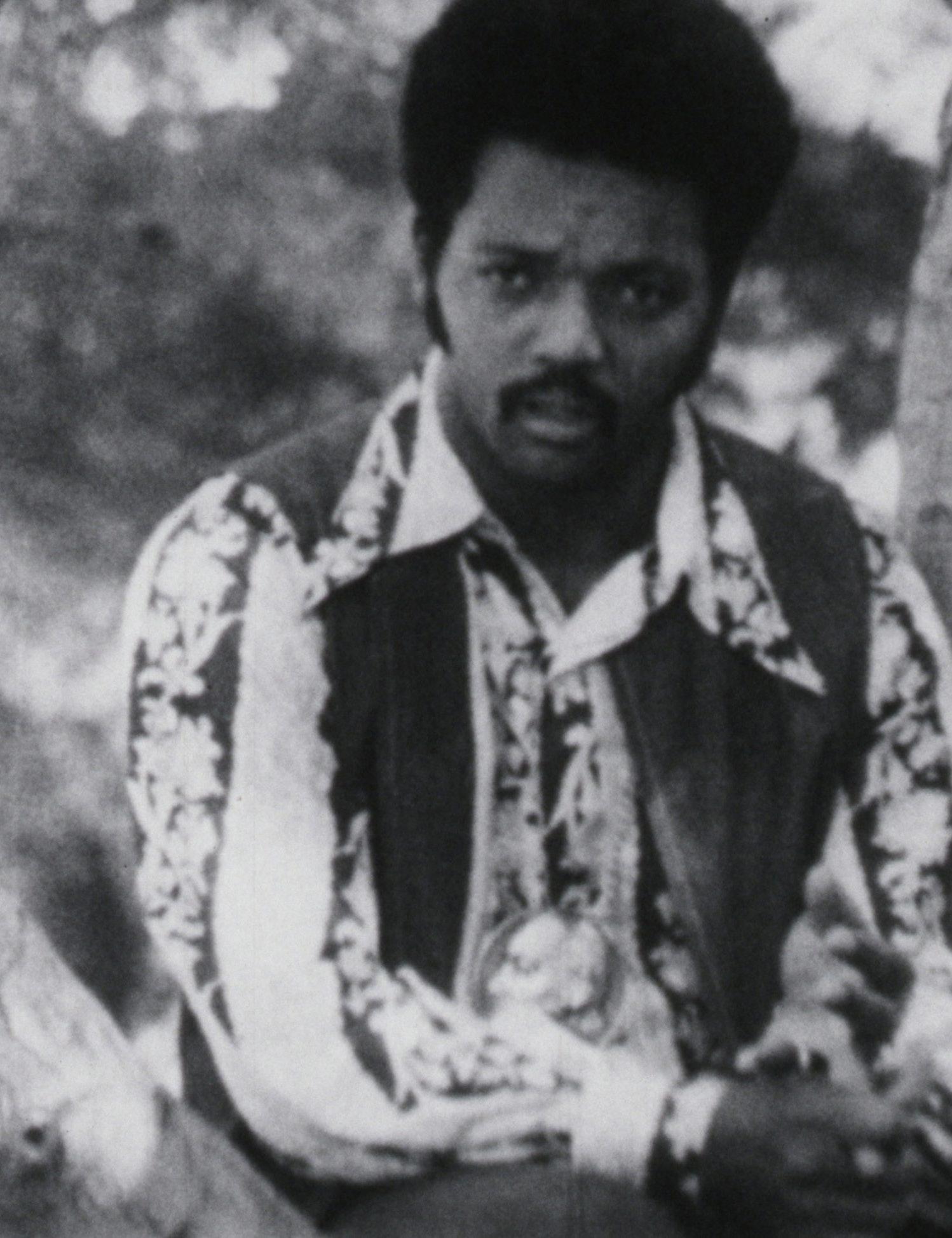
to. Something about his afro and big gold medallion reciting what, at first glance, seems like a simple refrain, but in truth is so much deeper. As Jackson asked us to demand more from this country, to hold her accountable while also seeing her promise, he wanted us to remember we
were worthy of the American dream. We were worthy of the benefits that this country bestowed on some but not others. We were deserving of a fair chance, a decent wage, dignity, and respect.
I remember being a young girl attending the Omega Psi Phi Fraternity con -
claves when Jackson was running for the presidency in 1984 and wearing a purple T-shirt that stated in bold gold letters, “I Am Somebody because my daddy is a Que.” I remember feeling so loved and protected and filled with an electric energy during those family events. Not because I fully understood the weight and audacity of Jackson’s run for the presidency, but I was surrounded by thousands of Black men bursting with pride and confidence because of Jackson, a man who had the courage to look America in the face and declare his candidacy.
Jackson never made it to the White House, but he entered more homes and touched more lives than we can ever know. His efforts to help people, not just Black people, register to vote and engage in electoral politics have created generations of new voters. He created political leaders and elected officials in cities large and small. And he is the reason so many people, and not just Black people, know…without a shadow of a doubt, that they are somebody.
Christina Greer, Ph.D., is an associate professor at Fordham University; author of the books “How to Build a Democracy: From Fannie Lou Hamer and Barbara Jordan to Stacey Abrams” and “Black Ethnics: Race, Immigration, and the Pursuit of the American Dream”; and co-host of the podcast FAQ-NYC.
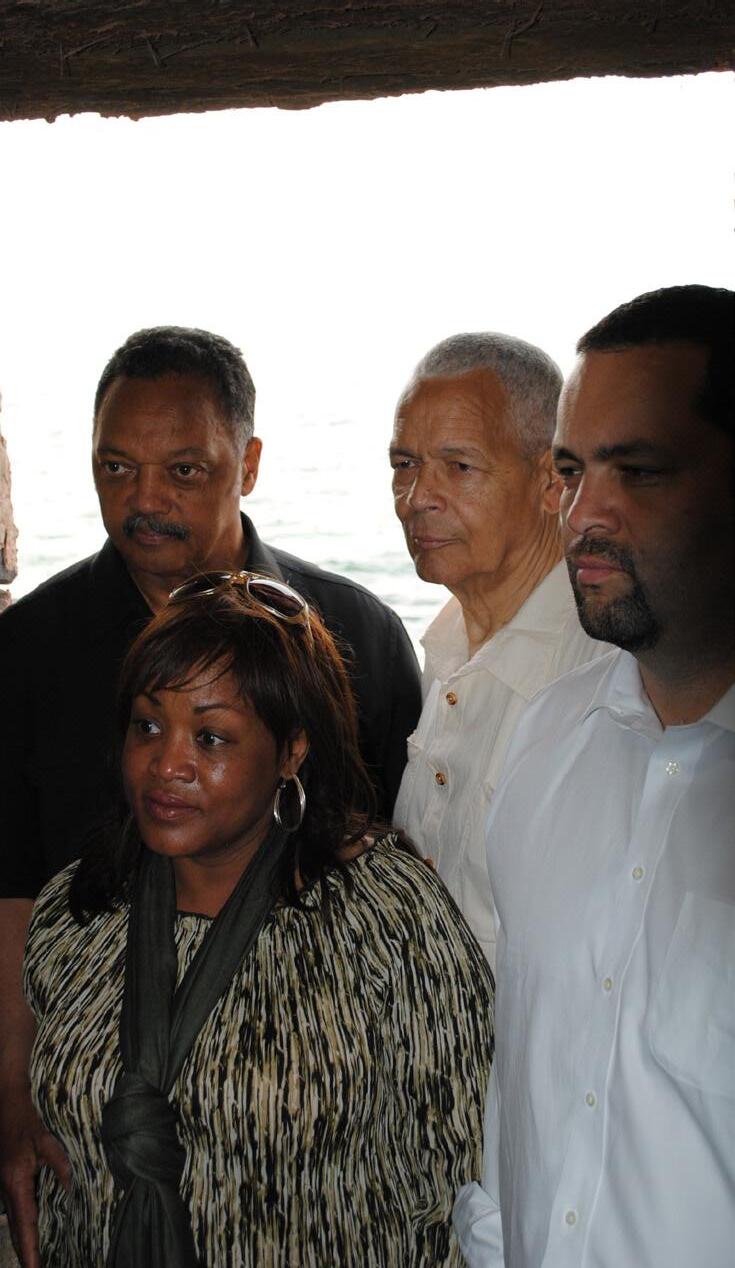
Rev. Jesse Jackson, Ben Jealous, Julian Bond at the Door of No Return in Senegal, 2010
Rev. Jesse Jackson during a 1972 appearance on Sesame Street (Sesame Workshop)
Analysis: What Jesse Jackson’s presidential campaigns taught us
By MARK WINSTON GRIFFITH Special to the AmNews
As the world reflects on the life of Jesse Jackson, it’s hard to fully appreciate the impact of his 1984 presidential run, in which Jackson finished third in the Democratic primary, and his 1988 race, in which he won a total of 11 state primaries and caucuses.
It’s not just because few voters and historians alike believe that Jackson could have ever won the general election. It’s also because much of what he pioneered has since become more mainstream. Anti-Blackness may still haunt our elections, but in the 40 years since Jackson ran, Black candidates are now perennial fixtures of the national Democratic Party primary scene. The vision of a class-identified, multi-racial democracy that was promoted by Jackson’s Rainbow Coalition is now being championed by the likes of today’s Working Families Party and other social justice formations.
Long before the Sen. Bernie Sanders and Mayor Zohran Mamdani campaigns helped inspire millennials and members of Gen Z, the Jackson campaigns shaped the progressive activist sensibilities of a generation of post-civil rights activists. As a wide-eyed college student in 1984, I campaigned for Jackson both on campus and on the streets of Providence, Rhode Island, and in New York City. I also went on to register people to vote in the South and in New York in service of his campaign.
For my peers and me, Jackson was an unapologetically Black candidate before we even recognized the need for such a term. He was also the first politician I ever met who explicitly welcomed poor white people, disaffected farmers, Latinos, Asians, immigrants, and LGBTQ folk under the same tent, and named them as
refugees from American democracy.
Donna Brazile famously said what is now taken as conventional wisdom: “Without Reverend Jackson, there never would have been Barack Obama.” But it isn’t that straightforward. A complex confluence of historical, cultural, and demographic conditions led to Barack Obama’s acceptance by a plurality of the American electorate.
Similarly, Jackson’s candidacy was more nuanced than simply being the second serious Black presidential candidate (after Rep. Shirley Chisholm), and his widening of political discourse is often overlooked. Jackson was the first and only successful presidential candidate to give full expression to an unequivocal revulsion toward and a rejection of South African apartheid. His recognition of the Palestinian Liberation Organization and his meeting with Yasser Arafat helped forge Black and progressive solidarity with the Palestinian people. His diplomacy in areas like Syria, Cuba, and throughout what was known as the “Third World” mainstreamed an identification with the people of the global south.
Yet, Jackson established what is now a prerequisite for Black Democratic Party candidates — who are reflexively cast as angry and counter-American — to gain wide political acceptance. Leveraging the hope and spiritual gravitas of the Civil Rights Movement, Jackson exhorted us to “keep hope alive” and revitalized the Kingian dream of people of diverse backgrounds living in racial and economic harmony — a required campaign message for Black presidential candidates that is rarely demanded of white candidates.
Indeed, Obama and those who follow his example use Jackson’s playbook to convince the American electorate that Black candidates are safe and uniquely patriotic.
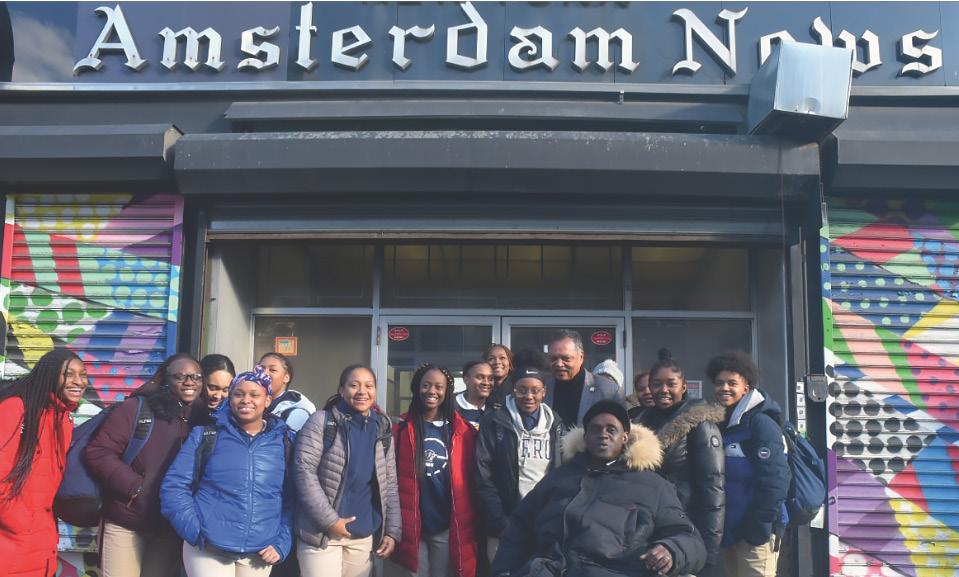
AmNews office (Bill Moore photo)
(Environmental Protection Agency Public Domain photo)
(Cyril Josh Barker photo)
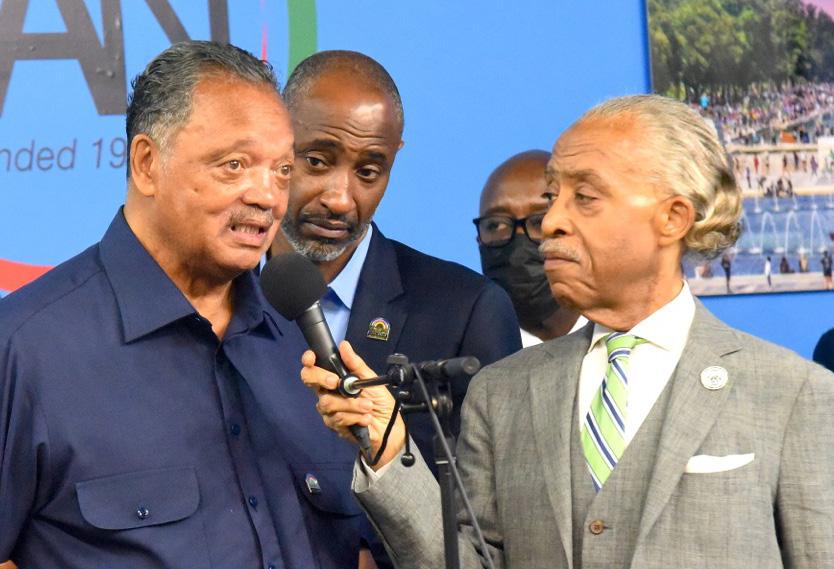
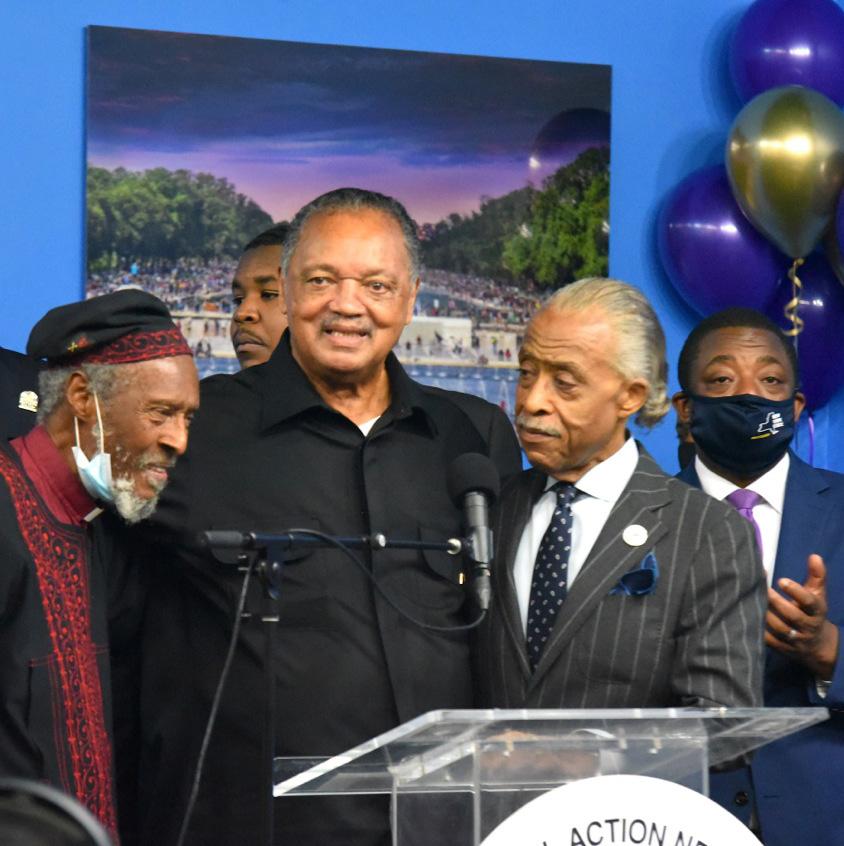
Herb Daughtry, JesseJackson, Al Sharpton, Brain Benjamin (Bill Moore photo)
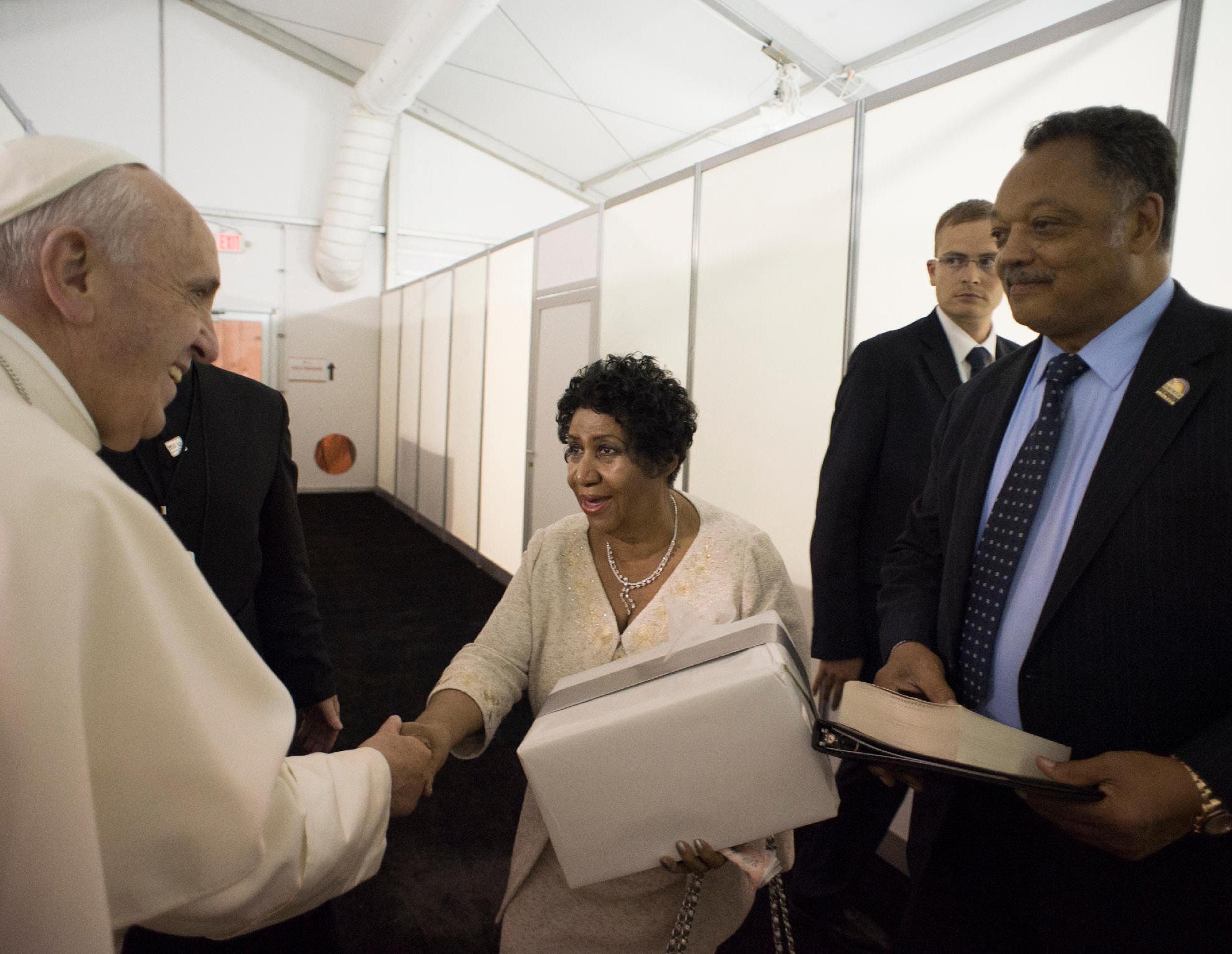
(Vatican photo)
(Photo courtesy of Nommo Productions)
(Damaso Reyes photo)
Politicians in New York and nationwide remember Jesse Jackson’s impact and inspiration
By ARIAMA C. LONG TANDY LAU Amsterdam News Staff
Political leaders nationwide are paying tribute to Rev. Jesse Jackson and remembering him not only for his trailblazing human rights activism, but also for his historic bid for the presidency. His impact in the sphere of racial justice inspired generations of activists to forge their own campaigns, and that includes New York’s politicos.
“As a daughter of Caribbean immigrants and a public servant representing the vibrant, diverse communities of Brooklyn, I have long stood on the shoulders of Rev. Jackson’s courage and conviction,” said Rep. Yvette D. Clarke, who chairs the Congressional Black Caucus (CBC). “He showed us what fearless advocacy looks like, and the sacrifice it entails. He taught us that justice requires persistence, faith, and an unshakable belief in the power of the people. Well done, thy good and faithful servant. May he rest in eternal power.”
In 2018, the CBC Foundation presented Jackson and his wife, Jacqueline, with the prestigious Phoenix Award for Lifetime Achievement for their decades of service in advancing civil rights and social justice.
Clarke added that her prayers are with Jackson’s family, including his son, Rep. Jonathan Jackson of Illinois.
Jackson inspired seasoned politicians and people in the early years of their political careers alike, including those who have risen to one of the most important offices in the country.
“Today we mourn the passing of Rev. Jesse Jackson, a giant of the civil rights movement who never stopped demanding that America live up to its promise,” posted Mayor Zohran Mamdani. “He marched, he ran, he organized, and he preached justice without apology. May we honor him not just in words, but in struggle.”
Jackson’s two presidential campaigns, in 1984 and 1988, were groundbreaking. He helped register millions of voters and forged a new model for modern democracy. Neera Tanden, president and CEO of the Center for American Progress, said that Jackson’s Rainbow PUSH Coalition was “a multi-racial, multi-class” movement that shifted the political landscape.
“His two presidential campaigns shifted our political landscape, offering an expansive vision of opportunity that confronts inequality and builds a true multiracial democracy,” said Tanden. “His vision remains a hallmark of progressive politics today.”
It’s not an exaggeration to say that without Jackson’s ambition, the path toward becoming the first Black person to occupy the White House may not have been forged for former President Barack Obama. In a statement, Obama himself credited Jack-
son’s campaigns with laying the foundation for his own historic election victory as the country’s first Black president.
“Reverend Jackson also created opportunities for generations of African Americans and inspired countless more, including us,” said Obama. “Michelle got her first glimpse of political organizing at the Jacksons’ kitchen table when she was a teenager, and in his two historic runs for president, he laid the foundation for my own campaign to the highest office of the land.
“Michelle and I will always be grateful for Jesse’s lifetime of service, and the friendship our families share. We stood on his shoulders. We send our deepest condolences to the Jackson family and everyone in Chicago and beyond who knew and loved him.”
A host of New York State and city leaders
also mourned the passing of Jackson.
“His voice helped shape generations of leaders and inspired countless Americans to believe that change is possible,” said Senate Majority Leader Andrea Stewart-Cousins.
“We honor his legacy by continuing the work — advancing justice; protecting voting rights; expanding opportunity; and ensuring that every community is seen, heard, and valued. May he rest in power, and may his inspiration keep hope alive.”
Brooklyn Party Boss and Assemblymember Rodneyse Bichotte Hermelyn said, “I am deeply saddened to learn of the passing of Reverend Jesse Jackson. A towering figure in the Civil Rights Movement who stood shoulder to shoulder with other legendary leaders in the fight for justice, equality, and the advancement of African Americans.”
New York City Public Advocate Jumaane Williams pointed to Jackson’s sit-in protests and founding of the Rainbow PUSH Coalition. “Reverend Jackson helped to drive the movement for decades, with each march or boycott or campaign a leg in the longer journey of the ongoing Civil Rights Movement,” Williams said. “He devoted his life’s work to the liberation of oppressed peoples in many aspects of society. A tireless and dynamic warrior.”
Staten Island’s Assemblymember Charles Lavine said he was privileged to meet Jackson at a fair housing conference and will always remember his graciousness and dedication. “He was a great man who fought to make a better America. Now, perhaps more than ever, we must build on his legacy and continue to bravely fight for social change,” said Lavine.
Across the Hudson, Newark Mayor Ras Baraka recalled witnessing Jackson’s historic presidential run as a teen. “Jesse’s life altered history and left us a lasting legacy,” said Baraka. “He shouted, marched, strategized, organized, and inspired throughout the Civil Rights Movement. His impact will forever be felt, but most importantly, he was a friend to my father and our family. I will always remember their rallying cry: ‘It’s Nation Time!’”
Savannah, Georgia, Mayor Van R. Johnson II, who also serves as president of the African American Mayors Association, said he and many like him were also affected by Jackson’s campaigns and were familiar with him at their many gatherings.
“The African American Mayors Association was honored to welcome Reverend Jackson to our annual conferences, where his wisdom, passion, and unwavering commitment to empowering Black communities inspired mayors from across the nation,” said Johnson in a statement.
“His two historic presidential campaigns opened the door to what is possible for Black leaders in America and became a direct inspiration for so many of us; as he said, if our minds can conceive it, if our hearts can believe it, then we know that we can achieve it.”
The Legal Defense Fund (LDF) honored Jackson at its annual National Equal Justice Awards Dinner last year with the Tribute to the Spirit of Selma Award. “While we are utterly saddened by this profound loss, Rev. Jackson’s impact and legacy cannot be overstated,” said LDF President and Director-Counsel Janai Nelson in a statement. “His life’s work opened doors to political participation, expanded the bounds of what justice could look like, and inspired millions across the globe. His legacy will endure in the institutions he built, the movements he empowered, and the generations he emboldened to continue the fight for freedom.”
Further reproduction prohibited without permission.
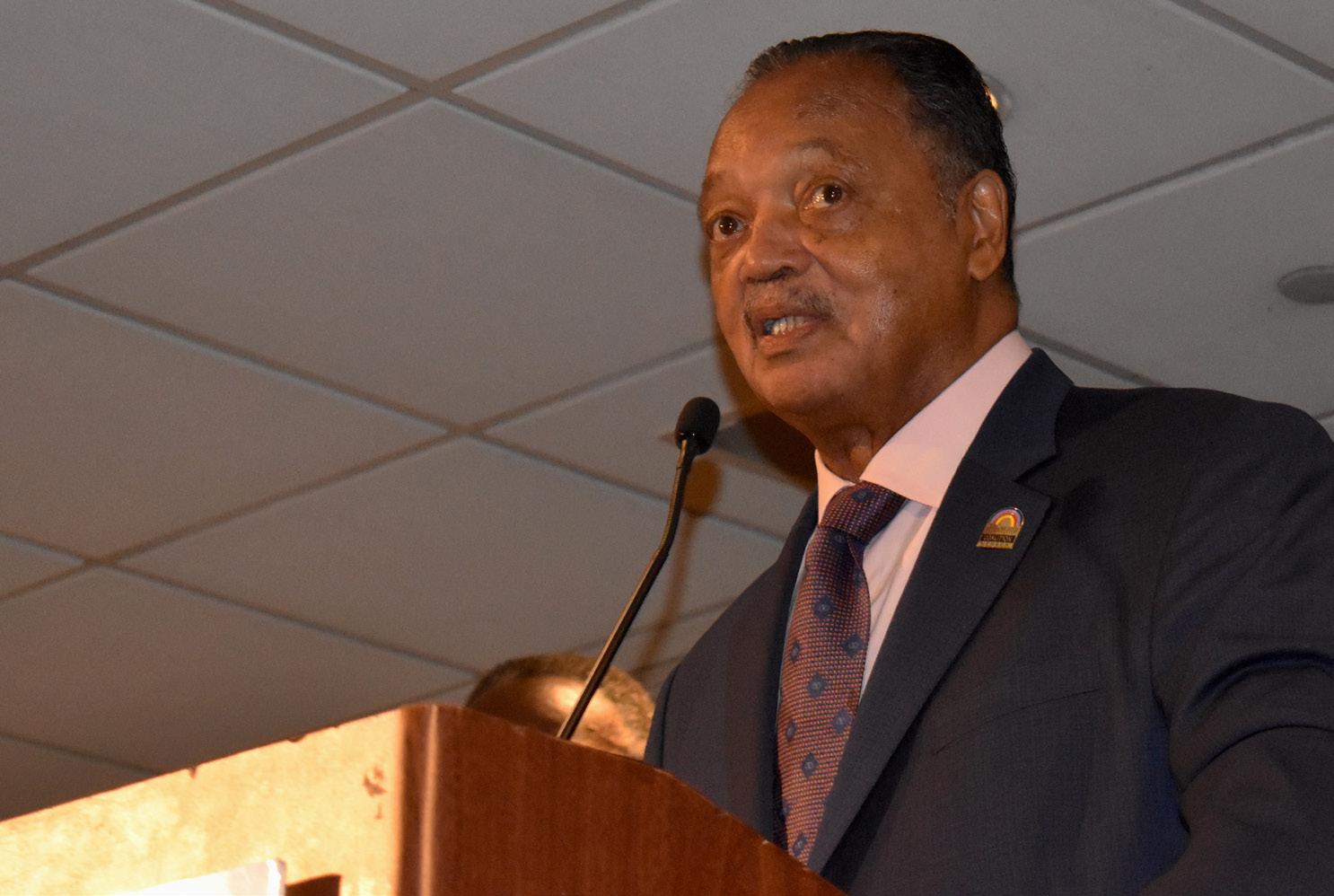
Reverend Jesse Jackson Sr. at his Rainbow PUSH Coalition’s 25th Annual Wall Street Project Economic Summit at Sheraton New York Times Square Hotel in March 2022. (Ariama C. Long photos)
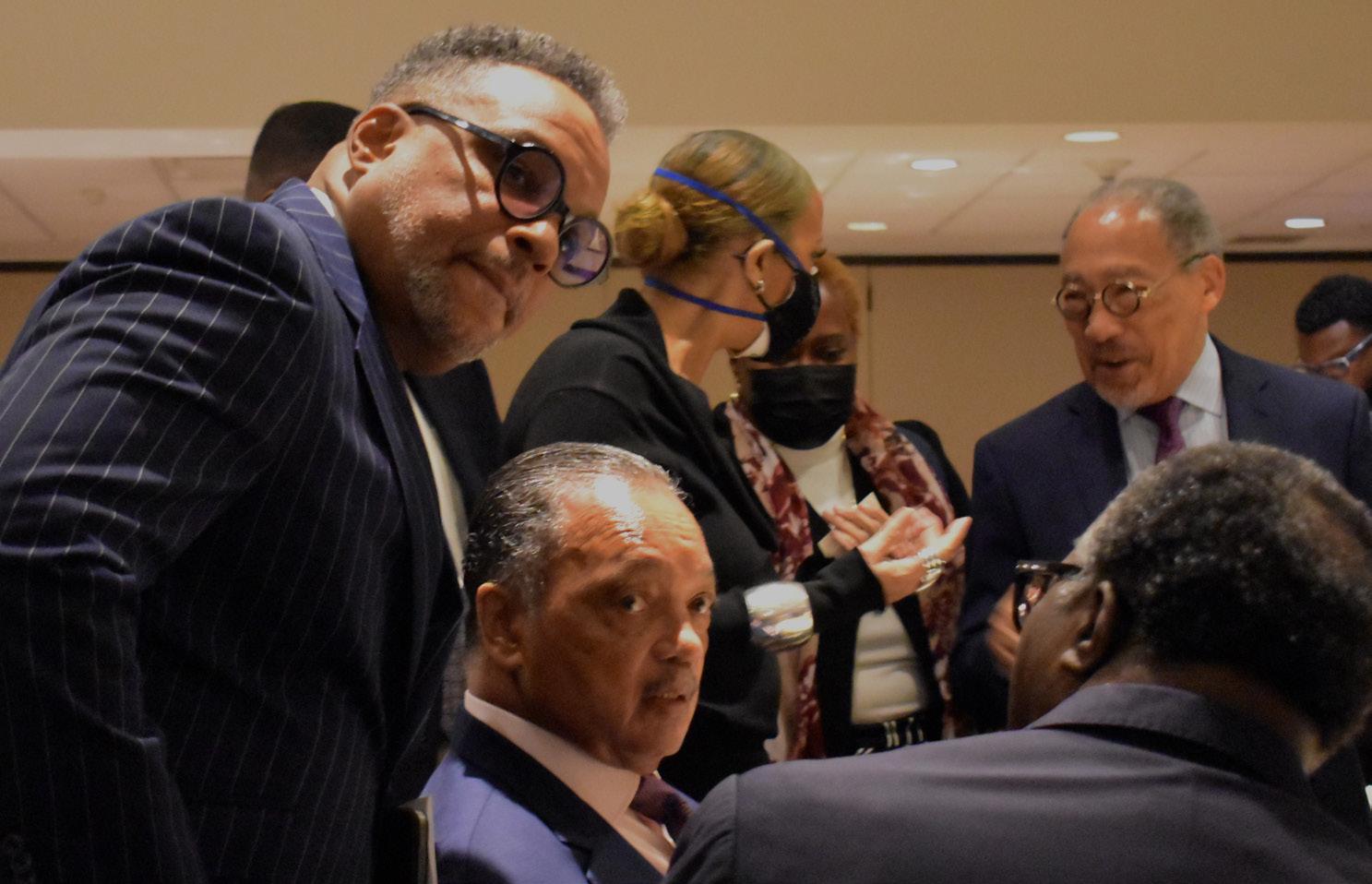
Rev. Jackson at luncheon for economic summit in March 2022.
Labor unions remember Rev. Jesse Jackson as ‘noble warrior’
By KAREN JUANITA CARRILLO Amsterdam News Staff
Rev. Jesse Jackson, who brought a generation of multiracial progressives into national politics via his Rainbow PUSH Coalition, was a towering figure in the Civil Rights Movement. His advocacy for progressive causes, voter registration, and economic empowerment for marginalized people made him a natural ally of the labor movement. Because of this, labor leaders are remembering him as their champion.
“The passing of Rev. Jesse Jackson gives heavenly wings to a noble warrior, a man who bent the arc of justice with his stout heart and bold leadership on behalf of people without privilege or power,” said Coalition of Black Unionists (CBTU) President Terrence Melvin. “Rev. Jackson was family to CBTU. We worked hard in his presidential runs in 1984 and 1988, when he jolted the political establishment and ignited millions of Black voters and those without a voice and little hope.
One of Jackson’s most famous images shows him standing with Rev. Martin Luther King Jr., on the balcony of Memphis’ Lorraine Motel in 1968. Jackson was serving as an aide to King. The two had come to the city to support 1,300 Black sanitation workers who were striking for union recognition, higher wages, and safer working conditions. King was assassinated during that campaign.
“Some may view unions only as ‘strategic allies.’ But Rev. Jackson understood union people from the heart. He was on the ground in Memphis with Dr. King and our beloved late CBTU President Emeritus William ‘Bill’ Lucy,” said Melvin. “He walked countless picket lines with striking workers. He rescued hostages. He marched, sometimes sacrificing his health.
“For sure, the dream of Barack Obama’s historic presidency would not have come true without the groundwork laid by Shirley Chisholm and Rev. Jackson,” Melvin continued. “History should not forget that.”
For more than half a century, Jackson bridged any gaps between civil rights and workers’ rights. He opposed right-to-work laws, joined picket lines, and lent his voice to workers’ struggles, notably supporting the International Brotherhood of Teamsters.
The Teamsters Union expressed heartfelt condolences, stating, “Rev. Jesse Jackson understood the bond between civil and workplace rights and supported Teamsters in all industries in the fight for dignity and respect on the job. Rev. Jackson stood proudly with Teamsters during contentious contract campaigns, including the 1997 UPS national strike and with United Airlines mechanics in 2016. In 2011, he spoke at Teamsters Local 413 in Columbus, Ohio, in support of unionization and against right-to-work legislation.” The union’s tribute continued: “Rev. Jackson will be remembered for his tireless commitment to
equality in the workplace and society atlarge. The Teamsters Union mourns his loss but celebrates his life.”
April Verrett, president of SEIU (Service Employees International Union), reflected on Jackson’s influence, noting, “Growing up on the South Side of Chicago, Rev. Jesse Jackson was real to us. He wasn’t just someone we heard about, he showed up in our neighborhoods, our churches, our marches, and in the way our parents talked about dignity and justice at the dinner table. He showed us what moral courage looks like when it’s lived out loud, with love for people and faith in what we can build together.
“Rev. Jackson always stood with and for working people — and for the future of unions,” Verrett continued. “He understood that there is no Civil Rights Movement without workers’ rights, and no economic justice without strong unions. Through the Rainbow PUSH Coalition, he showed us how to bring together workers, faith leaders, civil rights organizers, immigrants, and everyday people into one broad, beautiful coalition rooted in justice. He reminded us that our differences are not our weakness — they are our strength when we choose to stand together.”
Jackson’s historic runs for president, Verrett emphasized, “widened the circle of who gets to be seen, who gets to be heard, and who gets to dream big enough to claim the high-
est offices in the land. Because of Rev. Jackson, generations of Black leaders found the courage to step forward — and in doing so, helped this country see itself more clearly.”
Jackson’s life was a testament to collaborative action, Verrett concluded, “He reminds us that we are bound together. That none of us gets free alone. That the work of justice is not about who gets the credit — but about who gets lifted.”
The International Association of Machinists and Aerospace Workers (IAM) also mourned Jackson’s passing, recalling his address to IAM members in Des Moines, Iowa, during his 1988 campaign for the Democratic presidential nomination. The union’s statement highlighted Jackson’s call for balance in democracy, noting, “Rev. Jackson offered a clear and principled view of the critical relationship among labor, management, and government. He reminded members that democracy requires balance, arguing that the Reagan Administration had moved too far in favor of management, to the detriment of working families across America.”
SAG-AFTRA, the world’s largest labor union representing performers and broadcasters, honored Jackson’s legacy, stating, “His fight for justice reshaped workers’ rights, equality and inclusion: ‘The American worker…is not asking for welfare but for parity.’ We honor his legacy.”
The American Federation of Teachers (AFT) leadership, including President Randi Weingarten, Secretary-Treasurer Fedrick Ingram, and Executive Vice President Evelyn DeJesus, celebrated Jackson:
“Today, we mourn the loss of a titan of justice whose life was a testament to the belief that every voice matters and real change requires relentless moral courage. For decades, the AFT stood shoulder to shoulder with him. He walked our picket lines and lifted up our members, knowing that labor rights and civil rights are inseparable. He fought tirelessly for education funding and justice, and he spoke out with urgency against the scourge of gun violence devastating our communities.”
AFT’s tribute recognized Jackson’s affirmation — “I Am somebody” — as a source of dignity and hope for young people and commended his belief in coalitions, organized labor, and the promise of democracy.
“On behalf of our 1.8 million members, we can say that our relationship with Rev. Jackson was not fleeting — it was forged in struggle and sustained in solidarity. We are better because he walked with us. We are stronger because he believed in us. May we honor his life not only in words, but in continued action — lifting up workers, protecting children, confronting injustice and proclaiming — through our deeds as well as our voices — that everybody is somebody.”
(Bill Moore photo)
Celebs pay tribute to Rev. Jesse Jackson, honor his influence on generations
By LLOYD B. DAVIS Special to the AmNews
High-profile and ordinary people alike have been pouring in condolences and memories after the passing of Rev. Jesse Jackson on Feb. 17. Celebrities, politicians, and representatives from numerous organizations have paid tribute to the man who told the world to believe “I Am Somebody” and motivated them to “Keep Hope Alive.”
“When I was a junior in high school, we were called to an assembly to listen to Jesse Jackson speak,” media mogul Oprah Winfrey said in a Facebook post. “His speech had a profound effect on me when he said: ‘Excellence is the best deterrent to racism. Therefore, be excellent. Excellence is the best deterrent to sexism. Therefore, be excellent. In all your doing and being, strive for excellence.’ I wrote those words down and later turned them into a poster in my bedroom. They became a daily mantra for me. When I became a young reporter, he was my first interview with a “national” figure. He inspired hope that will live on as he rests in peace.”
Winfrey’s sentiments were echoed around the nation and world as news of Jackson’s passing made headlines. Many remembered his efforts alongside other civil rights luminaries, including Rev. Martin Luther King Jr., Rev. Ralph Abernathy, Rev. Hosea Williams, and Amb. Andrew Young, now one of the few left from those important years. But Jackson left an indelible mark on a younger generation that came up watching him campaign for president.
“I vividly remember sitting in our family room as a nine-year-old watching his 1988 DNC speech,” wrote Grammy-winning R&B artist John Legend, “It was amazing to see a politician light up the room in the way he did. It was affirming to see a Black man — with the cadence of the Black preachers I grew up watching — speaking and giving hope to this multi-racial crowd of delegates.”
But there were some who used their influence in the public eye to help win the battles that Jackson fought.
“I’m so privileged to be able to say that I was on tour with the Reverend Jesse Jackson to several cities with large Black populations rallying to make Dr. Martin Luther King’s birthday a national holiday,” said R&B icon Melba Moore in a statement. “I usually opened the rally with my version of ‘Lift Every Voice And Sing,’ ending with the long high note. He said it was comparable to his now legendary slogan, ‘Keep Hope Alive.’”
Jackson’s Rainbow PUSH Coalition also made its mark in Hollywood. In 2017, at the Cannes Lions festival, Jackson put pressure on the film industry — and Silicon Valley — for a lack of diversity and encouraged advertisers and marketers to create positive messages for people of color, women, and the LGBTQ community.
“You can change the world, your platform is powerful, and your power to do good is immense,” he said at the time. Though not an actor, Jackson was no stranger to the camera, having made a cameo appearance on a 1989 episode of “A Different World,” playing himself. His daughter, Ashley Laverne Jackson, will now
reportedly be a staff writer on the sitcom’s planned Netflix sequel show, according to Clutchpoints.com.
Filmmaker Tyler Perry is one Hollywood power player who has taken up Jackson’s charge for years, having built his own production studio in Atlanta.
after hearing of
“A life that inspired and a voice that will echo forever. I can only imagine the Civil Rights reunion on the other side! May God carry you to good rest my friend.”
He posted on Instagram
Jackson’s passing:
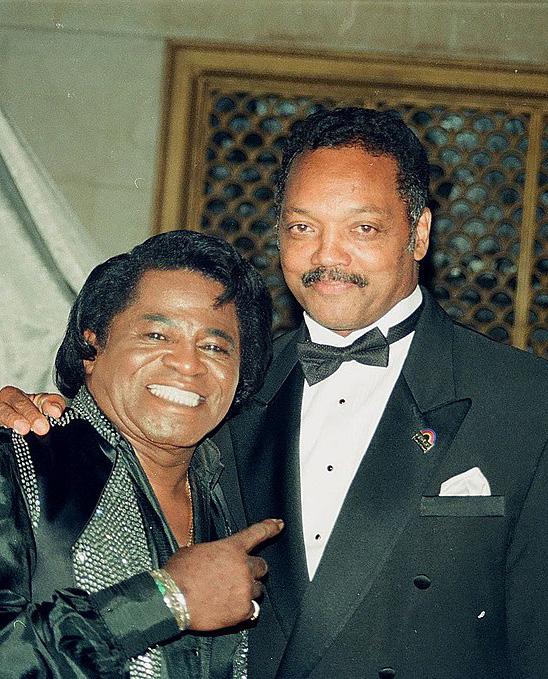
Rev. Jesse Jackson with Godfather of Soul James Brown. (Wikimedia Commons)