JOINS



(Photo contributed by Hochul’s campaign)


TANDY LAU
Amsterdam News Staff
By ARIAMA C. LONG Amsterdam News Staff
March 23 marks six years since Daniel Prude, an African American man from Chicago visiting relatives in Rochester, died of suffocation when police restrained him with a “spit-hood” during a mental health call. Organizers remembered the 41-yearold through a statewide vigil on the anniversary date, followed by an ongoing week of action, which includes a virtual advocacy day and a non-police response teach-in.
One of President Donald Trump’s latest executive orders is targeting voting rights and mail-in ballots. A move that New York State officials and advocates are slamming as an attack on voters of color, immigrants, and low-income communities.
The order, which was made public on March 25, requires people to show documents, like a passport, proving their citizenship in order to register to vote ––mimicking the Safeguard American Voter Eligibility Act (SAVE Act). It also bans states from counting mail ballots that arrive after Election Day.
Prude’s legacy now includes Daniel’s Law, a bill encouraging local governments across the state to develop civilian response teams to replace police on mental health calls unless the incident poses a public safety risk. The legislation used Prude’s name with his brother’s permission when State Sen. Samra Brouk introduced it in 2022. Proponents say police often escalate mental health crises and often lack the specialized training needed to address them.
Members of the New Yorkers for Inclusive Democracy (NYID) coalition warned that “hard-won freedoms” like voting rights needed to be protected by the state’s legislature in an op-ed on March 19. In their demands they called for the state to invest at least $10.8 million in the upcoming budget towards voter education and outreach, as well as the passage of the Democracy During Detention Act (S440/A2121) to facilitate voting for eligible detainees, and the Enhanced Automatic Voter Registration bill (S88) to automatically register eligible voters through agencies like the Department of Motor Vehicles (DMV).
The bill overwhelmingly leans on the Or egon-based CAHOOTS as a blueprint: the program responded to mental health calls for three decades without a single recorded death or serious injury through deploy ing two-person teams made up of a crisis worker and a medic. While the actual Daniel’s Law remains in the works, the state launched a Daniel’s Law task force years ago and recently granted funding towards Daniel’s Law pilot programs.
“The executive order signed by President Trump is a blatant attempt at voter suppression that could disenfranchise millions of eligible voters. The order would create unnecessary barriers to the free exercise of the very cornerstone of our democracy –– the right to vote. It would have the greatest impact on communities of color and naturalized citizens,” said Assemblymember Latrice Walker, chair of the Assembly’s election law committee and a member of NYID, in a statement.
“We made historic progress with Daniel’s Law this year when the Office of Mental Health announced $6 million to fund three pilot programs in New York State,” said Brouk in an emailed statement. “The statewide enthusiasm for creating non-police, peer-led compassionate responses to individuals experiencing a mental health or substance use crisis is encouraging, and we must build upon this momentum by ensuring we secure additional funding in this final state budget for more pilots.”
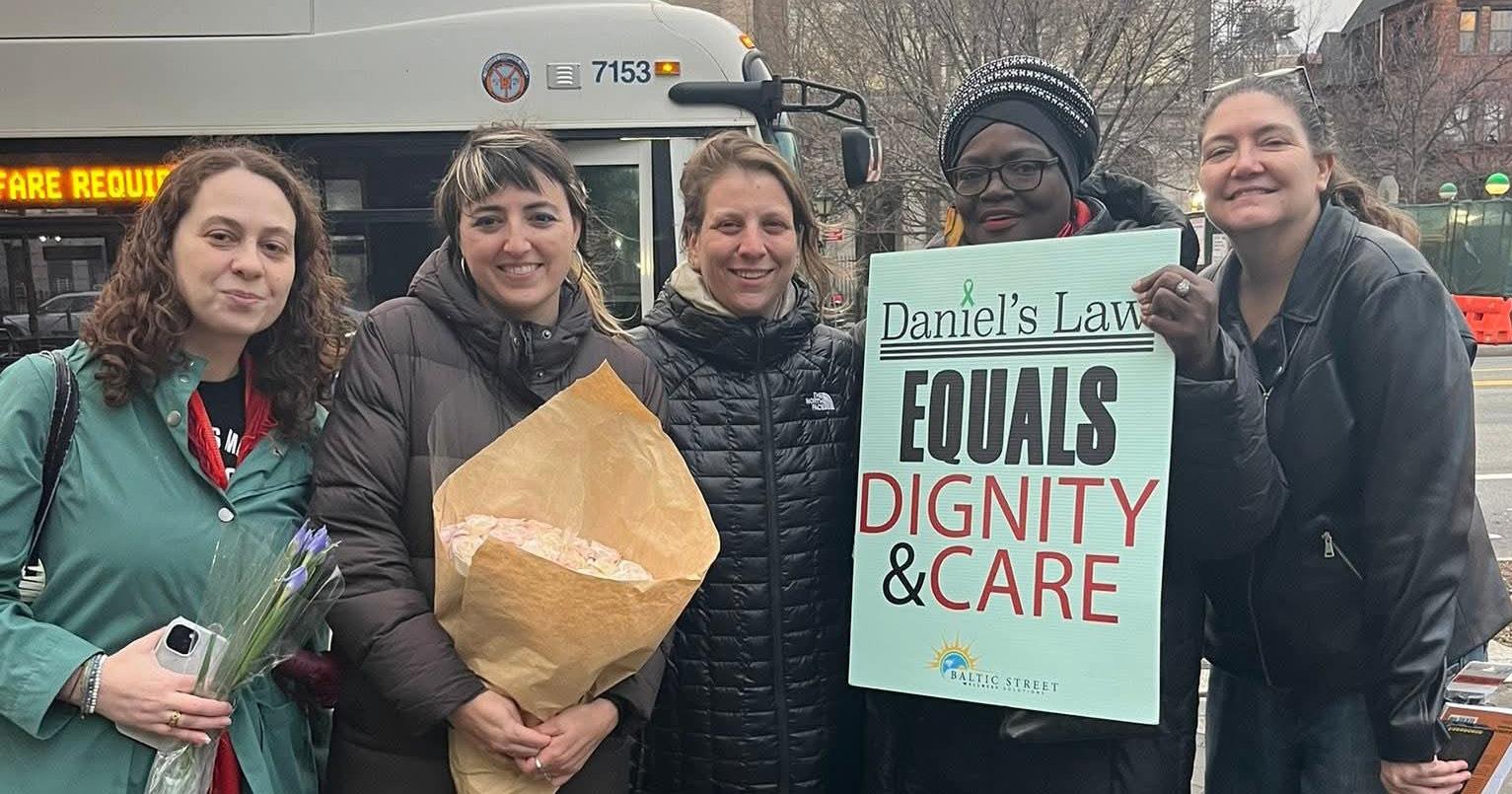
tion launched the first Daniel’s Law-style program, HOPE First Roc. The initiative operates in the city’s 19th Ward and Genesee-Jefferson neighborhoods, which both boast predominantly Black residents. Shay Herbert, a local New York Civil Liberties Union organizer, says Rochester boasts a long history of advocacy and Prude’s death inspired reforms to how police respond to mental health calls and protests.
“In Rochester, specifically just the understanding of why police aren’t equipped respond to mental health crisis calls was blown up,” said Herbert. “Everybody was curious about what this looked like. Everybody knew that something had to be done, and we went from a community that [had] to do something…to now this collective understanding of Daniel’s Law or CAHOOTS, and in practice, what that looks like.”
idea of allowing “tax paying” noncitizens to vote in local elections and managed to pass Bill Intro 1867 (Local Law 11) in 2021. This would have allowed more than 800,000 immigrant New Yorkers who held green cards, work authorizations, Deferred Action for Childhood Arrivals (DACA) status, or Temporary Protected Status (TPS) to vote. It was immediately struck down by a state judge in 2022 and again in 2025 by the state’s Court of Appeals.
could qualify for an “alternative response” each year in New York City. Beyond the 150,000 direct mental health crisis responses handled by the NYPD each year, the findings point to issues like civilian mediation, disturbances/unwanted persons, and neighborhood conditions.
Key Daniel’s Law advocates, like New York Lawyers for the Public Interest’s (NYLPI) Ruth Lowenkron and Eudes Pierre Coalition’s Sheina Banatte, called Mamdani’s Department of Community Safety a step in the right direction. However, the current version remains a far cry from his vision for a $1.1 billion budget department. And funding is crucial for this work: last year, CAHOOTS ceased operations in Eugene, Oregon, due to budget (the program still operates in nearby Springfield, Oregon).
Walker denounced the order as “unconstitutional” because the power to determine the rules for federal elections lies with the states. “So, the president has no authority to require documentary proof of citizenship to register to vote,” said Walker. She noted that mail-in ballots received by or after Election Day is standard practice in 18 states, including New York, as long as they are postmarked by Election Day.
Last month, the state split the money between the City of Rochester, Central Nassau Guidance and Counseling Services, and Children’s Home of Jefferson County. The State Senate’s “One House” budget resolution proposes another $15 million towards expanding Daniel’s Law pilots.
“This is personal, the death of my brother did not need to happen and our loss, his life, must mean something,” said Joe Prude, Daniel Prude’s brother, last month. “Having the City of Rochester as a location to receive the Daniel’s Law Pilot Program will help the process of restoration and healing for my family and for the city. The pilot will create a system that recognizes the humanity of people experiencing mental health crises and treat them with care and compassion, getting them the help they need.”
Trump claims that the order “strengthens voter citizenship verification” and “bans foreign nationals from interfering in U.S. elections.” To be clear, said the Brennan Center for Justice, noncitizens already can’t vote in state and federal elections under penalty of criminal prosecution and that instances of in-person voter fraud are extremely low. The “myth of noncitizen voting” gained traction with “election deniers” in the last five years to undermine trust in the electoral system, said the Brennan Center.
New York City Council did once float the
Last year, the Rochester Community Advisory Board of the Daniel’s Law Coali-
“We’ve seen this same effort play out with the recent decision to strike down Local Law 11—an initiative that would have enfranchised nearly one million immigrant New Yorkers,” said President & CEO of the New York Immigration Coalition (NYIC) Murad Awawdeh in a statement. “This ruling wasn’t just a setback for immigrant communities; it’s part of the broader national trend of chipping away at voting rights.”
Here in New York City, the anniversary coincides with Mayor Zohran Mamdani recently launching his Department of Community Safety. The office stems from a previous campaign promise and will reform B-Heard, a civilian mental health response pilot often criticized by Daniel’s Law proponents for deploying cops to program-eligible calls. Mamdani previously co-sponsored the bill as an assemblymember and told the Amsterdam News last year that his plan similarly stems from CAHOOT’s “results” as a model.
“I’m cautiously optimistic,” said Lowenkron. “It’s a baby step and we want much more than that. But it’s definitely a step in the right direction and the fact that he’s trying to do this in his earliest days of administration speaks volumes.”
“The CAHOOTS program has been immensely successful, resolving almost 20% of all calls that come through the Eugene Police Department,” said Mamdani last year. “And of those estimated 24,000 calls that this program responded to in 2019, only 311 required police backup, showing that tasking teams with appropriate mental health and Crisis Response Training is effective and reduces strain on police.
“It’s this focus, specifically on outcomes and on results, that has driven the creation of this department and has also inspired the work of so many of my incredible colleagues who have been fighting for this at the state level.’
A similar issue occurs with voter identity document (ID) laws in the U.S, which indeed are necessary to prevent voter fraud but have historically and disproportionately impacted Black, Latino, Native American, elderly, and student voters, reported the League of Women Voters (LWV). During the Jim Crow era, white supremacists in government and law enforcement began to use restrictive and ridiculous tactics to prevent Black people from voting. This included literacy tests and poll taxes, along with unwarranted arrests and outright violence. Most of these were banned in 1965 under the Voting Rights Act (VRA), but voter ID laws persisted.
“For me—as a Black woman, a person of faith, and someone deeply rooted in com-
According to the Vera Institute of Justice research, more than a million 911 calls
Outside of Daniel’s Law and Mamdani’s Department of Community Safety, NYLPI pursues removing police from mental health responses through Baerga et al. v. the City of New York. The lawsuit challenges the legality of uniquely sending the NYPD for mental health-related calls under the United States Constitution, American Disabilities Act, and local human rights laws. Banatte, who began her advocacy after NYPD officers killed her cousin Eudes Pierre during a mental health response, says she hopes Mamdani will key in local organizers in the Department of Community Safety rollout.
Black and Brown voters in Brooklyn lined up at an early voting poll site during 2024’s presidential election on Tuesday, November 5. (Ariama C. Long photos)
munity—voting is sacred, it is the foundation of our civic and spiritual commitment to justice,” said Crystal Walthall, executive director of Faith in New York. “But the promise of the federal Voting Rights Act has never been fully realized for too many of our communities. From purges to suppression, and now to coordinated attacks from the highest levels of government, the right to vote is under threat.”
Many U.S citizens also just don’t have an ID or access to a valid ID since the most common form is a driver’s license. Other
“We can’t let up, we have to make sure that every opportunity that we get,” said Banatte. “Especially like this with com memorating Daniel Prude, [it] reminds people that things are happening but they’re not happening fast enough. People are still being killed the way Daniel was killed. So we just got to keep fighting [and] continue bringing more awareness. And go all the way til Daniel’s Law’s passed.”
By ARIAMA C. LONG Amsterdam News Staff
A pervasive issue in New York’s criminal justice system is the underrepresentation of Black men in the city and state’s highest courts, particularly in criminal courts where Black men are too often seen as defendants. Judicial and legal experts are hopeful the next generation of lawyers can change the system from the inside out.
Across all 50 states’ highest courts, there is a severe lack of representation of the nation’s population by gender, race, and ethnicity, according to a 2024 study from the Brennan Center for Justice at New York University. At least 18 states still have no justices of color on their highest courts at all, despite the extensive legacy of Black judges fighting for equal justice under the law and defending civil rights.
So when New York State’s (NYS) Chief Judge of the Court of Appeals Rowan D. Wilson, the first Black man in that position, was confirmed in 2023 it was a serious concern. While impressive that Wilson has ascended to the highest court in the state, there is still an issue of diversity of judges throughout the state’s unified court system.
According to NYS’s self-reported state-
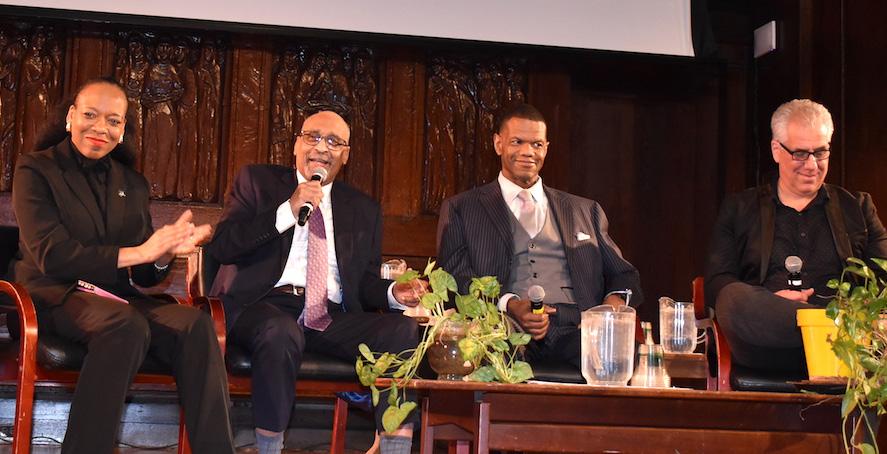
search shows major differences in conviction and sentencing rates. Together, we are working to build a fairer judicial system in New York and nationwide,” said New York State Attorney General Letitia James in video remarks at the forum. “Let’s keep working together for a judiciary that truly reflects the diversity and values of our communities, where justice is for all of us and every voice is heard.”
wide judicial demographics, as of 2025, judgeships in the court are 58% white, while Black people represent about 13% of the various judgeships. In New York City, there were 87 Black judges last year.
This is more than an issue of statistics. When people do not reflect the communities they serve, there is a notable difference
in sentencing, discoveries, access to counsel, and in the lived experience of Black families navigating systems, according to the NAACP Mid-Manhattan Branch. The branch hosted a public forum on March 19 in Manhattan to discuss the topic.
“With so many defendants being Black men and so few Black male judges, re-
According to the NYPD’s latest Crime and Enforcement report, the most frequent race or ethnic group within the ‘Stop, Question, and Frisk’ population is Black (57.7%) and Hispanic (30.2%). An estimated 44% of arrests are Black individuals while they make up about 20% of the city’s overall population, said the report. In terms of incarceration, a John Jay College study found that Black people in the city were jailed at a rate 11.6 times higher than white people in 2021 — which historically has been more men than women.
“How I treat people who go before me, how I integrate some of my life experiences in making certain rulings or suggestions,” said Acting NYS Supreme Court Justice Guy Mitchell who is from Harlem. “It’s all about making sure that they understand that the
By TANDY LAU Amsterdam News Staff
State Sen. Julia Salazar and Assemblymember Phara Souffrant Forrest have introduced a bill to establish protocols for state prison staff when someone fails an initial security screening. This legislation follows recent concerns over staff denying visitor access after erroneous body scans with little transparency. On March 18, the two Brooklyn-based Democratic Socialist lawmakers unveiled the bill in Albany.
“Maintaining family bonds [and] keeping the village alive during incarceration is a lifeline,” said Souffrant Forrest. “Many families drive hours to visit their loved ones only to be turned away because of a body scanner flagging a tampon, while staff in these prisons face no scanning requirements whatsoever, despite being an important source of contraband materials in [Department of Corrections and Community Supervision] DOCCS facilities.”
This initial bill would mandate a second scan if the first detects an anomaly and prevent prison staff with less than six months’ experience in operating a body scanner from denying a visit
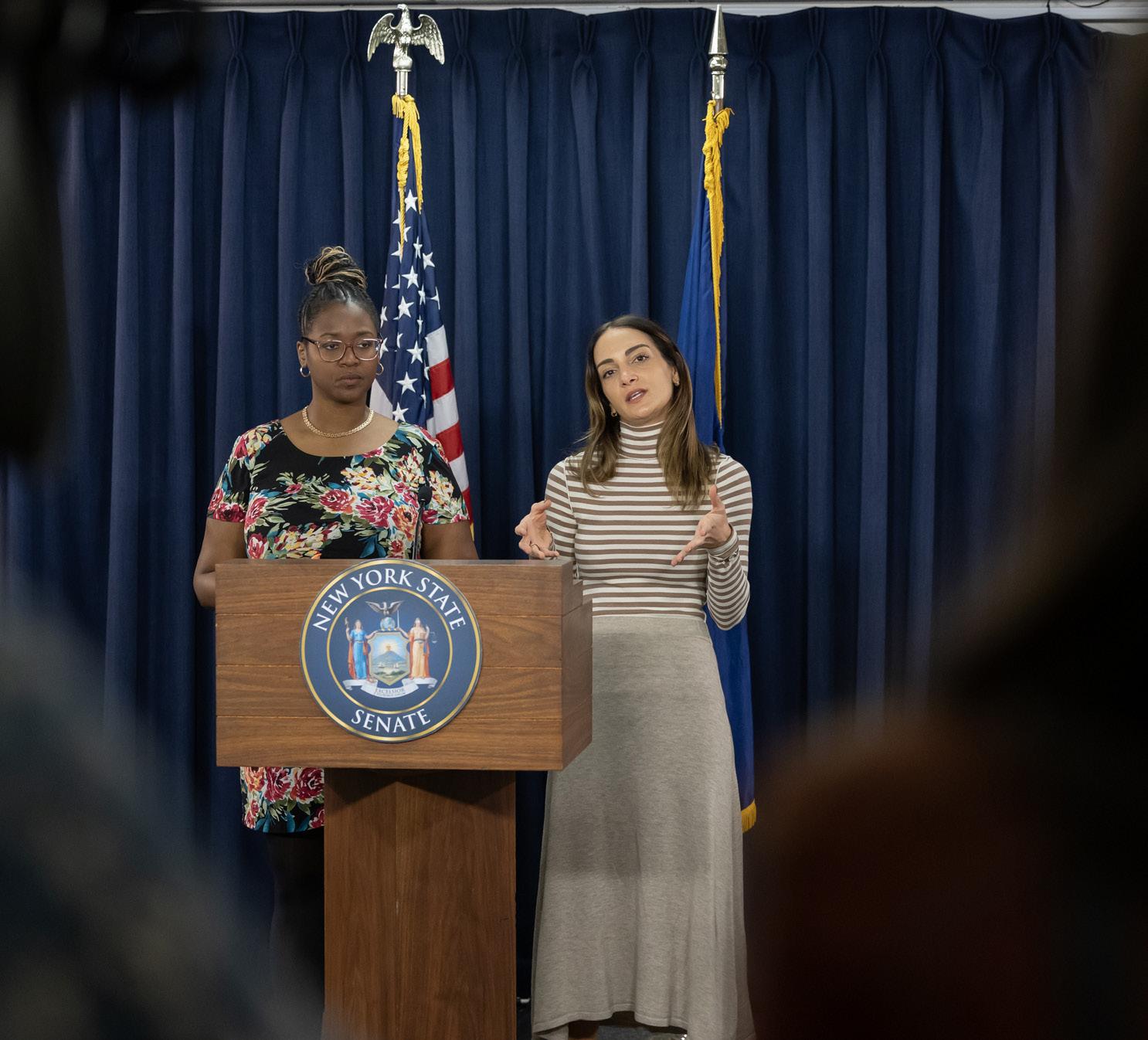
without a supervisor’s second opinion. Staff who wrongly turn away visitors would face retraining and those with a pattern of wrongful denials would be disciplined, although the exact discipline is not outlined in the bill and would stem from the collective bargaining agreement.
In addition, the bill would require all employees to go through the same regular security checks through a rotating cycle of body scans, metal detectors, pat-downs, and canine searches. The sponsoring lawmakers expect this measure to reduce contraband brought in by prison staff, since smuggling continued when outside visits were paused during the COVID-19 pandemic. Most employees opt out of body image scanning, which would not be allowed under the new bill.
“The bill would outline a procedure for using body scanners in state and local correctional facilities,” said Shafeeqa Kolia, a spokesperson for Salazar. “It would define the steps that must be taken if visitors or employees fail the body scans and it would require employees to pass through the same security checks that are required of visitors, See PRISON SCANS on page 27
By DARLENE SUPERVILLE Associated Press
WASHINGTON (AP) — John Wrory Ficklin was 7 when he learned that his father, the son of a slave, was important.
It was 1963, and the nation was mourning President John F. Kennedy. Wrory Ficklin was sitting with his mother and brother, watching funeral coverage on TV in the family’s Washington apartment, when she gasped.
His father, John Woodson Ficklin, was wearing a morning suit and standing beside Kennedy’s casket with other White House ushers. He was a White House butler at the time, but Kennedy’s widow, Jacqueline, asked that he join the ushers that day.
Woodson Ficklin worked on the White House residence staff for a remarkable 44 years. His son, Wrory Ficklin, had a lengthy White House career, too — 40 years on the staff of the National Security Council.
Presidents come and go from the White House every four or eight years, but the Ficklin family — Woodson Ficklin, his wife, some of his brothers and sisters, and son Wrory Ficklin — was a constant presence there for nearly eight decades, serving 13 presidents from Franklin D. Roosevelt to Barack Obama.
One family by the president’s side for onethird of America’s 250-year existence.
With his 2015 retirement, Wrory became the last Ficklin employed there full-time, capping a record of family service documented in his book, “An Unusual Path: Three Generations from Slavery to the White House.”
“The book is my family’s history. It’s African American history and it’s our country’s history,” he told the Associated Press in an interview. “My dad and I both stand on my grandfather’s shoulders, and I like to think that we both contributed a lot to our country.”
Family story starts with grandfather born enslaved
The first chapter in what Wrory Ficklin described as a “truly American story’ opens with his grandfather, James Strother Ficklin, who was born a slave around 1854 in Rappahannock County, Virginia. He was a water boy for the Confederate army during the Civil War. After emancipation, he did odd jobs for the family that used to own him.
He remarried in 1894 after his first wife died during childbirth, and moved to Youngstown, Ohio, to escape racism in Virginia and earn a living in the booming coal and steel industries. Records showed they returned to Rappahannock some years later, although it is unclear why.
Strother and his second wife, Helen, had saved enough money to buy 37 acres (0.15 square kilometers) of land in Amissville, Virginia, in 1901. He built a house and farmed the land to help feed the family. After Helen died while giving birth, Strother married his third wife, Vallie Lee Davenport, in 1907. They had 10 children — five girls and five boys.
Brothers work together at White House
Woodson Ficklin was 15 when he moved to Washington in 1934 to live with an older sister and her husband. He worked odd jobs and went to high school at night, graduating in 1939 — the year an older brother, Charles, began work as a White House butler. Charles Ficklin helped Woodson land a part-time position washing dishes and doing whatever the butlers did not have time to do themselves.
Military service during World War II briefly interrupted their White House careers, but they received promotions after they came home, with Charles and Woodson becoming head butler and butler, respectively. Woodson Ficklin met President Harry Truman and First Lady Bess Truman on his second day as a butler when he served the couple breakfast.
New promotions followed under Dwight Eisenhower, with Charles Ficklin becoming maître d’ — the most senior butler — and Woodson Ficklin taking over as head butler, in charge of six full-time butlers.
Woodson Ficklin succeeded his brother again in March 1967, when Charles Ficklin retired.
Working closely with first ladies
Woodson Ficklin was now responsible for the planning and execution of White House social events, from luncheons and state dinners to birthday parties and South Lawn barbecues.
There were visits by British royals and the annual round of Christmas parties,
the White House wedding of Richard Nixon’s daughter Tricia in 1971, and Gerald Ford’s daughter Susan’s decision to host her senior class prom at the White House.
Along the way, Woodson earned the trust and confidence of the presidents and first ladies who relied on his expertise. Some sent thank-you notes after flawlessly executed events.
First lady Patricia Nixon wrote in October 1969 about “the great number of complimentary remarks we receive following each White House social event,” according to a copy of a letter reprinted in the book. “Our family is most grateful to you for the time and interest you devote to make each occasion so enjoyable and memorable for our guests and for us.”
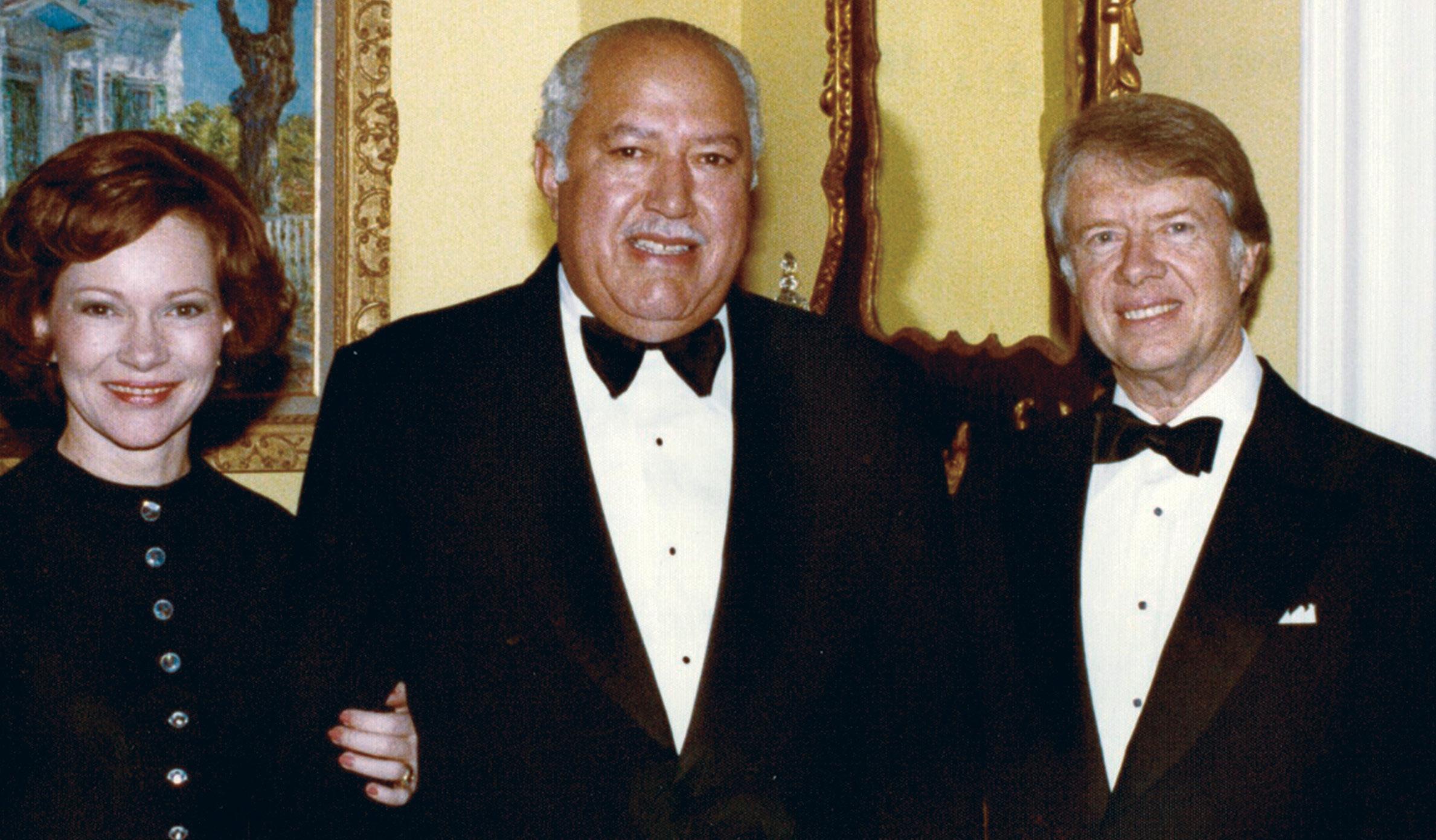
President Jimmy Carter expressed appreciation in a March 1979 letter for the work Woodson Ficklin and his team did in the signing of an Egypt-Israel peace treaty. “Everything was perfect and we are grateful,” Carter wrote.
Woodson Ficklin retired in May 1983. In perhaps the biggest show of appreciation for his 44-year career, the Reagans invited him and his wife, Nancy, to a state dinner that year for the emir of Bahrain. He is believed to be the first member of the White House residence staff to be a guest at a state dinner, and he became the subject of a media blitz as a result. He sat at the first lady’s table and told an interviewer that she “put me at ease and made me feel like a guest.” Asked about the service, he replied, “Those are my boys. I trained them.”
Woodson Ficklin died in December 1984 at 65.
A career in national security
“Seeing my Dad on television was a big deal, and to see him participating in our president’s funeral service was beyond my youthful comprehension,” Wrory Ficklin wrote. He said years passed before he understood “the severity and the importance” of his father’s work.
Wrory Ficklin ended up doing important work at the White House, too, after a summer job during high school, delivering sealed envelopes between the White House and the special prosecutor on the Watergate investigation. He also worked for his father in the pantry during state dinners and other big events.
He joined the National Security Council staff in 1975, beginning a 40-year tenure that overlapped with his father and other family members. He started by working evenings as a clerk while attending college during the day and was training new staff by 1987.
Under Obama, Wrory was promoted to special assistant to the president for national security affairs. He retired in 2015 with a special request for his boss, national security adviser Susan Rice: Could he attend a state dinner, like his dad?
Wrory Ficklin and his wife, Patrice, were invited to the 2015 state dinner for Chinese President Xi Jinping. With some minor alterations, he wore the tuxedo jacket and cummerbund his father wore in 1983.
The dinner was the highlight of his career, he said.
“Just to experience firsthand the quality of the service, the precision of the butlers, the type of service that they provided, was a legacy to my dad, actually,” he said in the interview.
By BRENIKA BANKS Special to the AmNews
Orlande Fleury has dedicated much of her work to telling stories of Black people around the world, and now she’s being recognized by the United Nations for her contributions.
Fleury, born in Haiti before immigrating to the United States, doubles as a government strategist in City Hall and a contributor to Caribbean Life and other publications. She told the AmNews that she decided to pursue journalism because she observed that more Black journalists were needed in the industry. Years later, this decision placed her in the African and Caribbean diaspora classification to win an award for her work in media.
Fleury recently received a certificate of achievement from the Commission on the Status of Women, presented by Dr. Monica Sanchez, founder of the Miss CARICOM International Foundation, a United Nations nongovernmental organization (NGO. Sanchez was ecstatic to meet

Fleury and recognize her efforts in Black journalism.
During the United Nations Commission on the Status of Women Seventieth Year Anniversary, Fleury was recognized for her work with the Miss Caricom
CSW 70 Honoree Award, along with the United Nations NGO Platinum Who’s Who Award and the Power of Dream Award.
“The work that I do with journalism — my focus is to highlight the diaspora,” Fleury told
the AmNews. “It is important that we get to tell our stories and our own narratives.” Her coverage of politics, elected officials, arts, and culture caught the attention of people looking to recognize work like hers.
“Women’s History Month and the United Nations Commission on the Status of Women provide a powerful moment to recognize women who are shaping their communities through leadership, scholarship, and service,” said Sanchez.
Sanchez met Fleury a few months ago at a convention and liked her work as a Haitian-American.
“This year’s honorees represent excellence across many fields,” Sanchez added. “Leaders like Orlande Fleury continue to inspire others through their dedication to culture, community engagement, and empowerment.”
In accepting her award, Fleury said she is committed through her journalism and government duties to support public institutions and leadership that resemble the diversity in New York City communities. She also said it was empowering and humbling to witness Sanchez’s work in the African and Caribbean diaspora.
“The work is internal — you have to put in the work to succeed,” she said.
The MSK Ralph Lauren Center in Harlem makes getting a mammogram easy. You don't need a referral, and same-day appointments may be available.
If you’re 40 or older and haven’t had a scan in the past year, it’s time. Scan or call 833-714-1794 to schedule.




By ARIAMA C. LONG Amsterdam News Staff
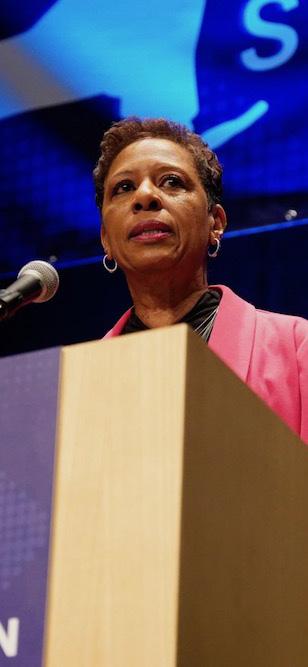
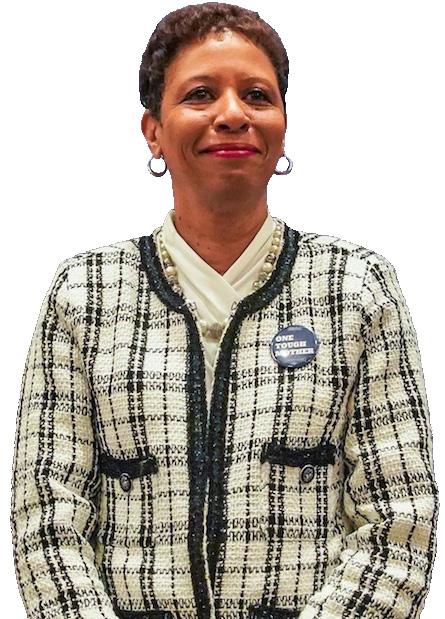
Adrienne Adams spent eight years in the New York City Council, nearly four of them as speaker, the first African American to have that role. It was a journey that could have led to the mayor’s office, but as the primary turned out to be a contest between former Gov. Andrew Cuomo and then-state lawmaker Zohran Mamdani, her tenure in the chamber ended with term limits.
At the time, she said she would focus on what would come next for her, but she did not have an answer.
“I have to just exhale and come back to myself without the title in front of my name. I’ve got to get back to Adrienne,” said Adams in a December interview with the AmNews. “And then, when I reemerge, what I continue to say is that I’m looking forward to the next great thing, whatever it may be.”
That reemergence has come sooner than expected.
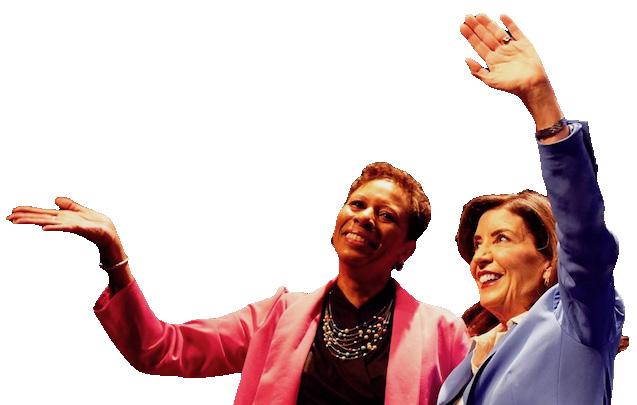
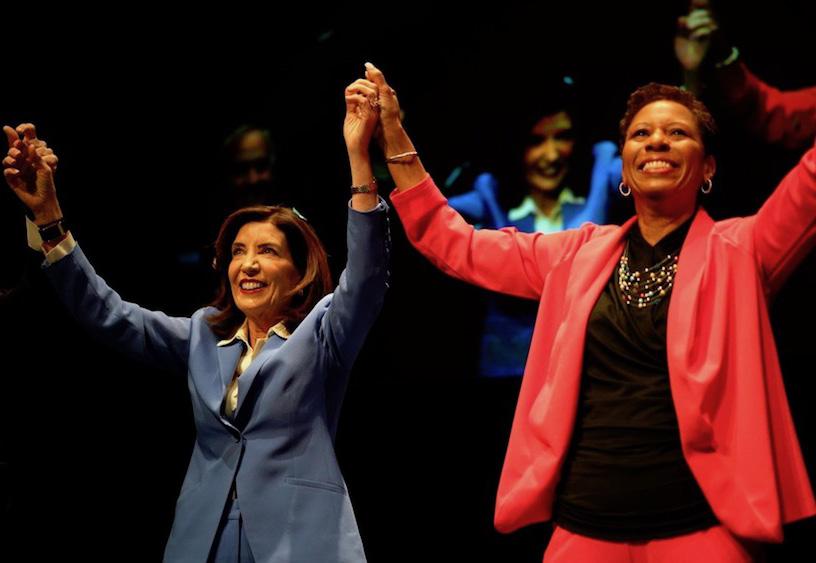
In her reelection bid, Gov. Kathy Hochul selected Adams as her running mate, and in a new interview with the AmNews, she says she feels comfortable, ready, and excited.
“We have some amazing leadership out there when it comes to mayors and even governors now, when it comes to women’s leadership. So,
Currently, there are at least four states in the U.S. that have had all-woman gubernatorial tickets and were successful in getting elected: Massachusetts, Arkansas, Virginia, and Iowa. So far, Hochul and Adams have received significant support from political allies, like state Democratic Party Chair Jay S. Jacobs, NYS Attorney General Letitia James, and Mamdani himself.
A Queens native and lifelong resident, Adams enjoyed a long career of firsts. She was first elected to District 28 in Queens in 2017, becoming the first woman to hold that seat, and made history in 2022 when she was elected as speaker.
“One of my good girlfriends said to me, ‘You know something, Adrienne, you only do firsts,’” she continued. “In all of my accomplishments and feeling so good about my career as a public servant, I was really happy just to say toodles. And then that call came from the Governor of the State of New York.”
Adams got to know and work with Hochul long before her career in government. They first met when Hochul was a lieutenant governor for former Gov. Andrew Cuomo, and she was a chairperson of Community Board 12 in Southeast Queens in 2012.
“We’ve had a great rapport over the years. Needless to say, with me as speaker, we continued that relationship,” said Adams.
It’s no secret that there’s been some instability with the previous lieutenant governors Hochul has chosen in the past.
Harlem’s former Sen. Brian Benjamin served as Hochul’s first lieutenant governor, but was forced to resign as he battled federal fraud charges in court in 2022. Those charges were later thrown out by a federal judge later that year, but the damage had been done to his political career. To replace Benjamin, Hochul brought in former Congressmember Antonio Delgado from Schenectady. He was the state’s first Afro-Latino in the role and served with Hochul until 2024. The first rift between him and Hochul became apparent when Delgado called for former President Joe Biden to end his presidential campaign against thencandidate Donald Trump. Delgado suspended his own campaign for Governor in February 2026. Adams is confident that she and Hochul are on the same page because of their years of friendship in government. “The good thing about our partnership is that See story on next page
we’re no strangers to each other. Her priorities are my priorities,” she said. “Being a mother and a grandmother, we’re coming from the same place and wanting to protect our families and families across the state of New York, something that both of us have always done as leaders.”
The two-woman ticket has hit the campaign trail, visiting the state’s 62 counties in an effort to connect with voters.
“Every county has its own characteristic, and every county is different. There is no monolith. There are certain pockets… upstate that are red, and even downstate,” said Adams. “Everywhere has its own dynamic, where everybody does not think the same, does not walk the same, does not talk the same, does not act the same, but it is all of this that makes us the unique state that we are. And I’m really looking forward to getting out there, to these county fairs, to these amazing fundraisers, to these events, to get to know the characteristics and the
characters that make up upstate New York.”
Earlier in March, Adams was spotted in the Long Island village of Hempstead, a primarily Black and Brown working-class area, which will be crucial to the election. Along with Mayor Waylyn Hobbs Jr., she spoke to small business owners about the impacts of the U.S. Immigration and Customs Enforcement’s (ICE) in Nassau County. Restaurateurs complained that ICE’s presence diminished foot traffic and scared away customers.
Adams mentioned that her security detail has increased on the campaign trail, but she’s in no way a stranger to vitriol, especially since her run for mayor with a huge roster of candidates against former Mayor Eric Adams in March 2025. She lost the June primary to then-Assemblymember Mamdani. “With the position comes some very unsavory characters that do not like you for the color of your skin, for the things that they believe that you represent, even though they have never met you and never will in life,” said Adams.
She’s working to highlight Hochul’s achievements, like her fight to lower costs for New Yorkers, property tax reliefs, funding for childcare, investing in public safety, removing illegal guns off of streets, and standing up to Trump. In regards to the ongoing state and city budget debate over Mamdani’s proposed tax hike on the rich, Adams said that their team intends to foster a good relationship with him and the city.
“This is the first time in a long time — believe me, I’ve lived this work — that the governor and the mayor, and hopefully the city coun page, laborabefore. governor’s done and this is what nor is going to do in the future,” said Adams.
The ticket is the clear frontrunner in the June
23 Democratic primary, with no significant challenges. With a win, they would face the GOP primary winner between Republican Nassau County Executive Bruce Blakeman and businessman Larry Sharpe in the Nov. 3 general election.
By ARIAMA C. LONG Amsterdam News Staff
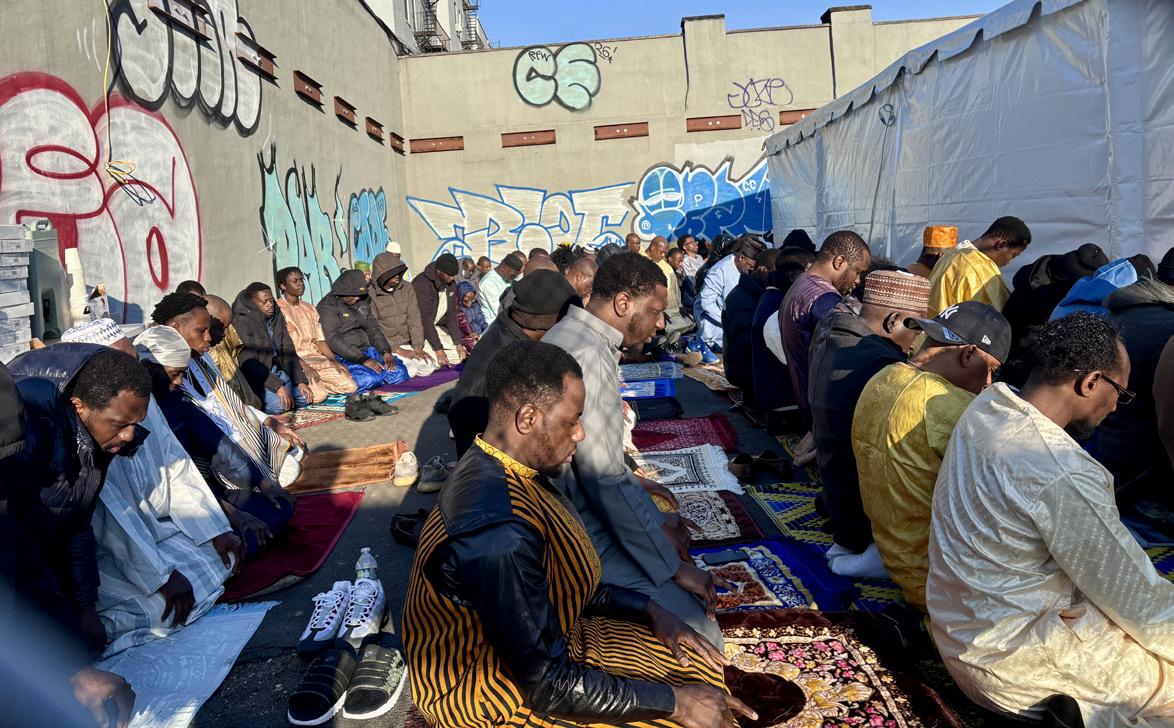
The Timbuktu Islamic Center, usually a bustling part of Harlem’s Muslim community, was devastated when a fire broke out in their building ahead of the annual Eid al-Fitr holiday. But in response to the damage, the surrounding community, a real estate developer, and elected officials rallied support for the mosque and its congregants.
The mosque is located on West 145th Street and St. Nicholas Avenue. According to Kane Mamadou, the Timbuktu Islamic Center coordinator, flames erupted in the kitchen area on March 18 and caused extensive damage to all four floors and the basement. The mosque runs an Islamic school, marriage services, a youth center, daycare, and funeral assistance services at the same location. Mamdou said it was disheartening because they had just moved into the building last year.
In an act of good faith, mosque leadership reached out for help and found plenty of community members ready to donate things, like food and a prayer space.
“We will have several prayers throughout the day. Everybody
is very happy,” said President of Timbuktu Islamic Center Modibo Souoman at morning prayers on Eid last week.
The One45 housing project, a three-building complex, is currently being developed by real estate mogul Bruce Teitelbaum of the 145 for Harlem ownership group. The one million square foot complex is situated at West 145th Street and Malcolm X Blvd within Councilmember Yusef
Salaam’s district. After years of contestation, the mega housing project was approved by the city council in 2025.
“Our Jewish faith teaches us the importance of, and obligation to do what’s right, especially so when someone is in need. So we are glad to lend a helping hand to our Muslim friends who are worshiping the Holy day of Eid,” said Teitelbaum in a statement. “There is too much divisiveness, anger, and hate nowadays so any opportunity to do some good and find common ground is a blessing.”
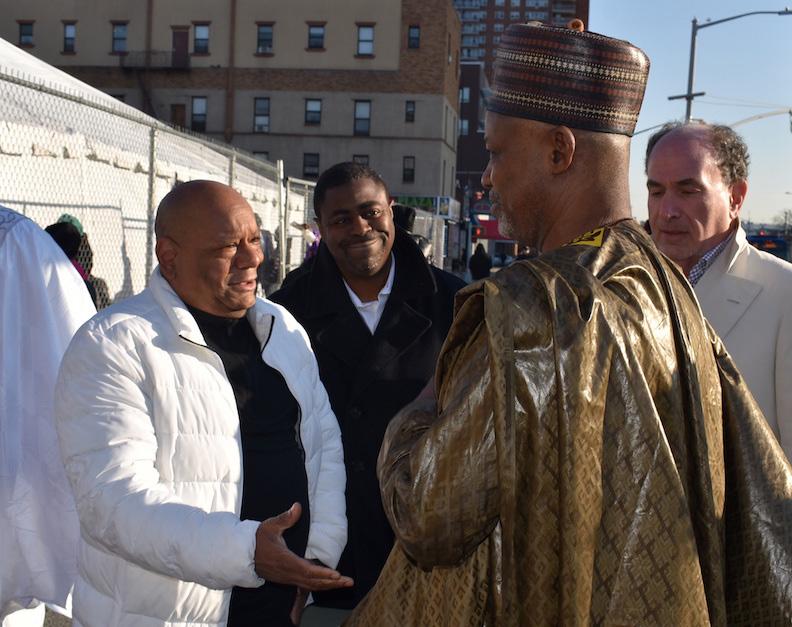
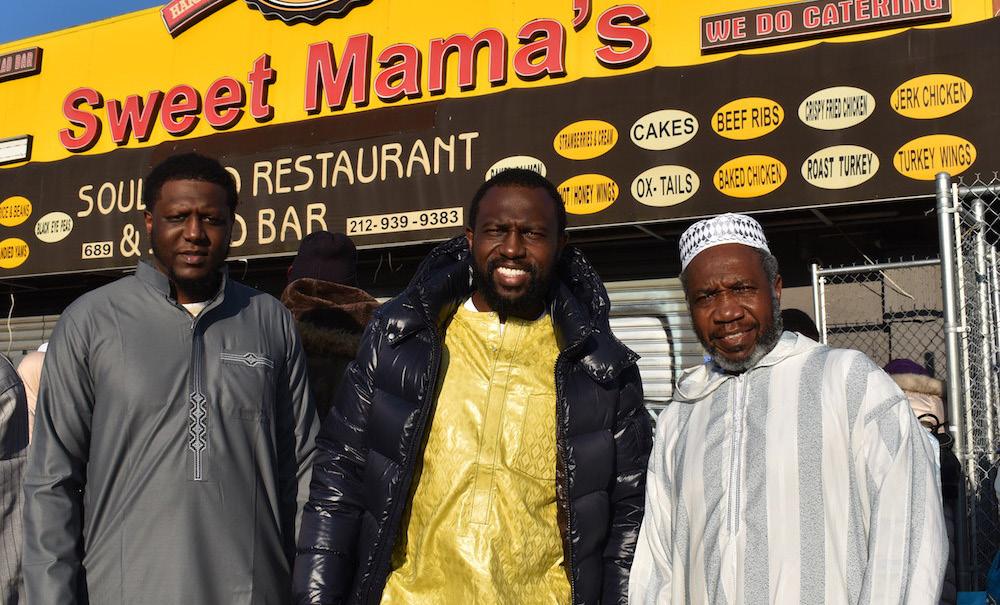
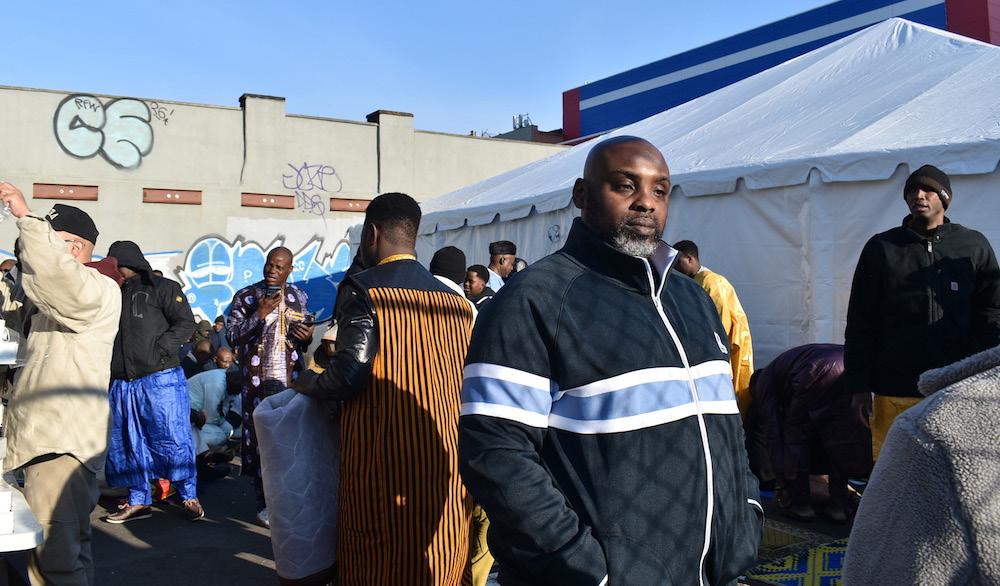
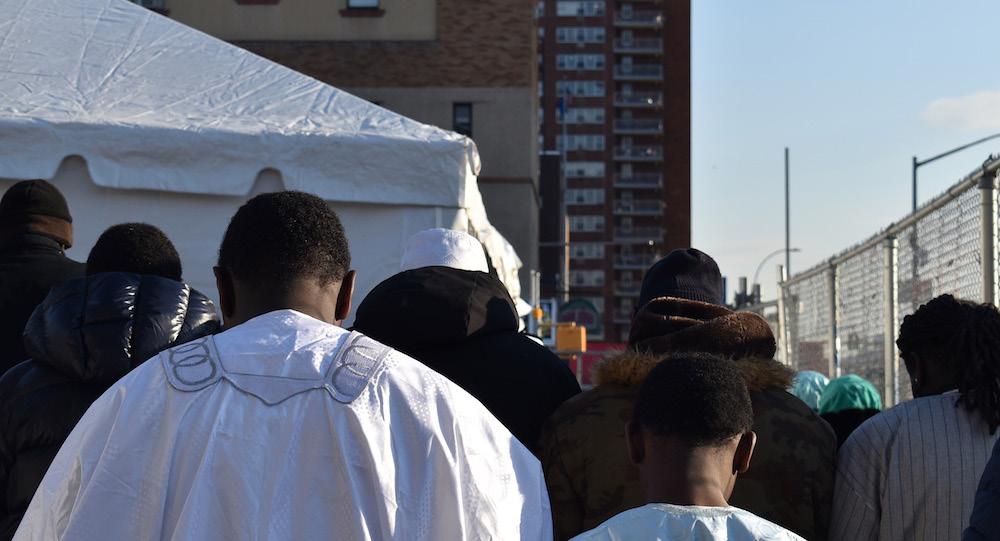
Teitelbaum built a temporary tent for the mosque on an empty corner of their lot to host Eid service, which is the holiest day in Islam, on Friday, March 20. Hundreds of Muslim men, women,
and children clothed in traditional garb arrived at the outdoor makeshift mosque to pray, eat, and celebrate with family and friends throughout the day.
Some came as far as the Bronx, said Salif Fofana. Despite the building fire, he and his family were incredibly happy with the outdoor celebrations.
Salaam and City Council Speaker Julie Menin also visited the tent on Eid.
“I want to personally commend Bruce Teitelbaum for his exceptional leadership and moral clarity. When the Timbuktu Islamic Center’s mosque was damaged by fire just days before their holiest celebration, Bruce and the One45 team didn’t hesitate — they decided to stop construction, delay their demolition schedule, and open their doors to welcome 300+ of our Muslim neighbors for Eid Al Fitr,” said Salaam, the Committee to Combat Hate chair, in a statement.
“To the Timbuktu Islamic Center: you belong here, and we stand with you,” said Salaam.
Mamadou said that they’re raising money towards repairs to the building, and have a while to go before they can move back into their beloved masjid.
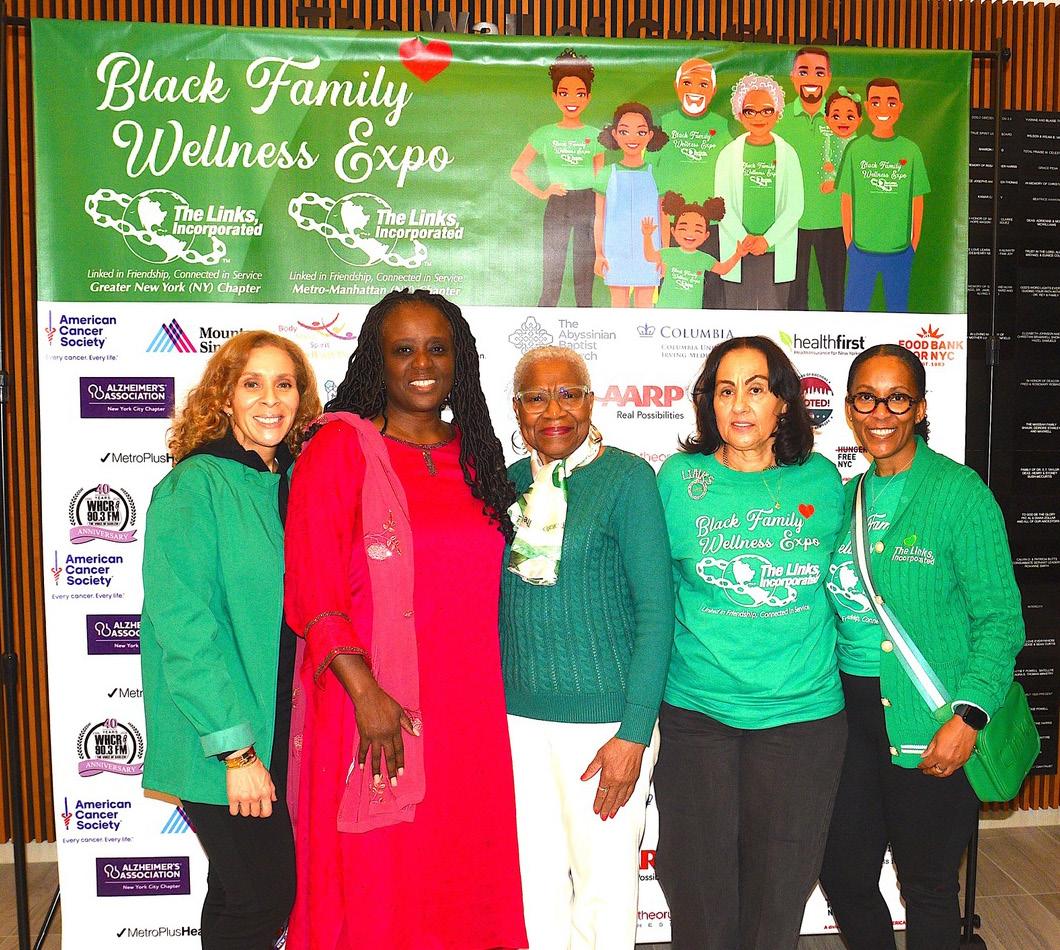
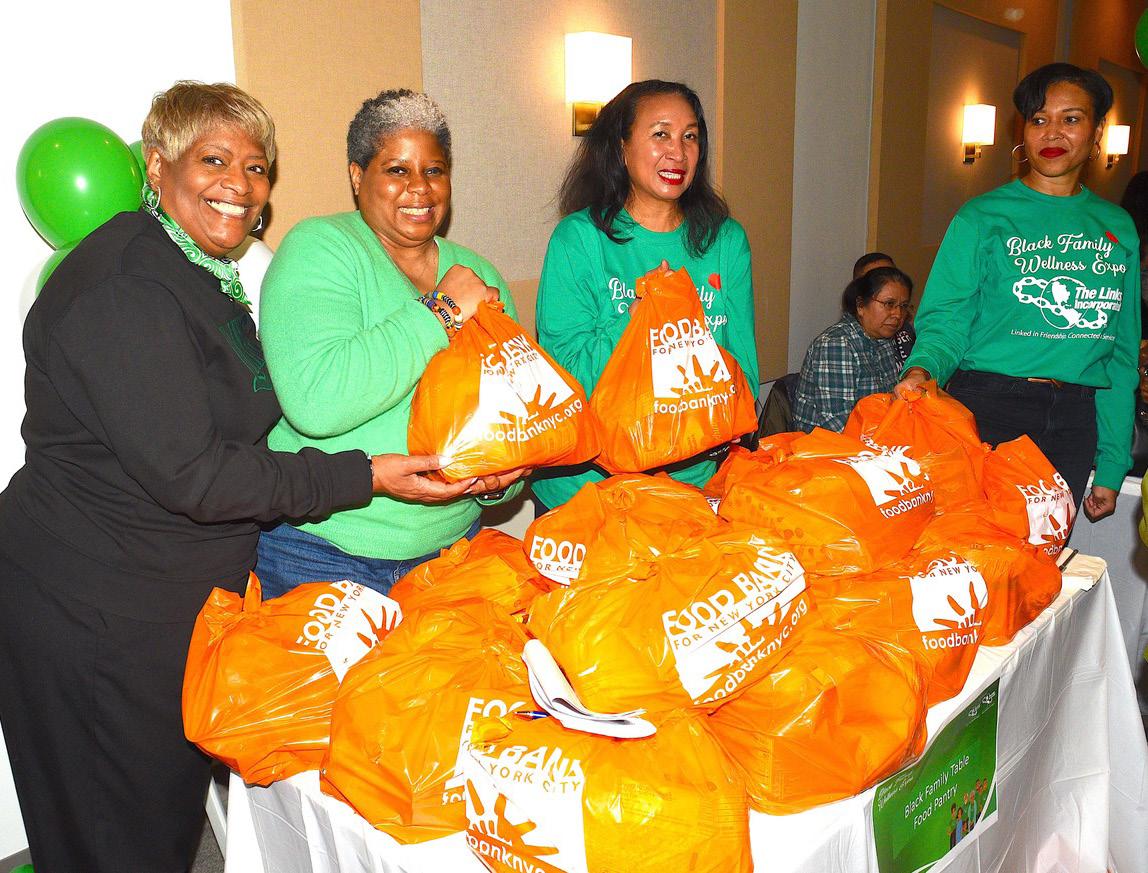
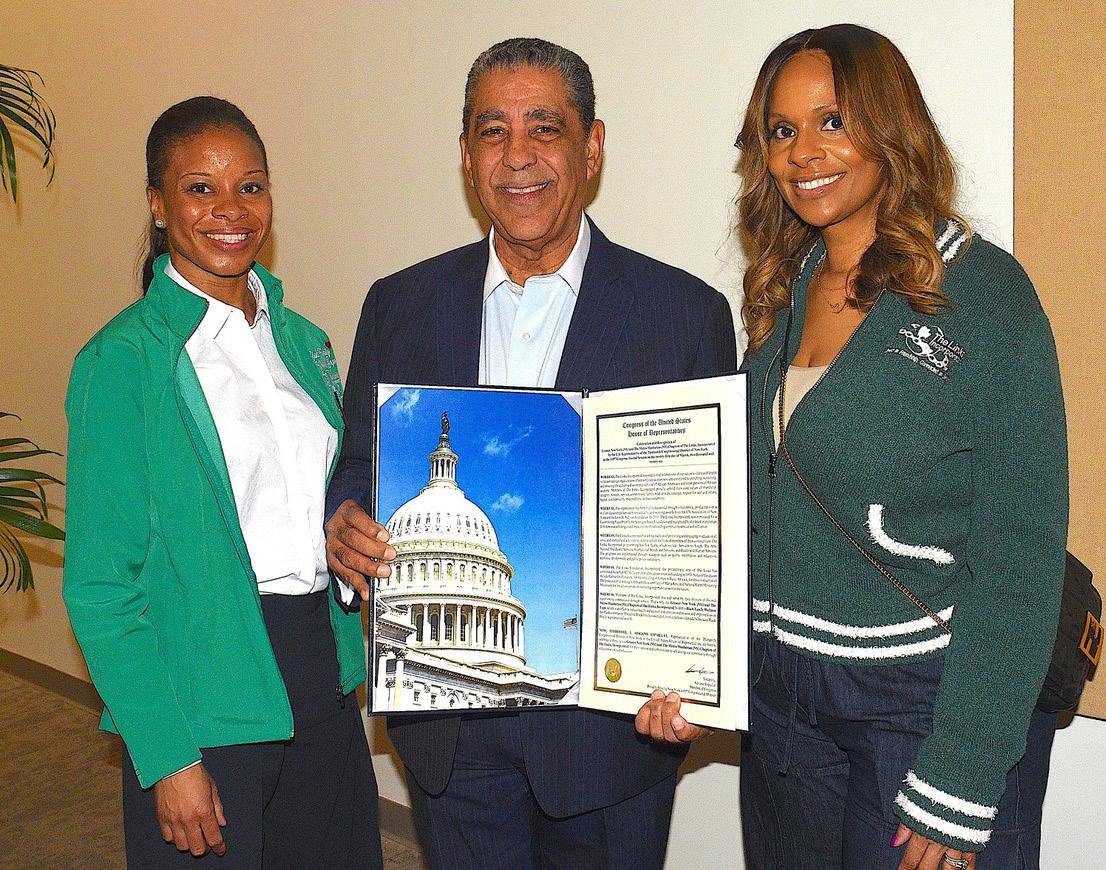
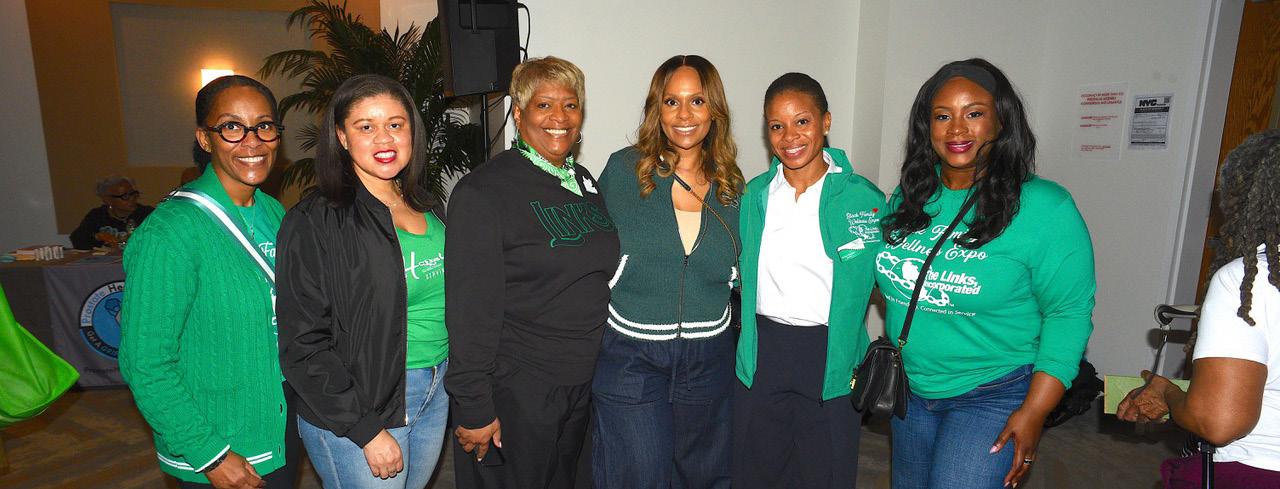
The Greater New York (NY) and Metro-Manhattan (NY) Chapters of the Links, Incorporated, held their yearly Black Family Wellness Expo on March 21 at Abyssinian Baptist Church. This local event was a part of the organization’s nationwide Black Family Wellness
Expos initiative, which aims to reduce health and economic disparities and to save and improve lives in the Black community.
By KAREN JUANITA CARRILLO Amsterdam News Staff
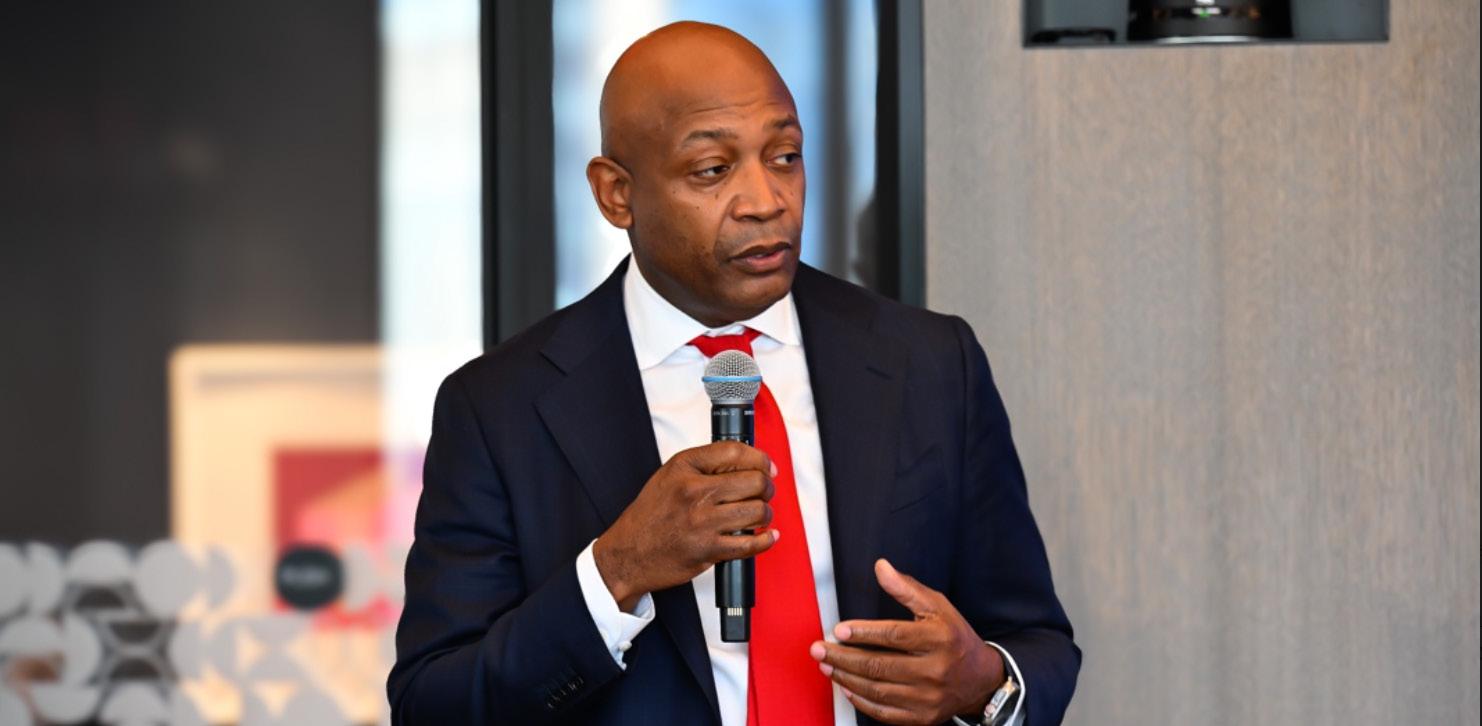
Jacob Walthour, CEO and cofounder of Blueprint Capital Advisors, has been named to the Milken Institute’s Inclusive Capitalism Executive Council, a group of financial and academic leaders who develop strategies to create greater financial equity.
For Walthour, a well-known advocate of diversity and fairness in investing, this new role is a natural extension of his personal belief that wealth should be used to uplift communities. He sees his position on the council as a chance to do just that by working toward removing the barriers faced by underrepresented asset managers.
“It’s not about whether we’re individually successful,” Walthour said during a recent discussion on his career and outlook. “It’s what we do to have an impact with that success. I like to call it the ripple effect — you drop a rock in the water and the ripples keep traveling further and further away. We all have to have that ripple effect sort of mindset. It’s powerful.”
After spending three decades working on Wall Street, Walthour
moved into asset management when he founded Blueprint Capital Advisors, a company that helps people invest in new businesses, private companies, and emerging markets.
Walthour’s view of inclusive capitalism is based on an acceptance that the capitalist economic system is not going anywhere. He says his aim is not to dismantle the system, but to make sure its benefits reach those who have been traditionally excluded. To Walthour, capital is the lifeblood of political and social power; it provides the means to fund candidates, seed innovative businesses, and sustain vital institutions like the Black church and historically Black colleges and universities (HBCUs).
“Capitalism, let me first and foremost say, it’s not going anywhere,” Walthour said. “You’re not going to topple that system. You can organize, advocate, legislate, litigate, do whatever you want to do: capitalism isn’t going anywhere, and so what we have to figure out is how to make capitalism available to the many and not the few. How to make capitalism available to people who are willing to work smart, work hard, ex-
hibit the kind of creativity that develops a new business, or a new product that is disruptive. It can’t be that capital is only available to people who don’t look like me.”
Democratizing wealth is personal for Walthour, who saw firsthand how wealth transformed his parents. Neither of them finished high school — one only reaching seventh grade and the other 11th — yet they were able to start a restaurant business in upstate New York when they were in their 40s.
The success of their Savoia Bar & Restaurant and then the Jubilee Restaurant in Hudson, New York, changed the course of the Walthour family’s life. With their financial success, they were able to help their neighbors by hiring the “unhireable,” supporting local sports, and quietly paying for funeral costs for families in need. Their positive impact was so major that part of Warren Street in Hudson was eventually named “Jacob and Barbara Walthour Way” in their honor.
“They were in the restaurant business in upstate New York, and were hugely successful and generated a level of income that two people without college degrees
never imagined,” Walthour said.
As a member of the Milken Institute’s council, Walthour wants to further that sense of community reinvestment. He said the institute can bridge the gap between academic insights and executive decisions. “They’re not just about thinking or researching things — they’re about taking action and trying not just to identify and understand the problem, but to fix the problem,” he said. “We think about the problem, the steps necessary to solve it, and then we take action steps to try to alleviate it.
“They’ve published whitepapers on moving more capital to Blackowned and people of color-owned asset managers. This is about legitimizing the issue, mapping the paths to resolution, and inspiring leaders to exercise their power to address it.”
Walthour has a reputation for advocating inclusive capitalism.
In June 2020, his Blueprint Capital Advisors filed a federal lawsuit against New Jersey’s pension fund system, claiming that it systemically discriminates against Blackowned businesses. “I will fight that case until my last breath,” he said, referencing a 2024 New Jersey Dis-
parity Study that proved Blueprint Capital’s claims that only 1% of the state’s contracts go to Blackowned firms.
“Do you need me to tell the state we have a problem?” he asked. “For some reason, I have been the only one willing to step up, stand up, and challenge the status quo in a state where 15% of its population is Black, but only 1% of contracts go to Black people.”
In January 2023, a federal judge allowed the racketeering allegations against the state of New Jersey, the Division of Investment, and several state officials to go forward, denying a motion to dismiss the lawsuit. Blueprint Capital Advisors’ case is still moving forward.
Walthour sees litigation as a necessary tool for justice: “That’s how Black people have achieved a lot in America over time — advocated, legislated, litigated — Brown vs. Board of Education; a lot of these things were litigated. We’re going to litigate this and show how they systematically excluded a group of people from doing business with the state pension fund, the way they have in construction and services and all the other areas,” he said.

On Saturday, March 28, “We the People March Again” will be the third iteration of a “No Kings” rally aimed at stopping the abuses of the Trump administration. Sponsored by Home of the Brave USA, it promises to increase turnout compared to previous events.
“We affirm our right to speak freely, to publish the truth, and to gather in protest,” the march coordinators announced. “We affirm our right to be secure in our homes. We affirm the right of every person to a judge, a jury of their peers, and presumed innocence.”
They explained that since the abuses have not stopped, “neither will we.” Among their strongest statements is that “the founders wrote the Bill of Rights because they had lived under a king. We march because we refuse to live under another.”
As Donald Trump has recently deployed troops to the Middle East and sent immigration and customs enforcement units to the nation’s airports, we are all the more adamant in our support of those who are willing to devote time and commitment to resisting what is clearly an abrogation of our democratic rights.
Without any reservations or hesitations, we firmly support the marchers when they proclaim, “We affirm the principle that no president may rule by decree — not even this one.” Find the nearest “No Kings” location, and if only for a few steps, let Home of the Brave USA know you march with them.
By STATE SEN. CORDELL CLEARE and DARNELL SEALYMCCROREY
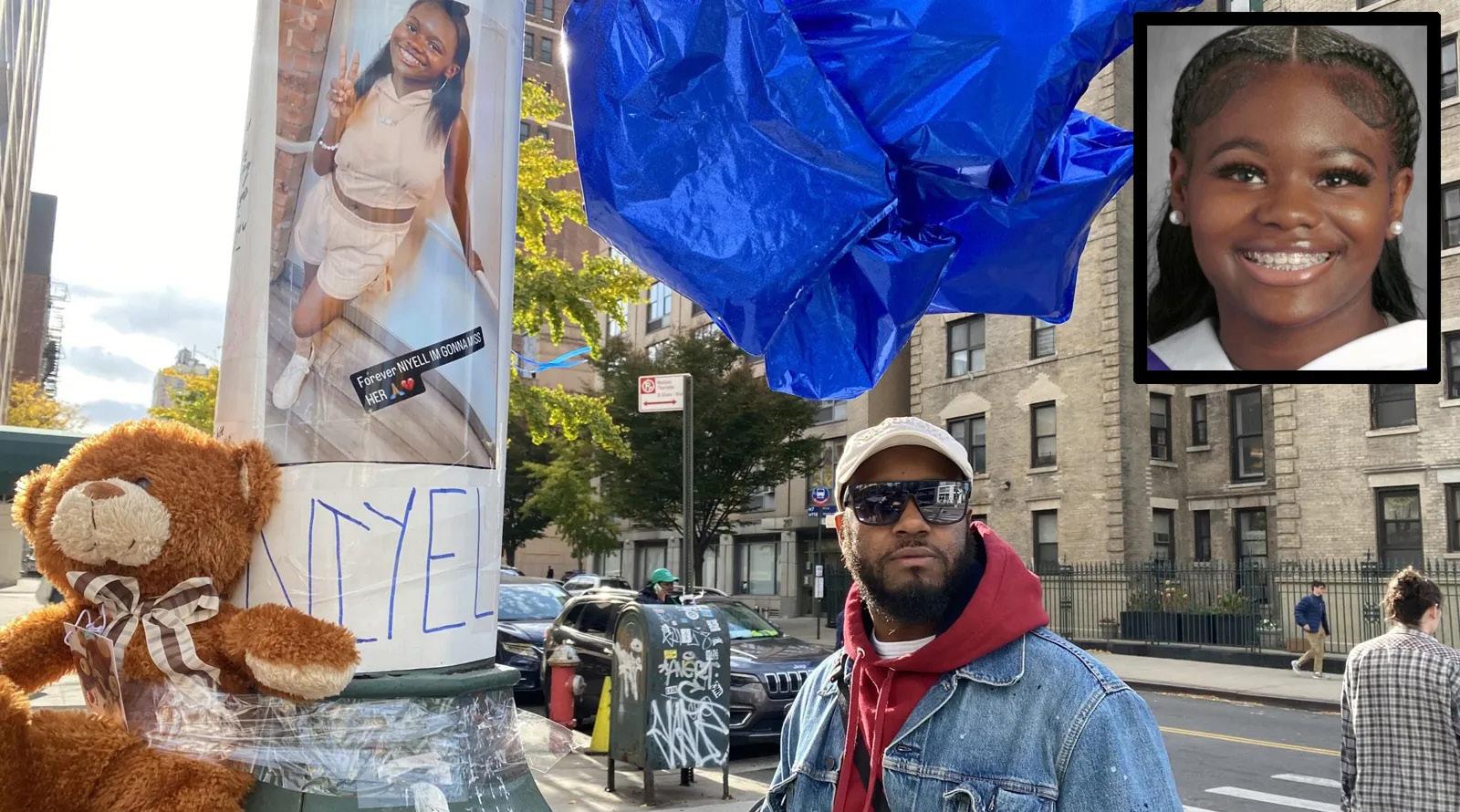
Niyell McCrorey never turned 14 years old.
As she crossed an Upper West Side street just a few days before her birthday, she was struck by an SUV driver. First responders brought her to the hospital, where she spent a week in the pediatric ICU.
She had dreams of becoming a doctor or lawyer. It’s impossible to understand that she’s gone, and she’ll never graduate high school or go to college. We’ll get older, but Niyell will stay 13.
No parent should ever have to bury their child because someone decided to drive recklessly.
icans are much more likely to die in traffic-related crashes, especially as pedestrians. Black Americans experience a pedestrian fatality rate that is 118% higher than white Americans, and Hispanic pedestrians have a rate that is 84% higher than white pedestrians.
Elinor R. Tatum: Publisher and Editor in Chief
Every day, her mother and father traveled almost an hour on the train just to sit by her side, hoping and praying for a miracle recovery, but Niyell never recovered. She was pronounced dead on Nov. 1, 2024. Her parents never thought they would bury their daughter. It was the very worst day of their lives — a pain no parent should ever experience.
Gray: Executive & Investigative Editor

Their beautiful, intelligent daughter Niyell had a passion for dancing, and she shared her self-taught, choreographed dance routines on TikTok.
Niyell was her parents’ whole world — but she was only one of 16 children killed on New York City’s streets that year. 16 families lost a child, a universe, a hope.
Across New York State, speedrelated fatalities have increased sharply in recent years, climbing by more than 30% from 301 deaths in 2019 to 393 in 2022 — even as total crashes declined.
Approximately one in three traffic deaths statewide involves speeding. In New York City, repeat speeders are killing our neighbors. Just one year ago, a speeder killed a mother and her two children as they were crossing the street in Brooklyn’s Midwood neighborhood. And this deadly trend is having a disproportionate impact on Black and Hispanic communities.
A recent study from Harvard and Boston University found that Black and Hispanic Amer-
We don’t have to accept this reality. We don’t have to accept a world where fatal crashes — many caused by repeat speeders — kill our children, as well as friends and other family members.
It’s time to confront this crisis with technology and innovation, because the status quo strategy of revoking licenses for egregious driving behavior has proven ineffective. We know that 75% of people with a suspended license drive anyway. We need to focus on changing behavior, and speed limiters that prevent excessive speeding by using GPS and predownloaded maps to monitor the maximum speed limit, and slowing the car automatically when a driver attempts to exceed that limit.
There’s legislation at the state level that would require speed limiters in the cars of the worst-of-the-worst repeat su-
per-speeders. This targeted, common-sense measure holds the small number of the most dangerous drivers accountable while protecting responsible motorists (and other road users) from unnecessary burdens. Just as ignition interlock devices helped reduce drunk driving deaths, speed limiters can do the same for speed-related crashes. It gives drivers a second chance to learn safer habits before tragedy strikes again.
Niyell isn’t coming back — but that doesn’t mean we can’t prevent other crashes like the one that killed her. We can make sure that fewer New Yorkers die because of someone else’s reckless driving. We can give judges a tool to protect the public while offering drivers a path back to responsibility. With speed limiters, we can prevent deadly crashes before they even happen. Every mile per hour matters. Every life does, too.
New York Senator Cordell Cleare represents Harlem and is a cosponsor of the Stop Super Speeders bill. Darnell Sealy-McCrorey is Niyell’s father and a member of Families for Safe Streets.
By DHANIELLE GAUDINEER
For most of my adult life, I’ve been fighting to hold onto a stable job. Not because I wasn’t willing, but because the jobs available didn’t fit my life — schedules that changed week to week. Hours that started before school dropoff and ended after pickup. No flexibility for the reality of raising kids on your own.
Then I found a local job that has finally given me what I needed — stability for myself and to raise a family. I found it at a package delivery service company operating out of Harlem. They offer 4-hour shifts. That might sound like a small thing, but for me, it changed everything. I could get my kids to school in the morning, go to work, and be back when they needed me. For the first time, I was making real money — more than I had ever made — and I could actually keep the job.
I started as a delivery associate, getting packages to people’s doors and learning the operation from the ground up. I got to be part of an important system for my Harlem community. It was honest work, and I was proud of it. What I didn’t expect was what came next.
Within just a few months, the team approached me about moving into a hiring manager role. Someone saw something in me that I didn’t see in myself yet. That I had never seen in myself. That isn’t something I take lightly. Now I’m the one doing the hiring — looking for the same thing my managers saw in me: someone in our community who just needs someone to take a chance on them.
A lot of the people I hire are navigating situations not unlike mine —

New Yorkers who need flexibility not because they aren’t committed, but because their lives require it. New Yorkers without a degree who need an accessible entry point into the workforce. New Yorkers who are looking for pathways to advancement right in their own neighborhoods. This job has been the first one that met me where I was and gave me somewhere to go — and my story is happening 1,000 times across the city.
I’m sharing this because what I’ve found in this job is exactly what people in neighborhoods like ours spend years looking for: a steady schedule. Real pay. A path forward. Right now, that’s worth protecting.
However, the City Council is considering legislation — Intro. 518 — that would change how companies like
mine operate, including the relationships between large delivery companies and the independent operators who run programs like ours. I’m not a policy expert, but I know what this job has meant for me and my daughters and son. And I know that trouble for my company means trouble for the workers here — people who, like me, finally found something that works. New York talks a lot about creating opportunities for communities that have been left behind. For me, this job is that opportunity. I hope the City Council thinks carefully about what’s actually at stake before changing something that is working for the people it was built to serve.
Dhanielle Gaudineer is a local delivery driver based in Harlem.
By HERB BOYD
Of the multitude of voter suppression gambits, few are as foreboding as the SAVE America Act. By now, most Americans are aware of this Trumpsupported tactic that will require citizens to present a passport or birth certificate when they show up at the voting booth.
It has already been approved by the House, and last weekend, the Senate, in a special session, weighed in on the issue. The only hope many
of us have for the failure of legislation, which is based on a false premise, is that it doesn’t get the 60 votes from the 100 senators.
Like many of Trump’s schemes to undermine that vote, particularly as he perceives a possible defeat in the upcoming midterm elections, this one seeks to disenfranchise voters by making it more difficult for them to meet the absurd requirements.
To some extent, Trump is as discombobulated about domestic affairs as he is about the war with Iran. If the Strait
Don’t sleep: Women’s History Month is not over yet

It might be late March, but Women’s History Month is still here.
We still have a few more days to celebrate and think of the women in our lives who are doing amazing work, the women who have come before us and laid a foundation for future generations, and the women who will look to us as guides in the years to come.
I am in awe of the women who have survived and thrived in a nation (and world) often predicated on patriarchy and devaluing women’s ideas and contributions.
I think of the countless women in corporate America who were overlooked or had their ideas stolen. I think of the Black women finally recognized in the book and film “Hidden Figures” — the NASA mathematicians Katherine Johnson, Dorothy Vaughan, and Mary Jackson who were the brains behind the launch of an astronaut into orbit and contributed to America’s space race. I think of the women who served as secretaries and administrative assistants, but who were actually strategists and helped their bosses succeed and shine.
as the emotional, intellectual, and financial lifeline for so many of their family members and friends.
of Hormuz has him tangled and uncertain, Juliana Stratton’s recent victory in the Illinois Senate primary should give him a few more sleepless nights.
I am sure many citizens will agree that my remedy to save America is the removal of Trump from the Oval Office, drag him off to Mar-a-Lago, deny him access to Truth Social, and cut him off from his malevolent base.
If that fails to muffle his obnoxious and injurious government, maybe we can book him on the next Blue Origin or SpaceX flight.
These are just the women who worked outside of the home. For centuries, women were kept from making their own money, having their own credit cards in their own names, and yet they managed children, husbands, full household budgets, scheduling, beautification of the home, and more. They ran the business of making sure their husbands and children had everything they needed to succeed. Don’t even get me started on the women who chose and choose not to have children and serve
I often spend Women’s History Month thinking of amazing trailblazers like Shirley Chisholm and Barbara Jordan, the first and second Black women ever elected to the U.S. Congress. Or Gloria Naylor and Gwendolyn Brooks, my favorite novelist and poet, respectively. However, I think it is also important to remember the amazing women in households, friend groups, and daily lives when we think about celebrating the accomplishments of women this month. Some women are making small changes to their communities every day and although they may never make it into a history book, they should still be recognized and appreciated. After all, the world is made up of small bricks, each person contributing to the whole. We don’t need to end the celebration just because March is ending. In what ways will you continue to celebrate the women in your life? In what ways will you aspire to be a mentor or role model for a young woman coming up? However you decide to spend the last few days of March, remember that we can celebrate women all year round in large and small ways.
Christina Greer, Ph.D., is an associate professor at Fordham University; author of the books “How to Build a Democracy: From Fannie Lou Hamer and Barbara Jordan to Stacey Abrams” and “Black Ethnics: Race, Immigration, and the Pursuit of the American Dream”; and co-host of the podcast FAQ-NYC.
By BERT WILKINSON, Special to the AmNews
Following on from a dozen general elections in the Caribbean community last year, several member states are getting ready to continue the trend with authorities in Antigua and the Bahamas telling citizens to get ready to vote very soon.
Over the weekend, Antiguan and Barbudan Prime Minister Gaston Browne told citizens to prepare for general elections in 90 days as he moves to call snap elections and catch the main opposition United Progressive Party (UPP) off guard.
The UPP has been struggling with international leadership issues for months, ever since former leader and ex-foreign minister Harold Lovell had resigned after failing to win his city seat in the 2023 general elections.
“I’m now announcing that general elections will take place within 90 days and I’m asking my colleagues, in particular the candidates of the Labour Party [in Antigua and Barbuda], to go out on the road for the next three weeks…to make sure that we get our supporters registered. So, you know general elections are coming. I think it is known. So
I’m also making an appeal to the people of Antigua and Barbuda to do the responsible thing to get re-registered as soon as possible because yes, there will be general elections,” he told radio listen-
General elections are not scheduled to be held in the twin island federation until 2028, but Browne appears to be rallying his Labour Party to cash in on the problems of the UPP. This is just as Barbadian Prime Minister Mia Mottley did to the rival Democratic Labour Party in early February. In doing so, her Barbados Labour Party won all 30 parliamentary seats for the third consecutive time. Elections were not due until next year.
ers in a weekend radio broadcast. He also said that recent polling shows him with a 75% approval rating, with Lovell allegedly tallying only 5%.
As the federation gets into full election mode, authorities in the Bahamas are also upping the ante. Seeking a second consecutive five-year term, Prime Minister Philip Davis, during the weekend as well, placed the archipelago off Florida on “election watch.”
Davis, an attorney, told party supporters on Friday night that the country is on “election watch” and urged his members to ensure that every voter is reached. “We are on election watch. Every branch is on election watch. Every polling division is on election watch. Every volunteer is on election watch. Every supporter is on election watch. That means every voter card matters. Every transfer matters. Every new registrant matters. Every address must be right. Every household must
be covered. Every supporter must be checked on. Every young voter who turned 18 must be reached. Every family member must know where to go, what to do, and when to do it.”
His Progressive Liberal Party has been dealing with a plethora of national issues including severe pressure from public servants over salaries, sexual assaults against tourists by local jet ski operators, allegations of developmental neglect by some outlying family islands, and is facing accusations from the main opposition Free National Movement about the government’s inability to respond to national problems fast enough.
Both parties had downplayed campaigning during the current Lenten season, meaning that Davis is likely to actually name a date sometime after Good Friday.
He says all political bases must be covered in order to win.
Regional poll watchers are also focusing on enhanced preparations in nearby Dominica and Grenada with parties in Grenada making no secret that they are ready to contest polls this year, even though the governing National Democratic Congress (NDC) has until mid-next year to call elections. Two nearby parties, the Democratic People’s Movement and the very recently established People’s National Party, are entering the race to challenge the NDC of Prime Minister Dickon Mitchell and the New National Party, which lost the last time around in 2022.
In Dominica, voter registration has begun in earnest. Locals were last asked to vote in 2022.
“No waiting for the last minute. No assuming somebody else handled it. No acting like a strong crowd means a sure result. Crowds alone win nothing. Chatter wins nothing. Social media wins nothing. Organization wins. Turnout wins,” he said.
At a time when Americans are facing cuts to healthcare and rising costs for food, gas, and basic goods, a recent U.S. Senate report reveals something deeply contradictory: millions of taxpayer dollars are being paid to foreign governments — including African nations — to take in immigrant deportees who are not their own.
According to a report released last month by U.S. Senators Jeanne Shaheen, Chris Coons, Chris Murphy, Tim Kaine, Jeff Merkley, Cory Booker, Chris Van Hollen, Tammy Duckworth, and Jacky Rosen, the Trump administration has spent more than $32 million on so-called “third country deportation” deals, sending migrants to countries to which they have no connection. Among the recipients are Rwanda, Equatorial Guinea, and Eswatini — African nations now
central to a controversial system raising serious economic, ethical, and geopolitical concerns.
The numbers are staggering.
In one of the most extreme cases, the administration paid Rwanda $7.5 million, plus an estimated $601,864 in flight costs, to accept just seven people — roughly $1.1 million per deportee.
Equatorial Guinea received $7.5 million to take 29 individuals, at an estimated $282,126 per person.
Eswatini was paid $5.1 million to accept 15 people.
This is not just immigration policy. This is outsourcing deportation at premium prices. And it is happening with countries that raise serious governance concerns.
Equatorial Guinea ranks 172 out of 182 countries on the 2025 Corruption Perceptions Index, placing it among the most corrupt nations globally.
Eswatini ranks 153rd out of 182 countries, with a score of just 23 out of 100, reflecting rising public sector corruption.
Rwanda, by contrast, ranks 41st
least corrupt globally, with a score of 58 out of 100, making it one of the stronger performers in sub-Saharan Africa.
Yet, according to the Senate report, there is little to no oversight on how U.S. taxpayer funds are used once transferred. Even more troubling is how inefficient — and at times absurd — this system has become.
In some cases, the United States is paying twice to deport the same individual. One example cited in the report involved a Jamaican national who was deported to Eswatini at a cost of more than $181,000, only to be flown back to Jamaica weeks later — again at U.S. expense.
The Jamaican government made it clear: “The government has not refused the return of any of our nationals.”
That directly contradicts the administration’s claim that third-country deportations are necessary because home countries refuse to accept their citizens. So, what is really driving this policy?
The Department of Homeland Security has argued that some migrants are “so uniquely barbaric that their own countries won’t take them back.”
But the data — and even internal accounts — suggest something else: a costly system designed less for efficiency and more for deterrence. Or as one lawmaker put it bluntly: “We spent so much of last year hearing about how we have to cut waste … but we are spending millions of dollars on this.”
Senator Jeanne Shaheen, ranking member of the Senate Foreign Relations Committee, was even more direct. “For an Administration that claims to be reining in fraud, waste, and abuse, this policy is the epitome of all three.”
And that may be the most important takeaway. Because this is not just about immigration. It is about how policy is being executed — through opaque deals, questionable partners, and significant U.S. taxpayer expense — with little accountability and even less transparency.
It is also about what happens when human beings become bargaining chips in international agreements, sent to countries they have never known, with uncertain protections and unclear futures. For African nations now drawn into this system, the implications are equally serious — raising questions about sovereignty, responsibility, and the long-term cost of participating in what is effectively a global deportation network.
At its core, this policy raises an uncomfortable question: why are African nations agreeing to take in Black and Brown migrants who are not their own, in exchange for millions?
Because when human movement begins to follow money instead of law, it forces us to confront a history we claim to have left behind.
Felicia J. Persaud is the founder and publisher of NewsAmericasNow.com, the only daily syndicated newswire and digital platform dedicated exclusively to Caribbean Diaspora and Black immigrant news across the Americas.
By KAREN JUANITA CARRILLO Amsterdam News Staff
The West African nation of Ghana will introduce a historic resolution at the United Nations General Assembly this week, calling for “the trafficking of enslaved Africans and the racialized chattel enslavement of Africans [to be declared] the gravest crime against humanity.”
Ghana’s president, John Dramani Mahama, presented the resolution on March 25, the date the UN has designated as the International Day of Remembrance of the Victims of Slavery. It’s a resolution backed by the 55-member African Union (AU), Caribbean Community (CARICOM) nations, Brazil, the Community of Latin American and Caribbean States, the Congressional Black Caucus, and the Global Group of Experts on Reparations.
Just this past July 2025, the AU announced that it would recognize 2026-2036 as the ‘Decade of Reparations.’ On Feb. 15, President Mahama held a press conference at the AU headquarters in Addis Ababa, Ethiopia, to speak about the historical weight behind his being named the “African Union Champion for Reparations.”
“This is not merely a title; it is a solemn obligation to pursue truth, recognition, and justice for our ancestors,” Mahama asserted. He said there were ongoing talks with several high-level committees that were helping strengthen the legal language for the reparations resolution. “The initiative is firmly grounded in international law,” Mahama said during the AU press conference. “Slavery is prohibited under international law as an apparently known jus cogens principle from which no derogation is permitted.
“This resolution builds upon that legal foundation and rests on three pillars: first is historical accuracy; second is legal defensibility; and third, alignment with continental and diaspora alignment to ensure that the text of this resolution reflects rigorous scholarship, moral clarity, and diplomatic credibility,” said Mahama.
CARICOM nations are expected to co-sponsor the resolution. It reportedly calls for the creation

of a formal reparations agenda that includes direct financial compensation, debt forgiveness, and policy changes. European and U.S. political groups are leading the opposition to the resolution, arguing that current governments should not be held responsible for past injustices.
Justin Hansford, Howard University law professor and elected member of the Permanent Forum on People of African Descent, described the significance of Ghana’s initiative in an interview with the Amsterdam News: “We’ve had members of the Permanent Forum participate in helping to support the framing of the resolution and giving feedback … we’re already in support of it. It’s a historic moment.” Hans-
ford emphasized the symbolism of the African Union taking the lead with this resolution, noting, “It’s interesting to see how we can look to the past and then look to the future at the same time and see that we’re actually making progress. It’s funny to think about it that way because, right now, everything in the world seems to be going backwards and becoming more negative.
“But the truth is,” he continued, “I believe that after this period of really global harm and catastrophe, there’s going to be a period of repair that will follow. I’m really glad that Ghana and the African Union are really making sure that when people talk about repair, they mean more than just fixing the present — they’re addressing
the roots of the problem. The root of it all is what has been happening over the last 400 years, and efforts are being made to set things right.”
President Mahama’s role in presenting the resolution relates to his writing the foreword for the Ghanaian journalist Kwesi Pratt Jnr.’s latest book, “Reparations: History, Struggle, Politics and Law.” Pratt’s book has helped renew interest in the reparatory justice movement in Africa. The book points to the Transatlantic Slave Trade’s theft of between 12 and 15 million Africans who were taken to the Americas and the Caribbean from the 15th to the 19th centuries. Pratt estimates that trillions of dollars are owed for unpaid labor by enslaved Africans, for colonial plunder, and for climate injustices.
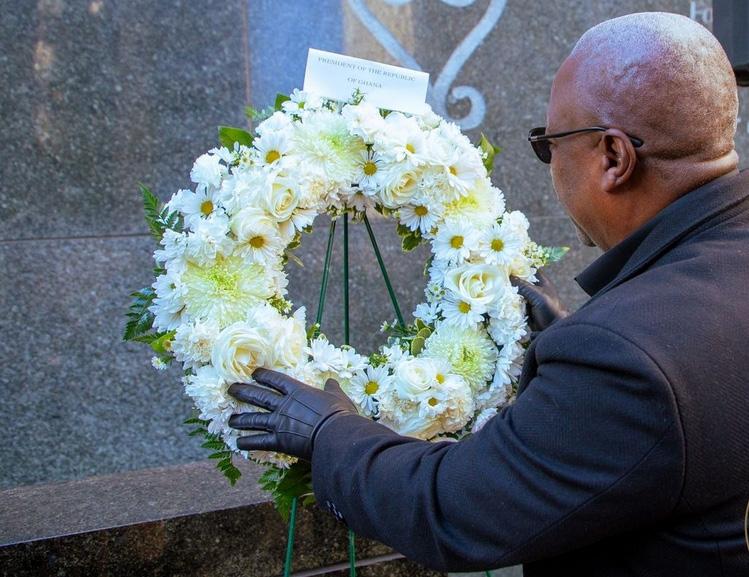
The day before he presented the resolution at the United Nations, Mahama’s first stop was at Manhattan’s African Burial Ground, where he laid a wreath to honor enslaved Africans. “We lay down this wreath in remembrance of all the victims of slavery and the transatlantic slave trade — the men, women, and children who were taken from their lives and from those who loved them to be enslaved in a foreign land,” Mahama said, “And also, the people to whom they belonged, the mothers, fathers, grandparents and children whose lives were forever altered after their parents, children, siblings were stolen from them and their communities.”
“My overall experience was great. I love the window, and from sales to scheduling, the experience was very good. The installers are highly skilled professionals and I would recommend Renewal by Andersen to all my contacts.” – LYNN F. | RENEWAL BY ANDERSEN CUSTOMER





































By LOIS ELFMAN Special to the AmNews
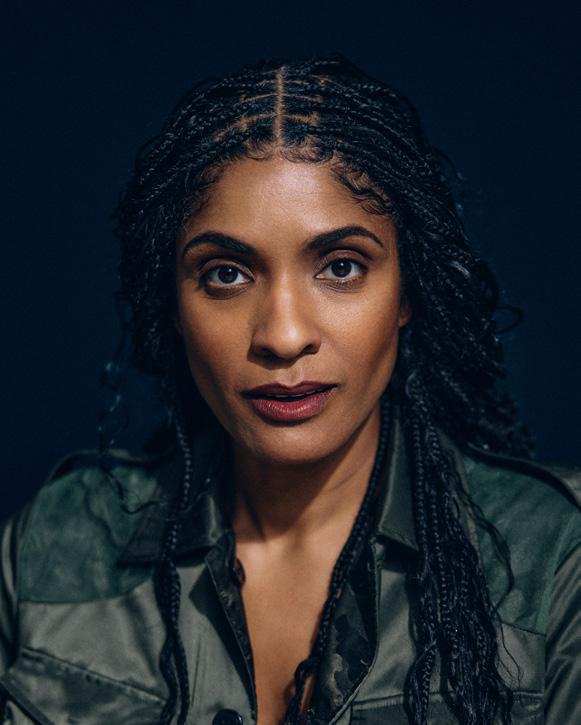
“[My album] ‘Coldblooded’ was my response to the current times,” said mezzo-soprano and multi-dimensional artist Alicia Hall Moran. “My open, empathic heart was getting hurt every day by the news. I realized that if I could cool down my expectations, I would survive. If I could cool down my expectations then I would find a new community, a new way of communicating that was happening at a frequency a little less hot, but more self-confident, more controlled, more disciplined, filled with more ease and a cooler response. ‘Coldblooded’ is a way to encounter a cold room, and that’s what I found the country turning into in some ways.”
Hall Moran has performed on Broadway and on a national tour of “The Gershwin’s Porgy and Bess.”
She has shared her vocal talents at venues all around New York City, including the iconic Jazz@Lincoln Center, and she has sung with or-
chestral backing with the National Symphony Orchestra Pops, the Chicago Philharmonic and more. Together with her husband and collaborator, Jason Moran, she was awarded a 2017 Art of Change fellowship by the Ford Foundation and has generated work for the Walker Art Center, Philadelphia Museum of Art and Carnegie Hall. Her piece “Black Wall Street” has received national attention. Last year, she performed at the Park Avenue Armory, inside an exhibition by Yoko Ono. Hall Moran sang Ono’s 1981 song “Walking on Thin Ice” and other songs about cold with a quartet called The Hands Free, who also played on “Coldblooded.”
She has created unique pieces, some of which have included her lifelong love of figure skating. This includes, “Breaking Ice,” an altopera combining Bizet’s “Carmen” with Olympic figure skating. She has even created indoor skating performance art on synthetic ice.
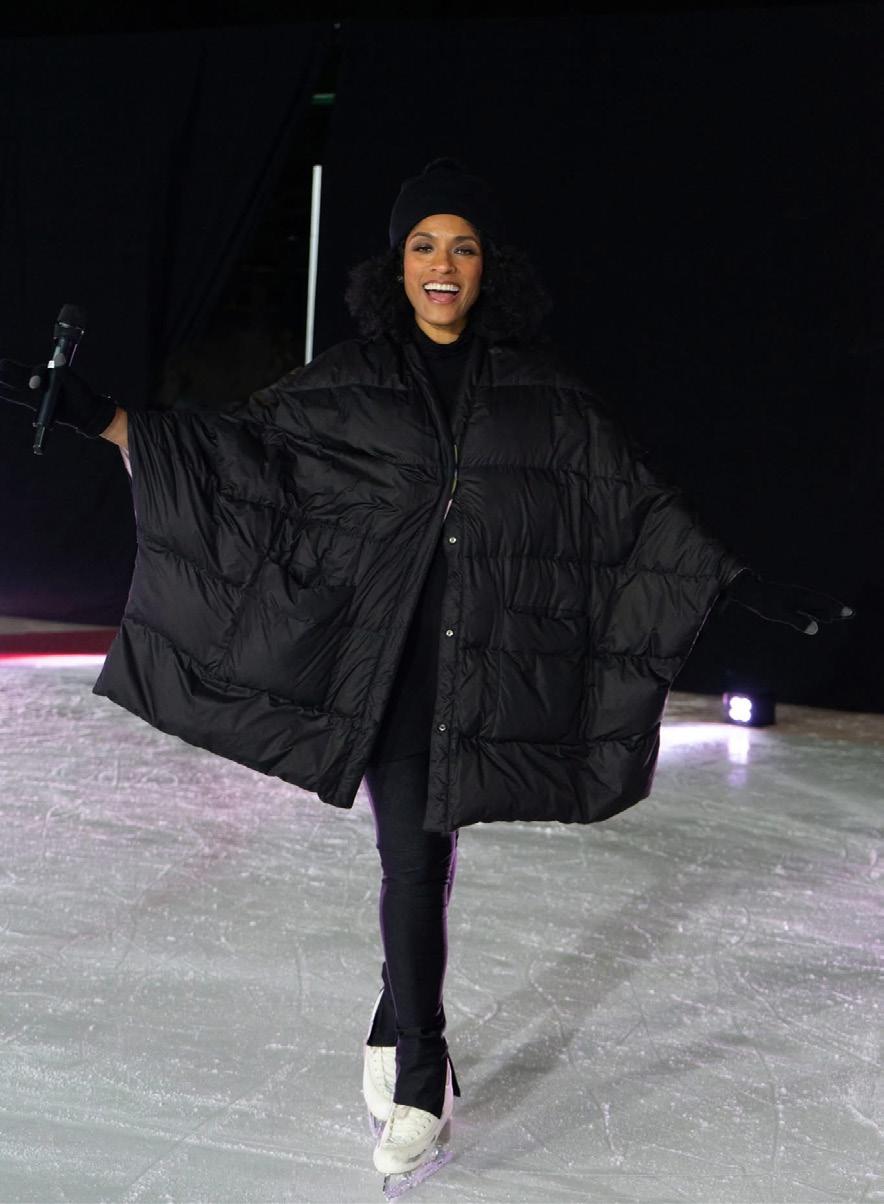
To celebrate the release of “Coldblooded” last month, she released a video on YouTube (https://youtu.be/DxiEQk3Pa2w? si=Lr5sMJouPpCtjpzw) to one of the album’s songs, “Civil Twilight,” which combines her singing and skating along with choreographer/performer Joy Thomas,

which Hall Moran described as perfect poetry. It was filmed at an ice rink in Maryland. The song is about skating on frozen lakes, a childhood friendship and the enduring connection to skating.
“Mostly ‘Coldblooded’ is a fun record (with 19 tracks — four covers, two songs written for her, and the remaining 13 written by Hall Moran) of songs from and about the colder side of things,” she said. “The reason for the record right now really has been political underpinnings. It’s about pure survival. … ‘Coldblooded’ is the exhale breath for me. Being emotionally fired up about what’s
going on without doing anything about how I feel was creating this real imbalance in my body. So, when I talk about cooling everything down, it’s so that my rational mind can take over and all my actions are more precise.”
Singing is a controlled exhale with pitch, she explained. Harlem resident Hall Moran finds community at skating rinks like Riverbank State Park and the new Gottesman Rink at the Davis Center at Central Park’s north end. She also skates in the Ice Theatre of New York’s edge class at SkyRink at Chelsea Piers. When you skate, especially outdoors in winter, you can see your breath in the cold. Those become lyrics. Being on the ice is like flying through the clouds. Bringing her music to the ice allows her to physicalize her thoughts and create healing.
“I’m in this dialogue with my feelings in this visual place, and it’s been therapeutic, but it’s also given me a whole new community and a real understanding for how some things do still work and always with a coalition of many,” she said.
Earlier this month, she dropped another cool video, this one to “Everybody Wants to Be Carmen” (https://youtu.be/ezRQJ860qNU

?si=II8hJwdpneXFHWMk, a skating reference to the opera and the many skaters who’ve skated to it music), which features skaters from Ice Theatre of New York and Figure Skating in Harlem alumna Zenzilé Tonge as well as dancer Olivia Bowman-Jackson. For this, Hall Moran described herself as a Black artist who lives in Harlem using Riverbank State Park and skaters in Harlem to tell stories on ice. A love of the rhythm and music of skating continues to inspire her.
“When you skate, including these public sessions, that’s a concert,” said Hall Moran. “You get to this big hall, and music is coming through the big speakers and you’re moving to it. As a teenager growing up, that’s a party. That’s freedom and liberation. It’s so loud and you’re moving so fast. It’s really exciting.
“It can be dangerous and it makes you pay attention to your feet,” she added. “Anyone who has spiritual practice of any kind knows how important it is to ground yourself. Skating is grounding for me. … I really appreciate the grounding and intention of skating. Opening my ears, opening my lungs, feeling my feet, the rhythm and the music. It’s a very musical process.”
By ROBERT GERHARDT Special to the AmNews
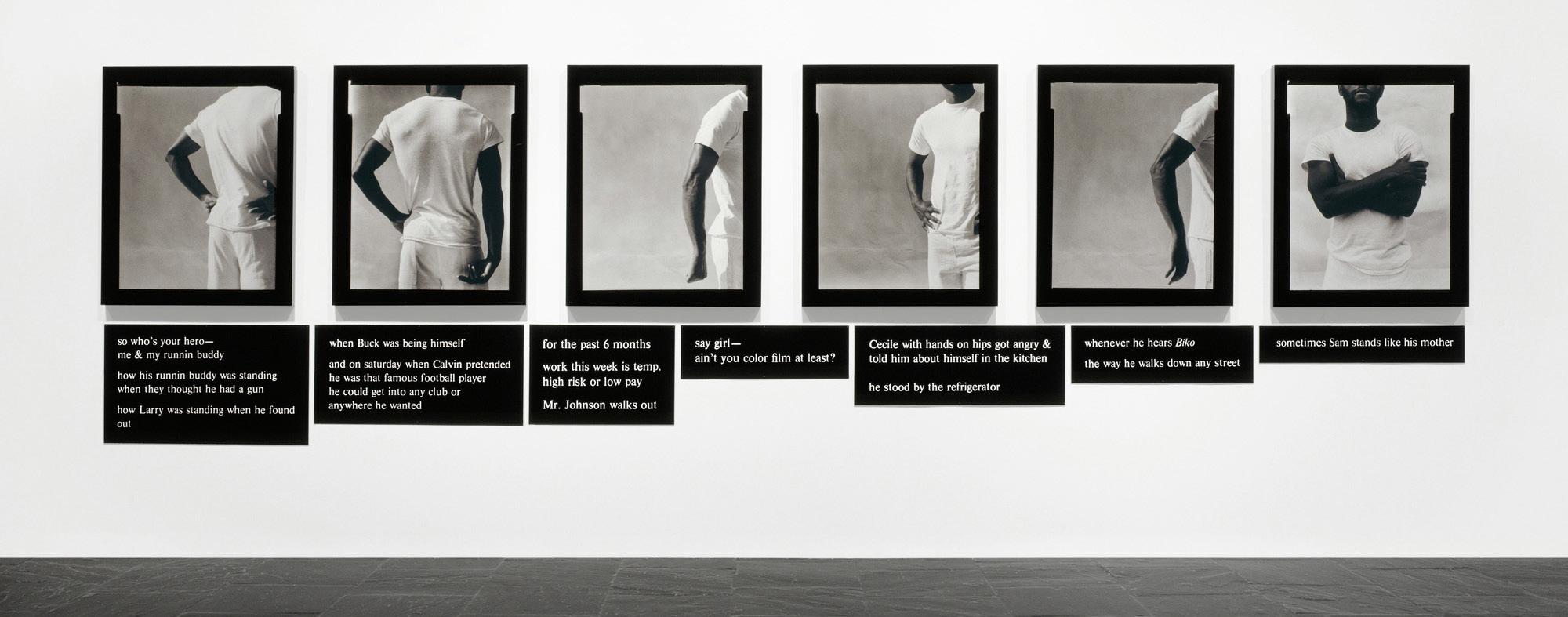
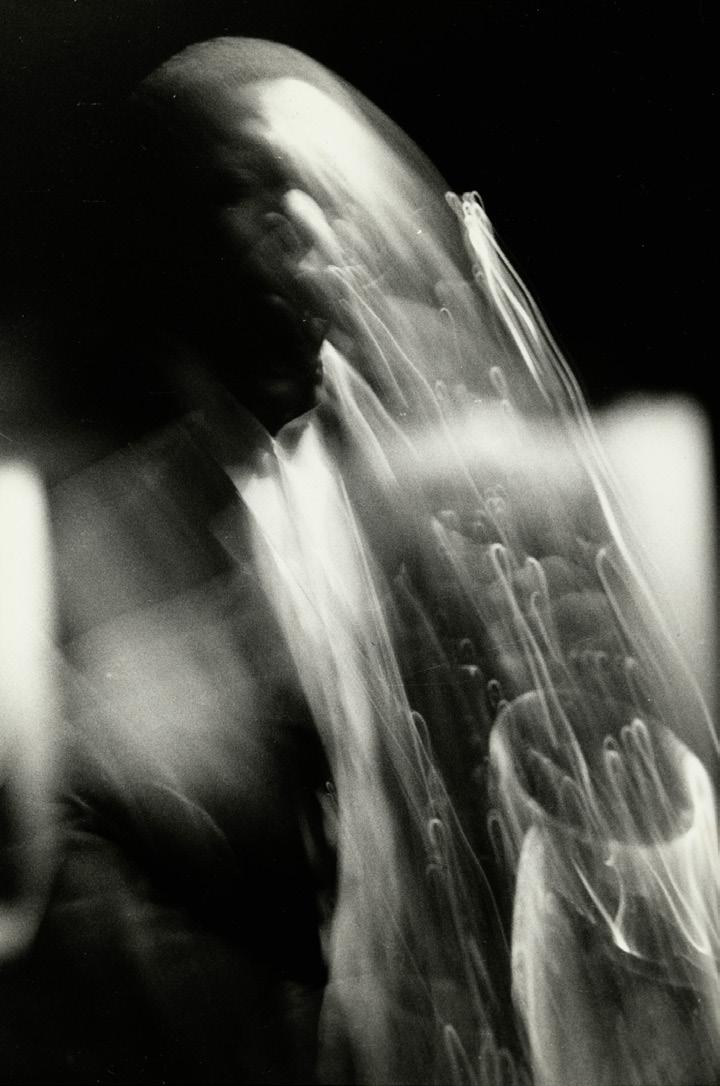
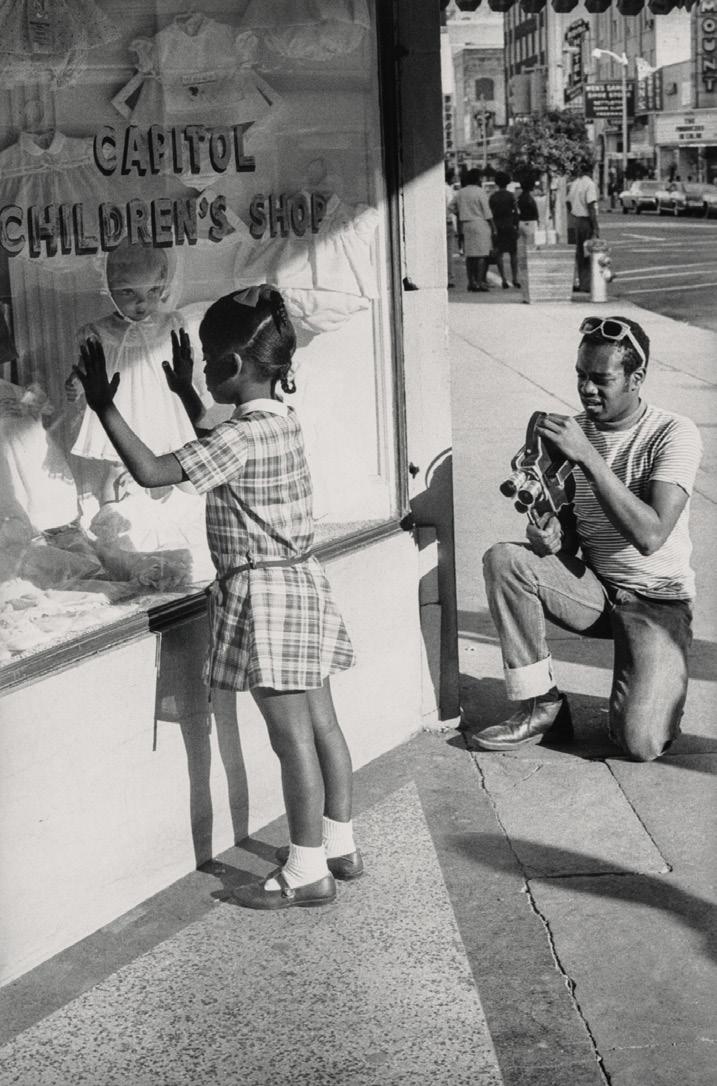
Uniting around the Civil Rights Movement, writers, musicians, and visual artists explored how their work could celebrate Black culture and promote dignity, hope, and freedom. “Photography and the Black Arts Movement,” currently on view at the Getty Museum in Los Angeles, explores the role photography played in fostering Black empowerment and propelling social change in the Black Arts Movement.
Photography played critical roles in both the Civil Rights and Black Arts Movements. Artists used photographs as artistic expression, an organizing tool, and a means of building community. It was used to document the hatred and racism faced by African Americans around the country. It was used as a form of self-representation through portraits and self-portraits. Photographs were also incorporated into other art mediums that allowed the artists who created them to express the stories of African American community, family, and life.
“‘Photography and the Black Arts Movement’ brings together works by more than one hundred photographers, painters, graphic designers, and multimedia artists who used photographic images in their struggles against inequality,” said Timothy Potts, director of the J. Paul Getty Museum. “The works in this exhibition show how a wide range of artists and activists tapped the power of photography to strengthen respect for Black community and culture. Amid the turbulence of the mid-20th century, they found powerful ways of using photography to support and advance social justice.”
The exhibition is in eight sections, bringing together more than 150 artworks in a range of mediums, including video art,
merely documenting events; it was shaping aesthetics, building community, and redefining how Black life was seen.”
The artists in the exhibition were selected to explore the depth and breadth of photography between 1955 and 1985. The works explore themes of self-representation from within the community, the construction of Black beauty, the politics of looking, photography’s activist role, and collective experimentation in alternative spaces.
While many of the photographs in the exhibition are joyous, the galleries also feature scenes of violence that were circulated during the time periods covered to bring attention to racism and its effects.
paintings, collages, contact sheets, newsletters, and magazine spreads. Highlights include paintings by artists including Frank Bowling, David Driskell, Ademola Olugebefola, and Raymond Saunders; photographic portraits by Kwame Brathwaite, Mikki Ferrill, Barkley Hendricks, and Carla Williams; and artwork by Los Angeles icons including Harry Adams, Charles Gaines, Betye Saar, John Simmons, and Bruce Talamon. Recent Getty Museum acquisitions include works by Alvin Baltrop, Roy DeCarava, Chester
Higgins, Senga Nengudi, and Beuford Smith.
“Photographers played a central role in developing and advancing Black art and culture globally. Yet their contributions were rarely examined collectively or with the depth afforded to poets, musicians, or painters,” said Deborah Willis, co-curator of the exhibition, via email. “The seed for the exhibition was a question posed by curator Philip Brookman and myself: What happens when we center photography as an engine for the movement? Photography was not
“Visitors should understand that photography was not peripheral to the movement; it was central. The exhibition situates photography within the civil rights struggle, the rise of Black Power, and the emergence of a distinct Black aesthetic,” Willis said. “Several historical threads are important: the impact of Brown vs. Board of Education and desegregation; the rise of [the Student Nonviolent Coordinating Committee, Southern Christian Leadership Conference,] and community-based organizing; the Kamoinge Workshop and collectives that centered Black photographers; and the role of magazines like Ebony and Jet in shaping visual culture.”
In today’s political climate, where Black history is being rewritten and marginalized, the exhibition reminds viewers that visual culture has always been a battleground. Photography has always been used as a way to both shape public opinion and exert pressure on the political system, just as it does now over the actions of immigration and customs enforcement agents and it did over the last decade for the Black Lives Matter movement.
“In a time when Black history is contested or rewritten, the images in this exhibition operate as evidence and testimony,” Willis said. “They teach us that self-representation is power; that visibility is political; that aesthetics can carry revolutionary meaning. As Julian Bond stated, photographs told stories
‘for those who could not see themselves.’
That remains true today.”
“Photography and Black Arts Movement” is at the Getty Museum in Los Angeles through June 14, 2026. It will then travel to the Mississippi Museum of Art in Jackson from July 25–Nov. 8, 2026. For more info, visit getty.edu.
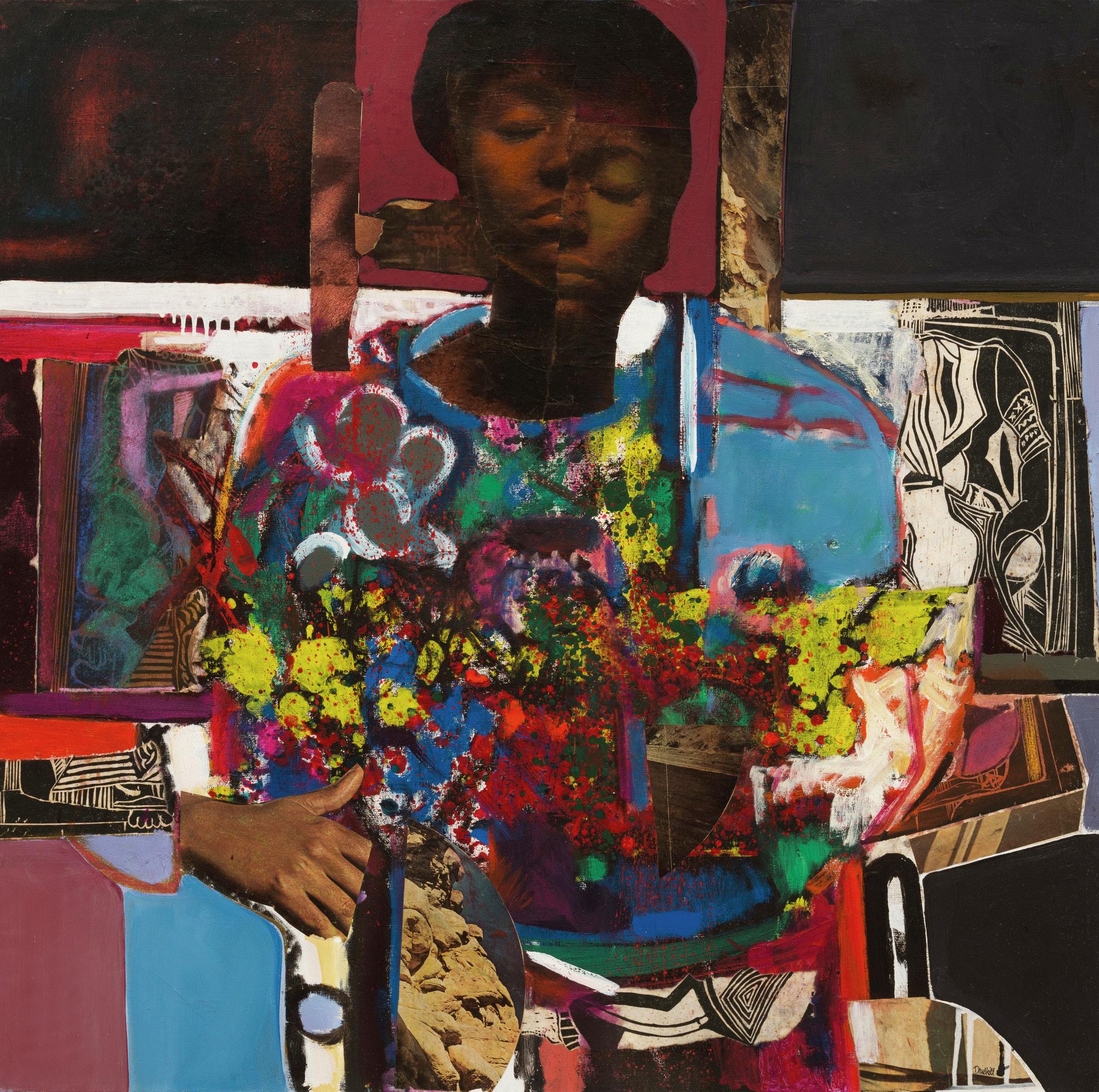
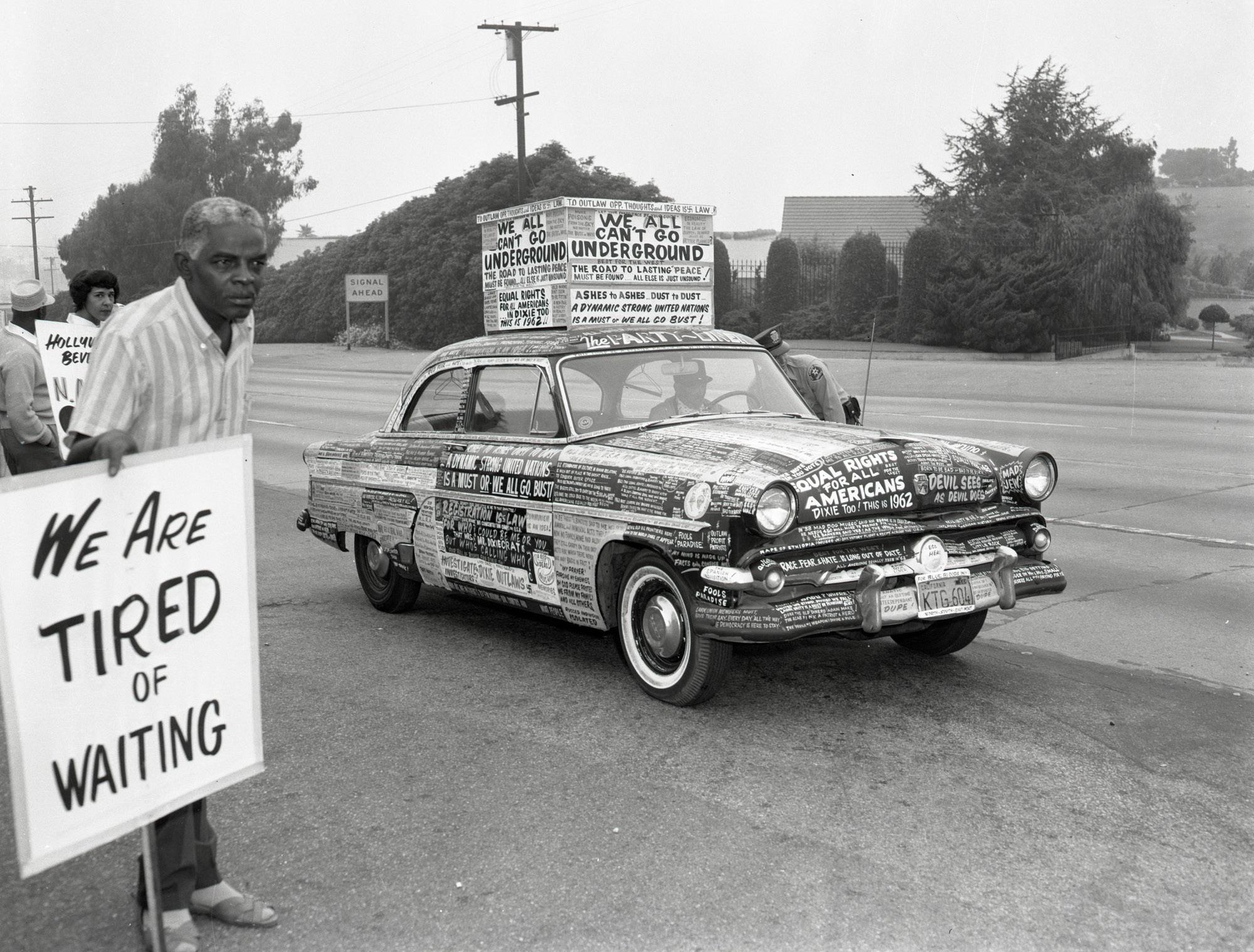
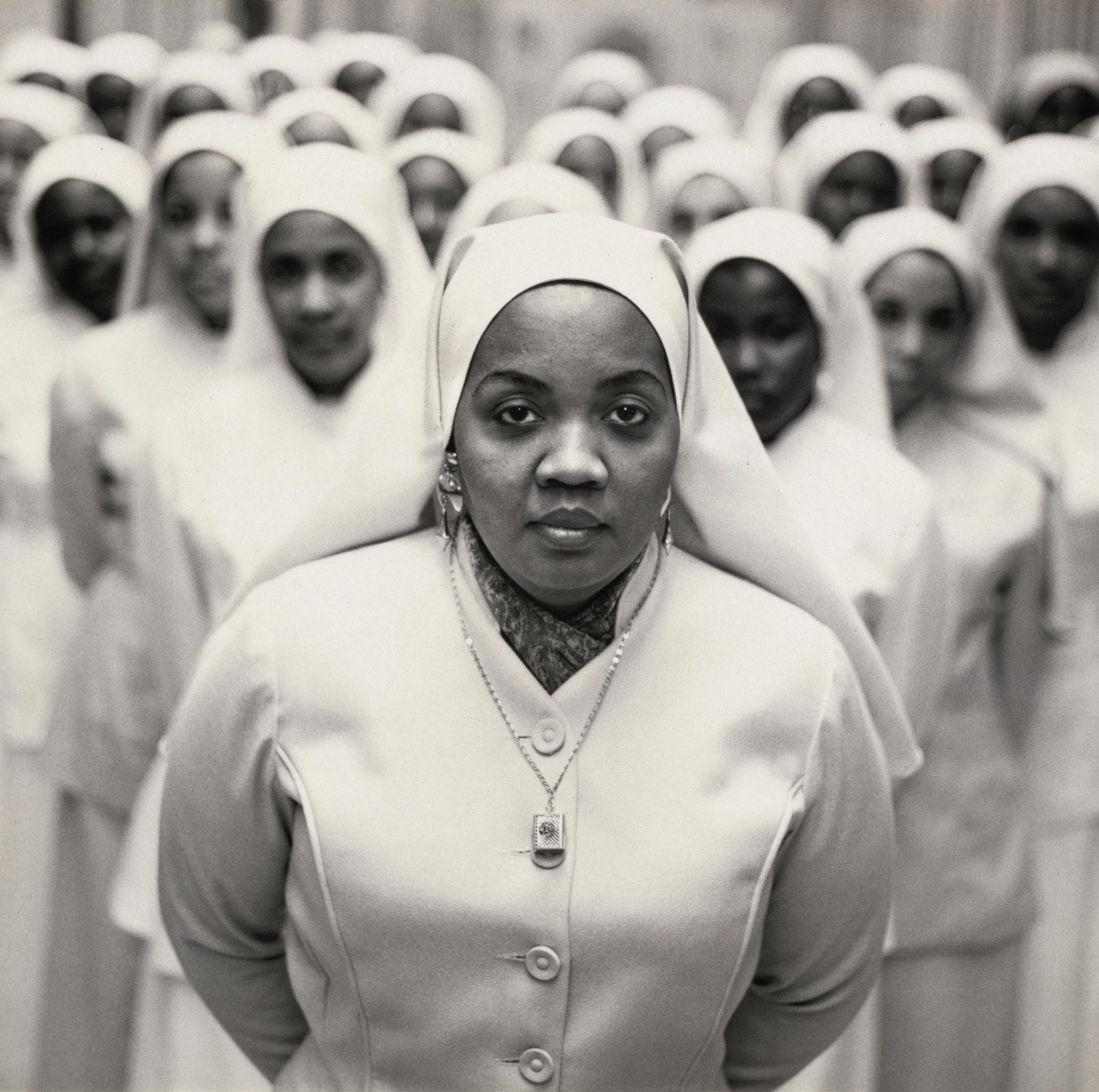
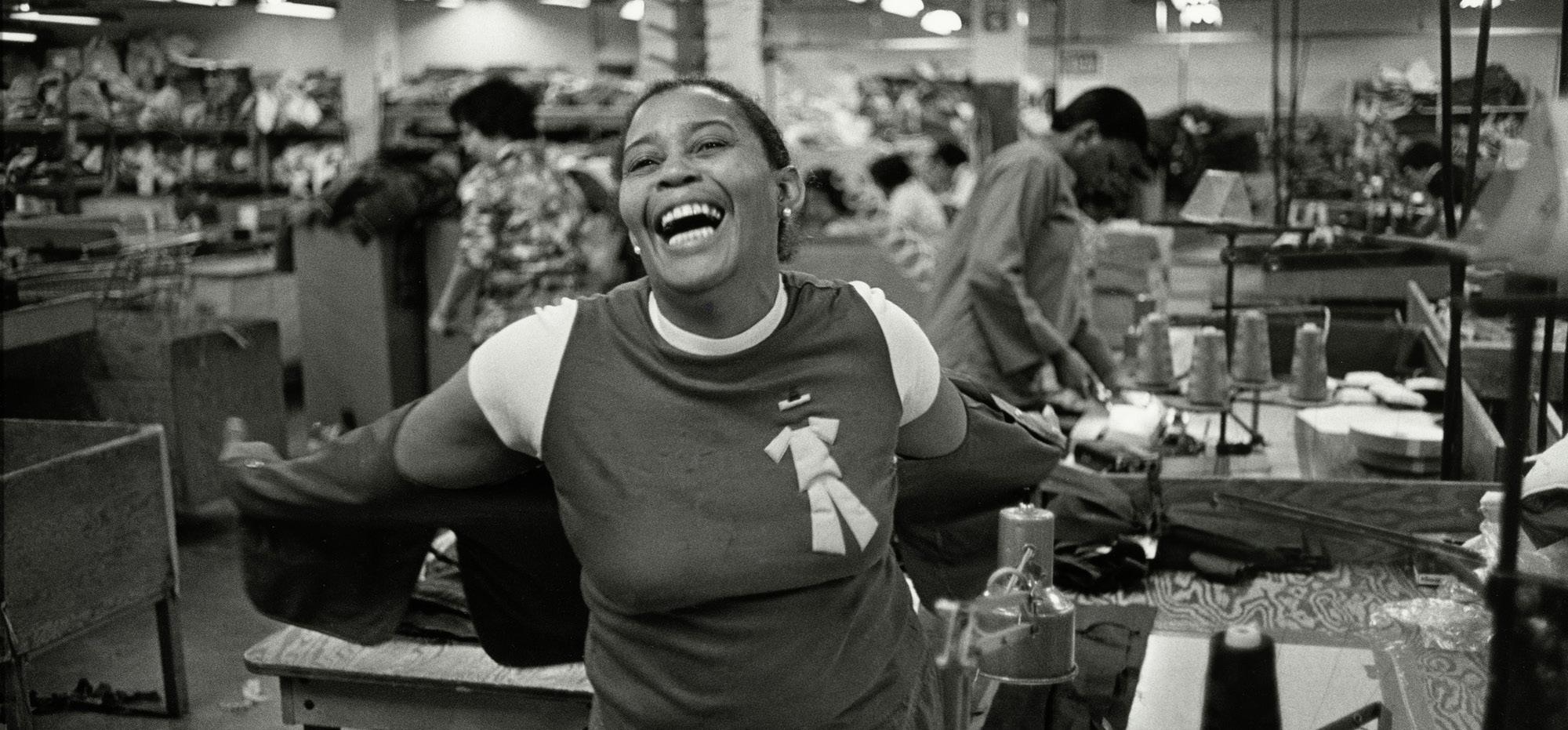
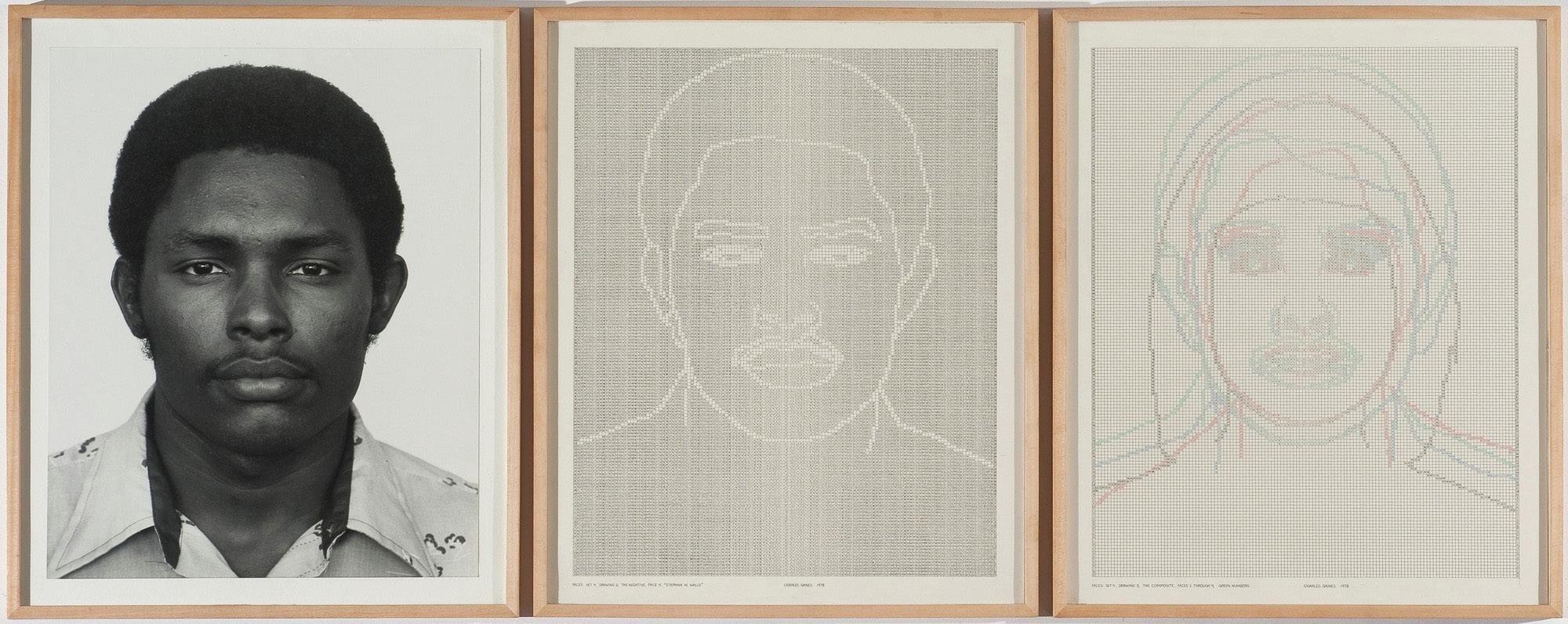
Thank you for the love from last week’s column. It is not easy to lay bare internal struggles but this medium of writing often allows one to see theirself and others to see themselves in it. I am grateful for it all. Now let’s talk about food! In the spirit of “now get back out there, kid, and give ‘em hell,” I have been reaching out to friends and colleagues to get together and talk shop over some good victuals. Being in tune with myself, and not overthinking
what will be, are my first steps. After that, it’s, “What do you feel like eating?”
My first outing was with one of my favorite Food Network (the glory years) personalities, Ellie Krieger. Krieger and I became friendly over the years from traveling in a similar NYC food circle after I gushed over her white chili recipe, which I still make to this day. After seeing each other at an event, we decided to make it official.
Krieger suggested we go to a new restaurant that lives in the iconic Upper West Side eatery Good Enough To Eat. This almost halfdecade-old restaurant historical-
ly serves breakfast, brunch, and lunch only (and perfectly). Before I could question the recommendation, she told me the restaurant becomes Bar Manje, a Caribbean restaurant and bar, for dinner service seven nights a week.
Helmed by 35-year veteran, St. Lucian chef Kingsley John, Bar Manje is a reflection of his West Indian roots and his NYC fine-dining experience working under chefs like Daniel Boulud and Marcus Samuelsson. The low lights, the right music, and the good vibes meet you at the door and instantly set you straight.
Krieger and I walked into Bar Manje already knowing what
we were going to order because we’d salivated over the menu. We started with the Trini doubles ($12). Not going to hold you, the best bite of the night. Get two orders…or three…ask for their house-made peppa (hot sauce), plus a draft beer, and it’s goodnight Irene. Other appetizers were an uber-flaky crust Jamaican goat patty that comes with gravy sauce, ackee and saltfish spring rolls, and corn soup.
For entrees, we had curry crab fried rice, and the chef sent us five spice beef lo mein to try. Had we been a larger party, the oxtail lasagna and jerk octopus would have got, got. However, there was
no room left for the coconut cake or various other Good Enough To Eat baked goods. But next time… Thanks for reading and happy eating!
Kysha Harris is a chef, food writer and editor, culinary producer, consultant, and owner of SCHOP!, a personalized food service in NYC for over 23 years. Follow her on Instagram, @SCHOPnyc, and on Facebook, @SCHOPnyc.
Questions, comments, requests, feedback, invitations! Email us at AmNewsFOOD@SCHOPnyc.com. Follow us on Instagram and Facebook @NYAmNewsFOOD.


By LINDA ARMSTRONG
Special to the AmNews
You only have until March 29 to experience “The Wild Party” with Encores! at New York City Center on W. 55th Street. The production based on the Joseph Moncure March poem, features a book by Michael John LaChiusa and George C. Wolfe and music and lyrics by LaChiusa, is being directed by Lili-Anne Brown (LB) and it is promising to be fabulous. It stars Jasmine Amy Rogers as ‘Queenie and Jordan Donica as ‘Burrs.’ The couple is hosting one of their wild parties that spirals out of control. Brown recently took the time during rehearsals to speak with the AmNews and talk about this classic musical and her approach to it.
AmNews: Ms. Brown, as a director and actor, you have worked on some of the greatest works to ever hit the stage, including “Two Trains Running,” “Dreamgirls,” “The Hot Wing King,” “Joe Turner’s Come and Gone,” “Ain’t No Mo’,” “FELA!,” “The Color Purple,” “Dessa Rose,” “Passing Strange,” “The Wiz,” I could go on and on. What attracted you to directing “The Wild Party” for Encores! at New York City Center?
LB: I discovered the source material, Joseph Moncure March’s poem, in 1995 when the Art Spiegelman-illustrated version was published. I have been intrigued
by the story since then. I produced the Chicago premiere of “The Wild Party” in 2015. I was supposed to direct it, but had to hire another director because of season logistics. So, this has been a long time coming.
AmNews: Why did the Harlem Renaissance salon culture and figures inspire you for this production?
LB: By far, the most interesting parties happening during this time period were happening at A’Lelia Walker’s house, which was dubbed “the Dark Tower.” These parties attracted a fascinating mix of people from all walks of life. The glitterati of Harlem rubbed elbows with downtown artists and socialites. If I were to go to a party in 1928, that’s where I’d want to go.
AmNews: How were you able to assemble the all-star cast power that you have for this production — Jasmine Amy Rogers, Jordan Donica, Tonya Pinkins, Adrienne Warren, Jelani Alladin, and all the other incredible talents that have been brought together?
LB: I asked and they said yes! I feel so incredibly fortunate that they were all available.
AmNews: What is the creative give-andtake process like with so many talented thespians?
LB: Casting great people is always half the battle of creating a great show. This process, which only allows us 10 real rehearsals, would be impossible without actors
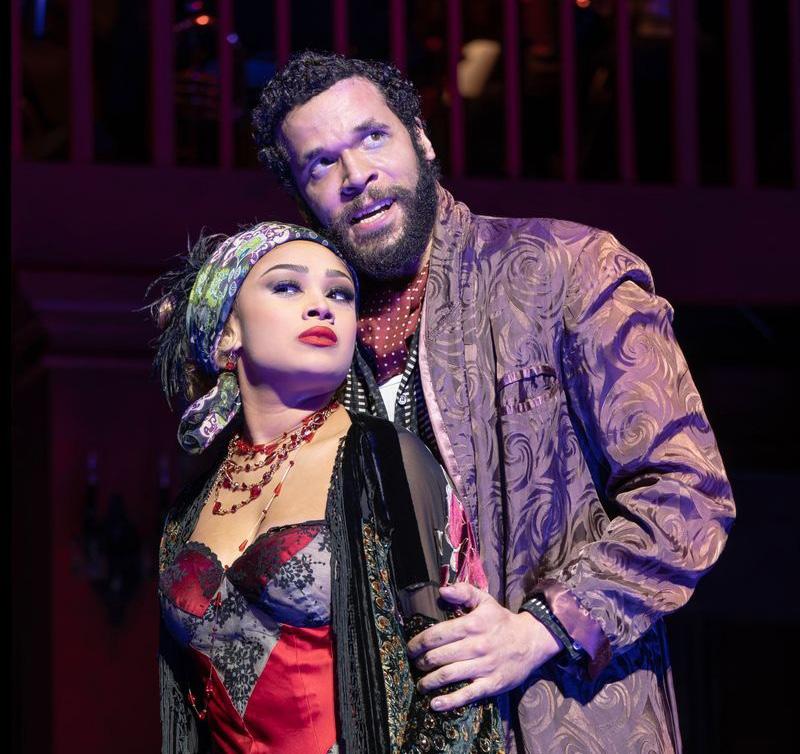
who come in extremely prepared and bring a lot of ideas to the table. It’s also amazing to have living authors to consult, especially when it’s Michael John LaChiusa and George C. Wolfe!
AmNews: What is the vibe going to be like for this musical production?
LB: Sexy, dark, and dangerous.
AmNews: How relevant is this story of Blacks dealing with identity, race, and survival in American entertainment, especially under what is currently happening in this country?
LB: This is a story about the lies we tell ourselves and others, the performance of identity, the masks we wear and what happens when the mask slips. It’s not a play about race, but the decision to cast Black actors as Queenie and Burrs, the hosts of the party, does bring race [and colorism] into the conversation in a very interesting way. I have been obsessed with Bert Williams for a long time and I am always surprised (I guess I shouldn’t be) that more people don’t know who he is. In a story about a blackface performer, I think the stakes become very different when it’s a Black man forced to perform in blackface.
AmNews: The musical has music and lyrics by Michael John LaChiusa and a book by Michael John LaChiusa and George C. Wolfe. What is the pressure you feel when
directing a production by such incredibly gifted talents?
LB: There is no special pressure. I want to do justice to the material of every show that I direct. Thankfully, [Wolfe] and [LaChiusa] are very generous with their guidance and insight.
AmNews: What is your greatest challenge in directing this production?
LB: Staging a party, with 15 principals doing 15 different things in real time, with no breaks or leaving the stage, is incredibly intricate work. Doing it with only 10 rehearsals is damn near mission impossible. And the score is also extremely intricate. So, this is one of the most challenging things I’ve ever done!
AmNews: Why should people make plans to see it?
LB: This show is rarely done. This may be your only chance to ever hear this glorious score and be thrilled [and a little freaked out] by this story.
AmNews: What message do you want audiences to walk away with?
LB: I don’t know about a “message,” but I hope audiences feel titillated, amused, shocked, scared, disgusted, and devastated. And curious about the art of the time period and Michael John LaChiusa’s musicals! For tickets, visit nycitycenter.org.
By MICHAEL HENRY ADAMS Special to the AmNews
If you think that all society “Swans” were white, that the beauty, intrigues, and elegant escapades of white women of privilege were only ever immortalized by Truman Capote, try reading Countee Cullen’s only novel, “One Way to Heaven” (1932). Based on Cullen’s dearest friends, it’s all about the fancy folks who lived on Strivers Row. In effect, the “Black Swans” he chronicled were ladies who could have given any “Real Housewife” a run for her money.
Favorably reviewed in the New York Times, “One Way to Heaven” portrays Bertha May Doyle Lee Cotton as the character Constancia Brandon. Cullen’s plot gently satirizes the pretentiousness and superficiality of the upper echelons of an African American high society that Cotton gladly led with great aplomb as among “the row’s” most notable hostesses.
In 1908, she became the wife of Dr. Norman Therkiel Cotton. Then, when a poor relation with more than a dozen children was about to have the two youngest placed in an orphanage, Mrs. Cotton, who was unable to have children, wondered how people would like seeing her as a devoted mother. “How sweet!” they said. People on Strivers Row loved these tiny tots. She took them in on approval; they were adopted, renamed, and just like that, Mrs. Cotton became the mother of cherubic Gloria Helene and Bertha Marie.
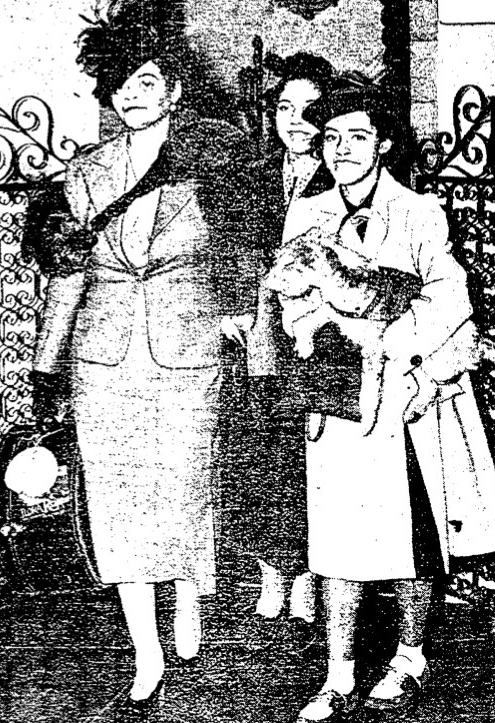
“It’s hard to convey how renowned these forgotten figures were in the Black world of yesteryear. Not a week went by that their comings and goings were not reported on in the AmNews.”
Originally Bostonians, Mrs. Cotton and her sisters, Minerva Lee Buckner and Emma Lee Layton, hailed from a family of abundant social standing but meager means. It was their ambition that each sister make an advantageous marriage.
One of 11 siblings, Dr. Cotton was born in Greensboro, North Carolina, in 1885. A 1904 graduate of Lincoln University, he was a member of Alpha Phi Alpha and practiced medicine in New York and New Jersey, where he became city health commissioner of Patterson (1924–1930).
He met his wife while a medical student at the College of Physicians and Surgeons in Boston — only, initially, he was taken with her younger sister Emma. Disappointed by her boyfriend, she was due to steal him in exchange.
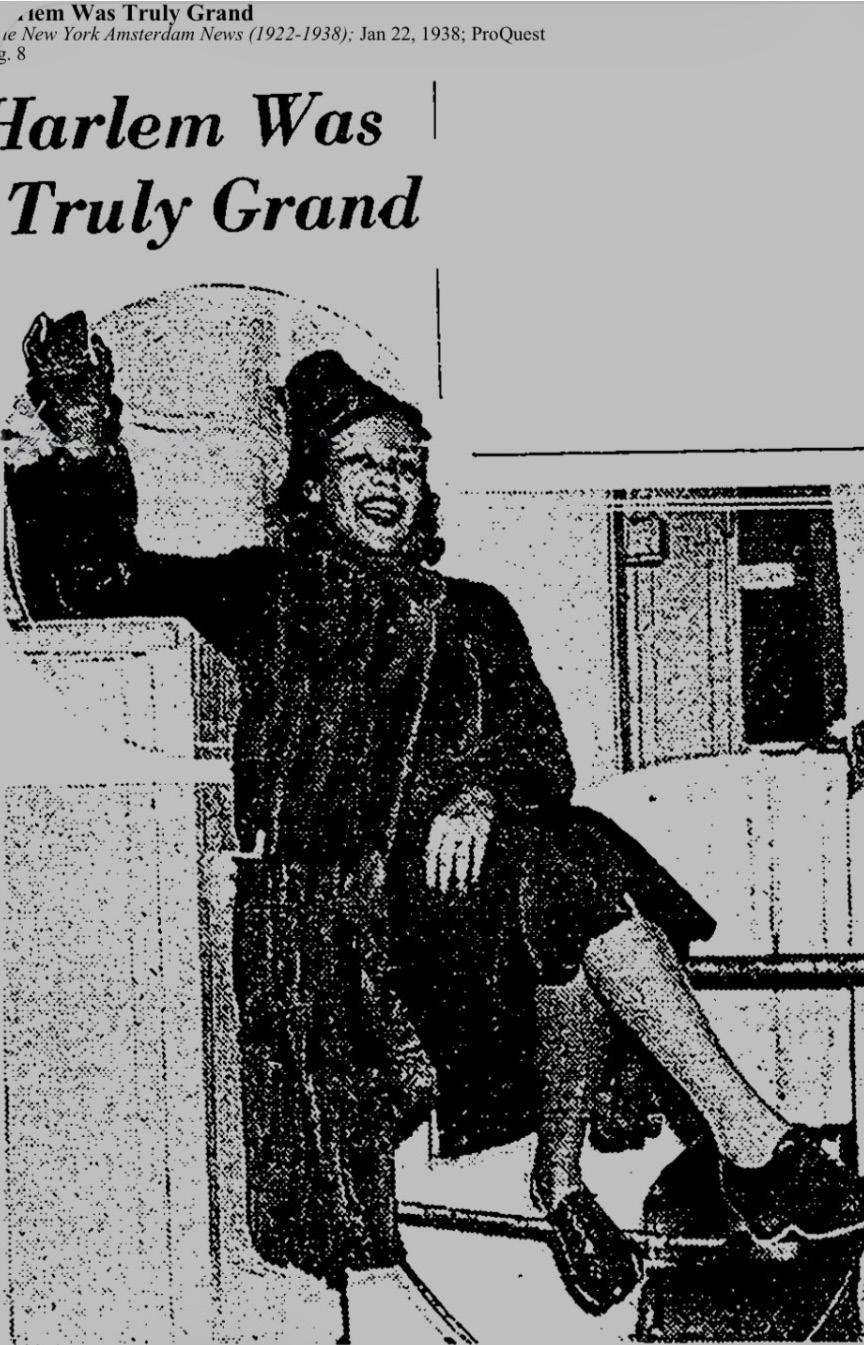
Back then, Bertha was keeping company with John Turner Layton, Jr. of Washington, D.C. He was born in 1894 and his father was a bass singer, music educator, and hymn composer. One paper reported he was “Professor of music in Race schools in Washington. D.C. who … directed the production ‘Hiawatha,’ by a stupendous Race chorus at the nation’s capital, bringing over … [Samuel] Coleridge-Taylor from England to appear personally as director and having the famous U. S. Marine band to play.”
Naturally, Layton provided his namesake with a formidable musical education. However, after meeting Bertha and being agreeable to her plans for a rich husband, he followed up by attending the Howard University Dental School.
Only once his beloved father died did
Turner Layton have a change of heart. Moving to New York in the early 1900s, he met his songwriting partner, lyricist Henry Creamer. They are best remembered among their hit compositions for “After You've Gone” and “Way Down Yonder in New Orleans.” Layton also joined with Clarence “Tandy” Johnstone to perform. Both would sing as Layton played piano. The duo was a hit both in Harlem and among the elite of New York’s white worthies. While in Palm Beach in 1924, Lord and Lady Mountbatten suggested they try out London. The duo became an immediate success.
At the height of the Harlem Renaissance, with the Laytons housed at 152 West 133rd Street, the Cottons acquired 220 West 139th Street. They engaged Black contractor J. E. Reid and their neighbor, architect Vertner Tandy, to totally remodel their new house. The stoop eliminated, the entrance moved just below grade, and the hall ceiling vaulted, it was imbued with a Renaissance-Mediterranean ambience. Presided over by an East-Asian manservant, the Cotton household was the scene of generously dispensed hospitality in a commodious setting. As described by one journalist:
“The very well-fixed Dr. Norman T. Cottons … just about top the lofty and shaky pinnacle of [the] better listed. In fact, each time I drop in the Cotton mansion-like place, I find something new to make a mental note of. The Cottons have furnished their Spanish [sic] home with costly pieces from practically every leading capital in Europe. Each time
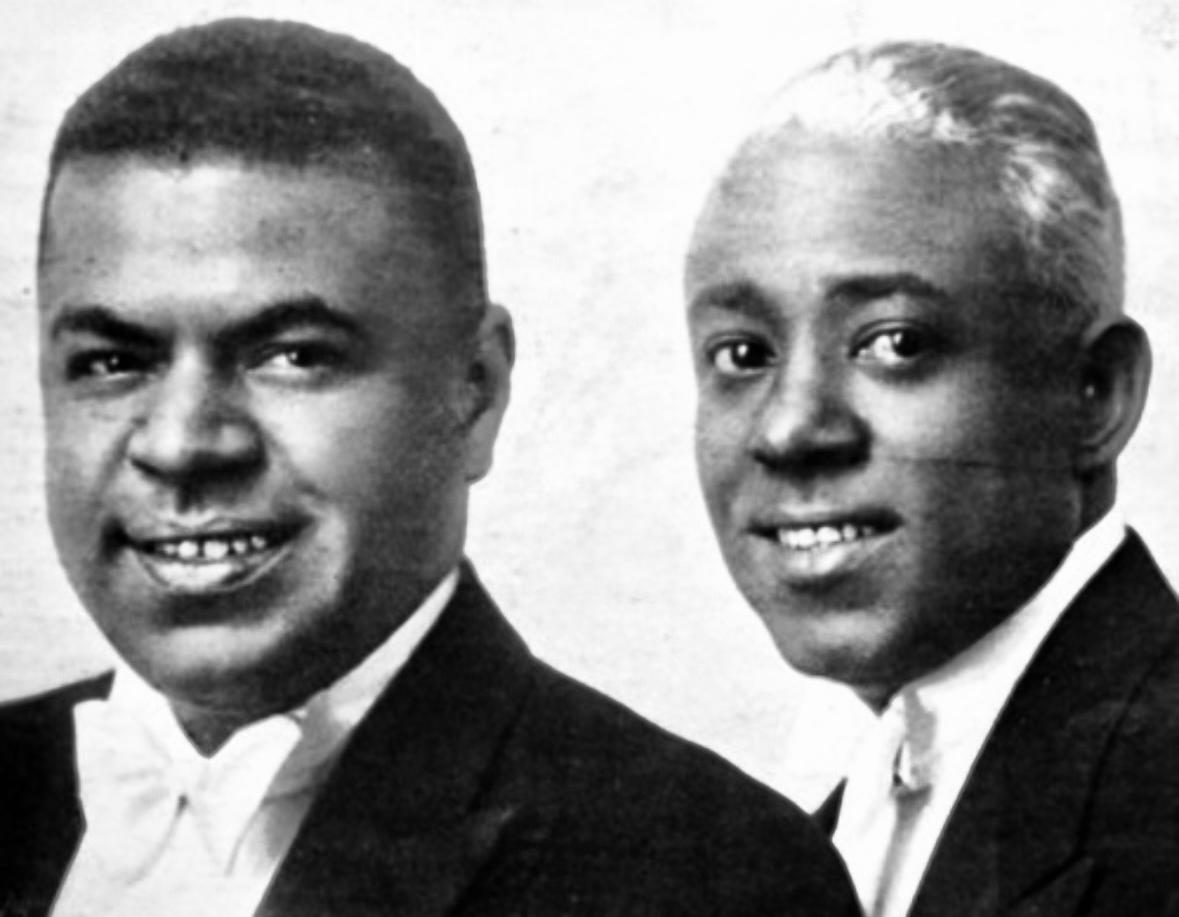
Bertha visits her sister, Mrs. Turner Laytonin London, she manages to cross the channel long enough to visit Paris salons, and pick up a piece or two.
“Her bar is about 22 feet long, is completely equipped, and has four red-plushed stools and a rail. The rest of the house is indescribable in its elegance.”
Besides their Harlem home, what papers liked to call the “houses of Cotton” included the family farm down south, a Montclair place, and a summer getaway at Oaks Bluff, Massachusetts.
It’s hard to convey how renowned these forgotten figures were in the Black world of yesteryear. Not a week went by that their comings and goings were not reported on in the AmNews. Married to a nationally known, well-invested doctor who gave thousands to his alma mater, even having her imposing house on Strivers Row raided hardly threatened her position. Police were able to recover $40,000 in stolen jewels from Cotton, but, after cooperating with the investigation into more than a million dollars worth of goods purloined by an acrobatic interracial cat burglary gang, Mrs. Cotton was neither indicted nor shunned socially.
Recalling how even as adolescents, her adopted daughters were made to stay awake all night cleaning dishes from her incessant parties, they still resented her long after she died. They could not overlook how their dear, affectionate father, returning from working in New Jersey each weekend, was made to spank them for infractions she kept track of in a notebook. “She made him beat us to satisfy her pleasure in dominating others. She controlled him with the lock on her bedroom door,” they told me during an interview in 2013. Without hesitation, 65 years later, the girls said of her in unison, “She was a bitch!”
Evelyn Waugh’s diaries give an account of his encounter with the Turner Laytons. He wrote of going to a party given by “Layton the black man” at the studio of an artist called “Stuart Hill. All very refined — hot lobster, champagne cup[,] and music. Florence Mills, Delysia, John Huggins, Layton and Johnstone[,] and others sang songs.” If Waugh was okay with jazz and as a brief encounter, even so unsavory a social occasion, the sexual risk of someone like fashionable singer Leslie “Hutch” Hutchinson, who “carried-on” with women and men, from the highest strata of London, was not.
This was what threatened the success of Layton and Johnstone, and what accounted for the open hostility they encountered after a 1934 divorce case naming Johnstone as correspondent. In 1930, he’d taken up with Raymonde Sandler, the wife of respected violinist Albert Sandler. Public scorn was so great that Layton felt compelled to break up the group and continue solo.
Johnstone suffered disgrace and ruin. He was mandated to pay his new wife’s former husband damages of £2,500. After his flat was robbed of his most valuable contents, he declared bankruptcy and the Johnstones retreated to Harlem. His hoity-toity persona and sound unpopular there, he was forced to
work as a janitor and had a nervous breakdown. His wife at last left him and remarried. He died broke in 1953.
Layton, meanwhile, performed in clubs and theaters, and on the radio. As he had with Johnstone, he continued to record extensively. His proficiency enabled his family to live well, as his wife attested to: “We do the theaters in season and have considerable company at our home. Our intimate friends, however, are rather few. Of course we have a bridge club which meets once a week.” Mr. and Mrs. Leslie Hutchinson, Mr. and Mrs. Paul Robeson, Mr. and Mrs. Harold Browning, Mr. and Mrs. Clarence Johnstone, and Miss Violet Harrion, an English woman; John Payne, and Ivan Hutchison were the original members.
Geraldyn Dismond, editor of the Tatler, with her own PR firm and radio show, lived across 139th Street from the Cottons. She was not someone who was easy to impress, but during an interview with Emma Layton in 1932, she was clearly taken with all she saw and heard about. In their stylish 14-room house where, like the Cottons, husband and wife had their own suites, the five liveried servants, all English except for the French lady’s maid, were without precedent in Harlem. The Rolls-Royce and Talbot, however, were not exceptional in a place where fine automobiles were commonplace.
The same situation was true concerning fine furs, French haute couture, and jewels. Mrs. Layton boasted ownership of a fox scarf, “a marvelous nine skin sable scarf”; a matching Russian sable coat and
Harlem-trained band leader with the subheading “A’Lelia Layton’s Beau,” on May 31, 1941: “Of great interest to New Yorkers will be the fact that Ken was engaged to A’Lelia Layton, beautiful and charming daughter of the Turner Laytons, who, with her mother, was here last year visiting her aunt, Mrs. Bertha Cotton of New York and Montclair, N.J. After the Laytons flew to England on the Clipper, their luxurious London home was destroyed by bombs [19 Aberdare Gardens, replaced by acquiring 77 Aberdare Gardens]. They are now living peacefully in South Wales.”
A few years later, this report was followed by, “California hears vague chit-chat [that] A’Lelia Layton, living in Scotland with her parents, wears a telltale diamond these wartorn days. That’s heartening news (if true), for we do know A’Lelia took the sudden death of her last cavalier (in the Cafe De Paris bombing in London) rather hard ...”
“She became very odd. She never got over his death,” said Dr. Rae Alexander Minter, who met A’Lelia Layton through their father’s tremendous friendship.
What Layton no doubt would have taken even harder was learning that Johnson had lived with a notorious 20-year-older white lover, Gerald Hamilton. Called “the wickedest man in Europe,” he too was distraught by Johnson’s death. Calling the bandleader “my husband,” Hamilton kept Johnson’s photograph nearby for the rest of his life.
a Russian ermine evening coat; leopard and beaver skin sports coats; an Eastern mink cap and muff; and 10 diamond bracelets, a set of diamond earrings, 10-carat diamond ring, 10-carat emerald ring, diamond arrow pin, and string of “genuine” pearls, relayed to Dismond, made a significant impact due to their quality and great quantity.
“But you haven’t asked me anything about A'Lelia,” she complained. “She is to study harmony this winter. And what did you think of the records which she made with her father?”
“She is quite the most charming girl of fourteen I have had the pleasure to know, but she is another story,” agreed Dismond. “How could I concentrate on even the most delightful child, while visions of Rolls Royces, sables, and diamonds danced in the air?”
Although queer, living with a man in a cottage on the Thames just outside London, Ken “Snakehips” Johnson had become engaged to Turner and Emma Layton’s daughter by 1940. He was celebrating at the Embassy Club with cocktails for A’Lelia and friends when air raid sirens sounded just as he was due to walk to work nearby. Asked not to go, he only laughed as he dashed off to work. He was just lifting his baton when the chic nightclub was bombed. Only because it was deep underground, below a large theater, was this realm of revelry allowed to remain open. Plunging through an air shaft, the Nazi bombs fell directly on target. Decapitated, Johnson died instantly.
The AmNews reported on the death of the
One imagines that A’Lelia Layton, who never married, might have done so as well. Toward the end of her life, A’Lelia’s doting mother lamented how “lonely life was in England,” how aloof and standoffish the English were, “even with each other.” Her parents’ only heir, A’Lelia Shirley Layton bequeathed the greater part of a fortune in music rights to the Great Ormond Street Hospital for Children when she died in 2002. It was a soulmate I was united with after first contacting “Berdie” Cotton. I found her through her first cousin, Macon Cotton, heir to the family funeral home business, in 2013. “Why,” I wondered, “had I never seen a notice of a debutante tea or dance, for her or her sister? Where were Harlem notices of their weddings?” “We moved to Montclair from Harlem around 1940. Our father finally got fed up with the constant parties and social stuff. She made him work so hard and then insisted on going out. It was exhausting!”
With historian Tom Wirth and A’Lelia Bundles, I met Berdie at her apartment. She had her sister Gloria come as well. Neither had “come out” but both married; Gloria, twice, to become Gloria H. Carter-Westcott. She died not long after we met, in September of 2013. She was 91. Four years later, on March 19, 2017, at 92, it was Berdie Collins’s turn. All these women who came to experience circumstances and enjoy material comforts that many lack — what had it meant? Stealing her sister’s boyfriend, ending up alone at 249 Orange Road in Montclair, New Jersey — was Bertha Cotton happy?
“It burned her up, that she gave her sister Turner Layton. She never got over it!”

It takes years to build a meaningful friendship, possibly even a lifetime, but in this moment of then and now, the Sistering Lois Deloatch, Nnenna Freelon, Lenora Zenzalai Helm, and Kate McGarry — have formed a collective who came together individually but share the same musical language.
Deloatch, Freelon, Helm, and McGarry are established song-stylists and composers, all North Carolina-based, who have built a strong friendship and support system over the years. Now, they have come together as a powerful vocal force, sharing their weathered experiences of love, compassion, and wisdom on their forthcoming album titled “The Sistering,” a 12-track recording of compositions composed by the vocalists. The music is emotional, joyful, and compassionate — a warm mosaic quilt of jazz, ballads, gospel, and folk genres. The album was released on Helm’s independent label, Zenzalai Music.
All 12-tracks demand multiple plays, they are that beautiful, so inspiring and reflective on life’s past and present. A few tracks remind me of my family matriarchs. The lyrics from “Follow the Stream” by Deloatch are drenched in gospel; her lyrics are warm as a mother’s touch, offering a grandmother’s wisdom and understanding: “Follow the stream where it leads you/You’ll know when you get there/We come and go so fast.”
“Begin Again” by Helm, about love, loss, and what to do: “triumph and tragedy, they’re both the same/tell the pain your peace of mind is not a toy/you can begin again and God will see you through.” This ballad has tones of Dionne Warwick’s heartfelt ballads.
All four divas take the spotlight on their fun-swinging interpretation of “It had to Be You.” What a ball they had — scatting, blues, and big swing; their comradery and musicianship sparkled. Reminiscent of those fun nights the “Rat Pack” had performing in Vegas, that crazy crew of Sinatra, Sammy Davis, Dean Martin, and Peter Lawford. But of course, these ladies have that sassy pizazz!
“As friends, we inspire each other and learn from each other different skills and talents,” noted McGarry and Freelon. “We want to change the jazz vocabulary with more spice.”
Some of the musicians featured in the ensemble include Miki Hayama on piano and organ, guitarist Keith Ganz, Kobie Watkins on drums and percussion, and John Brown and Paul Creel on acoustic bass.
On April 1, the Sistering will debut at Carnegie Hall at 8 p.m. Helm’s composing and arranging skills will also be center stage, cel-
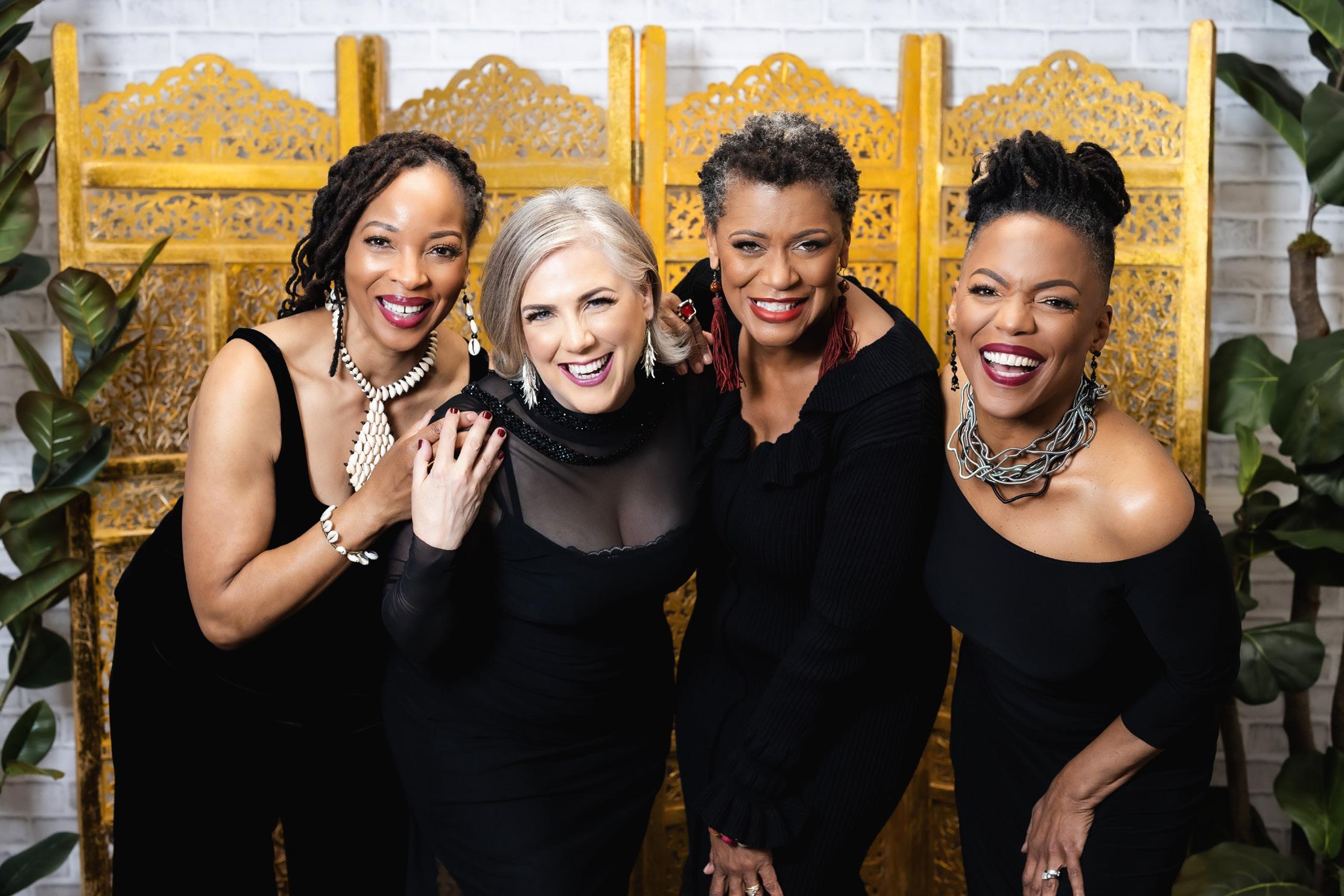
ebrating Jazz Appreciation Month. She and Myers arranged John Coltrane’s “A Conversation with God (Dear God).” She will conduct Transitions in Black with special guests the Sistering, along with the New England Symphonic Ensemble and guests the Tribe Jazz Orchestra. Helms has combined jazz orchestra with chamber ensemble. There will be more than 60 performers on stage. This is an inspired event not to be missed!
For information, visit carnegiehall.org. It wasn’t too long ago that all ears perked up for the daring young tenor saxophonist and composer Tia Fuller. It seems like time just flew by. While still a student at Spelman, she appeared with the iconic Ray Charles. She has performed regularly with such noted artists as Esperanza Spalding, the Sean Jones Quintet, her mentor Teri Lyne Carrington, the T.S. Monk Septet, and Beyonce’s all-female band. Recently, she enjoyed her headlining debut at Carnegie Hall. Fuller doesn’t play New York often, but she will appear at Dizzy’s from March 31–April 1 for her belated 50th birthday celebration, with a special performance of music from her upcoming album, “Fuller Sound Vol. 2: Dynasty.” The project honors Fuller Sound, the band formerly led by her parents, Fred and Elthopia Fuller. She will be joined by her sister, pianist Shamie Fuller-Royston (a regular member of her ensemble). The music revisits the sounds they grew up with, continuing the band their parents started and the tradition they passed down.
Bassist Eric Wheeler and drummer Koleby Royston round out the quartet.
For reservations, visit jazz.org.
The Birdland jazz club celebrates the centennial of Miles Davis from March 31–April 4. Be assured there will be many celebrations in Miles’s honor — the dark prince, the innovator, who played on the bebop scene with Charlie Parker, large jazz ensemble with Gil Evans, birth of the Cool, Bitches Brew; the beginning of Miles’s improvisational fusion adventure soaring in all directions, his first and second great quintets.
The artists called upon for Unlimited Miles: Miles Davis at 100 include pianist John Beasley, trumpeter Sean Jones, saxophonist Marcus Strickland, guitarist Kurt Rosenwinkel, bassist Ben Williams, and drummer Terreon Gully. These established artists are all bandleaders and composers known for their risk-taking edge. They are most capable of representing the inventive music of Miles through their own lens.
For reservations, visit birdland.com.
This April marks the centennial of Randy Weston, a native of Brooklyn, who attended Boys High School with Max Roach and Dewey Redman. The Pan-African pianist and composer’s repertoire blended African music and culture with the history of jazz. His jazz rhythms emanated from the African diaspora and influences of Duke Ellington and Thelonious Monk.
Two creative artists paying tribute at Dizzy’s on April 2 are Jason Moran and Rodney
Kendrick (mentored by Weston and Barry Harris). They each bring their own distinctive style to his definitive legacy. They will be playing for one set only at 7 p.m.
The second set, at 9 p.m., continues Weston’s centennial with pianist Vijay Iyer in a solo tribute, followed by pianist Willerm Delisfort and trombonist Mariel Bildsten, a duo honoring both Weston and Melba Liston, whose centennial also arrived in 2026. Over his career, Randy played in so many varied configurations, from trio to quartet, large ensemble, and beyond, that demonstrated his imaginative musicianship from composer to arranger.
For reservations, visit jazz.org.
On April 3–5, Dizzy’s presents the Randy Weston Centennial Celebration: African Rhythms Alumni Band. Featured are Weston’s core band members of more than three decades: saxophonist, flautist, kalimba player, and music director T.K. Blue; bassist Alex Blake; and percussionist Chief Baba Neil Clarke, with guests pianist Sharp Radway (mentored by Weston) and trombonist Frank Lacy.
“Randy poured his legacy into us — we know his heart and spirit, not just his music,” said Clarke. “He was a storyteller — he gave us songs to play and told us the story behind every composition, giving us a part in playing the story. We had a musical conversation with Randy about those stories, his compositions.” April 6 marks Weston’s centennial.
person who [is] coming before as a defendant is getting a fair trial.”
Mitchell said earnestly that there are many challenges that systemically hinder Black men from becoming judges, like low high school and college graduation rates, and high incarceration rates. He believes that “bottom line” dealing with significant debt out of law school is also a big factor.
“Law school, no matter where you go you will be paying between $60 to $80 or $90,000 a year,” said Mitchell. “So they want that bag because they need to pay back that debt. It’s a mortgage for the rest of their lives.”
Arthur W. Greig, an election attorney, added that in decades prior, many corporations and law firms weren’t hiring Black lawyers out of law school and they were forced to work in government or in public service. He said it’s a good thing that Black men practicing law now have more options and higher paychecks earlier on in their careers, but he encouraged more people to see public service positions as a chance to become a pillar of their community.
Debt forgiveness for student loans is a good incentive to get into the public sector, said Mitchell.
Another factor that might be holding back Black men from getting on the bench is the fact that it’s harder for men to get elected in the first place, said Michael Oliva, a long-time judicial election consultant.
“There’s going to be screening panels,” said Oliva about the reality of judicial elections. “There’s gonna be an election. You’re gonna have to get down in the muck with the Democratic or Republican party.”
Additionally, judicial elections come with politics, constant scrutiny of one’s ethics and personal affiliations, and a need for financing in order to succeed, which is why there’s an emphasis on public service as a useful prerequisite, said Greig.
“While you may stand today as the greatest advocate and a zealous one indeed, you want to run the protest marches. There were so many issues that you’re passionate about. Guess what? That stops, must stop
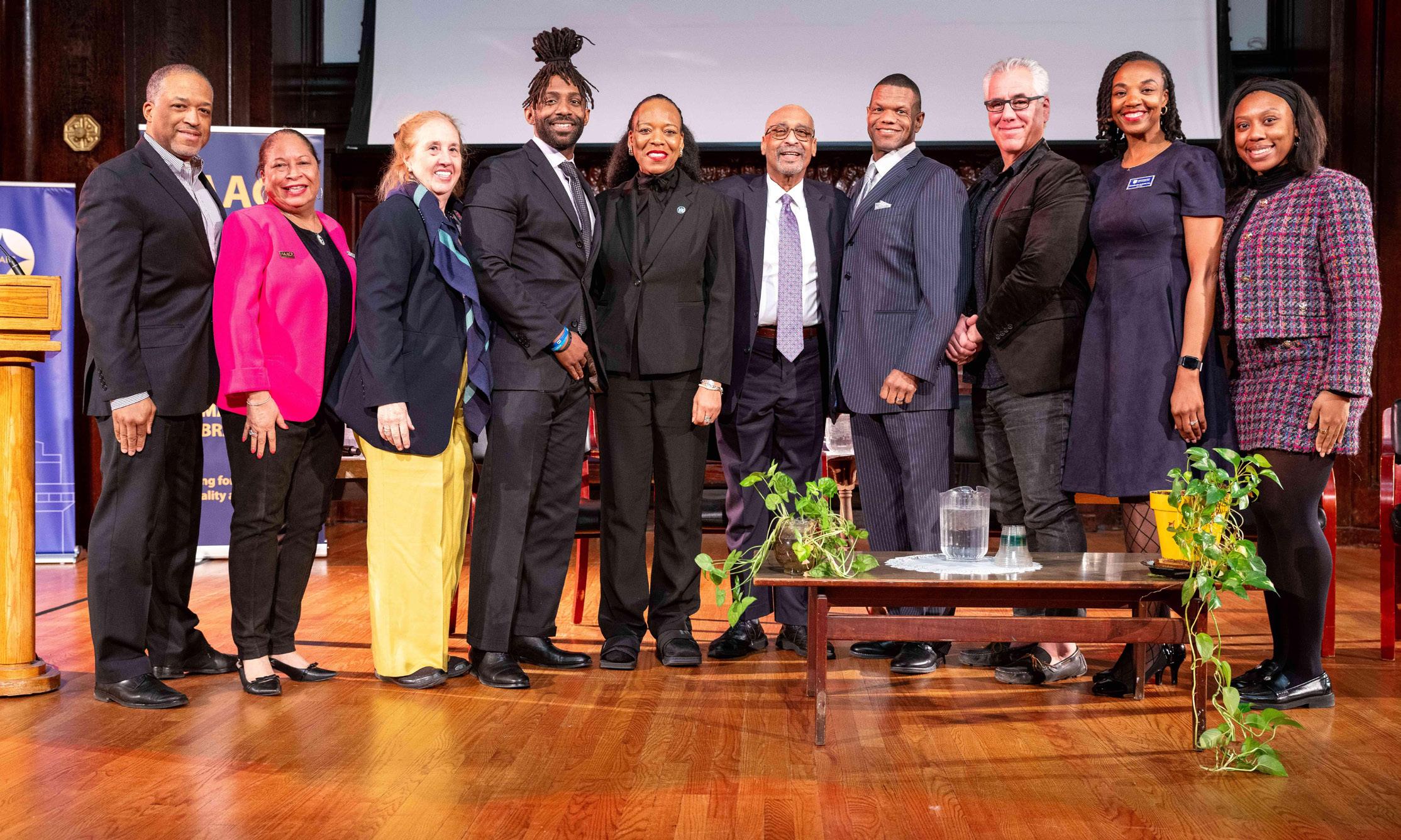
From Left to Right: Garry Johnson, second vice president, NAACP New York State Conference and first vice president, NAACP, MidManhattan Branch; Kyndell Reid, president, NAACP, Mid-Manhattan Branch; Hon. Gale Brewer; New York City Council member, 6th District, Manhattan; Charles Johnson, civic engagement chair, NAACP, Mid-Manhattan Branch; Hon. J. Machelle Sweeting, acting NYS supreme court justice; Arthur W. Greig, Esq., Election Attorney; Hon. Guy Mitchell, acting NYS supreme court ujstice; Michael Oliva, campaign consultant and columnist; Nicole Lester Arrindell, Esq., president of the Metropolitan Black Bar Association, and Zsa’Queria Martin, Esq., co-chair, civic engagement committee, NAACP, Mid-Manhattan Branch. (Nathanial Williams Jr. photo)
when you become a judge. Judges must hold the highest ethical standards, and that means there are some friends who I don’t associate with,” said Acting New York State Supreme Court Justice J. Machelle Sweeting, also from Harlem. “We give up various constitutional rights, so that we can uphold and respect your rights.”
Sweeting underscored how representation strengthens trust in judicial institutions. She considered her years of law school and service on the bench as a longterm investment into herself and her community, rather than just a struggle to pay back debt. She also highlighted the importance of youth engagement, internships, and mentorships that introduce young people to the legal system in positive ways. Her office has even hosted seventh graders from all over the city in her courtroom.
“Especially in the Harlem community, they come to my courtroom, and when they enter the building, they come not because they have
DEMOCRACY PREP NEW YORK SCHOOL MEETING OF BOARD OF TRUSTEES
am., local time. 1767 Park Avenue, New York, NY 10035 4th Floor.
Some board members may choose to participate remotely via video conferencing, but as of this notice it is not clear what their location will be. Please contact Cecil Frazier at cecil.frazier@democracyprep.org for such information once it is finalized.
a case, but because they have an appointment with the judge,” said Sweeting, “and they do their mock trials in the courtroom.”
NAACP organizers emphasized that addressing disparities in judicial represen-
tation requires long-term collaboration among bar associations, law schools, civic organizations, and community leaders to encourage and support more Black men pursuing judicial careers.

By KAREN JUANITA CARRILLO Amsterdam News Staff
Students at LaGuardia Community College who participated in a “CUNYpedia” and Wikimedian-in-Residence-led program have authored a new Wikipedia article titled “African American film score composers” that points out a century of musical accomplishments. The article will help to recognize iconic music by Black artists featured in U.S. films since almost the start of film history, which has often gone unacknowledged.
The article was created in LaGuardia Community College’s “English 103” research methods-oriented class, a course taught by Professor Ximena Gallardo and Librarian Professor Ann Matsuuchi. The instructors told the AmNews they wanted their course to lead to more than a “throwaway” research paper, so they assigned students to identify “knowledge gaps” on Wikipedia — areas where history has been overlooked due to systemic bias or a lack of digital records.
“Wikipedia is an open platform, but it has a lot of gaps and missing things,” said Richard Knipel, CUNY’s Wikimedian-inresidence. “While some composers might have had individual articles, Wikipedia was lacking on things that summarize a whole aspect of history — the struggles and the trends. We wanted to work with students to share this history not just with their professor, but with the public at large.”
“One way to make research real was for students to do work that would actually help the world and have an impact outside of the classroom,” Professor Gallardo explained. “In this particular class, we were trying to see if the students could write an entire article by themselves. It turned out to be a massive undertaking, but this particular student was brilliant. They went for it and loved it.”
Working on the article showed LaGuardia Community College students how they could be part of creating information that would be useful to others. The Wikipedia article details how African American music was portrayed in the first silent films and later in films with sound, like “The Jazz Singer” (1927). It points to the ways film helped spread racial stereotypes and the negative and sometimes positive ways it depicted African American spirituals, folk songs, blues, soul, funk, and hip hop.
The research process required the college students to work with physical archives and connect them with the digital world. For Professor Matsuuchi, an instructional technology librarian, the project was a way to show students that libraries are still valuable even at a time when Google searches are a quicker option.
“Academic librarians support faculty intensely, and it makes sense because Wikipedia is based on books,” Matsuuchi said.
“I wanted students to realize how valuable textual information sources are, especially those that are not visible on digital platforms. We found a whole book on African
Americans in film, and just flipping through it gave us the idea. There wasn’t anything on Wikipedia that provided an overview narrative of all these important people.”
Since its publication in June 2025, the “African American film scorers” article has been accessed nearly 1,000 times.
“It’s a cumulative process,” Knipel added.
“People are still finding important research in the archives about composers from the 1920s and 30s. Now that the article is up, it tells other people, ‘Really, we should be working on this.’ It’s a work in progress, just like history itself.”
Continued from page 3
specifically for state correctional facilities.”
All adults must pass through a body image scanner for a contact visit. Medical exemptions require a lengthy application process. Regulation of the technology largely centers around safe radiation dosage as established by the accreditation board of the American National Standards Institute.
For visitors, opting out of body scans means opting out of contact visits. Those who ask for an alternative screening method like a metal detector or hand wand can only make a non-contact visit behind a glass partition, which imposes a time limit and can be unsettling for children. Meanwhile, research credits contact visits as an essential step in rehabilitation and reentry.
The state faced increased pressure to mandate body image scanning for visitors after an illegal prison guard strike last year demanded it. Currently, there are 88 machines in DOCCS facilities. According to the agency, the body scanner vendor is contractually obligated to train staff on using the machines and there are visible distinctions between detecting contraband and air bubbles.
Last fall, Salazar’s office recounted roughly 50 reports of prison employees turning visitors, usually women, away after screenings detected anomalies. Visitation rights were often subsequently suspended. However, staff never criminally investigated these incidents further for contraband smuggling allegations. Salazar, who chairs the State Senate’s corrections committee, pointed to how scanners regularly pick up tampon strings, surgery scars, and piercings.
“This is a real thing that we hear about all the time,” said Salazar during the press confer-
ence. “Maybe they have a benign tumor that showed up on the scan. That certainly is not contraband. Piercings — these are things that are by no means a threat to safety in facilities and they should not be used as an excuse [for] an incarcerated individual [not to have] the ability to have visitation.”
These body scan issues coincide with state prisons restricting prison visits to weekends, often subjecting friends and families to long waits, and often compounded with already-extensive commutes to the remote towns where many correctional facilities are located.
A DOCCS spokesperson said the department does not comment directly about pending litigation but looks forward to working with state lawmakers to make prisons safer. He also credited decreases across the board in assaults and use-of-force last year to successful prevention efforts against contraband smuggling.
“Contraband, such as drugs and weapons, contribute[s] to violence in prisons, and Commissioner [Daniel F.] Martuscello has set clear goals and instituted new policies to both reduce violence and combat the infiltration of contraband within our facilities,” said the DOCCS spokesperson. “This has resulted in a significant decrease in assaults and a reduction in the amount of contraband found in incoming packages.
“While the department does not comment on pending or proposed legislation, one way DOCCS is battling contraband is with the 88 body scanners across the state for use on visitors, the incarcerated, and staff.”
The NYS Correctional Officers and Police Benevolent Association, a union representing corrections officers, did not respond to requests for comment.

By LAURA ONYENEHO Houston Defender | Word in Black
James Pierre X remembers the moment his father apologized for crying.
The lesson was immediate and unspoken. Men do not show emotion. Men endure.
“A man doesn’t cry,” his father told him. He was reinforcing a belief that shaped how he navigated manhood. X learned to build what he calls “dams,” blocking emotional rivers before they surfaced. Years later, he said he realized the mask he was wearing had become too heavy. So he burned it.
His story reflects what health experts now identify as a growing male loneliness epidemic, a pattern of emotional isolation and social disconnection that is quietly affecting men across the country.
In 2023, U.S. Surgeon General Vivek Murthy issued a national advisory declaring loneliness and social isolation a public health crisis. The report found that chronic loneliness increases the risk of heart disease, stroke, depression, and premature death. Researchers concluded the health impact can rival smoking up to 15 cigarettes a day.
But what exactly is the loneliness epidemic?
The male loneliness epidemic is a growing, serious public health crisis characterized by a sharp rise in men reporting a lack of close friendships, emotional support, and meaningful social connections.
Licensed therapist Katherine Barner explains that loneliness is not simply being alone. It is the distress that comes from feeling unseen, emotionally unsupported, or disconnected from meaningful relationships.
“Many of the Black men I work with are surrounded by people,” Barner said. “They have families, jobs, and responsibilities. But internally, they feel like no one really knows them.”
Barner said social isolation refers to having few relationships or limited contact with others. Loneliness, however, is emotional. A person can be married, employed, and active in church, yet still feel deeply disconnected.
Cultural conditioning plays a significant role for Black men.
“Black boys are often socialized to suppress vulnerability very early,” Barner said. “They are praised for being tough and corrected for being tender. Over time, that suppression becomes automatic.”
Kwesi Dreams is a Houston-based community leader who creates safe spaces for Black men and boys to explore identity, masculinity, and emotional health. Through poetry gatherings, discussion circles, and one-on-
one mentorship, he works to dismantle what he calls inherited emotional silence.
“We’re taught what not to be before we’re ever taught what to be,” Dreams said. “To be a man is separate from being human.”
He describes the phenomenon as emotional castration beginning in boyhood.
Boys learn quickly that softness is punished. Isolation becomes framed as elevation, the lone provider, the stoic protector.
He experienced it firsthand after graduating from college and losing the daily brotherhood he had built on campus. That was the first time he experienced the loneliness epidemic. It felt like graduation, then real life, with no transition whatsoever.
He described struggling to adjust to the distance from close friends and the abrupt shift into adulthood.
“We gotta be real with ourselves to say, I am hurting, I am in pain,” he said. “I be lieve that my brothers can help me to get through this pain.”
According to the Centers for Disease Con trol and Prevention, suicide rates among Black males have risen significantly over the past decade, with notable increases among Black boys and young adults. While over all suicide rates remain higher among white men, experts note that Black men are less likely to access mental health treatment.
Barner said stigma is one of the big gest barriers.
“There is still a perception that therapy is weakness,” she said. “For Black men especially, ad mitting emotional pain can feel like risking respect.”
She also points to structural stressors. Systemic racism, eco nomic inequities, and over-po licing create chronic stress. When that stress is paired with emotion al suppression, it can manifest as irritability, withdrawal, overwork ing, or substance misuse.
Barner said that phrase alone can be powerful. Validation re duces shame, which often fuels isolation. She encour ages men to start with small steps: naming emotions accurately, scheduling intentional check-ins with trust ed friends, and
seeking culturally competent counseling.
“Community can normalize vulnerability,” she said. “Therapy can help unpack trauma beneath it.”
Key Causes and Factors:
• Shrinking Social Circles: Men often rely on partners or work for social connection, leaving them vulnerable to isolation during life changes like retirement or divorce.
• Cultural Expectations: Traditional ideas of masculinity often discourage vulnerability, making it difficult for men to express emotions or seek help.
• Fewer Friendships: Men generally have fewer close friendships than women.
• Lack of Proactive Socializing: Some argue that men sometimes focus too heavily on romantic validation rather than nurturing platonic, community-based friendships.

Assemblymembers Charles D. Fall and Jordan Wright were among participants in a celebration of Eid hosted by Sen. Cordell Cleare at the Children’s Aid Dunlevy Milbank Center (14-32 West 118th Street). Invited attendees included several fellow elected officials, local leaders, community partners, and representatives of the 25plus mosques in the 30th District.
“This is … yet another magnificent community event, where the whole neighborhood unites to celebrate the Iftar with our Muslim family,” said Cleare. “My elected colleagues and local community partners come together as we host our annual tradition, where community organizations, alongside local restaurants, donate delicious food.”
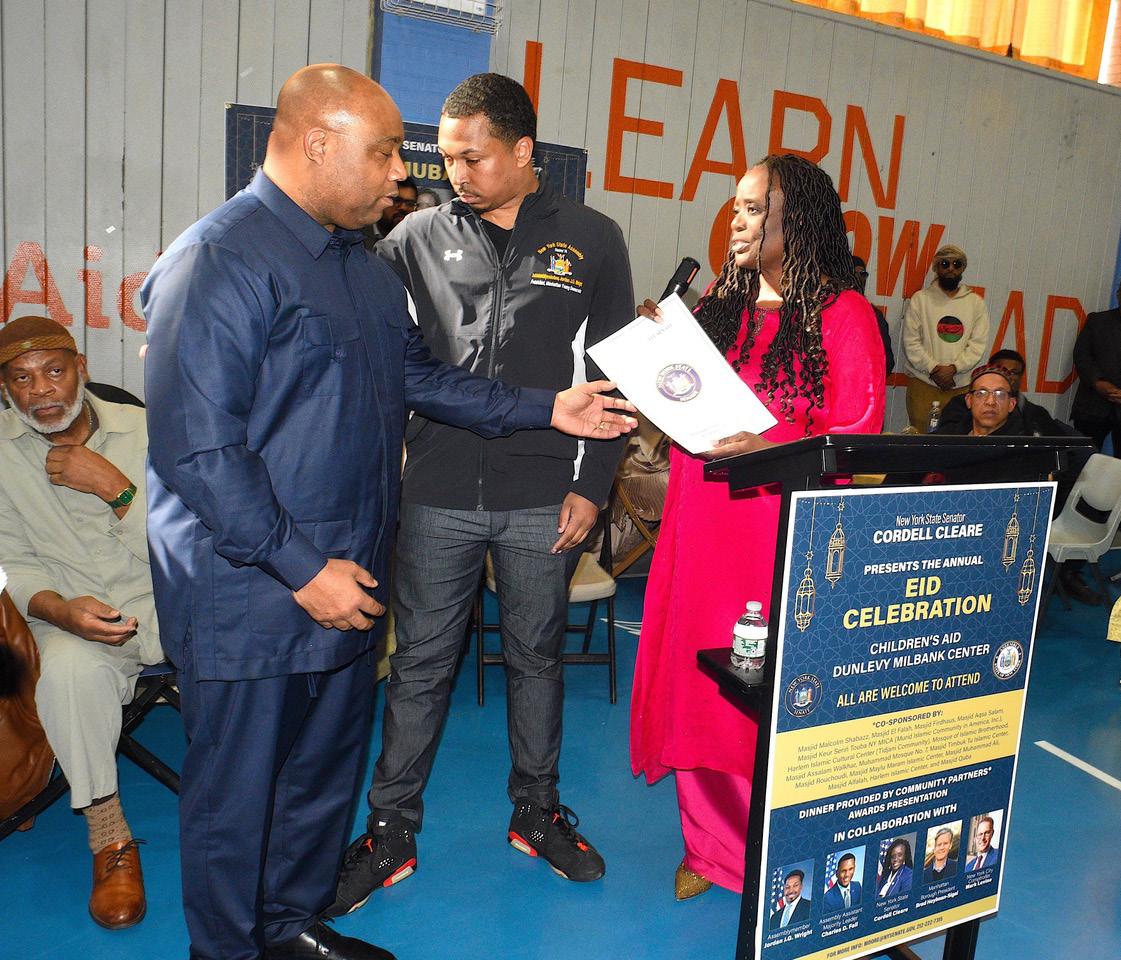
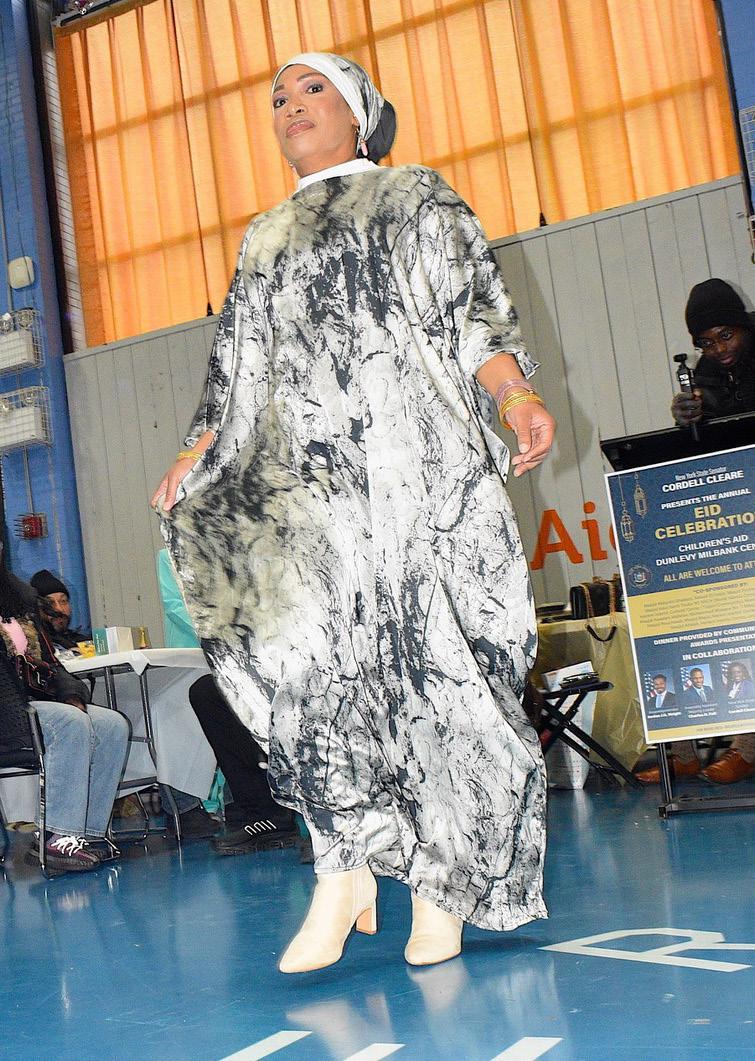
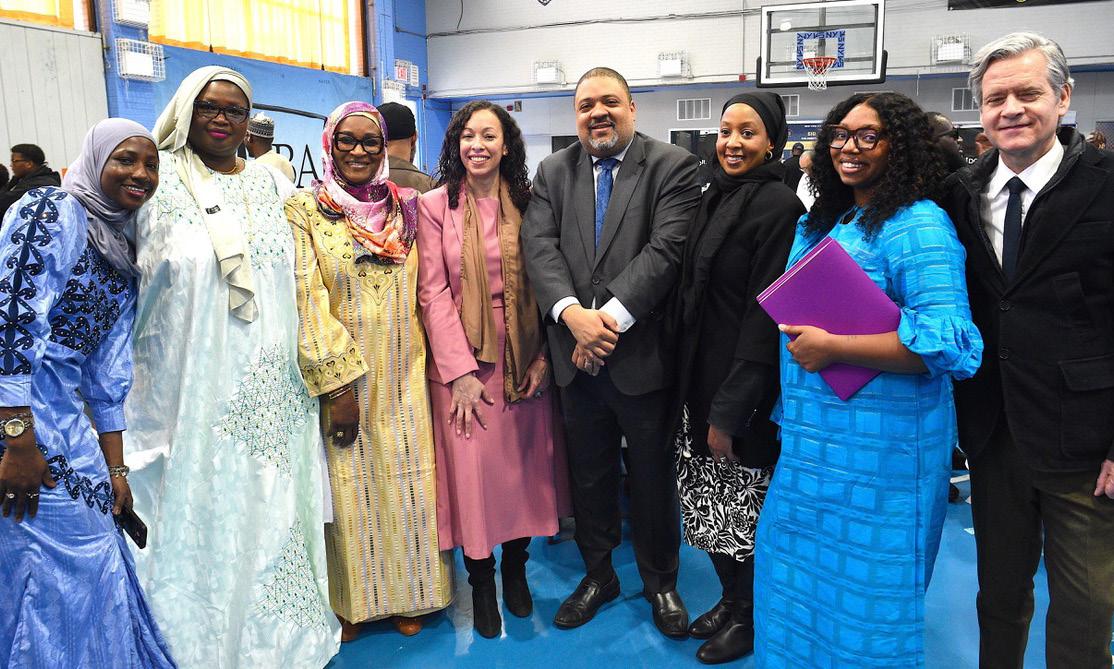
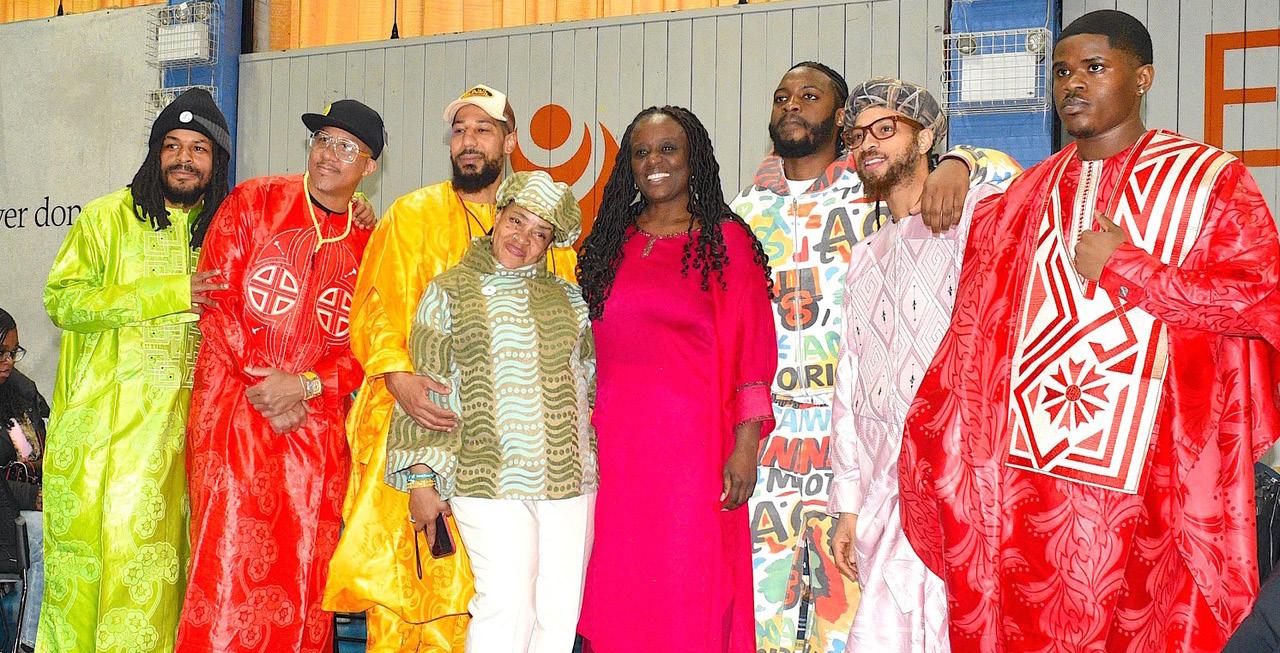
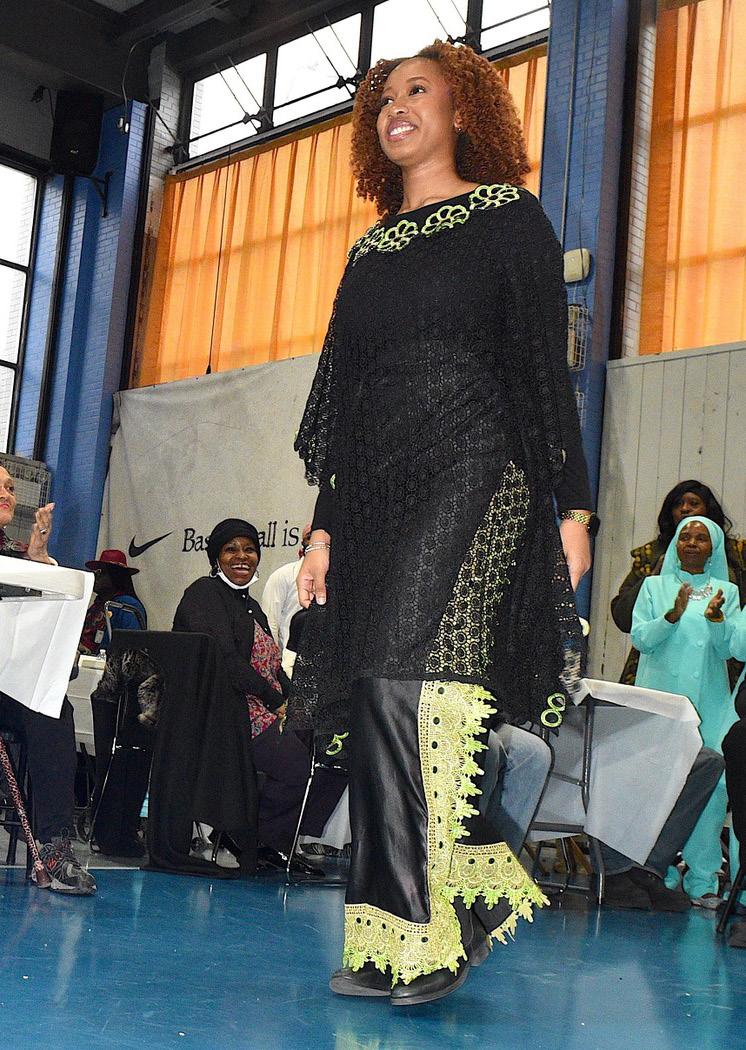
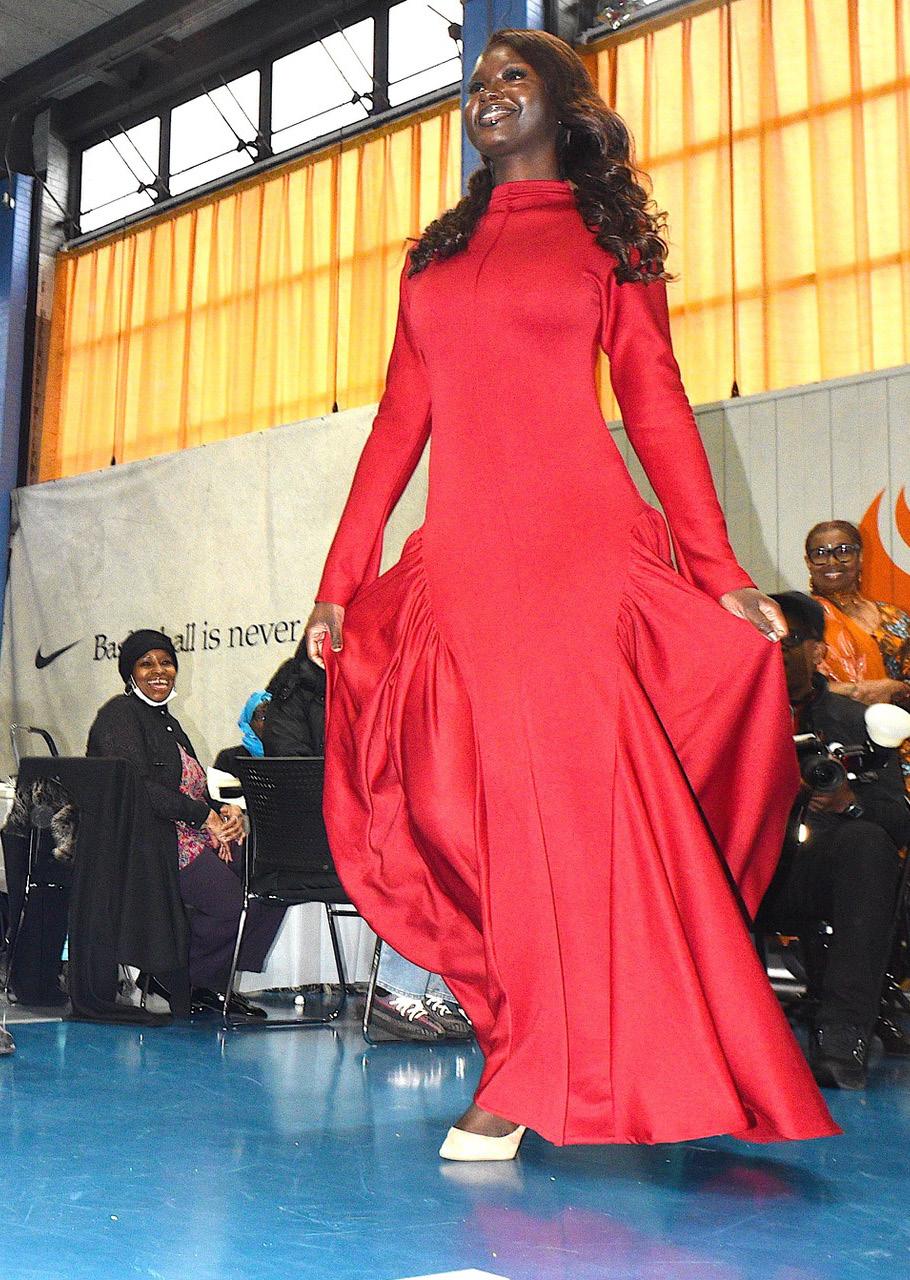
By RONALD E. SCOTT Special to the AmNews
Jeanne Parnell, the veteran radio personality who spent more than two decades on the airways interviewing a cross-section of intoxicating personalities, from choreographer Carmen de Lavallade to Ruby Dee and Ossie Davis, Bob Law, Reverend Al Sharpton, and former presidential nominee Hillary Clinton, died on March 16 at Manhattan’s Memorial Sloan Kettering. She was 89.
Her son Richard Parnell Habersham Jr. confirmed her death on social media. A cause of death was not given.
Parnell’s radio career wasn’t a long-awaited dream; it just happened. Her friend Sanford Moore invited her into the world of radio to host a talk show on WWRL-AM (1970–73). She called her new show “Interesting People.” She was such an intriguing host that her friends Leslie Burns (advertising director) and Jill Ferguson asked her to the premiere of Black sister stations WLIB/WBLS-FM.
“I was in heaven working alongside radio personalities Frankie Crocker, Eddie O’Jay, Rocky G., and Vy Higginsen,” said Parnell during an interview with this writer for the AmNews in 2020. She called this show “The Jean Parnell Revue,” and interviewed such guests as Altovise Davis and Little Anthony of the Imperials (her friends from the Fort Greene Projects). She was at the station for eight years. “I cried when I lost that show. I never wanted to leave radio,” she said.
Her radio career was rejuvenated by the award-winning news radio producer Joe Brown, station manager at WHCR-FM 90.3 (Harlem radio), who offered her a talk show on the station. She held that rein as one of New York’s most popular radio hosts for more than 15 years, past her youthful age of 84. A few years later, health issues commanded her retirement. The veteran of talk covered all avenues, from the arts, film, and TV to special events and Harlem community happenings. Some of her guests included Congressmember Charles Rangel, Audrey Smaltz, Nick Ashford and Valerie Simpson, Lana Turner, and Coreen Simpson. “Every interview is so important to me. It’s a learning experience — each one is so individual,” said Parnell in 2020.
On my maiden voyage into covering music, Jeanne was one of the first media people I met. She was very warm, with a reservoir of information that she often shared with me. In later years, she invited me on her show to talk about jazz and any upcoming events. Her sincerity and willingness to share reflect the legendary radio pioneer Hal Jackson’s motto: “It’s nice to be important, but more important to be nice.” That was Jeanne — a giving person never asking in return. Like so many, I am eternally grateful for her friendship and guidance.
Jeanne Parnell was born on May 20, 1936, in Harlem to Ethel Kollack Parnell and Paul Parnell. The family moved to Brooklyn while Jeanne was still a toddler, finding residence in the Fort Greene Housing Projects. When Jeanne was 7, her mother enrolled her at the Mary Bruce Dance Studio in Harlem. “I loved dancing school,” said Parnell. “It was where I learned [that] I wanted to be seen and heard.”
Her early dancing instruction cemented her acceptance into the prestigious High School for the Performing Arts (now relocated and renamed the LaGuardia High School for the Performing Arts). A few of the Black students in attendance included Arthur Mitchell, who became the founder and artistic director of the Dance Theater of Harlem, and actress Diana Sands.
“Jeanne was an influencer long before the term was coined. Through her journalism and radio careers, she championed Harlem in its glory,” said Harriet Michel. “She was a
lover of all performing arts, especially jazz, and impacted so many lives. I was blessed to call her my friend.”
After her 1954 graduation, Parnell received a scholarship to the then-fledgling Juilliard School of Dance. Ironically, Parnell was not interested; as she explained to her father, “I don’t want to attend another school with all white kids again. He mentioned something about Howard University, but I wasn’t listening.”
Parnell took off to Atlantic City and landed a chorus line job with the Larry Steele Dancers at the famous Club Harlem. She experienced the celebrity glitter for a mere week before her aunt Rosa arrived from New York and took her directly to Howard University as demanded by her father. She stayed and graduated with a fine arts degree in 1958.
After graduation, Parnell returned to New York and attended Columbia Teachers College for graduate school. With degree in hand, she became a teacher for the NYC Board of
Education. Shortly afterward, she accepted an assignment at the Hillary Street office in Brooklyn, working on Channel 25 (education television station). There she became the voice and later writer for the series “Images in Black” and hosted the program “Getting Started,” which focused on the negatives and positives of teaching.
She eventually returned to the classroom, teaching in the gifted student program at P.S. 116 in midtown Manhattan. One of her young students included Alicia Keys, who went on to become a multi-Grammy Award winner. “I turned young people into theater people, introducing them to singing and dancing,” said Parnell.
While still taking on special assignments and teaching full-time during the 1960s, Parnell married her second husband, club owner Richard “Dickie” Habersham (they grew up together in the Fort Greene Projects). He owned five bars in Brooklyn; his flagship and most notable was the Blue Coronet jazz club (during the 1960s through ’70s). Her husband introduced her to such legends as Miles Davis, Roy Haynes, Max Roach, Abbey Lincoln, and Randy Weston. When the married couple moved to Harlem, Habersham purchased Count Basie’s club, which became another hotspot for jazz. He played a major role in helping jazz flourish in Harlem and Brooklyn.
Parnell continued working at the Board of Education and happened to land a job at the AmNews as a columnist under the byline “Dear J” with her photo. People wrote in asking for advice (the column became syndicated in Black newspapers throughout the country). She noted that Nelson George, a film critic at the paper, opened the door for her. “I worked at the Amsterdam News for eight years and loved every minute,” Parnell said in an interview with the AmNews
“Though small in stature, her personality was immense, with an open and loving heart. We will deeply miss Jeanne’s beautiful smile, her keen humor, and wisdom beyond words,” said her good friend Ruth Hunt.
During her tenure at the Board of Education, Parnell earned the position of director of Impact II (an innovative teaching program), supervising the program in the five boroughs at the board’s main office in Brooklyn. She retired in 1995.
“I lived a wonderful life, coming from the projects, attending NYC public schools. I’ve had multiple careers in education, dance, writing, radio, and television,” said Parnell. “I got my real start from the Amsterdam News — that column with my photo validated me for everything I did. They were always there for me.”
Parnell is survived by her son, grandson Richard Habersham III, and daughter-in-law Gretchen Habersham.

names, except as stated, are unknown to plaintiff; RICHARD M. COHEN, ESQ. and JOHN DOE AND JANE DOE #1 through #7, the last seven (7) names being fictitious and unknown to the Plaintiff, the persons or parties intended being the tenants, occupants, persons or parties, if any, having or claiming an interest in or lien upon the mortgaged premises described in the complaint, Defendants.
CANCELLATIONS must be made in writing by 12 Noon Monday.
The forwarding of an order is construed as an acceptance of all advertising rules and conditions under which advertising space is sold by the NEW YORK AMSTERDAM NEWS. Publication is made and charged according to the terms of this card.
Rates and regulations subject to change without notice. No agreements as to position or regulations, other than those printed on this.
Til forbid orders charged for rate earned. Increases or decreases in space take the rate of a new advertisement.
The New York AMSTERDAM NEWS reserves the right to censor, reject, alter or revise all advertisements in accordance with its rules governin g the acceptance of advertising and accepts no liability for its failure to insert an advertisement for any cause. Credit for errors in advertisements allowed only for first insertion.
• Classified advertisements take the regular earned rate of their classification. Four line minimum on all ads except spirituals and horoscopes (14 lines).
CLASSIFIED DISPLAY
• Classified Display (boarder or picture) advertisements take the regular earned rate of their classification. Display (boarder or picture) advertisements one column wide must be 14 lines deep; two columns, 28 lines deep; 3 columns, 56 lines deep. Classified Display (boarder or picture) placed as close to classifications as rules and makeup permit.
All advertisement accepted for publication is classified according to the standard classifications. Misclassification is not permitted.
Charges are based on point size and characters per line. Upon reaching 15 lines the rate converts to column inch. Any deviation from solid composition such as indentation, use of white space, bold type, etc., will incur a premium.
SUPREME COURT ‑ COUNTY OF NEW YORK.
VALLEY NATIONAL BANK, Plaintiff ‑against‑ 325 GREEN WICH STREET LLC, et al De fendant(s). Pursuant to a Judg ment of Foreclosure and Sale dated July 28, 2025 and en tered on September 29, 2025, I, the undersigned Referee will sell at public auction in Room 252 of the New York County Courthouse, 60 Centre Street, New York, NY on Tuesday, April 14, 2026 at 2:15 p.m. premises situate, lying and being in the Borough of Manhattan, Coun ty of New York, City and State of New York, bounded and de scribed as follows: BEGINNING at the intersection of the North erly side of Duane Street and the Easterly side of Greenwich Street; being a plot 50 feet by 40 feet by 50 feet by 40 feet. Block: 143 and Lot: 16. Said premises known as 325 GREENWICH STREET a/k/a 325/327 GREENWICH STREET a/k/a 187 DUANE STREET, NEW YORK, NY
10013
Approximate amount of lien $4,616,960.06 plus interest & costs.
Premises will be sold subject to provisions of filed Judgment and Terms of Sale. Index Number 850452/2023. ROBERTA ASHKIN, ESQ., Ref eree Zeichner Ellman & Krause LLP Attorney(s) for Plaintiff 730 Third Avenue, New York, NY 10017
{* AMSTERDAM*}
NOTICE OF SALE SUPREME COURT COUNTY OF NEW YORK Morgan Stanley Private Bank, National Association, Plaintiff AGAINST Joseph Ceccarelli; et al., Defendant(s) Pursuant to a Judgment of Foreclosure and Sale duly entered April 29, 2021, I, the undersigned Referee, will sell at public auction at the New York County Courthouse, in Room 252, located at 60 Centre St, New York, NY 10007 on April 14, 2026, at 2:15PM, premises known as 200 East 32nd Street, New York City, NY 10016. All that certain plot piece or parcel of land situate, lying and being in the Borough of Manhattan City, County and State of New York, Block 912 Lot 1165. Approximate amount of judgment $1,676,660.05 plus interest and costs. Premises will be sold subject to provisions of filed Judgment Index# 850018/2017 Arthur Greig, Esq., Referee LOGS Legal Group LLP f/k/a Shapiro, DiCaro & Barak, LLC Attorney(s) for the Plaintiff 175 Mile Crossing Boulevard Rochester, New York 14624 (877) 430-4792 Dated: February 26, 2026 89233
MTA NEW YORK CITY TRANSIT (NON-CONSTRUCTION)
SSE #: R34262
Due Date: 9/08/2026
Title: Purchase 2,390 Subway Cars (Base 1,140 cars + Option 1,250 cars)
The Metropolitan Transportation Authority (MTA), acting on the behalf of the New York City Transit (hereinafter the "Authority" or "NYCT"), a public benefit corporation organized under the Public Authorities Law of the State of New York (“NYS”), hereby invites firms to provide proposals for the design, furnishing and delivery of 1140 Cars (the “Base Order”) with an Option to order up to an additional 1250 Cars (the “Option Order”), for the New York City Transit System “A” Division. As detailed in the RFP Overview and Proposal Procedures, both the Base Order and Option Orders have multiple split scenarios consisting of different configurations/combinations of Closed End Cars (the “R262”) and Open Gangway Cars (the “R262OG”). The Contractor will provide all design, engineering, testing, manufacturing, delivery, warranty, training, spare parts, tools, diagnostics test equipment and other services as necessary. Info for the above solicitation(s) can be found on https://www. mta.info/doing-businesswith-us/procurement/newyork-city-transit
NOTICE OF SALE SUPREME COURT COUNTY OF NEW YORK U.S. BANK NA, SUCCESSOR TRUSTEE TO BANK OF AMERICA, NA, SUCCESSOR IN INTEREST TO LASALLE BANK NA, AS TRUSTEE, ON BEHALF OF THE HOLDERS OF THE WAMU MORTGAGE PASS-THROUGH CERTIFICATES, SERIES 2007- HY7, Plaintiff AGAINST TERRE SIEPSER SIMPSON
A/K/A TERRE S. SIMPSON
A/K/A TERRE SIMPSON A/K/A TERRE SIEPSE-SIMPSON; ET AL., Defendant(s) Pursuant to a Judgment of Foreclosure and Sale duly entered August 4, 2025, I, the undersigned Referee will sell at public auction at the New York County Courthouse in Room 252, located at 60 Centre Street, New York, NY on April 28, 2026 at 2:15 PM, premises known as 106 Central Park South, Unit 3B, New York, NY 10019. All that certain plot piece or parcel of land, with the buildings and improvements erected, situate, lying and being in the Borough of Manhattan, City, State and County of New York, Block: 1011 Lot: 4089. Approximate amount of judgment $1,863,650.44 plus interest and costs. Premises will be sold subject to provisions of filed Judgment Index #850164/2023. Allison Furman, Esq., Referee Fein, Such & Crane, LLP 28 East Main Street Rochester, NY 14614 SPSNC846 89363
NOTICE OF SALE SUPREME COURT COUNTY OF NEW YORK U.S. BANK NATIONAL ASSOCIATION, AS TRUSTEE FOR BNC MORTGAGE LOAN TRUST 2006-2, MORTGAGE PASS-THROUGH CERTIFICATES, SERIES 2006-2, Plaintiff AGAINST REGINALD BORGELLA, ET AL., Defendant(s) Pursuant to a Judgment of Foreclosure and Sale duly entered April 1, 2025, I, the undersigned Referee will sell at public auction at the New York County Courthouse in Room 252, located at 60 Centre Street, New York, NY on April 28, 2026 at 2:15 PM, premises known as 140 7th Avenue, Unit 7R, New York, NY 10011. All that certain plot piece or parcel of land, with the buildings and improvements erected, situate, lying and being in the Borough of Manhattan, City of New York, County of New York, State of New York, Block 768, Lot 1203. Approximate amount of judgment $1,043,907.05 plus interest and costs. Premises will be sold subject to provisions of filed Judgment Index #850069/2014. Scott H. Siller, Esq., Referee Gross Polowy, LLC 1775 Wehrle Drive Williamsville, NY 14221 00-299477 89438
NOTICE OF SALE SUPREME COURT NEW YORK COUNTY APEX CONDOMINIUM BOARD OF MANAGERS, Plaintiff against JMJ MANAGEMENT GROUP, LLC, et al Defendant(s) Attorney for Plaintiff(s) Mandelbaum Barrett PC, 570 Lexington Ave, 21st Floor, New York, NY 10022. Pursuant to a Judgment of Foreclosure and Sale entered January 15, 2026, I will sell at public auction to the highest bidder at Room 252 at the Supreme Court, New York County, 60 Centre Street, New York, New York on April 14, 2026 at 2:15 PM. Premises known as 2300 Frederick Douglas Boulevard a/k/a 2300 8th Avenue a/k/a 270 West 124th Street, New York, NY, Unit CFU. Sec 7 Block 1929 Lot 1346. All that certain plot, piece or parcel of land, situate, lying and being in the Borough of Manhattan, City, County and State of New York. Approximate Amount of Judgment is $13,260.30 plus interest, fees, and costs. Premises will be sold subject to provisions of filed Judgment Index No 850101/2025. The foreclosure sale will be conducted in accordance with 1st Judicial District's Covid-19 Policies and foreclosure auction rules. The Referee shall enforce any rules in place regarding facial coverings and social distancing. Referee will only accept a certified bank check made payable to the referee. Jeffrey R. Miller, Esq., Referee File # 41718-001
SUPREME COURT OF THE STATE OF NEW YORK COUNTY OF NEW YORK SUPPLEMENTAL SUMMONS INDEX # 850165/2025 Original filed with Clerk April 8, 2025 Plaintiff Designates New York County as the Place of Trial The Basis of Venue is that the subject action is situated New York County Premises: 159 W 121st St New York, NY 10027 CREDIT SUISSE FIRST BOSTON MORTGAGE SECURITIES CORP., CSMC MORTGAGE-BACKED PASSTHROUGH CERTIFICATES, SERIES 2006-3, U.S. BANK NATIONAL ASSOCIATION, AS TRUSTEE, Plaintiff, -againstDARRYL JONES; WOLLMUTH MAHER & DEUTSCH LLP; DARK MATTER INC.; SALT MILL LLC; GEORGE MILLER; CITIBANK (SOUTH DAKOTA) NA; JOANNE C. NERLINO; MIDLAND FUNDING LLC; NATION’S STANDARD MORTGAGE CORP.; NEW YORK SUPREME COURT; NEW YORK STATE DEPARTMENT OF TAXATION AND FINANCE; NEW YORK CITY ENVIRONMENTAL CONTROL BOARD, NATION’S STANDARD MORTGAGE CORP.; NANCY SCHUNK; MAXIMA WASSERMAN if living, and if he/she be dead, any and all persons unknown to plaintiff, claiming, or who may claim to have an interest in, or generally or specific lien upon the real property described in this action; such unknown persons being herein generally described and intended to be included in the following designation, namely: the wife, widow, husband, widower, heirs at law, next of kin, descendants, executors, administrators, devisees, legatees, creditors, trustees, committees, lienors, and assignees of such deceased, any and all persons deriving interest in or lien upon, or title to said real property by, through or under them, or either of them, and their respective wives,
widows, husbands, widowers, heirs at law, next of kin, descendants, executors, administrators, devisees,
legatees, creditors, trustees, committees, lienors and assigns, all of whom and whose names, except as stated, are unknown to plaintiff; RICHARD M. COHEN, ESQ. and JOHN DOE AND JANE DOE #1 through #7, the last seven (7) names being fictitious and unknown to the Plaintiff, the persons or parties intended being the tenants, occupants, persons or parties, if any, having or claiming an interest in or lien upon the mortgaged premises described in the complaint, Defendants.
TO THE ABOVE-NAMED DEFENDANTS: YOU ARE HEREBY SUMMONED to answer the Complaint in this action and to serve a copy of your answer, or, if the Complaint is not served with this Summons, to serve a
TO THE ABOVE-NAMED DEFENDANTS: YOU ARE HEREBY SUMMONED to answer the Complaint in this action and to serve a copy of your answer, or, if the Complaint is not served with this Summons, to serve a notice of appearance, on the Plaintiff’s Attorney(s) within 20 days after the service of this Summons, exclusive of the day of service (or within 30 days after the service is complete if this Summons is not personally delivered to you within the State of New York); the United States of America may appear or answer within 60 day of service hereof; and in case of your failure to appear or answer, judgment will be taken against you by default for the relief demanded in the Complaint. TO THE TO THE ABOVE NAMED DEFENDANTS: The foregoing Summons is served upon you by publication pursuant to an Order of the Hon. Francis A. Kahn, III, a Justice of the Supreme Court, County of New York on February 11, 2026 and filed with the complaint and other papers in the New York County Clerk’s Office. THE OBJECT OF THE ACTION is to foreclose a mortgage recorded in the Office of the City Register of the City of New York on June 16, 2006 at Instrument No. 2006000342211, covering premises 159 W 121 st Street, New York, NY 10027 a/k/a Block 1906, Lot 6. NOTICE YOU ARE IN DANGER OF LOSING YOUR HOME If you do not respond to this Summons and Complaint by serving a copy of the answer on the attorney for the mortgage company who filed this foreclosure proceeding against you and filing the answer with the court, a default judgment may be entered and you can lose your home. Speak to an attorney or go to the court where your case is pending for further information on how to answer the summons and protect your property. Sending a payment to your mortgage company will not stop this foreclosure action.YOU MUST RESPOND BY SERVING A COPY OF THE ANSWER ON THE ATTORNEY FOR THE PLAINTIFF CREDIT SUISSE FIRST BOSTON MORTGAGE SECURITIES CORP., CSMC MORTGAGE- BACKED PASSTHROUGH CERTIFICATES, SERIES 2006-3, U.S. BANK NATIONAL ASSOCIATION, AS TRUSTEE AND FILING THE ANSWER WITH THE COURT. Dated: Uniondale, New York January 15, 2026 Pincus and Tarab, Attorneys at Law, PLLC By: Robert Markel Robert Markel, Esq. Attorneys for Plaintiff 425 RXR Plaza Uniondale, NY 11556 516-699-8902- File No. 01132025.64781- #102853
NOTICE OF SALE
SUPREME COURT. NEW YORK COUNTY. USALLIANCE FEDERAL CREDIT UNION BY MERGER WITH NEW YORK METRO FEDERAL CREDIT UNION, Pltf. vs., UNKNOWN HEIRS AT LAW OF JAMES MCCASKILL A/K/A JAMES MC CASKILL, HIS NEXT OF KIN, DISTRIBUTEES, EXECUTORS, ADMINISTRATORS, TRUSTEES, DEVISEES, LEGATEES, ASSIGNEES, LIENORS, CEDITORS, AND SUCCESSORS IN INTEREST, AND GENERALLY ALL PERSONS HAVING OR CLAIMING, UNDER, BY OR THROUGH SAID DEFENDANT WHO MAY BE DECEASED, BY PURCHASE, INHERITANCE, LIEN OR OTHERWISE, ANY RIGHT TITLE OR INTEREST IN AND TO THE PREMISES DESCRIBED IN THE COMPLAINT HEREIN, ALL OF WHOM AND WHOSE NAMES AND PLACES OF RESIDENCE ARE UNKNOWN TO THE PLAINTIFF AND CANNOT AFTER DILIGENT INQUIRY BE ASCERTAINED, et al Deft. Index #850257/2022. Pursuant to amended judgment of foreclosure and sale and decision plus order on motion entered December 11, 2025, I will sell at public auction in Room 252 of the New York County Courthouse, 60 Centre Street, New York on April 7, 2026 at 2:15 p.m. prem. k/a 61 West 126th Street, New York, NY 10027 a/k/a Block 1724, Lot 11. Approximate amount of judgment is $150,268.50 plus cost and interest. Sold subject to terms and conditions of filed judgment and terms of sale and the right of the United States of America to redeem within 120 days from the date of sale as provided by law. CHRISTY M. DEMELFI, Referee., MARGOLIN, WEINREB & NIERER, LLP., Attys. for Pltf., 575 Underhill Blvd., Suite 224, Syosset, NY. #102753
NOTICE OF LEGAL POSTPONEMENT OF SALE Supreme Court County of New York Embrace Home Loans, Inc., Plaintiff AGAINST Kwame
Dougan a/k/a Kwame L. Dougan a/k/a Kwame Leslie Dougan, et al, Defendant Pursuant to a Judgment of Foreclosure and Sale duly entered on December 26, 2025, I, the undersigned Referee, will sell at public auction at the New York County Courthouse, 60 Centre Street, Room 252, New York, NY 10007 on March 31, 2026 at 2:15 PM premises known as 207 East 120th Street, Apt 1F, New York, NY 10035. All that certain plot piece or parcel of land, with the buildings and improvements erected, situate, lying and being in the County of New York, City and State of New York, BLOCK: 1785, LOT: 1001. Approximate amount of judgment is $613,091.54 plus interests and costs. Premises will be sold subject to provisions of filed Judgment Index # 850489/2023. Original sale date: March 10, 2026. This sale may be subject to the US Dept of the Treasury’s Financial Crimes Enforcement Network Real Estate Reporting Rule. In such event, all purchasers are required to provide the information needed for proper reporting in accordance with the terms of sale. For sale information, please visit Auction.com at www.Auction.com or call (800) 280-2832. Jason Paul Sackoor, Referee FRENKEL LAMBERT WEISMAN & GORDON LLP 53 Gibson Street Bay Shore, NY 11706 01-098364-F00 89452
SUMMONS Index No. 850443/2025 STATE OF NEW YORK SUPREME COURT – COUNTY OF NEW YORK WILMINGTON SAVINGS FUND SOCIETY, FSB, NOT IN ITS INDIVIDUAL CAPACITY BUT SOLELY AS OWNER TRUSTEE OF OBX 2024NQM7 TRUST, Plaintiff, -vsREUVEN SAGI, whether he/ she be alive or dead, or the successor in interest, if any, of said defendant who may be deceased, and the respective Heirs at Law, next of kin, distributees, devisees, grantees, trustees, lienors, creditors, assignees and successors in interest of the aforesaid classes of persons, if they or any of them be dead, and their respective husbands, wives or widows, if any, all of whom and whose names and places of residence are unknown to the plaintiff; NEW YORK CITY ENVIRONMENTAL CONTROL BOARD; NEW YORK CITY PARKING VIOLATIONS BUREAU; ZAHRA ALSHUMARY; JOHN DOE #2, individual whose name remains unknown to Plaintiff; JANE DOE #1, individual whose name remains unknown to Plaintiff; JOHN DOE #3, individual whose name remains unknown to Plaintiff; JANE DOE #2, individual whose name remains unknown to Plaintiff; Defendants. Mortgaged Premises: 632 West 158th Street, New York, NY 10032 TO THE ABOVE NAMED DEFENDANT(S): YOU ARE HEREBY SUMMONED to answer the Complaint in the above entitled action and to serve a copy of your Answer on the plaintiff’s attorney within twenty (20) days of the service of this Summons, exclusive of the day of service, or within thirty (30) days after service of the same is complete where service is made in any manner other than by personal delivery within the State. The United States of America, if designated as a defendant in this action, may answer or appear within sixty (60) days of service hereof. Your failure to appear or answer will result in a judgment against you by default for the relief demanded in the Complaint. In the event that a deficiency balance remains from the sale proceeds, a judgment may be entered against you, unless the Defendant obtained a bankruptcy discharge and such other or further relief as may be just and equitable. NOTICE YOU ARE IN DANGER OF LOSING YOUR HOME If you do not respond to this summons and complaint by serving a copy of the answer to the attorney for the mortgage company who filed this foreclosure proceeding against you and filing the answer with the court, a default judgment may be entered and you can lose your home. Speak to an attorney or go to the court where your case is pending for further information on how to answer the summons and protect your property. Sending payment to your mortgage company will not stop this foreclosure action. YOU MUST RESPOND BY SERVING A COPY OF THE ANSWER ON THE ATTORNEY FOR THE PLAINTIFF (MORTGAGE COMPANY) AND FILING THE ANSWER WITH THE COURT. NEW YORK County is designated as the place of trial. The basis of venue is the location of the mortgaged premises.
Dated: August 13, 2025 Mark K. Broyles, Esq. FEIN SUCH & CRANE, LLP Attorneys for Plaintiff Office and P.O. Address
28 East Main Street, Suite 1800 Rochester, New York 14614
tion
Dated: August 13, 2025
Mark K. Broyles, Esq. FEIN SUCH & CRANE, LLP Attorneys for
Plaintiff Office and P.O. Address
28 East Main Street, Suite 1800 Rochester, New York 14614
Telephone No. (585) 232-7400
Block: 2134 Lot: 156 NATURE AND OBJECT OF ACTION
The object of the above action is to foreclose a mortgage held by the Plaintiff recorded in the County of NEW YORK, State of New York as more particularly described in the Complaint herein. TO THE DEFENDANT, the plaintiff makes no personal claim against you in this action. To the above named defendants: The foregoing summons is served upon you by publication pursuant to an order of HON. FRANCIS A. KAHN, III Justice of the Supreme Court of the State of New York, dated February 19, 2026 and filed along with the supporting papers in the NEW YORK County Clerk’s Office. This is an action to foreclose a Mortgage. ALL that certain plot, piece or parcel of land, situate, lying and being in the Borough of Manhattan Mortgaged Premises: 632 West 158th Street, New York, NY 10032 Tax Map/Parcel ID No.: Block: 2134 Lot: 156 of the Borough of Manhattan, NY 10032 89336
Ahern Painting Contractors, Inc is seeking M/WBE and SDVOB Subcontractor Proposals for the following MTA Project: "VNM427: Bridge Preservation at the Verrazzano-Narrows Bridge". Please contact Anna at 718639-5880 for details.
Notice of formation of 1315 Madison Street LLC. Articles of Organization filed with the Secretary of State of NY (SSNY) on 3/16/2026. Office location: New York County (Manhattan). SSNY designated as an agent of Limited Liability Company (LLC) upon whom process against it may be served. SSNY should mail process to Katzner Law Group, P.C.: 1407 Broadway, Room 4002, New York, NY 10018. Purpose: Any lawful purpose.
Notice of formation of Afterglow NYC, LLC. Articles of Organization filed with the Secretary of State of NY (SSNY) on 3/09/2026. Office location: New York County (Manhattan). SSNY designated as an agent of Limited Liability Company (LLC) upon whom process against it may be served. SSNY should mail process to Katie Rue: 45 Orchard St, Storefront, New York, NY, 10002. Purpose: Any lawful purpose.
Notice of formation of Studio 258 LLC. Articles of Organization filed with the Secretary of State of NY (SSNY) on 2/17/2026. Office location: New York County (Manhattan). SSNY designated as an agent of Limited Liability Company (LLC) upon whom process against it may be served. SSNY should mail process to Angelina DeSimone: 258 St. Nicholas Avenue #3C, New York, NY 10027. Purpose: Any lawful purpose.
Notice of formation of TESTCOMP. Articles of Organization filed with the Secretary of State of NY (SSNY) on 1/1/2025. Office location: Albany County. SSNY designated as an agent of Limited Liability Company (LLC) upon whom process against it may be served. SSNY should mail process to JESSe: 208 Avenue. Purpose: Any lawful purpose.
Notice of formation of APL Consulting Group LLC. Articles of Organization filed with the Secretary of State of NY (SSNY) on 02/07/2026. Office location: New York County (Manhattan). SSNY designated as an agent of Limited Liability Company (LLC) upon whom process against it may be served. SSNY should mail process to Alyssa Fallon: alyssa@aplconsultinggroup.com. Purpose: Any lawful purpose.
Notice of formation of Brian B Burgess LLC . Articles of Organization filed with the Secretary of State of NY (SSNY) on 01/02/2026. Office location: New York County (Manhattan). SSNY designated as an agent of Limited Liability Company (LLC) upon whom process against it may be served. SSNY should mail process to Brian Burgess : signalspotwireless@ gmail.com. Purpose: Any lawful purpose.
Notice of formation of New York's Studio Salon, LLC. Articles of Organization filed with the Secretary of State of NY (SSNY) on April 1st, 2025. Office location: Queens. SSNY designated as an agent of Limited Liability Company (LLC) upon whom process against it may be served. SSNY should mail process to Evelin Enciso: 10835 53rd ave 2F, NY, New York 11368. Purpose: Any lawful purpose.
Notice of formation of Bondd Pilates, LLC. Articles of Organization filed with the Secretary of State of NY (SSNY) on 10/10/2025. Office location: New York. SSNY designated as an agent of Limited Liability Company (LLC) upon whom process against it may be served. SSNY should mail process to Danielle Daubert: 370 E 76th Street Apt C909, New York, NY 10021. Purpose: Any lawful purpose.
Notice of formation of MIMI AGENCY LLC. Articles of Organization filed with the Secretary of State of NY (SSNY) on 01/06/2026. Office location: New York County (Manhattan). SSNY designated as an agent of Limited Liability Company (LLC) upon whom process against it may be served. SSNY should mail process to Gillian Schutzer: Gillian.Schutzer@ gmail.com. Purpose: Any lawful purpose.
Notice of formation of Epj Psych LLC. Articles of Organization filed with the Secretary of State of NY (SSNY) on 09/15/2025. Office location: New York County (Manhattan). SSNY designated as an agent of Limited Liability Company (LLC) upon whom process against it may be served. SSNY should mail process to Legal Zoom: 9000 Spectrum Drive Austin Texas 78758. Purpose: Any lawful purpose.
Notice of formation of 149 West 126th Street, LLC. Articles of Organization filed with the Secretary of State of NY (SSNY) on 11/03/2025. Office location: New York County (Manhattan). SSNY designated as an agent of Limited Liability Company (LLC) upon whom process against it may be served. SSNY should mail process to 149 West 126th Street, LLC: 149 West 126th Street, New York, NY 10027. Purpose: Any lawful purpose.
Notice of formation of GALA DINNERS LLC . Articles of Organization filed with the Secretary of State of NY (SSNY) on 03/06/2026. Office location: New York County (Manhattan). SSNY designated as an agent of Limited Liability Company (LLC) upon whom process against it may be served. SSNY should mail process to eResidentAgent, Inc.: 1 Rockefeller Plaza, Suite 1204, New York, NY 10020. Purpose: Any lawful purpose.
Notice of formation of Hawkes Fine Art LLC. Articles of Organization filed with the Secretary of State of NY (SSNY) on 01/25/2026. Office location: New York County (Manhattan). SSNY designated as an agent of Limited Liability Company (LLC) upon whom process against it may be served. SSNY should mail process to United States Corporation Agents, Inc.: 7014 13th Ave, Suite 202, Brooklyn, NY 11228. Purpose: Any lawful purpose.
Notice of formation of Jenny Rader Bookkeeping LLC. Articles of Organization filed with the Secretary of State of NY (SSNY) on 12/14/2025. Office location: New York County (Manhattan). SSNY designated as an agent of Limited Liability Company (LLC) upon whom process against it may be served. SSNY should mail process to Jenny Rader: 217 West 18th Street, New York, NY. Purpose: Any lawful purpose.
Notice of formation of JINSAI LLC. Articles of Organization filed with the Secretary of State of NY (SSNY) on 2/17/2026. Office location: New York County (Manhattan). SSNY designated as an agent of Limited Liability Company (LLC) upon whom process against it may be served. SSNY should mail process to Ameer Youssef: 72 Barrow Street Apt 2E, New York NY, 10014. Purpose: Any lawful purpose.
Notice of formation of Arlen Joy Caranay, NP in Psychiatry PLLC. Articles of Organization filed with the Secretary of State of NY (SSNY) on 12/30/2025. Office location: New York County (Manhattan). SSNY designated as an agent of Professional Limited Liability Company (PLLC) upon whom process against it may be served. SSNY should mail process to Arlen Joy Caranay : Arlenjoy.caranay@gmail.com. Purpose: Any lawful purpose.
Notice of formation of Lindi Gordon Photography, LLC. Articles of Organization filed with the Secretary of State of NY (SSNY) on 2/02/2026. Office location: New York County (Manhattan). SSNY designated as an agent of Limited Liability Company (LLC) upon whom process against it may be served. SSNY should mail process to ZenBusiness: RA@ZenBusiness.com. Purpose: Any lawful purpose.
Notice of formation of Truffle Omelette LLC. Articles of Organization filed with the Secretary of State of NY (SSNY) on 01/15/2026. Office location: New York County (Manhattan). SSNY designated as an agent of Limited Liability Company (LLC) upon whom process against it may be served. SSNY should mail process to David Allee: david@davidallee.com. Purpose: Any lawful purpose.
Notice of formation of STONE AND BLOEM LLC. Articles of Organization filed with the Secretary of State of NY (SSNY) on FEBRUARY 19,2026. Office location: New York County (Manhattan). SSNY designated as an agent of Limited Liability Company (LLC) upon whom process against it may be served. SSNY should mail process to JENNIFER M. STONE: 2109 Broadway New York, NY 10023. Purpose: Any lawful purpose.
Notice of formation of IRVING GOODS, LLC. Articles of Organization filed with the Secretary of State of NY (SSNY) on 02/02/2026. Office location: New York County (Manhattan). SSNY designated as an agent of Limited Liability Company (LLC) upon whom process against it may be served. SSNY should mail process to ERESIDENTAGENT, INC. : 1 ROCKEFELLER PLAZA, SUITE 1204 NEW YORK, NY, 10020, USA. Purpose: Any lawful purpose.
Notice of formation of Village West LLC. Articles of Organization filed with the Secretary of State of NY (SSNY) on 2/18/2026. Office location: New York County (Manhattan). SSNY designated as an agent of Limited Liability Company (LLC) upon whom process against it may be served. SSNY should mail process to Evergreen Capital LP: 40 Bleecker St, Suite PH-F, NY, NY 10012. Purpose: Any lawful purpose.
Notice of formation of NOT4SALE LLC. Articles of Organization filed with the Secretary of State of NY (SSNY) on 01/06/2026. Office location: New York County (Manhattan). SSNY designated as an agent of Limited Liability Company (LLC) upon whom process against it may be served. SSNY should mail process to Michael Linczyc: 9 West 31st Street, Suite 26F, New York, NY 10001. Purpose: Any lawful purpose.
Notice of formation of Wendy Li, MD, PLLC. Articles of Organization filed with the Secretary of State of NY (SSNY) on 11/13/2025. Office location: New York County (Manhattan). SSNY designated as an agent of Professional Limited Liability Company (PLLC) upon whom process against it may be served. SSNY should mail process to Wendy Li: li.wendy13@ gmail.com. Purpose: Any lawful purpose.
Notice of formation of Still Loft LLC. Articles of Organization filed with the Secretary of State of NY (SSNY) on 1/25/2006. Office location: New York County (Manhattan). SSNY designated as an agent of Limited Liability Company (LLC) upon whom process against it may be served. SSNY should mail process to Val Moran: stillloftllc@ gmail.com. Purpose: Any lawful purpose.
Notice of formation of Treehouse Creative LLC. Articles of Organization filed with the Secretary of State of NY (SSNY) on 2/03/2026. Office location: New York County (Manhattan). SSNY designated as an agent of Limited Liability Company (LLC) upon whom process against it may be served. SSNY should mail process to Corey Green: corey@treehousecreativenyc.com. Purpose: Any lawful purpose.
Notice of formation of SORAVELLE LLC. Articles of Organization filed with the Secretary of State of NY (SSNY) on 01/02/2026. Office location: New York County (Manhattan).
SSNY designated as an agent of Limited Liability Company (LLC) upon whom process against it may be served. SSNY should mail process to Secretary of State of New York: 603 W 184TH STREET APT 1EF, NEW YORK, NY, 10033. Purpose: Any lawful purpose.
Notice of formation of Social Atlas Media LLC. Articles of Organization filed with the Secretary of State of NY (SSNY) on 02/10/2026. Office location: New York County (Manhattan).
SSNY designated as an agent of Limited Liability Company (LLC) upon whom process against it may be served. SSNY should mail process to United States Corporation Agents, INC. : 7014 13th Avenue, Suite 202, Brooklyn, NY, 11228. Purpose: Any lawful purpose.
Notice of formation of Thomaston Park LLC. Articles of Organization filed with the Secretary of State of NY (SSNY) on 1/16/2026. Office location: New York County (Manhattan). SSNY designated as an agent of Limited Liability Company (LLC) upon whom process against it may be served. SSNY should mail process to United States Corporation Agents, Inc.: 7014 13th Avenue Suite 202, Brooklyn, NY 11228. Purpose: Any lawful purpose.
Notice of formation of TAX
JOYERIA LLC . Articles of Organization filed with the Secretary of State of NY (SSNY) on 01/23/2026. Office location: New York County (Manhattan). SSNY designated as an agent of Limited Liability Company (LLC) upon whom process against it may be served. SSNY should mail process to CARLOS TAX: 71 WEST 47TH ST OFFICE 904 NEW YORK, NY 10036. Purpose: Any lawful purpose.
Notice of formation of The Picture Palace LLC. Articles of Organization filed with the Secretary of State of NY (SSNY) on 10/26/2025. Office location: New York County (Manhattan).
SSNY designated as an agent of Limited Liability Company (LLC) upon whom process against it may be served. SSNY should mail process to SSNY: 228 PARK AVE S #603848, NEW YORK, NY, 10003, USA. Purpose: Any lawful purpose.
Notice of formation of Emerson Rose Properties LLC. Articles of Organization filed with the Secretary of State of NY (SSNY) on 01/29/2026. Office location: Kings County (Brooklyn). SSNY designated as an agent of Limited Liability Company (LLC) upon whom process against it may be served. SSNY should mail process to Michael Emerson Ryan : mike@emersonroseny.com. Purpose: Any lawful purpose.
AUTOMOTIVE PRODUCTS1
LLC Articles of Org. filed
NY Sec. of State (SSNY)
02/03/2026. Office in New York
Co. SSNY desig. agent of LLC upon whom process may be served. SSNY shall mail copy of process to 13251A POPLE AVE # 2FLF, FLUSHING, NY 11355. Purpose: Any lawful purpose.
Notice of formation of Inverniam Consulting LLC. Articles of Organization filed with the Secretary of State of NY (SSNY) on 10/04/2025. Office location: New York County (Manhattan). SSNY designated as an agent of Limited Liability Company (LLC) upon whom process against it may be served. SSNY should mail process to UNITED STATES CORPORATION AGENTS, INC.: 7014 13TH AVENUE, SUITE 202 BROOKLYN, NY, 11228, USA. Purpose: Any lawful purpose.
Notice of formation of Niner Ivy LLC. Articles of Organization filed with the Secretary of State of NY (SSNY) on 1/9/2026. Office location: New York County (Manhattan). SSNY designated as an agent of Limited Liability Company (LLC) upon whom process against it may be served. SSNY should mail process to UNITED STATES CORPORATION AGENTS, INC.: 7014 13TH AVENUE , SUITE 202 BROOKLYN, NY, 11228, USA. Purpose: Any lawful purpose.
Notice of formation of What's Underneath Media, LLC. Articles of Organization filed with the Secretary of State of NY (SSNY) on 10/24/2025. Office location: New York County (Manhattan). SSNY designated as an agent of Limited Liability Company (LLC) upon whom process against it may be served. SSNY should mail process to WHAT'S UNDERNEATH MEDIA, LLC: 101 PARK AVE, SUITE 1700 NEW YORK, NY, 10178, USA. Purpose: Any lawful purpose.
Notice of formation of 113 West 126th Street, LLC. Articles of Organization filed with the Secretary of State of NY (SSNY) on 11/03/2025. Office location: New York County (Manhattan). SSNY designated as an agent of Limited Liability Company (LLC) upon whom process against it may be served. SSNY should mail process to 113 West 126th Street, LLC: 149 West 126th Street, New York, NY 10027. Purpose: Any lawful purpose.
Notice of formation of ALBERTCOLOR-HAIR NYC, LLC. Articles of Organization filed with the Secretary of State of NY (SSNY) on July 01 2025. Office location: New York County (Manhattan). SSNY designated as an agent of Limited Liability Company (LLC) upon whom process against it may be served. SSNY should mail process to UNITED STATES CORPORATION AGENTS, INC: 7014 13TH AVENUE SUITE 202 BROOKLYN NY 11228. Purpose: Any lawful purpose.
Notice of Qualification of iVigee USA LLC. Certificate of Authority filed with Secretary of State of NY (SSNY) on 02/17/2026. Office location: New York County (Manhattan). Limited Liability Company (LLC) formed on 02/19/2013. SSNY designated as agent of Limited Liability Company (LLC) upon whom process against it may be served. SSNY shall mail process to iVigee USA LLC: c/o Shui Ki Seto, M.D., 1500 District Ave, Burlington, MA 01803. Articles of Organization originally filed with Secretary of State (SOS). c/o Shui Ki Seto, M.D., 1500 District Ave, Burlington, MA 01803 Purpose: Any lawful purpose.
Notice of formation of Atelier ADW, LLC. Articles of Organization filed with the Secretary of State of NY (SSNY) on 02/24/2026. Office location: New York County (Manhattan). SSNY designated as an agent of Limited Liability Company (LLC) upon whom process against it may be served. SSNY should mail process to ERESIDENTAGENT, INC. : 1 ROCKEFELLER PLAZA, SUITE 1204 NEW YORK, NY, 10020. Purpose: Any lawful purpose.
Notice of formation of Wifi Shark LLC. Articles of Organization filed with the Secretary of State of NY (SSNY) on 05/23/2024. Office location: New York County (Manhattan). SSNY designated as an agent of Limited Liability Company (LLC) upon whom process against it may be served. SSNY should mail process to Joshua Ryan Gerson: 326 Columbus Ave Apt 5J, New York, NY 10023. Purpose: Any lawful purpose.
Notice of Qualification of Four Seasons Promos, LLC. Certificate of Authority filed with Secretary of State of NY (SSNY) on 02/06/2026. Office location: New York County (Manhattan). Limited Liability Company (LLC) formed on 03/31/2017. SSNY designated as agent of Limited Liability Company (LLC) upon whom process against it may be served. SSNY shall mail process to Botwinick & Company, LLC: 365 W. Passaic Street Rochelle Park NJ 07662. Articles of Organization originally filed with Secretary of State (SOS). 40 E. 80th St. NYC NY 10075 Purpose: Any lawful purpose.
Notice of Qualification of Loft on 53 White Street LLC. Certificate of Authority filed with Secretary of State of NY (SSNY) on 12/30/2025. Office location: New York County (Manhattan). Limited Liability Company (LLC) formed on 05/19/2025. SSNY designated as agent of Limited Liability Company (LLC) upon whom process against it may be served. SSNY shall mail process to SSNY: c/o Clermont Directors (USA) Corp., 2 Righter Parkway, Suite 100, Wilmington, DE 19803. Articles of Organization originally filed with Secretary of State (SOS). 401 Federal St., Dover, DE 19901 Purpose: Any lawful purpose.
Notice of Qualification of The Becoming Agency LLC. Certificate of Authority filed with Secretary of State of NY (SSNY) on 02/02/2026. Office location: New York County (Manhattan). Limited Liability Company (LLC) formed on 01/20/2026. SSNY designated as agent of Limited Liability Company (LLC) upon whom process against it may be served. SSNY shall mail process to United States Corporation Agents, Inc.: 7014 13th Avenue , Suite 202, Brooklyn, NY, 11228. Articles of Organization originally filed with Secretary of State (SOS). 142 Autumn Ln, Altoona, PA 16601 Purpose: Any lawful purpose.
MARLOW 1 LLC. Arts. of Org. filed with the SSNY on 03/04/26. Office: New York County. SSNY designated as agent of the LLC upon whom process against it may be served. SSNY shall mail copy of process to the LLC, c/o Blumenson Accounting, 420 Lexington Avenue, Suite 300, New York, NY 10170. Purpose: Any lawful purpose.
Notice of Formation of 2794 MILL AVE OWNER LLC Arts. of Org. filed with Secy. of State of NY (SSNY) on 02/23/26. Office location: NY County. Princ. office of LLC: 1384 Broadway, Ste. 1004, NY, NY 10018. SSNY designated as agent of LLC upon whom process against it may be served. SSNY shall mail process to Corporation Service Co., 80 State St., Albany, NY 122072543. Purpose: Real estate.
NOTICE FOR FORMATION of a limited liability company (LLC). The name of the limited liability company is 350 W42 8L LLC. The date of filing of the articles of organization with the Department of State was February 9, 2026. The County in New York in which the office of the company is located is New York. The Secretary of State has been designated as agent of the company upon whom process may be served, and the Secretary of State shall mail a copy of any process against the company served upon him or her to The LLC, 30 Riverside Boulevard, 31B, New York, NY 10069. The business purpose of the company is to engage in any and all business activities permitted under the laws of the State of New York.
Notice of Qualification of ESPN SALES & MARKETING, LLC
Appl. for Auth. filed with Secy. of State of NY (SSNY) on 02/06/26. Office location: NY County. LLC formed in Delaware (DE) on 08/06/98. SSNY designated as agent of LLC upon whom process against it may be served. SSNY shall mail process to Corporation Service Co. (CSC), 80 State St., Albany, NY 12207-2543. DE addr. of LLC: c/o CSC, 251 Little Falls Dr., Wilmington, DE 19808. Cert. of Form. filed with Secy. of State, John G. Townsend Bldg., 401 Federal St., Ste. 4, Dover, DE 19901. Purpose: Any lawful activity.
Notice of Qualification of QUALITY PERFORMANCE CLEANING HOLDINGS, LLC
Appl. for Auth. filed with Secy. of State of NY (SSNY) on 02/03/26. Office location: NY County. LLC formed in Delaware (DE) on 01/28/26. SSNY designated as agent of LLC upon whom process against it may be served. SSNY shall mail process to the LLC, 5200 Town Center Circle, Ste. 306, Boca Raton, FL 33486. DE addr. of LLC: c/o Corporation Service Co., 251 Little Falls Dr., Wilmington, DE 19808. Cert. of Form. filed with Charuni P. Sanchez, Div. of Corps., John G. Townsend Bldg., 401 Federal St., Ste. 4, Dover, DE 19901. Purpose: Any lawful activity.
Notice of Qualification of LINK LOGISTICS REAL ESTATE MANAGEMENT LLC
Appl. for Auth. filed with Secy. of State of NY (SSNY) on 02/03/26. Office location: NY County. LLC formed in Delaware (DE) on 09/05/13. SSNY designated as agent of LLC upon whom process against it may be served. SSNY shall mail process to Corporation Service Co., 80 State St., Albany, NY 12207-2543. DE addr. of LLC: 251 Little Falls Dr., Wilmington, DE 19808. Cert. of Form. filed with Secy. of State, Charuni Patibanda-Sanchez, 401 Federal St., Ste. 4, Dover, DE 19901. Purpose: Any lawful activity.
CYNDE IVERSON DESIGNS, LLC filed Arts. of Org. with the Sect'y of State of NY (SSNY) on 12/17/2025. Office: New York County. SSNY has been designated as agent of the LLC upon whom process against it may be served and shall mail process to: The LLC, 263 W 136th St, New York, NY 10030. Purpose: any lawful act.
CRESCENT ROAD LLC Articles of Org. filed NY Sec. of State (SSNY) 10/10/2025. Office in New York Co. SSNY desig. agent of LLC upon whom process may be served. SSNY shall mail copy of process to 169 Madison Ave Ste 38431, New York, NY 10016. Purpose: Any lawful purpose.
Notice of Formation of FORTUNE AND GLORY LLC
Arts. of Org. filed with Secy. of State of NY (SSNY) on 03/13/26. Office location: NY County. Princ. office of LLC: 509 E 83rd St., #3W, NY, NY 10028. SSNY designated as agent of LLC upon whom process against it may be served. SSNY shall mail process to Corporation Service Co., 80 State St., Albany, NY 12207-2543. Purpose: Any lawful activity.
Notice of Formation of TH135 LLC
Arts. of Org. filed with Secy. of State of NY (SSNY) on 03/12/26. Office location: NY County. SSNY designated as agent of LLC upon whom process against it may be served. SSNY shall mail process to Corporation Service Co., 80 State St., Albany, NY 122072543. Purpose: Any lawful activity.
Notice of Formation of CT INVESTOR 2026, LLC
Arts. of Org. filed with Secy. of State of NY (SSNY) on 03/13/26. Office location: NY County. Princ. office of LLC: 30 Hudson Yards, 72nd Fl., NY, NY 10001. SSNY designated as agent of LLC upon whom process against it may be served. SSNY shall mail process to Corporation Service Co., 80 State St., Albany, NY 12207. Purpose: Any lawful activity.
Notice of Formation of FRESH WATER POND DEVELOPER, LLC
Arts. of Org. filed with Secy. of State of NY (SSNY) on 03/13/26. Office location: NY County. Princ. office of LLC: 30 Hudson Yards, 72nd Fl., NY, NY 10001. SSNY designated as agent of LLC upon whom process against it may be served. SSNY shall mail process to Corporation Service Co., 80 State St., Albany, NY 12207. Purpose: Any lawful activity.
Notice of Qualification of 63 MADISON DF PARTICIPANT LLC Appl. for Auth. filed with Secy. of State of NY (SSNY) on 03/12/26. Office location: NY County. LLC formed in Delaware (DE) on 03/05/26. Princ. office of LLC: 1 Vanderbilt Ave., NY, NY 10017. SSNY designated as agent of LLC upon whom process against it may be served. SSNY shall mail process to Corporation Service Co., 80 State St., Albany, NY 12207-2543. DE addr. of LLC: 251 Little Falls Dr., Wilmington, DE 19808. Cert. of Form. filed with Secy. of State, 401 Federal St., Ste. 4, Dover, DE 19901. Purpose: Any lawful activity.
Notice of Qualification of 127W28 HOTEL NOTEHOLDER, LLC Appl. for Auth. filed with Secy. of State of NY (SSNY) on 02/13/26. Office location: NY County. LLC formed in Delaware (DE) on 02/10/26. SSNY designated as agent of LLC upon whom process against it may be served. SSNY shall mail process to c/o 109Co, 54 West 21st St., Ste. 607, NY, NY 10010. DE addr. of LLC: 251 Little Falls Dr., Wilmington, DE 19808. Cert. of Form. filed with Secy. of State, Div. of Corps., 401 Federal St., Ste. 4, Dover, DE 19901. Purpose: Any lawful activity.
Notice of Qualification of ESPN PRODUCTIONS, LLC Appl. for Auth. filed with Secy. of State of NY (SSNY) on 02/06/26. Office location: NY County. LLC formed in Delaware (DE) on 02/16/94. SSNY designated as agent of LLC upon whom process against it may be served. SSNY shall mail process to Corporation Service Co. (CSC), 80 State St., Albany, NY 12207-2543. DE addr. of LLC: c/o CSC, 251 Little Falls Dr., Wilmington, DE 19808. Cert. of Form. filed with Secy. of State, John G. Townsend Bldg., 401 Federal St., Ste. 3, Dover, DE 19901. Purpose: Any lawful activity.
Notice of Qualification of ESPN ENTERPRISES, LLC Appl. for Auth. filed with Secy. of State of NY (SSNY) on 02/06/26. Office location: NY County. LLC formed in Delaware (DE) on 03/15/89. SSNY designated as agent of LLC upon whom process against it may be served. SSNY shall mail process to Corporation Service Co. (CSC), 80 State St., Albany, NY 12207-2543. DE addr. of LLC: c/o CSC, 251 Little Falls Dr., Wilmington, DE 19808. Cert. of Form. filed with Secy. of State, John G. Townsend Bldg., 401 Federal St., Ste. 3, Dover, DE 19901. Purpose: Any lawful activity.
Notice of Qualification of ESPN, LLC Appl. for Auth. filed with Secy. of State of NY (SSNY) on 02/06/26. Office location: NY County. LLC formed in Delaware (DE) on 06/16/82. SSNY designated as agent of LLC upon whom process against it may be served. SSNY shall mail process to Corporation Service Co. (CSC), 80 State St., Albany, NY 12207-2543. DE addr. of LLC: c/o CSC, 251 Little Falls Dr., Wilmington, DE 19808. Cert. of Form. filed with Secy. of State, John G. Townsend Bldg., 401 Federal St., Ste. 4, Dover, DE 19901. Purpose: Any lawful activity.
Notice of Qualification of ESPN CLASSIC, LLC Appl. for Auth. filed with Secy. of State of NY (SSNY) on 02/06/26. Office location: NY County. LLC formed in Delaware (DE) on 09/16/96. SSNY designated as agent of LLC upon whom process against it may be served. SSNY shall mail process to Corporation Service Co. (CSC), 80 State St., Albany, NY 12207-2543. DE addr. of LLC: c/o CSC, 251 Little Falls Dr., Wilmington, DE 19808. Cert. of Form. filed with Secy. of State, John G. Townsend Bldg., 401 Federal St., Ste. 4, Dover, DE 19901. Purpose: Any lawful activity.
Application for Authority of APG Six Int LLC filed with the Secy. of State of NY (SSNY) on 2/20/2026. Formed in DE on 2/19/2026. Office loc.: NY County. SSNY is designated as agent of LLC upon whom process against it may be served. The address SSNY shall mail copy of process to 379 Thornall St., Fl. 9. Ste. 9, Edison, NJ 08837. The office address required to be maintained in DE is 919 N. Market St., Ste. 425, Wilmington, DE 19801. Cert. of formation filed with the DE Secy. of State, 401 Federal St., Ste. 4, Dover, DE 19901. Purpose: Any lawful activity.
with
of State of
(SSNY) on 02/24/26. Office location:
County. Princ. office of
360 W. 119th St., Apt. 4A, NY, NY 10026. SSNY designated as agent of LLC upon whom process against it may be served. SSNY shall mail process to the LLC at the addr. of its princ. office. Purpose: Any lawful activity.
Notice of Qualification of TERMINAL F&B TRS (UPSCALE)
LP Appl. for Auth. filed with Secy. of State of NY (SSNY) on 01/30/26. Office location: NY County. LP formed in Delaware (DE) on 01/28/26. NYS fictitious name: TERMINAL F&B TRS (UPSCALE) L.P. Duration of LP is Perpetual. SSNY designated as agent of LP upon whom process against it may be served. SSNY shall mail process to Corporation Service Co. (CSC), 80 State St., Albany, NY 122072543. Name and addr. of each general partner are available from SSNY. DE addr. of LP: c/o CSC, 251 Little Falls Dr., Wilmington, DE 19808. Cert. of LP filed with Secy. of State, John G. Townsend Bldg., 401 Federal St., Ste. 4, Dover, DE 19901. Purpose: Any lawful activity.
Notice of Qualification of BLACKSTONE TACTICAL OPPORTUNITIES FUND (ROBERT CO-INVEST) (CYM) L.P. Appl. for Auth. filed with Secy. of State of NY (SSNY) on 02/05/26. Office location: NY County. LP formed in Cayman Islands (C.I.) on 02/02/26. Princ. office of LP: Maples Corporate Services Limited, PO Box 309, Ugland House, Grand Cayman, C.I. KY1-1104. Duration of LP is Perpetual. SSNY designated as agent of LP upon whom process against it may be served. SSNY shall mail process to Corporation Service Co., 80 State St., Albany, NY 12207-2543. Name and addr. of each general partner are available from SSNY. Cert. of LP filed with Registrar of Exempted Limited Partnerships of the C.I., 133 Elgin Ave., George Town, Grand Cayman, C.I. KY1-9000. Purpose: Any lawful activity.
LLC Articles of Org. filed NY Sec. of State (SSNY) 03/01/2026. Office in New York Co. SSNY desig. agent of LLC upon whom process may be served. SSNY shall mail copy of process to 228 Park Ave S #927698, New York, NY 10003. United States Corporation Agents, Inc. desig. as agent for SOP 7014 13TH Avenue , Suite 202, Brooklyn, NY 11228. Purpose: Any lawful purpose.
NOTICE OF FORMATION OF Bray & Yaffe LLP
Articles of Organization filed with the Secretary of State of NY (SSNY) on March 9, 2026. Office Location New York County.
SSNY has been designated as agent upon whom process against it may be served.
The Post Office address to which the SSNY shall mail a copy of any process against the LLP served upon him/her is: 119 West 23rd Street, Suite 900 New York, NY 10011. The principal business address of the LLP is 119 West 23rd Street, Suite 900 New York, NY 10011. Purpose: Law
NOTICE OF QUALIFICATION OF SANTA ANDREA I LLC. Authority filed with Secy. of State of NY (SSNY): 12/30/2025. Office: NY County. LLC formed in DE: 11/08/2024. SSNY designated agent for service of process. SSNY shall mail process to: 200 E. 69th St., Unit 16D, NY, NY 10021. DE addr.: 131 Continental Dr., Suite 301, Newark, DE 19713-4323. Cert. of Form. filed with DE Secy. of State, P.O. Box 898, Dover, DE 19903. Purpose: any lawful activity.
Notice of formation of TEWARI LAW FIRM, PLLC. Articles of Organization filed with Secretary of State of NY (SSNY) on 2/3/2026. Office Location New York County. SSNY designated as agent upon whom process against PLLC may be served. SSNY shall mail process to 43 West 43rd Street, Suite 439, New York, NY 10036. Purpose: any lawful purpose
The Law Office of Kate E. Roberts, PLLC Immigration Legal Services Business Address: 232 W. 116th Street, Unit 1645 New York, NY 10026
774-279-0190
NOTICE OF FORMATION OF THE KADDU LAW FIRM, PLLC.
Articles of Organization filed with the Secretary of State of NY (SSNY) on 02/10/2026. Office Location New York, County. SSNY has been designated as agent upon whom process against it may be served. The principal business address and the Post Office address to which the SSNY shall mail a copy of any process against the PLLC served upon him/her is: 244 Fifth Ave Ste K252, New York, NY 10001/Allan Kaddu.
Purpose: Legal Services.
NOTICE OF FORMATION OF Shelley Law PLLC. Articles of Organization filed with the Secretary of State of NY (SSNY) on January 14, 2026. Office Location New York County. SSNY has been designated as agent for service of process. The address to which the SSNY shall mail a copy of any process served upon the PLLC is: Marc Shelley, 116 W. 22nd St., Unit 1, NY, NY 10011. The principal business address of the PLLC is 116 W. 22nd St., Unit 1, New York, NY 10011. Dissolution date: NA. Purpose: any lawful act or activity.
NOTICE OF FORMATION of Herbie Law PLLC. Arts of Org filed with Secy. of State of NY (SSNY) on 2/25/2026. Office location: NY County. SSNY designated as agent upon whom process may be served and shall mail copy of process against PLLC to 413 W 14th Street, Suite 200, New York, NY 10014. Purpose: any lawful act.
Notice of Formation of WEQUONNOC VILLAGE DEVELOPER, LLC
Arts. of Org. filed with Secy. of State of NY (SSNY) on 03/13/26. Office location: NY County. Princ. office of LLC: 30 Hudson Yards, 72nd Fl., NY, NY 10001. SSNY designated as agent of LLC upon whom process against it may be served. SSNY shall mail process to Corporation Service Co., 80 State St., Albany, NY 12207. Purpose: Any lawful activity.
1025 GARNETT HOLDINGS, LLC. App. for Auth. filed with the SSNY on 01/30/26. Originally filed with the Secretary of State of Montana on 08/27/25. Office: New York County. SSNY designated as agent of the LLC upon whom process against it may be served. SSNY shall mail copy of process to the LLC, c/o Stenger, Glass Hagstrom, Lindars & Ieule LLP, 1136 Route 9, Wappingers Falls, NY 12590. Purpose: Any lawful purpose.

Our experts handpicked this highly acclaimed collection to pair perfectly with your favorite dishes from Omaha Steaks. Uncork 12 bottles with bonus gifts for just $79.99 (plus shipping and tax) as your introduction to the Omaha Steaks Wine Club –saving you $155.
Then, look forward to 12 new expert-curated selections every three months and enjoy a $30 Omaha Steaks E-Reward Card with each future club case. You’ll also save 10% on every 12+ bottle purchase and get free delivery every time you order. There’s no commitment to continue and every bottle comes with our 100% guarantee.













































































































By TONY PAIGE Special to the AmNews
After watching the first five minutes of the NCAA men’s basketball tournament game last week between Howard and UMBC (won by Howard), I switched over to the thrilling World Baseball Classic final between the USA and Venezuela.
It was a joy of a game to watch, with Venezuela leading 2-0 for most of the game. Bryce Harper’s homer tied it up, only to have Eugenio Suarez’s game-winning double in the ninth inning seal the 3-2 win over Team USA.
The post-game celebration was also fun to watch. The team from South America looked so happy — just like American kids who had just won their town’s Little League Championship.
What stood out, though, was the lack of Black players on the USA side. Sure, Yankee Aaron Judge was there, front and center for Team USA, as was Minnesota’s Byron Buxton, but that’s it.
In the 1970s, when I was a kid, 20% of the Major League baseball players were Black. Now it’s down to 6.2%. The influx of Latinos in baseball is up to 26.8%. There are so many talented Latino ball players on the diamond and that’s great for expanding the game. They bring speed, passion, and a hunger that sometimes is lacking on Major League rosters.
Baseball is no longer the game of choice for inner-city kids. The days of schoolyard softball and stickball seem over. Basketball and then football are the easiest ways to be a pro if you have the talent. In addition, college scholarships are not a huge thing in baseball the way they are in basketball and football. Is anybody talking about NIL in baseball? If they are, it’s as a whisper. You see every day how much money collegiate hoopsters and gridiron stars can make via NIL. Football and basketball games are at the top of the sports pecking order today, while baseball could be fourth behind soccer — a truly world game.
Baseball, boxing, and horse racing used to be the premier sports in America, but not anymore.
It was interesting to see the proud Venezuelans yell out their national anthem at the top of their lungs, showing the world their pride. Their country has been through much upheaval, including the kidnapping of their former president, Nicolás Maduro, this past January by U.S. military forces. Still, they played like a team, and all looked the same.
The first time baseball had an all nonwhite team was almost 55 years ago.
On September 1, 1971, the Pittsburgh Pirates fielded the first all-Black and Latino team in Major League history since the Negro Leagues. That memorable team had a starting lineup of Rennie Stennett (2B),
Gene Clines (CF), Roberto Clemente (RF), Willie Stargell (LF), Manny Sanguillen (C), Dave Cash (3B), Al Oliver (1B), Jackie Hernandez (SS), and Dock Ellis (P).
There was no designated hitter yet. That was two years away.
Clemente and Stargell were inducted into the Baseball Hall of Fame in 1973 and 1988, respectively. The Pirates also captured the 1971 World Series, beating the Baltimore Orioles four games to three after being down two games to none.
Can you fault a young and wise athlete if they do their due diligence and pass on a baseball future? Why play baseball, with the cost of all the equipment you’ll need — gloves, cleats, bats, etc. — when in basketball, all you need are sneakers and a ball?
Baseball used to be America’s pastime, but the words “past” and “time” seem very apropos. One and done is simple enough for basketball. That doesn’t seem to be the mantra in baseball as its color continues to fade.
By TONY PAIGE Special to the AmNews
Isn’t it odd that the U.S. government wants to control what you see and hear coming out of the Iran war? Or that only pro-American shows should be allowed on TV?
In that vein, the 1977 mini-series “Roots” wouldn’t have a snowball’s chance in hell of airing in this Trump era. These changes do take time, and they have happened in sports already.
Back in 1976, I traveled to a Knicks practice session at Pace College to interview the former first-round draft pick, Mel Davis. When I arrived at the gym, the security guard told me to go inside and wait in the bleachers until practice was over to talk to Davis. Wait? I can watch practice?
I sat in the bleachers with the beat writers, and we were watching the players — Frazier, Monroe, Bradley, Spencer Haywood — practicing. Fast-forward 16 years, and it’s Media Day at the Knicks’ practice facility at SUNY Purchase.
The press was herded into a room with a diamond-shaped window as we watched Ewing, Oakley, Starks, and even Doc Rivers shooting and running plays. We had access to watch the team get ready for the upcoming season so we could share our info
with you, the fans.
After practice, we sat down with the players at their Westchester hotel and ate lunch with them in a conference room. There was even a time when the Knicks held a dance at a major hotel for the fans to interact with the team.
The next day, though, when we were herded into the same room, Coach Pat Riley had the window covered with newspaper so we couldn’t watch practice. Today, access to the players is heavily restricted.
Case in point: I was writing a story about Earl Monroe’s Charter School in the Bronx in 2023. Then-Knick Julius Randle was going to make a financial donation at the school for all the three-point shots he had made. Great, can’t wait to talk to Randle.
I was informed that he’s not speaking to the press. He’s just showing up for the photo op. Pass.
Once I called Giants GM George Young — a cold call, made without going through the PR staff — two months after the team won its first Super Bowl in 1987. We spoke for 30 minutes about the Giants, and his time as a teacher for 15 years and as offensive line coach for the Super Bowl champion Baltimore Colts.
Definitely a different time.
The Knicks are a hot ticket right now, but team access is tight. Even Knicks president Leon Rose says nothing, nunca, nada
to the press.
Even boxing has clamped down on interviews.
When Mike Tyson foolishly decided to fight Jake (“I can’t fight”) Paul, the presser was held at the world-famous Apollo Theatre. There were no one-on-one interviews with the fighters, only a house mike that any Tom, Dick, or Henrietta could use to ask the silliest of questions. There were more bloggers than sportswriters.
There was a time when sportswriters went on bus trips upstate to training camps to watch and gather info about a fighter’s preparation and the professionalism of the camp. Haven’t been on one of those in ages. This may not seem like much today, but don’t be surprised if the only info you get from an athlete is when they use their own podcast to get their own controlled narrative out.
And isn’t that happening already?
By JAIME C. HARRIS AmNews Sports Editor
With just nine games remaining in the regular season, starting with a four-game road trip that begins tonight versus the Charlotte Hornets, Knicks head coach Mike Brown has judiciously utilized his bench. It has been both strategic and out of necessity as injuries are an unavoidable aspect of every team’s journey.
For Brown and the Knicks, an expanded bench has served dual purposes: preserving the starters’ bodies during the long seven-month regular season and developing young players such as 20-year-old rookie forward Mohamed Diawara.
After the Knicks’ 121-116 win over the New Orleans Pelicans on Tuesday night at Madison Square Garden, which put them at 48-25, no player on the roster averaged more than 35 minutes per game. Jalen Brunson leads the team at 34.9 minutes and Karl-Anthony Towns is logging 31. Last season, all five starters — Brunson, Towns, OG Anunoby, Mikal Bridges, and Josh Hart — averaged over 35 minutes per game.
Only seven Knicks averaged 16 minutes or more. This season, 10 Knicks players are averaging at least 16 minutes per game and second-year guard Tyler Kolek is at a full quarter (11.9) in 58 games played.
The value of sound minutes distribution is embodied by the performance of Jordan Clarkson, who, in the absence of guard Miles “Deuce” McBride (working his way back from sports hernia surgery performed on Feb. 6) and guard Landry Shamet, has been an integral member of the rotation.
On the season, Clarkson, who was signed to a one-year, $3.6 million veteran’s minimum contract last July after playing for the Utah Jazz the previous five years, has appeared in 63 games for the Knicks.
He is averaging 18.2 minutes per game and over his previous five games, the 33-year-old Clarkson has posted 10.2 points in 21.6 minutes.
“He’s giving it to us defensively and he’s giving it to us offensively,” Brown said of Clarkson on Tuesday. “…His ability to make timely cuts and finish in the painted area is a lot of fun to watch. It just adds another dimension to what we’re trying to do.”
By JAIME C. HARRIS AmNews Sports Editor
Last week, my cousin David called me, incensed. He is normally measured and analytical, a Howard University grad with a B.A. in electrical engineering, but he fervently wanted my ear to vent about radio hosts and some of their guests who had placed Los Angeles Lakers guard Luka Doncic ahead of Detroit Pistons guard Cade Cunningham and Boston Celtics guard Jaylen Brown in the National Basketball Association’s most valuable player race.
“Don’t defense and team records matter anymore?” he asked. “These dudes must have an agenda.”
It is a question and assertion of the subjective voting process put forth by many fans with the NBA’s regular season in its final three weeks. The unspoken truth is the allegiances and perceptions of the top MVP candidates by some are, in part, shaped by the observers’ and players’ ethnicity and country of birth.
There is an understandable longing by many white Americans for an Americanborn, iconic white superstar to emerge, which the league has lacked since Larry Bird. The Dallas Mavericks’ 19-year-old Cooper Flagg seems on track to be that guy. It is similar to Black Americans’ past hunger for Black quarterbacks to ascend to the highest rungs of the sport that was exclusive to their white counterparts. Now the NFL abounds with them.
While I don’t have an official vote for MVP,
as of today, my ballot would read:
1. Victor Wembanyama (San Antonio Spurs)
2. Shai Gilgeous-Alexander (Oklahoma City Thunder)
3. Jaylen Brown
4. Cade Cunningham
5. Luka Doncic
6. Nikola Jokic (Denver Nuggets)
Yes, as Dave noted, where a team is in the standings should be a critically important criterion. As fabulous a season as Jokic has had (he was eighth in points — 28, and led the league in rebounds — 12.6 — and assists — 10.6 — when the NBA’s schedule tipped off on Tuesday), the Nuggets were 44-28, the No. 4 seed in the Western Conference, and a distant 13 games behind the No. 1 seed Thunder (57-15) and 10 games below the No. 2 seed San Antonio Spurs (54-18).
Doncic and the Lakers (46-26), who had a nine-game winning streak ended by the Pistons on Monday night (113-110), trailed the Thunder and Spurs by 11 and eight games respectively. Doncic, a remarkable offensive talent, was pacing the league in scoring at 33.4 with the reigning NBA MVP, Gilgeous-Alexander, at 31.5.
Cunningham (61 games played, 24.5 points per game, 13th best) and the Pistons were looking down at the rest of the Eastern Conference because the Pistons’ 52-19 mark was the third best in the association. With a collapsed lung potentially sidelining him until the start of the playoffs, Cunningham is four games shy of the league’s minimum 65-game requirement to be eligible for major honors such as MVP. Brown’s (28.5, fifth in scoring) Celtics sat second in
the East (47-24), just a half game above the No. 3 seed Knicks (47-25).
Then there is 22-year-old Wembanyama — the most unique player on the planet. The native of France’s numbers don’t adequately reflect his dominance, but they are stellar nonetheless: 24.3 points, 11.2 rebounds, and 3.0 blocks, the latter the best in basketball. Wemby, as he is commonly called, eloquently made his case for being the MVP after the Spurs’ 136-111 win over the Miami Heat on Monday — their 22nd victory in their last 24 games.
“I’m trying to make sure that at the end of the season, there’s no debate,” he said,
then listed his reasoning for why he should garner the award. “My first one would be that defense is 50% of the game and that it is undervalued. I believe I’m the most impactful player defensively in the league. Second argument would be that we almost swept OKC in the season. The third argument would be that offense impact is not just points.”
His head coach agrees. “He affects as much of the game in every single way … as much as any other player I’ve ever seen. Take that for whatever it’s worth,” maintained Mitch Johnson. Enough said!
By LOIS ELFMAN
Special to the AmNews
As the business and policy landscape of college athletics continues to evolve, most notably concerning name, image, and likeness (NIL), Ajah Hawley-Alexander, a clinical lecturer in the Media & Strategic Communication Department of Iona University, continues her research and advocacy for student-athletes.
This winter, Hawley-Alexander participated in the Vanderbilt Sports & Activism symposium as a panelist in a session about race, gender, and the economics of college athletics. “My focus was on what my research has been, which is the valuation of student-athletes, especially Black student-athletes,” said Hawley-Alexander, currently also a doctoral student in higher education administration.
In her research, she’s examining the professionalization of college sports,
mainly men’s basketball, and how it’s going to affect the NBA G League, which is a developmental league. Hawley-Alexander had direct experience with the G League during her time with the Westchester Knicks. “I’m curious to understand the longevity of developmental leagues,” she said. “I’m looking at the money that is being generated within collegiate athletics men’s basketball, the money that’s being allocated to players … for the G League … I’m curious to know how that pipeline is going to shift.”
Last month, Hawley-Alexander helped plan and facilitate the inaugural NCAA Legacy Lab, where she led a workshop on NIL-era brand strategy for studentathletes and served as a judge for the Hustle Bowl entrepreneurship competition. In her workshop, “Market Like a Boss,” she spoke about the opportunities of NIL. “Now, there’s an opportunity for athletes participating in NIL to be
able to market themselves because there is an appetite there for fans to want to get that content that doesn’t necessarily come from the conduits of the institution,” she said.
She also took part in the Inclusive Sports Summit at the University of Colorado Boulder, presenting about NIL, algorithmic bias, and racial capital for Black student-athletes. Earlier this week, Hawley-Alexander was on the panel “The Crisis of Collegiate Black Male Athlete Identity: Education, Work, and Democracy” at the Hunter College National Center for the Study of Collective Bargaining in Higher Education and the Professions.
“I want to make sure that the work that I’m doing is important, pertinent, and necessary … and continue to make sure that not only am I walking through these doors, but I’m leaving them open,” said HawleyAlexander. “I want the research that I’m doing to have an impact.”
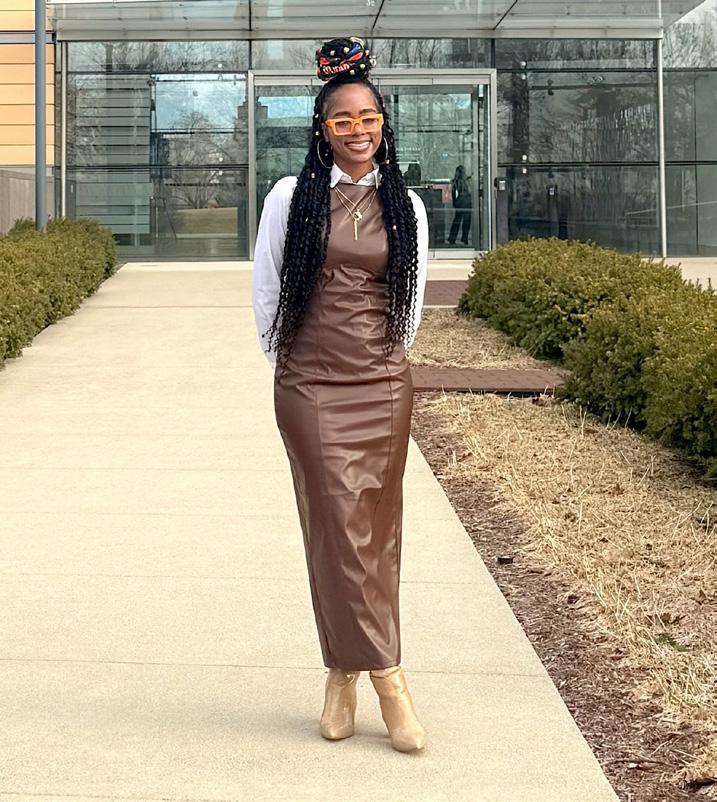
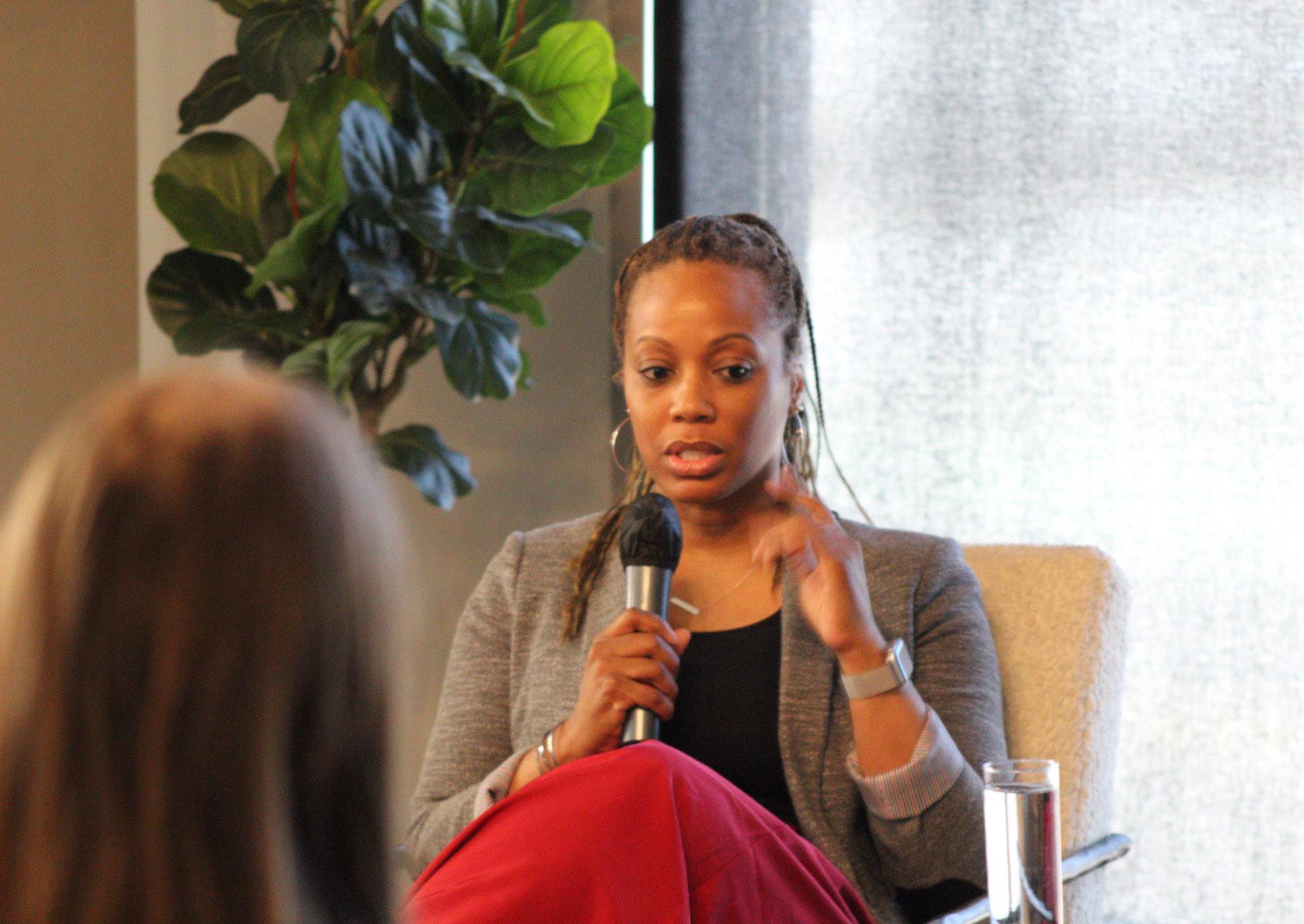
By LOIS ELFMAN Special to the AmNews
Last Saturday, Dr. Wendi Williams, CEO of the Well and president of the American Psychological Association, brought together women leaders and community members for an immersive event honoring and celebrating women. Among those sharing their stories at “The Well: A Day of Empowerment,” held at the Table restaurant in Jersey City, New Jersey, were Dr. Leeja Carter, CEO of the Coalition for Food & Health Equity and a former collegiate athlete; and Dr. Kensa Gunter, director of NBA/WNBA Mind Health and a leading clinical and sports psychologist.
“Dr. Wendi Williams created the Well as a safe space for women leaders for them to essentially come to a well to be poured into, to be replenished, and to really invest in themselves and the infrastructure of their leadership as they move forward,” said Carter, whose work addresses eliminating food insecurity. “There are components to the Well: remembrance, recovery, repair, regenerate, and reemerge.”
Other participants included New Jersey State Senator Angela V. McKnight and Congresswoman LaMonica McIver. Each speaker addressed one of the themes as it related to her story of being a woman in the world.
Speaking about recovery and repair, Gunter said, “A part of the conversation
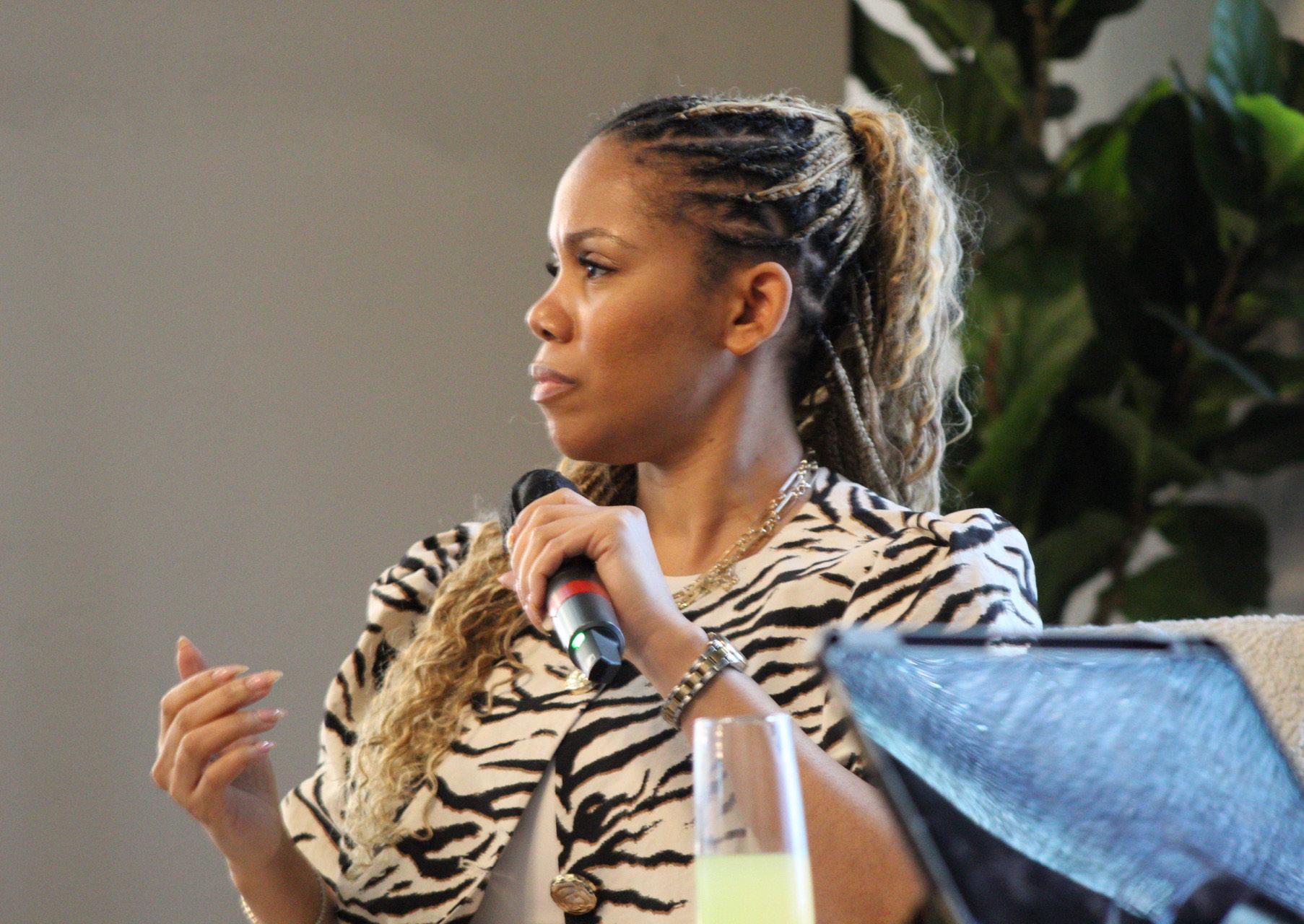
was acknowledging the context in which we were having this conversation. Given that the focus was on leaders, it truly is a notion of thinking not just how do you lead, but how do you maintain your wellness. A part of that message was … you have to find community.”
In her practice, Gunter engages in both mental health and mental performance. Excellence in sports and in life, she noted, is not without adversity and challenge; it speaks to how a person navigates those obstacles and even grows from them. Also, sports teams come together for a shared goal, and the Well reflects that.
“When we talk about what it means to be human, what it is to thrive and to flourish, and what it is to navigate adversity,
whether we’re talking about that on a court or a field or in a corporate office, many of those strategies and skills can be the same,” Gunter said. “The everyday person is trying to thrive in their lives in the same way that the elite athlete is trying to thrive. We talk about what you need to be able to perform at your best when you need to the most, regardless of what the setting is. Health is foundational to performance.” Carter, who was a pole vaulter and discus thrower in college and played basketball in high school, also emphasized teamwork and community. “These events are constant reminders … that we can be unified and collectively build a movement to move our collective wants and needs forward,” she said.
By DERREL JOHNSON Special to the AmNews
The St. John’s men’s basketball team’s opportunity to advance to the Sweet 16 for the first time since 1999 was being squandered. Their 14-point second-half lead over the Kansas Jayhawks at Viejas Arena in San Diego, California, in Sunday’s second round NCAA Tournament East Region matchup evaporated.
With the clock reading 3.9 seconds left in regulation and the score tied at 65, the Red Storm placed the ball in the hands of 6’0” junior guard Dylan Darling, the son of former New York Jets linebacker (2001-2002) James Darling. Last season, Darling was the Big Sky Conference Player of the Year at Idaho State. A big fish in the mid-major conference. Now, he found himself as a role player under the brightest of lights in one of the most consequential moments for the program in over three decades.
Darling, who had missed all four of his shots up to that point was not lacking confidence when the left-hander caught the in-bounds pass five-feet into the backcourt, drove on a straight line to the basket, and hit a right hand layup against two Kansas defenders as the buzzer sounded, with his teammates mob-
bing him under the basket. It advanced the East’s No. 5 seed to a meeting in Washington, D.C. tomorrow at Capital One Arena (7:10 p.m. EST tip-off) versus the East’s No. 1 seed Duke.
“To be honest, the ball left my hands and I hit the ground and I didn’t even see the ball go in,” said Darling after his shot of a lifetime. “I just heard everybody going crazy.”
St. John’s head coach Rick Pitino, who at 73 with 915 NCAA wins, has now led four differ-
ent programs to the Sweet 16 in his Naismith Memorial Basketball Hall of Fame career, was stone-faced immediately after Darling’s buzzer beater but emotional minutes later.
“I’m so jubilant,” he said. “So happy for the fellas … proud of our guys.”
While Darling wasA the hero for the 30-6 Red Storm, the win was a team effort in every sense. Senior forward Zuby Ejiofor, and Big East Player of the Year, had 18 points, nine
rebounds, and four assists, while senior forward Bryce Hopkins knocked down a career-high six three-pointers, also scoring 18 and grabbing seven rebounds. Bronx native, sophomore guard Ian Jackson, was in double-figures with 10 points off the bench.
The defense of senior forward Dillon Mitchell on Kansas’ freshman guard Darryn Peterson, a projected top-3 pick in June’s NBA Draft, was stellar. Peterson, who averaged 20 points per game this season, finished with 15 on 5-15 shooting.
Referring to losing to Duke in the 1992 East Regional finals when he was Kentucky’s head coach on a game-ending shot by Christian Laettner, one of the memorable shots in college basketball history, Pitino lifted up his fearless point guard.
“I have been on winning at the buzzer and losing at the buzzer, and tonight, I just can’t imagine a player, [Darling,] in today’s world, with all the scrutiny, wanting the ball when he’s shooting terribly,” he said. “For him to want the ball in that scenario just speaks volumes of what he is all about.
“So you win some, you lose some, and I’m hoping we can get Duke at the buzzer next to make up for that Christian Laettner shot.”
By LOIS ELFMAN
Special to the AmNews
Rounds one and two of the NCAA Division I Women’s Basketball Tournament are now complete. The upsets of round one were minor, such as the ninth seed University of Southern California, without star guard JuJu Watkins, who has been out all season recovering from a torn ACL suffered in last year’s tournament, defeating eighth-seeded Clemson and the ninth-seeded Syracuse downing eighth-seeded Iowa State.
In round two, Virginia secured its spot in the Sweet 16, upsetting the two seed in the region, Iowa, becoming the first team to advance that far after beginning the tournament in the First Four. Notre Dame also advanced, upsetting Ohio State. The four number one seeds: UConn, South Carolina, UCLA, and Texas all advanced.
The New Jersey teams have exited. Fairleigh Dickinson lost 58–48 to the two seed in its region, Iowa. Princeton was defeated 82–68 by Oklahoma State. The two HBCU schools in the Big Dance have been eliminated. Southern won its game in the First Four, defeating Samford 65–53, and advanced to the first round where it faced off with the region’s top seed
South Carolina, and was soundly defeated 103–34. Howard, the No. 14 seed, lost to No. 3 Ohio State 75–54 in the first round.
In the Women’s Basketball Invitation Tournament (WBIT), a 32-team postseason tournament produced by the NCAA, Seton Hall lost in the first round 67–57 to Missouri. In the battle of New York teams, Columbia defeat-
ed St. John’s 74–26 in an unfortunate game for the Red Storm, who played without guards Jailah Donald and Shaulana Wagner. The St. John’s coaching staff didn’t explicitly state why Donald and Wagner were absent, and the Johnnies struggled offensively and defensively, finishing with more turnovers than points.
“I’m not going to get into why they’re not
here, just for their sake, but stuff happens. Tough to play without them,” said St. John’s Coach Joe Tartamella.
“It’s a new season and a new opportunity for us to go out and do something maybe that we hadn’t planned to do, but that we’re really intentionally attacking right now, so I was happy to see a dominant performance,” said Columbia coach Megan Griffith after the win over St. John’s. On Sunday, Columbia upset WBIT one seed North Dakota State, 86–57 to advance. The Lions head west to play Cal Berkeley tonight. In the 48-team WNIT, Monmouth defeated Lehigh 72–62 in the first round. In the second round, Cleveland State defeated the Hawks by a close 74–68. New Jersey Institute of Technology defeated Merrimack in the first round 68–65 and West Point Army had a bye to the second round where the two teams faced off with West Point prevailing 59–52.
The WNIT’s Super 16 began yesterday. Play in the quarterfinals of the WBIT begins today. NCAA Tournament action returns tomorrow with the Sweet 16.